

Submitted:
08 October 2026
Posted:
09 October 2026
You are already at the latest version
Abstract
This critical perspective review examines five major classes of carbon-sequestering cementitious construction materials: accelerated carbonation curing systems, geopolymers and alkali-activated materials, recycled cement derived from construction and demolition waste, biochar-modified composites, and reactive magnesia cements. The review draws principally on peer-reviewed literature published between January 2023 and early 2026. A strict distinction is made throughout between emissions avoidance, carbon capture and utilisation, and carbon dioxide removal, since failure to separate these categories continues to inflate climate claims in this field. Reported sequestration values are converted, where possible, to common functional units under explicitly stated assumptions, while the accounting level of each claim — binder, concrete, or composite — is identified in the corresponding tables and figures. Technology readiness is assessed through an evidence matrix covering laboratory validation, pilot deployment, commercial installations, standards availability, and field durability data. An assumptions-driven scenario analysis, using conservative, moderate, and optimistic variants, suggests that these material classes could contribute approximately 0.4–3.5 Gt CO₂/year by mid-century through combined emissions avoidance and carbon removal. However, strict atmospheric carbon dioxide removal is bounded at a substantially lower level, approximately 0.1–1.5 Gt CO₂/year, and remains constrained by feedstock availability, low-carbon CO₂ supply, processing energy, standardisation gaps, and unresolved durability evidence. Durability is treated not as a secondary technical issue but as a central condition for structural adoption. Particular attention is given to reinforcement corrosion risks in carbonated systems, efflorescence and alkali leaching in alkali-activated binders, strength penalties at higher biochar dosages, and moisture sensitivity in MgO-based systems. The regulatory analysis considers the revised EU Energy Performance of Buildings Directive, the EU Taxonomy, and investor disclosure frameworks, while extending the discussion to China, India, ASEAN countries, the Gulf region, and sub-Saharan Africa, where most future cement demand growth is expected to occur. The 2026 energy-price shock is discussed only as an illustrative stress test of a broader structural vulnerability: the high exposure of clinker-based materials to energy-price volatility. Overall, the review argues that carbon-sequestering cementitious materials can make a meaningful contribution to climate mitigation only if sequestration claims are accounting-transparent, durability-verified, and deployment-ready under real construction-market conditions.
Keywords:
CO₂ sequestration
; embodied carbon
; carbonation curing
; alkali-activated materials
; recycled cement
; reactive magnesia cement
1. Introduction
1.1. Energy-Price Exposure of Conventional Cementitious Materials
The scientific and economic case for carbon-sequestering cementitious materials rests on a structural property of conventional cement production, not on any particular market episode: the calcination of limestone to produce Portland cement clinker requires temperatures of approximately 1450°C, making it one of the most thermally intensive industrial processes in the global economy. This thermal intensity has two consequences that motivate the present review. First, it generates roughly 0.6–0.9 t CO₂ per tonne of clinker between fuel combustion and process emissions, placing cement among the largest single industrial sources of CO₂. Second, it exposes the cost structure of conventional cementitious materials to fossil-fuel price volatility to a degree that most competing materials classes do not share. Life-cycle assessments have long demonstrated, in carbon terms, what energy-price movements periodically make visible in monetary terms: conventional construction materials carry large embedded energy costs that have historically been suppressed by cheap fossil fuels.
The energy-price shock of early 2026 provides a recent illustration of this exposure. Following the effective closure of the Strait of Hormuz to commercial shipping in March 2026, Brent crude prices exceeded $100 per barrel for the first time in four years, and European construction and chemical producers reported cost surcharges of up to 30% to offset surging electricity and feedstock costs (WEF, 2026). These figures derive from market commentary and industry disclosures concerning an evolving situation; they are cited here as illustrative grey-literature evidence rather than as settled quantitative findings, and none of the conclusions of this paper depends on them. The shock is treated throughout as a natural stress test that temporarily rendered visible — through price signals — the durable structural property identified above: the acute energy-price sensitivity of clinker-based materials relative to lower-temperature or calcination-free alternatives. The same event has been used in a parallel way for bio-based construction materials, where the exposed dependence is on petrochemical rather than energy inputs (Pacheco-Torgal, 2026). The analysis that follows would remain valid, with identical structure, in a low-energy-price environment; only the near-term commercial salience of the energy-cost argument would change.
1.2. The Atmospheric Context and the Carbon Dioxide Removal Landscape
The atmospheric case for sequestering materials is independent of energy markets. Atmospheric CO₂ concentration stood at approximately 280 ppm at the onset of the Industrial Revolution; the World Meteorological Organization reported a globally averaged concentration of 423.9 ppm in 2024 — an increase of 3.5 ppm over 2023, the largest single-year rise since modern measurements began in 1957 (WMO, 2025). The planetary boundary of 350 ppm identified by Rockström et al. (2009) was breached decades ago. Even if CO₂ emissions ceased immediately, sea-level rise and ocean acidification would continue for centuries owing to the slow response of oceans and ice sheets, although surface warming itself would largely stabilise once net-zero CO₂ is reached (IPCC, 2023). Engineered removal of CO₂ from the atmosphere is therefore widely regarded as a necessary complement to — never a substitute for — deep emissions reductions (Hansen et al., 2017; Mote et al., 2016), with scenario literature indicating that several gigatonnes of removal per year may be required by mid-century (IPCC, 2023).
The current condition of the standalone carbon dioxide removal (CDR) sector frames the potential relevance of the built environment. The third edition of The State of Carbon Dioxide Removal found that all removal activities combined currently offset only about 5% of global annual CO₂ emissions, of which 99.9% is delivered by conventional forestry-based methods whose expansion is constrained by competition with agricultural land; novel removal methods of every kind together removed roughly 2 Mt CO₂ in the most recent reporting year, against more than 40 Gt emitted (Smith et al., 2026). Most novel removal methods still cost in excess of $200 per tonne — well above prevailing carbon prices — and investment has reportedly declined relative to two or three years earlier (Smith et al., 2026; Szirniks, 2026, the latter a press source cited for context only). The frequently cited underperformance of early direct air capture (DAC) facilities — for example, reports that first-year capture at the Mammoth facility in Iceland fell far short of its 36,000 t/year design capacity (Climeworks, 2024; Barnard, 2025) — rests on grey-literature analysis of registry data and should be treated as provisional pending formal verification; it is noted here only to indicate that the gap between DAC design ambition and verified operational delivery remains, at present, large.
Against this background, cementitious sequestration offers three structural features that merit examination rather than assertion. First, it is embedded in an existing multi-gigatonne material market, so any removal delivered does not require a dedicated per-tonne revenue stream. Second, it requires no dedicated land. Third, its incremental cost per tonne sequestered can be low because the CO₂ is fixed as a co-product of manufacture. Whether these features translate into deliverable removal at scale depends on the accounting, durability, supply-chain, and standards questions examined in Section 2, Section 3, Section 4, Section 5 and Section 6; this paper deliberately avoids claiming that the question is settled.
1.3. Accounting Taxonomy: Avoidance, CCU, and Removal
Terminological precision is essential, because three distinct accounting categories are routinely conflated (IPCC, 2023). Emissions avoidance denotes the prevention of emissions that would otherwise have occurred — for example, the elimination of limestone calcination in geopolymer or recycled cement production. Carbon capture and utilisation (CCU) denotes the incorporation of captured CO₂ into products; where that CO₂ originates from a fossil point source, CCU avoids or delays an emission but removes nothing from the atmosphere. Carbon dioxide removal (CDR), strictly defined, requires the net transfer of CO₂ from the atmosphere into durable storage — a definition met by natural and accelerated carbonation drawing on atmospheric or biogenic CO₂, and by the biogenic carbon embedded in biochar, but not by ACC supplied with fossil flue-gas CO₂.
The five classes reviewed in Section 2 occupy different positions along this spectrum. Geopolymers and recycled cement are predominantly avoidance technologies, with limited removal co-benefits via carbonation of the hardened material or crushed fines. Biochar blending is the only class delivering strict-sense removal by design, because its embedded carbon is biogenic. ACC is CCU or CDR depending on its CO₂ source. Reactive MgO cement is similarly source-dependent: its classification rests on the feedstock (calcined magnesite versus reject brines or magnesium-bearing industrial residues), the processing route, and the origin of the carbonating CO₂. This taxonomy is enforced throughout: every quantitative claim, every row of Table 1, Table 2, Table 3 and Table 4, and the scenario analysis in Section 2.8 carry explicit avoidance/CCU/CDR tags, and broad terms such as “sequestration capacity” are used only where the accounting category is either mixed or identified in the immediately surrounding text. Comparisons with the standalone CDR sector are made on a like-for-like basis: only the removal fraction of the portfolio, not its total climate benefit, competes in the same accounting category as DAC.
The consensus position of the CDR research community also frames the entire analysis: removal must never be construed as a licence to pollute, and the priority remains reducing gross emissions as far as possible, with removal reserved for the residual (Smith et al., 2026). The materials reviewed here are of interest precisely because they may perform both functions simultaneously — cutting production emissions through lower energy intensity while fixing CO₂ through mineralisation.
1.4. Scope, Method, and Nature of This Review
This paper is a critical perspective review, not a systematic review, and no claim of comprehensive coverage of the literature is made. Its purpose is to synthesise recent peer-reviewed evidence on five material classes, to enforce a consistent accounting taxonomy across heterogeneous reported values, and to assess deployment readiness and regulatory context critically. The methodological choices were as follows.
Databases and search strings. Literature was identified through structured searches of Scopus and Web of Science using combinations of the terms “carbonation curing”, “CO₂ sequestration”, “CO₂ mineralisation”, “geopolymer”, “alkali-activated”, “recycled cement”, “biochar concrete”, “biochar cement”, and “reactive magnesia”/“reactive MgO cement”, combined with “concrete” OR “cement” OR “binder”.
Date range and document types. Searches were restricted principally to peer-reviewed journal articles and reviews published between January 2023 and early 2026, supplemented by backward citation tracking from recent reviews to capture foundational earlier studies (e.g., Xi et al., 2016; Stefaniuk et al., 2023).
Inclusion and exclusion criteria. Studies were included if they (i) reported quantified CO₂ uptake, avoided emissions, or life-cycle assessment results for one of the five classes; (ii) reported mechanical or durability performance relevant to structural application; or (iii) provided review-level synthesis of mechanisms or deployment status. Studies were excluded if they concerned non-cementitious mineralisation routes, lacked quantitative reporting, or duplicated results available in a more complete later publication. Searches returned approximately [N] records after deduplication, of which [n] were retained after screening against these criteria; from the retained set, the studies cited here were privileged on the basis of recency, methodological completeness (e.g., probabilistic LCA, multi-country activity data), and direct relevance to the accounting and durability questions that structure this review. [Authors: insert final retrieval and retention counts from the search log.]
Use of grey literature. Industry disclosures, policy documents, and press reporting are used only for market and policy context, and are identified as such where cited. No technical or quantitative claim central to the argument of this paper rests on a grey-literature source; where a contextual figure derives from grey literature, this is flagged explicitly in the text and the claim is labelled provisional.
Analytical structure. The analysis proceeds in five stages: a review of each material class (Section 2), including a comparative framework, an evidence-based technology readiness assessment, and a scenario analysis with sensitivity variants; a dedicated treatment of durability, performance, and standardisation (Section 3); an examination of systemic deployment barriers (Section 4); an evaluation of the regulatory landscape in the EU and, more briefly, in the non-EU regions where most future cement demand will arise (Section 5); and a statement of limitations (Section 6) preceding the conclusions (Section 7).
2. CO₂ Sequestration Through Cementitious Construction Materials
2.1. Natural Carbonation as a Passive Carbon Sink
Before examining engineered sequestration approaches, it is essential to acknowledge the scale of passive CO₂ uptake that already occurs through the natural carbonation of cement-based materials (for a book-length treatment of the field, see Pacheco-Torgal et al., 2024). Xi et al. (2016) demonstrated that a cumulative 4.5 GtC (≈16.5 Gt CO₂; all subsequent figures are expressed in CO₂ for consistency) was sequestered in carbonating cement materials between 1930 and 2013, offsetting 43% of cement production process CO₂ emissions over the same period. A subsequent update by Huang et al. (2023) estimated accumulated global CO₂ uptake from 1930 to 2021 at 22.9 Gt CO₂. The most comprehensive analysis to date — by Niu et al. (2025), covering 163 countries and regions with 58,517 activity data points — extended this accounting to 2024 and estimated global CO₂ uptake by cement carbonation at approximately 0.86 Gt CO₂ per year: concrete absorbs 0.40 Gt/year, mortar 0.38 Gt/year, cement kiln dust 0.06 Gt/year, and construction losses 0.027 Gt/year. This represents more than half of cement production process emissions of approximately 1.6 Gt CO₂/year in 2023. In the taxonomy of Section 1.3, this passive uptake constitutes removal from the atmosphere, and it is currently under-represented in most national greenhouse gas inventories.
A critical limitation of natural carbonation, however, is timescale. The process unfolds over decades as atmospheric CO₂ diffuses slowly through the concrete matrix, reacting with calcium hydroxide and calcium silicate hydrate to form stable carbonates. Natural carbonation therefore cannot be counted as a near-term mitigation measure — it is a long-term accounting credit that accrues over a building’s service life and beyond. Furthermore, in reinforced Portland-cement concrete it carries a durability penalty: reduction of pore-solution pH promotes reinforcement corrosion (discussed in Section 3). The engineered approaches in Section 2.2, Section 2.3, Section 2.4, Section 2.5 and Section 2.6 are distinguished by their ability to accelerate and amplify uptake during manufacture, before reinforcement is embedded.
2.2. Accelerated Carbonation Curing
Accelerated carbonation curing (ACC) — in which cement products are exposed to elevated CO₂ concentrations before or during curing — has become one of the most active areas of sustainable construction research. Wang and Fan (2025) map the landscape of ACC strategies, while Xie et al. (2025) provide a mechanistic review reporting that ACC can simultaneously sequester CO₂ and improve mechanical properties and durability in suitable systems. Liu et al. (2025) systematise the mechanisms, techniques, and precursor materials applicable to enforced carbonation for low-carbon concrete.
A notable contribution comes from Fu et al. (2024), who developed an approach in which CO₂ is injected into a cement suspension subsequently used to manufacture concrete. By converting the carbonation reaction from a diffusion-controlled surface process into an aqueous ionic reaction distributed throughout the cement matrix, this method achieved a CO₂ sequestration efficiency of up to 45% in the studied systems while maintaining concrete strength. Because the approach is technically simple, it may be amenable to comparatively rapid industrial adoption, although independent replication at plant scale has not yet been reported.
Machine learning is now being applied to optimise ACC. Sun et al. (2025) report that data-driven models can predict CO₂ sequestration in cementitious materials as a function of mix composition and curing conditions, supporting the computational design of mixtures that increase carbon uptake. A bibliometric analysis by Liang et al. (2025) confirms that mineral carbonation of civil engineering materials is among the most rapidly growing research topics in sustainable construction. The pre-curing approach using sodium bicarbonate disclosed by Stefaniuk et al. (2023) addresses the reinforcement-corrosion concern directly, enabling CO₂ to be mineralised into calcium-silicate-hydrate before reinforcement is at risk; this line of work is a prerequisite for ACC in reinforced applications at scale, though long-term field validation remains outstanding (Section 3).
ACC’s energy profile is both its strength and its limitation. Because it does not eliminate calcination — the most energy-intensive step in cement production — it offers little insulation from energy-price volatility relative to geopolymers or recycled cement. Its value lies instead in its ability to fix CO₂ during an otherwise standard manufacturing step, with modest additional energy input, at a deployment readiness (TRL 6–8; evidence in Table 3) that no other class in this review currently matches. In accounting terms, ACC is CCU where the CO₂ derives from fossil point sources and removal only where atmospheric or biogenic CO₂ is used (Section 1.3).
2.3. Geopolymers and Alkali-Activated Materials
Geopolymers and alkali-activated materials (AAMs) represent a distinct class of construction binder with substantially lower embodied energy than Portland cement and a secondary capacity for CO₂ uptake. Their defining characteristic is the absence of limestone calcination: geopolymers are synthesised by alkali-activating aluminosilicate precursors — typically industrial by-products such as fly ash or ground granulated blast furnace slag (GGBS) — at ambient or modestly elevated temperatures. This elimination of calcination is the primary source of their environmental advantage, and in the taxonomy of Section 1.3 it is an avoidance benefit, not removal. Life-cycle assessment studies report CO₂ emission reductions of 40–80% relative to OPC depending on mix design and system boundary (Kriven et al., 2024). The insulation from energy prices is, however, only partial: alkali activators such as sodium hydroxide and sodium silicate are themselves energy-intensive commodities, so the net advantage of geopolymer systems depends sensitively on activator dosage.
Tushar et al. (2025), in a fully probabilistic LCA of geopolymer concrete production using Monte Carlo simulation across 580 mix designs, quantified a mean reduction of 43% in carbon emissions relative to conventional concrete and identified that even modest increases in chemical admixture content can significantly offset these gains — a finding with direct implications for mix design under real-world conditions. It is not sufficient to replace clinker with fly ash and assume the benefit is secure: activator chemistry must be optimised alongside precursor selection.
Deliberate integration of CO₂ extends sequestration beyond passive avoidance. Sahoo et al. (2024) reported that accelerated carbon curing in alkali-activated mortars incorporating lateritic clay increased 1-day compressive strength by 13% and reduced total shrinkage by 25%, though long-term natural carbonation over 365 days caused decalcification in low Ca/Si ratio materials — a durability caveat that constrains precursor selection in reinforced applications (Section 3). Ghazouani et al. (2025) introduced the aeration of CO₂ directly into the NaOH activator solution before geopolymer synthesis, achieving 47.86 MPa at 28 days alongside improved pore structure. At the system level, Sun et al. (2025a) identified a structural threshold — 55% of pores below 10 nm — governing the transition between complete and incomplete carbonation in ternary solid-waste geopolymers, with a maximum CO₂ uptake of 12.7% by mass. Supercritical CO₂ curing applied to lignite-based fly ash geopolymer mortars achieved a carbonation rate of 67% alongside improvements in compressive and flexural strength (Podnar et al., 2025); this approach remains at early laboratory-to-pilot stage and is best read as an indication of the upper bound of what accelerated carbonation in geopolymer systems might achieve, rather than as a deployable result.
2.4. Recycled Cement from Construction and Demolition Waste
Recycled cement produced from construction and demolition (C&D) waste is the class with the largest modelled avoidance potential, and also the largest gap between modelled potential and demonstrated deployment. Luo et al. (2024) modelled a concrete cycle centred on C&D waste recycling with integrated CO₂ sequestration and found that, per tonne of recycled cement produced, CO₂ emissions are reduced by 47–94% relative to OPC. Under full global substitution, the modelled annual benefit reaches 1.4–3.08 Gt CO₂. Three qualifications must accompany this figure. First, it rests on a single modelling study and should be treated as an unverified upper bound pending independent corroboration. Second, a first-order mass balance reveals a binding feedstock constraint: global cement production is approximately 4 Gt/year, while the cement-paste fraction recoverable from current C&D waste arisings is far smaller than the clinker market it would need to displace; full substitution is therefore physically impossible in the near term, and realistic potential scales with the gradual growth of the demolition stream as the twentieth-century building stock reaches end of life. Third, in accounting terms the bulk of the benefit is avoided emissions (forgone calcination); genuine removal is limited to the recarbonation of crushed waste fines, a much smaller term.
Because the production process avoids virgin clinker manufacture — substituting demolished concrete as feedstock — recycled cement is substantially insulated from fossil-fuel price volatility, and its raw material is a waste stream that would otherwise be landfilled. The principal technical barrier is quality control: demolished concrete contains residual paste with variable porosity, and the heterogeneity of mixed demolition waste streams makes consistent product specification challenging. The TRL of 4–6 (evidence in Table 3) reflects a material demonstrated at laboratory and early demonstration scale but not yet produced commercially at the quality levels required for structural specifications. Closing this gap requires selective demolition practices, waste-stream sorting technology, and standardised testing protocols — none technically out of reach, but all requiring coordinated policy and industry action.
2.5. Biochar-Modified Cementitious Materials
Biochar is a carbon-rich, porous material produced by pyrolysis of biomass — agricultural residues, forestry waste, food-processing by-products — in an oxygen-limited environment. Pyrolysis converts labile organic carbon that would otherwise decompose into a recalcitrant form that is stable over long timescales. When biochar is incorporated into cementitious systems, this stabilised biogenic carbon is locked into the built environment for the life of the structure; because the carbon was drawn from the atmosphere by photosynthesis, biochar blending is the only class in this review delivering removal in the strict sense of Section 1.3 by design rather than by circumstance.
The sequestration mechanism operates through two pathways. First, the biochar itself is sequestered carbon, and its porous surface chemistry and high specific surface area create additional sites for carbonate mineralisation. Second, biochar’s internal pore network can accelerate carbonation-front penetration, exposing more calcium-bearing phases to reactive CO₂. Zhou et al. (2025) identify conditions under which biochar-modified materials achieve net-negative carbon footprints: approximately 30 wt% aggregate substitution under CO₂ curing delivered a net-negative footprint at an economic value — net material cost premium offset against potential carbon credit revenue — of approximately $41 per cubic metre of concrete, while 5% biochar blending was associated with a carbon-negative effect of 541–980 kg CO₂eq per tonne of composite. These dosage-dependent results coexist with well-documented performance penalties at higher dosages (water demand, strength loss; Section 3), and the field remains heterogeneous, with no harmonised characterisation methods for construction-grade biochar.
Set against the broader removals market, biochar enters from a position of relative strength: it accounts for a dominant share of the durable carbon removal actually supplied to date (Smith et al., 2026). Routing this established supply chain into cementitious composites would couple it to a demand sink far larger than the agricultural soil-amendment market it currently serves, while the encapsulating cement matrix may mitigate some permanence uncertainties (biotic decay, physical dispersal) that attach to biochar in open soil applications — although the permanence of biochar carbon within cementitious matrices under freeze–thaw and fire exposure is itself not yet established (Section 3). Scaling the supply chain for construction-grade biochar to construction volumes also competes with sustainable biomass limits and other biomass uses, a constraint made explicit in the scenario analysis of Section 2.8.
2.6. Reactive MgO Cement
Reactive magnesia (MgO) cements differ fundamentally from Portland cement in their binding mechanism: rather than relying on calcium silicate hydrate gel formation, they gain strength through the carbonation of MgO to form hydrated magnesium carbonates. Carbonation is therefore not a durability problem for reactive MgO cements but the essential mechanism of strength gain. Each kilogram of carbonated reactive MgO can fix up to 0.78 kg of CO₂ — among the highest per-unit values in this review — although the achieved degree of carbonation in practice is typically lower and depends strongly on curing conditions.
Tan et al. (2024), through a comprehensive life cycle assessment, report that using MgO derived from salt-lake magnesium residues reduces CO₂ emissions by over 60% relative to conventional MgO production, and that carbonated reactive MgO cement achieved compressive strengths up to three times higher than OPC — a result obtained under optimised laboratory carbonation conditions that awaits independent replication at structural scale. The energy profile is favourable: the calcination temperature for reactive MgO production is 700–1000°C, substantially below the 1450°C required for Portland clinker. The accounting classification of MgO systems is, however, strongly feedstock- and source-dependent: MgO calcined from magnesite releases process CO₂ analogously to limestone (largely offset only if the carbonating CO₂ is atmospheric), whereas MgO derived from brines, reject seawater streams, or magnesium-bearing residues avoids that process emission, and the removal fraction depends on the origin of the carbonating CO₂. Claims for this class must therefore always specify feedstock, processing route, and CO₂ origin, and they are tagged accordingly in Table 1, Table 2, Table 3 and Table 4. Performance in sealed or low-CO₂ service environments, moisture sensitivity, and dimensional stability remain open questions addressed in Section 3; the TRL of 5–7 (Table 3) reflects genuine pilot demonstrations but limited structural-scale field data.
2.7. Comparative Framework and Technology Readiness Evidence
Table 1 provides a comparative overview of the five material classes. To avoid mixing functional units, the table now identifies explicitly the level of every value — binder, concrete, or composite — and tags each class under the avoidance/CCU/CDR taxonomy of Section 1.3. Parenthetical values are the authors’ conversions of heterogeneous source units to a common functional unit; every conversion, together with its underlying assumptions (binder content, assumed carbonation degree, CO₂ source, and system boundary), is documented in Table 2 so that the figures can be audited and revised as better data emerge.

Table 1.
Comparative overview of five cementitious material classes. Values are indicative and subject to mix design, curing conditions, and precursor variability. The “level of value” identifies whether each figure refers to the binder, the concrete, or the composite; binder-level and composite-level figures are not directly comparable. Conversion assumptions are tabulated in Table 2. TRL: Technology Readiness Level following European Commission definitions (TRL 4 = laboratory validation; TRL 6 = prototype in relevant environment; TRL 7–8 = pilot/pre-commercial; TRL 9 = commercial).
Table 1.
Comparative overview of five cementitious material classes. Values are indicative and subject to mix design, curing conditions, and precursor variability. The “level of value” identifies whether each figure refers to the binder, the concrete, or the composite; binder-level and composite-level figures are not directly comparable. Conversion assumptions are tabulated in Table 2. TRL: Technology Readiness Level following European Commission definitions (TRL 4 = laboratory validation; TRL 6 = prototype in relevant environment; TRL 7–8 = pilot/pre-commercial; TRL 9 = commercial).
| Material class | Reported CO₂ benefit (level of value; common-unit conversion perTable 2) | Accounting tag | CO₂ reduction vs OPC (%) | Energy intensity vs OPC | TRL (evidence:Table 3); key reference(s) |
| Accelerated carbonation curing (ACC) | Up to 45% sequestration efficiency (binder-level, suspension method); ≈100–150 kg CO₂/t binder | CCU or CDR by CO₂ source | 20–40% | Similar to OPC; calcination retained | 6–8; Wang & Fan (2025); Fu et al. (2024) |
| Geopolymers / AAMs | Up to 12.7% CO₂ uptake by mass (binder-level, ternary solid-waste system); ≈ up to 127 kg CO₂/t binder | Avoidance + minor uptake | 40–80% | Significantly lower (no limestone calcination) | 5–7; Kriven et al. (2024); Tushar et al. (2025) |
| Recycled cement (C&D waste) | 47–94% emission reduction per tonne (binder-level, modelled); ≈400–850 kg CO₂ avoided/t binder | Avoidance + minor CDR (fines recarbonation) | 47–94% | Substantially lower (avoids virgin clinker) | 4–6; Luo et al. (2024) |
| Biochar-modified composites | 541–980 kg CO₂eq/t at 5% blending (composite-level); ≈540–980 kg CO₂eq/t composite | CDR (biogenic carbon) | Net-negative achievable at ~30 wt% under CO₂ curing | Lower (biomass-derived) | 4–6; Zhou et al. (2025) |
| Reactive MgO cement (CRMC) | Up to 0.78 kg CO₂/kg MgO (binder-constituent level, theoretical maximum); ≈780 kg CO₂/t MgO at full carbonation, less in practice | Avoidance and/or CDR by feedstock and CO₂ source | >60% (salt-lake MgO route) | Lower calcination temperature (700–1000°C vs 1450°C) | 5–7; Tan et al. (2024) |
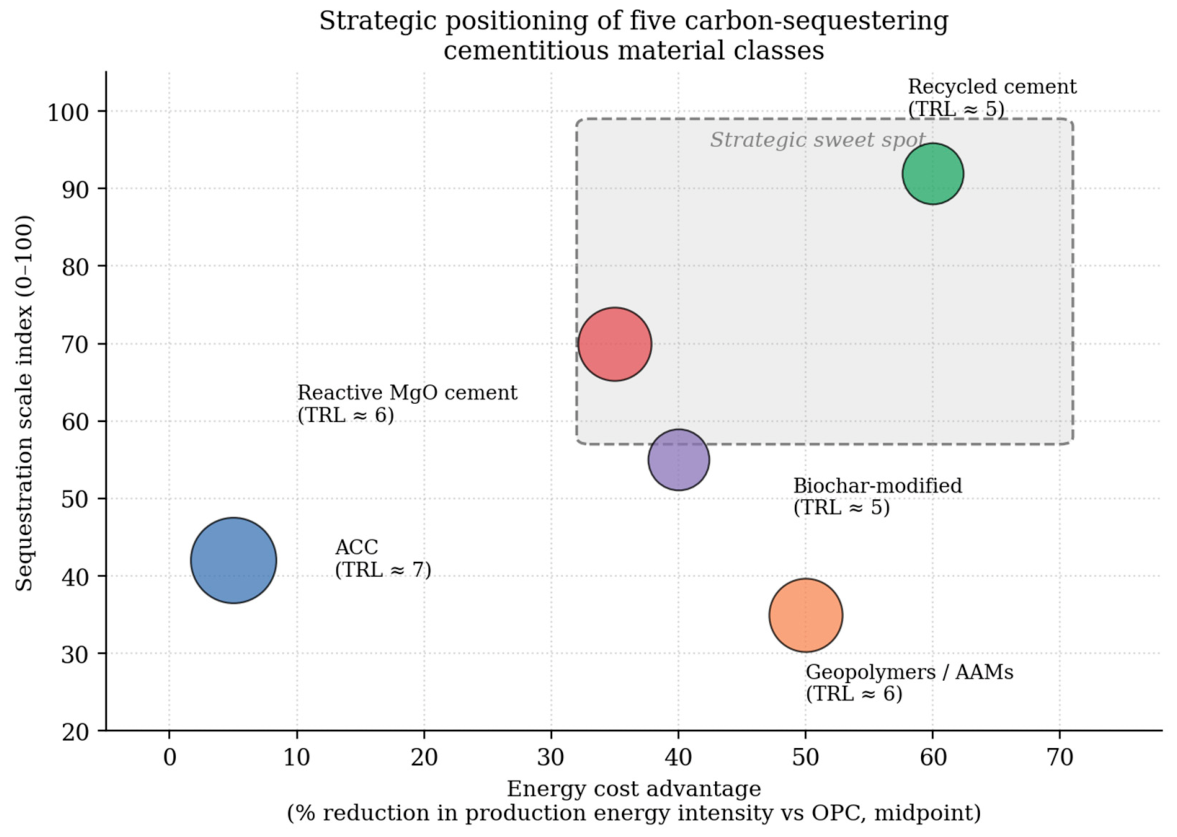
Table 2 discloses every input used to generate the common-unit conversions in Table 1 and the positioning of Figure 1, including source values, units, conversion assumptions, assumed market shares (moderate scenario, Section 2.8), and uncertainty ranges. The sequestration scale index is computed as a 0–100 min–max normalisation of log₁₀ of the addressable annual potential; bubble diameter is proportional to the TRL-range midpoint. The index is ordinal and intended for comparative positioning, not cardinal measurement.
Table 2.
Inputs, sources, conversion factors, assumed market shares, and uncertainty ranges underlying Table 1 and Figure 1. Energy cost advantage midpoints are the authors’ synthesis of the energy-intensity comparisons in the cited sources and should be read as indicative.
| Input | ACC | Geopolymers / AAMs | Recycled cement | Biochar-modified | Reactive MgO |
| Source value (as published) | Up to 45% sequestration efficiency (Fu et al., 2024) | Up to 12.7% uptake by binder mass (Sun et al., 2025a); 40–80% LCA reduction (Kriven et al., 2024) | 47–94% reduction/t; 1.4–3.08 Gt/yr at full substitution (Luo et al., 2024) | 541–980 kg CO₂eq/t composite at 5% blending (Zhou et al., 2025) | 0.78 kg CO₂/kg MgO theoretical max; >60% LCA reduction (Tan et al., 2024) |
| Functional unit of source value | Binder (cement in suspension) | Binder | Binder (modelled) | Composite | MgO constituent |
| Conversion assumptions | Binder CO₂ content basis; 45% efficiency on ≈250–330 kg process CO₂/t cement → 100–150 kg/t binder; CO₂ source unspecified → CCU/CDR tag | 12.7 wt% uptake → ≤127 kg/t binder; avoidance from forgone calcination treated separately | 0.85 t CO₂/t clinker basis × 47–94% → 400–850 kg avoided/t binder; removal limited to fines recarbonation | No conversion (already composite-level); dosage 5%; CO₂-curing assumed for net-negative case | Full carbonation assumed for 780 kg/t MgO; practical degree lower (humidity-dependent) |
| System boundary | Manufacturing (A1–A3) uptake only | Cradle-to-gate (A1–A3) | Cradle-to-gate vs OPC baseline | Cradle-to-gate incl. biogenic credit | Cradle-to-gate; carbonation during curing |
| Addressable annual potential (moderate scenario) | ≈0.2 Gt/yr (50% of precast/ready-mix × 100 kg/t) | ≈0.3 Gt/yr (20% binder share × 0.4 t/t) | ≈0.5–0.7 Gt/yr (25% share × 0.5–0.7 t/t) | ≈0.2–0.4 Gt/yr (biomass-constrained) | ≈0.2–0.3 Gt/yr (10% share × 0.6–0.78 t/t MgO) |
| Uncertainty range | Conservative–optimistic: 0.05–0.4 Gt/yr (Table 4) | 0.06–0.6 Gt/yr | 0.16–1.0 Gt/yr | 0.05–0.8 Gt/yr | 0.06–0.45 Gt/yr |
| Energy cost advantage (x-axis midpoint) | 5% (calcination retained) | 50% (no calcination; activator burden netted) | 60% (no virgin clinker) | 40% (biomass-derived) | 35% (700–1000°C calcination) |
| Sequestration scale index (y-axis, ordinal) | log-normalised from 0.2 Gt/yr | from 0.3 Gt/yr | from 0.6 Gt/yr | from 0.3 Gt/yr | from 0.25 Gt/yr |
| TRL midpoint (bubble) | 7 | 6 | 5 | 5 | 6 |
The TRL ranges in Table 1 are the authors’ structured judgement against the European Commission definitions. To avoid these assignments being read as unsupported expert opinion, Table 3 lists the evidence underlying each assignment across six dimensions: laboratory validation, pilot projects, commercial installations, standards availability, field durability data, and structural applications. The ranges should be treated as assessments subject to revision as deployments accumulate, and the upper bound of each range applies only to the most advanced variant within a class — not to the class as a whole. ACC’s upper bound, for example, reflects commercial CO₂-mineralisation systems retrofitted into ready-mix and precast plants in North America, not the suspension-injection or bicarbonate pre-curing variants, which remain at laboratory-to-pilot stage.
Table 3.
Evidence base for the TRL assignments in Table 1. Entries without a citation reflect the authors’ synthesis of the deployment status reported in the reviewed literature and publicly disclosed projects; they should be read as structured judgement, not as exhaustive inventories.
Table 3.
Evidence base for the TRL assignments in Table 1. Entries without a citation reflect the authors’ synthesis of the deployment status reported in the reviewed literature and publicly disclosed projects; they should be read as structured judgement, not as exhaustive inventories.
| Dimension | ACC | Geopolymers / AAMs | Recycled cement | Biochar-modified | Reactive MgO cement |
| Laboratory validation | Extensive; multiple mechanisms validated (Fu et al., 2024; Stefaniuk et al., 2023) | Extensive; >580 mixes in probabilistic LCA (Tushar et al., 2025) | Demonstrated; modelling-led (Luo et al., 2024) | Extensive but heterogeneous (Zhou et al., 2025) | Demonstrated incl. optimised carbonation (Tan et al., 2024) |
| Pilot projects | CO₂-injection pilots in ready-mix/precast plants | Demonstration structures and precast pilots (Australia, Europe) | Early demonstration of paste recovery/recarbonation lines | Isolated demonstration elements only | Pilot-scale blocks and masonry units |
| Commercial installations | Yes — commercial mineralisation retrofits in North American plants (CCU variant) | Niche commercial precast supply; no broad structural market | None at structural quality | None at construction grade | None |
| Standards availability | No harmonised sequestration-measurement standard; concrete standards apply to host material | No harmonised international standard; national/format-specific provisions only (e.g., performance-based routes) | No product standard for recycled cement as binder | No characterisation standard for construction-grade biochar | No certification pathway in EU or North America |
| Field durability data | Multi-year data for commercial CCU variant; limited for novel variants | Limited long-term field data; decalcification caveats (Sahoo et al., 2024) | Very limited | Essentially absent | Very limited; humidity-sensitive |
| Structural applications | Reinforced applications constrained pending corrosion validation | Demonstration and niche structures; broad structural deployment limited | None | None | None |
| Resulting TRL range | 6–8 | 5–7 | 4–6 | 4–6 | 5–7 |
Figure 1 maps the five classes across three axes — energy cost advantage, sequestration scale, and deployment readiness. The figure is presented explicitly as a conceptual, semi-quantitative positioning map: the y-axis is an ordinal index, not a cardinal measurement, and the figure should not be read as more precise than the inputs in Table 2 allow. It makes visible a portfolio tension that the tabular data alone obscures: the classes with the greatest combined energy advantage and scale potential — recycled cement and reactive MgO cement — occupy the middle range of deployment readiness, while the most deployment-ready class, ACC, offers more modest energy advantages. The strongest long-term options are not yet the easiest near-term choices.
Figure 1.
Conceptual (semi-quantitative) strategic positioning of five carbon-sequestering cementitious material classes by energy cost advantage (x-axis, midpoint % reduction in production energy intensity versus OPC), sequestration scale (y-axis, ordinal 0–100 min–max normalisation of the logarithm of each class’s addressable annual potential under the moderate scenario of Section 2.8), and deployment readiness (bubble diameter proportional to TRL-range midpoint). All input values, sources, conversion factors, assumed market shares, and uncertainty ranges are tabulated in Table 2. The dashed zone denotes the region where high energy advantage and high scale potential converge. The map is intended for comparative positioning only.
Figure 1.
Conceptual (semi-quantitative) strategic positioning of five carbon-sequestering cementitious material classes by energy cost advantage (x-axis, midpoint % reduction in production energy intensity versus OPC), sequestration scale (y-axis, ordinal 0–100 min–max normalisation of the logarithm of each class’s addressable annual potential under the moderate scenario of Section 2.8), and deployment readiness (bubble diameter proportional to TRL-range midpoint). All input values, sources, conversion factors, assumed market shares, and uncertainty ranges are tabulated in Table 2. The dashed zone denotes the region where high energy advantage and high scale potential converge. The map is intended for comparative positioning only.
2.8. Portfolio Scenarios and Sensitivity Analysis
The class-level maxima reported in the literature are not additive, and a simple sum would overstate the portfolio’s potential: recycled cement displaces the very clinker whose carbonation underpins the natural sink quantified in Section 2.1, while ACC, biochar blending, and MgO substitution compete for shares of the same global binder volume of approximately 4 Gt/year. An assumptions-driven scenario, anchored to that mass balance, is therefore preferable to a summation of maxima — but a single scenario is itself insufficient, because every market-share assumption is exploratory rather than derived from deployment data. Table 4 therefore presents three variants — conservative, moderate, and optimistic — with the binding constraint for each class stated explicitly. The moderate variant corresponds to the illustrative scenario carried through the remainder of the paper; the conservative and optimistic variants bound it.
Table 4.
Scenario and sensitivity analysis for the mid-century portfolio potential, anchored to a global binder mass balance of ≈4 Gt/year. All market shares are exploratory assumptions, not forecasts; they are not derived from deployment trajectories, and the table is offered to make the derivation auditable. Regional cement demand evolution (Section 5.4) affects all rows. Removal fractions follow the taxonomy of Section 1.3.
Table 4.
Scenario and sensitivity analysis for the mid-century portfolio potential, anchored to a global binder mass balance of ≈4 Gt/year. All market shares are exploratory assumptions, not forecasts; they are not derived from deployment trajectories, and the table is offered to make the derivation auditable. Regional cement demand evolution (Section 5.4) affects all rows. Removal fractions follow the taxonomy of Section 1.3.
| Class (accounting tag) | Binding constraints | Conservative (2050) | Moderate (2050) | Optimistic (2050) |
| ACC (CCU/CDR by CO₂ source) | Industrial CO₂ supply networks; retrofit capital; corrosion validation for reinforced use | 20% of precast/ready-mix at 60 kg/t → ≈0.05 Gt/yr | 50% at 100 kg/t → ≈0.2 Gt/yr | 70% at 150 kg/t → ≈0.4 Gt/yr |
| Geopolymers / AAMs (avoidance) | Precursor availability (fly ash declining in decarbonising grids); activator impacts; standards adoption | 5% binder share, 0.3 t avoided/t → ≈0.06 Gt/yr | 20% share, 0.4 t/t → ≈0.3 Gt/yr | 30% share, 0.5 t/t → ≈0.6 Gt/yr |
| Recycled cement (avoidance + minor CDR) | C&D waste arisings and sorting infrastructure; quality control; standards | 10% share, 0.4 t/t → ≈0.16 Gt/yr | 25% share, 0.5–0.7 t/t → ≈0.5–0.7 Gt/yr | 35% share, 0.7 t/t → ≈1.0 Gt/yr |
| Biochar-modified composites (CDR) | Sustainable biomass supply; competition with other biomass uses; characterisation standards; dosage-performance limits | ≈0.05–0.1 Gt/yr removal | ≈0.2–0.4 Gt/yr removal | ≈0.5–0.8 Gt/yr removal |
| Reactive MgO cement (avoidance/CDR by feedstock) | MgO feedstock supply (geographically concentrated); humidity-dependent carbonation; certification | 3% share at 0.5 t/t MgO → ≈0.06 Gt/yr | 10% share at 0.6–0.78 t/t → ≈0.2–0.3 Gt/yr | 15% share at 0.78 t/t → ≈0.45 Gt/yr |
| Portfolio total (combined benefit) | ≈0.4–0.6 Gt CO₂/yr | ≈1.5–2.5 Gt CO₂/yr | ≈2.5–3.5 Gt CO₂/yr | |
| of which strict-sense removal | ≈0.1–0.2 Gt/yr | ≈0.5–1.0 Gt/yr | ≈1.0–1.5 Gt/yr |
Three observations follow. First, even the conservative variant — in which every class underperforms current expectations — yields a combined benefit comparable to several hundred million tonnes of CO₂ per year, and a removal fraction that would still exceed the verified output of the entire current novel-CDR sector by roughly two orders of magnitude (Smith et al., 2026). Second, the spread between variants is dominated by recycled cement and biochar, i.e., precisely the classes whose constraints (C&D waste logistics, sustainable biomass supply) are least technological and most institutional. Third, the figures are sensitive to regional demand: if cement demand growth concentrates in regions without supportive standards (Section 5.4), the conservative variant becomes more probable. These scenarios supersede the simple summation of literature maxima reported in an earlier version of this analysis; they are assumptions-driven and are offered for auditability, not precision.
3. Durability, Performance, and Standardisation
For a journal of construction materials, durability and structural performance are not secondary barriers to be listed after the climate case; they are central determinants of whether any of these classes can be specified for structural use. This section consolidates the performance risks by class and identifies, where the literature allows, the state of the evidence.
ACC and Portland-cement systems. The central durability question for carbonated Portland-cement systems is the relationship between carbonation and reinforcement protection. Carbonation consumes calcium hydroxide and lowers pore-solution pH, depassivating embedded steel; any ACC process applied to reinforced elements must therefore demonstrate that carbonation depth, residual pH buffering capacity, and chloride transport behaviour remain compatible with the intended service life. Early-stage mineralisation routes — CO₂ injection into cement suspensions (Fu et al., 2024) and bicarbonate pre-curing that fixes CO₂ into C-S-H before reinforcement is at risk (Stefaniuk et al., 2023) — are specifically designed to decouple sequestration from depassivation, and mechanistic reviews report concurrent improvements in strength and transport properties in suitable systems (Xie et al., 2025). What remains outstanding is long-term field validation: multi-year exposure data for the novel variants, performance under thermomechanical cycling, and standardised methods to verify in-situ carbonation degree and residual buffering. Until such data exist, ACC for reinforced structural concrete should be regarded as promising but unproven, with current commercial deployment concentrated in applications where the corrosion question is less acute (masonry units, non-reinforced precast, and dosing-level mineralisation in ready-mix).
Geopolymers and AAMs. The durability literature for AAMs identifies a recurring set of risks: efflorescence and alkali leaching associated with mobile alkali cations; chemical and autogenous shrinkage, which can exceed OPC values in some sodium-silicate-activated systems; pronounced sensitivity to precursor variability, since fly ash and GGBS composition fluctuates by source; and carbonation-induced decalcification in some low-Ca/Si systems, documented over 365 days of natural exposure by Sahoo et al. (2024). None of these risks is universal — well-designed AAM concretes have shown satisfactory performance in demonstration structures over many years — but their mix-specific character is itself the problem for standardisation: prescriptive, composition-based standards of the EN 197 type are poorly suited to binders whose feedstocks vary, and performance-based specification routes are not yet harmonised internationally. Long-term field durability data under aggressive exposure classes (XS, XD, XF) remain limited relative to the OPC evidence base accumulated over a century.
Biochar-modified composites. Biochar’s high specific surface area and porosity increase water demand, typically reducing workability and — beyond modest dosages — compressive strength; the net-negative footprints reported at ~30 wt% aggregate substitution (Zhou et al., 2025) therefore sit in tension with structural performance requirements, and the commercially realistic dosage window for structural concrete is likely far lower. Open questions include freeze–thaw resistance of biochar-bearing matrices, fire performance of composites containing combustible carbon, the permanence of biochar carbon within the matrix under weathering, and — pervasively — feedstock reproducibility, since biochar properties vary with biomass source and pyrolysis conditions and no harmonised characterisation method for construction-grade biochar exists. Until characterisation standards emerge, inter-study comparability will remain weak and specification for structural use will remain effectively impossible.
Reactive MgO cements. Because strength gain depends on carbonation, performance is contingent on sustained CO₂ and moisture availability during curing: humidity sensitivity, incomplete carbonation in the interior of larger sections, and consequent through-thickness property gradients are documented concerns. Dimensional stability during the hydration–carbonation sequence, and long-term performance in sealed or low-CO₂ service environments (where further carbonation cannot proceed), require systematic study; the high strengths reported under optimised laboratory carbonation (Tan et al., 2024) cannot yet be assumed transferable to field-cured structural elements. Reinforced applications raise the additional question of pore-solution chemistry and steel passivation in a magnesium-carbonate binder, which is far less studied than in Portland systems.
Standardisation as a cross-cutting determinant. Across all five classes, the absence of harmonised standards — for sequestration measurement and verification, for performance-based binder specification, and for feedstock characterisation — is the single most consistent obstacle separating laboratory evidence from structural adoption. Standards development is an established process, but a slow one; its pace is itself a barrier, and it is the natural locus for the policy interventions discussed in Section 5.
4. Barriers to Large-Scale Deployment
Despite the evidence reviewed in Section 2, the penetration of these materials into the construction market remains limited. Jouamai et al. (2025) conducted a systematic scoping review identifying seven barrier domains: technical, economic, implementation, policy and regulatory, environmental, infrastructural, and cross-cutting social factors. Table 5 maps these barriers across the five material classes. These barrier domains are not, however, independent. In a review of bio-based construction materials, Pacheco-Torgal (2026) organised comparable barriers into a hierarchy — structural, economic, technical, and enabling — in which upper-level failures, notably the absence of harmonised standards, condition those below them, and argued that policy instruments should be sequenced according to each material’s durability maturity rather than applied uniformly. The same logic applies to the classes reviewed here: for the less mature ones, such as reactive MgO cements and biochar-modified composites, procurement mandates are unlikely to generate volume adoption before performance standards and field durability evidence are in place.
Technical barriers are the most varied across the five classes and are treated in depth in Section 3. Economic barriers interact with energy prices in two directions. Periods of elevated energy prices reduce the relative price premium of lower-energy-intensity alternatives such as geopolymers and MgO cements, improving the business case without policy intervention; at the same time, the capital costs of retrofitting ACC infrastructure into existing precast facilities remain substantial, and the limited industrial CO₂ supply networks required for ACC at scale represent investment requirements that compete with other demands on capital. Neither effect is stable across the price cycle, which is one reason this paper does not rest its argument on any particular price environment.
Implementation barriers are dominated by the fragmentation of certification and testing standards across jurisdictions (Section 3). The limited availability of experienced contractors and supply-chain actors capable of handling geopolymer or ACC systems at scale further constrains deployment beyond pilot projects. Infrastructural barriers centre on industrial-grade CO₂ supply: ACC requires concentrated CO₂, the current industrial CO₂ market is fragmented and dominated by food-grade applications, and the geographic mismatch between CO₂ sources and cement production locations adds logistical cost.
Policy and regulatory barriers are closely intertwined with the embodied carbon disclosure gap addressed in Section 5. The absence of binding quantitative limits on embodied carbon intensity in the majority of EU Member States — and in most other jurisdictions globally — means that the competitive advantage of sequestering materials is not systematically captured in procurement specifications or investment criteria. Social barriers — specifier inertia, client risk aversion, and limited awareness among built-environment professionals — are cross-cutting and tend to diminish as successful projects accumulate. Periods in which the cost advantage of low-energy-intensity materials becomes self-evident through market prices may accelerate this cultural shift, but the effect should not be relied upon as a substitute for standards and disclosure reform.
5. Embodied Carbon Regulation: The EPBD, the Taxonomy, the Investment Gap, and the Non-EU Landscape
5.1. The EPBD 2024 framework
The revised Energy Performance of Buildings Directive, published as Directive (EU) 2024/1275 and in force since 28 May 2024, marks the European Union’s most consequential regulatory move from operational-energy policy toward whole-life-carbon governance in buildings (EPBD, 2024). The Directive requires the life-cycle global warming potential (GWP) of new buildings to be calculated and disclosed in the energy performance certificate: first for new buildings with a useful floor area above 1,000 m² from 2028, and then for all new buildings from 2030. By 2027, Member States must also publish roadmaps for introducing national limit values and targets for the life-cycle GWP of new buildings. In December 2025, the European Commission reinforced this framework through the delegated act establishing the common Union methodology for calculating life-cycle GWP, thereby reducing the methodological discretion that has previously weakened comparability across national systems.
The technical backbone of this mandate is EN 15978:2011, supported by the Level(s) indicator framework. EN 15978 defines the system boundary for whole-life-carbon assessment across the product and construction stages (modules A1-A5), use and maintenance stages (B1-B7), end-of-life stages (C1-C4), and benefits and loads beyond the system boundary (module D). For the cementitious materials considered in this paper, modules A1-A3 - raw material extraction, transport, and manufacturing - are the stages in which most embodied-carbon reductions are first realised. This is consistent with building-level evidence: in a meta-analysis of 197 new-build projects, Li et al. (2026) found that the product stage (A1-A3) accounted for 87.9% of upfront (A1-A5) carbon in business-as-usual cases, whose mean upfront intensity was approximately 517 kg CO₂e/m². At the same time, carbonation-related CO₂ uptake during use and after end-of-life crushing may be represented within the relevant life-cycle modules or reported transparently as beyond-system information, depending on the national implementation rules. This is methodologically important because such uptake is still treated inconsistently across building LCAs, product declarations, and national greenhouse-gas inventories. Analogous shortcomings have been identified for biogenic carbon in bio-based construction products, where EN 15804 and EN 15978 do not capture the timing of sequestration and release (Pacheco-Torgal, 2026) — a limitation directly relevant to the biochar class reviewed here.
Embodied carbon is commonly estimated to account for roughly 10-25% of the total carbon footprint of current buildings, but its relative importance rises sharply as operational energy is reduced. This trajectory was already anticipated in early work on low-carbon construction materials (Pacheco-Torgal et al., 2013) and has since been confirmed by whole-life-carbon studies showing that near-zero operational-energy buildings can become dominated by upfront and replacement-related emissions (Gauch et al., 2023). Gauch et al. (2023) also highlight the tension between minimising embodied carbon and controlling construction costs. Conversely, policy analyses suggest that well-designed material-efficiency and low-carbon procurement strategies can reduce both emissions and cost when they are implemented early in the design process. A systematic review by Chen et al. (2023) further indicates that low-carbon cementitious binders can deliver larger embodied-carbon reductions than conventional supplementary-cementitious-material substitution alone, although reported savings remain highly sensitive to allocation rules, transport distances, activator production, functional units, and service-life assumptions.
Table 6 summarises the current state of embodied-carbon and whole-life-carbon regulation in selected EU Member States. The comparison should not be read as a simple ranking, because the regulatory instruments differ substantially in scope, metric, building typology and legal force. Denmark, France, Finland and the Netherlands have moved beyond disclosure toward mandatory limit or performance frameworks, but they do so through different units: Denmark uses kg CO₂e/m²/year, France applies RE2020 carbon indicators that tighten by building type, Finland has introduced carbon-footprint limit values for new buildings from January 2026, and the Netherlands relies on the MPG environmental-performance score expressed as environmental cost in €/m²/year rather than as a direct CO₂-only cap. Germany links life-cycle thresholds to QNG certification and federal subsidy eligibility, while many other Member States, including Portugal, Spain, Italy and Poland, are still primarily on an EPBD-driven disclosure and roadmap trajectory rather than operating national embodied-carbon limits of general application.
The fragmentation evident in Table 6 has immediate market consequences. Where mandatory limits or subsidy-linked thresholds are already in force, procurement specifications, product declarations and green-finance criteria can differentiate materials on the basis of embodied-carbon intensity. Where disclosure-only regimes prevail, the information infrastructure may improve but the competitive signal to specifiers, manufacturers and investors remains weak. This unevenness creates a risk of regulatory arbitrage within the single market: low-carbon materials are rewarded in some jurisdictions while functionally similar projects elsewhere face no binding carbon-performance constraint. The 2027 national roadmaps required under the EPBD will therefore be decisive. Their ambition will determine whether whole-life-carbon reporting becomes merely another compliance exercise or a genuine demand-side driver for substituting conventional high-clinker cementitious systems with lower-carbon and carbon-sequestering alternatives. The required pace of tightening is steep. Downscaling a 1.5 °C-aligned carbon budget to new construction, Li et al. (2026) estimate that the upfront carbon intensity of new buildings must fall by about 12.5% per year between 2025 and 2050, from roughly 490 to 17.5 kg CO₂e/m², and that the best-performing solutions currently demonstrated in built projects would keep the sector on that trajectory only until about 2029–2030. Limit values fixed once in the national roadmaps would therefore quickly fall out of step with the carbon budget unless they are designed to tighten over time.
5.2. Misalignment with the EU Taxonomy Regulation
A further dimension of regulatory complexity arises from the interaction between the EPBD 2024 embodied carbon mandate and the EU Taxonomy Regulation (EU 2020/852). The Taxonomy’s Technical Screening Criteria for the construction of new buildings already require a life-cycle GWP disclosure as a condition of substantial contribution to climate change mitigation. However, the Taxonomy does not yet impose a mandatory GWP limit for new construction to qualify as green: it currently requires only that buildings meet national Nearly Zero Energy Building (NZEB) standards and disclose their life-cycle GWP.
This misalignment matters. Buildings financed as Taxonomy-aligned green assets may nonetheless have high embodied carbon footprints if constructed with conventional cement — an outcome in tension with the integrity of the sustainable finance framework. The five classes reviewed here could enable new construction to satisfy NZEB energy standards while achieving low embodied carbon, bridging this gap. Introducing a meaningful GWP intensity threshold in the forthcoming revision of the Technical Screening Criteria is therefore a regulatory question that has not yet received attention commensurate with its potential market effect.
5.3. The Investment Disclosure Gap
A persistent systemic weakness in the current framework is the limited visibility of embodied carbon in real estate investment reporting. Weinfeld et al. (2023) found that reporting on embodied carbon by German institutional real estate investors is infrequent and of insufficient informative quality. This finding is consistent with GRESB’s annual benchmarking surveys, which indicate that embodied carbon is reported by around 31% of participating real estate funds globally (GRESB, 2024 — an industry benchmark, cited as such), and with TCFD-aligned climate risk disclosures that focus overwhelmingly on operational carbon and physical climate risk (TCFD, 2023).
The mechanism by which this matters is straightforward: if investors are not required to disclose the embodied carbon of their assets, they have weaker incentives to specify lower-carbon materials in construction briefs, and developers face correspondingly less client pressure to substitute conventional cement. The instruments reviewed in Section 5.1 and Section 5.2 address building permits and green-finance eligibility, but neither reaches the investment reporting chain that governs procurement for much commercial construction. The most direct regulatory pathway to closing this gap would be the integration of mandatory embodied carbon disclosure into EU Sustainable Finance Disclosure Regulation (SFDR) principal adverse impact indicators, currently under review by the European Supervisory Authorities. The experience of operational energy performance certificates — where mandatory disclosure changed market behaviour durably — offers a relevant precedent, although the analogy should not be overstated given the greater methodological complexity of whole-life carbon.
There is also an economic rationale for regulatory rather than purely voluntary instruments. Atmospheric CO₂ removal has the structure of a public good — non-excludable and non-rival — and analysts of the CDR market have argued that early corporate purchases, however valuable in seeding the market, are unlikely to substitute for governments ultimately acting as buyers of removals (Smith et al., 2026; Szirniks, 2026 — press source). Construction policy holds a distinctive advantage here: governments need not purchase sequestered tonnes directly. By setting binding embodied carbon limits and embedding low-carbon material criteria in green public procurement — public works representing a substantial share of total construction demand in most Member States — the state can create durable demand for sequestering materials at limited fiscal cost, effectively procuring the public good through specification rather than subsidy.
5.4. Beyond the EU: The Jurisdictions Where Cement Demand will Grow
The material claims of this paper are global, but the regulatory instruments analysed above are European, and the overwhelming majority of cement demand growth to 2050 will occur outside Europe. Carbon pricing is the most widely diffused global instrument: around 80 instruments — 43 carbon taxes and 37 emissions trading systems — now cover approximately 28% of global greenhouse gas emissions, with revenues exceeding $100 billion in 2024 (World Bank, 2025). Academic analysis has generally favoured carbon taxes as the more economically efficient instrument (Wesseh et al., 2017; Zhang et al., 2017), although implementation remains politically contested in most jurisdictions. Against this background, this subsection provides a first-order treatment of the non-EU landscape; a systematic comparative analysis remains a priority for future work (Section 6). Statements in this subsection are qualitative syntheses of publicly documented policy developments and well-established structural features of regional cement markets; where a specific instrument is cited, the source is given.
China. China accounts for roughly half of world cement output, so its policy trajectory is arguably the single most consequential demand-side variable globally. The extension of the national emissions trading system to the cement, steel, and aluminium sectors in March 2025 (OECD, 2025) creates, for the first time, a direct carbon price signal on Chinese clinker. Two countervailing features matter for the materials reviewed here: Chinese cement demand has passed its peak and is declining with the contraction of the property sector, which moderates the growth-driven case but enlarges the future C&D waste stream as mid-twentieth-century stock is replaced; and China’s large coal fleet sustains fly ash availability for AAMs in the medium term, even as decarbonisation will eventually erode it.
India. India is the world’s second-largest cement producer and a market where blended cements already dominate — a structural advantage, since the institutional acceptance of clinker substitution is established in national standards for Portland pozzolana and slag cements. Fly ash remains abundant while the coal fleet persists, and an emerging compliance carbon market (the Carbon Credit Trading Scheme) is being extended to heavy industry. The binding constraints are standards development for the novel classes reviewed here and the absence of embodied-carbon requirements in building regulation.
ASEAN and emerging Asia. Rapid urbanisation will drive sustained cement demand growth. Calcined-clay routes and blended cements are the most plausible near-term decarbonisation pathway given regional precursor endowments; C&D waste systems are generally immature, limiting the near-term prospects of recycled cement; and carbon pricing is at an early stage in most jurisdictions. Standards harmonisation through regional bodies would have high leverage.
The Gulf region. Historically low energy costs have muted the energy-cost argument for alternative binders, but national net-zero commitments and the development of CO₂ capture and mineralisation projects create an unusual complementarity: the region combines large cement and petrochemical industries with abundant point-source CO₂ and growing interest in CCU, making it a plausible early market for ACC-type mineralisation, with the accounting caveat of Section 1.3 (fossil-sourced CO₂ yields CCU, not removal).
Sub-Saharan Africa. The region combines the fastest proportional demand growth with structural clinker deficits and import dependence in many countries. Calcined clays are regionally abundant and limestone-calcined-clay cements are being piloted; biochar feedstocks from agricultural residues are potentially significant but compete with soil-amendment and energy uses; C&D waste systems are largely absent. Affordability dominates procurement, so material classes whose cost structure is competitive without a carbon price — recycled cement where demolition streams exist, blended and calcined-clay systems generally — are better positioned than classes dependent on carbon revenue.
Two cross-cutting implications follow. First, precursor availability is regionally differentiated — fly ash is abundant where coal fleets persist but is disappearing in decarbonising grids — so the optimal portfolio varies by geography, and global-scale scenario assumptions (Section 2.8) conceal strong regional heterogeneity. Second, the EU’s Carbon Border Adjustment Mechanism, by imposing fees on the CO₂ content of imported cement, extends a European price signal into exporting regions and may accelerate standards development beyond the EU; its practical effect on the materials reviewed here is, however, not yet observable and should be monitored rather than assumed.
6. Limitations
The principal limitations of this review should be stated before any conclusions are drawn. First, it is a critical perspective review, not a systematic review: the literature selection criteria of Section 1.4 are explicit but do not guarantee comprehensive coverage, and the synthesis privileges recent studies whose methodological completeness could be assessed. Second, several quantitative anchors rest on single studies — most notably the recycled-cement potential of Luo et al. (2024) and the strength results of Tan et al. (2024) — and are flagged as unverified upper bounds or laboratory-condition results accordingly. Third, the scenario analysis of Section 2.8 is assumptions-driven; its market shares are exploratory rather than derived from deployment data, feedstock balances, or adoption-rate histories, and the conservative–optimistic spread should be read as an uncertainty statement, not a confidence interval. Fourth, the TRL assessments of Table 3 are structured expert judgement; the evidence table makes them auditable but not objective. Fifth, the regulatory analysis is detailed only for the EU; Section 5.4 is a first-order treatment of the regions where most demand growth will occur, not a substitute for systematic comparative analysis. Sixth, contextual claims relating to the 2026 energy-price shock and to the performance of the standalone CDR sector rest partly on grey literature and press sources; they are identified as such, treated as provisional, and no conclusion of this paper depends on them. Finally, durability conclusions are constrained by the scarcity of long-term field data for all five classes — the central evidentiary gap identified in Section 3.
7. Conclusions
7.1. Evidence-Based Findings
This paper has reviewed recent literature on five classes of carbon-sequestering cementitious construction materials and assessed their accounting status, performance risks, deployment readiness, and regulatory context. The following findings are supported by the evidence reviewed.
First, the five classes occupy distinct positions in the avoidance/CCU/removal taxonomy, and conflating these categories materially distorts comparison: geopolymers and recycled cement are predominantly avoidance technologies; biochar blending is the only class delivering strict-sense removal by design; ACC and reactive MgO cement are classification-dependent on CO₂ source and feedstock.
Second, no single class dominates across energy advantage, scale potential, and readiness simultaneously. The classes with the greatest combined energy advantage and scale potential — recycled cement and reactive MgO cement — occupy the middle range of deployment readiness, while the most deployment-ready class, ACC, offers more modest energy advantages and an accounting status contingent on its CO₂ source.
Third, under explicitly stated and auditable assumptions, the mid-century portfolio contribution spans roughly 0.4–0.6 Gt CO₂/year (conservative) to 2.5–3.5 Gt/year (optimistic), with a moderate estimate of 1.5–2.5 Gt/year, of which strict-sense removal is bounded between approximately 0.1 and 1.5 Gt/year. Even the conservative removal estimate would exceed the verified output of the current novel-CDR sector by roughly two orders of magnitude — but these figures are scenario outputs, not forecasts, and their realisation depends on constraints (C&D waste logistics, sustainable biomass supply, CO₂ networks, standards) that remain unresolved.
Fourth, durability and standardisation — reinforcement corrosion in carbonated Portland systems, efflorescence, shrinkage and decalcification in AAMs, dosage-dependent strength loss and permanence uncertainty in biochar composites, and moisture-dependent carbonation in MgO systems — are central determinants of structural adoption. The scarcity of long-term field data is the single most consistent evidentiary gap across all five classes.
Fifth, the energy-price exposure of clinker-based materials is structural; the 2026 price shock illustrated it but does not constitute the case for these materials, which stands on carbon accounting and resource-efficiency grounds independent of any particular price environment.
7.2. Policy Implications
Separately from the findings above, the regulatory analysis supports three policy recommendations, offered as the authors’ assessment rather than as findings of the literature review. First, when the Delegated Regulation is reviewed in 2027, EU-wide mandatory GWP intensity limits should be set at levels that require cement substitution rather than disclosure alone. Second, the EU Taxonomy Technical Screening Criteria should introduce a GWP threshold for green building classification, so that high-embodied-carbon buildings cannot qualify as sustainable investments. Third, mandatory embodied carbon disclosure should be integrated into SFDR principal adverse impact indicators, extending to the investment chain the transparency that transformed operational energy performance. Beyond the EU, the highest-leverage developments to monitor are China’s ETS extension to cement, India’s blended-cement standards trajectory, and standards harmonisation in the regions where demand growth will concentrate.
7.3. Research Gaps
Table 7 summarises the principal research gaps by material class. Addressing the durability and standardisation gaps is a precondition for the scenario outcomes of Section 2.8; addressing the LCA-uncertainty gaps is a precondition for credible accounting under EN 15978 and emerging disclosure regimes.
In the wider carbon dioxide removal landscape — where total removals offset only around 5% of annual emissions, novel methods deliver on the order of 2 Mt/year, and unit costs generally exceed $200/t (Smith et al., 2026) — the built environment offers features that standalone CDR infrastructure presently lacks: an existing multi-gigatonne material flow, an existing market that already pays for the product carrying the carbon, and no competition with food production for land. Cementitious carbon sequestration will not absolve the cement industry of its obligation to reduce gross emissions. If the accounting, durability, and supply-chain barriers identified in this review are resolved, however, it could become among the more scalable and more readily financeable removal-bearing pathways available over the coming decades — a conditional assessment that the research agenda of Table 7 is designed to test.
Author Contributions
Conceptualization, F.P.-T.; Methodology, F.P.-T.; T.P. and P.C.; Investigation, F.P.-T.; S.M. and T.S. Writing—original draft preparation, F.P.-T. and P.C.; Writing—review and editing, F.P.-T. and P.C.; Supervision, F.P.-T and T.P and P.C. All authors have read and agreed to the published version of the manuscript.
Funding
This research was supported by FCT-Fundação para Ciência e Tecnologia within the scope of the project CEECIND/00609/2018.
Institutional Review Board Statement
Not applicable.
Informed Consent Statement
Not applicable.
Data Availability Statement
No new data were created or analyzed in this study. Data sharing is not applicable to this article.
Conflicts of Interest
The authors declare no conflicts of interest.
References
- Barnard, M. (2025). The Mammoth failure of direct air capture. The Future is Electric, Medium, September 2025. [Press commentary; figures provisional.].
- BUILD UP (2025). Building for the future: Driving EPBD whole-life carbon ambition across the EU. European Commission. [Policy publication.].
- Chen, S., Teng, Y., Zhang, Y., Leung, C. K., & Pan, W. (2023). Reducing embodied carbon in concrete materials: A state-of-the-art review. Resources, Conservation and Recycling, 188, 106653. [CrossRef]
- Climeworks (2024). Climeworks switches on world’s largest direct air capture plant, Mammoth. Press release, 8 May 2024. [Corporate disclosure.].
- EPBD (2024). Directive (EU) 2024/1275 of the European Parliament and of the Council on the energy performance of buildings. Official Journal of the European Union, 8 May 2024. [Legislation.].
- European Commission (2025). Delegated Regulation C(2025) 8723: Framework for calculating the life-cycle global warming potential of new buildings. Brussels, 16 December 2025. [Legislation.].
- Fu, X., Guerini, A., Zampini, D., & Rotta Loria, A. F. (2024). Storing CO₂ while strengthening concrete by carbonating its cement in suspension. Communications Materials, 5, 109. [CrossRef]
- Gauch, H. L., Dunant, C. F., Hawkins, W., & Serrenho, A. C. (2023). What really matters in multi-storey building design? Applied Energy, 333, 120585.
- Ghazouani, N. et al. (2025). Optimizing CO₂-activated alkali solutions for enhanced strength and carbon sequestration in GGBS-metakaolin geopolymer composites. Construction and Building Materials (advance online publication; publication status to be verified at proof stage). [CrossRef]
- GRESB (2024). 2024 Real Estate Assessment Results. GRESB. [Industry benchmark.].
- Hansen, J., Sato, M., Kharecha, P. et al. (2017). Young people’s burden: Requirement of negative CO₂ emissions. Earth System Dynamics, 8, 577–616. [CrossRef]
- Huang, Z. et al. (2023). Global carbon uptake of cement carbonation accounts 1930–2021. Earth System Science Data Discussions, 2023, 1–28 (discussion paper; status to be verified at proof stage).
- IPCC (2023). Climate Change 2023: Synthesis Report. Contribution of Working Groups I, II and III to the Sixth Assessment Report of the Intergovernmental Panel on Climate Change. IPCC, Geneva.
- Jouamai, B., Elminor, H., & Belabid, A. (2025). Challenges of carbon sequestration in construction materials — A scoping review. Journal of Building Engineering, Article 114349. [CrossRef]
- Kriven, W. M., Shi, C., Provis, J. L. et al. (2024). Why geopolymers and alkali-activated materials are key components of a sustainable world. Journal of the American Ceramic Society, 107, 5159–5177.
- Li, Y., Pittau, F., & Masera, G. (2026). Global embodied carbon in buildings: Meta-analysis and science-based decarbonization through technological solutions. Journal of Building Engineering, 117, 114909.
- Liang et al. (2025). A comprehensive review of mineral carbonation of civil engineering materials: A bibliometric analysis. Environmental Science & Technology.
- Liu, J., Liu, Y., Zeng, J., & Zhuge, Y. (2025). A comprehensive review of mechanisms, techniques and precursors in enforced carbonation for low-carbon concrete. Journal of Building Engineering.
- Luo, J., Huang, R., Wang, J., & Zhang, Y. (2024). Carbon sequestration by preparing recycled cement, recycled aggregates, and recycled concrete from C&D wastes. Materials, 17(20), 5020.
- Mote, C., Dowling, J., & Zhou, J. (2016). The power of an idea: The international impacts of the Grand Challenges for Engineering. Engineering, 2, 4–7. [CrossRef]
- Niu, L., Wu, S., Andrew, R. M., Shao, Z., Wang, J., & Xi, F. (2025). Global and national CO₂ uptake by cement carbonation from 1928 to 2024. Earth System Science Data, 17, 2231–2247.
- OECD (2025). Effective carbon rates 2025. OECD Publishing, Paris. [Intergovernmental report.].
- Pacheco-Torgal, F. (2026). Bio-based construction materials in the context of the EU bioeconomy: Overcoming systemic barriers to mainstream adoption. Resources, 15(6), 72. https://doi.org/10.3390/resources15060072. [CrossRef]
- Pacheco-Torgal, F. et al. (2024). Carbon dioxide storage-based cementitious construction materials. Woodhead Publishing.
- Pacheco-Torgal, F., Faria, J., & Jalali, S. (2013). Embodied energy versus operational energy. Materials Science Forum, 730, 587–591.
- Podnar, T. M., Knez, Ž., & Kravanja, G. (2025). Enhancing strength and CO₂ uptake in lignite-based fly ash geopolymer mortar through supercritical carbonation. The Journal of Supercritical Fluids, 225, 106695.
- Rockström, J. et al. (2009). Planetary boundaries: Exploring the safe operating space for humanity. Ecology and Society, 14(2), 32.
- Sahoo, P., Rao, N., Gupta, S., et al. (2024). Carbon sequestration in earth-based alkali-activated mortar: Phase changes and performance after natural exposure. npj Materials Sustainability, 2, 34.
- Smith, S. M. et al. (2026). The State of Carbon Dioxide Removal: 3rd Edition. University of Oxford, Smith School of Enterprise and the Environment (stateofcdr.org).
- Stefaniuk, D., Hajduczek, M., Weaver, J. C., Ulm, F. J., & Masic, A. (2023). Cementing CO₂ into CSH: A step toward concrete carbon neutrality. PNAS Nexus, 2(3), pgad052. [CrossRef]
- Sun, T., Peng, R., Alrefaei, Y., Xian, X., & Wang, Y. (2025a). Influence of carbonation initiation timing on CO₂ uptake and mechanical performance of geopolymer made from ternary solid wastes. Construction and Building Materials, 498, 144033.
- Sun, Y., Zhang, C., Wei, Y. H. et al. (2025). Machine learning for efficient CO₂ sequestration in cementitious materials: A data-driven method. npj Materials Sustainability, 3, 9.
- Szirniks, T. (2026). Carbon dioxide removal slow to take off, alarming scientists. Agence France-Presse, June 2026. [Press report.].
- Tan, Y., Liu, S., Achintha, M., & Mi, R. (2024). Is it possible to make magnesia-based cement environmentally friendly? ACS Sustainable Chemistry & Engineering, 12(46), 16869–16883.
- TCFD (2023). 2023 Status Report. Financial Stability Board. [Institutional report.].
- Tushar, Q., Bhuiyan, M. A., Abunada, Z., Lemckert, C., & Giustozzi, F. (2025). Carbon footprint and uncertainties of geopolymer concrete production: A comprehensive life cycle assessment. Carbon, 11(3), 55. [CrossRef]
- Wang, L., & Fan, Y. (2025). Carbon sequestration technology in concrete: A review of mechanism, application and optimization strategy. Journal of Building Engineering, 102, 111862.
- WEF (2026). Beyond oil: 9 commodities impacted by the Strait of Hormuz crisis. World Economic Forum. [Commentary on an evolving situation; figures provisional.].
- Weinfeld, S., Wiejak-Roy, G., & Booth, C. A. (2023). Embodied carbon reporting by German real estate institutional investors. Journal of Sustainability Research, 5(1).
- Wesseh, P. et al. (2017). Carbon taxes, industrial production, welfare and the environment. Energy, 123, 305–313. [CrossRef]
- WMO (2025). WMO Greenhouse Gas Bulletin No. 21. World Meteorological Organization, Geneva. [Intergovernmental report.].
- World Bank (2025). State and Trends of Carbon Pricing 2025. World Bank, Washington DC. [Intergovernmental report.].
- Xi, F. et al. (2016). Substantial global carbon uptake by cement carbonation. Nature Geoscience, 9, 880–883.
- Xie, F., Zhou, D., & Zhang, M. (2025). Research progress on CO₂ curing of cementitious materials: A review. Canadian Journal of Civil Engineering, 52(6), 1045–1059.
- Zhang, Z. et al. (2017). How to improve the performance of carbon tax in China? Journal of Cleaner Production, 142(4), 2060–2072. [CrossRef]
- Zhou, Q., Wu, D., Ye, C., Du, J., Qiu, L., Jin, M., & Wu, W. (2025). Carbon sequestration potential of biochar-modified building materials: A critical review. Journal of Building Engineering.
Table 5.
Comparative barrier matrix for five carbon-sequestering cementitious material classes across key deployment domains. Source: adapted from Jouamai et al. (2025) with additional synthesis from the reviewed literature.
Table 5.
Comparative barrier matrix for five carbon-sequestering cementitious material classes across key deployment domains. Source: adapted from Jouamai et al. (2025) with additional synthesis from the reviewed literature.
| Material class | Technical | Economic | Implementation | Policy / regulatory | Environmental |
| ACC | CO₂ supply availability; moisture sensitivity; late-stage pH reduction | Infrastructure retrofit costs; limited industrial CO₂ networks | No harmonised standard for sequestration measurement | Sequestration credits excluded from most GHG inventories | Durability under thermomechanical cycling; reinforcement corrosion risk (Section 3) |
| Geopolymers / AAMs | Precursor variability; limited long-term field durability data | Higher activator costs partially offset energy savings | Absence of international standards; contractor unfamiliarity | No binding embodied carbon limits in most jurisdictions | Activator leaching potential in AAM systems |
| Recycled cement | Demolition waste quality control; residual paste porosity penalty | C&D waste collection infrastructure investment required | Fragmented demolition waste supply chains across jurisdictions | Embodied carbon not captured in investor disclosure frameworks | Contaminant risk in mixed demolition waste streams |
| Biochar-modified | Feedstock heterogeneity; no harmonised characterisation methods | Feedstock cost and availability vary widely by region | Limited supply chain for construction-grade biochar | No net-negative carbon accounting framework for procurement | Long-term CO₂ permanence under freeze–thaw conditions uncertain |
| Reactive MgO cement | Humidity and CO₂ concentration sensitivity; limited structural-scale data | MgO feedstock supply geographically concentrated; price exposure | No established certification pathway in EU or North America | Sequestration mechanism not recognised in current EN 15978 modules | Salt-lake extraction impacts require full LCA accounting |
Table 6.
Embodied-carbon and whole-life-carbon regulatory status in selected EU Member States as of 2026. Sources: European Commission (2025, 2026); Nordic Sustainable Construction (2024); OECD (2025); Nationale Milieudatabase (2026); Finnish Ministry of the Environment / RT (2026); QNG (2026); Agora Energiewende and Net Zero Pathfinders (2025).
Table 6.
Embodied-carbon and whole-life-carbon regulatory status in selected EU Member States as of 2026. Sources: European Commission (2025, 2026); Nordic Sustainable Construction (2024); OECD (2025); Nationale Milieudatabase (2026); Finnish Ministry of the Environment / RT (2026); QNG (2026); Agora Energiewende and Net Zero Pathfinders (2025).
| Member State | Instrument | Quantitative limit / metric | Status (2026) |
| Denmark | BR23 / national climate requirements for buildings | Initial 2023 limit: 12 kg CO₂e/m²/year for larger new buildings; from July 2025, differentiated limits averaging about 7.1 kg CO₂e/m²/year. | Mandatory limits in force; tightening schedule under way. |
| Netherlands | MilieuPrestatie Gebouwen (MPG) | Environmental shadow-cost metric expressed in €/m² GFA/year (e.g. 0.8 for dwellings, 1.0 for offices); not a direct t CO₂e/m² carbon cap. Requirements are mandatory and were revised/tightened for several building categories in 2026. | Mandatory environmental-performance limit in force. |
| Finland | Construction Act / National Building Code climate provisions | Carbon-footprint limit values for new buildings in force from 1 January 2026; values vary by building type (detached houses and major renovations/extensions excluded). | Mandatory limits entering early implementation. |
| France | RE2020 Regulation | Ic construction carbon limits tighten in steps to 2031; for housing, indicative thresholds fall from 2025 levels toward 415 kg CO₂e/m² for single-family homes and 490 kg CO₂e/m² for multifamily buildings by 2031. | Mandatory limits in force; tightening schedule set. |
| Germany | QNG Sustainable Building certification / federal subsidy framework | Life-cycle GWP thresholds apply where QNG certification is required for subsidy eligibility; they are not yet a universal building-code carbon limit. | Subsidy-linked thresholds; broader EPBD transposition under development. |
| Spain / Italy / Poland, Portugal | EPBD 2024 transposition | No generally applicable national quantitative embodied-carbon limit identified; national roadmaps and disclosure obligations expected under the EPBD framework. | Disclosure and roadmap trajectory. |
Table 7.
Principal research gaps by material class.
| Class | Durability | LCA uncertainty | Standards | Supply chain | Deployment |
| ACC | Long-term reinforcement protection for novel variants; thermomechanical cycling | CO₂-source-dependent accounting; verification of in-situ uptake | Sequestration measurement and verification protocols | Industrial CO₂ networks; source–plant geography | Plant-scale replication of suspension/pre-curing routes |
| Geopolymers / AAMs | Field data under aggressive exposure; decalcification in low-Ca/Si systems; shrinkage | Activator burden sensitivity; precursor-dependent boundaries | Performance-based international specification routes | Precursor availability under grid decarbonisation | Structural projects beyond niche precast |
| Recycled cement | Residual-paste porosity penalty; contaminant effects | Single-study potential estimates need corroboration | Product standard for recycled cement as binder | Selective demolition; sorting infrastructure | Commercial production at structural quality |
| Biochar-modified | Freeze–thaw; fire performance; in-matrix permanence | Feedstock- and pyrolysis-dependent footprints | Characterisation standard for construction-grade biochar | Sustainable biomass allocation vs competing uses | Demonstration elements at realistic dosages |
| Reactive MgO | Sealed/low-CO₂ service environments; dimensional stability; steel passivation | Feedstock-route-dependent accounting | Certification pathway in EU/North America | MgO feedstock diversification | Field-cured structural elements |
Disclaimer/Publisher’s Note: The statements, opinions and data contained in all publications are solely those of the individual author(s) and contributor(s) and not of MDPI and/or the editor(s). MDPI and/or the editor(s) disclaim responsibility for any injury to people or property resulting from any ideas, methods, instructions or products referred to in the content. |
© 2026 by the authors. Licensee MDPI, Basel, Switzerland. This article is an open access article distributed under the terms and conditions of the Creative Commons Attribution (CC BY) license (http://creativecommons.org/licenses/by/4.0/).
Copyright: This open access article is published under a Creative Commons CC BY 4.0 license, which permit the free download, distribution, and reuse, provided that the author and preprint are cited in any reuse.