

Submitted:
06 October 2026
Posted:
08 October 2026
You are already at the latest version
Abstract
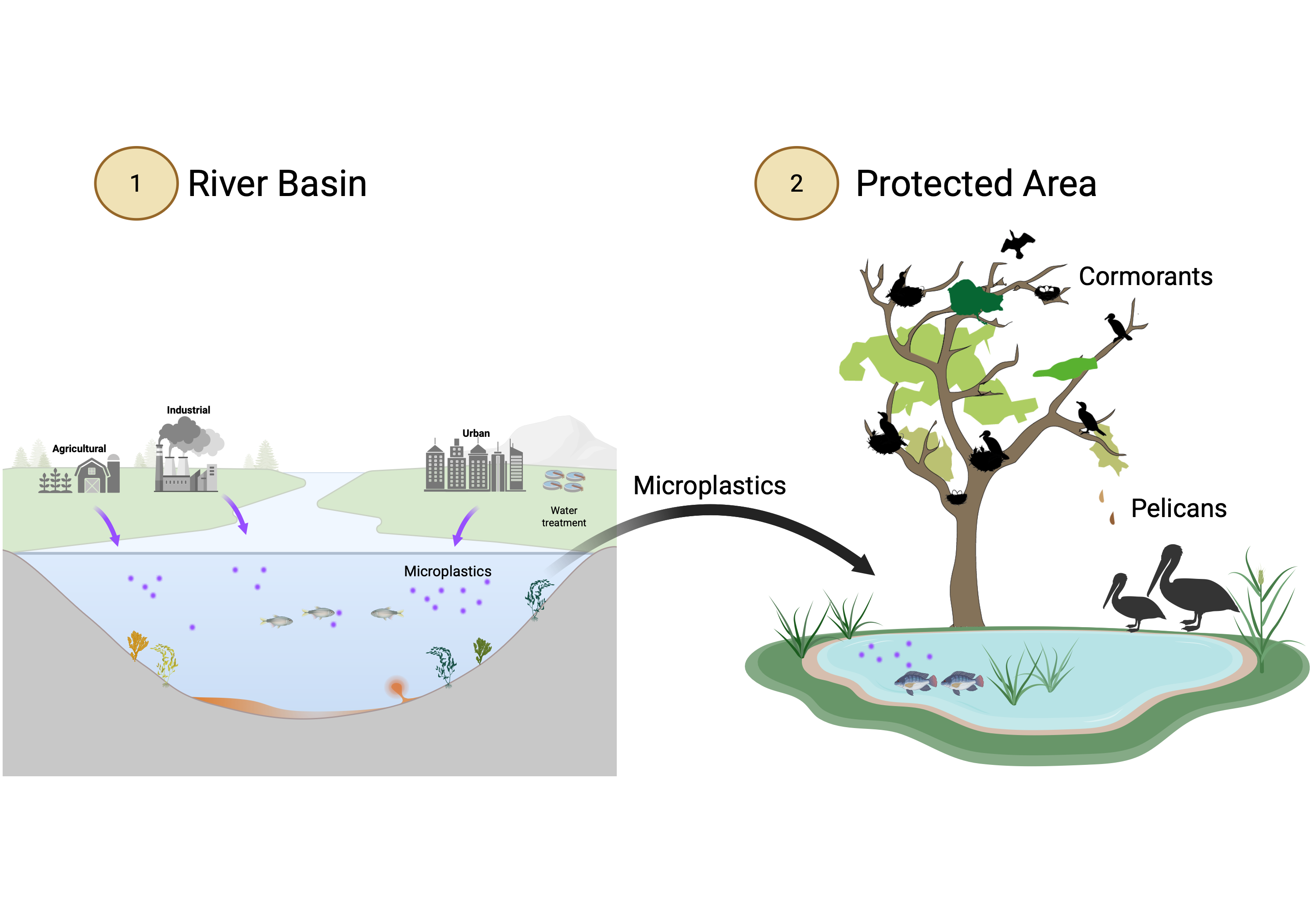
Microplastic (MP) pollution represents a significant global environmental threat due to its widespread presence in aquatic ecosystems. However, research on MP contamination in Mexican rivers is currently limited. The objective of this study was to assess the spatial and temporal distribution of MPs in surface water at 18 sites along the Guanajuato River basin, including both influent and effluent from a wastewater treatment plant (WWTP) located in the middle basin. The presence of MPs in the feces of the American white pelican (Pelecanus erythrorhynchos) and the neotropic cormorant (Nannopterum brasilianum), two species residing in the lower basin, was also investigated. Surface water analyses indicated that mean MP concentrations were significantly higher during the rainy season (804.9 ± 784.4 particles L⁻¹) than during the dry season (446.8 ± 375.5 particles L⁻¹). The WWTP achieved over 94% removal efficiency for MPs. Fibers and fragments comprised 51.5% and 48% of the MPs, respectively. The most common polymer types were poly-propylene–polyethylene terephthalate (PP–PET, 23.4%) and polycarbonate (PC, 17.2%). MPs were highly prevalent in the feces of both pelicans (95.6%) and cormorants (94.8%). The morphologies and polymer types identified in feces samples were consistent with those found in surface water. These results highlight the extent of MP contamination in the urban sections of the Guanajuato River and underscore potential risks to local aquatic bird species.
Keywords:
plastics
; protected area
; contamination
; bioindicators
Copyright: This open access article is published under a Creative Commons CC BY 4.0 license, which permit the free download, distribution, and reuse, provided that the author and preprint are cited in any reuse.