

Submitted:
04 October 2026
Posted:
07 October 2026
You are already at the latest version
Abstract
The spread of carbapenem-resistant Enterobacteriaceae (CRE) has weakened control of severe hospital infections. These strains evade nearly all last-resort antibiotics, making targeted β-lactamase inhibitors indispensable for β-lactam treatment. Existing carbapenem-bicyclic boronate derivative combinations show broad-spectrum activity, with confirmed efficacy against Class A serine carbapenemases represented by KPC-2. Using KPC-2 as a model for serine β-lactamases (SBLs), we performed non-covalent and covalent docking to compare substrate and inhibitor competition for the active site and acyl-enzyme formation. The bicyclic boronate inhibitors Taniborbactam and Ledaborbactam show stronger binding affinities than the monocyclic Vaborbactam, with affinities comparable to those of Imipenem. Beyond the catalytic residues Ser70, Lys73, and Glu166, shared hydrogen-bonding interactions involving Ser130, Asn132, Arg220, and Thr237 in KPC-2 with both carbapenems and cyclic boronates indicate direct active-site competition. These findings clarify how inhibition competes with catalysis and provide a theoretical framework for inhibitor optimization.
Keywords:
carbapenem-resistant Enterobacteriaceae
; carbapenemase
; cyclic boronate inhibitors
; serine-β-lactamases
; acyl-enzyme intermediates
; molecular docking
; covalent docking
1. Introduction
Carbapenem-resistant Enterobacteriaceae (CRE) resist most antibiotics, making infections extremely difficult to treat with available agents. Klebsiella pneumoniae carbapenemase (KPC-2) is a predominant carbapenemase. Carbapenems are among the most effective β-lactam antibiotics and have broad-spectrum antibacterial activity. Because they are highly stable against hydrolysis by most β-lactamases, these compounds are often used as a last-resort treatment for severe infections. However, the emergence of carbapenem resistance, mainly mediated by carbapenemases, shortens antibiotic lifespans and poses a serious challenge for modern medicine. CRE pose a significant threat to patient safety, especially in long-term care hospitals (LTCHs) that serve a high concentration of elderly patients with multiple comorbidities. [1,2,3,4,5,6]
KPC-2 carbapenemases belong to the superfamily of serine β-lactamases that hydrolyze the β-lactam ring. Developing β-lactamase inhibitors is instrumental in preserving the therapeutic efficacy of β-lactam antibiotics against β-lactamase-producing pathogens. To date, the FDA has approved meropenem-vaborbactam and imipenem-relebactam as β-lactam antibiotics with β-lactamase inhibitors. [7,8,9,10] Current combinations target class A serine carbapenemases (e.g., KPC) but remain inactive against MBLs (metallo-β-lactamases) and class D serine carbapenemases (serine β-lactamases, SBLs). In contrast, bicyclic boronate derivatives display broad-spectrum potential by inhibiting both SBLs and MBLs. Among these, taniborbactam (VNRX-5133) and xeruborbactam (QPX7728) have attracted substantial research interest. [11,12,13]
Cyclic boronate inhibitors are a distinct class of β-lactamase inhibitors. They faithfully mimic the catalytic transition state of SBLs while chelating the active-site zinc ions in MBLs, thereby acting as competitive inhibitors with affinity comparable to the native β-lactam substrate. Serine β-lactamases (SBLs) hydrolytically inactivate β-lactam substrates through a covalent catalytic mechanism with two discrete kinetic phases. The catalytic trajectory proceeds via a covalent acyl-enzyme intermediate, in which the substrate becomes covalently tethered to the enzyme active site. Competitive blockade of the nucleophilic step that forms this acyl-enzyme intermediate results in exceptionally potent inhibition, as exemplified by our proposed model for cyclic boronate inhibitors. [14,15,16,17,18]
Research on serine carbapenemases represents a major step forward in combating antibiotic resistance as a global public-health problem. In this study, we selected KPC-2 as the representative structural model for serine β-lactamases (SBLs) to support our mechanistic analysis. We used non-covalent docking [19,20] to simulate substrate and inhibitor binding modes, while covalent docking [21,22] modeled acyl-enzyme intermediates and covalent inhibitors. Together, these methods elucidated the inhibition mechanism within the catalytic cycle and provided a theoretical basis for rational inhibitor optimization.
2. Materials and Methods
2.1. Protein Selection and Preparation
We selected the serine carbapenemase KPC-2 for this study and obtained its three-dimensional structure (PDB ID: 2OV5) from the Protein Data Bank (PDB).[23] To prepare the target protein for simulation, we first removed co-crystallized ligands and crystal waters to avoid artifactual solvent-mediated salt bridges in the active and allosteric regions. Using the Build module and Protein Preparation Wizard in Schrödinger Maestro 12.8, we added hydrogens, rebuilt missing side chains, and set the protonation state to pH 7.0. We then refined the structure via energy minimization using the OPLS4 force field.
2.2. Ligand Acquisition and Preparation
We collected structural information on cyclic boronate inhibitors (taniborbactam, QPX7728, vaborbactam, VNRX-5236) and carbapenem antibiotics (meropenem, imipenem) from NCBI PubChem (Table 1).
2.3. Non-Covalent Approach of Molecular Docking
We performed molecular docking using the Glide module (Schrödinger, LLC, NY) with a standard workflow: ligand preparation, protein preparation, receptor grid generation, docking, and post-docking pose visualization.
We defined the active site by removing the co-crystallized ligand and placing the grid box at the centroid of the reference ligand in the receptor workspace. The OPLS 2005 force field was used throughout. Ligands were prepared in LigPrep and docked into the receptor grid using Glide Standard Precision (SP) mode with flexible ligand treatment. Non-polar van der Waals radii were scaled to 0.80, and the partial-charge cutoff remained at the default 0.15 to reduce steric penalties for close contacts. No interaction constraints were applied, and outputs were saved as Pose Viewer files for direct inspection.
We analyzed the resulting poses in Pose Viewer under default settings to map hydrogen bonds and salt bridges at the ligand–receptor interface. Final poses were ranked by Glide’s integrated scoring system, which combines grid interaction terms, proprietary Glide Score, and internal ligand strain energy, with Glide Score serving as the primary metric for ranking and prioritization.
2.4. Covalent Approach of Molecular Docking
We performed covalent docking simulations of ligands against a panel of carbapenem antibiotics and cyclic boronate inhibitors using the CovDock module in the Schrödinger software suite. The CovDock workflow enables targeted covalent binding prediction between small molecules and protein targets through a multi-step optimized protocol. First, the reactive residue in the protein active site is computationally mutated to alanine to eliminate steric interference from the native side chain during initial sampling. The ligand is then docked into the predefined active site pocket with extensive conformational exploration. Predefined translational constraints are applied to restrict the movement of the ligand’s electrophilic reactive group. This keeps it in close spatial proximity to the designated binding residue. After non-covalent pose generation, we revert the alanine residue to its original reactive state and geometrically construct a covalent bond between the restored native residue and the ligand’s reactive warhead. We then energy-minimize the resulting covalent protein-ligand complex to relieve local steric clashes and evaluate the final binding affinity using a dedicated covalent scoring function. This scoring framework combines non-covalent binding affinity with penalties for covalent strain and active-site rearrangement. It prioritizes chemically realistic binding modes.
For all simulations in this study, we specified the catalytic serine residue in the enzyme active site as the exclusive reactive residue, supported by prior mechanistic and structural evidence in the published literature. We set the sampling thoroughness parameter to “pose prediction” mode across all runs to maximize the geometric accuracy of the resulting covalent binding poses.
2.5. Binding Free Energy Calculation Using Prime/MM-GBSA Approach
To validate the docking poses and improve affinity-prediction accuracy, we applied the Prime MM-GBSA module within the Schrödinger Suite. First, the Prime tool refined the protein-ligand complexes to optimize side-chain conformations and hydrogen-bonding networks, thereby validating the docking poses. Next, we used the MM-GBSA/VSGB 2.0 model to calculate the binding free energy (ΔGbind), thereby improving affinity-prediction accuracy. This model incorporates the OPLS4 force field for molecular mechanics energies and the VSGB 2.0 implicit solvation model for polar and non-polar solvation contributions. We assigned a dielectric constant of 2.0 to the solute and 80.0 to the solvent. Unlike standard scoring functions that often neglect entropic and solvation effects, MM-GBSA provides a physics-based estimate of binding free energy.
2.6. MD Simulations
We performed molecular dynamics (MD) simulations in Discovery Studio 2021 (BIOVIA, San Diego, CA, USA) to evaluate the stability of protein-ligand complexes. We first solvated the docked complex structures in a cubic box of TIP3P water molecules, maintaining a minimum distance of 10 Å from the solute surface, and added sodium ions to neutralize the system charge. We applied the CHARMM force field to both the protein and the ligand. The system then underwent energy minimization with the steepest descent algorithm, followed by conjugate gradient minimization until it reached the convergence criterion of 0.1 kcal/mol/Å. Next, we heated it from 0 K to 300 K over 100 ps in the NVT ensemble, followed by 500 ps of equilibration in the NPT ensemble (1 atm). Finally, we ran a 50 ns production simulation in the NPT ensemble with a 2 fs time step, saving coordinates every 10 ps for analysis. RMSD and RMSF were then analyzed to assess the dynamic stability and binding mode of the complexes.
2.7. Sequence Alignment and Protein Structure Visualization
MEGA11.0 was used to perform a multiple sequence alignment of Class A beta-lactamases, including TEM-1 (GenBank ID: AY263331, UniProt
code: P62593), SHV-1 (GenBank ID: AY787643, UniProt code: P0AD64), KPC-2 (GenBank ID: LDDY01000008, UniProt code: Q93LQ9), and CTX-M-1 (GenBank ID: DQ915955, UniProt code: P28585). Signal peptides and N-terminal ends were omitted because they show little sequence similarity. PyMOL (v2.5) was used to visualize the protein structure and identify key residues.
3. Results
3.1. Interaction of Carbapenem Antibiotics and Cyclic Boronate Inhibitors Against Serine Carbapenemase by Non-Covalent Docking
Figure 1.
Non-covalent molecular interaction of carbapenem antibiotics and cyclic boronate inhibitors against KPC-2. *Hydrogen bonds are represented by continuous red lines connecting the binding sites of the ligand and protein residues, with arrows pointing to the atoms of the hydrogen bond acceptors.
Figure 1.
Non-covalent molecular interaction of carbapenem antibiotics and cyclic boronate inhibitors against KPC-2. *Hydrogen bonds are represented by continuous red lines connecting the binding sites of the ligand and protein residues, with arrows pointing to the atoms of the hydrogen bond acceptors.
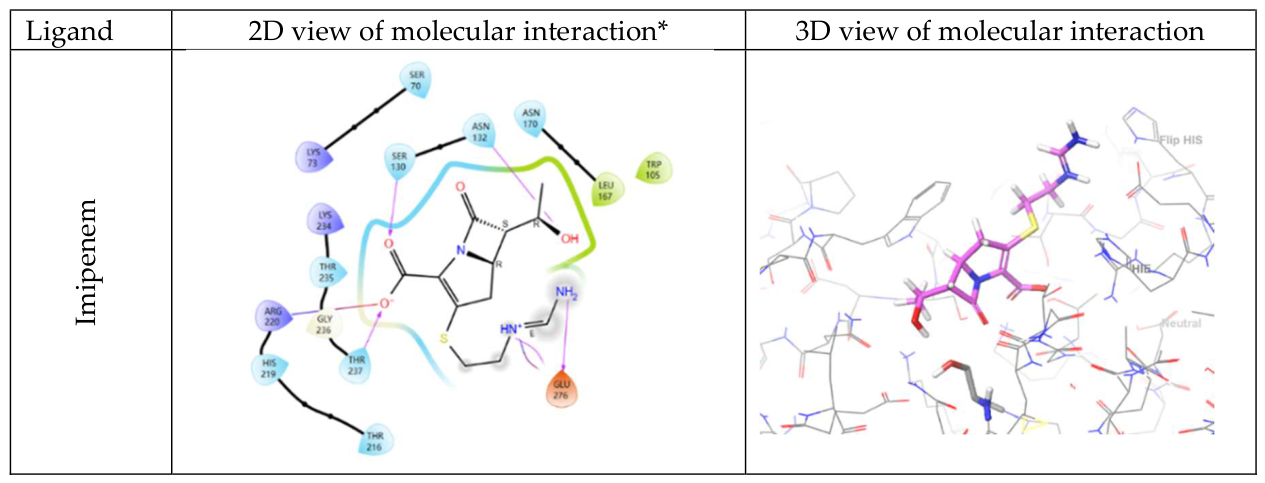
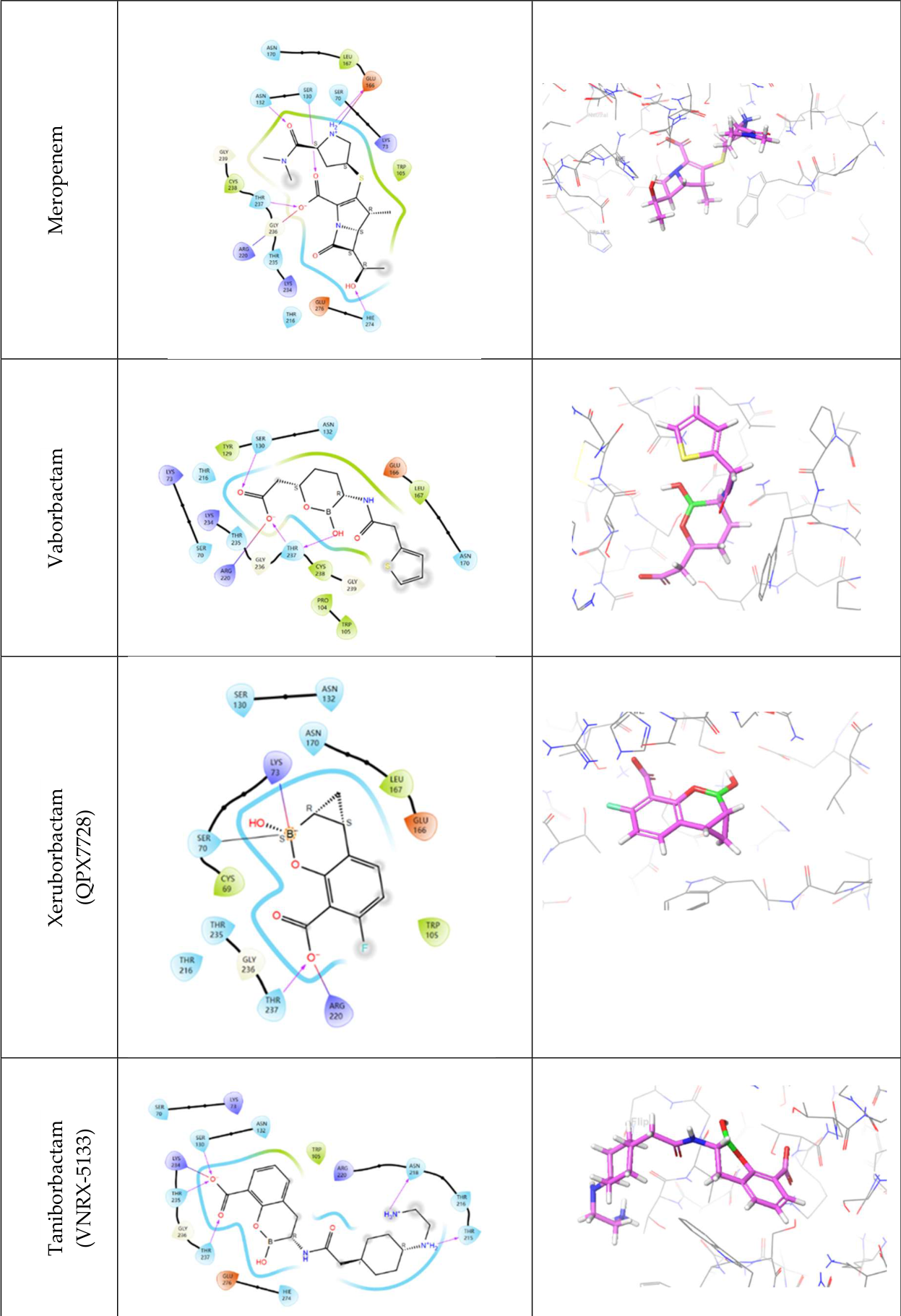
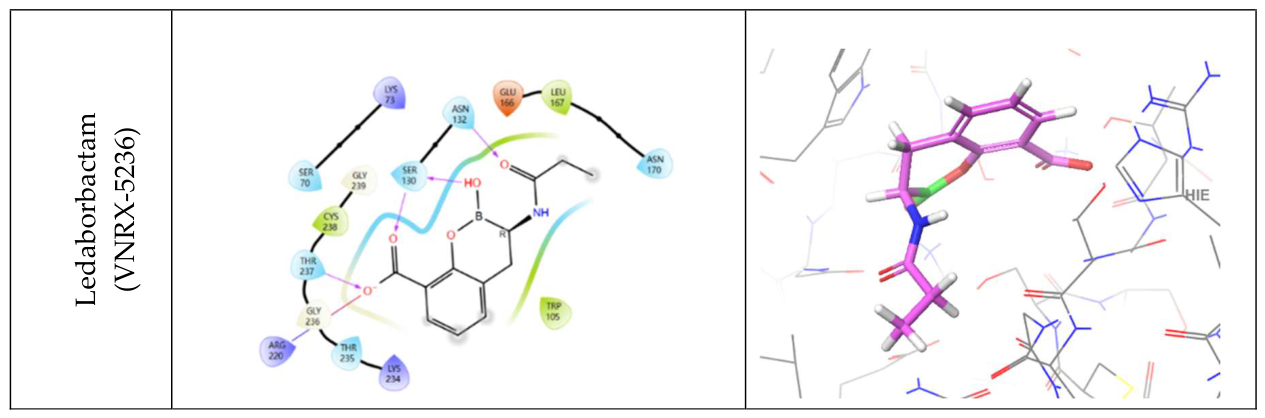
Molecular docking studies were performed to elucidate the binding modes of each ligand with serine carbapenemase. We docked two carbapenem antibiotics, meropenem and imipenem, and four cyclic boronate inhibitors, vaborbactam, xeruborbactam, taniborbactam, and ledaborbactam, into the active site of the KPC-2 crystal structure using the Glide module of non-covalent docking, as shown in Table 1. Combined analysis of docking scores and MM-GBSA binding free energies (Table 2) indicated that the carbapenem antibiotics showed stronger binding affinities than the monocyclic boronate inhibitor, vaborbactam, and comparable affinity to the bicyclic boronate inhibitors, taniborbactam and ledaborbactam, but not xeruborbactam..
3.2. Interaction of Carbapenem Antibiotics and Cyclic Boronate Inhibitors Against Serine Carbapenemases by Covalent Docking
Consistent with the canonical catalytic mechanism of Ambler class A β-lactamases, active-site Ser70 undergoes nucleophilic attack to form a covalent adduct with carbapenem antibiotics and serves as the primary target for covalent capture by cyclic boronate inhibitors, as shown in Figure 2. Docking scores and MM-GBSA binding free energy calculations show that cyclic boronate inhibitors bind more tightly than imipenem but less tightly than meropenem (Table 2). Taniborbactam and ledaborbactam, both bicyclic boronate inhibitors, show greater inhibitory potency than the monocyclic inhibitor vaborbactam; however, xeruborbactam is an exception to this structural comparison.

Table 3.
Results of covalent docking of carbapenem antibiotics and cyclic boronate inhibitors against KPC-2.
Table 3.
Results of covalent docking of carbapenem antibiotics and cyclic boronate inhibitors against KPC-2.
| Ligand-covalent | Docking score (Kcal/mol) |
MMGBSA dG Bind (NS) (Kcal/mol) |
| Imipenem | -5.308 | -2.08 |
| Meropenem | -6.070 | -4.44 |
| Vaborbactam | -4.239 | -2.90 |
| Xeruborbactam (QPX7728) | -5.821 | -1.49 |
| Taniborbactam (VNRX-5133) | -4.930 | -3.32 |
| Ledaborbactam (VNRX-5236) | -6.280 | -2.50 |
MMGBSA dG Bind (NS), where NS denotes “no strain”, representing the binding/interaction energy excluding the conformational strain incurred by the receptor and ligand upon complex formation.
3.3. Molecular Dynamics (MD) Validation of Docking Results
Because Taniborbactam showed the most favorable binding affinity in both non-covalent and covalent docking, as reflected by its MMGBSA dG Bind (NS) values, we further performed molecular dynamics (MD) simulations to validate the docking results. As shown in Figure 3, the protein backbone root-mean-square deviation (RMSD) remained stably within approximately 0.925 Å to 1.25 Å across the entire 50 ns molecular dynamics simulation trajectory, indicating a well-equilibrated system without significant conformational drift or abrupt structural rearrangement. Figure 4 shows the root mean square fluctuation (RMSF), which highlights residue-level flexibility and local dynamic differences. The RMSF curve shows distinct variations in fluctuation magnitude among different residues, with a subset exhibiting higher values. These flexible segments generally correspond to surface loops and key functional domains, such as the substrate-binding site and the inhibitor-interaction region.
3.4. Comparing Molecular Interactions Between Non-Covalent and Covalent Docking
During covalent docking, Ser70 engages in covalent interactions with β-lactam antibiotics and boronic acid inhibitors, whereas Xeruborbactam (QPX7728) binds only via non-covalent interactions (Figure 4). Ser130, Asn132, Arg220, and Thr237 form hydrogen bonds with both carbapenem antibiotics and cyclic boronate inhibitors in non-covalent and covalent docking models, whereas Lys73 participates in hydrogen bonding only in the covalent docking models. These critical residues elucidate the competitive inhibition mechanism of cyclic boronates. Hydrogen-bonded interactions between carbapenem antibiotics and Glu166 and Glu276 provide evidence of substrate recognition. Non-covalent molecular docking simulations revealed a hydrogen bond between His274 and the carbapenem substrate, which was absent in the covalent docking models. Thr215 and Asn218 interact with cyclic boronates only in non-covalent docking, whereas Gly239 interacts only in covalent docking.
4. Discussion
KPC-2 is a class A serine β-lactamase (Figure 5, Figure 6 and Figure 7) that confers resistance through a nucleophilic serine residue (S70) in its active site. It inactivates most β-lactam antibiotics, notably carbapenems, by rapidly deacylating the covalent acyl-enzyme intermediate (Figure 6).[24] Although the active-site residues in KPC-2 are largely conserved in sequence and structure compared with non-carbapenemases, subtle alterations may collectively facilitate carbapenem hydrolysis. As shown in Figure 7 (PDB ID: 2OV5), KPC-2 has an N-terminal α-domain (left) and a C-terminal α/β-domain (right), with the three signature catalytic motifs—Ser-X-X-Lys, Ser-X-Asn, and Lys-Thr-Gly—assembled to form the functional active site. Efficient carbapenem deacylation by KPC-2 depends on the Glu166 general base and the precise placement and conformational stability of the Q214-R220 loop.
Combination therapies pairing β-lactam antibiotics with novel β-lactamase inhibitors are most often utilized to address this resistance mechanism. Our results directly support this mechanism: Ser130 and Arg220 form hydrogen bonds with both carbapenem antibiotics and cyclic boronate inhibitors in non-covalent and covalent docking models, consistent with experimental outcomes. These findings indicate that interactions with Glu166 and the Q214-R220 loop may disrupt enzyme function and overcome resistance.[25,26,27,28,29] Notably, these docking simulations support the catalytic mechanism of serine β-lactamases in two key ways. In non-covalent systems, carbapenem antibiotics form stable hydrogen bonds with Glu166 and Ser130, while in covalent docking models, Lys73 and Ser130 form hydrogen bonds with both carbapenems and cyclic boronate inhibitors.[30,31]
5. Conclusion
While molecular docking is widely utilized to investigate ligand interactions with antimicrobial resistance (AMR) targets, a notable discrepancy often remains between high docking scores and mechanistically plausible binding poses. To address this gap, we propose a mechanism-based framework for assessing the interpretability of structure-based docking outcomes. Using KPC-2 as the structural prototype for serine β-lactamases (SBLs), we combine non-covalent docking for substrate/inhibitor complexes with covalent docking for acyl-enzyme intermediates to define inhibition mechanisms grounded in the enzyme’s catalytic process. The bicyclic boronate inhibitors taniborbactam and ledaborbactam show stronger binding affinities than the monocyclic inhibitor vaborbactam, with affinities comparable to the carbapenem antibiotic imipenem. Competitive inhibition is suggested by shared hydrogen bonding networks with Ser130, Asn132, Arg220, and Thr237 within the KPC-2 active site, in addition to the catalytic triad (Ser70, Lys73, Glu166). These insights support structure-based optimization of novel inhibitors.
Acknowledgments
The author thanks Jia-Ning Li for participating in the computer simulation experiment of this project.
References
- Nordmann, P.; Cuzon, G.; Naas, T. The real threat of Klebsiella pneumoniae carbapenemase-producing bacteria. Lancet Infect. Dis. 2009, 9, 228–236. [Google Scholar] [CrossRef] [PubMed]
- Munoz-Price, L.S.; Poirel, L.; Bonomo, R.A.; Schwaber, M.J.; Daikos, G.L.; Cormican, M.; Cornaglia, G.; Garau, J.; Gniadkowski, M.; Hayden, M.K.; Kumarasamy, K.; Livermore, D.M.; Maya, J.J.; Nordmann, P.; Patel, J.B.; Paterson, D.L.; Pitout, J.; Villegas, M.V.; Wang, H.; Woodford, N.; Quinn, J.P. Clinical epidemiology of the global expansion of Klebsiella pneumoniae carbapenemases. Lancet Infect. Dis. 2013, 13, 785–796. [Google Scholar] [CrossRef] [PubMed]
- Bush, K. Past and present perspectives on β-lactamases. Antimicrob. Agents Chemother. 2018, 62, e01076-18. [Google Scholar] [CrossRef] [PubMed]
- Ma, J.; Song, X.; Li, M.; Yu, Z.; Cheng, W.; Yu, Z.; Zhang, W.; Zhang, Y.; Shen, A.; Sun, H.; Li, L. Global spread of carbapenem-resistant Enterobacteriaceae: Epidemiological features, resistance mechanisms, detection and therapy. Microbiol. Res. 2023, 266, 127249. [Google Scholar] [CrossRef] [PubMed]
- Absar, M.; Zaidah, A.R.; Mahmood, A.; Ahmad, S.; Ejaz, H.; Ahmed, N.; Nik Hashim, N.H.H.; Yean, C.Y. A Review of In Silico and In Vitro Approaches in the Fight Against Carbapenem-Resistant Enterobacterales. J. Clin. Lab Anal. 2025, 39(9), e70018. [Google Scholar] [CrossRef] [PubMed]
- Hwang, H.; Kim, S. Prevalence, acquisition, and risk factors of carbapenem-resistant enterobacterales colonization in long-term care hospitals: A prospective active surveillance study. PLoS ONE 2026, 21(9), e0358973. [Google Scholar] [CrossRef] [PubMed]
- Krajnc, A.; Lang, P.A.; Panduwawala, T.D.; Brem, J.; Schofield, C.J. Will morphing boron-based inhibitors beat the β-lactamases? Curr. Opin. Chem. Biol. 2019, 50, 101–110. [Google Scholar] [CrossRef] [PubMed]
- Hecker, S.J.; Reddy, K.R.; Totrov, M.; et al. Discovery of a cyclic boronic acid β-lactamase inhibitor (RPX7009) with utility vs class A serine carbapenemases. J. Med. Chem. 2015, 58, 3682–3692. [Google Scholar] [CrossRef] [PubMed]
- Hecker, S.J.; Reddy, K.R.; Lomovskaya, O.; Griffith, D.C.; Rubio-Aparicio, D.; Nelson, K.; Tsivkovski, R.; Sun, D.; Sabet, M.; Tarazi, Z.; Parkinson, J.; Totrov, M.; Boyer, S.H.; Glinka, T.W.; Pemberton, O.A.; Chen, Y.; Dudley, M.N. Discovery of Cyclic Boronic Acid QPX7728, an Ultrabroad-Spectrum Inhibitor of Serine and Metallo-β-lactamases. J. Med. Chem. 2020, 63(14), 7491–7507. [Google Scholar] [CrossRef] [PubMed]
- Zhanel, G.G.; Lawrence, C.K.; Adam, H.; Schweizer, F.; Zelenitsky, S.; Zhanel, M.; Lagacé-Wiens, P.R.S.; Walkty, A.; Denisuik, A.; Golden, A.; Gin, A.S.; Hoban, D.J.; Lynch, J.P., 3rd; Karlowsky, J.A. Imipenem-Relebactam and Meropenem-Vaborbactam: Two Novel Carbapenem-β-Lactamase Inhibitor Combinations. Drugs 2018, 78(1), 65–98. [Google Scholar] [CrossRef] [PubMed]
- Lomovskaya, O.; Castanheira, M.; Lindley, J.; Rubio-Aparicio, D.; Nelson, K.; Tsivkovski, R.; Sun, D.; Totrov, M.; Loutit, J.; Dudley, M. In vitro potency of xeruborbactam in combination with multiple β-lactam antibiotics in comparison with other β-lactam/β-lactamase inhibitor (BLI) combinations against carbapenem-resistant and extended-spectrum β-lactamase-producing Enterobacterales. Antimicrob. Agents Chemother. 2023, 67(11), e0044023. [Google Scholar] [CrossRef] [PubMed]
- Hamrick, J.C.; Docquier, J.D.; Uehara, T.; Myers, C.L.; Six, D.A.; Chatwin, C.L.; John, K.J.; Vernacchio, S.F.; Cusick, S.M.; Trout, R.E.L.; Pozzi, C.; De Luca, F.; Benvenuti, M.; Mangani, S.; Liu, B.; Jackson, R.W.; Moeck, G.; Xerri, L.; Burns, C.J.; Pevear, D.C.; Daigle, D.M. VNRX-5133 (Taniborbactam), a Broad-Spectrum Inhibitor of Serine- and Metallo-β-Lactamases, Restores Activity of Cefepime in Enterobacterales and Pseudomonas aeruginosa. Antimicrob. Agents Chemother. 2020, 64(3), e01963-19. [Google Scholar] [CrossRef] [PubMed] [PubMed Central]
- Yahav, D.; Giske, C.G.; Grāmatniece, A.; Abodakpi, H.; Tam, V.H.; Leibovici, L. New β-Lactam-β-Lactamase Inhibitor Combinations. Clin. Microbiol. Rev. Erratum in: Clin Microbiol Rev. 2021 Jan 27;34(2):e00021-21. doi: 10.1128/CMR.00021-21. 2020, 34(1), e00115-20. [Google Scholar] [CrossRef] [PubMed]
- Strynadka, N.C.; Adachi, H.; Jensen, S.E.; Johns, K.; Sielecki, A.; Betzel, C.; Sutoh, K.; James, M.N. Molecular structure of the acyl-enzyme intermediate in beta-lactam hydrolysis at 1.7 A resolution. Nature 1992, 359(6397), 700–5. [Google Scholar] [CrossRef] [PubMed]
- Mora-Ochomogo, M.; Lohans, C.T. β-Lactam antibiotic targets and resistance mechanisms: from covalent inhibitors to substrates. RSC Med. Chem. 2021, 12(10), 1623–1639. [Google Scholar] [CrossRef] [PubMed]
- Mehta, S.C.; Furey, I.M.; Pemberton, O.A.; Boragine, D.M.; Chen, Y.; Palzkill, T. KPC-2 β-lactamase enables carbapenem antibiotic resistance through fast deacylation of the covalent intermediate. J. Biol. Chem. 2021, 296, 100155. [Google Scholar] [CrossRef] [PubMed]
- Santi, N.; Corsini, F.; Bonomo, R.A.; Caselli, E.; Prati, F. Boronic Acid Inhibitors of β-Lactamases: A Promising Strategy Against Antimicrobial Resistance. Med. Res. Rev. 2026. [Google Scholar] [CrossRef] [PubMed]
- Lence, E.; González-Bello, C. Molecular Basis of Bicyclic Boronate β-Lactamase Inhibitors of Ultrabroad Efficacy - Insights From Molecular Dynamics Simulation Studies. Front Microbiol. 2021, 12, 721826. [Google Scholar] [CrossRef] [PubMed]
- Papp-Wallace, K.M.; Taracila, M.A.; Smith, K.M.; Xu, Y.; Bonomo, R.A. Understanding the molecular determinants of substrate and inhibitor specificities in the Carbapenemase KPC-2: exploring the roles of Arg220 and Glu276. Antimicrob. Agents Chemother. 2012, 56(8), 4428–38. [Google Scholar] [CrossRef] [PubMed]
- Malathi, K.; Anbarasu, A.; Ramaiah, S. Identification of potential inhibitors for Klebsiella pneumoniae carbapenemase-3: a molecular docking and dynamics study. J. Biomol. Struct. Dyn. 2019, 37(17), 4601–4613. [Google Scholar] [CrossRef] [PubMed]
- Singh, N.; Vayer, P.; Villoutreix, B.O. The covalent docking software landscape: features and applications in drug design. Brief. Bioinform. 2025, 26(6), bbaf697. [Google Scholar] [CrossRef] [PubMed]
- Oueslati, S.; Iorga, B.I.; Tlili, L.; Exilie, C.; Zavala, A.; Dortet, L.; Jousset, A.B.; Bernabeu, S.; Bonnin, R.A.; Naas, T. Unravelling ceftazidime/avibactam resistance of KPC-28, a KPC-2 variant lacking carbapenemase activity. J. Antimicrob. Chemother. 2019, 74(8), 2239–2246. [Google Scholar] [CrossRef] [PubMed]
- Ke, W.; Bethel, C.R.; Thomson, J.M.; Bonomo, R.A.; van den Akker, F. Crystal structure of KPC-2: insights into carbapenemase activity in class A beta-lactamases. Biochemistry 2007, 46(19), 5732–40. [Google Scholar] [CrossRef] [PubMed]
- Pemberton, O.A.; Noor, R.E.; Kumar, M. V. V.; Sanishvili, R.; Kemp, M.T.; Kearns, F.L.; Woodcock, H.L.; Gelis, I.; Chen, Y. Mechanism of proton transfer in class A β-lactamase catalysis and inhibition by avibactam. Proc. Natl. Acad. Sci. U S A 2020, 117(11), 5818–5825. [Google Scholar] [CrossRef] [PubMed]
- Furey, I.M.; Mehta, S.C.; Sankaran, B.; Hu, L.; Prasad, B.V.V.; Palzkill, T. Local interactions with the Glu166 base and the conformation of an active site loop play key roles in carbapenem hydrolysis by the KPC-2 β-lactamase. J. Biol. Chem. 2021, 296, 100799. [Google Scholar] [CrossRef] [PubMed]
- Li, F.-H.; Zheng, M.; Zhong, G.-M.; He, X.-M.; Hu, M.-Z.; Kuang, X.; Wu, J.-J.; Li, C.-M.; Wang, J.-N.; Zhou, X.-Y.; Yu, Y. Resistance development in KPC-producing Klebsiella pneumoniae under ceftazidime/avibactam-meropenem pressure: KPC-2 Ω-loop mutations attenuate avibactam efficacy. Microbiol. Spectr. 2026, 14(9), e0035626. [Google Scholar] [CrossRef] [PubMed]
- Lin, K.; Zhu, L.; Lü, P.; Zhou, J. Investigating the prevalence of KPC-2 and the variant KPC-144 in carbapenem-resistant Klebsiella pneumoniae and elucidating its molecular epidemiological and genetic characteristics. BMC Microbiol. 2026, 26(1), 641. [Google Scholar] [CrossRef] [PubMed]
- Gong, Y.; Feng, Y.; Lv, X. Identification of a Novel KPC Variant, KPC-204, Conferring Resistance to Both Carbapenems and Ceftazidime-Avibactam in an ST11 Klebsiella pneumoniae Strain. Microorganisms 2024, 12(6), 1193. [Google Scholar] [CrossRef] [PubMed]
- Farhat, N.; Gupta, D.; Ali, A.; Kumar, Y.; Akhtar, F.; Kulanthaivel, S.; Mishra, P.; Khan, F.; Khan, A.U. Broad-Spectrum Inhibitors against Class A, B, and C Type β-Lactamases to Block the Hydrolysis against Antibiotics: Kinetics and Structural Characterization. Microbiol. Spectr. 2022, 10(5), e0045022. [Google Scholar] [CrossRef] [PubMed]
- Oyedele, A.K.; Ogunlana, A.T.; Boyenle, I.D.; Adeyemi, A.O.; Rita, T.O.; Adelusi, T.I.; Abdul-Hammed, M.; Elegbeleye, O.E.; Odunitan, T.T. Docking covalent targets for drug discovery: stimulating the computer-aided drug design community of possible pitfalls and erroneous practices. Mol. Divers. 2023, 27(4), 1879–1903. [Google Scholar] [CrossRef] [PubMed]
- Spyrakis, F.; Santucci, M.; Maso, L.; Cross, S.; Gianquinto, E.; Sannio, F.; Verdirosa, F.; De Luca, F.; Docquier, J.D.; Cendron, L.; Tondi, D.; Venturelli, A.; Cruciani, G.; Costi, M.P. Virtual screening identifies broad-spectrum β-lactamase inhibitors with activity on clinically relevant serine- and metallo-carbapenemases. Sci. Rep. 2020, 10(1), 12763. [Google Scholar] [CrossRef] [PubMed]
Figure 2.
Covalent molecular interaction of carbapenem antibiotics and cyclic boronate inhibitors against KPC-2. *Hydrogen bonds are represented by continuous red lines connecting the binding sites of the ligand and protein residues, with arrows pointing to the atoms of the hydrogen bond acceptors. Ser70 covalently binds β-lactam antibiotics and boronic acid inhibitors.
Figure 2.
Covalent molecular interaction of carbapenem antibiotics and cyclic boronate inhibitors against KPC-2. *Hydrogen bonds are represented by continuous red lines connecting the binding sites of the ligand and protein residues, with arrows pointing to the atoms of the hydrogen bond acceptors. Ser70 covalently binds β-lactam antibiotics and boronic acid inhibitors.
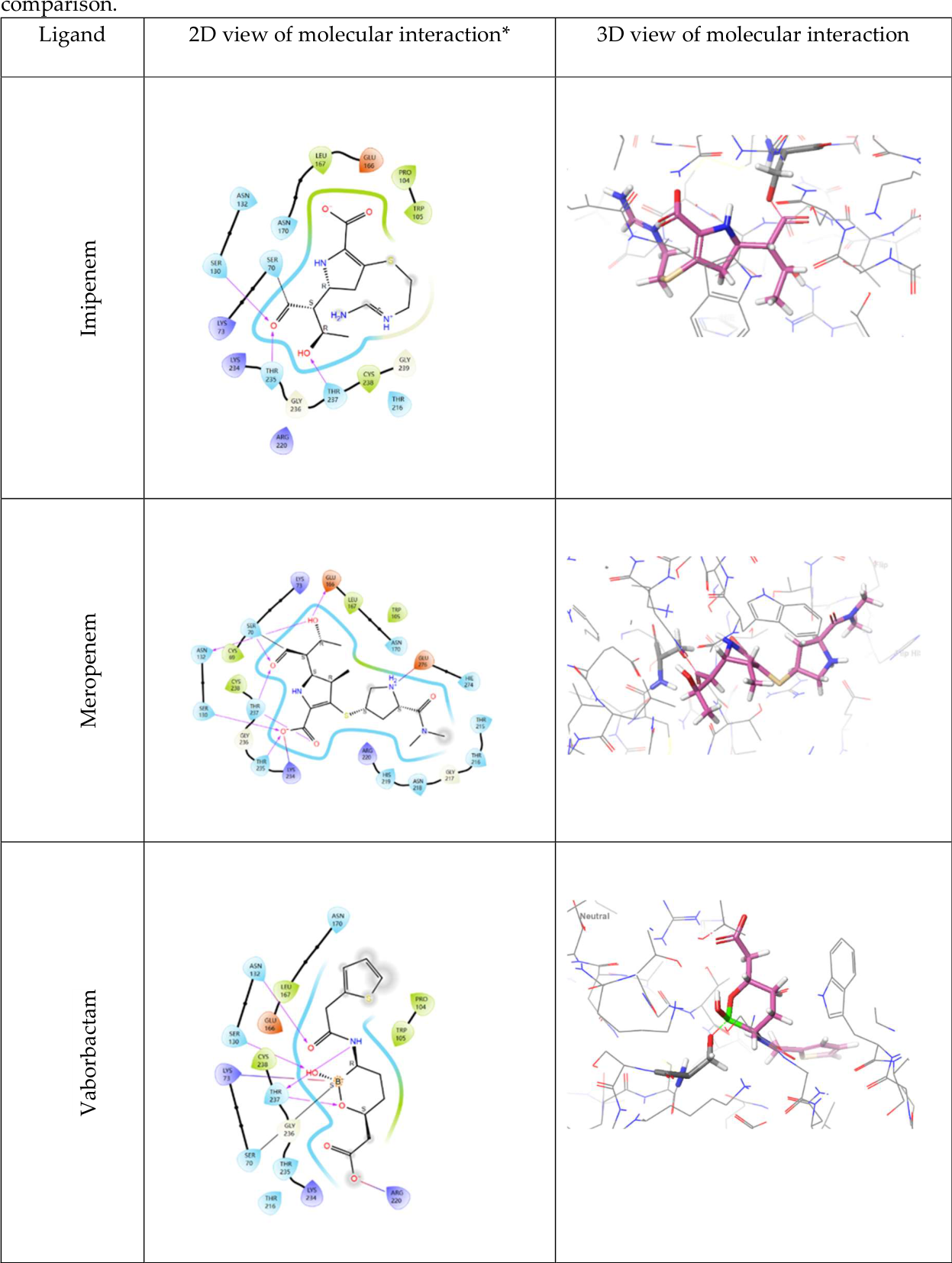
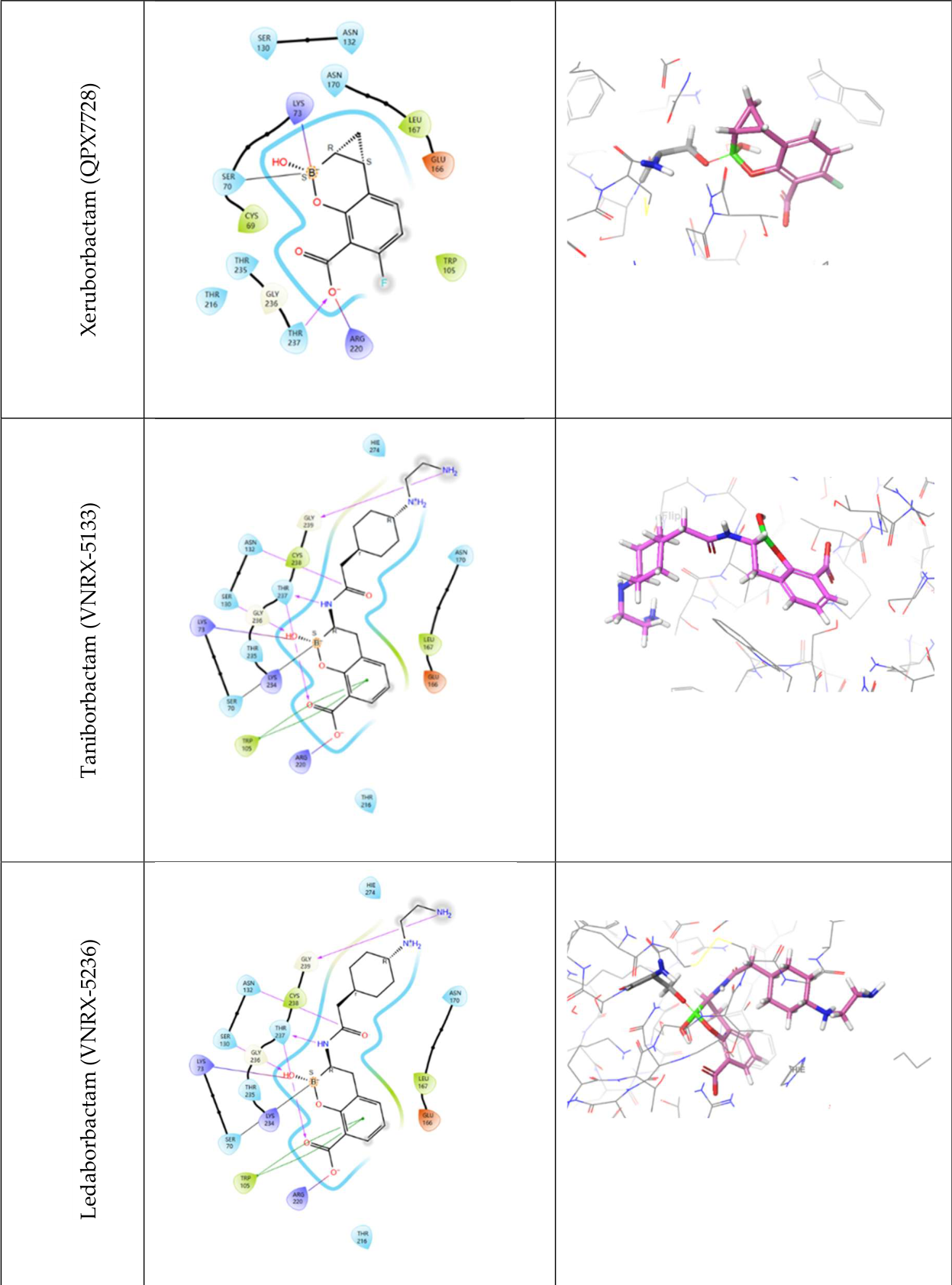
Figure 3.
RMSD and RMSF of KPC-2-Taniborbactam complex in MD simulation.
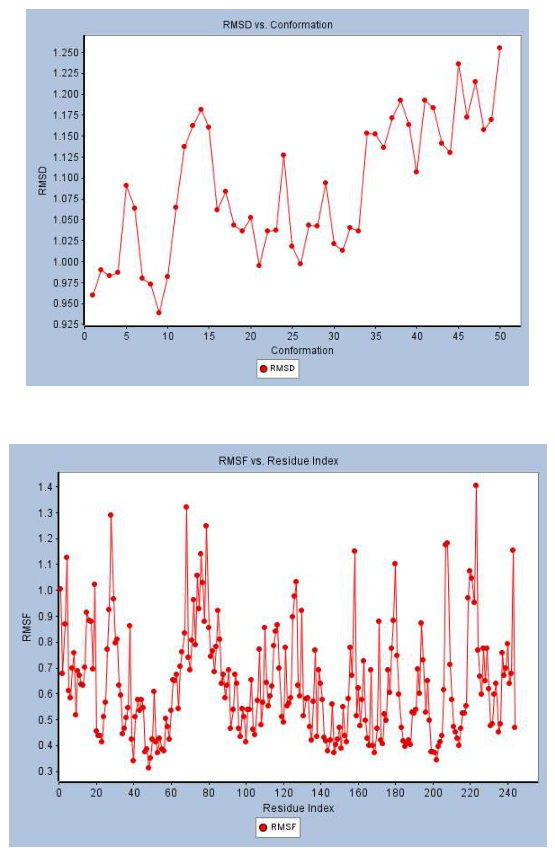
Figure 4.
Comparing molecular interactions of KPC-2 key residues and antibiotics/inhibitors between non-covalent and covalent docking.
Figure 4.
Comparing molecular interactions of KPC-2 key residues and antibiotics/inhibitors between non-covalent and covalent docking.
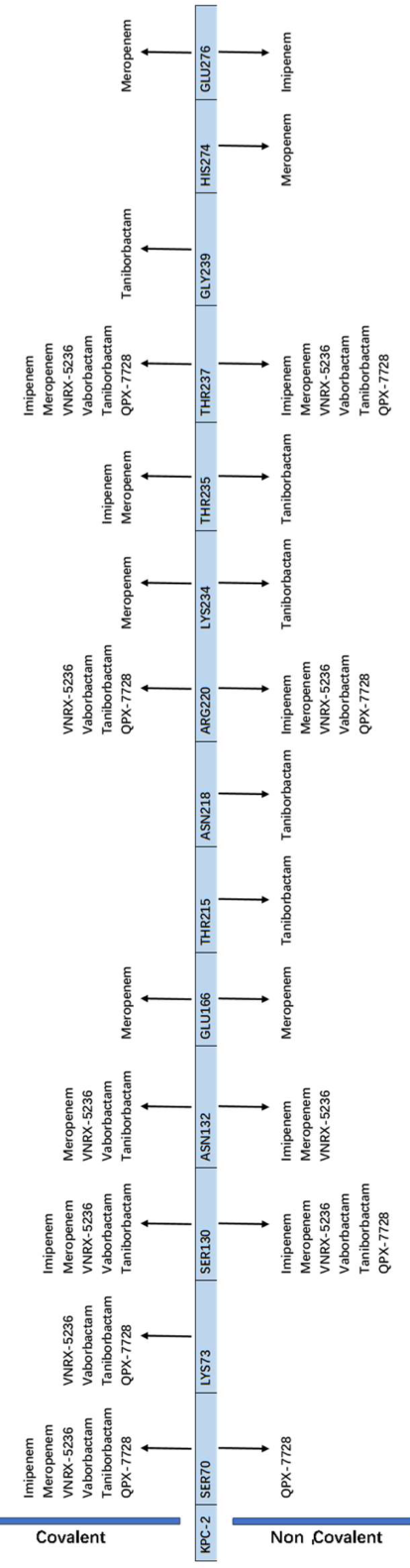
Figure 5.
ABL amino acid sequences from 4 representative β-lactamases (TEM-1, SHV-1, CTX-M-1, KPC-2). Numbering follows the numbering scheme of Ambler et al.. Green marks indicate the key residues involved in catalysis and substrate binding, and yellow marks are Ω-loop regions.
Figure 5.
ABL amino acid sequences from 4 representative β-lactamases (TEM-1, SHV-1, CTX-M-1, KPC-2). Numbering follows the numbering scheme of Ambler et al.. Green marks indicate the key residues involved in catalysis and substrate binding, and yellow marks are Ω-loop regions.
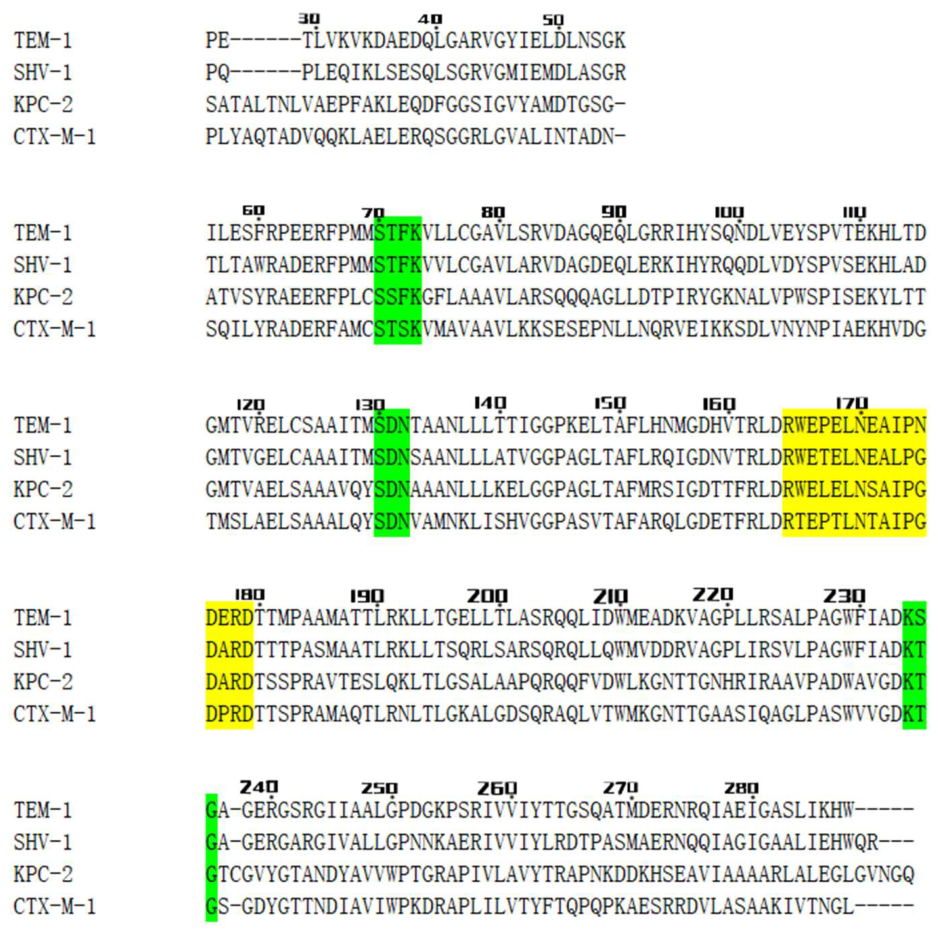
Figure 6.
Mechanism of Class A β-lactamases. Hydrolysis of β-lactam substrates proceeds through a precovalent enzyme–substrate complex, an acylation TS, an acyl–enzyme intermediate, a deacylation TS, and finally a hydrolyzed β-lactam product. In the proposed proton-transfer mechanism for Class A β-lactamase catalysis, using cephalosporin as a representative substrate, Lys73 acts concertedly with Glu166 to activate Ser70 during acylation and, subsequently, the catalytic water during deacylation. (TS: transition state).
Figure 6.
Mechanism of Class A β-lactamases. Hydrolysis of β-lactam substrates proceeds through a precovalent enzyme–substrate complex, an acylation TS, an acyl–enzyme intermediate, a deacylation TS, and finally a hydrolyzed β-lactam product. In the proposed proton-transfer mechanism for Class A β-lactamase catalysis, using cephalosporin as a representative substrate, Lys73 acts concertedly with Glu166 to activate Ser70 during acylation and, subsequently, the catalytic water during deacylation. (TS: transition state).
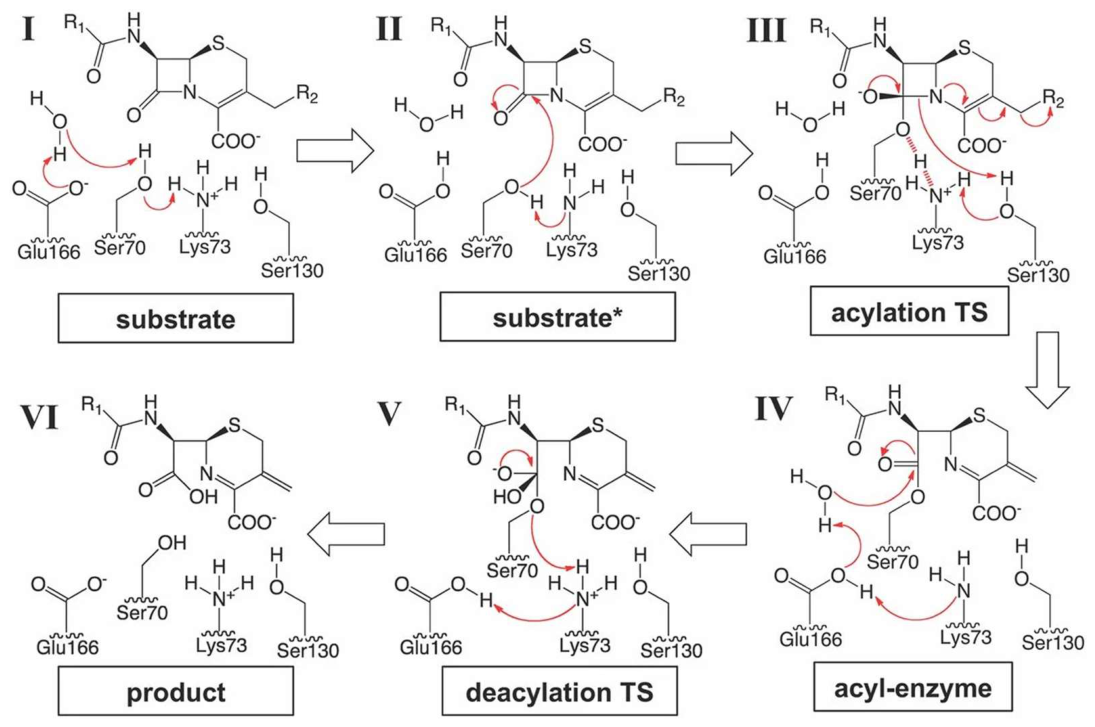
Figure 7.
Tertiary structures of the serine β-lactamase of KPC-2 with the spatial arrangement of the three catalytic-center-defining amino acid groupings, the α domain (left), and an α/β domain (right). Three important catalytic framework motifs: Ser-X-X-Lys (red), Ser-X-Asn (yellow), and Lys-Thr-Gly (cyan).
Figure 7.
Tertiary structures of the serine β-lactamase of KPC-2 with the spatial arrangement of the three catalytic-center-defining amino acid groupings, the α domain (left), and an α/β domain (right). Three important catalytic framework motifs: Ser-X-X-Lys (red), Ser-X-Asn (yellow), and Lys-Thr-Gly (cyan).
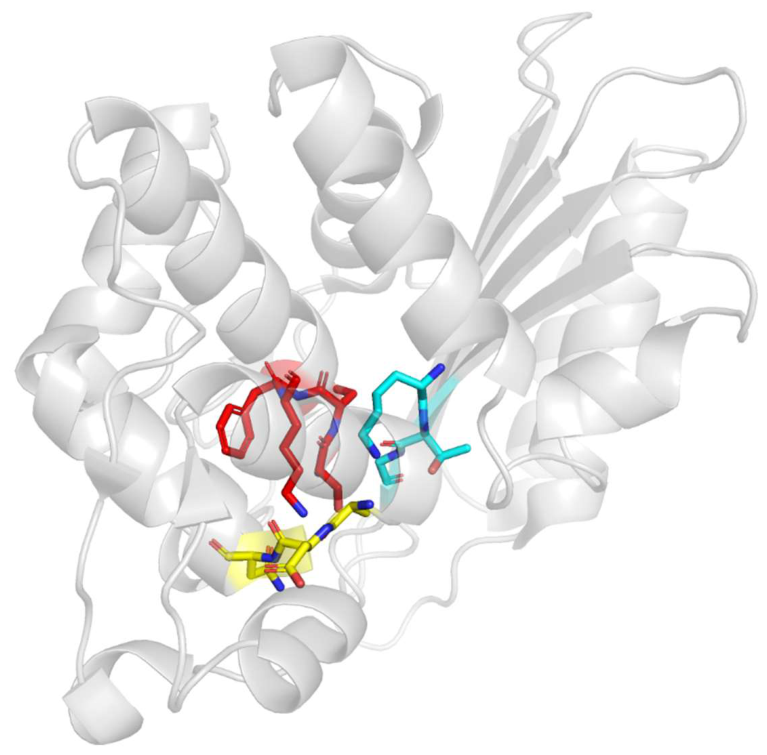
Table 1.
Cyclic boronate inhibitors and carbapenem antibiotics against KPC-2 for molecular docking.
| Ligand | Molecular structure |
| Meropenem |  |
| Imipenem | 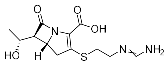 |
| Vaborbactam | 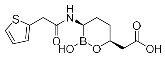 |
| Xeruborbactam (QPX-7728) |  |
| Taniborbactam (VNRX-5133) | 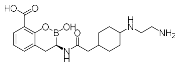 |
| Ledaborbactam (VNRX-5236) | 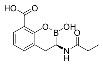 |
The LigPrep module in Schrödinger Maestro 12.8 generated protonation states at physiological pH 7.0, and we minimized the energy using the OPLS4 force field. Before docking, we introduced chimeric conformations to better define the geometric distribution of flexible conformers for each molecule.
Table 2.
Results of non-covalent docking of carbapenem antibiotics and cyclic boronate inhibitors against KPC-2.
Table 2.
Results of non-covalent docking of carbapenem antibiotics and cyclic boronate inhibitors against KPC-2.
| Ligand-non-covalent | Docking score (Kcal/mol) |
MMGBSA dG Bind (NS) (Kcal/mol) |
| Imipenem | -6.70 | -6.33 |
| Meropenem | -5.175 | -5,72 |
| Vaborbactam | -5.976 | -3.81 |
| Xeruborbactam (QPX-7728) | -6.012 | -3.74 |
| Taniborbactam (VNRX-5133) | -4.854 | -5.12 |
| Ledaborbactam (VNRX-5236) | -6.764 | -5.44 |
MMGBSA dG Bind (NS),where NS denotes “no strain”,representing the binding/interaction energy excluding the conformational strain incurred by the receptor and ligand upon complex formation.
Disclaimer/Publisher’s Note: The statements, opinions and data contained in all publications are solely those of the individual author(s) and contributor(s) and not of MDPI and/or the editor(s). MDPI and/or the editor(s) disclaim responsibility for any injury to people or property resulting from any ideas, methods, instructions or products referred to in the content. |
© 2026 by the authors. Licensee MDPI, Basel, Switzerland. This article is an open access article distributed under the terms and conditions of the Creative Commons Attribution (CC BY) license (http://creativecommons.org/licenses/by/4.0/).
Copyright: This open access article is published under a Creative Commons CC BY 4.0 license, which permit the free download, distribution, and reuse, provided that the author and preprint are cited in any reuse.