

Submitted:
03 October 2026
Posted:
07 October 2026
You are already at the latest version
Abstract
Background/Objectives: Research on perinatal mental health often explores motherhood, with little attention given to fathers’ experiences. Even less is known about how Black fathers navigate emotional well-being, distress and social support during the transition to fatherhood. This qualitative study explores Black fathers’ perspectives on cultural beliefs, values, health and social support with respect to paternal perinatal anxiety and depression within the Canadian context. Methods: 20 qualitative, semi-structured interviews were conducted virtually. Participants were eligible if they self-identified as men, were Black fathers with parental rights to one child and were present at their child’s birth in Canada between 2019 – 2025. Participants were recruited via purposive and reverse snowball sampling. Interviews were coded inductively for relevant patterns. Data analysis was guided by the Black Feminist Theory and Critical Race Theory. Results: The identified themes were: (1) the quiet struggle of new fatherhood; (2) bridging the gap: exploring inclusive care for Black fathers’ perinatal mental health; (3) the weight of strength: support, resilience, and the hidden burden; (4) cultural perspectives on perinatal mental health: influence, resistance, and belief systems; and (5) balancing acts: Black fathers’ mental health amid partner support and self-care. Conclusions: Fathers described managing their own distress while supporting partners and navigating expectations of strength and emotional restraint. Their accounts suggest that perinatal services should make space to ask fathers about their wellbeing and support needs, while recognizing that Black fathers differ in how they understand and seek support. Greater attention to Black fathers’ perspectives on navigating perinatal mental health in Canada may inform inclusive approaches to care and policy, reflective of the true intersections of race, gender and culture.
Keywords:
black fathers
; fatherhood
; paternal mental health
; social support
; masculinity
; perinatal depression/anxiety
Introduction
Becoming a father is a social transition as well as a biological one, involving shifts in identity, role expectations and emotional responsibility. As gender roles shift, new fathers are increasingly expected to take on socio-emotional labour that has traditionally fallen to mothers, which can heighten susceptibility to psychological distress (Kumar et al., 2018). In research exploring men’s perceptions and the possible causes of postpartum depression (PPD) in women (Habel et al., 2015), participants (race unspecified), noted that the societal expectations for new mothers, who must fill an immense number of roles simultaneously, differ significantly than those for new fathers. Expectations for fathers are often less defined, leaving them to navigate this transition with limited guidance. These demands can carry a mental health cost. Research reports depressive symptoms in new fathers, ranging from 4% to as high as 25% across the perinatal period, which spans from conception to the first year after birth (Kumar et al., 2018; Koch et al., 2019). In addition to paternal depression, paternal anxiety is also documented, including feelings of nervousness, worry, and panic after the birth of a child, as the realities of becoming a parent can be overwhelming (Kumar et al., 2018; Koch et al., 2019).
Although the terms PPD and postpartum anxiety (PPA) are commonly used, they imply that emotional changes are constrained to the postpartum period, typically four to six weeks after delivery. However, depressive and anxious symptoms may emerge at any point across the perinatal period, consistent with the Diagnostic and Statistical Manual of Mental Disorders, Fifth Edition (DSM-5) (APA, 2013), broadened peripartum-onset specifier. Consistent with our prior work on Black maternal perinatal mental health in Canada (Stampp et al., 2026), this study uses the terms perinatal depression and anxiety to reflect the broader realities of this life transition. We refer to postpartum specifically when participants or clinical convention indicate a narrower window.
In Canada, 22.4% of fathers experience comorbid depression and anxiety during the first year postpartum (Dennis et al., 2022). Fathers’ distress is closely linked to maternal depression, regardless of their relationship status (Pedersen et al., 2021). Yet the DSM-5’s peripartum-onset specifier was developed largely from women’s presentations, and men often express depression differently, for example through irritability, withdrawal or anger (Martin, Neighbors & Griffith, 2013; Østergaard et al., 2023). Stigma surrounding mental illness in men presents significant challenges for clinicians in addressing mental health concerns and promoting help-seeking behaviours. The literature highlights the stigma associated with seeking postpartum mental health care and discussing depressive or anxious symptoms with others (Chan et al., 2021; Watson et al., 2019).
While research has widely explored social determinants of health, the lack of descriptive racial data on Black men navigating mental health after their child’s delivery poses a risk to the quality of their care and limits researchers’ ability to understand the gendered expectations and social realities of emotional labour in partnership dynamics. For Black fathers, this transition unfolds within racialized masculinity and structural inequity. Scholarship on Black masculinity shows that manhood is negotiated under the pressures of racism and is often transmitted through racial socialization between fathers and sons (Allen, 2016).
Ideals of toughness and emotional restraint, described as the “Tough Black Man” (James, 2024), are linked to a range of psychological outcomes, and intersectional work shows that masculinity among African American men varies across social position (Rogers et al., 2015). The “strong Black man” or (SBM) ideal (Coleman-Kirumba et al., 2023) parallels the Strong Black Woman (SBW) schema (Harrington et al., 2010) and is tied to expectations of self-reliance or leadership, emotional restrictiveness and depression symptoms (James, 2024; Rogers et al., 2015). These norms shape how distress is understood and disclosed, with self-stigma affecting attitudes toward seeking mental health help among Black men (Coleman-Kirumba et al., 2023). New fatherhood then places the strength ideology in direct tension with the vulnerability of the perinatal period. These pressures sit alongside structural barriers. Black communities in Canada face barriers to health care rooted in enslavement and segregation (Domey & Patsiurko, 2024). Despite this, little is known about how Black fathers understand and manage emotional distress during the transition to fatherhood, particularly in Canada. Prevalence data on paternal depression and anxiety among Black men are sparse, and Canadian research has given comparatively little attention to how Black fathers themselves describe mental health, support, and encounters with care during the perinatal period. Building on findings from a study by our research group of Black mothers in the same Canadian context, paternal mental health was identified as a priority for future research (Stampp et al., 2026).
Research on help-seeking, follow-up care and mental health literacy in Black men is also limited. The absence of descriptive racial data on Black fathers also limits the quality of their care and obscures the gendered expectations and emotional labour within partnerships (Stampp et al., 2026). Social support is a known protective factor (Pao et al., 2019), but cultural differences shape how parents seek it (Watson et al., 2019). Because much existing work on parental support is framed heteronormatively (Bamishigbin et al., 2020; Eddy et al., 2019; Kumar et al., 2018; Watson et al., 2019), we examine how Black fathers in Canada describe emotional wellbeing and distress during the perinatal transition, how they understand the influence of cultural and gendered expectations, and how they navigate support from partners, communities, and health services.
Guided by Critical Race Theory (CRT) (Delgado & Stefancic, 2023) and Black Feminist Theory (BFT) (Scott & Davis, 2022), this study examines how Black fathers in Canada navigate emotional distress during the transition to fatherhood. We aim to (1) explore their perinatal conceptions of health, (2) understand the cultural values and beliefs that shape distress and help-seeking, and (3) examine the relational dynamics of care and support.
Methods
Theoretical Frameworks
CRT (Delgado & Stefancic, 2023) and BFT (Scott & Davis, 2022) guided the analysis and interpretation of Black fathers’ perinatal mental health experiences within the Canadian healthcare system. These frameworks conceptualize systemic racism and racialized gendered expectations of Black fatherhood and Black masculinity as intersecting structural forces shaping perinatal health in ways that traditional frameworks have not fully captured. CRT examines the relationship between race, racism and power. The tenets of CRT argue (1) racism is ordinarily embedded in systemic and social institutions; (2) racial inequality is maintained through material and structural means; (3) race is socially constructed; and (4) experiential knowledge, through narrative sharing, is essential to understanding racial injustice (Delgado & Stefancic, 2023).
BFT complements this perspective by centring the intersecting oppressions of race, class and gender (Scott & Davis, 2022). Although originally developed through Black women’s scholarship (Collins, 1990), BFT offers an important framework for understanding how dominant assumptions about caregiving, parenting, and emotional labour shape family experiences more broadly. Applying BFT to Black fathers allowed for consideration of how fatherhood is negotiated within social expectations that often position mothers as the primary focus of perinatal care, while leaving fathers’ emotional experiences comparatively invisible.
Adapting these principles to Black fatherhood, this study considered how Black fathers may: (1) activate their power, worth, and value outside of narratives that frame fathers as peripheral to caregiving, and outside racialized stereotypes of Black masculinity; (2) confront systems, including healthcare and social institutions, that structurally exclude or minimize fathers’ emotional experience during the perinatal period; (3) draw on intellectual understanding and active resistance in navigating expectations placed on them as Black men and as fathers; and (4) feel free to honour their own “inherited energy” (i.e., honing in on intergenerational transmission of resilience and resistance) (Scott & Davis, 2022) in resisting both racial discrimination and rigid masculine norms that discourage emotional disclosure.
Integrating the CRT and BFT supports a comprehensive, intersectional understanding of Black fatherhood. Rather than viewing mental health as an individual outcome, these frameworks situate participants’ experiences within broader social, cultural, and institutional contexts. In the analysis, CRT directed attention to fathers’ accounts of exclusion and anticipated discrimination in care, while Black Feminist Theory helped us examine how assumptions about who gives and receives care shaped fathers’ accounts of strength, emotional disclosure, and support for partners. This theoretical framework followed a constructivist paradigm, allowing the data to be interpreted reflectively. This approach guided the interpretation of participants’ narratives and the analysis of themes related to masculinity, help-seeking, social support, and mental healthcare engagement. Figure 1 presents the conceptual relationship between these frameworks.
Figure 1.
Key Messages (Lay Summary).
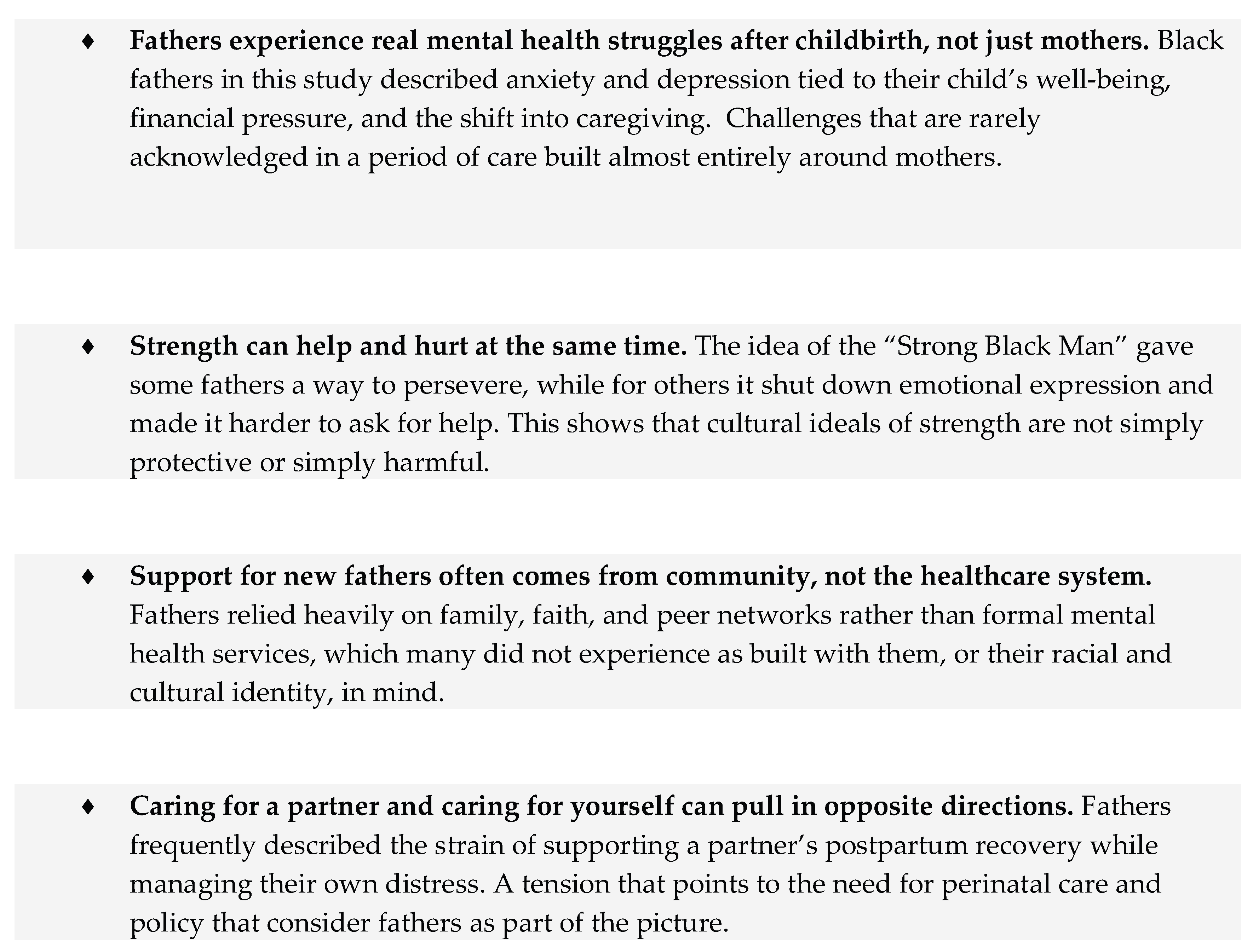
Figure 1.
Conceptual Integration of CRT and BFT. Note. This figure was created by Stampp et al., (2026).
Figure 1.
Conceptual Integration of CRT and BFT. Note. This figure was created by Stampp et al., (2026).
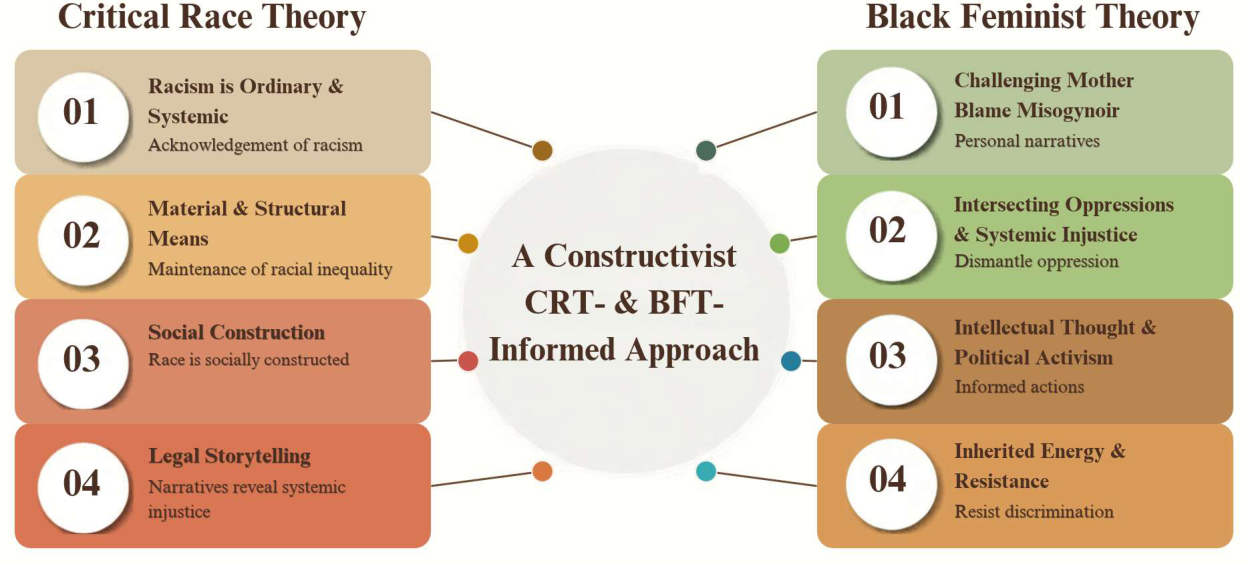
In the context of Black fathers’ mental health during the perinatal period, CRT frames the analysis by uncovering systemic factors within the mental health system that shape fathers’ access to and experience of care. BFT challenges rigid frameworks that center motherhood as the default site of perinatal caregiving, offering a lens to examine how fatherhood is negotiated against these gendered assumptions. Together, these frameworks provide a pivotal lens to challenge the ordinary structures of society and advocate for equitable, gender-inclusive change in perinatal mental health care.
Study Design
An exploratory qualitative research design was implemented to provide insights into Black paternal mental health experiences in Canada throughout the perinatal period. A thematic analysis (Braun & Clarke, 2006) was used to identify relevant themes and subthemes that emerged from the semi-structured, one-on-one interview content. Each interview was conducted virtually and lasted 15 to 30 minutes.
Participant Recruitment Steps
(1) Sampling Strategy – Purposive sampling was essential given the specific inclusion criteria (e.g., race, gender, and presence at their child’s birth). Reverse snowball sampling, in which participants referred eligible individuals from their social networks, ensured extensive outreach to this relatively underrepresented population. This approach allowed referrals to move “backward” through networks toward eligible participants, which is useful for hard-to-reach populations.
(2) Time period – Although participants were recruited after childbirth, they reflected on experiences across the perinatal period, from pregnancy through childbirth and the transition to early parenthood.
(3) Recruitment Coordination – The Principal Investigator and the supervising researcher coordinated recruitment through the University of Ottawa’s Faculty of Health Sciences research communication platform. Participants were also recruited via email, posters, and social media platforms (i.e., Instagram, X [formerly Twitter], Facebook and LinkedIn).
(4) Screening Questionnaire – The Principal Investigator assessed eligibility using a SurveyMonkey screening questionnaire.
(5) Eligible Participation – Participants who met the inclusion criteria were invited to arrange an interview via email. Each participant received a $20.00 CAD Amazon gift card for their invaluable contributions.
Participant Sampling
The inclusion criteria required that all participants self-identify as Black or mixed race (with one Black racialized parent). Participants also self-identified their gender identity as a man (which may differ from the sex assigned at birth). Gender identity was a criterion to avoid cisnormative assumptions in paternal mental health dynamics. Participants had either attended a birth or given birth in Canada to a child for whom they had parental rights between 2019 and 2025. Direct involvement in the birth experience ensured alignment between postpartum exposures and birthing parent inclusivity for gender-diverse fathers. The study prioritized fathers whose perinatal experiences occurred within the Canadian healthcare context, irrespective of their country of birth or ancestral background.
Individuals who did not self-identify as men or whose child was born outside the study’s six-year eligibility window were excluded. This decision was made to facilitate an in-depth examination of how Black fathers navigate the gendered expectations, responsibilities, and social meanings attached to fatherhood during the perinatal period. The study aimed for thematic saturation to determine the final sample size; after 20 interviews (Guest et al., 2020), recruitment was finalized when no new codes or concepts emerged.
Due to the exploratory nature of the study, a clinical diagnosis of perinatal depression or perinatal anxiety was not required for participation. The study aimed to explore Black fathers’ social-emotional experiences, cultural perspectives, and interactions with health care systems related to perinatal depression and anxiety. To establish a shared understanding of these conditions, the Principal Investigator provided a lay description of depressive and anxiety symptoms during the perinatal period at the beginning of each interview. Interviews proceeded after participants confirmed their understanding of these terms. Before participation, all participants provided written and verbal informed consent in accordance with the University of Ottawa Research Ethics Board guidelines (Protocol No. H-06-24-10488).
Study Setting
Participants were located across various Canadian cities. Most participants resided in the Greater Toronto Area. The birthing experience of all participants took place within a Canadian hospital between 2019 and 2025. Data collection commenced on September 3rd, 2024, and concluded on January 11th, 2025. The virtual interview format allowed for convenient participation for new fathers.
Data Collection
Participants’ age, ethnicity, relationship status, and mental health history were collected using SurveyMonkey prior to the interview. While the study did not aim to establish clinical diagnoses, classifications of PPD and PPA were referenced to contextualize participants’ emotional and verbal expressions that aligned with the DSM-5 criteria for Major Depressive Disorder (MDD) with peripartum onset and for Generalized Anxiety Disorder (GAD) (see Table A1), commonly referenced by health researchers in relation to the perinatal period.
The interviews were all conducted virtually using Zoom software. The research team developed a semi-structured interview guide to explore cultural beliefs, values, health perspectives, and perceived social support, based on existing perinatal research. Sample interview questions included: “Do you feel that your feelings on perinatal/postpartum depression and anxiety relate to your cultural values or beliefs?”; “How do you feel about mental health resources for Black men in postpartum?”; “Have you ever experienced symptoms of perinatal/postpartum depression or anxiety?”; and “Can you tell me about a time where you have felt supported by anyone in postpartum (e.g., family, friends, health professionals, colleagues, partners, or church community)?”
Reflexivity
The Principal Investigator is a Black woman and health scientist with Caribbean ancestral roots and a background in psychology. As an Afro-Caribbean, third-generation Canadian, her shared cultural background with many participants may have supported rapport-building and candid disclosure during the one-on-one interviews. Given the study’s focus on masculinity, a woman researcher interviewing men about emotional distress and caregiving responsibilities may have shaped what the fathers disclosed or withheld.
To mitigate the influence of personal experience and assumptions on data interpretation, the PI employed open-ended interview questions led by participants’ own dialogue and engaged in reflexive journaling throughout data collection and analysis. Investigator triangulation was prioritized during analysis to maintain transparency: the PI conducted initial coding independently, and analytic decisions, codes, and emerging themes were discussed regularly with the supervising researcher, with discrepancies resolved through iterative discussion until agreement was reached. Theoretical triangulation was also present, through the interpretation of findings via both CRT and BFT lenses.
Data Analysis
The study used an inductive approach to thematic analysis, following the six phases proposed by Braun & Clarke (2006). The phases include (1) becoming familiar with the data; (2) generating initial codes; (3) identifying themes; (4) reviewing themes; (5) defining and naming themes; and (6) writing the final report.
Coding was primarily inductive, based on participants’ accounts of emotional well-being and distress. In later stages of analysis, DSM-5 criteria for MDD and GAD with peripartum onset were used deductively as a secondary interpretive lens to situate participants’ experiences within broader clinical understandings of perinatal mental health. Importantly, the purpose was contextualization, not diagnosis. Interviews were transcribed verbatim and coded in NVivo 14. Themes and codes were reviewed and verified by the research team. Member checking was used to enhance credibility by inviting each participant to review their interview transcripts and clarify or elaborate on their responses before the final analysis.
Results
Sample Size
Table 1 presents the sociodemographic data. Twenty (N=20) Black fathers with a child born in Canada (between 2019 – 2025) took part in the study. All 20 participants self-identified as Black and were assigned male at birth. 60% of Black fathers ethnically identified as Afro-Canadian and 40% identified as African American. Nineteen (of 20) were born in Canada while one was born in Kenya. Their current city of residence varied from Calgary (n=1), Hamilton (n=1), Ottawa (n=7) and Toronto (n=11). The mean age of the sample of Black fathers was 32.4 years, and the mean age of their number of children was 1.7 years. The highest level of education attained by most fathers (65%) was a university degree, followed by 25% with graduate degrees and 10% with college diplomas. 95% of Black fathers identified as heterosexual and 5% identified as queer. During the time of pregnancy 65% of fathers were married, 30% were dating and 5% were single. During the postpartum period, 95% of participants were married, while 5% were single.
See Table 2., twelve (of 20) or 60% of fathers self-reported that they have received a clinical diagnosis for a mental health condition. Of those twelve men, 16.67% reported a diagnosis of depression, 58.33% reported an anxiety diagnosis, 16.67% reported depression and anxiety, whereas 8.33% reported depression and an eating disorder.
Black fathers identified five major themes. Descriptive quotes are presented below to illustrate the themes and subthemes. For clarity, the full theme name appears in italics beneath each abbreviated theme heading. Participants are identified by their self-identified ethnicity/gender and age (e.g., Afro-Canadian man, X years old).
Theme 1. The Quiet Struggle of Fatherhood
The Quiet Struggle of New Fatherhood
Several fathers described worry that extended beyond a single concern and affected daily life: “… it affects [everything] you do” (Afro-Canadian man, 31 years old) and persistent worry postpartum: “I found this constant … I was [overwhelmed] with worry and fear” (Afro-Canadian man, 32 years old). Another participant elaborated on his anxious feelings: “the anxiety it affects all [you] do, the way you get to think and get to behave at home…It makes [you] anxious concerning [everything], and it affects all other parts of your life” (Afro-Canadian man, 31 years old).
Participants discussed concern for the child’s well-being, including anxiety about the future. One father shared: “worried a lot about [the] welfare of the child” (African American man, 32 years old) another shared: “[if] something [goes] wrong somewhere and if you can’t fix that, you[‘re] [going to] lose this kid”.
Several participants reported difficulties falling asleep, restlessness and unsatisfying sleep. A participant (African American man, 32 years old) shared how daily tasks such as, scheduling, list making and financial capacities contributed to his restless nights:
“Tomorrow I’ll have to get some things, [if my wife] calls to remind me—diapers or something. [If] some things are not in the house… I have to plan ahead… [I] try to… [know how to keep] my savings to meet her requests” (African American man, 32 years old).
Participants reported that financial pressures were a contributing factor to the progression of anxious or depressive symptoms. One participant stated that when they: “increase[d] [their] financial life [it] helped [them] a lot” (Afro-Canadian man, 31 years old).
Participants reported depressive-like moods that interfered with their daily tasks: “It’s [a] feeling that comes with a lot of sadness… it has interfered with my normal daily life.” (African American man, 38 years old) Many participants reported that this mood made them feel unlike themselves. One father explained this abnormal feeling as a “metaphorical headache”:
“Something you don’t want to deal [with]… it could really lower your energy [and], make you feel abnormal …. [which] could [really] affect not only you, but [also] the people around you” (Afro-Canadian man, 38 years old).
Another participant expressed how their mood or “sadness spots” (Afro-Canadian man, 37 years old) caused them to socially withdraw from family and friends during the postpartum period. In this case, caregiving responsibilities were used to excuse family visits and attending social events: “I knew deep down it wasn’t just about the responsibility. This was just me trying to shy away from the world” (Afro-Canadian man, 37 years old).
Some participants reported symptoms relating to hypersomnia (difficulties staying awake): “I would [doze] off” (Afro-Canadian man, 29 years old), and others to insomnia, the: “inability to sleep at night” (Afro-Canadian man, 33 years old). Several participants expressed feeling fatigue, reporting difficulties due to the loss of energy: “I really did really experience it… after the birth of my first child… the fatigue and loss of interest in things that would normally interest me” (Afro-Canadian man, 29 years old). Overall, participants describe how prolonged restlessness and energy depletion can lead to a disconnect from one’s typical behaviours, making it difficult to feel like oneself.
Theme 2. Inclusive Care for Black Fathers’ Mental Health
Bridging the Gap: Exploring Inclusive Care for Black Fathers’ Perinatal Mental Health
Several participants reported a lack of services, and difficulty accessing services offered for men’s paternal mental health. The avoidance of feelings of neglect and discrimination worked as a barrier to accessing mental health resources: “[I] don’t want to feel neglected or feel discriminated” (Afro-Canadian man, 33 years old).
One father explained why he did not want to access mental health services. The father explained a feeling of neglect and discrimination in the mental health care system, emphasizing creating an accepting atmosphere: “[The] manner [mental health professionals] have towards us, and the way they should talk to us… they should make the atmosphere feel accepting [for] us, [it could] help us engage more …” (Afro-Canadian man, 33 years old). Some fathers chose not to engage with mental health resources as they: “didn’t feel the need for that” (Afro-Canadian man, 33 years old). Participants who reported instances of engaging with mental health resources discussed their experience attending therapy, counselling, seeking support from mental health professionals, or participating in support groups, including those online.
Subtheme 2.1. Redefining Support: Culture, Gender, and Empathy
Redefining Support: Cultural Competency, Gender Roles, and Empathy in Mental Health Engagement
Many fathers discussed the need for cultural competency, challenging traditional gender roles and one father highlighted the importance of empathy in patient-provider relationships. Fathers reported that they did not feel comfortable reaching out to mental health professionals as they lacked a personal touch (patient-centered approach) to care. One father compared the care received from his therapist to a support network with an empathetic perspective towards his mental health experience:
“[A] lot of things I dealt with I had to do it myself cause even when I ended up seeing my, my therapist… he’s [going to] be saying the same things he studied in school… it’s not really going to be as touching and as personal as you could think about… there’s no feeling … I had to rely on people that understood me more, people that understood the pain… the journey.” (Afro-Canadian man, 30 years old)
For this father, receiving professional care did not mean feeling understood. He contrasted the therapist’s responses with support from people who recognized his experiences and spoke to him personally. His account suggests that fathers’ engagement with care depended on more than whether a service was available; how support was offered also mattered.
Most participants advocated for increased mental health awareness among Black fathers. Reporting that Black men’s mental health has: “[generally] not been, talked about so much… postpartum depression and anxiety” (Afro-Canadian man, 29 years old). Fathers challenged the traditional gender roles pertaining to paternal mental health stating PPD and PPA [also] affects the men too” (Afro-Canadian man, 29 years old). Participants expressed the benefits of emotional vulnerability, opposing from societal gender norms: “Black men cry too” (Afro-Canadian man, 29 years old), while simultaneously humanizing paternal mental health “we are human too” (Afro-Canadian man, 33 years old). A participant emphasized unity for paternal mental health care: “together we stand, divided we fall” (Afro-Canadian man, 38 years old).
Theme 3. The Weight of Strength: Support, Resilience and Burden
The Weight of Strength: Support, Resilience, and the Hidden Burden
Fathers discussed a strong reliance on social support systems to aid their paternal mental health journey. Several participants explained that their peer support group consisted of family members, friends, partners, and church communities. A father expressed comfort in “knowing somebody had our backs” (Afro-Canadian man, 31 years old). A continuous presence of support was crucial to progressing through the postpartum period. Strength was discussed by several participants in opposing ways, either contributing to or hindering from their paternal mental health journeys. Several participants idealized themselves as strong, which functioned as an integral identity to support themselves through depressive or anxious episodes: “You just have to be strong about it. You have to pull through.” (Afro-Canadian man, 37 years old). Others described an expectation to appear strong that made it difficult to disclose distress or seek help.
One participant expressed the weight of strength in detail:
“[Y]ou’re not allowed to cry even when it’s hurting you a lot inside. You can’t express how you feel [because] of your culture, because you don’t want to appear weak. You can’t let it out. You can’t share. You just lock in everything… the emotions and fear in. You can’t get help; you can’t seek help.” (Afro-Canadian man, 32 years old)
Fathers described strength both to persevere and as an expectation that could prevent them from expressing distress. The difference between “pull[ing] through” and feeling unable to cry or ask for help suggests that strength itself was not uniformly protective or harmful. What mattered in these accounts was whether being strong still allowed room for vulnerability and support.
Theme 4. Influence, Resistance, and Belief Systems
Cultural Perspectives on Perinatal Mental Health: Influence, Resistance, and Belief Systems
Participants reported diverse views to the cultural impact of perinatal depression/anxiety, acknowledging background influences while also resisting ties to paternal mental health and cultural values or beliefs. Most fathers who resisted the cultural impact reported that the disorders occur naturally, explaining: “it’s in almost every human’s life.” (Afro-Canadian man, 33 years old). Others acknowledged the cultural impact, identifying that taboos have an impact on their feelings and emotions. One participant noted that their African American parents enforced perfectionism onto them stating: “everything should be done 100%” (African American man, 38 years old), which led the father to strive for the same thing for their child. Some fathers reported having Christian or Catholic beliefs emphasizing the importance of prayer to guide them through their paternal mental health journey. These accounts did not point to a single cultural explanation for distress. Fathers variously discussed family expectations, faith, and the belief that mental health difficulties can affect anyone. Their differing interpretations show why Black fathers’ beliefs and preferred sources of support need to be asked about, rather than assumed.
Theme 5. Balancing Acts: Black Fathers’ Mental Health and Self-Care
Balancing Acts: Black Fathers’ Mental Health Amid Partner Support and Self-Care
Participants expressed navigating their mental health journey by understanding the complex balance between supporting their partners’ well-being and managing their own mental health. Some father’s expressed: “play[ing] my own role as a husband” in their marital relationship, others explained how that created tensions in their relationship. Reporting an avoidance towards expressing their paternal mental health experience to their partner: “I couldn’t relate things to her. I couldn’t tell her how I felt… [because] I didn’t want to” (Afro-Canadian man, 32 years old). One father described his perception of changes in his partner’s wellbeing and the emotional difficulty he experienced while trying to care for her:
“Imagine the woman you [always] knew, becoming a shadow of herself… It became traumatic for me as well… Taking care of a traumatic person in that sense… [I’ve] seen her go through this experience. [I] can’t even change her, because most of the time, I feel I know why she’s going through this.” (African American man, 45 years old)
This father described his partner’s apparent change alongside the distress he experienced while trying to support her. Read with the earlier account of withholding feelings from a partner, his words reveal a tension between providing care and communicating one’s own need for it. For these fathers, a partner’s wellbeing and their own emotional experience were closely connected, although the interviews cannot establish what their partners themselves experienced.
Several fathers expressed changes in their relationship before and after delivery. Some fathers identified the role of unconditional love in a partnership, integral for supporting themselves and their partners through their postpartum mental health journey’s. Few fathers identified their partner’s hormonal changes or: “mood swings” (African American man, 45 years old) as having an impact on their relationship.
Discussion
This study aims to advance understanding of paternal mental health among Black men by exploring their conceptualizations of health during the perinatal period, examining the cultural beliefs and perspectives that shape these views, and investigating their relational experiences of care and support in the context of anxiety and depression: “The Quiet Struggle of New Fatherhood” emerged as the most reported theme across all participant responses. For context, twelve of the 20 men reported receiving a clinical diagnosis for a mental health condition (see Table 2.), suggesting that a great proportion of men in the study were managing mental health challenges that may have compounded their paternal experience.
Fathers shared their experiences with symptoms of depression and anxiety during the postpartum period, complementing existing literature on paternal perinatal anxiety or depression (Eddy et al., 2019; Kumar et al., 2018; Rao et al., 2020). These findings highlight that new fathers undergo a significant psychological shift during the perinatal period as they adjust to fatherhood. Black Afro-Canadian and African American fathers (see Table 1) reported experiencing extreme anxiety, worry, sadness, and fatigue, often expressing these symptoms with a sense of urgency.
To our knowledge, this is the first study to explore paternal perinatal mental health from both Afro-Canadian and African American perspectives. This gap is particularly notable in Canada, where the collection and disaggregation of race-based health data have gained momentum only relatively recently, with substantial expansion occurring during the COVID-19 pandemic (Goddard-Durant, 2023). Ultimately, this leaves Black fathers’ perinatal mental health largely undocumented within a healthcare system that is otherwise universally accessible, though universal accessibility does not equate universally equitable delivery of mental health care. Many of the fathers in this study reported expressing a wide range of depressive and anxious symptoms during the perinatal period, suggesting that a greater number of Black fathers may be navigating emotional distress without adequate support or acknowledgment. Given that minority groups have historically been identified as being at higher risk for depressive disorders (Yonkers et al., 2001), and that beliefs associated with the “tough Black man” have been linked to greater depression symptoms among men in the United States (James, 2024), the disparities in screening and diagnosis are likely much higher for Black men in Canada.
Although a formal diagnosis was not required for participation, clinical associations were made to provide context and enhance relevance of the findings. These findings offer foundational insight into the diverse perspectives of Afro-Canadian and African American individuals, shedding light on their perinatal health views related to paternal depressive and anxiety symptoms. Factors commonly associated with anxiety include concerns about the child’s wellbeing, financial pressures, and adjusting to caregiving responsibilities. In contrast, depressive symptoms were often characterized by low energy, sadness, and in one case social withdrawal.
“Bridging the Gap: Exploring Inclusive Care for Black Fathers’ Perinatal Mental Health” highlighted the need for more inclusive mental health services. Overall, fathers discussed a lack of services and difficulties accessing mental health services. Remarkably, one father highlighted both discrimination and neglect as reasons deterring him from engaging in mental health care. The participant explored what a racial/gender accepting mental healthcare atmosphere would be like and how this would help facilitate engagement among Black fathers. This highlights the importance for mental health professionals to move beyond gender binaries in paternal mental health care and to incorporate the four tenets of CRT when developing support models or community-based interventions of care for this population. Future research should focus on challenging the systemic racism and discrimination Black men face within the mental health care system (Delgado & Stefancic, 2023). Although Canada’s universal healthcare system formally ensures access to care, access alone does not eliminate racialized barriers to engagement, as in the companion literature on Black mothers in this context (Stampp et al., 2026), structural racism can shape the quality and responsiveness of care fathers receive even where access itself is not restricted. Addressing these issues is essential to creating equitable spaces and improving Black men’s engagement with mental health resources, helping to close the current gap in care.
In the subtheme: “Redefining Support: Cultural Competency, Gender Roles, and Empathy in Mental Health Engagement” fathers emphasized the importance of culturally competent support, the need to challenge traditional gender roles that reject or overlook men’s mental health, and one father identified the need for empathic care. Culturally competent care has been shown to improve patient outcome (Forbes et al., 2023). The literature emphasizes that healthcare policies should incorporate the culturally specific needs of fathers from diverse backgrounds (race unspecified). The perspectives of Black fathers from this study align with this sentiment, suggesting that imposing more culturally competent models of care for paternal mental health may positively impact their engagement with these resources. Black fathers consistently challenged traditional gender roles throughout their narratives, emphasizing that the emotional impact of perinatal depression and anxiety affects men too. This represents a form of resistance to gendered caregiving norms that Black Feminist Thought (Collins, 1990) identifies as a central component to reclaim space within systems that are not built around the lives of Black women, and in this case, Black father’s emotional lives.
Despite the fathers in this study who described experiencing emotional impact related to perinatal mental health, to our knowledge, there is limited research highlighting the positive role of emotional vulnerability among Black Afro-Canadian and African American men. Future studies should explore this further to support the development of adaptive psychological approaches tailored to Black men’s mental health. The perinatal period is a critical time for addressing and supporting the mental health needs of new fathers. Perspectives from marginalized populations with diverse racial identities remain one of the biggest gaps in health research (Brennan & Davis, 2024). These populations often face stigma, discrimination and systemic racism (Delgado & Stefancic, 2023) which further limits their representation and access to equitable care. Thus, gaining insight into their experiences is critical, and the findings from this study offer valuable guidance for health care professionals seeking to provide more inclusive and effective care.
In “The Weight of Strength: Support, Resilience, and the Hidden Burden” theme, the benefits of social support networks for paternal mental health were highlighted. Most Black fathers described a strong reliance on support systems, including family, friends, partners, and church members. Currently, researchers widely agree that lack of social support is linked to paternal depression during the postpartum period, without specifications of racial identity (Pedersen et al., 2021). However, the present study finds a contrasting finding, as Black fathers emphasized a strong reliance on support systems throughout the perinatal period. This suggests that African American and Afro-Caribbean cultural values may significantly influence the use of social support networks for paternal mental health after childbirth.
Through a Black feminist lens (Collin, 1990; Scott & Davis, 2022) the use of the SBM ideology (Coleman-Kirumba et al., 2023) can be read as a masculine parallel to the SBW schema (Harrington et al., 2010), a culturally prescribed performance of self-sufficiency that is imposed upon, not freely chosen; this performance is upheld by structures of race and gender. These parallels are seen in recent qualitative work with a Black Canadian woman (Stampp et al., 2026) which frames constrained emotional disclosure as a condition for maintaining the social value of ideal motherhood and, in this case, fatherhood. Moreover, Black fathers described strength as having both supportive and detrimental dimensions: (1) as an identity that helped them navigate the period after their child’s birth, and (2) as an expectation rooted in the SBM’s construct that could hinder health-seeking and reinforce counter-dependent behaviours, with potential consequences for mental health.
The poor health behaviours associated with this ideology follows research on self-stigma, which may influence attitudes towards psychological help in African American men (Coleman-Kirumba et al., 2023). Unlike white individuals, the Black masculine identity is formed by negative stereotypes, this unique role is assumed to worsen health seeking behaviors (Coleman-Kirumba et al., 2023). The findings from a 32-year-old Afro-Canadian man directly support this research, revealing that the culturally imposed expectation to remain strong hindered his ability to express emotions and ultimately prevented him from seeking help. Research by Pedersen et al. (2021) also found that new fathers had self-imposed expectations as they entered fatherhood, which were related to feelings of inadequacy and powerlessness. Future research should assess the diverging idealizations of strength to better understand the dichotomy of mental health help seeking behaviours among Black men.
The theme “Cultural Perspectives on Perinatal Mental Health: Influence, Resistance, and Belief Systems” revealed another divide. While some Black fathers acknowledged cultural influences on their perinatal mental health, others actively resisted or distanced themselves from these cultural ties. This finding is significant because it suggests that some fathers hold essentialist beliefs, viewing culture as an inherent biological trait (Haslam & Ernst, 2002). Others related their experience with depression and anxiety to cultural factors, reflecting a constructivist viewpoint acknowledging the influence of cultural elements such as taboos, societal expectations, and religious beliefs. Religiosity is known to play a role in Black American men’s mental health, particularly in the development of prosocial behaviours (Fike et al., 2024). Developing a deeper understanding of the cultural values and beliefs of Black men can better inform the development of culturally competent perinatal care models.
The theme “Balancing Acts: Black Fathers’ Mental Health Amid Partner Support and Self-Care” speaks directly to the relational and family-system dimensions of the postpartum period. Fathers did not merely describe their mental health in isolation, but as entangled with their partner’s wellbeing, highlighting how paternal and maternal postpartum experiences are mutually shaping rather than separate for heterosexual couples. It is important to note that 19 participants identified as heterosexual and one as queer (see Table 1), and nineteen reported being married at the time of the postpartum period. Therefore, most relationships are assumed to follow a heterosexual marital framework. Again, research indicates that maternal depression and relationship problems (regardless of relationship status) are associated with increased stress and risk for paternal depression, though race is often unspecified in these findings (Pedersen et al., 2021). This suggests that depressive symptoms in mothers may have contributed to the depression-related stress experienced by Black men in our study.
Black fathers reported that they often supported their partners’ wellbeing while managing their own perinatal anxiety/depression associated symptoms. Research shows that men’s ways of expressing stress, defined as behavioural strategies influenced by communication with their partner, and the support they perceive from their partner are associated with positive outcomes for men’s mental health and relationship quality (Kapsaridi & Charvoz, 2021). This may explain why some Black fathers emphasized the importance of unconditional love in their relationships, viewing it as pivotal for supporting their own needs along with those of their partners. These findings point to a significant gap in perinatal emotional support for men. While some men attempt to rely on their partners, many struggle to share their feelings in both personal and professional contexts, mostly due to discomfort, stigma, and fear of discrimination. Taken together, the findings suggest that fathers’ perinatal mental health cannot be fully understood apart from their partners’ postpartum experience: each shape, and is shaped by, the other within the family system. More specifically, future research should explore the psychological needs of Black fathers, such as those in this study who found it difficult to express their emotions, even within their marriages.
The following describes limitations encountered in this study. For instance, there was potential for comorbidity in the coding for expressions of emotions relating to MDD and GAD in the perinatal period (see Table A1). It is important to note that the coder is not a registered clinical psychologist, which limits the ability to directly associate participants’ emotional expressions with formal clinical diagnostic criteria. Although there is a growing recognition of depression in men after delivery (Koch et al., 2019), it is possible that men with existing mental health awareness were more likely to participate in this study, which may have influenced the findings. Hence, the findings may not be transferable to a broader range of Black men who are not being screened or diagnosed for depressive or anxiety disorders during the perinatal period.
Conclusion
This study demonstrates that Black fathers’ perinatal mental health cannot be understood in isolation from their partners’ postpartum experience. Fathers described navigating their own distress while absorbing emotional labour in support of their partners, underscoring the need for perinatal mental health frameworks and interventions that engage the couple and family system, not the father alone. At the same time, these findings reveal how the Strong Black Man ideology operates as a double-edged sword: offering some fathers a source of resilience while discouraging others from seeking help within a mental healthcare system that many described as unprepared to receive them. Guided by CRT and BFT, this study is the first to explore these dynamics in Afro-Canadian and African American fathers in the Canadian context, offering a foundation for more empathy-based, culturally responsive and structurally attentive models of perinatal care and population health policy.
Author Contributions
Conceptualization, T.S. and A.T.M.K.; Methodology, T.S.; Formal Analysis, T.S., A.T.M.K. and Z.S.; Investigation, T.S. and D.F.; Data Curation, T.S. and D.F.; Writing, Review & Editing, T.S., A.T.M.K. and Z.S.; Supervision, A.T.M.K.
Funding
This research received no external funding.
Institutional Review Board Statement
The study was conducted in accordance with the Declaration of Helsinki and approved by the Institutional Review Board of the University of Ottawa’s Office of Research Ethics and Integrity (File number: H-06-24-10488 and date of approval: August 6th, 2024).
Informed Consent Statement
All participants provided written and verbal informed consent in accordance with the University of Ottawa Research Ethics Board guidelines (Protocol No. H-06-24-10488). Participants provided written informed consent to publish their data.
Data Availability Statement
The original contributions presented in this study are included in the article/supplementary material. Further inquiries can be directed to the corresponding author.
Acknowledgments
With deep gratitude and appreciation for your utmost guidance, for strengthening my critical thinking, and for inspiring me to explore paternal mental health, thank you, Dr. Anne T.M. Konkle, for your invaluable contributions to this work.
Conflicts of Interest
All authors have no competing interests to declare.
References
- Albanese, A. M.; Geller, P. A.; Sikes, C. A.; Barkin, J. L. The Importance of Patient Centered Research in the Promotion of Postpartum Mental Health. Frontiers in Psychiatry 2021, 12, 720106–720106. [Google Scholar] [CrossRef]
- Allen, Q. “Tell your own story”: manhood, masculinity and racial socialization among black fathers and their sons. Ethnic and Racial Studies 2016, 39(10), 183148. [Google Scholar] [CrossRef]
- American Psychiatric Association. Diagnostic and statistical manual of mental disorders, 5th ed.; 2013. [Google Scholar] [CrossRef]
- Bamishigbin, O. N.; Wilson, D. K.; Abshire, D. A.; Mejia-Lancheros, C.; Dunkel Schetter, C. Father Involvement in infant parenting in an ethnically diverse community sample: Predicting paternal depressive symptoms. Frontiers in Psychiatry 2020, 11, 578688–578688. [Google Scholar] [CrossRef]
- Braun, V.; Clarke, V. Using thematic analysis in psychology. Qualitative Research in Psychology 2006, 3(2), 77–101. [Google Scholar] [CrossRef]
- Brennan, M.; Davis, C. Helping Fathers in the Perinatal Period: A Mapping Review of Paternal Mental Health Issues for Social Workers. Families in Society 2025, 106(3), 709–726. [Google Scholar] [CrossRef]
- Chan, A. L.; Guo, N.; Popat, R.; Robakis, T.; Blumenfeld, Y. Y.; Main, E.; Scott, K. A.; Butwick, A. J. Racial and ethnic disparities in hospital-based care associated with postpartum depression. Journal of Racial and Ethnic Health Disparities 2021, 8(1), 220–229. [Google Scholar] [CrossRef]
- Coleman-Kirumba, L. M.; Cornish, M. A.; Horton, A. J.; Alvarez, J. C. Experiences of black men: Forms of masculinity and effects on psychological help-seeking variables. Journal of Black Psychology 2023, 49(1), 32 57. [Google Scholar] [CrossRef]
- Collins, P. H. Black feminist thought: knowledge, consciousness, and the politics ofempowerment, Rev. 10th anniversary ed.; Routledge, 2000. [Google Scholar]
- Delgado, R.; Stefancic, J. Critical Race Theory, Fourth Edition: An Introduction. In New York University Press; 2023. [Google Scholar]
- Dennis, C.; Marini, F.; Dol, J.; Vigod, S. N.; Grigoriadis, S.; Brown, H. K. Paternal prevalence and risk factors for comorbid depression and anxiety across the first 2 years postpartum: A nationwide Canadian cohort study. Depression and Anxiety 2022, 39(3), 233245. [Google Scholar] [CrossRef]
- Domey, N.; Patsiurko, N. The Diversity of the Black Populations in Canada, 2021: A Sociodemographic Portrait. In Ethnicity, Language and Immigration Thematic Series; Statistics Canada, 24 October 2024; https://www150.statcan.gc.ca/n1/pub/89-657-x/89-657-x2024005-eng.htm. [Google Scholar]
- Edge, D.; Baker, D.; Rogers, A. Perinatal depression among black Caribbean women. Health & Social Care in the Community 2004, 12(5), 430–438. [Google Scholar] [CrossRef]
- Eddy, B.; Poll, V.; Whiting, J.; Clevesy, M. Forgotten fathers: Postpartum depression in men. Journal of Family Issues 2019, 40(8), 1001–1017. [Google Scholar] [CrossRef]
- Fike, K. J.; Morton, C. S.; Thorne, K. M.; Mattis, J. S. The Power of Faith: Racial Discrimination and Religiosity Among Black American Men. Cultural Diversity & Ethnic Minority Psychology 2024, 30(3), 457–466. [Google Scholar] [CrossRef]
- Forbes, F.; Wynter, K.; Zeleke, B. M.; Fisher, J. Engaging culturally diverse fathers in maternal and family healthcare: Experiences and perspectives of healthcare professionals. Health Promotion Journal of Australia 2023, 34(4), 691–701. [Google Scholar] [CrossRef]
- Goddard-Durant, S. K.; Doucet, A.; Tizaa, H.; Sieunarine, J. A. “I don’t have the energy”: Racial stress, young Black motherhood, and Canadian social policies. The Canadian Review of Sociology 2023, 60(4), 542. [Google Scholar] [CrossRef]
- Guest, G.; Namey, E.; Chen, M. A simple method to assess and report thematic saturation in qualitative research. PloS One 2020, 15(5), e0232076–e0232076. [Google Scholar] [CrossRef]
- Habel, C.; Feeley, N.; Hayton, B.; Bell, L.; Zelkowitz, P. Causes of women׳s postpartum depression symptoms: Men׳s and women׳s perceptions. Midwifery 2015, 31(7), 728–734. [Google Scholar] [CrossRef]
- Harrington, EF; Crowther, JH; Shipherd, JC. Trauma, binge eating, and the Strong Black Woman. J Consult Clin Psychol. 2010, 78(4), 469–79. [Google Scholar] [CrossRef]
- Haslam, N.; Ernst, D. Essentialist Beliefs About Mental Disorders. Journal of Social and Clinical Psychology 2002, 21(6), 628–644. [Google Scholar] [CrossRef]
- James, D. Reintroducing the “Tough Black Man” and Its Socio-Demographic, Race Related, and Psychological Correlates. Men and Masculinities 2024, 27(3), 244–267. [Google Scholar] [CrossRef]
- Kapsaridi, A.; Charvoz, L. Men’s Stress Expression and Perception of Partner’s Support Within the Romantic Relationships: A Systematic Review. Psychology of Men & Masculinity 2021, 22(2), 375–390. [Google Scholar] [CrossRef]
- Keshtkar, L.; Madigan, C. D.; Ward, A.; Ahmed, S.; Tanna, V.; Rahman, I.; Bostock, J.; Nockels, K.; Wang, W.; Gillies, C. L.; Howick, J. The Effect of Practitioner Empathy on Patient Satisfaction: A Systematic Review of Randomized Trials. Annals of Internal Medicine 2024, 177(2), 196–209. [Google Scholar] [CrossRef]
- Koch, S.; Pascalis, L.; Vivian, F.; Meurer Renner, A.; Murray, L.; Arteche, A. Effects of male postpartum depression on father–infant interaction: The mediating role of face processing. Infant Mental Health Journal 2019, 40(2), 263–276. [Google Scholar] [CrossRef]
- Kumar, S. V.; Oliffe, J. L.; Kelly, M. T. Promoting postpartum mental health in fathers: Recommendations for nurse practitioners. American Journal of Men’s Health 2018, 12(2), 221–228. [Google Scholar] [CrossRef]
- Martin, L. A.; Neighbors, H. W.; Griffith, D. M. The Experience of Symptoms of Depression in Men vs Women: Analysis of the National Comorbidity Survey Replication. JAMA Psychiatry (Chicago, Ill.) 2013, 70(10), 1100–1106. [Google Scholar] [CrossRef]
- Ogunwole, S. M.; Oguntade, H. A.; Bower, K. M.; Cooper, L. A.; Bennett, W. L. Health Experiences of African American Mothers, Wellness in the Postpartum Period and Beyond (HEAL): A Qualitative Study Applying a Critical Race Feminist Theoretical Framework. International Journal of Environmental Research and Public Health 2023, 20(13), 6283. [Google Scholar] [CrossRef]
- Østergaard, S. D.; Seidler, Z.; Rice, S. The ICD -11 opens the door for overdue improved identification of depression in men. World Psychiatry 2023, 22(3), 480–481. [Google Scholar] [CrossRef]
- Pao, C.; Guintivano, J.; Santos, H.; Meltzer-Brody, S. Postpartum depression and social support in a racially and ethnically diverse population of women. Archives of Women’s Mental Health 2019, 22(1), 105–114. [Google Scholar] [CrossRef]
- Pedersen, S. C.; Maindal, H. T.; Ryom, K. “I Wanted to Be There as a Father, but I Couldn’t”: A Qualitative Study of Fathers’ Experiences of Postpartum Depression and Their Help-Seeking Behavior. American Journal of Men’s Health 2021, 15(3), 15579883211024375–15579883211024375. [Google Scholar] [CrossRef]
- Rao, W.-W.; Zhu, X.-M.; Zong, Q.-Q.; Zhang, Q.; Hall, B. J.; Ungvari, G. S.; Xiang, Y.-T. Prevalence of prenatal and postpartum depression in fathers: A comprehensive meta-analysis of observational surveys. Journal of Affective Disorders 2020, 263, 491–499. [Google Scholar] [CrossRef]
- Robertson, K.; Wells, R. Black with ‘baby blues’: A systematic scoping review of programs to address postpartum depression in african american women. Maternal and Child Health Journal 2023, 27(3), 413–425. [Google Scholar] [CrossRef]
- Rogers, B. K.; Sperry, H. A.; Levant, R. F. Masculinities Among African American Men: An Intersectional Perspective. Psychology of Men & Masculinity 2015, 16(4), 416–425. [Google Scholar] [CrossRef]
- Scott, K. A.; Davis, D.-A. Destigmatizing and democratizing postpartum care: A “black woman-person first” approach. Clinical Obstetrics and Gynecology 2022, 65(3), 663–675. [Google Scholar] [CrossRef]
- Stampp, T.; Fortin, D. C.; Konkle, A. T. M. “Black Women Need More Support”: A Culturally Grounded, Person-Centered Analysis of Perinatal Mental Health. Journal of Racial and Ethnic Health Disparities 2026. [Google Scholar] [CrossRef]
- Watson, H.; Harrop, D.; Walton, E.; Young, A.; Soltani, H. A systematic review of ethnic minority women’s experiences of perinatal mental health conditions and services in Europe. PloS One 2019, 14(1), e0210587–e0210587. [Google Scholar] [CrossRef]
- Leveno, S. F. K. J. Onset and persistence of postpartum depression in an Inner-city maternal health clinic system. The American Journal of Psychiatry 2001, 158(11), 1856–1863. [Google Scholar] [CrossRef]

Table 1.
Sociodemographic Questionnaire (N=20). Characteristics of 20 Black fathers who have parental rights and attended the birth of their child in Canada (i.e., within 2019 – 2025).
Table 1.
Sociodemographic Questionnaire (N=20). Characteristics of 20 Black fathers who have parental rights and attended the birth of their child in Canada (i.e., within 2019 – 2025).
| Characteristic | Category | Men (n=20) |
|---|---|---|
| Sex Assigned at Birth | Female | 0 (0.00%) |
| Male | 20 (100.00%) | |
| Racial Identity | Black | 20 (100.00%) |
| Mixed origin (one Black racialized Parent) | 0 (0.00%) | |
| Ethnic Identity | African American | 8 (40.00%) |
| (multiple answers possible) | Afro-Caribbean | 0 (0.00%) |
| Afro-Latino | 0 (0.00%) | |
| Afro-Brazilian | 0 (0.00%) | |
| Afro-Canadian | 12 (60.00%) | |
| Afro-French | 0 (0.00%) | |
| Other | 0 (0.00%) | |
| Country of Birth | Canada | 19 |
| Kenya | 1 | |
| Current City of Residence | Calgary | 1 |
| Hamilton | 1 | |
| Ottawa | 7 | |
| Toronto | 11 | |
| Year of Birth (age) | Mean (range) | 32.4 (24 – 45) |
| Number of Children | Mean (range) | 1.7 (1 – 3) |
| Highest Level of Education | Did not attend school | 0 (0.00%) |
| Highschool degree | 0 (0.00%) | |
| College degree | 2 (10.00%) | |
| University degree | 13 (65.00%) | |
| Graduate degree | 5 (25.00%) | |
| Post-graduate degree | 0 (0.00%) | |
| Sexual Orientation | Asexual | 0 (0.00%) |
| (multiple answers possible) | Bisexual | 0 (0.00%) |
| Gay | 0 (0.00%) | |
| Heterosexual | 19 (95.00%) | |
| Lesbian | 0 (0.00%) | |
| Queer | 1 (5.00%) | |
| Relationship Status (Pregnancy) | Common Law | 0 (0.00%) |
| Dating | 6 (30.00%) | |
| Married | 13 (65.00%) | |
| Single | 1 (5.00%) | |
| Relationship Status (Postpartum) | Common Law | 0 (0.00%) |
| Dating | 0 (0.00%) | |
| Married | 19 (95.00%) | |
| Single | 1 (5.00%) |
Table 2.
Self-Reported Mental Health Diagnoses of Black Fathers (N=20). Characteristics of 20 Black fathers who have parental rights and attended the birth of their child in Canada (i.e., within 2019 – 2025).
Table 2.
Self-Reported Mental Health Diagnoses of Black Fathers (N=20). Characteristics of 20 Black fathers who have parental rights and attended the birth of their child in Canada (i.e., within 2019 – 2025).
| Diagnosis Detail | Men (N=20) |
|---|---|
| Ever received a clinical diagnosis for a mental condition | |
| Yes | 12 (60.00%) |
| No | 8 (40.00%) |
| Type of Diagnosis (among those who answered ‘Yes”) | |
| Men (n=12) | |
| Depression | 2 (16.67%) |
| Anxiety | 7 (58.33%) |
| Depression and Anxiety | 2 (16.67%) |
| Other: Depression and Eating Disorder | 1 (8.33%) |
Disclaimer/Publisher’s Note: The statements, opinions and data contained in all publications are solely those of the individual author(s) and contributor(s) and not of MDPI and/or the editor(s). MDPI and/or the editor(s) disclaim responsibility for any injury to people or property resulting from any ideas, methods, instructions or products referred to in the content. |
© 2026 by the authors. Licensee MDPI, Basel, Switzerland. This article is an open access article distributed under the terms and conditions of the Creative Commons Attribution (CC BY) license (http://creativecommons.org/licenses/by/4.0/).
Copyright: This open access article is published under a Creative Commons CC BY 4.0 license, which permit the free download, distribution, and reuse, provided that the author and preprint are cited in any reuse.