

Submitted:
02 October 2026
Posted:
06 October 2026
You are already at the latest version
Abstract
Scientific disinformation has become a major challenge for contemporary societies, affecting public trust in science, evidence-based decision-making, and the communication of scientific knowledge. (1) Methods: This study maps the academic research on science communication and disinformation, identifying its main publication trends, thematic areas, and methodological approaches. A systematic literature review was conducted using the Web of Science Core Collection. The search identified 127 research articles published between 2003 and 2026, which were analyzed through bibliometric, thematic, and methodological coding. (2) Results: Results show a marked expansion of research since 2020, with 91.34% of the analyzed articles published between 2020 and 2026. The United States constitutes the main production node, while research is distributed across 52 journals. Thematic analysis shows a predominance of the media ecosystem and communication actors, followed by reception, trust, and cognitive processing. Public health, social platforms, and trust in scientific authority are among the most recurrent specific topics. Qualitative approaches predominate (51.2%), while content analysis and surveys are the most frequent research designs. Despite growing interest in prebunking, debunking, and media literacy, computational approaches remain marginal. (4) Conclusions: These findings reveal a rapidly consolidating but methodologically uneven field and identify priorities for future research, particularly computational methods, interdisciplinary collaboration, and intervention-oriented studies.
Keywords:
scientific disinformation
; science communication
; information disorder
; prebunking
; debunking
; fact-checking
; systematic literature review
; research trends
1. Introduction
Disinformation constitutes a form of intervention upon social reality through the dissemination of false content, as well as the reinterpretation and misinterpretation of political, social, and/or scientific data and narratives. For over a decade, it has emerged as one of the paramount challenges of our time, situated within a profound transformation of social communication, now hegemonically digital, and the technological revolution of artificial intelligence (AI). This is further compounded by the growing crisis of institutional trust, which has been consistently reflected in the Edelman Trust Barometer over the past several years. While political leaders and the media register some of the lowest levels of credibility, scientists continue to be perceived as relatively reliable actors (Edelman, 2025).
The COVID-19 pandemic highlighted how disinformation posed a clear risk to public health. The proliferation of false information came to be categorized as an infodemic, revealing a genuine “disinformation engineering,” as a distinct quantitative and qualitative evolution occurred as the pandemic progressed (López-García et al., 2021). This is reflected in the work of García-Marín and Merino-Ortego (2022 , which identified that anti-science narratives surrounding the novel coronavirus focused primarily on two aspects: the virus and its characteristics, and the measures and treatments for its prevention and eradication. However, at least among the Spanish population, the impact of disinformation regarding the virus was uneven, with men, young people, and individuals on the far right perceiving the consequences of deception with greater intensity (Casero-Ripollés, Doménech-Fabregat, & Alonso-Muñoz, 2023).
This disinformation crisis surrounding science also underscored the need to address conspiracy theories. As observed by Oliveira, Wang, and Xu (2022), individuals who are oversaturated with information end up conducting their own investigative processes in search of the truth. During this process, “as they navigate spaces that spread scientific disinformation, they leave traces of their social preferences.” This constitutes a feedback loop in which the algorithms of technology companies participate, a dynamic further facilitated by lax public policies.
In Europe, 71% of citizens report frequently encountering disinformation (European Commission, 2024). According to the Spanish Foundation for Science and Technology (Fundación Española para la Ciencia y la Tecnología (FECYT), 2026), approximately one in four Spaniards exhibits attitudes of scientific populism, demonstrating a clear preference for common sense over scientific studies (25.5%) or expressing the belief that scientists are conspiring with corporations and politicians (25.2%). This predisposition toward disinformation coincides with the exponential use of AI in the creation and distribution of false content. The same report notes that ChatGPT and Gemini are utilized in capacities similar to the press and radio for obtaining information on science, health, and the environment, even though 62.4% of respondents agree that AI facilitates the dissemination of disinformation.
In this context, the main objective of the present research is to develop a systematic map of current academic production on science communication and disinformation. It aims to identify, in the first instance, the main research core areas and niches (actors, temporal distribution, and dissemination channels) in order to subsequently dissect the thematic and methodological trends that shape the state of the art in this field, thereby detecting knowledge gaps and projecting strategic lines for future research.
To operationalize this primary aim, the following specific objectives have been formulated: (1) To characterize the main cores of current research production through a descriptive analysis of geographic distribution (countries), temporal evolution (publication years), highest-impact journals, and predominant institutional affiliations, thereby establishing the bibliometric profile of the field; (2) To categorize and analyze the predominant thematic lines in the reviewed literature by grouping the studies into analytical macro-categories (digital infrastructures, domains of scientific controversy, correction and resilience strategies, science journalism, and cognitive reception) to identify priority areas of focus; (3) To systematize the approaches, designs, and methodological analysis techniques employed in the selected studies, evaluating the prevalence of quantitative, qualitative, or mixed methods, as well as the use of data sources (media, networks, audiences, experts) and analytical tools, in order to describe the evolution and rigor of research practices; (4) To project the strategic implications of these findings for the future research agenda in communication, proposing lines of action that strengthen epistemic resilience, interdisciplinary collaboration, and the transfer of academic knowledge to society in the face of disinformation campaigns..
2. Literature Review
2.1. Scientific Disinformation and Informational Resilience Strategies
Lewandowsky, Ecker, and Cook (2017) define scientific disinformation as incorrect information that persists in memory and continues to influence reasoning even after it has been corrected. This phenomenon can affect various areas of public interest and impact, such as climate disinformation, health disinformation, scientific denialism, pseudoscience, or science-related conspiracy theories. Nevertheless, the techniques employed are quite similar. Cook et al. (2020) developed the FLICC model, in which they identify five recurrent strategies used to question established scientific knowledge: the appeal to fake experts, the use of logical fallacies, the demand for unattainable standards of proof (impossible expectations), the biased selection of evidence (cherry-picking), and the construction of conspiracy theories. These techniques appear recurrently in denialist discourses and disinformation campaigns related to climate change, vaccines, or public health.
It should also be noted that scientific disinformation can serve as a significant conduit for hate speech. Arce-García, Martín-Jiménez, and Rodríguez-Fernández (2025) analyzed nearly half a million messages directed against AEMET, the State Meteorological Agency of Spain, on the social network X. Twenty-five percent of the collected messages exhibited some degree of hostility toward AEMET, its staff, and its scientific work. Along the same lines, López-Martín et al. (2026) demonstrate that climate disinformation in Europe is persistent and transnational, with a particular concentration in countries such as Spain (15.3%), France (13.7%), and Romania, characterized by a clear predominance of hoaxes and conspiracy theories.
In contrast to the aforementioned trust in scientists, whose authority disinformers seek to discredit, it is also worth highlighting the role of influencers. Nieto-Sandoval and Ferré-Pavia (2023) identify influencers as the actors who publish the largest number of videos about climate change on TikTok, exceeding both news media organizations and institutional sources.
Among the measures to combat disinformation, media and digital literacy are prominently featured. Specifically, inoculation theory, or prebunking, has gained prominence. Drawing on the work “125 terms on disinformation” by the Foro contra las Campañas de Desinformación (Iniciativas 2024), we understand prebunking as the “set of preventive measures aimed at immunizing or alerting citizens in advance against false messages.” For its part, debunking refers to the “action of demonstrating the falsehood or inaccuracy of presumably disinformative content using verification strategies and techniques.” Unlike fact-checking, debunking, in addition to focusing on revealing the accuracy of information or data, refutes disinformation by exposing the manipulative practices employed. Both techniques are complementary, as debunking focuses on correcting false claims that are already circulating in public discourse, while prebunking seeks to strengthen individuals’ psychological resistance to deceptive claims before they encounter them.
Previous works, such as Debunkbot, which applied debunking through a conversational chatbot, have demonstrated the capacity of these systems to reduce belief in conspiracy theories through persuasive, evidence-grounded arguments and personalized counterarguments in a conversational format. This intervention succeeded in reducing belief in the conspiracy by approximately 20% (n = 2,190), maintaining persuasive effects up to two months after its application (Costello et al., 2024).
However, doubts also remain regarding its limited efficacy against certain types of disinformation, such as climate-related disinformation. In experimental research, Spampatti et al. (2024) examined the efficacy of six prebunking strategies across 12 countries (N = 6,816), targeting factors such as scientific consensus, trust in scientists, transparent communication, the moralization of climate action, accuracy, and positive emotions to combat actual climate science disinformation. They found scant evidence of protective effects derived from inoculation interventions, proposing alternative potential solutions for climate disinformation. These findings align with those of Zhang and Schmierbach (2025), who suggest that inoculation may not be effective in preventing individuals from believing and sharing climate change disinformation.
For their part, Taddicken and Wolff (2020) analyzed users’ emotional and cognitive responses to fake news about climate change and found that exposure to information that contradicts prior beliefs generates cognitive dissonance, activating different coping strategies aimed at restoring the consistency of one’s own opinions.
2.2. Academic Research on Scientific Disinformation
Academic interest in scientific disinformation has experienced a significant surge, driven by the need to understand its characteristics and potential solutions. Rodríguez-Fernández et al. (2023) analyzed scientific production indexed in the Web of Science (WoS) between 1991 and 2023, identifying, among other aspects, the countries with the highest output of papers on this phenomenon. The authors conclude that the United States accounts for 26.5% of the scientific articles published on the subject. The United Kingdom ranks second, with 8.58% of the production, while Spain occupies the third position worldwide, with 4.82% of the published works.
Similarly, Pérez-Escolar et al. (2023), through a systematic review of 756 scientific publications on disinformation and misinformation published between 2014 and 2022, confirm that this field of research has experienced remarkable growth over the last decade. The authors note that scientific production has concentrated primarily on the analysis of political and democratic processes and, more recently, in the health domain, driven by the impact of the COVID-19 pandemic.
For their part, Broda and Strömbäck (2024) conducted a systematic review of 1,261 scientific articles on disinformation published between 2010 and 2021. The results reveal that disinformation research is dominated by empirical studies, which represent 73.9% of the analyzed publications, whereas theoretical works (19%) and literature reviews (7.1%) have a significantly lower presence.
Focusing on the relationship between scientists and disinformation, Revez and Corujo (2024) conducted a systematic review of 14 studies, concluding that disinformation research has primarily addressed the phenomenon from a communicative and preventive perspective. Consequently, there is a notable gap in the literature regarding studies that analyze scientists themselves as active agents involved in the fight against information disorder.
Wang et al. (2019), in what constitutes one of the first systematic reviews on the diffusion of health-related disinformation on social media, analyzed 57 studies published between 2012 and 2018. The authors observed a sustained growth in research in this field and noted that vaccines, Ebola, and the Zika virus were the main topics addressed.
Although the literature on disinformation has experienced remarkable growth, existing reviews have focused primarily on the phenomenon in general (Pérez-Escolar et al., 2023; Broda & Strömbäck, 2024), in specific domains such as health (Wang et al., 2019), or on the role of scientists in the face of information disorder (Revez & Corujo, 2024). There remains a scarcity of studies that comprehensively analyze scientific production on scientific disinformation as a specific field of research, particularly from an international bibliometric perspective.
3. Materials and Methods
The present study adopts a systematic literature review design, complemented by bibliometric and content analysis techniques. The methodology of this study is built upon the framework used by Rodríguez-Fernández et al. (2023) in the chapter “Mapa de las capacidades de investigación en materia de desinformación en las universidades y centros de investigación españoles”([Map of research capabilities on disinformation in Spanish universities and research centers) within the framework of the Foro contra las campañas de desinformación en el ámbito de la Seguridad Nacional (Forum Against Disinformation Campaigns in the field of National Security), which enabled the identification and systematization of Spanish academic production on disinformation based on thematic, methodological, and institutional variables.
The choice of this design responds to the exploratory and cartographic nature of the stated objective: to map the state of the art of research on science communication and dissemination within the contemporary disinformation ecosystem, identifying production cores, dominant thematic trends, and prevailing methodological approaches (Arksey & O’Malley, 2005; Tricco et al., 2018).
The documentary corpus was obtained through an exhaustive search in the Web of Science (WoS) Core Collection database. This database was selected for its rigor in indexing processes, methodological transparency, and comprehensive coverage of the primary high-impact journals in the social sciences (SSCI, ESCI, and A&HCI).
The search strategy was structured around the intersection of two fundamental conceptual blocks central to the object of study: (a) the field of science communication and (b) disinformation. The final search equation, applied in the Topic (TS) field, was as follows:
(“science communication” OR “Communicating Scientific” OR “CULTURE SCIENCE”) AND (disinformation OR misinformation OR fake news OR false news OR malinformation OR hybrid warfare)
Once the initial search was executed on August 1, 2026, a two-phase filtering process was applied to ensure the disciplinary and methodological relevance of the corpus: filtering by document type and filtering by knowledge area.
First, regarding the document type filter, the search was restricted exclusively to original research articles. Other typologies, such as conference proceedings, review articles, editorials, letters, and book reviews, were deliberately excluded to ensure the analysis focused on primary empirical or theoretical evidence subjected to the peer-review process. Second, the analysis was narrowed down to the WoS subject categories (WoS Categories) and research areas (Research Areas) assigned to the field of Communication. This criterion ensures that the mapping specifically reflects the approaches, theories, and debates inherent to the communication discipline regarding the studied phenomena, thereby filtering out records from purely biomedical, psychological, or computer science fields that do not address the social and media dimensions of the problem.
The coding of the 127 documents was carried out using a structured data extraction form that integrated two blocks of variables: a first block of descriptive bibliometric indicators and a second block of thematic and methodological analytical categories. This design was inspired by the analysis protocol employed by Rodríguez-Fernández et al. (2023) in the aforementioned Forum, adapting it to the specificities of the science communication field.
In order to characterize the main cores of research production (specific objective 1), the following variables were recorded for each document: (1) country of affiliation of the first or corresponding author, (2) year of publication (for temporal evolution analysis), (3) journal (source title), and (4) institutional affiliation. Data categorization is defined as the contextualization of different contents and transcripts into similar groups based on their content (Hair et al., 2010). Furthermore, Berganza and Ruiz (2005, p. 217) define it as the task performed by the researcher to classify the constituent elements of a dataset through differentiation based on previously established criteria. For the analysis of thematic trends (specific objective 2), a multi-level categorization scheme was developed, allowing studies to be classified according to six main thematic macro-categories and their respective subcategories (see Table 1).
The methodological characterization of the studies (specific objective 3) was conducted using a four-level coding system that captured the diversity of approaches, designs, data sources, and analytical techniques employed in the corpus:
Level MET.1 - Research approach: Each study was classified according to its primary methodological orientation into: (a) quantitative, when numerical and statistical data analysis predominated; (b) qualitative, when the in-depth interpretation of phenomena in their natural context was prioritized; or (c) mixed, when both approaches were systematically combined (Creswell & Plano Clark, 2017).
Level MET.2 - Research design: The primary methodological strategy employed was identified, distinguishing between: (a) content analysis, (b) experiments, (c) surveys, (d) case studies, (e) discourse analysis, (f) literature review (systematic or narrative), (g) big data/computational methods, (h) focus groups, (i) interviews, and (j) other designs not classified in the previous categories.
Level MET.3 - Data sources: The primary sources of information used in each study were recorded, categorized as: (a) traditional media, (b) social media and messaging platforms, (c) public/audiences/general society, (d) experts/scientists/academic documents, (e) institutional documents, (f) digital platforms/AI agents, and (g) other sources.
Level MET.4 - Analytical techniques: The specific analytical techniques employed for data processing were coded, including: (a) descriptive/inferential statistics, (b) textual/semantic analysis, (c) machine learning models, (d) visual/multimodal analysis, (e) framing analysis, (f) thematic analysis, and (g) other unclassified techniques.
The dataset supporting the results of this study will be deposited in the open-access Zenodo repository to ensure the transparency and reproducibility of the research.
3. Results
3.1. Characterization of the Main Cores of Research Production
3.1.1. Geographic Distribution
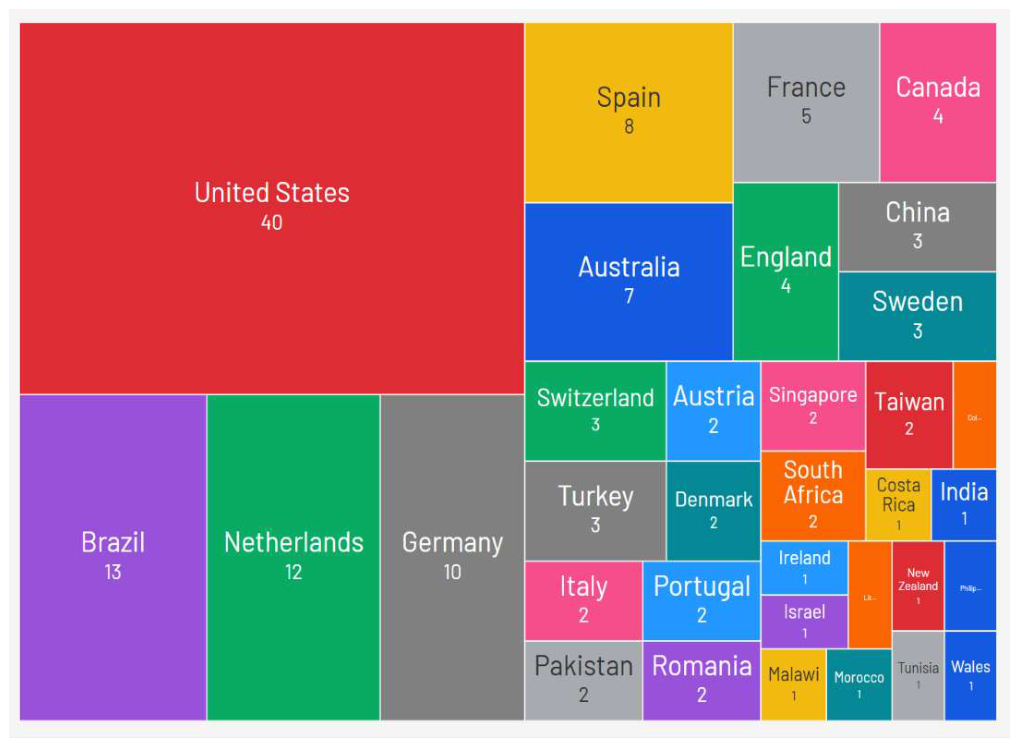
It should be noted that, to operationalize this variable, the presence of countries in the institutional affiliations of the authors of each article was counted (up to a maximum of three countries per document). This criterion allows for capturing not only the geographic origin of the research but also the degree of international collaboration and the diversity of the research teams, yielding a total of 145 geographic affiliation records across the 127 articles analyzed.
The United States emerges as the hegemonic node of production, with 40 records (27.59% of the total affiliations), followed by Brazil, which ranks second with 13 records (8.97%). They are followed in the ranking by the Netherlands (12 records; 8.28%) and Germany (10 records; 6.90%), demonstrating the consolidation of a robust European research axis. At a second level of productivity are Spain (8 records; 5.52%), Australia (7 records; 4.83%), France (5 records; 3.45%), England (4 records; 2.76%), and Canada (4 records; 2.76%). Nevertheless, the remainder of the production is dispersed across 25 countries, which collectively account for 29% of the production with one, two, or three records.
Figure 1.
Distribution by country of scientific production on science communication and disinformation (frequency of countries in author affiliations, n=145 records).
Figure 1.
Distribution by country of scientific production on science communication and disinformation (frequency of countries in author affiliations, n=145 records).
3.1.2. Temporal Evolution
The analysis of the temporal evolution of scientific production allows for the identification of two distinct phases in the consolidation of the field of study (2003–2019 and 2020–2026). See Figure 2.
The first phase (2003–2019) is characterized by marginal and sporadic production, with a total of 11 articles (8.66%) distributed over 17 years. The first record corresponds to 2003 (1 article), followed by isolated contributions in 2010 (2 articles), 2013 (1 article), 2015 (1 article), and 2016 (1 article). Toward the end of this phase, a modest increase is observed in 2018 (3 articles) and 2019 (2 articles), without, however, consolidating a continuous line of research.
The second phase (2020–2026) marks the turning point, accounting for 116 of the 127 analyzed articles during this period, which represents 91.34% of the total production. Starting in 2020, a sustained surge occurs, concentrating the vast majority of the reviewed literature. In 2020, 19 articles were published (14.96%), nearly multiplying the previous year’s production by ten. This trend is maintained in 2021 (13 articles; 10.24%) and 2022 (10 articles; 7.87%), before accelerating again in 2023 (16 articles; 12.60%). The year 2024 represents the peak of productivity with 25 articles (19.69%), followed by an equally robust volume in 2025 (18 articles; 14.17%) and year-to-date in 2026 (15 articles; 11.81%).
3.1.3. Journals and Publishers of Scientific Production
The set of 127 articles is distributed across 52 different journals, which evidences both the consolidation of specific science communication channels and the interdisciplinarity of the field.
Frontiers in Communication leads the ranking with 20 articles (15.75% of the total), followed by JCOM - Journal of Science Communication with 15 articles (11.81%). Both journals concentrate 27.56% of the production, consolidating themselves as the central editorial nodes of the field. At a second level, three journals with a significant contribution are situated: Public Understanding of Science (8 articles; 6.30%), and Media and Communication and Science Communication (7 articles each; 5.51%). These five journals collectively account for 44.88% of the total production. A third level is composed of general communication and journalism journals, with 4 articles each (3.15%): Journalism, Journalism Practice, and Social Media + Society. These are joined by high-impact social science journals with 3 articles each (2.36%): Annals of the International Communication Association, International Journal of Communication, The International Journal of Press/Politics, and Revista Mediterránea de Comunicación. The remainder of the production is dispersed across 38 additional journals with 1 or 2 contributions each.
Regarding publishers, only 27 different publishing houses are represented, yet nearly 75% (74.02%) of the total is concentrated in just five publishers. SAGE Publications leads the ranking with 35 articles (27.56% of the total), consolidating its position as the reference publisher in the field. In second place is Frontiers Media SA with 20 articles (15.75%), followed by Taylor & Francis with 17 articles (13.39%). In fourth place stands the Scuola Internazionale Superiore di Studi Avanzati (SISSA) with 15 articles (11.81%), and the group is rounded out by Cogitatio Press and Oxford University Press, both with 7 articles each (5.51%). Cogitatio Press is the publisher responsible for Media and Communication and Social Media + Society, two open-access journals that have gained prominence in digital communication studies. Oxford University Press, for its part, publishes Public Understanding of Science and Journalism & Mass Communication Quarterly, two of the most traditional and prestigious journals in the fields of science communication and journalism. The remainder of the production is dispersed across 22 additional publishers with 1 to 3 contributions each, among which university and regional presses stand out.
3.1.4. Institutional Affiliations
The 127 articles in the sample originate from 237 different institutions, presenting a dual-structured affiliation distribution: on the one hand, a small set of institutions (Fiocruz, the Wisconsin system, the Texas system, and the Universities of Amsterdam and Goiás) that concentrate the majority of the production, and on the other hand, a broad network of geographically and thematically dispersed institutions that contribute smaller volumes.
Fundação Oswaldo Cruz (Fiocruz) leads the ranking with 7 articles (5.51% of the total), consolidating its position as the most productive institution in the sample. In second and third place are the University of Wisconsin-Madison and the University of Wisconsin System, both with 6 articles each (4.72%). If both affiliations are grouped, given that they share an institutional structure, the University of Wisconsin system reaches 12 articles (9.45%), making it the most productive research cluster in the sample. A third level is composed of institutions with 4 articles each (3.15%): Universidade Federal de Goiás (Brazil), University of Amsterdam (Netherlands), University of Texas at Austin, and the University of Texas System (United States). As in the case of Wisconsin, if the two Texan affiliations are grouped, the University of Texas system reaches 8 articles (6.30%), consolidating itself as another major knowledge-producing node.
3.2. Predominant Thematic
3.2.1. First Level: Thematic Macrocategory
Given that the complexity of the phenomenon requires multidimensional approaches, the coding system allowed for the assignment of more than one thematic macrocategory (maximum 3) to a single article when its object of study so required. Consequently, the analysis yields a total of 218 thematic codes, which represents 171.7% of cases relative to the total sample size (n=127). As detailed in Table 2, the distribution of studies reveals a highly articulated field of research centered around five major axes, with a clear preeminence of institutional and media dynamics.
The macrocategory “Media ecosystem and communication actors” emerges as the backbone of the field, being present in nearly half of the analyzed articles (48.8% of cases). This preeminence evidences that the discipline of Communication is addressing scientific disinformation fundamentally as a problem of governance, mediation, and authority. At a second level of relevance is the category “Reception, trust, and cognitive processing,” present in 36.2% of cases. This figure reflects the strong “audience turn” in disinformation studies. It is particularly revealing that the categories “Digital infrastructures and non-human agents” and “Domains of scientific controversy” present an identical distribution, both appearing in 30.7% of cases. This symmetry suggests an analytical balance in the literature between the medium and the message. Finally, the macrocategory “Correction strategies and epistemic resilience” registers the lowest prevalence among the substantive categories, being present in 24.4% of cases.
3.2.2. Second Level: Thematic Subcategory
The analysis of thematic subcategories yields a total of 230 codes, which represents 181.1% of cases relative to the total sample size (n=127), confirming the multidimensional nature of the reviewed studies, as can be observed in Table X.
Within the macrocategory “Media ecosystem and communication actors,” the subcategory “Journalistic routines and the science-media relationship” emerges with overwhelming preeminence, being present in 40.2% of cases (51 articles). In contrast, the subcategory “Politics-science relationship” appears in 11.8% of cases. In the macrocategory “Reception, trust, and cognitive processing,” the subcategory “Trust, credibility, and signals of authority” concentrates the majority of the attention (27.6% of cases), whereas “Polarization, cognitive biases, and motivated reasoning” and “Communication of scientific uncertainty” appear with an identical and more modest frequency (7.1% each). Within “Digital infrastructures and non-human agents,” a revealing asymmetry is observed: while “Social platforms and recommendation algorithms” is present in 27.6% of cases, “Generative AI as a tool and object of controversy” barely reaches 3.1% (4 articles). In the macrocategory “Domains of scientific controversy,” “Public health” clearly dominates with 19.7% of cases (25 articles), followed by “Climate crisis and the environment” (7.9%) and “Food, energy, and geophysical risks” (3.1%). Finally, within “Correction strategies and epistemic resilience,” the subcategory “Prebunking, debunking, and scientific and media literacy” (15.0%) surpasses “Fact-checking and verification of facts” (10.2%). This datum is relevant because it indicates a shift in the literature from reactive verification strategies toward preventive and educational interventions, in line with the growing interest in cognitive inoculation and media literacy.
3.3. Methodology of Scientific Production
Given that studies often combine multiple methodological strategies, dimensions MET2, MET3, and MET4 were coded as multiple-response variables, whereas MET1 (general approach) was treated as a mutually exclusive variable. The findings, broken down into the four analytical dimensions, are presented below.
3.3.1. Methodological Approach
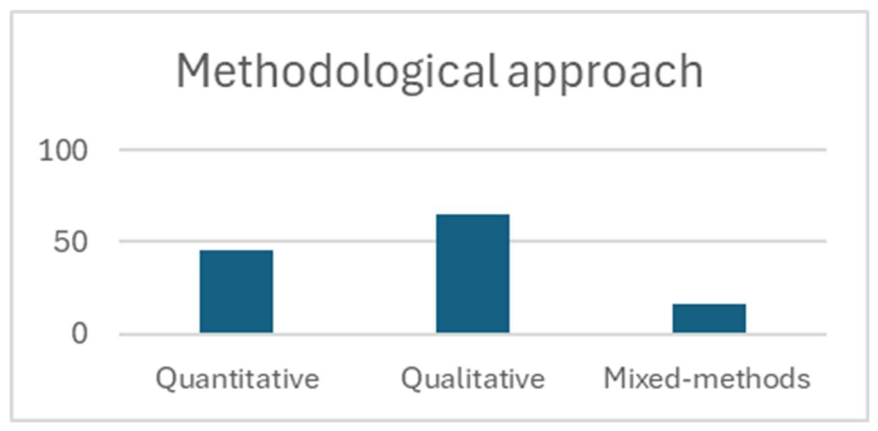
The analysis of the predominant methodological approach reveals a clear preeminence of qualitative designs, which account for 51.2% of the articles (65 documents). These are followed by quantitative approaches at 36.2% (46 articles), while mixed-methods designs constitute a notable minority at 12.6% (16 articles).
Figure 3.
Distribution of scientific production by methodological approach (MET1). n=127.
3.3.2. Specific Research Design
The breakdown of specific methodological designs (multiple-response, 163 codes in total) reveals a concentration around three primary strategies (see Figure 4), which appear in 60.74% of the articles. Content analysis (27.6%) and surveys (26.8%) emerge as the dominant strategies, while systematic and narrative reviews (23.6%) confirm the maturity of the field, which is beginning to synthesize its own accumulated research output.
3.3.3. Sources of Analysis
The analysis of the data sources employed (153 cases in total) reveals a clear hierarchy (Figure 5), wherein experts, scientists, and academic documents constitute the primary source (41.7% of cases), followed by the public, audiences, and general society (31.5%). This distribution demonstrates that the literature prioritizes the analysis of expert output (how scientists communicate, how knowledge is constructed) and public reception (how audiences process information), whereas social media as a direct empirical source appears in 22.0% of cases.
3.3.4. Distribution of Scientific Production by Source of Analysis (MET3). Multiple-Response (n=127, Total Cases: 153)
The analysis of data processing techniques (207 cases in total) reveals a highly marked technical bipolarization (Figure 6): descriptive/inferential statistics and textual/semantic analysis tie for first place, each accounting for 57.5% of cases. This symmetry between the quantitative-statistical and the qualitative-textual reflects the epistemological duality of the field: on the one hand, the positivist tradition of measuring effects and variables; on the other, the interpretive tradition of discourse analysis and narrative frameworks. The presence of visual/multimodal analysis (15.7%) and framing analysis (14.2%) indicates a growing focus on the rhetorical and visual dimensions of disinformation.
3.4. Strategic Projection and Implications for the Research Agenda
3.4.1. Thematic Centralization
The cross-analysis of bibliometric, thematic, and methodological results allows for a precise mapping of the state of the art and, consequently, the projection of the strategic lines that should underpin the future research agenda in science communication and disinformation.
First, by cross-referencing the temporal evolution (Objective 1) with the thematic lines (Objective 2), it is observed how the research agenda has responded directly to the major sociopolitical and technological milestones of the last decade. Although the first publication identified in the sample dates back to 2003, a relevant volume of articles is not found until the year 2020.
Figure 7.
Temporal and thematic evolution.
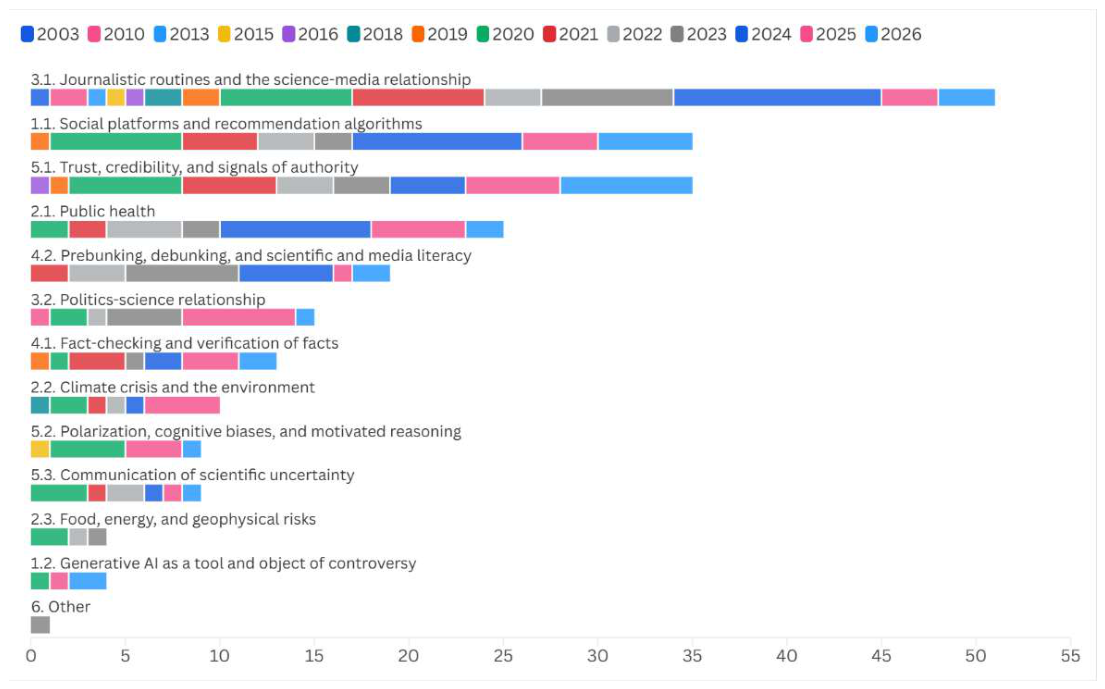
In the first stage (2003–2019), scientific disinformation is studied as a secondary variable with high thematic dispersion, primarily addressing journalistic routines and the science-media relationship (8 records) and isolated political attacks (1 in 2010). Starting in 2020, an intense turning point driven by the COVID-19 pandemic occurs, exponentially increasing studies on public health (from 0 to 25 articles), social platforms and algorithms (35 records), and trust/credibility (35 records), with fact-checking consolidating in 2021–2022 (13 contributions) as an urgent response to the infodemic. However, since 2024, a substantial shift has emerged: fact-checking has stagnated, while prebunking, debunking, and scientific literacy have reached their peak (6 articles in 2024). Furthermore, emerging topics such as the climate crisis (10 records, peaking in 2025), polarization and cognitive biases (9 records), and generative AI as an object of controversy (4 records concentrated between 2024 and 2026) have gained traction. This reflects an evolution from pandemic-driven reactions toward the study of more complex technological and sociopolitical threats. Consequently, the first strategic line of the research agenda must be thematic decentralization.
3.4.2. Computational Methods and Interdisciplinary Collaboration
The cross-analysis between digital infrastructures (Objective 2) and methodological designs (Objective 3) reveals the most critical gap in the current field. It is paradoxical that, although social platforms and their algorithms are the primary object of study (27.6% of cases, n=35), the methodologies employed remain predominantly anchored in traditional approaches: content analysis (27.6%, n=35), surveys (26.8%, n=34), and qualitative designs (51.2%, n=65). The presence of advanced methods for auditing digital architecture is merely token, with only 0.8% of cases (n=1) utilizing network analysis and another 0.8% (n=1) employing big data or computational methods. This methodological limitation prevents the discipline from analyzing the propagation of disinformation campaigns at the necessary scale and speed. Therefore, by incorporating data science or computational methodologies, it will be possible to scale these investigations in a shorter timeframe.
3.4.3. Societal Impact and Knowledge Transfer
In the analysis of themes alongside the information and data sources used in the sample articles, a shift is identified from reactive fact-checking (10.24%) toward prebunking and media literacy (14.96%). However, research on affective polarization and deep cognitive biases remains marginal (7.09%), and data sources focus overwhelmingly on experts (41.7%) and general audiences (31.5%). A tendency is observed toward describing the phenomenon rather than designing, implementing, and evaluating interventions or case studies that strengthen critical thinking through, among other means, literacy, participation, and democratization processes that respond to sociocultural realities.
4. Discussion
The results show a clear consolidation of research on scientific disinformation in recent years. 91.34% of the articles analyzed were published between 2020 and 2026, confirming the relatively recent emergence of this field. This growth is consistent with the broader expansion of disinformation research observed in previous reviews (Pérez-Escolar et al., 2023; Broda & Strömbäck, 2024).
The United States and Europe account for the largest share of research capacity, while the emergence of Brazil and the more dispersed participation of countries from Africa, Asia, and Latin America indicate that scientific disinformation is increasingly being addressed as a global phenomenon requiring interregional research collaboration agendas.
The temporal evolution is consistent with the findings of previous systematic reviews in the field of disinformation (Broda & Strömbäck, 2024; Rodríguez-Fernández et al., 2023). The surge in scientific production during 2020–2021 directly coincided with the COVID-19 health crisis and the subsequent “infodemic,” which placed health communication and viral misinformation at the center of public and academic debate. In turn, the historical peak recorded in 2024 and the high level of production in 2025–2026 reflect the emergence of new epistemic challenges, particularly the rise of artificial intelligence and political polarization in global electoral contexts (Yuan & Chu, 2026). In response to this growing social concern, academia has progressively consolidated scientific disinformation as a priority and increasingly mature object of study within the contemporary media ecosystem.
The reviewed literature demonstrates that Communication studies prioritize qualitative approaches to understanding the contextual, discursive, and cultural complexity of disinformation phenomena. However, the presence of 12.6% mixed-methods studies suggests an emerging trend towards methodological triangulation, in line with the recommendations of previous systematic reviews (Broda & Strömbäck, 2024).
Although fact-checking, prebunking (cognitive inoculation), and media literacy are growing areas of research, this finding indicates that the current literature remains more oriented towards diagnosing and describing the problem—that is, the production, dissemination, and reception of disinformation—than towards systematically evaluating solutions and interventions. This asymmetry between diagnosis and the development of resilience strategies represents a research gap that future academic agendas should address more explicitly.
Overall, the results reveal a rapidly expanding research field that remains uneven in thematic and methodological terms. Key opportunities include the development of computational methods, research into generative artificial intelligence, greater attention to audiences, and the empirical evaluation of strategies aimed at strengthening resilience to scientific disinformation.
Supplementary Materials
The following supporting information can be downloaded at the website of this paper posted on Preprints.org.
Author Contributions
For research articles with several authors, a short paragraph specifying their individual contributions must be provided. The following statements should be used “Conceptualization, X.X. and Y.Y.; methodology, X.X.; software, X.X.; validation, X.X., Y.Y. and Z.Z.; formal analysis, X.X.; investigation, X.X.; resources, X.X.; data curation, X.X.; writing—original draft preparation, X.X.; writing—review and editing, X.X.; visualization, X.X.; supervision, X.X.; project administration, X.X.; funding acquisition, Y.Y. All authors have read and agreed to the published version of the manuscript.” Please turn to the CRediT taxonomy for the term explanation. Authorship must be limited to those who have contributed substantially to the work reported.
Funding
Proyect FEDER-UCA-FEDER-UCA-2024-B1-01 “Strategic Communication against Disinformation: Challenges, innovations and responses” funded by Programa Operativo FEDER Andalucía 2021-2027 and by Consejería de Universidad, Investigación e Innovación de la Junta de Andalucía.
Data Availability Statement
The dataset generated and analyzed during the current study is publicly available in Zenodo at [DOI/LINK]. The dataset includes the bibliographic and coded information used for the bibliometric, thematic, and methodological analyses presented in this study.
Acknowledgments
During the preparation of this manuscript, the authors used ChatGPT (GPT-5.6, OpenAI) for language editing, translation, and assistance with the formulation and refinement of selected sections of the manuscript. The authors have reviewed and edited the output and take full responsibility for the content of this publication.
Conflicts of Interest
“The funders had no role in the design of the study; in the collection, analyses, or interpretation of data; in the writing of the manuscript; or in the decision to publish the results”.
References
- Arce García, S.; Martín-Jiménez, V.; Rodríguez-Fernández, L. Unveiling hate speech dynamics: An examination of discourse targeting the Spanish Meteorological Agency (AEMET). Soc. Incl. 13 2025, 9291. [Google Scholar] [CrossRef]
- Arce García, S.; Rodríguez Fernández, L.; Establés Heras, M. J.; García Marín, D.; Marín García, B.; Martín Jiménez, V.; Pérez Curiel, C.; Said Hung, E.; Salaverría Aliaga, R.; Wagner, A. 125 términos sobre desinformación. In Trabajos del Foro contra las campañas de desinformación. Iniciativas 2024; Gobierno de España, Ministerio de la Presidencia, Relaciones con las Cortes y Memoria Democrática, 2024; pp. 9–39. [Google Scholar]
- Arksey, H.; O’Malley, L. Scoping studies: Towards a methodological framework. Int. J. Soc. Res. Methodol. 2005, 8(1), 19–32. [Google Scholar] [CrossRef]
- Berganza Conde, M. R.; Ruiz San Román, J. A. (Eds.) Investigar en comunicación: Guía práctica de métodos y técnicas de investigación social en comunicación; McGraw-Hill Interamericana de España, 2005. [Google Scholar]
- Broda, E.; Strömbäck, J. Misinformation, disinformation, and fake news: Lessons from an interdisciplinary, systematic literature review. Ann. Int. Commun. Assoc. 48 2024, 139–166. [Google Scholar] [CrossRef]
- Casero-Ripollés, A.; Doménech-Fabregat, H.; Alonso-Muñoz, L. Percepciones de la ciudadanía española ante la desinformación en tiempos de la COVID-19: Efectos y mecanismos de lucha contra las noticias falsas. ICONO 14. Rev. Científica De Comun. Y Tecnol. Emerg. 21 2023, 1. [Google Scholar] [CrossRef]
- Catalán-Matamoros, D.; Elías, C.; Fernández-Gómez, E. Health and science-related disinformation on COVID-19: A content analysis of hoaxes identified by fact-checkers in Spain. PLoS ONE 17 2022, e0265995. [Google Scholar] [CrossRef]
- Cook, J.; Ellerton, P.; Kinkead, D. The FLICC framework for identifying science denial. Eur. Rev. Soc. Psychol. 34 2023, 281–319. [Google Scholar] [CrossRef]
- Costello, T. H.; Pennycook, G.; Rand, D. G. Durably reducing conspiracy beliefs through dialogues with AI. Sci. 385 2024, eadq1814. [Google Scholar] [CrossRef]
- Edelman. 2025 Edelman Trust Barometer: Trust and the crisis of grievance. Edelman. 2025. Available online: https://www.edelman.com/trust/2025/trust-barometer.
- European Commission. Citizenship and democracy: Special Eurobarometer 551; Directorate-General for Communication, 2024. Available online: https://europa.eu/eurobarometer/surveys/detail/3200.
- Fundación Española para la Ciencia y la Tecnología. Desinformación científica en España 2026; FECYT, 2026. [Google Scholar] [CrossRef]
- García-Marín, D.; Merino-Ortego, M. Desinformación anticientífica sobre la COVID-19 difundida en Twitter en Hispanoamérica. Cuad. 52 2022, 24–46. [Google Scholar] [CrossRef]
- Hair, J. F., Jr.; Bush, R. P.; Ortinau, D. J. Investigación de mercados: En un ambiente de información digital, 4.ª ed.; McGraw-Hill Interamericana, 2010. [Google Scholar]
- Lewandowsky, S.; Ecker, U. K. H.; Cook, J. Beyond misinformation: Understanding and coping with the “post-truth” era. J. Appl. Res. Mem. Cogn. 6 2017, 353–369. [Google Scholar] [CrossRef]
- López-García, X.; Costa-Sánchez, C.; Vizoso, Á. Journalistic fact-checking of information in pandemic: Stakeholders, hoaxes, and strategies to fight disinformation during the COVID-19 crisis in Spain. Int. J. Environ. Res. Public Health 18 2021, 1227. [Google Scholar] [CrossRef]
- López-Martín, Á.; Gómez-Calderón, B.; González-Cortés, M. E. Desinformación climática internacional: Rasgos, difusión y fact-checking. Index.comunicación 16 2026, 273–301. [Google Scholar] [CrossRef]
- Nieto-Sandoval, A. G.; Ferré-Pavia, C. TikTok y cambio climático: Comunicar sin fuentes ni soluciones. Rev. De Comun. 22 2023, 309–331. [Google Scholar] [CrossRef]
- Oliveira, T.; Quinan, R.; Toth, J. The trouble with trust: Conspiracy theories, scientific misinformation, and public communication of science. Online Media Glob. Commun. 1 2022, 89–107. [Google Scholar] [CrossRef]
- Pérez-Escolar, M.; Lilleker, D.; Tapia-Frade, A. A systematic literature review of the phenomenon of disinformation and misinformation. Media Commun. 11 2023, 76–87. [Google Scholar] [CrossRef]
- Revez, J.; Corujo, L. Scientists’ behaviour towards information disorder: A systematic review. J. Inf. Sci. Advance online publication. 2024. [Google Scholar] [CrossRef]
- Rodríguez-Fernández, L.; Aguado Terrón, J. M.; Almansa Martínez, A.; Arce García, S.; Blanco Alfonso, I.; Burguera Ameave, L.; Campos Domínguez, E.; Cantón Correa, J.; Establés Heras, M. J.; García Marín, D.; Gómez García, S.; Puebla Martínez, B.; Rementería Núñez, M. J.; Rodríguez Virgili, J.; Salaverría Aliaga, R.; Wagner, A. Mapa de las capacidades de investigación en materia de desinformación en las universidades y centros de investigación españoles. In Foro contra las campañas de desinformación en el ámbito de la Seguridad Nacional. Trabajos 2023; Gobierno de España, Ministerio de la Presidencia, Relaciones con las Cortes y Memoria Democrática, 2023; pp. 116–167. [Google Scholar]
- Spampatti, T.; Hahnel, U. J. J.; Trutnevyte, E.; Brosch, T. Psychological inoculation strategies to fight climate disinformation across 12 countries. Nat. Hum. Behav. 8 2024, 380–398. [Google Scholar] [CrossRef]
- Taddicken, M.; Wolff, L. ‘Fake news’ in science communication: Emotions and strategies of coping with dissonance online. Media Commun. 8 2020, 206–217. [Google Scholar] [CrossRef]
- Tricco, A. C.; Lillie, E.; Zarin, W.; O’Brien, K. K.; Colquhoun, H.; Levac, D.; Moher, D.; Straus, S. E.; Horsley, T.; Weeks, L.; Hempel, S.; Lorig, E.; Akl, E. A.; Chang, C.; McGowan, J.; Stewart, L.; Hartling, L.; Aldcroft, A.; Wilson, M. G.; …; Straus, S. E. PRISMA extension for scoping reviews (PRISMA-ScR): Checklist and explanation. Ann. Intern. Med. 2018, 169(7), 467–473. [Google Scholar] [CrossRef]
- Wang, Y.; McKee, M.; Torbica, A.; Stuckler, D. Systematic literature review on the spread of health-related misinformation on social media. Soc. Sci. Med. 240 2019, 112552. [Google Scholar] [CrossRef]
- Yuan, S.; Chu, H. Science communication in the age of AI: Agency, authori. 2026. [Google Scholar] [CrossRef]
Figure 2.
Temporal evolution of articles.
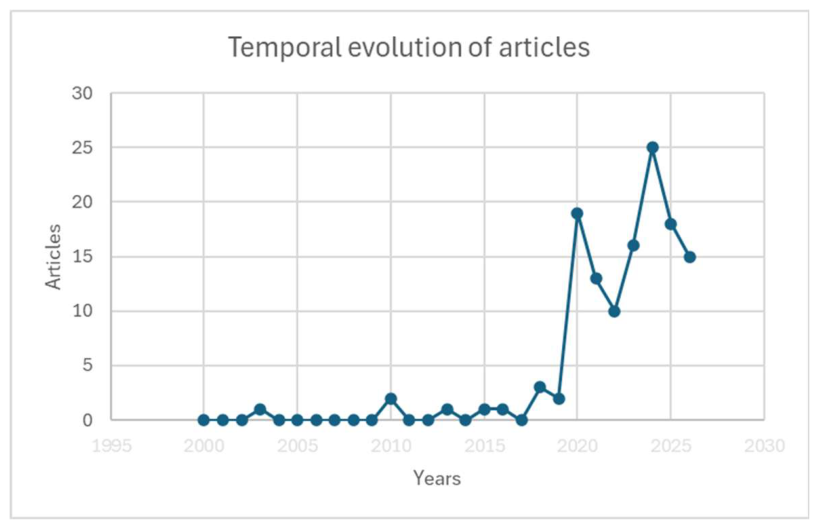
Figure 4.
Distribution of scientific production by methodological design (MET2). Multiple-response (n=127, total cases: 163).
Figure 4.
Distribution of scientific production by methodological design (MET2). Multiple-response (n=127, total cases: 163).
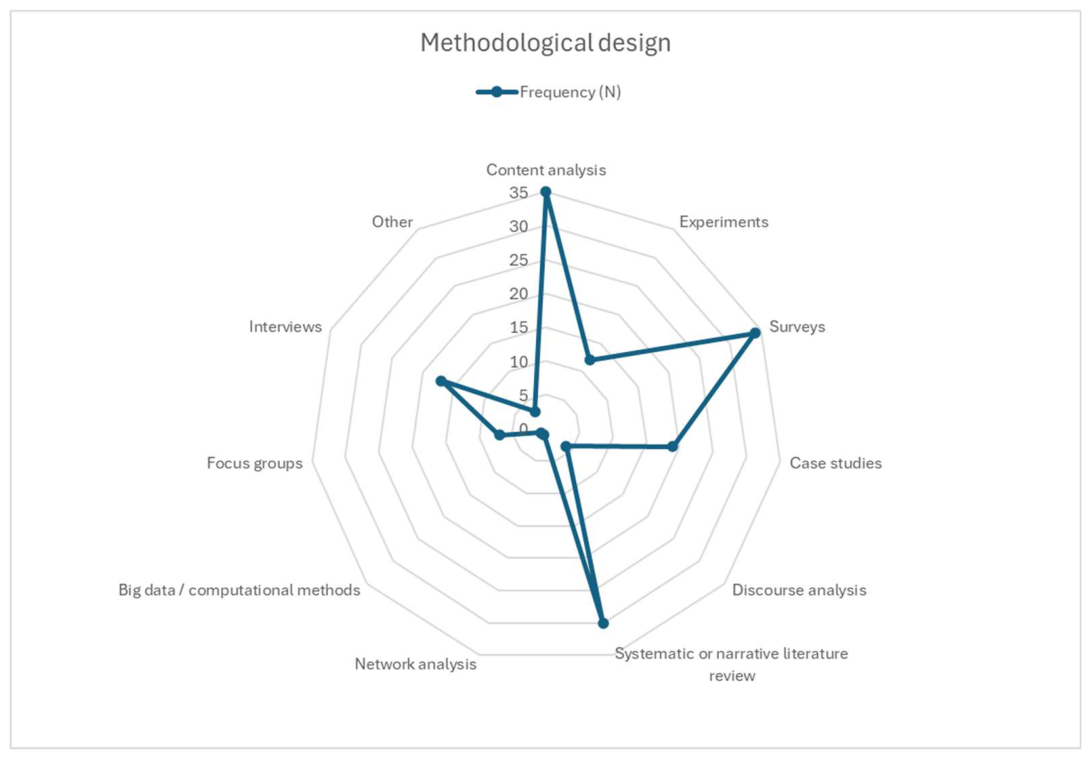
Figure 5.
Distribution of scientific production by source of analysis (MET3). Multiple-response (n=127, total cases: 153).
Figure 5.
Distribution of scientific production by source of analysis (MET3). Multiple-response (n=127, total cases: 153).
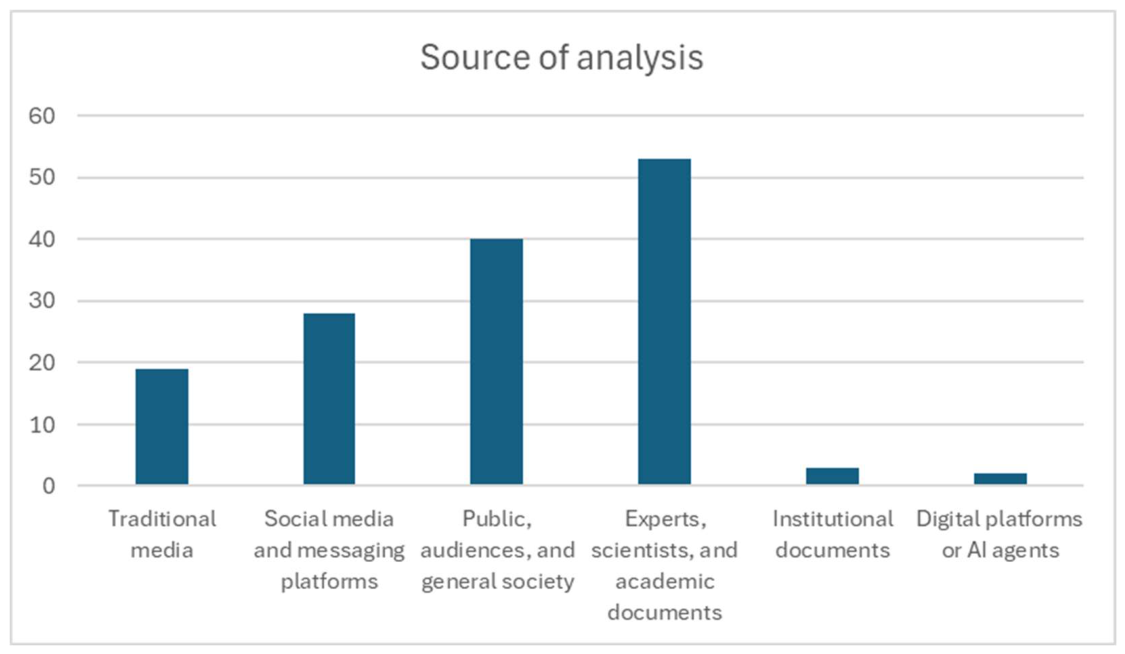
Figure 6.
Distribution of scientific production by analysis technique (MET4). Multiple-response (n=127, total cases: 207).
Figure 6.
Distribution of scientific production by analysis technique (MET4). Multiple-response (n=127, total cases: 207).
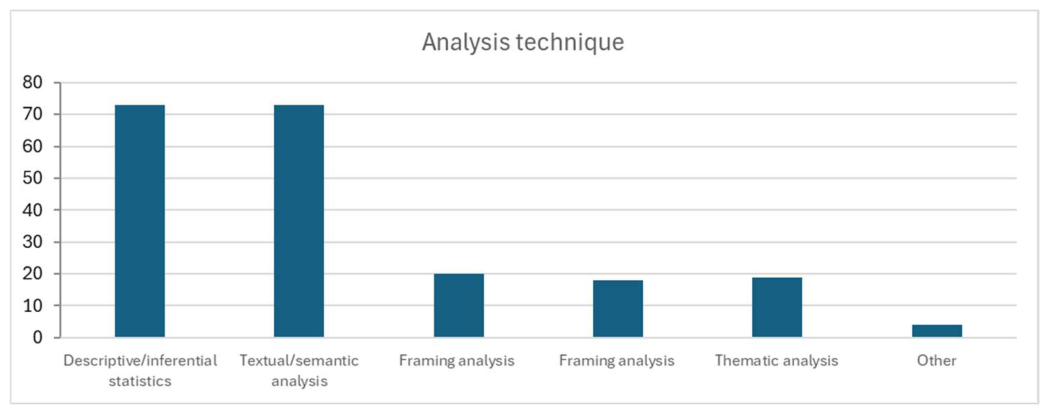

Table 1.
Thematic categorization.
| Thematic macrocategory | Thematic subcategory |
| 1. Digital infrastructures and non-human agents | 1.1. Social platforms and recommendation algorithms 1.2. Generative AI as a tool and object of controversy |
| 2. Domains of scientific controversy | 2.1. Public health 2.2. Climate crisis and the environment 2.3. Food, energy, and geophysical risks |
| 3. Media ecosystem and communication actors | 3.1. Journalistic routines and the science-media relationship 3.2. Politics-science relationship |
| 4. Correction strategies and epistemic resilience | 4.1. Fact-checking and verification of facts 4.2. Prebunking, debunking, and scientific and media literacy |
| 5. Reception, trust, and cognitive processing | 5.1. Trust, credibility, and authority 5.2. Polarization, cognitive biases, and motivated reasoning 5.3. Communication of scientific uncertainty |
| 6. Other | Themes not classifiable in the previous categories |
Source: own elaboration (2026).
Table 2.
Thematic lines of scientific production.
| Thematic category | Frequency (N) | Percentage of responses (%) | Percentage of cases (%) |
| 1.1. Social platforms and recommendation algorithms | 35 | 15,22% | 27,56% |
| 1.2. Generative AI as a tool and object of controversy | 4 | 1,72% | 3,15% |
| 2.1. Public health | 25 | 10,87% | 19,69% |
| 2.2. Climate crisis and the environment | 10 | 4,35% | 7,87% |
| 2.3. Food, energy, and geophysical risks | 4 | 1,74% | 3,15% |
| 3.1. Journalistic routines and the science-media relationship | 51 | 22,17% | 40,16% |
| 3.2. Politics-science relationship | 15 | 6,52% | 11,81% |
| 4.1. Fact-checking and verification of facts | 13 | 5,65% | 10,24% |
| 4.2. Prebunking, debunking, and scientific and media literacy | 19 | 8,26% | 14,96% |
| 5.1. Trust, credibility, and signals of authority | 35 | 15,22% | 27,56% |
| 5.2. Polarization, cognitive biases, and motivated reasoning | 9 | 3,91% | 7,09% |
| 5.3. Communication of scientific uncertainty | 9 | 3,91% | 7,09% |
| 6. Other | 1 | 0,43% | 0,79% |
| Total | 230 | 100% | 181,1% |
| Source: own elaboration (2026) |
Disclaimer/Publisher’s Note: The statements, opinions and data contained in all publications are solely those of the individual author(s) and contributor(s) and not of MDPI and/or the editor(s). MDPI and/or the editor(s) disclaim responsibility for any injury to people or property resulting from any ideas, methods, instructions or products referred to in the content. |
© 2026 by the authors. Licensee MDPI, Basel, Switzerland. This article is an open access article distributed under the terms and conditions of the Creative Commons Attribution (CC BY) license (http://creativecommons.org/licenses/by/4.0/).
Copyright: This open access article is published under a Creative Commons CC BY 4.0 license, which permit the free download, distribution, and reuse, provided that the author and preprint are cited in any reuse.