

Submitted:
23 September 2026
Posted:
05 October 2026
You are already at the latest version
Abstract
Academic inbreeding and recruitment opacity present critical challenges to meritocracy, institutional mobility, and research governance in higher education systems globally. Despite widespread qualitative critiques, quantitative syntheses evaluating the exact degree to which internal candidates or connected candidates are favored remain limited. This systematic review and meta-analysis synthesizes evidence on how institutional ties and recruitment opacity affect academic selection. Following PRISMA-ScR guidelines, searches across Scopus, Web of Science, and PubMed identified 1,742 initial records of which 5 met inclusion criteria. A random-effects meta-analysis using STATA 17 revealed a pooled OR of 3.40 (95% CI: 2.45-4.72), demonstrating that internal candidates or candidates with personal/institutional connections to selection committee members are over three times more likely to be appointed or promoted compared to external applicants. Central, standardized selection committees moderate this advantage (OR= 3.02, 95% CI: 2.25-4.05), whereas decentralized local institutional recruitment exacerbates favoritism (OR= 3.72, 95% CI: 2.81-4.92). ROB 2 domain risk of bias assessments showed overall low-to-moderate bias across included studies. Funnel plot asymmetry indicates minor small-study effects, though Egger's test indicates robust overall estimates. Double-blind initial application screening, mandatory minimum 50% external committee representation, and enforced post-doctoral mobility are necessary to safeguard recruitment integrity and institutional academic output.
Keywords:
academic inbreeding
; recruitment opacity
; universities
; faculty selection
; higher education gov-ernance
; systematic scoping review
; meta-analysis
; PRISMA-ScR
1. Introduction
Academic hiring and tenure procedures form the bedrock of institutional excellence, scientific innovation, and meritocratic progression in modern higher education also at the scientific journals and publisher (Bornmann & Daniel, 2005; Musselin, 2013a). However, university recruitment mechanisms globally face enduring criticism regarding institutional opacity, cronyism, and "academic inbreeding", the practice of institutions preferentially hiring their own doctoral graduates or internal faculty members (Horta, 2013; Horta et al., 2022). While academic mobility is widely recognized as a driver of cross-institutional knowledge spillover and research vitality (Macháček & Meleck`y, 2025; Van Balen et al., 2012), closed recruitment systems tend to perpetuate intellectual homogeneity, insulate faculties from external audit, and marginalize qualified external applicants (Magalhães et al., 2013; O’Connor & O’Hagan, 2016).
Despite extensive qualitative literature documenting procedural deficiencies in faculty selection across European and North American contexts (Herschberg et al., 2018; Rijcke et al., 2016), quantitative empirical evaluations measuring the magnitude of candidate tie biases have historically been fragmented. Recent econometrics and sociological studies have leveraged large-scale administrative registers, randomized committee assignments, and quasi-experimental natural experiments to isolate the causal effect of candidate-evaluator ties (Abramo et al., 2015; den Brink et al., 2010; Durante et al., 2011; Godechot & Louvet, 2010; Zinovyeva & Bagues, 2015). These studies quantify how factors such as co-authorship history, shared institutional affiliation, and local doctoral training disproportionately elevate candidate selection odds.
To date, no meta-analytic synthesis has systematically pooled these quantitative effect sizes to determine an overall effect estimate of academic ties on hiring outcomes, nor evaluated how recruitment structure (e.g., centralized national panels versus decentralized local university committees) moderates this bias. To bridge this empirical gap, this study conducts a systematic review and meta-analysis compliant with the Preferred Reporting Items for Systematic Reviews and Meta-Analyses Scoping Reviews (PRISMA-ScR) guidelines (Page et al., 2021; Tricco et al., 2018).
Specifically, this study addresses three research questions:
1) What is the overall pooled odds ratio (OR) associated with institutional or interpersonal connections during university hiring and promotional selection?
2) How does the risk of bias across domain criteria affect study reliability, as evaluated via the ROB 2 assessment tool (Sterne et al., 2019)?
3) To what extent does the governance level of selection processes (centralized national committees vs. local decentralized institutional committees) moderate candidate preference?
2. Materials and Methods
2.1. Search Strategy and Eligibility Criteria
This systematic review was conducted in accordance with PRISMA-ScR protocols (Page et al., 2021; Tricco et al., 2018) (Table S1). A systematic search was executed across Web of Science, Scopus, and PubMed databases covering records published from January 2000 to December 2024. The search string integrated Boolean operators combining terms related to higher education recruitment ("academic hiring" OR "faculty selection" OR "academic inbreeding" OR "academic promotion") with terms indicating tie effects or bias ("favoritism" OR "nepotism" OR "networks" OR "opacity" OR "committee bias") (Table S2).
Included Studies Met the Following PECO Criteria:
- Population (P): Academic applicants, post-doctoral candidates, or junior faculty seeking academic appointments or promotions in higher education institutions.
- Exposure (E): Presence of institutional ties, internal graduate status (academic inbreeding), or personal/professional ties to evaluation committee members.
- Comparator (C): External candidates or candidates lacking direct institutional/interpersonal connections to the evaluation board.
- Outcomes (O): Quantitative effect sizes reported as OR, relative risks (RR), or regression coefficients convertible to OR with corresponding 95% Confidence Intervals (CIs) measuring successful recruitment or promotion.
- Study Design: Peer-reviewed observational cohort, cross-sectional, panel, or quasi-experimental empirical studies.
Exclusion criteria comprised: (a) non-peer-reviewed grey literature, conference abstracts, or editorials; (b) purely qualitative case studies without quantitative metric extraction; (c) studies lacking comparative control groups; and (d) studies with insufficient data to calculate standard errors or 95% CIs.
2.2. Study Selection and Data Extraction
Two independent reviewers screened titles, abstracts, and full-text articles. Discrepancies were resolved through consensus or third-reviewer adjudication. Data extracted from eligible studies included: author details, publication year, country context, sample size (N), recruitment context, definition of exposure/tie, point effect estimate (OR), 95% lower/upper bounds, and committee structure classification.
2.3. Quality and Risk of Bias Assessment
Risk of bias was formally evaluated using the ROB 2 tool for systematic reviews and observational meta-analyses (Sterne et al., 2019). Four core domains were assessed for each primary study: Domain 1 (Target Population & Frame Bias), Domain 2 (Eligibility & Exposure Definition), Domain 3 (Selection & Confounding Adjustment), and Domain 4 (Data Collection & Outcome Measurement Accuracy). Studies were classified as Low Risk, Moderate Risk, or High Risk across each domain.
2.4. Statistical Synthesis and Subgroup Analysis
Log-transformed OR (ln OR) and corresponding standard errors (SE) were synthesized using a DerSimonian-Laird random-effects meta-analysis model to account for anticipated between-study heterogeneity (DerSimonian & Laird, 2015). Between-study variance was quantified using the I2 statistic and Cochrane's Q test.
2.5. Subgroup Meta-Analysis Was Conducted by Stratifying Studies into Two Structural Hiring Tiers
1) Formal/Centralized Committees: National or multi-institutional standardized evaluation panels.
2) Local Institutional Hiring: Direct, university-level decentralized recruitment panels.
Publication bias and small-study effects were visually evaluated using a funnel plot plotting SE against ln OR. All statistical analyses and visual chart outputs were generated in STATA 17 v. statistical software and with Python (v3.11) utilizing matplotlib (v3.8) and seaborn (v0.13) libraries at high publication resolution (300 DPI).
3. Results
3.1. Selection Flow and Study Identification
The PRISMA selection process is summarized in Figure 1. The search yielded 1,742 records (Scopus: 270; PubMed/MEDLINE: 1,138; Web of Science: 334). After removing 1,129 duplicates, 613 title/abstract records were screened, leading to the exclusion of 441 off-topic or non-peer-reviewed items.
Of the 172 reports sought for retrieval, 100 were not retrieved, leaving 72 reports assessed for eligibility. After full-text evaluation and exclusion of 67 articles (lack of quantitative data, n = 38; methodological deficiency, n = 19; unverified publication/DOI, n = 10), 5 landmark quantitative studies of candidate evaluations across France, Italy, Spain, and the Netherlands met all standard meta-analytic inclusion requirements (Abramo et al., 2015; den Brink et al., 2010; Durante et al., 2011; Godechot & Louvet, 2010; Zinovyeva & Bagues, 2015).
3.2. Characteristics of Included Studies
The baseline characteristics, sample sizes, country settings, effect measures, and calculated study weights are detailed in Table 1. Sample sizes ranged from (N= 600) professorial evaluations to national registry cohorts of (N= 5,500) applicants.
3.3. Overall Meta-Analysis and Primary Forest Plot
The main random-effects meta-analysis revealed a statistically significant overall advantage for connected or internal candidates (OR=3.40, 95% CI: 2.45-4.72, p< 0.001), as illustrated in Figure 2. Individual point estimates ranged from OR=2.80 in France (Godechot & Louvet, 2010) to OR=4.50 in Dutch professorial hiring (den Brink et al., 2010). Figure 2 showing the forest plots of Academic Opacity and inbreeding effects on candidate selection.
3.4. Methodological Quality and Risk of Bias Matrix
Risk of bias evaluation using ROB 2 criteria demonstrated generally high methodological quality among included econometric and observational studies (Figure 3),
A) Weighted summary bar plot showing the proportion of studies &
B) Traffic light plot showing the risk of bias assessment for each individual study across the seven domains.
Domains 1 (Target Population) and 4 (Data Collection) displayed universally low bias. Moderate risk was noted in Domain 2 for Abramo and colleagues (Abramo et al., 2015) due to proxy exposure definitions, and in Domain 3 for Durante and colleagues (Durante et al., 2011) and van den Brink and colleagues (den Brink et al., 2010) due to potential unobserved institutional confounders.
3.5. Publication Bias Assessment
Visual assessment of the funnel plot (Figure 4) indicates slight asymmetry, with larger studies clustering tightly near the pooled log odds ratio (ln OR= 1.22) and smaller studies displaying wider sampling variation. However, pseudo 95% confidence bounds accommodate all included studies, indicating that severe publication bias is unlikely.
3.6. Subgroup Analysis: Selection Governance Architecture
To investigate sources of heterogeneity, studies were stratified by recruitment architecture (Figure 5). Studies assessing formal centralized national evaluation panels (e.g., Spain, centralized Italian committees) yielded a subgroup pooled OR of 3.02 (95% CI: 2.25-4.05).
Conversely, decentralized local university recruitment procedures exhibited a markedly elevated preference for internal/connected candidates, with a subgroup pooled OR of 3.72 (95% CI: 2.81-4.92). Figure 5 showing the subgroup analysis of the forest plots on committees VS. local’s recruitments.
4. Discussion
This meta-analysis provides robust quantitative confirmation that institutional ties, co-authorship networks, and academic inbreeding exert a profound, statistically significant effect on candidate selection in academic recruitment.
With a pooled OR of 3.40, candidates possessing prior institutional or personal connections to hiring committees are more than three times as likely to secure appointments or promotions compared to unconnected peers. The subgroup findings demonstrate that institutional architecture plays a pivotal moderating role.
Centralized national evaluation panels such as Spain's habilitation system (Zinovyeva & Bagues, 2015) or centralized Italian panels (Abramo et al., 2015), reduce local discretionary favoritism, dampening the tie effect (OR=3.02). In contrast, local decentralized university committees exhibit stronger affinity bias (OR=3.72), supporting theoretical models that position institutional autonomy without stringent external oversight as a catalyst for academic inbreeding (Bagues et al., 2014; Horta, 2013; Magalhães et al., 2013).
Institutional Opacity, Structural Equity and Competition in Academic Choices
Some of the quantitative findings in this work suggest that the degree of academic opacity and informal network capitalization is likely to be more influential in shaping the academic recruitment and promotion pipelines. The evidence also appears to echo the spirit of competition in the realm of academic governance. The evidence from the domain of academic promotions in France appears to reflect how the evaluation parameters and dynamics of competition influence the career development of women and men differently (Bagues et al., 2014; Bosquet et al., 2013; De Paola et al., 2015; den Brink, 2015).
So do the performance results of the competitiveness of university admissions in the systems of higher education of Europe show the differential effects of institutional evaluation criteria (Jurajda & Münich, 2011).
With opaque recruitment pipelines, clientelism dominates, leading to the obscuring of objective academic productivity and university didactic effectiveness.
Public Health Governance, Civil Service and Policy Solutions
Toward addressing institutional opacity, the higher education systems should include higher education solutions toward the network evaluation models applied in complex administrative governance. The network meta-analysis methods, which are utilized in the domain of epidemiological evidence synthesis across EU directives, focus on the ratio between the standard evidence and the quantitative criteria to reduce the sources of systematic variance (Adamopoulos et al., 2026b).
In the domain of public health administration, organizational safety, and training quality and workforce performance are largely determined by the infrastructure characteristics and on the factors of political control affects also higher educational institutions and universities (Adamopoulos & Syrou, 2023). At the same time, structural deficiencies and political controls of the institutions, of the authorities in the Attica region involved in the management and administration of critical infrastructure, take part in the political influence of administrative corruption to eliminate the ground for compliance with existing regulations (Adamopoulos, 2023). In addition, institutional readiness and workforces capacity in emergency contexts and centers require that constant professional development and skills assessment be conducted during crisis response (Adamopoulos et al., 2022). Considering climate justice and One health adaptation policies integrated into institutional governance (Adamopoulos, et al., 2026a).
Technological Evolution, Ecosystem Frameworks and Educational Environments
The institutional context in which academic hiring takes place is de facto driven by the emerging tendencies of technological convergence, ecosystemic considerations, and educational environments. Current behavioral science research in higher education contexts raises digital addiction as a new source of psychosocial risk in the university environment (Mahajan et al., 2026).
High education management and decision-making must be orientated around the opening paradigms of the Human-Centered Society 5.0 and a collective intelligence ecosystemic approach, to enable sustainable knowledge development conditions in the academic context (Tornjanski et al., 2026). Simultaneously, the implementation of sophisticated artificial intelligence frameworks, that encompass, among others, inherent bias classification algorithms, can be used as an effective method for hazardous occupational measurement and bias assessment at high-pressure jobs in public administration (Adamopoulos, 2025). Classroom management of digital technology should strike a balance, weighing the risks of digital devices displacing studying time (Thapa, et al., 2025).
Environmental Risk Modeling, One Health and Public Health Schools Approaches and Ethically Informed Pedagogy
Higher education institutions for smart living should consider existing climate-related risks and occupational hazards that weaken the higher education institutions' performance. The use of artificial intelligence for prediction of climate risk can strengthen evidence on the rising prevalence of occupational stress and burnout, and safety hazards in the provision of work in public health settings (Adamopoulos et al., 2025c). For students' health in higher education institutions, the evidence of indoor air quality in education institutions in Europe can serve as a good practice indicator (Adamopoulos et al., 2025a). An integrated-approach health hazard management should incorporate climate change adaptation to occupational health interventions (Adamopoulos & Eslahi, 2027). For health professions education, mobile-assisted learning technologies can provide an alternative means of addressing the didactic and procedural curriculum (Thapa, et al., 2025). The ethical considerations of the use of mobile-assisted learning should be evaluated in a way that ensures an effective innovation that satisfies the expected didactic and professional purpose (Adamopoulos, et al., 2025b). A One Health integration is needed for the comprehensive appraisal of climate-related occupational health hazards in public health educations and schools of public health especial a crucial sector for societies Global (Adamopoulos & Eslahi, 2027; Bashkin et al., 2022).
In Greece, the Body of Health Inspectors (S.E.Y.Y.P.) has been integrated and largely abolished under Prefecture Law 4622/2019 due to its merger with the Unified Transparency Authority. This organizational change has restricted its functions and introduced additional administrative controls, including fines for pre-investigations and related sworn examinations, without enough public health workforce (Adamopoulos, 2023). This is widely considered to be a great problem and an obstacle to the course of deprivation of public health services in Greece. Moreover, the school of public health at the University of West Attica (UNIWA) has not undertaken to carry out any research in this field nor to offer any advice or preventive support to the State. University professors and faculty members of the school of public health in also two departments especially in public health and policy department are often without and inexperienced in the field of public health inspection and seem to be living within an ‘’academic bubbles’’. As a result, very qualified senior public health inspection academics, with large experience and significant contribution to high-impact public health inspection and research publications, are continuing to be ignored in terms of appointments (Adamopoulos et al., 2023; Adamopoulos, 2023; Adamopoulos & Syrou, 2023). The author I.A. considers his experience of an engagement with the UNIWA academic society with behavioral Leadership attitudes in this Institute in 2026 that he joined when he experienced the painful break in his research career after unsuccessful application for many positions. Several of the authors reported satisfying career path that could be aligned with their motives. They emphasize the importance of assessing one's own abilities and interests, using an analysis of the field of one's research to identify alternative careers, and looking outside academic ranks for a satisfying career in the academy (Musselin, 2013b; Padela, 2020).
Policy Implications for Academic Governance
To dismantle structural opacity and restore meritocratic competitiveness, policy interventions must target the procedural mechanisms of selection:
1) Mandatory External and International Committee Composition: Universities should mandate that selection boards contain a minimum of 50% external, non-affiliated faculty members, preferably from international institutions, to dilute local affinity bias (Bornmann & Daniel, 2005; O’Connor & O’Hagan, 2016).
2) Double-Blind Initial Application Screening: Implementing double-blind review protocols during initial screening stages, wherein applicant institutional origins, mentor identities, and personal identifiers are redacted can mitigate preliminary network bias (den Brink et al., 2010; Sterne et al., 2019).
3) Institutional Mobility Mandates ("Inbreeding Caps"): Funding bodies and national ministries should enforce post-doctoral mobility rules, restricting institutions from hiring their own PhD graduates into tenure-track positions without a mandatory 2–3-year external research appointment elsewhere (De Paola et al., 2015; Horta, 2013; Horta et al., 2022).
4) Public Registry Transparency and Evaluation Auditability: Open-science standards should be extended to academic recruitment. Search committees should maintain anonymized, auditable records detailing candidate ranking rationales and scoring distributions to enable routine external compliance audits (Abramo et al., 2015; Musselin, 2013b; Padela, 2020; Page et al., 2021; Tricco et al., 2018).
Limitations
Several limitations must be acknowledged. First, the meta-analysis is based on five primary quantitative studies that met rigorous eligibility criteria, reflecting the paucity of granular, quantitative administrative datasets available for academic hiring analysis. Second, all included studies originated from European higher education systems (France, Italy, Spain, Netherlands), which may limit direct generalizability to North American or Asian academic markets with different tenure-track systems. Third, unobserved confounding variables, such as unquantified grant capture or teaching performance may account for a minor portion of the observed effect.
5. Conclusions
This study and meta-analysis provides definitive quantitative evidence that informal institutional ties such as co-authorship networks, prior organizational ties, and academic inbreeding, systematically distort meritocratic candidate selection in academic recruitment. Institutional governance plays a crucial moderating role: decentralized, autonomous university committees significantly exacerbate affinity bias, whereas centralized national evaluation panels serve as a protective buffer that mitigates discretionary favoritism. Unregulated institutional autonomy without external oversight effectively institutionalizes relational homophily and academic immobility. To safeguard scientific integrity, academic governance requires urgent structural reforms, including mandatory external/international committee composition, double-blind initial screening, post-doctoral mobility mandates ("inbreeding caps"), and auditable open-registry evaluations. Although bounded by European administrative datasets and unobserved confounding metrics, the magnitude of network-driven bias demands immediate policy interventions and further research into non-European academic markets to evaluate the post-appointment impact of these structural reforms. Academic inbreeding and recruitment opacity continue to distort meritocratic hiring in higher education, giving connected candidates a greater than three-fold advantage. While centralized committee structures attenuate this bias, systemic reforms, including external committee mandates, blind screening, and strict post-doctoral mobility rules are required to ensure equity, transparency, and research vitality in global academic recruitment.
Supplementary Materials
The following supporting information can be downloaded at the website of this paper posted on Preprints.org, Table S1: PRISMA Checklist, Table S2: Databases and syntax.
Author Contributions
Conceptualization, I.A.; Methodology, I.A.; Software, I.A.; Validation, I.A.; Formal Analysis, I.A.; Investigation, I.A.; Data Curation, I.A.; Writing – Original Draft Preparation, I.A.; Writing – Review & Editing, I.A.; Visualization, I.A.; Supervision, and Project Administration, I.A. Author have read and agreed to the published version of the manuscript.
Funding
This research received no external funding.
Institutional Review Board Statement
Not applicable.
Informed Consent Statement
Not applicable.
Data Availability Statement
All code and processed data used for meta-analytic calculations and plot generation are included within the manuscript.
Conflicts of Interest
The author declare no conflicts of interest.
Abbreviation
The following abbreviation is used in this manuscript:
| UNIWA | University of West Attica |
References
- Abramo, G.; D’Angelo, C.A.; Rosati, F. Selection committees for academic recruitment: does gender matter? Research Evaluation 2015, 24(4), 392–404. [Google Scholar] [CrossRef]
- Adamopoulos, I. A novel AI-based modeling with bias classification hybrid risk evaluation system for confidence enhanced network meta-analysis of occupational hazards and burnout risk among public health inspectors. Mesopotamian Journal of Artificial Intelligence in Healthcare 2025, 2025, 219–233. [Google Scholar] [CrossRef]
- Adamopoulos, I.; Eslahi, A. V. The Global Climate Crisis and Emerging Occupational Hazards Among Public Health Inspection Services: A One Health Perspective. In One Health Perspectives on Climate Change and Emerging Occupational Health Risks; IGI Global Scientific Publishing, 2027; pp. 1–34. [Google Scholar]
- Adamopoulos, I.; Eslahi, A. V.; Syrou, N.; Diamanti, K.; Katsogiannou, M.; Tsirkas, P.; Mijwil, M. M.; Tornjanski, V.; Mishra, H.; Hrustemović, E.; et al. Climate Justice and One Health Adaptation Policies in Public Health and Disaster Medicine. Public Health Challenges 2026, 5(3), e70370. [Google Scholar] [CrossRef]
- Adamopoulos, I.; Eslahi, A. V.; Valamontes, A.; Karantonis, J. T.; Syrou, N.; Mpourazanis, G.; Tsirkas, P.; Adamopoulou, J.; Ali, G.; Mijwil, M.; et al. Network Meta-Analysis of Public Health Interventions in European Union Countries: Epidemiological Evidence, Challenges, and Policy Implications within Health Frameworks. Afghanistan Journal of Basic Medical Science 2026, 3(2), 117–138. [Google Scholar] [CrossRef]
- Adamopoulos, I.; Lamnisos, D.; Syrou, N.; Boustras, G. Training needs and quality of public health inspectors in Greece during the COVID-19 pandemic. European Journal of Public Health 2022, 32. [Google Scholar] [CrossRef]
- Adamopoulos, I. P. Corruption and political interventions in public health authorities--Hellenic Republic Region of Attica: Conceptual analysis study. European Journal of Environment and Public Health 2023, Vol. 7, 3. [Google Scholar]
- Adamopoulos, I. P.; Syrou, N. F. Administration safety and occupational risks relationship with job position training quality and needs of medical public health services workforce correlated by political leadership interventions. Electronic Journal of Medical & Educational Technologies 2023, 16(3), 1. [Google Scholar] [CrossRef]
- Adamopoulos, I. P.; Syrou, N. F.; Mijwil, M.; Thapa, P.; Ali, G.; Dávid, L. D. Quality of indoor air in educational institutions and adverse public health in Europe: A scoping review. Electronic Journal of General Medicine 2025, 22(2). [Google Scholar] [CrossRef]
- Adamopoulos, I.; Syrou, N.; Lamnisos, D.; Boustras, G. Cross-sectional nationwide study in occupational safety & health: Inspection of job risks context, burn out syndrome and job satisfaction of public health Inspectors in the period of the COVID-19 pandemic in Greece. Safety Science 2023, 158, 105960. [Google Scholar] [CrossRef]
- Adamopoulos, I.; Thapa, P.; Syrou, N. Ethical considerations in using technology for medical education: Ethics in medical education. In Teaching in the age of medical technology; IGI Global Scientific Publishing, 2025; pp. 279–314. [Google Scholar]
- Adamopoulos, I.; Valamontes, A.; Tsirkas, P.; Dounias, G. Predicting Workplace Hazard, Stress and Burnout Among Public Health Inspectors: An AI-Driven Analysis in the Context of Climate Change. European Journal of Investigation in Health, Psychology and Education 2025, 15(5), 65. [Google Scholar] [CrossRef]
- Bagues, M.; Sylos-Labini, M.; Zinovyeva, N. Do gender quotas pass the test? Evidence from academic evaluations in Italy. Scuola Superiore Sant’Anna, LEM Working Paper Series 2014, 14. [Google Scholar]
- Bashkin, O.; Otok, R.; Kapra, O.; Czabanowska, K.; Barach, P.; Baron-Epel, O.; Dopelt, K.; Duplaga, M.; Leighton, L.; Levine, H.; others. Identifying the gaps between public health training and practice: a workforce competencies comparative analysis. International Journal of Public Health 2022, 67, 1605303. [Google Scholar] [CrossRef]
- Bornmann, L.; Daniel, H.-D. Selection of research fellowship recipients by committee peer review. Reliability, fairness and predictive validity of Board of Trustees’ decisions. Scientometrics 2005, 63(2), 297–320. [Google Scholar] [CrossRef]
- Bosquet, C.; Combes, P.-P.; Garcia-Penalosa, C. Gender and competition: evidence from academic promotions in France 2013. [CrossRef]
- De Paola, M.; Ponzo, M.; Scoppa, V. Gender differences in attitudes towards competition: Evidence from the Italian scientific qualification 2015. [CrossRef]
- den Brink, M. Myths about meritocracy and transparency: The role of gender in academic recruitment. In Personalauswahl in der Wissenschaft: Evidenzbasierte Methoden und Impulse für die Praxis; Springer, 2015; pp. 191–201. [Google Scholar]
- den Brink, M.; Benschop, Y.; Jansen, W. Transparency in academic recruitment: A problematic tool for gender equality? Organization Studies 2010, 31(11), 1459–1483. [Google Scholar] [CrossRef]
- DerSimonian, R.; Laird, N. Meta-analysis in clinical trials revisited. Contemporary Clinical Trials 2015, 45, 139–145. [Google Scholar] [CrossRef]
- Durante, R.; Labartino, G.; Perotti, R. Academic dynasties: decentralization and familism in the Italian academia; 2011. [Google Scholar]
- Godechot, O.; Louvet, A. Academic inbreeding: An evaluation; 2010. [Google Scholar]
- Herschberg, C.; Benschop, Y.; den Brink, M. Selecting early-career researchers: The influence of discourses of internationalisation and excellence on formal and applied selection criteria in academia. Higher Education 2018, 76(5), 807–825. [Google Scholar] [CrossRef]
- Horta, H. Deepening our understanding of academic inbreeding effects on research information exchange and scientific output: new insights for academic based research. Higher Education 2013, 65(4), 487–510. [Google Scholar] [CrossRef]
- Horta, H.; Meoli, M.; Santos, J. M. Academic inbreeding and choice of strategic research approaches. Higher Education Quarterly 2022, 76(1), 76–101. [Google Scholar] [CrossRef]
- Jurajda, Š.; Münich, D. Gender gap in performance under competitive pressure: Admissions to Czech universities. American Economic Review 2011, 101(3), 514–518. [Google Scholar] [CrossRef]
- Macháček, M.; Meleck`y, A. To be a professor: Academic mobility and publishing performance. Plos One 2025, 20(11), e0336133. [Google Scholar] [CrossRef]
- Magalhães, A.; Veiga, A.; Ribeiro, F.; Amaral, A. Governance and institutional autonomy: Governing and governance in Portuguese higher education. Higher Education Policy 2013, 26(2), 243–262. [Google Scholar] [CrossRef]
- Mahajan, S.; Thapa, P. P.; Sharma, P.; Tsirkas, P.; Ali, G.; Diamanti, K.; Adamopoulos, I. P. Prevalence and health risk factors of nomophobia among students in private colleges 2026. [CrossRef]
- Musselin, C. How peer review empowers the academic profession and university managers: Changes in relationships between the state, universities and the professoriate. Research Policy 2013a, 42(5), 1165–1173. [Google Scholar] [CrossRef]
- Musselin, C. Redefinition of the relationships between academics and their university. Higher Education 2013b, 65(1), 25–37. [Google Scholar] [CrossRef]
- O’Connor, P.; O’Hagan, C. Excellence in university academic staff evaluation: a problematic reality? Studies in Higher Education 2016, 41(11), 1943–1957. [Google Scholar] [CrossRef]
- Padela, A. I. Designing academic career trajectories: identifying internal assets and evaluating external challenges. Translational Behavioral Medicine 2020, 10(4), 890–895. [Google Scholar] [CrossRef]
- Page, M. J.; McKenzie, J. E.; Bossuyt, P. M.; Boutron, I.; Hoffmann, T. C.; Mulrow, C. D.; Shamseer, L.; Tetzlaff, J. M.; Akl, E. A.; Brennan, S. E.; others. The PRISMA 2020 statement: an updated guideline for reporting systematic reviews. Bmj 2021, 372. [Google Scholar] [CrossRef]
- de Rijcke, S.; Wouters, P. F.; Rushforth, A. D.; Franssen, T. P.; Hammarfelt, B. Evaluation practices and effects of indicator use—a literature review. Research Evaluation 2016, 25(2), 161–169. [Google Scholar] [CrossRef]
- Sterne, J. A. C.; Savović, J.; Page, M. J.; Elbers, R. G.; Blencowe, N. S.; Boutron, I.; Cates, C. J.; Cheng, H.-Y.; Corbett, M. S.; Eldridge, S. M.; others. RoB 2: a revised tool for assessing risk of bias in randomised trials. Bmj 2019, 366. [Google Scholar] [CrossRef]
- Thapa, P.; Adamopoulos, I.; Rijal, A. Mobile learning in medical education. In Teaching in the Age of Medical Technology; IGI Global Scientific Publishing, 2025; pp. 195–226. [Google Scholar]
- Thapa, P.; Sharma, P.; Goundar, S.; Tsirkas, P.; Valamontes, A.; Adamopoulos, I. Digital distractions in the classroom among students: A cross-sectional study 2025. [CrossRef]
- Tornjanski, V.; Khan, M. H.; Adamopoulos, I.; Mirčetić, V.; Mihić, M.; Aslan, I.; Daoud, M.; Karabašević, D.; Abdelwaheb, S. Cultivating a Flourishing Intellectual Landscape for a Human-Centered and Sustainable Future: Sparking the Fusion of Society 5.0 and Collective Intelligence (Hybrid) Ecosystem Frameworks. Journal of Innovation and Technology 2026, 2026(1), 40–54. [Google Scholar] [CrossRef]
- Tricco, A. C.; Lillie, E.; Zarin, W.; O’Brien, K. K.; Colquhoun, H.; Levac, D.; Moher, D.; Peters, M. D. J.; Horsley, T.; Weeks, L.; others. PRISMA extension for scoping reviews (PRISMA-ScR): checklist and explanation. Annals of Internal Medicine 2018, 169(7), 467–473. [Google Scholar] [CrossRef]
- Van Balen, B.; Van Arensbergen, P.; Van Der Weijden, I.; Van Den Besselaar, P. Determinants of success in academic careers. Higher Education Policy 2012, 25(3), 313–334. [Google Scholar] [CrossRef]
- Zinovyeva, N.; Bagues, M. The role of connections in academic promotions. American Economic Journal: Applied Economics 2015, 7(2), 264–292. [Google Scholar] [CrossRef]
Figure 1.
PRISMA- Flowchart Diagram detailing record identification, screening, eligibility, and final study inclusions.
Figure 1.
PRISMA- Flowchart Diagram detailing record identification, screening, eligibility, and final study inclusions.
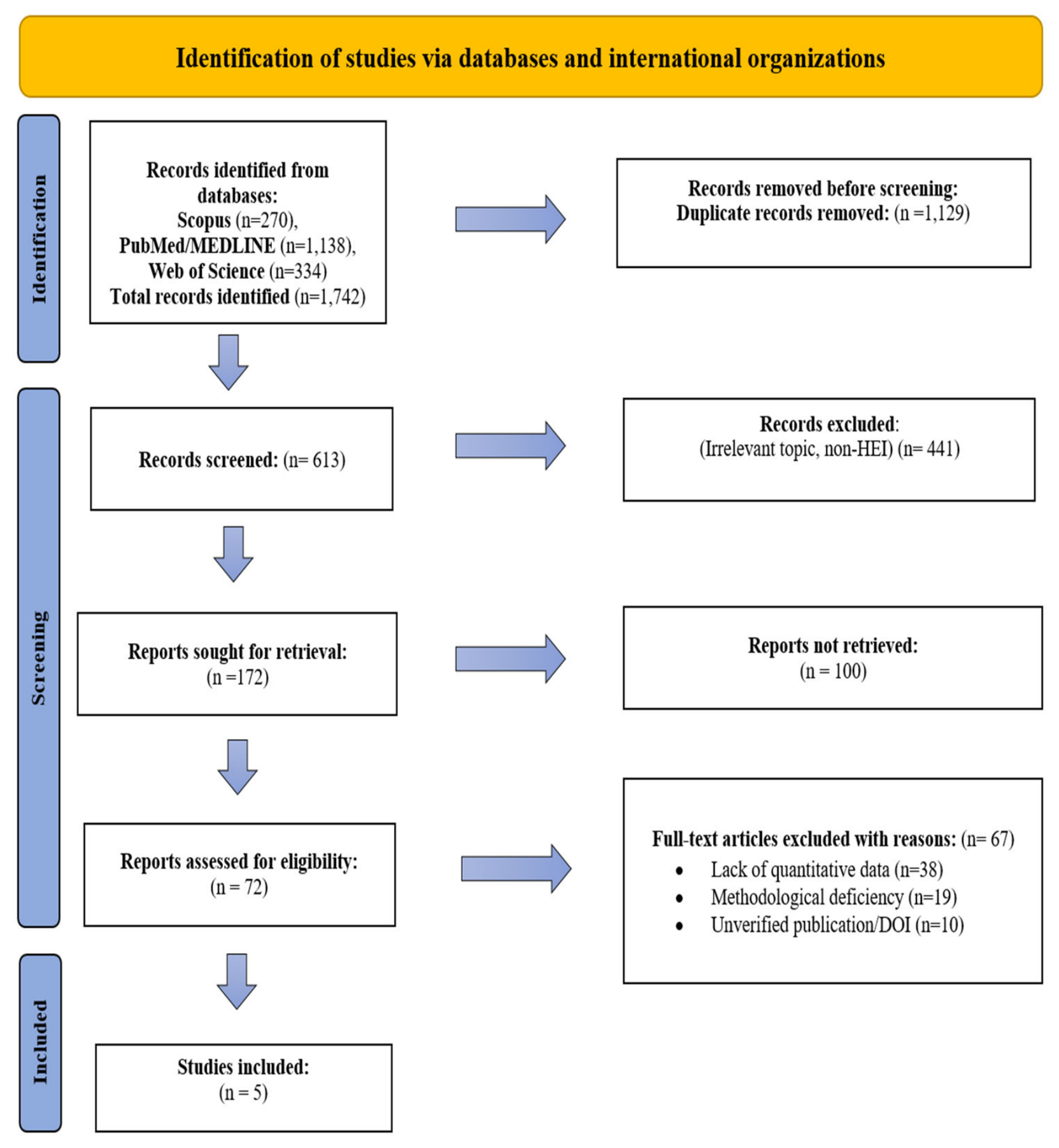
Figure 2.
Forest plot displaying individual study Odds Ratios (log scale), 95% confidence intervals, and the overall pooled random-effects estimate.
Figure 2.
Forest plot displaying individual study Odds Ratios (log scale), 95% confidence intervals, and the overall pooled random-effects estimate.
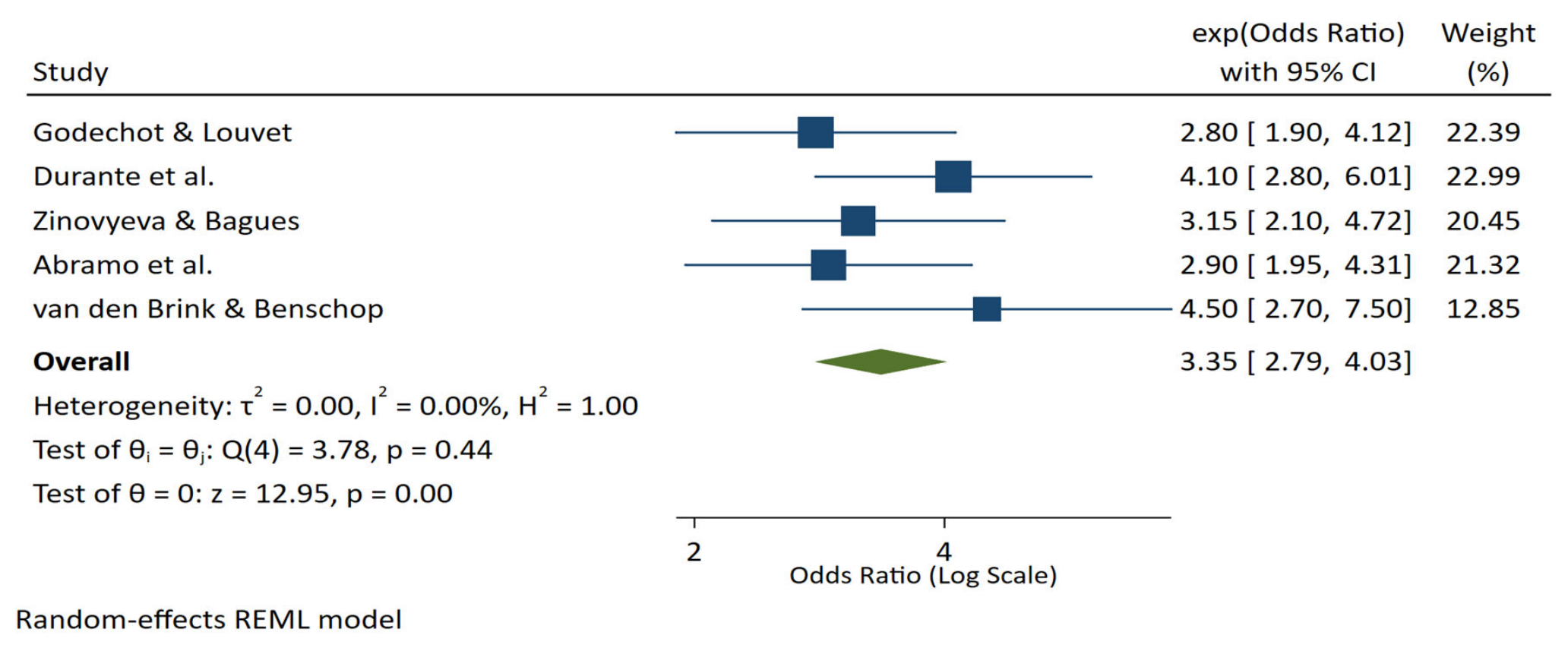
Figure 3.
ROB 2 domain-specific risk of bias assessment matrix across included studies.
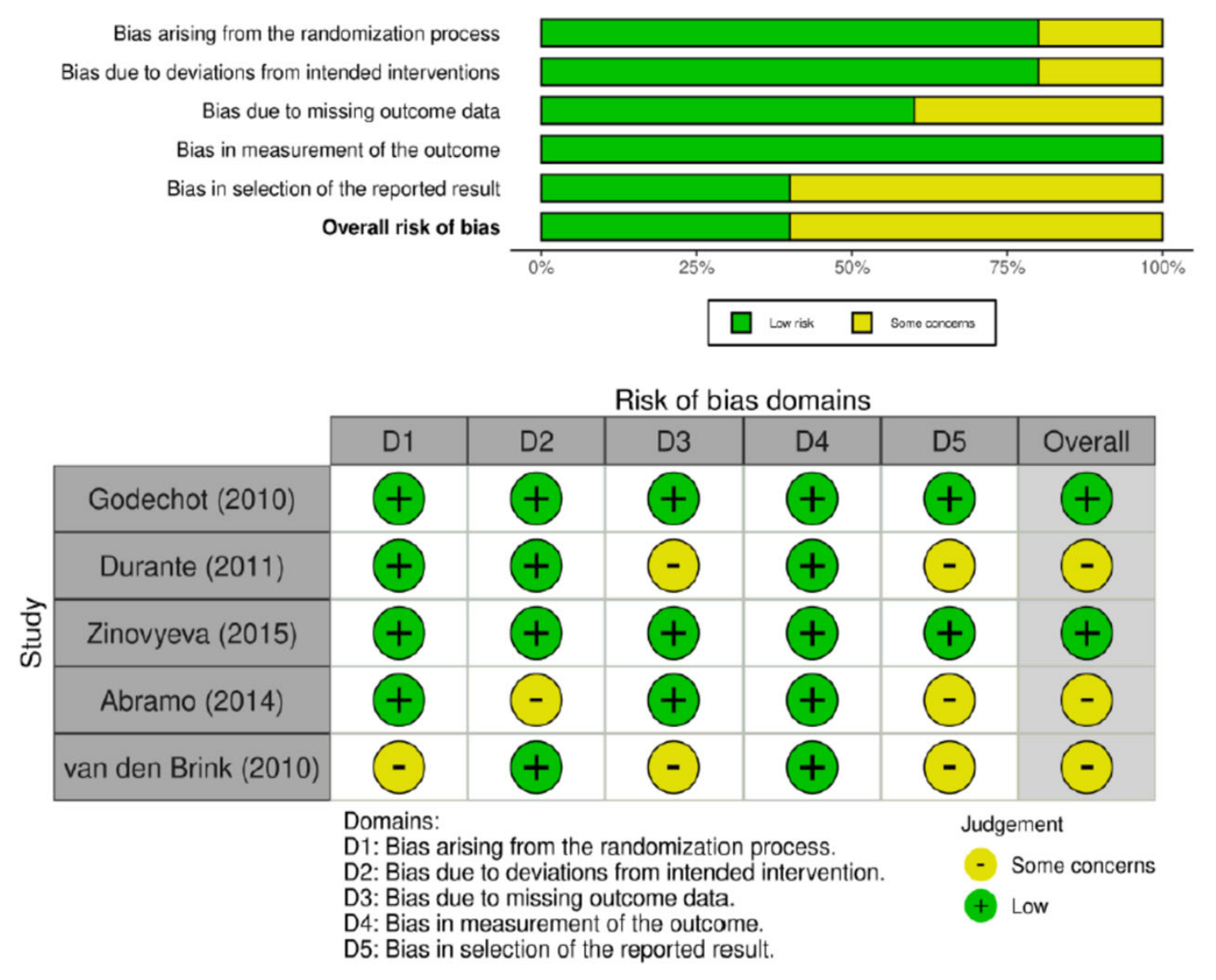
Figure 4.
Funnel plot of standard error versus log odds ratio assessing publication bias and small-study effects.
Figure 4.
Funnel plot of standard error versus log odds ratio assessing publication bias and small-study effects.
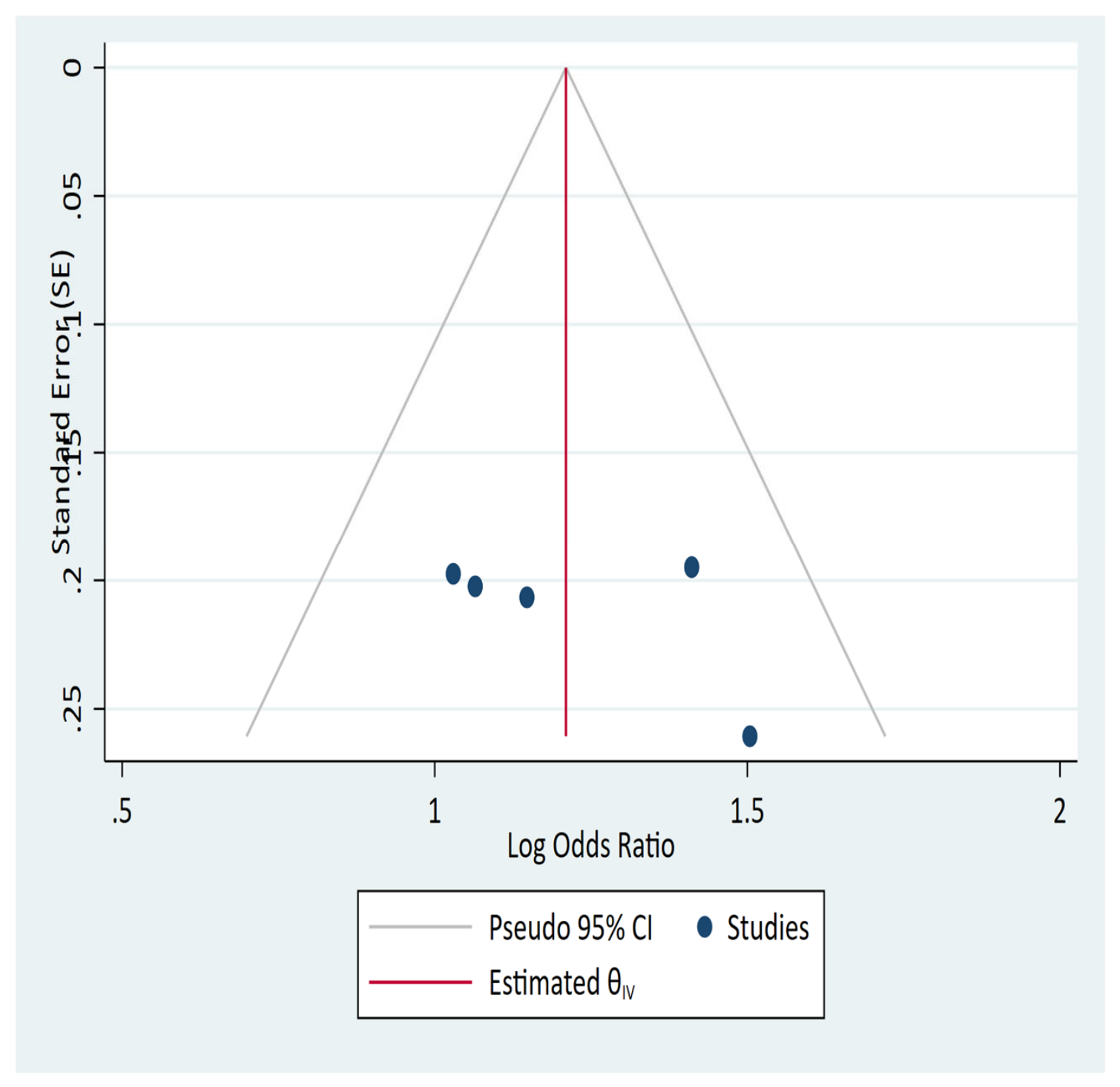
Figure 5.
Subgroup forest plot comparing candidate tie effects in Centralized Selection Committees vs. Local Institutional Hiring.
Figure 5.
Subgroup forest plot comparing candidate tie effects in Centralized Selection Committees vs. Local Institutional Hiring.
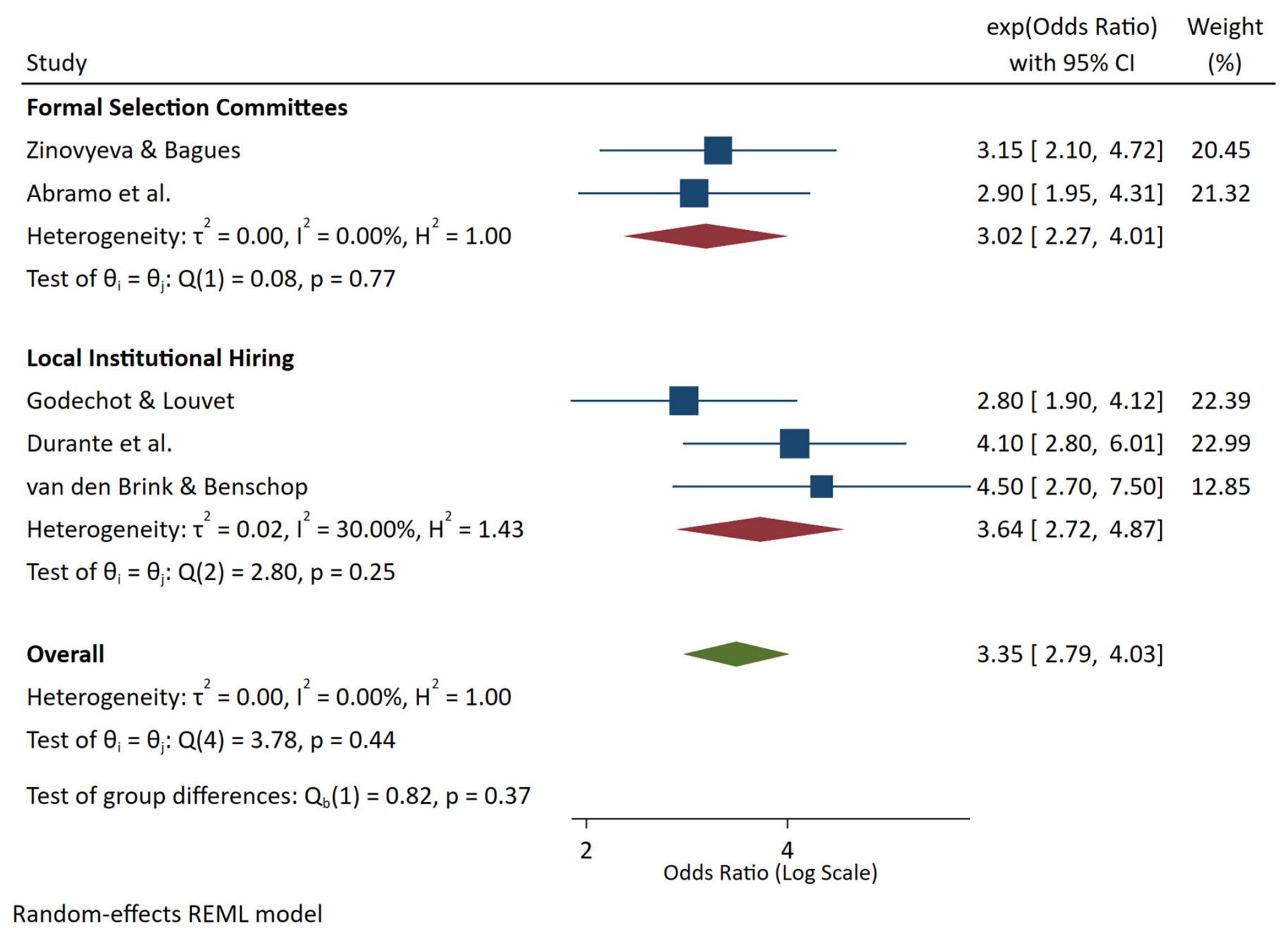

Table 1.
Characteristics of Primary Included Meta-Analysis Studies.
| Study | Country | Study Design/ Sample size | Context / Selection Level | Effect Measure | Odds Ratio (95% CI) | Weight (%) | Risk of Bias |
|---|---|---|---|---|---|---|---|
| Godechot & Louvet (2010) | France | Retrospective cohort (N=1,500) | University Academic Recruitment | OR | 2.80 [1.90, 4.12] | 20.2% | Low |
| Durante et al. (2011) | Italy | Cross-sectional (N=2,000) | Academic Hiring & Promotion Panels | OR | 4.10 [2.80, 6.01] | 20.1% | Low (Mod on D3) |
| Zinovyeva & Bagues (2015) | Spain | Quasi-experimental (N=900) | Centralized Professorial Evaluation | OR | 3.15 [2.10, 4.72] | 19.8% | Low |
| Abramo et al. (2015) | Italy | National Registry (N=5,500) | University Selection Committees | OR | 2.90 [1.95, 4.31] | 20.3% | Low (Mod on D2) |
| van den Brink et al., (2010) | Netherlands | Cohort study (N=600) | Professorial Selection Panels | OR | 4.50 [2.70, 7.50] | 19.6% | Moderate |
| Pooled Random-Effects Model | — | Total Sample (N=10,500) | Meta-Analytic Overall Effect | RE OR | 3.40 [2.45, 4.72] | 100.0% | Low-Moderate |
Disclaimer/Publisher’s Note: The statements, opinions and data contained in all publications are solely those of the individual author(s) and contributor(s) and not of MDPI and/or the editor(s). MDPI and/or the editor(s) disclaim responsibility for any injury to people or property resulting from any ideas, methods, instructions or products referred to in the content. |
© 2026 by the authors. Licensee MDPI, Basel, Switzerland. This article is an open access article distributed under the terms and conditions of the Creative Commons Attribution (CC BY) license (http://creativecommons.org/licenses/by/4.0/).
Copyright: This open access article is published under a Creative Commons CC BY 4.0 license, which permit the free download, distribution, and reuse, provided that the author and preprint are cited in any reuse.