

Submitted:
01 October 2026
Posted:
05 October 2026
You are already at the latest version
Abstract
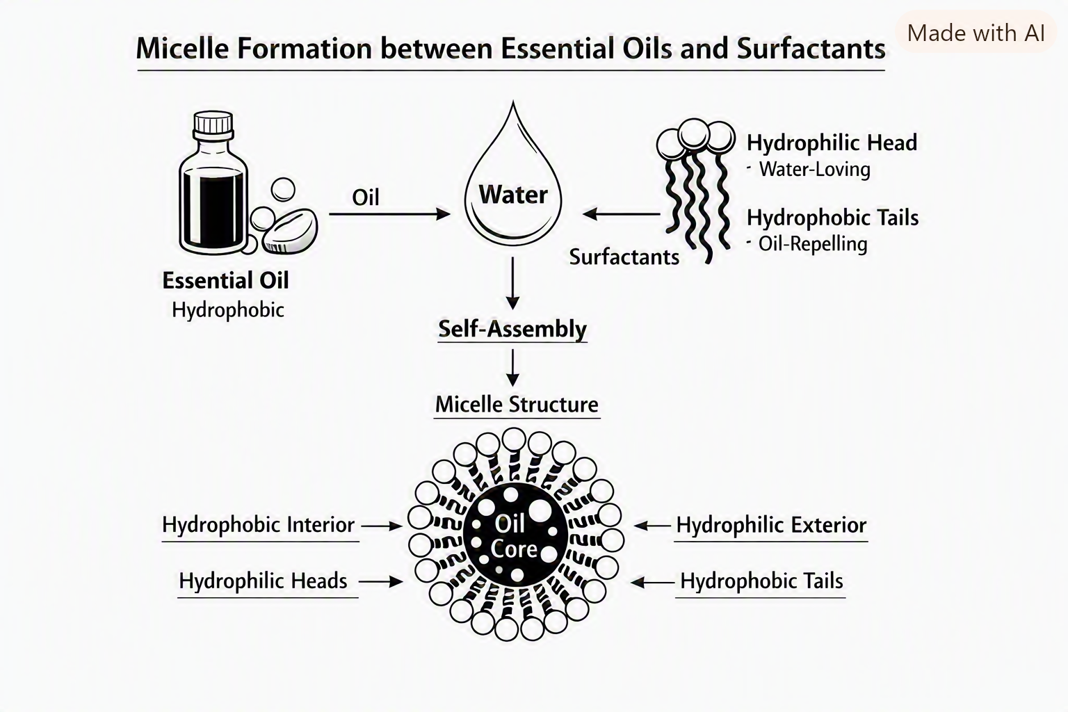
The compatibilization of essential oils and surfactants is a crucial factor when forming aggregates that should serve as a matrix to stabilize the core structure and develop the wrapping process with the shell components in the microencapsulation process of the essential oils. The aggregation structures formed with nonionic surfactants, such as Tween 80, and anionic surfactant SDS, and their thermodynamic values are well known in colloidal systems. Essential oils are natural, and in the same oil, there are a large number of organic compounds. They are often used in cosmetics, the food industry, and medicine. Although essential oils are widely incorporated into surfactant systems, the fundamental thermodynamic and interfacial mechanisms governing their coaggregation with surfactants remain poorly understood. Therefore, this paper investigates how cinnamon and clove oils influence surfactant aggregation, adsorption, and interfacial interactions in systems containing nonionic Tween 20, Tween 80, or Span 40 and anionic SDS. Combining surface tension, thermodynamic analyses, DLS, Zeta Potential, and optical microscopy will provide enough data to support our findings.
Keywords:
molecular interaction
; micelles
; surfactants
; surface tension
1. Introduction
The ordered and favourable processes of molecular aggregation (self-assembly) that amphoteric substances can offer, as well as their effect on different chemical structures, are phenomena that facilitate the use and applications of several, if not all, colloidal systems. The self-assembly of molecules has acquired great attention because of the great range of industrial applications. Among them, the formation of emulsions at different scales of aggregate size (nano, micro, or macro) represents one of the most challenging fields of work with a multitude of options and possibilities. In this case, the mechanisms and principles governing the system are totally dependent on the spontaneous evolution of the two phases involved in the emulsion (continuous and dispersed), going from separate molecules to the formation of molecular aggregates through micellization.
This phenomenon tends to modify the interface characteristics of both liquids, which can be assessed experimentally. In the absence of other driving forces, molecules can interact favourably to form thermodynamically stable micelles.[1,2]
In essential oils, the driving force for self-association is the hydrophobic character (the principle preventing oil and water from mixing into a single liquid phase) of one of the liquids in an aqueous medium. The main way to control molecular aggregation is the use of surfactants able to make the different amounts of organic compounds of the essential oil with the polar character of water.
Surfactants are used in large-scale applications across fields such as food, medicine, and textiles due to their unique properties [1]. They are a group of organic compounds, called amphiphilic substances, because they have two main functionalities: first, they reduce the interfacial tension between two phases, and second, they can form aggregates. As a result, and under certain circumstances, these amphiphilic molecules can form a single dispersed phase of the essential oil inside a single dispersed phase of thermodynamically stable self-associated interfaces (micelles).
Surfactants are characterized by a hydrophilic head and a hydrophobic tail. As a result, the molecules orient at the water surface, with their tails pointing toward the air. This behavior is common across all surfactant classes. As surfactant concentration increases, amphiphilic substances can self-assemble in aqueous media. The concentration at which molecules begin to aggregate is called the CMC (Critical Micelle Concentration). At this point, surfactant molecules spontaneously organize into structures such as micelles, vesicles, and other complex aggregates. Micelle stability in the bulk is governed by soft interactions between amphiphilic molecules, including hydrogen bonding, hydrophobic interactions, electrostatic forces, interfacial adsorption, and van der Waals forces. These interactions are highly flexible, so a single disturbance can cause significant shifts in the surfactant solution’s physicochemical and surface properties. This is a complex and fundamental phenomenon in colloid and interface science, and it plays a crucial role in the solubilization, stabilization, and transport of hydrophobic compounds in aqueous systems [1].
Self-assembly of surfactants is a thermodynamically driven process driven by the minimization of the system’s free energy. The formation of aggregates is associated with changes in interfacial tension and adsorption behavior at the air-water or oil-water interfaces. Therefore, the study of parameters such as the Gibbs free energy of micellization, surface excess concentration, and minimum area per molecule will provide crucial insights into molecular organization and stability of surfactant assemblies. Moreover, understanding these parameters is essential for predicting surfactant system behavior and for designing functional colloidal structures with tailored properties [2].
Essential oils will be another actor in this paper, and they will play a crucial role as well. They are complex structures formed by volatile and hydrophobic bioactive compounds extracted from trees, bark, seeds, flowers, feathers, etc [3]. They are well known in traditional medicine and have attracted considerable attention for their antimicrobial, antibacterial, antioxidant, and therapeutic properties, making them promising candidates for applications in textiles, pharmaceuticals, food preservation, and cosmetics [4]. However, it is difficult to incorporate essential oils into aqueous formulations due to their low water solubility and high volatility. Therefore, surfactants are commonly employed to solubilize essential oils via micellization and interfacial adsorption [5].
According to Lis [5], all the organic chemical compounds of the essential oils can be entrapped into a surfactant system to form emulsions, nanoemulsions, or micellar dispersions. Even though they are widely used, essential oils are often treated as passive hydrophobic solutes, and the fundamental mechanisms by which they interact with surfactant molecules and influence aggregation behavior remain insufficiently understood. A large number of studies have explored the formulation and stability of essential oil-surfactant systems, most of which focus on macroscopic properties such as emulsion stability [6], droplet size [7], or biological activity [8,9]. On the contrary, the thermodynamic and interfacial aspects of surfactant-essential oil interactions, which focus on their impact on micellization, adsorption, and self-assembly, have received less attention. In particular, systematic investigations comparing different types of surfactants (e.g., nonionic and ionic) and different essential oils under identical conditions are still rare. Therefore, a fundamental understanding of how essential oils modulate surfactant aggregation at the molecular and thermodynamic levels is crucial for rationally designing functional colloidal systems and clarifying their role as active co-assembling agents rather than merely solubilized components.
In this study, the effects of cinnamon and clove essential oils on the aggregation behavior of different surfactants, including anionic (SDS) and nonionic (Tween 20, Tween 80, and Span 40), are systematically investigated. The CMC of pure surfactants and the CAC of mixed surfactant-essential oil systems were determined by surface tension measurements. Interfacial and thermodynamic parameters, including the Gibbs free energy, minimum area per molecule, Gibbs free energy of micellization, and Gibbs free energy of adsorption, were determined to elucidate the energetic aspects of aggregation.
Moreover, the structural and electrokinetic properties of the aggregates were analyzed using DLS and zeta potential measurements, while optical microscopy was employed to examine the morphology of the formed assemblies. By combining interfacial, thermodynamic, and structural analyses, this study aims to provide a comprehensive understanding of the mechanisms governing surfactant-essential oil co-assembly and to clarify how essential oils modulate surfactant self-assembly and aggregate formation.
2. Methods and Materials
2.1. Materials
Essential Oils: 100% pure and natural Clove essential oil, from Eugenia caryophyllus [10], was supplied by Aromatika BV (The Netherlands). Cinnamon essential oil, from Cinnamomum zeylanicum, was supplied by Huiqili Supply Technology Co., Ltd. (Hong Kong, China). Cinnamon (Cinnamomum spp.) and clove (Syzygium aromaticum) essential oils are rich in phenylpropanoids with notable antimicrobial and antioxidant properties, relevant for emulsion stabilization [11].
In general, profiles for Clove Bud Essential Oil, obtained by steam distillation from bark, contain Eugenol (75% to 90%), Eugenyl acetate (smaller quantities, usually between 5% to 15%), and β-Caryophyllene (commonly 2% to 10%) [12].
Cinnamon essential oil, obtained by steam distillation from the bark of Sri Lanka, didn’t disclose the exact composition, but cinnamaldehyde, or other constituents such as cinnamyl acetate or coumarin, might be present.
Surfactants: Tween 20, Tween 80, and Span 40 as examples of non-ionic surfactants, and Sodium Dodecyl Sulphate (SDS) as an example of an anionic surfactant at different concentrations. [13,14].
SDS and Span 40 were purchased from Panreac AppliChem (BCN, Spain). Tween 20 was kindly supplied by Carinsa Group (BCN, Spain). Tween 20 was purchased from Sigma-Aldrich, Inc. (USA). According to the manufacturers, all surfactants were highly pure (>99%). All chemicals were used without further purification.
Acid: Acetic acid glacial (CH3COOH), M= 60.05g/mol, pure, was purchased from Panreac AppliChem, (BCN, Spain).
Detailed information on the surfactants’ properties is listed in the table below.

Table 1.
Molar mass and density as given by the manufacturer. The molecular volume was determined.
| Chemical/Formula | M (gx mol-1) | ρ (gx cm-3) |
| SDS/ C12H25SO4Na | 288,4 | 1,01 |
| Tween 20/C58H11O26 | 1128 | 1,150 |
| Tween 80/C64H124O26 | 1310 | 1,06 |
| Span 40/C22H42O6 | 402,6 | 1,07 |
2.2. Methods
The Sigma 701 Force Tensiometer (Biolin, UK) was used to measure the CMC of each surfactant, and the CAC of the mixture formed by the essential oil and surfactant. This equipment is used with the Wilhelmy plate (or rod) method to measure surface tension. The CMC and CAC of all solutions were measured at 25ºC. To obtain the CMC values of each surfactant, surfactant concentration solutions were prepared in deionized water (Millipore) and stirred for 30 min to ensure complete dissolution. The concentrated solutions of each surfactant were diluted at different times using the internal dilution method provided by the Sigma Force 701, with the help of a microsyringe, to vary the concentration. All these solutions were placed in a 50 mL glass. Finally, the CMC values of each surfactant were obtained separately.
To measure the CAC values, two more essential oil solutions (clove and cinnamon) were prepared. The first was formed by clove oil (1 g/l) plus acetic acid (two droplets) plus deionized water, and the second was cinnamon (1 g/l) plus acetic acid (two droplets) plus deionized water. The essential oil solutions, one at a time, were used to fill the glass bottle of the first dispenser. The liquid from the first dispenser will dilute the concentrated surfactant solution in a glass within the equipment using a microsyringe. This procedure will help to ensure a stable essential oil concentration throughout all surface tension measurements. The Sigma 701 provides a report with the CMC and CAC values, the Slope of the isotherm, and the baseline of the generated curve.
3. Results and Discussion
3.1. Surface Tension Measurements and Surface Properties
Surface tension results for Tween 20, Tween 80, Span 40, and SDS solutions in water were plotted against concentration to determine CMC values at 25 °C. Moreover, the surface tension results for the mixed solutions of the same four surfactants, with the addition of clove or cinnamon essential oil in water, were plotted against concentration to determine the CAC. The surface tension of all surfactants alone and the mixed solution of surfactant and essential oil decreases with increasing surfactant concentration, and a sigmoidal curve was observed between the surface tension (γ) and surfactant concentration (g/l). The distinct breaks in the sigmoidal curves of surfactant alone and surfactant plus essential oil are known as CMC and CAC, respectively.
Table 2.
CMC and CAC results.
| CMC | CAC | |||||
| Surface Tension of: | (g/l) | Log(g/l) | with Clove (g/l) | Log(g/l) | with Cinnamon (g/l) | Log(g/l) |
| Tween 20 | 0.7215 | -0,15 | 0.4432 | -0,46 | 0.2487 | -0,50 |
| Tween 80 | 0.1111 | -0,95 | 0.03383 | -1,47 | 0.0926 | -1,13 |
| Span 40 | 0.0584 | -1,23 | 0.0147 | -1,83 | 0.0158 | -1,80 |
| SDS | 2.23 | -0,85 | 0.9976 | 0,54 | 1.04 | 0,55 |
Therefore, with the representation of the surface tension vs. concentration, we can analyze and compare the detailed mechanisms underlying the variation in surface tension for surfactant alone versus surfactant plus essential oil.
Figure 1.
Comparison of surface tension of Tween 80 alone and the mixture of Tween 80 with Clove vs. concentration.
Figure 1.
Comparison of surface tension of Tween 80 alone and the mixture of Tween 80 with Clove vs. concentration.
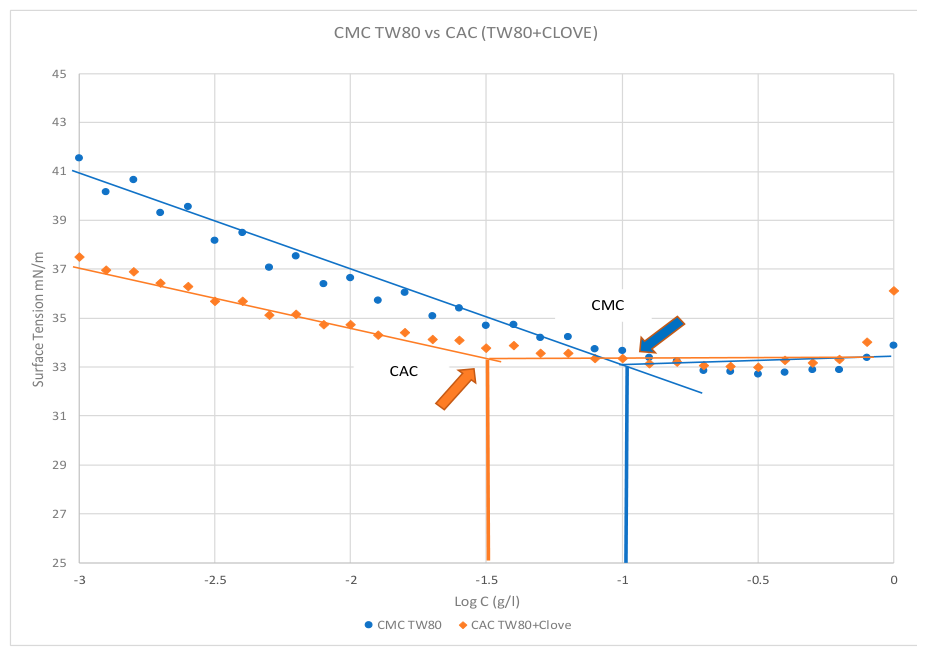
Figure 2.
Comparison of surface tension of Tween 80 alone and the mixture of Tween 80 with Cinnamon vs concentration.
Figure 2.
Comparison of surface tension of Tween 80 alone and the mixture of Tween 80 with Cinnamon vs concentration.
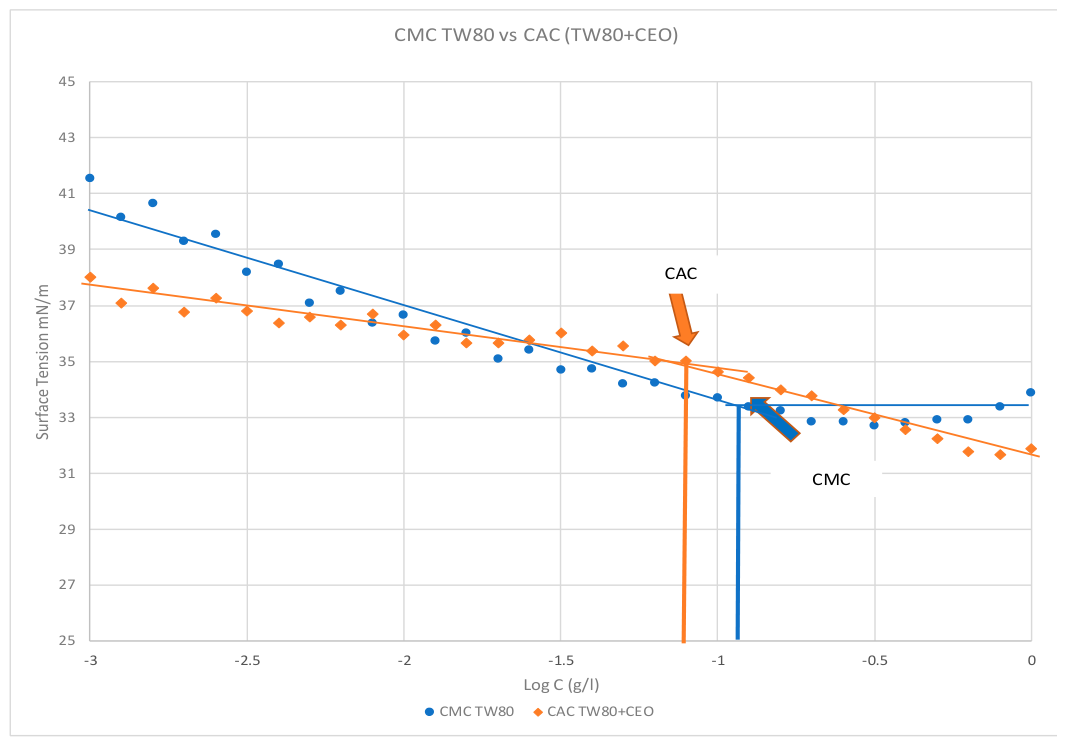
Figure 3.
Comparison of surface tension of SDS alone and the mixture of SDS with Clove vs concentration.
Figure 3.
Comparison of surface tension of SDS alone and the mixture of SDS with Clove vs concentration.
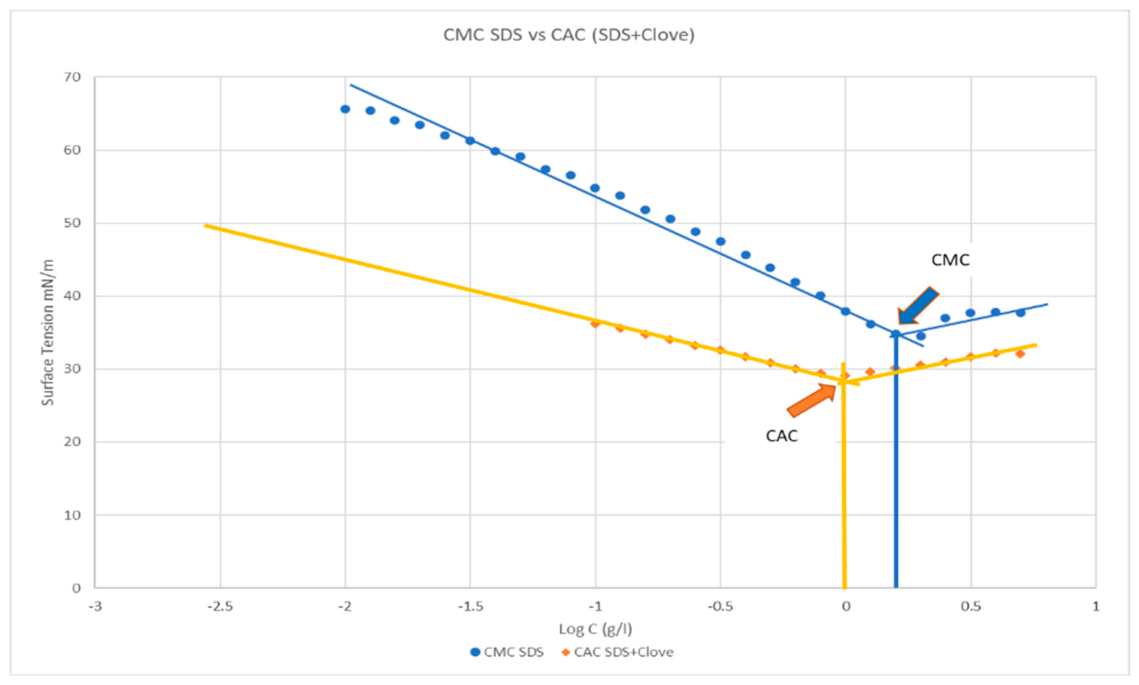
Figure 4.
Comparison of surface tension of SDS alone and the mixture of SDS with Cinnamon vs concentration.
Figure 4.
Comparison of surface tension of SDS alone and the mixture of SDS with Cinnamon vs concentration.
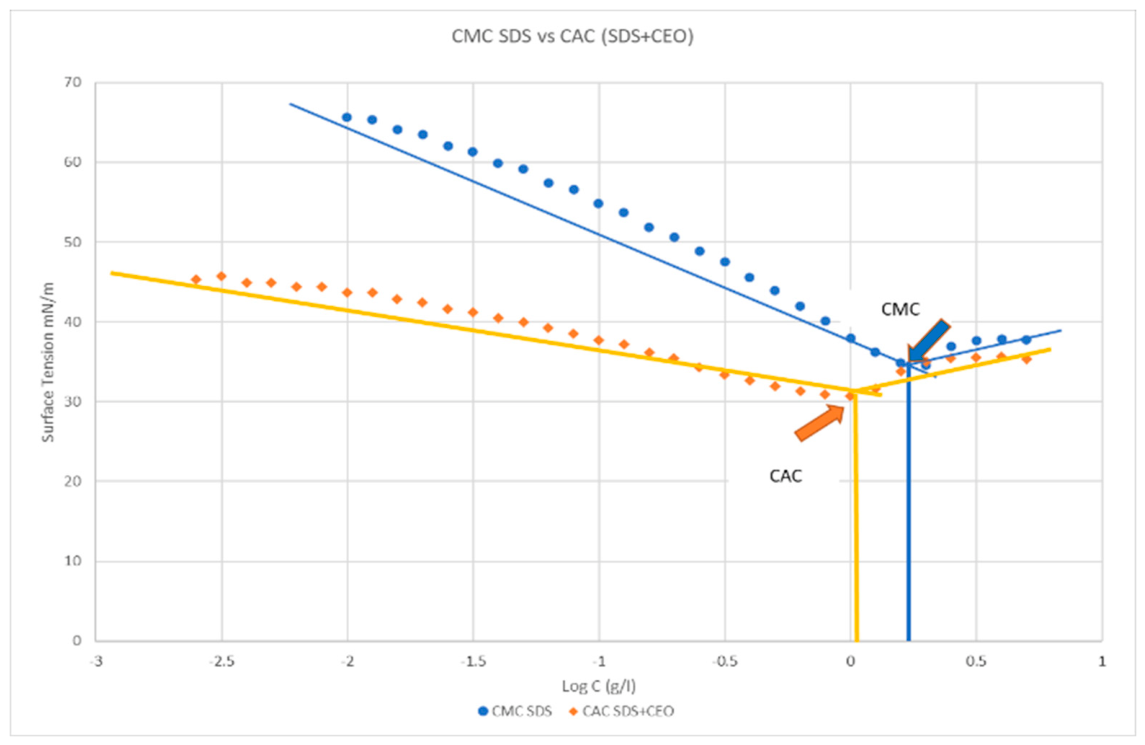
Surface tension of nonionic (Tween 20, Tween 80, and Span 40) and anionic (SDS) surfactants was obtained, and a mixture of surfactants with essential oil (Clove or Cinnamon) was also obtained. They were analyzed simultaneously as a function of surfactant concentration to explain the aggregation phenomenon of lipophilic surfactants in the presence of different essential oils (Cinnamon or Clove).
After analyzing the graphs of surface tension vs. surfactant log concentration (γ/lnc) across all systems, they showed two distinct regions, a clear break, consistent with surfactant theory. The first regions, prior to the CMC/CAC, exhibit a monotonic decrease in surface tension. In this region (before the CMC/CAC), adsorption at the air/solution interface differs. The second region, after CMC, exhibits a flat, straight line in the surface tension- surfactant log c plot.
The explanations will be divided into two regions. The primary focus will be to summarize the most essential findings before the first “break” in the surface tension isotherm curve, i.e., the pre-micellar region, and the second region will consist of the analysis after the second break in the isotherm curve, i.e., the post-micellar region.
3.1.1. Pre-Micellar Region
While there is general agreement in the academic field that the break on the isotherm curve marks the region where aggregation (micelles) begins to form [1,2,15], there is no general agreement in the region on the isotherm curve at very low concentrations, before the break (pre-micellar). Graph5
As shown in Figure 5, at low concentration, surfactant adsorbs as individual molecules (unimers), with no aggregates forming. This is why the behavior across all isotherm curves is similar rather than identical.
At very low surfactant concentration (C <<< CMC), and with the increase of surfactant concentration, there was a monotonous decrease in surface tension values due to concentration-driven increasing adsorption at the air-water interface. Before achieving CMC, the aggregates are not appropriately formed; i.e., they are still in formation, the surface tension is still falling, surfactants are still free at the water/air interface or in the bulk, and oil remains alone. In summary, the system didn’t achieve stability.
Once CMC/CAC is reached, the surface tension curves abruptly level off and become essentially flat due to an increase in surfactant concentration. This indicates that the system’s stability has been achieved.
Comparing the isotherm curves before the break for nonionic surfactants (Tween 20, Tween 80, and Span) and anionic surfactant (SDS) working alone, with those (graph 1-4) obtained from a mixture of the same surfactants and essential oil (Cinnamon or Clove), we found that lower absolute surface tension values were obtained with the mixture of essential oil and surfactants rather than with surfactant alone. There are different approaches to explain this phenomenon:
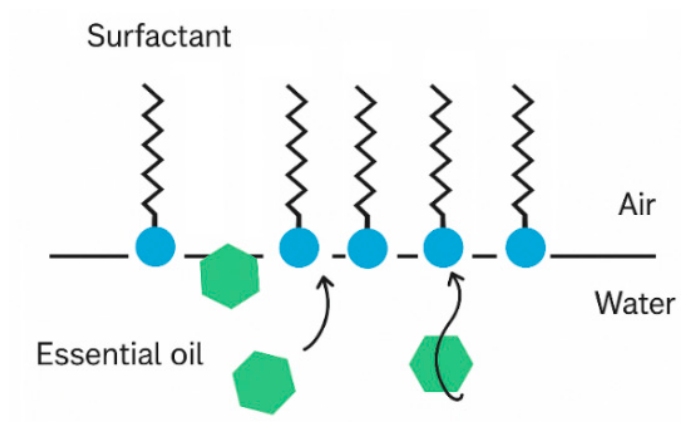
The first approach, which argues against the absence of aggregation at very low concentrations, is in accordance with Felipe and Bicas [16]. They worked with α-terpineol (a crucial essential oil compound)- loaded oil-in-water (O/W) emulsion. Their goal was to assess the interfacial ability of α-terpineol in water, followed by its entrapment into an oil-in-water (O/W) emulsion using the nonionic surfactant Tween 20. They discovered that α-terpineol may act as a cosurfactant, reducing interfacial tension at the oil-water interface in both the absence and presence of surfactant in the aqueous solution. They suggested that the high-water solubility of α-terpineol is the main reason for its ability to decrease interfacial tension compared to the essential oil alone. This solubility may be associated with the polar region of its molecule, due to the hydrogen bond donor -Oδ-H, which can form dipole-dipole interactions with water. Therefore, like other oxygenated monoterpenoids, α-terpineol presents an amphiphilic character, directly impacting its ability to lower the IFT (interfacial tension) between two immiscible liquids [16]. Their findings are consistent with our results shown before the first break in the isotherm curve (graphs 1-4). Since essential oils have lipophilic behavior, they tend to accumulate at hydrophobic interfaces (such as the air-water or oil-water interface). This partitioning can alter the balance of surface-active molecules and lead to further reductions in surface tension.
Figure 6.
The partitioned effect – essential oil goes to the surface, acting as a cosurfactant.
The results and discussion are according to the work developed by Ljiljana [8] . They published a deep investigation regarding flow behavior and viscosity (ɳ) of microemulsion concentrates with essential oil. They carried out microemulsions with Kolliphor® RH40 (nonionic surfactant), cosurfactant Transcutol ®, cosolvent (propylene glycol), and cinnamon, thyme, or tea tree essential oils. They drew different flow curves for microemulsion concentrates containing cinnamon and thyme essential oils. They compared the absolute viscosity values (ɳ) of thyme and cinnamon microemulsion concentrates with maximum apparent viscosity (ɳapp@ 22.2s-1) and minimal apparent viscosity (ɳapp@ 200s-1) of the corresponding film-forming microemulsion with essential oil. They figured out that the ɳapp values of all film-forming microemulsions with cosurfactant were higher than those of the corresponding systems without cosurfactant at the same shear rate. They hypothesized that, based on the previous characterization of an EO-in-water microemulsion obtained from diluted concentrates with water, they assumed that the surfactant is predominantly distributed at the interface, so it may be present in the continuous aqueous phase at a limited concentration. Therefore, under these specific conditions, they suggest a possibility of the formation of premicellar aggregates of the long polyoxyethylene tail components of the surfactant Kolliphor ® RH along the polymer chains of Hypromellose. They hypothesized that surfactants with long-tailed molecules, such as Kolliphor, can form aggregates at concentrations far below their CMC and form complexes with the polar groups of nonionic surfactants through hydrophobic and electrostatic interactions. In conclusion, they stated that the same phenomenon of pre-micellar aggregate formation does not occur at surfactant concentrations above CMC.
Since no aggregation occurred before the first break and a surfactant cannot act as an oil solubilizer, there might be another reason for the decrease in surface tension when an essential oil with a different composition is added to the solution compared with surfactant alone.
This alternative, which is not reported in papers, and it could explain the results for Figure 1, Figure 2, Figure 3 and Figure 4 before the break in the isotherm curve. We observed that the lubricating effect of organic compounds from essential oils on the plate surface can decrease surface tension (Figure 7). This means that essential oil components could adsorb onto the Wilhelmy plate surface, adhere there, and act as a lubricating or surface-modifying layer, potentially affecting surface tension measurements. There are several reasons, and a mechanism overview will be presented in the following paragraphs.
First, many essential oils contain lipophilic, hydrophobic compounds, such as eugenol, cinnamaldehyde, linalool, and limonene, which have a strong affinity for solid surfaces [17]. Therefore, when the Wilhelmy plate is immersed in the solution for the first time, these compounds can adsorb onto its surface, especially if it is clean and hydrophilic. The remaining automatic measurements are then conditioned by the hydrophobic character of each essential oil in the remaining samples.
Second, it relates to surface modification. The adsorption of the essential oil on the plate surface can alter the plate’s surface energy, effectively decreasing its interaction with water. Therefore, if the plate becomes more hydrophobic, the capillary force acting on the plate is reduced, potentially leading to an underestimation of surface tension [18].
Finally, the lubricating film effect. Some essential oil components may form a thin, mobile layer on the plate, particularly when the concentration is high, or the essential oil is insoluble in water. This means that this layer could act like a lubricant, reducing the wetting force, which is crucial for accurate Wilhelmy plate measurements [19].
3.1.2. Post-Micellar Region Analysis
Two different essential oils (cinnamon and clove) have been mixed with four different surfactants, comprising three nonionic and one anionic surfactant, at varying molar ratios. After analyzing the data, some comparisons can be made to clarify this phenomenon.
According to the isotherm curves for cinnamon and clove (Figure 1, Figure 2, Figure 3 and Figure 4), no clear behavior was observed, but a primary trend emerged after the CMC was reached. As mentioned above, the CAC and the absolute surface tension values obtained in the pre-micellar region were lower for a mixture of an essential oil and a surfactant than for the surfactant alone. Now, after the surfactant concentration has been increased and CMC/CAC is achieved, both curves (surfactant alone and mixing with oil) start to converge. A plateau is reached. This indicates that the system (water + essential oil + surfactant) may be stable. There are several explanations for this phenomenon.
In the partitioning effect of oil/surfactant on the water surface [20], it is assumed that the water-air interface contains a significant number of surfactant molecules and essential molecules. As the surfactant concentration increases in the bulk, free surfactant molecules become available. These free surfactant molecules will be able to start forming aggregates with essential oils, or the possibility of forming aggregates by themselves.
According to the extensive review published by Dekic [21], which covers the thermodynamic stability of these mixtures, when oil is present in bulk, the possibility of surfactants forming aggregates by themselves probably might not occur, because when essential oil, water, and suitable surfactant are combined in appropriate proportions, an oil-in-water microemulsion is spontaneously formed using simple stirring methods. However, the influence of essential oil, alone or in combination with a surfactant, on phase behavior has not been thoroughly investigated to date. Therefore, it makes it difficult to draw any definitive conclusions.
Based solely on the Hydrophobic Effect [22], even though essential oils are hydrophobic and uncharged, they prefer to incorporate into micelles (or other surfactant assemblies, such as emulsions) rather than aggregate on their own. The aim here is the “total” dispersion of essential oil in the emulsion to get stable aggregates. This behavior is rooted in thermodynamics and interfacial chemistry.
3.2. Thermodynamics Assessment
From the plot of surface tension curves for surfactant alone or surfactant mixed with essential oils as a function of surfactant concentration, the following surface properties were calculated [23].
The maximum surface excess concentration at the air/surfactant/essential oil-water interface (Гmax) was calculated by applying the Gibbs isotherm.
Where γ denotes surface tension (mN/m), R is the Gas constant (8.314 J x mol-1 x K-1), T is the absolute temperature 298 K, C is the surfactant concentration (g/l), and (dγ/dlogC) is the slope of the γ versus log C plot taken at CMC or CAC. According to Kumar [23], constant n is the counter-ion and takes the values 2 for the ionic surfactant (SDS) and 1 for non-ionic surfactants (Tween20, Tween 80, and Span40), where the surfactant ion and the centerline are univalent.
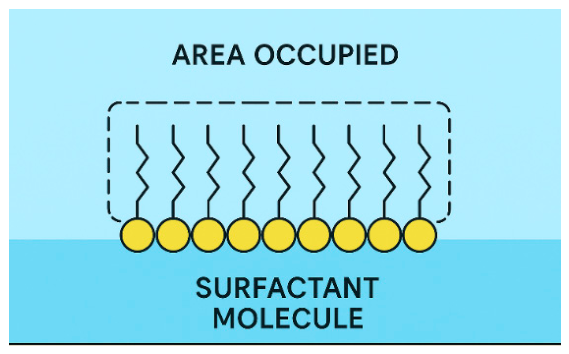
b) The area occupied per surfactant molecule or surfactant/oil aggregate at the air/water interface (Amin) [23];
Where Na is Avogadro’s number: 6.02x10²³/mol
Figure 8.
Surfactant molecules at the interface.
The surface pressure at the CMC (πcmc) or CAC (πcac) [23];
Where γ0 and γcmc/cac are the values of surface tension of water and surfactant solution at CMC/CAC, respectively.
The standard Gibbs free energy of micellization/aggregation,
Where X CMC/CAC is the mole fraction of CMC or CAC, and α, according to Kumar [17], is the degree of dissociation for ionic surfactants, which is calculated from the ratio of pre-micellar and post-micellar slopes of the plot surface tension vs concentration.
In the case of non-ionic surfactants, the formula is:
e) The standard free energy of interfacial adsorption at the air/saturate monolayer interface () [23].
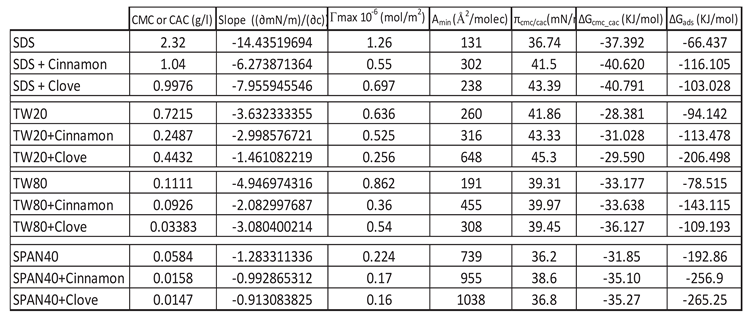
The maximum surface excess concentration at the air/surfactant/essential oil-water interface (Гmax), the area occupied per surfactant molecule (Amin) at the air/surfactant/essential oil-water interface, surface pressure at the CMC (πCMC) or CAC (πCAC), and standard free energy interfacial adsorption () were obtained from the sigmoidal curve of Surface Tension vs Concentration and calculated at the CMC/CAC point and displayed in Table 3.
All the discussions and phenomenology are in accordance with Bergfreund [24] and Mukherjee [25] on how fluids can alter the thermodynamics of surfactants at the interface. In these papers, they detailed how surfactant adsorption at the interface is modified when the fluid is oil (not necessarily essential oil) rather than air, including relevant concepts of co-adsorption and competition. Moreover, in another paper published by Haro-Gonzalez [26], the research focused on stabilizing nanoemulsions containing clove oil by varying surfactant concentration, oil phase content, and other factors. Haro-Gonzalez demonstrated in his work that the surfactant plus E.O. system behaves differently with varying surfactant concentrations. This is exactly what I have done in this research. However, none of them used essential oils, focusing instead on thermodynamic interfacial adsorption. Researchers who have a focus on thermodynamics [27], have preferred to work with specific chemical compounds from the essential oils, such as Eugenol (the primary organic compound from Clove Oil) and Cinnamaldehyde (the primary organic compound from Cinnamon Oil), due to a series of reasons:
a) Essential oils are natural, have different origins, and are unique. Therefore, it is more challenging to reach stronger conclusions.
b) Essential oils have a mixture of chemical compounds, which means complicated data and modeling, and some mathematical approaches.
From now on, this work will present thermodynamic considerations based on the experimental results. The tensiometric data obtained for all surfactants showed that adding essential oil lowers the magnitude of the pre-CMC slope (γ vs log C), reduces the surface excess (Гmax), and increases the area per molecule (Amin).
Therefore, the slope determination from the surface tension vs log C curves plotted before the CMC/CAC is crucial in the thermodynamic interpretations. The slope can provide insight into molecular packing and adsorption at the interface; steeper slopes indicate more efficient adsorption. To clarify the preceding statement, the use of interpreting findings from published studies related to various fluids influencing surfactant adsorption [18,20].
Previous studies have shown that adding essential oils to surfactants can further reduce interfacial tension. For instance, Pavoni et al. [28] reviewed how the presence of monoterpene alcohols in some E.O.s, such as geraniol or terpinene-4-ol and α-terpineol in tea tree oil, enhances the formation of microemulsion (ME), acting as co-surfactants, improving interfacial film fluidity. Song et al. [29] experimentally demonstrated the effect with lemon oil and Tween/SPAN, and Hand et al. [21] observed a similar effect in a pine oil nanoemulsion. Therefore, there is strong evidence that the combination of surfactant and essential oil systematically decreased surface tension readings in absolute values of a mixture after the addition of the essential oil. Therefore, two considerations could be taken from this data:
a) The first is related to (Standard Gibbs Free Energy of interfacial adsorption), it can be seen in Table 3 that the values of are all negative, indicating that the adsorption of amphiphiles and amphiphiles plus essential oil (Cinnamon or Clove) is spontaneous at all investigated combinations. However, it is clear that the presence of essential oils in the solutions makes the adsorption easier, because the will become more negative, which means that the adsorption process is facilitated. According to Bergfreund [24], surfactant adsorption differs when the fluid phase is oil rather than air, due to competition/co-adsorption effects.
From pure anionic SDS to the mixing of SDS with E.O., there was a 75% drop in the case of Cinnamon and a 50% drop in the case of Clove Oil. This wasn’t the most expressive among the surfactants analyzed. In the case of nonionic surfactants, there were values so intense or higher than those of SDS (an anionic surfactant). For example, from pure Tween 20 to Tween 20 plus Cinnamon, there was a 20% decrease, and with Clove, we observed a 120% decrease. In the case of Tween 80, the results were similar to those of Tween 20 in both cases (Cinnamon and Clove Oil). Finally, from pure Span to a mix of Cinnamon or Clove oil, the values were less intense than those of the others. However, in all systems, after applying the Gibbs thermodynamic equations, we obtained a more negative which results in better adsorption efficiency when mixing with oils.
b) From the equation of Minimum area occupied per surfactant molecule/aggregate (eq.2), it can be noticed that solutions formed by surfactant plus essential oil obtained higher values of molecules/aggregates than surfactant alone. This means that surfactant/aggregates occupy a larger surface area at the air-water interface. Therefore, there will be three clear implications from this phenomenon. First, the interface is no longer a pure surfactant monolayer. Now, it will be a surfactant-essential oil mixture (a hybrid micelle). As a result, the surfactant cannot pack as tightly as the essential oil, altering the arrangement and forming a more stable structure. Second, there will be a drop in surface excess values , i.e., the number of surfactant molecules per unit area, because the same area is now shared with essential oil molecules in micelles. Third, the solution’s stability has also changed. According to Debraj [30], a mixed interfacial film usually implies that the interfacial layer is more flexible and can incorporate oil droplets more easily. This is one of the main reasons that essential oils plus surfactants form a stable emulsion at lower surfactant concentrations.
In summary, these three parameters are not contradictory because, according to Rosen [31], the relationship between the Gibbs adsorption concepts of and -dγ/dlogC indicates a higher surface excess of surfactant molecules alone rather than in the mixed system. Moreover, an increase in area per molecule/aggregate and a more negative obtained from Gibbs equation from a mixing of surfactant/essential oil support the interpretation that when EO molecules coadsorb, i.e., contribute strongly to the energy gain when the interface is formed, with surfactant or form mixed essential oil interfacial films, the total energy reduction from forming that mixed interfacial film can be larger than that of surfactant alone, i.e., more negative [24].
These observations are consistent with interfacial thermodynamic concepts, e.g., Gibbs’ adsorption theory, and with reports that hydrophobic solutes [19] or essential oil components co-adsorb or partition into interfacial films, thereby reducing the additional effect of surfactants on surface tension. Overall, the essential oil enhances the adsorption process by making it more thermodynamically favorable.
3.3. Correlation of Hydrodynamic Diameter and Zeta Potential with System Stabilization
The hydrodynamic diameter, or particle size, is one factor to consider when assessing system stability. Smaller droplets/micelles are more stable. Large droplets tend to coalesce and separate from water over time due to gravity.
Therefore, the particle size assessment and Zeta Potential were obtained in two different conditions, such as: from a solution of water + surfactant (Tween 20, Tween80, Span 40, and SDS) alone, and compared with a solution which contains water + essential oil (Cinnamon or Clove) + surfactant (Tween 20, Tween80, Span 40, and SDS). We realized that this type of comparison will provide experimental data to support particle interaction theory.
3.3.1. Hydrodynamic Diameter (Size) and Zeta Potential Measurements
After the C.M.C. and C.A.C. were reached, the thermodynamic analyses were finished; it is now time to take diameter and Zeta Potential readings from the systems formed using the Malvern Zetasizer Equipment. The aggregate size and zeta potential curves related to the complex systems must be analyzed based on the peaks observed in the test.
The goal is to understand the formed aggregates and zeta potential values, which can indicate system stability. In other words, the solution will have a high capacity to stabilize the essential oil within the complexes.
Figure 9.
Comparison of hydrodynamic diameter between Tween 80 and Tween 80-Clove Oil.
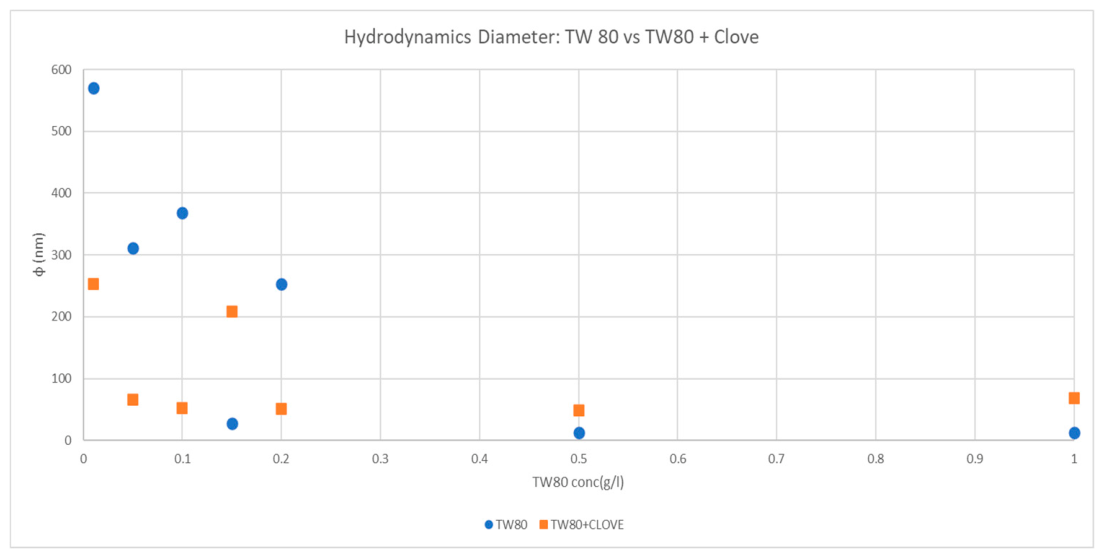
Figure 10.
Comparison of the hydrodynamic diameter between Tween 80 and Tween 80 with Cinnamon Oil.
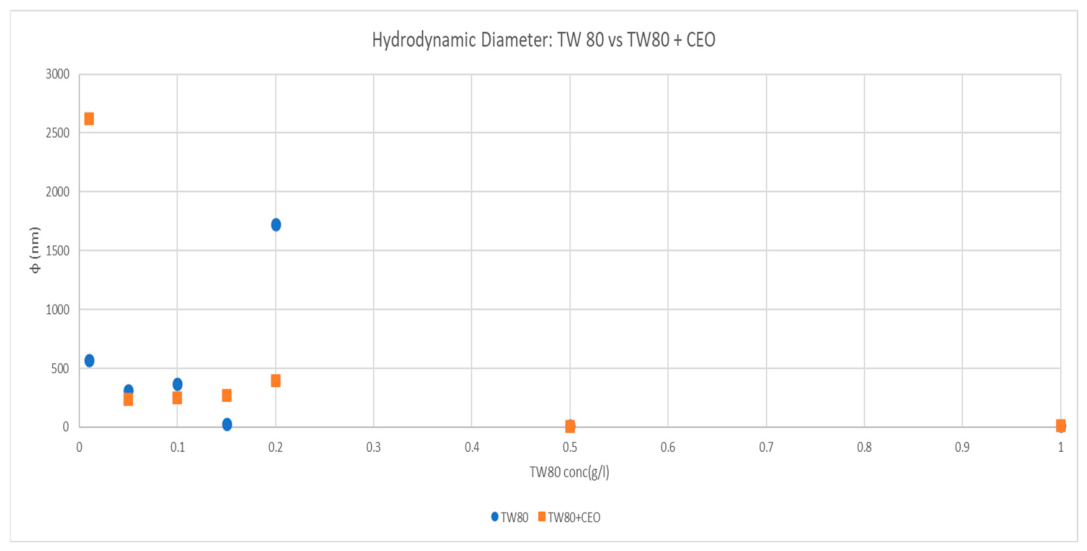
Figure 11.
Hydrodynamic diameter comparison in the case of SDS alone and SDS-Clove oil.
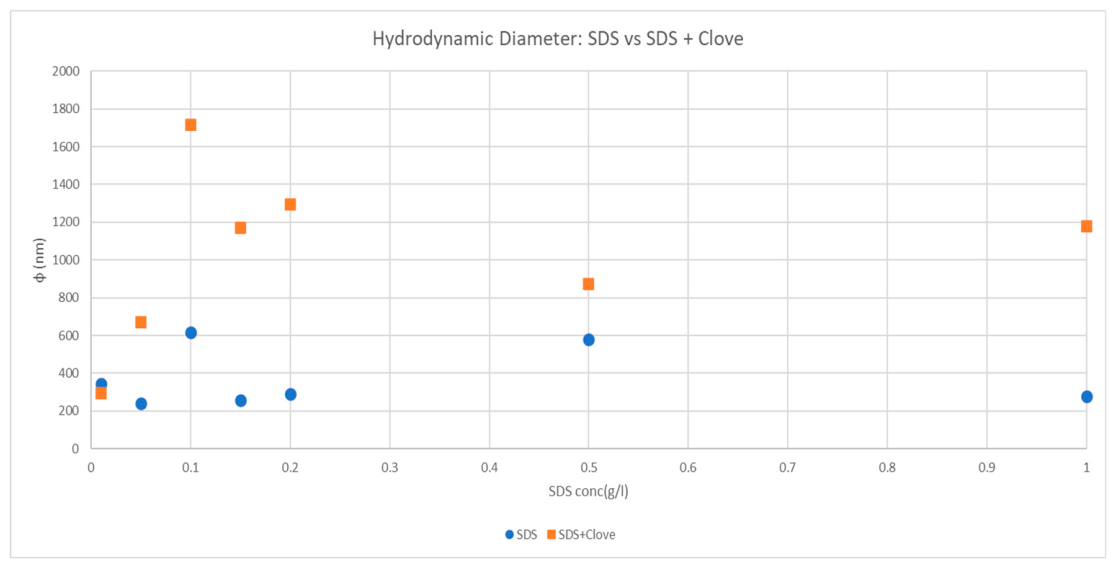
Figure 12.
Hydrodynamic Diameter comparison in case of SDS and SDS-Cinnamon Oil.
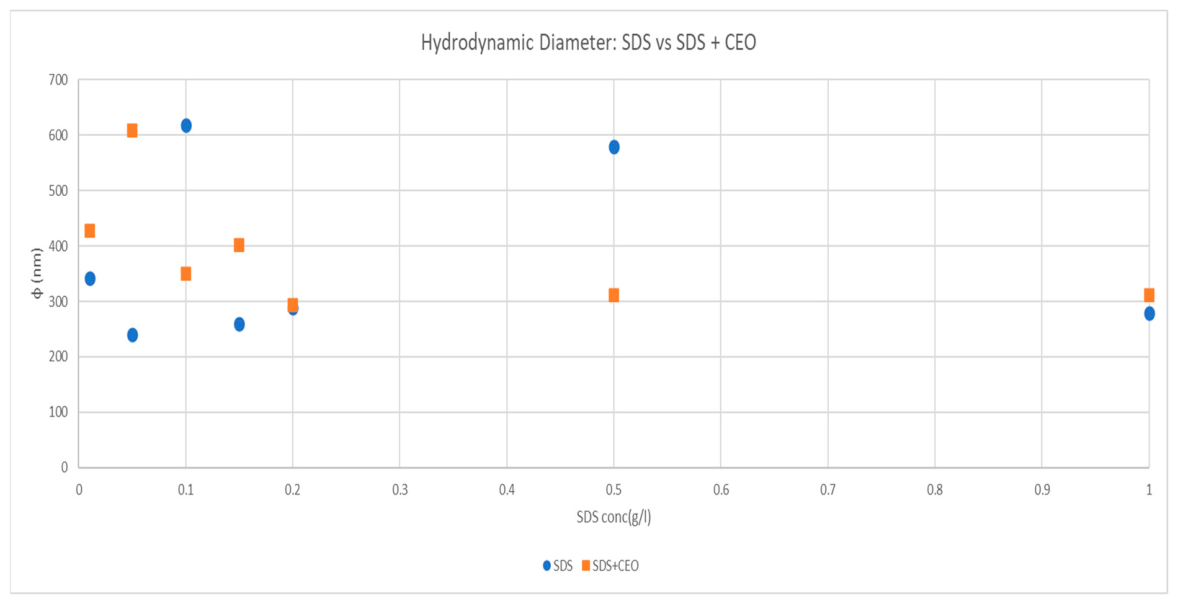
From graphs 9 and 10, describe the effect of essential oils on the structure of surfactant aggregates using, first, DLS measurements. A comparison of HD values (size) at different surfactant concentrations was conducted for systems formed with Tween 80 and SDS alone, and with a surfactant mixture containing clove and cinnamon essential oils.
In the case of Tween 80, the addition of E.O. led to a noticeable reduction in HD (size) across the investigated surfactant concentration range. This behavior indicates that essential oil molecules promote the formation of the smallest aggregates [32,33]. Such structural compaction can be attributed to the incorporation of hydrophobic oil components into the micellar core, which enhances hydrophobic cohesion and improves the packing efficiency of surfactant molecules [34]. This structural reorganization is strongly supported by the thermodynamic results of this work, which showed a decrease in the CAC and a more negative Gibbs free energy of micellization in mixed systems.
SDS systems didn’t exhibit a significant decrease in HD, indicating the formation of larger mixed aggregates [32,35]. This behavior can be explained by the interplay between hydrophobic interactions and electrostatic repulsion among ionic headgroups [36]. Essential oil molecules increase the hydrophobic volume of aggregates and modify interfacial curvature, leading to the growth of micellar structures or the formation of supramolecular assemblies. The observed moderate decrease in aggregate size agrees with the enhanced thermodynamic favorability of aggregation in the SDS-essential oil system.
This distinct behavior of Tween 80 and SDS highlights that the influence of essential oils on surfactant aggregation is strongly dependent on the surfactant type. While essential oils stabilize and compact aggregates in nonionic systems, they don’t promote the same decrease in particle size in ionic systems. Furthermore, polarities affect their interactions with surfactant molecules and their localization within mixed aggregates.
The differences observed between clove and cinnamon oils are secondary to the surfactant’s dominant role. These differences can be attributed to variations in molecular polarity and preferential localization within the aggregates: clove oil exhibits partial interfacial interactions, whereas cinnamon oil preferentially partitions into the hydrophobic core. The results showed that clove and cinnamon have similar behavior on particle size when comparing Tween 80 and SDS solutions (moderate size decrease), therefore, it might be interpreted that the effect of essential oils on aggregates is surfactant-dependent, highlighting the importance of intermolecular interactions in determining the structure of mixed surfactant-oil assemblies.
Overall, the combined thermodynamic and structural analyses support a cooperative self-assembly mechanism in which essential oil molecules actively participate in the formation of mixed surfactant-oil aggregates, thereby modulating both the energetics and architecture of supramolecular assemblies.
Figure 13.
Zeta potential values comparison Tween 80 and Tween 80-Clove oil.
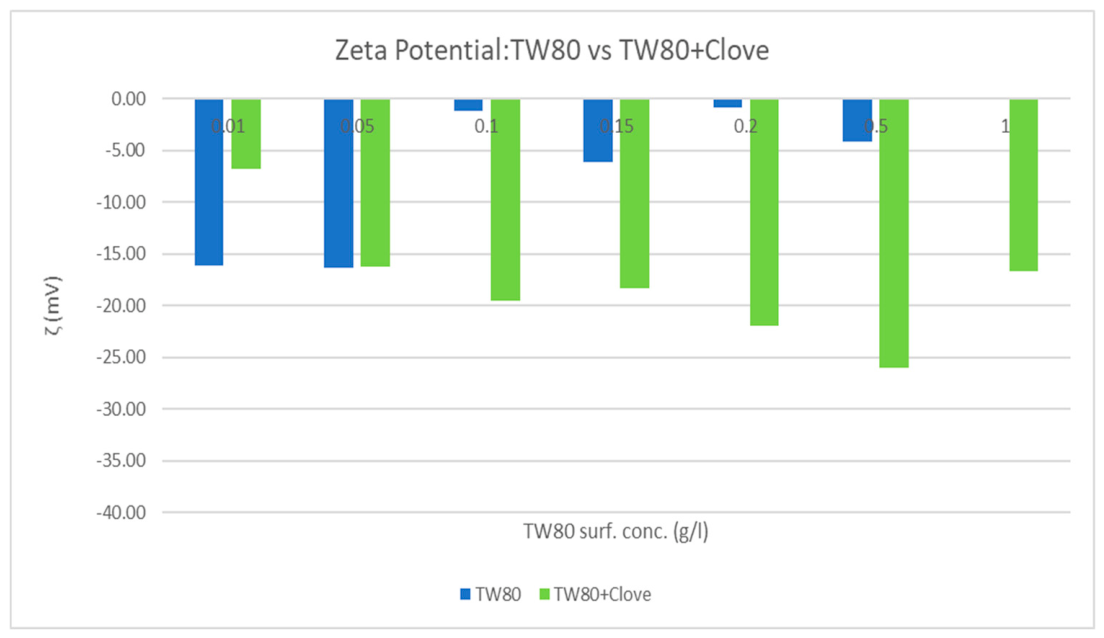
These experiments will present zeta potential measurements of surfactants alone (Tween 80 and SDS) and of a surfactant-essential oil mixture (Figure 14, Figure 15 and Figure 16). The results provided insight into the effect of E.O. on the interfacial charge and stability of surfactant aggregates. In SDS systems, the addition of clove or cinnamon essential oils resulted in a greater increase in zeta potential, indicating enhanced electrostatic stabilization [37]. This behavior can be attributed to the incorporation of E.O. into SDS micelles, which promotes micelle swelling core and increases the surface density of sulfate headgroups [38]. The resulting increase in electrostatic repulsion among charged headgroups shifts the slipping plane potential toward more negative values, reflecting a higher degree of electrostatic stabilization [39,40].
Nonionc surfactant systems, formed by Tween 20, Tween 80, and Span 40, exhibited relatively low zeta potential values and less systematic changes upon addition of E.O. This behavior is expected, and matched the Kumar’s findings [41], where he stated that “ the zeta potential of microemulsion was almost neutral. Therefore, the stability of microemulsion with non-ionic surfactants is independent of the zeta potential”. Since the stability of nonionic surfactant aggregates is primarily governed by steric and hydration forces associated with polyoxyethylene chains rather than electrostatic interactions [42]. Finally, this finding matched the Zhao statement: “the effect of essential oils in these systems is primarily attributable to modifications in hydrophobic and steric interactions rather than to changes in surface charge” [43].
As a secondary mechanism supporting our findings, the differing effects of clove and cinnamon oils on zeta potential can be considered. They are attributable to differences in their molecular structures. Eugenol, the main component of clove oil [12], possesses a polar hydroxyl group that favors partial localization near the micellar interface and interaction with surfactant head groups [44], leading to a stronger modification of the interfacial electrostatic environment. On the other hand, cinnamaldehyde, the principal component of C.E.O [10], is more hydrophobic and preferentially partitions into the micellar core, resulting in a weaker effect on zeta potential. Finally, according to Costa [20], the pseudo-phase model is difficult but feasible for modeling the chemical reactivity of an oil under various experimental conditions through appropriate kinetic analysis. |Clove and cinnamon oils, which are different in their reactive behavior, modulate the interfacial electrostatic environment and aggregate structure in distinct ways, resulting in different effects on zeta potential and colloidal stability.
3.3.2. Optical Microscopy Analyses
Optical microscopy revealed pronounced cluster formation in clove oil systems (Figure 19 and Figure 20), whereas cinnamon oil systems displayed isolated microcapsules (Figure 17 and Figure 18). Comparative studies of essential oil components reveal distinct interfacial behavior between eugenol and cinnamaldehyde. This difference may be attributed to the distinct molecular structures of their major organic compounds [3,4]. According to Debraj [30], eugenol, the principal organic compound in Clove oil, contains a phenolic hydroxyl group capable of hydrogen bonding and interfacial interactions.
Figure 17.
Cinnamon + SDS (1:1) 100x.
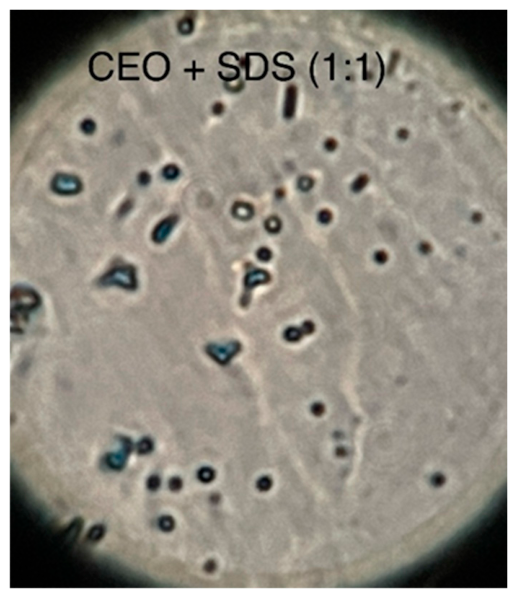
Figure 18.
Cinnamon + TW80 (1:1) 100x.
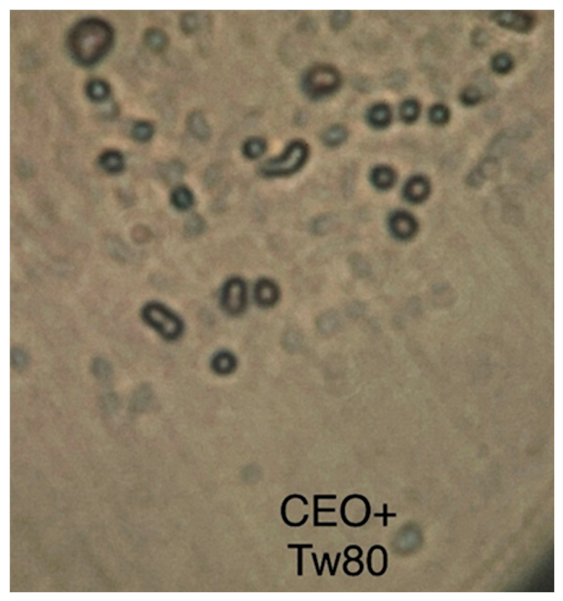
Figure 19.
Clove + SDS (1:1) 100x.
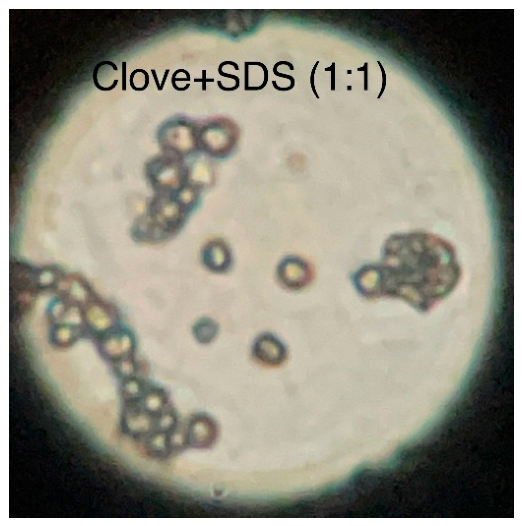
Figure 20.
Clove + TW80 (1:1) 100x.
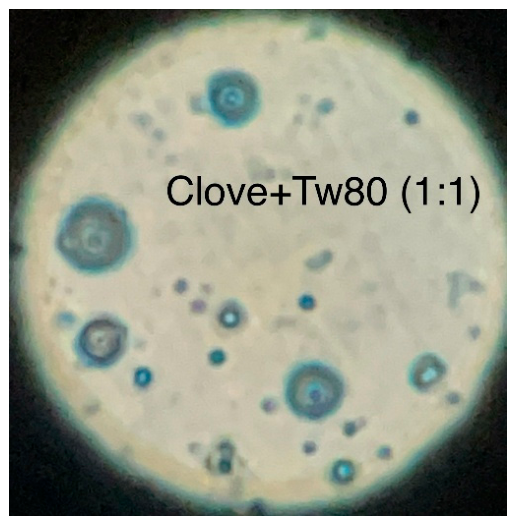
Moreover, according to Manzoor [45], eugenol may disrupt electrostatic (SDS) or steric (Tween 80) stabilization layers and promote secondary aggregation, thereby acting as a surfactant-like agent at the interface. On the other hand, cinnamaldehyde, being more hydrophobic and less capable of hydrogen bonding, preferentially partitions into the micellar core, preserving inter-aggregate repulsion and resulting in isolated structures [46]. Finally, the essential oil components may disrupt stabilization and promote diverse structural outcomes.
The formation of clusters could be supported by thermodynamic values. In accordance with Surfactant and Interfacial Phenomena, in systems where the obtained value of CAC is less than CMC, and values of a more negative ∆Gmic in the presence of oil, and finally, changes in Гmax and Amin, it can be predicted that an enhanced aggregation [31,47]. DLS further revealed that these larger structures dominate the intensity-weighted size distribution, as larger particles disproportionately influence the DLS signal [48].
Thermodynamic parameters such as CAC, Гmax, ∆ads are the driving forces for the onset and favorability of aggregate formation, but actual structural manifestation evolves with concentration and intermolecular interaction [47].
4. Conclusions and Remarks
According to the surface tension results (graphs 1-4), the introduction of essential oils into surfactant systems modifies the interfacial and bulk thermodynamic parameters governing aggregation. The reduced CAC results (Table 3) in the presence of oil, together with the increase in the negative ∆Gmic, demonstrate that micellization becomes thermodynamically more favorable upon oil addition. This behavior strongly suggests that essential oils participate in the aggregation process, thereby decreasing the system’s overall free energy.
From a thermodynamic perspective, the hydrophobic effect is the driving force for micellization. Interfacial packing and head-group interactions are additional factors that contribute to micellization. Therefore, the reduction in free energy upon E.O. incorporation implies that oil molecules are not merely solubilized, but actively participate in stabilizing the aggregate state, likely by reinforcing hydrophobic interactions with the micellar core.
Finally, all these previous observations match the concepts of micellization thermodynamics, where a lower critical aggregation concentration reflects enhanced stabilization of the self-assembled state [31].
References
- Moulik, S.P., A.K. Rakshit, and B. Naskar, Physical chemical properties of surfactants in solution and their applications: A comprehensive account. Journal of Surfactants and Detergents, 2024. 27(6): p. 895-925. [CrossRef]
- Berg, J.C., An introduction to interfaces and colloids: the bridge to nanoscience. 2010: World Scientific.
- Ríos, J.-L., Essential oils: What they are and how the terms are used and defined, in Essential oils in food preservation, flavor and safety. 2016, Elsevier. p. 3-10.
- Hou, T., et al., Essential oils and its antibacterial, antifungal and anti-oxidant activity applications: A review. Food Bioscience, 2022. 47: p. 101716. [CrossRef]
- Lis Arias, M.J., et al., Vehiculation of active principles as a way to create smart and biofunctional textiles. Materials, 2018. 11(11): p. 2152. [CrossRef]
- Baranauskaite, J., et al., Effect of the amount of polysorbate 80 and oregano essential oil on the emulsion stability and characterization properties of sodium alginate microcapsules. Molecules, 2021. 26(20): p. 6304. [CrossRef]
- Ashagrie, Y.N., et al., Formulation and characterization of Caesalpinia decapetala seed oil nanoemulsion: physicochemical properties, stability, and antibacterial activity. Scientific Reports, 2025. 15(1): p. 14598. [CrossRef]
- Kourdova, L.T., et al., Rhamnolipid-Stabilized Essential Oils Nanoemulsions: Sustainable Biopesticides and Biostimulants with Potential for Crop Protection. Agronomy, 2025. 15(4): p. 824. [CrossRef]
- Franklyne, J.S., et al., Essential oil nanoemulsions: antibacterial activity in contaminated fruit juices. International Journal of Food Science and Technology, 2019. 54(9): p. 2802-2810.
- Cardoso-Ugarte, G.A., A. López-Malo, and M.E. Sosa-Morales, Cinnamon (Cinnamomum zeylanicum) essential oils, in Essential oils in food preservation, flavor and safety. 2016, Elsevier. p. 339-347. [CrossRef]
- Cheng, S.-S., et al., Chemical polymorphism and antifungal activity of essential oils from leaves of different provenances of indigenous cinnamon (Cinnamomum osmophloeum). Bioresource technology, 2006. 97(2): p. 306-312.
- Alma, M.H., et al., Chemical composition and content of essential oil from the bud of cultivated Turkish clove (Syzygium aromaticum L.). BioResources, 2007. 2(2): p. 265-269.
- Petsev, D.N., Emulsions: structure, stability and interactions. Vol. 4. 2004: Elsevier.
- Holmberg, K., et al., Polymers in aqueous solution. Wiley-Blackwell, 2002.
- Wan, L.S. and P.F. Lee, CMC of polysorbates. Journal of Pharmaceutical Sciences, 1974. 63(1): p. 136-137. [CrossRef]
- de Oliveira Felipe, L., et al., Comprehensive study of α-terpineol-loaded oil-in-water (O/W) nanoemulsion: interfacial property, formulation, physical and chemical stability. npj Science of Food, 2021. 5(1): p. 31. [CrossRef]
- Fang, Y., et al., What is the driving force behind the adsorption of hydrophobic molecules on hydrophilic surfaces? The Journal of Physical Chemistry Letters, 2019. 10(3): p. 468-473.
- Ward, C.A. and J. Wu, Effect of adsorption on the surface tensions of solid− fluid interfaces. The Journal of Physical Chemistry B, 2007. 111(14): p. 3685-3694.
- Zhang, Z., Z. Wang, and A. Maali, Visco-capillary response of surfactant laden air-water interfaces measured by dynamic colloidal-probe AFM. Physical Review Fluids, 2026. 11(2): p. 024002. [CrossRef]
- Costa, M., et al., Modeling chemical reactivity at the interfaces of emulsions: Effects of partitioning and temperature. Molecules, 2021. 26(15): p. 4703. [CrossRef]
- Đekić, L., et al., Film-Forming Microemulsions with Essential Oils: Elucidating Relationships Between Formulation Parameters, Thermodynamic Stability, and Quality Attributes. Processes, 2025. 13(4): p. 990.
- Maibaum, L., A.R. Dinner, and D. Chandler, Micelle formation and the hydrophobic effect. The Journal of Physical Chemistry B, 2004. 108(21): p. 6778-6781. [CrossRef]
- Shah, S.K. and A. Bhattarai, Interfacial and micellization behavior of cetyltrimethylammonium bromide (CTAB) in water and methanol-water mixture at 298.15 to 323.15 K. Journal of Chemistry, 2020. 2020(1): p. 4653092.
- Bergfreund, J., et al., Surfactant adsorption to different fluid interfaces. Langmuir, 2021. 37(22): p. 6722-6727.
- Mukherjee, I., S.P. Moulik, and A.K. Rakshit, Tensiometric determination of Gibbs surface excess and micelle point: A critical revisit. Journal of Colloid and Interface Science, 2013. 394: p. 329-336. [CrossRef]
- Haro-González, J.N., et al., Optimization of clove oil nanoemulsions: Evaluation of antioxidant, antimicrobial, and anticancer properties. Colloids and Interfaces, 2023. 7(4): p. 64. [CrossRef]
- Soboleva, O.A., et al., Aroma molecules as dynamic volatile surfactants: functionality beyond the scent. ACS applied materials & interfaces, 2019. 11(43): p. 40988-40995.
- Pavoni, L., et al., An overview of micro-and nanoemulsions as vehicles for essential oils: Formulation, preparation and stability. Nanomaterials, 2020. 10(1): p. 135.
- Song, X., G. Zuo, and F. Chen, Effect of essential oil and surfactant on the physical and antimicrobial properties of corn and wheat starch films. International journal of biological macromolecules, 2018. 107: p. 1302-1309. [CrossRef]
- Debraj, D., J. Carpenter, and A.K. Vatti, Understanding the effect of the oil-to-surfactant ratio on eugenol oil-in-water nanoemulsions using experimental and molecular dynamics investigations. Industrial & Engineering Chemistry Research, 2023. 62(41): p. 16766-16776.
- Rosen, M.J. and J.T. Kunjappu, Surfactants and interfacial phenomena. 2012: John Wiley & Sons.
- Helgeson, M.E., Colloidal behavior of nanoemulsions: Interactions, structure, and rheology. Current opinion in colloid & interface science, 2016. 25: p. 39-50.
- Ebrahimzadeh, A. and A. Amani, The effect of ingredients’ concentration on nanoemulsion particle size of eucalyptus essential oil. Indian Journal of Natural Products and Resources (IJNPR)[Formerly Natural Product Radiance (NPR)], 2022. 13(4): p. 559-564. [CrossRef]
- Hou, K., et al., Nanoemulsion of cinnamon essential oil Co-emulsified with hydroxypropyl-β-cyclodextrin and Tween-80: Antibacterial activity, stability and slow release performance. Food Bioscience, 2021. 43: p. 101232.
- Maestro, A., et al., Influence of the phase behavior on the properties of ionic nanoemulsions prepared by the phase inversion composition method. Journal of colloid and interface science, 2008. 327(2): p. 433-439.
- Wen, B., et al., Stability mechanism of oil-swollen surfactant micelles: Insights from surfactant escape free energy. Physics of Fluids, 2025. 37(10). [CrossRef]
- Gandi, M.S., et al., Nanoemulsion formulation of lemongrass essential oil using Pseudomonas-derived rhamnolipids for targeted phytopathogen suppression. 3 Biotech, 2025. 15(11): p. 404.
- Davis, C.R., et al., Diffusion-controlled spontaneous emulsification of water-soluble oils via micelle swelling. Langmuir, 2020. 36(26): p. 7517-7527.
- Sanchez-Fernandez, A., et al., Surfactant–solvent interaction effects on the micellization of cationic surfactants in a carboxylic acid-based deep eutectic solvent. Langmuir, 2017. 33(50): p. 14304-14314.
- Garg, R., R. Singh, and S. Mehta, Physico-Chemical Study of Surfactant-Crown Ether Inclusion Complexes. Asian J. Research Chem, 2010. 3(1): p. 71-77.
- KUMAR, A., M. PORwAL, and V. RASTOgI, Microemulsion-Based Topical Delivery of Coriander Essential oil: Formulation, Stability, and In vivo Evaluation for Delaying Skin Photoaging. Oriental Journal of Chemistry, 2025. 41(5).
- Kayiran, S.D., et al., Chemical characterization, cytotoxic activity, and antimicrobial potential of nanoemulsions based on Cymbopogon citratus essential oils. ACS omega, 2025. 10(30): p. 33932-33945.
- Zhao, S., et al., Characterization of nanoemulsions stabilized with different emulsifiers and their encapsulation efficiency for oregano essential oil: Tween 80, soybean protein isolate, tea saponin, and soy lecithin. Foods, 2023. 12(17): p. 3183.
- Gökalp, F., A study on the chemical properties of eugenol and eugenol acetate, clove essential oils. Sigma Journal of Engineering and Natural Sciences, 2016. 34(3): p. 406-414.
- Manzoor, A., et al., Nanosizing of lavender, basil, and clove essential oils into microemulsions for enhanced antioxidant potential and antibacterial and antibiofilm activities. ACS omega, 2023. 8(43): p. 40600-40612.
- Feng, T., et al., The selective encapsulation and stabilization of cinnamaldehyde and eugenol in high internal phase Pickering emulsions: Regulating the interfacial properties. Food chemistry, 2023. 401: p. 134139.
- Israelachvili, J.N., Intermolecular and surface forces. 2011: Academic press.
- Suman, R. and V. Gunjan, Making Sense of Brownian Motion: Colloid Characterization by Dynamic Light Scattering. 2015.
Figure 5.
Adaptation from: D’Incà Levis, R. (n.d.). Surface tension vs. surfactant concentration: Log and linear plots [Illustration]. In S. Abbott, Practical Surfactants: CMC and Γ. Retrieved from https://stevenabbott.co.uk/ pratical-surfactants/cmc-gamma. php. (July 2026).
Figure 5.
Adaptation from: D’Incà Levis, R. (n.d.). Surface tension vs. surfactant concentration: Log and linear plots [Illustration]. In S. Abbott, Practical Surfactants: CMC and Γ. Retrieved from https://stevenabbott.co.uk/ pratical-surfactants/cmc-gamma. php. (July 2026).
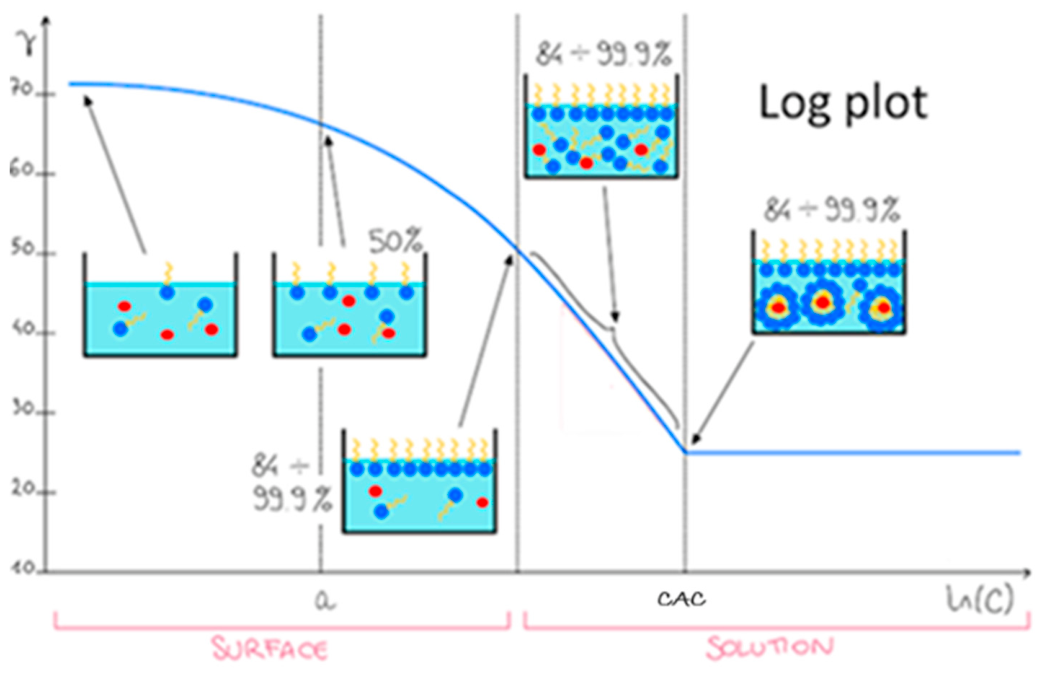
Figure 7.
Lubrication effect on the plate surface.
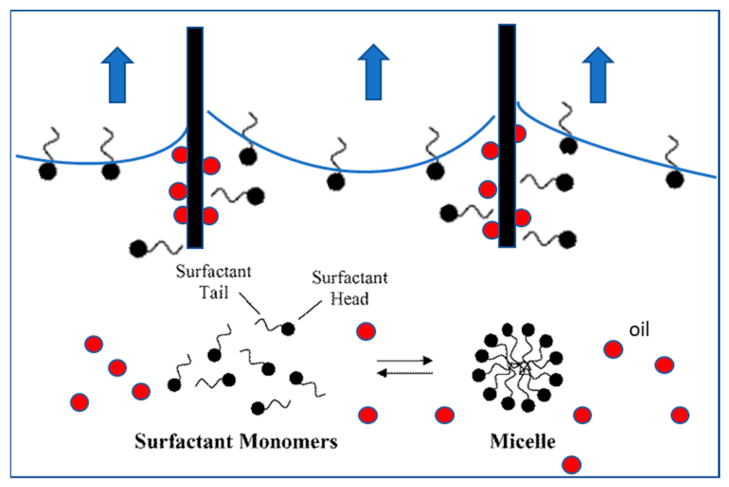
Figure 14.
Zeta potential comparison between Tween 80 and Tween 80-Cinnamon Oils.
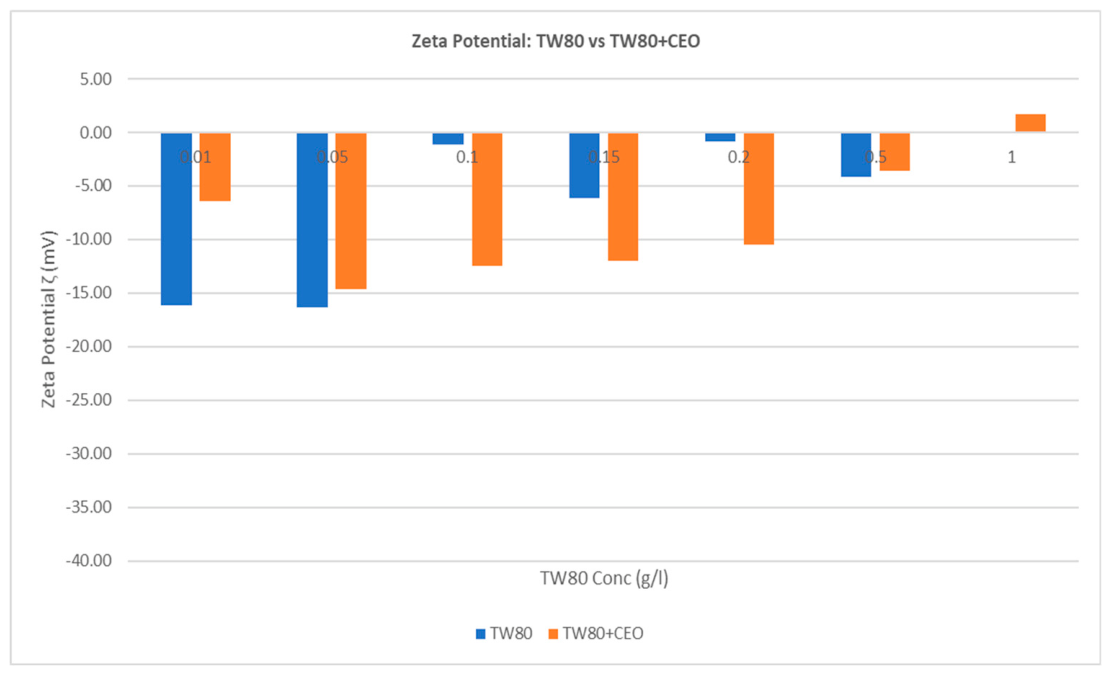
Figure 15.
Zeta potential comparison between SDS alone and SDS-Clove Oil.
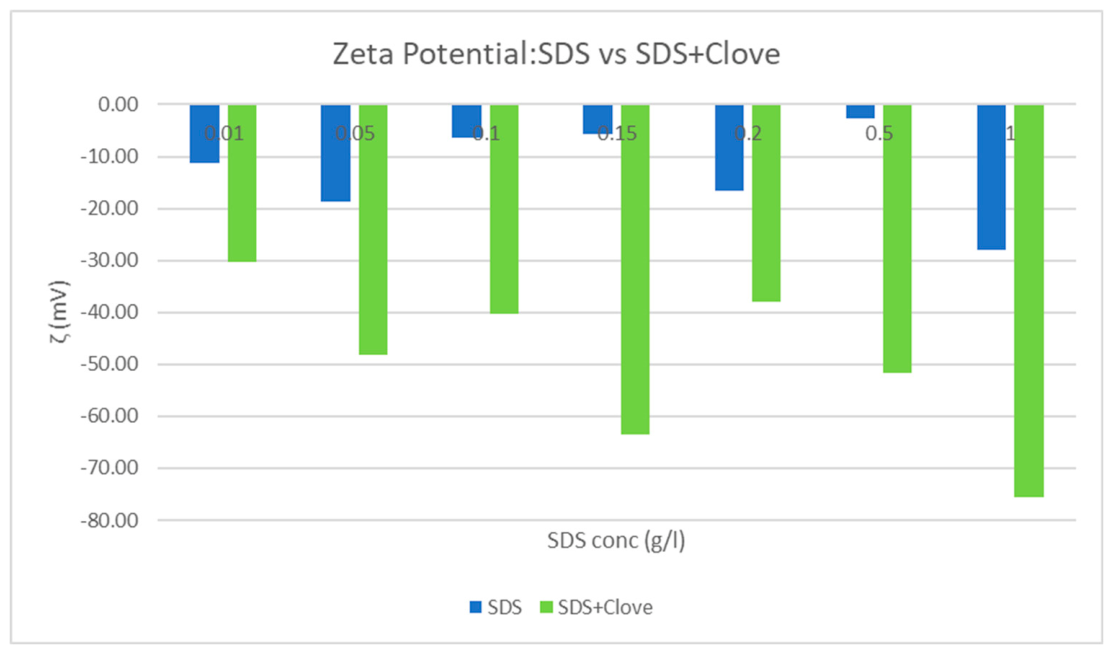
Figure 16.
Zeta Potential comparison between SDS alone and SDS-Cinnamon Oil.
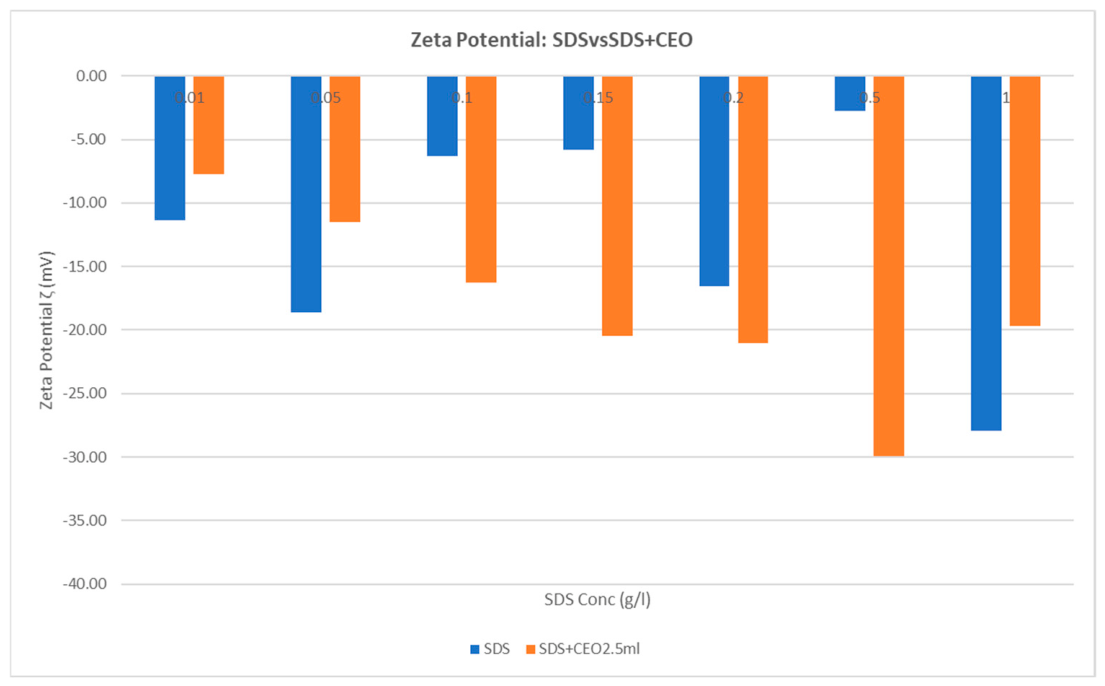
Table 3.
Thermodynamic results from surfactants alone and a mixture of surfactant and E.O. (Clove or Cinnamon).
Table 3.
Thermodynamic results from surfactants alone and a mixture of surfactant and E.O. (Clove or Cinnamon).
 |
Disclaimer/Publisher’s Note: The statements, opinions and data contained in all publications are solely those of the individual author(s) and contributor(s) and not of MDPI and/or the editor(s). MDPI and/or the editor(s) disclaim responsibility for any injury to people or property resulting from any ideas, methods, instructions or products referred to in the content. |
© 2026 by the authors. Licensee MDPI, Basel, Switzerland. This article is an open access article distributed under the terms and conditions of the Creative Commons Attribution (CC BY) license.
Copyright: This open access article is published under a Creative Commons CC BY 4.0 license, which permit the free download, distribution, and reuse, provided that the author and preprint are cited in any reuse.