

Submitted:
30 September 2026
Posted:
01 October 2026
You are already at the latest version
Abstract
Brassica rapa L. subsp. chinensis (pak choi) is an important leafy vegetable with increasing global relevance as a source of biologically active phytochemicals. Despite extensive research on individual compounds, a comprehensive and integrative under-standing of its phytochemical profile and functional potential remains limited. This review critically synthesizes current knowledge on the chemical composition, biologi-cal activities, and emerging applications of pak choi, with particular emphasis on its nutraceutical and biotechnological significance. Pak choi is characterized by a diverse spectrum of bioactive constituents, including glucosinolates, phenolic compounds, carotenoids, vitamins, minerals, and amino acids, which collectively contribute to its antioxidant, anti-inflammatory, chemopreventive, and metabolic regulatory effects. A major challenge highlighted in this analysis is the high variability of phytochemical composition, driven by genotype, developmental stage, environmental conditions, cultivation systems, and post-harvest processing. Importantly, this review advances current understanding by integrating phytochemi-cal, biological and technological perspectives, emphasizing the interplay between compound composition, bioactivity, and processing-dependent transformations. Par-ticular attention is given to glucosinolate-derived metabolites and their role in modu-lating key molecular pathways. Furthermore, both beneficial and adverse aspects of pak choi consumption are ad-dressed, including antinutritional factors, contamination risks, and the impact of culi-nary processing on compound stability and bioavailability. Emerging applications in functional foods, nutraceuticals, cosmetics and plant biotechnology are also discussed, including the potential of in vitro culture systems and targeted metabolite production. Taken together, pak choi represents a multifunctional plant resource at the interface of food science, pharmacology, and biotechnology, with strong potential for future trans-lational applications.
Keywords:
pak choi
; Brassica rapa subsp. chinensis
; glucosinolates
; sulforaphane
; phytochemistry
; functional food
; nutraceuticals
; plant biotechnology
; cosmetics
1. Introduction
Plant systematics enables the classification of plant species into groups based on shared characteristics, facilitating the understanding of plant diversity. The foundations of modern taxonomy were established by Joseph Pitton de Tournefort and later formalized by Carl Linnaeus in 1753. Over time, biological classification systems evolved, leading to the recognition of the plant family traditionally known as Cruciferaceae, currently referred to as Brassicaceae [1].
The Brassicaceae family comprises approximately 350 genera and nearly 4,000 species, making it one of the most economically and nutritionally significant plant groups worldwide [2,3]. Relevant family instances somatic hybridization within the plant kingdom [4].Genetic diversity within the Brassicaceae family is reflected in morphological, biochemical, and evolutionary traits. The genus Brassica includes key crop species such as Brassica napus L., Brassica oleracea L., and Brassica rapa L., which are widely utilized as nutritional resources worldwide [5]. Hybridization events between species have led to the formation of amphidiploids, contributing to the diversity observed within this group.
Cytogenetic studies have established the genome composition and ploidy levels of major Brassicaceae crops (Table 1). Brassica nigra (L.) Koch is characterized by the BB genome (2n = 16), Brassica oleracea L. by the CC genome (2n = 18), and Brassica rapa L. (formerly B. campestris) by the AA genome (2n = 20) (Table 1). The latter species comprises numerous cultivated forms, including Brassica rapa L. subsp. chinensis (syn. var. chinensis), commonly known as pak choi, which is extensively cultivated in Asia [1,5].
Pak choi (Brassica rapa L. subsp. chinensis) is a leafy vegetable forming a rosette of edible aboveground parts, typically harvested at the vegetative stage before flowering [6]. The plant is characterized by thickened petioles and tender leaf blades, exhibiting green or white coloration depending on the cultivar and growing conditions [7].
This species is known under various names, including pak choi, pak-choi, bok choy [8,9] and Chinesecabbage [10], which may lead to confusion with other Brassica vegetables. Nomenclature also varies regionally; for example, in Thailand it is referred to as Pak Keang Tung [11].
Pak choi is widely consumed in Asia, particularly in China, Korea, Japan, Vietnam, Malaysia, and Indonesia [5,6,8], where it constitutes a staple component of the daily diet. Its cultivation has also expanded to Africa (e.g., Kenya, Tanzania, Nigeria) and Western countries, including Europe and North America, reflecting its increasing global popularity [10,12,13]. The vegetable is typically consumed after thermal processing (e.g., stir-frying, blanching, boiling), whereas raw consumption is less common [6].
The growing global demand for Brassicaceae vegetables highlights their economic importance as sources of food and agricultural products [1,3,5]. Pak choi is particularly valued due to its short cultivation cycle, adaptability to diverse environmental conditions, and consumer acceptance, contributing to its increasing production worldwide [10,14].
Pak choi has played a significant role in Asian agriculture and nutrition for over a millennium, particularly in coastal regions [8]. It is currently one of the most widely cultivated cruciferous vegetables, accounting for approximately 30–40% of vegetable production areas in China. Cultivation is concentrated in different climatic zones, with green-petiole cultivars predominating in northern regions and white-petiole forms in southeastern areas [7]. In addition to open-field production, B. rapa subsp. chinensis is commonly cultivated in controlled environments, including greenhouse systems, enabling year-round availability [7,15]. Although traditionally consumed in Asia, its cultivation and consumption have increased globally, particularly in Europe over the past centuries [9].
The growing interest in pak choi is driven not only by its agronomic advantages but also by its rich nutritional profile and associated health benefits. However, considerable phenotypic variability and differences in chemical composition among cultivars highlight the need for comprehensive and systematic investigations of its dietary and therapeutic potential [16].
2. Literature Search Metodology
This review was based on a comprehensive survey of the available scientific literature concerning Brassica rapa L. subsp. chinensis (pak choi). No strict limitations regarding publication date were imposed; however, particular emphasis was placed on studies published between 2016 and 2026, reflecting the most recent advances in phytochemistry, biological activity, nutrition, food processing, and biotechnology. Earlier publications were also included when they provided fundamental taxonomic, biochemical, or biotechnological information that has served as the basis for subsequent research.
The literature search was conducted using major scientific databases, including PubMed, Scopus, ScienceDirect, SpringerLink, Taylor & Francis Online, Wiley Online Library, Oxford Academic, Frontiers, and Google Scholar. Searches were performed using combinations of keywords such as “pak choi”, “bok choy”, “Brassica chinensis”, “Brassica rapa subsp. chinensis”, “glucosinolate”, “isothiocyanate”, “sulforaphane”, “polyphenols”, “antioxidant activity”, “nutrition”, “functional food”, “microgreens”, “plant biotechnology”, and “cosmetics”. Additional relevant publications were identified through manual screening of reference lists from primary research articles and review papers.
The review was based predominantly on English-language publications; however, selected studies published in other languages were also considered when relevant information was available and could be reliably translated.
As this work is a narrative review rather than a systematic review, the PRISMA protocol was not applied. Nevertheless, the literature was critically assessed with particular attention to scientific relevance, methodological quality, and consistency of reported findings. Publications in which Brassica rapa subsp. pekinensis (Chinese cabbage) was incorrectly identified as pak choi were excluded to ensure taxonomic accuracy and consistency throughout the review.
Particular attention was devoted to studies reporting phytochemical composition, biological activities, health-related effects, processing-induced changes, biotechnological applications, and emerging nutraceutical and cosmetic uses of pak choi.
3. Importance of Cruciferous Vegetables in Human Nutrition
Socio-cultural, nutritional habits are shaped by socio-cultural, economic, and regional factors, which strongly influence the consumption of plant-based foods and consequently health outcomes [17]. The widespread adoption of Western dietary habits, characterized by a high intake of sugars, saturated fats, and processed foods, has been associated with the increasing prevalence of obesity, non-alcoholic fatty liver disease, oxidative stress, and chronic inflammation [18,19]. Insufficient consumption of fruits and vegetables remains a major global health concern, contributing significantly to disease burden and mortality worldwide [20].
In response, dietary recommendations from organizations such as WHO and FAO emphasize the regular consumption of fresh, minimally processed plant foods, particularly vegetables, as an essential strategy for preventing metabolic disorders and maintaining overall health [20,21]. Vegetables are valuable not only as sources of primary metabolites but also due to their high content of secondary bioactive compounds, including polyphenols, glucosinolates, carotenoids, vitamins, and minerals, which exhibit antioxidant and anti-inflammatory properties [3,16].
Cruciferous vegetables, especially those belonging to the Brassicaceae family, occupy an important position in human nutrition due to their characteristic phytochemical profile. In Asian dietary patterns, these vegetables constitute a fundamental component of daily food intake, with reported consumption levels reaching approximately 320 g of vegetables per person per day in China, including a substantial proportion of cruciferous species such as pak choi [22,23]. Their popularity results from a combination of accessibility, culinary versatility, short preparation time, and well-documented health benefits.
Among these, B. rapa subsp. chinensis occupies a prominent position, being popularly consumed in Asian cuisine and increasingly incorporated into dietary patterns in other regions [7,8,24]. Its versatility enables its use in a variety of culinary forms, including fermented products such as kimchi, which additionally contribute to gut microbiota modulation and metabolic regulation [25,26].
Beyond its nutritional role, pak choi has attracted scientific interest due to its diverse biological effects, including antioxidant, anti-inflammatory, and metabolic regulatory activities, largely attributed to its rich content of flavonoids, glucosinolates, pigments, and micronutrients [27,28]. These properties highlight its potential as a functional food in the prevention of chronic diseases.
Consequently, contemporary research increasingly shifts focus from macronutrient composition toward the role of phytochemicals and secondary metabolites, positioning Brassicaceae vegetables including pak choi, as important components of modern, health-oriented dietary strategies [16].
The aim of this review is to comprehensively collect, critically evaluate, and systematize current knowledge on B. rapa subsp. chinensis, with a particular focus on its phytochemical profile, nutritional properties, and emerging applications in human health and nutrition. Unlike previous studies that primarily concentrate on selected aspects such as metabolomic diversity or individual groups of bioactive compounds (e.g., glucosinolates or flavonoids), this review integrates multidisciplinary evidence spanning plant chemistry, dietary relevance, cultivation-dependent variability, and preventive health potential [5,7,9,16,19,20,23,26,28].
Pak choi is increasingly recognized not only as a dietary vegetable but also as a rich source of bioactive phytochemicals, including glucosinolates, phenolic compounds, vitamins, and minerals, which have been associated with antioxidant, anti-inflammatory and chemoprotective effects [1,29]. These compounds play a key role in the prevention of chronic diseases, including cardiovascular, metabolic and neurodegenerative disorders, as demonstrated for cruciferous vegetables in general [30].
Although a growing number of studies have investigated the metabolic composition of pak choi using advanced analytical approaches, including metabolomics and transcriptomics [16,31,32], the available literature remains fragmented and often limited to specific cultivars, developmental stages or individual classes of compounds. Moreover, existing studies highlight substantial variability in phytochemical content among cultivars, including differences in glucosinolate profiles and phenolic composition, which significantly influence their biological activity and nutritional value [33,34].
In this context, the present review addresses the need for an integrated and critical synthesis of current knowledge by combining data on chemical composition, biological activity, dietary relevance, and agronomic factors affecting metabolite accumulation. Particular attention is given to linking phytochemical diversity with potential health outcomes, as well as to identifying knowledge gaps related to standardization, bioavailability, and the mechanistic basis of biological effects.
Furthermore, this work highlights emerging directions for the application of pak choi as a functional food and nutraceutical resource, thereby extending its relevance beyond traditional dietary use. By providing a comprehensive and interdisciplinary perspective, this review aims to support future research, facilitate the development of high-value cultivars, and promote the utilization of pak choi in modern health-oriented nutrition strategies.
4. Taxonomy, Botanical and Geographical Data
B. rapa var. chinensis is an annual or biennial variety of the species Brassica rapa L. Initially, it was a separate species called Brassica chinensis L. However, it was later reclassified as a variety of Brassica rapa L. in the “Flora of China” [35]. Brassica rapa ssp. chinensis is also a synonym for Brassica campestris ssp. chinensis [36]. This plant is often called bok choy, pak choi, celery mustard, Chinese mustard, chongee, and pe-tsai [37]. This plant is termed by numerous synonyms, including the compound denomination “pakchoi”, “pak-choi” with a dash between the terms or simple pak choi [8,9], and chinesecabbage [10]. Nomenclature may vary across different geographic regions. In Thailand, the widespreadnameis Pak KeangTung [11]. Unfortunately, this vegetable’s appellation is frequently confused with other cabbage varieties, get to be interpretive wrong, with mistakes, regarding the properties of the specific subspecies. In this study, scientific texts from various authors were carefully analyzed to disqualify incompatibility.
Many pak choi cultivars are collected in plant gene banks due to differences in morphological characteristics. Pak choi has leaves that do not form a head, distinguishing it from Chinese cabbage [34]. The ideal pak choi is characterized by a dark green, entire, rounded leaf blade and a white, fleshy petiole. It has a cylindrical main root and usually more than 20 basal leaves that form a rosette (Figure 1) [37]. There are also dark purple and red cultivated varieties [38]. Pak choi has many cultivars that differ in the appearance and color of the leaves and petiole (Table 2) [39].
Based on data from the Federal Research Center VIR (Vavilov All-Russian Institute of Plant Genetic Resources; St. Petersburg, Russia), which maintains a rich collection of genetic resources of cultivated plants and their wild relatives, the following pak choi cultivars can be distinguished: Syusman, Yutsai, Taisai, Piorbai, Leychoi, and Joychoi (Table 3). The most typical pak choi cultivar is Syusman. It is characterized by a compact leaf rosette, a thick, relatively short (from 8 to 13 cm) and very wide (from 5 to 7 cm), light green leaf petiole. The Yutsai type is a relatively late-maturing cultivar. The Taisai cultivar has a closed leaf rosette with a long (over 25 cm) pale green or white leaf petiole. The Piorbai type is characterized by a semi-spreading leaf rosette with more numerous, dark green leaves with a medium-long (15 to 20 cm), light green petiole. The Leychoi type has shiny, dark green, convex leaves with a thick, white petiole. The Joychoi type has a small (18 to 20 cm), spreading or semi-spreading leaf rosette with slightly upright, very compact, fragile leaves [40].
Pak choi is a particularly common plant in central and southern China. In many industrially developed regions of the world, such as the USA, European Union countries, Singapore, Japan, China, and South Korea, due to the high demand for Brassicaceae plants and their rapid growth, B. rapa var. chinensis is cultivated hydroponically outside of traditional field or greenhouse cultivation methods [40,41]. Water shortages and low UV radiation intensity can cause a decrease in biomass and photosynthetic capacity [42]. Therefore, vertical farming (VF) is a good solution, resembling a warehouse with multiple levels of shelves and creating a closed cultivation system. Such cultivation is carried out under artificial light, is air-conditioned, circulating, and supplied with carbon dioxide and nutrient solution. It is unaffected by unfavorable environmental conditions. It guarantees uninterrupted vegetable production year-round, using minimal water consumption. It has been demonstrated that the vertical hydroponic cultivation system resulted in more than three times greater production efficiency of B. rapa var. chinensis per square meter [42,43].
In traditional cultivation, organic and inorganic fertilizers are used. Due to concerns about the excessive use of inorganic fertilizers and their environmental impact, organic fertilizers are more frequently used. Recommended fertilizers include nitrogen, which is essential for the biosynthesis of nucleic acids, proteins, and amino acids; calcium, which ensures the integrity and permeability of the cell membrane; potassium, which plays a key role in plant metabolism; phosphorus, which affects root development and energy storage; and magnesium, which influences chlorophyll production [44]. Pak choi is a popular plant grown in tropical regions because it is harvested 40-60 days after sowing. Cultivation costs are low. Seeds are easy to obtain, and the plant adapts readily to tropical conditions [45].
Pak choi has a short growing season, and in Polish climatic conditions, it is harvested from September to October. The production technique is similar to that of Chinese cabbage. Good seedling quality is important during cultivation, as it influences the further growth and development of the plant in the field. Research indicates a correlation between later seedling preparation and higher yields. Furthermore, it has been found that delayed production affects the increase in fresh weight of the seedlings, but causes a decrease in dry weight, carotenoids, and simple sugars in the harvested vegetables [46].
In Asia, including China, Korea, Vietnam, Malaysia, India, Japan, and Indonesia, Brassica rapa L. subsp. chinensis constitutes an important component of the daily diet [5,6,8]. Among these populations, pak choi is widely preferred compared with other leafy vegetables and remains a staple food in many regions (Figure 2).
In Africa, particularly in countries such as Kenya, Tanzania, Nigeria, Uganda, Zambia, and Zimbabwe, pak choi contributes to local diets and food security. A portion of the production is also directed toward export markets [12].
In Europe and North America, including countries such as the Netherlands and Sweden, B. rapa subsp. chinensis has gained increasing popularity as a culinary ingredient, being incorporated into a variety of modern dishes [10,13]. The vegetable is typically consumed after thermal processing, such as stir-frying, blanching, or boiling, whereas raw consumption remains relatively uncommon, particularly in culinary traditions derived from East Asia [6].
The use of the chinensis subspecies originated in China, where it was cultivated earlier than B. rapa subsp. pekinensis, and subsequently disseminated worldwide, contributing to its current global distribution.
The Brassicaceae family is of considerable economic importance worldwide, providing raw materials for oil production, condiments, and fresh vegetables with significant nutritional value for both humans and animals [1,3,5]. Increasing demand for plant-based and organic foods has contributed to the intensification of agricultural production [20].
It has been estimated that approximately one in ten vegetable farms globally cultivates cruciferous species (Li et al., 2025). Earlier data indicated that global production of Brassicaceae vegetables exceeded 600 kilotons per year, with a clear upward trend [6]. More recent reports confirm a substantial increase in production, reaching over 55,146 kilotons in 2021 [47].
The growing popularity of pak choi is further supported by its favorable agronomic characteristics, including a short cultivation cycle—allowing harvest as early as approximately 30 days after sowing—adaptability to relatively low temperatures, and low soil requirements. In addition, its mild and widely acceptable flavor contributes to high consumer acceptance [10,14].
These factors have significantly contributed to the economic and commercial importance of B. rapa subsp. chinensis in Asia, where it has been cultivated continuously for over 1,000 years, particularly in coastal regions [8].
Among cruciferous vegetables, pak choi is one of the most widely cultivated species, accounting for approximately 30–40% of vegetable production areas in China. Cultivation is predominantly concentrated in East Asia, with green-petiole varieties more common in northern regions and white-petiole types prevailing in southeastern areas [7]. In addition to open-field cultivation, B. rapa subsp. chinensis is extensively grown in controlled environments, including greenhouse systems, allowing for stable and efficient production [15].
Seasonal variation in cultivation practices further contributes to the diversity of pak choi production. Distinct varieties are adapted to different sowing periods, including summer, autumn, winter and spring cycles, enabling year-round availability, particularly in regions with favorable climatic conditions [7].
The long-standing cultivation of pak choi in Asia reflects its sustained dietary and agronomic importance, whereas in Europe its cultivation and consumption have progressively increased over the past several centuries [9].
5. Status as a Superfood and Dietary Stats
The term “superfood” is widely employed in nutritional science and public discourse to describe plant-derived foods with enhanced health-promoting properties; however, it lacks a formal definition and is not recognized by regulatory bodies such as the World Health Organization (WHO), the Food and Agriculture Organization (FAO), or the European Food Safety Authority (EFSA) [48]. Despite this limitation, the concept persists in scientific literature due to the well-documented high content of micronutrients, dietary fiber, and bioactive compounds in such foods [17]. In contrast, the concept of “functional food” is more accepted, although its interpretation remains flexible and potentially subject to misapplication in both scientific and commercial contexts [17,27].
From a nutritional and biochemical perspective, foods described as “superfoods” are typically characterized by high nutrient density, low caloric value, and a diverse composition of bioactive phytochemicals with demonstrated biological activity and bioavailability. These include polyphenols, carotenoids and sulfur-containing compounds, which are known to exert antioxidant, anti-inflammatory, and chemoprotective effects [17,29]. In particular, glucosinolates and their hydrolysis products have been extensively studied as key mediators of the health-promoting potential of Brassicaceae vegetables [49].
Although B. rapa subsp. chinensis is not formally classified as a “superfood”, its nutritional and phytochemical profile closely aligns with the criteria associated with this category. The species is characterized by high levels of vitamins, minerals and dietary fiber, combined with a low caloric value, and a rich pool of secondary metabolites, including flavonoids and glucosinolates. These constituents are associated with the modulation of oxidative stress, inflammatory pathways, and metabolic processes, thereby contributing to the prevention of non-communicable diseases, including cardiovascular and metabolic disorders [1,30].
Nevertheless, it should be emphasized that the classification of plant foods as “superfoods” often oversimplifies their biological complexity. Recent studies demonstrate substantial variability in the phytochemical composition of B. rapa subsp. chinensis, driven by genetic, environmental, and developmental factors. Advanced metabolomic analyses have revealed hundreds of metabolites, including phenolic acids, flavonoids, amino acids, and glucosinolate derivatives, with significant differences among cultivars and growth stages [16,50]. This variability directly influences the nutritional value and biological activity of the plant, highlighting the need for a more nuanced and evidence-based approach to its classification and utilization.
Public awareness of the health benefits of functional and nutrient-dense plant foods remains heterogeneous across populations. European surveys indicate that a considerable proportion of consumers either lack familiarity with or express skepticism toward the concept of “superfoods” [17]. However, increasing nutritional education is associated with measurable improvements in dietary behavior. Meta-analytical data indicate that regular consumption of fruits and vegetables reduces the risk of metabolic and cardiovascular diseases, with dose-dependent effects observed at intake levels of 200–800 g per day [51].
Consumer preferences are additionally shaped by socio-economic determinants, including income, education level and product pricing, which influence both accessibility and perception of functional foods [17,21]. While interest in exotic, imported products remains high, there is a parallel trend favoring locally available plant foods with comparable nutritional value. This phenomenon supports the growing importance of widely accessible Brassicaceae vegetables, including B. rapa subsp. chinensis, as components of sustainable and health-oriented dietary patterns [52].
In parallel, the global market for microgreens and edible sprouts has expanded dynamically, reflecting increasing demand for concentrated sources of bioactive compounds. Brassicaceae species represent a substantial proportion of this sector, particularly within the European Union [53]. Notably, early developmental stages of B. rapa subsp. chinensis exhibit enhanced concentrations of bioactive compounds and stronger antioxidant activity compared with mature plants, indicating their potential as highly valuable functional food ingredients [54].
Taken together, these findings position B. rapa subsp. chinensis as a plant of high nutritional and functional relevance. However, the lack of standardized classification criteria, coupled with variability in phytochemical composition and bioavailability, underscores the need for further integrative research to fully define its role within modern evidence-based nutrition.
B. rapa subsp. chinensis is characterized by high nutritional density, making it a representative example of plant-based foods frequently associated with the concept of “superfoods”. Fresh plant material contains elevated levels of micronutrients and oxidation-sensitive compounds, which are best preserved when consumed shortly after harvest [20]. Particularly, young shoots and microgreens of B. rapa subsp. chinensis are considered valuable dietary components due to their enhanced phytochemical activity and contribution to health-promoting dietary patterns [55,56].
From a nutritional classification perspective, vegetables regarded as “superfoods” typically belong to three dominant groups: intensely pigmented fruits and vegetables rich in carotenoids (e.g., β-carotene, lycopene), Brassicaceae species distinguished by the presence of glucosinolates and their biologically active hydrolysis products—primarily isothiocyanates—along with polyphenols, micronutrients, and leafy green vegetables characterized by high chlorophyll, fiber, and mineral content [51]. Within this framework, B. rapa subsp. chinensis can be classified as a functional food candidate due to its combined nutritional and phytochemical characteristics (Figure 3).
The chemical composition of B. rapa subsp. chinensis reflects both primary nutritional value and functional properties. The plant is composed of approximately 76–92.5% water, contributing to hydration and metabolic homeostasis [7]. It is additionally a significant source of dietary fiber, including soluble pectins and insoluble fractions such as cellulose, hemicellulose, and lignin, which regulate gastrointestinal motility and glucose metabolism [11,24]. Quantitative analyses indicate that per 100 g of fresh weight, the plant provides approximately 2.7 g of fiber, 3.1 g of carbohydrates, 1.7 g of protein, and trace amounts of fat, alongside essential micronutrients such as vitamin C (53 mg), calcium (102 mg), and provitamin A (2.3 mg β-carotene) [6,11] (Table 4).
Beyond its macronutrient composition, B. rapa subsp. chinensis exhibits considerable variability in primary metabolite profiles, with metabolomic analyses identifying dozens of compounds across different cultivars [16]. This variability extends to nitrogen metabolism, where the content of nitrate ions (NO3−) and total nitrogen differs significantly depending on cultivar, developmental stage, and environmental conditions [24,25]. Importantly, nitrogen-containing primary metabolites play a main role in plant metabolism, serving as precursors for biologically active secondary compounds.
In particular, amino acids present in B. rapa subsp. chinensis are not only relevant from a nutritional standpoint but also constitute key intermediates in the biosynthesis of secondary metabolites characteristic of the Brassicaceae family. Compounds such as methionine, phenylalanine, and tryptophan serve as precursors for glucosinolate biosynthesis, linking primary metabolic pathways with bioactive compound formation [61,62,63]. This metabolic interdependence highlights the importance of considering both primary and secondary metabolites in evaluating the functional properties of plant-derived foods.
From a health perspective, regular consumption of B. rapa subsp. chinensis contributes to multiple physiological benefits, including improved hydration, regulation of digestive processes, stabilization of blood glucose levels, and reduction of oxidative stress through the activity of vitamins and plant pigments [20,51]. Diets rich in vegetables with high phytochemical content have been associated with reduced incidence of chronic diseases, particularly cardiovascular disorders and gastrointestinal cancers [64].
In addition, evolving market trends further support the growing importance of B. rapa subsp. chinensis in modern nutrition. The expansion of the microgreens and sprouts sector, particularly within the European Union, reflects increasing demand for plant foods with concentrated bioactive profiles [53]. Notably, early developmental stages of this species exhibit enhanced antioxidant potential compared with mature plants, reinforcing their value as functional food ingredients [54].
Taken together, these findings confirm that B. rapa subsp. chinensis fulfills key criteria associated with nutrient-dense and health-promoting foods. However, its classification should be approached within a scientifically grounded framework that accounts for variability in composition, bioavailability and cultivation conditions, rather than relying solely on simplified terminology such as “superfood”.
6. Chemical Composition
The chemical composition of B. rapa subsp. chinensis has been extensively investigated using advanced analytical techniques, enabling a detailed characterization of both primary and secondary metabolites. Modern analytical approaches, including gas chromatography–mass spectrometry (GC–MS), inductively coupled plasma mass spectrometry (ICP–MS), ultra-high performance liquid chromatography coupled with tandem mass spectrometry (UHPLC–MS/MS), and electrospray ionization (ESI), provide high sensitivity and resolution in the identification and quantification of bioactive compounds [3,9,16,65]. The development of metabolomics, supported by advanced imaging and separation techniques, allows for comprehensive profiling of metabolites and facilitates a deeper understanding of plant physiology and food quality.
The chemical profile of B. rapa subsp. chinensis is strongly influenced by both interspecific and intraspecific variability. Differences in morphological traits, such as leaf coloration, are frequently associated with significant variations in phytochemical composition [2,66]. Furthermore, the rapid growth cycle of the species contributes to dynamic changes in metabolic profiles, making this plant a valuable model for studying metabolite accumulation and transformation processes [67]. Consequently, the chemical composition cannot be considered static but rather reflects complex interactions between genetic background, developmental stage, and environmental conditions.
Quantitative analyses indicate that the ash content of B. rapa subsp. chinensis ranges from 7.5% to 24% of total dry weight [7]. Comprehensive metabolomic studies have identified a broad spectrum of compounds, including alkaloids (7.31%), amino acids and their derivatives (9.10%), organic acids (5.37%), lipids (15.52%), phenolic acids (19.85%), flavonoids (14.93%), glucosinolates (4.78%), lignans and coumarins (5.07%), carbohydrates (5.22%), vitamins (2.39%), terpenoids (1.34%), and other minor constituents (2.39%). In total, up to 670 metabolites have been detected in different cultivars: ‘Qianyecai’ (‘QYC’), ‘Maertou’ (‘MET’), ‘Naibaicai’ (‘NBC’), ‘Paopaoqing’ (‘PPQ’), and ‘Xiangqingcai’ (‘XQC’), highlighting the remarkable chemical diversity of this species [16] (Figure 4).
Among the identified compounds, glucosinolates represent a characteristic group of sulfur-containing secondary metabolites specific to the Brassicaceae family [48,68,69]. In parallel, B. rapa subsp. chinensis is distinguished by a relatively high content of polyphenolic compounds, including flavonoids and phenolic acids, compared with other Brassica species [16]. Pigment-related compounds, such as anthocyanins and carotenoids (particularly lutein), have also been identified and contribute to both the nutritional value and antioxidant capacity of the plant [28]. In addition, organic acids, including citric and malic acids, occur at relatively high levels and contribute to metabolic activity and sensory properties [9]. Essential minerals, particularly calcium, iron, and zinc, as well as vitamin C, are also present, although some of these compounds are sensitive to thermal degradation, which may reduce their content during processing [7].
The chemical composition of B. rapa subsp. chinensis is further modulated by environmental and agronomic factors, including temperature, light intensity, soil composition, irrigation, and fertilization practices. As a result, distinct chemical profiles can be observed across geographical regions and cultivation systems [65]. Additionally, post-harvest handling, storage conditions, and transport significantly influence the stability and retention of bioactive compounds, with improper conditions leading to a reduction in phytochemical content before consumption [24].
From a functional perspective, the relationship between primary and secondary metabolism is of particular importance. Primary metabolites are directly involved in plant growth and development, whereas secondary metabolites are synthesized in response to environmental stimuli, including biotic and abiotic stress factors [70]. These compounds play a crucial role in plant adaptation, defense mechanisms, and the development of biological resistance.
Chemophenetic approaches emphasize the taxonomic relevance of metabolite distribution patterns and highlight the close interconnection between different classes of compounds within plant tissues. In the case of B. rapa subsp. chinensis, the coexistence of diverse phytochemical groups results in a complex and synergistic metabolite network, which ultimately determines its biological properties and nutritional value [31].
6.1. Polyphenolic Compounds
In B. rapa subsp. chinensis, polyphenolic compounds are present in moderate but significant amounts, contributing to both nutritional value and biological activity. The total phenolic content has been estimated at approximately 217.9 mg gallic acid equivalents (GAE) per 100 g fresh weight (FW) in selected cultivars, such as ‘Pak choi White’ [71]. In microgreens, the concentration of phenolics is higher on a dry weight basis, reaching approximately 2 mg·g-1 DW, which reflects the enhanced metabolic activity at early developmental stages [53]. In contrast, anthocyanin accumulation in B. rapa subsp. chinensis is generally low, indicating that this species is not a major dietary source of these pigments compared with other Brassica taxa [9].
The major classes of phenolic compounds identified in B. rapa subsp. chinensis derive predominantly from phenylalanine via the phenylpropanoid pathway, which represents a central metabolic route linking primary and secondary plant metabolism [16]. These compounds are commonly divided into hydroxycinnamic acid derivatives, including caffeic acid, ferulic acid, sinapic acid, chlorogenic acid, and rosmarinic acid, and hydroxybenzoic acid derivatives, such as gallic acid and protocatechuic acid [72] (Table 5).
Detailed metabolomic analyses have confirmed the presence of a wide range of phenolic compounds in different cultivars of B. rapa subsp. chinensis, with considerable variability depending on genetic background. Among the most frequently detected compounds are chlorogenic acid, caffeic acid, ferulic acid, sinapic acid, and their derivatives, as well as flavonoid glycosides (Table 5). Differences between cultivars have been observed, for example, with higher accumulation of sinapic acid and related derivatives in ‘Qianyecai’ (QYC) compared with ‘Xiangqingcai’ (XQC) [16]
Notably, certain compounds have been reported for the first time in B. rapa subsp. chinensis, including rosmarinic acid-3′-O-glucoside (syringin), as well as isoferulic and isochlorogenic acids, reflecting the increasing resolution of modern metabolomic techniques. Additionally, cultivar-specific occurrence of compounds such as protocatechuic acid in ‘Maertou’ (MET) highlights the importance of genetic factors in shaping phenolic profiles [16].
The presence and relative abundance of these compounds contribute significantly to the antioxidant potential of B. rapa subsp. chinensis, as well as its role in modulating oxidative stress and inflammatory pathways. Importantly, the variability in polyphenol composition among cultivars and developmental stages indicates that quantitative and qualitative differences should be considered when evaluating the nutritional and functional properties of this species.
6.2. Flavonoids
Flavonoids represent one of the most important subclasses of polyphenolic compounds identified in B. rapa subsp. chinensis. This group includes structurally diverse compounds such as flavonols, flavanones, flavones, flavanols, flavanonols, anthocyanins, and chalcones, which differ in both chemical structure and biological activity [16,63]. Among these, flavonols constitute the dominant fraction, accounting for approximately 53% of the total flavonoid pool in this species [16].
Quantitative analyses indicate that the total flavonoid content in B. rapa subsp. chinensis may reach approximately 124.2 mg quercetin equivalents (QE) per 100 g FW, as demonstrated for the ‘Pak choi White’ cultivar [71]. In comparison with other Brassicaceae vegetables, flavonoids represent a major group of secondary metabolites, contributing up to 35% of the total phytochemical composition [68].
Detailed metabolomic investigations have identified a broad spectrum of flavonoid compounds in B. rapa subsp. chinensis, including kaempferol, quercetin, isorhamnetin and numerous glycosylated derivatives (Table 6). Among these, kaempferol is typically the most abundant compound in green-leaved cultivars, followed by isorhamnetin and quercetin, along with their respective derivatives [74]. Glycosylated forms, such as kaempferol-3,7-di-O-glucoside and isorhamnetin-3,7-di-O-glucoside, are also frequently detected and contribute to the overall diversity of flavonoid profiles.
The composition of flavonoids is strongly influenced by cultivar type and phenotypic traits, particularly leaf coloration. Red and purple varieties of B. rapa subsp. chinensis have been shown to accumulate significant levels of anthocyanins, especially delphinidin 3-O-glucoside, whereas green cultivars are characterized by a predominance of flavonols [75]. In total, up to 92 different flavonoid compounds have been identified across various cultivars, highlighting the considerable chemical diversity within this species.
Comparative analyses further indicate that B. rapa subsp. chinensis shares a flavonoid profile similar to other Brassicaceae species, such as Brassica juncea, particularly with respect to the dominance of kaempferol- and isorhamnetin-based glycosides [9]. This similarity reflects conserved metabolic pathways within the family, while cultivar-specific differences are driven by genetic and environmental factors.
Importantly, the accumulation of flavonoids is closely associated with antioxidant capacity, as these compounds act as effective scavengers of reactive oxygen species and modulators of oxidative stress pathways [16]. Their presence therefore contributes significantly to the biological activity and functional value of B. rapa subsp. chinensis, reinforcing its relevance in health-oriented nutrition.
6.3. Glucosinolates
Glucosinolates are a characteristic group of sulfur- and nitrogen-containing secondary metabolites specific to the Brassicaceae family. Their biosynthesis originates from amino acids, which serve as structural precursors forming the variable side chain of the molecule, while the core structure consists of a β-thioglucose moiety linked to a sulfonated oxime group [62,77]. The presence of sulfur and nitrogen is essential for the formation of glucosinolates, and their accumulation is often intensified under environmental stress conditions, reflecting their role in plant defense and adaptation [53,63,78].
To date, approximately 140 glucosinolate compounds (thioglycosides) have been identified in plants, exhibiting a wide range of chemical structures and biological activities [48,62,63,79]. Based on the structure of the amino acid-derived side chain, glucosinolates are classified into three main groups: aliphatic, aromatic, and indolic compounds [48,80]. Their content is highly variable and depends on genetic background, developmental stage, and cultivation conditions, and is typically expressed in µmol per FW or DW (dry weight) [81].
In B. rapa subsp. chinensis, up to 17 individual glucosinolates have been identified, with aliphatic compounds representing the dominant fraction [34,62,63,81] (Figure 5). The total glucosinolate content in leaves has been reported at approximately 38.18 μmol∙g-1 FW [82]. Significantly higher levels may accumulate in roots, reaching up to 283 μmol∙g-1 FW, which is approximately 7.4-fold higher than in aboveground tissues [83].
Variability in glucosinolate content has also been demonstrated among cultivars and under different environmental conditions. For example, plants with green petioles cultivated under adequate water availability exhibited average glucosinolate levels of 23 μmol∙g-1 FW, compared with 17 μmol∙g-1 FW in white-petiole forms. Among analyzed cultivars, ‘Shanghai Late May’ showed the highest content (38.2 μmol∙g-1 FW), whereas ‘KSL Nylon Pakchoi’ and ‘Early Huang-Jing Pakchoi’ exhibited the lowest values (6.9 μmol∙g-1 FW) [7]. Similarly, metabolomic studies identified ‘Qianyecai’ and ‘Xiangqingcai’ as cultivars with relatively high glucosinolate content, while ‘Naibaicai’ exhibited lower levels [16].
Detailed qualitative and quantitative data for individual glucosinolates are presented in Table 7. Among aliphatic glucosinolates, the most abundant compounds include gluconapin (up to 19009.896 μmol∙kg-1 DW; average 6713.083 μmol∙kg-1 DW) and glucobrassicanapin (up to 8744.337 μmol∙kg-1 DW; average 3139.729 μmol∙kg-1 DW), followed by progoitrin (up to 4116.955 μmol∙kg-1 DW; average 1132.364 μmol∙kg-1 DW) and epiprogoitrin (up to 3333.335 μmol∙kg-1 DW; average 843.059 μmol∙kg-1 DW) [34]. Other compounds within this group include glucoraphanin (average 172.591 μmol∙kg-1 DW), glucoerucin (average 49.366 μmol∙kg-1 DW), and glucoberteroin (average 148.188 μmol∙kg-1 DW). Minor constituents include glucoraphasatin (average 0.231 μmol∙kg-1 DW), glucoiberin (average 0.375 μmol∙kg-1 DW), glucoraphenin (average 0.981 μmol∙kg-1 DW), and glucocheirolin (average 5.256 μmol∙kg-1 DW). In the aromatic group, gluconasturtiin is one of the most abundant compounds (74.282–2148.237 μmol∙kg-1 DW; average 678.72 μmol∙kg-1 DW), whereas sinalbin occurs at very low levels (0–3.704 μmol∙kg-1 DW; average 0.086 μmol∙kg-1 DW) [34]. Within indolic glucosinolates, glucobrassicin is present at 77.984–1294.483 μmol∙kg-1 DW (average 351.011 μmol∙kg-1 DW), while neoglucobrassicin and 4-methoxyglucobrassicin occur at lower concentrations [13,34].
Sprouts and microgreens of B. rapa subsp. chinensis exhibit particularly high glucosinolate concentrations, with progoitrin reaching approximately 17.84 mg∙g-1 DW, gluconapin 4.5 mg∙g-1 DW, and glucobrassicanapin 1.96 mg∙g-1 DW [84]. These values indicate a higher accumulation of certain bioactive compounds in early developmental stages compared with mature tissues.
Among individual compounds, neoglucobrassicin is considered characteristic for this species, although profiling based solely on glucosinolate composition may not reliably indicate geographical origin due to high variability in biosynthesis [65,83].
Overall, aliphatic glucosinolates represent the predominant class in B. rapa subsp. chinensis, followed by aromatic and indolic compounds, although in certain conditions indolic glucosinolates may reach comparable levels [34,53]. The high abundance and diversity of glucosinolates, particularly gluconapin, confirm the importance of this species as a rich source of biologically active sulfur-containing compounds.
Structural disruption of B. rapa subsp. chinensis tissues, resulting from mechanical damage, processing or senescence, plays a crucial role in the conversion of glucosinolates into biologically active compounds, primarily isothiocyanates [78] (Figure 6). This transformation is catalyzed by myrosinases (β-thioglucosidases), which are compartmentalized separately from glucosinolates in intact plant tissues and become enzymatically active only upon cell disruption. Mechanical factors such as cutting, crushing, or chewing enable the interaction between enzyme and substrate, initiating hydrolysis and the formation of new bioactive metabolites. Under undisturbed conditions, when plant tissues remain intact, myrosinases and glucosinolates are spatially separated, and hydrolysis does not occur. This structural compartmentalization represents a defensive strategy in plants, allowing rapid activation of chemical defense mechanisms after tissue damage.
In addition to isothiocyanates, glucosinolate hydrolysis may yield a variety of other products, including thiocyanates, nitriles, sulfates, amines, indole alcohols and glucose [63]. The direction of these transformations is influenced by multiple factors, such as pH, the presence of metal ions (e.g., Fe2+), environmental conditions, and the chemical structure of the parent glucosinolate [62]. Representative glucosinolate-derived products identified in B. rapa subsp. chinensis are summarized in Table 8.
Isothiocyanates are typically formed through enzymatic hydrolysis of glucosinolates, while alternative products such as epithionitriles may arise through subsequent cyclization reactions involving intermediate isothiocyanates. In particular, glucosinolates such as sinigrin, gluconapin, gluconapoleiferin, and glucobrassicanapin may undergo structural rearrangements under specific conditions, leading to the formation of cyclic sulfur-containing derivatives, including epithionitriles [85].
Quantitative studies indicate that the total concentration of glucosinolate-derived hydrolysis products in B. rapa subsp. chinensis may reach approximately 139.2 µmol·g-1 DW following enzymatic conversion by myrosinases [28]. These compounds are of particular interest in biomedical research due to their well-documented antitumor activity observed in experimental models, including studies on cancer cell lines [3].
6.4. Plant Pigments
The green coloration of B. rapa subsp. chinensis reflects a high content of chlorophylls, which are the primary photosynthetic pigments responsible for light absorption and energy conversion in plants [86]. Due to its soft tissue structure and large leaf surface, B. rapa subsp. chinensis is particularly susceptible to post-harvest water loss and subsequent pigment degradation. Nevertheless, the species is characterized by relatively high chlorophyll content [87]. Cultivation practices, especially under controlled conditions such as hydroponic systems, may significantly influence pigment accumulation. For instance, the application of osmotic regulators under reduced nitrate levels has been shown to enhance chlorophyll content, improving both visual quality and sensory attributes [88].
In addition to chlorophylls, carotenoids represent an important group of plant pigments in B. rapa subsp. chinensis. These tetraterpenoid compounds (C40) are synthesized via the isoprenoid pathway and perform multiple biological functions, including light harvesting, protection of the photosynthetic apparatus and serving as precursors for signaling molecules [89,90]. Carotenoids are lipophilic compounds and include two major subclasses: carotenes (e.g., α-carotene, β-carotene, lycopene) and xanthophylls (e.g., lutein, zeaxanthin, neoxanthin, violaxanthin), which differ by the presence of oxygen functional groups [91,92].
In B. rapa subsp. chinensis, lutein represents the dominant carotenoid, accounting for approximately 40–43% of the total carotenoid pool, followed by violaxanthin (approximately 28%) and neoxanthin (approximately 13%). Carotenoid accumulation is influenced by environmental factors, particularly light intensity, with higher concentrations observed in well-illuminated outer leaves. Under drought conditions, carotenoid levels may increase, with reported values up to approximately 25% higher compared with well-watered plants [7].
Anthocyanins, belonging to the flavonoid group, represent an additional class of pigments present predominantly in purple cultivars of B. rapa subsp. chinensis. These compounds accumulate mainly in epidermal tissues and include derivatives such as delphinidin 3-O-glucoside and related anthocyanins [75,93]. In green cultivars, anthocyanins are absent or present only in trace amounts, whereas in purple varieties they may constitute up to approximately 50% of total flavonoids [75]. Maximum reported anthocyanin concentrations reach 735.39 mg·kg-1 under optimized lighting conditions, while typical values in microgreens range from 0.1 to 0.3 mg·g-1 DW [53,94].
A positive correlation has been observed between carotenoid content and chlorophyll a and b, as well as between total phenolic content and chlorophyll b levels, suggesting coordinated regulation of pigment and secondary metabolite synthesis [71]. Furthermore, the distribution of pigments within the plant is uneven, with lower concentrations typically detected in inner leaves due to reduced light exposure [95].
Quantitative data summarised in Table 9 indicate clear differences between developmental stages. Microgreens generally exhibit lower pigment concentrations on a fresh weight basis, although exceptionally high values have been reported depending on cultivation conditions and analytical methodology [19]. In contrast, fully developed leaves display higher levels of chlorophyll a and b as well as total carotenoids, reflecting a more developed photosynthetic system [96]. Notably, total chlorophyll content (a + b) has been reported at 9646 µg·g-1 FW in microgreens, while β-carotene and lutein concentrations vary depending on growth stage and environmental conditions [19,97].
6.5. Amino Acids
B. rapa subsp. chinensis constitutes a valuable source of amino acids, including essential amino acids required in the human diet [32]. This amino acid profile includes multiple proteinogenic amino acids, as summarized in Table 10. Analytical data indicate that valine exhibits the highest signal intensity (15.82 ratio/g), followed by isoleucine (10.66 ratio/g) and threonine (9.22 ratio/g), whereas methionine (2.25 ratio/g) and tryptophan (1.12 ratio/g) occur at lower levels. Intermediate values were recorded for alanine (6.42 ratio/g), phenylalanine (6.06 ratio/g), and leucine (7.84 ratio/g) [99].
Comparative metabolomic analyses across different cultivars (‘Maertou’, ‘Paopaoqing’, ‘Xiangqingcai’, ‘Qianyecai’, ‘Naibaicai’) revealed considerable variability in amino acid composition, including both protein-bound and free amino acids. Among the investigated cultivars, ‘Xiangqingcai’ showed the highest abundance of the majority of proteinogenic amino acids. The most intensive signals were observed for valine, tyrosine and leucine, followed by isoleucine, phenylalanine, glutamic acid, and arginine, whereas serine, aspartic acid and cysteine were present at relatively lower levels [16]
From an analytical perspective, precise quantification and digestibility of amino acids in plant-derived foods may be difficult to determine due to methodological differences and matrix effects. For this reason, both quantitative and qualitative profiling approaches are applied to assess their occurrence and biological relevance [100].
Importantly, amino acids play a crucial role not only as nutrients but also as key precursors of secondary metabolites characteristic of Brassicaceae plants. In particular, methionine, phenylalanine and tryptophan are involved in the biosynthesis of glucosinolates, linking primary metabolic pathways with the formation of bioactive sulfur-containing compounds [61,62,63].
This interconnection between primary and secondary metabolism highlights the functional importance of amino acid composition in determining the overall bioactive potential of B. rapa subsp. chinensis. Variations in amino acid content are therefore directly related to fluctuations in secondary metabolite levels and, consequently, to the biological properties of the plant [31].
6.6. Vitamins and Minerals
B. rapa subsp. chinensis is considered a nutrient-dense vegetable, providing a broad spectrum of vitamins and minerals (Table 11, Table 12), which contribute to its high nutritional value and relevance in the human diet [101,102]. This species contains vitamins A, K (phylloquinone), B-group vitamins and vitamin C, as well as essential minerals such as calcium, iron, potassium, magnesium, and zinc [11,16,24,103].
The content of fat-soluble vitamins varies depending on developmental stage and analytical approach. Vitamin A has been reported at 223 µg∙100 g-1 FW, while β-carotene concentrations in microgreens reached 854.7 mg∙kg-1 DW, corresponding to 71 mg RAE∙kg-1 DW [102,103]. Vitamin K levels in mature leaves were determined at 45.5 µg∙100 g-1 FW, whereas microgreens contained approximately 2.2 µg∙g-1 FW, indicating a substantially higher concentration on a mass basis [11,97].
Water-soluble vitamins are also present in moderate amounts, typical of green leafy Brassicaceae vegetables. Vitamin C content ranges from 45 mg∙100 g-1 FW in leaves to 56.9 mg∙100 g-1 FW in microgreens, while hydroponic cultivation systems have reported levels of 3.5–6.1 mg∙g-1 DW [10,97,102]. B-group vitamins, including B1, B2, B3, B5, B6, and B9, occur at moderate levels, although their distribution varies among cultivars and plant tissues [102]. Notably, vitamin B3 (niacin) has been detected in B. rapa subsp. chinensis at approximately 376.7 µg∙kg-1 FW and may occur at higher levels in purple cultivars compared with green forms (Table 11) [31,104].

Table 11.
Content of vitamins in B. rapa subsp. chinensis.
| Fat-soluble vitamins | ||
| Compound | Content | References |
| Vitamin A | 223 µg∙100 g-1 FW | [102] |
| 854.7 mg∙kg−1 DW β-carotene ( = 71 mg RAE∙kg−1 DW) microgreen |
[103] | |
| Vitamin K | 45.5 µg∙100 g-1 FW | [102] |
| 93.6 µg∙100 g-1 DW | [11] | |
| 2.2 µg∙g-1 FW microgreen | [97] | |
| Water-soluble vitamins | ||
| Vitamin B1 | 0.04 mg∙100 g-1 FW | [102] |
| Vitamin B2 | 0.07 mg∙100 g-1 FW | [102] |
| Vitamin B3 | 0.5 mg∙100 g-1 FW | [102] |
| Vitamin B5 | 0.088 mg∙100 g-1 FW | [102] |
| Vitamin B6 | 0.194 mg∙100 g-1 FW | [102] |
| Vitamin B9 | 66 μg∙100 g-1 FW | [102] |
| Vitamin C | 45 mg∙100 g-1 FW | [102] |
| 56.9 mg∙100 g-1 FW microgreen | [97] | |
| 3.5–6.1 mg∙g-1 DW | [10] | |
RAE—Retinol Activity Equivalents.
Table 12.
Content of minerals in B. rapa subsp. chinensis.
| Minerals | ||
| Compound | Content | References |
| Ferrum (Fe) | 0.8 mg∙100 g-1 FW | [102] |
| 20.39–50.89 µg∙g-1FW | [65] | |
| 0.49 mg∙100 g-1 FW microgreen | [97] | |
| Calcium (Ca) | 105 mg∙100 g-1 FW | [102] |
| 5422–8268 µg∙g-1FW | [65] | |
| 58 mg∙100 g-1 FW microgreen | [97] | |
| Potassium (K) | 252 mg∙100 g-1 FW | [102] |
| 8683–12113 µg∙g-1FW | [65] | |
| 284 mg∙100 g-1 FW microgreen | [97] | |
| Magnesium (Mg) | 19 mg∙100 g-1 FW | [102] |
| 518–629.6 µg∙g-1FW | [65] | |
| 31 mg∙100 g-1 FW microgreen | [97] | |
| Zincum (Zn) | 0.19 mg∙100 g-1 FW | [102] |
| 7.15–16.74 µg∙g-1FW | [65] | |
| 0.30 mg∙100 g-1 FW microgreen | [97] | |
| Cuprum (Cu) | 0.021 mg∙100 g-1 FW | [102] |
| 0.219–0.979 µg∙g-1 FW | [65] | |
| 0.05 mg∙100 g-1 FW microgreen | [97] | |
| Selenium (Se) | 0.5 μg∙100 g-1 FW | [102] |
| 1.95–296.4 µg∙g-1DW microgreens | [105] | |
| Manganum (Mn) | 0.159 mg∙100 g-1 FW | [102] |
| 9.99–22.9 µg∙g-1FW | [65] | |
| 0.29 mg∙100 g-1 FW microgreens | [97] | |
| Natrium (Na) | 65 mg∙100 g-1 FW | [102] |
| 194.33–1056 µg∙g-1FW | [65] | |
| 42 mg∙100 g-1 FW microgreen | [97] | |
| Borum (B) | 1.103–2.296 µg∙g-1FW | [65] |
Mineral composition of B. rapa subsp. chinensis is characterized by relatively high levels of potassium, calcium, and iron. Potassium constitutes a major fraction, accounting for 52–62% of total mineral content, with concentrations ranging from 8683 to 12113 µg∙g-1 FW [65]. Calcium content reaches approximately 105 mg∙100 g-1 FW, while iron and magnesium occur at 0.8 mg∙100 g-1 FW and 19 mg∙100 g-1 FW, respectively (Table 12) [102].
Differences between developmental stages are evident, with microgreens exhibiting lower calcium (58 mg∙100 g-1 FW) and iron (0.49 mg∙100 g-1 FW) but higher levels of potassium (284 mg∙100 g-1 FW), magnesium (31 mg∙100 g-1 FW), zinc (0.30 mg∙100 g-1 FW), and manganese (0.29 mg∙100 g-1 FW) compared with mature leaves [97]. Additionally, B. rapa subsp. chinensis demonstrates a notable capacity for selenium accumulation, making it a potential dietary source for addressing selenium deficiencies [105,106]. Among trace elements, copper occurs at the lowest concentrations, ranging from 0.219 to 0.979 µg∙g-1 FW [65].
The composition of vitamins and minerals in B. rapa subsp. chinensis exhibits significant variability, influenced primarily by genetic factors, as well as environmental conditions such as climate, soil composition, irrigation, and cultivation practices [7,8]. Controlled cultivation systems, including hydroponics and LED-assisted growth, have been shown to affect metabolite profiles, including vitamin and pigment content [94,96]. In particular, nitrogen fertilization promotes biomass accumulation and influences nutrient composition, while abiotic stress factors may enhance the synthesis of bioactive compounds, including vitamins and secondary metabolites [5,107].
Differences in the distribution of nutrients among plant organs further contribute to compositional heterogeneity, with leaves, microgreens, roots, and seeds representing distinct reservoirs of bioactive compounds [19]. Post-harvest handling and storage conditions additionally affect nutrient stability and availability [7].
The complexity of plant metabolite composition implies that the biological activity of B. rapa subsp. chinensis results from synergistic interactions among multiple compounds rather than the effect of individual constituents. While certain components may enhance each other’s activity, others may interfere with metabolic pathways, influencing the overall health impact of the plant [108].
From an applied perspective, understanding the variability in chemical composition supports the selection of cultivars with desired nutritional profiles and contributes to the development of high-value crops for both agriculture and human nutrition [16]. Given that a substantial proportion of bioactive compounds used in medicine are of natural origin, plant-derived metabolites continue to represent a major area of interest for both the food and pharmaceutical sectors [109].
7. Health-Promoting Properties
The relationship between diet and human health is increasingly recognized, with growing emphasis on plant-based foods as sources of bioactive compounds supporting physiological functions [110]. In this context, B. rapa subsp. chinensis, as a representative of the Brassicaceae family, is considered a valuable dietary component with potential health-promoting properties, including anti-inflammatory, antioxidant, and chemoprotective effects [5,19].
Contemporary therapeutic approaches to chronic diseases are often based on intensive pharmacotherapy, which may lead to polypragmasy and associated adverse effects, particularly in elderly and oncological patients [51,111]. This has increased the interest in preventive strategies based on dietary modification and the inclusion of bioactive-rich plant foods. Increasing the proportion of vegetables such as B. rapa subsp. chinensis in the diet may support endogenous defense mechanisms and reduce the need for pharmacological interventions under certain conditions [112].
The biological activity of B. rapa subsp. chinensis results from its complex phytochemical composition, including glucosinolates, isothiocyanates, polyphenols, vitamins, minerals and dietary fiber [3,9]. These compounds collectively contribute to multiple physiological effects, such as modulation of inflammatory processes, improvement of immune response, and support of cardiovascular function. The main health-related properties and their associated chemical constituents are summarized in Table 13.
Among these compounds, glucosinolates and their hydrolysis products, particularly isothiocyanates, play a central role in the biological activity of Brassicaceae vegetables. Following ingestion, glucosinolates are enzymatically converted into isothiocyanates, which exhibit chemopreventive potential by inhibiting the proliferation of cancer cells and modulating detoxification pathways [19,23]. For example, glucobrassicin is converted into indole-3-carbinol and subsequently into diindolylmethane in the human digestive system, compounds known to interact with xenobiotic metabolism via activation of the aryl hydrocarbon receptor (AhR) [113].
In addition to glucosinolate derivatives, other groups of bioactive compounds also contribute to the health-promoting properties of the plant. Polyphenols, including phenolic acids and flavonoids, participate in antioxidant and cytoprotective mechanisms, while plant pigments such as chlorophylls and carotenoids contribute to free radical scavenging and regulation of oxidative stress [114,115]. Anthocyanins, present mainly in purple cultivars, have been associated with vascular protection and neuroprotective effects [92,116]. Vitamins A, C and K further support metabolic, immune, and regulatory functions in the human body [117].
The health effects of B. rapa subsp. chinensis are not attributable to a single compound but rather result from synergistic interactions among multiple phytochemicals. While some components may enhance each other’s activity, others may exert antagonistic effects, influencing overall biological outcomes [108]. This complexity underscores the importance of considering whole-food effects rather than isolated compounds when evaluating functional properties.
The method of consumption also plays an important role in determining bioactivity. Mechanical processes such as chewing and digestion activate enzymatic reactions, including myrosinase-mediated hydrolysis of glucosinolates, initiating a cascade of biochemical transformations that contribute to physiological effects [118].
The composition and resulting biological activity of B. rapa subsp. chinensis are highly variable and depend on multiple factors, including genotype, environmental conditions, and cultivation practices. Climate, soil characteristics, irrigation, and cultivation systems (including controlled environments and LED lighting) significantly affect metabolite accumulation [8,94,119]. Agronomic factors such as nitrogen fertilization influence both yield and phytochemical composition, while abiotic stress may enhance the synthesis of secondary metabolites [5,107].
Furthermore, different plant organs (leaves, microgreens, roots, seeds) represent distinct reservoirs of bioactive compounds, contributing to compositional diversity within the species [19]. Post-harvest handling and storage conditions also play a crucial role in maintaining nutritional quality [7].
Understanding this variability is essential for optimizing cultivation strategies and selecting cultivars with desirable nutritional profiles. Such knowledge supports the development of functional foods and high-value plant materials tailored for dietary and therapeutic applications [16].
Given that a substantial proportion of bioactive compounds used in medicine are of natural origin, plant-derived metabolites from species such as B. rapa subsp. chinensis continue to attract significant interest in both the food and pharmaceutical sectors [109].
Table 13.
Health-related effects and functional applications of B. rapa subsp. chinensisafter short-term heat treatment.
Table 13.
Health-related effects and functional applications of B. rapa subsp. chinensisafter short-term heat treatment.
| Functioning | Application | Chemical constituent resposible for functioning | References |
| detoxification | liver failure | glucosinolates isothiocyanates polyphenols fiber (celulose, pectins) plant pigments |
[113,120] |
| renal dysfunction | [64] | ||
| coprostasis | [51] | ||
| taking xenobiotics (smoking, medications) | [115] | ||
| antioxidantactivity | improper diet | polyphenols glucosinolates vitamines minerals |
[16] |
| stress and fatigue | [120] | ||
| skin aging | [102] | ||
| inflammation of the digestive system | [51] | ||
| anti-inflammatory | inflammation of the digestive system organs | glucosinolates isothiocyanates polyphenols carotenoids |
[23] |
| hepatitis b | [120] | ||
| polyps in the digestive system | [121] | ||
| pneumonia | [92,112] | ||
| cancer-preventive potential | oral cancer | isothiocyanates nitriles glucosinolates polyphenols flavonoides plant pigments |
[51] |
| hepatocellular carcinoma | [18] | ||
| stomach cancer | [102] | ||
| pancreatic cancer | [19] | ||
| intestinal cancer | [102] | ||
| prostate cancer | [121] | ||
| breast cancer | [20] | ||
| vulvar cancer | [122] | ||
| ovarian / uterine / vaginalcancer | [122] | ||
| chemotherapy / radiotherapy | [29] | ||
| prebiotic effect | obstructions | isothiocyanates glucosinolates fiber |
[3] |
| slowing down of intestinal peristalsis | [16] | ||
| leaky gut syndrome | [3] | ||
| slimming | overweight | plants pigments fiber glucosinolates water content |
[115] |
| abdominalobesity | [20] | ||
| cellulitis | [51] | ||
| antiatherogenic effect | obesity | polyphenols (anthocyans) isothiocyanates glucosinolates |
[116] |
| cirrhosis of the liver | [123] | ||
| hypertension | [92] | ||
| antidiabetic | type 2 diabetes | fiber polyphenols glucosinolates isothiocyanates |
[82] |
| insulin resistance | [124] | ||
| strengthening | frequent infections | flavonoles isothiocyanates vtamins & minerals |
[28] |
| osteopenia / osteoporosis | [29] | ||
| micronutrient and vitamin deficiencies | [102] |
7.1. Antioxidant Effects—Scavenging of Free Radicals
The antioxidant system of Brassicaceae plants is based on the coordinated activity of enzymatic defense mechanisms responsible for neutralizing reactive oxygen species (ROS) generated under stress conditions [125]. Key enzymes include superoxide dismutase (SOD), which catalyzes the conversion of superoxide radicals into oxygen and hydrogen peroxide, catalase (CAT), which decomposes hydrogen peroxide into water and oxygen, and peroxidases (POX/POD), which further participate in hydrogen peroxide detoxification and plant defense responses [71,126].
In B. rapa subsp. chinensis, high enzymatic antioxidant activity has been reported. The cultivar ‘Pak choi White’ exhibited catalase activity at 44.96 mM H2O2/g FW/min and peroxidase activity at 34.85 ΔA/min/g FW, exceeding values reported for other cruciferous vegetables such as kale. The unit ΔA quantifies the dynamic rate of defense enzyme activity by measuring the rate at which one gram of fresh plant tissue changes the color of a test solution per minute. It expresses the optical change in fluid density (absorbance), which provides direct evidence of the plant’s biochemical effectiveness in neutralizing harmful hydrogen peroxide [71]. In contrast, Tabassam et al. reported lower activity ranges of 6–9 U/g FW for catalase and 4.8–8.5 U/g FW for peroxidase, indicating variability depending on experimental conditions and plant material. This standardized unit of enzymatic activity defines the catalytic potential of proteins contained in one gram of fresh tissue weight, where one unit (U) is defined by a specific biochemical effect, such as, for example, fifty percent inhibition of a photochemical reaction in the case of superoxide dismutase (SOD) assays [126].
Beyond enzymatic systems, antioxidant activity in B. rapa subsp. chinensis is strongly influenced by secondary metabolites. These compounds extend their role beyond plant defense and contribute significantly to biological effects in humans [127]. Polyphenols, especially flavonoids such as kaempferol, quercetin, and isorhamnetin, are major contributors to antioxidant activity, acting as effective scavengers of free radicals [16,31,102]. Glycosylated derivatives, including kaempferol-3,7-di-O-glucoside and related compounds, further enhance this activity [9].
Glucosinolates and their hydrolysis products, particularly isothiocyanates, also participate in antioxidant and cytoprotective mechanisms. These compounds may stabilize DNA and inhibit oxidative damage, while some additionally exhibit antimicrobial activity, including inhibition of Escherichia coli growth [64,128,129]. Sulforaphane, one of the key isothiocyanates, activates the Nrf2 signaling pathway, enhancing cellular defense against oxidative stress.
Experimental studies confirm the biological relevance of these effects. Extracts of B. rapa subsp. chinensis reduced reactive oxygen species levels in macrophages by 28.2% at a concentration of 500 μg/mL, exceeding standard control groups [28]. Additionally, cultivar-dependent differences have been observed, with green and light-green cultivars exhibiting DPPH radical scavenging activity of 21.07% and 18.39%, respectively, at the highest tested concentrations [90].
Non-phenolic compounds, including carotenoids and chlorophylls, also contribute to antioxidant capacity. These isoprenoid pigments interact with lipid components of cell membranes, protecting them against oxidative damage caused by internal and external factors such as UV radiation [89,92]. Carotenoids additionally serve as precursors of vitamin A and play a role in electron transport and cellular energy metabolism [130].
Quantitative analyses using different methods further illustrate the antioxidant potential of B. rapa subsp. chinensis. Radical scavenging activity (RSA) reached 29.98%, while the Trolox equivalent antioxidant capacity (TEAC) was 27.35 mM in plant extracts dominated by phenolic acids [131]. Ferric reducing antioxidant power (FRAP) values ranged from 5 to 7 µmol/g FW and showed a strong positive correlation with polyphenol, flavonoid, and vitamin C content (He et al., 2022). In parallel, DPPH radical scavenging activity remained at approximately 97% in some experimental systems, highlighting the strong antioxidant capacity of the plant [127].
Variability in antioxidant activity is associated with differences in enzymatic profiles, metabolite composition, and environmental conditions. The overall scavenging capacity of B. rapa subsp. chinensis results from the combined action of multiple compounds, including vitamins, minerals, amino acids, and polysaccharides, accumulated under specific stress and cultivation conditions [132].
From a physiological perspective, imbalance in oxidative status is associated with the development of cardiovascular, immune, and neurodegenerative disorders and is closely linked with inflammatory processes [5]. Accordingly, the antioxidant activity of B. rapa subsp. chinensis is strongly correlated with its anti-inflammatory potential, highlighting its relevance in preventive nutrition and health maintenance [28].
7.2. Anti-Inflammatory Activity
Inflammatory processes, particularly within the gastrointestinal tract and other organ systems, are closely associated with immune activation and increased production of pro-inflammatory cytokines, including interleukin-6 (IL-6), interleukin-1β (IL-1β) and tumor necrosis factor α (TNF-α). Prolonged and uncontrolled inflammation may promote carcinogenesis in various tissues [133]. Bioactive compounds present in B. rapa subsp. chinensis contribute to the modulation of these pathways. Polyphenols, including phenolic acids and flavonoids, have been shown to reduce levels of IL-6 and IL-1β, indicating their role in immunomodulation and anti-inflammatory activity [134]. Flavonols such as kaempferol, quercetin, and isorhamnetin additionally exhibit antimicrobial activity, inhibiting the growth of bacteria, fungi, and viruses [9].
The anti-inflammatory potential of these compounds is also linked to their ability to regulate leukocyte–endothelium interactions. Phenolic acids such as p-coumaric, chlorogenic, ferulic, and caffeic acids, along with quercetin, have been shown to reduce excessive leukocyte adhesion to vascular endothelium, a process stimulated by TNF-α[135]. In addition, compounds such as syringin exhibit hepatoprotective properties and contribute to the reduction of inflammatory processes in liver tissues [16].
Experimental evidence indicates that combined exposure to phenolic compounds and glucosinolates may significantly reduce the size of non-neoplastic lesions in the colon by 53.9% and inhibit their progression by 31.6% [64]. The effect may be further enhanced by lifestyle factors such as physical activity, which has been associated with an increase in therapeutic response parameters.
Glucosinolates and their hydrolysis products, particularly isothiocyanates, play a central role in anti-inflammatory mechanisms. Sulforaphane has been shown to inhibit abnormal cell proliferation and exert anti-inflammatory effects through modulation of the Nrf2 signaling pathway and inhibition of NF-κB activity, including in cardiovascular and bone-related disorders [28,29,121].
Recent studies further support the importance of glucosinolate-derived compounds in regulating inflammation. In vitro and in vivo experiments revealed that extracts of B. rapa subsp. chinensis enriched in glucosinolates, particularly phenethyl isothiocyanate and sulforaphane, exert anti-inflammatory effects via activation of the Nrf2 pathway in hepatocytes [136]. Similarly, aqueous extracts of plant material (50–100 µg/mL) demonstrated reduced levels of IL-6, IL-1β, TNF-α, inducible nitric oxide synthase (iNOS), and nitric oxide (NO) in RAW 264.7 macrophages, alongside modulation of TLR2/NF-κB, JNK, and Akt signaling pathways [135].
However, not all studies confirm direct modulation of NF-κB, as demonstrated in investigations of high-glucosinolate hybrids, where reductions in pro-inflammatory cytokine levels occurred independently of this pathway. These findings highlight the complexity of anti-inflammatory mechanisms in B. rapa subsp. chinensis, which may involve multiple overlapping signaling cascades depending on phytochemical composition [28].
The combined action of multiple compounds may lead to synergistic effects. For example, co-application of vitamin C with allicin resulted in enhanced inhibition of pro-inflammatory cytokine production in intestinal epithelial cells, involving pathways such as NF-κB, TLR4, and MyD88 [133]. These results illustrate the importance of considering interactions between dietary components rather than isolated compounds.
Overall, the anti-inflammatory activity of B. rapa subsp. chinensis is driven by the combined effects of polyphenols, glucosinolates, isothiocyanates, and vitamins, acting through multiple molecular pathways. This multifactorial mechanism positions the plant as a promising component of dietary strategies aimed at reducing inflammation and preventing inflammation-related diseases.
7.3. Anti Cancer Potential
Epidemiological evidence suggests that regular consumption of cruciferous vegetables, including B. rapa subsp. chinensis, may reduce the risk of several cancers, particularly those associated with the gastrointestinal tract, urinary system, and hormone-dependent tissues, such as prostate and breast cancer [51,102]. These protective effects result from the combined action of vitamins, minerals, carotenoids, polyphenols, and especially glucosinolates and their bioactive derivatives [20,64].
Among the most intensively studied compounds are glucosinolates and their hydrolysis products, including isothiocyanates such as phenethyl isothiocyanate, benzyl isothiocyanate, erucin, and sulforaphane, as well as indolic derivatives such as indole-3-carbinol (I3C) and N-methoxyindolyl-3-carbinol [34,102]. Their biological activity depends on enzymatic conversion by myrosinase and microbiota-mediated transformations in the gastrointestinal tract [64].
Sulforaphane, one of the most extensively studied isothiocyanates, has attracted considerable attention due to its strong chemopreventive potential. It modulates key cellular pathways, including activation of phase II detoxification enzymes, regulation of oxidative stress via the Nrf2 pathway, and epigenetic modulation through inhibition of histone deacetylases (HDAC) [29,121]. Experimental studies have demonstrated its ability to suppress tumor growth in animal models, reducing prostate tumor size by over 50% after short-term treatment and up to approximately 70% with prolonged administration [137]. Similar effects have been reported in breast cancer models, with tumor reduction ranging from 20% to 60% depending on dose and treatment duration [138].
In human studies, sulforaphane has shown potential in reducing cancer-associated molecular markers, particularly when administered at doses of ≥200 µmol/day or ≥200 µmol glucoraphanin per week over prolonged periods. Notably, the most significant effects were observed in prostate cancer, although changes in clinical biomarkers such as prostate-specific antigen (PSA) were not consistently detected [121]. Furthermore, sulforaphane has been reported to enhance the efficacy of conventional chemotherapy by sensitizing cancer cells while reducing adverse side effects, indicating its potential as an adjunct therapeutic agent [29].
Phenethyl isothiocyanate (PEITC) represents another compound with well-documented anticancer properties. Its activity includes induction of apoptosis, inhibition of tumor cell proliferation, suppression of angiogenesis, and reduction of metastasis through multiple molecular mechanisms [139,140]. PEITC has been shown to inhibit proliferation of prostate cancer cells (DU145) via suppression of the JAK/STAT3 signaling pathway and to reduce growth of hepatocellular carcinoma cells (HepG2) in a dose-dependent manner [141].
Indole-3-carbinol (I3C) and its dimeric product diindolylmethane (DIM), formed under acidic conditions in the gastrointestinal tract, play an important role in the modulation of hormone-dependent cancers. These compounds activate the aryl hydrocarbon receptor (AhR), enhancing xenobiotic detoxification and influencing estrogen metabolism, thereby contributing to protective effects in breast, prostate, and gynecological cancers [113,122]. Additionally, they may enhance the effectiveness of modern oncological therapies, including immunotherapy approaches such as checkpoint inhibitors and CAR-T cell therapy [142].
Other glucosinolate-derived compounds, including nitriles such as 3-phenylpropionitrile, may also contribute to anticancer activity through interactions with isothiocyanates, although their role requires further investigation [3].
Despite promising results, the biological effects of these compounds are influenced by their bioavailability, metabolism and rapid excretion. Isothiocyanates are largely eliminated via the kidneys within approximately 48 hours, which complicates the design of long-term dietary intervention studies [23,143]. To overcome these limitations, novel delivery strategies, including nanoformulations, are being developed to improve stability and bioavailability of these bioactive compounds [138].
Importantly, the anticancer potential of B. rapa subsp. chinensis is not limited to glucosinolates. Flavonoids and phenolic acids also contribute to cytoprotective effects, including inhibition of cancer cell proliferation and reduction of oxidative damage at early stages of carcinogenesis [64,73].Overall, the anticancer activity of B. rapa subsp. chinensis results from a complex interplay of multiple phytochemicals acting through diverse molecular pathways. Although numerous experimental studies demonstrate significant potential, further clinical investigations are required to establish optimal doses, bioavailability, and long-term effects in humans.
7.4. Metabolic Effects—Impact on Lipid and Glucose Metabolism
Metabolic syndrome comprises a cluster of interconnected disorders, including abdominal obesity, hypertension, insulin resistance, and hepatic dysfunction, which collectively contribute to the development of cardiovascular disease, atherosclerosis, and type 2 diabetes [51]. Lifestyle factors, particularly diet and physical activity, play a central role in both the development and prevention of these conditions [18].
Dietary strategies emphasizing plant-based foods have been associated with improved metabolic outcomes, including reduced triglyceride levels and improved lipid profiles [144]. In this context, B. rapa subsp. chinensis represents a low-calorie, water-rich vegetable containing dietary fiber and bioactive compounds that support metabolic regulation [82]. The combination of high water content and fiber contributes to increased satiety, improved gastrointestinal motility, and better appetite control, which is particularly beneficial in individuals with obesity, insulin resistance, and type 2 diabetes [124].
Bioactive phytochemicals present in B. rapa subsp. chinensis, including polyphenols and isothiocyanates, contribute to the regulation of lipid and glucose metabolism [20,145]. Flavonoid derivatives, such as isorhamnetin glycosides, have been reported to influence endocrine activity by modulating secretion of peptide hormones associated with glucose homeostasis [9]. Additionally, compounds characteristic of Brassicaceae plants have been shown to increase tissue sensitivity to insulin, supporting glycemic control [3,26,146].
Experimental studies provide further insight into the molecular mechanisms involved. Glucoraphanin-rich extracts have been shown to reduce low-density lipoprotein (LDL) cholesterol levels and enhance oxidative phosphorylation efficiency [121]. Phenethyl isothiocyanate administration (30–75 mg/kg/day) in C57BL/6 rodent models improved liver function and reduced lipid accumulation in hepatic tissues under high-fat diet conditions [147].
Similarly, supplementation with freeze-dried B. rapa subsp. chinensis leaves (5–7% of diet) modulated the expression of genes associated with lipid metabolism in Syrian golden hamsters over a 56-day period. This effect involved activation of the PPAR-α signaling pathway, increased cytochrome P450 27A1 (CYP27A1) activity responsible for cholesterol metabolism, and reduction of 3-hydroxy-3-methylglutaryl-CoA (HMG-CoA) reductase activity, a key enzyme in cholesterol biosynthesis [144].
In addition to systemic metabolic effects, extracts of B. rapa subsp. chinensis have demonstrated inhibitory activity against digestive enzymes. In vitro studies revealed inhibition of α-amylase and α-glucosidase, key enzymes involved in carbohydrate digestion, suggesting a mechanism for improved glycemic control [146]. Furthermore, dichloromethane extracts from leaves inhibited pancreatic lipase activity with an IC50 value of 352.1 µg·mL-1, indicating potential for regulating lipid absorption and supporting weight management [148].
Beyond direct metabolic effects, B. rapa subsp. chinensis provides essential micronutrients and vitamins involved in metabolic processes, including coenzyme A synthesis and enzymatic regulation [51]. Leafy vegetables, including this species, have also been associated with maintaining bone mineralization, which may indirectly support metabolic homeostasis [149].
Overall, the metabolic effects of B. rapa subsp. chinensis result from the combined action of dietary fiber, vitamins, minerals, and bioactive phytochemicals. These compounds act synergistically to regulate lipid metabolism, improve glucose homeostasis, and support liver function. Consequently, regular consumption of this plant may contribute to the prevention and management of metabolic disorders, particularly when combined with appropriate lifestyle interventions.
7.5. Gut Microbiota Modulation—Prebiotic Effects
Brassicaceae vegetables, including B. rapa L. subsp. chinensis, represent an important dietary component supporting gut microbiota modulation. Prebiotic effects of B. rapa subsp. chinensis are primarily related to its content of dietary fiber and specific bioactive compounds, including sugar alcohols and complex polysaccharides. These components stimulate microbial activity in the lower gastrointestinal tract, enhancing bacterial fermentation processes and promoting the growth of beneficial microbial populations [3]. In addition, seeds and other plant parts may serve as concentrated sources of fiber and antioxidants, further supporting microbial diversity [64,150].
Experimental studies provide evidence for microbiota modulation by B. rapa subsp. chinensis. In a murine model of colitis (DSS-induced), combined administration of vitamin C and allicin from plant extracts resulted in a significant improvement in gut microbial composition, including increased abundance of short-chain fatty acid (SCFA)-producing bacteria such as Allobaculum, Odoribacter, Verrucomicrobia, and Parabacteroides. These changes were associated with reduced inflammation and improved intestinal epithelial function [133].
Similarly, in vitro fermentation studies demonstrated that pak choi microgreens increased the production of SCFAs to 4.64 mmol/g DW, along with a higher abundance of bacterial taxa such as Monoglobus and Erysipelotrichaceae UCG-003 [151]. These metabolites, particularly butyrate, acetate, and propionate, play a key role in maintaining intestinal barrier integrity and regulating host metabolism.
The modulation of gut microbiota by Brassicaceae vegetables is also influenced by specific phytochemicals. Anthocyanins present in purple cultivars may stimulate the growth of beneficial genera such as Bifidobacterium and Lactobacillus, while suppressing pathogenic microorganisms including Escherichia coli and Salmonella spp. [116]. In parallel, glucosinolate-derived compounds have been associated with an increased abundance of Gram-positive bacteria, particularly lactobacilli, contributing to improved gut health [152].
Glucoraphanin, a major glucosinolate present in B. rapa subsp. chinensis, has been shown to protect intestinal tissues against chronic inflammation and to support the integrity of the intestinal barrier [153]. These effects further emphasize the role of glucosinolate metabolism in host–microbiota interactions.
Importantly, the bioavailability and biological activity of phytochemicals are strongly influenced by microbial metabolism. The large intestine represents a key site for transformation of polyphenols and flavonoids, where microbial enzymes enhance their biological activity and absorption [5]. Moreover, interactions between gut microbiota and glucosinolate metabolism determine the efficiency of isothiocyanate formation, even in the absence of plant-derived myrosinase [154].
Overall, the interaction between B. rapa subsp. chinensis and gut microbiota reflects a bidirectional relationship, in which dietary phytochemicals modulate microbial composition, while microbiota influences the bioavailability and activity of plant-derived compounds. This complex interplay underlies the prebiotic potential of this species and supports its role in maintaining gastrointestinal and systemic health.
8. Health Risks—Negative Side
While numerous studies emphasize the health benefits of Brassicaceae vegetables, including B. rapa L. subsp. chinensis, potential risks associated with their consumption should also be critically considered [23]. A comprehensive evaluation of both beneficial and adverse effects is essential when assessing their role in human nutrition, particularly in the context of large-scale dietary recommendations and food production systems [17].
Brassicaceae species, particular attention is given to glucosinolates and their degradation products. Although these compounds are widely recognized for their beneficial biological properties, excessive intake or imbalanced metabolism may lead to adverse effects, including goitrogenic activity or disturbances in thyroid function, especially under conditions of iodine deficiency. This aspect highlights the importance of dose and dietary context when evaluating their effects [155,156].
Anti-nutritional factors, such as oxalates and phytates, may also influence mineral bioavailability by forming complexes with calcium, iron, and other essential elements. This may reduce their absorption and nutritional value, particularly in diets already deficient in these micronutrients [157].
Another important consideration is the presence of nitrates in leafy vegetables, including B. rapa subsp. chinensis, which may accumulate depending on nitrogen fertilization and environmental conditions. High nitrate intake can be associated with potential health risks, particularly in sensitive populations, due to conversion into nitrites and subsequent formation of potentially harmful compounds [158,159].
Processing and preparation methods further affect both beneficial and adverse properties. Improper storage or prolonged processing may result in degradation of bioactive compounds or formation of undesirable metabolites. Conversely, certain culinary processes may reduce the content of potentially harmful components, demonstrating the importance of appropriate food preparation [7].
Individual variability represents an additional limitation in evaluating the safety profile of B. rapa subsp. chinensis. Differences in gut microbiota composition, metabolic capacity, age, and health status may influence the transformation and bioactivity of plant-derived compounds, leading to variable physiological responses among individuals [5,123,153,160].
Overall, the potential risks associated with the consumption of B. rapa subsp. chinensis are closely related to dosage, cultivation conditions, and individual susceptibility. While the overall benefit–risk balance remains strongly favorable, these factors should be considered in both nutritional recommendations and future research [13,161,162].
8.1. Antinutritional Factors
The term “antinutritional factors” refers to naturally occurring plant compounds that may interfere with nutrient utilization or exert adverse physiological effects under specific conditions [20]. In Brassicaceae vegetables, including B. rapa subsp. chinensis, these compounds include protease inhibitors, certain flavonoids, and non-protein amino acid derivatives. Among them, goitrogenic substances associated with glucosinolate metabolism represent a particularly important group.
Goitrogens, including thiocyanates, isothiocyanates, and related sulfur-containing compounds, may affect the function of the thyroid gland by interfering with hormone synthesis and iodine metabolism [156,163]. Selected glucosinolates such as progoitrin, gluconapin, neoglucobrassicin, and 4-methoxyglucobrassicin have been identified as potential contributors to these effects [164]. These compounds are generally hydrophilic, which limits their ability to penetrate biological membranes and form stable DNA adducts; therefore, adverse effects are typically associated with high doses or prolonged exposure [165].
The biological activity of glucosinolate derivatives is highly dose-dependent. While moderate intake is considered safe, excessive consumption or combined exposure to multiple goitrogenic factors may increase the risk of thyroid dysfunction, particularly under conditions of iodine deficiency or additional environmental exposure to elements such as lithium [163]. A daily intake of approximately 100–200 g of cruciferous vegetables is generally regarded as safe and does not result in significant adverse effects [166].
Smaller isothiocyanate molecules, in turn, are characterized by lipophilicity, chich facilitates the formation of bonds with proteins or nucleic acids. Negative biological effects are primarily attributed to derivatives of tryptophan or aliphatic amino acids, which are more active than the source compounds—indole isothiocyanates and aliphatic amino acids [165] (Figure 7).
Individual susceptibility represents an important factor influencing the safety profile of B. rapa subsp. chinensis. In particular, individuals with a predisposition to thyroid disorders may be more sensitive to the effects of goitrogenic compounds. In such cases, excessive consumption of raw cruciferous vegetables may lead to reduced thyroxine (T4) levels and compensatory enlargement of the thyroid gland [155].
Importantly, appropriate food processing methods may significantly reduce the content of antinutritional compounds. Thermal treatment, fermentation, and controlled preparation practices can decrease glucosinolate content and limit the formation of potentially harmful metabolites, thereby improving the safety of consumption while preserving nutritional benefits [13].
Overall, the potential adverse effects associated with antinutritional factors in B. rapa subsp. chinensis are primarily dependent on dose, dietary context, and individual susceptibility [167]. When consumed as part of a balanced diet and prepared appropriately, the health benefits of this species strongly outweigh potential risks [155,168].
8.2. Contaminants
B. rapa subsp. chinensis is recognized for its high capacity to absorb mineral elements from the soil, including beneficial micronutrients such as selenium (Se), which contributes to its nutritional value [106]. However, this property also results in the potential accumulation of undesirable contaminants, particularly when plants are cultivated in polluted environments.
As a representative of leafy vegetables, B. rapa subsp. chinensis exhibits a relatively high capacity for uptake of heavy metals and other xenobiotics from soil and water. Reported contaminants include copper (Cu), cadmium (Cd), chromium (Cr), arsenic (As), cerium (Ce), lanthanum (La), and fluorine (F), which may accumulate in plant tissues depending on environmental conditions [126,169]. Among these, arsenic has been analytically confirmed to penetrate edible tissues of this species [126].
Cultivation in contaminated soils may lead to significant metabolic alterations in plant tissues, including reduction in the content of bioactive compounds and overall biological activity. At the same time, consumption of contaminated plant material increases the risk of toxic exposure in humans [170]. Bioavailability of heavy metals varies widely; for example, chromium (Cr), nickel (Ni), arsenic (As), and copper (Cu) may be absorbed in the gastrointestinal tract at levels ranging from 6.92% to 81.15% [171].
Quantitative assessments indicate that dietary intake from pak choi may contribute up to 0.01 mg/kg/day of cadmium (Cd) and 0.22 mg/kg/day of chromium (Cr), values that may exceed permissible intake levels under certain conditions [172]. Lead (Pb) concentrations in plant material have been reported in the range of 0.310–0.512 µg/g, exceeding regulatory limits established for leafy vegetables (0.3 mg/kg) in European legislation [65].
The accumulation of toxic elements is associated with potential bioaccumulation in human organs, particularly the liver and kidneys. Even low concentrations of certain heavy metals may disrupt physiological homeostasis. Additional environmental contaminants, such as radionuclides (e.g., 210Po), have also been detected in vegetable tissues at average levels of 0.7 Bq/kg, further emphasizing the need for monitoring food safety [173].
Agricultural practices represent another significant source of contamination. Intensive fertilization, particularly with nitrogen-based fertilizers, promotes plant growth but may lead to excessive accumulation of nitrates (NO3−) in leaves and stems [158]. These compounds may negatively affect both plant metabolism and human health. In plants, excess nitrates disrupt photosynthetic processes and reduce the content of bioactive compounds, including vitamins and isoprenoids [159]. In humans, nitrates and their derivatives are classified as potentially carcinogenic due to their conversion into nitrites and N-nitroso compounds [174].
Emerging contaminants (CEC), including pharmaceutical residues, represent an additional and insufficiently explored category of pollutants in plant-derived foods. Their presence may result from environmental contamination and wastewater reuse, raising concerns regarding long-term exposure and health effects [10].
Pesticides constitute another important group of xenobiotics associated with pak choi cultivation. Studies indicate that a significant proportion of market samples may contain detectable residues. For example, 77.27% of analyzed samples contained pesticide residues, including pyridaben, carbendazim, and acetamiprid, with some compounds not approved for use [175]. Chronic exposure to pesticide residues has been associated with neurotoxicity, endocrine disruption, and mutagenesis [175,176].
Microbiological contamination also presents a relevant safety concern, particularly in the case of microgreens. Cultivation conditions, including high humidity and stagnant water, favor the growth of pathogenic microorganisms. Roots and sprouts are especially susceptible to contamination due to direct contact with soil and nutrient solutions [20,177]. Reported microorganisms include Salmonella enterica, Escherichia coli, Klebsiella variicola, Klebsiella pneumoniae, and Citrobacter freundii, with Total counts of Enterobacteriaceae exceeding 5.00 log CFU/g in some cases [177,178].
Preventive strategies include appropriate hygienic practices, such as seed disinfection using calcium hypochlorite and lactic acid solutions, controlled storage conditions, low temperatures, and modified atmosphere packaging, which can reduce microbial load but do not eliminate contamination entirely [179,180].
Ensuring food safety requires strict regulation of cultivation and distribution processes, particularly in relation to the use of fertilizers, pesticides, and other agrochemicals. The FAO emphasizes the importance of sustainable and environmentally friendly agricultural practices, including organic farming, to minimize contamination risks [20].
In recent years, innovative approaches such as nanotechnology have been explored to reduce uptake of toxic substances and improve plant quality. The application of nanoparticles has been shown to enhance physicochemical and biological properties of the cultivation substrate, supporting plant growth while limiting contaminant accumulation [181].
Overall, the safety of B. rapa subsp. chinensis depends strongly on environmental conditions, cultivation practices, and post-harvest handling. While the species possesses high nutritional value, effective risk management is essential to minimize exposure to contaminants and ensure its suitability as a functional food.
8.3. General Dietary Contraindications
Although B. rapa subsp. chinensis is widely recognized for its nutritional and health-promoting properties, its consumption may not be equally beneficial for all population groups (Table 14). Identification of dietary contraindications is essential for safe nutritional recommendations and personalized diet planning.
One of the primary concerns relates to thyroid disorders. In individuals with hypothyroidism, particularly Hashimoto’s disease, glucosinolate-derived goitrogenic compounds may interfere with iodine uptake and thyroid hormone synthesis. Although moderate consumption of cruciferous vegetables is generally considered safe, excessive intake—especially in raw form—may lead to clinically relevant disturbances. For example, a case study described severe hypothyroidism associated with the consumption of approximately 1500 g of fresh pak choi daily, resulting in elevated TSH levels (74.4 mIU/L) and suppression of thyroid function [161]. Thermal processing and adequate iodine intake may mitigate these effects [157,182].
Mechanical properties of the plant tissue may also limit its suitability for certain individuals. Due to the relatively firm texture of leaf petioles, consumption of raw pak choi may pose difficulties for patients with dysphagia, impaired swallowing reflex, or poor oral health, particularly in elderly populations, where such conditions affect up to 42% of individuals over 60 years of age [111,183]. Modification of texture through cooking or processing significantly improves digestibility and safety.
Gastrointestinal conditions represent another important contraindication. In individuals with acute digestive disorders, hypersensitivity, or inflammatory bowel diseases such as Crohn’s disease, consumption of raw cruciferous vegetables may exacerbate symptoms, including bloating, diarrhea, and mucosal irritation. In such cases, intake should be limited or restricted to thermally processed forms and introduced gradually [23,143,152].
Drug–nutrient interactions are also relevant. Vitamin K present in B. rapa subsp. chinensis may interfere with anticoagulant medications, potentially reducing their therapeutic efficacy. Therefore, controlled intake and temporal separation between medication use and consumption are recommended [143].
Culinary practices may further influence both safety and nutritional quality. High-temperature processing, particularly frying in very hot oil, may lead to degradation of beneficial compounds and formation of undesirable products, thus reducing the overall health value of the vegetable [13].
Finally, the variability of plant composition represents a challenge in defining universal intake recommendations. Differences in cultivar, cultivation conditions and individual metabolic responses result in heterogeneous effects, making precise standardization of dosage and physiological outcomes difficult [161]. Overall, while B. rapa subsp. chinensis is generally safe and beneficial for most individuals, its consumption should be tailored to individual health status, dietary habits, and potential medical conditions.
9. Dietary, Pharmaceutical and Cosmetic Applications
9.1. Potential in Diets, Dietary Supplements and Nutraceuticals
B. rapa subsp. chinensis, volatile compounds such as esters and terpenes contribute to a distinctive sensory profile, with considerable variability among cultivars. For example, the Xiangqingcai variety has been described as having aroma characteristics similar to cooked rice (Oryza sativa), illustrating the influence of genetic diversity on flavor perception and consumer acceptance [184].
The culinary applications of B. rapa subsp. chinensis are diverse and continuously expanding. The plant may be consumed in raw forms, such as juices and smoothies, or incorporated into processed products, including flours, bread, or bakery items enriched with microgreens or leaf purees [185,186,187]. Traditional uses also exist, such as drying and powdering leaves for later utilization in local cuisines, demonstrating its adaptability across cultures [188]. In addition, plant-derived pigments, including chlorophylls and anthocyanins are increasingly used as natural colorants in food products [31,92].
Beyond direct consumption, B. rapa subsp. chinensis represents a promising source of bioactive compounds for food preservation and functional ingredient development. Extracts rich in antioxidants and antimicrobial compounds have been investigated as natural alternatives to synthetic preservatives. For example, fermented (e.g., kimchi-derived products) and freeze-dried preparations demonstrated the ability to maintain color stability and reduce lipid oxidation in meat products, highlighting their potential in improving food quality [25].
Antimicrobial activity of B. rapa subsp. chinensis extracts has also been demonstrated in vitro. Ethanol extracts inhibited the growth of pathogenic bacteria such as Salmonella enteritidis, although with lower efficacy compared to standard antibiotics such as ciprofloxacin. Reduced activity was observed against Escherichia coli and Staphylococcus aureus, indicating moderate and selective antimicrobial potential [189]. Similar findings were reported in disk diffusion assays, where inhibition zones (7–10 mm) were significantly smaller than those observed for antibiotic controls [190]. These results suggest that plant extracts may serve as complementary rather than primary antimicrobial agents.
In addition to antimicrobial effects, bioactive compounds derived from B. rapa subsp. chinensis have shown potential in modulating pathogenic mechanisms, such as inhibition of lipase activity in Acinetobacter baumannii, a bacterium associated with opportunistic infections [80]. Such findings highlight the potential for developing plant-based antimicrobial strategies targeting specific bacterial pathways.
From a clinical nutrition perspective, B. rapa subsp. chinensis may serve as a component of dietary interventions supporting patients with chronic diseases. Regular consumption of plant-derived foods is associated with reduced side effects compared to pharmacotherapy and may provide protective effects on the gastrointestinal system [191,192]. The plant may therefore support nutritional strategies complementing conventional therapy.
Preservation of bioactive compounds remains a key challenge due to the high water content and susceptibility of tissues to degradation. Processing into extracts or stabilized formulations may enhance shelf life and biological activity [86]. In particular, improving the stability and bioavailability of compounds such as sulforaphane represents an important research direction. Nanotechnology-based delivery systems, including polymeric carriers, are being developed to enhance the stability and targeted delivery of these compounds [138].
Emerging evidence also suggests that Brassicaceae-derived phytocomplexes may influence gut microbiota and metabolic pathways relevant to glycemic regulation, including modulation of microbial genes such as BT2160 [123]. In parallel, nanotechnology approaches have been explored to improve the bioavailability of poorly absorbed compounds, including flavonoids such as kaempferol, enabling more efficient targeted therapies, particularly in oncology [123,139,160].
Overall, the wide range of culinary, nutraceutical, and pharmaceutical applications of B. rapa subsp. chinensis reflects its chemical diversity and biological activity. These properties make the species a valuable candidate for the development of functional foods and innovative therapeutic strategies.
9.2. Effects of Cooking and Processing on Bioactive Compounds
Post-harvest handling, storage conditions, and culinary processing have a critical impact on the chemical composition and biological activity of B. rapa subsp. chinensis. These factors influence both the stability of bioactive compounds and their bioavailability, thereby determining the overall nutritional and functional value of the plant [193].
Storage conditions play a key role in preserving plant quality. At room temperature (25 °C), rapid water loss leads to decreased cell turgor and accelerated degradation of secondary metabolites, particularly chlorophylls. In contrast, refrigeration at 4 °C effectively preserves green pigmentation and slows metabolic degradation processes [24]. During storage, accumulation of volatile compounds may occur, altering the sensory profile of the vegetable [34].
Mechanical processing, including cutting and chopping, initiates enzymatic reactions through disruption of cellular compartments. This leads to activation of myrosinase and a reduction in glucosinolate content (18.1–59.2%), accompanied by increased formation of hydrolysis products such as isothiocyanates and nitriles [62,194]. The activity of myrosinase is temperature-dependent, increasing up to approximately 30 °C and then rapidly decreasing due to thermal inactivation [195].
Thermal processing methods differentially affect phytochemical composition. Among them, steaming is considered one of the most favorable techniques, as it preserves a significant proportion of bioactive compounds. Short-term steaming (≤5 min) has been shown to increase the content of phenolic acids, flavonoids (ca. 22%), glucosinolates (ca. 27%), and isothiocyanates (ca. 42%) compared to fresh material, while only partially reducing myrosinase activity (approximately 60–65%) [196].
Blanching, commonly used in industrial processing, partially inactivates myrosinase and reduces glucosinolate content, while maintaining chlorophyll stability under specific conditions, such as the addition of acidic agents (e.g., lemon juice at 95 °C). This process may also increase polyphenol availability [193,197].
In contrast, boiling results in substantial losses of bioactive compounds. High temperatures and direct contact with water lead to complete inactivation of myrosinase, leaching of glucosinolates (20–40%), and significant reductions in isothiocyanates, flavonoids, carotenoids, and vitamins, particularly vitamin C and B-group vitamins [64,155,194].
Frying and high-temperature processing (≈180 °C) also lead to marked degradation of bioactive compounds. Flavonoid content may decrease by approximately 75%, chlorophyll by approximately 70%, and carotenoids by approximately 30%, while vitamin C losses reach approximately 54.9%. Vitamin K content and its bioavailability are also reduced under these conditions [11,48].
Baking and oven processing cause significant reductions in polyphenols (16–62%) and glucosinolates, while promoting structural modifications such as isomerization of flavonoid glycosides [19,198].
Microwave treatment exhibits a dual effect depending on power and exposure time. Low-power, short-term exposure (≤640 W, 15 s) may enhance myrosinase activity and increase isothiocyanate formation, whereas high-power treatment (800 W) leads to enzyme degradation and inhibition of glucosinolate conversion [162].
Freezing represents an effective preservation method, maintaining most glucosinolate levels with minimal changes. In some cases, slight increases in compounds such as neoglucobrassicin and 4-methoxyglucobrassicin have been observed after low-temperature exposure [197,198].
Fermentation induces extensive biochemical transformations mediated by microbial activity, resulting in depletion of glucosinolates and increased formation of isothiocyanates and, to a lesser extent, nitriles. This process also leads to the formation of ascorbigen complexes and modification of polyphenol content, while enhancing certain bioactive properties [156,195,199].
Importantly, although some processing methods reduce the concentration of bioactive compounds, they may simultaneously increase their bioavailability by disrupting plant cell structures and facilitating absorption [11,162].
Overall, the choice of culinary technique significantly determines the final chemical composition of B. rapa subsp. chinensis. Understanding these transformations enables targeted selection of preparation methods to optimize the retention or formation of specific bioactive compounds, thereby enhancing the functional value of the diet [13].
Table 15.
Stability of bioactive compounds in B. rapa subsp. chinensis depending on culinary treatment.
Table 15.
Stability of bioactive compounds in B. rapa subsp. chinensis depending on culinary treatment.
| Treatment (or cullinary process) | Modification/ Impact | References |
| storage | MYROSINASE ↔ until turgor is lost GLUCOSINOLATES ↓ ISOTHIOCYANATES ↑ CHLOROPHYLL↓ T=25oC; ↔ T=4oC |
[108] [78] [24] |
| cutting | MYROSINASE ↓↓↓ GLUCOSINOLATES ↓↓ ISOTHIOCYANATES ↑↑ NITRILLES ↑ |
[62] |
| steaming | MYROSINASE ↓↓ t=5 min. 60-65% GLUCOSINOLATES ↑ t=5 min.; ↔ t=30 min. ISOTHIOCYANATES ↑ t=5 min.; ↑ t=30 min. TOTAL PHENOLIC ACIDS ↑ t=5 min.; ↓ t=30 min. FLAVONOIDES ↑ t=5 min.; ↓ t=30 min. VITAMINS ↓ vit. C MINERALS ↓ ~10% |
[196] [200] |
| blanching | MYROSINASE ↓ partly GLUCOSINOLATES ↓↓ ISOTHIOCYANATES ↓ TOTAL PHENOLIC ACIDS ↑ CHLOROPHYLL ↔ with 5% lemon juice; T=95oC |
[197] [193] [197] [193] |
| boiling | MYROSINASE ↓↓↓ GLUCOSINOLATES ↓↓ ISOTHIOCYANATES ↓↓ FLAVONOIDES ↓↓ CHLOROPHYLL ↓↓ CAROTENOIDS ↓ VITAMINS ↓↓ vit. C, B9, B1; ↓ vit. B3, A, K MIN ↓↓ |
[155] [64] [194] [11,200] [200] |
| frying | MYROSINASE ↓↓ GLUCOSINOLATES ↓ FLAVONOIDES ↓↓↓ CHLOROPHYLL ↓↓ CAROTENOIDS ↓ VIT ↓↓ vit. C 54,9% ↓ vit. K |
[11] [11,48] |
| baking | MYROSINASE ↓↓↓ GLUCOSINOLATES ↓↓ EPIOTHIONITRILLES ↑ NITRILLES ↑ TOTAL POLYPHENOLS ↓↓ CHLOROPHYLL ↓↓↓ CAROTENOIDS ↓↓ |
[194] [198] [19] |
| microwave | MYROSINASE ↑ 160-640 W, t=15 s; ↓ 800 W GLUCOSINOLATES ↓ ISOTHIOCYANATES ↑↑ MINERALS ↓ |
[162] |
| frosting | MYROSINASE ↓↓ GLUCOSINOLATES ↔; ↑ NGBS: from 1.93±0.03 μmol·100 g-1FW to 2.39±0,17 μmol·100 g-1 FW; ↑ 4MGBS from 3.39±0.09 μmol·100 g-1 FW to 3.80±0.11 μmol·100 g-1 FW |
[198] [197,198] |
| fermenting | MYROSINASE ↑↑ GLUCOSINOLATES ↓↓↓ ISOTHIOCYANATES ↑↑ NITRILLES ↑ TOTAL POLYPHENOLS ↓ VITAMINS ↔ vit C. in ascorbinogen form |
[62,199] [195] [199] [156,199] |
↑—increase, ↓—decrease, ↔—relatively stability; scale of intensity: ↑/↓—low, ↑↑/↓↓—medium, ↓↓↓—strong. NGBS—neoglucobrassicin, 4MGBS—4-methoxyglucobrassicin.
9.3. Relevance in Supportive Therapy and Skin Health
Improvement of gastrointestinal function, including regeneration of the mucosal barrier and normalization of intestinal transit, is closely associated with systemic health and external physiological outcomes, particularly skin condition. This relationship reflects the importance of the gut–skin axis, whereby dietary patterns influence not only digestive health but also dermatological status [133].
Diets rich in green plant material, including B. rapa subsp. chinensis, have been associated with visible improvements in skin condition, mediated through enhanced antioxidant status, reduced inflammation, and modulation of gut microbiota [3,51,92]. Maintenance of a balanced intestinal microbiome further contributes to improved neurophysiological function, supporting the broader gut–brain–skin axis. Sulforaphane, a key glucosinolate-derived compound, has been proposed as an important mediator of this interaction, influencing systemic signaling pathways [121].
Traditional practices in rural and indigenous communities have long recognized the therapeutic potential of plant materials, including Brassicaceae species, in the treatment of skin disorders such as wounds, eczema and fungal infections [201]. Contemporary scientific studies support these observations, demonstrating that plant-derived compounds, including flavonoids such as quercetin, promote wound healing and tissue regeneration. Experimental models have shown beneficial effects in conditions such as atopic dermatitis [202].
In addition to flavonoids, glucosinolate-derived compounds also contribute to immunomodulatory and dermatological effects. Administration of 3,3-diindolylmethane (DIM) in experimental models resulted in modulation of immune responses, including regulation of thymus-related hormonal pathways and activation of regulatory T (Treg) cells, supporting immune homeostasis [203]. Sulforaphane has further demonstrated anti-allergic and anti-inflammatory properties, including protective effects on mucosal tissues such as the nasal epithelium [121].
The complex chemical composition of B. rapa subsp. chinensis, including polyphenols, flavonoids, and sulfur-containing compounds, enables multifaceted biological activity. These compounds may be utilized both internally, through dietary intake and externally, in the development of topical applications for skin care and therapeutic use [149].
Overall, the relevance of B. rapa subsp. chinensis in supportive therapy extends beyond basic nutrition, encompassing dermatological health, immune modulation, and systemic physiological regulation. These properties highlight its potential as a functional food and a source of bioactive compounds for integrative therapeutic strategies.
9.4. Use of Pak choi Extracts in Cosmetics
The growing demand for natural and biocompatible ingredients has led to increasing interest in plant-derived compounds for cosmetic applications. Bioactive substances with antioxidant, anti-aging, anti-inflammatory, and skin-regenerating properties are particularly valued in modern formulations [204]. In this context, plant extracts capable of neutralizing free radicals, improving skin hydration, and enhancing microcirculation are increasingly incorporated into topical products. Chlorophyll represents one of the best-known examples of plant-derived cosmetic ingredients. In addition to its function as a natural colorant, it exhibits deodorizing properties by neutralizing odor-causing compounds and is therefore used in products such as deodorants, oral hygiene solutions, and toothpastes [92,205]. Furthermore, chlorophyll contributes to antioxidant protection, moisture retention, and skin-brightening effects, making it a valuable component of lotions, toners, powders, and daily skincare formulations [206].
The increasing popularity of organic cosmetics reflects consumer concerns regarding exposure to synthetic and potentially harmful ingredients. This trend is particularly relevant among sensitive groups, such as pregnant and breastfeeding women, due to the ability of the skin to absorb and transport chemical substances into the body [132,207]. Consequently, plant-derived ingredients are being explored as safer alternatives for maintaining skin homeostasis and microbiological balance.
Although B. rapa subsp. chinensis is primarily known for its culinary applications, its potential in cosmetic formulations is increasingly recognized (Table 16). Various plant parts, including leaves, roots, and seeds, may serve as raw materials for extracts, powders, oils, or fermented products with distinct functional properties. These include antioxidant, soothing, regenerating, anti-allergic, and moisturizing effects, as well as prebiotic activity beneficial for the skin microbiome.
Experimental studies have demonstrated the feasibility of incorporating pak choi extracts into cosmetic formulations. A cream containing ethanolic leaf extract exhibited high stability and safety in both animal and human models, with no observed irritation or intolerance. The presence of flavonoids and glucosinolate derivatives contributed to antimicrobial activity, as well as desirable sensory properties such as uniform consistency and a mild, plant-based fragrance [208].
Regulatory databases further confirm the emerging relevance of B. rapa subsp. chinensis in cosmetics. Entries in the European CosIng database include fermented extracts (e.g., with Saccharomyces or Lactobacillus) used as humectants and emollients, as well as powdered leaf forms with antioxidant properties [209,210,211].
Oil derived from pak choi seeds, containing approximately 23.1% lipids with a high proportion of unsaturated fatty acids (including linoleic and oleic acids), also represents a promising ingredient for cosmetic applications. Despite its limited suitability for dietary use due to erucic acid content, this oil exhibits beneficial properties for skin conditioning, including prevention of transepidermal water loss and support of skin regeneration [212,213].
Comparative studies on other Brassicaceae species support the potential of pak choi-based formulations. For example, broccoli-derived extracts have been shown to enhance epidermal keratinization and improve skin barrier function [121]. In addition, plant-based cosmetic ingredients are characterized by high biodegradability and environmental compatibility, aligning with sustainability trends in the cosmetics industry [214].
An emerging approach involves the utilization of plant residues and by-products from food processing as sources of cosmetic ingredients. This strategy not only reduces waste but also enables the recovery of valuable bioactive compounds, supporting the development of sustainable and circular production systems [215].
Overall, although the use of B. rapa subsp. chinensis in cosmetics is still relatively limited, its rich phytochemical composition and diverse biological activities highlight its strong potential for future applications in dermatological and cosmetic formulations.
Table 16.
Potentiality and directions of cosmetic use of derived raw materials B. rapa subsp. chinensis.
Table 16.
Potentiality and directions of cosmetic use of derived raw materials B. rapa subsp. chinensis.
| Plant rawmaterial | Cosmetic form | Direction of cosmeticactivity | References |
| LeavesBrassica rapa chinensis leaf | extract | soothing antioxidative |
[209,216] |
| powder | regenerating anti-allergic |
[202,210] | |
| bioferment | nourishing prebiotic |
[209,211,216] | |
| cataplasm | demulcent | [217] | |
| Hairy roots Leaf inoculating with agrobacterium rhizogenes |
extract | whitening | [218] |
| Seeds Brassica rapa chinensis seeds |
extract | detoxification revitalization |
[216,219] |
| powder | skin exfoliation | [219] | |
| oil | anti-aging nourishing regenerating |
[212,213] | |
| cataplasm | anti-swelling | [201] |
10. Plant Biotechnology Solutions
The scientific literature on in vitro biotechnology of B. rapa subsp. chinensis reveals a clear imbalance in research focus. Microspore culture systems have been extensively investigated, whereas studies addressing genetic transformation and the enhancement of secondary metabolite production remain relatively limited (Table 17). This disparity may be associated with the inherent recalcitrance of this species to efficient tissue regeneration [220].
Several studies have significantly contributed to the optimization of microspore embryogenesis in this species. For instance, Zhang et al. investigated the effects of histone deacetylase inhibitors on isolated microspore culture (IMC). The supplementation of NLN-13 medium with sodium butyrate (NaB), suberoylanilide hydroxamic acid (SAHA), and trichostatin A (TSA) enhanced embryogenesis and facilitated callus-free plant regeneration. The highest regeneration efficiency was observed in genotype 424 following the addition of 0.05 μM TSA. Similarly, embryos cultured on NLN-13 medium supplemented with 0.05 μM and 0.10 μM SAHA exhibited regeneration rates of 75.01% and 87.30%, respectively. The highest embryo induction was achieved with 2 μM NaB [221].
The importance of genotype-dependent responses in microspore culture has been emphasized by Shumilina et al., who demonstrated that optimal embryo formation was achieved using microspores isolated from flower buds measuring 2.0–2.9 mm in length. Cultivation in liquid NLN medium supplemented with 13% sucrose (w/v), 1% activated carbon, and 24-epibrassinolide significantly improved embryogenesis. Secondary embryo formation was further enhanced on half-strength Murashige and Skoog (MS) medium supplemented with 2% sucrose, 3 g/L Phytagel, and 0.1 mg/L 6-benzylaminopurine (6-BA), resulting in high yields of doubled haploid plants [222].
Earlier work by Cao et al. confirmed that microspore embryogenesis in pak choi is strongly influenced by temperature treatment. A short heat shock at 33 °C for 24 hours was found to be essential for embryogenic induction. Under these conditions, embryo yields reached up to 57.4 embryos per bud, and flow cytometric analysis confirmed the formation of haploid plants in selected cultivars [223].
Physical factors such as culture agitation have also been shown to influence embryogenesis. Yang et al. demonstrated that a shaking frequency of 40–50 rpm significantly enhanced the development of cotyledonary embryos and increased overall embryo production by up to 69.37% compared with static cultures. Additionally, shaking reduced culture time by 1–4 days and promoted embryo morphogenesis [224].
Further improvements in microspore culture efficiency have been reported by Gu et al., who demonstrated that modifications of sucrose concentration and medium replacement after 48 hours enhanced direct plant regeneration and eliminated the need for subculturing. More than 70% of regenerated plants were spontaneous diploids, and the occurrence of tetraploid plants was also observed [225].
Genotype-dependent variability remains a key factor influencing embryogenesis efficiency. Fang et al. reported significant differences among genotypes and demonstrated that cultivation in liquid NLN-13 medium under rotary shaking at 50 rpm and 25 °C accelerated embryogenesis and increased the proportion of cotyledonary embryos. More than 50% of regenerated plants were confirmed as doubled haploids [226].
The role of growth regulators has also been investigated. Li et al. demonstrated that the application of N-(2-chloro-4-pyridyl)-N′-phenylurea (CPPU) at 0.01 mg/L significantly enhanced microspore embryogenesis, increasing embryo yield by 2.43- to 5.54-fold compared with control conditions (Li et al., 2025). Similarly, thidiazuron (TDZ) supplementation in NLN-13 medium promoted embryogenesis and improved regeneration efficiency, resulting in survival rates of up to 100% and the production of up to 14.67 embryos per bud. This approach enabled the generation of 552 diploid plants and represents a promising strategy for hybrid breeding [227].
In contrast to the extensive research on microspore culture, studies on genetic transformation remain limited. Xu et al. demonstrated Agrobacterium-mediated transformation using Agrobacterium tumefaciens strain C58C1 carrying the pBBBast-gus-intron vector. Transformation efficiency was higher in reproductive tissues, particularly flowers, compared with vegetative organs [228].
More recently, genome editing approaches have been applied. Kim et al. successfully employed the CRISPR/Cas9 system targeting BcCENH3 and BcpPLAIIγ genes via Agrobacterium-mediated transformation. Mutation frequencies ranged from 1.7% to 2.1% for BcCENH3 and from 24.5% to 33.7% for BcpPLAIIγ, demonstrating the potential of genome editing strategies in pak choi improvement [229].
In addition to developmental and genetic studies, physiological aspects of in vitro and post-harvest metabolism have also been explored. Song et al. investigated the effects of gibberellic acid (GA) and 6-benzylaminopurine (6-BA) on leaf yellowing and metabolic regulation. These treatments stabilized chlorophyll content and color parameters, enhanced sucrose metabolism, and suppressed pathways associated with protein degradation, autophagy, and chlorophyll catabolism [230].
Overall, current research on B. rapa subsp. chinensis biotechnology is dominated by studies on microspore embryogenesis and doubled haploid production. In contrast, genetic transformation approaches and strategies aimed at enhancing secondary metabolite production remain underexplored, indicating important directions for future research.
Table 17.
Key factors influencing microspore embryogenesis and plant regeneration in Brassica rapa subsp. chinensis.
Table 17.
Key factors influencing microspore embryogenesis and plant regeneration in Brassica rapa subsp. chinensis.
| Factor category | Experimental factor | Conditions applied | Observed effect | Reference |
| Temperature (stress induction) | Heat shock | 33 °C (24 h) | Induction of embryogenesis; up to 57.4 embryos per bud; haploid formation confirmed | [223] |
| Epigenetic modifiers | TSA, SAHA, NaB | 0.05–2 μM | Increased embryo yield and regeneration; up to 87.30% regeneration efficiency | [221] |
| Growth regulators | CPPU | 0.01 mg/L | Increased embryogenesis (2.43–5.54-fold) | [231] |
| TDZ | various concentrations | Enhanced embryogenesis; up to 14.67 embryos per bud; high regeneration efficiency (81.67%) | [227] | |
| Medium composition | NLN medium + 13% sucrose | liquid culture | Improved embryogenesis and embryo development | [222] |
| ½ MS medium + 6-BA | 2% sucrose, 0.1 mg/L 6-BA | Increased secondary embryoformation | [222] | |
| Physical conditions | Shaking culture | 40–50 rpm | Increased embryo production (up to 69.37%); accelerated development | [224] |
| Carbon sourceoptimization | Sucrose adjustment | reduced after 48 h | Enhanced direct plant regeneration; reduced need for subculture | [225] |
| Genotype effect | Different cultivars/lines | various genotypes | Strong variability in embryogenesis and doubled haploid production (>50%) | [226] |
| Polyploid formation | IMC-derived plants | spontaneous processes | High frequency of spontaneous diploids and occurrence of tetraploids | [225] |
| Genetic transformation | Agrobacterium tumefaciens | vector pBBBast-gus-intron | Higher transformation efficiency in reproductive tissues | [228] |
| Genome editing | CRISPR/Cas9 | targeting BcCENH3, BcpPLAIIγ | Mutation frequency: 1.7–33.7% depending on gene | [229] |
11. Limitations and Perspectives
Key limitations include the lack of standardisation in genetic factors (particularly seed origin), as well as climatic, agronomic and cultivation practices. An additional important consideration is the inherent variability of the plants themselves, which results in highly heterogeneous chemical profiles among cultivars of the same species. While a substantial body of experimental data has been generated under controlled growing conditions, evidence concerning long-term human applications remains scarce. Nevertheless, these constraints open a broader avenue for future investigations aimed at elucidating aspects that have not yet been adequately characterised.
12. Conclusions
This review provides a comprehensive and integrative synthesis of current knowledge on Brassica rapa L. subsp. chinensis (pak choi), emphasizing its phytochemical diversity, biological activities, and emerging applications. The collected evidence clearly demonstrates that pak choi represents a highly complex phytochemical system characterized by a broad spectrum of bioactive compounds, including glucosinolates, phenolic acids, flavonoids, carotenoids, vitamins, minerals, and amino acids.
A key finding is that the biological potential of pak choi arises not from individual compounds but from synergistic interactions within its phytochemical matrix. These interactions underpin a wide range of biological effects, including antioxidant, anti-inflammatory, chemopreventive, metabolic-regulatory, and microbiota-modulating activities. At the same time, the review highlights pronounced variability in chemical composition, strongly influenced by genotype, developmental stage, environmental conditions, cultivation systems, and post-harvest processing.
Importantly, this work advances the current state of knowledge by integrating phytochemical, nutritional, biological, and technological perspectives, thereby moving beyond fragmented compositional studies toward a more holistic understanding of pak choi as a functional plant resource.
Despite extensive research, several critical gaps remain. Future studies should prioritize systems-level approaches combining metabolomics, transcriptomics, and functional assays to establish robust and reproducible relationships between phytochemical composition and biological activity.
A major research priority is the clarification of bioavailability, metabolic transformations, and dose–response relationships of key bioactive compounds, particularly glucosinolate-derived metabolites and polyphenols. Without such data, translation of experimental findings into evidence-based nutritional or pharmacological recommendations remains limited.
Further attention should be directed toward standardization and optimization of phytochemical profiles through controlled cultivation strategies, including genotype selection, elicitation, and environmental modulation. This is particularly relevant given the high compositional variability documented across cultivars and growing conditions.
In addition, more research is needed on the impact of processing and storage on compound stability, transformation pathways, and final bioactivity. The integration of these aspects with gut microbiota interactions and human clinical data represents an important direction for future interdisciplinary research.
The phytochemical richness and biological versatility of pak choi create broad opportunities for practical application. In the nutritional context, this species represents a valuable component of functional foods and health-oriented dietary strategies targeting chronic diseases, including metabolic, cardiovascular, and inflammatory disorders.
In the medical and pharmacological fields, pak choi-derived compounds—particularly isothiocyanates, polyphenols, and indole derivatives—exhibit promising potential as chemopreventive and anti-inflammatory agents. However, their effective application requires further elucidation of pharmacokinetics and mechanism-based activity.
From a biotechnological perspective, B. rapa subsp. chinensis represents a promising model for the controlled production of bioactive metabolites. In vitro culture systems, metabolic engineering, and elicitation strategies offer opportunities for reproducible and scalable production of high-value compounds, reducing dependence on environmental variability.
Moreover, the integration of plant biotechnology with advanced delivery systems, including nanoformulations, may significantly enhance the stability, bioavailability, and targeted application of pak choi-derived compounds. The emerging use of its extracts in nutraceuticals, functional foods, and cosmetics further supports its role as a multifunctional plant resource.
Author Contributions
Conceptualization: A.S., E.B.; methodology: A.S.; writing—original draft preparation: M.K., A.Ł., A.K., A.S., E.B., I.K., M.T.-M.; writing—review and editing: A.S., E.B., I.K., M.T.-M.; data curation: M.K., A.Ł., A.K.; visualization: M.K. and A.K.; supervision: A.S., E.B.; project administration: A.S., E.B.; funding acquisition: A.S. All authors have read and agreed to the published version of the manuscript.
Funding
This research was funded by the National Science Centre (NCN), Poland: OPUS project no. 2023/49/B/NZ7/02428. Additional support was provided, a research grant from Jagiellonian University Medical College: N42/DBS/000273 and N42/DBS/000427.
Data Availability Statement
No new data were created or analyzed in this study. Data sharing is not applicable to this article.
Conflicts of Interest
The authors declare no conflicts of interest.
Abbreviations
The following abbreviations are used in this manuscript:
| 6-BA | 6-benzyladenine |
| ABTS | 2,2′-azinobis(3-ethylbenzothiazoline-6-sulfonic acid) |
| ABA | abscisic acid |
| AHR | aryl hydrocarbon receptor |
| CPPU | N-(2-chloro-4-pyridyl)-N′-phenylurea |
| CRISPR | Clustered Regularly Interspaced Short Palindromic Repeats |
| DPPH | 2,2-diphenyl-1-picrylhydrazyl |
| FRAP | ferric reducing antioxidant power |
| GA | gibberellic acid |
| GSLs | glucosinolates |
| HPLC | high-performance liquid chromatography |
| IMC | isolated microspore culture |
| LC-MS/MS | liquid chromatography tandem mass spectrometry |
| LED | light-emitting diode |
| MS medium | Murashige and Skoog medium |
| NaB | sodium butyrate |
| NLN medium | Nitsch and Nitsch medium |
| ORAC | oxygen radical absorbance capacity |
| PGRs | plant growth regulators |
| ROS | reactive oxygen species |
| SAHA | suberoylanilide hydroxamic acid |
| SI | sulfur index |
| TDZ | thidiazuron |
| TFC | total flavonoid content |
| TPC | total phenolic content |
| TSA | trichostatin A |
| UHPLC | ultra-high-performance liquid chromatography |
References
- Branca, F.; Cartea, E. Brassica. In Wild Crop Relatives: Genomic and Breeding Resources: Oilseeds; Kole, C., Ed.; Springer: Berlin, Heidelberg, 2011; Vol. Oilseeds, pp. 17–36. ISBN 9783642143878. [Google Scholar]
- Hendriks, K.P.; Kiefer, C.; Al-Shehbaz, I.A.; Bailey, C.D.; Hooft van Huysduynen, A.; Nikolov, L.A.; Nauheimer, L.; Zuntini, A.R.; German, D.A.; Franzke, A.; et al. Global Brassicaceae Phylogeny Based on Filtering of 1,000-Gene Dataset. Curr. Biol. 2023, 33, 4052–4068.e6. [Google Scholar] [CrossRef] [PubMed]
- Baky, M.H.; Shamma, S.N.; Xiao, J.; Farag, M.A. Comparative Aroma and Nutrients Profiling in Six Edible versus Nonedible Cruciferous Vegetables Using MS Based Metabolomics. Food Chem. 2022, 383. [Google Scholar] [CrossRef] [PubMed]
- Tu, Y.; Sun, J.; Liu, Y.; Ge, X.; Zhao, Z.; Yao, X.; Li, Z. Production and Characterization of Intertribal Somatic Hybrids of Raphanus Sativus and Brassica Rapa with Dye and Medicinal Plant Isatis Indigotica. Plant Cell Rep. 2008, 27, 873–883. [Google Scholar] [CrossRef] [PubMed]
- Cartea, M.E.; Francisco, M.; Soengas, P.; Velasco, P. Phenolic Compounds in Brassica Vegetables. Molecules 2011, 16, 251–280. [Google Scholar] [CrossRef] [PubMed]
- Priadi, D.; Nuro, F. Seedling Production of Pak Choy (Brassica Rapa L. Var Chinensis) Using Organic and Inorganic Nutrients. Biosaintifika J. Biol. Biol. Educ. 2017, 9. [Google Scholar] [CrossRef]
- Hanson, P.; Yang, R.Y.; Chang, L.C.; Ledesma, L.; Ledesma, D. Contents of Carotenoids, Ascorbic Acid, Minerals and Total Glucosinolates in Leafy Brassica Pakchoi (Brassica Rapa L. Chinensis) as Affected by Season and Variety. J. Sci. Food Agric. 2009, 89, 906–914. [Google Scholar] [CrossRef]
- Chin, J.M.; Lim, Y.Y.; Ting, A.S.Y. Biopolymers for Biopriming of Brassica Rapa Seeds: A Study on Coating Efficacy, Bioagent Viability and Seed Germination. J. Saudi Soc. Agric. Sci. 2021, 20, 198–207. [Google Scholar] [CrossRef]
- Zheng, S.; Szymański, J.; Shahaf, N.; Malitsky, S.; Meir, S.; Wang, X.; Aharoni, A.; Rogachev, I. Metabolic Diversity in a Collection of Wild and Cultivated Brassica Rapa Subspecies. Front. Mol. Biosci. 2022, 9, 953189. [Google Scholar] [CrossRef]
- Sunyer-Caldú, A.; Golovko, O.; Kaczmarek, M.; Asp, H.; Bergstrand, K.J.; Gil-Solsona, R.; Gago-Ferrero, P.; Diaz-Cruz, M.S.; Ahrens, L.; Hultberg, M. Occurrence and Fate of Contaminants of Emerging Concern and Their Transformation Products after Uptake by Pak Choi (Brassica Rapa Subsp. Chinensis). Environ. Pollut. 2023, 319, 120958. [Google Scholar] [CrossRef] [PubMed]
- Sriwichai, W.; Collin, M.; Avallone, S. Partial Disintegration of Vegetable Cell Wall during Cooking Improves Vitamin K1 (Phylloquinone) Bioaccessibility in in Vitro Digestion. Int. J. Vitam. Nutr. Res. 2021, 91, 439–450. [Google Scholar] [CrossRef] [PubMed]
- Grzywacz, D.; Rossbach, A.; Rauf, A.; Russell, D.A.; Srinivasan, R.; Shelton, A.M. Current Control Methods for Diamondback Moth and Other Brassica Insect Pests and the Prospects for Improved Management with Lepidopteran-Resistant Bt Vegetable Brassicas in Asia and Africa. Crop Prot. 2010, 29, 68–79. [Google Scholar] [CrossRef]
- Nugrahedi, P.Y.; Oliviero, T.; Heising, J.K.; Dekker, M.; Verkerk, R. Stir-Frying of Chinese Cabbage and Pakchoi Retains Health-Promoting Glucosinolates. Plant Foods Hum. Nutr. 2017, 72, 439–444. [Google Scholar] [CrossRef] [PubMed]
- Li, W.; Ma, L.; Ye, Y.; Tang, Q.; Shen, Y.; Zou, Z.; Zhou, H.; Liang, C.; Wang, G. Selenium Absorption, Translocation and Biotransformation in Pak Choi (Brassica Chinensis L.) after Foliar Application of Selenium Nanoparticles. Food Chem. 2025, 463. [Google Scholar] [CrossRef] [PubMed]
- Shi, S.; Wang, X.; Li, H.; Song, J.; He, X.; Yang, Z. Species-Dependent Response of Brassica Chinensis L. to Elevated CO2 Gradients Influences Uptake and Utilization of Soil Nitrogen, Phosphorus and Potassium. Agronomy 2024, 14. [Google Scholar] [CrossRef]
- Dong, S.; Fang, S.; Li, J.; Zheng, W.; Wang, Z.; Hu, J.; Zhao, X.; Liu, Z.; Feng, H.; Zhang, Y. Comparative Metabolic Profiling of Different Pakchoi Cultivars Reveals Nutritional Diversity via Widely Targeted Metabolomics. Food Chem. X 2024, 22, 101379. [Google Scholar] [CrossRef] [PubMed]
- Fernández-Ríos, A.; Laso, J.; Aldaco, R.; Margallo, M. Superfoods: A Super Impact on Health and the Environment? Curr. Opin. Environ. Sci. Heal. 2023, 31. [Google Scholar] [CrossRef]
- Chen, Y.J.; Wallig, M.A.; Jeffery, E.H. Dietary Broccoli Lessens Development of Fatty Liver and Liver Cancer in Mice given Diethylnitrosamine and Fed a Western or Control Diet. J. Nutr. 2016, 146, 542–550. [Google Scholar] [CrossRef] [PubMed]
- Klopsch, R.; Baldermann, S.; Hanschen, F.S.; Voss, A.; Rohn, S.; Schreiner, M.; Neugart, S. Brassica-Enriched Wheat Bread: Unraveling the Impact of Ontogeny and Breadmaking on Bioactive Secondary Plant Metabolites of Pak Choi and Kale. Food Chem. 2019, 295, 412–422. [Google Scholar] [CrossRef] [PubMed]
- Abaajeh, A.R.; Kingston, C.E.; Harty, M. Environmental Factors Influencing the Growth and Pathogenicity of Microgreens Bound for the Market: A Review. Renew. Agric. Food Syst. 2023, 38. [Google Scholar] [CrossRef]
- Gassler, B.; Teuber, R. What Role Do Attitudes, Information and Taste Play in Consumer Preferences and Willingness to Pay for Domestic Alternatives to Exotic Superfoods? Food Qual. Prefer. 2025, 123, 105342. [Google Scholar] [CrossRef]
- Li, J.J.; Huang, Z.W.; Wang, R.Q.; Ma, X.M.; Zhang, Z.Q.; Liu, Z.; Chen, Y.M.; Su, Y.X. Fruit and Vegetable Intake and Bone Mass in Chinese Adolescents, Young and Postmenopausal Women. Public Health Nutr. 2014, 16, 78–86. [Google Scholar] [CrossRef] [PubMed]
- Vogtmann, E.; Yang, G.; Li, H.L.; Wang, J.; Han, L.H.; Wu, Q.J.; Xie, L.; Cai, Q.; Li, G.L.; Waterbor, J.W.; et al. Correlates of Self-Reported Dietary Cruciferous Vegetable Intake and Urinary Isothiocyanate from Two Cohorts in China. Public Health Nutr. 2015, 18, 1237–1244. [Google Scholar] [CrossRef] [PubMed]
- Dhandapani, S.; Philip, V.S.; Nabeela Nasreen, S.A.A.; Tan, A.M.X.; Jayapal, P.K.; Ram, R.J.; Park, B.S. Effects of Storage Temperatures on Nitrogen Assimilation and Remobilization during Post-Harvest Senescence of Pak Choi. Biomolecules 2023, 13. [Google Scholar] [CrossRef] [PubMed]
- Munekata, P.E.; Pateiro, M.; Domínguez, R.; Santos, E.M.; Lorenzo, J.M. Cruciferous Vegetables as Sources of Nitrate in Meat Products. Curr. Opin. Food Sci. 2021, 38, 1–7. [Google Scholar] [CrossRef]
- Moszak, M.; Szulińska, M.; Bogdański, P. You Are What You Eat—the Relationship between Diet, Microbiota, and Metabolic Disorders— A Review. Nutrients 2020, 12. [Google Scholar] [CrossRef] [PubMed]
- Rani, J. Health and Nutritional Benefits Provided by Superfoods: A Review. Int. J. Curr. Microbiol. Appl. Sci. 2024, 13, 106–132. [Google Scholar] [CrossRef]
- Choi, H.; Kim, H.; Han, S.; Park, H.W.; Ha, I.J.; Kim, J.S.; Lee, S.G. Antioxidant and Anti-Inflammatory Activities of High-Glucosinolate-Synthesis Lines of Brassica Rapa. Antioxidants 2023, 12. [Google Scholar] [CrossRef] [PubMed]
- Connolly, E.L.; Sim, M.; Travica, N.; Marx, W.; Beasy, G.; Lynch, G.S.; Bondonno, C.P.; Lewis, J.R.; Hodgson, J.M.; Blekkenhorst, L.C. Glucosinolates From Cruciferous Vegetables and Their Potential Role in Chronic Disease: Investigating the Preclinical and Clinical Evidence. Front. Pharmacol. 2021, 12, 767975. [Google Scholar] [CrossRef] [PubMed]
- Olas, B. Bioactive Compounds from Cruciferous Vegetables as a Therapeutic Option for the Prevention and Treatment of Cardiovascular Diseases. Nutr. 2026, 18, 810. [Google Scholar] [CrossRef] [PubMed]
- Jeon, J.; Lim, C.J.; Kim, J.K.; Park, S.U. Comparative Metabolic Profiling of Green and Purple Pakchoi (Brassica Rapa Subsp. Chinensis). Molecules 2018, 23. [Google Scholar] [CrossRef] [PubMed]
- Wang, J.; Hu, T.; Wang, Y.; Wang, W.; Hu, H.; Wei, Q.; Yan, Y.; Bao, C. Metabolic and Transcriptomic Analyses Reveal Different Metabolite Biosynthesis Profiles between Purple and Green Pak Choi. Int. J. Mol. Sci. 2023, 24, 13781. [Google Scholar] [CrossRef] [PubMed]
- Nieto, J.A.; Hellín, P.; Valverde, M.; Pérez, B.; Viadel, B.; Agudelo, A. Pak Choi (Brassica Rapa Ssp. Chinensis) Glucosinolates Profile and Bioaccessibility through in Vitro Dynamic Digestion Model. Eur. Food Res. Technol. 2024, 251, 205–212. [Google Scholar] [CrossRef]
- Kim, S.H.; Ochar, K.; Hwang, A.; Lee, Y.J.; Kang, H.J. Variability of Glucosinolates in Pak Choy (Brassica Rapa Subsp. Chinensis) Germplasm. Plants 2024, 13, 9. [Google Scholar] [CrossRef] [PubMed]
- Shen, X.L.; Zhang, Y.M.; Xue, J.Y.; Li, M.M.; Lin, Y.B.; Sun, X.Q.; Hang, Y.Y. Analysis of Genetic Diversity of Brassica Rapa Var. Chinensis Using ISSR Markers and Development of SCAR Marker Specific for Fragrant Bok Choy, a Product of Geographic Indication. Genet. Mol. Res. 2016, 15. [Google Scholar] [CrossRef] [PubMed]
- Li, Y.; Liu, G.F.; Ma, L.M.; Liu, T.K.; Zhang, C.W.; Xiao, D.; Zheng, H.K.; Chen, F.; Hou, X.L. A Chromosome-Level Reference Genome of Non-Heading Chinese Cabbage [Brassica Campestris (Syn. Brassica Rapa) Ssp. Chinensis]. Hortic. Res. 2020, 7, 212. [Google Scholar] [CrossRef]
- Stephens, J.M. Cabbage, Chinese—Brassica Campestris L. (Pekinensis Group), Brassica Campestris L. (Chinensis Group): HS569/MV036, 5/2003. EDIS 2003, 2003. [Google Scholar] [CrossRef]
- Veazie, P.; Cockson, P.; Henry, J.; Perkins-Veazie, P.; Whipker, B. Characterization of Nutrient Disorders and Impacts on Chlorophyll and Anthocyanin Concentration of Brassica Rapa Var. Chinensis. Agric. 2020, 10, 461. [Google Scholar] [CrossRef]
- Li, J.; Abbas, K.; Wang, W.; Gong, B.; Wang, L.; Hou, S.; Xia, H.; Wu, X.; Chen, L.; Gao, H. Drought Tolerance Evaluation and Verification of Fifty Pakchoi (Brassica Rapa Ssp. Chinensis) Varieties under Water Deficit Condition. Agron. 2023, 13, 2087. [Google Scholar] [CrossRef]
- Artemyeva, A.M.; Sinyavina, N.G.; Panova, G.G.; Chesnokov, Y. V. Biological Features of Brassica Rapa L. Vegetable Leafy Crops When Growing in an Intensive Light Culture. Sel’skokhozyaistvennaya Biol. [Agric. Biol. 2021, 56, 103–120. [Google Scholar] [CrossRef]
- Ampim, P.A.Y.; Obeng, E.; Olvera-Gonzalez, E. Indoor Vegetable Production: An Alternative Approach to Increasing Cultivation. Plants 2022, 11, 2843. [Google Scholar] [CrossRef] [PubMed]
- Park, J.E.; Kim, J.; Purevdorj, E.; Son, Y.J.; Nho, C.W.; Yoo, G. Effects of Long Light Exposure and Drought Stress on Plant Growth and Glucosinolate Production in Pak Choi (Brassica Rapa Subsp. Chinensis). Food Chem. 2021, 340, 128167. [Google Scholar] [CrossRef] [PubMed]
- Baek, M.W.; Choi, H.R.; Solomon, T.; Jeong, C.S.; Lee, O.H.; Tilahun, S. Preharvest Methyl Jasmonate Treatment Increased the Antioxidant Activity and Glucosinolate Contents of Hydroponically Grown Pak Choi. Antioxidants 2021, 10, 131. [Google Scholar] [CrossRef] [PubMed]
- Kaleri, A.R.; Ma, J.; Jakhar, A.M.; Hakeem, A.; Ahmed, A.; Napar, W.P.F.; Ahmed, S.; Han, Y.; Abro, S.A.; Nabi, F.; et al. Effects of Dung Beetle-Amended Soil on Growth, Physiology, and Metabolite Contents of Bok Choy and Improvement in Soil Conditions. J. Soil Sci. Plant Nutr. 2020, 20, 2671–2683. [Google Scholar] [CrossRef]
- Daudi, J.M.; Krishnani, K.K.; Rawat, K.D.; Chandrakant, M.H.; Chanu, T.I.; Verma, A.K.; Gupta, S.K.; Chadha, N.K. Study on Effect of Fish/Plant Ratios on Nitrogen Transformation and Biomass Production in Media-Bed Aquaponics System Using Pangasius (Pangasianodon Hypophthalmus) and Pak Choi (Brassica Rapa Var Chinensis). Aquac. Int. 2025, 33, 455. [Google Scholar] [CrossRef]
- Kalisz, A.; Kostrzewa, J.; Sękara, A.; Grabowska, A.; Cebula, S. Yield and Nutritional Quality of Several Non-Heading Chinese Cabbage (Brassica Rapa Var. Chinensis) Cultivars with Different Growing Period and Its Modelling. Korean J. Hortic. Sci. Technol. 2012, 30, 650–656. [Google Scholar] [CrossRef]
- Subramanian, P.; Kim, S.H.; Hahn, B.S. Brassica Biodiversity Conservation: Prevailing Constraints and Future Avenues for Sustainable Distribution of Plant Genetic Resources. Front. Plant Sci. 2023, 14. [Google Scholar] [CrossRef] [PubMed]
- Łukaszyk, A.; Kwiecień, I.; Kanik, A.; Blicharska, E.; Tatarczak-Michalewska, M.; Białowąs, W.; Czarnek, K.; Szopa, A. Nutritional, Therapeutic, and Functional Food Perspectives of Kale (Brassica Oleracea Var. Acephala): An Integrative Review. Molecules 2025, 30, 4214. [Google Scholar] [CrossRef] [PubMed]
- Kattel, S.; Antonious, G.F. Glucosinolates in Cruciferous Vegetables: Genetic and Environmental Regulation, Metabolic Pathways, and Cancer-Preventive Mechanisms. Int. J. Plant Biol. 2025, 16, 58. [Google Scholar] [CrossRef]
- Mubeen, H.M.; Li, Y.; Hu, C. Metabolite Diversity and Carbohydrate Distribution in Brassica Campestris Ssp. Chinensis L. Cultivars: A UPLC-MS/MS Approach. Biology 2024, 13. [Google Scholar] [CrossRef] [PubMed]
- Nurzyńska-Wierdak, R. Green Leafy Vegetables (GLVs) as Nutritional and Preventive Agents Supporting Metabolism. Metabolites 2025, 15, 502. [Google Scholar] [CrossRef] [PubMed]
- Choi, Y.B.; Lee, I. Evaluation of Evapotranspiration Models Integrating Convolutional Neural Network-Predicted Leaf Area for Pak Choi (Brassica Campestris Ssp. Chinensis) in Greenhouse Environments. Sci. Hortic. . 2025, 350, 114339. [Google Scholar] [CrossRef]
- Nájera, C.; Ros, M.; Moreno, D.A.; Hernández-Lara, A.; Pascual, J.A. Combined Effect of an Agro-Industrial Compost and Light Spectra Composition on Yield and Phytochemical Profile in Mizuna and Pak Choi Microgreens. Heliyon 2024, 10. [Google Scholar] [CrossRef] [PubMed]
- Bhabani, M.G.; Shams, R.; Dash, K.K. Microgreens and Novel Non-Thermal Seed Germination Techniques for Sustainable Food Systems: A Review. Food Sci. Biotechnol. 2024, 33, 1541–1557. [Google Scholar] [CrossRef] [PubMed]
- Dewi, M.P. The Potential of Microgreens in Indonesian Traditional Food Innovation: Opportunities, Challenges, and Culinary Innovation Based on Literature Studies. J. Manag. Adm. Provis. 2024, 4, 415–420. [Google Scholar] [CrossRef]
- Ciriello, M.; El-Nakhel, C.; Fusco, G.M.; Carillo, P.; Rouphael, Y.; Corrado, G. Comparison of Biochemical and Physiological Properties of Two Brassica Microgreens Cultivated in Two Growth Systems. Plants 2026, 15. [Google Scholar] [CrossRef] [PubMed]
- Neufingerl, N.; Eilander, A. Nutrient Intake and Status in Adults Consuming Plant-Based Diets Compared to Meat-Eaters: A Systematic Review. Nutrients 2022, 14. [Google Scholar] [CrossRef] [PubMed]
- Człapka-Matyasik, M.; Garbacz, A. The Use of Functional Food in Nutrition and Dietetics. Zywn. Nauk. Technol. Jakosc/Food. Sci. Technol. Qual. 2025, 32, 5–15. [Google Scholar] [CrossRef]
- Matthews, J.J.; Arentson-Lantz, E.J.; Moughan, P.J.; Wolfe, R.R.; Ferrando, A.A.; Church, D.D. Understanding Dietary Protein Quality: Digestible Indispensable Amino Acid Scores and Beyond. J. Nutr. 2025, 155, 3152. [Google Scholar] [CrossRef] [PubMed]
- Adamantidi, T.; Lafara, M.P.; Venetikidou, M.; Likartsi, E.; Toganidou, I.; Tsoupras, A. Utilization and Bio-Efficacy of Carotenoids, Vitamin A and Its Vitaminoids in Nutricosmetics, Cosmeceuticals, and Cosmetics’ Applications with Skin-Health Promoting Properties. Appl. Sci. 2025, 15, 1657. [Google Scholar] [CrossRef]
- Miao, H.; Zeng, W.; Wang, J.; Zhang, F.; Sun, B.; Wang, Q. Improvement of Glucosinolates by Metabolic Engineering in Brassica Crops. aBIOTECH 2021, 2, 314–329. [Google Scholar] [CrossRef] [PubMed]
- Dobiecka, D.P.; Moskwa, J.; Markiewicz-żukowska, R.; Socha, K.; Naliwajko, S.K. Cruciferous Vegetables in Hashimoto’s Disease Diet. Postep. Biochem. 2024, 70, 413–419. [Google Scholar] [CrossRef] [PubMed]
- Barreda, L.; Brosse, C.; Boutet, S.; Perreau, F.; Rajjou, L.; Lepiniec, L.; Corso, M. Specialized Metabolite Modifications in Brassicaceae Seeds and Plants: Diversity, Functions and Related Enzymes. Nat. Prod. Rep. 2024, 41, 834–859. [Google Scholar] [CrossRef] [PubMed]
- Guzmán-Carrasco, A.; Mesas, C.; Doello, K.; Porres, J.M.; García-Beltrán, A.; Martínez, R.; Bermúdez, F.; Peña, M.; Melguizo, C.; Prados, J. The Antioxidant and Chemopreventive Activity of a Nutraceutical Derived from Brassicaceae Seed Extracts for Colorectal Cancer. Nutr. 2025, 17. [Google Scholar] [CrossRef] [PubMed]
- Nguyen-Quang, T.; Do-Hoang, G.; Truong-Ngoc, M. Multielement Analysis of Pakchoi (Brassica Rapa L. Ssp. Chinensis) by ICP-MS and Their Classification According to Different Small Geographical Origins. J. Anal. Methods Chem. 2021, 2021. [Google Scholar] [CrossRef] [PubMed]
- Iozia, L.M.; Crisafulli, V.; Varone, L. Climatic Variations along an Aridity Gradient Drive Significant Trait Intraspecific Variability in Mediterranean Plant Species. J. Arid Environ. 2023, 217, 105042. [Google Scholar] [CrossRef]
- Li, S.; Zhou, Y.; Xu, Y.; Ran, S.; Hou, M.; Li, Q.; Zhong, X.; Zhong, F. The Analysis of Lysine Succinylation Modification Reveals the Mechanism of Oxybenzone Damaging of Pakchoi (Brassica Rapa L. Ssp. Chinensis). Front. Plant Sci. 2022, 13. [Google Scholar] [CrossRef] [PubMed]
- Leite, P.M.; Castilho, R.O. Chemosystematics of Brassicales. Biochem. Syst. Ecol. 2017, 71, 205–211. [Google Scholar] [CrossRef]
- Aarabi, F.; Kusajima, M.; Tohge, T.; Konishi, T.; Gigolashvili, T.; Takamune, M.; Sasazaki, Y.; Watanabe, M.; Nakashita, H.; Fernie, A.R.; et al. Sulfur Deficiency-Induced Repressor Proteins Optimize Glucosinolate Biosynthesis in Plants. Sci. Adv. 2016, 2. [Google Scholar] [CrossRef] [PubMed]
- Agerbirk, N.; Koch, M.A. Inconclusive Evidence for Chain-Elongated Methionine-Derived Glucosinolates beyond the Family Brassicaceae. Biochem. Syst. Ecol. 2025, 122, 105033. [Google Scholar] [CrossRef]
- Băbeanu, C.; Soare, R.; Dinu, M.; Păniță, O. Antioxidant Activities and Phytochemicals Compounds on Leaf Cabbage (Brassica Oleracea L. Var. Acephala) and Chinese Cabbage (Brassica Rapa L. Var. Chinensis). Sci. Pap. Ser. B Hortic. 2020, LXIV, 339–346. [Google Scholar]
- Chan, Y.L.; Chua, L.S.; Hashim, Z.B. Bioavailability, Absorption, Digestion and Metabolism of Natural Hydroxycinnamic Acids in Gastrointestinal Tract. Food Biosci. 2025, 72, 107434. [Google Scholar] [CrossRef]
- Khalid, M.; Hassani, D.; Bilal, M.; Liao, J.; Huang, D. Elevation of Secondary Metabolites Synthesis in Brassica Campestris Ssp. Chinensis L. via Exogenous Inoculation of Piriformospora Indica with Appropriate Fertilizer. PLoS ONE 2017, 12, e0177185–e0177185. [Google Scholar] [CrossRef] [PubMed]
- Shree, B.; Kumar, S.; Priyanka; Sharma, S.; Katoch, V. Functional Significance of Underutilized High Value Cruciferous Vegetables- an Exotic Gleam in the Gloomy Guise of Their Functional Importance. South Afr. J. Bot. 2022, 145, 420–437. [Google Scholar] [CrossRef]
- Khan, W.A.; Hu, H.; Ann Cuin, T.; Hao, Y.; Ji, X.; Wang, J.; Hu, C. Untargeted Metabolomics and Comparative Flavonoid Analysis Reveal the Nutritional Aspects of Pak Choi. Food Chem. 2022, 383, 132375. [Google Scholar] [CrossRef] [PubMed]
- Wang, H.; Han, T.; Bai, A.; Xu, H.; Wang, J.; Hou, X.; Li, Y. Potential Regulatory Networks and Heterosis for Flavonoid and Terpenoid Contents in Pak Choi: Metabolomic and Transcriptome Analyses. Int. J. Mol. Sci. 2024, 25, 3587. [Google Scholar] [CrossRef]
- Okumuş, E.; Temiz, M.A. Glucosinolate Metabolism and Its Chemopreventive Effects. Turk. J. Agric.—Food Sci. Technol. 2025, 13, 3483–3493. [Google Scholar] [CrossRef]
- Fatemi, H.; Carvajal, M.; Rios, J.J. Foliar Application of Zn Alleviates Salt Stress Symptoms of Pak Choi Plants by Activating Water Relations and Glucosinolate Synthesis. Agron. 2020, 10. [Google Scholar] [CrossRef]
- Thinh Nguyen, V.P.; Stewart, J.; Lopez, M.; Ioannou, I.; Allais, F. Glucosinolates: Natural Occurrence, Biosynthesis, Accessibility, Isolation, Structures, and Biological Activities. Molecules 2020, 25, 4537. [Google Scholar] [CrossRef] [PubMed]
- Sabry, M.M.; El-Halawany, A.M.; Fahmy, W.G.; Eltanany, B.M.; Pont, L.; Benavente, F.; Attia, A.S.; Sherbiny, F.F.; Ibrahim, R.M. Evidence on the Inhibitory Effect of Brassica Plants against Acinetobacter Baumannii Lipases: Phytochemical Analysis, in Vitro, and Molecular Docking Studies. BMC Complement. Med. Ther. 2024, 24. [Google Scholar] [CrossRef] [PubMed]
- Sikorska, A.; Gugała, M.; Zarzecka, K.; Domański, Ł. Antinutritional Substances in Selected Agricultural Plants. Herbalism 2022, 8, 119–129. [Google Scholar] [CrossRef]
- Gunjal, M.; Singh, J.; Kaur, S.; Nanda, V.; Ullah, R.; Iqbal, Z.; Ercisli, S.; Rasane, P. Assessment of Bioactive Compounds, Antioxidant Properties and Morphological Parameters in Selected Microgreens Cultivated in Soilless Media. Sci. Rep. 2024, 14, 23605. [Google Scholar] [CrossRef] [PubMed]
- Rizwan, D.; Sidiq, M.; Masoodi, F.A. Glucosinolates in Brassica: Impact of Pre-Harvest and Processing Factors. Int. J. Veg. Sci. 2024, 30, 732–765. [Google Scholar] [CrossRef]
- da Cristina Bungala, L.T.; Van Nguyen, B.; Park, C.; Sathasivam, R.; Bok, G.; Park, J.S.; Park, S.U. Analysis of Glucosinolates and Phenolic Content in Sprouts of 7 Brassica Rapa Subspecies. Nat. Prod. Commun. 2024, 19. [Google Scholar] [CrossRef]
- Hanschen, F.S.; Baldermann, S.; Brobrowski, A.; Maikath, A.; Wiesner-Reinhold, M.; Rohn, S.; Schreiner, M. Identification of N-Acetyl-s-(3-Cyano-2-(Methylsulfanyl)Propyl-Cysteine as a Major Human Urine Metabolite from the Epithionitrile 1-Cyano-2,3-Epithiopropane, the Main Glucosinolate Hydrolysis Product from Cabbage. Nutrients 2019, 11. [Google Scholar] [CrossRef] [PubMed]
- Liu, X.; An, R.; Li, G.; Luo, S.; Hu, H.; Li, P. Melatonin Delays Leaf Senescence in Pak Choi (Brassica Rapa Subsp. Chinensis) by Regulating Biosynthesis of the Second Messenger CGMP. Hortic. Plant J. 2023, 10, 145–155. [Google Scholar] [CrossRef]
- Wen, B.; Kang, C.; Yang, T.; Zhan, Q.; Chen, T.; Chen, Y.; Wei, X.; Forero, M.G.; Yin, X.; Supapvanich, S. Laser Light as a Novel Postharvest Strategy to Suppress Chlorophyll Degradation and Oxidative Stress in Pakchoi (Brassica Rapa Subsp. Chinensis). Postharvest Biol. Technol. 2026, 231, 113894. [Google Scholar] [CrossRef]
- Uusitupa, J.; Edelmann, M.; Jokinen, K.; Simpura, I.; Shapiguzov, A.; Mäkelä, P.S.A. Chemical Composition of Lettuce Following Root-Application of Osmolytes in Hydroponic Cultivation. Food Chem. 2026, 504. [Google Scholar] [CrossRef] [PubMed]
- Llorente, B.; Martinez-Garcia, J.F.; Stange, C.; Rodriguez-Concepcion, M. Illuminating Colors: Regulation of Carotenoid Biosynthesis and Accumulation by Light. Curr. Opin. Plant Biol. 2017, 37, 49–55. [Google Scholar] [CrossRef] [PubMed]
- Yeo, H.J.; Baek, S.A.; Sathasivam, R.; Kim, J.K.; Park, S.U. Metabolomic Analysis Reveals the Interaction of Primary and Secondary Metabolism in White, Pale Green, and Green Pak Choi (Brassica Rapa Subsp. Chinensis). Appl. Biol. Chem. 2021, 64, 3. [Google Scholar] [CrossRef]
- Brazaityte, A.; Sakalauskiene, S.; Samuoliene, G.; Jankauskiene, J.; Viršile, A.; Novičkovas, A.; Sirtautas, R.; Miliauskiene, J.; Vaštakaite, V.; Dabašinskas, L.; et al. The Effects of LED Illumination Spectra and Intensity on Carotenoid Content in Brassicaceae Microgreens. Food Chem. 2015, 173, 600–606. [Google Scholar] [CrossRef] [PubMed]
- Bołonkowska, O.; Pietrosiuk, A. Sykłowska-Baranek Plant Dyes, Their Biological Activity and Production in in Vitro Cultures. Biul. Wydz. Farm. WUM 2011, 1, 1–27. [Google Scholar] [CrossRef]
- Tan, C.; Chen, H.; Dai, G.; Liu, Y.; Shen, W.; Wang, C.; Liu, D.; Liu, S.; Xu, S.; Zhu, B.; et al. Identification and Characterization of the Gene BraANS.A03 Associated with Purple Leaf Color in Pak Choi (Brassica Rapa L. Ssp. Chinensis). Planta 2023 2581 2023, 258, 19. [Google Scholar] [CrossRef] [PubMed]
- Anum, H.; Wang, Y.; Li, Y.; Sun, G.; Luo, J.; Gruda, N.S.; Liu, G.; Tong, Y. Physiological and Nutritional Responses of Two Pakchoi (Brassica Chinensis) Cultivars to Different Red-Blue Light Ratios in Controlled Environment. Front. Sustain. Food Syst. 2025, 9, 1561118. [Google Scholar] [CrossRef]
- Wang, H.; Li, Z.; Yuan, L.; Zhou, H.; Hou, X.; Liu, T. Cold Acclimation Can Specifically Inhibit Chlorophyll Biosynthesis in Young Leaves of Pakchoi. BMC Plant Biol. 2021, 21. [Google Scholar] [CrossRef] [PubMed]
- Frede, K.; Winkelmann, S.; Busse, L.; Baldermann, S. The Effect of LED Light Quality on the Carotenoid Metabolism and Related Gene Expression in the Genus Brassica. BMC Plant Biol. 2023, 23, 328. [Google Scholar] [CrossRef] [PubMed]
- Teng, J.; Liao, P.; Wang, M. The Role of Emerging Micro-Scale Vegetables in Human Diet and Health Benefits—An Updated Review Based on Microgreens. Food Funct. 2021, 12, 1914–1932. [Google Scholar] [CrossRef] [PubMed]
- Zhu, G.; Yu, R.; Wang, Y.; Cheng, P.; Jiang, K.; Zhou, X.; Cao, F.; Wang, Z.; Shen, W. Molecular Hydrogen Improves Storage Quality of Bok Choy by Reducing Water Loss and Maintaining Cell Wall Integrity. Plants 2026, 15, 649. [Google Scholar] [CrossRef] [PubMed]
- Park, C.H.; Yeo, H.J.; Park, Y.J.; Kwon, H.; Cho, J.; Chung, S.O.; Lee, G.J.; Kim, J.K.; Park, S.U. Metabolite Profiling and Antimicrobial Activities of Brassica Rapa Ssp. Narinosa (Tatsoi), Brassica Rapa Var. Narinosa × Chinensis (Dacheongchae), and Brassica Rapa Ssp. Chinensis (Pakchoi). Molecules 2025, 30. [Google Scholar] [CrossRef] [PubMed]
- Huang, S.; Wang, L.M.; Sivendiran, T.; Bohrer, B.M. Review: Amino Acid Concentration of High Protein Food Products and an Overview of the Current Methods Used to Determine Protein Quality. Crit. Rev. Food Sci. Nutr. 2018, 58, 2673–2678. [Google Scholar] [CrossRef] [PubMed]
- Vijayaram, S.; Razafindralambo, H.; Sun, Y.-Z.; Ghafarifarsani, H.; Hossein Hoseinifar, S.; Raeeszadeh, M.; Van Doan, H. ApplicAtion Development on Brassica Species in AquAculture-A Review. Anim. Sci. 2023, 24, 321–329. [Google Scholar] [CrossRef]
- Zhang, X.; Jia, Q.; Jia, X.; Li, J.; Sun, X.; Min, L.; Liu, Z.; Ma, W.; Zhao, J. Brassica Vegetables—an Undervalued Nutritional Goldmine. Hortic. Res. 2025, 12. [Google Scholar] [CrossRef] [PubMed]
- Kyriacou, M.C.; El-Nakhel, C.; Graziani, G.; Pannico, A.; Soteriou, G.A.; Giordano, M.; Ritieni, A.; De Pascale, S.; Rouphael, Y. Functional Quality in Novel Food Sources: Genotypic Variation in the Nutritive and Phytochemical Composition of Thirteen Microgreens Species. Food Chem. 2019, 277, 107–118. [Google Scholar] [CrossRef] [PubMed]
- Zhao, L.; Zhao, X.; Xu, Y.; Liu, X.; Zhang, J.; He, Z. Simultaneous Determination of 49 Amino Acids, B Vitamins, Flavonoids, and Phenolic Acids in Commonly Consumed Vegetables by Ultra-Performance Liquid Chromatography–Tandem Mass Spectrometry. Food Chem. 2021, 344, 128712. [Google Scholar] [CrossRef] [PubMed]
- Šrajer Gajdošik, M.; Peršić, V.; Melnjak, A.; Ban, D.; Štolfa Čamagajevac, I.; Lončarić, Z.; Kalinić, L.; Mlinarić, S. Zinc and Selenium Biofortification Modulates Photosynthetic Performance: A Screening of Four Brassica Microgreens. Agronomy 2025, 15. [Google Scholar] [CrossRef]
- Chen, J.; Huang, T.; Zeng, C.; Xing, Y.; Pan, L.; Liao, Q.; Liang, P.; Jiang, Z.; Liu, Y. Physiological Responses of Pak Choi to Exogenous Foliar Salicylic Acid Under Soil Se Stress. Water Air Soil Pollut. 2021, 232, 374. [Google Scholar] [CrossRef]
- Chang, L.; Xiong, X.; Hameed, M.K.; Huang, D.; Niu, Q. Study on Nitrogen Demand Model in Pakchoi (Brassica Campestris Ssp. Chinensis L.) Based on Nitrogen Contents and Phenotypic Characteristics. Front. Plant Sci. 2023, 14. [Google Scholar] [CrossRef] [PubMed]
- Glatt, H.; Weißenberg, S.Y.; Ehlers, A.; Lampen, A.; Seidel, A.; Schumacher, F.; Engst, W.; Meinl, W. Formation of DNA Adducts by 1-Methoxy-3-Indolylmethylalcohol, a Breakdown Product of a Glucosinolate, in the Mouse: Impact of the SULT1A1 Status—Wild-Type, Knockout or Humanised. Int. J. Mol. Sci. 2024, 25. [Google Scholar] [CrossRef] [PubMed]
- Owens, S.L.; Ahmed, S.R.; Lang Harman, R.M.; Stewart, L.E.; Mori, S. Natural Products That Contain Higher Homologated Amino Acids. ChemBioChem 2024, 25, e202300822. [Google Scholar] [CrossRef] [PubMed]
- Hao, J.; Lou, P.; Han, Y.; Zheng, L.; Lu, J.; Chen, Z.; Ni, J.; Yang, Y.; Xu, M. Ultraviolet-B Irradiation Increases Antioxidant Capacity of Pakchoi (Brassica Rapa L.) by Inducing Flavonoid Biosynthesis. Plants 2022, 11. [Google Scholar] [CrossRef] [PubMed]
- Bogacka, E. Nutrition of the Elderly in Everyday Practice of a Family Doctor. Lek. POZ 2018, 4, 511–517. [Google Scholar]
- Guo, C.; Liu, Y.; Fu, H.; Zhang, X.; Li, M. Effect of Cruciferous Vegetable Intake on Cancer: An Umbrella Review of Meta-Analysis. J. Food Sci. 2024, 89, 5230–5244. [Google Scholar] [CrossRef] [PubMed]
- Szaefer, H.; Licznerska, B.; Baer-Dubowska, W. The Aryl Hydrocarbon Receptor and Its Crosstalk: A Chemopreventive Target of Naturally Occurring and Modified Phytochemicals. Molecules 2024, 29, 4283. [Google Scholar] [CrossRef] [PubMed]
- Dong, C.; Peng, X.; Yang, X.; Wang, C.; Yuan, L.; Chen, G.; Tang, X.; Wang, W.; Wu, J.; Zhu, S.; et al. Physiological and Transcriptomic Responses of Bok Choy to Heat Stress. Plants 2024, 13, 1093. [Google Scholar] [CrossRef] [PubMed]
- Yang, Z.; Zhang, J.; Shen, S.; Xu, N.; Han, Z.; Zeng, L.; Zhang, Y. A New Strategy with Forming the Aggregation Unit to Improve Chlorophyll Water Solubility Based on Its Natural Inherent Structure Carriers. Food Bioprod. Process. 2025, 154, 371–378. [Google Scholar] [CrossRef]
- Ayub, H.; Ahmad, H.; Zehra, S.H.; Ramzan, K.; Arif, M.A.; Tariq, N.; Capucchio, M.T.; Mugabi, R.; Sharma, A.; Nayik, G.A. Anthocyanins from Fruit and Vegetable Waste: Biosynthesis, Extraction, and Gut Health Benefits. Food Chem. X 2026, 34, 103614. [Google Scholar] [CrossRef] [PubMed]
- Arif, S.; Farooq, M.; Munis, H.; Liaquat, F.; Hussain Shah, I.; Zhang, Y. Leaf Rot Caused by Rhizopus Oryzae on Pak Choy(Brassica Campestris Ssp. Chinensis) in China. Phytopathol. Mediterr. 2019, 58, 213–217. [Google Scholar] [CrossRef]
- Swackhamer, C.; Hayes, A.M.R. Something to Chew on—Oral Processing Simulators Should Be Developed for Integration with in Vitro Digestion Workflows. Food Biosci. 2026, 76, 108271. [Google Scholar] [CrossRef]
- Fusari, M.C.; Vanesa Beretta, H.; Andrea Locatelli, D.; Azucena Nazareno, M.; Beatriz Camargo, A. Seasonal Isothiocyanates Variation and Market Availability of Brassicaceae Species Consumed in Mendoza. 2019, 51, 1853–8665. [Google Scholar]
- Oliviero, T.; Verkerk, R.; Dekker, M. Isothiocyanates from Brassica Vegetables—Effects of Processing, Cooking, Mastication, and Digestion. Mol. Nutr. Food Res. 2018, 62. [Google Scholar] [CrossRef] [PubMed]
- Saito, A.; Ishikawa, S.; Yang, K.; Sawa, A.; Ishizuka, K. Sulforaphane as a Potential Therapeutic Agent: A Comprehensive Analysis of Clinical Trials and Mechanistic Insights. J. Nutr. Sci. 2025, 14. [Google Scholar] [CrossRef] [PubMed]
- Baena-Nuevo, M.; Vera-Zambrano, A.; Martinez-Laperche, C.; Buño, I.; Muñoz-Calleja, C.; Valenzuela, C.; Zapata, J.M.; Perez-Chacon, G. Indole-3-Carbinol Is an Inhibitor of KV1.3 Potassium Voltage-Gated Channel Activity in Chronic Lymphocytic Leukemia Cells. Eur. J. Pharmacol. 2025, 1007, 178281. [Google Scholar] [CrossRef] [PubMed]
- Dwibedi, C.; Axelsson, A.S.; Abrahamsson, B.; Fahey, J.W.; Asplund, O.; Hansson, O.; Ahlqvist, E.; Tremaroli, V.; Bäckhed, F.; Rosengren, A.H. Effect of Broccoli Sprout Extract and Baseline Gut Microbiota on Fasting Blood Glucose in Prediabetes: A Randomized, Placebo-Controlled Trial. Nat. Microbiol. 2025, 10, 681–693. [Google Scholar] [CrossRef] [PubMed]
- Papliński, R.; Nurzyńska-Wierdak, R. Nutritional Value, Health Benefits and Dietary Importance of Edible Leafy Vegetables. Ann. Hortic. 2025, 34, 59–87. [Google Scholar] [CrossRef]
- Cheng, X.; Gao, Y.; Wang, Z.; Cai, Y.; Wang, X. Agricultural Jiaosu Enhances the Stress Resistance of Pak Choi (Brassica Rapa L. Subsp. Chinensis) by Recruiting Beneficial Rhizosphere Bacteria and Altering Metabolic Pathways. Agron. 2023, 13. [Google Scholar] [CrossRef]
- Tabassam, R.; Ahmad, S.; Khan Sehrish, A.; Ahmad, A.; Alomrani, S.O.; Ghafoor, A.; Akram, T.; Alshehri, M.A.; Noor, S.; Ali, S. Optimization of Exogenous CeO2 Nanoparticles on Pak Choi (Brassica Rapa L. Var. Chinensis) to Alleviate Arsenic Stress. Front. Plant Sci. 2024, 15, 1497926. [Google Scholar] [CrossRef] [PubMed]
- He, X.; He, R.; Li, Y.; Liu, K.; Tan, J.; Chen, Y.; Liu, X.; Liu, H. Effect of Ratios of Red and White Light on the Growth and Quality of Pak Choi. Agron. 2022, 12. [Google Scholar] [CrossRef]
- Yan, M.Q.; Yang, K.; Liu, Z.J.; Du, R.T.; Peng, C.C.; Wu, H.B.; Li, S.; Wang, Z.Y.; Yang, D.Q.; Wu, L.H.; et al. New Glucosinolates and Alkaloids with Antibacterial Activities from Raphani Semen. J. Agric. Food Chem. 2025, 73, 25453–25468. [Google Scholar] [CrossRef] [PubMed]
- Yan, M.; Li, S.; Du, R.; Yang, K.; Liu, Z.; Yang, B.; Kuang, H.; Wang, Z. Extraction of Glucosinolates from Raphani Semen Using Natural Green Deep Eutectic Solvents Combined with Ultrasound-Assisted Techniques: Process Optimization, Component Analysis, and Antibacterial Activity Evaluation. LWT 2025, 224, 117814. [Google Scholar] [CrossRef]
- Javed, R.; Mumtaz, S.; Amsalu, K.; Choi, E.H. Plasma Treated Water with Metal Ions Enhances Pak Choi Growth, Salinity Tolerance and Accumulation of Primary Metabolites. Fundam. Res. 2025, 5, 1011–1024. [Google Scholar] [CrossRef] [PubMed]
- Bajkacz, S.; Ligor, M.; Baranowska, I.; Buszewski, B. Separation and Determination of Chemopreventive Phytochemicals of Flavonoids from Brassicaceae Plants. Mol. 2021, 26. [Google Scholar] [CrossRef] [PubMed]
- de Oliveira, I.; Santos-Buelga, C.; Aquino, Y.; Barros, L.; Heleno, S.A. New Frontiers in the Exploration of Phenolic Compounds and Other Bioactives as Natural Preservatives. Food Biosci. 2025, 68, 106571. [Google Scholar] [CrossRef]
- Pan, J.; Peng, K.; Ruan, R.; Liu, Y.; Cui, X. Impact of Anaerobic Fermentation Liquid on Bok Choy and Mechanism of Combined Vitamin C from Bok Choy and Allicin in Treatment of DSS Colitis. Foods 2025, 14, 785. [Google Scholar] [CrossRef] [PubMed]
- Khalid, W.; Arshad, M.S.; Ranjha, M.M.A.N.; Rózańska, M.B.; Irfan, S.; Shafique, B.; Rahim, M.A.; Khalid, M.Z.; Abdi, G.; Kowalczewski, P.Ł. Functional Constituents of Plant-Based Foods Boost Immunity against Acute and Chronic Disorders. Open Life Sci. 2022, 17, 1075. [Google Scholar] [CrossRef] [PubMed]
- Cicio, A.; Serio, R.; Zizzo, M.G. Anti-Inflammatory Potential of Brassicaceae-Derived Phytochemicals: In Vitro and In Vivo Evidence for a Putative Role in the Prevention and Treatment of IBD. Nutr. 2023, 15. [Google Scholar] [CrossRef] [PubMed]
- Kim, H.; Han, S.; Oh, M.; Park, H.W.; Kim, J.S.; Lee, S.-G. High-Glucosinolate Brassica Rapa Lines Mitigate Diet-Induced Hepatic Steatosis through Activation of the AMPK/SIRT1 and NRF2 Pathways. Food Biosci. 2026, 78, 108487. [Google Scholar] [CrossRef]
- Novío, S.; Cartea, M.E.; Soengas, P.; Freire-Garabal, M.; Núñez-Iglesias, M.J. Effects of Brassicaceae Isothiocyanates on Prostate Cancer. Molecules 2016, 21. [Google Scholar] [CrossRef] [PubMed]
- Kuran, D.; Pogorzelska, A.; Wiktorska, K. Breast Cancer Prevention-Is There a Future for Sulforaphane and Its Analogs? Nutrients 2020, 12. [Google Scholar] [CrossRef] [PubMed]
- M. Ezzat, S.; M. Merghany, R.; M. Abdel Baki, P.; Ali Abdelrahim, N.; M. Osman, S.; A. Salem, M.; Peña-Corona, S.I.; Cortés, H.; Kiyekbayeva, L.; Leyva-Gómez, G.; et al. Nutritional Sources and Anticancer Potential of Phenethyl Isothiocyanate: Molecular Mechanisms and Therapeutic Insights. Mol. Nutr. Food Res. 2024, 68, 2400063. [Google Scholar] [CrossRef] [PubMed]
- Quintero-Rincón, P.; Caballero-Gallardo, K.; Olivero-Verbel, J. Natural Anticancer Agents: Prospection of Medicinal and Aromatic Plants in Modern Chemoprevention and Chemotherapy. Nat. Prod. Bioprospecting 2025, 15, 25. [Google Scholar] [CrossRef] [PubMed]
- Cao, Q.; Wang, G.; Peng, Y. A Critical Review on Phytochemical Profile and Biological Effects of Turnip (Brassica Rapa L.). Front. Nutr. 2021, 8, 721733. [Google Scholar] [CrossRef] [PubMed]
- De Juan, A.; Coillard, A.; Cros, A.; Rigamonti, A.; Alaoui, L.; Sampaio, J.L.; Monot, N.; Balvay, A.; Foussier, A.; Rieux-Laucat, M.; et al. Physiological Activation of Aryl Hydrocarbon Receptor by Food-Derived Ligands Is Essential for the Efficacy of Anti-PD1 Therapy. Nat. Commun. 2025, 16, 10598. [Google Scholar] [CrossRef] [PubMed]
- Baladia, E.; Moñino, M.; Pleguezuelos, E.; Russolillo, G.; Garnacho-Castaño, M.V. Broccoli Consumption and Risk of Cancer: An Updated Systematic Review and Meta-Analysis of Observational Studies. Nutrients 2024, 16. [Google Scholar] [CrossRef] [PubMed]
- Naseri, E.; Xiangyu, K.; Hu, C.; Ayaz, A.; Rahmani, M.M.; Nasim, M.; Hamdard, E.; Zahir, A.; Zhou, Q.; Wang, J.; et al. Bok-Choy Promotes Growth Performance, Lipid Metabolism and Related Gene Expression in Syrian Golden Hamsters Fed with a High-Fat Diet. Food Funct. 2020, 11, 2693–2703. [Google Scholar] [CrossRef] [PubMed]
- Nawaz, T.; Nawaz, S.; Khalid, W.; Mohamedahmed, K.A. Dietary Phytochemicals Beneficial to Obesity and Cancer Management: A Review. Int. J. Food Prop. 2023, 26, 2006–2024. [Google Scholar] [CrossRef]
- Šola, I.; Vujčić Bok, V.; Popović, M.; Gagić, S. Phytochemical Composition and Functional Properties of Brassicaceae Microgreens: Impact of In Vitro Digestion. Int. J. Mol. Sci. 2024, 25. [Google Scholar] [CrossRef] [PubMed]
- Gwon, M.H.; Im, Y.S.; Seo, A.R.; Kim, K.Y.; Moon, H.R.; Yun, J.M. Phenethyl Isothiocyanate Protects against High Fat/Cholesterol Diet-Induced Obesity and Atherosclerosis in C57BL/6 Mice. Nutr. 2020, 12, 1–17. [Google Scholar] [CrossRef] [PubMed]
- Toy, J.Y.H.; Lim, Y.Y.; Shalash, H.; Huang, D. Characterisation of Pancreatic Lipase Inhibitors from Brassica Rapa L. Ssp. Chinensis. Food Funct. 2024, 15, 7883–7895. [Google Scholar] [CrossRef] [PubMed]
- Li, J.; Zheng, W.; Zhou, W.; Wang, Z.; Hu, J.; Liu, Z.; Feng, H.; Zhang, Y. Characterization of Volatile Aroma Compounds in Pak Choi. Food Chem. X 2024, 23, 101766. [Google Scholar] [CrossRef] [PubMed]
- Du, D.; Lan, W.; Wang, H.; Huang, Q.; Wang, F. Deciphering the Therapeutic Potential of Sinigrin: A Promising Anti-Inflammatory Agent for Chronic Disease Management. Phytomedicine 2025, 144. [Google Scholar] [CrossRef] [PubMed]
- García-Pérez, P.; Tomas, M.; Giuberti, G.; Capanoglu, E.; Callegari, M.L.; Lucini, L.; Patrone, V. Brassica Microgreens Shape Gut Microbiota and Functional Metabolite Profiles in a Species-Related Manner: A Multi-Omics Approach Following in Vitro Gastrointestinal Digestion and Large Intestine Fermentation. Microbiol. Res. 2025, 298, 128226. [Google Scholar] [CrossRef] [PubMed]
- Alaba, T.E.; Holman, J.M.; Ishaq, S.L.; Li, Y. Current Knowledge on the Preparation and Benefits of Cruciferous Vegetables as Relates to In Vitro, In Vivo, and Clinical Models of Inflammatory Bowel Disease. Curr. Dev. Nutr. 2024, 8, 102160. [Google Scholar] [CrossRef] [PubMed]
- Dmytriv, T.R.; Lushchak, O.; Lushchak, V.I. Glucoraphanin Conversion into Sulforaphane and Related Compounds by Gut Microbiota. Front. Physiol. 2025, 16. [Google Scholar] [CrossRef] [PubMed]
- Orouji, N.; Asl, S.K.; Taghipour, Z.; Habtemariam, S.; Nabavi, S.M.; Rahimi, R. Glucosinolates in Cancer Prevention and Treatment: Experimental and Clinical Evidence. Med. Oncol. 2023, 40, 344. [Google Scholar] [CrossRef] [PubMed]
- Mampholo, B.M.; Sivakumar, D.; Thompson, A.K. Maintaining Overall Quality of Fresh Traditional Leafy Vegetables of Southern Africa during the Postharvest Chain. Food Rev. Int. 2016, 32, 400–416. [Google Scholar] [CrossRef]
- Ahmad, Z.; Ahmad, A.; Subtain, M.; Naeem, M. Antinutritional Characterization in Plant Foods; Health Consequences and Reduction Strategies. J. Food Meas. Charact. 2025, 19, 6264–6283. [Google Scholar] [CrossRef]
- López-Moreno, M.; Garcés-Rimón, M.; Miguel, M. Antinutrients: Lectins, Goitrogens, Phytates and Oxalates, Friends or Foe? J. Funct. Foods 2022, 89, 104938. [Google Scholar] [CrossRef]
- Ren, L.; Xu, C.; Yang, Q.; Jiao, Q.; Liu, H.; Geng, S.; Wang, Y.; Chen, Y.; Li, L.; Wang, T. Integrative Physio-Biochemistry and Transcriptomic Insights into Nitrogen-Calcium Interactions in Pakchoi (Brassica Chinensis L.) Growth. Ind. Crops Prod. 2026, 242, 123014. [Google Scholar] [CrossRef]
- Liu, X.; Wang, Y.; Qian, X.; Wu, Z.; Zhou, R.; Hou, X.; Qi, Y.; Jiang, F. Maintaining High Yield and Improving Quality of Non-Heading Chinese Cabbage Through Nitrogen Reduction in Different Seasons. Agronomy 2025, 15, 571. [Google Scholar] [CrossRef]
- Niziński, P.; Krajewska, A.; Oniszczuk, T.; Polak, B.; Oniszczuk, A. Hepatoprotective Effect of Kaempferol—A Review. Mol. 2025, 30, 2025, 30. [Google Scholar] [CrossRef] [PubMed]
- Galanty, A.; Grudzińska, M.; Paździora, W.; Służały, P.; Paśko, P. Do Brassica Vegetables Affect Thyroid Function?—A Comprehensive Systematic Review. Int. J. Mol. Sci. 2024, 25. [Google Scholar] [CrossRef] [PubMed]
- Pongmalai, P.; Fu, N.; Soponronnarit, S.; Chiewchan, N.; Devahastin, S.; Chen, X.D. Microwave Pretreatment Enhances the Formation of Cabbage Sulforaphane and Its Bioaccessibility as Shown by a Novel Dynamic Soft Rat Stomach Model. J. Funct. Foods 2018, 43, 186–195. [Google Scholar] [CrossRef]
- Payenok, O.S.; Payenok, A. V.; Zadorozhnyj, A.M. The Influence of Goitrogens an Environmental Factors on the Reproductive System of Women with Endemic Thyroid Diseases. World Med. Biol. 2017, 13, 066. [Google Scholar] [CrossRef]
- Mahesh, R.; Hasan, M.; Singh, D.K.; Sahoo, R.N.; Kumar, S.N.; Yeasin, M. Effect of LED Spectra (Red: Blue Ratios) on Morphological and Physio-Biochemical Performance of Pak Choi (Brassica Rapa Var. Chinensis (L.) Hanelt) Grown under Controlled Environment Multi-Tier Hydroponic Production System. Plant Physiol. Biochem. 2025, 226, 110054. [Google Scholar] [CrossRef] [PubMed]
- Kołodziejski, D.; Koss-Mikołajczyk, I.; Glatt, H.; Bartoszek, A. The Comparison of Cytotoxic and Genotoxic Activities of Glucosinolates, Isothiocyanates, and Indoles. Sci. Rep. 2022, 12, 4875. [Google Scholar] [CrossRef] [PubMed]
- Di Dalmazi, G.; Giuliani, C. Plant Constituents and Thyroid: A Revision of the Main Phytochemicals That Interfere with Thyroid Function. Food Chem. Toxicol. 2021, 152, 112158. [Google Scholar] [CrossRef] [PubMed]
- Nazlukhanyan, M.A.; Kuregyan, A.G.; Pechinsky, S.V. Glucosinolates: Chemical Characteristics and Biological Activity (Review). Chem. Plant Raw Mater. 2026, 5–24. [Google Scholar] [CrossRef]
- Cheng, B.; Ran, R.; Qu, Y.; Verkerk, R.; Henry, R.; Dekker, M.; He, H. Advancements in Balancing Glucosinolate Production in Plants to Deliver Effective Defense and Promote Human Health. Agric. Commun. 2024, 2, 100040. [Google Scholar] [CrossRef]
- Jiang, Y.; Zhang, D.; Zhang, S.; Li, T.; Wang, G.; Xu, X.; Pu, Y.; Nengzi, L. Tolerance and Accumulation Characteristics of Brassica Chinensis L. under the Interactive Treatments of Lanthanum, Cerium, and Fluorine in Soil. BMC Plant Biol. 2025, 25, 86. [Google Scholar] [CrossRef] [PubMed]
- Pan, G.; Geng, S.; Wang, L.; Xing, J.; Fan, G.; Gao, Y.; Lu, X.; Zhang, Z. Effects of Modified Biochar on Growth, Yield, and Quality of Brassica Chinensis L. in Cadmium Contaminated Soils. Plants 2025, 14. [Google Scholar] [CrossRef] [PubMed]
- Zong, D.; Fang, X.; Tian, W.; Peng, W.; Nong, D.; Liu, L.; Wang, Z.; Niu, Y.; Xiang, P. Cellular Absorption and Cytotoxic Mitigation of Heavy Metals in Mining Vegetables in Southwest China: Mechanistic Insights and Health Implications. Food Biosci. 2024, 60, 104296. [Google Scholar] [CrossRef]
- Chiutula, C.; Mtewa, A.G.; Abraham, A.; Mvula, R.L.S.; Maluwa, A.; Eregno, F.E.; Njalam’mano, J. Assessment of Heavy Metal Accumulation in Wastewater–Receiving Soil–Exotic and Indigenous Vegetable Systems and Its Potential Health Risks: A Case Study from Blantyre, Malawi. Int. J. Environ. Res. Public Heal. 2025, 22. [Google Scholar] [CrossRef] [PubMed]
- Piñero-García, F.; Thomas, R.; Forssell-Aronsson, E.; Isaksson, M. Radiological Impact from 210Po in Food Marketed as “Superfood.”. Appl. Food Res. 2025, 5. [Google Scholar] [CrossRef]
- Hosseini, M.J.; Dezhangah, S.; Esmi, F.; S. Gharavi-nakhjavani, M.; Hashempour-baltork, F.; Mirza Alizadeh, A. A Worldwide Systematic Review, Meta-Analysis and Meta-Regression of Nitrate and Nitrite in Vegetables and Fruits. Ecotoxicol. Environ. Saf. 2023, 257, 114934. [Google Scholar] [CrossRef] [PubMed]
- Liang, Q.; Mengzhu, S.; Ling, F.; Hang, W.; Ruiru, S.; Jianwei, F. Pesticide Residue Levels and Dietary Exposure Risk Assessment in Pak-Choi (Brassica Rapa Ssp. Chinensis) in Fujian Production Area. Chin. J. Pestic. Sci. 2023, 25, 453–460. [Google Scholar] [CrossRef]
- Hua, L.; Wang, M.; Wei, X. Response of Brassica Chinensis L to the Stress of Combined Pollution of Microplastics and Cypermethrin. Environ. Technol. 2025, 46, 4842–4851. [Google Scholar] [CrossRef] [PubMed]
- Xavier, I.B.; Viana, A.C. de M.; Perim, M.D.; Kim, P.; Barão, C.E.; Figueiredo, H.C.P.; Magnani, M.; Lacerda, I.C.A.; Alvarenga, V.O. Salmonella in Microgreens: Quantitative Modeling of Salmonella Enteritidis in a Controlled Environment System. Food Res. Int. 2026, 235, 119209. [Google Scholar] [CrossRef] [PubMed]
- Choi, S.; Beuchat, L.R.; Kim, H.; Ryu, J.H. Viability of Sprout Seeds as Affected by Treatment with Aqueous Chlorine Dioxide and Dry Heat, and Reduction of Escherichia Coli O157:H7 and Salmonella Enterica on Pak Choi Seeds by Sequential Treatment with Chlorine Dioxide, Drying, and Dry Heat. Food Microbiol. 2016, 54, 127–132. [Google Scholar] [CrossRef]
- Singh, A.; Singh, J.; Kaur, S.; Gunjal, M.; Kaur, J.; Nanda, V.; Ullah, R.; Ercisli, S.; Rasane, P. Emergence of Microgreens as a Valuable Food, Current Understanding of Their Market and Consumer Perception: A Review. Food Chem. X 2024, 23, 101527. [Google Scholar] [CrossRef] [PubMed]
- Sharma, A.; Hazarika, M.; Heisnam, P.; Pandey, H.; Devadas, V.S.; Singh, D.; Wangsu, M.; Kartha, B.D. Influence of Storage Conditions, Packaging, Post-Harvest Technology, Nanotechnology and Molecular Approaches on Shelf Life of Microgreens. J. Agric. Food Res. 2023, 14, 100835. [Google Scholar] [CrossRef]
- Tao, M.; Zhang, J.; Ren, Y.; Zhang, D.; Cheng, B.; Wang, C. Multi-Batch Consecutive Foliar Spraying Zinc–Carbon Dot Nano-Fertilizer Improving Soil Health for Bok Choy Cultivation Production. Nanomater. 2025, 15. [Google Scholar] [CrossRef] [PubMed]
- Ruggeri, R.M.; Virili, C.; Mocini, E.; Campennì, A.; Centanni, M.; Rotondi, M.; Cannavò, S.; Croce, L.; Migliaccio, S. The Role of Nutrition on Thyroid Health and Disease: Myths and Facts. J. Endocrinol. Investig. 2026, 1–21. [Google Scholar] [CrossRef] [PubMed]
- Wayan Nursini, N.; Lina Venti Santiani, K.; Gusti Ayu Wita, I.; Gusti Ayu Wita Kusumawati, I. Antioxidant Activity, Fiber, Acidity (PH), and Population of Lactic Acid Bacteria in Green Juice as Functional Beverages. Digit. Press Life Sci. 2020, 2, 00005. [Google Scholar] [CrossRef]
- Gao, Y.; Li, J.; Zheng, C.; Wu, C.; Li, X.; Liu, Z.; Zhang, Y.; Ye, X. Successful Application of Isolated Microspore Culture to Create Doubled Haploid Lines in ‘XiangQingCai’ Pak Choi. Sci. Hortic. . 2025, 353, 114493. [Google Scholar] [CrossRef]
- Maulita, S.; Rianti, T.S.M.; Arifin, Z. Profitability Analysis of Pak Choy Vegetable Flour: The MSME Mahesty in Malang City. BIO Web Conf. 2025, 201, 03001. [Google Scholar] [CrossRef]
- Indasari, N.; Hutasoit, J.P.; Yanti, S.; Saputri, D.S. The Effect of Pak Choy (Brassica Rapa L. Var. Chinensis) Addition on the Nutritional Content and Acceptability of Cookies as a Strategy to Boost Iron Intake. IOP Conf. Ser. Earth Environ. Sci. 2025, 1493, 012016. [Google Scholar] [CrossRef]
- Wiyono, A.E.; Rusdianto, A.S.; Ulya, A.; Setyawati, P.D.R. Kinetics of Chlorophyll Pigment Degradation of Pakcoy (Brassica Rappa L.) Juice during Thermal Process. Adv. Food Sci. Sustain. Agric. Agroindustrial Eng. 2025, 8, 374–381. [Google Scholar] [CrossRef]
- Nemadodzi, L.E.; Managa, G.M.; Nemukondeni, N. 1H NMR-Based Analysis to Determine the Metabolomics Profile of Solanum Nigrum L. (Black Nightshade) Grown in Greenhouse Versus Open-Field Conditions. Metab. 2025, 15, 344. [Google Scholar] [CrossRef] [PubMed]
- Gabucan, V.J.M.G.; Revilla, C.K.C.; Quinoviva, S.R.; Armada, D.M.S.; Ilog, A.R.S.; Manluyang, A.L.G.S.; Brieta, F.M.B. Antibacterial Activity of Chinese Cabbage (Brassica Rapa Subsp. Chinensis) against Selected Foodborne Pathogens. bioRxiv 2025, 2025.08.04.668494. [Google Scholar] [CrossRef]
- Rahman, M.S.; Jahan, N.; Khatun, M.; Rashid, M.A. Chemical and Biological Assays of Brassica Rapa Subsp. Chinensis (L.) Hanelt. Bangladesh J. Bot. 2015, 44, 327–332. [Google Scholar] [CrossRef]
- Moloney, L.; Rozga, M.; Steiber, A.; Handu, D. The Effectiveness of Medical Nutrition Therapy in Prevention and Treatment of Chronic Disease: A Position Paper of the Academy of Nutrition and Dietetics. J. Acad. Nutr. Diet. 2026, 126, 156219. [Google Scholar] [CrossRef] [PubMed]
- Tuzimski, T.; Petruczynik, A. Determination of Anti-Alzheimer’s Disease Activity of Selected Plant Ingredients. Molecules 2022, 27. [Google Scholar] [CrossRef] [PubMed]
- Managa, M.G.; Remize, F.; Garcia, C.; Sivakumar, D. Effect of Moist Cooking Blanching on Colour, Phenolic Metabolites and Glucosinolate Content in Chinese Cabbage (Brassica Rapa L. Sub Sp. Chinensis). Foods 2019, 8. [Google Scholar] [CrossRef] [PubMed]
- Hanschen, F.S.; Kaufmann, M.; Kupke, F.; Hackl, T.; Kroh, L.W.; Rohn, S.; Schreiner, M. Brassica Vegetables as Sources of Epithionitriles: Novel Secondary Products Formed during Cooking. Food Chem. 2018, 245, 564–569. [Google Scholar] [CrossRef] [PubMed]
- Jaiswal, A.; Abu-Ghannam, N.; Jaiswal, A.; Abu-Ghannam, N. Fermentation-Assisted Extraction of Isothiocyanates from Brassica Vegetable Using Box-Behnken Experimental Design. Articles 2016, 5, 75. [Google Scholar] [CrossRef] [PubMed]
- Suwanwong, Y.; Boonpangrak, S. Impact of Steam Cooking on the Phytochemical Content, Antioxidant Activity and Anticancer Activity of Three Commonly Consumed Brassica Plants. Appl. Food Res. 2025, 5, 101264. [Google Scholar] [CrossRef]
- Sikorska-Zimny, K.; Beneduce, L. The Glucosinolates and Their Bioactive Derivatives in Brassica: A Review on Classification, Biosynthesis and Content in Plant Tissues, Fate during and after Processing, Effect on the Human Organism and Interaction with the Gut Microbiota. Crit. Rev. Food Sci. Nutr. 2021, 61, 2544–2571. [Google Scholar] [CrossRef] [PubMed]
- Luo, S.; An, R.; Zhou, H.; Zhang, Y.; Ling, J.; Hu, H.; Li, P. The Glucosinolate Profiles of Brassicaceae Vegetables Responded Differently to Quick-Freezing and Drying Methods. Food Chem. 2022, 383. [Google Scholar] [CrossRef] [PubMed]
- Baldelli, S.; Lombardo, M.; D’Amato, A.; Karav, S.; Tripodi, G.; Aiello, G. Glucosinolates in Human Health: Metabolic Pathways, Bioavailability, and Potential in Chronic Disease Prevention. Foods 2025, 14. [Google Scholar] [CrossRef] [PubMed]
- Markowska, J.; Drabent, A. Profilowanie Składników Odżywczych w Żywności. Przem. SPOŻYWCZY 2025, 1, 30–37. [Google Scholar] [CrossRef]
- Singhal, P.; Dobhal, P. Ethnomedicinal Plants Used for Skin Care in Sirmour District of Himachal Pradesh (India). J. Herb. Med. 2025, 50, 101004. [Google Scholar] [CrossRef]
- Kaushal, P.; Awasthi, R. Translational Potential of Natural Bioactive-Based Formulations in Atopic Dermatitis: Current Insights. Med. Nov. Technol. Devices 2025, 28, 100404. [Google Scholar] [CrossRef]
- Wu, X.; Liu, J.; Chen, C.; Huang, Z.; Zang, Y.; Chen, J.; Dong, L.; Zhang, J.; Ding, Z. 3,3′-Diindolylmethane Alleviates Acute Atopic Dermatitis by Regulating T Cell Differentiation in a Mouse Model. Mol. Immunol. 2021, 130, 104–112. [Google Scholar] [CrossRef] [PubMed]
- Wytyczak, K. Active Plant Substances and Possibilities of Their Use in Cosmetology. Zesz. Nauk. Akad. Górnośląskiej 2023, 151–156. [Google Scholar] [CrossRef]
- Sartore, G.; Zagotto, G.; Ragazzi, E. Beyond Green: The Therapeutic Potential of Chlorophyll and Its Derivatives in Diabetes Control. Nutrients 2025, 17, 2653. [Google Scholar] [CrossRef] [PubMed]
- Norena-Caro, D.A.; Posada-Uribe, L.F.; Morales-Ibarria, M.G.; Canto-Encalada, G.; Álvarez-Láinez, M.L.; Zúñiga, C. Natural Color Biofactories: Advancing the Spectrum of Pigment Production in Phototrophic Microbes. FEMS Microbes 2025, 6, xtaf019. [Google Scholar] [CrossRef] [PubMed]
- Tomar, C.; Singh, P.; Yadav, S. Endocrine-Disrupting Chemicals in Cosmetics: Mechanistic Insights and Their Impact on Human and Skin Health. Rev. Endocr. Metab. Disord. 2025, 27, 123–138. [Google Scholar] [CrossRef] [PubMed]
- Bera, M.; Mondal, S.; Sengupta, N.; Sarkar, S.; Author, C.; Roy, D.; Professor, A.; Bengal, W. Formulation of Bok Choy Based Herbal Cream: A Study of Its Phytoconstituent and Anti-Bacterial Potential. Int. J. Pharm. Res. Appl. 2025, 10, 107. [Google Scholar] [CrossRef]
- European Commission Brassica Rapa Chinensis Ferment Filtrate Extract. Available online: https://ec.europa.eu/growth/tools-databases/cosing/details/105743 (accessed on 12 April 2026).
- European Commission Brassica Rapa Chinensis Powder. Available online: https://ec.europa.eu/growth/tools-databases/cosing/details/101403 (accessed on 12 April 2026).
- European Commission Brassica Rapa Chinensis Ferment Filtrate. Available online: https://ec.europa.eu/growth/tools-databases/cosing/details/88043 (accessed on 12 April 2026).
- Sharafi, Y.; Majidi, M.M.; Goli, S.A.H.; Rashidi, F. Oil Content and Fatty Acids Composition in Brassica Species. Int. J. Food Prop. 2015, 18, 2145–2154. [Google Scholar] [CrossRef]
- Cartea, E.; De Haro-Bailón, A.; Padilla, G.; Obregón-Cano, S.; Del Rio-Celestino, M.; Ordás, A. Seed Oil Quality of Brassica Napus and Brassica Rapa Germplasm from Northwestern Spain. Foods 2019, 8, 292. [Google Scholar] [CrossRef] [PubMed]
- Abdelshafeek, K.A.; El-Shamy, A.M. Review on Glucosinolates: Unveiling Their Potential Applications as Drug Discovery Leads in Extraction, Isolation, Biosynthesis, Biological Activity, and Corrosion Protection. Food Biosci. 2023, 56. [Google Scholar] [CrossRef]
- Newson, W.R.; Johansson, E.; Papoutsis, K. Holistic Approach in the Valorization of Fruit and Vegetable By-Products Generated through Processing and Postharvest Storage. Crit. Rev. Biotechnol. 2025, 45, 1754–1771. [Google Scholar] [CrossRef] [PubMed]
- Mattosinhos, P. da S.; Sarandy, M.M.; Novaes, R.D.; Esposito, D.; Gonçalves, R.V. Anti-Inflammatory, Antioxidant, and Skin Regenerative Potential of Secondary Metabolites from Plants of the Brassicaceae Family: A Systematic Review of In Vitro and In Vivo Preclinical Evidence (Biological Activities Brassicaceae Skin Diseases). Antioxidants 2022, 11, 1346–1346. [Google Scholar] [CrossRef] [PubMed]
- Barbhuiya, P.A.; Laskar, A.M.; Mazumdar, H.; Dutta, P.P.; Pathak, M.P.; Dey, B.K.; Sen, S. Ethnomedicinal Practices and Traditional Medicinal Plants of Barak Valley, Assam: A Systematic Review. J. Pharmacopunct. 2022, 25, 149–185. [Google Scholar] [CrossRef]
- Sena, L.M.; Zappelli, C.; Apone, F.; Barbulova, A.; Tito, A.; Leone, A.; Oliviero, T.; Ferracane, R.; Fogliano, V.; Colucci, G. Brassica Rapa Hairy Root Extracts Promote Skin Depigmentation by Modulating Melanin Production and Distribution. J. Cosmet. Dermatol. 2018, 17, 246–257. [Google Scholar] [CrossRef] [PubMed]
- Govdyak, A.A. Cosmetic Scrubs Based on Oilseed Cakes. RU Patent 2834041 2025. RU Patent 2834041.
- Qing, C.M.; Fan, L.; Lei, Y.; Bouchez, D.; Tourneur, C.; Yan, L.; Robaglia, C. Transformation of Pakchoi (Brassica Rapa L. Ssp. Chinensis) by Agrobacterium Infiltration. Mol. Breed. 2000, 6, 67–72. [Google Scholar] [CrossRef]
- Zhang, L.; Zhang, Y.; Gao, Y.; Jiang, X.; Zhang, M.; Wu, H.; Liu, Z.; Feng, H. Effects of Histone Deacetylase Inhibitors on Microspore Embryogenesis and Plant Regeneration in Pakchoi (Brassica Rapa Ssp. Chinensis L.). Sci. Hortic. . 2016, 209, 61–66. [Google Scholar] [CrossRef]
- Shumilina, D. V.; Shmykova, N.A.; Bondareva, L.L.; Suprunova, T.P. Effect of Genotype and Medium Culture Content on Microspore-Derived Embryo Formation in Chinese Cabbage (Brassica Rapa Ssp. Chinensis) Cv. Lastochka. Biol. Bull. 2015, 42, 302–309. [Google Scholar] [CrossRef]
- Cao, M.Q.; Li, Y.; Liu, F.; Doré, C. Embryogenesis and Plant Regeneration of Pakchoi (Brassica Rapa L. Ssp. Chinensis) via in Vitro Isolated Microspore Culture. Plant Cell Rep. 1994, 13, 447–450. [Google Scholar] [CrossRef]
- Yang, S.; Liu, X.; Fu, Y.; Zhang, X.; Li, Y.; Liu, Z.; Feng, H. The Effect of Culture Shaking on Microspore Embryogenesis and Embryonic Development in Pakchoi (Brassica Rapa L. Ssp. Chinensis). Sci. Hortic. (Amsterdam). 2013, 152, 70–73. [Google Scholar] [CrossRef]
- Gu, H.H.; Zhou, W.J.; Hagberg, P. High Frequency Spontaneous Production of Doubled Haploid Plants in Microspore Cultures of Brassica Rapa Ssp. Chinensis. Euphytica 2003, 134, 239–245. [Google Scholar] [CrossRef]
- Fang, S.; Ma, Y.; Liu, Z.; Feng, H.; Zhang, Y. Successful Application of Microspore Culture in Pakchoi (Brassica Campestris L. Ssp. Chinensis Makino Var. Communis Tsen et Lee) for Hybrid Breeding. Protoplasma 2022, 260, 545–555. [Google Scholar] [CrossRef] [PubMed]
- Jia, J.X.; Zhang, Y.; Cui, L.W.; Feng, H. Effect of Thidiazuron on Microspore Embryogenesis and Plantlet Regeneration in Chinese Flowering Cabbage (Brassica Rapa. Var. Parachinenis). Plant Breed. 2019, 138, 916–924. [Google Scholar] [CrossRef]
- Xu, H.; Wang, X.; Zhao, H.; Liu, F. An Intensive Understanding of Vacuum Infiltration Transformation of Pakchoi (Brassica Rapa Ssp. Chinensis). Plant Cell Rep. 2008, 27, 1369–1376. [Google Scholar] [CrossRef] [PubMed]
- Kim, Y.C.; Thu, M.P.; Rahman, F.M.; Yun, Y.J.; Jang, J.H.; Lee, O.R.; Lee, J.H. Establishment of an Agrobacterium-Mediated Genetic Transformation and CRISPR/Cas9-Mediated Mutagenesis of Haploid Inducer Genes in Pak-Choi Plants (Brassica Rapa Ssp. Chinensis). Plant Biotechnol. Rep. 2024, 18, 263–273. [Google Scholar] [CrossRef]
- Song, L.; Hu, W.; Wang, C.; Bao, S.; Yan, H.; Luo, H. 6-Benzylaminopurine Gibberellic Acid Mitigatethe Yellowing of Pak Choi (Brassica Rapa Subsp. Chinensis) During Storage by Regulating Scarcity-Induced Chlorophagy. J. Agric. Food Chem. 2025, 73, 7584–7595. [Google Scholar] [CrossRef] [PubMed]
- Li, X.; Bai, Y.; Huang, Z.; Fan, W.; Wang, N.; Feng, H. N-(2-Chloro-4-Pyridyl)-N’-Phenylurea Promotes Microspore Embryogenesis and Plant Regeneration in Pakchoi (Brassica Rapa L. Ssp. Chinensis). Plant Cell Tissue Organ Cult. 2025, 161, 53. [Google Scholar] [CrossRef]
Figure 1.
Brassica rapa var. chinensis—(a) morphological appearance of the plant and (b) leaf (photo by Anita Kanik).
Figure 1.
Brassica rapa var. chinensis—(a) morphological appearance of the plant and (b) leaf (photo by Anita Kanik).
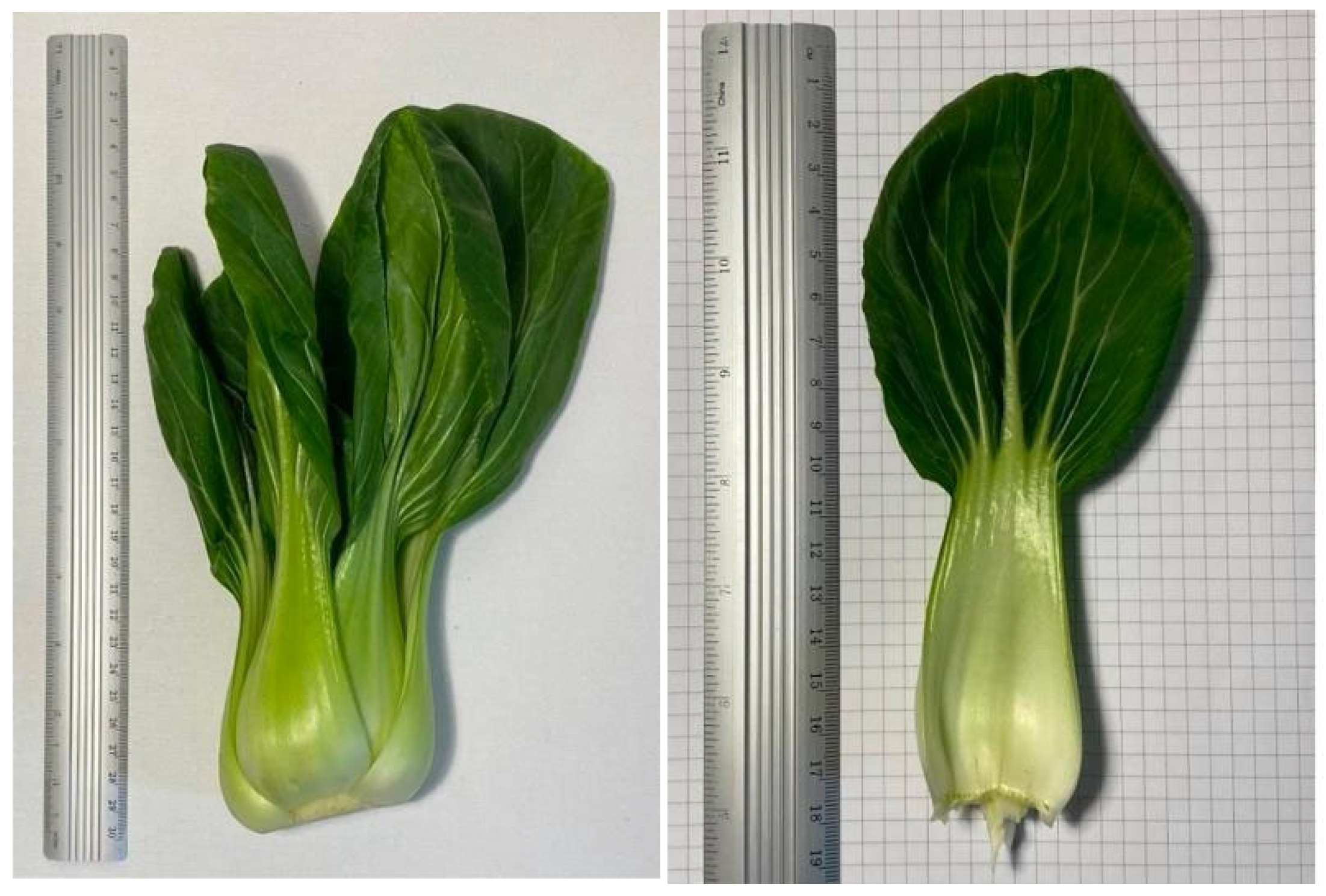
Figure 2.
Global distribution and consumption of B.rapa subsp. chinensis.
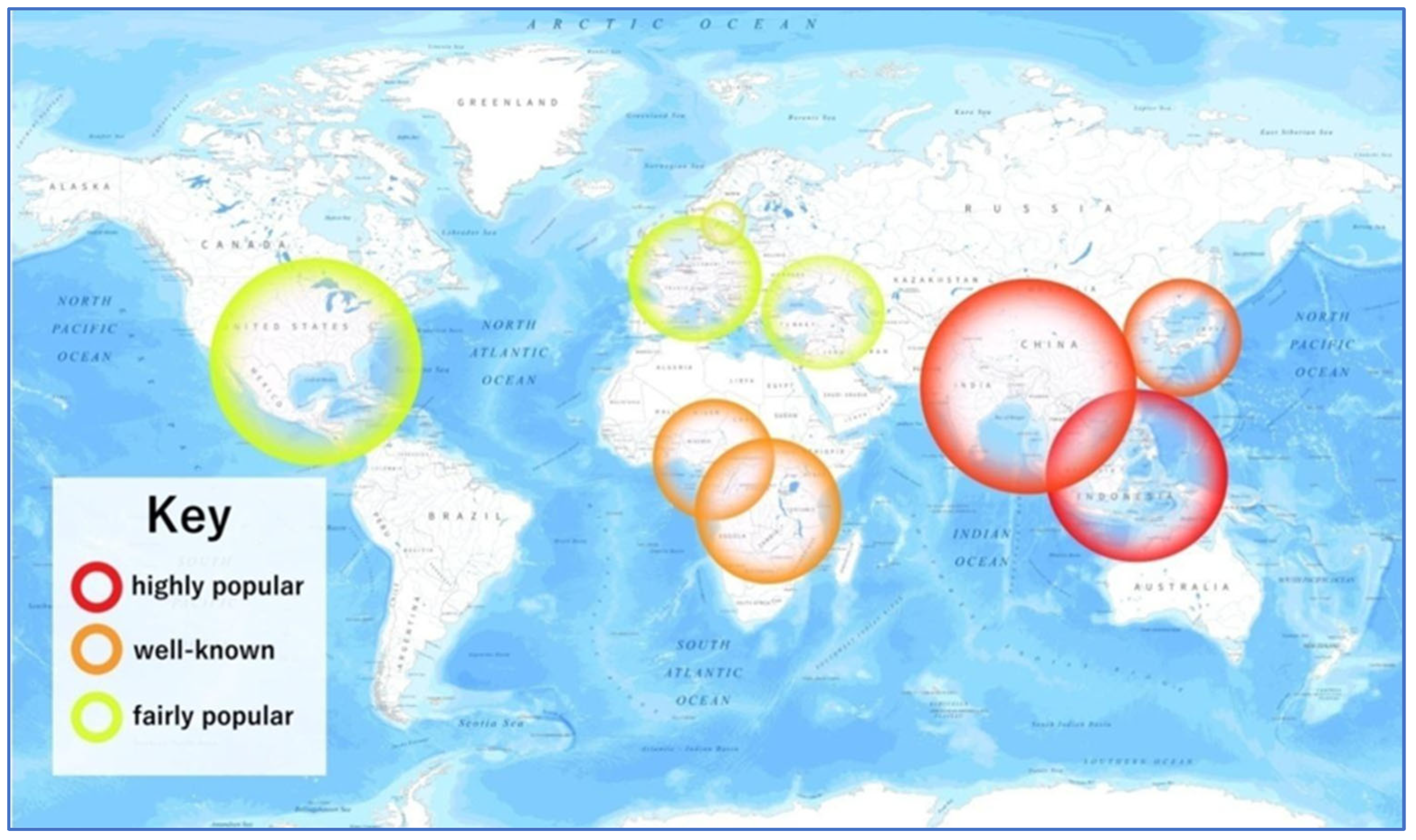
Figure 3.
Classification and representation of superfoods: (a) (left): Intensive orange and red fruits—representatives: papaya and goji berries; (b) (center): Cruciferous vegetables—representative: pak choi; (c) (right): Green leaves—representatives: barley grass and matcha green tea.
Figure 3.
Classification and representation of superfoods: (a) (left): Intensive orange and red fruits—representatives: papaya and goji berries; (b) (center): Cruciferous vegetables—representative: pak choi; (c) (right): Green leaves—representatives: barley grass and matcha green tea.
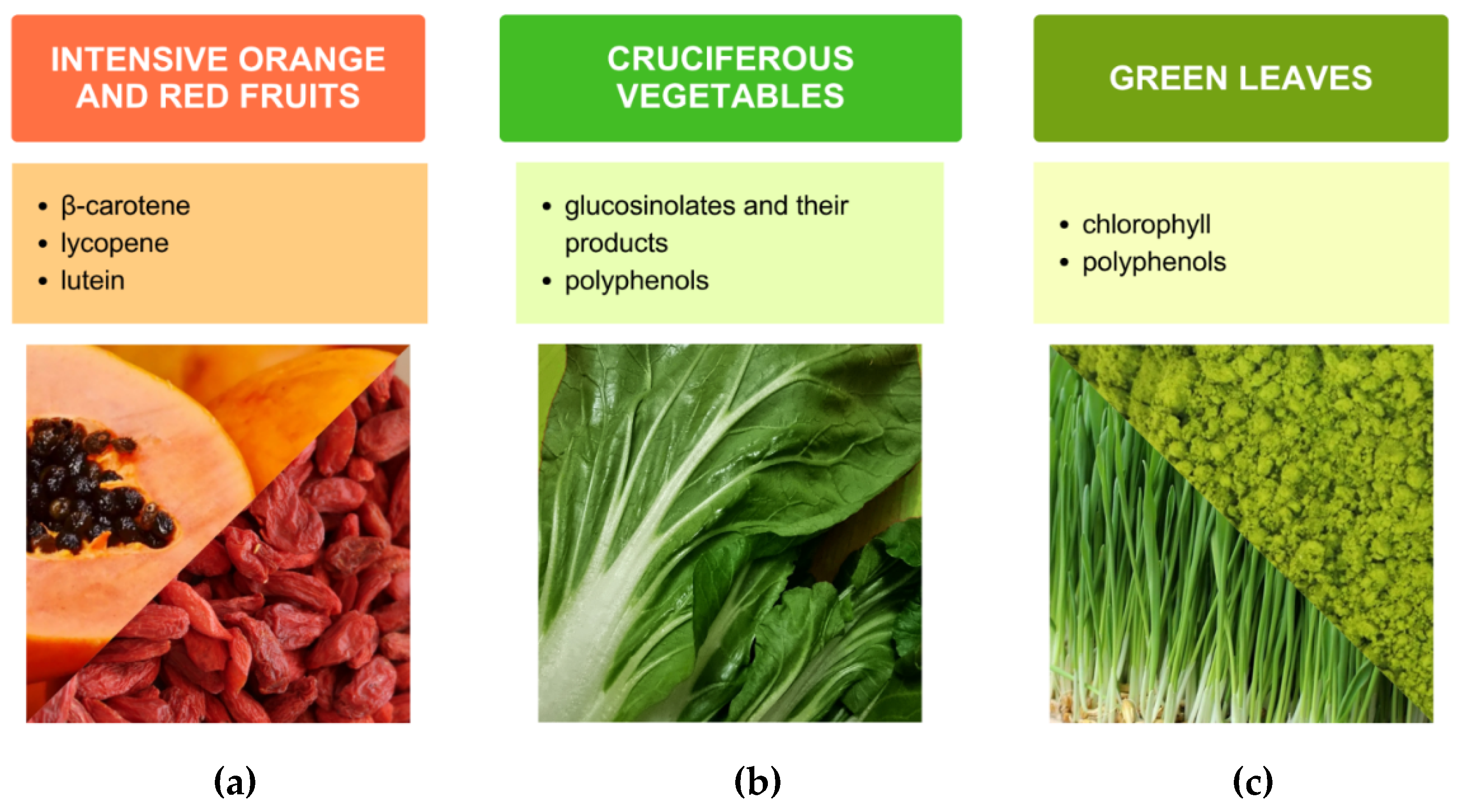
Figure 4.
Relative contribution of major classes of primary and secondary metabolites identified in leaves of B. rapa subsp. chinensis based on comprehensive metabolomic profiling.
Figure 4.
Relative contribution of major classes of primary and secondary metabolites identified in leaves of B. rapa subsp. chinensis based on comprehensive metabolomic profiling.
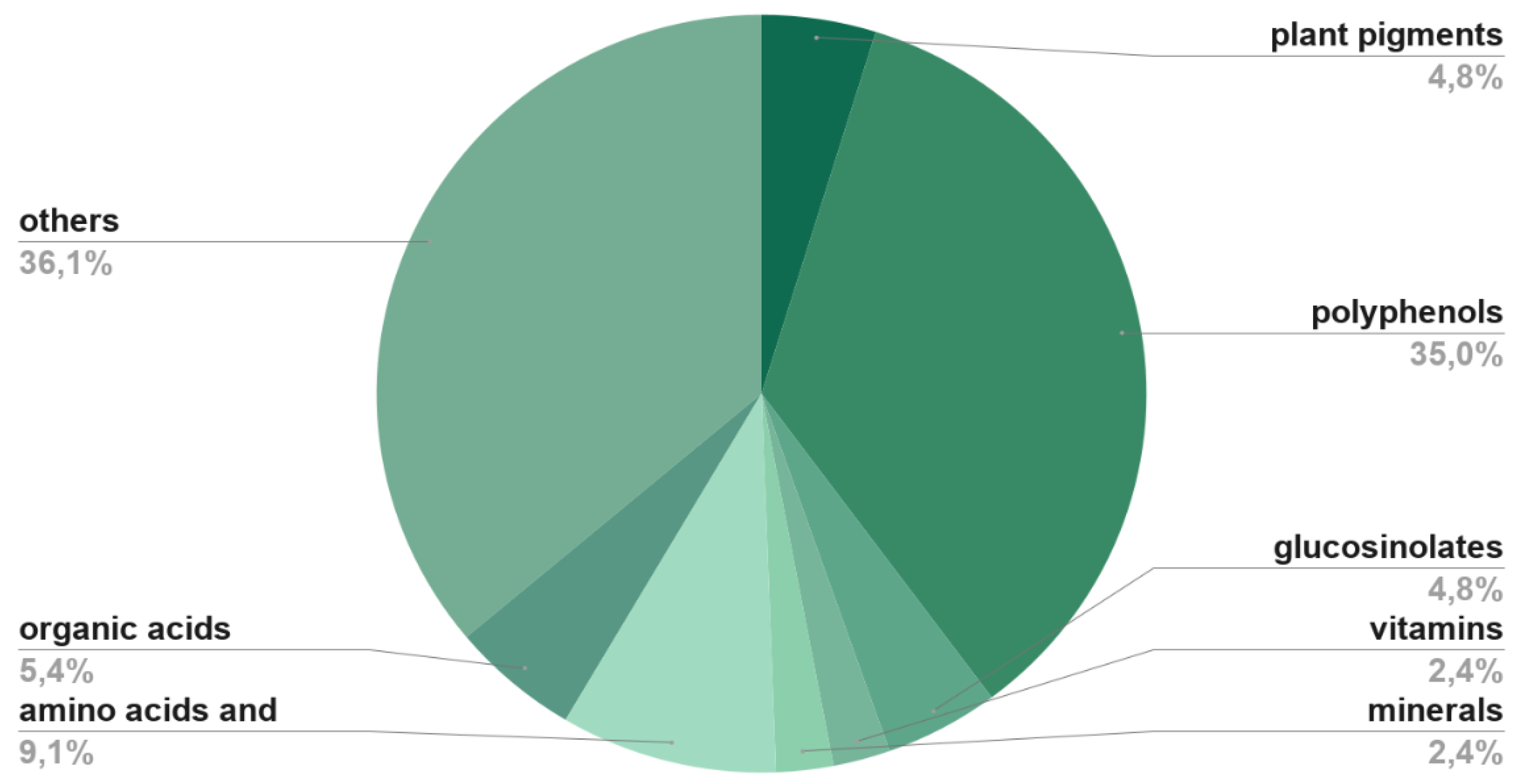
Figure 5.
Chemical formulas of glucosinolates in pak choi in spatial, divided into categories.
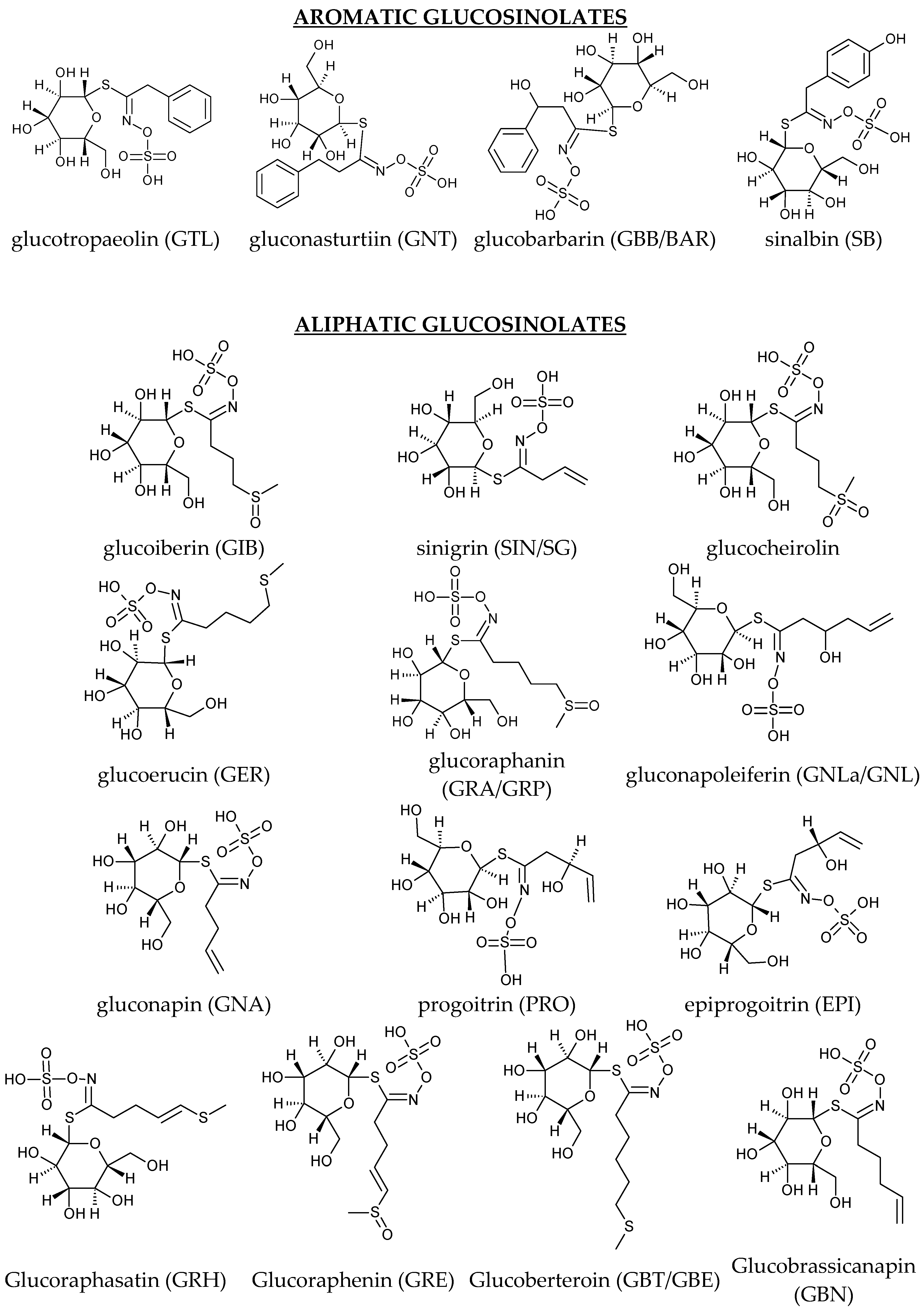
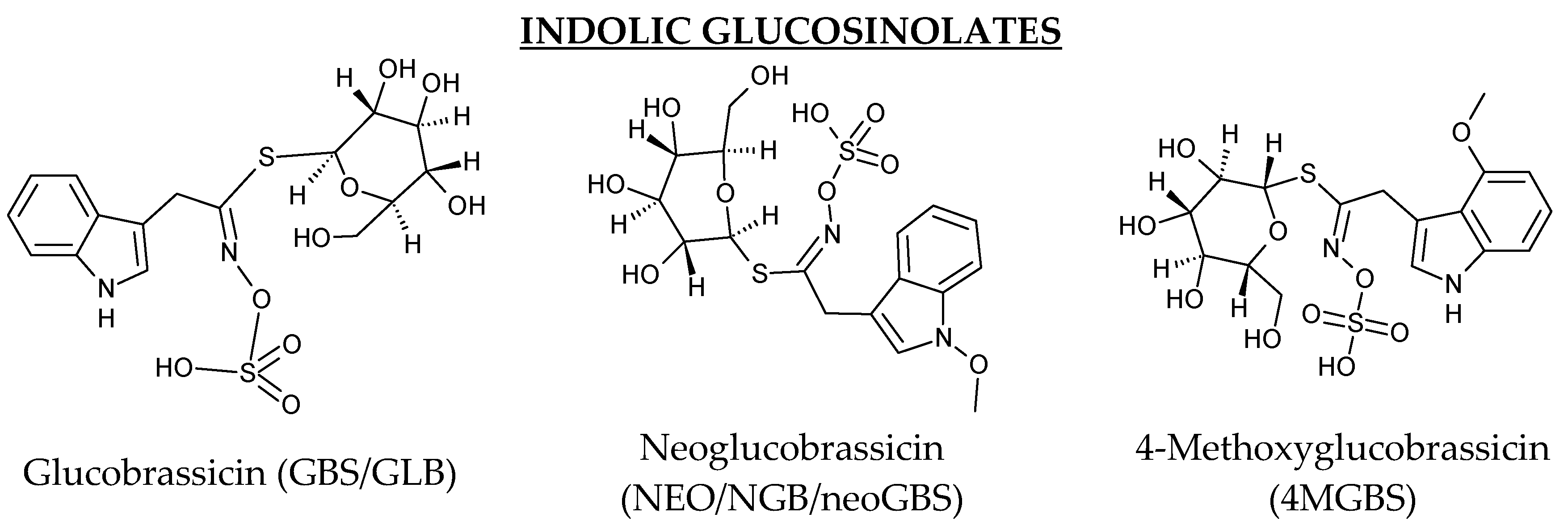
Figure 6.
The main chain of isothiocyanate emergent by the conversion of glucosinolate.
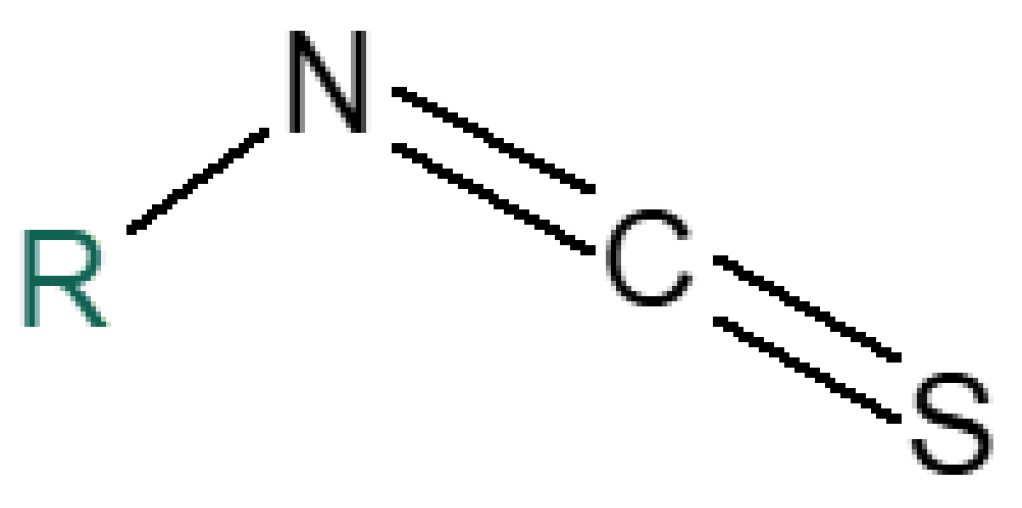
Figure 7.
Selected glucosinolate-derived compounds with potential adverse biological effects identified in B. rapa subsp. chinensis.
Figure 7.
Selected glucosinolate-derived compounds with potential adverse biological effects identified in B. rapa subsp. chinensis.
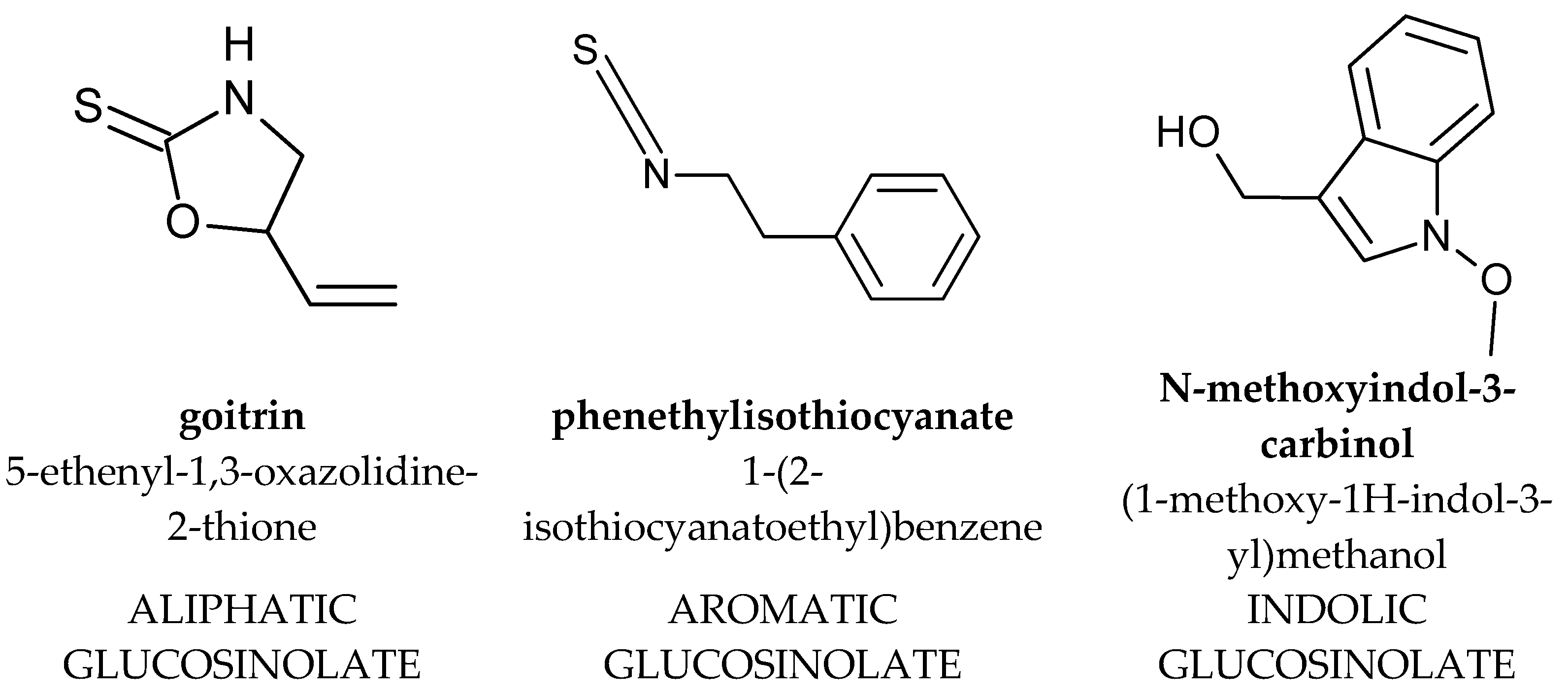
Table 1.
Geneticts of selected plants from Brassicaceae family.
|
Species Common name |
Subspecies—examples | Ploidy | Genome |
|
Brassica nigra (L.) Koch Black mustard |
var. nigra var. abyssinica var. bracteolata |
2n=8 or 2n=16 | B or BB |
|
Brassica oleracea L. Cabbage |
var. oleracea var. capitata var. italica var. sabellica |
2n=9 or 2n=18 | C or CC |
|
Brassica rapa L. (in the past Brassica campestris) Turnip rape |
var. rapa var. oleifera var. pekinensis var. chinensis |
2n=10 or 2n=20 | A or AA |
Table 2.
Examples of Chinese cultivated varieties of Brassica rapa var. chinensis.
| Morphological appearance | Varieties |
| Light purple leaves | Jinzuanziyi |
| Purple leaves | Zijinkuaicai, Zijinyoucai, Zijiaren, Ziyuyoucai |
| Light green leaves | Dongyue, Shanghaiqing |
| Dark green leaves | Heiyoubaicai, Heimeigui, Kuishanheiyetianbaicai |
| Emerald petiole | Feicuiyihao |
| Green petiole | Jingpinwuyueman, Xinguanhua, Yuexiaqinggengcai, Jingguanerhao, Dongchunsansan |
| White petiole | Shuoyuannaibaicai, Sucuibai, Heiniu, Lifei, Zhongyannaibaicai |
| White-green petiole | Qingshuangjimaocai |
| Hypertrophic petiole | Meihuiqinggengbaicai, Feicuierhao, Xiazhijiao, Guoxiayihao |
| Long petiole | Naiyouxiaobaicai |
| Short petiole | Woyouganju, Huangxinwu, Heixinwu, Aijiao, Teaibaixue |
| Narrow petiole | Lexialiangpin |
| Slender petiole | Ruiguanqingbang, Lvsongxiaobaicai, Baigengsijixiaobaicai |
Table 3.
Cultivated varieties of Brassica rapa var. chinensis based on the VIR collection.
| Varieties | Morphological appearance |
| Syusman | compact leaf rosette, a thick, relatively short and very wide, light green leaf petiole |
| Taisai | closed leaf rosette with leaves and a long, pale green or white leaf petiole |
| Piorbai | semi-spreading leaf rosette with numerous, dark green leaves with a medium-long, light green petiole |
| Leychoi | shiny, dark green, convex leaves with a thick, white petiole |
| Joychoi | small, spreading or semi-spreading leaf rosette with slightly upright, very compact, fragile leaves |
Table 4.
The content of nutrients and water in pak choi.
| utrient |
Contents in pak choi (per 100 g fresh weight) [6,7,11] |
Daily requirement [57,58,59] |
Potential health effect [57,58,60] |
| water | 76–92.5 g | does not apply | Hydration, support of detoxification processes in the liver |
| fiber | 2.7 g | about 30 g/day | Regulation of intestinal function, support of maintaining a normal body weight, support of maintaining stable blood glucose levels |
| carbohydrates | 3.1 g | individual | Providing energy substrates to the body |
| protein | 1.7 g | 0.66 g/kg/day–0.83 g/kg/day for adults 1.0–1.5 g/kg/day for older adults (≥65 years) |
Nutrition, regulation of hunger, support of skin appearance |
| fat | 0.2 g | individual | Energy supply, facilitation of vitamin absorption |
| ascorbic acid (vitamin C) |
53 mg | 60 mg women/day 75 mg men/day |
Antioxidation, support of metabolic processes |
| calcium | 102 mg | 800 mg/day | Strengthening, mineralization of bones |
| provitamin A (beta caroten form) |
2.3 mg | 500-625 μg RE women/men | Proper eye function, support of regeneration processes (e.g., skin, respiratory tract lining), impact on fertility |
Table 5.
Diversity and quantitative variability of polyphenolic compounds identified in B. rapa subsp. chinensis, including representative cultivars and concentration ranges.
Table 5.
Diversity and quantitative variability of polyphenolic compounds identified in B. rapa subsp. chinensis, including representative cultivars and concentration ranges.
| Compound | Chemicalformula |
GAE content [µg/mL] |
Varietes | References |
| 5-p-coumaroylquinic acid | C16H18O8 | 4.77–9.41 | nd | [73] |
| caffeic acid | C9H8O4 | 0.7–9.23 | ‘Qianyecai’ | [16,73] |
| caffeoylmalic acid | C13H12O8 | 8.81–13.96 | nd | [73] |
| caffeoyltartaric acid | C13H12O9 | 0.58–1.28 | nd | [73] |
| chlorogenic acid | C16H18O9 | 3.45–6.45 | ‘Qianyecai’ | [16,73] |
| cinnamic acid | C9H8O2 | nd | ‘Paopaoqing’, ‘Naibaicai’ | [16] |
| coumaric acid | C9H8O3 | 0.18–0.34 | nd | [73] |
| ferulic acid | C10H10O4 | 0.48–0.8 | ‘Qianyecai’ | [16,73] |
| homovanilloyquinic acid | C9H10O4 | nd | ‘Xiangqingcai’, ‘Paopaoqing’ | [16] |
| isorhamnetin-3-gentiobioside-7-glucoside | C34H42O22 | 0.08–0.43 | ‘Qianyecai’ | [16,73] |
| phillyrin | C27H34O11 | 0.12–0.26 | nd | [73] |
| protocatechuic acid | C7H6O4 | 0.49–0.9 | ‘Maertou’ | [16] |
| rosmarinic acid | C18H16O8 | nd | ‘Qianyecai’ | [16] |
| sinapic acid | C11H12O5 | 0.49–2.49 mg∙g-1 DM | pak choi #16, ‘Qianyecai’ | [9,16] |
nd—no data.
Table 6.
Major flavonoid compounds identified in B. rapa subsp. chinensis.
| Compound | Chemical formula | References |
| delphinidin 3-o-glucoside | 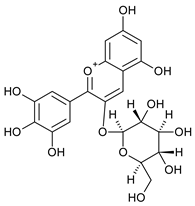 |
[75] |
| isorhamnetin | 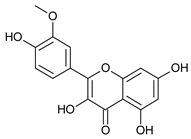 |
[9,16,74,76] |
| isorhamnetin-3,7-di-o-glucoside | 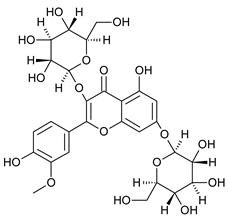 |
[74] |
| isorhamnetin-3-o-glucoside | 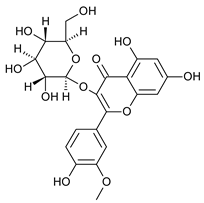 |
[74] |
| kaempferol | 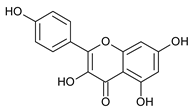 |
[9,16,74,76] |
| kaempferol 3-o-caffeoyl-7-o-glucoside | 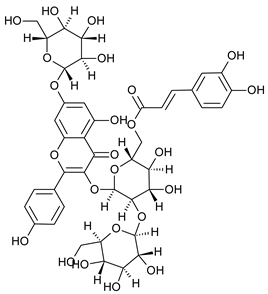 |
[74] |
| kaempferol 3-o-feruloyl-sophoroside 7-o-glucoside | 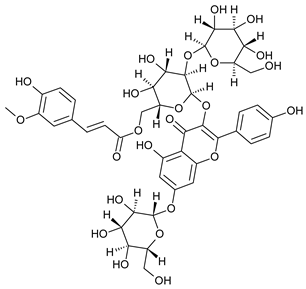 |
[74] |
| kaempferol 3-o-hydroxyferuloyl-glucoside-7-o-glucoside | 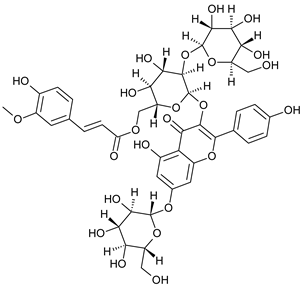 |
[74] |
| kaempferol 3-o-sinapoyl-sulphate-7-o-glucoside | 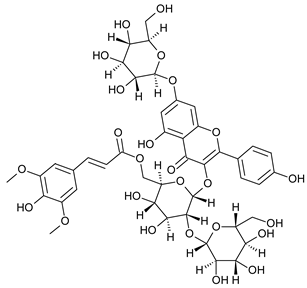 |
[74] |
| kaempferol-3,7-di-o-glucoside | 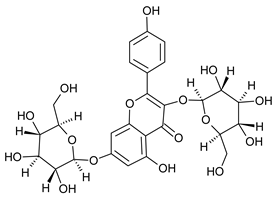 |
[74] |
| quercetin | 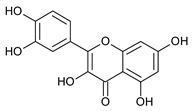 |
[9,16,74,76] |
Table 7.
Glucosinolates identified in B. rapa subsp. chinensis.
| Class |
Name (abbreviation) |
Chemical formula | Average content | Raw material | References |
| AROMATIC | Glucotropaeolin (GTL) |
C14H19NO9S2 | 6.451 μmol∙kg-1 DW | leaf | [34] |
| Gluconasturtiin (GNT) |
C15H21NO9S2 | 678.72 μmol∙kg-1 DW | leaf | [34] | |
| Glucobarbarin (GBB/BAR) |
C15H21NO10S2 | 3.171 μmol·kg-1 DW | leaf | [34] | |
| Sinalbin (SB) |
C30H42N2O15S2 | 0.086 μmol·kg-1 DW | leaf | [34] | |
| ALIPHATIC | Glucoiberin (GIB) |
C11H21NO10S3 | 0.17 μmol·g-1 DW | leaf | [13] |
| 0.375 μmol·kg-1 DW | leaf | [34] | |||
| Sinigrin (SIN/ SG) |
C10H17NO9S2 | 4.722 μmol·kg-1 DW | leaf | [34] | |
| Glucocheirolin - |
C11H21NO11S3 | 5.256 μmol·kg-1 DW | leaf | [34] | |
| Glucoerucin (GER) |
C12H29NO9S3 | 49.366 μmol·kg-1 DW | leaf | [34] | |
| Glucoraphanin (GRA/GRP) |
C12H23NO10S3 | 172.591 μmol·kg-1 DW | leaf | [34] | |
| Gluconapoleiferin (GNLa/GNL) |
C12H21NO10S2 | 0.73 mg∙g-1 DW | sprout | [84] | |
| Gluconapin (GNA) |
C11H19NO9S2 | 0.37 μmol·g-1 DW | leaf | [13] | |
| 4.5 mg·g-1 DW | sprout | [84] | |||
| Progoitrin (PRO) |
C11H19NO10S2 | 17.84 mg·g-1 DW | sprout | [84] | |
| 1132.364 μmol·kg-1 DW | leaf | [34] | |||
| Epiprogoitrin (EPI) |
C11H19NO10S2 | 843.059 μmol·kg-1 DW | leaf | [34] | |
| Glucoraphasatin (GRH) |
C12H21NO9S3 | 0.231 μmol·kg-1 DW | leaf | [34] | |
| Glucoraphenin (GRE) |
C12H21NO10S3 | 0.981 mg∙g-1 DW | leaf | [34] | |
| Glucoberteroin (GBT/GBE) |
C13H25NO9S3 | 148.188 μmol·kg-1 DW | leaf | [34] | |
| Glucobrassicanapin (GBN) |
C12H21NO9S3 | 1.46 μmol·g-1 DW | leaf | [13] | |
| 3139.729 μmol·kg-1 DW | leaf | [34] | |||
| 1.96 mg·g-1 DW | sprout | [84] | |||
| INDOLIC | Glucobrassicin (GBS/GLB) |
C16H20N2O9S2 | 0.09 μmol·g-1 DW | leaf | [13] |
| 0.6 mg·g-1 DW | sprout | [84] | |||
| Neoglucobrassicin (NEO/NGB/neoGBS) |
C17H22N2O10S2 | 0.07 μmol·g-1 DW | leaf | [13] | |
| 3.22 mg·g-1 DW | sprout | [84] | |||
| 4-Methoxyglucobrassicin (4MGBS) |
C17H22N2O10S2 | 0.13 μmol·g-1 DW | leaf | [13] | |
| 2.89 mg·g-1 DW | sprout | [84] |
Table 8.
Formation of isothiocyanates from glucosinolates via myrosinase-catalyzed hydrolysis in disrupted tissues of B. rapa subsp. chinensis.
Table 8.
Formation of isothiocyanates from glucosinolates via myrosinase-catalyzed hydrolysis in disrupted tissues of B. rapa subsp. chinensis.
| Classification | Glucosinolate name | Isothiocyanate name |
|
SUBSTRATUM before conversion |
PRODUCT after conversion |
|
| AROMATIC | glucotropaeolin | benzyl isothiocyanate |
| gluconasturtiin | phenethyl isothiocyanate | |
| sinalbin | 4-hydroxybenzyl isothiocyanate | |
| ALIPHATIC | sinigrin | allyl isothiocyanate |
| glucocheirolin | thioaliphatic nitryle | |
| glucoerucin | śrucin | |
| glucoraphanin | sulforaphane | |
| gluconapin | 3-butenyl isothiocyanate | |
| glucobrassicanapin | 4-pentenyl isothiocyanate | |
| progoitrin | goitrin | |
| INDOLIC | glucobrassicin | indole-3-carbinol |
| neoglucobrassicin | n-methoxyindolyl-3-carbinol | |
| 4-methoxyglucobrassicin | nd* |
*nd—no data.
Table 9.
Content of major plant pigments in B. rapa subsp. chinensis, determined in different studies and at different developmental stages.
Table 9.
Content of major plant pigments in B. rapa subsp. chinensis, determined in different studies and at different developmental stages.
| Compounds | Microgreens | Leaves | ||
| Content | References | Content | References | |
| Chlorophyll a | 6.13 µg∙g-1FW | [82] | 0.32 mg∙g-1FW | [71] |
| 8 217.7 µg∙g-1 FW | [19] | 338.45–473.22 mg∙100 g-1 DW | [73] | |
| 14 586.5 µg∙g-1FW | [19] | |||
| Chlorophyll b | 3.00 µg∙g-1FW | [82] | 0.114 mg∙g-1FW | [71] |
| 1 428.3 µg∙g-1FW | [19] | 121.31–215.44 mg∙100 g-1 DW | [73] | |
| 2 043.8 µg∙g-1FW | [19] | |||
| Total chlorohyll (a+b) | 15.99 µg∙g-1FW | [82] | 459.76–683.69 mg∙100 g-1 DW | [73] |
| 9 646 µg∙g-1FW | [19] | 16 630.3 µg∙g-1FW | [19] | |
| 0.47–1.45 g∙kg-1 FW | [98] | |||
| Lutein | 2.7 mg∙100 g-1 FW | [97] | 785.8 µg∙g-1FW | [19] |
| 519.5 µg∙g-1FW | [19] | ~43% total carotenoids | [7] | |
| 27.48–50.35 mg∙100 g-1 FW | [91] | 200-230 ng∙mg-1 DW | [96] | |
| Beta-carotene | 5.1 mg∙100 g-1 FW | [97] | 429.4 µg∙g-1FW | [19] |
| 194.2 µg∙g-1FW | [19] | 173–189 µg∙g-1DW | [7] | |
| 1.85–3.34 mg∙100 g-1 FW | [91] | |||
| Neoxanthin | 149.9 µg∙g-1FW | [19] | 193.7 µg∙g-1FW | [19] |
| 2.08–20.64 mg∙100 g-1 FW | [91] | ~13% totalcarotenoids | [7] | |
| Violaxanthin | 0.4 mg∙100 g-1 FW | [97] | 401 µg∙g-1FW | [19] |
| 142.1 µg∙g-1FW | [19] | ~28% totalcarotenoids | [7] | |
| 11.10–60.56 mg∙100 g-1 FW | [91] | |||
| Total carotenoids | 3.74 µg∙g-1FW | [82] | 18.45–41.23 mg∙100 g-1 DW | [73] |
| 1 005.7 µg∙g-1FW | [19] | 0.21 mg∙g-1FW | [71] | |
| 8.2 mg∙100 g-1 FW | [97] | 440–2 020 µg∙g-1DW | [7] | |
| Total anthocyanins | 0.1–0.3 mg∙g-1DW | [53] | 0–735.39 mg·kg−1 | [94] |
| 4.11 µmol∙100 g-1 FW | [82] | green variety 0–26% total flavonoids purple variety ~50% total flavonoids |
[75] | |
Table 10.
Essential amino acids identified in B. rapa subsp. chinensis and their relative abundance [99].
Table 10.
Essential amino acids identified in B. rapa subsp. chinensis and their relative abundance [99].
| Type | Compound | Intensity [ratio/g] |
| Proteinogenic amino acids | Alanine (Ala) | 6.42 ± 2.94 |
| Valine (Val) | 15.82 ± 6.34 | |
| Isoleucine (Ile) | 10.66 ± 4.57 | |
| Leucine (Leu) | 7.84 ± 3.76 | |
| Methionine (Met) | 2.25 ± 0.18 | |
| Phenylalanine (Phe) | 6.06 ± 0.26 | |
| Threonine (Thr) | 9.22 ± 1.10 | |
| Tryptophan (Trp) | 1.12 0.17 |
Table 14.
Selected contraindications and potential dietary limitations associated with consumption of B. rapa subsp. chinensis.
Table 14.
Selected contraindications and potential dietary limitations associated with consumption of B. rapa subsp. chinensis.
|
Problem or possible negative co-interaction |
Case | Solution | References |
| Hashimoto’s disease | limitation of iodine absorption from food, occurrence of thyroid goiter | reducing the content of goitrogens through appropriate culinary processing | [62,143,182] |
| Swallowing problems | too hard and large pieces | change in serving consistency | [111,183] |
| Dysphagia | |||
| Poor oral health | crunchy, hard texture leaf petiole | ||
| Dental cavities | |||
| Acute gastrointestinal disorders | digestive system hyperresponsiveness | introduction to the diet in small portions only in cooked form | [23,143,152] |
| Use of anticoagulant medications | antagonistic effects of drugs and vitamin K | maintaining a time gap between taking medications and eating | [143] |
Disclaimer/Publisher’s Note: The statements, opinions and data contained in all publications are solely those of the individual author(s) and contributor(s) and not of MDPI and/or the editor(s). MDPI and/or the editor(s) disclaim responsibility for any injury to people or property resulting from any ideas, methods, instructions or products referred to in the content. |
© 2026 by the authors. Licensee MDPI, Basel, Switzerland. This article is an open access article distributed under the terms and conditions of the Creative Commons Attribution (CC BY) license (http://creativecommons.org/licenses/by/4.0/).
Copyright: This open access article is published under a Creative Commons CC BY 4.0 license, which permit the free download, distribution, and reuse, provided that the author and preprint are cited in any reuse.