
Submitted:
28 September 2026
Posted:
29 September 2026
You are already at the latest version
Abstract
Background/Objectives: Food environments shape children’s eating practices yet lived experiences remain insufficiently understood. This study explored how children and adolescents experience neighborhood food environments in relation to dimensions of subjective well-being in a context of social vulnerability in Chile. Methods: A quali-tative participatory study was conducted with 15 children and adolescents aged 12–15 years in La Legua and Carmen Mena, San Joaquín. Data were generated through Pho-tovoice, interviews, and emotional mapping. Photographs, maps, transcripts, and field notes were integrated and analyzed using reflexive thematic analysis, complemented by spatial analysis of emotional maps. Results: Five themes were identified: proximity, mobility, and safety; availability, diversity, and food procurement; food as an affective, familial, and social experience; children’s agency; and tensions among practices, pref-erences, restrictions, and aspirations. Nearby food outlets facilitated access, whereas insecurity constrained mobility. Multiple points of sale did not necessarily translate into food diversity, with circuits centered on bread, beverages, snacks, sweets, and fast food. Food experiences included pleasure, care, recognition, togetherness, security, and relief, alongside concern and distress. Children selected, purchased, prepared, and evaluated food within family, economic, and territorial constraints. Conclusions: Neighborhood food environments were experienced as territorial, social, and affective spaces. Access depended not only on availability and proximity but also on safety, prices, mobility, family relationships, preferences, and situated agency. Participatory approaches can broaden nutrition research by revealing how children experience and negotiate food environments.
Keywords:
food environments
; children’s subjective well-being
; eating practices
; food access
; social vulnerability
; photovoice
; emotional mapping
; childhood
; Chile
1. Introduction
Food is a fundamental dimension of human development and encompasses biological, psychological, social, cultural, and territorial processes that shape eating experiences and practices throughout the life course [1,2]. Accordingly, food cannot be reduced to its nutritional function, as eating practices are shaped by the interaction of economic, environmental, political, social, and geographic factors that structure concrete opportunities for food access, availability, and choice [3,4,5]. These conditions are not distributed uniformly across populations and may generate unequal opportunities to develop eating practices, particularly in contexts characterized by social and territorial inequalities.
The relevance of these inequalities is particularly pronounced during childhood, a developmental stage in which fundamental physical, cognitive, and socioemotional capacities for present and future well-being are established [6,7,8]. The conditions under which children access food and develop their eating practices may therefore contribute to shaping differentiated trajectories of health, learning, and social integration [9,10]. In Latin America, this issue is reflected, among other phenomena, in the sustained increase in childhood malnutrition in urban contexts characterized by poverty and social exclusion, where inequalities in food access and availability are particularly relevant [11,12].
Recognition of the multidimensional nature of food has contributed to broadening the research focus beyond its individual health consequences. For decades, evidence has concentrated primarily on the relationship between diet and noncommunicable chronic diseases [13,14,15,16]. However, there has been growing recognition that eating practices develop within specific food systems and are conditioned by food availability and accessibility, as well as by social and territorial inequalities that structure everyday food opportunities [17,18]. This perspective shifts attention from individual decisions toward the material and social conditions within which such decisions take place.
Within this framework, the concept of the food environment provides a means of examining how the physical, economic, political, and sociocultural conditions present within a given territory shape opportunities for food access, choice, and consumption. Food environments thus reflect both the organization of food supply systems and the inequalities that permeate everyday food experiences [17,18]. These inequalities may be particularly pronounced in socially vulnerable urban areas, where a high presence of ultra-processed foods may coexist with more limited availability of fresh and health-promoting foods [19,20,21]. In this context, the concepts of food deserts and food swamps have been used to characterize different territorial configurations of food availability, respectively associated with low availability of healthy foods and a high concentration of foods of low nutritional quality [22,23,24].
Although these approaches have contributed to making territorial inequalities in food access more visible, their capacity to explain how children experience and interpret such configurations in their everyday lives remains more limited. This issue is relevant because territory is not merely the physical space in which food resources are located; it is also a setting of relationships, mobility, experiences, and meanings that may shape how children experience food in their daily lives.
Incorporating a child subjective well-being perspective makes it possible to further explore this experiential dimension. Over recent decades, this field has challenged understandings of well-being based exclusively on objective indicators, emphasizing the importance of considering children’s own evaluations of their lives and experiences [25]. Subjective well-being encompasses cognitive and affective dimensions related to how individuals evaluate their own lives, including life satisfaction and positive and negative emotional experiences [26]. From this perspective, research on childhood has increasingly emphasized children’s voices, recognizing them as participants capable of contributing to the production of knowledge about their own experiences and supporting an understanding of well-being as a multidimensional and situated phenomenon [26,27,28].
Children’s subjective well-being is experienced across multiple domains of everyday life, particularly within the family, school, and neighborhood [29,30,31,32]. These settings structure relationships, practices, and opportunities that may influence life satisfaction through family relationships, school experiences, opportunities for participation, and characteristics of the residential environment [31,32,33,34,35]. In particular, the neighborhood represents an important setting for understanding child well-being because it brings together social relationships, everyday mobility, and opportunities to access community services and resources. The characteristics of this environment may facilitate or constrain children’s everyday experiences and, consequently, the conditions under which they evaluate their lives.
In Chile, these differences are particularly relevant in contexts of social vulnerability. Available evidence indicates lower levels of subjective well-being among children experiencing less favorable material living conditions [36,37]. Likewise, neighborhood characteristics such as perceived safety, the availability of public spaces, and opportunities for social interaction have been associated with life satisfaction [35,36,37]. These findings suggest that children’s well-being cannot be understood independently of the spaces in which everyday life unfolds and the opportunities those spaces provide.
Nevertheless, the relationship between food environments and children’s subjective well-being remains insufficiently explored, particularly when children’s own perspectives and experiences in contexts of social vulnerability are considered [25,38,39]. Food environments are not limited to the availability, accessibility, or cost of food. They also encompass family, school, community, and territorial relationships and experiences that may be connected to dimensions such as participation, autonomy, safety, and sense of belonging [25,26,38]. Considering these dimensions makes it possible to approach food as a situated and socially constructed experience, particularly during childhood.
Research on food environments has developed primarily from nutritional, epidemiological, and public health perspectives, with an emphasis on food availability, accessibility, and cost [40]. Consequently, a gap remains in understanding how children experience their food environments, what meanings they attribute to food-related spaces and practices, and how these experiences may be connected to their subjective well-being [25,38,39,41,42,43].
Addressing this gap requires situating children’s food experiences within the territories in which everyday life unfolds and considering children’s interpretations as an important source of knowledge for understanding the relationship between food and well-being. From this perspective, the present study aimed to understand how food environments relate to children’s subjective well-being by considering the experiences and meanings that children attribute to their eating practices in an urban context of social vulnerability.
2. Materials and Methods
2.1. Study Design
A qualitative, exploratory-descriptive, cross-sectional study was conducted [44]. The design enabled the exploration, from a situated perspective, of the experiences and meanings that children attribute to their food environments and food-related practices, as well as how these experiences relate to their subjective well-being in an urban context of social vulnerability.
A participatory approach was adopted, recognizing children as competent social actors and legitimate participants in the production of knowledge about their own experiences [26,45]. Accordingly, the research process sought to promote voluntary, informed, and meaningful participation, allowing participants to express their experiences and interpretations based on their own everyday frames of reference.
2.2. Study Context
The study was conducted in the municipality of San Joaquín, Metropolitan Region of Chile, a predominantly urban area that, according to the 2024 Census, has a population of 95,602, of whom 14,852 are children aged 0–14 years (15.5%) [46]. According to data from the 2022 National Socioeconomic Characterization Survey (CASEN), the municipality has an income poverty rate of 4.8% and a multidimensional poverty rate of 19.6% [46].
Fieldwork focused on La Legua and Carmen Mena, two residential areas of the municipality with distinct territorial characteristics. La Legua is a territory historically shaped by processes of state intervention, stigmatization, and territorial vulnerability, factors that have influenced ways of inhabiting and relating to the local environment [47]. Carmen Mena is a residential area in the southern part of the municipality characterized by greater availability of community facilities and access to services [48].
Participants were enrolled in the Programa Familias, part of the Seguridades y Oportunidades subsystem, a Chilean public policy program targeting families experiencing extreme poverty and socioeconomic vulnerability [49].
2.3. Participants and Sampling Strategy
Participants were selected using purposive sampling [50]. Priority was given to children and adolescents whose everyday experiences within the territory could contribute to understanding the relationship between food environments and children’s subjective well-being. Efforts were also made to ensure diversity of experiences through balanced participation of girls and boys.
The sample comprised 15 children and adolescents aged 12–15 years who lived in the neighborhoods of La Legua and Carmen Mena in the municipality of San Joaquín, Metropolitan Region, Chile, and were enrolled in the Programa Familias. Eight participants were girls and seven were boys. Table 1 presents the key characteristics of the sample.
Recruitment was conducted through coordination between the research team and the Programa Familias of the Municipality of San Joaquín. The program assisted in identifying children and adolescents who met the participation criteria and facilitated contact with their families. Subsequently, the research team contacted households by telephone and conducted home visits to explain the objectives and scope of the study, address questions, and obtain informed consent from parents or legal guardians, together with informed assent from the children and adolescents.
Throughout the recruitment process, the voluntary nature of participation and participants’ right to withdraw from the study or decline to answer any question were emphasized, in accordance with a child-rights-based approach [45].
2.4. Data Generation
Data were generated through a participatory approach combining group emotional mapping and Photovoice. These techniques enabled the exploration of participants’ experiences of food environments, places considered meaningful, and the emotions and meanings associated with these spaces.
2.4.1. Group Emotional Mapping
Group emotional mapping constituted the main participatory technique used in the study. This strategy integrates elements of community mapping, visual methods, and group interviewing, using the map as a device through which participants can represent space and express meanings and emotions associated with places in their everyday lives [51].
2.4.2. Photovoice
Photovoice was used to explore the food environment. This participatory technique combines photography with interviews and enables participants to document, through images, aspects of their surroundings that they consider relevant to their everyday lives [52]. This approach facilitated the identification of physical, symbolic, and social elements present in the food environments experienced by participants.
2.5. Procedure
Fieldwork was conducted in January 2026 in the neighborhoods of La Legua and Carmen Mena, in the municipality of San Joaquín. Data generation was carried out in two successive stages. First, Photovoice was implemented through neighborhood walks accompanied by individual interviews. Subsequently, group emotional mapping sessions were conducted to further explore the experiences, places, and meanings identified during the initial exploration.
The first stage involved exploring the food environment through Photovoice. Before the fieldwork, the routes were assessed in collaboration with staff from the Programa Familias of the Municipality of San Joaquín, taking into account territorial safety conditions, high-risk areas, periods of greater exposure, and other factors relevant to conducting the walks. Areas presenting known risks associated with crime, drug trafficking, or other potentially hazardous conditions were excluded.
The walks were conducted in pairs and accompanied by a research assistant. Each walk covered an approximate radius of up to 0.5 km from the participant’s home and lasted no longer than one hour. During the walks, participants identified and photographed places, objects, or situations that they considered meaningful in relation to food, food access, and associated emotions. Each participant took between 10 and 15 photographs. In parallel, the research assistant geolocated the route and recorded points of interest identified by participants, as well as the distances and travel times associated with the photographed locations.
As a specific ethical safeguard concerning photographic recording, participants were instructed not to photograph people without their authorization. For this purpose, specific informed consent was obtained from individuals who could be photographed, authorizing the capture of their image within the Photovoice activity and its use exclusively for purposes related to the study. In the absence of such authorization, participants were instructed to avoid capturing faces or any other element that could identify an individual.
During the walks, brief individual interviews were conducted at a minimum of three stopping points. These points were selected based on locations photographed or identified as meaningful by participants, while taking into account the safety conditions of the surrounding area. Conversations were conducted flexibly and focused on exploring the meanings participants attributed to the photographs and identified places, as well as their experiences, eating practices, and emotions related to food. Questions were adapted to participants’ ages, the progression of the walk, and the issues that emerged during the activity. Interviews were audio-recorded and supplemented with field notes documenting contextual information relevant to subsequent interpretation.
The second stage was conducted one week after completion of the first stage and involved group emotional mapping at the La Legua Community Center and the Joaquín Edwards Bello Neighborhood Association, both located within the study neighborhoods. Three sessions were conducted—two in La Legua and one in Carmen Mena—with five, seven, and three children and adolescents participating, respectively. Each session lasted approximately one hour and 45 minutes.
For this activity, a base map of the study area was developed using QGIS and adapted to facilitate participatory use. The map incorporated meaningful territorial landmarks from both neighborhoods, facilitating participants’ recognition and representation of everyday spaces.
The sessions began with an introductory activity designed to establish conditions of trust and to reiterate the objectives and procedures of the activity. Participants then identified their places of residence, schools, and everyday routes. Next, they collectively identified the different food environments present in the study area using stickers representing places where food could be accessed and consumed, as well as foods they habitually consumed. Finally, they incorporated the emotional dimension by associating emotions and experiences with the places previously identified.
During the sessions, the research team facilitated group interaction through open-ended questions, seeking to encourage children’s and adolescents’ participation and deepen the meanings associated with their representations. This process enabled participants to revisit and collectively expand upon experiences identified during the neighborhood walks and photographic documentation, linking them with the spaces, eating practices, and emotions represented on the maps.
Each session concluded with a joint review of the maps produced and a group discussion aimed at identifying the main emerging elements. Sessions were audio-recorded, and visual records of the maps produced were also collected.
This methodological sequence enabled the integration of a situated approach to participants’ individual experiences with a subsequent process of collective elaboration. Thus, the records obtained through Photovoice, emotional maps, and field notes were subsequently integrated into a single corpus for analysis.
An overview of the qualitative data sources, participants involved, and materials generated during the fieldwork is provided in Table 2.
2.6. Data Management and Organization
The recordings of the emotional mapping sessions and individual interviews were transcribed verbatim. The analytical corpus consisted of the transcripts, maps produced by participants, and field notes.
The different sources were integrated into a single corpus to enable the joint analysis of narratives, spatial representations, and contextual elements associated with experiences of food and children’s subjective well-being.
QGIS was used to develop and adapt the base map employed during the participatory activities. NVivo 12 Plus was used to support the organization and systematic management of the qualitative material.
2.7. Data Analysis
Reflexive thematic analysis was conducted [53]. The analysis aimed to understand the meanings participants attributed to their food environments and how these experiences related to their subjective well-being.
The analytical process began with repeated readings of the empirical material to promote familiarity with the corpus. This was followed by initial coding of units of meaning. Emerging codes were subsequently reviewed and discussed, allowing the information to be progressively organized into analytical categories and the themes that structured the findings to be developed.
Interpretive differences were addressed through shared review of the empirical material and discussion among members of the research team. This process supported a reflexive and contextualized approach to the phenomenon under study.
The emotional maps were analyzed as part of the empirical corpus rather than merely as a tool for data generation. The analysis considered the spatial distribution of identified places, the everyday routes represented, the emotions associated with these spaces, and the relationships between these representations and the narratives developed during group discussions.
The participant quotations selected for this study were translated from Spanish into English. The translations sought to preserve the original meaning, tone, and colloquial expressions of participants’ accounts. The original Spanish transcripts were retained as the reference version throughout the translation process, and the translated quotations were reviewed by members of the research team to ensure semantic and contextual equivalence.
Data interpretation involved source triangulation. Patterns, convergences, and tensions identified in the emotional maps were compared with interview transcripts and field notes, enabling a deeper understanding of the relationships among spatial experiences, eating practices, and perceptions related to subjective well-being.
Methodological rigor was supported through ongoing reflexivity within the research team and triangulation of researchers and data sources. Reflexivity involved acknowledging the influence of the research team’s positionality on data generation and interpretation, while triangulation was conducted through independent and joint readings of the corpus.
The analytical process concluded when the available material supported a sufficiently rich and coherent interpretation of the phenomenon under study, consistent with the principles of reflexive thematic analysis [53].
2.8. Ethical Considerations
The study was conducted in accordance with the ethical and regulatory frameworks applicable to research involving human participants in Chile. Written informed consent was obtained from parents or legal guardians, and informed assent was obtained from participating children and adolescents.
Throughout the research process, the voluntary nature of participation and participants’ right to withdraw from the study or decline to answer any question were emphasized.
The study was reviewed and approved by the Scientific Ethics Committee of Universidad Autónoma de Chile under Resolution No. CEC 37-25.
3. Results
Reflexive thematic analysis identified five themes describing how children and adolescents experienced food environments in their everyday lives and how these experiences related to different dimensions of their subjective well-being. Overall, the findings show that the food environment was experienced simultaneously as a space of food access and procurement, a territory shaped by mobility and safety, and a setting for family and social relationships, food preferences, and eating practices.
The photographs produced through Photovoice documented the spaces and food outlets that formed part of participants’ everyday routes, whereas the emotional maps spatially situated the places, trajectories, and experiences associated with food. Integrating these sources with participants’ narratives showed that experiences of the food environment extended beyond the physical availability of food outlets and products to encompass territorial, social, and affective dimensions.
3.1. Proximity, Mobility, and Safety as Conditions of Food Access
Participants described a food environment comprising various neighborhood food outlets, including small grocery stores, bakeries, butcher shops, street markets, and other points of sale. The photographs obtained during the walks documented this diversity of spaces and made visible the locations that formed part of participants’ everyday food procurement circuits (Figure 1). However, the physical presence of food outlets did not necessarily mean that all of them were perceived as equally accessible. Proximity, familiarity, and mobility conditions played a central role in determining which places were actually used.
The emotional maps showed that everyday food outlets and routes tended to be concentrated around familiar and frequently traveled spaces (Figure 2). Proximity to home acquired a meaning that extended beyond physical distance, as it was associated with trust and safety. One participant explained:
“I like that it’s right in front of my house, because if anything happens, I can get there right away. I don’t have to go far or anything. It’s safer too, because I’m close and it’s a place I know, so I don’t worry as much about going there or coming back.” (Boy, 13 years)
This relationship between proximity and safety also emerged in the notes recorded during the emotional mapping activities. Expressions such as “so there is no drug trafficking” and “no more drug trafficking and fewer gunshots” indicated that territorial conditions were part of how participants evaluated their everyday mobility. Thus, accessibility depended not only on the distance between home and a food outlet but also on the perceived possibility of traveling to and from that location safely and without undue concern.
In this context, traveling to more distant areas could be avoided or require greater accompaniment. One participant stated: “I don’t like going too far. I prefer to stay around here, where I know the area and where I feel more comfortable.” (Girl, 12 years). Another participant directly linked mobility restrictions to neighborhood safety conditions:
“Sometimes you want to go out to buy something or just be outside, but you can’t because there are gunshots or things like that, so it’s scary... you kind of have to stay home more or be careful when you go out. It’s not that peaceful.” (Boy, 15 years)
Taken together, the spatial and narrative evidence shows that proximity functioned simultaneously as a facilitator of food access and a mechanism delimiting mobility. Nearby and familiar places expanded opportunities for independent mobility, whereas perceived insecurity restricted the territorial radius within which participants carried out their food procurement practices.
3.2. Availability, Diversity, and Food Procurement Strategies in the Food Environment
The photographs showed a food supply characterized by multiple points of access, including neighborhood food outlets, street markets, bakeries, butcher shops, and other establishments (Figure 1). However, the diversity of food outlets did not necessarily translate into a perception of broad product availability or variety. Narratives and maps repeatedly referred to bread, beverages, snacks, sweets, and fast food, whereas fruits and vegetables appeared less frequently within some everyday food circuits (Figure 3). This configuration suggests that experiences of the food environment were related not only to the presence of food outlets but also to the products participants recognized as available within them.
Bread occupied a particularly important place in family eating practices. One participant stated:
“Bread... for once... I mean, we always buy bread, mostly for once, because that’s what we eat most at home. Sometimes we buy other things too, but bread is kind of the main thing.” (Girl, 15 years)
Alongside this food, participants described the habitual availability of ready-to-consume products in neighborhood food outlets. One participant reported:
“Ice cream, sweets, soda, chips... that’s what I buy most when I go out because those are the things I like the most, and there’s always that kind of stuff in the stores around here.” (Boy, 14 years)
Thus, certain foods appeared simultaneously as products available within the food environment and as options associated with individual preferences.
Perceived differences in availability and variety led participants and their families to combine different food procurement locations. Some accounts indicated that certain products had to be purchased outside the immediate neighborhood because “you can’t get them at the market,” whereas others described distributing purchases among neighborhood food outlets, street markets, and supermarkets, the latter located outside the immediate study area. In this regard, different food procurement locations served distinct functions depending on the type of product required and each family’s purchasing possibilities.
Price constituted another component of these decisions. One participant from La Legua described how some purchases were made in a more distant area because certain products were less expensive there. Regarding bread purchases, she explained:
“We buy bread in Franklin because they also sell cheese, ham... it’s cheaper there... so it’s better to buy it there. I mean, sometimes we buy it here too, but when we run out, we come here to buy it. We always come here to buy it.” (Girl, 14 years)
This account shows that the choice of where to purchase food involved a joint assessment of price, variety, and proximity. Although nearby food outlets enabled families to meet everyday food procurement needs, traveling to other areas constituted a strategy when families sought specific products at lower prices or with a broader range of options.
A similar pattern emerged in Carmen Mena. One participant described the street market as the place they visited most frequently and as an important location for purchasing fruits and vegetables, whereas other products, such as meat and pantry foods, were purchased at the supermarket:
“We go to the market more often; we buy paper products, vegetables, and fruit, and what we buy the most is fruit... We mainly buy meat, noodles, soups, and those kinds of things at the supermarket... The prices at the stores around here are a little high.” (Boy, 13 years)
This narrative illustrates a functional distribution of food purchases across different spaces within the food environment. The street market concentrated an important share of fruit and vegetable purchases, whereas the supermarket played a complementary role for products such as meat and pantry foods. At the same time, perceptions of higher prices at neighborhood food outlets introduced an economic dimension that helped explain travel to other procurement locations.
The maps made this differential distribution of food availability and purchasing locations visible (Figure 3), showing that everyday access spaces combined food outlets with different characteristics and functions. Overall, the findings show that the food environment was experienced as a spatially distributed system of food procurement opportunities in which proximity facilitated everyday purchases, whereas available variety, prices, and the type of food sought could motivate travel to other areas. Thus, families’ food procurement strategies depended not simply on the presence of food outlets in the neighborhood, but on the interaction among what foods were available, where they could be purchased, their cost, and how far participants could travel to obtain them.
3.3. Food as an Affective, Familial, and Social Experience
The preceding findings showed that eating practices developed within everyday circuits shaped by proximity, food availability, prices, and mobility conditions. However, participants’ experiences showed that these spaces acquired meaning not only because of the foods available but also because of the emotions and relationships that developed around their acquisition and consumption.
The emotional maps made this affective dimension visible by identifying places and routes associated with both positive experiences and experiences of concern, distress, and uncertainty (Figure 4).
In particular, the home and shared food-related activities with family members were associated with experiences of pleasure, happiness, and well-being. For some participants, purchasing and eating food constituted an opportunity for family interaction and togetherness. One participant described this experience as follows:
“Pleasure... because I can buy food for myself, and I like what I buy... also because I like being with my family. We go out to buy things together and then we eat at home, and that makes me feel good because we’re all together and sharing.” (Girl, 12 years)
This account shows that the positive meaning attributed to food was not related exclusively to the food consumed but also to the relationships and activities surrounding it. Purchasing and consuming food could become opportunities for family interaction, participation, and shared enjoyment.
Similarly, during the emotional mapping activities, some participants associated home with feelings of “happiness” and “relief,” linking the latter to being able to return home hungry and find food available. Food also acquired meaning as an everyday expression of care and recognition within the family. One participant stated:
“They make me feel really special, really happy, and fortunate... that they can buy me the things I like to eat, because I feel that they care about me, that they know what I like, and that makes me feel good, like I’m loved and that I matter.” (Girl, 14 years)
In this case, the ability to access preferred foods was interpreted as an expression of concern and attentiveness on the part of family members. The well-being associated with food was therefore experienced through recognition and care, with food also functioning as a mediator of family relationships.
The emotional maps reinforced this relational dimension by locating positive emotions in spaces associated with family, friends, and shared activities. However, the same spaces could acquire different meanings depending on participants’ individual experiences. Thus, a food procurement location could simultaneously be experienced as an everyday shopping space and a place for social interaction, whereas for others it could generate fatigue, discomfort, or other less favorable experiences. This variability indicates that food-related spaces do not have uniform emotional meanings but are experienced according to the relationships, activities, and circumstances in which children and adolescents participate.
Overall, the findings show that subjective well-being related to food was expressed primarily through experiences of enjoyment, togetherness, care, and recognition. Thus, the neighborhood food environment was not merely a place where food was obtained but also an everyday setting in which children and adolescents developed meaningful experiences with family members and peers. In this sense, well-being appeared to be related less to the isolated characteristics of foods than to the relationships and experiences accompanying their acquisition, preparation, and consumption.
3.4. Children and Adolescents as Active Agents in Eating Practices
The narratives showed that children and adolescents did not experience the food environment merely as recipients of decisions made by their families or imposed by territorial conditions. Rather, they participated actively in different stages of eating practices, including selecting food outlets and products, making purchasing decisions, preparing food, expressing preferences, and, in some cases, engaging in food production and exchange.
Participation in food preparation constituted a concrete expression of this agency. Some participants described responsibilities involving cooking for other household members. One participant stated:
“I cook for him. I’ve always cooked for the two of us. My brother doesn’t know how to cook much; he knows how to make eggs and sometimes meat, but I make the noodles and things like that. Mine tastes better because he doesn’t know how.” (Boy, 13 years)
This type of experience shows that children’s participation in food-related activities could extend beyond food selection or consumption to include tasks associated with food preparation and caring for other family members.
Agency was also expressed through food-related productive activities. One participant described making and selling alfajores:
“Yeah, because I sell alfajores and things like that, so when... since it’s right there, I said, ‘Okay, I’ll go with them.’ They go buy that, and then I go buy the things for the alfajores and stuff... so, yeah, it’s pretty cool.” (Girl, 13 years)
The experience described involves the acquisition of ingredients, food preparation, and commercialization. Thus, participants’ relationships with the food environment were not limited to consumption but could also involve practices of production, exchange, and resource generation.
Participants also demonstrated concrete knowledge of the food outlets and procurement circuits used by their families. The narratives revealed preferences for particular foods and purchasing locations, as well as differentiated decisions according to the product sought, price, and availability. These decisions were connected to the family and territorial conditions described in the preceding sections, showing that children’s agency was exercised within specific material and social conditions.
Food preferences constituted another relevant dimension of this agency. Participants identified foods they liked, foods they preferred to avoid, and foods they wished to consume more frequently. These preferences included both foods commonly purchased in the neighborhood and options that were not always available at nearby food outlets. Thus, the capacity to choose was not expressed as absolute autonomy but as situated agency, exercised within the possibilities provided by the food environment, family decisions, prices, and mobility conditions.
Overall, the findings show that children and adolescents actively participated in shaping their food-related experiences. They selected, evaluated, purchased, prepared, and, in some cases, produced foods, while simultaneously negotiating their preferences with the possibilities available in their households and neighborhoods. This participation supports understanding children and adolescents as active agents in everyday eating practices without detaching their agency from the social, familial, and territorial conditions that shaped their possibilities for choice.
3.5. Between What Is Eaten and What One Would Like to Eat: Preferences, Restrictions, and Aspirations
The fifth theme brought together experiences in which participants described tensions between their everyday eating practices, personal preferences, and aspirations regarding food. These tensions were particularly evident in relation to the desire to eat more healthfully, consumption of foods that participants themselves described as “junk food,” embodied experiences, and characteristics of school food provision.
Some participants explicitly expressed a desire to change aspects of their eating practices. One participant stated:
“I would like to eat better, like a little healthier, but it’s not as if I always eat fried foods and things like that. But I would like to be a little more... stricter about those things. Like, have more of a balance.” (Girl, 14 years)
This aspiration coexisted with eating practices that participants themselves recognized as less healthful. Thus, their accounts did not reveal a simple opposition between knowledge and behavior but rather the coexistence of what participants wished to do and the practices they actually engaged in in everyday life.
This tension appeared more explicitly in accounts of “junk food” consumption. One participant stated: “I’d like to eat less... sometimes I’ve felt bad... because sometimes I’ve lost weight and then I gain it back because of the same junk food.” (Boy, 14 years)
This account indicates that certain eating practices could be accompanied simultaneously by desire, satisfaction, and feelings of distress. However, these experiences should be understood as participants’ subjective narratives rather than clinical indicators. In particular, references to body weight and guilt reflect concerns expressed by some participants regarding food and their bodies but do not support clinical diagnoses or interpretations.
Tensions were also expressed through sensory experiences and food preferences. Some participants rejected particular foods because of their taste, texture, or physical characteristics. One participant explained:
“With hake... the bones get stuck in my throat and it’s uncomfortable, so I don’t really like eating fish... and I don’t like zucchini either. I don’t like the taste or the texture, so I’d rather not eat it.” (Boy, 13 years)
These accounts show that food preferences were shaped by concrete consumption experiences, including bodily sensations and sensory characteristics of foods. Thus, what participants wanted to eat or avoided was not determined solely by territorial availability but also by their embodied experiences and individual preferences.
These tensions also emerged in relation to school food provision. For some participants, the school snack provided an immediate response to hunger. At the same time, others expressed negative evaluations of certain food options available at school, particularly regarding price, taste, and variety. Thus, school food simultaneously constituted an everyday resource and a setting in which restrictions and expectations concerning available options emerged.
The emotional maps situated these experiences within the everyday spaces where eating practices occurred (Figure 4). They showed the coexistence of places and experiences associated with enjoyment, satisfaction, and interaction with others alongside experiences related to concern, discomfort, or distress. This coexistence is relevant because it shows that children’s food experiences were not organized around a simple opposition between “healthy” and “unhealthy” foods but rather around the interaction among preferences, availability, embodied experiences, family relationships, economic possibilities, and everyday contexts.
Overall, the findings show a persistent tension between what is available, what participants like, what they consume, and what they would like to consume. Aspirations toward healthier eating coexisted with everyday preferences and practices that could be pleasurable but that some participants subsequently evaluated negatively. Thus, children’s and adolescents’ food experiences were shaped within a process of negotiation among the possibilities offered by the food environment, family decisions, individual preferences, and aspirations related to their own well-being.
4. Discussion
The findings of this study show that children’s and adolescents’ experiences of food environments cannot be understood exclusively in terms of the physical availability of food or the proximity of food outlets. Across participants’ narratives, photographs, and maps, the food environment emerged as a lived space in which opportunities for access, choice, and consumption were intertwined with mobility conditions, perceptions of safety, family relationships, food preferences, and emotional experiences. In this regard, the findings support an understanding of the food environment as a territorial and social configuration that acquires meaning through children’s and adolescents’ everyday practices. This interpretation extends approaches focused primarily on availability, economic accessibility, and the location of food outlets by showing that environmental conditions are experienced and negotiated in situated ways [17,18,40].
One of the main contributions of this study is the identification of ambivalent proximity. The proximity of small grocery stores, bakeries, butcher shops, and other food outlets facilitated everyday access and reduced travel distances; however, this advantage acquired a different meaning when participants described restrictions associated with safety and territorial mobility. The maps showed that everyday routes tended to be organized around familiar and perceived-safe spaces, whereas certain areas were avoided or traversed cautiously. Thus, physical proximity did not necessarily correspond to effective accessibility. For these children and adolescents, access to a food outlet also depended on the perceived possibility of traveling to and returning from that location under conditions considered safe. This observation is consistent with studies showing that children’s experiences of neighborhoods and their relationships with well-being are associated with environmental characteristics, out-of-home activities, and social relationships [32,33]. Accordingly, the findings suggest that food accessibility may be understood not only as a spatial or economic property of the environment but also as experienced accessibility, mediated by the concrete mobility possibilities of those who inhabit it.
This dimension also allows for a more nuanced application of categories such as food deserts and food swamps. Participants did not describe a generalized absence of food procurement locations; on the contrary, they identified multiple food outlets and places where food could be purchased. However, the presence of multiple points of sale did not necessarily imply an equivalent experience of food diversity. Perceived availability repeatedly concentrated on particular products, especially bread, beverages, snacks, sweets, and fast-food preparations, whereas other foods appeared less frequently within certain everyday circuits. Rather than characterizing these areas exclusively through dichotomous categories of food scarcity or excess, the findings support the notion of homogeneous abundance: an environment in which multiple purchasing opportunities may exist while a substantial proportion of these opportunities offers similar and relatively limited products. This interpretation does not seek to redefine the categories of food deserts or food swamps but rather to show that their analytical usefulness may be limited when the concrete experiences of those who use these spaces on a daily basis are not considered [19,22].
The diversity observed in the neighborhood must also be interpreted in relation to family food procurement strategies. Narratives showed that food purchases were not necessarily made at a single food outlet but rather through combinations of locations responding to differences in price, availability, variety, and familiarity. This organization of food procurement indicates that families develop adaptive strategies in response to food-environment conditions. From this perspective, access is not a static characteristic of the neighborhood but an everyday process through which families and children and adolescents themselves coordinate available resources and existing constraints. This finding is consistent with approaches that conceptualize food environments as relational systems in which eating practices emerge through interactions among material conditions, actors, and social contexts [4,18]. Therefore, evaluating only the number or proximity of food outlets may overestimate available food opportunities if consideration is not given to which products are actually accessible, desired, and affordable within family routines.
A second relevant contribution concerns the affective and relational dimension of food. Children’s and adolescents’ narratives showed that eating, having food available, and participating in activities associated with food acquisition were not merely experiences related to satisfying a physiological need. Participants associated particular foods and food-related situations with happiness, pleasure, relief, comfort, fun, and well-being, but also with boredom, distress, guilt, or concern. The emotional maps provided spatial evidence of this dimension by showing that positive and negative experiences were distributed across specific places and linked to particular activities, relationships, and situations. Thus, the maps functioned not merely as graphical representations of routes but as an empirical source through which the emotional dimension of territorial experience could be identified and related to individual and group narratives. This contribution is particularly relevant because it shows how meanings associated with food become spatially embedded in everyday life, complementing information obtained through photographs and interviews.
This affective dimension is particularly important for understanding the relationship with children’s subjective well-being. The findings do not allow us to claim that subjective well-being was measured using a standardized instrument or to establish a causal relationship between the food environment and subjective well-being. Rather, they show how children and adolescents construct and express experiences that, from their own perspectives, relate to dimensions recognized in the literature on child well-being, including enjoyment, family relationships, recognition, feelings of safety, autonomy, and belonging [25,26,29]. This distinction is essential for interpreting the findings. Expressions of happiness during a shared meal, relief associated with returning home and finding food available, or the value attributed to small family gestures involving food do not constitute measures of subjective well-being in themselves. However, they provide qualitative evidence of how children and adolescents attribute meaning to everyday experiences that form part of how they evaluate their lives.
In this respect, the findings converge with research showing that, from children’s perspectives, food is related to multiple dimensions of well-being, including pleasure, emotions, health, togetherness, and food agency [38]. Our study extends this understanding by situating these experiences within the neighborhood. Food occurs not only at home or around the dining table but also in small grocery stores, street markets, schools, streets, and other spaces of everyday interaction. The emotions identified in the maps further show that the same environment can acquire different meanings depending on the specific experience. A food outlet may be valued positively because of its familiarity and proximity while simultaneously generating fatigue, discomfort, or concern because of congestion, environmental conditions, or the characteristics of the journey. This coexistence of positive and negative evaluations reinforces the idea that the relationship between food environments and subjective well-being is situated, relational, and potentially ambivalent rather than linear.
The findings also deepen the understanding of children and adolescents as active agents in eating practices. Participants did not position themselves exclusively as recipients of decisions made by adults but described actions involving food selection, purchasing, preparation, consumption, and even food production and exchange. However, this participation should not be interpreted as absolute autonomy. Decision-making capacity was conditioned by family resources, product availability, prices, mobility opportunities, and household rules and expectations, as well as by those governing other everyday settings. The findings suggest that children’s food agency emerges precisely through the interaction between individual possibilities and contextual conditions.
The tension between food preferences, everyday practices, and aspirations toward healthier eating constitutes another expression of this situated agency. Participants could identify foods they enjoyed, express preferences, and simultaneously describe desires to eat differently. Narratives concerning the consumption of foods considered less healthful, the desire for greater balance, and certain concerns about food and the body should be understood within this complexity rather than reduced to a simple opposition between “healthy” and “unhealthy” choices. Recent literature on adolescent eating behavior has shown that food-related decisions are shaped through interactions among preferences, autonomy, social relationships, family, school, and environmental characteristics [43]. From this perspective, participants’ aspirations constitute a relevant dimension of their food experiences but cannot be interpreted independently of the actual opportunities available in their environments.
Taken together, these findings support the notion of restrictive social contexts as an integrative interpretation of the results. This expression does not refer solely to an assumed scarcity of food and does not seek to characterize the study areas as homogeneous. Rather, it refers more specifically to the convergence of conditions that constrain the effective possibilities for experiencing and using the food environment: mobility limitations, perceived insecurity, a food supply perceived as insufficiently diverse, economic constraints, dependence on family decisions, and conditions associated with other everyday settings, such as school. In such contexts, the physical presence of food does not in itself guarantee broad opportunities for choice. Restriction therefore operates at multiple levels and is expressed through the relationship among what is available, what can actually be accessed, what can be purchased, what is desired, and the conditions under which eating practices take place.
This conceptualization broadens conventional approaches to food environments by partially shifting attention from observable characteristics of food supply toward the relationship among availability, experienced accessibility, agency, and meaning. Within this framework, ambivalent proximity and homogeneous abundance can be understood as particular expressions of restrictive social contexts: the former shows that spatial proximity may coexist with mobility and safety restrictions, whereas the latter demonstrates that multiple points of sale may coexist with a limited experience of food diversity. Both categories emerged from the integration of participants’ narratives, photographs, and spatial representations. Their value therefore lies primarily in their capacity to interpret the situated experience of these environments rather than in their generalizability to other territories.
From a public health nutrition perspective, these findings suggest that interventions aimed at improving children’s food environments should simultaneously consider material, territorial, social, and participatory dimensions. Increasing the availability of nutritionally appropriate foods may be insufficient if such foods are not economically accessible, if children and their families cannot travel safely to locations where they are available, or if interventions do not account for existing practices and preferences. Similarly, strategies aimed at promoting healthy eating should incorporate family, school, and community spaces as interconnected settings for learning, choice, social interaction, and experiences related to well-being. Children’s participation may be particularly valuable for identifying barriers and opportunities that remain invisible when food environments are assessed exclusively through spatial or economic indicators.
The study has several limitations that should be considered when interpreting the findings. First, the small, purposive sample limits the transferability of the findings to other populations or settings. Second, the inclusion of participants enrolled in the Programa Familias may have influenced the experiences and perspectives captured in the study. Third, safety conditions constrained the neighborhood walks conducted during Photovoice, meaning that certain spaces may not have been included in the observed experiences. Fourth, subjective well-being was addressed through participants’ narratives, meanings, and experiences rather than through quantitative measurement instruments; therefore, the findings should not be interpreted as an estimate of children’s or adolescents’ level of subjective well-being. Finally, as in participatory research involving children, data generation and interpretation occurred within an asymmetrical relationship between participants and the research team, an issue that should be considered reflexively when evaluating the findings.
Despite these limitations, the study provides evidence concerning a dimension of children’s food environments that remains insufficiently explored: how these environments are experienced, interpreted, and emotionally valued by children and adolescents themselves. The integration of Photovoice and emotional mapping made it possible to connect territorial characteristics with eating practices and with the meanings attributed to them by their younger inhabitants. In this sense, the findings suggest that the relationship between food environments and subjective well-being is not configured through a direct or unidimensional effect but through a sequence of experiences in which territorial and material conditions shape opportunities for access; these opportunities interact with everyday practices and decisions; and these practices acquire meaning through family relationships, agency, preferences, and emotional experiences. This interpretation reinforces the relevance of incorporating children’s perspectives into research on public health nutrition and food environments, particularly in socially disadvantaged contexts.
Future research could further examine the relationship between food environments and children’s subjective well-being through comparative, longitudinal, and mixed-methods designs that contrast children’s experiences with indicators of diet, health, and well-being. It would also be relevant to examine how categories such as ambivalent proximity, homogeneous abundance, and restrictive social contexts are expressed across other territories and socioeconomic conditions. Finally, participatory studies could involve children, families, schools, and communities in the design and evaluation of interventions aimed at improving food availability, diversity, and accessibility, moving beyond the identification of constraints toward the development of more equitable food environments that support children’s well-being.
In summary, the findings support an understanding of children’s food environments as lived and relational spaces in which availability, proximity, mobility, safety, diversity, price, agency, and social relationships are interconnected within everyday food experiences. Proximity may facilitate access while simultaneously coexisting with territorial restrictions; multiple food outlets may coexist with a food supply perceived as homogeneous; and eating practices may simultaneously constitute experiences of pleasure, care, autonomy, and concern. Rather than establishing a causal relationship between the food environment and subjective well-being, this study shows how the two are connected through the experiences and meanings constructed by children and adolescents. This perspective moves beyond understanding the food environment as a set of available resources toward a conception that also considers how those resources are actually accessed, experienced, and valued in children’s everyday lives.
5. Conclusions
This study shows that children’s food environments are experienced as territorial, social, and affective spaces in which food availability and proximity interact with mobility, safety, prices, family relationships, preferences, and children’s agency. The findings suggest that proximity may facilitate food access while also coexisting with territorial restrictions, whereas the presence of multiple points of sale does not necessarily translate into an experience of broad food diversity.
Food-related experiences were also connected to dimensions of subjective well-being expressed by participants, particularly through enjoyment, togetherness, care, recognition, and safety, alongside experiences of concern and distress. From this perspective, children’s accounts provide a means of understanding food environments beyond their physical availability by incorporating how these environments are actually accessed, interpreted, and valued in everyday life. These findings support the need to approach children’s food environments through comprehensive and participatory perspectives that simultaneously consider their nutritional, territorial, social, and experiential dimensions.
Author Contributions
Conceptualization, C.D. and D.O.; methodology, C.D. and D.O.; validation, C.D. and D.O.; formal analysis, C.D. and D.O.; investigation, C.D.; data curation, C.D.; visualization, C.D.; project administration, C.D.; supervision, D.O.; writing—original draft preparation, C.D.; writing—review and editing, C.D. and D.O. All authors have read and agreed to the published version of the manuscript.
Funding
This research was funded by the Vicerrectoría de Investigación y Doctorados of Universidad Autónoma de Chile, through the internal research project DIUA 326-2025.
Institutional Review Board Statement
The study was conducted in accordance with the Declaration of Helsinki and approved by the Scientific Ethics Committee of Universidad Autónoma de Chile (protocol code CEC 37-25, approved on 8 October 2025).
Informed Consent Statement
Written informed consent was obtained from the parents or legal guardians of all participating children, and informed assent was obtained from all participating children prior to their participation in the study. In addition, specific written informed consent was obtained for photographic recording and use of photographs generated during the Photovoice. Written informed consent for publication was not applicable, as no identifiable images of participants are included in the manuscript.
Data Availability Statement
The data generated and analyzed during the current study are not publicly available due to ethical and privacy restrictions, as the qualitative data, photographs, maps, interview transcripts, and field notes contain potentially identifiable information and are subject to the conditions of informed consent. The data may be available from the corresponding author upon reasonable request, subject to approval by the Scientific Ethics Committee of Universidad Autónoma de Chile and compliance with applicable ethical and confidentiality requirements.
Acknowledgments
The authors would like to express their sincere gratitude to Antonia Cerda and Yorka González for their valuable contributions as research assistants during the fieldwork and data collection stages of the study. Their support in the implementation of the participatory activities and fieldwork is gratefully acknowledged. During the preparation of this manuscript, ChatGPT (OpenAI) was used as an artificial intelligence-assisted tool in the elaboration, graphical design, and refinement of all figures presented in this article, based exclusively on the empirical materials and information generated during the study. The use of this tool was limited to supporting the visual development and graphical presentation of the figures and did not involve the generation, analysis, interpretation, or alteration of the study data. All figures were reviewed and critically evaluated by the authors, who assume full responsibility for their accuracy, content, interpretation, and final presentation.
Conflicts of Interest
The authors declare no conflicts of interest. The funder had no role in the design of the study; in the collection, analysis, or interpretation of data; in the writing of the manuscript; or in the decision to publish the results.
Abbreviations
The following abbreviations are used in this manuscript:
| QGIS | Quantum Geographic Information System |
| FAO | Food and Agriculture Organization of the United Nations |
| UNICEF | United Nations Children’s Fund |
| OECD | Organisation for Economic Co-operation and Development |
| CASEN | National Socioeconomic Characterization Survey |
References
- Amaya-Hernández, A.; Ortega-Luyando, M.; Mancilla-Díaz, J.M. Cómo, qué y por qué ocuparnos de la alimentación. J. Behav. Feed. 2021, 1, 51–59. [Google Scholar] [CrossRef]
- Medina-Remon, A.; Kirwan, R.; Lamuela-Raventos, R.M.; Estruch, R. Dietary patterns and the risk of obesity, type 2 diabetes mellitus, cardiovascular diseases, asthma, and neurodegenerative diseases. Crit. Rev. Food Sci. Nutr. 2018, 58, 262–296. [Google Scholar] [CrossRef] [PubMed]
- Choudhury, S.; Bi, A.Z.; Medina-Lara, A.; Morrish, N.; Veettil, P.C. The rural food environment and its association with diet, nutrition status, and health outcomes in low-income and middle-income countries (LMICs): A systematic review. BMC Public Health 2025, 25, 994. [Google Scholar] [CrossRef] [PubMed]
- Espinoza, P.G.; Osiac, L.R.; Maggiolo, C.F.; Rojas, D.E. Rethinking the social determination of food in Chile through practices and interactions of actors in food environments: Nonexperimental, cross-sectional study. JMIR Res. Protoc. 2024, 13, e62765. [Google Scholar] [CrossRef] [PubMed]
- Goh, E.V.; Sobratee-Fajurally, N.; Allegretti, A.; Sardeshpande, M.; Mustafa, M.; Azam-Ali, S.H.; Omari, R.; Schott, J.; Petrova, V.; Weible, D.; Mutalemwa, G.; Mabhaudhi, T.; Massawe, F. Transforming food environments: A global lens on challenges and opportunities for achieving healthy and sustainable diets for all. Front. Sustain. Food Syst. 2024, 8, 1366878. [Google Scholar] [CrossRef] [PubMed]
- Albardan, L.; Platat, C. A holistic exploration of the psychosocial, environmental, neurobiological, and individual factors influencing children’s food choices: A narrative review. Front. Nutr. 2025, 12, 1645293. [Google Scholar] [CrossRef] [PubMed]
- Casey, E.G.; Winsler, A. Impacts of food insecurity on child development: Strengthening the role of childcare. Nutrients 2025, 17, 2427. [Google Scholar] [CrossRef] [PubMed]
- Frongillo, E.A.; Adebiyi, V.O.; Boncyk, M. Meta-review of child and adolescent experiences and consequences of food insecurity. Glob. Food Secur. 2024, 41, 100767. [Google Scholar] [CrossRef]
- Ghosh, D.; Khan, I.A.; Yadav, S.; Bandyopadhyay, D.S. The impact of early childhood nutrition on long-term health outcomes: A prospective cohort study. J. Popul. Ther. Clin. Pharmacol. 2024, 31, 317–324. [Google Scholar] [CrossRef]
- Sharma, P.; Budhathoki, C.B.; Devkota, B.; Syrou, N.; Valamontes, A.; Adamopoulos, I. Association between nutritional status and cognitive development in preschool children: A cross-sectional study. Food Humanit. 2025, 100939. [Google Scholar] [CrossRef]
- FAO; IFAD; UNICEF; WFP; WHO. The State of Food Security and Nutrition in the World 2024: Financing to End Hunger, Food Insecurity and Malnutrition in All Its Forms; FAO: Rome, Italy, 2024. [Google Scholar] [CrossRef]
- Masters, W.A.; Finaret, A.B.; Block, S.A. The economics of malnutrition: Dietary transition and food system transformation. In Handbook of Agricultural Economics; Barrett, C.B., Just, D.R., Eds.; Elsevier: Amsterdam, The Netherlands, 2022; Volume 6, pp. 4997–5083. [Google Scholar] [CrossRef]
- Adolph, T.E.; Tilg, H. Western diets and chronic diseases. Nat. Med. 2024, 30, 2133–2147. [Google Scholar] [CrossRef] [PubMed]
- Mozaffarian, D. Dietary and policy priorities for cardiovascular disease, diabetes, and obesity: A comprehensive review. Circulation 2016, 133, 187–225. [Google Scholar] [CrossRef] [PubMed]
- Poggiogalle, E.; Kiesswetter, E.; Romano, M.; Saba, A.; Sinesio, F.; Polito, A.; Moneta, E.; Ciarapica, D.; Migliaccio, S.; Suwalska, A.; Wieczorowska-Tobis, K.; Palys, W.; Lojko, D.; Sulmont-Rossé, C.; Feart, C.; Brug, J.; Volkert, D.; Donini, L.M. Psychosocial and cultural determinants of dietary intake in community-dwelling older adults: A Determinants of Diet and Physical Activity systematic literature review. Nutrition 2021, 85, 111131. [Google Scholar] [CrossRef] [PubMed]
- Wagenaar, C.A.; van de Put, M.; Bisschops, M.; Walrabenstein, W.; de Jonge, C.S.; Herrema, H.; van Schaardenburg, D. The effect of dietary interventions on chronic inflammatory diseases in relation to the microbiome: A systematic review. Nutrients 2021, 13, 3208. [Google Scholar] [CrossRef] [PubMed]
- Downs, S.M.; Ahmed, S.; Fanzo, J.; Herforth, A. Food environment typology: Advancing an expanded definition, framework, and methodological approach for improved characterization of wild, cultivated, and built food environments toward sustainable diets. Foods 2020, 9, 532. [Google Scholar] [CrossRef] [PubMed]
- Turner, C.; Aggarwal, A.; Walls, H.; Herforth, A.; Drewnowski, A.; Coates, J.; Kalamatianou, S.; Kadiyala, S. Concepts and critical perspectives for food environment research: A global framework with implications for action in low- and middle-income countries. Glob. Food Secur. 2018, 18, 93–101. [Google Scholar] [CrossRef]
- Egaña, D.; Gálvez, P.; Rodríguez, L.; Villegas, R.; Castillo, B.; Molina, P. Comparando la percepción de ambientes alimentarios entre barrios de distinto nivel socioeconómico en Santiago, Chile: Un estudio transversal. Rev. Chil. Nutr. 2024, 51, 475–484. [Google Scholar] [CrossRef]
- Rodríguez, L.; Egaña, D.; Molina, P.; Villegas, R.; Castillo, B.; Gálvez, P. Obesogenicity perception of food environments in adults: A cross-sectional study in urban areas of Santiago, Chile. Medwave 2024, 24, e2769. [Google Scholar] [CrossRef] [PubMed]
- United Nations Children’s Fund (UNICEF). Feeding Profit: How Food Environments Are Failing Children Child Nutrition Report 2025; UNICEF: New York, NY, USA, 2025. [Google Scholar]
- Ares, G.; Turra, S.; Bonilla, L.; Costa, M.; Verdier, S.; Brunet, G.; Alcaire, F.; Curutchet, M.; Vidal, L. WEIRD and non-consensual food deserts and swamps: A scoping review of operational definitions. Health Place 2024, 89, 103315. [Google Scholar] [CrossRef] [PubMed]
- Honório, O.S.; Pessoa, M.C.; Gratão, L.H.A.; Rocha, L.L.; de Castro, I.R.R.; Canella, D.S.; Horta, P.M.; Mendes, L.L. Social inequalities in the surrounding areas of food deserts and food swamps in a Brazilian metropolis. Int. J. Equity Health 2021, 20, 168. [Google Scholar] [CrossRef] [PubMed]
- Needham, C.; Strugnell, C.; Allender, S.; Orellana, L. Beyond food swamps and food deserts: Exploring urban Australian food retail environment typologies. Public Health Nutr. 2022, 25, 1140–1152. [Google Scholar] [CrossRef] [PubMed]
- Xu, W.; Li, Z.; Wang, Y.; Ma, K.; Liu, L.; Bao, Y.; Shi, X. Public health and children’s subjective well-being. Child Indic. Res. 2024, 17, 1471–1493. [Google Scholar] [CrossRef]
- Casas, F. Bienestar subjetivo infantil: Lecciones aprendidas considerando a niños y niñas como informantes clave. Política Soc. 2022, 59, e79878. [Google Scholar] [CrossRef]
- Cabo, E.T.; Granlund, M.; Ivarsson, M. Mapping the instruments used to measure well-being on children with disabilities: A scoping review. Child Care Health Dev. 2025, 51, e70142. [Google Scholar] [CrossRef] [PubMed]
- Dempsey, C.; Devine, R.; Fink, E.; Hughes, C. Developmental links between well-being, self-concept and prosocial behaviour in early primary school. Br. J. Educ. Psychol. 2024, 94, 425–440. [Google Scholar] [CrossRef] [PubMed]
- Vallejo-Correa, V.; Oyanedel, J.C.; Cortés, F.P. Subjective well-being, parental figures, and quality of family relations: A study of the International Questionnaire on Child Welfare among Chilean 12-year-olds. Child Indic. Res. 2025, 18, 937–953. [Google Scholar] [CrossRef]
- Corominas, M.; González-Carrasco, M.; Casas, F. Children’s school subjective well-being: The importance of schools in perception of support received from classmates. Psicol. Educ. 2022, 28, 99–109. [Google Scholar] [CrossRef]
- Organisation for Economic Co-operation and Development (OECD). The Importance of Monitoring Neighbourhood Conditions for Children’s Well-Being and Development; OECD Publishing: Paris, France, 2025. [Google Scholar] [CrossRef]
- Wang, L.; Cheng, Y.; Jiang, S.; Zhou, Z. Neighborhood quality and subjective well-being among children: A moderated mediation model of out-of-school activities and friendship quality. Child Indic. Res. 2023, 16, 1607–1626. [Google Scholar] [CrossRef]
- Aspillaga, C.; Alfaro, J.; Carrillo, G.; Inostroza, C.; Escobar, K.; Villarroel, A. School and neighborhood relationships that affect well-being based on Chilean children and adolescent’s understandings. Child Indic. Res. 2022, 15, 511–532. [Google Scholar] [CrossRef]
- Oyarzún, D.; Casas, F.; Inzunza, J.A.; Costa, P.A. School and neighborhood: Influences of subjective well-being in Chilean children. In Psychosocial Well-Being of Children and Adolescents in Latin America: Evidence-Based Interventions; Springer: Cham, Switzerland, 2017; pp. 153–165. [Google Scholar] [CrossRef]
- Oyarzún Gómez, D.; Casas Aznar, F.; Alfaro Inzunza, J. Family, school, and neighbourhood microsystems influence on children’s life satisfaction in Chile. Child Indic. Res. 2019, 12, 1915–1933. [Google Scholar] [CrossRef]
- Ditzel, L.; Casas, F.; Torres-Vallejos, J.; Villarroel, A. The subjective well-being of Chilean children living in conditions of high social vulnerability. Appl. Res. Qual. Life 2022, 17, 1639–1660. [Google Scholar] [CrossRef]
- Ditzel, A.L.; Chuecas, M.J.; Bedin, L.M.; Torres-Vallejos, J.; Villarroel, A.; Benavente, M.; Alfaro, J.; Sarriera, J.; Juarros-Basterretxea, J. Access to material resources and the subjective well-being of children in Brazil and Chile. Child Indic. Res. 2022, 15, 447–465. [Google Scholar] [CrossRef] [PubMed]
- Vaqué-Crusellas, C.; González-Carrasco, M.; Casas, F. The relationship between subjective well-being and food: A qualitative study based on children’s perspectives. Int. J. Qual. Stud. Health Well-Being 2023, 18, 2189218. [Google Scholar] [CrossRef] [PubMed]
- Gross-Manos, D.; Tepper, S.; Kosher, H. The association between children’s reported access to food and their subjective well-being: A cross-national perspective. Child. Youth Serv. Rev. 2025, 172, 108215. [Google Scholar] [CrossRef]
- Mendes, L.L.; Rocha, L.L.; Botelho, L.V.; de Menezes, M.C.; de Castro Júnior, P.C.P.; da Camara, A.O.; Cardoso, L.; de Castro, I.; Horta, P.; Pessoa, M.; Veiros, M.; Canella, D.S. Scientific research on food environments in Brazil: A scoping review. Public Health Nutr. 2023, 26, 2056–2065. [Google Scholar] [CrossRef] [PubMed]
- Fretes, G.; Sepúlveda, A.; Corvalán, C.; Cash, S.B. Children’s perceptions about environmental sustainability, food, and nutrition in Chile: A qualitative study. Int. J. Environ. Res. Public Health 2021, 18, 9679. [Google Scholar] [CrossRef] [PubMed]
- Mesch, A.; Hoefnagels, F.; Gulikers, J.; Wesselink, R.; Winkens, L.H.; Raghoebar, S.; Haveman-Nies, A. The food environment through the eyes of adolescents: Exploring socioecological factors and opportunities for healthy and sustainable food choices. BMC Public Health 2025, 25, 2177. [Google Scholar] [CrossRef] [PubMed]
- Tandoh, A.; Holdsworth, M.; Aryeetey, R.; Agyemang, C.; Laar, A. How children's experiences and perceptions of their school food environment influence their food-related decisions in-school in urban Ghana. Matern. Child Nutr. 2025, 21, e70011. [Google Scholar] [CrossRef] [PubMed]
- Flick, U. The SAGE Handbook of Qualitative Research Design; SAGE Publications: London, UK, 2022. [Google Scholar]
- Lundy, L. ‘Voice’ is not enough: Conceptualising Article 12 of the United Nations Convention on the Rights of the Child. Br. Educ. Res. J. 2007, 33, 927–942. [Google Scholar] [CrossRef]
- Biblioteca del Congreso Nacional de Chile. Reporte Comunal: San Joaquín; Biblioteca del Congreso Nacional de Chile: Santiago, Chile, 2025. [Google Scholar]
- Larenas Salas, J.; Fuster Farfán, X.; Gómez León, J. Vidas cotidianas intervenidas: Cuando el Estado irrumpe en el territorio. El caso de la población La Legua, Santiago de Chile. Scr. Nova 2018, 22, 581–604. [Google Scholar] [CrossRef]
- Municipalidad de San Joaquín. Estudio de Equipamiento Comunal; Municipalidad de San Joaquín: San Joaquín, Chile, 2023. [Google Scholar]
- Ministerio de Desarrollo Social y Familia. Programa Familias; Ministerio de Desarrollo Social y Familia: Santiago, Chile, 2017. [Google Scholar]
- Ahmad, M.; Wilkins, S. Purposive sampling in qualitative research: A framework for the entire journey. Qual. Quant. 2025, 59, 1461–1479. [Google Scholar] [CrossRef]
- Steger, A.; Evans, E.; Wee, B. Emotional cartography as a window into children's well-being: Visualizing the felt geographies of place. Emot. Space Soc. 2021, 39, 100772. [Google Scholar] [CrossRef]
- Wang, C.; Burris, M.A. Photovoice: Concept, methodology, and use for participatory needs assessment. Health Educ. Behav. 1997, 24, 369–387. [Google Scholar] [CrossRef] [PubMed]
- Braun, V.; Clarke, V. Thematic Analysis: A Practical Guide; SAGE Publications: London, UK, 2021. [Google Scholar]
Figure 1.
Photographs generated through Photovoice activities conducted with children and adolescents in La Legua and Carmen Mena, San Joaquín, Chile. The photographs document (a) a neighborhood food outlet, (b) a local street market, (c) a fresh-food vendor, (d) a neighborhood store with a wide range of available products, (e) a food outlet with prominent beverage advertising, and (f) a food retailer specializing in food products. Photographs containing identifiable individuals or other potentially identifying information were excluded from the manuscript.
Figure 1.
Photographs generated through Photovoice activities conducted with children and adolescents in La Legua and Carmen Mena, San Joaquín, Chile. The photographs document (a) a neighborhood food outlet, (b) a local street market, (c) a fresh-food vendor, (d) a neighborhood store with a wide range of available products, (e) a food outlet with prominent beverage advertising, and (f) a food retailer specializing in food products. Photographs containing identifiable individuals or other potentially identifying information were excluded from the manuscript.
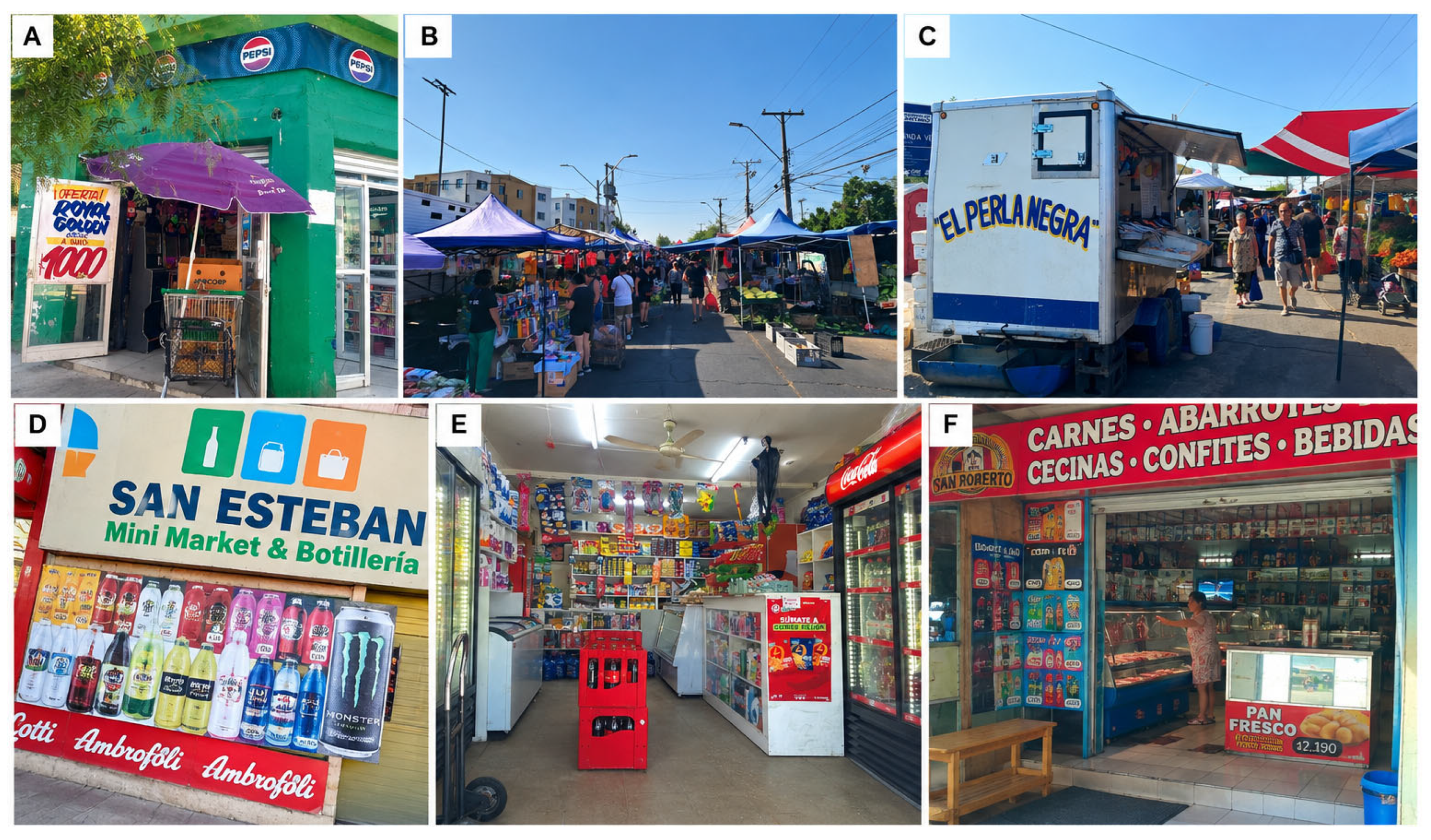
Figure 2.
Spatial organization of food access and everyday mobility identified through group mapping. Synthesis based on group mapping activities conducted with children and adolescents in La Legua (a) and Carmen Mena (b), San Joaquín, Chile. The maps show food-related and institutional places and the main everyday routes identified by participants. Residential locations were omitted, and routes were spatially generalized to protect participant confidentiality.
Figure 2.
Spatial organization of food access and everyday mobility identified through group mapping. Synthesis based on group mapping activities conducted with children and adolescents in La Legua (a) and Carmen Mena (b), San Joaquín, Chile. The maps show food-related and institutional places and the main everyday routes identified by participants. Residential locations were omitted, and routes were spatially generalized to protect participant confidentiality.
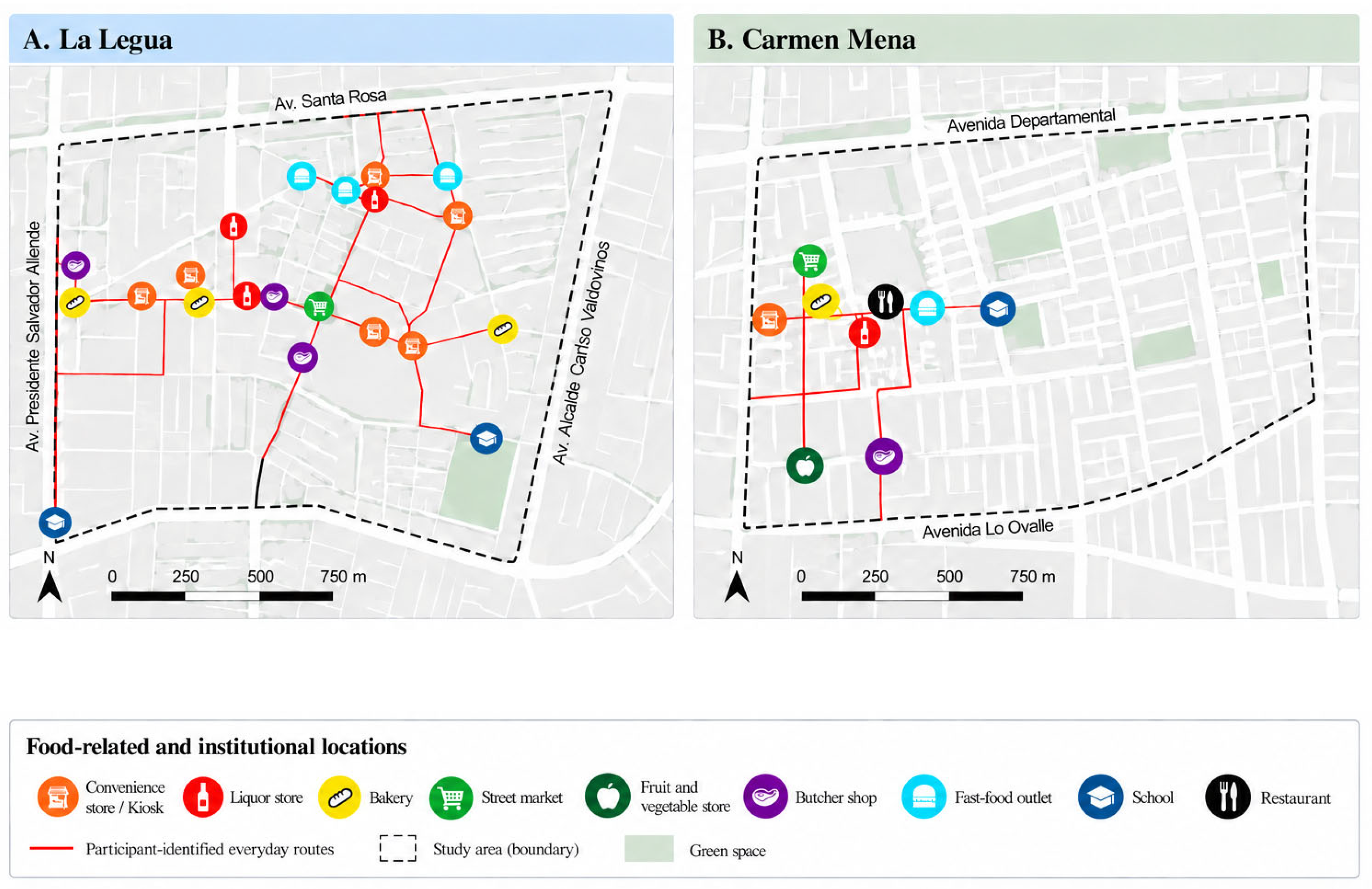
Figure 3.
Availability, diversity, and food procurement strategies in the neighborhood food environment. Synthesis based on group mapping activities conducted with children and adolescents in La Legua (a) and Carmen Mena (b), San Joaquín, Chile. The maps show the locations of food products and food-related resources identified by participants within the study areas. Residential locations were omitted to protect participant confidentiality.
Figure 3.
Availability, diversity, and food procurement strategies in the neighborhood food environment. Synthesis based on group mapping activities conducted with children and adolescents in La Legua (a) and Carmen Mena (b), San Joaquín, Chile. The maps show the locations of food products and food-related resources identified by participants within the study areas. Residential locations were omitted to protect participant confidentiality.
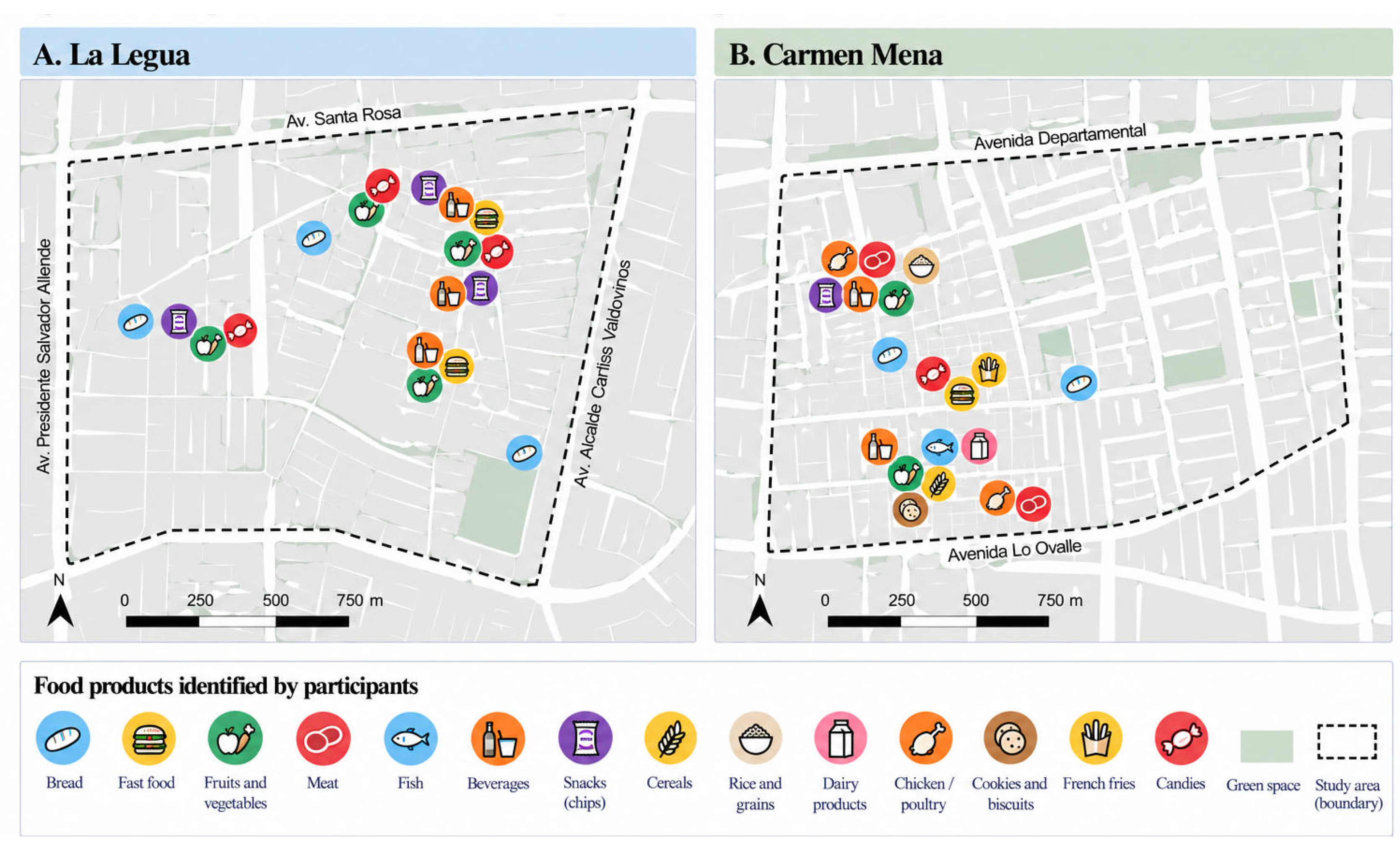
Figure 4.
Emotional experiences associated with food environments. Synthesis based on emotional mapping activities conducted with children and adolescents in La Legua (a) and Carmen Mena (b), San Joaquín, Chile. The maps show places associated with emotional experiences related to food acquisition and consumption, as identified by participants. Symbols are graphical representations of the emotional categories identified during the mapping activities and do not represent standardized measures of emotional intensity or subjective well-being. Residential locations were omitted to protect participant confidentiality.
Figure 4.
Emotional experiences associated with food environments. Synthesis based on emotional mapping activities conducted with children and adolescents in La Legua (a) and Carmen Mena (b), San Joaquín, Chile. The maps show places associated with emotional experiences related to food acquisition and consumption, as identified by participants. Symbols are graphical representations of the emotional categories identified during the mapping activities and do not represent standardized measures of emotional intensity or subjective well-being. Residential locations were omitted to protect participant confidentiality.
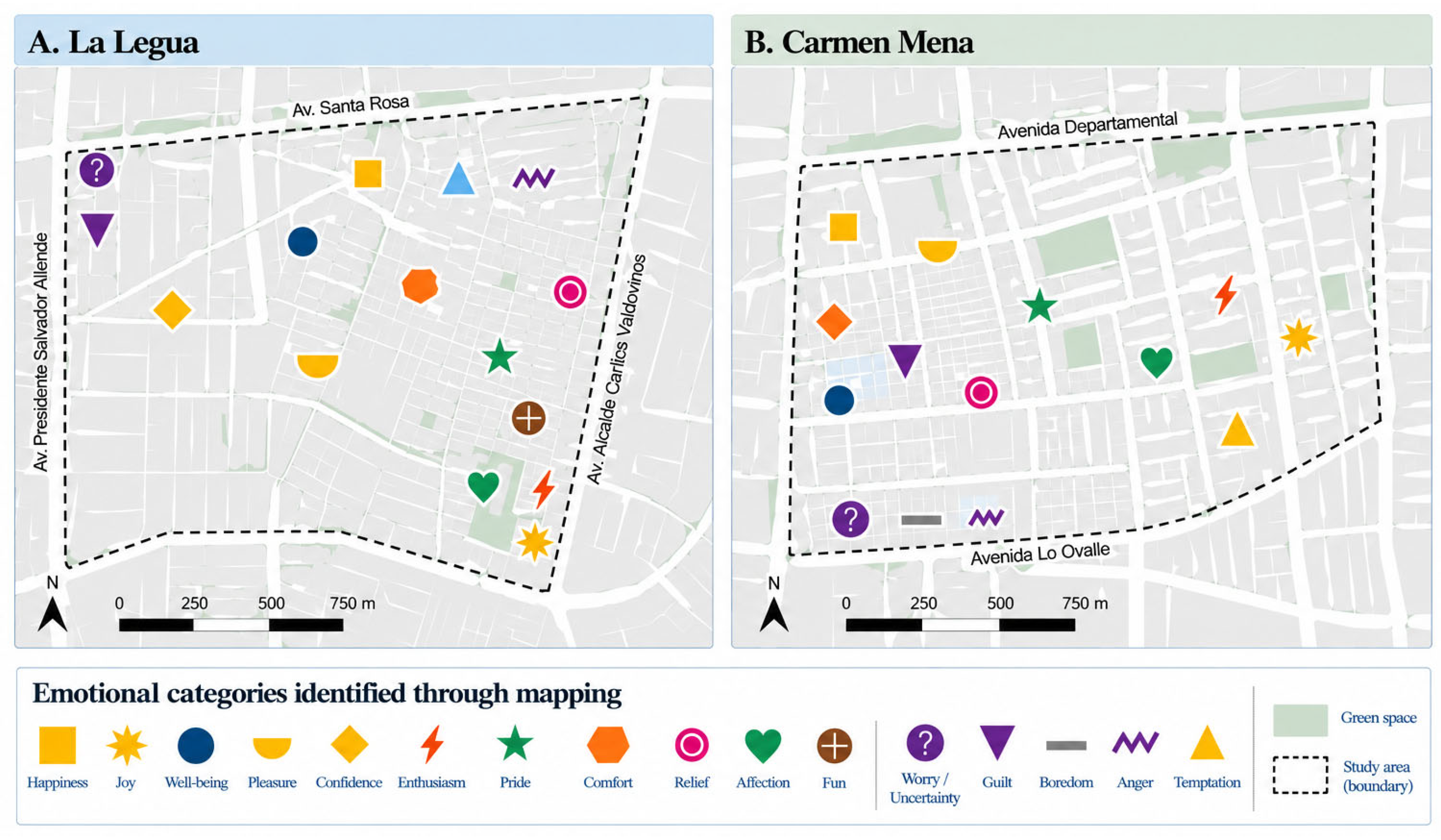

Table 1.
Key Characteristics of the sample.
| Gender | Age | Nationality | Neighborhood |
|---|---|---|---|
| Girl | 13 years old | Chilean | La Legua |
| Girl | 14 years old | Chilean | La Legua |
| Boy | 14 years old | Argentine | La Legua |
| Boy | 12 years old | Argentine | La Legua |
| Girl | 15 years old | Chilean | La Legua |
| Girl | 13 years old | Chilean | Carmen Mena |
| Boy | 12 years old | Chilean | La Legua |
| Boy | 14 years old | Chilean | La Legua |
| Girl | 15 years old | Peruvian | La Legua |
| Girl | 12 years old | Chilean | La Legua |
| Boy | 13 years old | Peruvian | Carmen Mena |
| Girl | 14 years old | Chilean | La Legua |
| Boy | 13 years old | Chilean | Carmen Mena |
| Boy | 15 years old | Peruvian | La Legua |
| Girl | 12 years old | Chilean | La Legua |
Table 2.
Qualitative Data Sources, Data Generation Procedures, and Materials Produced During Fieldwork.
Table 2.
Qualitative Data Sources, Data Generation Procedures, and Materials Produced During Fieldwork.
| Data source | Participants | Implementation | Approximate duration | Material generated |
|---|---|---|---|---|
| Photovoice walks | 15 | 15 individual walks accompanied by a member of the research team | 1 hour per walk | 10–15 photographs per participant and field records |
| Individual interviews | 15 | Interviews embedded within Photovoice walks and conducted at a minimum of three stopping points per route | Brief interviews during each walk | Audio recordings and verbatim transcripts |
| Group emotional mapping | 15 | 3 participatory group sessions | 1 hour 45 minutes per session | 3 participatory maps, audio recordings, and visual materials |
| Field notes | Research team | Recorded throughout fieldwork | — | Contextual and reflexive field notes |
Disclaimer/Publisher’s Note: The statements, opinions and data contained in all publications are solely those of the individual author(s) and contributor(s) and not of MDPI and/or the editor(s). MDPI and/or the editor(s) disclaim responsibility for any injury to people or property resulting from any ideas, methods, instructions or products referred to in the content. |
© 2026 by the authors. Licensee MDPI, Basel, Switzerland. This article is an open access article distributed under the terms and conditions of the Creative Commons Attribution (CC BY) license (http://creativecommons.org/licenses/by/4.0/).
Copyright: This open access article is published under a Creative Commons CC BY 4.0 license, which permit the free download, distribution, and reuse, provided that the author and preprint are cited in any reuse.