
Submitted:
27 September 2026
Posted:
29 September 2026
You are already at the latest version
Abstract
Background/Objectives: Physical activity is an important component of type 2 diabetes (T2DM) management, and nurses are well-positioned to promote it in routine care. However, little is known about its implementation by diabetes nurses working in primary healthcare in Bahrain. This study examined nurses’ perceptions, confidence, knowledge, awareness, guideline awareness and use, promotion practices, and perceived barriers to physical activity. Methods: A national cross-sectional mixed methods study was conducted among primary healthcare nurses. All 52 eligible nurses were invited to participate, with 49 completing an online questionnaire. Quantitative data were analysed using descriptive and exploratory statistics, and free-text responses using inductive thematic analysis. Results: Nurses strongly perceived physical activity promotion to be part of their professional role and reported high confidence in providing advice. However, 44.9% were aware of at least one physical activity guideline and 24.4% reported both awareness and routine use. Only 34.7% reported always assessing patients’ physical activity irrespective of presenting health needs. Nurses reported that the most commonly perceived barriers among people in Bahrain were lack of time (83.7%) and lack of motivation and support from family and friends (67.3%). Qualitative findings identified four themes: public awareness and health education; access to physical activity facilities and opportunities; motivation and behavioural support; and healthcare and community support. Conclusions: Diabetes nurses in Bahrain demonstrated a strong professional commitment to promoting physical activity, but this was not consistently reflected in systematic, guideline-informed practice. Greater awareness and implementation of existing guidance, practical approaches to physical activity assessment, clearer referral pathways, and coordinated healthcare and community support may strengthen physical activity promotion.
Keywords:
physical activity promotion
; type 2 diabetes
; primary healthcare
; nurses
; physical activity guide-lines
; preventive healthcare
; healthcare implementation
1. Introduction
1.1. Physical Activity in Type 2 Diabetes Management
Type 2 diabetes (T2DM) is a major public health challenge associated with substantial morbidity and mortality [1]. In Bahrain, T2DM affects an estimated 15% of adults [2] and places a substantial burden on the healthcare system [3]. Lifestyle modification is a cornerstone of T2DM management, with regular physical activity improving glycaemic control and several important cardiometabolic outcomes [4,5]. Current guidelines recommend at least 150 minutes of moderate-intensity aerobic activity per week, combined with resistance exercise at least twice weekly [6,7,8].
1.2. The Role of Nurses in Physical Activity Promotion
Nurses are well positioned to promote physical activity because of their frequent contact with patients and their established role in lifestyle counselling and behaviour change [11,12]. This provides opportunities to integrate the promotion of physical activity into routine diabetes care and to support patients in becoming and remaining more active. Previous studies have demonstrated that nurse- and other health professional-led interventions can improve physical activity participation and diabetes outcomes [13,14,15].
1.3. Current Evidence on Physical Activity Promotion by Healthcare Professionals
Despite the recognised role of healthcare professionals in promoting physical activity, its routine implementation in clinical practice remains inconsistent. Systematic reviews have reported that nurses and other clinicians support the promotion of physical activity but continue to face barriers to its routine implementation, including limited consultation time, insufficient training, competing clinical priorities, and organisational constraints [12,16,17]. This gap is also evident in primary healthcare, where clinicians frequently encourage patients to be physically active. However, structured assessment and promotion of physical activity are not routinely integrated into clinical practice [18]. Together, these findings suggest that positive professional attitudes alone may not be sufficient to ensure consistent implementation of physical activity promotion within routine healthcare [19].
1.4. Physical Activity Promotion in Bahrain: The Knowledge Gap
Halting the rise in diabetes is a key target of Bahrain’s strategy for the prevention and control of non-communicable diseases [20]. The promotion of physical activity is also supported by national policy and clinical guidance. Bahrain’s guidance for the management of type 2 diabetes in primary healthcare recommends that clinicians regularly reinforce lifestyle advice, introduce physical activity according to willingness and ability, set individualised goals, and progress towards recommended levels of aerobic and resistance activity [21]. The guidance also identifies nurses as members of the multidisciplinary care team responsible for delivering structured diabetes education [21]. The 2018 National Strategy on Diet and Physical Activity further identifies public education, healthcare professional training, and the development of primary healthcare services as components of national physical activity promotion [22].
Despite this policy and clinical framework, little is known about how diabetes nurses implement physical activity promotion in routine primary healthcare in Bahrain. Although physical activity behaviour among people with T2DM in Bahrain has been investigated [10], to our knowledge, no published studies have examined nurses’ perceptions of their role, awareness of physical activity guidelines, confidence in providing physical activity advice, or current promotion practices. Evidence from neighbouring Oman has identified opportunities to strengthen the promotion of physical activity within diabetes care, including training healthcare professionals, digital approaches to physical activity assessment and communication, and improved awareness of community resources [23]. However, this does not establish how physical activity promotion is currently delivered by diabetes nurses within Bahrain’s primary healthcare system.
Bahrain’s relatively small, nationally defined diabetes nursing workforce offers an opportunity to examine the promotion of physical activity across the primary healthcare system. Understanding current practice may therefore help identify gaps between national recommendations and their implementation and inform future professional education and service development.
1.5. Study Aim
The aim of this study was to examine the promotion of physical activity by diabetes nurses working in primary healthcare centres across Bahrain.
The objectives were to assess (i) nurses’ perceptions of their role and confidence in providing physical activity advice; (ii) their awareness and use of physical activity guidelines and assessment tools; (iii) current physical activity promotion practices; (iv) their knowledge of physical activity recommendations; (v) nurses’ perceptions of barriers to physical activity among people in Bahrain and explore their perspectives on strategies to overcome these barriers and strengthen the promotion of physical activity.
2. Materials and Methods
2.1. Study Design and Setting
This national cross-sectional mixed-methods study was conducted among nurses working in all 26 primary healthcare centres (PHCs) across the four governorates of Bahrain.
2.2. Participants
The target population consisted of nurses working in treatment rooms, Central Diabetes Clinics (CDCs) and Non-Communicable Disease clinics (NCDCs) within Bahrain’s primary healthcare centres. Eligible participants had at least one year of clinical experience and were actively involved in the care of people with type 2 diabetes within these clinics. Nurses who were unable to communicate in English were excluded. A census approach was used to maximise representation, with all 52 eligible nurses invited to participate, thereby reducing the potential for selection bias.
2.3. Survey Instrument
Data was collected using a structured online questionnaire (Supplementary Questionnaire). The questionnaire was adapted from the instrument developed by Bello et al. [24], which was itself based on earlier work by Lowe et al. [25]. Items were modified where necessary to reflect the nursing role and the Bahrain primary healthcare setting, while retaining five domains: (i) demographic characteristics; (ii) perceptions of the nursing role in physical activity promotion; (iii) awareness and use of physical activity guidelines and assessment tools; (iv) physical activity promotion practices; and (v) perceived barriers and facilitators to physical activity promotion. The questionnaire included multiple-choice, Likert-scale, and categorical response items.
Given the small, nationally defined target population and the need to maximise participation in the main study, separate pilot testing was not undertaken.
2.4. Data Collection
The questionnaire was administered online using Microsoft Forms. Participant recruitment was facilitated by the CDCs Nursing Coordinator, who distributed the participant information leaflet and survey link via email to all eligible nurses. Participants provided electronic informed consent through a mandatory item before accessing the questionnaire. No personally identifiable information was collected, and the survey was configured not to record participants’ email addresses. Responses were therefore anonymous, which was intended to reduce the potential influence of social-desirability bias. The survey opened for six weeks, from 28th December 2025 through to 8th February 2026, with reminders after two and five weeks to maximise participation. Participation was voluntary, and participants could withdraw at any stage before submitting their responses.
2.5. Statistical Methods
All quantitative questionnaire items were completed by all participants, and there were no missing data. Descriptive statistics were used to summarise participant characteristics and questionnaire responses. Categorical variables are presented as frequencies and percentages. Individual questionnaire items were analysed as separate variables, and no composite scores were calculated. For the correlation analyses, five-point Likert responses were coded from 1 (strongly disagree) to 5 (strongly agree), with higher scores indicating stronger agreement or confidence. Practice-frequency responses were coded from 1 (never) to 3 (always), with higher scores indicating more frequent physical activity promotion. Awareness and guideline-use responses were treated as categorical variables for chi-squared analyses. Responses to knowledge and multiple-response items were summarised as frequencies and percentages.
Associations between ordinal variables were examined using Spearman’s rank-order correlation. Associations between categorical variables were assessed using the chi-square test. All statistical tests were two-tailed, with statistical significance set at p < 0.05.
Statistical analyses were performed using IBM SPSS Statistics v31.0 (IBM Corp., Armonk, NY, USA) and R version 4.5.2 (R Core Team, Vienna, Austria).
2.6. Qualitative Analysis
Responses to the open-ended survey question (Question 20) were analysed using inductive thematic analysis, following the six-phase approach described by Braun and Clarke [26]. Free-text responses were imported into NVivo 15 (Lumivero, Denver, Co, USA) to facilitate data management and coding. Initial codes were generated directly from the data and grouped into broader themes through an iterative process of review and refinement. Representative quotations are presented to illustrate each theme.
3. Results
3.1. Participant Characteristics
Forty-nine of the 52 eligible nurses completed the survey, giving a response rate of 94.2% (Table 1). Three nurses did not participate as they were on leave at the time of data collection. The sample, therefore, represented 94.2% of the eligible national diabetes nursing workforce across Bahrain’s primary healthcare centres.
Participants were predominantly experienced and well-qualified. Most were aged 26-45 years (95.9%), held a bachelor's degree (85.7%), and had more than five years of nursing experience (91.8%). Undergraduate education in physical activity promotion was reported by 34 nurses (69.4%), while 9 (18.4%) reported no previous training, and 6 (12.2%) were unsure. Participants were recruited from all four governorates and worked across treatment rooms (42.9%), Central Diabetes Clinics (40.8%) and Non-Communicable Disease clinics (16.3%) (Table 1).
3.2. Perceptions of the Nursing Role and Confidence in Physical Activity Promotion
Nurses strongly endorsed physical activity promotion as part of their professional role (Table 2). Almost all participants agreed that discussing the benefits of physical activity (97.9%) and advising patients how to increase their physical activity levels (93.9%) were part of the nursing role. Similarly, 87.8% agreed that physical activity should be promoted during every patient contact. Most participants (83.7%) also agreed that nurses should be physically active to act as role models for their patients.
Participants also reported high levels of confidence in providing physical activity advice. Forty-three nurses (87.7%) agreed that they were confident providing general advice on maintaining a physically active lifestyle, while 38 (77.6%) reported confidence in recommending specific physical activity programmes.
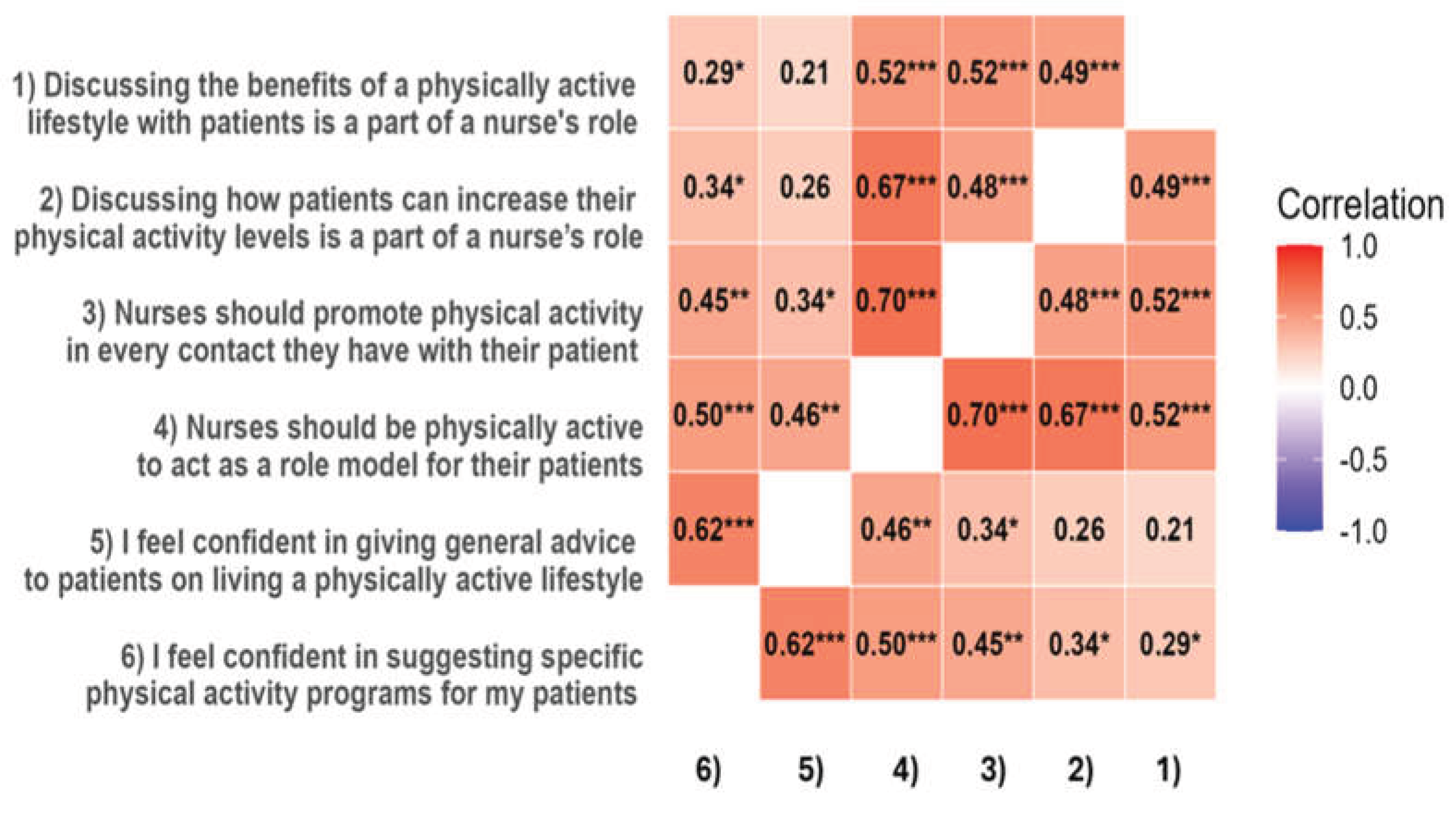
Exploratory analyses showed that stronger perceptions of the nursing role were associated with greater confidence in providing physical activity advice (Figure A1). The strongest associations were observed between agreement that nurses should act as physically active role models and confidence in providing both general lifestyle advice (Spearman’s rho = 0.46, p = 0.001) and specific physical activity recommendations (Spearman's rho = 0.50, p <0.001).
3.3. Awareness and Use of Physical Activity Guidelines and Assessment Tools
Awareness and use of physical activity guidelines were considerably more variable than nurses’ perceptions of their professional role. Although 22 participants (44.9%) reported being aware of at least one physical activity guideline, only 12 (24.4%) reported both being aware of and routinely using these guidelines (Table 3). More than half of the participants (55.1%) were not aware of any physical activity guidelines, and almost two-thirds (65.3%) reported not using them in clinical practice. Awareness of physical activity guidelines was significantly associated with their use (c2 = 17.7, df = 4, p = 0.001).
Awareness of tools to assess patients’ physical activity was also limited. Twenty-one nurses (42.9%) reported being aware of assessment tools, while 28 (57.1%) were either unaware of such tools or unsure of their availability. Awareness of physical activity assessment tools was significantly associated with guideline use (c2 = 17.8, df = 4, p = 0.001) (Table 3).
3.4. Physical Activity Promotion Practices
Promotion of routine physical activity varied among participants (Table 4). Most participants reported recommending physical activity when clinically appropriate (75.5%) and encouraging healthy individuals to maintain an active lifestyle (77.6%). More than half (57.1%) also reported routinely initiating conversations about physical activity with their patients.
In contrast, routine assessment of patients’ physical activity status was considerably less common. Only 17 nurses (34.7%) reported always assessing physical activity irrespective of patients’ presenting health needs, while 27 (55.1%) did so only sometimes and 5 (10.2%) reported never undertaking routine assessment (Table 4).
Exploratory analyses demonstrated that nurses who reported greater confidence in recommending specific physical activity programmes were more likely to recommend physical activity when clinically appropriate (Spearman’s rho = 0.29, p = 0.04) and to initiate discussions about physical activity with their patients (Spearman’s rho = 0.30, p = 0.032).
3.5. Resources Used to Promote Physical Activity
Direct discussion with patients was the most commonly reported approach to promoting physical activity, used by 37 nurses (75.5%) (Figure 1). Printed educational materials were used by 21 participants (42.9%), while 15 (30.6%) reported directing patients to other services or community-based programmes. Online resources were used less frequently (22.4%), and only four nurses (8.2%) reported using mobile applications to promote physical activity. Seventeen participants (34.7%) selected the free text “Other” response.
3.6. Awareness of Physical Activity Initiatives
Awareness of local physical activity initiatives varied among participants (Figure 2). The Weight Management Clinic in Primary Healthcare was the most widely recognised initiative, with 42 nurses (85.7%) reporting awareness. In contrast, 12 participants (24.5%) were aware of the Obesity Does Not Suit Me initiative, while only one (2.0%) reported awareness of Balance. Six participants (12.2%) identified other initiatives.
3.7. Knowledge of Key Physical Activity Recommendations
Knowledge was strongest for general physical activity recommendations but less consistent for some specific guideline components (Figure 3). The most frequently recognised recommendation was that any physical activity is better than none, selected by 33 participants (67.3%). Approximately half recognised the recommendation to achieve at least 150 minutes of moderate-intensity physical activity per week (51.0%) and the importance of minimising prolonged sitting (49.0%).
Knowledge was less consistent for recommendations about resistance exercise, balance or flexibility activities. Nineteen nurses (38.8%) identified the recommendation to undertake muscle-strengthening activities on at least two days per week, while 15 (30.6%) identified balance and flexibility exercises.
3.8. Perceived Barriers to Physical Activity
Forty-one nurses (83.7%) perceived lack of time due to long working hours or other responsibilities as a barrier to physical activity among people in Bahrain (Figure 4). This was followed by a lack of motivation and support from family and friends, reported by 33 nurses (67.3%). Other perceived barriers included limited public awareness of the importance of physical activity for a healthy lifestyle (32.7%), traditional or cultural beliefs (32.7%), environmental factors such as limited access to suitable facilities (36.7%), and the perception among some individuals that exercise was unnecessary (38.8%).
3.9. Qualitative Findings
A total of 49 participants responded to the open-ended question exploring strategies to overcome barriers to physical activity among people with non-communicable diseases. Thematic analysis identified four overarching themes: (1) public awareness and health education; (2) access to physical activity facilities and opportunities; (3) strengthening motivation and behavioural support; and (4) enhancing healthcare and community support (Table 5). As individual responses could contribute to more than one theme, frequencies represent coding references rather than numbers of participants.
3.9.1. Public Awareness and Health Education
Participants highlighted that greater awareness and education were important for encouraging physical activity, with responsibility extending beyond individual patient education to wider community and public health approaches. Responses reflected a perceived need to promote understanding of the health benefits of physical activity through healthcare, community and media settings.
3.9.2. Access to Physical Activity Facilities and Opportunities
Participants highlighted the importance of improving access to safe, affordable and convenient opportunities for physical activity. Responses reflected a need for facilities and programmes that were accessible within local communities and workplaces, including free or low-cost options and environments that accommodated diverse needs, particularly those of women.
3.9.3. Strengthening Motivation and Behavioural Support
Participants identified motivation and behavioural support as important for helping people become and remain physically active. Suggested approaches emphasised encouragement, goal-setting, and practical strategies for overcoming barriers such as limited time, as well as group-based activities that could provide additional motivation and support.
3.9.4. Enhancing Healthcare and Community Support
Participants also emphasised a broader role for healthcare services and community initiatives in supporting physical activity. Responses highlighted opportunities to strengthen support within routine care through nurse-led promotion, referral to relevant services and multidisciplinary input, alongside wider workplace, government and community-based initiatives.
4. Discussion
4.1. Principal Findings
This national study found that diabetes nurses in Bahrain strongly perceived the promotion of physical activity as part of their professional role and reported high levels of confidence in providing physical activity advice. However, this professional commitment was not consistently reflected in practice. Awareness and use of physical activity guidelines and assessment tools were variable, and consistent assessment of patients’ physical activity was considerably less common than providing advice or initiating discussions about physical activity.
The findings also identified potential barriers to translating physical activity promotion into practice. Knowledge was stronger for general physical activity recommendations than for specific components related to muscle strengthening, balance, or flexibility, while awareness of local physical activity initiatives varied considerably. Nurses reported that lack of time due to work or other responsibilities was the most frequently perceived barrier to physical activity among people in Bahrain, followed by lack of motivation and support from family and friends. Their qualitative responses highlighted opportunities that extend beyond individual clinical encounters, including greater public awareness and health education, improved access to physical activity, behavioural and motivational support, and stronger healthcare and community support.
Taken together, these findings suggest that the principal challenge may be less about establishing physical activity promotion as part of the nursing role and more about supporting its consistent implementation within routine diabetes care.
4.2. Nurses’ Role and Confidence in Physical Activity Promotion
Nurses’ strong perception that promoting physical activity is part of their professional role is consistent with previous research showing that nurses generally consider it an important component of their practice, although its implementation varies across clinical settings [12]. Positive attitudes towards exercise promotion have also been reported among other healthcare professionals, despite recognised barriers to implementation in clinical practice [16]. The present findings extend this evidence to diabetes nurses working across primary healthcare in Bahrain, among whom the promotion of physical activity was strongly recognised as a professional responsibility.
Confidence in providing physical activity advice was also high, although participants were more confident in providing general advice on maintaining an active lifestyle than in recommending specific physical activity programmes. Similar findings have been reported among primary healthcare professionals, with confidence associated with physical activity promotion behaviour despite less consistent knowledge of current recommendations [18]. Variation in healthcare professionals’ preparedness to provide physical activity guidance to people with diabetes has also been reported [11]. In the present study, stronger perceptions of the nursing role were associated with greater confidence in providing physical activity advice. Although these associations were exploratory, they support a relationship between professional role perception and confidence. In contrast, the lower confidence in recommending specific programmes suggests that general confidence may not necessarily reflect preparedness to provide more specific physical activity guidance.
4.3. From Confidence to Practice: Guideline Use and Physical Activity Assessment
The contrast between high confidence and less consistent guideline use suggests an important gap between nurses’ confidence in promoting physical activity and the systematic implementation of these guidelines in practice. Fewer than half of participants were aware of at least one physical activity guideline, and almost two-thirds reported not using guidelines when providing advice. Similar discrepancies have been reported among healthcare professionals, who may recognise the importance of promoting physical activity and feel confident providing general advice, yet have less knowledge of specific recommendations or make limited use of guideline-based approaches [11,18]. Limited knowledge of guidelines, competing clinical priorities and insufficient training have also been identified as barriers to integrating physical activity promotion into routine clinical practice [12,16].
The same implementation gap was evident in physical activity assessment. Although most participants reported recommending physical activity and initiating discussions with patients, fewer than half reported always assessing patients’ physical activity irrespective of their presenting health needs. Routine assessment can help identify patients who are insufficiently active and provide a basis for subsequent advice or referral [7,27,28]. However, the measurement properties of brief physical activity assessment tools used in primary care vary, and current evidence does not identify a single optimal tool for routine practice [29].
Taken together, these findings suggest that the main gap may lie not in nurses’ willingness or confidence to promote physical activity, but in the systematic integration of guideline-informed assessment and promotion into routine diabetes care.
4.4. Knowledge of Physical Activity Recommendations and Local Initiatives
The variability in nurses’ knowledge of physical activity recommendations provides further evidence that high confidence does not necessarily correspond with detailed knowledge of current recommendations. Participants were more likely to recognise broad messages, such as that any physical activity is better than none, than recommendations related to muscle strengthening, balance, or flexibility exercises. Similar gaps have been reported among primary healthcare professionals, even when attitudes towards physical activity promotion and confidence in providing advice are positive [18]. Previous primary care research has also shown that healthcare professionals have incomplete knowledge of recommended levels and types of physical activity [25,30]. These distinctions are clinically relevant because current guidelines recommend ≥150 minutes/week of moderate-to-vigorous-intensity aerobic activity and 2-3 resistance-training sessions on nonconsecutive days for adults living with diabetes [6,8]. However, the lower recognition of balance or flexibility recommendations should be interpreted with caution, as these recommendations are more specifically emphasised for older adults or those at risk of falls [6].
A similar issue was apparent in awareness of local physical activity initiatives. Most participants were aware of the Weight Management Clinic within Primary Healthcare, but awareness of other initiatives was considerably lower. Limited awareness of available initiatives may reduce opportunities to direct patients towards additional support, although referral to these specific services was not assessed in this study. The finding that most participants supported the development of Bahrain-specific physical activity guidelines is particularly notable because relevant national guidance already exists. Physical activity is addressed within Bahrain’s national strategies for the prevention and control of non-communicable diseases and its National Strategy on Diet and Physical Activity [20,22,31]. In addition, national guidance for the management of type 2 diabetes in primary healthcare recommends individualised physical activity goals and progression towards 150 minutes per week of moderate-intensity aerobic activity and resistance training up to three days per week [21]. The perceived need for additional Bahrain-specific guidelines may therefore reflect limited awareness or use of existing guidance rather than an absence of national recommendations. Similar gaps between the availability of physical activity guidance and its use in clinical practice have been reported internationally [18,30].
4.5. Barriers and Opportunities for Strengthening Physical Activity Promotion
The barriers perceived by nurses highlight the importance of looking beyond knowledge and advice when considering physical activity promotion among people with T2DM. Nurses reported that lack of time was the most frequently perceived barrier to physical activity among people in Bahrain, followed by lack of motivation and support from family and friends. Cultural, socioeconomic and environmental factors were also reported. This is consistent with evidence showing that participation in physical activity among people with type 2 diabetes is influenced by interacting personal, social, and environmental factors. Recent systematic reviews have identified a lack of time, motivation, and social support, as well as health and environmental barriers, as important determinants of physical activity participation [32,33,34]. Social support appears particularly relevant, with support from family, peers and healthcare professionals facilitating engagement and maintenance of physical activity [32,33]. Taken together, these findings suggest that providing information about the benefits of physical activity alone is unlikely to be sufficient, and that promotion strategies also need to recognise the practical and social circumstances that influence patients’ ability to become and remain active.
The qualitative findings extend this interpretation by identifying potential opportunities for support at multiple levels. Participants emphasised public education, affordable and accessible opportunities for physical activity, motivational and behavioural support, and stronger healthcare and community involvement. These priorities broadly align with evidence supporting individualised physical activity programmes, social support, patient education, strategies to strengthen motivation and self-efficacy, and ongoing monitoring and feedback for people with T2DM [32,33]. They are also consistent with Bahrain’s National Strategy on Diet and Physical Activity, which identifies public education, supportive environments, healthcare professional training, and the development of primary healthcare services as components of a multisector approach to increasing physical activity [22]. Taken together, these quantitative and qualitative findings suggest that strengthening physical activity participation will require extending support beyond individual counselling, to include healthcare, community and environmental approaches.
4.6. Implications for Practice and Policy
The findings suggest that efforts to strengthen physical activity promotion within primary diabetes care in Bahrain should focus primarily on supporting implementation in routine practice. Given the strong professional role perception and confidence reported by nurses, priorities could include improving familiarity with existing physical activity recommendations, providing practical training in brief physical activity assessment and behaviour-change approaches, and incorporating simple assessment and documentation processes into routine diabetes consultation. Where patients require additional support, clearer referral pathways to existing services, including weight management and other appropriate physical activity services, may help nurses translate assessment and advice into further action. Such approaches are consistent with evidence favouring interventions that combine professional education with practical resources and changes to clinical systems rather than relying on education alone [17,35].
At a policy and service level, the findings support greater dissemination and implementation of existing national guidance rather than the development of additional physical activity guidelines. Bahrain’s guidance for the management of type 2 diabetes already provides specific recommendations for aerobic and resistance activities [21], while the National Strategy on Diet and Physical Activity identifies healthcare professional training, public education, and the development of primary healthcare services as components of national physical activity promotion [22]. Embedding this existing guidance more clearly within routine diabetes care, supported by standardised assessment processes, appropriate training, and clearly defined referral pathways, could help make the promotion of physical activity more systematic.
However, healthcare-based approaches alone are unlikely to address the broader barriers identified in this study. Community and environmental strategies that improve access to appropriate opportunities for physical activity and strengthen social and behavioural support may also be required. A coordinated approach that links clinical practice with existing community and national physical activity initiatives may therefore provide a more appropriate response to the multidimensional barriers identified by nurses.
4.7. Strengths and Limitations
A major strength of this study is its national coverage of diabetes nurses working within primary healthcare in Bahrain. The census approach and high response rate captured most of the eligible nursing workforce, reducing the potential for selection bias and providing a broader representation of current practice within this professional group. The mixed-methods design also allowed quantitative findings on role perception, confidence, knowledge and practice to be considered alongside nurses’ perspectives on strategies for overcoming barriers to physical activity. This combination provides a more comprehensive understanding of physical activity promotion in primary diabetes care than either component alone.
Several limitations should also be considered when interpreting the findings. The cross-sectional design does not permit causal inference, and the relatively small sample reflects the size of the national diabetes nursing force in primary healthcare, limiting the statistical power of exploratory analyses and the generalisability of findings beyond Bahrain. Given the exploratory nature and limited number of inferential analyses, no formal adjustment for multiple testing was applied. The statistically significant associations should therefore be interpreted cautiously, as some may have arisen by chance. The use of self-reported data may also have introduced recall and social desirability bias, particularly for questions concerning confidence and clinical practice. Social-desirability bias may have led participants to over-report their confidence and the frequency with which they promoted physical activity. Recall errors may have resulted in either over- or under-reporting of previous practices, and the magnitude of these potential biases cannot be determined. Confidence should therefore not be interpreted as evidence of objectively assessed competence. In addition, barriers to physical activity were reported from the perspectives of nurses rather than the members of the general population themselves. The qualitative component was based on responses to a single open-ended survey question and therefore did not provide the depth that could be obtained through interviews or focus groups. Finally, the questionnaire was adapted for the Bahrain primary healthcare context from previously published instruments [24,25]. However, it was not separately pilot tested in the target population, which should be considered when interpreting the findings.
5. Conclusions
This national study identifies an important gap between nurses’ strong professional commitment to physical activity promotion and its systematic integration into routine primary diabetes care in Bahrain. The findings suggest that the principal challenge is not establishing physical activity promotion as part of the nursing role but supporting its consistent implementation in practice. Greater dissemination and implementation of existing national guidance, together with practical support for routine physical activity assessment and clearer referral pathways, may help strengthen the promotion of physical activity within diabetes care. However, the broader social and environmental barriers perceived by nurses will also require coordinated approaches at the healthcare and community levels.
Future research should evaluate approaches to integrating guideline-informed physical activity assessment and promotion into routine diabetes care, including practical assessment processes, professional training and referral pathways [17]. Interventions studies are needed to determine whether these approaches improve nurses’ physical activity promotion practices and patient outcomes. Further research should also explore patients’ perspectives on barriers and facilitators to physical activity, complementing the nurse-reported perspectives identified in this study [32].
Supplementary Materials
The following supporting information can be downloaded at the website of this paper posted on Preprints.org, Supplementary Questionnaire: Physical activity promotion Questionnaire.
Author Contributions
Conceptualisation, K.M. and E.R.; methodology, K.M. and E.R.; validation, K.M. and E.R.; formal analysis, K.M. and E.R.; investigation, K.M and M.A.; resources, K.M.; data curation, K.M.; writing—original draft preparation, E.R.; writing—review and editing, K.M. and M.A.; visualisation, K.M. and E.R.; supervision, E.R.; project administration, K.M. and M.A.; funding acquisition, K.M. and E.R. All authors have read and agreed to the published version of the manuscript.
Funding
This research was funded by RCSI Medical University of Bahrain, grant number ID 672, 22-May-2025 and the APC was funded by RCSI Medical University of Bahrain.
Institutional Review Board Statement
The study was conducted in accordance with the Declaration of Helsinki and approved by the Primary Healthcare Research Ethics Committee (PHCRC/TOR/0017/2025) and RCSI Bahrain's Research Ethics Committee (Fast-Track/2025 /93/Staff /17-Nov-2025).
Informed Consent Statement
Informed consent was obtained from all subjects involved in the study.
Data Availability Statement
The original contributions presented in this study are included in the article. Further inquiries can be directed to the corresponding author.
Public Involvement Statement
No public involvement in any aspect of this research.
Guidelines and Standards Statement
This manuscript was prepared in accordance with the Strengthening the Reporting of Observational Studies in Epidemiology (STROBE) statement for cross-sectional studies [36].
Use of Artificial Intelligence
AI or AI-assisted tools (Open AI, ChatGPT, GPT5.6) were used solely for language editing and grammatical refinement of this manuscript.
Conflicts of Interest
The authors declare no conflicts of interest. The funders had no role in the design of the study; in the collection, analyses, or interpretation of data; in the writing of the manuscript; or in the decision to publish the results.
Abbreviations
The following abbreviations are used in this manuscript:
| CDC | Central Diabetes Clinic |
| NCDC | Non-communicable Disease Clinic |
| PHC | Primary Healthcare Centre |
| T2DM | Type 2 Diabetes Mellitus |
Appendix A
Figure A1.
Associations between nurses’ perceptions of their role in physical activity promotion and confidence in providing physical activity advice. Values represent Spearman’s rank correlation coefficients * = p<0.05, ** = p<0.01, ***= p<0.001.
Figure A1.
Associations between nurses’ perceptions of their role in physical activity promotion and confidence in providing physical activity advice. Values represent Spearman’s rank correlation coefficients * = p<0.05, ** = p<0.01, ***= p<0.001.
References
- American Diabetes Association Professional Practice Committee for Diabetes. 1. Improving Care and Promoting Health in Populations: Standards of Care in Diabetes-2026. Diabetes Care 2026, 49, S13–S26. [Google Scholar] [CrossRef] [PubMed]
- Ministry of Health; Kingdom of Bahrain. Diabetes. Available online: https://www.moh.gov.bh/Services/Diabetes?lang=en (accessed on 02 September 2026).
- Elmusharaf, K.; Grafton, D.; Roberts, E. Prevention and control of non-communicable diseases in Bahrain: The case for investment. 2021. Available online: https://bahrain.un.org/en/122828-case-investment-prevention-and-control-non-communicable-diseases-bahrain (accessed on 12 August 2026).
- Garcia, S.P.; Cureau, F.V.; Iorra, F.Q.; Bottino, L.G.; LE, R.C.M.; Leivas, G.; Umpierre, D.; Schaan, B.D. Effects of exercise training and physical activity advice on HbA1c in people with type 2 diabetes: A network meta-analysis of randomised controlled trials. Diabetes Res. Clin. Pract. 2025, 221, 112027. [Google Scholar] [CrossRef] [PubMed]
- Kanaley, J.A.; Colberg, S.R.; Corcoran, M.H.; Malin, S.K.; Rodriguez, N.R.; Crespo, C.J.; Kirwan, J.P.; Zierath, J.R. Exercise/Physical Activity in Individuals with Type 2 Diabetes: A Consensus Statement from the American College of Sports Medicine. Med. Sci. Sports Exerc 2022, 54, 353–368. [Google Scholar] [CrossRef] [PubMed]
- World Health Organisation. WHO guidelines on physical activity and sedentary behaviour. 2020. Available online: https://www.who.int/publications/i/item/9789240015128 (accessed on 30 August 2026).
- American Diabetes Association Professional Practice Committee for Diabetes. 8. Obesity and Weight Management for the Prevention and Treatment of Diabetes: Standards of Care in Diabetes-2026. Diabetes Care 2026, 49, S166–S182. [Google Scholar] [CrossRef] [PubMed]
- American Diabetes Association Professional Practice Committee for Diabetes. 5. Facilitating Positive Health Behaviors and Well-being to Improve Health Outcomes: Standards of Care in Diabetes-2026. Diabetes Care 2026, 49, S89–S131. [Google Scholar] [CrossRef] [PubMed]
- MacDonald, C.S.; Ried-Larsen, M.; Soleimani, J.; Alsawas, M.; Lieberman, D.E.; Ismail, A.S.; Serafim, L.P.; Yang, T.; Prokop, L.; Joyner, M.; et al. A systematic review of adherence to physical activity interventions in individuals with type 2 diabetes. Diabetes Metab. Res. Rev. 2021, 37, e3444. [Google Scholar] [CrossRef] [PubMed]
- Rajab, E.; Wasif, P.; Doherty, S.; Gaynor, D.; Malik, H.; Fredericks, S.; Al-Qallaf, A.; Almuqahwi, R.; Alsharbati, W.; Rashid-Doubell, F. Physical activity and sedentary behaviour of Bahraini people with type 2 diabetes: A cross-sectional study. Digit Health 2024, 10, 20552076241251997. [Google Scholar] [CrossRef] [PubMed]
- Kime, N.; Pringle, A.; Zwolinsky, S.; Vishnubala, D. How prepared are healthcare professionals for delivering physical activity guidance to those with diabetes? A formative evaluation. BMC Health Serv. Res. 2020, 20, 8. [Google Scholar] [CrossRef] [PubMed]
- van Hell-Cromwijk, M.; Metzelthin, S.F.; Schoonhoven, L.; Verstraten, C.; Kroeze, W.; de Man van Ginkel, J.M. Nurses' perceptions of their role with respect to promoting physical activity in adult patients: a systematic review. J. Clin. Nurs. 2021, 30, 2540–2562. [Google Scholar] [CrossRef] [PubMed]
- Young, H.M.; Miyamoto, S.; Dharmar, M.; Tang-Feldman, Y. Nurse Coaching and Mobile Health Compared With Usual Care to Improve Diabetes Self-Efficacy for Persons With Type 2 Diabetes: Randomised Controlled Trial. JMIR Mhealth Uhealth 2020, 8, e16665. [Google Scholar] [CrossRef] [PubMed]
- Dailah, H.G. The Influence of Nurse-Led Interventions on Diseases Management in Patients with Diabetes Mellitus: A Narrative Review. Healthcare 2024, 12. [Google Scholar] [CrossRef] [PubMed]
- Zhao, X.; Forbes, A.; Ghazaleh, H.A.; He, Q.; Huang, J.; Asaad, M.; Cheng, L.; Duaso, M. Interventions and behaviour change techniques for improving physical activity level in working-age people (18-60 years) with type 2 diabetes: A systematic review and network meta-analysis. Int. J. Nurs. Stud. 2024, 160, 104884. [Google Scholar] [CrossRef] [PubMed]
- Avsar, P.; Moore, Z.; Nasaif, H.; Moore, B.; Patton, D.; O'Connor, T.; Renjith, V. Health care professionals' attitudes, behaviours and barriers toward exercise promotion among patients: A systematic review. PLoS ONE 2025, 20, e0330861. [Google Scholar] [CrossRef] [PubMed]
- Gibson, E.; Tufte-Hewett, A.; Kamal, A. Barriers and Facilitators to the Delivery of Physical Activity Promotion by Healthcare Professionals for Adults With Type 2 Diabetes: A Mixed-Methods Systematic Review Using the Theoretical Domains Framework. J. Diabetes Res. 2026, 2026, e4048417. [Google Scholar] [CrossRef] [PubMed]
- Osinaike, J.; Copeland, R.J.; Myers, A.; Hardcastle, S.J. Physical activity promotion practice within primary care: a cross-sectional survey of primary care health professionals in England. BMJ Open 2025, 15, e093632. [Google Scholar] [CrossRef] [PubMed]
- Hall, L.H.; Thorneloe, R.; Rodriguez-Lopez, R.; Grice, A.; Thorat, M.A.; Bradbury, K.; Kamble, M.W.; Okoli, G.N.; Powell, D.; Beeken, R.J. Delivering brief physical activity interventions in primary care: a systematic review. Br. J. Gen. Pract. 2022, 72, e209–e216. [Google Scholar] [CrossRef] [PubMed]
- Ministry of Health; Kingdom of Bahrain. National Action Plan for Control and Prevention of Non-Communicable Diseases (2019-2030). 2019. Available online: https://faolex.fao.org/docs/pdf/bah208820E.pdf (accessed on 8 August 2026).
- Ministry of Health; Kingdom of Bahrain. Guideline For the Management of Type 2 Diabetes Mellitus In Primary Care Settings and Outpatient Clinics in the Kingdom of Bahrain. 2014. Available online: https://www.nhra.bh/MediaHandler/GenericHandler/documents/departments/HCF/Guidelines/HCF_Guidlines_Type2%20Diabetes_20181113.pdf (accessed on 8 August 2026).
- Ministry of Health; Kingdom of Bahrain. National Strategy on Diet and Physical Activity. 2018. Available online: https://extranet.who.int/ncdccs/Data/BHR_B13_%d8%a7%d9%84%d8%a7%d8%b3%d8%aa%d8%b1%d8%a7%d8%aa%d9%8a%d8%ac%d9%8a%d8%a9%20%d8%a7%d9%84%d9%88%d8%b7%d9%86%d9%8a%d8%a9%20%20%d9%84%d9%84%d9%86%d8%b4%d8%a7%d8%b7%20%d8%a7%d9%84%d8%a8%d8%af%d9%86%d9%8a%20%d9%88%d8%a7%d9%84%d8%ba%d8%b0%d8%a7%d8%a1%20%20%d8%b3%d8%a8%d8%aa%d9%85%d8%a8%d8%b1%202017).pdf (accessed on 8 August 2026).
- Alghafri, T.S.; Alharthi, S.M.; Al-Balushi, S.; Al-Farsi, Y.; Al-Busaidi, Z.; Bannerman, E.; Craigie, A.M.; Anderson, A.S. Health professionals' perceptions about physical activity promotion in diabetes care within primary health care settings in Oman. Heliyon 2017, 3, e00495. [Google Scholar] [CrossRef] [PubMed]
- Bello, B.; Hartley, S.E.; Yeowell, G. Nigerian physiotherapists' knowledge, current practice and perceptions of their role for promoting physical activity: A cross-sectional survey. PLoS ONE 2022, 17, e0266765. [Google Scholar] [CrossRef] [PubMed]
- Lowe, A.; Littlewood, C.; McLean, S.; Kilner, K. Physiotherapy and physical activity: a cross-sectional survey exploring physical activity promotion, knowledge of physical activity guidelines and the physical activity habits of UK physiotherapists. BMJ Open Sport Exerc Med. 2017, 3, e000290. [Google Scholar] [CrossRef] [PubMed]
- Braun, V.; Clarke, V. Using thematic analysis in psychology. Qual. Res. Psychol. 2006, 3, 77–101. [Google Scholar] [CrossRef]
- Golightly, Y.M.; Allen, K.D.; Ambrose, K.R.; Stiller, J.L.; Evenson, K.R.; Voisin, C.; Hootman, J.M.; Callahan, L.F. Physical Activity as a Vital Sign: A Systematic Review. Prev. Chronic Dis. 2017, 14, E123. [Google Scholar] [CrossRef] [PubMed]
- Bowen, P.G.; Mankowski, R.T.; Harper, S.A.; Buford, T.W. Exercise Is Medicine as a Vital Sign: Challenges and Opportunities. Transl. J. Am. Coll. Sports Med. 2019, 4, 1–7. [Google Scholar] [CrossRef]
- Smith, T.O.; McKenna, M.C.; Salter, C.; Hardeman, W.; Richardson, K.; Hillsdon, M.; Hughes, C.A.; Steel, N.; Jones, A.P. A systematic review of the physical activity assessment tools used in primary care. Fam. Pract. 2017, 34, 384–391. [Google Scholar] [CrossRef] [PubMed]
- Chatterjee, R.; Chapman, T.; Brannan, M.G.; Varney, J. GPs' knowledge, use, and confidence in national physical activity and health guidelines and tools: a questionnaire-based survey of general practice in England. Br. J. Gen. Pract. 2017, 67, e668–e675. [Google Scholar] [CrossRef] [PubMed]
- Ministry of Health; Kingdom of Bahrain. National Strategy for Control and Prevention of Non-Communicable Diseases in Kingdom of Bahrain (2014-2025). 2014. Available online: https://www.iccp-portal.org/sites/default/files/plans/BHR_B3_English%20-%20NCD%20National%20Strategy%20Booklet%20Final%205%20APR%202015.pdf (accessed on 08 August 2026).
- Guo, X.; Chen, H.; Xin, R.; Huang, J.; Long, T.; Li, M. Barriers and Facilitators to Physical Activity Adherence in People with Type 2 Diabetes: A Mixed-Methods Systematic Review Using the COM-B Model and Theoretical Domains Framework. Int. J. Behav. Med. 2026, 33, 158–178. [Google Scholar] [CrossRef] [PubMed]
- Vilafranca-Cartagena, M.; Bonet-Auge, A.; Colillas-Malet, E.; Puiggros-Binefa, A.; Tort-Nasarre, G. Physical Activity Interventions in People with Diabetes: A Systematic Review of The Qualitative Evidence. Healthcare 2024, 12. [Google Scholar] [CrossRef] [PubMed]
- Advika, T.S.; Idiculla, J.; Kumari, S.J. Exercise in patients with Type 2 diabetes: Facilitators and barriers - A qualitative study. J. Fam. Med. Prim. Care 2017, 6, 288–292. [Google Scholar] [CrossRef] [PubMed]
- Brannan, M.; Bernardotto, M.; Clarke, N.; Varney, J. Moving healthcare professionals - a whole system approach to embed physical activity in clinical practice. BMC Med. Educ. 2019, 19, 84. [Google Scholar] [CrossRef] [PubMed]
- von Elm, E.; Altman, D.G.; Egger, M.; Pocock, S.J.; Gøtzsche, P.C.; Vandenbroucke, J.P. The Strengthening the Reporting of Observational Studies in Epidemiology (STROBE) Statement: Guidelines for Reporting Observational Studies. PLoS Med. 2007, 4, e296. [Google Scholar] [CrossRef] [PubMed]
Figure 1.
Resources used by nurses to promote physical activity. Data expressed as n (%) of respondents. Participants could select more than one response.
Figure 1.
Resources used by nurses to promote physical activity. Data expressed as n (%) of respondents. Participants could select more than one response.
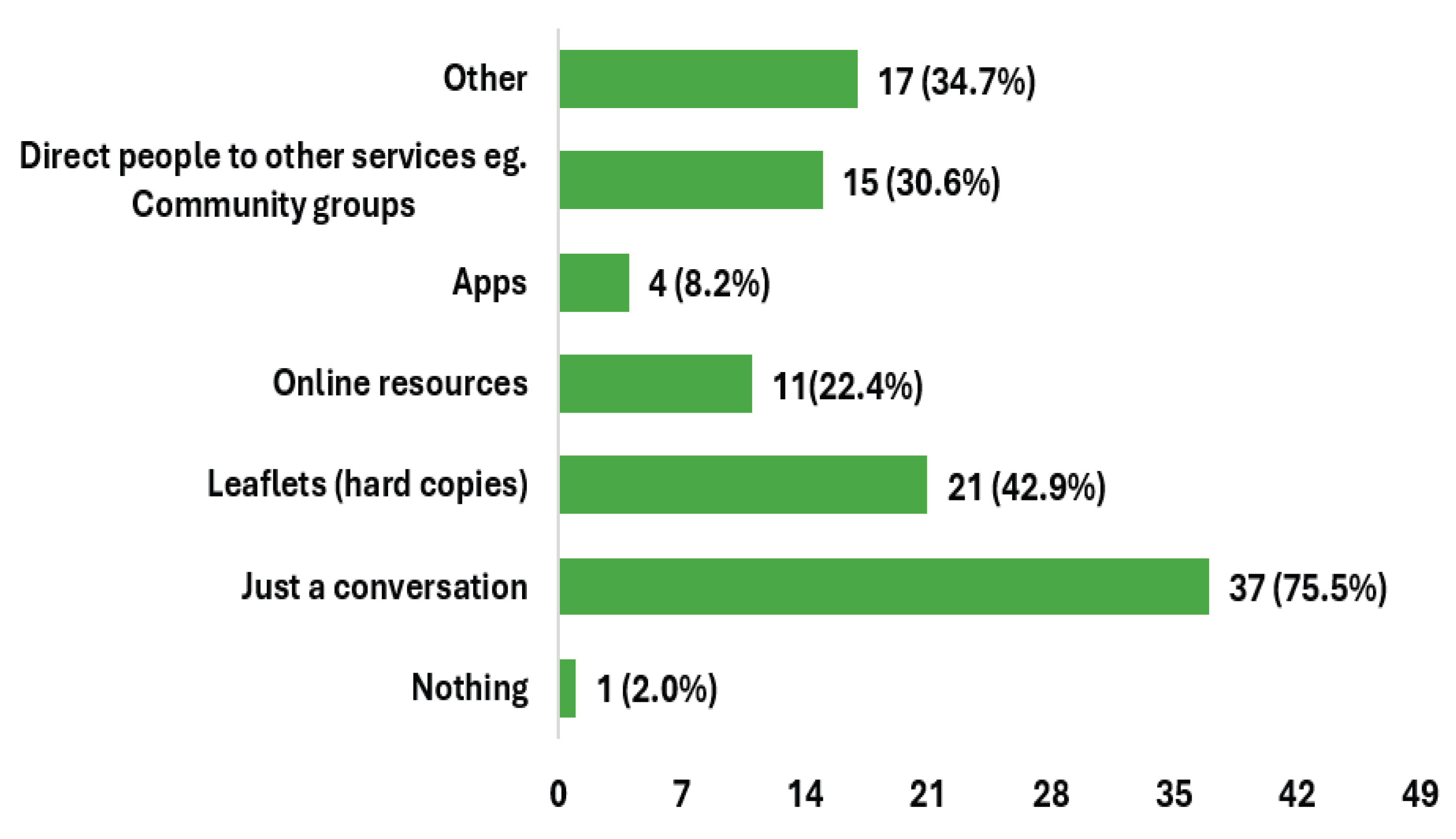
Figure 2.
Nurses’ awareness of physical activity initiatives in Bahrain. Data expressed as n (%) of respondents. Participants could select more than one response.
Figure 2.
Nurses’ awareness of physical activity initiatives in Bahrain. Data expressed as n (%) of respondents. Participants could select more than one response.
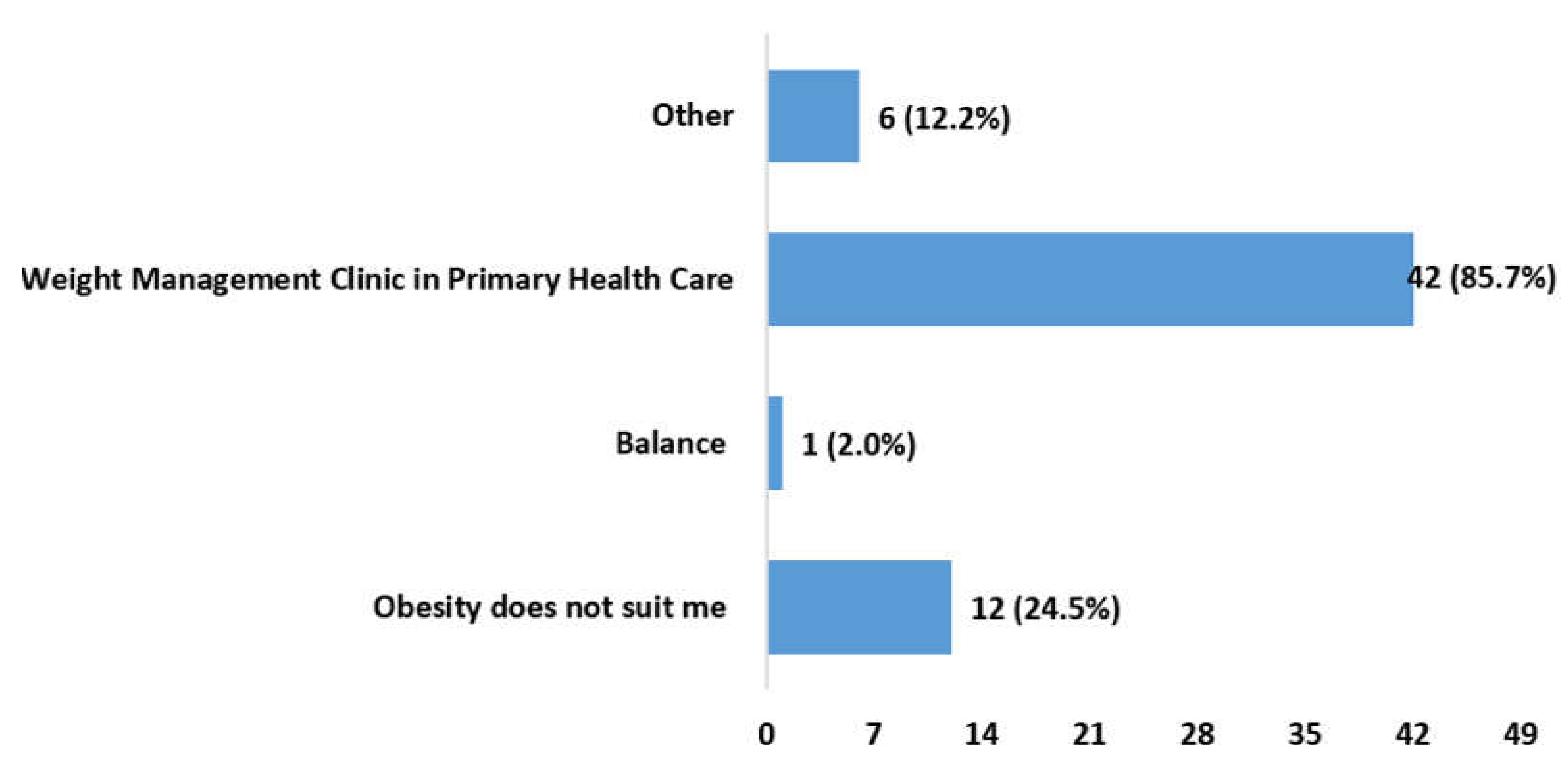
Figure 3.
Nurses’ knowledge of key physical activity recommendations. Data expressed as n (%) of respondents. Participants could select more than one response.
Figure 3.
Nurses’ knowledge of key physical activity recommendations. Data expressed as n (%) of respondents. Participants could select more than one response.
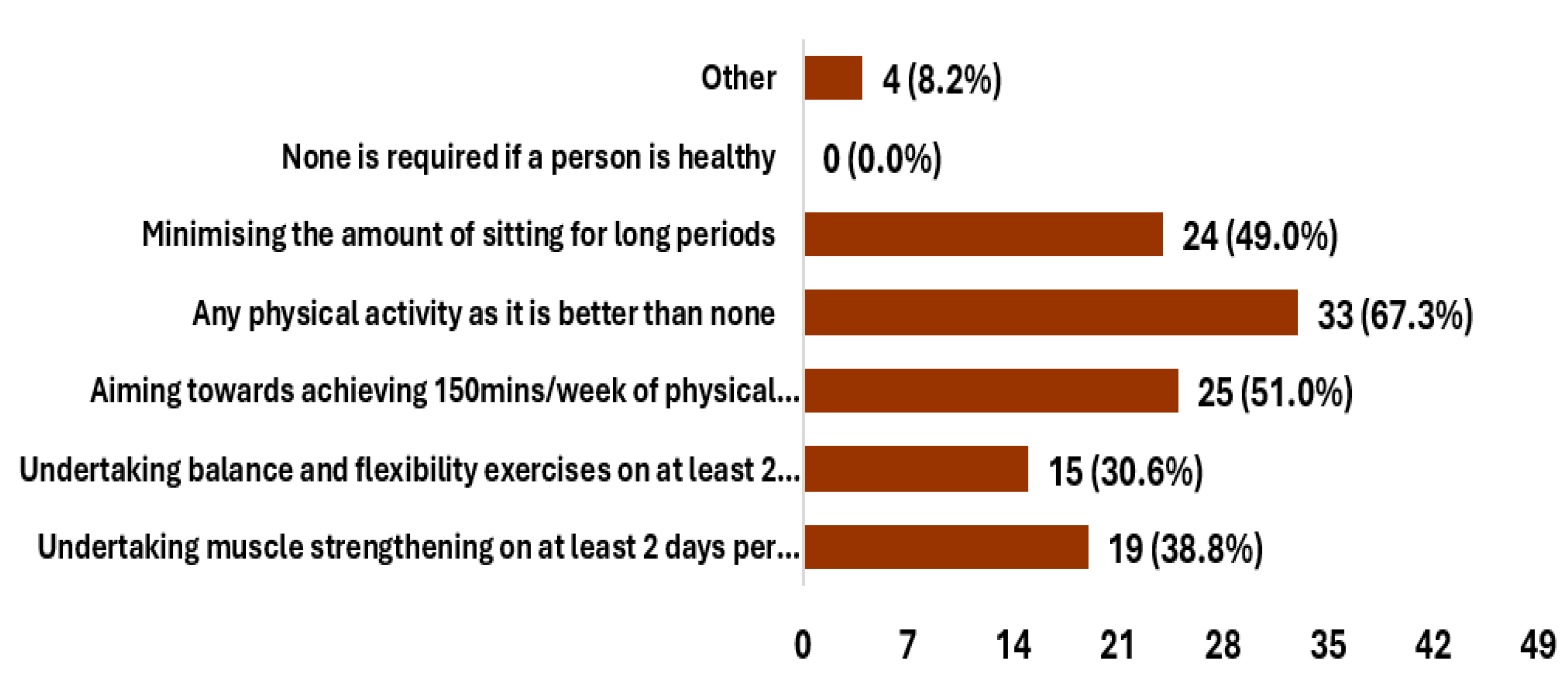
Figure 4.
Nurses’ perceived barriers to physical activity among people in Bahrain. Data expressed as n (%) of respondents. Participants could select more than one response.
Figure 4.
Nurses’ perceived barriers to physical activity among people in Bahrain. Data expressed as n (%) of respondents. Participants could select more than one response.
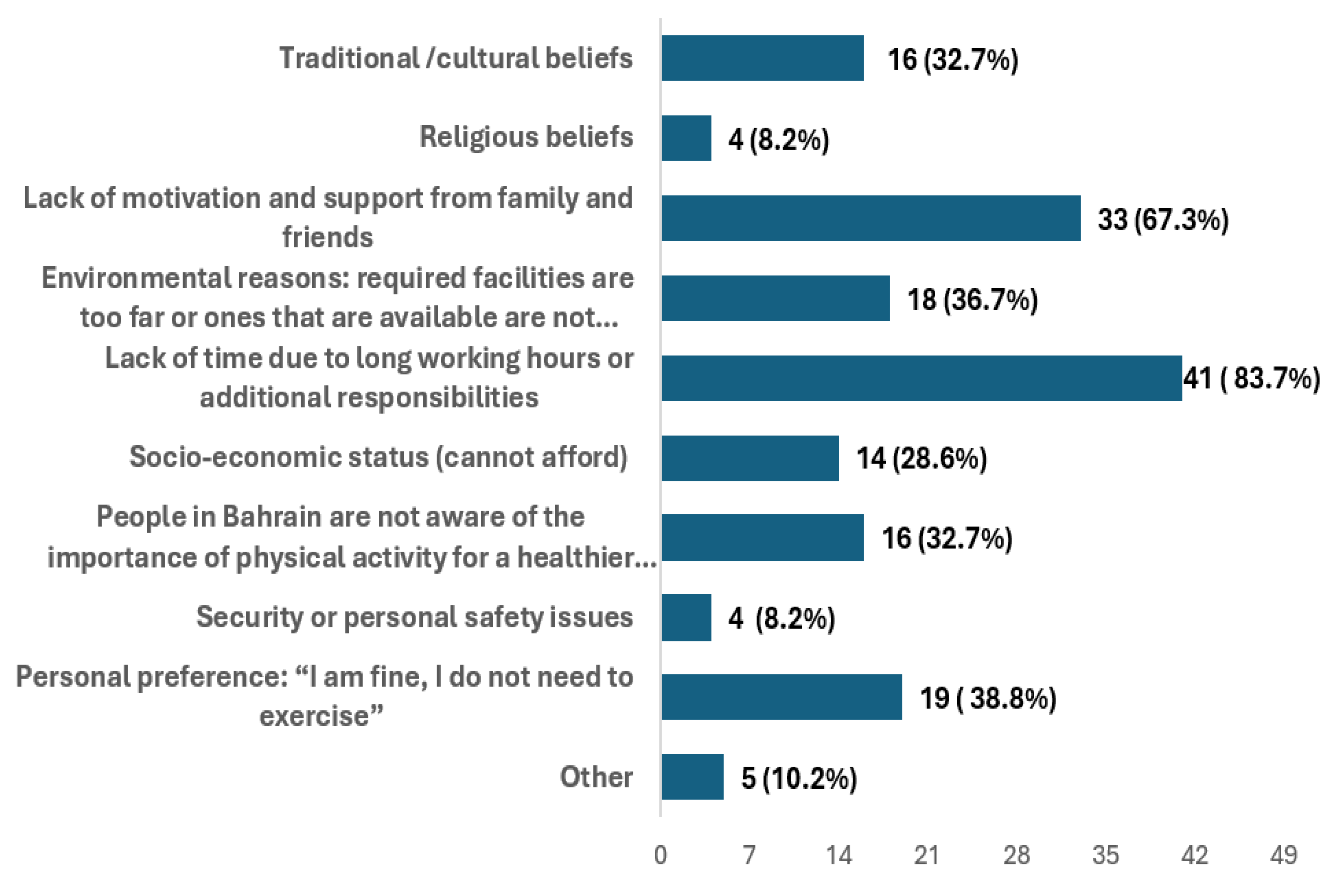

Table 1.
Characteristics of the study participants.
| Characteristic | n (%) |
|---|---|
| Age group 26-35 36-45 46-55 |
25 (51.0%) 22 (44.9%) 2 (4.1%) |
| Nursing Qualification Associate Diploma Bachelor’s Graduate Doctorate Graduate |
5 (10.2%) 42 (85.7%) 2 (4.1%) |
| Work experience (years) 3-5 6-10 10+ |
4 (8.2%) 12 (24.5%) 33 (67.3%) |
| As part of your undergraduate nursing course did you learn about promoting physical activity for health? Yes No Maybe |
34 (69.4%) 9 (18.4%) 6 (12.2%) |
| Governorates of Bahrain Muharraq Northern Southern Capital |
14 (28.6%) 15 (30.6%) 8 (16.3%) 12 (24.5%) |
| Main area of nursing Central Diabetes Clinic Non-Communicable Disease Clinic Treatment room |
20 (40.8%) 8 (16.3%) 21 (42.9%) |
Data are presented as n (%); N=49.
Table 2.
Nurses’ perceptions of their role and confidence in physical activity promotion.
| Statement | Strongly agree | Agree | Undecided | Disagree | Strongly disagree |
|---|---|---|---|---|---|
| Discussing the benefits of a physically active lifestyle with patients is a part of a nurse's role | 30 (61.2%) | 18 (36.7%) | 1 (2.0%) | 0 (0%) | 0 (0%) |
| Discussing how patients can increase their physical activity levels is a part of a nurse’s role | 21 (42.9%) | 25 (51.0%) | 2 (4.1%) | 0 (0%) | 1 (2.0%) |
| Nurses should promote physical activity in every contact they have with their patient | 18 (36.7%) | 25 (51.0%) | 5 (10.2%) | 1 (2.0%) | 0 (0%) |
| Nurses should be physically active to act as a role model for their patients | 22 (44.9%) | 19 (38.8%) | 6 (12.2%) | 2 (4.1%) | 0 (0%) |
| I feel confident in giving general advice to patients on living a physically active lifestyle | 23 (46.9%) | 20 (40.8%) | 3 (6.1%) | 3 (6.1%) | 0 (0%) |
| I feel confident in suggesting specific physical activity programs for my patients | 16 (32.7%) | 22 (44.9%) | 7 (14.3%) | 4 (8.2%) | 0 (0%) |
Data are presented as n (%); N=49.
Table 3.
Association between awareness and use of physical activity guidelines.
| Awareness measure | Response | Do you use any of these guidelines? | Chi-square, df | p value | ||
|---|---|---|---|---|---|---|
| Are you aware of any of the physical activity guidelines? | Yes | Maybe | No | 17.7, 4 | 0.001 | |
| Yes | 12 (70.6%) | 9 (40.9%) | 1 (10.0%) | |||
| Maybe | 3 (17.6%) | 12 (54.5%) | 4 (40.0%) | |||
| No | 2 (11.8%) | 1 (4.5%) | 5 (50.0%) | |||
| Are you aware of any tools available to assess physical activity status? | Yes | 12 (70.6%) | 9 (40.9%) | 0 (0.0%) | 17.8, 4 | 0.001 |
| Maybe | 2 (11.8%) | 9 (40.9%) | 3 (30.0%) | |||
| No | 3 (17.6%) | 4 (18.2%) | 7 (70.0%) | |||
Values are n (%), with percentages calculated within guideline-use response categories. df, degrees of freedom.
Table 4.
Awareness and physical activity promotion practices among participating nurses.
| Item | Response | N (%) |
|---|---|---|
| Are you aware of any tools available to assess physical activity status? | Yes No Maybe |
21 (42.9%) 14 (28.6%) 14 (28.6%) |
| Do you feel that developing physical activity guidelines specifically for Bahrain would help with the promotion of physical activity in Bahrain? | Yes No Maybe |
44 (89.8%) 1 (2.0%) 4 (8.2%) |
| I recommend physical activity if a patient’s health condition demands it | Always Sometimes Never |
37 (75.5%) 12 (24.5%) 0 (0%) |
| I recommend physical activity even to a healthy person to keep an active lifestyle | Always Sometimes Never |
38 (77.6%) 11 (22.4%) 0 (0%) |
| I initiate conversations about physical activity with all my patients | Always Sometimes Never |
28 (57.1%) 21 (42.9%) 0 (0%) |
| I assess my patient’s physical activity status irrespective of their health needs | Always Sometimes Never |
17 (34.7%) 27 (55.1%) 5 (10.2%) |
Data are presented as n (%); N=49.
Table 5.
Themes, subthemes, representative quotations and coding frequencies identified from the qualitative analysis.
Table 5.
Themes, subthemes, representative quotations and coding frequencies identified from the qualitative analysis.
| Theme | Subthemes | Representative quotation | n (%) |
|---|---|---|---|
| 1. Public awareness and health education | • Health education for patients • Public awareness campaigns • Community and school-based education • Social media and health promotion |
"Promote health education among Bahrainis” (P27) | 15 (27.3) |
| 2. Access to physical activity facilities and opportunities | • Affordable or free exercise facilities • Safe and accessible environments • Women-only exercise facilities • Community and workplace opportunities |
"Allocating free clubs in each governorate for women and others for men." (P3) | 12 (21.8) |
| 3. Strengthening motivation and behavioural support | • Motivation and encouragement • Goal setting and self-management • Group exercise and walking programmes • Time management and behavioural strategies |
"Increase their motivation through groups for walking and exercise." (P20) | 17 (30.9) |
| 4. Enhancing healthcare and community support | • Nurse-led interventions • Referral pathways • Workplace initiatives • Government and community programmes |
"Encourage a specific guideline for NCD nurses to apply it in their clinic and recommend referral to weight management clinics." (P32) | 11 (20.0) |
n (%) represents the number and percentage of coding references assigned to each theme (N = 55). Individual participant responses could contribute to more than one theme.
Disclaimer/Publisher’s Note: The statements, opinions and data contained in all publications are solely those of the individual author(s) and contributor(s) and not of MDPI and/or the editor(s). MDPI and/or the editor(s) disclaim responsibility for any injury to people or property resulting from any ideas, methods, instructions or products referred to in the content. |
© 2026 by the authors. Licensee MDPI, Basel, Switzerland. This article is an open access article distributed under the terms and conditions of the Creative Commons Attribution (CC BY) license (http://creativecommons.org/licenses/by/4.0/).
Copyright: This open access article is published under a Creative Commons CC BY 4.0 license, which permit the free download, distribution, and reuse, provided that the author and preprint are cited in any reuse.