

Submitted:
24 September 2026
Posted:
28 September 2026
You are already at the latest version
Abstract
Agroforestry systems are frequently regarded as productive alternatives capable of reconciling agricultural production and environmental conservation, yet their associations with water–energy–food (WEF) Nexus dimensions remain insufficiently explored in the Amazon. This observational and exploratory study examined territorial patterns and associations among indicators of AFS, monocultures, and municipal water, energy, and food conditions in Northern Brazil. Secondary data from 70 municipalities were analyzed using Principal Component Analysis, Pearson correlation, and linear regression with state fixed effects. The analyses were designed to identify associations rather than causal effects. The first two principal components explained 85.1% of total variance. PC1 (51.3%) was primarily defined by water and energy indicators, whereas PC2 (33.8%) was dominated by vulnerability to food insecurity. Associations between production-system indicators and Nexus components were predominantly weak. A negative and statistically significant association was observed between the log-transformed mean AFS area indicator per 1,000 rural inhabitants and PC1 (b = -0.28; p = 0.033), while the corresponding monoculture indicator was not statistically significant. The results also show that food vulnerability forms a relatively independent dimension. Overall, the findings indicate that territorial heterogeneity is an important feature of the observed WEF Nexus configuration, beyond the associations identified with production-system indicators.
Keywords:
agroforestry systems
; family farming
; monocultures
; food security
; water and energy consumption
1. Introduction
Intensive agriculture based on monocultures is among the main drivers of environmental degradation and climate change because of intensive pesticide use [1,2], exploitation of rural labor [3], soil degradation, biodiversity loss, and greenhouse-gas emissions [4]. These systems also place pressure on water resources, as agriculture accounts for about 70% of global freshwater withdrawals [5,6], a pattern also observed in Brazil, where most water withdrawals are allocated to agriculture [7]. In addition, monocultures are associated with changes in soil quality resulting from excess nitrogen and phosphorus [8,9] and intensify pressures on the national energy matrix, which depends on hydropower and large infrastructure projects that alter hydrological regimes and biodiversity [10].
In this context, agricultural systems should be analyzed in an integrated manner because water, energy, and food are interdependent. In tropical regions, for example, the increasing occurrence of extreme climatic events intensifies pressure on water and energy resources, compromising agricultural productivity, crop stability, and food security [11,12,13]. Accordingly, the water–energy–food (WEF) Nexus approach has become an important framework for integrating sectors, identifying synergies, and preventing conflicts arising from land and natural-resource use [14,15,16,17].
In the Amazon, this debate has specific characteristics. Although the region contains the world’s largest river basin and exceptional biodiversity [18,19], it faces increasing pressures associated with agricultural-frontier expansion, climate change, and the construction of large hydropower plants, which affect access to water, energy, and food, particularly among rural populations [20,21,22,23]. Hydrological instability, intensified by more frequent droughts and floods [24,25,26], reinforces the need for analytical approaches that incorporate socio-environmental vulnerabilities and integrated governance [27,28].
Against this background, agroforestry systems (AFS) have been identified as a productive alternative capable of reconciling food security, ecological conservation, and sustainable natural-resource use. Studies suggest that AFS contribute to climate-change mitigation [29], biodiversity conservation [30,31], restoration of degraded areas [32], carbon storage, and water regulation [33,34]. AFS may also generate social benefits, such as stronger land-tenure security, production diversification oriented toward food sovereignty, and a more equitable distribution of economic benefits [35].
Despite these benefits, few studies have examined how different production systems are associated with WEF Nexus dimensions in the Amazon while explicitly accounting for territorial context. Therefore, this study aimed to identify territorial patterns and explore associations among agroforestry-system indicators, monoculture indicators, and municipal indicators related to the water, energy, and food dimensions of the WEF Nexus. The analytical expectation was that municipalities with higher AFS indicator values would exhibit patterns of association with Nexus components that differed from those observed in municipalities with higher monoculture indicator values.
The variables were systematized to enable exploratory comparison among municipalities and to identify patterns of association between territorial WEF Nexus indicators and area indicators of diversified agricultural systems (AFS) and specialized systems (monocultures). The study applies Nexus thinking at a regional scale that remains little explored, seeking to determine whether WEF dynamics observed in the Amazon reproduce patterns described in intensive-agriculture regions or instead reflect more heterogeneous and nonlinear territorial configurations. By identifying covariance structures and territorial differences, the study provides an exploratory basis for formulating hypotheses to be tested in subsequent research.
2. Nexus Thinking and Agricultural Production Systems in the Amazon
The water–energy–food (WEF) Nexus approach proposes that sustainability policies and solutions should consider the interdependencies, synergies, and trade-offs among the systems governing access to water, energy, and food [36,37]. Since the Bonn Nexus Conference [38], these linkages have guided integrated resource planning, especially where decisions in one sector, such as agricultural irrigation or hydropower expansion, directly affect others. In tropical regions, this interconnection is even more evident because water conflicts, energy fluctuations, and instability in food production tend to occur simultaneously [39,40].
In Brazil, much Nexus research has focused on the effects of irrigation expansion, biofuels, and hydropower [41], while analyses incorporating territorial and socio-environmental specificities remain limited. The technical and productivist emphasis of these studies often overlooks socioeconomic inequalities and local contexts [42], reinforcing the need for approaches that integrate land-use governance and socio-environmental justice [43].
In this context, AFS provide a useful perspective for examining the WEF Nexus beyond its biophysical components, including its social, territorial, and institutional dimensions, because they align ecological conservation, food security, and the sustainable use of natural resources [31]. Studies indicate that AFS may improve water- and energy-use efficiency and promote synergies among Nexus components [44,45]. Their multifunctionality also highlights their potential to mitigate structural trade-offs and align production, conservation, and territorial development [46].
Within Nexus research, different approaches have emphasized that agricultural production models exert different pressures on water, energy, and food production depending on their technological bases, production scales, and institutional arrangements [36,37]. However, Walker and Coles [47] warn that technocratic approaches focused predominantly on quantitative, biochemical, or biophysical Nexus indicators can obscure territorial inequalities and social dynamics that shape access to resources. Extreme events in the Amazon, such as the 2023 drought and its severe impacts on supply systems, agricultural production, and river transport [48,49], further demonstrate that vulnerability also arises from broader institutional, hydrological, and territorial contexts beyond production systems.
The WEF Nexus approach provides a framework for moving beyond strictly technical analyses of production systems by incorporating territorial, institutional, and socio-environmental dimensions that condition land use and access to resources. By simultaneously considering agricultural production, environmental conservation, and hydrological dynamics, the Nexus makes it possible to examine how different production arrangements are embedded in contexts of vulnerability and inequality. This perspective is particularly useful for exploratory studies in socioecologically heterogeneous regions, where relationships observed at an aggregate scale should not automatically be interpreted as direct effects of production systems.
3. Materials and Methods
3.1. Study Area and Data Collection
The study area covers the seven states of Northern Brazil, which account for most of the Brazilian Legal Amazon. The region comprises 450 municipalities distributed across Acre (22), Amapá (16), Amazonas (62), Pará (144), Rondônia (52), Roraima (15), and Tocantins (139). The study followed an observational and exploratory design, with the municipality as the unit of analysis. Seventy municipalities were included, ten from each state. This analytical sample was defined primarily by the joint availability of the variables required to construct the indicators and conduct the proposed analyses, because complete and compatible data were not available for all municipalities in the region.
Among municipalities with available information, selection considered the presence of family-farming establishments using agroforestry systems in rural areas, according to the 2017 Agricultural Census [50], and municipalities were selected purposively. Selecting an equal number of municipalities per state was intended to build a territorially diverse analytical set and prevent states with larger absolute numbers of municipalities from dominating the analysis. The final sample of 70 municipalities corresponds to approximately 20% of the municipalities with recorded AFS in the 2017 Agricultural Census. This is a non-probabilistic analytical sample defined by joint indicator availability and the adopted selection criteria.
Data were obtained from different secondary sources, as shown in Table 1. The variables were organized to enable a municipal-scale analysis of associations between water–energy–food (WEF) Nexus indicators and indicators of production systems based on family-farming AFS and monocultures associated with non-family establishments. The Nexus was represented by annual water consumption (W), annual electricity consumption (E), and the vulnerability to food insecurity index (F).
In the 2017 Agricultural Census, AFS were identified from the number of family-farming establishments that reported this type of land use and the corresponding area occupied. To represent monoculture systems, the number of non-family establishments with permanent crops and the corresponding area were used. For analytical purposes, these permanent crops were used as a proxy for specialized cropping systems, referred to in this study as monocultures, considering their predominance in this type of establishment within the analyzed sample. This operationalization enabled comparison with family-farming AFS.
Annual water-consumption values were obtained directly from the Household Budget Survey database (POF 2017–2018) [53]. Electricity consumption was estimated using an average monthly consumption of 150 kWh per rural household, following data from the Brazilian Electricity Regulatory Agency (ANEEL) [54], adjusted by a regional factor of 0.9 to account for lower electrification levels and lower appliance use in rural Amazonian areas [56]. Annual consumption was obtained by multiplying estimated monthly consumption by the number of rural households and by 12 months.
The WEF indicators represent aggregate conditions of the population and rural infrastructure at the municipal scale and therefore do not constitute specific measurements directly attributable to AFS or monoculture areas. Accordingly, the analyzed values express the territorial context in which these production systems are embedded.
3.2. Data Analysis
Data were organized in spreadsheets and analyzed using Principal Component Analysis (PCA), linear regression, and Pearson correlation in R software (version 4.5.2), following procedures described by Johnson and Wichern [57] and Hair et al. [58]. The analyses were exploratory and associative and were used to identify covariance structures, territorial patterns, and statistical relationships among variables in the selected set of municipalities.
PCA was applied to water consumption, energy consumption, and vulnerability to food insecurity to identify territorial covariance patterns and synthesize the joint structure of these dimensions into orthogonal components. The variables were standardized to a mean of zero and a standard deviation of one before analysis, preventing differences in scale from influencing the results.
The first principal component (PC1) explained the largest share of total variance and was interpreted as a synthetic WEF Nexus dimension predominantly associated with water and energy indicators. The second component (PC2) mainly captured variation related to vulnerability to food insecurity, forming a relatively independent axis. This interpretation is restricted to the statistical structure observed in the analyzed set of municipalities.
Based on this interpretation, PC1 was used as the dependent variable in linear regression models to examine the association between production-system indicators (AFS and monoculture) and the aggregate pattern of water and energy indicators. The explanatory variables were indicators of AFS and monoculture area expressed per 1,000 rural inhabitants. Mean area per establishment was first calculated for each production system by dividing the total occupied area by the corresponding number of establishments. This value was then normalized by the rural population of the municipality and multiplied by 1,000, thereby expressing mean production-system area relative to municipal rural population size.
For the regression models, the indicators of mean AFS and monoculture area per 1,000 rural inhabitants were log-transformed to reduce skewness and improve compliance with linear-model assumptions.
The models included state fixed effects to account for systematic differences among the states of Northern Brazil. Estimated coefficients were interpreted as conditional associations among variables in the analyzed sample, holding the other model terms constant.
Additionally, Pearson correlation analysis was conducted to examine the strength and direction of bivariate associations between WEF Nexus components and agricultural-system indicators. Correlations were classified according to absolute magnitude as strong (|r| ≥ 0.70), moderate (0.40 ≤ |r| < 0.70), or weak (|r| < 0.40). These analyses were used as complementary evidence to identify general association patterns.
4. Results
The data presented in Table 2 demonstrate heterogeneity among the states with respect to production systems and WEF Nexus indicators. Pará had the highest mean number of establishments with AFS and the largest mean area occupied by these systems, as well as the highest mean electricity consumption. Amazonas, in turn, had the highest mean water consumption. The relationship between AFS and monocultures also varied among the states. The mean AFS area was greater than the mean monoculture area in six of the seven states analyzed, with the largest proportional differences observed in Acre, Amazonas, and Rondônia. Roraima was the only state in which the mean monoculture area exceeded the mean AFS area. Vulnerability to food insecurity ranged from 0.74 in Roraima and Tocantins to 0.87 in Amapá, indicating high levels throughout the analyzed set.
Figure 1 presents the percentage of variance explained by the Principal Component Analysis (PCA). PC1 explains 51.3% of the total variability in the dataset, whereas PC2 accounts for 33.8%, totaling 85.1% of the variance explained by the first two axes. Table 3 presents the loadings associated with each variable, and Figure 2 illustrates the direction and magnitude of these loadings.
PCA results indicate that PC1 is mainly associated with energy (0.709) and water (0.703) indicators, whereas vulnerability to food insecurity makes only a residual contribution to this axis (0.054). PC1 was therefore interpreted as a synthetic dimension that predominantly expresses the joint variation of municipal water and energy indicators. The similar orientation of the water and energy vectors in Figure 2 reinforces the covariance between these two dimensions in the analyzed sample.
By contrast, vulnerability to food insecurity is concentrated in PC2, with a dominant loading (0.985), forming a statistically distinct dimension from that represented by water and energy indicators. This result suggests that, among the selected municipalities, variation in food vulnerability does not directly follow the joint variation of water and energy indicators.
PC3 explained 15.0% of total variance and represents a secondary contrast between energy (0.701) and water (-0.695) indicators. Because it explains a smaller share of dataset variability, this component was considered complementary to the interpretation of the first two axes, which together accounted for 85.1% of total variance.
Figure 3 presents the distribution of municipalities across the quadrants of the PCA biplot. Using the signs of component scores as a descriptive reference, 74.3% of municipalities are located on the negative side of PC1, associated with lower relative values of the combined water–energy dimension. Of these, 30.0% combine this position with higher relative vulnerability to food insecurity, whereas 44.3% show lower relative vulnerability. Among municipalities on the positive side of PC1, 10.0% combine higher relative values of this dimension with higher vulnerability and 15.7% with lower vulnerability. These groupings are used to describe relative patterns in multivariate space and do not represent absolute categories of resource availability or access.
Based on the interpretation of PC1 as a synthetic dimension mainly associated with water and energy indicators, this component was used as the response variable in the linear regression models. In the analyzed municipalities, a statistically significant negative association was observed between the logarithm of the mean AFS area indicator and PC1 (b = -0.28; p = 0.033), whereas the corresponding monoculture indicator was not statistically significant.
In the correlation analysis, considering these indicators on their original scale, a negative correlation was observed between the AFS indicator and energy consumption (r = -0.57) and, to a lesser extent, water consumption (r = -0.26). This pattern indicates that municipalities with higher AFS indicator values tend to have lower values of these indicators. However, the magnitude of the correlations suggests that these relationships are neither homogeneous nor sufficient, by themselves, to explain the regional configuration of the Nexus.
Differences among state coefficients remained after the mean-area indicators for AFS and monoculture were included in the models. Pará was used as the reference category because it had positive mean PC1 values in the analyzed sample (Figure 4). Acre and Roraima had lower estimated coefficients relative to the reference category, whereas Rondônia and Tocantins showed negative differences with weaker statistical evidence (Figure 5). These results reinforce the presence of territorial heterogeneity not captured exclusively by production-system indicators.
As a complementary analysis, the correlation matrix between WEF Nexus variables and agricultural-system indicators was used to examine the consistency of the patterns identified by PCA, showing the direction and magnitude of bivariate associations among water, energy, food vulnerability, and AFS and monoculture area indicators (Figure 6).
A moderate positive correlation was observed between water- and energy-consumption indicators, whereas vulnerability to food insecurity showed weak or near-zero correlations with the other variables. Associations between production-system indicators and Nexus components were predominantly weak, except for the moderate negative correlation between the AFS indicator and energy consumption. Taken together, these results suggest that production-system indicators, when considered in isolation, have limited capacity to explain the aggregate structure of the WEF Nexus in the selected municipalities.
5. Discussion
The results did not fully support the initial analytical hypothesis. Although the log-transformed indicator of mean AFS area per 1,000 rural inhabitants showed a statistically significant negative association with PC1, bivariate relationships between production systems and Nexus components were predominantly weak, and the monoculture indicator was not significantly associated with the joint water–energy dimension. The expectation of contrasting patterns between municipalities with higher AFS and monoculture indicator values was based on evidence linking intensive agricultural systems to environmental resource use [59] and changes in water quality and availability [8], but the results show that these relationships are not reproduced in a simple manner within the analyzed Amazonian sample.
Greater vulnerability to food insecurity was also expected in contexts of agricultural intensification, as indicated by the IPCC [11], together with greater sensitivity of water–energy–food interactions in territories with intensive production systems [41]. However, in the analyzed sample, food vulnerability showed weak or near-zero associations with water, energy, and production-system indicators, suggesting that this dimension responds to broader territorial and social determinants.
PCA showed that the main dimension differentiating the selected municipalities is related to the joint variation of water and energy indicators (PC1), whereas vulnerability to food insecurity constitutes a relatively independent dimension (PC2). Complementarily, the predominantly weak associations observed in the correlation matrix between agricultural systems and Nexus variables indicate that, in this sample, neither AFS nor monoculture indicators alone explain the overall WEF Nexus configuration.
The regression identified a negative and statistically significant association between the log-transformed mean AFS area indicator and PC1. No statistically significant association was identified for monocultures. Together, these results suggest that relationships between production systems and Nexus indicators may reflect broader territorial factors, including technological, institutional, and infrastructure characteristics [47,60].
The direction of the association observed for AFS is consistent with studies indicating the potential of agroforestry and diversified production systems to promote greater integration in resource use, reduce trade-offs among Nexus components, and enhance ecosystem-service provision [31,44,45,46]. WEF Nexus studies also emphasize that relationships among land use, resource consumption, and vulnerabilities are not universal, but are conditioned by scale of analysis, territorial characteristics, technological intensity, infrastructure, and socioeconomic context [16,47,60,61].
In regions with consolidated agribusiness, such as Brazil’s Center-West, the United States, or Australia, evidence indicates greater pressure of intensive monocultures on water and energy [62,63,64]. However, Lele et al. [60] and Walker and Coles [47] emphasize that these relationships are not universal. Differences in mechanization, population density, infrastructure, and economic organization among Amazonian municipalities may dilute linear associations when examined at a regional scale.
The analyzed municipalities belong to states with distinct agrarian and structural realities [65,66]. Rondônia and parts of Pará have more intensive agricultural and livestock-production centers, whereas the other states display distinct production configurations and greater diversity of systems linked to family farming. Roraima, in turn, has experienced recent soybean expansion in a context of specific energy-system characteristics [67,68,69,70]. This heterogeneity helps explain why water and energy indicators do not align in a simple manner with production-system characteristics across the analyzed sample.
This result reinforces the need for specific and contextualized assessments of land-use systems in the Amazon [71,72]. The observed patterns suggest that municipal vulnerability may be associated with multiple dimensions, including access to services, poverty, infrastructure, and state presence. Because these variables were not directly included in the models, their influence should be treated as an explanatory hypothesis to be examined in future studies.
The literature indicates that production models based on intensive irrigation and mechanization may exert greater pressure on water and energy. In the Amazonian context, however, these relationships may follow different dynamics, influenced by a heterogeneous energy matrix, low infrastructure density across extensive rural areas, and different levels of production intensification. The results obtained here are compatible with this interpretation but do not allow the separate contribution of each factor to be quantified.
The absence of strong associations between monocultures and Nexus indicators in the analyzed sample does not imply the absence of agribusiness impacts in the Amazon. More narrowly, it indicates that such impacts do not emerge as a robust aggregate pattern at the municipal scale considered here. This finding is consistent with the concept of disjunctive nexus dynamics proposed by Walker and Coles [47], according to which Nexus relationships may be fragmented, nonlinear, and territorially differentiated. From this perspective, WEF approaches applied to the Amazon should be sensitive to scale and territorial asymmetries.
In this context, strengthening diversified production systems such as AFS remains relevant from a sustainability-policy perspective. The central finding is that higher values of the mean AFS area indicator were associated with lower PC1 values in the analyzed sample, whereas the overall Nexus structure also showed substantial territorial variation. Public policies aimed at AFS should therefore be integrated with investments in rural infrastructure, food security, and resource governance rather than treated as an isolated solution to WEF Nexus vulnerabilities.
Specificities related to territorial organization, the diversity of family-based production systems, and the multiplicity of community arrangements may produce distinctive forms of WEF Nexus articulation that differ from the linear patterns observed in highly industrialized regions. Previous studies indicate that territories with high sociocultural and productive diversity require contextualized interpretations of water–energy–food relationships [61,73,74]. The results of this study add exploratory evidence to this debate for the Amazonian context.
In summary, the selected municipalities did not show a pattern in which higher values of a given production-system indicator consistently corresponded to greater or lower pressure across all WEF Nexus dimensions. The negative association observed between AFS and PC1 is a relevant result but should be interpreted together with the predominantly weak correlations, state-level heterogeneity, and the aggregate nature of the indicators.
6. Conclusions
The exploratory analysis showed that the main dimension differentiating the selected municipalities is associated with the joint variation of water and energy indicators, whereas vulnerability to food insecurity constitutes a relatively independent dimension. This pattern suggests that the different dimensions of the WEF Nexus do not vary together in a simple linear manner in the Amazonian context analyzed.
Associations between AFS and monoculture indicators and Nexus components were predominantly weak. The mean AFS area indicator showed a negative and statistically significant association with PC1, whereas the corresponding monoculture indicator was not statistically significant. Taken together, these results highlight the relevance of production characteristics and territorial heterogeneity for the observed configuration of the WEF Nexus in the analyzed municipalities.
The heterogeneity observed among states was central to interpreting the patterns found and may reflect differences in infrastructure, production organization, and territorial conditions. Thus, the main result of the study is that the configuration of the WEF Nexus in the Brazilian Amazon cannot be explained solely by production-system type and requires approaches sensitive to territorial specificities and different scales of analysis. Future research should expand municipal coverage, incorporate longitudinal data and socioeconomic, environmental, institutional, and technological variables, and include indicators directly linked to agricultural establishments, thereby allowing more robust testing of the hypotheses raised in this exploratory study.
Author Contributions
Conceptualization, F.S.C.; methodology, F.S.C., B.C. and N.R.S.; data curation, F.S.C. and S.B.A.M.; formal analysis, A.P.C.Q.P.; writing—original draft preparation, F.S.C.; writing—review and editing, F.S.C., B.C., N.R.S., S.B.A.M. and A.P.C.Q.P.; supervision, F.S.C., B.C. and N.R.S. All authors have read and agreed to the published version of the manuscript.
Funding
This research was funded by the National Council for Scientific and Technological Development (CNPq), grant number 201415/2024-0.
Institutional Review Board Statement
Not applicable.
Informed Consent Statement
Not applicable.
Data Availability Statement
The data analyzed in this study were obtained from publicly available secondary sources, including the Brazilian Institute of Geography and Statistics (IBGE), the Brazilian Electricity Regulatory Agency (ANEEL), and the Interministerial Chamber for Food and Nutrition Security (CAISAN), as described in the Materials and Methods section.
Acknowledgments
The authors acknowledge the Amazonas State Research Support Foundation (FAPEAM), the University of Leicester, the Office of Research and Graduate Studies (PROPESP) of the Federal University of Amazonas (UFAM), the Coordination for the Improvement of Higher Education Personnel (CAPES), and the Statistical Laboratory of the Federal University of Amazonas (LABEST-UFAM) for the institutional and technical support provided during the development of this study.
Conflicts of Interest
The authors declare no conflicts of interest.
References
- Carson, R. Silent Spring; Houghton Mifflin: Boston, MA, USA, 1962. [Google Scholar]
- Nunes, A.; Schmitz, C.; Moura, S.; Maraschin, M. The use of pesticides in Brazil and the risks linked to human health. Braz. J. Dev. 2021, 7, 37885–37904. [Google Scholar] [CrossRef]
- Ludewigs, T.; D’Antona, A.O.; Brondízio, E.S.; Hetrick, S. Agrarian structure and land-cover change along the lifespan of three colonization areas in the Brazilian Amazon. World Dev. 2009, 37, 1348–1359. [Google Scholar] [CrossRef]
- Tilman, D.; Cassman, K.G.; Matson, P.A.; Naylor, R.; Polasky, S. Agricultural sustainability and intensive production practices. Nature 2002, 418, 671–677. [Google Scholar] [CrossRef] [PubMed]
- UNESCO World Water Assessment Programme. The United Nations World Water Development Report 2023: Partnerships and Cooperation for Water; UNESCO: Paris, France, 2023. [Google Scholar] [CrossRef]
- World Wide Fund for Nature (WWF). Thirsty Crops: Agricultural Water Use and River Basin Conservation; WWF, 2003. [Google Scholar]
- Agência Nacional de Águas e Saneamento Básico. Conjuntura dos Recursos Hídricos no Brasil: Relatório Pleno 2021; ANA: Brasília, Brazil, 2022. [Google Scholar]
- Bu, H.; Meng, W.; Zhang, Y.; Wan, J. Relationships between land use patterns and water quality in the Taizi River basin, China. Ecol. Indic. 2014, 41, 187–197. [Google Scholar] [CrossRef]
- Akinnawo, S.E. Eutrophication: Causes, consequences, physical, chemical and biological techniques for mitigation strategies. Environ. Chall. 2023, 12, 100733. [Google Scholar] [CrossRef]
- Stickler, C.M.; Coe, M.T.; Costa, M.H.; Nepstad, D.C.; McGrath, D.G.; Dias, L.C.P.; Rodrigues, H.O.; Soares-Filho, B.S. Dependence of hydropower energy generation on forests in the Amazon Basin at local and regional scales. Proc. Natl. Acad. Sci. USA 2013, 110, 9601–9606. [Google Scholar] [CrossRef] [PubMed]
- Mbow, C.; Rosenzweig, C.; Barioni, L.G.; Benton, T.G.; Herrero, M.; Krishnapillai, M.; Liwenga, E.; Pradhan, P.; Rivera-Ferre, M.G.; Sapkota, T.; et al. Food security. In Climate Change and Land: An IPCC Special Report on Climate Change, Desertification, Land Degradation, Sustainable Land Management, Food Security, and Greenhouse Gas Fluxes in Terrestrial Ecosystems; IPCC, 2019; Volume Chapter 5, pp. 439–550. [Google Scholar]
- Anderegg, W.R.L.; Trugman, A.T.; Badgley, G.; Anderson, C.M.; Bartuska, A.; Ciais, P.; Cullenward, D.; Field, C.B.; Freeman, J.; Goetz, S.J.; et al. Climate-driven risks to the climate mitigation potential of forests. Science 2020, 368, eaaz7005. [Google Scholar] [CrossRef] [PubMed]
- Zhao, C.; Liu, B.; Piao, S.; Wang, X.; Lobell, D.B.; Huang, Y.; Huang, M.; Yao, Y.; Bassu, S.; Ciais, P.; et al. Temperature increase reduces global yields of major crops in four independent estimates. Proc. Natl. Acad. Sci. USA 2017, 114, 9326–9331. [Google Scholar] [CrossRef] [PubMed]
- International Renewable Energy Agency (IRENA). Renewable Energy in the Water, Energy & Food Nexus; IRENA: Abu Dhabi, United Arab Emirates, 2015. [Google Scholar]
- Keairns, D.L.; Darton, R.C.; Irabien, A. The energy-water-food nexus. Annu. Rev. Chem. Biomol. Eng. 2016, 7, 239–262. [Google Scholar] [CrossRef] [PubMed]
- Albrecht, T.R.; Crootof, A.; Scott, C.A. The water-energy-food nexus: A systematic review of methods for nexus assessment. Environ. Res. Lett. 2018, 13, 043002. [Google Scholar] [CrossRef]
- Souza, M.; Versieux, B.H. Nexo entre água, energia e alimento no contexto das mudanças do clima: O caso do Nordeste brasileiro. Estud. Int. Rev. De Relações Int. Da PUC Minas 2021, 9, 112–130. [Google Scholar] [CrossRef]
- Cabral, M.V.A.; Caripuna, L.A.; Trindade, V.M.M.C.; Avelar, M.C.; Conceição, M.M.M.; Queiroz, J.M.; Silva, M.P.; Silva, K.L.; Prestes, M.S.V. Biodiversidade e Recursos Naturais na Amazônia: Desafios e Oportunidades para a Pesquisa e a Conservação; Home Editora: Belém, Brazil, 2024. [Google Scholar]
- Guayasamin, J.M.; et al. Evolution of Amazonian biodiversity: A review. Acta Amaz. 2024, 54, e54bc21360. [Google Scholar] [CrossRef]
- Fearnside, P.M. Environmental and social impacts of hydroelectric dams in Brazilian Amazonia: Implications for the aluminum industry. World Dev. 2016, 77, 48–65. [Google Scholar] [CrossRef]
- Nobre, C.A.; Sampaio, G.; Borma, L.S.; Castilla-Rubio, J.C.; Silva, J.S.; Cardoso, M. Land-use and climate change risks in the Amazon and the need of a novel sustainable development paradigm. Proc. Natl. Acad. Sci. USA 2016, 113, 10759–10768. [Google Scholar] [CrossRef] [PubMed]
- Barlow, J.; et al. Clarifying Amazonia’s burning crisis. Glob. Change Biol. 2020, 26, 319–321. [Google Scholar] [CrossRef] [PubMed]
- Athayde, S.; Mathews, M.; Bohlman, S.; Brasil, W.; Doria, C.R.C.; Dutka-Gianelli, J.; Fearnside, P.M.; Loiselle, B.; Marques, E.E.; Melis, T.; et al. Mapping research on hydropower and sustainability in the Brazilian Amazon: Advances, gaps in knowledge and future directions. Curr. Opin. Environ. Sustain. 2019, 37, 50–69. [Google Scholar] [CrossRef]
- Santos, T.S.; Gomes, A.C.S.; Coutinho, M.D.L.; Silva, A.R.; Castro, A.A. Análise de eventos extremos na região Amazônica. Rev. Bras. De Geogr. Física 2013, 6, 1356–1370. [Google Scholar] [CrossRef]
- Santos, S.R.Q.; Sansigolo, C.A.; Neves, T.T.A.T.; Campos, T.L.O.B.; Santos, A.P.P. Frequências dos eventos extremos de seca e chuva na Amazônia utilizando diferentes bancos de dados de precipitação. Rev. Bras. De Geogr. Física 2017, 10, 468–478. [Google Scholar] [CrossRef]
- Lazzari, D.; Garcez, A.; Poltozi, N.; Pozzi, G.; Brito, C. Identification of extreme weather events and impacts of the disasters in Brazil. arXiv 2024, arXiv:2409.16309. [Google Scholar]
- Rasul, G.; Sharma, B. The nexus approach to water-energy-food security: An option for adaptation to climate change. Clim. Policy 2016, 16, 682–702. [Google Scholar] [CrossRef]
- Fainguelernt, M.B. Impactos da Usina Hidrelétrica de Belo Monte: Uma análise da visão das populações ribeirinhas das reservas extrativistas da Terra do Meio. Civitas—Revista De Ciências Sociais 2020, 20, 43–52. [Google Scholar] [CrossRef]
- Schembergue, A.; et al. Sistemas agroflorestais como estratégia de adaptação aos desafios das mudanças climáticas no Brasil. Rev. De Econ. E Sociol. Rural 2017, 55, 9–30. [Google Scholar] [CrossRef]
- Sagastuy, M.; Krause, T. Agroforestry as a biodiversity conservation tool in the Atlantic Forest? Motivations and limitations for small-scale farmers to implement agroforestry systems in north-eastern Brazil. Sustainability 2019, 11, 6932. [Google Scholar] [CrossRef]
- Schuler, H.R.; Alarcon, G.G.; Joner, F.; dos Santos, K.L.; Siminski, A.; Siddique, I. Ecosystem services from ecological agroforestry in Brazil: A systematic map of scientific evidence. Land 2022, 11, 83. [Google Scholar] [CrossRef]
- Lôbo, R.L.L.; Siqueira, T.M.V.; Martins, E.S.; Lima, A.S.T.; Cunha, A.C.M.C.M. Sistemas agroflorestais na recuperação de áreas degradadas. Braz. J. Dev. 2021, 7, 38127–38142. [Google Scholar] [CrossRef]
- Torres, C.M.M.E.; Jacovine, L.A.G.; Oliveira Neto, S.N.; Brianezi, D.; Alves, E.B.B.M. Sistemas agroflorestais no Brasil: Uma abordagem sobre a estocagem de carbono. Pesqui. Florest. Bras. 2014, 34, 235–244. [Google Scholar] [CrossRef]
- Queiroz, M.M.F.; et al. Influência do uso do solo na qualidade da água de uma microbacia hidrográfica rural. Rev. Verde De Agroecol. E Desenvolv. Sustentável 2010, 5, 200–210. [Google Scholar] [CrossRef]
- Greenleaf, M.E. Forest Lost: Producing Green Capitalism in the Brazilian Amazon; Duke University Press: Durham, NC, USA, 2024. [Google Scholar] [CrossRef]
- Andersson, A.-K.M. Implementing the water-energy-food nexus approach to create synergies and reduce tradeoffs between the Sustainable Development Goals. SN Soc. Sci. 2024, 4, 73. [Google Scholar] [CrossRef]
- Stephan, R.M.; et al. Water-energy-food nexus: A platform for implementing the Sustainable Development Goals. Water Int. 2018, 43, 472–479. [Google Scholar] [CrossRef]
- Stockholm Environment Institute. The Water, Energy and Food Security Nexus: Solutions for the Green Economy—Policy Recommendations from the Bonn 2011 Nexus Conference; SEI: Stockholm, Sweden, 2011. [Google Scholar]
- Hejnowicz, A.P.; et al. Appraising the water-energy-food nexus from a sustainable development perspective: A maturing paradigm? Earth’s Future 2022, 10, e2021EF002622. [Google Scholar] [CrossRef]
- Mabhaudhi, T.; et al. Review of water-energy-food nexus applications in the Global South. Camb. Prism. Water 2024, 2, e9. [Google Scholar] [CrossRef] [PubMed]
- Caiado Couto, L.; Campos, L.C.; da Fonseca-Zang, W.; Zang, J.; Bleischwitz, R. Water, waste, energy and food nexus in Brazil: Identifying a resource interlinkage research agenda through a systematic review. Renew. Sustain. Energy Rev. 2021, 138, 110554. [Google Scholar] [CrossRef]
- Melo, F.P.L.; Parry, L.; Brancalion, P.H.S.; Pinto, S.R.R.; Freitas, J.; Manhães, A.P.; Meli, P.; Ganade, G.; Chazdon, R.L. Adding forests to the water-energy-food nexus. Nat. Sustain. 2021, 4, 85–92. [Google Scholar] [CrossRef]
- Costa, F.S.; Ravena, N. Territórios e cercas simbólicas em regimes de propriedades comuns na Amazônia. Geosul 2017, 32, 159–178. [Google Scholar] [CrossRef]
- Li, M.; Li, H.; Fu, Q.; Liu, D.; Yu, L.; Li, T. Approach for optimizing the water-land-food-energy nexus in agroforestry systems under climate change. Agric. Syst. 2021, 192, 103201. [Google Scholar] [CrossRef]
- Barman, A.; Dutta, S.; Bera, A.; Saha, P.; Roy, J.; Roy Choudhury, M.; Bera, M.; Das, S. Synergizing sustainability: A critical review on harnessing agroforestry for biomass, carbon sequestration, and water-food-energy nexus. Energy Ecol. Environ. 2024, 9, 579–613. [Google Scholar] [CrossRef]
- van Noordwijk, M.; Duguma, L.A.; Dewi, S.; Leimona, B.; Catacutan, D.C.; Lusiana, B.; Öborn, I.; Hairiah, K.; Minang, P.A. SDG synergy between agriculture and forestry in the food, energy, water and income nexus: Reinventing agroforestry? Curr. Opin. Environ. Sustain. 2018, 34, 33–42. [Google Scholar] [CrossRef]
- Walker, C.; Coles, B. Points of convergence: Deploying the geographies of critical nexus-thinking. Environ. Plan. E Nat. Space 2022, 5, 1618–1638. [Google Scholar] [CrossRef]
- Zogahib, A.L.N.; Simas, D.C.S.; Norte Filho, A.F.; Norte, N.N.B.O.; Sales, R.A.C.; Lima, J.S.; Braga, M.A.P.L. Mudanças climáticas e seus impactos nas cidades: Estudo de caso do fenômeno da seca no Estado do Amazonas, Brasil. Res. Soc. Dev. 2024, 13, e9913946940. [Google Scholar] [CrossRef]
- Espinoza, J.C.; Jimenez, J.C.; Marengo, J.A.; Schongart, J.; Ronchail, J.; Lavado-Casimiro, W.; Ribeiro, J.V.M.; et al. The new record of drought and warmth in the Amazon in 2023 related to regional and global climatic features. Sci. Rep. 2024, 14, 8107. [Google Scholar] [CrossRef] [PubMed]
- Instituto Brasileiro de Geografia e Estatística (IBGE). Censo Agropecuário 2017: Resultados Definitivos; IBGE: Rio de Janeiro, Brazil, 2019. [Google Scholar]
- Instituto Brasileiro de Geografia e Estatística (IBGE). Censo Demográfico 2010: Características da População e dos Domicílios—Resultados do Universo; IBGE: Rio de Janeiro, Brazil, 2011. [Google Scholar]
- Instituto Brasileiro de Geografia e Estatística (IBGE). Censo Demográfico 2022: População e Domicílios—Resultados do Universo; IBGE: Rio de Janeiro, Brazil, 2023. [Google Scholar]
- Instituto Brasileiro de Geografia e Estatística (IBGE). Pesquisa de Orçamentos Familiares 2017–2018: Primeiros Resultados; IBGE: Rio de Janeiro, Brazil, 2019. [Google Scholar]
- Agência Nacional de Energia Elétrica (ANEEL). Base de Dados de Consumo por Classe e por Unidade da Federação; ANEEL: Brasília, Brazil, 2022. [Google Scholar]
- Câmara Interministerial de Segurança Alimentar e Nutricional (CAISAN). Mapeamento da Insegurança Alimentar e Nutricional com Foco na Desnutrição a partir da Análise do Cadastro Único, do Sistema Nacional de Vigilância Alimentar e Nutricional (SISVAN) e do Sistema de Informação da Atenção à Saúde Indígena (SIASI)—2016; CAISAN: Brasília, Brazil, 2018. [Google Scholar]
- Agência Nacional de Energia Elétrica (ANEEL). Atlas de Energia Elétrica do Brasil, 3rd ed.; ANEEL: Brasília, Brazil, 2008. [Google Scholar]
- Johnson, R.A.; Wichern, D.W. Applied Multivariate Statistical Analysis, 5th ed.; Prentice Hall: Upper Saddle River, NJ, USA, 2002. [Google Scholar]
- Hair, J.F.; Black, W.C.; Babin, B.J.; Anderson, R.E. Multivariate Data Analysis: A Global Perspective, 7th ed.; Pearson Education: Upper Saddle River, NJ, USA, 2010. [Google Scholar]
- Crippa, M.; Solazzo, E.; Guizzardi, D.; Monforti-Ferrario, F.; Tubiello, F.N.; Leip, A. Food systems are responsible for a third of global anthropogenic GHG emissions. Nat. Food 2021, 2, 198–209. [Google Scholar] [CrossRef] [PubMed]
- Lele, U.; Klousia-Marquis, M.; Goswami, S. Good governance for food, water and energy security. Aquat. Procedia 2013, 1, 44–63. [Google Scholar] [CrossRef]
- Ghodsvali, M.; Dane, G.; de Vries, B. The nexus social-ecological system framework (NexSESF): A conceptual and empirical examination of transdisciplinary food-water-energy nexus. Environ. Sci. Policy 2022, 130, 16–24. [Google Scholar] [CrossRef]
- Hanjra, M.A.; Qureshi, M.E. Global water crisis and future food security in an era of climate change. Food Policy 2010, 35, 365–377. [Google Scholar] [CrossRef]
- Spera, S.A.; et al. Land-use change affects water recycling in Brazil’s last agricultural frontier. Glob. Change Biol. 2016, 22, 3405–3413. [Google Scholar] [CrossRef] [PubMed]
- Food and Agriculture Organization of the United Nations (FAO). The State of Food and Agriculture 2020: Overcoming Water Challenges in Agriculture; FAO: Rome, Italy, 2020. [Google Scholar] [CrossRef]
- Becker, B.K. Amazônia: Entre a Floresta e a Cidade; Garamond: Rio de Janeiro, Brazil, 2013. [Google Scholar]
- Costa, F.A.; Brondízio, E.S. The paradox of agricultural expansion in Amazonia: Family farming, land change and sustainability. Land Use Policy 2019, 82, 410–422. [Google Scholar]
- Latawiec, A.E.; Strassburg, B.B.N.; Valentim, J.F.; Ramos, F.; Alves-Pinto, H.N. Intensification of cattle ranching production systems: Socioeconomic and environmental synergies and risks in Brazil. Animal 2014, 8, 1255–1263. [Google Scholar] [CrossRef] [PubMed]
- Freitas Junior, A.M.; Barros, P.H.B. A expansão da pecuária para a Amazônia Legal: Externalidades espaciais, acesso ao mercado de crédito e intensificação do sistema produtivo. Nova Econ. 2021, 31, 303–333. [Google Scholar] [CrossRef]
- Eloy, L.; Senra, E.; Silva, A.L.; Campos, C. A aceleração recente da produção de soja na Amazônia: Uma história do desmonte ambiental “em prática” no estado de Roraima. Nuevo Mundo Mundos Nuevos 2023. [Google Scholar] [CrossRef]
- Zambonin, R.V.; Cavalcante, M.M.A. Panorama do cenário energético da última fronteira elétrica: Roraima. Geografia 2023, 48, 1–27. [Google Scholar] [CrossRef]
- Meyfroidt, P.; de Bremond, A.; Ryan, C.M.; et al. Ten facts about land systems for sustainability. Proc. Natl. Acad. Sci. USA 2022, 119, e2109217118. [Google Scholar] [CrossRef] [PubMed]
- Rasmussen, L.V.; et al. Joint environmental and social benefits from diversified agriculture. Science 2024, 384, 87–93. [Google Scholar] [CrossRef] [PubMed]
- Nhamo, L.; Ndlela, B.; Mpandeli, S.; Mabhaudhi, T. The water-energy-food nexus as an adaptation strategy for achieving sustainable livelihoods at a local level. Sustainability 2020, 12, 8582. [Google Scholar] [CrossRef]
- Hamidov, A.; Daedlow, K.; Webber, H.; Hussein, H.; Abdurahmanov, I.; Dolidudko, A.; Seerat, A.Y.; Solieva, U.; Woldeyohanes, T.; Helming, K. Operationalizing water-energy-food nexus research for sustainable development in social-ecological systems: An interdisciplinary learning case in Central Asia. Ecol. Soc. 2022, 27, 12. [Google Scholar] [CrossRef]
Figure 1.
Variance explained by the principal components (scree plot).
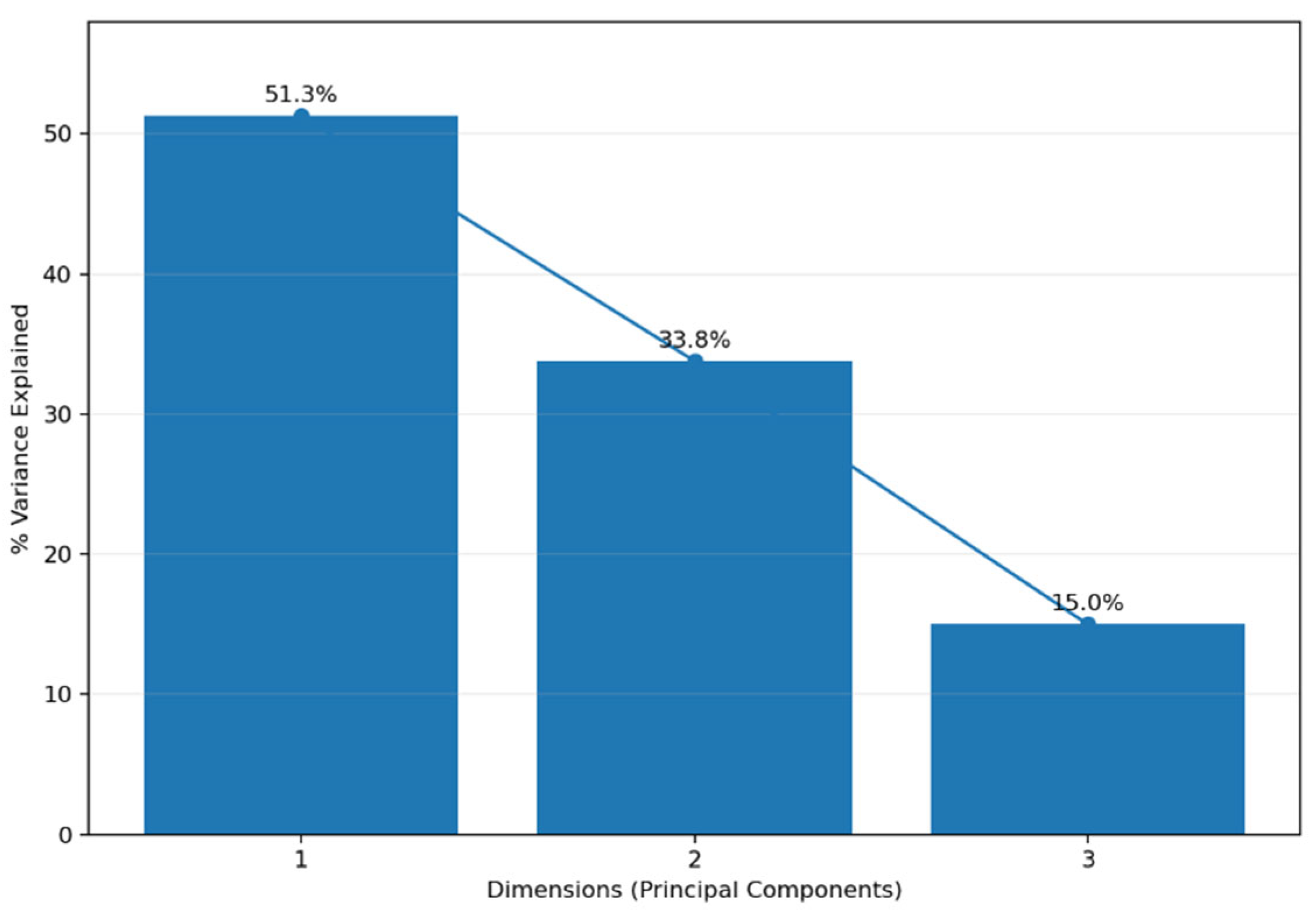
Figure 2.
Direction and magnitude of PCA variable loadings.
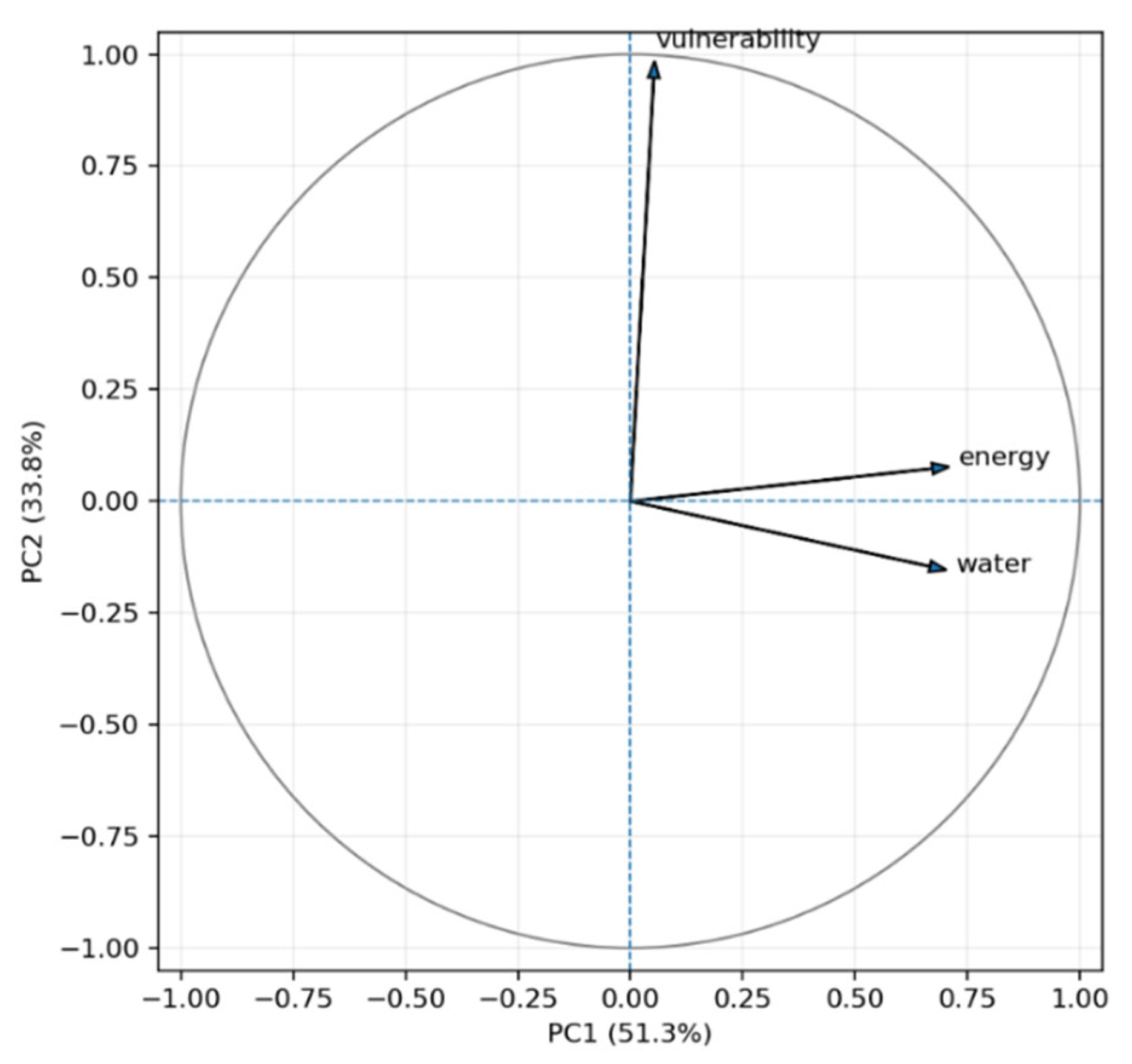
Figure 3.
Distribution of municipalities in principal-component space (PC1 x PC2).
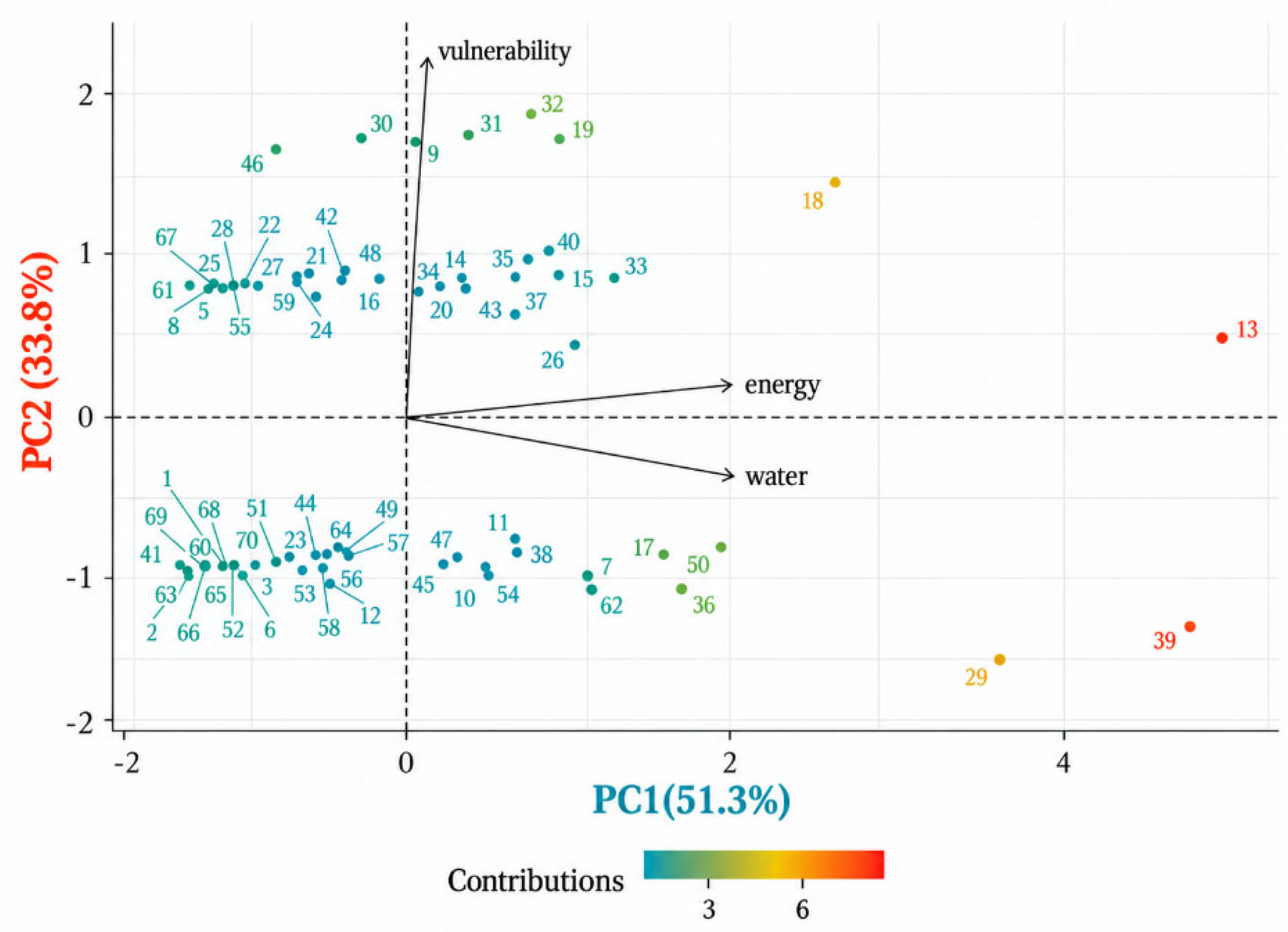
Figure 4.
Distribution of PC1 by state.
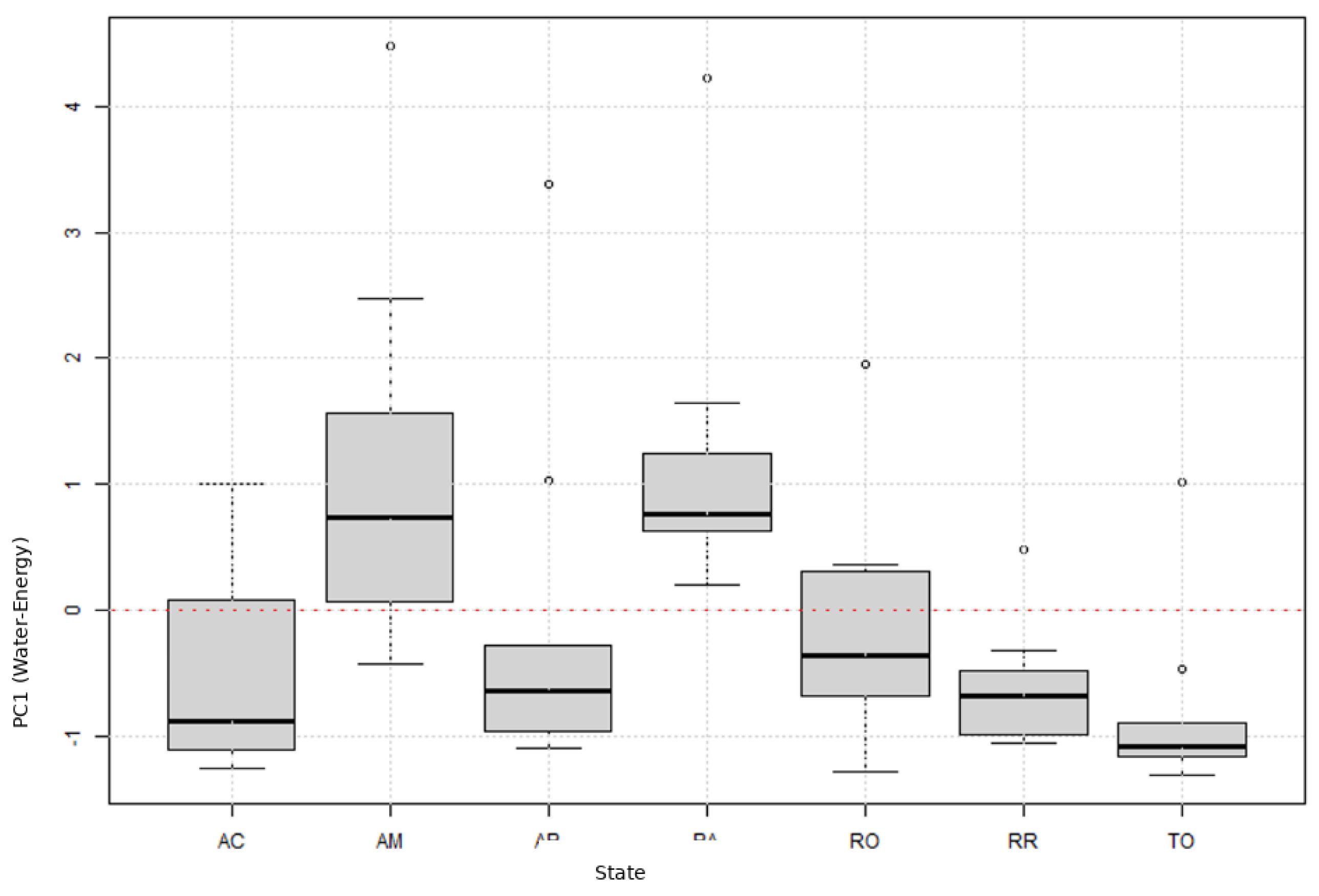
Figure 5.
Estimated state coefficients in the PC1 model.
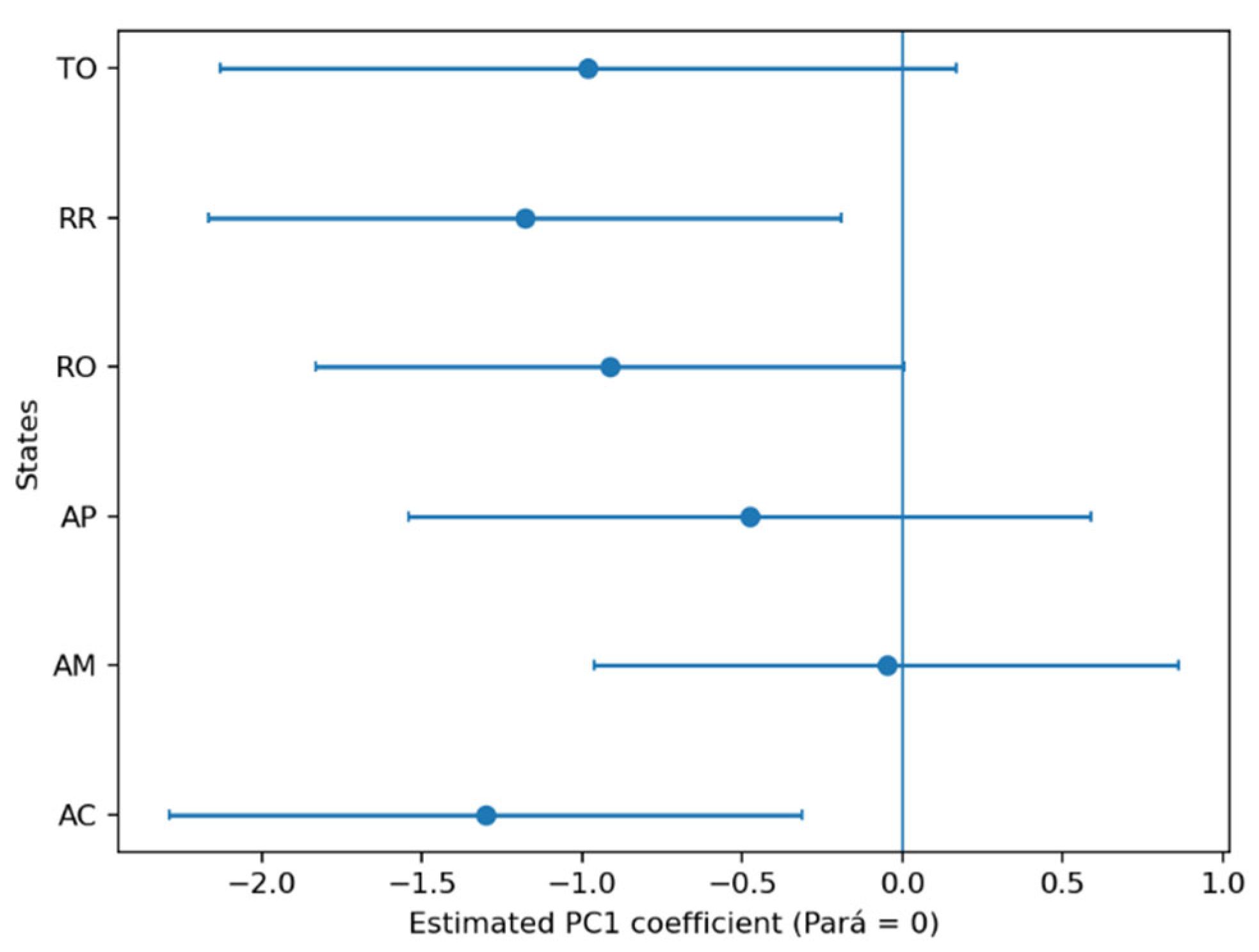
Figure 6.
Correlation matrix (heatmap) between the WEF Nexus and agricultural systems.
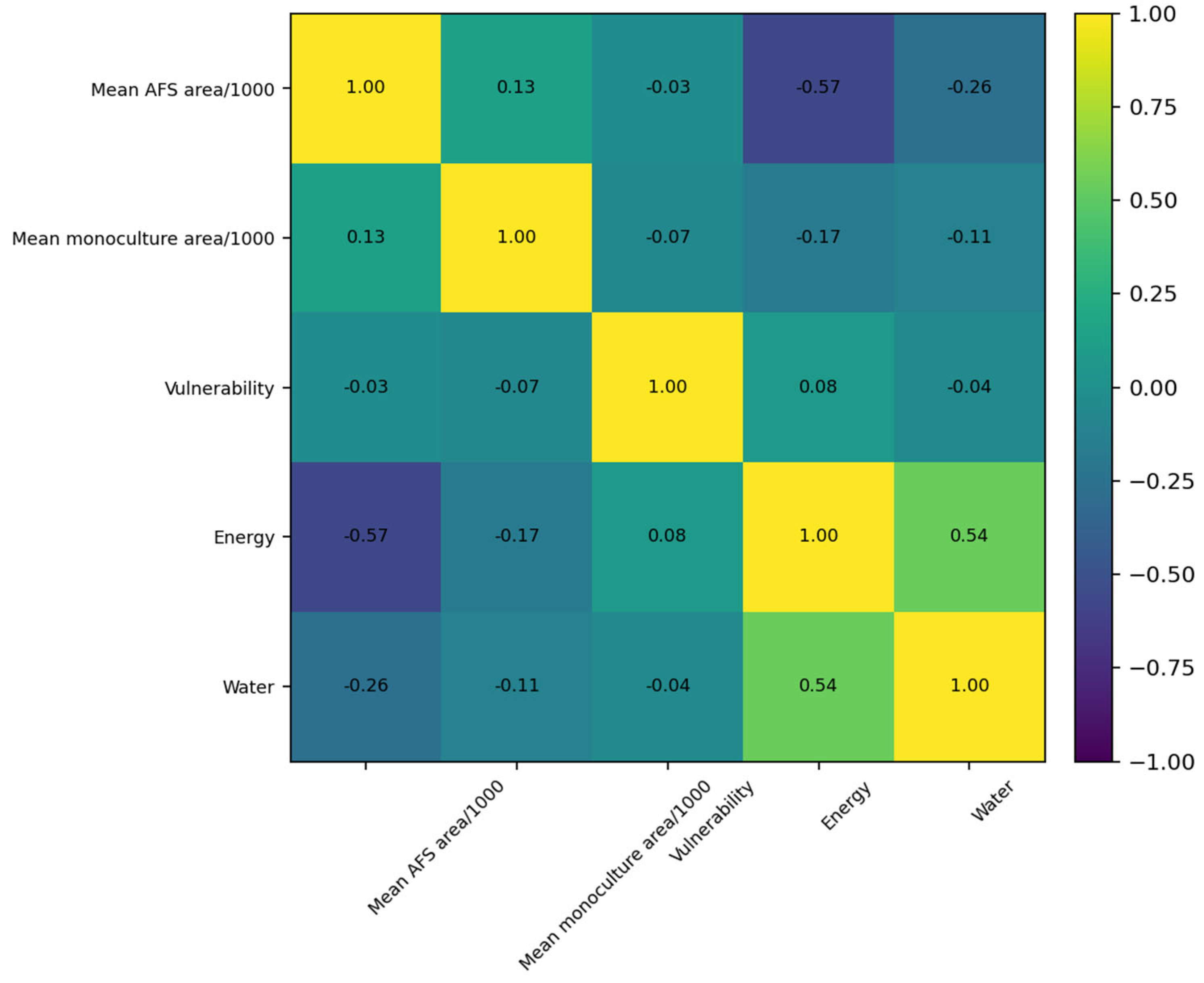

Table 1.
Variables and data sources used in the study.
| Variable | Data source |
|---|---|
| Rural population | Historical trends from the IBGE Demographic Censuses (2010; 2022) [51,52] |
| Number of establishments with AFS (family farming) and permanent crops in non-family establishments (proxy for monoculture) | 2017 Agricultural Census [50] |
| Cultivated area (ha) with AFS (family farming) and permanent crops in non-family establishments (proxy for monoculture) | 2017 Agricultural Census [50] |
| Annual water consumption (m³/year) | Household Budget Survey - POF 2017–2018 [53] |
| Annual electricity consumption (MWh/year) | Estimates based on ANEEL data [54] |
| Vulnerability to food insecurity index | CAISAN [55], based on matching the Cadastro Único (2017) and SISVAN (2016) |
Source: Authors’ compilation (2025).
Table 2.
Comparative mean values for family-farming AFS and permanent crops in non-family establishments (proxy for monoculture) across the states of Northern Brazil.
Table 2.
Comparative mean values for family-farming AFS and permanent crops in non-family establishments (proxy for monoculture) across the states of Northern Brazil.
| State | Rural population | No. of establishments with AFS | No. of establishments with monoculture | AFS area (ha) | Monoculture area (ha) | Water consumption (m³/year) | Energy consumption (MWh/year) | Food Insecurity Index (0 to 1) |
|---|---|---|---|---|---|---|---|---|
| Acre | 14081.8 | 117.5 | 176.5 | 2608 | 285.6 | 96121.6 | 2623.6 | 0.79 |
| Amazonas | 20826.7 | 225.0 | 139.7 | 3266.6 | 729.6 | 274948.3 | 4948.8 | 0.86 |
| Amapá | 6793.0 | 36.5 | 60.3 | 1145.1 | 719.9 | 178438.8 | 2769.9 | 0.87 |
| Pará | 34477.3 | 851.9 | 271.5 | 10759.8 | 5935.4 | 218203.2 | 5588.2 | 0.86 |
| Rondônia | 17514.9 | 78.4 | 117 | 2335.8 | 624.8 | 75783.7 | 3811.8 | 0.79 |
| Roraima | 11251.0 | 40.6 | 162.6 | 729.4 | 1287.2 | 76012.8 | 2617.4 | 0.74 |
| Tocantins | 3834.0 | 198.2 | 83.5 | 4458.0 | 1550.1 | 63483.6 | 2168.4 | 0.74 |
Table 3.
Principal component loadings.
| WEF variables | PC1 | PC2 | PC3 |
|---|---|---|---|
| Energy | 0.709 | 0.077 | 0.701 |
| Water | 0.703 | -0.154 | -0.695 |
| Food insecurity | 0.054 | 0.985 | -0.163 |
Disclaimer/Publisher’s Note: The statements, opinions and data contained in all publications are solely those of the individual author(s) and contributor(s) and not of MDPI and/or the editor(s). MDPI and/or the editor(s) disclaim responsibility for any injury to people or property resulting from any ideas, methods, instructions or products referred to in the content. |
© 2026 by the authors. Licensee MDPI, Basel, Switzerland. This article is an open access article distributed under the terms and conditions of the Creative Commons Attribution (CC BY) license (http://creativecommons.org/licenses/by/4.0/).
Copyright: This open access article is published under a Creative Commons CC BY 4.0 license, which permit the free download, distribution, and reuse, provided that the author and preprint are cited in any reuse.