

Submitted:
23 September 2026
Posted:
24 September 2026
You are already at the latest version
Abstract
The influence of quenching media on the residual stress of 7136 aluminum alloy extrusions was studied by finite element simulation method. The results show a compressive stress at the component surface and a tensile stress at the center. The maximum compressive and tensile stress are 67.2MPa and 82.6MPa when quenching with 20℃ water. Increasing the water temperature to 80℃ can lead to the decrease of the maximum residual stress by 31.5% and 26.3%, respectively. When quenching in the PAG solution, the residual stress will decrease with the increased concentration. For example, the maximum compressive and tensile stress will drop by 26.4% and 34.7% in 10% PAG solution compared with 0% solution (20℃ water). On the other hand, the increase of NaCl quenching solution will lead to a rise in the residual stress. When adding 20% NaCl from 0%, the compressive and tensile stress can increase by about 21.2% and 5.6%. It can be known from the results that the cooling rate of the alloy component under different quenching conditions will change, which causes the difference in the residual stress. It will be an effective method to control the residual stress through appropriate adjustment of quenching medium parameters.
Keywords:
finite element method
; quenching temperature
; quenching medium
; 7136 aluminum alloy
; residual stress
1. Introduction
The 7xxx aluminum alloys have been widely used in the aerospace and transportation area due to their low density, high strength and good comprehensive properties. With the rapid development of the aerospace industry, more stringent requirements have been put forward for the materials [1]. In recent years, with the development of the new generation of aircraft structural materials towards lightweight, integrated, good comprehensive performance and long service life, a higher demand is put forward for the strength, fracture toughness, corrosion resistance and other comprehensive properties of aerospace aluminum alloys.
Based on this background, the Universal Alloy Corporation developed and registered the 7136 aluminum alloy in 2004, which optimized the ratio of Zn, Mg, Cu and other alloy elements on the bases of 7055 ultra-high strength aluminum alloy. The alloy increase the Zn content and the Zn/Mg ratio compared with 7055. This is a new ultra-high strength and corrosion resistant alloy, which shows higher strength and fracture toughness, as well as better exfoliation corrosion resistance. The outstanding comprehensive performance can further reduce the weight of the aircraft, improve the fuel efficiency and prolong the service life. The alloy has been used in aircraft upper wing components, skin components, longitudinal beam products, etc. For example, the 7136-T76 extruded plate has been applied in Airbus A380 and Boeing 787 Dream liner aircraft [2,3,4,5].
Solid solution treatment with subsequent quenching, combined with cold deformation and ageing is important process to achieve sufficient precipitation strengthening for high-strength aluminum alloys. However, the quick quenching after solution treatment can cause large temperature gradients in the alloy, resulting in significant quenching residual stress. There are numerous research on the residual stress of 7xxx thick plates. YN. Li et al. used the crack compliance method to study the 7055 alloy and results prove that the quenching medium type, temperature and concentration show obvious influence on the residual stress [6]. JQ Wang et al. utilize the finite element simulation to work on the residual stress after quenching and pre-stretching for 7050 thick plates, whose results show an “M” shape distribution along the plate thickness for both the rolling and transverse direction. And the residual stress can decline by more than 90% after applying 2%~3% pre-stretching [7]. Furthermore, N Chobaut et al. Proposed a simple way to predict the residual stress distribution in 7xxx thick plates and has successfully use compared with the measured values in AA7449 and AA7040 thick plates [8].
However, there are few research on the residual stress of 7136 aluminum alloy, especially the alloy extrusions. This article uses the finite element simulation method to study the influence of different quenching medium parameters on the residual stress in 7136 alloy. The work intends to establish a theoretical basis and reference for further development work, which has theoretical significance and practical application value.
2. Analysis Model
Quenching is a complex short-time thermal stress change process containing the temperature field, the thermal stress field caused by temperature gradient, the stress field caused by phase transformation and the thermal effect caused by plastic deformation [9,10]. The purpose of quenching is to maintain the supersaturated solid solution after solution treatment so the phase transformation during quenching can be ignored. The influence of stress field on the temperature field can also be ignored since the thermal effect caused by plastic deformation is tiny.
This study uses the indirect coupling of temperature field and stress field to simulate the quenching residual stress under different cooling modes. Firstly the boundary conditions are set to calculate the temperature field, and then the calculated temperature field is applied to the stress field model to calculate the stress distribution [11]. The heat transfer coefficient, constitutive equation and other thermo-physical parameters utilized in the calculation are determined through relevant experiments and equations.
The quenching simulation of the alloy extrusion is based on the finite element model establishment. Due to symmetrical structure of the extruded cross section, the half model is established with the symmetry constraint applied. A length of 200mm along the extrusion direction is selected for the simulation in order to avoid the finite element model distortion and to improve the simulation efficiency. The model established for 7136 alloy extrusion is shown in Figure 1. The overall residual stress level of the material can be presented by the residual stress distribution along the cross section.
3. Experimental Results
3.1. The Quenching Residual Stress Distribution
The quenching residual stress of the alloy is the result of the combined effect of quenching cooling process and deformation process [12,13]. The quenching conditions, mainly including the quenching media temperature, quenching media concentration and quenching media type, have significant impacts on the level and distribution of the residual stress.
To systematically study the influence of quenching media parameters on residual stress, the distribution of residual stress is firstly studied. Water is the most commonly used quenching medium in industry due to its advantages of convenient, low pollution and low cost. Therefore, this article firstly use the 20℃ water as the quenching medium to analyse the overall residual stress distribution for 7136 aluminum alloy extrusion and the result is presented in Figure 2. As shown in the figure, the surface of the extrusion is under compression state while the center of the extrusion is under tension state. The reason is that the cooling rate at the center is slower than the surface during the initial quenching stage. The surface part cools and contracts rapidly. Based on the integrity of the extrusion, a compressive stress is generated at the center and a tensile stress is generated at the surface. As the quenching continues, the component further cools down until the center ultimately cools and contracts. At this point, the surface has finished cooling and does not have further change [14,15].
For the 7136 alloy extrusion, the residual stress is relatively higher along the extrusion direction (Figure 2(a)) but lower along the transverse direction (Figure 2(b)). The possible reason is that the irregular cross-section of the extrusion leads to an inconsistent distribution of quenching residual stress. The residual stress along the thickness direction is almost zero (Figure 2(c)) , which is because the quenching residual stress is a two-dimensional plane stress state thus there is almost no stress distribution along this direction [16]. Therefore, the residual stress of the alloy extrusion is mainly along the extrusion direction and the following research of the quenching parameter effect will concentrate on this part.
Figure 3 shows the residual stress distribution under different quenching media temperatures. It can be seen that the component surface is under compression and the center is under tension for all quenching conditions. As the temperature of water increases, both the surface compressive stress and center tensile stress show a decreasing trend. The highest stress at the center and surface are marked as A and B, respectively. Despite the media temperature, the highest stress positions remain unchanged.
The PAG aqueous solution is currently the most commonly used and effective water-soluble quenching medium except for room temperature water. It was first used in the 1960s and has been proved to be the most effective method to control the distortion of slender products [17]. The residual stress distribution of the component under different PAG solution is presented in Figure 4. Similarly, the surface is under compression and the center is under tension. The stress will decrease with the increase of PAG concentration. The highest stress positions A and B keep the same as water quenching condition.
The NaCl solution can improve the cooling rate of the workpiece and leads to a relatively uniform cooling. Comparing the different NaCl solution concentration (Figure 5), it can be seen that the surface compressive stress and the center tensile stress will increase with the concentration. The highest stress positions are the same as other media.
Based on the above analysis, it can be concluded that despite the quenching media temperature, concentration and type, the residual stress distribution is the same, that is, the alloy component is always under compression at surface and tension at centre. And the the maximum stress positions will not be affected by the quenching conditions.
3.2. Effect of Quenching Medium Temperature on Residual Stress
To analyze the exact effects of quenching medium temperature, concentration and type on the residual stress of 7136 aluminum alloy extrusion, the maximum stress along the extrusion direction of the quenching model are extracted.
Figure 6 displays the maximum tensile and compressive stress as a function of water temperature and a decrease trend can be observed. The maximum surface compressive stress at 20℃, 60℃ and 80℃ are -67.2MPa, -48.0MPa and -46.4MPa, respectively. The maximum centre tensile stress are 82.6MPa、70.2MPa and 60.3MPa, respectively. The decreased ratio of maximum stress are listed in Table 1. Compared with 20℃ water, the compressive stress at 60℃ and 80℃ dropped by 28.6% and 31.0%, and the tensile stress dropped by 15.0% and 27.0%, respectively. The formula for calculating the reduction ratio is shown in Equation 1.
Decreased ratio=|(σ-σ20℃)/σ20℃|×100% (1)
3.3. The Effect of Quenching Medium Concentration on Residual Stress
Figure 7 displays the maximum tensile and compressive stress as a function of PAG solution concentration. As the solution concentration increases, the residual stress decreases gradually. The maximum residual stress at the surface at 0% PAG (20℃ water), 5% PAG, and 10% PAG solution water quenching are -67.2MPa, -60.0MPa and -49.0MPa, respectively. The maximum residual stress at the center are 82.6MPa, 71.7MPa, and 54.0MPa, respectively. As listed in Table 2, compared with 0% PAG (20℃ water) solution, the compressive stress of 5% PAG and 10% PAG solution dropped by 10.7% and 27.1%, and the tensile stress dropped by 13.2% and 34.6%.
Figure 8 displays the maximum tensile and compressive stress as a function of NaCl solution concentration. Different from the PAG solution, the maximum residual stress increases with the concentration. The compressive stress from 0% NaCl (20℃ water) to 10% NaCl, and 20% NaCl solution are -67.2MPa, -76.2MPa and -85.4MPa, which increased by 13.4% and 27.1% respectively (As listed in Table 3). The tensile stress shows a slight increase from 82.6MPa to 84.0MPa, and 87.4MPa, with an increase ratio of 1.7% and 5.8%, respectively (Table 3).
According to the results, it can be concluded that the quenching medium parameters have a significant impact on the residual stress of 7136 aluminum alloy extrusion. The residual stress is negatively correlated with water temperature and PAG solution concentration, while positively correlated with NaCl aqueous solution concentration.
4. Discussion
The quenching residual stress is caused by nonuniform deformation of the component during the quenching process [18]. It can be seen from the simulation results that the quenching parameters have a significant impact on the value residual stress. This difference is related to the different temperature gradient during quenching caused by the different cooling rate caused among the media during the process [19]. The slower the cooling rate is, the smaller the temperature gradient is thus the lower residual stress will be.
Figure 9, Figure 10 and Figure 11 show the cooling curves under different quenching medium parameters. As shown in Figure 9, it takes about 10s for the alloy component to cool down to 100℃ with an average quenching rate of 37.0℃/s in the 20℃ water. When quenching in the 60℃ water, it takes about 12s with an average rate of 30.8℃/s. In terms of 80℃ water, it takes about 17s with an average rate of 21.8℃/s. The cooling rate in higher temperature water reduced by 16.8% (60℃) and 41.1% (80℃) compared with 20℃ water. Comparing the cooling curves, it can be found that as the water temperature rises, the temperature difference between the workpiece surface and center will decrease and the heat dissipation becomes slower. As a result, the thermal stress is lower with slower cooling rate and the residual stress is decreased. The result indicates that one method to reduce the residual stress is to control the medium temperature to regulate the temperature gradient inside the alloy thus to achieve different cooling rates.
Figure 10 shows the cooling curves under different PAG solution concentrations. As seen in the diagram, it takes about 19 seconds with an average cooling rate of 19.5℃/s in 5% PAG solution and about 47 seconds with an average cooling rate of 7.9℃/s in 10% PAG solution. Compared with the 0% PAG solution (20℃ water), the cooling rate declined by about 47.3% (5% PAG) and 78.6% (10% PAG). The reason that the cooling rate drops as a function of concentration is that when the solution temperature around the sample rises to the cloud point, the PAG polymer will precipitate from the solution and form small liquid droplets. Due to the excellent wettability of PAG, the polymer can easily adhere to the aluminum surface in a water rich coating form and this film will slow down the heat dissipation rate of the sample towards nearby medium [16,17,20]. More polymer droplets will precipitate in higher solution concentrations and form thicker film on alloy surface, which slows down the cooling rate and controls the residual stress.
For the NaCl solution, as shown in Figure 11, the time to cool the alloy down to 100℃ is about 8s with an average rate of 46.3℃/s for 10% NaCl solution and about 6s with a rate of 61.7℃/s for 20% NaCl. The cooling rate increases by about 25.1% and 66.8% compared with 0% NaCl (20℃ water), respectively. It is because the salt water will also form salt crystals when forming the steam film, leading to a continuous rupture of the film and emission of bubbles. Higher NaCl concentration will cause more severe bubble emission, thus a stronger cooling capacity and larger residual stress.
The above analysis show that the cooling capacity of the quenching medium ranges from high to low is: 10% NaCl solution>20℃ water>10% PAG solution. The cooling rate can be effectively controlled by adjusting the quenching medium parameters, thereby reducing the quenching residual stress. However, the quenching sensitivity of 7136 alloy needs to be considered. It may cause the degradation of mechanical property of the alloy if the cooling rate is too slow. Therefore, developing a new appropriate quenching technique and systematically analyze the influence can effectively reduce the residual stress as well as improve the comprehensive performance.
Under the premise of considering the production process and product performance requirements, developing a new quenching process suitable for 7136 aluminum alloy extrusion and systematically studying its influencing factors by regulating the temperature, concentration and type of quenching medium is an effective way to reduce quenching residual stress and improve its comprehensive performance.
5. Conclusions
This article utilize the finite element simulation to study the influence of different quenching medium concentration and temperature on the quenching residual stress of 7136 aluminum alloy extrusion, and the results come to the following conclusions.
(1) As the quenching medium temperature increases from 20℃ to 80℃, the quenching residual stress gradually decreases with the maximum residual compressive stress and residual tensile stress decrease by 31.5% and 26.3%, respectively.
(2) As the NaCl aqueous solution concentration increases, the quenching residual stress gradually increases. Compared with 20℃ water quenching, the maximum residual compressive stress and residual tensile stress increase by 21.2% and 5.6%, respectively.
(3) As the PAG aqueous solution concentration increases, the quenching residual stress gradually decreases. Compared with 20℃ water quenching, the maximum residual compressive stress and residual tensile stress decrease by 26.4% and 34.7%, respectively.
Author Contributions
H.L. Cao: writing—original draft, H. Wu: writing—review and editing; Q.Zhang: investigation; M.D. Huang: methodology; G.J. Wang: project administration; M.A. Chen: methodology; X. Xiao.: formal analysis. All authors have read and agreed to the published version of the manuscript.
Acknowledgments
The study is supported in part by the Yunnan Fundamental Research Projects (Grant NO. 202501BC070016).
Conflicts of Interest
The authors declare no conflict of interest.
References
- Sha, G.; WANG, Y.B.; LIAO, X.Z. Influence of equal-channel angular pressing on precipitation in an Al-Zn-Mg-Cu alloy. Acta Mater. 2009, 57, p3123–3132. [Google Scholar] [CrossRef]
- Singh, K.V.; Hamiltion, C.; Dymek, S. Developing predictive tools for friction stir weld quality assessment. Sci. Technol. Weld. Joi. 2010, 15, p142–148. [Google Scholar] [CrossRef]
- Kalemba; Hamilton, C.; Dymek, S. Natural Aging in Friction Stir Welded 7136-T76 Aluminum Alloy. Mater. Des. 2014, 60, p295–301. [Google Scholar] [CrossRef]
- Fang, H.; Sun, J.; Liu, H.; Ji, R.; Yin, D. Effect of Cr,Mn,Ti content on microstructure and mechanical properties of 7136 aluminum alloy. Heat Treat. Met. 2017, 42, p53–57. [Google Scholar]
- Hamiltion, C.; Dymek, S.; Kalemba, I. Friction stir welding of aluminium 7136-T76511 extrusions. Sci. Technol. Weld. Joi. 2008, 13, p714–720. [Google Scholar] [CrossRef]
- Li, Y.N.; Zhang, Y.A.; Li, X.W.; Li, Z.H.; Wang, G.J.; Yan, H.W.; Jin, L.B.; Xiong, B.Q. Quenching residual stress of 7055 aluminum alloy thick plate with various quenching mediums. Nonferrous Met. Soc. China 2017, 27, p2467–2472. [Google Scholar]
- Wang, J.Q.; Niu, G.M.; Cao, H.L.; Tian, Y.X.; Liu, C.; Xiao, X. Prediction and Measurement of Quenching and Pre-Stretching Stress in 7050 Aluminum Alloy Thick Plate. Mater. Sci. Forum. 2021, 1026, p109–114. [Google Scholar] [CrossRef]
- Chobaut, N.; Carron, D.; Arsène, S.; Schloth, P.; Drezet, J.M. Quench induced residual stress prediction in heat treatable 7xxx aluminium alloy thick plates using Gleeble interrupted quench tests. J. Mater. Process. Tech. 2015, 222, p373–380. [Google Scholar] [CrossRef]
- Robinson, J.S.; Cudd, R.L.; Tanner, D.A. Quench sensitivity and tensile property inhomogeneity in 7010 forgings. J. Mater. Process. Tech. 2001, 119, p261–267. [Google Scholar] [CrossRef]
- Marlaud, T.; Deschamps, A.; Bley, F.; Lefebvre, W.; Baroux, B. Influence of alloy composition and heat precipitate composition in AI-Zn-Mg-Cu alloys. Acta Mater. 2010, 58, p248–260. [Google Scholar] [CrossRef]
- Jeanmart, P.; Bouvaist, J. Finite element calculation and measurement of thermal stresses in quenched plates of high-strength 7075 aluminium alloy. Mater. Sci. Technol. 1985, 1, p765–769. [Google Scholar] [CrossRef]
- Prime, M.B.; Hill, M.R. Residual stress, stress relief, and inhomogeneity in aluminum plate. Scr. Mater. 2002, 46, p77–82. [Google Scholar] [CrossRef]
- Robinso, J.S.; Pirling, T.; Truman, C.E.; Panzner, T. Residual stress relief in the aluminium alloy 7075. Mater. Sci. Technol. 2017, 33, p1765–1775. [Google Scholar] [CrossRef]
- Denis, S.; Archambault, P.; Gautier, E.; Simon, A.; Beck, G. Prediction of residual stress and distortion of ferrous and non-ferrous metals: Current status and future developments. J. Mater. Eng.Perform. 2002, 11, p92–102. [Google Scholar] [CrossRef]
- Archambault, P.; Azim, A. Inverse Resolution of the Heat-Transfer Equation: Application to Steel and Aluminum Alloy Quenching. J. Mater. Eng.Perform. 1995, 4, p730–736. [Google Scholar] [CrossRef]
- Lin, Z.C.; Lai, W.L.; Lin, H.Y. The study of ultra-precision machining and residual stress for Ni-P alloy with different cutting speeds and depth and cut. J. Mater. Process. Tech. 2000, 97, p200–220. [Google Scholar] [CrossRef]
- Bates, C.E.; Totten, G.E. Procedure for quenching media selection to maximize tensile properties and minimize distortion in aluminum-alloy parts. Heat Treat.Met. 1988, 15, p89–97. [Google Scholar]
- Denis, S.; Gautier, E.; Simon, A.; Beck, G. Stress-phase-transformation interactions-basic principles, modeling and calculation of internal stress. Mater. Sci. Technol. 1985, 1, p805–814. [Google Scholar] [CrossRef]
- Kopun, R.; Skergret, L.; Hribersek, M.; Zhang, D.S.; Stauder, B.; Greif, D. Numerical simulation of immersion quenching process for cast aluminum part at different pool temperatures. App. Therm. Eng. 2014, 65, p74–84. [Google Scholar] [CrossRef]
- Hilder, N. Polymer Quenchants- a Review, Heat Treat. Met. 1986, 1, p15–26. [Google Scholar]
Figure 1.
The quenching residual stress model of 7136 aluminum alloy extrusion.
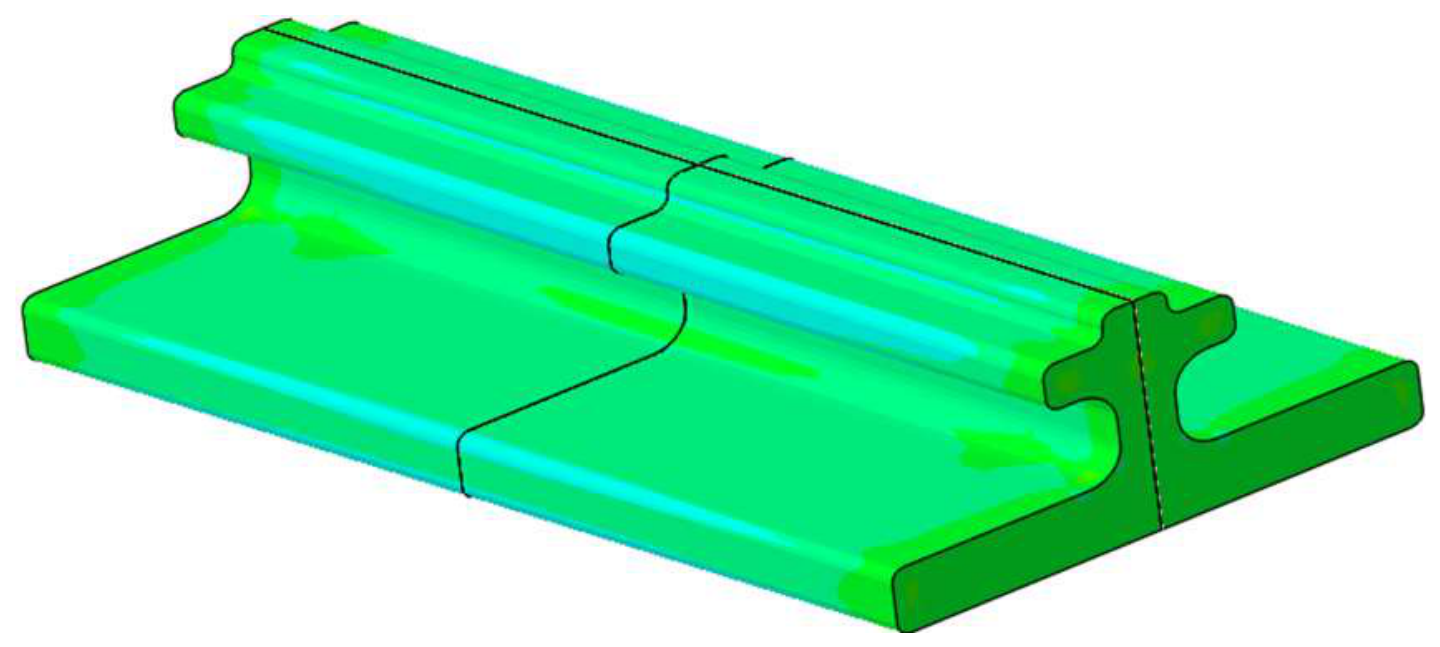
Figure 2.
Quenching residual stress distribution 20 ℃ water quenching: (a) Extrusion component residual stress, (b) Transverse component residual stress, (c) Height component residual stress.
Figure 2.
Quenching residual stress distribution 20 ℃ water quenching: (a) Extrusion component residual stress, (b) Transverse component residual stress, (c) Height component residual stress.
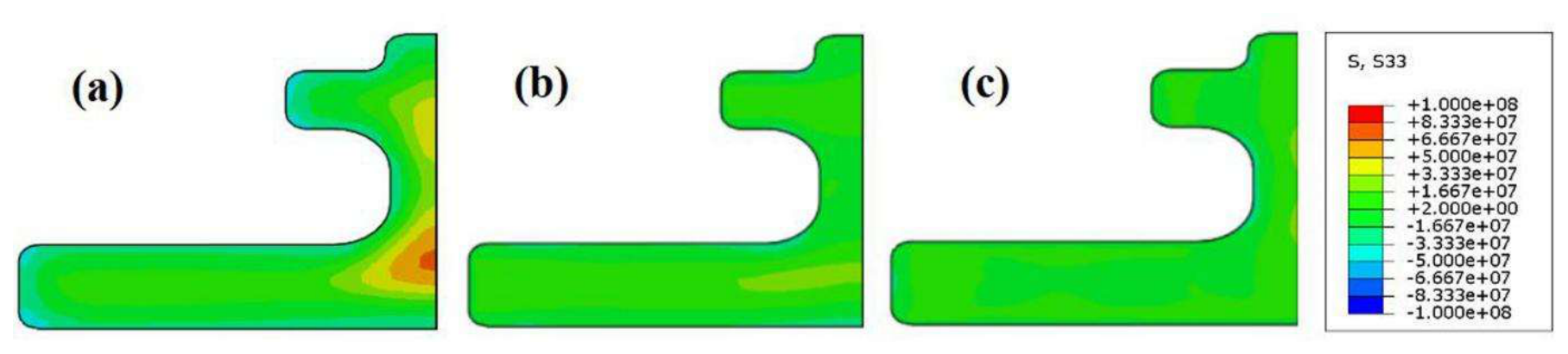
Figure 3.
The distribution of the extrusion component residual stress under different quenching media temperatures: (a)20℃ water, (b)60℃ water, (c)80℃ water.
Figure 3.
The distribution of the extrusion component residual stress under different quenching media temperatures: (a)20℃ water, (b)60℃ water, (c)80℃ water.
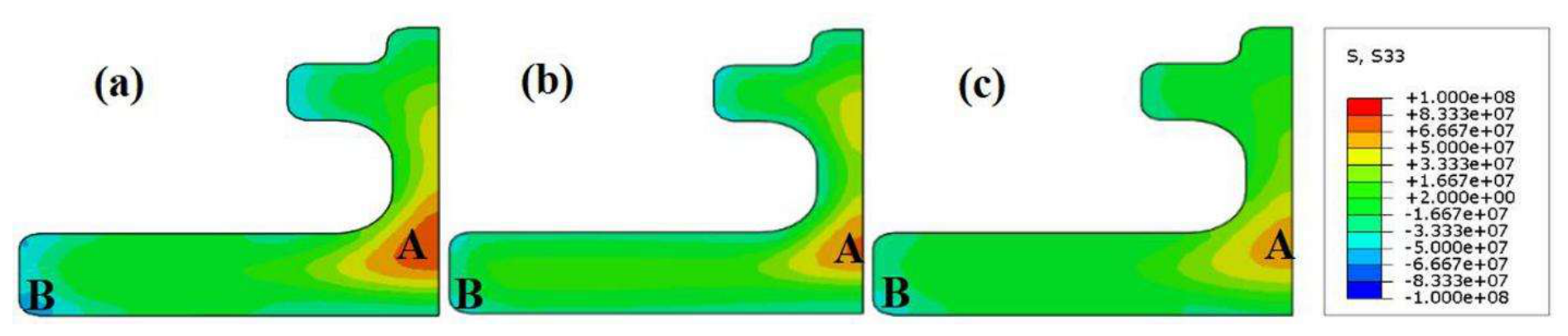
Figure 4.
The distribution of the extrusion component residual stress under differen PAG concentrations: (a)20℃ water, (b)5%PAG, (c)10%PAG.
Figure 4.
The distribution of the extrusion component residual stress under differen PAG concentrations: (a)20℃ water, (b)5%PAG, (c)10%PAG.
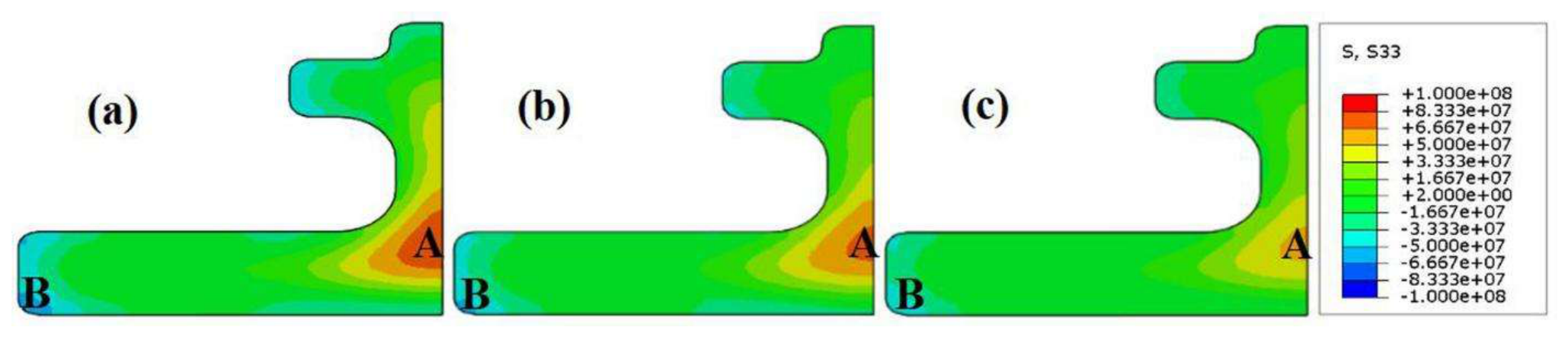
Figure 5.
The distribution of the extrusion component residual stress under different NaCl concentrations: (a)20℃ water, (b)10%NaCl, (c)20%NaCl.
Figure 5.
The distribution of the extrusion component residual stress under different NaCl concentrations: (a)20℃ water, (b)10%NaCl, (c)20%NaCl.
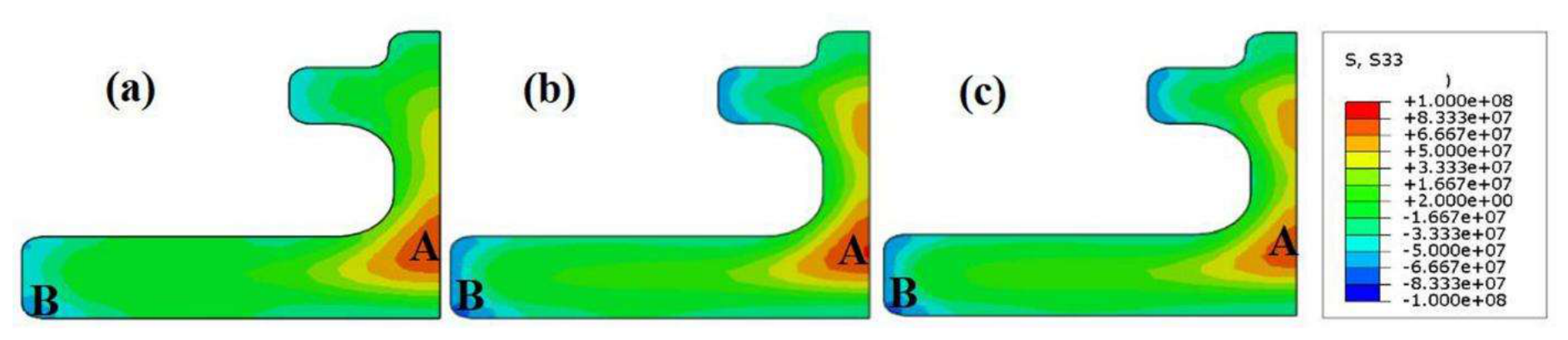
Figure 6.
The maximum residual stress of 7136 aluminum alloy extrusion under different quenching medium temperatures.
Figure 6.
The maximum residual stress of 7136 aluminum alloy extrusion under different quenching medium temperatures.
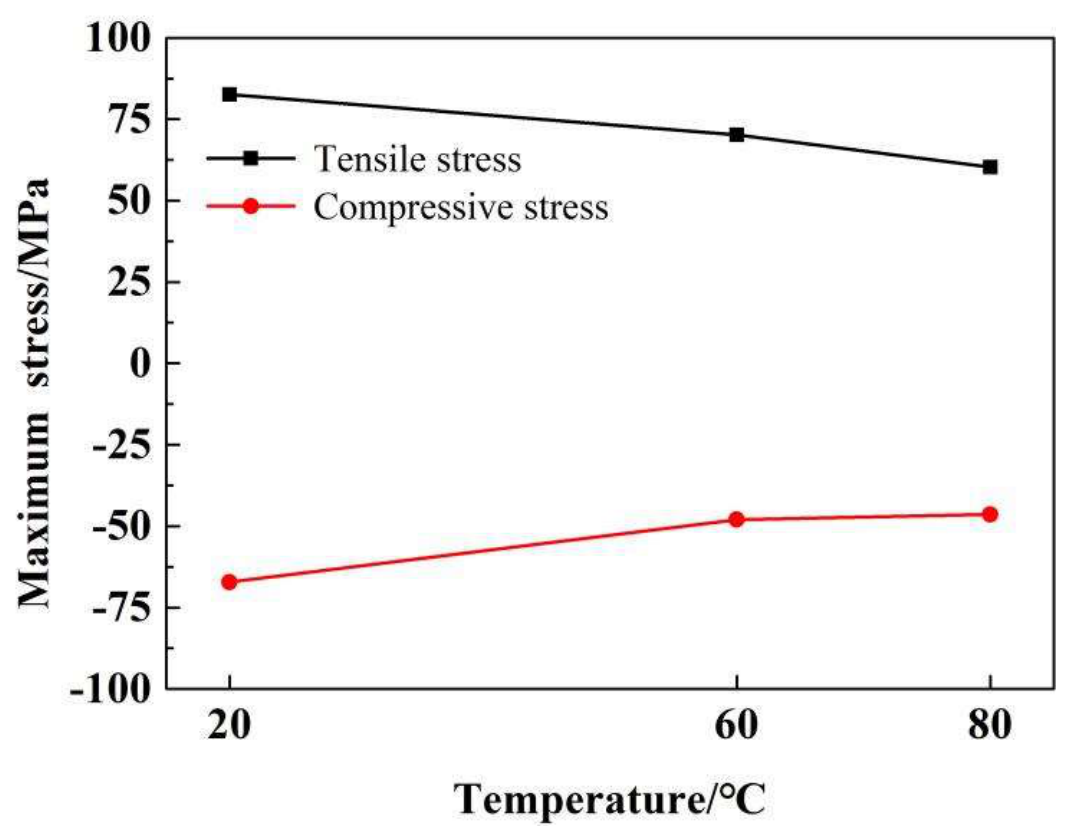
Figure 7.
The maximum extrusion component stress of 7136 aluminum alloy extrusion under different PAG aqueous solution concentrations.
Figure 7.
The maximum extrusion component stress of 7136 aluminum alloy extrusion under different PAG aqueous solution concentrations.
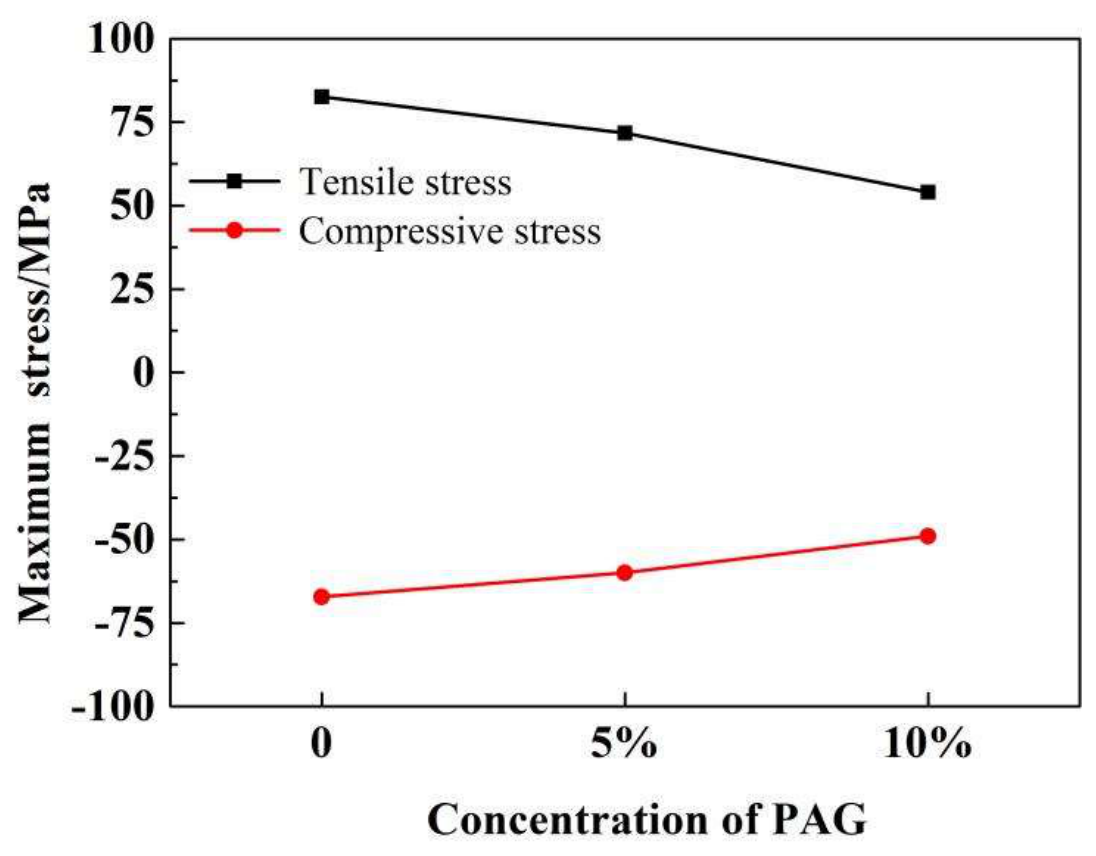
Figure 8.
The maximum extrusion component stress of 7136 aluminum alloy extrusion under different NaCl aqueous solution concentrations.
Figure 8.
The maximum extrusion component stress of 7136 aluminum alloy extrusion under different NaCl aqueous solution concentrations.
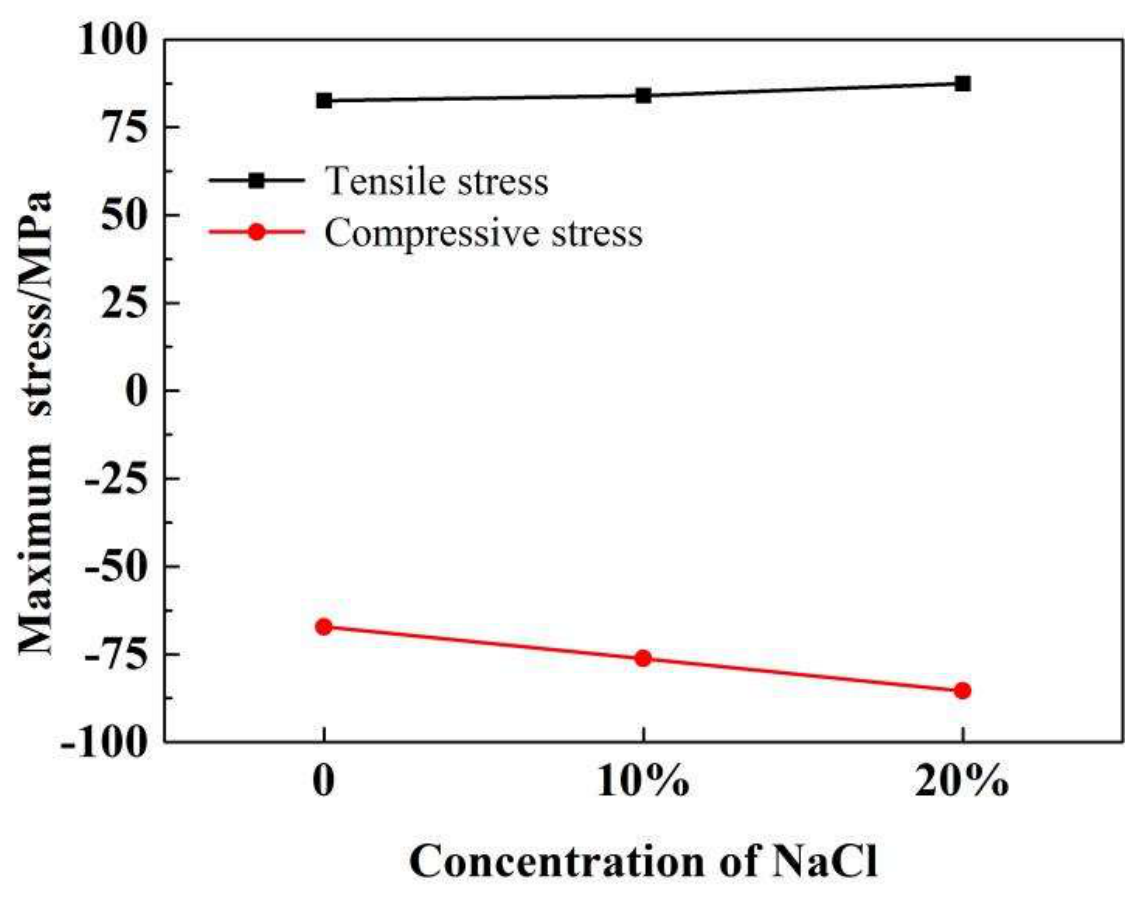
Figure 9.
Cooling curves of 7136 aluminum alloy extrusion during quenching process under different quenching medium temperatures.
Figure 9.
Cooling curves of 7136 aluminum alloy extrusion during quenching process under different quenching medium temperatures.
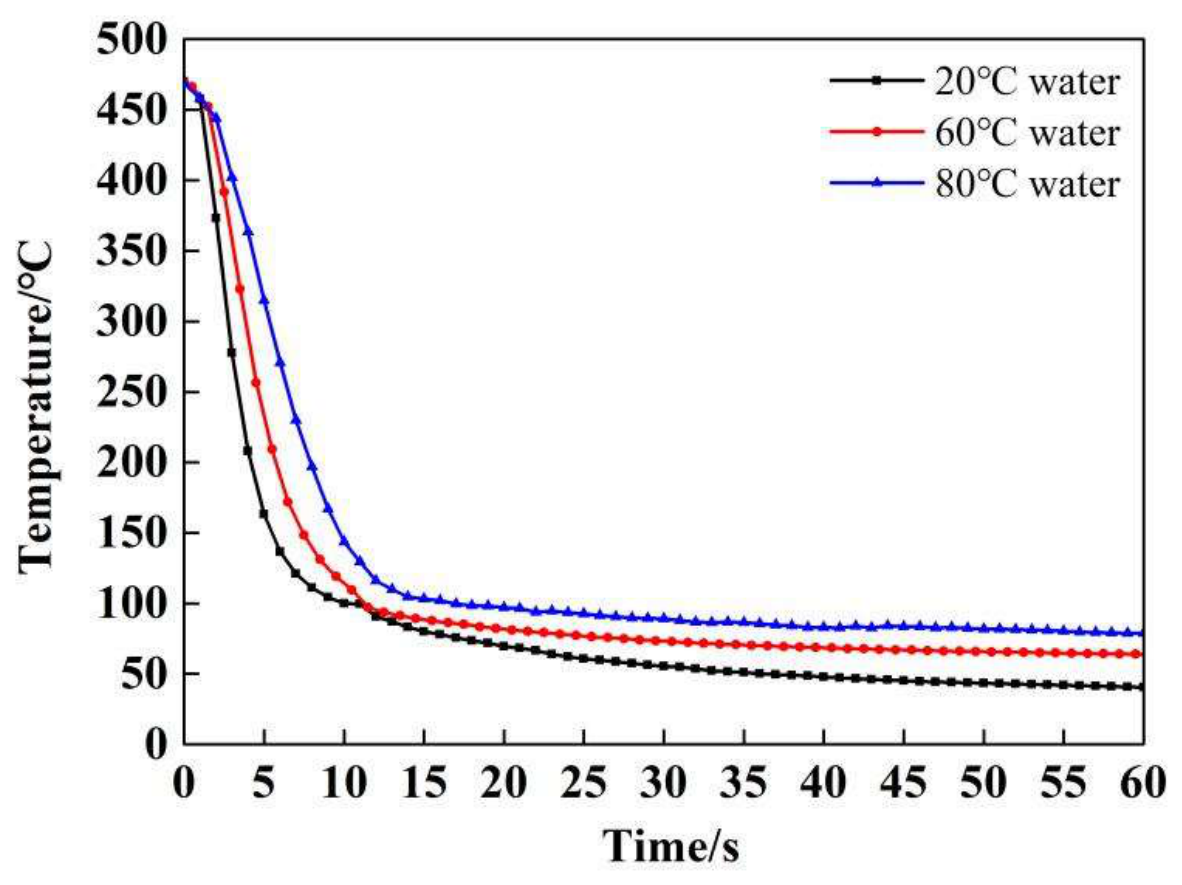
Figure 10.
Cooling curve of 7136 aluminum alloy extrusion during quenching process under different quenching PAG aqueous solution concentrations.
Figure 10.
Cooling curve of 7136 aluminum alloy extrusion during quenching process under different quenching PAG aqueous solution concentrations.
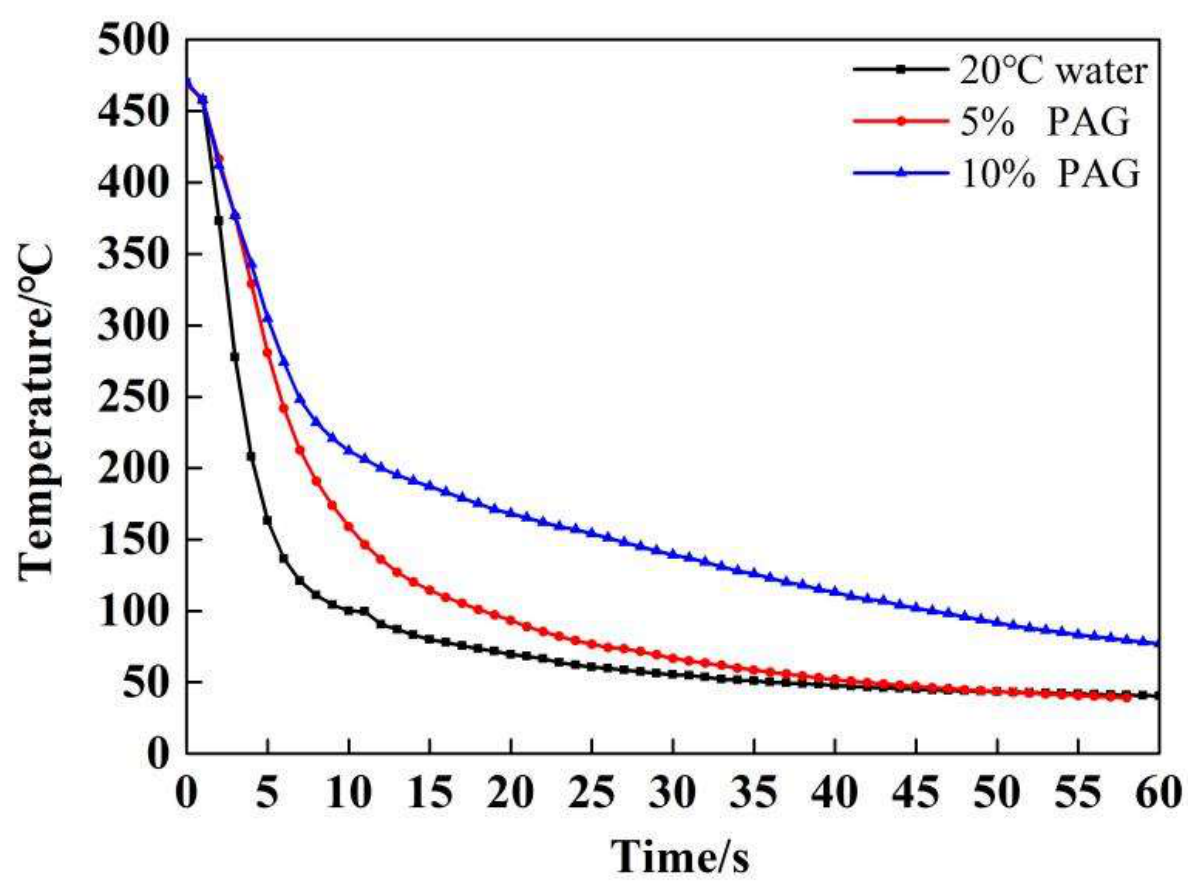
Figure 11.
Cooling curve of 7136 aluminum alloy extrusion during quenching process under different quenching NaCl concentrations.
Figure 11.
Cooling curve of 7136 aluminum alloy extrusion during quenching process under different quenching NaCl concentrations.
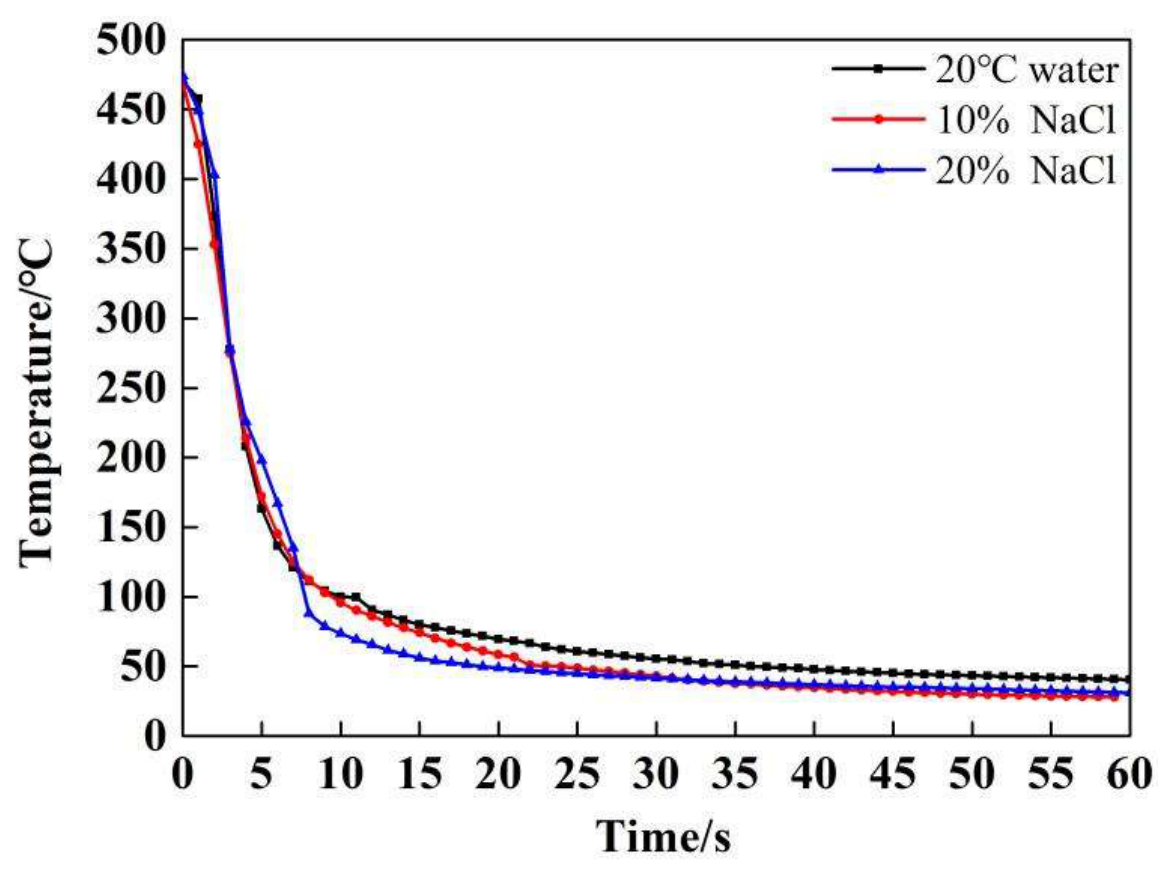

Table 1.
Decreased ratio of maximum residual stress under different quenching temperatures.
| Quenching temperature/℃ | the maximum extrusion component residual stress of the surface | the maximum extrusion component residual stress of the center |
|---|---|---|
| 20 | —— | —— |
| 60 | 28.6% | 15.0% |
| 80 | 31.0% | 27.0% |
Table 2.
Decreased ratio of maximum residual stress under different PAG aqueous solution concentrations.
Table 2.
Decreased ratio of maximum residual stress under different PAG aqueous solution concentrations.
| Quenching medium concentration/% | the maximum extrusion component residual stress of the surface | the maximum extrusion component residual stress of the center |
|---|---|---|
| 0(20℃ water) | —— | —— |
| 5 | 10.7 | 13.2 |
| 10 | 27.1 | 34.6 |
Table 3.
Decreased ratio of maximum residual stress under different NaCl aqueous solution concentrations.
Table 3.
Decreased ratio of maximum residual stress under different NaCl aqueous solution concentrations.
| Quenching medium concentration/% | the maximum extrusion component residual stress of the surface | the maximum extrusion component residual stress of the center |
|---|---|---|
| 0 (20℃ water) | —— | —— |
| 10 | 13.4 | 1.7 |
| 20 | 27.1 | 5.8 |
Disclaimer/Publisher’s Note: The statements, opinions and data contained in all publications are solely those of the individual author(s) and contributor(s) and not of MDPI and/or the editor(s). MDPI and/or the editor(s) disclaim responsibility for any injury to people or property resulting from any ideas, methods, instructions or products referred to in the content. |
© 2026 by the authors. Licensee MDPI, Basel, Switzerland. This article is an open access article distributed under the terms and conditions of the Creative Commons Attribution (CC BY) license (http://creativecommons.org/licenses/by/4.0/).
Copyright: This open access article is published under a Creative Commons CC BY 4.0 license, which permit the free download, distribution, and reuse, provided that the author and preprint are cited in any reuse.