

Submitted:
23 September 2026
Posted:
24 September 2026
You are already at the latest version
Abstract
The endangered Chinese horseshoe crab (Tachypleus tridentatus) suffers severe habitat degradation and coastal tourism disturbance across its nursery habitats along the Southeast China coast. Community based conservation (CBC) acts as a valuable complementary Other Effective area based Conservation Measure (OECM); yet few integrated domestic case studies combine ecological field monitoring with quantitative social ecological assessment. Based on the “Action for the Sea” supported Tangdong Horseshoe Crab Conservation Community in Fujian Province, this study integrates non destructive seasonal juvenile horseshoe crab surveys, questionnaire driven social ecological evaluation, coupling coordination and obstacledegree modelling, together with multi year project archival records. Results reveal that overlyingwater physicochemical parameters (temperature, salinity, pH) at Antenna Beach maintain suitable ranges for juvenile T. tridentatus across seasons, while juvenile abundance peaks temporally coincide with the peak tourist season. The tourism disturbance resilience socialecological system exhibits moderate coupling accompanied by mild dysfunctional coordination. Major bottlenecks include fragile volunteer capacity, incomplete conservation livelihood feedback loops, and tourism induced sociocultural pressures. This “science led local participation cultural tourism integration” practical model has obtained both domestic and international recognition. Targeted adaptive management measures are further proposed to support community based intertidal biodiversity conservation across the Asia Pacific region.
Keywords:
Tachypleus tridentatus
; community-based conservation
; juvenile nursery habitat
; coastal tourism disturbance
; ecological resilience
; Other Effective area-based Conservation Measure (OECM)
; Southeast China coast
1. Introduction
The Chinese horseshoe crab (Tachypleus tridentatus), one of the four extant horseshoe-crab species worldwide, is a keystone intertidal organism endemic to the Northwest Pacific coast. Listed as Endangered on the IUCN Red List and designated as a Class-II national protected wild animal in China, this ancient marine arthropod relies heavily on shallow muddy-sand intertidal flats as critical nursery habitats for its juvenile stages [1]. Juvenile T. tridentatus spend multiple years living on tidal flats; their survival is extremely sensitive to changes in sediment quality, water physicochemical conditions and human-caused intertidal disturbances. Over recent decades, intensive coastal development, tidal flat reclamation, over-harvesting and marine pollution have triggered sharp population declines of Chinese horseshoe crabs across most of their historical distribution range along Southeast China [1].
Coastal tourism represents a fast-growing anthropogenic pressure on many remaining horseshoe-crab nursery grounds in subtropical China. Beach-based tourism brings large numbers of visitors to intertidal zones, resulting in direct habitat trampling, waste accumulation and altered tidal-flat micro-environments. On the other hand, tourism may also create potential local economic benefits for coastal villages, which can in turn motivate resident participation in biodiversity conservation. Such dual effects create complicated social-ecological trade-offs: conservation actions must balance species protection needs with community livelihood demands, rather than simply excluding human activities from tidal-flat landscapes [2].
Community-based conservation (CBC) has been widely acknowledged worldwide as a feasible governance pathway for coastal biodiversity, which highlights empowering local residents as core stakeholders alongside scientists, governmental agencies and non-governmental organisations. In horseshoe crab conservation practice, the Community-Based Horseshoe Crab Reserve programme launched by the United-States-based Ecological Research & Development Group (ERDG) has demonstrated that local coastal residents can deliver sustained contributions for horseshoe-crab monitoring, public outreach and habitat stewardship [3]. This pioneering model has offered inspiration for conservation practitioners throughout the Asia-Pacific. Nevertheless, existing Chinese research on T. tridentatus predominantly focuses on laboratory toxicology, artificial breeding technology or pure biological population surveys. Empirical multi-dimensional case studies that integrate long-term on-site community operation, field species monitoring and quantitative social-ecological assessment remain scarce in domestic academic publications [4]. Important knowledge gaps persist regarding how local Chinese coastal communities can be organised and maintained to achieve practical horseshoe-crab conservation outcomes under real-world tourism-driven disturbance.
JJinjiang Tangdong Village is situated on the southeast coast of Fujian Province and hosts Antenna Beach, which is recognised as one of the key juvenile T. tridentatus nursery habitats within Fujian [5]. This tidal flat faces growing recreational pressure as local coastal tourism expands. Against this backdrop, the Tangdong Horseshoe–Crab Conservation Community was formally launched on Chinese Qixi Festival in 2022, with financial support from the non–governmental “Action for the Sea” grant programme (Global Environmental Innovation Fund). This community-oriented multi-stakeholder platform unites local village residents and volunteers, university research teams, local marine-fishery administrative authorities, wetland societies and environmental non-governmental organisations. Since its establishment, the site has built expert advisory panels, local volunteer teams, conservation outreach systems and pilot cultural-tourism products, offering a rare real-world social-ecological experiment for horseshoe-crab conservation along the Chinese coast. This site also exhibits potential value as an Other Effective area-based Conservation Measure (OECM) for intertidal biodiversity conservation in southeast China [6].
Despite several years of on-the-ground practice, few peer-reviewed studies have systematically documented the ecological status of juvenile horseshoe-crabs at Antenna Beach, quantitatively evaluated the interaction between coastal-tourism disturbance and community ecological resilience, or synthesised practical achievements and inherent bottlenecks of this community-governed conservation site [7]. Therefore, this case-study paper carries out three main research objectives:
- (1)
- To characterise seasonal population variation of juvenile T. tridentatus and corresponding intertidal habitat environmental conditions under coastal-tourism disturbance within Tangdong Antenna Beach;
- (2)
- To assess the coupling-coordination relationship between coastal-tourism disturbance and community ecological resilience by integrating questionnaire- derived social-ecological datasets, entropy-weight calculation, coupling-coordination and obstacle- degree modelling;
- (3)
- To document multi-stakeholder operational practices of the Tangdong Horseshoe-Crab Conservation Community, identify key practical bottlenecks, and extract transferable conservation experience for horseshoe-crab and intertidal-wetland community-based conservation across the broader Asia-Pacific coastal region.
- (4)
- This study provides empirical field-monitoring and social-science evidence for community-led marine species conservation in China and supplies references for constructing analogous CBC initiatives targeting endangered intertidal fauna under rising tourism pressure.
2. Materials and Methods
2.1. Study Area
Tangdong Village is located in Jinjiang City, Fujian Province, on the southeast coast of China (24°31′ N, 118°38′ E,Figure 1). Antenna Beach, a typical muddy-sand intertidal flat attached to this village, serves as a critical nursery habitat for juvenile Tachypleus tridentatus [1]. The intertidal zone features mixed sand-silt sediments, suitable for the burrowing and foraging activities of juvenile horseshoe crabs. In recent years, the scenic coastline of Antenna Beach has attracted a growing number of domestic tourists, making coastal tourism an emerging local socioeconomic driver, while also introducing increasing anthropogenic disturbance to intertidal biodiversity.
Initiated on Chinese Qixi Festival in 2022, the Tangdong Horseshoe-Crab Conservation Community was supported by the non-governmental “Action for the Sea” grant from the Global Environmental Innovation Fund (GEIF) [3]. This multi-stakeholder platform brings together local villagers, community volunteers, university research groups, local marine-fishery administrative departments, wetland societies and environmental non-governmental organisations. A local Horseshoe-Crab Conservation Station was established as an on-site working base for volunteer patrols, science outreach and public-education activities. This community-driven site has potential value as an Other Effective area-based Conservation Measure (OECM) for intertidal biodiversity conservation [6].
2.2. Field Survey of Juvenile Tachypleus tridentatus
Field investigations were conducted seasonally from Jan. 2025 to Dec. 2025 across Antenna Beach to monitor the abundance of juvenile horseshoe crabs and corresponding habitat environmental parameters. Two parallel transects were set up along the intertidal zone, each approximately 620 m in length. Ten 8 m × 8 m quadrats were arranged along each transect, with a 70 m spacing between adjacent quadrats, and the gap between the two transects was 20 m [8,9,10].
Visual non-destructive surveys were implemented in each quadrat during low-tide periods. Only visible juvenile individuals were counted; no animal specimens were collected, captured or sacrificed in this field campaign, complying with Chinese wildlife-protection regulations [2]. Meanwhile, overlying-water environmental variables including water temperature (℃), salinity (ppt), and pH value were measured in-situ using portable meters (AR 8212+ for salinity; pH 828+ for pH and temperature). Seasonal variations in juvenile abundance and physicochemical indicators were recorded for subsequent ecological analysis.
All field investigations complied with Chinese wildlife-protection ethical requirements. No biological specimens were collected or sacrificed in this study. For encountered juvenile crabs, only carapace-width measurements were performed, and all individuals were released on-site back to their original intertidal habitat immediately after measurement.
2.3. Social-Ecological Questionnaire Survey and Evaluation Model
2.3.1. Questionnaire Design and Implementation
Based on existing literature on tourism disturbance and community ecological resilience [11], two sets of questionnaires were developed for two respondent groups: Tangdong Village local residents, and tourists / former visitors to Antenna Beach. The questionnaire covered demographic background, community social environment, economic conditions, cultural influences, ecological status and public awareness for horseshoe-crab conservation. Each question item adopted five-point Likert scales for quantitative scoring.
Questionnaire distribution combined offline on-site interviews and online digital forms in May 2025. A total of 130 valid questionnaires were collected with a 100 % valid response rate. SPSS 26.0 software was applied for reliability and validity testing. The Cronbach’s α coefficient reached 0.793, and the KMO value was 0.840, indicating acceptable reliability and construct validity of the questionnaire dataset [12].
2.3.2. Evaluation Index System and Analytical Models
An evaluation index system containing two subsystems (coastal-tourism disturbance and community ecological resilience) was constructed. The coastal-tourism-disturbance subsystem included social-impact, economic-impact, ecological-impact and cultural-impact dimensions. The community-ecological-resilience subsystem contained resistance capacity, response capacity and recovery-capacity dimensions. Positive-direction and negative-direction indicators were distinguished based on practical ecological implications.
Four quantitative analytical approaches were adopted: entropy-weight method for objective indicator weighting, coupling-degree model, coupling-coordination- degree model and obstacle-degree model [13]. These models were used for calculating comprehensive subsystem indexes, identifying coupling- coordination status between tourism disturbance and ecological resilience, and screening key obstacle factors restricting coordinated development.
To keep the main text concise, all detailed mathematical formulas, calculation workflows and original indicator-weight tables are presented in Supplementary File S1. Only core logical principles for each model are briefly summarised below.
- (1)
- The entropy-weight method eliminates subjective bias and assigns objective weights for each indicator based on standardized questionnaire raw data.
- (2)
- The coupling-degree model quantifies interaction intensity between the coastaltourism-disturbance subsystem and community-ecological-resilience subsystem.
- (3)
- The coupling-coordination-degree model further evaluates synchronous- development quality of these two subsystems.
- (4)
- The obstacle-degree model quantifies the hindering effect of each indicator and system-layer factor for the whole social-ecological coordinated-development system.
2.4. Practical-Project-Derived Data
In addition to field-survey and questionnaire data, this study incorporated archived practical records generated by the “Action for the Sea” GEIF-funded project during the implementation period Jan. 2025 – Dec. 2025. These archival materials documented the construction of the expert advisory panel, volunteer-team management, operation of the Horseshoe-Crab Conservation Station, public-science-popularisation events, study-tour curriculum development, cultural- creative-product design, and domestic-and-international conservation- exchange activities [14].
All above-mentioned activities represent public non-confidential conservation-related practice; no private personal information was extracted for this study. Selected on-site activity photographs are compiled in Supplementary File S2. Full-text English-version questionnaires and summarised raw questionnaire statistics are supplied within Supplementary File S3.
3. Results
3.1. Seasonal Variation of Juvenile Tachypleus tridentatus and Habitat Environmental Conditions
Seasonal field monitoring was implemented from Jan. 2025 to Dec. 2025. Figure 2 summarises seasonal variations of overlying-water physicochemical parameters (water temperature, salinity, pH) for transect 1 and transect 2 at Antenna Beach.
Water temperature exhibited pronounced seasonal fluctuations across both sampling transects. Summer registered the highest mean temperature values (Transect 1: 31.34 °C; Transect 2: 30.99 °C); winter water temperature decreased to approximately 13–14 °C. By contrast, salinity and pH maintained relatively narrow fluctuation ranges suitable for juvenile horseshoe-crab survival across four seasons. Seasonal salinity values fluctuated mostly within 28–34 ppt; pH values ranged between 8.20–8.90, staying within the physiological suitable scope for juvenile T. tridentatus. No obvious seasonal degradation trend was observed for overlying-water physicochemical properties at Antenna Beach based on field measurements.
Juvenile T. tridentatus abundance displayed prominent seasonal heterogeneity. The summer survey recorded maximum juvenile counts: only 12 individuals were encountered on transect 1, whereas 132 individuals were counted on transect 2. Juvenile numbers dropped sharply in autumn (28 individuals on transect 1, 12 individuals on transect 2). Very few juveniles were detected in spring; zero juvenile individuals were recorded during winter field surveys. Higher juvenile abundance on transect 2 is likely associated with its finer sediment texture, providing more favourable microhabitats for burrowing and foraging of young horseshoe crabs.
Notably, the summer period with peak juvenile density fully overlaps with the local peak coastal-tourism season of Antenna Beach. Although the overlying-water physicochemical environment remains suitable for juvenile survival in summer, massive tourist activities bring substantial risks including intertidal sediment trampling and beach-waste pollution to this critical nursery flat [15].
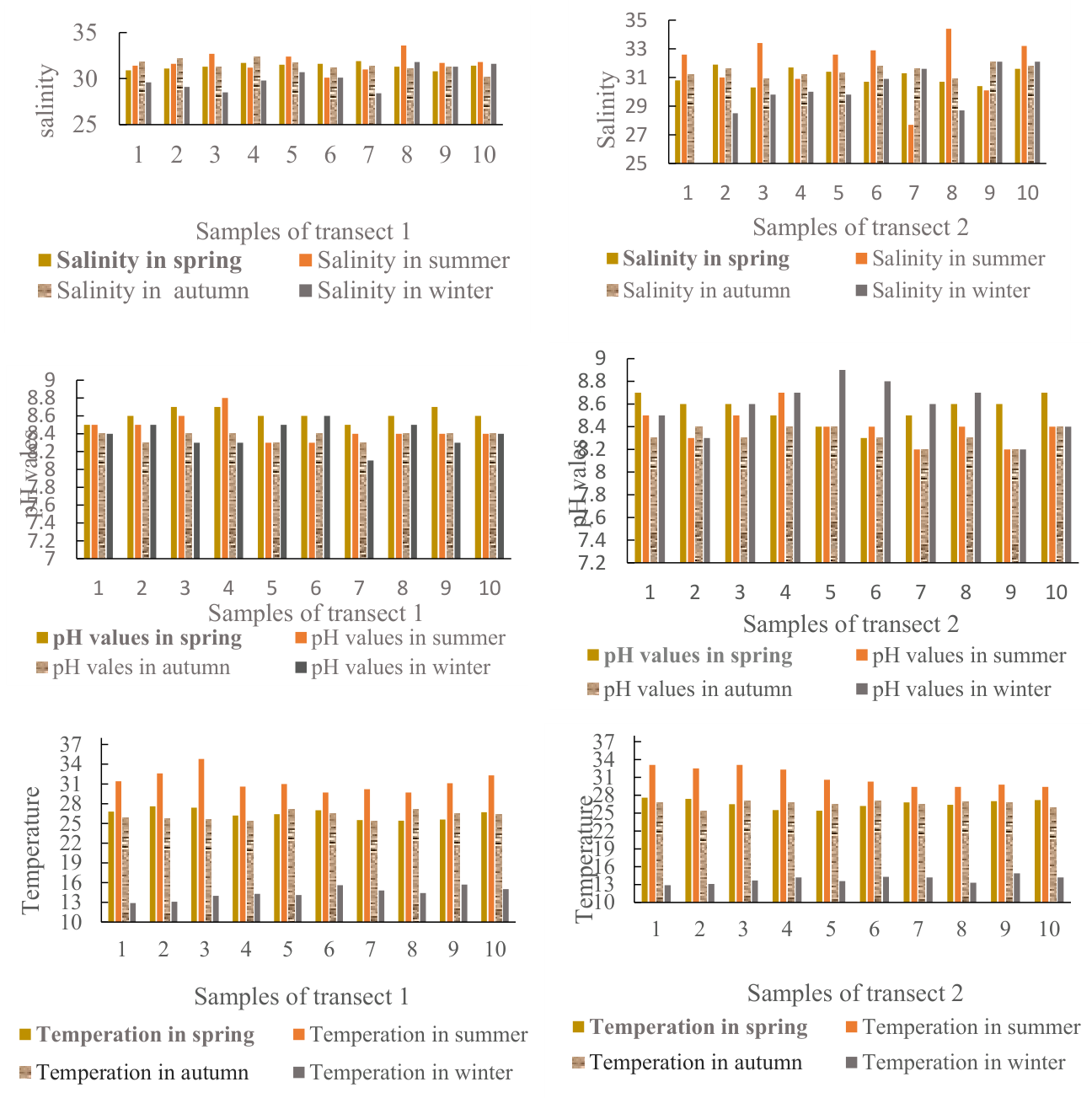
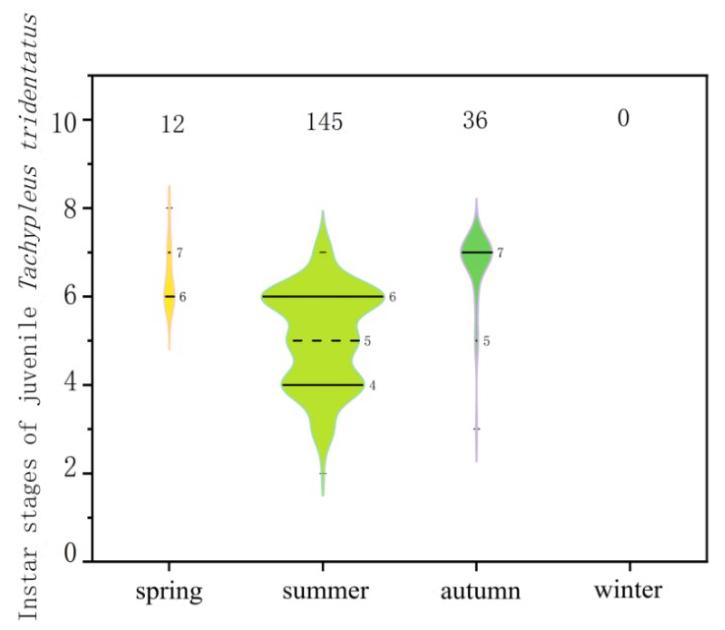
Figure 2.
Seasonal variations in overlying-water physicochemical parameters (salinity, pH and temperature) at Antenna Beach, Tangdong Village.
Figure 2.
Seasonal variations in overlying-water physicochemical parameters (salinity, pH and temperature) at Antenna Beach, Tangdong Village.
Figure 3.
Seasonal changes of juvenile Tachypleus tridentatus abundance at Antenna Beach, Tangdong Village.
Figure 3.
Seasonal changes of juvenile Tachypleus tridentatus abundance at Antenna Beach, Tangdong Village.
3.2. Practical Implementation Outputs of the Tangdong Horseshoe-Crab Conservation Community
Based on archived project records spanning January 2025 to December 2025, this multi-stakeholder conservation platform delivered tangible practical outputs while exposing multiple realistic bottlenecks.
A formal multidisciplinary expert-advisory-panel consisting of 13 specialists was established, covering coastal-wetland ecology, horseshoe-crab conservation biology, aquaculture, zoology and tourism management. Repeated on-site consultations, seminars and technical-guidance events were held to offer professional support for community-level conservation work. A local volunteer team of 29 community residents obtained official certification by provincial- and municipal-level authorities. Within the Horseshoe-Crab Conservation Station framework, regular volunteer-led intertidal-habitat patrols were carried out, with more than ten documented volunteer monitoring and shore-cleaning events. Dedicated volunteer-management regulations were formulated for standardising daily patrol assignments [14]. In addition to routine patrol work, the community has incorporated horseshoe-crab-protection clauses into local village regulations, forming informal grassroots governance constraints for beach-visiting behaviours. Targeted special-period shore-patrol campaigns are carried out annually from April to September, corresponding to the key breeding and nursery season of juvenile T. tridentatus. Local volunteers provide on-site persuasion and guidance for tourists, discourage destructive intertidal activities, and remove beach litter to mitigate habitat disturbance.
Between 2025 and 2026,four large-scale public-science-outreach campaigns were organised at key time-nodes, including World Horseshoe-Crab Day, Qixi Cross-Taiwan-Strait Horseshoe-Crab Conservation Memorial Day, Provincial Wildlife-Protection Month, World Oceans Day and World Wetlands Day. These events integrated on-site interpretation, interactive experience, juvenile-crab release and cultural-creative-product exhibitions. Cumulative online-and-offline outreach reached more than 20 000 participants.With the support of the Quanzhou Municipal Bureau of Ocean and Fisheries, Quanzhou Wetland Society commissioned a summer social practice team from the College of Fine Arts at Huaqiao University in June 2026 to install a public art landmark—featuring a pair of horseshoe crabs—in the Tangdong Village Park; the sculpture was constructed using repurposed local waste materials, such as oyster shells. As part of the horseshoe crab conservation initiative, a vacant traditional house formerly owned by an overseas Chinese resident was renovated into a shared marine culture space open to the public, featuring an exhibition hall for science popularization and an educational classroom, thereby providing a permanent venue for educational groups to engage in science outreach and study activities. Furthermore, community representatives took part in seven domestic-and-international conservation-exchange activities, including virtual and in-person communications with conservation practitioners in Malaysia and South Korea, to share Chinese community-based horseshoe-crab-conservation practical experience. As a cross-strait shared conservation symbol, T. tridentatus forms the core theme of the annual Qixi Cross-Strait Horseshoe-Crab Conservation Day events held at Tangdong. These activities facilitate continuous experience-sharing between conservation practitioners from both sides of the Taiwan Strait, expanding the local practice into cross-regional conservation dialogue.
Two original study-tour curricula themed around local coastal resources and horseshoe-crab protection were completed, and corresponding training sessions were delivered for community instructors. A total of 22 types of horseshoe-crab-themed cultural-creative commodities (stationery, ornaments, home-decor items, 3D-printed handicrafts) were designed and produced (Supplementary File S2), integrating science-popularisation functions with commodity attributes. Over 200 pieces of these cultural-creative products were distributed through exhibition, gifting and pilot sales activities.
Nevertheless, three major practical bottlenecks emerged from project-practice records. First, systematic training mechanisms for community volunteers remain incomplete; volunteer competences for study-tour guidance and professional habitat monitoring require further improvement. Second, marketing and sales channels for horseshoe crab-themed cultural-creative commodities are limited. Most products are applied for exhibition and public-education gifting, while on-site retail turnover stays low. Third, deep-level collaborative relationships between community-run study-tour programmes and formal primary-and-secondary schools have not been fully constructed, constraining the scale of youth-oriented conservation education. Selected field-activity photographs are provided in Supplementary File S2.
3.3.. Results of Coupling-Coordination and Obstacle-Degree Analysis
The calculated comprehensive index values were 0.2818 for the coastal-tourism-disturbance subsystem and 0.2021 for the community-ecological-resilience subsystem. This result indicates that comprehensive anthropogenic pressure brought by tourism disturbance is slightly higher than the overall ecological-resilience capacity of this social-ecological system.
The coupling-degree value C reached 0.4932, corresponding to the moderate-coupling stage. The coupling-coordination-degree value D was 0.3454, falling within the mild-dysfunctional-coordination grade (Table 1). Although the two subsystems exhibit synchronous operation, their overall coordinated-development level remains relatively weak [13].
Obstacle-degree calculation revealed that resistance capacity yielded the highest system-layer obstacle value (H = 0.2548), followed successively by social impact (H = 0.1628), economic impact (H= 0.1626), cultural impact (H = 0.1440) and recovery capacity (H = 0.1146) (Figure 4). At the indicator layer, “reduction of aquaculture output”, “resident-resident communication”, “improvement of resident income”, “influence of external culture upon local culture” and “residents’ conservation awareness towards horseshoe crabs” represent the top-ranked limiting factors hindering coordinated development of this social-ecological system. In contrast, obstacle-degree values for the ecological-impact layer and response-capacity layer remain relatively low, which suggests that existing habitat-protection measures and public-participation mechanisms already deliver partial practical benefits.
Full indicator-weight tables, raw questionnaire statistics and complete model-calculation outputs are deposited in Supplementary File S1 and Supplementary File S3.
4. Discussion
4.1. Habitat Conflict Between Juvenile T. tridentatus Recruitment and Peak Coastal-Tourism Pressure
Our seasonal field surveys demonstrated that juvenile T. tridentatus abundance peaked in summer at Antenna Beach, which temporally overlaps with peak tourist-visitation periods [2]. In-situ monitoring indicated that overlying-water physicochemical conditions (temperature, salinity, pH) are basically suitable for juvenile survival across seasons; hence direct physical trampling and waste pollution brought by tourist activities constitute the primary immediate threat for this critical nursery flat, rather than seasonal shifts in water-quality parameters [4]. Heavy visitor foot-traffic can trigger sediment disturbance, physical crushing of buried juvenile crabs, and beach-litter accumulation, all of which degrade microhabitat suitability for early-life-stage horseshoe crabs [15].
These empirical observations support previous conservation-declaration arguments for Chinese horseshoe-crab protection: effective in-situ conservation cannot merely rely on biological monitoring; human socioeconomic drivers such as coastal tourism must be explicitly integrated within habitat-management frameworks [16]. Under high-tourism-pressure scenarios, passive protection measures prove insufficient. Time-differentiated on-site supervision and visitor guidance should be implemented during summer nursery-habitat peak periods for mitigating cumulative disturbance risk. Comparable tourism-habitat conflicts have been documented for other Asia-Pacific coastal endangered-species conservation projects. For example, community-based dugong (Dugong dugon) monitoring on Thailand’s Koh Libong Island also reported tourist-activity overlap with key feeding seasons for vulnerable marine megafauna, requiring time-staggered site-management strategies [18]..
4.2. Strengths of the “Science-Led-Local-Participation-Cultural-Tourism- Integration” CBC Model and Bridging Functions of Civil-Society Organisations
The Tangdong Horseshoe-Crab Conservation Community represents a practical community-based-conservation (CBC) experiment targeting endangered intertidal fauna on China’s southeast coast. Distinct from top-down purely governmental conservation governance, this model heavily depends on civil-society organisations (wetland societies, ecological societies) serving as multi-functional bridges linking academic research teams, local villagers, fishery-administration authorities and environmental-funding agencies [17]. The analysis within this paper draws on archived project-implementation records of the “Action for the Sea” grant-supported initiative: academic teams supply technical-monitoring frameworks and scientific guidance; civil-society organisations coordinate expert panels, organise cross-strait conservation events and translate academic findings into accessible public-education activities; village-resident volunteers undertake routine tidal-flat patrols and on-site outreach work. This multi-actor linkage echoes the spirit of the Xiamen Declaration on Protection and Conservation of Tachypleus tridentatus, which advocates joint participation from academia, non-governmental organisations, local communities and regulatory authorities for horseshoe-crab-population restoration [16].
Notably, Tangdong’s practical conservation experience has been shared in international forums including the 5th International Symposium on Horseshoe Crab Science and Conservation (Singapore), and “Action for the Sea” international-exchange workshops held in Indonesia and Malaysia, advancing South-South knowledge-sharing for coastal-biodiversity governance. Moreover, the demonstrative-construction project of Minnan-coastal horseshoe-crab-conservation- community sustainable-development model derived from Tangdong practice obtained the New-Born Practical-Case Prize within the “Biodiversity-Friendly Wetland Cases” programme organised by the All-China Environment Federation (2025). These recognitions reflect rising domestic-and-international attention toward China’s locally rooted horseshoe-crab community-conservation practice.
Comparative analysis with the well-documented United-States ERDG horseshoe-crab community-reserve programme [3] reveals both similarities and context-driven adaptations for the Tangdong case. Both models highlight local-resident stewardship and volunteer-based habitat monitoring. Nevertheless, the Chinese-context practice puts higher emphasis on civil-society coordination, cross-strait science communication, and attempts to construct conservation-linked cultural-creative and study-tour economies. This “conservation-oriented- cultural-economy pilot” responds to a core practical dilemma: coastal-village communities will hardly sustain long-term volunteer-driven conservation work without perceiving tangible local benefits generated from biodiversity-protection activities [7]. Similar logic can also be observed within hornbill co-management practice at Yunnan Tongbiguan Reserve (China), in which civil-society organisations supported local-community patrol teams to develop bird-watching-derived alternative livelihoods for sustaining volunteer motivation in long-term conservation work [19].
Our coupling-coordination-modelling outputs identify a moderate-coupling yet mild-dysfunctional status for the tourism-disturbance-and-ecological-resilience social-ecological system [13]. This result demonstrates that multi-stakeholder mechanisms constructed by local communities and supporting civil-society actors have built basic interaction between conservation objectives and local socioeconomic development; nevertheless, the whole system has not reached mutually-promoting coordinated-development status. Obstacle-degree results further indicate that resistance capacity, social-impact factors and economic-impact factors constitute major bottlenecks [11]. These analytical outputs match field-project-practice records: volunteer-capacity shortages, limited market access for conservation-themed cultural-creative commodities, insufficient deep-level cooperation between community-study-tour programmes and formal schools collectively constrain system-level resilience improvement.
Internationally, analogous bottlenecks are widely reported within recent community-conservation projects targeting threatened wildlife. The Arnavon Community Marine Park (Solomon Islands, hawksbill-turtle conservation) proved community patrols can deliver positive conservation outcomes; yet sustained funding and capacity-building remain persistent challenges after initial grant cycles terminate [20]. Community-led conservation for critically-endangered white-bellied heron in northern Myanmar also reported heavy volunteer-team dependence on external-project support; without systematic training and stable-livelihood-feedback mechanisms, community-participation risked declining once external resources disappeared [21]. Domestically, the Lianghekou Liaohe Estuary spotted-seal volunteer-monitoring programme similarly identified shortages of systematic-volunteer-training and stable-incentive-mechanisms as factors restricting long-term community-conservation effectiveness [22]. Within Chinese horseshoe-crab-conservation research, the Zhanjiang Naizhou-Island horseshoe- crab-conservation-community case also encountered comparable dilemmas of translating conservation achievements into stable local-economic-benefit streams [23].
4.3. Inherent Bottlenecks and Realistic Boundaries for Community-Led Horseshoe-Crab Conservation
It should be emphasised that community-based-conservation represented by the Tangdong site cannot substitute formal state-managed nature reserves or official law-enforcement actions [6]. CBC works optimally as an Other Effective area-based Conservation Measure (OECM), complementing statutory protected-area networks for intertidal-biodiversity conservation [6]. Recent domestic OECM-oriented research highlights that Chinese community-conservation sites still require institutional recognition, standardised-monitoring protocols and policy support for formal integration within national-biodiversity-governance frameworks [24,25,26,27,28]. Three persistent bottlenecks observed within this case may possess general reference value for analogous coastal community conservation sites across the Asia-Pacific region.
First, volunteer-team sustainability remains fragile without systematic-training and stable-incentive frameworks. Although 29 local residents obtained certification as community volunteers (Supplementary File S2), most participants lack systematic- professional training for habitat-monitoring or environmental-education-guidance. Current volunteer engagement heavily relies on public-spirited enthusiasm rather than institutionalised-motivation systems [17]. Without structured-capacity-building measures, volunteer-driven patrol and outreach-activities risk fading away after initial-project-grant funding ends. This observation aligns with findings derived from Pearl-River-Estuary Eurasian-otter cross-border-community-monitoring-project research: continuous-capacity-building proves indispensable for citizen-science-based-conservation teams [29].
Second, the “conservation-to-local-benefit” feedback loop remains incompletely closed. Within grant-supported-project phases, 21 types of horseshoe-crab-themed cultural-creative-products and two study-tour curricula were developed; however, marketing channels stay narrow. Most cultural-creative outputs are used for exhibition and public-event gifting instead of steady commercial circulation. Study-tour collaboration with K-12 schools stays at pilot-project level. Consequently, economic returns generated by conservation-related-cultural-products cannot reliably feed back toward community-conservation operational-costs. This constitutes a widespread dilemma for community-conservation-pilot projects: constructing conservation-aligned alternative-livelihood pathways requires longer-term-market-cultivation beyond short-term-project-cycles [30].
Third, external-cultural-disturbance brought by coastal-tourism exerts subtle sociocultural-pressure upon local-coastal-villages. Questionnaire-based obstacle-degree outputs show that “influence of external-culture on local-culture” belongs to high-weight limiting indicators. Tourism-driven population inflows reshape local-social-perceptions and livelihood-expectations, complicating efforts for maintaining residents’ long-term motivation for non-profit-oriented-biodiversity-stewardship [31].
4.4. Transferable Implications for Horseshoe-Crab CBC Across the Asia-Pacific Coast
Despite above-mentioned limitations, the Tangdong case yields actionable, transferable practical experience for Northwest-Pacific intertidal horseshoe-crab conservation. Summarised replicable practical experience from Tangdong Horseshoe-Crab Conservation Community includes four dimensions:
- (1)
- Multi-stakeholder linkage mediated by civil-society organisations: Civil-society actors play an irreplaceable bridging role for Chinese-context community-based conservation, integrating expert resources, organising public-science events and mediating relationships between scientists, villagers and governmental agencies. This multi-actor-co-governance mode provides a feasible pathway for endangered intertidal-species conservation [32].
- (2)
- Season-targeted habitat management matching biological rhythm:Summer represents both juvenile-recruitment peak and tourist-pressure peak for Antenna Beach; seasonal differentiated-site-governance measures are required for reconciling biodiversity protection and coastal-tourism development, and local ecological knowledge should be fully considered in intertidal resource management [33].
- (3)
- “Science-led-local-participation-cultural-tourism-integration” CBC mode: Introduce scientific monitoring as technical foundation, mobilise local resident volunteers as main implementers, and develop conservation-related cultural-tourism as potential alternative-livelihood carrier.
- (4)
- Positioning community-conservation practice as OECM complementary tool: Community-led conservation cannot replace statutory nature reserves; it should operate as supplementary OECM measure rather than independent conservation solution.
These practical insights are consistent with global community-conservation cases. For instance, ERDG-supported horseshoe-crab community reserves in the USA emphasise local-resident stewardship and volunteer-based monitoring; Solomon-Islands Arnavon marine-park highlights the risk of volunteer-system collapse without sustained funding; China Yunnan Tongbiguan hornbill co-management and Zhanjiang Naizhou-Island horseshoe-crab-community both demonstrate the necessity for building conservation-livelihood feedback mechanisms, and similar anthropogenic-driven habitat shifts have also been reported for other coastal megafauna in China’s seas [3,19,20,23,34].
Targeted multi-faceted adaptive-management recommendations are proposed to mitigate bottlenecks identified in social-ecological-modelling outputs:
- (1)
- Implement time-differentiated zonal intertidal-habitat management: Establish designated no-disturbance intertidal zones and real-time volunteer-patrol mechanisms during summer juvenile T. tridentatus recruitment-peak for reducing tourist trampling and waste-pollution risk. Since local overlying-water physicochemical environment stays suitable for juvenile survival in summer, human-activity-derived physical disturbance should become the primary management-target, rather than water-quality remediation [15].
- (2)
- Construct tiered-systematic volunteer-training plus diversified honour-and-subsidy incentive schemes: Formulate graded-training modules covering intertidal-fauna monitoring, public-science-interpretation and patrol-standard-operation; build material-honour-combined incentive-systems for stabilising local-volunteer-teams and improving patrol-and-environmental- education-capacity, responding to the “fragile volunteer capacity” bottleneck shared by multiple global community-conservation-cases [20,21,22].
- (3)
- Close conservation-livelihood feedback loops: Optimise market-oriented horseshoe-crab-themed cultural-creative-commodities and study-tour-curricula, expand sales and school-cooperation channels, so partial economic returns generated from conservation-cultural-products can feed-back toward daily community-conservation operational-costs, learning from Yunnan hornbill co-management domestic experience [19].
- (4)
- Maintain civil-society-organisations as multi-stakeholder-bridging agents: Keep expert-panel regular-on-site-technical-support mechanisms; strengthen communication-and-coordination among local-government-departments for mitigating sociocultural-conflicts induced by coastal-tourism inflows.
- (5)
- (6)
- Carry out long-term combined ecological-and-social-ecological- repeated-surveys: Dynamically track coupling-coordination-status shifts for this social-ecological-system and iteratively adjust local-conservation-strategies; furthermore share China-derived CBC practical-experience via international academic-and-exchange-platforms for Asia-Pacific horseshoe-crab-conservation reference.
This study bears certain limitations. It represents a single-site case-study investigation. Further multi-site comparative research covering diverse horseshoe-crab-distribution-zones should be performed to test whether this indicator-framework and practical-experience can be replicated elsewhere. Future-research priorities include optimising volunteer-incentive-schemes, exploring stable-commercialisation-pathways for conservation-related-cultural- tourism- products, and exploring pathways to formally incorporate horseshoe-crab- community-conservation-sites into national OECM systems [6].
5. Conclusions
This paper presents a multi-dimensional-case investigation for the Tangdong Horseshoe-Crab Conservation Community, an OECM-oriented community- based-conservation practice targeting endangered Tachypleus tridentatus on China’s southeast coast. Integrating seasonal non-destructive juvenile-horseshoe-crab- field-monitoring, questionnaire-based social-ecological-assessment, coupling- coordination-obstacle-degree-modelling and multi-year practical-archival-records, we analysed habitat-status, multi-stakeholder-operational-performance, social- ecological-coupling-relationships and practical-bottlenecks for this community-led- conservation-site.
At Antenna Beach, overlying-water temperature, salinity and pH maintain suitable ranges for juvenile T. tridentatus survival across seasons; juvenile-T. tridentatus-abundance peaks in summer, temporally coinciding with coastal-tourism-high-season and bringing cumulative-human-disturbance-pressure toward this critical intertidal-nursery-habitat. The social-ecological-system formed by coastal-tourism-disturbance and community-ecological-resilience shows moderate coupling together with mild-dysfunctional coordination. This indicates multi-actor-mechanisms built by local-stakeholders and civil-society-organisations have realised basic interaction between biodiversity-conservation and local- socioeconomic-development; nevertheless mutually-reinforcing-synergistic- effects have not yet been achieved. Resistance capacity, social-impact-factors and economic-impact-factors constitute primary obstacle-factors constraining whole-system improvement.
The “science-led-local-participation-cultural-tourism-integration” practical-mode explored by Tangdong demonstrates civil-society-organisations can deliver irreplaceable bridging functions for assembling-expert-resources, organising-public-outreach-events and mediating-relationships between researchers, villagers and governmental-agencies. This practical-experience has been disseminated through international-academic-exchanges and obtained domestic- biodiversity-practice-recognition. Three core unresolved-bottlenecks remain: fragile volunteer-sustainability without systematic-training-and- stable-incentives; incomplete conservation-livelihood-benefit-feedback-loops; subtle-sociocultural- pressure originating-from-tourism-driven- external- cultural-inflows. Community- based-conservation cannot substitute statutory- nature-reserves and official-law- enforcement; it should serve as complementary OECM-measure within national- coastal-biodiversity-governance-frameworks.
Three actionable-recommendations are proposed for horseshoe-crab-and- intertidal-biodiversity-conservation-practice across the Asia-Pacific coast: (1) Implement time-differentiated-habitat-supervision and strengthen on-site- management during summer when juvenile recruitment and tourist pressure both reach their maximum. (2) Optimise volunteer-capacity-building-and-incentive- mechanisms, and continuously explore feasible-commercial-pathways for conservation-related-study-tour-and-cultural-creative-products to close the conservation-benefit-feedback-loop. (3) Promote institutional-recognition-for- community-conservation-sites and incorporate qualified-local-conservation - communities into national OECM-systems.
This investigation is limited to a single-case-site. Future multi-site- comparative-research covering different horseshoe-crab-distribution-zones is required to further test the generalisability of our assessment-framework and practical-experience.
Supplementary Materials
The following supporting information can be downloaded at the website of this paper posted on Preprints.org. File S1: Full calculation formulas for entropy-weight, coupling-coordination and obstacle-degree models; File S2: Selected photos of community conservation activities; File S3: Questionnaire (English translation version) and summary raw data tables.
Author Contributions
Yuhong Li: Conceptualization, Writing—original draft, Writing-review & editing, Project administration, Funding acquisition.; Wenxin Jin: Methodology, Investigation, Visualization, Writing—original draft.; Ziming Wu: Investigation,Writing—original draft. ; Tianshuai Zhang: Investigation, Writing—original draft.; Yuxin Zhang: Investigation, isualization.; Anran Liu: Investigation, isualization.; Jingxiang Cai: Investigation, Organisation of interviews and questionnaire surveys.
Funding
This work was financially supported by the Natural Science Foundation of Fujian Province (Grant No. 2023J01134) and the “Action for the Sea” project supported by the Global Environmental Institute (GEI).
Acknowledgments
The practical experience of the Tangdong Horseshoe-Crab Conservation Community was shared at the 5th International Symposium on Horseshoe Crab Science and Conservation (Singapore), as well as “Action for the Sea” international-exchange events in Indonesia and Malaysia. The demonstrative construction work of the Minnan coastal horseshoe-crab conservation community sustainable-development model was awarded the New-Born Practical Case Prize within the “Biodiversity-Friendly Wetland Cases” programme organised by the All-China Environment Federation in 2025. We are grateful to Quanzhou and Jinjiang marine-fishery administrative authorities, Tangdong Village Committee, Fujian Ecological Society and Quanzhou Wetland Society for on-site logistical support. We also thank all residents and tourists who participated in our questionnaire surveys. Special thanks go to Yijian Xu, Secretary-Assistant of the Party Branch of Tangdong Village, for field-work support; Ethics: This study involved non-destructive field surveys only. No animal specimens were collected. After measuring the carapace width of juvenile Tachypleus tridentatus, all individuals were released back to their original intertidal habitat on-site.
Conflicts of Interest
The authors declare that they have no known competing financial interests or personal relationships that could have appeared to influence the work reported in this paper.
References
- Xie, X.Y.; Wu, Z.; Wang, C.C.; Fu, Y.J.; Wang, X.P.; Xu, P.; Huang, X.; Liao, Y.Y.; Huang, S.L.; Kwan, K.Y. Nursery habitat for Asian horseshoe crabsalong the northern Beibu Gulf, China: Implications for conservation management under baseline gaps. Aquat. Conserv. Mar. Freshw. Ecosyst. 2020, 30, 260–272. [Google Scholar] [CrossRef]
- Subramaniam, A.; García-Rodríguez, J. Tourist Environmental Awareness and Conservation Engagement in a Caribbean Marine Protected Island System. Diversity 2026, 18, 36. [Google Scholar] [CrossRef]
- Gauvry, G. Community Building: An Integrated Approach to Horseshoe Crab Conservation. In Biology and Conservation of Horseshoe Crabs; Botton, M.L., Tanacredi, J.T., Eds.; Springer: New York, NY, USA, 2009; pp. 605–622. [Google Scholar] [CrossRef]
- Zhu, J.H.; Wu, Z.; Feng, B.B.; Deng, S.S.; Zhen, W.Q.; Liao, Y.Y.; Xie, X.Y.; Kwan, K.Y. Global conservation of Tachypleus tridentatus: Present status and recommendations. Biodivers. Sci. 2020, 28, 632–642. [Google Scholar] [CrossRef]
- Weng, Z.H.; Xie, Y.J.; Xiao, Z.Q.; Huang, L.M.; Li, J.; Wang, S.H.; Zhang, Y.Z. Distribution and resource of Chinese horseshoe crab (Tachypleus tridentatus) in Fujian and other coastal waters of China. Chin. J. Zool. (in Chinese with English abstract). 2012, 47, 40–48. [Google Scholar]
- Wang, X.Q.; Deng, Y. Key issues and advancement strategies for China’s OECMs in alignment with the Kunming-Montreal Global Biodiversity Framework. Biodivers. Sci. 2025, 33, 24569. [Google Scholar] [CrossRef]
- Liu, F.M.; Yu, G.X.; Jiang, X.; Zhao, L.L.; Zhang, Z.H. Marine protected area communities: Temporal context, conceptual essence, and case studies. Natl. Park 2024, 2, 133–140. [Google Scholar] [CrossRef]
- Kwan, K.Y.; Dai, H.T.; Ma, Z.L.; Yang, X.; Wu, Y.J.; Zhou, X.; Wei, X.Q.; Luo, C.; Lei, G.G.; Li, Z.X.; Chen, R.F.; Dong, L.F.; Liu, H.J.; Weng, Z.H.; Liu, K.; Wang, C.C. Scaling up surveys: optimizing sampling scale for monitoring juvenile Asian horseshoe crabs in intertidal habitats. Ocean Coast. Manag. 2026, 271, 108097. [Google Scholar] [CrossRef]
- Kwan, K.Y.; Hsieh, H.L.; Cheung, S.G.; Shin, P. K. S. Present population and habitat status of potentially threatened Asian horseshoe crabs Tachypleus tridentatus and Carcinoscorpius rotundicauda in Hong Kong: A proposal for marine protected areas. Biodivers. Conserv. 2016, 25, 673–692. [Google Scholar] [CrossRef]
- Xie, X.Y.; Wu, Z.; Wang, C.C.; Fu, Y.J.; Wang, X.P.; Xu, P.; Huang, X.; Liao, Y.Y.; Huang, S.L.; Kwan, K. Y. Nursery habitat for Asian horseshoe crabs along the northern Beibu Gulf, China: Implications for conservation management under baseline gaps. Aquat. Conserv. Mar. Freshw. Ecosyst. 2020, 30, 260–272. [Google Scholar] [CrossRef]
- Song, Y.X.; Yao, C.C.; Sun, Y.H. Coupling-coordination relationship between tourism disturbance and community resilience in agricultural cultural heritage sites. Tour. Trib. (in Chinese with English abstract). 2023, 38, 86–96. [Google Scholar]
- Hair, J.F.; Black, W.C.; Babin, B.J.; Anderson, R.E. Multivariate Data Analysis, 8th ed.; Cengage: Boston, MA, USA, 2019. [Google Scholar]
- Chen, Y.; Zhu, M. K.; Lu, J. L.; Zhou, Q.; Ma, W.B. Evaluation of ecological city and analysis of obstacle factors under the background of high-quality development. Ecol. Indic. 2020, 118, 106771. [Google Scholar] [CrossRef]
- Gauvry, G. Community-led stewardship for intertidal habitats: Lessons from global horseshoe crab community reserves. Ocean Coast. Manag. 2021, 211, 105782. [Google Scholar] [CrossRef]
- Botton, M.L. Anthropogenic threats to horseshoe-crab nursery habitats: A global review. Mar. Pollut. Bull. 2020, 159, 111482. [Google Scholar] [CrossRef]
- Li, Y.H.; Xie, X.Y.; Kwan, K.Y. Endangered status and declaration on conservation of the “living fossil” Tachypleus tridentatus. Wetl. Sci. (in Chinese with English abstract). 2018, 16, 690–692. [Google Scholar]
- Liu, F.M.; Yu, G.X.; Jiang, X.; Zhao, L.L.; Zhang, Z.H. Marine protected area communities: Temporal context, conceptual essence, and case studies. Natl. Park 2024, 2, 133–140. [Google Scholar] [CrossRef]
- Ratana, C.; Prasetia, R. Community-based dugong conservation in the Andaman Sea coast of Thailand. Ocean Coast. Manag. 2024, 247, 106802. [Google Scholar] [CrossRef]
- Zhang, W.; Li, X. Community-based hornbill conservation at Tongbiguan Reserve, Yunnan, China: Balancing patrol, ecotourism and local livelihood. For. Hum. Environ. Interact. 2024, 7, 45–53, (in Chinese with English abstract). [Google Scholar]
- Hamilton, R.J.; Lopita, A.; Taei, S. Community-led turtle conservation outcomes at the Arnavon Community Marine Park, Solomon Islands. Biol. Conserv. 2024, 293, 110521. [Google Scholar] [CrossRef]
- Soe, N.Z.; Shaung, B.; Dee, S.N.; Yamin, S.S.; Gray, T.N.E.; Shwe, N.M. Conservation in response to a crisis: initiating community-led conservation for the white-bellied heron Ardea insignis in northern Myanmar. Oryx 2026, 60, 118–125. [Google Scholar] [CrossRef]
- Zhang, Q. Community volunteer-based monitoring for spotted seal in Liaohe Estuary, China. Wetl. Sci. Manag. 2025, 17, 56–61, (in Chinese with English abstract). [Google Scholar]
- Wu, Z.; Xie, X.Y.; Zhu, J.H. Establishment and preliminary outcomes of Zhanjiang Naizhou Island horseshoe-crab conservation community, South China. Biodivers. Sci. 2023, 31, 23128. [Google Scholar] [CrossRef]
- Li, S.K.; Chen, X.Q. A Chinese model for 30 × 30: ecological redlines as other effective area-based conservation measures. Ecosyst. Biodivers. Prospect. 2025, 2, 25–34. [Google Scholar] [CrossRef]
- Balmford, A.; Geldmann, J.; Jonas, H. Opportunities and challenges of other effective area-based conservation measures (OECMs) for biodiversity conservation. Perspect. Ecol. Conserv. 2021, 19, 115–120. [Google Scholar] [CrossRef]
- Wang, L.; Lu, X.Q.; Liu, L. Opportunities, challenges and policy analysis of other effective area-based conservation measures (OECMs). J. Ecol. Rural Environ. 2021, 37, 1122–1128, (in Chinese with English abstract). [Google Scholar]
- Hou, S.Y.; Liu, Y.Y.; Yang, R. Progress of international OECMs practices under the Kunming-Montreal Global Biodiversity Framework and pathways for localization in China. Biodiv. Sci. 2026, 34, 25264. [Google Scholar]
- Zhao, W.Y.; Wang, W.; Ma, B.R. Research progress and prospect on Other Effective Area-based Conservation Measures (OECMs). Biodivers. Sci. 2025, 33, 24525. [Google Scholar] [CrossRef]
- Chen, L.; Lu, X. Cross-border community-joint monitoring for Eurasian otter in Pearl River Estuary. J. Ecol. Rural Environ. 2024, 40, 1125–1132, (in Chinese with English abstract). [Google Scholar]
- Winoto, A. Collaborative pentahelix governance and environmental literacy development in mangrove ecotourism. J. ILM. PEURADEUN. 2026, 14, 112–126. [Google Scholar] [CrossRef]
- Stamoulis, K.A.; Pittman, S.J.; Delevaux, J.M.S.; Antonopoulou, M.; Carpenter, S.R.; Chow, A.C.H. Conserving key coastal areas for mangrove expansion and eco-tourism secures ecosystem services under sea-level rise. Commun. Earth Environ. 2025, 6, 287. [Google Scholar] [CrossRef]
- Haenssgen, M.J.; Savage, J.; Yeboah, G.; Charoenboon, N.; Srenh, S. In a network of lines that intersect: The socio-economic development impact of marine resource management and conservation in Southeast Asia. World Dev. 2021, 146, 105576. [Google Scholar] [CrossRef]
- Li, W.Y.; Chen, Y.N.; Zhang, X. Integrating Local Ecological Knowledge and Fishing Effort Data to Inform Bycatch Management of Threatened Marine Fauna in Small-Scale Fisheries. Divers. Distrib. 2026, 32, e70167. [Google Scholar] [CrossRef]
- Tang, Y.; Li, S. Habitat shift of Indo-Pacific humpback dolphin under anthropogenic pressure in Pearl River Estuary. Front. Mar. Sci. 2026, 13, 1874915. [Google Scholar] [CrossRef]
Figure 1.
Location map of sampling transects of Antenna Beach horseshoe crab habitat and the Tangdong Horseshoe Crab Conservation Community.
Figure 1.
Location map of sampling transects of Antenna Beach horseshoe crab habitat and the Tangdong Horseshoe Crab Conservation Community.
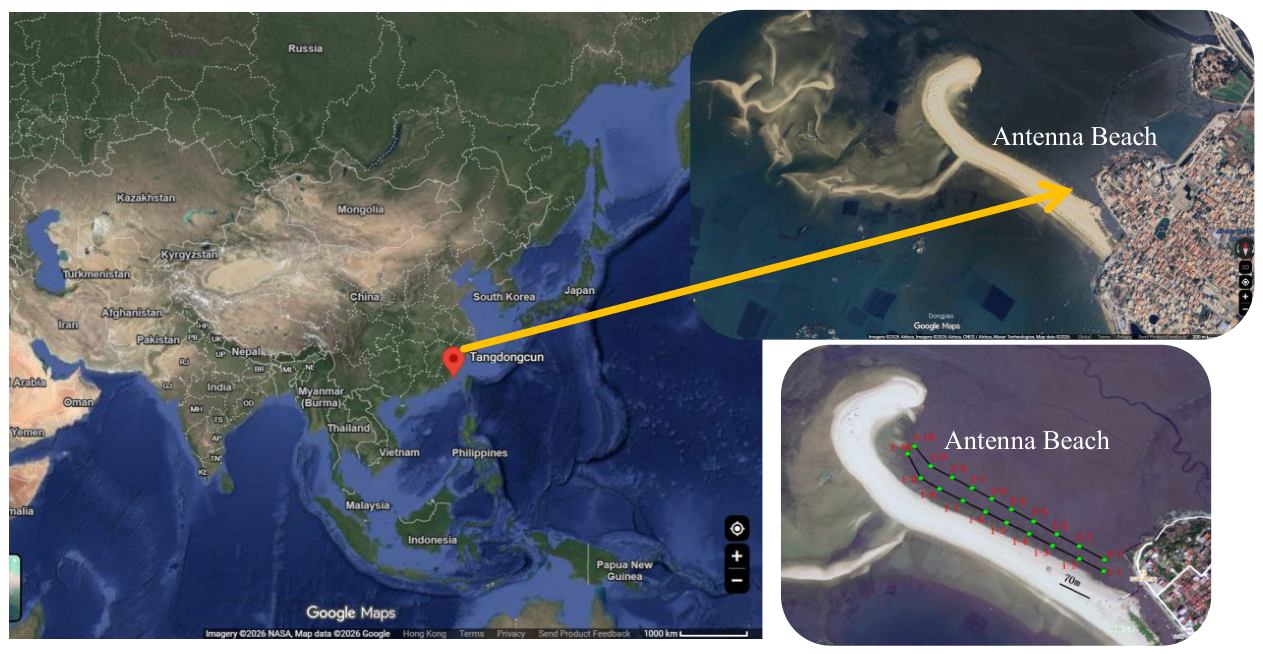
Figure 4.
Histogram of system-layer obstacle-degree values for the coastal-tourism-disturbance-and-community-ecological-resilience system.
Figure 4.
Histogram of system-layer obstacle-degree values for the coastal-tourism-disturbance-and-community-ecological-resilience system.
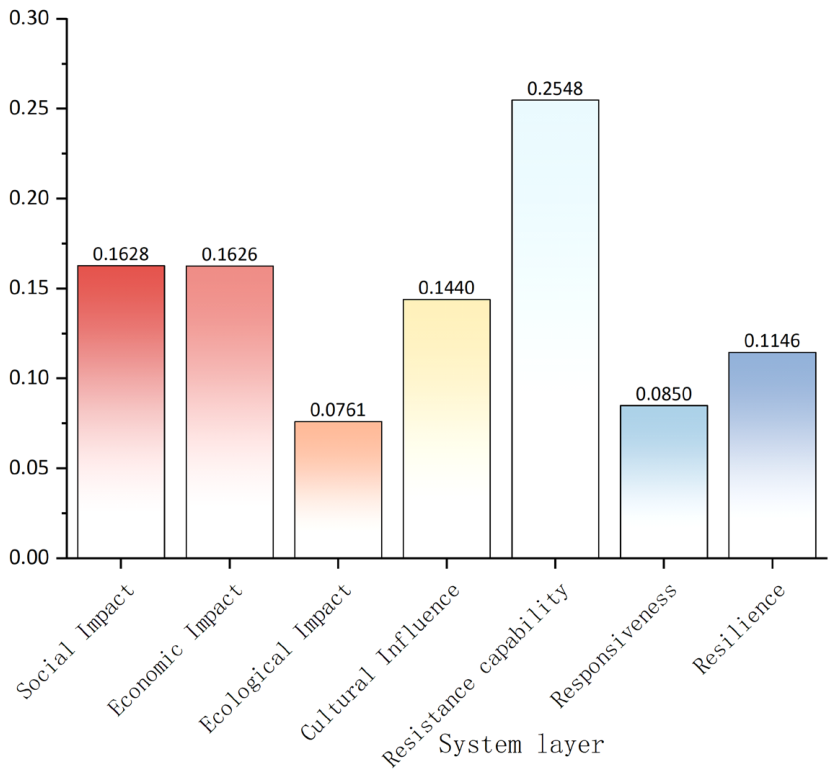

Table 1.
Evaluation results of coupling-coordination degree between coastal-tourism disturbance and community ecological resilience.
Table 1.
Evaluation results of coupling-coordination degree between coastal-tourism disturbance and community ecological resilience.
| Coupling-degree C | Coupling-coordination degree D | Coupling stage | Coordination grade | Development type |
| 0.4932 | 0.3454 | Moderate coupling | mild dysfunctional coordination | Synchronous development |
Disclaimer/Publisher’s Note: The statements, opinions and data contained in all publications are solely those of the individual author(s) and contributor(s) and not of MDPI and/or the editor(s). MDPI and/or the editor(s) disclaim responsibility for any injury to people or property resulting from any ideas, methods, instructions or products referred to in the content. |
© 2026 by the authors. Licensee MDPI, Basel, Switzerland. This article is an open access article distributed under the terms and conditions of the Creative Commons Attribution (CC BY) license.
Copyright: This open access article is published under a Creative Commons CC BY 4.0 license, which permit the free download, distribution, and reuse, provided that the author and preprint are cited in any reuse.