
Submitted:
22 September 2026
Posted:
23 September 2026
You are already at the latest version
Abstract
In Togo, artisanal fishing serves as a source of employment and income while contributing to meeting the population's food needs. In recent decades, however, the sector has faced numerous vulnerabilities stemming from various risks that limit its significant contribution to food security. This article analyzes the impact of these vulnerabilities on artisanal marine fishing within coastal fishing communities in Togo. The methodological approach relies on both secondary and field data, collected via questionnaires and interview guides administered to stakeholders in the artisanal marine fishing value chain. Statistical tools, such as the Chi-square test and Cramer’s V, were used to establish interdependencies between the various analytical variables. The study reveals that artisanal marine fisheries face diverse vulnerabilities—specifically environmental, economic, socio-cultural, and legal-institutional. These factors undermine fishing activities and, by extension, the food security of fishing communities. Economic vulnerabilities are the most acutely felt, affecting 94% of surveyed stakeholders, followed by socio-cultural vulnerabilities (82%) and environmental vulnerabilities (78%). Sustainable fishery management and the promotion of aquaculture offer potential ways to mitigate the impact of these vulnerabilities on artisanal marine fishing activities and food security.
Keywords:
vulnerabilities
; artisanal marine fisheries
; coastline
; Togo
Impacts des vulnérabilités sur les activités de pêche sur le littoral togolais
Résumé : La pêche artisanale apparaît au Togo comme une activité pourvoyeuse d’emplois, de revenus et de participation à la satisfaction des besoins alimentaires des populations. Depuis quelques décennies, ce secteur est confronté à de nombreuses vulnérabilités dues aux aléas qui limitent sa contribution significative à la sécurité alimentaire. Cet article se propose d’analyser les impacts des vulnérabilités sur la pêche artisanale maritime dans les communautés de pêcheurs du littoral togolais. L’approche méthodologique s’appuie sur des données secondaires et de terrain, collectées à partir des questionnaires et guides d’entretien auprès des acteurs de la filière pêche artisanale maritime. Des outils statistiques tels que le test de Khi-2 et le V de Cramer ont permis d’établir des liens d’interdépendance entre les différentes variables d’analyse. Les résultats de l’étude révèlent que les pêcheries artisanales maritimes font face à diverses vulnérabilités, notamment environnementale, économique, socio-culturelle et juridico-institutionnelle. Celles-ci fragilisent les activités de pêche et par ricochet la sécurité alimentaires des communautés de pêcheurs. Ainsi, au sein des pêcheries, les vulnérabilités économiques sont les plus ressenties avec 94 % des acteurs enquêtés, suivies des vulnérabilités socio-culturelles avec 82 %, environnementales (78 % des enquêtés). La gestion durable des pêcheries et la promotion de l’aquaculture constituent une possibilité de réduction des impacts des vulnérabilités des pêcheries artisanales maritimes sur les activités de pêche artisanale maritime et la sécurité alimentaire.
Mots-clés : Vulnérabilités, pêcheries artisanales maritimes, littoral, Togo.
1. Introduction
Marine and coastal ecosystems provide numerous ecosystem services to various communities. They facilitate the development of many activities, such as fishing, aquaculture, and port operations. According to UNEP (2023), seafood plays a key role in food security, particularly in coastal regions and fishing communities where it is an essential source of protein and nutrients. In 2015, fish accounted for approximately 17% of animal protein consumed globally and, for some 3.2 billion people, nearly 20% of their average animal protein intake. Eating fish, even in small quantities, can have significant positive effects on the nutritional status of low-income consumers worldwide (IFAD, 2019, p. 5). However, these ecosystems are increasingly facing numerous challenges, including human-induced pressure, coastal erosion, coastal flooding, pollution, habitat degradation for many fish species, and saltwater intrusion (MERF, 2022, p. 14).
In Togo, small-scale marine fisheries play an important role in the survival and development of fishing communities, both in terms of food security and the economy. They are a major source of animal protein, income, and employment for the coastal population. However, these fisheries face numerous challenges, including beach rock exposure, overfishing, marine pollution, the displacement of fishermen, the degradation of marine ecosystems, declining fish stocks, the effects of climate change, IUU fishing, and poor governance in fisheries management. These constraints create vulnerabilities in the fisheries and undermine food security. Observations made along the Togolese coast over the past few decades, combined with an analysis of climate data—particularly temperature and ocean data—reveal a very high level of vulnerability in marine ecosystems and in fishing activities across the various fishing communities along the Togolese coast (K.A. Fiagan, et al., 2025, p. 215).
The exposure of beach rock, a result of coastal erosion, poses an obstacle to fishing trips and a hazard to vessels when they come ashore. Increased fishing effort and the use of illegal gear lead to overfishing and put pressure on fish stocks. Discharges of phosphate sludge rich in heavy metals such as lead and cadmium (K. Gnadi, 2007, p. 3) pollute marine and coastal ecosystems through dispersion via coastal drift and bioaccumulation in marine organisms. Fisheries are increasingly exposed to the effects of warming surface waters and coastal erosion, coupled with rising sea levels, which are altering the spawning grounds of various species.
These vulnerabilities take various forms. They are ecological, social, economic, technical, and institutional in nature. These vulnerabilities significantly impact small-scale marine fishing activities and, by extension, the food security of fishing communities along the Togolese coast. As a result, they compromise the availability, accessibility, utilization, and stability of fishery products in household diets. This raises the issue of how vulnerabilities in small-scale marine fisheries affect small-scale marine fishing activities and the food security of fishing communities. A literature review and field data analyzed using statistical tools yielded results that were subsequently discussed.
2. Materials and Methods
Various tools and techniques were used to collect, process, and analyze the data gathered along the Togolese coastline.
2.1. Location of the Study Area
The Togolese coastline, 50 km long, comprises both land and marine areas, part of which is undergoing sedimentation (10 km) and the other part differential erosion due to development projects, infrastructure, and the coastal profile. Map 1 shows the geographic location of the Togolese coastline.
Map 1: Geographic location of the study area, Source : réalisée par T. E Baba, 2025.
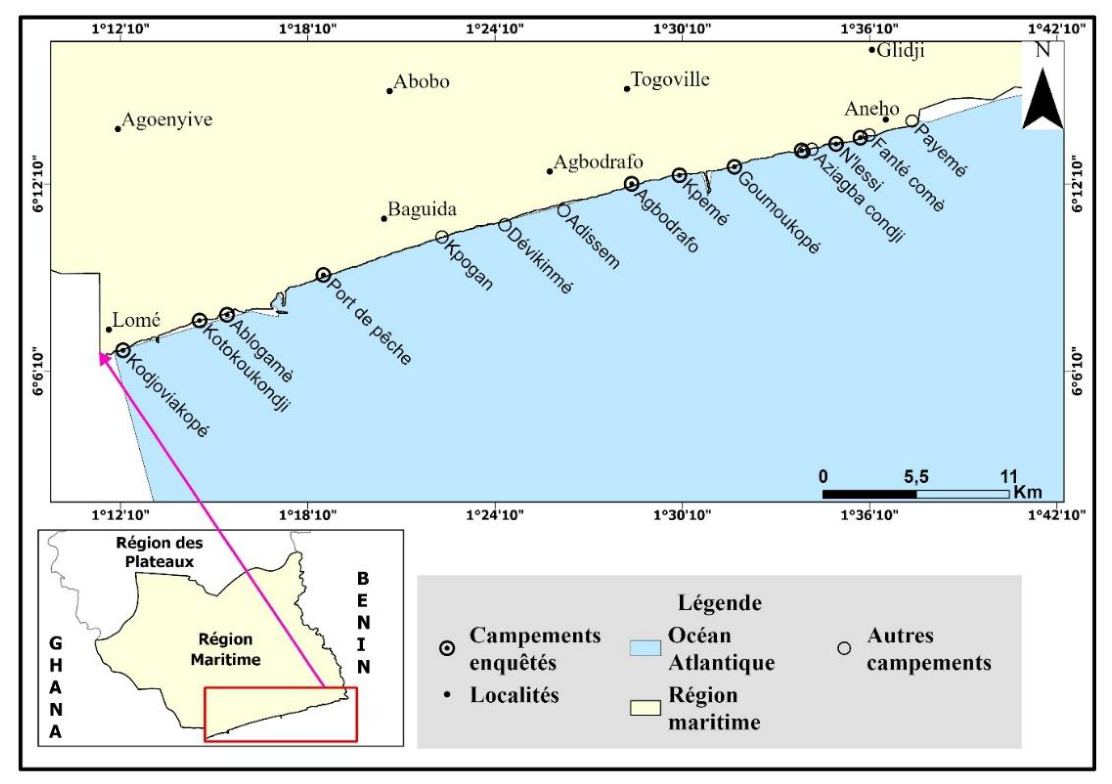
Of the 21 settlements surveyed, the study focused on 10 fishing sites: Kodjoviakopé, Kotokoukondji, Ablogamé, the fishing port, Agbodrafo, Kpémé, Goumoukopé, N’lessi, Mairie Comé, and Avémé. These sites were selected based on the scale of fishing activity and the diversity of fishing methods.
2.2. Tools for Assessing the Impacts of Vulnerabilities on Small-Scale Marine Fisheries
The degree of impact of each type of vulnerability on small-scale marine fishing activities was assessed and classified into two levels (low, average and high), based on their prevalence and perceived intensity, according to Jenks’s (1967) natural thresholds method. This is a classification algorithm that divides a set of values into homogeneous groups by minimizing the variance within each class and maximizing the variance between classes; that is, by cutting at the points where the data exhibit their most pronounced breaks. It is the one-dimensional equivalent of Fisher’s (1958) homogeneous clustering classification. This algorithm automatically defines the reference boundaries based on the actual distribution of the dataset to which it is applied.
To establish a statistical link between exposure to vulnerabilities and the food security of fishing households, the chi-square test and Cramer’s V were applied to all stakeholders in the sector who were surveyed on both vulnerabilities and the satisfaction of their food needs.
2.3. Data Collection and Processing Methodology
The methodological approach adopted is a mixed-methods approach. It involves the use of secondary data and field data obtained through literature reviews and field data collection. This data focuses on the various forms of vulnerability in small-scale marine fisheries, their manifestations, and their impacts on fishing activities and, consequently, on food security in fishing communities along the Togolese coast.
The target population consists of various stakeholders in the small-scale marine fishing sector, including fishermen, fish wholesalers, women involved in processing and retail, mechanics, boat repairers, and consumers. The stakeholders interviewed are surveyed using questionnaires and semi-structured interview guides. The questions focused on the factors contributing to the vulnerability of small-scale marine fisheries, as well as their impacts on the conditions under which small-scale marine fishing is practiced. Individual interviews were conducted primarily with leaders of professional organizations representing small-scale marine fisheries, notably the Union of Marine Fishing Cooperatives (UNICOOPEMA), the Union of Women Fishmongers’ Cooperatives (UCOOFEM), fishermen’s representatives, as well as administrative officials responsible for fisheries management, and the Directorate of Fisheries Production (DPH).
A fairly representative sample was obtained using simple random sampling, thereby giving all individuals in the target population an equal chance of being selected. Among the 1,834 small-scale coastal fishing households in the target population—with an average household size estimated at 7 people (P. Chavance, et al., 2022)—the target population totals 12,838 people. The sample size was calculated using the SCHAWARTZ formula:
A total of 373 individuals were surveyed from the target population. This group consists of fishermen, fish wholesalers, women involved in processing and retail, mechanics, and boat repairers. In addition to this sample, 50 external consumers were randomly selected to gather their opinions on the impacts of vulnerabilities in small-scale marine fisheries on food security. Thus, the total sample size is 423 individuals.
The distribution of respondents by settlement was based on the size of the target population. Table 1 shows the distribution of respondents by selected settlement.
The collected data were analyzed using the Statistical Package for the Social Sciences (SPSS). Google Colab, combined with Python code, was used to calculate the chi-square (χ²) value. In addition, ArcGIS Pro 3.1 and Google Earth were used to create the maps. According to the Jenks method (1967), three classes were defined based on our database. When the percentage is less than 39%, the impact is low; when the percentage is between 39% and 46%, the impact is medium or moderate; and when the percentage is ≥ 46%, the impact is high.
3. Results
The results of the study focus on an analysis of the various vulnerabilities of small-scale marine fisheries and their impacts on the food security of local populations.
3.1. Vulnerabilities of Small-Scale Marine Fisheries
The vulnerabilities of small-scale marine fisheries reflect the fragility of fishery resources and small-scale marine fishing activities in the face of natural hazards and human activities. Several vulnerabilities persist and hinder the contribution of small-scale marine fisheries to food security. According to the work of K-A. Fiagan et al. (2025, p. 215), observations made along the Togolese coast—particularly temperature and oceanographic data—reveal a very high level of vulnerability in marine ecosystems and in fishing activities across various coastal fishing communities. Based on fieldwork, six types of vulnerabilities have been identified that most frequently affect fishing practices along the Togolese coast. These are environmental, economic, sociocultural, technical, institutional, and legal in nature. These vulnerabilities have an impact on fishing activities and, at the same time, affect the livelihoods of fishing communities. They are perceived to varying degrees by stakeholders in the fishing sector (Figure 1).
The views of small-scale marine fishery stakeholders on the prevalence of vulnerabilities vary (Figure 1). According to the data in Figure 1, the majority of fishermen are affected by environmental, economic, sociocultural, and other vulnerabilities. Within the small-scale marine fisheries sector, nearly all stakeholders—including fishermen, fish wholesalers, processors, fish vendors, and gear repairers—are affected by economic vulnerabilities, at a rate of 94%. The prevalence of this vulnerability reflects the low incomes of those involved and the lack of funding needed to invest in this sector. These economic difficulties limit their activities and affect their ability to meet their households’ food needs. Sociocultural and environmental vulnerabilities follow, affecting 82% and 78% of respondents, respectively. The high proportion of affected fishermen (97%) can be explained by the fact that environmental conditions have a greater impact on the first link in the fisheries supply chain, which encompasses all related activities.
3.2. Factors Contributing to the Vulnerability of Small-Scale Marine Fisheries
Various risks are responsible for the vulnerability of small-scale marine fisheries. These include environmental, economic, sociocultural, technical, institutional, and legal vulnerabilities.
3.2.1. Environmental Vulnerability Factors
Environmental vulnerability factors include the overfishing of fishery resources, marine pollution, IUU fishing, rising sea temperatures, and global warming. These factors affect small-scale marine fisheries by impacting the livelihoods of fishing communities. Figure 2 illustrates the environmental vulnerability factors.
Figure 2 highlights the actual contribution of each environmental vulnerability factor to the activities of the small-scale marine fishing sector. As a result, among all stakeholders, marine pollution (92%) remains the leading factor contributing to environmental vulnerabilities, followed by the degradation of marine and coastal ecosystems (88%), resource overexploitation (81%), coastal erosion (77%), sea-level rise (59%), and IUU fishing (53%). This near-unanimous selection of marine pollution by all stakeholders is due to the discharge of phosphate sludge, industrial wastewater, chemicals, plastic waste, and sewage into the sea, which alters the water’s physicochemical parameters and degrades its quality. This alteration causes species to become poisoned, leading to their death. Marine pollution also has impacts on consumer health. Indeed, according to the FAO (2010), for nearly 30 years—due to worsening pollution, unsustainable fishing practices worldwide, and illegal, unreported, and unregulated fishing—catches and landings have been declining, and fish stocks have been dwindling, often at alarming rates. According to T. E. Baba et al. (2025, p. 230), in Togo, climate change—through rising sea levels and economic and energy-related activities—is exacerbating coastal erosion and the intrusion of saltwater into inland waters and coastal ecosystems. As for the overexploitation of fishery resources, it results in overfishing, which leads to the depletion of fish stocks, the gradual disappearance of certain fish species from marine waters, and a decline in catches. Photographic plate 1 shows the marine pollution observed along the Togolese coast.
Plate 1: Marine pollution observed along the Togolese coast, Source : Photos taken in September 2025.
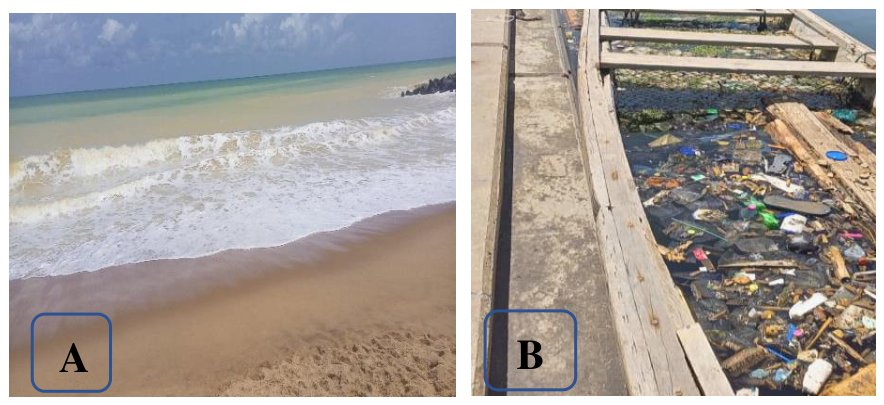
Photo A shows a yellowish discoloration in Goumoukopé resulting from the dumping of phosphate sludge into the sea, while Photo B shows solid waste consisting of plastic and wood in the anchorage basin of the Lomé fishing port.
3.2.2. Economic Vulnerability Factors
Economic vulnerabilities—including financial factors such as declining incomes among stakeholders, lack of financing, and the high cost of fishing equipment—have a significant impact on small-scale marine fishing activities. However, the extent to which these factors influence these activities varies depending on the category of stakeholders involved (Figure 3).
Based on the results obtained, the decline in income among stakeholders (97.8%) is the primary factor contributing to economic vulnerabilities among the various stakeholders in the small-scale marine fishing sector. This situation demonstrates that limited financial resources restrict access to equipment that would support the development of fishing activities. Furthermore, the inability to secure financing (87.6%) and the high cost of equipment and inputs (71.5%) are the factors cited by these stakeholders. These factors indicate that economic constraints are the common denominator and a barrier to the modernization and development of the small-scale marine fishing sector. Finally, the reliance on imported products stands at 40.2 percent. This reliance occurs during the off-season when wild-caught fish become scarce, but also because high prices limit their permanent inclusion in diets. It is also explained by the availability of imported seafood products in markets, which are accessible to everyone through distribution channels and are affordably priced.
3.2.3. Sociocultural Vulnerability Factors
These factors affect the various stakeholders in the small-scale marine fishing sector, leading to a decline in production and income for these stakeholders. Figure 4 illustrates the sociocultural vulnerability factors in the various fisheries.
The results in Figure 4 show that, overall, among the identified sociocultural vulnerability factors, the arduous nature of the work is the dominant factor, cited by 90.1% of the respondents. This predominance of arduous working conditions is noted by Charvet et al. (2016, p. 53), who state that “artisanal fishing work involves multiple forms of hardship.” Indeed, this hardship manifests itself in precarious working conditions and physical risks at sea due to heavy swells and storms. Furthermore, precarious living conditions represent the second factor contributing to sociocultural vulnerabilities, cited by 83.9% of the respondents. With regard to the marginalization of fishing stakeholders, it accounted for 72.4% of all responses. This marginalization, which manifests as social inequalities through the limited involvement of fishing stakeholders in decision-making and discrimination against them, impacts small-scale marine fishing activities.Similarly, these findings confirm the observation made by the FAO (2020, p. 83) at the regional level and in other countries, stating that the marginalization of small-scale marine fishery stakeholders exacerbates their vulnerability and exposes them to negative social and economic consequences. Furthermore, 69% of the respondents reported limited access to education and a lack of vocational training. It should be noted that low educational attainment and a lack of vocational training hinder the development of small-scale marine fishing activities, particularly among fishermen. These fishermen struggle to keep track of their business records and adapt to new opportunities. Low levels of education and vocational training also lead to destructive practices (overfishing, IUU fishing) and a lack of knowledge regarding sustainable fishing techniques. Finally, difficulties in coexisting with foreign stakeholders are observed in the field. Indeed, limited integration or coexistence with foreign stakeholders restricts the sharing of knowledge and expertise within the sector, which is necessary for greater efficiency in fishing practices.
3.2.4. Technical Vulnerability Factors
Technical vulnerabilities stem from several structural and operational factors, the consequences of which directly affect the activities of small-scale marine fishing communities and have an impact on the food security of local populations.
Figure 5 shows that the limited capacity for fish preservation and storage (78%) is the main factor influencing fishing stakeholders. Technical factors constitute a constraint that generally affects all stakeholders except gear repairers. This limited preservation and storage capacity most often leads to post-catch losses and reduces the availability of fishery products in the markets. These findings corroborate those of N. A. Niang (2009, p. 21), who states that in Senegal, “due to the lack of canneries, in cases of overproduction, catches are discarded at sea or on the beach, reflecting the post-harvest losses observed.” P. Fréon et al. (1989, p. 200), for their part, confirm that “the preservation of fish after capture often poses a problem, particularly in cases of poor sales caused by temporary overproduction, or when adequate means of transportation to markets in the interior of the islands are lacking.” These same observations were made by K. Ehlui (2020, p. 89) in his study on inland fisheries and food security in Grand-Oti in northern Togo. Indeed, the author asserts that the losses recorded in Grand-Oti during the peak season are due to a lack of preservation methods.
The aging or dilapidated condition of fishing equipment is also a key factor contributing to technical vulnerabilities, accounting for 63% of all responses. This factor, reported by nearly all fishermen (99%), demonstrates that the prevalence of traditional, dilapidated, and inefficient equipment in small-scale marine fishing limits their effectiveness. Furthermore, limited access to maintenance services accounted for 58% of all responses. This factor illustrates the difficulties fishermen face in accessing maintenance and repair services for their fishing equipment. Furthermore, the low selectivity of fishing gear is a significant factor, accounting for 49% of the total responses. This low selectivity of fishing gear limits the regeneration of fishery resources and leads to the depletion of fish stocks due to the capture of juvenile fish.
3.2.5. Institutional and Legal Vulnerabilities
Institutional and legal vulnerabilities stem from several factors that create a situation of insecurity among those involved in small-scale marine fishing.
According to the data in Figure 6, insufficient support from public authorities remains the most frequently cited factor, followed by a lack of coordination among the bodies and institutions managing the fishing sector (82%) and poor enforcement of regulations and laws (44%). These vulnerability factors are manifested, in particular, by the increasing number of conflicts between artisanal fishermen and trawler operators. Analysis of these vulnerability factors reveals dysfunction in the production of goods across the various fisheries. These issues have varying impacts on fishing activities.
3.3. Impacts of Vulnerabilities on Fishing Activities
The impacts of vulnerabilities in small-scale marine fisheries on fishing activities are numerous and vary from one vulnerability to another.
3.3.1. Impacts of Environmental Vulnerabilities on Small-Scale Marine Fishing Activities
The consequences of environmental vulnerabilities on fishing activities are severe and varied (Figure 7).
According to the results of the field survey (Figure 7), the decline in fish production remains the most significant impact, cited by 94.4% of the respondents. The depletion of fish stocks, pollution of coastal and marine ecosystems by plastics, industrial wastewater, and algae, and the destruction of fishing equipment and infrastructure (habitats, camps, boats, and nets). The scarcity of resources and the depletion of fish stocks serve as a major warning sign regarding the sustainability of fisheries and their contribution to food security for local populations. For several decades, climate change has caused sea-level rise, acidification, and coral bleaching, all of which have negatively impacted fishing activities. Coastal erosion has led to the destruction of some fishing camps and human settlements. In Adissem, it has led to the destruction of this coastal fishing village. The steep coastline resulting from erosion makes fishing operations difficult. These impacts of environmental vulnerabilities faced by those in the fishing industry have led to a decline in the availability of fishery products and a situation of food insecurity and poverty within fishing communities.
3.3.2. Impacts of Economic Vulnerabilities on Fishing Activities
Stakeholders in the small-scale marine fishing sector unanimously report that the impact of economic vulnerabilities on their activities is a decline in income. This decline in income is reported by 100% of stakeholders in every category (fishermen, women in the fishing sector, and fishing gear repairers). The decline in income reveals substantial difficulties in accessing economic opportunities, difficulties that affect households’ ability to meet their food needs. The resulting effects of this decline in income include reduced investment, decreased productivity, rural poverty, food insecurity, and limited modernization of the fishing sector.
3.3.3. Impacts of Sociocultural Vulnerabilities
The impacts of sociocultural vulnerabilities on fishing activities are primarily reflected in a limited ability to negotiate with government authorities regarding reforms and in health and safety risks. Figure 8 shows the proportion of each impact experienced.
An analysis of the data in Figure 8 reveals that the vast majority—94%—of respondents cited limited capacity to negotiate with public authorities on reforms as the primary impact of sociocultural vulnerabilities, followed by health and safety risks (82% of respondents) and the fragility of the cultural dimension (63%). Indeed, sociocultural vulnerabilities—manifested through the arduous nature of the work, difficulties in coexisting with foreign stakeholders, the marginalization of fishing community members, and limited access to education and vocational training—restrict these stakeholders’ scope for negotiation with public authorities and create health risks. Furthermore, the marginalization of these stakeholders fosters an inferiority complex and prevents them from seeking assistance or intervention from public authorities to improve their working and living conditions. Since the majority of small-scale marine fishery stakeholders practice traditional religions (animism), the cultural vulnerability of these communities is largely due to the disappearance of their sacred sites as a result of coastal erosion. This degradation deprives fishermen of their places of worship, thereby preventing them from appealing to their deities to ensure the prosperity of their fishing activities.
3.3.4. Impacts of Technical Vulnerabilities on Fishing Activities
The main impacts of these vulnerabilities relate to difficulties in accessing resources and an increase in post-catch losses (Figure 9).
Difficulties in accessing resources are the most significant impact of technical vulnerabilities on small-scale marine fisheries, followed by an increase in post-catch losses. The remoteness of fishing grounds and the lack of financial resources to ensure the prolonged preservation of fish products at sea before they are landed onshore limit the duration of fishing trips and result in losses. Post-harvest losses result from a lack of financial resources to acquire modern equipment for processing and preserving fish products.
3.3.5. Impacts of Institutional and Legal Vulnerabilities on Fishing Activities
Institutional and legal vulnerabilities have a negative impact on small-scale marine fishing activities, particularly catches and the organization of fisheries, as illustrated in Figure 10.
An analysis of Figure 10 reveals that fishing stakeholders face difficulties related to access to resources and poor fisheries management. In fact, 97.5% of the stakeholders surveyed report difficulties accessing fishery resources, compared to 84.8% who cite problems with the management of small-scale marine fisheries. These difficulties undermine the production system and lead to the depletion and significant decline of catches. According to the FAO (2010), for nearly 30 years—due to the dramatic increase in pollution, destructive fishing practices worldwide, and illegal, unreported, and unregulated fishing—catches and landings have been declining, and fish stocks have been dwindling, often at alarming rates. It is therefore necessary to examine the extent to which each type of vulnerability impacts the development of activities in the small-scale marine fishing sector.
3.4. Extent of the Impact of Vulnerabilities on Fishing Activities
The extent to which vulnerabilities affect small-scale marine fishing activities varies depending on the type of vulnerability. Along the Togolese coast, this impact ranges from low to high, as shown in Table 2.
Jenks’ method draws the line between legal vulnerability (43%) and the five other vulnerabilities with high prevalence (70%–94%); the gap at this point is 43.1 points, compared with a maximum of 12 points for the other intervals, which confirms that the (high/low) distinction is not arbitrary. Consequently, economic vulnerabilities (94%) dominate everywhere, followed by sociocultural (82%), environmental (78%), institutional (74%), and technical (70%) vulnerabilities—all at a high level—while legal vulnerabilities remain secondary (43%, average level). According to the FAO (2007), in artisanal fisheries, poverty and food insecurity result less from resource scarcity than from the accumulation of economic, social, and institutional vulnerabilities that deprive stakeholders of their adaptive capacities. These impacts weaken the food systems of coastal communities.
3.5. Impacts of Vulnerabilities in Small-Scale Marine Fisheries on Food Security
Food security depends on the availability, accessibility, and utilization (food quality) of food. Vulnerabilities in artisanal fisheries affect these dimensions in several ways. According to field data, the main impact of vulnerabilities in artisanal marine fisheries on food security is a decline in catches and a drop in income for those involved (Figure 11).
An analysis of Figure 11 shows that the impacts of vulnerabilities in small-scale marine fisheries on the fishing communities along the Togolese coast are both food-related and non-food-related. With regard to food-related impacts, these include a reduction in the quantity and frequency of fish consumed (65.9%)—the dominant impact—followed by malnutrition (58.5%), unmet dietary needs (51.4%), and finally a reduction in the number of meals (42.1%). Since fish is an essential source of protein, its scarcity leads to nutritional deficiencies and health problems. Fish is an important source of protein, micronutrients, vitamins, and omega-3 fatty acids. Its unavailability, high price, and declining incomes prevent households from meeting their micronutrient needs, resulting in nutritional deficiencies.
Regarding non-food impacts, field surveys show that within the fishing community along the Togolese coast, declining catches and falling incomes among stakeholders (91%) remain the major impact of the vulnerabilities faced by all stakeholders, followed by declining profitability (89.5%), rising prices of fishery products (86.4%), and reduced availability of fishery products (82.7%).
It should be noted that declining catches lead to the loss of fishing activities and a decrease in income for those involved—or even a near-total loss of income. This limits households’ purchasing power for food. The depletion of fishery resources also leads to lower catches and, consequently, reduced availability of fish in markets for consumption... The rise in fish prices in the markets is due to declining catches and the population’s increasing food needs. The rise in prices limits poor households’ access to fish (FAO, 2008). Adaptation strategies focus on reducing the quantity and frequency of consumption. This situation creates food insecurity.
The relationship between the impacts of vulnerabilities in small-scale marine fisheries and the food security of households in fishing communities is established using Pearson’s chi-square test. The results of the chi-square test applied to all 423 stakeholders reveal a highly significant relationship (χ² = 17.830; ddl = 1; p < 0.001), with a moderate strength of association (Cramer’s V = 0.235) between vulnerabilities and the satisfaction of food needs among small-scale coastal fishery stakeholders. This result is confirmed by Fisher’s exact test (p = 4.9 × 10⁻⁵). The risk of unmet dietary needs is nearly three times higher (odds ratio = 2.99; 95% CI [1.78; 5.04]) among actors experiencing all six types of vulnerabilities than among those experiencing fewer.
3.6. Discussion
Economic, sociocultural, environmental, technical, institutional, and legal vulnerabilities are challenges faced by Togo’s small-scale marine fisheries. According to Friends of the Earth (2023, p. 19), the Togolese coastline is highly vulnerable to erosion and flooding due to the gentle slope and fragile nature of the coastal systems, which are primarily sandy. In line with this reasoning, K. A. Fiagan et al. (2025, p. 215) state that along the Togolese coast, artisanal fisheries are highly vulnerable to the effects of climate change, including declining fish production, strong swells, changes in fish habitat due to coastal erosion, the relative depletion of surface waters, and the decline in productivity of certain fish stocks. A. Doumbouya et al. (2017) reached the same conclusion: in West Africa, the availability of fishery resources faces numerous threats, including overfishing, illegal fishing, and the effects of climate change. These factors affect the quantity of fish available in local markets, putting pressure on domestic consumption. The vulnerabilities of small-scale marine fisheries have several impacts on food security in fishing communities along the Togolese coast. The main factors are declining catches and income, limited access to fish products, reduced availability of fish products, a decrease in the quantity and frequency of fish consumption, malnutrition, unmet dietary needs, and a reduction in the number of meals per day. Due to the decrease in the quantity and frequency of consumption and the lack of income for food consumption and dietary diversity, households’ dietary needs are not being met. These findings are consistent with those of MAEP/FAO (2008), FAO (2020, p. 83), which found that vulnerable people face the negative social and economic repercussions of economic shocks, life-cycle shocks, or other types of shocks due to their marginalization. The decline in fishery production impacts not only availability but also accessibility, stability, and utilization. It affects the living conditions of those working in this sector. M.K. Kabahenda et al. (2009, p. 1) have already demonstrated this so well when they wrote that the decline in fish stocks and the availability of fish not only threaten the livelihoods of artisanal fishermen and processors but also endanger the nutritional and food security of the populations in the Lake Victoria region. In light of these impacts, it is therefore essential to strengthen the governance of artisanal fisheries, improve conservation and distribution infrastructure, and promote the sustainable management of fishery resources to ensure better long-term food availability and accessibility.
4. Conclusion
Ultimately, Togo’s small-scale marine fishing sector faces environmental, economic, technical, sociocultural, and legal-institutional vulnerabilities. These various vulnerabilities in small-scale marine fisheries directly affect marine and coastal ecosystems and fishing activities, and reduce people’s ability to access sufficient, healthy, and nutritious food. Most of the impacts of these vulnerabilities on food security include a reduction in the quantity and frequency of fish consumed, malnutrition, unmet dietary needs, fewer meals, declining catches, and lower incomes for those involved in the sector. Sustainable management of marine and coastal ecosystems and fishing activities, along with efforts to combat marine pollution, will help achieve Sustainable Development Goals (SDGs) 1, 2, and 3.
References
- Domtani, ALI; Kossi, AHOEDO; Ekoué, FOLIKOUE. BEIGUE ALFA P’ham, 2016, Framework Survey of Small-Scale Marine Fisheries in Togo; DPA; p. 99 p.
- ARTELIA, WACA ResIP. Report on the Evaluation and Analysis of Available National and Regional Data for the Implementation of the Coastal Hazard Wheel; (CHW) Methodology—Incorporating a Gender Perspective: Lomé, Togo, 2018. [Google Scholar]
- BABA Tchaa Eli. Artisanal Marine Fisheries at the New Fishing Port of Lomé. Master’s Thesis in Geography, University of Lomé, Lomé, 2022; p. 147. [Google Scholar]
- Eli, BABA Tchaa; Koku-Azonko, FIAGAN. Management of Artisanal Marine Fisheries at the New Lomé Fishing Port: The Challenge of Co-management. In DaloGéo, a scientific journal specializing in Geography; Jean Lorougnon Guédé University, 2024; Volume No. 011, pp. 24–42. [Google Scholar]
- Eli, BABA Tchaa. FIAGAN Koku-Azonko, 2025, Vulnerabilities of Coastal Marine Ecosystems and Adaptation Strategies of Fishing Communities to the Effects of Climate Change. The Blue Economy in Africa: Issues, Challenges, and Prospects 215–243.
- Bolagbédé, BANKATI; Gbati, NAPO. Vulnerability and Resilience Strategies of Coastal Communities in Togo in the Face of Climate Change. In University of Lomé; 2022; No. 4, Vol. 2, pp. 364–383. [Google Scholar]
- Dyhia, BELHABIB; Rashid, SUMAILA; Daniel, PAULY. Feeding the Poor: Contribution of West African Fisheries to Employment and Food Security. In *Ocean & Coastal Management*; 2015; Volume No. 111, pp. 72–81. [Google Scholar]
- CCE. Rapid Vulnerability Assessment Tool for Marine Protected Areas in North America. In Commission for Environmental Cooperation; Montreal, Canada, 2017; p. 30 pp. [Google Scholar]
- 2021.
- DUBOIS, Catherine. “A New Method for Assessing Climate Risks to Buildings in a Large Real Estate Portfolio,” Société québécoise des infrastructures (SQI); Ouranos Research Report: Montreal, 2021; Volume 27 p. [Google Scholar]
- DOUMBOUYA, Alkaly; CAMARA, Ousmane T.; MAMIE, Josephus; JARRA, Abdoulie; NDIAYE, Diène; BEKHABIB, Dyhia; BEIBOU, Ely; CEESAY, Slifu; INTCHAMA, Jerimias; GUEYE, Assane; PADILLA, Allam. Assessing the Effectiveness of Monitoring, Control, and Surveillance of Illegal Fishing: The Case of West Africa; Frontiers in Marine Science, 2017; pp. 4–50. [Google Scholar]
- FAO. Impacts of Climate Change on Fisheries and Aquaculture: A Synthesis of Current Knowledge, Adaptation and Mitigation Options; Summary of FAO Technical Paper on Fisheries and Aquaculture No. 627: Rome, 2018; p. 48 p. [Google Scholar]
- FAO. The State of World Fisheries and Aquaculture 2022: Toward a Blue Transformation; FAO: Rome, 2022; p. 262 p. [Google Scholar]
- FAO. Report on Social Protection and Small-Scale Fisheries in the Mediterranean Region; A Review: Rome, 2020; p. 83 p. [Google Scholar]
- Koku-Azonko, FIAGAN. Small-Scale Marine Fisheries and Their Contribution to Socioeconomic Development in Togo. Doctoral dissertation in human geography, University of Lomé, Lomé, Togo, 2014; p. 446 p. [Google Scholar]
- Koku-Azonko, FIAGAN. Climate Change and the Vulnerability of Artisanal Fisheries on the Togolese Coast. Journal of Scientific Research, University of Lomé, Togo 2020, vol. 22(no. 3), 411–426. [Google Scholar]
- Friends of the Earth, 2023, Mapping of Village Communities in the Southeastern Togolese Coast (Baguida to Agbodrafo) Affected by the Effects of Climate Change and Documentation of the Impacts of Climate Change, Lomé, Togo, 32 pp.NJOCK Jean-Calvin, WESTLUND Lena, 2010, « Understanding the gendered livelihoods in fisheries: The case of Cameroonian women ». In International Collective in Support of Fishworkers (ICSF).
- Final Report of Togo’s Fourth National Communication and Second Biennial Update on Climate Change: Climate Scenarios, 2019; Lomé, Togo.
Figure 1.
Prevalence of Vulnerabilities in Small-Scale Marine Fisheries Among Stakeholders (%). Source : Fieldwork, 2025.
Figure 1.
Prevalence of Vulnerabilities in Small-Scale Marine Fisheries Among Stakeholders (%). Source : Fieldwork, 2025.
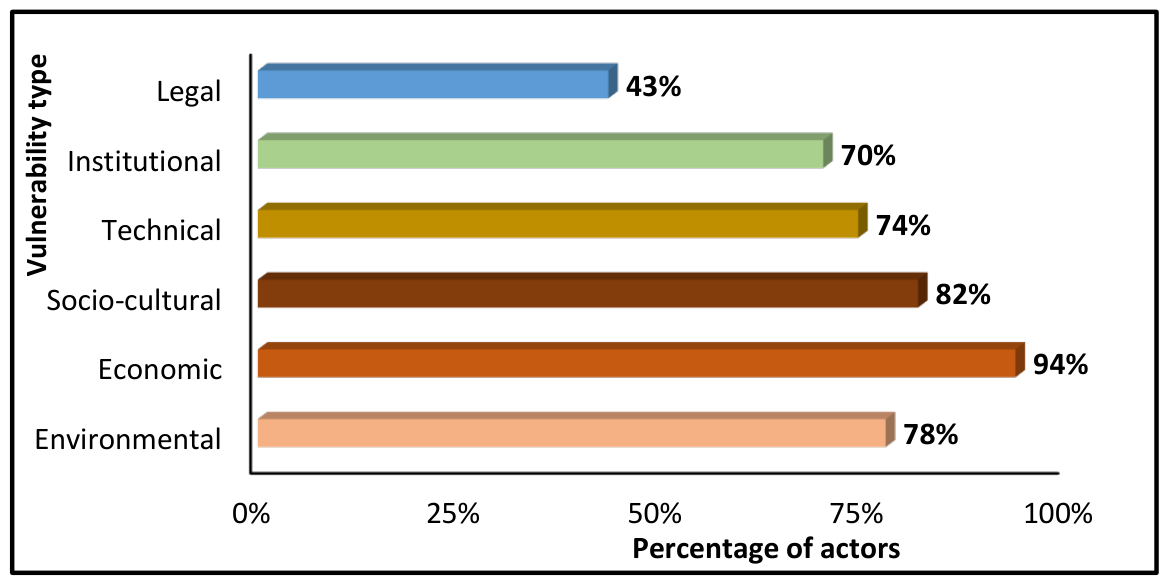
Figure 2.
Environmental Vulnerability Factors. Source : Fieldwork, 2025.
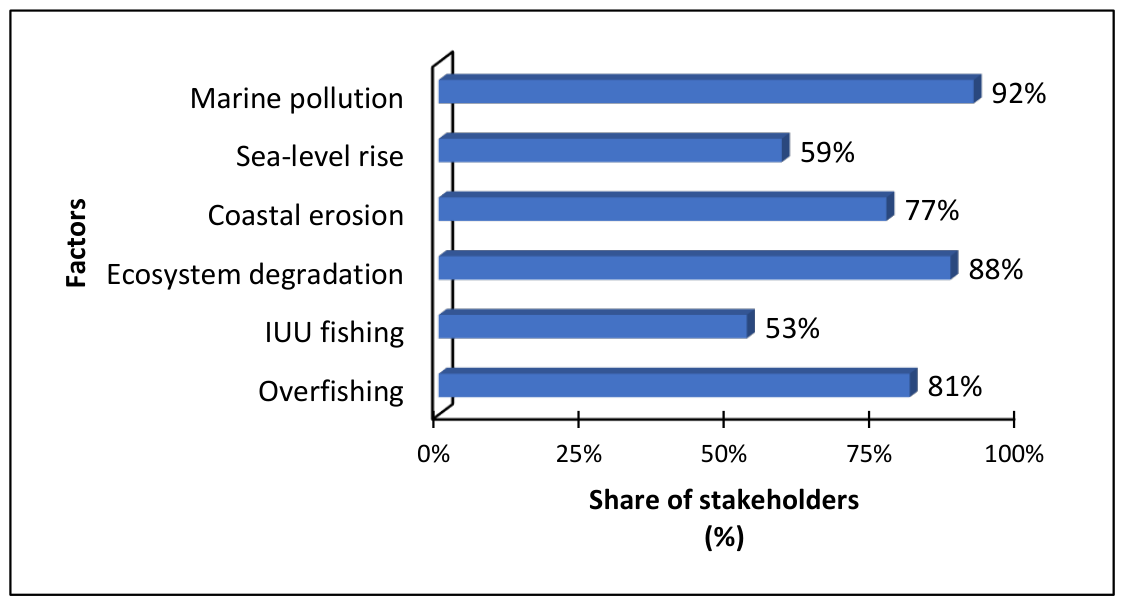
Figure 3.
Factors Contributing to Economic Vulnerabilities. Source : Fieldwork, 2025.
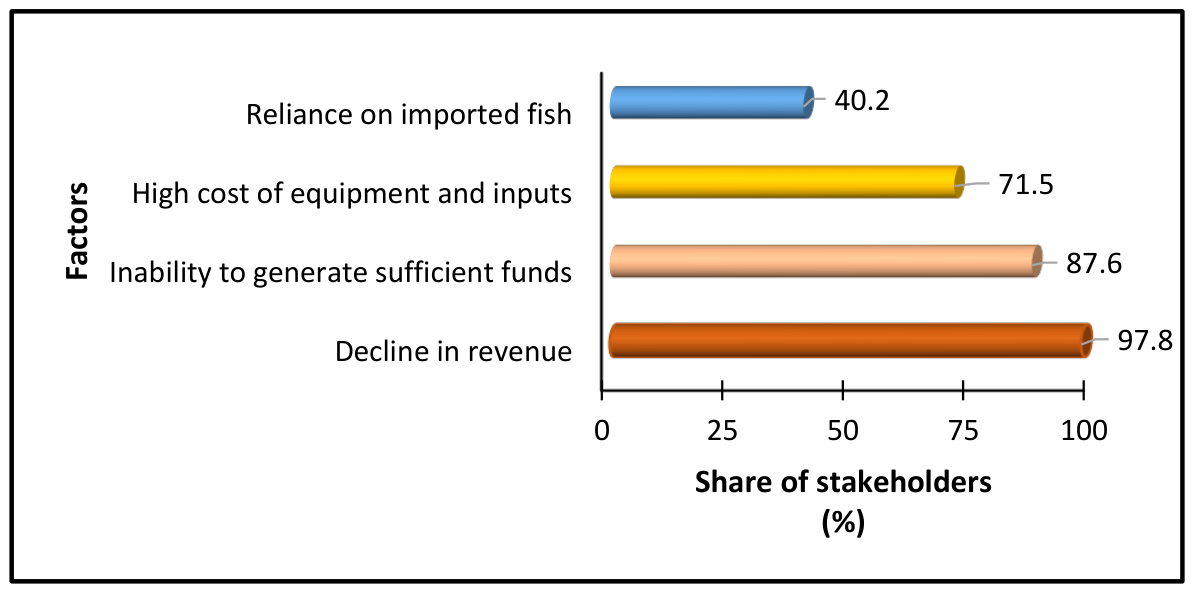
Figure 4.
Socio-cultural Vulnerability Factors Affecting Small-Scale Coastal Fishermen. Source: Fieldwork, 2025.
Figure 4.
Socio-cultural Vulnerability Factors Affecting Small-Scale Coastal Fishermen. Source: Fieldwork, 2025.
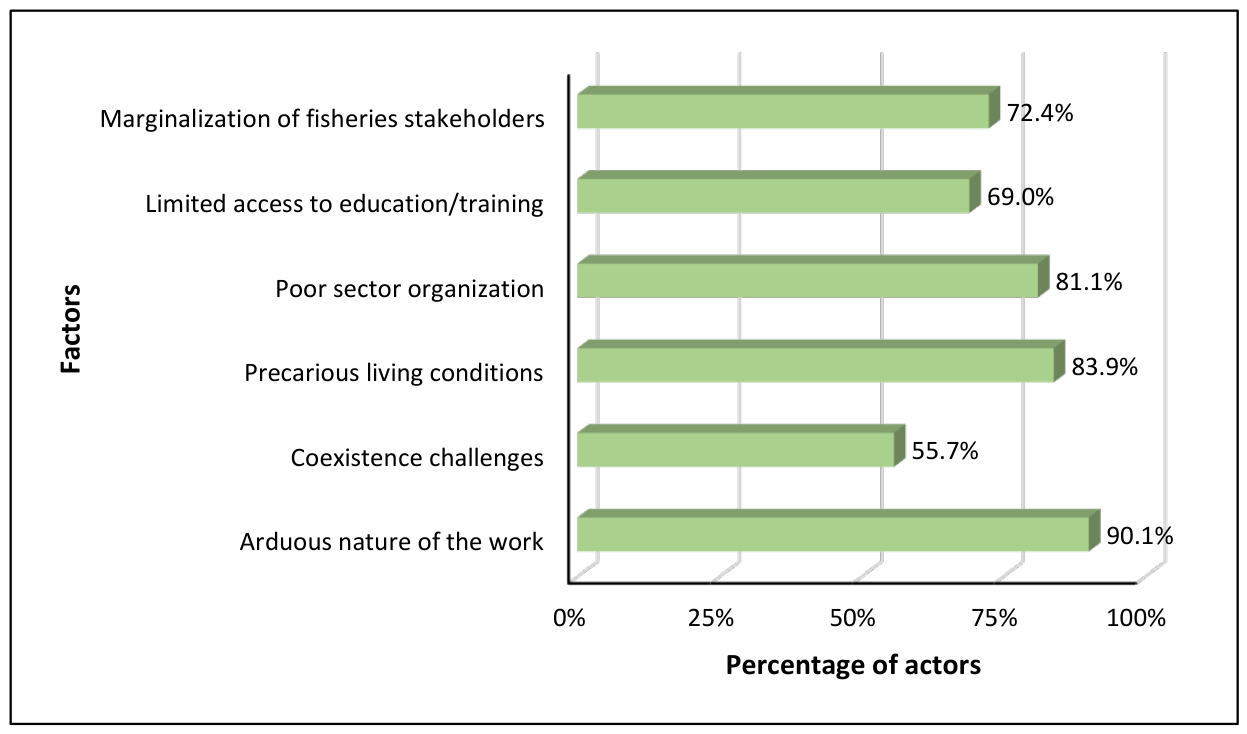
Figure 5.
Technical Vulnerability Factors Affecting the Activities of Small-Scale Marine Fishermen. Source: Fieldwork, 2025.
Figure 5.
Technical Vulnerability Factors Affecting the Activities of Small-Scale Marine Fishermen. Source: Fieldwork, 2025.
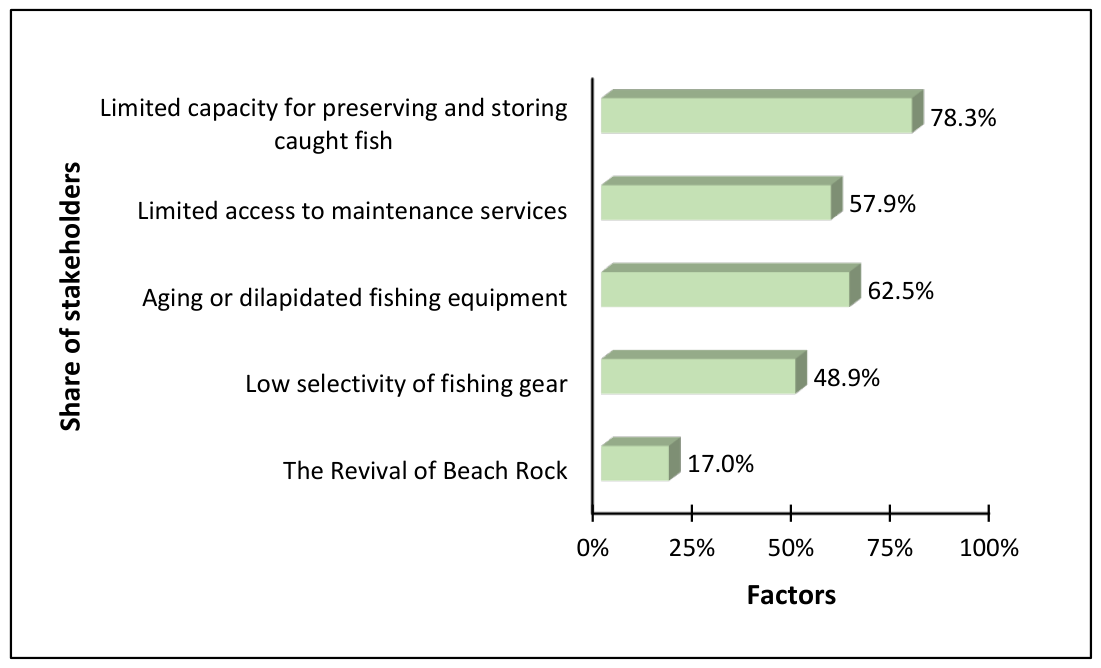
Figure 6.
Proportion of institutional and legal vulnerability factors. Source: Fieldwork, 2025.
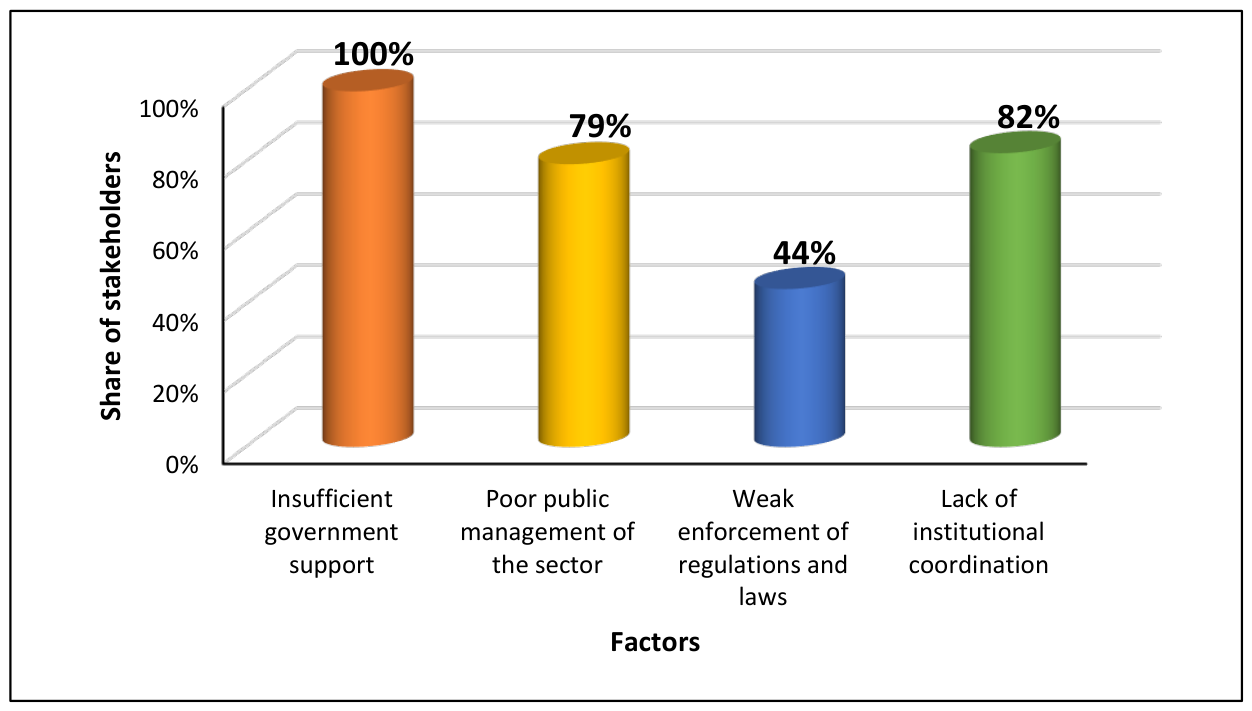
Figure 7.
Impacts of Environmental Vulnerabilities on Fishing Activity. Source: Fieldwork, 2025.
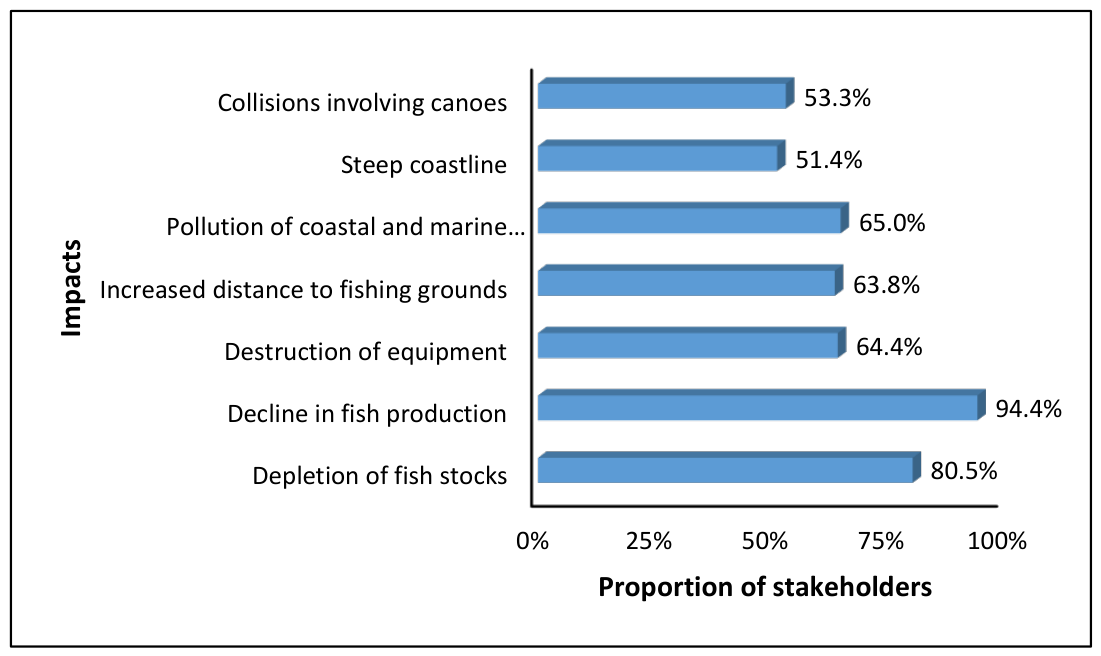
Figure 8.
Extent of the Impacts of Sociocultural Vulnerabilities on Small-Scale Marine Fishing Activities. Source: Fieldwork, 2025.
Figure 8.
Extent of the Impacts of Sociocultural Vulnerabilities on Small-Scale Marine Fishing Activities. Source: Fieldwork, 2025.
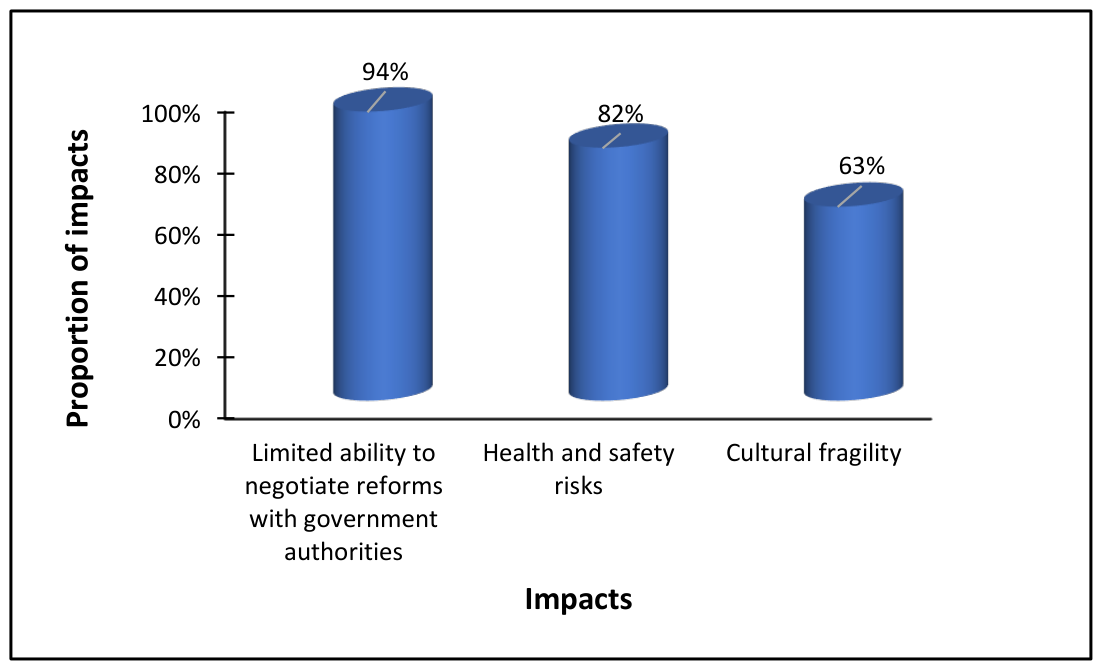
Figure 9.
Impacts of Technical Vulnerabilities on Small-Scale Marine Fishing Activities. Source: Fieldwork, 2025.
Figure 9.
Impacts of Technical Vulnerabilities on Small-Scale Marine Fishing Activities. Source: Fieldwork, 2025.
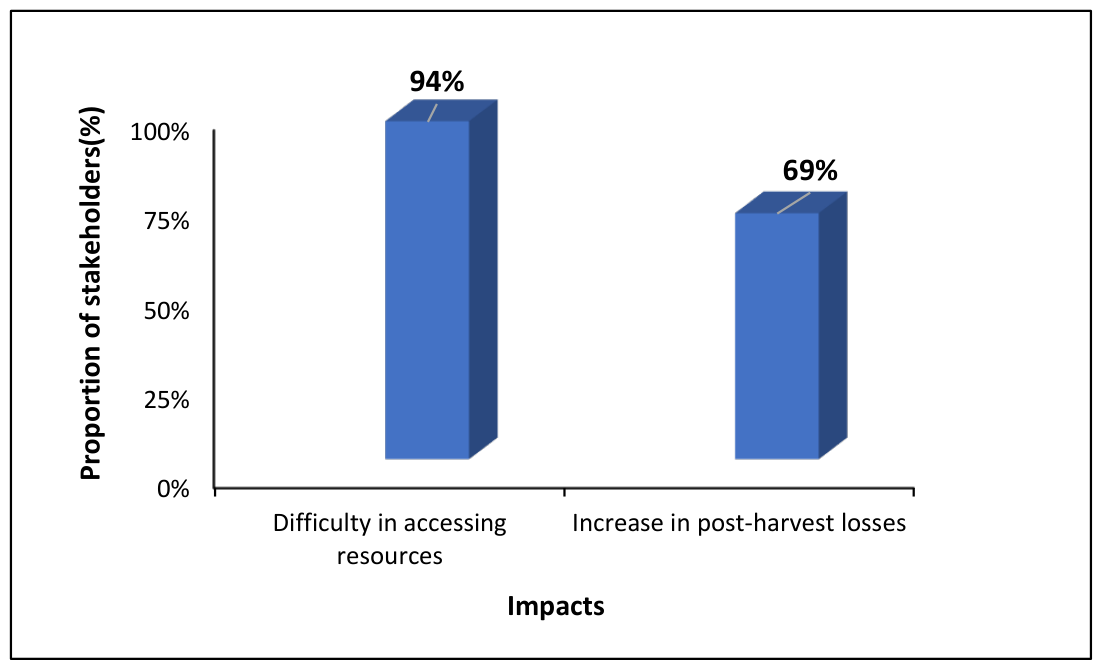
Figure 10.
Impacts of Institutional and Legal Vulnerabilities. Source: Fieldwork, 2025.
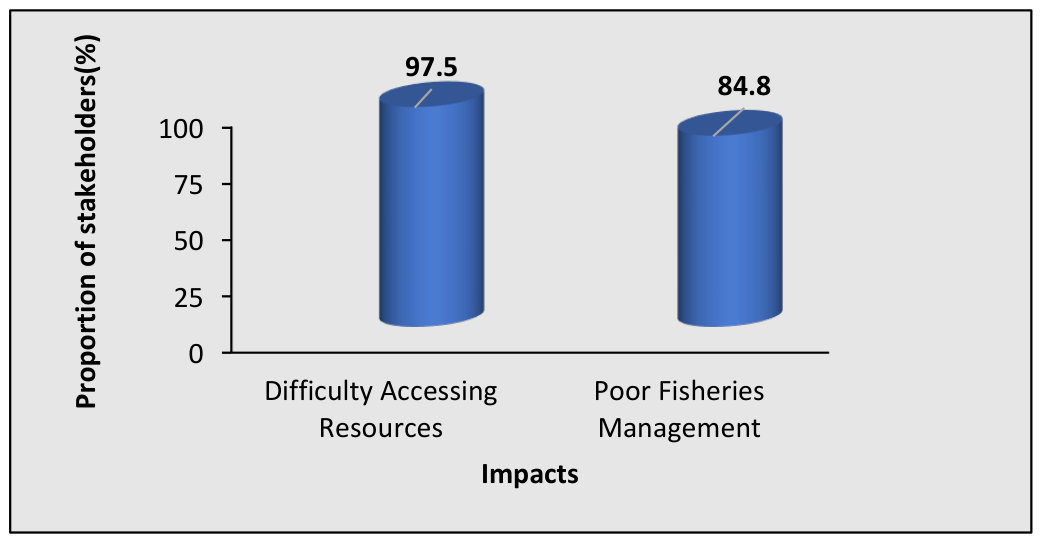
Figure 11.
Impacts of vulnerabilities on food security in coastal households. Source: Fieldwork, 2025.
Figure 11.
Impacts of vulnerabilities on food security in coastal households. Source: Fieldwork, 2025.
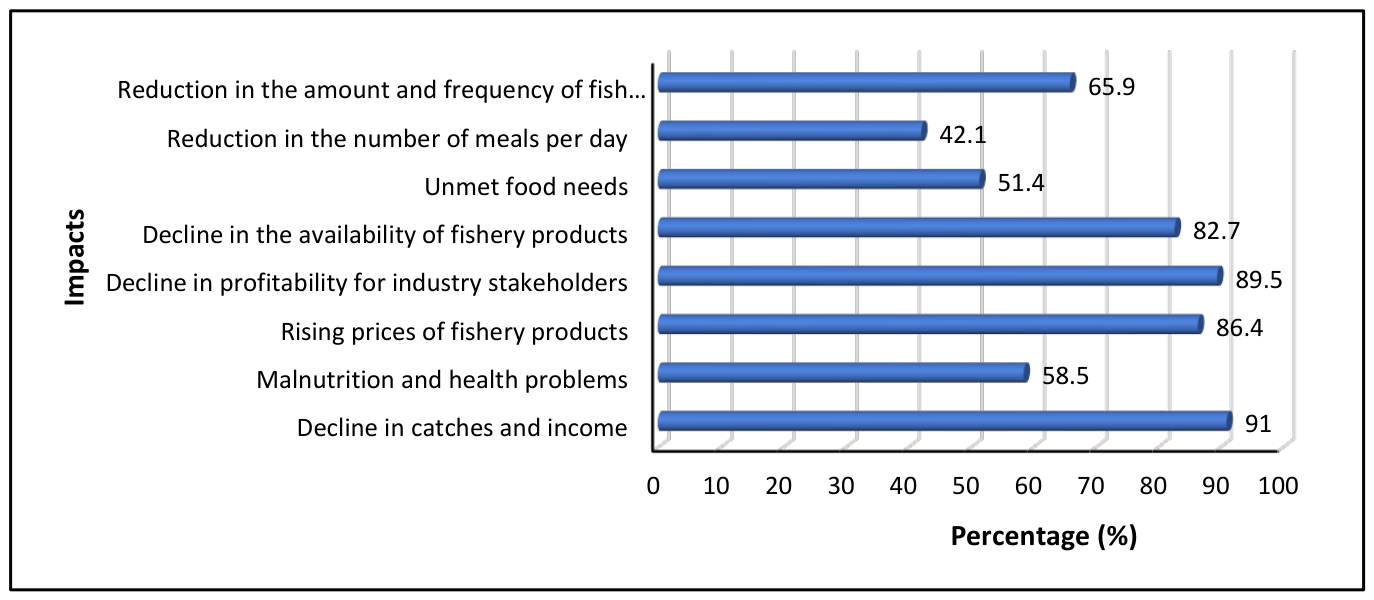

Table 1.
Distribution of Respondents by Selected Settlement.
| Settlements | Number of Stakeholders Surveyed per Settlement |
|---|---|
| Port de Pêche | 186 |
| Kpémé | 77 |
| Goumoukopé | 34 |
| Ablogamé | 30 |
| Kodjoviakopé | 30 |
| Kotokoucondji | 17 |
| Mairie comè | 17 |
| Avémé | 15 |
| N’lessi | 10 |
| Agbodrafo | 7 |
| Total | 423 |
Source : Based on fieldwork, 2025.
Table 2.
Degree of impact of each type of vulnerability on the activities of fishing industry stakeholders.
Table 2.
Degree of impact of each type of vulnerability on the activities of fishing industry stakeholders.
| Types of Vulnerabilities | Percentage of stakeholders | Degree of impact |
|---|---|---|
| Environmental | 78 | Strong |
| Economic | 94 | Strong |
| Sociocultural | 82 | Strong |
| Institutional | 74 | Strong |
| Technical | 70 | Strong |
| Legal | 43 | Moderate/ average |
Source: Fieldwork, 2025.
Disclaimer/Publisher’s Note: The statements, opinions and data contained in all publications are solely those of the individual author(s) and contributor(s) and not of MDPI and/or the editor(s). MDPI and/or the editor(s) disclaim responsibility for any injury to people or property resulting from any ideas, methods, instructions or products referred to in the content. |
© 2026 by the authors. Licensee MDPI, Basel, Switzerland. This article is an open access article distributed under the terms and conditions of the Creative Commons Attribution (CC BY) license (http://creativecommons.org/licenses/by/4.0/).
Copyright: This open access article is published under a Creative Commons CC BY 4.0 license, which permit the free download, distribution, and reuse, provided that the author and preprint are cited in any reuse.