
Submitted:
21 September 2026
Posted:
21 September 2026
You are already at the latest version
Abstract
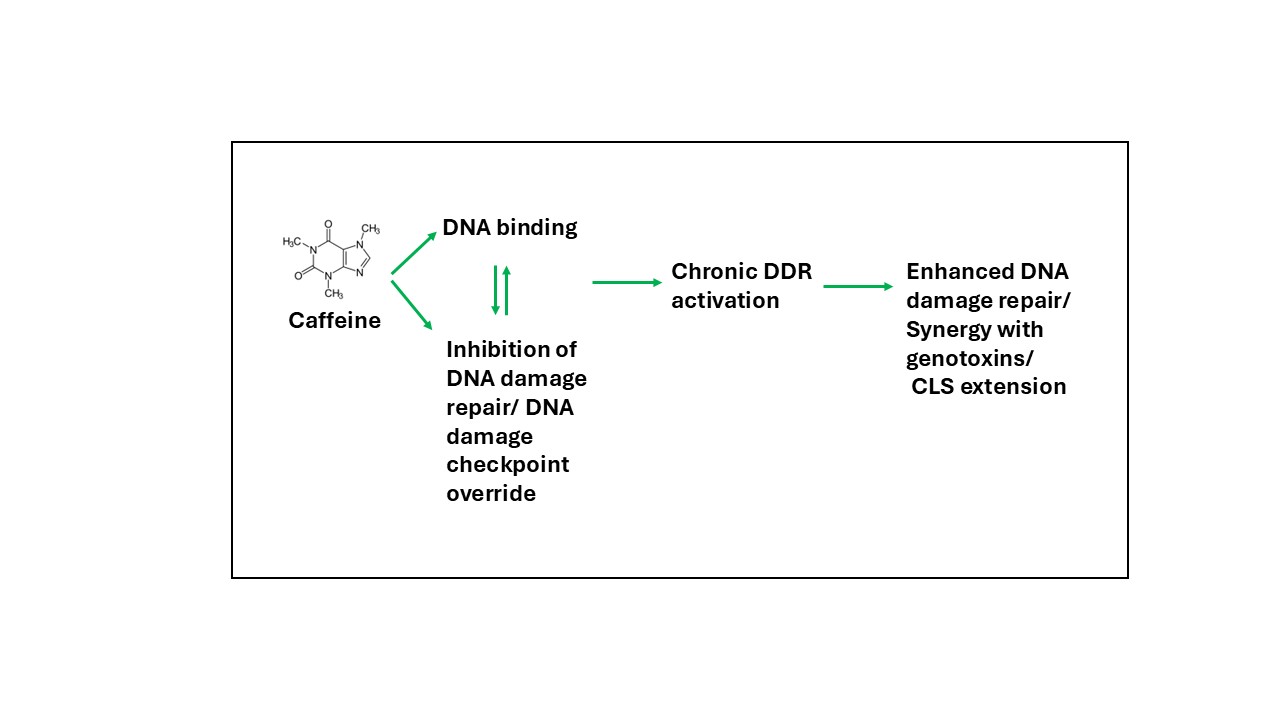
The methylxanthine caffeine is one of the most widely consumed neuroactive substances globally. Caffeine in the context of coffee consumption has been associated with diverse effects on human health and has been widely reviewed. Caffeine has drawn considerable interest due to its effects on cellular signalling, DNA damage sensitivity, Target of Rapamycin (TOR) activity, activation of AMP-activated Protein Kinase (AMPK), and extension of chronological lifespan in fission yeast and other model organisms. The cell cycle effects of caffeine have overshadowed its modulation of DNA damage and repair. Caffeine provides an interesting example of how scientific knowledge evolves and is influenced by trends within epochs. Despite recent advances in our understanding of how caffeine modulates cell cycle progression, these findings raise many new questions. These include its structural similarity to adenine and the mechanisms by which it affects DNA damage and repair, and its impact on TOR Complex 2 (TORC2) activity. Herein, I review our current knowledge on the cellular effects of caffeine and focus primarily on studies in fission yeast. It proposes that caffeine be considered a radiomimetic compound, outlining our current state of knowledge and future directions in applying its pharmacology in the prevention and treatment of disease.
Keywords:
caffeine
; methylxanthine
; Schizosaccharomyces pombe
; cell cycle
; DNA damage
; stress response
; radiomimetic
; target of rapamycin
; AMP-activated protein kinase
Copyright: This open access article is published under a Creative Commons CC BY 4.0 license, which permit the free download, distribution, and reuse, provided that the author and preprint are cited in any reuse.