
Submitted:
20 September 2026
Posted:
21 September 2026
You are already at the latest version
Abstract
Background/Objectives: Castration-resistant prostate cancer (CRPC) is an aggressive and treatment-resistant stage of prostate cancer for which reliable molecular biomarkers and therapeutic targets remain limited. Previous CRISPR-Cas9-mediated knockout of androgen receptor (AR) and fatty acid-binding protein 5 (FABP5) identified a shared transcriptomic signature, suggesting the existence of a common regulatory network. This study aimed to clinically validate this network using multiple independent prostate cancer datasets.
Methods: Five commonly dysregulated genes (FASN, FOSB, GRPR, PPARG, and CAV1), identified through comparative transcriptomic analyses, together with FABP5, were evaluated using multiple prostate cancer databases. Gene expression, clinicopathological associations, disease progression, genomic alterations, protein expression, and functional enrichment analyses were performed using integrated bioinformatics approaches. Correlation analyses with AR, KLK3, and VEGFA were also conducted.
Results: FABP5, FASN, FOSB, and GRPR were significantly upregulated in prostate adenocarcinoma, whereas PPARG and CAV1 were significantly downregulated relative to normal prostate tissues. Several genes were significantly associated with Gleason score, disease progression, and established prostate cancer biomarkers. Protein-level validation using Human Protein Atlas data showed increased FABP5 and FASN expression in high-grade prostate adenocarcinoma tissues. Functional enrichment analyses identified significant enrichment of lipid metabolism, PPAR signaling, fatty acid biosynthesis, and hormone-responsive pathways.
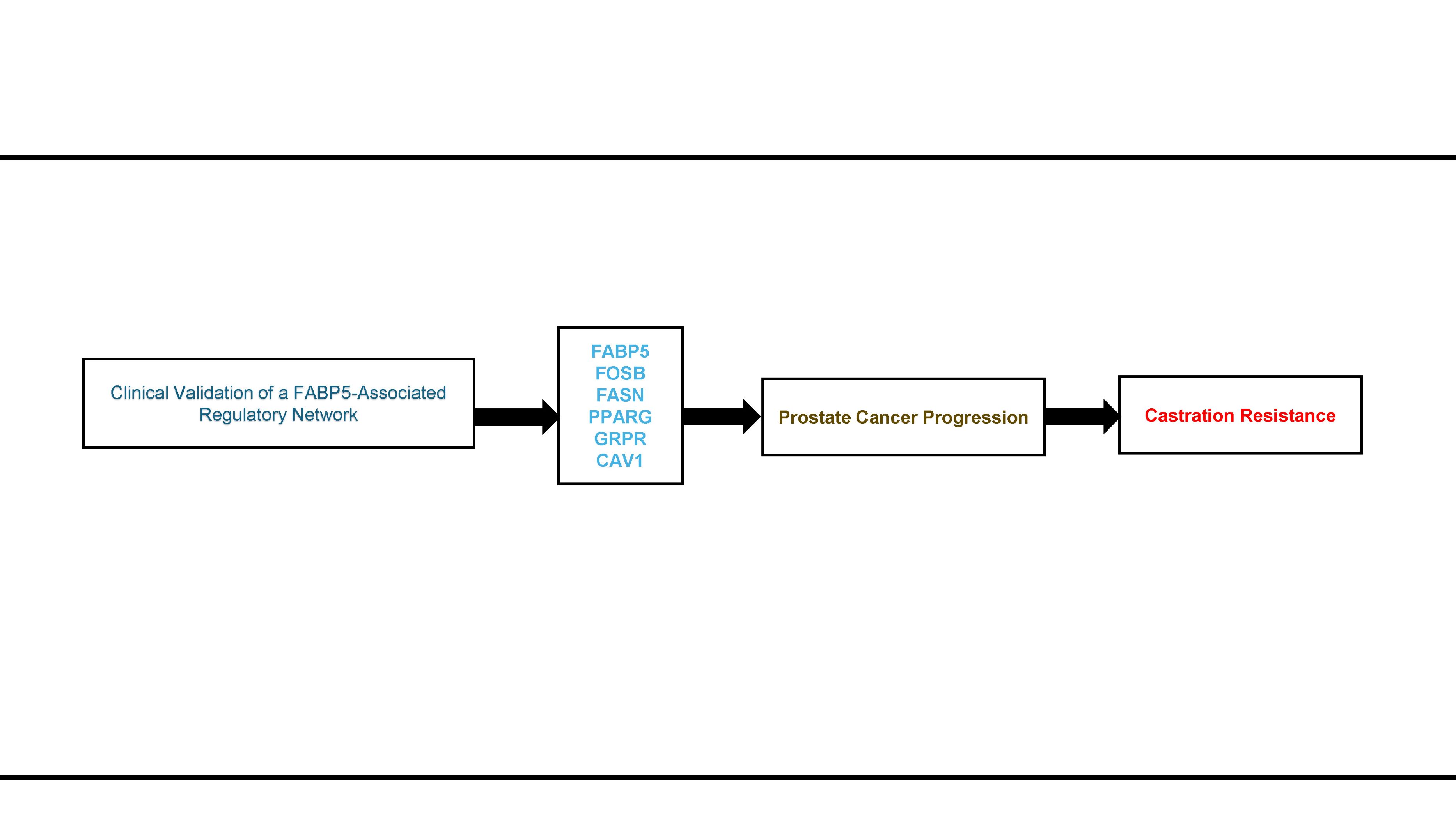
Conclusions: These findings clinically validate an experimentally identified FABP5-associated molecular network and support its role in prostate cancer progression and castration resistance. Collectively, the results identify FABP5 and its associated lipid metabolism-related genes as promising biomarkers and potential therapeutic targets for advanced prostate cancer.
Keywords:
prostate cancer
; castration-resistant prostate cancer
; fatty acid-binding protein 5
; lipid metabolism
; biomarkers
; CRISPR-Cas9
; transcriptomics
; bioinformatics
Copyright: This open access article is published under a Creative Commons CC BY 4.0 license, which permit the free download, distribution, and reuse, provided that the author and preprint are cited in any reuse.