

Submitted:
19 September 2026
Posted:
20 September 2026
You are already at the latest version
Abstract
Software engineering coordination constitutes a substantial and growing proportion of development effort, yet coordination cost remains one of the least rigorously modelled, measured, or estimated aspects of software engineering. Despite decades of research in software development cost estimation and coordination theory, the field lacks a coherent and comprehensive engineering foundation that treats coordination cost as a measurable and analytically estimable quantity with its own theoretical constructs, standardized units, and analytical models. This paper establishes that foundation. It develops a generalized theory of coordination cost dynamics that distinguishes intra-team and inter-team coordination as fundamentally different organizational mechanisms. It introduces unit coordination cost parameters—empirically calibratable engineering parameters that abstract analytically intractable contextual complexity into measurable quantities. It derives closed-form estimation models expressing total coordination cost as a function of project size, team configuration, and unit coordination costs. It proposes standardized efficiency measures—Absolute, Internal Relative, and External Relative Coordination Efficiency, enabling benchmarking and comparative analysis across projects and organizations. The framework provides researchers with a coherent theoretical basis for empirical validation. For practicing project and engineering managers, software cost estimators, and IT quantity surveyors, it offers systematic methods for reliable cost estimation and planning, diagnosis of cost overheads, and coordination efficiency improvement. In so doing the paper lays the foundations for a rigorous specialized discipline of software development cost engineering.
Keywords:
cost engineering
; coordination cost engineering
; unit coordination costs
; intra-team coordination
; inter-team coordination
; coordination efficiency
; software engineering economics
; software development
1. INTRODUCTION
How can software development coordination costs be systematically modelled, measured, and estimated using a rigorous cost engineering discipline in the presence of the complex socio-technical dynamics that characterize large-scale projects? This is one of the most important, difficult, and unresolved questions in large-scale software engineering. The present paper confronts it directly.
The practical significance of this challenge lies both in the increasing scale of modern software development projects and the disproportionate increase in coordination demands. Contemporary software projects routinely involve hundreds of engineers distributed across multiple teams, organizations, vendors, and countries, requiring extensive communication, dependency management, architectural alignment, governance, integration planning, reviews, and collaborative decision-making throughout the development lifecycle (Herbsleb & Mockus, 2003; Herbsleb, 2007; Dingsøyr et al., 2023).
Empirical studies on coordination effort validate this trend. They consistently report that software engineers devote a substantial proportion of their working time to coordination-related activities: meetings, communication, synchronization, planning, architecture reviews, dependency resolution, and collaborative problem solving (Gonçalves et al., 2011; Stray, 2018; Stray & Moe, 2020). As projects become increasingly distributed and organizationally complex, coordination effort grows disproportionately, becoming a dominant component of total engineering effort (Brooks, 1975; Hersley & Mockus, 2003; Cataldo et al., 2008). Improving our understanding of coordination cost is therefore no longer merely a project management concern; it has become a fundamental cost engineering problem with profound implications for software engineering economics, organizational design, project planning, and digital transformation. This particularly
Yet, despite its pervasive influence on project cost, productivity, delivery performance, and software quality, coordination cost remains one of the least rigorously modelled and quantified aspects of software development.
This gap persists despite decades of research spanning software cost estimation (Boehm et al., 2000; Chulani et al., 1999; Matson et al., 1994), coordination theory and socio-technical congruence (Malone & Crowston, 1994; Cataldo et al., 2008; Rajapakse et al., 2025), empirical measurement of coordination effort (Herbsleb & Mockus, 2003; Stray & Moe, 2020; Gonçalves et al., 2011; Dingsøyr et al., 2023), and more recently, machine learning-based estimation (Rahman et al., 2024; Boujida et al., 2025). Yet these established streams have not furnished what software development still lacks: a coherent engineering foundation for modelling, measuring, and estimating coordination cost. Existing effort estimation models treat coordination as an implicit adjustment factor rather than an explicit engineering quantity (Boehm et al., 2000). Coordination research, while advancing understanding of organizational interactions, has not established measurable engineering constructs capable of supporting analytical modelling, empirical calibration, or quantitative estimation (Cataldo et al., 2008; Herbsleb & Mockus, 2003). Machine learning approaches, despite their promise, have not been applied to coordination cost as a distinct quantity and lack the theoretical constructs and standardized measures required for rigorous estimation (Rahman et al., 2024; Boujida et al., 2025). The result is a triple deficit: no comprehensive modelling framework for coordination dynamics, no standardized measurement units or calibration mechanisms, and no engineering methods for estimation, benchmarking, or decision support. Coordination cost therefore continues to be treated as organizational overhead—managed qualitatively rather than engineered quantitatively.
A principal reason for this limitation is the intrinsic complexity of software development coordination. Coordination emerges from numerous interacting technical, organizational, human, and environmental factors whose relationships are highly dynamic and context-dependent (Conway, 1968; Hersley & Mockus, 2003; Bjarnason et al., 2022). Attempting to represent every influencing factor produces analytically intractable models, while excessive simplification sacrifices engineering realism. The central scientific challenge, therefore, is not merely mathematical derivation—it is the development of an engineering abstraction that preserves the dominant characteristics governing coordination cost while remaining sufficiently tractable for quantitative analysis, empirical measurement, analytical estimation, and comparative evaluation.
The present paper seeks to address the foregoing knowledge gaps and challenges through three objectives. First is to develop a generalized engineering model of coordination cost that captures its principal determinants and distinguishes intra-team from inter-team coordination. Second is to establish standardized engineering quantities through which coordination cost can be measured, empirically calibrated, compared, and benchmarked. Third is to develop analytically tractable methods for estimating coordination cost from observable project structure and empirically calibratable parameters.
To this end, the paper’s principal contribution is the establishment of the engineering science foundations for software development coordination cost modelling, measurement, and estimation. The proposed foundations comprise six interrelated elements. First, the study develops a generalized theory of coordination cost dynamics that conceptualizes coordination as emerging from two fundamentally distinct yet interdependent mechanisms—intra-team coordination and inter-team coordination. Second, it develops a complex dynamical system model representing coordination as comprising project inputs, coordination processes, and coordination-cost outputs. Third, it introduces unit coordination costs as engineering abstraction parameters that encapsulate the combined influence of complex contextual characteristics on coordination behavior, transforming an analytically intractable system into a tractable engineering representation. Fourth, it introduces Relative Coordination Efficiency (RCE) as a standardized quantitative measure of organizational coordination efficiency. Fifth, it derives a closed-form four-parameter analytical model for estimating total coordination cost as a function of project size, team size, and intra-team and inter-team unit coordination costs. Finally, it derives analytical scaling laws that explain the growth, distribution, dominance, and sensitivity of coordination cost as projects increase in scale and organizational complexity.
The proposed foundations have implications for both research and practice. For researchers, they establish a coherent theoretical and analytical basis for further investigation—including empirical validation, benchmarking, organizational optimization, and software engineering economics. For practitioners – especially project and program managers, engineering managers, software cost estimators and quantity surveyors, they provide a systematic framework for modelling, measuring, estimating, and comparing coordination cost across projects and organizations, supporting more informed decisions on project organization, team sizing, resource planning, and coordination strategy.
The study adopts a deductive engineering-science methodology. Rather than statistically fitting equations to observations from a particular set of projects, it develops a generalized engineering theory through systematic abstraction, mathematical derivation, and analytical reasoning. The resulting engineering quantities are intentionally defined to permit subsequent empirical calibration and validation across diverse development environments while remaining independent of any specific organizational context.
The remainder of the paper is organized as follows. Section 2 establishes the conceptual and theoretical foundations of the study. Section 3 reviews related work and synthesizes the research gaps. Section 4 presents the research methodology. Section 5 develops the proposed coordination-cost engineering theory, measurement framework, and analytical estimation models. Section 6 discusses the results, their validity and generalizability, limitations, contributions and novelty, significance, and implications. Finally, Section 7 concludes the paper and outlines directions for future research.
2. CONCEPTUAL AND THEORETICAL FOUNDATIONS
2.1. Modelling, Measurement and Estimation in Engineering
2.1.1. Modelling in Engineering
In engineering, a model is a simplified representation of a system that preserves the dominant characteristics relevant to the problem at hand while suppressing unnecessary detail (Simon, 1996; Blanchard & Fabrycky, 2011). Models serve several essential functions: abstraction—reducing complex reality to analytically tractable representations; explanation—providing insight into causal relationships and system behaviour; prediction—enabling forecasting of system behavior under different conditions; and design—supporting decision-making and system optimization (Blanchard & Fabrycky, 2011; Ince, 1999).
The development of engineering models proceeds through a sequence of progressively refined abstractions, balancing fidelity with analytical tractability (Simon, 1996; Wieringa, 2014). Models deliberately omit some aspects of reality to focus on those that are most important for the problem at hand.
2.1.2. Measurement in Engineering
Measurement is the process of assigning numbers to properties of systems or phenomena according to well-defined rules (JCGM, 2012; Finkelstein, 2003). In engineering, measurement serves several critical functions: quantification—transforming qualitative observations into quantitative data that can be analysed, compared, and aggregated; calibration—estimating model parameters from empirical observations (Box & Draper, 1987); validation—testing model predictions against empirical evidence (Kleijnen, 1995; Sargent, 2013); and benchmarking—comparing performance across systems, projects, or organizations (Camp, 1989; Andersen & Pettersen, 1996).
A defining characteristic of mature engineering disciplines is the existence of standardized measurement units—quantities that are defined, reproducible, and comparable across contexts (e.g., newtons, watts, pascals, kilograms per square metre). Standardized units enable cumulative knowledge building, empirical calibration, cross-context comparison, and the establishment of industry benchmarks (JCGM, 2012; Mari et al., 2011; Finkelstein, 2003).
2.1.3. Estimation in Engineering
Estimation is the process of inferring the value of a quantity from available information, often using models calibrated with empirical data (Boehm et al., 2000; Friedman, 1991). In engineering, estimation serves several essential purposes: planning—forecasting resource requirements for future projects (AACE International, 2020; Project Management Institute, 2021); control—providing a baseline against which actual performance is measured, enabling variance analysis and corrective action (Fleming & Koppelman, 2005); and decision support—enabling engineering managers to compare alternatives and make informed decisions about resource allocation and strategy (Blanchard & Fabrycky, 2011; Stewart et al., 1995).
Estimation in engineering proceeds through a combination of: analytical modelling—deriving mathematical relationships that express quantities as functions of identifiable variables, providing transparent, interpretable relationships; empirical calibration—estimating model parameters using historical data, connecting analytical models to the specific context in which they are used (Chulani et al., 1999; Box & Draper, 1987); and uncertainty quantification—characterizing the range of possible values and the confidence associated with estimates, recognizing that engineering estimates are not point values but ranges or distributions that reflect inherent variability and incomplete information (Box & Draper, 1987; Morgan & Henrion, 1990).
2.2. Cost Engineering
2.2.1. Definition and Scope
Cost engineering is the engineering practice devoted to the management of project costs, encompassing estimating, cost control, forecasting, investment appraisal, and risk analysis (Humphreys, 2005; AACE International, 2020). It applies scientific principles and engineering techniques to cost management, treating cost not as a secondary concern but as a primary engineering variable that can be systematically analyzed, estimated, controlled, and optimized.
The scope of cost engineering extends across the entire project lifecycle, from conception through development and into operations (Blanchard & Fabrycky, 2011; Stewart et al., 1995). Its core activities—cost modelling, estimation, planning, forecasting, and control—serve to enable economically sound engineering decisions throughout the project lifecycle. Cost engineering is characterized by several core principles: systematic estimation using rigorous, repeatable methods; empirical calibration using historical data from comparable projects; transparency and traceability of estimates to underlying assumptions; explicit quantification of uncertainty; and continuous improvement through learning from actual cost performance (Humphreys, 2005; AACE International, 2020).
In cost engineering, cost encompasses both monetary expenditures and non-monetary resource consumption—including effort, time, risk, and quality—that affect project outcomes (Blanchard & Fabrycky, 2011). This study is concerned with effort as the primary dimension of coordination cost, measured in engineering hours.
2.2.2. Activity-Based Costing
The principles of Activity-Based Costing (ABC) inform the coordination cost framework developed in this study. ABC is a method of allocating indirect costs to cost objects based on the activities that consume resources and the drivers that cause those activities to be performed (Cooper & Kaplan, 1991; Kaplan & Anderson, 2007). ABC proceeds by identifying activities, assigning resource costs to activity pools, identifying cost drivers, calculating activity rates, and assigning costs to cost objects based on their consumption of activities at the calculated rates.
ABC provides more accurate cost information than volume-based allocation methods because it reflects the actual consumption of resources by different cost objects (Cooper & Kaplan, 1991; Drury, 2018). This accuracy is particularly valuable for software engineering coordination costs, which are typically allocated using volume-based methods that do not reflect the actual consumption of coordination resources by different projects or activities.
The framework developed in this study applies ABC principles to coordination cost by distinguishing intra-team and inter-team coordination as fundamentally different activities with different cost drivers. The unit coordination costs introduced in Section 5.3—α (intra-team) and β (inter-team)—are, in effect, activity rates for coordination activities. They enable organizations to trace coordination costs to projects, teams, and activities based on their actual coordination consumption rather than using crude volume-based allocations. This application of ABC principles is developed further in Section 5.3, where unit coordination costs are introduced as measurable engineering parameters
2.3. Coordination in Software Engineering: Definitions and Cost Drivers
2.3.1. Definition
Coordination is the management of dependencies among activities, decisions, and resources to achieve shared objectives (Malone & Crowston, 1994). In software engineering, dependencies arise across multiple dimensions: technical dependencies from software architecture, where interacting components create coordination requirements; organizational dependencies from the division of labor, where different teams must integrate their work; resource dependencies from sharing scarce resources across projects or teams; and temporal dependencies from sequencing, where activities dependent on prior completion require coordination (Cataldo et al., 2008; Herbsleb & Mockus, 2003; de Souza et al., 2005).
Coordination cost is the engineering effort required to manage these dependencies. It encompasses effort associated with all mechanisms used to manage dependencies, including communication, collaboration, planning, meetings, and other coordination activities.
2.3.2. Coordination, Collaboration and Communication Distinguished
The terms coordination, collaboration, and communication represent distinct organizational phenomena with different engineering implications (Malone & Crowston, 1994; Dillenbourg, 1999; Shannon, 1948). Communication is the exchange of information and serves as a mechanism for achieving coordination. Coordination is the management of dependencies among activities and resources—the organizational objective of aligning work. Collaboration is joint work toward shared objectives with mutual engagement and shared decision-making mode of working that requires coordination.
This study is concerned with coordination cost—the effort required to manage dependencies—rather than communication or collaboration per se. Coordination cost includes effort associated with all mechanisms used to manage dependencies, including communication and collaboration activities.
2.3.3. Sources of Coordination Costs in Software Development
Coordination costs in software development arise from multiple interacting forces that shape the dynamics and magnitude of coordination effort. These forces are not independent; they interact in complex ways that amplify or mitigate coordination requirements throughout the project lifecycle. Understanding these sources is essential for developing realistic models of coordination cost.
- Project Size and Organizational Scale
Project size has long been recognized as one of the principal determinants of coordination complexity in software engineering. Brooks (1975) first observed that increasing project personnel produces disproportionately greater communication overhead communication, an insight subsequently supported by extensive empirical research on software organizations. Studies consistently identify project size as a significant predictor of communication complexity, coordination effort, software quality, and project performance, particularly in large-scale software development environments (Cataldo et al., 2008; Nagappan et al., 2013).
Project size may be characterized by various measures including budget, duration, functional scope, organizational impact, or the number of participating personnel. Regardless of the specific measure used, the fundamental relationship is clear: larger projects exhibit greater coordination complexity because more individuals, teams, and activities must be synchronized. The number of potential coordination relationships increases with the number of participants, making organizational scale a primary driver of coordination cost.
- 2.
- Organizational Process Maturity
Coordination effectiveness depends not only on organizational scale but also on the maturity of the engineering processes governing project execution. Mature organizations generally reduce unnecessary coordination effort through standardized engineering practices, disciplined governance, systematic dependency management, well-defined communication pathways, and institutionalized organizational learning. Conversely, immature engineering processes frequently increase coordination overhead through ambiguity, duplicated effort, inconsistent decision-making, and increased managerial intervention. Evidence from software process improvement research, the Capability Maturity Model Integration (CMMI), and contemporary DevOps performance research consistently associates higher process maturity with improved coordination efficiency and delivery performance (Paulk et al., 1993; Forsgren et al., 2018).
- 3.
- Software Architectural Characteristics
Software architecture fundamentally influences coordination because technical dependencies frequently induce organizational dependencies. Systems characterized by strong architectural coupling generally require more frequent communication, interface negotiation, integration planning, and cross-team synchronization than modular architectures with well-defined interfaces. Conway's seminal observation that software architecture reflects organizational communication structures (Conway, 1968) has subsequently been reinforced by empirical studies demonstrating that alignment between architectural dependencies and organizational coordination structures significantly improves development effectiveness (Cataldo et al., 2008; MacCormack et al., 2012). Recent research continues to identify socio-technical congruence and architectural dependency management as central determinants of coordination effectiveness in collaborative software engineering environments.
- 4.
- Human and Team Characteristics
Coordination behavior is also shaped by the characteristics of the participating engineering teams. Differences in technical expertise, domain knowledge, experience, role specialization, familiarity with organizational practices, and prior collaborative history influence both the frequency and complexity of coordination activities. Teams possessing complementary expertise and shared organizational knowledge generally require less explicit coordination than newly formed or highly heterogeneous teams, consistent with organizational learning theory and empirical observations from software engineering and project management research (Argote, 2013).
- 5.
- Organizational and Environmental Context
Modern software engineering increasingly occurs within geographically distributed organizations, hybrid working environments, outsourced development arrangements, and globally connected software ecosystems. These environments introduce organizational, temporal, cultural, and cognitive distances that increase the effort required to establish and maintain effective coordination. Empirical studies spanning more than two decades consistently demonstrate that geographical dispersion reduces opportunities for informal communication, delays feedback, complicates dependency management, and weakens shared situational awareness unless supported by appropriate organizational coordination mechanisms (Olson & Olson, 2000; Herbsleb & Mockus, 2003; Herbsleb, 2007).
More recent research further demonstrates that coordination effectiveness depends not only on physical separation but also on cognitive and psychological distance between collaborating teams. These dimensions significantly influence communication effectiveness, dependency resolution, and collective problem solving, while appropriate organizational practices substantially mitigate their adverse effects (Bjarnason et al., 2022). Likewise, longitudinal investigations of large-scale agile software programmes show that coordination mechanisms continuously evolve throughout project execution in response to changing organizational and technical conditions, reinforcing the dynamic nature of software engineering coordination (Dingsøyr et al., 2023). Furthermore, large-scale industrial evidence confirms that organizational coordination strategies exert a measurable influence on coordination effectiveness, highlighting the continuing practical importance of coordination as a software engineering management challenge (Alami et al., 2025).
3. RELATED WORKS
3.1. Software Effort and Cost Estimation Models
The longest-established stream of research comprises analytical and parametric models for estimating overall software development effort, cost, and duration. The Constructive Cost Model (COCOMO) and its variants are the most widely studied and applied approaches (Boehm et al., 2000; Boehm et al., 2011; Boehm et al., 2014). COCOMO expresses total effort as Effort = A × (Size)ᴱ × ∏ EMᵢ, where E represents scale factors and EMᵢ denotes effort multipliers. Other generalized estimation approaches include Function Point Analysis (Matson et al., 1994), Use Case Points (Ochodek et al., 2011), and data-driven methods such as machine learning (discussed in Section 3.3).
These models have made substantial contributions to software engineering economics. They have demonstrated that analytical estimation is feasible and valuable when grounded in empirical calibration, and that contextual factors—team capability, process maturity, product complexity, and platform constraints—exert systematic influences on development productivity (Boehm et al., 2000; Chulani et al., 1999).
Despite these contributions, generalized effort models exhibit a critical limitation for coordination cost estimation: coordination activities—meetings, communication, dependency resolution, integration planning—are subsumed within aggregate effort adjustment factors rather than modelled as a distinct cost component (Boehm et al., 2000). This is not a flaw in these models; they were not designed to estimate coordination cost as a distinct quantity. However, it is a significant gap because coordination effort exhibits distinct scaling properties and organizational dependencies that differ fundamentally from technical development effort. Coordination grows disproportionately with project size and organizational complexity (Brooks, 1975; Herbsleb & Mockus, 2003), and its determinants—team configuration, geographical distribution, architectural coupling, process maturity—are only partially captured by generic effort multipliers.
Consequently, existing generalized effort models do not provide the constructs, measures, or models required for rigorous coordination cost estimation. They treat coordination as a residual implicit factor rather than an explicit engineering quantity with its own scaling laws, dependency structures, and calibration requirements.
3.2. Coordination-Specific Cost Models
A limited but growing body of research has directly modelled or estimated coordination cost as a distinct quantity. Early contributions include econometric models for predicting coordination task costs using OLS techniques, defining coordination typologies as a foundation for cost analysis (MacCormack et al., 2012). Espinosa and Carmel (2004; 2023) developed a dyad model of coordination costs in global software teams, explicitly modelling production, coordination, and vulnerability costs as functions of time separation and collaboration modes. Ramasubbu, Mehra, and Mookerjee (2009) proposed an analytical model of coordination costs in offshore software development, investigating the effects of software complexity, integration, and team organization.
Systematic literature reviews have further highlighted the gap: Ahmed et al. (2023) identified 86 GSD-specific cost drivers—including time zone differences, cultural differences, and communication—that existing estimation models fail to incorporate, while Wickramaarachchi and Lai (2024) confirmed that estimation methods in global contexts remain underexplored, with COCOMO-II remaining the most adapted method despite its limitations.
These models provide some predictive capability and establish that coordination cost can be modelled analytically. However, they are context-specific—focused on particular settings such as global, offshore, or dyadic collaboration—and have not been generalized into a widely applicable engineering framework that provides standardized measurement units, distinguishes intra-team from inter-team coordination with explicit cost structures, or supports systematic estimation and benchmarking across diverse project environments.
Perhaps most critically, literature lacks standardized measurement units for coordination cost. Coordination effort is measured inconsistently—hours per week in meetings (Stray & Moe, 2020), percentages of working time (Gonçalves et al., 2011), or proxy measures such as communication frequency (Cataldo et al., 2008). This absence of standardized quantities severely limits cross-project comparison, prevents industry benchmarks, and means coordination cost cannot be treated as a rigorous engineering quantity amenable to systematic estimation, calibration, or optimization.
3.3. Machine Learning-Based Effort and Cost Estimation
Machine learning (ML) has emerged as a powerful data-driven paradigm for effort estimation, learning predictive relationships directly from historical data without explicit analytical formulation (Rahman et al., 2024). Systematic reviews show that ANN-based models outperform 11 competing approaches (Boujida et al., 2025), and ensemble learning and hybrid approaches have achieved MRE as low as 3.33 (Eswara Rao et al., 2023; Devadas & Samuel, 2025).
Despite these capabilities, existing ML studies have not been directly applied to coordination effort estimation as a distinct quantity—the literature is overwhelmingly concerned with overall effort, duration, or story-point estimation (Rahman et al., 2024; Boujida et al., 2025). More fundamentally, ML methods do not distinguish intra-team from inter-team coordination dynamics, nor do they establish standardized engineering measures for coordination cost (Rahman et al., 2024; Boujida et al., 2025). Learned relationships are implicit and black-box, limiting engineering insight (Rahman et al., 2024), and performance degrades when applied to projects with different characteristics, particularly in GSD contexts where coordination drivers are not captured by standard datasets (Wickramaarachchi & Lai, 2024).
This does not diminish ML's potential. On the contrary, the framework developed in this study creates the conditions for meaningful ML application to coordination cost estimation by providing: (1) clear prediction targets (α and β); (2) standardized measurement units; and (3) explicit functional forms relating α and β to total coordination cost. ML methods are therefore complementary to the proposed framework rather than alternatives to it.
3.4. Empirical Measurement and Analysis of Coordination Effort
A substantial body of research has directly measured coordination effort using surveys, field studies, interviews, communication logs, and repository mining. Foundational work established that coordination of engineering decisions is central to success and that geographical distribution significantly increases coordination effort (Herbsleb & Mockus, 2003). The magnitude of coordination effort has been quantified: Stray and Moe (2020) reported that employees spent approximately 41–42% of working time in meetings; Gonçalves, de Souza, and González (2011) found that developers spent approximately 45% of working time collaborating with colleagues and a further 31.9% seeking information. Dingsøyr et al. (2023), in a longitudinal case study of a €75 million programme involving 130 personnel, identified 27 distinct coordination mechanisms under one organizational structure and 14 following restructuring, demonstrating that coordination mechanisms evolve dynamically. More recently, logs-based and survey-based metrics have been developed to identify collaboration through observable events and assess team functioning (Chen et al., 2025).
However, empirical studies do not provide generalized estimation models or standardized engineering units. Coordination effort is reported in disparate terms—hours per week, percentages, communication frequency, dependency counts—preventing cross-project comparison and benchmarking. While these studies provide valuable observational data, they do not offer engineering constructs, standardized measurement units, or analytical estimation models required for systematic coordination cost estimation or organizational analysis.
3.5. Synthesis of Research Gaps
Three foundational gaps emerge:
Gap 1: Absence of a Comprehensive Engineering Modelling Framework. No existing framework systematically integrates the principal determinants of coordination dynamic project size, team organization, architectural characteristics, geographical distribution, process maturity, and team composition—within a unified model. Current models do not explicitly distinguish the distinct dynamics, scaling behavior, and engineering implications of intra-team and inter-team coordination, despite this distinction being significant as shown in section 2.4.2.
Gap 2: Absence of Standardized Engineering Measurement Units and Calibration Mechanisms. The literature does not establish standardized measurement units for coordination cost that can be consistently measured, empirically calibrated, compared across projects, or incorporated into analytical models. No standardized measures of coordination efficiency exist to enable objective benchmarking and comparative evaluation.
Gap 3: Absence of Engineering Methods for Coordination Cost Estimation, Analysis, and Decision Support. Neither analytical estimation models, machine learning approaches, coordination modelling frameworks, nor empirical measurement studies provide integrated engineering methods for systematically estimating coordination cost, analyzing coordination behavior, benchmarking coordination performance, or supporting coordination optimization.
4. METHODOLOGY
4.1. Research Question, Objective, and Methodological Orientation
This study addresses the following research questions:
How can software engineering coordination cost be systematically modelled, measured, and estimated as a generalized engineering function of project organization?
The objective is to establish the engineering foundations required for rigorous modelling, measurement, and estimation of software engineering coordination cost
Accordingly, the study adopts a deductive engineering-science methodology. Its purpose is to develop generalized engineering knowledge that is independent of any specific project context while remaining suitable for subsequent empirical calibration, validation, and practical application. This methodological orientation is appropriate because the aim is theory construction—establishing generalizable engineering quantities and relationships—rather than statistical inference from a particular dataset (Gregor, 2006; Whetten, 1989).
4.2. Engineering Theory Development Process
The methodology follows the classical engineering systems paradigm in which scientific understanding progresses through the successive development of models, measurement frameworks, and estimation methods (Vincenti, 1990; Blanchard & Fabrycky, 2011; INCOSE, 2023). Across engineering disciplines, models provide simplified but analytically meaningful representations of complex systems; measurement establishes operational definitions for the quantities represented by those models; and estimation applies the resulting models to analyse, predict, or optimize system behaviour (JCGM, 2012; Box & Draper, 1987).
Consistent with this tradition, the present study develops its engineering foundations through five sequential methodological activities, each corresponding to a stage in the theory-building process (Dubin, 1978; Lynham, 2002; Wieringa, 2014):
First, conceptual analysis—the coordination phenomenon was analysed to identify the dominant constructs governing coordination behaviour, establish system boundaries, and formulate the assumptions required for generalized analysis. The dominant constructs were carefully selected from the drivers of coordination costs described in Section 2.3—project size, organizational process maturity, software architectural characteristics, human and team characteristics, and organizational and environmental context—as these represent the principal forces shaping coordination dynamics in software development. This stage ensures that the theoretical constructs are grounded in established coordination theory and empirical software engineering research (Malone & Crowston, 1994; Herbsleb & Mockus, 2003).
Second, abstraction—the identified constructs were abstracted into an engineering representation that captures the essential coordination dynamics while deliberately suppressing project-specific organizational, technological, and managerial variability that would otherwise prevent analytical treatment. This stage follows Simon's (1996) principle of using simplified representations that preserve dominant characteristics while suppressing unnecessary detail, producing a generalized model capable of explaining coordination behaviour across diverse software engineering environments.
Third, operationalization—the abstract representation was operationalized into measurable engineering quantities through the introduction of appropriate engineering abstractions and simplifying assumptions. This stage bridges conceptual modelling and quantitative engineering analysis by transforming complex coordination behaviour into quantities that can subsequently be measured, calibrated, and compared across organizations (JCGM, 2012; Finkelstein, 2003).
Fourth, formalization—the resulting analytical representation was formalized into estimation models capable of quantifying coordination cost as a function of project organization. The emphasis at this stage is analytical tractability rather than empirical parameter estimation, consistent with the deductive engineering-science orientation of the study (Boehm et al., 2000; Chulani et al., 1999).
Fifth, analytical investigation, the proposed framework was investigated and evaluated by examining its mathematical properties, limiting behaviour, sensitivity characteristics, explanatory capability, engineering interpretability, and empirical falsifiability. This stage establishes the scientific quality of the theory prior to empirical validation (Popper, 1959; Thagard, 1989; Bacharach, 1989).
4.3. Evaluation Strategy
Consistent with its objective of engineering theory construction, the present study evaluates the proposed framework analytically rather than empirically. The evaluation therefore focuses on the scientific quality of the theory itself rather than on the empirical accuracy of parameter estimates. This approach is appropriate for theory-building research, where the initial contribution is the establishment of theoretical constructs, measurement units, and analytical relationships that can subsequently be subjected to empirical validation (Gregor, 2006; Whetten, 1989; Corley & Gioia, 2011).
The proposed framework is evaluated from five complementary perspectives, adapted from established criteria for evaluating theory in engineering and management science (Bacharach, 1989; Gregor, 2006; Wieringa, 2014):
- Conceptual validity examines whether the proposed constructs adequately represent software engineering coordination and whether the theoretical assumptions and boundaries are appropriate. This establishes that the theory addresses the phenomenon it purports to address.
- Construct validity evaluates the clarity, precision, and internal consistency with which engineering quantities and relationships are defined. This ensures that the theoretical constructs are operationalized in a rigorous and unambiguous manner.
- Mathematical validity establishes the correctness and logical consistency of the analytical derivations. This ensures that mathematical relationships are formally sound and free from internal contradiction.
- Analytical validity examines whether the framework exhibits coherent behaviour, meaningful limiting cases, sensitivity characteristics, and theoretically consistent implications. This establishes that the framework behaves as expected under varying conditions and assumptions.
- Engineering validity assesses whether the resulting framework provides a meaningful basis for modelling, measuring, estimating, and analyzing coordination cost within realistic software engineering organizations. This establishes that the framework is not only theoretically coherent but also practically useful.
This multi-perspective evaluation strategy ensures that the proposed framework is scientifically rigorous before it is subjected to empirical calibration and validation, which are identified as the next stage of research
5. FOUNDATIONS OF SOFTWARE DEVELOMENT COORDINATION COST ENGINERING
This section develops the proposed coordination cost model through a sequence of progressively simplified engineering abstractions. Beginning with software engineering coordination as a complex dynamical system, each modelling stage introduces a scientifically justified simplifying assumption that preserves the dominant coordination behavior while improving analytical tractability. The resulting abstractions culminate in a generalized mathematical model suitable for quantitative estimation, organizational analysis, and engineering management.
The framework developed in Section 5 addresses these gaps by introducing: (i) a comprehensive engineering modelling framework for coordination complexity and dynamics; (ii) standardized unit coordination costs and efficiency measures enabling empirical calibration, cross-project comparison, and benchmarking; and (iii) closed-form estimation models establishing the engineering foundation for coordination cost estimation, quantitative analysis, and decision support.
5.1. Software Engineering Coordination as a Complex Dynamical System
I consider software engineering coordination as fundamentally a complex dynamical socio-technical system whose behavior continuously evolves throughout project execution. Coordination emerges from the interaction of organizational, technical, managerial, human, and environmental factors whose collective influence changes as projects evolve. Section 3 established these factors to influence coordination dynamics and hence coordination. costs.
Consequently, the coordination cost observed over a given planning period is more appropriately viewed as the output of an evolving project state than the consequence of any single project characteristic. The figure below captures these dynamics.
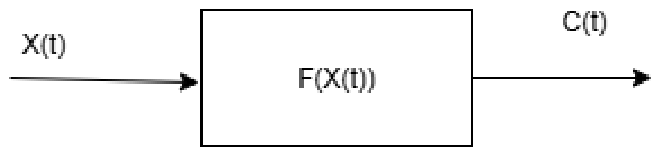
Figure 5.1.
An Abstract Two Port Model of Coordination Dynamics in Software Engineering.
The coordination system consists of an evolving state demoted by , the coordination system dynamics that act on this state defined by the functional ), and coordination cost as the output of the system.
The project state is defined
Where:
- denotes project size and organizational scale;
- denotes organizational process maturity;
- denotes software architectural characteristics;
- denotes human and team characteristics;
- denotes organizational context; and
- denotes the external project environment.
The resulting coordination cost may therefore be represented generally as
where is a functional that denotes the unknown system relationship governing the evolution of coordination cost from the underlying project state. At this stage, no assumptions are imposed regarding the analytical form of or the relative influence of the constituent state variables. The objective is simply to establish coordination cost as the emergent output of a complex engineering system whose behavior evolves over time.
Let
Then
Hence, the system can be abstracted as the two -input -one output system shown in Figure 5.2.
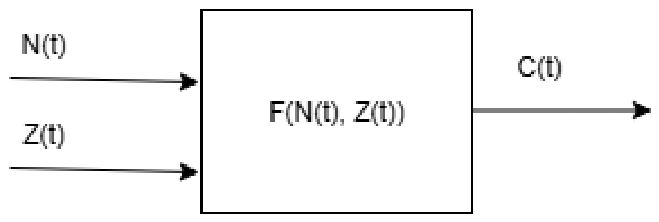
Figure 5.2.
An Abstract Two Port Model of Coordination Dynamics in Software Engineering.
This representation provides a conceptually faithful description of software engineering coordination cost dynamics but remains analytically intractable. The project state comprises is partly a function of an unknown function . It is hard to determine or estimate Z(t) analytically because it’s a function of many interaction variables whose individual and collective effects cannot readily be mathematically estimated.
Hence, the models in Figs. 5.1 and 5.2 are not suitable for engineering estimation or project planning.
What is needed is a more useful engineering model that abstracts the complex interactions and dynamics that define while preserving the dominant coordination mechanisms. The first such abstraction distinguishes intra-team and inter-team coordination dynamics, two fundamentally different organizational mechanisms through which coordination cost is generated. The next section develops this distinction.
5.2. Accounting for Intra- and Inter-Team Coordination Dynamics
The generalized coordination model developed in Section 4.1 represents software engineering coordination as a single aggregate organizational phenomenon emerging from the evolving state of the project. While appropriate for describing software engineering coordination at the system level, this representation does not explicitly distinguish the principal organizational mechanisms through which coordination effort is generated. In practice, software engineering coordination occurs both within engineering teams and between engineering teams, and these coordination mechanisms differ in their organizational purpose, coordination activities, interaction characteristics, and contribution to overall cost. This section explicitly accounts for these distinct coordination dynamics, thereby providing a richer representation of software engineering coordination while establishing the conceptual basis for the quantitative abstractions developed in the subsequent section.
5.2.1. Distinguishing Intra- and Inter-Team Coordination Costs
For the purposes of this study, intra-team coordination is defined as the organizational effort required to synchronize activities, decisions, resources, and engineering work among members belonging to the same software engineering team to achieve local team objectives.
Conversely, inter-team coordination is defined as the organizational effort required to synchronize activities, decisions, information, resources, and engineering work across two or more software engineering teams to achieve project-wide objectives requiring collaboration beyond the boundaries of individual teams.
Although both coordination processes contribute to successful software project execution, they differ fundamentally in the organizational dependencies they manage. Intra-team coordination primarily supports collaboration within relatively cohesive engineering teams undertaking closely related technical work, whereas inter-team coordination manages dependencies spanning multiple engineering teams, organizational units, suppliers, customers, regulators, and other project stakeholders. Consequently, the two coordination mechanisms are expected to exhibit different organizational characteristics and contribute differently to the overall coordination burden experienced by software engineering projects.
The principal organizational sources of coordination effort associated with each coordination mechanism are summarized in Table 1. The categories are intended to represent the dominant coordination activities commonly encountered in large software engineering projects rather than an exhaustive taxonomy.
The table summarizes the dominant characteristics of the two coordination mechanisms. Individual software engineering projects may exhibit additional coordination activities depending on project context, organizational structure, and application domain.
The distinction established above does not imply that the two coordination mechanisms operate independently. Rather, both continuously interact throughout project execution to generate the total coordination cost of the project. The following subsection examines why distinguishing these coordination mechanisms is theoretically, empirically, and practically important for understanding and modelling software engineering coordination.
5.2.2. Why Distinguishing Intra- and Inter-Team Coordination Matters
The distinction between intra-team and inter-team coordination is not merely a conceptual refinement but a fundamental organizational distinction with important implications for theory, empirical understanding, and quantitative modelling. Although both mechanisms contribute to successful project execution, they arise from different organizational dependencies, exhibit different dynamics, and consume resources differently. Treating coordination as a single aggregate quantity therefore risks obscuring important sources of coordination effort and limiting understanding of coordination behavior in complex projects. Coordination theory, empirical research, organizational learning theory, and industrial practice support this claim.
- Coordination Theory
Provides the primary justification. Coordination concerns the management of dependencies among interrelated activities (Malone & Crowston, 1994). Dependencies within engineering teams—shared tasks, close communication, common objectives—differ fundamentally from those spanning multiple teams, organizational units, suppliers, and other stakeholders. Within-team dependencies are typically managed through direct communication, shared mental models, and common routines; cross-team dependencies require formal mechanisms such as governance structures, interface agreements, and integration planning (Galbraith, 1974; Mintzberg, 1979). The distinction is therefore grounded in established organizational theory rather than representing an arbitrary modelling choice.
- 2.
- Empirical Research
Supports the distinction. Socio-technical congruence studies demonstrate that architectural dependencies frequently extend beyond team boundaries and that misalignment between technical dependencies and organizational communication structures significantly increases coordination effort (Cataldo et al., 2008; MacCormack et al., 2012). Studies of geographically distributed development identify cross-team communication, dependency management, and organizational synchronization as major determinants of performance (Herbsleb & Mockus, 2003; Herbsleb, 2007). Longitudinal studies of large-scale agile programmes show that coordination mechanisms evolve continuously in response to changing dependencies, with intra-team and inter-team mechanisms exhibiting different evolutionary patterns (Dingsøyr et al., 2023). Collectively, these findings demonstrate that coordination cannot be adequately understood without explicitly distinguishing local team coordination from cross-team organizational coordination.
- 3.
- Organizational Learning Theory
Provides additional support. Members of the same engineering team develop shared mental models, common terminology, communication routines, and collective situational awareness through continuous collaboration (Mathieu et al., 2000; Salas et al., 2005). These shared cognitive resources reduce the effort required for routine intra-team coordination. By contrast, coordination across teams requires integrating knowledge distributed across different technical expertise, organizational responsibilities, priorities, and perspectives, increasing the cognitive demands associated with negotiation, knowledge integration, and collaborative decision making (Carlile, 2004; Argote, 2013).
- 4.
- Industrial practice
Further validates the distinction. Although coordination patterns vary across organizations and project phases, intra-team coordination typically occurs more frequently through activities such as daily stand-ups, design discussions, code reviews, and informal consultations. Inter-team coordination generally occurs less frequently but involves longer and more cognitively demanding activities, including architecture reviews, cross-team dependency planning, integration planning, programme governance meetings, and release coordination. These patterns are consistent with empirical studies of large-scale programmes and further support modelling the two coordination mechanisms separately.
The theoretical, empirical, and practical arguments above establish that intra-team and inter-team coordination should be modelled as distinct organizational mechanisms with potentially different unit costs, scaling properties, and efficiency characteristics.
5.2.3. Intra- and Inter-Team Cost-Aware System Model
Building on the generalized model from Section 4.1 (Figure 2), this section refines its analytical representation by distinguishing the two fundamental generators of coordination cost: intra-team and inter-team coordination. As explained in section 42.2, these mechanisms differ in structure, communication, and scaling, requiring explicit separation for rigorous modeling and estimation. I therefore decompose total coordination cost into its intra- and inter-team components, while preserving their combined contribution to the project total.
Team Decomposition Constraint Equation
Consider a software engineering project comprising engineers, developers and technologists organized into engineering teams. Let the size of team be denoted by , were
The notation Z(t) retains the meaning established in Section 4.1 and continues to represent the project's contextual coordination dynamics.
Generalized Intra-team Coordination Cost Function
For an individual engineering team , coordination is generated entirely by interactions among members of that team. The corresponding coordination cost is therefore expressed as
where denotes the intra-team coordination cost function.
The total project-level intra-team coordination cost is obtained by aggregating the coordination generated within every engineering team,
Although the coordination generated within an individual team depends only on its own size and contextual dynamics, the total intra-team coordination cost depends implicitly on the overall project size through the organizational decomposition of the project into teams satisfying the equation (1) above
Consequently, the project-level intra-team coordination cost may be represented generally as
where
Inter-team coordination
Inter-team coordination arises from dependencies, interfaces, synchronization activities, information exchange, and decision-making across distinct engineering teams. Its magnitude therefore depends on the overall project size, the organizational decomposition of the project into teams, and the prevailing project context. The corresponding coordination cost is represented generally by
Total Coordination Cost
The total software engineering coordination cost is obtained by aggregating the two coordination mechanisms,
or equivalently,
This representation constitutes the most general decomposition of software engineering coordination cost. It distinguishes the two principal coordination mechanisms while remaining independent of any assumptions regarding team size or organizational structure.
The Intra and Inter-Team Coordination Dynamics Aware System Model
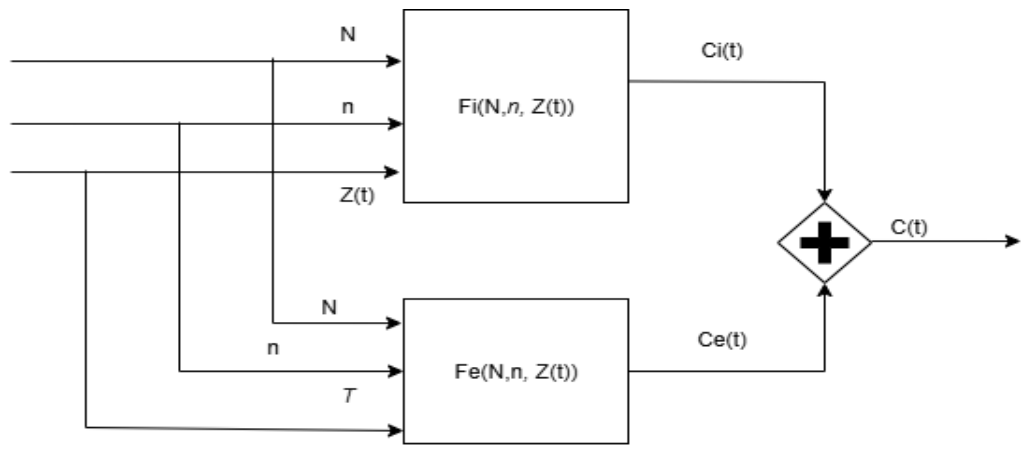
Figure 5.3.
An with Intra and Inter-Team Coordination Dynamics explicitly modelled.
Figure 3 presents the generalized system decomposition of software engineering coordination cost. Total coordination cost is represented as the aggregation of two fundamental coordination mechanisms: intra-team coordination, modelled by the functional , and inter-team coordination, modelled by the functional . Both mechanisms are influenced by the project size (), team configuration (), and contextual coordination dynamics (). The figure intentionally represents these quantities as distinct system inputs to emphasize the principal factors governing coordination behaviour. This representation does not imply that the inputs are independent; rather, their interactions are embodied within the coordination functionals themselves. Consequently, for a fixed project size and team configuration, variations in coordination cost are entirely attributable to changes in the contextual coordination dynamics represented by .
5.3. The Concept of Unit Coordination Costs
This section introduces the concept of unit coordination costs, which constitute the principal measurable engineering quantities underpinning the proposed coordination cost theory. Unlike aggregate coordination costs, which characterize the coordination effort of individual project instances, unit coordination costs quantify the average engineering effort required to sustain a single coordination relationship within a specified organizational and project environment. Together, the intra-team and inter-team unit coordination costs provide the empirical parameters through which coordination behavior can be measured, estimated, benchmarked, and analyzed across software engineering projects.
5.3.1. Definitions and Typology
A unit coordination cost is defined as the average engineering effort, measured in hours, required to support a single coordination relationship over a one-month period for a specified class of software engineering projects executed within a given organizational and project environment. Although the measurement interval may, in principle, be any consistent period (e.g., an hour, day, week, month, or year), this paper adopts one month as the standard interval because large-scale software engineering projects typically span several months or years, making shorter intervals unnecessarily granular and more susceptible to transient fluctuations. A monthly interval provides a practical balance between measurement stability and responsiveness while aligning naturally with the planning, budgeting, resource allocation, and performance reporting cycles commonly used in software engineering organizations. Consequently, the unit of measurement is engineering hours per coordination relationship per month (hours/relationship/month).
Two distinct unit coordination costs are defined: the intra-team unit coordination cost, denoted by , representing the average engineering hours required to sustain a single intra-team coordination relationship per month; and the inter-team unit coordination cost, denoted by , representing the corresponding average engineering hours required for a single inter-team coordination relationship per month.
5.3.2. Interpretation, Calibration and Measurement Strategies
The proposed unit coordination costs are empirical engineering parameters rather than universal theoretical constants. Their values are obtained through calibration using representative historical projects belonging to the same project class and executed within broadly comparable organizational and project environments. Consequently, and characterize the prevailing coordination behavior of a project class rather than any individual project instance.
Two broad calibration strategies may be distinguished: organization-specific calibration and industry benchmark calibration. Organization-specific calibration estimates the intra-team and inter-team unit coordination costs using representative historical projects undertaken within a particular organization. The resulting values characterize the prevailing coordination behavior of that organization for a specified class of software engineering projects. In contrast, industry benchmark calibration derives representative unit coordination costs by aggregating observations from comparable organizations executing similar classes of software engineering projects. Benchmark values therefore characterize typical coordination behavior within the wider industry rather than any single organization.
Organization-specific calibration is the preferred strategy because it implicitly captures the organization's prevailing engineering practices, governance structures, software architecture, communication culture, team capabilities, coordination processes, and supporting engineering tools, thereby providing the most accurate coordination cost estimates for future projects. Where sufficient historical organizational data are unavailable, industry benchmark values provide practical initial estimates until organization-specific calibration becomes feasible through accumulated project experience.
5.3.3. Engineering Applications of Unit Coordination Costs
5.3.3.1. Enabling Analytic Estimation of Coordination Costs
The primary engineering application of unit coordination costs is to transform the generalized coordination cost model into a practically measurable and analytically tractable estimation framework. In the generalized formulation developed in the preceding sections, total coordination cost depends on the structural characteristics of the software engineering organization together with the multidimensional contextual coordination dynamics represented by . While the structural variables, including project size and organizational topology, are directly measurable, the contextual coordination dynamics comprise numerous interacting organizational, technical, architectural, human, process, and environmental factors whose explicit analytical representation is impractical for engineering estimation.
The introduction of the empirically calibrated unit coordination costs, and , provides a principled mechanism for selectively abstracting the dominant influence of these contextual dynamics. Rather than modelling the constituent variables of individually, their collective effect on coordination effort is represented by the corresponding intra-team and inter-team unit coordination costs. Consequently, the complex contextual coordination state is transformed into a small number of empirically measurable engineering parameters while preserving the explicit structural variables governing project size and organizational topology.
This selective abstraction enables coordination costs to be estimated using quantities that are either directly measurable or empirically calibratable from historical software engineering projects. As a result, the proposed theory bridges the gap between conceptual coordination models and practical engineering estimation by replacing analytically intractable contextual dynamics with standardized engineering observables without sacrificing the fundamental distinction between intra-team and inter-team coordination.
5.3.3.2. Coordination Efficiency Calculations and Benchmarking
Beyond coordination cost estimation, calibrated unit coordination costs provide a quantitative basis for assessing and benchmarking software engineering coordination efficiency. Three complementary measures are proposed: Absolute Coordination Efficiency (ACE), Internal Relative Coordination Efficiency (IRCE), and External Relative Coordination Efficiency (ERCE). Together, these measures support evaluation of organizational coordination performance against industry benchmarks, comparison of coordination efficiency across different project classes within the same organization, and peer benchmarking between organizations executing comparable classes of software engineering projects.
- Absolute Coordination Efficiency (ACE)
Absolute Coordination Efficiency (ACE) measures the coordination efficiency of a given project class within a specific organization relative to the corresponding industry benchmark. For a given coordination type,
An ACE greater than 100% indicates that the organization achieves equivalent coordination outcomes using less engineering coordination effort than the prevailing industry benchmark, whereas values below 100% indicate comparatively lower coordination efficiency and opportunities for improvement.
- 2.
- Internal Relative Coordination Efficiency (IRCE)
Internal Relative Coordination Efficiency (IRCE) compares the coordination efficiencies of two different project classes within the same organization. It enables managers to identify project classes that exhibit comparatively higher coordination demands and therefore warrant greater management attention, process improvement, or organizational support.
- 3.
- External Relative Coordination Efficiency (ERCE)
External Relative Coordination Efficiency (ERCE) compares the coordination efficiencies of organizations executing the same class of software engineering projects. It supports peer benchmarking by enabling organizations to evaluate their coordination performance against comparable organizations and identify opportunities for adopting industry’s best practices.
5.3.3.3. Targeted Diagnosis and Continuous Improvement
A further engineering application of calibrated unit coordination costs is the targeted diagnosis of coordination inefficiencies and the prioritization of continuous improvement initiatives. Because the intra-team and inter-team unit coordination costs are calibrated independently, their corresponding Absolute Coordination Efficiencies (ACE) can be evaluated separately for a given class of software engineering projects. This enables organizations to determine whether coordination inefficiencies arise primarily within engineering teams, across engineering teams, or both.
Consequently, the proposed framework supports evidence-based prioritization of improvement initiatives. For example, a comparatively lower intra-team ACE may indicate the need to strengthen team-level engineering practices such as technical leadership, team composition, communication practices, or development processes.
Conversely, a lower inter-team ACE may suggest deficiencies in cross-team coordination mechanisms, including system architecture, interface management, organizational governance, integration practices, or cross-functional communication. By identifying the dominant sources of coordination inefficiency, the proposed theory enables organizations to focus improvement efforts where they are likely to yield the greatest coordination benefits, rather than applying uniform interventions across all aspects of software engineering coordination.
5.4. Reduced State Space Models
The generalized coordination cost model developed in Section 4.2 expresses intra-team and inter-team coordination costs as functions of the project's structural characteristics and the contextual coordination dynamics represented by . As discussed in the preceding section, the multidimensional contextual state is analytically intractable because it comprises numerous interacting organizational, technical, architectural, human, process, and environmental factors. The introduction of the empirically calibrated unit coordination costs and enables these contextual dynamics to be represented by measurable engineering parameters while preserving the explicit structural variables governing project size and organizational topology.
Accordingly, the generalized coordination cost functions presented in Section 4.2 are transformed into the reduced-state representation
with the total coordination cost remaining
Here, and denote the reduced intra-team and inter-team coordination cost functions. The reduction is selective rather than complete. The structural variables and remain explicitly represented because they determine the scale and organizational topology of coordination relationships and are directly observable. The contextual coordination dynamics represented by are not discarded; rather, their aggregate effects are captured through the empirically calibrated unit coordination costs and .
Hence, because total coordination cost is the sum of the reduced intra-team and inter-team coordination cost functions, it follows that is jointly determined by the project size , the team configuration , the intra-team unit coordination cost , and the inter-team unit coordination cost . The reduced total coordination cost model may therefore be expressed as
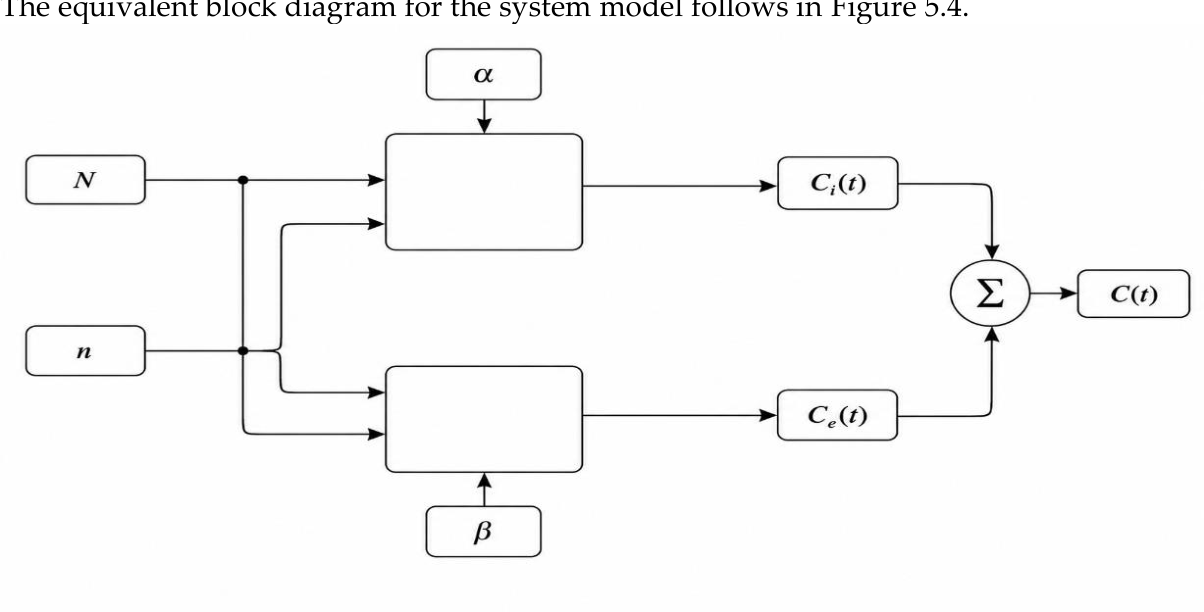
5.5. Closed Form Analytic Coordination Cost Models
The reduced state-space model developed in Section 4.4 expresses coordination cost as a function of empirically calibrated unit coordination costs and the observable structural characteristics of the project organization. The remaining task is therefore to determine the underlying coordination topology. This section develops the required combinatorial topology and derives the corresponding closed-form coordination cost estimation model.
The combinatorial representation adopted in this section follows the established software engineering and organizational communication literature, where potential coordination is modelled as pairwise relationships among collaborating entities (Brooks, 1975/1995; Herbsleb & Mockus, 2003; Cataldo et al., 2008). The same assumption provides the mathematical basis for the present derivation
5.5.1. Modelling Intra-Team Coordination Relationships
Consider an engineering team comprising members. Effective collaboration requires that every team member has the potential to coordinate directly with every other member whenever necessary. Under this assumption, the maximum number of unique intra-team coordination relationships is equal to the number of unordered pairs that can be formed from individuals. Accordingly,
where denotes the number of potential coordination relationships within a single engineering team.
For a project consisting of engineering teams, the total number of intra-team coordination relationships becomes
The derivation assumes approximately equal team sizes solely for analytical tractability and not as a fundamental requirement of the theory. In practice, moderate variations in team size are absorbed into the empirically calibrated unit coordination cost . However, because the intra-team unit coordination cost is empirically calibrated as a measure of central tendency over representative projects within the same project class, moderate variations in team size are implicitly absorbed into the calibrated parameter.
5.5.2. Modelling Inter-Team Coordination Relationships
The same combinatorial reasoning applies to coordination among engineering teams. Treating each engineering team as a coordination entity, the maximum number of potential inter-team coordination relationships is equal to the number of unordered pairs that can be formed from teams. Thus,
where denotes the total number of potential inter-team coordination relationships.
The proposed formulation assumes that every engineering team may potentially coordinate with every other engineering team during project execution. The derivation assumes that every engineering team may potentially coordinate with every other engineering team. Although not all such relationships are active throughout project execution, this assumption provides a conservative upper-bound approximation that is appropriate for engineering estimation.
5.5.3. The Closed-Form Coordination Cost Estimation Model
Since the total coordination cost equals the product of the number of coordination relationships and the corresponding unit coordination cost, the monthly intra-team coordination cost is
where represents the estimated monthly intra-team coordination cost, expressed in contact hours per month.
Similarly, the total monthly inter-team coordination cost is
where denotes the estimated monthly inter-team coordination cost, also expressed in contact hours per month.
The total estimated monthly coordination cost for the project is therefore
which simplifies to
Note that by the definitions established in Section 4.3, the quantities , , and inherit the units of measurement implied by the calibrated unit coordination costs and , and therefore represent estimated monthly coordination costs for the project.
Let negotiate the project’s duration to completion, expressed in months. The estimated total coordination effort over the entire project lifecycle is therefore
Equation (5.22) estimates the maximum expected coordination effort under the assumption that all potential coordination relationships remain available throughout project execution. Although many of these relationships remain inactive during portions of the project lifecycle, the resulting upper-bound estimate provides a conservative basis for engineering planning while remaining sufficiently general to accommodate future extensions incorporating heterogeneous team sizes, dynamic coordination structures, and time-varying coordination behavior.
5.5.4. Graphical Illustration of the Differential Behavior of Intra-and Inter-Team Coordination Costs
Figure 5.5 provides a graphical illustration of the distinct behavior of intra-team and inter-team coordination costs implied by the closed-form models. The illustration considers a fixed project workforce of and sets the intra-team and inter-team unit coordination costs equal (). Equal unit costs are deliberately used to isolate the effect of team structure on the two coordination mechanisms; the selected parameter values are illustrative and are not intended to represent empirically calibrated coordination costs.
The figure shows that the two coordination-cost components exhibit fundamentally different behaviour as average team size increases. Intra-team coordination cost increases linearly with team size, consistent with the analytical relationship . In contrast, inter-team coordination cost decreases nonlinearly as team size increases, consistent with . Increasing team size increases the number of potential pairwise relationships within teams while simultaneously reducing the number of teams and, consequently, the number of potential inter-team relationships.
The contrasting curves therefore provide a visual illustration of the different structural behaviors embodied in the two closed-form equations. Importantly, because , the observed difference cannot be attributed to differences in unit coordination costs; it arises from the different combinatorial structures governing intra-team and inter-team coordination. This further reinforces the theoretical rationale for modelling the two coordination mechanisms separately.
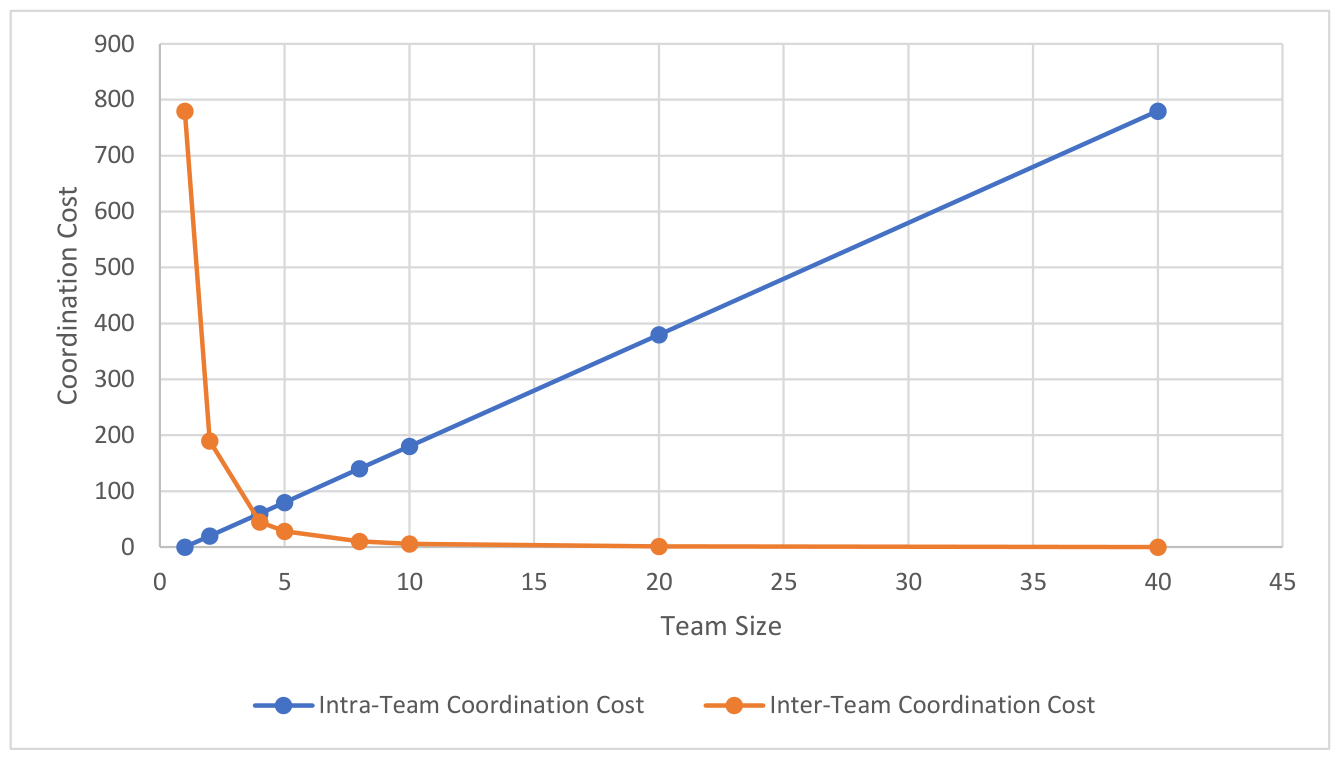
Figure 5.5.
Differential Growth Behavior of Intra-Team and Inter-Team Coordination Costs with Team Size (
Figure 5.5.
Differential Growth Behavior of Intra-Team and Inter-Team Coordination Costs with Team Size (
).
6. DISCUSSIONS
This study addressed the overarching research question: How can software development coordination cost be systematically modelled, measured, and estimated as a generalized engineering quantity? Three corresponding objectives guided the investigation: (1) to develop a generalized engineering model of coordination cost that captures its principal determinants and distinguishes intra-team from inter-team coordination; (2) to establish standardized engineering quantities through which coordination cost can be measured, empirically calibrated, compared, and benchmarked; and (3) to develop analytically tractable methods for estimating coordination cost from observable project structure and empirically calibratable parameters. These objectives correspond directly to the modelling, measurement, and estimation gaps synthesized in Section 3.5.
6.1. Theoretical and Analytical Results
6.1.1. Objective 1: Modelling Software Development Coordination Cost
The modelling objective required an engineering representation that preserves the dominant socio-technical determinants of coordination without reproducing their full complexity. Section 5.1, Section 5.2, Section 5.3 and Section 5.4 achieve this through progressive abstraction. The initial dynamical representation conceptualizes coordination cost as an emergent output of an evolving project state [Eqs. (5.1)–(5.4); Figs. 5.1–5.2]. The state incorporates the principal coordination-cost drivers established in Section 2.3.3: project size, process maturity, software architecture, human and team characteristics, organizational context, and external environment.
This representation is consistent with the dependency-centered conception of coordination established by Malone and Crowston (1994) and with empirical evidence showing that software coordination is shaped by technical dependencies, organizational distribution, and evolving project conditions (Herbsleb & Mockus, 2003; Cataldo et al., 2008; Dingsøyr et al., 2023). The model extends these foundations by asking a different engineering question: how can the resulting coordination dynamics be represented as a cost-generating system suitable for subsequent measurement and estimation?
The first substantive reduction occurs in Section 5.2, where aggregate coordination is decomposed into intra-team and inter-team mechanisms [Eqs. (5.6)–(5.12); Figure 5.3]. This distinction is theoretically grounded rather than introduced merely for mathematical convenience. As discussed in Section 5.2.2, coordination theory distinguishes dependencies occurring within and across organizational boundaries; organizational learning explains the shared routines and knowledge structures that develop within teams; and socio-technical congruence research demonstrates that technical dependencies frequently cross team boundaries and require corresponding organizational coordination (Malone & Crowston, 1994; Herbsleb & Mockus, 2003; Cataldo et al., 2008; Argote, 2013).
The analytical results reinforce the importance of this theoretical distinction. The closed-form equations derived subsequently in Section 5.5 show that the two mechanisms have different functional relationships with team configuration. Figure 5.5 holds , eliminating differences in unit coordination cost as the explanation for the observed behaviour, yet intra-team cost increases linearly while inter-team cost decreases nonlinearly with team size. The difference therefore arises from their underlying coordination topologies. What begins in Section 5.2 as a theoretically motivated organizational distinction consequently produces analytically distinguishable cost behaviour in Section 5.5.
The second major reduction occurs in Section 5.3 and Section 5.4. The multidimensional contextual state , retained explicitly in the generalized model, is replaced in the reduced-state representation by the empirically calibratable parameters and [Eqs. (5.14)– (5.17); Figure 5.4], while project size and team configuration remain explicit structural variables. This establishes an important modelling result: contextual complexity need not be exhaustively represented or discarded. Its economic effect can be selectively abstracted into measurable parameters while the structural determinants of coordination remain analytically visible.
6.1.2. Objective 2: Measuring Software Development Coordination Cost
The measurement objective addresses a problem made explicit in Section 3.2 and Section 3.4: existing empirical studies provide substantial evidence of coordination effort, but express it through heterogeneous quantities such as meeting hours, percentages of working time, communication frequency, collaboration events, and dependency counts. These measures are informative for their respective research purposes but do not provide a common engineering quantity through which coordination cost can be calibrated and compared consistently across projects.
Section 5.3.1 and Section 5.3.2 address this discontinuity by introducing the intra-team unit coordination cost and inter-team unit coordination cost , measured in engineering-hours per coordination relationship per month, together with organization-specific and industry calibration strategies. These quantities provide the empirical interface between the contextual coordination dynamics represented by and the reduced analytical representation of Eqs. (5.14)–(5.17).
The deeper result is the separation of coordination structure from coordination intensity. Project size and team configuration determine the potential relationship structure; and represent the average effort manifested through that structure in a specified project class and organizational environment. Process maturity, architectural coupling, team capability, governance, geographical distribution, communication practices, tooling, and other contextual factors identified in Section 2.3.3 therefore need not each be assigned an independently specified analytical coefficient. Their combined influence can manifest empirically through the calibrated unit coordination costs.
This also clarifies the complete pairwise topology used in Section 5.5. Equations (5.18)–(5.20) enumerate potential coordination relationships, not continuously active relationships. Actual relationship intensity is heterogeneous: some potential relationships may be inactive during a given observation period, others lightly exercised, and others coordination intensive. Where and are calibrated as average effort over the corresponding potential relationship exposure, these variations contribute to the empirical means. Potential topology and empirical unit cost consequently perform complementary roles—the former characterizes structural exposure to coordination, while the latter characterizes its average realized intensity.
This interpretation is important because a maximum potential topology does not necessarily imply a maximum cost estimate. Multiplication by empirically calibrated average unit costs can incorporate the prevalence of inactive, low-intensity, and high-intensity relationship-periods observed in representative projects. It does, however, require consistency between the relationship exposure assumed by the estimator and the denominator used to calibrate and .
The measurement framework extends further through ACE, IRCE, and ERCE in Section 5.3.3.2 [Eq. (5.13)]. These measures transform standardized coordination-cost observations into comparative quantities for external benchmarking, internal project-class comparison, and inter-organizational comparison. Measurement therefore performs three related engineering functions within the framework: parameterizing estimation, enabling comparison, and creating feedback for organizational learning.
6.1.3. Objective 3: Estimating Software Development Coordination Cost
The estimation objective completes the progression from theoretical representation to operational engineering model. Section 5.5 derives the required structural topology from pairwise coordination relationships. Equations (5.18)–(5.20) establish the potential intra-team and inter-team relationship counts; Eqs. (5.21)–(5.22) combine those structures with and ; and Eqs. (5.23)–(5.25) aggregate the resulting components into monthly and lifecycle coordination-effort estimates.
The closed form is related to, but distinct from, established software effort-estimation approaches. COCOMO and related parametric models demonstrate that software effort can be estimated from observable project characteristics and empirically calibrated parameters (Boehm et al., 2000). As established in Section 3.1, however, their estimation target is aggregate software-development effort, with coordination represented implicitly within broader scale factors and effort multipliers. The present model makes coordination itself the cost object and retains separate structural and empirical representations of its intra-team and inter-team mechanisms.
The estimator also differs from the machine-learning approaches reviewed in Section 3.3. Those methods provide increasingly sophisticated data-driven prediction but predominantly target aggregate effort, duration, or story points, and their learned relationships are generally less analytically transparent. The closed form instead exposes how project structure and empirically calibrated coordination intensity combine to produce the estimate. Changes in estimated coordination cost can therefore be traced to changes in structural exposure, changes in or , or both.
The differential behavior illustrated in Figure 5.5 further demonstrates that the estimator is explanatory as well as computational. Holding isolates structural effects and shows that intra-team and inter-team coordination respond differently to changes in team configuration. The estimator consequently provides an analytical basis for understanding how project organization generates coordination effort rather than merely predicting an aggregate numerical outcome.
6.2. Implications
6.2.1. Coordination Should Be Treated as an Explicit Engineering Cost
The results challenge the prevailing treatment of coordination as an implicit component of aggregate software development effort. Since Section 5.3 and Section 5.5 establish measurable unit coordination costs and explicit estimation relationships [Eqs. (5.21)–(5.25)], coordination effort can be treated as a distinct cost object rather than remaining subsumed within general effort multipliers or organizational overhead, as observed in Section 3.1. Software cost estimates and project baselines should therefore account explicitly for coordination effort.
6.2.2. Software Effort Estimation Should Move Toward Cost Decomposition
The separation of intra-team and inter-team coordination in Section 5.2 and their distinct analytical behaviours in Section 5.5 demonstrate that aggregate effort can conceal materially different cost-generating mechanisms [Eqs. (5.21)–(5.24); Figure 5.5]. Software effort estimation should consequently move toward cost decomposition before aggregation, identifying economically meaningful components of engineering effort and their respective drivers rather than estimating only an undifferentiated project total.
6.2.3. Coordination Measurement Should Move Toward Standardized Engineering Quantities
The heterogeneous coordination measures identified in Section 3.2 and Section 3.4—meeting hours, proportions of working time, communication frequencies, dependency counts, and related proxies have generated valuable empirical knowledge but constrain cumulative comparison. The standardized quantities introduced in Section 5.3 imply a shift from predominantly activity- and proxy-based measurement toward explicitly defined engineering quantities with common units, calibration rules, and comparable denominators. Observable coordination activities can then serve as empirical evidence for calibrating such quantities rather than remaining incomparable endpoints of measurement.
6.2.4. Intra-Team and Inter-Team Coordination Should Be Treated as Distinct Cost Mechanisms
The decomposition in Section 5.2 [Table 5.1; Figure 5.3] and the differential cost behaviour subsequently demonstrated by Eqs. (5.21)–(5.22) and Figure 5.5 show that intra-team and inter-team coordination are not merely different labels for the same cost mechanism. Coordination research, estimation, benchmarking, and organizational diagnosis should therefore distinguish the two where economically material. A diagnosis of “high coordination cost” is insufficient if it does not establish whether the burden originates predominantly within teams or across team boundaries.
6.2.5. Organizational and Software Design Should Explicitly Consider Coordination Cost
Section 2.3.3 establishes that architecture, organizational structure, project scale, process maturity, team characteristics, and development environment shape coordination dynamics, while the analytical results in Section 5.5 demonstrate that team configuration directly changes coordination-cost structure. Organizational decomposition, architectural modularization, team boundaries, distributed development, outsourcing, governance structures, and related design decisions should therefore be evaluated partly in terms of the coordination costs they induce, alongside their technical and organizational benefits.
6.2.6. Coordination Should Be Engineered, Not Merely Managed
The combined progression from the dynamical models in Section 5.1, through standardized measurement in Section 5.3, to the closed-form estimator in Section 5.5 changes the engineering status of coordination. Coordination need not remain a phenomenon addressed principally through meetings, communication practices, governance, and managerial intervention after coordination problems emerge. It can increasingly be modelled, measured, estimated, benchmarked, designed for, and systematically improved.
The broader implication is therefore a shift from coordination management toward coordination engineering: treating coordination mechanisms and their costs as deliberate engineering concerns whose economic consequences can be quantified and progressively improved.
6.3. Validity and Credibility of the Results
The evaluation criteria established in Section 4.3 distinguish conceptual, construct, mathematical, analytical, and engineering validity [Section 4.3]. The results exhibit complementary evidence across these dimensions.
6.3.1. Conceptual validity
Derives from the grounding of the model in established theory and empirical software-engineering research. The determinants incorporated into in Section 5.1 correspond to the coordination-cost drivers established in Section 2.3.3. The intra-team/inter-team decomposition of Section 5.2 is supported by dependency-centred coordination theory (Malone & Crowston, 1994), organizational structure theory (Galbraith, 1974; Mintzberg, 1979), organizational learning (Argote, 2013), socio-technical congruence (Cataldo et al., 2008), and empirical research on distributed and large-scale software development (Herbsleb & Mockus, 2003; Dingsøyr et al., 2023). The constructs therefore synthesize established characteristics of the phenomenon rather than introducing arbitrary variables solely to support the mathematical formulation.
6.3.2. Construct validity
Follows from the progressive operationalization developed across Section 5.1, Section 5.2, Section 5.3 and Section 5.4. Project size and team configuration represent observable structural characteristics; represents contextual coordination dynamics; and transform those dynamics into empirically calibratable quantities; and , , and represent coordination effort in engineering-hours. The transition from the generalized state representation [Eqs. (5.1)–(5.4)] to the reduced-state model [Eqs. (5.14)–(5.17)] preserves an explicit correspondence between theoretical constructs and quantities that can ultimately be observed and calibrated.
6.3.3. Mathematical Validity
Derives from the explicit combinatorial derivation in Section 5.5. The relationship counts in Eqs. (5.18)–(5.20) follow from unordered pairwise relationships, while Eqs. (5.21)–(5.25) follow by applying the corresponding unit coordination costs and aggregating the components. The resulting limiting behavior is internally coherent: intra-team coordination vanishes for one-member teams, whereas inter-team coordination vanishes when the project consists of one team.
6.3.4. Engineering validity
It follows from the continuity between observable project organization, empirically calibratable unit costs, and an estimable engineering quantity. The approach is also consistent with the cost-engineering and Activity-Based Costing principles developed in Section 2.2: costs are associated with identifiable activities and cost drivers, while empirically determined activity rates translate resource consumption into estimable cost. Section 2.2.2 explicitly interprets and as coordination activity rates.
These forms of validity are distinct from empirical predictive validity. Consistent with the deductive theory-construction methodology established in Section 4.1, Section 4.2 and Section 4.3, the present study establishes the constructs, units, assumptions, and analytical relationships required for subsequent empirical calibration and testing rather than estimating predictive accuracy from a particular project dataset.
6.4. Generalizability
The framework separates generalized theoretical structure from context-dependent empirical behavior. The decomposition into structural coordination exposure, intra-team and inter-team mechanisms, unit coordination costs, and analytical estimation relationships is intended to apply across software-development environments. In contrast, Section 5.3.2 explicitly defines and as empirical parameters calibrated for specified project classes and organizational environments rather than universal constants.
This distinction is consistent with the empirical evidence reviewed in Section 2.3.3. Coordination behavior varies with process maturity, architecture, team capability, geographical distribution, organizational context, and other environmental characteristics. A generalized model that required invariant coordination-intensity parameters would therefore contradict the very contextual variability established by prior research (Herbsleb & Mockus, 2003; Cataldo et al., 2008; Bjarnason et al., 2022; Dingsøyr et al., 2023).
Generalizability consequently operates at two levels. The constructs and analytical relationships support theoretical generalization across software engineering contexts. Calibrated values of and support empirical generalization only across sufficiently comparable populations of projects. Organization-specific calibration therefore provides the strongest contextual correspondence, while industry benchmarks become appropriate where meaningful project-class comparability can be established.
The quasi-stationarity assumption in Section 5.3.4 provides a temporal counterpart to this distinction. Calibrated parameters remain applicable while the underlying coordination environment remains sufficiently stable; material changes in architecture, organization, technology, process, or team characteristics require recalibration rather than abandonment of the generalized theoretical structure.
6.5. Limitations
The principal limitations arise from assumptions within the analytical specialization and from the empirical requirements of calibration.
The closed-form derivation in Section 5.5.1 assumes approximately equal team sizes, allowing organizational configuration to be represented through a single team-size parameter [Eq. (5.19)]. Substantial team-size heterogeneity changes the actual distribution of potential intra-team relationships and may therefore reduce the accuracy of this specialization. Such structural variation cannot necessarily be absorbed into , because team-size distribution changes coordination topology rather than merely coordination intensity.
Estimation credibility also depends on the quality and representativeness of calibration data. Section 5.3.2 defines organization-specific calibration as preferable precisely because unit coordination costs reflect prevailing engineering practices, governance, architecture, communication culture, team capability, and supporting tools. Inconsistent measurement, inappropriate project classification, or calibration from historical projects materially different from the target population can therefore propagate directly into subsequent estimates.
6.6. Contributions and Novelty
6.6.1. Generalized Engineering Modelling of Coordination Cost
The first contribution is a generalized engineering framework for modelling software development coordination cost. Conventional software cost-estimation approaches such as COCOMO II, Function Point Analysis, and Use Case Points demonstrate that software development effort can be represented through analytical or empirically calibrated relationships. However, as established in Section 3.1, these approaches estimate aggregate development effort; coordination remains embedded within broader scale factors, effort multipliers, or total effort rather than being represented as a distinct engineering cost quantity (Boehm et al., 2000; Matson et al., 1994; Ochodek et al., 2011).
Coordination-specific research comes closer to the problem addressed here. Espinosa and Carmel (2004; 2023) model coordination costs associated with temporal separation and collaboration modes, while Ramasubbu, Mehra, and Mookerjee (2009) investigate coordination costs in offshore software development. Socio-technical congruence research, including Cataldo et al. (2008), establishes relationships among technical dependencies, work dependencies, and organizational coordination. These studies demonstrate that coordination can be modelled and that its cost is affected by organizational and technical conditions. However, as synthesized in Section 3.2, they remain focused on particular coordination settings or relationships and do not establish a generalized engineering architecture connecting coordination dynamics, standardized measurement quantities, and project-level analytical estimation across software development environments.
The contribution developed in Section 5.1, Section 5.2, Section 5.3 and Section 5.4 lies in constructing a progressive engineering representation that connects established determinants of coordination to an explicit coordination-cost quantity. The complex dynamical representation in Eqs. (5.1)–(5.4) and Figs. 5.1–5.2 preserves the principal contextual determinants established in Section 2.3.3; Eqs. (5.5)–(5.12), Table 5.1, and Figure 5.3 decompose the resulting cost into intra-team and inter-team mechanisms; and Eqs. (5.14)–(5.17) and Figure 5.4 reduce the contextual complexity into a tractable engineering state. The resulting framework addresses Gap 1 by connecting coordination theory to an engineering representation specifically constructed to support subsequent measurement and estimation.
6.6.2. Standardized Coordination-Cost Measurement and Calibration
The second contribution is the establishment of standardized intra-team and inter-team unit coordination costs as measurable engineering quantities. This contribution differs importantly from the substantial empirical literature that already measures coordination activity. Stray and Moe (2020) quantify time spent in meetings; Gonçalves et al. (2011) quantify collaborative and information-seeking effort; Cataldo et al. (2008) use dependency and coordination structures; and Dingsøyr et al. (2023) identify and examine coordination mechanisms in large-scale software development. As Section 3.2 and Section 3.4 demonstrate, however, such studies express coordination through heterogeneous quantities—including hours, percentages of working time, communication frequency, dependency counts, and observable coordination mechanisms. These measures are informative for their respective research questions but do not provide a common engineering unit through which coordination cost can be consistently calibrated and compared across projects.
Section 5.3.1 and Section 5.3.2 address this discontinuity by defining and as intra-team and inter-team unit coordination costs, respectively, expressed in engineering-hours per coordination relationship per month, and by specifying organization-specific and industry-level calibration strategies. Their novelty therefore does not lie in measuring coordination effort per se. Rather, it lies in establishing standardized cost quantities explicitly designed to connect empirical observation to analytical modelling, calibration, estimation, and comparison.
The unit-cost abstraction also contributes a mechanism for handling contextual complexity. Instead of requiring separate analytical coefficients for the numerous interacting determinants represented by , their aggregate empirical effects are reflected in the calibrated values of and , while structural variables remain explicit in the reduced-state model [Eqs. (5.14)–(5.17)]. The measurement framework thereby provides the missing link between the descriptively rich but analytically complex coordination phenomena documented in prior research and the requirements of quantitative cost engineering.
This measurement contribution directly addresses Gap 2 in Section 3.5: the absence of standardized engineering measurement units and calibration mechanisms for coordination cost.
6.6.3. Closed-Form Analytical Coordination-Cost Estimation
The third contribution is an explicit analytical method for estimating software development coordination cost. This contribution differs from both conventional software effort estimation and existing coordination-specific modelling. COCOMO-type approaches provide transparent parametric estimation but target overall software development effort (Boehm et al., 2000). The machine-learning approaches reviewed in Section 3.3 increasingly provide sophisticated predictions of effort, duration, or story points, but do not treat coordination cost as a standardized independent prediction target and generally provide less analytical visibility into the structural mechanisms producing the estimate (Rahman et al., 2024; Boujida et al., 2025). Coordination-specific models reviewed in Section 3.2 demonstrate that particular coordination costs can be analytically represented but do not combine a generalized coordination topology with standardized empirically calibratable unit costs.
Section 5.5 closes this modelling–measurement–estimation chain. Equations (5.18)–(5.20) derive potential intra-team and inter-team coordination relationships from the organizational topology; Eqs. (5.21) and (5.22) convert those structural exposures into estimated coordination effort using and ; and Eqs. (5.23)–(5.25) aggregate the resulting components into monthly and lifecycle coordination-cost estimates.
The resulting estimator is transparent and interpretable: project size and team configuration determine structural coordination exposure, while and represent empirically observed coordination intensity. Figure 5.5 further demonstrates that the intra-team and inter-team components retain analytically distinct behaviours even when their unit costs are equal, confirming that the decomposition introduced in Section 5.2 has substantive mathematical consequences in the final estimator.
This contribution directly addresses Gap 3 in Section 3.5 by providing an integrated engineering method through which coordination cost can be estimated explicitly rather than remaining implicit within aggregate development effort.
6.6.4. Coordination-Efficiency Measurement and Benchmarking
The paper extends coordination-cost measurement from absolute quantification to comparative performance assessment. The empirical literature reviewed in Section 3.2 and Section 3.4 establishes that substantial coordination effort can be observed and measured, but the heterogeneity of existing measures limits consistent comparison across projects and organizations. Conventional software cost-estimation approaches similarly focus principally on predicting development effort rather than establishing standardized measures of coordination efficiency.
Section 5.3.3.2 introduces Absolute Coordination Efficiency (ACE), Internal Relative Coordination Efficiency (IRCE), and External Relative Coordination Efficiency (ERCE). ACE [Eq. (5.13)] compares the unit coordination cost of a project class within an organization against the corresponding industry benchmark; IRCE supports comparison among project classes within the same organization; and ERCE supports comparison among organizations executing comparable project classes. Section 5.3.3.3 further shows how independent evaluation of intra-team and inter-team coordination can support diagnosis of whether comparatively high coordination effort originates predominantly within teams or across team boundaries.
The novelty of these measures depends directly on the standardized measurement architecture established by and . Comparative coordination efficiency becomes meaningful because the underlying quantities share defined units and calibration bases. The contribution therefore extends Gap 2 beyond measurement and calibration and Gap 3 beyond estimation by providing a quantitative basis for benchmarking, diagnosis, and comparative evaluation.
6.7. Significance
The generalized coordination-cost theory provides a coherent basis for treating coordination cost as a distinct software engineering phenomenon with identifiable determinants and structurally different intra-team and inter-team mechanisms. It thereby brings together previously fragmented perspectives on coordination, organizational dependencies, and software effort within a common engineering representation (Malone & Crowston, 1994; Herbsleb & Mockus, 2003; Cataldo et al., 2008).
The standardized unit coordination costs and make coordination amenable to consistent measurement, empirical calibration, cross-project comparison, and benchmarking. In contrast to the heterogeneous measures identified in Section 3.2 and Section 3.4, the common unit established in Section 5.3 provides a basis for accumulating comparable empirical knowledge and developing organization- and industry-level coordination-cost benchmarks.
The closed-form models in Section 5.5 make coordination effort explicitly estimable from project structure and calibrated coordination intensity [Eqs. (5.21)–(5.25)]. This enables coordination cost to be incorporated explicitly into software project estimation, planning, and resource allocation while retaining analytical visibility into how organizational structure generates cost.
The coordination-efficiency measures in Section 5.3.3 extend these capabilities from estimation to comparative evaluation. ACE [Eq. (5.13)], IRCE, and ERCE provide a common basis for benchmarking coordination performance, identifying comparatively costly intra-team or inter-team coordination, and supporting targeted organizational improvement.
Collectively, these outputs establish a continuous engineering capability from modelling and measurement through calibration, estimation, benchmarking, and improvement. They extend software engineering economics by making coordination cost amenable to systematic cost-engineering treatment and provide the foundational capabilities for Software Development Coordination Cost Engineering.
7. Conclusion
Software development coordination consumes substantial engineering effort and influences project cost, delivery performance, and organizational effectiveness, yet it remains inadequately represented within software engineering economics. Existing research has generated substantial knowledge about coordination activities, dependencies, and organizational behavior, but coordination cost has largely remained implicit within aggregate development effort or represented through heterogeneous measures rather than treated as a distinct engineering quantity. As established in Section 3.5, the resulting gaps concern systematic modelling, measurement, and estimation.
This study addressed these gaps by investigating how software development coordination cost can be systematically modelled, measured, and estimated within a generalized engineering framework. The resulting framework progressively represents coordination as a complex socio-technical system, distinguishes intra-team and inter-team coordination as separate cost-generating mechanisms, and reduces otherwise intractable contextual dynamics into empirically calibratable unit coordination costs. The standardized quantities and provide the measurement and calibration interface between coordination behaviour and the analytical model, while the closed-form relationships derived in Section 5.5 translate project structure and calibrated coordination intensity into explicit coordination-cost estimates. ACE, IRCE, and ERCE further extend the framework from cost measurement and estimation to comparative evaluation and benchmarking.
Collectively, these results establish a continuous engineering chain from modelling and measurement through empirical calibration, estimation, benchmarking, and improvement. Coordination cost can therefore be treated not merely as an implicit organizational overhead but as an engineering quantity with identifiable structural generators, standardized measurement units, empirically calibratable parameters, and explicit analytical relationships. By establishing this integrated theoretical, measurement, and analytical foundation, the study establishes the foundations of a specialized engineering discipline—Software Development Coordination Cost Engineering—concerned with the systematic modelling, measurement, estimation, analysis, control, and improvement of the economic cost of coordination in software development. This position’s coordination cost as an explicit subject of engineering inquiry within the broader field of software engineering economics.
The immediate research priority is empirical calibration and validation: estimating and from representative software development projects, establishing project-class and organizational benchmarks, and evaluating the predictive performance of the closed-form models against observed coordination effort. Subsequent work can extend the analytical framework to heterogeneous team structures, sparse and dynamic coordination topologies, and time-varying coordination behaviour; systematically investigate sensitivity, scaling, and optimization; and examine the relationships between coordination cost and broader outcomes such as software quality, delivery performance, productivity, and organizational effectiveness.
References
- Cabral, G. G., et al. (2022). Ensemble learning for software effort estimation: A systematic literature review. Journal of Systems and Software.
- Jadhav, A., et al. (2023). Comparative evaluation of machine learning techniques for software effort estimation. Array.
- Mendes, E., et al. (2024). Large language models for software effort estimation from requirements. (Use the exact publication details once finalized.).
- Rahman, M., et al. (2024). Machine learning for software effort estimation: A systematic review and comparative study. IEEE Access.
- Abad, Z. S. H., Karras, O., Schneider, K., Barker, K., & Bauer, M. (2018). Task interruption in software development projects: What makes some interruptions more disruptive than others? Proceedings of the 22nd International Conference on Evaluation and Assessment in Software Engineering, 122–132. [CrossRef]
- Black, F., & Scholes, M. (1973). The pricing of options and corporate liabilities. Journal of Political Economy, 81(3), 637–654. [CrossRef]
- Brooks, F. P., Jr. (1975). The mythical man-month: Essays on software engineering. Addison-Wesley.
- Cataldo, M., Herbsleb, J. D., & Carley, K. M. (2008). Socio-technical congruence: A framework for assessing the impact of technical and work dependencies on software development productivity. Proceedings of the Second ACM-IEEE International Symposium on Empirical Software Engineering and Measurement, 2–11. [CrossRef]
- Conway, M. E. (1968). How do committees invent? Datamation, 14(4), 28–31.
- DORA. (2023). Accelerate State of DevOps Report 2023. Google Cloud.
- DORA. (2024). Accelerate State of DevOps Report 2024. Google Cloud.
- Herbsleb, J. D., & Mockus, A. (2003). An empirical study of speed and communication in globally distributed software development. IEEE Transactions on Software Engineering, 29(6), 481–494. [CrossRef]
- Kermack, W. O., & McKendrick, A. G. (1927). A contribution to the mathematical theory of epidemics. Proceedings of the Royal Society of London. Series A, 115(772), 700–721. [CrossRef]
- Ma, Y., Huang, Y., & Leach, K. (2024). A study of interruptions during software engineering activities. Proceedings of the IEEE/ACM 46th International Conference on Software Engineering.
- Malone, T. W., & Crowston, K. (1994). The interdisciplinary study of coordination. ACM Computing Surveys, 26(1), 87–119. [CrossRef]
- Monsell, S. (2003). Task switching. Trends in Cognitive Sciences, 7(3), 134–140. [CrossRef]
- Rajapakse, R. N., et al. (2025). Towards multi-class socio-technical congruence. Journal of Software: Evolution and Process. Advance online publication. [CrossRef]
- Shannon, C. E. (1948). A mathematical theory of communication. Bell System Technical Journal, 27(3), 379–423; 27(4), 623–656.
- Sierra, J. M., Vizcaíno, A., Genero, M., & Piattini, M. (2018). A systematic mapping study about socio-technical congruence. Information and Software Technology, 94, 111–129. [CrossRef]
- Stray, V., & Moe, N. B. (2020). Understanding coordination in global software engineering: A mixed-methods study on the use of meetings and Slack. Journal of Systems and Software, 170, 110717. [CrossRef]
- Sweller, J. (1988). Cognitive load during problem solving: Effects on learning. Cognitive Science, 12(2), 257–285. [CrossRef]
- Zhang, W., Wang, Y., Li, Y., Wang, Q., & Zhou, Y. (2019). File-level socio-technical congruence and its relationship with bug proneness in open-source software projects. Journal of Systems and Software, 156, 13–26.
- Bacharach, S. B. (1989). Organizational theories: Some criteria for evaluation. Academy of Management Review, 14(4), 496–515. [CrossRef]
- Brooks, F. P., Jr. (1975). The Mythical Man-Month: Essays on Software Engineering. Addison-Wesley.
- Conway, M. E. (1968). How do committees invent? Datamation, 14(4), 28–31.
- Corley, K. G., & Gioia, D. A. (2011). Building theory about theory building: What constitutes a theoretical contribution? Academy of Management Review, 36(1), 12–32. [CrossRef]
- Dantzig, G. B. (1963). Linear Programming and Extensions. Princeton University Press.
- Dubin, R. (1978). Theory Building (Rev. ed.). Free Press.
- Gregor, S. (2006). The nature of theory in information systems. MIS Quarterly, 30(3), 611–642. [CrossRef]
- Kalman, R. E. (1960). A new approach to linear filtering and prediction problems. Journal of Basic Engineering, 82(1), 35–45. [CrossRef]
- Lynham, S. A. (2002). The general method of theory-building research in applied disciplines. Advances in Developing Human Resources, 4(3), 221–241. [CrossRef]
- Malone, T. W., & Crowston, K. (1994). The interdisciplinary study of coordination. ACM Computing Surveys, 26(1), 87–119. [CrossRef]
- Popper, K. R. (1959). The Logic of Scientific Discovery. Hutchinson. (Original work published in German in 1934.).
- Shannon, C. E. (1948). A mathematical theory of communication. Bell System Technical Journal, 27(3), 379–423; 27(4), 623–656. [CrossRef]
- Simon, H. A. (1996). The Sciences of the Artificial (3rd ed.). MIT Press.
- Sjøberg, D. I. K., Dybå, T., Anda, B. C. D., & Hannay, J. E. (2008). Building theories in software engineering. In F. Shull, J. Singer, & D. I. K. Sjøberg (Eds.), Guide to Advanced Empirical Software Engineering (pp. 312–336). Springer. [CrossRef]
- Steiner, E. (1988). Methodology of Theory Building. Educology Research Associates.
- Sutton, R. I., & Staw, B. M. (1995). What theory is not. Administrative Science Quarterly, 40(3), 371–384. [CrossRef]
- Thagard, P. (1989). Explanatory coherence. Behavioral and Brain Sciences, 12(3), 435–467. [CrossRef]
- Turing, A. M. (1936). On computable numbers, with an application to the Entscheidungsproblem. Proceedings of the London Mathematical Society, Series 2, 42(1), 230–265. [CrossRef]
- Whetten, D. A. (1989). What constitutes a theoretical contribution? Academy of Management Review, 14(4), 490–495. [CrossRef]
- Wieringa, R. J. (2014). Design Science Methodology for Information Systems and Software Engineering. Springer. [CrossRef]

Table 1.
Distinguishing Intra-Team and Inter-Team Coordination Dynamics.
| Dimension | Intra-Team Coordination | Inter-Team Coordination |
| Primary objective | Synchronize activities within a single engineering team | Synchronized activities across multiple engineering teams |
| Organizational scope | Individual engineering team | Multiple engineering teams, organizational units and external stakeholders |
| Principal dependencies | Local task and technical dependencies | Cross-team architectural, organizational and business dependencies |
| Typical coordination activities | Task planning, technical discussions, design reviews, code reviews, defect resolution, pair programming, knowledge sharing, internal testing | Architecture reviews, dependency management, interface negotiation, programme governance, integration planning, joint testing, release planning, deployment coordination, vendor engagement |
| Typical participants | Developers, testers, analysts, team leader | Team leaders, architects, project managers, programme managers, business representatives, vendors and external stakeholders |
| Primary coordination focus | Local execution efficiency | Enterprise-wide organizational alignment |
| Coordination interactions | Primarily within team boundaries | Primarily across organizational boundaries |
| Typical project impact | Local team performance | Overall project integration and organizational coherence |
Disclaimer/Publisher’s Note: The statements, opinions and data contained in all publications are solely those of the individual author(s) and contributor(s) and not of MDPI and/or the editor(s). MDPI and/or the editor(s) disclaim responsibility for any injury to people or property resulting from any ideas, methods, instructions or products referred to in the content. |
© 2026 by the authors. Licensee MDPI, Basel, Switzerland. This article is an open access article distributed under the terms and conditions of the Creative Commons Attribution (CC BY) license (http://creativecommons.org/licenses/by/4.0/).
Copyright: This open access article is published under a Creative Commons CC BY 4.0 license, which permit the free download, distribution, and reuse, provided that the author and preprint are cited in any reuse.