

Submitted:
19 September 2026
Posted:
20 September 2026
You are already at the latest version
Abstract
In a companion paper we developed a theoretical framework for polymodal gating of TRP channels predicting that their sensitivity to thermal and mechanical stimuli depends on a balance between volume and surface energy components of the protein. This result can be generalized to other channel types and is clearly apparent in Piezo channels, for which the propel-like structures have a high surface-to-volume ratios. However, Piezo1 and Piezo2 channels have quite similar morphologies and structures, yet fairly different responses to lateral membrane tension. This fact suggests that, along with surface-to-volume ratio, the particular mechanistic and the effective stimulus transmission from the sensing to the pore gates are also relevant. Here, we to introduce in a new biophysical framework implicating the interactions coupling between the perturbating mechanical stimulus and the gating mechanism. We found that when considering a “non-ideal coupling”, the classical relation for the maximum sensitivity differs from ∆A/(4kBT), which is in turn identified as the particular solution for small proteins with relatively simple structures. Although the mathematical solution of the problem is not straightforward, the ‘coupling factor’ (as defined here) of such interaction can be obtained experimentally in a simple way. Additionally, our model predicts that the membrane tension applied on the surface of the channel can be amplified in the pore surface in real cases (a lever-like effect). These ideas can be extrapolated to other non-mechanical perturbations, as well as to combined perturbations of different nature.
Keywords:
Piezo channel
; mechanosensitivity
; membrane tension
; gating model
; coupling factor
Introduction
In a companion paper we develop a two-state model for the mechanical gating of sensory TRP channels. The model predicts that the sensitivity of the channels is determined by a balance between an energy component associated to the protein volume and another associated to the protein-membrane interface. These results suggest that the surface-to-volume ratio and the morphology of the channels are important for their sensitivity, and that an effective transmission mechanistic from the sensing to the gating sites, through the different interfaces, must exist.
In the case of mechanosensitivity, the model considers a simplified average surface tension to account for the surface interactions between the surrounding structures (or molecules) and the protein surface. Depending on: a) the nature of the interactions between the channel and neighboring molecules; b) the quantity, dimensions and surface concentration of such sites; c) the mechanical properties and morphology of the interacting channel and the membrane or other interfaces of the channel; d) the location origin and nature of the mechanical stimulus (whether it is acting directly on the protein/membrane interface, on cytoplasmic interface or on the extracellular interface), i.e. different structural motive of the channel could be involved; greater or less efficiency in the transmission of perturbations in the membrane or other interfaces toward the channel gating mechanism will take place.
The work of the membrane tension represents an enthalpic-like contribution to the free energy change of the channel, which can trigger pore opening in mechanosensitive channels. This contribution is frequently formulated as [1], where is the channel/membrane interface tension and is the corresponding excess area created by the tension (or tension change) [2,3]. It is important to emphasize that, strictly speaking, is alluding only to the area where is physically acting, i.e. the channel/membrane interface [1,2]. The particular interactions between the outer atoms in one face (from the phase A) with the neighboring atoms in the shared face (from the phase B) give rise to the interface tension and thus, only the interface A/B is directly involved (i.e. the region of the channel in direct contact with the membrane, for the case of membrane tension). So, should not be confused with the expansion area of the open pore (), nor the cross section of the channel contained in the membrane plane (parallel to the channel/water interface) or its corresponding projection, as it has been frequently misinterpreted ([1 and references therein). Other works have used the term as an equivalent free energy change. This approach recognizes that and are not necessarily the actual values (just equivalent ones) and simplifies the model in the same sense that the equivalent electrostatic free energy change () simplifies complex charge density distributions and electrostatics interactions. However, this simplification does not contain in an explicit way the contributions of the different interfaces, nor those of the indirectly-related interacting substructures of the channel. determines the pore conductance and therefore the current measured in patch-clamp experiments, whereas can be directly obtained from atomic force microscopy (AFM) and related techniques [4]. and may be very similar, but only in some particular cases [5]. Nevertheless, and , as well as the water/channel interface area and the line defined by triple interface water/channel/membrane, are necessarily coupled via the deformation of the channel volume. That is, when a channel is elastically deformed by the membrane tension, the corresponding work is performed against both, the volume and the different interfaces forces [6].
In this regard, theoretical biophysical models typically use the relation to calculate the open probability of mechanosensitive channels and then use the obtained relation in the fittings related to the current from patch-clamp experiments [1,7,8]. However, what the experiments actually sense is a relationship between the interface tension and the pore opening (manifested as a current), to which the microscopically relevant parameter is but not . That is, depending on the characteristics and properties on the channel, as well as the particular transmission mechanism from the original perturbation to the pore surface, a change in its cross sectional or channel/membrane interface area does not necessarily result in pore opening, nor the same magnitude of expansion (or sensitivity) in the case of opening. So, for a more accurate interpretation of the fit model to the experimental current-tension response of mechanosensitive channels, it is very convenient to obtain a theoretical framework for the open probability as a function of and .
In line with the mentioned hypothesis, Piezo1 and Piezo2 channels have quite similar structures, sizes and expansion responses to membrane tension, with strong conservation in the transmembrane helices. However, increasing lateral membrane robustly activates Piezo1 but not Piezo2 [1]. On the other hand, Piezo2 responds stronger to perturbations linked to the beam domain in the cytoplasmic side, which is a putative site of differential cytoskeletal tethering [1,9]. Also, Piezo2 shows a very weak temperature sensitivity, whereas Piezo1 is thermally inhibited. Moreover, MscS and MscL with much simpler structures (free of helices-like structures) and smaller sizes than Piezo channels are highly sensitive to membrane tension [10], while many TRP channels can show mechano-sensitivity either from membrane and/or through a tether-mediated mechanism [11].
This evidence suggests that not only the morphology of the channels is relevant for their response, but also the particular mechanism through which the perturbation is transmitted from its origin to the channel pore [1,11]. In the present work we formally introduce the relevance of interactions coupling with in the open probability of mechanosensitive channels. This idea can be extrapolated to other non-mechanical perturbations, as well as to combined perturbations of different nature.
Results and Discussion
The Gating Model Predicts a Maximum Mechano-Sensitivity Different from the Classic in the Realistic Situation Where
The formalism used in this work implies a continuum approximation, which should be applied with caution when the distances, sizes and areas in the model approach the characteristic dimensions of atoms and bonds.
The membrane tension acting on the channel interface performs work that, in principle, can modify all channel interfaces (with the membrane, the aqueous phases, and the pore), the channel volume and its shape. So, the tension sensitivity of the pore opening depends on how efficiently the input mechanical energy is transmitted to the pore surface. The mechanical, physicochemical and morphological properties of the structures coupling the stimulus to the pore should play a crucial role in such sensitivity. Consequently, a strong correlation between the channel expansion (its external cross-sectional and membrane interface dimensions) and the pore opening should not be necessarily expected in all cases, and it will be determined by the coupling interactions. Thus, the total change of free energy (ΔGTotal) in the pore region, between the close and open states, can be written as:
where is the free energy change in the absence of external fields and is the additional free energy change due to the perturbation transmitted from the membrane/channel interface. If the pore region is hydrophobic, can be expresses as:
where is the surface tension of the open pore/water interface and is the corresponding pore lateral area. Regarding the close state: is the surface tension of the pore/water vapor interface (or the pore/vacuum interface if the pore is not hydrated), is the corresponding lateral area, is the surface tension of the water/water vapor interface in the top of the pore whose area is , is the line tension along the line defined by the triple interface between the pore, water and water vapor phases, is the corresponding perimeter, is the pressure difference between the “empty” space of the pore and the surrounding water while is the volume of the close pore. In this summatory, the first term accounts for interfacial energy of the open pore/water interface, while the second term is its counterpart in the closed state dehydrated interface. The term is the interface energy of the water/water vapor interface in the top boundary of the empty pore, and the factor 2 accounts for both interfaces in the top and the bottom of the pore (assumed as symmetric, otherwise the contribution must be considered separately). The fourth term is the line energy along the mentioned triple interface and the fifth term is the volume energy. Note that the volume energy () of the open pore (the final state) is absent in this equation. This is because in the open state the pressure difference between the pore volume and the surrounding water () is zero. Thus, (implicit in the last term) represents the work of “flooding” the pore upon its opening.
For a hydrophilic pore the third and fourth terms in the equation do not contribute, and the free energy change of the pore is reduced to:
Under atmospheric pressure is typically low (0.1-0.2 kBT) and can be neglected [10]. Thus:
As discussed above, depends on the surface tension at the membrane/channel interface, as well as the coupling interactions. At the same time, the tension at the membrane/channel interface depends of the external mechanical perturbation and the corresponding mechanistic and the efficiency of propagation. Although obtaining an explicit formulation for such correlation could not be simple (we latter discuss this point), in this work we will only consider that to explore the interface sensitivity of the channel to a change in . Using the above relation for in a two-state open probability model:
It needs to be remarked that dealing with this problem with the most frequently-used relation (referred to the channel/membrane interface tension and its corresponding area) would be also valid, but only if the correlation between and , via the propagation of to by the coupling interactions, is considered i.e. .
It can be straightforwardly verified that the channel sensitivity to a change in can be expressed as:
Note that equation (6) does not lose generality in the case of hydrophobic pores since a constant term would be added to . To confer this equation a more meaningful appearance it can be rewritten as follows:
and then,
Since the probability that two independent events occur is the product of the probabilities of each event, the term is just the probability that the open channels transit to the closed state and the closed channels transit to the open state as a response to the mechanical perturbation. In other words, is the probability that the channels change their current state upon certain stimulation. Note that this term implies that both, very low stimulation () or very high stimulation () yield low sensitivity (the extreme cases of low detection limit and saturation). The term is also statistically relevant since the variance of the number of open channels () in the steady state is given by [12]:
where is the total number of channels. Thus, also indicates how wide the probability distribution is (how spread it is around the mean value); its maximum value is 1/4 which is reached at .
The term in equation (8) expresses how sensitive is to a change in . So, this term accounts for the strength of the coupling between the mechanical stimulus and its ultimate effect on the pore surface. It can be defined as “the coupling factor” () which depends on the properties of the coupling structures and their interactions. According to the equation (8), the mechanical sensitivity is also dependent on the magnitude of the pore expansion . This makes sense since the conductance of the channel is directly proportional to the cross section of the pore [12].
Therefore, the mechanical sensitivity in equation (8) can also be expressed in a compact form as:
By derivation of equations (8) or (10) and equating to zero, it can be demonstrated for the general case that the maximum sensitivity is reached at:
Then:
And:
It is important to note that for channels with a relatively simple structure and small size, where and (CF ≈ 1), the maximum sensitivity is reached at corresponding to , as it is the case of MscS and MscL [10] (that is the most widely used assumption, even when it does not apply). Under this approximation, the maximum sensitivity is reached at a coincident with that of the maximum in in the absence of external forces. But in the general case (larger channels with more complex structures and mechanics) the maximum sensitivity is negatively shift with respect to and is modulated by a factor of CF (equation (13)). That is, the channel loses sensitivity to membrane interface perturbations in the presence of a nonideal coupling between the stimulus and the pore surface (the energy of the stimulus is party transformed into work that opens the pore and partly transformed into work that move the coupling structures).
Although the mechanogating mechanism of Piezo channels has been proposed [13,14], the obtention of an explicit relation or a numerical solution for CF is still rather complex (been optimistic). This is not only due to the complex, multistep nature of the mechanism, but also because the structural features implicated remain unresolved and with unclear functional roles, which limit the modeling process. However, such important parameter (CF) can be straightforwardly obtained from the experimentally-derived current-tension dependence. The dependence of CF on can be inferred from equation (8):
Thus, equation (14) can be fitted to the corresponding data computed from the experimental , which is derived from the current-tension dependence.
Impact of the Coupling Factor on the Gating of a Cylindrical Channel Model
To extend the theoretical analysis of the CF, it is crucial to establish the physical relation (the coupling) between the input and the output , although this might not be a simple task in relatively complex structures such that of Piezo channels. Considering that the volume channel itself is the “medium” connecting and , the particular structural, morphological and physicochemical properties would define the mechanistic of the coupling, which in principle must be singularized for every type of channel and stimulus nature. It is well known that gating in mechanosensitive channels strongly depends on intra-protein and interfacial lipid-protein interface interactions [15], which modulate the coupling between and . Note that in the general case, the coupling structures could not only transmit the mechanical perturbations, but also they could contain components sensitive to voltage, temperature, chemicals, radiation, etc. which could act as sensors and/or transmitters of stimulus of different nature with overlapped actions.
In the general case, all the interfaces as well as the contained volume must be considered in the analysis. According to [16,17], the differential mechanical work of the membrane force acting on the channel surface can be expressed as:
Where is the stress tensor of the channel volume; is the volume displacement tensor of the protein; , , and are the surface tension tensors of the pore/water, channel/membrane, and channel/water interfaces, respectively; , , are the corresponding surface tensor displacements; while and are the line tension tensor and perimetral displacement tensor of the channel/membrane/water triple interface, respectively. The factor of 2 has the same sense as in equation (2). Equation (15) accounts for the conservation energy principle, i.e. the work performed on the channel by an external force yield volume and interfaces deformation (assuming no significant heat loss or chemical changes). The solution of this equation in realistic cases requires the precise knowledge of the protein structure as well as that of the surrounding membrane and local environment, which is typically complex and demands time-consuming computational calculations.
Thus, to illustrate the possible impact of the interactions coupling when the channel structure does not support the idealization of the membrane tension almost acting directly on the pore (CF ≈ 1), the simplified model of Figure 1 is proposed.
The model channel (Figure 1b) consists of an elastic cylindrical volume, with different elastic interface areas, whose deformation are trigger by a lateral force F exerted by the membrane. For the sake of simplicity, and only to illustrate the effect of adding a coupling element between the channel/membrane and the pore/water interfaces, the effects of the line tensions in the triple interfaces and non-pore channel/water interface are not included in the model in Figure 1b (rigids top and bottom walls with no friction between the parts). We want to stress that in more realistic cases the effects of the line tensions in the channel/membrane/water triple interfaces and non-pore channel/water interface could be relevant but their inclusion here would complicate obtaining an explicit solution. Nevertheless, for the illustrative purposes of this work the model proposed here is sufficient.
For isotropic bodies with a threefold or higher rotation axis of symmetry (as it is the case of model in Figure 1b), equation (15) can be reduced to [6,16,17]:
where is the force constant of the volume springs (considered as identical in this model); and are the bending modulus (commonly named bending stiffness) of the channel/membrane and pore/water interfaces, respectively; and are the radii of the channel and the pore (been the corresponding curvature) in the open state, respectively; while and are the analogous values in the close state. The first term in equation (16) accounts for the elastic energy due to the stretching of the volume springs; the second and the third terms represent the energy change derived from the curvature change of the of the channel/membrane and pore/water interfaces, respectively; the fourth and fifth terms account for the corresponding interface areas stretching. The elastic deformation of the volume springs can be expressed as ; as well, the elastic force of the springs is . The work done by every force Fi on the surface the channel can be determined as [6,16,17]:
Note that . As well, the dynamic equilibrium in the final open state yields the following boundary conditions for the channel/membrane interface (considered as a thin elastic bend in this model):
Analogously, for the pore/water interface (also a thin elastic bend in Figure 1b) this balance is:
where is the pressure inside the open pore.
Combining (18) and (19):
Substituting (19) and (20) in (16), and rearranging:
It can be seen from (21) that the relation between and not only depends on the intrinsic properties of the channel such as the volume elastic constants, bending stiffness and interface physical properties, but it depends on extensive properties related with the particular dimensions and morphology of the channel. It can also be noted that the terms related with elastic deformations of the channel volume are the responsible for the non-linear relation between and , while the interface terms correlate linearly and . Thus, equation (21) helps to visualized how CF apparats from the unit when the volume deformation of the channel is considered, according to the simple model of Figure 1b. Moreover, only by considering a non-dimensional channel ( and ), CF apparats from the “ideality”. It can be inferred from equation (21) that interface tension amplification in the pore with respect to that in the channel/membrane interface is possible, even if some amount of the input energy is “lost” in the channel deformation. In other words, gain of surface energy density (equivalent to surface tension) from the channel/membrane interface to the pore surface is possible as long as the “surface area gain” (or ratio) from the input interface to the output one overcome the corresponding energy lose. This effect is equivalent to that obtained by leverages. In the particular case of small contribution of the volume terms and a thin pore () the following amplification factor is obtained from equation (21):
In such a case the coupling factor accounts for the interface tension amplification (or attenuation) as follows:
In the more particular case of a two-dimensional channel, as in Figure 1a, where would yield and , as it was commented above.
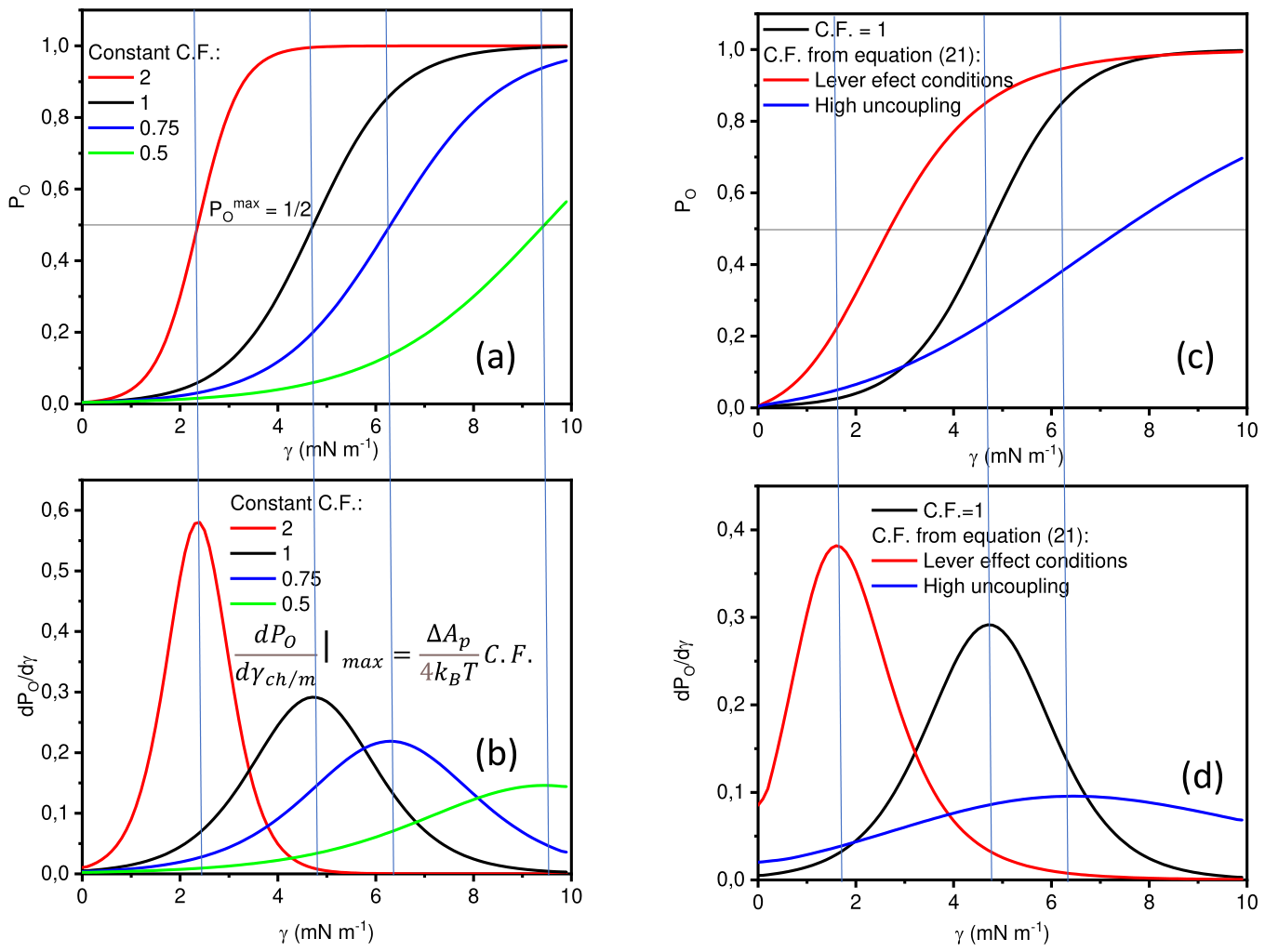
Figure 2 graphically illustrates the effect of different CF on PO, and the corresponding sensitivity , referred to CF = 1. The curves in Figure 2a evaluate CF a for the particular case of equation (23). For CF = 1 the maximum sensitivity is reached at the classical , see Figures2a,b. For the rest of constant CF values (yielding relative amplification or attenuation of sensitivity), the maximum sensitivity is then modulated by the coupling factor (). But in all these cases the maximum is reached at the classical (Figure 2a), as commented above (see equations (11) and (13)).
The curves in Figure 2c evaluate using CF resulting from the general case of equation (21), with a non-linear relation between and . In this case, due to the many different parameters influencing the behavior of PO, representing each of the particular cases (or group of cases) is tedious and apart the attention of the readers from the main goal of this work. However, equation 21 allows to establish, even in this general case, that small volume deformation contributions combine high surface ratios favors surface tension amplification in the pore (the lever conditions), while relatively large pores () and/or large volume deformation contributions favor lower sensitivities to membrane tension, see Figure 2d. Figure 2c,d also illustrate that when a non-linear relation between and is established differs from the classical values of 1/2 as it was discussed above (see equation (11)).
Concluding Remarks
The relevance of the interactions coupling between the perturbating mechanical stimulus and the gating mechanism, which apart from the importance of the surface to volume ratio of the channels, has been introduced in the biophysics framework formalism in the present work. The model predicts that realistic cases where and (), the maximum mechanical sensitivity is negatively shift with respect to the classical and is modulated by the CF. This important parameter can be obtained from the experimentally-derived current-tension dependence. This result conciliates apparent contradiction regarding cross-sectional expansion and pore area of the channels highlighted a and discussed in previous works. Our model also predicts that amplification of with respect to is possible (coupling factor dependent), which is an equivalent effect to that obtained by leverages. The conceptualization of CF can be extrapolated to stimulus of different nature, beyond mechanical stimulation.
Acknowledgments
This work was supported by grants of the Research Council of the KU Leuven (C14/18/086) and the Research Foundation Flanders FWO (G0D0417N, G0AAL24N).
Conflicts of Interest
The authors declare no competing financial interests.
Author Contributions
Conceptualization, I. Zumeta-Dubé and K. Talavera; Funding Acquisition, K. Talavera; Investigation, I. Zumeta-Dubé and K. Talavera; Project Administration, K. Talavera; Supervision, K. Talavera; Writing, I. Zumeta-Dubé and K. Talavera.
References
- Physics of mechanotransduction by Piezo ion channels. Michael Young, Amanda H. Lewis, Jörg Grandl. J Gen Physiol (2022) 154 (7): e202113044. [CrossRef] [PubMed]
- Physical chemistry of surfaces, Author(s): Arthur W. Adamson, Alice P. Gast. Publisher: Wiley, Year: 1997. ISBN: 0471148733,9780471148739,9780585295176.
- Surface Tension, Surface Energy, and Chemical Potential Due to Their Difference C.-Y. Hui and A. Jagota. Langmuir 2013, 29, 36, 11310–11316. [CrossRef] [PubMed]
- Force-induced conformational changes in PIEZO1. Yi-Chih Lin, Yusong R. Guo, Atsushi Miyagi, Jesper Levring, Roderick MacKinnon & Simon Scheuring. Nature volume 573, pages230–234 (2019). [CrossRef] [PubMed]
- Chiang, C.S.; Anishkin, A.; Sukharev, S. Gating of the large mechanosensitive channel in situ: Estimation of the spatial scale of the transition from channel population responses. Biophys. J. 2004, 86, 2846–2861. [Google Scholar] [CrossRef] [PubMed]
- Surface and Interface Stresses. Robert C. Cammarata. Annu. Rev. Mater. Sci. 1994.24:215-34. [CrossRef]
- Chiang, C.S.; Anishkin, A.; Sukharev, S. Gating of the large mechanosensitive channel in situ: Estimation of the spatial scale of the transition from channel population responses. Biophys. J. 2004, 86, 2846–2861. [Google Scholar] [CrossRef] [PubMed]
- Lewis, A.H.; Grandl, J. Mechanical sensitivity of Piezo1 ion channels can be tuned by cellular membrane tension. Elife 2015, 4, e12088. [Google Scholar] [CrossRef] [PubMed]
- Verkest, C.; Schaefer, I.; Nees, T.A.; Wang, N.; Jegelka, J.M.; Taberner, F.J.; Lechner, S.G. Intrinsically disordered intracellular domains control key features of the mechanically-gated ion channel PIEZO2. Nat. Commun. 2022, 13, 1365. [Google Scholar] [CrossRef] [PubMed]
- Anishkin, A.; Akitake, B.; Kamaraju, K.; Chiang, C.-S.; Sukharev, S. Hydration properties of mechanosensitive channel pores define the energetics of gating. J. Phys. Condens. Matter 2010, 22, 454120. [Google Scholar] [CrossRef] [PubMed]
- Forcing Open TRP channels: mechanical gating as a unifying activation mechanism Chao Liu and Craig Montell. Biochem Biophys Res Commun. 2015 Apr 24; 460(1): 22–25. [CrossRef] [PubMed]
- Smith, G.D. Modeling the Stochastic Gating of Ion Channels. In Computational Cell Biology. Interdisciplinary Applied Mathematics; Fall, C.P., Marland, E.S., Wagner, J.M., Tyson, J.J., Eds.; Springer: New York, NY, 2002; vol 20. [Google Scholar] [CrossRef] [PubMed]
- Structure and mechanogating mechanism of the Piezo1 channel. Qiancheng Zhao, Heng Zhou, Shaopeng Chi, Yanfeng Wang, Jianhua Wang, Jie Geng, Kun Wu, Wenhao Liu, Tingxin Zhang, Meng-Qiu Dong, Jiawei Wang, Xueming Li & Bailong Xiao. Nature 554, 487–492 (2018). [CrossRef] [PubMed]
- Structural Designs and Mechanogating Mechanisms of the Mechanosensitive Piezo Channels. Yan Jiang, Xuzhong Yang, Jinghui Jiang, Bailong Xiao. Trends in Biochemical Sciences. Volume 46, Issue 6, June 2021, Pages 472-488. [CrossRef] [PubMed]
- Vanegas, J.M.; Arroyo, M. Force Transduction and Lipid Binding in MscL: A Continuum-Molecular Approach. PLoS ONE 2014, 9(12), e113947. [Google Scholar] [CrossRef] [PubMed]
- Rusanov, A.I. Surface thermodynamics revisited. Surf. Sci. Rep. 2005, 58, 111–239. [Google Scholar] [CrossRef]
- Rusanov, A.I. Thermodynamics of solid surfaces. In Surface Science Reports; 1996; Volume 23, Issues 6–8, pp. 173–247. [Google Scholar] [CrossRef]
Figure 1.
Channel models illustrating the impact of the in channel gating upon the action of the membrane tension. (a) A bidimensional membrane containing a channel with a wall of dimensionless thickness. In this case the pore expansion and the in-plane expansion of the protein are coincident , membrane tension virtually acts on the pore and thus , as discussed above. (b) Cylindrical channel model where the volume interaction between the protein domains are represented by springs (the harmonic approximation; otherwise more terms could be added to the Taylor series expansion of the interaction potential) and the elastic bands in the pore and membrane boundaries represent the interface tensions. See the text for the definition of the parameters.
Figure 1.
Channel models illustrating the impact of the in channel gating upon the action of the membrane tension. (a) A bidimensional membrane containing a channel with a wall of dimensionless thickness. In this case the pore expansion and the in-plane expansion of the protein are coincident , membrane tension virtually acts on the pore and thus , as discussed above. (b) Cylindrical channel model where the volume interaction between the protein domains are represented by springs (the harmonic approximation; otherwise more terms could be added to the Taylor series expansion of the interaction potential) and the elastic bands in the pore and membrane boundaries represent the interface tensions. See the text for the definition of the parameters.
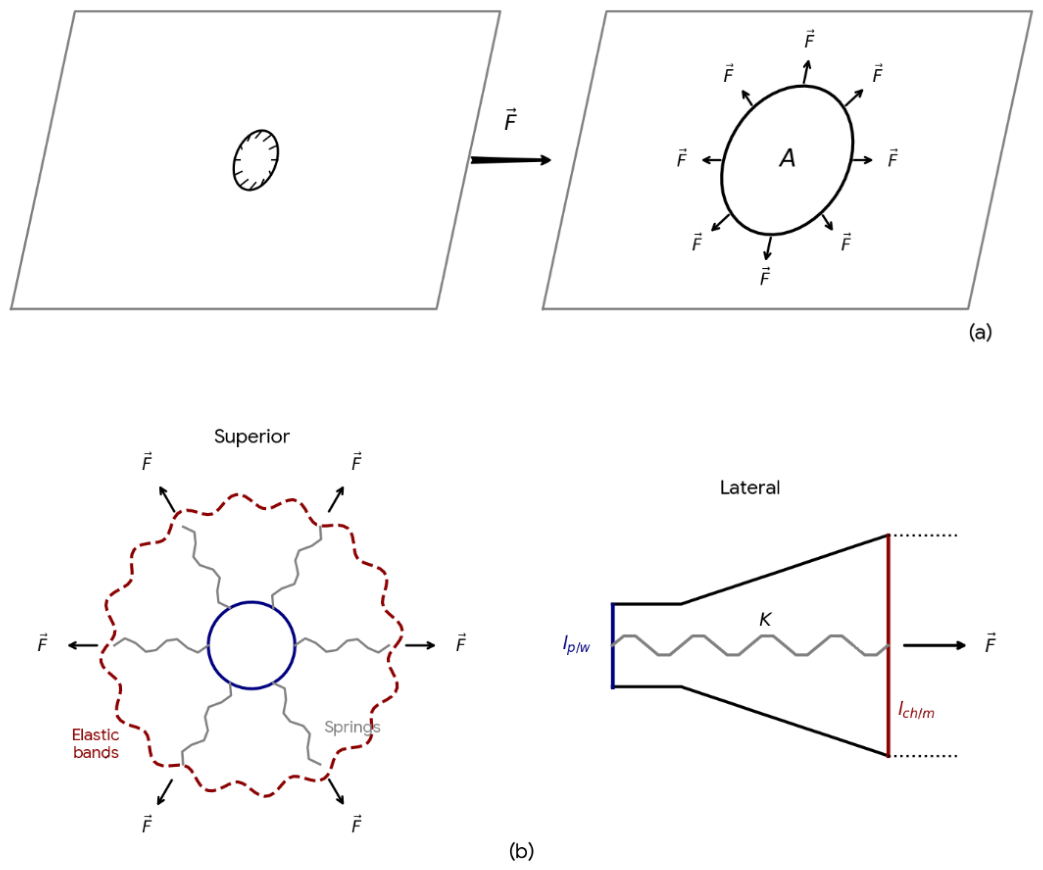
Figure 2.
The effect of different CF on PO. (b) Cases of a non-linear relation between and as in equation (21). CF = 1 was used as reference in both parts of this Figure.
Figure 2.
The effect of different CF on PO. (b) Cases of a non-linear relation between and as in equation (21). CF = 1 was used as reference in both parts of this Figure.
Disclaimer/Publisher’s Note: The statements, opinions and data contained in all publications are solely those of the individual author(s) and contributor(s) and not of MDPI and/or the editor(s). MDPI and/or the editor(s) disclaim responsibility for any injury to people or property resulting from any ideas, methods, instructions or products referred to in the content. |
© 2026 by the authors. Licensee MDPI, Basel, Switzerland. This article is an open access article distributed under the terms and conditions of the Creative Commons Attribution (CC BY) license.
Copyright: This open access article is published under a Creative Commons CC BY 4.0 license, which permit the free download, distribution, and reuse, provided that the author and preprint are cited in any reuse.