

Submitted:
16 September 2026
Posted:
17 September 2026
You are already at the latest version
Abstract
This paper examines dihomo-γ-linolenic acid (DGLA, 20:3n-6) as a unique molecule among the polyunsaturated fatty acids (PUFAs) of the n-6 family. It has a pronounced anti-inflammatory effect and significant clinical potential. Unlike arachidonic acid (AA), from which pro-inflammatory eicosanoids are formed, DGLA is metabolized to prostaglandin E1 and 15-hydroxyeicosatrienoic acid. These compounds exhibit anti-inflammatory, vasodilating, and anti-aggregatory properties. An analysis of clinical studies indicates that low levels of DGLA are an independent predictor of all-cause mortality in patients with cardiovascular diseases. Additionally, the therapeutic use of DGLA effectively reduces the symptoms of allergic rhinitis. Particular attention is paid to genetic variability in the FADS1 gene. It modulates the rate of conversion of the precursor of DGLA (gamma-linolenic acid) to AA. This justifies the need for a personalized approach to nutritional therapy. The role of zinc as a cofactor of delta-6-desaturase is highlighted. Its deficiency causes an increase in the LA/DGLA ratio, a potential biomarker of zinc status. New therapeutic strategies are being explored, such as the target inhibition of delta-5-desaturase, which redirects DGLA metabolism toward the formation of 8-hydroxyoctanoic acid, a metabolite with potent anticancer activity. In conclusion, DGLA is a key mediator of inflammatory homeostasis. An integrated approach incorporating genetic, nutritional, and dietary factors is promising for the implementation of personalized therapeutic strategies.
Keywords:
dihomo-γ-linolenic acid
; polyunsaturated fatty acids
; inflammation
; arachidonic acid
; fatty acid desaturases
; anti-inflammatory eicosanoids
; biomarkers
; cardiovascular diseases
; personalized medicine
; metabolism
; nutritional therapy
1. Introduction
Polyunsaturated fatty acids (PUFAs) are essential structural components of cell membranes and precursors of bioactive lipid mediators. They play a fundamental role in the regulation of inflammatory processes, immune response, metabolism, and homeostasis [1]. Despite significant progress in understanding the metabolism of PUFAs, the clinical significance of many of their representatives, in particular dihomo-γ-linolenic acid (DGLA, 20:3n-6), remains poorly understood. Traditionally, n-6 PUFAs have been associated with pro-inflammatory effects. However, accumulating data indicate that DGLA is an exception to this rule. It exhibits pronounced anti-inflammatory properties. Consequently, DGLA represents a pivotal signaling molecule that functions both as a potent anti-inflammatory mediator and as a clinically relevant biomarker. Its metabolism is significantly dependent on genetic variations (FADS) and nutritional factors, in particular zinc status. These combined factors highlight novel avenues for personalized therapeutic strategies.
2. Main Text
Unique metabolic pathway and antagonism with arachidonic acid. DGLA occupies a central position in the metabolic cascade of n-6 PUFAs. It is formed from gamma-linolenic acid (GLA) by the action of the elongase ELOVL5 [2]. In contrast to arachidonic acid (AA), which is the precursor of pro-inflammatory series-2 prostaglandins, series-4 leukotrienes and thromboxanes, DGLA is metabolized by cyclooxygenases (COX) and 15-lipoxygenase (15-LOX). As a result, it yields prostaglandin E1 (PGE1) and 15-hydroxyeicosatrienoic acid (15-HETrE), both of which possess anti-inflammatory, vasodilatory, and anti-aggregatory properties [3,4] (Figure 1).
Furthermore, DGLA competitively inhibits AA metabolism via COX and LOX, thereby suppressing the synthesis of pro-inflammatory eicosanoids [5]. This antagonism is critical for understanding the role of DGLA in the regulation of inflammatory homeostasis (Figure 2).
Clinical significance of DGLA as a prognostic biomarker. The strongest evidence for the clinical significance of DGLA comes from cardiovascular studies. In the OMEMI study of 1002 patients aged 70-82 years with a recent myocardial infarction, low serum phospholipid DGLA levels were an independent predictor of all-cause mortality during 2 years of follow-up (hazard ratio 0.47 comparing the highest three quartiles to the lowest quartile) [6]. The authors emphasize that this effect is likely due to reduced delta-6-desaturase activity. This is evidenced by the high LA/DGLA ratio, which was also associated with an increased risk of adverse cardiovascular events [6]. Similar results were obtained in a study by Ouchi et al. In this study, low DGLA levels predicted long-term mortality in patients with acute decompensated heart failure [7]. Thus, DGLA acts not just as a marker, but also as a potentially modifiable risk factor with prognostic value.
Therapeutic potential of DGLA in allergic diseases. The first randomized placebo-controlled human trial, conducted by Yokoi et al., demonstrated the efficacy of oral DGLA (314 mg/day) in alleviating symptoms of pollen-induced allergic rhinitis [8]. DGLA significantly reduced the severity of sneezing and nasal congestion compared with placebo [8]. The mechanism of this effect is likely to be related to the inhibition of mast cell degranulation and leukotriene synthesis, as confirmed by data from animal models of atopic dermatitis [9]. This study is an important step in confirming the therapeutic potential of DGLA in clinical practice.
Genetic variations (FADS) as moderators of the GLA/DGLA effect. A key factor influencing DGLA metabolism and the efficacy of GLA supplementation is a genetic polymorphism in the FADS1 gene, which encodes delta-5-desaturase. A study by Sergeant et al. showed that in carriers of the “inefficient” allele (TT), GLA supplementation resulted in significant accumulation of DGLA, whereas in carriers of the “efficient” genotype (GG), GLA was more actively converted to AA [10]. This is of critical importance for personalizing nutritional therapy, as high doses of GLA in individuals with the “efficient” genotype may increase pro-inflammatory AA levels, thereby nullifying potential benefits [10]. Therefore, genotyping of FADS1 is necessary to optimize the dosage and expected effect of GLA supplementation.
New therapeutic strategies: delta-5-desaturase inhibition. An alternative approach to modulating the DGLA/AA pathway is the target inhibition of delta-5-desaturase (D5D) via small molecules or RNA interference (RNAi). As shown in the review by Pang et al., inhibition of D5D not only reduces AA formation but also redirects DGLA metabolism to 8-hydroxyoctanoic acid (8-HOA). This is a unique anticancer agent that induces apoptosis of cancer cells [11]. This strategy is considered promising for the treatment of colorectal, pancreatic, and breast cancers [11]. D5D inhibition is an example of how knowledge of the molecular pathways of PUFA metabolism can be used to develop fundamentally new classes of drugs. Thus, a comprehensive therapeutic approach to modulate DGLA metabolism may include nutritional support (GLA supplementation), dietary correction (LA reduction), and targeted pharmacological interventions (D5D inhibition) (Figure 3).
The role of trace elements and dietary balance. The activity of desaturases, particularly delta-6-desaturase – which is critical for GLA synthesis – is significantly modulated by zinc (Zn) status. As noted by Knez et al., zinc deficiency leads to a decrease in delta-6-desaturase activity. This is manifested in an increase in the LA/DGLA ratio, which is proposed as a new biomarker of zinc status [12]. In addition, the modern Western diet is characterized by excessive consumption of LA and a high n-6/n-3 ratio (up to 20-50:1). This creates a competitive advantage for the formation of pro-inflammatory mediators from AA [1]. The optimal n-6/n-3 ratio recommended for reducing inflammation is 4-5:1 [1]. Analysis of modern clinical studies confirms the multifaceted role of DGLA as a prognostic biomarker and therapeutic agent. The main results of key studies are summarized in the following table (Table 1).
The table summarizes the results of key prospective cohort and randomized controlled trials demonstrating the dual clinical significance of DGLA. The first cluster of data (Nilsen et al., Ouchi et al.) demonstrates the prognostic value of the molecule: low serum DGLA levels and a low DGLA/AA ratio are independent predictors of increased long-term all-cause mortality in patients with acute cardiovascular pathology (myocardial infarction, decompensated heart failure). The second cluster reflects the therapeutic potential: exogenous use of DGLA supplements significantly reduces the symptoms of allergic rhinitis (Yokoi et al.). The study by Sergeant et al. highlights the mechanism of genetic moderation: the effectiveness of nutritional support with DGLA precursors critically depends on the polymorphism of the FADS1 gene, which determines the rate of further conversion of DGLA into pro-inflammatory arachidonic acid and dictates the need for genetic screening.
3. Conclusions
Dihomo-γ-linolenic acid is a unique molecule among n-6 PUFAs. It combines the properties of a structural component of membranes, a precursor of anti-inflammatory eicosanoids, and a clinically relevant biomarker. Accumulating evidence suggests that its deficiency is associated with increased mortality in cardiovascular diseases. Therapeutic use of DGLA demonstrates efficacy in allergic conditions. The efficacy of GLA (precursor of DGLA) supplementation is significantly modulated by genetic variations in FADS1. This justifies the need for genotyping to personalize nutritional support. New therapeutic approaches, in particular D5D inhibition, open up prospects for the use of the DGLA metabolic pathway in anticancer therapy. An integrated approach that takes into account genetic, nutritional (zinc status), and dietary factors (n-6/n-3 ratio) is key to realizing the therapeutic potential of DGLA. Further research should be aimed at developing standardized protocols for determining DGLA levels, assessing the long-term effectiveness of its use, and creating selective modulators of its metabolism.
Author Contributions
The author confirms sole responsibility for the conception, design, analysis, interpretation, drafting, and final approval of the manuscript.
Funding
This research received no external funding.
Data Availability Statement
No data were generated as a result of this study.
Acknowledgments
Not applicable.
Conflicts of Interest
The author declares that he has no competing interests.
Declaration on the Use of Artificial Intelligence
During the preparation of this work, the author used Google Gemini and Google Search tools solely to assist with literature search, data analysis, and language editing to improve readability. The tool was not used to generate scientific conclusions or original text. Following the use of these tools, the author reviewed, edited, and evaluated the content as needed and takes full responsibility for the final contents of the publication.
Abbreviations
The following abbreviations are used in this manuscript:
| 15-HETrE | 15-Hydroxyeicosatrienoic acid |
| 8-HOA | 8-Hydroxyoctanoic acid |
| 15-LOX | 15-Lipoxygenase |
| AA | Arachidonic acid |
| ADHF | Acute decompensated heart failure |
| CI | Confidence interval |
| COX | Cyclooxygenase |
| CVD | Cardiovascular disease |
| D5D | Delta-5-desaturase |
| DB | Double blind |
| DGLA | Dihomo-γ-linolenic acid |
| ELOVL5 | Elongation of very long chain fatty acids protein 5 |
| FADS / FADS1 | Fatty acid desaturase 1 |
| GLA | Gamma-linolenic acid |
| HR | Hazard ratio |
| LA | Linoleic acid |
| MI | Myocardial infarction |
| OMEMI | Omega-3 in elderly with myocardial infarction |
| PC | Placebo-controlled |
| RCT | Randomized controlled trial |
| PGE1 | Prostaglandin E1 |
| PUFAs | Polyunsaturated fatty acids |
| Zn | Zinc |
References
- Mariamenatu, AH; Abdu, EM Overconsumption of Omega-6 Polyunsaturated Fatty Acids (PUFAs) versus Deficiency of Omega-3 PUFAs in Modern-Day Diets: The Disturbing Factor for Their “Balanced Antagonistic Metabolic Functions” in the Human Body. J. Lipids 2021, 2021, 8848161. [CrossRef]
- Sergeant, S.; Rahbar, E.; Chilton, FH Gamma-linolenic acid, Dihommo-gamma linolenic, Eicosanoids and Inflammatory Processes. Eur. J. Pharmacol. 2016, 785, 77-86. [CrossRef]
- Wang, X.; Lin, H.; Gu, Y. Multiple Roles of Dihomo-γ-Linolenic Acid against Proliferation Diseases. Lipids Health Dis. 2012, 11, 25. [CrossRef]
- Fan, Y.-Y.; Chapkin, RS Importance of Dietary Gamma-Linolenic Acid in Human Health and Nutrition. J. Nutr. 1998, 128, 1411-1414. [CrossRef]
- Mustonen, A.-M.; Nieminen, P. Dihomo-γ-Linolenic Acid (20:3n-6) – Metabolism, Derivatives, and Potential Significance in Chronic Inflammation. Int. J. Mol. Sci. 2023, 24, 2116. [CrossRef]
- Nilsen, DWT; Myhre, PL; Kalstad, A.; Schmidt, EB; Arnesen, H.; Seljeflot, I. Serum Levels of Dihomo-Gamma (γ)-Linolenic Acid (DGLA) Are Inversely Associated with Linoleic Acid and Total Death in Elderly Patients with a Recent Myocardial Infarction. Nutrients 2021, 13, 3475. [CrossRef]
- Ouchi, S.; Miyazaki, T.; Shimada, K.; Sugita, Y.; Shimizu, M.; Murata, A.; Kato, T.; Aikawa, T.; Suda, S.; Shiozawa, T.; Hiki, M.; Takahashi, S.; Kasai, T.; Miyauchi, K.; Daida, H. Decreased Circulating Dihomo-Gamma-Linolenic Acid Levels Are Associated with Total Mortality in Patients with Acute Cardiovascular Disease and Acute Decompensated Heart Failure. Lipids Health Dis. 2017, 16, 150. [CrossRef]
- Yokoi, K.; Yanagimoto, K.; Hayamizu, K. Supplementation of Dihomo-γ-Linolenic Acid for Pollen-Induced Allergic Symptoms in Healthy Subjects: A Randomized, Double-Blind, Placebo-Controlled Trial. Nutrients 2023, 15, 3465. [CrossRef]
- Kawashima, H.; Tateishi, N.; Shiraishi, A.; Teraoka, N.; Tanaka, T.; Tanaka, A.; Matsuda, H.; Kiso, Y. Oral Administration of Dihomo-γ-Linolenic Acid Prevents Development of Atopic Dermatitis in NC/Nga Mice. Lipids 2008, 43, 37-43. [CrossRef]
- Sergeant, S.; Hugenschmidt, CE; Rudock, ME; Ziegler, JT; Ivester, P.; Ainsworth, HC; Vaidya, D.; Case, LD; Langefeld, CD; Freedman, BI; Bowden, DW; Mathias, RA; Chilton, FH Differences in Arachidonic Acid Levels and Fatty Acid Desaturase (FADS) Gene Variants in African Americans and European Americans with Diabetes or the Metabolic Syndrome. Br. J. Nutr. 2012, 107, 547-555. [CrossRef]
- Pang, L.; Shah, H.; Xu, Y.; Qian, S. Delta-5-Desaturase: A Novel Therapeutic Target for Cancer Management. Translation Oncol. 2021, 14, 101207. [CrossRef]
- Knez, M.; Stangoulis, JCR; Glibetic, M.; Tako, E. The Linoleic Acid: Dihomo-γ-Linolenic Acid Ratio (LA) – An Emerging Biomarker of Zn Status. Nutrients 2017, 9, 825. [CrossRef]
Figure 1.
Metabolic pathway of n-6 polyunsaturated fatty acids with a focus on the central role of dihomo-γ-linolenic acid (DGLA). The scheme depicts the enzymatic cascade of conversion of dietary linoleic acid (LA) to DGLA and arachidonic acid (AA). DGLA plays the role of a key branching factor in metabolism: on the one hand, it is metabolized by cyclooxygenases (COX-1/2) and 15-lipoxygenase (15-LOX) to form prostaglandin E1 (PGE1) and 15-hydroxyeicosatrienoic acid (15-HETrE), which provide pronounced anti-inflammatory, vasodilatory and anti-aggregatory effects. On the other hand, the conversion of DGLA to AA by delta-5-desaturase (FADS1) leads to the synthesis of pro-inflammatory mediators (PGE2, LTB4, TXA2). It has been shown that DGLA can directly compete with AA for access to COX and LOX enzymes, which further inhibits the synthesis of pro-inflammatory compounds. 15-HETrE: 15-hydroxyeicosatrienoic acid; AA: arachidonic acid; COX: cyclooxygenase; DGLA: dihomo-γ-linolenic acid; ELOVL5: elongase 5; FADS1: delta-5-desaturase; FADS2: delta-6-desaturase; GLA: gamma-linolenic acid; LA: linoleic acid; LOX: lipoxygenase; PGE1/PGE2: prostaglandins E1 and E2. Image created using Gemini tool (Google, 2026) based on the directions provided by the author to illustrate the concept. The final image was curated and verified for technical accuracy by the author.
Figure 1.
Metabolic pathway of n-6 polyunsaturated fatty acids with a focus on the central role of dihomo-γ-linolenic acid (DGLA). The scheme depicts the enzymatic cascade of conversion of dietary linoleic acid (LA) to DGLA and arachidonic acid (AA). DGLA plays the role of a key branching factor in metabolism: on the one hand, it is metabolized by cyclooxygenases (COX-1/2) and 15-lipoxygenase (15-LOX) to form prostaglandin E1 (PGE1) and 15-hydroxyeicosatrienoic acid (15-HETrE), which provide pronounced anti-inflammatory, vasodilatory and anti-aggregatory effects. On the other hand, the conversion of DGLA to AA by delta-5-desaturase (FADS1) leads to the synthesis of pro-inflammatory mediators (PGE2, LTB4, TXA2). It has been shown that DGLA can directly compete with AA for access to COX and LOX enzymes, which further inhibits the synthesis of pro-inflammatory compounds. 15-HETrE: 15-hydroxyeicosatrienoic acid; AA: arachidonic acid; COX: cyclooxygenase; DGLA: dihomo-γ-linolenic acid; ELOVL5: elongase 5; FADS1: delta-5-desaturase; FADS2: delta-6-desaturase; GLA: gamma-linolenic acid; LA: linoleic acid; LOX: lipoxygenase; PGE1/PGE2: prostaglandins E1 and E2. Image created using Gemini tool (Google, 2026) based on the directions provided by the author to illustrate the concept. The final image was curated and verified for technical accuracy by the author.
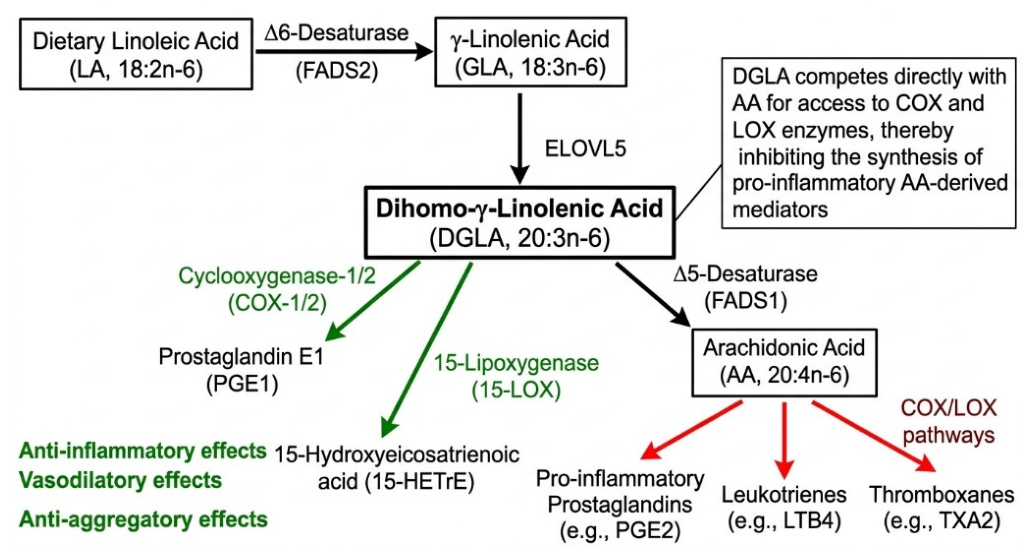
Figure 2.
Eicosanoid balance: antagonistic effects of lipid mediators derived from DGLA and AA. The illustration demonstrates the competitive physiological interaction of two key polyunsaturated fatty acids after their release from membrane phospholipids by phospholipase A2 (PLA2). Arachidonic acid (AA) metabolism generates a pro-inflammatory phenotype, generating mediators (PGE2, LTB4, TXA2) that cause vasoconstriction and platelet aggregation, contributing to the development of chronic inflammation, atherosclerosis and thrombosis. In contrast, DGLA metabolism generates an anti-inflammatory phenotype: derived mediators (PGE1, 15-HETrE) stimulate vasodilation, prevent platelet aggregation and promote the resolution of inflammation and cytoprotection. A high ratio of n-6/n-3 fatty acids in the diet shifts the balance towards AA (provoking inflammation), while adequate levels of DGLA restore homeostasis by competitively inhibiting AA-metabolizing enzymes. 15-HETrE: 15-hydroxyeicosatrienoic acid; AA: arachidonic acid; COX: cyclooxygenase; DGLA: dihomo-γ-linolenic acid; LOX: lipoxygenase; LTB4: leukotriene B4; PGE1/PGE2: prostaglandins E1 and E2; PLA2: phospholipase A2; TXA2: thromboxane A2. Image created using Gemini tool (Google, 2026) based on the directions provided by the author to illustrate the concept. The final image was curated and verified for technical accuracy by the author.
Figure 2.
Eicosanoid balance: antagonistic effects of lipid mediators derived from DGLA and AA. The illustration demonstrates the competitive physiological interaction of two key polyunsaturated fatty acids after their release from membrane phospholipids by phospholipase A2 (PLA2). Arachidonic acid (AA) metabolism generates a pro-inflammatory phenotype, generating mediators (PGE2, LTB4, TXA2) that cause vasoconstriction and platelet aggregation, contributing to the development of chronic inflammation, atherosclerosis and thrombosis. In contrast, DGLA metabolism generates an anti-inflammatory phenotype: derived mediators (PGE1, 15-HETrE) stimulate vasodilation, prevent platelet aggregation and promote the resolution of inflammation and cytoprotection. A high ratio of n-6/n-3 fatty acids in the diet shifts the balance towards AA (provoking inflammation), while adequate levels of DGLA restore homeostasis by competitively inhibiting AA-metabolizing enzymes. 15-HETrE: 15-hydroxyeicosatrienoic acid; AA: arachidonic acid; COX: cyclooxygenase; DGLA: dihomo-γ-linolenic acid; LOX: lipoxygenase; LTB4: leukotriene B4; PGE1/PGE2: prostaglandins E1 and E2; PLA2: phospholipase A2; TXA2: thromboxane A2. Image created using Gemini tool (Google, 2026) based on the directions provided by the author to illustrate the concept. The final image was curated and verified for technical accuracy by the author.
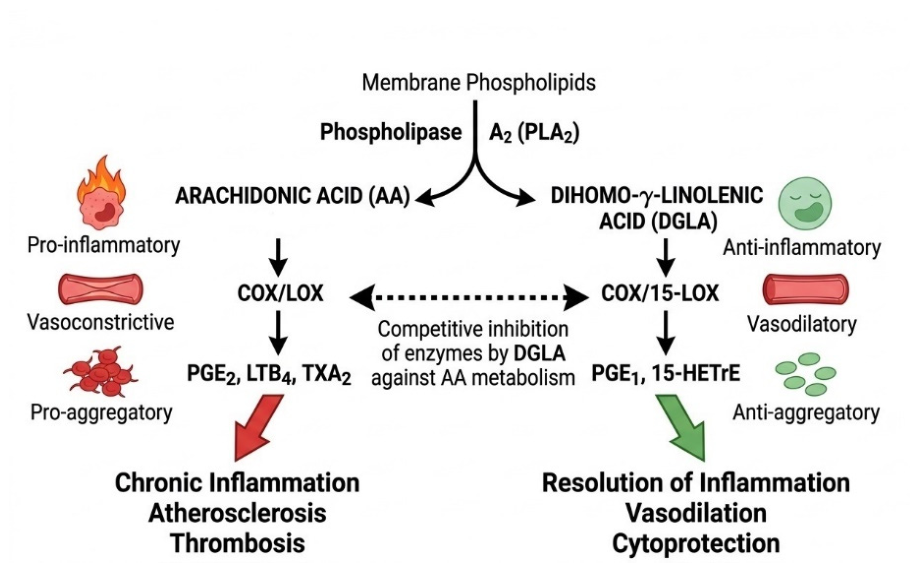
Figure 3.
Therapeutic strategies to modulate DGLA metabolism for the treatment of chronic diseases. The diagram details three complementary clinical approaches. Pathway 1 (Nutritional): Supplementation with GLA-rich oils (borage or evening primrose), the efficacy of which is critically dependent on the FADS1 gene polymorphism. Carriers of the minor homozygous genotype have reduced conversion of DGLA to AA, leading to DGLA accumulation and clinical reduction of allergic symptoms. Pathway 2 (Pharmacological): Targeted inhibition of delta-5-desaturase (D5D) by small molecules or RNA interference (RNAi) blocks AA formation and bypasses DGLA metabolism by peroxidation (via COX-2) to 8-hydroxyoctanoic acid (8-HOA). This unique molecule induces apoptosis of cancer cells, providing anticancer activity. Pathway 3 (Dietary): Reducing the dietary n-6/n-3 ratio (decreasing LA/AA intake and increasing EPA/DHA) reduces the availability of substrate for the synthesis of pro-inflammatory mediators, indirectly enhancing the anti-inflammatory effects of DGLA and improving the cardiovascular risk profile. 8-HOA: 8-hydroxyoctanoic acid; AA: arachidonic acid; COX-2: cyclooxygenase-2; D5D: delta-5-desaturase; DGLA: dihomo-γ-linolenic acid; DHA: docosahexaenoic acid; EPA: eicosapentaenoic acid; FADS1: delta-5-desaturase gene; GLA: gamma-linolenic acid; LA: linoleic acid; RNAi: RNA interference. Image created using Gemini tool (Google, 2026) based on the directions provided by the author to illustrate the concept. The final image was curated and verified for technical accuracy by the author.
Figure 3.
Therapeutic strategies to modulate DGLA metabolism for the treatment of chronic diseases. The diagram details three complementary clinical approaches. Pathway 1 (Nutritional): Supplementation with GLA-rich oils (borage or evening primrose), the efficacy of which is critically dependent on the FADS1 gene polymorphism. Carriers of the minor homozygous genotype have reduced conversion of DGLA to AA, leading to DGLA accumulation and clinical reduction of allergic symptoms. Pathway 2 (Pharmacological): Targeted inhibition of delta-5-desaturase (D5D) by small molecules or RNA interference (RNAi) blocks AA formation and bypasses DGLA metabolism by peroxidation (via COX-2) to 8-hydroxyoctanoic acid (8-HOA). This unique molecule induces apoptosis of cancer cells, providing anticancer activity. Pathway 3 (Dietary): Reducing the dietary n-6/n-3 ratio (decreasing LA/AA intake and increasing EPA/DHA) reduces the availability of substrate for the synthesis of pro-inflammatory mediators, indirectly enhancing the anti-inflammatory effects of DGLA and improving the cardiovascular risk profile. 8-HOA: 8-hydroxyoctanoic acid; AA: arachidonic acid; COX-2: cyclooxygenase-2; D5D: delta-5-desaturase; DGLA: dihomo-γ-linolenic acid; DHA: docosahexaenoic acid; EPA: eicosapentaenoic acid; FADS1: delta-5-desaturase gene; GLA: gamma-linolenic acid; LA: linoleic acid; RNAi: RNA interference. Image created using Gemini tool (Google, 2026) based on the directions provided by the author to illustrate the concept. The final image was curated and verified for technical accuracy by the author.
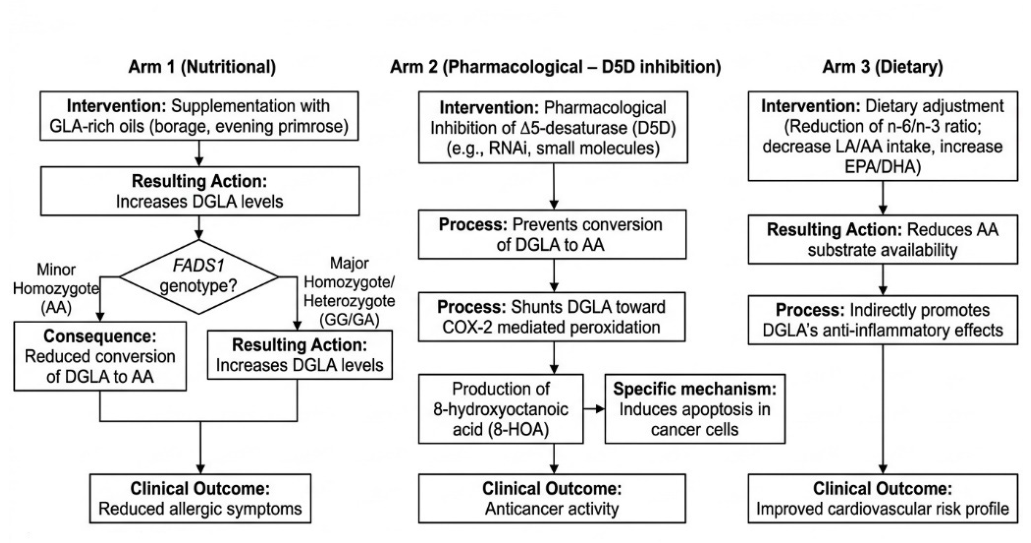

Table 1.
Systematization of clinical evidence of the multifaceted role of dihomo-γ-linolenic acid (DGLA): from a prognostic biomarker of cardiovascular risk to a therapeutic agent and object of personalized medicine.
Table 1.
Systematization of clinical evidence of the multifaceted role of dihomo-γ-linolenic acid (DGLA): from a prognostic biomarker of cardiovascular risk to a therapeutic agent and object of personalized medicine.
| Study / Reference | Population | Design | Intervention / Exposure | Key Finding | Clinical Implication |
|---|---|---|---|---|---|
| Nilsen et al. (2021) [6] | Elderly post-MI patients (n = 1002) | Prospective cohort | Baseline serum DGLA levels | Highest DGLA quartiles (Q2-Q4) were inversely associated with all-cause mortality compared to Q1 (HR = 0.47, p = 0.012) | DGLA as a prognostic biomarker in secondary CVD prevention |
| Ouchi et al. (2017) [7] | Acute CVD/ADHF patients (n = 306) | Prospective cohort | Serum DGLA levels | Low DGLA and low DGLA/AA ratio predicted long-term mortality | DGLA as a marker of poor prognosis in acute heart failure |
| Yokoi et al. (2023) [8] | Healthy adults with pollen allergy (n = 33) | RCT, DB, PC | DGLA oil (314 mg/d) vs placebo for 15 weeks | Significant reduction in sneezing and nasal congestion; trend for total symptom score | DGLA as a potential therapeutic agent for allergic rhinitis |
| Sergeant et al. (2012) [10] | Healthy adults (n = 64) | Randomized crossover | GLA-rich borage oil vs soybean oil | FADS1 genotype determined DGLA/AA accumulation; TT genotype had higher DGLA response | Need for FADS genotyping before GLA supplementation |
The studies presented reflect diverse designs and populations, supporting the pleiotropic effects of the n-6 PUFAs metabolic pathway. AA: arachidonic acid; ADHF: acute decompensated heart failure; CVD: cardiovascular disease; DGLA: dihomo-γ-linolenic acid; FADS1: fatty acid desaturase 1; GLA: gamma-linolenic acid; MI: myocardial infarction; CI: confidence interval; DB: double blind; HR: hazard ratio; PC: placebo-controlled; Q1: the first (lowest) quartile of values; RCT: randomized controlled trial.
Disclaimer/Publisher’s Note: The statements, opinions and data contained in all publications are solely those of the individual author(s) and contributor(s) and not of MDPI and/or the editor(s). MDPI and/or the editor(s) disclaim responsibility for any injury to people or property resulting from any ideas, methods, instructions or products referred to in the content. |
© 2026 by the authors. Licensee MDPI, Basel, Switzerland. This article is an open access article distributed under the terms and conditions of the Creative Commons Attribution (CC BY) license (http://creativecommons.org/licenses/by/4.0/).
Copyright: This open access article is published under a Creative Commons CC BY 4.0 license, which permit the free download, distribution, and reuse, provided that the author and preprint are cited in any reuse.