
Submitted:
16 September 2026
Posted:
17 September 2026
You are already at the latest version
Abstract
Polyamine metabolism has emerged as an important determinant of pathogen survival, proliferation, and persistence, highlighting polyamine-associated proteins and metabolic pathways as promising therapeutic targets. This is particularly relevant to major infectious diseases, including tuberculosis, malaria, leishmaniasis, and trypanosomiasis, in which pathogens exploit and remodel host cellular processes to evade immune responses and establish intracellular survival. Increasing evidence indicates that alterations in host–pathogen polyamine metabolism contribute to pathogen adaptation and persistence, providing opportunities for therapeutic intervention. Over the past decade, several components of polyamine biosynthesis, transport, and utilization have been identified and validated as potential drug targets in clinically relevant pathogens. Concurrently, advances in medicinal chemistry have led to the development of polyamine-derived compounds with enhanced specificity toward pathogen-associated polyamine proteins and metabolic pathways. These findings have strengthened the rationale for target-based drug discovery as a complementary strategy to conventional antimicrobial development, particularly in the context of the increasing prevalence of multidrug-resistant pathogens. In this review, we summarize recent advances in the identification and validation of polyamine-related drug targets in pathogens responsible for tuberculosis, malaria, leishmaniasis, and trypanosomiasis. We further discuss emerging strategies for the design and optimization of polyamine-derived therapeutic compounds, with emphasis on their molecular targets, mechanisms of action, and potential for overcoming antimicrobial resistance. Finally, we highlight current challenges and future opportunities for exploiting polyamine metabolism in the development of next-generation therapeutics against these major infectious diseases.
Keywords:
polyamine metabolism
; drug discovery
; Plasmodium
; Mycobacterium
; Leishmania
; macrophage
Introduction
The Central Role of Macrophages During Intracellular Infections
Macrophages are crutial components of the innate immune system. They play a critical role in recognizing, engulfing, and eliminating invading pathogens. Several clinically important bacterial and parasitic organisms have evolved mechanisms that allow them to exploit macrophages as intracellular niches for survival, persistance and replication. By modulating macrophage signaling, intracellular trafficking, and antimicrobial responses, these pathogens can avoid immune-mediated defense mechanisms and establish persistent infections. Their ability to reside within host immune cells presents a major challenge for conventional antimicrobial therapies since intracellular persistence can limit drug accessibility facilitating long-term infection.
A diverse range of bacterial pathogens can establish intracellular infections within macrophages. Notable examples include Salmonella Typhimurium, the causative agent of typhoid fever, Brucella abortus, which is associated with brucellosis, and Mycobacterium tuberculosis, the main causative agent of tuberculosis (Thiriot et al., 2020). Similarly, several parasitic pathogens exploit macrophages or macrophage-associated intracellular environments during their life cycles. Leishmania species are particularly well adapted to macrophages, where they reside within phagolysosome-like compartments and can persist despite the host cell’s antimicrobial mechanisms (Roberts & Ullman, 2017). Other kinetoplastid and apicomplexan parasites, including Trypanosoma cruzi and Plasmodium species, are also associated with intracellular interactions involving host immune cells and contribute to diseases such as Chagas disease and malaria, respectively (Roberts & Ullman, 2017; Kaiser, 2023).
The ability of these pathogens to exploit immune cells highlights the complexity of host–pathogen interactions and represents the need to understand the molecular mechanisms governing intracellular pathogen survival. In particular, elucidating how pathogens modify macrophage physiology, get access to essential nutrients, withstand antimicrobial stresses, and manipulate host signaling pathways may reveal vulnerabilities that are not apparent from studies of extracellular pathogens. These insights could facilitate the development of therapeutic strategies designed to target specific intracellular stages of infection overcoming the limitations imposed by pathogen-mediated immune evasion and persistence.
Such diseases as malaria, tuberculosis, trypanosomiasis and leishmaniasis remain major global health challenges despite decades of progress in prevention, diagnosis, and treatment. Their substantial disease burden continues to place immense pressure on healthcare systems highlighting the need for sustained efforts toward the development of more effective and selective therapeutic interventions. According to the World Health Organization (WHO), an estimated 282 million malaria cases were reported across 85 countries in 2024, resulting in approximately 610,000 deaths. Children younger than five years are particularly vulnerable to malaria-associated mortality, especially in regions with sustained transmission. Tuberculosis (TB) similarly represents a major global health burden, with approximately 10.7 million cases estimated in 2024 and around 1.23 million deaths annually. These figures emphasize that, despite the availability of established preventive and therapeutic measures, substantial gaps remain in the control of these diseases. Leishmaniasis similarly remains a major global health challenge, with more than 1 billion people living in areas at risk of infection and an estimated 30,000 new cases of visceral leishmaniasis and more than 1 million cases of cutaneous leishmaniasis occurring annually. Visceral leishmaniasis is the most severe clinical form and can be fatal if left untreated. These figures highlight the persistent burden of leishmaniasis and the continuing need for effective therapeutic strategies, particularly in endemic regions where access to timely diagnosis and treatment remains limited. (WHO, 2024).
Recent advances in vaccination have provided important additional ways for malaria prevention. In 2021, the WHO recommended the RTS,S/AS01 malaria vaccine and subsequently recommended the R21/Matrix-M vaccine in 2023 for use in children living in malaria-endemic regions. The introduction of these vaccines represents a significant development in malaria control, particularly in areas where young children experience the disease burden. For tuberculosis, the bacille Calmette–Guérin (BCG) vaccine has been used extensively since decades and still provides protection against severe forms of TB in children. However, its protection against pulmonary tuberculosis in adults is variable, and vaccination alone is insufficient to interrupt transmission.
The therapeutic landscape for malaria, tuberculosis and leishmaniasis is further complicated by the emergence of drug-resistant pathogens. The progressive development of resistance can reduce the effectiveness of existing drugs and necessitate the use of increasingly complex treatment regimens. Furthermore, limited drug selectivity and poor delivery into pathogen-containing intracellular compartments restricts therapeutic efficacy. These challenges are particularly relevant to pathogens that survive within host cells, e.g. macrophages, where they can alter their metabolic state and exploit host-derived nutrients and signaling pathways. The intracellular lifestyle of many pathogens creates a complex therapeutic environment in which successful intervention requires not only inhibition of pathogen-specific physiological processes, but also consideration of the interactions between pathogen and host metabolism.
Limitations of conventional therapeutic strategies are related to the multifactorial nature of infectious diseases. Pathogen survival as well as disease progression are rarely controlled by a single biochemical event. Usually, they result from interconnected metabolic pathways, signaling networks, and interactions involving multiple host and pathogen proteins. Targeting a single molecular component may not always produce a durable therapeutic response, particularly when compensatory pathways can maintain pathogen survival. This complexity has increased interest in approaches that integrate pathogen biology, host–pathogen interactions, and metabolic dependencies to identify vulnerabilities that may be more difficult for the pathogen to bypass (Makhoba et al., 2020).
Metabolic pathways are of emerging interest as an important source of potential therapeutic targets. Pathogens that reside within host cells must adapt their metabolism to fluctuating nutrient availability, oxidative and immune-mediated stress, as well as the metabolic environment established by the host cell. Understanding these adaptations may reveal biochemical processes that are essential for intracellular persistence and at the same time sufficiently distinct from host pathways to permit selective pharmacological intervention. Increasing evidence points to the importance of amine metabolism, including the biosynthesis, transport, and utilization of polyamines and monoamines, in cellular proliferation, differentiation, stress adaptation, and metabolic homeostasis.
Polyamines such as putrescine, spermidine, and spermine are essential cellular metabolites involved in numerous processes required for growth and survival. Pathogenic organisms can obtain these metabolites through endogenous biosynthesis, uptake from the extracellular environment, or metabolic salvage pathways. This metabolic flexibility may be particularly important for intracellular pathogens, which encounter host environments in which nutrient availability and metabolite concentrations can differ substantially from those present in extracellular environments. Consequently, proteins involved in polyamine biosynthesis, transport, utilization, and regulation represent potential points of metabolic vulnerability.
Investigating these pathways from a host–pathogen perspective may provide opportunities to identify therapeutic targets that are not readily apparent from conventional pathogen-centered approaches. Characterization of parasite or bacterial proteins involved in polyamine and monoamine metabolism, together with an understanding of their structural properties and functional relationships with host pathways, could facilitate the identification of pathogen-selective targets. Subsequent development of inhibitors against essential components of these pathways may provide complementary therapeutic strategies capable of overcoming some limitations associated with existing drugs.
The persistent global burden of malaria, tuberculosis and leishmaniasis, combined with increasing drug resistance and the biological complexity of intracellular infection, underscores the need to expand the repertoire of therapeutic targets. A detailed understanding of host–pathogen interactions and pathogen metabolic adaptation is likely to be central to this effort. In this context, the exploration of previously undercharacterized pathways involved in amine metabolism, particularly polyamine transport and utilization, represents a promising avenue for identifying new molecular targets and developing next-generation anti-infective therapies.
Macrophage–Pathogen Interactions and Polyamine Metabolism
Macrophages are a major cellular component of the innate immune system and are responsible for recognizing, engulfing, and eliminating invading microorganisms. Paradoxically, many pathogens have evolved mechanisms that allow them to exploit macrophages as intracellular niches for persistence and, in some cases, replication. A diverse range of protozoan parasites, including Leishmania spp. and Trypanosoma cruzi, interact closely with macrophages during infection, while other parasites, such as Toxoplasma gondii, Cryptosporidium parvum, Crithidia, and Leptomonas, can also establish intracellular or macrophage-associated infections (Roberts & Ullman, 2017; Mann et al., 2021). Similarly, several bacterial pathogens, including Salmonella Typhimurium, Brucella abortus, Mycobacterium tuberculosis, Chlamydia pneumoniae, Legionella pneumophila, and Listeria monocytogenes, possess mechanisms that enable them to invade, persist within, or manipulate macrophages (Thiriot et al., 2020). The ability to exploit these immune cells provides pathogens with a protected intracellular environment while simultaneously requiring them to adapt to host-derived nutritional, metabolic, and antimicrobial stresses.
Among macrophage-associated infections, malaria, tuberculosis and leishmaniasis remain particularly important because of their substantial global health burden and the limitations of current therapeutic interventions. Tuberculosis caused approximately 10 million cases and 1.5 million deaths worldwide in 2023, whereas leishmaniasis affects millions of individuals and encompasses a spectrum of clinical manifestations ranging from localized cutaneous disease to life-threatening visceral infection (World Health Organization, 2020). Although the BCG vaccine provides protection against severe forms of tuberculosis in children and multidrug antibiotic regimens remain available for treatment, effective therapeutic options for leishmaniasis are considerably more limited. The absence of a licensed human vaccine, together with drug toxicity, variable treatment efficacy, complex administration regimens, and the emergence of drug resistance, continues to constrain the management of leishmaniasis. These limitations highlight the need to identify alternative parasite vulnerabilities and emphasize the importance of understanding the molecular basis of Leishmania survival within macrophages.
Metabolic Adaptation of Macrophages During Infection
The outcome of intracellular infection is determined not only by pathogen virulence mechanisms but also by the metabolic state of the host cell. During infection, macrophages undergo extensive metabolic and functional remodeling in response to pathogen-derived signals and the surrounding inflammatory environment. Classically activated M1-like macrophages generally promote inflammatory and antimicrobial responses, whereas M2-like macrophages are associated with tissue repair, immune regulation, and metabolic programs that can, under particular conditions, favor pathogen persistence. Pathogens may exploit this metabolic plasticity to establish intracellular conditions that are more permissive to long-term survival.
The relationship between polyamine metabolism and intracellular infection begins, in part, with host-cell metabolic reprogramming. Macrophage activation involves profound changes in amino-acid metabolism, particularly the metabolism of L-arginine. Depending on the activation state and surrounding cytokine environment, arginine can be directed toward nitric oxide production or toward the arginase/polyamine pathway. This metabolic partitioning creates an important link between macrophage immune function and polyamine availability.
One important regulator of macrophage metabolic polarization is peroxisome proliferator-activated receptor gamma (PPARγ). Infection-associated activation of PPARγ has been linked to increased expression of M2-associated markers and attenuation of aspects of the M1 inflammatory response (Muraille et al., 2014). This regulatory pathway is closely connected to arginine metabolism, which represents a critical metabolic intersection between macrophage activation and polyamine biosynthesis. Through the arginase-dependent pathway, arginine can be diverted toward ornithine and subsequently converted to putrescine, which serves as a precursor for the synthesis of spermidine and spermine. Consequently, changes in macrophage polarization can influence the intracellular availability of polyamines (Hesse et al., 2001).
This metabolic relationship may have important consequences for intracellular pathogens. A macrophage environment characterized by altered arginine metabolism and increased polyamine availability could provide pathogens with access to metabolites that support growth and adaptation. Indeed, the capacity of intracellular pathogens to tolerate or exploit elevated polyamine levels may contribute to their ability to persist within macrophages (Muraille et al., 2014). Thus, host metabolic reprogramming can generate an unexpected interface between immune defense and pathogen survival, in which metabolites produced as part of the host response may simultaneously become resources for the invading organism.
PPARγ is one of the regulatory factors implicated in this metabolic remodeling. Infection-associated changes in PPARγ activity can promote an M2-associated macrophage phenotype and influence arginine utilization, thereby favoring metabolic flux toward polyamine production (Krysenko et al., 2023a). In the polyamine biosynthetic pathway, arginine is converted to ornithine by arginase, followed by decarboxylation of ornithine to generate putrescine. Putrescine is subsequently converted to spermidine through the activity of spermidine synthase, with decarboxylated S-adenosylmethionine serving as the aminopropyl donor. In mammalian cells, spermidine can subsequently contribute to spermine biosynthesis.
This pathway is particularly relevant to intracellular pathogens because macrophage metabolism can influence the availability of polyamine precursors and products within the host cell. A metabolic environment enriched in arginine-derived polyamines may therefore provide pathogens with an additional source of metabolites that can be incorporated into their own metabolic networks. This creates a potential metabolic paradox in which host responses intended to regulate immune function can simultaneously generate resources that intracellular pathogens may exploit.
The biological importance of polyamines derives from their ability to participate in multiple interconnected cellular processes. Putrescine, spermidine, and spermine are small polycationic molecules that interact with nucleic acids, proteins, membranes, and other negatively charged cellular components. Their functions extend from regulation of DNA and RNA structure to modulation of translation, enzyme activity, proliferation, differentiation, and cellular responses to stress. Consequently, polyamine concentrations are maintained within relatively narrow physiological ranges through coordinated regulation of biosynthesis, catabolism, interconversion, and transport.
For pathogens, this metabolic network provides several potential points of vulnerability. Inhibition of a biosynthetic enzyme can reduce intracellular polyamine pools, whereas inhibition of transport can restrict access to extracellular or host-derived polyamines. Conversely, disruption of polyamine utilization may interfere with downstream processes that are essential for proliferation or stress adaptation. The therapeutic significance of these pathways is therefore not necessarily restricted to the inhibition of polyamine synthesis itself; interference with the broader network controlling polyamine availability may be equally important.
This distinction is particularly relevant for intracellular pathogens because metabolic salvage can compensate for deficiencies in endogenous synthesis. A pathogen capable of obtaining putrescine or spermidine from the host may maintain sufficient intracellular polyamine levels despite partial inhibition of its own biosynthetic pathway. Thus, effective therapeutic intervention may require consideration of both biosynthesis and transport, rather than focusing exclusively on individual biosynthetic enzymes.
Polyamine Metabolism and Cellular Homeostasis
Polyamines are evolutionarily conserved, low-molecular-weight aliphatic polycations that are essential for cellular function. Putrescine, spermidine, and spermine constitute the principal polyamines found in mammalian cells and participate in a wide range of biological processes. Through their interactions with nucleic acids, proteins, membranes, and other negatively charged cellular components, polyamines influence DNA and RNA structure, translation, enzyme activity, cellular proliferation, and responses to oxidative and metabolic stress (Pegg, 2009; Michael, 2016).
Because polyamines influence numerous fundamental cellular processes, their intracellular concentrations must be tightly controlled. Cellular polyamine homeostasis is maintained through the coordinated regulation of biosynthesis, catabolism, interconversion, and membrane transport. Disruption of this balance can impair cellular proliferation and viability, whereas increased polyamine availability can support the metabolic demands of rapidly growing or stressed cells (Pegg, 2009; Michael, 2016). Transport is therefore an important component of polyamine homeostasis because it determines the availability and intracellular distribution of these metabolites in response to changing physiological conditions.
The biological importance of polyamines is not restricted to host cells. A growing body of evidence indicates that pathogenic microorganisms also depend on polyamine metabolism for proliferation, differentiation, stress adaptation, and survival. Parasites and bacteria associated with diseases such as leishmaniasis, malaria, and tuberculosis possess mechanisms that enable them either to synthesize polyamines or to acquire them from their surrounding environment (Heby et al., 2007; Bacchi & Yarlett, 2002).
For intracellular pathogens, maintaining polyamine homeostasis may be particularly important because infection exposes them to nutrient limitation, oxidative stress, changes in pH, and immune-mediated antimicrobial activity. Under these conditions, pathogens may exploit host metabolites to supplement endogenous metabolic pathways. Polyamine salvage can therefore provide a potential metabolic advantage by reducing dependence on de novo biosynthesis while maintaining access to metabolites required for essential cellular processes. Such metabolic flexibility may be particularly advantageous for organisms residing within macrophages, where nutrient availability is tightly controlled by the host.
Polyamine metabolism in Plasmodium
Polyamine Metabolism as a Central Metabolic Determinant of Intracellular Pathogen Survival
The ability of intracellular pathogens to establish long-term infections depends on their capacity to adapt to the metabolic conditions imposed by the host cell. During evolution, pathogenic microorganisms have acquired specialized mechanisms for occupying particular host niches, obtaining essential nutrients, and tolerating immune-mediated stresses. Intracellular survival requires continuous adaptation because the availability of metabolites within host cells is tightly regulated and can change in response to infection, inflammation, nutrient limitation, and cellular stress. Consequently, successful pathogens must not only acquire nutrients from their host but also modify their own metabolic pathways to maintain energy production, biosynthesis, redox balance, and cellular homeostasis.
Macrophages represent one of the most challenging intracellular environments because they combine nutrient restriction with oxidative stress, antimicrobial activity, and extensive metabolic remodeling. However, the intracellular environments occupied by different pathogens are highly diverse, and the metabolic adaptations required for survival are strongly dependent on the host cell type. In the case of Plasmodium, the major intracellular stages in humans occur within hepatocytes during the liver stage and erythrocytes during the blood stage. This distinction is particularly important when considering parasite metabolism because hepatocytes and erythrocytes impose fundamentally different nutritional and biochemical constraints on the parasite. Following invasion of erythrocytes, Plasmodium falciparum develops within a parasitophorous vacuole and extensively remodels the host cell to create an environment that can support rapid parasite growth and replication (Counihan et al., 2021)
The mature human erythrocyte provides a particularly unusual intracellular niche. Unlike nucleated host cells, erythrocytes lack a nucleus and have very limited metabolic and biosynthetic capacity. Nevertheless, undergoes rapid asexual proliferation within these cells and therefore has substantial nutritional requirements. The parasite obtains amino acids through the digestion of host haemoglobin, while additional nutrients must be acquired from the extracellular environment. These include essential amino acids such as isoleucine, as well as vitamins, purines, lipids, and other metabolites that cannot be synthesized in sufficient quantities by the parasite. To overcome the restricted permeability of the erythrocyte membrane, Plasmodium modifies the host cell and establishes new permeability pathways that facilitate the uptake of nutrients and removal of metabolic waste (Beck & Ho, 2021).
This extensive dependence on host-derived metabolites illustrates an important principle of parasite biology: metabolic adaptation is not limited to the regulation of intracellular enzymes but also involves manipulation of the host cell. exports numerous parasite proteins into the erythrocyte, thereby modifying host-cell structure, membrane permeability, trafficking, and nutrient availability. Such remodeling allows the parasite to overcome the metabolic limitations of the erythrocyte and establish an intracellular environment compatible with rapid proliferation (Koning-Ward et al., 2016).
One metabolic pathway that may contribute substantially to this host–pathogen adaptation is polyamine metabolism. Polyamines are small, positively charged molecules that include putrescine, spermidine, and spermine. They interact with nucleic acids, proteins, and cellular membranes and participate in a broad range of biological processes. Their functions include regulation of nucleic-acid structure, translation, cellular proliferation, enzyme activity, and responses to oxidative and other forms of cellular stress. Because rapidly dividing cells have high requirements for protein and nucleic-acid synthesis, appropriate regulation of intracellular polyamine concentrations is particularly important during periods of rapid growth.
In Plasmodium, polyamines are not simply growth-associated metabolites. They are components of a metabolic system that is closely linked to parasite proliferation and survival. The parasite possesses a distinctive polyamine biosynthetic pathway that differs from the corresponding pathway in mammalian cells. In , ornithine decarboxylase (ODC) and S-adenosylmethionine decarboxylase (AdoMetDC), two enzymes that are generally encoded as separate proteins in other organisms, are associated with a unique bifunctional enzyme arrangement. This unusual organization represents an important biochemical characteristic of the parasite and has attracted considerable attention as a possible source of selective therapeutic targets (Müller et al., 2000).
The biosynthesis of polyamines begins with amino-acid precursors and ultimately produces putrescine, spermidine, and, to a lesser extent, spermine. ODC catalyses the decarboxylation of ornithine to generate putrescine, whereas AdoMetDC produces decarboxylated S-adenosylmethionine, which provides the aminopropyl group required for the synthesis of spermidine. Spermidine synthase subsequently transfers this aminopropyl group to putrescine. Studies of P. falciparum have demonstrated that spermidine synthase is expressed during the erythrocytic developmental cycle, with particularly high expression during the trophozoite stage, consistent with an important role for polyamine production during active parasite proliferation (Haider et al., 2005).
The importance of this pathway is supported by experimental studies in which pharmacological inhibition of polyamine biosynthesis interferes with parasite growth. Inhibition of AdoMetDC with compounds such as MDL 73811 produces a marked reduction in parasite proliferation and alters intracellular polyamine concentrations, particularly by reducing spermidine availability. Similarly, inhibitors directed against ODC can substantially reduce putrescine and spermidine levels and inhibit the growth of cultured P. falciparum. These observations indicate that maintaining an appropriate intracellular polyamine balance is required for normal parasite development (Müller et al., 2000; Wright et al., 1991: Das Gupta et a;., 2005).
However, the relationship between polyamine metabolism and parasite survival is more complex than simple dependence on de novo biosynthesis. Plasmodium appears to possess mechanisms that allow it to utilize exogenous polyamines under some experimental conditions. This capacity is important because inhibition of a single biosynthetic enzyme may be partially overcome by uptake of polyamines from the surrounding environment. Consequently, parasite polyamine homeostasis is likely determined by the combined activities of biosynthesis, utilization, transport, and potentially salvage pathways rather than by biosynthetic activity alone. This metabolic flexibility may explain why some inhibitors produce cytostatic rather than fully parasiticidal effects (Niemand et al., 2012; Assaraf et al., 1987).
Polyamine metabolism is also closely connected to protein synthesis (Figure 1). Spermidine is required for the hypusination of eukaryotic translation initiation factor 5A (eIF5A), a post-translational modification that is essential for the function of eIF5A in protein translation. Recent experimental evidence has strengthened the significance of this pathway in P. falciparum, demonstrating that spermidine depletion compromises parasite development and is associated with increased production of reactive oxygen species. These findings suggest that spermidine has a dual role in parasite biology: it supports efficient protein synthesis while also contributing to the maintenance of redox homeostasis (Blavid et al., 2010; Singh et al., 2025).
The relationship between polyamines and oxidative stress is particularly relevant to intracellular parasite survival. Polyamines can participate indirectly in antioxidant processes and influence the cellular response to reactive oxygen species. At the same time, malaria parasites experience substantial oxidative challenges during intracellular development. Haemoglobin digestion generates haem and other potentially damaging molecules, while the host environment can impose additional oxidative pressure. The ability to maintain sufficient levels of spermidine may therefore provide a metabolic advantage by supporting both biosynthetic activity and resistance to oxidative stress. Recent evidence that depletion of spermidine increases reactive oxygen species in P. falciparum provides experimental support for this connection (Müller et al., 2004; van Brummelen et al., 2008).
The dependence of Plasmodium on polyamine metabolism is therefore likely to reflect an integrated metabolic requirement rather than the function of a single biochemical pathway. Polyamine concentrations must remain within an appropriate range to support nucleic-acid interactions, protein translation, cellular proliferation, and stress responses. Disruption of this balance may have consequences that extend beyond polyamine depletion itself. For example, inhibition of AdoMetDC causes accumulation of upstream metabolites such as putrescine while reducing downstream spermidine production, demonstrating that perturbation of one enzyme can produce broader changes in metabolic flux. Similarly, inhibition of ODC can substantially alter the relative abundance of putrescine, spermidine, and spermine (Becker et al., 2010).
Polyamine Metabolism in Mycobacterium
Polyamine and Nitrogen Metabolism in Mycobacterium Tuberculosis
Pulmonary tuberculosis (TB), caused by the intracellular pathogen Mycobacterium tuberculosis (Mtb), remains one of the major infectious diseases worldwide. In 2023, more than 10 million people developed TB and approximately 1.25 million deaths were attributed to the disease, making TB the leading cause of death from a single infectious agent in that year (World Health Organization, 2024). In addition, approximately one-quarter of the global population is estimated to harbor M. tuberculosis infection, with a substantial proportion remaining in a latent state that can reactivate later in life. The clinical burden of TB is further complicated by the emergence and continued transmission of multidrug-resistant (MDR) and extensively drug-resistant strains, emphasizing the need for new therapeutic strategies directed against essential processes required for bacterial persistence (WHO, 2024).
M. tuberculosis is a Gram-positive actinobacterium that is highly adapted to an intracellular lifestyle. Following infection, bacilli are internalized by macrophages and encounter an environment characterized by nutrient limitation, oxidative and nitrosative stress, antimicrobial mechanisms, and extensive metabolic remodeling of the host cell. Successful persistence therefore requires Mtb to sense and exploit host-derived metabolites while simultaneously maintaining mechanisms for detoxification and metabolic adaptation. Nitrogen metabolism is particularly relevant in this context because the availability and utilization of nitrogen-containing compounds can change substantially during macrophage infection (Zhang et al., 2024).
Macrophage Polyamine Metabolism and the Intracellular Mtb Environment
The metabolic state of the macrophage is an important determinant of the environment encountered by intracellular Mtb. Macrophage activation is accompanied by extensive remodeling of amino-acid metabolism, particularly pathways involving L-arginine. Depending on the activation state, arginine can be directed toward nitric oxide production through inducible nitric oxide synthase or toward ornithine and polyamine biosynthesis through arginase activity. This metabolic branch point links immune regulation with the production of metabolites that can subsequently influence pathogen survival (Hesse et al., 2001; Zhang et al., 2024).
PPARγ represents an important regulator of this metabolic remodeling. During infection, time-dependent induction of PPARγ has been associated with increased expression of M2-associated markers and attenuation of aspects of the M1 inflammatory response (Muraille et al., 2014). Activation of this metabolic program can favor arginase-dependent utilization of arginine and consequently increase flux toward polyamine biosynthesis. Through this pathway, ornithine is converted to putrescine, which is subsequently utilized for the biosynthesis of spermidine and spermine (Hesse et al., 2001).
The resulting increase in intracellular polyamine availability is potentially important for pathogens occupying the macrophage niche. Polyamines—including putrescine, spermidine, and spermine—are essential cellular metabolites with diverse functions in nucleic-acid stabilization, translation, enzyme regulation, proliferation, and cellular stress responses. Their concentrations are therefore tightly regulated through coordinated biosynthesis, degradation, transport, and utilization. During infection, however, this metabolic equilibrium can be altered substantially. Although elevated polyamine concentrations can exert antimicrobial effects, including reported tuberculostatic activity of spermine, Mtb appears capable of adapting to polyamine-rich conditions. This ability suggests that polyamine exposure represents not only a potential antimicrobial pressure but also a selective pressure that has favored the evolution of bacterial mechanisms for polyamine resistance, detoxification, and utilization (Hirsch et al., 1952; Sao Emani, 2023). An important aspect of the Mtb–macrophage interaction may involve a metabolic feedback loop in which infection alters macrophage arginine metabolism and increases polyamine production, while the bacterium responds by adapting its own nitrogen and polyamine metabolic pathways. Understanding this interaction is therefore essential for determining whether host-derived polyamines represent an antimicrobial defense mechanism, a nutrient source, a stress signal, or a combination of these functions (Makhoba et al., 2026).
Nitrogen Assimilation as a Determinant of Mycobacterial Adaptation
The ability to acquire and assimilate nitrogen is fundamental to bacterial survival because nitrogen is required for the synthesis of amino acids, nucleotides, cofactors, and other cellular components. Nitrogen metabolism has consequently been extensively investigated in actinobacteria, including the environmental model organism Streptomyces coelicolor and pathogenic members of the genus Mycobacterium. In Mtb, glutamine synthetase (GS) occupies a central position in nitrogen assimilation (Tullius et a., 2003; Carroll, et al., 2008).
Unlike many bacteria, M. tuberculosis lacks a conventional glutamate dehydrogenase (GDH)-dependent route for assimilating ammonium. Consequently, the GS/glutamate synthase (GS/GOGAT) system represents a major route for incorporation of inorganic nitrogen into glutamate and glutamine. The Mtb genome contains one canonical glutamine synthetase gene, glnA1, together with three GS-like genes, glnA2, glnA3, and glnA4 (Harth et al., 2005). These proteins belong to the prokaryotic GSI family of glutamine synthetases but have undergone functional specialization (Figure 2).
Among these enzymes, GlnA1 has been established as an essential enzyme for Mtb growth and is directly involved in central nitrogen assimilation (Tullius et al., 2003). Its activity is regulated post-translationally by the bifunctional adenylyltransferase GlnE. Under conditions of nitrogen excess, GlnE promotes adenylylation and downregulation of GlnA1 activity, whereas nitrogen limitation promotes deadenylylation and restoration of enzymatic activity. Interestingly, Mtb differs from the canonical Escherichia coli regulatory system because GlnE activity is not controlled by GlnK and GlnD in the same manner; instead, Mtb possesses a regulatory architecture more closely resembling that described in S. coelicolor (Carroll et al., 2008).
Nitrogen assimilation is additionally controlled at the transcriptional level by GlnR, a global regulator of nitrogen metabolism. Under nitrogen-limited conditions, GlnR regulates the expression of glnA and several other genes involved in nitrogen acquisition and metabolism, including the amtB-glnK-glnD, gltBD, and nirBD loci. More broadly, GlnR controls a substantial transcriptional response to nitrogen availability, demonstrating that nitrogen metabolism in Mtb is integrated into a complex regulatory network rather than being controlled by individual enzymes in isolation (Williams et al., 2015).
This regulatory complexity is particularly relevant to intracellular infection. Within macrophages, nitrogen sources are heterogeneous and dynamically regulated. Mtb must therefore balance the acquisition of nitrogen-containing compounds with mechanisms that prevent metabolic toxicity. Polyamines may represent one component of this broader nitrogen economy, providing both a potential nutrient source and a metabolic challenge (Krysenko & Wohlleben, 2022).
Polyamine Utilization and Detoxification in Mtb
Evidence from studies of S. coelicolor has provided an important conceptual framework for understanding polyamine metabolism in pathogenic actinobacteria. Investigations of polyamine and monoamine catabolism in S. coelicolor demonstrated that this organism can utilize polyamines as nitrogen sources while simultaneously employing enzymatic mechanisms to reduce the toxicity associated with high intracellular concentrations (Krysenko et al., 2017, 2019). Of particular interest is GlnA3, a GS-like enzyme that participates in polyamine utilization through the glutamylation of polyamine substrates.
The conservation of related GS-like enzymes in Mtb suggested that a similar metabolic strategy might operate in the pathogen. Subsequent studies identified Mtb GlnA3 (GlnA3Mt) as a polyamine-reactive enzyme capable of glutamylating polyamines, providing experimental support for a potential polyamine detoxification and utilization pathway in Mtb (Krysenko et al., 2023a; Krysenko et al., 2025). This finding is particularly significant because it provides a mechanistic explanation for how Mtb may tolerate elevated intracellular polyamine concentrations.
Polyamine glutamylation can be considered at the intersection of detoxification and nitrogen metabolism. By modifying potentially toxic polyamines, GlnA3Mt may reduce their accumulation while simultaneously converting them into metabolites that can potentially enter downstream catabolic pathways. Such a mechanism would allow Mtb to transform a metabolically challenging compound into a usable nitrogen source. The pathway may therefore provide a dual advantage during intracellular infection: protection against polyamine toxicity and access to host-derived nitrogen (Krysenko & Wohlleben, 2022).
This mechanism becomes particularly interesting in the context of the macrophage environment. Recent investigations indicate that macrophages infected with Mtb exhibit altered polyamine profiles characterized by increased spermine production and comparatively lower levels of spermidine and putrescine (Krysenko et al., 2025). If these changes are sustained within the intracellular niche, Mtb would encounter an environment in which polyamine exposure is substantially different from that encountered during extracellular growth. The ability to modify and detoxify polyamines could therefore represent an adaptive response that contributes to bacterial persistence (Krysenko et al., 2026).
Linking Host Arginine Metabolism to Mtb Polyamine Adaptation
The emerging evidence supports a model in which host and pathogen polyamine metabolism are metabolically interconnected. Infection-induced remodeling of macrophage arginine metabolism can increase flux toward polyamine production, while Mtb possesses enzymatic machinery capable of tolerating and metabolically processing these compounds. The resulting host–pathogen interaction can be conceptualized as a metabolic cycle (Krysenko et al., 2025):
Such a model provides a mechanistic framework for understanding why Mtb may remain viable in an environment containing concentrations of polyamines that could otherwise exert antimicrobial effects. Rather than simply resisting host-derived metabolites, the pathogen may actively exploit the altered metabolic state of the macrophage.
This possibility is consistent with the broader concept of metabolic adaptation during intracellular infection. Pathogens do not necessarily encounter a metabolically static host cell; instead, infection continuously changes the availability of amino acids, carbohydrates, lipids, polyamines, and other metabolites. The ability to sense, transport, detoxify, and utilize these compounds can therefore influence intracellular fitness. In this context, polyamine metabolism should be considered as part of a broader Mtb nitrogen metabolic network rather than as an isolated pathway (Sao Emani et al., 2024; Krysenko et al., 2025).
Polyamine Transport and Metabolic Salvage
Although enzymatic utilization and detoxification are important, access to polyamines ultimately depends on transport. The intracellular concentration of a polyamine is determined by the balance between its synthesis, degradation, modification, and movement across cellular membranes. Consequently, polyamine transporters may represent critical control points in pathogen adaptation to host-derived polyamines.
It is relevant because metabolic salvage can compensate for deficiencies in endogenous biosynthesis. If Mtb can obtain polyamines directly from the macrophage environment, inhibition of polyamine biosynthetic pathways alone may be insufficient to deprive the pathogen of these metabolites. Conversely, disruption of polyamine transport could simultaneously reduce access to host-derived substrates and increase susceptibility to intracellular polyamine toxicity. Transport and detoxification may therefore function as complementary components of the same adaptive system (Sao Emani et al., 2024).
The identification of polyamine transporters in Mtb and characterization of their substrate specificity, regulation, and contribution to intracellular fitness should consequently be considered an important area for future research. Such studies could reveal whether transport represents an upstream control point regulating the activity of downstream GlnA-dependent polyamine utilization pathways (Krysenko & Wohlleben. 2022).
Therapeutic Targeting of Polyamine Utilization
The interconnected nature of polyamine metabolism, nitrogen assimilation, and intracellular adaptation provides several opportunities for therapeutic intervention. Conventional approaches have largely focused on established targets required for bacterial cell-wall synthesis, nucleic-acid metabolism, or protein synthesis. However, metabolic pathways that become particularly important during intracellular persistence may provide complementary targets for next-generation anti-tubercular drug development (Makhoba et al., 2026; Purder et al., 2022).
GlnA proteins are especially attractive in this regard because they occupy a central position in nitrogen metabolism and exhibit functional specialization within actinobacteria. While GlnA1 is essential for classical nitrogen assimilation, the GS-like enzymes GlnA2, GlnA3, and GlnA4 appear to have distinct substrate and metabolic functions. The discovery that GlnA3Mt can glutamylate polyamines expands the potential role of the GS-like enzyme family from conventional nitrogen assimilation to the detoxification and utilization of alternative nitrogen-containing substrates (Krysenko et al., 2023).
This biochemical specialization also provides a potential basis for selective inhibitor design. Previous studies have established synthetic sulfoximine-based inhibitors derived from methionine sulfoximine (MSO) and demonstrated that substrate-mimicking modifications can be used to target specific GS-like enzymes. In particular, incorporation of putrescine- or ethanolamine-mimicking groups into MSO-derived scaffolds generated inhibitors directed toward GlnA2 and GlnA4 in S. coelicolor and related enzymes in Mtb (Purder et al., 2022; Krysenko et al., 2023). These studies provide proof of principle that the unusual substrate specificity of GS-like enzymes can be exploited for rational inhibitor development.
The relevance of ethanolamine metabolism is also noteworthy because ethanolamine and polyamine utilization appear to intersect at the level of GS-like enzymatic machinery. This suggests that individual enzymes may participate in the metabolism of structurally related nitrogen-containing substrates and may therefore contribute to the broader metabolic flexibility of actinobacteria. Understanding substrate specificity at the biochemical and structural levels will be essential for determining whether these enzymes can be selectively inhibited without disrupting essential host pathways (Krysenko & Wohlleben. 2022).
Figure 2.
Scheme of the core nitrogen metabolic network of M. tuberculosis.
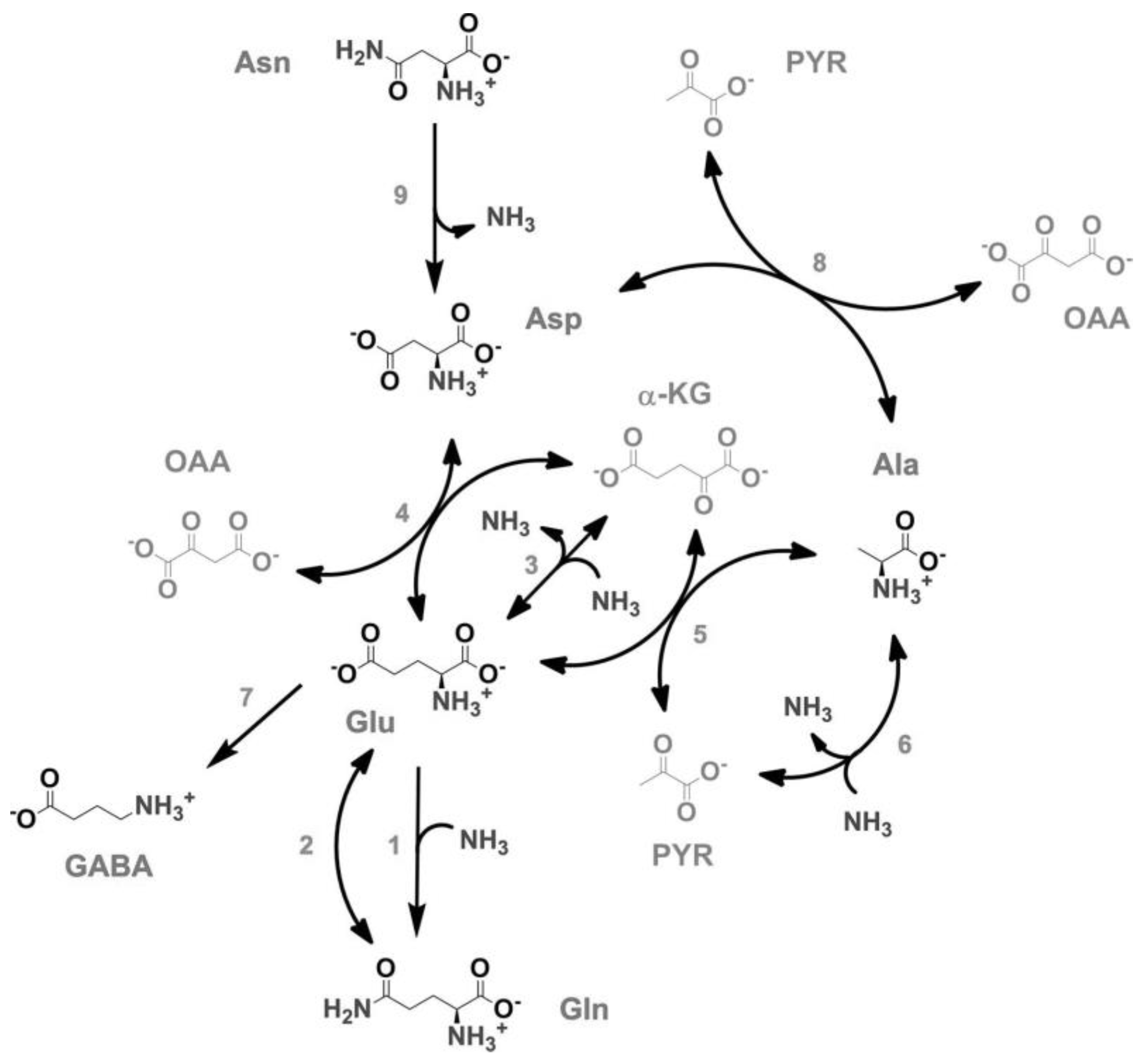
1 – Glutamine synthetase (glnA1); 2 – glutamate synthase (gltBD); 3 – glutamate dehydrogenase (gdh); 4 – glutamate/oxaloacetate transaminase (aspB); 5 – glutamate/pyruvate transaminase (aspC); 6 – alanine dehydrogenase (ald); 7 – glutamate decarboxylase (gadB); 8 – aspartate/pyruvate transaminase (aspC); 9 – asparaginase (ansA). (Agapova et al., 2019).
Polyamine Metabolism in Leishmania
Polyamine Metabolism and Transport in Leishmania
Among pathogenic protozoa, Leishmania spp. provide an important model for investigating the contribution of polyamine metabolism to intracellular survival and parasite virulence. Following uptake by macrophages, Leishmania amastigotes reside within acidic phagolysosomal compartments and must adapt to a metabolically restrictive environment characterized by fluctuations in nutrient availability, oxidative stress, and host-mediated antimicrobial responses. Polyamines are particularly relevant in this setting because they participate in parasite growth, differentiation, stress adaptation, and maintenance of intracellular redox homeostasis. Consequently, both the biosynthesis and acquisition of polyamines have emerged as important determinants of Leishmania fitness (Heby et al., 2007; Roberts et al., 2009).The importance of endogenous polyamine production is well established. The principal biosynthetic pathway in Leishmania converts L-arginine to ornithine through arginase (ARG), followed by conversion of ornithine to putrescine by ornithine decarboxylase (ODC) and subsequent synthesis of spermidine by spermidine synthase (SpdS). Putrescine and spermidine are therefore central metabolites within the parasite and contribute to processes required for proliferation and persistence. Genetic and pharmacological studies have demonstrated that disruption of this pathway can substantially compromise parasite growth and infectivity, supporting polyamine metabolism as a potential therapeutic vulnerability (Boitz et al., 2009; Boitz et al., 2016; Gilroy et al., 2011; Perdeh et al., 2020).An important characteristic of Leishmania polyamine metabolism is its dependence on a restricted polyamine repertoire. In contrast to many mammalian cells, Leishmania parasites do not appear to synthesize spermine and have limited or absent capacity for its utilization (Jiang et al., 1999). Instead, putrescine and spermidine represent the principal polyamines associated with parasite metabolism. This distinction is potentially important for therapeutic development because it creates metabolic differences between the parasite and its mammalian host that may be exploited to achieve selective inhibition.
Host Arginine Metabolism and the Parasite Polyamine Supply
The parasite polyamine pathway cannot be considered independently of the metabolic environment established by the infected macrophage. Arginine metabolism represents a major point of interaction between host immunity and Leishmania persistence. In activated macrophages, arginine can be directed toward either nitric oxide production, which contributes to antimicrobial activity, or arginase-dependent ornithine production, which supports polyamine biosynthesis. The balance between these pathways is influenced by the macrophage activation state and can have a major impact on the intracellular environment encountered by the parasite (Muraille et al., 2014).
During Leishmania infection, increased arginase activity and remodeling of macrophage arginine metabolism have been associated with alternative macrophage activation and enhanced parasite growth (Kropf et al., 2005). The resulting increase in ornithine availability can provide a metabolic advantage to intracellular parasites by supplying a precursor for putrescine and subsequently spermidine biosynthesis. Thus, macrophage arginine metabolism may indirectly support parasite polyamine homeostasis and create a metabolic environment favorable to intracellular persistence.
This host–parasite metabolic relationship is particularly relevant because polyamines are not merely intermediates of parasite biosynthesis. They are multifunctional molecules involved in nucleic-acid stabilization, protein synthesis, cellular proliferation, and stress responses. In Leishmania, spermidine additionally participates in the synthesis of trypanothione, a parasite-specific thiol-based redox metabolite that contributes to protection against oxidative stress. Consequently, perturbation of polyamine metabolism can potentially affect several interconnected processes rather than a single biochemical pathway.The relationship between macrophage polarization and polyamine availability may therefore be viewed as a metabolic component of parasite immune evasion. An intracellular environment characterized by enhanced arginase activity and polyamine production can provide substrates that Leishmania can exploit for growth and maintenance. Studies linking parasite persistence to polyamine-rich M2 macrophage environments further support the concept that host metabolic reprogramming can influence the availability of metabolites required for intracellular parasite survival (Muraille et al., 2014; Tomiotto-Pellissier et al., 2018).
Polyamine Salvage and Transport
Although endogenous polyamine synthesis is important, Leishmania possesses the additional capacity to acquire polyamines from its environment. Polyamine uptake therefore provides a potential mechanism by which parasites can compensate, at least partially, for limitations in endogenous biosynthesis. This metabolic flexibility is particularly significant within macrophages, where parasites are exposed to host-derived metabolites and where intracellular polyamine concentrations can differ substantially from those encountered in extracellular culture. Experimental studies have demonstrated that Leishmania can efficiently take up exogenous polyamines, indicating that transport represents an integral component of parasite polyamine homeostasis (Olenyik et al., 2011). Polyamine acquisition may involve several processes, including uptake from the extracellular environment, intracellular trafficking, metabolic utilization, and potentially efflux mechanisms that protect the parasite against excessive accumulation. The relative contribution of these processes to parasite survival, however, remains incompletely characterized (Muraille et al., 2014; Tomiotto-Pellissier et al., 2018).
The existence of an effective salvage system has important implications for therapeutic strategies directed against polyamine biosynthesis. In principle, inhibition of ODC or another biosynthetic enzyme should reduce the intracellular production of putrescine and spermidine. However, if the parasite can compensate by importing polyamines from the host environment, the resulting phenotype may be less severe than expected from inhibition of biosynthesis alone. The extent of this compensation is likely to depend on substrate availability, transporter activity, intracellular metabolic demand, and the ability of the parasite to regulate polyamine concentrations.This metabolic flexibility may explain why genetic disruption of different components of the Leishmania polyamine pathway produces distinct effects on parasite infectivity. It also suggests that polyamine transport should be investigated alongside biosynthetic enzymes rather than treated as a secondary process. Transporters may constitute upstream regulators of the intracellular polyamine pool and could determine the degree to which the parasite is able to exploit host-derived metabolites (Boitz et al., 2016; Gilroy et al., 2011).
Genetic Evidence for the Importance of Polyamine Biosynthesis
The therapeutic relevance of the Leishmania polyamine pathway has been investigated particularly extensively in Leishmania donovani, the causative agent of visceral leishmaniasis. Systematic genetic studies in this parasite have provided evidence that individual enzymes within the arginine–polyamine pathway make unequal contributions to parasite fitness and infectivity (Boitz et al., 2009; Boitz et al., 2016; Gilroy et al., 2011). Deletion of ODC produces one of the strongest phenotypes. Δodc parasites exhibit severe defects in infectivity and were reported to be virtually non-infective in experimental mouse models (Boitz et al., 2009). This result demonstrates that ODC-dependent production of putrescine is particularly important for successful infection. However, the phenotype also provides an important insight into the relationship between biosynthesis and salvage. Supplementation with putrescine was able to partially increase infectivity, demonstrating that exogenous polyamine availability can influence the outcome of biosynthetic deficiencies. The ability of Leishmania to transport exogenous polyamines further supports the importance of salvage pathways in determining the intracellular polyamine pool (Olenyik et al., 2011).
Similarly, disruption of spermidine synthase resulted in a profound reduction in infectivity, emphasizing that the conversion of putrescine to spermidine represents another critical metabolic step (Gilroy et al., 2011). In contrast, deletion of arginase produced a comparatively modest phenotype, with approximately a 30% reduction in infectivity. The different magnitudes of these phenotypes indicate that the individual reactions of the pathway are not functionally equivalent and may differ in their capacity to be compensated by alternative metabolic routes or host-derived substrates.These observations are particularly informative when considering polyamine metabolism as a therapeutic target. If a pathway intermediate can be obtained from the host, inhibition of an upstream biosynthetic reaction may be partially bypassed. Conversely, enzymes that control metabolites for which effective salvage is limited may represent more robust targets. The striking phenotype of Δodc parasites despite the existence of polyamine uptake suggests that biosynthetic and transport pathways are not functionally redundant; rather, they may operate together to maintain polyamine concentrations within a narrow range compatible with parasite growth.
Polyamine Homeostasis as a Network
Taken together, current evidence supports a model in which Leishmania maintains polyamine homeostasis through the coordinated activity of biosynthesis, transport, utilization, and potentially detoxification or efflux mechanisms (Figure 3). The parasite receives polyamine precursors from both endogenous metabolism and the host environment, while the intracellular fate of these compounds is determined by their conversion into downstream metabolites and incorporation into essential cellular processes (Colotti & Ilari, 2011).This network perspective also provides a mechanistic explanation for the variable effects observed following disruption of individual polyamine metabolic genes. The contribution of a given enzyme to parasite survival will depend not only on its catalytic activity but also on the availability of alternative substrates and salvage pathways. Thus, the biological consequence of inhibiting ODC, SpdS, or ARG is determined by the metabolic context in which the parasite resides (Basselin et al., 2000).
The host macrophage is an especially important component of this context. Increased arginine flux through the arginase pathway can enhance the availability of ornithine and downstream polyamines, while parasite transport systems provide access to extracellular and host-derived putrescine or spermidine. These metabolites can then support parasite proliferation and redox metabolism. In this sense, polyamine metabolism represents a direct metabolic interface between the host cell and intracellular Leishmania (Hasne & Ullman, 2005).
Polyamine Transport as a Therapeutic Opportunity
The dependence of Leishmania on both biosynthesis and environmental acquisition suggests that polyamine transporters could provide complementary therapeutic targets. Targeting transport may have two potentially beneficial consequences: limiting the parasite’s access to host-derived polyamines and increasing its vulnerability to perturbations in endogenous polyamine metabolism. Combining transporter inhibition with inhibition of biosynthetic enzymes could therefore produce a stronger metabolic effect than targeting either process independently (Colotti & Ilari, 2011). This concept is supported by observations that exogenous putrescine can partially compensate for defects in parasite polyamine biosynthesis. If transporter activity is required for this compensation, inhibition of uptake could prevent the parasite from escaping the metabolic consequences of biosynthetic inhibition. Such a combined strategy may be particularly attractive in intracellular parasites because host-derived metabolites are continuously available within the macrophage environment.
Polyamine transport has also attracted considerable interest in oncology, where simultaneous disruption of polyamine biosynthesis and uptake is being explored as a strategy for limiting tumor-cell proliferation (Samal et al., 2013; Muth et al., 2013; Lian et al., 2022; Chin et al., 2022). Although the biological context differs substantially between cancer cells and parasites, these studies provide a conceptual framework for targeting polyamine homeostasis at multiple levels.For Leishmania, the next step is therefore to define the molecular identity and biochemical properties of the transport systems responsible for putrescine and spermidine uptake. Comparative genomic analysis, sequence conservation, structural prediction, substrate-transport assays, and genetic validation could be combined to identify candidate transporters and determine their contribution to intracellular survival. Particular attention should be given to transporter expression during the amastigote stage, when parasites experience the macrophage environment and are exposed to host-derived polyamines.
Future Perspectives
Therapeutic Perspective
The available genetic and biochemical evidence indicates that Mycobacterium, Plasmidium and Leishmania polyamine metabolism represents a promising therapeutic vulnerability, but it also demonstrates why inhibition of a single metabolic reaction may not be sufficient. Parasites can potentially compensate for impaired synthesis through environmental uptake, while host metabolic remodeling can increase the availability of polyamine precursors and products. Effective intervention may therefore require simultaneous disruption of multiple components of the polyamine network (Roberts et al., 2004). A particularly attractive strategy would combine inhibition of polyamine biosynthesis with blockade of polyamine transport. Such an approach could restrict both endogenous production and metabolic salvage, thereby placing greater pressure on the parasite’s ability to maintain the polyamine concentrations required for proliferation and redox homeostasis. In parallel, targeting downstream pathways that depend on spermidine, including trypanothione biosynthesis, could further amplify the metabolic consequences (Pérez-Pertejo et al., 2024). The available evidence supports a model in which Leishmania survival within macrophages depends on metabolic integration between host arginine metabolism and parasite polyamine homeostasis. The parasite can utilize endogenous biosynthesis while retaining the capacity to acquire polyamines from its environment, providing flexibility in a nutrient-variable intracellular niche. The striking differences in infectivity observed following disruption of ARG, ODC, and SpdS further indicate that individual steps of the pathway have distinct biological importance. Defining the transport mechanisms that connect host-derived polyamines with parasite metabolism will therefore be critical for understanding intracellular persistence and for developing therapeutic strategies that target polyamine homeostasis at multiple levels (Jiang et al., 1999; Roberts et al., 2004).
The relationship between polyamine metabolism and parasite survival is especially pronounced in Leishmania. Unlike mammalian cells, Leishmania and other trypanosomatids possess distinctive polyamine metabolic pathways. In Leishmania, arginine can serve as the precursor for polyamine biosynthesis through an arginase-dependent pathway leading to ornithine and subsequently putrescine. Putrescine is then converted to spermidine through the combined activity of S-adenosylmethionine decarboxylase and spermidine synthase. Notably, trypanosomatids lack the canonical mammalian spermine biosynthetic and interconversion pathways, emphasizing the biochemical divergence between parasite and host polyamine metabolism (Roberts et al., 2002).
This divergence has important implications for drug discovery. The essentiality of polyamines in Leishmania, combined with differences between parasite and mammalian pathways, creates the possibility of selectively targeting parasite metabolism while minimizing effects on the host. Studies of Leishmania have identified ornithine decarboxylase, S-adenosylmethionine decarboxylase, and spermidine synthase as important components of the pathway, while genetic and pharmacological studies have demonstrated the importance of polyamine availability for parasite proliferation and survival (Castro et al., 2014; Roberts et al., 2002).
Importantly, spermidine has a function in Leishmania that extends beyond its conventional role as a polyamine. Trypanosomatids utilize spermidine in the synthesis of trypanothione, a characteristic thiol-containing metabolite that contributes to the parasite’s antioxidant and redox defense system. Consequently, depletion of spermidine may affect two interconnected metabolic systems simultaneously: core polyamine-dependent cellular functions and trypanothione-mediated protection against oxidative stress. This connection provides a mechanistic explanation for why disruption of polyamine metabolism can have effects extending beyond cell proliferation (Angiulli et al., 2015).
The polyamine–trypanothione connection may be particularly important within macrophages. During infection, Leishmania is exposed to reactive oxygen and nitrogen species and other antimicrobial mechanisms. Maintaining sufficient spermidine availability may therefore help the parasite preserve its redox-buffering capacity while simultaneously supporting essential cellular processes. Polyamine metabolism can consequently be viewed as part of a broader metabolic network connecting nutrient acquisition, proliferation, protein synthesis, and oxidative-stress resistance (Castro et al., 2014).
Therapeutic Implications of Targeting the Polyamine Network in Plasmodium
The metabolic organization of the Plasmodium polyamine pathway also creates opportunities for selective drug development. The unusual bifunctional organization of ODC and AdoMetDC differs from the arrangement found in mammalian cells and provides a structural feature that may be exploited to achieve parasite-selective inhibition. In addition, parasite spermidine synthase possesses biochemical characteristics that distinguish it from mammalian homologues and has demonstrated sensitivity to experimental inhibitors. These differences make enzymes involved in polyamine biosynthesis attractive candidates for antimalarial drug development (Haider et al., 2005).
Previous attempts to target polyamine metabolism also demonstrate the challenges associated with metabolic intervention. The classical ODC inhibitor α-difluoromethylornithine (DFMO) can inhibit parasite growth but does not provide the same therapeutic efficacy against malaria as it does against some other parasitic infections. In experimental malaria models, inhibition of a single polyamine biosynthetic step may be insufficient to eliminate the parasite, partly because of metabolic compensation and the ability to obtain polyamines from external sources. These findings suggest that successful therapeutic strategies may need to target multiple components of polyamine homeostasis or combine polyamine-directed compounds with inhibitors of complementary metabolic pathways (Müller et al., 2008).
The significance of polyamine metabolism is further emphasized by the broader metabolic dependence of Plasmodium on its host. Because the parasite occupies a metabolically unusual intracellular environment, it must continuously balance nutrient acquisition with biosynthetic demand. Host-cell remodeling, nutrient transport, amino-acid acquisition, purine salvage, lipid metabolism, and polyamine biosynthesis are therefore interconnected components of parasite survival. Disruption of one pathway can potentially influence several other metabolic processes, creating both vulnerabilities and compensatory responses. Metabolomic and functional studies have demonstrated that perturbation of polyamine biosynthesis can trigger broader changes in parasite metabolism and cellular responses, highlighting the importance of studying the pathway within the context of the complete parasite metabolic network (Olliaro & Goldberg, 1995.
Current evidence indicates that polyamine metabolism represents an important interface between parasite growth, nutrient availability, protein synthesis, and stress tolerance. The unusual organization of the Plasmodium polyamine biosynthetic pathway, combined with the apparent requirement for spermidine during intraerythrocytic development, provides a strong rationale for further investigation. In particular, understanding the relative contributions of de novo biosynthesis, extracellular polyamine uptake, intracellular utilization, and polyamine-dependent stress responses may reveal why parasites respond differently to metabolic inhibitors and may identify combinations of metabolic targets with improved therapeutic potential.The dependence of Plasmodium spp. on polyamine biosynthesis, utilization, and homeostasis provides an opportunity to investigate metabolic adaptation as a determinant of intracellular survival. Future studies should examine how changes in host nutrient availability influence parasite polyamine pools, how polyamine metabolism interacts with oxidative stress and protein translation, and whether parasite-specific differences in polyamine enzymes and transport processes can be exploited for selective drug development. A more complete understanding of these interactions could contribute to the identification of new antimalarial strategies and, more broadly, provide insight into how intracellular pathogens adapt their metabolism to the constraints imposed by their host (Singh et al., 2026).
Therapeutic Implications of Targeting the Polyamine Metabolism in Mycobacterium
The available evidence supports a broader therapeutic concept in which multiple components of the Mtb polyamine network could be targeted individually or in combination (Makhoba & Krysenko, 2025; Krysenko et al., 2024). Potential intervention points include polyamine transport, polyamine biosynthesis, polyamine detoxification, and downstream utilization. Inhibiting transport could limit access to host-derived polyamines; blocking biosynthesis could reduce endogenous production; and inhibiting GlnA3-dependent glutamylation could increase intracellular accumulation of toxic polyamines while simultaneously restricting their utilization as nitrogen sources (Krysenko et al., 2025).
This network-based approach may be particularly valuable because intracellular pathogens often possess metabolic redundancy. Blocking a single biosynthetic enzyme may be compensated by uptake of metabolites from the host, whereas inhibition of transport may be offset by endogenous synthesis. Simultaneous interference with biosynthesis and salvage could therefore produce a stronger metabolic phenotype than targeting either pathway independently (Guller et al., 2020).
For Mtb, the potential therapeutic value of this strategy is strengthened by the distinctive metabolic environment of the macrophage. The host cell can provide an abundant but potentially toxic pool of nitrogen-containing metabolites, while the pathogen has evolved mechanisms to convert these compounds into metabolically useful substrates. Disrupting this adaptation could create a metabolic imbalance in which Mtb is exposed to host-derived polyamines but is unable to detoxify or utilize them efficiently (Makhoba et al., 2026).
Overall, the emerging relationship between macrophage arginine metabolism, polyamine production, Mtb polyamine utilization, and nitrogen assimilation suggests that polyamines constitute an important metabolic interface between host and pathogen. The discovery of GlnA3Mt-mediated polyamine glutamylation provides a mechanistic link between polyamine detoxification and nitrogen metabolism, while the potential involvement of transport systems introduces an additional layer of metabolic regulation. Further characterization of these pathways at the genetic, biochemical, structural, and cellular levels will be necessary to establish their contribution to Mtb persistence (Guller et al., 2020; Krysenko et al., 2026).
Importantly, this framework shifts the focus from polyamines as isolated metabolites to polyamine homeostasis as a dynamic host–pathogen metabolic system. Such a perspective may reveal vulnerabilities that are inaccessible through conventional target-based approaches. In particular, simultaneous targeting of polyamine transport, detoxification, and biosynthetic pathways could represent a promising strategy for weakening the metabolic flexibility of Mtb and enhancing the efficacy of future anti-tubercular therapies (Makhoba et al., 2026; Krysenko et al., 2026).
Polyamine Transport Provides a Critical Link Between Host and Parasite Metabolism in Leishmania
The dependence of Leishmania on polyamines raises an important question: to what extent can the parasite compensate for limitations in endogenous biosynthesis by acquiring polyamines or their precursors from the host? Evidence indicates that Leishmania possesses transport systems capable of importing putrescine, spermidine, and several relevant precursors, including arginine and ornithine. This capacity suggests that parasite polyamine homeostasis is controlled not only at the enzymatic level but also through regulated transport across the parasite plasma membrane (Baselin et al., 2000).
Polyamine transport is therefore positioned at the interface between host metabolism and parasite metabolism. Host-derived polyamines must first become available within the macrophage environment; the parasite must then recognize, bind, and translocate these metabolites across its membrane. Once internalized, they can enter metabolic pathways or directly contribute to processes requiring polyamines. This makes transporters particularly attractive candidates for investigation because they potentially control the rate at which host-derived metabolites become accessible to the parasite (Darlyuk et al., 2009).
The importance of transport becomes even more apparent when considering the metabolic flexibility of trypanosomatids. Different species have undergone different degrees of reduction or specialization of their polyamine pathways. T. cruzi, for example, lacks some enzymes required for de novo putrescine synthesis and consequently relies more heavily on polyamine salvage. Such differences illustrate how transport and biosynthesis can evolve as complementary mechanisms for maintaining intracellular polyamine pools (Ariyanayagam & Fairlamb, 1997).
For Leishmania, the presence of both biosynthetic and uptake pathways suggests that polyamine homeostasis may be maintained through metabolic redundancy. Although this redundancy could make individual enzymes less effective therapeutic targets under some conditions, it also raises the possibility that transporters represent critical control points through which the parasite accesses host-derived metabolites. Blocking a transporter could potentially restrict both the immediate supply of polyamines and the parasite’s ability to compensate for inhibition of endogenous synthesis (Boitz et al., 2011).
Polyamine Metabolism in Other Intracellular Pathogens in Comparision to Leishmania
The therapeutic relevance of polyamine metabolism is not restricted to kinetoplastid parasites. Similar principles have emerged from studies of Plasmodium falciparum. Polyamine biosynthesis is essential for parasite growth, and S-adenosylmethionine decarboxylase (PfAdoMetDC) has been investigated as a potential antimalarial target. Makhoba et al. demonstrated that recombinant PfAdoMetDC could be functionally expressed in association with the parasite chaperone PfHsp70-1, highlighting an important relationship between polyamine biosynthesis and protein-folding machinery (Makhoba et al., 2016).
This observation is relevant because metabolic enzymes do not operate independently of the broader cellular proteostasis network. Essential enzymes involved in polyamine metabolism must be correctly folded, stabilized, localized, and regulated. Consequently, disruption of chaperone-dependent maturation may indirectly compromise polyamine metabolism. Conversely, perturbation of polyamine availability may influence cellular stress responses and protein homeostasis. The interaction between these pathways therefore represents a potential example of how metabolic and proteostatic vulnerabilities can converge in intracellular parasites (Colotti & Ilari, 2017).
The broader importance of polyamine metabolism across protozoan pathogens is supported by substantial differences between parasite and host pathways. Trypanosomatids have evolved unusual arrangements of polyamine biosynthesis and utilization, including the incorporation of spermidine into trypanothione, whereas Plasmodium possesses its own distinctive polyamine metabolic organization. These pathway differences create opportunities for selective targeting because the biochemical requirements of the pathogen do not necessarily mirror those of the mammalian host (Freitas-Junior et al., 2003).
Polyamine Transporters as Emerging Therapeutic Targets
The evidence from Leishmania, Trypanosoma, Plasmodium, and other pathogens collectively supports the concept that polyamine metabolism represents a metabolically interconnected vulnerability rather than a single drug target. Potential intervention points include arginine acquisition, arginase, ornithine decarboxylase, S-adenosylmethionine decarboxylase, spermidine synthase, polyamine transporters, and downstream pathways such as trypanothione biosynthesis. Previous reviews have specifically highlighted polyamine transporters alongside biosynthetic enzymes as potential targets for antiparasitic drug development (Birkholtz et al., 2011).
Among these possibilities, transporters are particularly attractive because they occupy a strategic position between the extracellular environment and parasite metabolism. A transporter inhibitor could potentially restrict access to host-derived polyamines without directly interfering with host biosynthetic enzymes. Moreover, if a parasite transporter exhibits structural or sequence features that differ substantially from mammalian transport systems, it may provide an opportunity for selective inhibition.
For Leishmania, this possibility is especially compelling because experimental evidence already demonstrates robust uptake of putrescine and spermidine as well as transport of relevant precursors such as arginine and ornithine. However, the molecular identities and substrate specificities of several of these transport activities remain incompletely resolved (Carter et al., 2022).
Integrating Polyamine Biosynthesis, Transport, and Redox Metabolism
A useful conceptual framework is to consider parasite polyamine homeostasis as a network with three interconnected levels: biosynthesis, transport, and utilization. Biosynthetic enzymes determine the parasite’s capacity to generate polyamines from metabolic precursors; transporters regulate the acquisition of polyamines and their precursors from the surrounding environment; and downstream pathways determine how these metabolites are incorporated into essential cellular functions (Figure 3) (Birkholtz et al., 2011).
In Leishmania, these processes are further connected through the requirement for spermidine in trypanothione synthesis. Thus, a reduction in polyamine availability could simultaneously compromise parasite growth, protein synthesis, and antioxidant defense. This metabolic connectivity may explain why polyamine metabolism has repeatedly emerged as a promising therapeutic pathway in trypanosomatids (Freitas-Junior et al., 2003).
From a drug-development perspective, this network also suggests that transporter inhibition should not necessarily be evaluated in isolation. Combining inhibition of polyamine uptake with inhibition of biosynthetic enzymes could potentially reduce the parasite’s ability to compensate through metabolic salvage. Similarly, simultaneous disruption of polyamine and trypanothione metabolism may increase oxidative stress and further compromise parasite viability. These possibilities require experimental validation but provide a rational framework for investigating combination strategies (Angiulli et al., 2015).
Overall, the available evidence supports a model in which macrophage metabolism and pathogen polyamine metabolism are functionally interconnected. Host arginine metabolism can influence intracellular polyamine availability, while pathogens can exploit transport and salvage mechanisms to access these metabolites. In Leishmania, acquired polyamines can support both essential polyamine-dependent processes and the production of trypanothione required for redox defense. Consequently, polyamine metabolism represents a metabolic bridge between host nutrient availability, parasite proliferation, intracellular stress adaptation, and immune evasion. Defining the molecular identity and function of the transporters responsible for polyamine acquisition is therefore a critical next step toward determining whether this metabolic interface can be exploited for selective antileishmanial drug development (Boitz et a., 2011; Carter et al., 2022).
Funding
no external funding.
Acknowledgments
The author would like to thank Sigrid Roberts, Nicola Carter and Xolani Makhoba for fruitful discussions and scientific input on the topics that are the content of this paper. .
Conflicts of Interest
Declare conflicts of interest or state “The authors declare no conflicts of interest.” Authors must identify and declare any personal circumstances or interests that may be perceived as inappropriately influencing the representation or interpretation of reported research results. Any role of the funders in the design of the study; in the collection, analyses or interpretation of data; in the writing of the manuscript; or in the decision to publish the results must be declared in this section. If there is no role, please state “The funders had no role in the design of the study; in the collection, analyses, or interpretation of data; in the writing of the manuscript; or in the decision to publish the results”.
References
- Alberca, L. N., Sbaraglini, M. L., Morales, J. F., Dietrich, R., Ruiz, M. D., Pino Martínez, A. M., Miranda, C. G., Fraccaroli, L., Alba Soto, C. D., Carrillo, C., Palestro, P. H., & Talevi, A. (2018). Cascade Ligand- and Structure-Based Virtual Screening to Identify New Trypanocidal Compounds Inhibiting Putrescine Uptake. Frontiers in cellular and infection microbiology, 8, 173. [CrossRef]
- Agapova A., Agnese Serafini, Michael Petridis, Debbie M Hunt, Acely Garza-Garcia, Charles D Sohaskey, Luiz Pedro Sório de Carvalho (2019) Flexible nitrogen utilisation by the metabolic generalist pathogen Mycobacterium tuberculosis eLife 8:e41129. [CrossRef]
- Angiulli G, et al. Leishmania infantum trypanothione reductase is a promiscuous enzyme carrying an NADPH oxidoreductase activity shared by glutathione reductase. Biochim Biophys Acta. 2015;1854(9):1109–1117. [CrossRef]
- Ariyanayagam MR, Fairlamb AH. Diamine auxotrophy may be a universal feature of Trypanosoma cruzi epimastigotes. Mol Biochem Parasitol. 1997;84(2):215–226.
- Assaraf YG, Golenser J, Spira DT, Messer G, Bachrach U. Cytostatic effect of DL-α-difluoromethylornithine against Plasmodium falciparum and its reversal by diamines and spermidine. Parasitol Res. 1987;73(4):313–318. [CrossRef]
- Bacchi CJ et al. 2009. Advances in polyamine metabolism as targets for parasite chemotherapy. International Journal for Parasitology.
- Bacchi CJ, Yarlett N. 2002. Polyamine metabolism as chemotherapeutic target in protozoan parasites. Mini Reviews in Medicinal Chemistry.
- Basselin M, Coombs GH, Barrett MP. Putrescine and spermidine transport in Leishmania. Mol Biochem Parasitol. 2000;109(1):37–46. [CrossRef]
- Basselin M, Coombs GH, Barrett MP. Putrescine and spermidine transport in Leishmania. Mol Biochem Parasitol. 2000;109(1):37–46. [CrossRef]
- Becker JVW, Mtwisha L, Crampton BG, Stoychev S, van Brummelen AC, Reeksting S, Louw AI, Birkholtz L, Mancama DT. Plasmodium falciparum spermidine synthase inhibition results in unique perturbation-specific effects observed on transcript, protein and metabolite levels. BMC Genomics. 2010;11:235. [CrossRef]
- Birkholtz et al. (2011). Polyamine homoeostasis as a drug target in pathogenic protozoa: peculiarities and possibilities. Biochemical Journal. Particularly useful for positioning polyamine transporters alongside biosynthetic enzymes as drug targets.
- Birkholtz L-M, Williams M, Niemand J, Louw AI, Persson L, Heby O. Polyamine homeostasis as a drug target in pathogenic protozoa: peculiarities and possibilities. Biochem J. 2011;438(2):229–244. [CrossRef]
- Birkholtz, L. M., Williams, M., Niemand, J., Louw, A. I., Persson, L., & Al-Karadaghi, S. (2011). Polyamine homoeostasis as a drug target in pathogenic protozoa: Peculiarities and possibilities. Biochemical Journal, 438(2), 229–244.
- Blavid R, Kusch P, Hauber J, Eschweiler U, Sarite SR, Specht S, Deininger S, Hoerauf A, Kaiser A. Down-regulation of hypusine biosynthesis in Plasmodium by inhibition of S-adenosyl-methionine-decarboxylase. Amino Acids. 2010;38(2):461–469. [CrossRef]
- Boitz JM, et al. Oral putrescine restores virulence of ornithine decarboxylase-deficient Leishmania donovani in mice. PLoS Negl Trop Dis. 2011;5(12). [CrossRef]
- Boitz JM, Gilroy CA, Olenyik TD, Paradis D, Perdeh J, Dearman K, et al. Arginase is essential for survival of Leishmania donovani promastigotes but not intracellular amastigotes. Infect Immun. 2017;85(1). [CrossRef]
- Boitz, J. M., Gilroy, C. A., Olenyik, T. D., Paradis, D., Perdeh, J., Dearman, K., Davis, M. J., Yates, P. A., Li, Y., Riscoe, M. K., Ullman, B., & Roberts, S. C. (2016). Arginase Is Essential for Survival of Leishmania donovani Promastigotes but Not Intracellular Amastigotes. Infection and immunity, 85(1), e00554-16. [CrossRef]
- Boitz, J. M., Yates, P. A., Kline, C., Gaur, U., Wilson, M. E., Ullman, B., & Roberts, S. C. (2009). Leishmania donovani ornithine decarboxylase is indispensable for parasite survival in the mammalian host. Infection and immunity, 77(2), 756–763. [CrossRef]
- Carrillo C, González NS, Algranati ID. Trypanosoma cruzi epimastigotes lack ornithine decarboxylase but can express a foreign gene encoding this enzyme. FEBS Lett. 1999;454(1–2):192–196. [CrossRef]
- Carrillo, C., Canepa, G. E., Algranati, I. D., & Pereira, C. A. (2006). Molecular and functional characterization of a spermidine transporter (TcPAT12) from Trypanosoma cruzi. Biochemical and Biophysical Research Communications, 344(3), 936–940. [CrossRef]
- Carroll P, Pashley CA, Parish T. Functional analysis of GlnE, an essential adenylyl transferase in Mycobacterium tuberculosis. J Bacteriol. 2008;190(14):4894-4902. [CrossRef]
- Carter NS, Kawasaki Y, Nahata SS, Elikaee S, Rajab S, Salam L, et al. Polyamine metabolism in Leishmania parasites: a promising therapeutic target. Med Sci (Basel). 2022;10(2):24. [CrossRef]
- Carter, N. S., Kawasaki, Y., Nahata, S. S., Elikaee, S., Rajab, S., Salam, L., Alabdulal, M. Y., Broessel, K. K., Foroghi, F., Abbas, A., Poormohamadian, R., & Roberts, S. C. (2022). Polyamine Metabolism in Leishmania Parasites: A Promising Therapeutic Target. Medical sciences (Basel, Switzerland), 10(2), 24. [CrossRef]
- Carter, N. S., Stamper, B. D., Elbarbry, F., Nguyen, V., Lopez, S., Kawasaki, Y., Poormohamadian, R., & Roberts, S. C. (2021). Natural Products That Target the Arginase in Leishmania Parasites Hold Therapeutic Promise. Microorganisms, 9(2), 267. [CrossRef]
- Chin, A., Bieberich, C. J., Stewart, T. M., & Casero, R. A., Jr (2022). Polyamine Depletion Strategies in Cancer: Remodeling the Tumor Immune Microenvironment to Enhance Anti-Tumor Responses. Medical sciences (Basel, Switzerland), 10(2), 31. [CrossRef]
- Colotti G, Ilari A. Polyamine metabolism in Leishmania: from arginine to trypanothione. Amino Acids. 2011;40(2):269–285. [CrossRef]
- Colotti G, Ilari A. Polyamine metabolism in Leishmania: from arginine to trypanothione. Amino Acids. 2011;40(2):269–285. [CrossRef]
- Colotti G, Ilari A. Polyamine-trypanothione pathway: an update. Amino Acids. 2017;49(2):411–426. [CrossRef]
- Colotti, G. & Ilari, A. (2011). Polyamine metabolism in Leishmania: from arginine to trypanothione. Amino Acids, 40, 269–285. This is especially useful for the arginine → ornithine → putrescine → spermidine → trypanothione connection.
- Counihan, N. A., Modak, J. K., & de Koning-Ward, T. F. (2021). How malaria parasites acquire nutrients from their host. Frontiers in Cell and Developmental Biology, 9, 649184.
- Darlyuk I, et al. Arginine homeostasis and transport in the human pathogen Leishmania donovani. J Biol Chem. 2009;284(38):25849–25862. [CrossRef]
- Das Gupta R, Krause-Ihle T, Bergmann B, Müller IB, Khomutov AR, Müller S, Walter RD, Lüersen K. 3-Aminooxy-1-aminopropane and derivatives have an antiproliferative effect on cultured Plasmodium falciparum by decreasing intracellular polyamine concentrations. Antimicrob Agents Chemother. 2005;49(7):2857–2864. [CrossRef]
- Davis, R.H. and J.L. Ristow (1991) Polyamine toxicity in Neurospora crassa: protective role of the vacuole, Arch Biochem Biophys, 285(2): 306-11.
- de Koning-Ward, T. F., Dixon, M. W. A., Tilley, L., & Gilson, P. R. (2016). Plasmodium species: Master renovators of their host cells. Nature Reviews Microbiology, 14, 494–507.
- Dietrich, R. C., Alberca, L. N., Ruiz, M. D., Palestro, P. H., Carrillo, C., Talevi, A., & Gavernet, L. (2018). Identification of cisapride as new inhibitor of putrescine uptake in Trypanosoma cruzi by combined ligand- and structure-based virtual screening. European journal of medicinal chemistry, 149, 22–29. [CrossRef]
- Divo, A. A., Geary, T. G., Davis, N. L., & Jensen, J. B. (1985). Nutritional requirements of Plasmodium falciparum in culture. Journal of Protozoology, 32, 59–64.
- Freitas-Junior LH, et al. Spermidine metabolism and hypusine formation in parasitic protozoa. Trends Parasitol. 2003;19(5):205–210.
- Gamble, L. D., Purgato, S., Murray, J., Xiao, L., Yu, D., Hanssen, K. M., Giorgi, F. M., Carter, D. R., Gifford, A. J., Valli, E., Milazzo, G., Kamili, A., Mayoh, C., Liu, B., Eden, G., Sarraf, S., Allan, S., Di Giacomo, S., Flemming, C. L., Russell, A. J., … Haber, M. (2019). Inhibition of polyamine synthesis and uptake reduces tumor progression and prolongs survival in mouse models of neuroblastoma. Science translational medicine, 11(477), eaau1099. [CrossRef]
- Gaur U, Roberts SC, Dalvi RP, Corraliza I, Ullman B, Wilson ME. An effect of parasite-encoded arginase on the outcome of murine cutaneous leishmaniasis. J Immunol. 2007;179(12):8446–8453. [CrossRef]
- Gilroy C, Olenyik T, Roberts SC, Ullman B. Spermidine synthase is required for virulence of Leishmania donovani. Infect Immun. 2011;79(7):2764–2769. [CrossRef]
- Gilroy, C., Olenyik, T., Roberts, S. C., & Ullman, B. (2011). Spermidine synthase is required for virulence of Leishmania donovani. Infection and immunity, 79(7), 2764–2769. [CrossRef]
- Goldberg, D. E., & Cowman, A. F. (2010). Moving in and renovating: Exporting proteins from Plasmodium into host erythrocytes. Nature Reviews Microbiology, 8, 617–621.
- Guler R, et al. Comprehensive examination of the mouse lung metabolome following Mycobacterium tuberculosis infection using a multiplatform mass spectrometry approach. J Proteome Res. 2020. [CrossRef]
- Haider N, Eschbach M-L, de Souza Dias S, Gilberger T-W, Walter RD, Lüersen K. (2005). The spermidine synthase of the malaria parasite Plasmodium falciparum: molecular and biochemical characterisation of the polyamine synthesis enzyme. Molecular and Biochemical Parasitology, 142(2), 224–236. [CrossRef]
- Haider N, Eschbach ML, de Souza Dias S, Gilberger TW, Walter RD, Lüersen K. The spermidine synthase of the malaria parasite Plasmodium falciparum: molecular and biochemical characterisation of the polyamine synthesis enzyme. Mol Biochem Parasitol. 2005;142(2):224–236. [CrossRef]
- Haider, N., & Sharma, S. (2008). Assessing the polyamine metabolism of Plasmodium falciparum as chemotherapeutic target. Molecular and Biochemical Parasitology, 160(1), 1–7.
- Haider, N., Eschbach, M.-L., & Walter, R. D. (2005). The spermidine synthase of the malaria parasite Plasmodium falciparum: Molecular and biochemical characterisation of the polyamine synthesis enzyme. Molecular and Biochemical Parasitology, 142(1), 1–8.
- Harth G, Masleša-Galić S, Tullius MV, Horwitz MA. All four Mycobacterium tuberculosis glnA genes encode glutamine synthetase activities but only GlnA1 is abundantly expressed and essential for bacterial homeostasis. Mol Microbiol. 2005;58(4):1157-1172. Tullius MV, Harth G, Horwitz MA. Glutamine synthetase GlnA1 is essential for growth of Mycobacterium tuberculosis in human THP-1 macrophages and guinea pigs. Infect Immun. 2003;71(7):3927-3936. doi:10.1128/IAI.71.7.3927-3936.2003. [CrossRef]
- Hasne M.P., Coppens I., Soysa R., Ullman B. 2010. A high-affinity putrescine-cadaverine transporter from Trypanosoma cruzi. Molecular Microbiology.
- Hasne M.P., Ullman B. 2005. Identification and characterization of a polyamine transporter in Leishmania major. Molecular Microbiology.
- Hasne MP, Ullman B. Identification and characterization of a polyamine permease from the protozoan parasite Leishmania major. J Biol Chem. 2005;280(15):15188–15194. [CrossRef]
- Hasne MP, Ullman B. Identification and characterization of a polyamine permease from the protozoan parasite Leishmania major. J Biol Chem. 2005;280(15):15188–15194. [CrossRef]
- Hasne MP., Ullman B. (2011) Genetic and Biochemical Analysis of Protozoal Polyamine Transporters. In: Pegg A., Casero, Jr. R. (eds) Polyamines. Methods in Molecular Biology (Methods and Protocols), vol 720. Humana Press. [CrossRef]
- Hasne, M.-P., & Ullman, B. (2005). Identification and characterization of a polyamine permease from the protozoan parasite Leishmania major. Journal of Biological Chemistry, 280, 15188–15194.
- Hasne, M.-P., & Ullman, B. (2005). Identification and characterization of a polyamine permease from the protozoan parasite Leishmania major. Journal of Biological Chemistry, 280(15), 15188–15194. [CrossRef]
- Hasne, M.-P., Coppens, I., Soysa, R., & Ullman, B. (2010). A high-affinity putrescine-cadaverine transporter from Trypanosoma cruzi. Molecular Microbiology, 76(1), 78–91. [CrossRef]
- Heby O, Roberts SC, Ullman B. 2007. Polyamine biosynthetic enzymes as drug targets in parasitic protozoa. Biochemical Society Transactions.
- Hesse M, Modolell M, La Flamme AC, Schito M, Fuentes JM, Cheever AW, et al. Differential regulation of nitric oxide synthase-2 and arginase-1 by type 1/type 2 cytokines in vivo: granulomatous pathology is shaped by the pattern of L-arginine metabolism. J Immunol. 2001;167(11):6533-6544. [CrossRef]
- Hesse, M., et al. (2001) Differential regulation of nitric oxide synthase-2 and arginase-1 by type 1/type 2 cytokines in vivo: Granulomatous pathology is shaped by the pattern of L-arginine metabolism, Journal of Immunology. 167(11): 6533-6544.
- Hirsch JG, Dubos RJ. The effect of spermine on tubercle bacilli. J Exp Med. 1952;95(2):191-208. [CrossRef]
- Hirsch, J.G. and R.J. Dubos (1952) The effect of spermine on tubercle bacilli. J Exp Med. 95(2): 191-208. [CrossRef]
- Jack, D. L., Paulsen, I. T., & Saier, M. H. Jr. (2000). The amino acid/polyamine/organocation (APC) superfamily of transporters specific for amino acids, polyamines and organocations. Microbiology, 146(8), 1797–1814. [CrossRef]
- Jiang Y, Roberts SC, Jardim A, Carter NS, Shih S, Ariyanayagam M, et al. Ornithine decarboxylase gene deletion mutants of Leishmania donovani. J Biol Chem. 1999;274(6):3781–3788. [CrossRef]
- Jiang, Y., Roberts, S. C., Jardim, A., Carter, N. S., Shih, S., Ariyanayagam, M., Fairlamb, A. H., & Ullman, B. (1999). Ornithine decarboxylase gene deletion mutants of Leishmania donovani. The Journal of biological chemistry, 274(6), 3781–3788. [CrossRef]
- Jumper, J., et al. (2021). Highly accurate protein structure prediction with AlphaFold. Nature, 596, 583–589.
- Jumper, J., Evans, R., Pritzel, A., et al. (2021). Highly accurate protein structure prediction with AlphaFold. Nature, 596, 583–589. [CrossRef]
- Kaiser, A. The Role of Spermidine and Its Key Metabolites in Important, Pathogenic Human Viruses and in Parasitic Infections Caused by Plasmodium falciparum and Trypanosoma brucei. Biomolecules 2023, 13, 803. [CrossRef]
- Krauth-Siegel RL, Meiering SK, Schmidt H. The parasite-specific trypanothione metabolism of Trypanosoma and Leishmania. Biol Chem. 2003;384(4):539–549. [CrossRef]
- Kropf, P., et al. (2005). Arginase and polyamine synthesis are key factors in the regulation of experimental leishmaniasis in vivo. FASEB Journal, 19, 1000–1002.
- Kropf, P.; Fuentes, J.M.; Fähnrich, E.; Arpa, L.; Herath, S.; Weber, V.; Soler, G.; Celada, A.; Modolell, M.; Müller, I. Arginase and polyamine synthesis are key factors in the regulation of experimental leishmaniasis in vivo. FASEB J. 2005, 19, 1000–1002.
- Krysenko S, Lopez M, Meyners C, Purder PL, Zinser A, Hausch F, Wohlleben W. A novel synthetic inhibitor of polyamine utilization in Streptomyces coelicolor. FEMS Microbiol Lett. 2023;370. [CrossRef]
- Krysenko S, Matthews A, Busche T, Bera A, Wohlleben W. Poly- and monoamine metabolism in Streptomyces coelicolor: the new role of glutamine synthetase-like enzymes in survival under environmental stress. Microb Physiol. 2021;31:233-247. [CrossRef]
- Krysenko S, Okoniewski N, Kulik A, Matthews A, Grimpo J, Wohlleben W, et al. Gamma-glutamylpolyamine synthetase GlnA3 is involved in the first step of polyamine degradation pathway in Streptomyces coelicolor M145. Front Microbiol. 2017;8:726. Krysenko S, Matthews A, Okoniewski N, Kulik A, Girbas MG, Tsypik O, et al. Initial metabolic step of a novel ethanolamine utilization pathway and its regulation in Streptomyces coelicolor M145. mBio. 2019;10(3). doi:10.1128/mBio.00326-19. [CrossRef]
- Krysenko S, Sao Emani C, Bäuerle M, Oswald M, Kulik A, Meyners C, et al. GlnA3Mt is able to glutamylate spermine but it is not essential for the detoxification of spermine in Mycobacterium tuberculosis. J Bacteriol. 2025;207(2). [CrossRef]
- Krysenko S., Oswald M., Bäuerle M., Kulik A., Bera A., Wohlleben W. et al. (2021) Polyamine detoxification role of GlnA3Mt enzyme in Mycobacterium tuberculosis, in preparation.
- Krysenko, S.; Shi, M.; Makhoba, X. H. Synthetic Biology for Discovery and Production of Anti-Microbial Drugs. Preprints 2026, 2026060390. [CrossRef]
- Krysenko, S., Emani, C. S., Bäuerle, M., Oswald, M., Kulik, A., Meyners, C., Hillemann, D., Merker, M., Prosser, G., Wohlers, I., Hausch, F., Brötz-Oesterhelt, H., Mitulski, A., Reiling, N., & Wohlleben, W. (2025). GlnA3Mt is able to glutamylate spermine but it is not essential for the detoxification of spermine in Mycobacterium tuberculosis. Journal of bacteriology, 207(2), e0043924. [CrossRef]
- Krysenko, S., Purder, P., Hausch, F. et al. Neuartige synthetische Wirkstoffe zur Tuberkulosebekämpfung. Biospektrum 30, 819–821 (2024). [CrossRef]
- Krysenko, S., Lopez, M., Meyners, C., Purder, P. L., Zinser, A., Hausch, F., & Wohlleben, W. (2023). A novel synthetic inhibitor of polyamine utilization in Streptomyces coelicolor. FEMS microbiology letters, 370, fnad096. [CrossRef]
- Krysenko, S., Matthews, A., Busche, T., Bera, A., & Wohlleben, W. (2021). Poly- and Monoamine Metabolism in Streptomyces coelicolor: The New Role of Glutamine Synthetase-Like Enzymes in the Survival under Environmental Stress. Microbial physiology, 1–15. [CrossRef]
- Krysenko, S., Okoniewski, N., Kulik, A., Matthews, A., Grimpo, J., Wohlleben, W., & Bera, A. (2017). Gamma-Glutamylpolyamine Synthetase GlnA3 Is Involved in the First Step of Polyamine Degradation Pathway in Streptomyces coelicolor M145. Frontiers in microbiology, 8, 726. [CrossRef]
- Lian, J., Liang, Y., Zhang, H., Lan, M., Ye, Z., Lin, B., Qiu, X., & Zeng, J. (2022). The role of polyamine metabolism in remodeling immune responses and blocking therapy within the tumor immune microenvironment. Frontiers in immunology, 13, 912279. [CrossRef]
- Liu X., et al. 2025. Identification of SLC45A4 as a neuronal polyamine transporter involved in pain signaling. Nature Neuroscience.
- LoGiudice, N., Le, L., Abuan, I., Leizorek, Y., & Roberts, S. C. (2018). Alpha-Difluoromethylornithine, an Irreversible Inhibitor of Polyamine Biosynthesis, as a Therapeutic Strategy against Hyperproliferative and Infectious Diseases. Medical sciences (Basel, Switzerland), 6(1), 12. [CrossRef]
- Makhoba et al. (2016). Use of a Chimeric Hsp70 to Enhance the Quality of Recombinant Plasmodium falciparum S-Adenosylmethionine Decarboxylase Protein Produced in E. coli. PLOS ONE, 11, e0152626. Useful for your PfAdoMetDC–PfHsp70-1 discussion.
- Makhoba XH, Burger A, Coertzen D, Zininga T, Birkholtz L-M, Shonhai A. Use of a chimeric Hsp70 to enhance the quality of recombinant Plasmodium falciparum S-adenosylmethionine decarboxylase protein produced in Escherichia coli. PLoS One. 2016;11(3). [CrossRef]
- Makhoba XH, Krysenko S. Drug target validation in polyamine metabolism and drug discovery advancements to combat tuberculosis. Future Pharmacol. 2025;5(3):32. [CrossRef]
- Makhoba, X. H.; Krysenko, S.; Mokoena, M. P.; Shi, M. Comprehensive Role of Polyamines in Parasitic Infections, and Tuberculosis-Related Bacteria. Preprints 2026, 2026060543. [CrossRef]
- Mamani-Huanca M, Muxel SM, Acuña SM, Floeter-Winter LM, Barbas C, López-Gonzálvez Á. Metabolomic Reprogramming of C57BL/6-Macrophages during Early Infection with L. amazonensis. Int J Mol Sci. 2021; 22(13):6883. Published 2021 Jun 26. [CrossRef]
- Mann, S., Frasca, K., Scherrer, S., Henao-Martínez, A. F., Newman, S., Ramanan, P., & Suarez, J. A. (2021). A Review of Leishmaniasis: Current Knowledge and Future Directions. Current tropical medicine reports, 1–12. Advance online publication. [CrossRef]
- Michael AJ. 2016. Polyamines in eukaryotes, bacteria, and archaea. Journal of Biological Chemistry.
- Middleton, S. J., Markússon, S., Åkerlund, M., et al. (2025). SLC45A4 is a pain gene encoding a neuronal polyamine transporter. Nature, 646, 404–412. [CrossRef]
- Miller-Fleming, L., et al. (2015) Remaining Mysteries of Molecular Biology: The Role of Polyamines in the Cell, J Mol Biol. 427(21): 3389-406.
- Minois N, Carmona-Gutierrez D, Madeo F. 2011. Polyamines in aging and disease. Aging.
- Mirdita, M., et al. (2022). ColabFold: making protein folding accessible to all. Nature Methods, 19, 679–682.
- Mukhopadhyay R, Madhubala R. Ornithine decarboxylase gene deletion mutants of Leishmania donovani. Mol Biochem Parasitol. 1999;101(1–2):183–191. [CrossRef]
- Müller IB, Das Gupta R, Lüersen K, Wrenger C, Walter RD. Assessing the polyamine metabolism of Plasmodium falciparum as chemotherapeutic target. Mol Biochem Parasitol. 2008;160(1):1–7. [CrossRef]
- Müller S, Da’dara A, Lüersen K, Wrenger C, Das Gupta R, Madhubala R, Walter RD. In the human malaria parasite Plasmodium falciparum, polyamines are synthesized by a bifunctional ornithine decarboxylase, S-adenosylmethionine decarboxylase. J Biol Chem. 2000;275(11):8097–8102. [CrossRef]
- Müller S. Redox and antioxidant systems of the malaria parasite Plasmodium falciparum. Mol Microbiol. 2004;53(5):1291–1305. [CrossRef]
- Müller, S., Coombs, G. H., & Walter, R. D. (2001). In the human malaria parasite Plasmodium falciparum, polyamines are synthesized by a bifunctional ornithine decarboxylase/S-adenosylmethionine decarboxylase. Journal of Biological Chemistry, 275(11), 8097–8102.
- Muraille E, Leo O, Moser M. Th1/Th2 paradigm extended: macrophage polarization as an unappreciated pathogen-driven escape mechanism? Front Immunol. 2014;5:603. [CrossRef]
- Muraille, E., O. Leo, and M. Moser (2014) TH1/TH2 paradigm extended: macrophage polarization as an unappreciated pathogen-driven escape mechanism? Front Immunol. 5: 603.
- Muth, A., Kamel, J., Kaur, N., Shicora, A. C., Ayene, I. S., Gilmour, S. K., & Phanstiel, O., 4th (2013). Development of polyamine transport ligands with improved metabolic stability and selectivity against specific human cancers. Journal of medicinal chemistry, 56(14), 5819–5828. [CrossRef]
- Muxel SM, Aoki JI, Fernandes JCR, Laranjeira-Silva MF, Zampieri RA, Acuña SM, et al. Arginine and polyamines fate in Leishmania infection. Front Microbiol. 2018;8:2682. [CrossRef]
- Niemand J, Louw AI, Birkholtz L, Kirk K. Polyamine uptake by the intraerythrocytic malaria parasite, Plasmodium falciparum. Int J Parasitol. 2012;42(10):921–929. [CrossRef]
- Niikura, M., et al. (2025). Spermidine is a key polyamine required by intracellular parasites for survival within host erythrocytes. Science Advances.
- Olenyik, T., Gilroy, C., & Ullman, B. (2011). Oral putrescine restores virulence of ornithine decarboxylase-deficient Leishmania donovani in mice. Molecular and biochemical parasitology, 176(2), 109–111. [CrossRef]
- Olliaro PL, Goldberg DE. The Plasmodium digestive vacuole: metabolic headquarters and choice drug target. Parasitol Today. 1995;11(8):294–297. [CrossRef]
- Pegg AE. 2009. Mammalian polyamine metabolism and function. IUBMB Life.
- Perdeh J, Berioso B, Love Q, LoGiudice N, Le TL, Harrelson JP, Roberts SC. Critical functions of the polyamine putrescine for proliferation and viability of Leishmania donovani parasites. Amino Acids. 2020;52(2):261–274. [CrossRef]
- Perdeh, J., Berioso, B., Love, Q., LoGiudice, N., Le, T. L., Harrelson, J. P., & Roberts, S. C. (2020). Critical functions of the polyamine putrescine for proliferation and viability of Leishmania donovani parasites. Amino acids, 52(2), 261–274. [CrossRef]
- Pérez-Pertejo Y, García-Estrada C, Martínez-Valladares M, Murugesan S, Reguera RM, Balaña-Fouce R. Polyamine metabolism for drug intervention in trypanosomatids. Pathogens. 2024;13(1):79. [CrossRef]
- Phillips MA et al. 2012. Polyamines and antiparasitic drug discovery. Trends in Parasitology.
- Polyamine-trypanothione pathway: an update (2017). Particularly valuable for connecting polyamine metabolism to redox defense and trypanothione, which is an important mechanistic argument for your Leishmania section.
- Polyamines in protozoan pathogens (2018). This review provides a useful comparative framework covering Trypanosoma, Leishmania, and Plasmodium, particularly their unusual polyamine pathways and differences from mammalian metabolism.
- Purder PL, Meyners C, Krysenko S, Funk J, Wohlleben W, Hausch F. Mechanism-based design of the first GlnA4-specific inhibitors. ChemBioChem. 2022;23(19). [CrossRef]
- Purder, P. L., Meyners, C., Krysenko, S., Funk, J., Wohlleben, W., & Hausch, F. (2022). Mechanism-Based Design of the First GlnA4-Specific Inhibitors. Chembiochem: a European journal of chemical biology, e202200312. [CrossRef]
- References.
- Reguera et al. (2022). Polyamine Metabolism in Leishmania Parasites: A Promising Therapeutic Target. Medical Sciences, 10, 24. This is highly relevant to your thesis because it specifically discusses biosynthesis, transport, host–parasite interactions, and drug targeting.
- Reigada, C., Sayé, M., Phanstiel, O., 4th, Valera-Vera, E., Miranda, M. R., & Pereira, C. A. (2019). Identification of Trypanosoma cruzi Polyamine Transport Inhibitors by Computational Drug Repurposing. Frontiers in medicine, 6, 256. [CrossRef]
- Roberts SC et al. 2009. Arginase and polyamine biosynthesis in Leishmania. International Journal for Parasitology.
- Roberts SC, Jiang Y, Jardim A, Carter NS, Heby O, Ullman B. Genetic analysis of spermidine synthase from Leishmania donovani. Mol Biochem Parasitol. 2001;115(2):217–226. [CrossRef]
- Roberts SC, Scott J, Gasteier JE, Jiang Y, Brooks B, Jardim A, et al. S-adenosylmethionine decarboxylase from Leishmania donovani: molecular, genetic, and biochemical characterization of null mutants and overproducers. J Biol Chem. 2002;277(8):5902–5909. Castro H, et al. Genetic and chemical analyses reveal that trypanothione synthetase but not glutathionylspermidine synthetase is essential for Leishmania infantum. Mol Microbiol. 2014. doi:10.1111/mmi.12799. [CrossRef]
- Roberts SC, Tancer MJ, Polinsky MR, Gibson KM, Heby O, Ullman B. Arginase plays a pivotal role in polyamine precursor metabolism in Leishmania: characterization of gene deletion mutants. J Biol Chem. 2004;279(22):23668–23678. [CrossRef]
- Roberts, S., & Ullman, B. (2017). Parasite Polyamines as Pharmaceutical Targets. Current pharmaceutical design, 23(23), 3325–3341. [CrossRef]
- Samal, K., Zhao, P., Kendzicky, A., Yco, L. P., McClung, H., Gerner, E., Burns, M., Bachmann, A. S., & Sholler, G. (2013). AMXT-1501, a novel polyamine transport inhibitor, synergizes with DFMO in inhibiting neuroblastoma cell proliferation by targeting both ornithine decarboxylase and polyamine transport. International journal of cancer, 133(6), 1323–1333. [CrossRef]
- Sao Emani C, Reiling N. Spermine enhances the activity of anti-tuberculosis drugs. Microbiol Spectr. 2023;12(1). Krysenko S, Wohlleben W. Polyamine and ethanolamine metabolism in bacteria as an important component of nitrogen assimilation for survival and pathogenicity. Med Sci (Basel). 2022;10(3):40. doi:10.3390/medsci10030040. [CrossRef]
- Sao Emani C, Reiling N. The efflux pumps Rv1877 and Rv0191 play differential roles in the protection of Mycobacterium tuberculosis against chemical stress. Front Microbiol. 2024;15:1359188. [CrossRef]
- Singh P, Choi JY, Cornillot E, Ben Mamoun C. Spermidine is a key polyamine required by intracellular parasites for survival within host erythrocytes. Sci Adv. 2025;11(25). [CrossRef]
- Singh P, Obi P, Ben Mamoun C. Metabolic adaptations of hemoparasites: coenzyme A and polyamine biosynthesis pathways as drug targets. Curr Opin Microbiol. 2026;91:102753. [CrossRef]
- Soysa, R., Venselaar, H., Poston, J., Ullman, B., & Hasne, M. P. (2013). Structural model of a putrescine-cadaverine permease from Trypanosoma cruzi predicts residues vital for transport and ligand binding. The Biochemical journal, 452(3), 423–432. [CrossRef]
- Stamper, B. D., Davis, M., Scott-Collins, S., Tran, J., Ton, C., Simidyan, A., & Roberts, S. C. (2019). Model-based Evaluation of Gene Expression Changes in Response to Leishmania Infection. Gene regulation and systems biology, 13, 1177625019828350. [CrossRef]
- Thiriot, J. D., Martinez-Martinez, Y. B., Endsley, J. J., & Torres, A. G. (2020). Hacking the host: exploitation of macrophage polarization by intracellular bacterial pathogens. Pathogens and disease, 78(1), ftaa009. [CrossRef]
- Tomiotto-Pellissier, F., Bortoleti, B., Assolini, J. P., Gonçalves, M. D., Carloto, A., Miranda-Sapla, M. M., Conchon-Costa, I., Bordignon, J., & Pavanelli, W. R. (2018). Macrophage Polarization in Leishmaniasis: Broadening Horizons. Frontiers in immunology, 9, 2529. [CrossRef]
- Trott, O., & Olson, A. J. (2010). AutoDock Vina: improving the speed and accuracy of docking with a new scoring function, efficient optimization and multithreading. Journal of Computational Chemistry, 31, 455–461.
- van Brummelen AC, Olszewski KL, Wilinski D, et al. Co-inhibition of Plasmodium falciparum S-adenosylmethionine decarboxylase/ornithine decarboxylase reveals perturbation-specific compensatory mechanisms by transcriptome, proteome, and metabolome analyses. J Biol Chem. 2008;284(7):4635–4646. [CrossRef]
- van Brummelen, A. C., et al. (2010). Functional consequences of perturbing polyamine metabolism in the malaria parasite, Plasmodium falciparum. Amino Acids, 38, 165–175.
- Wallace HM, Fraser AV, Hughes A. 2003. A perspective of polyamine metabolism. Biochemical Journal.
- Williams KJ, Jenkins VA, Barton GR, Bryant WA, Krishnan N, Robertson BD. Deciphering the metabolic response of Mycobacterium tuberculosis to nitrogen stress. Mol Microbiol. 2015;97(6):1142-1157. [CrossRef]
- Williams, M., Sprenger, J., Human, E., Al-Karadaghi, S., Persson, L., Louw, A. I., & Birkholtz, L.-M. (2011). Biochemical characterisation and novel classification of monofunctional S-adenosylmethionine decarboxylase of Plasmodium falciparum. Molecular and Biochemical Parasitology, 180(1), 17–26.
- Wong, F. H., Chen, J. S., Reddy, V., Day, J. L., Shlykov, M. A., Wakabayashi, S. T., & Saier, M. H. Jr. (2012). The amino acid-polyamine-organocation superfamily. Journal of Molecular Microbiology and Biotechnology, 22(2), 105–113. [CrossRef]
- World Health Organization. Global tuberculosis report 2024. Geneva: World Health Organization; 2024. ISBN 978-92-4-010153-1.
- World Health Organization. WHO consolidated guidelines on tuberculosis: module 1: prevention – tuberculosis preventive treatment. 2nd ed. Geneva: World Health Organization; 2024.
- World health statistics 2020: monitoring health for the SDGs, sustainable development goals. Geneva: World Health Organization; 2020. Licence: CC BY-NC-SA 3.0 IGO.
- Wright PS, Byers TL, Cross-Doersen DE, McCann PP, Bitonti AJ. Irreversible inhibition of S-adenosylmethionine decarboxylase in Plasmodium falciparum-infected erythrocytes: growth inhibition in vitro. Biochem Pharmacol. 1991;41(11):1713–1718.
- Wright, P. S., Byers, T. L., Cross-Doersen, D. E., McCann, P. P., & Bitonti, A. J. (1991). Irreversible inhibition of S-adenosylmethionine decarboxylase in Plasmodium falciparum-infected erythrocytes: Growth inhibition in vitro. Biochemical Pharmacology, 41(11), 1713–1718.
- Zhang Y, et al. New insight into arginine and tryptophan metabolism in macrophage activation during tuberculosis. Front Immunol. 2024;15:1363938. [CrossRef]
Figure 1.
De novo biosynthesis of polyamines (PAs) in Plasmodium falciparum. Plasmodium has a core PA pathway with ornithine decarboxylase (ODC), S-adenosylmethionine decarboxylase (AdoMetDC), and spermidine synthase (SpdS). A bifunctional AdoMetDC and a SpS producing Spm are peculiar for this pathway in Plasmodium. The parasite is also able to use Put and Spd from the salvage pathway of the infected host red blood cell (RBC). Hypusine biosynthesis is highly conserved. Deoxhypusine synthase (DHS) catalyzes the transfer of the aminopropyl moiety to lysine 50 in the precursor protein and deoxyhypusine hydroxylase (DOHH) introduces the hydroxyl group to carbon 9 in the side chain. (Kaiser, 2023).
Figure 1.
De novo biosynthesis of polyamines (PAs) in Plasmodium falciparum. Plasmodium has a core PA pathway with ornithine decarboxylase (ODC), S-adenosylmethionine decarboxylase (AdoMetDC), and spermidine synthase (SpdS). A bifunctional AdoMetDC and a SpS producing Spm are peculiar for this pathway in Plasmodium. The parasite is also able to use Put and Spd from the salvage pathway of the infected host red blood cell (RBC). Hypusine biosynthesis is highly conserved. Deoxhypusine synthase (DHS) catalyzes the transfer of the aminopropyl moiety to lysine 50 in the precursor protein and deoxyhypusine hydroxylase (DOHH) introduces the hydroxyl group to carbon 9 in the side chain. (Kaiser, 2023).
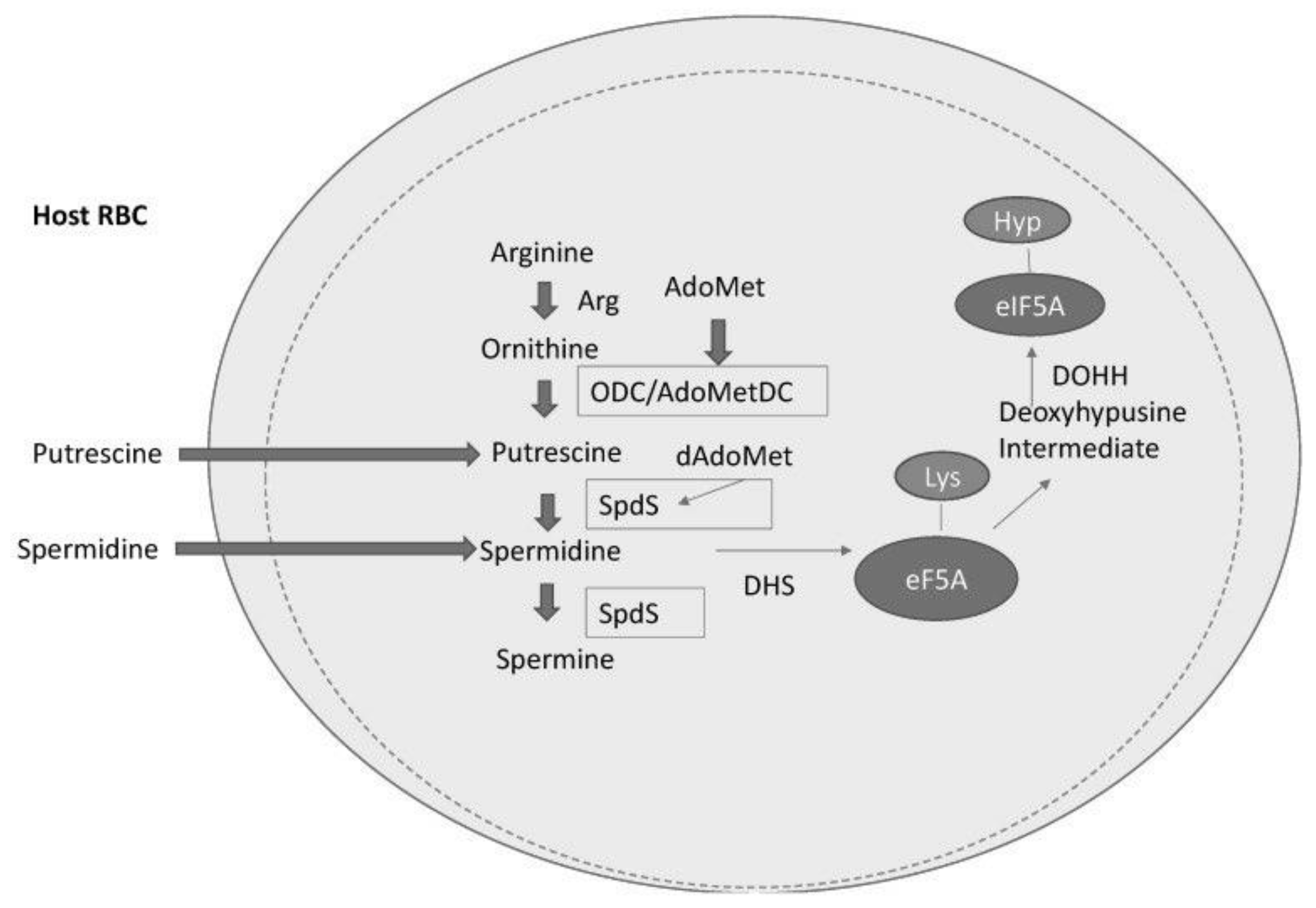
Figure 3.
Interaction between macrophage and parasite polyamine metabolism, including uptake of arginine, ornithine, putrescine, and spermidine and the parasite-specific trypanothione pathway (based on Reguera et al. (2022))..
Figure 3.
Interaction between macrophage and parasite polyamine metabolism, including uptake of arginine, ornithine, putrescine, and spermidine and the parasite-specific trypanothione pathway (based on Reguera et al. (2022))..
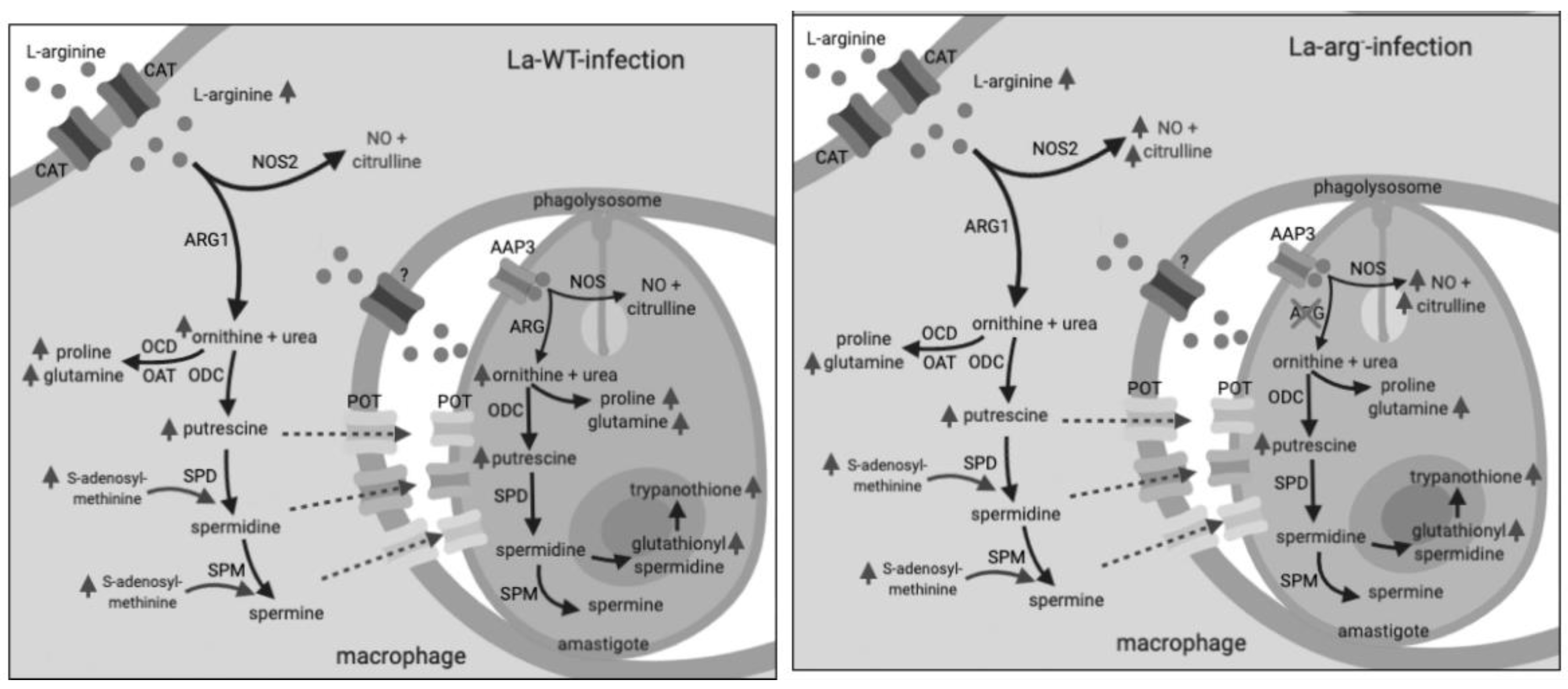
Disclaimer/Publisher’s Note: The statements, opinions and data contained in all publications are solely those of the individual author(s) and contributor(s) and not of MDPI and/or the editor(s). MDPI and/or the editor(s) disclaim responsibility for any injury to people or property resulting from any ideas, methods, instructions or products referred to in the content. |
© 2026 by the authors. Licensee MDPI, Basel, Switzerland. This article is an open access article distributed under the terms and conditions of the Creative Commons Attribution (CC BY) license (http://creativecommons.org/licenses/by/4.0/).
Copyright: This open access article is published under a Creative Commons CC BY 4.0 license, which permit the free download, distribution, and reuse, provided that the author and preprint are cited in any reuse.