

Submitted:
07 September 2026
Posted:
16 September 2026
You are already at the latest version
Abstract
Zein protein nanoparticles are fabricated in two anionic polysaccharides Sodium carboxymethyl cellulose (CMC) and Xanthan gum (XG) using the anti-solvent method. The rheological behavior and surface-active properties of dispersions of Zein nanoparticles in polysaccharides are investigated. Two sets of experiments are carried out. In one set, the Zein concentration is fixed at 1 wt% and the concentrations of the polysaccharides varied from 0 to 1 wt% in increments of 0.2 wt%. In the second set of experiments, the Zein concentration varies from 1 to 5 wt% at a fixed polysaccharide concentration of 0.5 wt%. The SEM images clearly show the formation of Zein nanoparticles in polysaccharides. Polysaccharide solutions and Zein nanoparticle-polysaccharide dispersions exhibit shear-thinning rheological behavior and follow the power-law model adequately. With the addition of Zein, the consistency of Zein nanoparticle-CMC dispersions increases, and they become more shear-thinning in comparison to pure CMC solutions. With the increase in Zein concentration at a fixed CMC concentration, the consistency rises sharply up to 4 wt% Zein concentration and then drops substantially with further increase in Zein concentration. The addition of Zein to XG solutions exhibits a more complex rheological behavior. The consistency index decreases with the addition of Zein to XG solutions when XG concentration is less than 0.7 wt%. At higher XG concentrations, the consistency index increases with the addition of Zein to XG solutions. With the increase in Zein concentration at a fixed XG concentration, the consistency decreases substantially over the full range of Zein concentration investigated. The surface tension of CMC solutions is strongly affected by the addition of Zein nanoparticles. It decreases substantially with the addition of Zein to CMC solutions. The surface tension behavior of Zein nanoparticle-XG dispersions is like that of Zein nanoparticle-CMC dispersions. The transitions in rheological and surface-active properties of Zein nanoparticle-polysaccharide dispersions are explained in terms of microstructure of the dispersions.
Keywords:
Zein
; Zein nanoparticles
; polysaccharide
; xanthan gum
; sodium carboxymethyl cellulose
; rheology
; non-Newtonian
; viscosity
; consistency
; surface tension
1. Introduction
Zein, a hydrophobic prolamin protein derived from maize, has gained increasing attention in recent years as a biodegradable material for food and biopolymer applications, particularly in encapsulation and structured delivery systems [1,2]. Its amphiphilic molecular structure enables self-assembly into colloidal particles under selective solvent conditions, especially through anti-solvent precipitation. However, the high content of nonpolar amino acids in Zein leads to poor water solubility and strong intermolecular hydrophobic interactions, resulting in aggregation and limited colloidal stability in aqueous environments [2,3]. These intrinsic limitations significantly restrict its broader application in food systems where stability and tunable rheological properties are critical.
To address these challenges, polysaccharides have been widely introduced as functional modifiers to improve the dispersion stability and rheological performance of Zein-based systems. Sodium carboxymethyl cellulose (CMC) and Xanthan gum (XG) are two representative anionic polysaccharides commonly used as thickening and stabilizing agents in food formulations. CMC is a flexible, water-soluble cellulose derivative whose rheological behavior is governed by chain entanglement and electrostatic repulsion, resulting in moderate but highly tunable viscosity [4,5]. In contrast, XG is a high-molecular-weight, semi-flexible polysaccharide with a rigid helical conformation and strong shear-thinning behavior, which allows it to generate high viscosity even at low concentrations [6,7]. Its charged side chains and molecular rigidity contribute to strong intermolecular interactions and network formation. Due to these structural differences, CMC and XG exhibit distinct interaction mechanisms with proteins, which may lead to fundamentally different macroscopic behaviors when combined with Zein.
The incorporation of polysaccharides has emerged as an effective strategy to enhance dispersion stability and tailor functional properties of Zein. Practically, this is mostly achieved utilizing the anti-solvent precipitation method. In this process, Zein is first dissolved in aqueous ethanol and subsequently introduced into an aqueous polysaccharide solution, triggering rapid de-solvation and the self-assembly of Zein into nanoparticles [1,8,9]. Importantly, the presence of polysaccharides during this precipitation phase triggers a ‘kinetic arrest’; they immediately adsorb onto the newly formed Zein nuclei to provide robust steric or electrostatic stabilization, thereby locking the particle size at the nanoscale and preventing macroscopic aggregation [10,11].
The specific internal morphology of these nanocomplexes heavily depends on the structural properties of the continuous polysaccharide phase. For instance, Zein–CMC complexes formed via this route typically generate a colloidal dispersion characterized by a partial core–shell structure, where flexible CMC chains adsorb onto Zein surfaces and induce inter-particle bridging. In contrast, Zein–Xanthan gum (XG) complexes exhibit a distinct concentration-dependent microstructural evolution. At sufficient XG concentrations (≥0.8 wt%), a dense rigid network dominates the continuous phase, and the positively charged Zein particles act as multifunctional junction points through strong electrostatic bridging, significantly enhancing the overall network connectivity [12,13]. Therefore, the anti-solvent method coupled with polysaccharide modification provides a highly controllable platform for developing structured biopolymer systems.
Despite these advances, important knowledge gaps remain. Most existing studies on Zein–polysaccharide systems primarily focus on particle formation, interfacial behavior, or emulsion stabilization, while comparatively fewer studies systematically address the bulk rheological properties of these systems. For example, recent work on Zein-based gels and composites has largely emphasized structural formation and stability rather than detailed viscosity evolution across concentration regimes [14,15,16]. Similarly, studies on Zein–polysaccharide blends (e.g., with glucomannan or chitosan) report changes in microstructure and rheology, but do not comprehensively investigate how viscosity evolves with varying polysaccharide concentration [17].
To bridge these knowledge gaps, the present study aims to systematically investigate the concentration-dependent rheological behavior of Zein-polysaccharide composite systems fabricated via the anti-solvent precipitation method. Specifically, Zein is combined with two representative but structurally distinct polysaccharides, sodium carboxymethyl cellulose (CMC) and xanthan gum (XG), to construct colloidal dispersions with tunable properties. By systematically varying both the type and concentration of the polysaccharides, the steady shear flow behavior and viscosity evolution of the resulting systems are comprehensively evaluated. Special attention is given to elucidating how the intrinsic molecular characteristics of CMC and XG translate into the macroscopic flow behavior and phase stability of Zein-based dispersions. Ultimately, this comparative analysis provides critical insights into the structure–property relationships of protein–polysaccharide complexes, offering valuable theoretical guidance for predicting their processing performance and optimizing their structural stability in advanced food and biopolymer applications.
2. Materials and Methods
2.1. Materials
Sodium carboxymethyl cellulose (CMC) used in this work was manufactured by Hercules Inc., Wilmington, DE, USA, under the trade name of Hercules cellulose gum. Xanthan gum (XG) was manufactured by CP Kelco, Atlanta, GA, USA, under the trade name of Kelzan. Zein was purchased from Sigma Aldrich Canada.
CMC is an anionic water-soluble cellulose derivative widely used as a thickening and stabilizing agent in food and pharmaceutical applications due to its excellent rheological and emulsifying properties. Xanthan gum (XG) is an anionic extracellular polysaccharide produced by bacterial fermentation, known for its high viscosity and strong shear-thinning behavior even at low concentrations. Zein, the major storage protein of corn, is a hydrophobic biopolymer that is commonly used for film formation and encapsulation purposes owing to its self-assembly behavior in aqueous ethanol systems.
2.2. Preparation of Zein Stock Solutions
Zein powder was dissolved in 90% (w/w) aqueous ethanol solution and homogenized for 1 h at room temperature to obtain a 10 wt% Zein stock solution.
2.3. Preparation of Polysaccharide-Zein Composite Systems
Polysaccharide-Zein composite systems were fabricated utilizing an antisolvent precipitation method. The overall preparation and solvent-evaporation processes are schematically summarized in Figure 1 and Figure 2. To systematically investigate the effects of biopolymer mixing ratios, two experimental series were designed. In all formulations, the total initial mass of the mixture was standardized to 400 g prior to solvent evaporation.
Series I: Effect of varying polysaccharide concentration. CMC or XG was dispersed in deionized water to prepare solutions with concentrations ranging from 0.2 to 1.0 wt%. For XG solutions, the pH was pre-adjusted to 4.0 using 0.1 M HCl to promote strong electrostatic interactions with the positively charged Zein (pI ≈ 6.2) [18]. Subsequently, 40 g of the 10 wt% Zein stock solution was added dropwise into the polysaccharide solutions under continuous magnetic stirring (1200 rpm), yielding a constant final Zein concentration of 1 wt% [19,20]. No pH adjustment was applied to the CMC systems.
Series II: Effect of varying Zein concentration. A constant polysaccharide (CMC or XG) concentration of 0.5 wt% was utilized as the continuous phase. Prior to mixing, the pH of the XG solutions was adjusted to 4.0, whereas the CMC solutions were used without any pH modification. Variable amounts of the 10 wt% Zein stock solution (ranging from 40 g to 200 g) were then added dropwise into the respective polysaccharide solutions under identical stirring conditions (1200 rpm) to achieve final Zein concentrations ranging from 1 to 5 wt%.
2.4. Solvent Evaporation and Post-Treatment
After preparation, all dispersions, including polysaccharide-only control samples, were kept under continuous stirring in a fume hood overnight to allow complete evaporation of ethanol. Deionized water was then added to adjust each system back to the original total mass of 400 g. All samples were stored for further characterization.
2.5. Rheological Measurements
The steady shear rheology of the fluids was measured using Fann and Haake types of co-axial cylinder viscometers. The dimensions of the measuring geometries used, and the corresponding gap widths are given in Table 1. The Fann viscometer had 12 rotational speeds ranging from 0.9 to 600 rpm whereas the Haake viscometer had 30 rotational speeds ranging from 0.01 to 512 rpm. Both devices were calibrated using standard fluids of known viscosities prior to any measurements of test fluids. All measurements were conducted at room temperature.
2.6. Surface Tension Measurements
The surface tension measurement of test materials (liquids) was carried out using the smartphone-based pendant drop tensiometer supplied by Droplet Lab, Markham, ON, Canada. A pendant droplet of liquid phase is generated at the tip of a stainless-steel needle (1.8 mm diameter) connected to a 500 µL Hamilton® gastight syringe (Model 1750 TPLT). The high-resolution image of the pendant droplet is taken using a smartphone camera and analyzed using specialized software. From the drop shape analysis, the software can calculate the surface tension of each solution numerically by fitting the droplet profile with the Young–Laplace equation [21]. The measurement for each test material is performed at least 15 times, and an average value is calculated. All measurements were done at room temperature.
2.7. SEM Procedure
The microstructural morphology of the nanocomplexes was characterized using a scanning electron microscope (SEM, Hitachi SU8700, Japan). Prior to imaging, the freshly prepared liquid dispersions were pre-frozen at -80 °C overnight to rapidly arrest and preserve the formed network structures. Subsequently, the frozen samples were lyophilized for 24 h to completely remove water via sublimation, yielding dry powder specimens. The lyophilized powders were then carefully mounted onto aluminum stubs using double-sided conductive carbon tape. The SEM imaging was conducted at an accelerating voltage of 1.0–1.5 kV.
3. Results and Discussion
3.1. Rheology of Dispersions of Zein Nanoparticles in Carboxymethyl Cellulose
Figure 3 shows the steady shear rheological data for pure CMC solutions in deionized water. The CMC solutions are shear-thinning at all CMC concentrations ranging from 0.2 to 1 wt%. The viscosity versus shear rate plot is linear on a log-log scale indicating power-law behavior:
where is shear stress, is shear rate, is viscosity, and are power law parameters. The power law parameter reflects the consistency of the material and is referred to as consistency index. The power law parameter reflects the flow behavior of the material (Newtonian, shear thinning, shear thickening) and is referred to as flow behavior index. For Newtonian fluids, and . For shear-thinning fluids, . The smaller the value, the greater the degree of shear-thinning.
The power-law parameters of CMC solutions are shown in Figure 3(b). With the increase in CMC concentration, the flow behavior index decreases linearly indicating that the CMC solution becomes more shear-thinning with the increase in CMC concentration. The consistency index of CMC solutions increases non-linearly with the increase in CMC concentration. The increase in consistency and shear-thinning with the increase in CMC concentration is due to the entanglement and network structure formation of polymer chains.
Figure 4 shows the steady shear rheological data for Zein-CMC dispersions. The Zein concentration is fixed at 1 wt% and the CMC concentration is increased from 0 to 1 wt%. While the 1 wt% Zein solution is Newtonian, the Zein-CMC dispersions are all shear-thinning. The power-law model describes the rheological data of Zein-CMC dispersions adequately. The consistency index increases substantially and the flow behavior index decreases appreciably with the increase in CMC concentration.
The viscosity of Zein-CMC dispersions is significantly higher than that of pure CMC solutions, as shown in Figure 5. Figure 6 compares the consistency and flow behavior indices ( and ) of Zein-CMC dispersions with those of pure CMC solutions. The consistency index of Zein-CMC dispersions is higher than that of the pure CMC solutions over the entire CMC range and the gap between Zein-CMC dispersion and CMC solution increases with the increase in CMC concentration. The flow behavior index of Zein-CMC dispersions falls below that of the pure CMC solutions indicating greater degree of shear-thinning in Zein-CMC dispersions.
The change in the rheological properties ( and ) of Zein-CMC dispersions in comparison with pure CMC solutions is caused by the formation and dispersion of Zein nanoparticles in CMC solutions, shown schematically in Figure 7. The increase in and decrease in are due to two effects: (1) the appearance of zein nanoparticles in the matrix of CMC solution. It is well known that the incorporation of solid particles in the liquid phase increases the viscosity as demonstrated by Einstein [22] in his seminal paper; and (2) the bridging of zein nanoparticles with CMC chains and hence, the formation of a microstructure in the system.
Figure 8 shows SEM images of Zein-CMC dispersions. One can clearly see the presence of Zein nanoparticles in Zein-CMC systems. At a low CMC concentration of 0.4 wt%, the Zein nanoparticles have diameters approximately in the range of 400 to 600 nm. At a high CMC concentration, the Zein-CMC dispersion consists of many zein particles with diameters in the nm range (150 nm) and some zein particle diameters are in the micron range ( 3.5 µm).
3.1.1. Effect of Zein Concentration on the Rheology of Dispersions of Zein Nanoparticles in Carboxymethyl Cellulose
The Zein concentration of the dispersion of Zein nanoparticles in Carboxymethyl Cellulose varied from 0 to 5 wt% at a fixed CMC concentration of 0.5 wt%. Figure 9 shows the effect of Zein concentration on the rheological properties of dispersion of Zein nanoparticles in CMC. With the increase in Zein concentration from 0 to 4 wt%, the consistency increased substantially especially in the Zein concentration of 2 to 4 wt%. The flow behavior index decreased simultaneously indicating an increase in the degree of shear-thinning. This is not surprising as the concentration of Zein nanoparticles of the dispersion increases with the increase in Zein concentration. The increase in nanoparticle volume fraction is expected to increase the viscosity of dispersion in accordance with the Einstein law for the viscosity of suspensions. Furthermore, the increase in Zein nanoparticle concentration reinforces bridging of nanoparticles and the microstructure of Zein nanoparticles and CMC polymer chains.
Interestingly, a sharp drop in consistency occurs as the Zein concentration is increased from 4 to 5 wt%. Clearly at a high Zein concentration of 5 wt%, the microstructure formed by Zein nanoparticles and CMC polymer chains undergoes breakup. This may be due to aggregation of Zein nanoparticles at high Zein concentration although the exact reason is not known at present. It should however be noted that the dispersion of Zein nanoparticles was still homogenous with no evidence of any phase separation (see Figure 10).
3.2. Surface Tension of Dispersions of Zein Nanoparticles in Carboxymethyl Cellulose
Figure 11 shows the variations of surface tension with the CMC concentration of pure CMC solutions and dispersions of Zein nanoparticles in CMC at a fixed Zein concentration of 1 wt%. The pure CMC solutions have a constant surface tension independent of CMC concentration indicating that pure CMC is not surface-active. With the addition 1 wt% of Zein nanoparticles in the Zein-CMC dispersions, the surface tension drops substantially indicating that as the Zein nanoparticles are surface active. Clearly the Zein nanoparticles adsorb at the air/liquid interface causing a sharp drop in the surface tension. With the increase in CMC concentration at a fixed Zein nanoparticle concentration of 1 wt%, the surface tension increases probably because the nanoparticles remain trapped in the bulk liquid and a smaller number of Zein nanoparticles get adsorbed at the air/liquid interface. This is shown schematically in Figure 12.
Figure 13 shows the effect of Zein concentration on the surface tension of Zein-CMC dispersions at a fixed CMC concentration of 0.5 wt%. The surface tension drops sharply with the increase in Zein concentration from 0 to 1 wt%. With further increase in Zein concentration, the surface tension decreases slowly and levels off beyond 3 wt% Zein. The decrease in surface tension is due to the increase in adsorption of Zein nanoparticles at the air/liquid interface. At high Zein concentrations, the interface becomes saturated with Zein nanoparticles and hence, the surface tension levels off.
3.3. Rheology of Dispersions of Zein Nanoparticles in Xanthan Gum
Figure 14 shows the steady shear rheological data for pure Xanthan gum solutions in deionized water, without any Zein. Like CMC solutions, XG solutions are also shear-thinning at all XG concentrations ranging from 0.2 to 1 wt%. The plots of viscosity versus shear rate are linear on a log-log scale indicating power-law behavior like CMC solutions. The consistency index rises sharply above XG concentration of 0.4 wt%. The flow behavior index decreases sharply when XG concentration is increased from 0.2 to 0.6 wt% and levels off at higher XG concentration. It is important to recognize that XG solutions are much more viscous and shear thinning than CMC solutions. The comparison of the power law parameters of pure CMC and XG solutions is shown in Figure 15. The consistency index of XG solution is high almost 8 times that of CMC solution at a polymer concentration of 1 wt%. The flow behavior index of XG solution is almost one-half of CMC solution at a polymer concentration of 1 wt%. Note that lower the flow behavior index greater is the degree of shear-thinning. Xanthan gum solutions are more viscous and shear-thinning likely due to the presence of anionic side chains on its molecules. These side chains of the neighboring Xanthan molecules interfere with each other resulting in decreased mobility of Xanthan molecules.
The rheological behavior of Zein-XG dispersions is shown in Figure 16. The Zein concentration is fixed at 1 wt% and the XG concentration is increased from 0 to 1 wt%. While the 1 wt% Zein solution without any XG and Zein-XG dispersion at 0.2 wt% XG are Newtonian, the Zein-XG dispersions at XG concentrations above 0.2 wt% are all shear-thinning. The power-law model describes the rheological data of Zein-XG dispersions adequately. The consistency index increases substantially and the flow behavior index decreases appreciably with the increase in XG concentration above 0.4 wt%. A similar behavior was observed in the case of Zein-CMC dispersions (see Figure 4).
Figure 17 compares the viscosity of Zein-XG dispersions with pure XG solutions. Unlike Zein-CMC dispersions, the viscosity of Zein-XG dispersions decreases with the incorporation of Zein nanoparticles at a XG concentration of 0.6 wt%. However, at a high XG concentration of 1 wt%, the opposite behavior is observed in that the viscosity of Zein-XG dispersions increases with the addition of Zein nanoparticles. Figure 18 compares the consistency and flow behavior indices ( and ) of Zein-XG dispersions with those of pure XG solutions. The consistency index of Zein-XG dispersions is lower than that of the pure XG solutions over the XG range of approximately 0 to 0.7 wt%. At higher XG concentrations (>0.7 wt%), the consistency index of Zein-XG dispersions is higher than that of the pure XG solutions. At XG concentrations less than about 0.8 wt%, the Zein-XG dispersions tend to become less shear-thinning ( increases). However, at a higher XG concentration of 1 wt%, the Zein-XG dispersion becomes more shear-thinning ( decreases).
It appears that the internal morphology of Zein-XG dispersions exhibits a distinct concentration-dependent structural evolution, as schematically illustrated in Figure 19. At low XG concentrations (<0.8 wt%), Zein–XG complexation leads to adsorption of XG onto Zein nanoparticles, reducing the effective polymer concentration available for network formation and polymer entanglement, resulting in lowering of viscosity. At higher concentrations (≥0.8 wt%), the system undergoes a structural transition where a dense XG network dominates. In this regime, Zein nanoparticles act as multifunctional junction points through electrostatic bridging, significantly enhancing network connectivity and leading to a sharp increase in viscosity. This concentration-dependent transition is consistent with previous reports showing a pronounced increase in viscosity at ~0.8 wt% XG in Zein–XG systems [23,24].
Figure 20 shows an SEM image of Zein-XG dispersion at 0.4 wt% XG. Zein nanoparticles can be seen clearly. The Zein nanoparticles have diameters approximately in the range of 175 to 600 nm. The Zein nanoparticle size of Zein-XG dispersion is like that of Zein-CMC dispersion.
3.3.1. Effect of Zein Concentration on the Rheology of Dispersions of Zein Nanoparticles in Xanthan Gum
Figure 21 shows the effect of Zein concentration on the rheological properties of dispersion of Zein nanoparticles in Xanthan gum. The XG concentration is fixed at 0.5 wt% and the Zein concentration of the dispersion varied from 0 to 5 wt%. With the increase Zein concentration, the consistency decreases over the full Zein concentration range from 0 to 5 wt%. The flow behavior index rises simultaneously, indicating a decrease in the degree of shear-thinning. This behavior is opposite to what was observed in the case of Zein-CMC dispersions. Furthermore, the Zein-XG dispersion undergoes phase separation at Zein concentrations larger than 4 wt%, as shown in the pictures of Figure 22.
It appears that with the increase in Zein concentration, the clumping of Zein nanoparticles takes place disrupting the entangled network of Xanthan gum molecules, as shown schematically in Figure 23. The disruption of the entangled network of Xanthan gum molecules decreases the consistency index and makes the dispersion less shear-thinning. Figure 24 shows the SEM image of Zein-XG dispersion at 5 wt% Zein. The lumps of Zein nanoparticles can be seen in the image.
3.4. Surface Tension of Dispersions of Zein Nanoparticles in Xanthan Gum
Figure 25 shows the variations of surface tension with the Xanthan gum concentration of pure XG solutions and dispersions of Zein nanoparticles in XG at a fixed Zein concentration of 1 wt%. The pure XG solutions are surface-active in that the surface tension decreases with the addition of Xanthan gum to deionized water. The surface tension continues to decrease with the increase in XG concentration. With the addition 1 wt% of Zein nanoparticles to the Zein-XG dispersions, the surface tension drops substantially, indicating that the Zein nanoparticles are surface active. Clearly the Zein nanoparticles adsorb at the air/liquid interface causing a sharp drop in the surface tension. With the increase in XG concentration at a fixed Zein nanoparticle concentration of 1 wt%, the surface tension remains constant up to XG concentration of 0.6 wt% and decreases with further increase in XG concentration.
The effect of Zein concentration on the surface tension of Zein-XG dispersions at a fixed XG concentration of 0.5 wt% is shown in Figure 26. The surface tension drops sharply with the increase in Zein concentration from 0 to 1 wt%. With further increase in Zein concentration, the surface tension decreases slowly and levels off beyond 3 wt% Zein. The decrease in surface tension is due to the increase in adsorption of Zein nanoparticles at the air/liquid interface. At high Zein concentrations, the interface becomes saturated with Zein nanoparticles and hence, the surface tension levels off. A similar behavior was observed in the case of Zein-CMC dispersions.
4. Conclusions
The rheological behavior and surface-active properties of Zein nanoparticle-polysaccharide composite systems fabricated via the anti-solvent precipitation method are investigated. The polysaccharides used are sodium carboxymethyl cellulose (CMC) and Xanthan gum (XG). Based on the experimental results, the following conclusions can be made:
- Pure polymer solutions (CMC and XG) exhibit shear-thinning behavior over the concentration range investigated (0.2 to 1 wt%). XG solutions are much more viscous and shear-thinning compared with CMC solutions at the same polymer concentration.
- Zein nanoparticles are successfully fabricated in CMC and XG solutions using the anti-solvent precipitation method. The SEM images clearly show the presence of Zein nanoparticles in CMC and XG solutions.
- Zein nanoparticle-CMC dispersions exhibit shear-thinning non-Newtonian behavior that could be described adequately using the power-law model. The dispersions of Zein nanoparticle and CMC are much more viscous and shear-thinning in comparison with pure CMC solutions. With the increase in Zein concentration at a fixed CMC concentration of 0.5 wt%, the consistency rises substantially up to 4 wt% Zein concentration and then drops sharply with further increase in Zein concentration.
- Zein nanoparticle-XG dispersions also exhibit shear-thinning non-Newtonian behavior that could be described adequately using the power-law model. However, they behaved differently from Zein nanoparticle-CMC dispersions. The dispersions of Zein nanoparticle and XG are less viscous and shear-thinning in comparison with pure XG solutions over the XG concentration range of 0-0.7 wt%. At XG concentrations higher than 0.7 wt%, the Zein nanoparticle-XG dispersions were more viscous and shear-thinning in comparison with pure XG solutions. Unlike Zein nanoparticle – CMC dispersions, the consistency of Zein nanoparticle-XG dispersions shows a persistent decline with the increase in Zein concentration.
- The surface tension of polysaccharide solutions is strongly affected by the addition of Zein nanoparticles. It decreases substantially with the addition of Zein to CMC or XG solutions.
- The transitions in rheological and surface-active properties of Zein nanoparticle-polysaccharide dispersions are explained in terms of microstructure of the dispersions.
Author Contributions
Conceptualization, S.L. and R.P.; methodology, S.L. and R.P.; validation, S.L. and R.P.; formal analysis, R.P.; investigation, S.L. and R.P.; resources, R.P.; data curation, S.L. and R.P.; writing—original draft preparation, R.P.; writing—review and editing, R.P.; visualization, R.P.; supervision, R.P.; project administration, R.P.; funding acquisition, R.P. All authors have read and agreed to the published version of the manuscript.
Funding
This research was funded by the Discovery Grant awarded to R.P. by the Natural Sciences and Engineering Research Council of Canada.
Institutional Review Board Statement
Not applicable.
Data Availability Statement
The raw data supporting the conclusions of this article will be made available by the authors on request.
Conflicts of Interest
The authors declare no conflicts of interest.
References
- Song, J.; Zhang, L.; Li, X. Preparation and characterization of zein nanoparticles by anti-solvent precipitation method. J. Agric. Food Chem. 2020, 68(3), 849–857. [Google Scholar]
- Wang, Y.; Li, H.; Zhao, Q.; Chen, L. Polysaccharide-mediated stabilization and functional improvement of zein-based colloidal systems. Food Chem. 2024, 430, 137085. [Google Scholar]
- Patel, A. R.; Bouwens, E. C. M.; Velikov, K. P. Preparation and characterization of zein nanoparticles. Food Hydrocoll. 2014, 35, 447–456. [Google Scholar] [CrossRef]
- Benchabane, A.; Bekkour, K. Rheological properties of carboxymethyl cellulose solutions. Colloid Polym. Sci. 2008, 286, 1173–1180. [Google Scholar] [CrossRef]
- Behra, J. S.; Mattsson, J.; Cayre, O. J.; Robles, E. S. J.; Tang, H.; Hunter, T. N. Characterization of sodium carboxymethyl cellulose aqueous solutions to support complex product formulation: A rheology and light scattering study. ACS Appl. Polym. Mater. 2019, 1(3), 344–358. [Google Scholar] [CrossRef]
- Wang, L.; Xiang, D.; Li, C.; Zhang, W.; Bai, X. Effects of lyophilization and low-temperature treatment on the properties and conformation of xanthan gum. Food Hydrocoll. 2021, 112, 106352. [Google Scholar] [CrossRef]
- Blok, A. E.; Bolhuis, D. P.; Kibbelaar, H. V. M.; Bonn, D.; Velikov, K. P.; Stieger, M. Comparing rheological, tribological and sensory properties of microfibrillated cellulose dispersions and xanthan gum solutions. Food Hydrocoll. 2021, 121, 107052. [Google Scholar] [CrossRef]
- Zou, T.; Li, Z.; Percival, S. S.; Bonard, S.; Gu, L. Fabrication, characterization, and cytotoxicity evaluation of zein nanoparticles for co-delivery of curcumin and quercetin. J. Agric. Food Chem. 2019, 67, 13445–13455. [Google Scholar]
- Zhong, Q.; Jin, M. Zein nanoparticles produced by liquid–liquid dispersion. Food Hydrocoll. 2009, 23, 2380–2387. [Google Scholar] [CrossRef]
- Wan, Y.; Liu, C.; Chen, K.; Zhang, Y. Formation of zein–carboxymethyl cellulose nano-networks and their structural properties. Food Chem. 2023, 405, 134823. [Google Scholar]
- Luo, Y.; Teng, Z.; Wang, Q. Development of zein nanoparticles coated with carboxymethyl chitosan for encapsulation and controlled release. J. Agric. Food Chem. 2011, 59, 3362–3370. [Google Scholar] [CrossRef] [PubMed]
- Santos, J.; Alcaide-González, M. A.; Trujillo-Cayado, L. A.; Alfaro-Rodríguez, M. C. Development of food-grade Pickering emulsions stabilized by a biological macromolecule (xanthan gum) and zein. Int. J. Biol. Macromol. 2020, 153, 747–754. [Google Scholar] [CrossRef] [PubMed]
- Liu, Q.; Li, Y.; Zhou, Y.; Chen, L. Zein-whey protein isolate-carboxymethyl cellulose complex as carrier of apigenin via pH-driven method: Fabrication, characterization, stability, and in vitro release property. Food Chem. 2022, 387, 132926. [Google Scholar] [CrossRef] [PubMed]
- Giteru, S. G.; Oey, I.; Ali, M. A.; Johnson, S. K.; Fang, Z. Rheological and structural properties of plant protein–polysaccharide composite systems: A review. Food Hydrocoll. 2021, 112, 106452. [Google Scholar]
- Thoo, Y. Y.; Teo, R.W.; Ting, A. S. Y. Effect of Zein Protein on Rheological and Hydrophobicity of Gellan Gum-based Food Packaging Film. Malays. J. Chem. 2023, 25(3), 260–274. [Google Scholar] [CrossRef]
- Gagliardi, A.; Voci, S.; Salvatici, M. C.; Fresta, M. Zein-based materials for biomedical and food applications: A review. Molecules 2020, 25(14), 3174. [Google Scholar] [PubMed]
- Li, H.; Zhao, Q.; Wang, Y.; Chen, L. Interaction and rheological behavior of zein–polysaccharide composite systems. Int. J. Biol. Macromol. 2020, 163, 234–242. [Google Scholar]
- Joolaei Ahranjani, P.; Polo, A.; Di Cagno, R.; Ferrentino, G. Comparative evaluation of stability and interfacial characteristics of Pickering emulsions co-stabilized by zein and hydrocolloids: Role of charge profile, emulsifying ability, and rheological properties. Food Res. Int. 2025, 218, 116948. [Google Scholar] [CrossRef] [PubMed]
- Chen, L.; Xu, W.; Yang, Z.; McClements, D. J.; Peng, X.; Xu, Z.; Meng, M.; Zou, Y.; Chen, G.; Jin, Z. Co-encapsulation of quercetin and resveratrol: Comparison in different layers of zein-carboxymethyl cellulose nanoparticles. Int. J. Biol. Macromol. 2024, 278, 134827. [Google Scholar] [CrossRef] [PubMed]
- Li, M.; Yu, M. Development of a nanoparticle delivery system based on zein/polysaccharide complexes. J. Food Sci. 2020, 85(12), 4108–4117. [Google Scholar] [CrossRef] [PubMed]
- Chen, H.; Muros-Cobos, J.L.; Holgado-Terriza, J.A.; Amirfazli, A. Surface tension measurement with a smartphone using a pendant drop. Colloids Surf. A 2017, 533, 213–217. [Google Scholar] [CrossRef]
- Einstein, A. Eine neue Bestimmung der Molekuldimension. Ann. Phys. 1906, 19, 289–306. [Google Scholar] [CrossRef]
- Chen, H.; Wang, Q.; Rao, Z.; Lei, X.; Zhao, J.; Lei, L.; Ming, J. The linear/nonlinear rheological behaviors of Pickering emulsion stabilized by Zein and Xanthan gum: Effect of interfacial assembly strategies. Food Hydrocoll. 2023, 145, 109116. [Google Scholar] [CrossRef]
- Bertsch, P.; Thoma, A.; Bergfreund, J.; Geue, T.; Fischer, P. Transient measurement and structure analysis of protein-polysaccharide multilayers at fluid interfaces. Soft Matter 2019, 15, 6362–6368. [Google Scholar] [CrossRef] [PubMed]
Figure 1.
Schematic illustration of the preparation of Zein–CMC composite dispersions via antisolvent precipitation.
Figure 1.
Schematic illustration of the preparation of Zein–CMC composite dispersions via antisolvent precipitation.
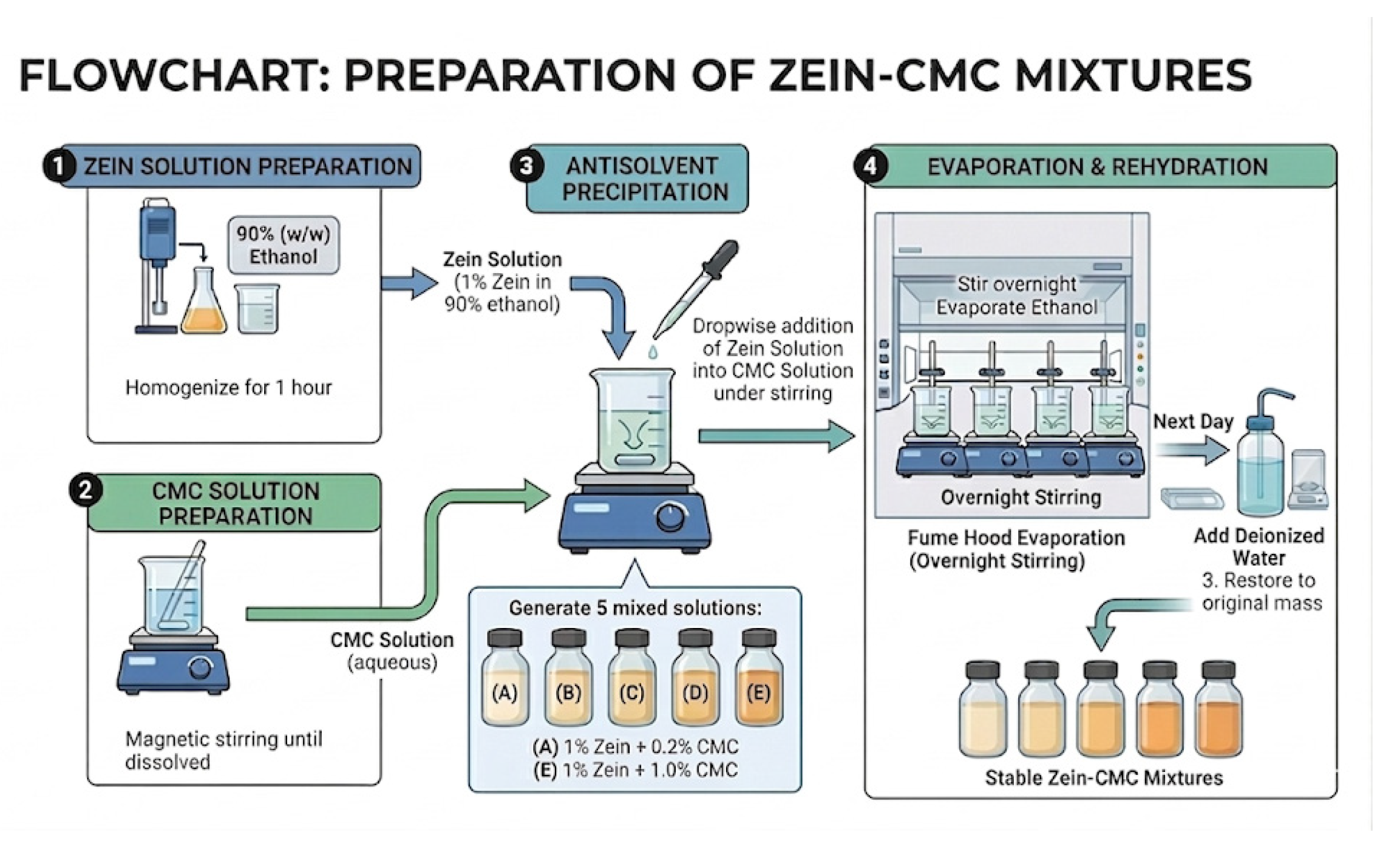
Figure 2.
Schematic illustration of the preparation of Zein–XG composite dispersions under acidic conditions (pH 4.0).
Figure 2.
Schematic illustration of the preparation of Zein–XG composite dispersions under acidic conditions (pH 4.0).
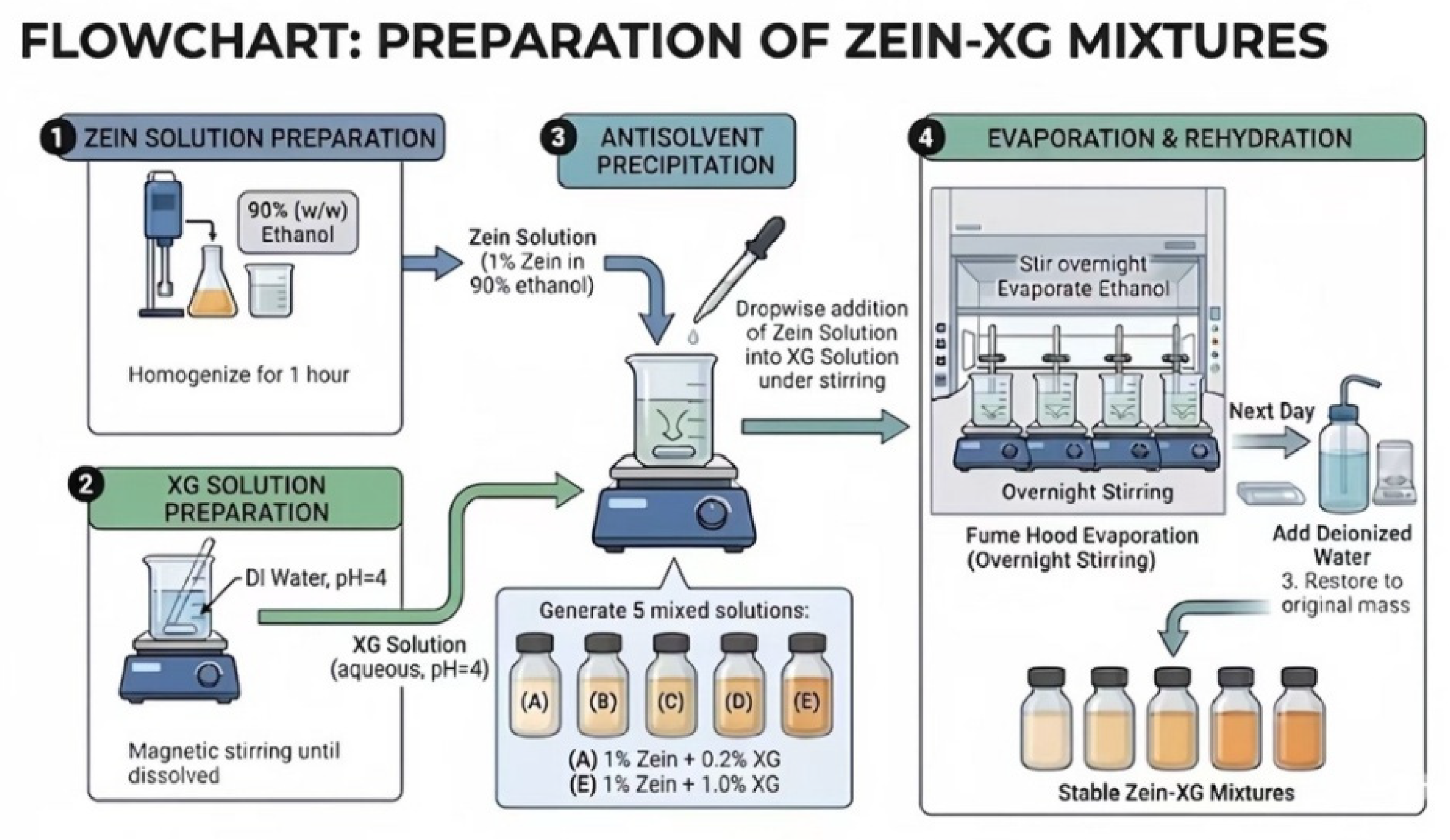
Figure 3.
Rheological behavior of pure CMC solutions.
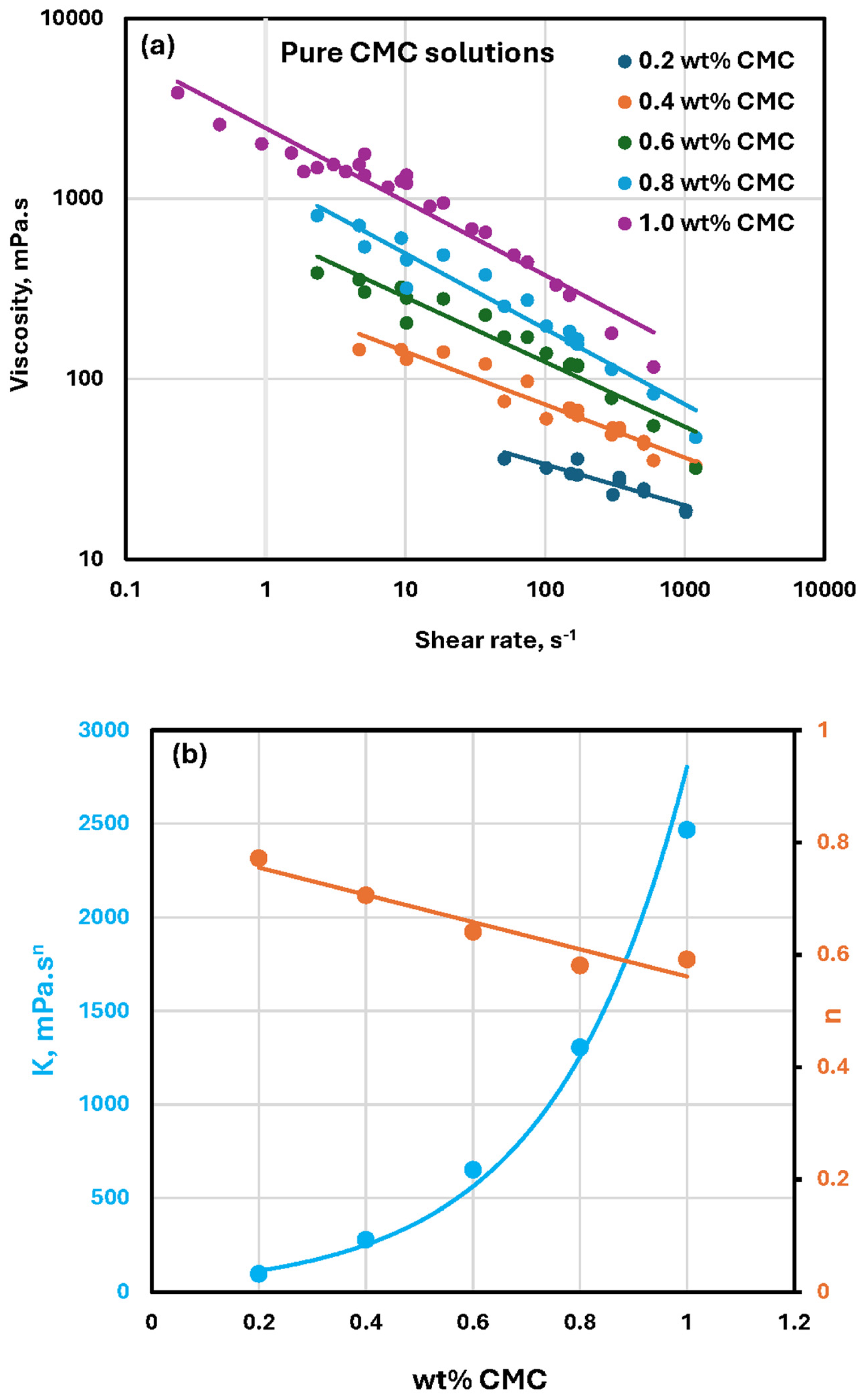
Figure 4.
Rheological behavior of Zein-CMC dispersions.
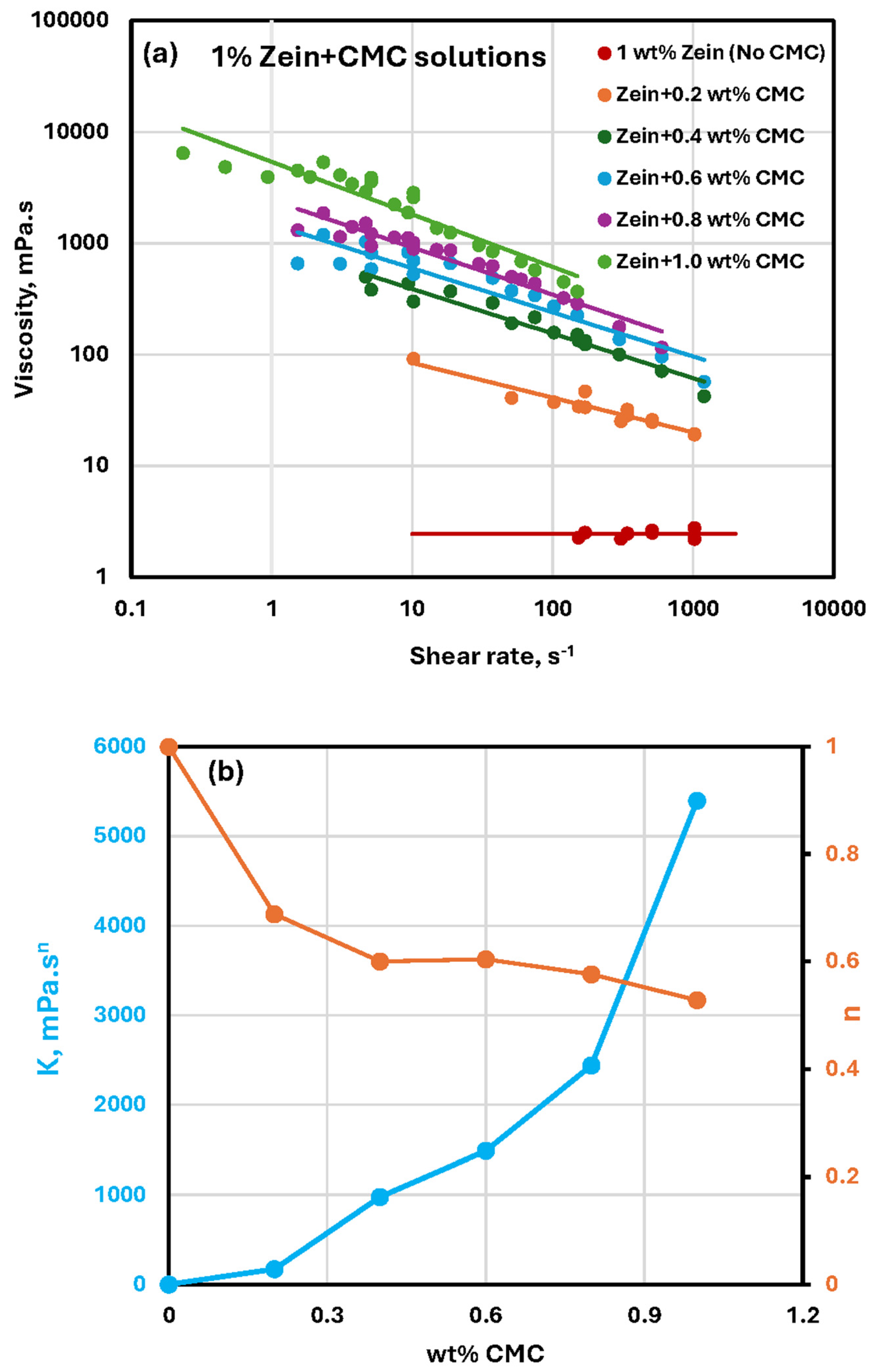
Figure 5.
Comparison of flow curves of Zein-CMC dispersions with pure CMC solutions.
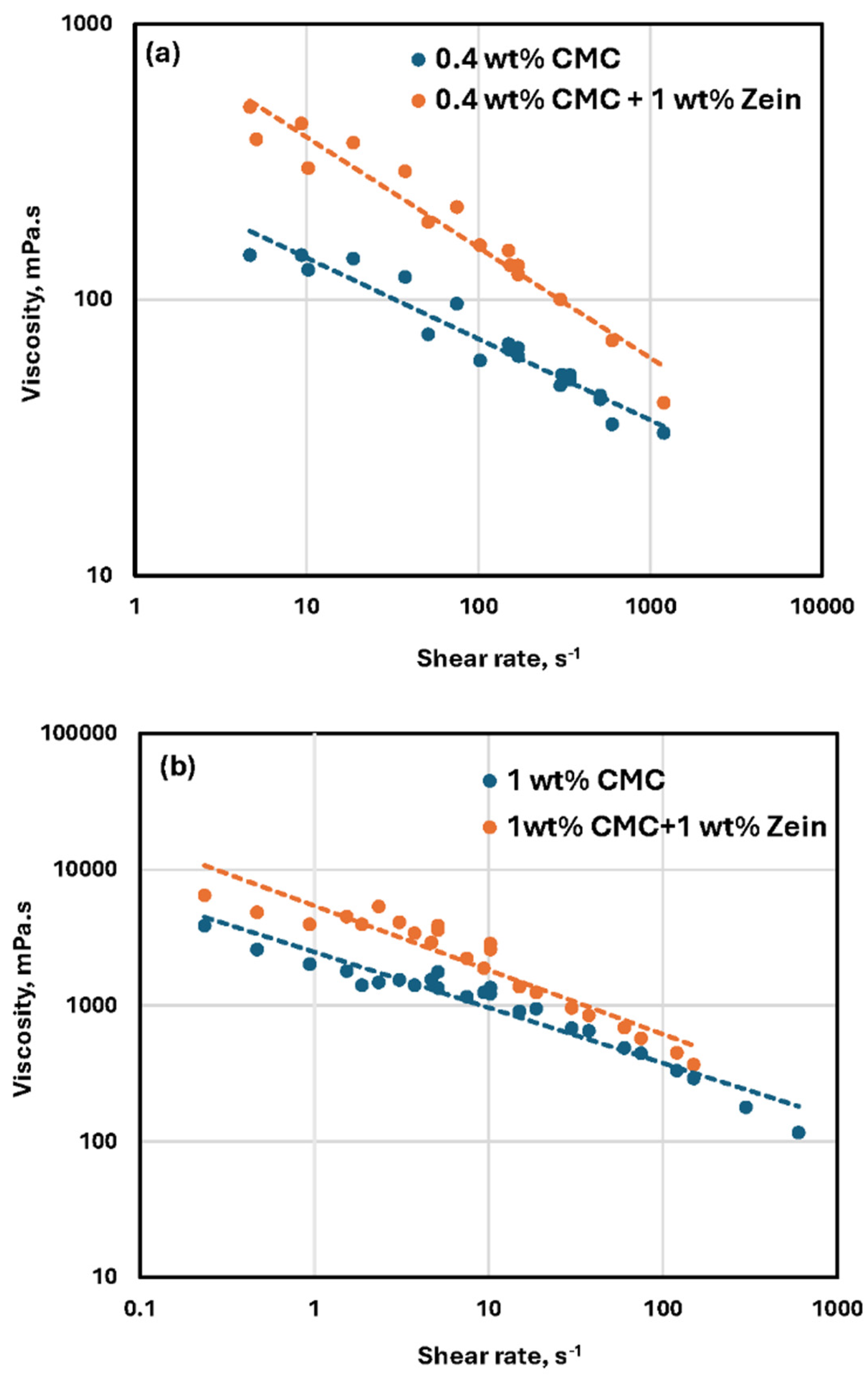
Figure 6.
Comparison of power-law parameters ( and ) of Zein-CMC dispersions with pure CMC solutions.
Figure 6.
Comparison of power-law parameters ( and ) of Zein-CMC dispersions with pure CMC solutions.
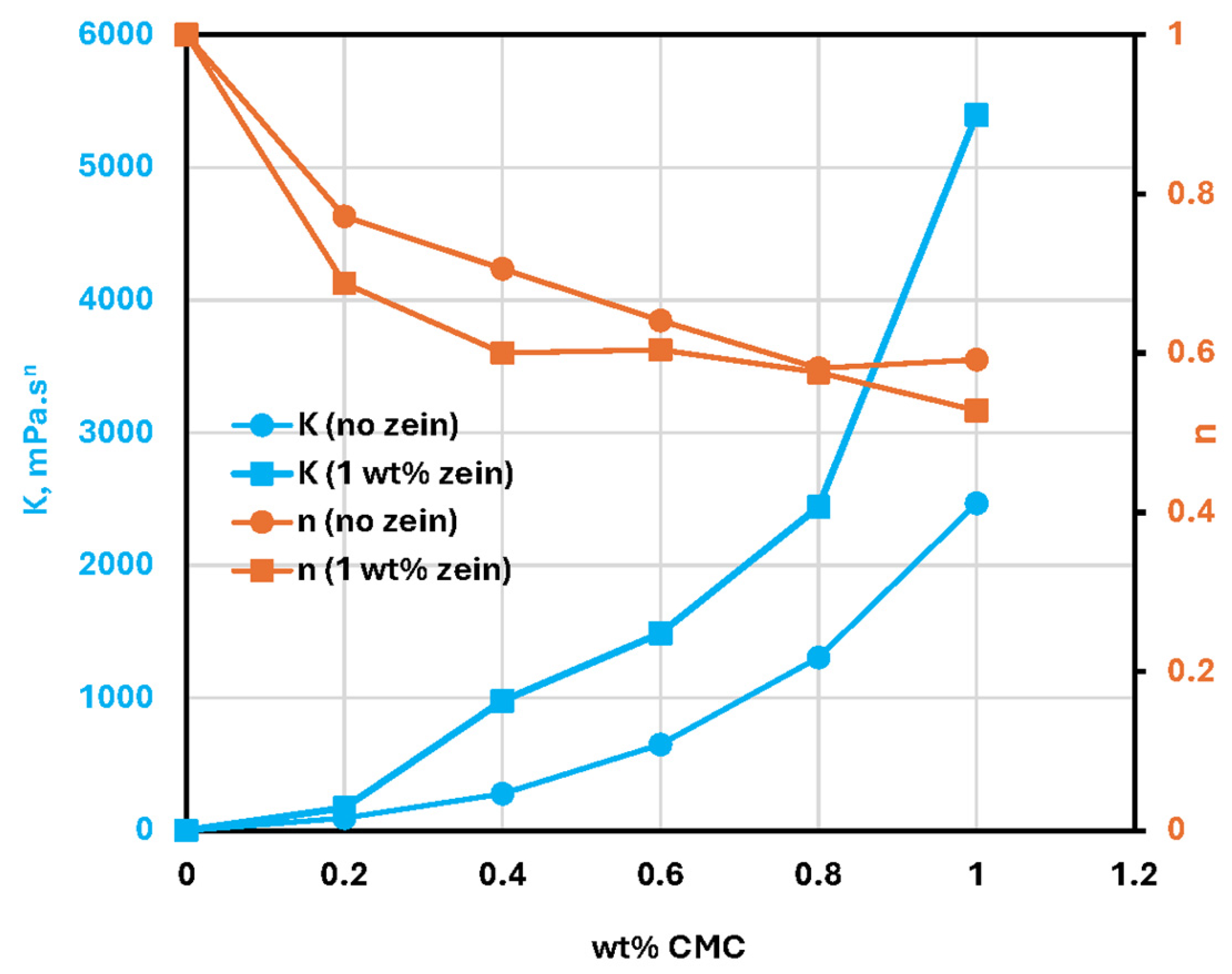
Figure 7.
The colloidal dispersion of Zein nanoparticles in CMC solution.
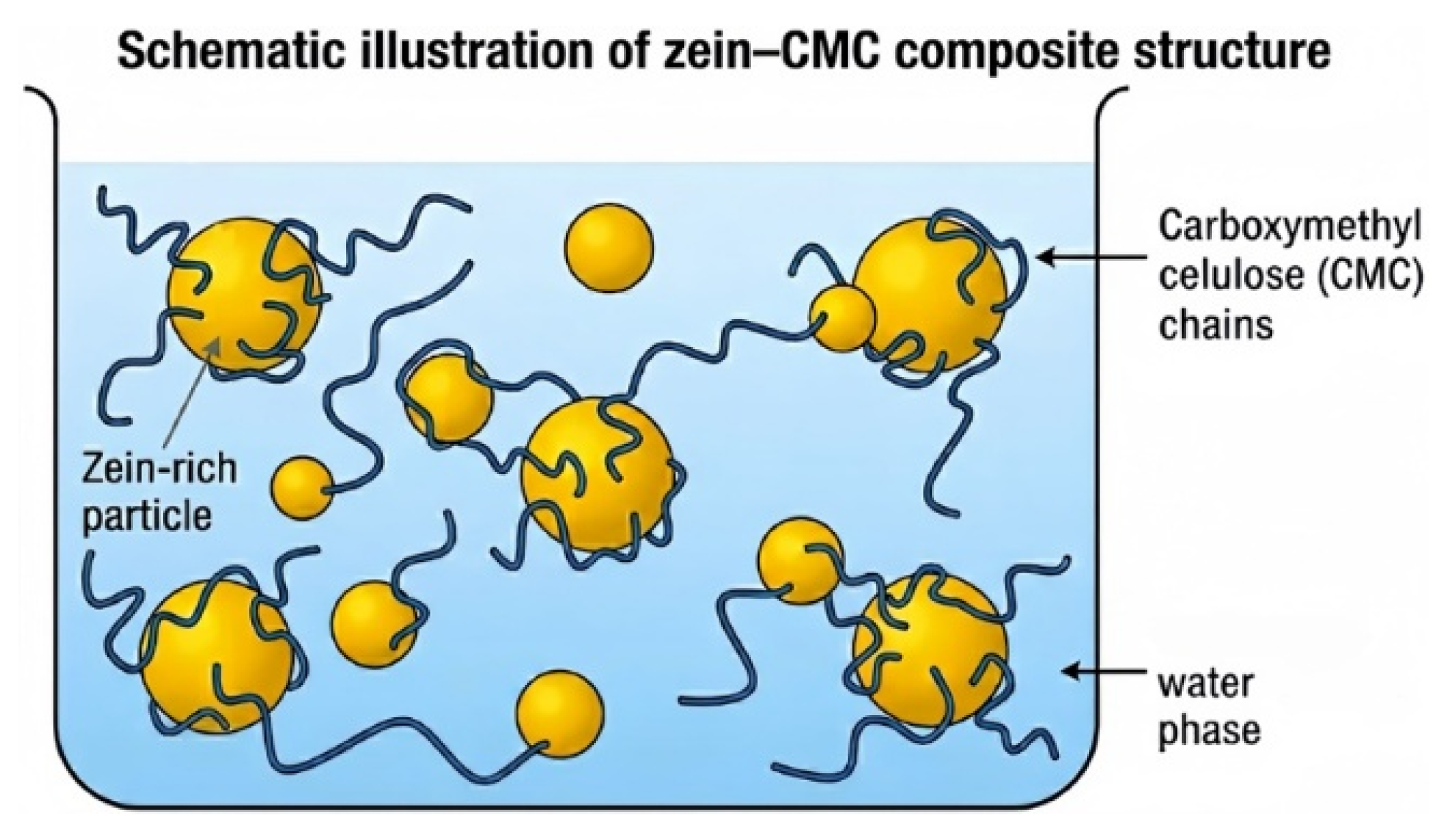
Figure 8.
SEM images of Zein-CMC dispersions at different CMC concentrations.
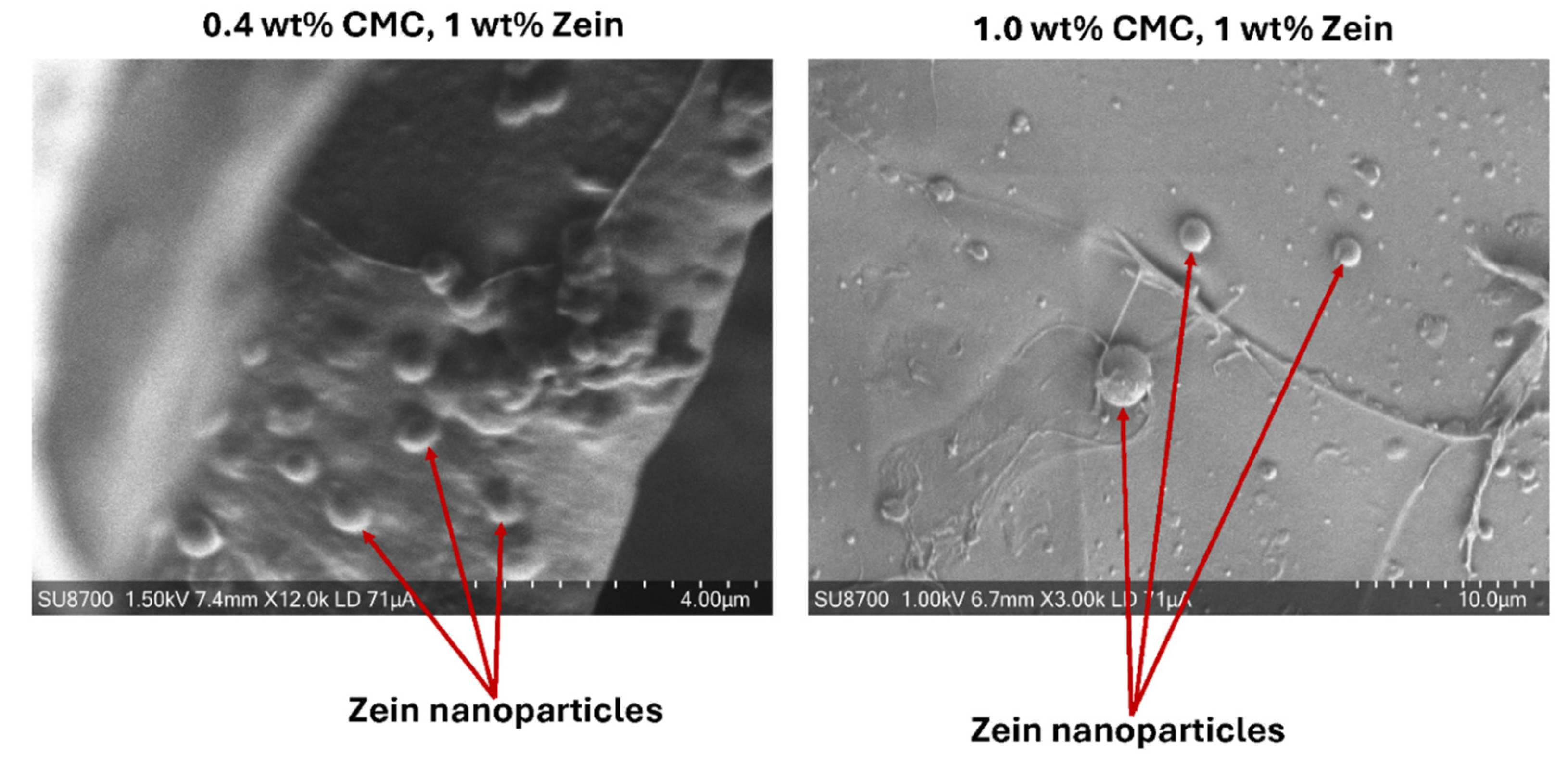
Figure 9.
Effect of Zein concentration on the rheological properties of Zein-CMC dispersions at a fixed CMC concentration of 0.5 wt%.
Figure 9.
Effect of Zein concentration on the rheological properties of Zein-CMC dispersions at a fixed CMC concentration of 0.5 wt%.
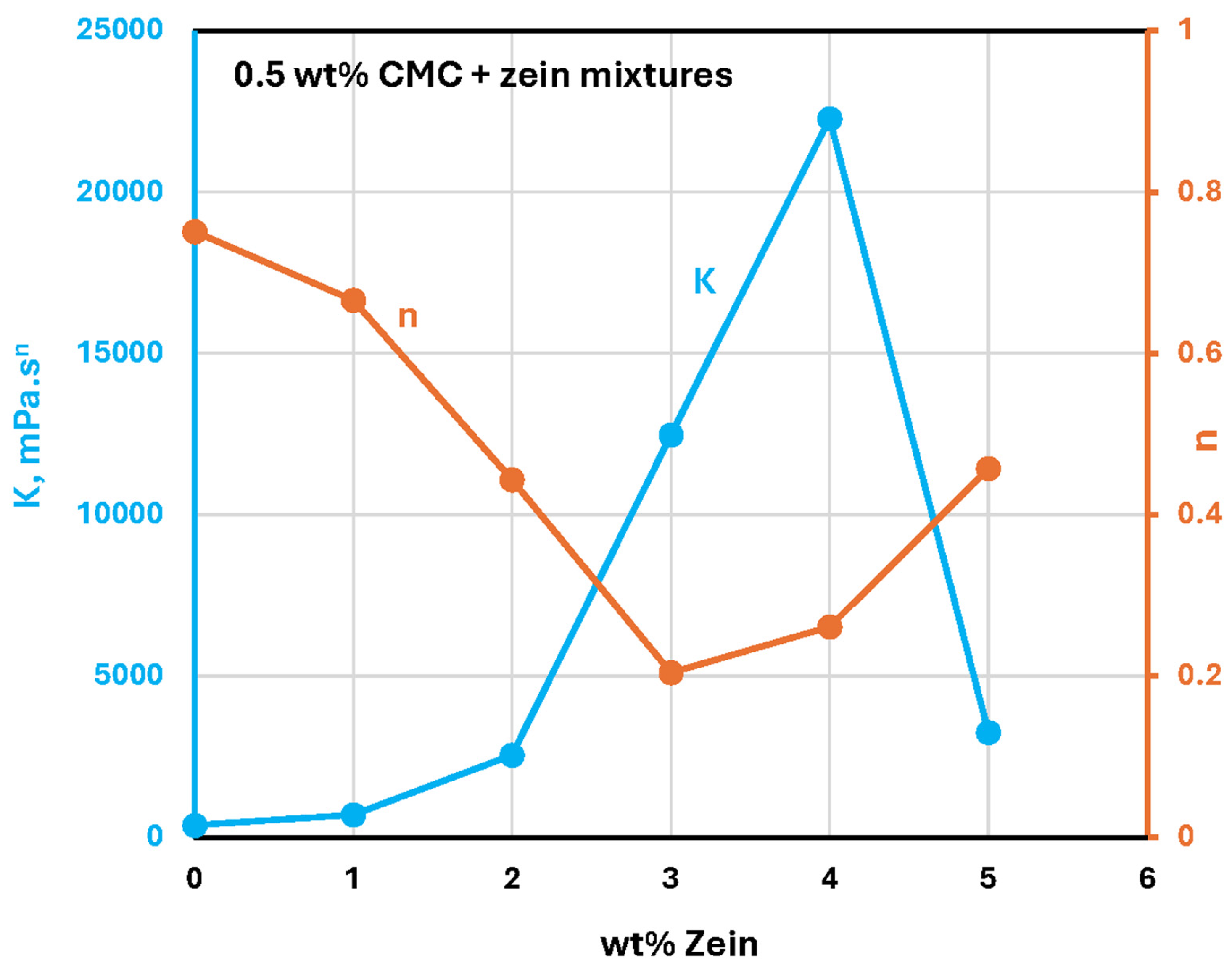
Figure 10.
Appearance of Zein-CMC dispersions at different Zein concentrations with CMC concentration fixed at 0.5 wt%.
Figure 10.
Appearance of Zein-CMC dispersions at different Zein concentrations with CMC concentration fixed at 0.5 wt%.
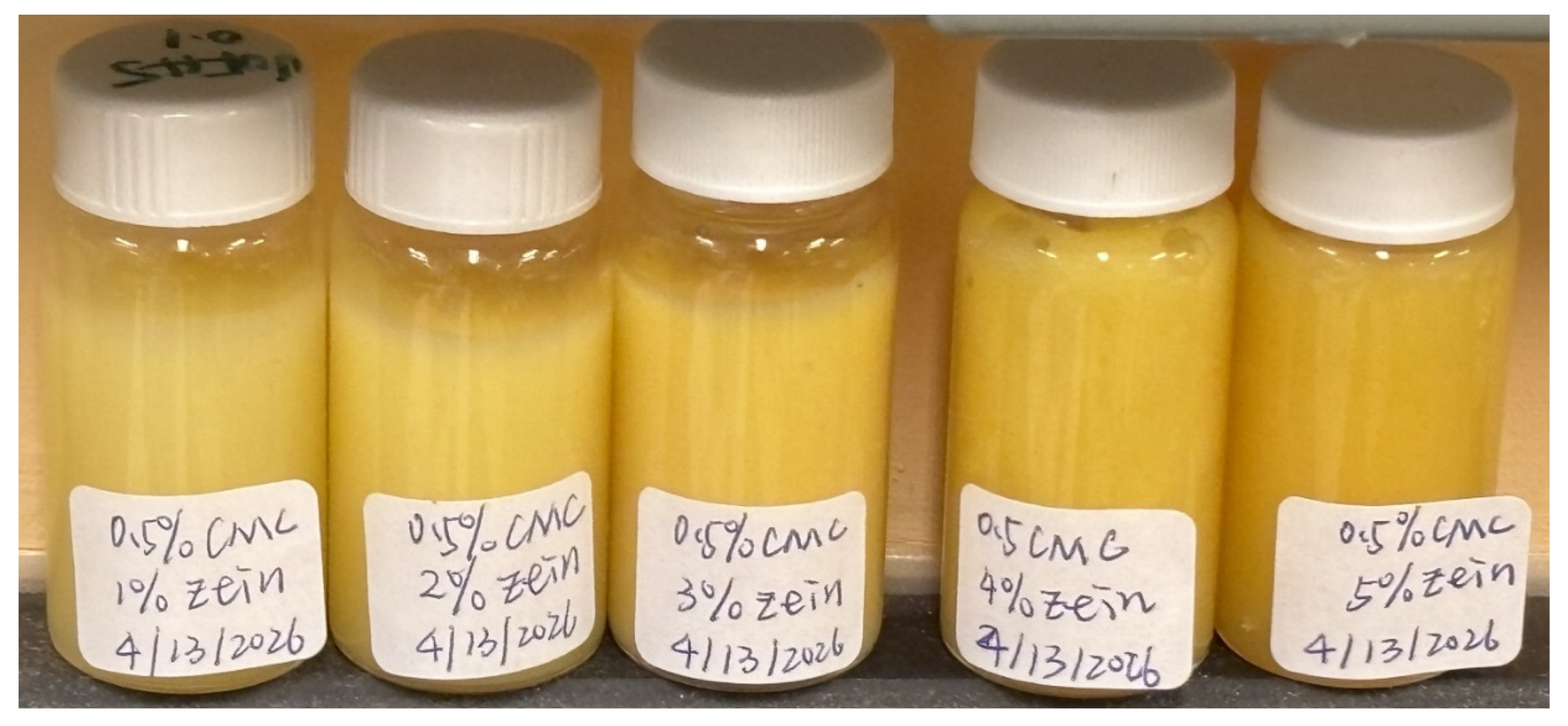
Figure 11.
Surface tension of pure CMC solutions (no Zein) and Zein-CMC dispersions as function of CMC concentration.
Figure 11.
Surface tension of pure CMC solutions (no Zein) and Zein-CMC dispersions as function of CMC concentration.
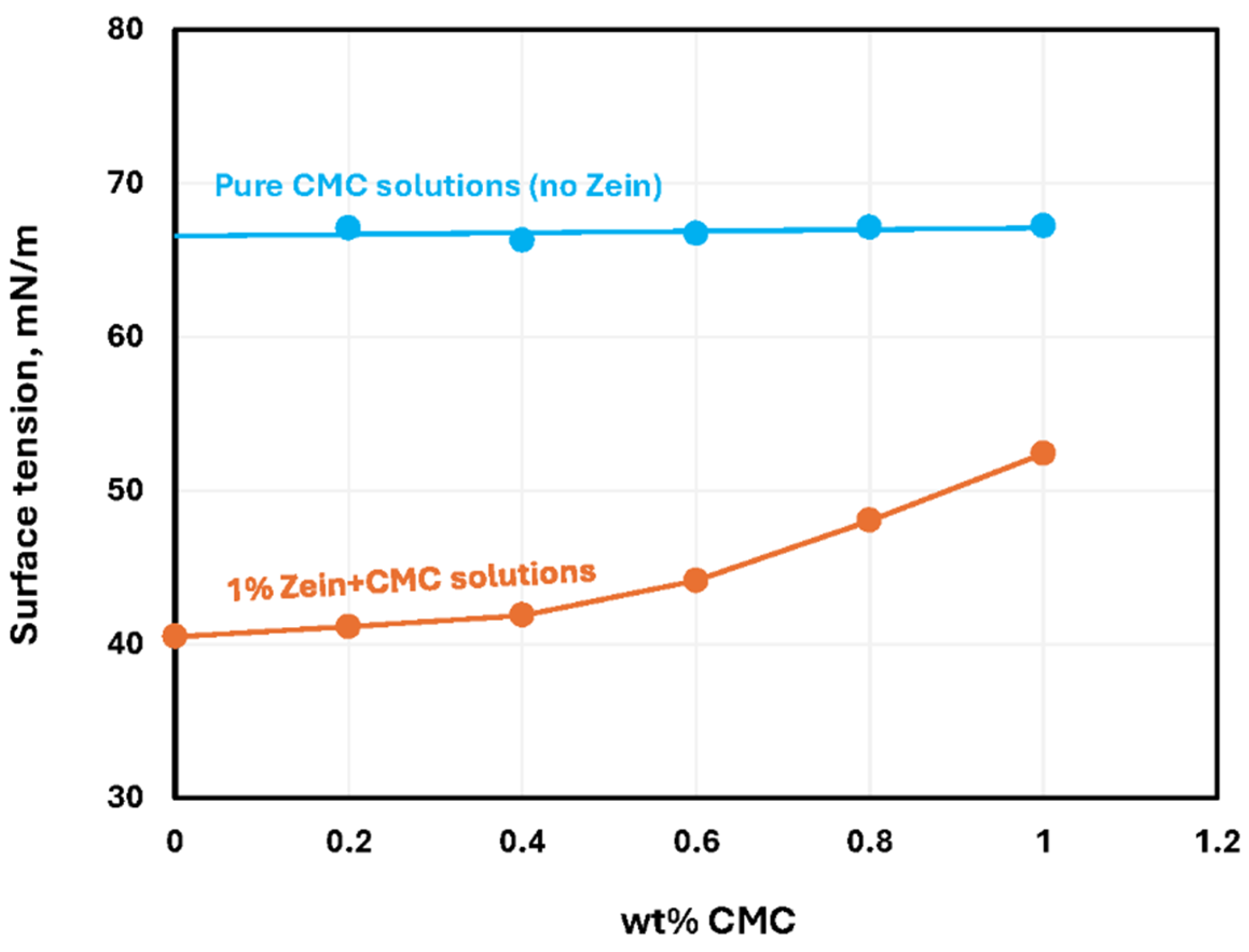
Figure 12.
Adsorption of Zein nanoparticles at the air/liquid interface at low and high concentrations of CMC.
Figure 12.
Adsorption of Zein nanoparticles at the air/liquid interface at low and high concentrations of CMC.
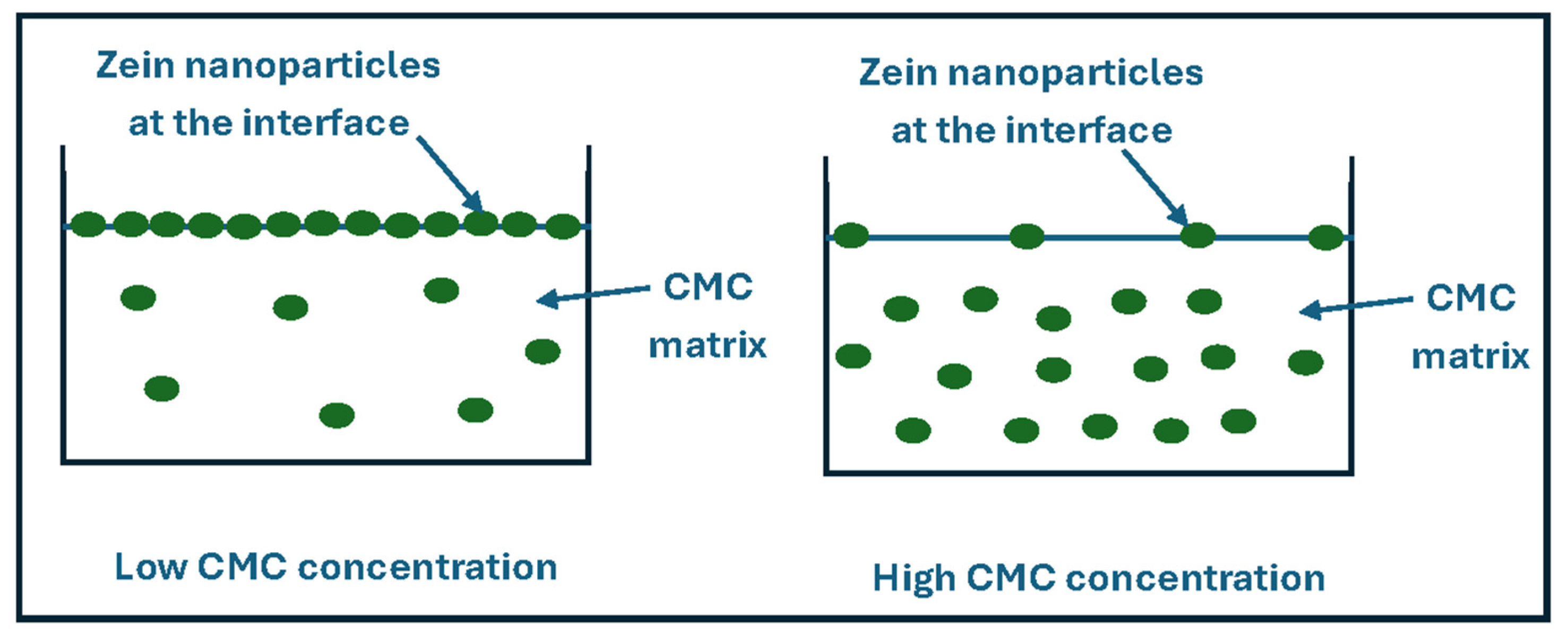
Figure 13.
Effect of Zein concentration on the surface tension of Zein-CMC dispersions at a fixed CMC concentration of 0.5 wt%.
Figure 13.
Effect of Zein concentration on the surface tension of Zein-CMC dispersions at a fixed CMC concentration of 0.5 wt%.
Figure 14.
Rheological behavior of pure XG solutions.
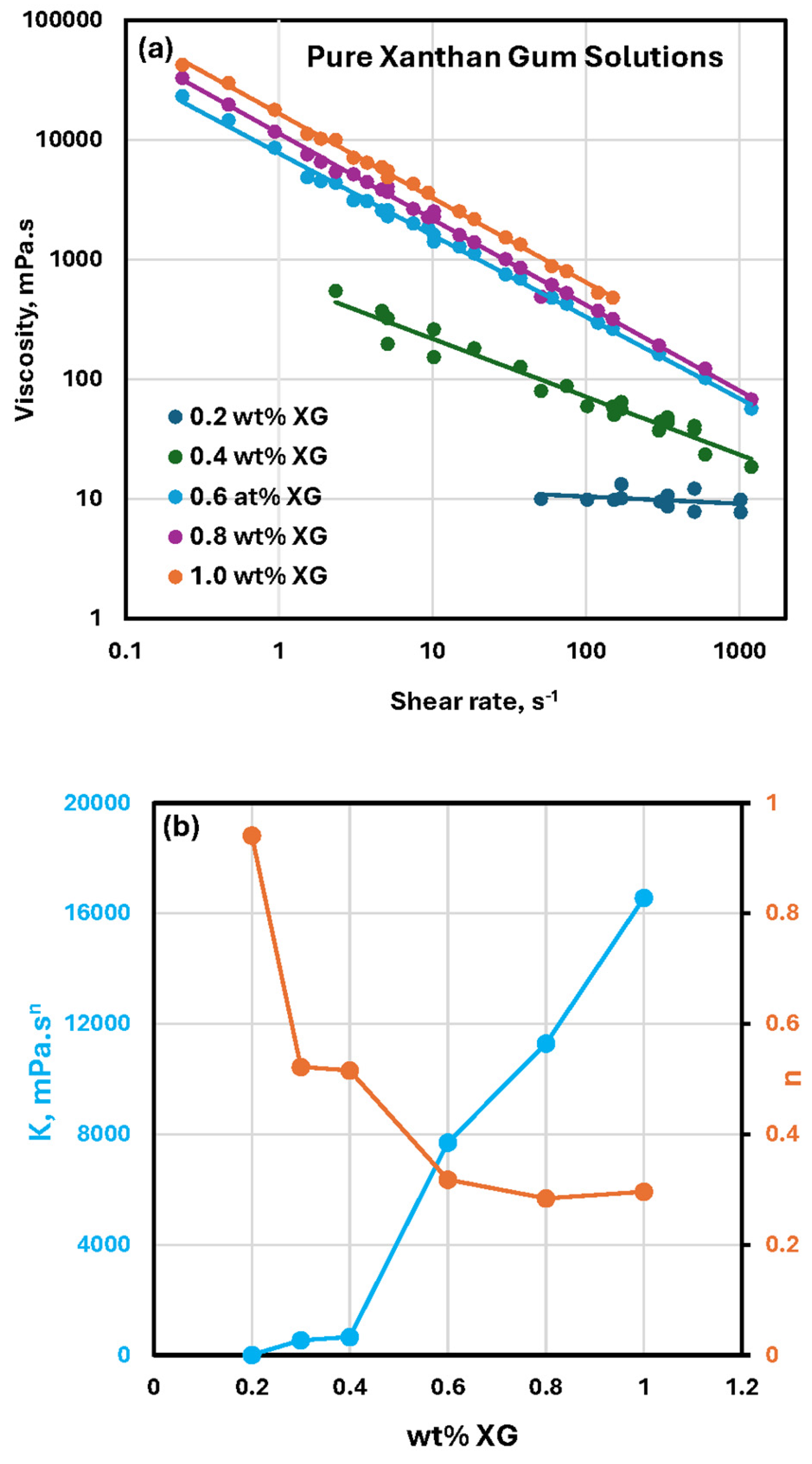
Figure 15.
Comparison of power law parameters of pure CMC and XG solutions.
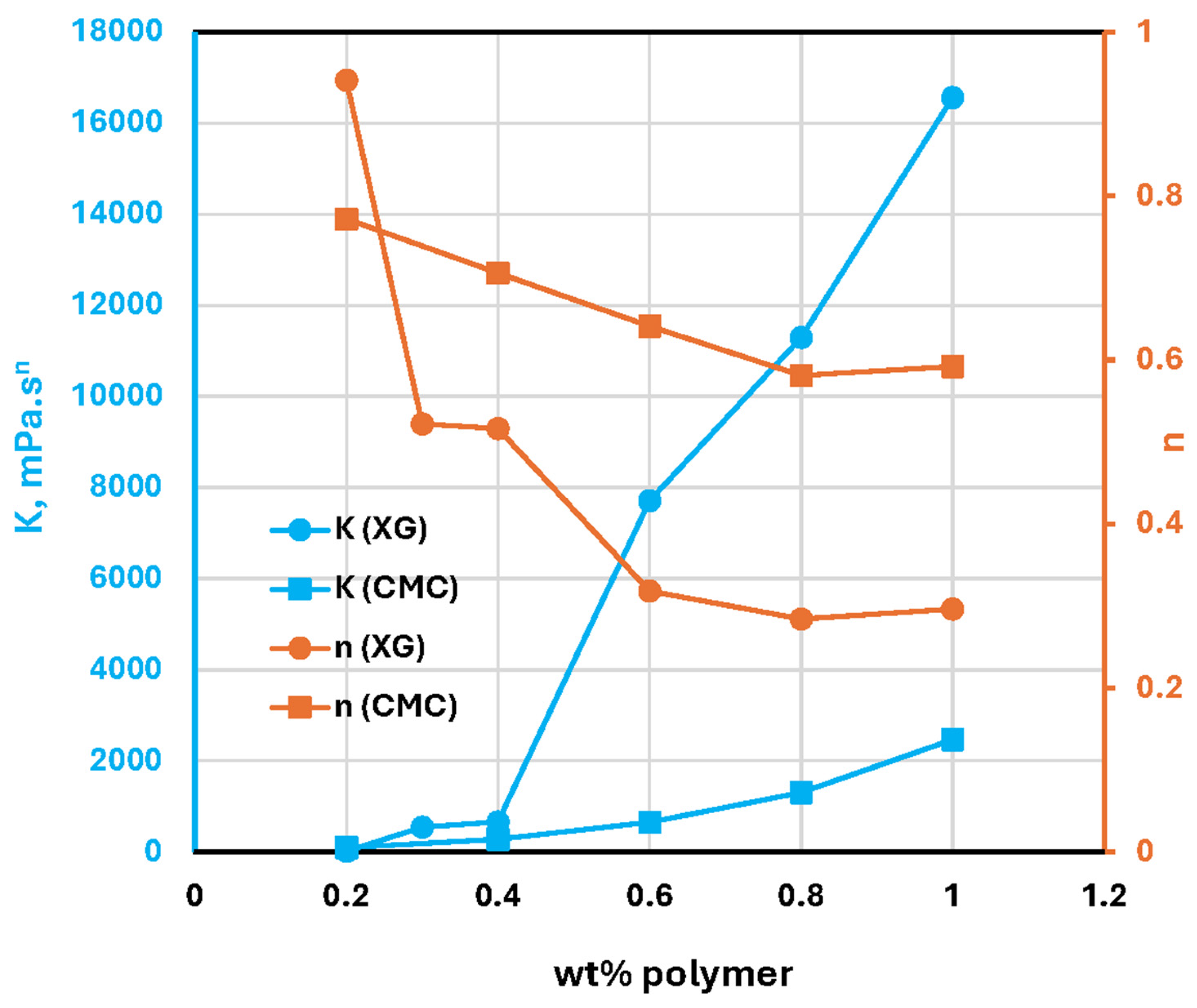
Figure 16.
Rheological behavior of Zein-XG dispersions.
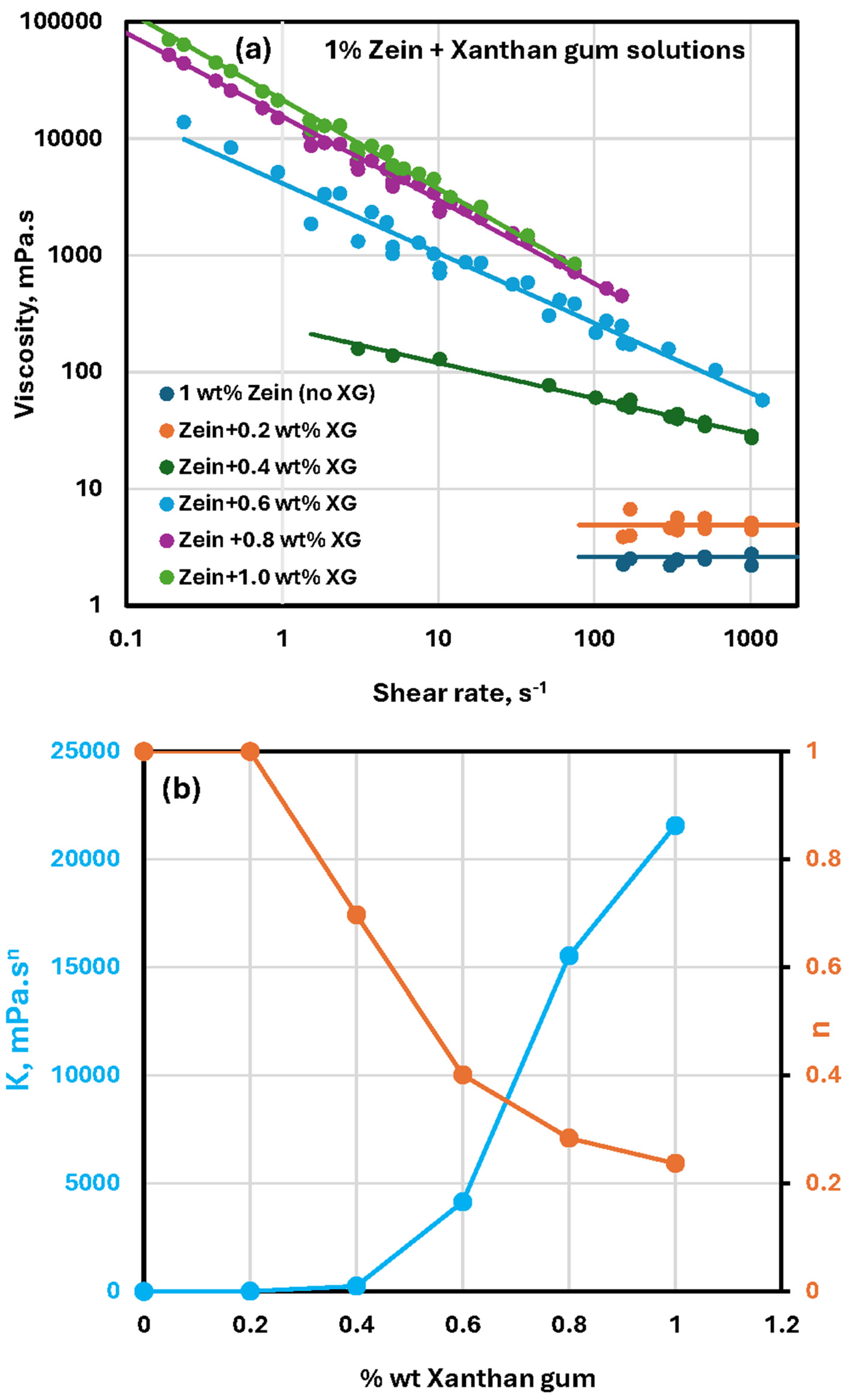
Figure 17.
Comparison of flow curves of Zein-XG dispersions with pure XG solutions.
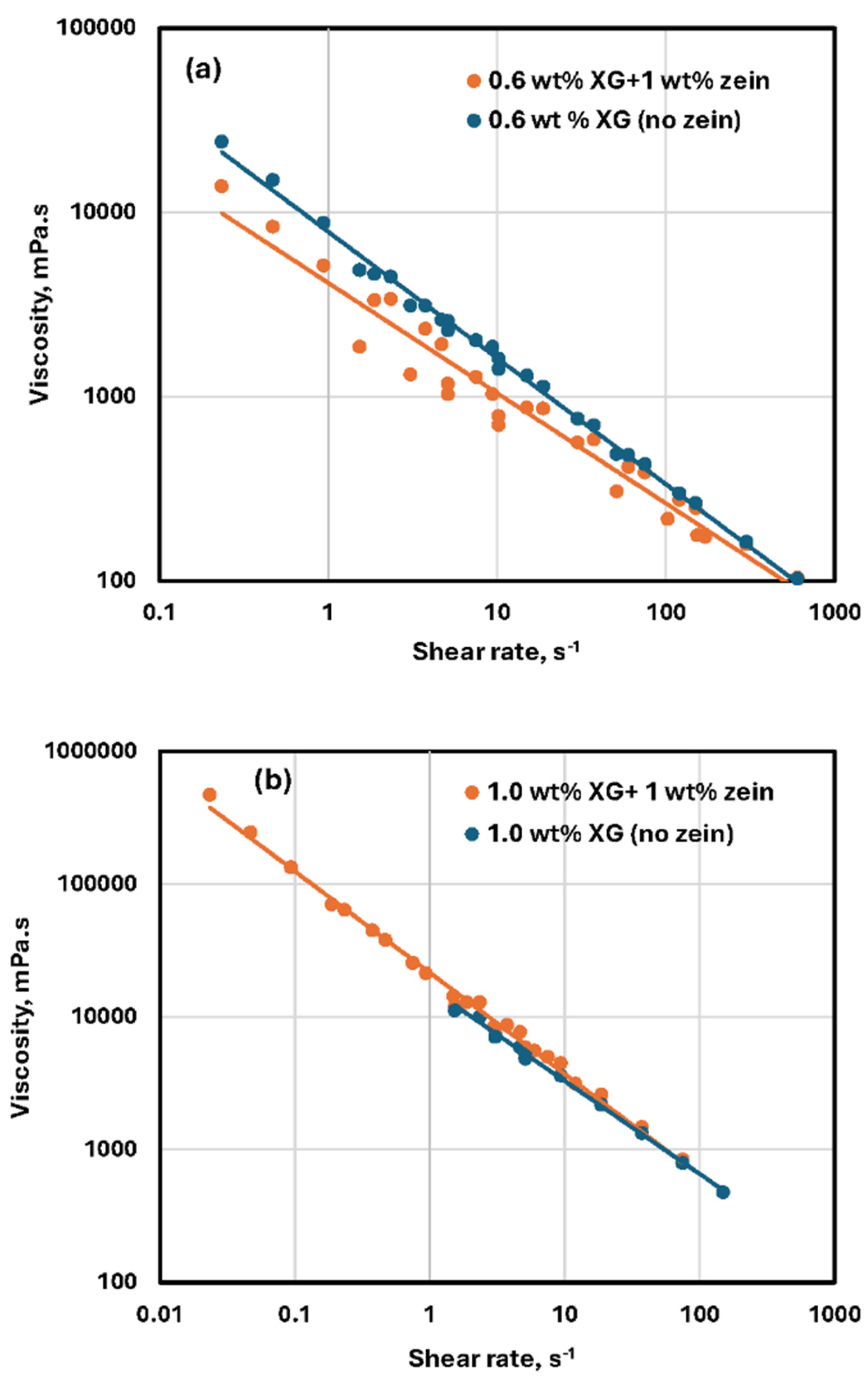
Figure 18.
Comparison of power-law parameters ( and ) of Zein-XG dispersions with pure XG solutions.
Figure 18.
Comparison of power-law parameters ( and ) of Zein-XG dispersions with pure XG solutions.
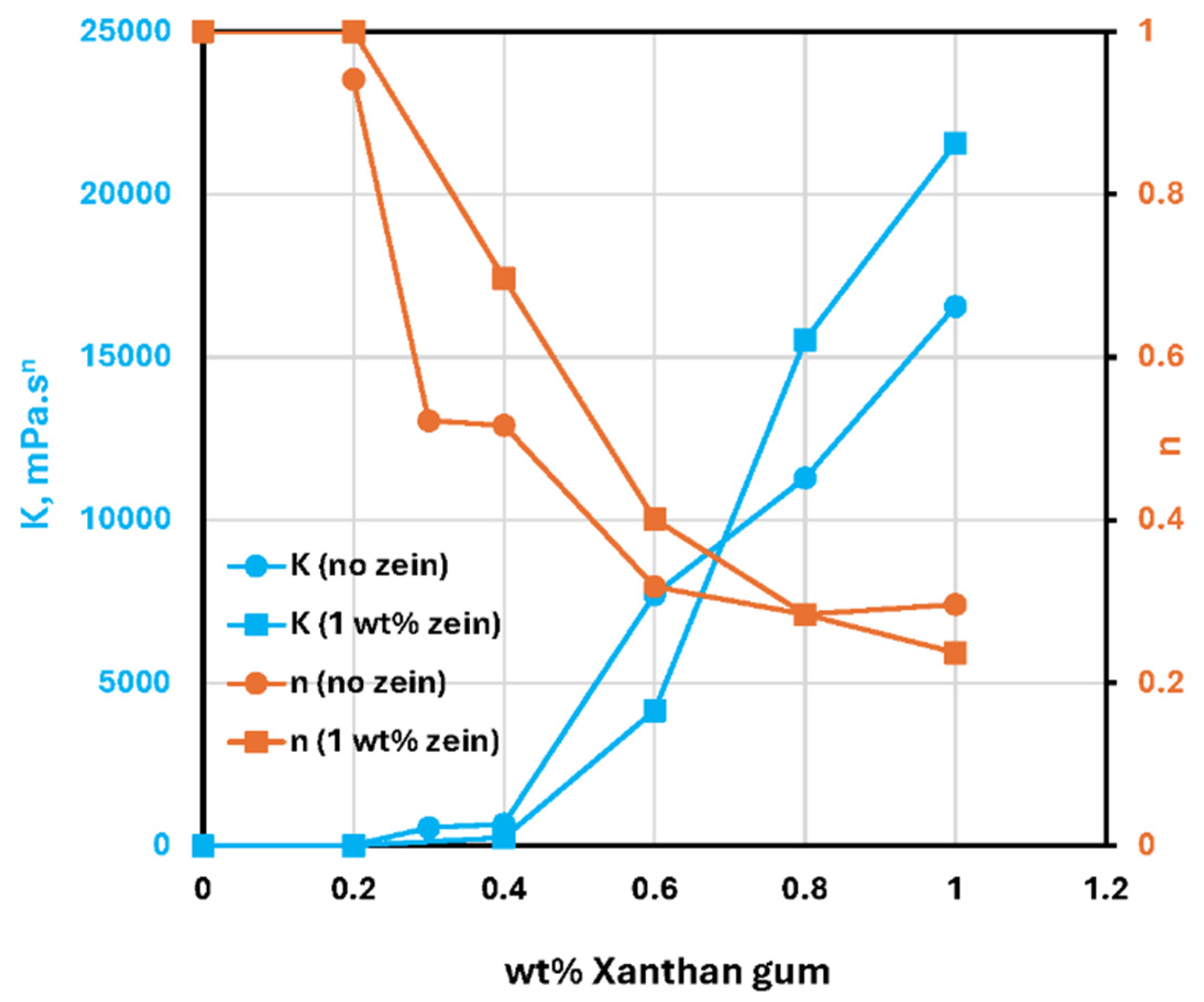
Figure 19.
Microstructural transition of Zein-XG composite networks.
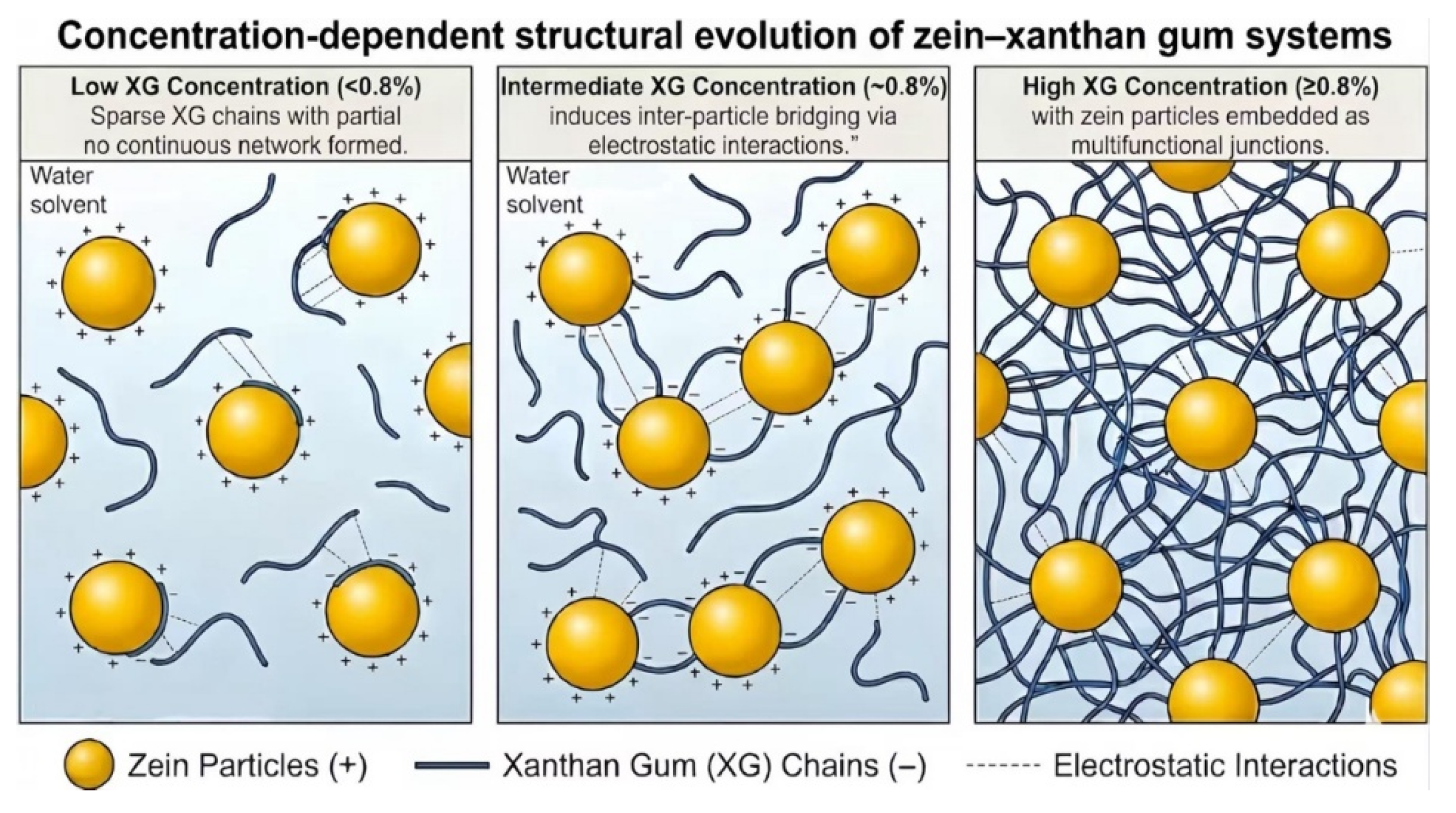
Figure 20.
SEM image of Zein-XG dispersion at XG concentration of 0.4 wt%.
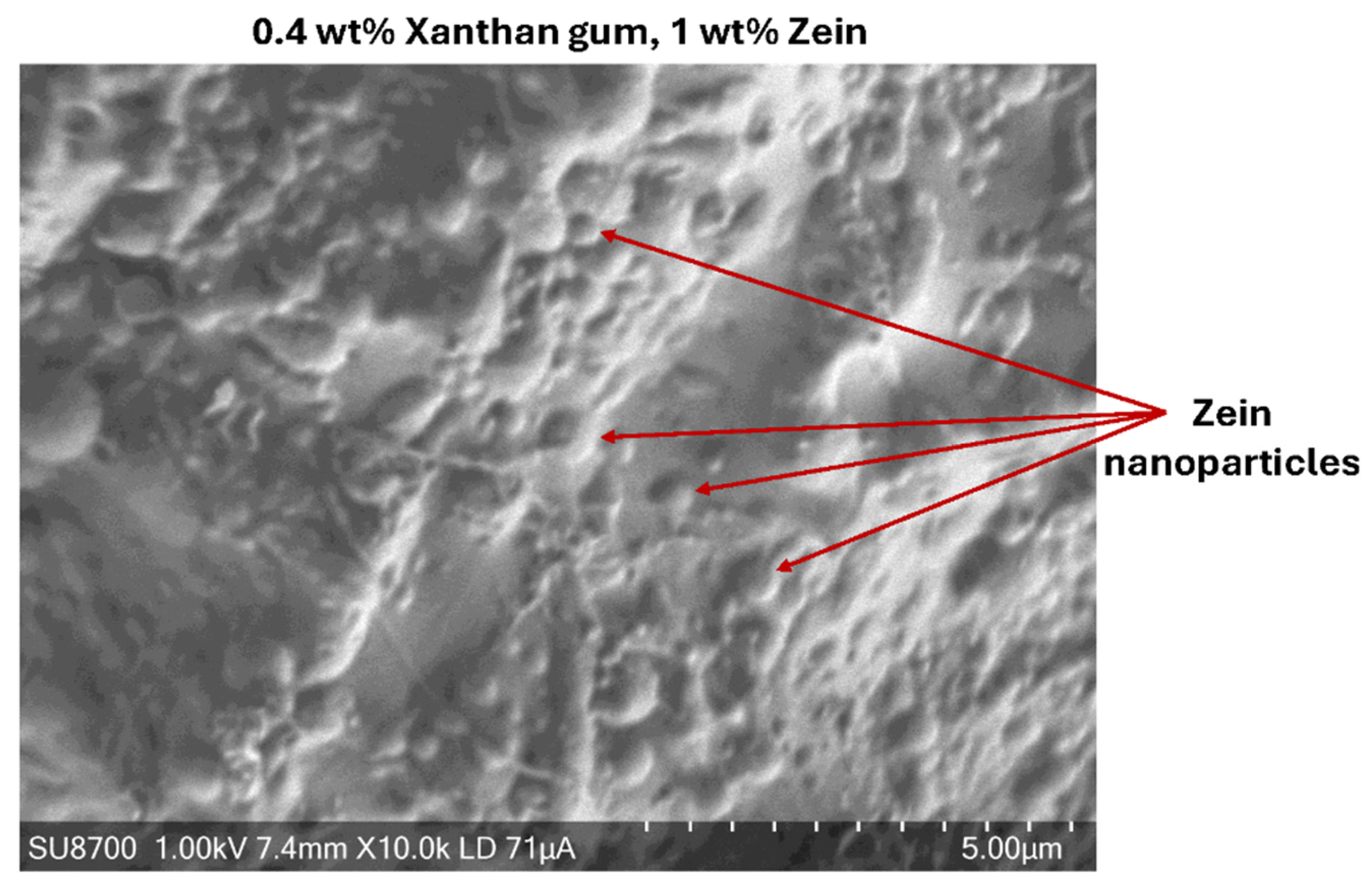
Figure 21.
Effect of Zein concentration on the rheological properties of Zein-XG dispersions at a fixed XG concentration of 0.5 wt%.
Figure 21.
Effect of Zein concentration on the rheological properties of Zein-XG dispersions at a fixed XG concentration of 0.5 wt%.
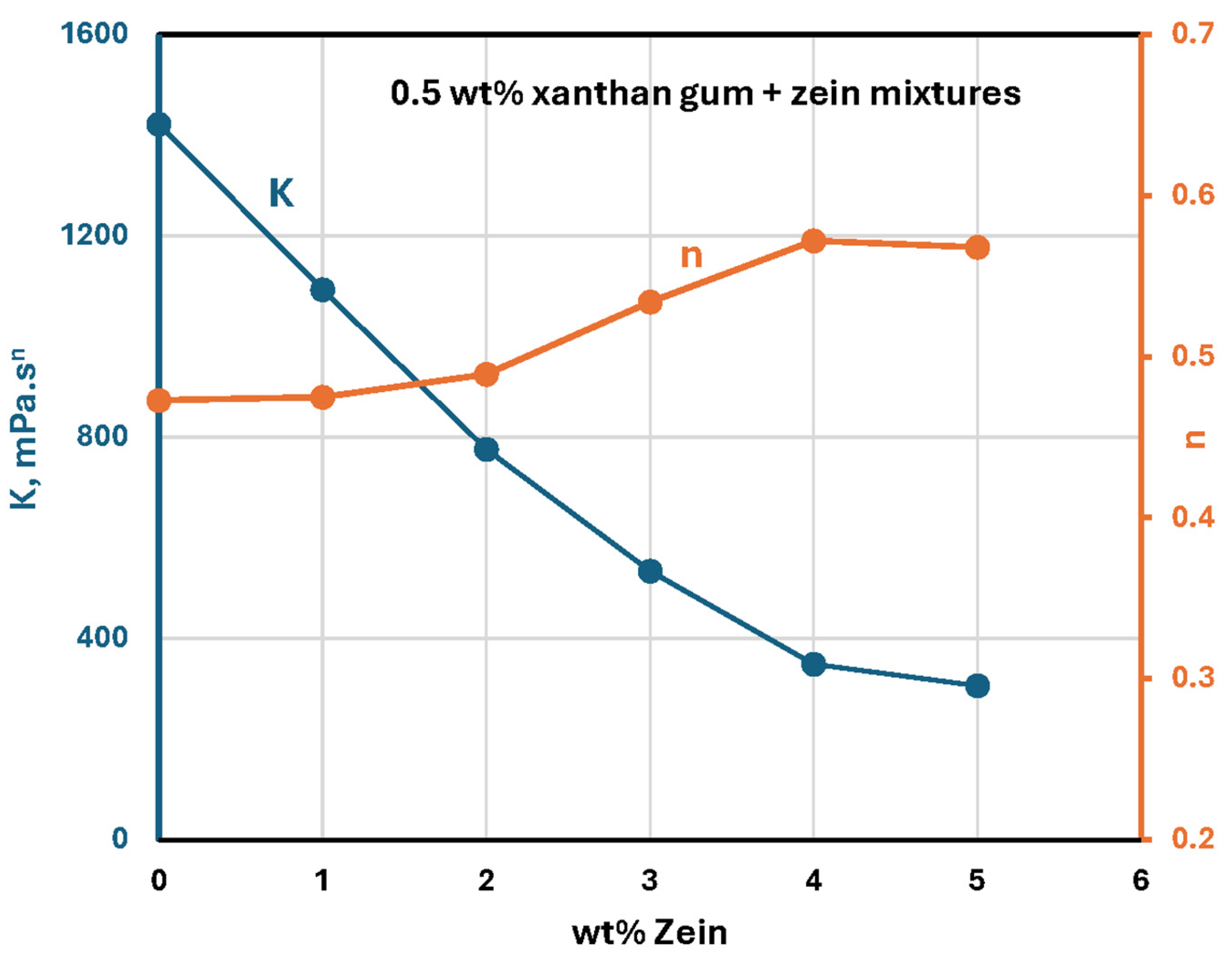
Figure 22.
Appearance of Zein-XG dispersions at different Zein concentrations with XG concentration fixed at 0.5 wt%.
Figure 22.
Appearance of Zein-XG dispersions at different Zein concentrations with XG concentration fixed at 0.5 wt%.
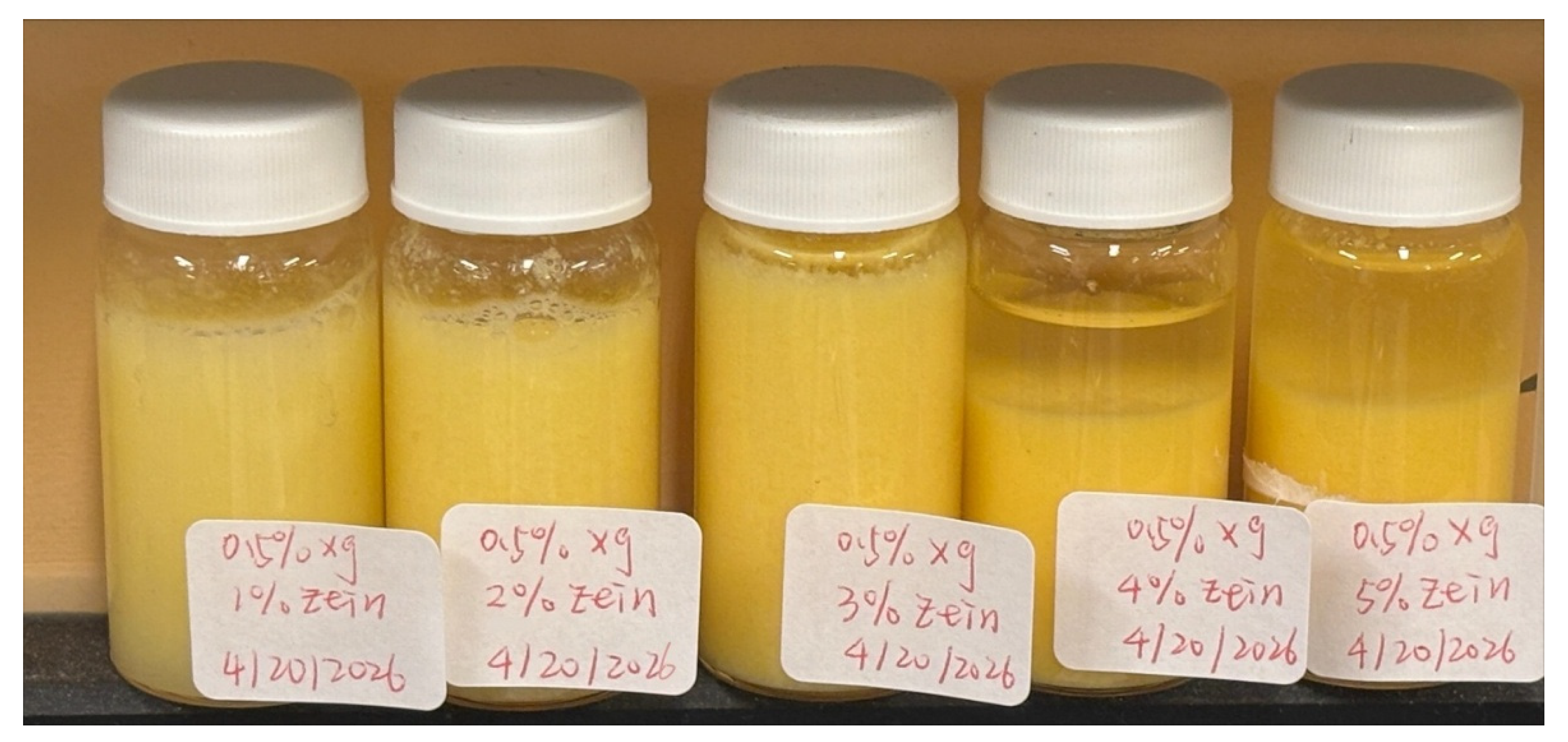
Figure 23.
Clumping/Clustering of Zein nanoparticles with the increase in Zein concentration.
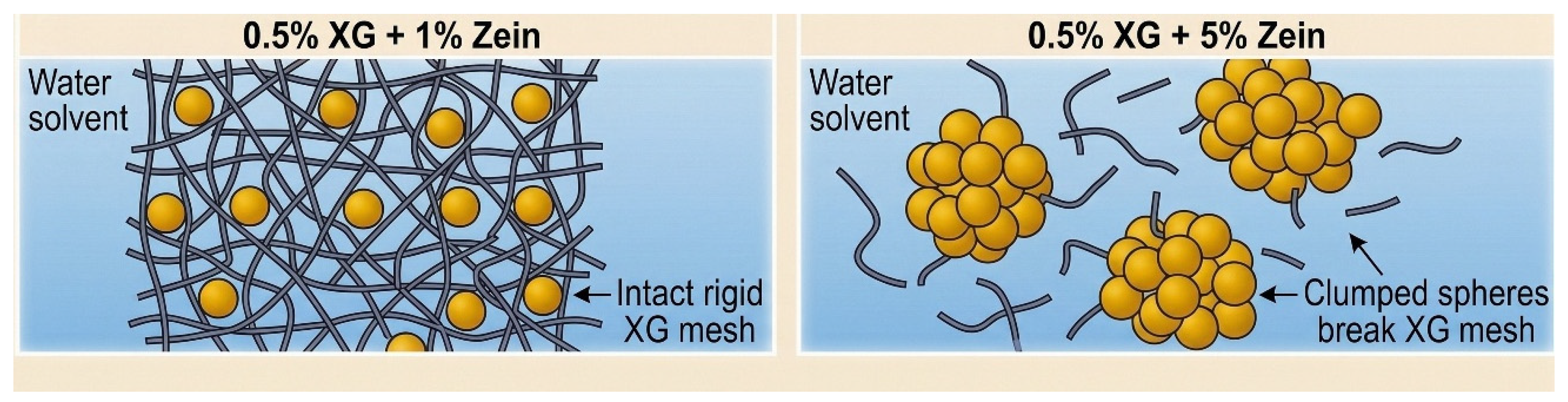
Figure 24.
SEM image of Zein-XG dispersion at Zein concentration of 5 wt%.
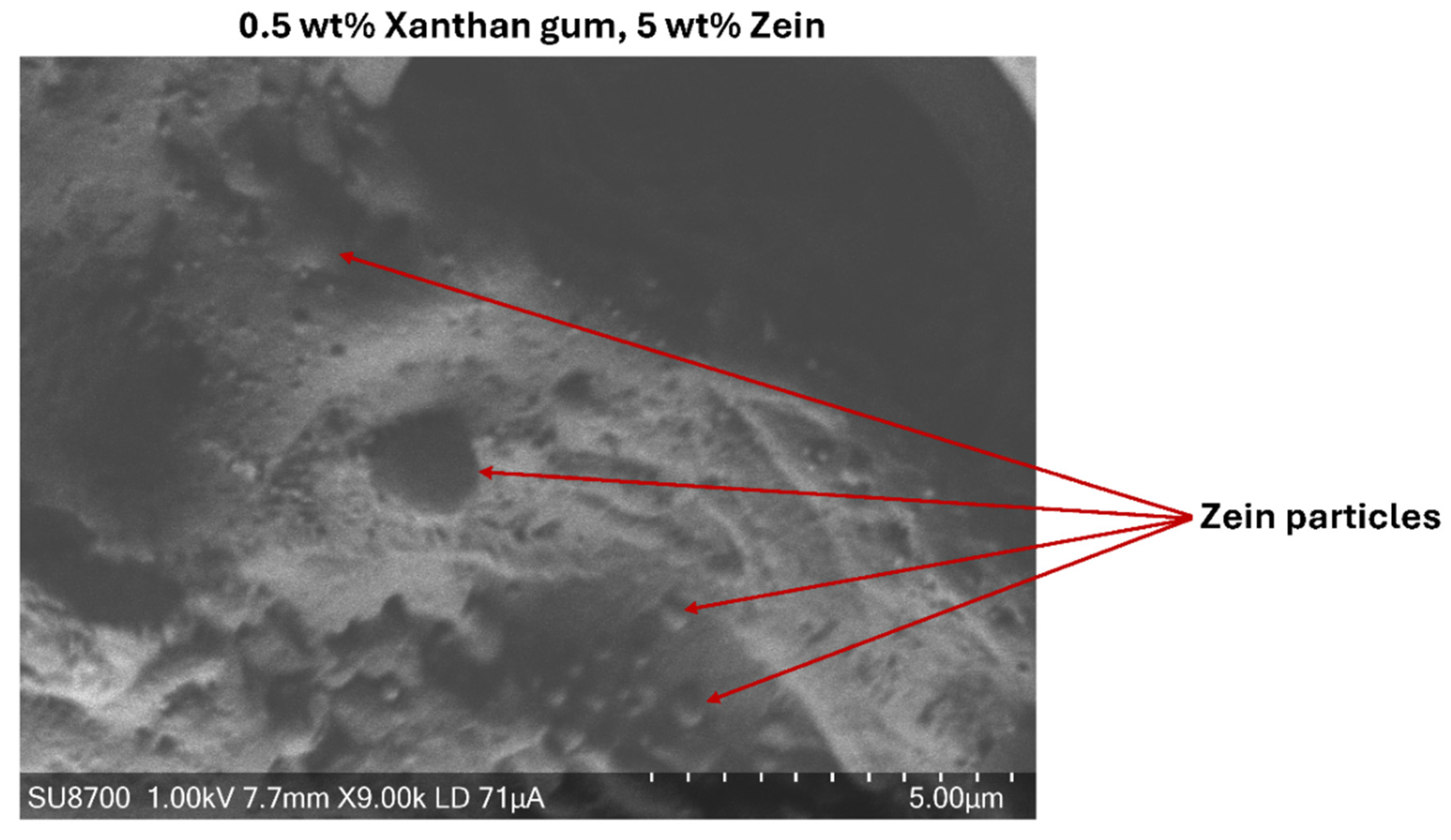
Figure 25.
Surface tension of pure XG solutions (no Zein) and Zein-XG dispersions as function of XG concentration.
Figure 25.
Surface tension of pure XG solutions (no Zein) and Zein-XG dispersions as function of XG concentration.
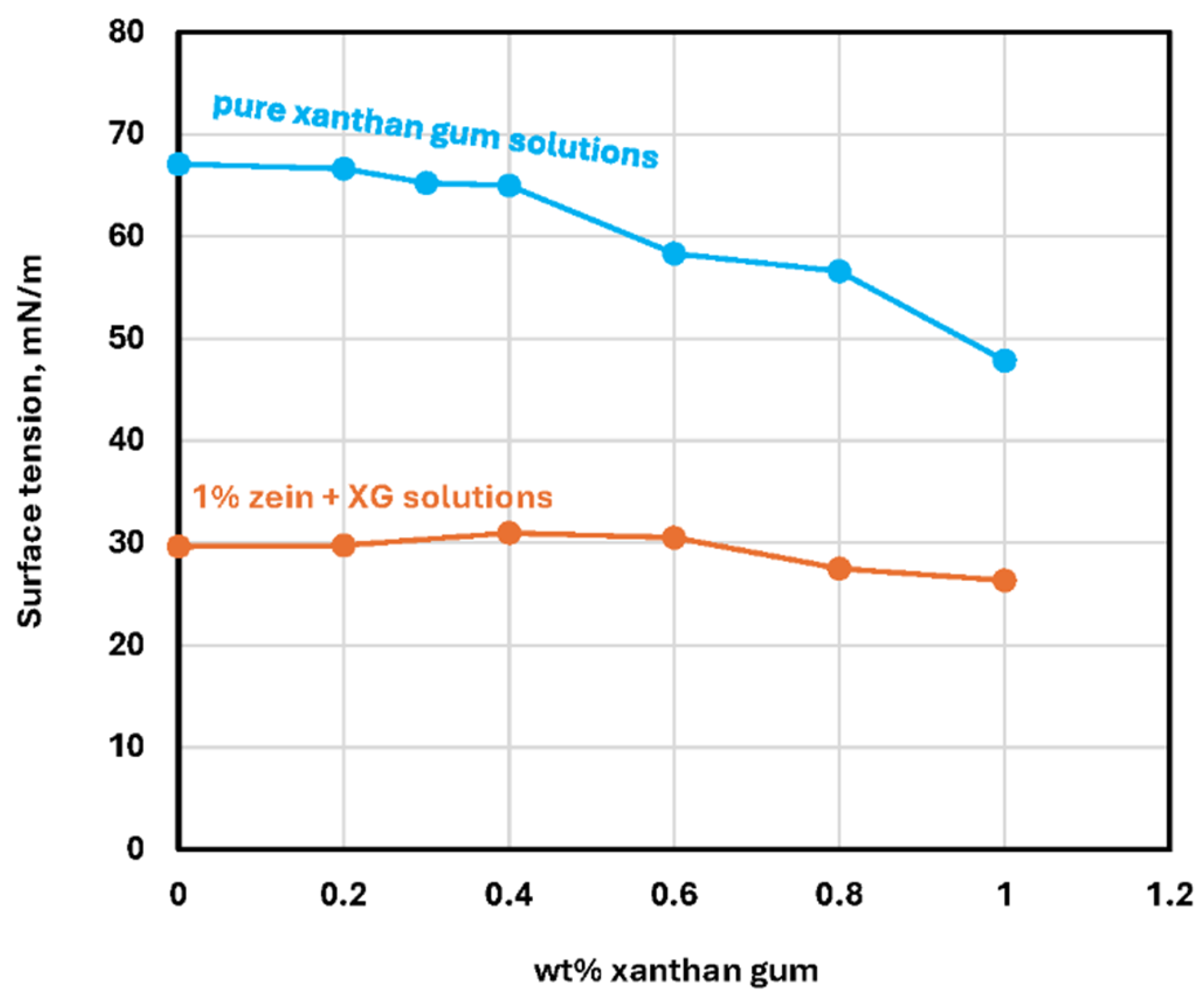
Figure 26.
Effect of Zein concentration on the surface tension of Zein-XG dispersions at a fixed XG concentration of 0.5 wt%.
Figure 26.
Effect of Zein concentration on the surface tension of Zein-XG dispersions at a fixed XG concentration of 0.5 wt%.
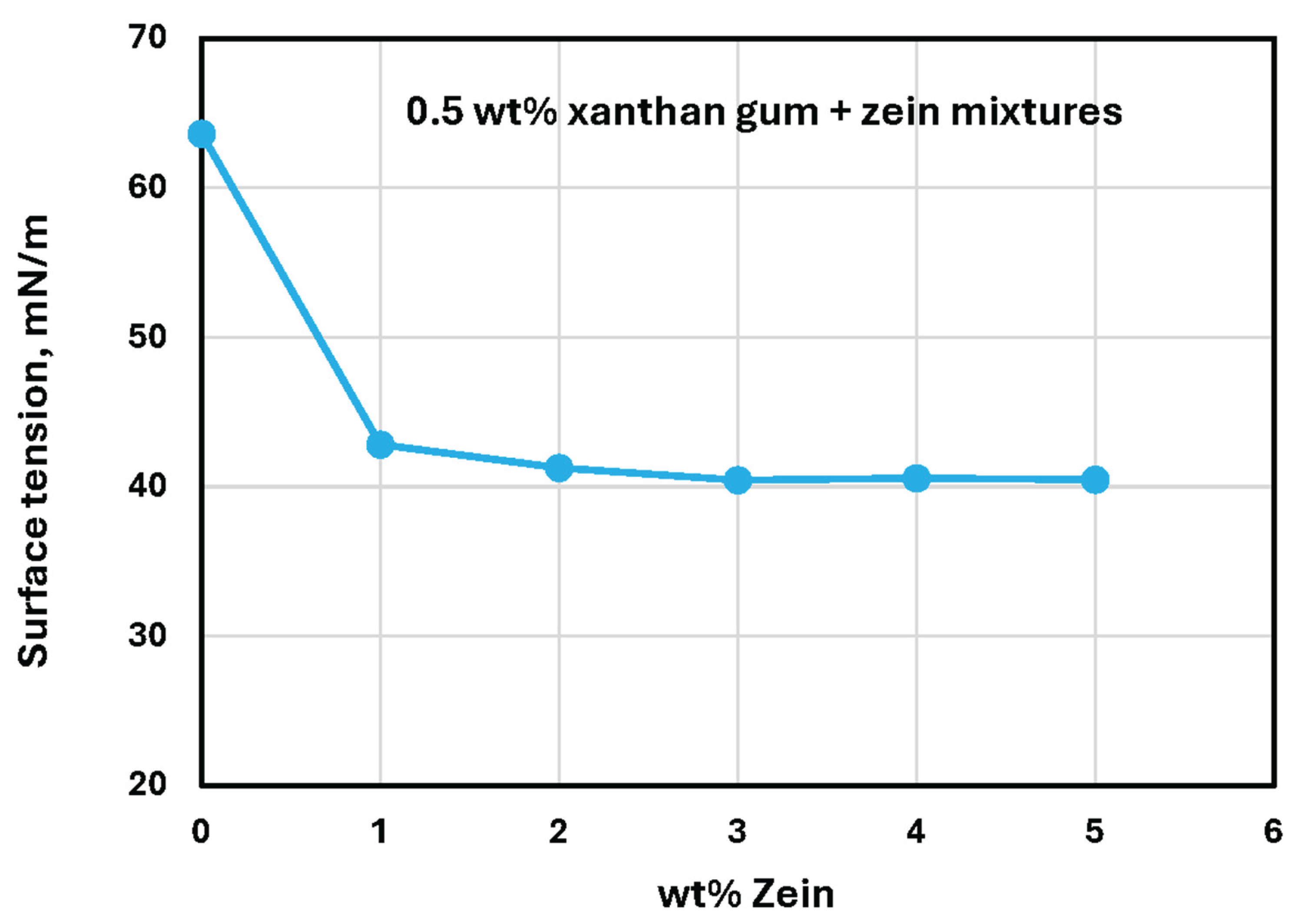

Table 1.
Radii and gap-widths of co-axial cylinders of viscometers.
| Viscometer type | Radius of Inner Cylinder, (cm) |
Radius of Outer Cylinder, (cm) |
Length of Inner Cylinder (cm) |
Gap-Width Between Cylinders (cm) |
|---|---|---|---|---|
| Fann viscometer (outer cylinder rotates, inner cylinder stationary) |
1.72 | 1.84 | 3.8 | 0.12 |
| Haake viscometer with MV I bob (inner cylinder rotates, outer cylinder stationary) |
2.00 | 2.1 | 6.0 | 0.10 |
Disclaimer/Publisher’s Note: The statements, opinions and data contained in all publications are solely those of the individual author(s) and contributor(s) and not of MDPI and/or the editor(s). MDPI and/or the editor(s) disclaim responsibility for any injury to people or property resulting from any ideas, methods, instructions or products referred to in the content. |
© 2026 by the authors. Licensee MDPI, Basel, Switzerland. This article is an open access article distributed under the terms and conditions of the Creative Commons Attribution (CC BY) license (http://creativecommons.org/licenses/by/4.0/).
Copyright: This open access article is published under a Creative Commons CC BY 4.0 license, which permit the free download, distribution, and reuse, provided that the author and preprint are cited in any reuse.