

Submitted:
13 September 2026
Posted:
15 September 2026
You are already at the latest version
Abstract
Academic stress is a widespread problem in higher education, with examinations and the periods preceding them constituting the main sources of acute stress. This systematic review, conducted in accordance with the PRISMA 2020 statement, synthesizes evidence on levels of acute academic stress, associated factors, consequences, and coping strategies among university students. A comprehensive search of Web of Science and Scopus identified 248 records. After removing 76 duplicates, 172 unique records were screened by title and abstract (90% inter-rater agreement), of which 97 were excluded. Of the 75 reports sought for retrieval, 20 could not be retrieved, and the 55 assessed in full text yielded 25 included studies. Narrative synthesis revealed that acute examination-related stress is highly prevalent and is associated with risk factors such as a heavy academic workload, low self-efficacy, and limited coping mechanisms. The most common consequences included increased anxiety, sleep disturbances, emotional exhaustion, and depressive symptoms, whereas associations with academic performance were less consistent. By contrast, resilience, social support, self-regulation, and physical activity were consistently associated with lower levels of academic stress. These findings highlight the need for higher education institutions to implement targeted preventive strategies and evidence-based interventions to foster psychological well-being and adaptive capacity.
Keywords:
academic stress
; examination stress
; university students
; mental health
; psychological well-being
; higher education
1. Introduction
Stress is one of the most extensively studied psychological phenomena in the fields of health, psychology, and education, owing to its implications for well-being, cognitive functioning, and individuals’ adaptation to environmental demands. From a biological standpoint, Selye (1956) defined stress as the organism’s nonspecific response to any external demand. This conception was subsequently broadened by cognitive approaches that emphasized the role of subjective interpretations of potentially stressful situations. In this vein, the transactional model proposed by Lazarus and Folkman (1984) held that stress does not depend solely on the objective characteristics of the environment but also on the individual’s appraisal of perceived demands and the resources available to meet them. From this perspective, stress emerges when a person judges that the demands of a situation exceed their capacity to respond.
Higher education constitutes a particularly relevant context for the study of stress, given the multiplicity of academic, personal, and social demands that converge during the university years. Entering the university system entails facing new challenges related to autonomous learning, time management, adaptation to different teaching methods, establishing new social relationships, and planning one’s professional future (Misra & McKean, 2000; Robotham & Julian, 2006). As a result, numerous studies have identified university students as one of the population groups most vulnerable to experiencing high levels of stress and psychological distress (Beiter et al., 2015; Stallman, 2010).
In recent years, student mental health has gained increasing prominence on institutional and research agendas in higher education. Various international studies have documented a high prevalence of symptoms of anxiety, depression, emotional exhaustion, and other psychological problems among university students (Auerbach et al., 2016; Liu et al., 2023). Recent research has likewise indicated that these problems are negatively associated with subjective well-being, quality of life, academic engagement, and study continuity (Ribeiro et al., 2024; Sharp & Theiler, 2018). This situation has driven the development of initiatives aimed at promoting psychological well-being as a fundamental component of the university experience (Ryan et al., 2022).
Against this backdrop, academic stress has emerged as one of the most relevant concepts for understanding students’ adaptation to the demands inherent in higher education. Academic stress has been defined as the set of cognitive, emotional, physiological, and behavioral responses that students experience when they perceive an imbalance between educational demands and the resources available to meet them (Barraza, 2006; Bedoya-Lau et al., 2006). From this perspective, academic stress is not an isolated event but rather a dynamic process involving the continuous interaction among stressors, psychological responses, and coping mechanisms (Barraza, 2007).
The available evidence suggests that prolonged exposure to high levels of academic stress may be associated with negative consequences for students’ physical and mental health. Various studies have linked academic stress to heightened anxiety, depressive symptoms, emotional exhaustion, adjustment difficulties, and impaired psychological well-being (Pascoe et al., 2020). Understanding the factors that contribute to its onset is therefore a priority for both researchers and institutional decision-makers.
From a theoretical standpoint, several models have helped explain the mechanisms involved in the development of academic stress. The transactional model of Lazarus and Folkman (1984) remains one of the most influential approaches, emphasizing the importance of cognitive appraisal processes in the perception of academic demands. According to this model, the impact of a given academic situation may vary considerably among students depending on their appraisal of their ability to respond to it.
In addition, the Job Demands–Resources model developed by Bakker and Demerouti (2007) proposes that well-being depends on the balance between environmental demands and the resources available to address them. Although originally formulated for the workplace, this model has demonstrated strong explanatory power in educational settings, where academic demands can lead to exhaustion when they exceed available personal or institutional resources (Salmela-Aro & Upadyaya, 2014). Hobfoll’s (1989) conservation of resources theory, in turn, proposes that stress arises when individuals perceive actual or potential losses of valued resources such as time, energy, social support, or self-esteem. This perspective is especially useful for understanding stress responses in university settings characterized by high levels of demand and competition.
The scientific literature has identified multiple potentially stressful factors within the university context. Prominent among them are academic workload, deadlines, difficulties in managing time, financial concerns, performance expectations, and uncertainty about one’s professional future (Misra & McKean, 2000; Robotham & Julian, 2006; Ryan et al., 2010). However, various studies suggest that certain academic demands have a particularly high potential to generate stress. Among these, assessment processes have received special attention owing to their relevance to academic progress and educational outcomes. This relationship between academic pressure and psychological distress has been observed consistently in both university students and adolescent populations, suggesting that assessment demands may constitute a risk factor common to different educational stages (Steare et al., 2023).
Assessment is an essential component of higher education systems, as it enables the evaluation of the acquisition of knowledge, competencies, and learning outcomes. However, it also represents a significant source of psychological pressure for many students. Test anxiety has been conceptualized as an emotional response characterized by worry, physiological arousal, and negative thoughts related to evaluative situations (Cassady & Johnson, 2002). Numerous studies have shown that this specific type of anxiety can interfere with cognitive processing, concentration, and academic performance (Putwain, 2007; Zeidner, 1998).
Moreover, the transformations undergone by university systems in recent decades have increased the complexity of assessment processes. The introduction of continuous assessment models, the use of competency-based methodologies, and the diversification of assessment activities have significantly altered the demands placed on students (Boud & Falchikov, 2007). At the same time, interest has grown in understanding how these demands may influence student mental health and well-being (Pascoe et al., 2020; Putwain, 2024).
Alongside the analysis of academic demands, recent research has begun to devote greater attention to the personal and contextual resources that support students’ adaptation to demanding academic environments. Variables such as resilience, self-efficacy, emotional intelligence, and adaptive coping strategies have been identified as relevant factors for well-being and academic success (Fernández-Martín et al., 2022). Likewise, social support from peers, faculty, and educational institutions appears to play a fundamental role in reducing the negative impact of stressful situations.
These findings have contributed to the consolidation of perspectives that regard student well-being as a shared responsibility between students and educational institutions. Consequently, various authors have argued for the need to develop comprehensive approaches that include not only interventions targeting students but also measures aimed at improving teaching practices, assessment systems, and institutional support resources (Ryan et al., 2022).
Over the past decade, there has been a notable increase in systematic reviews and meta-analyses focusing on different manifestations of psychological distress associated with university life. In particular, reviews have addressed perceived stress in university students (Fentahun et al., 2025), academic anxiety and test anxiety (Cassady et al., 2025; Idoiaga-Mondragon et al., 2025), the relationship between stress and sleep disturbances (Gardani et al., 2022), academic pressure and mental health (Steare et al., 2023), and interventions aimed at reducing stress or anxiety in university settings (Dawson et al., 2020; Huntley et al., 2019). Taken together, these reviews have contributed significantly to understanding the impact of stress on the well-being and mental health of university students.
However, the available review literature presents several methodological limitations that hinder the drawing of robust conclusions. Various authors have noted the predominance of cross-sectional studies, which restricts the ability to establish causal relationships between academic stress and its consequences (Fentahun et al., 2025; Gardani et al., 2022; Steare et al., 2023). Marked heterogeneity has also been observed in the instruments used to measure stress, anxiety, and related variables, with a wide range of scales, indicators, and classification criteria that hamper comparisons across studies and the conduct of rigorous quantitative syntheses (Cassady et al., 2025; Gardani et al., 2022; Idoiaga-Mondragon et al., 2025). These methodological limitations continue to represent one of the main challenges to consolidating knowledge in this field.
Beyond these methodological limitations, an important conceptual gap persists regarding the delimitation of the construct under study. Most existing reviews have examined academic stress in general terms, academic anxiety, or student mental health in a broad sense, without specifically isolating stress associated with university examinations and assessment processes (Cassady et al., 2025; Idoiaga-Mondragon et al., 2025; Steare et al., 2023). Similarly, recent reviews of academic stress in university students have synthesized evidence on the prevalence, causal factors, and psychological implications of the phenomenon from a broad perspective, without focusing specifically on assessment periods (Hadi et al., 2025). Reviews centered on interventions likewise tend to address different forms of anxiety or stress without focusing exclusively on assessment processes (Huntley et al., 2019).
As a result, synthesized evidence on the associated factors, manifestations, consequences, and coping strategies specifically linked to acute stress experienced during university examinations remains limited. This gap justifies the need for a systematic review focused exclusively on this particular context of academic stress.
Despite these advances, the literature continues to display considerable methodological heterogeneity in terms of research designs, assessment instruments, and variables analyzed. This heterogeneity hinders the integration of the available evidence and limits the possibility of drawing robust conclusions about the associated factors, manifestations, consequences, and coping strategies related to stress experienced during university assessment periods.
There is therefore a need for an up-to-date and rigorous synthesis of the scientific literature to provide a specific understanding of academic stress associated with university examinations and assessment processes. A better understanding of this phenomenon can inform the design of evidence-based interventions, institutional well-being programs, and support resources for students and faculty. In this respect, generating knowledge about academic stress may provide a relevant foundation for the future development of guidelines and tools for university teaching staff aimed at facilitating the early detection of at-risk situations and the creation of healthier learning environments that are more conducive to student well-being.
In response to the gaps identified in the literature, the present systematic review was conducted in accordance with the PRISMA 2020 guidelines (Page et al., 2021), with the aim of synthesizing the available evidence on academic stress associated with examinations and assessment processes among university students. Particular attention was paid to identifying academic stressors; psychological, physiological, and behavioral manifestations; associated consequences; risk and protective factors; and coping strategies described in the literature.
To guide the review process, the following research questions were formulated:
RQ1. What are the main academic stressors associated with examinations and assessment processes among university students?
RQ2. What psychological, physiological, and behavioral manifestations of examination-related academic stress have been described?
RQ3. What consequences for mental health, physical health, and academic performance have been associated with academic stress during examination periods?
RQ4. What risk and protective factors have been identified in relation to examination-related academic stress among university students?
RQ5. What coping strategies have university students described for managing academic stress during examination and assessment periods?
2. Method
2.1. Review Design
The present study was conducted as a systematic literature review with the aim of analyzing the available scientific evidence on academic stress among university students during ordinary assessment contexts. The study focused on identifying and synthesizing existing knowledge about the factors associated with examination stress, its manifestations, its consequences, and the coping strategies described in the scientific literature.
To ensure the transparency, methodological rigor, and reproducibility of the review process, the study followed the guidelines set out in the PRISMA 2020 statement (Preferred Reporting Items for Systematic Reviews and Meta-Analyses; Page et al., 2021). In addition, the formulation of the research question and the definition of the eligibility criteria were guided by the PICOS strategy, which is widely used in systematic reviews to structure and delimit the object of study.
The review process was structured into several phases, including the identification of potentially relevant studies, the application of predefined eligibility criteria, the screening and selection of studies, the systematic extraction of information, and the synthesis of the findings. These stages helped ensure methodological consistency throughout the process and minimize potential bias in the selection of scientific evidence.
The review focused exclusively on academic publications indexed in the selected databases, considering only those studies that met the previously established inclusion criteria. Specific exclusion criteria were also defined to ensure the appropriateness, quality, and relevance of the studies included in the final analysis.
Finally, the selected studies underwent a systematic process of data extraction and analysis, which made it possible to identify the main characteristics of the scientific literature related to the object of study, as well as the predominant trends, methodological approaches, and findings in the reviewed literature.
Reference management and the screening process were carried out using the Rayyan® platform, a tool designed specifically to support systematic reviews. This application facilitated the detection of duplicate records, the independent review of retrieved studies, and the systematic application of the inclusion and exclusion criteria defined for the study.
To enhance the transparency, reproducibility, and methodological rigor of the review process, the study protocol was submitted for registration in PROSPERO (International Prospective Register of Systematic Reviews), an international platform for registering systematic review protocols in health and related fields. Such registration helps reduce the risk of duplication of effort, promotes transparency in review planning, and facilitates the tracking of any methodological modifications made during the research process (PROSPERO registration submitted and currently under review).
2.2. Search Strategy
The literature search was conducted in the Scopus and Web of Science (WoS) databases, selected for their broad coverage of the scientific literature in the fields of education, psychology, and health sciences.
The search strategy was designed around the main concepts of interest for the review: academic stress, examinations, and university students. To this end, English-language search terms were combined using the Boolean operators AND and OR. The searches were conducted in the title, abstract, and keyword fields of both databases, with the syntax adapted as required. The searches were performed on 18 July 2026 in Scopus and on 20 July 2026 in Web of Science (WoS). The search strategies used in both databases are presented in Table 1.
2.3. Eligibility Criteria
Studies were selected according to previously established inclusion and exclusion criteria. Original peer-reviewed research examining examination-related academic stress in university students was included. In addition, only articles written in English or Spanish were included.
Quantitative and mixed-methods studies that assessed academic stress specifically associated with examination situations or assessment periods in university students were considered eligible. Studies had to explicitly analyze stress experienced before, during, or as a direct consequence of examinations, as well as its manifestations, associated factors, consequences, or coping strategies. Conversely, systematic reviews, meta-analyses, protocols, editorials, letters to the editor, book chapters, conference proceedings, and grey literature were excluded. Studies conducted in populations other than university students, those focusing on forms of stress unrelated to the academic or assessment context, and articles for which the full text was not available were also excluded. Pilot studies with samples insufficient to adequately address the research questions were likewise excluded, as were studies conducted exclusively in the exceptional contexts arising from the COVID-19 pandemic, owing to their limited comparability with the ordinary assessment contexts considered in the present review.
Inclusion and exclusion decisions were based on the relevance of the studies to the aim of the review, which was to analyze the characteristics, manifestations, and consequences of examination-related academic stress in university students. The inclusion and exclusion criteria are presented in Table 2.
2.4. Methodological Quality Assessment
The methodological quality of the included studies was assessed independently by two reviewers using the Joanna Briggs Institute critical appraisal tools (Aromataris & Munn, 2020). Although the included studies employed different methodological designs (cross-sectional, longitudinal, and quasi-experimental), all were appraised using the JBI critical appraisal checklist for analytical cross-sectional studies, which comprises eight items, so that a common 0–8 score could be obtained for comparison across designs. To facilitate comparisons across studies, the scores obtained were converted into a common methodological quality rating (high, moderate, or low) based on the number of criteria met. For descriptive purposes, studies meeting 80% or more of the criteria were classified as being of high methodological quality, those meeting between 50% and 79% as being of moderate quality, and those meeting less than 50% as being of low quality.
The assessment was carried out independently by two reviewers. Initial inter-rater agreement was 80.0%, with a linear weighted kappa coefficient of 0.69, indicating a substantial level of agreement between raters (Landis & Koch, 1977). Discrepancies were resolved through discussion and consensus, with a final agreed decision reached for all included studies.
The results of the quality assessment were not used as an exclusion criterion but rather as a complementary element for interpreting the robustness of the available evidence. Accordingly, findings from studies of higher methodological quality were considered more robust, while those from studies of moderate quality were interpreted with greater caution. The detailed results of the methodological quality assessment for each study are presented in Supplementary Material 1.
2.5. Study Selection Process
The literature search conducted in the Scopus and Web of Science databases identified a total of 248 records. After removing 76 duplicate references, 172 unique records remained for initial evaluation.
The 172 records were then screened by title and abstract against the predefined eligibility criteria using the Rayyan® platform, leading to the exclusion of 97 records that did not meet the inclusion requirements. The remaining 75 reports were sought for retrieval.
This title and abstract screening was carried out by two independent reviewers, with an inter-rater agreement of 90%, reflecting a high level of consistency in the screening decisions. Discrepancies were resolved through discussion and consensus using the Rayyan® platform, helping to minimize the risk of selection bias and ensure the reproducibility of the process. Of the 75 records sought for retrieval, 20 could not be retrieved in full text, and the remaining 55 were assessed for full-text eligibility.
Finally, after a thorough review of the full texts, 25 studies met all eligibility criteria and were included in the final synthesis of the review. The complete process of study identification, screening, eligibility assessment, and inclusion is presented in the corresponding PRISMA 2020 flow diagram (Page et al., 2021). The study selection process is shown in Figure 1.
2.6. Data Extraction
Data extraction from the included studies was carried out systematically using a template designed specifically for this review. To ensure consistency in data collection, the main methodological characteristics and relevant results of each selected study were recorded.
The following variables were extracted for each article: authorship, year of publication, country in which the study was conducted, sample size and characteristics, study design, assessment instruments used, and main findings related to examination-related academic stress. In addition, results corresponding to the thematic categories established for the synthesis of the evidence were compiled: factors associated with academic stress; psychological, physiological, and behavioral manifestations; outcomes associated with academic stress; risk factors; protective factors; and coping strategies.
The extracted information was organized into a synthesis matrix developed by the authors, which made it possible to compare the characteristics of the included studies and identify patterns, similarities, and differences among the reported results. The data were then grouped and analyzed thematically to facilitate the narrative synthesis of the evidence. The variables considered during the data extraction process are described in Table 3.
2.7. Coding Process and Thematic Synthesis
To facilitate the narrative synthesis, the extracted information was coded using a thematic framework developed specifically for this review. The initial categories were defined deductively based on the research question, the objectives of the study, and previous literature on academic stress. The studies were then grouped into categories relating to academic stressors, manifestations, associated outcomes, risk factors, protective factors, and coping strategies. The coding framework used is presented in Table 4.
No meta-analysis was conducted owing to the high degree of heterogeneity among the included studies in terms of methodological designs, sample characteristics, assessment instruments, and variables analyzed. This heterogeneity made it difficult to obtain comparable effect measures and conduct a rigorous quantitative synthesis. The results were therefore integrated through a thematic narrative synthesis.
3. Results
3.1. Characteristics of the Included Studies
The review included a total of 25 studies that addressed academic stress among university students, with particular attention to assessment and examination contexts. The main methodological characteristics of the included studies are presented in Table 5.
Temporal and Geographical Distribution
The studies were published between 2010 and 2026 and originated from different regions of the world, including Europe, the Americas, Asia, and the Middle East. The best-represented countries were Spain (n = 4), the United States (n = 4), and Chile (n = 2), although studies conducted in Palestine, Jordan, Saudi Arabia, Canada, Colombia, India, Vietnam, Germany, Romania, Australia, the Netherlands, and the United Kingdom were also identified.
Methodological Designs
With regard to methodological design, observational research predominated, with descriptive and analytical cross-sectional studies (n = 12), prospective longitudinal or repeated-measures observational studies (n = 10), one measurement-burst observational study, one observational study using Ecological Momentary Assessment (EMA) techniques, and one quasi-experimental study with pretest–posttest measures.
Instruments Used
The instruments used were heterogeneous and included validated psychometric scales of academic stress, test anxiety, psychological well-being, resilience, and coping, as well as objective physiological measures such as salivary cortisol, salivary immunoglobulin A, electroencephalography, polysomnography, accelerometry, and heart rate variability.
General Trends Observed
Overall, the reviewed studies show that academic stress is a widespread phenomenon among university students. Examinations and the demands associated with assessment processes were consistently identified as the main sources of stress, while factors such as academic overload, time pressure, and certain conditions of the educational context repeatedly appeared as factors associated with greater psychological distress.
3.2. Main Factors Associated with Academic Stress
Examinations and academic assessments were the most frequently reported stressors. This factor was explicitly identified in 20 of the 25 included studies (Álvarez et al., 2012; Jerez-Mendoza & Oyarzo-Barría, 2015; Kaur et al., 2024; Mesk et al., 2025, among others). In addition, academic overload, the accumulation of tasks, and time pressure were identified as significant sources of stress. A high prevalence of academic stress was observed during assessment periods, with reported prevalence ranging from 55.6% (Nguyen et al., 2026) to 98.4% (Jerez-Mendoza & Oyarzo-Barría, 2015), and Kaur et al. (2024) reporting that more than 65% of students were affected.
Other factors identified were exposure to oral presentations, perceived methodological shortcomings in teaching, uncertainty about one’s academic and professional future, and prolonged preparation for high-stakes examinations.
The evidence analyzed suggests that examination-related stress cannot be attributed to assessment alone. Rather, the studies show that academic demands tend to accumulate during assessment periods, combining pressure related to grades, excessive workload, time constraints, and uncertainty about future academic performance. Furthermore, certain features of the educational context—such as course organization, teaching methods, and clinical placements in health sciences programs—have been identified as factors that may heighten the perception of stress during assessment situations.
3.3. Manifestations of Academic Stress
Psychological manifestations were the most frequently described in the included studies. Prominent among them were test anxiety, perceived stress, excessive worry, irritability, and emotional exhaustion (Trigueros et al., 2020; Kaur et al., 2024; Mesk et al., 2025).
Several studies also reported physical and physiological symptoms, such as insomnia, sleep disturbances, headaches, fatigue, increased cortisol levels, hormonal changes, and hematological alterations.
At the behavioral level, procrastination, reduced physical activity, increased sedentary behavior, and eating disturbances were identified.
Taken together, the results suggest that academic stress during assessment periods simultaneously affects students’ emotional, physiological, and behavioral functioning. Although psychological manifestations were the most frequently described, several studies also demonstrated objective biological responses and notable changes in daily habits and lifestyles.
3.4. Outcomes Associated with Academic Stress
The reviewed studies reported psychological, physiological, and academic outcomes associated with academic stress.
Among the most frequently observed psychological outcomes were impaired subjective well-being, reduced academic satisfaction, and increased symptoms of anxiety and depression (Benítez-Agudelo et al., 2025; Lodi et al., 2026; Nguyen et al., 2026).
In the physiological domain, several studies described hormonal alterations, changes in stress biomarkers, and sleep-related problems.
With regard to academic performance, the results were heterogeneous. Some studies observed associations between certain stress indicators and academic performance, whereas others found no significant relationships.
Overall, the data indicate that academic stress can have significant repercussions for students’ psychological well-being and physical health. However, the results concerning academic performance were less consistent, suggesting that the relationship between stress and performance may be moderated by individual and contextual factors.
3.5. Factors Associated with Higher and Lower Levels of Academic Stress
The most frequently identified risk factors were female sex, low self-esteem, low resilience, neuroticism, academic overload, and prolonged exposure to stressful situations (Cabanach et al., 2014; Jerez-Mendoza & Oyarzo-Barría, 2015; Quaedflieg et al., 2024).
Among the variables associated with lower levels of academic stress, the most prominent were self-esteem, academic self-efficacy, emotional intelligence, resilience, academic satisfaction, and a perceived sense of control over one’s studies.
The results suggest that vulnerability to academic stress is determined by the interaction among individual, academic, and contextual variables. While factors such as low self-esteem, neuroticism, and academic overload increase the risk of psychological distress, resources such as resilience, academic self-efficacy, and social support were consistently associated with lower levels of academic stress.
3.6. Coping Strategies
The coping strategies identified included planning and time management, academic organization, problem-solving, seeking social support, engaging in physical activity, and study-skills training.Nevertheless, a substantial proportion of the studies focused on identifying factors associated with stress without specifically analyzing the strategies students used to cope with it.
The strategies described in the literature were predominantly adaptive and aimed at improving academic organization, strengthening personal resources, and promoting healthy habits. However, some studies also identified avoidant behaviors, such as procrastination or withdrawal, that were associated with higher levels of stress and psychological distress.
Table 6 presents a thematic synthesis of the main conclusions drawn from the included studies, organized according to the analytical dimensions considered in this review.
3.7. Methodological Quality of the Included Studies.
The methodological quality assessment, conducted using the Joanna Briggs Institute (JBI) checklists, showed that most studies were of high methodological quality. Of the 25 included studies, 17 (68.0%) were classified as being of high methodological quality, while 8 (32.0%) received a moderate quality rating. No studies were identified as being of low methodological quality.
Overall, the studies provided adequate descriptions of their samples, used validated instruments, and employed appropriate statistical procedures. The main methodological limitations observed related to the explicit identification and control of potential confounding factors in some observational studies, particularly those with a cross-sectional design.
The individual classification of each study and the scores obtained using the JBI checklists are presented in Supplementary Material 1.
4. Discussion
This systematic review aimed to synthesize the available evidence on academic stress associated with examinations and assessment processes among university students. The results show that academic stress during assessment periods is highly prevalent among university students, with prevalence rates ranging from 55.6% to 98.4%, depending on the sample analyzed (Jerez-Mendoza & Oyarzo-Barría, 2015; Kaur et al., 2024; Nguyen et al., 2026). These findings reinforce the notion that examinations represent one of the academic contexts of greatest psychological vulnerability for university students. Accordingly, examinations have been consistently identified as one of the main sources of stress in higher education (Cabanach et al., 2014; Jerez-Mendoza & Oyarzo-Barría, 2015; Kaur et al., 2024; Mesk et al., 2025). Likewise, academic overload, the accumulation of tasks, and time constraints repeatedly emerged as factors that intensify the perception of stress during assessment periods (Kaur et al., 2024; Mesk et al., 2025; Muñoz-Donoso et al., 2023).
These findings are consistent with the transactional model of stress proposed by Lazarus and Folkman (1984), according to which stress arises when environmental demands are perceived as exceeding the resources available to cope with them. In this respect, university students appear to interpret examinations not only as academic events but also as situations that may have significant implications for their educational and professional trajectories, heightening anxiety responses and anticipatory worry (Álvarez et al., 2012; Trigueros et al., 2020; van der Mee et al., 2026).
Unlike other reviews focused on general academic stress, academic anxiety, or the biological and educational foundations of stress among university students (Brata et al., 2025; Hadi et al., 2025), this review specifically identifies assessment processes as a distinct context of psychological vulnerability for university students. The results suggest that the combination of assessment demands, time pressure, and academic overload creates a context particularly conducive to the emergence of stress responses.
The findings of this review are consistent with those of previous reviews focusing on academic stress, coping strategies, and student mental health (Campbell et al., 2022; Hadi et al., 2025; Rastogi et al., 2025; Waterhouse & Samra, 2026). However, unlike these reviews, which generally examined academic stress, anxiety, or the psychological well-being of university students from a broad perspective, the present review focused specifically on stress associated with examinations and assessment processes, making it possible to identify more precisely the stressors, manifestations, consequences, and coping strategies linked to this particular context.
Among the manifestations observed, psychological responses were the most frequently reported. This is consistent with the review by Rastogi et al. (2025), which identified academic pressure, fear of failure, and educational demands as factors closely related to symptoms of anxiety and other mental health problems among university students. Test anxiety, excessive worry, emotional exhaustion, and reduced subjective well-being were reported in a large proportion of the included studies (Lodi et al., 2026; Mesk et al., 2025; Nguyen et al., 2026; Trigueros et al., 2020). Similarly, Benítez-Agudelo et al. (2025) found that academic stress was associated with greater depressive and anxiety symptoms over the course of the academic year, while van der Mee et al. (2026) observed an increase in negative emotions during examination periods. Taken together, these results suggest that academic stress was consistently associated with indicators of poorer mental health among university students.
The review also shows that the consequences of academic stress extend beyond the psychological domain and include various physiological indicators. Several studies identified hormonal alterations and changes in biomarkers associated with the stress response, particularly increases in cortisol levels during examination periods (Al-Zubaidi et al., 2024; Murphy et al., 2010). Cardiovascular alterations and changes in heart rate variability were also observed (Benítez-Agudelo et al., 2025), reinforcing the view of academic stress as a biopsychosocial phenomenon with repercussions for different bodily systems.
Among the physiological consequences, sleep disturbances stand out as one of the most consistent findings. Numerous studies reported insomnia, poorer sleep quality, and greater daytime sleepiness during assessment periods (Dang-Vu et al., 2015; Larios & Lerner, 2025; Mesk et al., 2025; Strete et al., 2025). These results are especially relevant, since sleep quality plays a fundamental role in learning, memory, and emotional regulation and may contribute to the chronicity of the negative effects of academic stress.
With regard to academic performance, the results were heterogeneous. Some studies suggest that high levels of stress may be associated with poorer academic performance (Aziz & Khan, 2022; Bardi et al., 2011; Mesk et al., 2025), whereas others found no significant relationship between the two variables (Álvarez et al., 2012). Moreover, some students appear to maintain adequate academic performance at the cost of a substantial deterioration in their psychological and physical well-being (Benítez-Agudelo et al., 2025).
This heterogeneity may also be related to methodological differences among the included studies. The predominance of observational and cross-sectional designs limits the ability to establish causal relationships between academic stress and academic performance, so the results should be interpreted with caution. Similarly, the diversity of instruments used to assess both academic stress and academic performance hampers direct comparisons across studies and may contribute to the inconsistencies observed.
Another notable finding of this review was the identification of risk and protective factors. Female sex, low self-esteem, low resilience, neuroticism, and heavy academic load were the risk factors most consistently associated with higher levels of stress (Cabanach et al., 2014; Jerez-Mendoza & Oyarzo-Barría, 2015; Mesk et al., 2025; Quaedflieg et al., 2024).
By contrast, academic self-efficacy, emotional intelligence, resilience, academic satisfaction, and a perceived sense of control over one’s studies were associated with lower levels of academic stress (Chust-Hernández et al., 2024; Lodi et al., 2026; Reschke et al., 2023; Trigueros et al., 2020). These results support the propositions of the Job Demands–Resources model, which holds that the availability of personal resources acts as a buffer against the demands of the academic environment.
With regard to coping strategies, the results of this review are consistent with the findings of Waterhouse and Samra (2026), who observed that strategies centered on self-regulation, social support, and the development of personal resources are among the mechanisms most frequently used by university students to cope with stress. In the same vein, our analysis suggests that interventions based on academic organization, time management, study-skills training, physical activity, and social support may be useful for coping with academic stress (Chust-Hernández et al., 2024; Nguyen et al., 2026; Russell et al., 2021).
By contrast, avoidant strategies, procrastination, and certain unhealthy habits were associated with higher levels of stress and poorer university adjustment (Mesk et al., 2025; Nguyen et al., 2026; Strete et al., 2025). These findings highlight the importance of promoting adaptive resources that enable students to cope effectively with the demands associated with assessment processes.
Overall, the results of this review highlight the need for universities to treat academic stress as a priority student health issue. Implementing prevention programs aimed at developing coping skills, resilience, emotional regulation, and healthy habits, together with more balanced planning of academic assessments, could contribute significantly to improving students’ psychological well-being and academic success.
5. Conclusions
The evidence analyzed in this systematic review suggests that examination-related academic stress is highly prevalent among university students. Examinations, academic overload, time pressure, and the demands associated with assessment processes were identified as the stressors most frequently associated with academic stress.
The results indicate consistent associations between academic stress and various psychological, physiological, and behavioral manifestations, notably increased anxiety, depressive symptoms, emotional exhaustion, sleep disturbances, and various physiological changes associated with the stress response. Although the relationship between stress and academic performance is not entirely conclusive, the evidence suggests that high and sustained levels of stress may compromise students’ overall well-being and academic functioning.
This review provides a comprehensive overview of the associated factors, manifestations, consequences, and coping resources linked specifically to assessment processes, helping to distinguish this particular context from other, more general forms of academic stress.
Likewise, factors such as resilience, academic self-efficacy, emotional intelligence, social support, and a perceived sense of control over learning were associated with lower levels of academic stress in the reviewed studies. Similarly, strategies based on study planning, physical activity, effective time management, and coping-skills training have been described as potentially useful for meeting the demands associated with assessment periods.
Higher education institutions should therefore develop and implement evidence-based policies and interventions aimed at preventing and managing academic stress. Promoting students’ psychological well-being may not only foster better university adjustment but also contribute to academic success and the protection of mental health in the long term.
Limitations and Future Perspectives
This research should be interpreted in light of several methodological limitations that may affect the generalizability of the results. First, the literature search was conducted exclusively in the Scopus and Web of Science databases. Although both are among the main sources of international scientific literature, the exclusion of other relevant databases, such as PsycINFO, PubMed, ERIC, or ProQuest, may have limited the identification of potentially relevant studies on academic stress among university students. In addition, grey literature—such as doctoral theses, technical reports, and conference papers—was not included, which may have increased the risk of publication bias.
Second, the included studies showed considerable methodological heterogeneity. Substantial differences were observed in research designs, the instruments used to assess academic stress, and the variables analyzed, making direct comparisons of results difficult. Likewise, the use of multiple assessment scales limits the possibility of establishing homogeneous estimates of the prevalence and magnitude of academic stress during examination periods.
Another notable limitation relates to the predominance of observational studies, particularly those with a cross-sectional design. Although this type of research makes it possible to identify associations between variables, it does not allow causal relationships to be established between academic stress and its psychological, physiological, or academic consequences. Consequently, the findings should be interpreted primarily as evidence of association rather than as conclusive proof of causality.
Furthermore, most of the included studies used self-report measures to assess stress, anxiety, or coping strategies. This may introduce biases arising from social desirability, recall errors, or individual differences in the subjective perception of stress. Although some studies incorporated objective physiological indicators, such as cortisol levels, sleep measures, or cardiovascular parameters, such approaches remain relatively uncommon in the available literature.
Cultural, educational, and socioeconomic differences among the countries where the included studies were conducted must also be taken into account. Assessment systems, academic demands, and student support resources can vary considerably across university contexts, making it difficult to generalize the results universally.
Despite these limitations, the review provides a broad and up-to-date overview of academic stress associated with examinations and assessment processes among university students, making it possible to identify risk factors, protective factors, and priority areas for intervention.
The results highlight the need for further in-depth study of academic stress associated specifically with assessment processes, given that much of the previous literature has examined academic stress broadly without adequately differentiating the examination context. This specificity is particularly relevant for designing preventive strategies tailored to periods of greater academic vulnerability.
As for future directions, research should prioritize the development of longitudinal studies that make it possible to analyze the evolution of academic stress throughout students’ university trajectories and to identify causal mechanisms linking academic demands to indicators of mental health and academic performance. Likewise, it is necessary to increase the number of experimental and quasi-experimental studies aimed at evaluating the effectiveness of prevention and intervention programs designed to reduce academic stress.
Greater standardization of the assessment instruments used in this field is also recommended, as this would facilitate comparisons across studies and allow future meta-analyses to be conducted with greater precision. Similarly, objective physiological measures—such as hormonal biomarkers, cardiovascular parameters, or sleep indicators—should be integrated more systematically, thereby complementing the information obtained through self-reports.
Another promising line of research involves analyzing the role of emerging protective variables, such as psychological flexibility, academic engagement, a sense of belonging to the university community, and the use of digital psychological support resources. It would also be relevant to examine possible differences according to degree program, year of study, gender, and students’ sociocultural characteristics.
From an applied perspective, one of the areas with the greatest potential for practical application is the design, development, and validation of a guide for the prevention and management of academic stress aimed at university teaching staff. The results of this review show that numerous stressors are directly related to organizational and methodological aspects of assessment, such as the accumulation of tasks, time pressure, lack of clarity in instructions, and the perception of limited institutional support. In this respect, teaching staff play a key role in the early detection and prevention of academic distress.
Such a guide could include practical guidance on the balanced scheduling of assessments, coordination across courses, the identification of signs of academic stress in students, the use of communication strategies that reduce uncertainty, the promotion of psychologically safe learning environments, and appropriate referral to university support services when necessary. Furthermore, the effectiveness of this guide could be evaluated through pilot studies in different faculties and universities by analyzing its impact on students’ levels of perceived stress, psychological well-being, and academic satisfaction.
Finally, future research could explore the implementation of comprehensive institutional programs in which students, teaching staff, and guidance services work in a coordinated manner to promote mental health at university. This approach would make it possible to move beyond models focused exclusively on the individual student’s responsibility and toward an ecological and institutional perspective on the prevention of academic stress. The findings of this review suggest that the prevention of academic stress should not fall solely on students but rather requires the active involvement of higher education institutions and university teaching staff in creating learning environments that promote students’ psychological well-being, academic development, and mental health.
Supplementary Materials
The following supporting information can be downloaded at the website of this paper posted on Preprints.org.
Author Contributions
Conceptualization, M.K.G. and J.G.P.; methodology, M.K.G. and J.G.P.; formal analysis, M.K.G.; investigation, M.K.G. and J.G.P.; data curation, M.K.G.; writing—original draft preparation, M.K.G.; writing—review and editing, M.K.G. and J.G.P.; visualization, M.K.G.; supervision, J.G.P. All authors have read and agreed to the published version of the manuscript.
Funding
This research was funded within the framework of the research project PID2021-128774OB-I00, “Effects of the Application of a Dog-Assisted Activities Programme (AAP) on Academic Stress Levels in University Students” (acronym: DAAP-SL), awarded to Meriem Khaled Gijón and José Gijón Puerta, funded by MICIU/AEI/10.13039/501100011033 and by the European Regional Development Fund (ERDF), European Union.
Institutional Review Board Statement
Not applicable. This study is a systematic review of previously published research and did not involve new studies with human participants or animals.
Informed Consent Statement
Not applicable.
Data Availability Statement
No new data were created in this study. All data analyzed derive from the published studies included in the review, which are cited in the reference list.
Conflicts of Interest
The authors declare no conflicts of interest.
References
References marked with an asterisk indicate studies included in the systematic review.
- *Álvarez, J.; Aguilar, J. M.; Lorenzo, J. J. La ansiedad ante los exámenes en estudiantes universitarios: Relaciones con variables personales y académicas. Electron. J. Res. Educ. Psychol. 2012, 10(1), 333–354. [Google Scholar]
- *Al-Zubaidi, R. M.; Farah, H. S.; Ahmed, K. A.; Qnais, E. Y.; Audeh, S. M.; Abu-Samak, M. S. The effect of stressful conditions on biochemical and hematological parameters among university students. Jordan J. Biol. Sci. 2024, 17(3), 575–581. [Google Scholar] [CrossRef]
- Aromataris, E.; Munn, Z. (Eds.) JBI manual for evidence synthesis; Joanna Briggs Institute, 2020. [Google Scholar] [CrossRef]
- Auerbach, R. P.; Alonso, J.; Axinn, W. G.; Cuijpers, P.; Ebert, D. D.; Green, J. G.; Hwang, I.; Kessler, R. C.; Liu, H.; Mortier, P.; Nock, M. K.; Pinder-Amaker, S.; Sampson, N. A.; Aguilar-Gaxiola, S.; Al-Hamzawi, A.; Andrade, L. H.; Benjet, C.; Caldas-de-Almeida, J. M.; Demyttenaere, K.; …; Bruffaerts, R. Mental disorders among college students in the World Health Organization World Mental Health Surveys. Psychol. Med. 2016, 46(14), 2955–2970. [Google Scholar] [CrossRef] [PubMed]
- *Aziz, F.; Khan, M. F. Association of academic stress, acne symptoms and other physical symptoms in medical students of King Khalid University. Int. J. Environ. Res. Public Health 2022, 19(14), 8725. [Google Scholar] [CrossRef] [PubMed]
- Bakker, A. B.; Demerouti, E. The job demands–resources model: State of the art. J. Manag. Psychol. 2007, 22(3), 309–328. [Google Scholar] [CrossRef]
- *Bardi, M.; Koone, T.; Mewaldt, S.; O'Connor, K. Behavioral and physiological correlates of stress related to examination performance in college chemistry students. Stress 2011, 14(5), 557–566. [Google Scholar] [CrossRef] [PubMed]
- Barraza, A. Un modelo conceptual para el estudio del estrés académico. Rev. Electrón. De Psicol. Iztacala 2006, 9(3), 110–129. [Google Scholar]
- Barraza, A. El estrés académico en alumnos de educación media superior. Rev. De Investig. Educ. 2007, 7(15), 48–65. [Google Scholar]
- Bedoya-Lau, F. N.; Matos-Lescano, R.; Zelaya, E. C. Niveles de estrés académico, manifestaciones psicosomáticas y estrategias de afrontamiento en alumnos de una escuela de medicina. An. De La Fac. De Med. 2006, 67(2), 143–152. [Google Scholar]
- Beiter, R.; Nash, R.; McCrady, M.; Rhoades, D.; Linscomb, M.; Clarahan, M.; Sammut, S. The prevalence and correlates of depression, anxiety, and stress in a sample of college students. J. Affect. Disord. 2015, 173, 90–96. [Google Scholar] [CrossRef] [PubMed]
- Benítez-Agudelo, J. C.; Restrepo, D.; Navarro-Jimenez, E.; Clemente-Suárez, V. J. Longitudinal effects of stress in an academic context on psychological well-being, physiological markers, health behaviors, and academic performance in university students. BMC Psychol. 2025, 13, 753. [Google Scholar] [CrossRef] [PubMed]
- Boud, D.; Falchikov, N. Rethinking assessment in higher education: Learning for the longer term; Routledge, 2007. [Google Scholar]
- Brata, W. W. W.; Susanto, H.; Zubaidah, S. Theoretical underpinnings and future research on academic stress in biological and educational perspectives. Humanit. Soc. Sci. Commun. 2025, 12(1), 146. [Google Scholar] [CrossRef]
- *Cabanach, R. G.; Souto Gestal, A.; Freire Rodríguez, C.; Ferradás Canedo, M. M. Relaciones entre autoestima y estresores percibidos en estudiantes universitarios. Eur. J. Educ. Psychol. 2014, 7(1), 41–55. http://www.redalyc.org/articulo.oa?id=129330657004. [CrossRef]
- Campbell, F.; Blank, L.; Cantrell, A.; Baxter, S.; Blackmore, C.; Dixon, J.; Goyder, E. Factors that influence mental health of university and college students in the UK: A systematic review. BMC Public Health 2022, 22, 1778. [Google Scholar] [CrossRef] [PubMed]
- Cassady, J. C.; Johnson, R. E. Cognitive test anxiety and academic performance. Contemp. Educ. Psychol. 2002, 27(2), 270–295. [Google Scholar] [CrossRef]
- Cassady, J. C.; Tan, S. H.; Robiullah, A.; Badzovski, I.; Janiuk, J. Methods employed in studies identifying "levels" of test anxiety in university students: A systematic review. Behav. Sci. 2025, 15(3), 331. [Google Scholar] [CrossRef] [PubMed]
- *Chust-Hernández, P.; López-González, E.; Senent-Sánchez, J. M. Intervención en habilidades de estudio sobre el estrés y la autoeficacia académicos en universitarios de nuevo ingreso. Electron. J. Res. Educ. Psychol. 2024, 22(3), 533–558. [Google Scholar] [CrossRef]
- *Dang-Vu, T. T.; Salimi, A.; Boucetta, S.; Wenzel, K.; O'Byrne, J.; Brandewinder, M.; Berthomier, C.; Gouin, J.-P. Sleep spindles predict stress-related increases in sleep disturbances. Front. Hum. Neurosci. 2015, 9, 68. [Google Scholar] [CrossRef] [PubMed]
- Dawson, A. F.; Anderson, J.; Jones, P. B.; Galante, J.; Brown, W. W.; Datta, B.; Donald, J. N.; Hong, K.; Allan, S.; Mole, T. B. Mindfulness-based interventions for university students: A systematic review and meta-analysis of randomised controlled trials. Appl. Psychol. Health Well-Being 2020, 12(2), 384–410. [Google Scholar] [CrossRef] [PubMed]
- Fentahun, S.; Rtbey, G.; Nakie, G.; Andualem, F.; Tinsae, T.; Kibralew, G.; Tesfaw, G.; Kifle, T.; Kelebie, M.; Tadesse, G. Burden of perceived stress among university students in Africa: A systematic review and meta-analysis. BMC Public Health 2025, 25, 2248. [Google Scholar] [CrossRef] [PubMed]
- Fernández-Martín, F. D.; Flores-Carmona, L.; Arco-Tirado, J. L. Coping strategies among undergraduates: Spanish adaptation and validation of the Brief-COPE inventory. Psychol. Res. Behav. Manag. 2022, 15, 991–1003. [Google Scholar] [CrossRef] [PubMed]
- Gardani, M.; Bradford, R.; Russell, K.; Allan, S.; Beattie, L.; Ellis, G.; Akram, U. A systematic review and meta-analysis of poor sleep, insomnia symptoms and stress in undergraduate students. Sleep Med. Rev. 2022, 61, 101565. [Google Scholar] [CrossRef] [PubMed]
- Hadi, M.; Noviekayati, I.; Suhadianto. Systematic review on global trend in students' academic stress: Prevalence, causal factor, and psychological implication. Int. J. Res. Innov. Soc. Sci. 2025, 9(11). [Google Scholar] [CrossRef]
- *Hamd, Z. Y.; Mohmed, Z. A.; Alroqaiba, N.; Elzagawy, S. M.; Elsayed, H. A. E.; Lashin, M. M.; Aldera, M.; Alorainy, A. I. Utilizing artificial intelligence to assess academic exam anxiety, perceived stress, and achievement motivation among college students. Front. Psychiatry 2026, 17, 1686106. [Google Scholar] [CrossRef] [PubMed]
- Hobfoll, S. E. Conservation of resources: A new attempt at conceptualizing stress. Am. Psychol. 1989, 44(3), 513–524. [Google Scholar] [CrossRef] [PubMed]
- Huntley, C. D.; Young, B.; Temple, J.; Longworth, M.; Tudur Smith, C.; Jha, V.; Fisher, P. L. The efficacy of interventions for test-anxious university students: A meta-analysis of randomized controlled trials. J. Anxiety Disord. 2019, 63, 36–50. [Google Scholar] [CrossRef] [PubMed]
- Idoiaga-Mondragon, N.; Gaztañaga, M.; Yarritu, I.; Pascual-Sagastizabal, E. Academic anxiety in Spanish higher education: A systematic review. Behav. Sci. 2025, 15(2), 192. [Google Scholar] [CrossRef] [PubMed]
- *Jerez-Mendoza, M.; Oyarzo-Barría, C. Estrés académico en estudiantes del Departamento de Salud de la Universidad de Los Lagos, Osorno. Rev. Chil. De Neuro-Psiquiatr. 2015, 53(3), 149–157. [Google Scholar] [CrossRef]
- *Kaur, K.; Kaur, H.; Kaur, J.; Mehra, Y. S. Assessment and analysis of factors impacting stress in students in higher educational institutes in Delhi-NCR. Int. J. Exp. Res. Rev. 2024, 41, 305–321. [Google Scholar] [CrossRef]
- Landis, J. R.; Koch, G. G. The measurement of observer agreement for categorical data. Biometrics 1977, 33(1), 159–174. [Google Scholar] [CrossRef]
- *Larios, E.; Lerner, I. Habitual rapid eye movement sleep predicts changes in test-anxiety levels weeks in advance. J. Sleep Res. 2025, 34(1), e14298. [Google Scholar] [CrossRef] [PubMed]
- Lazarus, R. S.; Folkman, S. Stress, appraisal, and coping; Springer, 1984. [Google Scholar]
- *Lines, R. L. J.; Ducker, K. J.; Ntoumanis, N.; Thøgersen-Ntoumani, C.; Fletcher, D.; Gucciardi, D. F. Stress, physical activity, sedentary behavior, and resilience: The effects of naturalistic periods of elevated stress: A measurement-burst study. Psychophysiology 2021, 58(8), e13846. [Google Scholar] [CrossRef] [PubMed]
- Liu, Z.; Xie, Y.; Sun, Z.; Liu, D.; Yin, H.; Shi, L. Factors associated with academic burnout and its prevalence among university students: A cross-sectional study. BMC Med. Educ. 2023, 23, 317. [Google Scholar] [CrossRef] [PubMed]
- *Lodi, E.; Perrella, L.; Zarbo, R.; Natale, G. M.; Patrizi, P. The mediating role of academic satisfaction and examination-related stress in explaining the association between academic grit and university students' subjective well-being. Front. Psychol. 2026, 17, 1884240. [Google Scholar] [CrossRef] [PubMed]
- *Mesk, Z.; Alqaissi, N.; Amro, A.; Abdul Manaf, R.; Farajalla, F.; Abu Rmaileh, S.; …; Alzareer, A. Academic stress and its effect on the psychological, emotional, and behavioral health of nursing students. Int. J. Body Mind Cult. 2025, 12(7), 147–156. [Google Scholar] [CrossRef]
- Misra, R.; McKean, M. College students' academic stress and its relation to anxiety, time management, and leisure satisfaction. Am. J. Health Stud. 2000, 16(1), 41–51. [Google Scholar]
- *Muñoz-Donoso, D.; Soto-Sánchez, J.; Leyton, B.; Carrasco-Beltrán, H.; Valdés-Cabezas, E. Nivel de actividad física y estrés académico percibido por estudiantes universitarios del área de salud durante el periodo de exámenes. Retos 2023, 49, 22–28. [Google Scholar] [CrossRef]
- *Murphy, L.; Denis, R.; Ward, C. P.; Tartar, J. L. Academic stress differentially influences perceived stress, salivary cortisol, and immunoglobulin-A in undergraduate students. Stress 2010, 13(4), 366–371. [Google Scholar] [CrossRef] [PubMed]
- Nguyen, D. T.; Pham, N. H.; Nguyen, N. M. H.; Nguyen, T. T. T. Academic stress and coping strategies among Vietnamese healthcare students: A cross-sectional study. Multidiscip. Sci. J. 2026, 8, e2026941. [Google Scholar] [CrossRef]
- Page, M. J.; McKenzie, J. E.; Bossuyt, P. M.; Boutron, I.; Hoffmann, T. C.; Mulrow, C. D.; Shamseer, L.; Tetzlaff, J. M.; Akl, E. A.; Brennan, S. E.; et al. The PRISMA 2020 statement: An updated guideline for reporting systematic reviews. BMJ 2021, 372, n71. [Google Scholar] [CrossRef] [PubMed]
- Pascoe, M. C.; Hetrick, S. E.; Parker, A. G. The impact of stress on students in secondary school and higher education. Int. J. Adolesc. Youth 2020, 25(1), 104–112. [Google Scholar] [CrossRef]
- Putwain, D. W. Researching academic stress and anxiety in students: Some methodological considerations. Br. Educ. Res. J. 2007, 33(2), 207–219. [Google Scholar] [CrossRef]
- Putwain, D. Understanding and helping to overcome exam anxiety: What is it, why is it important, and where does it come from? Routledge, 2024. [Google Scholar] [CrossRef]
- *Quaedflieg, C. W. E. M.; Bossi, C.; Bruijel, J. The moderating role of conscientiousness in the temporal association of stress on sleep. J. Sleep Res. 2024, 33(6), e14224. [Google Scholar] [CrossRef] [PubMed]
- Rastogi, S.; Gupta, S.; Deepak, D.; Mishra, B. N.; Gore, R.; Singh, V. A systematic literature review on anxiety among undergraduate students: Causes and coping strategies. Annals of Neurosciences. Advance online publication. 2025. [CrossRef] [PubMed]
- *Reschke, T.; Lobinger, T.; Reschke, K. The potential of an exam villa as a structural resource during prolonged exam preparation at university. Front. Educ. 2023, 8, 1130648. [Google Scholar] [CrossRef]
- Ribeiro, H.; Santana, K. V. de S.; Oliver, S. L. Natural environments in university campuses and students' well-being. Int. J. Environ. Res. Public Health 2024, 21(4), 413. [Google Scholar] [CrossRef] [PubMed]
- Robotham, D.; Julian, C. Stress and the higher education student: A critical review of the literature. J. Furth. High. Educ. 2006, 30(2), 107–117. [Google Scholar] [CrossRef]
- *Russell, A.; Thursby, K.; Aubele-Futch, T.; Stoddart, R. Negative affect and performance on exam day in college students: The role of self-regulation. Stud. Success 2021, 12(1), 35–46. [Google Scholar] [CrossRef]
- Ryan, M. L.; Shochet, I. M.; Stallman, H. M. Universal online interventions might engage psychologically distressed university students who are unlikely to seek formal help. Adv. Ment. Health 2010, 9(1), 73–83. [Google Scholar] [CrossRef]
- Ryan, T.; Baik, C.; Larcombe, W. How can universities better support the mental wellbeing of higher degree research students? A study of students' suggestions. High. Educ. Res. Dev. 2022, 41(3), 867–881. [Google Scholar] [CrossRef]
- Salmela-Aro, K.; Upadyaya, K. School burnout and engagement in the context of the demands–resources model. Br. J. Educ. Psychol. 2014, 84(1), 137–151. [Google Scholar] [CrossRef] [PubMed]
- Selye, H. The stress of life; McGraw-Hill, 1956. [Google Scholar]
- Sharp, J.; Theiler, S. A review of psychological distress among university students: Pervasiveness, implications and potential points of intervention. Int. J. Adv. Couns. 2018, 40(3), 193–212. [Google Scholar] [CrossRef]
- Stallman, H. M. Psychological distress in university students: A comparison with general population data. Aust. Psychol. 2010, 45(4), 249–257. [Google Scholar] [CrossRef]
- Steare, T.; Gutiérrez Muñoz, C.; Sullivan, A.; Lewis, G. The association between academic pressure and adolescent mental health problems: A systematic review. J. Affect. Disord. 2023, 339, 302–317. [Google Scholar] [CrossRef] [PubMed]
- *Strete, E.-G.; Cincu, M.-G.; Sălcudean, A. Disordered eating behaviors, perceived stress and insomnia during academic exams: A study among university students. Medicina 2025, 61(7), 1226. [Google Scholar] [CrossRef] [PubMed]
- *Trigueros, R.; Padilla, A. M.; Aguilar-Parra, J. M.; Rocamora, P.; Morales-Gázquez, M. J.; López-Liria, R. The influence of emotional intelligence on resilience, test anxiety, academic stress and the Mediterranean diet. A study with university students. Int. J. Environ. Res. Public Health 2020, 17(6), 2071. [Google Scholar] [CrossRef] [PubMed]
- *van der Mee, D. J.; de Vries, L. P.; Krabbendam, L. Tracking everyday emotional experiences in university students with the distinct mood assessment questionnaire. Curr. Psychol. 2026, 45, 605. [Google Scholar] [CrossRef] [PubMed]
- Waterhouse, P.; Samra, R. University students' coping strategies to manage stress: A scoping review. Educ. Rev. 2026, 78, 127–167. [Google Scholar] [CrossRef]
- *Wawrzyniak, A. J.; Pollard Whiteman, M. C. Perceived stress, loneliness, and interaction with fellow students does not affect innate mucosal immunity in first year university students. Jpn. Psychol. Res. 2011, 53(2), 121–132. [Google Scholar] [CrossRef]
- Zeidner, M. Test anxiety: The state of the art; Plenum Press, 1998. [Google Scholar]
Figure 1.
PRISMA 2020 flow diagram.
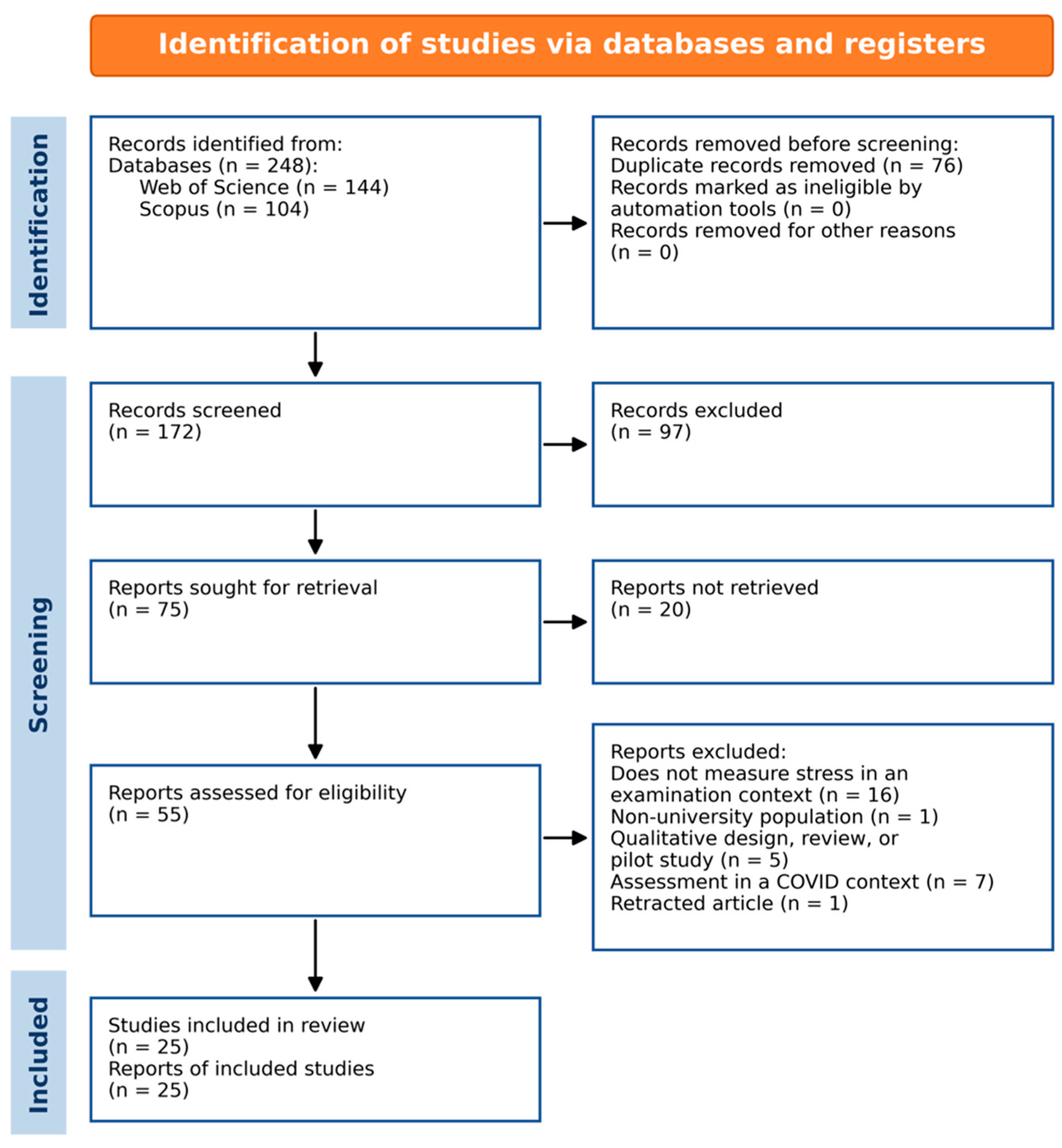

Table 1.
Databases and search results.
| Database | Search date | Search strategy |
| Scopus | 18 July 2026 | (“academic stress”) AND (“university student” OR “college student”) AND (“exam” OR “examination”) |
| Web of Science (WoS) | 20 July 2026 | (“academic stress”) AND (“university student” OR “college student”) AND (“exam” OR “examination”) |
Note. Compiled by the authors.
Table 2.
Inclusion and exclusion criteria.
| Inclusion criteria | Exclusion criteria |
| Studies conducted with university students | Studies conducted with primary or secondary school students or non-university populations |
| Research focusing on academic stress associated with examinations or assessment processes | Research focusing on other types of stress unrelated to the academic domain |
| Original peer-reviewed articles | Systematic reviews, meta-analyses, protocols, editorials, letters to the editor, and grey literature |
| Quantitative or mixed-methods studies | Qualitative studies, conference proceedings, book chapters, and documents not subject to peer review |
| Published in English or Spanish | Published in other languages |
| Full text available | Articles without full-text access |
| — | Pilot studies with samples insufficient to answer the research questions |
| — | Studies conducted exclusively in the exceptional contexts arising from the COVID-19 pandemic |
Note. Compiled by the authors.
Table 3.
Data extraction variables.
| Variable | Description |
| Author and year | Bibliographic reference of the study |
| Country | Location where the research was conducted |
| Study design | Cross-sectional, longitudinal, experimental, etc. |
| Instruments | Scales, questionnaires, or measures used |
| Factors associated with academic stress | Identified triggering factors |
| Manifestations of academic stress | Psychological, physiological, or behavioral responses |
| Outcomes associated with academic stress | Observed effects on health, well-being, or performance |
| Risk factors | Variables associated with greater vulnerability |
| Protective factors | Resources or buffering variables |
| Coping strategies | Mechanisms used to manage stress |
| Main findings | Most relevant results of the study |
Note. Compiled by the authors.
Table 4.
Coding framework used for the thematic synthesis.
| Main category | Subcategory | Description | Example indicators |
| Academic stressors | Examinations and assessments | Formal evaluative situations | Final exams, midterm tests |
| Academic stressors | Academic overload | Excess of tasks and content | Workload |
| Manifestations | Psychological | Emotional and cognitive reactions | Anxiety, worry |
| Manifestations | Physiological | Bodily responses | Cortisol, insomnia |
| Manifestations | Behavioral | Behavioral changes | Procrastination |
| Associated outcomes | Mental health | Psychological impact | Depression, burnout |
| Associated outcomes | Physical health | Physiological alterations | Sleep disturbances |
| Associated outcomes | Academic performance | Educational impact | Grades |
| Risk factors | Personal | Vulnerability variables | Female sex, neuroticism |
| Protective factors | Personal | Psychological resources | Resilience, self-efficacy |
| Protective factors | Contextual | Social resources | Social support |
| Coping strategies | Adaptive | Functional strategies | Time management |
| Coping strategies | Maladaptive | Avoidant strategies | Procrastination |
Note. Compiled by the authors.
Table 5.
Methodological characteristics of the included studies.
| Author and year | Country | Study design | Instruments | Main finding |
| Álvarez et al. (2012) | Spain | Descriptive, stratified random | Academic Stress Inventory (ad hoc) | Higher anxiety in women; no association with academic performance |
| Al-Zubaidi et al. (2024) | Jordan | Longitudinal (exam-period) | Physiological and hormonal biomarkers | Examination periods associated with observed physiological changes in students |
| Aziz & Khan (2022) | Saudi Arabia | Cross-sectional | Academic Stress Scale, acne symptoms, and physical symptoms | Academic stress associated with more acne and other physical symptoms |
| Bardi et al. (2011) | United States | Prospective longitudinal | Cortisol, DHEA, behavior, and grades | Higher DHEA predicted better academic performance |
| Benítez-Agudelo et al. (2025) | Colombia | Prospective longitudinal | Psychological measures, sleep, physical activity, and HRV | Stress associated with psychological and physiological alterations |
| Cabanach et al. (2014) | Spain | Cross-sectional, ex post facto | Self-esteem and E-CEA | Exams and overload were the main stressors |
| Chust-Hernández et al. (2024) | Spain | Quasi-experimental, pretest–posttest | CEAU, CAAG | Exam preparation associated with lower stress and higher academic self-efficacy |
| Dang-Vu et al. (2015) | Canada | Prospective longitudinal | PSG, EEG, ISI, PSQI, DASS, FIRST | Fewer sleep spindles predicted more insomnia |
| Hamd et al. (2026) | Saudi Arabia | Longitudinal, pre–post measures | PSS, AMS-R, AAS | Motivation associated with lower pre-exam stress and anxiety |
| Jerez-Mendoza & Oyarzo-Barría (2015) | Chile | Descriptive cross-sectional | SISCO Inventory | 98.4% presented academic stress |
| Kaur et al. (2024) | India | Analytical cross-sectional | Stress and associated-behavior questionnaire | More than 65% presented moderate-to-high stress |
| Larios & Lerner (2025) | United States | Prospective longitudinal | Portable EEG, TAI, PHQ-9, ISI, PSQI | REM sleep predicted test anxiety |
| Lines et al. (2021) | Australia | Observational, measurement-burst | PSS, hair cortisol, accelerometry | Higher stress associated with sedentary behavior |
| Lodi et al. (2026) | Italy | Cross-sectional | AGS, C-Sat, E-CEA, WB-Pro | Stress and academic satisfaction associated with subjective well-being |
| Mesk et al. (2025) | Palestine | Descriptive cross-sectional | DASS-21, PAS, ASI, and Brief COPE Inventory | Number of exams the main stressor |
| Muñoz-Donoso et al. (2023) | Chile | Descriptive cross-sectional | Accelerometry, SISCO Inventory | High stress associated with lower physical activity |
| Murphy et al. (2010) | United States | Longitudinal (with/without exams) | PSS, cortisol, S-IgA | Higher cortisol and acute stress observed during examination periods |
| Nguyen et al. (2026) | Vietnam | Cross-sectional | ESSA, ACSS | 55.6% presented academic stress |
| Quaedflieg et al. (2024) | Netherlands | Prospective longitudinal | Actigraphy, PSQI, STAI, PSS, BFI | Stress was higher during exams; conscientiousness moderated the stress–sleep relationship |
| Reschke et al. (2023) | Germany | Cross-sectional | StrukStud, LKCS, LSZ, BFI-10 | Higher perceived control associated with lower stress |
| Russell et al. (2021) | United States | Observational, repeated time-point measures | DERS, PANAS, time management | Poor emotional regulation associated with negative affect |
| Strete et al. (2025) | Romania | Correlational cross-sectional | PSS, ISI, EDE-Q | Stress associated with insomnia and disordered eating behaviors |
| Trigueros et al. (2020) | Spain | Cross-sectional | TMMS-24, CD-RISC-10, TAI, SSI-SM | Resilience associated with lower stress and anxiety |
| van der Mee et al. (2026) | Netherlands | Observational (EMA) | DMA, EMA | Higher negative emotions observed during examination periods |
| Wawrzyniak & Pollard Whiteman (2011) | United Kingdom | Prospective longitudinal | PSS, UCLA, sIgA | No associations observed with mucosal immunity |
Note. Studies are presented in alphabetical order by the first author’s surname. Instrument abbreviations are retained following the original nomenclature used by the authors.
Table 6.
Thematic synthesis of the included studies.
| Author and year | Associated factors | Manifestations | Associated outcomes | Risk | Protection | Coping |
| Álvarez et al. (2012) | Exams, pressure | Multidimensional anxiety | Lower well-being | Female, higher year of study | — | — |
| Al-Zubaidi et al. (2024) | Exams | Physiological alterations | Stress response | Academic load | — | — |
| Aziz & Khan (2022) | Exams, academic load | Physical symptoms | Acne, somatization | High stress | — | — |
| Bardi et al. (2011) | Exams | Nervousness, hormonal changes | Lower performance | Evaluative pressure | — | — |
| Benítez-Agudelo et al. (2025) | Exams, deadlines | Anxiety, depression, insomnia | Biopsychological alterations | — | — | — |
| Cabanach et al. (2014) | Exams, overload | Perceived stress | Lower well-being | Low self-esteem | High self-esteem | — |
| Chust-Hernández et al. (2024) | Exams, lack of time | Academic stress | Lower self-efficacy | Study-skills deficit | Self-efficacy | Study skills |
| Dang-Vu et al. (2015) | Final exams | Insomnia, stress | Sleep disruption | Fewer sleep spindles | More sleep spindles | — |
| Hamd et al. (2026) | Exams | Anxiety, stress | Lower motivation | High anxiety | Achievement motivation | — |
| Jerez-Mendoza & Oyarzo-Barría (2015) | Assessments, assignments | Drowsiness, restlessness | Psychological distress | Female, overload | — | Problem-solving |
| Kaur et al. (2024) | Exams, curriculum | Anxiety, irritability | Mental health problems | Academic overload | — | — |
| Larios & Lerner (2025) | Final exams | Anxiety, insomnia | Higher anxiety | Depression, low income | — | — |
| Lines et al. (2021) | Exams | Sedentary behavior | Lower physical activity | — | — | Physical activity |
| Lodi et al. (2026) | Evaluative pressure | Subjective distress | Lower well-being | Low grit | Academic satisfaction | — |
| Mesk et al. (2025) | Exams, overload | Anxiety, insomnia | Poorer mental health | Female, first year | Academic organization | Time management |
| Muñoz-Donoso et al. (2023) | Overload, exams | Fatigue, headache | Moderate-to-severe stress | High stress | Physical activity | — |
| Murphy et al. (2010) | Exams | Acute stress, cortisol | Physiological response | Academic worry | More study | — |
| Nguyen et al. (2026) | Academic pressure | Anxiety, depression | Lower well-being | Year of study, stress duration | — | Social support, exercise |
| Quaedflieg et al. (2024) | Exams | Poorer sleep | Sleep disruption | Neuroticism | Conscientiousness | — |
| Reschke et al. (2023) | Prolonged preparation | Chronic stress | Lower satisfaction | Demands, neuroticism | Study control | — |
| Russell et al. (2021) | Exams | Negative affect, procrastination | Greater distress | Emotional dysregulation | Self-regulation | Time management |
| Strete et al. (2025) | Exams, overload | Insomnia, disordered eating | Biopsychological impact | Insomnia | — | — |
| Trigueros et al. (2020) | Grades, exams | Anxiety, stress | Lower dietary adherence | Low resilience | Emotional intelligence, resilience | — |
| van der Mee et al. (2026) | Exam anticipation | Stress, worry | Negative emotions | — | — | — |
| Wawrzyniak & Pollard Whiteman (2011) | University stress | Loneliness, stress | Lower quality of life | Loneliness | Social interaction | Peer support |
Note. Em dashes (—) indicate dimensions not addressed or not reported in the corresponding study. Column categories correspond to the analytical dimensions defined in the coding framework (Table 4).
Disclaimer/Publisher’s Note: The statements, opinions and data contained in all publications are solely those of the individual author(s) and contributor(s) and not of MDPI and/or the editor(s). MDPI and/or the editor(s) disclaim responsibility for any injury to people or property resulting from any ideas, methods, instructions or products referred to in the content. |
© 2026 by the authors. Licensee MDPI, Basel, Switzerland. This article is an open access article distributed under the terms and conditions of the Creative Commons Attribution (CC BY) license (http://creativecommons.org/licenses/by/4.0/).
Copyright: This open access article is published under a Creative Commons CC BY 4.0 license, which permit the free download, distribution, and reuse, provided that the author and preprint are cited in any reuse.