

Submitted:
14 September 2026
Posted:
15 September 2026
You are already at the latest version
Abstract
The decarbonization of the transport sector represents one of the main challenges in the global energy transition, particularly in developing countries with a high dependence on fossil fuels. This study evaluates the techno-economic feasibility of green hydrogen (H2V) production for urban mobility in Loja, Ecuador, using wind energy as the primary source. Using HOMER Pro V3.14.2, a hybrid renewable system was modeled incorporating a 23 MW PEM electrolyzer, wind power generation, storage systems, and hydrogen refueling infrastructure. The analysis estimates an annual hydrogen production of 550,181 kg, sufficient to supply a fleet of 50 fuel cell electric buses (FCEVs). The levelized cost of hydrogen (LCOH) was calculated at 6.25 USD/kg, demonstrating competitive potential compared to regional benchmarks. The results indicate that system viability strongly depends on capital investment and renewable energy costs. The study concludes that Loja presents favorable geographical and energy conditions for implementing green hydrogen solutions, although regulatory, infrastructure, and financial challenges persist. These findings contribute to the development of sustainable urban transport models in intermediate cities in Latin America.
Keywords:
green hydrogen
; PEM electrolysis
; LCOH (levelized cost of hydrogen)
; fuel cell buses
; urban mobility
; HOMER Pro V3.14.2
; wind energy
1. Introduction
The accelerated impacts of climate change have intensified the need for deep decarbonization across all economic sectors, particularly in transport [1], which remains one of the largest contributors to global greenhouse gas emissions. According to the Intergovernmental Panel on Climate Change, achieving climate neutrality requires a rapid transition toward low-carbon energy systems and the adoption of alternative energy carriers capable of replacing fossil fuels in hard-to-abate sectors [2].
In this context, green hydrogen has emerged as a promising energy vector due to its ability to store renewable energy and provide zero-emission solutions in applications where direct electrification is not feasible. International organizations such as the International Renewable Energy Agency highlight that hydrogen produced from renewable sources can play a crucial role in the global energy transition, especially in transport and industry [3,4]. At the national level, Ecuador presents a significant dependence on fossil fuels for transport, where petroleum derivatives represent 54.62% of the sector’s energy demand for the year 2024 [5]. This structural dependence not only increases greenhouse gas emissions but also exposes the country to economic vulnerabilities associated with the volatility of international fuel prices [5]. In response, recent policy instruments, such as the National Green Hydrogen Roadmap, have identified hydrogen as a strategic component for energy diversification and long-term sustainability [6].
Urban mobility systems, particularly public transport, represent a critical opportunity for the implementation of clean energy solutions. Fuel cell electric vehicles (FCEV), especially hydrogen-powered buses, offer advantages in terms of autonomy, fast refueling, and operational flexibility under demanding geographical conditions. Standards such as SAE J2601 establish technical guidelines for safe and efficient hydrogen refueling, enabling the deployment of hydrogen infrastructure in urban environments [6,7].
From a technical perspective, green hydrogen production through proton exchange membrane (PEM) electrolysis has gained increasing relevance due to its high efficiency, fast dynamic response, and operational flexibility in the face of variations in electricity generation [8,9,10]. These characteristics make it especially compatible with intermittent renewable sources, such as wind and solar energy. Various studies highlight that the integration of renewable systems with hydrogen production not only allows the use of energy surpluses but also significantly improves the resilience and sustainability of energy systems by facilitating storage and management of renewable generation variability [11]. However, the economic viability of green hydrogen remains one of the main challenges [12]. Due that the largest energy resource found in the province of Loja is wind and that, in addition, the renewable energy roadmap of Ecuador indicated the levelized costs of hydrogen production (LCOH), the second lowest from wind energy in Loja, with an LCOH of 3.2 USD/kg H2 [6], it is for this reason that the present research work focuses on carrying out the analysis of this technology for the production of hydrogen cells that benefit the transport sector in Loja and complementarily help reduce CO2 production.
In this context, the present study aims to evaluate the techno-economic viability of green hydrogen production for urban mobility in the city of Loja, Ecuador. Using HOMER Pro V3.14.2 as a simulation tool, the research models a renewable energy system based on wind energy to supply hydrogen to a fleet of 50 fuel cell buses. The analysis focuses on hydrogen production capacity, system optimization, and LCOH estimation, contributing to the development of sustainable transport solutions in intermediate cities in Latin America.
1.1. Green Hydrogen Production
Green hydrogen is defined as that produced through water electrolysis using energy from renewable sources, which allows obtaining a carbon-free energy vector. This process has been identified as one of the main solutions for the decarbonization of sectors that are difficult to electrify, such as heavy transport and industry [1,4].
Among the available technologies, proton exchange membrane (PEM) electrolysis stands out for its high power density, fast operational response, and ability to integrate with intermittent renewable sources. These characteristics make it a suitable option for dynamic energy systems, such as those based on wind energy [9]. Recent studies indicate that the efficiency of PEM electrolyzers ranges between 70% and 75%, depending on operating conditions and system design [13].
From a technological perspective, the development of green hydrogen is also influenced by factors such as production scale, innovation in materials, and process optimization. Current research shows that the reduction in hydrogen production costs is directly related to improvements in efficiency and the integration of advanced electrolysis technologies [10].
1.2. Renewable Energy Systems and Wind Generation
The production of green hydrogen critically depends on the availability of renewable energy sources. In this context, wind energy is positioned as a highly viable alternative due to its low levelized cost of generation and its scalability potential. In regions with favorable climatic conditions, such as southern Ecuador, wind energy can constitute the basis of hybrid hydrogen production systems [14,15].
The analysis of wind resource variability in Loja is essential to ensure the stability of the energy system. Advanced wind characterization models allow improving the accuracy in estimating electricity generation, overcoming the limitations indicated by the Weibull wind distribution equation [16].
1.3. Application of Hydrogen in Urban Mobility (FCEV)
The use of green hydrogen in urban transport has been consolidated as a viable alternative for reducing greenhouse gas emissions. Fuel cell electric vehicles (FCEVs), particularly buses, present significant advantages over other technologies, including greater autonomy, reduced refueling times, and better performance under demanding topographic conditions [17].
Hydrogen passes to a compressor where it is compressed to a pressure of 800 to 1,000 bar before being transferred to high-pressure tanks, to comply with the SAE J2601 standard [18]., hydrogen refueling can be carried out in times between 8 and 10 minutes, which allows maintaining the operability of public transport fleets without affecting service efficiency [17]. This characteristic is especially relevant in intermediate cities where service continuity is a critical factor.
Various studies in Latin America have shown the potential of green hydrogen as a viable alternative for the decarbonization of the transport sector. In particular, in Colombia it has been demonstrated that the incorporation of hydrogen as an energy vector can generate significant reductions in CO₂ emissions in multiple sectors, especially in mobility and energy-intensive applications, thus contributing to the transition towards more sustainable systems [19].
1.4. Economic Evaluation: Levelized Cost of Hydrogen (LCOH)
The levelized cost of hydrogen (LCOH) is the main indicator used to evaluate the economic viability of green hydrogen production projects. This indicator integrates investment costs (CAPEX), operation and maintenance (OPEX), as well as the cost of the energy used in the electrolysis process, From the analysis of projections to 2050, it is concluded that green hydrogen in Ecuador will achieve its greatest economic competitiveness through the use of wind energy in Loja and solar energy in Guayas, both with the potential to reduce the levelized cost (LCOH) below 1 USD/kg, greatly surpassing hydroelectric, geothermal, and biomass sources in cost efficiency. This downward trend is marked by a drastic reduction in technological investment over the coming decades, positioning these variable energies as the fundamental pillars for an economically viable and sustainable energy transition in the country [7].
1.5. Energy Modeling and Optimization
Energy system modeling is a fundamental tool to evaluate the technical and economic viability of green hydrogen projects. In this context, the software HOMER Pro V3.14.2 has been consolidated as one of the most widely used platforms worldwide for the simulation and optimization of hybrid systems based on renewable energy [20].
HOMER Pro V3.14.2 allows analyzing multiple system configurations, optimizing variables such as generation, storage, and energy demand, with the objective of minimizing costs and maximizing system efficiency. Its application in green hydrogen projects has proven effective in determining optimal production and supply configurations with the purpose of serving transport [21].
Recent studies highlight that the integration of simulation tools with optimization models allows reducing uncertainties and improving decision-making in complex energy projects. In particular, the modeling of hydrogen refueling stations has shown significant improvements in operational efficiency and cost reduction [20,21].
1.6. Regulatory Context and Hydrogen Development in Latin America
The development of green hydrogen in Latin America is closely linked to the existence of adequate regulatory frameworks and public policies oriented toward the energy transition. In the case of Ecuador, instruments such as the Green Hydrogen Roadmap and the Energy Efficiency Law establish guidelines for the promotion of clean technologies and the diversification of the energy matrix [7].
At the regional level, countries such as Chile have made significant progress in the implementation of national hydrogen strategies, positioning themselves as benchmarks in the development of this industry. Chile’s National Green Hydrogen Strategy highlights the country’s potential to become a global hydrogen exporter, thanks to its abundant renewable resources [17].
However, various studies indicate that the development of green hydrogen faces important challenges, including lack of infrastructure, high initial costs, and regulatory limitations. The consolidation of this sector requires coordination between governments, the private sector, and academia, as well as the implementation of economic incentives that facilitate investment in large-scale projects [22].
2. Materials and Methods
2.1. Research Design
The present study is framed within applied research, with a quantitative approach and a descriptive–explanatory scope. The objective is to evaluate the techno-economic viability of green hydrogen production for its application in urban mobility, through the integration of renewable energy systems and computational simulation tools.
The methodological approach combines energy modeling and economic analysis, allowing the evaluation of system performance under different operating conditions and determining its competitiveness in terms of costs. This type of approach has been widely used in studies of hybrid energy systems and hydrogen production, due to its ability to integrate multiple technical and economic variables [23].
2.2. Study Area
The analysis is carried out in the city of Loja, located in the southern region of Ecuador, characterized by its Andean topography and favorable climatic conditions for renewable energy generation, specifically the microgrid will be installed at the strategic coordinates 4°01’ S, 79°13’ W as shown in Figure 1. The area presents a significant potential of wind resources, which makes it a suitable environment for the implementation of hydrogen production systems based on renewable energy [24].
According to studies carried out in the provinces of El Oro, Loja, and Zamora Chinchipe, it has been possible to determine, through experimental mathematical models, wind speeds at heights of 10 m and 100 m respectively [14], the simulation of the model is shown in Figure 2.
The data from the experimental model validated with real data from the Villonaco Wind Power Plant, located in Loja canton, was selected. This model determined that, at a height of 100 meters, an average wind speed of 10 m/s is recorded [14]. It is worth mentioning that for the model, wind resource databases from different institutes, organizations, and meteorological stations were investigated, such as NASA [25], the Ecuador wind atlas [24], and Renewables.ninja [26], widely used in wind speed studies due to their reliability and global coverage.
2.3. Energy System Configuration
The model proposed in HOMER Pro is structured as a hybrid microgrid designed for energy self-sufficiency, integrating wind generation through wind turbines as the primary renewable energy source, which feeds a PEM-type electrolyzer responsible for green hydrogen production. To ensure operational continuity in the face of wind resource variability, the system incorporates a dual backup strategy: a hydrogen storage system in pressurized tanks for long-term use and an electrical storage system (BESS) for microgrid stabilization and peak demand management. Finally, the configuration is completed with a refueling infrastructure (HRS) that acts as an output load, allowing the direct supply of the generated hydrogen for dispatch and supply of the city’s fleet of 50 buses.
Wind generation constitutes the primary energy source, providing electricity to supply the electrolyzer. The produced hydrogen is stored at high pressure for its subsequent use in fuel cell vehicles.
The system incorporates a battery bank as energy backup, with the objective of stabilizing operation in the face of wind resource intermittency. This configuration responds to typical schemes of hybrid systems optimized for hydrogen production [27].
2.4. Modeling and Simulation in HOMER Pro V3.14.2
To determine the electrical energy required and to size the components of the green hydrogen production system, the simulation software HOMER Pro was used, whose architecture is detailed in Figure 3. The proposed generation system consists of 10 Enercon E-48 wind turbines with a total nominal power of 8,000 kW, which, based on the wind resource analyzed at the site [28], will operate for 8,141 h/year to achieve a production of 43,473,296 kWh/year, with a capital cost estimated at $10.0 million dollars and maintenance of $183,330 annually over a project lifetime expected to be 25 years. The stability of the microgrid is ensured by a storage system of 23 lithium-ion batteries of 1 MWh with a nominal capacity of 23,000 kWh and an autonomy of 19.2 h, registering an annual performance of 1,261,424 kWh/year against an investment cost of $16.1 million dollars. This scheme is integrated with a converter with a capacity of 1,538 kW that will operate 1,587 h/year with an average power of 130 kW and represents an output energy of around 1,136,857 kWh/year, the estimated losses are around 59,835 kWh/year, with a capacity factor of 8.44%. The electrolyzer that will be used for the modeling has a nominal power of 23,000 kW. The total annual production is 550,181 kg/year, the initial investment capital is $5.75 million dollars [29], the efficiency is estimated at 70%, the O & M cost is $8/kW/year and the specific consumption is 56.3 kWh/kg, a hydrogen tank of 7,500 kg capacity (250,000 kWh) at a pressure of 500 bar is selected, ensuring an autonomy of 261 h, the water supply requires 15,000 liters per day which will be taken from the Malacatos River, representing only 1% of its total flow of 1,400 m3 which are stored in a 5,000-gallon tank under NFPA regulations [30].
It is important to note that the software HOMER Pro has a preloaded database with reference costs, as well as technical characteristics of the systems selected for green hydrogen production; in addition, international cost references have been used for the modeling [31].

Table 1.
Technical specifications and investment of the green hydrogen system in HOMER Pro.
| Component | Initial Investment (CAPEX) | Operating Cost (OPEX) |
|---|---|---|
| Wind generation | $10.0 million USD | $2.49 million USD |
| Electrical storage | $16.1 million USD | $3.12 million USD |
| H₂ production | $5.75 million USD | $2.50 million USD |
| Energy conversion | $461,300 USD | $62,696 USD |
| H₂ storage | $150,000 USD | $61,160 USD |
| Total | $32.46 million USD | $8.24 million USD |
2.5. Calculation of the Levelized Cost of Hydrogen (LCOH)
In the economic evaluation, several financial performance indicators (KPIs) are used, such as the levelized cost of hydrogen (LCOH), which is calculated as the ratio between the total system cost over its lifetime and the total amount of hydrogen produced.
This indicator allows comparing the competitiveness of hydrogen against other energy sources and evaluating the economic viability of the system. Various studies have indicated that the LCOH is highly sensitive to the cost of electricity and the efficiency of the electrolyzer [20]. Another KPI used is the Net Present Cost (NPC), which is the main indicator to validate the financial feasibility of long-term energy systems. It represents the present value of all costs incurred by the system during its lifetime, minus the revenues generated. According to [20], its calculation is governed by the equation.
The Internal Rate of Return (IRR) acts as an indicator of the relative profitability of the system, allowing the comparison of investment efficiency against other market alternatives. Technically, it is defined as the discount rate that sets the NPC to zero [20], it is determined through the equation.
The Break-Even Point (BEP) is used to quantify the time required (expressed in years) for the cumulative cash flow to equal the initial investment, allowing the determination of the exact moment when the system begins to generate net benefits. This parameter is estimated through the equation.
2.6. Model Assumptions
For the simulation of the system, the following assumptions are established: target fleet: 50 fuel cell buses (FCEV); daily hydrogen demand: 1,500 kg/day; estimated annual production: 550,181 kg of H₂; electrolyzer capacity: 23 MW; electrolyzer efficiency: 70–75%; storage system: hydrogen compressed at 500 bar; water consumption: 15,000 L/day. Likewise, it is considered that the system operates under optimal wind resource availability conditions, and that the refueling infrastructure complies with the international standards established for hydrogen supply in transport [18].
3. Results
3.1. Green Hydrogen Production
The simulation results indicate that the proposed system is capable of producing a total annual of 550,181 kg of green hydrogen, which is equivalent to an approximate daily production of 1,500 kg of H₂. This level of production allows the continuous supply of a fleet of 50 fuel cell buses, meeting the energy requirements of the urban transport system.
Figure 4.
Amount of hydrogen obtained and electrical consumption of the electrolyzer.
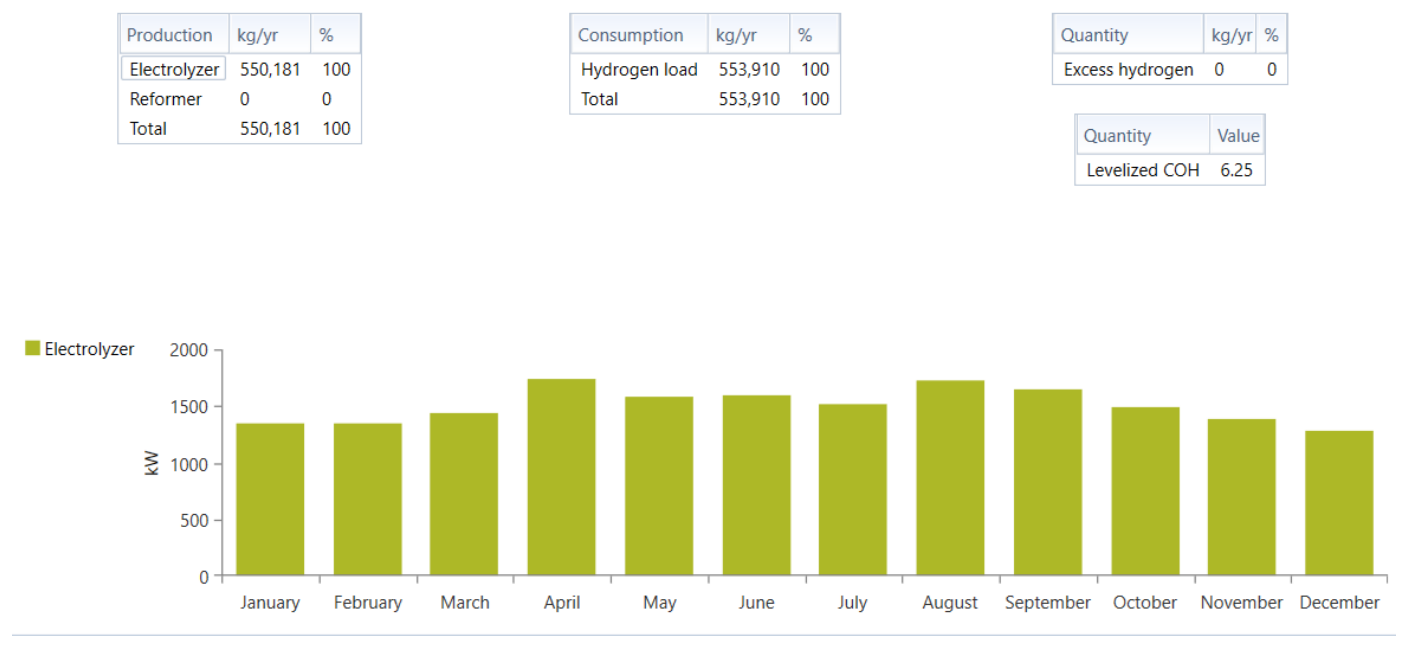
The production capacity is directly associated with the performance of the PEM electrolyzer and the availability of the wind resource, highlighting the importance of proper site selection for generation. These results are consistent with previous studies that emphasize the viability of systems based on renewable energy for decentralized hydrogen production [20]. In addition, the storage efficiency can be verified without excess or waste of H2V, the hydrogen storage system was sized with a capacity of 7,500 kg, ensuring an operational autonomy of 261 hours. The seasonal analysis reveals that the tank acts as an energy buffer, reaching maximum inventory levels between May and September (coinciding with the increase in wind resources in Loja) and allowing the continuity of the transport service during periods of low generation at the end of the annual cycle as shown in Figure 5.
3.2. Wind Power Generation and System Electrical Performance
The wind generation system presents an estimated production of 43.4 GWh/year, obtained through 10 Enercon E-48 wind turbines, which guarantees the necessary energy supply for the operation of the 23 MW electrolyzer. In addition, 23 lithium-ion batteries are used as backup [28], which allows compensating for the variability of the wind resource, ensuring the operational continuity of the system.
Figure 6.
Wind Turbine Power Output: (a) hourly power output heatmap over the days of the year; (b) monthly electric production distribution across the year.
Figure 6.
Wind Turbine Power Output: (a) hourly power output heatmap over the days of the year; (b) monthly electric production distribution across the year.
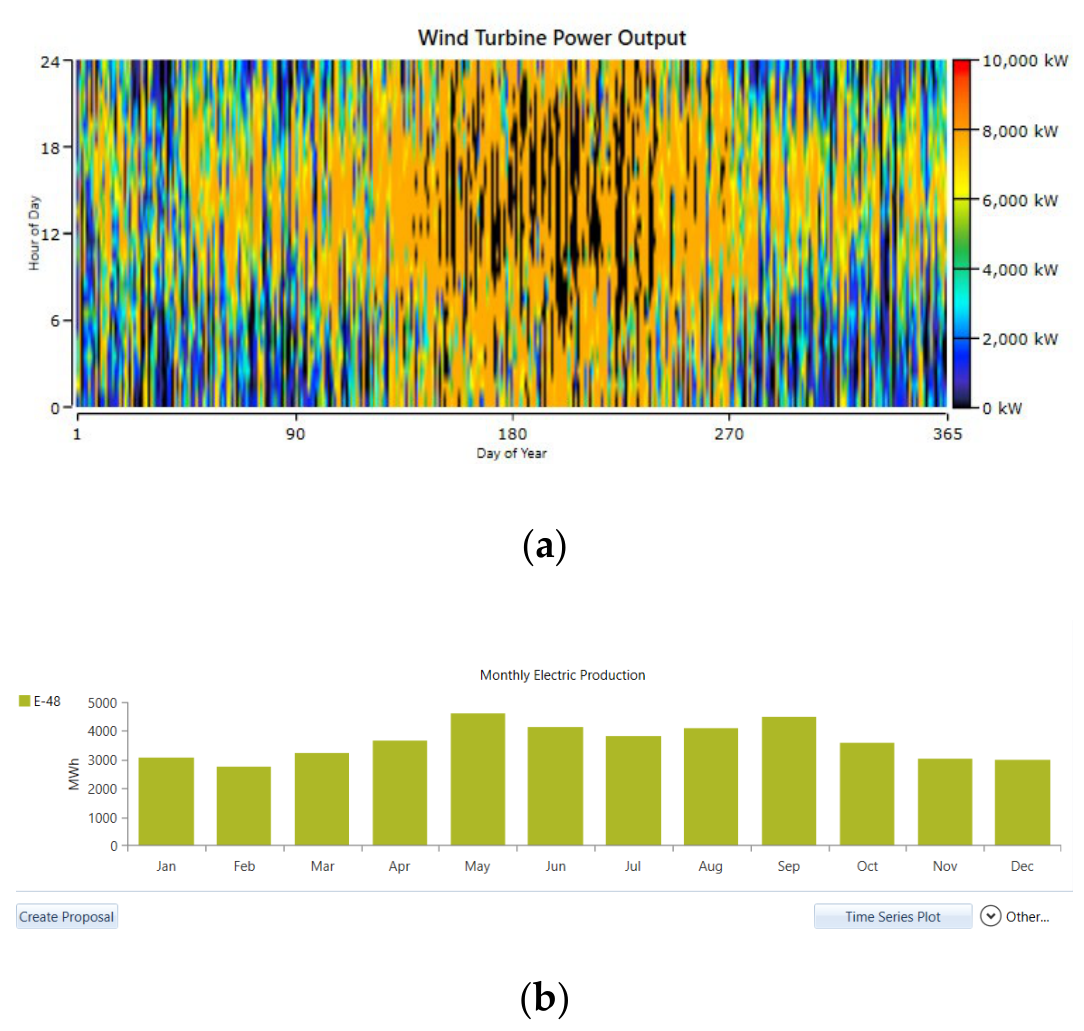
The overall efficiency of the system remains within the expected ranges for configu-rations based on PEM electrolysis (70–75%), which confirms the technological suitability of the proposed design. Modeling using HOMER Pro V3.14.2 allows optimizing the interaction between system components, minimizing energy losses and maximizing hydrogen production [10].
3.3. Economic Evaluation: LCOH
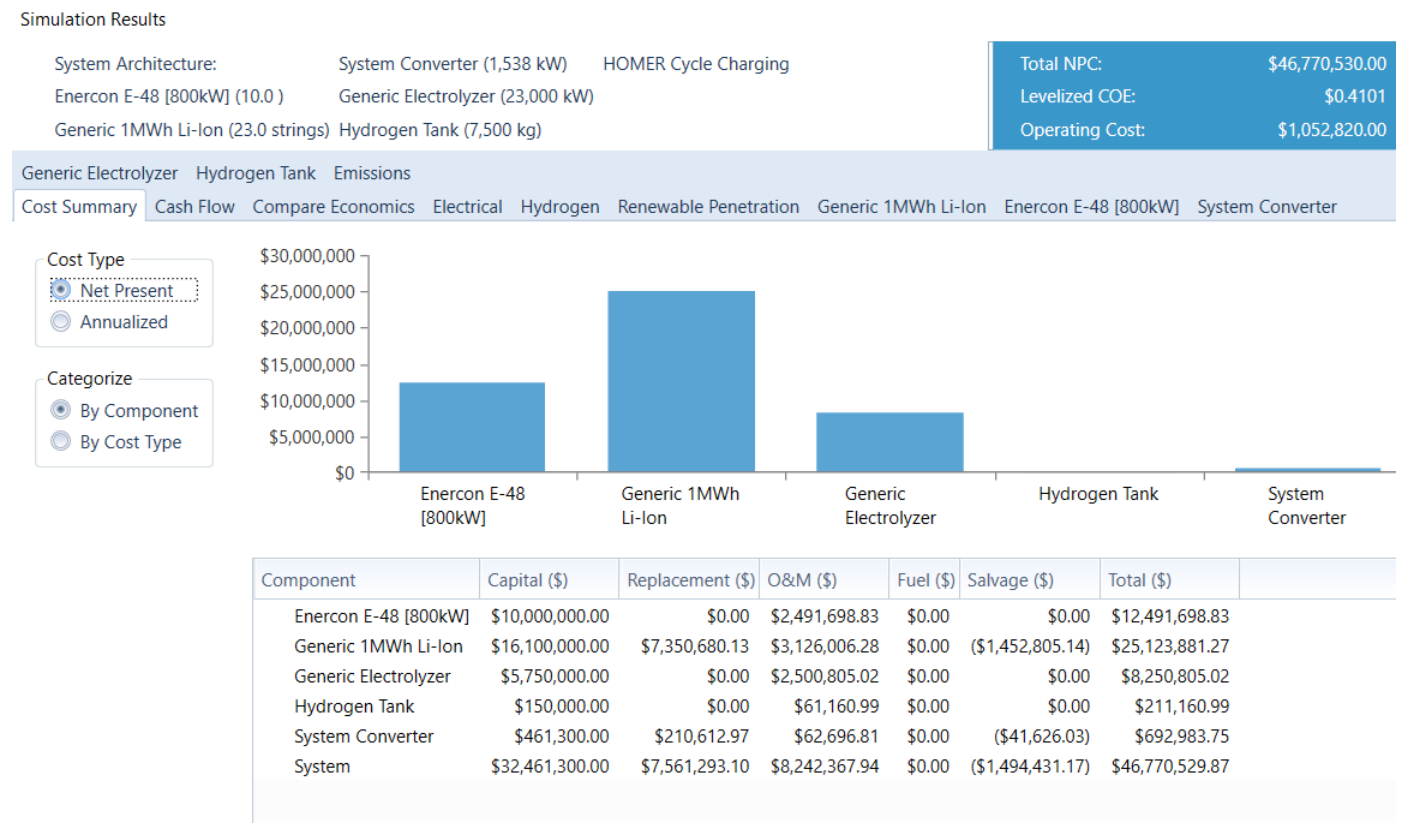
The economic analysis of the system yields a levelized cost of hydrogen (LCOH) of 6.25 USD/kg, a value that falls within competitive ranges at the regional level [10]. This result reflects an adequate relationship between investment costs and hydrogen production, considering the local conditions of energy availability.
The economic analysis in Figure 7 determined an NPC of 46.77 million dollars, where the electrochemical storage system represents 53.7% of the total investment, fol-lowed by the wind generation infrastructure. Despite the high initial investment, the LCOH of 6.25 USD/kg validates the viability of the scheme in a context where the cost of imported fuels and the carbon footprint are critical. The model demonstrates that the optimization of OPEX, 8.24 million dollars, is the key variable to maximize the IRR of the project over 25 years.
When comparing the proposed model with a conventional fleet of 50 articulated buses with a diesel cost of 2.80 USD/gal [32], it is evident that green hydrogen not only eliminates 16,966 tons of CO2 annually [1], but also offers a competitive operational cost structure. The achieved price parity, together with incentives from carbon credits [33] and the 35% reduction in mechanical maintenance costs [34], positions hydrogen as the financially superior option for mass mobility in the southern region of Ecuador toward the end of the decade.
3.4. Sensitivity Analysis
To evaluate the financial robustness of the system against market volatility, a sensi-tivity analysis was carried out on three critical parameters: the cost of electrical energy, the initial investment (CAPEX), and the efficiency of the electrolyzer. Given that storage and infrastructure represent 53.7% of the NPC, a 20% reduction in CAPEX —driven by technological maturity toward 2028— would shift the LCOH from 6.25 USD/kg toward values close to 5.15 USD/kg, accelerating parity with diesel at 2.80 USD/gal [32]. Likewise, the sensitivity to the cost of electrical energy from the wind resource at the site demonstrates that small variations in the price per kWh linearly impact the OPEX of 8.24 million dollars, while an improvement in the efficiency of the PEM electrolyzer would allow reducing the specific energy consumption, optimizing annual production and improving the internal rate of return (IRR) by 1.8 per-centage points when integrating incentives from carbon credits [1]. Finally, this balance between technical efficiency and optimization of operating costs positions green hydrogen as a financially superior solution compared to the 16,966 tons of CO2 annually emitted by a fleet of 50 buses, achieving a competitive cost structure supported by a 35% reduction in mechanical maintenance [34].
Table 2.
Sensitivity analysis of system parameters.
| Sensitive Parameter | Variation | Impact on LCOH (USD/kg) | Impact on Feasibility (IRR) |
|---|---|---|---|
| Initial Investment (CAPEX) | -20% | -5.15 | Very High (Positive) |
| Electricity Cost | ±10% | ±0.45 | High |
| Electrolyzer Efficiency | +5% | -0.30 | Medium |
| Carbon Price | 50 USD/t | -0.45 | Medium |
| Diesel Price | +15% | N/A | Very High |
4. Discussion
The results obtained in this study indicate that the production of green hydrogen from wind energy in Loja is technically and economically viable. In particular, the estimated levelized cost of hydrogen (LCOH) of 6.25 USD/kg falls within the range reported in the literature, although it strongly depends on renewable electricity costs, electrolyzer investment, and the operating strategy [9,12].
From a technological standpoint, the integration of wind energy with PEM electrolysis proves to be an appropriate alternative for managing variable renewable resources [8,9]. Previous research emphasizes the importance of combining generation, electrolysis, storage, and energy management strategies [10,20,31]. In this regard, the incorporation of battery storage helps mitigate resource intermittency by providing flexibility between generation and demand [10], although this benefit must be weighed against the additional investment and associated conversion losses.
The system’s feasibility is geographically conditioned by the availability and temporal variability of the local wind resource, an aspect supported by previous evaluations of wind potential in southern Ecuador based on elevation and meteorological conditions [14,15]. At the national scale, these results align with previous assessments regarding the country’s renewable hydrogen potential [13] and with the guidelines of the Green Hydrogen Roadmap for Ecuador, consolidating hydrogen as an emerging component in the national energy transition [6,7].
In the field of transport, the results obtained reinforce the potential of fuel cell buses as a viable alternative for sustainable urban mobility. The estimated autonomy of 400 km and refueling times of less than 10 minutes represent significant advantages over other technologies, especially in cities with complex topographic conditions. These results are consistent with international standards and experiences reported in other countries [17].
However, the economic viability of the system largely depends on external factors, such as fossil fuel subsidies and the absence of specific incentives for the development of green hydrogen. In this regard, studies on hydrogen development in Latin America highlight the importance of solid regulatory frameworks and public policies that promote investment in clean technologies [1,34]. The experience of countries such as Chile demonstrates that the implementation of national strategies can significantly accelerate the development of this industry.
Finally, it is important to highlight that, although the results are promising, there are limitations that must be considered. Among them are the uncertainty in future technology costs, the real availability of the wind resource, and the lack of infrastructure for hydrogen distribution. These limitations suggest the need for complementary studies that incorporate risk analysis, future scenarios, and real-scale evaluations.
5. Conclusions
The present study evaluated the techno-economic feasibility of green hydrogen pro-duction for its application in urban mobility in the city of Loja, Ecuador, through the modeling of an energy system based on wind energy and PEM electrolysis.
The results obtained demonstrate that the proposed system is technically feasible, with an annual production capacity of 550,181 kg of hydrogen, sufficient to supply a fleet of 50 fuel cell buses. Likewise, the levelized cost of hydrogen (LCOH) estimated at 6.25 USD/kg shows potential competitiveness compared to other energy alternatives, especially in contexts with high availability of renewable resources.
From an energy perspective, the integration of wind generation with PEM electrolysis technologies and storage allows ensuring system stability despite the intermittency of renewable resources. In the transport sector, the use of FCEV buses presents significant advantages in terms of autonomy, refueling times, and adaptability to complex geographical conditions.
However, the implementation of the system faces important challenges, mainly re-lated to high initial investment costs, the need for specialized infrastructure, and the absence of specific regulatory incentives. In this regard, the development of green hydrogen in Ecuador requires the articulation of public policies, financing mechanisms, and public-private collaboration schemes that facilitate its large-scale adoption.
Finally, this study positions the city of Loja as a reference case for the implementa-tion of hydrogen-based solutions in intermediate cities in Latin America, contributing to the development of sustainable transport models and the transition toward decarbonized energy systems.
Author Contributions
Conceptualization, M.Q. and D.S.; methodology, M.Q., K.G., and D.C.; software, M.Q. and D.S.; validation, A.F., K.G., and D.C.; formal analysis, M.Q., D.S., and P.G.; investigation, M.Q., D.S., A.F., and P.G.; resources, K.G., P.G., and R.Z.; data curation, D.S., D.C., and P.G.; writing—original draft, M.Q. and D.S.; writing—review and editing, A.F., K.G., D.C., and R.Z.; visualization, M.Q. and D.S.; supervision, K.G. and R.Z.; project administration, M.Q. All authors have read and agreed to the published version of the manuscript.
Funding
This research received no external funding.
Data Availability Statement
The data presented in this study, including the simulation models and input parameters generated using HOMER Pro, are available on reasonable request from the corresponding authors.
Acknowledgments
The authors express their gratitude to the Departamento de Ciencias Exactas at Universidad de las Fuerzas Armadas ESPE for providing the administrative and technical support necessary to complete this study. The authors also acknowledge UL Research Institutes for providing access to the HOMER Pro V3.14.2 simulation software used in the techno-economic modeling. During the preparation of this manuscript, the authors used ChatGPT (version 2026) for the purposes of language polishing, grammar correction, and text formatting assistance. The authors have reviewed and edited the output and take full responsibility for the content of this publication.
Conflicts of Interest
Author Darwin Socasi was employed by the company Departamento de Confiabilidad, Proyectos Integrales del Ecuador PIL S.A., Quito, Ecuador. The remaining authors declare that the research was conducted in the absence of any commercial or financial relationships that could be construed as a potential conflict of interest.
Abbreviations
The following abbreviations are used in this manuscript:
| BEP | Break-Even Point |
| BESS | Battery Energy Storage System |
| CAPEX | Capital Expenditure |
| FCEV | Fuel Cell Electric Vehicle |
| H2V | Green Hydrogen |
| HRS | Hydrogen Refueling Station |
| IRR | Internal Rate of Return |
| LCOH | Levelized Cost of Hydrogen |
| NPC | Net Present Cost |
| OPEX | Operational Expenditure |
| PEM | Proton Exchange Membrane |
| SAE | Society of Automotive Engineers |
References
- IPCC. Summary for Policymakers. In Climate Change 2022: Mitigation of Climate Change. Contribution of Working Group III to the Sixth Assessment Report of the Intergovernmental Panel on Climate Change; Shukla, P.R., Skea, J., Slade, R., Al Khourdajie, A., van Diemen, R., McCollum, D., Pathak, M., Some, S., Vyas, P., Fradera, R., et al., Eds.; Cambridge University Press: Cambridge, UK, 2022. [Google Scholar] [CrossRef]
- IPCC. Climate Change 2022: Mitigation of Climate Change. Contribution of Working Group III to the Sixth Assessment Report of the Intergovernmental Panel on Climate Change; Shukla, P.R., Skea, J., Slade, R., Al Khourdajie, A., van Diemen, R., McCollum, D., Pathak, M., Some, S., Vyas, P., Fradera, R., et al., Eds.; Cambridge University Press: Cambridge, UK, 2022. [Google Scholar] [CrossRef]
- International Energy Agency (IEA). The Future of Hydrogen: Seizing Today’s Opportunities; IEA: Paris, France, 2019. [Google Scholar] [CrossRef]
- International Renewable Energy Agency (IRENA). Green Hydrogen: A Guide to Policy Making; IRENA: Abu Dhabi, United Arab Emirates, 2020; Available online: https://www.irena.org/Publications/2020/Nov/Green-hydrogen (accessed on 27 August 2026).
- Ministry of Energy of Ecuador. National Energy Balance 2024; Ministry of Energy: Quito, Ecuador, 2024; Available online: https://www.ambienteyenergia.gob.ec (accessed on 27 August 2026).
- Ministry of Energy and Mines of Ecuador. Green Hydrogen Roadmap for Ecuador; Ministry of Energy and Mines: Quito, Ecuador, 2023; Available online: https://www.ambienteyenergia.gob.ec (accessed on 27 August 2026).
- Ministry of Energy and Mines of Ecuador. Green Hydrogen Roadmap for Ecuador (Full Report); Ministry of Energy and Mines: Quito, Ecuador, 2023; Available online: https://www.recursosyenergia.gob.ec/wp-content/uploads/2023/08/Hoja-de-Ruta-del-Hidrogeno-Verde-en-Ecuador.pdf (accessed on 27 August 2026).
- Carmo, M.; Fritz, D.L.; Mergel, J.; Stolten, D. A Comprehensive Review on PEM Water Electrolysis. Int. J. Hydrogen Energy 2013, 38, 4901–4934. [Google Scholar] [CrossRef]
- Chung, D.H.; Graham, E.J.; Paren, B.A.; Schofield, L.; Shao-Horn, Y.; Mallapragada, D.S. Design Space for PEM Electrolysis for Cost-Effective H₂ Production Using Grid Electricity. Ind. Eng. Chem. Res. 2024, 63, 7258–7270. [Google Scholar] [CrossRef]
- Arunachalam, M.; Han, D.S. Efficient Solar-Powered PEM Electrolysis for Sustainable Hydrogen Production: An Integrated Approach. Emergent Mater. 2024, 7, 1401–1415. [Google Scholar] [CrossRef]
- Dincer, I.; Acar, C. Review and Evaluation of Hydrogen Production Methods for Better Sustainability. Int. J. Hydrogen Energy 2015, 40, 11094–11111. [Google Scholar] [CrossRef]
- International Renewable Energy Agency (IRENA). Green Hydrogen Cost Reduction: Scaling up Electrolysers to Meet the 1.5 °C Climate Goal; IRENA: Abu Dhabi, United Arab Emirates, 2020; Available online: https://www.irena.org/publications/2020/Dec/Green-hydrogen-cost-reduction (accessed on 27 August 2026).
- Contreras-Vásquez, L.; Escobar-Luna, L.; Acosta-Lozada, R.; Medina-Robalino, S. Feasibility of Green Hydrogen Production in Ecuador. Investig. Y Desarro. 2022, 16, 1805. [Google Scholar] [CrossRef]
- Solano, J.C.; Montaño, T.; Maldonado-Correa, J.; Ordóñez, A.; Pesantez, M. Correlation Between Wind Speed and Elevation for Wind Potential Assessment in Southern Ecuador. Energy Rep. 2021, 7, 644–651. [Google Scholar] [CrossRef]
- Cevallos-Sierra, J.; Ramos-Martín, J. Spatial Assessment of Renewable Energy Potential: The Case of Ecuador. Renew. Sustain. Energy Rev. 2018, 81, 1154–1165. [Google Scholar] [CrossRef]
- Lencastre, P.; Yazidi, A.; Lind, P.G. Modeling Wind Speed Statistics Beyond the Weibull Distribution. Energies 2024, 17, 2621. [Google Scholar] [CrossRef]
- Ministry of Energy of Chile. Green Hydrogen; Ministry of Energy: Santiago, Chile, 2024; Available online: https://energia.gob.cl/electromovilidad/hidrogeno-verde (accessed on 27 August 2026).
- SAE International. Fueling Protocols for Light Duty Gaseous Hydrogen Surface Vehicles; SAE J2601_202005; SAE International: Warrendale, PA, USA, 2020. [Google Scholar] [CrossRef]
- Mantilla, S.; Santos, D.M.F. Green and Blue Hydrogen Production: An Overview in Colombia. Energies 2022, 15, 8862. [Google Scholar] [CrossRef]
- Mahmoud, K.; et al. Optimization of Green Hydrogen Integration in Hybrid Renewable Systems Connected to the Grid: Techno-Economic and Sensitivity Analysis in Hot Desert Environments. Results Eng. 2026, 25, 110109. [Google Scholar] [CrossRef]
- Ali, M.F.; Sheikh, M.R.I.; Biswas, D. Optimization of Hybrid Renewable Microgrids for EV Charging and Hydrogen Production in Rajshahi City. Energy Rep. 2026, 11, 109097. [Google Scholar] [CrossRef]
- Scholvin, S. The Green Hydrogen Industry in Antofagasta: Opportunities and Challenges for Regional Development. Rev. Geográfica Norte Gd. 2025, 1010101. [Google Scholar]
- Lagarinhos, C.A.F.; Azevedo, L.P. Challenges and Opportunities of the Hydrogen Economy in the Era of Industry 4.0. In Accelerating the Transition to a Hydrogen Economy: Achieving Carbon Neutrality; Elsevier: Amsterdam, The Netherlands, 2024; Vol. 1, pp. 215–238. [Google Scholar] [CrossRef]
- Ministry of Electricity and Renewable Energy (Ecuador). Wind Atlas of Ecuador for Electricity Generation; MEER: Quito, Ecuador, 2012; Available online: https://www.recursosyenergia.gob.ec (accessed on 27 August 2026).
- NASA. POWER Data Access Viewer; NASA Langley Research Center: Hampton, VA, USA, 2020; Available online: https://power.larc.nasa.gov/data-access-viewer/ (accessed on 27 August 2026).
- Renewables. ninja. Renewable Energy Simulation Platform; 2016. Available online: https://www.renewables.ninja/ (accessed on 27 August 2026).
- Llanos-Pino, M.A.; Grisales-Noreña, L.F.; Sanin-Villa, D.; Montoya, O.D.; Hernández, J.C. Optimizing Economic and Operational Performance in AC Microgrids. Results Eng. 2025, 25, 106005. [Google Scholar] [CrossRef]
- UL Solutions. HOMER Pro (Version 3.14); UL Solutions: Boulder, CO, USA, 2024; Available online: https://www.homerenergy.com (accessed on 27 August 2026).
- U.S. Department of Energy. Technical Targets for Proton Exchange Membrane Electrolysis. U.S. DOE: Washington, DC, USA, 2024. Available online: https://www.energy.gov/cmei/fuels/technical-targets-proton-exchange-membrane-electrolysis (accessed on 27 August 2026).
- National Fire Protection Association. NFPA 25: Standard for Inspection, Testing, and Maintenance of Water-Based Fire Protection Systems; NFPA: Quincy, MA, USA, 2023; Available online: https://www.nfpa.org/codes-and-standards/nfpa-25 (accessed on 27 August 2026).
- Singh, S.; Chauhan, P.; Singh, N.J. Capacity Optimization of Hybrid Energy Systems. Int. J. Hydrogen Energy 2020, 45, 10070–10088. [Google Scholar] [CrossRef]
- Petroecuador, E.P. Fuel Price and Commercialization Report for the Automotive Sector; Petroecuador: Quito, Ecuador, 2026; Available online: https://www.eppetroecuador.ec/precios-combustibles (accessed on 27 August 2026).
- World Bank. State and Trends of Carbon Pricing 2025; World Bank: Washington, DC, USA, 2025. [Google Scholar]
- BNamericas. The Rise of Green Hydrogen in Latin America and the Caribbean; BNamericas: Santiago, Chile, 2024; Available online: https://www.hidrogenocolombia.com/wp-content/uploads/2024/04/El-auge-del-hidrogeno-verde-en-america-latina.pdf (accessed on 27 August 2026).
Figure 1.
Geographical location of the project.
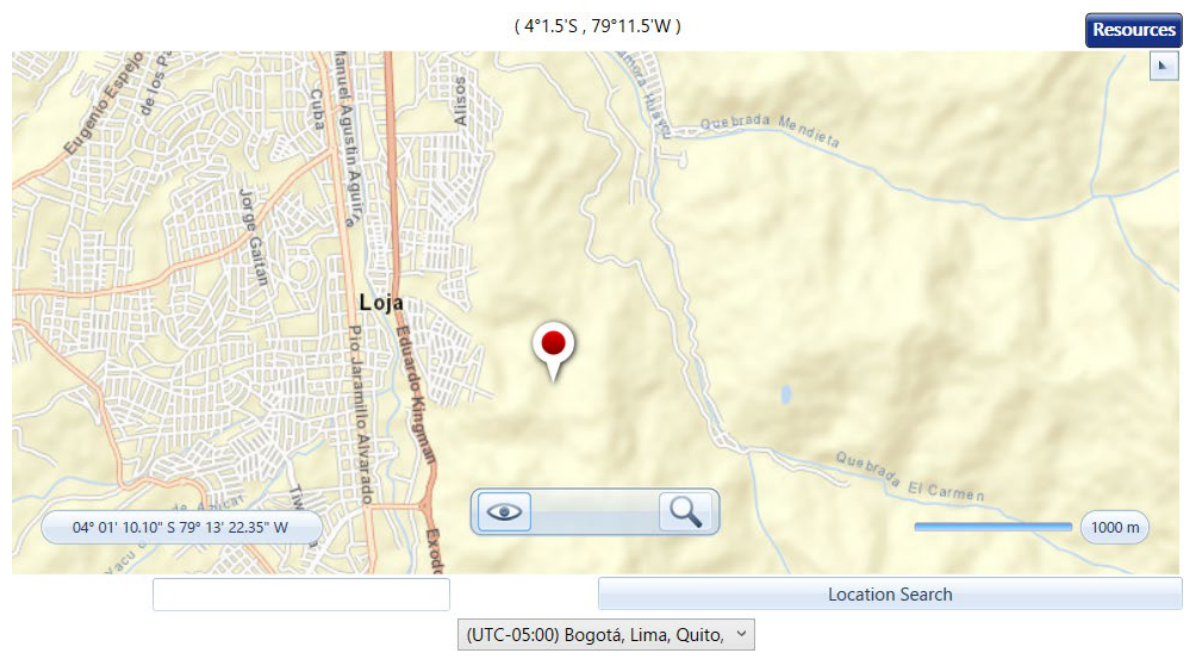
Figure 2.
(a) Left: geographical location of the southern region of Ecuador (b) right: average wind speed at heights of 10 m and 100 m respectively.
Figure 2.
(a) Left: geographical location of the southern region of Ecuador (b) right: average wind speed at heights of 10 m and 100 m respectively.
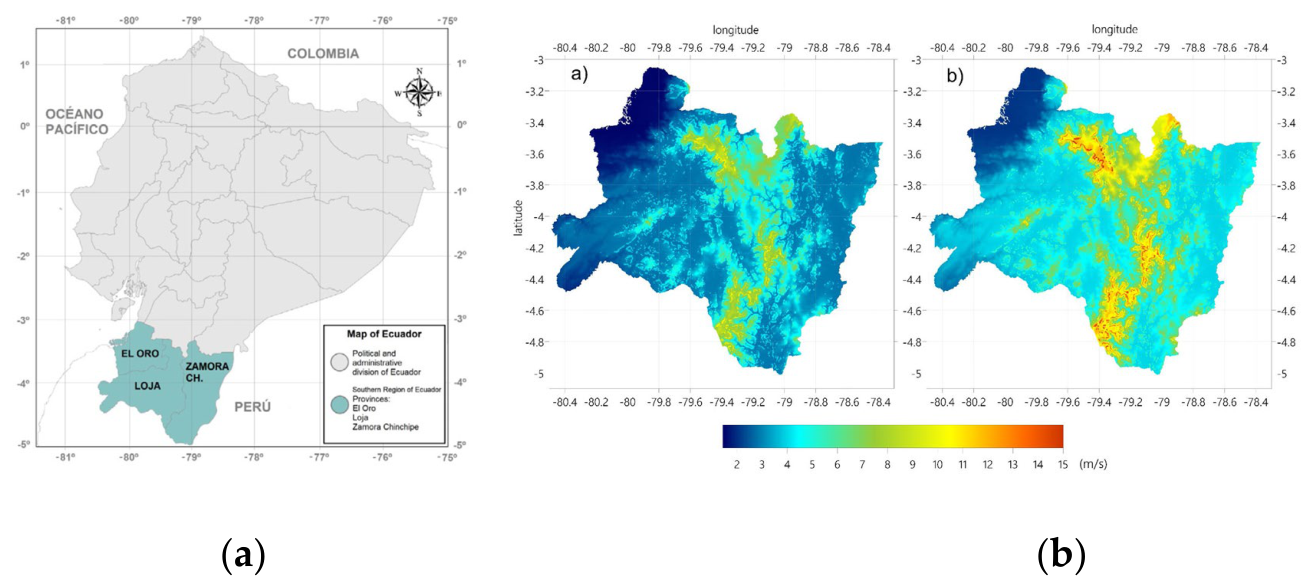
Figure 3.
Proposed configuration for green hydrogen generation.
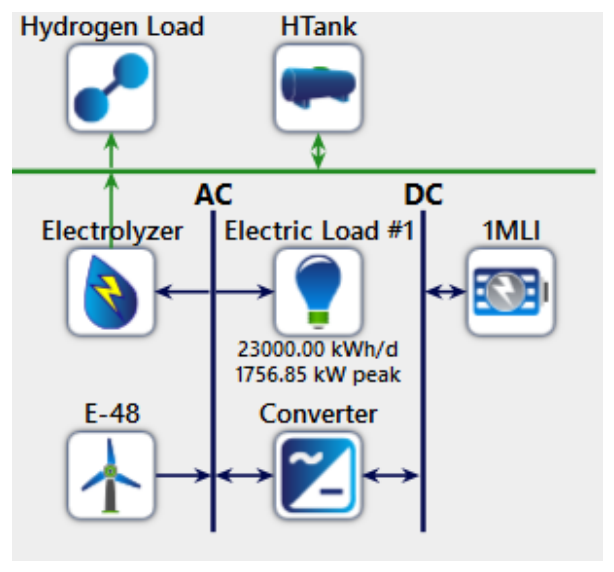
Figure 5.
Behavior of the H2V level in the tank during a typical year: (a) hourly tank level distribution and annual heatmap; (b) monthly statistical dispersion of the hydrogen storage level.
Figure 5.
Behavior of the H2V level in the tank during a typical year: (a) hourly tank level distribution and annual heatmap; (b) monthly statistical dispersion of the hydrogen storage level.
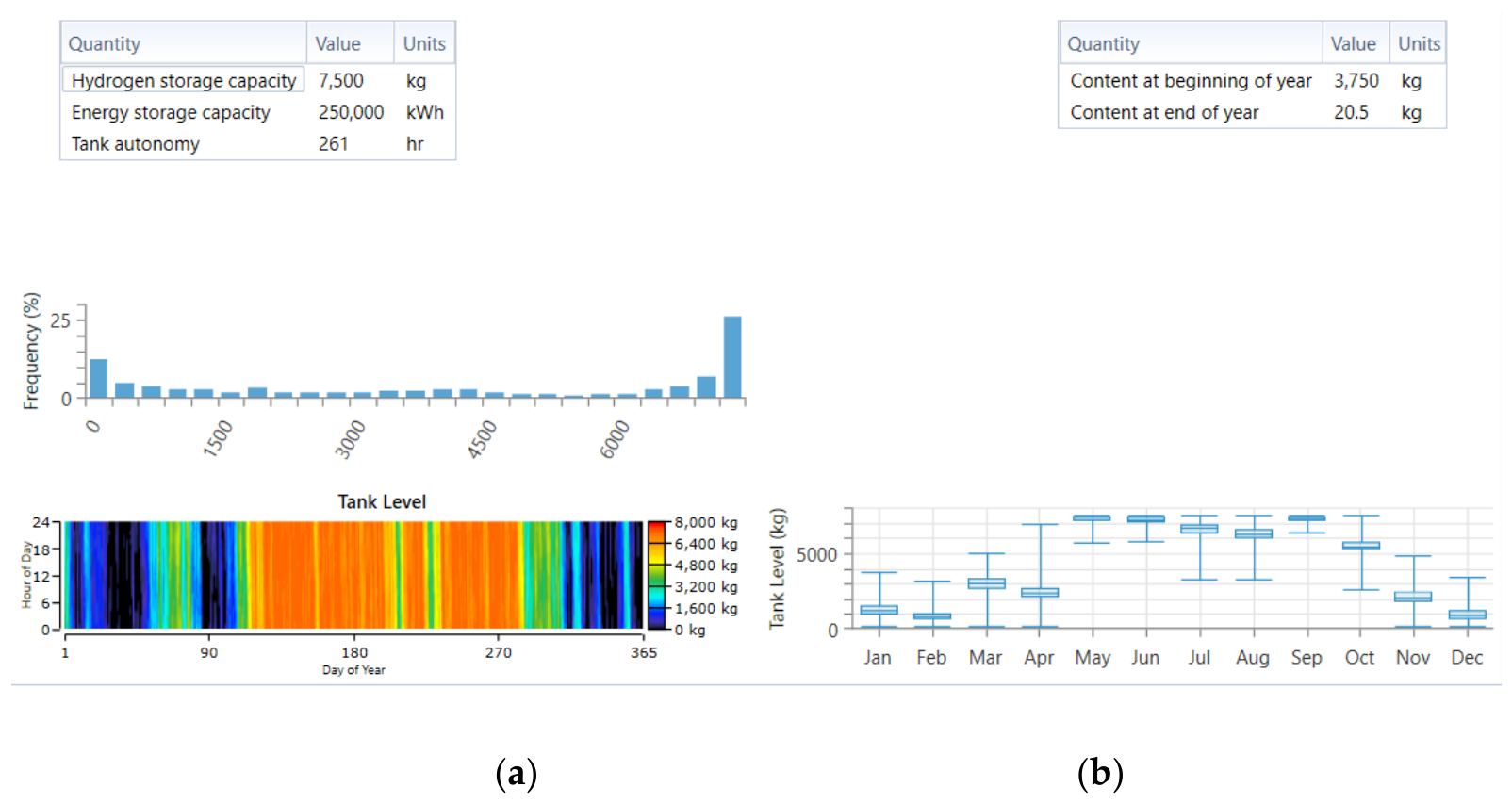
Figure 7.
Economic results of the simulation.
Disclaimer/Publisher’s Note: The statements, opinions and data contained in all publications are solely those of the individual author(s) and contributor(s) and not of MDPI and/or the editor(s). MDPI and/or the editor(s) disclaim responsibility for any injury to people or property resulting from any ideas, methods, instructions or products referred to in the content. |
© 2026 by the authors. Licensee MDPI, Basel, Switzerland. This article is an open access article distributed under the terms and conditions of the Creative Commons Attribution (CC BY) license (http://creativecommons.org/licenses/by/4.0/).
Copyright: This open access article is published under a Creative Commons CC BY 4.0 license, which permit the free download, distribution, and reuse, provided that the author and preprint are cited in any reuse.