

Submitted:
14 September 2026
Posted:
15 September 2026
You are already at the latest version
Abstract
Noise barrier tunnels are increasingly used to mitigate transportation noise in densely populated areas; however, their enclosed or semi-enclosed acoustic environments can create significant challenges for emergency evacuation broadcasting during fire incidents. In particular, highly reflective tunnel surfaces and complex sound propagation characteristics may degrade speech intelligibility and reduce the effectiveness of emergency information delivery. This study investigated the acoustic performance of directional loudspeakers for emergency broadcasting systems in noise barrier tunnels through measurements conducted in both a semi-anechoic chamber and an actual tunnel environment. Two directional loudspeakers with diameters of 5 and 15 inches were evaluated under different installation heights, source–receiver distances, and directivity angles. Sound pressure level (SPL) and Speech Transmission Index (STI) were used as the primary performance indicators. The results obtained in the semi-anechoic chamber showed that the 15-inch loudspeaker generally achieved the target SPL of 80 dB(A) or higher under most measurement conditions, whereas the 5-inch loudspeaker exhibited greater variations depending on distance and directivity angle. In the actual noise barrier tunnel, however, speech intelligibility was substantially reduced because of excessive reverberation. Reverberation times of 12.4 s at 125 Hz and 9.8 s at 250 Hz were measured, and the maximum STI value remained below the target performance criterion of 0.60. The results indicate that achieving sufficient SPL alone is insufficient to ensure effective emergency communication in highly reverberant noise barrier tunnels. Instead, acoustic design strategies should prioritize reverberation control through sound-absorbing treatments and appropriate loudspeaker placement. These findings provide fundamental data for the acoustic design and development of emergency evacuation broadcasting systems capable of improving speech intelligibility and evacuation safety in noise barrier tunnels.
Keywords:
noise barrier tunnel
; emergency broadcasting system
; speech intelligibility
; Speech Transmission Index (STI)
; directional loudspeaker
; sound pressure level
; emergency evacuation
1. Introduction
Rapid economic development in the Republic of Korea has been accompanied by increasing urban population concentration and the continuous expansion of transportation infrastructure. As major transportation routes increasingly pass through densely populated areas, transportation noise has emerged as an important social and environmental issue. Accordingly, the installation of noise-reduction facilities, particularly noise barrier tunnels, has increased as an effective means of mitigating traffic noise.
A noise barrier tunnel is a type of noise-reduction facility designed to provide sound insulation and/or sound absorption and has a structure identical or similar to that of a tunnel. By enclosing the noise source, noise barrier tunnels can fundamentally reduce the transmission of both direct and diffracted sound toward receivers. Compared with conventional noise barriers, noise barrier tunnels provide a higher level of noise reduction because they substantially surround the traffic noise source and limit sound propagation toward nearby residential areas.
Despite the increasing number of noise barriers and noise barrier tunnels in Korea, there remains a lack of effective strategies for the systematic management and utilization of completed facilities. According to a nationwide survey conducted by the Ministry of Land, Infrastructure and Transport in early 2023, approximately 170 noise barrier tunnels had been installed throughout Korea [1]. Among these facilities, polymethyl methacrylate (PMMA) materials were used at approximately 58 sites, and existing combustible PMMA components have subsequently been removed or replaced with alternative panels. Concerns regarding the fire safety of noise barrier tunnels have increased, particularly because structures incorporating PMMA materials have been identified as being vulnerable to fire. Furthermore, a substantial number of these facilities are concentrated in densely populated metropolitan areas.
PMMA has a relatively low thermal decomposition temperature and can exhibit rapid combustion under fire conditions [2,3]. In addition, the generation of combustible gases and smoke during thermal decomposition may contribute to the rapid spread of fire, potentially increasing the risk of large-scale accidents. These concerns became particularly evident during the fire that occurred in a noise barrier tunnel on the Second Gyeongin Expressway in late 2022, where the rapid combustion of PMMA panels contributed to the severe development of the fire and resulted in multiple casualties [4].
Internationally, various noise-reduction facilities have been introduced to address transportation noise problems, and considerable research has been conducted on the installation and design of noise barriers and noise barrier tunnels. In particular, several developed countries, including those in Europe and Japan, have focused on improving the disaster-prevention performance of noise barrier tunnels through advances in structural design and material selection. In countries such as Germany and France, the application of non-combustible or flame-retardant materials has been emphasized to minimize potential damage in the event of a fire, in line with European specifications for road traffic noise-reducing devices [5].
In Korea, however, emergency evacuation guidance systems installed in transportation facilities have primarily focused on alarm systems and warning sounds. Technological development related to audible evacuation guidance and emergency broadcasting systems remains relatively limited. For emergency broadcasting systems, acoustic parameters such as sound source level and speech intelligibility are particularly important. In addition, the structural design of noise barrier tunnels should consider potential fire scenarios, including smoke propagation control and evacuation strategies, because smoke accumulation and propagation can significantly hinder evacuation.
In enclosed or semi-enclosed structures such as noise barrier tunnels, emergency broadcasting systems play an essential role in guiding users toward safe evacuation during emergency situations, including fires. The interior surfaces of tunnels are generally composed of concrete and other highly reflective materials, resulting in acoustic environments characterized by relatively long reverberation times [6]. Such long reverberation times and elevated background noise levels have been reported to substantially degrade speech intelligibility in traffic tunnels and other underground transportation spaces [7,8], with railway tunnels at high operating speeds showing similarly pronounced effects [9]. Such acoustic conditions can significantly reduce speech intelligibility and consequently decrease the effectiveness of emergency information delivery. Therefore, the design of an emergency broadcasting system should not be limited to the generation of warning signals but should ensure an acoustic environment capable of delivering clear and intelligible speech messages.
The performance of emergency broadcasting systems is generally evaluated using sound pressure level (SPL) and speech intelligibility as major acoustic indicators. SPL represents the magnitude of sound received at a specific location and should be sufficiently higher than the surrounding background noise to ensure that emergency messages can be heard. However, excessively high sound levels may result in discomfort, auditory fatigue, and potential degradation of perceived speech quality. In contrast, the Speech Transmission Index (STI) provides a quantitative measure of speech intelligibility by comprehensively considering the effects of reverberation, background noise, and signal distortion. For emergency broadcasting applications, an STI value of approximately 0.5 or higher is generally considered desirable, corresponding to at least a “fair” level of speech intelligibility [10].
Noise barrier tunnels are also characterized by complex acoustic environments in which traffic noise, mechanical equipment noise, and other background noise sources may coexist. Furthermore, multiple reflections and diffraction caused by the tunnel geometry can result in spatially non-uniform sound fields. Under such conditions, the acoustic performance of an emergency broadcasting system can be significantly influenced by loudspeaker installation parameters, including spacing, mounting height, directivity, and output level. Recently, directional loudspeakers have attracted increasing attention because they can concentrate acoustic energy within specific areas, thereby reducing unnecessary reflections and potentially improving speech intelligibility [11,12]. In parallel, wall-absorption treatment strategies have also been shown to enhance speech intelligibility by reducing the number of reflected sound components reaching the receiver [13].
Therefore, the present study aims to investigate the acoustic performance of an emergency evacuation broadcasting system for application in noise barrier tunnels through both laboratory experiments and field measurements. The fundamental acoustic characteristics of directional loudspeakers are evaluated under semi-anechoic chamber conditions, while their sound pressure level distribution and speech intelligibility performance are subsequently measured and analyzed in an actual noise barrier tunnel. By comparing the acoustic performance under controlled laboratory conditions and actual tunnel environments, the applicability and appropriateness of the proposed design parameters can be evaluated.
The findings of this study are expected to provide fundamental data for the development and design of emergency broadcasting systems capable of delivering evacuation information clearly and reliably under various disaster conditions. Furthermore, the results may contribute to improving evacuation safety in noise barrier tunnels by establishing acoustic design considerations for achieving sufficient sound levels and speech intelligibility in enclosed and semi-enclosed transportation environments.
Although previous studies have investigated speech intelligibility and public-address systems in conventional road and railway tunnels, limited experimental research has focused specifically on emergency broadcasting performance in noise barrier tunnels. In particular, the combined effects of loudspeaker size, installation height, source–receiver distance, and directivity on sound pressure level (SPL) and Speech Transmission Index (STI) have not been sufficiently investigated through a comparison of controlled laboratory and actual noise barrier tunnel conditions. Therefore, the novelty of this study lies in the comparative evaluation of two directional loudspeakers under semi-anechoic and in-situ tunnel conditions, with particular emphasis on the relationship between achievable sound level and speech intelligibility in a highly reverberant environment.
2. Methodology and Measurement Overview
The measurement and evaluation of various acoustic indicators, including speech intelligibility and sound pressure level (SPL), were conducted for the emergency broadcasting system in noise barrier tunnels, following precision measurement procedures for semi-anechoic test environments [14] and standardized sound level measurement instrumentation [15].
The loudspeakers were selected with sizes of 5 inches and 15 inches. The installation heights of the sound source were set at 1 m, 2 m, and 4 m. Measurement points were positioned at distances of 1 m, 5 m, and 10 m from the sound source. In addition, the sound pressure level was evaluated for different directivity angles of each loudspeaker, including 0° (front), 45°, 90°, and rear conditions. The distance between the sound source and the receiving point is recommended to be set at intervals of 25 m or less in actual tunnels. However, considering background noise such as road traffic, a maximum distance of 10 m was established as the criterion to ensure a sufficient sound pressure level. The 1 m distance was set to measure the reference sound pressure level of the speaker, whereas the 5 m distance was set to examine the variation in sound pressure level and speech intelligibility with distance. Since the height of the sound source in actual tunnels is approximately 2.8 m, the source height was set to a minimum of 1 m and a maximum of 4 m to account for various tunnel heights.
The reference direction (0°) was defined as the loudspeaker axis facing the receiver. The off-axis conditions were defined as 45° and 90°, while the rear condition corresponded to a 180° orientation relative to the receiver. The direction of the sound source was determined by considering that, in the event of a fire in the tunnel, people may be present at various positions.
The broadcast signals consisted of male voice messages, “Fire outbreak! Fire outbreak! Fire in the tunnel,” and female voice messages, “Fire outbreak! Fire outbreak! Evacuate immediately! Use the nearest emergency exit! Evacuate immediately!” Both male and female voices were included because talker sex has been shown to influence speech recognition thresholds under noisy and reverberant conditions [16]. The target sound pressure level was set to be 80 dB(A) or higher, in accordance with domestic and international design criteria for emergency voice broadcasting and notification systems [17,18].
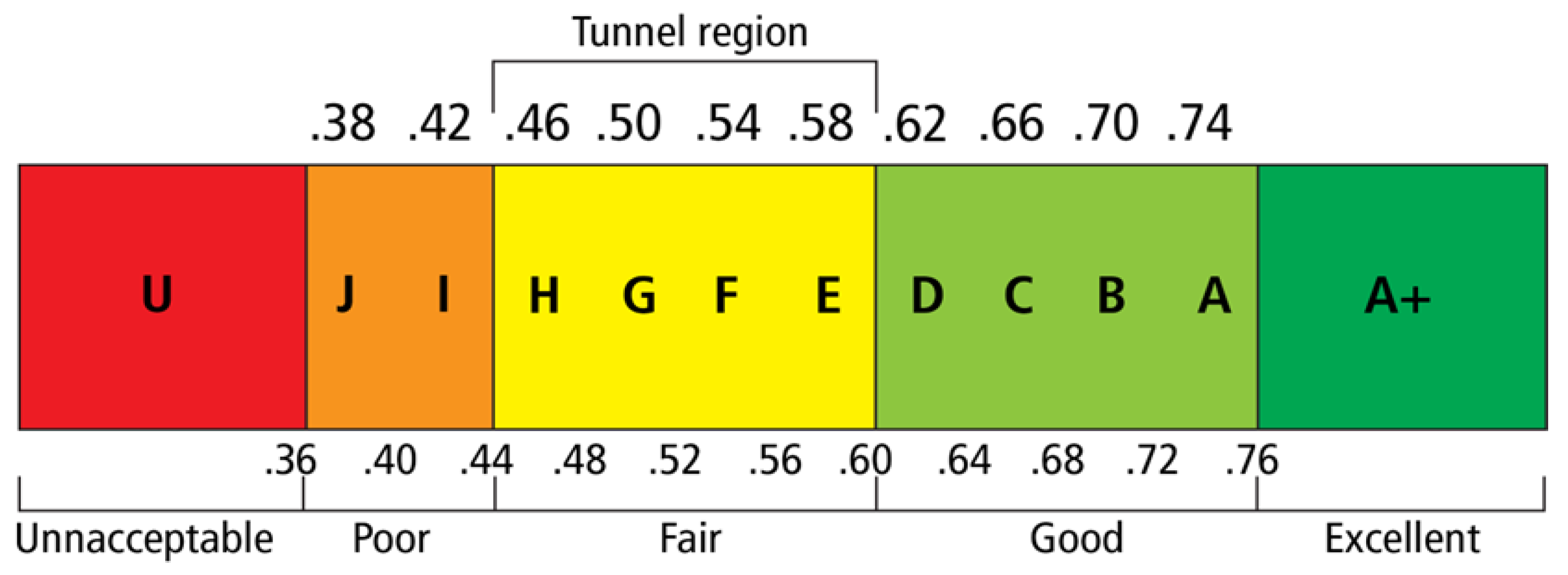
The second experiment was conducted in an in-situ tunnel environment, as illustrated in Figure 3. The positions of the sound source and receiver were maintained identical to those employed in the first experiment to ensure consistency in measurement conditions. In addition to the evaluation of sound pressure level (SPL), reverberation time and background noise levels were measured, in accordance with standardized procedures for environmental noise determination [19], to comprehensively assess speech intelligibility [6,10]. The speech intelligibility assessment was performed based on frequency response characteristics, following the physical measurement principles established for the Speech Transmission Index [20] and subsequent refinements of the method [21]. Furthermore, the STI rating scale used for interpretation is shown in Figure 4, and the target performance criterion of this study was established as a value exceeding 0.60.
Figure 1.
Speaker (5 Inch, 15 Inch).
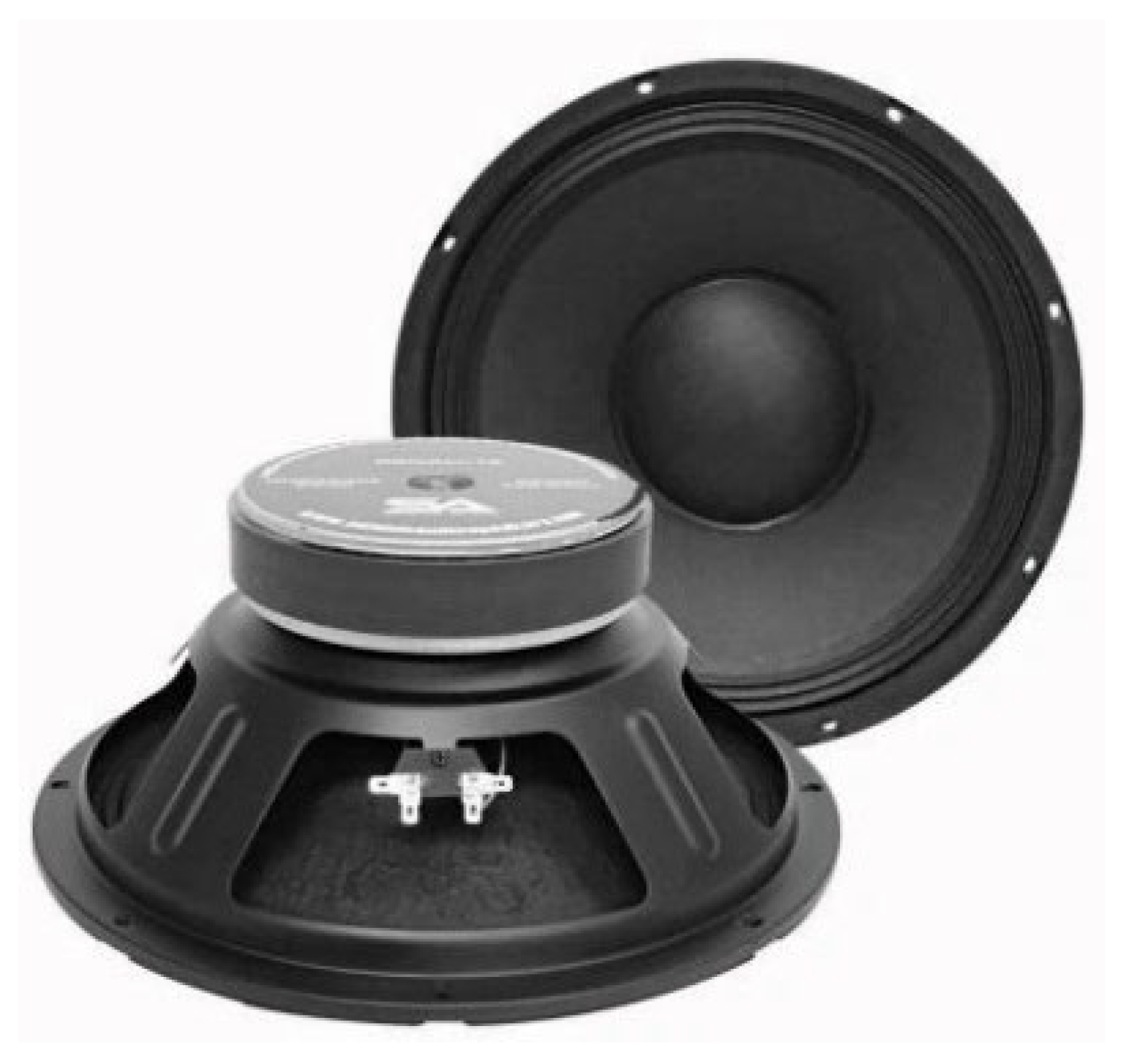
Figure 2.
Configuration of Sound and Measurement Point.
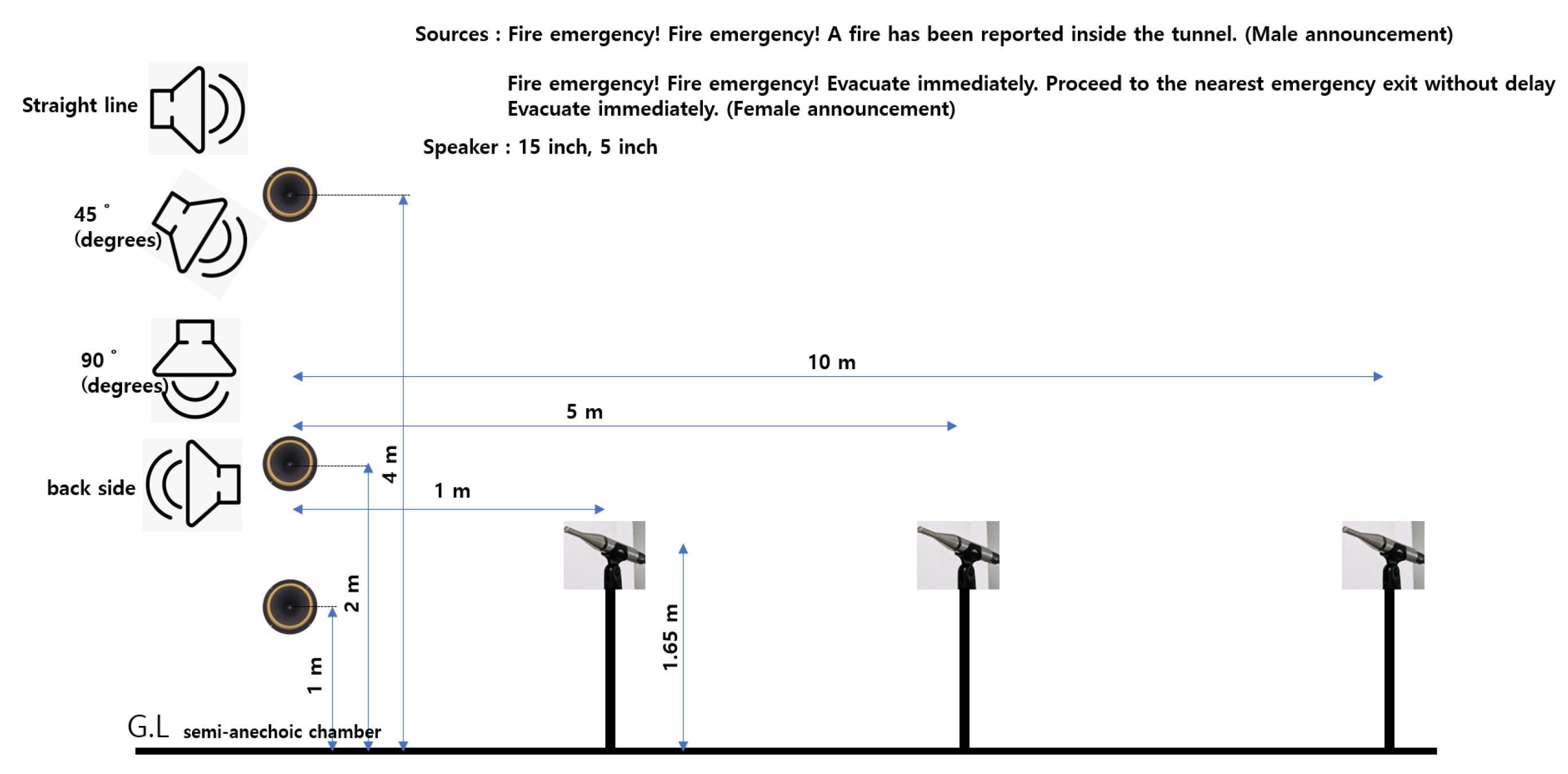
Figure 3.
Overview of the tunnel measurement configuration and on-site measurement scene.
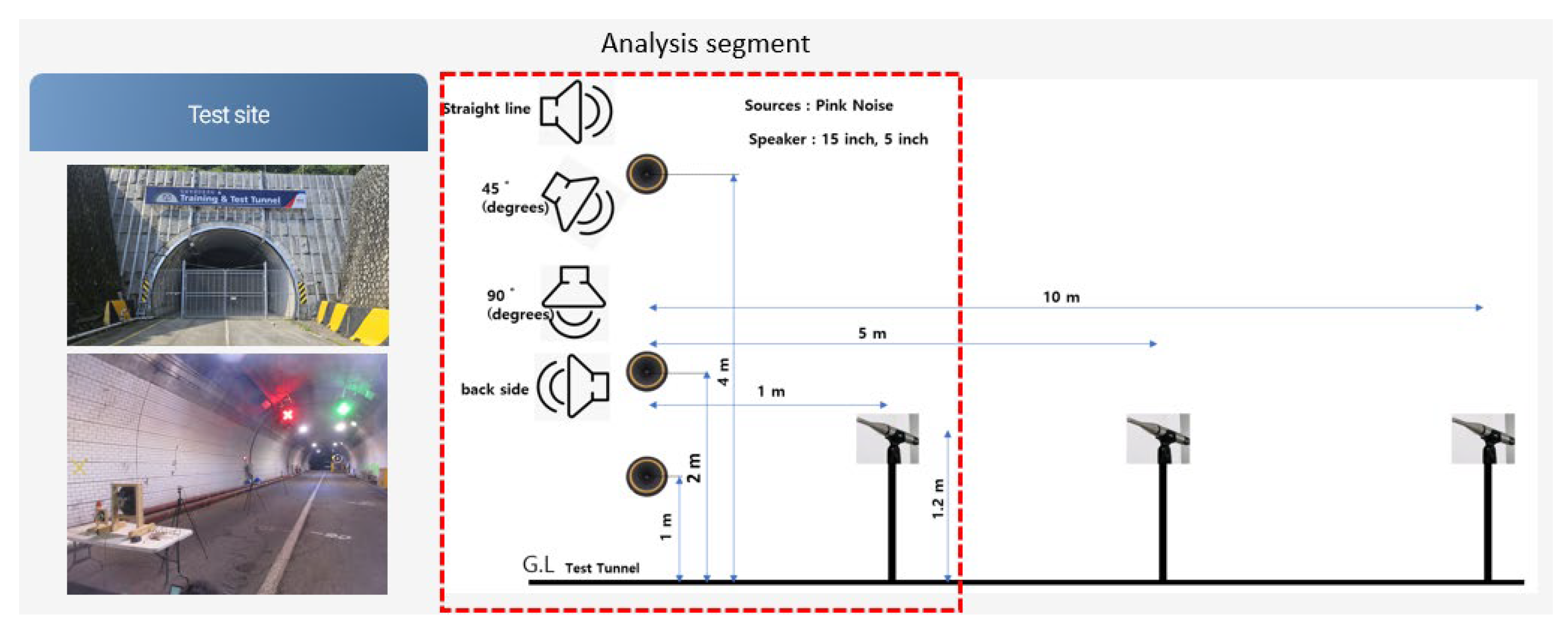
Figure 4.
Speech Transmission Index (STI).
3. Measurement Results
The results obtained under identical measurement conditions in the semi-anechoic chamber and in the in-situ tunnel environment were evaluated as follows.
3.1. Measurement Results in the Semi-Anechoic Chamber
The measurement results obtained under various conditions for two types of speakers in the first semi-anechoic chamber experiment are presented in Table 1 and Table 2.
The sound pressure levels (SPLs) of male and female evacuation announcements reproduced by the 15-inch speaker were found to satisfy the target level of 80 dB under most conditions. However, as the distance from the sound source increased, a noticeable reduction in SPL was observed when the orientation of the receiver was rotated by 90° relative to the sound source.
Similarly, the SPLs of male and female evacuation announcements reproduced by the 5-inch speaker also met the target level of 80 dB under certain conditions. However, as the distance from the sound source increased, a significant decrease in SPL was observed when the speaker orientation deviated from the frontal direction, particularly at angles of 45° and 90°
3.2. Measurement Results in the Actual Tunnel Environment.
In the actual tunnel environment, both the sound pressure level (SPL) and speech intelligibility (STI) were measured for 15-inch and 5-inch speakers. For the SPL measurements, male and female evacuation broadcast signals identical to those used in the semi-anechoic chamber were employed. For the STI measurements, pink noise was generated from the two types of speakers.
The STI measurement conditions were established as shown in Figure 3. The speaker installation heights were set at 1 m, 2 m, and 4 m, and the receiver positions were evaluated at a fixed linear distance of 1 m from the speaker. Prior to the STI evaluation, background noise and reverberation time were measured.
The results indicate that the frequency-dependent reverberation time within the tunnel was significantly prolonged, as presented in Table 3. Specifically, reverberation times of 12.4 s at 125 Hz and 9.8 s at 250 Hz were observed, indicating excessive reverberation in the low-frequency range. This is attributed to the absence of sound-absorbing materials within the tunnel and the semi-cylindrical geometry, which promotes continuous sound reflections [6], consistent with the excessive reverberation times reported in other tunnel environments lacking sound-absorbing treatment [11]. Such behavior is also consistent with theoretical and experimental studies of sound propagation and reverberation in long, geometrically reflective enclosures such as tunnels and corridors [22,23,24,25]. In contrast, the background noise level was extremely low, as shown in Table 4, due to the absence of vehicular traffic during the measurements.
The evaluation results for SPL and STI of the two speaker types are presented in Figure 5. and Figure 6. For the 15-inch speaker, the SPL varied depending on the measurement conditions, ranging from a minimum of 72 dB to a maximum exceeding 90 dB. Lower SPL values were generally observed when the distance between the speaker and the receiver increased and when the speaker was oriented away from the receiver.
In terms of STI, the values ranged from a maximum of 0.49 to a minimum of 0.26, corresponding to a “fair” to “bad” rating on the standard STI classification scale [10]. It was observed that STI decreased as the distance between the speaker and receiver increased, consistent with the well-established inverse relationship between speaker-to-receiver distance and speech intelligibility in reverberant spaces [26]. However, the variation in directivity angle showed a relatively limited effect on STI under the tested conditions.
The sound pressure level (SPL) of the 5-inch speaker varied depending on the measurement conditions, exhibiting a range from a minimum of 69 dB to a maximum of 83 dB. Overall, the SPL was found to be slightly lower than that of the larger speaker
4. Discussion
The experimental results demonstrate distinct acoustic performance characteristics between the 15-inch and 5-inch speakers under both controlled and in-situ tunnel conditions. In the semi-anechoic chamber, the 15-inch speaker consistently achieved the target sound pressure level (SPL) of 80 dB under most measurement conditions, indicating stable output performance. However, a slight reduction in SPL was observed at a directivity angle of 90°, suggesting that speaker orientation can influence sound field uniformity. In contrast, the 5-inch speaker exhibited greater variability in SPL depending on both source–receiver distance and directivity angle, resulting in less consistent performance in meeting the target SPL.
In the actual tunnel environment, the speech transmission index (STI) results revealed generally low intelligibility performance. Although the 15-inch directional loudspeaker produced higher sound pressure levels than the 5-inch loudspeaker, the maximum STI value was 0.49 for both loudspeakers. This indicates that achieving a sufficient sound pressure level alone does not necessarily ensure adequate speech intelligibility in highly reverberant tunnel environments. The variation in directivity angle showed a relatively limited effect on STI compared with the effect of source–receiver distance under the tested conditions. As the source–receiver distance increased, the STI generally decreased, indicating that the spatial distribution of the direct sound and the contribution of reflected sound affected speech intelligibility. These results are consistent with previous studies reporting the influence of source–receiver distance and reverberation on speech intelligibility in traffic tunnels and long enclosures [7,22].
The primary factor contributing to the degraded STI performance is the excessive reverberation within the tunnel. The absence of sound-absorbing materials, combined with the semi-cylindrical geometry, promotes persistent sound reflections and leads to prolonged reverberation times, particularly in the low-frequency range. Although the background noise level was minimal due to the absence of vehicular traffic during the measurements, the high reverberation alone was sufficient to significantly reduce speech intelligibility. This finding highlights that, in enclosed tunnel environments, reverberation control is a more critical factor than background noise in determining STI performance.
From an application perspective, these results suggest that simply achieving a target SPL is insufficient to ensure effective speech communication in tunnel environments. Instead, acoustic design strategies should prioritize the reduction of reverberation through the application of sound-absorbing materials or acoustic treatments [6,13]. Additionally, the limited influence of speaker directivity implies that system design should focus more on spatial distribution and placement of speakers rather than relying solely on directional control.
Nevertheless, this study has several limitations. The measurements were conducted under no-traffic conditions, which may not fully represent real operational environments where background noise levels are higher. In addition, the evaluation was performed at limited source–receiver distances, and only two speaker types were considered.
Future work will address these limitations by conducting measurements in accordance with relevant IEC standards [10] using a talk-box as a standardized sound source. Furthermore, STIPA predictions will be performed under realistic noise tunnel conditions using the ODEON acoustic simulation program [27]. Additional experimental investigations will also be carried out in operational tunnels equipped with non-absorptive (conventional) noise barriers, and subsequently in tunnels retrofitted with absorptive treatments, to better reflect real-world conditions and validate the applicability of the proposed findings.
5. Conclusions
The main findings of this study can be summarized as follows: (1) the 15-inch loudspeaker achieved the target SPL of 80 dB(A) more consistently than the 5-inch loudspeaker under the investigated conditions; (2) increasing source–receiver distance generally reduced SPL and STI; (3) the maximum STI measured in the actual noise barrier tunnel was 0.49, below the target criterion of 0.60; (4) under the low-background-noise conditions of the present measurements, excessive reverberation was a dominant factor limiting speech intelligibility; and (5) effective emergency broadcasting in noise barrier tunnels requires not only sufficient loudspeaker output but also appropriate loudspeaker placement and reverberation control. These results demonstrate that increasing sound level alone may not provide adequate speech intelligibility in highly reverberant tunnel environments.
Author Contributions
Conceptualization, J.O. and H.M.; methodology, J.O. and S.S.; validation, J.O.; formal analysis, J.O. and S.S.; investigation, J.O. and W.K.; resources, J.O. and S.S.; data curation, J.O.; writing—original draft preparation, J.O.; writing—review and editing, H.M.; visualization, J.O. and H.M.; supervision, H.M.; project administration, J.O.; funding acquisition, J.O. and S.S. All authors have read and agreed to the published version of the manuscript.
Funding
This work was supported by the Technology Innovation Program [(RS-2025-05492970, Development of a Disaster-Responsive Noise Barrier System for Ensuring Evacuation Safety in Tunnel Fires) funded By the Ministry of Interior and Safety) (MOIS, Korea)].
Data Availability Statement
Not applicable.
Conflicts of Interest
The authors declare no conflict of interest.
References
- Ministry of Land; Infrastructure and Transport. Fire Safety Reinforcement Measures for Road Sound-Insulation Facilities. MOLIT, South Korea, 2023. [Google Scholar]
- Korea Expressway Corporation Road Traffic Research Institute. A Study on Fire Safety and Disaster-Prevention Measures for Tunnel-Type Noise Barrier Facilities on Expressways; Korea Expressway Corporation, South Korea, 2018. [Google Scholar]
- Luche, J.; Rogaume, T.; Richard, F.; Guillaume, E. Characterization of thermal properties and analysis of combustion behavior of PMMA in a cone calorimeter. Fire Saf. J. 2011, 46(7), 451–461. [Google Scholar] [CrossRef]
- Fire at Second Gyeongin Expressway noise barrier tunnel intensified by plastic soundproofing panels. Newspim;Newspim 2022.
- EN 14388; Road traffic noise reducing devices – Specifications. European Committee for Standardization, 2005.
- ISO 3382-2; Acoustics — Measurement of room acoustic parameters — Part 2: Reverberation time in ordinary rooms. International Organization for Standardization, 2008.
- van Wijngaarden, S. J.; Verhave, J. A. Prediction of speech intelligibility for public address systems in traffic tunnels. Appl. Acoust. 2006, 67(4), 306–323. [Google Scholar] [CrossRef]
- Yang, L.; Shield, B. M. The prediction of speech intelligibility in underground stations of rectangular cross section. J. Acoust. Soc. Am. 2001, 109(1), 266–273. [Google Scholar] [CrossRef]
- Kasess, C.; Maly, T.; Waubke, H.; Ostermann, M.; Dinhobl, G. Speech intelligibility – Effects of railway tunnels at high speeds. In Notes on Numerical Fluid Mechanics and Multidisciplinary Design; Springer Nature, 2021; pp. 142–149. [Google Scholar]
- IEC 60268-16; Sound system equipment — Part 16: Objective rating of speech intelligibility by speech transmission index. International Electrotechnical Commission, 2020.
- Waddell, R. Determination and verification of speech intelligibility from sound systems in tunnels. N.Z. Acoust. 2014, 27(3). [Google Scholar]
- Yokoyama, S.; Kobayashi, T. Adjustment of a speech suitable for a reverberant space applying simulated sound field: Design of announcements in public address system for evacuation guidance in a tunnel. IEICE Tech. Rep. 2018, 118(149), 129–134. [Google Scholar]
- Ko, B. Y.; Ih, J. G.; Cho, W. H. A method of wall absorption treatment for enhancing the speech intelligibility at a directional microphone array in a room. J. Acoust. Soc. Korea 2021, 40(6), 649–659. [Google Scholar]
- ISO 3745; Acoustics — Determination of sound power levels of noise sources using sound pressure — Precision methods for anechoic and hemi-anechoic rooms. International Organization for Standardization, 2012.
- IEC 61672-1; Electroacoustics — Sound level meters — Part 1: Specifications. International Electrotechnical Commission, 2013.
- Larsby, B.; Hällgren, M.; Nilsson, L.; McAllister, A. The influence of female versus male speakers’ voice on speech recognition thresholds in noise: Effects of low- and high-frequency hearing impairment. Speech Lang. Hear. 2015, 18(2), 83–90. [Google Scholar] [CrossRef]
- National Fire Agency. Fire Safety Standards for Emergency Broadcasting Facilities (NFTC 202). National Fire Agency, South Korea, 2022.
- NFPA 72; National Fire Alarm and Signaling Code. National Fire Protection Association, USA, 2019.
- ISO 1996-2; Acoustics — Description, measurement and assessment of environmental noise — Part 2: Determination of sound pressure levels. International Organization for Standardization, 2017.
- Steeneken, H. J. M.; Houtgast, T. A physical method for measuring speech-transmission quality. J. Acoust. Soc. Am. 1980, 67(1), 318–326. [Google Scholar] [CrossRef]
- van Wijngaarden, S.J.; Verhave, J.A. Recent advances in STI measuring techniques. Proc. Inst. Acoust. 2006, 28(6). [Google Scholar]
- Kang, J. Acoustics in long enclosures with multiple sources. J. Acoust. Soc. Am. 1996, 99(2), 985–989. [Google Scholar] [CrossRef]
- Kang, J. Reverberation in rectangular long enclosures with geometrically reflecting boundaries. Acta Acust. United Acust. 1996, 82(3), 509–516. [Google Scholar]
- Redmore, T. L. A theoretical analysis and experimental study of the behavior of sound in corridors. Appl. Acoust. 1982, 15(3), 161–170. [Google Scholar] [CrossRef]
- Yamamoto, T. On the distribution of sound in a corridor. J. Acoust. Soc. Jpn. 1961, 17, 286–292. [Google Scholar]
- Bradley, J. S. Speech intelligibility studies in classrooms. J. Acoust. Soc. Am. 1986, 80(3), 846–854. [Google Scholar] [CrossRef]
- Naylor, G. ODEON — Another hybrid room acoustical model. Appl. Acoust. 1993, 38(2-4), 131–143. [Google Scholar] [CrossRef]
Figure 5.
SPL and STI Results of the 15-Inch Speaker in the Tunnel Environment.
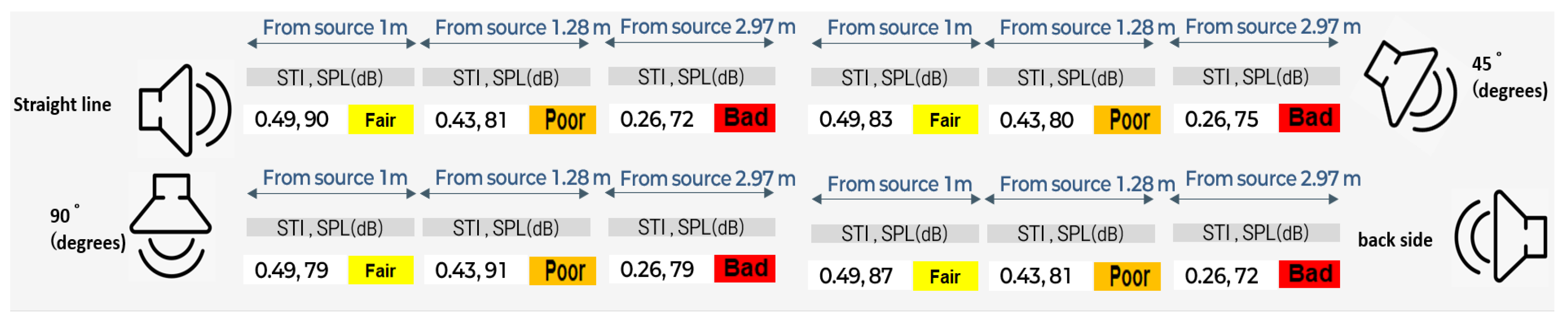
Figure 6.
SPL and STI Results of the 5-Inch Speaker in the Tunnel Environment.
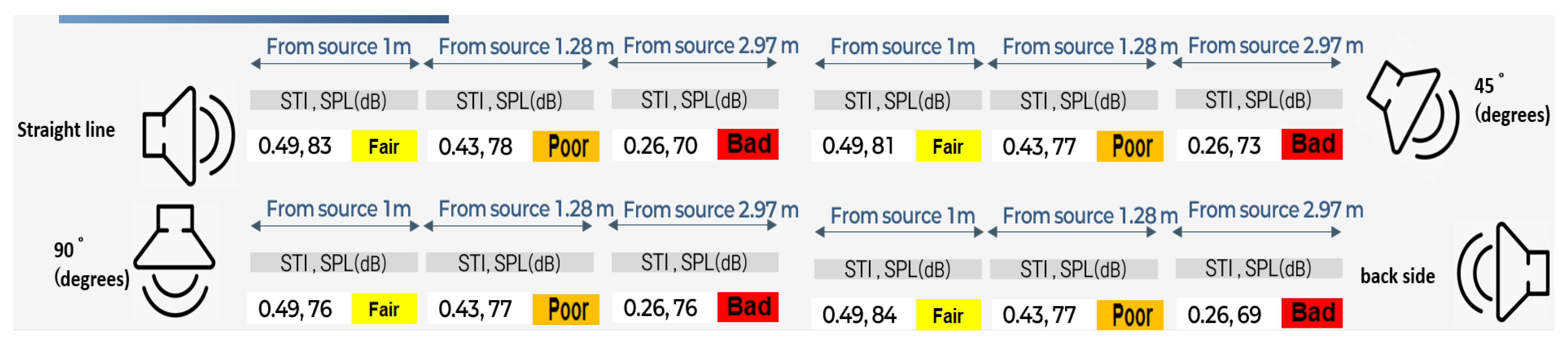

Table 1.
Sound pressure level (SPL) results of the 15-inch speaker under each measurement condition.
Table 1.
Sound pressure level (SPL) results of the 15-inch speaker under each measurement condition.
|
Case (Speaker height) |
Receiver 1 (1 m) | Receiver 2 (5 m) | Receiver 3 (10 m) | Index | |||
|
Male (dB, dB(A)) |
Female (dB, dB(A)) |
Male (dB, dB(A)) |
Female (dB, dB(A)) |
Male (dB, dB(A)) |
Female (dB, dB(A)) |
||
| 1 (Height 1 m) | 102.6, 100.1 | 102.5, 100.3 | 91.3, 88.9 | 91.3, 89.8 | 83.6, 81.8 | 86.0, 84.9 | Straight line |
| 2 (Height 1 m) | 99.6, 96.9 | 99.2, 96.8 | 89.2, 86.2 | 88.0, 85.9 | 82.6, 80.2 | 82.3, 80.9 | 45 degrees |
| 3 (Height 1 m) | 91.0, 88.7 | 88.5, 86.0 | 77.0, 75.0 | 77.8, 76.3 | 73.1, 70.8 | 72.8, 71.2 | 90 degrees |
| 4 (Height 1 m) | 101.8, 98.9 | 100.1, 97.6 | 93.6, 90.5 | 90.6, 88.3 | 86.0, 83.5 | 85.1, 83.7 | Back side |
| 5 (Height 2 m) | 103.2, 100.4 | 101.5, 99.0 | 91.0, 88.6 | 91.4, 89.0 | 88.7, 86.0 | 85.6, 83.8 | Straight line |
| 6 (Height 2 m) | 100.2, 97.3 | 99.3, 96.5 | 87.7, 84.8 | 87.8, 84.7 | 84.1, 81.2 | 81.7, 79.4 | 45 degrees |
| 7 (Height 2 m) | 91.3, 88.7 | 89.8, 86.9 | 80.7, 78.3 | 78.9, 76.6 | 74.8, 72.2 | 72.5, 70.3 | 90 degrees |
| 8 (Height 2 m) | 102.9, 100.0 | 100.5, 97.8 | 91.4, 88.6 | 91.2, 88.5 | 88.9, 85.9 | 85.9, 83.5 | Back side |
| 9 (Height 4 m) | 88.4, 85.7 | 85.3, 82.3 | 89.4, 86.7 | 88.8, 85.9 | 84.5, 82.0 | 85.5, 83.0 | Straight line |
| 10 (Height 4 m) | 86.0, 83.7 | 82.3, 79.9 | 86.0, 83.3 | 85.0, 82.4 | 81.5, 78.9 | 82.0, 79.4 | 45 degrees |
| 11 (Height 4 m) | 84.0, 81.8 | 81.1, 79.5 | 81.4, 79.1 | 79.0, 76.8 | 71.0, 68.3 | 71.0, 68.1 | 90 degrees |
| 12 (Height 4 m) | 89.0, 86.2 | 86.0, 83.1 | 90.6, 86.8 | 88.3, 85.5 | 84.4, 81.5 | 85.5, 82.6 | Back side |
Table 2.
Sound pressure level (SPL) results of the 5-inch speaker under each measurement condition.
|
Case (Speaker height) |
Receiver 1 (1 m) | Receiver 2 (5 m) | Receiver 3 (10 m) | Index | |||
|
Male (dB, dB(A)) |
Female (dB, dB(A)) |
Male (dB, dB(A)) |
Female (dB, dB(A)) |
Male (dB, dB(A)) |
Female (dB, dB(A)) |
||
| 1 (Height 1 m) | 92.9, 91.4 | 93.7, 92.9 | 83.8, 82.1 | 85.3, 84.8 | 76.1, 75.6 | 81.1, 80.9 | Straight line |
| 2 (Height 1 m) | 89.0, 87.4 | 89.4, 88.8 | 79.4, 77.6 | 81.2, 80.7 | 77.1, 70.7 | 76.1, 75.9 | 45 degrees |
| 3 (Height 1 m) | 82.0, 81.2 | 84.9, 84.8 | 71.8, 71.0 | 73.4, 73.0 | 64.9, 64.3 | 68.0, 67.9 | 90 degrees |
| 4 (Height 1 m) | 92.7, 90.3 | 92.7, 91.9 | 83.7, 81.8 | 85.9, 85.6 | 74.8, 74.4 | 80.9, 80.8 | Back side |
| 5 (Height 2 m) | 94.6, 92.9 | 95.6, 94.7 | 82.3, 80.8 | 83.9, 83.0 | 78.9, 77.0 | 79.2, 78.6 | Straight line |
| 6 (Height 2 m) | 92.0, 90.4 | 92.9, 92.0 | 79.4, 77.8 | 80.1, 79.1 | 75.0, 73.0 | 75.3, 74.5 | 45 degrees |
| 7 (Height 2 m) | 81.7, 80.8 | 82.8, 82.4 | 70.8, 70.1 | 71.9, 71.6 | 64.7, 63.4 | 66.0, 65.4 | 90 degrees |
| 8 (Height 2 m) | 101.0, 99.6 | 95.6, 94.9 | 89.5, 88.2 | 84.2, 83.4 | 85.5, 84.4 | 79.7, 79.4 | Back side |
| 9 (Height 4 m) | 78.5, 77.3 | 79.6, 79.2 | 80.6, 79.2 | 82.5, 81.7 | 75.3, 73.8 | 78.4, 77.7 | Straight line |
| 10 (Height 4 m) | 77.7, 76.6 | 79.4, 79.0 | 79.3, 78.0 | 82.3, 81.7 | 74.7, 73.3 | 77.8, 77.1 | 45 degrees |
| 11 (Height 4 m) | 73.3, 73.1 | 75.9, 76.0 | 70.1, 70.0 | 73.5, 73.4 | 62.5, 62.1 | 69.0, 67.0 | 90 degrees |
| 12 (Height 4 m) | 82.1, 79.9 | 83.3, 82.6 | 81.6, 79.9 | 84.8, 84.2 | 76.7, 75.4 | 80.3, 79.9 | Back side |
Table 3.
Reverberation Time Results in the Actual Tunnel Environment.
|
RT (T20 S) |
125 Hz | 250 Hz | 500 Hz | 1 000 Hz | 2 000 Hz | 4 000 Hz | 8 000 Hz |
| 12.4 | 9.8 | 8.4 | 6.3 | 4.5 | 2.8 | 2.0 |
Table 4.
Background Noise Results in the Actual Tunnel Environment.
|
BGN (dB) |
125 Hz | 250 Hz | 500 Hz | 1 000 Hz | 2 000 Hz | 4 000 Hz | 8 000 Hz |
| 30.1 | 21.8 | 13.9 | 13.1 | 13.0 | 14.3 | 20.1 |
Disclaimer/Publisher’s Note: The statements, opinions and data contained in all publications are solely those of the individual author(s) and contributor(s) and not of MDPI and/or the editor(s). MDPI and/or the editor(s) disclaim responsibility for any injury to people or property resulting from any ideas, methods, instructions or products referred to in the content. |
© 2026 by the authors. Licensee MDPI, Basel, Switzerland. This article is an open access article distributed under the terms and conditions of the Creative Commons Attribution (CC BY) license (http://creativecommons.org/licenses/by/4.0/).
Copyright: This open access article is published under a Creative Commons CC BY 4.0 license, which permit the free download, distribution, and reuse, provided that the author and preprint are cited in any reuse.