

Submitted:
11 September 2026
Posted:
15 September 2026
You are already at the latest version
Abstract
This study provides a comprehensive assessment of the amount of biomass and taxonomic-functional composition of stranded macroalgae and seagrasses on a highly productive shellfish bank of NW Iberia (Galicia) frequently affected by “green tides”, based on a year-long monitoring program and multivariate anal-ysis. Macroalgal biomass showed strong seasonal and spatial variability, peaking in spring and summer. Chlorophyta, especially Ulva lacinulata, dominated the community, accounting for over 63% of total biomass. This species, along with other foliose morphotypes, shaped both seasonal and spatial dynamics. Statis-tical analysis revealed significant effects of season, transect, and tidal level on stranded biomass, as well as significant interactions between transect and tidal level and between tidal level and sea-son, highlighting marked spatial and temporal heterogeneity in biomass deposition. The absence of a consistent vertical zonation pattern in stranded biomass and the accumulation of material in upper intertidal zones reveal the role of these areas as passive hydrodynamic filters, decoupling production from deposition. Incorporating functional approaches and hydrodynamic context into monitoring and management strategies will be essential to mitigate the ecological and socio-economic impacts of green tides under ongoing global change.
Keywords:
green tides
; macroalgal biomass
; biodiversity
; Ulva spp.
; littoral levels
; coastal ecosystems
1. Introduction
Green tides, characterized by the rapid proliferation of opportunistic macroalgae, have become one of the most widespread manifestations of coastal eutrophication worldwide [1,2]. Over recent decades, the frequency and intensity of green tides and other stranded macroalgae and plants have increased globally, particularly in temperate estuarine environments where anthropogenic nutrient inputs coincide with favorable hydrological and climatic conditions [3,4]. Nutrient enrichment, climate-driven changes in hydrology, and altered disturbance regimes converge to promote the dominance of fast-growing green algae [3,5]. Beyond their effects on benthic habitats and biogeochemical cycles, green tides generate large quantities of detached macroalgal biomass that are transported and stranded on intertidal beaches.
These biomass accumulations vary widely in terms of location, intensity, the species or strains involved, their causes, and their impacts. In the last decades, as one more type of harmful algal blooms (HABs), green tides are an increasing problem of worldwide distribution and are now of growing concern globally [1]. The most noticeable events of green tides are those that happened in the Yellow Sea of China [4,6]. Since the 90s, in Europe, green tides have been well documented as a direct effect of eutrophication processes [7,8], but many productive European estuaries remain under-studied, especially in terms of fine-scale temporal and spatial dynamics of macroalgal blooms.
Despite extensive research on the drivers and impacts of macroalgal blooms, stranded biomass on beaches is still commonly interpreted as a direct proxy for local macroalgal production. However, this phenomenon integrates multiple processes -including growth, detachment, transport and deposition- that may decouple stranded biomass from the structure of in situ benthic communities [9,10]. As a result, the spatial distribution of biomass along intertidal gradients may not reflect classical biological zonation driven by physiological stress tolerance [11] but instead emerge from hydrodynamic filtering processes whose ecological implications remain poorly resolved.
The genus Ulva Linnaeus is typically dominant during these events, renowned for its rapid proliferation and remarkable adaptability to fluctuating environmental conditions [12,13]. Other genera, such as Cladophora Kützing, Chaetomorpha Kützing, and Bryopsis J.V. Lamouroux, also play a role, often acting as initial colonizers in areas with disturbed or enriched substrates [14,15,16]. Despite the widespread documentation of green tides in estuarine systems globally, significant gaps remain in our understanding in Europe of their dynamics at finer spatial and temporal scales, particularly in regions like the Galician coastline (NW Spain).
The Galician coast, characterized by its unique estuaries called “rías” and numerous sheltered beaches, is an area of intense economic activity. This includes fisheries and aquaculture, with a particular emphasis on the exploitation of bivalve mollusks [17]. However, the interplay between natural upwelling processes, river runoff, and anthropogenic nutrient enrichment has intensified the frequency and severity of green tide events in this region [18]. The in situ growth or deposition of erratic algal biomass during these events poses a serious threat to intertidal and subtidal ecosystems. For example, stranded algae often form dense mats that smother sedimentary habitats during low tide, impairing vital functions such as oxygen exchange and feeding behavior in benthic organisms, including economically valuable bivalves [19].
Historically, studies of green tides and algal strandings in Galicia have been limited. The pioneering work of [20] provided early insights but largely focused on phytoplankton dynamics and nutrient cycles in Galician waters. Subsequent studies by [21], and [22] offered valuable observations on beach ecology but did not comprehensively address the ecological and economic implications of macroalgal strandings. In recent years, growing awareness of the environmental challenges posed by algal blooms in this region has led to renewed interest in understanding their patterns, drivers, and consequences.
This study seeks to fill critical knowledge gaps by examining the spatial and temporal variability of macroalgal strandings on an exploited shellfish bank in the “Ría de Arousa” estuary over the course of 2019. By analyzing biomass composition, spatial distribution along the beach profile, and seasonal dynamics combining high-resolution field sampling with multivariate analysis, this work provides new insights into the ecological processes underlying green tide phenomena in sheltered estuarine environments.
Additionally, it highlights the importance of considering both natural and anthropogenic factors related to managing coastal ecosystems effectively. Given the increasing prevalence of green tides under global change and nutrient enrichment scenarios, this research offers valuable information for the sustainable management of Galicia's coastal resources.
2. Materials and Methods
2.1. Study Area
The study was conducted on O Castelete beach, located in the inner sector of the Ría de Arousa (NW Iberian Peninsula; 42°32′31″N, 8°49′44″W; Figure 1), one of the most productive estuarine systems in Europe due to persistent coastal upwelling [20]. The area is characterized by a gently sloping sandy intertidal flat subjected to recurrent green tide events associated with chronic nutrient enrichment [23]. “O Castelete” beach supports intensive shellfish harvesting activities and represents a socio-ecologically relevant site for assessing the dynamics of stranded macroalgal biomass in eutrophic estuarine environments.
2.2. Sampling Design
The dynamics of stranded macroalgal biomass were monitored over a full annual cycle, from January to December 2019, with sampling conducted twice monthly coinciding with spring tide periods. The sampling design was structured to capture both spatial and temporal variability. Four permanent transects (T1, T2, T3, T4), separated by approximately 300 meters, were established perpendicular to the shoreline (Figure 1). Along each transect, four tidal levels were defined: S1) 5 m from zero, upper intertidal zone (UIZ); S2) 20 m from zero, high-middle intertidal zone (HMIZ); S3) 35 m from zero, low-middle intertidal zone (LMIZ); and S4) 50 m from zero, lower intertidal zone (LIZ). Sampling was conducted using a 0.25 m2 quadrat (0.5 × 0.5 m) at each of the four tidal levels within the four transects. All macroalgal and seagrass material that was attached, loose, and stranded on the sediment surface was collected within the quadrats. The material was immediately placed in properly labelled bags and stored on ice for transport to the laboratory, yielding a total of 540 samples.
2.3. Laboratory Procedures
2.3.1. Taxonomic and Functional Analysis
In the laboratory, all collected plant material was cleaned of sediment and epifauna. The material was classified according to standard taxonomic groups (Chlorophyta, Rhodophyta, Ochrophyta and Spermatophyta) and identified to the lowest possible taxonomic level using general identification keys for Atlantic European seaweed flora. Taxonomic and nomenclatural criteria from AlgaeBase [25] were followed. Subsequently, the species were grouped into functional groups based on morphological complexity [11]: “filamentous” (e.g., Cladophora spp.), “foliose” (e.g., laminar species of Ulva), “corticated” (e.g., Gracilaria spp.), “leathery” (e.g., Fucus spp.), and “Spermatophyta” (e.g., Zostera spp.).
2.3.2. Biomass Quantification
After taxonomic and morpho-functional sorting, the total wet weight (ww) of each functional group was measured. The material was then dried in a forced-air oven (Memmert UF75) at 45 °C until constant dry weight (dw) was achieved (generally 24 hours). Biomass values are expressed as grams of dry weight per square meter (g · dw · m−2) using a precision balance (Radwag PS 600R2).
2.3.3. Analysis of Data
All statistical analyses were conducted in R [26]. Biomass data were summarized using descriptive statistics and expressed as mean ± standard error. Temporal and spatial differences in biomass were assessed using analysis of variance (ANOVA), considering season, transect, and intertidal level as factors (Table S2). When significant effects were detected, Tukey's HSD post-hoc test was used for pairwise comparisons among factor levels. Statistical significance was set at α = 0.05.
Taxonomic and morpho-functional patterns were explored using Principal Coordinates Analysis (PCoA) to visualize differences in community composition among seasons. Taxonomic composition was analysed based on species biomass, whereas morpho-functional structure was evaluated according to the biomass associated with each morpho-functional group.
Similarity Percentage (SIMPER) analysis was performed on morpho-functional biomass data to determine the contribution of individual morpho-functional groups to within-season similarity.
For selected analyses of taxonomic composition, taxa occurring in ≤5% of the samples were excluded to reduce the influence of rare taxa. This criterion resulted in the selection of 25 taxa: 12 Rhodophyta, 6 Chlorophyta, 5 Ochrophyta, and 2 Spermatophyta.
3. Results
3.1. Temporal Dynamics of Biomass
The average plant biomass across different seasons, transects and tidal levels in the study area for one year (2019) sampling period was 14.97 ± 1.44 g · dw · m−2. When studying biomass by “season”, a significant variability between them is observed (Figure 2). The spring samples showed the highest biomass, reaching an average value of 25.58 ± 0.49 g · dw · m−2. On the other hand, the winter samples had the lowest biomass, with an average value of 5.78 ± 0.11 g · dw · m−2. The summer and autumn samples presented intermediate values: 16.34 ± 0.27 g · dw · m−2 and 12.31 ± 0.39 g · dw · m−2, respectively.
On a monthly basis (Figure 3), the average biomass increases from January and reaches its annual monthly peak in June (33.41 ± 5.67 g · dw · m−2), and then gradually decreases. Another but smaller biomass increment can be found in late summer and autumn, reaching its peak in October (15.38 ± 6.20 g · dw · m−2). The lowest monthly biomass value was recorded in January (2.47 ± 0.34 g · dw · m−2).
3.2. Spatial Variability: Transects and Tidal Levels
The plant biomass displayed marked spatial heterogeneity along the shore. Transect identity had a significant effect (p < 0.001) on biomass distribution (Figure 4), with transect T2 consistently recording higher values than the remaining transects, particularly between February to July. Mean biomass at T2 reached 27.04 ± 3.78 g · dw · m−2, whereas T1 and T3 exhibited significantly lower values (4.97 ± 0.8 and 7.97 ± 1.31 g · dw · m−2, respectively). T4 has intermediate mean biomass values (19.89 ± 3.68 g · dw · m−2), but after summer begins to have the highest values, particularly in November.
Across the intertidal gradient, biomass also varied significantly (p < 0.001) among tidal levels (Figure 5). The lower intertidal zone (LIZ) showed the highest average biomass (21.83 ± 4.06 g · dw · m⁻2) followed by upper intertidal zone (UIZ), with 14.43 ± 2.61 g · dw · m−2. However, pairwise comparisons revealed no significant difference between the lower and upper intertidal zones (p = 0.26). Middle intertidal zones (HMIZ and LMIZ) exhibited, in general, lower mean biomass than both extremes, 12.64 ± 2.26 and 10.99 ± 2.07 g · dw · m−2, respectively.
3.3. Taxonomic and Morpho-Functional Groups
3.3.1. Taxonomic Groups
A total of 98 taxa were identified (Table S1) over the study period distributed across 56 genera of macroalgae including 94 taxa, along with 2 species of seagrasses and 2 blue-green microalgae (Cyanophyta) that form colonies visible to the naked eye. Among the macroalgae, 66 taxa belonged to Rhodophyta, 22 to Ochrophyta, and 6 to Chlorophyta. (Figure 6).
Despite the major diversity of brown and red macroalgae -in terms of biomass-, both annual and seasonal biomass in the different transects and coastal levels were clearly dominated by green algae, which accounted for 89.9% of the total annual dry biomass (Figure 7), particularly during summer, when they reached 95.4%. Within green algae, Ulva species were dominant and Ulva lacinulata alone contributed 63.35% of total biomass. Brown and red algae made comparatively minor contributions to total biomass, representing only 4.3% and 3.4%, respectively. Brown algae were dominated by Sargassum muticum and Fucus spp., while Gracilaria vermiculophylla and Chondracanthus acicularis were the most abundant red algae. Spermatophyta (Zostera spp.) were detected sporadically and were primarily restricted to the upper intertidal zone as detached material and only reached a biomass of 2.5%
The Principal Coordinates Analysis (PCoA) revealed distinct seasonal patterns in taxa composition across the different seasons. The resulting plot shows the first two principal coordinates, PCO1 (55.8% of the total variation) and PCO2 (26% of the total variation), allowing us to visualize the relationships between samples based on their species composition similarity, indicating a marked seasonal differentiation in community structure (Figure 8).
Summer samples clustered predominantly in the right quadrant of the plot, closely associated with species such as Cladophora spp., Rhizoclonium sp., and Ulva clathrata. In contrast, winter samples were distributed toward the left quadrant, showing a strong association with Umbraluva dangeardii. Spring samples were primarily associated with Sargassum muticum and Ulva lacinulata, while autumn samples occupied an intermediate position in the multivariate space, sharing similarities with both winter and summer communities. With respect to tidal levels, other analyses revealed that certain species were more abundant in specific tidal zones, i.e. Cladophora spp. and Ulva clathrata being more common in the upper intertidal zones, while Sargassum muticum is more dominant in the lower intertidal zone.
3.3.2. Morpho-Functional Groups
At “O Castelete” beach, with respect to their morpho-functional groups among the 96 macroalgae and seagrasses included in the analysis (Cyanophyta excluded), 44 species of seaweeds belong to the corticated morphotype, 33 to the filamentous, 13 to the foliose, and the least abundant are the leathery morphotype and seagrasses (Spermatophyta), with 4 and 2 species, respectively (Figure 9).
Despite the greater number of corticated and filamentous species, in terms of biomass, both annual and seasonal biomass in the different transects and coastal levels were clearly dominated by foliose species, which accounted for 73.4% of the total annual dry biomass, particularly during summer, when this group reached 95.4%. The filamentous morphotype accounted for 21.0% of the total annual biomass and reached its highest value in autumn (39.3%). The remaining morphotypes barely contributed to total biomass. (Figure 10).
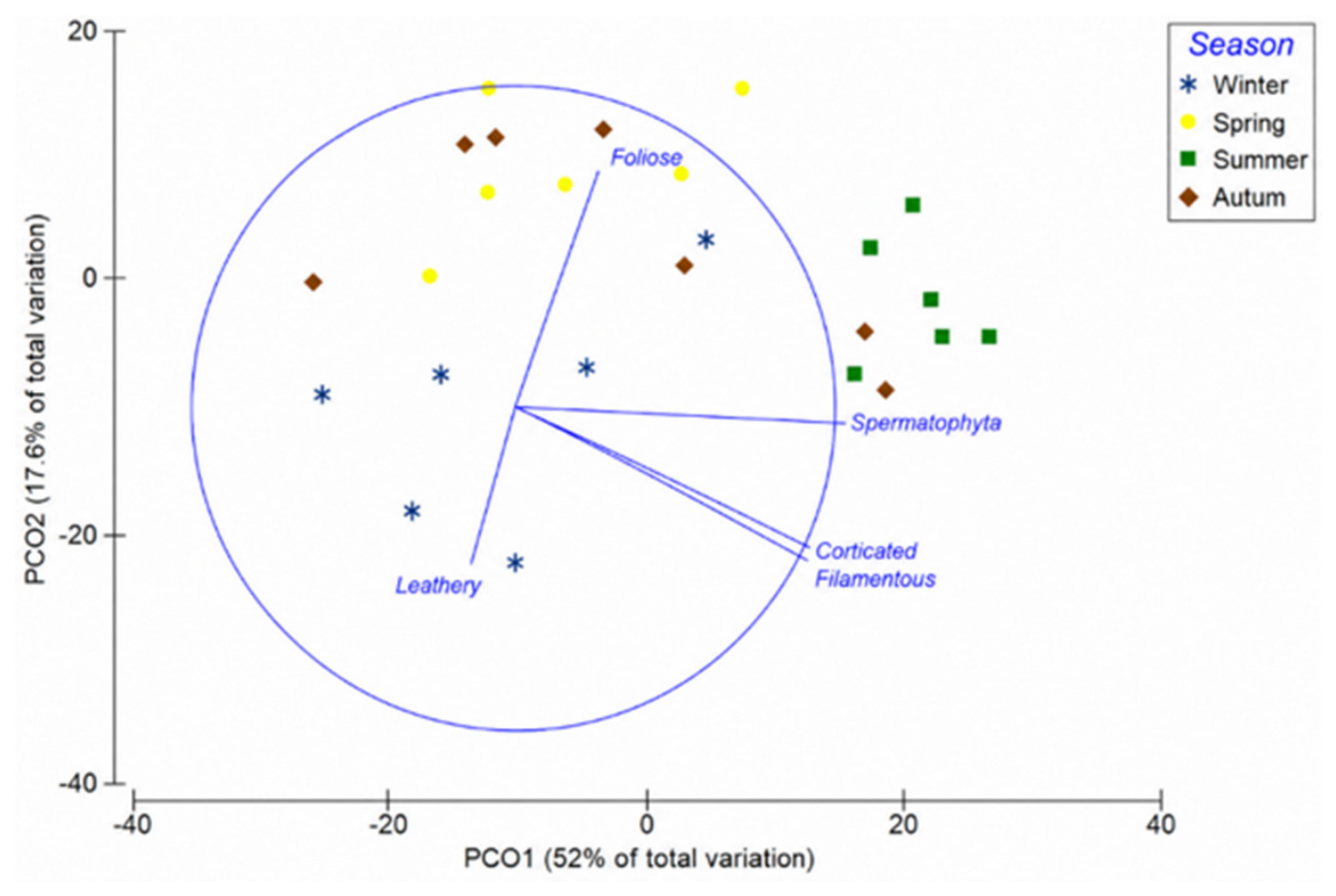
The Principal Coordinates Analysis (PCoA) revealed distinct seasonal patterns in the distribution of morpho-functional groups based on biomass (Figure 11). The resulting plot shows the first two principal coordinates, PCO1 (52% of the total variation) and PCO2 (17.6% of the total variation), allowing us to visualize the relationships between samples indicating again a marked seasonal differentiation in community structure with respect to morpho-functional groups (Figure 11).
Winter samples were separated from those of other seasons, showing a stronger association with the leathery morphotype in the ordination space. Spring and autumn samples were positioned intermixed closer to foliose, filamentous, corticated species and seagrasses, reflecting a peak in these other functional groups. Summer samples showed a higher presence of seagrasses, and some foliose, filamentous and corticated species.
The SIMPER (Similarity Percentages) analysis revealed the contribution of different morpho-functional groups to within-season similarity (Table S3). Winter showed the lowest average similarity (53.74%), with foliose morphotypes contributing 37.16%, followed by corticated (16.23%), leathery (9.36%), and filamentous morphotypes (7.89%). Spring showed the highest average similarity (84.55%), mainly driven by foliose morphotypes (65.28%), followed by leathery morphotypes (18.43%). Summer showed an average similarity of 82.89%, with foliose morphotypes contributing 36.19%, followed by filamentous (18.08%), leathery (17.20%), and corticated morphotypes (16.80%). Autumn showed an average similarity of 72.89%, largely driven by foliose morphotypes (69.62%), followed by leathery morphotypes (16.78%).
4. Discussion
The results obtained in this study on the biomass and composition of macroalgae on “O Castelete” beach (Ría de Arousa, Galicia) reveal significant spatial and temporal variability patterns, consistent with previous research conducted in Atlantic estuaries [27,28].
4.1. Seasonal Biomass Variability
The average biomass observed in this study (14.97 ± 1.44 g · dw · m−2) falls within the range documented in other eutrophicated areas, but with marked seasonal fluctuations reflecting the influence of climatic and ecological factors such as nutrient availability, temperature, and light irradiance [29,30]. To analyse the significance of the observed differences of macroalgal biomass in terms of season (Figure 2), ANOVA analysis (Table S2) revealed that there are statistically significant differences (p < 0.001), reflecting marked seasonal variability in biomass. Tukey's post-hoc test revealed that spring has the greatest values of biomass compared to the other seasons, with statistically significant differences. Summer also shows high biomass values and presents significant differences (p < 0.001) with autumn and winter. Autumn has lower biomass compared to summer and spring and presents significant differences with winter (p < 0.001), season with the lowest values of biomass that may be associated with the reduction in temperature and lower light availability, which restricts the growth of macroalgae.
The highest biomass pattern observed in spring, mainly driven by the proliferation of Ulva spp., is consistent with the literature on green tides and algal blooms in eutrophicated estuaries [2,3]. In particular, spring is associated with an increase in nutrient availability due to upwelling and river runoff, which fosters the growth of opportunistic species favored under eutrophic conditions, species like Ulva lacinulata, which dominate the biomass during this period at “O Castelete” beach. This phenomenon is further enhanced by rising photoperiods and temperatures, factors contributing to the massive expansion of this kind of macroalgae in coastal environments [23,31]. In contrast, the autumn biomass increase likely reflects enhanced detachment and transport associated with increased hydrodynamic forcing, rather than renewed in situ growth. This seasonal alternation between growth-dominated and transport-dominated phases highlights the importance of considering both nutrient-driven production and physical disturbance when interpreting strand biomass dynamics in temperate estuaries.
4.2. Horizontal Biomass Heterogeneity
The results obtained in the biomass values from different transects demonstrate the complexity of coastal ecosystems, where factors such as topography, tides and tidal levels, currents, wave exposure, salinity, substrate characteristics and inputs of nutrients differentiated several ecological niches. To analyse the significance of the observed differences of macroalgal biomass in terms of transect (Figure 4), ANOVA analysis (Table S2) revealed that there are statistically significant differences (p < 0.001), reflecting a marked horizontal heterogeneity. Tukey's post-hoc test revealed that the biomass at T2 has the greatest compared to the other transects, with significant differences with respect to T1 and T3. Tukey’s post-hoc test also shows that biomass at T2 and T4 are significantly higher than at T1 and T3 (p < 0.001). Biomass at T3 does not present significant differences compared to biomass at T1 (p = 0.867). With respect to tidal level, the ANOVA also revealed statistically significant differences (p < 0.001) in plant biomass distribution across the intertidal levels (Figure 5). The lower intertidal zone (LIZ) showed the highest mean biomass, followed by the upper intertidal zone (UIZ), although pairwise comparisons revealed no significant difference between these two levels (p = 0.26). Middle intertidal zones (HMIZ and LMIZ) exhibited, in general, lower mean biomass than both extremes. That the lower zone (LIZ) presented the highest biomass is consistent with studies that emphasize how species with larger size and thallus complexity are better adapted to prolonged submersion conditions proper of the lower intertidal zone [29]. In contrast, species highly adapted to changing environments dominated the higher intertidal zones, where environmental fluctuations are more extreme. This distribution pattern emphasizes the functional morphology of algae in determining their success across different intertidal levels [11].
Although macroalgal communities typically exhibit strong vertical zonation in attached intertidal habitats driven by physiological constraints [11], the spatial distribution of stranded biomass at “O Castelete” beach showed no consistent zonation pattern along the intertidal gradient, comparable biomass levels (p = 0.26) were recorded in upper and lower intertidal zones, despite their contrasting environmental conditions. The accumulation of stranded biomass in UIZ, despite the absence of suitable conditions for macroalgal growth, indicates that these areas function primarily as passive hydrodynamic filters. Floating and fragmented macroalgae transported during high tide and wave events are retained in upper intertidal areas, leading to biomass accumulation independent of local biological structure. This interpretation is reinforced by the taxonomic composition of stranded assemblages. The presence of subtidal taxa, including seagrasses (Zostera spp.), in upper intertidal deposits provides evidence of cross-habitat transport. Similar patterns have been reported in other low-energy sandy beaches, where geomorphology and hydrodynamics determine biomass retention efficiency [10,32].
Interactions between factors revealed more complex patterns. The interaction factor “transect x tidal level” was statistically significant (p < 0.001), suggesting that the effect of transects on biomass distribution varies across different tidal levels of the shoreline. The interaction factor “tidal level x season” was also significant (p < 0.001), demonstrating that the seasonal variability on biomass differs by tidal levels. Furthermore, the interaction factor “transect x season” was not significant (p = 0.209), indicating that seasonal changes in biomass were consistent across transects.
This pattern of stranded macroalgal biomass distribution at “O Castelete” beach provides clear empirical evidence for a decoupling between production and deposition processes, supporting previous conceptual suggestions that macroalgae accumulation integrates growth, detachment, transport and retention across spatial scales [9,10]. Consequently, stranded biomass should not be interpreted as a proxy for in situ macroalgal abundance without explicit consideration of hydrodynamic context. This distinction is particularly relevant in eutrophic estuarine systems, where high biomass production coincides with strong physical redistribution.
4.3. Taxonomic Biodiversity and Morpho-Functional Patterns
As we saw in the results, a total of 98 plants were identified, of which, red algae (Rhodophyta) were the most diverse group among macroalgae, representing 66 taxa, followed by brown algae (Ochrophyta) with 22 taxa, and finally green algae (Chlorophyta) with 6 taxa (Figure 6). The macroalgal flora of Galicia currently includes 568 taxa, of which 60% are red algae, 26% brown algae, and 14% green algae [33]. In ‘O Castelete’ beach, 94 taxa from these groups have been identified (approximately 17% of total flora of Galicia), with a very similar distribution of major groups: 70% red algae, 23% brown algae, and 6% green algae. It should be noted that, due to its objectives, this study did not focus on the exhaustive identification of all species present in the samples. Therefore, many others may have gone unnoticed, especially those that are small or infrequent and belong to groups with many cryptic species. Consequently, the taxonomic diversity of this location is likely significantly higher. This highlights the high biodiversity of these environments despite the scarcity of hard substrates, limited vertical structure of its communities, and shallow waters.
With respect to morpho-functional groups, the data clearly highlight the dominance of the foliose group in all seasons, transects, and littoral levels. Seasonal patterns show the foliose group displaying the highest seasonal biomass of all groups during spring, suggesting that environmental factors such as nutrients, temperature and light availability may influence the growth of these algae during this period. In contrast, the remaining functional groups generally contributed less to total biomass, although filamentous morphotypes showed a higher contribution in autumn. These findings emphasize the role of environmental factors in shaping seasonal dynamics in stranded macroalgal assemblages.
While taxonomic composition showed seasonal structuring (Figure 8), morpho-functional groups also revealed seasonal patterns (Figure 11). The overwhelming dominance of foliose morphotypes across all seasons and intertidal levels reflects traits associated with rapid growth, buoyancy and high susceptibility to fragmentation -key properties influencing biomass accumulation and transport [11]. The results also show a strong influence of the foliose and leathery morphotypes on the structure of macroalgal communities, with notable variations in their relative abundance between seasons.
The signal detected at the morpho-functional level supports the growing recognition that trait-based approaches provide more sensitive and mechanistically informative descriptors than taxonomy in systems characterized by high species turnover and redundancy [34]. In the context of stranded macroalgae, morpho-functional traits directly mediate the transition from benthic production to floating and stranded biomass, making them particularly suitable for assessing eutrophication impacts and transport-driven dynamics.
4.4. Implications for Management and Conservation
The findings of this study have significant implications for coastal ecosystem management in Galicia and beyond. The dominance of Ulva spp. and the relationship between eutrophication and green tides underscore the need to improve nutrient management in coastal zones to mitigate the effects of green tides. Practices such as stormwater management and regulation of agricultural activities near the coast could be key to reducing nutrient loading and preventing uncontrolled algal growth. From a management perspective, the identification of upper intertidal zones as potential accumulation areas suggests that targeted strand algae removal during peak deposition periods could mitigate negative impacts on sediment quality and shellfish beds while minimizing disturbance to productive benthic habitats. Such adaptive strategies are particularly relevant in estuarine systems where eutrophication pressure and green tide frequency are expected to increase under future climate scenarios [30]. The decoupling between macroalgal production and stranded biomass deposition has also important implications for coastal monitoring and management. Reliance on stranded biomass as an indicator of local eutrophication may lead to misinterpretation of source areas and production intensity if hydrodynamic transport is not considered. Incorporating functional metrics and spatial context into monitoring frameworks could improve the diagnostic value of strand biomass-based assessments.
Moreover, given the impact that green tides can have on local economic activities such as shell fishing and tourism, the results of this study suggest that it is crucial to implement long-term monitoring strategies to assess fluctuations in biomass and macroalgal composition. Adaptive management of beaches and intertidal zones, considering seasonal and spatial variability, will be essential to mitigate the negative effects of green tides on ecosystems and human activities.
5. Conclusions
This study demonstrates that stranded macroalgal biomass in eutrophic estuarine beaches is not a direct proxy for local macroalgal production, but the emergent result of interacting biological and hydrodynamic processes. The absence of a consistent vertical zonation pattern in stranded biomass and the accumulation of material in upper intertidal zones reveal the role of these areas as passive hydrodynamic filters, decoupling production from deposition. Functional organization provides a mechanistically meaningful framework for describing stranded green tides dynamics in systems dominated by opportunistic species. Incorporating functional approaches and hydrodynamic context into monitoring and management strategies will be essential to mitigate the ecological and socio-economic impacts of green tides under the ongoing global change.
Supplementary Materials
The following supporting information can be downloaded at the website of this paper posted on Preprints.org, Table S1: List of macroalgal, cyanobacterial, and Spermatophyta taxa identified during the study period, their morpho-functional classification, and seasonal occurrence; Table S2: Summary of three-way ANOVA results testing the effects of transect, intertidal level, and season on stranded macroalgal biomass; Table S3: SIMPER analysis identifying the main morpho-functional groups contributing to within-season similarity of stranded macroalgal assemblages.
Author Contributions
Conceptualization, E.C., É.G.-C. and J.C.; field sampling and methodology, E.A., E.C., É.G.-C. and J.C.; statistical analysis É.G.-C.; writing—original draft preparation, E.C., É.G.-C.; writing—review and editing, É.G.-C. and J.C.; funding acquisition, J.C. All authors have read and agreed to the published version of the manuscript.
Funding
This research is part of the project “Improvements in the comprehensive sustainable management of macroalgae landings that affect shellfish beds” funded by the Fishermen's Association “A Pastoriza” of Vilanova de Arousa (Pontevedra, Galicia; Spain) through a research contract between The Galician Research Center for ICT Foundation (FCITIGG) (UDC) and the aforementioned Association.
Institutional Review Board Statement
Not applicable.
Data Availability Statement
The raw data supporting the results and conclusions of this article will be made available by authors on request.
Conflicts of Interest
The authors declare no conflicts of interest.
References
- Ye, N.; Zhang, X.; Mao, Y.; Liang, C.; Xu, D.; Zou, J.; Zhuang, Z.; Wang, Q. ‘Green tides’ are overwhelming the coastline of our blue planet: taking the world’s largest example. Ecol. Res. 2011, 26(3), 477–485. [Google Scholar] [CrossRef]
- Smetacek, V.; Zingone, A. Green and golden seaweed tides on the rise. Nature 2013, 504(7478), 84–88. [Google Scholar] [CrossRef] [PubMed]
- Teichberg, M.; Fox, S. E.; Olsen, Y. S.; Valiela, I.; Martinetto, P.; Iribarne, O.; Muto, E. Y.; Petti, M. A. V.; Corbisier, T. N.; Soto-Jiménez, M.; Páez-Osuna, F.; Castro, P.; Freitas, H.; Zitelli, A.; Cardinaletti, M.; Tagliapietra, D. Eutrophication and macroalgal blooms in temperate and tropical coastal waters: nutrient enrichment experiments with Ulva spp. Glob. Change Biol. 2010, 16(9), 2624–2637. [Google Scholar] [CrossRef]
- Liu, X.; Wang, Z.; Zhang, X. A review of the green tides in the Yellow Sea, China. Mar. Environ. Res. 2016, 119, 189–196. [Google Scholar] [CrossRef] [PubMed]
- Morand, P.; Merceron, M. Macroalgal Population and Sustainability. J. Coast. Res. 2005, 21(5), 1009–1020. [Google Scholar] [CrossRef]
- Han, H.; Fan, S.; Song, W.; Li, Y.; Xiao, J.; Wang, Z.; Zhang, X.; Ding, D. The contribution of attached Ulva prolifera on Pyropia aquaculture rafts to green tides in the Yellow Sea. Acta Oceanol. Sin. 2020, 39(2), 101–106. [Google Scholar] [CrossRef]
- Schramm, W.; Nienhuis, P. H. (Eds.) Marine Benthic Vegetation Recent Changes and the Effects of Eutrophication. In Ecological Studies; Springer Verlag: Berlín, 1996; p. 123. [Google Scholar]
- Smith, V. H. Eutrophication of freshwater and coastal marine ecosystems a global problem. Environ. Sci. Pollut. Res. Int. 2003, 10(2), 126–139. [Google Scholar] [CrossRef] [PubMed]
- Hauxwell, J.; McClelland, J.; Behr, P.J.; et al. Relative importance of grazing and nutrient controls of macroalgal biomass in three temperate shallow estuaries. Estuaries 1998, 21, 347–360. [Google Scholar] [CrossRef]
- Orr, M.; Zimmer, M.; Jelinski, D. E.; Mews, M. Wrack deposition on different beach types: Spatial and temporal variation in the pattern of subsidy. Ecology 2005, 86(6), 1496–1507. [Google Scholar] [CrossRef]
- Steneck, R. S.; Dethier, M.N. A functional group approach to the structure of algal dominated communities. Oikos 1994, 69, 476–498. [Google Scholar] [CrossRef]
- Zhang, Y.; He, P.; Li, H.; Li, G.; Liu, J.; Jiao, F.; Zhang, J.; Huo, Y.; Shi, X.; Su, R.; Ye, N.; Liu, D.; Yu, R.; Wang, Z.; Zhou, M.; Jiao, N. Ulva prolifera green-tide outbreaks and their environmental impact in the Yellow Sea, China. Natl. Sci. Rev. 2019, 6(4), 825–838. [Google Scholar] [CrossRef] [PubMed]
- Fort, A.; Mannion, C.; Fariñas-Franco, J. M.; Sulpice, R. Green tides select for fast expanding Ulva strains. Sci. Total Environ. 2020, 698, 134337. [Google Scholar] [CrossRef] [PubMed]
- Deng, Y.; Tang, X.; Huang, B.; Ding, L. Effect of temperature and irradiance on the growth and reproduction of the green macroalga, Chaetomorpha valida (Cladophoraceae, Chlorophyta). J. Appl. Phycol. 2012, 24(4), 927–933. [Google Scholar] [CrossRef]
- Gladyshev, M. I.; Gubelit, Y. I. Green Tides: New Consequences of the Eutrophication of Natural Waters (Invited Review). Contemp. Probl. Ecol. 2019, 12(2), 109–125. [Google Scholar] [CrossRef]
- Song, W.; Wang, Z.; Li, Y.; Han, H.; Zhang, X. Tracking the original source of the green tides in the Bohai Sea, China. Estuar. Coast. Shelf Sci. 2019, 219, 354–362. [Google Scholar] [CrossRef]
- Xunta de Galicia. Consellería do Mar. Available online: https://mar.xunta.gal/es/el-sector (accessed on 3-May- 2025).
- Bárbara, I.; Cremades, J. Mareas verdes: de su biología y problemática a su solución y aplicaciones. In Foro Ac. Rec. Mar. Rías Gal.; Rey-Méndez, M., Lodeiros, C., Fernández Casal, J., Guerra, A., Eds.; 2011; Volume 13, pp. 465–476. ISBN 978-84-608-1205-3. [Google Scholar]
- Quillien, N.; Nordström, M. C.; Guyonnet, B.; Maguer, M.; Le Garrec, V.; Bonsdorff, E.; Grall, J. Large-scale effects of green tides on macrotidal sandy beaches: Habitat-specific responses of zoobenthos. Estuar. Coast. Shelf Sci. 2015, 164, 379–391. [Google Scholar] [CrossRef]
- Fraga, F. Upwelling off the Galician coast, northwest Spain. In Coastal Upwelling; Richardson, F.A., Ed.; American Geophysical Union: Washington., 1981; pp. 176–182. [Google Scholar]
- Incera Filgueira, M. Influencia de los factores ambientales sobre la macrofauna y la composición bioquímica del sedimento en intermareales arenosos. Phd thesis, University of Vigo, 2004. [Google Scholar]
- Fletcher, R. L. The Occurrence of “Green Tides”– a Review. In Marine Benthic Vegetation: recent changes and the effects of eutrophication. Ecological Studies; Schramm, W., Nienhuis, P.H., Eds.; Springer Verlag: Berlín, 1996; Volume 123, pp. 7–43. [Google Scholar]
- Villares, R.; Carballeira, A. Nutrient Limitation in Macroalgae (Ulva and Enteromorpha) from the Rías Baixas (NW Spain). Mar. Ecol. 2004, 25(3), 225–243. [Google Scholar] [CrossRef]
- Sigremar viewer. Available online: https://ww3.intecmar.gal (accessed on 18-May- 2025).
- Guiry, M. D.; Guiry, G. M. AlgaeBase; University of Galway, 2026; Available online: https://www.algaebase.org.
- R Core Team. R: A language and environment for statistical computing. In R Foundation for Statistical Computing; 2023. [Google Scholar]
- Pihl, L.; Svenson, A.; Moksnes, P.-O.; Wennhage, H. Distribution of green algal mats throughout shallow soft bottoms of the Swedish Skagerrak archipelago in relation to nutrient sources and wave exposure. J. Sea Res. 1999, 41(4), 281–294. [Google Scholar] [CrossRef]
- Aníbal, J.; Rocha, C.; Sprung, M. Mudflat surface morphology as a structuring agent of algae and associated macroepifauna communities: A case study in the Ria Formosa. J. Sea Res. 2007, 57(1), 36–46. [Google Scholar] [CrossRef]
- Fox, S. E.; Stieve, E.; Valiela, I.; Hauxwell, J.; McClelland, J. Macrophyte Abundance in Waquoit Bay: Effects of Land-Derived Nitrogen Loads on Seasonal and Multi-Year Biomass Patterns. Estuaries Coasts 2008, 31(3), 532–541. [Google Scholar] [CrossRef]
- Gao, G.; Clare, A. S.; Rose, C.; Caldwell, G. S. Eutrophication and warming-driven green tides (Ulva rigida) are predicted to increase under future climate change scenarios. Mar. Pollut. Bull. 2017, 114(1), 439–447. [Google Scholar] [CrossRef] [PubMed]
- Mann, K. H.; Lazier, J. R. N. Dynamics of marine ecosystems: biological-physical interactions in the oceans; Blackwell Scientific Publications, 1991. [Google Scholar]
- Jackson, N. L.; Nordstrom, K. F.; Eliot, I.; Masselink, G. ‘Low energy’ sandy beaches in marine and estuarine environments: a review. Geomorphology 2002, 48(1), 147–162. [Google Scholar] [CrossRef]
- Bárbara, I.; Peña, V.; García-Redondo, V.; Díaz-Tapia, P.; Cremades, J. Capitulo 4. Flora bentônica marina. In Biodiversidad Marina del golfo Ártabro (A Coruña). 50 aniversario del Centro Oceanográfico de A Coruña; Valencia-Vila, J., Parra, S., Eds.; Temas de Oceanografía 13, Instituto Español de Oceanografía. Ministerio de Ciencia e innovación, 2021; pp. 9–129. [Google Scholar]
- Benedetti-Cecchi, L. Variability in abundance of algae and invertebrates at different spatial scales on rocky sea shores. Mar. Ecol. Prog. Ser. 2001, 215, 79–92. [Google Scholar] [CrossRef]
Figure 1.
Study area. Location in the Iberian Peninsula. Zoom in on Vilanova de Arousa. The location of “O Castelete” beach is shown with the distribution of the four transects and 16 sampling points in yellow (source: SIGREMAR viewer [24]).
Figure 1.
Study area. Location in the Iberian Peninsula. Zoom in on Vilanova de Arousa. The location of “O Castelete” beach is shown with the distribution of the four transects and 16 sampling points in yellow (source: SIGREMAR viewer [24]).
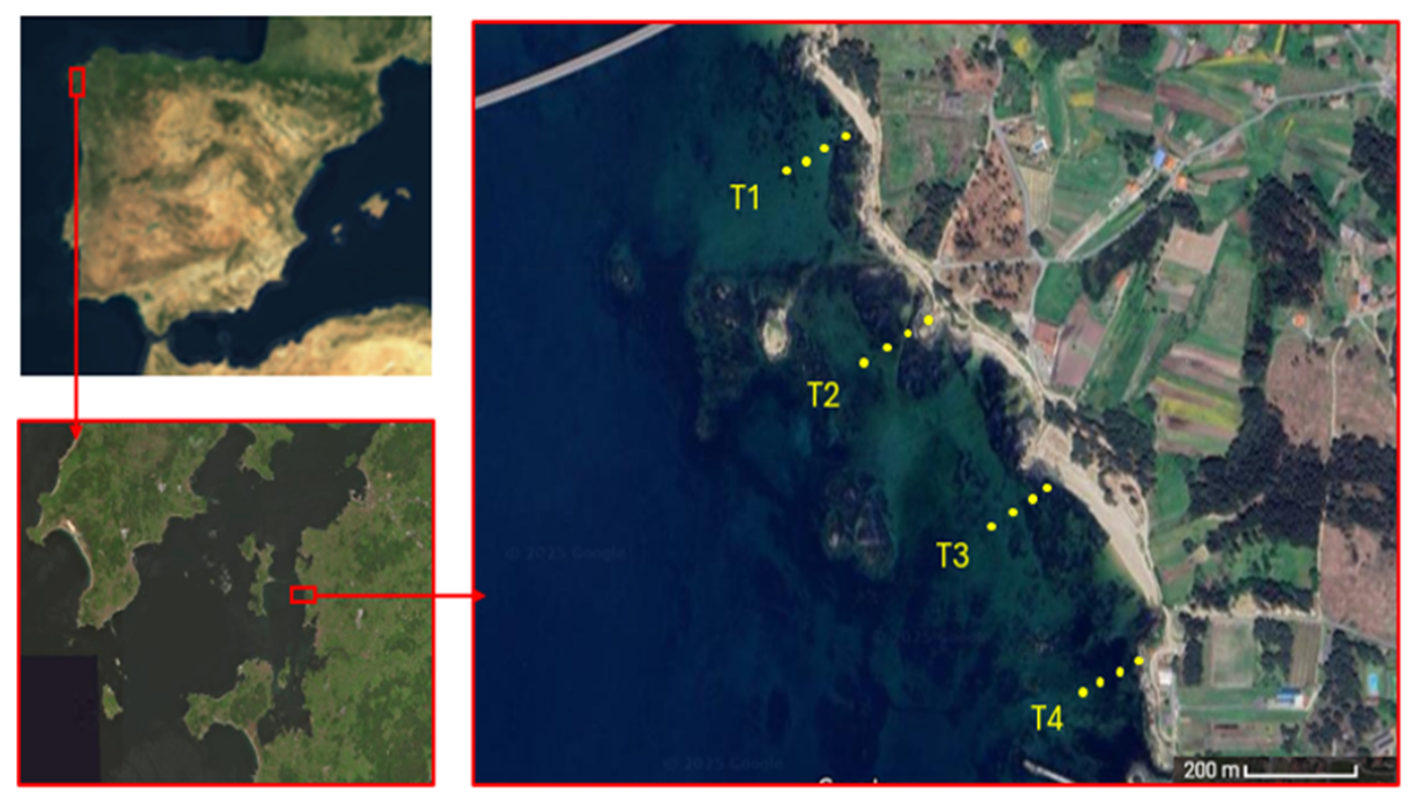
Figure 2.
Average seasonal plant biomass measured throughout 2019 on “O Castelete” beach.
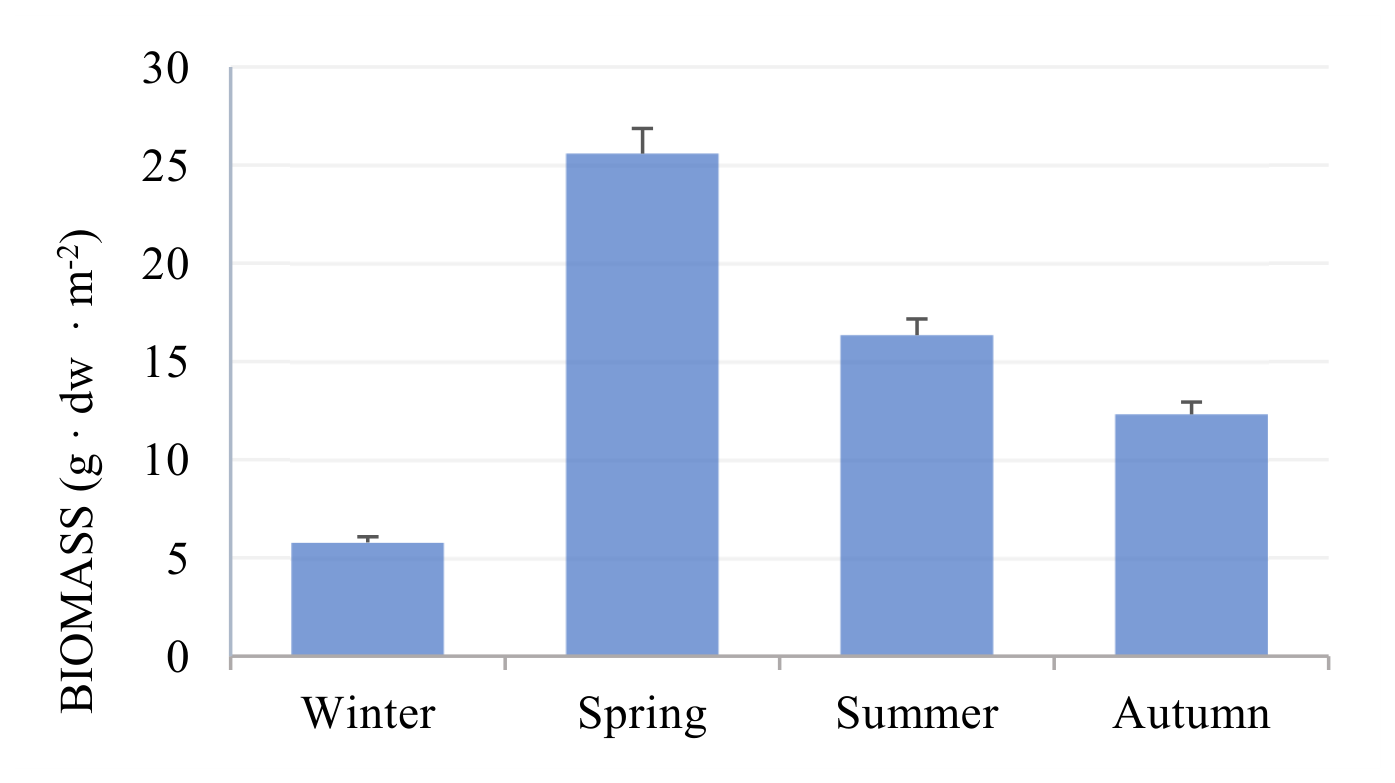
Figure 3.
Average monthly biomass measured throughout 2019 on “O Castelete” beach.
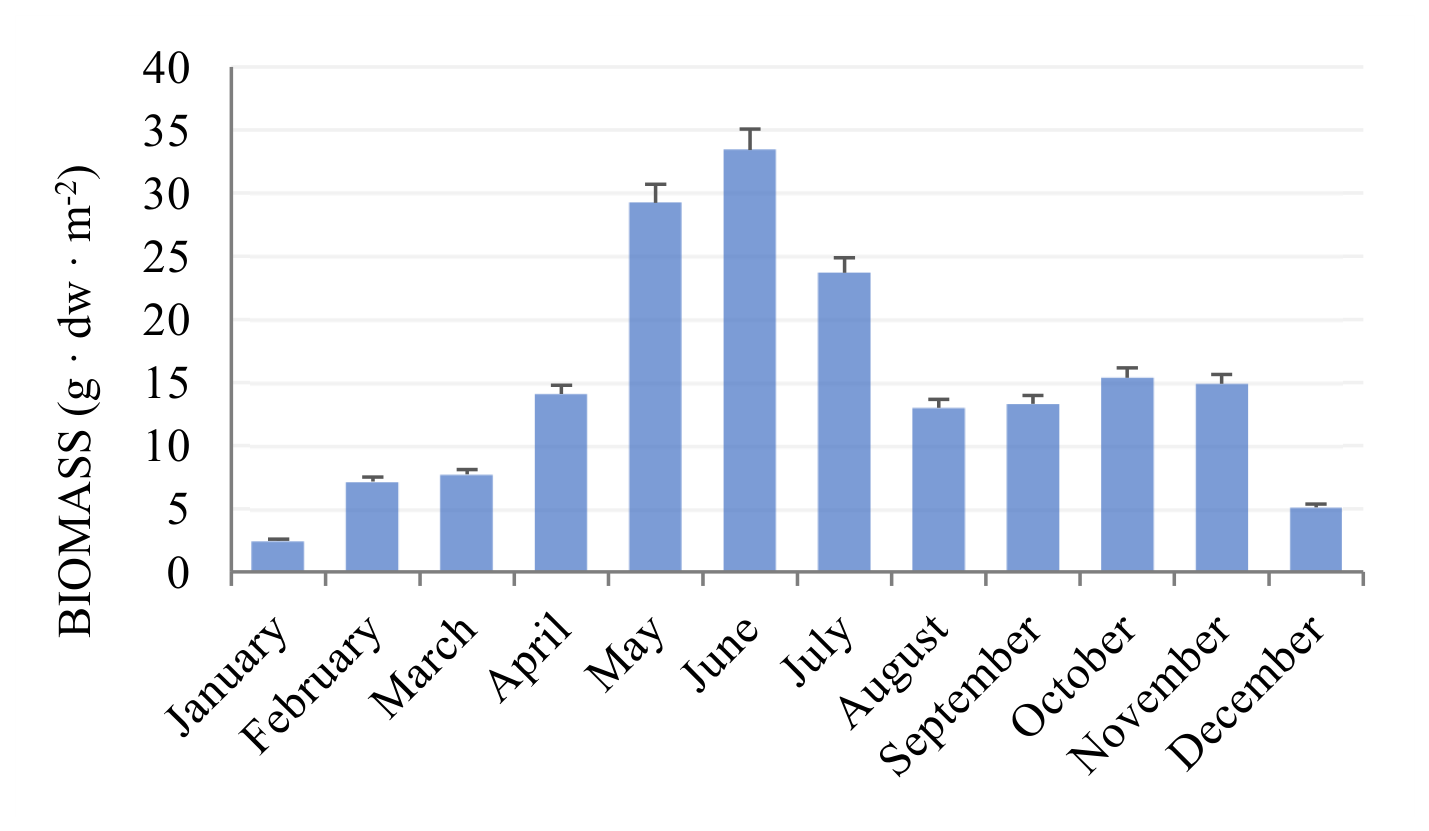
Figure 4.
Monthly variability of average biomass for transect (T1-T4) at “O Castelete” beach in 2019.
Figure 4.
Monthly variability of average biomass for transect (T1-T4) at “O Castelete” beach in 2019.
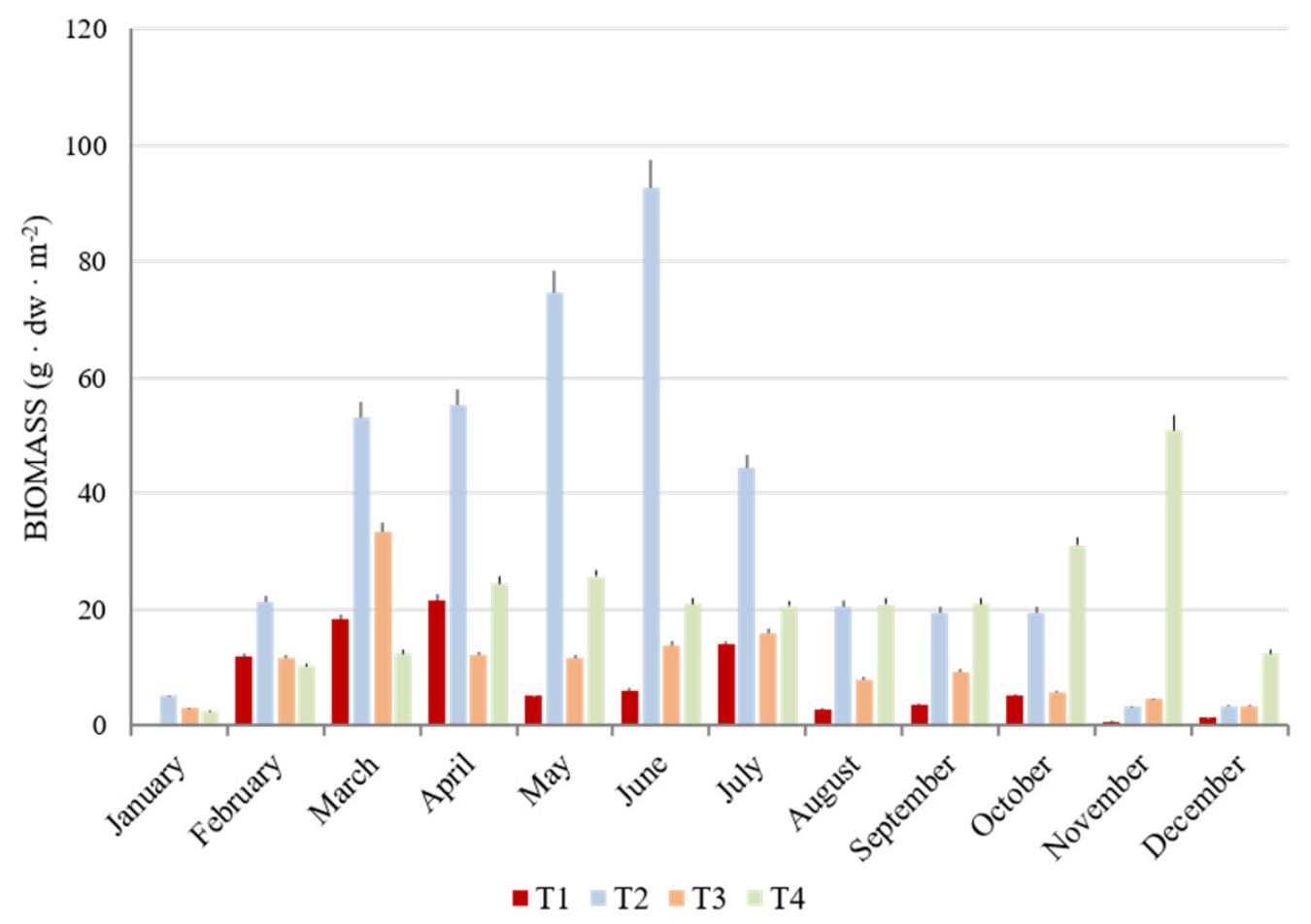
Figure 5.
Monthly variability of average biomass on “O Castelete” beach in each tidal level (UIZ, HMIZ, LMIZ, and LIZ) in 2019.
Figure 5.
Monthly variability of average biomass on “O Castelete” beach in each tidal level (UIZ, HMIZ, LMIZ, and LIZ) in 2019.
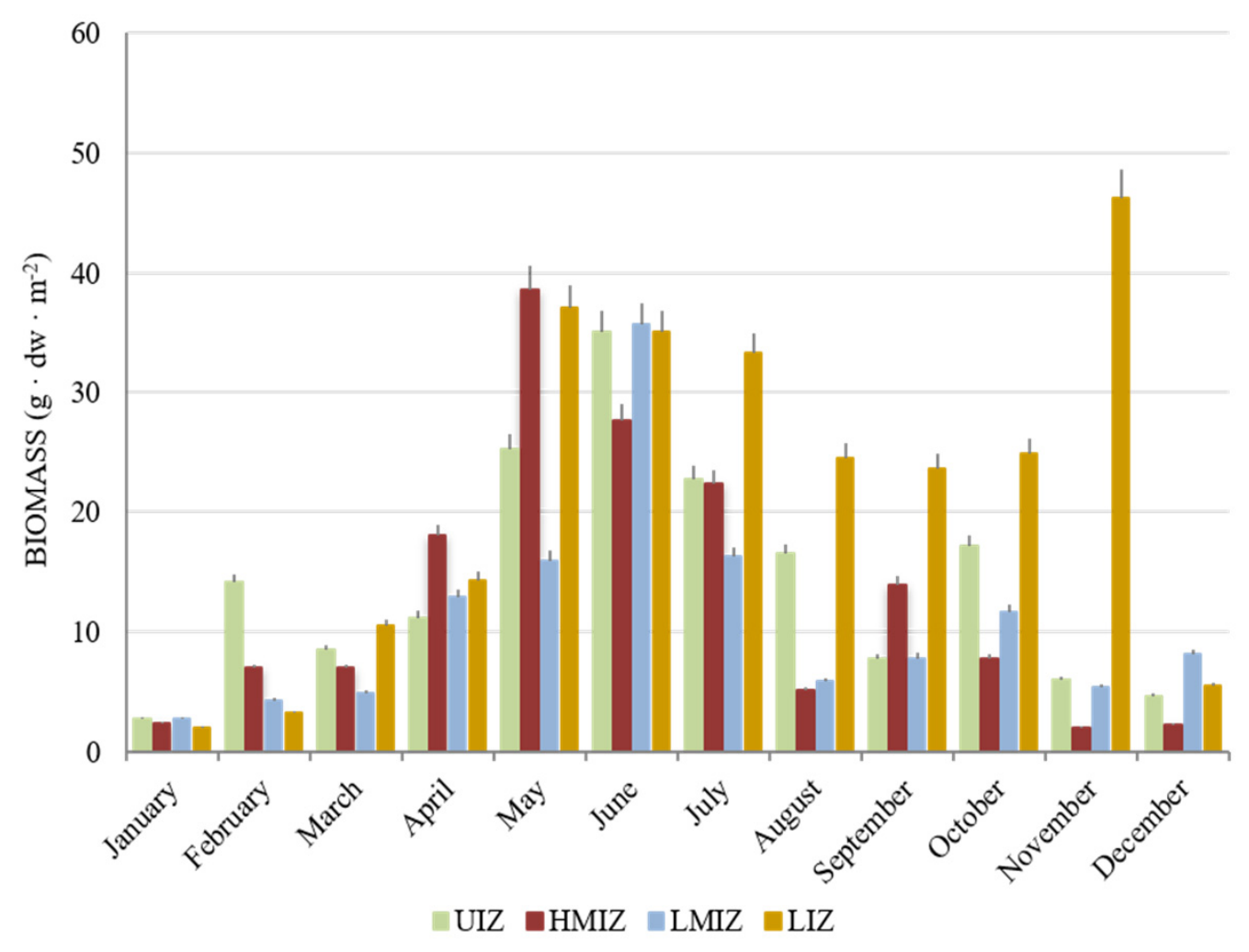
Figure 6.
Number of taxa for Chlorophyta, Rhodophyta, Ochrophyta, Cyanophyta and Spermatophyta identified throughout 2019 on “O Castelete” beach.
Figure 6.
Number of taxa for Chlorophyta, Rhodophyta, Ochrophyta, Cyanophyta and Spermatophyta identified throughout 2019 on “O Castelete” beach.
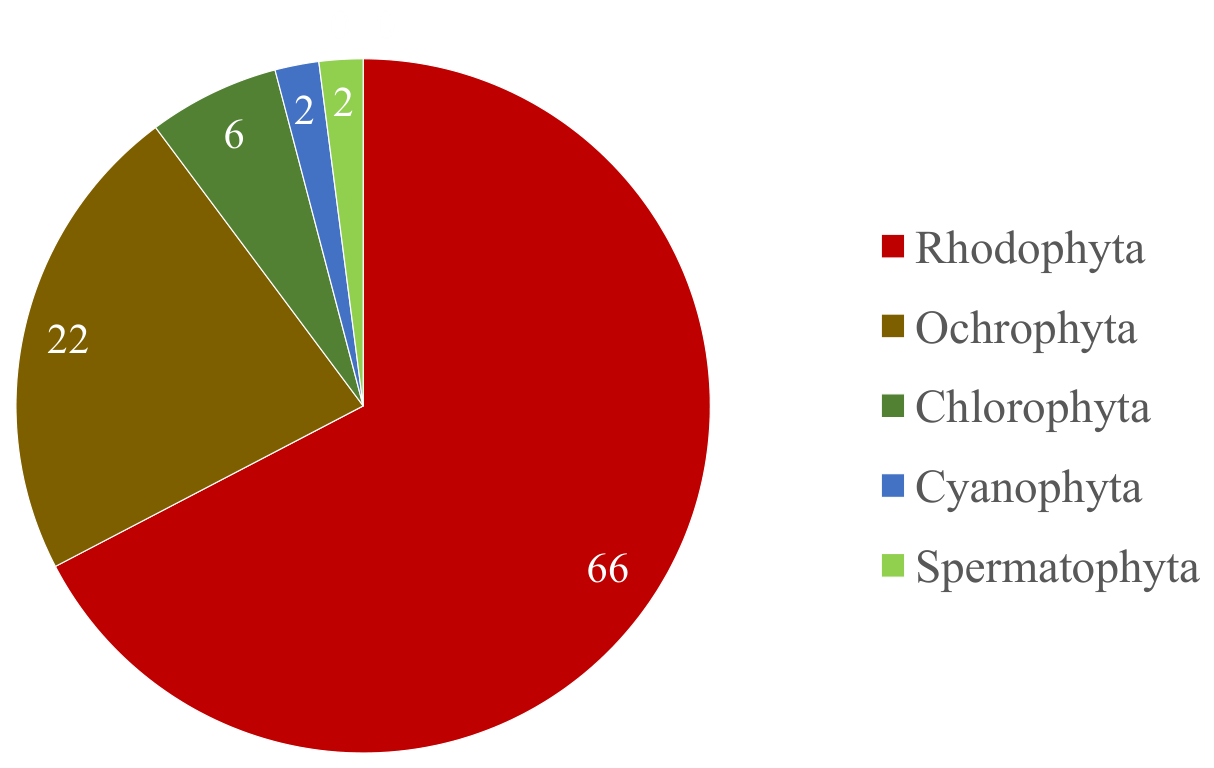
Figure 7.
Biomass (% dw) for Chlorophyta, Rhodophyta, Ochrophyta and Spermatophyta measured throughout 2019 on “O Castelete” beach.
Figure 7.
Biomass (% dw) for Chlorophyta, Rhodophyta, Ochrophyta and Spermatophyta measured throughout 2019 on “O Castelete” beach.
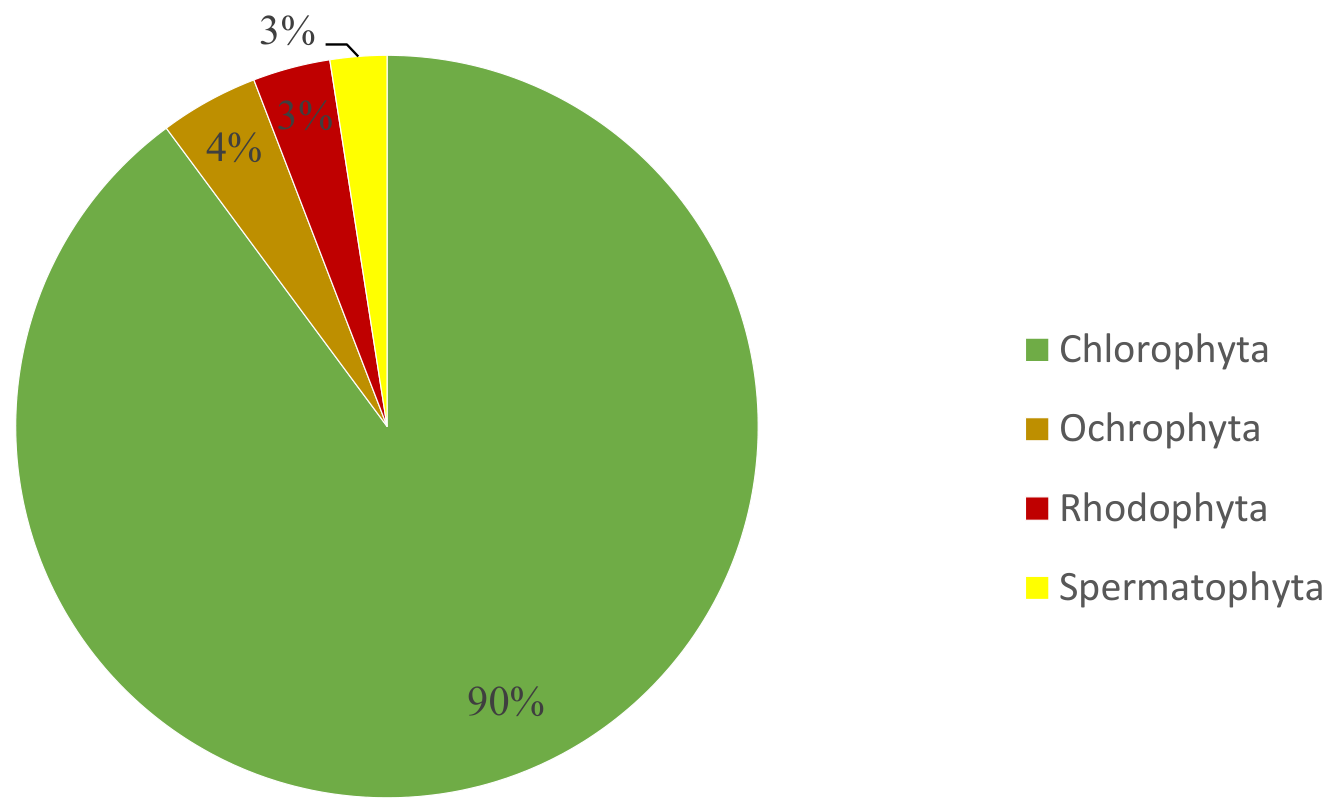
Figure 8.
Principal Coordinates Analysis (PCoA) of macroalgal species composition throughout the four seasons at “O Castelete” beach in 2019. The points represent samples from each season, and the labels for the macroalgal species.
Figure 8.
Principal Coordinates Analysis (PCoA) of macroalgal species composition throughout the four seasons at “O Castelete” beach in 2019. The points represent samples from each season, and the labels for the macroalgal species.
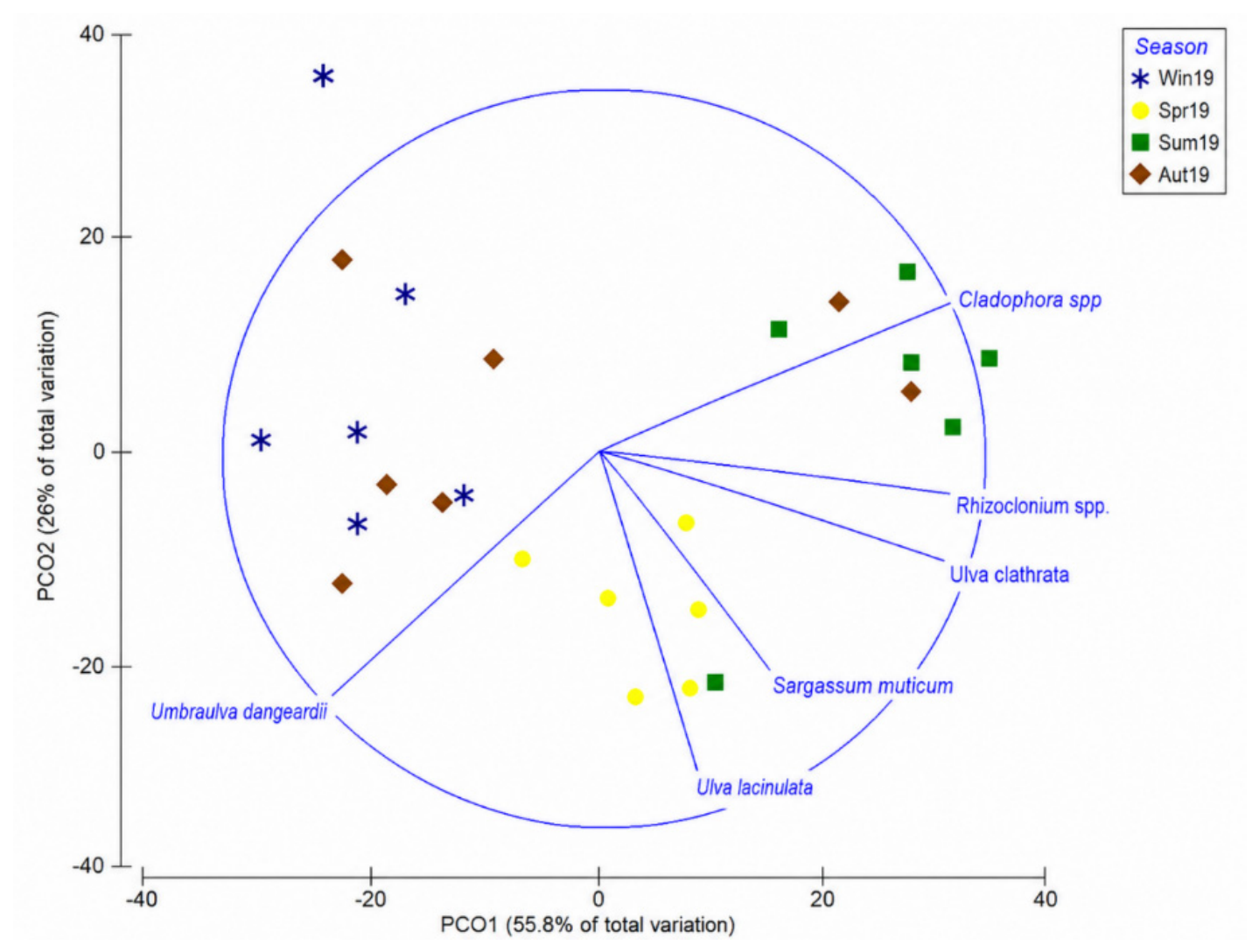
Figure 9.
Distribution of the total number of species among morpho-functional groups. Numbers indicate the number of species assigned to each group.
Figure 9.
Distribution of the total number of species among morpho-functional groups. Numbers indicate the number of species assigned to each group.
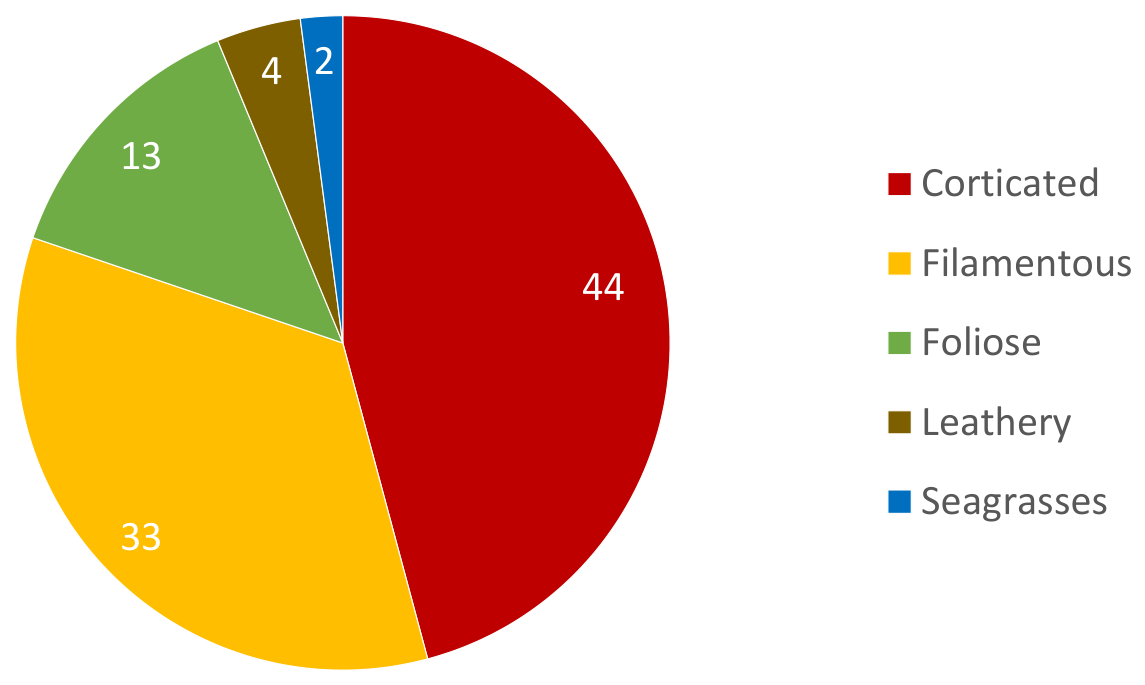
Figure 10.
Biomass (% DW) of the distinct morpho-functional groups of macroalgae and seagrasses (Spermatophyta) deposited on “O Castelete” beach in 2019.
Figure 10.
Biomass (% DW) of the distinct morpho-functional groups of macroalgae and seagrasses (Spermatophyta) deposited on “O Castelete” beach in 2019.
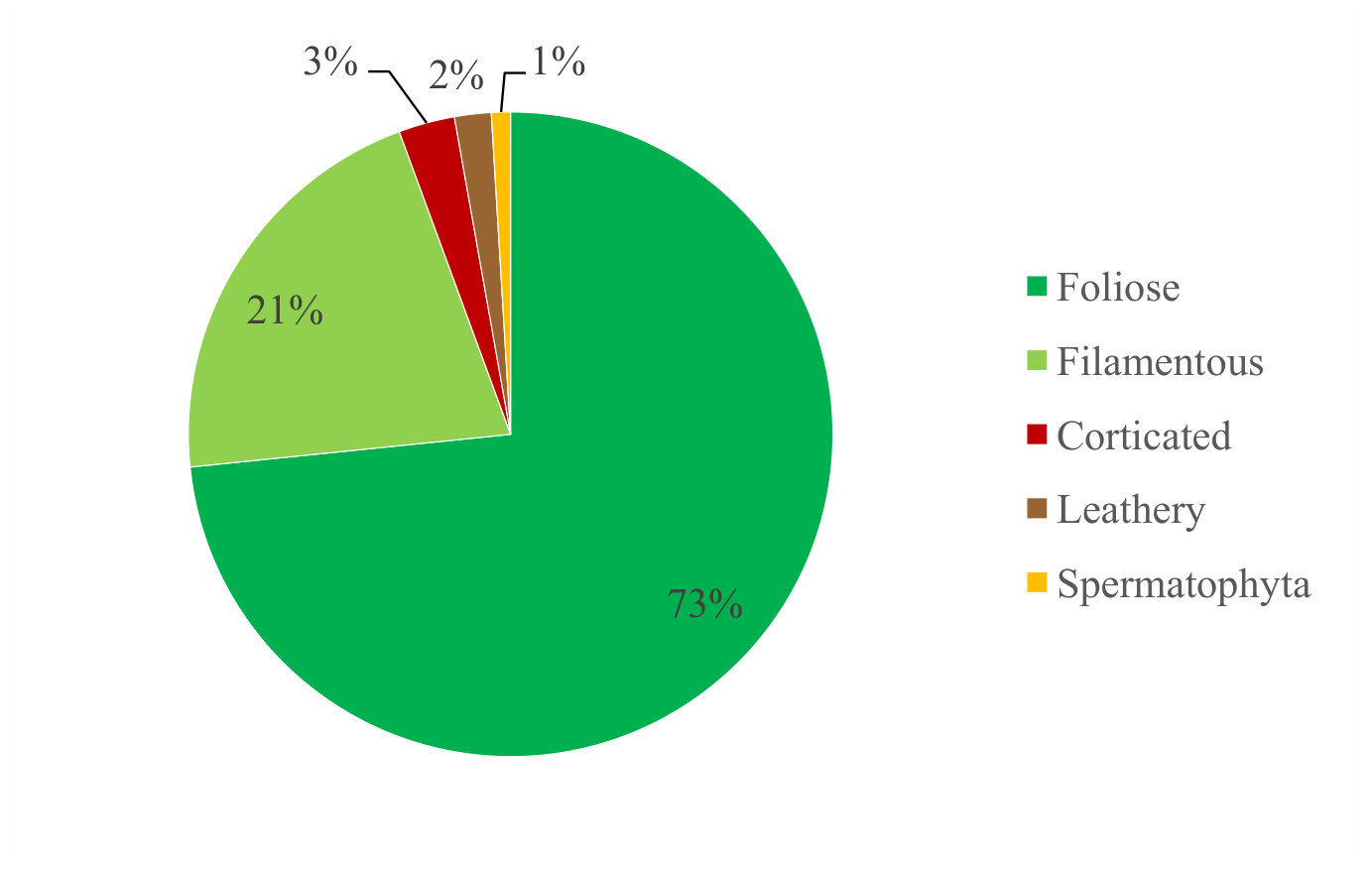
Figure 11.
Principal Coordinates Analysis (PCoA) showing the distribution of biomass across different morpho-functional groups throughout the four seasons at “O Castelete” beach in 2019. The points represent samples from each season, and the labels for the functional groups (filamentous, foliose, corticated, leathery, Spermatophyta).
Disclaimer/Publisher’s Note: The statements, opinions and data contained in all publications are solely those of the individual author(s) and contributor(s) and not of MDPI and/or the editor(s). MDPI and/or the editor(s) disclaim responsibility for any injury to people or property resulting from any ideas, methods, instructions or products referred to in the content. |
© 2026 by the authors. Licensee MDPI, Basel, Switzerland. This article is an open access article distributed under the terms and conditions of the Creative Commons Attribution (CC BY) license (http://creativecommons.org/licenses/by/4.0/).
Copyright: This open access article is published under a Creative Commons CC BY 4.0 license, which permit the free download, distribution, and reuse, provided that the author and preprint are cited in any reuse.