

Submitted:
12 September 2026
Posted:
14 September 2026
You are already at the latest version
Abstract
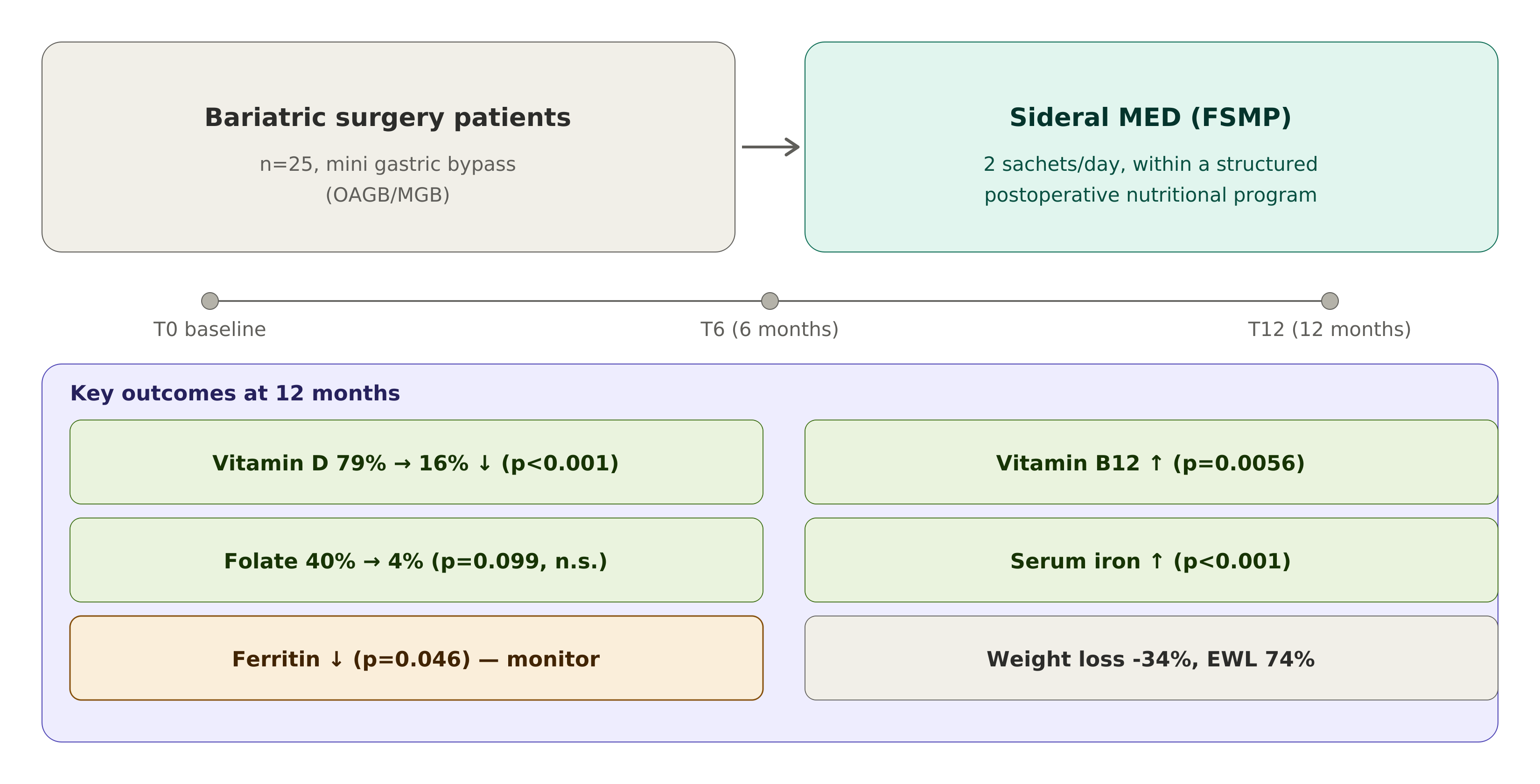
Background: Nutritional deficiencies are common during the first postoperative year after mini gastric bypass (OAGB/MGB). This retrospective study evaluated the adequacy of a Food for Special Medical Purposes formulated for bariatric patients in maintaining mineral and vitamin status after OAGB/MGB. Methods: Patients who underwent laparoscopic OAGB/MGB at the Nutrition Clinic of Koelliker Hospital (Turin, Italy) between January 2023 and March 2024, aged 18–65 years and taking the product at 2 sachets/day for 12 consecutive months within a structured postoperative nutritional program, were retrospectively analyzed. Anthropometric and biochemical parameters were assessed at baseline (T0), 6 months (T6), and 12 months (T12) and compared using nonparametric repeated-measures tests. Results: Twenty-five patients were included (9 males, 36%; 16 females, 64%; mean age 52.8±7.2 years; preoperative BMI 46.4±5.8 kg/m²). At 12 months, mean weight loss was 34% and excess weight loss 74%. Vitamin D deficiency (<30 ng/mL) declined significantly from 79% at baseline to 28% at T6 and 16% at T12 (p<0.001). Vitamin B12 increased significantly within the first 6 months and then stabilized (p=0.0056), with only one residual deficiency at T6. Folate levels did not change significantly (p=0.099), though deficient/borderline values fell from 40% to 4%. Hemoglobin and mean corpuscular volume remained stable. Serum iron improved significantly only at 12 months (p<0.001), while ferritin declined significantly, mainly between T0 and T6 (p=0.046), remaining above the deficiency threshold on average. Conclusions: In this real-world series, the tested product combined with structured nutritional follow-up was associated with maintenance or improvement of most micronutrient parameters during the first year after OAGB/MGB, although ferritin remained a critical parameter requiring continued surveillance.
Keywords:
one-anastomosis gastric bypass
; bariatric surgery
; micronutrients
; nutritional status
; vitamin D deficiency
; vitamin B12 deficiency
; iron deficiency
; sucrosomial iron
; retrospective studies
1. Introduction
Obesity is recognized as one of the major health challenges of the 21st century and has been described as a global pandemic affecting more than 650 million adults worldwide [1]. Its burden is also substantial in Italy, where approximately 35% of the adult population is overweight and 10% is obese. Severe obesity is a complex medical condition associated with a markedly increased risk of cardiovascular, metabolic, and oncological morbidity and mortality [1]. The management of severe obesity is based on lifestyle interventions, pharmacological treatment, and, in more complex cases, bariatric surgery. Bariatric surgery has been shown to induce significant and durable weight loss, together with improvement in obesity-related comorbidities, including type 2 diabetes mellitus, arterial hypertension, dyslipidemia, obstructive sleep apnea syndrome, and non-alcoholic liver disease [2]. Among currently available bariatric procedures, mini gastric bypass (MGB), also known as One Anastomosis Gastric Bypass (OAGB), has gained increasing acceptance over recent decades because of its clinical efficacy and relative technical simplicity. OAGB/MGB combines restrictive and malabsorptive mechanisms. Restriction is achieved through the creation of a small tubular gastric pouch along the lesser curvature of the stomach, whereas malabsorption results from exclusion of a variable segment of the small intestine [3]. Weight loss after this procedure has been estimated at approximately 60-80% of excess weight loss at 1 year. At the same time, reduced absorption of several micronutrients, including vitamins and minerals, is induced, with a substantial risk of deficiencies, particularly during the first postoperative year. Micronutrient deficiencies after OAGB/MGB have been extensively documented and are considered among the main long-term complications of this procedure [4,5]. Iron deficiency is one of the most frequently reported abnormalities, with a prevalence ranging from 20% to 55% during the first postoperative year [6]. This finding is mainly attributable to exclusion of the duodenum, where most iron absorption takes place, and to bypass of the acidic gastric environment, which impairs the reduction of ferric iron (Fe3+) to the more absorbable ferrous form (Fe2+) [28]. Vitamin B12 deficiency has been reported in 30-40% of patients within 2 years [8,9,10], likely because of decreased intrinsic factor production by the bypassed gastric fundus and the reduced acidity required for dissociation of vitamin B12 from dietary proteins. Folate deficiency, although less common than iron or vitamin B12 deficiency, has been described in 10-35% of cases [10,11], particularly in patients with inadequate intake of leafy vegetables and fortified foods. Vitamin D insufficiency or deficiency has been observed in up to 50-80% of bariatric patients [31], a condition that may be aggravated by reduced calcium absorption in the bypassed duodenum and by deficiencies that are already highly prevalent in obese individuals before surgery. These deficiencies may have clinically relevant consequences if not promptly prevented or corrected. Iron deficiency may progress to iron-deficiency anemia, with fatigue, reduced work capacity, impaired cognitive function, and increased susceptibility to infections [6]. Vitamin B12 deficiency may be associated with neurological manifestations such as peripheral neuropathy, subacute combined degeneration of the spinal cord, and cognitive impairment; some of these complications may become irreversible when treatment is delayed [30]. Folate deficiency may lead to megaloblastic anemia and has been associated with increased homocysteine levels, a recognized cardiovascular risk factor [16]. Vitamin D deficiency, particularly when combined with impaired calcium absorption, may contribute to secondary hyperparathyroidism, accelerated bone loss, osteoporosis, and increased fracture risk, an issue of particular concern in a population already vulnerable to skeletal complications [17,18]. For these reasons, prophylactic supplementation has become a central component of postoperative management after bariatric surgery [2,3]. International guidelines recommend routine multivitamin supplementation for all patients undergoing malabsorptive bariatric procedures, using doses that exceed normal nutritional requirements in order to compensate for surgery-induced malabsorption [2,3,19]. Nevertheless, standard oral supplementation may prove inadequate in the specific context of OAGB/MGB. The effectiveness of supplementation is influenced not only by the administered dose, but also by the bioavailability and gastrointestinal tolerability of the formulation. Sucrosomial® formulations were designed to improve intestinal absorption while reducing gastrointestinal adverse effects [20,21], have therefore attracted interest as possible strategies to optimize micronutrient status after bariatric surgery. The use of Sucrosomial® iron as a maintenance strategy in women undergoing bariatric surgery has already been demonstrated, showing ability in maintain hematological outcomes comparable to those achieved with continued intravenous iron therapy [22].
Post-bariatric nutritional supplementation is thus a crucial aspect of long-term follow-up, particularly after procedures with a relevant malabsorptive component. In this setting, formulations specifically developed for bariatric patients may offer practical advantages for the prevention of nutritional deficiencies [22]. The adequacy of such products in real-world postoperative management remains an important clinical question. The aim of the present study was to verify the adequacy of a Food for Special Medical Purposes (Sideral® MED, Pharmanutra, Italy) specifically formulated for bariatric patients, for the prevention of nutritional deficiencies in patients undergoing mini gastric bypass (OAGB/MGB).
2. Materials and Methods
This retrospective observational study included patients who underwent bariatric surgery between January 2023 and March 2024 and were followed at the Nutrition Clinic of Koelliker Hospital, Turin, Italy. All patients were instructed to follow a specific dietary regimen before and after surgery and, starting from the first days after surgery, were prescribed a Food for Special Medical Purpose (Sideral® Med, Pharmanutra, Italy) at a dose of 2 sachets/day, specifically formulated for bariatric patients. The complete composition of the product is available on Table 1. A distinctive characteristic of the product is the content of Sucrosomial® minerals (iron, magnesium, zinc, iodine, selenium). Sucrosomial® technology, patented by Pharmanutra S.p.A., is an oral formulation in which the active substance is conveyed in a matrix of phospholipids and fatty acid sucrose esters. This formulation has been associated with high gastrointestinal tolerability and enhanced intestinal absorption. In recent years, several preclinical and clinical studies have been published on the efficacy of Sucrosomial® technology, most of them involving Sucrosomial® Iron [20,21,22,28].
Patients were evaluated at three predefined time points: baseline (T0), corresponding to the pre-operative assessment performed within 30 days before surgery; 6 months after surgery (T6; ±2 weeks); and 12 months after surgery (T12; ±2 weeks). The evaluated parameters and reference values are reported in Table 2. Nutritional deficiencies were defined according to the laboratory cut-offs indicated above. For statistical purposes, two levels were considered: borderline status, defined as values below the 10th percentile of the normal range, and deficiency, defined as values below the normal range. Anthropometric measurements were obtained using standardized procedures. Body weight was measured with the patient wearing underwear, with an accuracy of 0.1 kg. Height was measured with a stadiometer and recorded in centimeters with millimeter accuracy. Percentage of excess weight loss was calculated according to the formula: [(initial weight - current weight)/(initial weight - ideal weight)] × 100, where ideal weight corresponded to a body mass index (BMI) of 25 kg/m². Population
Among all patients followed in the Nutrition Clinic, only those meeting the predefined eligibility criteria were included in the analysis. The inclusion criteria were as follows: age between 18 and 65 years; bariatric surgery performed within 30 days prior to the start of the study product; continuous intake of the product at a dosage of 2 sachets/day for at least 12 consecutive months without significant interruptions, as reported by patients during follow-up visits. Participation in a structured post-operative nutritional program aimed at ensuring a safe transition from liquid to solid foods, supporting healing, promoting weight loss, and preventing nutritional complications of bariatric surgery. Surgery was performed laparoscopically by an experienced surgical team according to a standardized technique. The OAGB/MGB procedure consisted of the creation of a tubular gastric pouch of approximately 20-30 mL along the small curvature of the stomach, using a linear mechanical stapler. The post-operative nutritional program was structured in progressive phases. Phase 1 consisted of a liquid diet during the first week after surgery, with an energy intake of approximately 800 kcal/day and the following nutritional distribution: protein 30% plus 30 g whey protein supplementation, carbohydrates 45%, and lipids 23%. Phase 2 consisted of a semi-liquid diet during the second week, with an energy intake of approximately 1000 kcal/day and the following nutritional distribution: protein 30% plus 30 g whey protein supplementation, carbohydrates 42%, and lipids 28%. Phase 3 consisted of a soft/semi-solid diet during the third and fourth postoperative weeks, with an energy intake of approximately 1250 kcal/day and the following nutritional distribution: protein 30% plus 30 g whey protein supplementation, carbohydrates 43%, and lipids 27%. Phase 4 corresponded to the adaptation and maintenance diet after the first postoperative month, when the diet became progressively more varied and more solid. During this phase, protein intake was maintained at 1.2-1.5 g/kg of reference weight; carbohydrates were mainly derived from complex sources, with limitation of simple sugars; lipid intake was moderate and mainly based on monounsaturated fats; fluid intake was maintained at ≥1.5 L/day between meals; soft drinks, alcohol, and sugary juices were prohibited; meal frequency was set at 5-6 meals/day; and foods were consumed at normal osmolarity, with attention to individual tolerance and thorough chewing. The exclusion criteria were the presence of severe chronic diseases potentially interfering with nutrient absorption, previous bariatric surgery, pregnancy or breastfeeding, and uncompensated psychiatric disorders. The study was conducted in accordance with the principles of the Declaration of Helsinki and Good Clinical Practice. Written informed consent for participation in the retrospective study and for the use of data for research purposes was obtained from all patients.
3. Statistical Analysis
Continuous variables were expressed as mean ± standard deviation or as median and interquartile range, according to data distribution. Categorical variables were expressed as absolute frequencies and percentages. Comparisons of continuous variables across the three study time points were performed using the Friedman test for correlated samples, followed by the post-hoc Conover test for multiple pairwise comparisons. The use of nonparametric methods was chosen because of the relatively small sample size and the non-Gaussian distribution observed for some of the variables examined. A subgroup analysis was also performed in patients presenting with baseline values below the normal range, in order to compare the evolution of nutritional parameters in patients who were deficient at baseline with that observed in patients with baseline values within the normal range. Statistical significance was set at p<0.05. All analyses were conducted according to the intention-to-treat principle, including all enrolled patients who had completed at least the 6-month assessment. Data were analyzed using jamovi software: The jamovi project (2025). jamovi (Version 2.6). Retrieved from https://www.jamovi.org.
4. Results
The final sample consisted of 25 patients, including 9 males (36%) and 16 females (64%), with a mean age of 52.8±7.2 years (range, 38-64 years). Mean preoperative weight was 125.7±18.9 kg (range, 95-165 kg), and mean body mass index (BMI) was 46.4±5.8 kg/m² (range, 37.2-58.3 kg/m²). Preoperative comorbidities were distributed as follows: type 2 diabetes mellitus in 60% of patients, arterial hypertension in 72%, dyslipidemia in 48%, and obstructive sleep apnea syndrome in 36%. At baseline, nutritional deficiency was already present in a proportion of patients, as reported in Figure 1, according to the previously established nutritional status definitions At 12 months after surgery, a mean weight loss of 34% was observed, together with an excess weight loss (EWL) of 74%. Changes in biochemical parameters across the study period are summarized in Table 3, while the distribution of nutritional deficiencies during follow-up is shown in Figure 2. Vitamin D levels changed significantly over time (p<0.001). At baseline (T0), vitamin D deficiency (<30 ng/mL) was present in 79% of patients. After 6 months of supplementation, deficiency persisted in 28% of cases, and at 12 months the proportion decreased further to 16%. Vitamin B12 levels also changed significantly during follow-up (p=0.0056). An increase was observed within the first 6 months after surgery, followed by stabilization thereafter. At 6 months after surgery, only one patient still had vitamin B12 deficiency. No significant change in folate levels was observed across the study period (p=0.099). At baseline, approximately 40% of the sample showed either frank or borderline deficiency. By the end of follow-up, the proportion of patients with deficient or borderline values had decreased to 4%, with only one additional patient presenting folic acid deficiency. Hemoglobin and mean corpuscular volume (MCV) remained stable throughout follow-up, with no significant changes compared with baseline values. Baseline values were within the normal range in most patients. Serum iron levels changed significantly only at the 12-month follow-up (p<0.001). Ferritin levels showed a progressive decline during the study period, particularly between T0 and T6, and this change was statistically significant (p=0.046). Mean ferritin concentrations remained above the deficiency threshold in the overall sample. Three patients had ferritin deficiency at baseline and, although increases in ferritin levels were observed in these patients during follow-up, normal values were not reached. Figure 2. Trend over time of percentage of patients with nutritional deficiencies during 12-month follow-up
5. Discussion
Nutritional surveillance after OAGB/MGB remains a central component of long-term postoperative care because this procedure combines restrictive and malabsorptive mechanisms and therefore exposes patients to deficiencies that are at least comparable to those observed after RYGB, with a particularly high risk of iron deficiency and fat-soluble vitamin deficiency; among the most frequent abnormalities, deficiencies of vitamin D, vitamin B12, folate, and iron have been consistently described [16,17,18]. In this setting, postoperative management is generally recommended to be multidisciplinary, with the involvement of surgeons, registered dietitians, internists, and, when indicated, endocrinologists, and with regular laboratory monitoring aimed at early detection of deficiencies and timely optimization of substitution therapy [19]. Within this clinical framework, the present observational study indicated that supplementation with this food for special medical purposes (Sideral® MED) was associated with prevention of major nutritional deficiencies after OAGB/MGB, particularly with respect to vitamin D, vitamin B12, and iron. Overall, the 12-month supplementation protocol yielded favorable biochemical results for most monitored micronutrients, supporting the potential role of a dedicated post-bariatric formulation in routine follow-up after this operation. Iron deficiency is among the most common and clinically relevant nutritional complications after OAGB/MGB [6,9]. The pathophysiological basis is well recognized. Iron is absorbed predominantly in the duodenum and proximal jejunum, both of which are excluded from alimentary transit after OAGB/MGB [28]. In addition, the marked reduction in gastric volume is accompanied by reduced gastric acid production, and the resulting less acidic gastric environment may impair the conversion of ferric iron (Fe³⁺) to the more absorbable ferrous form (Fe²⁺) [28]. Clinically, iron deficiency may first appear as depletion of iron stores, reflected by reduced ferritin concentrations, and may subsequently progress to overt iron deficiency anemia with reductions in hemoglobin and erythrocyte abnormalities [6]. The main advantage of the investigational product is that iron is provided in a sucrosomial formulation. Owing to its unique absorption mechanism, which bypasses the conventional DMT1-ferroportin pathway, sucrosomial iron can be absorbed through alternative routes, including paracellular and transcellular pathways as well as M-cell-mediated uptake. This results in enhanced bioavailability, even in patients who have undergone bariatric procedures involving duodenal exclusion. (20,21,28) More broadly, deficiencies in iron, calcium, vitamin D, folic acid, and vitamin B12 are known to be related to impaired absorption, especially during the first postoperative year and in women of childbearing age [8,9,25]. The present findings on iron metabolism appeared to reflect this complexity. Although serum iron improved significantly, ferritin showed a progressive decline over time (p=0.046). This divergence represents a clinically familiar pattern after malabsorptive procedures and has also been reported in studies of OAGB/MGB [9,10]. One possible interpretation is that iron stores may remain vulnerable despite improvement in circulating iron parameters. At the same time, ferritin must be interpreted cautiously because it is also an acute-phase reactant and may increase in inflammatory states. Since obesity is characterized by chronic low-grade inflammation, ferritin concentrations in this population may not always accurately mirror iron status. This issue has been specifically addressed by Khan et al., who showed that ferritin behaved more as a marker of inflammation than of iron status in overweight and obese individuals, with strong positive correlations both with BMI (r=0.86, p<0.001) and with CRP (r=0.87, p<0.001) [29]. On this basis, it may be hypothesized that the reduction in ferritin observed between baseline and 12 months was influenced, at least in part, by the decrease in BMI and the associated attenuation of inflammatory burden, rather than exclusively by progressive depletion of iron stores. This interpretation is supported by the concomitant increase in serum iron and hemoglobin values. Nevertheless, the decline in ferritin warrants attention in clinical practice and suggests that iron status after OAGB/MGB should not be assessed by a single parameter alone. Vitamin B12 represents another characteristic concern after malabsorptive bariatric procedures. Its absorption depends on several sequential steps, including release from dietary proteins in the stomach, binding to intrinsic factor produced by gastric parietal cells, and uptake in the terminal ileum. Following OAGB/MGB, gastric volume reduction and alteration of the gastric environment may compromise intrinsic factor production and reduce the efficiency of vitamin B12 extraction from food proteins. Clinically, deficiency may present with megaloblastic anemia, but neurological manifestations may also occur and may even precede hematologic abnormalities, including peripheral neuropathies, cognitive impairment, and mood changes [30]. For this reason, oral or intramuscular vitamin B12 supplementation is recommended after malabsorptive procedures. In the present cohort, vitamin B12 levels improved rapidly within 6 months, suggesting good bioavailability of the cyanocobalamin formulation used. This finding is of particular interest in the post-bypass setting, where an absorption pathway less dependent on normal gastric physiology is desirable. The subsequent stabilization of vitamin B12 concentrations after 6 months may indicate that the maintenance dose was adequate to sustain long-term supplementation over the 12-month observation period. Folic acid is also relevant in the nutritional follow-up of bariatric patients because folate is absorbed mainly in the duodenum and proximal jejunum, which are bypassed in OAGB/MGB [10,11]. Deficiency may contribute to megaloblastic anemia and is particularly important in women of childbearing age because of the association with neural tube defects during pregnancy [19]. Consequently, adequate folic acid supplementation is considered essential not only for prevention of hematologic complications but also for the preservation of safe fertility in patients of reproductive age [19,25]. In the present study, folate levels did not improve significantly (p=0.099). Although overt deficiency was not emphasized by the available results, this limited response may raise the possibility that folate content in the current formulation is suboptimal, particularly for subjects at increased reproductive risk. Current guidelines underscore the importance of sufficient folate supplementation in patients with childbearing potential [19], and this aspect may deserve consideration in future formulation strategies. Vitamin D deserves separate consideration because deficiency is highly prevalent in severe obesity even before surgery, with reported rates reaching 70–80% among candidates for bariatric procedures [31,32]. OAGB/MGB may further aggravate this condition through multiple mechanisms, including malabsorption of fat-soluble vitamins after duodenal bypass, reduced dietary intake during the postoperative period, and possible alterations in vitamin D metabolism associated with weight loss [31]. The clinical implications are broad, involving bone health, risk of osteoporosis and pathological fractures, but also immune function, muscle performance, and general metabolic homeostasis [17,18,31,32]. The marked improvement in vitamin D status observed in this study is therefore clinically relevant. The high prevalence of deficiency at baseline (79%) was consistent with the burden of preoperative vitamin D insufficiency commonly reported in patients with severe obesity and reflected in clinical practice guidelines [19,31]. The subsequent improvement suggests that the vitamin D3 dose contained in the specialized formulation may be appropriate for this population during the first postoperative year. Given the frequency and potential consequences of vitamin D deficiency in bariatric populations, this finding supports the value of targeted supplementation within structured follow-up programs. In addition to the routinely monitored micronutrients, calcium, zinc, and fat-soluble vitamins A, E, and K are also recognized as nutrients at risk after malabsorptive procedures [18,31]. These analytes are not usually assessed in standard clinical practice, despite the potentially important consequences of deficiency in bariatric patients. The product used in the present study also contains these micronutrients, minerals, and vitamins, with the specific aim of preventing deficiencies in post-bariatric patients who take the product. Although no direct biochemical assessment of these nutrients was available in the present analysis, their inclusion remains clinically relevant in the context of a comprehensive supplementation strategy after OAGB/MGB. Taken together, these findings are broadly consistent with systematic reviews showing the benefit of specialized multivitamin formulations in reducing the risk of postoperative deficiencies after bariatric surgery [16,17,18]. At the same time, the persistent decline in ferritin observed here may support recent recommendations that standard multivitamin supplementation alone may not always be sufficient for iron repletion, particularly in patients with pre-existing ferrous deficiency. In this regard, additional ferrous supplementation may still be required in selected individuals, even when a dedicated post-bariatric multinutrient formulation is prescribed. Overall, the present results support the use of Sideral® MED as part of postoperative nutritional management after OAGB/MGB, particularly for vitamin D and vitamin B12 support and for maintenance of iron-related parameters. However, the behavior of ferritin and the limited folate response indicate that biochemical follow-up should remain individualized and should continue to be guided by serial laboratory monitoring within a multidisciplinary care pathway [19]. Such an approach appears necessary to identify patients requiring tailored adjustment of supplementation and to address the persistent nutritional vulnerability associated with OAGB/MGB.
6. Conclusions
In conclusion, in this observational study, supplementation with this food for special medical purposes (Sideral® MED) was shown to prevent major nutritional deficiencies after OAGB/MGB, particularly for vitamin D, vitamin B12, and iron. Over the 12-month supplementation period, favorable values were observed for most micronutrients, consistent with current approaches to nutritional management after bariatric surgery. The influence of baseline nutritional status on the response to supplementation suggested the importance of individualized nutritional strategies. Greater improvements were observed in patients with preoperative deficiencies, indicating that preoperative optimization and personalized supplementation protocols may be associated with improved nutritional outcomes. These findings should be interpreted in light of several limitations. The observational design and the absence of a control group limited causal inference. The 12-month follow-up was sufficient to evaluate short-term effects, but long-term nutritional outcomes were not assessed. In addition, adherence to diet and supplementation was self-reported, and no specific patient diary was used to document compliance. The applied exclusion criteria may also have selected a particularly compliant population, thereby limiting generalizability. Further investigation should be conducted through randomized controlled trials comparing supplementation strategies, with particular attention to ferrous supplementation protocols and folate dose optimization. Longer follow-up studies are also needed to evaluate the durability of nutritional improvements and the possible need for protocol adjustments over time.
Author Contributions
DD, DOM, VD and AM designed the research study, supervised patient care, contributed to patient recruitment, clinical follow-up, and data collection. MSR wrote the original draft of the manuscript. MF contributed to data interpretation, wrote the original draft of the manuscript and performed the statistical analysis, FC supervised the study. All authors contributed to editorial changes in the manuscript. All authors read and approved the final manuscript and agreed to be accountable for all aspects of the work.
Funding
This research received no external funding. The study was conducted as part of routine clinical practice.
Institutional Review Board Statement
This study was conducted in accordance with the principles of the Declaration of Helsinki and Good Clinical Practice. In accordance with Italian regulations for retrospective observational studies on anonymized standard clinical practice data (Determinazione AIFA 20 marzo 2008), prospective ethics committee approval was not required.
Informed Consent Statement
Written informed consent was obtained from all patients involved in the study for participation in the retrospective study and for the use of their anonymized data for research purposes. All data were treated anonymously and confidentially in compliance with the General Data Protection Regulation (GDPR, EU 2016/679).
Data Availability Statement
The datasets used and analyzed during the current study are available from the corresponding author on reasonable request.
Acknowledgments
AI (Claude, Sonnet 5) was used during manuscript preparation exclusively for language editing, including text rephrasing and correction of grammatical and stylistic errors. All scientific content, data interpretation, and conclusions were developed and reviewed by the authors. The authors have reviewed and edited the output and take full responsibility for the content of this publication.
Conflicts of Interest
MSR is affiliated with the Scientific Department of Pharmanutra S.p.A., the manufacturer of Sideral® MED evaluated in this study. The other authors declare no conflicts of interest. The design, analysis, and reporting of the study were conducted independently by the clinical team at Koelliker and Desio Hospital. Pharmanutra S.p.A. had no role in the study design, data collection, data analysis, interpretation of results, or decision to publish.Abbreviations.
References
- World Health Organization. Obesity and overweight. Fact sheet N°311. WHO. 2024. Available online: https://www.who.int/news-room/fact-sheets/detail/obesity-and-overweight.
- Mechanick, J.I.; Apovian, C.; Brethauer, S.; Garvey, W.T.; Joffe, A.M.; Kim, J.; et al. Clinical practice guidelines for the perioperative nutrition, metabolic, and nonsurgical support of patients undergoing bariatric procedures - 2019 update: cosponsored by American Association of Clinical Endocrinologists/American College of Endocrinology, The Obesity Society, American Society for Metabolic & Bariatric Surgery, Obesity Medicine Association, and American Society of Anesthesiologists. Obesity 2020, 28, O1–O58. [Google Scholar] [CrossRef]
- De Luca, M.; Tie, T.; Ooi, G.; Higa, K.; Himpens, J.; Carbajo, M.A.; et al. Mini Gastric Bypass-One Anastomosis Gastric Bypass (MGB-OAGB)-IFSO Position Statement. Obes. Surg. 2018, 28, 1188–1206. [Google Scholar] [CrossRef]
- Parrott, J.; Frank, L.; Rabena, R.; Craggs-Dino, L.; Isom, K.A.; Greiman, L. American Society for Metabolic and Bariatric Surgery Integrated Health Nutritional Guidelines for the Surgical Weight Loss Patient 2016 Update: Micronutrients. Surg. Obes. Relat. Dis. 2017, 13, 727–741. [Google Scholar] [CrossRef]
- Bloomberg, R.D.; Fleishman, A.; Nalle, J.E.; Herron, D.M.; Kini, S. Nutritional deficiencies following bariatric surgery: what have we learned? Obes. Surg. 2005, 15, 145–154. [Google Scholar] [CrossRef]
- Weng, T.C.; Chang, C.H.; Dong, Y.H.; Chang, Y.C.; Chuang, L.M. Anaemia and related nutrient deficiencies after Roux-en-Y gastric bypass surgery: a systematic review and meta-analysis. BMJ Open 2015, 5, e006964. [Google Scholar] [CrossRef]
- Angrisani, L.; Santonicola, A.; Iovino, P.; Iacobelli, A.; Cortese, F.; Kingsley, K.; et al. IFSO Worldwide Survey 2016: Primary, Endoluminal, and Revisional Procedures. Obes. Surg. 2018, 28, 3783–3794. [Google Scholar] [CrossRef]
- Bal, B.S.; Finelli, F.C.; Shope, T.R.; Koch, T.R. Nutritional deficiencies after bariatric surgery. Nat. Rev. Endocrinol. 2012, 8, 544–556. [Google Scholar] [CrossRef]
- Shankar, P.; Boylan, M.; Sriram, K. Micronutrient deficiencies after bariatric surgery. Nutrition 2010, 26, 1031–1037. [Google Scholar] [CrossRef]
- Vargas-Ruiz, A.G.; Hernández-Rivera, G.; Herrera, M.F. Prevalence of iron, folate, and vitamin B12 deficiency anemia after laparoscopic Roux-en-Y gastric bypass. Obes. Surg. 2008, 18, 288–293. [Google Scholar] [CrossRef]
- Ben-Porat, T.; Elazary, R.; Yuval, J.B.; Wieder, A.; Khalaileh, A.; Weiss, R. Nutritional deficiencies after sleeve gastrectomy: can they be predicted? Surg. Obes. Relat. Dis. 2015, 11, 1029–1036. [Google Scholar] [CrossRef]
- Khalaj, A.; Tasdighi, E.; Hosseinpanah, F.; Mahdavi, M.; Valizadeh, M.; Farahmand, F.; et al. Two-year outcomes of laparoscopic one gastric anastomosis bypass (OAGB): a single-center experience. Obes. Surg. 2019, 29, 1186–1193. [Google Scholar] [CrossRef]
- Jammu, G.S.; Sharma, R. A 7-Year Clinical Audit of 1107 Cases Comparing Sleeve Gastrectomy, Roux-En-Y Gastric Bypass, and Mini-Gastric Bypass, to Determine an Effective and Safe Bariatric and Metabolic Procedure. Obes. Surg. 2016, 26, 926–932. [Google Scholar] [CrossRef]
- Gorgiadou, D.; Sergentanis, T.N.; Nixon, A.; Diamantis, T.; Tsigris, C.; Vakaki, M.; et al. Efficacy and safety of laparoscopic mini gastric bypass. A systematic review. Surg. Obes. Relat. Dis. 2014, 10, 984–991. [Google Scholar] [CrossRef]
- Singh, A.K.; Subramanian, C.; Gul, S.; Singh, B.; Verma, R.; Kular, K.S. Laparoscopic OAGB: 5-year results of a single surgeon series. Obes. Surg. 2020, 30, 1430–1437. [Google Scholar] [CrossRef]
- Chiappetta, S.; Stier, C.; Squillante, S.; Theodoridou, S.; Weiner, R.A.; Michalski, C.W. The importance of vitamin supplementation after bariatric surgery: Do all vitamins behave in the same way? Surg. Obes. Relat. Dis. 2021, 17, 1271–1286. [Google Scholar] [CrossRef]
- Via, M.A.; Mechanick, J.I. Nutritional and micronutrient care of bariatric surgery patients: current evidence update. Curr. Obes. Rep. 2017, 6, 286–296. [Google Scholar] [CrossRef]
- Stein, J.; Stier, C.; Raab, H.; Weiner, R. Review article: The nutritional and pharmacological consequences of obesity surgery. Aliment. Pharmacol. Ther. 2014, 40, 582–609. [Google Scholar] [CrossRef]
- O’Kane, M.; Parretti, H.M.; Hughes, C.A.; Sharma, M.; Woodcock, S.; Puplampu, T.; et al. Guidelines for the follow-up of patients undergoing bariatric surgery. Clin. Obes. 2016, 6, 210–224. [Google Scholar] [CrossRef]
- Gómez-Ramírez, S.; Brilli, E.; Tarantino, G.; Muñoz, M. Sucrosomial® Iron: A New Generation Iron for Improving Oral Supplementation. Pharmaceuticals 2018, 11, 97. [Google Scholar] [CrossRef]
- Gómez-Ramírez, S.; Brilli, E.; Tarantino, G.; Girelli, D.; Muñoz, M. Sucrosomial® Iron: An Updated Review of Its Clinical Efficacy for the Treatment of Iron Deficiency. Pharmaceuticals 2023, 16, 847. [Google Scholar] [CrossRef]
- Ciudin, A.; Simo-Servat, O.; Balibrea, J.M.; Vilallonga, R.; Hernandez, C.; Simo, R.; et al. Response to oral Sucrosomial® iron supplementation in patients undergoing bariatric surgery. The BARI-FER study. Endocrinol. Diabetes Y Nutr. 2018, 65, 17–20. [Google Scholar] [CrossRef]
- Carbajo, M.A.; Luque-de-León, E.; Jiménez, J.M.; Ortiz-de-Solórzano, J.; Pérez-Miranda, M.; Castro-Alija, M.J. Laparoscopic One-Anastomosis Gastric Bypass: Technique, Results, and Long-Term Follow-Up in 1200 Patients. Obes. Surg. 2017, 27, 1153–1167. [Google Scholar] [CrossRef]
- Chevallier, J.M.; Arman, G.A.; Guenzi, M.; Rau, C.; Bruzzi, M.; Beaupel, N.; et al. One thousand single anastomosis (omega loop) gastric bypasses to treat morbid obesity in a 7-year period: outcomes show few complications and good efficacy. Obes. Surg. 2015, 25, 951–958. [Google Scholar] [CrossRef]
- Gesquiere, I.; Foulon, V.; Augustijns, P.; Gils, A.; Lannoo, M.; Van der Schueren, B.; et al. Micronutrient intake, from diet and supplements, and association with status markers in pre- and post-RYGB patients. Clin. Nutr. 2017, 36, 1175–1181. [Google Scholar] [CrossRef]
- Parmar, C.D.; Bryant, C.; Tam, B.T.; Patel, K.; Le Roux, C.; Adamo, M.; et al. One gastric anastomosis bypass (OAGB-MGB): an effective procedure for weight loss and diabetes remission. Br. J. Surg. 2019, 106, 1729–1739. [Google Scholar] [CrossRef]
- Piazza, L.; Ferrara, F.; Leanza, S.; Cintorino, D.; Muratore, A.; Di Stefano, C.; et al. Laparoscopic mini-gastric bypass: short-term single-center experience. Updat. Surg. 2011, 63, 239–242. [Google Scholar] [CrossRef]
- Kaberi-Otarod, J.; Still, C.D.; Wood, G.C.; Benotti, P.N. Iron Treatment in Patients with Iron Deficiency Before and After Metabolic and Bariatric Surgery: A Narrative Review. Nutrients 2024, 16, 3350. [Google Scholar] [CrossRef]
- Khan, A.; Khan, W.M.; Ayub, M.; Humayun, M.; Haroon, M. Ferritin Is a Marker of Inflammation rather than Iron Deficiency in Overweight and Obese People. J. Obes. 2016, 2016, 1937320. [Google Scholar] [CrossRef]
- Kumar, N. Neurologic presentations of nutritional deficiencies. Neurol. Clin. 2010, 28, 107–170. [Google Scholar] [CrossRef]
- Haghighat, N.; Sohrabi, Z.; Bagheri, R.; Akbarzadeh, M.; Esmaeilnezhad, Z.; Ashtary-Larky, D.; Barati-Boldaji, R.; Zare, M.; Amini, M.; Hosseini, S.V.; Wong, A.; Foroutan, H. A Systematic Review and Meta-Analysis of Vitamin D Status of Patients with Severe Obesity in Various Regions Worldwide. Obes. Facts 2023, 16, 519–539. [Google Scholar] [CrossRef]
- Caron, M.; Hould, F.S.; Lescelleur, O.; Marceau, S.; Lebel, S.; Julien, F.; et al. Long-term nutritional impact of sleeve gastrectomy. Surg. Obes. Relat. Dis. 2017, 13, 1664–1673. [Google Scholar] [CrossRef]
Figure 1.
Distribution of patients by nutritional status before surgery.
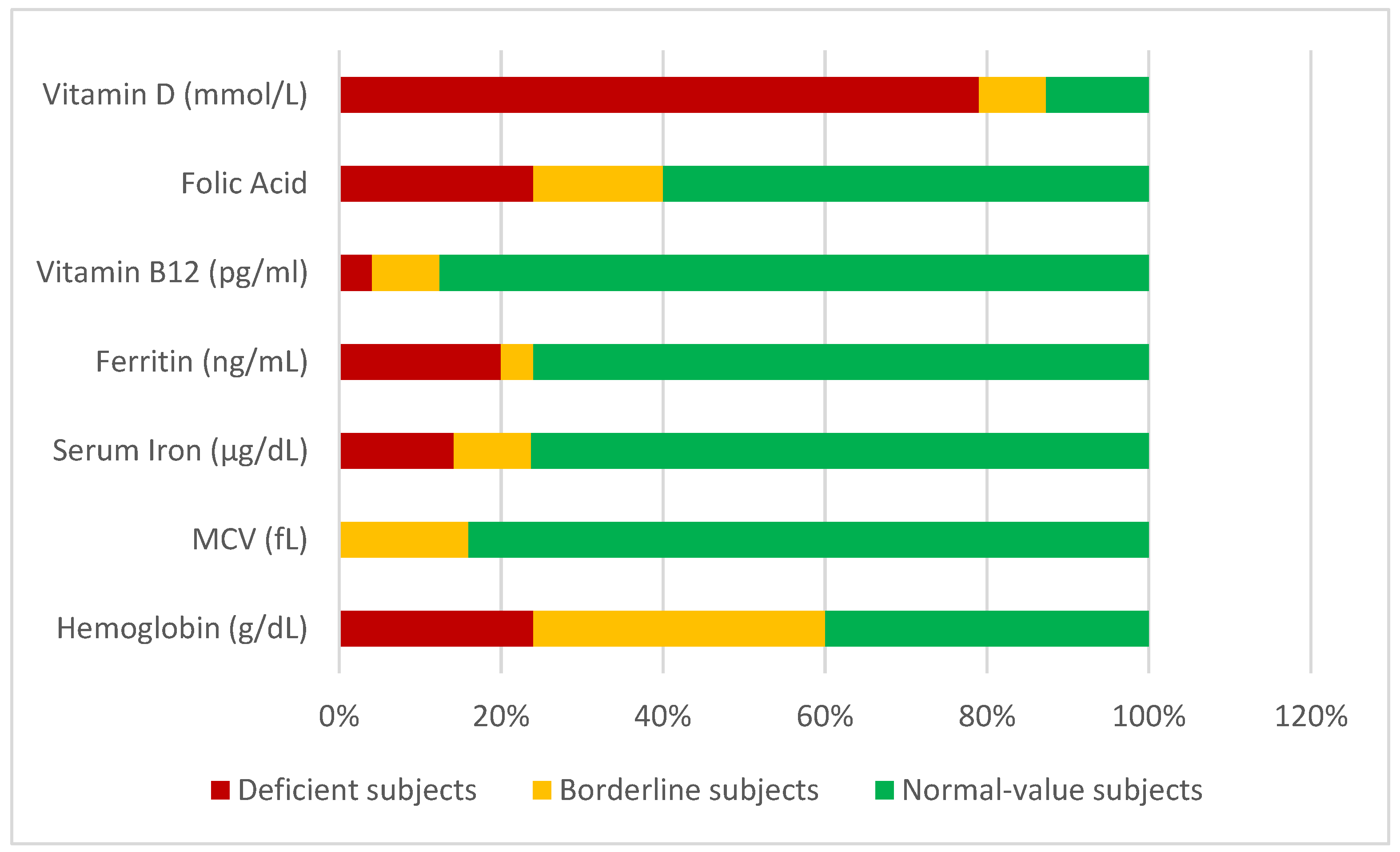
Figure 2.
Trend over time of percentage of patients with nutritional deficiencies during 12-month follow-up.
Figure 2.
Trend over time of percentage of patients with nutritional deficiencies during 12-month follow-up.
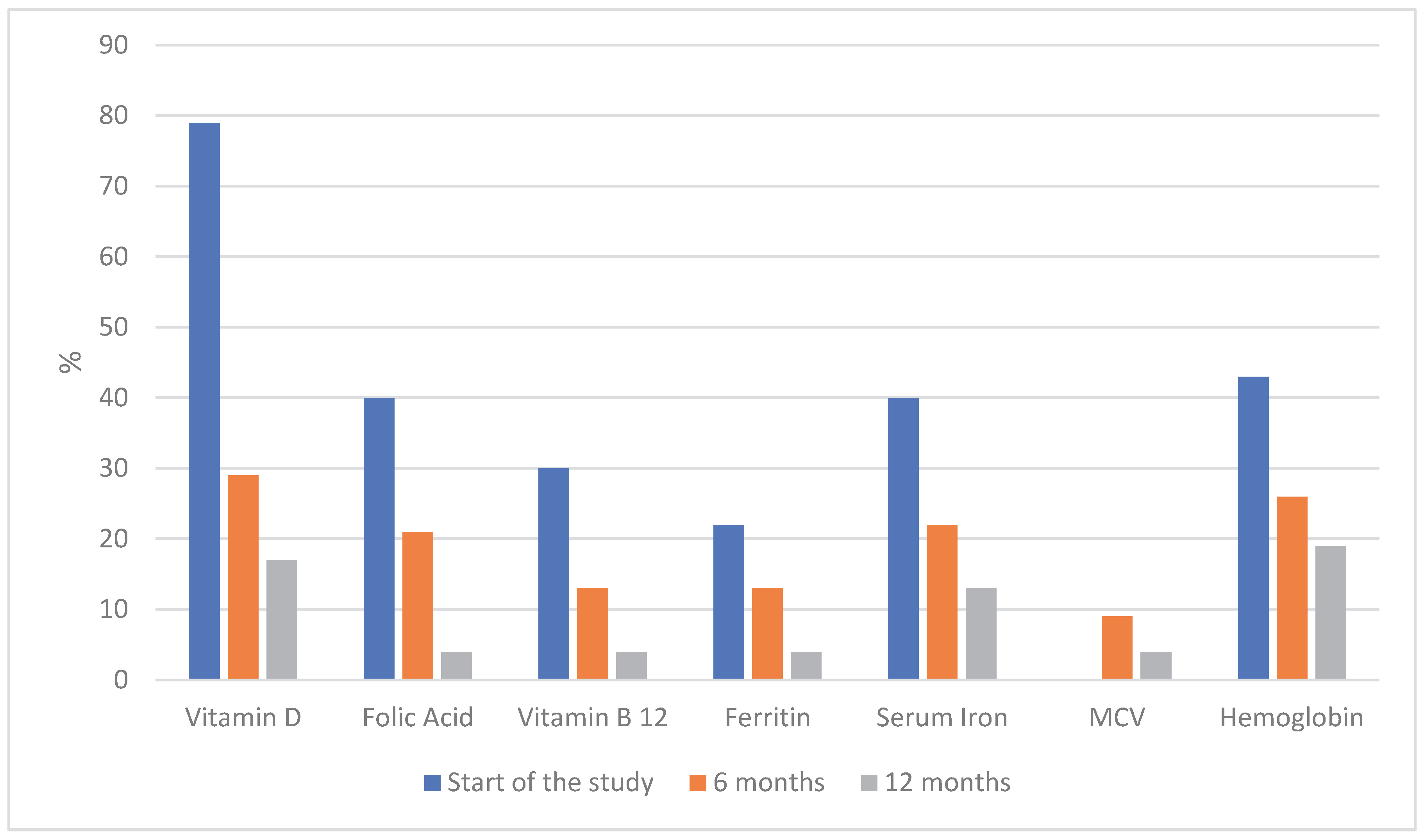

Table 1.
Complete composition of the study product.
| Content per 100 grams | Contents for 2 sachets | |
| Energy value | 229.0 kcal / 971.3 kj | 25.2 kcal / 106.8 kj |
| Fats | 1.41 g | 0.155 g |
| including Saturated Fats | 0.20 g | 0.022 g |
| Carbohydrates | 47.60 g | 5.236 g |
| including Sugar | 3.69 g | 0.406 g |
| Fiber | 3.35 g | 0.369 g |
| Protein | 0.29 g | <0.1 g |
| Vitamin A | 7273 mcg | 800 mcg |
| Vitamin C | 1364 mcg | 150 mcg mg |
| Vitamin E | 909.1 mg | 100 mg |
| Vitamin PP | 90.2 mg | 10 mg |
| Vitamin B6 | 12.7 mg | 1.4 mg |
| Vitamin B12 | 2727.3 mcg | 300 mcg |
| Folic acid | 3636.4 mcg | 400 mcg |
| Pantothenic acid | 90.9 mg | 10 mg |
| Vitamin D | 1363.6 mcg | 150 mcg |
| Vitamin K | 909.1 mcg | 100 mcg |
| Vitamin B1 | 181.8 mg | 20 mg |
| Vitamin B2 | 11.8 mg | 1.3 mg |
| Magnesium | 1704.5 mg | 187.5 mg |
| Iron | 545.5 mg | 60 mg |
| Zinc | 109.1 mg | 12 mg |
| Copper | 4.5 mg | 0.5 mg |
| Selenium | 681.8 mcg | 75 mcg |
| Calcium | 3636.4 mg | 400 mg |
| Iodine | 681.8 mcg | 75 mcg |
Table 2.
Evaluated parameters and reference values.
| Measured Values | Reference values |
| Body weight (kg) | - |
| Height (cm) | - |
| Body Mass Index (BMI) | Normal weight: 18.5-24.9; Overweight: 25-29.9; Obesity class I: 30-34.9; Obesity class II: 35-39.9; Obesity class III: ≥40 |
| Excess Weight Loss (EWL)* | - |
| Hemoglobin (g/dL) | 13-18 g/dL (men), 12-16 g/dL (women) |
| MCV (fL) | 76-98 fL |
| Serum Iron (μg/dL) | 60-170 μg/dL (men), 50-150 μg/dL (women) |
| Ferritin (ng/mL) | 30-400 ng/mL (men), 15-200 ng/mL (women) |
| Vitamin B12 (pg/mL) | 190-665 pg/mL |
| Folic Acid (ng/mL) | 4.5-32.2 ng/mL |
| 25-Hydroxy-vitamin D [25(OH)D] (ng/mL) | 20-86 ng/mL |
Table 3.
Anthropometric and biochemical parameters at baseline (T0), 6 months (T6), and 12 months (T12) post-OAGB/MGB p (overall): Friedman test; post-hoc comparisons: Conover’s test. EWL: Excess Weight Loss; MCV: Mean Corpuscular Volume.
Table 3.
Anthropometric and biochemical parameters at baseline (T0), 6 months (T6), and 12 months (T12) post-OAGB/MGB p (overall): Friedman test; post-hoc comparisons: Conover’s test. EWL: Excess Weight Loss; MCV: Mean Corpuscular Volume.
| Parameter | T0 (mean±SD) | T6 (mean±SD) | T12 (mean±SD) | p (overall) | p (T0 vs T6) | p (T0 vs T12) | p (T6 vs T12) |
|---|---|---|---|---|---|---|---|
| Body weight (kg) | 125.6±18.9 | 101.5±15.6 | 83.1±14.0 | <0.001 | <0.001 | <0.001 | <0.001 |
| BMI (kg/m²) | 46.3±5.7 | 37.4±4.5 | 30.3±4.3 | <0.001 | <0.001 | <0.001 | <0.001 |
| EWL (%) | - | 42.1±11.7 | 74.5±15.9 | <0.001 | <0.001 | <0.001 | <0.001 |
| Hemoglobin (g/dL) | 13.6±1.7 | 13.6±1.3 | 13.7±1.2 | 0.41 | - | - | - |
| MCV (fL) | 88.4±6.9 | 87.4±5.1 | 87.0±4.6 | 0.065 | - | - | - |
| Serum iron (μg/dL) | 68.1±22.5 | 69.1±22.5 | 79.7±21.6 | <0.001 | 0.84 | <0.001 | <0.001 |
| Ferritin (ng/mL) | 166.4±187.3 | 144.7±140.4 | 139.8±143.1 | <0.046 | - | - | - |
| Vitamin B12 (pg/mL) | 405.8±167.4 | 554.2±257.6 | 558.2±204.8 | 0.006 | 0.15 | 0.001 | 0.058 |
| Folic acid (ng/mL) | 10.6±17.1 | 10.5±6.5 | 9.95±4.8 | 0.099 | - | - | - |
| Vitamin D (ng/mL) | 21.9±15.4 | 41.1±23.2 | 40.1±15.0 | <0.001 | <0.001 | <0.001 | 0.065 |
Disclaimer/Publisher’s Note: The statements, opinions and data contained in all publications are solely those of the individual author(s) and contributor(s) and not of MDPI and/or the editor(s). MDPI and/or the editor(s) disclaim responsibility for any injury to people or property resulting from any ideas, methods, instructions or products referred to in the content. |
© 2026 by the authors. Licensee MDPI, Basel, Switzerland. This article is an open access article distributed under the terms and conditions of the Creative Commons Attribution (CC BY) license (http://creativecommons.org/licenses/by/4.0/).
Copyright: This open access article is published under a Creative Commons CC BY 4.0 license, which permit the free download, distribution, and reuse, provided that the author and preprint are cited in any reuse.