

Submitted:
11 September 2026
Posted:
14 September 2026
You are already at the latest version
Abstract
Biomass conversion can support the circular economy when energy production is linked to the recovery of value from organic waste and residual biomass. This exploratory review examines how recent research has approached this relationship, with particular attention to the practical conditions that influence the use of biomass-to-bioenergy systems. A structured search of Scopus was used to identify relevant articles and reviews, which were examined through a critical thematic synthesis. The literature covers a broad range of feedstocks and conversion routes, including anaerobic digestion, pyrolysis, hydrothermal processing and integrated biorefinery systems. The findings show that the circular value of these technologies depends not only on energy production but also on how recovered products are used and whether the process can operate under realistic conditions. Feedstock availability, scale, logistics and access to suitable markets remain important constraints. Further progress will depend on evidence from longer-term operation and on assessments that better reflect the conditions in which these systems are implemented.
Keywords:
biomass
; bioenergy
; circular economy
; waste recovery
; anaerobic digestion
; circular biorefinery
1. Introduction
The transition away from fossil energy has renewed interest in biomass as an alternative source of heat and electricity. Biomass differs from other renewable resources in that it must be collected, transported, and physically converted before it can be used as energy. Its contribution to sustainability, therefore, depends, among other factors, on the material's origin, the conversion process, and the management of the resulting products. The use of residual biomass can also reduce waste disposal and avoid some pressures associated with dedicated energy crops, but these advantages may be weakened by transport, pre-treatment or competition with existing uses [1,2,3,4]. A circular economy perspective extends the analysis beyond renewable energy production. Agricultural waste, manure, food waste, sewage sludge and agro-industrial by-products can be converted into energy while retaining some of their material value. This may involve nutrient recovery, carbon-rich products, or the integration of various processes in a biorefinery. Circularity is therefore related to how resources remain in productive use, rather than simply the biological origin of the raw material [5,6,7]. It should also be noted that the available conversion technologies differ substantially. For example, anaerobic digestion is often applied to wet and biodegradable materials and produces biogas along with the digestate. Pyrolysis and gasification are best suited for relatively dry lignocellulosic biomass, while hydrothermal processes can treat wet materials without prior drying. Fermentation is used for sugar-rich substrates or lignocellulosic materials after hydrolysis. The technological selection should therefore reflect the composition of the raw material, the moisture content and the desired products [8,9,10].
Technical compatibility, however, does not establish circular performance. Digestate can return nutrients to agricultural soil, but its use depends on the levels of contaminants and the concentration of nutrients. Biochar can serve as a soil additive, adsorbent or carbon storage material, although its properties vary depending on the feedstock and production conditions. Hydrothermal conversion also generates an aqueous phase that may need additional treatment before its organic matter or nutrients can be recovered [11,12,13]. Integrated biorefineries seek to regain more value by combining energy conversion with the production of materials or chemicals. Anaerobic digestion can be linked to pyrolysis, hydrothermal treatment, or nutrient recovery processes. Such arrangements can improve the utilization of raw materials, but they also increase capital requirements, operational interdependence, and the need for multiple product markets. Greater process integration is consequently beneficial only when the additional outputs have an established use and the extra energy and equipment needs do not exceed the recovered value [14,15,16].
Regional conditions further influence implementation. Large installations can benefit from economies of scale, but they need biomass from wider collection areas. Decentralized systems can reduce transportation and provide power close to the point of waste generation, although smaller production volumes may not justify upgrading or purifying equipment. The plant's capacity must therefore be aligned with continuously available biomass, local infrastructure, and demand for both energy and co-products [17,18]. Environmental assessment is often used to determine whether biomass conversion performs better than fossil energy production or conventional waste management. The conclusions are sensitive to the limits of the system, reference scenarios and the treatment of co-products. A system may look favorable when it replaces landfill disposal but offer a smaller benefit when the raw material already has a productive use. Economic valuations are also affected by assumptions regarding the cost of raw materials, scale of plants, energy prices and co-product revenues [19,20,21]. However, despite the increase in research activity, much of the evidence remains focused on individual processes under laboratory or pilot conditions. The direct comparison is limited by differences in raw materials, operating conditions and valuation methods. Long-term operation, product markets, regulatory approval, and social effects receive less attention than conversion yield or greenhouse gas emissions [4,19]. This review critically examines recent research on the conversion of biomass to bioenergy from a circular economy perspective. It addresses the following issue:
How does recent scientific literature describe the contribution of biomass-to-bioenergy systems to the circular economy, and which technological, environmental and implementation limitations remain?
The analysis covers articles and reviews of English-language journals published between 2021 and 2025. It focuses on raw materials, conversion routes, energy products, co-products, circular strategies, sustainability assessment and the conditions that affect their practical implementation.
2. Materials and Methods
2.1. Review Design
This study adopted a structured exploratory review supported by a critical thematic synthesis. This type of exploratory design can be considered appropriate since research on the conversion from biomass to bioenergy covers heterogeneous feedstocks, technologies, scales and evaluation methods, which prevents a meaningful statistical synthesis, but still allows the study of recurring themes and implementation conditions in the entire literature. The review was not designed as a systematic review or meta-analysis, nor was any formal bias risk assessment carried out. Its purpose was to map recent research and critically examine how individual studies connected biomass conversion with circular economy principles [22]. Thematic coding and interpretation followed an iterative qualitative process in which the initial categories were refined as recurring patterns became clearer [23].
2.2. Search Strategy
The bibliographic search was conducted in Scopus. Scopus was selected due to its broad coverage of peer-reviewed research in the fields of energy, engineering, environmental sciences, waste management, and biotechnology. The research combined terms related to the circular economy, biomass conversion technologies, and resource valorization and recovery. The following expression was applied to titles, abstracts, and keywords:
TITLE-ABS-KEY ( ("circular econom*" OR "circular bioeconom*") AND biomass AND ("anaerobic digestion" OR pyrolysis OR gasification OR hydrothermal OR combustion) AND ("resource recover*" OR "waste valorization" OR "waste valorisation" OR biorefiner*) )
The initial search returned 640 records. The results were later limited to articles and reviews written in English and published between 2021 and 2025. These filters were intended to capture recent peer-reviewed developments, maintaining both primary research and publications that synthesized emerging technological or conceptual trends. After applying the filters, 342 records remained. The bibliographic information was exported from Scopus and organized for screening and descriptive analysis.
2.3. Eligibility Criteria
Publications were eligible when they addressed biomass or biogenic waste in connection with at least one energy-conversion pathway and included a relevant circular economy dimension. Eligible circular practices included waste valorization, nutrient or material recovery, productive use of co-products, cascading use and the integration of multiple processes within a biorefinery. The explicit use of the expression circular economy was not required when circularity was evident in the system described. For example, a publication could be retained when it examined the conversion of organic waste into energy together with the recovery of digestate, biochar, nutrients or another usable output. This criterion reduced the risk of excluding studies that described circular practices using related terminology such as resource recovery or waste valorization [3,5,7]. Studies were excluded when biomass was examined solely for non-energy applications, when the feedstock was not biogenic, or when no connection to an energy-conversion process could be established. Publications restricted to feedstock characterization were also excluded unless the analysis was linked to a conversion pathway. Conference papers, editorials, book chapters and other document types were removed through the Scopus filters.
2.4. Study Selection
The 342 filtered records proceeded to title and abstract screening. Each record was examined to determine whether it addressed a biomass-to-energy conversion pathway and whether the system included a relevant connection to waste valorization, resource recovery, or the circular use of co-products. Following this screening, 47 records were excluded because they were clearly outside the scope of the review, 217 clearly met the eligibility criteria, and 78 were retained provisionally because the information available in their titles and abstracts did not permit a definitive classification. The resulting set of 295 records was retained for exploratory mapping. The critical thematic synthesis focused primarily on the 217 records that clearly met the eligibility criteria. Records initially classified as uncertain were considered only when subsequent inspection of the available information or selective full-text consultation confirmed their relevance. As the study was designed as an exploratory review rather than a systematic full-text review, no separate final full-text exclusion stage was applied. Full texts were consulted selectively when additional information was required to confirm relevance, interpret findings, or verify evidence used in the thematic synthesis. The study identification and screening process is presented in Figure 1.
2.5. Data Extraction
A structured form was used to organize information from the 295 retained records. Bibliographic metadata, titles, abstracts, and keywords provided the basis for the exploratory mapping. The recorded variables included publication year, document type, geographical context, feedstock, conversion technology, energy product, reported co-products, circular strategy, assessment method and implementation barriers. Full texts were consulted selectively when further information was required to confirm relevance, clarify technological or methodological details, interpret a study’s contribution, or verify evidence cited in the thematic synthesis. Detailed findings were reported only when they could be supported by the corresponding publication.
2.6. Critical Thematic Analysis
The extracted information was examined qualitatively. Publications were first grouped according to their main focus and were subsequently reorganized as recurring patterns became clearer. The final thematic structure covered feedstocks, conversion technologies, energy products and co-products, circular strategies, sustainability assessment and research gaps. The analysis reported results alongside the assumptions and context of each study. Differences associated with feedstock properties, operating conditions, technological scale and system boundaries were retained rather than treated as directly comparable findings. Critical interpretation focused on whether claims of circular performance were supported by evidence. Particular attention was given to the actual use of co-products since their generation alone does not demonstrate resource recovery. Transport, pretreatment, product upgrading and additional waste-treatment requirements were also considered when they could alter environmental or economic performance [4,5,24]. References not retrieved through the Scopus search were used only when necessary to support the methodological design, establish the conceptual background or clarify specific technical issues. These supplementary sources were not included in the descriptive analysis of the retrieved dataset. This approach allowed technically diverse studies to be compared without reducing their findings to a single performance indicator.
3. Conceptual Context
Biomass systems for bioenergy link energy production to waste management and resource recovery. Their circular contribution depends on the origin and availability of the raw material, its compatibility with the conversion process and the subsequent use of the resulting products. This section defines the main concepts used in the analysis, covering the circular use of biomass, conversion pathways, integrated biorefineries and the evaluation of circular performance.
3.1. Circular Economy and Biomass Use
The circular bioeconomy applies circular-economy principles to biological resources by prioritizing value retention, cascading use, recovery, and productive reuse before disposal. Residual biomass is particularly relevant because energy conversion can be combined with waste management and the recovery of materials or nutrients. Agricultural residues, food waste, manure, sewage sludge, and agro-industrial by-products may therefore provide energy while generating usable co-products. Circularity, however, depends on the effective use of these outputs rather than simply on the biological origin of the feedstock [2,25,26]. Feedstock selection also depends on composition, moisture, contamination, seasonality, existing uses, and logistics. Biomass that already performs a productive function may provide a smaller circular benefit when redirected to energy than material otherwise requiring disposal. Cascading use therefore favors higher-value applications before energy recovery where these are technically and economically feasible. Regional conditions are equally important: decentralized systems can reduce transport and serve local demand, whereas larger facilities may benefit from economies of scale but require broader and more reliable collection networks [27,28].
3.2. Biomass Conversion Pathways
Biomass conversion technologies can be broadly divided into thermochemical and biochemical pathways. Feedstock moisture, composition, biodegradability, scale, and the intended products provide the main basis for technology selection.
3.2.1. Thermochemical Conversion
Thermochemical pathways include combustion, gasification, pyrolysis, and hydrothermal processing. Combustion provides heat and electricity and is well established for relatively dry biomass, although it retains limited material value beyond possible ash recovery [15,29]. Gasification converts biomass into syngas that can be used for energy or as an intermediate for fuels and chemicals, with tar formation and gas cleaning remaining important technical constraints [30]. Pyrolysis produces bio-oil, biochar, and combustible gases, allowing simultaneous energy and material recovery. The suitability of biochar for soil amendment, adsorption, or carbon storage depends on feedstock composition and process conditions, while bio-oil generally requires upgrading for fuel applications [26,31,32]. Hydrothermal carbonization and hydrothermal liquefaction are particularly relevant for wet biomass because they avoid prior drying, but their aqueous streams may require further treatment or recovery [33,34]. Torrefaction can improve biomass handling and energy density when the resulting logistical benefit compensates for the additional processing demand [35].
3.2.2. Biochemical Conversion
Biochemical pathways operate under comparatively mild conditions and are suited mainly to biodegradable substrates. Anaerobic digestion converts organic matter into biogas and digestate and can combine waste treatment with energy production and nutrient recovery [36,37]. Co-digestion can improve substrate balance and energy recovery, although stable operation depends on the availability and consistency of compatible feedstocks [38]. Fermentation can produce ethanol or hydrogen from suitable residual substrates, although lignocellulosic biomass generally requires pretreatment and hydrolysis. Separation requirements and low product concentrations can increase energy demand. Sequential configurations can recover additional energy from residual organic matter, for example by combining hydrogen production with anaerobic digestion [39,40,41].
3.3. Circular Biorefineries and Integrated Systems
A circular biorefinery combines conversion and recovery processes so that residual streams from one stage can become feedstocks for another. Anaerobic digestion can be integrated with nutrient recovery, pyrolysis, or hydrothermal processing, while thermochemical routes can generate intermediates for subsequent biological conversion. Such configurations may increase overall resource recovery but also introduce additional equipment, energy demand, process interdependence, and product-market requirements [42,43,44]. Integration should therefore be evaluated according to the effective use of its outputs rather than the number of process stages. Industrial and territorial integration can additionally link waste suppliers, conversion facilities, and local users of energy or recovered materials, but this depends on transport distances, infrastructure, and coordination between actors [27]. A biorefinery should only be considered circular when the additional recovery provides a verified material, energy, environmental, or economic benefit.
3.4. Assessment of Circular Performance
Life cycle assessment is widely used to examine whether biomass conversion improves environmental performance relative to fossil-energy production or conventional waste management. Results depend strongly on the functional unit, system boundaries, baseline scenario, and treatment of co-products. Integrated techno-economic assessment complements this analysis by considering investment, operating costs, product revenues, and the consequences of scale [45,46]. Multi-product systems require particular attention because environmental or economic credits depend on the assumption that co-products effectively replace conventional products. Digestate, biochar, or other recovered materials should therefore receive substitution credits only when their quality and end use support that assumption [25,26,47]. Net energy performance should likewise distinguish energy consumed internally from energy available for external substitution [32,48]. Circularity indicators can describe waste diversion, nutrient recovery, material recirculation, and productive use of co-products, but they do not independently establish environmental sustainability. Circularity, environmental performance, economic viability, and territorial suitability should therefore be interpreted together [45,49].
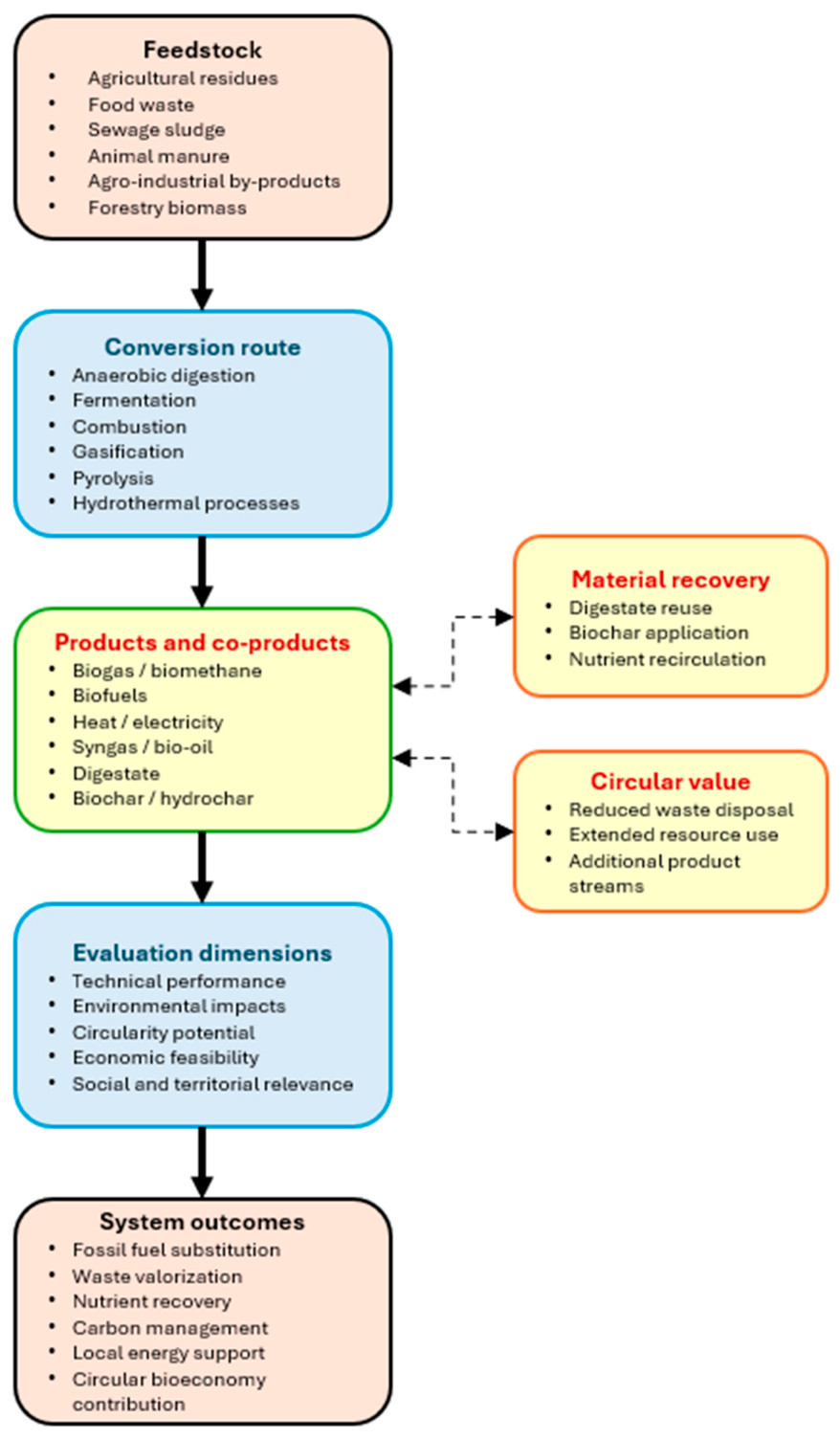
Figure 2.
Analytical framework for assessing biomass-to-bioenergy systems from a circular economy perspective. Source: Authors’ own elaboration.
Figure 2.
Analytical framework for assessing biomass-to-bioenergy systems from a circular economy perspective. Source: Authors’ own elaboration.
4. Results
Descriptive analyses and exploratory mapping were based exclusively on the records retrieved through the Scopus search. The critical thematic interpretation was grounded primarily in the clearly eligible records and complemented by supplementary peer-reviewed sources used to clarify technical, methodological, or contextual issues. Supplementary sources were not included in publication counts or used to infer the prevalence of feedstocks, technologies, products, or themes.
4.1. Characteristics of the Literature
Publication activity increased over the period analyzed. The filtered dataset contained 37 records from 2021, 51 from 2022, 64 from 2023, 71 from 2024, and 119 from 2025. Publications from 2025 accounted for approximately one-third of the 342 filtered records, indicating substantial recent growth in research connecting biomass conversion with circular-economy concepts (Figure 3). This pattern should be interpreted with some caution because changes in terminology, including the increasing use of expressions such as circular bioeconomy, resource recovery, and waste valorization, may also have influenced retrieval. The filtered dataset comprised 215 research articles and 127 review articles. Primary studies included experimental, pilot-scale, modelling, optimization, life-cycle, and techno-economic approaches, while review articles addressed technological development, resource recovery, biorefineries, and sustainability assessment. Evidence from continuous commercial operation was less developed than evidence from process-level or prospective analyses, particularly for more integrated configurations [42,44]. The corpus addressed agricultural residues, agro-industrial by-products, food waste, sewage sludge, manure, and aquatic biomass across anaerobic digestion, combustion, gasification, pyrolysis, hydrothermal processing, and integrated systems. Environmental and techno-economic studies demonstrated that technological performance alone was insufficient to establish overall sustainability, particularly where logistics, process scale, co-product use, and market conditions were uncertain [27,45,50]. These issues guided the thematic analysis presented below.
4.2. Biomass Feedstocks
Residual biomass was widely represented in the reviewed literature, including agricultural residues, agro-industrial by-products, food waste, sewage sludge, manure, and aquatic biomass. Agricultural residues included straw, rice husks, bagasse, and other lignocellulosic materials. Their use was affected by seasonality, geographical dispersion, moisture, ash content, storage requirements, and competing applications. Dry residues were compatible with thermochemical conversion, whereas biological routes generally required pretreatment to improve substrate accessibility. The benefits of drying, densification, torrefaction, or other pretreatments therefore had to be considered against their additional energy and equipment requirements [35,51,52].
Agro-industrial by-products offered different logistical conditions because they were generated at identifiable processing facilities, creating opportunities for on-site treatment and energy use. Apple pomace, corn residues, winery residues, and other food-processing by-products were investigated through anaerobic digestion, fermentation, and thermochemical routes within biorefinery configurations [53,54,55,56]. Municipal organic waste provided a direct connection between waste management and energy recovery. Anaerobic digestion was suitable for biodegradable food waste, although contamination and source separation affected both process performance and digestate quality [25,37,50]. Drier fractions of municipal waste were also investigated through pyrolysis, for which heterogeneous composition and feedstock preparation remained important constraints [57]. Sewage sludge combined an existing treatment requirement with the potential for energy and material recovery. Anaerobic digestion could generate biogas within wastewater-treatment facilities, while hydrothermal conversion avoided the need for complete feedstock drying. In both cases, the management and quality of digestate, hydrochar, and aqueous streams influenced the circular performance of the system [43,58]. Animal manure was similarly suited to anaerobic digestion and closed-loop nutrient recovery, although plant scale, storage, and agricultural application conditions remained relevant [36]. Co-digestion provided an additional option for combining compatible residual streams, but stable performance depended on maintaining an appropriate and sufficiently consistent feedstock mixture [38]. Aquatic biomass, particularly microalgae, connected biomass conversion with wastewater treatment and nutrient recovery. Its high moisture content favored biological or hydrothermal processing, while harvesting and dewatering remained important technical constraints [34,40,59]. Overall, feedstock suitability depended on composition, moisture, contamination, continuity of supply, transport distance, existing uses, and the likely quality of the resulting products and co-products [27]. Table 1 provides a comparative overview of the feedstocks addressed in the reviewed literature and highlights how their properties affect conversion and circular use.
4.3. Conversion Technologies
The literature reviewed focused on anaerobic digestion, pyrolysis, gasification, combustion, and hydrothermal conversion. The technological selection was generally related to the moisture of the raw material, biodegradability, and lignocellulosic content. Direct comparison remained difficult because the studies used different operating conditions, scales, and performance indicators. The reviewed evidence covered technologies at different levels of maturity, ranging from established anaerobic digestion systems to hydrothermal and integrated configurations investigated at laboratory, pilot, and modelling scales [15,44].
4.3.1. Thermochemical Technologies
Pyrolysis was an important thermochemical pathway as its main attraction was the simultaneous production of bio-oil, biochar and fuel gas. The relative proportions of these outputs varied with temperature, heating rate, and residence time, which limited comparison between studies. Rapid pyrolysis generally prioritized liquid production, while slower processes produced more biochar [31,32,60]. Multi-product generation was often touted as a circular advantage. However, evidence showed that this advantage depended on its later use. Bio-oil often required upgrading because of its oxygen content and limited stability. The properties of biochar varied depending on the composition of the feedstock and the operating conditions, affecting its suitability for soil application, adsorption, or carbon storage [26,32,47]. Gasification was associated with industrial heat, electricity, and syngas production. Synthesis gas can also serve as an intermediate for fuels and chemicals. Tar formation and gas purification continued to be the main technical constraints, especially when variable feedstocks were used or consistent gas quality was required. These treatment requirements have made it more difficult to justify smaller decentralized applications [16,30]. Combustion was a mature thermochemical pathway that provided a direct route to heat and electricity, although much of the material value of biomass was lost. Ash recovery can offer additional use, but the varying composition and contamination can restrict agricultural application. Moisture and ash content also affect the efficiency and performance of equipment [15,29]. Hydrothermal conversion was particularly relevant for wet feedstocks because it avoided energy-intensive drying. Hydrothermal carbonization produced hydrochar, while hydrothermal liquefaction produced biocrude. The resulting products often required additional treatment, and the aqueous phase remained a significant operational concern because it could contain organic matter, nutrients, and inhibitory compounds [10,33,34]. Torrefaction and microwave-assisted processes have been primarily examined as options for pretreatment or process intensification. They could improve handling, heating, or product yield, although their advantages depended on electricity consumption, equipment costs, and the distance over which the biomass was transported. Their environmental benefit was therefore context-dependent rather than technology-inherent [32].
4.3.2. Biochemical Technologies
Anaerobic digestion was widely applied to food waste, sewage sludge, manure, and wet agro-industrial residues because it combines organic-waste treatment with biogas production and the retention of nutrients in digestate. Feedstock characteristics influenced reactor configuration, mixing, mass transfer, and process stability, while co-digestion could improve substrate balance when compatible residual streams were available [36,37,38]. Pretreatment was investigated as a means of improving the accessibility of resistant substrates, particularly lignocellulosic biomass. However, increases in methane or product yield did not necessarily improve overall energy performance when electricity, heat, chemicals, and additional equipment were considered [52]. Fermentation provided routes for ethanol and biohydrogen production from suitable residual substrates. Lignocellulosic ethanol required pretreatment and hydrolysis, while product separation remained relevant to process energy demand [39]. Biohydrogen production was constrained by yield and the presence of residual organic matter, which supported the investigation of sequential configurations in which additional energy was recovered through anaerobic digestion [40,41].
4.3.3. Integrated and Hybrid Conversion
Integrated configurations combined biochemical and thermochemical processes to recover additional value from residual streams. Examples included the thermochemical treatment of digestate, anaerobic digestion of hydrothermal process water, and the integration of gasification with syngas fermentation [16,43,61]. Closed-loop and multi-stage systems could increase energy and material recovery, but they also introduced additional equipment, process interdependence, and operational-control requirements [44]. The available evidence did not support a direct relationship between technological complexity and circular performance. Additional processing was beneficial only when the recovered outputs justified the associated energy demand and capital requirements [32]. The evidence therefore indicates that no conversion route is universally preferable, as its relevance depends on the feedstock and the conditions under which the system operates. Table 2 brings together the main conversion pathways discussed in the reviewed literature and shows how their applications, maturity, recovered outputs and practical limitations differ.
4.4. Energy Products, Co-Products and Circular Strategies
The literature reported gaseous, liquid, and solid outputs, but their circular value depended on their being used effectively. Product diversification could improve the use of biomass, although each additional stream would introduce requirements for upgrading, storage, certification, or market access. The generation of various outputs was therefore less informative than their quality and ability to replace conventional energy or materials [25,26].
4.4.1. Energy Products
Biogas was a major energy product associated with anaerobic digestion and was used for heating, electricity, or combined heat and power. Local use was particularly relevant on farms, wastewater treatment plants, and agro-industrial facilities where energy demand occurred close to the digester. This reduced distribution requirements and allowed some of the energy to support the conversion process itself [37,67]. The upgrade of biogas to biomethane has extended its use to gas networks and transport. However, carbon dioxide removal, gas purification and compression have increased investment and energy demand. Biomethane has consequently become more viable where gas production was stable, and adequate infrastructure or demand already existed. Heat and electricity were also produced through combustion and gasification. Electricity could be exported where access to the grid was available, while heat required close and sufficiently regular demand. Reported cogeneration efficiencies could therefore overestimate practical performance when some of the recovered heat remained unused [30,36]. Syngas provided a flexible intermediate for the production of heat, electricity, fuels and chemicals. Its wider use depends on tar removal and gas purification. These requirements became more demanding when the syngas was intended for fuel synthesis or biological fermentation, rather than direct combustion [16,30]. Pyrolysis and hydrothermal liquefaction produced liquid intermediates. Bio-oil offered higher energy density than untreated biomass but often needed upgrading due to its oxygen content and limited stability. Biocrude could be produced from wet biomass without prior drying, although it also required refinement and generated an aqueous phase that required further treatment or recovery [31,32,34]. Bioethanol was mainly associated with sugar-rich residues and hydrolyzed lignocellulosic biomass. Its circular value was strongest when residual sugars replaced the cultivated raw materials. Pretreatment and distillation continued to be important sources of energy demand, especially when fermentation produced dilute alcohol streams [39]. Biohydrogen emerged as a product in development from dark fermentation and photofermentation. Low yields and residual organic acids limit autonomous operation. Sequential systems that produced hydrogen followed by methane were often proposed, but commercial evidence remained limited [40,41].
4.4.2. Non-Energy Co-Products
Digestate was a prominent non-energy co-product from anaerobic digestion [25,43]. It retained some of the nitrogen and phosphorus contained in the raw material and could reduce demand for mineral fertilizers. Agricultural use depended on the concentration of nutrients, pathogens, contaminants, and local application limits. Describing digestate as a biofertilizer without examining these conditions risked exaggerating its readiness for use. Separation into solid and liquid fractions could support more targeted management. The solid fraction could be composted or applied to the soil, while the nutrients from the liquid fraction could be concentrated. These operations improved product quality in some cases but required additional energy and infrastructure. Storage and treatment can also generate emissions that reduce the environmental credit attributed to nutrient recovery [25,44]. Biochar was the main co-product associated with pyrolysis. Its potential uses included soil amendment, pollutant adsorption, and carbon storage. These applications required different product properties and quality standards. Feedstock contamination, production temperature, and carbon stability influenced whether a specific biochar was suitable for the proposed use [26,47]. Hydrochar shared some applications with biochar but had different chemical and physical characteristics. It may need to be washed or treated further before use as fuel or material. Hydrothermal process water also contained organic compounds and nutrients, although direct reuse was generally limited by inhibitory substances. Anaerobic digestion or nutrient separation could recover additional value from this flow [10,33,48]. Some integrated biorefineries recovered higher-value chemicals or bioactive compounds before the remaining biomass was directed to energy conversion. These cascading strategies could improve resource productivity, although their economic contribution depended on purification requirements and realistic product demand [54,55].
4.4.3. Circular Strategies
Waste recovery was a recurring circular strategy, redirecting organic waste from disposal to energy or material recovery, with its environmental value depending on the prior management pathway. Replacing landfill disposal often offered a stronger benefit than diverting a material that already had a productive application [25,37]. Closed-loop systems linked waste generation to the use of recovered energy or nutrients. Livestock waste could produce biogas for farms while digestate was returned to farmland. Agro-industrial facilities could use waste to generate heat or electricity internally. These arrangements reduced transportation and dependence on external resources when the supply of raw materials and the energy demand remained stable [76,77]. Cascading use prioritized products with higher material or economic value before final energy recovery. Extractable compounds could be recovered from biomass before the remaining fraction was converted into biogas, heat, or fuel. The approach only improved resource productivity when the additional recovery phase produced sufficient value to justify the energy and equipment required [53,55]. Industrial symbiosis has extended circularity across multiple organizations. Waste from one facility could fuel a nearby bioenergy plant, while heat, electricity, or nutrients supported another activity. Geographical proximity and coordination between participants were essential because transporting bulky waste could eliminate much of the economic and environmental benefit [27]. Internal energy recovery was also common. Pyrolysis gas could provide heat during the process, while some of the biogas produced by digestion could maintain the reactor temperature. This has reduced external energy demand, although energy consumed internally should also not be reported as energy available for sale or replacement by fossil fuels [32]. Overall, circular strategies were most convincing when energy and co-products replaced the resources already used in the regional system. Their contribution was less certain when products required extensive upgrading or relied on markets that had not been demonstrated [25,26,45]. The contribution of these systems ultimately depends on whether their outputs can be effectively recovered and used. Table 3 brings together the main energy products and co-products reported in the literature and shows the conditions that determine their potential circular value.
4.5. Sustainability Assessment and Policy Conditions
The reviewed literature evaluated circular bioenergy mainly through environmental, energy, and economic indicators. Experimental studies have often reported conversion yield or product quality, while fewer publications have examined the complete system from raw material collection to product end use. The observed improvements at the reactor level have therefore not provided sufficient evidence of overall sustainability [32,45].
4.5.1. Environmental and Energy Assessment
Life cycle assessment was widely used to compare biomass conversion with fossil-energy production or conventional waste management. The results were sensitive to system boundaries, functional units, and reference scenarios. Studies that have treated residual biomass as a burden-free input may underestimate the effects of transport, drying, or pretreatment, particularly for dispersed agricultural residues [45,46,48]. The baseline scenario strongly affected the reported benefit. Anaerobic digestion generally performed favorably when it avoided landfill disposal and uncontrolled methane emissions. Its advantage was less evident when the raw material already had a productive use, such as composting, soil incorporation or animal feed. The environmental assessment therefore required a realistic analysis of the biomass's previous fate. The transport and preparation of raw materials were recurrent sources of environmental burden. Low-density biomass may require collection over large areas, while drying, milling and pre-treatment consume additional energy. Higher conversion yields did not necessarily result in better net energy performance when these requirements were considered [27,28]. The co-product treatment was another important source of variation. Digestate and biochar often received credits based on assumed mineral fertilizer substitution, soil amendment, or carbon-storage services. Such credits were justified only when the product met quality requirements and had a credible end use. Contaminated digestate or unstable biochar did not provide the substitution assumed in the assessment [25,26,46,47]. Climate-change impacts were commonly examined, while water use, nutrient loss, and toxicity were also relevant to digestion and hydrothermal systems but were less consistently assessed. The treatment of biogenic carbon also remained inconsistent, especially when periods of biomass regeneration or land-use effects were not considered [46,48]. The net energy analysis was a useful complement to the environmental assessment. It compared useful energy production with the energy needed for collection, preparation, conversion and upgrading. The integration of heat and the internal use of process gases can improve performance, although the energy consumed internally cannot be counted as energy available for external replacement [32,45,48].
4.5.2. Economic and Territorial Assessment
Techno-economic evaluation was used to examine how investment costs, operating expenses, energy prices, and co-product revenues affected feasibility. Results were particularly sensitive to plant scale and assumptions regarding raw material availability [32,78]. Large facilities could spread equipment costs over larger production volumes, although they required biomass from wider collection areas. Smaller plants reduced transport and could provide power close to the point of waste generation, although upgrading and product separation equipment were more difficult to justify. The preferred scale therefore depended on the regional concentration of raw materials, infrastructure, and energy demand [27,50]. Residual biomass was often attributed to a low or no purchase price. This did not include collection, sorting, storage, or preparation. Even when the material did not have a market price, providing a consistent raw material to the converting plant could represent a substantial operating cost [27,50]. Projected revenues from digestate, biochar, and biochemicals introduced additional uncertainty. Their value depends on quality, certification, and local demand. Transporting bulky, low-value products over long distances could erode much of their economic value, as specialized biochemicals served smaller markets and required additional purification [25,26,27,50]. The spatial assessment supported the comparison of raw material supply, transport infrastructure, and energy demand. However, the theoretical availability of biomass was generally higher than the amount that could be collected continuously without affecting existing uses. Regional assessments were therefore more useful when based on recoverable potential than on total biomass [27,28]. Social benefits were discussed more often than measured. Employment, rural development and local access to energy were often presented as expected outcomes, while the duration and distribution of these benefits received less attention. Local transport, odor, and emissions can also affect public acceptance, even when the broader environmental balance is favorable [27,49].
4.5.3. Policy and Regulatory Conditions
Circular bioenergy projects operate across waste, energy, agricultural, and product-regulation frameworks. A material may enter a facility as waste and leave as a potential fertilizer, fuel, or carbon-rich product, making its legal status important for transport, use, and commercialization. Clear quality standards and end-of-waste criteria can support market development while maintaining safeguards related to contamination and environmental performance [27,43]. Energy-market conditions also influence implementation. Biomethane upgrading depends on gas quality, infrastructure, and sufficient production, while local heat or electricity can be more appropriate where grid injection is unavailable or uneconomic. Policy support should therefore remain compatible with regional infrastructure rather than favoring a pathway that cannot be effectively integrated into the local system [67]. Financial incentives can materially affect feasibility, particularly for capital-intensive projects with long payback periods. Evidence from biogas systems also shows that profitability can depend on subsidies, energy prices, plant scale, and the value assigned to recovered products [50]. Technological maturity alone therefore does not guarantee implementation: established routes can remain constrained by feedstock contracts, co-product regulation, infrastructure, and market access, while emerging technologies face these same institutional constraints together with greater technical uncertainty [42]. These findings show that implementation cannot be assessed from technological performance alone. Table 4 places the broader sustainability and policy dimensions considered in the literature alongside the issues that can affect their interpretation.
4.6. Research Gaps and Priorities
The reviewed literature showed substantial progress in biomass conversion, but the evidence was uneven across phases of technological development. Evidence was stronger for conversion yields and short-term process behavior than for continuous operation, feedstock supply, maintenance, and product markets. This imbalance has limited the transfer of laboratory and pilot-scale discoveries to commercially functioning circular bioenergy systems [42,44,45].
4.6.1. Operational Reliability and Scale-Up
Raw material variability remained a persistent research gap. Agricultural and urban waste varied in moisture, organic composition, ash content, and contamination. These differences affected the drying requirements, biological stability, and product quality. The results obtained for a waste could not, therefore, be generalized to a broad category of feedstock without additional characterization [27,51]. Seasonal supply created a related operational problem. Agricultural residues can be generated during short harvest periods, while conversion plants require relatively stable input throughout the year. Storing and using several compatible raw materials could reduce this mismatch, but both strategies introduced additional costs and quality control requirements [27,28]. Co-digestion illustrated the difficulty of transferring controlled results to routine operation. Carefully selected mixtures could improve nutritional balance and methane production, but facilities that rely on multiple waste suppliers may struggle to maintain the same substrate proportions and composition. Longer pilot trials are needed to determine how these systems respond to realistic variations in supply [42,67]. The net contribution of pretreatment also remained uncertain. Mechanical, thermal, and intensified treatments can increase product accessibility or yield, especially for lignocellulosic biomass. Experimental studies have not always established whether the additional energy recovered compensated for the electricity, heat, chemicals, and equipment used before the conversion [32,52]. Evidence of continuous, large-scale operation was limited for several emerging routes. Short experiments have not been able to fully account for catalyst deactivation, reactor fouling, corrosion, inhibitor build-up, or maintenance downtime. These factors have affected annual production and may materially alter environmental and economic performance [10,32]. The scale-up studies also tended to extrapolate experimental yields under the assumption of stable nominal operation. Industrial facilities face outages, varying quality of raw materials, and changing energy demand. Future assessments should use annual operational data and realistic capacity factors, rather than relying primarily on maximum or short-term yields [32]. Integrated systems have introduced even more uncertainty. Combining digestion with pyrolysis, hydrothermal conversion, or syngas fermentation could recover value from waste streams but could also create technical dependencies between process steps. Additional recovery should be assessed in terms of the power, equipment, and operational control required by the complete setup [43,44,79].
4.6.2. Economic, Market and Institutional Evidence
Economic evaluations remained strongly dependent on assumptions. Residual biomass was sometimes allocated at no purchase cost, although collection, storage, separation and preparation could account for a substantial part of operating expenses. Studies should distinguish the nominal price of a waste stream from the total cost of delivering a usable raw material to the plant [27,50]. Co-product markets were another important source of uncertainty. Digestate and biochar were often included as sources of revenue, but their commercial value depended on composition, certification, and local demand. Transporting bulky products over long distances could erode much of their value, while inadequate quality could prevent them from being sold altogether [25,26,47]. The same concern applied to higher-value chemicals. Specialized products could improve the projected revenues of integrated biorefineries, but they often required purification and served smaller markets than fuels or fertilizers. Economic evaluations should consider market capacity rather than assuming that all output can be sold at a fixed price [54,55]. More evidence on ownership and contractual arrangements was also needed. Cooperative digesters, municipal facilities, and industrial symbiosis projects distribute raw material responsibilities, costs and revenues differently. These arrangements can influence the feasibility as well as the efficiency of conversion, particularly when multiple organizations depend on each other for the supply of materials and product use [27,49]. The economic value of avoided waste treatment deserves clearer treatment; a conversion system can be useful even when the energy revenue alone does not cover its costs, especially when the alternative is expensive disposal. This benefit should be attributed to the organization that actually avoids the cost, rather than automatically being attributed to the bioenergy operator [50]. The social and institutional evidence was comparatively weak. Employment, rural development and local access to energy were often presented as expected benefits rather than measured outcomes. Future case studies should examine ownership, public acceptance, working conditions, and the distribution of environmental burdens and revenues [27,49].
4.6.3. Assessment Consistency and Long-Term Effects
Comparability between sustainability studies remained limited by differences in functional units, system boundaries, reference scenarios, and co-product allocation. Alternative methodological choices may alter the reported classification of technologies. Greater transparency and sensitivity analysis would allow readers to distinguish technological effects from modelling assumptions [45,46]. Regional inventory data were also insufficient for many systems. Generic mixtures of electricity, transport distances and agricultural practices can misrepresent local conditions. This limitation was particularly important for biomass systems, whose performance was closely related to regional supply and infrastructure [27,28]. Long-term evidence regarding soil application was incomplete. Digestate and biochar can provide nutrients or improve soil properties, but repeated use can also cause nutrient buildup or exposure to contaminants. Multi-year field studies are needed before short-term results can support agronomic or carbon storage claims [25,26]. The circularity indicators showed a final methodological gap. The studies measured waste diversion, nutrient recovery, material recirculation, and the use of co-products in different forms. These indicators described different aspects of circularity and could not be directly compared without common definitions. They also needed to be interpreted in conjunction with environmental performance, as further recovery of materials could require additional energy or treatment [45,49]. The main research priority is therefore to link technical performance to realistic operating conditions. Further longitudinal studies are needed on raw material supply, maintenance, product quality and market use. A consistent environmental and economic assessment would then make it easier to identify the settings that deliver lasting circular benefits rather than favorable outcomes under narrowly defined conditions [45,49].
5. Discussion
The reviewed evidence indicates that biomass-to-bioenergy systems can contribute to the circular economy when feedstock recovery and downstream product use are considered as parts of the same system. Technical conversion alone is insufficient. Feedstock availability, transport, process requirements, co-product quality, regional demand, and market access determine whether energy and material recovery generate a meaningful circular benefit. Feedstock–technology compatibility remains a fundamental condition. Wet biodegradable residues are well suited to anaerobic digestion, while relatively dry lignocellulosic materials are compatible with thermochemical conversion; hydrothermal processes extend thermochemical treatment to high-moisture feedstocks. However, regional supply conditions can be as important as technical compatibility. The amount of biomass theoretically generated in a region is not equivalent to the quantity that can be collected continuously and economically. Seasonal supply, competing uses, storage, and transport therefore constrain the practically recoverable resource [27,28].
A second major finding concerns the role of co-products. Digestate, biochar, hydrochar, and nutrient-rich streams can support circularity when they meet appropriate quality requirements and replace conventional fertilizers, materials, or carbon-management services. Their generation alone does not demonstrate resource recovery. Environmental credits and projected revenues become unreliable when substitution, product quality, or market demand is assumed rather than demonstrated [25,26,46,47]. This issue becomes more important in integrated biorefineries. Combining anaerobic digestion with thermochemical conversion, nutrient recovery, or other downstream processes can increase the fraction of biomass converted into useful outputs. At the same time, integration increases capital requirements, operational interdependence, energy demand, and exposure to multiple product markets. Greater process complexity should therefore be justified by verified additional recovery rather than treated as evidence of circularity in itself [16,42,43,44].
Scale and location create a related trade-off. Large facilities can distribute capital costs across higher production volumes but require larger and more reliable biomass-supply areas. Smaller facilities can reduce feedstock transport and serve local energy demand, although upgrading and product-purification equipment may be more difficult to justify economically. Plant capacity should therefore be based on recoverable feedstock supply, infrastructure, and realistic demand for both energy and co-products rather than on theoretical biomass availability alone [27,28,78]. Environmental and economic assessments reinforce the importance of these system conditions. Life-cycle results vary with system boundaries, baseline scenarios, transport, process-energy requirements, and the allocation or substitution credits attributed to co-products. Techno-economic conclusions are similarly sensitive to feedstock-delivery costs, operating time, energy prices, scale, and product revenues. Circularity indicators therefore complement, but cannot replace, life-cycle and economic assessment [45,46,48].
Finally, regulation and institutional conditions determine whether technically usable outputs can enter energy, agricultural, or material markets. Waste classification, product standards, end-of-waste criteria, infrastructure access, and policy incentives can support or restrict implementation. Social and territorial outcomes also require direct evidence rather than assumptions based on the presence of renewable-energy production [27,43,49]. In this way, the evidence answers the research question by showing that circular performance depends on the alignment of the raw material, the conversion technology, the downstream use and the regional conditions of implementation. Research has established a substantial technical knowledge base, but evidence of continued functioning, stable product markets, long-term use of co-products, and integrated environmental and economic assessment remains relatively limited.
5.1. Review Limitations
This exploratory review was limited to the Scopus database and to articles and reviews in English published between 2021 and 2025. As such, relevant studies indexed in other databases, published in other languages, or presented in other types of documents may have been excluded. The search strategy required terminology related to the circular economy, biomass conversion, and resource recovery. Studies addressing comparable practices without using these expressions may not have been retrieved. The inclusion of named conversion technologies in the search query also influenced the technological coverage of the dataset. In addition, the reviewed literature was heterogeneous in terms of feedstocks, process conditions, technological scales, and assessment methods, which limited direct quantitative comparison and made meta-analysis inappropriate. The findings should therefore be interpreted as recurring thematic and critical patterns within the screened evidence rather than as a universal classification or quantitative ranking of biomass conversion technologies.
6. Conclusions
This exploratory review examined recent evidence on biomass-to-bioenergy conversion from a circular-economy perspective. The findings show that circular performance is strongest when residual biomass addresses an existing waste-management need and is converted into energy and co-products with verified applications. Biomass origin alone does not establish sustainability; feedstock composition, moisture content, contamination, seasonality, transport, and existing uses remain important determinants of system performance. The effective use of co-products emerged as a central condition for circularity. Digestate, biochar, hydrochar, nutrients, and other recovered products can reduce demand for conventional resources when they meet quality requirements and have realistic end uses. Their generation alone is insufficient to justify environmental credits or projected revenues. Greater technological integration can increase resource recovery, but it also introduces additional energy demand, investment, operational interdependence, and market requirements. Implementation therefore depends on conditions beyond conversion yield. Continuous feedstock supply, process reliability, appropriate plant scale, regional infrastructure, product markets, and regulatory clarity influence whether a technically viable system can operate sustainably. Environmental and economic conclusions are also sensitive to system boundaries, baseline scenarios, and assumptions regarding co-product substitution. Future research should prioritize continuous and commercial-scale evidence, including annual operation, maintenance, delivered feedstock costs, product quality, and actual market use. Environmental, energy, economic, and territorial assessments should be integrated using transparent assumptions. This would provide a stronger basis for identifying biomass-to-bioenergy systems capable of delivering durable circular benefits under real regional operating conditions.
Author Contributions
All authors contributed equally to this work. All authors have read and agreed to the published version of the manuscript.
Funding
This research received no external funding.
Data Availability Statement
The bibliographic records used in the review were retrieved from Scopus as described in the Materials and Methods section.
Acknowledgments
During the preparation of this manuscript, the authors used ChatGPT (OpenAI) to support language editing and improve the clarity and structure of selected sections. Grammarly was used for grammar, spelling, and stylistic editing. The authors reviewed and edited all resulting text and take full responsibility for the content of this publication.
Conflicts of Interest
The authors declare no conflicts of interest.
References
- Mignogna, D.; Szabó, M.; Ceci, P.; Avino, P. Biomass Energy and Biofuels: Perspective, Potentials, and Challenges in the Energy Transition. Sustainability 2024, 16, 7036. [Google Scholar] [CrossRef]
- Okolie, J.A.; Epelle, E.I.; Tabat, M.E.; Orivri, U.; Amenaghawon, A.N.; Okoye, P.U.; Gunes, B. Waste Biomass Valorization for the Production of Biofuels and Value-Added Products: A Comprehensive Review of Thermochemical, Biological and Integrated Processes. Process Saf. Environ. Prot. 2022, 159, 323–344. [Google Scholar] [CrossRef]
- Saravanan, A.; Ragini, Y.P.; Karishma, S.; Hemavathy, R.V.; Jyotsna, M. A Review on Advancing Sustainable Energy: The Role of Biomass and Bioenergy in a Circular Economy. Sustain. Futur. 2025, 10. [Google Scholar] [CrossRef]
- Welfle, A.J.; Almena, A.; Arshad, M.N.; Banks, S.W.; Butnar, I.; Chong, K.J.; Cooper, SamuelJ.G.; Daly, H.; Garcia Freites, S.; Güleç, F.; et al. Sustainability of Bioenergy – Mapping the Risks & Benefits to Inform Future Bioenergy Systems. Biomass Bioenergy 2023, 177, 106919. [Google Scholar] [CrossRef]
- Mesa, J.A.; Sierra-Fontalvo, L.; Ortegon, K.; Gonzalez-Quiroga, A. Advancing Circular Bioeconomy: A Critical Review and Assessment of Indicators. Sustain. Prod. Consum. 2024, 46, 324–342. [Google Scholar] [CrossRef]
- Pomoni, D.I.; Koukou, M.K.; Vrachopoulos, M.; Vasiliadis, L. Circular Economy: A Multilevel Approach for Natural Resources and Wastes under an Agri-Food Perspective. Water-Energy Nexus 2024, 7, 103–123. [Google Scholar] [CrossRef]
- Vasileiadou, A. From Organic Wastes to Bioenergy, Biofuels, and Value-Added Products for Urban Sustainability and Circular Economy: A Review. Urban Sci. 2024, 8. [Google Scholar] [CrossRef]
- Alengebawy, A.; Ran, Y.; Osman, A.I.; Jin, K.; Samer, M.; Ai, P. Anaerobic Digestion of Agricultural Waste for Biogas Production and Sustainable Bioenergy Recovery: A Review. Environ. Chem. Lett. 2024, 22, 2641–2668. [Google Scholar] [CrossRef]
- Güleç, F.; Okolie, J.A. Decarbonising Bioenergy through Biomass Utilisation in Chemical Looping Combustion and Gasification: A Review. Environ. Chem. Lett. 2024, 22, 121–147. [Google Scholar] [CrossRef]
- Ischia, G.; Berge, N.D.; Bae, S.; Marzban, N.; Román, S.; Farru, G.; Wilk, M.; Kulli, B.; Fiori, L. Advances in Research and Technology of Hydrothermal Carbonization: Achievements and Future Directions. Agronomy 2024, 14, 955. [Google Scholar] [CrossRef]
- Ayaz, M.; Muntaha, S.T.; Baltrėnaitė-Gedienė, E.; Kriaučiūnienė, Z. Biochar and Carbon-Negative Technologies: Exploring Opportunities for Climate Change Mitigation. Biochar 2025, 7. [Google Scholar] [CrossRef]
- Ferrer, I.; Passos, F.; Romero, E.; Vázquez, F.; Font, X. Optimising Sewage Sludge Anaerobic Digestion for Resource Recovery in Wastewater Treatment Plants. Renew. Energy 2024, 224. [Google Scholar] [CrossRef]
- Liu, G.; Zhang, T. Advances in Hydrothermal Carbonization for Biomass Wastewater Valorization: Optimizing Nitrogen and Phosphorus Nutrient Management to Enhance Agricultural and Ecological Outcomes. Water 2025, 17, 800. [Google Scholar] [CrossRef]
- Adedeji, O.M.; Aboagye, E.A.; Oladoye, P.O.; Bauer, S.K.; Jahan, K. Life Cycle Assessment and Net Energy Analysis of an Integrated Hydrothermal Liquefaction-Anaerobic Digestion of Single and Mixed Beverage Waste and Sewage Sludge. Chemosphere 2024, 363. [Google Scholar] [CrossRef] [PubMed]
- Begum, Y.A.; Kumari, S.; Jain, S.K.; Garg, M.C. A Review on Waste Biomass-to-Energy: Integrated Thermochemical and Biochemical Conversion for Resource Recovery. Environ. Sci. Adv. 2024, 3, 1197–1216. [Google Scholar] [CrossRef]
- Hidalgo, D.; Urueña, A.; Martín-Marroquín, J.M.; Díez, D. Integrated Approach for Biomass Conversion Using Thermochemical Routes with Anaerobic Digestion and Syngas Fermentation. Sustainability 2025, 17, 3615. [Google Scholar] [CrossRef]
- Matheri, A.N.; Nabadda, E.; Mohamed, B. Sustainable and Circularity in the Decentralized Hybrid Solar-Bioenergy System. Environ. Dev. Sustain. 2024, 26, 16987–17011. [Google Scholar] [CrossRef] [PubMed]
- Nadaleti, W.C.; dos Santos, M.; Gomes, J.; de Souza, E.; Missio, A.; Delucis, R.; Przybyla, G. Methane Production from the Energy Valorization of Biomass and Agro-Industrial Waste: An Experimental Approach for the Bioenergy Development in Rio Grande Do Sul, Brazil. Renew. Energy 2024, 232. [Google Scholar] [CrossRef]
- Cerchione, R.; Morelli, M.; Passaro, R.; Quinto, I. Balancing Sustainability and Circular Justice: The Challenge of the Energy Transition. J. Clean. Prod. 2025, 494, 144942. [Google Scholar] [CrossRef]
- Chowdhury, P.; Mahi, N.A.; Yeassin, R.; Chowdhury, N.-U.-R.; Farrok, O. Biomass to Biofuel: Impacts and Mitigation of Environmental, Health, and Socioeconomic Challenges. Energy Convers. Manag. X 2025, 25, 100889. [Google Scholar] [CrossRef]
- Hosseinzadeh-Bandbafha, H.; Aghbashlo, M.; Tabatabaei, M. Life Cycle Assessment of Bioenergy Product Systems: A Critical Review. E-Prime-Adv. Electr. Eng. Electron. Energy 2021, 1, 100015. [Google Scholar] [CrossRef]
- Mays, N.; Roberts, E.; Popay, J. Synthesising Research Evidence. Stud. Organ. Deliv. Health Serv. 2001, 33. [Google Scholar]
- Ahmed, S.K.; Mohammed, R.A.; Nashwan, A.J.; Ibrahim, R.H.; Abdalla, A.Q.; M. Ameen, B.M.; Khdhir, R.M. Using Thematic Analysis in Qualitative Research. J. Med. Surg. Public Health 2025, 6, 100198. [Google Scholar] [CrossRef]
- Cinardi, G.; D’Urso, P.R.; Arcidiacono, C.; Ingrao, C. Accounting for Circular Economy Principles in Life Cycle Assessments of Extra-Virgin Olive Oil Supply Chains – Findings from a Systematic Literature Review. Sci. Total Environ. 2024, 945. [Google Scholar] [CrossRef] [PubMed]
- Dutta, S.; He, M.; Xiong, X.; Tsang, D.C.W. Sustainable Management and Recycling of Food Waste Anaerobic Digestate: A Review. Bioresour. Technol. 2021, 341. [Google Scholar] [CrossRef] [PubMed]
- Saldarriaga, J.F.; López, J.E. Biochar as a Bridge Between Biomass Energy Technologies and Sustainable Agriculture: Opportunities, Challenges, and Future Directions. Sustainability 2025, 17. [Google Scholar] [CrossRef]
- Ranjbari, M.; Shams Esfandabadi, Z.; Ferraris, A.; Quatraro, F.; Rehan, M.; Nizami, A.-S.; Gupta, V.K.; Lam, S.S.; Aghbashlo, M.; Tabatabaei, M. Biofuel Supply Chain Management in the Circular Economy Transition: An Inclusive Knowledge Map of the Field. Chemosphere 2022, 296. [Google Scholar] [CrossRef] [PubMed]
- Valenti, F.; Toscano, A. A Gis-Based Model to Assess the Potential of Wastewater Treatment Plants for Enhancing Bioenergy Production within the Context of the Water–Energy Nexus. Energies 2021, 14. [Google Scholar] [CrossRef]
- Castro, L.E.N.; Sganzerla, W.G.; Matheus, L.R.; Mançano, R.R.; Ferreira, V.C.; Barroso, T.L.C.T.; da Rosa, R.G.; Colpini, L.M.S. Application of Brewers’ Spent Grains as an Alternative Biomass for Renewable Energy Generation in a Boiler Combustion Process. Sustain. Chem. Environ. 2023, 4. [Google Scholar] [CrossRef]
- Akbarian, A.; Andooz, A.; Kowsari, E.; Ramakrishna, S.; Asgari, S.; Cheshmeh, Z.A. Challenges and Opportunities of Lignocellulosic Biomass Gasification in the Path of Circular Bioeconomy. Bioresour. Technol. 2022, 362. [Google Scholar] [CrossRef] [PubMed]
- Atabani, A.E.; Ali, I.; Naqvi, S.R.; Badruddin, I.A.; Aslam, M.; Mahmoud, E.; Almomani, F.; Juchelková, D.; Atelge, M.R.; Khan, T.M.Y. A State-of-the-Art Review on Spent Coffee Ground (SCG) Pyrolysis for Future Biorefinery. Chemosphere 2022, 286. [Google Scholar] [CrossRef] [PubMed]
- Foong, S.Y.; Chan, Y.H.; Yek, P.N.Y.; Lock, S.S.M.; Chin, B.L.F.; Yiin, C.L.; Lan, J.C.-W.; Lam, S.S. Microwave-Assisted Pyrolysis in Biomass and Waste Valorisation: Insights into the Life-Cycle Assessment (LCA) and Techno-Economic Analysis (TEA). Chem. Eng. J. 2024, 491. [Google Scholar] [CrossRef]
- Boamah, N.N.; Salaudeen, S.A. Process Water from the Hydrothermal Carbonization of Biomass: A Review on the Characterization, Applications, and Potential for Future Work. J. Water Process Eng. 2025, 77. [Google Scholar] [CrossRef]
- Silva, T.A.; do Couto, E.D.A.; Assemany, P.P.; Costa, P.A.C.; Marques, P.A.S.S.; Paradela, F.; Reis, A.J.D.D.; Calijuri, M.L. Biofuel from Wastewater-Grown Microalgae: A Biorefinery Approach Using Hydrothermal Liquefaction and Catalyst Upgrading. J. Environ. Manag. 2024, 368. [Google Scholar] [CrossRef] [PubMed]
- Silveira, E.A.; Barcelo, R.; Cruz Lamas, G.; Paulo de Oliveira Rodrigues, P.; Santana Chaves, B.; de Paula Protásio, T.; Rousset, P.; Ghesti, G. Biofuel from Agro-Industrial Residues as Sustainable Strategy for CO2 Mitigation: Statistical Optimization of Pequi Seeds Torrefaction. Energy Convers. Manag. 2024, 304. [Google Scholar] [CrossRef]
- Sevillano, C.A.; Pesantes, A.A.; Peña Carpio, E.; Martínez, E.J.; Gómez, X. Anaerobic Digestion for Producing Renewable Energy-the Evolution of This Technology in a New Uncertain Scenario. Entropy 2021, 23, 1–23. [Google Scholar] [CrossRef] [PubMed]
- Singh, P.K.; Mohanty, P.; Mishra, S.; Adhya, T.K. Food Waste Valorisation for Biogas-Based Bioenergy Production in Circular Bioeconomy: Opportunities, Challenges, and Future Developments. Front. Energy Res. 2022, 10. [Google Scholar] [CrossRef]
- Sganzerla, W.G.; Tena, M.; Sillero, L.; Magrini, F.E.; Sophiatti, I.V.M.; Gaio, J.; Paesi, S.; Forster-Carneiro, T.; Solera, R.; Perez, M. Application of Anaerobic Co-Digestion of Brewery by-Products for Biomethane and Bioenergy Production in a Biorefinery Concept. Bioenergy Res. 2023, 16, 2560–2573. [Google Scholar] [CrossRef]
- González-Gloria, K.D.; Rodríguez-Jasso, R.M.; Rosero-Chasoy, G.; Kostas, E.T.; Aparicio, E.; Sanchez, A.; López-Sandin, I.; Ruiz, H.A. Scale-up of Hydrothermal Processing: Liquid Hot Water and Pilot-Scale Tubular Steam Explosion Batch Reactor for Bioethanol Production Using Macroalgae Sargassum Spp Biomass. Bioresour. Technol. 2023, 369. [Google Scholar] [CrossRef] [PubMed]
- Goria, K.; Singh, H.M.; Singh, A.; Kothari, R.; Tyagi, V.V. Insights into Biohydrogen Production from Algal Biomass: Challenges, Recent Advancements and Future Directions. Int. J. Hydrogen Energy 2024, 52, 127–151. [Google Scholar] [CrossRef]
- Ubando, A.T.; Chen, W.-H.; Hurt, D.A.; Conversion, A.; Rajendran, S.; Lin, S.-L. Biohydrogen in a Circular Bioeconomy: A Critical Review. Bioresour. Technol. 2022, 366. [Google Scholar] [CrossRef] [PubMed]
- Shinde, R.; Hackula, A.; Marycz, M.; Bose, A.; O’Shea, R.; Barth, S.; Murphy, J.D.; Wall, D.M. Dynamic Anaerobic Digestion-Based Biorefineries for on-Demand Renewable Energy and Bioproducts in a Circular Bioeconomy. Trends Biotechnol. 2025, 43, 1140–1165. [Google Scholar] [CrossRef] [PubMed]
- Catenacci, A.; Boniardi, G.; Mainardis, M.; Gievers, F.; Farru, G.; Asunis, F.; Malpei, F.; Goi, D.; Cappai, G.; Canziani, R. Processes, Applications and Legislative Framework for Carbonized Anaerobic Digestate: Opportunities and Bottlenecks. A Critical Review. Energy Convers. Manag. 2022, 263. [Google Scholar] [CrossRef]
- Mazzanti, G.; Demichelis, F.; Fino, D.; Tommasi, T. A Closed-Loop Valorization of the Waste Biomass through Two-Stage Anaerobic Digestion and Digestate Exploitation. Renew. Sustain. Energy Rev. 2025, 207. [Google Scholar] [CrossRef]
- Pérez-Almada, D.; Galán-Martín, I.; Contreras, M.D.M.; Castro, E. Integrated Techno-Economic and Environmental Assessment of Biorefineries: Review and Future Research Directions. Sustain. Energy Fuels 2023, 7, 4031–4050. [Google Scholar] [CrossRef]
- Martínez-Arce, A.; O’Flaherty, V.; Styles, D. State-of-the-Art in Assessing the Environmental Performance of Anaerobic Digestion Biorefineries. Resour. Conserv. Recycl. 2024, 207. [Google Scholar] [CrossRef]
- Marin, F.; Tanislav, O.M.; Constantinescu, M.; Roman, A.; Bucura, F.; Oancea, S.; Zaharioiu, A.M. Biochar for Soil Fertility and Climate Mitigation: Review on Feedstocks, Pyrolysis Conditions, Functional Properties, and Applications with Emerging AI Integration. Agriculture 2025, 15. [Google Scholar] [CrossRef]
- Sarrion, A.; Medina-Martos, E.; Iribarren, D.; Diaz, E.; Mohedano, A.F.; Dufour, J. Life Cycle Assessment of a Novel Strategy Based on Hydrothermal Carbonization for Nutrient and Energy Recovery from Food Waste. Sci. Total Environ. 2023, 878. [Google Scholar] [CrossRef] [PubMed]
- Romero-Perdomo, F.; González-Curbelo, M.Á. Integrating Multi-Criteria Techniques in Life-Cycle Tools for the Circular Bioeconomy Transition of Agri-Food Waste Biomass: A Systematic Review. Sustainability 2023, 15. [Google Scholar] [CrossRef]
- Gómez Montoya, J.P.; Castillo Alvarez, Y.; Fernandes De Magalhães, R.; Henrique Lermen, F. A Thermo-Economic Analysis of a Circular Economy Model for Biomass in South America Producing Biofertilizers and Biogas from Municipal Solid Waste. Renew. Energy 2024, 225. [Google Scholar] [CrossRef]
- Patel, M.R.; Panwar, N.L. Biochar from Agricultural Crop Residues: Environmental, Production, and Life Cycle Assessment Overview. Resour. Conserv. Recycl. Adv. 2023, 19. [Google Scholar] [CrossRef]
- Di Mario, J.; Montegiove, N.; Gambelli, A.M.; Brienza, M.; Zadra, C.; Gigliotti, G. Waste Biomass Pretreatments for Biogas Yield Optimization and for the Extraction of Valuable High-Added-Value Products: Possible Combinations of the Two Processes toward a Biorefinery Purpose. Biomass 2024, 4, 865–885. [Google Scholar] [CrossRef]
- Ampese, L.C.; Sganzerla, W.G.; Di Domenico Ziero, H.; Costa, J.M.; Martins, G.; Forster-Carneiro, T. Valorization of Apple Pomace for Biogas Production: A Leading Anaerobic Biorefinery Approach for a Circular Bioeconomy. Biomass Convers. Biorefinery 2024, 14, 14843–14857. [Google Scholar] [CrossRef]
- da Rosa, R.G.; Ferreira, V.C.; Barroso, T.L.C.T.; Castro, L.E.N.; Forster-Carneiro, T. Corn Biomass as a Feedstock for Biorefinery: A Bibliometric Analysis of Research on Bioenergy, Biofuel and Value-Added Products. Biofuels Bioprod. Biorefining 2025, 19, 206–230. [Google Scholar] [CrossRef]
- Rodrigues, R.P.; Gando-Ferreira, L.M.; Quina, M.J. Increasing Value of Winery Residues through Integrated Biorefinery Processes: A Review. Molecules 2022, 27. [Google Scholar] [CrossRef] [PubMed]
- Sharma, V.; Sharma, D.; Tsai, M.-L.; Ortizo, R.G.G.; Yadav, A.; Nargotra, P.; Chen, C.-W.; Sun, P.-P.; Dong, C.-D. Insights into the Recent Advances of Agro-Industrial Waste Valorization for Sustainable Biogas Production. Bioresour. Technol. 2023, 390. [Google Scholar] [CrossRef] [PubMed]
- Raja, N.; Monsalve-Bravo, G.M.; Kaneti, Y.V.; Mensah, J.; Wilson, K.; Lee, A.F.; Konarova, M. Thermogravimetric Kinetic Analysis of Catalytic and Non-Catalytic Pyrolysis of Simulated Municipal Solid Waste. Chem. Eng. J. 2023, 470. [Google Scholar] [CrossRef]
- Martins, V.M.S.; Sante, L.G.G.; Giona, R.M.; Possetti, G.R.C.; Bail, A. An Inter-Loop Approach for Hydrothermal Carbonization of Sewage Sludge to Produce Hydrochars and Their Use as an Adsorbent for Iron Removal from Spent Sulfuric Acid. Clean Technol. Environ. Policy 2022, 24, 1639–1652. [Google Scholar] [CrossRef]
- Leong, Y.K.; Chang, J.-S. Integrated Role of Algae in the Closed-Loop Circular Economy of Anaerobic Digestion. Bioresour. Technol. 2022, 360. [Google Scholar] [CrossRef] [PubMed]
- del Pozo, C.; Rego, F.; Yang, Y.; Puy, N.; Bartrolí, J.; Fàbregas, E.; Bridgwater, A.V. Converting Coffee Silverskin to Value-Added Products by a Slow Pyrolysis-Based Biorefinery Process. Fuel Process. Technol. 2021, 214. [Google Scholar] [CrossRef]
- Ipiales, R.P.; Mohedano, A.F.; Diaz, E.; de la Rubia, M.A. Energy Recovery from Garden and Park Waste by Hydrothermal Carbonisation and Anaerobic Digestion. Waste Manag. 2022, 140, 100–109. [Google Scholar] [CrossRef] [PubMed]
- Ng, K.S.; Phan, A.N. Evaluating the Techno-Economic Potential of an Integrated Material Recovery and Waste-to-Hydrogen System. Resour. Conserv. Recycl. 2021, 167. [Google Scholar] [CrossRef]
- Volpi, M.P.C.; Silva, J.C.G.; Hornung, A.; Ouadi, M. Review of the Current State of Pyrolysis and Biochar Utilization in Europe: A Scientific Perspective. Clean Technol. 2024, 6, 152–175. [Google Scholar] [CrossRef]
- Li, Y.; Gupta, R.; Zhang, Q.; You, S. Review of Biochar Production via Crop Residue Pyrolysis: Development and Perspectives. Bioresour. Technol. 2023, 369, 128423. [Google Scholar] [CrossRef] [PubMed]
- Tangredi, A.; Barca, C.; Ferrasse, J.-H.; Boutin, O. Effect of Process Parameters on Phosphorus Conversion Pathways during Hydrothermal Treatment of Sewage Sludge: A Review. Chem. Eng. J. 2023, 463, 142342. [Google Scholar] [CrossRef]
- Zhi, Y.; Wang, Y.; Xu, D.; Jiang, G.; Leng, L.; Kapusta, K. Phosphorus Recovery from Hydrothermal Conversion Products of Sewage Sludge through Wet-Chemical Methods. Process Saf. Environ. Prot. 2024, 182, 1024–1034. [Google Scholar] [CrossRef]
- Sganzerla, W.G.; da Rosa, R.G.; Barroso, T.L.C.T.; Castro, L.E.N.; Forster-Carneiro, T. Techno-Economic Assessment of On-Site Production of Biomethane, Bioenergy, and Fertilizer from Small-Scale Anaerobic Digestion of Jabuticaba By-Product. Methane 2023, 2, 113–128. [Google Scholar] [CrossRef]
- Khawer, M.U.B.; Naqvi, S.R.; Ali, I.; Arshad, M.; Juchelková, D.; Anjum, M.W.; Naqvi, M. Anaerobic Digestion of Sewage Sludge for Biogas & Biohydrogen Production: State-of-the-Art Trends and Prospects. Fuel 2022, 329, 125416. [Google Scholar] [CrossRef]
- Nayeri, D.; Mohammadi, P.; Bashardoust, P.; Eshtiaghi, N. A Comprehensive Review on the Recent Development of Anaerobic Sludge Digestions: Performance, Mechanism, Operational Factors, and Future Challenges. Results Eng. 2024, 22, 102292. [Google Scholar] [CrossRef]
- Pan, S.-Y.; Tsai, C.-Y.; Liu, C.-W.; Wang, S.-W.; Kim, H.; Fan, C. Anaerobic Co-Digestion of Agricultural Wastes toward Circular Bioeconomy. iScience 2021, 24, 102704. [Google Scholar] [CrossRef] [PubMed]
- Pramanik, S.K. Anaerobic Co-Digestion of Municipal Organic Solid Waste: Achievements and Perspective. Bioresour. Technol. Rep. 2022, 20, 101284. [Google Scholar] [CrossRef]
- Wang, Z.; Li, J.; Yan, B.; Zhou, S.; Zhu, X.; Cheng, Z.; Chen, G. Thermochemical Processing of Digestate Derived from Anaerobic Digestion of Lignocellulosic Biomass: A Review. Renew. Sustain. Energy Rev. 2024, 199. [Google Scholar] [CrossRef]
- Prado-Acebo, I.; Cubero-Cardoso, J.; Lu-Chau, T.A.; Eibes, G. Integral Multi-Valorization of Agro-Industrial Wastes: A Review. Waste Manag. 2024, 183, 42–52. [Google Scholar] [CrossRef] [PubMed]
- Khan, M.U.; Lee, J.T.E.; Bashir, M.A.; Dissanayake, P.D.; Ok, Y.S.; Tong, Y.W.; Shariati, M.A.; Wu, S.; Ahring, B.K. Current Status of Biogas Upgrading for Direct Biomethane Use: A Review. Renew. Sustain. Energy Rev. 2021, 149, 111343. [Google Scholar] [CrossRef]
- Keogh, N.; Corr, D.; Monaghan, R.F.D. Biogenic Renewable Gas Injection into Natural Gas Grids: A Review of Technical and Economic Modelling Studies. Renew. Sustain. Energy Rev. 2022, 168, 112818. [Google Scholar] [CrossRef]
- Przybyla, G.; Nadaleti, W.C.; Peres Gomes, J.; Costa dos Santos, M.; Gomes de Souza, E. Transforming By-Products into Renewable Energy: Biochemical Analysis of Anaerobic Digestion of Biowastes for Bioreactors Optimization Supporting the Low-Carbon Agroindustry. Int. J. Hydrogen Energy 2024, 94, 912–921. [Google Scholar] [CrossRef]
- Kowalski, Z.; Makara, A. Innovative System for Animal Waste Utilization Using Closed-Loop Material and Energy Cycles and Bioenergy: A Case Study. Energies 2025, 18. [Google Scholar] [CrossRef]
- González-Arias, J.; Baena-Moreno, F.M.; Gonzalez-Castaño, M.; Arellano-García, H.; Lichtfouse, E.; Zhang, Z. Unprofitability of Small Biogas Plants without Subsidies in the Brandenburg Region. Environ. Chem. Lett. 2021, 19, 1823–1829. [Google Scholar] [CrossRef]
- Marzban, N.; Psarianos, M.; Herrmann, C.; Schulz-Nielsen, L.; Olszewska-Widdrat, A.; Arefi, A.; Pecenka, R.; Grundmann, P.; Schlüter, O.K.; Hoffmann, T.; et al. Smart Integrated Biorefineries in Bioeconomy: A Concept toward Zero-Waste, Emission Reduction, and Self-Sufficient Energy Production. Biofuel Res. J. 2025, 12, 2319–2349. [Google Scholar] [CrossRef]
Figure 1.
Identification and screening of records retained for exploratory mapping. The critical thematic synthesis focused primarily on the clearly eligible records, while provisionally retained records were considered only when subsequent inspection confirmed their relevance. Source: Authors’ own elaboration based on the Scopus search and title and abstract screening.
Figure 1.
Identification and screening of records retained for exploratory mapping. The critical thematic synthesis focused primarily on the clearly eligible records, while provisionally retained records were considered only when subsequent inspection confirmed their relevance. Source: Authors’ own elaboration based on the Scopus search and title and abstract screening.
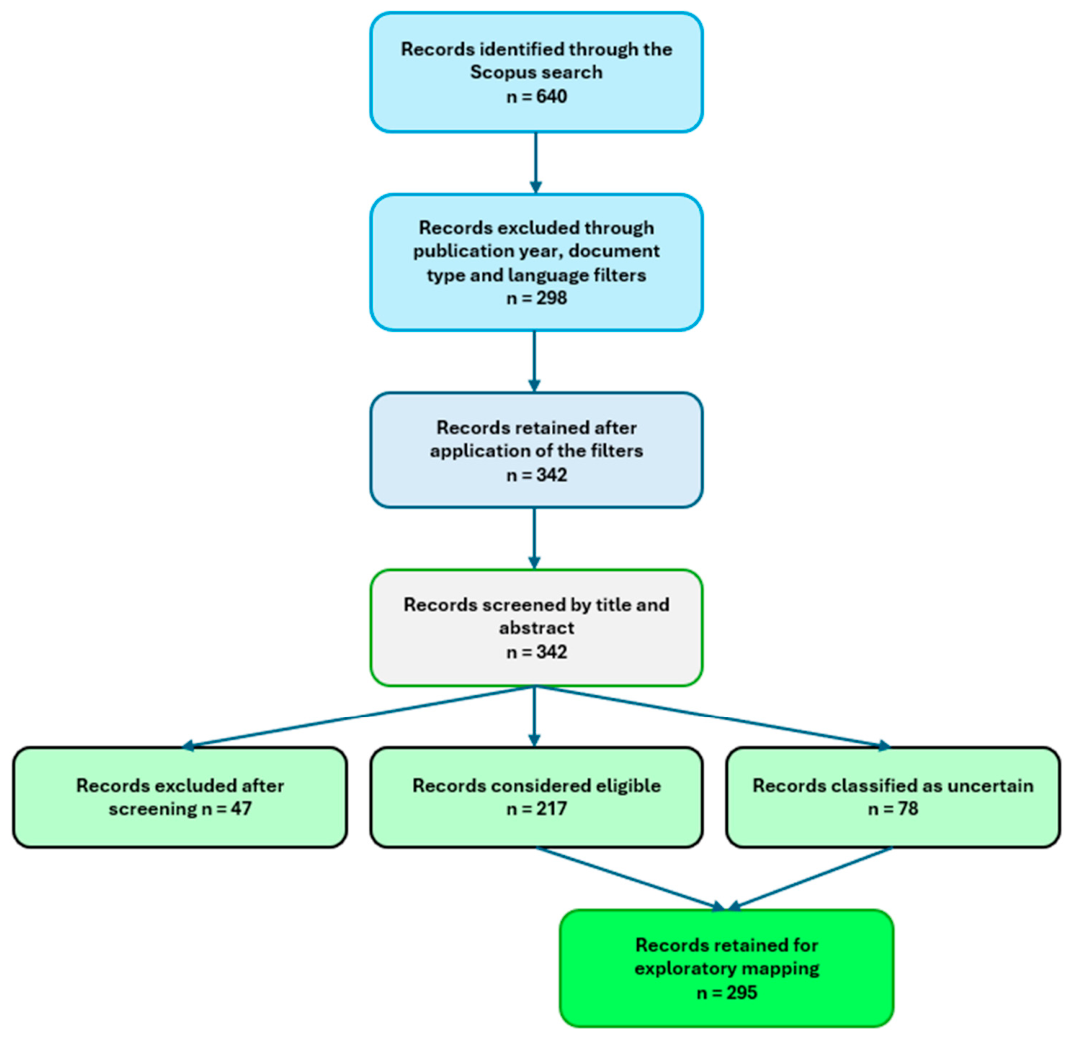
Figure 3.
Annual distribution of the 342 records retained after applying the publication-period, language and document-type filters.
Figure 3.
Annual distribution of the 342 records retained after applying the publication-period, language and document-type filters.
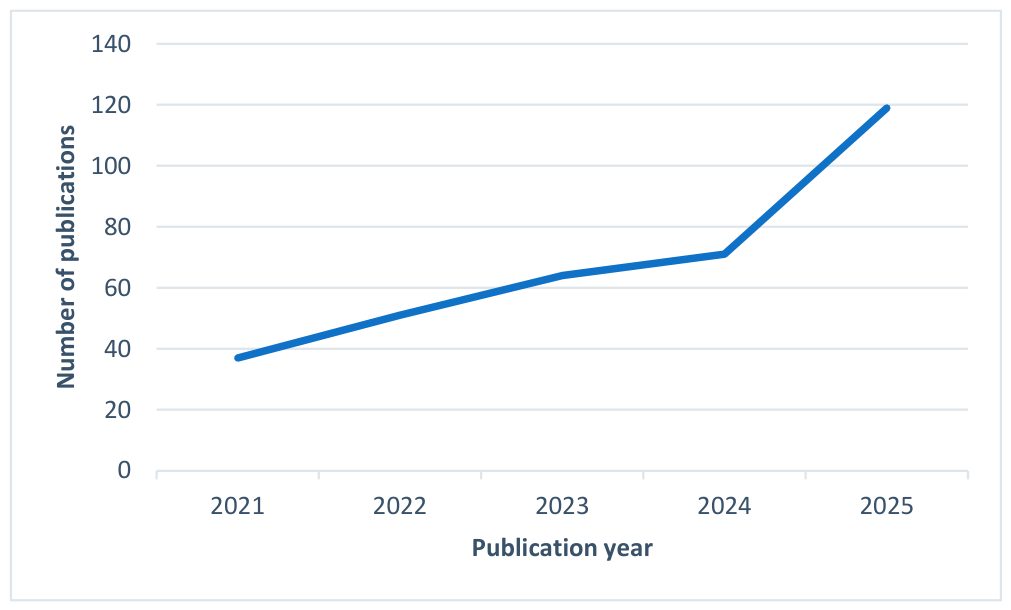

Table 1.
Main biomass feedstocks.
| Feedstock category | Representative examples | Main conversion routes | Main circular opportunity | Principal constraints | Selected references |
| Agricultural residues | Straw, rice husks, bagasse and crop residues | Combustion, pyrolysis, gasification and digestion after pretreatment | Recovery of energy from seasonal rural residues | Dispersed supply, seasonality, moisture and competing uses | [35,51,54] |
| Agro-industrial by-products | Fruit pomace, corn residues, vinasse and beverage-processing residues | Anaerobic digestion, fermentation and thermochemical conversion | On-site waste and energy integration | Variable composition and dependence on industrial production | [53,55,56] |
| Municipal organic waste | Food waste and the organic fraction of municipal solid waste | Anaerobic digestion and pyrolysis | Diversion from landfill and local energy recovery | Contamination, heterogeneous composition and source-separation requirements | [37,50,57] |
| Sewage sludge | Primary and biological wastewater sludge | Anaerobic digestion and hydrothermal conversion | Energy recovery within wastewater treatment | Contaminants and management of digestate or aqueous streams | [43,58] |
| Animal manure | Cattle, pig and poultry residues | Anaerobic digestion and co-digestion | Biogas production and nutrient recirculation | Storage emissions, land-application limits and plant scale | [36,43] |
| Aquatic biomass | Microalgae and other algal biomass | Digestion, fermentation and hydrothermal conversion | Nutrient recovery linked to wastewater treatment | Harvesting, dewatering and high moisture content | [34,40,59] |
Table 2.
Comparative overview of biomass conversion and resource-recovery pathways.
| Conversion/resource-recovery pathway | Representative applications | Technological status | Recovered streams and co-products | Circularity contribution | Key limitations and challenges | Selected references |
| Combustion | Dry agricultural and forestry residues, including agro-industrial biomass used for heat or power generation | Commercial | Heat and electricity; ash may also be recovered where its composition permits further use | Provides a direct route for recovering energy from residual biomass, particularly when heat can be used close to the point of generation | High moisture lowers process efficiency. Emissions control and ash management remain necessary, while opportunities for material recovery are limited | [15,29] |
| Gasification | Dry lignocellulosic biomass and selected waste residues converted to syngas for heat, electricity or further processing | Commercial or demonstration scale, depending on the feedstock and system configuration | Syngas, heat and electricity; cleaned syngas can also serve as an intermediate for other energy products | Converts solid residues into a gaseous energy carrier that can be used directly or incorporated into more complex conversion systems | Tar formation and gas cleaning remain important constraints. Variable feedstocks can make stable gas quality more difficult to maintain, particularly at smaller scale | [30,62] |
| Pyrolysis | Agricultural and agro-industrial residues, including relatively dry lignocellulosic wastes | Pilot to commercial scale | Bio-oil, biochar and fuel gas; heat may be recovered when the process is integrated | Allows energy recovery while retaining part of the biomass carbon in biochar. Where product quality is adequate, biochar may also have agricultural or material uses | Feedstock preparation can add energy demand, and bio-oil often requires upgrading. The usefulness of biochar depends on its properties and on whether a suitable end use exists | [26,31,32,47,60,63,64] |
| Hydrothermal conversion | Wet biomass such as sewage sludge and algae, treated through hydrothermal carbonization or liquefaction | Mainly pilot or demonstration scale | Hydrochar or biocrude together with aqueous process streams; nutrients may be recovered from some configurations | Makes it possible to process high-moisture biomass without prior drying. Further value may be obtained from the solid product or from nutrients present in the process streams | High-pressure operation increases technical requirements. Product upgrading and management of the aqueous phase can also affect both environmental and economic performance | [10,33,34,58,65,66] |
| Anaerobic digestion and co-digestion | Food waste, sewage sludge, manure and wet agro-industrial residues; co-digestion is used where compatible feedstocks are available | Commercial and widely established, although performance depends on the application | Biogas or biomethane and digestate; combined heat and power may be used where local demand exists | Combines organic-waste treatment with renewable-energy production. Nutrients remain in the digestate and may return to productive use when its quality permits agricultural application | Changes in feedstock composition can affect process stability. Contamination, digestate management and the availability of compatible co-substrates can limit practical operation | [36,37,38,67,68,69,70,71] |
| Fermentation | Sugar-rich residues and lignocellulosic biomass after hydrolysis | Commercial for conventional feedstocks; residual-biomass routes remain mainly at pilot scale | Bioethanol, biohydrogen and other fermentation products | Provides a route for recovering fuels from residual sugars or organic matter that would otherwise remain unused | Lignocellulosic feedstocks generally require pretreatment and hydrolysis. Low product concentrations can also make downstream separation energy-intensive |
[39,40,41] |
| Integrated and hybrid biorefinery systems | Sequential or combined biochemical and thermochemical processing, including the treatment of residual streams from an earlier conversion step | Mainly pilot, demonstration or modelling scale | Several energy products may be obtained together with recovered materials, nutrients or intermediate process streams | Can recover additional value from material that remains after the main conversion step. The circular benefit is strongest when the recovered outputs have a practical use | Additional process stages increase capital requirements and can make operation more dependent on the performance of each individual unit. The value of the system also depends on finding viable uses for several outputs | [42,43,44,55,61,72,73] |
| Biogas upgrading and biomethane production | Upgrading of biogas produced from municipal, agricultural or agro-industrial residues for injection into gas networks or use as a transport fuel | Commercial where appropriate infrastructure and gas-quality requirements can be met | Biomethane; separated CO₂ may also be recovered, while digestate remains associated with the upstream digestion process | Extends the possible use of biogas beyond local heat and electricity generation and can increase the substitution of fossil natural gas | Purification and compression increase energy use and cost. Feasibility also depends on a sufficiently stable gas supply and access to suitable infrastructure | [67,74,75] |
Note: Technological status reflects the applications reported in the reviewed literature and may vary with feedstock, process configuration and scale. Recovered streams likewise depend on operating conditions and subsequent treatment.
Table 3.
Main products, co-products and circular functions.
| Product or co-product | Main conversion route | Potential circular function | Main condition or limitation | Selected references |
| Biogas and biomethane | Anaerobic digestion and upgrading | Heat, electricity, grid injection or transport fuel | Gas quality, upgrading costs and infrastructure | [37,67] |
| Heat and electricity | Combustion, gasification or biogas cogeneration | Internal energy use and fossil-energy substitution | Stable local heat demand and grid access | [29,30,36] |
| Syngas | Gasification | Energy production or intermediate for fuels and chemicals | Tar removal and gas purification | [16,30,62] |
| Bio-oil and biocrude | Pyrolysis and hydrothermal liquefaction | Liquid-fuel intermediates | Upgrading and treatment of residual streams | [31,32,34] |
| Bioethanol and biohydrogen | Fermentation routes | Recovery of fuels from residual sugars and organic matter | Pretreatment, separation and limited yields | [39,40,41] |
| Digestate | Anaerobic digestion | Nutrient recirculation and fertilizer substitution | Contaminants, low nutrient concentration and storage emissions | [25,43,44] |
| Biochar | Pyrolysis | Soil amendment, adsorption or carbon storage | Variable quality and application-specific standards | [26,47,51] |
| Hydrochar and aqueous streams | Hydrothermal conversion | Solid-fuel use and recovery of organic matter or nutrients | Washing, separation and inhibitory compounds | [10,33,58] |
| Biochemicals and bioactive compounds | Integrated biorefineries | Higher-value recovery before energy conversion | Purification costs and uncertain demand | [54,55] |
Table 4.
Main sustainability and policy dimensions.
| Dimension | Main assessment issue | Principal limitation | Selected references |
| Environmental performance | Emissions, water use and impacts across the supply chain | Strong dependence on boundaries and reference scenarios | [45,46,48] |
| Energy performance | Net energy production and internal heat recovery | High yields may conceal substantial processing demand | [32,45,48] |
| Co-product substitution | Replacement of fertilizers, materials or carbon-storage services | Credits may be overstated when quality or use is uncertain | [25,26,47] |
| Economic viability | Investment, operating costs and product revenues | Sensitivity to scale, feedstock cost and market prices | [50,62,78] |
| Territorial suitability | Biomass availability, transport and local demand | Theoretical potential may exceed recoverable supply | [27,28] |
| Social performance | Employment, public acceptance and distribution of benefits | Outcomes are often discussed without direct measurement | [27,49] |
| Regulation | Waste classification, product standards and energy-market access | Fragmentation across waste, energy and agricultural rules | [27,43] |
Disclaimer/Publisher’s Note: The statements, opinions and data contained in all publications are solely those of the individual author(s) and contributor(s) and not of MDPI and/or the editor(s). MDPI and/or the editor(s) disclaim responsibility for any injury to people or property resulting from any ideas, methods, instructions or products referred to in the content. |
© 2026 by the authors. Licensee MDPI, Basel, Switzerland. This article is an open access article distributed under the terms and conditions of the Creative Commons Attribution (CC BY) license (http://creativecommons.org/licenses/by/4.0/).
Copyright: This open access article is published under a Creative Commons CC BY 4.0 license, which permit the free download, distribution, and reuse, provided that the author and preprint are cited in any reuse.