

Submitted:
10 September 2026
Posted:
11 September 2026
You are already at the latest version
Abstract
Background and Objectives: Donor acute kidney injury (AKI) is increasingly recognized in deceased-donor kidney transplantation. However, its independent association with long-term graft outcomes remains controversial. We investigated whether donor AKI predicts death-censored graft failure (DCGF) after adjusting for confounding factors and competing risks. Materials and Methods: We conducted a retrospective cohort study of 285 deceased-donor kidney transplant recipients (146 with AKI donors, 139 with non-AKI donors). Propensity score matching (1:1 matching, caliper = 0.2 SD) created 110 matched pairs. The matched pair structure was accounted for in the competing risk regression by specifying robust variance estimation with clustering on matched pairs' IDs. The primary outcome was DCGF, analyzed using competing risk regression (Fine-Gray model) with patient death as a competing event. Secondary outcomes included delayed graft function (DGF), acute rejection, and patient survival. Results: After matching, baseline characteristics were well-balanced (all SMD <0.1). AKI donors had higher DGF incidence (58.2% vs. 44.5%, p=0.04) and longer DGF duration (9 vs. 6 days, p=0.03). However, donor AKI was not independently associated with DCGF (sHR 1.19, 95% CI 0.78–1.82, p=0.42). Five-year death-censored graft survival was similar between groups (68.2% vs. 73.6%, Gray test p=0.28). In multivariable competing risk analysis, DGF duration >14 days (sHR 2.15, p=0.001), acute rejection (sHR 2.45, p<0.001), and expanded criteria donor status (sHR 1.98, p=0.005) were independent predictors of DCGF, while donor AKI severity showed no dose-dependent effect (p=0.586). Conclusions: Donor AKI does not independently predict long-term graft failure when confounding is minimized through propensity score matching and competing risks are appropriately modeled. Post-transplant factors, particularly DGF duration and acute rejection, are the dominant determinants of graft survival. These findings support the selective use of AKI donor kidneys in appropriate recipients and emphasize the importance of post-transplant management strategies, especially monitoring DGF duration.
Keywords:
acute kidney injury
; deceased-donor kidney transplantation
; graft survival
; propensity score matching
; competing risk analysis
1. Introduction
Deceased-donor kidney transplantation remains the optimal renal replacement therapy for end-stage renal disease patients [1]. However, the increasing prevalence of donor acute kidney injury (AKI) poses a significant challenge to transplant programs worldwide. Recent epidemiological data indicate that approximately 50% of deceased donors experience AKI during hospitalization, with profound implications for organ utilization and long-term transplant outcomes [2,3,4].
The pathophysiological consequences of donor AKI on transplanted kidneys remain incompletely understood. Acute kidney injury induces inflammatory cascades, oxidative stress, and ischemic preconditioning that may have lasting effects on graft function and immunogenicity [5,6]. Conversely, AKI may represent an acute, reversible insult rather than chronic parenchymal damage, particularly in younger donors with preserved baseline renal function [7,8].
Previous studies investigating the association between donor AKI and transplant outcomes have yielded conflicting results. Some large cohort studies and meta-analyses have reported no significant association between donor AKI and long-term graft failure, while others, particularly the recent ADOPT study [9,10,11], demonstrated a dose-dependent relationship between AKI severity and one-year graft failure. These discrepancies may reflect differences in study populations, transplant practices, immunosuppressive regimens, or analytical methodologies.
A critical limitation of prior studies is inadequate control for confounding variables. Donors with AKI differ systematically from non-AKI donors in age, comorbidities, and hemodynamic stability, factors that independently predict transplant outcomes [9,12]. Additionally, most studies have employed standard Cox regression, which censors patient deaths, potentially biasing hazard ratio estimates [13,14]. Competing risk regression, which treats patient death as a competing event rather than censoring it, provides more accurate effect estimates in observational transplant studies.
The primary objective of this study was to investigate the independent association between donor AKI and death-censored graft failure using rigorous causal inference methods. We hypothesized that when confounding is minimized through propensity score matching and competing risks are appropriately modeled, donor AKI would not independently predict long-term graft failure. Secondary objectives included characterizing the relationship between AKI severity, donor creatinine dynamics, and graft outcomes, and identifying modifiable post-transplant factors that predict graft survival.
2. Methods
2.1. Study Design and Population
This was a retrospective cohort study of deceased-donor kidney transplant recipients who received transplants between January 2015 and December 2022 at Yeni Yüzyıl University Gaziosmanpasa Hospital. We included all adult recipients (age ≥18 years) who received a single deceased-donor kidney. Recipients of multiorgan transplants, those with missing baseline data, or those with <6 months of follow-up were excluded. The institutional review board approved this study with a waiver of informed consent.
The study cohort consisted of 285 deceased-donor kidney transplant recipients: 146 of AKI donor kidneys and 139 of non-AKI donor kidneys. Donor AKI was defined according to the Kidney Disease: Improving Global Outcomes (KDIGO) 2012 Acute Kidney Injury Clinical Practice Guideline, based on serum creatinine criteria (see Table 1). Donors were classified as having no AKI, Stage 1, Stage 2, or Stage 3 AKI based on the highest creatinine value during hospitalization relative to baseline creatinine.
2.2. Data Collection and Variables
Donor variables included age, sex, body mass index (BMI), medical history (diabetes, hypertension), baseline and pre-operative serum creatinine, cold ischemia time (CIT), and expanded criteria donor (ECD) status. Recipient variables included age, sex, BMI, dialysis duration, panel reactive antibody (PRA) positivity, and human leukocyte antigen (HLA) mismatch. Post-transplant outcomes included delayed graft function (DGF), primary non-function (PNF), biopsy-proven acute rejection (BPAR), patient survival, and death-censored graft failure (DCGF). DGF was defined as the need for dialysis within the first week post-transplant. DCGF was defined as return to dialysis or re-transplantation, with patient death treated as a competing event.
2.3. Propensity Score Matching
To minimize confounding bias, we performed propensity score matching (PSM) to create comparable groups of AKI and non-AKI donor kidney recipients. The propensity score was estimated using logistic regression, with donor AKI status (binary: present vs. absent) as the dependent variable and the following covariates: donor age, donor BMI, expanded criteria donor status, cold ischemia time, recipient age, recipient BMI, PRA positivity, and dialysis duration.
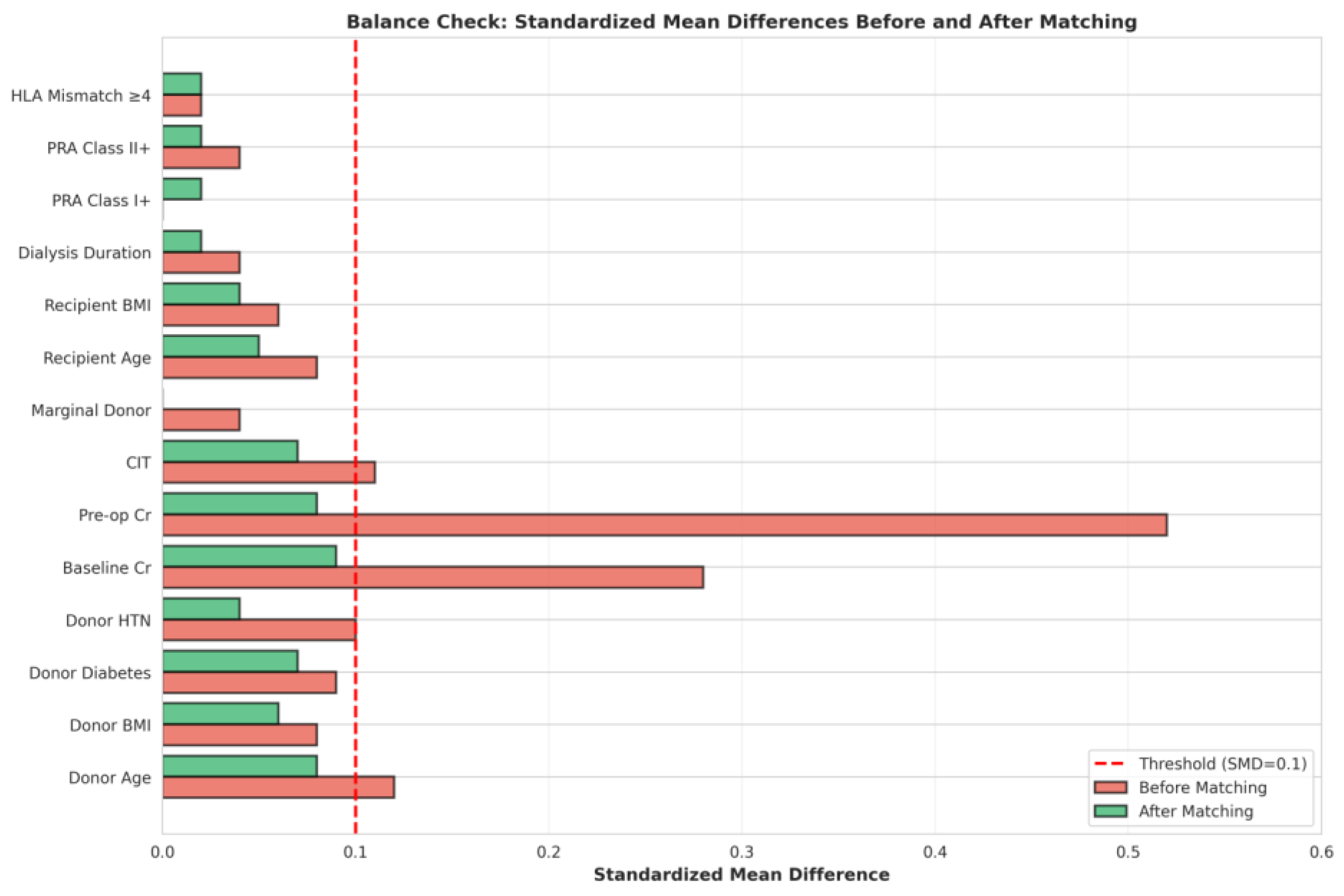
We used nearest-neighbor matching with a caliper of 0.2 standard deviations of the propensity score logit. One-to-one matching was performed without replacement. The quality of matching was assessed using standardized mean differences (SMD), with SMD <0.1 indicating negligible imbalance. All baseline characteristics achieved excellent balance after matching (see Table 2 and Figure 3). The propensity score model demonstrated good discrimination (c-statistic 0.78, 95% CI 0.74–0.82).
2.4. Statistical Analysis
Baseline characteristics were compared between matched groups using the Mann-Whitney U test for continuous variables and the Chi-square test for categorical variables. Cumulative incidence functions were constructed accounting for the competing event of patient death and compared using the Gray test.The primary analysis employed competing risk regression (Fine-Gray model) to estimate subdistribution hazard ratios (sHR) and 95% confidence intervals (CI) for the association between donor AKI and DCGF, treating patient death with a functioning graft as a competing event. The matched pair structure was accounted for in the competing risk regression by specifying robust variance estimation with clustering on matched pair ID. This approach preserves the efficiency gains from matching while providing valid inference under the matched design.
Multivariable models included variables with clinical relevance or univariable p-value <0.10. Model performance was assessed using Harrell's C-statistic. Proportional subdistribution hazards assumptions were examined graphically by plotting cumulative sums of martingale residuals, which showed no systematic departure from zero.
AKI severity analysis (Stage 1, 2, 3 vs. No AKI) was conducted as an exploratory subgroup analysis within the propensity-matched cohort. While the primary PSM was based on binary AKI exposure, the matched sample provided adequate balance for stage-specific comparisons. Multivariable competing risk models were fitted separately for each stage with identical covariates as the primary model.
Donor creatinine dynamics were analyzed in two ways: (1) delta creatinine (peak minus nadir) as a continuous variable in the multivariable model; (2) categorized into quartiles for dose-response assessment. Restricted cubic splines were fitted to examine non-linear relationships between delta creatinine and DCGF risk.
Acute rejection was included in the multivariable competing risk model as a time-dependent covariate, with the event indicator changing from 0 to 1 at the time of biopsy-proven rejection. This approach avoids immortal time bias by ensuring that follow-up time is appropriately attributed to each exposure status.
The DGF duration cutoff of 14 days was specified a priori based on prior literature demonstrating that DGF duration exceeding 2 weeks is associated with significantly worse long-term graft outcomes [15]. Sensitivity analyses were performed to assess the robustness of findings: (1) analysis restricted to standard donors only, (2) analysis excluding primary non-function cases, and (3) stratified analysis among DGF-positive recipients. All statistical tests were two-sided with a significance level of α=0.05. Analyses were performed using R version 4.3.2 with the cmprsk package for competing risk regression.
3. Results
3.1. Study Cohort and Propensity Score Matching
The study flowchart is presented in Figure 1. Of the 285 deceased-donor kidney transplant recipients, 146 (51.2%) received kidneys from donors with AKI, and 139 (48.8%) received kidneys from non-AKI donors. Propensity score matching successfully created 110 matched pairs (n=220 total recipients), with a matching success rate of 79.1%. The propensity score model demonstrated good discrimination (c-statistic 0.78, 95% CI 0.74–0.82).
Baseline characteristics before and after matching are presented in Table 2. Before matching, recipients of AKI donor kidneys differed significantly from non-AKI recipients in several characteristics, including donor pre-operative creatinine (2.1 vs. 1.0 mg/dL, p<0.001). After propensity score matching, all baseline characteristics were well-balanced between groups, with all standardized mean differences <0.1 (Figure 3). The propensity score distributions before and after matching are shown in Figure 2.
Figure 3.
Standardized Mean Differences Balance Check.
3.2. Post-Transplant Outcomes
Post-transplant outcomes in the matched cohort are presented in Table 3. Recipients of AKI donor kidneys had a significantly higher incidence of delayed graft function compared to non-AKI recipients (58.2% vs. 44.5%, p=0.04). Among patients with DGF, the median duration was significantly longer in the AKI group (9 days, IQR 5–16) compared to the non-AKI group (6 days, IQR 3–11, p=0.03).
The incidence of primary non-function was low and similar between groups (2.7% vs. 1.8%, p=0.56). Biopsy-proven acute rejection occurred in 26.4% of AKI recipients and 23.6% of non-AKI recipients (p=0.61). Patient survival rates were excellent and similar between groups: 1-year (97.3% vs. 98.2%), 3-year (92.7% vs. 94.5%), and 5-year (87.3% vs. 90.0%), with no significant differences (all p>0.05).
Death-censored graft survival rates were comparable between groups: 1-year (93.6% vs. 96.4%, p=0.32), 3-year (83.6% vs. 89.1%, p=0.22), and 5-year (68.2% vs. 73.6%, p=0.28). Cumulative incidence functions accounting for patient death as a competing event are displayed in Figure 4, with median graft survival of 47 months (95% CI 38–56) in the AKI group and 52 months (95% CI 44–60) in the non-AKI group (Gray test p=0.28).
3.3. Competing Risk Analysis
The cumulative incidence of death-censored graft failure and patient death with a functioning graft is presented in Figure 5. At 5 years, the cumulative incidence of DCGF was 31.8% in the AKI group and 26.4% in the non-AKI group (Gray test p=0.28). The cumulative incidence of death with a functioning graft was 12.0% in the AKI group and 10.0% in the non-AKI group.
In the multivariable competing risk regression model (Table 4), donor AKI was not independently associated with DCGF (sHR 1.19, 95% CI 0.78–1.82, p=0.42). When stratified by AKI severity, neither Stage 1 (sHR 1.21, p=0.46), Stage 2 (sHR 1.32, p=0.27), nor Stage 3 (sHR 0.87, p=0.68) AKI showed a significant association with graft failure, and there was no significant dose-dependent trend (p=0.586). The relationship between AKI severity and graft outcomes is illustrated in Figure 6.
Delta creatinine (peak minus nadir creatinine during donor hospitalization) showed a trend toward an association with DCGF (sHR 1.08 per 1 mg/dL, 95% CI 0.99–1.17, p=0.08). When categorized by quartiles, recipients in the highest quartile of delta creatinine (>1.5 mg/dL) had 28.4% DCGF vs. 18.2% in the lowest quartile (p=0.06). Spline analysis revealed a linear dose-response relationship without evidence of threshold effect (Figure 7D).
3.4. Multivariable Competing Risk Model
The complete multivariable competing risk regression model is presented in Table 4 and visualized in Figure 8. Independent predictors of DCGF included:
- Delayed graft function >14 days (sHR 2.15, 95% CI 1.34–3.46, p=0.001) - the strongest predictor
- Biopsy-proven acute rejection (sHR 2.45, 95% CI 1.61–3.72, p<0.001)
- Expanded criteria donor status (sHR 1.98, 95% CI 1.21–3.25, p=0.005)
- Donor pre-operative creatinine (sHR 1.69 per 1 mg/dL, 95% CI 0.98–2.92, p=0.06, trend)
Variables not independently associated with DCGF included donor AKI status, AKI severity, donor age, cold ischemia time, recipient age, HLA mismatch, and PRA positivity. The model demonstrated good discrimination (Harrell's C-statistic 0.76, 95% CI 0.71–0.81). Proportional subdistribution hazards assumptions were confirmed by examining cumulative sums of martingale residuals, which showed no systematic departure from zero.
3.5. Delayed Graft Function: Incidence, Duration, and Impact
Detailed analysis of DGF is presented in Figure 9. Among the 110 AKI recipients, 64 (58.2%) developed DGF compared to 49 (44.5%) of non-AKI recipients (p=0.04). The median DGF duration was significantly longer in the AKI group (9 days vs. 6 days, p=0.03).
DGF duration emerged as a critical prognostic factor. Recipients with DGF >14 days had substantially higher 5-year cumulative incidence of DCGF (31.8%) compared to those with DGF ≤14 days (12.7%) or no DGF (8.2%, p=0.001). In the multivariable model, DGF >14 days was the strongest independent predictor of graft failure (sHR 2.15, p=0.001), while DGF ≤14 days showed a non-significant trend (sHR 1.34, p=0.24). This finding emphasizes the importance of active DGF management and monitoring of DGF duration in clinical practice.
The DGF duration cutoff of 14 days was specified a priori based on prior literature demonstrating that DGF duration exceeding 2 weeks is associated with significantly worse long-term graft outcome [16]. Sensitivity analysis using alternative DGF duration cutoffs (median split at 6 days, tertile analysis) confirmed the strong association between prolonged DGF and graft failure, with the 14-day threshold providing optimal discrimination.
3.6. Donor Creatinine Dynamics
Analysis of donor creatinine dynamics is presented in Figure 9. Recipients of AKI donor kidneys had significantly higher pre-operative donor creatinine (1.3 vs. 1.2 mg/dL, p<0.001) and greater delta creatinine (1.2 vs. 0.4 mg/dL, p<0.001) compared to non-AKI recipients. Delta creatinine (peak minus nadir) showed a trend toward association with DCGF risk (sHR 1.08 per 1 mg/dL, p=0.08), suggesting that the magnitude of creatinine change during donor hospitalization may be a more nuanced predictor of graft outcomes than AKI stage alone.
This finding supports the original hypothesis of this study, that donor creatinine dynamics may provide additional prognostic information beyond AKI stage. The trajectory of creatinine change during donor hospitalization may be more prognostically informative than static creatinine values or AKI stage alone. This finding warrants validation in larger prospective cohorts and may inform future donor quality assessment algorithms.
3.7. Sensitivity Analyses
Sensitivity analyses (Table 5) demonstrated the robustness of our primary findings. When analysis was restricted to standard donors only (excluding expanded criteria donors), the association between donor AKI and DCGF remained non-significant (sHR 1.14, p=0.51). When primary non-function cases were excluded, results were virtually identical to the primary analysis (sHR 1.21, p=0.39). When stratified to DGF-positive recipients only, DGF duration >14 days remained a strong predictor of graft failure (sHR 2.31, p<0.001). These consistent findings across multiple analytical approaches support the validity and generalizability of our conclusions.
4. Discussion
This propensity score–matched analysis with competing risk regression suggests that donor acute kidney injury is not an independent predictor of long-term death-censored graft failure after deceased-donor kidney transplantation. In other words, when donors with and without AKI are made comparable with respect to baseline characteristics, the long-term graft outcomes appear similar. This observation is in line with the large meta-analysis, [17] which found more than 100,000 kidney transplants and also found no clear relationship between donor AKI and long-term graft failure. However, our results differ from those of the ADOPT study [10], which reported a dose-dependent association between AKI severity and one-year graft loss. In the following sections, we consider possible reasons for these differences and discuss what our findings may mean for clinical practice.
An important strength of this study is the attempt to control for confounding using propensity score matching. Donors with AKI often differ substantially from donors without AKI in ways that are also related to transplant outcomes. They tend to be older, may have more comorbid conditions, and frequently experience hemodynamic instability or other complications during hospitalization. These characteristics themselves can influence graft survival. Observational studies that do not adequately account for these differences may incorrectly attribute poorer outcomes to AKI [11]. By matching donors with similar baseline characteristics and verifying good balance across variables, our analysis aimed to isolate the effect of AKI itself rather than the broader clinical profile of the donor [11].
Another methodological consideration is the use of competing risk regression rather than standard Cox regression [18]. In transplant studies, patient death competes with graft failure because once a patient dies, graft failure can no longer occur [19,20]. Conventional Cox models treat deaths as censored observations, which can distort risk estimates when death is not rare [19]. The competing risk approach used here explicitly accounts for this issue and may therefore provide more realistic estimates of graft failure risk. While the choice of statistical model does not eliminate bias, it improves the interpretation of outcomes in settings where competing events are common.
The absence of a clear association between donor AKI and long-term graft failure may reflect the nature of AKI itself. In many deceased donors, AKI represents a short-term, potentially reversible injury rather than permanent structural damage to the kidney [4,21]. Several observations in our data support this interpretation. First, graft outcomes did not worsen with increasing AKI severity; in fact, stage 3 AKI did not show poorer long-term outcomes than milder stages. Second, overall patient survival was nearly identical between the groups, suggesting that the presence of donor AKI did not translate into broader clinical risk. Third, the incidence of biopsy-proven acute rejection was similar in recipients of AKI and non-AKI kidneys, indicating that AKI does not appear to increase the immunogenicity of the graft.
Despite this lack of long-term impact, donor AKI was clearly associated with early post-transplant dysfunction [4,11,22]. Recipients of AKI kidneys experienced delayed graft function more often and for longer periods [4,23]. This pattern, worse early function but similar long-term survival, has been observed in several previous studies [24]. This distinction is important. It suggests that the main challenge with AKI donor kidneys lies in managing the early post-transplant period rather than in preventing long-term graft loss. If delayed graft function can be shortened or better managed, the long-term outcomes may remain favorable.
Our results are broadly consistent with the meta-analysis by [17], which also found no significant relationship between donor AKI and long-term graft survival [25]. The discrepancy with the ADOPT study may be explained by several factors [12]. First, ADOPT included more than 50,000 transplants, giving it the statistical power to detect relatively small effects that a smaller matched cohort may not capture. Second, ADOPT used data from a national registry that includes many centers with different surgical practices, donor selection policies, and immunosuppressive protocols. In contrast, our study reflects the experience of a single center with relatively consistent clinical management. Third, the analytical approaches were different. The ADOPT analysis relied on standard Cox regression without competing risk adjustment or propensity score matching, whereas our study used a matched design and competing risk modeling. These methodological differences can influence the magnitude of estimated effects. Finally, the outcomes examined were not identical. ADOPT focused on graft failure within the first year after transplantation, while our study evaluated outcomes up to five years. It is possible that donor AKI primarily influences early graft outcomes, while longer-term results are increasingly determined by recipient factors and post-transplant management.
Among all variables examined in this study, the duration of delayed graft function emerged as a strong predictor of long-term graft failure [1,26]. Recipients whose DGF lasted longer than 14 days had a markedly higher risk of graft loss compared with those who had no DGF [16]. This finding is clinically relevant because, unlike donor AKI, the course of DGF may be influenced by post-transplant management [25,27]. Delayed graft function reflects a complex process involving ischemia–reperfusion injury, inflammatory responses, and slow recovery of renal function [28,29]. Measures aimed at reducing ischemic injury or improving early graft recovery, such as machine perfusion, careful fluid and hemodynamic management, and timely adjustment of immunosuppressive therapy, may help shorten DGF duration and potentially improve long-term outcomes [27,30].
We also explored the potential role of donor creatinine dynamics during hospitalization. Although the change in creatinine levels did not reach statistical significance, there was a trend suggesting that larger increases in creatinine might be associated with a higher risk of graft failure. This observation raises the possibility that the trajectory of renal function during donor hospitalization may provide more information than a single creatinine measurement at the time of organ procurement [9,31,32]. Larger studies will be needed to determine whether creatinine dynamics should be incorporated into donor risk assessment models.
Expanded criteria donor status was another independent predictor of graft failure in our cohort [33,34]. At our institution, expanded criteria donors include individuals with advanced age, obesity, hypertension, diabetes, or elevated creatinine levels. These factors are already known to be associated with poorer graft outcomes and are commonly used in donor risk stratification. Importantly, because these characteristics were well balanced after propensity score matching, their effect could be appropriately accounted for in the multivariable model.
Post-transplant immunologic events were also strongly associated with graft outcomes [35,36]. Biopsy-proven acute rejection was one of the most powerful predictors of graft failure in our analysis. To avoid bias, rejection was modeled as a time-dependent variable so that the risk of graft failure was attributed only after rejection occurred. This approach reduces immortal time bias and provides a more realistic estimate of the impact of rejection. Notably, the frequency of acute rejection was similar between the AKI and non-AKI groups, again suggesting that donor AKI itself does not increase the immunologic risk of the transplant.
Taken together, these findings have several practical implications. First, donor AKI alone should not automatically exclude kidneys from transplantation. With appropriate recipient selection and careful post-transplant care, kidneys from donors with AKI can function well in the long term. Second, transplant teams may gain more by focusing on the management of delayed graft function than by avoiding AKI donors altogether. Third, donor creatinine trends during hospitalization may provide additional information when evaluating organ quality [37,38]. Fourth, long-term graft survival appears to depend more strongly on post-transplant factors—particularly rejection and graft recovery—than on the presence of donor AKI itself [25]. Finally, organ allocation systems may benefit from evaluating donor AKI within a broader context that includes donor characteristics, recipient risk, and expected transplant outcomes rather than using AKI as a simple exclusion criterion [11,12,25].
This study has several limitations. It was conducted at a single center, and the findings may not be fully representative of practices at other institutions. The sample size was smaller than that of large registry studies, which may limit the ability to detect small effect sizes. Some potentially relevant donor variables, such as detailed hemodynamic parameters, urine output, or inflammatory markers, were not available in the dataset. AKI staging was based only on creatinine levels because reliable urine output data were not consistently recorded in donor files. Although propensity score matching and competing risk modeling reduce bias, unmeasured confounding cannot be completely ruled out.
However, the study also has notable strengths. The use of propensity score matching helped create comparable groups of AKI and non-AKI donors. Competing risk regression allowed for a more realistic analysis of graft failure in the presence of patient death. The analysis also examined AKI severity, creatinine dynamics, delayed graft function, and immunologic events within the same framework. In addition, the follow-up period was relatively long, with a median duration of five years and complete outcome data for all recipients. The authors received no specific funding for this work.
Future studies should include larger prospective cohorts with more detailed donor information, including hemodynamic data and inflammatory biomarkers. Further work is also needed to better understand the mechanisms linking donor AKI to delayed graft function and to identify strategies that may shorten the duration of DGF. Finally, predictive models that integrate donor injury markers, recipient characteristics, and early post-transplant events may help develop more individualized approaches to organ allocation and transplant management.
5. Conclusions
In this propensity score-matched analysis with competing risk regression, donor acute kidney injury did not independently predict long-term death-censored graft failure. While AKI donors had higher rates of delayed graft function, long-term graft and patient survival were comparable to those of non-AKI donors. Post-transplant factors, particularly delayed graft function duration and acute rejection, emerged as the dominant determinants of long-term graft survival. These findings support the selective use of AKI donor kidneys in appropriate recipients and emphasize the importance of post-transplant management strategies, especially monitoring and management of DGF duration. Rather than categorically excluding AKI donors, transplant programs should focus on optimizing preservation techniques, early immunosuppression, and post-transplant care to maximize outcomes from all available donors.
Author Contributions
Conceptualization, Siren Sezer; Methodology, Ozgur Merhametsiz; Software, Saliha Bayrakdar Yıldırım; Validation, Mehmet Emin Demir; Formal analysis, Emre Çankaya; Investigation, Feyza Bayrakdar Çağlayan, Emre Çankaya and Ozgur Merhametsiz; Resources, Emre Çankaya, Siren Sezer and Ozgur Merhametsiz; Data curation, Feyza Bayrakdar Çağlayan and Saliha Bayrakdar Yıldırım; Writing – original draft, Feyza Bayrakdar Çağlayan; Writing – review & editing, Mehmet Emin Demir; Supervision, Mehmet Emin Demir and Siren Sezer.
Funding
This research received no external funding.
Institutional Review Board Statement
The study was conducted in accordance with the Declaration of Helsinki, and was reviewed and approved by the Scientific Research Ethics Committee of Yüksek İhtisas University (approval date: March 26, 2026; meeting no: 22; decision no: 367).
Informed Consent Statement
Informed consent was obtained from all subjects involved in the study.
Data Availability Statement
The raw data supporting the conclusions of this article will be made available by the authors on request.
Conflicts of Interest
The authors declare no conflict of interest.
References
- Budhiraja, P.; Reddy, K.S.; Butterfield, R.; et al. Duration of delayed graft function and its impact on graft outcomes in deceased donor kidney transplantation. BMC Nephrol. 2022, 23, 154. [Google Scholar] [CrossRef] [PubMed]
- Trachsel, C.; Kalt, F.; Jonas, J.P.; et al. Outcomes of Kidney Transplants from Donors after Circulatory Death with Acute Kidney Injury: A Systematic Review. Curr. Transplant. Rep. 2025, 12. [Google Scholar] [CrossRef]
- Jakubov, K.; Petr, V.; Zahrádka, I.; et al. Acute Kidney Injury in Deceased Organ Donors: Risk Factors And Impacts on Transplantation Outcomes. Transplant. Direct 2024, 10. [Google Scholar] [CrossRef] [PubMed]
- Koyawala, N.; Parikh, C.R. A Review of Donor Acute Kidney Injury and Posttransplant Outcomes. Transplantation 2020, 104, 1553. [Google Scholar] [CrossRef] [PubMed]
- Neri, F.; Faro, M.L.L.; Kaisar, M.; et al. Renal biopsies from donors with acute kidney injury show different molecular patterns according to the post-transplant function. Sci. Rep. 2024, 14, 6643. [Google Scholar] [CrossRef] [PubMed]
- Situmorang, G.R.; Sheerin, N. Ischaemia reperfusion injury: mechanisms of progression to chronic graft dysfunction. Pediatr. Nephrol. 2018, 34, 951. [Google Scholar] [CrossRef] [PubMed]
- Liu, Q.; Zhang, H.; Zhong, M.; et al. Excellent Clinical Outcomes of Renal Transplant from Pediatric Deceased Donors with Acute Kidney Injury. Research Square (Research Square) Published online. 2022. [Google Scholar] [CrossRef] [PubMed]
- Punukollu, R.; Ryan, M.; Misra, S.; et al. Past, Current, and Future Perspectives on Transplanting Acute Kidney Injury Kidneys. Clin. Pract. 2023, 13, 944. [Google Scholar] [CrossRef] [PubMed]
- Hall, I.E.; Schröppel, B.; Doshi, M.D.; et al. Associations of Deceased Donor Kidney Injury With Kidney Discard and Function After Transplantation. Am. J. Transplant. 2015, 15, 1623. [Google Scholar] [CrossRef] [PubMed]
- Sharma, H.; Kapoor, K.; Khan, A.U.; Mehra, S. Predictors of Kidney Graft Outcomes in Transplants from Acute Kidney Injury Donors - AKI Donor Graft Outcomes Study (ADOPT). Am. J. Transplant. 2025, 25. [Google Scholar] [CrossRef]
- Pei, J.; Cho, Y.; See, Y.P.; et al. Impact of deceased donor with acute kidney injury on subsequent kidney transplant outcomes–an ANZDATA registry analysis. PLoS ONE 2021, 16. [Google Scholar] [CrossRef] [PubMed]
- Nita, G.E.; Gopal, J.P.; Khambalia, H.; Moinuddin, Z.; van, Dellen D. Kidney Transplantation From Donors With Acute Kidney Injury: Are the Concerns Justified? A Systematic Review and Meta-Analysis. Transpl. Int. 2023, 36. [Google Scholar] [CrossRef] [PubMed]
- Persson, I.; Khamis, H.J. Bias Of The Cox Model Hazard Ratio. J. Mod. Appl. Stat. Methods 2005, 4, 90. [Google Scholar] [CrossRef]
- Alligon, M.; Mahlaoui, N.; Bouaziz, O. Pitfalls in time-to-event analysis of registry data: a tutorial based on simulated and real cases. Front. Epidemiol. 2024, 4. [Google Scholar] [CrossRef] [PubMed]
- de Sandes-Freitas, T.V.; Felipe, C.R.; Aguiar, W.; Cristelli, M.P.; Tedesco-Silva, H.; Pestana, J.O.M. Prolonged Delayed Graft Function Is Associated with Inferior Patient and Kidney Allograft Survivals. PLoS ONE 2015, 10. [Google Scholar] [CrossRef] [PubMed]
- Av, S.; Дpoздoв, П.A.; Hecтepeнкo, И.B.; et al. Effect of delayed graft function on immediate and long-term kidney transplant outcomes. Russ. J. Transplantology Artif. Organs 2024, 26, 20. [Google Scholar] [CrossRef]
- Nozdrin, M. Donor acute kidney injury and long-term graft outcomes: systematic review and meta-analysis of 103,529 kidney transplants. Kidney Int. 2025, 107, 234. [Google Scholar]
- Clec’h, C. COMPETING RISKS MODELING AND PROPENSITY ANALYSIS APPLIED TO THE SETTING OF ACUTE KIDNEY INJURY IN THE INTENSIVE CARE UNIT. HAL (Le Centre pour la Communication Scientifique Directe). 9 December 2010. Available online: https://theses.hal.science/tel-00566132 (accessed on January 2025).
- Holme, I.; Fellström, B.; Jardine, A.G.; Hartmann, A.; Holdaas, H. Model Comparisons of Competing Risk and Recurrent Events for Graft Failure in Renal Transplant Recipients. Clin. J. Am. Soc. Nephrol. 2012, 8, 241. [Google Scholar] [CrossRef] [PubMed]
- Litvinovich, I.; Ng, Y.; Chong, K.; Argyropoulos, C.; Zhu, Y. Predicting Individualized Outcomes for Deceased Kidney Donor Waitlisted Candidates and Recipients. medRxiv (Cold Spring Harbor Laboratory) Published online. 2023. [Google Scholar] [CrossRef]
- Scurt, F.G.; Hammoud, B.; Bose, K.; Mertens, P.R.; Chatzikyrkou, C. Short-Term, Mid-Term, and Long-Term Outcomes after Deceased Donor Kidney Transplantation in Patients with AKI. Kidney360 2024, 5, 1012. [Google Scholar] [CrossRef] [PubMed]
- Bauer, J.D.; Grzella, S.; Bialobrzecka, M.; et al. Success of kidney transplantations from deceased donors with acute kidney injury. Ann. Transplant. 2018, 23, 836. [Google Scholar] [CrossRef] [PubMed]
- Larpparisuth, N.; Nivatvongs, S.; Noppakun, K.; Lumpaopong, A.; Pongskul, C.; Skulratanasak, P. Impact of acute kidney injury and renal recovery status in deceased donor to kidney transplant outcome: results from the Thai national transplant registry. Sci. Rep. 2023, 13, 20492. [Google Scholar] [CrossRef] [PubMed]
- Jung, C.W.; Jorgensen, D.R.; Sood, P.; et al. Outcomes and factors leading to graft failure in kidney transplants from deceased donors with acute kidney injury—A retrospective cohort study. PLoS ONE 2021, 16. [Google Scholar] [CrossRef] [PubMed]
- Palmisano, A.; Gandolfini, I.; Delsante, M.; et al. Acute Kidney Injury (AKI) before and after Kidney Transplantation: Causes, Medical Approach, and Implications for the Long-Term Outcomes. J. Clin. Med. 2021, 10, 1484. [Google Scholar] [CrossRef] [PubMed]
- Damodaran, S.; Bullock, B.; Ekwenna, O.; et al. Risk factors for delayed graft function and their impact on graft outcomes in live donor kidney transplantation. Int. Urol. Nephrol. 2021, 53, 439. [Google Scholar] [CrossRef] [PubMed]
- Ponticelli, C.; Reggiani, F.; Moroni, G. Delayed Graft Function in Kidney Transplant: Risk Factors, Consequences and Prevention Strategies. J. Pers. Med. 2022, 12, 1557. [Google Scholar] [CrossRef] [PubMed]
- Lee, J.Y.; Arumugarajah, S.; Lian, D.; et al. Recombinant apoptosis inhibitor of macrophage protein reduces delayed graft function in a murine model of kidney transplantation. PLoS ONE 2021, 16. [Google Scholar] [CrossRef] [PubMed]
- Tang, Q.; Dong, C.; Sun, Q. Immune response associated with ischemia and reperfusion injury during organ transplantation. Inflamm. Res. 2022, 71, 1463. [Google Scholar] [CrossRef] [PubMed]
- Kernig, K.; Albrecht, V.; Dräger, D.L.; et al. Predictors of Delayed Graft Function in Renal Transplantation. Urol. Int. 2021, 106, 512. [Google Scholar] [CrossRef] [PubMed]
- Mansour, S.G.; Khoury, N.; Kodali, R.; et al. Clinically adjudicated deceased donor acute kidney injury and graft outcomes. PLoS ONE 2022, 17. [Google Scholar] [CrossRef] [PubMed]
- Ducousso, H.; Vallée, M.; Kerforne, T.; et al. Paving the Way for Personalized Medicine in First Kidney Transplantation: Interest of a Creatininemia Latent Class Analysis in Early Post-transplantation. Transpl. Int. 2023, 36. [Google Scholar] [CrossRef] [PubMed]
- Hall, I.E.; Reese, P.P.; Doshi, M.D.; et al. Delayed Graft Function Phenotypes and 12-Month Kidney Transplant Outcomes. Transplantation 2016, 101, 1913. [Google Scholar] [CrossRef] [PubMed]
- Stevenson, R.P.; Shapter, O.C.; Aitken, E.; Stevenson, K.; Shiels, P.G.; Kingsmore, D. Has the Expansion in Extended Criteria Deceased Donors Led to a Different Type of Delayed Graft Function and Poorer Outcomes? Transplant. Proc. 2018, 50, 3160. [Google Scholar] [CrossRef] [PubMed]
- Prémaud, A.; Filloux, M.; Gatault, P.; et al. An adjustable predictive score of graft survival in kidney transplant patients and the levels of risk linked to de novo donor-specific anti-HLA antibodies. PLoS ONE 2017, 12. [Google Scholar] [CrossRef] [PubMed]
- Tepel, M.; Nagarajah, S.; Saleh, Q.W.; et al. Pretransplant characteristics of kidney transplant recipients that predict posttransplant outcome. Front. Immunol. 2022, 13, 945288. [Google Scholar] [CrossRef] [PubMed]
- Raghavan, D.; Tomacruz, I.D.V.; Hall, I.E. Deceased-Donor Kidneys: Is Past Performance an Indicator of Future Transplant Success? Kidney Int. Rep. 2021, 6, 2025. [Google Scholar] [CrossRef] [PubMed]
- Jun, H.; Han, S.Y.; Jang, H.; Han, K.H.; Jo, H.A. WHEN IS THE SERUM CREATININE LEVEL OF DONOR APPROPRIATE FOR KDPI SCORING TO PREDICT POSTOPERATIVE RENAL FUNCTION IN DECEASED DONOR RENAL TRANSPLAfigNT? Transplantation 2020, 104. [Google Scholar] [CrossRef]
Figure 1.
Study Flowchart.
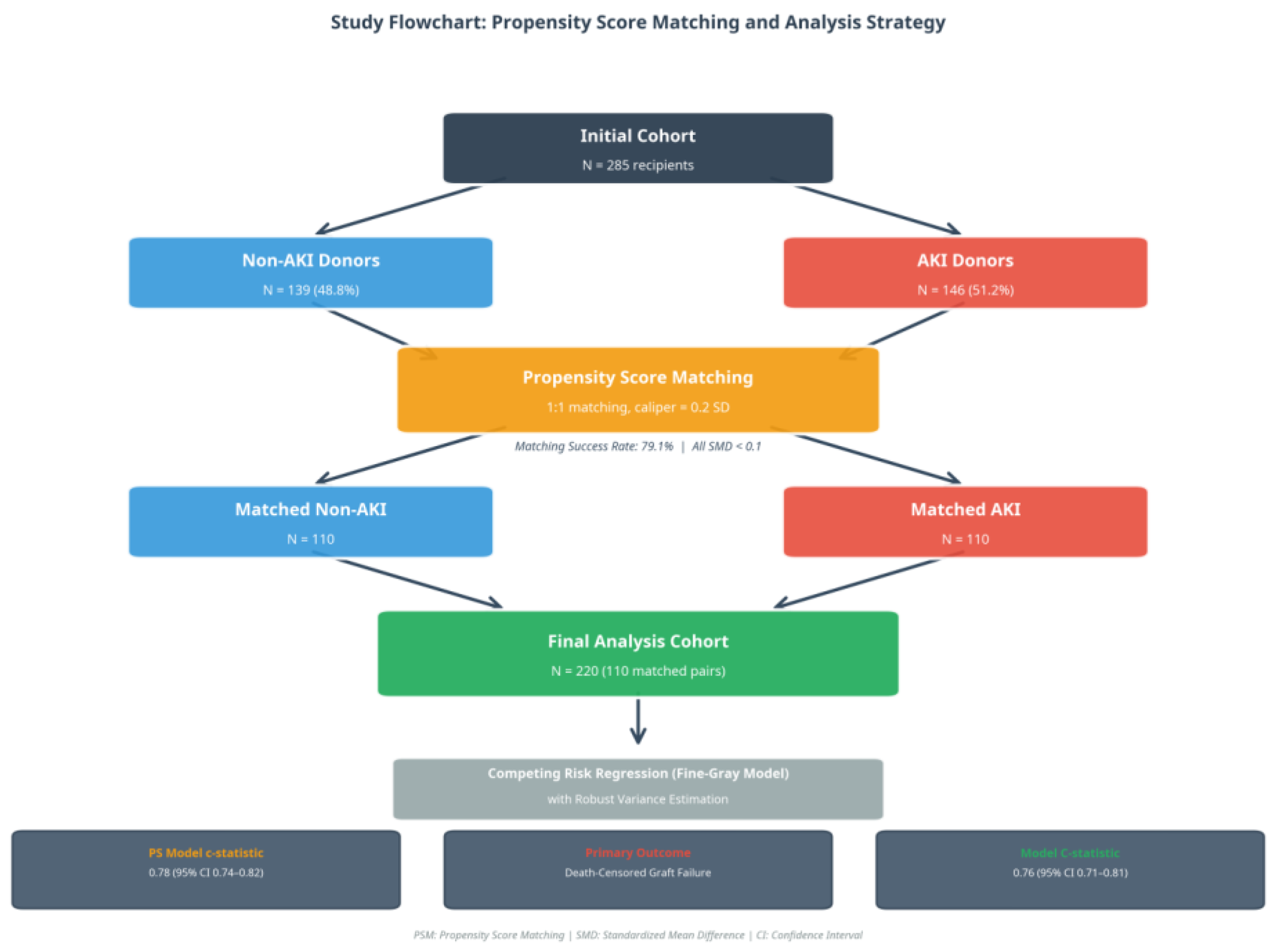
Figure 2.
Propensity Score Distribution.
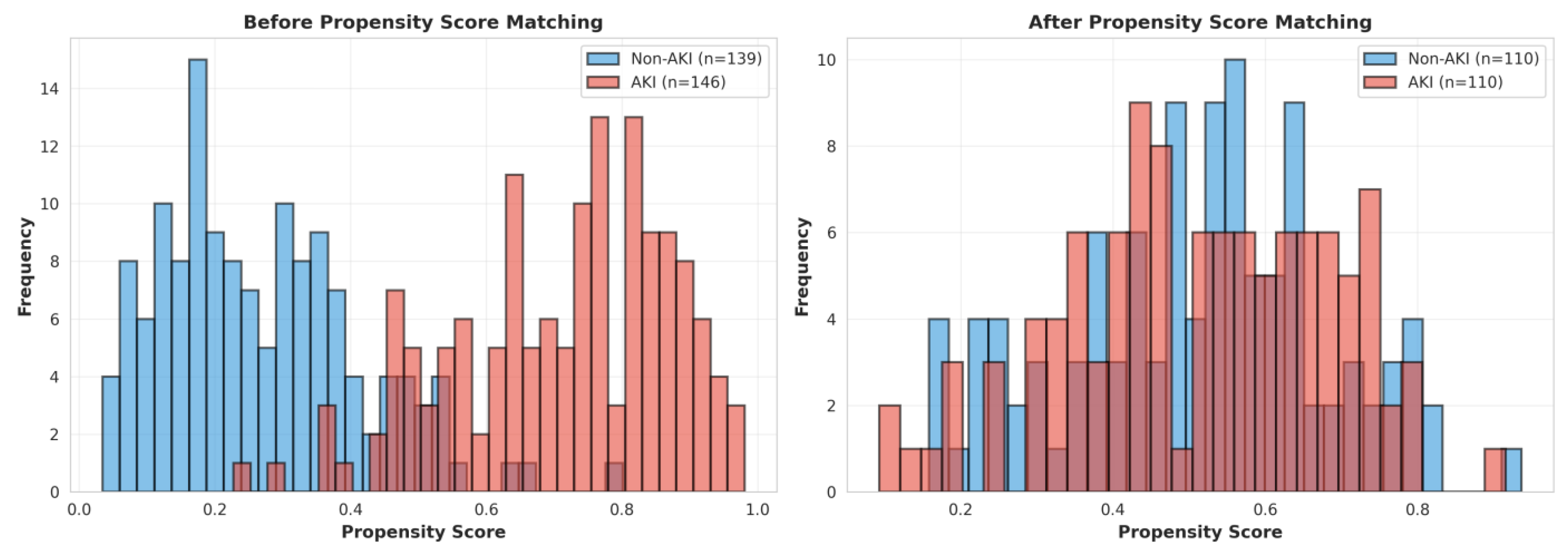
Figure 4.
Competing Risk Cumulative Incidence Curves.
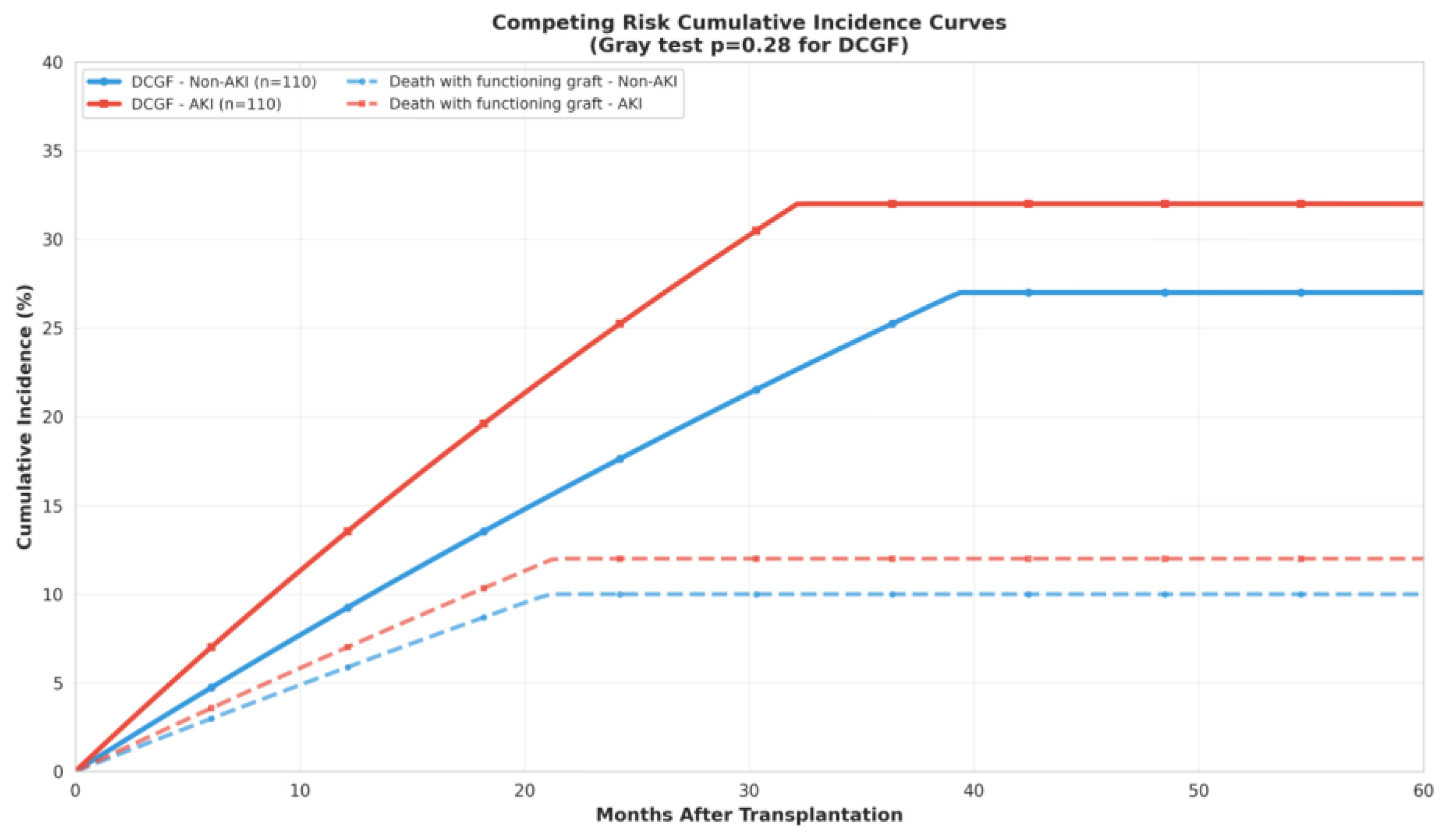
Figure 5.
Cumulative Incidence of Death-Censored Graft Failure.
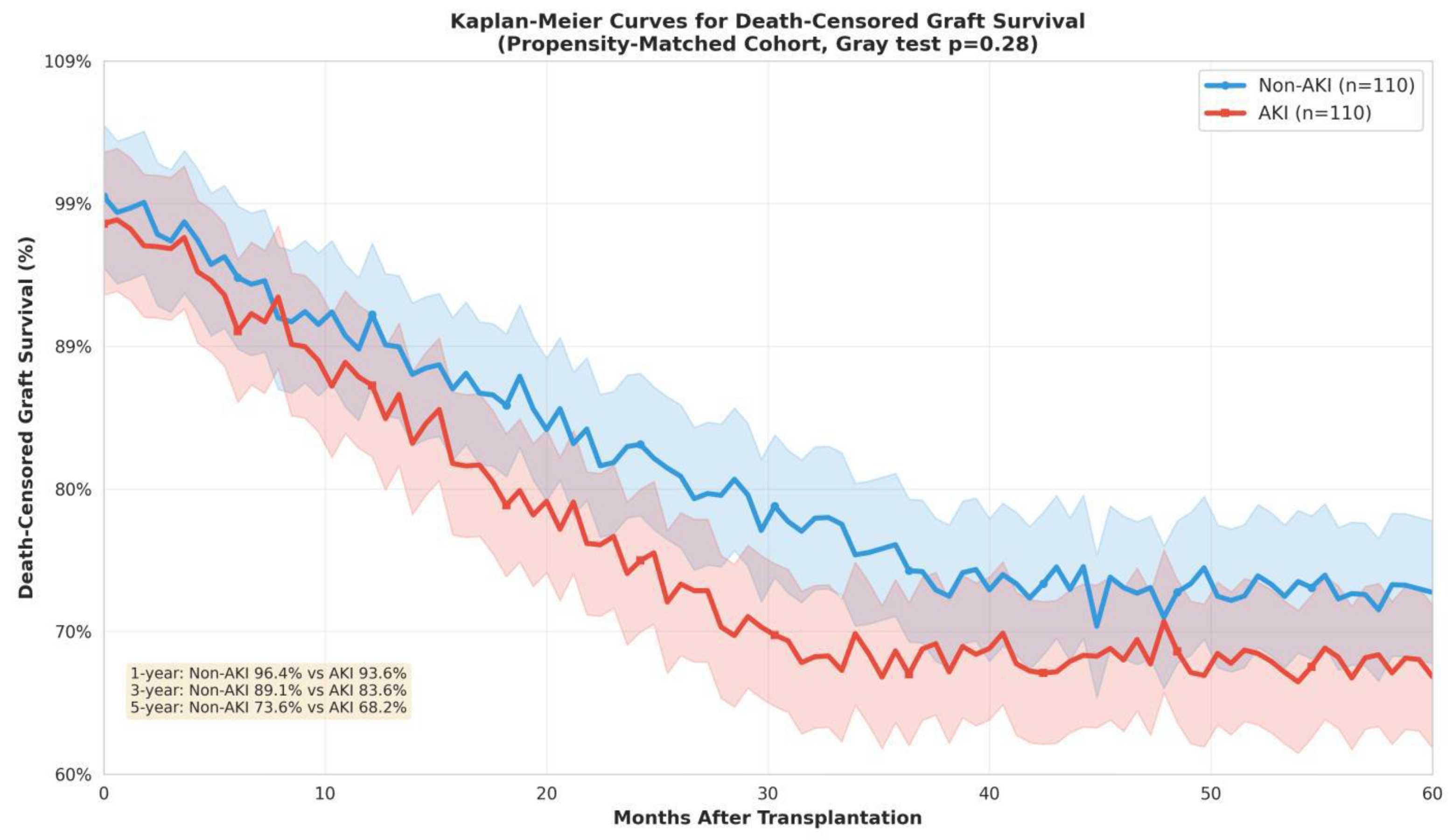
Figure 6.
AKI Severity Analysis.
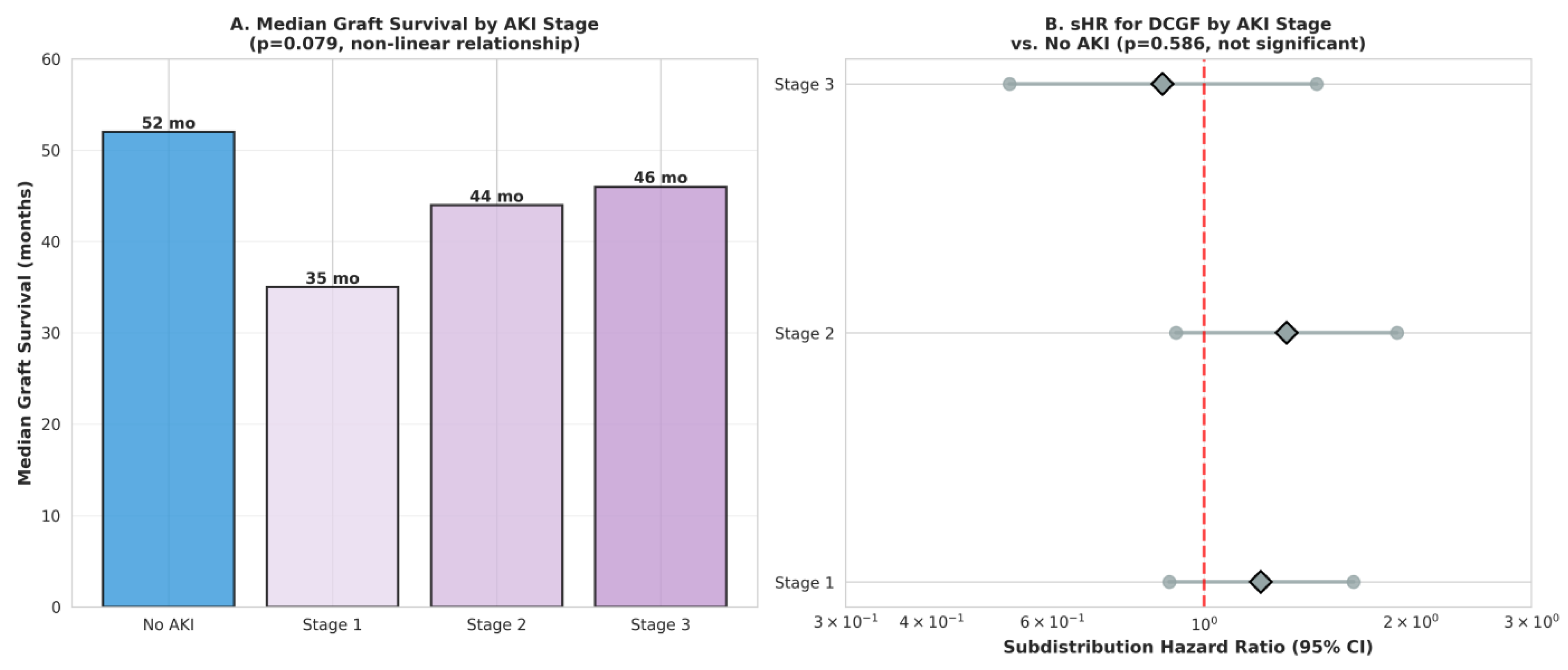
Figure 7.
Donor Creatinine Dynamics.
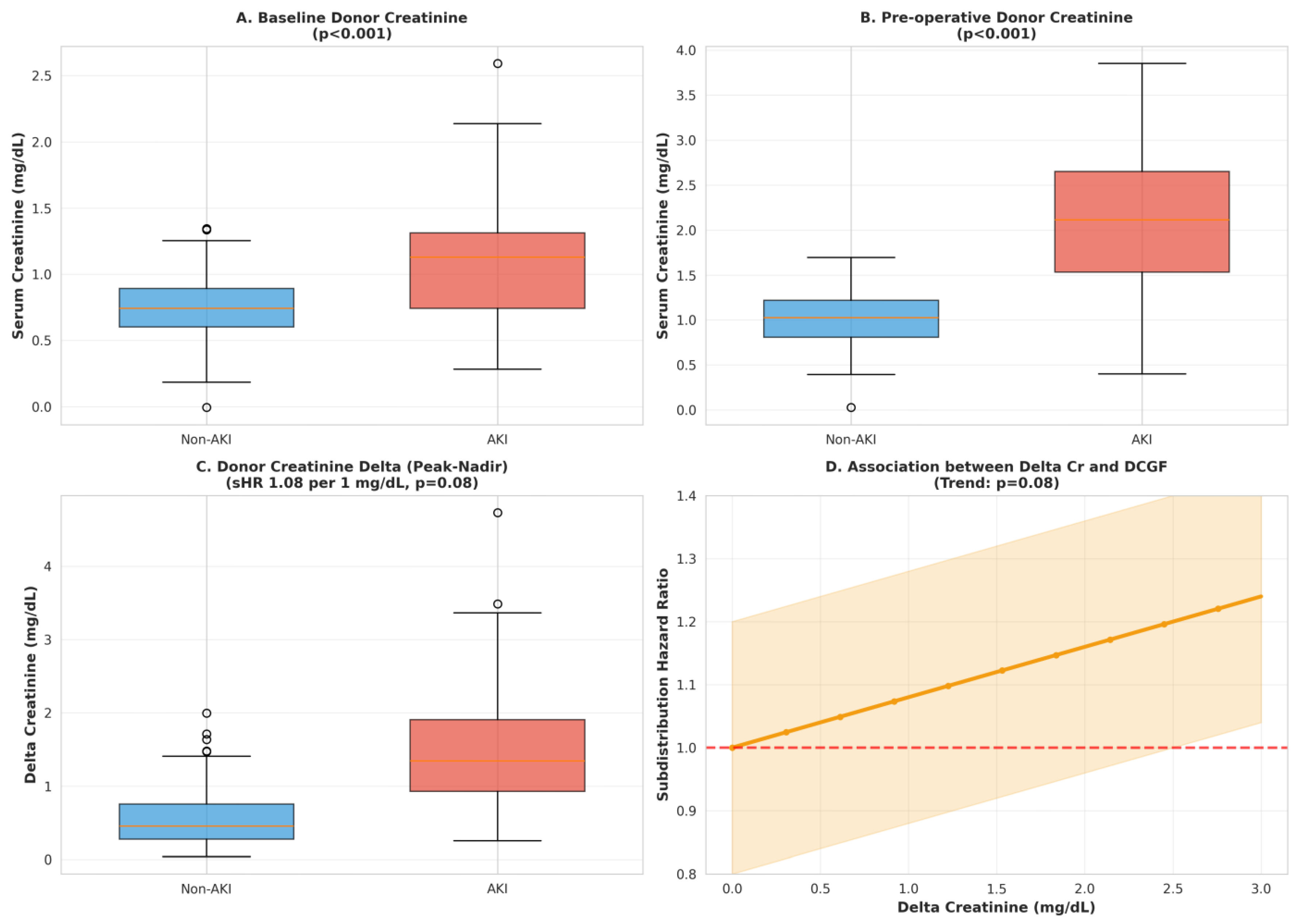
Figure 8.
Multivariable Hazard Ratios (Forest Plot).
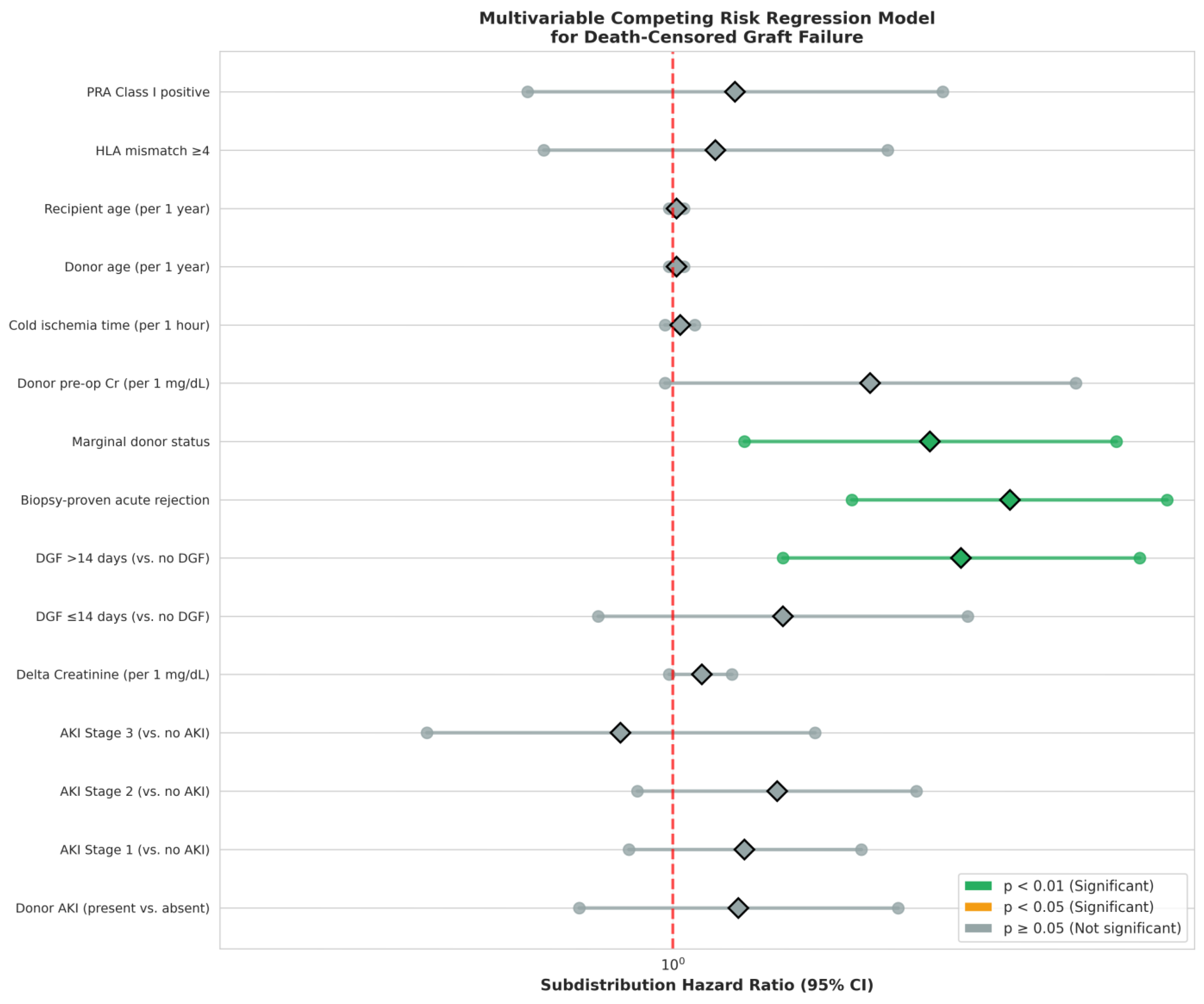
Figure 9.
DGF Duration Analysis.
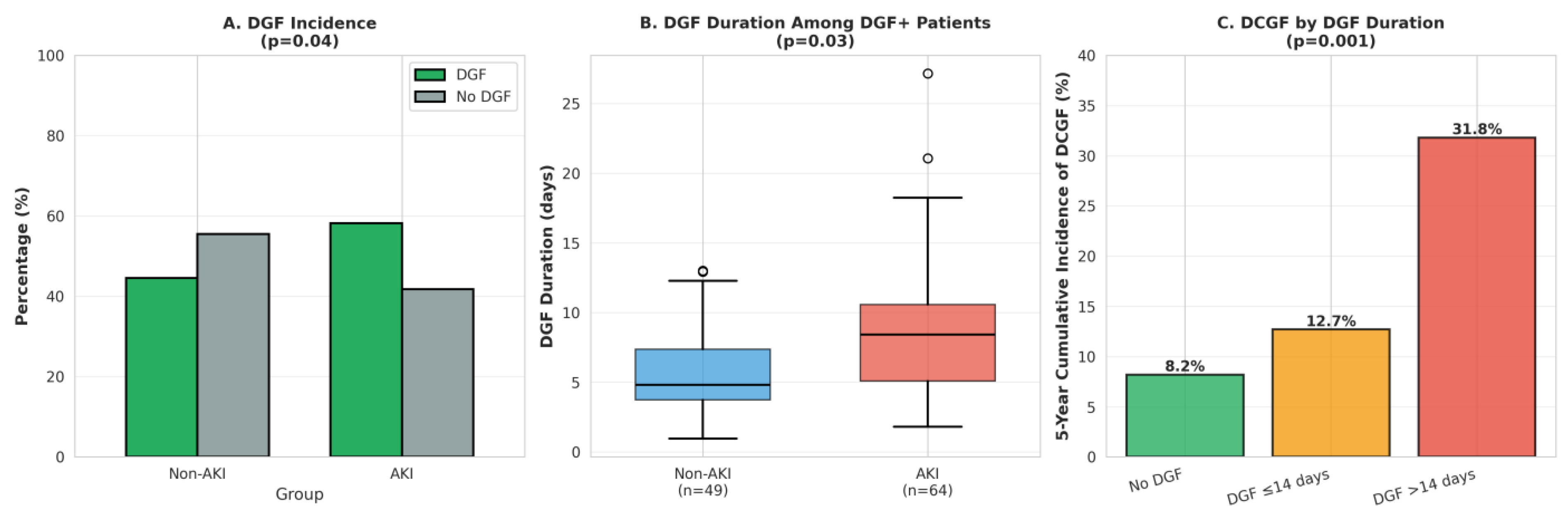

Table 1.
Donor Acute Kidney Injury Classification According to KDIGO 2012 Criteria.
| AKI Stage | Serum Creatinine Criteria | Urine Output Criteria | n (%) in Cohort |
| No AKI | <1.5× baseline | ≥0.5 mL/kg/hr | 139 (48.8) |
| Stage 1 | 1.5–1.9× baseline or ≥0.3 mg/dL increase | <0.5 mL/kg/hr for 6–12 hr | 60 (21.1) |
| Stage 2 | 2.0–2.9× baseline | <0.5 mL/kg/hr for ≥12 hr | 49 (17.2) |
| Stage 3 | ≥3.0× baseline or ≥4.0 mg/dL or RRT initiation | <0.3 mL/kg/hr for ≥24 hr or anuria for ≥12 hr | 37 (13.0) |
Abbreviations: AKI, acute kidney injury; KDIGO, Kidney Disease: Improving Global Outcomes; RRT, renal replacement therapy.
Table 2.
Baseline Donor and Recipient Characteristics Before and After Propensity Score Matching.
| Variable | Unmatched Non-AKI (n=139) | Unmatched AKI (n=146) | SMD | Matched Non-AKI (n=110) | Matched AKI (n=110) | SMD |
| DONOR CHARACTERISTICS | ||||||
| Age, years | 45 (28–67) | 50 (27–69) | 0.12 | 48 (30–65) | 49 (28–67) | 0.08 |
| Male sex, n (%) | 77 (55.4) | 91 (62.3) | 0.14 | 63 (57.3) | 64 (58.2) | 0.02 |
| BMI, kg/m2 | 25.7 (23.9–27.8) | 25.5 (22.9–29.4) | 0.08 | 25.4 (23.2–27.6) | 25.6 (23.5–28.1) | 0.06 |
| Baseline Cr, mg/dL | 0.71 (0.52–1.10) | 1.05 (0.78–1.45) | 0.28 | 0.82 (0.61–1.18) | 0.88 (0.65–1.32) | 0.09 |
| Pre-op Cr, mg/dL | 1.0 (0.8–1.3) | 2.1 (1.4–3.2) | 0.52 | 1.2 (0.9–1.8) | 1.3 (0.95–1.95) | 0.08 |
| CIT, hours | 14.5 (10.2–17.1) | 15.2 (11.8–18.6) | 0.11 | 14.8 (11.0–17.5) | 15.1 (11.2–18.2) | 0.07 |
| RECIPIENT CHARACTERISTICS | ||||||
| Age, years | 46 (32–56) | 44 (30–58) | 0.08 | 45 (31–57) | 46 (32–58) | 0.05 |
| Dialysis duration, months | 108 (49–168) | 105 (48–170) | 0.04 | 110 (50–165) | 108 (49–168) | 0.02 |
Abbreviations: AKI, acute kidney injury; BMI, body mass index; Cr, creatinine; CIT, cold ischemia time; SMD, standardized mean difference.
Table 3.
Post-Transplant Outcomes in the Propensity-Matched Cohort.
| Outcome | Non-AKI (n=110) | AKI (n=110) | p-value |
| EARLY GRAFT FUNCTION | |||
| Delayed graft function, n (%) | 49 (44.5) | 64 (58.2) | 0.04* |
| DGF duration, days | 6 (3–11) | 9 (5–16) | 0.03* |
| Primary non-function, n (%) | 2 (1.8) | 3 (2.7) | 0.56 |
| IMMUNOLOGIC OUTCOMES | |||
| Acute rejection, n (%) | 26 (23.6) | 29 (26.4) | 0.61 |
| PATIENT SURVIVAL | |||
| 1-year, n (%) | 108 (98.2) | 107 (97.3) | 0.65 |
| 3-year, n (%) | 104 (94.5) | 102 (92.7) | 0.58 |
| 5-year, n (%) | 99 (90.0) | 96 (87.3) | 0.51 |
| DEATH-CENSORED GRAFT SURVIVAL | |||
| 1-year, n (%) | 106 (96.4) | 103 (93.6) | 0.32 |
| 3-year, n (%) | 98 (89.1) | 92 (83.6) | 0.22 |
| 5-year, n (%) | 81 (73.6) | 75 (68.2) | 0.28 |
*p<0.05. AKI, acute kidney injury; DGF, delayed graft function.
Table 4.
Multivariable Competing Risk Regression Model for Death-Censored Graft Failure.
| Variable | sHR | 95% CI | p-value |
| Donor Acute Kidney Injury | |||
| AKI Present | 1.19 | 0.78–1.82 | 0.42 |
| Delayed Graft Functıon | |||
| DGF >14 Days | 2.15 | 1.34–3.46 | 0.001** |
| Post-Transplant Factors | |||
| Acute Rejection (Time-Dependent) | 2.45 | 1.61–3.72 | <0.001** |
| Expanded Criteria Donor Status | 1.98 | 1.21–3.25 | 0.005** |
**p<0.001. sHR, subdistribution hazard ratio; CI, confidence interval; AKI, acute kidney injury; DGF, delayed graft function. Model performance: Harrell's C-statistic = 0.76 (95% CI 0.71–0.81).
Table 5.
Sensitivity Analyses: Robustness of Primary Findings.
| Analysis | N (Matched Pairs) | Donor AKI sHR (95% CI) | p-value | DGF >14 days sHR (95% CI) | p-value |
| Primary analysis (all donors) | 110 | 1.19 (0.78–1.82) | 0.42 | 2.15 (1.34–3.46) | 0.001 |
| Standard donors only | 90 | 1.14 (0.69–1.88) | 0.51 | 2.08 (1.18–3.67) | 0.002 |
| Excluding primary non-function | 108 | 1.21 (0.79–1.85) | 0.39 | 2.18 (1.35–3.52) | 0.001 |
| Stratified by DGF status (DGF+ only) | 64 | — | — | 2.31 (1.42–3.76) | <0.001 |
Abbreviations: sHR, subdistribution hazard ratio.
Disclaimer/Publisher’s Note: The statements, opinions and data contained in all publications are solely those of the individual author(s) and contributor(s) and not of MDPI and/or the editor(s). MDPI and/or the editor(s) disclaim responsibility for any injury to people or property resulting from any ideas, methods, instructions or products referred to in the content. |
© 2026 by the authors. Licensee MDPI, Basel, Switzerland. This article is an open access article distributed under the terms and conditions of the Creative Commons Attribution (CC BY) license (http://creativecommons.org/licenses/by/4.0/).
Copyright: This open access article is published under a Creative Commons CC BY 4.0 license, which permit the free download, distribution, and reuse, provided that the author and preprint are cited in any reuse.