

Submitted:
08 September 2026
Posted:
09 September 2026
You are already at the latest version
Abstract
Background. Human papillomavirus (HPV) nucleic acid-based testing is the preferred method for cervical cancer screening. Leveraging point-of-care (POC) technologies can increase accessibility to screening in resource-limited settings. However, POC technologies are designed for use with fresh specimens and obtaining pre-clinical data to motivate clinical trials can be difficult.
Methodology. A laboratory-based, proof-of-concept evaluation of the Pluslife HPV-16/18/45 Nucleic Acid Test Card on the Pluslife platform (Pluslife Biotech Co, Ltd., Guangzhou, Guangdong, China) was performed on swabs contrived using AccuTrak™ HPV Qualification Panel (SeraCare) reference material, or residual liquid-based cytology specimens, and stored, self-collected, vaginal swab specimens. Pluslife HPV 16/18/45 results were compared to paired BD Onclarity™ HPV (Becton Dickinson) results to provide analytical performance data (positive percentage agreement (PPA), negative percentage agreement (NPA), overall agreement (Cohen’s Kappa), and relative clinical sensitivity and specificity, all reported with 95 percent confidence intervals (95% CI)).
Results. The AccuTrak™ and LBC contrived swab reproducibility results were correct for both inter- and intra-day testing (100.0% agreement). In 50 contrived clinical swabs, PPA was 100.0% (95% CI: 88.4, 100.0), NPA was 95.0% (95% CI: 75.1, 99.9), and overall agreement was 95.8% (95% CI: 87.7, 103.9). When stratified by cytology, the relative clinical sensitivity and specificity were 100.0% (100.0, 100.0) and 95.0% (95% CI: 64.4, 140.0) respectively. Amongst 24 self-collected vaginal swabs, the PPA and NPA were 92.3% (95% CI: 64.0, 99.8) and 100.0% (95% CI: 71.5, 100.0) respectively, with overall agreement of 91.7% (95% CI: 75.7, 107.6). Only one error (cartridge fill) was noted in 120 tests performed.
Conclusions. This pre-clinical study described methods for using off-label biorepository specimens. The Pluslife HPV 16/18/45 assay showed similar performance to the BD On-clarity™ HPV assay on both contrived and self-collected vaginal swab specimens. These data support further clinical evaluation of the Pluslife HPV 16/18/45 assay as a solution for rapid, POC HPV screening.
Keywords:
Pluslife HPV 16/18/45
; preclinical evaluation
; near-patient testing
; cervical cancer screening
; HPV testing
1. Introduction
Globally, but particularly in resource limited settings, cervical cancer (CaCx) remains a key cause of morbidity and mortality in women [1,2]. Human papillomavirus (HPV) is the causative agent of most CaCx [3], and several HPV assays have since been developed as a primary or confirmatory screen of CaCx risk. These allow triage of women with HPV to further screening by cytology and/or treatment if necessary, and referral of women without HPV to rescreening after an extended period (usually three to ten years) [4]. These diagnostics have, however, been located at centralised laboratories, requiring women to attend a follow-up visit, with associated loss-to-follow-up (LTFU) [5,6]. In rural or remote areas, the value of point of care (POC) HPV screening, and rapid triage to diagnostics such as visual inspection with acetic acid and treatment such as thermal ablation of precancerous lesions, both of which are also possible at POC [7,8].
An option for POC CaCx screening by HPV is the Pluslife HPV 16/18/45 Nucleic Acid Test Card (Pluslife HPV 16/18/45) used on the Pluslife MiniDock or Dock Pro 8 (Pluslife Biotech Co, Ltd., Guangzhou, Guangdong, China). The Pluslife platform was developed for multi-disease testing across both human and veterinary diagnostics using individual, disease-specific test cards. The platform is based on proprietary RNase Hybridization-Assisted Amplification (RHAM) technology, which has been described elsewhere [9], with reactions occurring within specific Pluslife test cards.
Several studies have evaluated the performance of the Pluslife technology in the context of Severe Acquired Respiratory Syndrome Corona Virus 2 (SARS-CoV-2) [9,10,11] and Mycobacterium tuberculosis (MTB) [12,13,14,15,16,17] testing, with another describing evaluation of the Group B streptococcus (GBS) Pluslife test card [18]. The SARS-CoV-2 and GBS test cards both showed high positive percentage agreement (PPA) above 95.0%, with associated negative percentage agreement (NPA) above 99.0% [9,10,11,18]. Performance of the MTB test cards has been more variable, depending on whether sputum or tongue swabs were tested, the mycobacterial burden, and whether the reference was the molecular GeneXpert MTB/RIF Ultra (Cepheid, Sunnyvale, CA, USA) or MTB culture [12,13,14,15,16,17].
Pluslife HPV 16/18/45 detects genotypes in the World Health Organisation HPV risk groups 1a (HPV 16) and 1b (HPV 18 and HPV 45), which are prevalent in 74.9% of CaCx cases and account for 82.5% of CaCx cases (attributable fraction) [19]. The assay is designed for use with freshly collected vulvovaginal or cervical swab specimens, has a total turnaround time of ~42 minutes, and has a limit of detection (LOD) of 800 copies/mL for HPV 16 and HPV 18, and 1000 copies/mL for HPV 45 [20]. This manuscript describes a rapid, proof-of-concept, analytical performance evaluation of the Pluslife HPV 16/18/45 assay and is, to our knowledge, the first evaluation of the Pluslife HPV 16/18/45 test card.
2. Materials and Methods
Study workflow. This pre-clinical rapid evaluation study was designed to provide insights into the feasibility of using the Pluslife HPV 16/18/45 assay for the detection and differentiation of HPV genotypes 16, 18 and 45, and to provide pre-clinical performance data to inform clinical trial evaluations. Several off-label specimens were prepared as examples of freshly collected vulvovaginal swabs (approved specimen type), and, bar specimen collection, these were processed according to the manufacturer’s instructions for use (IFU). The sample size was determined by number of Pluslife HPV 16/18/45 test cards provided for the study (n=120). Comparator results were available through prior testing of similarly contrived swabs or paired vaginal swabs (as described below) on the Becton Dickinson (BD) Onclarity™ HPV assay used on the BD Viper™ LT platform (Becton Dickinson and Company, Franklin Lakes, NJ, USA). The study is outlined in Figure 1.
Practicability. The AccuTrak™ HPV Qualification Panel (LGC Seracare, Milford, MA, USA) members were used to prepare contrived swabs to determine whether the material in a swab format was compatible with the Pluslife HPV 16/18/45 assay and did not inhibit the reaction. Briefly, 100 µL material was added directly onto FLOQSwabs (502CS01, Copan, Brescia, Italy) using a precision pipette and swabs were then processed according to the IFU. In total, ten tests were performed: each specimen member (n=4) was tested once neat, including Panel Member 3 (HPV 51) to investigate cross-reactivity, followed by Panel Members 1 (HPV 16), 2 (HPV 18) and 4 (HPV negative) at 1:10 (10 µL added) and 1:100 (1 µL added) concentrations, and one with 50 µL each of Panel Members 1 and 2 to investigate inhibition when more than one HPV genotype was present. HPV 45 reference material was not available.
Reproducibility. Following compatibility testing, assay reproducibility was evaluated using the AccuTrak™ HPV Qualification Panel and three residual liquid-based cytology (LBC) specimens selected according to the BD Onclarity™ HPV result (HPV genotype and cycle threshold (Ct) value). Briefly, 100 µL of undiluted AccuTrak™ HPV 16, HPV 18 and HPV negative members or 150 µL residual LBC material was added to FLOQSwabs (502CS01) as required (within 10 minutes of testing). The swabs were processed according to the Pluslife IFU [20], and the same reaction chamber of the Dock Pro 8 was used per each specimen. Swabs were processed once per day for three days (inter-day reproducibility) and three in one day (intra-day reproducibility).
Contrived clinical swabs. Aliquots of de-identified, residual LBC specimens in ThinPrep® Pap Test medium (Hologic, Marlborough, MA, USA) were retrieved from storage at −80°C, thawed, and used to prepare contrived clinical swabs (n=50). The specimens were selected based on their cytology status and the evaluation reference HPV result, which was obtained from previous testing by the BD Onclarity™ HPV assay. Three specimens were specifically selected to be within one cycle of the maximum BD Onclarity™ HPV Ct for these genotypes (Ct=38.3 for HPV 16 and Ct=34.2 for HPV 18 and HPV 45). Briefly, each residual specimen was vortexed at full speed for five seconds and then a FLOQSwab (502CS01) was swirled in the residual specimen for 30 seconds, absorbing ~150 µL liquid. The swabs were then processed according to the Pluslife IFU [20]. The first result from the contrived clinical swabs used for reproducibility testing was included as an individual specimen for analysis.
Self-collected vaginal swabs. Vaginal swabs were prospectively collected at Epicentre Health Research clinics (Gauteng Province, KwaZulu Natal Province and Western Cape Province, South Africa) as part of a larger study on the feasibility of specimen self-collection (Noble, manuscript in draft). Briefly, female clinical visitors were informed of the study, invited to participate, and those who consented were provided with two vaginal swabs (round tipped FLOQSwabs® (552C.80), Copan) and instructions for specimen self-collection, performed specimen self-collection, and were then asked to complete a questionnaire on their perceptions of specimen self-collection. Inclusion criteria were participants aged between 18 and 80 years, self-identifying as female and having a cervix, attending the clinic for reproductive health screening, willing to collect vaginal swab specimens, and willing to voluntarily give informed consent, while exclusion criteria were the inability to understand the information given in the information sheet prior to participation and clinician-based exclusion for other health reasons. After collection, specimens were stored at 2-8°C for weekly shipping to the Wits Diagnostic Innovation Hub (Wits DIH, Johannesburg, Gauteng Province, South Africa), where they were stored at 2-8°C until testing. For each swab pair, one was processed by the BD Onclarity™ assay and the other was stored dry at -80°C. A set of self-collected vaginal swabs (n=24) were selected based on the BD Onclarity™ HPV result, retrieved from storage, allowed to reach ambient temperature and tested according to the Pluslife IFU [20].
Pluslife HPV 16/18/45 processing. All swab specimens were processed (Figure 2) according to the manufacturer’s IFU [20]. Briefly, the vial containing the Pluslife nucleic acid releasing agent 02 was carefully opened and the swab head was swirled in the liquid 10-20 times using finger pressure to rub it against the vial walls. The swab was then discarded, and the provided cap was used to seal the vial. The vial was placed into the Pluslife thermostatic dry bath device at 65°C for five minutes, using the onboard timer. After heating, the secondary cap of the vial and the cap of the Pluslife HPV 16/18/45 test card were opened, and liquid was dispensed into the test card to between the fill lines. The test card cap was replaced, the cap top was depressed to fully seal the test card, and the test card was allowed to stand in the provided holder for 15 seconds to allow for the liquid to move into the reaction chambers that contain the lyophilized reagents. The test card was shaken vigorously up and down for five seconds and then loaded into a free test chamber on the Dock Pro 8 instrument. The test card was automatically scanned in the reaction chamber, the door was closed and the onboard screen was then used to enter a name for each specimen (de-identified study number or reference material description). Results were reported qualitatively, with separation of HPV 16, HPV 18 and HPV 45. A result was reported as invalid if the endogenous internal control failed, although the HPV result would still be shown. Amplification graphs were downloaded for viewing using the PluslifePad (PluslifePad_WIN_SV4.3.4, Pluslife Biotech Co, Ltd.) software.
Data analysis. Data were captured into Microsoft Excel (Microsoft Corporation, Redmond, WA, USA) and analysed using Microsoft Excel and Stata 19-SE (StataCorp LLC, College Station, TX, USA; provided through the University of the Witwatersrand, Johannesburg, Gauteng Province, South Africa). Positive and negative percentage agreement (PPA and NPA respectively), overall agreement (Cohen’s Kappa (κ) [21]), relative clinical sensitivity and specificity stratified by cytology status, and reproducibility using reference materials were calculated. Results were reported with 95 percent confidence intervals (95% CI). The BD Onclarity™ HPV assay was used as the reference assay.
Ethics Approvals. This study was performed under University of the Witwatersrand Human Research Ethics Committee approval M23/06/49. In addition, collection of residual liquid-based cytology specimens was approved by the National Health Laboratory Service (NHLS) Academic Affairs and Research Management System registration PR2346610, and the prospective self-collection trial was registered with the South African National Clinical Trials Registry (DOH-27-042025-7693).
3. Results
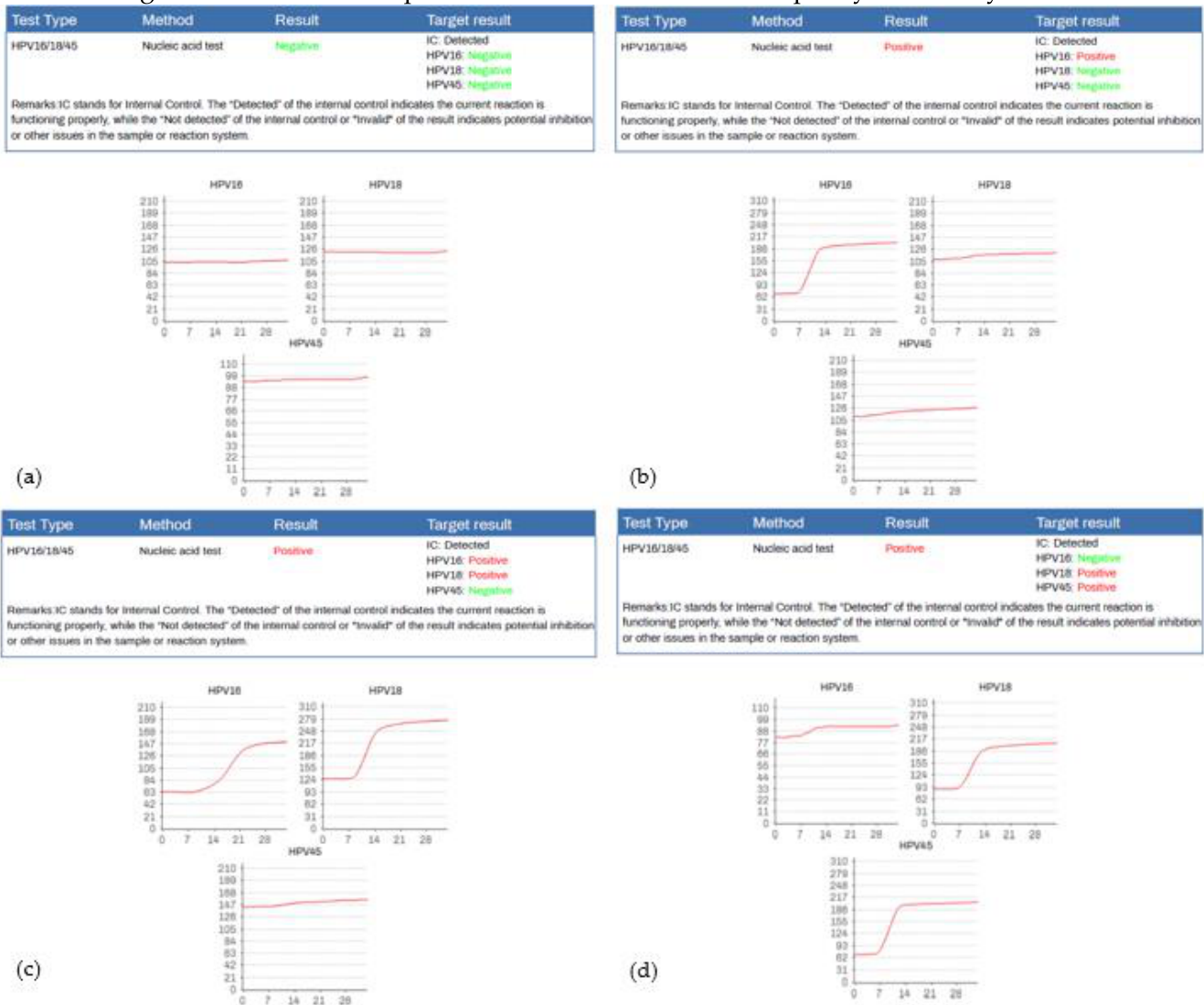
This study was performed in a laboratory setting at the Wits DIH. Excluding time used to contrive specimens, the time to process specimens was approximately two minutes of hands-on time (two periods of 30-60 seconds), five minutes of heating time, and 35 minutes test time. Using one Dock Pro 8 and two thermostatic dry heating baths, it was possible for one person to process 25 specimens in ~180 minutes (excluding contriving specimens). Positive specimens flagged as positive between 12 minutes and 40 seconds and 20 minutes and 40 seconds, but no early assay termination was available and full processing (35 minutes) was completed. Examples of amplification graphs are shown in Figure 3. The hands-on processes were described as simple by laboratory staff.
Of the 120 test cards provided, seven were used for training, two were used for re-peat testing and 111 were used for the study. All tests (120) were processed with no invalid results. However, one result was excluded from the analysis as it was noted on post-test inspection that the cartridge reaction wells were incompletely filled (unclear if it was car-tridge or user error). The result from the retest (from the same specimen nucleic acid release tube) was used, giving an error rate of 0.8%.
The AccuTrak™ HPV Qualification Panel reference material was shown to be compatible with the Pluslife HPV 16/18/45 assay when used in a contrived swab format. Briefly, the material was detected for HPV 16 and HPV 18 when used neat and 1:10, but not at 1:100, which was also noted as below the limit of detection on the BD Onclarity™ HPV assay. The HPV negative material and the endogenous internal control were detected down to a 1:100 dilution. The HPV 51 specimen was not detected (no cross-reactivity), and both HPV 16 and HPV 18 were detected when both were placed onto the same swab, representing co-infection.
When the reference material was tested neat on a contrived swab, HPV 16, HPV 18 and HPV negative results were correct for both inter- and intra-day testing (100.0% agreement). Similarly, in three LBC specimens used to contrive clinical reproducibility swabs, the agreement was also 100.0%. These specimens were positive for HPV with mid-range Ct values by BD Onclarity™ HPV: (1) HPV 16, Ct=28.1; (2) HPV 18, Ct=28.7; and (3) HPV45, Ct=26.5.
Amongst 50 contrived swab specimens, there were 20 HPV negative by BD Onclarity™ HPV and 30 HPV positive by BD Onclarity™ HPV for HPV 16 and/or HPV 18 and/or HPV 45, several with additional genotypes also positive. The Pluslife HPV 16/18/45 assay had PPA of 100.0% (95% CI: 88.4, 100.0), NPA of 95.0% (95% CI: 75.1, 99.9), and overall agreement (κ) of 0.95.8 (95% CI: 0.877, 1.039). The PPA, NPA and overall agreement by HPV genotypes 16, 18 and 45 are shown in Table 1. The decreased NPA was linked to one specimen that was HPV 18 positive by Pluslife HPV 16/18/45 and HPV negative by BD Onclarity™ HPV. This specimen was further tested by Xpert® HPV (Cepheid, Sunnyvale, CA, USA) and was positive for HPV in channel P4 (HPV 51 and/or HPV 59) with a high Ct value of 36.9, indicating that the specimen has a low viral burden and possibly infection by more than one HPV genotype, with the presence or absence of HPV 18 not confirmed.
When stratified by HPV genotype, four specimens with two of the target genotypes detected both targets, while one HPV 45 result was missed in a specimen that was positive for HPV 16, HPV 18 and HPV 45 with BD Onclarity™ HPV Ct values of 21.2, 15.8 and 24.0 respectively, which could indicate some competitive inhibition. When stratified by cytology status (squamous intraepithelial lesion (SIL)), the relative clinical sensitivity and specificity were 100.0% (100.0, 100.0) and 95.0% (95% CI: 64.4, 140.0) when stratified by high-grade SIL as having disease (n=18), and low-grade SIL and negative for intraepithelial lesion or malignancy (NILM) as not having disease (n=32) [22,23].
Amongst 24 self-collected swabs, there were 11 HPV negative and 13 HPV positive by BD Onclarity™ HPV. The PPA and NPA were 92.3% (95% CI: 64.0, 99.8) and 100.0% (95% CI: 71.5, 100.0) respectively, with overall agreement (κ) of 91.7% (95% CI: 75.7, 107.6). The PPA, NPA and overall agreement by HPV genotypes 16, 18 and 45 are shown in Table 1. The lower PPA was linked to a single specimen with a HPV 16 positive result by BD Onclarity™ HPV (paired swab), which had a high Ct value of 35.6 for HPV 16. When stratified by HPV genotype, HPV 18 and HPV 45 all positive and negative results were concordant. For HPV 16, one HPV 16 positive by BD Onclarity™ HPV was negative by Pluslife HPV 16/18/45 (as described above) and one HPV 16 negative by BD Onclarity™ HPV was positive by Pluslife HPV 16/18/45, with further testing not possible as no further paired swabs were available.

Table 1.
Overview of HPV testing agreement for contrived vaginal swabs and self-collected vaginal swabs.
Table 1.
Overview of HPV testing agreement for contrived vaginal swabs and self-collected vaginal swabs.
| Target | Expected Positive | Expected Negative | PPA % (95% CI) |
NPA % (95% CI) |
Cohen’s κ [21] Ratio (95% CI) |
Agreement Ranking [24] | ||
|---|---|---|---|---|---|---|---|---|
| Pluslife HPV 16/18/45 / BD Onclarity™ HPV | Reference: BD Onclarity™ HPV result | |||||||
| Contrived Vaginal Swabs (LBC material) | ||||||||
| Overall HPV Call | 30/30 | 19/20 | 100.0 (88.4, 100.0) |
95.0 (75.1, 99.9) |
0.9580 (0.8765, 1.0394) |
Very good | ||
| HPV 16 | 13/13 | 37/37 | 100.0 (75.3, 100.0) |
100.0 (90.5, 100.0) |
1.0000 (1.0000, 1.0000) |
Very good | ||
| HPV 18 | 13/13 | 36/7 | 100.0 (75.3, 100.0) |
97.3 (85.8, 99.9) |
0.9493 (0.8510, 1.0476) |
Very good | ||
| HPV 45 | 11/12 | 38/38 | 91.7 (61.5, 99.8) |
100.0 (90.7, 100.0) |
0.9436 (0.8342, 1.0529) |
Very good | ||
| Vaginal Self-Collected Swabs | ||||||||
| Overall HPV Call | 12/13 | 11/11 | 92.3 (64.0, 99.8) |
100.0 (71.5, 100.0) |
0.9167 (0.7573, 1.0760) |
Very good | ||
| HPV 16 | 6/7 | 16/17 | 85.7 (42.1, 99.6) |
94.1 (71.3, 99.9) |
0.7983 (0.5317, 1.0649) |
Good | ||
| HPV 18 | 5/5 | 19/19 | 100.0 (47.8, 100.0) |
100.0 (82.4, 100.0) |
1.0000 (1.0000, 1.0000) |
Very good | ||
| HPV 45 | 5/5 | 19/19 | 100.0 (47.8, 100.0) |
100.0 (82.4, 100.0) |
1.0000 (1.0000, 1.0000) |
Very good | ||
HPV: Human papillomavirus, percentage, 95% CI: 95 percent confidence interval, κ: Kappa agreement.
4. Discussion
This proof-of-concept study highlights the importance of accessing biorepository specimens to provide rapid insights into POC technology performance ahead of clinical performance evaluations. Clinical trials are by necessity time-consuming and costly, and moving directly to clinical trials is not always possible without these insights. However, POC technologies are designed for use with fresh specimens, which may not be readily available for analytical performance evaluations. The methods described here offer a solution for obtaining pre-clinical study data to support the technology for progression to clinical trials, but must be used with caution, as such testing is off label from the manufacturer IFU.
It is important to test potential off-label specimens for any novel POC technology ahead of initiating an analytical performance evaluation, even when these specimens have been used successfully on another platform. This ensures that additives in reference materials or residual specimens do not inhibit the molecular POC test, particularly when nucleic acid extraction and purification is not included in the technology, as with the Pluslife pathogen lysis to amplification technology. Hermann and colleagues (2024) noted that viral transport medium (VTM) was incompatible with the RHAM technology enzyme and overcame this by using a 1:50 dilution in Pluslife buffer and the Pluslife SARS-CoV-2 test card with success [10]. Similarly, during early trials of the SARS-CoV-2 test card, Zhu and colleagues (2023) noted that direct nasal swabs performed better than those placed in viral transport medium, frozen and then thawed before use, which may be linked to specimen dilution, the use of VTM at a 1:13 dilution or RNA degradation after freezing [9]. Charfi and colleagues (2024), using vaginal specimens on the Pluslife GBS test card, overcame the challenge of Ames transport buffer by centrifuging an aliquot of specimen and resuspending the pellet in Pluslife buffer [18].
Using the residual LBC specimen on a swab as described in this study provides an alternative and simple solution to overcoming the presence of transport media, particularly for pre-clinical studies using residual patient specimens. The process is not dissimilar to the process used for dipped sputum swabs as described in the Pluslife MTB studies [12,13,14,15,16,17], although the swabs were swirled in LBC specimens for a longer time in this evaluation. Beyond their use in preclinical evaluations, these contrived swabs can potentially be used to provide material for training, pre-implementation workflow analysis and optimisation studies, platform verification, and ongoing quality assessment, which is important when moving molecular testing beyond the laboratory.
Beyond the small sample number, a limitation of this study is that the LBC specimen was collected directly from the cervix using a speculum, which could include more HPV than is shed in vaginal specimens. However, there are extensive studies showing that self-collected vaginal specimens perform as well as cervical specimens for HPV screening tests [25]. Furthermore, performance using frozen, self-collected vaginal swabs was also acceptable and specimens flagged positive in similar times, indicating that the contrived swabs are a suitable specimen to generate data to support evaluation of the technology in the field.
Another study limitation was that testing of the HPV 16/18/45 test card was limited to the Dock Pro 8 platform. The Dock Pro 8 was selected instead of the MiniDock as it is easier to track specimens and results using this platform, which includes a screen to show results and has a built-in printer. The technology of the test modules is however identical. The smaller MiniDock platforms may be more suitable for POC testing, but only showed HPV positivity, not the genotyping, without accessing these results on a computer with the PluslifePad software, which was a limitation of the technology at the time of testing. The new Pluslife application for mobile telephones (launched late 2025) enables connection via Bluetooth to several MiniDock platforms concurrently, with the option to add user information and participant identifiers, and to access complete test results.
A limitation of the Pluslife HPV 16/18/45 assay is that only HPV 16, 18 and 45 are detected, which is fewer genotypes than listed for POC HPV tests in the WHO TPP for HPV diagnostics [19]. Successful expansion of the assay to include HPV carcinogenic risk group 1c (HPV 31, 33, 35, 52 and 58) would allow the test to meet minimal criteria for POC HPV assays (pooled or individually genotyped) [19]. Extended HPV genotyping does however improve triage and management of patients when compared to pooled HPV detection [26,27,28,29]. Van Der Merwe and colleagues (2026) recently recommended referral of all South African women testing positive for HPV in carcinogenic risk groups 1a, 1b and 1c for treatment without additional testing, ideally allowing same-day treatment [26], although international guidelines are more conservative [28], highlighting that a balance is needed between resources, local mortality rates, and the realities of LTFU in women at risk of cervical cancer.
There is international interest in supporting HPV screening and treatment at POC, particularly with the option for vaginal specimen self-collection [19]. Here we show that the Pluslife HPV 16/18/45 test card shows similar performance to the BD Onclarity™ HPV assay on residual LBC and self-collected vaginal swab specimens, with the potential for use at POC or in a near-patient setting. These data support the need for clinical evaluation of the Pluslife HPV 16/18/45 assay as a potential solution for rapid, POC HPV screening for triage of women at risk of CaCx.
Author Contributions
conceptualization, L.N., L.S., L.H. and W.S.; methodology, L.N. and D.G.; formal analysis, L.N.; investigation, L.N. and D.G.; resources, W.S., L.S., L.H. and P.M.; data curation, L.N., D.G. and P.M.; writing—original draft preparation, L.N.; writing—review and editing, L.N., L.S., D.G., L.H., P.M. and W.S.; visualization, L.N.; supervision, W.S., L.S. and L.H.; project administration, L.N.; funding acquisition, W.S. and L.S. All authors have read and agreed to the published version of the manuscript.
Funding
This work was supported, in whole or in part, by the Gates Foundation [INV-051718]. The conclusions and opinions expressed in this work are those of the author(s) alone and shall not be attributed to the Foundation. Under the grant conditions of the Foundation, a Creative Commons Attribution 4.0 License has already been assigned to the Author Accepted Manuscript version that might arise from this submission. Please note works submitted as a preprint have not undergone a peer review process.
Institutional Review Board Statement
The study was conducted in accordance with the Declaration of Helsinki and approved by the Human Research Ethics Committee of The University of the Witwatersrand (M23/06/49, 25 October 2023). The prospective self-collection phase was registered with the South African National Clinical Trials Registry (DOH-27-042025-7693). Access to residual specimens was approved by the National Health Laboratory Service (NHLS) Academic Affairs and Research Management System registration PR2346610 (Prof. Pamela Michelow).
Informed Consent Statement
Informed consent was obtained from all subjects involved in the study participating in the self-collection study. Patient consent was waived for specimens obtained from the point of discard due to these being de-identified, residual specimens.
Data Availability Statement
The raw data supporting the conclusions of this article will be made available by the authors on request.
Acknowledgments
The authors thank: (1) the staff at the Braamfontein Anatomical Pathology Laboratory for sharing the residual LBC specimens and cytology results, (2) the participants and Epicentre Health Research staff involved in the self-collection study, (3) Nosipho Zwane and Gugu Zulu for their roles in managing specimens and assisting with specimen biorepository testing and storage, and (4) Guangzhou Pluslife Biotech Co., Ltd. (Pluslife) for provided devices, HPV 16/18/45 test card kits and relevant training for this study. Pluslife was not involved in the study design, analysis or interpretation of results.
Conflicts of Interest
The authors declare no conflicts of interest. The funders had no role in the design of the study; in the collection, analyses, or interpretation of data; in the writing of the manuscript; or in the decision to publish the results. Pluslife HPV 16/18/45 test cards were donated by Pluslife for use with instruments placed at the Wits Diagnostic Innovation Hub, but Pluslife had no role in the design of the study; in the collection, analyses, or interpretation of data; in the writing of the manuscript; or in the decision to publish the results.
Abbreviations
The following abbreviations are used in this manuscript:
| % | Percent |
| °C | Degrees Celsius |
| 95% CI | 95 percent confidence interval |
| BD | Becton Dickinson |
| CaCx | Cervical Cancer |
| Ct | Cycle threshold |
| GBS | Group B streptococcus |
| HPV | Human papillomavirus |
| HSIL | High-grade squamous intraepithelial lesion |
| IFU | Instructions for use |
| IC | Internal control |
| κ | Kappa (Cohen’s Kappa Statistic) |
| LBC | Liquid-based cytology |
| LMIC | Low- and middle-income country |
| LOD | Limit of detection |
| LTFU | Loss-to-follow-up |
| µL | Microliter |
| mL | Milliliter |
| MTB | Mycobacterium tuberculosis |
| NHLS | National Health Laboratory Service |
| NILM | Negative for intraepithelial lesion or malignancy |
| NPA | Negative percentage agreement |
| P4 | Pool 4 |
| Pluslife HPV 16/18/45 | Pluslife HPV 16/18/45 Nucleic Acid Test Card |
| POC | Point-of-care |
| PPA | Positive percentage agreement |
| RHAM | RNase Hybridization-Assisted Amplification |
| RNA | Ribonucleic acid |
| RNase | Ribonuclease |
| SARS-CoV-2 | Severe Acute Respiratory Syndrome Coronavirus 2 |
| SIL | Squamous intraepithelial lesion |
| vs | Versus |
| VTM | Viral transport medium |
References
- Arbyn, M.; Weiderpass, E.; Bruni, L.; et al. Estimates of incidence and mortality of cervical cancer in 2018: a worldwide analysis. Lancet Glob. Health 2020, 8, e191–e203. [Google Scholar] [CrossRef] [PubMed]
- Bruni, L.; Serrano, B.; Roura, E.; et al. Cervical cancer screening programmes and age-specific coverage estimates for 202 countries and territories worldwide: a review and synthetic analysis. Lancet Glob. Health 2022, 10, e1115–e27. [Google Scholar] [CrossRef] [PubMed]
- zur Hausen, H. Papillomaviruses and cancer: from basic studies to clinical application. Nat. Rev. Cancer 2002, 2, 342–50. [Google Scholar] [CrossRef] [PubMed]
- World Health Organisation. WHO guideline for screening and treatment of cervical pre-cancer lesions for cervical cancer prevention, second edition. ISBN 978-92-4-003082-4 (electronic version. Available online: https://www.who.int/publications/i/item/9789240030824 (accessed on 19 April 2023. 2021).
- Effah, K.; Tekpor, E.; Wormenor, C.M.; et al. Concurrent HPV DNA testing and a visual inspection method for cervical precancer screening: A practical approach from Battor, Ghana. PLoS Glob. Public Health 2023, 3, e0001830. [Google Scholar] [CrossRef] [PubMed]
- Denny, L.; Kuhn, L.; De Souza, M.; Pollack, A.E.; Dupree, W.; Wright, T.C., Jr. Screen-and-treat approaches for cervical cancer prevention in low-resource settings: a randomized controlled trial. Jama 2005, 294, 2173–81. [Google Scholar] [PubMed]
- Broutet, N.; Jeronimo, J.; Kumar, S.; et al. Implementation research to accelerate scale-up of national screen and treat strategies towards the elimination of cervical cancer. Prev. Med. 2022, 155, 106906. [Google Scholar] [CrossRef] [PubMed]
- Denny, L.; Saidu, R.; Boa, R.; et al. Point-of-care testing with Xpert HPV for single-visit, screen-and-treat for cervical cancer prevention: a demonstration study in South Africa. Sci. Rep. 2023, 13, 16182. [Google Scholar] [CrossRef] [PubMed]
- Zhu, D.; Huang, J.; Hu, B.; et al. Trial of the Pluslife SARS-CoV-2 Nucleic Acid Rapid Test Kit: Prospective Cohort Study. JMIR Public Health Surveill. 2023, 9, e48107. [Google Scholar] [CrossRef] [PubMed]
- Herrmann, L.; Breuer, J.; Duc, T.N.; et al. Comparison of the diagnostic accuracy of the Pluslife Mini Dock RHAM technology with Abbott ID Now and Cepheid GenXpert: A retrospective evaluation study. Sci. Rep. 2024, 14, 13978. [Google Scholar] [CrossRef] [PubMed]
- Zhong, G.; Zhao, Z.; He, Y.; et al. Evaluation of the RHAM-based Pluslife Rapid SARS-CoV-2 assay and comparison with EasyNAT Rapid SARS-CoV-2 assay and Wondfo 2019-nCoV antigen assay. Microbiol. Spectr. 2025, 13, e0341824. [Google Scholar] [CrossRef] [PubMed]
- Mbuli, C.; Jean Bosco, T.F.; Nsamenang, R.; et al. Diagnostic performance of the Pluslife MiniDock MTB and Molbio MTB Ultima assays to detect tuberculosis from tongue and sputum swabs among outpatients and in active case finding in Cameroon. In Clinical infectious diseases: an official publication of the Infectious Diseases Society of America; 2025. [Google Scholar]
- Steadman, A.; Kumar, K.M.; Asege, L.; et al. Diagnostic accuracy of swab-based molecular tests for tuberculosis using near-point-of-care platforms: a multi-country evaluation. EBioMedicine 2025, 121, 105991. [Google Scholar] [CrossRef] [PubMed]
- Moe, C.A.; Luswata, R.K.; Barrameda, A.J.; et al. Diagnostic Yield of Tongue Swab- Compared to Sputum-Based Molecular Testing for Tuberculosis in Four High-Burden Countries. Clin. Infect. Dis. An. Off. Publ. Infect. Dis. Soc. Am. 2026, 82, e816–e23. [Google Scholar] [CrossRef] [PubMed]
- Rockman, L.; Abdulgader, S.; Minnies, S.; et al. Diagnostic accuracy of Pluslife MiniDock MTB on tongue swabs in sputum scarce people with presumptive TB: a retrospective analysis. Res. Sq. 2026. [Google Scholar] [CrossRef] [PubMed]
- Wu, Z.; Yan, L.; Lai, X.; et al. Diagnostic accuracy of a novel point-of-care tongue swab assay for pulmonary tuberculosis: a multicentre prospective study. Clinical microbiology and infection: the official publication of the European Society of Clinical Microbiology and Infectious Diseases 2026, 32, 331–6. [Google Scholar] [CrossRef] [PubMed]
- David, A.; Scott, L.E.; Singh, L.; et al. Diagnostic Accuracy and Usability of the Pluslife Mycobacterium tuberculosis Assay on Tongue and Sputum Swabs in Symptomatic and Asymptomatic Adults in South Africa. Diagnostics 2026, 16, 2760. [Google Scholar] [CrossRef]
- Charfi, R.; Guyonnet, C.; Untrau, M.; et al. Performances of two rapid LAMP-based techniques for the intrapartum detection of Group B Streptococcus vaginal colonization. Ann. Clin. Microbiol. Antimicrob. 2024, 23, 37. [Google Scholar] [CrossRef] [PubMed]
- World Health Organisation. Target product profiles for human papillomavirus screening tests to detect cervical precancer and cancer; World Health Organization: Geneva; Licence: CC BY-NC-SA 3.0 IGO, 2024. [Google Scholar]
- Pluslife HPV 16/18/45 Nucleic Acid Test Card Instructions for Use. Version A/2, April 2024; Guangzhou Pluslife Biotech Co., Ltd.: Gaungzhou, Guangdong, China.
- Cohen, J. A coefficient of agreement for nominal scales. Educ. Psychol. Meas. 1960, 20, 37–46. [Google Scholar] [CrossRef]
- Wang, T.; Zhang, H.; Liu, Y.; Zhao, C. Updates in Cervical Cancer Screening Guidelines, The Bethesda System for Reporting Cervical Cytology, and Clinical Management Recommendations. J. Clin. Transl. Pathol. 2023, 3, 75–83. [Google Scholar] [CrossRef] [PubMed]
- Alrajjal, A.; Pansare, V.; Choudhury, M.S.R.; Khan, M.Y.A.; Shidham, V.B. Squamous intraepithelial lesions (SIL: LSIL, HSIL, ASCUS, ASC-H, LSIL-H) of Uterine Cervix and Bethesda System. Cytojournal 2021, 18, 16. [Google Scholar] [CrossRef] [PubMed]
- Altman, D. Practical statistics for medical research; Chapman and Hall.: London, UK, 1991. [Google Scholar]
- Li, D.M.; Liu, Q.Y.; Xue, S.L.; Zeng, X.; Qie, M.R.; Lian, R. Accuracy analysis of cervical cancer screening using urine and vaginal self-sampling versus clinician-collected samples: A systematic review and meta-analysis. International journal of gynaecology and obstetrics: the official organ of the International Federation of Gynaecology and Obstetrics 2025, 171, 207–16. [Google Scholar] [CrossRef] [PubMed]
- van der Merwe, F.H.; Dreyer, G.; Visser, C.; et al. Extended Genotyping as Triage of HPV Positive Screened Women in Low-and-Middle Income Countries. J. Med. Virol. 2026, 98, e70981. [Google Scholar] [CrossRef] [PubMed]
- Botha, M.H.; Van der Merwe, F.H.; Snyman, L.C.; Dreyer, G.J.; Visser, C.; Dreyer, G. Utility of Extended HPV Genotyping as Primary Cervical Screen in an Unscreened Population With High HIV Co-Infection Rate. J. Low. Genit. Tract. Dis. 2023, 27, 212–6. [Google Scholar] [CrossRef] [PubMed]
- Massad, L.S.; Clarke, M.A.; Perkins, R.B.; et al. Applying Results of Extended Genotyping to Management of Positive Cervicovaginal Human Papillomavirus Test Results: Enduring Guidelines. J. Low. Genit. Tract. Dis. 2025, 29, 134–43. [Google Scholar] [CrossRef] [PubMed]
- Gao, D.; Wang, X.; Juan, J.; et al. Prevalence and genotype distribution of cervical human papillomaviruses infection across cytology: A nationwide, cross-sectional study of over 1 million Chinese women from 2020 to 2024. J. Infect. 2026, 93, 106773. [Google Scholar] [CrossRef] [PubMed]
Figure 1.
Analytical performance overview for the Pluslife HPV 16/18/45 Platforms using contrived swabs (AccuTrak™ HPV Qualification Panel material (n=25) or residual liquid-based cytology specimens (n=50) and self-collected vaginal swab specimens (n=24). Reproducibility testing was performed on swabs contrived from AccuTrak™ HPV Qualification panel specimens (n=15 swabs) and on HPV-positive LBC specimens (n=15 swabs). HPV – Human papillomavirus, HSIL – high-grade squamous intraepithelial lesion, LBC – liquid-based cytology, LSIL – low-grade squamous intraepithelial lesion, n – number, NPA – negative percentage agreement, PPA – positive percentage agreement, vs – versus.
Figure 1.
Analytical performance overview for the Pluslife HPV 16/18/45 Platforms using contrived swabs (AccuTrak™ HPV Qualification Panel material (n=25) or residual liquid-based cytology specimens (n=50) and self-collected vaginal swab specimens (n=24). Reproducibility testing was performed on swabs contrived from AccuTrak™ HPV Qualification panel specimens (n=15 swabs) and on HPV-positive LBC specimens (n=15 swabs). HPV – Human papillomavirus, HSIL – high-grade squamous intraepithelial lesion, LBC – liquid-based cytology, LSIL – low-grade squamous intraepithelial lesion, n – number, NPA – negative percentage agreement, PPA – positive percentage agreement, vs – versus.
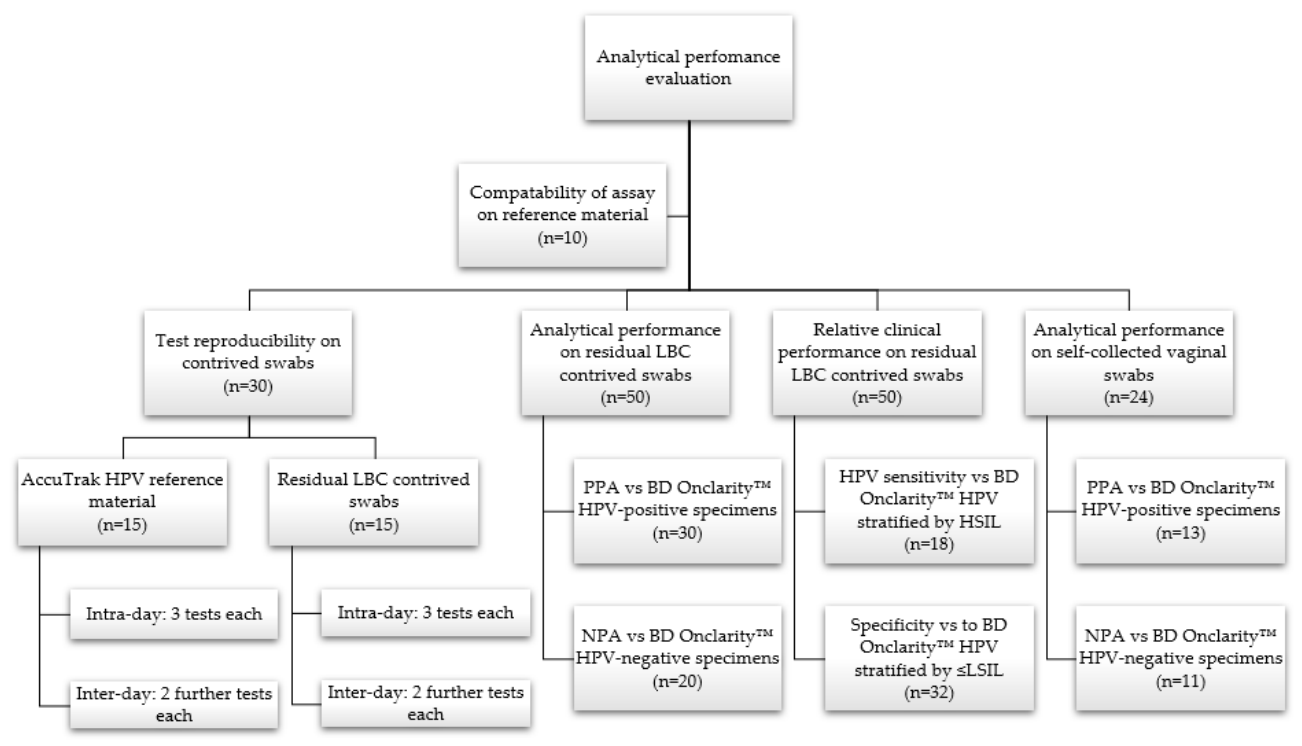
Figure 2.
Specimen processing overview. Figures based on Pluslife 16/18/45 Test Card Instructions for Use [20] and additional procedures used in this study.
Figure 2.
Specimen processing overview. Figures based on Pluslife 16/18/45 Test Card Instructions for Use [20] and additional procedures used in this study.
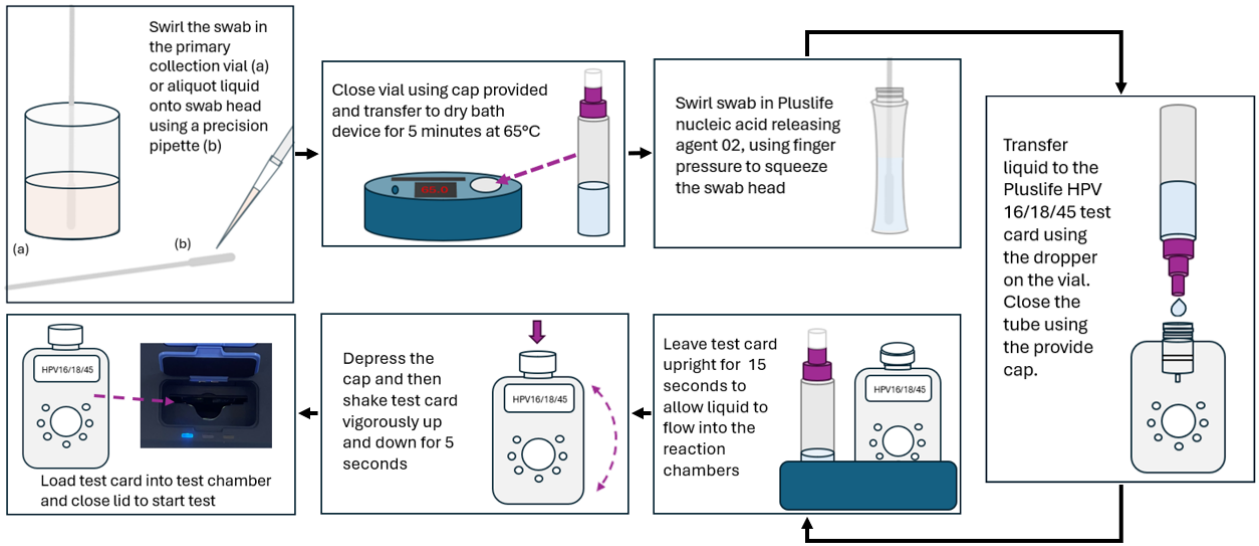
Figure 3.
Examples of Pluslife HPV 16/18/45 amplification graphs available in the PluslifePad software: (a) HPV negative, (b) HPV 16 positive, HPV 18 negative, HPV 45 negative, (c) HPV 16 positive, HPV 18 positive, HPV 45 negative, and (d) HPV 16 negative, HPV 18 positive, HPV 45 positive. The x-axis refers to time in minutes, and the y-axis shows fluorescence detected (unspecified units). HPV – Human papillomavirus, IC – internal control.
Figure 3.
Examples of Pluslife HPV 16/18/45 amplification graphs available in the PluslifePad software: (a) HPV negative, (b) HPV 16 positive, HPV 18 negative, HPV 45 negative, (c) HPV 16 positive, HPV 18 positive, HPV 45 negative, and (d) HPV 16 negative, HPV 18 positive, HPV 45 positive. The x-axis refers to time in minutes, and the y-axis shows fluorescence detected (unspecified units). HPV – Human papillomavirus, IC – internal control.
Disclaimer/Publisher’s Note: The statements, opinions and data contained in all publications are solely those of the individual author(s) and contributor(s) and not of MDPI and/or the editor(s). MDPI and/or the editor(s) disclaim responsibility for any injury to people or property resulting from any ideas, methods, instructions or products referred to in the content. |
© 2026 by the authors. Licensee MDPI, Basel, Switzerland. This article is an open access article distributed under the terms and conditions of the Creative Commons Attribution (CC BY) license (http://creativecommons.org/licenses/by/4.0/).
Copyright: This open access article is published under a Creative Commons CC BY 4.0 license, which permit the free download, distribution, and reuse, provided that the author and preprint are cited in any reuse.