

Submitted:
07 September 2026
Posted:
08 September 2026
You are already at the latest version
Abstract
Lithium-thionyl chloride (Li-SOCl2) primary batteries contain a large amount of lithium and are increasingly being produced as hazardous waste, but little work has been done on recycling these batteries. This study reports an efficient process for the recycling of Li from used Li-SOCl2 batteries using carbothermic reduction, water leaching and selective precipitation. The recovered black mass obtained after manual dismantling of the batteries contained 6.734 wt.% Li, which was thermally treated under different conditions to minimize the lithium losses. Carbothermic reduction at 500 °C for 2 h limited Li volatilization to about 7%, but losses were significant at higher temperatures. Water leaching selectively recovered lithium into solution leaving most of the impurities in the solid residue. Different precipitation strategies were assessed for the recovery of lithium as Li2CO3. Although ammonium carbonate yielded a recovery efficiency at 68%, sodium carbonate provided higher overall precipitation yields. Thus, the optimal conditions involved solution preconcentration, pH adjustment to above 11, and the use of ethanol as an antisolvent using sodium carbonate as precipitating agent. These results reveal an efficient recycling pathway to recover lithium from spent Li-SOCl2 batteries, contributing to the sustainable management of this under-explored battery waste stream.
Keywords:
Li-SOCl2 batteries
; primary lithium-ion batteries
; lithium recovery
; battery recycling
1. Introduction
Lithium is a critical raw material widely used in the manufacture of rechargeable lithium-ion batteries, which are essential for portable electronics devices, electric vehicles, and renewable energy storage systems [1]. However, the increasing global demand for lithium is exerting significant pressure on natural reserves, most of which are concentrated in a few geographic regions, such as the “Lithium Triangle” in South America [2,3]. This growing demand, coupled with geopolitical and environmental challenges associated with primary extraction, has raised concerns about the long-term availability and sustainability of lithium supplies [4]. In this context, the recovery of lithium from secondary sources, including spent and/or end-of-life batteries, has been identified as a strategic approach to the problems related to limited lithium reserves, reduced environmental impact from mining, and support for the establishment of a circular economy [5,6]. Lithium-ion batteries can be classified into primary (non-rechargeable) and secondary (rechargeable), each with different characteristics and applications. Primary lithium batteries use metallic lithium as the anode and provide high energy density and very low self-discharge rates. Lithium metal, with its extremely low density (6.941 g mol⁻¹, 0.534 g cm⁻³) and the most negative electrochemical potential (-3.04 V vs. SHE), enables lithium primary batteries to deliver a high energy density and a broad voltage window [7]. This makes them suitable for long-duration and low-power applications like medical implants and military equipment, among others. However, primary lithium batteries have the disadvantage of being one-time-use only, carry significant safety risks due to the presence of reactive lithium metal, and present environmental challenges due to limited recyclability. On the other hand, secondary lithium batteries are designed to be rechargeable, providing high energy and very long cycle-life along with numerous versatile applications such as portable electronics, electric vehicles, and grid storage [8].
Among the primary batteries, the Li-SOCl2 batteries have been successfully commercialized and currently offer the highest specific energy. This battery technology offers substantial benefits, including an ultra-high cell-level energy density of 700 Wh kg⁻¹, a remarkably broad operating temperature range (-120 to 150 oC), and a high discharge voltage plateau exceeding 3.3 V. Furthermore, it features a minimal self-discharge rate of approximately 1% per year and an exceptional storage life of over 15 years [7].
While secondary batteries offer better sustainability and recycling prospects, both technologies face challenges in material sourcing, environmental impact, and lifecycle management, prompting continued research into solid-state batteries, greener chemistries, and circular design principles [9].
Since these batteries are designed for single-use, they pose a significant environmental threat if they are improperly discarded. They reach their end-of-life in landfills, and the corrosion of their metal casings can cause heavy metals and toxic chemical compounds to leach into the environment, leading to degraded soil quality and contaminated groundwater. Consequently, the EPA (Environmental Protection Agency) classifies them as hazardous waste due to their high inflammability and reactivity (under codes D001 and D003) [10], necessitating proper management of this waste and recycling protocols.
Despite the extensive literature on lithium recovery from lithium-ion batteries, recycling studies focused on primary Li-SOCl₂ batteries are extremely scarce. Consequently, the development of dedicated recycling routes for this waste stream represents an important research challenge. The presence of solid lithium salts (such as LiSOCl₂ and SOCl₂) offers a promising basis for applying hydrometallurgical or mechanochemical recovery techniques—methods already been proven effective in the recycling of lithium-ion batteries.
Among primary lithium batteries, lithium-thionyl chloride (Li/SOCl₂) systems exhibit exceptionally high energy densities, long shelf lives, and reliability making them ideal for several applications. Lithium-thionyl chloride (Li/SOCl₂) batteries function through an electrochemical reaction between a lithium anode and a thionyl chloride cathode. In this type of batteries, the electrolyte also acts as the active cathode material. The discharge process involves lithium oxidation at the anode and thionyl chloride reduction at the cathode, producing lithium chloride, sulfur, and sulfur dioxide, while a passivating layer of LiCl forms on the lithium anode [11], as shown in Equations (1-2). The generated sulfur dioxide dissolves in excess thionyl chloride electrolyte.
This study demonstrates the feasibility of recovering lithium from spent LiSOCl₂ batteries through a combined pyrometallurgical and hydrometallurgical process. The first stage involves a carbothermic reduction of the black mass at low temperatures, effectively decomposing lithium-containing compounds into more reactive forms. Subsequently, aqueous leaching enables the selective dissolution of lithium into solution while minimizing the co-dissolution of other metallic species. The final recovery step involves selective precipitation of lithium as lithium carbonate (Li₂CO₃) to achieve high purity and yield. The integrated process shows promising efficiency for lithium recovery from primary lithium-thionyl chloride batteries, offering a potential route for closing the loop on this underexplored battery chemistry and contributing to resource sustainability in the battery sector.
2. Materials and Methods
2.1. Dismantling of the Batteries and Obtaining the Black Mass
Two different types of Li-SOCl2 batteries (FANSO ER26500H+1SPC 1550 and FANSO ER26500H+2SPC 1550, see Figure 1) were provided by TST Sistemas (Santander, Cantabria, España). These are high-capacity energy packs that combine a primary lithium cell (ER26500H) with one (SPC1550) or two pulse capacitors (2SPC 1550). These batteries were manually dismantled, and each component was separated.
Li-SOCl2 batteries usually consists of a stainless-steel shell, a separator generally composed of a fibrerglass membrane, an electrolyte normally composed of SOCl2 solvent with inorganic salts such as LiClO4 or LiAlCl4, a metallic Li anode, and a porous carbon cathode host with SOCl2 as the active material. SOCl2 is loaded into the porous carbon through physical adsorption. As a result, SOCl2 simultaneously functions as the solvent, an electrolyte component, and the cathode active material [12].
According to the model proposed by Schlaikjer et al. [13], the overall reaction in a Li-SOCl2 primary battery can be expressed according to Equation 3:
During the discharge of a Li-SOCl₂ battery, the electrochemical process produces LiCl and elemental sulfur as solid products, which precipitate on the carbon cathodes [14].
Previously discharged batteries were manually dismantled under controlled conditions to minimize risks associated with exposure to active chemical compounds, short circuits, or battery explosion. Representative images of the manual dismantling process carried out on LiSOCl₂ batteries are presented in Figure 2.
Initially, a set of cells (three for the ER26500H+2SPC 1550 batteries, two large and one small, and two for the ER26500H+1SPC 1550 batteries, one large and one small) connected and enclosed in a plastic casing were observed. Cutting tools are used to remove the external plastic covering. Subsequently, the individual cells are separated, and their metallic casings are removed, allowing access to the internal components of each cell. Once the cell housing is opened, internal components, such as plastic separators, insulating disks, and metal covers were extracted. Finally, the cell core was carefully unrolled, revealing a multilayered sheet composed of electrodes (anode and cathode) and the separator.
As illustrated in Figure 3, LiSOCl₂ batteries are mainly composed of metals (Figure 3a), plastics (Figure 3 b,c), and black mass (Figure 3d).
Figure 4 exhibits the materials composition of the two types of batteries. In the case of ER26500H+2SPC1550 batteries, metals represent the highest fraction (60.62%), followed by black mass (14.69%), anode (7.73%), and cathode (6.27%). In contrast, for the ER26500H+1SPC1550 batteries, metals also dominate (58.97%), with significant contributions from the anode (11.49%) and cathode (9.32%). Plastics, adhesives, copper wire, and cellulose account for smaller fractions in both types of battery.
Therefore, the black mass recovered from both types of batteries was used as a starting material for the subsequent experiments.
2.2. Characterization
The metal content in the solutions obtained was analyzed by Inductively Coupled Plasma-Optical Emission Spectrometry (ICP-OES) using an Agilent ICP-OES (Agilent Technologies, Santa Clara, CA, USA), model 5100 VDV (Vertical Dual View).
The composition of the powders was determined through digestion of the solids. 1 g of each sample was put in contact with aqua regia and subjected to heating for the previously determined time. The liquid volume for each test was kept constant. Finally, the mixture was transferred to a 100 mL flask and brought to volume using MilliQ water.
The structural characterization was carried out via X-ray diffraction (XRD) using an X’Pert Pro MPD diffractometer (PANalytical) equipped with a Cu anode (Cu Kα radiation) with a step size of 0.03o (2θ) in the range 10o-90o.
The morphology of the samples was analyzed by field emission scanning electron microscopy (FE-SEM) using a JEOL JSM-IT700HR microscope, with an energy-dispersive X-ray microanalyzer (EDX). For SEM observations, the powder samples were placed on an adhesive conductive carbon disk.
3. Results and Discussion
3.1. Characterization of the Starting Black Mass
The chemical composition of the recovered black mass, calculated from ICP-OES measurements, is summarized in Table 1. The lithium content was quantified as 6.734 wt.%, whereas the levels of other elements were comparatively low. Only a similar sulfur content was detected, as expected in the composition of this type of battery.
XRD pattern and SEM images (Figure 5) revealed a predominantly amorphous structure, which was likely attributable to the presence of carbonaceous material such as carbon graphite. This interpretation is also supported by the EDX spectrum (Figure 5b inset), which indicates only trace amounts of sulfur and a general absence of well-defined crystalline phases in the sample.
3.2. Carbothermic Reduction of the Black Mass
Given the significant lithium content detected in the black mass, further processing steps will be undertaken to recover the lithium. These subsequent treatments aim to separate and lithium recovery from the remaining matrix through metallurgical methods.
To the best of our knowledge, research on lithium recovery from Li-SOCl2 batteries is limited. In the present work, lithium recovery from the obtained black mass was investigated based on lithium recovery processes from other types of black mases. The overall process consists of a carbothermic reduction step followed by a hydrolysis step [15].
For the carbothermic reduction, a homogeneous mixture of the black mass and a reducing agent (20 wt.%) was placed in an alumina crucible. A N2 flow was used to maintain an inert atmosphere while the mixture was heated in the furnace at a set temperature. Several conditions to analyze the influence of the thermal treatment.
Table 2 summarizes the carbothermic reduction conditions employed, along with the amount of Li lost. It should be noted that lithium loss was determined by comparing the lithium amount in the mixture before and after the carbothermic reduction process after the digestion of the corresponding solids. As shown, the combination of high temperatures and prolonged thermal treatment results in significant Li loss (test 1). A similar trend is observed when the thermal treatment is carried out at short times at elevated temperatures (test 2). This result could be attributed to lithium volatilization loss during the carbothermic reduction step [16]. Unlike conventional lithium-ion batteries, where lithium is strongly bound within complex transition metal oxide frameworks, the black mass from Li-SOCl2 batteries contains a high concentration of lithium chloride (LiCl), which is generated during battery discharge. LiCl melts at a relatively low temperature of 605 °C [17]. Therefore, holding the material at 850 °C significantly increased the rate of vaporization. Although though 850 °C is below the actual boiling point of pure LiCl, this temperature still provides enough heat to cause the salt to evaporate continuously into the gas phase. However, this loss can be mitigated by lowering the treatment temperature. Consequently, a temperature of 500 oC and a thermal treatment of 2 hours were selected for the subsequent experiments.
After the carboreduction tests, the carboreduced black mass mixture was subjected to a hydrolysis step at room temperature for 2 hours with constant mechanical stirring. Subsequently, the final suspension was filtered, and each fraction was analyzed independently. A comparison of the chemical composition of the carboreduced and the water-leached carboreduced black mass is exhibited in Table 3. While the lithium content in the carboreduced black mass was calculated at 6.292 wt.%, this value decreased significantly to 1.431 wt.% following the water-leaching step, demonstrating the high efficiency of the process.
In addition, the XRD pattern (Figure 6a) for the solid fraction reveals a predominantly amorphous carbon graphite structure, where some crystalline reflections can be appreciated, attributable to sulfur phase [card nº 01-089-260]. This result is consistent with the composition of the initial black mass treated. The SEM micrograph (Figure 6b) reveals a heterogeneous surface topography, characterized by irregular, micron-sized particulate agglomerates anchored onto larger, smooth carbonaceous sheets (graphite matrix).
The chemical composition of the liquid fraction was also determined from ICP-OES measurements, as shown in Table 4. Lithium was identified as the predominant species within the recovered liquid fraction. This high concentration demonstrates that the lithium was efficiently recovered in the liquid fraction, confirming that it remained as a highly water-soluble phase (such as residual LiCl) within the porous carbon host after the carbothermic reduction step. Furthermore, a significant sulfur concentration was detected, indicating partial dissolution of the sulfur-bearing subproducts generated during Li-SOCl2 battery discharge, and subsequent thermal treatment. Finally, impurities exhibited minimal dissolution, remaining in minor trace quantities.
3.3. Lithium Recovery
Unlike oxide-based lithium-ion battery black masses are reduced by the carbothermic reduction reaction typically leading to the formation of either Li2CO3 or Li2O, lithium ion in spent Li-SOCl2 batteries are in a different chemical form as it is chiefly found in the discharged form as LiCl. Therefore, the carbothermic treatment is not expected to reduce Li⁺ to metallic lithium, instead it is anticipated that it will only result in the decomposition of sulfur-based compounds and some of the residual electrolyte with lithium remaining in its ionic state principally as water soluble LiCl. This interpretation is consistent with the high lithium extraction achieved after the water-leaching in this study.
Lithium recovery from the leached solution using a precipitation approach was investigated for the selective precipitation of lithium carbonate. This process is based on the reaction between Li⁺ ions in dissolution and carbonate ions supplied by a carbonating reagent.
Among the reagents evaluated, ammonium carbonate ((NH4)2CO3) was first selected due to its ability to promote LiCO3 formation (Equation 4) while avoiding the incorporation of foreign cations into the crystal lattice, thus enabling the production of a high-purity lithium compounds [18].
Thus, different experimental conditions were assessed (summarized in Table 5):
(1) On the lithium solution, the stoichiometric amount of ammonium carbonate is slowly added to the Li solution. This precipitation was carried out with slight heating to prevent the solubilization of lithium carbonate; (2) On the lithium dissolution, ammonium carbonate is slowly added in a molar ratio of 2:1 (ammonium carbonate:lithium). This precipitation was also carried out with slight heating to prevent the solubilization of lithium carbonate; (3) The initial lithium solution is basified by the addition of NaOH until a pH of 11 is reached. On the basified solution, ammonium carbonate is slowly added in a molar ratio of 2:1 (2:1 carbonate: lithium). This precipitation is carried out with slight heating to favor the formation of lithium carbonate.
The obtained results from the precipitation tests is also shown in Table 5 in terms of lithium recovery efficiency (%). This percentage was calculated based on the stoichiometric relationship between the lithium recovered as Li2CO3, and the initial lithium concentration present in the solution. As indicated, the lowest lithium recovery yield (38%) was obtained under route (1) when utilizing a strictly stoichiometric amount of (NH4)2CO3. This poor performance is related to the relatively high solubility of lithium carbonate in aqueous media at ambient temperature, which prevents complete precipitation under equimolar conditions. In contrast, an efficiency enhancement was achieved under route (2) by increasing the (NH4)2CO3 molar ratio to 2:1, leading to lithium recovery yield up to 65%. This marked improvement is governed by the common-ion effect; the excess of carbonate ions (CO32-) forces more dissolved lithium to precipitate, which minimizes the amount of lithium that remains dissolved. The maximum recovery yield (lithium recovery 68%) using (NH4)2CO3 as the precipitating reagent was achieved via route (3), which combined a 2:1 molar ratio with a basification step previously using NaOH to reach a pH of 11. Although the final recovery efficiencies of routes (2) and (3) appear similar, the alkaline environment in route (3) plays a critical role in preventing the protonation of carbonate ions into bicarbonate (HCO3-). At pH below 10, the concentration of active (CO32-) ions decreases due to the equilibrium with (HCO3-), which forms highly soluble lithium bicarbonate (LiHCO3) and hinders the final recovery. Thus, increasing the pH to 11, the carbonate species are kept fully deprotonated, maximizing the availability of (CO32-) ions to react with the remaining Li+ ions.
Although alkaline conditions and an increased ammonium carbonate dosage theoretically seem to favor lithium carbonate precipitation, the relatively low recovery efficiency could be attributed to the thermal instability of the precipitating reagent.
Based on the optimal conditions obtained, further precipitation experiments were conducted to optimize lithium recovery from the leach solution. According to previous studies, ammonium carbonate gradually decomposes into water vapor, carbon dioxide, and ammonia at 58 °C [19,20], according to Equation 7. Therefore, lithium precipitation may not be complete even with the excess ammonium carbonate added.
In addition, previous studies have investigated the addition of non-aqueous solvents to lithium precipitation. The presence of a non-aqueous solvent in the medium results in a decrease in the dielectric constant of the medium (water ≈ 80 while ethanol ≈ 25), less solvation of the ions, which causes a decrease in the solubility of Li₂CO₃ and therefore greater supersaturation and precipitation [18].
Finally, previous studies have shown that precipitation efficiency is higher at higher concentrations of lithium in the initial solution because a more concentrated solution facilitates the formation of an insoluble solid through interactions with the precipitating agent [21]. Therefore, the initial lithium solution was concentrated 2.5-fold. After that, the lithium concentrate solution was again basified using sodium hydroxide at a pH higher than 11 and selectively precipitated using the stoichiometric amount of sodium hydroxide with light heating. Finally, the obtained solid was filtered, and the corresponding liquid and solid fractions were analysed.
Thus, different experimental conditions were assessed (summarized in Table 6):
Routes (4) and (5) evaluate the use of sodium carbonate (Na2CO3) at a 2:1 molar ratio, substituting the previously tested carbonating agent. Specifically, route (5) incorporates ethanol (EtOH) to decrease the solubility of lithium carbonate via dielectric constant modification of the aqueous medium. Additionally, route (6) evaluates a two-step process that combines an initial stage to concentrate the solution followed by precipitation using Na2CO3 with the addition of EtOH as an antisolvent.
As can be appreciated, route (4) yielded a recovery of 80%, indicating the effectiveness of using Na2CO3 under excess conditions to drive the precipitation equilibrium. In route (5) this value was increased to 88% due to the addition of ethanol which reduces the lithium carbonate solubility by changing the dielectric constant of the aqueous phase. Finally, route (6) obtained nearly complete lithium recovery (near of 100%). This excellent performance is attributed to the synergistic effect of the initial solution preconcentration step and the antisolvent-assisted precipitation step. This two-step configuration is the best strategy to maximize the efficiency.
3.4. Lithium Carbonate Characterization
Table 7 shows the chemical composition of both lithium carbonate samples obtained under the optimal conditions determined by ICP-OES. Lithium is the predominant element in both samples, with concentrations of 20.845 wt.% and 19.265 wt.% for the Li2CO3 obtained using ammonium carbonate and sodium carbonate, respectively. These values are close to the theoretical lithium content of pure Li2CO3 (i.e. 18.79 wt.%). Regarding impurities, both samples exhibit a high degree of purity, as the remaining elements are present at concentrations below 0.1 wt.%. Sulfur was the major impurity in both samples, although at a concentration of 0.051 wt.% and 0.034 wt.%, respectively.
The XRD pattern of the final solids obtained under the optimal conditions using the different precipitating agents is shown in Figure 7 (a,b). All diffraction maxima can be attributable to the lithium carbonate phase (Li2CO3 PDF-2 no 01-087-0728). Within the sensitivity of the measurements, no more maxima were detected. In addition, SEM micrographs for the recovered lithium carbonates are also shown in Figure 7 (c,d), where particle agglomerates were observed.
The overall efficiency of the process was determined using the lithium mass balances for the successive operational stages. The first step of carbothermal reduction, 7% of the initial lithium was lost by volatilization. In the following hydrolysis step, 15% of the residual lithium is non-recoverable and insoluble, which results in a leaching efficiency of 85% in solution. Under optimum operation conditions complete precipitation of the dissolved Li was achieved. Thus, the overall global yield of the process based on the initial black mass feed is 78.5%.
4. Conclusions
The present work shows the technical feasibility of the recovery of lithium from Li-SOCl2 primary batteries by means of a combined carbothermic reduction following a hydrometallurgical route. The results obtained from the dismantling and characterization of the batteries show that the black mass recovered has a significant lithium content (6.734 wt.%), which makes it a valuable secondary resource. The carbothermic reduction step was identified as a critical step, with treatment at 500 °C for 2 h minimizing lithium losses to about 7%, whereas higher temperatures promoted significant volatilization. The subsequent hydrolysis step enabled the selective recovery of lithium into solution. Finally, selective precipitation of lithium as Li2CO3 was achieved successfully. Overall, the proposed process achieved a global lithium recovery yield of 78.5% from the initial black mass, demonstrating the effectiveness of the combined carbothermic-hydrometallurgical route for recycling spent Li-SOCl₂ primary batteries.
Author Contributions
L.A.: Writing – review & editing, Writing – original draft, Validation, Methodology, Investigation, Formal analysis, Data curation. O.R.-L.: Writing – review & editing, Validation. F.A.L.: Writing – review & editing, Validation, Resources, Investigation, Supervision, Conceptualization.
Funding
This work was supported by the European Union’s Horizon Europe Programme (HORIZON-KDT-JU-2022-2-RIA) under Project EECONE (Grant Agreement No. 101112065), and by the Spanish Agencia Estatal de Investigación under Project PCI2023-143382.
Acknowledgments
Microsoft Copilot (Microsoft Corporation) was used as an AI-assisted tool to create a graphical abstract. The tool was used only for visual generation, and all content was reviewed and validated by the authors.
Conflicts of Interest
The authors declare no conflicts of interest.
References
- Ngoy, K.R.; Lukong, V.T.; Yoro, K.O.; Makambo, J.B.; Chukwuati, N.C.; Ibegbulam, C.; Eterigho-Ikelegbe, O.; Ukoba, K.; Jen, T.-C. Lithium-Ion Batteries and the Future of Sustainable Energy: A Comprehensive Review. Renewable and Sustainable Energy Reviews 2025, 223, 115971. [CrossRef]
- Lu, J.; Chen, S.; Li, Y.; Du, X.; Shi, W.; Lin, M. Primary Amine-Mediated Single-Step Extraction: A Sustainable Strategy for High-Efficiency Lithium Recovery from Waste NMC Lithium-Ion Batteries. Desalination 2026, 622, 119771. [CrossRef]
- Flexer, V.; Baspineiro, C.F.; Galli, C.I. Lithium Recovery from Brines: A Vital Raw Material for Green Energies with a Potential Environmental Impact in Its Mining and Processing. Science of The Total Environment 2018, 639, 1188–1204. [CrossRef]
- Vikström, H.; Davidsson, S.; Höök, M. Lithium Availability and Future Production Outlooks. Appl. Energy 2013, 110, 252–266. [CrossRef]
- Hao, J.; Wang, Y.; Wu, Y.; Guo, F. Metal Recovery from Waste Printed Circuit Boards: A Review for Current Status and Perspectives. Resour. Conserv. Recycl. 2020, 157, 104787. [CrossRef]
- Gaines, L. The Future of Automotive Lithium-Ion Battery Recycling: Charting a Sustainable Course. Sustainable Materials and Technologies 2014, 1–2, 2–7. [CrossRef]
- Li, H.; Zhang, D.; Qian, H.; Chen, R.; Cao, Y.; Ai, X.; Wu, J. Li-SOCl2 Batteries: Current Status, Practical Challenges, and Future Perspectives. Journal of Energy Chemistry 2026, 113, 365–401. [CrossRef]
- Phogat, P.; Dey, S.; Wan, M. Powering the Sustainable Future: A Review of Emerging Battery Technologies and Their Environmental Impact. RSC Sustainability 2025. [CrossRef]
- Lai, X.; Chen, Q.; Tang, X.; Zhou, Y.; Gao, F.; Guo, Y.; Bhagat, R.; Zheng, Y. Critical Review of Life Cycle Assessment of Lithium-Ion Batteries for Electric Vehicles: A Lifespan Perspective. eTransportation 2022, 12, 100169. [CrossRef]
- Https://Www.Epa.Gov/Hw/Lithium-Ion-Battery-Recycling-Frequently-Asked-Questions Available online: https://www.epa.gov/hw/lithium-ion-battery-recycling-frequently-asked-questions (accessed on 21 April 2026).
- Sun, Y.; Qin, X.; Li, L.; Zhang, Y.; Zhang, J.; Qi, J. The Impact of Temperature on the Performance and Reliability of Li/SOCl2 Batteries. Energies (Basel). 2024, 17, 3063. [CrossRef]
- Li, H.; Zhang, D.; Qian, H.; Chen, R.; Cao, Y.; Ai, X.; Wu, J. Li-SOCl2 Batteries: Current Status, Practical Challenges, and Future Perspectives. Journal of Energy Chemistry 2026, 113, 365–401. [CrossRef]
- Schlaikjer, C.R.; Goebel, F.; Marincic, N. Discharge Reaction Mechanisms in Li / SOCl2 Cells. J. Electrochem. Soc. 1979, 126, 513–522. [CrossRef]
- Wang, S.; Hou, X.; Wang, Y.; Chen, Y.; Xu, D.; Liu, C.; Huang, Q. Design and Validation of Lifetime Prediction Model for Lithium-Thiocarbonyl Chloride Batteries Based on Accelerated Aging Experiments. Metals (Basel). 2023, 13, 1579. [CrossRef]
- Alcaraz, L.; Rodríguez-Largo, O.; Barquero-Carmona, G.; López, F.A. Recovery of Lithium from Spent NMC Batteries through Water Leaching, Carbothermic Reduction, and Evaporative Crystallization Process. J. Power Sources 2024, 619, 235215. [CrossRef]
- Qu, G.; Wei, Y.; Liu, C.; Yao, S.; Zhou, S.; Li, B. Efficient Separation and Recovery of Lithium through Volatilization in the Recycling Process of Spent Lithium-Ion Batteries. Waste Management 2022, 150, 66–74. [CrossRef]
- Jeon, T.-J.; Wang, J.-P. Preparation and Recovery Behavior of Lithium Chloride (LiCl) from Lithium Iron Phosphate (LiFePO4) Cathode Active Materials via Hydrogen Reduction and CaCl2-Assisted Thermal Chlorination. Materials 2026, 19, 1474. [CrossRef]
- Nguyen, T.T.H.; Lee, M.S. Comparison of Li(I) Precipitation from the Leaching Solution of the Dust from Spent Lithium-Ion Batteries Treatment between Sodium Carbonate and Ammonium Carbonate. Resources Recycling 2022, 31, 34–41. [CrossRef]
- Wang, F.; Song, N.; Xia, X.; Chen, X. Experimental Investigation on Transpiration Cooling of Ammonium Carbonate in Porous Composite Structure at High-Temperature. Appl. Therm. Eng. 2024, 249, 123292. [CrossRef]
- Haynes, W.M.; Lide, D.R.; Bruno, T.J. CRC Handbook of Chemistry and Physics 97 Th Edition;
- Garcia, L.V.; Ho, Y.-C.; Maung, M.; Thant, M.; Han, D.S.; Lim, W. Lithium Recovery via Chemical Precipitation | Encyclopedia Lithium Recovery via Chemical Precipitation;
Figure 1.
Starting FANSO ER26500H+1SPC 1550 and FANSO ER26500H+2SPC 1550 batteries used in the present work.
Figure 1.
Starting FANSO ER26500H+1SPC 1550 and FANSO ER26500H+2SPC 1550 batteries used in the present work.
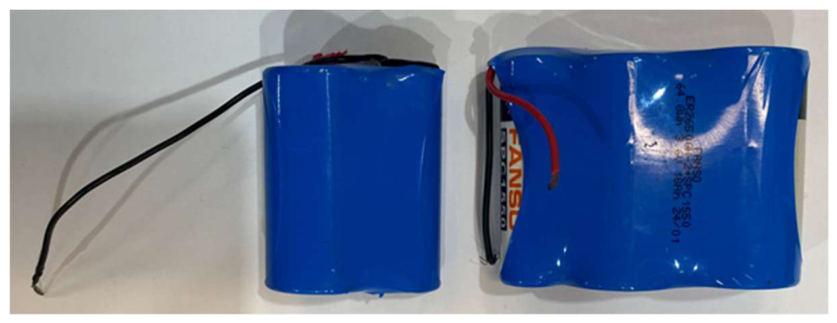
Figure 2.
Illustrative images of the dismantling process for the ER26500H+2SPC 1550 batteries.
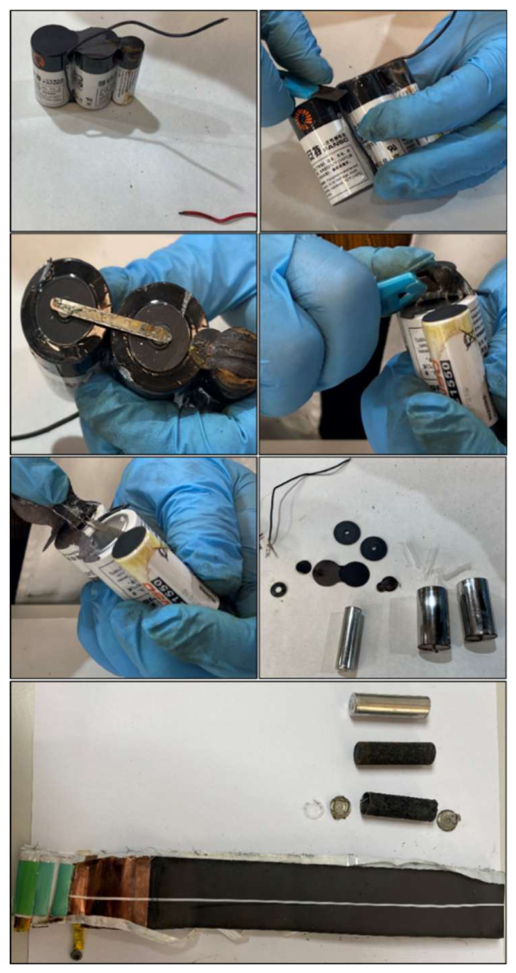
Figure 3.
Different components obtained from the dismantling of LiSOCl₂ batteries include metals (Figure 3a), plastics (Figure 3b and Figure 3c), and recovered black mass (Figure 3d).
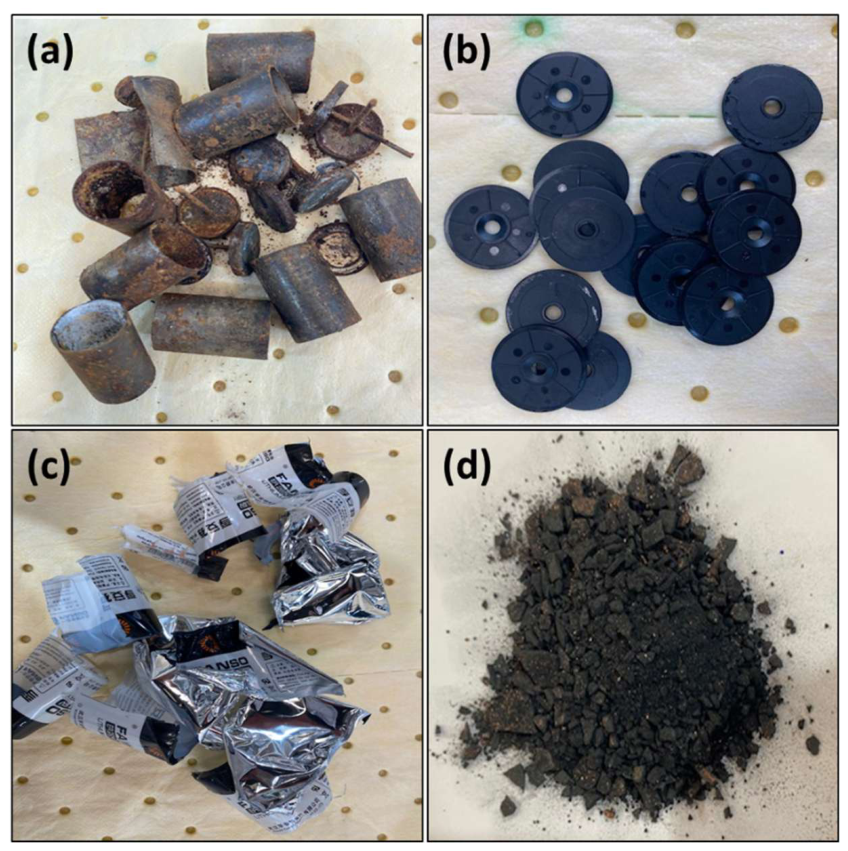
Figure 4.
Weight percentage distribution of the components for FANSO ER26500H and ER26500H+15PC 1550 batteries.
Figure 4.
Weight percentage distribution of the components for FANSO ER26500H and ER26500H+15PC 1550 batteries.
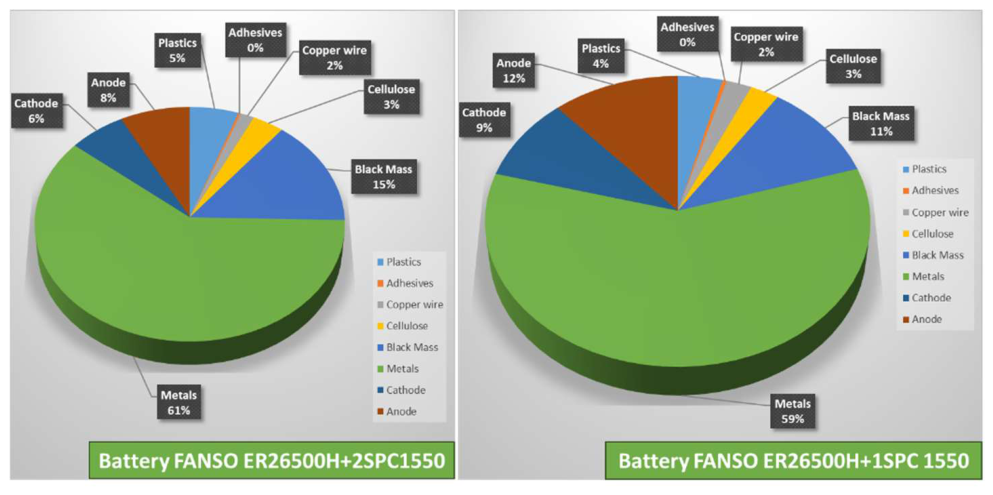
Figure 5.
(a) XRD pattern for the starting black mass, and (b) SEM image and EDX analysis.
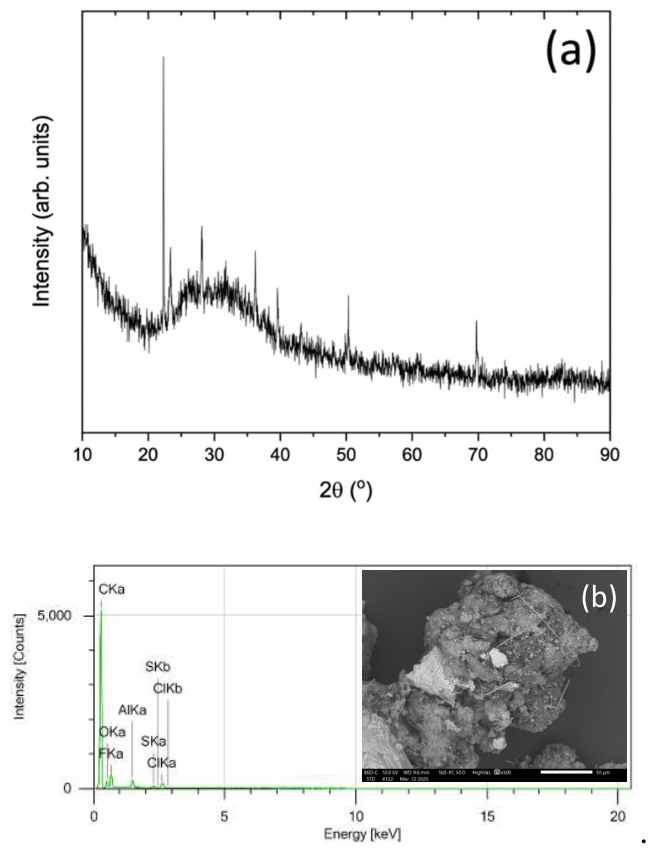
Figure 6.
(a) XRD pattern, and (b) SEM image and EDX analysis for the obtained insoluble product.
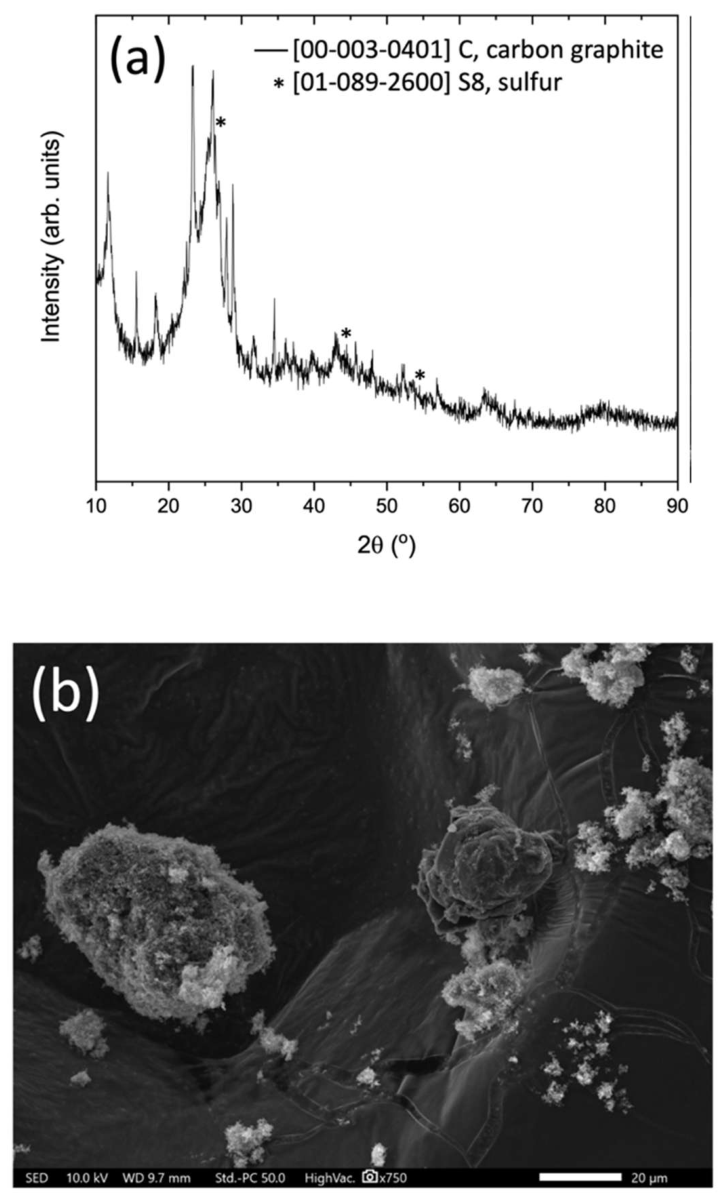
Figure 7.
XRD patterns and SEM micrographs for the obtained final products obtained (a,c) via route (3), and (b,d) via route (6).
Figure 7.
XRD patterns and SEM micrographs for the obtained final products obtained (a,c) via route (3), and (b,d) via route (6).
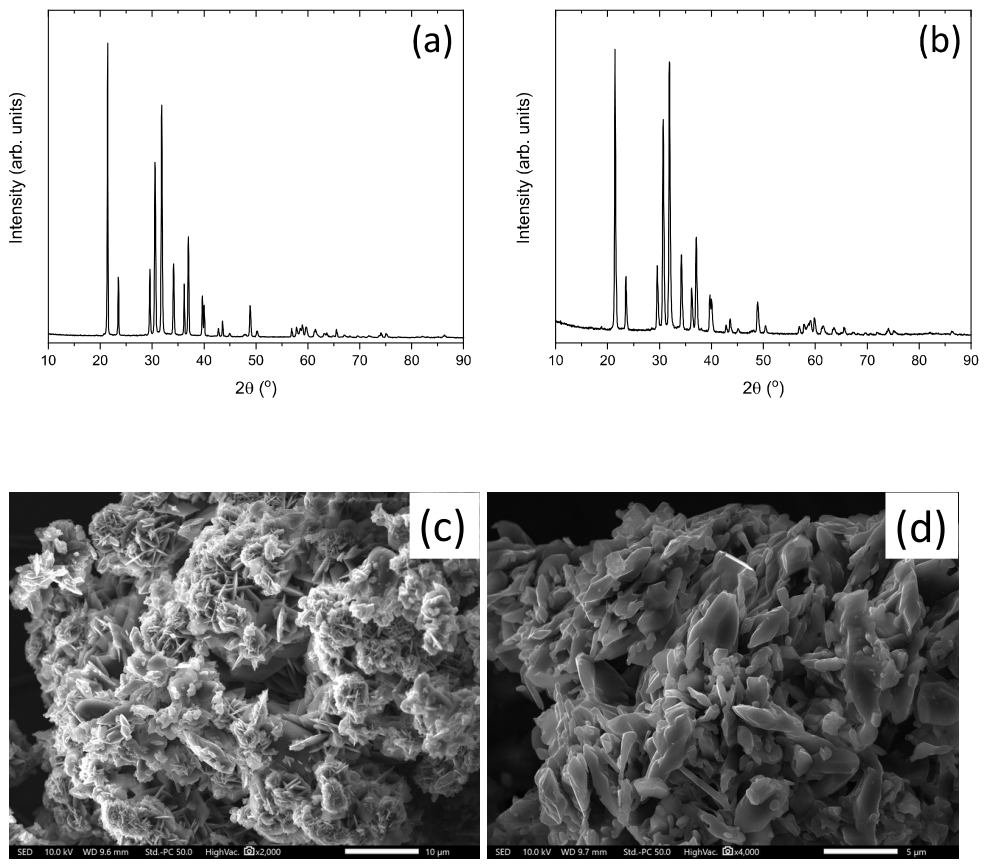

Table 1.
Chemical composition for the starting black mass.
| Element | wt.% |
| Al | 0.979 |
| B | 0.002 |
| Ba | <LD |
| Bi | <LD |
| Ca | 0.009 |
| Cd | <LD |
| Co | 0.058 |
| Cr | 0.013 |
| Cu | 0.648 |
| Fe | 0.061 |
| K | <LD |
| Li | 6.734 |
| Mg | 0.001 |
| Mn | 0.048 |
| Mo | <LD |
| Na | 0.006 |
| Ni | 0.388 |
| P | 0.022 |
| Pb | <LD |
| S | 5.510 |
| Sb | <0.001 |
| Si | 0.020 |
| Sn | 0.010 |
| Sr | 0.001 |
| Ta | <LD |
| Ti | 0.002 |
| V | <LD |
| Zn | 0.008 |
LD Limit of detection.
Table 2.
Experimental conditions used in the carbothermic reduction process and lithium loss in each of them.
Table 2.
Experimental conditions used in the carbothermic reduction process and lithium loss in each of them.
| Carbothermic reduction test | Temperature (oC) | Reaction time (h) | Li lost (%) |
| 1 | 850 | 4 | 48 |
| 2 | 850 | 1 | 35 |
| 3 | 500 | 2 | 7 |
Table 3.
Chemical composition for (a) the carboreduced, and (b) the water-leached carboreduced black mass.
Table 3.
Chemical composition for (a) the carboreduced, and (b) the water-leached carboreduced black mass.
| Element | wt.% | |
| (a) | (b) | |
| Al | 1.039 | 1.960 |
| B | 0.028 | 0.146 |
| Ba | 0.000 | <0.001 |
| Bi | n.d. | <LD |
| Ca | 0.007 | 0.013 |
| Cd | <LD | <LD |
| Co | 0.102 | 0.199 |
| Cr | 0.008 | 0.014 |
| Cu | 0.638 | 1.042 |
| Fe | 0.057 | 0.115 |
| K | 0.009 | 0.004 |
| Li | 6.292 | 1.431 |
| Mg | 0.002 | 0.020 |
| Mn | 0.071 | 0.031 |
| Mo | <LD | <LD |
| Na | 0.062 | 0.159 |
| Ni | 0.470 | 0.822 |
| P | 0.028 | 0.055 |
| Pb | <LD | 0.001 |
| S | 1.291 | 1.426 |
| Sb | <LD | <LD |
| Si | 0.034 | 0.047 |
| Sn | 0.007 | 0.011 |
| Sr | <LD | <LD |
| Ta | <LD | <LD |
| Ti | 0.001 | 0.002 |
| V | <LD | <LD |
| Zn | 0.033 | 0.040 |
LD Limit of detection.
Table 4.
Chemical composition for the liquid fraction obtained after the water-leaching step.
| Element | Concentration (ppm) |
| Al | 24.381 |
| B | 3.359 |
| Ba | 0.030 |
| Bi | <LD |
| Ca | 3.944 |
| Cd | 0.026 |
| Co | 46.658 |
| Cr | <LD |
| Cu | 35.015 |
| Fe | <LD |
| K | 11.686 |
| Li | 12896.200 |
| Mg | 0.699 |
| Mn | 115.796 |
| Mo | <LD |
| Na | 68.037 |
| Ni | 125.820 |
| P | <LD |
| Pb | <LD |
| S | 1199.660 |
| Sb | <LD |
| Si | 3.055 |
| Sn | 0.677 |
| Sr | 0.090 |
| Ta | 0.096 |
| Ti | <LD |
| V | <LD |
| Zn | 32.965 |
LD Limit of detection.
Table 5.
Experimental conditions and lithium recovery efficiencies for the different precipitation routes.
Table 5.
Experimental conditions and lithium recovery efficiencies for the different precipitation routes.
| Route | Precipitation step | pH adjustment | Remarks | Lithium recovery (%) |
| (1) | Stoichiometric amount of (NH₄)₂CO₃ slowly added | Not required | Direct precipitation from solution | 38 |
| (2) | (NH₄)₂CO₃:Li = 2:1 (molar ratio) | Not required | Controlled precipitation via carbonate excess | 65 |
| (3) | (NH₄)₂CO₃:Li = 2:1 (molar ratio) | Basified with NaOH to pH = 11 before carbonate addition | Two-step process: basification + precipitation step | 68 |
Table 6.
Experimental conditions and lithium recovery efficiencies for the different precipitation routes.
Table 6.
Experimental conditions and lithium recovery efficiencies for the different precipitation routes.
| Route | Precipitation step | Remarks | Lithium recovery (%) |
| (4) | Na₂CO₃:Li = 2:1 (molar ratio) | Controlled precipitation via carbonate excess | 80 |
| (5) | Na₂CO₃:Li = 2:1 (molar ratio) + EtOH | Controlled precipitation via carbonate excess with dielectric constant modification | 88 |
| (6) | Preconcentration + Na₂CO₃:Li = 2:1 (molar ratio) + EtOH | Two-step process: preconcentration + precipitation step | 100 |
Table 7.
Chemical composition for the final lithium carbonates obtained using (a) ammonium carbonate, and (b) sodium carbonate through optimal conditions.
Table 7.
Chemical composition for the final lithium carbonates obtained using (a) ammonium carbonate, and (b) sodium carbonate through optimal conditions.
| Element | wt.% | |
| (a) | (b) | |
| Al | 0.004 | 0.001 |
| B | 0.003 | 0.002 |
| Ca | 0.023 | <LD |
| Co | 0.005 | <LD |
| Cu | 0.001 | <LD |
| K | 0.005 | 0.004 |
| Li | 20.845 | 19.265 |
| Mg | 0.005 | 0.001 |
| Mn | 0.013 | <LD |
| Na | 0.007 | 0.083 |
| Ni | 0.001 | <LD |
| S | 0.051 | 0.034 |
| Sn | 0.001 | 0.001 |
| Zn | 0.003 | 0.001 |
Disclaimer/Publisher’s Note: The statements, opinions and data contained in all publications are solely those of the individual author(s) and contributor(s) and not of MDPI and/or the editor(s). MDPI and/or the editor(s) disclaim responsibility for any injury to people or property resulting from any ideas, methods, instructions or products referred to in the content. |
© 2026 by the authors. Licensee MDPI, Basel, Switzerland. This article is an open access article distributed under the terms and conditions of the Creative Commons Attribution (CC BY) license (http://creativecommons.org/licenses/by/4.0/).
Copyright: This open access article is published under a Creative Commons CC BY 4.0 license, which permit the free download, distribution, and reuse, provided that the author and preprint are cited in any reuse.