

Submitted:
03 September 2026
Posted:
04 September 2026
You are already at the latest version
Abstract
Digital device use before sleep has become increasingly common among adolescents, raising concerns about its implications for socio-emotional development. While previous research has primarily focused on the effects of screen time and technology exposure, relatively little is known about how adolescents’ ability to regulate digital device use before bedtime relates to their emotional well-being, specifically their emotional control. This study examined the associations between digital self-regulation before sleep and emotional control among adolescents in Canada and Hong Kong using nationally representative data from the Programme for International Student Assessment (PISA) 2022. Student- and school-level data were merged, yielding an analytic sample of 19,779 students nested within 996 schools (15,250 students in 833 schools from Canada and 4,529 students in 163 schools from Hong Kong). Multilevel modeling was employed to examine the effects of both individual- and school-level digital self-regulation before sleep while controlling for gender, socioeconomic status, school socioeconomic composition, home possessions, and school belonging. Results indicated that higher levels of individual digital self-regulation before sleep were significantly associated with better emotional control. In addition, students attending schools with higher average levels of digital self-regulation demonstrated better emotional control, highlighting the importance of the school context. The associations between digital self-regulation before sleep and emotional control differed significantly between Canada and Hong Kong and also varied, to a small extent, by gender. These findings suggest that adolescents’ capacity to regulate digital device use before bedtime represents an important self-regulatory competency that may support healthy socio-emotional development. The study extends current research by shifting attention from technology exposure to digital self-regulation and underscores the importance of considering individual, school, cultural, and gender contexts when promoting adolescent digital well-being.
Keywords:
digital self-regulation before sleep
; emotional control
; adolescence
; multilevel modeling
; PISA 2022
; Canada
; Hong Kong
1. Introduction
Digital device use has become an integral part of adolescents’ daily lives, supporting learning, communication, entertainment, and social interaction. As smartphones and internet-connected technologies have become increasingly accessible, digital engagement frequently extends into the hours immediately before bedtime. Although digital technologies offer numerous educational and social benefits, growing concern has emerged regarding their potential detrimental influence on adolescents’ sleep, well-being, and healthy development. Consequently, bedtime digital device use has become an important focus of research in education, psychology, and public health (Carter et al., 2016; Hale et al., 2018; OECD, 2021, 2023; Odgers & Jensen, 2020).
Bedtime is a particularly important period for adolescent development because adequate sleep supports cognitive functioning, learning, memory consolidation, executive functioning, emotional regulation, and psychological well-being (Carskadon, 2011; Dahl & Lewin, 2002; Owens, 2014; Tarokh et al., 2016). However, many adolescents routinely engage in social media, messaging, online gaming, and video streaming immediately before sleep (OECD, 2021; Rideout & Robb, 2021). Bedtime digital engagement has consistently been associated with delayed sleep onset, poorer sleep quality, shorter sleep duration, and increased daytime fatigue (Cain & Gradisar, 2010; Carter et al., 2016; Hale & Guan, 2015; Scott et al., 2019), potentially through sleep displacement, cognitive arousal, and exposure to blue light that delays circadian rhythms (Chang et al., 2015; Exelmans & Van den Bulck, 2016). Beyond sleep problems, unhealthy bedtime digital behaviors have also been linked to poorer socio-emotional functioning, including diminished emotional regulation, psychological well-being, and resilience (Odgers & Jensen, 2020; Orben & Przybylski, 2019; Twenge & Campbell, 2018). However, most of this research has examined the consequences of digital technology use or screen time rather than adolescents’ ability to regulate their digital device use before bedtime. As a result, it remains unclear whether digital self-regulation before sleep may serve as a protective self-regulatory competency that may be associated with adolescents’ emotional control. Emotional control is commonly understood as a broad developmental competency encompassing academic engagement, healthy relationships, mental health, and resilience, whereas poor emotional regulation has been linked to anxiety, depression, behavioral problems, and poorer educational outcomes (Eisenberg et al., 2010; Gross, 2015). In contrast with the broad concept of emotional control, digital self-regulation before sleep represents a concrete and potentially modifiable behavior. Understanding the association between these constructs therefore may have important practical implications if future research could detect a causal link. In that case, bedtime digital self-regulation would represent an accessible target for interventions aimed at promoting adolescents' broader socio-emotional functioning.
Despite this growing body of research, most studies conceptualize adolescents’ digital behavior primarily in terms of technology exposure, using measures such as screen time, social media use, or problematic smartphone use (Odgers & Jensen, 2020; Orben & Przybylski, 2019). Although informative, these measures provide limited insight into adolescents’ ability to regulate their digital behaviors. Increasingly, researchers have argued that healthy digital development depends not only on reducing technology exposure but also on strengthening self-regulatory skills that enable adolescents to use digital technologies intentionally and adaptively (George & Odgers, 2015; OECD, 2021). One potentially important but understudied construct is digital self-regulation before sleep, defined as adolescents’ ability to intentionally regulate digital device use immediately before bedtime. Unlike screen-time measures, digital self-regulation captures adolescents’ capacity to balance the immediate rewards of digital engagement with longer-term developmental goals, such as obtaining sufficient sleep, maintaining healthy functioning, and supporting emotional well-being. Consequently, it may provide a more theoretically meaningful indicator of healthy digital behavior than technology exposure alone.
Building on this perspective, the present study uses nationally representative PISA 2022 data to examine (a) whether individual- and school-level digital self-regulation before sleep are associated with adolescents’ emotional control, (b) whether these associations differ between Canada and Hong Kong, and (c) whether they differ by gender. By adopting a multilevel and cross-national approach, this study extends previous research by shifting the focus from technology exposure to digital self-regulation while considering the influence of individual, school, cultural, and gender contexts.
2. Literature Review
2.1. Self-Regulation Theory and Digital Self-Regulation
Self-Regulation Theory posits that individuals actively monitor, evaluate, and regulate their thoughts, emotions, and behaviors to achieve personally valued long-term goals (Baumeister et al., 2007; Carver & Scheier, 1982; Zimmerman, 2000). During adolescence, self-regulation undergoes substantial development as young people assume increasing responsibility for managing their academic activities, social relationships, health behaviors, and daily routines. Stronger self-regulatory capacity has consistently been associated with healthier behaviors, better academic achievement, improved psychological well-being, and greater socio-emotional competence (Duckworth & Carlson, 2013; Eisenberg et al., 2010; Moffitt et al., 2011; Zimmerman, 2008). Consequently, Self-Regulation Theory provides a useful framework for understanding how adolescents make behavioral decisions that influence their long-term development.
The widespread adoption of digital technologies has introduced new challenges to adolescents’ self-regulatory capacity. Smartphones and social media platforms provide immediate rewards through entertainment, social interaction, personalized content, and continuous notifications, increasing the need for adolescents to regulate when, where, and how they engage with digital devices (Montag & Walla, 2016; Przybylski & Weinstein, 2017). Rather than viewing technology use as inherently beneficial or harmful, recent scholarship suggests that developmental outcomes depend largely on adolescents’ ability to regulate their digital engagement (George & Odgers, 2015; OECD, 2021; Odgers & Jensen, 2020; Valkenburg et al., 2022). Accordingly, attention has shifted from technology exposure alone toward the self-regulatory processes underlying healthy digital technology use (Livingstone & Helsper, 2010; Orben, 2020).
Within this perspective, digital self-regulation refers to adolescents’ ability to intentionally monitor and regulate digital device use in ways that support long-term goals and well-being. Unlike traditional indicators such as screen time or problematic smartphone use, digital self-regulation emphasizes behavioral control rather than technology exposure (George & Odgers, 2015; Orben & Przybylski, 2019; Valkenburg et al., 2022). This distinction is particularly relevant before bedtime, when adolescents frequently face a conflict between the immediate rewards of digital engagement and longer-term goals such as obtaining sufficient sleep, maintaining emotional well-being, and supporting academic functioning. From the perspective of Self-Regulation Theory, digital self-regulation before sleep therefore represents an important manifestation of adolescents’ broader self-regulatory capacity and provides a theoretically meaningful framework for understanding healthy digital behavior (Zimmerman, 2000, 2008).
2.2. Digital Self-Regulation Before Sleep and Adolescent Emotional Control
Emotional control is a fundamental component of adolescents’ socio-emotional competence and refers to the ability to regulate emotional responses in ways that facilitate adaptive functioning and goal-directed behavior (Gross, 2015; McRae & Gross, 2020; Thompson, 1994). During adolescence, effective emotional regulation supports academic engagement, positive peer relationships, resilience, and psychological well-being, whereas poorer emotional control has been associated with anxiety, depression, behavioral problems, and poorer educational outcomes (Compas et al., 2017; Denham et al., 2012; Duckworth & Carlson, 2013; Eisenberg et al., 2010). Understanding the factors that promote adolescents’ emotional control has therefore become an important objective in developmental, educational, and public health research.
From the perspective of Self-Regulation Theory, successfully disengaging from digital devices before bedtime requires self-monitoring, inhibitory control, and delayed gratification—the same self-regulatory processes that support effective emotional regulation (Baumeister et al., 2007; Carver & Scheier, 1982; Zimmerman, 2000, 2008). Consequently, adolescents who successfully regulate bedtime digital behaviors may possess greater capacity to regulate their emotions across academic, interpersonal, and everyday situations (Duckworth & Carlson, 2013; Gross, 2015; Zimmerman, 2008).
In addition to reflecting broader self-regulatory capacity, bedtime digital self-regulation may influence emotional control indirectly by promoting healthier sleep. Adequate sleep is essential for cognitive functioning, executive functioning, emotional regulation, and psychological well-being (Carskadon, 2011; Dahl & Lewin, 2002; Owens, 2014; Tarokh et al., 2016). Conversely, bedtime digital engagement has consistently been associated with delayed sleep onset, poorer sleep quality, shorter sleep duration, and increased daytime fatigue through mechanisms such as sleep displacement, cognitive and emotional arousal, and exposure to blue light that delays circadian rhythms (Cain & Gradisar, 2010; Carter et al., 2016; Chang et al., 2015; Exelmans & Van den Bulck, 2016; Hale & Guan, 2015; Scott et al., 2019). Poor sleep, in turn, has been linked to diminished emotional regulation, lower psychological well-being, greater symptoms of anxiety and depression, and reduced resilience among adolescents (Carskadon, 2011; Owens, 2014; Palmer & Alfano, 2017; Tarokh et al., 2016). Together, these findings suggest that bedtime digital self-regulation may contribute to emotional control through both direct self-regulatory processes and indirect sleep-related pathways.
Systematic reviews, meta-analyses, and umbrella reviews have consistently shown that, although greater digital technology use has been associated with poorer psychological well-being, the overall associations are generally small to moderate and highly heterogeneous (Best et al., 2014; Keles et al., 2020; Odgers & Jensen, 2020; Orben, 2020; Orben & Przybylski, 2019; Valkenburg et al., 2022). Rather than demonstrating a uniformly negative effect, accumulating evidence indicates that developmental outcomes depend on multiple factors, including the type, purpose, timing, intensity, and quality of digital engagement, as well as adolescents’ individual characteristics, self-regulatory capacities, and social environments (George & Odgers, 2015; Livingstone & Helsper, 2010; Odgers & Jensen, 2020; Orben, 2020; Shah et al., 2023; Valkenburg et al., 2022). These findings suggest that understanding how adolescents regulate their digital engagement may be more informative than simply measuring how much technology they use.
2.3. A Cross-National Perspective on Digital Self-Regulation and Emotional Control
Understanding adolescents’ digital behaviors requires consideration of the broader educational and cultural contexts in which they develop. Ecological Systems Theory posits that adolescent development is shaped by interactions among individual, school, family, and broader societal environments (Bronfenbrenner & Morris, 2006). Accordingly, adolescents’ digital behaviors are influenced not only by their individual self-regulatory capacities but also by the educational systems, cultural values, and social norms in which they are embedded (Livingstone & Helsper, 2010; OECD, 2021). Consequently, the relationship between digital self-regulation before sleep and emotional control may vary across countries because adolescents’ digital habits, sleep routines, and opportunities to develop self-regulatory skills are shaped by different educational and sociocultural contexts (Bronfenbrenner & Morris, 2006; OECD, 2021; Valkenburg et al., 2022).
Canada and Hong Kong provide a theoretically meaningful comparison because both have highly developed education systems with widespread access to digital technologies and consistently high levels of educational performance, yet they differ substantially in educational philosophies, learning environments, and adolescent experiences (OECD, 2023). Canada has increasingly emphasized student well-being, social-emotional learning, and holistic development alongside academic achievement (OECD, 2021, 2023), whereas Hong Kong’s education system has traditionally been characterized by stronger academic competition, intensive examination pressures, and greater parental expectations regarding educational success (Ho, 2010; OECD, 2023). Previous research has likewise documented cross-national differences in adolescents’ sleep duration, academic stress, psychological well-being, and emotional adjustment between East Asian and Western societies (Fuligni & Hardway, 2006; Gradisar et al., 2011; Short et al., 2013). These similarities and differences provide an important opportunity to examine whether the association between digital self-regulation before sleep and emotional control is consistent across contrasting educational and cultural contexts.
PISA 2022 provides an ideal framework for this comparison because it employs internationally standardized sampling procedures, comparable measurement instruments, and rigorous quality-control protocols across participating education systems (OECD, 2023). Although international interest in adolescents’ digital well-being has grown substantially, relatively few studies have simultaneously examined individual digital self-regulation, school-level contextual influences, and cross-national differences within a multilevel framework. Comparing nationally representative samples from Canada and Hong Kong, the present study extends previous research by investigating whether the associations between digital self-regulation before sleep and emotional control are robust across different educational systems while accounting for both individual- and school-level influences.
2.4. A Gender Perspective on Digital Self-Regulation Before Sleep and Emotional Control
Gender has been consistently associated with adolescents’ digital technology use and socio-emotional development. Previous research suggests that boys and girls differ not only in their patterns of digital engagement but also in their emotional functioning and self-regulatory abilities (Chaplin & Aldao, 2013; Duckworth & Seligman, 2006). For example, boys are more likely to engage in online gaming and other recreational digital activities, whereas girls more frequently use social media, messaging platforms, and other forms of online communication (Odgers & Jensen, 2020; Rideout & Robb, 2021). These differences suggest that the association between digital self-regulation before sleep and emotional control may vary by gender.
One possible explanation is that bedtime digital activities may influence boys’ and girls’ emotional functioning through different mechanisms. Online gaming, which is more common among boys, often involves prolonged engagement and heightened cognitive arousal before sleep, making digital self-regulation particularly important for disengaging from digital activities and maintaining healthy sleep routines (Cain & Gradisar, 2010; Hale & Guan, 2015). In contrast, girls’ bedtime digital engagement is more frequently centered on social interactions, where emotional experiences may be shaped not only by self-regulation but also by interpersonal relationships and peer dynamics (Odgers & Jensen, 2020). In addition, previous research suggests that girls often report stronger behavioral self-regulation but lower emotional well-being than boys (Chaplin & Aldao, 2013; Duckworth & Seligman, 2006). These contrasting patterns imply that the same level of digital self-regulation before sleep may not be associated with emotional control to the same extent for boys and girls, providing a theoretical rationale for examining gender as a potential moderator of this relationship.
2.5. The Present Study
The preceding literature review identifies several important lacunae in understanding adolescents’ healthy digital development. First, although considerable research has examined digital technology use and adolescents’ psychological outcomes, most studies have focused on technology exposure (e.g., screen time or social media use) rather than adolescents’ ability to regulate their digital behaviors. Second, existing research has largely examined these relationships at the individual level, with limited attention to the influence of school contexts. Third, most evidence has been derived from single-country studies, limiting understanding of whether these associations are consistent across educational and cultural settings.
To address these gaps, the present study uses nationally representative PISA 2022 data to examine the associations between digital self-regulation before sleep and adolescents’ emotional control among students in Canada and Hong Kong. Guided, at the individual level, by Self-Regulation Theory, which is augmented by Ecological Systems Theory to account for social, institutional, and cultural factors, we employ multilevel modeling to investigate individual- and school-level associations and examine whether these relationships differ across the two educational contexts. By integrating individual, contextual, and cross-national perspectives, this study aims to advance understanding of healthy digital development and inform educational policies and practices that promote responsible technology use and adolescents' socio-emotional well-being.
Accordingly, this study addresses the following research questions:
- Are individual- and school-level digital self-regulation before sleep associated with adolescents’ emotional control after accounting for demographic, socioeconomic, and school characteristics?
- Do the associations between digital self-regulation before sleep and adolescents’ emotional control differ between Canada and Hong Kong?
- Do the associations between digital self-regulation before sleep and adolescents’ emotional control differ by gender?
3. Methods
3.1. Data Source and Participants
This study used data from the PISA 2022, an international large-scale assessment coordinated by the Organization for Economic Co-operation and Development (OECD). Conducted every three years, PISA assesses the academic competencies, learning experiences, and well-being of approximately 15-year-old students using nationally representative samples drawn through a two-stage stratified sampling design. Schools are first selected using probability proportional to size sampling, followed by the random selection of eligible students within participating schools (OECD, 2023).
The present study focused on Canada and Hong Kong because both education systems participated in PISA 2022 and collected comparable information on digital self-regulation before sleep and on emotional control while representing distinct educational and cultural contexts. After excluding students with missing data on variables included in the analyses, the final analytic sample comprised 19,779 students nested within 996 schools, including 15,250 students from 833 schools in Canada and 4,529 students from 163 schools in Hong Kong.
Consistent with OECD recommendations, all analyses incorporated the final student sampling weight (W_FSTUWT) to account for unequal probabilities of selection. Because students were nested within schools, multilevel modeling was employed to account for the hierarchical structure of the data.
3.2. Measures
Emotional control. Emotional control was measured using the Emotional Control (EMOCOAGR) scale provided in the PISA 2022 database. The scale assesses students’ perceived ability to regulate and manage their emotions in everyday situations. It was constructed by the OECD, based on students’ responses to 10 self-report items (ST313) assessing behaviors related to emotional regulation (e.g., “I keep my emotions under control” and “I get mad easily”). Responses were recorded on a five-point Likert-type scale ranging from 1 (Strongly disagree) to 5 (Strongly agree), with negatively worded items reverse-coded before scaling. Item responses were combined, using the OECD’s scaling procedures, to produce a standardized emotional control score, with higher values indicating stronger emotional control. The OECD-derived standardized scale score (EMOCOAGR) was used as the outcome variable in all analyses.
Digital self-regulation before sleep. The primary predictor was digital self-regulation before sleep, measured using PISA item ST322Q02JA, which asked students “how often do you turn off notifications from social networks and apps on your digital devices when you go to sleep?” Responses were recorded on a five-point Likert-type scale ranging from 1 (Never or almost never) to 5 (Always or almost always), with higher scores indicating stronger digital self-regulation. Following OECD coding conventions, invalid and missing responses (codes ≥ 95) were treated as missing. To examine contextual effects, school-level digital self-regulation was computed by averaging students’ digital self-regulation scores within each school and included as a Level-2 predictor.
Covariates. Student-level covariates included gender, economic, social, and cultural status (ESCS), sense of school belonging (BELONG), and home possessions (HOMEPOS). Gender was measured using the PISA 2022 variable ST004D01T, which classifies students as female or male. At the school level, the mean ESCS of all participating students within each school was calculated to represent the school’s socioeconomic composition. To distinguish within-school and between-school effects, individual ESCS scores were group-mean centered within schools by subtracting each school’s mean ESCS from each student’s ESCS scores. School-level ESCS was represented by the aggregated school mean. A summary of all study variables is presented in Table 1.
3.3. Data Analysis
Given the hierarchical structure of the PISA 2022 data, multilevel linear modeling (MLM) was employed to examine the associations between digital self-regulation before sleep and adolescents’ emotional control. An unconditional model was first estimated to calculate the intraclass correlation coefficient (ICC) and determine the proportion of variance attributable to differences between schools. Subsequently, a series of nested models was estimated (Table 2). Model 1 included demographic, socioeconomic, and school-level covariates. Model 2 added individual- and school-level digital self-regulation before sleep to examine their main effects on adolescents’ emotional control. Model 3 included the main effects of digital self-regulation before sleep and country, together with their interaction, to examine whether these associations between digital self-regulation before sleep and emotional control differed between Canada and Hong Kong. Finally, Model 4 examined whether the association between digital self-regulation before sleep and emotional control differed by gender. Analyses were conducted in R (Version 4.5.1; R Core Team, 2025). Multilevel linear models were estimated using the lme4 package (Bates et al., 2015), and statistical significance was evaluated using the lmerTest package (Kuznetsova et al., 2017).
4. Results
4.1. Preliminary Analyses
Table 3 presents descriptive statistics and gender differences for all study variables by country. For instance, in Canada, male students reported significantly higher emotional control than female students (M = 0.33 vs. −0.21), t(15,176) = −33.16, p < .001, representing a medium effect size (d = 0.54). In contrast, female students reported significantly higher digital self-regulation before sleep than male students (M = 3.58 vs. 3.29), t(15,002) = 9.92, p < .001, although the effect size was small (d = 0.16). A similar pattern was observed in Hong Kong. Male students demonstrated significantly higher emotional control than female students (M = 0.14 vs. −0.12), t(4,504) = −9.91, p < .001, with a small-to-medium effect size (d = 0.29). Conversely, female students reported slightly higher digital self-regulation before sleep than male students (M = 3.28 vs. 3.12), t(4,524) = 2.99, p = .003, although the effect size was negligible to small (d = 0.09).
Figure 1 and Figure 2 visually illustrate the distributions of emotional control and digital self-regulation before sleep between female and male students in Canada and Hong Kong. Consistent with the statistical comparisons reported in Table 3, male students tended to report higher emotional control than female students in both countries (Figure 1). By contrast, female students tended to report higher levels of digital self-regulation before sleep than male students (Figure 2), although these differences were relatively modest. The violin plots further demonstrate substantial overlap in the distributions of both emotional control and digital self-regulation between male and female students, suggesting that, while the gender differences were statistically significant, individual variation within each gender remained considerable.
Table 4 presents the Pearson correlation matrix for the study variables. Emotional control was most strongly associated with sense of school belonging (r = .30, p < .001), followed by economic, social, and cultural status (r = .07, p < .001), digital self-regulation before sleep (r = .06, p < .001), and home possessions (r = .04, p < .001). Digital self-regulation before sleep was positively correlated with economic, social, and cultural status (r = .11, p < .001), home possessions (r = .08, p < .001), and sense of school belonging (r = .03, p < .001). The strongest correlation among all variables was observed between economic, social, and cultural status and home possessions (r = .74, p < .001), reflecting the conceptual overlap between these two indicators of family socioeconomic resources. Variance inflation factors ranged from 1.02 to 2.45, indicating no evidence of problematic multicollinearity among the predictors.
4.2. Multilevel Models
4.2.1. Unconditional Model
The unconditional (null) model indicated that approximately 0.2% of the variance in adolescents’ emotional control was attributable to differences between schools (ICC = .002). Although the between-school variance was relatively small, the nested structure of the PISA data and the inclusion of school-level predictors justified the use of multilevel modeling.
4.2.2. Covariate Model
Model 1 examined the associations between the covariates and adolescents’ emotional control. Male students reported significantly higher emotional control than female students (β = 0.423, p < .001). Socioeconomic status (β = 0.055, p < .001) and school belonging (β = 0.288, p < .001) were positively associated with emotional control, whereas home possessions showed a small negative association (β = −0.038, p = .001). School-level socioeconomic status was not significantly associated with emotional control (p = .202). Compared with the unconditional model, the covariate model significantly improved model fit, Δχ²(5) = 2669.35, p < .001.
4.2.3. Individual-Level and School-Level Digital Self-Regulation
Model 2 examined whether individual- and school-level digital self-regulation before sleep were associated with adolescents’ emotional control after controlling for demographic, socioeconomic, and school characteristics. Individual-level digital self-regulation before sleep was positively associated with emotional control (β = 0.040, p < .001), indicating that adolescents who more consistently regulated their digital device use before bedtime tended to report better emotional control. Model fit improved significantly following the inclusion of individual-level digital self-regulation, Δχ²(1) = 111.32, p < .001.
Model 3 further incorporated school-level digital self-regulation. School-level digital self-regulation was positively associated with emotional control (β = 0.108, p < .001), suggesting that students attending schools where peers reported higher average levels of bedtime digital self-regulation also demonstrated better emotional control. School-level socioeconomic status remained non-significant (β = −0.004, p = .836). The addition of school-level digital self-regulation further improved model fit, Δχ² (1) = 31.02, p < .001, highlighting the importance of both individual- and school-level digital self-regulation in adolescents' socio-emotional development.
4.2.4. Cross-National Variation in the Association Between Digital Self-Regulation and Emotional Control
Model 4 examined whether the association between digital self-regulation before sleep and emotional control differed between Canada and Hong Kong. The interaction between digital self-regulation before sleep and country was statistically significant (β = −0.028, p = .009), indicating that the positive association between digital self-regulation before sleep and emotional control was significantly weaker among adolescents in Hong Kong than among their Canadian counterparts. The inclusion of the interaction significantly improved model fit (Δχ² = 10.36, p = .006). Figure 3 illustrates the associations between digital self-regulation before sleep and emotional control across the two countries.
4.2.5. Gender Variation in the Association Between Digital Self-Regulation and Emotional Control
Model 5 examined whether the association between digital self-regulation before sleep and emotional control differed between female and male students. The interaction between digital self-regulation before sleep and gender was statistically significant (β = 0.019, p = .013), indicating that the positive association between digital self-regulation before sleep and emotional control was stronger among male students than among female students. The interaction plot can be found in Figure 4. It shows that the regression lines for female and male students are almost parallel. Hence, for practical purposes, the gender interaction, though statistically significant, appears to have little relevance.

Table 5.
Multilevel Linear Models Predicting Adolescents’ Emotional Control.
| Predictor | Model 1 Covariates | Model 2 Main Effects | Model 3 Cross-National | Model 4 Gender |
| Fixed Effects | ||||
| Intercept | −0.078*** | −0.085*** | −0.459*** | −0.448*** |
| Male | 0.423*** | 0.434*** | 0.436*** | 0.435*** |
| ESCS | 0.055*** | 0.047*** | 0.046*** | 0.046*** |
| School Belonging | 0.288*** | 0.286*** | 0.286*** | 0.286*** |
| Home Possessions | −0.038** | −0.036** | −0.034** | −0.034** |
| Individual Digital Self-Regulation | — | 0.040*** | 0.045*** | 0.031*** |
| School Mean Digital Self-Regulation | — | 0.108*** | 0.107*** | 0.107*** |
| Hong Kong | — | — | 0.056 | — |
| DSR × Hong Kong | — | — | −0.028** | — |
| DSR × Male | — | — | — | 0.019* |
| School Mean ESCS | 0.026 | 0.033 | 0.024 | −0.004 |
| Model Information | ||||
| Observations (N) | 19,777 | 19,777 | 19,777 | 19,777 |
| Schools | 996 | 996 | 996 | 996 |
| AIC | 61788 | 61679 | 61650 | 61652 |
| BIC | 61851 | 61750 | 61729 | 61731 |
| Log Likelihood | −30886 | −30830 | −30815 | −30816 |
| Marginal R² | .011 | .011 | .011 | .011 |
| Conditional R² | .012 | .013 | .013 | .013 |
| ICC | .002 | .002 | .002 | .002 |
Note. Coefficients are unstandardized regression estimates. ESCS = Economic, Social, and Cultural Status; DSR = Digital Self-Regulation Before Sleep. Marginal R² represents variance explained by the fixed effects, whereas Conditional R² represents variance explained by both fixed and random effects. *p < .05. ** p < .01. *** p < .001.
5. Discussion
5.1. Overview of the Findings
The present study examined the associations between digital self-regulation before sleep and adolescents’ emotional control, using nationally representative PISA 2022 data from Canada and Hong Kong. Guided by Self-Regulation Theory and Ecological Systems Theory (Bronfenbrenner & Morris, 2006; Zimmerman, 2000), four principal findings emerged. First, individual-level digital self-regulation before sleep was positively associated with emotional control after controlling for demographic, socioeconomic, and school-related characteristics. Second, school-level digital self-regulation was positively associated with emotional control, suggesting that, beyond individual behaviors, school contexts may contribute to adolescents’ healthy digital development. Third, the positive association between digital self-regulation and emotional control was significantly stronger in Canada than in Hong Kong. Finally, the association between digital self-regulation before sleep and emotional control differed modestly between female and male students, with the positive association being slightly stronger among male students.
Collectively, these findings extend the literature by demonstrating that adolescents’ ability to intentionally regulate digital device use before bedtime may be a more meaningful indicator of healthy digital behavior than technology exposure alone (George & Odgers, 2015; Odgers & Jensen, 2020; Orben, 2020). The findings also support ecological perspectives emphasizing that adolescent development is shaped not only by individual competencies but also by the broader school and cultural environments in which adolescents develop (Bronfenbrenner & Morris, 2006).
5.2. Individual-Level Digital Self-Regulation Before Sleep and Emotional Control
Consistent with Self-Regulation Theory, adolescents who more consistently regulated their digital device use before bedtime reported better emotional control (Zimmerman, 2000, 2008). This finding extends previous research that has primarily focused on screen time, social media use, or problematic smartphone use (Best et al., 2014; Keles et al., 2020; Odgers & Jensen, 2020). The present results suggest that how adolescents regulate digital technology is a relevant predictor—perhaps even more important than the amount of time they spend using digital technologies (George & Odgers, 2015; Orben & Przybylski, 2019; Valkenburg et al., 2022).
One plausible explanation is that bedtime represents a situation in which adolescents must balance immediate rewards of digital engagement against longer-term goals such as obtaining sufficient sleep and maintaining healthy daily functioning. Adolescents with stronger self-regulatory skills may therefore establish healthier bedtime routines, which in turn are connected to better emotional control across everyday situations (Duckworth & Carlson, 2013; Zimmerman, 2008). This interpretation dovetails with evidence showing that bedtime digital engagement is associated with poorer sleep quality, and that inadequate sleep negatively affects adolescents’ emotional functioning (Cain & Gradisar, 2010; Hale & Guan, 2015; Scott et al., 2019; Tarokh et al., 2016). Collectively, these findings suggest that promoting digital self-regulation may represent a more developmentally appropriate strategy than focusing exclusively on reducing screen time (OECD, 2021; Odgers & Jensen, 2020).
5.3. School-Level Digital Self-Regulation and Emotional Control
One of the primary contributions of this study is the demonstration that digital self-regulation before sleep operates not only at the individual level but also at the school level. Even after accounting for individual demographic and socioeconomic characteristics, students attending schools with higher average levels of bedtime digital self-regulation reported better emotional control. Although between-school variation in emotional control was relatively small, the findings suggest that characteristics of the school environment may contribute to adolescents’ healthy digital environment.
These findings support the Ecological Systems Theory, which emphasizes that adolescent development is influenced by interactions between individuals and their environments (Bronfenbrenner & Morris, 2006). Schools provide important social contexts in which peer norms, behavioral expectations and daily routines may reinforce healthy digital behaviors and socio-emotional development (Eccles & Roeser, 2011; Wang & Degol, 2016). The findings therefore suggest that promoting healthy digital habits could be also viewed as a school-wide responsibility rather than solely an individual one, complementing current initiatives in digital citizenship and digital well-being (Common Sense Education, 2023; OECD, 2021).
5.4. Cross-National Differences
The association between digital self-regulation before sleep and emotional control was positive in both Canada and Hong Kong; however, the association was significantly stronger among Canadian adolescents. This finding suggests the developmental benefits of digital self-regulation may be shaped by broader cultural and educational contexts.
One possible explanation is that the flatter regression slope observed in Hong Kong may partly reflect a ceiling effect, whereby digital self-regulation contributes less to variation in emotional control because adolescents already demonstrate relatively high levels of emotional control, as shown in a significant zero-order comparison between the countries. Although the present analyses did not detect a statistically significant overall difference in emotional control between the two countries after controlling for individual- and school-level characteristics, this possibility warrants further investigation. In addition, adolescents in Hong Kong generally experience greater academic demands and educational pressure, which may reduce the relative contribution of bedtime digital self-regulation to emotional functioning (OECD, 2023; Putwain et al., 2021). Cultural differences in parenting practices, educational expectations, and technology use may also influence adolescents’ opportunities to independently regulate their digital behaviors (Bornstein, 2012; Chen & French, 2008). Rather than indicating that bedtime digital self-regulation is inherently more beneficial in one country than another, these findings highlight the importance of considering cultural and educational contexts when developing theories and interventions related to adolescent digital well-being (Bronfenbrenner & Morris, 2006).
5.5. Gender Differences
The present study also found that the association between digital self-regulation before sleep and emotional control differed, though rather modestly between female and male students, with the relationship being slightly stronger among male students. If this interaction was deemed worthy of interpretation, one possible explanation of the greater role of bedtime digital self-regulation for boys may be that boys are more likely to engage in immersive and cognitively stimulating digital activities, such as online gaming, before bedtime (Odgers & Jensen, 2020; Rideout & Robb, 2021). Successfully regulating these activities may reduce bedtime cognitive arousal and support better sleep, thereby contributing to stronger emotional control. By contrast, girls’ emotional functioning may be influenced by a broader range of interpersonal and social factors, including peer relationships and online social interactions, reducing the relative contribution of bedtime digital self-regulation alone. Future research might examine whether different forms of digital engagement, sleep quality, and self-regulatory processes mediate these gender differences.
5.6. Educational Implications
The findings have several implications for educational practice. In the association of bedtime digital self-regulation and emotional control, we have potentially identified a relatively specific and straightforward intervention tool that would help improve broader emotional control in students. This is, of course, only true if a causal mechanism is proven, which was beyond this correlational study. Future research with designs that detect causality is strongly encouraged.
Rather than emphasizing screen-time reduction alone, schools should promote digital self-regulation as an important component of digital competence and social-emotional learning (CASEL, 2020; OECD, 2021). Helping students establish healthy bedtime routines, monitor their digital behaviors, and strengthen self-regulatory skills may support both emotional well-being and responsible technology use.
The significant school-level association further suggests that interventions should extend beyond individual students to include school-wide efforts promoting responsible digital citizenship and healthy digital habits (Common Sense Education, 2023; Ribble, 2015). Finally, the observed cross-national differences indicate that educational policies should remain responsive to local cultural and educational contexts rather than assuming that a single approach will be equally effective across countries (OECD, 2023).
5.7. Limitations and Future Research
Several limitations should be acknowledged. First, the cross-sectional design precludes causal inference; longitudinal and intervention studies are needed to clarify the direction of the relationship between digital self-regulation and emotional control (Maxwell & Cole, 2007). Second, all variables were based on self-report, and digital self-regulation was measured using a single questionnaire item. Future research should incorporate multidimensional measures and objective indicators of bedtime digital behaviors, such as smartphone logs or wearable devices (Odgers & Jensen, 2020). Third, the study focused on Canada and Hong Kong, limiting generalizability to other educational and cultural contexts. Finally, although school-level digital self-regulation was associated with emotional control, the mechanisms underlying this relationship remain unclear. Future studies should examine whether school climate, peer norms, digital citizenship programs, or sleep education explain these contextual effects (Eccles & Roeser, 2011; Wang & Degol, 2016).
Despite these limitations, the present study represents one of the first multilevel investigations of digital self-regulation before sleep and emotional control using nationally representative international data. By integrating individual, school-level, and cross-national perspectives, it contributes to a more comprehensive understanding of adolescents’ healthy digital development and provides evidence that may inform future research, educational practice, and digital well-being policies.
6. Conclusion
As digital technologies continue to transform adolescents’ educational experiences and everyday lives, understanding how young people can engage with these technologies in healthy and adaptive ways has become an increasingly important educational and public health priority. Rather than conceptualizing digital technology primarily as a source of developmental risk, the present study emphasizes the importance of adolescents’ capacity to regulate their own digital behaviors, particularly during the critical period before sleep.
Using nationally representative PISA 2022 data from Canada and Hong Kong, the present study demonstrated that, at both the individual and school levels, stronger digital self-regulation before sleep was associated with better emotional control. Furthermore, the strength of this relationship differed across the two national contexts, highlighting the importance of considering cultural and educational environments when examining adolescent digital well-being. Collectively, these findings suggest that bedtime digital self-regulation represents an important behavioral competency associated not only with better sleep but also with healthy socio-emotional development and that school environments may play a meaningful role in fostering healthy digital habits among adolescents.
More broadly, the present study contributes to the growing literature on adolescent digital well-being in three important ways. First, it shifts the focus from technology exposure toward digital self-regulation, emphasizing that how adolescents manage their digital behaviors may be more informative than simply how much technology they use. Second, it demonstrates that digital self-regulation should be understood as both an individual competency and a contextual characteristic of school environments, highlighting the value of multilevel perspectives in digital well-being research. Third, by comparing two educational systems with distinct cultural contexts, the study provides new evidence that the developmental significance of bedtime digital self-regulation is not uniform across countries but may be shaped by broader ecological and educational environments.
Taken together, these findings suggest that promoting healthy digital engagement requires more than encouraging adolescents to reduce screen time. Instead, educators, families, and policymakers should support the development of digital self-regulation skills that enable adolescents to use technology intentionally, responsibly, and in ways that support healthy sleep, emotional functioning, and overall well-being. As digital technologies continue to evolve, fostering these self-regulatory capacities may become an increasingly important component of education for the digital age.
Author Contributions
Conceptualization, Alina Chen; Methodology, Alina Chen and Xiao Chen; Software, Lorris Qin and Xiao Chen; Formal analysis, Alina Chen and Xiao Chen; Investigation, Xiao Chen; Resources, Rongxiu Wu; Data curation, Lorris Qin and Rongxiu Wu; Writing – original draft, Alina Chen and Lorris Qin; Writing – review & editing, Rongxiu Wu and Gerhard Sonnert; Supervision, Rongxiu Wu and Gerhard Sonnert; Project administration, Rongxiu Wu. All authors have read and agreed to the published version of the manuscript.
Funding
This research received no external funding.
Institutional Review Board Statement
Institutional Review Board approval was not required because this study involved secondary analysis of publicly available, de-identified data from the Programme for International Student Assessment (PISA) 2022 and did not involve interaction with human participants or access to identifiable private information.
Informed Consent Statement
Not applicable.
Data Availability Statement
The datasets analyzed during the current study are publicly available from the OECD Programme for International Student Assessment (PISA) 2022 database (https://www.oecd.org/pisa/data/).
Conflicts of Interest
The authors declare no conflict of interest.
References
- Bandura, A. Social foundations of thought and action: A social cognitive theory; Prentice-Hall, 1986. [Google Scholar]
- Bates, D.; Mächler, M.; Bolker, B.; Walker, S. Fitting linear mixed-effects models using lme4. J. Stat. Softw. 2015, 67(1), 1–48. [Google Scholar] [CrossRef]
- Baumeister, R. F.; Vohs, K. D.; Tice, D. M. The strength model of self-control. Curr. Dir. Psychol. Sci. 2007, 16(6), 351–355. [Google Scholar] [CrossRef]
- Best, P.; Manktelow, R.; Taylor, B. Online communication, social media and adolescent wellbeing: A systematic narrative review. Child. Youth Serv. Rev. 2014, 41, 27–36. [Google Scholar] [CrossRef]
- Boer, M.; Stevens, G. W. J. M.; Finkenauer, C.; de Looze, M. E.; van den Eijnden, R. J. J. M.; ter Bogt, T. F. M. Social media use intensity, social media use problems, and mental health among adolescents: Investigating directionality and mediating processes. Comput. Hum. Behav. 2020, 116, 106645. [Google Scholar] [CrossRef]
- Bornstein, M. H. (Ed.) Handbook of parenting, 2nd ed.; Routledge, 2012. [Google Scholar]
- Bronfenbrenner, U. The ecology of human development: Experiments by nature and design; Harvard University Press, 1979. [Google Scholar]
- Bronfenbrenner, U.; Morris, P. A. The bioecological model of human development. In Handbook of child psychology, 6th ed.; Lerner, R. M., Ed.; John Wiley & Sons, 2006; Vol. 1, pp. 793–828. [Google Scholar]
- Cain, N.; Gradisar, M. Electronic media use and sleep in school-aged children and adolescents: A review. Sleep Med. 2010, 11(8), 735–742. [Google Scholar] [CrossRef] [PubMed]
- Carskadon, M. A. Sleep in adolescents: The perfect storm. Pediatr. Clin. N. Am. 2011, 58(3), 637–647. [Google Scholar] [CrossRef] [PubMed]
- Carter, B.; Rees, P.; Hale, L.; Bhattacharjee, D.; Paradkar, M. S. Association between portable screen-based media device access or use and sleep outcomes: A systematic review and meta-analysis. JAMA Pediatr. 2016, 170(12), 1202–1208. [Google Scholar] [CrossRef] [PubMed]
- Carver, C. S.; Scheier, M. F. Control theory: A useful conceptual framework for personality–social, clinical, and health psychology. Psychol. Bull. 1982, 92(1), 111–135. [Google Scholar] [CrossRef]
- Chang, A. M.; Aeschbach, D.; Duffy, J. F.; Czeisler, C. A. Evening use of light-emitting eReaders negatively affects sleep, circadian timing, and next-morning alertness. Proc. Natl. Acad. Sci. 2015, 112(4), 1232–1237. [Google Scholar] [CrossRef] [PubMed]
- Chaplin, T. M.; Aldao, A. Gender differences in emotion expression in children: A meta-analytic review. Psychol. Bull. 2013, 139(4), 735–765. [Google Scholar] [CrossRef] [PubMed]
- Chen, X.; French, D. C. Children’s social competence in cultural context. Annu. Rev. Psychol. 2008, 59, 591–616. [Google Scholar] [CrossRef] [PubMed]
- Collaborative for Academic, Social, and Emotional Learning What is the CASEL framework? 2020. Available online: https://casel.org/fundamentals-of-sel/.
- Common Sense Education Digital citizenship curriculum. 2023. Available online: https://www.commonsense.org/education/.
- Compas, B. E.; Jaser, S. S.; Bettis, A. H.; Watson, K. H.; Gruhn, M. A.; Dunbar, J. P.; Williams, E.; Thigpen, J. C. Coping, emotion regulation, and psychopathology in childhood and adolescence: A meta-analysis and narrative review. Psychol. Bull. 2017, 143(9), 939–991. [Google Scholar] [CrossRef] [PubMed]
- Dahl, R. E.; Lewin, D. S. Pathways to adolescent health: Sleep regulation and behavior. J. Adolesc. Health 2002, 31((6) Suppl., 175–184. [Google Scholar] [CrossRef] [PubMed]
- Denham, S. A.; Bassett, H. H.; Zinsser, K. Early childhood teachers as socializers of young children’s emotional competence. Early Child. Educ. J. 2012, 40(3), 137–143. [Google Scholar] [CrossRef]
- Duckworth, A. L.; Carlson, S. M. Self-regulation and school success. In Self-regulation and autonomy: Social and developmental dimensions of human conduct; Sokol, B. W., Grouzet, F. M. E., Müller, U., Eds.; Cambridge University Press, 2013; pp. 208–230. [Google Scholar]
- Duckworth, A. L.; Gendler, T. S.; Gross, J. J. Situational strategies for self-control. Perspect. Psychol. Sci. 2019, 14(1), 35–55. [Google Scholar] [CrossRef]
- Duckworth, A. L.; Seligman, M. E. P. Self-discipline gives girls the edge: Gender in self-discipline, grades, and achievement. J. Educ. Psychol. 2006, 98(1), 198–208. [Google Scholar] [CrossRef]
- Eccles, J. S.; Roeser, R. W. Schools as developmental contexts during adolescence. J. Res. Adolesc. 2011, 21(1), 225–241. [Google Scholar] [CrossRef]
- Eisenberg, N.; Spinrad, T. L.; Eggum, N. D. Emotion-related self-regulation and its relation to children’s maladjustment. Annu. Rev. Clin. Psychol. 2010, 6, 495–525. [Google Scholar] [CrossRef] [PubMed]
- Exelmans, L.; Van den Bulck, J. Bedtime mobile phone use and sleep in adults. Soc. Sci. Med. 2016, 148, 93–101. [Google Scholar] [CrossRef] [PubMed]
- Fuligni, A. J.; Hardway, C. Daily variation in adolescents' sleep, activities, and psychological well-being. J. Res. Adolesc. 2006, 16(3), 353–378. [Google Scholar] [CrossRef]
- George, M. J.; Odgers, C. L. Seven fears and the science of how mobile technologies may be influencing adolescents in the digital age. Perspect. Psychol. Sci. 2015, 10(6), 832–851. [Google Scholar] [CrossRef] [PubMed]
- Gradisar, M.; Gardner, G.; Dohnt, H. Recent worldwide sleep patterns and problems during adolescence: A review and meta-analysis of age, region, and sleep. Sleep Med. 2011, 12(2), 110–118. [Google Scholar] [CrossRef] [PubMed]
- Gross, J. J. Emotion regulation: Current status and future prospects. Psychol. Inq. 2015, 26(1), 1–26. [Google Scholar] [CrossRef]
- Hale, L.; Guan, S. Screen time and sleep among school-aged children and adolescents: A systematic literature review. Sleep Med. Rev. 2015, 21, 50–58. [Google Scholar] [CrossRef] [PubMed]
- Hale, L.; Kirschen, G. W.; LeBourgeois, M. K.; Gradisar, M.; Garrison, M. M.; Montgomery-Downs, H.; Buxton, O. M.; Chang, A. M.; Dean, D. A.; others. Youth screen media habits and sleep: Sleep-friendly screen behavior recommendations for clinicians, educators, and parents. Child Adolesc. Psychiatr. Clin. N. Am. 2018, 27(2), 229–245. [Google Scholar] [CrossRef] [PubMed]
- Ho, D. Y. F. Filial piety, authoritarian moralism, and cognitive conservatism in Chinese societies. In The Oxford handbook of Chinese psychology; Bond, M. H., Ed.; Oxford University Press, 2010; pp. 155–165. [Google Scholar]
- Hofstede, G. Culture's consequences: Comparing values, behaviors, institutions, and organizations across nations, 2nd ed.; Sage, 2001. [Google Scholar]
- Keles, B.; McCrae, N.; Grealish, A. A systematic review: The influence of social media on depression, anxiety and psychological distress in adolescents. Int. J. Adolesc. Youth 2020, 25(1), 79–93. [Google Scholar] [CrossRef]
- Kuznetsova, A.; Brockhoff, P. B.; Christensen, R. H. B. lmerTest package: Tests in linear mixed effects models. J. Stat. Softw. 2017, 82(13), 1–26. [Google Scholar] [CrossRef]
- Livingstone, S.; Helsper, E. J. Balancing opportunities and risks in teenagers’ use of the internet: The role of online skills and internet self-efficacy. New Media Soc. 2010, 12(2), 309–329. [Google Scholar] [CrossRef]
- Markus, H. R.; Kitayama, S. Culture and the self: Implications for cognition, emotion, and motivation. Psychol. Rev. 1991, 98(2), 224–253. [Google Scholar] [CrossRef]
- Maxwell, S. E.; Cole, D. A. Bias in cross-sectional analyses of longitudinal mediation Emotion regulation. In Psychological Methods;Emotion; McRae, K., Gross, J. J., Eds.; 2007; Volume 12, 1, p. 23–44. [Google Scholar] [CrossRef]
- McRae, K.; Gross, J. J. Emotion regulation. Emotion 2020, 20(1), 1–9. [Google Scholar] [CrossRef]
- Moffitt, T. E.; Arseneault, L.; Belsky, D.; Dickson, N.; Hancox, R. J.; Harrington, H.; Houts, R.; Poulton, R.; Roberts, B. W.; Ross, S.; Sears, M. R.; Thomson, W. M.; Caspi, A. A gradient of childhood self-control predicts health, wealth, and public safety. Proc. Natl. Acad. Sci. 2011, 108(7), 2693–2698. [Google Scholar] [CrossRef] [PubMed]
- Montag, C.; Walla, P. (Eds.) Carpe diem instead of losing your social mind: Beyond digital addiction and why we all suffer from digital overuse; Springer, 2016. [Google Scholar] [CrossRef]
- Odgers, C. L.; Jensen, M. R. Annual research review: Adolescent mental health in the digital age: Facts, fears, and future directions. J. Child Psychol. Psychiatry 2020, 61(3), 336–348. [Google Scholar] [CrossRef] [PubMed]
- Organization for Economic Co-operation and Development. 21st-century readers: Developing literacy skills in a digital world; OECD Publishing, 2021. [Google Scholar]
- Organization for Economic Co-operation and Development. PISA 2022 results (Volume I): The state of learning and equity in education; OECD Publishing, 2023. [Google Scholar]
- Orben, A. Teenagers, screens and social media: A narrative review of reviews and key studies. Soc. Psychiatry Psychiatr. Epidemiol. 2020, 55(4), 407–414. [Google Scholar] [CrossRef] [PubMed]
- Orben, A.; Przybylski, A. K. The association between adolescent well-being and digital technology use. Nat. Hum. Behav. 2019, 3(2), 173–182. [Google Scholar] [CrossRef] [PubMed]
- Owens, J.; Au, R.; Carskadon, M.; Millman, R.; Wolfson, A.; Braverman, P. K.; Adelman, W. P.; Breuner, C. C.; Levine, D. A.; Marcell, A. V.; Murray, P. J.; O’Brien, R. F. Insufficient Sleep in Adolescents and Young Adults: An Update on Causes and Consequences. Pediatrics 2014, 134(3), e921–e932. [Google Scholar] [CrossRef] [PubMed]
- Palmer, C. A.; Alfano, C. A. Sleep and emotion regulation: An organizing, integrative review. Sleep Med. Rev. 2017, 31, 6–16. [Google Scholar] [CrossRef] [PubMed]
- Przybylski, A. K.; Weinstein, N. A large-scale test of the Goldilocks hypothesis: Quantifying the relations between digital-screen use and the mental well-being of adolescents. Psychol. Sci. 2017, 28(2), 204–215. [Google Scholar] [CrossRef] [PubMed]
- Putwain, D. W.; Becker, S.; Symes, W.; Pekrun, R. Reciprocal relations between students' academic enjoyment, boredom, and achievement over time. Learn. Instr. 2021, 71, 101257. [Google Scholar]
- R Core Team. R: A language and environment for statistical computing (Version 4.5.1) [Computer software]; R Foundation for Statistical Computing, 2025; Available online: https://www.R-project.org/.
- Ribble, M. Digital citizenship in schools, 3rd ed.; International Society for Technology in Education, 2015. [Google Scholar]
- Rideout, V.; Robb, M. B. The Common Sense census: Media use by tweens and teens, 2021; Common Sense Media, 2021. [Google Scholar]
- Scott, H.; Biello, S. M.; Woods, H. C. Social media use and adolescent sleep patterns: Cross-sectional findings from the UK Millennium Cohort Study. BMJ Open 2019, 9, e031161. [Google Scholar] [CrossRef] [PubMed]
- Shah, Z.; Chen, C.; Sonnert, G.; Sadler, P. M. The influences of computer gameplay and social media use on computer science identity and computer science career interests. Telemat. Inform. Rep. 2023, 9, 100040. [Google Scholar] [CrossRef]
- Steinberg, L. Age of opportunity: Lessons from the new science of adolescence; Houghton Mifflin Harcourt, 2014. [Google Scholar]
- Tarokh, L.; Saletin, J. M.; Carskadon, M. A. Sleep in adolescence: Physiology, cognition and mental health. Neurosci. Biobehav. Rev. 2016, 70, 182–188. [Google Scholar] [CrossRef] [PubMed]
- Thapa, A.; Cohen, J.; Guffey, S.; Higgins-D'Alessandro, A. A review of school climate research. Rev. Educ. Res. 2013, 83(3), 357–385. [Google Scholar] [CrossRef]
- Thompson, R. A. Emotion regulation: A theme in search of definition. In The development of emotion regulation: Biological and behavioral considerations (Monographs of the Society for Research in Child Development; Fox, N. A., Ed.; University of Chicago Press, 1994; Vol. 59, Nos. 2–3, pp. 25–52. [Google Scholar]
- Touitou, Y.; Touitou, D.; Reinberg, A. Disruption of adolescents’ circadian clock: The vicious circle of media use, exposure to light at night, sleep loss and risk behaviors. J. Physiol.-Paris 2016, 110 4 Pt B, 467–479. [Google Scholar] [CrossRef] [PubMed]
- Twenge, J. M.; Campbell, W. K. Associations between screen time and lower psychological well-being among children and adolescents: Evidence from a population-based study. Prev. Med. Rep. 2018, 12, 271–283. [Google Scholar] [CrossRef] [PubMed]
- Valkenburg, P. M.; Meier, A.; Beyens, I. Social media use and its impact on adolescent mental health: An umbrella review of the evidence. Curr. Opin. Psychol. 2022, 44, 58–68. [Google Scholar] [CrossRef] [PubMed]
- Wang, M.-T.; Degol, J. L. School climate: A review of the construct, measurement, and impact on student outcomes. Educ. Psychol. Rev. 2016, 28(2), 315–352. [Google Scholar] [CrossRef]
- Zahn-Waxler, C.; Shirtcliff, E. A.; Marceau, K. Disorders of childhood and adolescence: Gender and psychopathology. Annu. Rev. Clin. Psychol. 2008, 4, 275–303. [Google Scholar] [CrossRef] [PubMed]
- Zimmerman, B. J. Attaining self-regulation: A social cognitive perspective. In Handbook of self-regulation; Boekaerts, M., Pintrich, P. R., Zeidner, M., Eds.; Academic Press, 2000; pp. 13–39. [Google Scholar]
- Zimmerman, B. J. Investigating self-regulation and motivation: Historical background, methodological developments, and future prospects. Am. Educ. Res. J. 2008, 45(1), 166–183. [Google Scholar] [CrossRef]
Figure 1.
Distribution of emotional control among female and male students in Canada and Hong Kong. Violin plots illustrate the distribution of students’ emotional control scores, with embedded boxplots indicating the interquartile range and median. Black dots represent the mean values.
Figure 1.
Distribution of emotional control among female and male students in Canada and Hong Kong. Violin plots illustrate the distribution of students’ emotional control scores, with embedded boxplots indicating the interquartile range and median. Black dots represent the mean values.
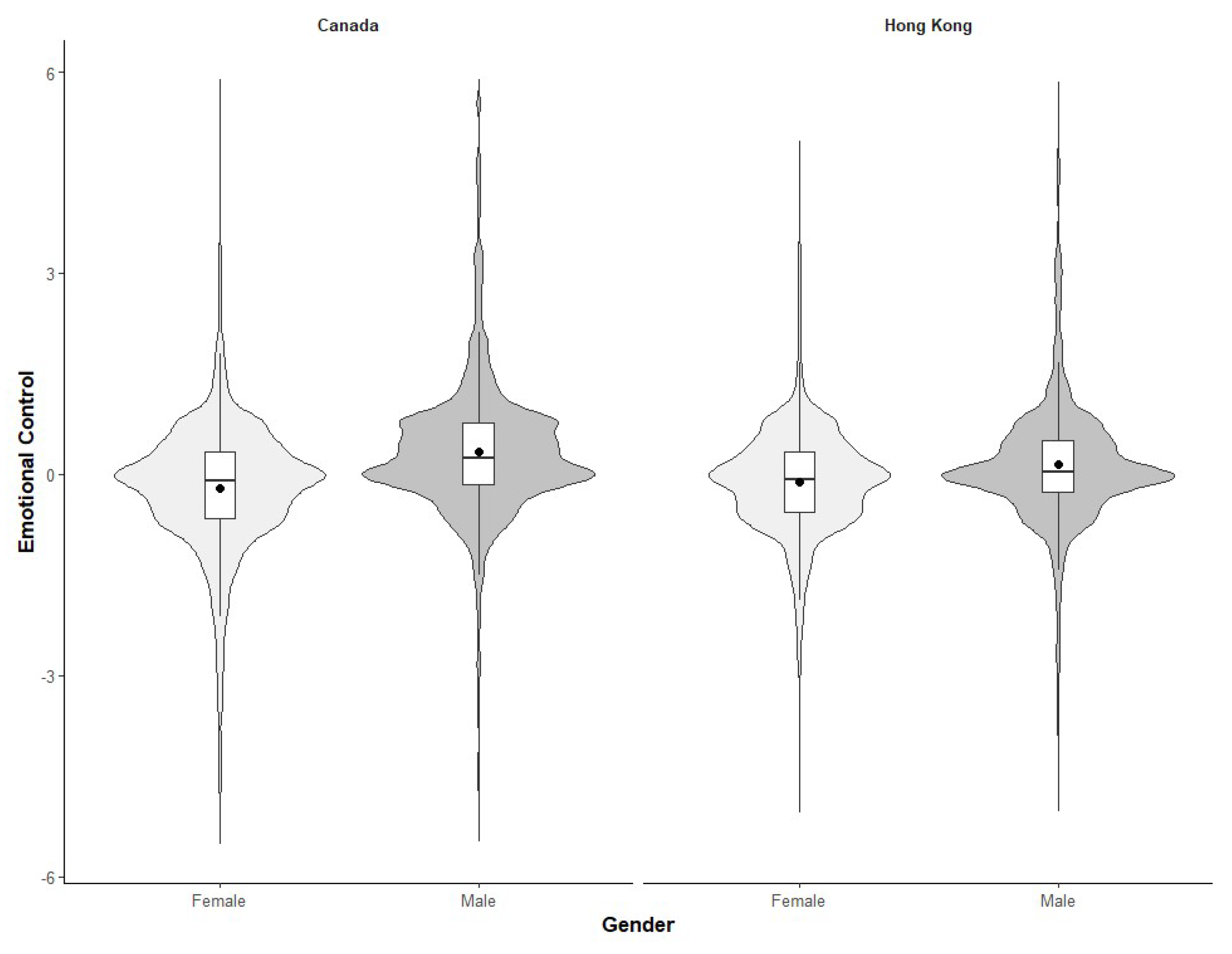
Figure 2.
Distribution of digital self-regulation before sleep among female and male students in Canada and Hong Kong. Violin plots illustrate the distribution of students’ digital self-regulation scores, with embedded boxplots indicating the interquartile range and median. Black dots represent the mean values.
Figure 2.
Distribution of digital self-regulation before sleep among female and male students in Canada and Hong Kong. Violin plots illustrate the distribution of students’ digital self-regulation scores, with embedded boxplots indicating the interquartile range and median. Black dots represent the mean values.
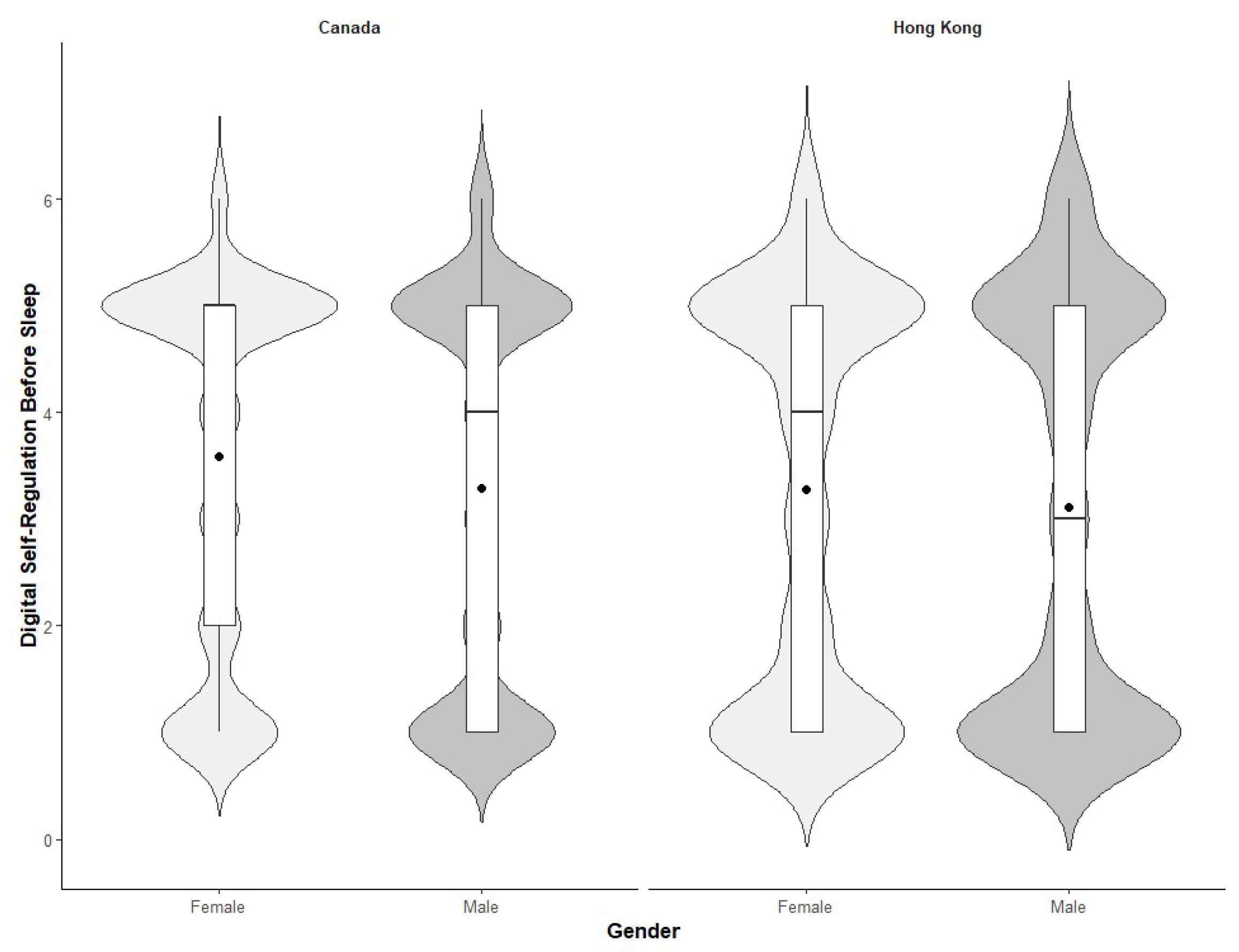
Figure 3.
Cross-country interaction.
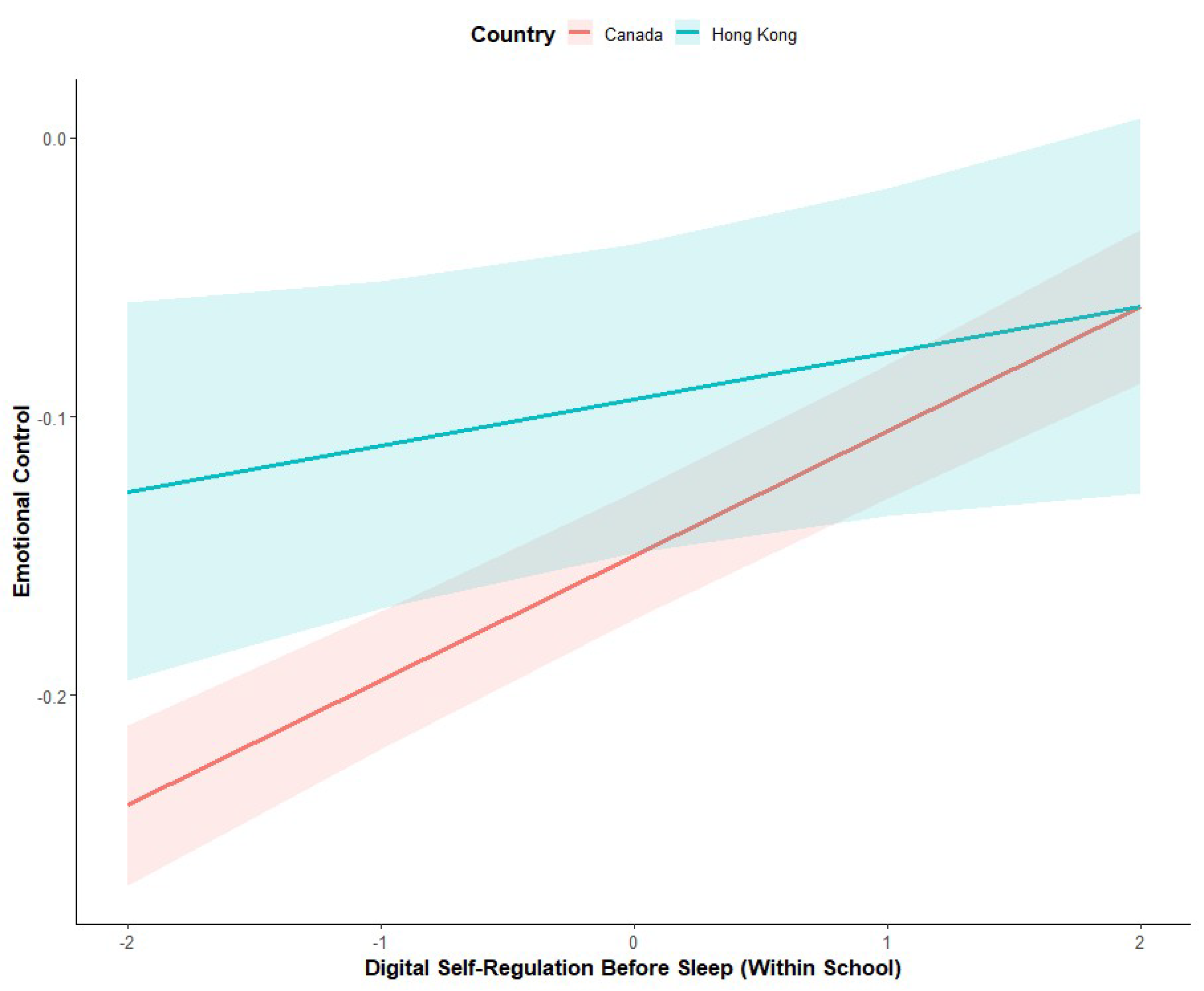
Figure 4.
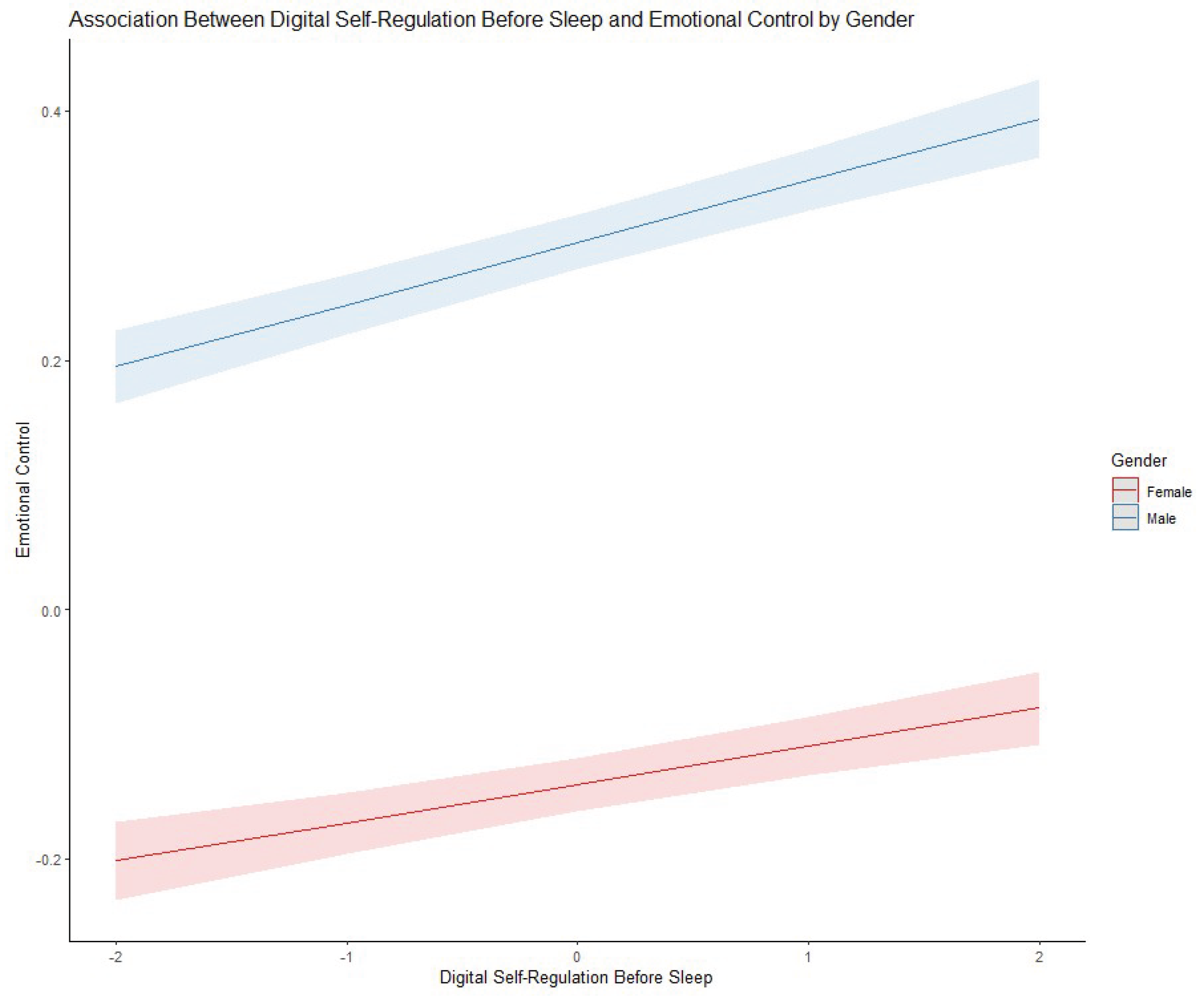
Table 1.
Summary of Study Variables.
| Variable | PISA Code | Level | Description | Coding |
| Emotional Control | EMOCOAGR | Student | OECD emotional control scale | Higher scores = stronger emotional control |
| Digital Self-Regulation Before Sleep | ST322Q02JA | Student | Frequency of stopping digital device use before sleep | 1 = Never to 5 = Always |
| Gender | ST004D01T | Student | Student gender | Female/Male |
| Economic, Social, and Cultural Status | ESCS | Student | OECD socioeconomic index | Standardized |
| School Belonging | BELONG | Student | Sense of belonging at school | Standardized |
| Home Possessions | HOMEPOS | Student | Home educational and material resources | Standardized |
| School Mean ESCS | Aggregated ESCS | School | Average socioeconomic status within school | Continuous |
| School-Level Digital Self-Regulation | Aggregated ST322Q02JA | School | Mean digital self-regulation before sleep within school | Continuous |
Table 2.
Summary of Multilevel Models.
| Model | Model Name | Student-Level Variables | School-Level Variables | Purpose |
| Null Model | Unconditional Model | None | Random intercept only | Estimate the ICC and assess the appropriateness of multilevel modeling. |
| Model 1 | Covariate Model | Gender, ESCS, BELONG, HOMEPOS | School Mean ESCS | Establish the baseline model by controlling for demographic, socioeconomic, and school characteristics. |
| Model 2 | Main Effects Model | Model 1 + Digital Self-Regulation Before Sleep | School Mean ESCS + School-Level Digital Self-Regulation | Examine the main effects of individual- and school-level digital self-regulation before sleep on adolescents’ emotional control (RQ1). |
| Model 3 | Cross-National Model | Model 2 + Country + Digital Self-Regulation × Country | School Mean ESCS + School-Level Digital Self-Regulation | Examine the main effects of country and whether the association between digital self-regulation before sleep and emotional control differs between Canada and Hong Kong (RQ2). |
| Model 4 | Gender Model | Model 3 + Gender + Digital Self-Regulation × Gender | School Mean ESCS + School-Level Digital Self-Regulation | Examine the main effects of gender and whether the association between digital self-regulation before sleep and emotional control differs by gender (RQ3). |
Note. ESCS = Economic, Social, and Cultural Status; BELONG = Sense of School Belonging; HOMEPOS = Home Possessions.
Table 3.
Descriptive Statistics and Gender Differences for Study Variables by Country.
| Variable | Canada Female M (SD) | Canada Male M (SD) | t | p | Cohen’s d | Hong Kong Female M (SD) | Hong Kong Male M (SD) | t | p | Cohen’s d |
| N | 7,871 | 7,377 | — | — | — | 2,248 | 2,281 | — | — | — |
| Emotional Control | −0.21 (1.00) | 0.33 (1.00) | −33.16 | < .001 | 0.54 | −0.12 (0.84) | 0.14 (0.92) | −9.91 | < .001 | 0.29 |
| Digital Self-Regulation | 3.58 (1.73) | 3.29 (1.85) | 9.92 | < .001 | -0.16 | 3.28 (1.84) | 3.12 (1.92) | 2.99 | .003 | -0.09 |
| ESCS | 0.20 (0.75) | 0.19 (0.77) | 0.82 | .412 | -0.01 | −0.60 (0.98) | −0.65 (1.02) | 1.98 | .048 | -0.06 |
| School Belonging | −0.31 (0.89) | −0.01 (0.98) | −19.83 | < .001 | 0.32 | −0.40 (0.65) | −0.36 (0.75) | −1.94 | .052 | 0.06 |
| Home Possessions | 0.38 (0.80) | 0.37 (0.84) | 0.84 | .399 | -0.01 | −0.12 (0.81) | −0.26 (0.90) | 5.53 | < .001 | -0.16 |
Note. M = mean; SD = standard deviation; ESCS = Economic, Social, and Cultural Status; d = Cohen’s d. Positive values of Cohen’s d indicate higher scores for males, whereas negative values indicate higher scores for females.
Table 4.
Means, Standard Deviations, and Pearson Correlations Among Study Variables (N = 19,779).
| Variable | M | SD | 1 | 2 | 3 | 4 | 5 |
| 1. Emotional Control | 0.05 | 1.00 | — | ||||
| 2. Digital Self-Regulation | 3.39 | 1.82 | .06*** | — | |||
| 3. ESCS | 0.01 | 0.89 | .07*** | .11*** | — | ||
| 4. School Belonging | -0.21 | 0.90 | .30*** | .03** | .16*** | — | |
| 5. Home Possessions | 0.24 | 0.86 | .04*** | .08*** | .74*** | .15*** | — |
Disclaimer/Publisher’s Note: The statements, opinions and data contained in all publications are solely those of the individual author(s) and contributor(s) and not of MDPI and/or the editor(s). MDPI and/or the editor(s) disclaim responsibility for any injury to people or property resulting from any ideas, methods, instructions or products referred to in the content. |
© 2026 by the authors. Licensee MDPI, Basel, Switzerland. This article is an open access article distributed under the terms and conditions of the Creative Commons Attribution (CC BY) license (http://creativecommons.org/licenses/by/4.0/).
Copyright: This open access article is published under a Creative Commons CC BY 4.0 license, which permit the free download, distribution, and reuse, provided that the author and preprint are cited in any reuse.