

Submitted:
04 September 2026
Posted:
04 September 2026
You are already at the latest version
Abstract
Bacteriocins mediate competition among closely related bacteria, but less attention has been given to the ecological distribution of the peptide defence systems that determine which organisms are susceptible to particular inhibitory peptides. We compared susceptibility patterns among representative Streptococcus anginosus, Streptococcus mitis and Streptococcus pyogenes isolates using a panel of ten bacteriocin-like inhibitory substance (BLIS)-producing streptococci representing diverse peptide-mediated inhibitory systems. Distinct and reproducible susceptibility patterns were observed. S. anginosus isolates showed marked resistance to the salivaricin A-associated producer strains while remaining susceptible to several alternative systems, including salivaricin B-associated activity and streptococcin A-FF22. S. mitis isolates showed broader susceptibility across the producer panel, whereas S. pyogenes displayed a third, distinct configuration of selective susceptibility and resistance. These findings indicate that susceptibility to streptococcal bacteriocins is structured and peptide-specific rather than representing generalised resistance to antimicrobial peptides. Comparison with the historical production/susceptibility (P/S) fingerprinting approach and with ecological observations of bacteriocinogenic S. salivarius suggests that susceptibility profiles can provide information about the distribution of peptide defence phenotypes within microbial communities. We therefore propose Selective Peptide Defence Landscapes (SPDLs) as a framework linking comparative bacteriocin susceptibility with microbial ecology. The framework emphasises the interaction between peptide production, selective susceptibility and peptide-specific defence, while recognising that the molecular determinants underlying individual phenotypes require further investigation.
Keywords:
bacteriocins
; bacteriocin immunity
; microbial ecology
; oral microbiome
; Streptococcus anginosus
; Streptococcus mitis
; Streptococcus pyogenes
; salivaricin
; lantibiotics
1. Introduction
Bacteriocins are ribosomally synthesised antimicrobial peptides or proteins produced by bacteria to inhibit competing microorganisms occupying the same ecological niche. Since the landmark review of Tagg, Dajani and Wannamaker, bacteriocins have been recognised as important mediators of interference competition among closely related bacteria and as major determinants of microbial population dynamics [1]. Subsequent studies have demonstrated remarkable structural and functional diversity among bacteriocins, particularly within the lantibiotic family, and have revealed their important contributions to microbial colonisation, niche establishment and community stability [2,3,4].
Among the best-characterised examples are the salivaricins produced by oral isolates of Streptococcus salivarius. These lantibiotic peptides have attracted considerable attention because of their roles in maintaining oral microbial homeostasis and because bacteriocin-producing S. salivarius strains, particularly K12 and M18, have been successfully developed as oral probiotics [6,7,8,9]. More broadly, studies of bacteriocin-producing streptococci have provided important insights into microbial competition, ecological fitness and probiotic selection. Hols et al. further emphasised that bacteriocins produced by commensal organisms such as S. salivarius can contribute to local microbial competition and may be harnessed to reshape endogenous microbiota, reinforcing the relevance of bacteriocin activity to community-level ecological organisation [5].
The ecological consequences of bacteriocin production depend not only on inhibitory peptides themselves but also on the distribution of peptide defence systems within neighbouring microorganisms. Bacteriocin-producing organisms typically possess dedicated peptide defence systems that protect them from their own inhibitory peptides, while related bacteria may acquire peptide-specific defence systems through a variety of evolutionary processes. Consequently, susceptibility to bacteriocins is frequently highly selective rather than reflecting generalised resistance to antimicrobial peptides. Many bacteriocins show greatest activity against phylogenetically related organisms; among streptococci, inhibitory spectra commonly extend most strongly to other streptococcal species, making the distribution of selective susceptibility especially relevant to oral streptococcal ecology.
In parallel with advances in bacteriocin biology, increasing attention has been directed towards the mechanisms by which bacteria resist host and microbial antimicrobial peptides. Numerous studies have identified cell-envelope modifications, membrane remodelling, peptide sequestration, efflux systems and regulatory networks that contribute to antimicrobial peptide resistance [10,11,12]. These investigations have substantially advanced understanding of host–pathogen interactions and antimicrobial resistance. Nevertheless, they have focused primarily on resistance mechanisms operating within individual organisms rather than on the ecological distribution of peptide defence systems across microbial communities.
Recent genomic investigations have further highlighted close links between bacteriocin-associated loci, competence pathways and adaptive responses in oral streptococci. Comparative analyses have revealed considerable diversity in bacteriocin loci, frequent horizontal transfer of peptide-associated genes and coordinated regulation of bacteriocin production with other ecological traits. Recent genomic and transcriptomic studies of Streptococcus anginosus have identified coordinated expression of bacteriocin-associated genes, competence systems and virulence-associated determinants, emphasising the integration of antimicrobial systems within broader adaptive networks [13].
The biological significance of bacteriocin-associated loci may extend beyond antimicrobial activity. Salivaricin peptides have been shown to function as intra- and interspecies signalling molecules, indicating roles in microbial communication as well as inhibition [14]. Furthermore, components of the Streptococcus pyogenes sal locus contribute to virulence-associated phenotypes, including intracellular survival and resistance to host antimicrobial mechanisms, suggesting that peptide defence systems may also be recruited for host adaptation [15]. Subsequent studies demonstrated that expression of the sal locus is controlled by multiple promoters and responds to environmental signals, consistent with these loci functioning as adaptive regulatory modules rather than constitutively expressed antimicrobial systems [16].
A recurring observation emerging from studies of oral streptococci is that peptide susceptibility patterns are frequently highly specific. Some organisms exhibit resistance to individual bacteriocins while remaining susceptible to closely related inhibitory peptides, suggesting that peptide defence systems are distributed selectively within microbial populations. Despite numerous investigations of bacteriocin production and immunity, comparatively little attention has been directed towards the ecological significance of these selective susceptibility patterns.
The origins of comparative streptococcal antagonism testing were explicitly linked to both bacteriocin production and susceptibility. Tagg and Bannister developed a “fingerprinting” scheme [17] in which streptococci were characterised according to their production of bacteriocin-like inhibitory substances (P typing) and their sensitivity to inhibitory activity produced by a defined set of standard producer strains (S typing). Nine producer strains with differing inhibitory spectra were selected for S typing, recognising susceptibility as an informative characteristic of the test organism as well as a means of detecting producer activity. Subsequent applications of deferred-antagonism testing increasingly emphasised the detection and characterisation of bacteriocin production, while the susceptibility component came to function predominantly as an indicator of producer activity. The present study revisits the earlier S-typing principle and asks whether comparative susceptibility profiles themselves constitute reproducible biological phenotypes with ecological significance. The study design and relationship between comparative susceptibility profiling and the SPDL framework are summarised in Figure 1.
The ecological significance of susceptibility was subsequently examined under natural conditions by Tompkins and Tagg [18]. They identified individuals who consistently harboured exceptionally high proportions of bacteriocin-producing S. salivarius and found that the accompanying Gram-positive alpha-haemolytic cocci contained significantly higher proportions of organisms resistant to the inhibitory activity of the resident producer strains than did organisms recovered from control individuals. The authors interpreted these findings as consistent with selection of a relatively bacteriocin-resistant accompanying microbiota by active bacteriocin production in situ. Importantly, their study also retained the comparative susceptibility dimension of the earlier fingerprinting approach: inhibitory spectra were assessed against a defined panel of ten indicator organisms, and reproducible differences in inhibition-zone widths were recognised as part of the susceptibility phenotype. Their panel included FF22 and strain 71-679 (M4, T-pattern 4), providing an early experimental precedent for treating selective susceptibility patterns as ecologically informative rather than merely as a means of detecting producer activity.
In the present study, we compare susceptibility phenotypes of representative Streptococcus anginosus, Streptococcus mitis and Streptococcus pyogenes isolates using a panel of well-characterised bacteriocin-producing streptococci, including Streptococcus pyogenes FF22, representing diverse lantibiotic and non-lantibiotic inhibitory systems. On the basis of these comparative phenotypic observations, together with published genomic and ecological evidence, we propose the concept of Selective Peptide Defence Landscapes (SPDLs). We suggest that consideration of the ecological distribution of peptide defence systems, alongside bacteriocin production itself, provides a useful framework for understanding microbial competition, coexistence and community organisation within the oral microbiome. We use the term Selective Peptide Defence Landscape (SPDL) to describe the characteristic pattern of susceptibility and resistance exhibited by an indicator organism across a defined repertoire of peptide-mediated challenges. The SPDL concept extends the historical S-typing principle from a strain-discrimination tool to an ecological framework for interpreting peptide susceptibility.
2. Materials and Methods
2.1. Bacterial Strains
Representative isolates of Streptococcus anginosus, Streptococcus mitis and Streptococcus pyogenes were examined for susceptibility to a panel of ten bacteriocin-like inhibitory substance (BLIS)-producing streptococci selected to represent diverse peptide-mediated inhibitory systems. The final producer panel comprised Streptococcus salivarius K12 (salivaricins A2 and B), S. salivarius M18 (salivaricins A2, 9, MPS and M), S. pyogenes strain 71–679 (Ind 5; M4, T-pattern 4; SalA1-associated), S. pyogenes emm86 (salivaricin A-associated activity), Streptococcus mitis SK648 (salivaricin B-associated activity), S. pyogenes FF22 (Ind 2; streptococcin A-FF22), S. pyogenes M76 (streptin), S. pyogenes strain 71–724 (M57; SA-M57), S. salivarius strain 36 (broad-spectrum BLIS activity), and S. salivarius strain 9 (salivaricin 9-associated activity).
Producer strains were selected as historically well-characterised reference strains representing diverse streptococcal peptide-mediated inhibitory systems rather than as a comprehensive survey of bacteriocin-producing streptococci. The panel was retained as a comparative phenotypic reference set, allowing susceptibility patterns to be examined across three indicator groups: S. anginosus, S. mitis and S. pyogenes. Characteristics of the producer strains, together with their principal inhibitory peptides and supporting references, are summarised in Supplementary Table S1.
2.2. Deferred Antagonism Assay
BLIS activity was assessed using the deferred antagonism method of Tagg and Bannister [17], with minor modifications. The present implementation follows the same producer-versus-indicator logic used in the subsequent ecological study of bacteriocinogenic S. salivarius by Tompkins and Tagg [18], in which susceptibility to a defined panel of indicator organisms was used to examine the ecological consequences of naturally occurring bacteriocin production. Producer strains were grown as diametric streaks on Columbia sheep blood agar and incubated at 37 °C in 5% CO2 for 18 h. Following incubation, producer growth was removed and the agar surface sterilised by exposure to chloroform vapour. Indicator strains were then streaked perpendicular to the original producer growth and the plates reincubated under identical conditions.
Zones of inhibition were scored semi-quantitatively as absent (−), weak (+), moderate (++), or strong (+++). Representative assays were repeated on separate occasions to confirm reproducibility of the observed susceptibility phenotypes.
2.3. Comparative Analysis
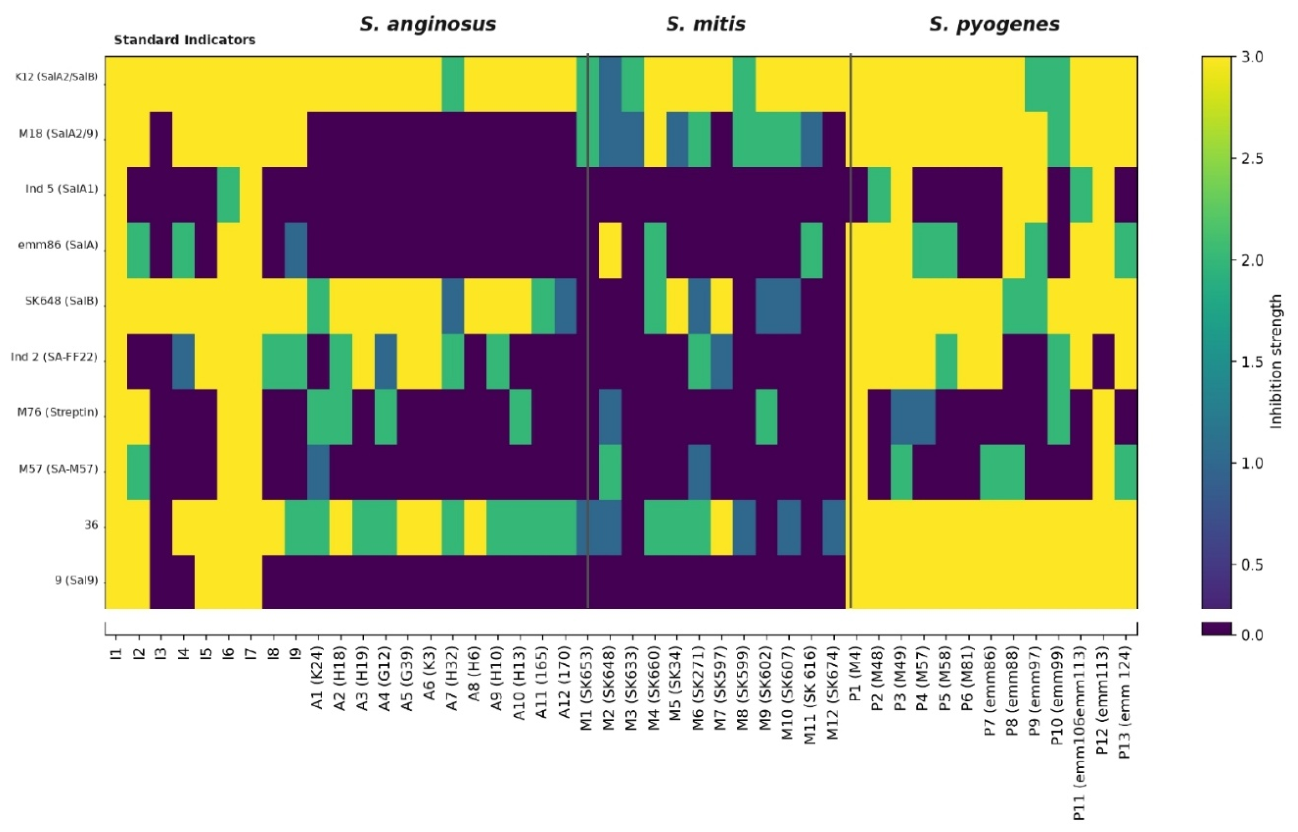
The susceptibility matrix generated from the deferred antagonism assays comprised ten producer strains tested against 46 indicators: nine historical reference indicators (I1–I9), 12 S. anginosus isolates (A1–A12), 12 S. mitis isolates (M1–M12), and 13 S. pyogenes isolates (P1–P13). The matrix was used to compare qualitative susceptibility phenotypes among the three species groups. The objective of the analysis was not to quantify bacteriocin potency, but to identify reproducible patterns of selective susceptibility across distinct inhibitory systems.
These comparative phenotypic observations were subsequently interpreted in the context of published information concerning bacteriocin-associated loci, peptide defence systems and streptococcal ecology to develop the conceptual framework presented in Figure 2.
2.4. Generative AI Use
ChatGPT (OpenAI; GPT-5.6) was used during manuscript preparation for language editing, conceptual organisation and critical review of the manuscript, including identification of literature for subsequent verification. It was not used to generate or alter experimental data, perform the susceptibility analysis, or make decisions about the reported experimental results. All AI-assisted output was reviewed and edited by the author, who takes full responsibility for the content of this publication.
3. Results
3.1. Comparative Susceptibility Patterns Support the Selective Peptide Defence Landscapes Concept
The comparative susceptibility matrix is presented in Figure 3. Clear and reproducible differences in peptide susceptibility were observed among the three species examined. Rather than exhibiting uniform susceptibility or resistance to all inhibitory systems, isolates displayed reproducible combinations of resistance and susceptibility that were characteristic of individual peptide defence systems.
The S. anginosus isolates showed a particularly distinctive phenotype. Across the final producer panel, susceptibility was strongly dependent on the inhibitory system rather than on producer species alone. SalA-associated producers, including S. pyogenes strain 71–679 and emm86, produced little or no inhibition of the S. anginosus isolates, whereas the same isolates remained susceptible to several alternative systems, most notably salivaricin B-associated activity and streptococcin A-FF22. Susceptibility to streptin and SA-M57 varied among isolates but was generally greater than that observed for the SalA-associated producers.
The S. mitis isolates, in contrast, displayed broader susceptibility across the producer panel. Particularly strong inhibition was observed with S. salivarius M18, whose multiple lantibiotic repertoire includes salivaricins A2, 9, MPS and M. This pattern is consistent with the broader inhibitory repertoire of M18, although the relative contribution of individual peptides was not resolved in the present assays.
The S. pyogenes indicator strains displayed a third susceptibility configuration. Several isolates were susceptible to multiple heterologous producer systems while retaining resistance to particular homologous or closely associated inhibitory phenotypes. The resulting pattern differed from both the selective resistance observed among S. anginosus isolates and the broader susceptibility characteristic of the S. mitis group.
Collectively, these observations demonstrate that peptide susceptibility among oral streptococci is highly selective and cannot be explained solely by phylogenetic relatedness. The observed susceptibility phenotypes were reproducible across replicate deferred antagonism assays. No isolate exhibited complete resistance or complete susceptibility to the full panel of inhibitory systems, emphasising the highly selective nature of the observed peptide defence phenotypes.
3.2. Salivaricin A Resistance is Not Accompanied by Broad Peptide Resistance
Comparison of the susceptibility matrix revealed that resistance to salivaricin A did not predict resistance to other peptide systems.
The S. anginosus isolates showed markedly reduced susceptibility to inhibition by SalA-producing strains while remaining susceptible to salivaricin B, streptococcin A-FF22 and, in many cases, streptin. Likewise, susceptibility patterns differed substantially among the inhibitory systems examined despite similarities in producer species.
These findings demonstrate that resistance to one peptide system was not associated with broad resistance to the diverse inhibitory systems examined.
3.3. Dual Lantibiotic Production Broadens Inhibitory Activity
The inhibitory spectrum produced by S. salivarius M18 differed from that observed for strains producing individual lantibiotics.
Although both K12 and M18 possess salivaricin A-related systems, M18 consistently showed a broader inhibitory spectrum than K12 against the indicator panel. This observation is consistent with the additional lantibiotic repertoire of M18, although the individual contributions of salivaricins A2, 9, MPS and M to the observed inhibition were not determined.
The broad-spectrum BLIS-producing S. salivarius strain 36 inhibited both S. anginosus and S. mitis isolates, illustrating the considerable variation in inhibitory breadth among the producer strains examined.
3.4. Comparative Susceptibility Patterns Support a Selective Peptide Defence Framework
When considered collectively, the observed susceptibility patterns were inconsistent with a simple producer-versus-sensitive model of bacteriocin ecology.
Instead, the results revealed reproducible combinations of peptide susceptibility and resistance that differed between bacterial species and between individual inhibitory systems. Rather than reflecting broad resistance to antimicrobial peptides, these observations support the existence of selective peptide defence landscapes likely to influence microbial competition, colonisation and ecological persistence within the oral microbiome.
4. Discussion
The present findings suggest that the ecological consequences of bacteriocin production are determined not only by where inhibitory peptides are produced, but also by where corresponding peptide defence phenotypes are distributed within the competing community. Across the ten-producer, 46-indicator matrix, closely related streptococcal groups displayed distinct and reproducible combinations of susceptibility and resistance. The resulting patterns were not consistent with a simple continuum from bacteriocin-sensitive to bacteriocin-resistant organisms. Instead, susceptibility was dependent on the particular inhibitory system encountered, providing the empirical basis for the Selective Peptide Defence Landscapes (SPDL) concept.
This interpretation has an important historical precedent. Tompkins and Tagg [18] examined naturally occurring bacteriocinogenic S. salivarius populations and found that individuals harbouring very high proportions of bacteriocin-producing strains also carried significantly higher proportions of bacteriocin-resistant Gram-positive alpha-haemolytic cocci than did control individuals. They interpreted these observations as consistent with selection of a relatively resistant accompanying microbiota by bacteriocin production in situ. Their study also retained the susceptibility dimension of the earlier P/S fingerprinting scheme, using a defined indicator panel to characterise inhibitory spectra. The present study extends that early ecological observation by examining susceptibility to multiple peptide systems across three streptococcal species groups and by treating the resulting patterns as structured ecological phenotypes.
The significance of the present study therefore lies less in the discovery of an individual bacteriocin or immunity mechanism than in the integration of observations that have traditionally been considered separately. Bacteriocin studies commonly ask which organisms produce an inhibitory peptide, while studies of antimicrobial-peptide resistance ask how a target organism avoids inhibition. The SPDL framework brings these perspectives together by asking how the distribution of peptide-specific susceptibility and defence phenotypes shapes the pattern of potential interactions within a microbial community.
The S. anginosus phenotype provides a particularly clear example. These isolates showed markedly reduced susceptibility to inhibition by the SalA-associated producer strains represented in the present panel while remaining susceptible to several alternative systems, including salivaricin B-associated activity and streptococcin A-FF22. Such a phenotype is not readily described as general bacteriocin resistance. Rather, it implies selective compatibility between the target population and particular peptide-mediated challenges. Whether this selectivity reflects immunity proteins, receptor or cell-envelope differences, regulatory states, or combinations of these mechanisms cannot be resolved from the present phenotypic data alone.
An additional, testable explanation for some apparently susceptible phenotypes concerns the physiological state of the target cell. For some bacteriocins, susceptibility is strongly growth-phase and energy-state dependent: bacteriocin J46, for example, was bactericidal toward log-phase cells but ineffective against stationary or energy-depleted cells, and its activity required both a transmembrane pH gradient and membrane potential [28]. Nisin susceptibility has likewise been shown to vary markedly with growth phase [29]. Thus, slower growth or reduced energetic activity could diminish susceptibility to bacteriocins whose action depends on active cellular physiology or an electrochemical gradient, without constituting genetically encoded peptide immunity. This possibility is particularly relevant when interpreting deferred-antagonism phenotypes, which integrate peptide production, diffusion and the physiological state of the indicator during the assay. It should, however, be regarded as a mechanistic hypothesis rather than an explanation established by the present study, because lantibiotics do not share a single mechanism of action. Salivaricin B, for example, has been shown to interfere with cell-wall biosynthesis without detectable pore formation or membrane-potential dissipation [30].
The contrasting behaviour of the S. mitis group reinforces this interpretation. Its broader susceptibility across the producer panel indicates a different position within the comparative peptide-defence landscape. Likewise, S. pyogenes displayed a third reproducible configuration rather than simply occupying an intermediate position between S. anginosus and S. mitis. The important observation is therefore the configuration of responses across the producer panel, rather than the absolute susceptibility of any single isolate or species.
The ecological interpretation is also compatible with earlier observations that bacteriocin activity can influence bacterial interactions without necessarily producing immediate killing. Studies of group A streptococci have demonstrated bacteriocin-associated inhibition with bacteriostatic effects under some conditions [19]. Separately, components of salivaricin-associated systems have been shown to participate in intra- and interspecies signalling [14]. Such observations broaden the possible ecological consequences of peptide-mediated interactions: selective susceptibility may influence persistence, competitive exclusion or relative abundance without requiring wholesale elimination of the target population.
A further consideration is that bacteriocin-associated loci and peptide defence determinants need not be perfectly coupled to detectable peptide production. The occurrence of salivaricin-associated loci in organisms for which corresponding inhibitory activity is not readily demonstrated raises the possibility of ‘immunity without production’—that is, persistence of a defence determinant after loss, attenuation or regulatory silencing of the associated antimicrobial phenotype. The present study does not establish this mechanism genetically, but the selective susceptibility patterns provide a phenotypic context in which such uncoupling becomes ecologically relevant.
One possible explanation for retention of immunity determinants after loss or attenuation of lantibiotic production is that the defence function may be retained through cross-protection against other cationic antimicrobial peptides encountered in the host. This possibility is particularly relevant to the Streptococcus pyogenes sal locus, where conservation and altered sequence characteristics of the SalY immunity component have been proposed to reflect adaptation towards protection from host-derived antimicrobial peptides [15]. Thus, a locus initially associated with interbacterial lantibiotic competition could potentially acquire or retain value through protection against both microbial and host cationic peptides. This hypothesis provides one possible evolutionary explanation for the persistence of immunity-associated determinants in the apparent absence of a corresponding production phenotype, but requires direct functional testing.
Taken together, these observations provide a framework for connecting several otherwise separate features of streptococcal biology: diversity of salivaricin loci, mobility of bacteriocin-associated genetic elements, variation in peptide production, peptide-specific immunity, and the occurrence of bacteriocin-associated loci in organisms that do not necessarily display the corresponding production phenotype. Viewed through an SPDL framework, these are not isolated curiosities but components of a dynamic ecological system in which the outcome of a peptide-mediated interaction depends on both the producer’s inhibitory repertoire and the target community’s distribution of compatible defence phenotypes.
Historically, bacteriocin research has concentrated predominantly on the ecology of inhibition—who produces which peptide and which organisms are inhibited. The present findings suggest that an equally informative question is the ecology of defence: which organisms can withstand which peptide challenges, and how are those selective defence phenotypes distributed across a microbial community? The transition from P/S fingerprinting to SPDL retains the empirical value of susceptibility testing while changing its interpretive level from strain identification towards ecological organisation.
The present study has several limitations. The conclusions are based primarily on comparative phenotypic observations, supported by published information concerning bacteriocin-associated loci and peptide defence systems, rather than direct genomic or molecular analysis of the indicator isolates. In particular, the S. anginosus isolates examined phenotypically in the present study were not genome-sequenced, and their observed resistance patterns therefore cannot be directly attributed to specific salivaricin immunity determinants. Conversely, the comparative genomic observations cited here establish the occurrence of bacteriocin-associated determinants but do not by themselves demonstrate their expression or functional activity. The specific determinants responsible for individual susceptibility phenotypes therefore remain unresolved. In addition, the producer panel was intentionally selected as a historically informative reference set and should not be regarded as a comprehensive representation of the diversity of streptococcal bacteriocins. Finally, deferred antagonism assays provide comparative phenotypes under defined laboratory conditions and cannot by themselves establish the strength, persistence or ecological importance of individual interactions in vivo.
These limitations also define the next experimental opportunities. Genome-resolved analysis of producer and indicator strains could test whether particular susceptibility phenotypes correlate with cognate immunity genes, receptor determinants, cell-envelope features or regulatory loci. Experimental reconstruction of individual producer-defence combinations could then distinguish true peptide-specific immunity from broader physiological resistance. Longitudinal or community-level studies would further test whether the patterns observed in vitro correspond to differential persistence or abundance in the oral microbiome. Thus, SPDL is proposed not as a replacement for mechanistic bacteriocin research, but as a framework for connecting molecular defence determinants with their distribution and potential ecological consequences.
5. Conclusions
The present study demonstrates that peptide susceptibility among oral streptococci is highly selective and is consistent with the ecological distribution of peptide-specific defence systems rather than generalised resistance to antimicrobial peptides. Comparative phenotypic analysis of representative S. anginosus, S. mitis and S. pyogenes isolates identified reproducible combinations of susceptibility and resistance across a diverse producer panel.
These observations provide the basis for the concept of Selective Peptide Defence Landscapes (SPDLs), an ecological framework that complements traditional studies of bacteriocin production by considering the ecological distribution of peptide defence systems within microbial communities. We suggest that understanding which organisms possess specific peptide defence systems may be as important as identifying which organisms produce inhibitory peptides when seeking to explain microbial competition, coexistence and community organisation.
Although the SPDL framework has been developed from studies of oral streptococci, the underlying ecological principles are unlikely to be confined to this group of organisms. Similar relationships may occur wherever microorganisms compete using highly specific inhibitory molecules, including other bacteriocin families, bacterially derived antimicrobial peptides and potentially other classes of specialised microbial metabolites. Future investigations integrating comparative phenotypic analyses with genomics, transcriptomics and functional characterisation of peptide defence systems should determine how widely these ecological principles apply.
Historically, bacteriocin research has focused primarily on the ecology of inhibition rather than the ecology of defence. The present work suggests that equal attention should now be directed towards the ecology of peptide defence. We anticipate that mapping the ecological distribution of peptide defence systems will become an increasingly informative approach for understanding the organisation, resilience and stability of microbial communities and will provide a valuable framework for investigating the ecological organisation of diverse microbial communities.
Supplementary Materials
The following supporting information can be downloaded at the website of this paper posted on Preprints.org.
Author Contributions
J.R.T. conceived the study, assembled and interpreted the historical and experimental evidence, prepared the figures and manuscript, and led the development of the Selective Peptide Defence Landscapes framework. L.K.H. and J.D.F.H. contributed to scientific interpretation and conceptual development during preparation of the study for publication and critically reviewed the manuscript for important intellectual content. J.R.T., L.K.H. and J.D.F.H. reviewed and approved the final version of the manuscript and agree to be accountable for the work.
Funding
This research received no external funding.
Institutional Review Board Statement
Not applicable.
Informed Consent Statement
Not applicable.
Data Availability Statement
The original contributions presented in this study are included in the article/Supplementary Material. Further inquiries can be directed to the corresponding author.
Acknowledgments
During the preparation of this manuscript, the authors used ChatGPT (OpenAI; GPT-5.6) for language editing, conceptual organisation and critical review. The authors reviewed and edited the output and take full responsibility for the content of the publication.
Conflicts of Interest
J.R.T., L.K.H. and J.D.F.H. are affiliated with Blis Technologies Ltd., Dunedin, New Zealand. The authors declare no other conflicts of interest.
References
- Tagg JR, Dajani AS, Wannamaker LW (1976). Bacteriocins of Gram-positive bacteria. Bacteriological Reviews 40, 722–756.
- Arnison PG, Bibb MJ, Bierbaum G, Bowers AA, Bugni TS, Bulaj G, Camarero JA, Campopiano DJ, Challis GL, Clardy J, et al. (2013). Ribosomally synthesized and post-translationally modified peptide natural products: overview and recommendations for a universal nomenclature. Natural Product Reports 30, 108–160.
- Riley MA, Wertz JE (2002). Bacteriocins: evolution, ecology and application. Annual Review of Microbiology 56, 117–137.
- Cotter PD, Hill C, Ross RP (2005). Bacteriocins: developing innate immunity for food. Nature Reviews Microbiology 3, 777–788.
- Hols P, Ledesma-García L, Gabant P, Mignolet J (2019). Mobilization of microbiota commensals and their bacteriocins for therapeutics. Trends in Microbiology 27, 690–702. [CrossRef]
- Tagg JR, Dierksen KP (2003). Bacterial replacement therapy: adapting “germ warfare” to infection prevention. Trends in Biotechnology 21, 217–223.
- Wescombe PA, Heng NCK, Burton JP, Chilcott CN, Tagg JR (2009). Streptococcal bacteriocins and the case for Streptococcus salivarius as model oral probiotics. Future Microbiology 4, 819–835.
- Wescombe PA, Hale JDF, Heng NCK, Tagg JR (2012). Developing oral probiotics from Streptococcus salivarius. Future Microbiology 7, 1355–1371.
- Hyink O, Wescombe PA, Upton M, Ragland N, Burton JP, Tagg JR (2007). Salivaricin A2 and the novel lantibiotic salivaricin B are encoded at adjacent loci on a 190-kilobase transmissible megaplasmid in the oral probiotic strain Streptococcus salivarius K12. Applied and Environmental Microbiology 73, 1109–1117.
- Bechinger B, Gorr S-U (2017). Antimicrobial peptides: mechanisms of action and resistance. Journal of Dental Research 96, 254–260.
- Nawrocki KL, Crispell EK, McBride SM (2014). Antimicrobial peptide resistance mechanisms of Gram-positive bacteria. Antibiotics 3, 461–492.
- Nuri R, Shprung T, Shai Y (2015). Defensive remodeling: how bacterial surface properties and biofilm formation promote resistance to antimicrobial peptides. Biochimica et Biophysica Acta 1848, 3089–3100.
- Lin Y-J, Chen C-H, Chang IY-F, Chiang RL, Wang HY, Chiu CH, Chen YM (2025). Genomic and transcriptomic insights into the virulence and adaptation of shock syndrome-causing Streptococcus anginosus. Microbiology 171, 001535.
- Upton M, Tagg JR, Wescombe PA, Jenkinson HF (2001). Intra- and interspecies signaling between Streptococcus salivarius and Streptococcus pyogenes mediated by SalA and SalA1 lantibiotic peptides. Journal of Bacteriology 183, 3931–3938.
- Phelps HA, Neely MN (2007). SalY of the Streptococcus pyogenes lantibiotic locus is required for full virulence and intracellular survival in macrophages. Infection and Immunity 75, 4541–4551.
- Namprachan-Frantz P, Rowe HM, Runft DL, Neely MN (2014). Transcriptional analysis of the Streptococcus pyogenes salivaricin locus. Journal of Bacteriology 196, 604–613.
- Tagg JR, Bannister LV (1979). “Fingerprinting” β-haemolytic streptococci by their production of and sensitivity to bacteriocine-like inhibitors. Journal of Medical Microbiology 12, 397–411.
- Tompkins GR, Tagg JR (1989). The ecology of bacteriocin-producing strains of Streptococcus salivarius. Microbial Ecology in Health and Disease 2, 19–28.
- Johnson DW, Tagg JR, Wannamaker LW (1979). Production of a bacteriocine-like substance by group-A streptococci of M-type 4 and T-pattern 4. Journal of Medical Microbiology 12, 413–427.
- Dempster RP, Tagg JR (1982). The production of bacteriocin-like substances by the oral bacterium Streptococcus salivarius. Archives of Oral Biology 27, 151–157.
- Wescombe PA, Upton M, Dierksen KP, Ragland NL, Sivabalan S, Wirawan RE, Inglis MA, Moore CJ, Walker GV, Chilcott CN, Jenkinson HF, Tagg JR (2006). Production of the lantibiotic salivaricin A and its variants by oral streptococci and use of a specific induction assay to detect their presence in human saliva. Applied and Environmental Microbiology 72, 1459–1466.
- Tagg JR, Read RSD, McGiven AR (1973). Bacteriocin of a group A streptococcus: partial purification and properties. Antimicrobial Agents and Chemotherapy 4, 214–221.
- Simpson WJ, Tagg JR (1983). M-type 57 group A streptococcus bacteriocin. Canadian Journal of Microbiology 29, 1445–1451.
- Hynes WL, Tagg JR (1985). Production of broad-spectrum bacteriocin-like activity by group A streptococci of particular M-types. Zentralblatt für Bakteriologie, Mikrobiologie und Hygiene, Series A 259, 155–164.
- Wescombe PA, Tagg JR (2003). Purification and characterization of streptin, a type A1 lantibiotic produced by Streptococcus pyogenes. Applied and Environmental Microbiology 69, 2737–2747.
- Wescombe PA, Upton M, Wirawan RE, Power D, Burton JP, Chilcott CN, Tagg JR (2011). Salivaricin 9, a new lantibiotic produced by Streptococcus salivarius. Microbiology 157, 1290–1299.
- Tagg JR, Hale JDF, Harold LK (2025). BLIS fingerprinting as a tool to investigate the distribution and significance of bacteriocin production and immunity in Streptococcus pyogenes and Streptococcus salivarius. Applied Microbiology 5, 49.
- Barrena-Gonzalez C, Huot E, Petitdemange H (1996). Mode of action of a bacteriocin (J46) produced by Lactococcus lactis subsp. cremoris J46. Journal of Food Protection 59, 955–962. [CrossRef]
- Weeks ME, Nebe-von Caron G, James DC, Smales CM, Robinson GK (2006). Monitoring changes in nisin susceptibility of Listeria monocytogenes Scott A as an indicator of growth phase using FACS. Journal of Microbiological Methods 66, 43–55. [CrossRef]
- Barbour, A.; Tagg, J.; Abou-Zied, O.K.; Philip, K. (2016). New insights into the mode of action of the lantibiotic salivaricin B. Scientific Reports 6, 31749. [CrossRef]
- Heng, N.C.K.; Haji-Ishak, N.S.; Kalyan, A.; Wong, A.Y.C.; Lovrić, M.; Bridson, J.M.; Artamonova, J.; Stanton, J.-A.L.; Wescombe, P.A.; Burton, J.P.; Cullinan, M.P.; Tagg, J.R. (2011). Genome sequence of the bacteriocin-producing oral probiotic Streptococcus salivarius strain M18. Journal of Bacteriology 193, 6402–6403. [CrossRef]
Figure 1.
Comparative deferred antagonism assay: from experimental method to biological interpretation. (A) Representative comparative deferred antagonism assay illustrating the experimental basis of susceptibility profiling. (B) Biological sequence underlying the assay, in which producer growth results in peptide production, removal of the producer leaves inhibitory peptides associated with the agar, and subsequent exposure of indicator organisms reveals a susceptibility phenotype. (C) Expanded interpretation of the assay in which the conventional producer phenotype is considered together with the indicator phenotype, allowing comparative susceptibility patterns to be interpreted in terms of peptide defence repertoires and potential ecological interactions. (A) Comparative susceptibility matrix of representative Streptococcus anginosus, Streptococcus mitis and Streptococcus pyogenes isolates to a panel of historically well-characterised reference peptide-producing streptococci. Reference producer strains represent diverse lantibiotic and non-lantibiotic inhibitory systems, including salivaricins, streptococcins, streptin and a broad-spectrum BLIS-producing strain. Inhibition was assessed by deferred antagonism assay and scored semi-quantitatively as absent (−), weak (+), moderate (++) or strong (+++), with colour intensity reflecting increasing inhibitory activity. The observed susceptibility patterns reveal peptide-specific defence phenotypes rather than generalised resistance to antimicrobial peptides. (B) Conceptual framework illustrating Selective Peptide Defence Landscapes (SPDLs). Comparative susceptibility phenotypes, together with published information concerning bacteriocin-associated loci, peptide defence systems and streptococcal ecology, support the concept that the ecological distribution of peptide defence systems contributes to microbial competition, coexistence and community organisation. The framework proposes that bacteriocin-associated loci may function as ecological adaptation modules integrating competition, peptide defence and host interaction. Together, panels A and B illustrate the experimental observations and the ecological framework underpinning the concept of Selective Peptide Defence Landscapes.
Figure 1.
Comparative deferred antagonism assay: from experimental method to biological interpretation. (A) Representative comparative deferred antagonism assay illustrating the experimental basis of susceptibility profiling. (B) Biological sequence underlying the assay, in which producer growth results in peptide production, removal of the producer leaves inhibitory peptides associated with the agar, and subsequent exposure of indicator organisms reveals a susceptibility phenotype. (C) Expanded interpretation of the assay in which the conventional producer phenotype is considered together with the indicator phenotype, allowing comparative susceptibility patterns to be interpreted in terms of peptide defence repertoires and potential ecological interactions. (A) Comparative susceptibility matrix of representative Streptococcus anginosus, Streptococcus mitis and Streptococcus pyogenes isolates to a panel of historically well-characterised reference peptide-producing streptococci. Reference producer strains represent diverse lantibiotic and non-lantibiotic inhibitory systems, including salivaricins, streptococcins, streptin and a broad-spectrum BLIS-producing strain. Inhibition was assessed by deferred antagonism assay and scored semi-quantitatively as absent (−), weak (+), moderate (++) or strong (+++), with colour intensity reflecting increasing inhibitory activity. The observed susceptibility patterns reveal peptide-specific defence phenotypes rather than generalised resistance to antimicrobial peptides. (B) Conceptual framework illustrating Selective Peptide Defence Landscapes (SPDLs). Comparative susceptibility phenotypes, together with published information concerning bacteriocin-associated loci, peptide defence systems and streptococcal ecology, support the concept that the ecological distribution of peptide defence systems contributes to microbial competition, coexistence and community organisation. The framework proposes that bacteriocin-associated loci may function as ecological adaptation modules integrating competition, peptide defence and host interaction. Together, panels A and B illustrate the experimental observations and the ecological framework underpinning the concept of Selective Peptide Defence Landscapes.
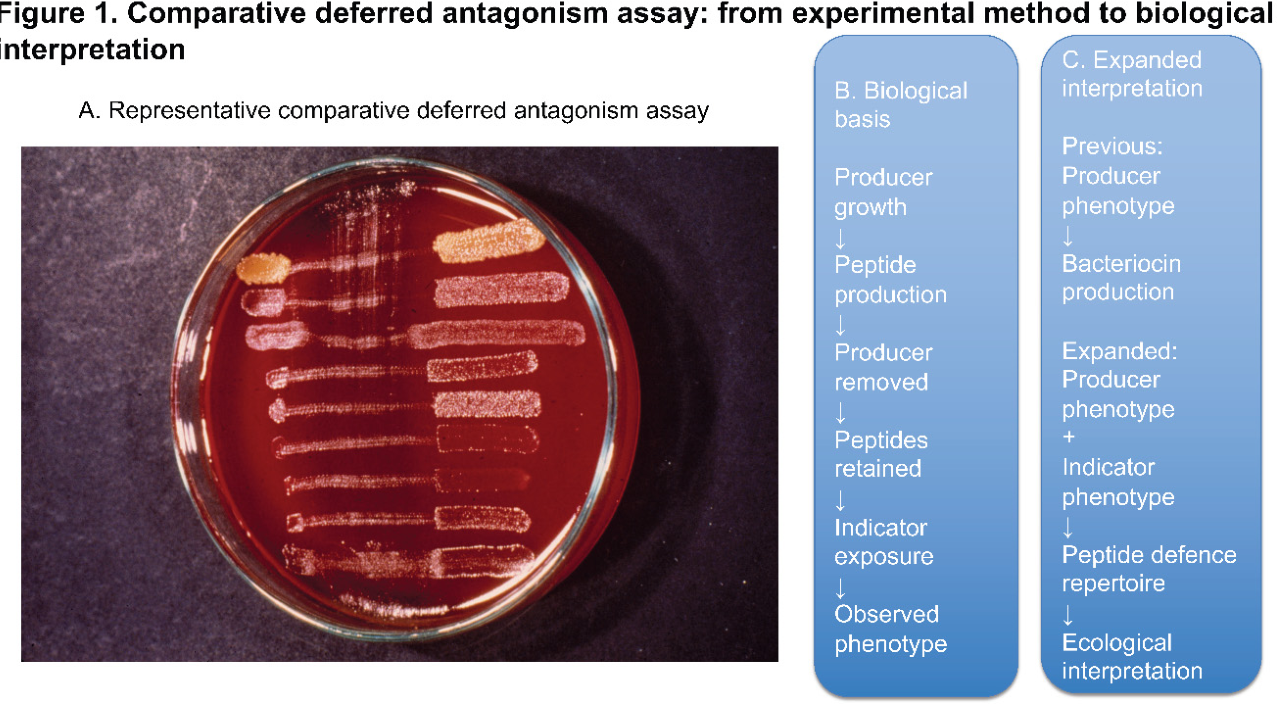
Figure 2.
Conceptual model of Selective Peptide Defence Landscapes (SPDLs). The model integrates peptide production, selective susceptibility and peptide-specific defence with the ecological distribution of competing streptococcal populations. SPDLs are proposed as an interpretative framework linking the phenotypic patterns observed in comparative susceptibility testing with the potential ecological consequences of bacteriocin-associated defence systems. The model does not imply a single molecular mechanism or a simple hierarchy of bacteriocin resistance.
Figure 2.
Conceptual model of Selective Peptide Defence Landscapes (SPDLs). The model integrates peptide production, selective susceptibility and peptide-specific defence with the ecological distribution of competing streptococcal populations. SPDLs are proposed as an interpretative framework linking the phenotypic patterns observed in comparative susceptibility testing with the potential ecological consequences of bacteriocin-associated defence systems. The model does not imply a single molecular mechanism or a simple hierarchy of bacteriocin resistance.
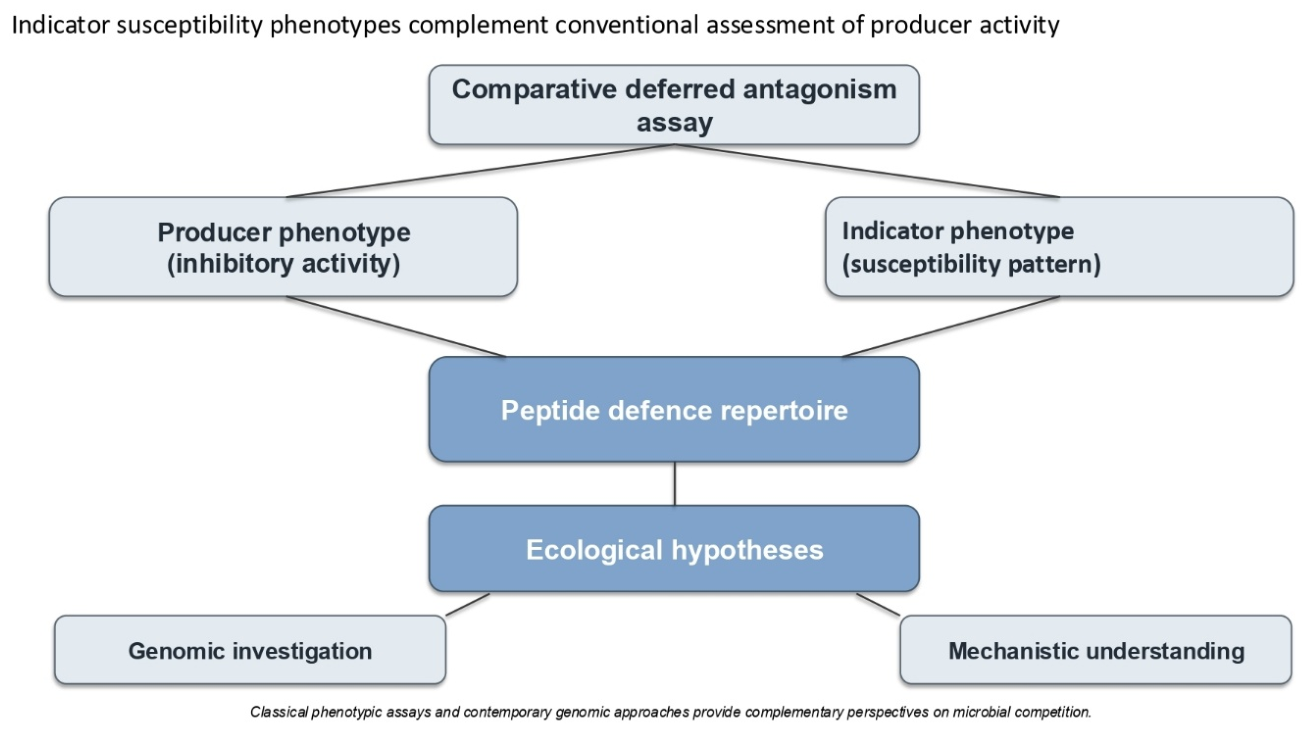
Figure 3.
Comparative susceptibility profiling reveals distinct peptide defence phenotypes among oral streptococcal groups. The heatmap shows semi-quantitative susceptibility responses of the three indicator groups—S. anginosus (A1–A12), S. mitis (M1–M12) and S. pyogenes (P1–P13)—together with the historical indicator panel (I1–I9), to the ten reference producer strains. Rows represent producer strains and columns represent indicator isolates. Colours denote absent (−), weak (+), moderate (++) and strong (+++) inhibition. The figure is intended to reveal the general configuration of susceptibility across the three species groups rather than imply one-to-one correspondence between colours and individual bacteriocin identities.
Figure 3.
Comparative susceptibility profiling reveals distinct peptide defence phenotypes among oral streptococcal groups. The heatmap shows semi-quantitative susceptibility responses of the three indicator groups—S. anginosus (A1–A12), S. mitis (M1–M12) and S. pyogenes (P1–P13)—together with the historical indicator panel (I1–I9), to the ten reference producer strains. Rows represent producer strains and columns represent indicator isolates. Colours denote absent (−), weak (+), moderate (++) and strong (+++) inhibition. The figure is intended to reveal the general configuration of susceptibility across the three species groups rather than imply one-to-one correspondence between colours and individual bacteriocin identities.
Disclaimer/Publisher’s Note: The statements, opinions and data contained in all publications are solely those of the individual author(s) and contributor(s) and not of MDPI and/or the editor(s). MDPI and/or the editor(s) disclaim responsibility for any injury to people or property resulting from any ideas, methods, instructions or products referred to in the content. |
© 2026 by the authors. Licensee MDPI, Basel, Switzerland. This article is an open access article distributed under the terms and conditions of the Creative Commons Attribution (CC BY) license (http://creativecommons.org/licenses/by/4.0/).
Copyright: This open access article is published under a Creative Commons CC BY 4.0 license, which permit the free download, distribution, and reuse, provided that the author and preprint are cited in any reuse.