

Submitted:
03 September 2026
Posted:
04 September 2026
You are already at the latest version
Abstract
Metropolitan regions have become the dominant spatial form of urbanisation in the twenty-first century, yet their governance structures remain poorly aligned with the functional dynamics that sustain them. Among these dynamics, mobility plays a central but paradoxical role: while it structures daily life, economic integration and territorial cohesion, it is still predominantly treated as a sectoral transport policy rather than as a core public function of metropolitan governance. This article reframes mobility as a Public Function of Common Interest (FPIC) and examines how its institutional recognition, or absence, shapes metropolitan governance and sustainability outcomes. Drawing on a comparative mixed-methods analysis of Greater London and two Brazilian metropolitan regions (Porto Alegre and Serra Gaúcha), the study develops an analytical framework linking mobility, governance capacity and metropolitan sustainability. The findings demonstrate that differences in mobility outcomes are less a function of economic development or technological capacity than of institutional design, coordination mechanisms and governance continuity. By positioning mobility as an organising principle of metropolitan governance, the article advances international debates on sustainable urban regions and offers a transferable analytical framework for metropolitan policy and planning.
Keywords:
metropolitan governance
; public function of common interest
; mobility
; sustainable metropolitan regions
; comparative urban studies
1. Introduction
By 2050, nearly two-thirds of the global population is expected to live in urban areas, most of them within metropolitan regions. This accelerated metropolitanisation intensifies complex challenges such as traffic congestion, greenhouse gas (GHG) emissions, uneven access to opportunities and growing socio-spatial inequalities (UN-DESA, 2024; ONU HABITAT, 2020). At the centre of these dynamics lies mobility, which structures everyday life, mediates access to services and employment, and profoundly shapes the environmental and economic trajectories of metropolitan territories.
Recent estimates indicate that almost 2,000 metropolitan areas worldwide already exceed 300,000 inhabitants, with projections suggesting the emergence of more than 300 new metropolises by 2035 (ONU HABITAT, 2020). While metropolitan regions have expanded rapidly in demographic and functional terms, governance arrangements have struggled to keep pace with this transformation. In many contexts, institutional frameworks remain fragmented, sectoral and poorly aligned with the spatial realities of functional urban regions.
Classical spatial theories, such as Central Place Theory (Christaller, 1966) and Growth Pole Theory (Perroux, 1955), established early connections between regional development, centrality and mobility systems. These theories highlighted the role of transport networks in structuring territorial hierarchies and economic interactions. However, contemporary metropolitan regions operate under far more complex conditions, characterised by intense intermunicipal interdependence, multi-scalar flows and overlapping institutional responsibilities. As a result, mobility can no longer be adequately understood, or governed, solely through sectoral transport policies.
Metropolitan regions are increasingly recognised as integrated urban–rural systems, bound together by socio-economic, infrastructural and institutional linkages. Concepts such as Functional Urban Areas (FUAs) capture this reality by delineating regions through commuting patterns and service catchments rather than administrative borders. In Brazil, metropolitan regions are formally recognised by the 1988 Constitution and further regulated by the Metropolis Statute (2015), which assigns the management of Public Functions of Common Interest (FPICs), including mobility and sanitation, to shared state–municipal governance arrangements. Similar challenges of interjurisdictional coordination, however, are observed across diverse national contexts.
A growing body of academic and institutional literature emphasises the need to conceptualise metropolitan regions as complex, interdependent systems that transcend municipal boundaries (Santos, 1979; Castells, 2004; Keene, 2004; Parr, 2005; Harrison & Growe, 2014; Rauhut & Humer, 2020). Concepts such as “spaces of flows” (Castells, 2004), “city-regions” (Parr, 2005) and “polycentric systems” (Derudder et al., 2021) have advanced the understanding of metropolitan dynamics, yet mobility governance often remains marginal within these debates. Despite its structuring role, mobility is still predominantly treated as a technical or sectoral issue rather than as a core institutional function of metropolitan governance.
This article addresses this governance gap by reframing mobility as a FPIC. Rather than focusing on transport modes or infrastructure alone, the FPIC perspective highlights mobility as a collective public function whose effectiveness depends on coordinated action across jurisdictions and policy sectors. From this standpoint, mobility becomes a key organising principle of metropolitan governance, influencing territorial cohesion, environmental sustainability and socio-spatial equity.
Empirically, the article adopts a comparative mixed-methods approach, examining three metropolitan regions with contrasting governance trajectories: Greater London (United Kingdom), the Metropolitan Region of Porto Alegre and the Metropolitan Region of Serra Gaúcha (Brazil). These cases were selected not to contrast levels of economic development, but to explore how different institutional arrangements shape the governance of mobility at the metropolitan scale. Greater London represents a consolidated governance model with strong metropolitan coordination, while the Brazilian cases illustrate varying degrees of institutional fragmentation and partial implementation of metropolitan governance frameworks.
The analytical framework developed in this study integrates four interrelated dimensions regulation, urban development, innovative culture and resilience, supported by a set of key attributes, that capture the institutional and territorial conditions for sustainable metropolitan mobility. Drawing on insights from Systemic Economic Geography and New Economic Geography, as well as international sustainability agendas such as the New Urban Agenda and the Sustainable Development Goals, the framework links mobility governance to broader processes of metropolitan sustainability.
The central research question guiding the article is: How does the appropriation of mobility as a Public Function of Common Interest contribute to defining and advancing sustainable metropolitan regions? Here, appropriation refers to the practical internalisation of mobility as a collective public function by institutions, policymakers and stakeholders, translating legal recognition into coordinated governance practices and concrete policy outcomes.
The primary objective of the article is to analyse how mobility, conceptualised as a FPIC, shapes the institutional attributes of sustainable metropolitan regions. To this end, the study: (a) identifies key attributes associated with mobility as a FPIC; (b) examines how mobility policies and infrastructures operate within different metropolitan governance arrangements; (c) analyses contrasting processes of metropolitan institutionalisation in Brazil and the United Kingdom; and (d) proposes a transferable analytical framework to support sustainable metropolitan governance.
By repositioning mobility from a sectoral concern to a core public function, this article contributes to international debates on metropolitan governance and sustainability. It argues that sustainable mobility outcomes are less a function of technological capacity or economic resources than of institutional design, coordination mechanisms and governance continuity. In doing so, the article offers both conceptual and policy-relevant insights for metropolitan regions navigating the challenges of the metropolitan century.
2. Theoretical Framework: Metropolitan Regions, Governance and Mobility as FPIC
The twenty-first century has consolidated the metropolitan region as the dominant spatial form of urbanisation. Accelerated urban growth, particularly in Africa, Asia and Latin America, has produced large, functionally integrated territories that concentrate population, economic activity and infrastructure, while simultaneously amplifying governance challenges related to coordination, sustainability and equity. Metropolitan regions now account for a substantial share of national economies and act as critical nodes connecting urban and rural territories through daily flows of people, goods and resources (UN-DESA, 2024; ONU HABITAT, 2020). Despite these advances, governance structures often remain fragmented and poorly aligned with the functional realities of metropolitan regions.
2.1. Metropolitan Regions as Functional and Institutional Systems
The notion of the metropolis has evolved from its historical roots as a “mother city” exercising symbolic and administrative dominance to contemporary understandings of metropolitan regions as complex, multi-scalar systems. International organisations define metropolitan regions not merely as contiguous urban areas, but as territories characterised by intense socio-economic integration, commuting flows and shared infrastructure that extend beyond administrative boundaries (UN-DESA, 2024; ONU HABITAT, 2020).
In the European and OECD context, this functional logic is operationalised through the concept of Functional Urban Areas (FUAs), which delineate metropolitan regions based on population density and commuting patterns rather than political borders. Similarly, in Brazil, metropolitan regions are constitutionally recognised and regulated through the Metropolis Statute (2015), which defines them as state-created territorial units responsible for managing FPICs. These include services and infrastructures whose effective provision depends on coordinated action across municipalities, such as mobility, sanitation and environmental management.
While legal and statistical frameworks provide important reference points, critical scholarship emphasises that metropolitan regions should be understood as relational and institutional constructs rather than fixed spatial entities. Authors such as (Santos, 1979; Castells, 2004; Parr, 2005) highlight the interdependence of territories, networks and flows that transcend administrative divisions. Concepts such as “spaces of flows”, “city-regions” and “polycentric urban systems” have been instrumental in reframing metropolitan regions as dynamic systems shaped by mobility, economic exchange and governance arrangements.
At the same time, empirical studies have exposed significant shortcomings in metropolitan institutionalisation, particularly in contexts where legal recognition has not translated into effective governance. In Brazil, critiques point to the proliferation of “paper metropolises”, political instrumentalisation of metropolitan status and persistent fragmentation of decision-making (Cunha, 2005; Cordeiro, 2019; Mendonça et al., 2019). These critiques underscore the gap between formal definitions of metropolitan regions and their operational capacity to manage shared public functions.
2.2. Boundaries, Porosity and Metropolitan Integration
A key theoretical contribution to understanding metropolitan governance lies in the rethinking of boundaries. Rather than viewing administrative borders as rigid separators, contemporary urban theory conceptualises them as porous interfaces that mediate flows and interactions. Sennett's, (2018) notion of porosity, for instance, frames metropolitan territories as open systems in which boundaries function as selective membranes, enabling integration while preserving diversity. Similarly, Ellin (2006) identifies porosity as a core quality of integrated urbanism, linking spatial, social and institutional dimensions.
This perspective is particularly relevant for mobility governance, as mobility inherently operates across boundaries, municipal, functional and symbolic. Barbera & De Rossi (2021) extend this debate by highlighting the artificial separation between metropolitan cores and their surrounding rural or mountainous territories, arguing for governance models that recognise reciprocal dependencies and shared resource flows. From this standpoint, metropolitan regions are not merely agglomerations of municipalities, but interconnected territorial systems whose sustainability depends on coordinated governance across diverse spaces.
2.3. Classical Spatial Theories and Metropolitan Dynamics
The analytical foundations of metropolitan studies are deeply rooted in classical spatial theories, particularly Central Place Theory (CPT) and Growth Pole Theory (GPT). CPT explains the emergence of hierarchical systems of settlements based on the provision of central goods and services, emphasising the role of transport costs, distance and demand in shaping spatial organisation (Christaller, 1966). GPT, in turn, focuses on the concentration of economic activities in specific centres that drive regional development through polarisation and diffusion effects (Perroux, 1950).
Although both theories have been criticised for their historical context and limited attention to institutional dynamics, they remain analytically relevant for understanding metropolitan hierarchies, mobility patterns and regional interdependencies. Subsequent developments have expanded these frameworks by incorporating processes of suburbanisation, re-urbanisation, networked economies and uneven development, as well as the role of governance in shaping spatial outcomes (Parr, 1999; Rauhut & Humer, 2020).
Importantly, the convergence between CPT and GPT highlights mobility as a structuring element of metropolitan regions. Transport networks not only connect central places and growth poles, but also mediate access to opportunities, influence land-use patterns and reinforce or mitigate spatial inequalities. However, classical theories largely treated mobility as an enabling condition rather than as a governance function in its own right.
2.4. From Spatial Theory to Metropolitan Governance and Sustainability
Recent scholarship has extended metropolitan analysis by integrating sustainability, climate change and innovation into the study of urban regions. The adoption of the Sustainable Development Goals, particularly SDG 11, and the New Urban Agenda has reinforced the need to link metropolitan governance with environmental responsibility, social inclusion and long-term resilience (United Nations, 2015; UN-HABITAT, 2020). Research on climate change adaptation, sharing economies and future-oriented planning further underscores the importance of coordinated metropolitan action in addressing systemic risks (IPCC, 2021b; Mi & Coffman, 2019).
These contributions expand the analytical lens beyond physical infrastructure and economic concentration, introducing dimensions such as culture, identity, innovation and foresight. When combined with classical spatial theories, they provide a multidimensional framework for understanding metropolitan regions as governance systems rather than merely spatial formations.
Within this theoretical context, mobility emerges as a critical yet under-theorised component of metropolitan governance. While mobility is central to territorial integration and sustainability, it is rarely conceptualised as a FPIC in international urban theory. This gap motivates the analytical approach adopted in this article, which positions mobility as a governance function that links spatial theory, institutional design and metropolitan sustainability.
3. Method
This study adopts a comparative mixed-methods research design to analyse how mobility operates as a FPIC across metropolitan regions with different levels of institutional consolidation. A concurrent triangulation strategy is employed to enhance analytical robustness through the integration of documentary evidence, qualitative insights and quantitative data, allowing cross-validation of findings and reducing method-specific bias (Yin, 2017; Creswell & Plano Clarrk, 2018).
The empirical investigation focuses on three metropolitan regions: Greater London, the Metropolitan Region of Porto Alegre (RMPA) and the Metropolitan Region of Serra Gaúcha (RMSG). These cases were selected based on their contrasting governance trajectories, rather than on demographic size or economic performance, enabling an analytical comparison of how institutional arrangements shape metropolitan mobility governance.
3.1. Research Design and Analytical Framework
The methodological framework is structured around the metropolitan phenomenon and explicitly positions mobility as a FPIC. The framework is organised into four analytical stages, foundations, contextual assessment, relational experience and outcomes, which guide the identification and interpretation of metropolitan attributes related to sustainability, governance capacity and social cohesion.
Rather than functioning as a procedural sequence, these stages operate as analytical lenses that structure the interpretation of empirical evidence across cases. The framework integrates classical and contemporary theoretical foundations and supports the identification of essential metropolitan attributes linked to four core dimensions: regulation, urban development, innovative culture and resilience.
3.2. Comparative Case Study Strategy
The study follows an instrumental and collective case study approach, treating each metropolitan region as a theoretically informative case (Flyvbjerg, 2011). Greater London represents a mature metropolitan governance system, characterised by consolidated institutional arrangements, long-term policy continuity and metropolitan-scale mobility coordination.
The RMPA illustrates a partially institutionalised metropolitan region, where mobility is legally recognised as a shared public function but governance remains fragmented due to discontinuity and limited intermunicipal coordination. The RMSG represents an incipient or non-operational metropolitan configuration, where strong functional interdependencies coexist with the absence of fully implemented metropolitan governance structures.
This typological differentiation, ranging from unregulated to essential metropolitan configurations, supports a comparative analysis of how governance maturity influences the treatment of mobility as FPIC.
3.3. Qualitative Phase
Data collection combined documentary analysis, qualitative interviews and quantitative surveys, ensuring coverage of institutional, relational and perceptual dimensions of metropolitan mobility governance.
Documentary analysis included legislation, metropolitan plans, policy reports and institutional documents related to metropolitan governance and mobility. These sources provided the regulatory and institutional context for each case.
The qualitative phase involved semi-structured interviews with 24 experts (eight per region) drawn from public administration, academia, civil society, the private sector and third-sector organisations. Interviews explored governance arrangements, interinstitutional coordination, mobility challenges and future perspectives. The interview structure and analytical categories are summarised in Table 2 from Ribeiro and Fachinelli (2024), while the expert panel profile is presented in Tables 35 and 36 from Ribeiro (2024). All interviews were conducted with informed consent, recorded, transcribed and validated for analytical accuracy. The analytical categories derive from a pre-established framework covering regulation, urban development, innovative culture, and resilience (Ribeiro and Fachinelli, 2024). All interviews were conducted and recorded with consent, transcribed via Noota.ai, and reviewed for accuracy.
3.4. Quantitative Phase
The quantitative phase assessed perceptions of metropolitan attributes associated with mobility governance across the three regions. Structured questionnaires employed Likert-scale items aligned with the analytical framework and informed by international references, including ISO 37122, the Capital System, (Christaller, 1966; United Nations, 2015; Sennett, 2018; GLA, 2018; UN-HABITAT, 2020; Bebber et al., 2021; Barbera & De Rossi, 2021; IPCC, 2021) and the Sustainable Development Goals and metropolitan governance literature – APPENDIX A from Ribeiro (2024).
The final sample comprised 362 valid responses. Quantitative analysis focused on identifying comparative patterns rather than producing statistically representative estimates. Confirmatory Factor Analysis (CFA) was used to test construct validity and internal consistency, supporting the refinement of analytical dimensions and attributes.
3.5. Convergent Mixed-Methods Integration
Qualitative and quantitative findings were integrated through a convergent mixed-methods design, following established approaches to data triangulation - Figure 14 from (Ribeiro, 2024). Integration focused on identifying convergence, divergence and complementarity across data sources.
This process directly addressed the study’s four analytical objectives:
(i) identifying mobility-related FPIC attributes;
(ii) examining mobility policies and infrastructures as FPIC;
(iii) analysing metropolitan institutionalisation processes in Brazil and the United Kingdom; and
(iv) developing a transferable framework for sustainable metropolitan governance.
The relationship between objectives, methods, analytical categories and key references is synthesised in APPENDIX A from Ribeiro (2024), which functions as a methodological map linking theory, data and analysis.
3.6. Analytical Positioning and Limitations
The study prioritises analytical generalisation over statistical generalisation. Findings are interpreted in light of governance patterns and institutional mechanisms that may be transferable to other metropolitan contexts. While data availability and institutional transparency vary across cases, methodological triangulation and comparative logic mitigate these limitations.
4. RESULTS and Comparative Analysis
Metropolitan governance trajectories and mobility as a Public Function of Common Interest
Rather than presenting results sequentially by method or case, this section adopts a comparative and integrative analytical structure – Table 39 of APPENDIX E from (Ribeiro, 2024). It has been aligning qualitative and quantitative evidence around the four macro-categories of the proposed framework as regulation, urban development, innovative culture and resilience and their respective categories and subcategories. This approach shifts the emphasis from descriptive case narratives to governance mechanisms, highlighting how institutional arrangements shape mobility as a Public Function of Common Interest (FPIC).
The analysis draws explicitly on the qualitative synthesis structure (Figure 1), the quantitative validation of attributes in table 34 from Ribeiro (2024) and Table 1 and Table 2, and the mixed-method convergence matrices (Table 1 and Table 2,), ensuring consistency between empirical evidence and the analytical framework..
The framework presented in the thesis is a comprehensive and multidimensional analytical structure designed to understand mobility in metropolitan regions through an integrated perspective, directly aligning with the central objective of the study (Figure 1). Organized into macro-categories, categories, and subcategories, it encompasses critical aspects of metropolitan mobility such as resilience, regulation, urban development, and innovative culture. Within these categories, subcategories include territorial, scale, place, economy, urbanisation, culture and identity, innovation, net, climate change, and foresight/future thinking. This hierarchical organization not only provides clarity but also distinguishes between varying levels of maturity and regional challenges, as evidenced in qualitative analyses conducted in three distinct contexts: Greater London, RMPA, and RMSG.
For instance, attributes such as Integration and Coordination and Unified Governance and Integrated Planning are particularly relevant in RMPA and RMSG due to administrative fragmentation and the pressing need for centralized planning. Conversely, in Greater London, more advanced attributes like Enhanced Public Transport and Non-motorizes Mobility highlight the successful integration of public policies, technologies, and sustainable practices. At the same time, the framework identifies gaps and opportunities, such as the low spontaneous awareness of sustainability and integrated planning in the Brazilian regions, underscoring communication and educational challenges that hinder the implementation and perception of more advanced strategies.
4.1. Governance Maturity and Mobility as FPIC: London Versus Brazilian Metropolitan Regions
The comparative results reveal a clear gradient of metropolitan governance maturity, with direct implications for how mobility is conceptualised, governed and operationalised as a FPIC.
Greater London represents a consolidated metropolitan governance model, where mobility functions as a structurally embedded public function. The qualitative data consistently highlight the role of the Greater London Authority (GLA) and Transport for London (TfL) in coordinating planning, transport, environmental policy and long-term strategic vision. This institutional stability is mirrored quantitatively by higher average scores across most subcategories (Figure 2), particularly in scale, urbanisation and foresight/future thinking.
In contrast, the Metropolitan Region of Porto Alegre (RMPA) occupies an intermediate position. Mobility is legally recognised as a FPIC, but governance remains fragmented due to institutional discontinuity, uneven municipal capacities and the absence of a fully operational metropolitan authority. This partial institutionalisation is reflected in heterogeneous quantitative performance across subcategories and in qualitative narratives emphasising coordination failures, regulatory gaps and political fragmentation.
The Metropolitan Region of Serra Gaúcha (RMSG) represents an early or non-operational stage of metropolitan governance. Despite strong functional interdependencies and economic integration, mobility is not effectively governed as a FPIC due to the absence of formal metropolitan institutions. Both qualitative interviews and quantitative results indicate low integration, strong road dependence and limited strategic coordination.
This gradient, from essential (London) to superficial or unregulated (Brazilian cases), provides the backbone for interpreting the results across macro-categories.
4.2. Regulation: Institutional Capacity and Metropolitan Coordination
Within the regulation macro-category, qualitative and quantitative results converge on the central role of institutional capacity in shaping mobility governance. In Greater London, governance structures are perceived as stable, transparent and capable of coordinating across boroughs. Mobility is not treated as a sectoral service but as a metropolitan public function embedded in strategic planning.
Quantitatively, the regulation category achieved acceptable model fit across all regions, though internal consistency varied (Table 1). Importantly, the weaker reliability observed in Brazilian cases does not indicate conceptual irrelevance, but rather institutional ambiguity: respondents recognise the importance of regulation, but experience limited practical implementation. This divergence between formal recognition and operational effectiveness is a defining feature of mobility governance in RMPA and RMSG.
The emergence of attributes such as Unified Governance and Integrated Planning and Integration and Coordination exclusively in Brazilian qualitative data (Table 2) reinforces this interpretation. These attributes do not appear in Greater London because they are already institutionalised and taken for granted, whereas in Brazil they remain aspirational.
4.3. Urban Development: Mobility, Land Use and Territorial Integration
The urban development macro-category reveals how governance maturity shapes the integration of mobility with land-use planning and territorial organisation. In Greater London, qualitative evidence highlights long-standing coordination between transport planning, densification strategies and environmental constraints such as the Green Belt. Quantitative results support this, with higher acceptance of alternative modes and stronger alignment between mobility and urban form.
In the RMPA and RMSG, respondents consistently emphasise fragmentation between urban development and mobility planning. Quantitative findings in the urbanisation subcategory reveal resistance to modal shift and persistent car dependence, particularly in Brazilian regions, aligning with qualitative accounts of dispersed settlements, infrastructure gaps and limited metropolitan coordination.
The emergence of Innovative Solutions for Urban Mobility in Brazilian qualitative data reflects adaptive responses to governance gaps rather than systemic transformation. These initiatives remain localised and insufficiently integrated at the metropolitan scale, reinforcing the argument that mobility cannot function as a FPIC without corresponding governance structures.
4.4. Innovative Culture: Data, Participation and Institutional Learning
Differences in innovative culture further illustrate how governance arrangements condition mobility outcomes. Greater London exhibits a mature ecosystem of data collection, monitoring and policy feedback, enabling evidence-based mobility governance. This is reflected quantitatively in stronger performance across innovation-related subcategories and qualitatively in references to integrated data systems and technological experimentation.
In contrast, Brazilian metropolitan regions display uneven innovation capacity. While Porto Alegre demonstrates localised innovation initiatives, the absence of metropolitan governance limits their scalability. In RMSG, innovation is largely driven by private economic activity rather than coordinated public policy. Attributes such as Public Spaces and Accessibility transform into Public Transport Efficiency in Brazilian cases, indicating a shift from strategic innovation to basic service provision.
These findings reinforce the interpretation that innovation in mobility is not merely technological, but institutional, depending on governance capacity and metropolitan coordination.
4.5. Resilience: Climate Governance and Future-Oriented Mobility
The resilience macro-category provides one of the clearest contrasts between cases. Greater London uniquely identifies and operationalises attributes related to climate change mitigation, enhanced public transport and non-motorised mobility (Table 2). Quantitative results confirm higher consistency and stronger alignment between climate strategies and mobility governance.
In Brazilian cases, climate-related attributes emerge primarily through the lens of risk and vulnerability, particularly flood management and environmental exposure. The lack of metropolitan-scale coordination limits the integration of climate resilience into mobility planning, resulting in reactive rather than strategic responses.
The foresight/future thinking subcategory performs well quantitatively across all regions, indicating widespread recognition of the importance of future-oriented mobility. However, qualitative evidence reveals a critical distinction: in Greater London, foresight is embedded in institutional practice, whereas in Brazilian regions it remains largely discursive.
4.6. Integrated Synthesis: Mobility as FPIC and Metropolitan Maturity
The mixed-method integration confirms that mobility operates as a Public Function of Common Interest only where governance structures are capable of coordinating across territories, sectors and time horizons. Figure 22 from (Ribeiro, 2024) and Table 1 and Table 2 synthesise this relationship, demonstrating how the alignment of macro-categories and attributes corresponds to different stages of metropolitan development.
Greater London approximates the “essential metropolitan region”, where mobility governance is integrated, resilient and future-oriented. The RMPA represents a transitional configuration, combining legal recognition of FPIC with operational fragmentation. The RMSG remains unregulated, with strong functional interdependencies but insufficient governance capacity to operationalise mobility as a collective public function.
These findings support the article’s central argument: differences in mobility outcomes are driven less by economic or technological factors than by institutional design and governance maturity. Recognising mobility as a FPIC is therefore not merely a normative choice, but a structural condition for sustainable metropolitan governance.
5. Discussion
This article set out to examine how mobility, when conceptualised as a FPIC, reshapes metropolitan governance and sustainability outcomes. The comparative results demonstrate that mobility does not operate as a FPIC by default; rather, it emerges as such only under specific institutional and governance conditions. This finding speaks directly to long-standing debates in Cities regarding metropolitan fragmentation, functional urban regions and the limits of sectoral policy approaches.
5.1. Reframing Mobility in Metropolitan Governance Debates
A recurring theme in the Cities literature is the misalignment between functional metropolitan dynamics and institutional governance structures. While metropolitan regions are increasingly recognised as the dominant spatial form of urbanisation, governance arrangements often lag behind, remaining fragmented, municipalised and sector-driven. The results presented in this study reinforce this diagnosis but add a critical refinement: mobility acts as a diagnostic lens through which governance capacity becomes visible.
In Greater London, mobility functions as an embedded metropolitan public function, supported by stable institutions, integrated planning instruments and long-term policy continuity. In contrast, the Brazilian cases reveal that even where mobility is formally recognised as a FPIC, governance fragmentation undermines its operationalisation. This divergence aligns with international debates on “institutional thickness” and metropolitan capacity frequently discussed in Cities, but the present study advances these debates by explicitly positioning mobility as a structuring governance function, rather than as an outcome variable.
5.2. Governance Maturity and the North–South Divide
The comparative North–South analysis confirms that differences in mobility outcomes are not primarily driven by economic resources, technological sophistication or urban size, but by governance maturity and institutional design. These finding challenges implicit assumptions in parts of the sustainable mobility literature that frame Global South mobility deficits mainly as capacity or funding problems.
Greater London approximates what this study conceptualises as an “essential metropolitan region”, where governance structures enable coordination across jurisdictions, sectors and time horizons. Mobility is institutionalised as a shared responsibility, integrated with land-use planning, climate policy and social equity objectives. The Brazilian metropolitan regions, by contrast, illustrate transitional and unregulated configurations, where mobility remains trapped between legal recognition and operational fragmentation.
This gradient of metropolitan maturity is visually synthesised in Erro! Fonte de referência não encontrada., which shows how governance capacity conditions the alignment between regulation, urban development, innovative culture and resilience. The framework demonstrates that mobility becomes a FPIC only when these categories converge, a condition that is institutionally achieved in London but only partially or not at all in the Brazilian cases.
5.3. From Attributes to Governance Mechanisms
One of the article’s central contributions lies in moving beyond descriptive comparisons toward the identification of governance mechanisms. The integrated analysis of macro-categories, categories and subcategories reveals that certain attributes emerge only under specific governance conditions.
Attributes such as Integrated Metropolitan Governance, Enhanced Public Transport and Non-Motorised Mobility, and Climate Change Mitigation Strategies appear exclusively in Greater London (Figure 3 and Table 2), not because these issues are irrelevant elsewhere, but because they are already institutionalised and embedded in policy practice. Conversely, attributes such as Unified Governance and Integrated Planning, Integration and Coordination, and Forward-Looking Mobility Strategies emerge in Brazilian regions precisely because they remain unresolved governance challenges.
This asymmetry reinforces a key theoretical insight: the absence or presence of attributes is itself an indicator of governance maturity. In this sense, the framework does not merely classify metropolitan regions; it captures their institutional trajectories, offering a dynamic rather than static interpretation of metropolitan development.
5.4. Mobility, Sustainability and the Limits of Sectoral Approaches
The results also contribute to debates on sustainable mobility by demonstrating the limits of sectoral and modal approaches. While much of the international literature focuses on technological transitions, behavioural change or infrastructure investment, the findings show that such measures are insufficient in the absence of metropolitan-scale governance.
In Brazilian cases, innovative mobility initiatives, such as zero-fare experiments or localised technological solutions, remain fragmented and difficult to scale. Without metropolitan coordination, these initiatives do not consolidate mobility as a FPIC. In contrast, London’s ability to integrate mobility with climate resilience, spatial planning and social inclusion reflects institutional learning accumulated over decades, rather than isolated policy interventions.
This observation aligns with recent Cities discussions on resilience and climate governance, reinforcing the argument that sustainable mobility is an institutional achievement, not merely a technical one.
5.5. The Framework as an Analytical and Policy Contribution
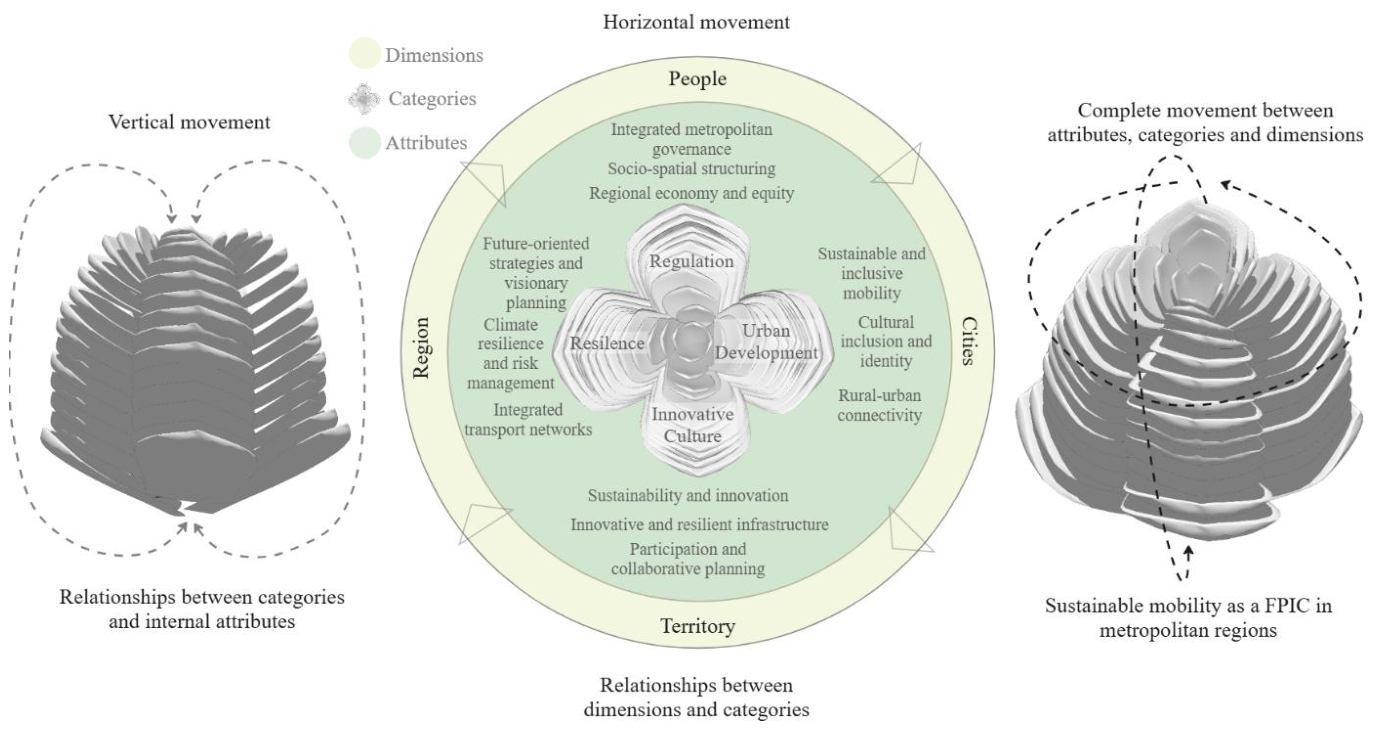
Once the analysis was completed, the main findings of the research were organized into a final framework. This framework is inspired by the Crassula pyramidalis “Buddha's Temple,” [1] a plant renowned for its so - called divine geometry - forms considered perfect or spectacular to the human eye (Figure 4). This plant was selected for its alignment with three key characteristics. First, its growth structure is based on four inseparable sides, forming a harmonious and regular geometry. Second, the relationship between cultivation and flowering illustrates that while specific conditions are required for growth, flowering can occur at any time. Finally, its horizontal growth cycle emphasizes that its leaves (or shoots) emerge, develop, and complete their life cycle at the center of the plant, symbolizing a continuous process of internal renewal.
This analogy is integrated into the final framework of this research, where the plant’s four regular columns represent the four categories developed throughout the study: regulation, urban development, innovative culture, and resilience. The leaves or shoots of each column represent the set of actions aligned with the 12 convergent attributes preliminarily defined in Figure 3 from this essay and Erro! Fonte de referência não encontrada. from (Ribeiro, 2024). These attributes include Integrated Metropolitan Governance, Socio-Spatial Structuring, Regional Economy and Equity, Sustainable and Inclusive Mobility, Cultural Inclusion and Identity, Rural-Urban Connectivity, Sustainability and Innovation, Innovative and Resilient Infrastructure, Participation and Collaborative Planning, Future-Oriented Strategies and Visionary Planning, Climate Resilience and Risk Management, and Integrated Transport Networks. Together, they form a foundational framework for evaluating and effectively integrating mobility systems into broader metropolitan governance structures.
The final framework - Figure 4 and Table 34 from Ribeiro (2024) - constitutes a core contribution of this article. By organising metropolitan governance around four categories, regulation, urban development, innovative culture and resilience, and linking them to the dimensions of people, territory, city and region, the framework offers a transferable analytical tool for comparative metropolitan studies.
Unlike normative sustainability frameworks, this model is grounded in empirical evidence and explicitly incorporates governance capacity as a central variable. It allows researchers and policymakers to diagnose not only mobility performance, but also the institutional conditions that enable or constrain mobility as a FPIC.
The North–South comparison demonstrates the framework’s applicability across diverse contexts, supporting analytical generalisation beyond the cases studied. It also provides a structured way to understand how metropolitan regions can transition from unregulated or superficial configurations toward more essential and resilient governance models.
5.6. Implications for Metropolitan Governance Theory
From a theoretical perspective, this study advances metropolitan governance debates by repositioning mobility as a constitutive public function, rather than a derivative policy field. It bridges gaps between metropolitan governance theory, sustainable mobility studies and regional development literature.
By conceptualising mobility as a FPIC, the article offers a lens through which metropolitan regions can be analysed as institutional systems, not merely spatial or economic formations. This reframing has implications for how metropolitan sustainability is theorised, measured and governed, particularly in contexts marked by institutional fragmentation.
6. Concluding Remarks
This article examined mobility as a FPIC and demonstrated its central role in shaping metropolitan governance and sustainability outcomes. Responding to the guiding research question, how the appropriation of mobility as a FPIC contributes to defining the attributes of a sustainable metropolitan region, the study moved beyond sectoral interpretations of mobility to position it as a constitutive element of metropolitan systems.
The comparative analysis across Greater London, the Metropolitan Region of Porto Alegre and the Metropolitan Region of Serra Gaúcha revealed that mobility does not function as a FPIC by default. Rather, it becomes a shared public function only where institutional arrangements enable coordination across jurisdictions, sectors and time horizons. Differences in mobility outcomes were shown to be driven less by economic capacity or technological sophistication than by governance maturity and institutional design.
6.1. From Empirical Findings to Analytical Generalisation
The results demonstrated that the attributes associated with sustainable metropolitan mobility cluster around four interdependent categories as regulation, urban development, innovative culture and resilience and unfold across the dimensions of people, territory, city and region. Together, these elements form a multidimensional framework capable of capturing how governance arrangements condition mobility outcomes at the metropolitan scale (Figure 3 and Figure 4).
Greater London approximates an essential metropolitan configuration, in which mobility is institutionally embedded, strategically coordinated and aligned with long-term climate and spatial objectives. In contrast, the Brazilian metropolitan regions illustrate transitional and unregulated configurations, where mobility is formally recognised as a FPIC but remains operationally fragmented. The identification of shared and context-specific attributes across cases confirms that metropolitan sustainability is not a static condition, but a trajectory shaped by institutional capacity and governance continuity.
Importantly, the asymmetric emergence of attributes across cases underscores a key analytical insight: the presence or absence of attributes reflects governance maturity rather than contextual irrelevance. Attributes that are institutionalised in mature systems tend to disappear from discourse, while those absent from practice emerge as explicit demands in less consolidated metropolitan regions.
6.2. Reframing Sustainable Mobility as an Institutional Achievement
By conceptualising mobility as a FPIC, the article reframes sustainable mobility as an institutional achievement rather than a purely technical or modal outcome. While much of the international literature emphasises technological innovation, behavioural change or infrastructure investment, the findings demonstrate that such measures remain limited without metropolitan-scale governance capable of integrating land use, transport, climate policy and social equity.
The framework developed in this study advances sustainable mobility debates by linking mobility performance to governance mechanisms, coordination capacity and institutional learning. It shows that walking, cycling, public transport and inclusive public spaces are not merely planning choices, but the result of coherent metropolitan governance structures that prioritise collective public interests over fragmented local agendas.
6.3. Policy Relevance and Transferability
The proposed framework offers a transferable analytical and policy tool for diagnosing metropolitan governance capacity and identifying gaps in the treatment of mobility as a FPIC. By structuring analysis around categories, attributes and horizontal interactions - Table 34 from Ribeiro (2024) - the framework enables policymakers to assess how regulatory arrangements, urban development strategies, innovation ecosystems and resilience planning interact across scales.
At the operational level, local and metropolitan governments can apply the framework to improve transport integration, enhance public transport systems, promote active mobility and strengthen collaborative planning mechanisms. At the strategic level, the framework supports the design of metropolitan governance reforms, including the potential establishment of metropolitan authorities or intermunicipal consortia aligned with FPIC principles.
6.4. Contributions to Metropolitan Governance Theory
From a theoretical perspective, this article contributes to international debates in Cities by repositioning mobility as a constitutive public function of metropolitan governance. It bridges gaps between metropolitan governance theory, sustainable mobility research and regional development studies, offering an integrated perspective that is applicable across Global North and Global South contexts.
By moving from empirical comparison to conceptual synthesis, the article demonstrates how metropolitan regions can be analysed as institutional systems, rather than as spatial aggregates or sectoral policy arenas. This reframing enhances the analytical capacity of metropolitan studies and responds directly to calls for governance-oriented, comparative and policy-relevant urban research.
6.5. Limitations and Directions for Future Research
The study is subject to limitations related to case specificity, data availability and variations in institutional transparency. While the mixed-methods approach and comparative design mitigate these constraints, future research could further refine the framework by testing the attributes in additional metropolitan contexts and by developing quantitative scales to measure governance maturity and FPIC implementation.
Future studies should also deepen the analysis of rural–urban interdependencies, climate-induced mobility and metropolitan responses to environmental migration pressures. Refining attribute definitions and exploring their interrelationships may further enhance the framework’s explanatory and predictive potential.
6.6. Final Remarks
This article concludes that recognising mobility as a Public Function of Common Interest is not a normative aspiration, but a structural condition for sustainable metropolitan governance. Metropolitan regions capable of institutionalising mobility as a shared public function are better positioned to address socio-spatial inequalities, climate risks and long-term development challenges. In the metropolitan century, mobility is not merely a means of movement, it is a defining axis of governance, sustainability and collective urban life.
| 1 | MONSTERA. Crassula Buddha’s Temple. Available at: https://www.monstera-app.com/en/plants/varieties/crassula-buddha-s-temple-01H8YGH8PEYJTGEAM18JYXNTG3. Accessed on: Nov. 29, 2024. |
Appendix A – Tables

Table 1.
Quantitative analysis of categories.
| Regulation | Q1-Q5 | ||||||||
| 5 Questions | Reference | <3 | >0,95 | <0,08 | >0,95 | >0,6/0,7 | |||
| Category | Region | χ² | df | χ²/df | GFI | RMSEA | CFI | Cronbach's α | Loadings |
| Regulation | Greater London | 10,441 | 5 | 2,088 | 0,988 | 0,098 | 0,938 | 0,655 | Todas sign. |
| Regulation | RMPA | 7,715 | 5 | 1,543 | 0,990 | 0,070 | 0,972 | 0,585 | Q5 no sig. |
| Regulation | RMSG | 6,283 | 5 | 1,257 | 0,992 | 0,044 | 0,984 | 0,507 | Q4 and Q5 no sig |
| Take Q4 and Q5 off | |||||||||
| Regulation | RMSG | 0,646 | |||||||
| Place | Q6-Q11 | ||||||||
| 6 Questions | Reference | <3 | >0,95 | <0,08 | >0,95 | >0,6/0,7 | |||
| Subcategory | Region | χ² | df | χ²/df | GFI | RMSEA | CFI | Cronbach's α | Loadings |
| Place | Greater London | 4,749 | 9 | 0,528 | 0,995 | 0,000 | 1,000 | 0,725 | Q7, Q9 low |
| Place | RMPA | 10,219 | 9 | 1,135 | 0,989 | 0,035 | 0,993 | 0,714 | Q7 low |
| Place | RMSG | 11,727 | 9 | 1,303 | 0,989 | 0,048 | 0,988 | 0,730 | Q6, Q7 low |
| Urbanisation | Q16-Q18 | ||||||||
| 3 Questions | Reference | <3 | >0,95 | <0,08 | >0,95 | >0,6/0,7 | |||
| Subcategory | Region | X² | df | X²/df | GFI | RMSEA | CFI | Cronbach's α | Loadings |
| Urbanisation | Greater London | 0,000 | 0 | 0,000 | 1,000 | 0,000 | 1,000 | 0,489 | Q16 |
| Urbanisation | RMPA | 0,000 | 0 | 0,000 | 1,000 | 0,000 | 1,000 | 0,457 | Q18 low |
| Urbanisation | RMSG | 0,000 | 0 | 0,000 | 1,000 | 0,000 | 1,000 | 0,500 | Q18 low |
| Take Q18 off | |||||||||
| Urbanisation | RMPA | 0,682 | |||||||
| Urbanisation | RMPA | 0,665 | |||||||
| Economy | Q12-Q15 | ||||||||
| 4 Questions | Reference | <3 | >0,95 | <0,08 | >0,95 | >0,6/0,7 | |||
| Subcategory | Region | χ² | df | χ²/df | GFI | RMSEA | CFI | Cronbach's α | Loadings |
| Economy | Greater London | 0,199 | 2 | 0,099 | 1,000 | 0,000 | 1,000 | -0,093 | Q12, Q13 low; Q13 no sig |
| Economy | RMPA | 1,756 | 2 | 0,878 | 0,996 | 0,000 | 1,000 | 0,061 | all low |
| Economy | RMSG | 6,639 | 2 | 3,319 | 0,989 | 0,132 | 0,926 | 0,081 | Q13, Q14, Q15 low |
| Take Q13 off | |||||||||
| Economy | Greater London | 0,580 | Q12 | ||||||
| Take Q12 and Q13 off | |||||||||
| Economy | RMPA | 0,758 | |||||||
| Take Q12 and Q13 off | |||||||||
| Economy | RMSG | 0,729 | |||||||
| Culture and Identity | Q19-Q24 | ||||||||
| 6 Questions | Reference | <3 | >0,95 | <0,08 | >0,95 | >0,6/0,7 | |||
| Subcategory | Region | χ² | df | χ²/df | GFI | RMSEA | CFI | Cronbach's α | Loadings |
| Culture and Identity | Greater London | 3,434 | 9 | 0,382 | 0,997 | 0,000 | 1,000 | 0,863 | All higher 0,5 |
| Culture and Identity | RMPA | 27,300 | 9 | 3,033 | 0,942 | 0,135 | 0,769 | 0,634 | Q20, Q21and Q24 low |
| Culture and Identity | RMSG | 23,649 | 9 | 2,628 | 0,953 | 0,111 | 0,845 | 0,627 | Q20, Q21and Q24 low |
| Take Q21 and Q24 off | |||||||||
| Culture and Identity | RMPA | 0,706 | All higher 0,5 | ||||||
| Take Q20 and Q24 off | |||||||||
| Culture and Identity | RMSG | 0,682 | Q21 low | ||||||
| Innovation | Q25-Q29 | ||||||||
| 5 Questions | Reference | <3 | >0,95 | <0,08 | >0,95 | >0,6/0,7 | |||
| Subcategory | Region | χ² | df | χ²/df | GFI | RMSEA | CFI | Cronbach's α | Loadings |
| Innovation | Greater London | 4,318 | 5 | 0,864 | 0,993 | 0,000 | 1,000 | 0,706 | All higher 0,5 |
| Innovation | RMPA | 16,088 | 5 | 3,218 | 0,958 | 0,141 | 0,538 | 0,305 | Q26, Q27 and Q28 low |
| Innovation | RMSG | 15,548 | 5 | 3,110 | 0,969 | 0,126 | 0,811 | 0,521 | Q25 and Q29 low |
| Take Q26, Q27 and Q28 off | |||||||||
| Innovation | RMPA | 0,690 | |||||||
| Take Q25 and Q29 off | |||||||||
| Innovation | RMSG | 0,609 | Q26 low | ||||||
| Net | Q30-Q35 | ||||||||
| 6 Questions | Reference | <3 | >0,95 | <0,08 | >0,95 | >0,6/0,7 | |||
| Subcategory | Region | χ² | df | χ²/df | GFI | RMSEA | CFI | Cronbach's α | Loadings |
| Net | Greater London | 15,475 | 9 | 1,719 | 0,977 | 0,079 | 0,917 | 0,643 | Q31 low |
| Net | RMPA | 6,228 | 9 | 0,692 | 0,991 | 0,000 | 1,000 | 0,719 | Q31 and Q35 low |
| Net | RMSG | 6,720 | 9 | 0,747 | 0,994 | 0,000 | 1,000 | 0,710 | Q31 and Q35 low |
| Climate Change | Q36-Q43 | ||||||||
| 8 Questions | Reference | <3 | >0,95 | <0,08 | >0,95 | >0,6/0,7 | |||
| Subcategory | Region | χ² | df | χ²/df | GFI | RMSEA | CFI | Cronbach's α | Loadings |
| Climate Change | Greater London | 27,627 | 20 | 1,381 | 0,983 | 0,058 | 0,982 | 0,821 | All higher 0,5 |
| Climate Change | RMPA | 41,759 | 20 | 2,088 | 0,943 | 0,099 | 0,899 | 0,658 | Q36, Q37, Q38 and Q39 low |
| Climate Change | RMSG | 77,390 | 20 | 3,869 | 0,938 | 0,147 | 0,848 | 0,754 | Q36 and Q37 low |
| New analyses separating Q36, Q37, Q38, Q39 from Q40, Q41, Q42 and Q43 | |||||||||
| Q36-Q39 | |||||||||
| Climate Change | RMPA | 0,510 | 0,996 | 0,000 | 1,000 | 0,658 | Q39 low | ||
| Q40-Q43 | |||||||||
| Climate Change | RMPA | 0,061 | 0,999 | 0,000 | 1,000 | 0,828 | All higher 0,5 | ||
| Take Q36 and Q37 off | |||||||||
| Climate Change | RMSG | 1,152 | 0,990 | 0,034 | 0,996 | 0,781 | Q38 low | ||
| New analyses separating Q36, Q37, Q38 from Q39, Q40, Q41, Q42 and Q43 | |||||||||
| Q36-Q38 | |||||||||
| Climate Change | RMSG | 0,764 | All higher 0,5 | ||||||
| Q39-Q43 | |||||||||
| Climate Change | RMSG | 0,816 | Q39 low | ||||||
| Foresight/ Future Thinks |
Q44-Q52 | ||||||||
| 9 Questions | <3 | >0,95 | <0,08 | >0,95 | >0,6/0,7 | ||||
| Subcategory | Region | χ² | df | χ²/df | GFI | RMSEA | CFI | Cronbach's α | Loadings |
| Foresight/ Future Thinks |
Greater London | 13,850 | 27 | 0,513 | 0,989 | 0,000 | 1,000 | 0,790 | Q51 low |
| Foresight/ Future Thinks |
RMPA | 18,408 | 27 | 0,682 | 0,992 | 0,000 | 1,000 | 0,844 | Q51 and Q52 low |
| Foresight/ Future Thinks |
RMSG | 27,473 | 27 | 1,018 | 0,991 | 0,000 | 1,000 | 0,871 | Q51 low |
Source: Elaborated by the author (2024).
Table 2.
Non-convergent attributes between the three cases studies.
| Attributes | Subcategory Align | Greater London | RMPA | RMSG | Observation |
| Study of the Territory | Territorial | - | New | New | Not identified |
| Unified Governance and Integrated Planning | Innovation | - | Emerged | Emerged | Not identified in Greater London |
| Public Spaces and Accessibility | Innovation | Public Spaces and Accessibility | Public Transport Efficiency | Public Transport Efficiency | Understanding Change in RMPA and RMSG |
| Social and Economic Equity | Innovation | - | Emerged | Emerged | Not identified in Greater London |
| Need for Strategic Investment in Mobility Solutions | Net | - | - | Emerged | Emerged RMSG only |
| Flood Management and Urban Planning | Climate Change | - | Emerged | Emerged | Not identified in Greater London |
| Climate Change and Sustainability | Climate Change | Emerged | - | - | Emerged Greater London only |
| Climate Change Mitigation Strategies | Climate Change | Emerged | - | - | Emerged Greater London only |
| Enhanced Public Transport and Non-motorized Mobility | Foresight, Future Thinks | Emerged | - | - | Emerged Greater London only |
| Integration and Coordination | Foresight, Future Thinks | - | Emerged | Emerged | Not identified in Greater London |
| Forward-Looking Mobility Strategies and Policy Influence | Foresight, Future Thinks | - | Emerged | Emerged | Not identified in Greater London |
Source: Elaborated by the author (2024).
References
- Barbera, F.; De Rossi, A. Metromontagna: Un progetto per riabitare l’Italia; Donzelli Editore, 2021; Available online: https://books.google.co.uk/books?id=OU8zEAAAQBAJ.
- Bebber, S.; et al. ‘Sustainable mobility scale: A contribution for sustainability assessment systems in urban mobility’. Cleaner Engineering and Technology 2021, 5. [Google Scholar] [CrossRef]
- Castells, M. The Network Society. First Edit; Castells, M., Ed.; Edward Elgar Publishing Limited: Cheltenham, 2004. [Google Scholar]
- Christaller, W. Central Places in Southern Germany; Prentice Hall: Englewood Cliffs, 1966. [Google Scholar]
- Cordeiro, E.C. ‘Da banalização das regiões metropolitanas ao Estatuto da Metrópole: será o fim das “metrópoles de papel”?’. GEOUSP Espaço e Tempo (Online) 2019, 23(1), 040–058. [Google Scholar] [CrossRef]
- Creswell, J.W.; Plano Clarrk, V.L. Designing and Conducting Mixed Methods Research; SAGE, Ed.; THIRD EDIT: LONDON, 2018. [Google Scholar]
- CUNHA, F.C.A. A metrópole de papel: a representação “Londrina Metrópole” na institucionalização da região metropolitana de Londrina; 2005. [Google Scholar]
- Ellin, N. Integral Urbanism, 1st Editio ed; 2006. [Google Scholar] [CrossRef]
- Flyvbjerg, B. ‘Five Misunderstandings About Case-Study Research’. Qualitative Research Practice 2011, 390–404. [Google Scholar] [CrossRef]
- GLA. ‘London Environment Strategy’, p. 442. 2018. Available online: http://chrome-extension://efaidnbmnnnibpcajpcglclefindmkaj/https://www.london.gov.uk/sites/default/files/london_environment_strategy_0.pdf.
- IPCC (2021a). Climate Change 2021 - The Physical Science Basis - Summary for Policymakers, Climate Change 2021: The Physical Science Basis. Available online: https://www.ipcc.ch/report/sixth-assessment-report-working-group-i/.
- IPCC. The Physical Science Basis. Contribution of Working Group I to the Sixth Assessment Report of the Intergovernmental Panel on Climate Change, Managing the Risks of Extreme Events and Disasters to Advance Climate Change Adaptation: Special Report of the Intergovernmental Panel on Climate Change; J.B.R. Masson-Delmotte, V., Zhai, P., Pirani, A., Connors, S.L., Péan, C., Berger, S., Caud, N., Chen, Y., Goldfarb, L., Gomis, M.I., Huang, M., Leitzell, K., Lonnoy, E., Matthews, B.Z., Maycock, T.K., Waterfield, T., Yelekçi, O., Yu, R., Eds.; Cambridge University Press: Cambridge and New York, 2021b. [Google Scholar] [CrossRef]
- de Mendonça, J.G.; de Andrade, L.T.; Diniz, A.M.A. ‘Hipersegregação das elites metropolitanas brasileiras na década de 2000: interpretações a partir da Região Metropolitana de Belo Horizonte’. Cadernos Metrópole 2019, 21(44), 29–53. [Google Scholar] [CrossRef]
- Mi, Z.; Coffman, D.M. ‘The sharing economy promotes sustainable societies’. Nature Communications 2019, 10(1), 5–7. [Google Scholar] [CrossRef] [PubMed]
- Parr, J.B. ‘Growth-pole strategies in regional economic planning: A retrospective view. Part 2. Implementation and outcome’. Urban Studies 1999, 36(8), 1247–1268. [Google Scholar] [CrossRef]
- Parr, J.B. ‘Perspectives on the city-region’. Regional Studies 2005, 39(5), 555–566. [Google Scholar] [CrossRef]
- Perroux, F. Economic Space : Theory and Applications Author ( s ): François Perroux Source. The Quarterly Journal of Economics;The Quarterly Journal of Economics 1950, Vol. 64(No. 1 64(1)), 89-104 ECONOMIC SPACE : THEORY AND APPLICATIONS ’’ 89–104. [Google Scholar]
- Rauhut, D.; Humer, A. ‘EU Cohesion Policy and spatial economic growth: trajectories in economic thought’. European Planning Studies 2020, 28(11), 2116–2133. [Google Scholar] [CrossRef] [PubMed]
- Ribeiro, V. de T.; Fachinelli, A.C. ‘Sustainable Mobility in the Century of Metropolises: Case Study of Greater London’. Land 2024, 13(10). [Google Scholar] [CrossRef]
- Ribeiro, V. de T. Mobility in the century of metropolises: a sustainable and multidimensional approach to public function of common interest . Caxias do Sul University. 2024. Available online: https://repositorio.ucs.br/11338/14365.
- Santos, M. Espaço e sociedade: ensaios; Vozes, Editora, Ed.; Editora Vozes, 1979; Available online: https://books.google.co.uk/books?id=iswNAAAAYAAJ.
- Sennett, R. Construir e habitar: ética para uma cidade aberta, 1o ed; Ltda, R., Ed.; Rio de Janeiro, 2018. [Google Scholar]
- UN-HABITAT (2020) World Cities Report 2020., First Edit ed; Nairobi.
- United Nations. United Nations General Assembly . In Routledge Handbook of Judicial Behavior; New York, NY, USA, 2015. [Google Scholar] [CrossRef]
- Yin, R.K. Case Study Research and Applications: Design and Methods, 6th ed.; SAGE Publications, 2017; Available online: https://books.google.co.uk/books?id=6DwmDwAAQBAJ.
Figure 1.
Structure of qualitative analysis between case studies. Source: Elaborated by author (2024).
Figure 1.
Structure of qualitative analysis between case studies. Source: Elaborated by author (2024).
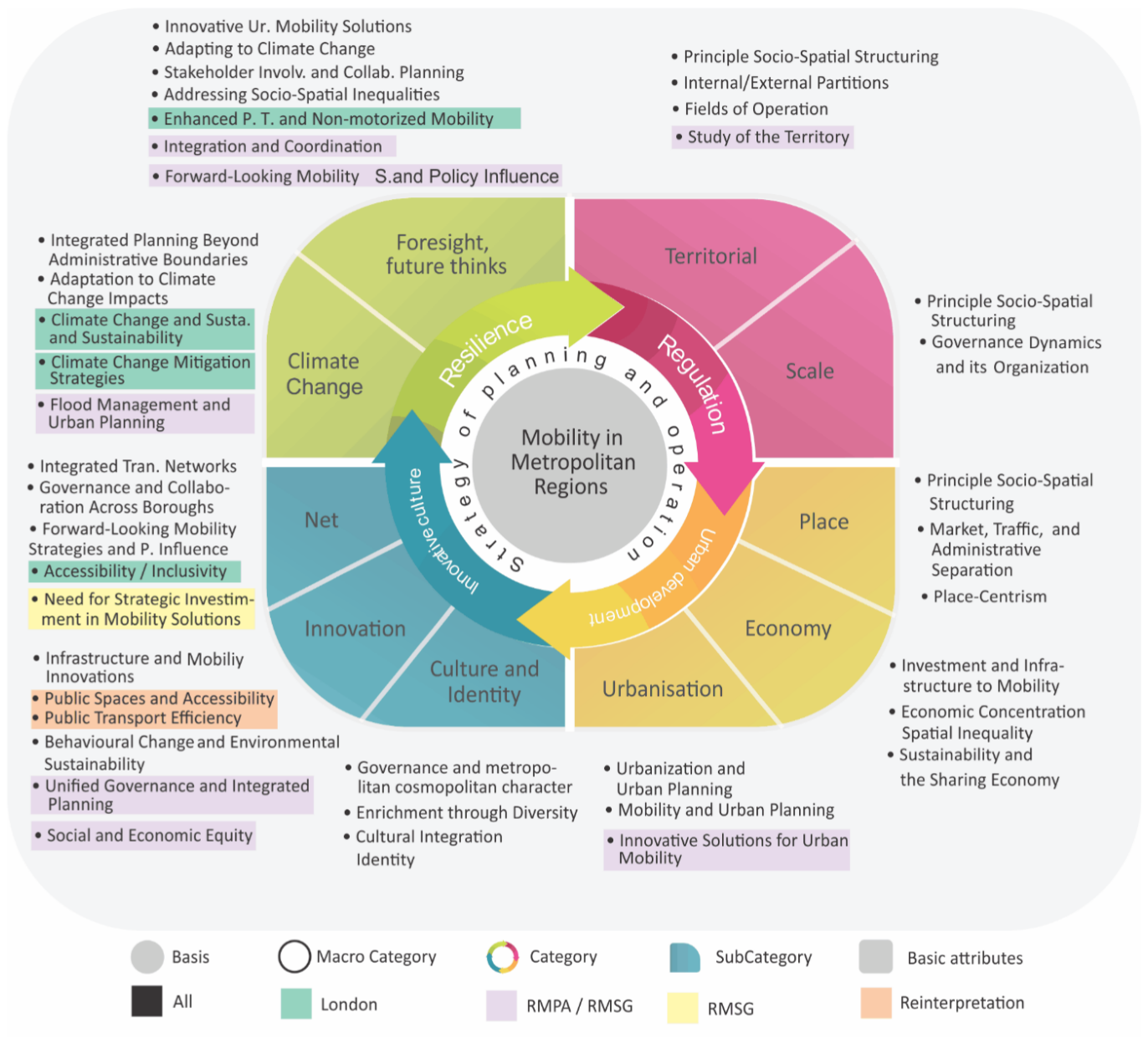
Figure 2.
Averages of the subcategories evaluated in the quantitative phase. Source: Elaborated by author (2024).
Figure 2.
Averages of the subcategories evaluated in the quantitative phase. Source: Elaborated by author (2024).
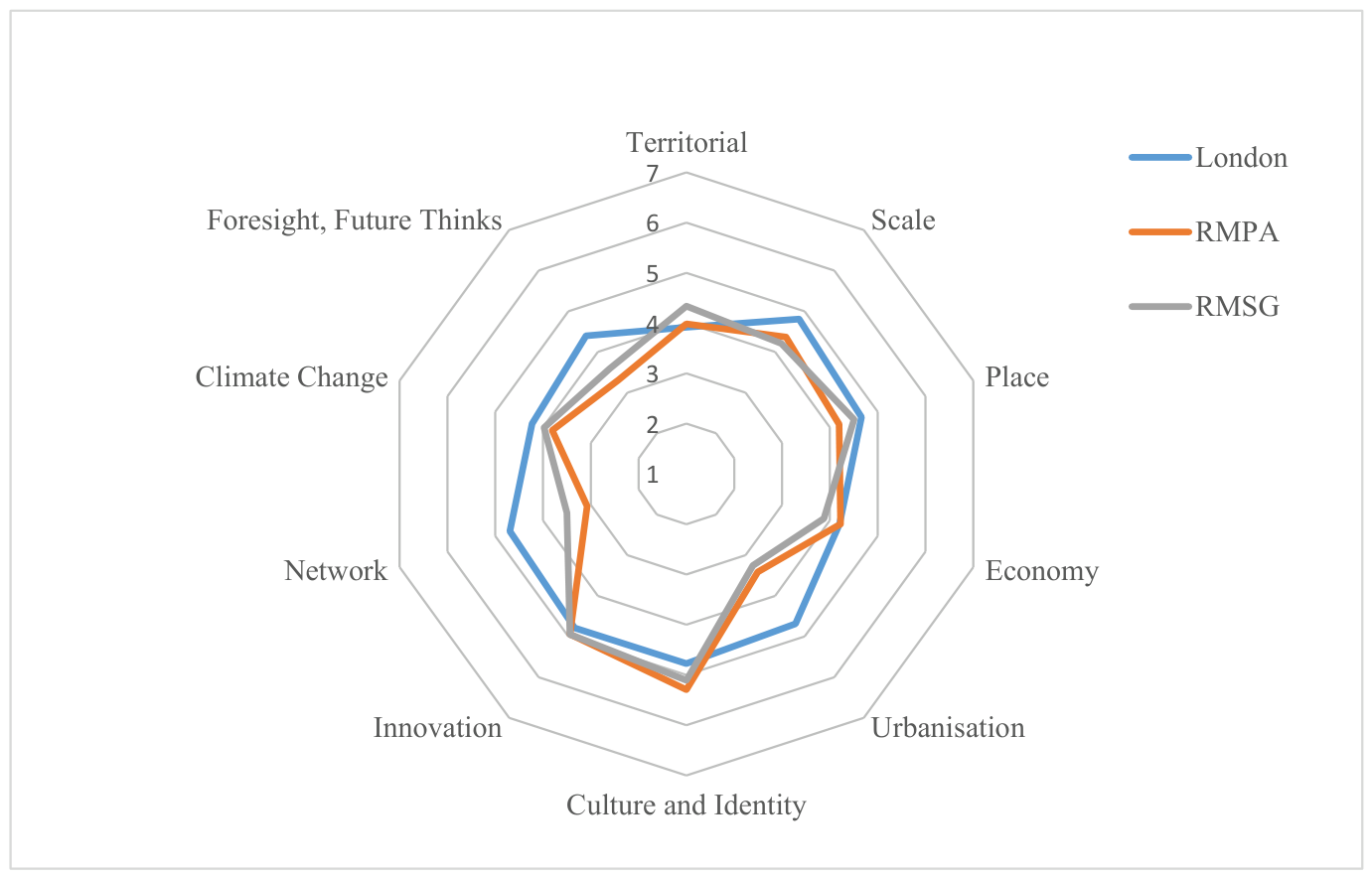
Figure 3.
Attibutes aligned from cases of studies. Source: Elaborated by author (2024).
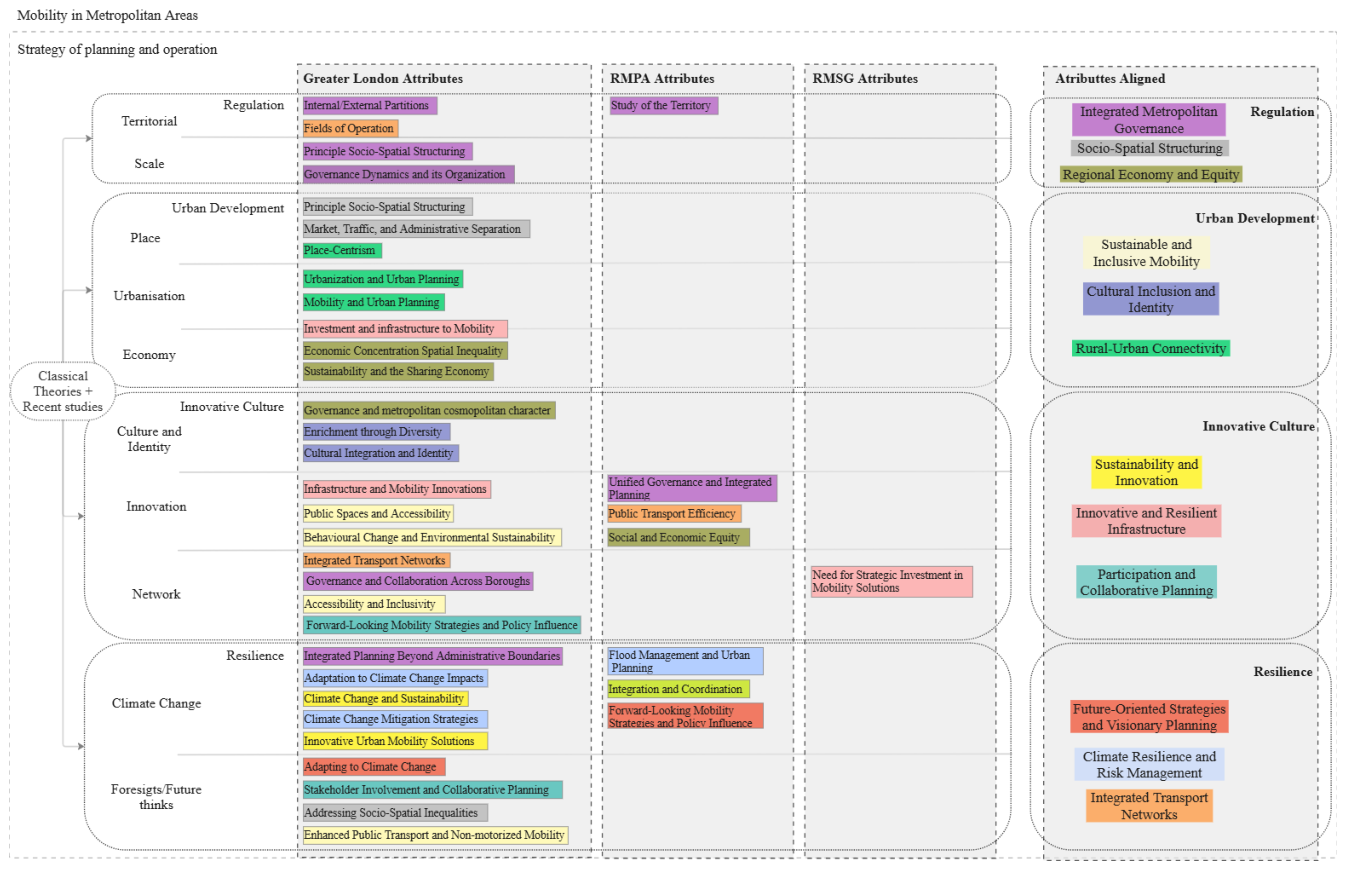
Figure 4.
Framework of the attributes of a Sustainable Metropolitan Region. Source: Elaborated by author (2024).
Figure 4.
Framework of the attributes of a Sustainable Metropolitan Region. Source: Elaborated by author (2024).
Disclaimer/Publisher’s Note: The statements, opinions and data contained in all publications are solely those of the individual author(s) and contributor(s) and not of MDPI and/or the editor(s). MDPI and/or the editor(s) disclaim responsibility for any injury to people or property resulting from any ideas, methods, instructions or products referred to in the content. |
© 2026 by the authors. Licensee MDPI, Basel, Switzerland. This article is an open access article distributed under the terms and conditions of the Creative Commons Attribution (CC BY) license (http://creativecommons.org/licenses/by/4.0/).
Copyright: This open access article is published under a Creative Commons CC BY 4.0 license, which permit the free download, distribution, and reuse, provided that the author and preprint are cited in any reuse.