
Submitted:
01 September 2026
Posted:
02 September 2026
You are already at the latest version
Abstract
The European Digital Identity Wallet (EUDI Wallet) is reshaping digital identity management across Europe by enabling citizens to access, manage, and share verifiable digital credentials in a secure and interoperable manner. This paper presents a case study of the Italian digital identity wallet (IT-Wallet), one of the first national implementations of Regulation (EU) 2024/1183, and investigates the factors that enabled its rapid adoption at national scale. The study combines the analysis of regulatory and technical documentation, system architecture decisions, adoption statistics, and a GDPR-compliant telemetry framework integrated into the IO application. Results show that embedding wallet functionality within the widely adopted IO platform, reusing existing national digital infrastructures, and adopting open technical specifications facilitated the activation of more than 12 million wallets and the large-scale issuance of digital credentials. Telemetry data reveal high onboarding completion rates, sustained user engagement, and different usage patterns across credential types. Beyond adoption metrics, the study identifies six critical success factors related to platform integration, interoperability, governance, stakeholder collaboration, user experience, and progressive alignment with evolving European standards. The findings highlight how the success of national digital identity wallets depends not only on regulatory compliance and technical architecture but also on software-engineering decisions, deployment strategies, and ecosystem governance. The Italian experience provides practical lessons for Member States implementing interoperable digital identity ecosystems and demonstrates the value of empirical measurement in evaluating large-scale digital public infrastructures.
Keywords:
EUDI Wallet
; IT-Wallet
; digital identity
; verifiable credentials
; software telemetry
; trust framework
; open-source implementation
; public sector software
1. Introduction
1.1. Background and Research Contribution
Digital transformation has altered how citizens interact with public institutions. The COVID-19 pandemic accelerated demand for remote, trustworthy access to welfare, healthcare, and mobility services, exposing limitations of legacy federated login models in which identity providers observe every service transaction. Regulation EU 2024/1183 (eIDAS 2.0) establishes the European Digital Identity Wallet (EUDI Wallet) as a cross-border framework for privacy-preserving credential management, interoperable public and private services, and user-controlled attribute disclosure. European Member States must make a certified wallet available to citizens; Italy moved early by extending an existing national citizen application rather than waiting for a greenfield product cycle.
The Italian digital identity wallet (IT-Wallet) is among the first operational national implementations of a digital wallet ecosystem in Europe. The initiative is led by the Department for digital transformation of the Presidency of the Council of Ministers, which coordinates the overall strategy and governance of the programme. The Department works in close collaboration with the State Mint and Polygraphic Institute (Istituto Poligrafico e Zecca dello Stato – IPZS), which is responsible for the central infrastructure of the system and for the issuance of public electronic attestations and personal identification information, and with PagoPA S.p.A., which manages the IO app and provides the public IT-Wallet. This governance model combines central public oversight with specialized public-sector operators responsible for infrastructure, credential issuance, and user-facing service delivery, creating a coordinated framework for the large-scale deployment of digital identity credentials.
The IT-Wallet programme has been designed as a three-phase implementation roadmap, although this article focuses exclusively on the first phase. Phase 1, Documents on IO, was launched on 4 December 2024 and introduced the first wallet functionality through the IO app, enabling citizens to access digital versions of three credentials—the driving license, health insurance card, and European Disability Card. The credentials made available during this phase were provided directly by their authentic sources: the Directorate General for Motor Vehicles of the Ministry of Infrastructure and Transport for the driving license, the State General Accounting Department of the Ministry of Economy and Finance for the health insurance card, and the National Institute for Social Security (INPS) for the European Disability Card. The strong uptake achieved by this initiative validated the strategic decision to build the Italian Wallet on top of an existing, widely adopted public application, ensuring inclusiveness, security, and scalability from the outset. Phase 2, expected to become operational in the third quarter of 2026, will establish the IT-Wallet System and introduce additional capabilities, including the issuance of new credentials and their use in both online and proximity-based scenarios through verification solutions based on both Bluetooth and NFC technologies. This phase will also enable the participation of private wallet providers within the national ecosystem. Phase 3 will further evolve the national architecture to achieve full compliance with the eIDAS framework and support the formal notification of the public IT-Wallet as an EUDI Wallet, thereby ensuring full interoperability and cross-border usability across the European Union.
Its primary innovation of the Phase 1 is a go-to-maketand software-delivery model that translates evolving European standards into inclusive adoption: infrastructure reuse (PDND, ANPR, SPID/CIE), embedding in the IO app, open-source specifications under Creative Commons 0, and progressive alignment with the European Architecture Reference Framework (ARF). From a software-engineering perspective, the programme treats the wallet as a platform extension—new credential types, issuer onboarding workflows, and verification APIs layered onto proven identity and data-exchange services—rather than as an isolated mobile product.
This paper addresses: What critical design and governance factors enable rapid, inclusive adoption of wallet-based identity systems in complex regulatory environments? Secondary questions concern how trade-offs between centralisation, privacy, usability, and technical complexity manifest in practice, and which lessons transfer to other Member States.
1.2. State of the Art
Wallet-based identity evolves from federated authentication (SAML 2.0, OpenID Connect 1.0), where identity providers observe service access, toward user-held credentials with selective disclosure and offline verification. In SAML/OIDC deployments widely used by Italian public administrations, each service login exposes citizen activity to the identity provider—a architectural property wallets were designed to reverse. Prior work includes Estonia’s e-ID ecosystem and SK ID Solutions (national focus, limited cross-border interoperability); W3C Verifiable Credentials and Self-Sovereign Identity pilots (Netherlands SSI Essentials, Germany Gaia-X) emphasising user sovereignty but rarely reaching national production scale; academic surveys of wallet trends and selective-disclosure cryptography [12,13,14]; and emerging EUDI implementations in Belgium, Luxembourg, and other Member States still at early rollout stages.
Comparative analysis remains sparse for production-scale deployments. Most published wallet literature focuses on protocols, threat models, or pilot-scale user studies. The IT-Wallet case fills a gap by documenting national rollout mechanics—embedding strategy, authentic-source integration, open-specification delivery—and linking them to adoption and telemetry evidence unavailable in standards documents alone.
The IT-Wallet distinguishes itself through pragmatic federation (governmental trust anchors), reuse of mature infrastructure rather than parallel systems, adoption-focused embedding in an application already used by millions, and transparent open governance. Ansaroudi et al. [12] survey emerging wallet trends and emphasise that trust frameworks determine adoption; Flamini et al. [13,14] analyse selective-disclosure mechanisms underpinning the credential formats deployed in Italy. Section 2 details the methods used to analyse this case; technical protocol catalogues are provided as supplementary material.
1.3. Contribution Summary
Relative to prior descriptive accounts of national digital identity programmes, this paper contributes: (1) an explicit case-study methodology linking architectural decisions to measurable adoption and usage signals; (2) documentation of a production-grade, GDPR-conformant telemetry pipeline as software-engineering evidence; (3) six transferable success factors grounded in Italian implementation experience; and (4) a candid limitation analysis addressing gaps in outcome metrics that prior drafts omitted.
2. Materials and Methods
2.1. Case-Study Design
We employ a single-case study of the Italian IT-Wallet, appropriate for early, large-scale implementations where controlled experiments are infeasible [2]. Data sources include:
- Regulatory instruments (Decreto-Legge 19/2024; eIDAS 2.0 implementing measures);
- Public technical specifications and reference code (eid-wallet-it-docs GitHub repository) [6];
- Trust-framework documentation;
- Published adoption statistics (activations, credentials issued, pilot participants);
- GDPR-conformant product telemetry internal monitoring statistics;
- Stakeholder engagement records (GitHub issues, federation browser, developer documentation).
Analysis synthesises these sources to derive design principles, success factors, and limitations. We explicitly distinguish design decisions (architectural choices) from observed outcomes (adoption and usage evidence). Following Yin [2], evidence from multiple source types (documents, repository artefacts, metrics) strengthens construct validity for case-study inference in software-intensive public-sector programmes.
Triangulation was applied where independent sources converged – for example, activation counts reported in official communications align with IO telemetry trends for wallet onboarding events. Contradictions (e.g., high activations but limited credential-type diversity in early pilots) are reported rather than suppressed.
2.2. Software Telemetry Methodology
To address reviewer concerns about empirical rigour, we document the product telemetry pipeline used to measure IO Wallet behaviour. Monitoring integrates Mixpanel analytics libraries, configured to balance statistical precision with GDPR compliance (Department for Digital Transformation / PagoPA methodology).
Event architecture - each tracked user interaction is recorded as a structured tuple:
- Event name — a standardized action identifier (e.g., CREDENTIAL_DETAIL when a user opens a digital document detail view);
- Properties — contextual attributes enriching the event (e.g., CREDENTIAL: Driving licence, STATUS: Valid);
- Distinct ID — a pseudonymous, device-scoped random identifier enabling session-level analysis without direct personal identification.
Consent model - collection requires explicit opt-in. Until consent is granted, activity remains anonymous; withdrawal stops further tracking. On average, ~70% of users consent, so analysed volumes represent a statistically significant projection, not a full census—a limitation we report in Results and Discussion.
Governance workflow - every new or modified tracking event passes mandatory approval: Design defines informational needs during UX flow design → TECH assesses implementation feasibility in IO repositories → Privacy verifies necessity, data minimisation, and compliance with user rights. Implementation proceeds only after dual approval, documented in privacy impact assessments for IO and the “Documenti su IO” product. This mirrors secure software analytics practices: instrumentation is treated as a code change subject to review, not as passive log collection.
Example instrumentation - wallet document engagement is tracked via CREDENTIAL_DETAIL events with properties encoding credential type and validity status. Analysts can segment driving-licence views versus health without accessing citizen identity fields—a property-level analytics pattern applicable when presenting aggregate adoption evidence to policymakers.
Statistical interpretation - because opt-in consent averages ~70%, reported event volumes must be scaled when estimating population-level behaviour. Product teams document this ceiling in internal dashboards; we apply the same constraint when interpreting case-study findings, avoiding over-claims about universal citizen experience.
This instrumentation supports outcome-oriented analysis (feature usage, credential-type interaction, funnel bottlenecks) beyond raw activation counts. It exemplifies behavioural software analytics in a regulated public-service context: events are minimised to what is strictly necessary (GDPR Article 5), pseudonymisation prevents single-out re-identification, and a formal approval workflow prevents instrumentation drift—practices transferable to other wallet implementations subject to EU data-protection law.
2.3. Design Trade-Offs
Before implementation, the Italian programme resolved four challenges that shaped both architecture and adoption. On centralisation versus federation, pure SSI models were set aside in favour of OpenID Federation with a governmental trust anchor—trading maximal user-side decentralisation for coordinated governance. On standalone versus embedding, wallet functionality was placed inside IO to exploit existing citizen trust and SPID/CIE authentication, accepting engineering complexity and platform dependency in return for lower activation friction. On greenfield versus reuse, identity proofing and data exchange were anchored to SPID, CIE, ANPR, and PDND rather than rebuilt. Finally, on specification depth versus readability, full protocol detail remains in open CC-0 documentation and supplementary material, while this paper foregrounds design, governance, and adoption evidence.
2.4. Data Sources for Adoption Metrics
Complementary to telemetry, we use ecosystem output indicators provided by IPZS due to its role: wallet activations, per-credential-type issuance volumes.
3. Results
3.1. Design Outcomes Enabling Adoption
Three architectural outcomes proved decisive:
IO embedding. The first public wallet functionality was integrated into IO—Italy’s official digital public-service app with 15 million active users—rather than launched standalone. IO already delivers push notifications from public administrations, payment reminders, SPID/CIE-authenticated access and single-sign-on to public services; adding a credential wallet tab exploited habitual daily opens. This lowered install friction, leveraged existing SPID/CIE authentication, and enabled phased feature rollout, at the cost of coordinating hardware-security modules, secure enclave APIs, and selective-disclosure libraries within a legacy codebase maintained by a separate product team.
Infrastructure reuse. National Digital Data Platform (Piattaforma Digitale Nazionale Dati – PDND) provides privacy-preserving and standardized mechanism for all the authentic sources to send data to credential issuers for credential delivery and also the notification system to communicate any change to the data previously provided without revealing affected individuals; Italian National Registry (Anagrafe Nazionale - ANPR) through the PDND supplies authoritative identity data directly from the Ministry of the Interior which constitute the authoritative reference and access key for all other authentic sources, which are required to remain aligned and consistent with ANPR records.
When civil-registry data changes, issuers receive a signal sufficient to trigger re-validation without learning which citizen changed unless authorised through consent-scoped queries.
Legacy SAML/OIDC integrations required bridging layers for relying parties not yet wallet-ready, creating onboarding friction for heterogeneous public administrations whose contractors implemented identity flows years apart.
Federated trust. A national trust anchor publishes credential issuers, wallet providers, and relying parties (coming in the next phases of the project); subordinate statements enable offline verification so issuers cannot observe which services verify credentials—addressing a privacy weakness of traditional OIDC. Figure 2 (supplementary) illustrates federation onboarding; the main text focuses on adoption implications rather than PKI procedure.
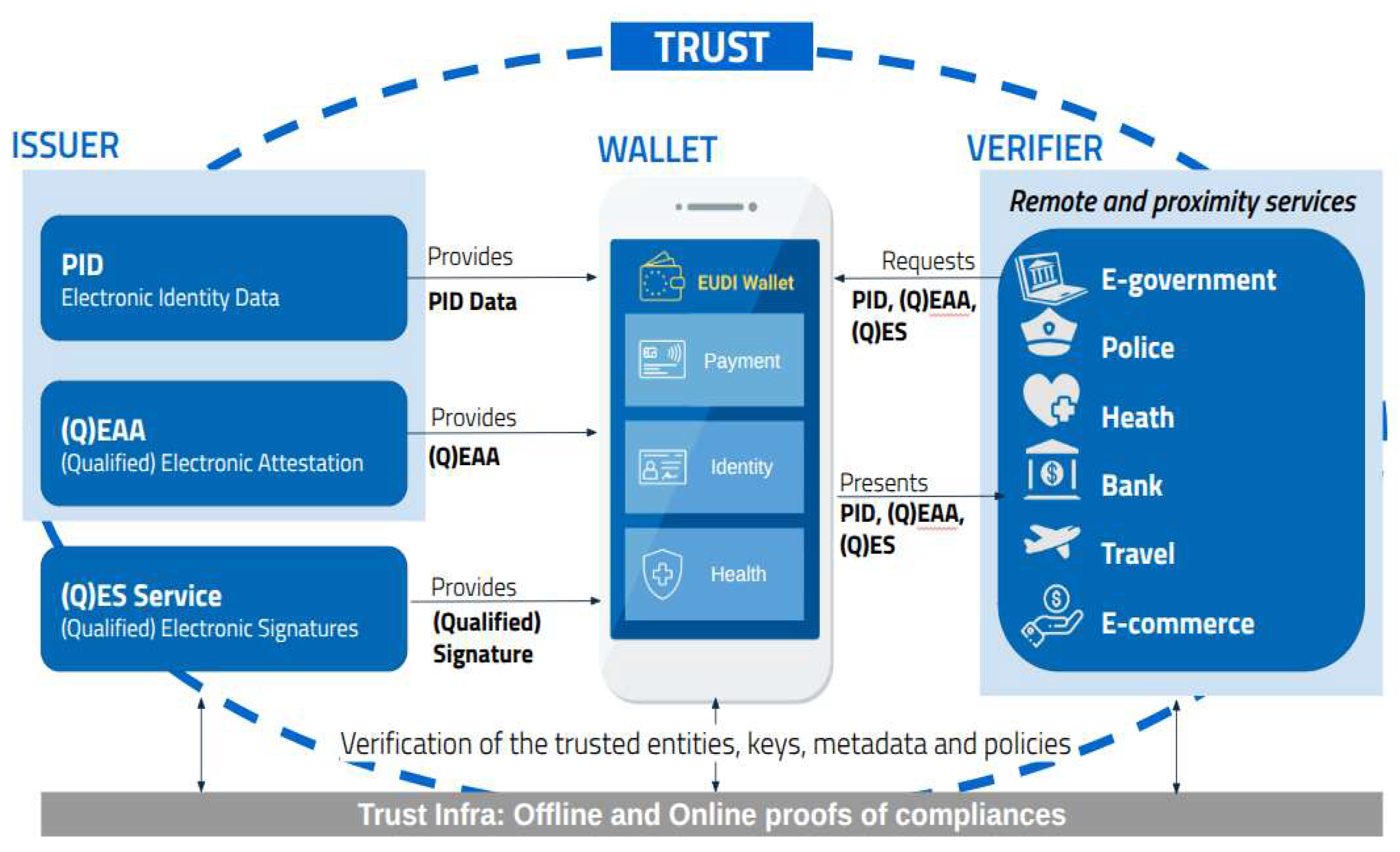
Figure 1 summarises actor interactions in the wallet ecosystem.
3.2. Adoption Outputs
The rollout of the first phase of the IT-Wallet system was deliberately designed as a progressive expansion aimed at ensuring service stability and a controlled onboarding process. Access was initially opened on 23 October 2024 to a pilot group of 50,000 citizens, before being extended to 250,000 citizens on 6 November, 1 million citizens on 20 November, and finally to the entire eligible population on 4 December 2024. This phased approach is clearly reflected in the activation data.
By July 2026, Documenti su IO had reached a substantial scale, recording more than 12 million wallet activations since launch. Among the credentials available through the platform, Driving Licences represented the largest category, with over 10.3 million activations, closely followed by Health Cards, which exceeded 10.0 million activations.
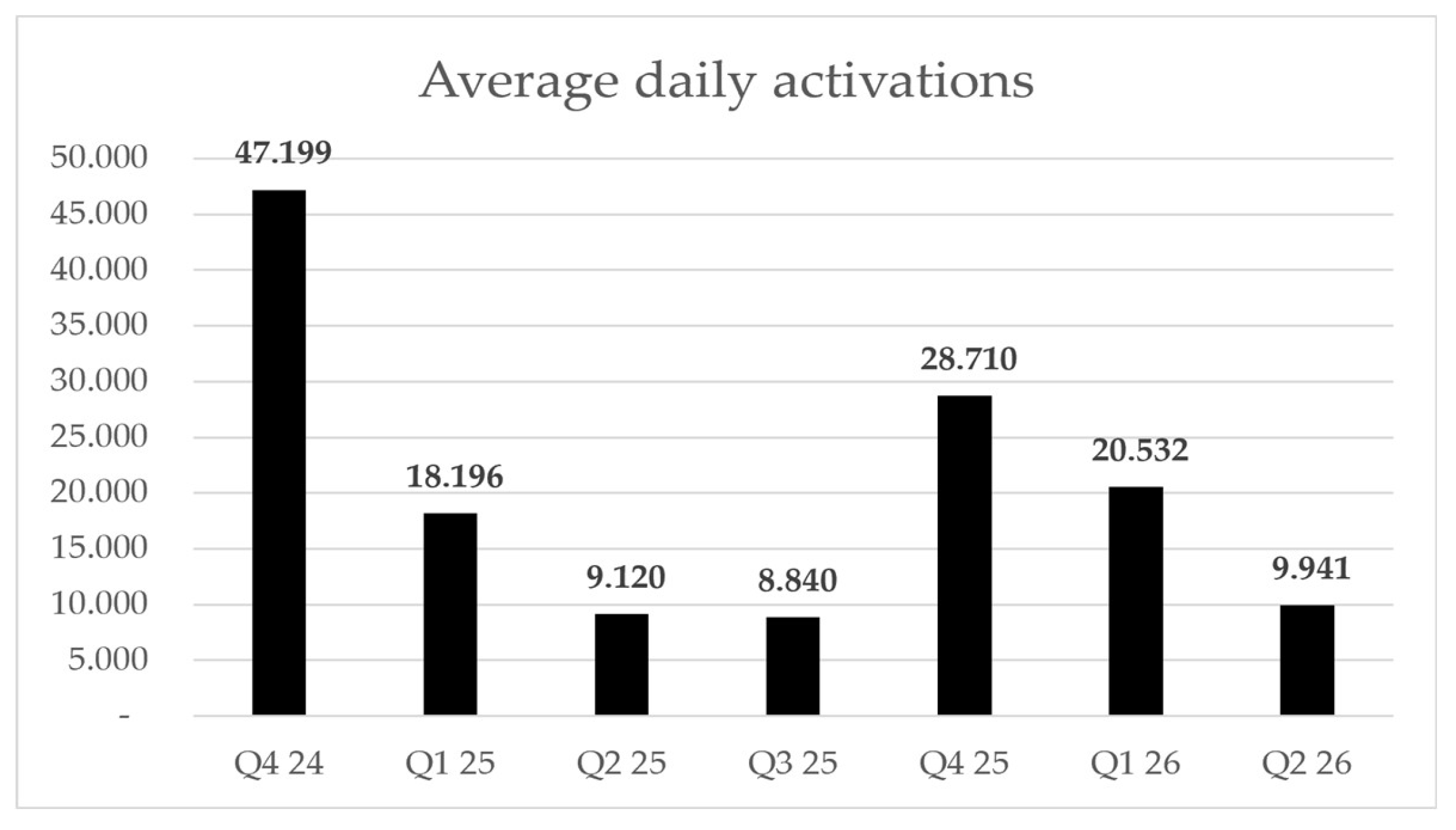
From October 2024 to July 2026, digital credential activations followed a highly concentrated growth pattern, characterized by a few exceptional onboarding waves followed by a long period of stable expansion. During the initial pilot phase, daily wallet activations remained relatively limited, generally below 300 new users per day, reflecting the restricted audience. The first major acceleration coincided exactly with the extension of access to 250,000 citizens on 6 November 2024, when activations increased by almost 45,000 in a single day. Growth intensified further following the expansion to 1 million citizens on 20 November, generating the first true mass-adoption phase: daily wallet activations exceeded 54,000 on 20 November, surpassed 100,000 on 21 November, and remained exceptionally high on 22 November. These three days alone contributed more than a quarter of a million new activations and marked the transition from a pilot initiative to a large-scale national service.
The most significant event in the entire dataset occurred with the full opening of the platform on 4 December 2024. On that day, wallet activations surged by more than 932,000, the highest daily increase recorded across the entire observation period, followed by a further 384,000 activations on 5 December and continued six-figure growth over the subsequent days. In less than two weeks, the user base expanded by almost two million wallets, making December 2024 by far the most important growth phase of the programme. Health Cards accounted for the largest share of this expansion, while Driving Licenses also recorded substantial increases, confirming that users tended to activate multiple credentials once access became available.
Following this extraordinary rollout phase, growth progressively normalized throughout 2025. During the first quarter, daily activations generally ranged between 15,000 and 30,000, indicating continued adoption among the broader population. A secondary acceleration emerged in February 2025, when several days exceeded 45,000–50,000 new wallet activations, thanks to promotional actions and increased public awareness. Subsequently, from March to October 2025, activations stabilized at approximately 8,000–15,000 per day, reflecting a mature adoption stage driven primarily by organic demand rather than large-scale onboarding campaigns.
A second significant growth wave was observed in November 2025. Activations rose sharply to almost 99,000 on 17 November and reached another major peak on 27 November, when more than 224,000 wallets were activated in a single day. This pattern was also influenced by the lifecycle management of wallet instances, which have a validity period of 12 months. In preparation for the first large-scale renewals associated with the exceptional activation peak recorded on 4 December 2024, IPZS implemented a staggered communication strategy. Starting at least two weeks before the expiration of each wallet instance, users received renewal reminders through the IO app distributed over multiple days and weeks. This approach was specifically designed to avoid concentrating renewals on a single date and to spread user activity more evenly over time. As a result, the months following December 2025 did not exhibit a single renewal spike comparable to the original activation event, but rather a smoother and more sustainable pattern of activations and renewals. Throughout 2026, overall volumes remained remarkably stable, with daily increases typically ranging between 8,000 and 15,000 units.
Figure 2.
Average daily wallet activations per quarter.
It is important to distinguish between cumulative wallet activations and active wallet instances. While the activation figures presented in this analysis measure the total number of wallet instances issued over time, the number of active wallets at any given moment is influenced by the lifecycle of those instances. Since wallet activations are valid for 12 months, each activation eventually reaches its expiration date and must be renewed to remain active. As a result, cumulative activations continue to grow even when part of the installed base has already expired or been replaced by renewed instances. The difference between total activations and active wallets therefore reflects the natural turnover of the system, including expirations, renewals and deactivations. This distinction becomes particularly relevant after December 2025, when the first cohort of users activated during the nationwide rollout of December 2024 began reaching the end of their validity period. Consequently, the evolution of activations after late 2025 should be interpreted not only as the acquisition of new users but increasingly as the combined effect of new activations and renewal activity aimed at maintaining a stable active user base.
Figure 3.
Cumulative wallet activations and active wallet instances over time.
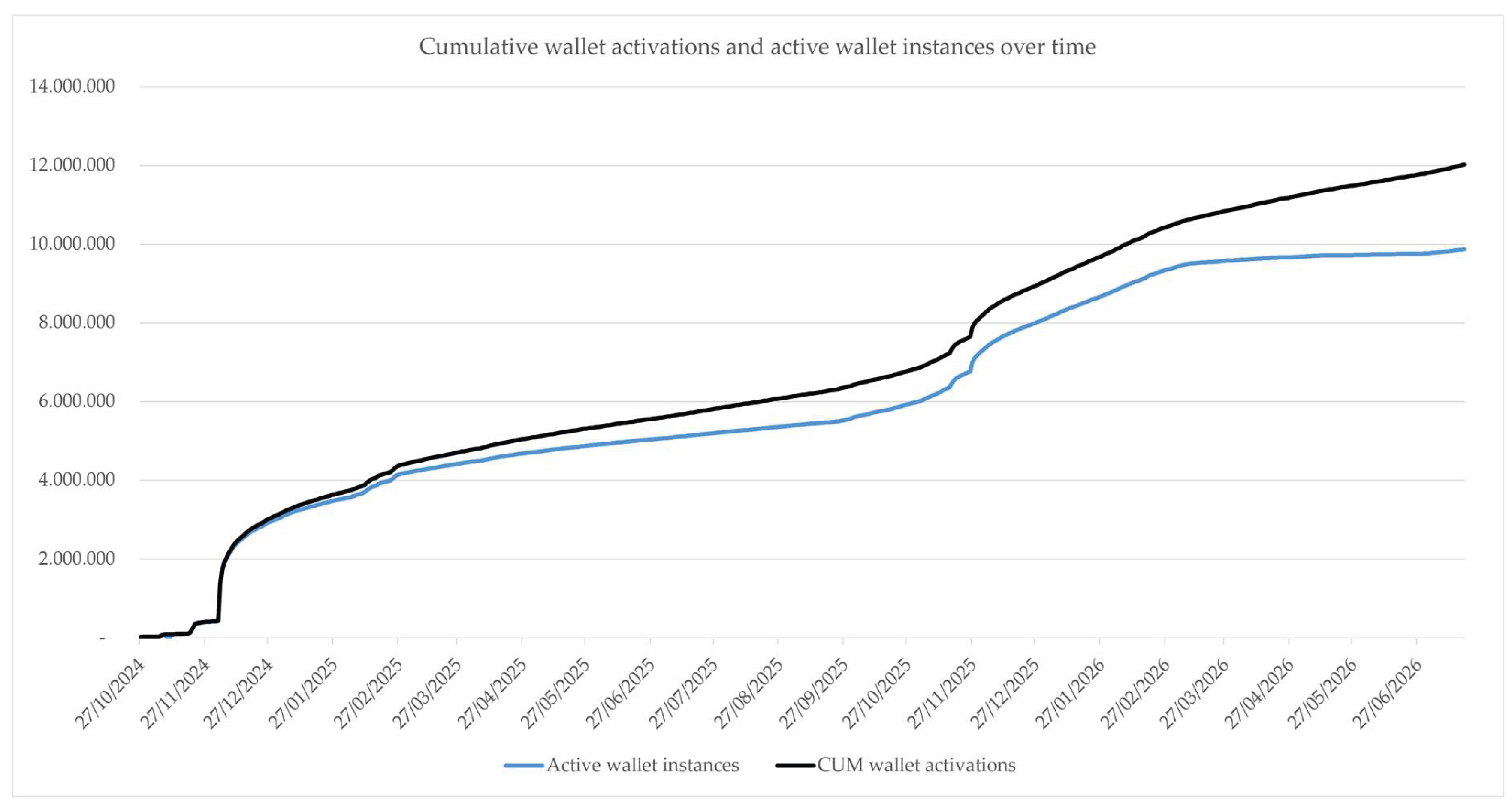
Taken together, the data highlight three decisive moments in the evolution of IT-Wallet: the expansion to 250,000 citizens in early November 2024, the enlargement to 1 million citizens in late November 2024, and above all the universal opening of the service on 4 December 2024, which generated the largest activation wave and laid the foundations for the steady growth observed thereafter. The managed renewal process introduced one year later demonstrates the transition of IT-Wallet from a rapid rollout programme to a mature digital service focused on long-term operational sustainability and user continuity.
3.3. Usage Analytics Findings
Telemetry data (Mixpanel, consenting users only) provides strong empirical evidence that a government-operated digital wallet can achieve large-scale adoption when integrated into an already established public service ecosystem. The results suggest that the success of digital identity and credential initiatives depends not only on technological infrastructure but also on user experience design, trust, and seamless integration with existing digital services.
First, the project demonstrates substantial market penetration. Approximately 37% of active IO app users have activated Documenti su IO, indicating a remarkably high adoption rate for an optional digital identity service. This finding suggests that embedding digital credentials within a widely used citizen application can significantly reduce adoption barriers and accelerate diffusion across the population.
Second, the data indicate a high level of perceived usefulness among adopters. More than 91% of users who activated the service added at least one digital document, and the average user added slightly more than two credentials. The most common combination is the coexistence of the digital driving licence and the health card, suggesting that users perceive value in consolidating multiple everyday credentials within a single digital wallet.
Third, the results highlight the importance of user experience and process simplicity. The activation funnel achieved a 70.8% completion rate, while the document-addition funnel reached 94.1% completion. These figures indicate limited friction throughout the user journey and suggest that the service has been designed in a way that effectively supports successful task completion. In particular, once users enter the document acquisition process, they are highly likely to complete it successfully.
Another important observation concerns the relationship between process complexity and user conversion. The addition of the digital driving licence, which required 12 months an asynchronous issuance process, achieved a lower success rate (81.4%) than the overall document-addition funnel (94.1%). This suggests that additional procedural steps and delays introduce measurable friction, confirming previous research showing that even minor increases in complexity can negatively affect service completion rates.
Beyond activation, the dashboard provides evidence of continued engagement. Users repeatedly access the application to view and use their digital credentials, indicating that the wallet is not merely activated but becomes part of routine interactions. This distinction is important because long-term usage represents a more meaningful measure of public value than activation alone.
Furthermore, the availability of offline access appears to be a strategically important feature. By allowing users to access credentials even when connectivity is unavailable or authentication sessions have expired, the system addresses one of the main concerns associated with digital-only documents and strengthens user trust in the service.
The Italian case of Documenti su IO demonstrates that a digital wallet integrated into an existing, trusted public platform, supported by a mature digital identity ecosystem and designed with low-friction user journeys, can achieve large-scale adoption and sustained citizen engagement, providing a practical model for future national and European digital wallet initiatives.
All data must be interpreted with the ~70% consent ceiling: non-consenting user behaviour is excluded, and formal usability-lab studies were not part of this case study. Nevertheless, telemetry shifts the evidential basis from purely descriptive claims toward observed interaction patterns—a methodological improvement responsive to peer review. Fraud reduction, administrative-cost savings, and transaction-speed improvements for relying parties are not yet measured at ecosystem scale; the instrumentation described in Section 2.2 is designed to support future outcome studies as additional events are approved through the governance workflow.
3.4. Implementation Lessons
Open specifications and conformance tooling. Technical specs (OpenID4VCI, OpenID4VP, mDoc, SD-JWT-VC, TOKEN-STATUS-LIST) are published in CC-0 repositories with CI/CD, 150+ test cases, and reference implementations in Python and JavaScript/TypeScript. A public Federation Browser and published test matrix support integrator onboarding and trust-chain exploration. National specifications were updated across ARF minor versions without breaking early adopter integrations, demonstrating that progressive alignment is operationally feasible when semantic versioning and public change logs are enforced.
Iterative co-development with EU standards. Italian teams participated in ARF drafting cycles while extending national conformance suites in step with specification changes. When OpenID4VP selective-disclosure query mechanisms evolved, national test suites were extended before production mandate—reducing rework relative to big-bang compliance approaches observed in other large-scale identity programmes.
Critical success factors observed:
- Infrastructure reuse reduced identity-proofing rebuild cost and shortened issuer time-to-production relative to greenfield wallet programmes documented in SSI literature;
- IO embedding accelerated activation versus hypothetical standalone launch—comparable standalone national wallet apps elsewhere typically measure uptake in hundreds of thousands over similar intervals;
- Open specs and federation tools lowered third-party onboarding friction; public issue trackers made blocking dependencies visible to all ecosystem participants;
- Progressive ARF alignment prevented specification lock-in; versioned national profiles documented divergence from EU baseline explicitly;
- Multi-stakeholder co-design built shared ownership across public and private actors, reducing downstream rejection of trust-framework rules as externally imposed;
- Continuous collaboration with authentic sources supported the co-design of credential-specific UI/UX patterns, ensuring consistency between digital and physical world.
Close collaboration with authentic sources proved equally important. They were actively involved not only in defining data models and trust requirements, but also in shaping the UI and UX of each digital credential. This collaborative approach ensured that digital representations remained consistent with the legal meaning, visual identity and operational use of the corresponding physical or authoritative documents. The same cooperation enabled the development of a comprehensive knowledge base supporting onboarding, user guidance, error-management workflows and customer-support troubleshooting procedures. As a result, operational issues could be addressed consistently across the ecosystem, improving both usability and service resilience during large-scale deployment and renewal campaigns.
Unresolved challenges: limited user awareness of privacy benefits; nascent private-sector uptake; high ecosystem complexity despite open-source tooling.
Standards employed include OpenID4VCI, OpenID4VP, ISO 18013-5 (mDoc), SD-JWT-VC, TOKEN-STATUS-LIST, and OpenID Federation 1.0 (extended catalogue in supplementary material).
4. Discussion
4.1. Italian Implementation Hurdles and Trade-Offs
While adoption indicators show rapid and sustained diffusion, the Italian experience also highlights several implementation trade-offs. The programme deliberately prioritised rapid citizen adoption, operational scalability and institutional trust over a fully decentralised deployment model. These choices accelerated market introduction and reduced onboarding barriers, but simultaneously increased dependence on existing infrastructures, governance processes and evolving European standards.
Three challenges emerged during implementation.
- Infrastructure dependence. Reusing established national infrastructures such as IO, SPID, CIE, ANPR and PDND substantially reduced implementation effort and accelerated deployment. At the same time, this approach created dependencies on heterogeneous legacy systems and governance processes beyond the direct control of wallet operators. Coordination across multiple administrations and technology providers therefore became a significant implementation challenge.
- Regulatory uncertainty. The Italian programme was developed while the EUDI Wallet Architecture and Reference Framework and related implementing acts were still evolving. National teams therefore had to continuously update technical profiles, conformance test suites and operational guidelines while maintaining service continuity for already onboarded users. Early deployment generated clear adoption benefits but also increased the cost of ongoing alignment with European specifications.
- User understanding versus service adoption. Telemetry data indicate strong adoption and frequent use of digital credentials. However, there is limited evidence that citizens fully understand privacy-preserving features such as selective disclosure, verifier unlinkability, or minimised attribute sharing. The Italian experience therefore suggests that successful adoption should not automatically be interpreted as widespread understanding of the privacy innovations embedded in digital wallet technologies.
These findings suggest that the principal challenge in national wallet deployment may not be technical implementation alone, but rather the coordination of governance, regulation, user experience and ecosystem actors. The Italian case demonstrates that large-scale adoption can be achieved despite these constraints, although the long-term impact of these trade-offs requires further observation.
4.2. Limitations
This study does not include controlled experiments, comprehensive user-satisfaction surveys, or fraud or cost-reduction econometrics. Telemetry covers consenting IO users only (~70% of sessions). Business wallets, delegation, and Legal Person Identification remain future scope. Findings describe an early adoption phase; longitudinal retention and cross-border interoperability require further research [12,13,14,15]. High activation figures do not yet demonstrate reduced administrative burden. Equitable access for digitally excluded populations is nevertheless a first-class product concern of the IO wallet: the IT-Wallet Technical Specifications (v1.4.5), co-authored with UX design experts, codify inclusive user experience from brand identity and requirements—bringing recognisable, accessible touchpoints across participating solutions [6]—through Chapter 5 user-experience design (design principles, wallet activation and credential journeys, error management, user assistance, and feedback). This paper does not yet report independent empirical studies measuring how effectively those specification-driven provisions reach vulnerable user groups.
5. Conclusions
The Italian IT-Wallet provides early evidence that a digital wallet can achieve large-scale adoption when introduced through a trusted and already widely used public-service platform. The case suggests that adoption outcomes are influenced not only by protocol design and regulatory compliance, but also by deployment strategy, governance arrangements and user-experience choices.
Rather than demonstrating the superiority of a specific technical architecture, the Italian experience highlights the importance of combining mature national infrastructures, progressive rollout mechanisms, interoperable standards and continuous measurement of user behaviour through privacy-aware analytics.
Across the evidence collected in this study, six factors emerge as particularly relevant for large-scale adoption: infrastructure reuse, platform embedding, open governance, progressive regulatory alignment, staged rollout and multi-stakeholder co-design. Together, these factors appear to have reduced adoption barriers while supporting operational scalability and institutional trust.
The case underscores that wallet programmes should be considered software platforms rather than merely regulatory or cryptographic initiatives. Their success depends on the ability to combine technical interoperability, governance mechanisms, user-centred design and continuous measurement. Cryptographic correctness remains a necessary condition, but adoption outcomes appear equally dependent on implementation strategy and the capacity to integrate new services into existing user habits and institutional ecosystems.
Member States should prioritise adoption architecture and empirical instrumentation alongside standards compliance. Immediate priorities include replacing telemetry placeholders with published aggregates, measuring administrative and fraud outcomes for relying parties, scaling private-sector use cases with clear liability rules, and harmonising trust frameworks for cross-border recognition. Future research should assess whether the adoption patterns observed in Italy are replicated in other Member States, evaluate long-term retention and usage behaviours, and investigate whether embedded and standalone wallet deployment strategies produce different adoption outcomes as the European ecosystem matures.
Author Contributions
Conceptualization, Fabio Di Loreto and Paolo Giuseppe Ferdinando Donzelli; Methodology, Giuseppe De Marco; Software, Giuseppe De Marco; Validation, Costanza Rosati, Luigi Cestoni, Fabio Di Loreto and Paolo Giuseppe Ferdinando Donzelli; Formal analysis, Costanza Rosati; Resources, Costanza Rosati; Data curation, Costanza Rosati; Writing – original draft, Giuseppe De Marco; Writing – review & editing, Giuseppe De Marco, Costanza Rosati, Luigi Cestoni and Fabio Di Loreto; Visualization, Giuseppe De Marco; Supervision, Giuseppe De Marco and Paolo Giuseppe Ferdinando Donzelli; Project administration, Costanza Rosati. All authors have read and agreed to the published version of the manuscript.
Funding
This research received no external funding.
Institutional Review Board Statement
Not applicable.
Informed Consent Statement
Not applicable.
Data Availability Statement
The data presented in this study are available on request from the corresponding author.
Conflicts of Interest
The authors declare no conflicts of interest.
References
- European Commission. Digital Decade Policy Programme 2030; Publications Office of the European Union: Luxembourg, 2024. [Google Scholar]
- World Bank. Digital Government for Development: A Framework for Action; World Bank Publications: Washington, DC, USA, 2023. [Google Scholar]
- European Parliament and Council. Regulation (EU) 2024/1183 amending Regulation (EU) No 910/2014 (eIDAS 2.0). Off. J. Eur. Union. 2024. [Google Scholar]
- European Parliament and Council. Regulation (EU) No 910/2014 on electronic identification and trust services (eIDAS). Off. J. Eur. Union 2014, L 257, 1–118. [Google Scholar]
- Italian Government. Decreto-Legge 2 March 2024, n. 19. Gazz. Uff. 2024. [Google Scholar]
- Department for Digital Transformation. IT-Wallet Technical Specifications v1.4.3. Available online: https://italia.github.io/eid-wallet-it-docs/versione-corrente/en/ (accessed on 6 July 2026).
- NIST. Digital Identity Guidelines (SP 800-63B); NIST: Gaithersburg, MD, USA, 2023. [Google Scholar]
- OpenID Foundation. OpenID for Verifiable Credential Issuance 1.0. Available online: https://openid.net/specs/openid-4-verifiable-credential-issuance-1_0.html (accessed on 6 July 2026).
- OpenID Foundation. OpenID for Verifiable Presentations 1.0. Available online: https://openid.net/specs/openid-4-verifiable-presentations-1_0.html (accessed on 6 July 2026).
- ISO/IEC 18013-5:2021; Personal identification—Mobile driving licence (mDL) application. ISO: Geneva, Switzerland, 2021.
- European Commission. European Architecture Reference Framework v2.6.0. Available online: https://eu-digital-identity-wallet.github.io/eudi-doc-architecture-and-reference-framework/2.6.0 (accessed on 6 July 2026).
- Ebadi Ansaroudi, Z.; Carbone, R.; Sciarretta, G.; Ranise, S. Control is Nothing Without Trust: A First Look into Digital Identity Wallet Trends. Proceedings of DBSec 2023, 2023. [Google Scholar]
- Flamini, A.; Ranise, S.; Sciarretta, G.; Scuro, M.; Sharif, A.; Tomasi, A. A First Appraisal of Cryptographic Mechanisms for the Selective Disclosure of Verifiable Credentials. Proceedings of SECRYPT 2023, 2023. [Google Scholar]
- Flamini, A.; Sciarretta, G.; Scuro, M.; Sharif, A.; Tomasi, A.; Ranise, S. On Cryptographic Mechanisms for the Selective Disclosure of Verifiable Credentials. J. Inf. Secur. Appl. 2024, 82, 103734. [Google Scholar] [CrossRef]
- Ebadi Ansaroudi, Z.; Sciarretta, G.; De Maria, A.; Ranise, S. Navigating secure storage requirements for EUDI Wallets: A review paper. EURASIP J. Inf. Secur. 2025, 2025, 1. [Google Scholar] [CrossRef]
Figure 1.
Overview of main actors and interactions within the wallet-based digital identity ecosystem.
Figure 1.
Overview of main actors and interactions within the wallet-based digital identity ecosystem.
Disclaimer/Publisher’s Note: The statements, opinions and data contained in all publications are solely those of the individual author(s) and contributor(s) and not of MDPI and/or the editor(s). MDPI and/or the editor(s) disclaim responsibility for any injury to people or property resulting from any ideas, methods, instructions or products referred to in the content. |
© 2026 by the authors. Licensee MDPI, Basel, Switzerland. This article is an open access article distributed under the terms and conditions of the Creative Commons Attribution (CC BY) license (http://creativecommons.org/licenses/by/4.0/).
Copyright: This open access article is published under a Creative Commons CC BY 4.0 license, which permit the free download, distribution, and reuse, provided that the author and preprint are cited in any reuse.