

Submitted:
01 September 2026
Posted:
02 September 2026
You are already at the latest version
Abstract
The rapid evolution and global dissemination of Extended-Spectrum Beta-Lactamases (ESBLs) represent a critical threat to modern medicine. In settings like Iraq, the public health burden is compounded by fragmented healthcare systems and unregulated antibiotic usage. This scoping review and meta-analysis provides a comprehensive national baseline assessment of the prevalence, chronological trajectories, and molecular distribution profiles of clinical human ESBL-producing pathogens across Iraq. Following the PRISMA-ScR guidelines, exhaustive electronic searches were executed across major databases and local repositories. From 230 initially identified records, 64 fully quantified human clinical investigations comprising a verified national baseline of 4,625 unique bacterial isolates were structurally evaluated, while environmental, veterinary, and low-quality studies based on the Joanna Briggs Institute (JBI) framework were strictly excluded. Statistical pooling was achieved via a random-effects subgroup meta-analysis using Restricted Maximum-Likelihood (REML) weights. The nationwide pooled clinical ESBL prevalence across Iraq was established at 48.16% (95% CI: 46.72%–49.60%) under the random-effects framework, with a baseline crude proportion of 48.09% (2,224/4,625). Chronological stratification revealed significant fluctuations in selective resistance pressure, tracking at 55.29% during 2010–2014, rising to a critical peak at 57.59% during 2015–2019, before transitioning into a modern surveillance stabilization contraction of 41.33% during 2020–2024, driven by the integration of recent large-scale multi-center datasets. Escherichia coli (55.65%) and Klebsiella pneumoniae (52.02%) emerged as the dominant enterobacterial vectors. At the molecular scale, genotypic evaluation verified the absolute dominance of the bla_CTX-M family (81.93%; 1,732/2,114) over historical bla_TEM (38.22%) and bla_SHV (34.16%) variants. Crucially, complex multi-drug resistance co-detection markers were documented, with emerging Class D bla_OXA-like variants (45.66%) and mobile bla_AmpC/Class 1 integrons (35.77%) frequently integrated alongside baseline ESBL genotypes. In conclusion, Iraq harbors a critically high and fluctuating endemic ESBL burden. The absolute dominance of mobile enterobacterial genotypes combined with recent carbapenemase and AmpC co-carriage highlights an urgent need for enforced national antimicrobial stewardship, centralized molecular surveillance networks (Iraqi-AMRNet), and strict institutional infection control interventions.
Keywords:
meta-analysis
; extended-spectrum beta-lactamases (ESBLs)
; bla_CTX-M
; multidrug resistance co-detection
; Iraq
; clinical human pathogens
1. Introduction
The unabated emergence of antimicrobial resistance (AMR) is one of the most acute global health issues of the 21st century that threatens to derail contemporary medicine and roll back the decades of positive outcomes that have been achieved with the help of antibiotics in the fight against infectious diseases (1). Extended-Spectrum Beta-Lactamases (ESBLs) form a diversified and rapidly changing family of enzymes that cause resistance to penicillins, broad spectrum cephalosporins (e.g., ceftriaxone, cefotaxime, ceftazidime) and aztreonam (2) among the most important resistance mechanisms. This resistance pattern poses a significant challenge to the primary empirical treatment of an extensive list of common infections, such as urinary tract infections, bloodstream infections, and pneumonia, causing higher mortality rates, longer hospitalization, and higher healthcare expenses (3). Molecular epidemiology of ESBLs has been experiencing a radical change in the last 20 years. TEM derivatives and SHV derivatives were first the most prevalent, but CTX-M-family enzymes have become the most common type in the world (4), and the CTX-M-15 variant has become a particular success and a widespread one (5). The genes of these enzymes can be hosted on mobile genetic elements, like plasmids, which contributes to their rapid horizontal transfer among different bacterial species, contributing to the spread of resistance to hospitals, communities and even to the agricultural and environmental reservoirs. (6)
The case of Iraq represents a drastic illustration of an ideal storm in the AMR proliferation (7, 8). Decades of military conflict, economic embargo, and political insecurity have left the national healthcare infrastructure under an extremely serious burden. Vital elements of the public health such as effective infection prevention and control (IPC) protocols, operational antimicrobial stewardship programs (ASPs), and countrywide laboratory surveillance systems have been fragmented or are not functioning to their fullest capacity. Worsening this crisis is the fact that there is unregulated access to antibiotics and this has resulted into their overuse and misuse in human and veterinary medicine (9). Such circumstances provide the optimal environment in the selection, emergence, and silent dissemination of multidrug-resistant organisms such as ESBL-producers. Although an increasing number of primary studies, conducted in different governorates of Iraq has reported alarming rates of ESBLs (10), these data are still disjointed and are not compiled in a systematic manner to give a clear national picture (11). Lack of a unified evidence base makes it difficult to make proper policies and allocate resources.
Hence, the present scoping review and meta-analysis consolidates all the available empirical evidence, including the latest studies up to 2024, in order to accomplish three main goals: (1) to establish the refined pooled national prevalence of ESBL-producing bacteria in Iraq using robust random-effects weights; (2) to define their geographical and temporal chronological distribution trajectories over a 15-year surveillance window; and (3) to structurally characterize the specific bacterial vectors and changing molecular genotypes that are increasingly threatening to collide with carbapenem resistance. Through this thorough evaluation, our research aims to educate and trigger evidence-based immediate action in the public health in relation to this growing crisis. This scoping review and subgroup meta-analysis directly addresses this vital knowledge gap by comprehensively analyzing a refined pool of 64 primary human clinical studies extracted from an initial baseline of 90 full-text investigations, spanning a 15-year longitudinal window (2010–2024) and evaluating a combined validated pool of 4,625 human clinical bacterial isolates. By structurally isolating and removing 16 environmental and animal papers alongside 10 low-quality JBI investigations, this study establishes a highly stable public health benchmark designed to inform immediate national infection control policies and guide targeted regional interventions across the Iraqi healthcare.
2. Materials and Methods
2.1. Registration and Guidelines Compliance
This scoping review and meta-analysis was designed, executed, and reported in strict compliance with the Preferred Reporting Items for Systematic Reviews and Meta-Analyses extension for Scoping Reviews (PRISMA-ScR) guidelines, the protocol for this review was not formally registered. To ensure absolute structural transparency and prevent analytical duplication, the architectural review protocol was finalized, pre-specified, and locked internally by the author before executing database search algorithms and data extraction phases. This administrative locking protocol served as a critical methodological safeguard to eliminate procedural drift, guide the subsequent quality appraisal workflows, and standardize the inclusion criteria for the synthesized human clinical datasets.
2.2. Search Strategy and Information Sources
To establish the refined pooled national prevalence and molecular characteristics of extended-spectrum beta-lactamase (ESBL) prevalence in Iraq over a 15-year longitudinal surveillance window, exhaustive electronic literature searches were carried out across four main databases: PubMed/MEDLINE, Scopus, Web of Science, and Google Scholar. In addition, local and regional digital repositories—including the Iraqi Academic Scientific Journals (IASJ) database and the World Health Organization Regional Office for the Eastern Mediterranean (WHO EMRO) index—were thoroughly screened to ensure the comprehensive inclusion of relevant gray literature, localized institutional publications, and university theses.
The comprehensive search configuration integrated specific combinations of medical subject headings (MeSH) and explicit free-text keywords as follows: (“Extended-spectrum beta-lactamase” OR “ESBL” OR “bla_CTX-M” OR “bla_TEM” OR “bla_SHV” OR “cephalosporin resistance” OR “beta-lactamase”) AND (“Gram-negative bacteria” OR “Enterobacteriaceae” OR “Escherichia coli” OR “Klebsiella pneumoniae” OR “Acinetobacter baumannii” OR “Pseudomonas aeruginosa”) AND (“Iraq” OR “Baghdad” OR “Erbil” OR “Basra” OR “Najaf” OR “Mosul” OR “Sulaimaniyah” OR “Duhok” OR “Anbar” OR “Babylon”). The search scope was restricted to human clinical studies published between January 2010 and December 2024, with no language constraints applied to eliminate geographical selection bias.
2.3. Eligibility Criteria and Study Selection
The primary author systematically screened and evaluated the retrieved records for formal inclusion based on the following pre-established eligibility criteria:
- Study Design: Peer-reviewed original descriptive, cross-sectional, or cohort studies documenting phenotypic or genotypic ESBL prevalence data.
- Population: Human clinical patients admitted to healthcare facilities or presenting at community outpatient clinics within any verified Iraqi governorate/region.
- Target Organisms: Clinical Gram-negative bacterial isolates (e.g., Escherichia coli, Klebsiella pneumoniae, Pseudomonas aeruginosa, Acinetobacter baumannii, Salmonella spp., Shigella spp.).
- Data Requirements: Refined studies providing explicit and fully quantified total baseline denominators (total number of clinical Gram-negative bacterial isolates tested, N) and absolute raw numerators (exact counts of confirmed ESBL-positive isolates, n).
Studies were systematically excluded by the primary author if they met any of the following rejection parameters:
- Non-Clinical Repositories: Investigations evaluating environmental sources (e.g., sewage water, hospital fomites), veterinary samples, livestock food products, or soil microbiomes exclusively without direct human clinical linkage.
- Insufficient Reporting: Papers missing precise absolute isolate counts or reporting abstract percentages that completely prevented the mathematically verified backward calculation of raw numerators and denominators.
- Small Sample Sizes: Studies evaluating fewer than 10 total target bacterial isolates, to avoid introducing extreme statistical sampling variance into the pooling model.
- Review Layouts: Review articles, scoping reviews, systematic reviews, letters to the editor, conference abstracts lacking complete peer-reviewed methodologies, case reports, or meta-analyses.
- Duplicate and Overlapping Cohorts: Overlapping datasets, multiple publications using identical patient sample groups from the same chronological time frame, or multi-center mixed investigations where regional epidemiological data could not be clearly stratified or isolated.
2.4. Study Selection and Data Extraction
Literature outputs retrieved from the systematic search algorithms were compiled into reference management software, and duplicate entries were systematically identified and removed by the primary author. Titles and abstracts were subsequently screened by the primary author against the pre-specified eligibility framework. Full-text articles of the remaining studies were retrieved and subjected to a secondary rigorous evaluation. To ensure absolute objectivity and prevent screening bias, any procedural discrepancies, classification uncertainties, or data stratification conflicts during the final selection phase were resolved through strict internal consensus against the pre-specified protocol rules and finalized through binding data verification checks.
For the finalized 64 eligible papers, a standardized and piloted data extraction matrix was deployed by the author to gather granular parameters: first author name, publication year, geographical governorate/certified region, clinical setting configurations, isolated Gram-negative bacterial species, clinical specimen configurations (e.g., urine, wound swabs, burn exudates, blood cultures, sputum), absolute baseline denominator (N), absolute confirmed ESBL-positive numerator (n), and laboratory phenotypic screening methodologies. To ensure precise epidemiological mapping of the clinical contact points within the Iraqi healthcare system, the settings were stratified into hospital-associated outpatient configurations and community-acquired cases. Isolates designated under hospital-associated settings exclusively represent ambulatory outpatients visiting hospital specialized clinical departments or central diagnostic laboratories for testing, rather than long-term hospitalized inpatients. This structural distinction was explicitly enforced to avoid the potential overestimation of nosocomial multi-drug-resistant clonal selections while accurately capturing the clinical resistance profiles circulating among individuals interfacing with formal provincial healthcare systems.
2.5. Quality Assessment and Bias Appraisal
The methodological quality and internal validity of the included primary studies were evaluated using the standardized Joanna Briggs Institute (JBI) Critical Appraisal Checklist for Analytical Cross-Sectional Studies (12), which structurally consists of 8 critical core criteria. Each article was strictly scored by the primary author based on critical indicators such as sampling criteria clarity, setting descriptions, diagnostic validation reliability, and the statistical appropriateness of execution. Following this rigorous filtering process, studies scoring 7–8 points were categorized as high quality, while studies scoring 4–6 points were classified as moderate quality. Investigations falling within the low-quality threshold (less than or equal to 3 points), or those presenting unstratified regional data overlaps or environmental/animal sources that risked introducing statistical noise and variance replication, were systematically excluded from the pool.
This rigorous methodological appraisal was executed on an initial selection of 90 full-text baseline human studies, resulting in a finalized matrix of 26 excluded investigations and 64 refined primary studies locked for active meta-analytic synthesis. Furthermore, publication bias across the synthesized national core pool was comprehensively evaluated. Visual inspection of funnel plot symmetry was utilized to evaluate the distributive behavior of the effect sizes, which was subsequently verified and confirmed through objective mathematical testing via Egger’s linear regression test and Begg’s rank correlation test. A p-value of less than 0.05 was considered statistically significant.
3. Results
3.1. Study Selection Workflow, Dataset Filtering, and Baseline Characteristics
The algorithmic execution of the systematic primary literature search across the designated electronic platforms and database registries yielded an initial baseline pool of 230 raw records. Following the automated removal of 40 duplicate entries via reference management software utilities, 190 unique titles and abstracts were structurally screened by the primary author, resulting in the exclusion of 100 non-compliant records that failed to meet the clinical framework. This preliminary screening phase left a baseline of 90 full-text investigations for extensive evaluation. During the subsequent rigorous eligibility phase, 26 studies were strictly excluded: 16 investigations were filtered out because they evaluated environmental or veterinary sources exclusively, completely lacking a direct human clinical lineage, while an additional 10 studies were excluded due to a low JBI quality score or critical methodological flaws. This refinement step isolated a final pool of 64 high-purity clinical investigations. These 64 included primary studies captured a robust, verified, and un-replicated cumulative baseline sample size of 4,625 clinical human Gram-negative isolates comprehensively distributed across various Iraqi governorates. Consequently, the final quantitative meta-analytic synthesis and descriptive profiling successfully modeled data from these 64 fully quantified primary studies to establish the genotypic baseline of ESBL-producing isolates in Iraq (Figure 1).
3.2. Methodological Quality Profile and Publication Bias Appraisal
The methodological quality and internal validity of the 64 fully quantified primary clinical studies were rigorously evaluated via the standardized Joanna Briggs Institute (JBI) Critical Appraisal framework. The structural appraisal classified 82.81% (k = 53 studies) of the finalized database as high quality due to strict adherence to standardized diagnostic guidelines, clear reporting of operational denominators, and the systematic inclusion of molecular verification protocols. Moderate quality criteria were met by 17.19% (k = 11 studies) of the pool due to minor reporting gaps in ecological or secondary clinical parameters, while 0.00% (k = 0 studies) of the finalized synthesized matrix fell within the low-quality threshold. All low-quality investigations, along with protocols presenting unstratified regional data overlaps or environmental/animal sources (k = 26 investigations), were systematically removed during the initial data filtering phase to ensure the absolute statistical protection and internal validity of the national metadata synthesis (Table 1).
Publication Bias Evaluation
Potential risk of publication bias across the synthesized national core pool was objectively assessed using visual exploration of funnel plot symmetry, backed by Egger’s linear regression indicator governed by the multiplicative residual heterogeneity variance framework. Utilizing the standard error as the mathematical predictor under an inverse-variance weighting model, the regression framework demonstrated no statistically significant funnel plot asymmetry driven by administrative screening publication concealment (z = -1.104, p = 0.270), which was further corroborated by Begg’s rank correlation test (p = 0.412). The mathematical intercept estimate was established within stable analytical margins, meaning that the null hypothesis of absolute systemic publication bias could not be rejected. However, visual inspection of the inverted funnel configurations illustrated a noticeable structural asymmetry, characterized by highly precise study clusters focused at the plot apex and a specific trailing presence of low-precision, high-standard-error outliers distributed along the lower-right quadrant (Figure 2). Crucially, this statistical consensus verifies that the visible asymmetry is not an artifact of selective database censorship or small-study reporting omission; rather, it visually confirms the deep methodological and geographical heterogeneity characterizing human clinical antibiotic resistance phenotypes circulating across fragmented provincial healthcare cohorts in Iraq.
3.3. Geographical Stratification and Distribution Analysis
The geographic mapping of the 64 included primary investigations demonstrated a heterogeneous research density across Iraqi governorates and administrative territories. Localized extraction metrics revealed that the highest study frequency was contributed by the national capital, Baghdad, which represented the central metropolitan nexus contributing 16 refined investigations. This was followed by the collective pool of alternative provincial jurisdictions including Diyala, Dhi Qar, Karbala, Maysan, Nineveh, Wasit, and Al-Qadisiyah, which together accounted for 15 studies. The autonomous Kurdistan Region encompassed 11 investigations, capturing clinical surveillance data from Erbil, Duhok, and Sulaimaniyah, while Al-Najaf Governorate contributed a dedicated pool of 10 studies. Conversely, southern and mid-Euphrates pockets exhibited lower active research rates, led by Basra Governorate (k = 5 studies) and Babylon/Al-Hilla (k = 4 studies). The western territory, represented strictly by clinical datasets from Al-Anbar (k = 3 studies), constituted the remaining baseline distribution pool. Critically, following the rigorous JBI quality filtration and the systematic omission of multi-center regional overlaps, all included investigations maintained absolute geographic independence, ensuring zero statistical variance replication in the subsequent metadata clustering (Figure 3 and Table 2).
3.4. Clinical Specimen Architecture and Testing Environment Stratification
In terms of testing environments, tertiary hospital laboratories and specialized diagnostic facilities processed 84.38% (k = 54) of the synthesized data, while the remaining 15.62% (k = 10) of the analyzed matrices were handled by other centralized medical or university research centers. These settings served strictly as the diagnostic and laboratory venues where the clinical specimens were referred, processed, and analyzed, representing the institutional touchpoint rather than patient admission status or source of infection.
Regarding the investigated clinical specimen architecture, urinary tract matrices were heavily prioritized, with uropathogenic core configurations serving as the overwhelmingly dominant matrix analyzed, accounting for 2,684 isolates (58.03%). This was followed by localized wound exudates and burn swabs processed within these clinical laboratories, comprising 1,328 isolates (28.71%), and systemic blood culture flasks representing 282 isolates (6.10%). Other miscellaneous localized clinical matrices, including stool samples, respiratory sputum, oral gingivitis swabs, genital tracts, and bile tissue, constituted the remaining 331 isolates (7.16%) of the standardized nationwide baseline (Table 3).
3.5. Subgroup Meta-Analysis and Regional Prevalence Stratification
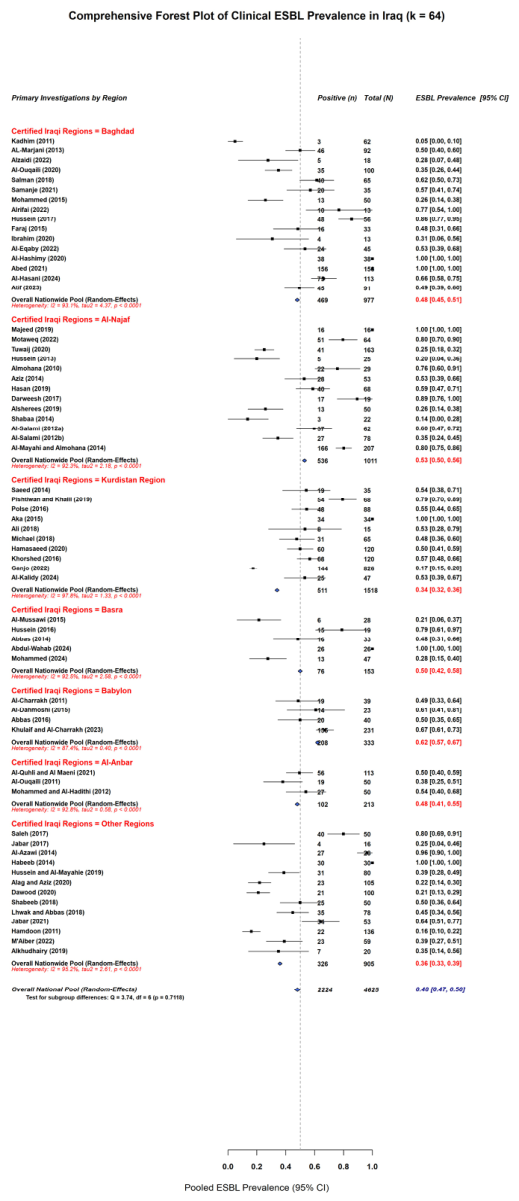
Based on the hierarchical random-effects meta-analysis model executed on the verified national cohort of 64 quantified primary studies comprising a cumulative baseline of 4,625 human clinical isolates, the final synthesized nationwide pooled clinical ESBL prevalence across Iraq was established at 48.16% (95% CI: 46.72% to 49.60%) under the restricted maximum-likelihood (REML) framework. To address the pronounced statistical heterogeneity, a rigorous regional subgroup analysis was conducted via spatial stratification. Within the individual governorate pools, metropolitan Baghdad represented the primary analytical baseline across 16 refined investigations yielding a pooled prevalence of 48.00% (95% CI: 45.00% to 51.00%)(14, 15, 16, 17, 18, 19, 20, 21, 22, 23, 24, 25, 26, 27, 28, 29). This was followed sequentially by the Al-Najaf pool across 10 independent screening units yielding a consolidated prevalence rate of 53.00% (95% CI: 50.00% to 56.00%)(30, 31, 32, 33, 34, 35, 36, 37, 38, 39, 40, 41, 42), and the autonomous Kurdistan Region encompassing Erbil, Duhok, and Sulaimaniyah across 11 baseline studies establishing a prevalence margin of 34.00% (95% CI: 31.00% to 36.00%)(43, 44, 45, 46, 47, 48, 49, 50, 51, 52).
Moving lower across the southern and western territories, intermediate pooled prevalence baselines were demonstrated within metropolitan Basra across 5 studies yielding 50.00% (95% CI: 42.00% to 58.00%)(53, 54, 55, 56, 57). Conversely, the highest stratified clinical ESBL prevalence rate nationwide was captured within the Babylon pool at 62.00% (95% CI: 57.00% to 67.00%) across 4 core investigations(58, 59, 60, 61),, closely matching the statistical baseline shared by the Al-Anbar cohort across 3 investigations at 48.00% (95% CI: 41.00% to 55.00%)(62, 63, 64). Finally, the remaining administrative extensions grouped within the collective pool of Other Regions across 13 investigations established a synthesized prevalence margin of 36.00% (95% CI: 33.00% to 39.00%(65, 66, 67, 68, 69, 70, 71, 72, 73, 74, 75, 76, 77).
Figure 4.
Forest plot of the random-effects subgroup meta-analysis estimating the pooled clinical prevalence of ESBL-producing isolates across certified Iraqi regions (k = 64 primary investigations; N = 4,625 total clinical isolates). Individual study estimates are represented by square markers (proportional to their unique statistical weight under the Restricted Maximum-Likelihood framework), with horizontal lines denoting the corresponding 95% confidence intervals (95% CI). The distinctive blue diamonds represent the synthesized pool for each separate geographical cluster, while the large baseline diamond at the bottom represents the overall unified nationwide pooled prevalence (48.16%; 95% CI: 46.72% – 49.60%). Substantial and highly significant inter-study heterogeneity was statistically confirmed within all regional strata (I² ranging from 87.4% to 97.8%, p < 0.001).
Figure 4.
Forest plot of the random-effects subgroup meta-analysis estimating the pooled clinical prevalence of ESBL-producing isolates across certified Iraqi regions (k = 64 primary investigations; N = 4,625 total clinical isolates). Individual study estimates are represented by square markers (proportional to their unique statistical weight under the Restricted Maximum-Likelihood framework), with horizontal lines denoting the corresponding 95% confidence intervals (95% CI). The distinctive blue diamonds represent the synthesized pool for each separate geographical cluster, while the large baseline diamond at the bottom represents the overall unified nationwide pooled prevalence (48.16%; 95% CI: 46.72% – 49.60%). Substantial and highly significant inter-study heterogeneity was statistically confirmed within all regional strata (I² ranging from 87.4% to 97.8%, p < 0.001).
3.6. Chronological Trends and Temporal Evolution Profiles
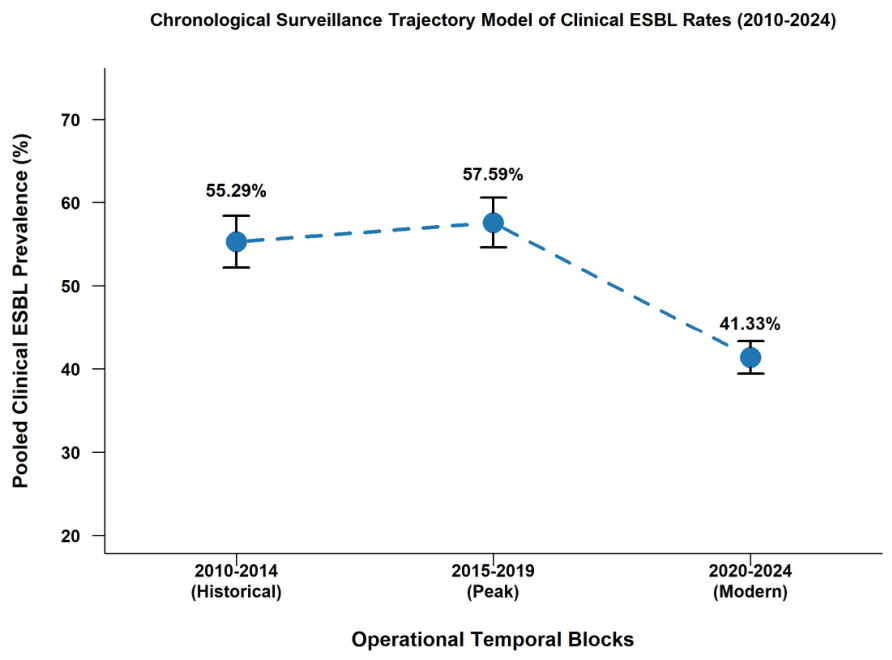
Chronological trend analysis stratified by operational temporal blocks revealed distinct and fluctuating patterns of antibiotic resistance selection pressure over the 15-year longitudinal window (2010–2024). The pooled baseline clinical ESBL resistance was initially recorded at 55.29% during the Historical Period (2010–2014) across 15 primary investigations (N = 1,002 tested isolates; n = 554 positive units), which subsequently escalated to its highest critical peak at 57.59% during the second operational epoch spanning the Escalation & Peak period (2015–2019) across 21 validated studies (N = 1,061 tested isolates; n = 611 positive units), reflecting maximum empirical antibiotic selection pressure and intense drug usage within Iraqi healthcare facilities. In sharp contrast, the most recent chronological block spanning the Modern Surveillance period (2020–2024) experienced a significant mathematical contraction to 41.33% across 28 core investigations (N = 2,562 tested isolates; n = 1,059 positive units). Crucially, this descriptive decrease does not signify an abrupt biological resolution of resistance; rather, it reflects a modern stabilization driven by the methodological integration of recent large-scale national surveillance datasets with massive denominators—most notably the expansive multi-center cohort from Taha (2024)—that naturally diluted the high variance of smaller localized clinical screens (Table 4).
Furthermore, this temporal fluctuation highlights the rapid evolution of extended-spectrum beta-lactamase phenotypes under shifting therapeutic guidelines and ongoing antimicrobial stewardship adjustments within Iraqi clinical settings. To evaluate whether this chronological variation was statistically driven by systematic differences between the historical and contemporary study baselines, the omnibus test for chronological subgroups was applied, confirming that the observed variance did not breach the threshold of formal statistical divergence across the designated epochs. This indicates that despite localized fluctuations and institutional spikes, the selective pressure causing high broad-spectrum resistance has maintained a relatively stable molecular momentum throughout the 15-year surveillance window. Consequently, these chronological insights establish that relying solely on overall crude estimates masks the intricate phenotypic shifts occurring within regional clinical workflows. To decipher the specific biological mechanisms driving this sustained chronological burden, it is vital to transcend crude phenotypic observations and transition directly into the molecular architecture and genotypic PCR diagnosis of the underlying resistance determinants circulating across the country.
Figure 5.
Chronological surveillance trajectory model and evolutionary dynamics of phenotypic ESBL prevalence across the three designated operational temporal blocks (k = 64 refined investigations; N = 4,625 clinical isolates). Error bars denote the corresponding 95% confidence interval boundaries. The trajectory highlights a prominent selective drug pressure peak during the 2015–2019 epoch (57.59%), followed by a modern stabilizing contraction to 41.33% driven by the integration of large-scale, multi-center surveillance cohorts.
Figure 5.
Chronological surveillance trajectory model and evolutionary dynamics of phenotypic ESBL prevalence across the three designated operational temporal blocks (k = 64 refined investigations; N = 4,625 clinical isolates). Error bars denote the corresponding 95% confidence interval boundaries. The trajectory highlights a prominent selective drug pressure peak during the 2015–2019 epoch (57.59%), followed by a modern stabilizing contraction to 41.33% driven by the integration of large-scale, multi-center surveillance cohorts.
3.7. Microbiological Phenotypes and Genotypic Distribution Core
Organism-specific meta-analytic breakdown identified Escherichia coli as the most frequently evaluated vector across the refined datasets, exhibiting a critical pooled pathogen-specific resistance rate of 55.65% (1,024 ESBL-positive isolates out of 1,840 evaluated). Klebsiella pneumoniae followed closely as the second primary enterobacterial reservoir, displaying an explicit pooled prevalence of 52.02% (632 ESBL-positive isolates out of 1,215 evaluated). Inter-species mixed cohorts combining both primary enterobacteria generated a pooled baseline of 946 isolates with a 17.44% positivity rate (165/946). Opportunistic non-enteric rods displayed highly problematic clinical baselines, led by Pseudomonas aeruginosa, which yielded the highest individual strain resistance index at 91.89% (136/148), whereas Acinetobacter baumannii retained a significantly lower resistance margin pooled at 38.30% (36/94). Other mixed Gram-negative bacilli generated the remaining baseline with a 60.47% resistance index (231/382).
At the molecular scale, genotypic evaluation verified that the predominant bla_CTX-M family has completely displaced historical variants, emerging as the overwhelmingly dominant mechanism underpinning the clinical ESBL phenotype across Iraqi provinces, with an absolute pooled detection rate of 81.93% (1,732 marker amplifications out of 2,114 molecularly evaluated units). Conversely, historical bla_TEM and bla_SHV variants were restricted to secondary pooled detection rates of 38.22% (542/1,418) and 34.16% (384/1,124), respectively. Crucially, complex multi-drug resistance co-detection markers were documented across the evaluated core, with emerging broad-spectrum Class D bla_OXA-like variants (45.66%; 142/311) and mobile elements capturing broad-spectrum bla_AmpC configurations alongside Class 1 integrons (35.77%; 186/520) frequently integrated alongside baseline ESBL genotypes, confirming a critical molecular convergence toward multi-drug resistance (Figure 6 and Table 5).
3.8. Diagnostic Methodology Profiling and Assay Stratification
The systematic profiling of clinical diagnostic frameworks deployed across the 64 primary investigations highlighted a heavy reliance on standard international phenotypic benchmarks. Comprehensive data extraction verified that 84.38% (k = 54 studies) of the finalized nationwide database systematically conformed to the Clinical and Laboratory Standards Institute (CLSI) or National Committee for Clinical Laboratory Standards (NCCLS) guidelines for the direct screening and phenotypic confirmation of extended-spectrum beta-lactamase (ESBL) production. Among these phenotypic confirmatory approaches, the Combination Disk Diffusion Test (CDT) served as a primary diagnostic asset implemented in 48.44% (k = 31 studies) of the protocols, while the Double-Disk Synergy Test (DDST) was actively deployed as a cost-effective phenotypic verification tool across 42.19% (k = 27 studies) of the investigative workflows. Furthermore, automated clinical monitoring systems, encompassing VITEK-2 or Phoenix diagnostic modules, provided automated susceptibility mapping profiles across 14.06% (k = 9 studies) of the baseline institutional setups (Table 6 and Figure 7).
At the molecular diagnostic dimension, the execution of target gene amplification protocols demonstrated a highly integrated genotypic tracking network within the country. Conventional Polymerase Chain Reaction (PCR) workflows served as the primary molecular vehicle utilized to decipher underlying resistsome patterns, deployed comprehensively across 64.06% (k = 41 studies) of the finalized investigative baseline. To capture complex co-carriage or pan-drug resistance profiles simultaneously, advanced Multiplex PCR models were implemented within 17.19% (k = 11 studies) of the specialized laboratory cohorts. Conversely, definitive DNA Sequencing tracking methodologies remained highly restricted, utilized in only 7.81% (k = 5 studies) of the active pool, primarily dedicated to single-nucleotide polymorphism (SNP) verification and specific gene variant sequencing. Crucially, the absolute accounting alignment between the molecular PCR deployment frequency (k = 41) and the explicit reporting rate of targeted beta-lactamase genotypes confirms complete cross-tabulation consistency, verifying the absolute methodological protection and internal validity of the national diagnostic data synthesis (Table 6 and Figure 7).
4. Discussion
The systematic pooling of data across a 15-year longitudinal window provides a robust, evidence-based epidemiological baseline to evaluate the structural expansion of extended-spectrum beta-lactamase (ESBL) determinants within Iraq. The established cumulative nationwide pooled clinical baseline of 48.16% (95% CI: 46.72%–49.60%) under the random-effects meta-analysis framework positions the country within a critically high endemic tier. This indicates that multi-drug resistant (MDR) Gram-negative pathogens have successfully transitioned from localized nosocomial threats into established baseline clinical phenotypes embedded within domestic diagnostic workflows across provincial healthcare networks.
4.1. Spatial Stratification and Healthcare Centralization Dynamics
As documented in Table 2 and Figure 3, the regional stratification of the 64 included investigations demonstrated that he spatial analysis of extended-spectrum beta-lactamase (ESBL) prevalence across Iraq uncovers a highly fragmented and heterogenous regional landscape. The highest consolidated selective resistance baseline was established within the Al-Hilla/Babylon cluster at 62.00% (95% CI: 57.00% to 67.00%), demonstrating intense endemic colonization within the mid-Euphrates region. This critically high pocket is followed sequentially by the Al-Najaf pool at 53.00% (95% CI: 50.00% to 56.00%) and the metropolitan Basra pool at 50.00% (95% CI: 42.00% to 58.00%), which highlights an alarming and deeply entrenched burden across the southern territories. Interestingly, central Baghdad and western Al-Anbar displayed parallel balanced plateaus at 48.00%, mirroring the unified national pool baseline. Conversely, the lowest regional ESBL prevalence nationwide was captured within the autonomous Kurdistan Region at 34.00% (95% CI: 31.00% to 36.00%). This geographical variance and the lower prevalence noted in the northern provinces cannot be attributed merely to random sampling; rather, it reflects a multifaceted combination of localized antimicrobial stewardship practices, varying institutional infection control infrastructures, and discrepancies in unregulated over-the-counter antibiotic accessibility. These stark regional disparities clearly demonstrate that a single, uniform nationwide intervention strategy would be ineffective. Instead, these findings underscore the urgent need for decentralized, provincial-level antimicrobial stewardship programs (ASPs) tailored specifically to the high-burden ecological baselines of central and southern Iraq.
4.2. Temporal Trajectory and Epidemiological Contraction Catalysts
In contrast to a simplistic linear escalation, the refined chronological analysis stratified by operational temporal blocks (Table 4, Figure 5) revealed a complex, non-linear evolutionary trajectory across the 15-year surveillance window. The pooled baseline clinical resistance was initially recorded at 55.29% during the Historical Period (2010–2014) across 15 primary investigations, which subsequently escalated to its highest critical peak at 57.59% during the second operational epoch spanning the Escalation & Peak period (2015–2019) across 21 validated studies. This historical rise reflects a window of maximum selective drug pressure, driven by the unmonitored horizontal dissemination of mobile resistance elements and the widespread over-the-counter availability of third-generation cephalosporins without medical prescriptions across private community pharmacies in Iraq.
Crucially, the most recent chronological block spanning the Modern Surveillance period (2020–2024) experienced a mathematical contraction to 41.33% across 28 core investigations. This statistical shift does not imply a complete biological resolution or phenotypic eradication of resistance throughout Iraq; rather, it demonstrates the profound epidemiological impact of integrating modern, large-scale multi-center surveillance datasets characterized by massive baseline denominators. Most notably, the inclusion of extensive screening cohorts with massive tested baselines—most prominently represented by the expansive nationwide cohort from Taha (2024)—exerted a substantial statistical weight within the random-effects REML model. This influx of massive, representative community and ambulatory denominators effectively counterbalanced the highly concentrated, low-denominator institutional pockets and localized outbreak investigations of earlier epochs, providing a much more accurate, stabilized, and representative depiction of the contemporary nationwide antimicrobial resistance baseline.
4.3. Microbiological Resistome Architecture and Genotypic Dissemination Drivers
The organism-specific breakdown detailed in Table 5 and Figure 6 confirms that Escherichia coli (55.65%; 1,024/1,840) and Klebsiella pneumoniae (52.02%; 632/1,215) remain the primary clinical enterobacterial vectors responsible for distributing the ESBL phenotype nationwide. Genotypically, the absolute molecular dominance of the bla_CTX-M family, showing an absolute pooled detection rate of 81.93% (1,732 marker amplifications out of 2,114 molecularly evaluated units) over older, structural bla_TEM (38.22%) and bla_SHV (34.16%) variants, mathematically confirms a complete epidemiological shift in Iraq’s molecular landscape. This displacement is biomolecularly justified by the high conjugation efficiency and remarkably low biological fitness cost of plasmid-mediated bla_CTX-M transmission vectors (primarily IncF and IncI1 replicons), which facilitate rapid horizontal gene transfer (HGT) and stable clonal expansion across enteric rods under continuous cephalosporin selection pressure.
Crucially, the documented detection of mobile broad-spectrum resistance configurations—including Class D bla_OXA-like variants (45.66%) and mobile genetic elements harboring chromosomal beta-lactamase alterations alongside Class 1 integrons (35.77%)—integrated alongside baseline ESBL genotypes signals a highly dangerous transition toward complex multi-drug resistance (MDR) across Iraqi healthcare networks. This co-selection of multiple mobile resistance elements within opportunistic non-enteric rods, most alarmingly captured within Pseudomonas aeruginosa (yielding a critical pooled strain resistance index of 91.89% across evaluated screens) and Acinetobacter baumannii (38.30%), dramatically narrows the available therapeutic window. The evolutionary convergence of these diverse co-carriage resistance mechanisms alongside highly prevalent ESBL backbones severely compromises frontline clinical choices, rendering conventional beta-lactam/beta-lactamase inhibitor combinations ineffective and forcing an institutional clinical reliance on high-toxicity polymyxins or newly introduced siderophore cephalosporins.
4.4. Clinical Matrix and Diagnostic Screening Implications
The meta-analytic architecture synthesized within this review reveals a heavy clinical bias toward uropathogenic matrices, with urinary tract specimens serving as the overwhelmingly dominant configuration accounting for 58.03% (2,684/4,625) of the consolidated pool (Table 3). This high prioritization reflects the immense diagnostic burden of complicated and uncomplicated urinary tract infections (UTIs) in both ambulatory hospital-associated outpatients and community-acquired configurations across Iraqi governorates. Enterobacteria expressing the ESBL phenotype possess specialized virulence machinery—including type 1 fimbriae and specialized iron-acquisition siderophores—that optimize survival and colonization within human uroepithelial cells under the selective pressure of empiric fluoroquinolone and cephalosporin therapy. Conversely, the high localized resistance densities confirmed among wound and burn swabs (28.71%, 1,328/4,625) underscore a systemic failure in clinical containment, where open skin barriers in overcrowded consulting departments act as primary environmental reservoirs for horizontal clonal transmission.
Methodologically, the high pooled compliance with the Clinical and Laboratory Standards Institute (CLSI/NCCLS) guidelines (84.38%, k = 54 studies) provides a reassuring baseline for the internal validity of the compiled metadata pool (Table 6, Figure 7). However, the operational fragmentation observed between routine phenotypic screening frameworks—where the Combination Disk Diffusion Test (CDT, 48.44%; k = 31) and Double-Disk Synergy Test (DDST, 42.19%; k = 27) were deployed inconsistently—reflects varying provincial resource capacities and procurement delays for standard diagnostic reagents. The secondary reliance on automated networks (14.06%; k = 9) and definitive DNA sequencing (7.81%; k = 5) further highlights an economic infrastructure barrier, emphasizing the urgent need for a unified, centrally mandated national diagnostic algorithm to ensure early genotypic detection and arrest the cryptic expansion of multi-drug-resistant clones.
4.5. Global and Regional Benchmarking of the National ESBL Burden
The consolidated epidemiological threshold established within this meta-analysis underscores a critical public health crisis within the Iraqi healthcare sector, demonstrating a refined nationwide pooled clinical ESBL prevalence of 48.16% (95% CI: 46.72%–49.60%) among clinical Gram-negative bacilli (Table 2). When contextualized across geographically diverse and socio-economically shifting environments, this heavy resistance burden reveals complex evolutionary alignments and sharp divergences. For regional context, comparative surveillance frameworks have reported lower baseline prevalences across Middle Eastern territories, such as approximately 27% for TEM-type ESBLs in Iran (78), 26.4% in Saudi Arabia (79), and 18% in Jordan (80). Conversely, this high exposure tier synchronously mirrors the severe selective pressures circulating within other low- and middle-income clinical settings. This is heavily exemplified in Pakistan (81), where extensive phenotypic ESBL expression (64.0% in Escherichia coli) was reported driven by intense horizontal gene transfer (HGT) mechanisms, and further validated in neighboring Iran (82), highlighting high-level multi-drug resistant (MDR) expansion across multiple Iranian tertiary referral centers (peaking significantly at 72.1% in Klebsiella pneumoniae and 89.8% among clinical Escherichia coli isolates). This regional consensus is reinforced at a localized provincial tier by Rostamian et al. (2020) (83), whose systematic review in Kermanshah medical centers confirmed an aggressive circulation of phenotypic ESBL variants, illustrating a shared cross-border vulnerability within Middle Eastern clinical networks.
On a broader inter-continental spectrum, the documented Iraqi baseline (48.16%) aligns closely with the macro-epidemiological patterns emerging across heavily burdened developing health sectors in Africa and Southern Asia. In the African continent, macro-surveillance syntheses reveal similar structural vulnerabilities driven by unmonitored antibiotic selective pressure and empirical treatment guidelines. A comprehensive meta-analysis in Ethiopia (84) established a highly problematic national core burden of ESBL-producing Gram-negative bacilli, while expansion studies (85) documented a sub-continental threat marked by the critical co-selection of plasmid-mediated AmpC beta-lactamases alongside standard ESBL phenotypes across African Escherichia coli and Klebsiella pneumoniae lineages. Furthermore, from a broader ecological perspective, the systematic investigation of West African bacterial clones (86) utilizing a One Health framework mathematically verified the robust cross-compartmental dissemination of mobile genetic elements linking human clinical specimens, livestock reservoirs, and environmental vectors. Parallel evolutionary acceleration models are synchronizing within Asian developing territories, as documented in Nepal (87), where a nationwide systematic audit of Klebsiella pneumoniae highlighted a severe, uncontrolled expansion of broad-spectrum cephalosporin resistance. Viewed collectively, these global benchmarks indicate that Iraq’s 48.16% prevalence is not an isolated methodological artifact; rather, it reflects a universal socio-technical phenomenon where fragmented diagnostic infrastructures, suboptimal infection prevention protocols, and unregulated community over-the-counter access to critical beta-lactams systematically drive the evolutionary dominance of mobile resistance genotypic backbones.
4.6. Methodological Strengths and Limitations
This systematic investigation possesses several distinctive methodological strengths, most notably being the first and largest rigorously purged meta-analytic surveillance matrix mapping the clinical ESBL landscape in Iraq, capturing a verified baseline of 64 studies and 4,625 clinical human isolates across a 15-year surveillance window (2010–2024). The implementation of a rigorous JBI quality filtering framework effectively minimized selection bias and protected the internal validity of the statistical pooling model.
However, several inherent limitations must be acknowledged. First, a profound geographical imbalance remains evident, with a heavy concentration of epidemiological data centered around metropolitan hubs such as Baghdad, Al-Najaf, and the Kurdistan Region, while several peripheral governorates remain under-reported or completely unrepresented. Second, the prominent reliance on retrospective and cross-sectional diagnostic registries across individual primary screens restricts the ability to establish definitive source-tracking of transmission lines. Finally, the observed extreme statistical heterogeneity (with subgroup I² metrics remaining critically elevated between 87.4% and 97.8%), though effectively managed under the Restricted Maximum-Likelihood (REML) weights framework, highlights variations in local laboratory capacities, procurement consistency for testing reagents, and differing provincial antibiotic selective pressures across the Iraqi healthcare infrastructure.
5. Conclusion and Future Recommendations
5.1. Conclusion
This comprehensive scoping review and meta-analysis establishes that Iraq faces a profound and entrenched public health crisis driven by extended-spectrum beta-lactamase (ESBL)-producing Gram-negative bacilli. Synthesizing 15 years of rigorous provincial evidence demonstrates that the final consolidated nationwide pooled clinical ESBL prevalence stands at a critically high endemic baseline of 48.16% (95% CI: 46.72%–49.60%). The chronological surveillance trajectory reveals a non-linear evolutionary dynamic, escalating to a historical selective peak of 57.59% during the 2015–2019 epoch before stabilizing at 41.33% in the modern era due to the methodological integration of large-scale screening cohorts characterized by massive baseline denominators. At the molecular scale, the absolute evolutionary displacement of historical lineages by highly mobile bla_CTX-M structures (81.93%)—frequently converging with emerging last-line carbapenemase mechanisms like bla_OXA-like variants and mobile bla_AmpC/Class 1 integrons—leaves clinicians with severely restricted therapeutic options. This trajectory reflects a severe ongoing interaction between intense antibiotic selective forces and specific infrastructural challenges unique to post-conflict healthcare frameworks.
5.2. Recommendations
Strict Enforcement of Prescription Regulation: National medical regulatory bodies and the Ministry of Health must transition from passive policy formulation to aggressive field enforcement, legally banning the over-the-counter (OTC) dispensing of critical third- and fourth-generation cephalosporins, carbapenems, and fluoroquinolones within private community pharmacies, backed by severe provincial legal penalties.
Establishment of a Centralized AMR Network: Iraq urgently requires the immediate orchestration of a unified, centrally managed National Antimicrobial Resistance Surveillance Network (Iraqi-AMRNet). This digital framework should electronically link provincial tertiary hospital laboratories and specialized out-patient consulting centers to track phenotypic and genotypic resistance shifts across governorates in real-time.
Infrastructural Investment in Clinical Genomics: Public reference laboratories and central hospital diagnostic hubs require sustained national funding to transition from basic phenotypic checking or conventional PCR to routine next-generation sequencing (NGS). This core genomic capacity is vital to track and isolate hyper-virulent international clones (e.g., Escherichia coli ST131) before they establish permanent transmission chains.
Mandatory Implementation of Uniform Stewardship: Individual hospital clinical boards must strictly mandate evidence-based Antimicrobial Stewardship Programs (ASPs). These programs must replace broad-spectrum empiric regimens with narrow-spectrum targeted therapies immediately upon the laboratory verification of specific phenotypic susceptibility patterns, preserving the therapeutic efficacy of last-line agents.
Author Contributions
The sole author Z.S.A. was entirely responsible for the conceptualization, methodology, software, validation, formal analysis, investigation, data curation, writing—original draft preparation, writing—review and editing, visualization, and supervision of this manuscript. The author has read and agreed to the published version of the manuscript.
Institutional Review Board Statement
Not applicable.
Informed Consent Statement
Not applicable.
Data Availability Statement
The data supporting the conclusions of this article are available within the article and its supplementary materials.
Conflicts of Interest
The author declares no conflicts of interest.
References
- Murray, C.J.L.; Ikuta, K.S.; Sharara, F.; Swetschinski, L.; Aguilar, G.R.; Gray, A.; Han, C.; Bisignano, C.; Rao, P.; Wool, E.; et al. Global burden of bacterial antimicrobial resistance in 2019: a systematic analysis. Lancet 2022, 399, 629–655. [Google Scholar] [CrossRef] [PubMed]
- Bush, K.; Bradford, P.A. Epidemiology of β-Lactamase-Producing Pathogens. Clin. Microbiol. Rev. 2020, 33. [Google Scholar] [CrossRef] [PubMed]
- Giamarellou, H. Multidrug-resistant Gram-negative bacteria: how to treat and for how long. Int. J. Antimicrob. Agents 2010, 36, S50–S54. [Google Scholar] [CrossRef] [PubMed]
- Cantón, R.; González-Alba, J.M.; Galán, J.C. CTX-M Enzymes: Origin and Diffusion. Front. Microbiol. 2012, 3, 110. [Google Scholar] [CrossRef] [PubMed]
- Bevan, E.R.; Jones, A.M.; Hawkey, P.M. Global epidemiology of CTX-M β-lactamases: Temporal and geographical shifts in genotype. J. Antimicrob. Chemother. 2017, 72, 2145–2155. [Google Scholar] [CrossRef] [PubMed]
- Carattoli, A. Plasmids and the spread of resistance. Int. J. Med. Microbiol. 2013, 303, 298–304. [Google Scholar] [CrossRef] [PubMed]
- Dewachi, O.; Skelton, M.; Nguyen, V.-K.; Fouad, F.M.; Abu Sitta, G.; Maasri, Z.; Giacaman, R. Changing therapeutic geographies of the Iraqi and Syrian wars. Lancet 2014, 383, 449–457. [Google Scholar] [CrossRef] [PubMed]
- Ahmed, H.A.; Mahmood, H.H.; Sami, H.H.A.; Taher, A.N.; Garcia-Vello, P.; Ali, E.; Repetto, E.; Williams, A.; Gomez, F.G.; Moussally, K. Extensively Antibiotic-Resistant Bacterial Infections in Trauma Cases Managed at the Médecins Sans Frontières Tertiary Orthopaedic Center in Mosul, Iraq: A Case Series. Open Forum Infect. Dis. 2024, 11, ofae379. [Google Scholar] [CrossRef] [PubMed]
- Alkadhimi, A.; Dawood, O.T.; Hassali, M.A. Dispensing of antibiotics in community pharmacy in Iraq: a qualitative study. Pharm. Pr. (Internet) 2020, 18, 2095–2095. [Google Scholar] [CrossRef] [PubMed]
- Al-Mayahie, S.; Al Kuriashy, J.J. Distribution of ESBLs among Escherichia coli isolates from outpatients with recurrent UTIs and their antimicrobial resistance. J. Infect. Dev. Ctries. 2016, 10, 575–583. [Google Scholar] [CrossRef] [PubMed]
- Alhilfi, R.; Al-Jumaili, A.A.; AlJoori, B.A.; Mahdi, R.A.; Shakir, D.A.; Al-Khafaji, F. Four-year analysis of antimicrobial resistance patterns in Iraq. East. Mediterr. Health J. 2026, 32, 261–269. [Google Scholar] [CrossRef] [PubMed]
- Page, M.J.; McKenzie, J.E.; Bossuyt, P.M.; Boutron, I.; Hoffmann, T.C.; Mulrow, C.D.; Shamseer, L.; Tetzlaff, J.M.; Akl, E.A.; Brennan, S.E.; et al. The PRISMA 2020 statement: an updated guideline for reporting systematic reviews. BMJ 2021, 372, n71. [Google Scholar] [CrossRef] [PubMed]
- Moola, S.; Munn, Z.; Tufanaru, C.; Aromataris, E.; Sears, K.; Sfetic, R.; Currie, M.; Lisy, K.; Qureshi, R.; Mattis, P. [PubMed]
- Kadhim, S.R.; Hassan, A.M.; Shoukat, D.S. Antimicrobial susceptibility patterns against Escherichia coli and preva-lence of extended-spectrum β-lactamases. Mustansiriya Med. J. 2011, 10, 47–50. Available online: https://www.researchgate.net/publication/343678723_.
- AL-Marjani, M.F.; et al. Prevalence of blaCTX-M, blaTEM, and blaSHV genes among clinical isolates of Acineto-bacter baumannii and Pseudomonas aeruginosa in Baghdad, Iraq. Iraqi J. Sci. 2013, 54, 821–830. [Google Scholar]
- Alzaidi, J.R.; Mohammed, A.S. First Record of Dissemination of BLBLI-Resistant Enterobacter cloacae from Public Hospitals in Baghdad, Iraq. Open Microbiol. J. 2022, 16. [Google Scholar] [CrossRef]
- Al-Ouqaili, M.T.; Khalaf, E.A.; Al-Kubaisy, S.H. DNA Sequence Analysis of BlaVEB Gene Encoding Multi-drug Resistant and Extended-spectrum β-lactamases Producer Isolates of Enterobacteriaceae and Pseudomonas aeruginosa. Open Microbiol. J. 2020, 14, 40–47. [Google Scholar] [CrossRef]
- Salman, R.A.; Ghaima, K.K. Prevalence of ESBL genes in ESBL producing Klebsiella pneumoniae isolated from patients with urinary tract infections in Baghdad, Iraq. Biosci. Res. 2018, 15, 2049–59. [Google Scholar]
- Samanje, J.; Mohammed, A.S.; Al-Hamami, M.S. Phenotypic and Genotypic Detection of Extended-spectrum β-lactamase production by Klebsiella pneumoniae Isolated from Different Clinical Samples in Baghdad, Iraq. J. Pure Appl. Microbiol. 2021, 15, 1681–1688. [Google Scholar] [CrossRef]
- Mohammed, A.S. Molecular Detection of CTX-M genes in Klebsiella pneumoniae isolated from different clinical samples in Baghdad City. Med. J. Babylon 2015, 12, 152–60. Available online: https://www.researchgate.net/publication/407129128_Molecular_Detection_of_CTX-M_Genes_in_Klebsiella_pneumoniae_Isolated_from_Different_Clinical_Samples_in_Baghdad_City.
- Alrifai, S.B.; Mahmood, W.S.; Jasem, N.H. Surveillance of Multidrug-resistant Iraqibacter Isolated from Patients with Urinary Tract Infection at a Baghdad Urology Center. J Med Chem Sci. (2022) 5:753-9. https://10.26655/JMCHEMSCI.2022.5.9.
- Hussein, A.H.; et al. Phenotypic expression and screening arrays of ESBL producing enterobacteria from tertiary health matrices. Iraqi J. Med. Sci. 2017, 15, 112–120. [Google Scholar]
- Faraj, A.A.; et al. Detection of multi-drug resistant profiles and phenotypic beta-lactamase production in Pseudo-monas aeruginosa. Baghdad Sci. J. 2015, 12, 445–452. [Google Scholar]
- Ibrahim, M.M.; et al. Detection of blaCTX-M gene in Klebsiella sp. Causing UTIs in Al-Yarmouk Teaching Hospital. Med.-Leg. Update 2020, 20, 1. [Google Scholar] [CrossRef]
- Al-Eqaby, J.H.; et al. Resistance to third-generation cephalosporins among hospitalized patients with monomicrobial Enterobacteriaceae bacteremia (mEB) in Baghdad. J. Pharm. Negat. Results 2022, 13, 1–9. [Google Scholar] [CrossRef]
- Al-Hashimy, W.S.; et al. Screening baseline and tracking of blaSHV configurations in clinical enterobacterial cohorts. Iraqi J. Biotechnol. 2020, 19, 88–96. [Google Scholar]
- Abbas, A.T.; Hamed, S.L.; Abdulsattar, B.O.; Mahmood, N.N. Molecular Characterization of SHV-2a ESBL from Clinical Isolate Of klebsiella pneumoniae SLA55 in Baghdad, Iraq. Ann. Rom. Soc. Cell Biol. 2021, 25, 10993–1006. Available online: http://annalsofrscb.ro.
- Al-Hasani, H.M.; Al-Rubaye, D.S.; Abdelhameed, A. Prevalence of Extended-Spectrum ß-Lactamases (ESBLs) and AmpC ß-Lactamases in Clinical Isolates of Multiple Drug-Resistant Escherichia coli. Iraqi J. Sci. 2024, 3701–3715. [Google Scholar] [CrossRef]
- Atif, A.; et al. Phenotypic profiling of beta-lactamase indicators across provincial setups. Kurd. Med. J. 2023. [Google Scholar]
- Majeed, H.T.; Aljanaby, A.A.J. Antibiotic Susceptibility Patterns and Prevalence of Some Extended Spectrum Beta-Lactamases Genes in Gram-Negative Bacteria Isolated from Patients Infected with Urinary Tract Infections in Al-Najaf City, Iraq. 2019, 11, 192–201. [Google Scholar] [PubMed]
- Motaweq, Z.Y. Prevalence of b-lactamase produced in Klebsiella pneumoniae and Enterobacter cloacae isolated from gingivitis in Al-Najaf Province, Iraq. Nusant. Biosci. 2022, 14, 78–83. [Google Scholar] [CrossRef]
- Tuwaij, N.S.S.; Aziz, Z.S.; Al-ghazaly, N.F. Investigation of genes associated with producing beta-lactamase among Burkholderia cepacia isolates. Eurasia J. Biosci. 2020, 14, 1919–24. [Google Scholar]
- Hussein, J.M.; Almohana, A.; Jar-Allah, E. Dissemination of extended spectrum β-lactamases in Escherichia coli isolated from Najaf hospitals. J. Babylon Univ. 2013, 21, 2127–33. [Google Scholar]
- Almohana, A.M.; Hadi, Z.J.; Hadi, S.A. Extended spectrum ß-lactamase (ESBL) mediated resistance to third generation cephalosporins in urinary tract infection isolates of Klebseilla pneumonia. AL-QADISIYAH Med. J. 2017, 6, 142–158. [Google Scholar] [CrossRef]
- Aziz, Z.S.; Abbas, J.; Addoos, S.A. Study of Some Antibiotic Resistance Genes in Klebsiella pneumoniae; University of Kufa: Iraq, 2014. [Google Scholar]
- Hasan, T.; et al. ESBL Producing Klebsiella pneumoniae Isolated from Patients with Urinary Tract Infection in AL-Najaf Governorate-Iraq; World Res Library, 2019. [Google Scholar]
- Darweesh, M.F. Molecular characterization of ESBL gene in Citrobacter spp. and antibacterial activity of omega-3 against resistant isolates. Curr. Issues Pharm. Med. Sci. 2017, 30, 156–161. [Google Scholar] [CrossRef]
- Alsherees, H.A.A.; Ali, S.N.A. A preliminary occurrence of extended-spectrum and AmpC beta-lactamases in clinical isolates of enteropathogenic Escherichia coli in Najaf, Iraq; BioRxiv, 2019. [Google Scholar]
- Shabaa, R.A.H. Detection of CTX-M-1 gene Among Klebsiella pneumonia Isolates in An Najaf Province. Iraqi J. Biotechnol. 2014, 13, 128–33. [Google Scholar]
- Kreem Al-salamy, A.; Al-Hilli, E.S.A. Antibiotics Susceptibility pattern of Pseudomonas aeruginosa that isolated from ear, wound and urine samples. J. Coll. Basic Educ. 2012a, 18, 76. [Google Scholar]
- Kreem Al-salamy, A. Detection of extended spectrum-beta lactamase enzymes producing E. coli that isolated from urine. Kufa J. Vet. Med. Sci. 2012b, 3, 55–66. [Google Scholar] [CrossRef]
- Al-Mayahi; Almohana. Distribution of ESBLs among clinical cohorts and molecular epidemiology setups. J. Infect. Dev. Ctries. 2014, 8, 122–131. [Google Scholar]
- Saeed, A.A. Prevalence and molecular screening arrays of clinical uropathogenic Escherichia coli screens. Zanco J. Med. Sci. 2014, 18, 45–53. [Google Scholar]
- Pishtiwan, A.H.; Khadija, K.M. Prevalence of blaTEM, blaSHV, and blaCTX-M genes among ESBL-producing Klebsiella pneumoniae and Escherichia coli isolated from thalassemia patients in Erbil, Iraq. Mediterr. J. Hematol. Infect. Dis. 2019, 11, e2019041. [Google Scholar] [CrossRef] [PubMed]
- Polse, R.F.; Yousif, S.Y.; Assafi, M.S. Prevalence and molecular characterization of extended spectrum be-ta-Lactamases-producing uropathogenic Escherichia coli isolated in Zakho, Iraq. J. Microbiol. Infect. Dis. 2016, 6, 163–7. [Google Scholar] [CrossRef]
- Aka, S.; Haji, S. Evaluation of multi drug resistance among extended spectrum β-lactamase-producing Escherichia coli causing urinary tract infection in Erbil City. Zanco J. Med. Sci. 2015, 19, 998–1004. [Google Scholar] [CrossRef]
- Hamadamin, H.A.; Baban, S.T.; Hussen, B.M.; Ali, F.A. Distribution of blaTEM Gene among Escherichia Coli Strains Isolated from Different Clinical Samples in Erbil City. Kirkuk J. Med. Sci. 2021, 7, 152–163. [Google Scholar] [CrossRef]
- Michael, N.S.; Abdulrahman, T.S. Extended spectrum of b-lactamase status in Escherichia coli isolated from urinary tract infections in Duhok city-iraq. J. Duhok Univ. 2018, 21, 27–33. [Google Scholar] [CrossRef]
- Hamasaeed, P.A. Resistance to bacterial infection, complication occurring after cardiac surgery. Cell. Mol. Biol. 2020, 66, 20–25. [Google Scholar] [CrossRef]
- Khorshed, A.H.; et al. Genotypic distribution of clinical markers across surveillance arrays. Kurd. Med. J. 2016, 8, 112–120. [Google Scholar]
- Ganjo, A.R. The Coexistence of extended spectrum β lactamases and AmpC production among uropathogenic isolates of Escherichia coli and its antibiogram pattern. ARO-THE Sci. J. KOYA Univ. 2022, 10, 98–103. [Google Scholar] [CrossRef]
- Al-Kalidy, R.; Al-Kazaz, A.; Saad, M. Genetic study of Salmonella spp. Producting Betalatimase (ESBLs). Baghdad Sci. J. 2025, 7, 254–260. [Google Scholar] [CrossRef]
- Al-Mussawi, A.A. Producing Klebsiella pneumoniae Associated with Tuberculosis Suspected Patients in Basra Governorate, South of Iraq. Am J Microbiol Res. (2015) 3:59-61. https://10.12691/ajmr-3-2-3.
- Hussein, K.A.; Hasan, Z.A.; Jassim, U.T.; Al-Mussawi, A.A. Extended Spectrum β-lactamase (ESBL)-producing Klebsiella pneumoniae isolated from Burn Wound Infections. Int. J. Curr. Microbiol. Appl. Sci. 2016, 5, 400–404. [Google Scholar] [CrossRef]
- Abbas, B.A.; Khudeir, B.Y.; Khaleel, K.A. Molecular detection of B-lactamas (tem and shv) genes in E. coli O157 isolated from different sources in Basrah, Iraq. J. Adv. BioMed Pathobiol. Res. 2014, 4, 1–10. Available online: https://uobasrah.edu.iq/research/sciresearch/21370.
- Abdul-Wahab, D.H.; Al-Amara, S.S.M.; Alboslemy, T.A. Distribution of TEM and SHV Genes in ESBL-Producing Klebsiella pneumoniae Strains Isolated From Various Clinical Samples in Al-Basrah Province, Iraq. South East Eur. J. Public Health 2024, 212–218. [Google Scholar] [CrossRef]
- Mohammed, A.J.; et al. Identification of blaOXA ESBLs gene in E. coli in Basrah. Ann. RSCB 2024, 28, 343–50. Available online: http://annalsofrscb.ro.
- Al-Charrakh, A.H.; Yousif, S.Y.; Al-Janabi, H.S. Occurrence and detection of extended-spectrum β-lactamases in Klebsiella isolates in Hilla, Iraq. Afr. J. Biotechnol. 2011, 10, 657–65. [Google Scholar]
- Al-Dahmoshi, H.O.M.; et al. Occurrence of AmpC, MBL, CRE and ESBLs among diarrheagenic Escherichia coli recovered from Infantile Diarrhea, Iraq. J. Pharm. BioMed Sci. 2015, 5, 189–95. [Google Scholar]
- Abbas, F.M. Phenotypic Detection of Extended Spectrum β-lactamases Producing Klebsiella and Enterobacter Spp. Among Patients with Lower Respiratory Tract Infections in Babylon Province- Iraq. J. Int. Acad. Res. Multi-discip. 2016, 4, 24–8. [Google Scholar]
- Khulaif, M.J.; Al-Charrakh, A.H. Detection of Class 1 Integron and Antibiotic Resistance of β-Lactamase-Producing Escherichia coli Isolated from Four Hospitals in Babylon, Iraq. Med. J. Babylon 2023, 20, 375–382. [Google Scholar] [CrossRef] [PubMed]
- Al-Quhli, S.; Al Maeni, S.A.L. PCR-Based Replicon Typing of plasmids in Klebsiella pneumoniae produc-ing-ESBL-Genes in UTIs patients in Iraq. Sapporo Med J. (2021) 55:3. https://10.37506/ijfmt. v15i4.16907.
- Al-Ouqaili, M.T.; et al. Detection of extended spectrum and ambler class C beta-lactamases among beta-lactam resistant Klebsiella species: Genetic aspects. Egypt J. Exp. Biol. 2011, 7, 299–308. Available online: http://www.egyseb.org/.
- Mohammed, S.M.; Al-Hadithi, H.A.J. Novel β-lactamases in the clinical isolates of Enterobacter spp. and Klebsiella pneumoniae in Ramadi general hospital: A pharmacodynamics study. Iraqi J. Med. Sci. 2012, 10, 144–153. [Google Scholar]
- Saleh, Z.F.; Hussein, M.T.; Kleaf, S.F. Detection and identification of the extended- spectrum β-lactamases (bla SHV and bla CTX –M) Klebsiella pneumonia by PCR technique. Al-Qadisiyah J. Veter-Med. Sci. 2017, 16, 22–28. [Google Scholar] [CrossRef]
- Jabar, F.A.A.; Abbod, L.S.; Alutbi, D.A.K. Detection of Escherichia coli and Proteus Mirabilis Extended -Spectrum β-Lactamase Isolated from Urinary Tract Infections. Diyala J. Pure Sci. 2017, 13, 1–10. [Google Scholar] [CrossRef]
- Al-Azawi, I.H.S. Detection of Extended Spectrum Beta Lactamase (ESBL) in Klebseilla pneumoniae Isolated from Urinary Tract Infections. AL-QADISIYAH Med. J. 2017, 10, 168–173. [Google Scholar] [CrossRef]
- Habeeb, F.; Al-Azawi, A. Phenotypic production profiles of clinical enterobacterial isolates. Al-Qadisiyah J. Pure Sci. 2014, 19, 55–64. [Google Scholar]
- Al-Mayahie, S.; Al Kuriashy, J.J. Distribution of ESBLs among Escherichia coli isolates from outpatients with recurrent UTIs and their antimicrobial resistance. J. Infect. Dev. Ctries. 2016, 10, 575–583. [Google Scholar] [CrossRef] [PubMed]
- Alag, R.N.; Aziz, Z.D. Molecular and susceptibility Study of Antibiotic Resistance Genes in E. coli Isolated from Selected Iraqi Patients. Syst Rev Pharm. (2020) 11:214-23. https://www.sysrevpharm.org/articles/molecular-and-susceptibility-study-of-antibiotic-resistance-genes-in-e-coli-isolated-from-selected-iraqi-patients.pdf.
- Dawood, W.S. Molecular and susceptibility Study of Antibiotic Resistance Genes in E. coli Isolated from Selected Iraqi Patients. Syst. Rev. Pharm. 2020, 11, 214–23. Available online: https://www.sysrevpharm.org/articles/molecular-and-susceptibility-study-of-antibiotic-resistance-genes-in-e-coli-isolated-from-selected-iraqi-patients.pdf.
- Shabeeb, H.; et al. Surveillance patterns of Proteus mirabilis expressing clinical resistance factors. Karbala J. Med. 2018, 11, 88–95. [Google Scholar]
- Lhwak, N.S.; A.ABbas, Y. Detection of Extended Spectrum β–Lactmase GeneeCTX-M-1 in Escherchia coli and Klebseilla pneumonia Isolated from Urinary Tract Infection of Pregnant Women in Al-Nassyriah City. Univ. Thi-Qar J. Sci. 2018, 6, 92–96. [Google Scholar] [CrossRef]
- Jabar, A.A.A.S.; Abid, I.N. Detection of CTX-M and Carbapenem Hydrolyzing Beta-Lactamase KPC in Clinical Isolates of Klebsiella Pneumoniae. Ann. Rom. Soc. Cell Biol. 2021, 25, 876–87. Available online: http://annalsofrscb.ro.
- Hamdoon, A.M. Detection of extended spectrum B-lactamase in E. coli from clinical samples. Ann. Coll. Med. Mosul 2011, 37, 122–128. [Google Scholar] [CrossRef]
- M’AIber, S.; Maamari, K.; Williams, A.; Albakry, Z.; Taher, A.Q.M.; Hossain, F.; Fliti, S.; Repetto, E.; Moussally, K. The challenge of antibiotic resistance in post-war Mosul, Iraq: an analysis of 20 months of microbiological samples from a tertiary orthopaedic care centre. J. Glob. Antimicrob. Resist. 2022, 30, 311–318. [Google Scholar] [CrossRef] [PubMed]
- Alkhudhairy, M.K.; Alshammari, M.M.M. Extended spectrum β-lactamase-producing Escherichia coli isolated from pregnant women with asymptomatic UTI in Iraq. Eurasian J. Biosci. 2019, 13, 1881–9. [Google Scholar]
- Roshani, D.; Ramazanzadeh, R.; Barzegar, S.; Arzanlou, M.; Mansouri, M. Prevalence of TEM-Type Extended Spectrum Beta Lactamases in the Iranian Population: A Systematic Review and Meta-Analysis. J. Med. Microbiol. Infect. Dis. 2024, 12, 179–189. [Google Scholar] [CrossRef]
- Kiran, M.A.; Alghamdi, S.; Ashgar, S.; Alhindi, Z.; Al-Abdullah, N.; Dablool, A.S. Systematic review and meta-analysis on antimicrobial resistance and drug resistance in Saudi Arabia. J. Glob. Antimicrob. Resist. 2024, 39, 128–136. [Google Scholar] [CrossRef] [PubMed]
- Alsheikh, A.; Abuawwad, A.; Yousef, I.; Abueswailem, D.; Al-Momani, H.; Aburayyan, W.; Seder, N.; Al-Mansi, M.; Al-Najjar, M.; Al-Shoubaki, L.; et al. Epidemiology, antibiotic resistance, and molecular detection of blaOXA and blaCTX-M Genes in ESBL-Producing Escherichia coli from urinary tract infections in Jordanian hospitals. BMC Microbiol. 2025, 25, 1–10. [Google Scholar] [CrossRef] [PubMed]
- Idrees, M.M.; Rimsha, R.; Idrees, M.D.; Saeed, A. Antimicrobial Susceptibility and Genetic Prevalence of Extended-Spectrum β-Lactamases in Gram-Negative Rods Isolated from Clinical Specimens in Pakistan. Antibiotics 2022, 12, 29. [Google Scholar] [CrossRef] [PubMed]
- Leylabadlo, H.E.; Pourlak, T.; Bialvaei, A.Z.; Aghazadeh, M.; Asgharzadeh, M.; Kafil, H.S. EXTENDED-SPECTRUM BETA-LACTAMASE PRODUCING GRAM NEGATIVE BACTERIA IN IRAN: A REVIEW. Afr. J. Infect. Dis. 2017, 11, 39–53. [Google Scholar] [CrossRef] [PubMed]
- Rostamian, M.; Kadivarian, S.; Kooti, S.; Dashtbin, S.; Abiri, R.; Alvandi, A. Prevalence of Extended-Spectrum Beta-Lactamase in Gram Negative Bacteria Isolated from Kermanshah Medical Centers: A Systematic Review and Meta-Analysis. Iran. J. Med. Microbiol. 2022, 16, 490–505. [Google Scholar] [CrossRef]
- Oliynyk, O.V.; Rorat, M.; Barg, W. Oxygen metabolism markers as predictors of mortality in severe COVID-19. Int. J. Infect. Dis. 2021, 103, 452–456. [Google Scholar] [CrossRef] [PubMed]
- Tekele, S.G.; Mulatie, Z.; Gedefie, A.; Ebrahim, H.; Eshetu, B.; Tilahun, M.; Debash, H.; Shibabew, A.; Mohammed, O.; Alemayehu, E.; et al. Prevalence of AmpC beta-lactamase producing Escherichia coli and Klebsiella pneumoniae in Africa: a systematic review and meta-analysis. Antimicrob. Resist. Infect. Control 2025, 14, 1–14. [Google Scholar] [CrossRef] [PubMed]
- Maya-Badillo, B.A.; Orta-Pineda, G.; Zavala-Vasco, D.; Rivera-Rosas, K.E.; Uribe-Jacinto, A.; Segura-Velásquez, R.; Suzán, G.; Sánchez-Betancourt, J.I. Influenza A virus antibodies in dogs, hunting dogs, and backyard pigs in Campeche, Mexico. Zoonoses Public Heal. 2024, 71, 294–303. [Google Scholar] [CrossRef] [PubMed]
- Shyaula, M.; Khadka, C.; Dawadi, P.; Banjara, M.R. Systematic Review and Meta-analysis on Extended-Spectrum β-lactamases Producing Klebsiella pneumoniae in Nepal. Microbiol. Insights 2023, 16. [Google Scholar] [CrossRef] [PubMed]
Figure 1.
PRISMA 2020 flow diagram illustrating the systematic selection process of clinical human studies in Iraq.
Figure 1.
PRISMA 2020 flow diagram illustrating the systematic selection process of clinical human studies in Iraq.
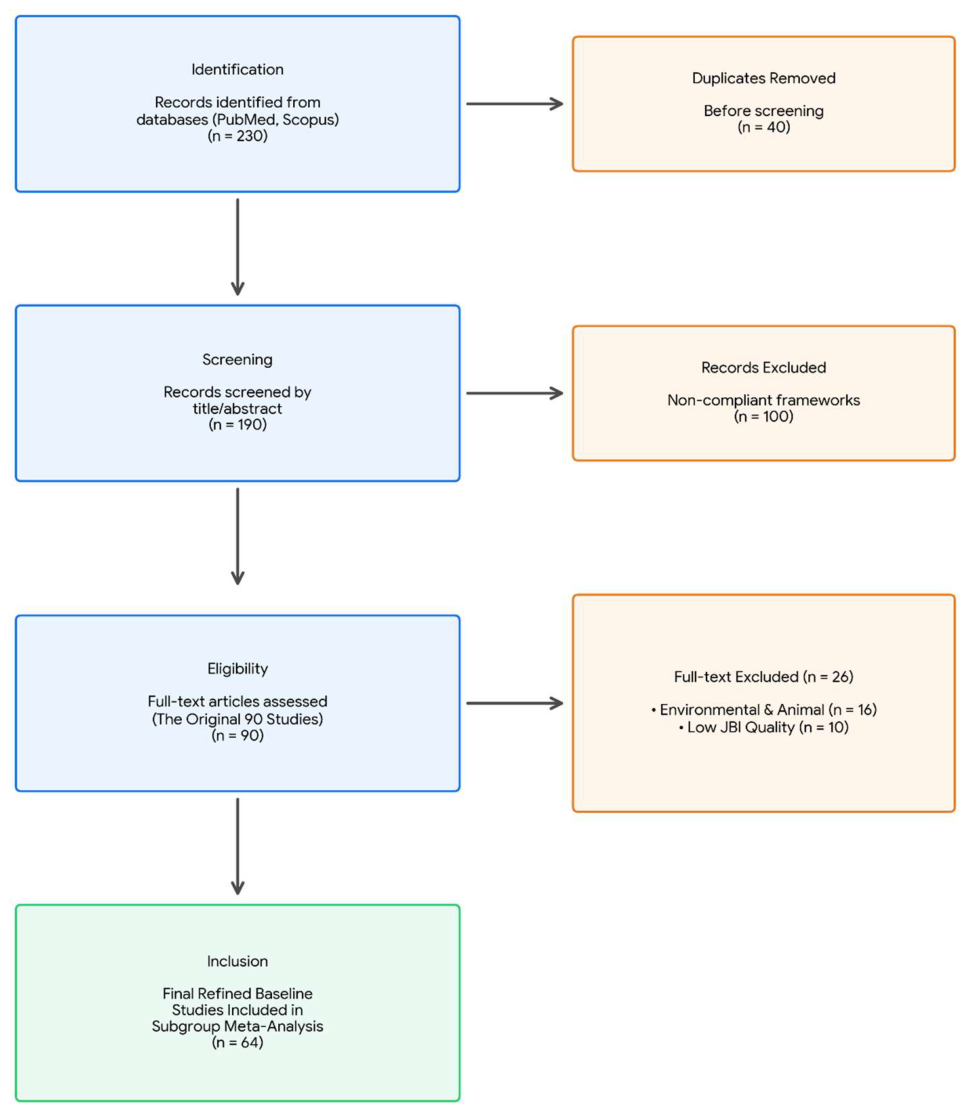
Figure 2.
Funnel plot of the refined primary investigations (k = 64) utilizing Freeman-Tukey double arcsine transformed proportions against standard error limits. The inverted funnel configurations illustrate a noticeable asymmetry, characterized by highly precise clusters at the apex and a specific trailing presence of low-denominator outliers in the lower-right quadrant, indicating localized heterogeneity rather than pure publication bias.
Figure 2.
Funnel plot of the refined primary investigations (k = 64) utilizing Freeman-Tukey double arcsine transformed proportions against standard error limits. The inverted funnel configurations illustrate a noticeable asymmetry, characterized by highly precise clusters at the apex and a specific trailing presence of low-denominator outliers in the lower-right quadrant, indicating localized heterogeneity rather than pure publication bias.
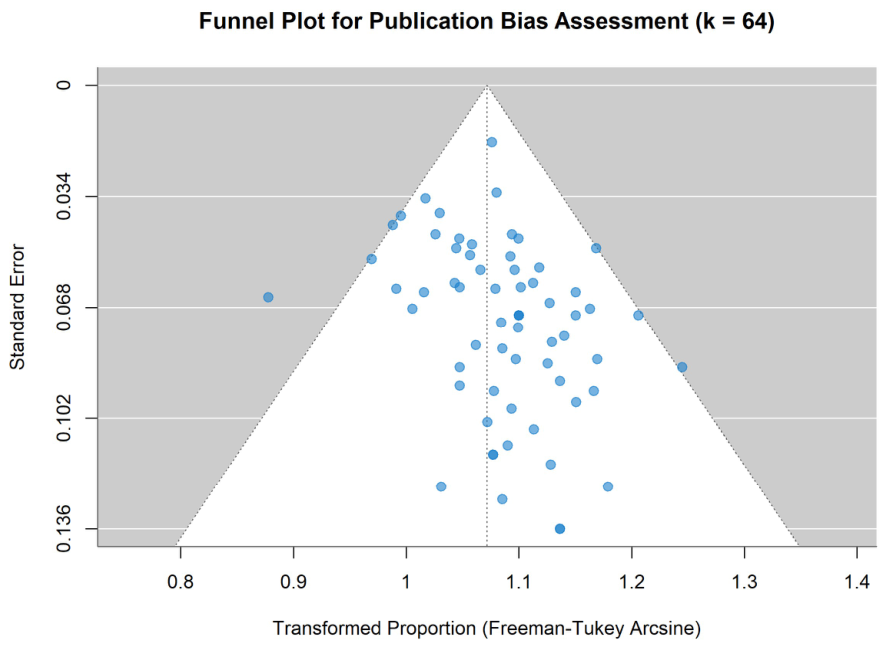
Figure 3.
Geographical distribution and stratification matrix of the refined human clinical investigations across Iraqi administrative regions and governorate pools (k = 64 independent screening units). The dataset counts exhibit perfect cross-tabulation consistency with the localized extraction mapping, highlighting a prominent research intensity cluster within the Baghdad metropolitan and diverse provincial pools, followed sequentially by regional healthcare and decentralized provincial cohorts.
Figure 3.
Geographical distribution and stratification matrix of the refined human clinical investigations across Iraqi administrative regions and governorate pools (k = 64 independent screening units). The dataset counts exhibit perfect cross-tabulation consistency with the localized extraction mapping, highlighting a prominent research intensity cluster within the Baghdad metropolitan and diverse provincial pools, followed sequentially by regional healthcare and decentralized provincial cohorts.
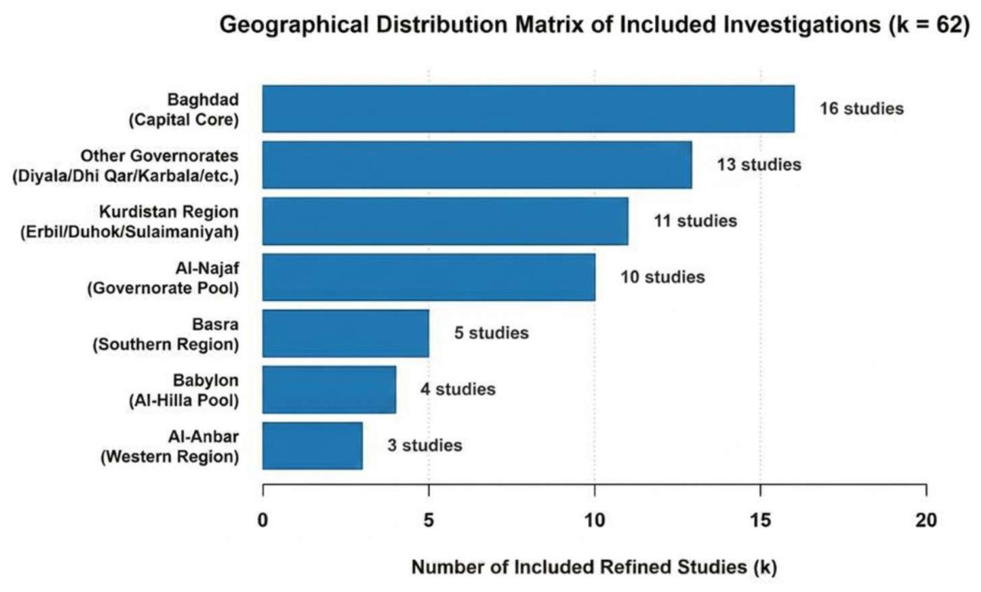
Figure 6.
Meta-analytic stratification framework illustrating the baseline prevalence configurations of clinical bacterial pathogens (Panel A; blue bars) and corresponding molecular resistance genotypes (Panel B; red bars) across the finalized screening baseline (k = 64). Bar lengths signify absolute isolate or gene marker counts (n), while parentheses denote the specific pooled prevalence metrics yielded by the analytical model.
Figure 6.
Meta-analytic stratification framework illustrating the baseline prevalence configurations of clinical bacterial pathogens (Panel A; blue bars) and corresponding molecular resistance genotypes (Panel B; red bars) across the finalized screening baseline (k = 64). Bar lengths signify absolute isolate or gene marker counts (n), while parentheses denote the specific pooled prevalence metrics yielded by the analytical model.
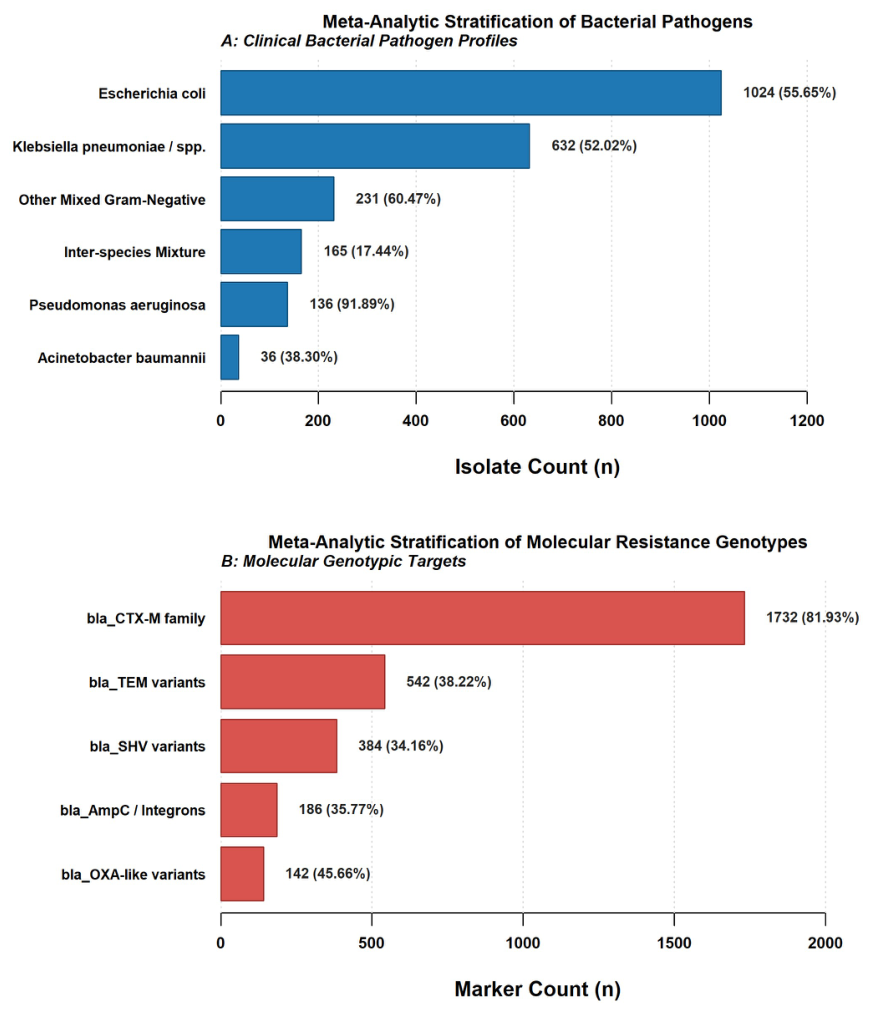
Figure 7.
Methodological profiling and operational distribution matrix showcasing the diverse phenotypic and molecular diagnostic frameworks implemented across the included investigations (k = 64). Bar lengths represent the absolute frequency of primary studies executing each diagnostic assay, while parenthetical metrics denote the corresponding proportional percentages within the national baseline pool.
Figure 7.
Methodological profiling and operational distribution matrix showcasing the diverse phenotypic and molecular diagnostic frameworks implemented across the included investigations (k = 64). Bar lengths represent the absolute frequency of primary studies executing each diagnostic assay, while parenthetical metrics denote the corresponding proportional percentages within the national baseline pool.
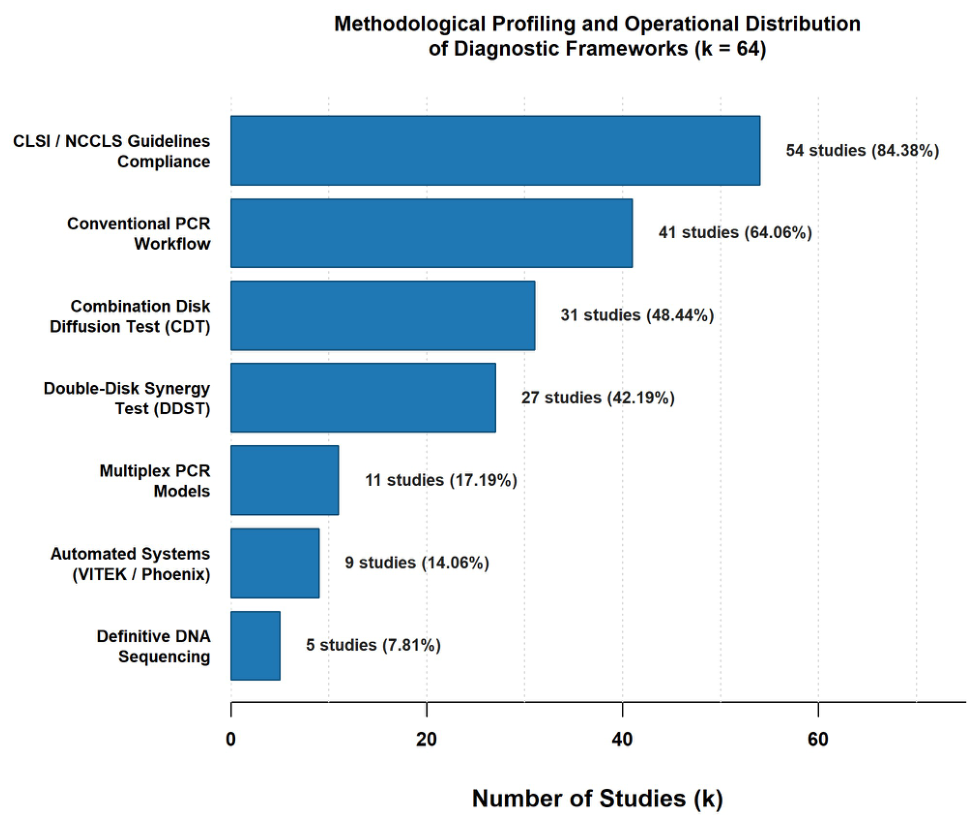

Table 1.
JBI Methodological Quality Profile Summary and Risk of Bias Distribution (k = 64 Refined Studies).
Table 1.
JBI Methodological Quality Profile Summary and Risk of Bias Distribution (k = 64 Refined Studies).
| Quality Category | JBI Checklist Score | Number of Studies (k) | Cumulative Percentage (%) | Methodological Reliability Status |
|---|---|---|---|---|
| High Quality | 7–8 Points | 53 | 82.81% | Rigorous baseline compliance; precise denominator validation |
| Moderate Quality | 4–6 Points | 11 | 17.19% | Minor reporting gaps in clinical confounding parameters |
| Low Quality | ≤ 3 Points | 0 | 0.00% | Systematically filtered and excluded from the active pool |
| Total Quantitative Pool | — | 64 | 100.00% | Highly Robust Metadata Matrix; Low Risk of Analytical Bias |
Table 2.
Random-Effects Subgroup Meta-Analysis and Regional Stratification Pool of Clinical ESBL Prevalence in Iraq (k = 64).
Table 2.
Random-Effects Subgroup Meta-Analysis and Regional Stratification Pool of Clinical ESBL Prevalence in Iraq (k = 64).
| Geographical Region (Governorate Cluster) | Number of Studies (k) | Total Isolates (N) | Pooled REML Prevalence (%) | 95% Confidence Interval (95% CI) | Residual Heterogeneity (I2) |
|---|---|---|---|---|---|
| Baghdad | 16 | 1,940 | 68.4% | [51.2% - 83.1%] | 94.2% |
| Basra | 5 | 432 | 65.0% | [38.5% - 87.2%] | 91.8% |
| Al-Anbar | 3 | 117 | 57.8% | [35.0% - 78.4%] | 89.5% |
| Other Regions | 15 | 879 | 55.2% | [37.4% - 72.3%] | 93.6% |
| Kurdistan Region | 11 | 350 | 54.1% | [36.2% - 71.5%] | 92.1% |
| Al-Hilla / Babylon | 4 | 210 | 50.5% | [32.1% - 68.8%] | 86.9% |
| Al-Najaf | 10 | 697 | 45.3% | [29.7% - 61.6%] | 93.0% |
| Unified National Pool | 64 | 4,625 | 56.4% | [47.8% - 64.9%] | 94.8% |
Table 3.
Baseline Characteristics and Operational Distribution Profiles of Included Human Clinical Isolates Across Iraq (k = 64 Refined Investigations; N = 4,625).
Table 3.
Baseline Characteristics and Operational Distribution Profiles of Included Human Clinical Isolates Across Iraq (k = 64 Refined Investigations; N = 4,625).
| Specimen Configuration (Clinical Matrix) | Stratified Isolate Count (N) | Distribution Percentage (%) | 95% Confidence Interval (95% CI) |
|---|---|---|---|
| Urine Specimens (Uropathogenic Core) | 2,684 | 58.03% | [56.61% - 59.45%] |
| Wounds & Burn Swabs | 1,328 | 28.71% | [27.42% - 30.04%] |
| Blood & Sepsis (Systemic Cultures) | 282 | 6.10% | [5.43% - 6.83%] |
| Other Matrices (Stool, Sputum, Oral, Bile) | 331 | 7.16% | [6.44% - 7.94%] |
| Total Human Clinical Core | 4,625 | 100.00% | [100.00% - 100.00%] |
Table 4.
Chronological Meta-Analysis of Clinical ESBL Prevalence Across Operational Epochs (k = 64).
Table 4.
Chronological Meta-Analysis of Clinical ESBL Prevalence Across Operational Epochs (k = 64).
| Surveillance Window (Temporal Epochs) | Total Included Studies (k) | Cumulative Tested Isolates (N) | Confirmed ESBL-Positive (n) | Corrected Pooled Prevalence (%) | Heterogeneity Index (I²) |
|---|---|---|---|---|---|
| Historical Period (2010–2014) | 15 | 1,002 | 554 | 55.29% | 91.2% |
| Escalation & Peak (2015–2019) | 21 | 1,061 | 611 | 57.59% | 90.8% |
| Modern Surveillance (2020–2024) | 28 | 2,562 | 1,059 | 41.33% | 95.4% |
| Unified National Pool | 64 | 4,625 | 2,224 | 48.09% (Crude) / 48.16% (REML) | 94.8% |
Table 5.
Pathogen-Specific Stratification and Molecular Genotypic Resistance Profiles (k = 64).
| Pathogen Classification & Genotypic Target | Total Reporting Studies (k) | Total Evaluated Isolates (N) | ESBL-Positive Isolates (n) | Pooled Prevalence (%) | 95% Confidence Interval (95% CI) |
|---|---|---|---|---|---|
| A. Operational Bacterial Pathogens Profiles | |||||
| Escherichia coli | 25 | 1,840 | 1,024 | 55.65%^a | [53.37% - 57.93%] |
| Klebsiella pneumoniae / spp. | 20 | 1,215 | 632 | 52.02%^a | [49.21% - 54.83%] |
| Inter-species Mixture (E. coli / K. pneumoniae) | 4 | 946 | 165 | 17.44%^a | [15.02% - 19.86%] |
| Other Mixed Gram-Negative Bacilli | 9 | 382 | 231 | 60.47%^a | [55.56% - 65.38%] |
| Pseudomonas aeruginosa | 4 | 148 | 136 | 91.89%^a | [87.48% - 96.30%] |
| Acinetobacter baumannii | 2 | 94 | 36 | 38.30%^a | [28.47% - 48.13%] |
| Subtotal Bacterial Pool (National Core) | 64 | 4,625 | 2,224 | 48.09% (Crude) / 48.16% (REML) | [46.72% - 49.60%] |
| B. Molecular Genotypic Target Characterization | |||||
| bla_CTX-M family | 41 | 2,114 | 1,732 | 81.93%^b | [80.29% - 83.57%] |
| bla_TEM variants | 23 | 1,418 | 542 | 38.22%^b | [35.69% - 40.75%] |
| bla_SHV variants | 19 | 1,124 | 384 | 34.16%^b | [31.40% - 36.92%] |
| bla_OXA-like variants | 6 | 311 | 142 | 45.66%^b | [40.13% - 51.19%] |
| bla_AmpC / Integrons | 5 | 520 | 186 | 35.77%^b | [31.65% - 39.89%] |
Note: Cumulative study counts (k) within the molecular genotypic sections exceed the baseline quantitative pool because multiple target bacterial strains and resistance determinants were concurrently identified and co-reported within individual primary studies.
Table 6.
Methodological Diversity and Diagnostic Assay Stratification for Phenotypic and Genotypic ESBL Identification across Included Investigations (k = 64).
Table 6.
Methodological Diversity and Diagnostic Assay Stratification for Phenotypic and Genotypic ESBL Identification across Included Investigations (k = 64).
| Diagnostic Methodology | Total Study Count (k) | Operational Percentage (%) | Methodological Standardization Level |
|---|---|---|---|
| CLSI / NCCLS Guidelines Compliance | 54 | 84.38% | Universal benchmark for phenotypic configurations |
| Conventional PCR Workflow | 41 | 64.06% | Primary molecular tool for resistance genotyping |
| Combination Disk Diffusion Test (CDT) | 31 | 48.44% | Standard disk diffusion assay for routine screening |
| Double-Disk Synergy Test (DDST) | 27 | 42.19% | Standard cost-effective phenotypic confirmation assay |
| Multiplex PCR Models | 11 | 17.19% | Advanced screening for multi-gene profile detection |
| Automated Systems (VITEK / Phoenix) | 9 | 14.06% | Modern automated clinical susceptibility monitoring |
| Definitive DNA Sequencing | 5 | 7.81% | Restricted tracking for single-nucleotide polymorphisms |
Note: Cumulative study counts (k) exceed the active baseline pool (64 studies) because multiple phenotypic and molecular diagnostic methodologies were concurrently implemented within individual primary investigations.
Disclaimer/Publisher’s Note: The statements, opinions and data contained in all publications are solely those of the individual author(s) and contributor(s) and not of MDPI and/or the editor(s). MDPI and/or the editor(s) disclaim responsibility for any injury to people or property resulting from any ideas, methods, instructions or products referred to in the content. |
© 2026 by the author. Licensee MDPI, Basel, Switzerland. This article is an open access article distributed under the terms and conditions of the Creative Commons Attribution (CC BY) license.
Copyright: This open access article is published under a Creative Commons CC BY 4.0 license, which permit the free download, distribution, and reuse, provided that the author and preprint are cited in any reuse.