
Submitted:
01 September 2026
Posted:
02 September 2026
You are already at the latest version
Abstract
This study investigates the effects of music on consumer behaviour and spending, and how different music genres influence consumer responses in a fashion retail environment. Data were collected via an online survey and analysed using SPSS Statistics to conduct variance analyses across demographic groups. The results indicate that in-store music exerts a generally positive influence on consumer behaviour (up to 68%), with instrumental music most effective at creating an inviting atmosphere (up to 65%). Gender differences were observed: 65% of male respondents preferred instrumental tracks, whereas 55% of female respondents favoured pop music. These findings have practical implications for retail managers seeking to optimise music selection to improve customer satisfaction and the overall shopping experience. In-store music plays a pivotal role in shaping consumers’ moods and behaviours, yet research examining its differential effects across genders within fashion retail contexts in Hong Kong remains limited.
Keywords:
consumer behaviour
; consumer research
; fashion retailing
; sensory perception
1. Introduction
Retail establishments commonly encompass three distinct elements, including the physical, social, and sensory dimensions (Kotler, 1973). Music is widely regarded as an ambient dimension and has shown to enhance sensory enjoyment (Santos and Freire, 2013, Kulkarni, 2012). From a psychological standpoint, music can be viewed as a catalyst for emotions owing to its capacity to foster enjoyment and entertainment (Hargreaves and North, 1999). It can stimulate positive emotions in retail environments (Scott, 1990, Kellaris et al., 1996), thereby enhancing the shopping experience at the cognitive and behavioural levels (Jain and Bagdare, 2011, Zhang et al., 2024). Moreover, music is notably effective in influencing consumer spending and sentiment (Jain and Bagdare, 2011, Esfidani et al., 2022). In retail settings, music is often used as a communication tool to create a brand image aimed at specific customer profiles (Morrison and Beverland, 2003). The genre and setting of music can generate various effects across different retail environments (Toldos et al., 2019). Melodies characterised by softer tones convey a sense of a welcoming atmosphere (Abimnwi and Njuguna, 2015), while classical music can enhance the aesthetic appeal of an environment (Hedström et al., 2015). In addition, pop music can evoke personal memories, leading to a feeling of familiarity (Petruzzellis et al., 2018).
In Hong Kong (HK), in-store music has evolved into a strategic asset for assisting economic growth while simultaneously strengthening the brand identity of fashion outlets (TheConsumerCouncil, 2016, InvestHK, 2017). Despite the considerable amount of literature examining the effects of music in retail settings in Western countries, a notable gap remains, particularly regarding the study of music in HK fashion stores. This research highlights the significance of using music as a sensory tool within the fashion retail setting. It examines the effects of music and various genres on consumer behaviour and perception across different genders, as well as its influence on the in-store experience. These objectives are realised through conducting consumer surveys that have been validated with quantitative methods using SPSS Statistics. Furthermore, this study integrates empirical and theoretical knowledge, examining the ways in which music can be leveraged as a sensory tool for improving fashion marketing in HK.
2. Literature Review
2.1. Consumer Behaviour
Consumer behaviour refers to the series of actions undertaken by consumers, which includes the selection, purchase, and consumption of products and services to meet their needs (Gajjar, 2013). Related studies have found social, cultural, personal, and psychological factors to influence consumer behaviour and purchasing patterns (Hoyer et al., 2020, Lim et al., 2023, Jisana, 2014). A combination of qualitative and quantitative methods, including focus groups, surveys, and neurophysiological measures, is primarily used to measure consumer behaviour (Cherubino et al., 2019). For retail settings, questionnaires remain the primary method for understanding consumer sentiment and motives (Newman and Foxall, 2003). Nonetheless, it is essential to conduct observations to develop consumer behaviour models, as retailers need to examine purchasing habits and routines of buyers, including differences in patterns based on gender (Martens, 2009, Lipowski and Angowski, 2016).
2.2. Sensory Marketing in Retail Settings
Sensory marketing is defined as a marketing strategy that fosters the involvement of customer emotions to influence their attitudes, perspectives, and ultimately their actions (Krishna, 2012). Aroma and music are two of the most influential environmental factors that influence consumer behaviour (Murwani et al., 2023). Prior studies have examined the influence of various factors in sensory marketing, including duration, purchasing behaviour, spending, and recommendation practices (Moreira et al., 2017). Related literature has indicated that consumers appreciate sensory pleasure within retail environments, leading them to spend additional time and financial resources (Butawski, 2024, Morrin et al., 2011, Moreira et al., 2017). Moreover, sensory stimuli have been shown to play an essential role in influencing the emotions of consumers in fashion retail environments (Parsons, 2011). Sensory marketing may be used to establish subconscious triggers that reflect the customers’ views of abstract product ideas. Given the wide range of explicit marketing pitches given to customers daily, subconscious triggers that appeal to the fundamental sensations are a more efficient approach to engaging consumers. Furthermore, these sensory cues may lead to self-generating brand qualities from consumers rather than those presented orally by the marketer (Biswas, 2016, Lund).
2.3. The Stimulus-Organism-Response (S-O-R) Framework
The stimulus-organism-response (S-O-R) framework originates from the fields of environmental psychology and consumer behavior research, aiming to interpret how environmental stimuli (S) impact an individual’s internal processes (O), and subsequently influence their behavioral responses (R),(Russell and Mehrabian, 1977, Russell and Mehrabian, 1974). Over the years, the S-O-R model has been adapted and utilised in marketing and consumer behavior fields, providing insights into how store atmospherics, such as music, lighting, and layout, can influence shopping experiences (Gatautis et al., 2016, Kim et al., 2025). However, literature on the impact of music on customer behavior in the fashion industry is still in its early stages and remains limited. While much has been said about its valuable insights into enhancing management and marketing strategies, much about the determining factor affecting customer value equally remains unknown. Factors such as music tempo, genre, familiarity, and the influence of celebrities play significant roles in shaping customer preferences in retail environments. The application of the S-O-R model is justified by the fact that it can find, attract, keep, and grow the targeted customers in the fashion industry. It is therefore crucial to adopt these findings effectively when it comes to the use of music in the fashion industry. According to the S-O-R model, the music style or musician would be the Stimulus (S), the processing of the cognitive or emotional impact created by these musical trends or image of celebrities would be the Organism (O), the Response (R) in this case would be the customers’ increased purchase intention or the enhanced favorability of the brand. Fashion style is closely related to different music genres, e.g., hip-hop, with streetwear used as an image builder of fashion brands (Strähle and Keibel, 2017).
One important business goal is to promote new products and enhance product diversity to expand the market. Choosing the right music can be an effective tool for merchants to achieve their goal (Sun et al., 2023). Sun et al. (2023) further proves Kotler’s theory of how auditory cues can enhance hedonic experiences for customers in a retail environment. The result of the research could be significant to improve the promotion of new fashion product lines, both online and offline, since music could create emotional connections with products. This calls for an investigation into pop music and instrumental music, which are two of the most prevalent music genres in HK fashion retail establishments.
2.4. Music as a Form of Sensory Marketing
Kotler (1973) identified three dimensions that influence consumer behaviour in retail settings, including the physical dimension, social dimension, and sensory dimension (Kotler, 1973). Such dimensions are essential in shaping the shopping experience and can greatly influence consumer decisions (Juslin and Lindström, 2010). Numerous studies have shown that in-store background music can influence the emotional state of customers in retail outlets (Zeeshan and Obaid, 2013, Jain and Bagdare, 2011, Toldos et al., 2019). Selecting the appropriate music for a retail setting can lead individuals to disconnect from the outside world (Schäfer et al., 2013) and enhance their interest and concentration while shopping (Kellaris, 2018). According to the literature, music has the greatest effect on consumer behaviour among sensory marketing strategies (Jain and Bagdare, 2011, Bagdare and Jain, 2013, Wang et al., 2023). Studies have discovered that the presence of in-store music can lead to several results, such as reducing the discomfort experienced by customers while they wait in line (McDonnell, 2007) and affecting their spending behaviour (Choo et al., 2021).
2.5. Music Genre and Perception
Music is widely adopted across different retail environments, and previous research has shown its effectiveness in forming purchase intentions in terms of quality and quantity (Morrison et al., 2008, Hwang and Oh, 2020). In the fashion industry, one of the companies that fully implements the use of music in its retail environments is Victoria’s Secret, a women’s underwear brand (Bargreen, 1994). In retail environments, slow-tempo music is characterized as welcoming to customers with its nature of not being irritating (Abimnwi and Njuguna, 2015), resulting in shorter time perception (Oakes and North, 2008), and positive impact on the perception of services (Michon and Chebat, 2004). Fast-tempo music usually presents more lively impressions. Take the Barbie section in FAO Schwarz as an example, fast-tempo pop music is chosen to be played in the section, and it provides a fun, fictional, and joyful impression, which is suitable for the image of the toy (Morrison et al., 2008). Even though fast-tempo music can project a joyful and upbeat impression, it could also increase the consumption speed (Roballey et al., 1985). If the duration is shortened, the consumption quantity of consumers may also decrease. For the impression of high-pitch music, it is being seen as more exciting and more positive, with the ability to generate happiness (Watson, 1942) and could generate positive consumption behaviour with positive emotions in comparison to low-pitch music (Lin et al., 2011).
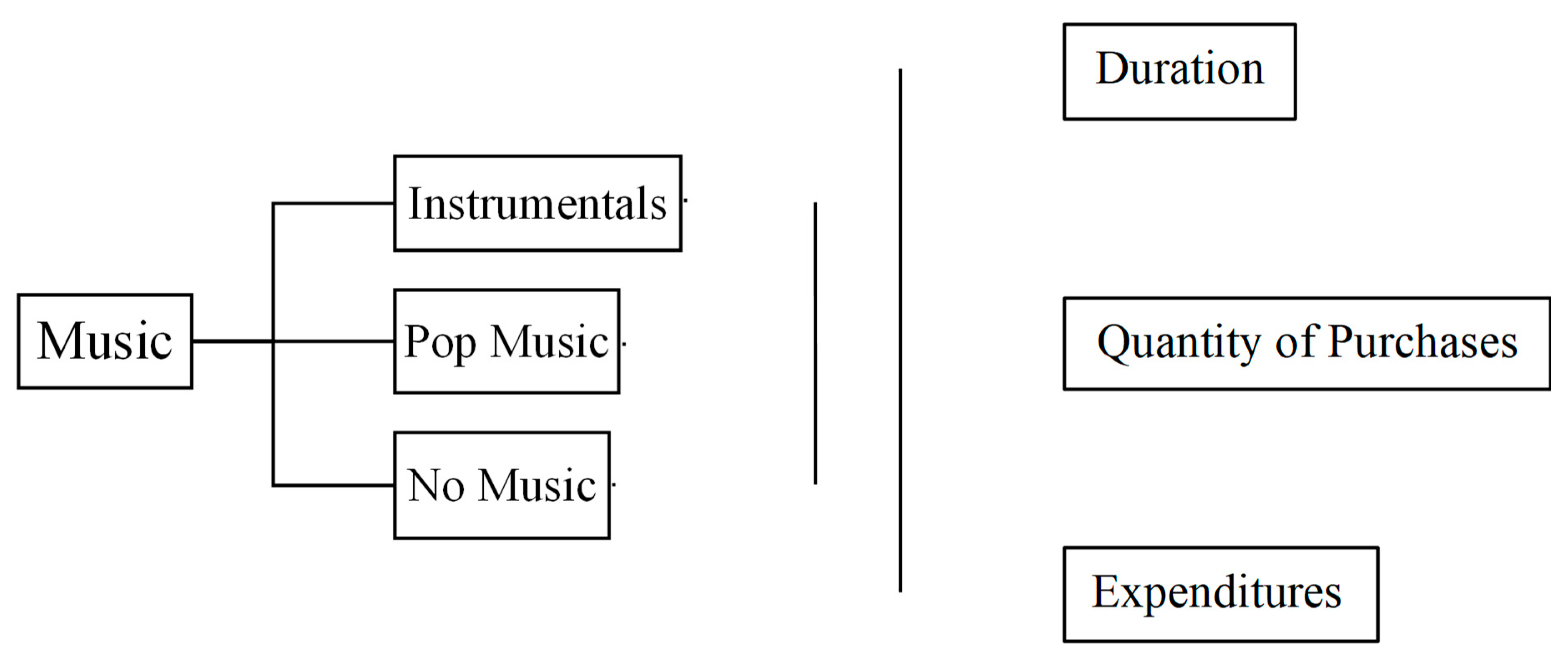
The theoretical framework of music as a tool of sensory marketing in the fashion retail environment is presented in Figure 1 below. In general, music improves the fashion store atmosphere. It also shows that music is a useful stimulus for sensory experience to consumers to deliberately induce pleasure and arousal non-verbal response - that is, positive behaviors - beneficial to the fashion retailers. Precisely, there are three resulting attitudes of consumers as influenced by music: 1. increased amount of time spent in fashion retail stores, 2. increased purchase, or made unplanned purchase, of the merchandise, and 3. increased spending in such stores. Pop music, which is defined as popular music regardless of the published time and regions, is apparently one of the most common music genres that would be picked by various brands in the retail environment. However, due to its distinct features, the implementation of pop music in stores has two-sided effects on customers. From a positive perspective, first, famous pop music is responsible for positively affecting customers with the effect of affection, and cognitive responses; and second, the sequential mediating effect (Petruzzellis et al., 2018). Pop music carries the nature of high familiarity to increase self-congruity, thus leaving a better impression on the stores. However, some research has suggested otherwise, as high familiarity with pop music is not beneficial to consumer behaviour. In a study that investigated the familiarity of music, Yalch & Spangenberg 2000 stated that even though interviewees thought they had a longer duration in stores when listening to familiar music, they spent less time due to the increase in stimulation when listening to familiar music (Yalch and Spangenberg, 2000). It is because familiar music can act adversely as a distraction to the customers, making them unable to focus on their shopping, and resulting in the withdrawal of some cognition.
3. Method
3.1. Hypothesis
To test the hypotheses designed for the topic of music as a sensory marketing tool in the fashion retail industry, a survey was conducted in this study. The questionnaire was distributed to the public digitally, making it possible to ask some more in-depth and detailed questions. The hypothesis for this study is as follows:
H1: The presence of music in a fashion retail environment in HK is better than its absence.
H2: The presence of music in a fashion retail environment in HK can encourage positive consumer behaviour, namely longer shopping duration, larger quantities of purchases, and higher expenditures.
H3: Consumer behaviour varies with different music genres in the fashion retail environment.
3.2. Survey
This research involves the use of a questionnaire, which is divided into six parts, with three of them put in sections to ask the opinions of people about fashion stores with no in-store music, the use of instrumental music, or pop music. The research subjects of this study are the fashion retail stores and people in HK, with a sample size of n = 100, regardless of their ages and genders. With the online dissemination of questionnaires, more people could be reached, and the process of analysis was made easier.
Keyword analysis was used to categorize the answers to the open-ended questions so that the responses could be studied in a quantitative approach, and the answer patterns of different questions could be found. In the three sections of the questionnaire, without in-store music, with instrumental music, and with pop music, identical questions were asked to discover the feelings of shoppers under these various sensory settings. Since questions were asked in an open-ended format, keyword analysis was the most effective method to study the results. The answers were categorized into four groups: positive responses, negative responses, neutral responses, and undefined. Examples of categorized responses are presented in Table 1, Table 2 and Table 3.

Table 1.
Responses while shopping in fashion stores with no in-store music.
| Examples of Responses | Designated Categories |
|---|---|
| Can concentrate on shopping | Positive Responses |
| Shop in a quiet environment, thus can choose items carefully | Positive Responses |
| Found it difficult to enjoy shopping | Negative Responses |
| It is too quiet so it makes one feel weird | Negative Responses |
| It might feel quiet, but it’s ok | Neutral Responses |
| No feelings | Neutral Responses |
| Casual viewing | Undefined |
| I only wander in shops and won’t buy anything | Undefined |
Table 2.
Responses while shopping in fashion stores with instrumental music.
| Examples of Responses | Designated Categories |
|---|---|
| Feeling less stressed | Positive Responses |
| It makes me shop slower, I could enjoy the time during shopping, and I would be more willing to walk around the store | Positive Responses |
| It doesn’t fit my style; I don’t want to stay too long | Negative Responses |
| Boring | Negative Responses |
| It feels more refined but it doesn’t affect my shopping desire | Neutral Responses |
| Normal shopping | Neutral Responses |
| Ok | Undefined |
| Suit | Undefined |
Table 3.
Responses while shopping in fashion stores with pop music.
| Examples of Responses | Designated Categories |
|---|---|
| Hearing songs that my friends and I know would make us feel better | Positive Responses |
| I enjoy listening to pop music while shopping | Positive Responses |
| Some songs are annoying | Negative Responses |
| I would run away a.s.a.p. | Negative Responses |
| Not many feelings | Neutral Responses |
| It could distract me but there is not much effect | Neutral Responses |
| Hype | Undefined |
| Know what music is currently on trend | Undefined |
3.3. SPSS Statistics Analysis
SPSS Statistics version 26 was employed to distinguish the variation of answers that could exist between different demographic groups. Since there is a higher level of significance in researching preferences from different genders than from different age groups, SPSS analysis was performed to study the differences between males and females under different music settings in fashion stores. Although this analysis is not practical in providing data to support or reject the initial hypothesis, the results generated by the SPSS analysis could provide additional information for this research. This extra information can be turned into useful figures, thus identifying a greater impact on the topic of music settings for the fashion industry.
4. Results and Discussion
4.1. The Presence and Absence of Music
In the opening section of the questionnaire, people were asked about their awareness of music and the effect of music on their behaviour in fashion stores. 87% of participants agreed that they were aware of the music being played at fashion stores. This suggests that music could act as a type of sensory marketing in the fashion retail environment.
However, 77% of the respondents stated that having no in-store music was a setting that would not affect them positively. It follows that having no music played could be less enjoyable for people in a fashion store. On the other hand, only 34% of the respondents preferred the shop with this retail setting, thus indicating a large proportion of people would like to shop in a fashion store with music. Evidence shows that people preferred shopping in fashion stores with music being played. This is a setting that could positively affect them, so the first hypothesis of this research was tested and held to be true based on the observed data.
When asked if the respondents liked to shop in a fashion store with no in-store music, only 34% gave a positive answer, against 66% with a negative one. This indicates more respondents are in favour of shopping with in-store music. The respondents were requested to describe, in a few words, their shopping experiences in fashion stores without in-store music. Their responses were categorised under four kinds of responses. A total of 58 respondents used negative terms to describe their shopping experiences with no in-store music. This leads us to believe that having no in-store music is probably the one setting, maybe among others, that receives more negative than positive responses. The responses to this open-ended question show that people could be negatively affected in the absence of in-store music in fashion stores. As a result, they were left with the impression of the stores being awkward, dull, uncomfortable, and quiet. This could create an unfavorable retail environment for the customers, so they were unwilling to spend more time and money. The positive and negative responses to the shopping experience with no in-store music explain why fashion stores with in-store music could be preferable, as they are comparatively more pleasant than those with no in-store music at all. Therefore, the results have failed to reject the hypothesis that the presence of music in a fashion retail environment is better than its absence.
4.2. Effectiveness of Music
The second hypothesis is tested to examine whether music in a fashion store can encourage positive consumer behavior. Table 4 summarises the answers for the above three sets of questions about no in-store music, instrumental music, and pop music in the retail environment. In general, the answers for having no music are mixed. Overall, most respondents disagreed to shop more slowly, buy more, and spend in the absence of in-store music. It follows that having no in-store music could not extend their time, increase the amount of purchase, and increase their expenditure in a fashion store. These findings are consistent with the previous research (Sullivan, 2002). The number of responses for each of the options in the absence of in-store music spread more evenly, showing that people have more varied opinions about the effectiveness of music in affecting consumer behaviour. First, an average of 28.5% of people disagreed with the statement that music can increase their duration of shopping, and an average of 32% of people partially agreed that music could increase their number of purchases. However, when asked about the increase in expenditure, 29% of people disagreed and partially agreed with the options, respectively. These results show that the relationship between the degree of affection of music and the effect on consumer behaviour is limited, as there is little to no effect on increasing the duration of shopping, the quantity of purchases, and expenditures. Evidence also shows that even though a fashion retail environment with music is preferable to consumers, this setting could possibly be the most influential on the quantity of purchases. In conclusion, as the positive effect of music on consumer behaviour is still questionable, the second hypothesis that the presence of music in a fashion retail environment can positively alter consumer behaviour, owing to the insignificant effect found, is therefore partially rejected.
Table 4.
Evaluation of the effect of music on consumers’ duration of shopping, quantity of purchases, and expenditure.
Table 4.
Evaluation of the effect of music on consumers’ duration of shopping, quantity of purchases, and expenditure.
| In general, you shop slower in a fashion store with… (%) | ||||
|---|---|---|---|---|
| No in-store music | Instrumental music | Pop music | Mean of presence of music | |
| Totally Disagree | 9 | 4 | 6 | 5 |
| Disagree | 42 | 27 | 30 | 28.5 |
| Partially Disagree | 24 | 26 | 29 | 27.5 |
| Partially Agree | 20 | 30 | 26 | 28 |
| Agree | 3 | 13 | 14 | 13.5 |
| Totally Agree | 2 | 4 | 1 | 2.5 |
| In general, you buy more items in a fashion store with… (%) | ||||
| No in-store music | Instrumental music | Pop music | Mean of presence of music | |
| Totally Disagree | 13 | 4 | 6 | 5 |
| Disagree | 51 | 29 | 29 | 29 |
| Partially Disagree | 29 | 22 | 27 | 24.5 |
| Partially Agree | 5 | 37 | 27 | 32 |
| Agree | 1 | 7 | 10 | 8.5 |
| Totally Agree | 1 | 1 | 1 | 1 |
| In general, you spend more in a fashion store with… (%) | ||||
| No in-store music | Instrumental music | Pop music | Mean of presence of music | |
| Totally Disagree | 12 | 4 | 7 | 5.5 |
| Disagree | 48 | 31 | 27 | 29 |
| Partially Disagree | 33 | 24 | 31 | 27.5 |
| Partially Agree | 5 | 33 | 25 | 29 |
| Agree | 1 | 7 | 9 | 8 |
| Totally Agree | 1 | 1 | 1 | 1 |
4.3. Variations Among Different Music Genres
Finding 3 is related to the hypothesis test of H3. The results show that 50% of the respondents preferred instrumental music in fashion stores, compared to the 45% preferred pop music. The mere 5% difference suggests that people are slightly more in favour of the presence of instrumental music in fashion stores. Noticeably, only 5% preferred no in-store music at all. Survey participants were asked about the influence of instrumental music and pop music when going shopping. Results show that 81% and 73% of respondents were positively affected by instrumental music and pop music, respectively. This indicates that people feel more favourable when instrumental music is being played in fashion stores. The respondents were further asked to provide explanations and descriptions of shopping experiences in fashion stores that play instrumental or pop music. This will be discussed in the following section.
Table 5.
Summary of Responses to the instrumental music section and the pop music section.
| In general, you shop slower in a fashion store with… (%) | ||
|---|---|---|
| Instrumental music | Pop music | |
| Totally Disagree | 4 | 6 |
| Disagree | 27 | 30 |
| Partially Disagree | 26 | 29 |
| Partially Agree | 30 | 26 |
| Agree | 13 | 14 |
| Totally Agree | 4 | 1 |
| In general, you buy more items in a fashion store with… (%) | ||
| Instrumental music | Pop music | |
| Totally Disagree | 4 | 6 |
| Disagree | 29 | 29 |
| Partially Disagree | 22 | 27 |
| Partially Agree | 37 | 27 |
| Agree | 7 | 10 |
| Totally Agree | 1 | 1 |
| In general, you spend more in a fashion store with… (%) | ||
| Instrumental music | Pop music | |
| Totally Disagree | 4 | 7 |
| Disagree | 31 | 27 |
| Partially Disagree | 24 | 31 |
| Partially Agree | 33 | 25 |
| Agree | 7 | 9 |
| Totally Agree | 1 | 1 |
Table 5 shows that when comparing consumer behaviour under different music genres, the responses to pop music are slightly more negative. The most frequently chosen options in respect of the duration of shopping, quantity of purchases, and expenditures are “Disagreed” in the pop music section to shop more slowly (30%), buy more (29%), and spend more (31%). The negative responses are equal. It follows that pop music might not be able to increase the duration of shopping, the quantity of purchases, and customers’ expenditures in fashion stores. On the instrumental music part, the most frequently chosen option for all three questions is “Partially Agree”. This indicates that consumer behaviour under the instrumental music setting is slightly more favourable in the retail fashion stores.
Based on the keyword analysis of the questions that require respondents to describe their shopping experiences in fashion stores playing instrumental music and pop music, respectively. When comparing both music settings, there are slightly more people who have positive responses to instrumental music (63%) than to pop music (58%). On the other hand, people who commented with negative responses to pop music were around three times more than the negative responses to instrumental music. This leads the researchers to believe that people prefer to hear instrumental music in fashion stores. As regards the reasons for preferring different music settings, keyword analysis was adopted in the classification. Even though there were only three people who described instrumental music as boring, most of them (63%) still considered instrumental music to be a suitable music choice for fashion stores. A large proportion of people describe instrumental music as comfortable, thus indicating that this kind of music can create a more pleasing retail environment with a calming atmosphere. On the other hand, there are 17% negative responses to pop music being played in fashion stores, and comments are more diverse. In respect of the feelings towards pop music setting, the survey results reveal that 31 people said that pop music provided positive emotions, four people found familiarity in pop music, and another foursaid they could sing with the music. In terms of the negative responses, 14 people complained that pop music was too loud and annoying, suggesting that pop music might not be a suitable music choice for all circumstances, as it could create a nuisance to customers.
Lastly, the reactions of people towards different music genres were measured by the last open-ended question in the second and last parts of the questionnaire, which required respondents to provide explanations for their choices of preferred music settings. A total of 47 people provided their explanations for choosing instrumental music: 24 people said it was the most comfortable music choice; 12 people stated that instrumental music could set a better shopping vibe; and four people complained about the annoyance of pop music. On the other hand, there were 42 people who provided their explanation for choosing pop music: 16 people said it was about their familiarity with pop music; nine people associated pop music with better shopping experiences; 8 people thought that pop music triggered positive emotions; and five complained about pop music. In general, not only was instrumental music chosen by more people than pop music, but there were also nine complaints about pop music in fashion stores, with nil complaints about instrumental music. Therefore, even though there are only slightly more people who prefer instrumental music to pop music, the complaints about pop music render instrumental music a more appropriate choice for fashion stores. Since there are differences found in consumer behaviour and their preferences for music genres, the last hypothesis cannot be rejected.
4.4. Variations Among Genders
The survey data suggest that sensory marketing can establish stronger connections with male consumers compared to female consumers in fashion stores. Among male participants, 68% indicated a positive response of “yes”, while 32% indicated “no”. In contrast, among female participants, 60% indicated a response of “yes”, while 40% indicated “no”. Additionally, for those individuals who preferred not to disclose their gender, 67% responded with “yes”, while 33% indicated with “no”.
Table 6.
The impact of music in fashion stores across different genders.
| Gender | Yes (%) | No (%) |
|---|---|---|
| Male | 68 | 32 |
| Female | 60 | 40 |
| Prefer not to say | 67 | 33 |
Table 7.
Genders and preferences for music genres in fashion stores.
| Gender/music genre | Pop music (%) | Instrumental music (%) | No in-store music (%) |
|---|---|---|---|
| Male | 30 | 65 | 5 |
| Female | 55 | 40 | 5 |
| Prefer not to say | 35 | 65 | 0 |
Both male and female participants expressed different views on the presence of instrumental music and pop music in fashion stores. Among male participants, 30% indicated a preference for pop music, 65% for instrumental music, and 5% for no in-store music. In contrast, among females, 55% indicated a preference for pop music, 40% for instrumental music, and 5% for no in-store music. Furthermore, for those individuals who preferred not to disclose their gender, 35% indicate a preference for pop music, 65% for instrumental music, and 0% for no-instore music. The overall results indicate that playing instrumental music in men’s fashion stores and pop music in women’s fashion stores would improve the customer experience.
5. Conclusions, Implications and Limitations
This study contributes to the sensory marketing literature by demonstrating that in-store music meaningfully influences consumer responses in Hong Kong fashion retail, with both genre and gender moderating these effects. The finding that in-store music produces a generally positive effect on consumer behaviour (up to 68%) reinforces the role of auditory atmospherics as a core component of the retail experience. Several specific implications and interpretations follow.
Interpretation of Key Findings:
- Positive atmospheric effects. The overall positive influence of music indicates that auditory stimuli can improve mood, increase perceived comfort, and facilitate prolonged store engagement — mechanisms identified in prior sensory-marketing research. These processes likely contributed to the observed increases in favourable consumer responses and spending intentions.
- Instrumental music as a broadly effective choice. Instrumental tracks were the most effective at creating an inviting atmosphere (up to 65%). Instrumental music’s lack of lyrics reduces semantic interference, allowing it to modulate arousal and affect without competing for cognitive resources. As a result, instrumental music can provide a neutral but pleasant backdrop that supports product evaluation and browsing.
- Genre-by-gender variation. The gender differences — with men showing a stronger preference for instrumental music (65%) and women more often favouring pop (55%) — suggest that musical preferences and their behavioural consequences are not uniform across customer groups. These differences may reflect gendered differences in affective response, familiarity with particular genres, or identity signalling tied to music choice.
Managerial Implications:
- Align music with brand identity and customer mix. Retailers should treat music as a strategic element of store design. Brands with mixed-gender target markets can safely prioritise instrumental playlists to create broad appeal; single-gender or niche brands should tailor music choices to the predominant customer segment (for example, incorporating pop in women-focused stores if consistent with brand image).
- Curate playlists deliberately. Avoid a casual or ad-hoc approach to background music. Retailers should design playlists that align tempo, timbre, and genre with the intended store atmosphere (e.g., relaxed vs. energetic), ensuring consistency with visual merchandising, store layout, and brand aesthetics.
- Use segmented and contextual strategies. Consider time-of-day and customer-segmentation strategies — for example, more upbeat instrumental or electronic tracks during peak shopping periods to elevate arousal and slow-tempo selections during relaxed browsing periods. Digital in-store systems can enable scheduled or data-driven playlist shifts.
- Consider professional support. Hiring music consultants or employing commercially available retail music services can help craft bespoke soundscapes that match brand positioning, avoid licensing or inconsistency issues, and measure customer responses for continuous improvement.
- Leverage music for experiential differentiation. Beyond immediate sales effects, a thoughtfully curated soundtrack can support brand distinctiveness, customer loyalty, and social media visibility (e.g., creating a recognizable in-store mood that customers reference in reviews and posts).
In-store music is a salient and actionable element of sensory marketing in fashion retail. This study finds that music can enhance consumer affect and behaviour, with instrumental music producing particularly strong positive effects and gender moderating genre preferences. For retail managers, the practical takeaway is clear: music should not be an afterthought. Instead, it should be intentionally selected and integrated into the wider brand and store strategy to create coherent, appealing shopping experiences that support sales and customer satisfaction. Continued empirical work — especially field experiments and objective behavioural measurement — will help refine recommendations and optimise the use of music across retail contexts.
Limitations
Sample size and representativeness – The survey sample comprised only 100 Chinese participants in Hong Kong, which limits statistical power and the representativeness of the findings. The small, culturally homogeneous sample increases the risk of sampling bias and restricts the generalisability of results to the broader Hong Kong population or to other cultural contexts.
Broad categorisation of music – Music was treated at the level of broad genres (e.g., instrumental, pop), which overlooks finer-grained musical attributes (tempo, mode, loudness, lyrical content) that likely drive consumer responses.
Potential confounds and omitted variables – The study focused on music as the primary sensory stimulus but did not control for other environmental or situational factors that can influence consumer behaviour (e.g., lighting, store layout, crowding, scent, staff interactions, price promotions). Uncontrolled confounds could have contributed to the observed effects or masked other important relationships.
References
- ABIMNWI, N. P.; NJUGUNA, R. K. An analysis of in store environment ambience factor influence on consumer behaviour. Int. J. Sales. Retail. Mark. 2015, 4, 31–44. [Google Scholar]
- BAGDARE, S.; JAIN, R. Measuring retail customer experience. Int. J. Retail Distrib. Manag. 2013, 41, 790–804. [Google Scholar] [CrossRef]
- BARGREEN, M. Victoria’s Secret Gives New Meaning To ‘Chamber Music’. 1994. Available online: https://archive.seattletimes.com/archive/19940102/1887684/victorias-secret-gives-new-meaning-to-chamber-music#:~:text=And%20it’s%20equally%20hard%20to,lure%20you%20to%20the%20boudoir (accessed on 21 February 2026).
- BISWAS, D. Sensory aspects of branding. In The Routledge companion to contemporary brand management; Routledge, 2016. [Google Scholar]
- BUTAWSKI, D. The Influence of Congruent Music Timbre and Aroma on Pleasure, Time Spent-in-Store, and Purchase Intention; Open Access Te Herenga Waka-Victoria University of Wellington, 2024. [Google Scholar]
- CHERUBINO, P.; MARTINEZ-LEVY, A. C.; CARATÙ, M.; CARTOCCI, G.; DI FLUMERI, G.; MODICA, E.; ROSSI, D.; MANCINI, M.; TRETTEL, A. Consumer behaviour through the eyes of neurophysiological measures: State-of-the-Art and future trends. Comput. Intell. Neurosci. 2019, 1976847. [Google Scholar] [CrossRef] [PubMed]
- CHOO, B. J.-K.; CHEOK, T.-S.; GUNASEGARAN, D.; WAN, K.-S.; QUEK, Y.-S.; TAN, C. S.-L.; QUEK, B.-K.; GAN, S. K.-E. The sound of music on the pocket: A study of background music in retail. Psychol. Music 2021, 49, 1381–1400. [Google Scholar] [CrossRef]
- ESFIDANI, M. R.; RAFIEI SAMANI, S.; KHANLARI, A. Music and consumer behavior in chain stores: theoretical explanation and empirical evidence. Int. Rev. Retail Distrib. Consum. Res. 2022, 32, 331–348. [Google Scholar] [CrossRef]
- GAJJAR, N. B. Factors affecting consumer behavior. Int. J. Res. Humanit. Soc. Sci. 2013, 1, 10–15. [Google Scholar] [CrossRef]
- GATAUTIS, R.; VITKAUSKAITE, E.; GADEIKIENE, A.; PILIGRIMIENE, Z. Gamification as a mean of driving online Consumer behaviour: SOR Model Perspective. Eng. Econ. 2016, 27, 90–97. [Google Scholar] [CrossRef]
- HARGREAVES, D. J.; NORTH, A. C. The functions of music in everyday life: Redefining the social in music psychology. Psychol. Music 1999, 27, 71–83. [Google Scholar] [CrossRef]
- HEDSTRÖM, J.; HÖGQVIST, D.; PIRI, C. Sensory Marketing-Does music influence customers?: Effects of music on customer behaviour, emotions and perceived atmosphere towards a specific product category. 2015. [Google Scholar] [PubMed]
- HOYER, W. D.; MACINNIS, D. J.; PIETERS, R.; CHAN, E.; NORTHEY, G. Consumer behaviour; Cengage AU, 2020. [Google Scholar]
- HWANG, A. H.-C.; OH, J. Interacting with background music engages E-Customers more: The impact of interactive music on consumer perception and behavioral intention. J. Retail. Consum. Serv. 2020, 54, 101928. [Google Scholar] [CrossRef]
- INVESTHK. Instore Music Leader Turns Up the Volume in. 2017. Available online: https://www.investhk.gov.hk/media/mgxhrvgb/201705-imagesound-en.pdf (accessed on 9 February 2026).
- JAIN, R.; BAGDARE, S. Music and consumption experience: a review. Int. J. Retail Distrib. Manag. 2011, 39, 289–302. [Google Scholar] [CrossRef]
- JISANA, T. Consumer behaviour models: an overview. Sai Om. J. Commer. Manag. 2014, 1, 34–43. [Google Scholar] [CrossRef]
- JUSLIN, P. N.; LINDSTRÖM, E. Musical expression of emotions: Modelling listeners’ judgements of composed and performed features. Music Anal. 2010, 29, 334–364. [Google Scholar] [CrossRef]
- KELLARIS, J. J. Music and consumers. In Handbook of consumer psychology; 2018; pp. 828–847. [Google Scholar]
- KELLARIS, J. J.; MANTEL, S. P.; ALTSECH, M. B. Decibels, Disposition, and Duration: The Impact of Musical Loudness and Internal States on Time Perceptions. Adv. Consum. Res. 1996, 23. [Google Scholar]
- KIM, W.; AN, H. S.; HANTULA, D. A.; DI BENEDETTO, A. Young consumers’ online experiential consumption behavior of foreign contemporary music: generational and gender differences in the refined stimulus-organism-response theory. Asia Pac. J. Mark. Logist. 2025, 37, 750–781. [Google Scholar] [CrossRef]
- KOTLER, P. Atmospherics as a marketing tool. J. Retail. 1973, 49, 48–64. [Google Scholar]
- KRISHNA, A. An integrative review of sensory marketing: Engaging the senses to affect perception, judgment and behavior. J. Consum. Psychol. 2012, 22, 332–351. [Google Scholar] [CrossRef]
- KULKARNI, V. A study of impact of music on customer buying behavior in retail. Int. J. Manag. 2012, 3, 152–159. [Google Scholar]
- LIM, W. M.; KUMAR, S.; PANDEY, N.; VERMA, D.; KUMAR, D. Evolution and trends in consumer behaviour: Insights from Journal of Consumer Behaviour. J. Consum. Behav. 2023, 22, 217–232. [Google Scholar] [CrossRef]
- LIN, H.-J.; WU, H.-H.; WANG, C.-W. Music Matching Based on Rough Longest Common Subsequence. J. Inf. Sci. Eng. 2011, 27, 95–110. [Google Scholar]
- LIPOWSKI, M.; ANGOWSKI, M. Gender and consumer behaviour in distribution channels of services. Int. J. Synerg. Res. 2016. [Google Scholar] [CrossRef]
- LUND, C. Sensory Marketing: Engaging the Senses from Desire to Purchase. In The Routledge History of the Senses; Routledge.
- MARTENS, L. Gender and consumer behaviour. In Contemporary issues in Marketing and consumer Behaviour; Routledge, 2009. [Google Scholar]
- MCDONNELL, J. Music, scent and time preferences for waiting lines. Int. J. Bank. Mark. 2007, 25, 223–237. [Google Scholar] [CrossRef]
- MICHON, R.; CHEBAT, J.-C. The interaction effect of background music and ambient scent on the perception of service quality. J. Bus. Res. 2004, 34, 191–196. [Google Scholar]
- MOREIRA, A. C.; FORTES, N.; SANTIAGO, R. Influence of sensory stimuli on brand experience, brand equity and purchase intention. J. Bus. Econ. Manag. 2017, 18, 68–83. [Google Scholar] [CrossRef]
- MORRIN, M.; CHEBAT, J.-C.; GELINAS-CHEBAT, C. The impact of scent and music on consumer perceptions of time duration. In Sensory Marketing; Routledge, 2011. [Google Scholar]
- MORRISON, M.; BEVERLAND, M. In search of the right in-store music. Bus. Horiz. 2003, 46, 77–77. [Google Scholar] [CrossRef]
- MORRISON, S. J.; DEMOREST, S. M.; STAMBAUGH, L. A. Enculturation effects in music cognition: The role of age and music complexity. J. Res. Music Educ. 2008, 56, 118–129. [Google Scholar]
- MURWANI, I. A.; ROOSENO, E. D.; CAKRAMIHARDJA, A.; WIDJAJA, J. V. The impact of sensory marketing: analysis of its attributes towards online perfum users’ behavior. Int. J. Prof. Bus. Rev. Int. J. Prof. Bus. Rev. 2023, 8, 13. [Google Scholar] [CrossRef]
- NEWMAN, A. J.; FOXALL, G. R. In-store customer behaviour in the fashion sector: Some emerging methodological and theoretical directions. Int. J. Retail Distrib. Manag. 2003, 31, 591–600. [Google Scholar] [CrossRef]
- OAKES, S.; NORTH, A. C. Using music to influence cognitive and affective responses in queues of low and high crowd density. J. Mark. Manag. 2008, 24, 589–602. [Google Scholar] [CrossRef]
- PARSONS, A. G. Atmosphere in fashion stores: do you need to change? J. Fash. Mark. Manag. An. Int. J. 2011, 15, 428–445. [Google Scholar] [CrossRef]
- PETRUZZELLIS, L.; CHEBAT, J. C.; PALUMBO, A. Paradoxical effects of famous music in retail venues. J. Consum. Behav. 2018, 17, 161–174. [Google Scholar] [CrossRef]
- ROBALLEY, T. C.; MCGREEVY, C.; RONGO, R. R.; SCHWANTES, M. L.; STEGER, P. J.; WININGER, M. A.; GARDNER, E. B. The effect of music on eating behavior. Bull. Psychon. Soc. 1985, 23, 221–222. [Google Scholar] [CrossRef]
- RUSSELL, J. A.; MEHRABIAN, A. Distinguishing anger and anxiety in terms of emotional response factors. J. Consult. Clin. Psychol. 1974, 42, 79. [Google Scholar] [CrossRef] [PubMed]
- RUSSELL, J. A.; MEHRABIAN, A. Evidence for a three-factor theory of emotions. J. Res. Personal. 1977, 11, 273–294. [Google Scholar] [CrossRef]
- SANTOS, E. B. A.; FREIRE, O. B. D. L. The influence of music on consumer purchase behavior in retail environment. Indep. J. Manag. Prod. 2013, 4, 537–548. [Google Scholar]
- SCHÄFER, T.; SEDLMEIER, P.; STÄDTLER, C.; HURON, D. The psychological functions of music listening. Front. Psychol. 2013, 4, 511. [Google Scholar] [CrossRef] [PubMed]
- SCOTT, D. B. Music and sociology for the 1990s: A changing critical perspective. Music. Q. 1990, 74, 385–410. [Google Scholar] [CrossRef]
- STRÄHLE, J.; KEIBEL, M. Music in fashion communication. In Fashion & music.; Springer, 2017. [Google Scholar]
- SULLIVAN, M. The impact of pitch, volume and tempo on the atmospheric effects of music. Int. J. Retail Distrib. Manag. 2002, 30, 323–330. [Google Scholar] [CrossRef]
- SUN, W.; CHANG, E.-C.; XU, Y. The effects of background music tempo on consumer variety-seeking behavior: the mediating role of arousal. Front. Psychol. 2023, 14, 1236006. [Google Scholar] [CrossRef] [PubMed]
- THECONSUMERCOUNCIL. Online Retai: A Study on Hong Kong Consumer Attitudes, Business Practices and Legal Protection. Online. 2016. Available online: https://www.consumer.org.hk/f/initiative_detail/301153/407056/full_report_e.pdf (accessed on 9 February 2026).
- TOLDOS, M. P.; GONZÁLEZ, E. M.; MOTYKA, S. Exploring international atmospherics: The impact on shopping behaviors based on the language of the lyrics of music played in global apparel retailers’ stores. Int. J. Retail Distrib. Manag. 2019, 47, 368–383. [Google Scholar]
- WANG, S.; MIRNY, D.; MOULTON, T. Music in Consumer Behavior: The Effect of Background Music on Time Perception for Online Consumers. J. Stud. Res. 2023, 12(1). [Google Scholar] [CrossRef]
- WATSON, K. B. The nature and measurement of musical meanings. Psychol. Monogr. 1942, 54, i. [Google Scholar] [CrossRef]
- YALCH, R. F.; SPANGENBERG, E. R. The effects of music in a retail setting on real and perceived shopping times. J. Bus. Res. 2000, 49, 139–147. [Google Scholar] [CrossRef]
- ZEESHAN, M.; OBAID, M. H. Impact of Music on Consumer Behaviour: A Perspective on retail atmospheric. Asian J. Bus. Manag. Sci. 2013, 3, 56–63. [Google Scholar]
- ZHANG, H.; LIANG, X.; CAO, Y. The Influence of Background Music Popularity on Consumer Online Shopping Behavior: A Model Analysis. Usability User Exp. 2024, 156. [Google Scholar]
Figure 1.
Theoretical framework of music as a tool of sensory marketing in the fashion retail environment.
Figure 1.
Theoretical framework of music as a tool of sensory marketing in the fashion retail environment.
Disclaimer/Publisher’s Note: The statements, opinions and data contained in all publications are solely those of the individual author(s) and contributor(s) and not of MDPI and/or the editor(s). MDPI and/or the editor(s) disclaim responsibility for any injury to people or property resulting from any ideas, methods, instructions or products referred to in the content. |
© 2026 by the authors. Licensee MDPI, Basel, Switzerland. This article is an open access article distributed under the terms and conditions of the Creative Commons Attribution (CC BY) license (http://creativecommons.org/licenses/by/4.0/).
Copyright: This open access article is published under a Creative Commons CC BY 4.0 license, which permit the free download, distribution, and reuse, provided that the author and preprint are cited in any reuse.