

Submitted:
31 August 2026
Posted:
02 September 2026
You are already at the latest version
Abstract
For 10 months, our team tested the communication and cooperation skills, as well as theory of mind, of three adult male western lowland gorillas at the Opole Zoo in Poland. The cognitive tasks presented to the gorillas enriched their daily routine and interactions with their keepers. The aim of this article is to analyze whether the cognitive tasks presented to the gorillas correlated with behavioral changes toward more frequent communication and cooperation with their caretaker, as well as toward positive emotional responses, compared to their state before performing the tasks. We used behavioral observation protocols, focused on observing and interpreting changes in the gorillas’ behavior while they performed the cognitive tasks. The results of the study indicate that two out of three individuals showed an increase in communicative and cooperative interactions with their caretaker, as well as greater affective stability, which may be an indicator of a stronger bond rooted in positive emotional experiences. As a result, appropriately selected cognitive tasks can provide sensory and social enrichment, which corresponds to the fourth and fifth domains of David Mellor’s welfare model, relating to communicative and affiliative behaviors, as well as the quality of animals’ affective and mental experiences in zoos.
Keywords:
animal cognition
; primate communication
; gorilla behavior
; animal welfare
; gorilla welfare
; primate cooperation
; animal affects
; gorilla cognition
; gorilla communication
; zoo enrichment
1. Introduction
Among the various welfare models, David Mellor’s concept, known as the five-domain model of animal welfare, has gained widespread popularity in zoos around the world. The domains that make up animal welfare are: nutrition, health, the physical environment, agency (as behavioral interactions), and mental state [1,2,3,4]. For this model to be properly implemented in a given animal facility, knowledge regarding these five domains must be continuously updated, particularly with regard to the correlations between physiological mechanisms and sensory-mental experiences and affects. “(...) there is inevitably considerable interaction among the specific body functions or states, the impacts of external circumstances and the related affective experiences identified via the Model” [4] (p. 6). While the first three domains focus on physical factors that are objectively measurable and relatively easy to modify using routine procedures and parameter measurements, the fourth and fifth domains appear to pose a methodological challenge [5,6]. In our study, we will focus on these.
The fourth domain reflects the organization of an animal’s cognitive and social enrichment in a way that motivates the animal to engage in rewarding interactions with its environment, other animals, and human caregivers. In other words, the fourth domain requires an adequate understanding of an animal’s communicative, social, and cognitive behavioral patterns as the results of (affectively positive or negative) perceptions of the environment, and then identifies which behaviors to reinforce as rewarding. Among the positive behavioral models that should be reinforced, Mellor lists: “(…) bonding and bond affirming activities and other affiliative interactions such as maternal, paternal or group care of young, play behaviour and sexual activity” [3] (p. 7). An affectively positive perception of the social environment correlates with the presence of a strong affectionate bond between the animal and its caregiver, since this bond – as a relationship rooted in the affective states of confidence and safety [7,8] – motivates the animal, through reward, to engage actively in its physical and social environment, in accordance with its natural behavioral repertoire [9,10,11]. Spontaneous and purposeful exploratory, playful, or communicative behaviors, motivated by emotional stability, bond, and a sense of safety, serve as behavioral markers of agency and indicate a sustained high level of welfare [6,12].
The fifth domain represents the animal’s overall mental state – that is, the set of experienced affects and associations that either enhance or inhibit interactions with the environment, other animals, and humans, as represented in the fourth domain. In other words, the fifth domain involves assessing the animal’s overall affective-mental condition of the animal, taking into account not only species-specific tendencies and innate predispositions, but also the intensity and quality of the bond with the caregiver and any herd, learned associations, acquired experiences, and emotions currently experienced in interactions with the social and physical environment [13]. It can be assumed that a deep emotional bond between individuals or between animals and their caregivers is one of the pillars of the fifth domain of well-being. As we read, “Animals will likely have pleasurable experiences when engaged in the following behaviours: positively motivated environmental exploration and food acquisition activities; bonding and bond affirmation” [3] (p. 13). The poorer the quality of the bond, and the more negative the experiences and associations an animal has as a result of its interactions with its environment (e.g., the inability to satisfy its natural needs; lack of control over changes in its environment), the lower its motivation to initiate complex behaviors or engage in communication with its environment [14,15]. Here we see complementarity among the domains: the fifth highlights the affective value of bonds and the cognitive quality of the circumstances perceived by the animal, while the fourth focuses on the behavioral outcomes of bonds and perception, which manifest themselves in spontaneous agency and communication.
In the case of the fourth and fifth domains, significant methodological challenges arise regarding the design of environmental enrichments for mammals as socially and mentally advanced as great apes, including gorillas [16,17,18,19,20,21,22]. Enrichments should reinforce positive associations and the bond with the caregiver, as well as elicit desired, ethogram-based behavioral patterns. Physical and social environmental enrichments should provide primates with opportunities for cognitive control and active manipulation of their surroundings, including effective communication with their caregivers, by generating positive experiences and affects. As researchers emphasize, positive associations and affects, along with emotional bonds, serve as motivators for confronting challenges in the environment [23,24]. A behavioral indicator of the appropriateness of physical and social enrichment for mammals and other vertebrates is the frequency and duration of specific patterns of interaction with the environment, as defined in the fourth domain. It can also be assumed that observable changes in behavior are a manifestation of ongoing, positive changes in the valence of learned associations and experiences. Stable, desirable behavioral patterns point to cognitive structures with positive affective valence, where positive emotions and the bond with a caregiver provide a base to explore the environment [11]. The behavioral manifestation of associations and experiences involving positive affect is addressed in the fifth domain. The assumption here is that a weak affective-communicative relationship with a caregiver is a manifestation of poor well-being in the context of Mellor’s fourth, socio-affective domain. At the same time, this domain is crucial for the well-being of species that are obligately social, such as hominids. We hypothesize that poor relationships with a caregiver are reflected in a decrease in the frequency and duration of communicative and cognitive interactions.
Possible causes of such a decline may include stress, negative associations and experiences, and/or a socially deprived environment, that is, the caregiver’s infrequent presence or the ape’s superficial and routine interactions with the caregiver. Other causes may include neglect in other domains of welfare, such as undiagnosed medical conditions or an inadequate diet. Here, we will focus solely on the social-emotional domain of welfare – on the quality of communicative relationships that have a certain cognitive value. It is worth noting that, in the fifth domain, an ongoing methodological challenge is the appropriate interpretation of communicative, social, and cognitive behaviors as indicators of internal states. As Marian Dawkins pointed out, a particular individual’s mental and affective motivation to behave in a certain way can easily be overinterpreted, misinterpreted, or ignored in the context of welfare [25,26].
2. Materials and Methods
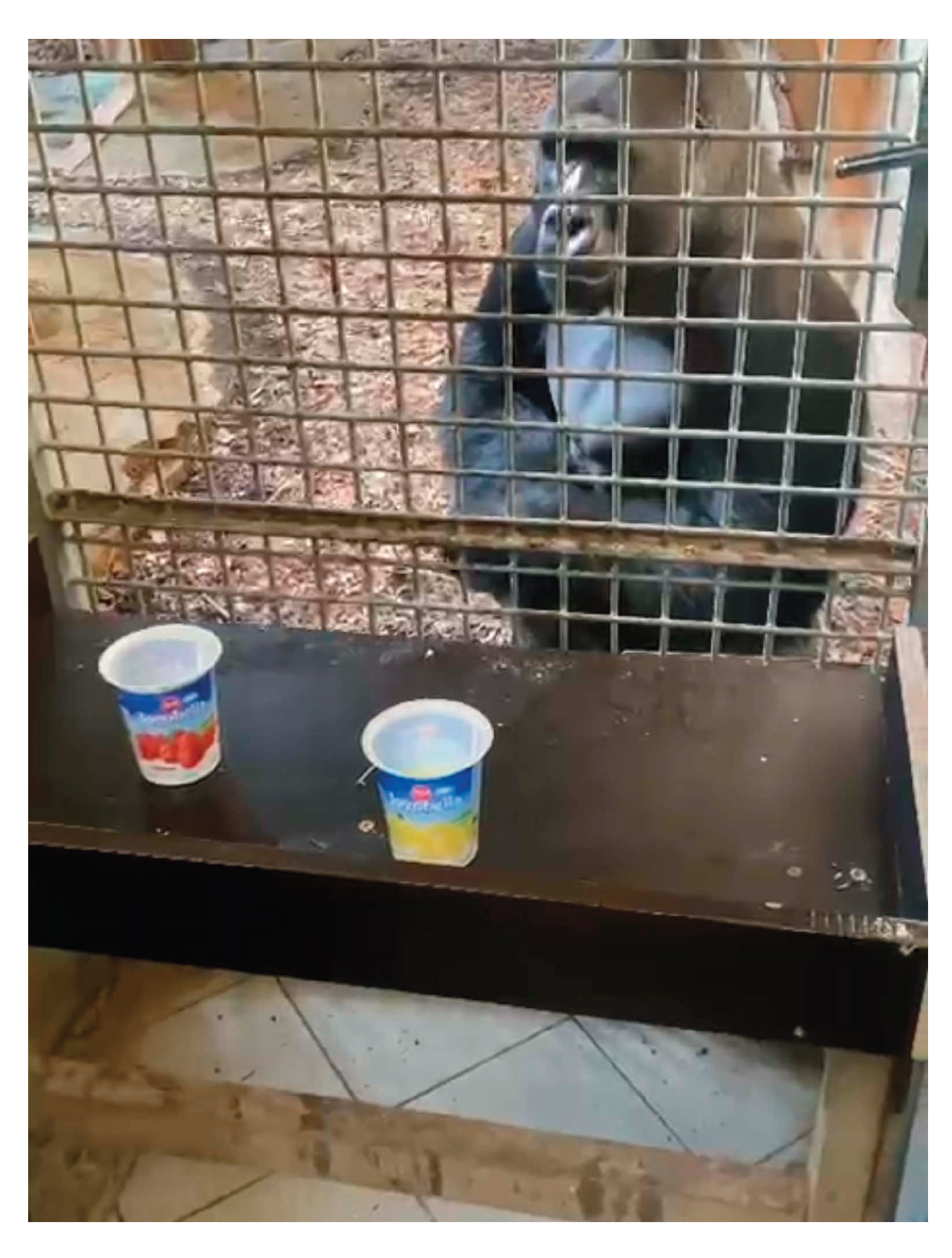
Our team observed and analyzed the behavior of three adult male western lowland gorillas (Gorilla gorilla gorilla), named Ashmar, Bongo, and Kimbali (in Photo 1.), at the Polish zoo in Opole. The observations spanned 10 sessions from April 8, 2025, to January 23, 2026. The entire research project aimed to determine whether gorillas are capable of attributing mental states to their human caretakers (and to what extent this ability is developed) and what level of motivation zoo gorillas have for communicative, cooperative, and emotional interactions with their caretakers. In this text, we focus on the second issue. Taking into account the daily routines and situations experienced by animals in zoo enclosures, we proposed activities that can add variety to the keepers’ routine interactions with the gorillas, with the goal of providing sensory and cognitive enrichment of their living conditions and strengthening the emotional bond between the animal and the caregiver. In our observations, we established two specific research objectives:
- An assessment of changes in the frequency of exploratory behaviors in three gorillas in response to sensory-cognitive tasks provided by their two caretakers.
- An assessment of changes in communication and cooperative behaviors, including changes in the quality of the emotional bond between gorillas and their caretakers, under the influence of sensory-cognitive interactions.
In order to minimize interpretive errors regarding cognitive-communicative behaviors and affective responses, we propose a dimensional model of core affect, which posits the experience of three basic emotional episodes: fear, anger, and relaxation or contentment [27,28,29]. The two dimensions of core affect are positive or negative valence, communicated through a sequence of signals (ranging from reactions of acceptance, through warnings, to reactions of deterrence) and weak or strong physiological arousal, communicated through the intensity of the signaling (ranging from grunts to loud shouts, fist-pounding, and/or jumping). Our interpretation of gorilla behavior is, by necessity, indirect. Concepts such as motivation, interest, frustration, and willingness to interact refer to affective states that we infer based on observable and repeatable patterns of behavior.
Following Mellor’s model of welfare, we assume that, in addition to indicators of poor welfare – expressed through behavioral signs of frustration, stress, or anxiety – we should also record the expression of positive affective and mental states in order to identify indicators of achieved welfare. Positive indicators of welfare among great apes at the zoo include physiological markers (low incidence of illness and good health) and behavioral markers such as:
- spontaneous exploration of the environment, in accordance with the species' ethogram;
- manipulating objects in their surroundings and playful behavior;
- cooperative communication and signs of attachment to the caregiver;
- other affiliative behaviors.
To assess the behaviors of the gorillas that are relevant to the fourth and fifth domains of welfare, we used a protocol with questions containing descriptions of changes in behavioral interactions observed by the gorillas’ caretakers. Changes in interactions are intended to reflect: (1) the degree of an individual’s emotional attitude and engagement in the relationship with the caregiver; (2) the valence of the current core affect; (3) the degree of reinforcement of learned cognitive and communicative behaviors. To be more precise, (1) an individual’s cognitive disposition is expressed in the frequency with which they independently initiate exploratory behaviors, acts of cooperation, and communication, as well as in the duration of these behaviors. An individual’s engagement in a relationship with a caregiver is an observable expression of a bond that manifests itself in the frequency of communication and cooperation patterns: - the duration of eye contact with the caregiver; - focusing attention on the caregiver’s hands and/or face; - following the caregiver’s pointing gesture or facial expressions and voice with their eyes; - performing ostensive gestures with a hand or a stick (pointing to a hidden reward) in response to the caregiver’s behavior. (2) The valence of the current core affect is manifested in the frequency of warning and alarm signals, as well as signs of stress, anxiety (uncertainty), fear, and/or anger. (3) Enhanced, acquired cognitive-communicative interactions manifest themselves in the form of additional interactions with the environment, such as: - seeking contact with the caregiver when the caregiver appears within the child’s field of perception; - initiating cooperation as an exchange of resources (sticks in exchange for a reward); - purposeful manipulation of physical objects (sticks) in the environment. If it is unclear how to define a particular activity, it is not included in the behavioral observation protocol based on interviews and conversations.
The data set comes from direct observation of three male lowland gorillas – Ashmar, Bongo, and Kimbali. For more information about them, see Table 1.
Each male was observed by two caretakers and two experimenters, who described their observations in the behavioral observation protocols. The same individuals conducted the evaluations in each session, and the evaluations were completed independently. In an additional descriptive analysis, categories related to interaction with the caregiver were identified: brief and prolonged engagement 60 minutes after entering the enclosure (categories c and d, respectively) and the initiation of interaction 180 minutes after entering the enclosure (category d). Their prevalence was compared between sessions 1-5 and 6-10. The ratings of the caregivers and other observers were also compared descriptively.
While observing three adult male western lowland gorillas, we took into account their affective and cognitive experiences (based on verbal reports from their keepers) as the so-called priors of their current communicative behaviors; the gorilla keepers’ daily routine at the Opole Zoo; as well as the ethogram of the social behaviors of male western lowland gorillas [30,31,32,33,34]. Since the animals at the Opole Zoo are continuously monitored by veterinarians for their health, diet, and the physical conditions of their enclosures (temperature, humidity, noise), it can be assumed that the first, second, and third domains of Mellor’s welfare model are positively fulfilled. In the behavioral protocol description we prepared, we assessed the gorillas’ motivation to explore their surroundings, their engagement in communication with their caretaker, and the gorillas’ engagement in the test procedure itself (focusing attention, pointing to cups, using sticks) as a measure of their engagement in cooperation, in response to successive interactions with their caretakers. Based on the descriptions, changes in the gorillas’ behavior were interpreted as indicating greater or lesser motivation to engage in the proposed activities.
A single task session proceeded as follows. It involved two hidden researchers (the authors of the study and of this article), one hidden gorilla caretaker, and one gorilla caretaker who directly conducted the experiment. At 9:00 a.m., the gorilla was released into the outdoor enclosure. At 9:15 a.m., the caretaker opened the side door with a grille – next to which a task table had been set up in advance – and verbally invited the gorilla to interact. The observers and the second caretaker remained hidden throughout the session, watching it on a screen. From 9:10 to 9:25, the cameras recorded a session during which the caretaker encouraged the gorilla to focus on the table, approach it, and then play. The gorillas had been trained to sit (crouch) by the bars in the doorway, and the height of the tabletop was adjusted to the height of the gorilla’s elbows and the direction of his gaze so that the gorilla could freely reach with its hand and/or a stick for the rewards lying on the table (the tabletop was 1 meter above the floor). There were two cups on the table; a peanut was hidden at the bottom of one of them. The gorilla reacted in several ways: he ignored the keeper and watched the hallway for potential spectators; he began exploring the outdoor enclosure; he signaled anxiety or anger; he ran up to the keeper with an alarm call and/or a defensive reaction; or he approached the keeper calmly, sat down by the bars, and made eye contact.
During each session, the caretaker made 3-5 attempts, during which (a) he showed the gorilla a yellow-and-blue cup and a peanut through the bars, then slowly and ostentatiously dropped the peanut into the cup; (b) the caregiver showed a cup with a peanut and, separately, an empty cup in the same colors; (c) the caregiver changed the arrangement of the cup with the reward and the empty cup, switching the cup from the left to the right; (d) the caregiver looked for the peanut in the empty cup, asking aloud where the peanut was; (e) the caregiver waited up to 10 seconds for the gorilla to help, looking at the gorilla, asking questions, and peeking into the empty cup. When the gorilla cooperated and pointed to the cup with the nut within 10 seconds, he received the treat he had pointed to as a reward. When the gorilla did not respond, the caretaker waited another 10 seconds and gave the gorilla a different nut, hidden in his other hand, while discreetly removing the cup with the nut. The animal could point to the cup containing the hidden peanut using his hand, a finger, or sticks (which he picked up from the ground on his own). After 3-5 attempts, the caretaker slowly removed the cups and scattered 10-15 peanuts on the table. The caretaker then allowed the gorilla to freely pick up sticks and pull the scattered peanuts toward himself as it pleased. The gorilla freely searched for, picked up, and manipulated sticks, adjusting their length and thickness using his mouth, teeth, and hands (licking them, stripping the bark with his teeth, and breaking them) in order to more effectively attract the nuts. Next, the keeper said goodbye to the gorilla and slowly closed the barred door – the gorilla had been trained to recognize this as the signal that the interaction was over. The animal would get up and walk to the center of the arena. The entire session was repeated at 10:10 a.m. and 12:10 p.m.. Each session was observed on a screen by two hidden experimenters and a second hidden gorilla keeper. After each session, they all discussed their observations together, consulting one another on their interpretations of the observed behaviors through a process of intervision. Next, they filled out the behavioral protocol individually. Formal sessions involving the experimenters and protocol completion took place over a period of ten months, every three to four weeks from April 2025 to January 2026. Caregivers conducted informal sessions (without the participation of experimenters and without completing protocols) with the gorillas several times a week, continuously for ten months, using cognitive tasks as social-sensory enrichment and as play activities offered to the gorillas.
Photo 1.
Kimbali at the task table (by Izabela Kadłucka).
The information in the behavioral observation protocol assess two phenomena:
• an increase or decrease in the frequency of exploratory behaviors in the environment, ranging from a lack of response, through avoidance reactions and warning signals, to spontaneous exploratory reactions, contact with the caregiver, and cooperative play;
• communicative and cooperative behaviors, interpreted as correlates of positive or negative affective valence. Behaviors correlating with negative valence (episodes of fear/anxiety, anger, and uncertainty) followed a pattern of avoiding contact, whereas behaviors correlating with positive valence (episodes of safety, relaxation, and contentment) followed a pattern of communicative interaction.
The frequency of cognitive-communicative behaviors and the level of core affect are assessed in the behavioral protocol through the observation and interpretation of signals and/or reactions in response to: - sensory enrichment (boards with cups and treats); cognitive enrichment (“if I point to a cup, I will have a treat”); physical enrichment (using a stick to point to the cup with the hidden reward) as well as social interaction and maintaining a bond with the caregiver (establishing contact with the caregiver, maintaining eye contact with the caregiver, pointing out to the caregiver the reward hidden in the cup or in the hand). When an avoidance reaction or a warning signal occurs, an affect of negative valence (episodes of anxiety, frustration, fear, and/or anger) is assumed to be a correlate. When a neophilic response manifests, characterized by exploration, curiosity, and a desire for contact and/or cooperation, positive affect is assumed to be a correlate (episodes of relaxation and contentment). The behavior rating categories used in the protocol are summarized in Table 2.
Category meanings were specific to each observation time and did not constitute a common behavioral scale. For summary analyses, engagement or exploration was coded as category d at 15 min and categories c–d at 60 and 180 min. For the keeper-related analysis, categories c and d at 60 min and category d at 180 min were examined separately.
The analysis was descriptive in nature. For each individual and each observation point, the percentage of ratings assigned to each category was calculated. The study was conducted on ten separate occasions, with two sessions held on each occasion involving different caregivers, designated as A and B. Each session included one caregiver and two experimenters (observers), designated as C and D. For each session, two behavioral protocols were completed: one by the caregivers and one by both observers. Thus, each session yielded two evaluations: the caregiver’s evaluation and the observers’ joint evaluation. This resulted in four evaluations per individual and observation time point on each date, for a total of 20 sessions and 40 evaluations per individual and observation time point. The two ratings obtained during a single session referred to the same behavioral situation and were not treated as independent behavioral observations. The reported numbers therefore refer to the number of ratings, not to the number of independent behavioral events. For an exploratory comparison of the first and second halves of the observation period, the time periods were divided into periods 1-5 and 6-10. Each period consisted of ten sessions and 20 ratings per individual per observation moment. In addition, a descriptive comparison was made of the categories related to interaction with the caregiver and the distributions of ratings given by caregivers and jointly by observers.
3. Results
The results show the distribution of ratings for behaviors related to readiness to engage in cognitive and communicative tasks in the presence of a caregiver. The analysis included reactions of withdrawal and negative arousal, lack of engagement, exploratory behaviors, and engagement in task-oriented activities.
The distribution of responses differed markedly among the three subjects. In Ashmar, the initiation of exploration predominated after 15 minutes (65%); after 60 minutes, 97.5% of the assessments indicated short- or long-term engagement; and after 180 minutes, all assessments involved either calm or active exploration. No agonistic reactions, frustration, or strong negative arousal were observed in him during the later stages of the observation.
Bongo’s profile was more varied. After 15 minutes, alert observation of the surroundings predominated (70%), while the onset of exploration was noted in 10% of the assessments. After 60 minutes, 60% of the assessments involved short- or long-term engagement, while the remainder indicated a lack of interest or agonistic reactions. After 180 minutes, transient frustration was most frequently observed (55%), but 42.5% of the assessments indicated calm or active exploration.
In Kimbali, after 15 minutes, withdrawal or negative arousal accounted for a combined 75% of the ratings. After 60 minutes, all responses indicated either a lack of interest in the task or agonistic reactions. Similarly, after 180 minutes, neither calm nor active exploration was observed: 75% of the ratings indicated transient frustration, and 25% indicated persistent strong negative arousal. The distribution of ratings for all three subjects across the 20 experimental sessions is shown in Figure 1.
On each of ten observation dates, two separate study sessions were conducted: session A with keeper A and session B with keeper B. Each session yielded two protocols, one completed by the participating keeper and one completed jointly by the two observers. Accordingly, session A combines the ratings of keeper A and the corresponding joint observer ratings, whereas session B combines the ratings of keeper B and the corresponding joint observer ratings. Each stacked bar summarizes 20 ratings for a given individual and observation time (10 observation dates × 2 ratings). Percentages were calculated by dividing the number of ratings assigned to each response category by 20 and multiplying by 100. The two ratings obtained within one session referred to the same behavioral situation; therefore, n denotes the number of ratings, not the number of independent behavioral events. Category definitions were specific to each observation time.
An analysis of the scores obtained at subsequent observation time points revealed different patterns of change among the three subjects. In Ashmar, a high proportion of exploratory and task-oriented behaviors was already present in the early observation sessions, especially at 60 and 180 minutes, and persisted until the end of the observation period. The change primarily concerned the first 15 minutes, during which a rapid onset of exploration was more frequently observed in most of the later sessions.
In Bongo’s early sessions, the majority of observations indicated alertness, lack of engagement, agonistic reactions, or frustration. In later sessions, there was an increase in the proportion of observations indicating task engagement and calm or active exploration. The most pronounced change was observed after 60 and 180 minutes.
In Kimbala’s case, the distribution of ratings remained relatively stable. In subsequent sessions, the ratings primarily continued to indicate withdrawal, negative arousal, lack of engagement, agonistic reactions, and frustration. No shift toward categories indicating task engagement or exploration was observed. The trend in ratings across subsequent observation sessions is shown in Figure 2.
Panel A presents the percentage of ratings indicating exploration 15 min after enclosure opening (category d). Panel B presents the percentage indicating brief or sustained task engagement after 60 min (categories c–d). Panel C presents the percentage indicating calm or active exploration after 180 min (categories c–d). Each point represents the percentage of four ratings obtained for a given individual at one observation time on a single observation date. These ratings were derived from two study sessions, each contributing one keeper rating and one joint observer rating. The vertical dashed line separates observation dates 1–5 from dates 6–10. Lines are included only to illustrate the sequence of observations.
A descriptive comparison of the first and last five observation sessions revealed different patterns of change in three individuals. The total proportion of ratings indicating exploration or engagement increased in Ashmar from 80% to 95%, and in Bongo from 15% to 60%. In Kimbala’s case, no such ratings were recorded in either the first or second half of the observation period. The greatest increase, therefore, occurred in Bongo, while Ashmar’s results primarily indicate a sustained high level of engagement. A detailed comparison of the first and last five observation dates is presented in Table 3.
At 15 min, the indicator comprised ratings of exploration (category d); at 60 min, brief or sustained task engagement (categories c-d); and at 180 min, calm or active exploration (categories c-d). Each five-date period comprised 10 study sessions and 20 ratings per individual at each observation time. Overall values combine ratings across all three observation times. Change was calculated as the difference between observation dates 6-10 and 1-5 and is reported in percentage points (pp).
Overall, the distribution of scores indicates individually varied behavioral manifestations of readiness to explore and undertake tasks. In the adopted operationalization, exploratory and task-oriented behaviors were treated as indicators of agency motivation, while categories involving communication and initiating interactions situated this activity within the social context of the caregiver’s presence. During subsequent observation sessions, both relatively stable profiles and profiles subject to change emerged.
Because the behavioral protocol categories were complex in nature, it was not possible to estimate separately the frequency of cooperation, manipulation of objects, or interaction with the caregiver. Their distribution, however, provided an integrated description of engagement in the social-task situation. After 60 minutes, response c indicated an interested approach, manipulation of objects, and communication lasting several dozen seconds, while response d described a similar set of behaviors lasting longer than one minute. After 180 minutes, response d involved active exploration and manipulation of objects combined with initiating interaction with the caregiver. A comparison of the proportion of ratings assigned to these categories during observation periods 1-5 and 6-10 is presented in Figure 3.
The axes represent brief task engagement at 60 min (category c), sustained task engagement at 60 min (category d), and active exploration involving initiation of interaction with the keeper at 180 min (category d). Values are percentages of ratings (n = 20 per individual at each observation time in each five-date period); all panels use the same 0–100% scale.
For Ashmar, the proportion of ratings indicating short-term engagement decreased from 70% during observation periods 1-5 to 25% during periods 6-10. This was accompanied by an increase in the proportion of ratings indicating long-term engagement from 25% to 75% and in the initiation of interactions with the caregiver from 45% to 80%. In Bongo, the proportion of short-term engagement increased from 30% to 70%, long-term engagement from 0% to 20%, and initiating interactions with the caregiver from 0% to 15%.For Kimbali, none of these categories were observed in either of the two observation periods. In a descriptive comparison, the combined proportion of ratings indicating short-term or long-term engagement was similar in caregiver ratings and joint observer ratings: 100% and 95%, respectively, for Ashmar; 60% and 60% for Bongo; and 0% and 0% for Kimbali.
The observed profiles indicate a shift from short-term to long-term engagement in Ashmar, and an increase in the proportion of ratings indicating task-oriented activity in Bongo. No similar change was observed in Kimbala. The co-occurrence of social behaviors, exploration, and manipulation of objects allows these categories to be interpreted as behavioral indicators of engagement in a task-oriented situation taking place in the presence of a caregiver. However, they did not constitute a separate, direct measure of the quality of the emotional bond. The values provided refer to the percentage of ratings assigned to each category, not to the number of distinct behavioral acts.
4. Discussion
As mentioned in the methodological section, our interpretation of animal behavior is indirect, and concepts such as motivation, contentment, or anxiety refer to affective states that we infer based on observable and repeatable behavioral patterns. In this study, the basis for interpretation consisted of operationalized response categories, repeated observations, and assessments formulated from the perspective of caregivers and observers. This does not eliminate the interpretive element, but rather grounds it in intersubjectively accessible behavioral data. Our analysis indicates that repeated sensory and cognitive tasks were accompanied by an increase in communicative and cooperative engagement in Bongo and a sustained high level of engagement in emotional interactions with the caregiver in Ashmar. The cognitive tasks offered by the caregiver correlated with behavioral changes in Bongo, leading to more frequent communication and cooperation with the caregiver, as well as more positive emotional responses, compared to his state before the tasks. It therefore appears that enriching the daily routine with social and cognitive elements had a positive impact on the quality of the bond with the caregiver. In Ashmar’s case, his high level of communicative and cognitive engagement and emotional bond remained at a high level or improved slightly, while no deterioration in his relationship with his caregiver was observed. The results also indicate that we did not observe a similar change in Kimbali’s behavior, which may suggest individual differences in how gorillas respond to the procedure used. Repeated measurements revealed not only differences in the level of engagement among the three gorillas, but also distinct patterns of change over time. This made it possible to distinguish between sustained high engagement, a gradual increase in engagement, and a persistent lack of shift toward task-oriented and exploratory categories. The individual profiles obtained can therefore be regarded as dynamic, context-dependent descriptions of responses to a repeated social-task situation, rather than as characteristics that can be captured in a single observation.
Gorillas’ ability to use social cues may be relevant to the interpretation of the results obtained. In the situation studied, the caregiver’s behavior may have served as a cue for the gorilla, increasing the predictability of the task’s course and its consequences. Gradual changes in engagement with communication can therefore be considered partly related to the gorilla’s learning and association of the relationships that existed between the caregiver’s actions, the availability of objects in the environment, and the course of the task situation. The persistent individual differences also indicate that the same emotional-social and cognitive-sensory configuration of a given task was not equally motivating for all individuals. The similar combined assessment by caregivers and experimenters of the gorillas’ level of engagement in cooperation reinforces the intersubjective conclusion regarding the gorillas’ distinct profiles in terms of communicative engagement, motivation to interact with the caregiver, and perhaps also the strength of their emotional bond. This suggests that the described differences in exploratory and communicative behaviors and affective responses did not stem solely from the perspective of the session leader. However, this is not a formal measure of inter-rater agreement, as both assessments concerned the same event, and the study did not employ a separate analysis of coding reliability. It is worth noting the apparent difference in the quality of engagement in communicative and cooperative interaction between Ashmar and Kimbali. The lack of improvement in Kimbala’s relationship with the caregiver over the course of subsequent task-based sessions is evident in the infrequent cooperation, short duration of communicative interactions, and frequent expression of negative affective states when comparing the behavioral patterns observed in Kimbala and Ashmar.
As is well known, positive social interactions are essential for emotional welfare and rewarding in primates. Emotionally positive communicative and cooperative interactions, including play with a caregiver, reduce fear and motivates animals to explore, manipulate objects, and seek out rewards [35,36,37,38,39]. The positive behavioral changes observed in Ashmar and Bongo suggest that sensory-cognitive tasks involving communicative interactions, cooperation, or interpersonal contact can be viewed as a potential means of physically enriching the environment and enriching the animal’s social behavior. However, such tasks should be designed with consideration for the animals’ prior experiences and learned associations to ensure emotionally safe sensory, cognitive, and social stimulation, enabling the animals to express their natural behaviors without stress. Kimbali’s case indicates that even when the ethogram of an entire species is known, individual experiences – including those with humans at the zoo – can vary reactions to a specific task, thereby influencing the quality of the bond with the caretaker. Nevertheless, individually designed and implemented activities, from the stage of teaching and acclimating individuals to new stimuli all the way to the stage of actual play or interaction, can still be enriching even for animals, regardless of their individual history of experiences. Such an individualized approach, which takes into account the specific preferences of a given animal, falls within domains four (interactions with the environment) and five (affective-cognitive states and emotional bonding) in Mellor’s welfare model. At the same time, the individual variation in gorilla profiles shows that the value of enrichment cannot be derived solely from the fact that it is made available. It should be assessed based on how a particular individual engages in, sustains, or rejects the offered activity.
5. Conclusions
The observed individual differences may serve as a starting point for further research on gorilla temperament and personality. The present study identified response profiles in a single repeated situation; however, verifying their stability would require observations conducted across different tasks, environmental conditions, and social contexts. The results obtained allow us to formulate hypotheses regarding relatively stable individual tendencies, which should be subject to further verification. As for our observations, further research should combine repeated assessments with direct coding of recordings based on an expanded ethogram. It would be worthwhile to record separately behaviors directed toward the caregiver and toward objects, including initiating contact, directing gaze and gestures, communicating, the duration of interaction, and the number and duration of manipulative behaviors. Comparing reactions to the same task in the presence of a familiar caregiver, a less familiar person, and in the absence of a human would allow for a more precise determination of the role of social relationships. Increasing the number of individuals and contexts would make it possible to test the stability of the identified behavioral profiles.
A further goal of future research should be to continue assessing the ability of western lowland gorillas in zoos to to spontaneously create tools, use them, and exchange them with a human partner. Research on tool making and object exchange, of increasing complexity, has so far been conducted with captive western lowland gorillas in pioneering tests [40,41]. The gorilla we observed independently searched for, picked up, and manipulated sticks, altering their length and thickness using his mouth, teeth, and hands (licking them, stripping the bark with his teeth, breaking them) to more effectively retrieve the scattered nuts. He also readily exchanged the sticks he found for nuts. In contrast, in our tasks where the gorillas were encouraged to point out the cup with a hidden nut to the caretaker, Ashmar, Bongo, and Kimbali were equally eager to use sticks to point to the cup, even though they could have pointed with an empty hand or a finger. This leaves room for further research into whether gorillas use only a large number of single-use items or also reusable tools.
Author Contributions
Conceptualization, Marcin Urbaniak; methodology, Marcin Urbaniak; validation, Marcin Urbaniak, and Anna Sarosiek; formal analysis, Anna Sarosiek; investigation, Marcin Urbaniak, and Anna Sarosiek; resources, Izabela Kadłucka; data curation, Marcin Urbaniak, and Anna Sarosiek; writing—original draft preparation, Marcin Urbaniak; writing—review and editing, Marcin Urbaniak, and Anna Sarosiek; visualization, Anna Sarosiek; supervision, Izabela Kadłucka; project administration, Marcin Urbaniak; funding acquisition, Marcin Urbaniak, and Anna Sarosiek. All authors have read and agreed to the published version of the manuscript.
Funding
This research was funded by the University of the National Education Commission in Kraków, grant number WPBU/2025/02/00067 (March 2025 – December 2026) “Analysis of selected cognitive processes in crustaceans and aspects of theory of mind in social mammals”.
Informed Consent Statement
The owners of the lowland gorillas – the Opole Zoo Administration – have signed a scientific cooperation agreement with the University of the National Education Commission in Kraków (dated April 8, 2025).
Data Availability Statement
All supplementary materials, including behavioral observation protocols, are available in electronic form at the headquarters of the Animal Behaviour and Mind Laboratory at the University of the National Education Commission in Kraków.
Acknowledgments
gorilla caretaker Andrzej Mastalerz, who participated in the interactions with the gorillas.
Ethical Statement
Ethical approval is not applicable to the study. According to Polish Act on the Protection of Animals Used for Scientific or Educational Purposes (article 1, paragraph 2, point 5), animal ethics approval is not required: “This Act does not apply to procedures which, in accordance with medical and veterinary practice, do not cause the animal pain, suffering, distress, or permanent bodily harm equivalent to or greater than that caused by a needle prick”.
Human Ethics
Descriptions of gorilla behavior in anonymous behavioral observation protocols do not address any sensitive issues concerning humans. Therefore, they do not require review by a Research Ethics Committee. The protocols were completed anonymously by the authors of the manuscript themselves – Marcin Urbaniak, Anna Sarosiek, Izabela Kadłucka and gorilla caregiver Andrzej Mastalerz – who knowingly participated in their own study.
Conflicts of Interest
The authors declare no conflicts of interest. The funders had no role in the design of the study; in the collection, analyses, or interpretation of data; in the writing of the manuscript; or in the decision to publish the results.
References
- Mellor, D.J.; Beausoleil, N.J. Extending the ‘Five Domains’ model for animal welfare assessment to incorporate positive welfare states. Anim. Welf. 2015, 24(3), 241–253. [Google Scholar] [CrossRef]
- Mellor, D.J. Updating animal welfare thinking: Moving beyond the “Five Freedoms” towards “A Life worth Living”. Animals 2016, 6(3), 21. [Google Scholar] [CrossRef] [PubMed]
- Mellor, D.J. Operational Details of the Five Domains Model and Its Key Applications to the Assessment and Management of Animal Welfare. Animals 2017, 7(8), 60. [Google Scholar] [CrossRef] [PubMed]
- Mellor, D.J.; Beausoleil, N.J.; Littlewood, K.E.; McLean, A.N.; McGreevy, P.D.; Jones, B.; Wilkins, C. The 2020 Five Domains Model: Including Human-Animal Interactions in Assessments of Animal Welfare. Animals 2020, 10(10), 1870. [Google Scholar] [CrossRef] [PubMed]
- Burn, C.C. Bestial boredom: a biological perspective on animal boredom and suggestions for its scientific investigation. Anim. Behav. 2017, 130, 141–151. [Google Scholar] [CrossRef]
- Špinka, M. Animal agency, animal awareness and animal welfare. Anim. Welf. 2019, 28, 11–20. [Google Scholar] [CrossRef]
- Bowlby, J. Attachment and loss: Retrospect and prospect. Am. J. Orthopsychiatry 1982, 52(4), 664–678. [Google Scholar] [CrossRef] [PubMed]
- Duncan, I.J.H. Animal welfare defined in terms of feelings. Acta Agric. Scand. Sect. A-Anim. Sci. 1996, 46, 29–35. [Google Scholar]
- Fraser, D.; Duncan, I.J.H. Pleasures’, ‘pains’ and animal welfare: toward a natural history of affect. Anim. Welf. 1998, 7, 383–396. [Google Scholar] [CrossRef]
- Higgins, E.T. Motivation Beyond Pleasure and Pain: How Motivation Works; Oxford University Press: Oxford, UK, 2012. [Google Scholar]
- Hayashi, M.; Matsuzawa, T. Mother-infant interactions in captive and wild chimpanzees. Infant Behav. Dev. 2017, 48A, 20–29. [Google Scholar] [CrossRef] [PubMed]
- Held, S.D.; Špinka, M. Animal play and animal welfare. Anim. Behav. 2011, 81(5), 891–899. [Google Scholar] [CrossRef]
- Mellor, D.J. Animal emotions, behaviour and the promotion of positive welfare states. N. Z. Vet. J. 2012, 60(1), 1–8. [Google Scholar] [CrossRef] [PubMed]
- Duncan, I.J.H. Measuring Preferences and the Strength of Preferences. Poult. Sci. 1992, 71(4), 658–663. [Google Scholar] [CrossRef] [PubMed]
- Kirkden, R.D.; Pajor, E.A. Using preference, motivation and aversion tests to ask scientific questions about animals’ feelings. Appl. Anim. Behav. Sci. 2006, 100, 29–47. [Google Scholar] [CrossRef]
- Magliocca, F.; Querouil, S.; Gautier-Hion, A. Population structure and group composition of western lowland gorillas in north-western Republic of Congo. Am. J. Primatol. 1999, 48(1), 1–14. [Google Scholar] [CrossRef]
- Parnell, R.J. Group size and structure in western lowland gorillas (Gorilla gorilla gorilla) at Mbeli Bai, Republic of Congo. Am. J. Primatol. 2002, 56, 193–206. [Google Scholar] [CrossRef] [PubMed]
- Magliocca, F.; Gautier-Hion, A. Inter-group encounters in western lowland gorillas at a forest clearing. Folia Primatol. 2004, 75, 379–382. [Google Scholar] [CrossRef] [PubMed]
- Bradley, B.J.; Doran-Sheehy, D.M.; Lukas, D.; Boesch, C.; Vigilant, L. Dispersed male networks in western gorillas. Curr. Biol. 2004, 14(6), 510–513. [Google Scholar] [CrossRef] [PubMed]
- Grueter, C.C.; Chapais, B.; Zinner, D. Evolution of multilevel social systems in nonhuman primates and humans. Int. J. Primatol. 2012, 33, 1002–1037. [Google Scholar] [CrossRef] [PubMed]
- Morrison, R.E.; Groenenberg, M.; Breuer, T.; Manguette, M.L.; Walsh, P.D. Hierarchical social modularity in gorillas. Proc. R. Soc. B 2019, 286(1906), 20190681. [Google Scholar] [CrossRef] [PubMed]
- Forcina, G.; Vallet, D.; Le Gouar, P.J.; Bernardo-Madrid, R.; Molina-Vacas, G.; Dréano, S.; Revilla, E.; Rodríguez-Teijeiro, J.D.; Ménard, N.; Bermejo, M.; Vilà, C. From groups to communities in western lowland gorillas. Proc. R. Soc. B 2019, 286, 20182019. [Google Scholar] [CrossRef] [PubMed]
- Custers, R.; Aarts, H. Positive affect as implicit motivator: On the nonconscious operation of behavioral goals. J. Personal. Soc. Psychol. 2005, 89(2), 129–42. [Google Scholar] [CrossRef] [PubMed]
- Custers, R.; Aarts, H. In search of the nonconscious sources of goal pursuit: Accessibility and positive affective valence of the goal state. J. Exp. Soc. Psychol. 2007, 43(2), 312–318. [Google Scholar] [CrossRef]
- Dawkins, M.S. Natural Behaviour Is Not Enough: Farm Animal Welfare Needs Modern Answers to Tinbergen’s Four Questions. Animals 2023, 13(6), 988. [Google Scholar] [CrossRef] [PubMed]
- Dawkins, M.S. Farm animal welfare: Beyond ‘natural’ behaviour. Science 2023, 379(6630), 326–328. [Google Scholar] [CrossRef] [PubMed]
- Russell, J.A.; Barrett, L.F. Core affect, prototypical emotional episodes, and other things called emotion: dissecting the elephant. J. Personal. Soc. Psychol. 1999, 76(5), 805–819. [Google Scholar] [CrossRef] [PubMed]
- Russell, J.A. Core affect and the psychological construction of emotion. Psychol. Rev. 2003, 110(1), 145–172. [Google Scholar] [CrossRef] [PubMed]
- Russell, J.A. Emotion, core affect, and psychological construction. Cogn. Emot. 2009, 23(7), 1259–1283. [Google Scholar] [CrossRef]
- Tutin, C.E.G. Great Ape Societies; Cambridge University Press: Cambridge, UK, 1996; pp. 58–70. [Google Scholar]
- Doran-Sheehy, D.M.; Greer, D.; Mongo, P.; Schwindt, D. Impact of ecological and social factors on ranging in western gorillas. Am. J. Primatol. 2004, 64(2), 207–222. [Google Scholar] [CrossRef] [PubMed]
- Bermejo, M. Home-range use and intergroup encounters in western gorillas (Gorilla g. gorilla) at Lossi forest, North Congo. Am. J. Primatol. 2004, 64(2), 223–232. [Google Scholar] [CrossRef] [PubMed]
- Maestripieri, D.; Ross, S. Sex differences in play among western lowland gorilla (Gorilla gorilla gorilla) infants: Implications for adult behavior and social structure. Am. J. Phys. Anthropol. 2004, 123(1), 52–61. [Google Scholar] [CrossRef]
- Douadi, M.; Gatti, S.; Levrero, F.; Duhamel, G.; Bermejo, M.; Vallet, D.; Menard, N.; Petit, E.J. Sex-biased dispersal in western lowland gorillas (Gorilla gorilla gorilla). Mol. Ecol. 2007, 16(11), 2247–2259. [Google Scholar] [CrossRef] [PubMed]
- Bloomsmith, M.A.; Brent, L.; Schapiro, S.J. Guidelines for Developing and Managing an Environmental Enrichment Program for Nonhuman Primates. Lab. Anim. Sci. 1991, 41(4), 372–377. [Google Scholar] [PubMed]
- Trezza, V.; Campolongo, P.; Vanderschuren, L.J. Evaluating the rewarding nature of social interactions in laboratory animals. Dev. Cogn. Neurosci. 2011, 1(4), 444–458. [Google Scholar] [CrossRef] [PubMed]
- Vasconcellos, A.S.; Ades, C. Possible Limits and Advances of Environmental Enrichment for Wild Animals. Rev. De Etol. 2012, 11(1), 37–45. [Google Scholar] [CrossRef]
- Taylor, P.S.; Schrobback, P.; Verdon, M.; Lee, C. An Effective Environmental Enrichment Framework for the Continual Improvement of Production Animal Welfare. Anim. Welf. 2023, 32, e14. [Google Scholar] [CrossRef] [PubMed]
- Bachetti, E.S.; Viol, L.Y.; Viana-Junior, A.B.; Young, R.J.; Schetini de Azevedo, C. Global Overview of Environmental Enrichment Studies: What Has Been Done and Future Directions. Animals 2024, 14(11), 1613. [Google Scholar] [CrossRef] [PubMed]
- Chalmeau, R.; Peignot, P. Exchange of Objects Between Humans and Captive Western Lowland Gorillas. Primates 1998, 39(4), 389–398. [Google Scholar] [CrossRef]
- Nakamichi, M. Spontaneous use of sticks as tools by captive gorillas (Gorilla gorilla gorilla). Primates 1999, 40, 487–498. [Google Scholar] [CrossRef]
Figure 1.
Distribution of behavioral ratings by individual, observation time, and recurring study session.
Figure 1.
Distribution of behavioral ratings by individual, observation time, and recurring study session.
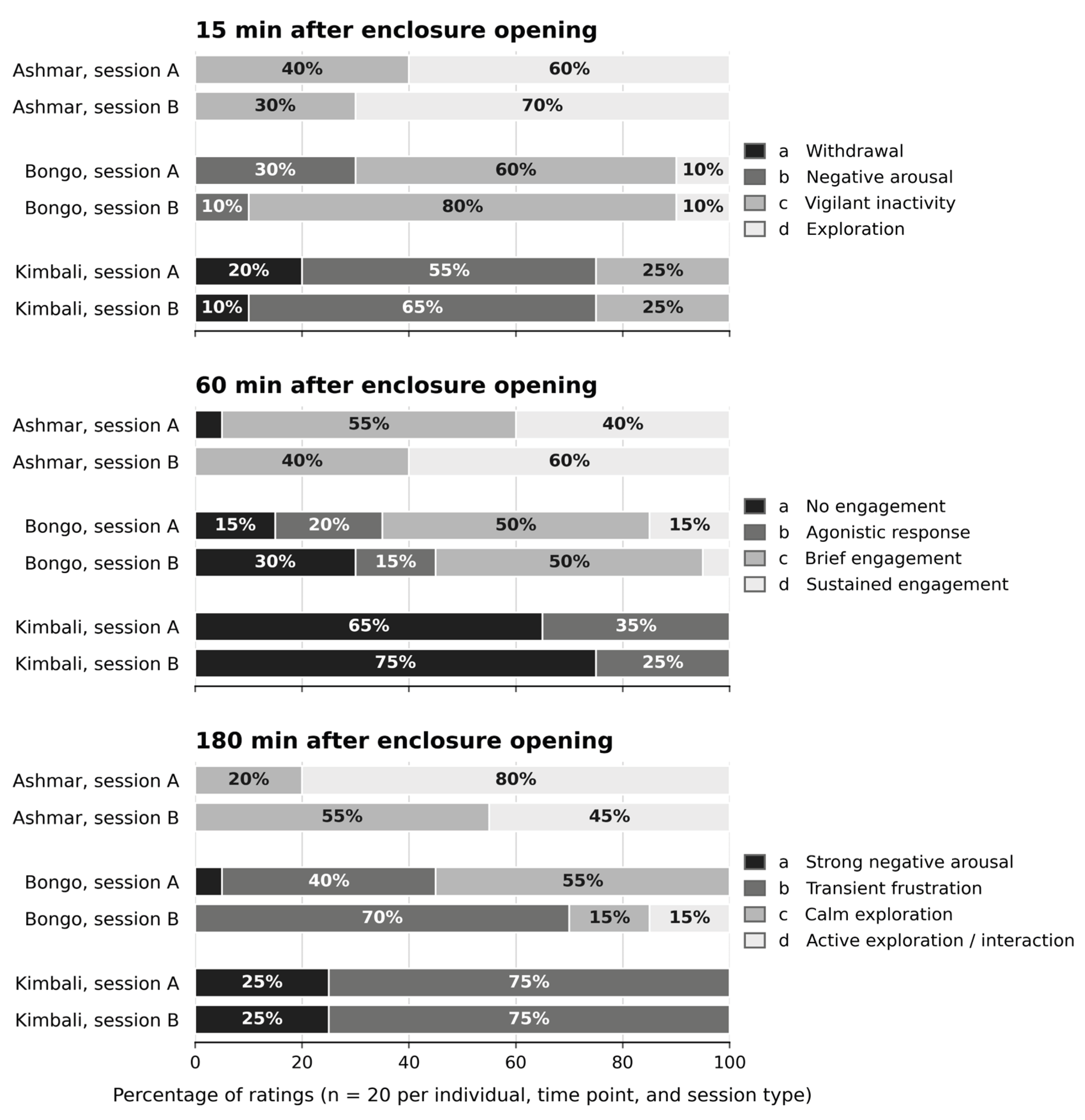
Figure 2.
Engagement and exploration across ten observation dates .
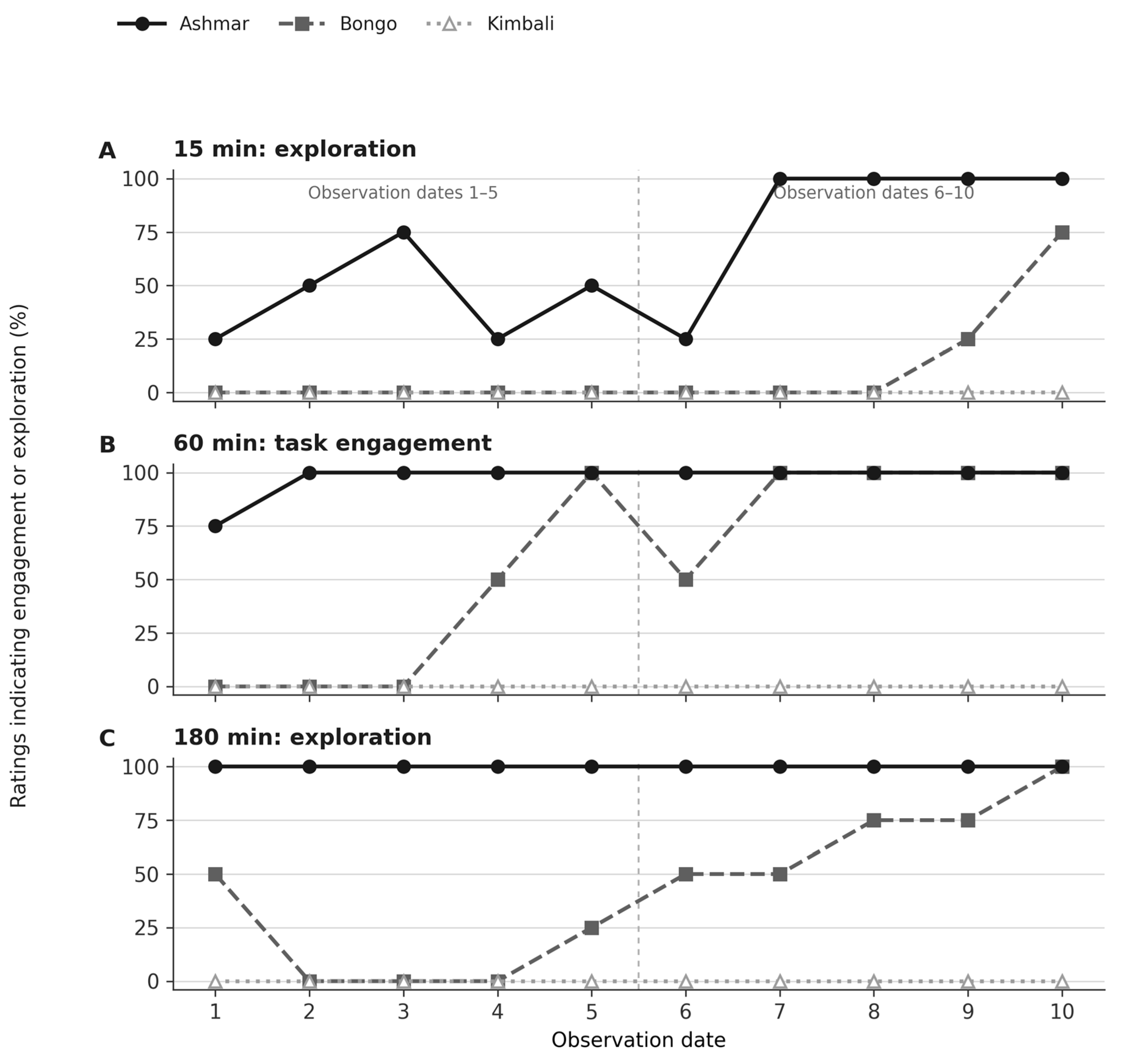
Figure 3.
Task engagement and keeper-interaction ratings during observation dates 1-5 and 6-10.
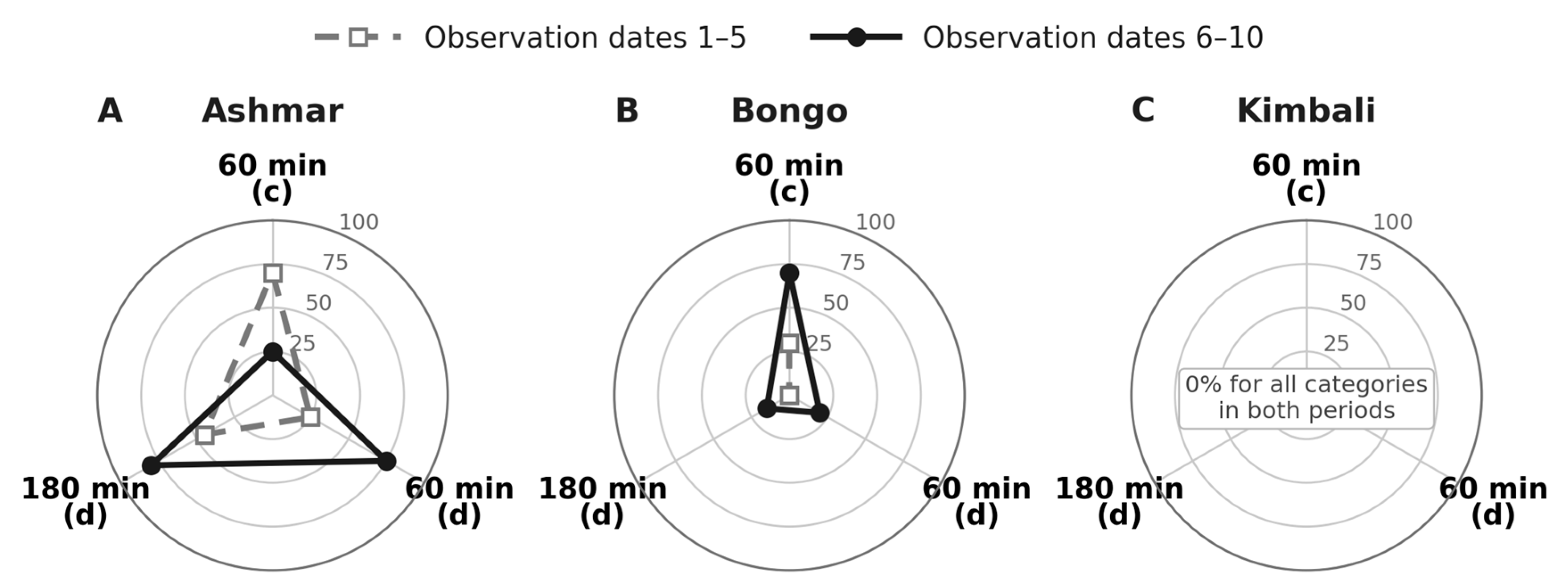

Table 1.
Information about the gorillas included in the study.
| name | sex and age | length of stay at the Opole Zoo | experiences with tasks | experiences with enrichment | relationship with current caregivers |
| Ashmar | male, born in January 1992 at the Rotterdam Zoo | since May 2005 at the Opole Zoo | searching for sticks, improving and manipulating them in order to obtain a reward | a table for handling sticks, blankets, sisal fibers, branches, cardboard boxes, jute bags filled with wood shavings | since May 2005 |
| Bongo | male, born in January 2010 at the Budapest Zoo | since June 2018 at the Opole Zoo | searching for sticks, improving and manipulating them in order to obtain a reward | a table for handling sticks, blankets, sisal fibers, branches, cardboard boxes, jute bags filled with wood shavings | since June 2018 |
| Kimbali | male, born in December 2009 at the Stuttgart Zoo | since June 2018 at the Opole Zoo | searching for sticks, improving and manipulating them in order to obtain a reward | a table for handling sticks, blankets, sisal fibers, branches, cardboard boxes, jute bags filled with wood shavings | since June 2018 |
Table 2.
Behavioral rating categories at each observation time.
| Observation time | Category a | Category b | Category c | Category d |
| 15 min | withdrawal | negative arousal | vigilant inactivity | exploration |
| 60 min | no engagement | agonistic response | brief engagement | sustained engagement |
| 180 min | strong negative arousal | transient frustration | calm exploration | active exploration and interaction |
Table 3.
Percentage of ratings indicating engagement or exploration during observation dates 1–5 and 6–10.
Table 3.
Percentage of ratings indicating engagement or exploration during observation dates 1–5 and 6–10.
| Individual | Observation time | Observation dates 1-5 | Observation dates 6-10 | Change |
| Ashmar | 15 min | 45% | 85% | +40 pp |
| 60 min | 95% | 100% | +5 pp | |
| 180 min | 100% | 100% | 0 pp | |
| Overall | 80% | 95% | +15 pp | |
| Bongo | 15 min | 0% | 20% | +20 pp |
| 60 min | 30% | 90% | +60 pp | |
| 180 min | 15% | 70% | +55 pp | |
| Overall | 15% | 60% | +45 pp | |
| Kimbali | 15 min | 0% | 0% | 0 pp |
| 60 min | 0% | 0% | 0 pp | |
| 180 min | 0% | 0% | 0 pp | |
| Overall | 0% | 0% | 0 pp |
Disclaimer/Publisher’s Note: The statements, opinions and data contained in all publications are solely those of the individual author(s) and contributor(s) and not of MDPI and/or the editor(s). MDPI and/or the editor(s) disclaim responsibility for any injury to people or property resulting from any ideas, methods, instructions or products referred to in the content. |
© 2026 by the authors. Licensee MDPI, Basel, Switzerland. This article is an open access article distributed under the terms and conditions of the Creative Commons Attribution (CC BY) license (http://creativecommons.org/licenses/by/4.0/).
Copyright: This open access article is published under a Creative Commons CC BY 4.0 license, which permit the free download, distribution, and reuse, provided that the author and preprint are cited in any reuse.