

Submitted:
01 September 2026
Posted:
01 September 2026
You are already at the latest version
Abstract
Background: Cardiac surgery is a common procedure that poses significant psychological stress on primary caregivers, who frequently experience high levels of anxiety and emotional distress, despite the decline in cardiovascular mortality. Objective: To identify the most effective interventions for improving the experience of family members of adult patients undergoing cardiac surgery during hospitalisation. Methods: This systematic review was conducted in accordance with the PRISMA guidelines. Major electronic databases were searched for studies published between January 2015 and January 2026, and the inclusion criteria and quality assessment were applied. The study protocol was registered with PROSPERO (ID 1006268). Results: A total of 13 studies were included in the analysis. Four main types of interventions were identified: (1) preadmission educational video interventions, (2) multicomponent educational support interventions, (3) synchronous telematic interventions and (4) family-centred interventions. Despite methodological variability, these interventions significantly improved caregiver anxiety, burden and family satisfaction. Conclusions: Educational and communication-based interventions, particularly those using telehealth and family-centred frameworks, are effective in enhancing the experience of family caregivers of patients undergoing cardiac surgery during hospitalisation. Future strategies should combine in-person and digital formats and consider cultural sensitivity and long-term sustainability.
Keywords:
cardiac surgery
; caregivers
; family experience
; intervention
; anxiety
1. Introduction
Cardiovascular diseases are one of the leading causes of death and disability worldwide, accounting for 19.8 million deaths and approximately 45 million years of life with disability (Ågren et al., 2015). Cardiac surgery is the treatment of choice for patients with cardiovascular diseases when medication is insufficient (Aromataris & Munn, 2024). However, its complexity and associated postoperative risks place a significant burden on health systems and patients’ families (Mensah et al., 2023; Semrau et al., 2021; Landolfo & Belli, 2017).
The hospitalisation process, from admission to recovery after surgery, is a highly stressful experience for family members (Breisinger et al., 2018; Dolapoglu et al., 2024; González-Martín et al., 2022; Lacerda et al., 2017; Shoushi et al., 2020). Separation from the loved one, technological hospital environment and uncertainty have a high emotional impact, characterised by high levels of anxiety, uncertainty and emotional distress (Shoushi et al., 2020). Approximately 70% of family members have been reported to show anxiety symptoms, and 35% show signs of depression during and after hospitalisation (Breisinger et al., 2018; Dolapoglu et al., 2024; González-Martín et al., 2022; Lacerda et al., 2017).
Nurses have mainly focused on preparing and supporting surgical patients, particularly through perioperative communication and the alleviation of preoperative anxiety (Hamester et al., 2016), with the emotional, informational, and participatory needs of family members being a secondary concern (Dolapoglu et al., 2024; González-Martín et al., 2022; Lacerda et al., 2017). Exclusion of family members from clinical communication and decision-making processes not only increases emotional distress but also makes it difficult for them to adapt and limits their active participation in patient care (Dolapoglu et al., 2024; González-Martín et al., 2022; Lacerda et al., 2017).
Therefore, the family-centred care model has gained relevance as a comprehensive approach that recognises family members as an essential part of the care team (Hamester et al., 2016; Zhang et al., 2025). Interventions based on this model, such as structured education, shared decision-making, and multidisciplinary communication, have demonstrated significant benefits in various settings, including intensive care units (ICU) and complex surgical procedures (Hamester et al., 2016). However, no systematic review has specifically focused on identifying family-directed interventions in the context of adult cardiac surgery. The only available review does not discriminate between clinical contexts, populations, and results, thereby limiting its applicability (Zhang et al., 2025). Therefore, this systematic review aimed to identify the most effective interventions for improving the experience of family members of patients undergoing cardiac surgery during hospitalisation. The findings can help design personalized strategies that promote caregivers’ well-being and favour patient recovery in the perioperative period.
2. Methods
2.1. Design
This systematic review was conducted in accordance with the Preferred Reporting Items for Systematic Reviews and Meta-Analysis (PRISMA) guidelines (Annex 1). The review protocol was registered and published at PROSPERO (registration number 1006268). The research question was formulated using the PIO (Population, Intervention, Outcomes) framework (Munn et al., 2018) as follows: What interventions are most effective in improving the experience of family members of patients undergoing cardiac surgery during their hospital stay?
- P: Family of the patient undergoing cardiac surgery.
- I: Interventions.
- O: Improving the family’s experience during hospitalisation.
2.2. Search Strategy
An electronic literature search was conducted in the PubMed, Cochrane, CINAHL, PsycInfo and Scopus databases between January 2015 and January 2025 using the search terms ‘Family (MeSH)’, ‘Cardiac surgery (MeSH)’, ‘Intervention’ and ‘Experience’ and their synonyms, combined with the Boolean operators (AND and OR) (Table 1 and Table 2). The search was limited to articles published in English or Spanish. The retrieved records were exported to Covidence, where duplicate records were identified and eliminated. Table 3 shows the predefined selection criteria, organised according to the PIO framework, study design and setting.
2.3. Quality Assessment
The quality of the included studies was independently assessed using the Joanna Briggs Institute (JBI) critical appraisal checklist for randomised controlled trials (RCTs), observational studies and quasi-experimental studies, consisting of 13, 10 and 9 items, respectively (JBI, 2024). Any discrepancies between reviewers were resolved by consensus or by the intervention of a third expert reviewer. Additionally, in the case of RCTs, the risk of bias was assessed using the Risk of Bias 2.0 (RoB 2) tool developed by Cochrane.
2.4. Analysis and Synthesis of Data
The analysis and synthesis of the included studies were performed according to the JBI Reviewer’s Manual. Data, including author, country, year of publication, study objective, methodological design, sample characteristics, intervention type according to its nature and format, evaluation instruments and main results, were extracted and systematically organised for each study (Table 4).
3. Results
3.1. Search Results
A total of 520 studies were initially retrieved. After removing duplicates and applying the corresponding filters, 40 studies were selected. After reviewing the full texts in detail and applying the selection criteria, 28 studies were discarded, and 13 were included in the final analysis (Figure 1). Most studies (71.4%) were RCTs (Ågren et al., 2015; Dalirirad et al., 2021; González-Martín et al., 2022; Hamester et al., 2016; Lin et al., 2024; Lotfalipoor et al., 2024; Pozzoli et al., 2023; Xiong et al., 2025; Zarei et al., 2025), three (21.4%) were quasi-experimental studies (Azarfarin et al., 2018; Breisinger et al., 2018; Yoo & Shim, 2021) and one (7.1%) was a prospective observational study (Gorman et al., 2020) (Table 4). Regarding geographical origin, most studies were performed in Iran (28.6%) (Azarfarin et al., 2018; Dalirirad et al., 2021; Lotfalipoor et al., 2024; Zarei et al., 2025) and China (21.4%) (Lin et al., 2024; Xiong et al., 2025), whereas the remainder were evenly distributed among the United States (Breisinger et al., 2018), Switzerland (Pozzoli et al., 2023), Brazil (Hamester et al., 2016), Spain (González-Martín et al., 2022), Sweden (Ågren et al., 2015), South Korea (Yoo & Shim, 2021) and Australia (Gorman et al., 2020) (7.1% each).
3.2. Quality of the Studies
Table 5 shows the methodological quality of the included studies, and Figure 2 shows the risk of bias of the RCTs. The included studies were of moderate to high quality. Of the eight RCTs, five (Ågren et al., 2015; González-Martín et al., 2022; Lin et al., 2024; Xiong et al., 2025) achieved scores of ≥10 out of 13, indicating good quality, whereas the remaining three (Hamester et al., 2016; Lotfalipoor et al., 2024; Pozzoli et al., 2023) showed somewhat lower quality (scores between 8 and 9).
Regarding risk of bias, all RCTs (Ågren et al., 2015; Dalirirad et al., 2021; González-Martín et al., 2022; Hamester et al., 2016; Lin et al., 2024; Lotfalipoor et al., 2024; Xiong et al., 2025) showed low risk in several domains, particularly in the management of missing data and the selection of the reported outcomes. However, the majority of the studies showed some concerns in aspects such as randomisation and measurement of the outcomes (Ågren et al., 2015; Dalirirad et al., 2021; González-Martín et al., 2022; Hamester et al., 2016; Lotfalipoor et al., 2024; Xiong et al., 2025), indicating a moderate overall risk of bias.
3.3. Main Results of the Studies
The 13 studies involved 1,212 participants, all of whom were primary caregivers of the patients. Of the 13 studies, two (Azarfarin et al., 2018; Zarei et al., 2025) reported an equal distribution between female and male participants. Therefore, a sample of 825 caregivers was considered for gender analysis. Among them, 500 (60.6%) were females.
Except for two studies (Ågren et al., 2015; Dalirirad et al., 2021), most studies specified the relationship between the caregiver and the patient. The caregivers were sons in 6 of the 11 studies and spouses in the other three studies.
3.3.1. Types of Interventions
Four types of interventions, including preadmission educational video, multicomponent educational support, synchronous telematic and family-centred interventions, were implemented during hospitalisation to improve the experience of family members of patients undergoing cardiac surgery.
3.3.1.1. Preadmission Educational Video Intervention
Two studies (González-Martín et al., 2022; Lin et al., 2024) evaluated educational interventions through informative videos before hospital admission. The audiovisual content explained the environment and dynamics of the ICU and aspects related to the immediate postoperative period. In the study by Lin et al., this intervention significantly reduced postoperative delirium in patients (7.5% vs. 27.5%) and anxiety in caregivers (2.5% vs. 17.5%, p = 0.025) and increased family satisfaction (C-CCFSS, p < 0.05). The other study by González-Martín et al. reported an increase in satisfaction with ICU care (Family Satisfaction in the ICU (FS-ICU), p = 0.003). However, no statistically significant differences were observed in anxiety and depression (Hospital Anxiety and Depression Scale (HADS), p = 0.2).
3.3.1.2. Multicomponent Educational Support Intervention
Two studies (Azarfarin et al., 2018; Breisinger et al., 2018) addressed interventions combining informational materials with structured accompaniment for family members. Breisinger et al. provided an ‘educational kit’ along with a guided tour of the ICU accompanied by a multidisciplinary team. This intervention significantly reduced anxiety levels (State-Trait Anxiety Inventory (STAI): decrease of 15.23 points, p < 0.001). Azarfarin et al. evaluated the delivery of an information card during surgical waiting, which proved to be effective in reducing anxiety in family members (STAI: p < 0.0016).
3.3.1.3. Synchronous Telematic Intervention
Four studies (Hamester et al., 2016; Pozzoli et al., 2023; Xiong et al., 2025; Zarei et al., 2025) implemented telematic interventions based on information technologies, which consisted of sending patient status updates via mobile applications, videos or SMS messages during or after the surgical procedure. Hamester et al. reported that the use of audiovisual resources during waiting in the operating room significantly reduced anxiety (STAI: p < 0.001). Pozzoli et al.’s study showed a higher satisfaction with digital hospital communication (6.7/7 in the intervention group vs. 5.6/7 in the control group, p = 0.004) and a lower need for phone calls (34% vs. 75%, p = 0.002). Xiong et al. evaluated a post-ICU digital intervention that reduced anxiety (HADS: p < 0.001) and improved family well-being. Finally, in the study by Zarei et al., a daily app was employed that reduced caregiver overload (Caregiver Burden Inventory (CBI): p < 0.01).
3.3.1.4. Family-Centred Intervention
Six studies (González-Martín et al., 2022; Ågren et al., 2015; Dalirirad et al., 2021; Lin et al., 2024; Lotfalipoor et al., 2024; Yoo & Shim, 2021) adopted family-centred interventions, including activities such as ICU visits, family participation in the ICU, psychoemotional education, and comprehensive support programmes. Lotfalipoor et al.’s study showed a significant reduction in anxiety (STAI, p = 0.043) and improvement in the mental state of family members. Dalirirad et al.’s study demonstrated a reduction in caregiver overload (CBI: +1.67 vs. +17.45, p < 0.001) and an increase in functional independence (instrumental activities of daily living (IADL): 4.42 vs. 3.07, p < 0.001). The studies by Lin et al. and González-Martín et al., which also implemented ICU visits combined with videos, demonstrated improvements in satisfaction and anxiety, although with mixed results in HADS. Yoo & Shim reported a significant improvement in overall satisfaction (from 75.71 to 89.59; p < 0.001) in the intervention group and a significant reduction in anxiety in both groups, with the intervention group demonstrating a more significant reduction (F = 20.50; p < 0.001). Although Ågren et al. applied a structured psychoeducational intervention in three sessions, they found no significant differences in caregiver burden at 3 and 12 months (Caregiver Burden Scale: p = 0.99 and p = 0.86, respectively).
3.3.2. Components of the Interventions
The analysis of the included studies revealed several common components in interventions designed to improve the experience of family members of patients during surgical waiting. These elements were grouped and compared, allowing for the visualisation of the key features of each intervention (Table 6).
The profile of the intervention provider was one of the first differentiating aspects. In 9 of the 13 studies (Breisinger et al., 2018; González-Martín et al., 2022; Hamester et al., 2016; Ågren et al., 2015; Dalirirad et al., 2021; Lin et al., 2024; Lotfalipoor et al., 2024; Azarfarin et al., 2018; Yoo & Shim, 2021; Gorman et al., 2020), those responsible for implementing the interventions were professionals in the clinical-care setting. In four studies, the interventions were implemented by multidisciplinary teams (Breisinger et al., 2018; Ågren et al., 2015; Lotfalipoor et al., 2024; Pozzoli et al., 2023), whereas in the other studies, the interventions were implemented by nurses (Hamester et al., 2016; Lin et al., 2024; Yoo & Shim, 2021; Xiong et al., 2025; Gorman et al., 2020) or researchers (Hamester et al., 2016; Dalirirad et al., 2021; Zarei et al., 2025; Gorman et al., 2020). In several cases (Azarfarin et al., 2018; González-Martín et al., 2022), it was not specified. Regarding the timing of implementation, the interventions were implemented at different phases of the surgical process. Although most interventions were applied before or during the ICU stay, four studies extended them to the period after ICU discharge (Ågren et al., 2015; Zarei et al., 2025; Yoo & Shim, 2021; Xiong et al., 2025), allowing for observation of immediate effects and sustaining them over time. The context in which the interventions were implemented varied between the waiting room, ICU and mixed or unspecified settings.The format of the intervention (i.e., the modality through which the content or support was delivered to the family member or caregiver) was classified into three types: face-to-face, telematic and hybrid. Face-to-face interventions, delivered directly in hospital or clinical settings, were the most frequent and ranged from additional education programmes or informational resources delivered on the ward or in waiting rooms to structured psychoeducation sessions and guided visits (Breisinger et al., 2018; Hamester et al., 2016; Ågren et al., 2015; Dalirirad et al., 2021; Lotfalipoor et al., 2024; Azarfarin et al., 2018). Telematic interventions, delivered remotely through SMS, video calls or digital resources, were identified in four studies (Pozzoli et al., 2023; Zarei et al., 2025; Xiong et al., 2025; Gorman et al., 2020), which evidenced the use of technologies to facilitate access to information and support. Finally, some studies (González-Martín et al.; Lin et al.) adopted a hybrid format that combined face-to-face and remote elements, for example, visits complemented with audiovisual support. Frequency and duration were other components of the interventions that showed variability. Some interventions, such as videos and information cards, were implemented in a single brief session (Pozzoli et al., 2023; Azarfarin et al., 2018), whereas others consisted of multisession programmes, with follow-up for days or even months (Lin et al., 2024; Lotfalipoor et al., 2024; Yoo & Shim, 2021).
3.3.3. Evaluation of the Interventions
The evaluation of the effectiveness of interventions was limited by the methodological heterogeneity of the included studies, which differed in design, variables and instruments used (Table 7). However, after calculating the effect size using Cohen’s d (Table 6), identifying interventions with significant positive effects, mainly on anxiety, caregiver burden and family satisfaction, was possible.
Anxiety was the most studied variable in 9 of 13 studies (Breisinger et al., 2018; González-Martín et al., 2022; Hamester et al., 2016; Lin et al., 2024; Lotfalipoor et al., 2024; Azarfarin et al., 2018; Yoo & Shim, 2021; Xiong et al., 2025; Gorman et al., 2020), showing significant reductions. In the study by Xiong et al., interventions implemented using a face-to-face approach led by a liaison nurse in the post-ICU period achieved very large effect sizes on anxiety (d = 1.73–4.06) and depression. Similarly, in the studies by Pozzoli et al. and Hamester et al., interventions implemented using telematic or brief face-to-face formats during ICU stay or in waiting rooms showed remarkable effects (d = 0.88 and d = −1.03, respectively). These synchronous telematic interventions were characterised by being implemented during or after admission, in critical clinical settings, and with active participation of the health or nursing team.
Three studies showed significant improvements in caregiver burden (Dalirirad et al., 2021; Lotfalipoor et al., 2024; Zarei et al., 2025), with the effect being particularly noteworthy in the study by Dalirirad et al., who implemented a family-centred, face-to-face intervention led by the principal investigator during hospitalisation on the floor. This intervention achieved a very large effect size on burden (d = 3.91) and a significant improvement in functional independence (IADL, d = 0.90). Similarly, Yoo & Shim reported a considerable impact on family satisfaction (FS-ICU, d = 3.22) through nurse-led face-to-face sessions in the ICU with a frequency of two times a day.
4. Discussion
This systematic review identified and characterised four types of interventions to improve the experience of family members of patients undergoing cardiac surgery and described their key components and effectiveness (Breisinger et al., 2018; González-Martín et al., 2022; Hamester et al., 2016; Ågren et al., 2015; Dalirirad et al., 2021; Lin et al., 2024; Lotfalipoor et al., 2024; Pozzoli et al., 2023; Zarei et al., 2025; Azarfarin et al., 2018; Yoo & Shim, 2021; Xiong et al., 2025; Gorman et al., 2020). Although direct comparisons were limited due to methodological and contextual diversity, the findings provide a basis for preliminary recommendations and highlight the need for more standardised approaches and rigorous evaluations to strengthen the evidence.
Family-centred or synchronous telematic interventions showed the greatest effectiveness, especially when implemented by qualified clinical staff (nurses or researchers), during or after hospital admission, in critical settings such as ICU or ward, and with face-to-face or mixed formats (Lotfalipoor et al., 2024; Pozzoli et al., 2023; Zarei et al., 2025; Xiong et al., 2025). Additionally, structured frequency and direct interaction seemed to enhance the results. These findings are consistent with those of previous studies that showed the value of a bidirectional and continuous communication through technologies such as educational videos (Au et al., 2019) and structured support strategies (Kang et al., 2020), which help improve understanding of the hospital environment and increase family satisfaction. These interventions have three essential elements: communicative clarity, timely access to information, and constant accompaniment by the healthcare team. This approach aligns with the principles of person-centred care and underscores the need to recognise family members as an integral part of the care process (Duong et al., 2024; Lv et al., 2025).
This study revealed considerable heterogeneity in the results of hybrid interventions conducted through RCTs, such as those of Lin et al. and González-Martín et al., both applied in ICU settings, but in different countries and healthcare systems. Although Lin et al. demonstrated a significant reduction in anxiety and delirium, González-Martín et al. observed improvements in family satisfaction without changes in anxiety. This disparity can be explained by differences in sample size, intensity and focus of the interventions and by contextual and cultural factors that influence the perception of support and the emotional response of families (Hamester et al., 2016). The culture of family care, expectations regarding clinical communication and organisational structure of the ICU could modulate the effectiveness of interventions (Au et al., 2019; Kang et al., 2020; Duong et al., 2024). Similarly, the sensitivity and appropriateness of measurement instruments (HADS vs. FS-ICU) and duration of follow-up may impact the detection of significant changes (González-Martín et al., 2022). These findings underscore the importance of tailoring interventions to the sociocultural context and standardising assessment methods to strengthen the comparability and external validity of studies in this area.
5. Limitations
This study has some limitations. The methodological quality of half of the studies was moderate (Breisinger et al., 2018; Hamester et al., 2016; Lotfalipoor et al., 2024; Pozzoli et al., 2023; Azarfarin et al., 2018; Gorman et al., 2020), with deficiencies in randomisation, follow-up and measurement of outcomes. The heterogeneity of designs and instruments, limited geographical diversity, with most studies conducted in Asia, and limited information on the professionals who apply the interventions restrict the comparability and generalisation of the findings (Polit & Beck, 2017; Moher et al., 2009). However, the review process was conducted with rigour, including peer review and systematic analysis of the quality and risk of bias of the RCTs, enhancing the robustness of the conclusions (Cumpston et al., 2019). Further RCTs with representative samples, longitudinal follow-up, validated instruments, and standardised key indicators, such as anxiety, caregiver burden and satisfaction, are needed to design structured, culturally tailored and sustainable interventions over time. Additionally, support programmes that combine face-to-face and virtual formats should be implemented, adapting to the preferences and possibilities of each context.
6. Conclusions
This study provides evidence that interventions designed to improve the experience of family members of patients undergoing cardiac surgery, particularly those that are telematic and focused on the family, are associated with a reduction in anxiety and emotional overload and an increase in satisfaction. Despite the heterogeneity of the studies, the results support the development of structured, culturally sensitive strategies supported by accessible technologies. Studies with greater methodological rigour, standardisation of indicators and long-term follow-up are needed to assess the sustainability of the impact and move toward truly family-centered models of care.
Funding
This research received specific grant from Clínica Universidad de Navarra.
Authors’ contributions
| Criteria | Author Initials |
| Made substantial contributions to conception and design, acquisition of data, or analysis and interpretation of data; | MF-A, IJ-F, UE-A, CS-S, MV-C |
| Involved in drafting the manuscript or revising it critically for important intellectual content; | MF-A, IJ-F, UE-A, CS-S, MV-C |
| Given final approval of the version to be published. Each author should have participated sufficiently in the work to take public responsibility for appropriate portions of the content; | MF-A, IJ-F, UE-A, CS-S, MV-C |
| Agreed to be accountable for all aspects of the work in ensuring that questions related to the accuracy or integrity of any of the work are appropriately investigated and resolved. | MF-A, IJ-F, UE-A, CS-S, MV-C |
Data Availability Statement
No new data were created or analyzed in this study.
Conflicts of Interest
No conflicts of interest have been declared by the authors.
References
- Ågren, S., Strömberg, A., Jaarsma, T., & Luttik, M. L. A. (2015). Caregiving tasks and caregiver burden; effects of an psycho-educational intervention in partners of patients with post-operative heart failure. Heart & Lung: The Journal of Acute and Critical Care, 44(4), 270–275. [CrossRef]
- Aromataris, E., & Munn, Z. (Eds.). (2024). JBI manual for evidence synthesis. JBI. https://jbi-global-wiki.refined.site/space/MANUAL.
- https://doi.org/10.46658/JBIMES-24-0.
- Au, S. S., Roze des Ordons, A. L., Amir Ali, A., Soo, A., & Stelfox, H. T. (2019). Communication with patients’ families in the intensive care unit: A point prevalence study. Journal of Critical Care, 54, 235–238. [CrossRef]
- Azarfarin, R., Totonchi, Z., Alizadehasl, A., & Ehsani, A. (2018). Effectiveness of an “information card” in reducing family members’ anxiety in the waiting room during heart surgery and angiographic procedures. ResearchGate. https://www.researchgate.net/publication/326343285.
- Breisinger, L., Macci Bires, A., & Cline, T. W. (2018). Stress reduction in postcardiac surgery family members: Implementation of a postcardiac surgery tool kit. Critical Care Nursing Quarterly, 41(2), 186–196. [CrossRef]
- Craig, P., Dieppe, P., Macintyre, S., Michie, S., Nazareth, I., & Petticrew, M. (2008). Developing and evaluating complex interventions: The new Medical Research Council guidance. BMJ, 337, a1655. [CrossRef]
- Cumpston, M., Li, T., Page, M. J., Chandler, J., Welch, V. A., Higgins, J. P., & Thomas, J. (2019). Updated guidance for trusted systematic reviews: A new edition of the Cochrane Handbook for Systematic Reviews of Interventions. The Cochrane database of systematic reviews, 2019(10), ED000142. [CrossRef]
- Dalirirad, H., Najafi, T., & Seyedfatemi, N. (2021). Effect of an educational support programme on caregiver burden among the family members of patients undergoing coronary artery bypass graft surgery. Sultan Qaboos University Medical Journal, 21(2), e266–e274. [CrossRef]
- Dolapoglu, N., Dolapoglu, A., & Altunöz, S. (2024). Caregiver burden, family adaptation, partnership, growth, affection, and resolve, anxiety levels, and perceived social support in relatives of patients with open heart surgery. Revista da Associação Médica Brasileira, 70(2), e20230494. [CrossRef]
- Duong, J., Wang, G., Lean, G., Slobod, D., & Goldfarb, M. (2024). Family-centered interventions and patient outcomes in the adult intensive care unit: A systematic review of randomized controlled trials. Journal of Critical Care, 83, 154829. [CrossRef]
- González-Martín, S., Becerro-de-Bengoa-Vallejo, R., Rodríguez-García, M., Losa-Iglesias, M. E., Mazoteras-Pardo, V., Palomo-López, P., Rodríguez-Sanz, D., Calvo-Lobo, C., & Lopez-Lopez, D. (2022). Influence on depression, anxiety, and satisfaction of the relatives’ visit to intensive care units prior to hospital admission for elective cardiac surgery: A randomized clinical trial. International Journal of Clinical Practice, 2022(1), 1746782. [CrossRef]
- Gorman, K., Macisaac, C., Presneill, J., Hadley, D., Nolte, J., & Bellomo, R. (2020). Successful implementation of a short message service (SMS) as intensive care to family communication tool. Critical Care and Resuscitation, 22(3), 221–226. www.talariax.com.
- Hamester, L., de Souza, E. N., Cielo, C., Moraes, M. A., & Pellanda, L. C. (2016). Effectiveness of a nursing intervention in decreasing the anxiety levels of family members of patients undergoing cardiac surgery: A randomized clinical trial. Revista Latino-Americana de Enfermagem, 24, e2729. [CrossRef]
- Kang, J., Cho, Y. J., & Choi, S. (2020). State anxiety, uncertainty in illness, and needs of family members of critically ill patients and their experiences with family-centered multidisciplinary rounds: A mixed model study. PLoS ONE, 15(6), e0234296. [CrossRef]
- Lacerda, M. S., Cirelli, M. A., Barros, A. L. B. L. D., & Lopes, J. D. L. (2017). Anxiety, stress and depression in family members of patients with heart failure. Revista da Escola de Enfermagem da USP, 51, e03211. [CrossRef]
- Landolfo, K., & Belli, E. (2017). Secondary sclerosing cholangitis following cardiac surgery: An uncommon but deadly gastrointestinal complication. Journal of Thoracic and Cardiovascular Surgery, 154(3), 913–914. [CrossRef]
- Liang, Y., Li, J., & Pan, W. (2021). Family satisfaction in the intensive care unit: The influence of disease severity, care relationship, patient anxiety and patient pain. Intensive and Critical Care Nursing, 63, 102995.
- Lin, L., Peng, Y., Huang, X., Li, S., Chen, L., & Lin, Y. (2024). A family intervention to prevent postoperative delirium in patients undergoing cardiac valve surgery: A randomized controlled study. Heart & Lung, 63, 1–8. [CrossRef]
- Lotfalipoor, R., Jafaraghaee, F., Kazemnejad Leyli, E., Ghorbani Vajargah, P., Karkhah, S., & Javadi-Pashaki, N. (2024). Effect of family-centered care on the anxiety levels among family members of patients undergoing cardiac surgery: A randomized controlled trial. Annals of Medicine and Surgery, 86(3), 1370–1375. [CrossRef]
- LV, Y., Li, P., Li, R., Zhang, T., & Cai, K. (2025). The impact of patient- and family-centered care interventions on intensive care unit outcomes: A meta-analysis of randomized controlled trials. Brazilian Journal of Anesthesiology, 75(1), 844577. [CrossRef]
- McGuinness, L. A., & Higgins, J. P. T. (2021). Risk-of-bias VISualization (robvis): An R package and Shiny web app for visualizing risk-of-bias assessments. Research Synthesis Methods, 12(1), 55–61. [CrossRef]
- Mensah, G. A., Fuster, V., Murray, C. J. L., Roth, G. A., & Global Burden of Cardiovascular Diseases and Risks Collaborators. (2023). Global burden of cardiovascular diseases and risks, 1990–2022. Journal of the American College of Cardiology, 82(25), 2350–2473. [CrossRef]
- Moher, D., Liberati, A., Tetzlaff, J., & Altman, D. G. (2009). Preferred reporting items for systematic reviews and meta-analyses: The PRISMA statement. PLoS Medicine, 6(7), e1000097. [CrossRef]
- Munn, Z., Peters, M. D. J., Stern, C., Tufanaru, C., McArthur, A., & Aromataris, E. (2018). Systematic review or scoping review? Guidance for authors when choosing between a systematic or scoping review approach. BMC Medical Research Methodology, 18(1), 143. [CrossRef]
- Polit, D. F., & Beck, C. T. (2017). Nursing research: Generating and assessing evidence for nursing practice (10th ed.). Wolters Kluwer. [CrossRef]
- Pozzoli, A., Zurfluh, C., Schulz, P., Bianchi, M., Giuffrida, S., Crivelli, D., Torre, T., Ferrari, E., & Demertzis, S. (2023). Digital interprofessional communication with families in a cardiac surgery unit: Insights from the pandemic. Frontiers in Cardiovascular Medicine, 10, 1165287. [CrossRef]
- Semrau, J. S., Motamed, M., Ross-White, A., & Boyd, J. G. (2021). Cerebral oximetry and preventing neurological complication post-cardiac surgery: A systematic review. European Journal of Cardio-thoracic Surgery, 59(6), 1144–1154. [CrossRef]
- Shoushi, F., Janati, Y., Mousavinasab, N., Kamali, M., & Shafipour, V. (2020). The impact of family support program on depression, anxiety, stress, and satisfaction in the family members of open-heart surgery patients. Journal of Nursing and Midwifery Sciences, 7(2), 69–77. [CrossRef]
- Xiong, J., Wu, T. T., Cai, H., He, J. Y., Wang, T. Y., Lin, X. X., & Li, H. (2025). Effects of Wab-WPPEP on post-intensive care syndrome-family in family caregivers of heart valve replacement patients: A randomized controlled trial. Intensive and Critical Care Nursing, 86, 103817. [CrossRef]
- Yoo, H. J., & Shim, J. L. (2021). The effect of a multifaceted family participation program in an adult cardiovascular surgery ICU. Critical Care Medicine, 49(1), 38–48. [CrossRef]
- Zarei, M., Sarmadi, S., Boozaripour, M., & Sanaie, N. (2025). The effect of a smartphone-based application on the self-efficacy of heart valve surgery patients and their family caregivers’ burden: A randomized clinical trial. BMC Nursing, 24(1), 285. [CrossRef]
- Zhang, D., Zheng, H., Gan, Y., Chai, X., Zeng, Y., Yu, X., Cheng, W., Zhao, Y., Chen, Z., & Zhou, Y. (2025). Application of family-centered care in cardiac surgery: A scoping review. European Journal of Medical Research, 30(1), 156. [CrossRef]
Figure 1.
PRISMA Flow Diagram.
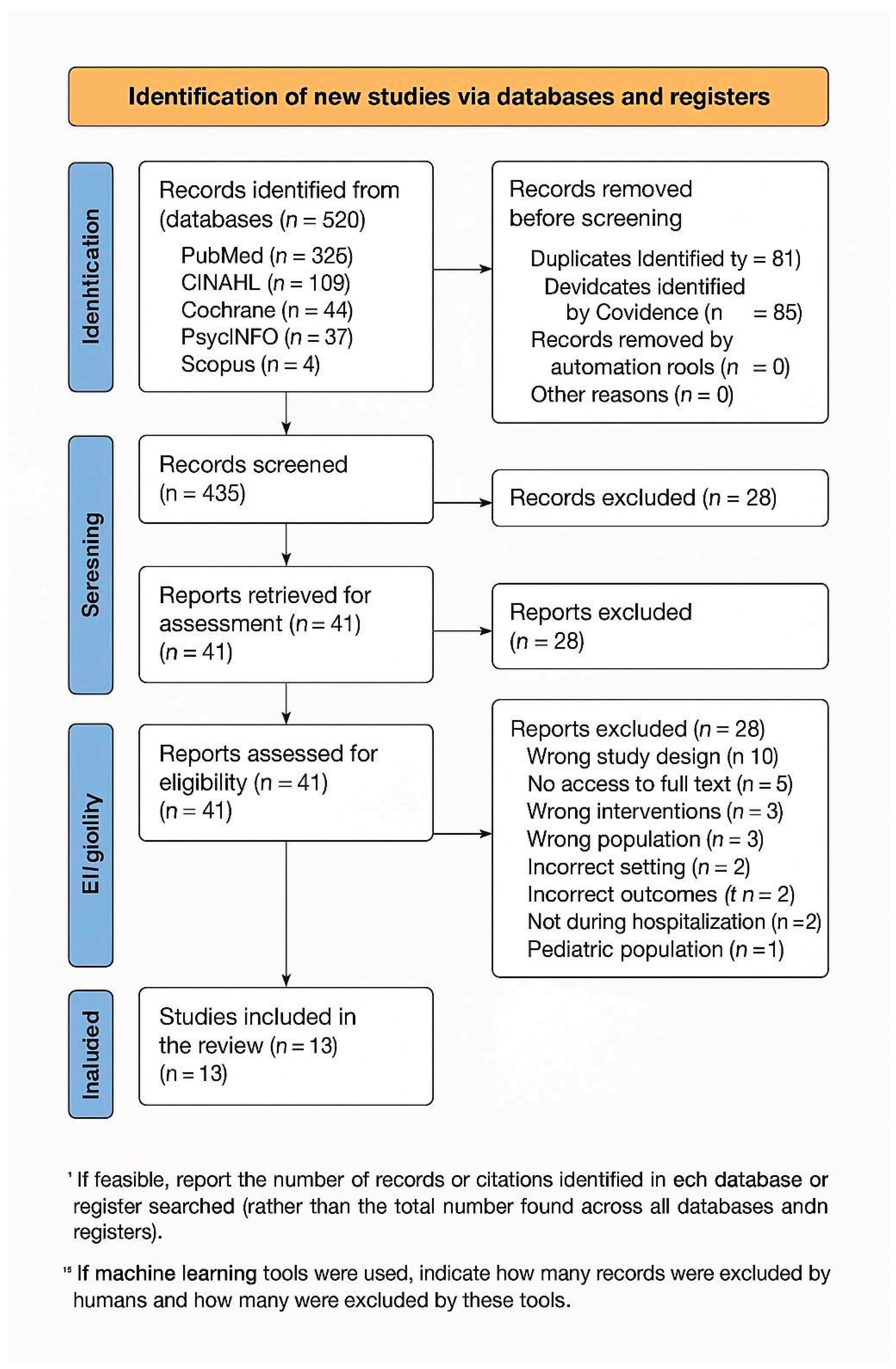
Figure 2.
Domains of Risk of Bias.
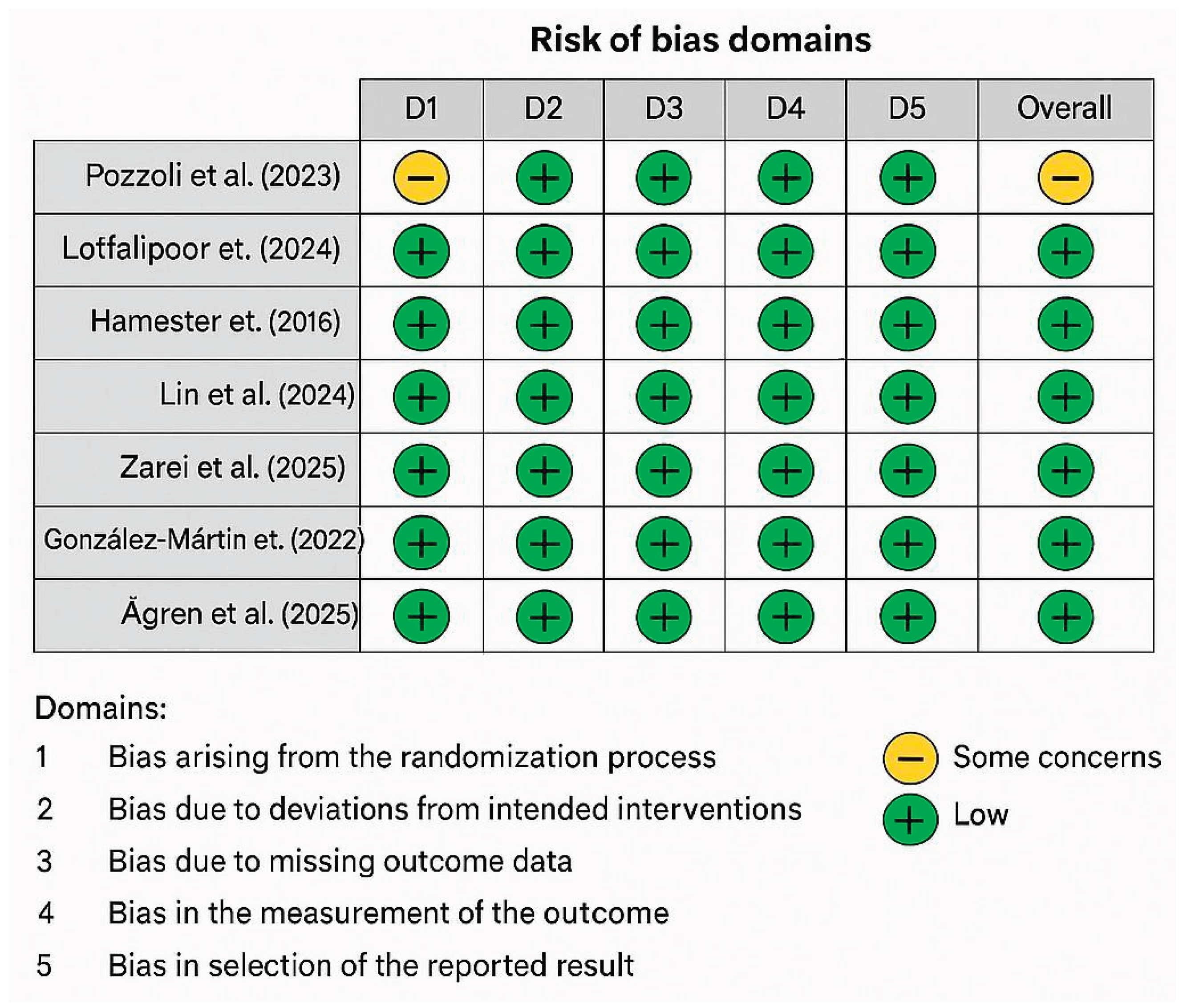

Table 1.
Search strategy in databases.
| P (Population) | I (Intervention) | O (Outcome) | ||
|---|---|---|---|---|
| Concept | Family of a patient undergoing cardiac surgery | Interventions | Improve their experience | |
| Synonym Terms | Family Families Caregiver Caregivers |
Heart surgery Cardiac surgery |
Intervention Interventions Psychosocial intervention Education |
Satisfaction Experience |
| Thesaurus (Mesh, cinhal) | Caregivers[MeSH Terms] Caregiver[MeSH Terms] Family[MeSH Terms] Families[MeSH Terms] Caregivers [MH] Family [MH] |
Cardiac surgery[MeSH Terms] Heart surgery[MeSH Terms] Cardiac Surgery [MH] |
Intervention[MeSH Terms] Education[MeSH Terms] Psychosocial intervention [MH] Education [MH] |
Satisfaction[MeSH Terms] |
| Eligibility Criteria | ● Last 10 years ● Language: English or Spanish |
|||
Table 2.
Search Strategy in Databases.
| Databases | Terms of the strategy and combinations | n |
|---|---|---|
| PubMed | ((((((((Caregivers[MeSH Terms]) OR (Family[MeSH Terms])) OR (Families[MeSH Terms])) OR (caregiver[MeSH Terms])) OR (Caregivers[Title/Abstract])) OR (Family[Title/Abstract])) OR (families[Title/Abstract])) AND (((((((Intervention[MeSH Terms]) OR (Education[MeSH Terms])) OR (Satisfaction[MeSH Terms]))) OR (Intervention[Title/Abstract])) OR (education[Title/Abstract])) OR (Satisfaction[Title/Abstract]))) AND ((((cardiac surgery[MeSH Terms]) OR (Heart surgery[MeSH Terms])) OR (cardiac surgery[Title/Abstract])) OR (Heart surgery[Title/Abstract])) | 326 |
| CINAHL | (((((((((Caregivers [TI]) OR (Caregivers [AB]) OR (Family [TI]) OR (Family [AB]) OR (Families [TI]) OR (Families [AB]) OR (Caregivers [MH]) OR (Family [MH])) AND (((((((((Intervention [TI]) OR (Intervention [AB]) OR (Education [TI]) OR (Education [AB]) OR (Satisfaction [TI]) OR (Satisfaction [AB]) OR (Psychosocial intervention [MH]) OR (Education [MH]))) AND ((((((Cardiac Surgery [TI]) OR (Cardiac Surgery [AB]) OR (Heart Surgery [TI]) OR (Heart Surgery [AB]) OR (Cardiac Surgery [MH])))) | 109 |
| PsycInfo | (((((((((Caregiver [TI]) OR (Caregiver [AB]) OR (Family [TI]) OR (Family [AB]) OR (Families [TI]) OR (Families [AB]) OR (Caregivers [DE]) OR (Family [DE])) AND (((((((((Intervention [TI]) OR (Intervention [AB]) OR (Education [TI]) OR (Education [AB]) OR (Satisfaction [TI]) OR (Satisfaction [AB]) OR (Intervention [DE]) OR (Education [DE]) OR (Satisfaction [DE]))) AND ((((((Cardiac Surgery [TI]) OR (Cardiac Surgery [AB]) OR (Heart Surgery [TI]) OR (Heart Surgery [AB]) OR (Heart Surgery [DE])))) | 37 |
| Scopus | TITLE-ABS-KEY ((((((((caregivers[mesh AND terms]) OR (family[mesh AND terms])) OR (families[mesh AND terms])) OR (caregiver[mesh AND terms])) OR (caregivers[title/abstract])) OR (family[title/abstract])) OR (families[title/abstract])) AND ((((((intervention[mesh AND terms]) OR (education[mesh AND terms])) OR (satisfaction[mesh AND terms]))) OR (intervention[title/abstract])) OR (education[title/abstract])) OR (satisfaction[title/abstract]))) AND (((cardiac AND surgery[mesh AND terms]) OR (heart AND surgery[mesh AND terms])) OR (cardiac AND surgery[title/abstract])) OR (heart AND surgery[title/abstract]))) |
4 |
| Cochrane | (family):kw AND (interventions):ti,ab,kw AND (cardiac surgery):ti,ab,kw (Language ‘English, spanish’) | 44 |
Table 3.
Study Selection Criteria.
| Criteria | Inclusion | Exclusion |
|---|---|---|
| Population | Family members of adult patients (≥18 years) undergoing cardiac surgery during hospitalisation. | Studies that did not include family members as the main study group. |
| Intervention | Nurse-led or interdisciplinary interventions where nursing plays an active role, including education, emotional support, structured visits and communication improvement. | Interventions without nursing involvement or where nursing does not play a significant role. Pharmacological interventions. |
| Outcomes | Family experience and satisfaction, anxiety or stress reduction and perception of care quality. | Studies that only assess administrative or economic aspects without measuring family experience. |
| Study design | Clinical trials, observational studies, systematic reviews and meta-analyses of the effectiveness of interventions. | Studies without a clear methodology, single cases or narrative descriptions without an analysis of the effectiveness of interventions. |
| Setting | Hospitalisation in surgical or cardiac ICU. | Studies in community or posthospital settings not related to the hospital stay. |
Table 4.
Selected Studies and Their Main Characteristics.
| Authors, Year and Country | Design and Sample | Objective | Intervention | Instruments | Main Study Results |
|---|---|---|---|---|---|
|
Ågren et al. (2015) Sweden |
RCT N = 42 CG = 17 IG = 25 |
Evaluate the effect of a psychoeducational intervention on caregiver burden | D | CBS | No significant differences in burden (p = 0.99 at 3 months and p= 0.86 at 12 months) |
|
Azarfarin et al. (2018) Iran |
Quasi-experimental study N = 118 IG = 59 CG = 59 |
Evaluate anxiety after receiving an informational card during surgery | B | STAI | ↓ anxiety in family members (p< 0.0016) IG: 45.9 ± 12.2 CG:51.7 ± 13.4 |
|
Breisinger et al. (2018) USA |
Quasi-experimental study N = 83 |
Evaluate whether an educational kit reduces family anxiety after cardiac surgery in ICU | B | STAI | Preanxiety: 53.01 Postanxiety: 37.38 (↓15.23 points, p < 0.001). Effective with no age or gender influence |
|
Dalirirad et al. (2021) Iran |
Non-RCT N = 80 CG = 40 IG = 40 |
Evaluate the effect of an educational support programme on post-CABG caregiver burden | D | CBI and IADL | Significant reduction in burden (CBI: +1.67 vs. +17.45, p < 0.001). Greater functional independence (IADL: 4.42 vs. 3.07, p < 0.001) |
|
González- Martín et al. (2022) Spain |
RCT N = 38 IG = 19 CG = 19 |
Evaluate the effect of pre-ICU visit on anxiety, depression and satisfaction | A + D | FS-ICU and HADS | ↑ satisfaction in IG (FS-ICU, p = 0.003). HADS without significant changes (p = 0.2) |
|
Gorman et al. (2020) Australia |
Prospective observational study N = 156 |
Evaluate the feasibility, acceptance and impact of a real-time SMS messaging system for keeping families informed | C | 5-point Likert-scale questionnaire | 100% of the participants found the service reassuring and informative; no anxiety or intrusion; 100% would recommend the service |
|
Hamester et al. (2016) Brazil |
RCT N = 210 CG = 105 IG = 105 |
Evaluate whether audiovisual orientation reduces family anxiety | C | STAI | Reduction in family anxiety (p < 0.001) GI: 41.3 ± 8.6 GC: 50.6 ± 9.4 |
|
Lin et al. (2024) China |
RCT Single-blind study N = 80 IG = 40 CG = 40 |
Evaluate the effects of family intervention on postoperative delirium and anxiety | A + D | HADS and C-CCFSS | ↓ delirium (7.5% vs. 27.5%) ↓ caregiver anxiety (2.5% vs. 17.5%, p = 0.025) ↑ satisfaction (p < 0.05) |
|
Lotfalipoor et al. (2024) Iran |
RCT N = 144 IG = 71 CG = 73 |
Evaluate the effect of family-centred care on anxiety | D | STAI | Significant reduction in anxiety in the IG (p = 0.043). Improvement in family mental health |
|
Pozzoli et al. (2023) Switzerland |
RCT Prospective study N = 48 IG = 32 CG = 16 |
Evaluate satisfaction with postoperative digital hospital communication | C | Overall satisfaction | IG: 6.7/7 vs. CG: 5.6/7 (p = 0.004). ↓ calls (34% vs. 75%, p = 0.002). Higher appreciation in the first 3 days |
|
Xiong et al. (2025) China |
RCT N = 97 IG = 49 CG = 48 |
Evaluate digital empowerment intervention for caregivers | C | HADS | ↓ anxiety and depression in IG (p < 0.001). Overall improvement in family well-being |
|
Yoo & Shim (2021) South Korea |
Quasi-experimental study N = 56 IG =28 CG = 28 |
Evaluate the effect of family participation programmes in the cardiovascular surgery ICU on anxiety and satisfaction | D | FS-ICU (Korean version) and VAS anxiety scale | ↑ satisfaction with care (75.71 → 89.59, p < 0.001). ↑ satisfaction with information (t = 6.85, p < 0.001). ↓ anxiety (t = −17.05, p < 0.001) |
|
Zarei et al. (2025) Iran |
RCT Pre-post N = 60 |
Evaluate the effect of an app on caregiver burden and self-efficacy in valve surgery | C | CBI | ↓ caregiver burden (p < 0.01) |
A: preadmission educational intervention via video; B: multicomponent educational support intervention; C: synchronous telematic intervention; D: family-centred intervention; CABG: coronary artery bypass graft; IG: intervention group; CG: control group; FS-ICU: Family Satisfaction in the ICU; HADS: Hospital Anxiety and Depression Scale; CBI: Caregiver Burden Inventory; VAS: Visual Analogue Scale; IADL: Katz Index of Independence in Activities of Daily Living; STAI: State-Trait Anxiety Inventory by Spielberger; CBS: Caregiver Burden Scale; C-CCFSS: Critical Care Family Satisfaction Survey.
Table 5.
Methodological Quality of the Included Studies.
| Study Quality Assessment | Score | |||||||||||||
|---|---|---|---|---|---|---|---|---|---|---|---|---|---|---|
| JBI Critical Appraisal Checklist for Randomised Controlled Trialsa | ||||||||||||||
| Studies | Q1 | Q2 | Q3 | Q4 | Q5 | Q6 | Q7 | Q8 | Q9 | Q10 | Q11 | Q12 | Q13 | |
| Ågren et al. (2015) | Y | Y | Y | N | N | Y | Y | Y | Y | Y | Y | Y | Y | 11/13 |
| González-Mar tín et al. (2022) | Y | Y | Y | N | Y | Y | Y | Y | Y | Y | Y | Y | Y | 10/13 |
| Hamester et al. (2016) | Y | N | Y | N | N | Y | N | Y | Y | Y | Y | Y | Y | 9/13 |
| Lin et al. (2024) | Y | Y | Y | N | N | Y | Y | Y | Y | Y | Y | Y | Y | 11/13 |
| Lotfalipoor et al. (2024) | Y | D | Y | N | N | Y | D | Y | Y | Y | D | Y | Y | 8/13 |
| Pozzoli et al. (2024) | Y | D | Y | Y | N | N | D | Y | Y | Y | Y | Y | Y | 9/13 |
| Xiong et al. (2025) | Y | Y | Y | N | N | Y | Y | Y | Y | Y | Y | Y | Y | 11/13 |
| Zarei et al. (2025) | Y | Y | Y | N | N | Y | Y | Y | Y | Y | Y | Y | Y | 11/13 |
| JBI Critical Appraisal Checklist for Quasi-Experimental Studiesb | ||||||||||||||
| Studies | Q1 | Q2 | Q3 | Q4 | Q5 | Q6 | Q7 | Q8 | Q9 | |||||
| Azarfarin et al. (2018) | Y | Y | D | Y | Y | Y | Y | D | Y | 7/9 | ||||
| Breisinger et al. (2018) | Y | N | NA | NA | Y | Y | Y | Y | Y | 6/9 | ||||
| Dalirirad et al. (2021) | Y | Y | Y | Y | Y | Y | Y | Y | Y | 9/9 | ||||
| Yoo & Shim (2021) | Y | Y | Y | Y | N | Y | Y | Y | Y | 8/9 | ||||
| JBI Critical Appraisal Checklist for Analytical Cross-Sectional Studiesb | ||||||||||||||
| Studies | Q1 | Q2 | Q3 | Q4 | Q5 | Q6 | Q7 | Q8 | ||||||
| Gorman et al. (2020) | Y | Y | Y | Y | N | N | Y | Y | 6/8 | |||||
Y = yes; N = no; D = doubtful; NA = not applicable. aQ1. Was true randomisation used to assign participants to treatment groups? Q2. Was the treatment group allocation concealed? Q3. Were the treatment groups similar at baseline? Q4 Were the participants blinded to the treatment allocation? Q5. Were the persons administering the treatment blinded to the treatment allocation? Q6. Were the outcome assessors blinded to treatment allocation? Q7. Were the treatment groups treated identically, except for the intervention of interest? Q8. Was the follow-up complete, and if not, were the differences between groups in terms of follow-up adequately described and analysed? Q9. Were participants analysed in the groups to which they were randomly assigned? Q10. Were outcomes measured in the same way for treatment groups? Q11. Were outcomes measured reliably? Q12. Was an appropriate statistical analysis performed? Q13. Was the trial design appropriate, and were deviations from the standard RCT design (individual randomisation, parallel groups) considered in the conduct and analysis of the trial? bQ1. Is it clear in the study which is the ‘cause’ and which is the ‘effect’ (i.e., there is no confusion about which variable occurs first)? Q2. Were the participants in the comparisons similar? Q3. Did the participants in the comparisons receive similar treatment or care, aside from the exposure or intervention of interest? Q4. Was there a control group? Q5. Were multiple measurements of the outcome made both before and after the intervention/exposure? Q6. Was the follow-up complete, and if not, were the differences between groups in terms of follow-up adequately described and analysed? Q7. Were the outcomes of participants in the comparisons measured in the same way? Q8. Were outcomes measured reliably? Q9. Was an appropriate statistical analysis performed? cQ1. Were the groups comparable except for the presence of disease in the cases or absence of disease in the controls? Q2. Were cases and controls adequately matched? Q3. Were the same criteria used to identify cases and controls? Q4. Was exposure measured in a standardised, valid and reliable way? Q5. Was exposure measured in the same way in cases and controls? Q6. Were confounding factors identified? Q7. Were strategies for managing confounding factors indicated? Q8. Were outcomes assessed in a standardised, valid and reliable way in both cases and controls? Q9. Was the exposure period long enough to be meaningful? Q10. Was an appropriate statistical analysis performed.
Table 6.
Characteristics of the Interventions.
| Studies | Type | Components | Effect Size | ||||||
|---|---|---|---|---|---|---|---|---|---|
| Provider | Timing | Location | Format | Frequency/Duration | |||||
| A | Du | De | |||||||
| STAI | |||||||||
| Breisinger et al. (2018) | B | Team |  |
ICU | Toolkit | – | |||
| Lotfalipoor et al. (2024) | D | Team |  |
 |
– | Additional educational programme (family-centred care) | – | Decreased anxiety after intervention (p = 0.431) | |
| Pozzoli et al. (2024) | C | Team |  |
ICU | SMS (text message) | – | Not applicable. Ad hoc survey | ||
| CBI | |||||||||
| Dalirirad et al. (2021) | D | IP |  |
 |
Ward | Additional educational programme | – | The IG showed a significant reduction in caregiver burden (CBI: +1.67 vs. +17.45; p < 0.001) | |
| Zarei et al. (2025) | A | IP |  |
 |
 |
– | Remote communication | 1/day | After intervention: 45.33 ± 6.34 in IG vs. 53.86±6.80 in CG (p < 0.001) |
| STAI | |||||||||
| Azarfarin et al. (2018) | B | – |  |
Operating room waiting area | Information card | 1/day | 4.8, 95% CI: 1.1–10.5 (p < 0.0016) | ||
| Hamester et al. (2016) | C | PI and nurse |  |
Waiting room | Audiovisual resource | –/20 min | 11.0, 95% CI: 6.8–11.7 (p < 0.001) | ||
| HADS | |||||||||
| González-Martín et al. (2022) | A and D | -– |  |
ICU | Video/visit family intervention | 1/day | No statistically significant difference in HADS results (p = 0.2) | ||
| Studies | Type | Components | Effect Size | ||||||
| Provider | Timing | Location | Format | Frequency/Duration | |||||
| A | Du | De | |||||||
| HADS | |||||||||
| Lin et al. (2024) | A and D | Nurse |  |
 |
ICU | Video/visit family intervention | 1/day | Decreased caregiver anxiety (2.5% vs. 17.5%, p = 0.025) | |
| Xiong et al. (2025) | C | Liaison nurse |  |
Post-ICU | Audiovisual resource | – | The IG showed improvement in anxiety (p < 0.001) | ||
| IADL | |||||||||
| Dalirirad et al. (2021) | D | PI |  |
 |
Hospital setting | Additional educational programme | – | Higher postoperative functional independence in IG (IADL: 4.42 vs. 3.07, p < 0.001) | |
| C-CCFSS | |||||||||
| Lin et al. (2024) | A and D | Nurse |  |
 |
ICU | Video/visit family intervention | 1/day | Increased satisfaction among family members in IG (p < 0.05) | |
| FS-ICU | |||||||||
| González-Mar tín et al. (2022) | A and D | – |  |
ICU | Video/visit family intervention | 1/day | CG members reported higher overall satisfaction in ICU (p = 0.003) | ||
| Yoo & Shim (2021) | D | Nurse |  |
ICU | Video/visit family intervention | 2/day | Increased family satisfaction in the IG (p < 0.001) and significantly reduced family anxiety (p < 0.001) | ||
| CBS | |||||||||
| Ågren et al. (2015) | D | Team |  |
Psychoeducation | 3 sessions of 30–60 min | Two measurements: p = 0.99 at 3 months and p = 0.86 at 12 months after the intervention | |||
| Gorman et al. (2020) | C | PI and nurse |  |
 |
ICU | SMS | 6 months | Likert-scale questionnaire applied at ICU discharge | |
A: preadmission educational intervention via video; B: multicomponent educational support intervention; C: synchronous telematic intervention; D: family-centred intervention; PI: principal investigator; IG: intervention group; CG: control group; FS-ICU: Family Satisfaction in the ICU; HADS: Hospital Anxiety and Depression Scale; CBI: Caregiver Burden Inventory; IADL: Katz Index of Independence in Activities of Daily Living; STAI: State-Trait Anxiety Inventory; CBS: Caregiver Burden Scale; CCFSS: Critical Care Family Satisfaction Survey.
Table 7.
Measurement Instruments Used in the Reviewed Studies.
| Instruments | Operationalisation | Reliability |
|---|---|---|
| FS-ICU (González-Martín et al., 2022; Yoo & Shim, 2021) |
Assesses family satisfaction in the ICU. | α = 0.93 |
| HADS (Lin et al., 2024; González-Martín et al., 2022; Xiong et al., 2025). |
Measures hospital anxiety and depression. | α = 0.88 |
| ‘Overall satisfaction’ (Pozzoli et al., 2023) |
Assesses satisfaction. | Study-specific |
| CBI (Ågren et al., 2015; Zarei et al., 2025) |
Measures caregiver burden. | α > 0.80 |
| IADL (Ågren et al., 2015) |
Assesses functioning and detects difficulties in performing daily living activities to guide care planning. | α = 0.94 |
| STAI (Azarfarin et al., 2018; Dalirirad et al., 2021) |
Measures state anxiety level. | α = 0.89 |
| STAI (Breisinger et al., 2018; Lotfalipoor et al., 2024; Pozzoli et al., 2023) |
Measures state and trait anxiety levels. | α = 0.93 (state) α = 0.90 (trait) |
| CBS (McGuinness & Higgins, 2021) |
||
| C-CCFSS (Lin et al., 2024) |
Assesses family satisfaction. | α = 0.91 |
α: Cronbach’s alpha; CBI: Caregiver Burden Inventory; IADL: Katz Index of Independence in Activities of Daily Living; STAI: State-Trait Anxiety Inventory (Spielberger); CBS: caregiver burden scale; C-CCFSS: Critical Care Family Satisfaction Survey.
Disclaimer/Publisher’s Note: The statements, opinions and data contained in all publications are solely those of the individual author(s) and contributor(s) and not of MDPI and/or the editor(s). MDPI and/or the editor(s) disclaim responsibility for any injury to people or property resulting from any ideas, methods, instructions or products referred to in the content. |
© 2026 by the authors. Licensee MDPI, Basel, Switzerland. This article is an open access article distributed under the terms and conditions of the Creative Commons Attribution (CC BY) license.
Copyright: This open access article is published under a Creative Commons CC BY 4.0 license, which permit the free download, distribution, and reuse, provided that the author and preprint are cited in any reuse.