

Submitted:
31 August 2026
Posted:
01 September 2026
You are already at the latest version
Abstract
The growing demand for functional non-dairy beverages has stimulated interest in cereal-based fermented products with enhanced biological activity. This study investigated the effect of addition of lemon, mandarin, and orange essential oils (0.01–0.05%) on the fermentation performance, phenolic composition, antioxidant capacity, and sensory characteristics of wort-based lactic acid beverages fermented with Lacticaseibacillus casei ssp. rhamnosus Oly. The tested concentrations did not inhibit bacterial growth, although a slight delay in fermentation was observed. Nevertheless, all variants reached viable cell counts above 10¹¹ CFU/mL, confirming their probiotic potential. Total phenolic content was determined by the Folin–Ciocalteu method, revealing that fermentation promoted the retention or increase of phenolic compounds. Fermentation generally enhanced the antioxidant capacity of the beverages, with the most pronounced increases observed by the FRAP assay. Depending on the formulation, CUPRAC, DPPH, and ABTS analyses also revealed changes in antioxidant potential associated with microbial biotransformation of phenolic compounds and interactions with citrus oil constituents. Sensory evaluation demonstrated improved aroma and flavor, compared with the control, with the beverages containing 0.04% lemon essential oil. 0.02% orange essential oil, and 0.02% mandarin essential oil receiving the highest sensory score. However, only the beverage with 0.02% orange essential oil showed high biological value.
Keywords:
lemon essential oils
; mandarin essential oil
; orange essential oil
; Lacticaseibacillus casei ssp. rhamnosus
; phenolic compounds
; antioxidant activity
; sensory evaluation
1. Introduction
In recent years, non-dairy fermented beverages (e.g cereal-based and plant-based products) have attracted considerable attention as alternatives to traditional dairy-based probiotic foods, particularly among consumers seeking plant-based, lactose-free, or low-fat dietary options [1,2]. Among cereal-based substrates, sweet wort has emerged as a promising raw material due to its rich composition of fermentable sugars, nitrogenous compounds, vitamins, minerals, and phenolic substances [3]. Sweet wort is obtained after mashing, during which barley malt components are enzymatically hydrolyzed and dissolved, followed by wort separation through mash filtration [4]. Beyond its traditional application in brewing, wort has recently been explored as a suitable medium for lactic acid fermentation [5,6,7,8,9].
Lactic acid bacteria contribute not only to product preservation through acidification but also to the transformation of bioactive compounds. Their enzymatic activities may release phenolic compounds from bound forms, generate metabolites with enhanced bioavailability, and modify the antioxidant properties of the substrate. Consequently, fermentation frequently results in improved functional characteristics and increased antioxidant potential of cereal-based beverages [10,11,12].
Although lactic acid fermentation improves the functional properties of cereal-based beverages, the resulting products may develop acidic sensory characteristics that are not always readily accepted by consumers [13]. Therefore, considerable efforts have been directed toward the identification of natural ingredients capable of improving the sensory quality of fermented beverages without compromising their functional properties. Citrus essential oils are obtained mainly from citrus peels and are composed predominantly of monoterpenes, with limonene being the principal constituent, accompanied by compounds such as β-pinene, γ-terpinene, sabinene, myrcene, linalool, citral, and α-terpineol [14]. In addition to their flavoring properties, citrus essential oils have attracted increasing attention as functional food ingredients due to their antioxidant, antimicrobial, and anti-inflammatory activities, which are largely associated with their terpene-rich composition [15]. Therefore, their incorporation into fermented wort-based beverages may contribute simultaneously to enhanced sensory acceptance and improved functional value.
Although the biological and sensory properties of citrus essential oils have been extensively investigated, information regarding their application in lactic acid fermented wort-based beverages remains still limited. Moreover, the interactions between citrus essential oils and lactic acid bacteria, as well as their effects on fermentation performance and the resulting functional properties of fermented wort-based beverages, have not been sufficiently elucidated. Therefore, the aim of the present study was to evaluate the effects of lemon (Citrus limon), orange (Citrus sinensis), and mandarin (Citrus reticulata) essential oils on the fermentation performance, phenolic composition, antioxidant capacity, and sensory properties of wort-based beverages fermented with Lacticaseibacillus casei ssp. rhamnosus Oly.
2. Materials and Methods
2.1. Raw Materials, Media, and Reagents
2.1.1. Raw Materials
The strain Lacticaseibacillus casei ssp. rhamnosus Oly, isolated from spontaneously fermented Romanian yogurt, was used in this study. Pilsen, Vienna, and Caramel Munich II malts were produced by Bestmalz (Germany). Lemon and orange essential oils were produced by Rivana (Plovdiv, Bulgaria), while mandarin essential oil was produced by Alteya Organics (Yagoda, Bulgaria).
2.1.2. Media
MRS broth and LAPTg10 Agar were used for cultivation and enumeration of LAB cells, respectively. Their composition was described in details in Botella et al. [9].
2.1.3. Reagents
Gallic acid, neocuproine, DPPH (2,2′-Diphenyl-1-picrylhydrazyl), ABTS (2,2′-Azino-bis (3-ethylbenzothiazoline-6-sulfonic acid) diammonium salt), 2,4,6-tripyridyl-S-triazine (TPTZ), and Trolox (6-hydroxy-2,5,7,8-tetramethylchromane-2-carboxylic acid) were purchased from Sigma Aldrich, St. Louise, MO, USA. All the other reagents were of analytical grade.
2.2. Wort Production
A total of 4.5 kg of malt composed of 60% Pilsen, 20% Vienna, and 20% Caramel Munich II was coarsely milled and mixed with 22.5 L water. Mashing was carried out in Braumeister brewing unit (Speidel, Germany). The mash was heated at a controlled rate of 1.5 °C/min, followed by temperature rests at 50 °C for 30 min and 77 °C for 60 min. After lautering, wort was boiled for approximately 30 min without hop addition. The resulting wort was clarified by removal of the hot trub and subsequently sterilized at 121 °C for 30 min. Before use in fermentation experiments, the wort was aseptically filtered. The wort obtained had an extract content of 11.9±0.1°Р and a рН of 4.98±0.06.
2.3. Fermentation
All the citrus essential oils were incorporated into the wort at final concentrations of 0.01, 0.02, 0.03, 0.04, and 0.05% (v/v). After addition, the samples were vigorously shaken to ensure uniform dispersion of the oils throughout the medium. Aliquots of 250 mL were then transferred into sterile glass bottles. Subsequently, the wort was inoculated with 2% (v/v) of a lactic acid bacterial culture. Prior to inoculation, Lacticaseibacillus casei ssp. rhamnosus Oly was cultivated in MRS broth at 37 ± 1 °C for 24 h, resulting in an initial cell concentration of approximately 108 cells/mL. Fermentation was carried out at 25 ± 1 °C and the progress of fermentation was monitored by measuring pH drop. The process was considered complete when no further decrease in pH was observed. A wort sample without the addition of essential oils was fermented under identical conditions and served as the control.
2.4. Analytical Procedures
2.4.1. Antimicrobial Activity of Essential Oils Against Lactic Acid Bacteria
The antimicrobial activity of the essential oils against Lacticaseibacillus casei ssp. rhamnosus Oly was evaluated using the agar disc diffusion method. A fresh 24 h culture was spread onto MRS agar plates. Sterile paper discs (6 mm diameter) were placed on the agar surface and impregnated with 6 μL of essential oils at concentrations of 0.1, 1, and 10% (v/v). The plates were incubated at 37 ± 1 °C for 48 h. Following incubation, the diameters of the inhibition zones were measured in millimeters. The absence of inhibition zones was considered indicative of a lack of inhibitory effect on the growth of the tested lactic acid bacterium.
2.4.2. Fermentation Parameters
The extract of the wort and fermented wort-based beverages was determined using an Anton Paar DMA 35 portable densitometer (Anton Paar, Graz, Austria). pH measurements were performed with a Bante PHS-3BW benchtop pH meter (Bante Instruments, Shanghai, China). Viable lactic acid bacteria were enumerated by preparing appropriate decimal dilutions, followed by plating on LAPTg10 agar. The inoculated plates were incubated at 37 ± 1 °C for 48–72 h until the development of countable colonies.
2.4.3. Phenolic Content and Antioxidant Capacity of the Beverages Produced
Prior to analysis, wort and fermented wort-based beverages were mixed with methanol at sample-to-solvent ratios of 1:4 and 1:9 for the determination of phenolic compounds and antioxidant capacity, respectively. The mixtures were allowed to stand for 30 min and subsequently filtered through Whatman No. 1 filter paper.
Total phenolic compounds were quantified by the Folin–Ciocalteu method, while antioxidant capacity was evaluated using the FRAP (Ferric Reducing Antioxidant Power), DPPH radical scavenging, CUPRAC (Cupric Reducing Antioxidant Capacity), and ABTS radical scavenging assays, as described by Shopska et al. [16]. All measurements were performed using a Shimadzu UV-1800 UV–Vis spectrophotometer (Shimadzu, Kyoto, Japan). The results were calculated from calibration curves and expressed as mg gallic acid equivalents (GAE)/L for total phenolic compounds and μM Trolox equivalents (TE)/L for antioxidant capacity.
2.4.4. Sensory Analysis
Sensory evaluation was performed by a trained panel including ten assessors (six males and four females, age 21-60). Prior to the evaluation, the panelists participated in three one-hour training sessions focused on familiarization with the sensory characteristics of wort, lactic acid fermentation products, and the essential oils used in the study. During the training, reference samples representing wort aroma and taste, lactic acid aroma and flavor, and the characteristic aromas of the tested essential oils were provided.
The sensory analysis was conducted in a sensory evaluation room. Samples were served at 4 °C in transparent glasses and identified by randomly assigned three-digit codes. Each sample was evaluated in triplicate and presented in a randomized order. Between samples, assessors rinsed their mouths with still mineral water and consumed plain white bread to minimize carry-over effects.
Aroma and taste attributes were assessed using descriptive analysis (method 13.10) and the ranking method (method 13.11) [17]. The intensity of each sensory attribute was scored on a 10-point scale, where 1 corresponded to an extremely low intensity and 10 to an extremely high intensity.
2.4.5. Statistical Analysis
The statistical analysis was performed using Statgraphics Centurion® 18 (Version 18.1.12). Data are presented as mean ± standard deviation (SD). Statistical differences among groups were evaluated using one-way analysis of variance (ANOVA) followed by Tukey’s post hoc test. A p-value < 0.05 was considered statistically significant.
3. Results and Discussion
3.1. Antimicrobial Activity of Essential Oils Against Lactic Acid Bacteria
To produce the beverages, lactic acid fermentation was carried out using Lacticaseibacillus casei ssp. rhamnosus Oly in wort supplemented with different concentrations of lemon, mandarin, and orange essential oils. Since citrus essential oils are known to possess antimicrobial activity due to their high content of bioactive terpenes [15], their possible effect on the lactic acid bacteria was evaluated prior to fermentation. The antimicrobial activity assay was performed using the agar disc diffusion method and the results are presented in Table 1. No inhibition zones were observed around the discs containing lemon, mandarin, and orange essential oils, indicating that the tested concentrations did not inhibit the growth of Lacticaseibacillus casei ssp. rhamnosus Oly. Similar observations have been reported for other lactic acid bacteria. Lactobacillus spp. have been reported to display relatively low sensitivity to citrus essential oils, resulting in small or absent inhibition zones in agar diffusion assays [18,19]. Moreover, citrus essential oils often exhibit selective antimicrobial activity, showing stronger effects against pathogenic microorganisms than against beneficial lactobacilli [20]. The observed tolerance may be associated with the specific structural characteristics of lactic acid bacteria, whose cell wall composition can confer intrinsic resistance to certain antimicrobial compounds [18]. Since no antimicrobial activity was observed even at concentrations up to 10%, the tested citrus essential oils were considered suitable for application in the fermentation medium. Nevertheless, such high concentrations were not used due to the strong aroma and flavor associated with the oils. Therefore, subsequent fermentation experiments were conducted using essential oil concentrations ranging from 0.01 to 0.05%
3.2. Effect of Citrus Oils Additions on the Fermentation Parameters
To produce the lactic acid beverages, wort with an optimized biological profile was used, providing adequate antioxidant capacity and a low content of fermentable sugars (approximately 30% of the total wort extract). The changes in pH, extract content, and viable cell counts during fermentation are presented in Table 2.
The decrease in pH occurred at different rates depending on the treatment. The decrease in pH observed during fermentation is primarily associated with the production and accumulation of lactic acid as the major end product of carbohydrate metabolism by lactic acid bacteria [21]. The greatest reduction was observed in the control sample, where pH decreased by approximately 1.4 units from its initial value. Since no further changes were detected after 48 h, the fermentation of the control wort was considered complete within two days. In contrast, the beverages supplemented with essential oils exhibited a smaller decrease in pH, approximately 0.8 units. As the pH values remained stable only after 72 h, it was assumed that fermentation in the presence of essential oils proceeded more slowly and required an additional 24 h to reach completion compared with the control. These findings suggest that the essential oils exerted an inhibitory effect on the fermentation process, even at the relatively low concentrations applied.
Changes in extract content were negligible in all experimental variants. Glucose, fructose, and sucrose are the primary carbohydrates metabolized by LAB [22], but according to Ivanov et al. [23], the wort prepared by this mashing method contains only about 7% glucose and less than 1% fructose, explaining the low overall extract reduction observed. Therefore, no conclusions regarding the inhibitory effect of the essential oils on substrate utilization and fermentation efficiency could be drawn based on this parameter alone.
A different trend was observed with respect to viable cell counts during fermentation. In the control sample, the population of Lacticaseibacillus casei ssp. rhamnosus Oly increased by approximately five logarithmic cycles, whereas in the beverages supplemented with essential oils the increase was limited to about three logarithmic cycles. The slower decrease in pH and the lower biomass accumulation observed in the essential oil-supplemented variants indicated that citrus essential oils exerted a mild inhibitory effect on bacterial growth and metabolic activity. Nevertheless, the final viable cell counts remained above 10⁷ CFU/mL, which is generally regarded as the minimum level required for probiotic beverages to provide potential health benefits [24].

Table 2.
Effect of the addition of citrus essential oils on the changes in the main beverage parameters during fermentation.
Table 2.
Effect of the addition of citrus essential oils on the changes in the main beverage parameters during fermentation.
| Oil concentration, %v/v | Sample | pH | Extract, °P | Number of Viable LAB Cells, logN | |||
|---|---|---|---|---|---|---|---|
| 0h | 48h/72h* | 0h | 48h/72h* | 0h | 48h/72h* | ||
| - | Control | 4.98±0.06a | 3.45±0.09b | 11.9±0.1b | 11.8±0.1c | 8.32±0.09a | 13.47±0.09a |
| 0.01% | Lemon oil | 4.97±0.04a | 4.10±0.01a | 12.0±0.0a | 12.0±0.2a | 8.30±0.08a | 11.17±0.10b |
| 0.02% | 4.97±0.06a | 4.11±0.06a | 12.0±0.0a | 11.9±0.1b | 8.32±0.06a | 11.11±0.07b | |
| 0.03% | 4.97±0.02a | 4.13±0.05a | 12.0±0.0a | 12.0±0.0a | 8.30±0.01a | 11.08±0.02b | |
| 0.04% | 4.97±0.01a | 4.17±0.03a | 12.0±0.1a | 11.9±0.0b | 8.32±0.07a | 11.08±0.05b | |
| 0.05% | 4.97±0.04a | 4.18±0.05a | 12.0±0.1a | 11.9±0.1b | 8.30±0.06a | 11.08±0.07b | |
| 0.01% | Mandarin oil | 4.97±0.07a | 4.11±0.02a | 11.9±0.1b | 11.9±0.2b | 8.30±0.08a | 11.11±0.02b |
| 0.02% | 4.95±0.01a | 4.13±0.04a | 11.9±0.0b | 11.9±0.0b | 8.30±0.02a | 11.04±0.06b | |
| 0.03% | 4.97±0.08a | 4.13±0.07a | 11.9±0.1b | 11.9±0.1b | 8.30±0.00a | 11.04±0.05b | |
| 0.04% | 4.90±0.06a | 4.08±0.02a | 12.0±0.1a | 12.0±0.1a | 8.30±0.06a | 11.04±0.10b | |
| 0.05% | 4.91±0.06a | 4.10±0.08a | 12.0±0.1a | 11.9±0.1b | 8.32±0.04a | 11.04±0.06b | |
| 0.01% | Orange oil | 4.93±0.04a | 4.11±0.05a | 12.0±0.0a | 11.9±0.0b | 8.30±0.08a | 11.08±0.06b |
| 0.02% | 4.96±0.03a | 4.14±0.02a | 12.0±0.1a | 12.0±0.0a | 8.34±0.02a | 11.04±0.03b | |
| 0.03% | 4.95±0.05a | 4.15±0.04a | 12.0±0.0a | 12.0±0.1a | 8.30±0.07a | 11.04±0.07b | |
| 0.04% | 4.92±0.06a | 4.12±0.01a | 12.0±0.2a | 11.9±0.0b | 8.32±0.01a | 11.00±0.05b | |
| 0.05% | 4.92±0.04a | 4.13±0.02a | 12.0±0.1a | 12.0±0.0a | 8.32±0.03a | 11.00±0.09b | |
* Тhe end of fermentation was at 48 h for the control and at 72 h for the samples with citrus essential oils. Data are expressed as mean ± SD (n = 3); a, b, c : different letters in the rows indicate significantly different values(Tukey HSD tests, p < 0.05).
3.3. Effect of Citrus Oils Additions on the Total Phenolic Compoundс
Phenolic compounds are among the major bioactive constituents of cereal-based beverages and contribute significantly to their antioxidant properties. In wort and fermented wort-based beverages, phenolic compounds originate mainly from malt [25] and may undergo transformations during fermentation due to the metabolic activity of lactic acid bacteria [26]. Furthermore, phenolic compounds contribute not only to antioxidant activity but also to sensory characteristics such as bitterness, astringency, color stability, and overall flavor complexity [25]. Therefore, the determination of total phenolic compounds provides valuable information not only regarding the effect of fermentation and essential oil addition on the functional properties of the final product but also on its sensory characteristics.
The changes in total phenolic content (ΔTPC) after fermentation are presented in Figure 1. The control sample showed an increase in TPC during fermentation, indicating that Lacticaseibacillus casei ssp. rhamnosus Oly was able to promote the release or formation of phenolic compounds from wort constituents. Similar effects have been reported for lactic acid fermentation of cereal-based substrates, where microbial enzymatic activities contribute to the liberation of bound phenolics and increase their extractability and bioavailability [10,27]. As shown in Figure 1, the tested citrus essential oils exerted distinct effects on total phenolic content. Lemon essential oil resulted in the highest increase in total phenolic content among the tested oils, particularly at a concentration of 0.03%. This observation may be related to the rich composition of lemon essential oil, which contains not only limonene as the major constituent but also several minor terpenes and oxygenated compounds with biological activity. Previous studies have demonstrated that the antioxidant and biological properties of lemon essential oil depend on the synergistic action of multiple constituents rather than on limonene alone [15,18]. An interesting concentration-dependent response was observed for mandarin essential oil. While the lowest (0.01%) and highest (0.05%) concentrations resulted in an increase in total phenolic content, intermediate concentrations (0.02–0.04%) led to a pronounced decrease. This suggests that the effect of mandarin essential oil on phenolic compounds was not linear and may have depended on the balance between microbial biotransformation processes and interactions between phenolic compounds and volatile oil constituents. Orange essential oil had a generally negative effect on changes of total phenolic content during lactic acid fermentationHowever, at the highest concentration (0.05%), an increase in TPC was recorded. This finding suggests that the influence of orange essential oil on phenolic compounds was concentration-dependent. The observed response may be related to the complex composition of orange essential oil, whose biological activity depends not only on limonene, the predominant constituent, but also on numerous minor terpenes and oxygenated compounds that may act synergistically [27,28].
3.3. Effect of Citrus Essential Oil Addition on the Antioxidant Capacity
The antioxidant capacity of the fermented beverages was assessed by ABTS, DPPH, FRAP, and CUPRAC assays. The application of multiple analytical methods was considered necessary because different antioxidants may exhibit different responses depending on the reaction mechanism involved [29]. The changes in antioxidant activity determined by the ABTS assay are presented in Figure 2a. In all samples, fermentation resulted in a reduction of ABTS antioxidant capacity compared to the initial values. Similar results were reported by Botella et al. [9], who investigated the effect of rosehip, lemongrass and eucalyptus oils on the wort fermentation with the same lactic acid bacteria strain.
However, the effect of fermentation on ABTS activity varied depending on the type and concentration of citrus essential oil applied. Lemon essential oil showed a tendency toward reduced losses in ABTS activity with increasing concentration. While the lowest concentration (0.01%) resulted in the greatest decrease, higher concentrations partially preserved antioxidant activity. A different pattern was observed in the samples supplemented with mandarin essential oil. The substantial decrease in ABTS activity observed in samples supplemented with 0.02% mandarin essential oil corresponded well with the pronounced reduction in total phenolic content (Figure 1), suggesting that phenolic compounds contributed significantly to the antioxidant capacity of these beverages. Orange essential oil generally reduced ABTS activity, although the negative effect became less pronounced at the highest concentration tested. This is in consistency with the results of total phenolic content changes during fermentation (Figure 1).
The changes in antioxidant capacity determined by the CUPRAC assay are presented in Figure 2b. In contrast to the ABTS results, positive changes in antioxidant activity were observed in the control sample and in beverages supplemented with 0.01% essential oils. Interestingly, the beverages produced with 0.04% and 0.05% orange essential oil also showed increased antioxidant capacity after fermentation. Unlike the ABTS assay, which evaluates radical scavenging activity, the CUPRAC method measures the reducing capacity of antioxidant compounds toward the Cu(II)-neocuproine complex and is applicable to both hydrophilic and lipophilic antioxidants. Therefore, differences between ABTS and CUPRAC results may reflect changes not only in the amount but also in the chemical nature of antioxidant compounds formed during fermentation [30]. The highest decreases in CUPRAC values were observed in beverages supplemented with 0.02% mandarin essential oil and 0.04% lemon essential oil. The marked reduction in antioxidant activity corresponded well with the substantial decrease in total phenolic content (Figure 1), suggesting that phenolic compounds contributed significantly to the reducing capacity of the beverages.
The changes in antioxidant capacity determined by the FRAP assay are presented in Figure 2c. In contrast to the ABTS and CUPRAC results, all fermented beverages exhibited increased FRAP values compared to their initial levels. The increase in FRAP values observed in the present study may be associated with the formation of metabolites possessing high electron-donating capacity, since the FRAP assay primarily reflects the ability of antioxidants to reduce ferric ions [30]. The highest increase was observed in the control sample, while beverages supplemented with citrus essential oils showed variable responses depending on the oil type and concentration. Orange essential oil exhibited the most consistent effect, resulting in relatively high FRAP values across the entire concentration range. Lemon essential oil also promoted an increase in ferric reducing antioxidant power, particularly at 0.01% and 0.05%. In contrast, beverages supplemented with mandarin essential oil generally showed lower FRAP values than the corresponding lemon- and orange-oil variants. Interestingly, an opposite trend was observed in our previous experiments using the wort, produced by the same mashing method and mandarin and lemon essential oils at a concentration of 0.05%, but fermented with probiotic yeast Saccharomyces cerevisiae var. boulardii [3,31]. This finding suggests that the evolution of antioxidant capacity depends not only on the substrate composition but also on the metabolic activity of the fermenting microorganism. Different microorganisms are known to transform phenolic compounds through distinct enzymatic pathways, leading to the formation of metabolites with different antioxidant properties.
The changes in antioxidant activity determined by the DPPH assay are presented in Figure 2d. In contrast to the ABTS results, most fermented beverages exhibited increased DPPH radical scavenging activity compared to their initial values. The highest DPPH values were observed in samples supplemented with 0.02–0.03% lemon essential oil and 0.03% mandarin essential oil. Orange essential oil showed the strongest effect at the lowest concentration tested (0.01%), whereas higher concentrations resulted in lower antioxidant activity. Unlike the ABTS assay, the DPPH results did not closely follow the changes observed in total phenolic content (Figure 1). For example, the highest DPPH activity in mandarin-supplemented beverages was observed at 0.03%, despite the reduction in TPC at this concentration. Similarly, orange essential oil exhibited substantial DPPH activity at 0.01% without a corresponding increase in total phenolic content. These findings suggest that compounds other than phenolics contributed to the scavenging of DPPH radicals These findings suggest that compounds other than phenolics contributed to the scavenging of DPPH radicals. Similar observations have been reported in citrus-based products, where DPPH radical scavenging activity did not show a significant correlation with total phenolic content and was influenced by other antioxidant constituents, including flavonoids and vitamin C [32].
3.4. Effect of Citrus Oil Addition on the Sensory Evaluation of the Beverages Produced
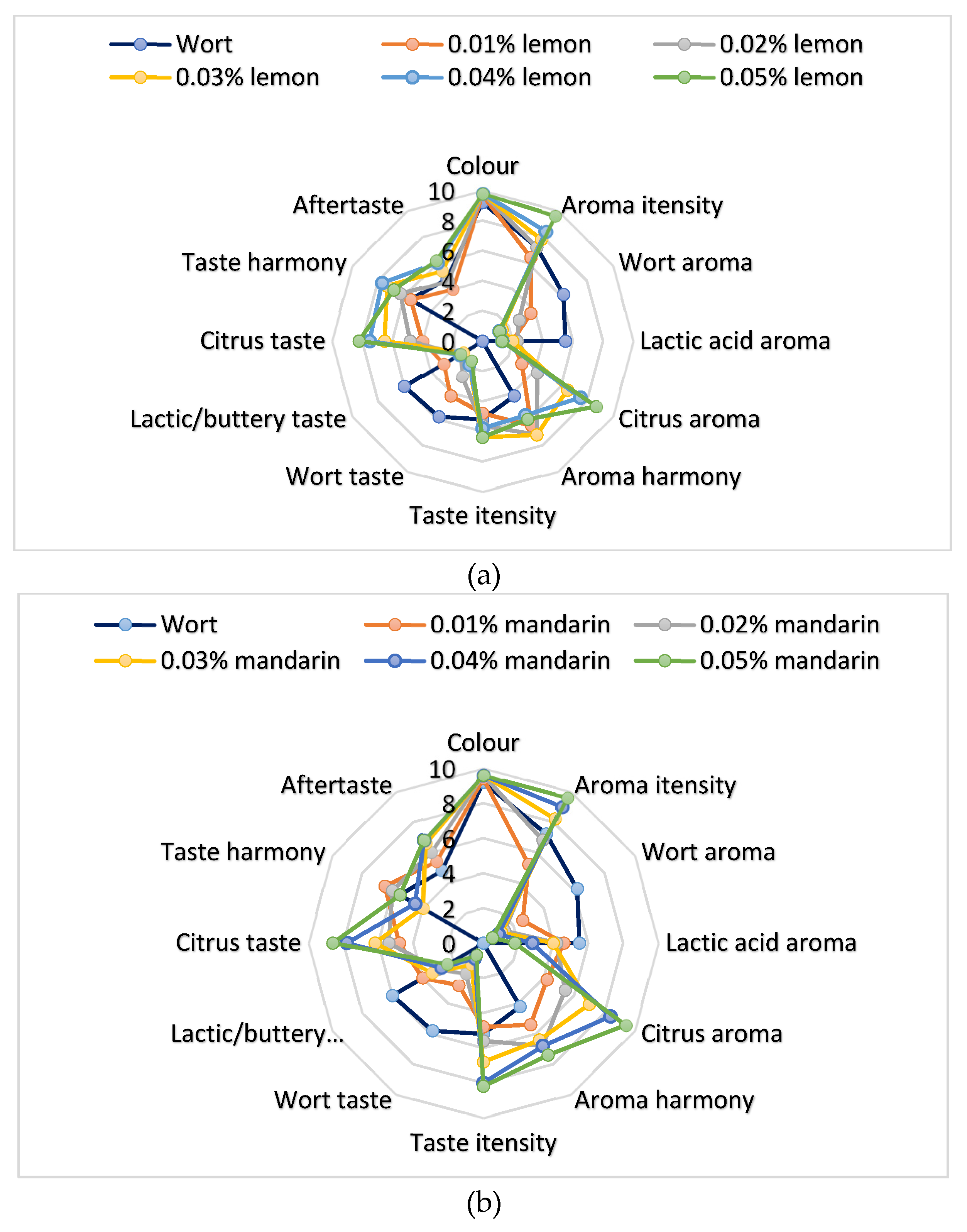
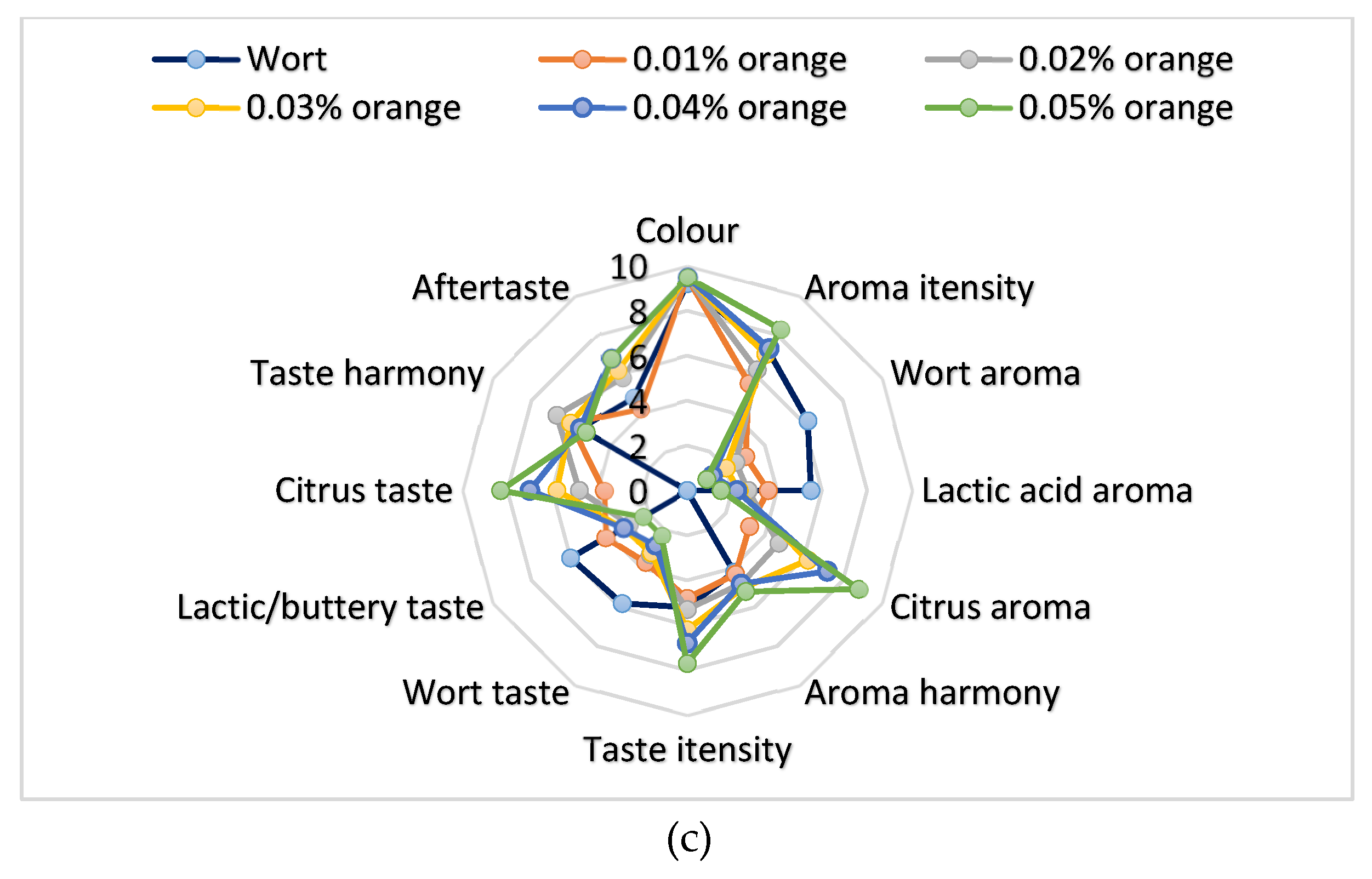
The sensory quality of lactic acid–fermented wort beverages is often regarded as a limiting factor for consumer acceptance because of the pronounced sourness and characteristic wort-derived aroma and flavor notes [13]. The incorporation of citrus essential oils may therefore represent an effective approach not only for enhancing the functional properties of the beverages but also for improving their sensory appeal. Nevertheless, the effect of essential oils on sensory perception depends on both their type and concentration. While certain oil additions contributed positively to aroma and flavor, excessive intensity occasionally resulted in lower consumer acceptance. To evaluate these effects, all fermented beverages were subjected to sensory analysis, and the results are presented in Figure 3.
Overall, the control beverage received relatively low sensory scores, reflecting the limited consumer appeal of lactic acid–fermented wort beverages without flavor modification. The highest scores for the control sample were associated with wort flavor, wort aroma, lactic acid aroma, and lactic/buttery taste, which are characteristic attributes of fermented wort beverages. In contrast, the addition of citrus essential oils substantially modified the sensory profile and generally improved panel acceptance. However, the samples containing 0.05% essential oil were characterized by excessively intense citrus aroma and flavor, which masked the other sensory attributes and resulted in lower overall preference.
Among the beverages supplemented with lemon essential oil (Figure 3а), the sample containing 0.04% oil received the highest overall sensory score, followed by the 0.03% variant. Interestingly, the most preferred sample was characterized by relatively lower concentrations of total phenolic compounds (Figures 1). At the same time, it exhibited the lowest antioxidant activity among the lemon-oil variants (Figure 2), indicating that the highest biological value did not necessarily correspond to the greatest sensory acceptance.
In the case of mandarin essential oil (Figure 3b), the beverage containing 0.02% oil was ranked highest by the panel, followed by the sample with 0.01% oil. These results suggest that moderate concentrations of mandarin oil provided the most balanced sensory profile, whereas higher concentrations may have produced excessively intense citrus notes.
A similar tendency was observed for orange essential oil (Figure 3c) where the beverage supplemented with 0.02% oil achieved the highest overall score, followed by the 0.03% variant. Unlike the preferred lemon- and mandarin-oil beverage, the most appreciated orange-oil sample was also characterized by elevated levels of phenolic compounds (Figures 1) and comparatively high antioxidant activity determined by the ABTS and FRAP assays. This finding suggests that, under certain conditions, improved sensory quality and enhanced functional properties may be achieved simultaneously.
Figure 3.
(a) Sensory evaluation of lemon oil-enriched beverages versus control; (b) Sensory evaluation of mandarin oil-enriched beverages versus control; (c) Sensory evaluation of orange oil-enriched beverages versus control.
Figure 3.
(a) Sensory evaluation of lemon oil-enriched beverages versus control; (b) Sensory evaluation of mandarin oil-enriched beverages versus control; (c) Sensory evaluation of orange oil-enriched beverages versus control.
5. Conclusions
The present study demonstrated that citrus essential oils can be successfully incorporated into lactic acid–fermented wort-based beverages. Although the addition of essential oils slightly affected fermentation kinetics, all formulations supported the development of high viable cell counts, confirming the suitability of wort as a substrate for probiotic beverage production. The results revealed that the impact of citrus essential oils on the functional properties of the beverages depended strongly on both oil type and concentration. Fermentation induced changes in phenolic composition and antioxidant capacity that were not always directly correlated, highlighting the complexity of interactions between microbial metabolism and essential oil constituents. From a practical perspective, the sensory and functional characteristics of the beverages were not optimized at the same essential oil concentration. While several formulations achieved high sensory acceptance, only the beverage supplemented with 0.02% orange essential oil combined favorable sensory properties with enhanced biological value, making it the most promising candidate for further development. These findings expand current knowledge on the application of citrus essential oils in cereal-based fermented beverages and demonstrate their potential as natural ingredients for improving product quality. Future studies should focus on the identification of individual phenolic compounds and aroma-active constituents responsible for the observed biological and sensory effects, as well as on consumer acceptance under real market conditions.
Author Contributions
Conceptualization, G.K and V.S..; methodology, B.G and V.S.; software, B.G.; validation, B.G and V.S; formal analysis, P.N.; investigation, P.N.; resources, V.S and B.G..; data curation, V.S.; writing—original draft preparation, P.N.; writing—review and editing, V.S, G.K.; visualization, V.S.; supervision, G.K; project administration, G.K.; funding acquisition, G.K. All authors have read and agreed to the published version of the manuscript.
Funding
This work was funded under the project “Synergic plant extracts (e.g., essential oils) - bioprotective microorganisms for development of functional fermented foods (SEO-MICRO-FOODS)” under the Competition for projects under bilateral cooperation programs 2026 - Bulgaria - France (“Rila” program, project BG-175467353-2025-05-0004 /FNI-2923 of 08.12.2025/ of the Bulgarian Scientific Research Fund). Cooperation between University of Food Technologies Plovdiv (Bulgaria), BioDyMIA research unit (Université Claude Bernard Lyon 1 - ISARA Lyon, France), and Ecole d’Ingénieurs de Purpan (Université de Toulouse, France) was supported by Franco-Bulgarian cooperation Hubert Curien Programme (PHC Rila).
Data Availability Statement
The original contributions presented in this study are included in the article. Further inquiries can be directed to the corresponding author.
Acknowledgments
The authors wish to express their gratitude for the supports of the Ministry of Education and Science (Bulgaria), the Embassy of France to Bulgaria in Sofia (“Ministère des Affaires Etrangères”, France), Campus France and “Ministère de l’Enseignement Supérieur, de la Recherche et de l’Innovation” (France).
Conflicts of Interest
The authors declare no conflicts of interest.
References
- Valero-Cases, E.; Cerdá-Bernad, D.; Pastor, J.-J.; Frutos, M.-J. Non-Dairy Fermented Beverages as Potential Carriers to Ensure Probiotics, Prebiotics, and Bioactive Compounds Arrival to the Gut and Their Health Benefits. Nutrients 2020, 12, 1666. [CrossRef]
- Küçükgöz, K.; Trząskowska, M. Nondairy Probiotic Products: Functional Foods That Require More Attention. Nutrients 2022, 14, 753. [CrossRef]
- Tomova, T.; Petelkov, I.; Shopska, V.; Denkova-Kostova, R.; Kostov, G.; Denkova, Z. Production of probiotic wort-based beverages with grapefruit (Citrus paradisi L.) or tangerine (Citrus reticulata L.) zest essential oil addition. Acta Sci. Pol. Technol. Aliment. 2021, 20, 237–245. [CrossRef]
- Wasmuht, I. Relevant Process Steps Influencing Wort and Beer Composition and Its Quality: A Review. Brewingsci. Yearb. 2023, 76, 113.
- Peyer, L.C.; Zannini, E.; Jacob, F.; Arendt, E.K. Growth Study, Metabolite Development, and Organoleptic Profile of a Malt-Based Substrate Fermented by Lactic Acid Bacteria. J. Am. Soc. Brew. Chem. 2015, 73, 303–313. [CrossRef]
- Trendafilova, M.; Goranov, B.; Shopska, V.; Denkova-Kostova, R.; Lyubenova, V.; Kostov, G. Production of lactic acid wort-based beverages with mint essential oil addition. Ecol. Eng. Environ. Prot. 2021, 2, 5–11. [CrossRef]
- Goranov, B.; Denkova-Kostova, R.; Shopska, V.; Kostov, G. Production of lactic acid wort-based beverage with raspberry seed oil addition under static and dynamic conditions. Bio Web Conf. 2024, 102, 01015. [CrossRef]
- Ahmedova, G.; Kaneva, M.; Denkova, R.; Teneva, D.; Denkova, Z.; Ignatov, I.; Nedyalkov, P. Dynamics of the fermentation process of a lactic acid beverage based on wort and mint with Lactobacillus casei ssp. rhamnosus Oly. Sci. Work. Univ. Food Technol. 2017, 67, 7–15.
- Botella, F.; Gaytanska, Y.; Goranov, B.; Denkova-Kostova, R.; Shopska, V.; Kostov, G. Production of Lactic Acid Wort-Based Beverages with Rosehip, Lemongrass, and Eucalyptus Oils. Appl. Sci. 2025, 15, 12855. [CrossRef]
- Hur, S.J.; Lee, S.Y.; Kim, Y.-C.; Choi, I.; Kim, G.-B. Effect of fermentation on the antioxidant activity in plant-based foods. Food Chem. 2014, 160, 346–356. [CrossRef]
- Filannino, P.; Di Cagno, R.; Gobbetti, M. Metabolic and functional paths of lactic acid bacteria in plant foods: Get out of the labyrinth. Curr. Opin. Biotechnol. 2018, 49, 64–72.
- Ziarno, M.; Cichońska, P. Lactic Acid Bacteria-Fermentable Cereal- and Pseudocereal-Based Beverages. Microorganisms 2021, 9, 2532. [CrossRef]
- Dongmo, S.N.; Procopio, S.; Sacher, B.; Becker, T. Flavor of Lactic Acid Fermented Malt Based Beverages: Current Status and Perspectives. Trends Food Sci. Technol. 2016, 54, 37–51. [CrossRef]
- Bora, H.; Kamle, M.; Mahato, D.K.; Tiwari, P.; Kumar, P. Citrus Essential Oils (CEOs) and Their Applications in Food: An Overview. Plants 2020, 9, 357. [CrossRef]
- Zhang Y.; Luo R.; Yang, R.; Ma X.; Wang M. Citrus Essential Oils: A Review of Chemical Composition, Bioactivity, Safe Use, and Potential Applications. Chem. Biodivers. 2026, 23, 5, e71305.
- Shopska, V.; Denkova-Kostova, R.; Dzhivoderova-Zarcheva, M.; Teneva, D.; Denev, P.; Kostov, G. Comparative Study on Phenolic Content and Antioxidant Activity of Different Malt Types. Antioxidants 2021, 10, 1124. [CrossRef]
- European Brewery Convention. Analytica—EBC; Fachverlag Hans Carl: Nürnberg, Germany, 2005.
- Li, Y.; Liu, S.; Zhao, C.; Zhang, Z.; Nie, D.; Tang, W.; Li, Y. The Chemical Composition and Antibacterial and Antioxidant Activities of Five Citrus Essential Oils. Molecules 2022, 27, 7044. [CrossRef]
- Ambrosio, C.M.S.; de Alencar, S.M.; de Sousa, R.L.M.; Moreno, A.M.; Da Gloria, E.M. Antimicrobial activity of several essential oils on pathogenic and beneficial bacteria. Ind. Crops Prod. 2017, 97, 128–136.
- Ambrosio, C.M.S.; Ikeda, N.Y.; Miano, A.C.; Saldana, E.; Moreno, A.M.; Stashenko, E.; Contreras-Castillo, C.J.; Da Gloria, E.M. Unraveling the selective antibacterial activity and chemical composition of citrus essential oils. Sci. Rep. 2019, 9, 17719. [CrossRef]
- Sionek, B.; Szydłowska, A.; Trząskowska, M.; Kołożyn-Krajewska, D. The Impact of Physicochemical Conditions on Lactic Acid Bacteria Survival in Food Products. Fermentation 2024, 10, 298. [CrossRef]
- Nsogning, S.D.; Fischer, S.; Becker, T. Investigating on the fermentation behavior of six lactic acid bacteria strains in barley malt wort reveals limitation in key amino acids and buffer capacity. Food Microbiol. 2018, 73, 245–253. [CrossRef]
- Ivanov, K.; Petelkov, I.; Shopska, V.; Denkova, R.; Gochev, V.; Kostov, G. Investigation of mashing regimes for low-alcohol beer production. J. Inst. Brew. 2016, 122, 508–516. [CrossRef]
- Moussavi, M.; Barouei, J.; Evans, C.; Adams, M.C.; Baines, S. Viability and In Vitro Gastrointestinal Transit Tolerance of Multispecies Probiotic Combinations Incorporated into Orange Juice and Drinking Water. [CrossRef]
- Wannenmacher, J.; Gastl, M.; Becker, T. Phenolic Substances in Beer: Structural Diversity, Reactive Potential and Relevance for Brewing Process and Beer Quality. Compr. Rev. Food Sci. Food Saf. 2018, 17, 953–988. [CrossRef]
- Gaur, G.; Gänzle, M.G. Conversion of (Poly)Phenolic Compounds in Food Fermentations by Lactic Acid Bacteria: Novel Insights into Metabolic Pathways and Functional Metabolites. Curr. Res. Food Sci. 2023, 6, 100448. [CrossRef]
- Torres-Alvarez, C.; González, A.N.; Rodríguez, J.; Castillo, S.L.; Leos-Rivas, C.; Báez-González, J. Chemical composition, antimicrobial, and antioxidant activities of orange essential oil and its concentrated oils. CyTA J. Food 2017, 15, 129–135. [CrossRef]
- Manzur, M.; Luciardi, M.C.; Blázquez, M.A.; Alberto, M.R.; Cartagena, E.; Arena, M.E. Citrus sinensis Essential Oils an Innovative Antioxidant and Antipathogenic Dual Strategy in Food Preservation against Spoliage Bacteria. Antioxidants 2023, 12, 246. [CrossRef]
- Munteanu, G.; Apetrei, C. Analytical methods used in determining antioxidant activity: A review. Int. Mol. Sci. 2021, 22, 3380.
- Gulcin, İ. Antioxidants-A comprehensive review. Arch. Toxicol. 2025, 99, 1893–1997.
- Tomova, T.; Petelkov, I.; Shopska, V.; Denkova-Kostova, R.; Kostov, G.; Denkova, Z. Study of the Fermentation for the Production of Functional Wort-Based Beverages with or without Lemon Essential Oil. Journal of International Scientific Publications: Materials, Methods & Technologies 2022, 16, 310–319.
- Liu, Y.; Zhang, H.; Wang, Y.; Li, J.; Chen, X. Correlation Analysis of Antioxidant Activity and Bioactive Compounds in Citrus Fruits. Front. Nutr. 2023, 10, 1103041.
Figure 1.
Changes in total phenolic content (ΔTPC) of wort-based beverages supplemented with lemon, mandarin, and orange essential oils during lactic acid fermentation. Values represent the difference between the phenolic content at the end of fermentation and that before inoculation.
Figure 1.
Changes in total phenolic content (ΔTPC) of wort-based beverages supplemented with lemon, mandarin, and orange essential oils during lactic acid fermentation. Values represent the difference between the phenolic content at the end of fermentation and that before inoculation.
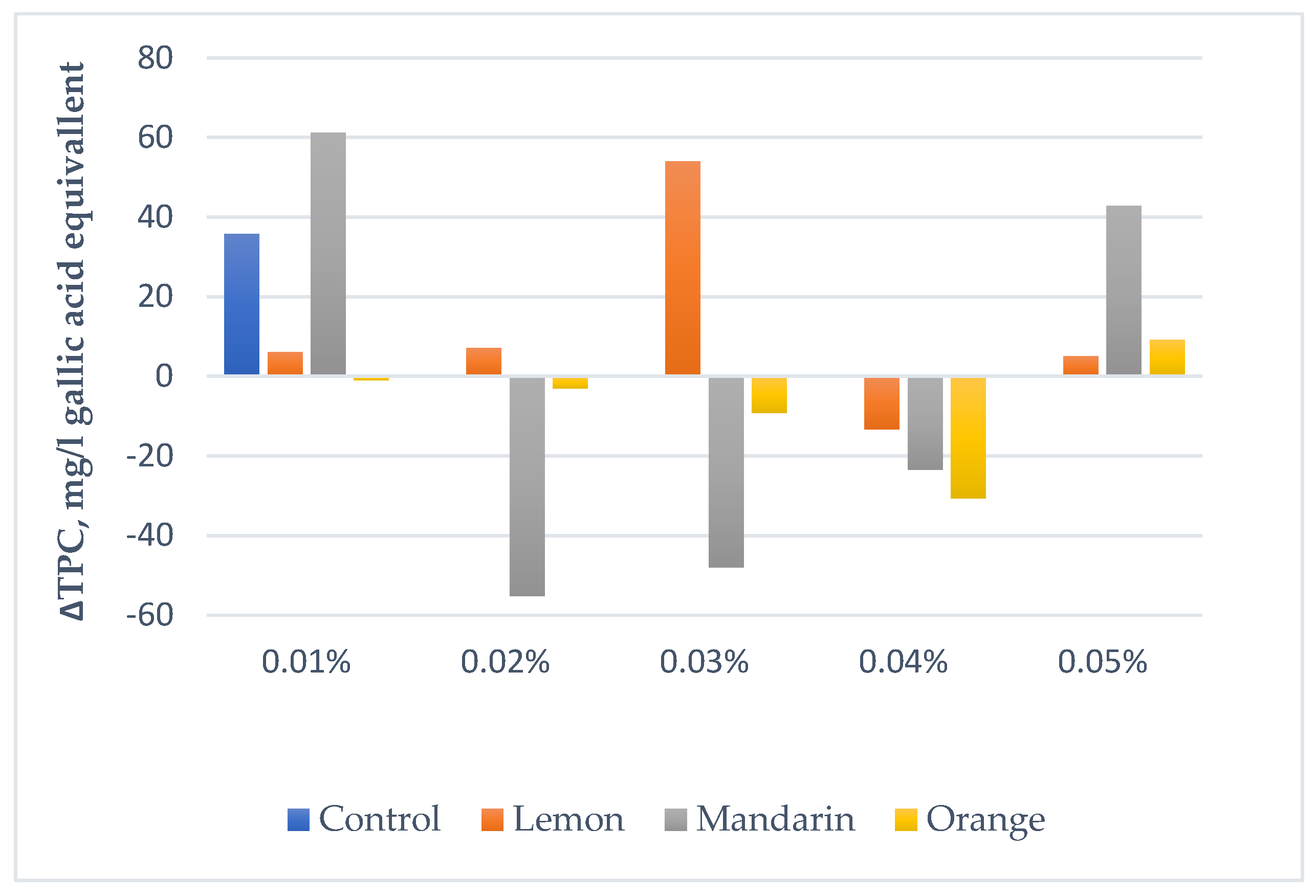
Figure 2.
Changes of antioxidant capacity of wort-based beverages supplemented with lemon, mandarin, and orange essential oils during lactic acid fermentation, measured by: (a) ABTS radical scavenging assays; (b) CUPRAC method; (c) FRAP method; (d) DPPH radical scavenging assays. Values represent the difference between the antioxidant capacity at the end of fermentation and that before inoculation.
Figure 2.
Changes of antioxidant capacity of wort-based beverages supplemented with lemon, mandarin, and orange essential oils during lactic acid fermentation, measured by: (a) ABTS radical scavenging assays; (b) CUPRAC method; (c) FRAP method; (d) DPPH radical scavenging assays. Values represent the difference between the antioxidant capacity at the end of fermentation and that before inoculation.
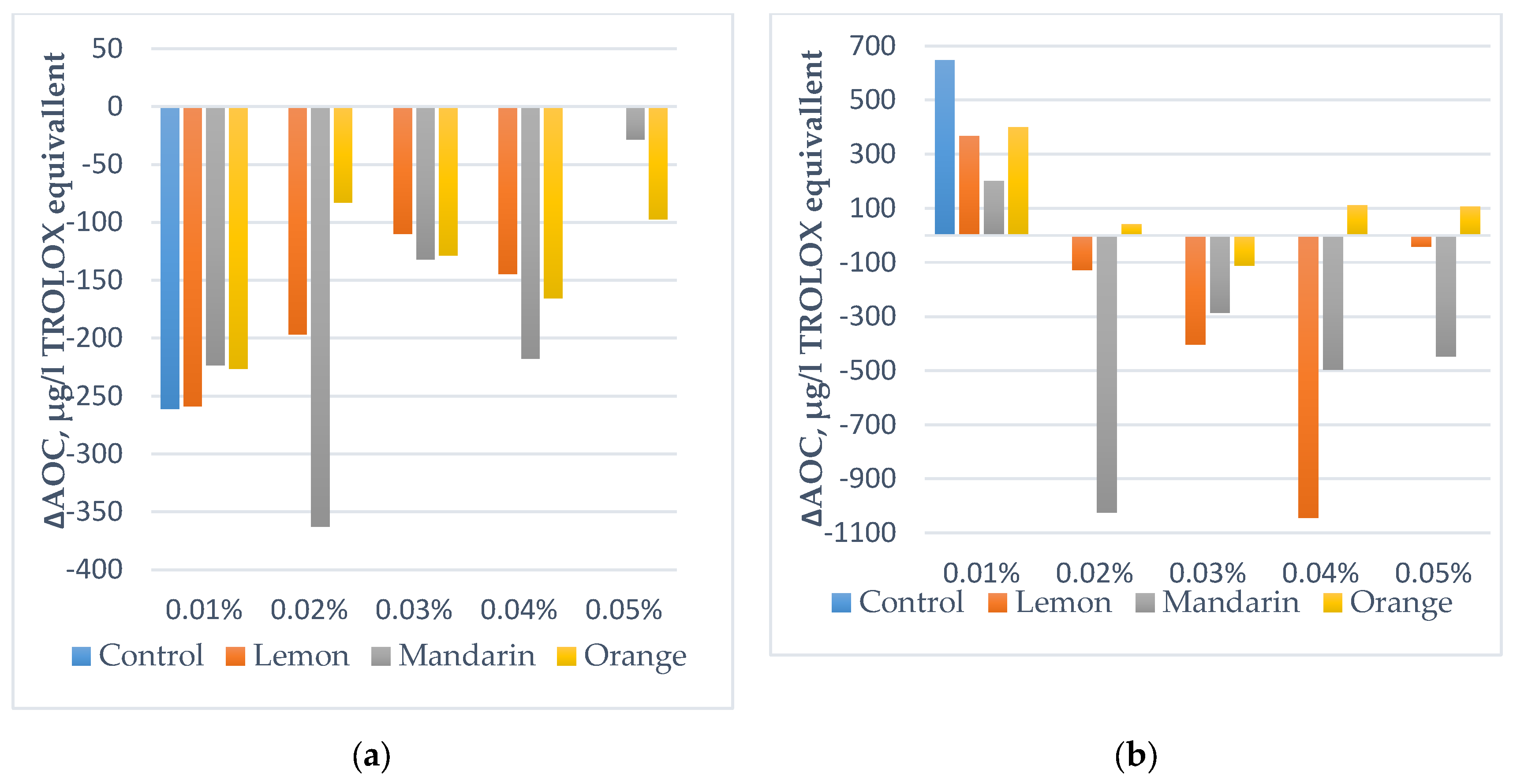
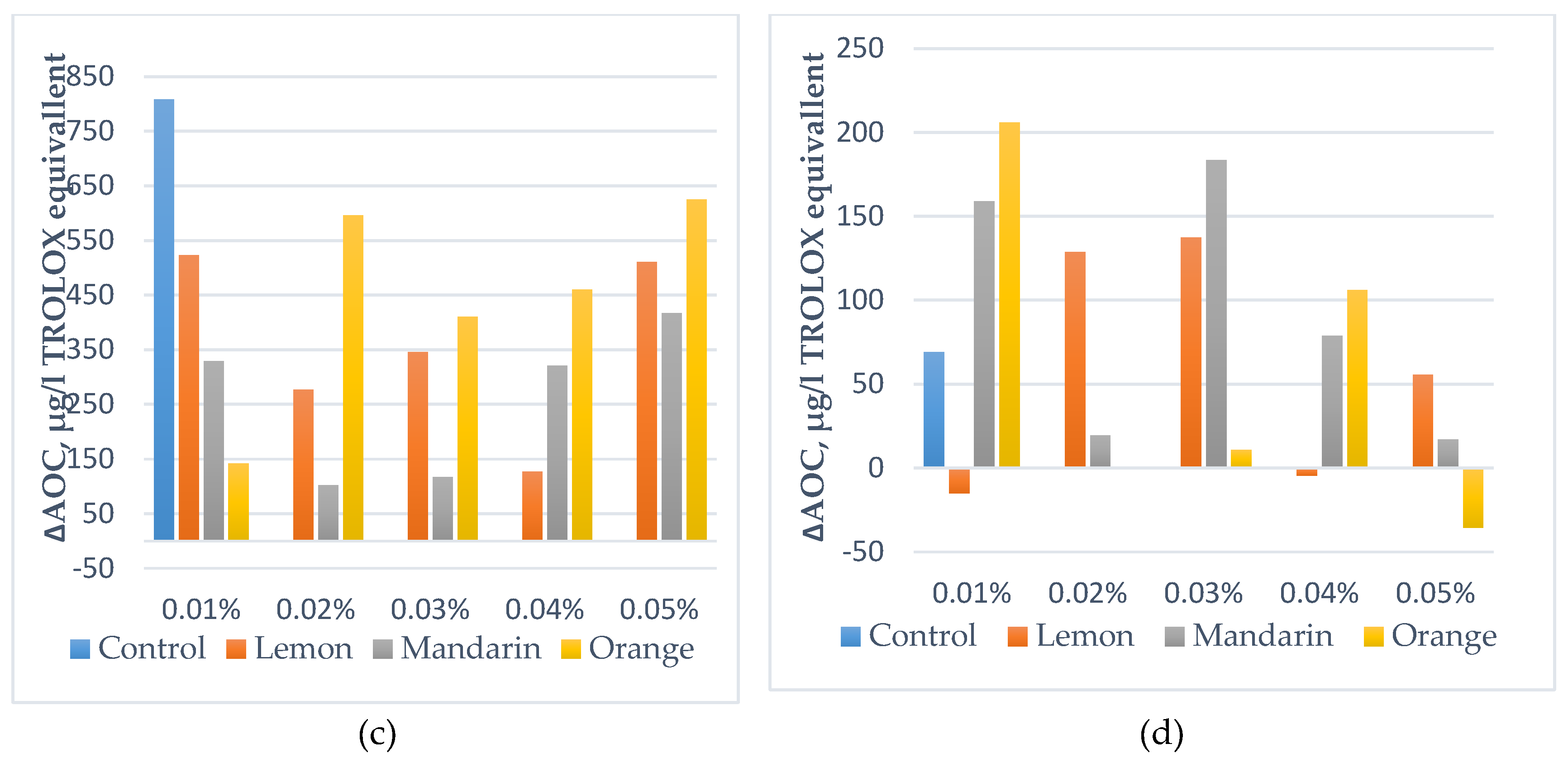
Table 1.
Antimicrobial activity of citrus essential oils against Lacticaseibacillus casei ssp. rhamnosus Oly determined by the agar disc diffusion method.
Table 1.
Antimicrobial activity of citrus essential oils against Lacticaseibacillus casei ssp. rhamnosus Oly determined by the agar disc diffusion method.
| Type of essential oil | Concentration | Diameter of inhibition zone, mm |
|---|---|---|
| Lemon | 0.1% | ND |
| 1% | ND | |
| 10% | ND | |
| Mandarin | 0.1% | ND |
| 1% | ND | |
| 10% | ND | |
| Orange | 0.1% | ND |
| 1% | ND | |
| 10% | ND |
ND – no inhibition zone detected.
Disclaimer/Publisher’s Note: The statements, opinions and data contained in all publications are solely those of the individual author(s) and contributor(s) and not of MDPI and/or the editor(s). MDPI and/or the editor(s) disclaim responsibility for any injury to people or property resulting from any ideas, methods, instructions or products referred to in the content. |
© 2026 by the authors. Licensee MDPI, Basel, Switzerland. This article is an open access article distributed under the terms and conditions of the Creative Commons Attribution (CC BY) license (http://creativecommons.org/licenses/by/4.0/).
Copyright: This open access article is published under a Creative Commons CC BY 4.0 license, which permit the free download, distribution, and reuse, provided that the author and preprint are cited in any reuse.