
Submitted:
01 September 2026
Posted:
01 September 2026
You are already at the latest version
Abstract
Objective: To determine the effects of exercise snacks on cognitive function and to examine whether intervention characteristics and cognitive domains moderate these effects. Design: Systematic review and meta-analysis. Data sources: Six electronic databases were searched from inception to May 2026 for randomised controlled trials (RCTs). Eligibility criteria: Randomised controlled trials of participants of any age evaluating exercise snacks and cognitive function were eligible. Results: This three-level meta-analysis included 25 randomised controlled trials and 152 effect sizes. Exercise snacks resulted in a significant small-to-moderate improvement in cognitive function (Hedges’ g = 0.24, 95% CI [0.10, 0.38], p < 0.001). Greater effects were observed in interventions lasting several weeks (g = 0.51) and those conducted in school or workplace settings (g = 0.61), with cognitive flexibility (g = 0.60) and inhibitory control (g = 0.28) showing the most pronounced improvements. Meta-regression identified exercise intensity (β = 0.263, p = 0.003) and inter-bout interval (β = 0.011, p = 0.035) as positive moderators. Funnel plots and trim-and-fill analysis indicated no significant publication bias (adjusted g = 0.27, 95% CI [0.21, 0.34]). Conclusions: Exercise snacks confer a significant yet modest benefit to cognitive function, with effects varying by intervention duration, setting, and cognitive domain. Benefits were most pronounced in multi-week interventions and school or workplace settings. Higher exercise intensity and longer inter-bout intervals were also associated with greater cognitive improvements. These findings provide an evidence-based basis for developing tailored cognitive enhancement programmes in school and workplace settings.
Keywords:
exercise snacks
; cognitive function
; executive function
; meta-analysis
; cognitive flexibility
1. Introduction
Insufficient physical activity has become a global public health challenge. Epidemiological evidence suggests that long-term physical inactivity significantly increases the risk of obesity and cardiovascular disease, and may be associated with cognitive decline. Currently, 31 per cent of adults and 80 per cent of adolescents fail to meet the recommended minimum levels of physical activity [1]; these figures not only highlight the prevalence of physical inactivity but also underscore the urgent need for evidence-based interventions to promote sustainable behavioural change. However, as socio-economic structures evolve, inequalities in participation in physical activity are becoming increasingly apparent—people of lower economic status often face longer working hours and less leisure time, making it difficult for them to set aside uninterrupted periods to engage in traditional forms of physical exercise [2]. In fact, lack of time is frequently cited as one of the main barriers to physical activity, stemming both from objective time constraints and individual subjective perceptions [3,4]. Against this backdrop, Short Bouts of Accumulated Exercise (SBAE) has gradually gained attention as an emerging intervention model. According to an international expert consensus published by Yin (2025) [5], exercise snacks are defined as physical activity performed in any form and at any intensity, with each session lasting no more than 10 minutes, carried out at least twice daily, and with intervals of no less than 30 minutes between sessions. This form of exercise overcomes the time and location constraints of traditional continuous exercise, offering a practical alternative for those with limited leisure time [6,7,8].
Insufficient physical activity is not only associated with an increased risk of cardiovascular and metabolic diseases and a decline in physical capacity, but has also been found to be linked to cognitive decline and the onset of cognitive impairment [9,10]. Cognitive function refers to the set of psychological processes through which an individual acquires, stores and utilises information; executive function, as a higher-order cognitive component, encompasses core subdomains such as inhibitory control, working memory and cognitive flexibility, and plays a decisive role in learning efficiency, decision-making quality and performance in daily life [11]. Given that physical inactivity may adversely affect cognition through mechanisms such as alterations in cerebral haemodynamics and neuroplasticity [12,13], exploring ES—which can be easily integrated into daily routines without requiring dedicated time—it is of great significance for improving the cognitive health of individuals with insufficient physical activity [14,15,16].
Previous systematic reviews have synthesised the effects of ES, providing an important foundation for understanding this field. Current evidence suggests that even brief, intermittent physical activity can have positive effects on health, and ES, as a time-efficient intervention model, has attracted widespread attention for its potential value. Existing reviews have further described the general associations between interventions and cognitive performance and have provided a preliminary summary of intervention outcomes across different populations [17]. However, there are still several areas where the current evidence requires further elaboration. Firstly, previous reviews have largely focused on descriptive synthesis, and systematic examination of how intervention characteristics (such as type of exercise, frequency and setting) modulate cognitive outcomes remains limited [18]. Secondly, the existing evidence is predominantly based on single acute interventions, whilst quantitative assessments of long-term cumulative effects remain relatively scarce [19]. Thirdly, whilst most studies are based on a broad framework of ‘intermittent sitting’, there is a lack of systematic quantitative summaries regarding the impact of ES—as strictly defined by the international expert consensus on Short-Burst Accumulated Exercise (SBAE)—on cognitive function [20]. Furthermore, reviews in the field of ES tend to focus on improvements in physical function or metabolic indicators, whilst systematic analyses of cognitive function remain scarce. Against this backdrop, conducting a study aimed at examining the relationship between ES and cognitive function—incorporating a greater number of randomised controlled trials and systematically investigating the moderating effects of intervention characteristics and cognitive domains on effect sizes—holds significant academic value [21].
This study aims to conduct a three-level meta-analysis to systematically synthesise 25 randomised controlled trials, comprehensively assess the effects of ES on cognitive function, and explore the moderating effects of intervention characteristics (such as activity type, setting, duration, exercise intensity and rest intervals) on cognitive outcomes [22]. This review aims to demonstrate that ES, as a practical and scalable strategy, not only contributes to a deeper understanding of its cognitive benefits but also provides an evidence-based foundation for the cognitive-enhancing effects of ES [23,24].
2. Methods
This systematic review and meta-analysis followed the methodological framework established by Cochrane, and is reported in accordance with the Preferred Reporting Items for Systematic Reviews and Meta-Analyses (PRISMA) guidelines. The protocol was publicly pre-registered in PROSPERO (CRD420261439399).
2.1. Search Strategy
The initial search covered the period from the inception of each database to May 2026 and included six electronic databases: Web of Science, PubMed, Embase, the Cochrane Library, PsycINFO, and SPORTDiscus. In addition, forward citation searching was performed on the reference lists of the included studies and previous reviews to identify additional relevant studies. The search was limited to publications in English and Chinese, with no restrictions on publication date. The search strategy was constructed using a combination of Medical Subject Headings (MeSH) and free-text terms. Terms related to the intervention and outcomes were combined using the Boolean operator “OR”: (“sedentary behavior” OR “sedentary time” OR “prolonged sitting” OR “interrupting sitting” OR “sedentary break” OR “physical activity break” OR “exercise snack” OR “Snacktivity” OR “VILPA” OR “accumulated exercise” OR “multiple short bouts of exercise”) AND (“cognition” OR “executive function” OR “memory” OR “attention” OR “inhibitory control” OR “processing speed” OR “reaction time”). Detailed search strategies for each database are provided in Supplementary Material 2.
2.2. Inclusion and Exclusion Criteria (PICOS Framework)
The inclusion and exclusion criteria for this study were established according to the PICOS framework, as follows:
Population: Studies including participants of all age groups were eligible for inclusion.
Intervention: The operational definition of “exercise snacks” adopted in this systematic review strictly followed the framework established by the expert consensus published by Yin et al. (2025). According to this consensus, ES was defined as physical activity performed using any exercise modality and at any intensity, with each exercise bout lasting ≤10 minutes, performed multiple times per day (≥2 bouts/day), and separated by intervals of ≥30 minutes to allow complete recovery.
Comparison: Comparator conditions were classified as inactive/sedentary, usual-routine, attention-matched sedentary.
Outcome: The primary outcome assessed in this systematic review was cognitive function. Based on the assessment tools used in the included studies, cognitive function measurements encompassed executive function and its core subcomponents, including inhibitory control (e.g., Eriksen Flanker Test, Stroop Test, Go/No-Go Task), working memory (e.g., N-back Test, Cogstate Battery, Digit Span, Letter Memory Test, NIH Toolbox List Sorting Working Memory Test), and cognitive flexibility (e.g., TMT-A/B, Verbal Fluency, CTMT, TMT, Trail Making Test). In addition, cognitive performance measures, including reaction time (e.g., PVT, DSST, Deary-Liewald Reaction Time Test, Simple RT, Choice RT) and accuracy (e.g., d2 Test of Attention and the accuracy component of COMPASS), were also included in the analysis.
Study Design: Randomized controlled trials (RCTs) were included. The exclusion criteria were as follows: (1) non-randomized controlled trials; (2) animal studies, reviews, conference papers, case reports, letters, or duplicate publications; (3) studies for which the full text was unavailable; (4) studies with incomplete data or from which key effect sizes could not be extracted; and (5) studies that did not report the outcomes required for this review.
2.3. Data Management and Study Selection
The retrieved records were imported into EndNote 20 software by two reviewers and screened according to the predefined selection strategy. First, duplicate records were removed. Subsequently, an initial screening was conducted by reviewing the titles and abstracts. Full-text articles were then assessed in detail according to the predefined inclusion and exclusion criteria. Finally, the study selection results were cross-checked by the two reviewers. Studies were included when consensus was reached between the two reviewers. In cases of disagreement, a third reviewer was available to adjudicate. The final inclusion decision was reached through discussion and consensus. However, no disagreements requiring resolution through discussion occurred in the present study.If key data were missing from the included studies, we would contact the corresponding authors to obtain the missing information.
2.4. Effect Size Calculation and Data Extraction
The primary effect size was Hedges’ g. All effect sizes were coded such that positive values indicated improved cognitive performance following ES relative to the control condition. For outcome measures in which lower values represented better performance, including reaction time, completion time, number of errors, interference scores, lapses, and inverse efficiency scores, the direction of the effect was reversed after calculation or data entry to ensure consistency with the direction of accuracy or composite scores. Effect size calculations were preferentially based on the post-test or change score means and standard deviations of the intervention and control groups reported in the original studies. When studies reported adjusted between-group differences, Cohen’s d, t values, standard errors, or 95% confidence intervals, these statistics were converted into Hedges’ g and its variance using standard conversion formulas. When only medians, interquartile ranges, or ranges were reported, these values were converted into means and standard deviations before calculating the effect sizes. When data were available only in graphical form, means, standard errors, or confidence intervals were extracted using digital image extraction. A single study could contribute multiple intervention arms, multiple cognitive tasks, or multiple outcome measures. To avoid the arbitrary exclusion of eligible effect sizes, all eligible effect sizes were retained in the primary analysis, and the dependency structure of effect sizes within the same study was explicitly accounted for in the meta-analysis model. To address the issue of double counting, we followed the recommendations of the Cochrane Handbook and Senn (2009). For multi-arm trials with a shared control group, the sample size of the control group was divided equally across the relevant comparison groups to avoid counting the same participants more than once. In addition, duplicate publications from the same trial cohort were excluded during the initial EndNote screening stage, thereby ensuring that no double counting occurred in the present meta-analysis.
2.5. Risk of Bias Assessment
The risk of bias was assessed at the study level using the Cochrane Risk of Bias 2.0 (RoB 2.0) tool. The assessment included the following domains: random sequence generation, allocation concealment, blinding of participants and personnel, blinding of outcome assessors, incomplete outcome data, selective reporting, and other sources of bias. Each domain was judged as “low risk,” “some concerns,” or “high risk.” The overall risk of bias was determined according to the following rules: if any domain was judged as high risk, the overall risk of bias was rated as high risk; if no domain was judged as high risk but at least one domain was judged as some concerns, the overall risk of bias was rated as some concerns; only when all domains were judged as low risk was the overall risk of bias rated as low risk.
2.6. Statistical Analysis
All meta-analyses were conducted using R software (version 4.6.0) and the metafor package (version 5.0.1). The primary analyses were performed using a three-level random-effects model, with model parameters estimated by restricted maximum likelihood (REML). The model specified effect sizes as nested within study arms and studies to account for the statistical dependency arising from multiple effect sizes contributed by the same study. The pooled effects were reported as Hedges’ g, 95% confidence intervals (CIs), and two-sided p values. Heterogeneity was described using I² and the model variance components. Categorical subgroup analyses were conducted within the same three-level modeling framework to examine activity type, implementation setting, cognitive domain, and outcome assessment timing. The pooled effect size within each subgroup was reported as Hedges’ g and 95% CIs, and between-subgroup differences were evaluated using omnibus tests of the categorical moderators within the model. Meta-regression analyses were also conducted using three-level random-effects models. Exercise intensity was entered into the model as an ordinal variable. Continuous moderators included mean age, the proportion of female participants, bout duration, activity interval, and the number of activity bouts per exposure. For multi-week interventions, additional exploratory project-level dose–response meta-regression analyses were performed, including intervention duration (weeks), cumulative exercise volume, and cumulative exercise frequency. Each moderator was modeled separately, and the regression coefficient (β), standard error, and p value were reported.
2.7. Publication Bias
Publication bias and small-study effects were assessed using funnel plots. The funnel plots were centered on the pooled effect estimate obtained from the three-level random-effects model. Trim-and-fill analysis was further performed to examine whether the direction and magnitude of the pooled effect after imputing potentially missing studies were consistent with those of the primary model.
3. Results
3.1. Study Selection
The PRISMA flow diagram illustrates the study selection process. Based on the 11 studies included in the previous review, the updated search identified a total of 16,153 records from PubMed (n = 314), Web of Science (n = 8,903), the Cochrane Library (n = 4,261), PsycINFO (n = 1,462), Embase (n = 579), and SPORTDiscus (n = 634). After removing 12,743 duplicate records and 51 records excluded for other reasons, 3,359 unique records remained for title and abstract screening. Following this stage, 3,261 records were excluded, leaving 98 articles for full-text review. Of these, the full text could not be obtained for 0 articles, and 98 articles were finally assessed for eligibility. After full-text assessment, 84 articles were excluded for the following reasons: inappropriate study design (n = 60), irrelevant topic (n = 14), and ineligible outcome measures (n = 10). No additional eligible studies were identified through citation searching or organizational websites. In total, the updated search identified 14 newly eligible studies, which, together with the 11 studies included in the previous review, resulted in a final total of 25 included studies. See Figure 1.
3.2. Characteristics of the Included Studies
The 25 included studies contributed a total of 152 effect sizes. The included studies covered children, adolescents, adults, and older adults, with the mean age of participants ranging from 7.7 to 78.0 years. All intervention protocols were characterized by short-duration, multiple accumulated bouts of physical activity. Among the coded effect sizes, the duration of each exercise bout ranged from 1 to 10 min, the reported activity interval was either 30 or 60 min, and the number of activity bouts per day or experimental session ranged from 2 to 17. According to activity type, aerobic exercise contributed 94 effect sizes from 17 studies, resistance exercise contributed 21 effect sizes from 5 studies, and multicomponent exercise contributed 37 effect sizes from 6 studies. According to intervention duration, acute single-day interventions contributed 108 effect sizes from 17 studies, whereas multi-week interventions contributed 44 effect sizes from 8 studies. Cognitive outcomes were primarily concentrated in executive function-related domains, including inhibitory control, working memory, cognitive flexibility, and attention. Specifically, inhibitory control, cognitive flexibility, working memory, attention, memory, and other cognitive domains contributed 49, 13, 39, 31, 5, and 15 effect sizes, respectively. Detailed characteristics of the included studies are presented in Supplementary Material 3.
3.3. Primary Effect Analysis
The three-level random-effects model showed that ES had a significant small beneficial effect on cognitive function (Hedges’ g = 0.24, 95% CI [0.10, 0.38], p = 0.0007). The model included 152 effect sizes, 34 study arms, and 25 studies, and explicitly modeled the dependency among multiple effect sizes contributed by the same study. Overall heterogeneity was moderate (I² = 44.17%), indicating that some variability remained across the included studies and should be further explained by potential moderators, including intervention type, implementation setting, cognitive domain, and intervention duration. See Figure 2.
3.4. Subgroup Analysis
The results of the subgroup analyses are presented in Figure 3. When stratified by activity type, multicomponent exercise showed a significant effect (Hedges’ g = 0.29, 95% CI 0.09 to 0.50, p = 0.004), and aerobic exercise showed a small but significant effect (Hedges’ g = 0.16, 95% CI 0.01 to 0.32, p = 0.034). Resistance exercise showed a larger point estimate, but the confidence interval was wide and crossed zero (Hedges’ g = 0.37, 95% CI -0.10 to 0.83, p = 0.121). The differences between activity types did not reach statistical significance (p = 0.683).
When stratified by implementation setting, studies conducted in laboratory settings showed a small but significant effect (Hedges’ g = 0.09, 95% CI 0.02 to 0.16, p = 0.012). Studies conducted in school or workplace settings showed a larger effect size (Hedges’ g = 0.61, 95% CI 0.26 to 0.96, p < 0.001). The differences between implementation settings reached statistical significance (p < 0.001).
When stratified by cognitive domain, cognitive flexibility showed the largest significant effect (Hedges’ g = 0.60, 95% CI 0.15 to 1.05, p = 0.008). Inhibitory control also showed a significant improvement (Hedges’ g = 0.28, 95% CI 0.05 to 0.50, p = 0.019). Working memory (Hedges’ g = 0.09, 95% CI -0.02 to 0.19, p = 0.097), attention (Hedges’ g = 0.13, 95% CI -0.03 to 0.29, p = 0.114), and other cognitive domains (Hedges’ g = 0.32, 95% CI -0.07 to 0.70, p = 0.106) did not reach statistical significance. The memory domain showed a negative but marginally non-significant effect (Hedges’ g = -0.37, 95% CI -0.74 to 0.00, p = 0.052); however, this subgroup was supported by only a small number of effect sizes and should therefore be interpreted with caution. The differences between cognitive domains reached statistical significance (p = 0.005).
When stratified by outcome measure type, reaction time outcomes showed a significant improvement (Hedges’ g = 0.24, 95% CI 0.10 to 0.38, p < 0.001). Composite scores also showed a significant effect (Hedges’ g = 0.40, 95% CI 0.10 to 0.71, p = 0.009), whereas no significant change was observed for accuracy outcomes (Hedges’ g = 0.08, 95% CI -0.07 to 0.22, p = 0.284). The differences between outcome measure types did not reach statistical significance (p = 0.650).
When stratified by intervention duration, acute single-day interventions showed a small but significant improvement in cognitive function (Hedges’ g = 0.11, 95% CI 0.03 to 0.18, p = 0.006). Multi-week interventions showed a larger effect size, which was also statistically significant (Hedges’ g = 0.51, 95% CI 0.15 to 0.87, p = 0.005). The difference between the two intervention durations was statistically significant (p = 0.009).
3.5. Meta-Regression Analysis
The results of the three-level meta-regression analyses for continuous variables and exercise intensity are presented in Figure 4. Exercise intensity was significantly and positively associated with the cognitive effect size (β = 0.263, p = 0.003), indicating that, under the ordinal coding of low, moderate, and high intensity, higher exercise intensity was associated with larger positive effect sizes. Activity interval was also positively associated with the cognitive effect size (β = 0.011, p = 0.035). None of the remaining continuous variables showed significant moderating effects. Mean age (β = -0.003, p = 0.473), the proportion of female participants (β = 0.002, p = 0.529), bout duration (β = -0.034, p = 0.219), and the number of activity bouts per exposure (β = -0.042, p = 0.076) did not reach statistical significance. In the exploratory meta-regression analyses restricted to multi-week interventions, intervention duration in weeks (β = -0.019, p = 0.422), cumulative exercise volume (β = -0.012, p = 0.248), and cumulative exercise frequency (β = -0.017, p = 0.392) also did not significantly predict the effect sizes.
3.6. Small-Study Effects and Publication Bias
The funnel plot is presented in Figure 5. Centered on the pooled effect estimate from the three-level random-effects model, the overall distribution of effect sizes did not show obvious asymmetry. The trim-and-fill analysis imputed 27 effect sizes on the right side of the funnel plot, resulting in an adjusted pooled effect size of Hedges’ g = 0.27 (95% CI [0.21, 0.34]). Overall, the current evidence does not suggest that the main findings were driven by substantial small-study effects or publication bias.
3.7. Risk of Bias Assessment
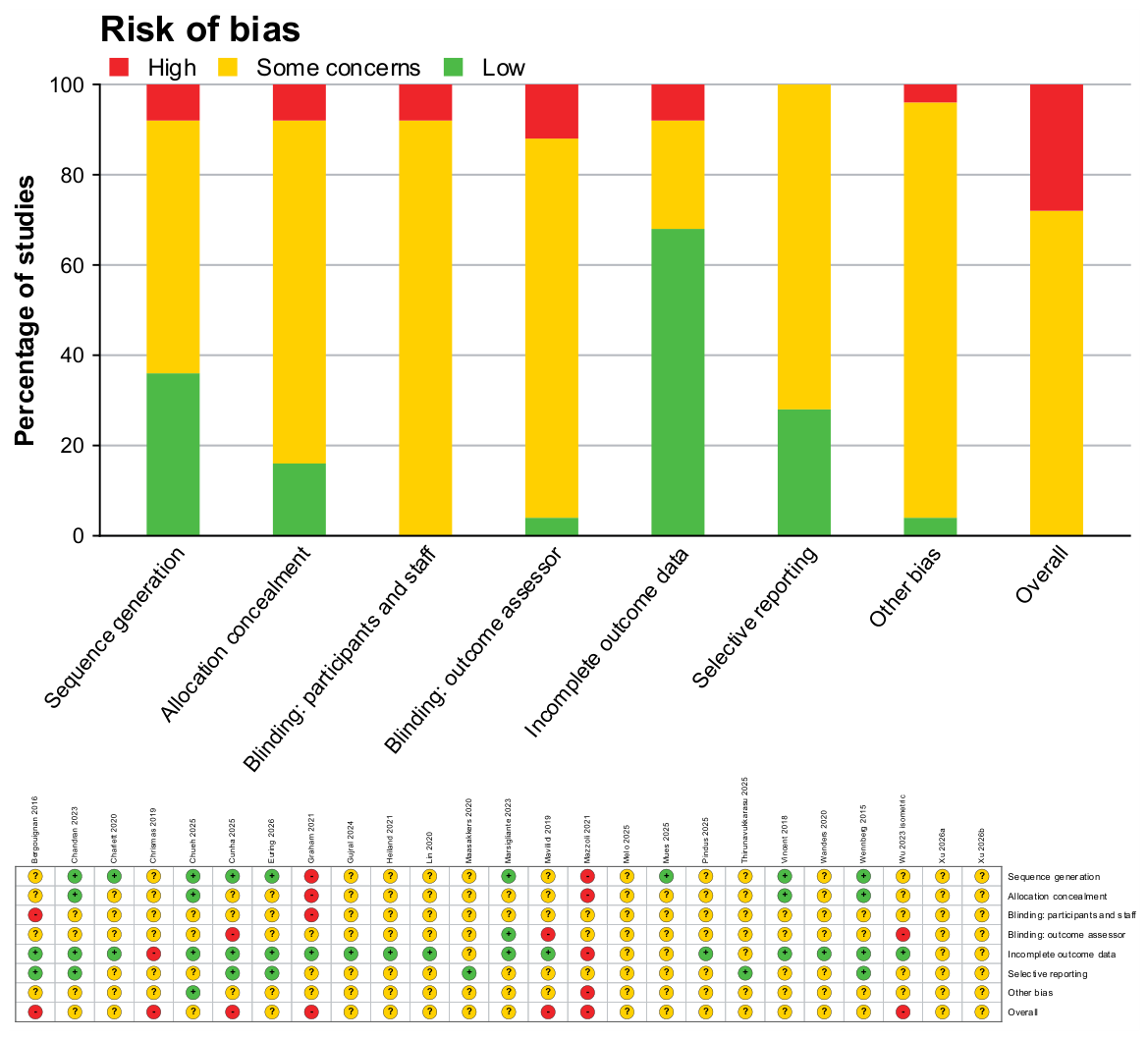
A summary of the risk of bias assessment is presented in Figure 6. Regarding the overall risk of bias, 18 studies were judged as having some concerns, and 7 studies were judged as high risk. No study was judged as having an overall low risk of bias. For random sequence generation, 9 studies were judged as low risk, 14 as some concerns, and 2 as high risk. For allocation concealment, 4 studies were judged as low risk, 19 as some concerns, and 2 as high risk. Because blinding of participants and personnel is inherently difficult in exercise intervention studies, 23 studies were judged as some concerns and 2 as high risk for the domain of blinding of participants and personnel. For blinding of outcome assessors, 1 study was judged as low risk, 21 as some concerns, and 3 as high risk. For incomplete outcome data, 17 studies were judged as low risk, 6 as some concerns, and 2 as high risk. For selective reporting, 7 studies were judged as low risk and 18 as some concerns. For other sources of bias, 1 study was judged as low risk, 23 as some concerns, and 1 as high risk.
4. Discussion
This study employed a three-level meta-analysis and provided quantitative evidence that ES can improve cognitive function, although the overall magnitude of benefit was modest. It is worth noting that this cognitive effect was not consistently observed across different intervention characteristics and cognitive outcomes [25]. Interventions lasting several weeks and those involving ES carried out in schools or workplaces demonstrated more pronounced cognitive benefits [26,27], whilst cognitive flexibility and inhibitory control appeared to be the cognitive domains most responsive to ES [28,29]. Meta-regression further indicated that exercise intensity and the intervals between activities were positively associated with cognitive benefits [30,31]. By contrast, age, the proportion of female participants, the duration of a single session, and the number of activities per session did not significantly explain the differences in effects across studies; similarly, programme duration, total cumulative exercise volume and total number of exercise sessions were not found to have a significant effect on cognitive outcomes [32]. Overall, these results suggest that the cognitive effects of ES are not determined solely by the simple accumulation of short exercise sessions, but may be related to how the exercise is organised and the environment in which it is performed [33]. Therefore, this study generally supports ES as a potential exercise strategy for promoting cognitive health, whilst also indicating that its cognitive effects are to some extent context- and outcome-dependent [34].
The findings of this study expand upon previous research on short-duration and intermittent physical activity. Whilst previous reviews have generally supported the cognitive benefits of short-duration physical activity, such studies have been limited to some extent by factors such as descriptive synthesis, a primary focus on acute responses, or the use of broader conceptual frameworks [35,36]; furthermore, these studies did not conduct a systematic analysis specifically targeting the operational definition of ES adopted in this study [37]. The findings of this study suggest that the cognitive benefits of ES may not be limited to transient responses following a single session, as multi-week interventions demonstrated more pronounced cognitive benefits compared to acute interventions [38,39]. Furthermore, the greater effects observed in school and workplace settings further emphasise the importance of the context in which ES is carried out [40,41]. These findings expand our understanding of the cognitive significance of ES, suggesting that its cognitive benefits may depend not only on the physiological stimuli generated by the exercise itself, but also on whether the exercise can be integrated into the real-life environments where an individual’s daily cognitive activities continuously occur [42]. Furthermore, the more pronounced improvements in cognitive flexibility and inhibitory control further suggest that ES may have greater potential value in supporting executive function processes such as adaptive behaviour, attentional regulation and goal-directed behaviour [43]. Therefore, rather than viewing ES as a uniform intervention with a single cognitive outcome, its effects should be understood from a more contextualised perspective, namely that cognitive responses may be jointly influenced by the implementation environment, the duration of exposure to the intervention, and specific cognitive domains [44].
The modulatory effects of exercise intensity and rest intervals can be explained by theories of physiological arousal and neuroplasticity [45]. Within this theoretical framework, exercise intensity is a key factor determining the physiological load generated by each exercise stimulus. Higher-intensity exercise may elicit a stronger acute physiological response, thereby providing a more pronounced stimulus for processes related to cognitive function, including cerebral physiological responses and neural adaptation [46]. Consequently, the positive association between exercise intensity and cognitive benefits observed in this study is consistent with the possibility that a stronger physiological stimulus may enhance cognitive responses to ES [47]. The positive association between exercise intervals and cognitive benefits, on the other hand, can be understood from a complementary perspective. Longer intervals between exercise sessions may allow individuals to recover more fully between different exercise stimuli, thereby helping to maintain the quality and intensity of subsequent exercise sessions and to sustain the intended physiological stimulation throughout the intervention [48]. Overall, the findings of this study support the view that the cognitive effects of ES may not depend solely on whether physical activity is undertaken, but may depend on the intensity of each exercise stimulus and the temporal organisation of multiple exercise stimuli.
For other interventions and participant characteristics that did not show a significant moderating effect, the results should be interpreted with caution; it cannot be concluded that these factors are unrelated to cognitive responses [49]. Age and the proportion of female participants did not exhibit significant moderating effects, suggesting that, within the scope of the current evidence, the observed cognitive benefits cannot be consistently explained by these study-level characteristics [50]. Similarly, the duration of a single exercise session and the number of exercise sessions per exposure failed to significantly explain differences in effect sizes, indicating that, based on the current evidence, it cannot yet be concluded that longer single exercise sessions or a greater number of exercise sessions per exposure lead to greater cognitive benefits [51]. No clear association was found between programme duration, cumulative exercise volume, or cumulative number of exercise sessions and cognitive effects either [52]. These negative findings may suggest that cognitive responses to ES do not follow a simple cumulative pattern based on total exercise volume [53]. On the other hand, the current evidence may not yet be sufficient to identify relationships between these factors, and the number of studies in which certain moderating variables were available for analysis is limited [54]. Therefore, the lack of statistical significance in the moderating effects should not be interpreted as indicating that these factors have no influence whatsoever, but rather that the current evidence has not yet established these variables as consistent determinants of cognitive benefits [55].
These findings have significant practical implications, particularly for those who may find it difficult to achieve adequate levels of physical activity due to time constraints [56]. ES does not require setting aside a single, continuous block of time for exercise; it can therefore be integrated into an individual’s existing daily routine, providing a flexible means of ensuring physical activity when daily time and formal exercise opportunities are limited [57]. For example, in schools and workplaces, short bursts of exercise can be incorporated into daily routines such as breaks between lessons or work breaks, enabling individuals to increase their physical activity without significantly altering their existing lifestyle or work rhythms [58]. The more pronounced cognitive effects observed in schools and workplaces suggest that these environments may be particularly well-suited to the implementation of ES. Existing evidence also suggests that ES can take various forms and be carried out in different settings, further supporting its potential for flexible application in real-life contexts [59]. This may be particularly important for those facing time constraints, limited opportunities for physical activity, or difficulties accessing traditional exercise settings [60]. More importantly, against the backdrop of global physical inactivity, ES can create more opportunities for physical activity by integrating it into daily life for those who struggle to sustain participation in traditional exercise programmes, thereby helping to address physical inactivity and, to some extent, reducing inequalities in physical activity participation caused by differences in time and access to exercise opportunities [61]. From a public health perspective, ES may serve as a viable strategy for reducing practical barriers to physical activity participation, increasing daily physical activity levels, and promoting cognitive health in everyday settings [62]. Its value lies not in replacing existing exercise recommendations, but in providing an additional exercise strategy that is easily integrated into daily life. Future research should continue to examine the potential roles of these factors based on fully described and standardised intervention protocols. In parallel, future implementation studies should further clarify how to integrate ES sustainably and consistently into the daily routines of schools and workplaces, and identify the most acceptable and feasible implementation approaches for different population groups.[63].
Limitation: This systematic review has several limitations, which should be taken into account when interpreting the results. Firstly, there are concerns regarding the overall risk of bias in the included studies. The risk of bias assessment indicated that 18 studies were rated as having ‘some concerns’, 7 studies were rated as having a ‘high risk’, and no studies were rated as having an overall low risk. Secondly, the number of studies in some subgroup analyses is limited, and the results should be interpreted with caution. For example, the resistance training subgroup comprised only 21 effect sizes, whilst the memory domain was supported by just five effect sizes. This has resulted in wide confidence intervals for the effect estimates or marginally significant results, making it difficult to draw definitive conclusions; however, this does not imply that the aforementioned factors are entirely unrelated, but may instead reflect the current lack of sufficient research and statistical power. Thirdly, although this study quantified the cognitive effects of ES through a meta-analysis, the included studies generally lacked in-depth exploration of the underlying neurophysiological mechanisms. Existing research largely relies on behavioural measures and rarely combines these with techniques such as brain imaging (e.g. fNIRS), making it difficult to fully elucidate the mechanism of ‘how ES affects cognitive function’. This, to some extent, limits the transition from observing phenomena to understanding the underlying mechanisms. In light of the above limitations, future research should focus on the following areas: firstly, conducting randomised controlled trials with larger sample sizes and longer follow-up periods, whilst ensuring independence between study design and outcome assessors, to enhance the level of evidence; secondly, undertaking targeted, high-quality studies on subgroups where current evidence is weak, such as resistance training and specific memory domains; and thirdly, actively incorporating brain imaging techniques to systematically investigate the neural mechanisms underlying the effects of ES on cognitive function.
5. Conclusion
ES have a significant, albeit modest, positive effect on cognitive function, and this effect is moderated by factors such as the duration of the intervention, the setting in which it is carried out, and the cognitive domain. In particular, cognitive benefits are more pronounced following interventions spanning several weeks and those carried out in school or workplace settings; furthermore, higher-intensity exercise and longer intervals between activities are associated with greater cognitive improvement. These findings deepen our understanding of the cognitive benefits of ES and its moderating factors, whilst also providing important quantitative evidence for optimising intervention programmes and promoting the targeted formulation of health promotion policies in school and workplace settings.
Supplementary Materials
The following supporting information can be downloaded at the website of this paper posted on Preprints.org.
Author Contributions
G. Li and Y. Xia designed the study and developed the research methodology. Y. Xia conducted the literature search and data extraction. G. Li performed the statistical analysis and interpreted the results. G. Li and Y. Xia wrote the main manuscript text. G. Li prepared the figures. M. Yin, B. Han, and H. Li critically revised and polished the manuscript. Y. Li provided directional guidance. All authors reviewed and approved the final manuscript.
Funding
No funds.
Ethics approval and consent to participate
Ethical approval was not sought for this study because the study does not contain any animal or direct human participants for experiments.
Declaration of Conflict of Interest
The authors declare no competing interests.
Declaration of generative AI and AI-assisted technologies in the writing process
No generative AI or AI-assisted technologies were used in the writing process of this work.
Resource availability
Further information and requests for resources should be directed to and will be fulfilled by the lead contact, Yongming li (liyongming@sus.edu.cn).
Materials availability
The Full-Text Screening Records for this paper is available from https://osf.io/mt4nx/overview?view_only=87682799d74b486086bd2f2679979887.
References
- Strain, T.; Flaxman, S.; Guthold, R.; Semenova, E.; Cowan, M.; Riley, L.M.; Bull, F.C.; Stevens, G.A.; Country Data Author Group. National, regional, and global trends in insufficient physical activity among adults from 2000 to 2022: A pooled analysis of 507 population-based surveys with 5·7 million participants. Lancet. Glob. Health 2024, 12, e1232–e1243. [Google Scholar] [CrossRef] [PubMed]
- Garcia, L.; Mendonça, G.; Benedetti, T.R.B.; Borges, L.J.; Streit, I.A.; Christofoletti, M.; Silva-Júnior, F.L.E.; Papini, C.B.; Binotto, M.A. Barriers and facilitators of domain-specific physical activity: A systematic review of reviews. BMC Public Health 2022, 22, 1964. [Google Scholar] [CrossRef] [PubMed]
- Hoare, E.; Stavreski, B.; Jennings, G.L.; Kingwell, B.A. Exploring Motivation and Barriers to Physical Activity among Active and Inactive Australian Adults. Sports 2017, 5, 47. [Google Scholar] [CrossRef] [PubMed]
- Koh, Y.S.; Asharani, P.V.; Devi, F.; Roystonn, K.; Wang, P.; Vaingankar, J.A.; Abdin, E.; Sum, C.F.; Lee, E.S.; Müller-Riemenschneider, F.; et al. A cross-sectional study on the perceived barriers to physical activity and their associations with domain-specific physical activity and sedentary behaviour. BMC Public Health 2022, 22, 1051. [Google Scholar] [CrossRef] [PubMed]
- Yin, M.; Li, Y.; Aziz, A.R.; Buffey, A.; Bishop, D.J.; Bao, D.; Nassis, G.P.; Islam, H.; Wang, H.; Fyfe, J.J.; et al. Short bouts of accumulated exercise: Review and consensus statement on definition, efficacy, feasibility, practical applications, and future directions. J. Sport Health Sci. Advance online publication. 2025, 15, 101088. [Google Scholar] [CrossRef] [PubMed]
- Islam, H.; Gibala, M.J.; Little, J.P. Exercise Snacks: A Novel Strategy to Improve Cardiometabolic Health. Exerc. Sport Sci. Rev. 2022, 50, 31–37. [Google Scholar] [CrossRef] [PubMed]
- Stamatakis, E.; Huang, B.H.; Maher, C.; Thøgersen-Ntoumani, C.; Stathi, A.; Dempsey, P.C.; Johnson, N.; Holtermann, A.; Chau, J.Y.; Sherrington, C.; et al. Untapping the Health Enhancing Potential of Vigorous Intermittent Lifestyle Physical Activity (VILPA): Rationale, Scoping Review, and a 4-Pillar Research Framework. Sports Med. 2021, 51, 1–10. [Google Scholar] [CrossRef] [PubMed]
- Murphy, M.H.; Lahart, I.; Carlin, A.; Murtagh, E. The Effects of Continuous Compared to Accumulated Exercise on Health: A Meta-Analytic Review; Sports medicine: Auckland, N.Z., 2019; Volume 49, pp. 1585–1607. [Google Scholar] [CrossRef] [PubMed]
- Iso-Markku, P.; Aaltonen, S.; Kujala, U.M.; Halme, H.L.; Phipps, D.; Knittle, K.; Vuoksimaa, E.; Waller, K. Physical Activity and Cognitive Decline Among Older Adults: A Systematic Review and Meta-Analysis. JAMA Netw. Open 2024, 7, e2354285. [Google Scholar] [CrossRef] [PubMed]
- Valkenborghs, S.R.; Noetel, M.; Hillman, C.H.; Nilsson, M.; Smith, J.J.; Ortega, F.B.; Lubans, D.R. The Impact of Physical Activity on Brain Structure and Function in Youth: A Systematic Review. Pediatrics 2019, 144, e20184032. [Google Scholar] [CrossRef] [PubMed]
- Diamond, A.; Lee, K. Interventions shown to aid executive function development in children 4 to 12 years old. Science 2011, 333, 959–964. [Google Scholar] [CrossRef] [PubMed]
- Kramer, A.F.; Erickson, K.I.; Colcombe, S.J. Exercise, cognition, and the aging brain. J. Appl. Physiol. 2006, 101, 1237–1242. [Google Scholar] [CrossRef] [PubMed]
- Vancampfort, D.; Firth, J.; Stubbs, B.; Schuch, F.; Rosenbaum, S.; Hallgren, M.; Deenik, J.; Ward, P.B.; Mugisha, J.; Van Damme, T.; et al. The efficacy, mechanisms and implementation of physical activity as an adjunctive treatment in mental disorders: A meta-review of outcomes, neurobiology and key determinants. World Psychiatry Off. J. World Psychiatr. Assoc. (WPA) 2025, 24, 227–239. [Google Scholar] [CrossRef] [PubMed]
- Chang, Y.K.; Labban, J.D.; Gapin, J.I.; Etnier, J.L. The effects of acute exercise on cognitive performance: A meta-analysis. Brain Res. 2012, 1453, 87–101. [Google Scholar] [CrossRef] [PubMed]
- Zhuang, M.; Yin, M.; Liu, Z.; Xiao, N.; Yi, Q.; Fan, Z.; Yan, H.; Li, X.; Wu, B.; Qiu, S.; et al. Acute cognitive effects of interruptions to prolonged sitting with brief standing or physical activity breaks: A systematic review and three-level meta-analysis. Int. J. Behav. Nutr. Phys. Act. Advance online publication. 2026. [Google Scholar] [CrossRef] [PubMed]
- Jones, M.D.; Clifford, B.K.; Stamatakis, E.; Gibbs, M.T. Exercise Snacks and Other Forms of Intermittent Physical Activity for Improving Health in Adults and Older Adults: A Scoping Review of Epidemiological, Experimental and Qualitative Studies. Sports Med. 2024, 54, 813–835. [Google Scholar] [CrossRef] [PubMed]
- Huang, Z.; Yin, M.; Li, G.; He, J.; Yi, Q.; Zhuang, M.; Wu, B.; Toledo, M.J.L.; Wongpipit, W.; Xu, W. Effect of breaking up prolonged sitting with physical activity on executive function: A three-level meta-analysis. In The International Journal of Behavioral Nutrition and Physical Activity; Advance online publication; 2026. [Google Scholar] [CrossRef] [PubMed]
- Wang, H.; Chang, Y.; Wang, H.; Diao, K.; Sun, S. Acute effects of “exercise snacks” during prolonged sitting on hemodynamics and peripheral vascular function: A three-level meta-analysis. Nutr. Metab. 2026, 23, 61. [Google Scholar] [CrossRef] [PubMed]
- Shao, Y.; Long, X. Effects of exercise interventions on cognitive function in sedentary adults: A systematic review and network meta-analysis. Front. Public Health 2026, 14, 1794345. [Google Scholar] [CrossRef] [PubMed]
- Rodríguez, M.Á.; Quintana-Cepedal, M.; Cheval, B.; Thøgersen-Ntoumani, C.; Crespo, I.; Olmedillas, H. Effect of exercise snacks on fitness and cardiometabolic health in physically inactive individuals: Systematic review and meta-analysis. Br. J. Sports Med. 2026, 60, 133–141. [Google Scholar] [CrossRef] [PubMed]
- Liu, X.; Xia, Y.; Gao, X.; Wang, R. Exercise snacks and cognitive health in older adults: Mechanisms, implementation, and public health relevance. Front. Public Health 2026, 14, 1850516. [Google Scholar] [CrossRef] [PubMed]
- Cheung, M.W. A Guide to Conducting a Meta-Analysis with Non-Independent Effect Sizes. Neuropsychol. Rev. 2019, 29, 387–396. [Google Scholar] [CrossRef] [PubMed]
- Sanders, J.P.; Biddle, S.J.H.; Gokal, K.; Sherar, L.B.; Skrybant, M.; Parretti, H.M.; Ives, N.; Yates, T.; Mutrie, N.; Daley, A.J.; et al. ‘Snacktivity™’ to increase physical activity: Time to try something different? Prev. Med. 2021, 153, 106851. [Google Scholar] [CrossRef] [PubMed]
- Birinci, Y.Z.; Pancar, S.; Şimşek, H.; Soylu, Y.; Burac, D.G.; Ionescu, A.; Şahin, Ş.; Geantă, V.A. High-intensity interval training differentially modulates acute BDNF and cognitive responses in young adult males: A randomized crossover trial. In Scientific Reports; Advance online publication; 2026. [Google Scholar] [CrossRef] [PubMed]
- Basso, J.C.; Suzuki, W.A. The Effects of Acute Exercise on Mood, Cognition, Neurophysiology, and Neurochemical Pathways: A Review. Brain Plast. 2017, 2, 127–152. [Google Scholar] [CrossRef] [PubMed]
- Reparaz-Escudero, I.; Izquierdo, M.; Bischoff-Ferrari, H.A.; Martínez-Lage, P.; Sáez de Asteasu, M.L. Effect of long-term physical exercise and multidomain interventions on cognitive function and the risk of mild cognitive impairment and dementia in older adults: A systematic review with meta-analysis. Ageing Res. Rev. 2024, 100, 102463. [Google Scholar] [CrossRef] [PubMed]
- Watson, A.; Timperio, A.; Brown, H.; Best, K.; Hesketh, K.D. Effect of classroom-based physical activity interventions on academic and physical activity outcomes: A systematic review and meta-analysis. Int. J. Behav. Nutr. Phys. Act. 2017, 14, 114. [Google Scholar] [CrossRef] [PubMed]
- Liu, W.; Wang, Z.; Yi, J.; Li, X. The effects of physical activity on executive function in preschool children: A meta-analysis of randomized controlled trials. Front. Psychol. 2026, 17, 1882118. [Google Scholar] [CrossRef] [PubMed]
- Mehren, A.; Özyurt, J.; Thiel, C.M.; Brandes, M.; Lam, A.P.; Philipsen, A. Effects of Acute Aerobic Exercise on Response Inhibition in Adult Patients with ADHD. Sci. Rep. 2019, 9, 19884. [Google Scholar] [CrossRef] [PubMed]
- Jacob, N.; So, I.; Sharma, B.; Marzolini, S.; Tartaglia, M.C.; Green, R. Effects of high-intensity interval training on blood lactate levels and cognition in healthy adults: Protocol for systematic review and network meta-analyses. Syst. Rev. 2022, 11, 31. [Google Scholar] [CrossRef] [PubMed]
- Pyke, W.; Ifram, F.; Coventry, L.; Sung, Y.; Champion, I.; Javadi, A.H. The effects of different protocols of physical exercise and rest on long-term memory. Neurobiol. Learn. Mem. 2020, 167, 107128. [Google Scholar] [CrossRef] [PubMed]
- Gebel, A.; Lesinski, M.; Behm, D.G.; Granacher, U. Effects and Dose-Response Relationship of Balance Training on Balance Performance in Youth: A Systematic Review and Meta-Analysis. Sports Med. 2018, Volume 48, 2067–2089. [Google Scholar] [CrossRef] [PubMed]
- Palmer, S.; Shaw, E.; Grocke-Dewey, M.; Corlew, K.; Flournoy, L.; Balis, L.E. Contextual factors influencing the integration of physical activity policy, systems, and environmental interventions in the cooperative extension system: A systematic review. Int. J. Behav. Nutr. Phys. Act. 2026, 23, 63. [Google Scholar] [CrossRef] [PubMed]
- Brini, S.; Sohrabi, H.R.; Peiffer, J.J.; Karrasch, M.; Hämäläinen, H.; Martins, R.N.; Fairchild, T.J. Physical Activity in Preventing Alzheimer’s Disease and Cognitive Decline: A Narrative Review. Sports Med. 2018, Volume 48, 29–44. [Google Scholar] [CrossRef] [PubMed]
- Wilke, J.; Giesche, F.; Klier, K.; Vogt, L.; Herrmann, E.; Banzer, W. Acute Effects of Resistance Exercise on Cognitive Function in Healthy Adults: A Systematic Review with Multilevel Meta-Analysis. Sports Med. 2019, Volume 49, 905–916. [Google Scholar] [CrossRef] [PubMed]
- Freyer, M.; Jost, C.; Jankowiak, S.; Bressem, K.A.; Hegewald, J. Evaluating the methods used to examine sitting breaks and their influence on mental load, physical strain, and cognitive performance - a scoping review. Front. Physiol. 2026, 17, 1755356. [Google Scholar] [CrossRef] [PubMed]
- Vanherle, J.; Franssen, G.H.L.M.; Ivanova, A.; Eijnde, B.O.; Franssen, W.M.A. Optimizing physical activity bouts to interrupt sedentary behaviour for cardiometabolic health: A systematic review and meta-analyses of randomized controlled trials. Eur. J. Prev. Cardiol. Advance online publication. 2026, zwag079. [Google Scholar] [CrossRef] [PubMed]
- Ballesteros, S.; Audifren, M.; Badache, A.; Belkin, V.; Giannaki, C.D.; Kaltsatou, A.; Marusic, U.; Ziaaldini, M.M.; Peskar, M.; Reales, J.M.; et al. Effects of chronic physical exercise on executive functions and episodic memory in clinical and healthy older adult populations: A systematic review and meta-analysis protocol. Syst. Rev. 2024, 13, 98. [Google Scholar] [CrossRef] [PubMed]
- Lesinski, M.; Hortobágyi, T.; Muehlbauer, T.; Gollhofer, A.; Granacher, U. Dose-response relationships of balance training in healthy young adults: A systematic review and meta-analysis. Sports Med. 2015, Volume 45, 557–576. [Google Scholar] [CrossRef] [PubMed]
- Henriquez-Maquehue, F.; Díez-Fernández, A.; Ruiz-Hermosa, A.; Bermejo-Cantarero, A.; Navarro-Martínez, Ó.; Rodríguez-Martín, B.; Sánchez-López, M. Rationale and methods of the MOVI-HIIT! cluster-randomized controlled trial: An avatar-guided virtual platform for classroom activity breaks and its impact on cognition, adiposity, and fitness in preschoolers. Front. Digit. Health 2026, 8, 1829401. [Google Scholar] [CrossRef] [PubMed]
- da Silva, D.N.F.B.; Faro, H.K.C.; Tavares, M.P.M.; do Nascimento Neto, L.I.; Agrícola, P.M.D.; Machado, D.G.D.S. Influence of workplace exercise on workers’ cognitive performance. Revista brasileira de medicina do trabalho: Publicacao oficial da Associacao Nacional de Medicina do Trabalho-ANAMT 2021, 19, 157–164. [Google Scholar] [CrossRef] [PubMed]
- Latino, F.; Tafuri, G.; Amato, G.; Romano, G. Physical Activity, Cognitive Function, and Learning Processes: The Role of Environmental Context. Behav. Sci. 2025, 15, 1630. [Google Scholar] [CrossRef] [PubMed]
- Huang, T.Y.; Chen, F.T.; Li, R.H.; Hillman, C.H.; Cline, T.L.; Chu, C.H.; Hung, T.M.; Chang, Y.K. Effects of Acute Resistance Exercise on Executive Function: A Systematic Review of the Moderating Role of Intensity and Executive Function Domain. Sports Med.-Open 2022, 8, 141. [Google Scholar] [CrossRef] [PubMed]
- Mavilidi, M.F.; Vazou, S.; Lubans, D.R.; Robinson, K.; Woods, A.J.; Benzing, V.; Anzeneder, S.; Owen, K.B.; Álvarez-Bueno, C.; Wade, L.; et al. How physical activity context relates to cognition across the lifespan: A systematic review and meta-analysis. Psychol. Bull. 2025, 151, 544–579. [Google Scholar] [CrossRef] [PubMed]
- Huang, J.; Leng, L.U.; Hu, M.; Cui, X.; Yan, X.U.; Liu, Z.; Wang, K.; Wu, J.; He, S.; Deng, W.; et al. Comparative Effects of Different Exercise Types on Cardiovascular Health and Executive Function in Sedentary Young Individuals. Med. Sci. Sports Exerc. 2025, 57, 1110–1122. [Google Scholar] [CrossRef] [PubMed]
- Dhahbi, W.; Briki, W.; Heissel, A.; Schega, L.; Dergaa, I.; Guelmami, N.; Omri, A.E.; Chaabene, H. Physical Activity to Counter Age-Related Cognitive Decline: Benefits of Aerobic, Resistance, and Combined Training-A Narrative Review. Sports Med.-Open 2025, 11, 56. [Google Scholar] [CrossRef] [PubMed]
- Chow, Z.S.; Moreland, A.T.; Macpherson, H.; Teo, W.P. The Central Mechanisms of Resistance Training and Its Effects on Cognitive Function; Sports medicine: Auckland, N.Z., 2021; Volume 51, pp. 2483–2506. [Google Scholar] [CrossRef] [PubMed]
- Schoenmakers, P.P.J.M.; Reed, K.E. The effects of recovery duration on physiological and perceptual responses of trained runners during four self-paced HIIT sessions. J. Sci. Med. Sport 2019, 22, 462–466. [Google Scholar] [CrossRef] [PubMed]
- O’Connor, A.M.; Sargeant, J.M.; Wang, C. Conducting systematic reviews of intervention questions III: Synthesizing data from intervention studies using meta-analysis. Zoonoses Public Health 2014, 61, 52–63. [Google Scholar] [CrossRef] [PubMed]
- Most, S.B.; Kennedy, B.L.; Petras, E.A. Evidence for improved memory from 5 minutes of immediate, post-encoding exercise among women. Cogn. Res. Princ. Implic. 2017, 2, 33. [Google Scholar] [CrossRef] [PubMed]
- Oberste, M.; Javelle, F.; Sharma, S.; Joisten, N.; Walzik, D.; Bloch, W.; Zimmer, P. Effects and Moderators of Acute Aerobic Exercise on Subsequent Interference Control: A Systematic Review and Meta-Analysis. Front. Psychol. 2019, 10, 2616. [Google Scholar] [CrossRef] [PubMed]
- Li, G.; Liu, C.; Chen, A. Dose-response effects and mechanistic pathways linking physical exercise to brain volume and cognition: A systematic review and meta-analysis of randomized controlled trials. European review of aging and physical activity: Official journal of the European Group for Research into Elderly and Physical Activity 2026, 23, 6. [Google Scholar] [CrossRef] [PubMed]
- Li, S.; Zhang, J.; Yang, Y. Correlation between the physical activity volume and cognitive and mental capacity among older adult people in China: A cross-sectional study based on the 2020 CHARLS database. Front. Public Health 2024, 12, 1462570. [Google Scholar] [CrossRef] [PubMed]
- Farrukh, S.; Habib, S.; Rafaqat, A.; Sarfraz, A.; Sarfraz, Z.; Tariq, H. Association of exercise, brain-derived neurotrophic factor, and cognition among older women: A systematic review and meta-analysis. Arch. Gerontol. Geriatr. 2023, 114, 105068. [Google Scholar] [CrossRef] [PubMed]
- Lovell, D.P. Null hypothesis significance testing and effect sizes: Can we ‘effect’ everything … or … anything? Curr. Opin. Pharmacol. 2020, 51, 68–77. [Google Scholar] [CrossRef] [PubMed]
- Hesketh, K.R.; Lakshman, R.; van Sluijs, E.M.F. Barriers and facilitators to young children’s physical activity and sedentary behaviour: A systematic review and synthesis of qualitative literature. Obesity reviews: An official journal of the International Association for the Study of Obesity 2017, 18, 987–1017. [Google Scholar] [CrossRef] [PubMed]
- Hillsdon, M.; Metcalf, B.; Newton, J.N.; Wanigatunga, A.A.; Schrack, J.A. Every move counts: But some more than others. Int. J. Behav. Nutr. Phys. Act. 2026, 23, 10. [Google Scholar] [CrossRef] [PubMed]
- Peiris, D.L.I.H.K.; Duan, Y.; Vandelanotte, C.; Liang, W.; Baker, J.S. In-classroom physical activity breaks program among school children in Sri Lanka: Study protocol for a randomized controlled trial. Front. Public Health 2024, 12, 1360210. [Google Scholar] [CrossRef] [PubMed]
- Alexe, D.I.; Saha, S.; Choudhary, P.K.; Alexe, C.I.; Choudhary, S.; Tohănean, D.I. Exercise Snacks as a Strategy to Interrupt Sedentary Behavior: A Systematic Review of Health Outcomes and Feasibility. Healthcare 2025, 13, 3216. [Google Scholar] [CrossRef] [PubMed]
- Nickel, S.; von Dem Knesebeck, O. Do multiple community-based interventions on health promotion tackle health inequalities? Int. J. Equity Health 2020, 19, 157. [Google Scholar] [CrossRef] [PubMed]
- Salvo, D.; Crochemore-Silva, I.; Wendt, A.; Tarp, J.; Shiroma, E.J.; Simpson, R.J.; Lee, I.M.; Ekelund, U.; Cerin, E.; Keita, Y.; et al. Physical activity for public health in the 21st century. Nat. Med. 2026, 32, 1479–1489. [Google Scholar] [CrossRef] [PubMed]
- Bantham, A.; Taverno Ross, S.E.; Sebastião, E.; Hall, G. Overcoming barriers to physical activity in underserved populations. Prog. Cardiovasc. Dis. 2021, 64, 64–71. [Google Scholar] [CrossRef] [PubMed]
- Koorts, H.; Eakin, E.; Estabrooks, P.; Timperio, A.; Salmon, J.; Bauman, A. Implementation and scale up of population physical activity interventions for clinical and community settings: The PRACTIS guide. Int. J. Behav. Nutr. Phys. Act. 2018, 15, 51. [Google Scholar] [CrossRef] [PubMed]
Figure 1.
PRISMA flow diagram of study selection for the meta-analysis.
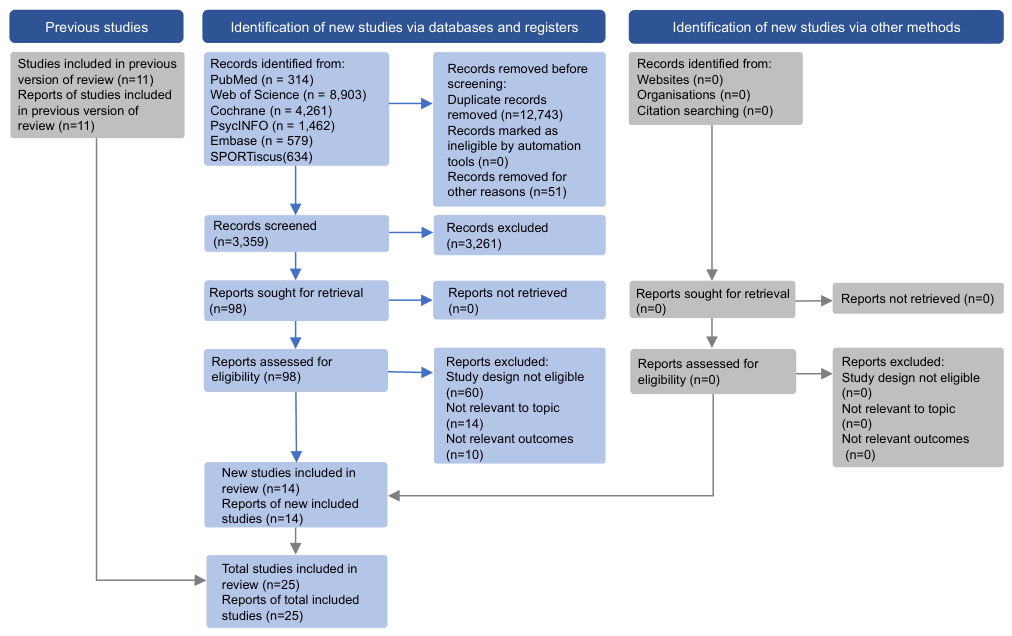
Figure 2.
Overall three-level random-effects forest plot of Hedges’ g. Note: The forest plot displays the distribution of all individual effect sizes (Hedges’ g) included in the comparison and their corresponding 95% confidence intervals. Each horizontal line represents a single effect size and its corresponding confidence interval. The pooled estimate is indicated by a diamond at the bottom.
Figure 2.
Overall three-level random-effects forest plot of Hedges’ g. Note: The forest plot displays the distribution of all individual effect sizes (Hedges’ g) included in the comparison and their corresponding 95% confidence intervals. Each horizontal line represents a single effect size and its corresponding confidence interval. The pooled estimate is indicated by a diamond at the bottom.
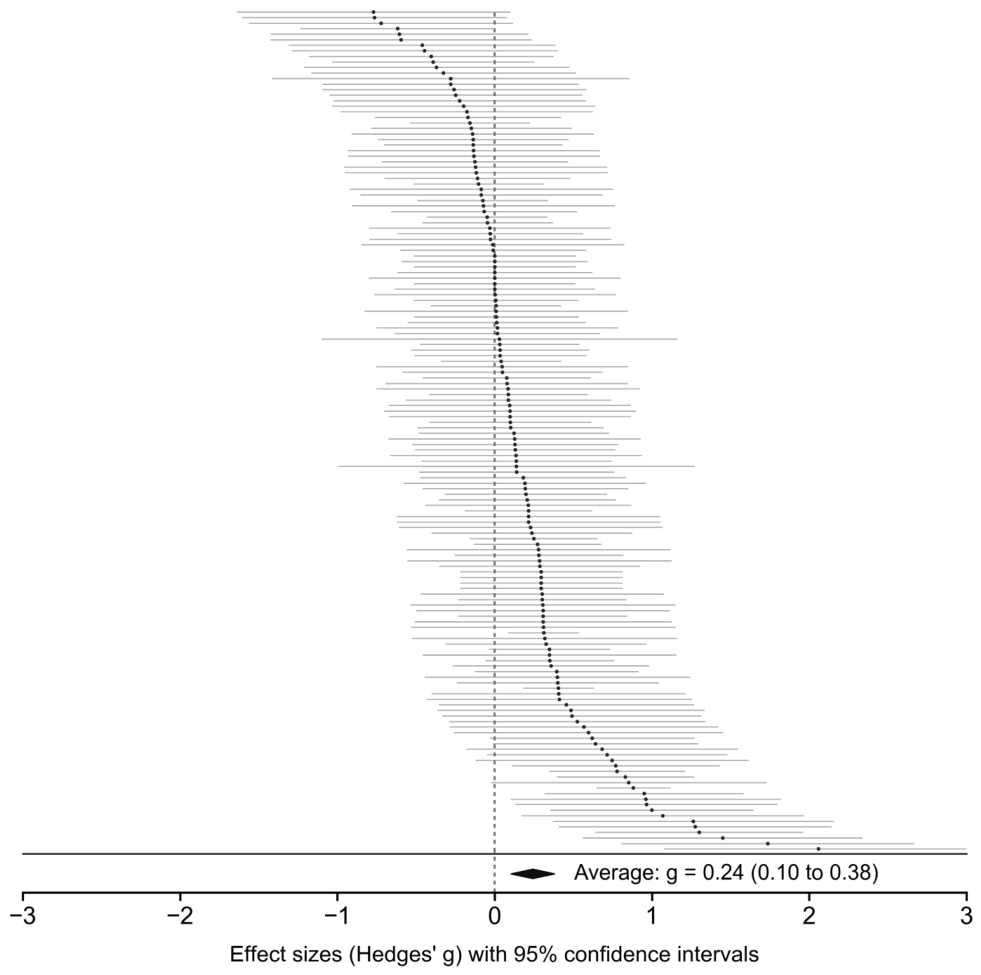
Figure 3.
Subgroup analyses based on three-level random-effects models.
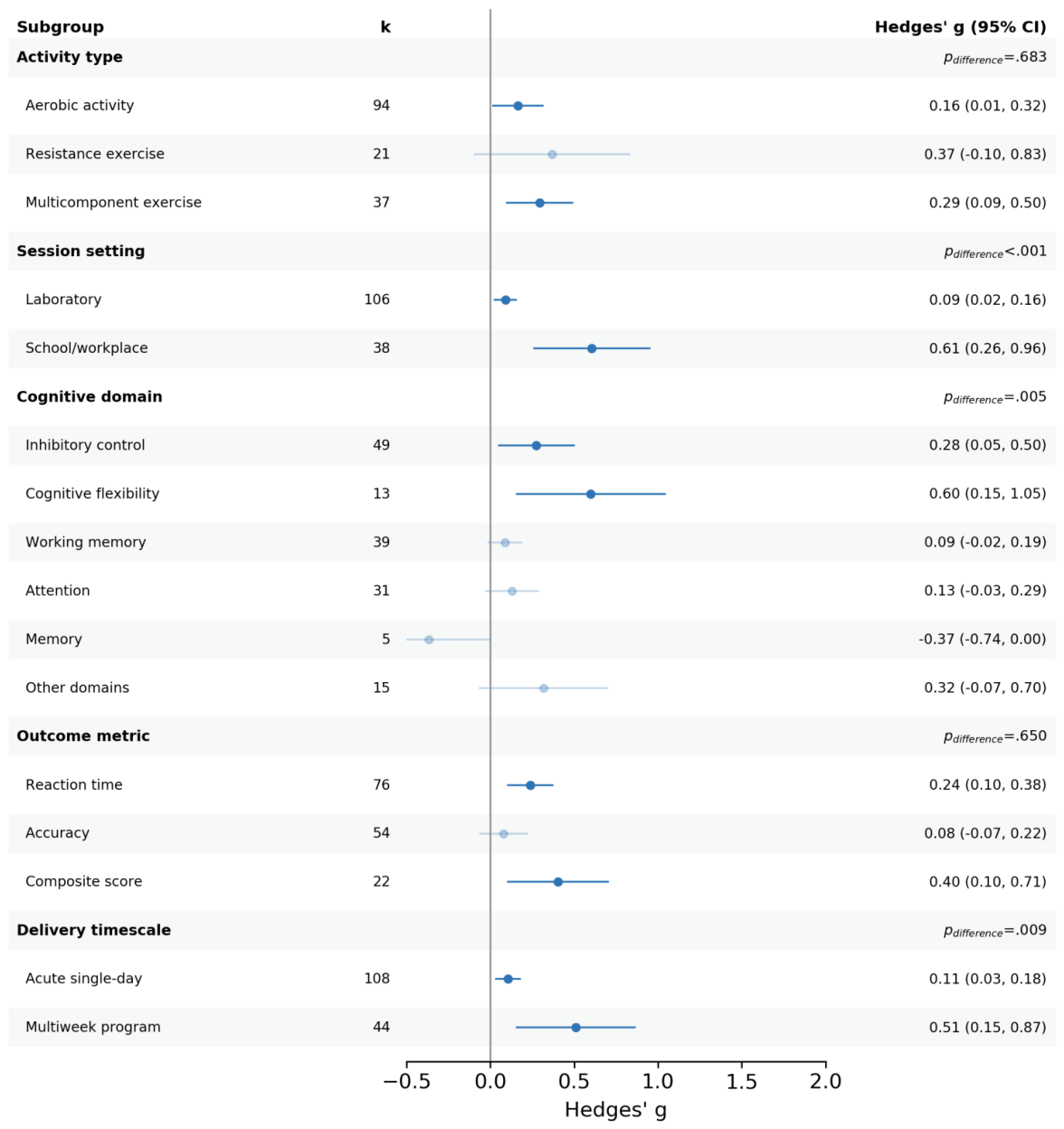
Figure 4.
Three-level meta-regression analyses for intensity and continuous moderators.
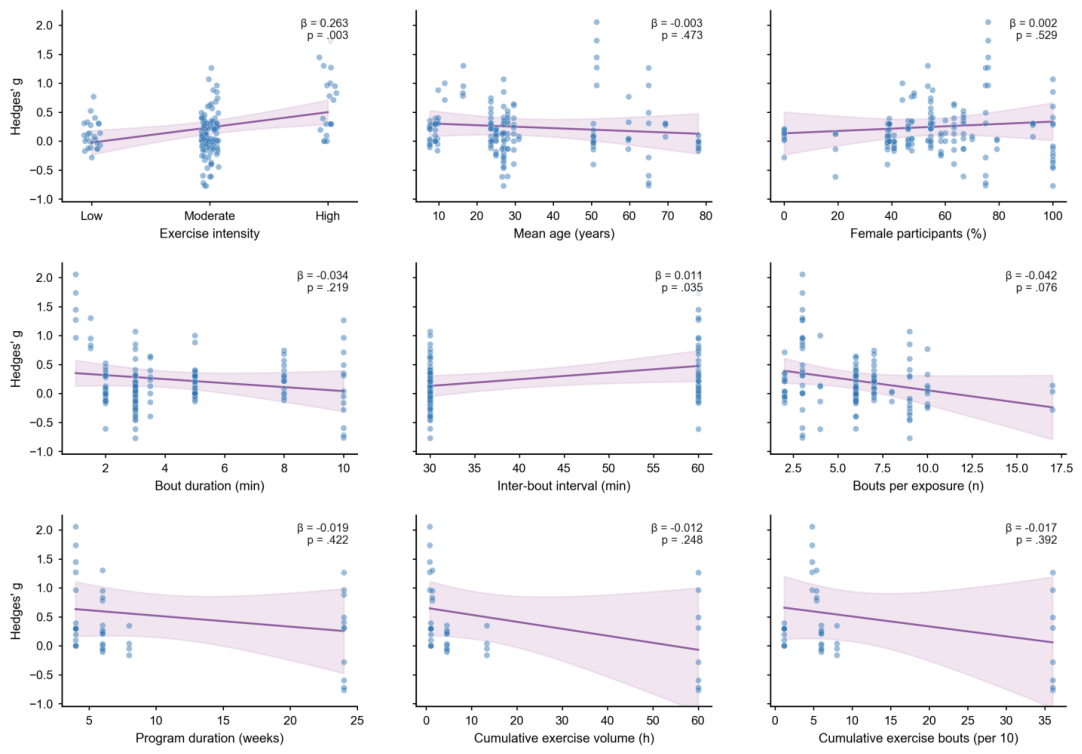
Figure 5.
Funnel plot with exploratory trim-and-fill sensitivity overlay.
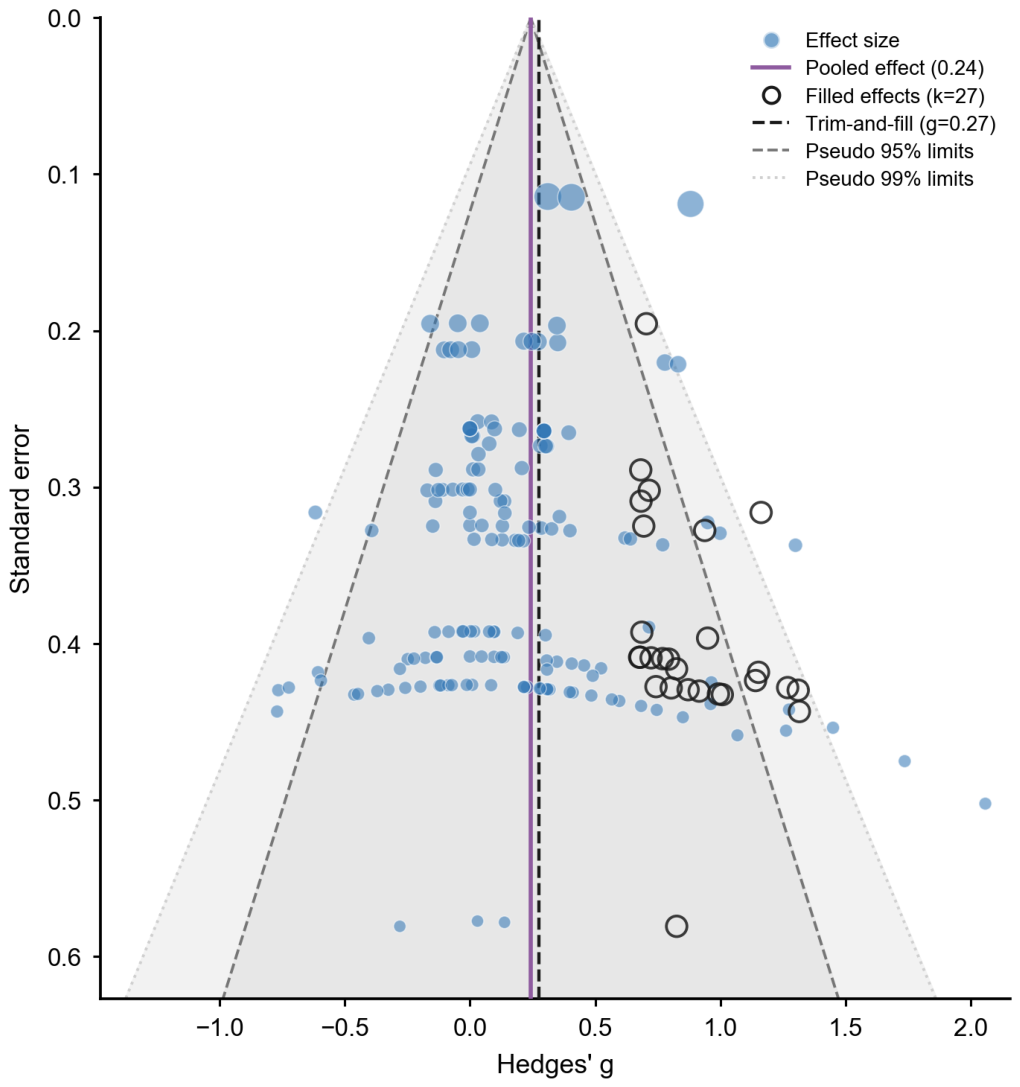
Figure 6.
Risk-of-bias summary across included studies.
Disclaimer/Publisher’s Note: The statements, opinions and data contained in all publications are solely those of the individual author(s) and contributor(s) and not of MDPI and/or the editor(s). MDPI and/or the editor(s) disclaim responsibility for any injury to people or property resulting from any ideas, methods, instructions or products referred to in the content. |
© 2026 by the authors. Licensee MDPI, Basel, Switzerland. This article is an open access article distributed under the terms and conditions of the Creative Commons Attribution (CC BY) license (http://creativecommons.org/licenses/by/4.0/).
Copyright: This open access article is published under a Creative Commons CC BY 4.0 license, which permit the free download, distribution, and reuse, provided that the author and preprint are cited in any reuse.