
Submitted:
31 August 2026
Posted:
01 September 2026
You are already at the latest version
Abstract
The early-stage design process in architecture is critical for shaping conceptual, aesthetic, and functional ideas, and it is also the most influential phase for determining embodied and operational carbon emissions. Key variables such as structure, materials, form, and size are largely established before construction. However, in architectural education, students often prioritize form and aesthetics while underestimating the integration of sustainability concepts needed to reduce carbon emissions. This is particularly evident in relation to acoustics, which can contribute to buildings energy performance, but it is often treated separately from sustainability-oriented design education. In response to this gap, this exploratory pilot educational study examines a design studio exercise to understand how early-stage acoustic design decisions influence the building performance. The study adopts a comparative case-study approach, investigating four comparable student projects developed by 13 students in the Building Utilities 2 course at the American University of Ras Al Khaimah in the United Arab Emirates, which focuses on acoustic and lighting design. A quantitative method is applied to analyze the design studio exercise through building performance simulations. Based on building simulation results, the acoustic design strategies reveal varied outcomes across four projects. Some projects show reduction in total building carbon, and annual energy use intensity, while embodied carbon increases in some cases because of material selection decisions. These findings suggest that acoustic design can support performance-based decision making during the early-design stages within a studio environment. The study also highlights the need for architectural education to integrate sustainability strategies that encourage future architects to consider carbon, energy, material, and acoustic performance together in their design processes. In this way, simulation-based design pedagogy can strengthen students’ understanding of embodied carbon reduction strategies and low-carbon building design.
Keywords:
architecture education
; low-carbon-buildings
; acoustics
; early-stage design
1. Introduction
To achieve climate targets such as those outlined in the Paris Agreement, carbon reduction efforts must start at the initial design stage [1,2,3]. Early decisions regarding materials, structure, size, and reuse strategies determine a large share of a buildings total carbon emissions and are far more effective than trying to mitigate impacts at later stages. Accordingly, the early-stage design is the most critical phase for influencing both embodied and operational carbon emissions in buildings, as key variables affecting emissions, such as structure, materials, form, and size, are largely established prior to construction. As a result, these early-stage design decisions have a large influence on the total emissions across building’s life cycle.
Evidence suggests that approximately 15% of total emissions are already determined at the concept stage, while around 50% of embodied carbon comes from structural systems, and a further 15% from material selection, both defined early in the design process. This highlights that, even in the absence of detailed data, initial design choices shape a large portion of future emissions. However, although it has the greatest influence, the early -stage design often lacks the detailed data required for precise calculations [1].
It is without a doubt that design phase in the life cycle of a building is paramount for building performance. This is a critical area for collaboration since such collaborations influence the entire building life-cycle and its performance. According to Zhou and Herr [2], it is during this design stage that 80% of a building’s whole life-cycle energy consumption is determined. However, selecting effective carbon reduction strategies is not an easy task, as it requires input from diverse stakeholders. Furthermore, studies have shown that there is a shortage of relevant studies and shortage of design tools that support the integration of necessary technologies in the early architectural design stages, where decisions will have a significant impact on buildings’ performance after completion [2,3]. Holberg and Ruth [3] add that “Life-cycle assessment (LCA) has not been widely applied in the building design process because it is perceived to be complex and time-consuming”. Selecting effective carbon reduction strategies at the design stage presents a multifaceted challenge due to the complex interplay of factors requiring input from diverse stakeholders. This complexity stems from the need to identify relevant decision variables, assign appropriate weightings, and reconcile conflicting priorities among architects, developers, engineers, contractors, policymakers, and property owners [4,5].
Despite efforts to reduce carbon emissions from buildings, most stakeholders in the construction sector have placed less emphasis on the design phase, as previously mentioned, focusing instead on building performance. However, the literature highlights those decisions made during the early-stage design greatly impact future building standards. A key issue is that certain design considerations, such as acoustics, are often overlooked during the early-design stage design process, even when life-cycle assessment is implemented, despite their potential influence on energy efficiency. Another complexity arises from a lack of knowledge regarding how to apply whole life sustainability strategies during the design stage. As Holberg and Ruth [3] state, architects generally lack the knowledge and experience required to implement these strategies. Therefore, simplified approaches are needed that embed expertise within design tools to allow architects to focus on their primary task of designing buildings.
Architectural design education is where future architects should start using these sorts of parameters in their designs. The authors, over several years, have observed that architecture students, and particularly architecture design studios, are more focused on form and the aesthetics of the students’ projects and tend to underestimate the integration of concepts of sustainability for carbon emission reduction and the achievement of environmental, social, and economical sustainability. This particular study presents a design studio undertaken by the authors, where the students were also asked to integrate acoustic control into their designs and to demonstrate how acoustic design control can also help improve building performance in the future, since certain elements of acoustic design control also contribute to the thermal performance of a building.
To address this gap, the authors developed a design studio, in which students were required to integrate acoustic control into their projects. The aim was not only to improve acoustic performance but also to demonstrate how acoustic design decisions can influence overall performance. Students were encouraged to explore the relationship between acoustic control and thermal performance, highlighting the broader role of building systems in sustainable design.
1.1. Research Aim, Research Questions, and Hypotheses
The aim of this study is to examine the extent to which integrating acoustic design considerations into early-stage architectural design can influence building carbon and energy performance, while also evaluating the pedagogical value of using building performance simulation within architectural education. In doing so, the study distinguishes between a building performance objective and an educational objective.
The study addresses the following questions:
RQ1: Does the integration of acoustic design considerations into early-stage architectural design improve building carbon performance metrics, including total carbon, embodied carbon, and operational carbon?
RQ2: Does the integration of acoustic design considerations influence annual energy use intensity?
RQ3: How does the use of simulation-based design pedagogy support student’s understanding of the relationship between acoustic design, sustainability, and building performance?
Based on these questions, the study proposes the following hypotheses:
H1: Integrating acoustic design considerations into early-stage architectural design can reduce total building carbon emissions.
H2: Acoustic design interventions can contribute to improvements in annual energy use intensity, depending on the type and extent of the intervention.
H3: Simulation-based pedagogy improves students’ understanding of the relationship between acoustic design decisions and sustainability-related building performance outcomes.
1.2. Architecture Education and the Integration of SDGs in Design Studio Pedagogy
According to Ng and Lin [6], architectural education has evolved over the years in response to social, economic, and technological changes, highlighting the need to align with 21st century skills. While these new skills are not new to architecture, they are not systematically embedded in curricula but rather developed informally at the individual level. As a result, their acquisition remains incidental rather than intentional. Consequently, architectural education must adopt more structured approaches to ensure that future architects are equipped with the knowledge and skills required to address contemporary environmental and social challenges.
Within this context, the buildings and construction sector accounts for 32 per cent of global energy consumption and contribute 34 per cent of global CO2 emissions [7]. As noted in the introduction, the early-stage design is the most critical phase for influencing both embodied and operational carbon emissions in buildings and for advancing sustainability. Therefore, architectural education should put greater emphasis on building performance and sustainability considerations during the design process. Hence, the importance of building performance and building systems, including acoustics, is emphasized by green building rating systems. For example, LEED requires an integrative approach to design at the very early stages of an architectural project, in which at a minimum water and energy systems, including building envelope, are examined [8]. This requirement highlights the importance of integrating performance-based decision making into the design process from its earliest stage. In addition, the National Architectural Accrediting Board (NAAB), which accredits architecture programs in countries worldwide, requires student coursework to demonstrate compliance with Student Criterion 6 (SC.6): Building Integration. To satisfy this criterion, students must demonstrate the ability to make informed design decisions within architectural projects while effectively integrating building envelope systems and assemblies, structural systems, environmental control systems, and life safety systems. Furthermore, students are expected to evaluate and demonstrate measurable building performance outcomes as an integral part of the design process (NAAB).
Consequently, it is paramount that architectural design education adapts its studio practices to integrate good design and aesthetics with considerations of embodied carbon emission concerns, while actively encouraging future architects to incorporate these parameters into their design processes to enhance knowledge and experience to conduct design strategies for embodied carbon reduction strategies. Such an approach aligns both with contemporary sustainability goals and with performance-based expectation of professional accreditation frameworks.
In support to this objective, as part of the United Nations’ 2030 Agenda for Sustainable Development [9], a global call to action has been established to end poverty, protect the planet, and promote peace and prosperity for all by 2030. This agenda includes a set of proactive strategies aimed at reducing the carbon footprint of buildings through the Sustainable Development Goals (SDGs), which comprise seventeen targets. While some countries have integrated these goals into mandatory regulatory frameworks, in others their implementation remains largely voluntary. The United Arab Emirates (UAE) is among the countries that have adopted a mandatory Climate Change Law, the UAE Net Zero 2050, enacted on 28 August 2024 [10]. This further indicate the urgency of integrating SDGs into architectural education, equipping future architects with the knowledge and skills required to address these challenges through design.
Building upon these sustainability objectives, the authors have observed over several years that architecture students and design studios tend to priorities form and aesthetics, while often neglecting or struggling with the integration of sustainability concepts for carbon emission reduction. Within this context, architectural education is confronted with the complexity of sustainable development principles and the challenge of effectively communicating their meaning. There is a clear need for the systematization of knowledge, alongside the identification of effective pedagogical approaches for teaching sustainability [11]. This need was emphasized by the Copenhagen Declaration in 2009, which states that: “Architecture must utilize holistic, integrative methods from the smallest scale up through that of city and regional planning, never forgetting that buildings, landscapes, the natural environment and infrastructures are all essential elements in the continuous creation of a sustainable future”. The declaration further highlights the importance of more and better education and training in Sustainability by Design within both academic curricula and professional development programs [12]. This emphasis on sustainability education is further reinforced by international bodies. Similarly, the international union of architects (UIA) further emphasize that:
“Today, architectural education is of utmost importance in responding effectively to global challenges such as climate change, inequality and urban migration. Different educational approaches and policies can be found across the world, with social and cultural values as well as traditions and local characteristics exercising a major influence on the scope of content covered by schools. On the other hand, the need to establish a general framework encompassing the architect’s role and major responsibilities in the design process places the study of systems of accreditation and the validation of educational institutions on today’s agenda” [13].
Reinforcing this perspective, El-Kholei and Yassein [14] argue that architectural and planning education is fundamental to achieving sustainable development, which can only be achieved through cross-sectoral efforts that begin with education. Technology solutions, political regulation, or financial tools alone are insufficient to fully realize sustainable development. Rather, education that engages with the interdependence of environmental, economic, and social dimensions foster the critical mindset shift necessary to support informed decision-making in design processes. El-Kholei and Yassein [14] further emphasize that “education is the means for changing an individual’s perspective”, which supports the view that education can enable future professionals to integrate sustainability more effectively into architectural practice.
While sustainability and building performance are increasingly emphasized in architectural education, acoustics is rarely discussed as a contributor to sustainability outcomes. The following section examines the relationship between acoustics and sustainable building performance.
2. Acoustics and SDGs
While acoustics is often overlooked in discussions of sustainable development, it has important implications for building performance and environmental outcomes. As noted by the Grove [15], the UN Sustainable Development Goals do not explicitly mention sound or noise within any of the 17 goals and therefore do not directly highlight the importance of considering acoustics in sustainable development. However, acoustic design plays an important role in achieving several sustainability-related objectives because it:
- Affects environmental performance: Acoustic design decisions (e.g., material use) influence carbon emissions, resource consumption, and waste across a building’s life cycle.
- Impacts the design of the building envelope, which is considered an energy related system of a building.
- Enhances health and wellbeing: good acoustic environments reduce noise stress, improve concentration, and support mental and physical health
- Improves communication and accessibility: proper room acoustics enable clear speech, which is especially critical in schools, workplaces, in inclusive environments (e.g., for people with special educational needs)
- Shapes human experience of spaces: sound is not just something to control, it contributes to how people perceive and interact with environments (the soundscape approach)
- Influences productivity and performance: well-designed acoustic environments reduce distractions and support efficient work and learning.
Even though acoustic design is not explicitly addressed within the United Nations Sustainable Development Goals, its contribution to building performance clearly supports SDG objectives, not only those related to health and well-being, but also those associated with energy efficiency, and sustainable resource use.
Although acoustics is not explicitly referenced within the SDGs, growing evidence suggests that it plays an important role in achieving broader sustainability objectives. Recent research has demonstrated that sustainability-driven design decisions can significantly influence the acoustic performance of buildings, even though sustainability and acoustic objectives have traditionally been considered independent design considerations. [16] examined the trade-offs between acoustic performance and sustainability in building design and argued that these objectives are closely interrelated. The study suggests that integrating acoustics into the sustainable design process not only improves occupant comfort but also contributes to reducing building-related carbon emissions.
Building on these findings, a comprehensive understanding of the environmental impacts associated with acoustic requirements is essential for developing effective strategies for sustainable building design. In particular, selecting acoustic materials with low embodied carbon can reduce the environmental footprint of buildings while maintaining the required acoustic performance [17]. Material selection and optimization are increasingly recognized as critical aspects of sustainable building design, requiring solutions that simultaneously satisfy energy efficiency, environmental sustainability, and high-performance thermal and acoustic requirements [18]. Consequently, material selection decisions should be considered an integral part of the design process, as they directly influence both building performance and environmental outcomes.
Poor acoustic and thermal insulation can significantly increase operational energy demand, leading to higher carbon emissions throughout a building's life cycle. Consequently, acoustic performance should be considered during the early-stage design processes to enable integrated solutions that optimize both environmental and building performance [19]. Despite the growing recognition of these interrelationships, Murphy [20] further emphasizes that, while mechanical and structural engineering disciplines have become central to the implementation of sustainable design strategies, the environmental implications of architectural acoustics remain relatively underexplored. Nevertheless, acoustic design decisions present considerable opportunities to reduce embodied and operational carbon emissions while maintaining appropriate acoustic quality. These findings underscore the urgent need to establish stronger synergies between architectural acoustics and sustainable building practices. As a result, greater attention should be given to acoustic design during both professional practice and architectural education, particularly during the early stages of the design process when key performance related decisions are made.
To establish such synergies, holistic design approaches can help reconcile acoustic performance with environmental objectives. Examples include optimizing structural mass distribution to achieve the required sound insulation with less material, specifying natural and bio-based materials that simultaneously provide sound absorption and lower embodied carbon, and designing energy-efficient mechanical systems that minimize unwanted noise while reducing energy consumption [21].
The successful implementation of these approaches relies on collaboration among a range of professionals within the built environment sector. Acousticians, engineers, academics, manufacturers, and consulting professionals are uniquely positioned to influence sustainable design decisions across the built environment. Through informed material specification, integrated design strategies, and interdisciplinary collaboration, these professionals can contribute to reducing carbon emissions while enhancing building performance and occupant well-being [22]. Consequently, their engagement is essential for ensuring that acoustic considerations are effectively integrated into broader sustainability and decarbonization strategies.
However, despite the growing recognition of these opportunities, the absence of explicit recognition has contributed to acoustics being frequently overlooked in both architectural design practice and sustainability-oriented design strategies. This attitude is also reflected in architectural education, where acoustics is often underemphasized in studio pedagogy. To address this gap, the authors implemented a performance-based design studio approach that integrates acoustic considerations into the early-stage design. The findings demonstrate that acoustically informed design can significantly enhance overall building performance, particularly in terms of energy use and carbon outcomes, which are presented in the subsequent sections.
3. Materials and Methods
This research adopts a case study approach to examine “how” and “why” design decisions influence building performance. Accordingly, the methodology was structured to evaluate two related but distinct dimensions: building performance outcomes before and after acoustic design interventions, and the educational value of using simulations-based tools to support students’ understanding of sustainability-oriented design decisions. Using a comparative approach, the study investigates for comparable student projects to identify patterns, variations, and differences in performance across different contexts. The Building Utilities 2 course at the American University of Ras Al Khaimah in the United Arab Emirates, which focuses on acoustic and lighting design, is considered as the case study setting. The projects selected for this study were implemented during the Spring 2026 semester. The course is theory + lab (2+3) and includes theoretical and well as practical assessments. There were in total thirteen students (level four and five, out of which four were male and nine females of age 23-24) enrolled to the course, which worked in groups as well as individually. The students haven’t previously taken any acoustic design related course; therefore, the course aimed to provide knowledge and skills in acoustic design and awareness of its influence on building performance. The class was divided into four groups (three groups of three students and one group consisting of four students). Hence, the results of four student group projects are used in this study. As an output of this method, four buildings are compared in terms of total carbon and energy intensity. The groups worked from the same project brief, a three-storied coworking space building that is in hot arid area; however, buildings designs differed from group to group. Therefore, each of the four buildings was compared individually based on simulation results before and after acoustic design implementation.
The quantitative analysis is employed to evaluate reductions in total building carbon and energy intensity resulting from acoustic design interventions. The objective is to identify the extent to which these interventions influence building performance outcomes. Comparative evaluation is based on building performance simulations conducted before and after the implementation of acoustic design measures. Revit Insight was used to simulate and estimate building energy use intensity (EUI), operational carbon (OC), embodied carbon (EC), and total carbon (TC).
EUI represents the annual energy consumed by a building relative to its floor area. In this study, Revit Insight uses the building information model generated in Revit, together with local weather data, to simulate building energy performance and estimate projected annual energy consumption. This value is then divided by the total conditioned floor area to normalize the result and express it as EUI.
OC represents the greenhouse gas (GHG) emissions generated during a building's operational phase, including emissions associated with heating, cooling, lighting, and equipment use. In Revit Insight, OC is estimated by multiplying the Energy Analysis Model’s (EAM) predicted energy use by the carbon intensity of the local energy grid.
EC represents the greenhouse emissions associated with a building’s physical materials across stages such as manufacturing, transportation, and construction. In Revit Insight, EC is estimated using material quantities, such as volume or mass, that are derived from the Revit model for building elements including concrete, steel, and glazing. These materials are then mapped to embodied carbon factors from Building Transparency's EC3 (Embodied carbon in construction calculator) database.
TC represents the combined life-cycle carbon footprint of a building, including both embodied carbon from material inputs and operational carbon from energy use. In Revit Insight, TC is estimated by combining material related carbon impacts with simulated energy consumption over an assumed building lifespan, thereby, and aggregating the building’s total life-cycle carbon impact into a unified metric.
This research has the following limitations:
- As the focus of the project was on acoustic design, and the project selected for acoustic design was a students’ previous semester studio design project, the proposed improvements to the building envelope’s acoustic performance, but did not implement them.
- The students applied acoustic design to selected spaces within the chosen building only, as the project was limited to half a semester (eight weeks.
- Building performance results are influenced by the design quality and the baseline characteristics of the previously selected student projects.
- Project and group results are influenced by the material selection decisions made by each group.
- The study involved a small sample of 13 students and four group projects. Therefore, the study should be understood as pilot educational case study. The findings are exploratory, and the results should not be generalized without further research involving larger samples and repeated implementations.
- A full life-cycle assessment of the selected materials is not required as part of the course.
4. Results
4.1. Project Brief Description
As mentioned in the materials and methods chapter, students’ previous studio projects, namely coworking-space building, were selected for acoustic improvement. As part of the group work, and prior to undertaking the individual tasks, students examined acoustic regulations and requirements, assessed the impact of noise on users’ wellbeing, the identification of potential sources of noise from outside and within the building (airborne and structure-borne noise), the identification of passive and active zones within the building, and the development of solutions for building acoustic design and building envelope improvement. Students proposed solutions for improving the building envelope; however, they were not required to implement these solutions because the project focused primarily on acoustic design. This approach is consistent with the limitations outlined in the methodology section and reflects the study’s emphasis on evaluating the impact of acoustic design interventions on building performance.
As part of the group work, students also performed building performance simulations using Revit Insight and identified the total carbon (TC), embodied carbon (EC), operational carbon (OP), and annual energy use intensity (EUI) of the building before and after the implementation of the acoustic design interventions.
The individual tasks required students to select acoustic treatment methods and materials for the spaces assigned to them and apply the solutions to the spaces. As deliverables, students were required to submit a project report, a Revit Insight simulation analysis, and both group and individual posters.
The group poster was required to include information on building and space design evaluation, comparison against relevant acoustic regulations, proposed building envelope improvements, and building carbon analysis conducted before and after the acoustic design interventions. Figure 1 (a) shows an example of a student group poster. In contrast, individual posters focused on students’ acoustic design solutions, selected materials, estimated reverberation time calculations, drawings, and 3D renderings of the assigned spaces (see figure 1(b) for an example of an individual student poster).
The outcomes of these activities formed the basis for the building performance assessment presented in this study. The simulations and building performance results obtained before and after the implementation of acoustic design interventions are presented in Figure 2 and Figure 3. For the Revit Insight simulations, the Revit model and the project’s geographic location were used as input parameters.
4.2. Results and Findings
Table 1 presents the results of the building performance simulations for all four student groups before and after acoustic improvement. Group 2 is discussed in greater detail because it achieved the most substantial improvement in overall building performance and annual energy use intensity (see Figure 1 (a), (b), 2 and 3).
Based on the building performance simulation results, the acoustic design strategies applied Group 1’s project total building carbon reduced total building carbon by 37.48 KgCO₂e, embodied carbon by 36.02 KgCO₂e, operational carbon by 1.45 KgCO₂e, and annual energy use intensity by 0.01 kWh/m². Group 2’s project reduced total building carbon by 165,024.16 KgCO₂e, operational carbon by 173,971.05 KgCO₂e, and annual energy use intensity by 135.7kWh/m², while embodied carbon increased by 8,926.89 KgCO₂e. Group 3 showed no changes in total building carbon, embodied carbon, or annual energy use intensity and a minor increase in operational carbon (2 KgCO₂e). Group 4 improved project reduced total building carbon by 11,025.09 KgCO₂e, operational carbon by 18,511.25 KgCO₂e, and annual energy use intensity by 19.44 kWh/m², while embodied carbon increased by 7,486.52 KgCO₂e.
Overall, the results demonstrate that the impact of acoustic-design interventions varied across the projects, reflecting differences in building design, material selection, and the scope of the implemented acoustic improvements. These variations should be interpreted considering the study limitations described in the methodology section. Due to differences in building design, the space selected for acoustic improvement, and the limited number of students enrolled in the course, some groups demonstrated no improvement in carbon performance. Additionally, the limited carbon reduction achieved across the four groups can be attributed to students’ insufficient consideration of embodied energy when selecting acoustic materials, as well as the limited extent of acoustic interventions. These aspects will be emphasized as key requirements in the project for the next semester.
5. Discussion
The findings from this case study suggest that integrating building systems design into architectural education is feasible when students are challenged to adopt a performance-based design approach. Although not all four student groups achieved improvements across all performance indicators—including total carbon, embodied carbon, operational carbon, and annual energy use intensity—the exercise helped students recognize the value of building performance simulations in informing design decisions that can enhance building performance and reduce carbon emissions. Furthermore, incorporating life-cycle assessment (LCA) as a design requirement could support a more informed approach to selecting materials for the building envelope and acoustic treatments. This could, in turn, help reduce total carbon emissions and support the development of more sustainable design solutions.
Given the small sample size of 13 students and four group projects, these findings should be interpreted as exploratory rather than conclusive. The study does not allow statistical inference or broad generalization; instead, it provides preliminary evidence from a pilot educational case study that can inform future research and curriculum development.
Although these findings should be interpreted cautiously because of the pilot scale of the study, they nevertheless point to broader implications for architectural education. Despite globalization, urbanization, climate change and lifestyle change, the conventional approach to architectural design education hasn’t changed substantially and often continues to follow educational traditions influenced by Beaux-Arts and Bauhaus models. As a result, design education may not always respond effectively to contemporary challenges such as climate change, decarbonization, and users’ evolving needs. Such approaches may be insufficient for addressing the current demand for buildings that are not only aesthetically appealing but also demonstrate low or zero carbon performance and high levels of building performance. Accordingly, modern architectural education should respond to rapidly changing societal demands by preparing students to design high-performing, sustainable buildings that balance aesthetic, environmental, and functional needs [23].
A high-performing building considers not only aesthetics, but also occupant satisfaction, energy and carbon performance. While aesthetics is an intangible assessment parameter, building energy, carbon performance, and overall environmental impact are measurable parameters and can be estimated through simulations during the earlier design phases [24], [25], [26]. Thus, integrating building performance simulation tools into the early-stage design process can help students make informed design decisions related to building energy performance, carbon footprint, environmental impact, and occupant satisfaction [27]. As demonstrated in this study, these tools should be used in every design studio, including acoustic design. Building energy performance, carbon footprint, and occupant satisfaction are partially dependent on acoustic design, as the energy required for building cooling or heating depends on building envelope design [28]. If employed at the earliest stages of design, building performance simulation tools can play a major role in reducing energy consumption associated with building systems such as the building envelope, acoustics, thermal comfort, indoor air quality, and lighting [29], [30].
The importance of integrating such approached into architectural education is particularly relevant in the UAE context. Considering that most students will graduate and work in the UAE, and given the country’s Net Zero 2050 agenda, architectural education in the UAE should prepare graduates who are capable of designing low-carbon and ultimately net-zero carbon buildings. This is particularly important for future employment opportunities, as the UAE Net Zero 2050 Strategy encourages consulting and construction companies to transition to low-carbon buildings and mandatory emission reduction reporting [31].
Another aspect to consider is accreditation, which helps ensure the reliability and recognition of both the institution and the program [32]. Institutions in the UAE must meet the requirements of the local Ministry of Higher Education and obtain at least one international accreditation. Any program in the UAE, must meet local accreditation requirements which require student graduate attributes demonstrate to demonstrate the ability to respond to the current needs of the country’s society. As the architecture program at the American University of Ras Al Khaimah is currently pursuing National Architectural Accrediting Board (NAAB) accreditation, the program must satisfy requirements related to Shared Values, Program Criteria, and Student Criteria. Within these criteria, environmental stewardship, professional responsibility, ecological knowledge, health and wellbeing in the built environment play important roles. Student Criteria such as design synthesis and building integration play a crucial role in the accreditation process, as they require evidence of student work and performance outcomes [33].
6. Conclusions
Within the limits of this pilot educational case study, the findings suggest that effective acoustic design is not necessarily a barrier to sustainable building design when material selection is carefully considered. On the contrary, a thorough understanding of acoustic requirements can enhance overall building performance while contributing to carbon emissions reduction [17]. In particular, the selection and optimization of acoustic and thermal materials play a critical role in achieving high-performance buildings. Material choices should simultaneously address low energy consumption, reduced environmental impact, and high levels of thermal, acoustic, and environmental performance [18]. As shown in Figure 4, reductions in a building’s total carbon emissions is influenced by the extent and effectiveness of acoustic interventions, particularly those applied to the building envelope. A higher level of acoustic intervention can improve overall building performance by reducing energy consumption and, consequently, associated carbon emissions.
While the findings of this study highlight the potential benefits of integrating acoustic and sustainability objectives, further research is needed to better understand the trade-offs between acoustic design and building decarbonization. Existing studies indicate that research at the intersection of acoustics and decarbonization remains significantly less developed than in other building disciplines [21]. Nevertheless, architects, engineers, researchers, and other professionals involved in building design and material specification have a unique opportunity to reduce carbon emissions through informed acoustic design decisions [22]. Consequently, designers are increasingly encouraged to develop integrated solutions that create synergies between architectural acoustics and sustainability objectives [20].
These findings have important implications for architectural education. In response to evolving societal needs and local and international accreditation requirements, architecture programs should incorporate building performance simulation into design studio curricula. The case study presented in this paper demonstrates that integrating simulation tools into the design process enables students to evaluate the performance of their design decisions and develop more energy-efficient, lower-carbon buildings. Even improvements in acoustic performance were shown to positively influence the overall environmental performance of the building. Embedding building performance simulations throughout the design curriculum would better prepare students to design high-performance, low-carbon, and ultimately net-zero buildings.
Furthermore, this study highlights the importance of educating future architects about the relationship between building systems—particularly acoustic design and the building envelope—and overall building carbon performance. Integrating life-cycle assessment of building materials into design projects would further strengthen students' ability to make evidence-based design decisions, resulting in projects that achieve higher levels of energy efficiency, reduced embodied and operational carbon emissions, and overall sustainability. Overall, this pilot study suggests that integration acoustic design into architectural education may enhance students’ understanding of building performance, sustainability, and carbon reduction. The findings indicate that acoustic design interventions can serve as an effective vehicle for introducing performance-based design thinking and encouraging informed design decisions that contribute to high performing, low carbon buildings.
Author Contributions
Conceptualization, B.Y. and L.L.; methodology, L.C.; software, L.C.; validation, L.C., and B.Y.; formal analysis, L.C.; investigation, B.Y.; resources, B.Y.; data curation, L.C.; writing—original draft preparation, B.Y.; writing—review and editing, B.Y.; visualization, L.C.; supervision, L.C.; project administration, L.C. All authors have read and agreed to the published version of the manuscript.
Funding
This research received no external funding.
Data Availability Statement
As this is teaching-learning based research project, the gathered data is not published.
Acknowledgments
During the preparation of this manuscript/study, the author(s) used Microsoft Capilot for grammar and to improve the writing style. The ideas, data, and arguments presented are of authors.
Conflicts of Interest
Declare conflicts of interest or state “The authors declare no conflicts of interest.” This research is self-funded.
References
- Mohan, S.; Vijayalaxmi, J. Embodied and Operational Carbon in Buildings: Strategies to Decarbonize; Springer: Singapore, 2024. [Google Scholar]
- Zhou, Y.; Herr, C.M. A review of advanced façade System technologies to support net-zero carbon high-rise building design in subtropical China. Sustainability 2023, 15, 2913. [Google Scholar] [CrossRef]
- Hollberg, A.; Ruth, J. LCA in architectural design—a parametric approach. Int. J. Life Cycle Assess. 2016, 21, 943–960. [Google Scholar] [CrossRef]
- Bhardwaj, A.; et al. More priorities, more problems? decision-Making with multiple energy, development and climate objectives. Energy Res. Soc. Sci. 2019, 49, 143–157. [Google Scholar] [CrossRef]
- Iwaro, J.; et al. An integrated criteria weighting framework for the sustainable performance assessment and design of building envelope. Renew. Sustain. Energy Rev. 2014, 29, 417–434. [Google Scholar] [CrossRef]
- Ng, V.; Lin, C. L. Re-thinking Architecture Education: Conceptualising Curriculum Through the Lens of 21st Century Graduate Attributes. J. Des. Built Environ. 2022, 22(2), 85–92. [Google Scholar] [CrossRef]
- UNEP. Global status report for buildings and construction 2024/2025, 2025. Available online: https://www.unep.org/resources/report/global-status-report-buildings-and-construction-20242025 (accessed on 4 May 2026).
- USGBC. LEED. Available online: https://www.usgbc.org/leed (accessed on 20 July 2025).
- United Nations. Sustainable Development Goals, 2015. Available online: https://sdgs.un.org/goals (accessed on 3 May 2026).
- UAE Government. The UAE's Net Zero 2050 Strategy. Available online: https://u.ae/en/about-the-uae/strategies-initiatives-and-awards/strategies-plans-and-visions/environment-and-energy/the-uae-net-zero-2050-strategy (accessed on 17 July 2025).
- Bać, A.; Sadowski, K.; Strauchmann, M.; Kazanecka-Olejnik, L.; Cebrat, K. Architectural education for sustainability—case study of a higher education institution from Poland. Buildings 2025, 15(8), 1282. [Google Scholar] [CrossRef]
- Cox, L. Copenhagen Declaration as of December 7, 2009. Proj. Baikal CrossRef. 2011, 8, 42–43. [Google Scholar]
- UIA. UNESCO-UIA Charter for Architectural Education; International Union of Architects, 2024. [Google Scholar]
- Available online: https://www.uia-architectes.org/en/mag/the-unesco-uia-validation-system-for-architectural-schools-as-an-instrument-of-quality-in-education/ (accessed on 15 May 2026).
- El-Kholei, A.O.; Yassein, G.A. Embedding sustainability and SDGs in architectural and planning education: reflections from a KAP survey, Egypt. Archnet-IJAR Int. J. Archit. Res. 2023, Vol. 17(No. 3). [Google Scholar] [CrossRef]
- Grove, R. Acoustics for a sustainable future. INTER-NOISE and NOISE-CON Congress and Conference Proceedings, Institute of Noise Control Engineering, February, 2023; Vol. 265, pp. 6103–6110. [Google Scholar]
- Bloyles, M.B. Acoustic design trade-offs when reducing the carbon footprint of buildings. J. Acoust. Soc. Am. 2023, 153((3_) supplement, pp348–348. [Google Scholar] [CrossRef]
- Rodell, J. Beyond Net Zero: Using acoustic design to influence embodied carbon. 11 Jun 2025. Available online: https://www.maxfordham.com/practice-people/journal/beyond-net-zero-using-acoustic-design-to-influence-embodied-carbon.
- Cavagnoli, S.; Fabiani, C.; Landi, F.F.A.; Pisello, A.L. Advancing sustainable construction through comprehensive analysis of thermal, acoustic, and environmental properties in prefabricated panels with recycled PET materials. Energy Build. 2024, 312, 114218. [Google Scholar] [CrossRef]
- Öhler, S.; Koehler, M. Sustainability in Building – Acoustics. DAS|DAGA 2025 Copenhagen.
- Murphy, K.R.; Broyles, J.M. A Primer on Low-carbon Design in Architectural Acoustics Using a Case Study of Residential Floors. JASA Express 2025, Lett. 5, 016801. [Google Scholar] [CrossRef] [PubMed]
- Broyles, J. Acoustics should be a bigger piece in the building decarbonization puzzle. May 4, 2023 | 184th Meeting, Architectural Acoustics. 7/6/2026; Available online: https://acoustics.org/acoustics-should-be-a-bigger-piece-in-the-building-decarbonization-puzzle/.
- Institute of Acoustics | Building Acoustics; Sustainability; Building Acoustics Group. Sustainable Building Acoustic Design – A Practical Framework; January 2024. [Google Scholar]
- Salama, A.M. The Conventional Approach to Studio Teaching Practice. In book: Transformative Pedagogy in Architecture and Urbanism, Edition: Routledge Revivals Chapter: 3Publisher: Routledge; Taylor & Francis, 2021. [Google Scholar] [CrossRef]
- Sadek, K.; El-Bastawissi, I.; Raslan, R.; Sayary, S. Impact of BIM on Building Design Quality. BAU J. – Creat. Sustain. Dev. 2019, 1(1). Available online: http://digitalcommons.bau.edu.lb/csdjournal/vol1/iss1/1. [CrossRef]
- Yigit, S.; Ozorhon, B. A simulation-based optimization method for designing energy efficient buildings. Energy Build. 2018, 178, 216–227. [Google Scholar] [CrossRef]
- Pan, Y.; Zhu, M.; Lv, Y.; Yang, Y.; Liang, Y.; Yin, R.; Yang, Y.; Jia, X.; Wang, X.; Zeng, F.; Huang, S.; Hou, D.; Xu, L.; Yin, R.; Yuan, X. Building energy simulation and its application for building performance optimization: A review of methods, tools, and case studies. Adv. Appl. Energy 2023, 10(2023), 100135. [Google Scholar] [CrossRef]
- Berger, C.; Santos, L.; Hellwig, R.T. Pedagogical insights of using urban and building performance simulation in a problem-based learning context. E3S Web Conf. 2024, 2024(562), 06002. [Google Scholar] [CrossRef]
- Hawas, A.; Al-Habaibeh, A. Innovative concept of an educational physical simulation tool for teaching energy consumption in buildings for enhancing public engagement, 9th International Conference on Applied Energy, ICAE2017, 21-24 August 2017. Energy Procedia, Cardiff, UK, 2027; 142, pp. 2942–2952. [Google Scholar]
- Fernandez-Antolin, M.M.; del Río, J.M.; González-Lezcano, R.A. Building Performance Simulations and Architects against Climate Change and Energy Resource Scarcity. Earth 2022, 3(1), 31–44. [Google Scholar] [CrossRef]
- Rizaoglu, I.K.; Voss, K. Building performance with an integrated simulation approach: Experiences in Solar Decathlon Europe 21/22 and future perspectives. Build. Environ. 2024, 253, 111261. Available online: https://www.researchgate.net/publication/349680396_The_Conventional_Approach_to_Studio_Teaching_Practice (accessed on 16 May 2026). [CrossRef]
- UAE Ministry of Industry and advance technology. Available at. UAE Ministry of Industry and advance technology. (accessed on 16 May 5 2026).
- Şahin, B.H.; Çetinkaya, M.A.; Şahin, A. Evaluation of Graduate Outcomes in Architecture Accreditation Requirements from a Student Perspective. ICONARP Int. J. Archit. Plan. 2024, 578–605. [Google Scholar] [CrossRef]
- NAAB. Conditions for Accreditation. March 2026. Available online: https://higherlogicdownload.s3.amazonaws.com/NAAB/21e8eae7-e532-47c0-bff1-4111ca0d4fb0/UploadedImages/2020_NAAB_Conditions_for_Accreditation_Rev_3_19_2026.pdf.
Figure 1.
(a) An example of group poster showing the results of building performance simulation; (b) An example of individual poster.
Figure 1.
(a) An example of group poster showing the results of building performance simulation; (b) An example of individual poster.
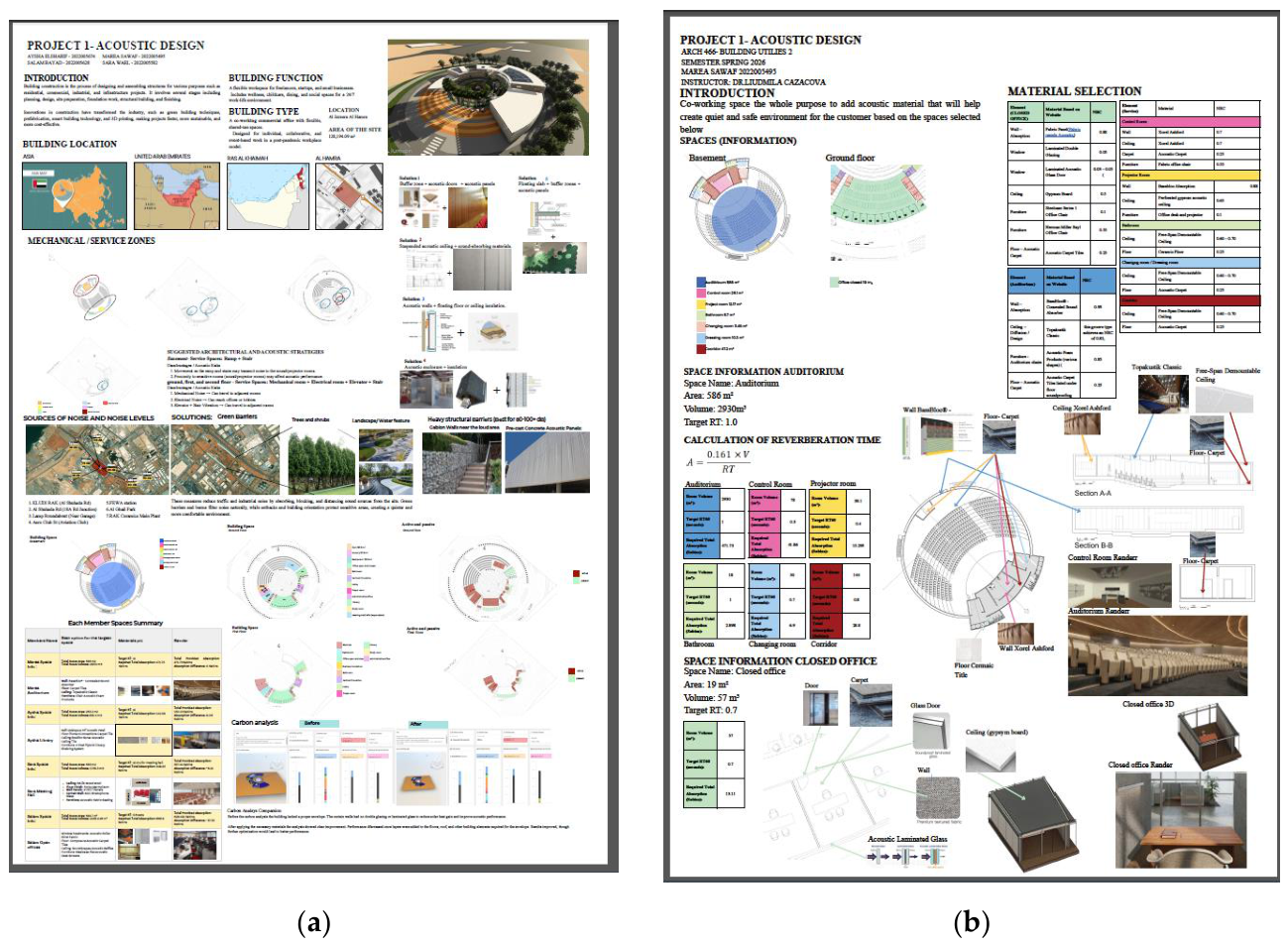
Figure 2.
Zoomed-in view of the building's carbon analysis results before the implementation of the acoustic treatment.
Figure 2.
Zoomed-in view of the building's carbon analysis results before the implementation of the acoustic treatment.
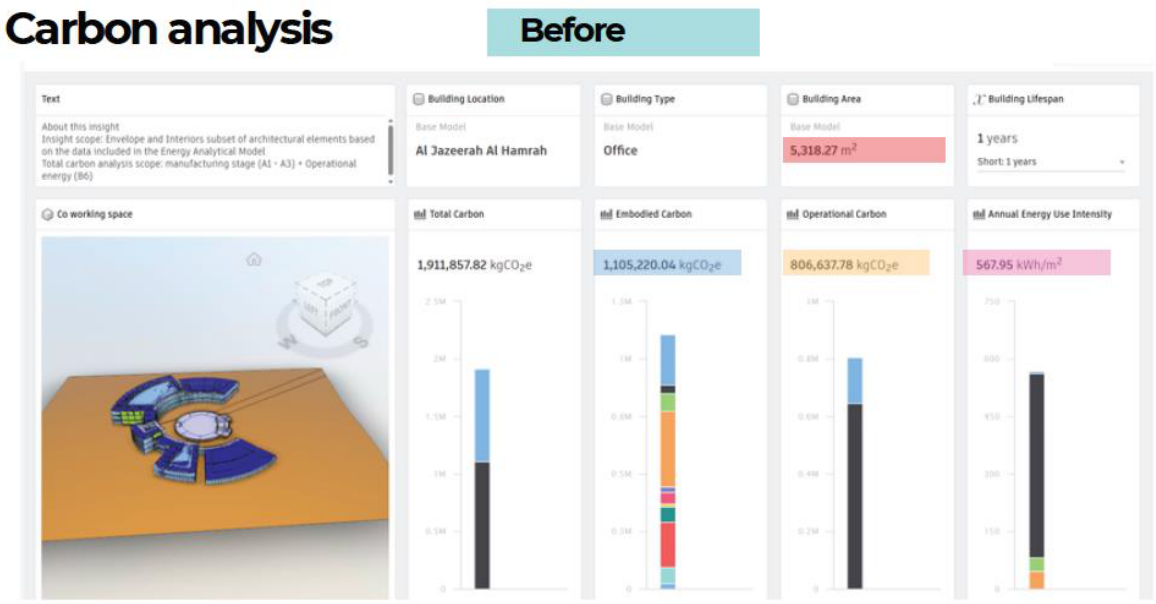
Figure 3.
Zoomed-in view of the building's carbon analysis results after the implementation of the acoustic treatment.
Figure 3.
Zoomed-in view of the building's carbon analysis results after the implementation of the acoustic treatment.
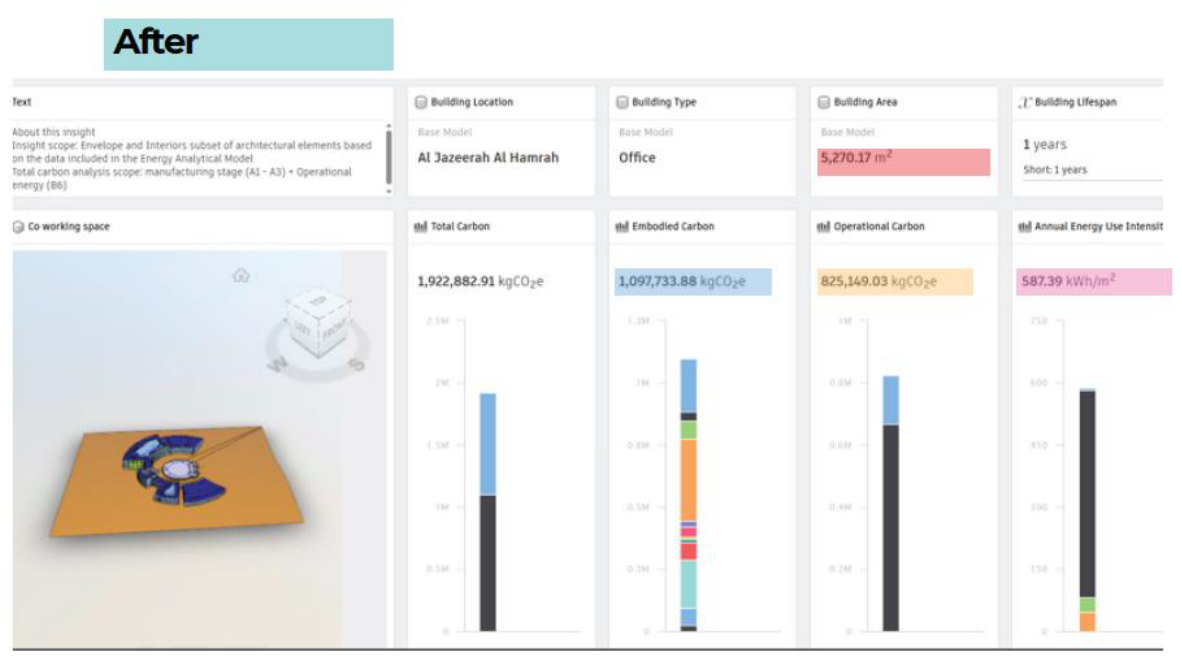
Figure 4.
Diagram demonstrating the relationship between building acoustic interventions and building total carbon reduction.
Figure 4.
Diagram demonstrating the relationship between building acoustic interventions and building total carbon reduction.
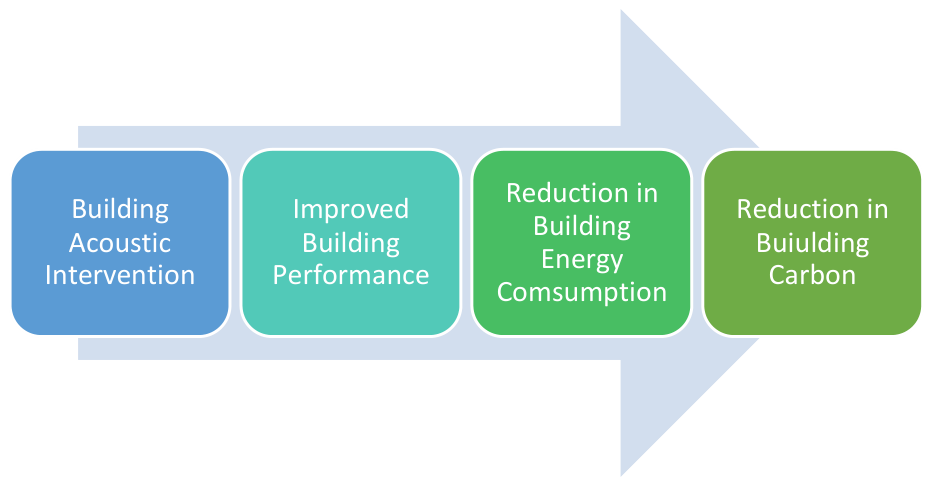

Table 1.
Building performance improvement as a result of acoustic design implementation.
| Building performance | Criteria | Group#1 | Group#2 | Group#3 | Group#4 |
|---|---|---|---|---|---|
| Before building improvements | Total Carbon, KgCO₂e | 2,407,395.04 | 1,078,239.59 | 2,300,136.64 | 1,922,882.91 |
| Embodied Carbon, KgCO₂e | 1,278,398.88 | 662,664.78 | 1,589,458.53 | 1,097,733.88 | |
| Operational Carbon, KgCO₂e | 1,128,996.14 | 415,594.81 | 710,676.11 | 825,149.03 | |
| Annual Energy Use Intensity, kWh/m² | 475.24 | 324.4 | 257.96 | 587.39 | |
| After building improvements | Total Carbon, KgCO₂e | 2,407,357.56 | 913,215.43 | 2,300,136.64 | 1,911,857.82 |
| Embodied Carbon, KgCO₂e | 1,278,362.86 | 671,591.67 | 1,589,458.53 | 1,105,220. 04 | |
| Operational Carbon, KgCO₂e | 1,128,994.69 | 241,623.76 | 710,678.11 | 806,637.78 | |
| Annual Energy Use Intensity, kWh/m² | 475.23 | 188.7 | 257.96 | 567.95 | |
| Changes in building performance | Total Carbon, KgCO₂e | 37.48 | 165,024.16 | 0 | 11,025.09 |
| Embodied Carbon, KgCO₂e | 36.02 | + 8,926.89 | 0 | + 7,486.52 | |
| Operational Carbon, KgCO₂e | 1.45 | 173,971.05 | 2 | 18,511.25 | |
| Annual Energy Use Intensity, kWh/m² | 0.01 | 135.7 | 0 | 19.44 |
Disclaimer/Publisher’s Note: The statements, opinions and data contained in all publications are solely those of the individual author(s) and contributor(s) and not of MDPI and/or the editor(s). MDPI and/or the editor(s) disclaim responsibility for any injury to people or property resulting from any ideas, methods, instructions or products referred to in the content. |
© 2026 by the authors. Licensee MDPI, Basel, Switzerland. This article is an open access article distributed under the terms and conditions of the Creative Commons Attribution (CC BY) license (http://creativecommons.org/licenses/by/4.0/).
Copyright: This open access article is published under a Creative Commons CC BY 4.0 license, which permit the free download, distribution, and reuse, provided that the author and preprint are cited in any reuse.