

Submitted:
30 August 2026
Posted:
01 September 2026
You are already at the latest version
Abstract
The growing use of binder jetting in foundry practice creates a need for effective recovery of the fine silica sand used in additively manufactured molds. This study compares mechanical and thermal reclamation of spent furfuryl-resin sands originating from binder-jetted molds (US-1) and conventionally manufactured molds (US-2) after ductile iron casting. Mechanical reclamation was conducted at rotor speeds of 280–560 rpm for 10–30 min, whereas thermal reclamation was performed at 600–1000 °C. Reclaim quality was assessed using loss on ignition (LOI), pH, dust generation, grain morphology, and bending strength. Conventional spent sand was more susceptible to mechanical treatment, reaching a maximum reclamation efficiency index of 41.1%, compared with 31.5% for binder-jetted sand. Thermal treatment was markedly more effective, reducing LOI to 0.14% for US-1 and 0.29% for US-2 and increasing reclamation efficiency to 94.8% and 89.8%, respectively. High-temperature thermal reclamation is therefore particularly suitable for fine-grained binder-jetted sand, whereas excessive mechanical treatment may promote grain crushing and dust formation.
Keywords:
binder jetting
; additive manufacturing
; spent foundry sand
; sand reclamation
; mechanical reclamation
; thermal reclamation
; furfuryl resin
1. Introduction
1.1. General Aspects of Spent Foundry Sand Reclamation
Reclamation of spent molding and core sands is defined as the treatment of used refractory materials in order to recover at least one component with properties comparable to those of the corresponding fresh material, thereby enabling its reuse in the production of casting molds and cores. In conventional mold- and core-making technologies based on silica sand and added binders, reclamation is focused primarily on recovery of the sand matrix [1,2,3].
The production of castings in molds manufactured by additive techniques, most commonly binder jetting, is increasing [4,5,6,7]. The silica sand used in these processes generally has a considerably smaller mean grain size than the sands employed in conventional mold-making technologies. In binder jetting, self-hardening molds are frequently produced using furfuryl resin as the binder and an acidic curing system [6].
Although spent molding sands generated by conventional foundry processes can be treated effectively using mechanical, pneumatic, thermal, or combined reclamation methods, reclamation of spent sands originating from additively manufactured molds has received comparatively little attention. To the best of the authors’ knowledge, no previous study has systematically compared the reclaimability of spent sand from binder-jetted molds after casting with that of an analogous conventionally prepared furfuryl-resin sand.
Regardless of the selected reclamation method, spent sands are most commonly processed through the following sequence of operations [3]:
- Preliminary separation of mechanical contaminants, mainly metallic inclusions;
- Breaking up agglomerated sand after shakeout;
- Sieving and separation of grain-size ranges suitable for reclamation;
- Repeated separation of metallic contaminants;
- Secondary reclamation to release sand grains from residual spent binder coatings;
- Removal of undesirable reclamation products by dedusting;
- Classification of sand grains according to the required size range and uniformity.
Treatment comprising the first four operations is referred to as primary reclamation [3,8,9]. Complete primary reclamation is required before more intensive removal of binder coatings. At this stage, the grains are not yet sufficiently separated from residual binder; the main effect is the breakup of large agglomerates and preparation of the material for subsequent purification.
Secondary reclamation, together with primary reclamation, forms a complementary treatment system for removing residual binder coatings and technologically undesirable fractions from the sand matrix. More effective liberation of individual grains requires more intensive actions than those used during primary reclamation.
A typical matrix circulation loop in a foundry using chemically bonded molding sands is shown in Figure 1.
1.2. Reclamation Methods
After the casting is shaken out, spent molding and core sands become by-products of the foundry process. The principal management routes for this material are shown schematically in Figure 2.
Reclaimability describes the susceptibility of spent molding sand to the removal of residual binder coatings from matrix grains under a specified reclamation treatment [3,10,11].
Reclaimability is governed by the strength of interaction between the partially degraded binder residue and the surface of the matrix grain. The most important factors include:
- Matrix characteristics, including grain-size distribution, grain shape, surface morphology, and surface porosity;
- Type, amount, and physicochemical properties of the binder, including density, viscosity, and wettability;
- Chemical properties of the matrix and binder, including pH, reactivity, and acid demand value (ADV);
- The molding technology from which the spent sand originates;
- The degree of thermal degradation of the spent molding sand and binder.
Figure 3 presents a schematic classification of reclamation methods based on the environment in which the process is carried out. Two basic groups can be distinguished: wet and dry methods.
Because of its high water consumption, the need for wastewater treatment, sludge management, drying and cooling of the reclaimed sand, and relatively high investment and operating costs, wet reclamation is rarely used in industrial practice. It is applied mainly to spent green sands and molding sands containing water-soluble binders and is generally unsuitable for sands bonded with hydrophobic organic resins. Wet systems also require extensive process infrastructure and considerable installation space. Consequently, dry reclamation is currently the predominant approach for chemically bonded molding sands.
1.2.1. Mechanical and Pneumatic Reclamation
Dry mechanical reclamation is widely used in foundries because of its broad applicability and comparatively simple equipment [2,3,9,11,12,13]. Its main advantages include:
- Recovery of the matrix from many types of spent sand, although the degree of binder removal may be limited;
- The possibility of using relatively simple reclamation equipment, including devices adapted from other process operations;
- Lower implementation costs than those associated with more complex reclamation methods.
Dry mechanical reclamation is used primarily for spent sands bonded with self-hardening synthetic resins and for selected sands with inorganic binders.
The mechanical actions used in reclamation systems can be considered as a set of elementary operations with common features. The principal operations occurring during mechanical reclamation at ambient temperature are rubbing, abrasion, and crushing:
Rubbing is the gradual thinning and removal of a binder coating by mutual friction between loose sand grains moving relative to one another.
Abrasion is the gradual removal of a binder layer from a grain surface through mechanical contact with moving or stationary constructional elements of the reclamation device.
Crushing causes rapid fracture of binder coatings and binder bridges joining adjacent grains as a result of dynamic or static loading. It may occur when grains undergo abrupt changes in momentum, for example after impact against appropriately shaped machine elements or impact plates. If the treatment is too intensive, crushing can also affect the sand grains themselves.
Mechanical and pneumatic methods generally do not provide complete recycling of spent molding sand. They are intended mainly to recover the quartz matrix, typically with a recovery efficiency of approximately 75–80%, while fine fractions and residual binder are removed through cyclones and air-extraction systems.
1.2.2. Thermal Reclamation
Dry thermal reclamation is intended mainly for spent molding sands containing organic binders. It can also be used to deactivate residual components of green sands in mixed-sand reclamation systems and to reduce the organic content of post-reclamation dusts and other residues before disposal.
High-temperature treatment can completely deactivate thermally degradable binder components and thereby significantly increase the reclaimability of spent sand [16,17,18].
The principal advantage of thermal reclamation is the high degree of binder removal, which can make the reclaimed matrix suitable for extensive reuse in newly prepared molding and core sands.
Its main disadvantages are the relatively high investment and operating costs and, in some cases, the need for treatment of process off-gases.
Thermal treatment can provide a degree of matrix purification approaching that of fresh sand. Previous studies have reported reclamation indices of approximately 80% for cold-box sands and approximately 65% for hot-box sands under selected process conditions.
2. Materials and Methods
2.1. Research Objective
The aim of this study was to assess the feasibility of reclaiming the silica matrix from spent furfuryl-resin molding sands produced by additive binder jetting using a KOCEL AJS 300A system. The test material consisted of spent sand obtained after pouring molds with ductile iron grade EN-GJS-500-7. The molding-sand-to-metal mass ratio was 1.6:1. An ASTM A 536-84 wedge casting was used as the test casting. For comparison, an identical casting was produced in a conventionally prepared furfuryl-resin mold. The shakeout time was 30 min in both cases.
2.2. Binder Jetting Mold Production
The main components of the binder jetting (BJ) additive manufacturing system are shown in Figure 4. The process begins with preparation of the particulate material, which is distributed uniformly over the build platform by a recoater. The printhead then selectively deposits a liquid binder according to the geometry stored in the CAD file. The binder penetrates the powder bed and forms bridges between adjacent grains, creating a stable bonded structure.
After each layer is completed, the build platform is lowered by the prescribed layer height and the sequence is repeated until the entire object has been produced. After printing, unbound particulate material is removed and the resulting mold or core may undergo additional curing, depending on the material and process used [13,14,15,16,17].
Figure 5 illustrates the mold-printing sequence in the BJ system. A layer of sand is spread over the build area by the recoater. Liquid binder is deposited by the printhead and penetrates the sand bed, forming bridges between the matrix grains. The recoater then applies the next sand layer, and the printhead selectively deposits binder. After each pass, the build platform is lowered by one layer thickness. This sequence is repeated until the target part is completed [7,18,19].
The KOCEL AJS 300A printer shown in Figure 6 is designed for high-precision production of foundry molds and cores, particularly for prototyping and low-volume manufacturing.
The principal process components of the printer are:
- A build volume of 300 mm × 200 mm × 200 mm (Figure 7);
- A printhead operating with a furan-resin binder intended for BJ additive manufacturing;
- A recoater for depositing layers of sand premixed with the curing agent; dedicated foundry sands suitable for BJ can be used as the ceramic matrix;
- A sand-feed reservoir.
Figure 8 shows a mold produced by the additive method. A dimensionally equivalent mold was also manufactured by the conventional method using silica sand with a chemically cured resin binder. The cured molds were poured with the same molten alloy at the same pouring temperature and were shaken out after the same 30 min period. The cooled spent sands from the two technologies were collected separately for evaluation of reclamation performance. To obtain sufficient material for the experiments, 20 molds and castings were produced using each technology.
2.3. Experimental Setup and Research Program
2.3.1. Experimental Equipment
The experimental program comprised reclamation treatment of prepared spent-sand samples followed by characterization of the obtained reclaims.
Reclamation was performed using:
The AT-2 rotary impact–abrasive test apparatus (Figure 9) is a prototype device for laboratory studies of mechanical reclamation. It enables variation of rotor speed and treatment time. A 2 kg batch of spent sand was processed in each test.
After mechanical treatment in the AT-2 apparatus, each reclaimed batch was dedusted and pneumatically classified. The removed dust fraction consisted mainly of spent binder abraded from grain surfaces, together with a proportion of fine mineral particles. For conventionally produced molding sand, fractions below approximately 0.100 mm are commonly considered technologically undesirable, and an air-classification velocity of 1.0 m/s was used. Because the binder-jetted spent sand contained substantially finer matrix grains, preliminary tests showed that a lower classification velocity of 0.75 m/s was necessary to retain useful fine fractions and obtain a reclaimed grain-size distribution close to that of the fresh BJ sand.
The experimental thermal reclaimer used in this study is shown in Figure 10. It is a batch thermal unit in which an air–gas mixture is combusted in the furnace chamber above the surface of the spent sand. Batches of up to 5 kg were loaded into the reclaimer.
A characteristic feature of the experimental unit, distinguishing it from conventional continuously fluidized thermal reclaimers, is the use of pulse-induced fountain mixing of the heated bed through periodic fluidization. Replacing continuous fluidization with cyclic air flow limits heat losses and excessive cooling of the bed by the fluidizing air. The fluidization system also enables improved control when the bed is blown with technical oxygen or with oxygen–air mixtures of different compositions.
2.3.2. Research Program
The experiments were designed to determine the potential for reclaiming spent sands originating from additive manufacturing and to provide a basis for further detailed studies.
Mechanical and thermal reclamation tests were carried out using the experimental equipment described above.
The mechanical reclamation program is shown in Figure 11. The variables were the rotational speed of the impact–abrasive rotor and the reclamation time.
The thermal reclamation program is shown in Figure 12. The process variables were reclamation temperature and treatment time.
An additional variable in the comparative thermal-reclamation tests was the fluidization air velocity. A velocity of 1.0 m/s is commonly used for conventional molding sands. Preliminary tests showed that this value was too high for the finer binder-jetted spent sand because it removed matrix fractions below 0.100 mm that remain technologically useful in BJ applications. For this reason, a fluidization velocity of 0.75 m/s was adopted for US-1, whereas 1.0 m/s was used for US-2.
Different thermal-reclamation temperatures were obtained by controlling the air–gas burner. The temperatures shown in Figure 12 represent the nominal process settings. The actual temperature histories recorded in the spent-sand bed at the different burner settings are shown in Figure 13.
The quality of the reclaims obtained after mechanical and thermal treatment was evaluated using the following parameters:
- Loss on ignition (LOI) of the matrix after reclamation;
- Dust content in the reclaim;
- LOI of the dust generated during mechanical reclamation;
- pH of the reclaimed matrix;
- Bending strength of molding sands prepared using matrices subjected to reclamation at different treatment intensities.
3. Results and Discussion
3.1. Characteristics of the Spent Sands before Reclamation
Two types of spent molding sand were subjected to reclamation:
- US-1, originating from the additive manufacturing process. The resin was based on furfuryl alcohol with phenolic and silane additives. At 25 °C, its viscosity was 20–60 mPa·s, density 1.1–1.2 g·cm⁻³, and pH 6–8. The catalyst was an acidic solution containing sulfonic acids and sulfuric acid [20].
- US-2, originating from conventional mold production. The binder system consisted of a urea–furfuryl resin and an aqueous p-toluenesulfonic acid solution. At 20 °C, the resin density was 1.175–1.185 g·cm⁻³, viscosity 0.030–0.045 Pa·s, free-formaldehyde content 0.12–0.14%, furfuryl-alcohol content 75 ± 1%, and nitrogen content 3.5 ± 0.5%. The catalyst density was 1.225 ± 0.01 g·cm⁻³ and its viscosity was approximately 15 mPa·s; the recommended storage temperature was above +5 °C.
The principal properties of the spent sands before secondary reclamation are listed in Table 1.
The data in Table 1 show a pronounced difference in the characteristic grain diameters of US-1 and US-2. The spent sand from additive manufacturing had a substantially smaller grain size, reflecting the use of much finer matrices in BJ than in conventional mold-making. Figure 14 compares SEM images of the matrix grains used in the additive process (Figure 14a) and the conventional process (Figure 14b).
3.2. Loss on Ignition of the Reclaims
For spent sands bonded with organic resin, such as US-1 and US-2, LOI is a key indicator of reclaim quality because it reflects the amount of combustible binder residue remaining on the matrix. LOI was determined as the mass loss after oxidation for 2 h at 800 °C.
Both mechanical and thermal reclamation systematically reduced the LOI of the reclaims, although the cleaning efficiency depended strongly on the origin of the spent sand and on process intensity. Before reclamation, LOI was 2.70% for US-1 and 2.85% for US-2, indicating a slightly higher initial content of residual organic material in the conventionally produced spent sand.
During mechanical reclamation (Figure 15), increasing rotor speed and extending treatment time progressively reduced the LOI of both materials. For US-1, LOI decreased from 2.70% to 1.85% under the most intensive conditions, i.e., 560 rpm for 30 min. Under the same conditions, US-2 decreased from 2.85% to 1.68%. Despite its slightly higher initial LOI, US-2 exhibited lower LOI values over almost the entire range of mechanical-reclamation conditions, showing that binder residues on the conventionally used matrix were removed more readily by impact–abrasive action. This trend is confirmed by the reclamation efficiency index WRK shown in Figure 17. For US-1, WRK increased from 3.0% at the lowest intensity after 10 min to a maximum of 31.5% at 560 rpm after 30 min. For US-2, the corresponding values were higher, ranging from 10.9% to 41.1%. The lower mechanical reclaimability of US-1 is likely associated with its much finer grain size, larger specific surface area, and the manner in which the binder penetrates and is distributed between closely packed grains. Differences in resin and curing-agent chemistry may also contribute.
Thermal reclamation produced a much greater degree of matrix purification. As shown in Figure 16, increasing temperature and treatment time caused a pronounced decrease in LOI. Under the most intensive conditions, LOI fell to only 0.14% for US-1 and 0.29% for US-2. In contrast to mechanical reclamation, the binder-jetted sand performed better at the highest temperatures. At the highest temperature, the LOI values for US-1 after 10, 20, and 30 min were 1.06%, 0.49%, and 0.14%, respectively, whereas the corresponding values for US-2 were 1.38%, 0.73%, and 0.29%.
The same tendency is reflected by the WRK values in Figure 18. The maximum WRK was 94.8% for US-1 and 89.8% for US-2. Thermal reclamation therefore enabled almost complete removal of the organic binder residues, particularly from the fine-grained matrix used in binder jetting. The results show that the conventionally produced spent sand was more susceptible to mechanical reclamation, whereas the additively manufactured spent sand benefited much more strongly from sufficiently high thermal-reclamation temperatures and treatment times.
3.3. pH of the Reclaims
The pH values of the reclaims are presented in Figure 19 and Figure 20. Increasing the intensity of both mechanical and thermal reclamation progressively reduced the acidic character of the matrix. The initial pH was 3.96 for US-1 and 3.67 for US-2. The difference is attributable to the different resin–catalyst systems and the amount of residual acidic curing agent.
During mechanical reclamation (Figure 19), increasing rotor speed and treatment time increased the pH of both reclaims. The highest value, approximately 4.29, was obtained under the most intensive conditions. This change resulted from partial removal of binder residues and acidic catalyst components from grain surfaces and was consistent with the simultaneous decrease in LOI. Nevertheless, the reclaims remained acidic, confirming that mechanical treatment did not completely purify the matrix.
A larger change in pH was obtained after thermal reclamation (Figure 20). With increasing temperature and treatment time, pH increased to 4.86 for US-1 and 5.06 for US-2, indicating more effective decomposition and removal of acidic binder and catalyst residues.
The pH trends were generally consistent with the LOI results: a decrease in residual organic matter was accompanied by an increase in pH. The relationship was not proportional, however, because LOI represents the total amount of combustible material, whereas pH is governed mainly by soluble acidic species. The two parameters should therefore be treated as complementary indicators of reclaim purification.
3.4. Amount and Loss on Ignition of Dust Generated during Reclamation
Dust is an important by-product of mechanical reclamation of spent molding sands. It forms as residual binder layers are abraded and crushed from matrix-grain surfaces. The amount of dust can therefore serve as an additional indicator of cleaning intensity, although excessive dust generation may also indicate degradation of the mineral matrix.
Dust quantity was determined only for mechanical reclamation. During thermal treatment, organic binder residues are primarily decomposed and oxidized and therefore do not appear as a separate dust product comparable to that generated by mechanical reclamation. After mechanical treatment, the reclaims were subjected to pneumatic classification at the previously established air velocities.
The different classification velocities reflected the different grain-size distributions of the two matrices. US-1, from additive manufacturing, had a much finer main fraction (0.10/0.071/0.16 mm), whereas US-2 had a main fraction of 0.20/0.16/0.32 mm. Accordingly, a lower dedusting velocity of 0.75 m/s was used for US-1, compared with 1.0 m/s for US-2. These values were selected to separate binder-abrasion products while limiting the loss of technologically useful matrix grains, particularly from the fine-grained binder-jetted material.
The particle-size distributions in Figure 21 show that dust generated during reclamation of US-1 was much finer than that obtained from US-2. The maximum of the density distribution occurred at approximately 5–6 µm for US-1 and approximately 45–55 µm for US-2. From the cumulative distributions, the median particle diameter D50 can be estimated at approximately 5 µm and 40 µm, respectively. Approximately 90% of the particles were smaller than 13–15 µm for US-1 and approximately 100 µm for US-2. These differences reflect both the different initial matrix grain sizes and the different pneumatic-classification velocities.
As shown in Figure 22, the amount of dust increased with rotor speed and reclamation time. For US-1, it increased from 1.46% to 5.58%, whereas for US-2 it increased from 2.01% to 7.56%. Thus, more dust was generated during reclamation of US-2, although direct comparison of the absolute values should take into account the different pneumatic-classification velocities used for the two materials.
As shown in Figure 23, increasing reclamation intensity simultaneously reduced the LOI of the generated dust. For US-1, dust LOI decreased from 35.1% to 22.1%, whereas for US-2 it decreased from 37.1% to 27.1%. This trend indicates an increasing contribution of mineral abrasion products relative to organic binder residues.
The lower LOI of the dust from US-1 may be associated with the angular grain morphology observed in the SEM images, which promotes abrasion and chipping of grain edges. The simultaneous increase in dust quantity and decrease in dust LOI indicates that, at higher treatment intensities, not only the spent binder but also the silica matrix is abraded. This suggests progressive grain crushing, which is undesirable because it reduces the yield of useful matrix and increases the proportion of fine fractions.
3.5. Bending Strength of Molding Sands Prepared with Reclaimed Matrix
Bending strength is one of the key technological properties of molding and core sands. It determines the resistance of molds and cores to damage during production, handling, assembly, and pouring. Measuring this parameter therefore provides a practical assessment of whether reclaimed matrix can be reused without an unacceptable deterioration in molding-sand performance.
Tests were performed on molding sands prepared with fresh silica matrix and with matrices obtained after mechanical (Table 2) and thermal (Table 3) reclamation. For mechanical reclamation, mixtures containing either 100% reclaimed matrix or 50% reclaimed matrix were evaluated. The reference strengths obtained with fresh silica sand differed between the two binder systems: 5.61 MPa for US-1 and 3.89 MPa for US-2. The reclaimed-sand results should therefore be interpreted relative to their corresponding fresh-sand reference values.
When 100% mechanically reclaimed matrix was used, increasing reclamation intensity and treatment time generally increased bending strength. For US-1, Rgu increased from 1.13 MPa after the least intensive treatment to 3.69 MPa after 30 min at the highest rotor speed. For US-2, the corresponding increase was from 0.89 MPa to 2.58 MPa. More intensive cleaning therefore improved bonding between the reclaimed grain surfaces and the fresh binder, although the strength remained below that of the fresh-sand reference mixtures.
Using 50% mechanically reclaimed matrix produced substantially better results. For US-1, the maximum bending strength was 4.69 MPa, corresponding to approximately 84% of the fresh-sand value. For US-2, a maximum of 3.45 MPa, approximately 89% of the reference value, was obtained after 30 min at the intermediate rotor speed. The lack of further improvement for US-2 at the highest treatment intensity suggests that excessive mechanical treatment does not necessarily improve reclaim quality and may adversely modify grain size or surface condition.
Thermal reclamation produced higher bending strengths with 100% reclaimed matrix than mechanical reclamation. The maximum Rgu values were 4.43 MPa for US-1 and 3.34 MPa for US-2, corresponding to approximately 79% and 86% of the respective fresh-sand strengths. These results are consistent with the LOI and pH observations: more effective removal of spent binder and acidic catalyst residues improved curing of the newly added binder on reclaimed grain surfaces.
The standard deviations, generally ranging from ±0.01 to ±0.09 MPa, indicate good repeatability of the bending-strength measurements. Overall, a higher degree of matrix purification increased molding-sand strength, while partial replacement of fresh sand with reclaimed matrix produced properties closest to those of the reference mixtures prepared with fresh sand.
4. Conclusions
This study demonstrated that spent furfuryl-resin molding sands originating from both additive binder jetting and conventional mold-making technologies can be effectively reclaimed. Their response to reclamation, however, depends strongly on matrix grain-size distribution, grain morphology, and the binder–catalyst system. The substantially finer matrix used in binder jetting requires process conditions different from those commonly applied to conventional foundry sands.
Mechanical reclamation progressively reduced the amount of residual organic binder as rotor speed and treatment time increased. Under the most intensive conditions, LOI decreased from 2.70% to 1.85% for the binder-jetted sand (US-1) and from 2.85% to 1.68% for the conventionally produced sand (US-2). The corresponding maximum reclamation efficiency indices were 31.5% and 41.1%, respectively. The conventional sand was therefore more susceptible to impact–abrasive treatment, whereas the finer binder-jetted matrix was more difficult to clean exclusively by mechanical means. The pH of the mechanically reclaimed sands remained acidic, reaching a maximum of approximately 4.29, which further confirmed incomplete removal of binder and acidic catalyst residues.
Increasing mechanical-reclamation intensity was accompanied by increased dust generation. Dust content rose from 1.46% to 5.58% for US-1 and from 2.01% to 7.56% for US-2. At the same time, dust LOI decreased, indicating a growing contribution of mineral particles produced by abrasion and crushing of the silica matrix. Excessively intensive mechanical treatment may therefore remove not only binder residues but also useful sand material and increase the proportion of fine fractions. This effect is particularly important for the fine-grained and relatively angular matrix used in binder jetting.
Thermal reclamation provided a substantially higher degree of matrix purification than mechanical treatment. At the highest process temperature after 30 min, LOI decreased to 0.14% for US-1 and 0.29% for US-2, corresponding to reclamation efficiency indices of 94.8% and 89.8%, respectively. Thermal treatment was therefore particularly effective for binder-jetted sand and enabled nearly complete removal of organic binder residues. The increase in pH to 4.86 for US-1 and 5.06 for US-2 additionally confirmed effective decomposition and removal of acidic binder and catalyst components.
The technological properties of molding sands prepared with reclaimed matrices improved as reclamation intensity increased. Nevertheless, using 100% mechanically reclaimed sand produced lower bending strength than fresh silica sand. More favorable results were obtained when 50% of the fresh matrix was replaced with mechanically reclaimed sand. Maximum bending strengths of 4.69 MPa for US-1 and 3.45 MPa for US-2 corresponded to approximately 84% and 89% of the respective reference values. With 100% thermally reclaimed sand, maximum strengths of 4.43 MPa for US-1 and 3.34 MPa for US-2 were obtained, representing approximately 79% and 86% of the fresh-sand values.
Overall, conventional spent sand showed greater susceptibility to mechanical reclamation, whereas high-temperature thermal reclamation was the preferred method for the fine-grained sand originating from binder-jetted molds. Mechanical reclamation can serve as an economically justified preliminary or partial treatment provided that its intensity is controlled to limit grain degradation and dust generation. For binder-jetted sands, pneumatic classification must also be adapted to the finer grain size; the reduced air velocity of 0.75 m/s used in this study allowed technologically useful fine fractions to be retained. Reclamation systems developed for conventional foundry sands should therefore not be transferred directly to additive-manufacturing residues but should be optimized with respect to matrix granulometry, binder composition, and the intended proportion of reclaimed sand in the new molding mixture.
Supplementary Materials
The following supporting information can be downloaded at the website of this paper posted on Preprints.org.
Author Contributions
Conceptualization and methodology, R.D.; writing—original draft preparation, formal analysis and investigation, A.K.; formal analysis and investigation, D.G.; investigation and resources, all authors; visualization, R.D., A.K. and D.G. All authors have read and agreed to the published version of the manuscript.
Funding
This research was funded by the National Science Centre, Poland (NCN), under OPUS project no. 2021/41/B/ST5/02632, “Control of the Microstructure of the Skin Layer of High-Quality Cast Iron Castings in Sand Molds Made Using the Incremental Method with Conformal Cooling Channels”, and by AGH University of Krakow through the “Excellence Initiative—Research University” program (application no. 3726).
Data Availability Statement
The data supporting the findings of this study are presented in this article.
Conflicts of Interest
The authors declare no conflicts of interest.
References
- Łucarz, M. Economic and Environmental Aspects of Applying the Regeneration of Spent Moulding Sand. Sustainability 2024, 16, 8462. [Google Scholar] [CrossRef]
- Skrzyński, M.; Dańko, R. Primary Used Sand Reclamation Process Efficiency. Arch. Foundry Eng. 2018, 29–34. [Google Scholar] [CrossRef]
- Holtzer, M.; Górny, M.; Dańko, R. Microstructure and Properties of Ductile Iron and Compacted Graphite Iron Castings; Springer, 2015. [Google Scholar]
- Le Néel, T.A.; Mognol, P.; Hascoët, J.-Y. A Review on Additive Manufacturing of Sand Molds by Binder Jetting and Selective Laser Sintering. Rapid Prototyp. J. 2018, 24, 1325–1336. [Google Scholar] [CrossRef]
- Mostafaei, A.; Elliott, A.M.; Barnes, J.E.; Li, F.; Tan, W.; Cramer, C.L.; Nandwana, P.; Chmielus, M. Binder Jet 3D Printing—Process Parameters, Materials, Properties, Modeling, and Challenges. Prog. Mater. Sci. 2021, 119, 100707. [Google Scholar] [CrossRef]
- Gruszka, D.R.; Dańko, R.; Dereń, M.; Wodzisz, A. Analysis of Influence of Sand Matrix on Properties of Moulding Compounds Made with Furan Resin Intended for 3D Printing. Arch. Foundry Eng. 2024. [Google Scholar] [CrossRef]
- Sama, S.R.; Wang, J.; Manogharan, G. Non-Conventional Mold Design for Metal Casting Using 3D Sand-Printing. J. Manuf. Process. 2018, 34, 765–775. [Google Scholar] [CrossRef]
- Łucarz, M.; Garbacz-Klempka, A.; Brzeziński, M.; Pribulová, A.; Fedorko, P. Investigation of Spent Moulding Sand Using Thermal Treatment with Regard to the Possibility of Recovering Quartz Matrix. Materials 2024, 17, 5991. [Google Scholar] [CrossRef]
- Dańko, R.; Dajczer, G. Research on the Energy of Destruction of Bindings of a Core and Moulding Sand Based on Quartz Sand Grains. Arch. Foundry Eng. 2018, 18, 19–22. [Google Scholar] [CrossRef]
- Łucarz, M. Ecological Aspects of the Performed Thermal Reclamation. Arch. Metall. Mater. 2015, 60, 329–333. [Google Scholar] [CrossRef]
- Bryant, N.C.; O’Dell, J.L.; Kowalsky, J.I.; Thiel, G.R. Real-Time Measurement of Mold and Core Quality in Chemically Bonded Sands. Int. J. Met. 2024, 18, 14–22. [Google Scholar] [CrossRef]
- Kmita, A.; Dańko, R.; Holtzer, M.; Dańko, J.; Królikowski, M.; Garitaonandia, E.; Ibarra, A. Green Industrial Scale Casting Production Using Engineered Molding Materials: Sustainable Strategies to Reduce Process Gas Emissions. Process Saf. Environ. Prot. 2026, 206, 108238. [Google Scholar] [CrossRef]
- Upadhyay, M.; Sivarupan, T.; Mansori, M. 3D Printing for Rapid Sand Casting – A Review. J. Manuf. Process. 2017, 29, 211–220. [Google Scholar] [CrossRef]
- Sivarupan, T.; Balasubramani, N.; Saxena, P.; Nagarajan, D.; El Mansori, M.; Salonitis, K.; Jolly, M.; Dargusch, M.S. A Review on the Progress and Challenges of Binder Jet 3D Printing of Sand Moulds for Advanced Casting. Addit. Manuf. 2021, 40, 101889. [Google Scholar] [CrossRef]
- Kang, J.; Shangguan, H.; Deng, C.; Hu, Y.; Yi, J.; Wang, X.; Zhang, X.; Huang, T. Additive Manufacturing-Driven Mold Design for Castings. Addit. Manuf. 2018, 22, 472–478. [Google Scholar] [CrossRef]
- Kamyab, M.; Hajialimohammadi, A.; Sglavo, V.M.; Sajjadi, S.M. Development of New Sand Casting Mold Composition for Binder Jetting 3D Printing Process Based on Inorganic Binder by Adding Dimensional Accuracy Modifiers: A Comprehensive Analysis of DOE Parameters. Prog. Addit. Manuf. 2025. [Google Scholar] [CrossRef]
- Saxena, P.; Pagone, E.; Salonitis, K.; Jolly, M.R. Sustainability Metrics for Rapid Manufacturing of the Sand Casting Moulds: A Multi-Criteria Decision-Making Algorithm-Based Approach. J. Clean. Prod. 2021, 311, 127506. [Google Scholar] [CrossRef]
- Kleinhans, R.; Pintore, M.; Erhard, P.; Renz, R.; Tesfu, J. Thermal Properties of 3D-Printed Molds for Light Metal Casting. Int. J. Met. 2025, 19, 1690–1699. [Google Scholar] [CrossRef]
- Erhard, P.; Angenoorth, J.; Reddersen, C.; Günther, D. Binder Jetting at Scale: Series Production with Sand and Pathways to Industrialization of Slurry-Based 3D Printing. Open Ceram. 2026, 25, 100933. [Google Scholar] [CrossRef]
- Holtzer, M.; Kmita, A. Mold and Core Sands in Metalcasting: Chemistry and Ecology. Sustainable Development.; Springer Nature Switzerland AG, 2020; ISBN 978-3-030-53209-3. [Google Scholar]
Figure 1.
Schematic circulation of a resin-bonded molding-sand matrix: I—preparation of molding and core sands; II—basic technological operations, including mold and core production, pouring, casting solidification and cooling, and shakeout; III—crushing and preparation of spent molding sand for reclamation; IV—matrix reclamation, dedusting, and separation of technologically useful grains.
Figure 1.
Schematic circulation of a resin-bonded molding-sand matrix: I—preparation of molding and core sands; II—basic technological operations, including mold and core production, pouring, casting solidification and cooling, and shakeout; III—crushing and preparation of spent molding sand for reclamation; IV—matrix reclamation, dedusting, and separation of technologically useful grains.
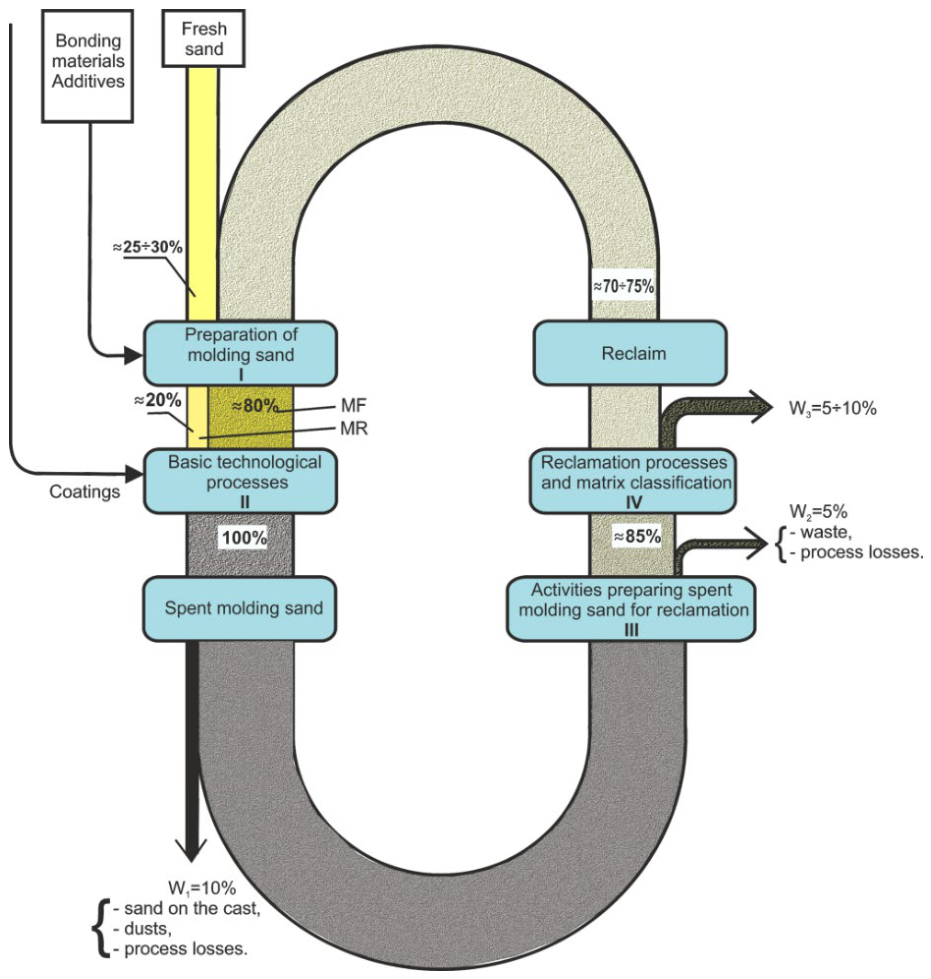
Figure 2.
Main routes for management of spent molding sand.
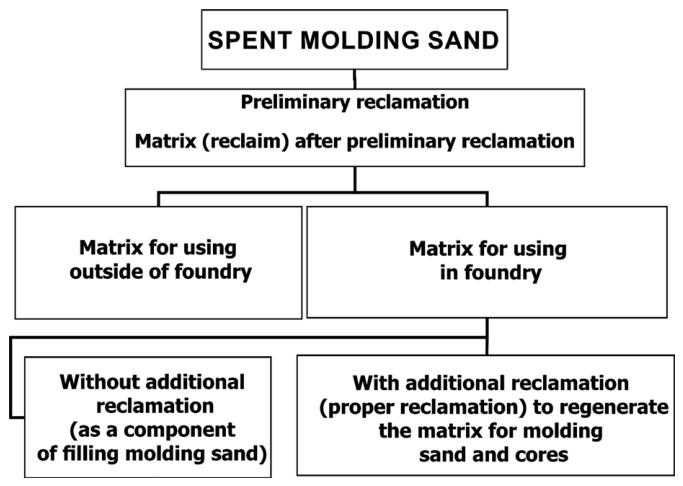
Figure 3.
Schematic classification of spent-sand reclamation methods.
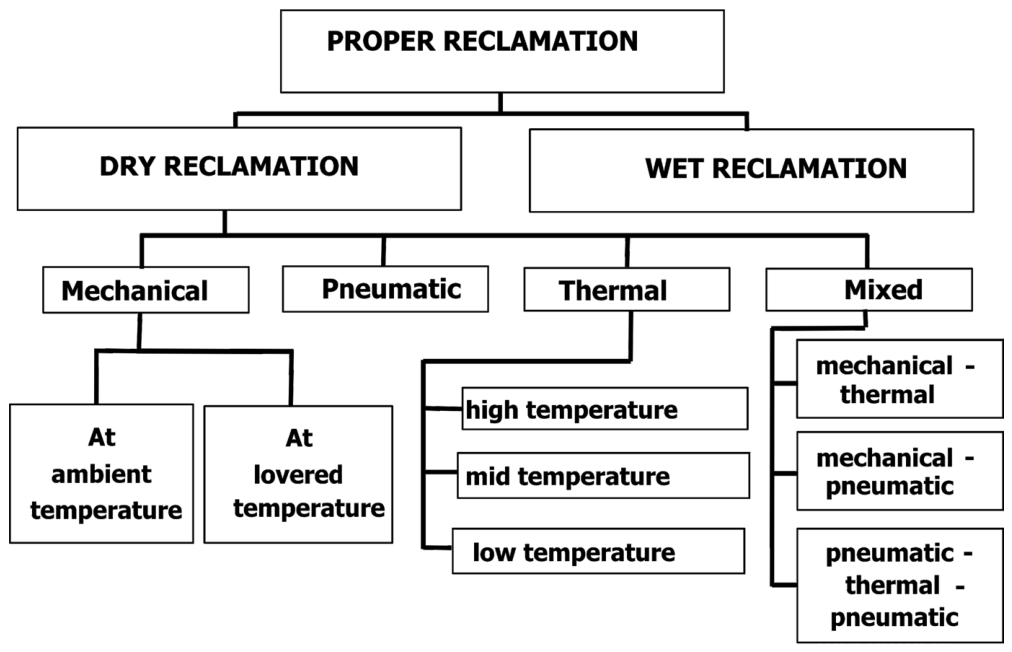
Figure 4.
Main components of the binder jetting system used for additive manufacturing of sand molds.
Figure 4.
Main components of the binder jetting system used for additive manufacturing of sand molds.
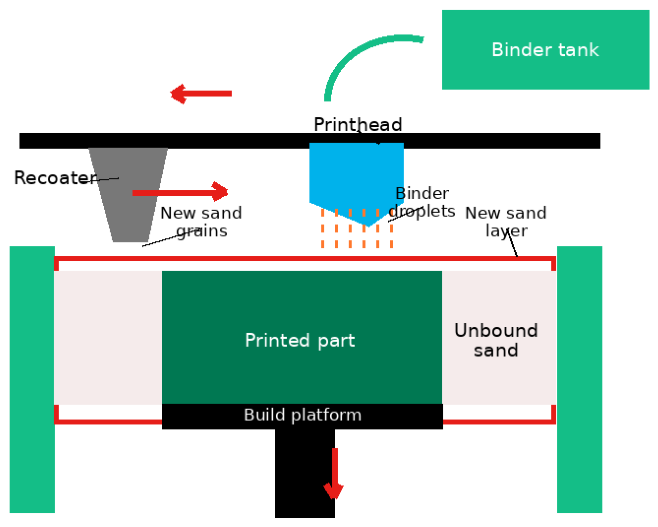
Figure 5.
Schematic sequence of binder deposition in BJ: (a) droplets of liquid resin are deposited onto a sand layer previously containing the curing agent; (b) the resin penetrates between sand grains; (c) a new layer of the ceramic matrix is deposited and selectively bound; (d) resin bridges form between adjacent matrix grains.
Figure 5.
Schematic sequence of binder deposition in BJ: (a) droplets of liquid resin are deposited onto a sand layer previously containing the curing agent; (b) the resin penetrates between sand grains; (c) a new layer of the ceramic matrix is deposited and selectively bound; (d) resin bridges form between adjacent matrix grains.
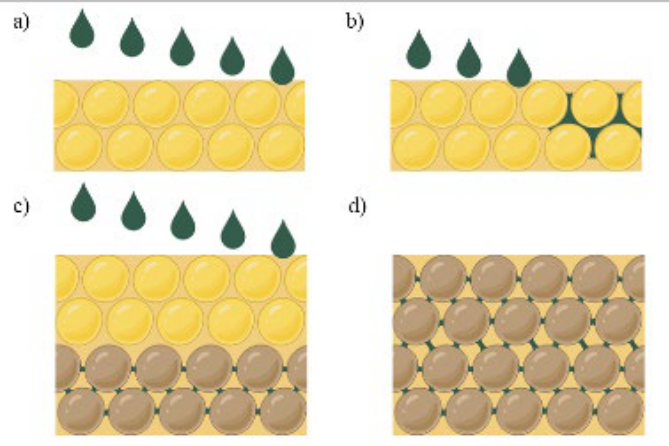
Figure 6.
General view of the KOCEL AJS 300A printer.
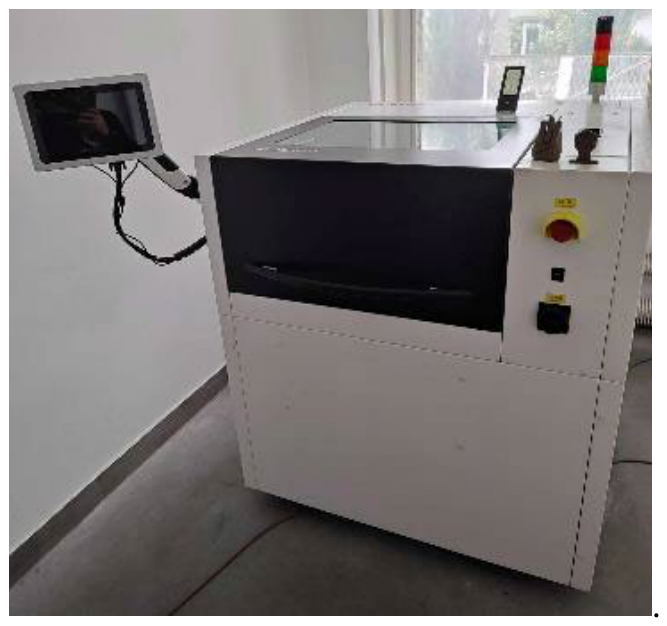
Figure 7.
Build area of the KOCEL AJS 300A printer.
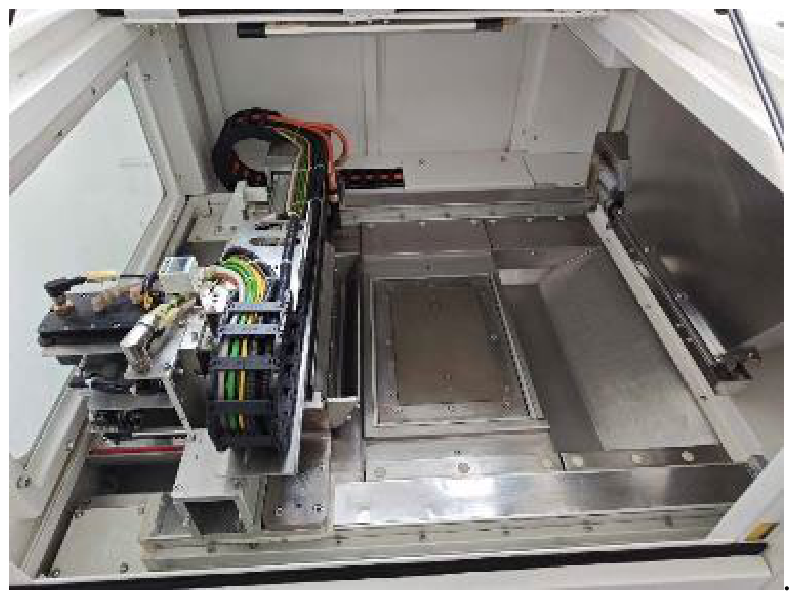
Figure 8.
Mold for the ASTM A 536-84 wedge casting: (a) mold before pouring; (b) mold after pouring.
Figure 8.
Mold for the ASTM A 536-84 wedge casting: (a) mold before pouring; (b) mold after pouring.
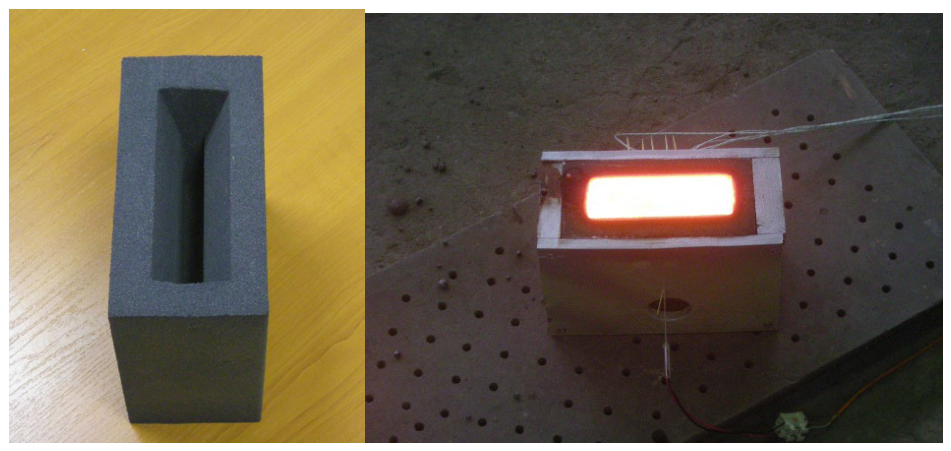
Figure 9.
AT-2 rotary impact–abrasive test apparatus: (a) schematic view: 1—base, 2—container for reclaimed spent sand, 3—rotor of the impact–abrasive unit, 4—motor; (b) general view of the apparatus.
Figure 9.
AT-2 rotary impact–abrasive test apparatus: (a) schematic view: 1—base, 2—container for reclaimed spent sand, 3—rotor of the impact–abrasive unit, 4—motor; (b) general view of the apparatus.
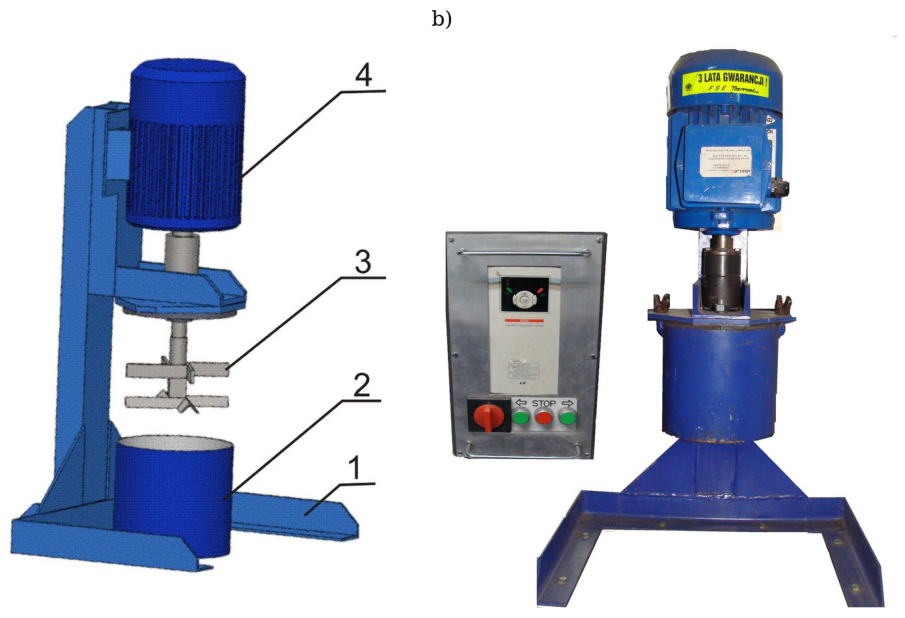
Figure 10.
Experimental thermal reclaimer: schematic and general view. 1—steel housing, 2—jacket, 3—refractory concrete, 4—ceramic-fiber insulation, 5—cover, 6—thermocouple port, 7—high-temperature seal, 8—burner, 9—burner housing, 10—perforated bottom, 11—ceramic wool, 12—air box, 13—discharge closure, 14—outlet nozzle, 15—suspension element.
Figure 10.
Experimental thermal reclaimer: schematic and general view. 1—steel housing, 2—jacket, 3—refractory concrete, 4—ceramic-fiber insulation, 5—cover, 6—thermocouple port, 7—high-temperature seal, 8—burner, 9—burner housing, 10—perforated bottom, 11—ceramic wool, 12—air box, 13—discharge closure, 14—outlet nozzle, 15—suspension element.
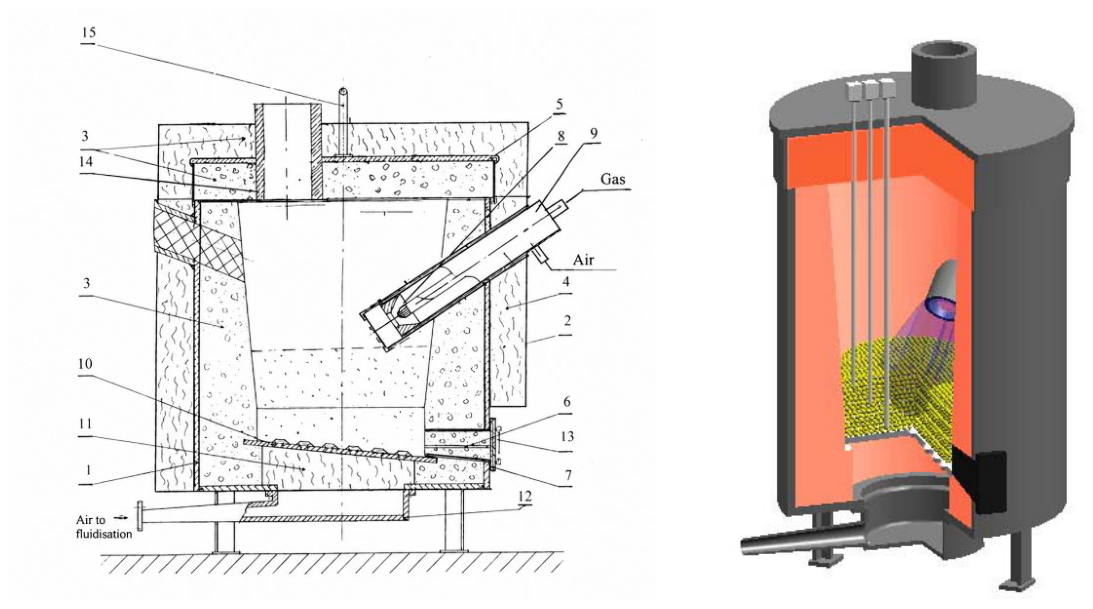
Figure 11.
Experimental program for mechanical reclamation.
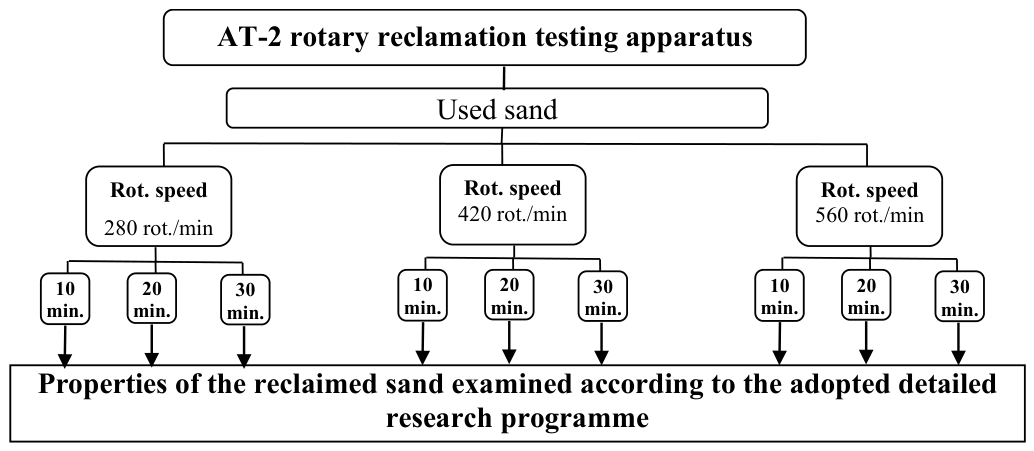
Figure 12.
Experimental program for thermal reclamation.
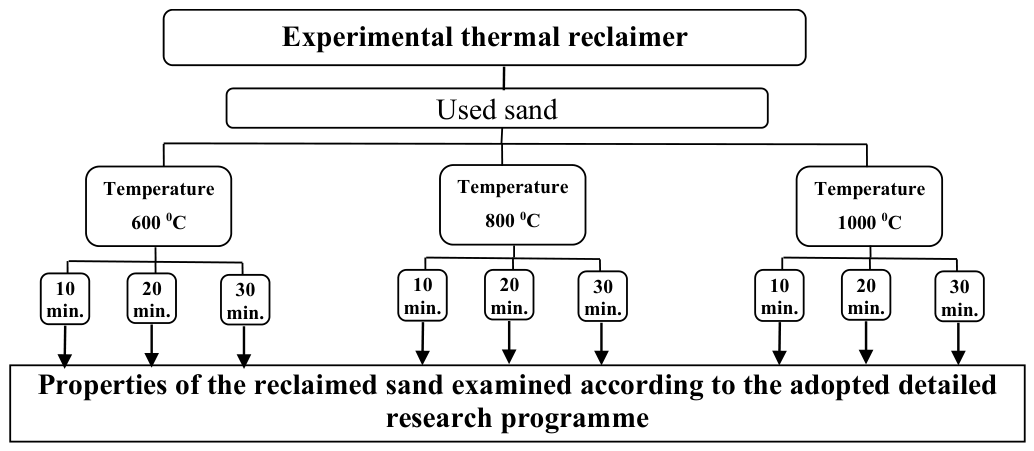
Figure 13.
Temperature histories in the spent-sand bed during heating with periodically induced pulse fluidization. The fluidization pulse duration was 15 s. During the 30 min treatment, 11 heating stages and 11 fluidization pulses were performed; the effective duration of a single heating stage was approximately 147 s (2.45 min).
Figure 13.
Temperature histories in the spent-sand bed during heating with periodically induced pulse fluidization. The fluidization pulse duration was 15 s. During the 30 min treatment, 11 heating stages and 11 fluidization pulses were performed; the effective duration of a single heating stage was approximately 147 s (2.45 min).
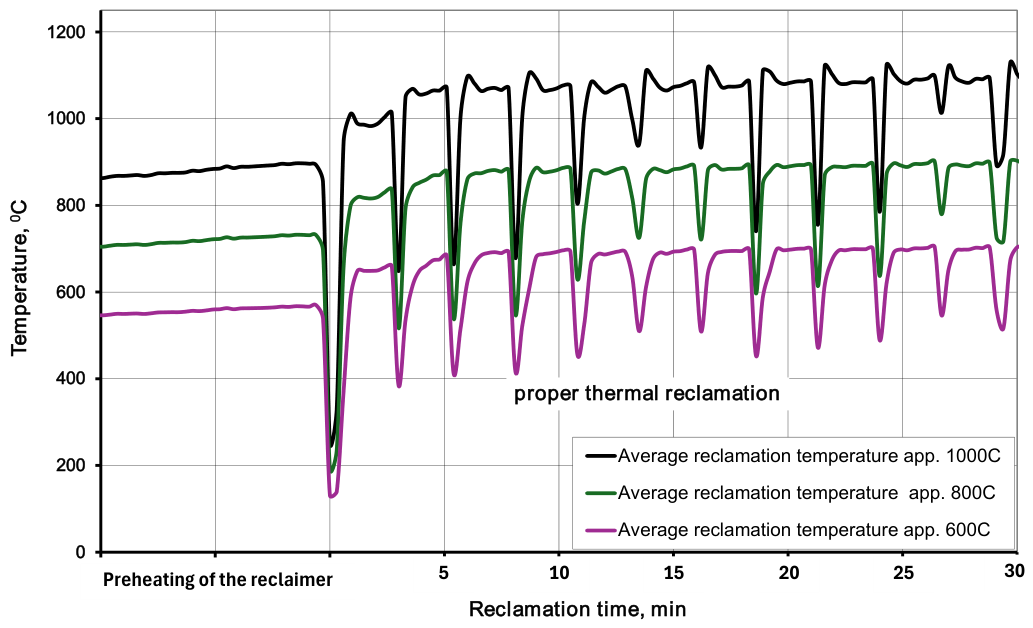
Figure 14.
Surface morphology of the matrix grains used in (a) additive binder jetting and (b) conventional mold production. Magnification: 150×.
Figure 14.
Surface morphology of the matrix grains used in (a) additive binder jetting and (b) conventional mold production. Magnification: 150×.
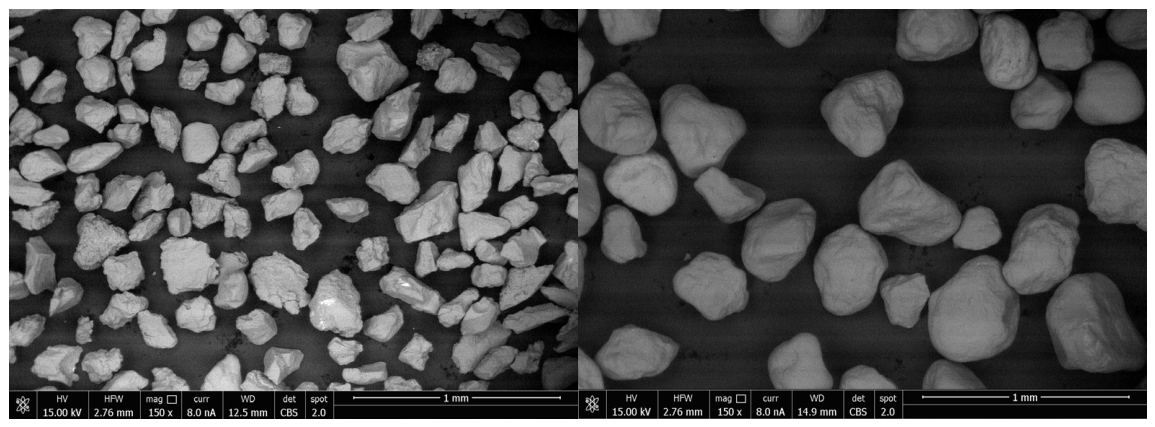
Figure 15.
LOI of spent sands US-1 and US-2 and the corresponding reclaims obtained at different mechanical-reclamation intensities.
Figure 15.
LOI of spent sands US-1 and US-2 and the corresponding reclaims obtained at different mechanical-reclamation intensities.
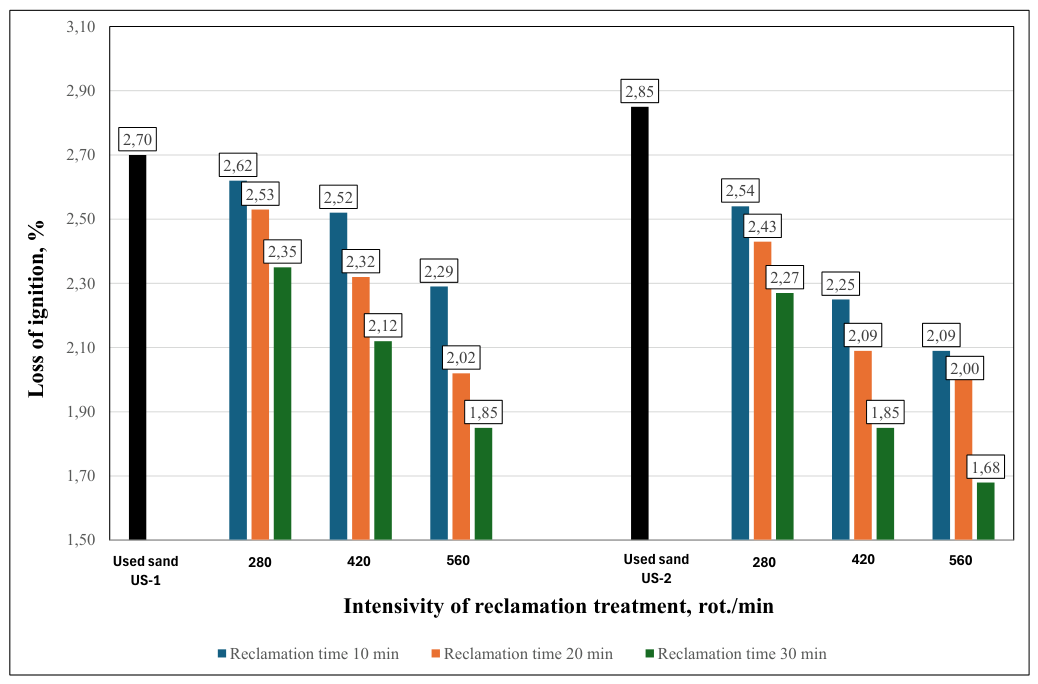
Figure 16.
LOI of spent sands US-1 and US-2 and the corresponding reclaims obtained at different thermal-reclamation temperatures.
Figure 16.
LOI of spent sands US-1 and US-2 and the corresponding reclaims obtained at different thermal-reclamation temperatures.
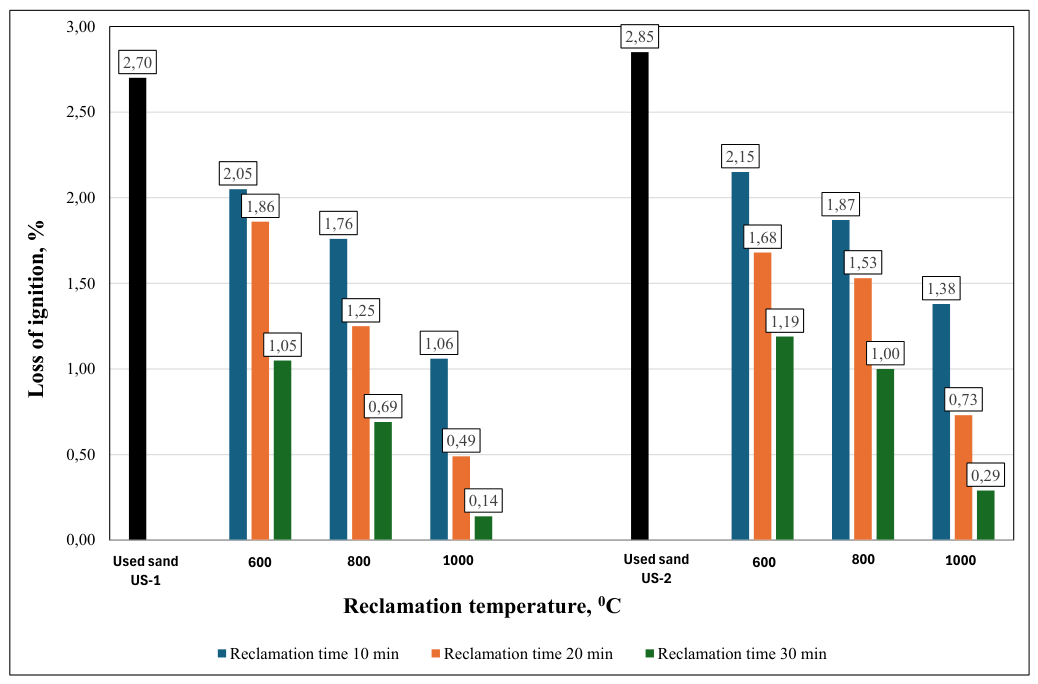
Figure 17.
Reclamation efficiency index WRK for US-1 and US-2 after mechanical reclamation at different treatment intensities.
Figure 17.
Reclamation efficiency index WRK for US-1 and US-2 after mechanical reclamation at different treatment intensities.
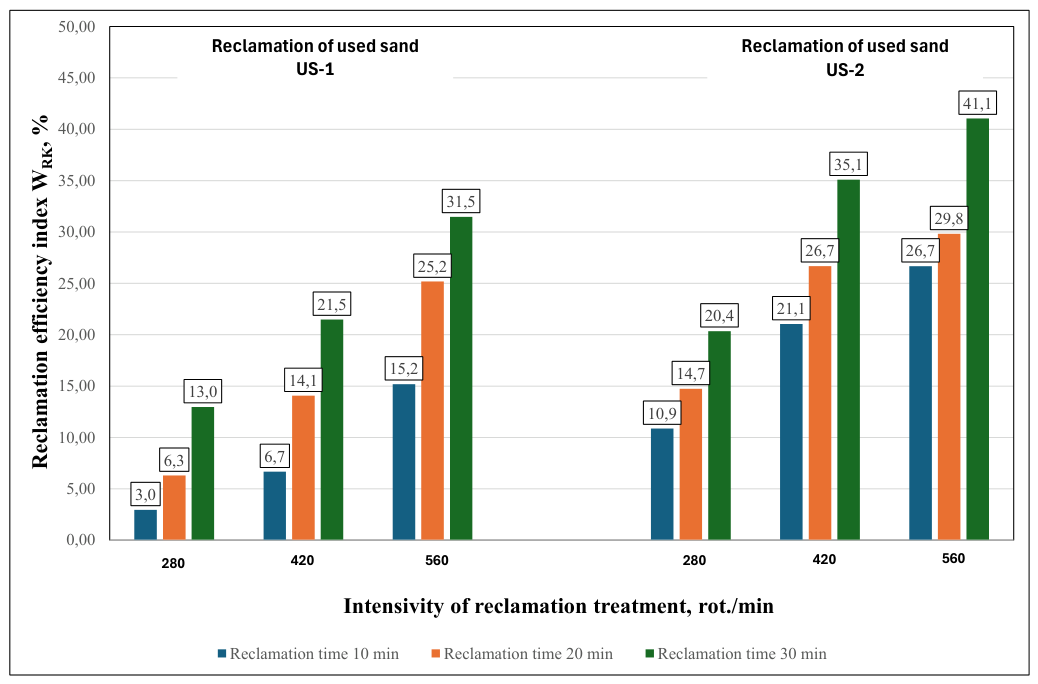
Figure 18.
Reclamation efficiency index WRK for US-1 and US-2 after thermal reclamation at different treatment conditions.
Figure 18.
Reclamation efficiency index WRK for US-1 and US-2 after thermal reclamation at different treatment conditions.
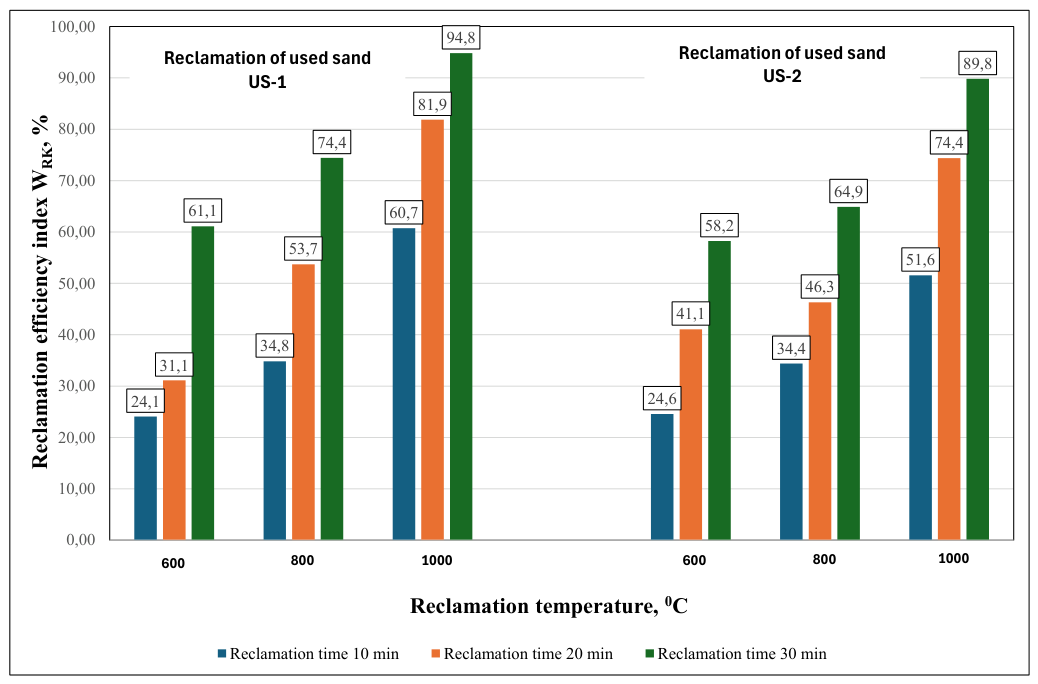
Figure 19.
pH of reclaims obtained from US-1 and US-2 by mechanical reclamation at different treatment intensities.
Figure 19.
pH of reclaims obtained from US-1 and US-2 by mechanical reclamation at different treatment intensities.
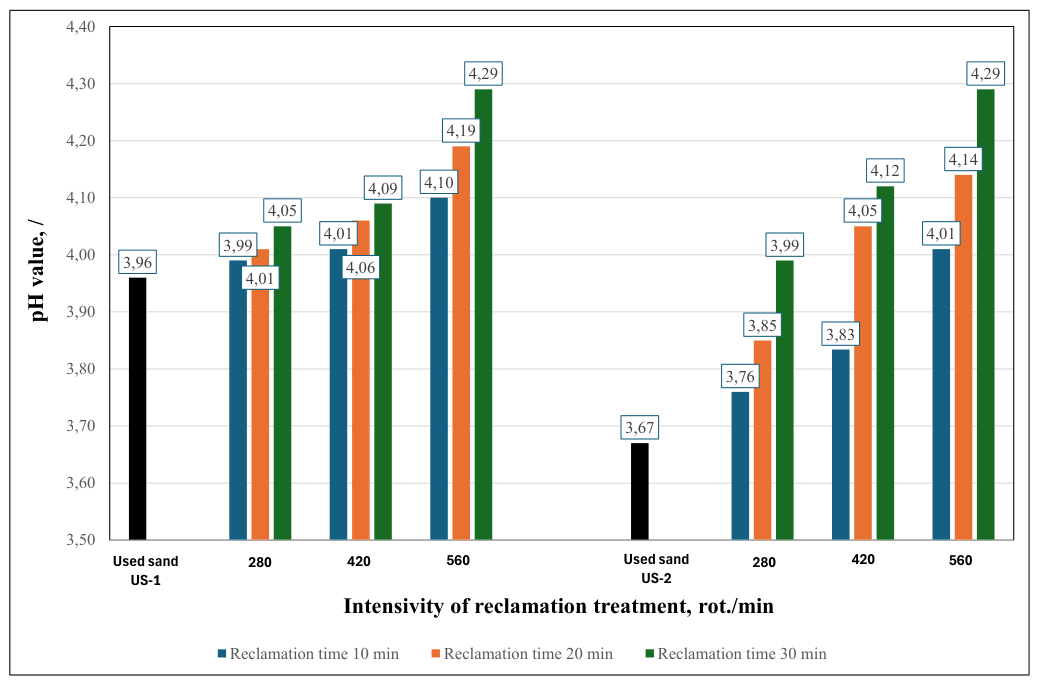
Figure 20.
pH of reclaims obtained from US-1 and US-2 by thermal reclamation at different treatment temperatures.
Figure 20.
pH of reclaims obtained from US-1 and US-2 by thermal reclamation at different treatment temperatures.
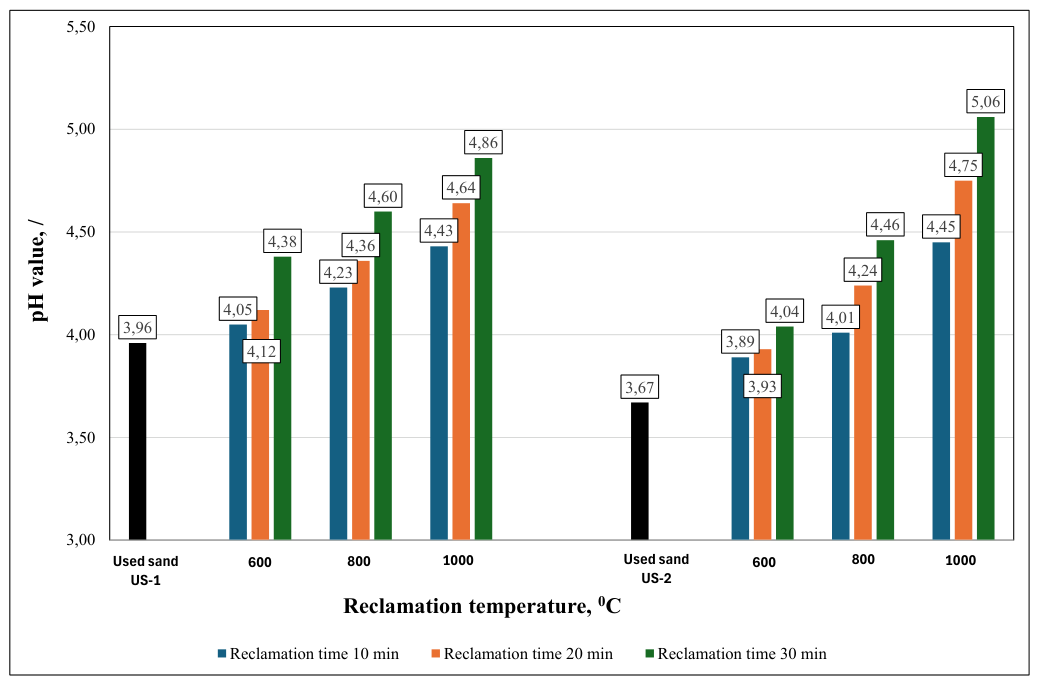
Figure 21.
Particle-size characteristics of post-reclamation dust samples exhibiting the highest LOI values.
Figure 21.
Particle-size characteristics of post-reclamation dust samples exhibiting the highest LOI values.
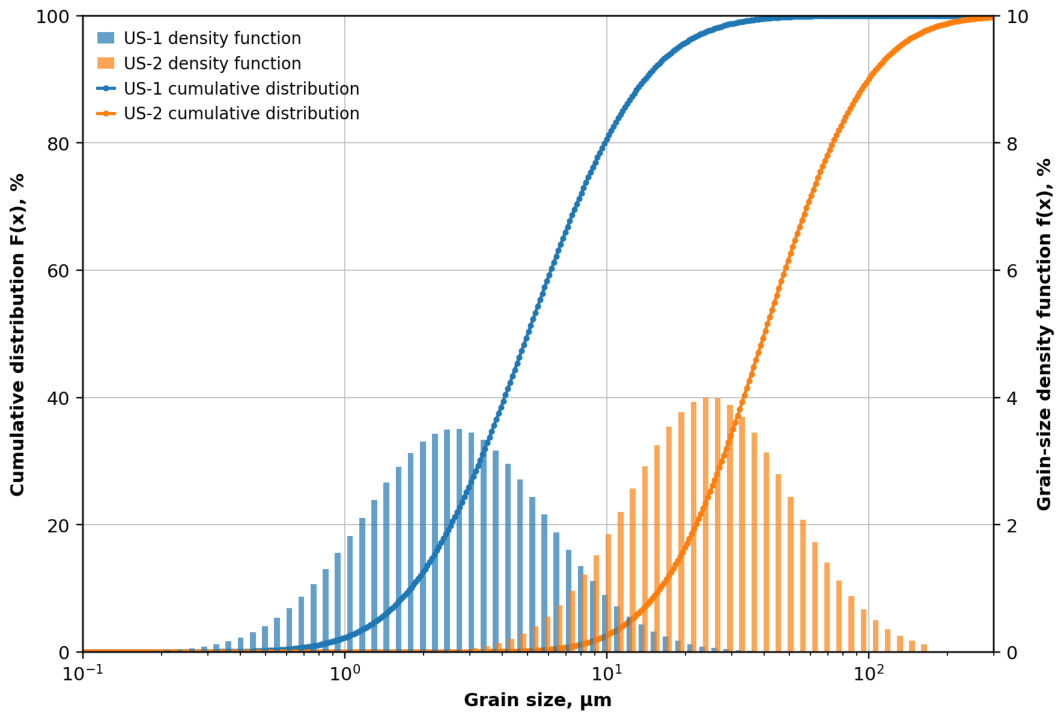
Figure 22.
Amount of dust generated during mechanical reclamation of spent sands US-1 and US-2.
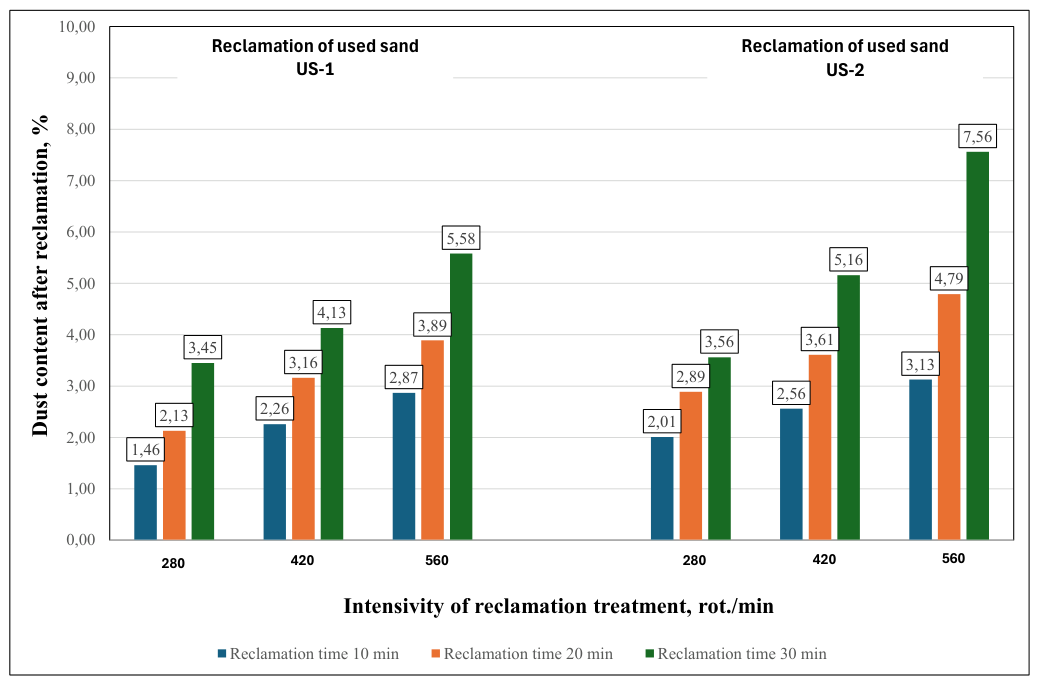
Figure 23.
LOI of dust generated during mechanical reclamation of spent sands US-1 and US-2.
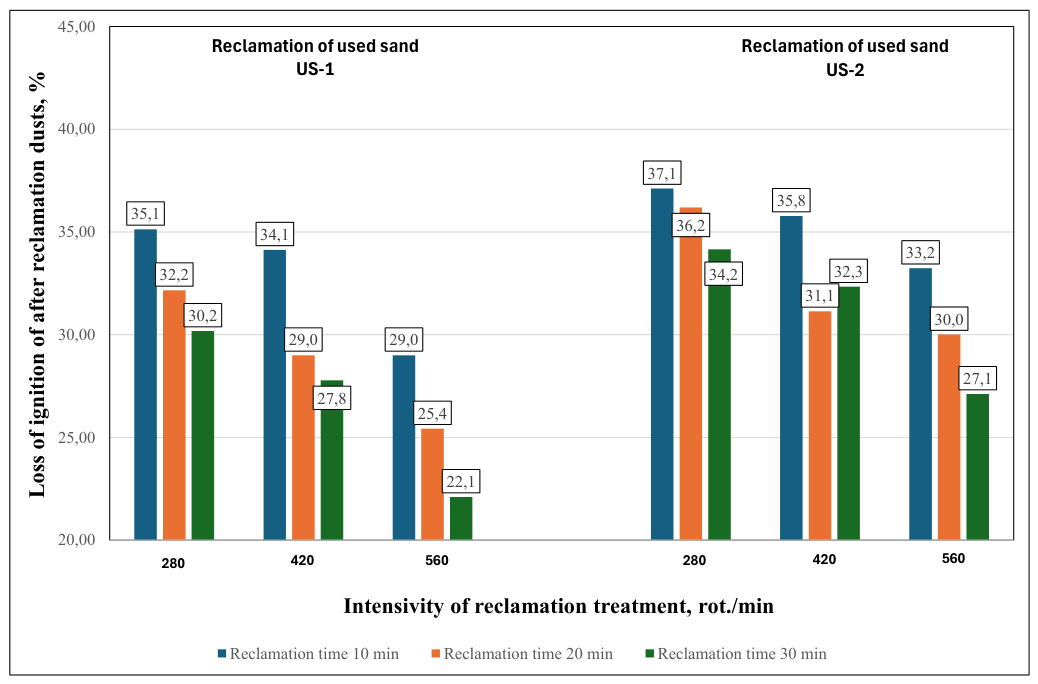

Table 1.
Properties of the spent sands before secondary reclamation. LOI—loss on ignition; dg—geometric mean grain diameter; da—arithmetic mean grain diameter; Mf—main fraction content.
Table 1.
Properties of the spent sands before secondary reclamation. LOI—loss on ignition; dg—geometric mean grain diameter; da—arithmetic mean grain diameter; Mf—main fraction content.
| Spent sand | LOI [%] | pH | dg [mm] | da [mm] | Mf [%] | Main fraction [mm] |
| US-1 | 2.70 | 3.96 | 0.125 | 0.141 | 90.6 | 0.10/0.071/0.16 |
| US-2 | 2.85 | 3.67 | 0.287 | 0.332 | 80.6 | 0.20/0.16/0.32 |
Table 2.
Bending strength of molding sands prepared with fresh silica sand and mechanically reclaimed matrices.
Table 2.
Bending strength of molding sands prepared with fresh silica sand and mechanically reclaimed matrices.
| Reclamation time [min] | Fresh silica sand [MPa] | 280 rpm [MPa] | 420 rpm [MPa] | 560 rpm [MPa] |
| US-1 — 100% mechanically reclaimed matrix | ||||
| 10 | 5.61 ± 0.05 | 1.13 ± 0.02 | 1.32 ± 0.03 | 1.95 ± 0.06 |
| 20 | 5.61 ± 0.05 | 1.50 ± 0.03 | 1.67 ± 0.04 | 2.75 ± 0.07 |
| 30 | 5.61 ± 0.05 | 1.65 ± 0.04 | 2.11 ± 0.06 | 3.69 ± 0.08 |
| US-2 — 100% mechanically reclaimed matrix | ||||
| 10 | 3.89 ± 0.03 | 0.89 ± 0.01 | 0.93 ± 0.06 | 1.91 ± 0.05 |
| 20 | 3.89 ± 0.03 | 1.19 ± 0.02 | 1.69 ± 0.03 | 2.23 ± 0.04 |
| 30 | 3.89 ± 0.03 | 1.55 ± 0.03 | 2.17 ± 0.09 | 2.58 ± 0.06 |
| US-1 — 50% mechanically reclaimed matrix | ||||
| 10 | 5.61 ± 0.05 | 1.63 ± 0.01 | 1.82 ± 0.03 | 2.65 ± 0.01 |
| 20 | 5.61 ± 0.05 | 1.80 ± 0.08 | 1.97 ± 0.01 | 3.75 ± 0.04 |
| 30 | 5.61 ± 0.05 | 1.95 ± 0.05 | 2.68 ± 0.05 | 4.69 ± 0.02 |
| US-2 — 50% mechanically reclaimed matrix | ||||
| 10 | 3.89 ± 0.03 | 1.99 ± 0.02 | 2.89 ± 0.03 | 1.89 ± 0.02 |
| 20 | 3.89 ± 0.03 | 2.34 ± 0.01 | 3.26 ± 0.01 | 2.62 ± 0.04 |
| 30 | 3.89 ± 0.03 | 2.98 ± 0.03 | 3.45 ± 0.04 | 3.05 ± 0.03 |
Table 3.
Bending strength of molding sands prepared with fresh silica sand and thermally reclaimed matrices.
Table 3.
Bending strength of molding sands prepared with fresh silica sand and thermally reclaimed matrices.
| Reclamation time [min] | Fresh silica sand [MPa] | 600 °C [MPa] | 800 °C [MPa] | 1000 °C [MPa] |
| US-1 — 100% thermally reclaimed matrix | ||||
| 10 | 5.61 ± 0.05 | 2.13 ± 0.02 | 2.32 ± 0.03 | 2.95 ± 0.06 |
| 20 | 5.61 ± 0.05 | 2.50 ± 0.03 | 2.67 ± 0.04 | 3.75 ± 0.07 |
| 30 | 5.61 ± 0.05 | 2.95 ± 0.04 | 3.11 ± 0.06 | 4.43 ± 0.08 |
| US-2 — 100% thermally reclaimed matrix | ||||
| 10 | 3.89 ± 0.03 | 1.89 ± 0.01 | 1.93 ± 0.06 | 2.22 ± 0.05 |
| 20 | 3.89 ± 0.03 | 2.19 ± 0.02 | 2.69 ± 0.03 | 2.98 ± 0.04 |
| 30 | 3.89 ± 0.03 | 2.87 ± 0.03 | 3.17 ± 0.09 | 3.34 ± 0.06 |
Disclaimer/Publisher’s Note: The statements, opinions and data contained in all publications are solely those of the individual author(s) and contributor(s) and not of MDPI and/or the editor(s). MDPI and/or the editor(s) disclaim responsibility for any injury to people or property resulting from any ideas, methods, instructions or products referred to in the content. |
© 2026 by the authors. Licensee MDPI, Basel, Switzerland. This article is an open access article distributed under the terms and conditions of the Creative Commons Attribution (CC BY) license.
Copyright: This open access article is published under a Creative Commons CC BY 4.0 license, which permit the free download, distribution, and reuse, provided that the author and preprint are cited in any reuse.