
Submitted:
31 August 2026
Posted:
31 August 2026
You are already at the latest version
Abstract
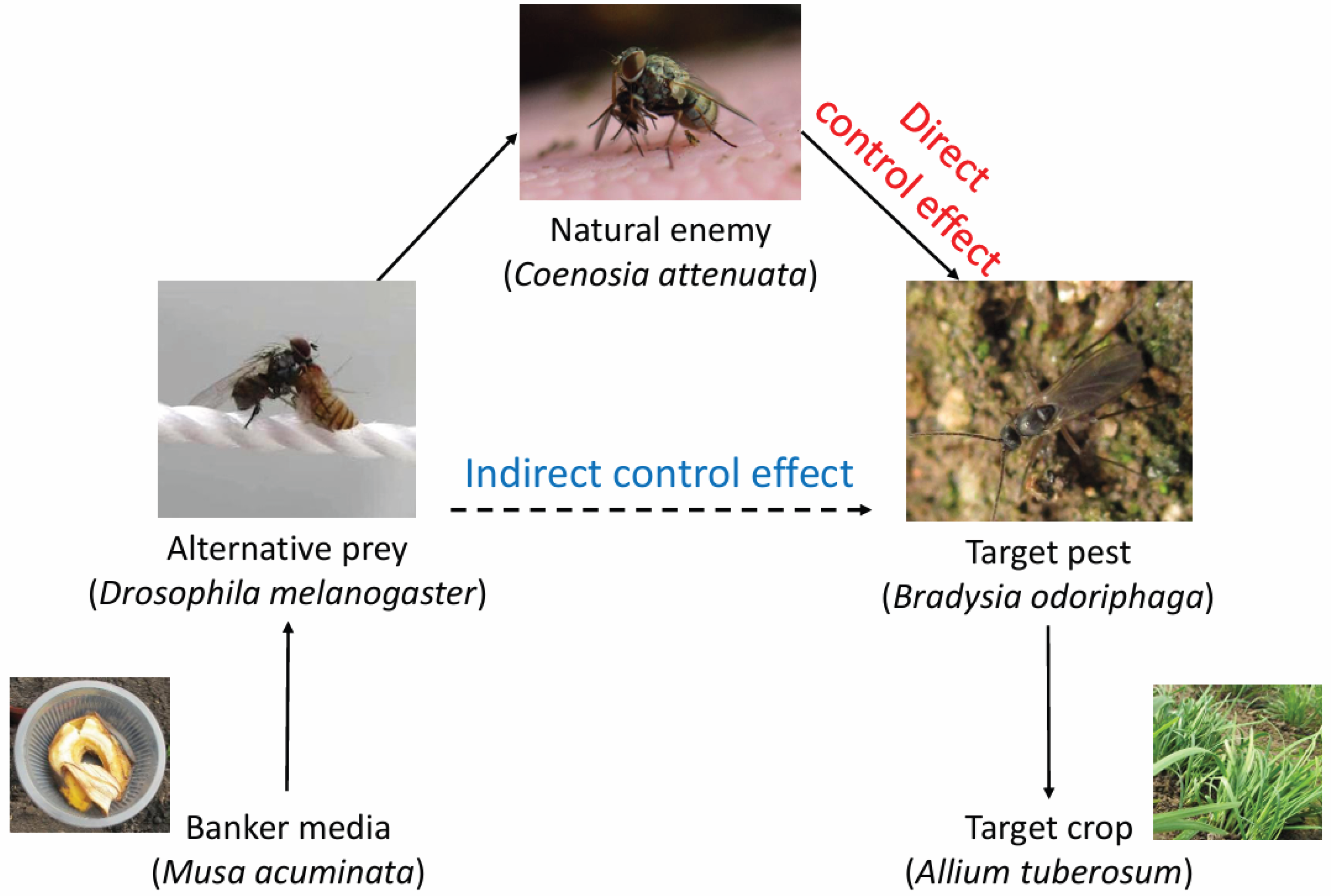
Greenhouse cage trials were conducted to evaluate the biocontrol potential of the predatory tiger fly Coenosia attenuata against the Chinese chive maggot Bradysia odoriphaga infesting Allium tuberosum. To enhance pest suppression, we supplemented the predator with alternative prey (Drosophila melanogaster adults), a banana‑based banker medium, and a coir mulch layer across four treatments over 50 weeks. When C. attenuata was released alone (T1), corrected control efficacy against B. odoriphaga larvae ranged from 56.14% to 59.82%. Notably, peak larval suppression was significantly higher in treatments combining the predator with mulch layer (T2: 94.23%) or with the banker media system (T4: 100%). Against adult stages, T1 achieved 32.68%–69.73% corrected efficacy, whereas T2 and T4 reached peak values of 100% and 97.69%, respectively. Predator application also doubled the dry weight of Chinese chive. However, the concurrent use of banker medium and mulch layer (T3) did not produce synergistic effects. Collectively, these findings demonstrate that banker media system and coir mulch layers are effective auxiliary tools for enhancing C. attenuata‑based biocontrol in protected cultivation systems.
Keywords:
1. Introduction
2. Materials and Methods
2.1. Experimental Bradysia odoriphaga
2.2. Experimental Bradysia impatiens
2.3. Experimental Coenosia attenuata
2.4. Biological Control of B. odoriphaga Using C. attenuata in Cages of Greenhouse
2.5. Statistical Analyses
3. Results
3.1. Corrected Control Efficacy Against B. odoriphaga Larvae in Greenhouse Conditions with Chinese Chive
3.2. Corrected Control Efficacy Against B. odoriphaga Adults in Greenhouse Conditions with Chinese Chive
3.3. Plant Height of Chinese Chive in Greenhouse Conditions
3.4. Leaf Chlorophyll Content of Chinese Chive in Greenhouse Conditions
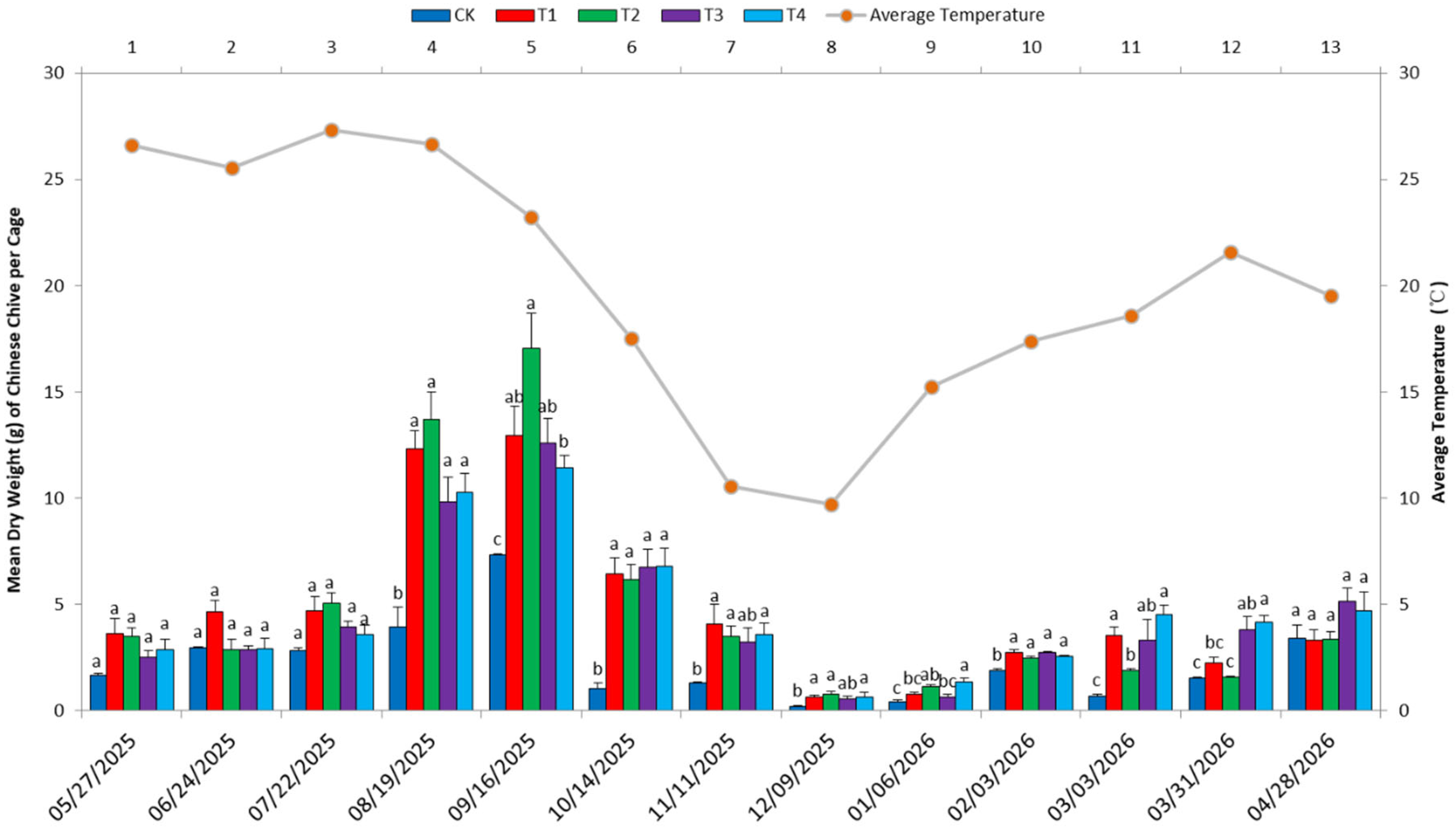
3.5. Dry Weight of Chinese Chive in Greenhouse Conditions
4. Discussion
Author Contributions
Funding
Data Availability Statement
Acknowledgments
Conflicts of Interest
References
- Li, H.J.; He, X.K.; Zeng, A.J.; Liu, Y.J.; Jiang, S.R. Bradysia Odoriphaga copulatory behavior and evidence of a female sex pheromone. J. Agric. Urban Entomol. 2007, 24, 27–34. [Google Scholar] [CrossRef]
- Li, W.X.; Yang, Y.T.; Xie, W.; Wu, Q.J.; Xu, B.Y.; Wang, S.L.; Zhu, X.; Wang, S.J.; Zhang, Y.J. Effects of temperature on the age-stage, two-sex life table of Bradysia odoriphage (Diptera: Sciaridae). J. Econ. Entomol. 2015, 108, 126–134. [Google Scholar] [CrossRef] [PubMed]
- Zhao, Y.; Ding, J.; Zhang, Z.; Liu, F.; Zhou, C.; Mu, W. Sex- and tissue-specific expression profiles of odorant binding protein and chemosensory protein genes in Bradysia odoriphaga (Diptera: Sciaridae). Front. Physiol. 2018, 9, 107. [Google Scholar] [CrossRef] [PubMed]
- Dang, Z.H.; Dong, J.; Gao, Z.L.; Jia, H.; Zhang, K.; Pan, W.L. Biology and injury of Bradysia Odoriphaga on leek in different types of cultivation. J. Hebei Agric. Univ. 2001, 24, 65–68. [Google Scholar]
- Ma, J.; Chen, S.L.; Maurice, M.; Han, R.; De Clercq, P. Efficacy of entomopathogenic nematodes (Rhabditida: Steinernematidae and Heterorhabditidae) against the chive gnat, Bradysia Odoriphaga. J. Pest Sci. 2013, 86, 556–561. [Google Scholar] [CrossRef]
- Zhu, G.; Ding, W.; Zhao, Y.; Xue, M.; Zhao, H.; Liu, S. Biological and physiological responses of two Bradysia pests, Bradysia odoriphaga and Bradysia difformis, to dinotefuran and lufenuron. Pestic. Biochem. Physiol. 2023, 190, 105338. [Google Scholar] [CrossRef] [PubMed]
- Gao, Z.L.; Dang, Z.H.; Pan, W.L.; Jia, H.M.; Zhang, K.J. Sensitivity of Bradysia Odoriphaga in various places in Hebei province to some insecticides. Chin. J. Pestic. Sci. 2000, 4, 88–90. [Google Scholar]
- Wang, W.Q.; Zhang, T.; Chen, J.M.; Chen, Z.D. Present situation and control technology of pesticide residue in Chinese chives. Shandong Agric. Sci. 2011, 10, 82–84. [Google Scholar]
- Yang, H.W.; Zhang, G.Y. Infectivity of the entomopathogenic nematode, Heterorhabditis sp. D1 to Bradysia odoriphaga (Dip.: Mycetophilidae). Chin. J. Biol. Control. 1990, 6, 110–112. [Google Scholar]
- Yang, X.F.; Jian, H.; Yang, H.W.; Liu, Z.; Yuan, J.J. Using entomopathogenic nematodes for control of chive maggot, Bradysia odoriphaga Yang et Zhang. Acta Phytophylac. Sin. 2004, 31, 33–37. [Google Scholar]
- Wu, H.B.; Gong, Q.T.; Zhang, K.P.; Zhang, X.P.; Sun, R.H. The efficacy of synergism of entomopathogenic nematodes and black sticky cards to Bradysia odoriphaga. J. Plant Prot. 2015, 42, 632–638. [Google Scholar]
- Shi, C.; Hua, J.R.; Wei, Q.W.; Yang, Y.T.; Cheng, J.X.; Han, H.L.; Wu, Q.J.; Wang, S.L.; Xu, B.Y.; Su, Q.; et al. Control of Bradysia odoriphaga (Diptera: Sciaridae) by soil solarization. Crop Prot. 2018, 114, 76–82. [Google Scholar] [CrossRef]
- Shi, C.; Zhang, S.; Hu, J.; Zhang, Y. Effects of non-lethal high-temperature stress on Bradysia odoriphaga (Diptera: Sciaridae) larval development and offspring. Insects 2020, 11, 159. [Google Scholar] [CrossRef] [PubMed]
- Zhang, Y.; Ren, Y.; Wang, X.; Liu, Y.; Wang, N. Responses to host plant volatiles and identification of odorant binding protein and chemosensory protein genes in Bradysia odoriphaga. ACS Omega 2019, 4, 3800−3811. [Google Scholar] [CrossRef]
- Yang, Y.; Hua, D.; Zhu, J.; Wang, F.; Zhang, Y. Chemosensory protein 4 is required for Bradysia odoriphaga to be olfactory attracted to sulfur compounds released from Chinese chives. Front. Physiol. 2022, 13, 989601. [Google Scholar] [CrossRef] [PubMed]
- Yang, Y.; Tan, S.; Wang, Q.; Wang, F.; Zhang, Y. Key amino acids in odorant-binding protein OBP7 enable Bradysia odoriphaga to recognize host plant volatiles. Int. J. Biol. Macromol. 2025, 284, 138179. [Google Scholar] [CrossRef] [PubMed]
- Rana, A.; Sharma, D.; Choudhary, K.; Kumari, P.; Ruchika, K.; Yangchan, J.; Kumar, S. Insight into insect odorant binding proteins: An alternative approach for pest management. J. Nat. Pestic. Res. 2024, 8, 100069. [Google Scholar] [CrossRef]
- Cock, M.J.W. Bemisia tabaci, an Update 1986–1992 on the Cotton Whitefly with an Annotated Bibliography; CAB International Institute of Biological Control: Ascot, UK, 1993; p. 78. [Google Scholar]
- Gerling, D.; Alomar, O.; Arn, J. Biological control of Bemisia tabaci using predators and parasitoids. Protection 2001, 20, 779–799. [Google Scholar] [CrossRef]
- Parrela, M.P. Biological control in protected culture: Will it continue to expand? Phytoparasitica 2008, 3, 3–6. [Google Scholar] [CrossRef]
- Seabra, S.G.; Brás, P.G.; Martins, J.; Martins, R.; Wyatt, N.; Shirazi, J.; Rebelo, M.T.; Franco, J.C.; Mateus, C.; Figueiredo, E.; et al. Phylogeographical patterns in Coenosia attenuata (Diptera: Muscidae): A widespread predator of insect species associated with greenhouse crops. Biol. J. Linn. Soc. 2015, 114, 308–326. [Google Scholar] [CrossRef]
- Kühne, S. Open rearing of generalist predators: A strategy for improvement of biological pest control in greenhouses. Phytoparasitica 1998, 26, 277–281. [Google Scholar] [CrossRef]
- Moreschi, I.; Colombo, M. Una metódica per l’allevamento dei Ditteri predatori Coenosia attenuata e C. strigipes. Inf. Fitopatol. 1999, 49, 61–64. [Google Scholar]
- Martinez, M.; Cocquempot, C. La mouche Coenosia attenuata nouvel auxiliaire prometteur en culture protégée. PHM-Rev. Hortic. 2000, 414, 50–52. [Google Scholar]
- Sensenbach, E.J.; Wraight, S.P.; Sanderson, J.P. Biology and predatory feeding behavior of larvae of the hunter fly Coenosia attenuata. IOBC/WPRS B 2005, 28, 229–232. [Google Scholar]
- Téllez, M.D.M.; Tapia, G.; Gámez, M.; Cabello, T.; van Emden, H.F. Predation of Bradysia sp. (Diptera: Sciaridae), Liriomyza trifolii (Diptera: Agromyzidae) and Bemisia tabaci (Hemiptera: Aleyrodidae) by Coenosia attenuata (Diptera: Muscidae) in greenhouse crops. Eur. J. Entomol. 2009, 106, 199–204. [Google Scholar] [CrossRef]
- Ugine, T.A.; Sensenbach, E.J.; Sanderson, J.P.; Wraight, S.P. Biology and feeding requirements of larval hunter flies Coenosia attenuata (Diptera: Muscidae) reared on larvae of the fungus gnat Bradysia impatiens (Diptera: Sciaridae). J. Econ. Entomol. 2010, 103, 1149–1158. [Google Scholar] [CrossRef] [PubMed]
- Mateus, C. Bioecology and behaviour of Coenosia attenuata in greenhouse vegetable crops in the Oeste region, Portugal. Bull. Insectol. 2012, 65, 257–263. [Google Scholar]
- Pohl, D.; Kühne, S.; Karaca, I.; Moll, E. Review of Coenosia attenuata Stein and its first record as a predator of important greenhouse pests in Turkey. Phytoparasitica 2012, 40, 63–68. [Google Scholar] [CrossRef]
- Hennig, W. Muscidae. In Die Fliegen der Palaearktischen Region; Lindner, E., Ed.; Schweizerbart’sche Verlagsbuchhandlung: Stuttgart, Germany, 1964; Volume 7. [Google Scholar]
- Xue, W.Q.; Tong, Y.F. A taxonomic study on Coenoia tigrina species-group (Diptera: Muscidae) in China. Entomol. Sin. 2003, 10, 281–290. [Google Scholar] [CrossRef]
- Zou, D.Y. Current research status of key natural enemies in Tianjin. Chin. Rur. Sci. Technol. 2015, 10, 38–39. [Google Scholar]
- Zou, D.; Coudron, T.A.; Zhang, L.; Xu, W.; Xu, J.; Wang, M.; Xiao, X.; Wu, H. Effect of prey species and prey densities on the performance of adult Coenosia attenuata. Insects 2021, 12, 669. [Google Scholar] [CrossRef] [PubMed]
- Kaldor, A.D.; McHugh, J.V.; Schmidt, J.M.; Luo, X.; Gariepy, T.D.; Blaauw, B.R. First documented wild population of the "hunter fly", Coenosia attenuata Stein (Diptera: Muscidae) in North America. Insects 2022, 13, 970. [Google Scholar] [CrossRef] [PubMed]
- Wang, Y.; Xu, W.; Shi, Y.; Liu, B.; Xu, J.; Bai, Y.; Gu, X.; Zou, D. Predation functional response of Coenosia attenuata to Bradysia odoriphaga. Shandong Agric. Sci. 2017, 49, 107–110. [Google Scholar]
- Abbott, W.S. A method of computing the effectiveness of an insecticide. J. Econ. Entomol. 1925, 18, 265-267. [Google Scholar] [CrossRef]
- Zhu, G.; Luo, Y.; Xue, M.; Zhou, F.; Zhao, H.; Ji, G.; Liu, F. Resistance of garlic cultivars to Bradysia odoriphaga and its correlation with garlic thiosulfinates. Sci. Rep. 2017, 7, 3249. [Google Scholar] [CrossRef] [PubMed]
- Yan, X.; Zhao, G.; Han, R. Integrated management of chive gnats (Bradysia odoriphaga Yang & Zhang) in chives using entomopathogenic nematodes and low-toxicity insecticides. Insects 2019, 10, 161. [Google Scholar] [CrossRef] [PubMed]
- Pan, X.M.; Xia, Y.T. Studies on occurrence dynamics and control in Bradysia odoriphaga. Plant Prot. 1993, 2, 9–11. [Google Scholar]
- Mei, Z.X.; Wu, Q.J.; Zhang, Y.J.; Hua, L. The biology, ecology and management of Bradysia odoriphaga. Entomol. Knowl. 2003, 40, 396–398. [Google Scholar]
- Li, J. Biological Characteristics of Bradysia odoriphaga and Screening of High-Efficiency and Low-Toxicity Insecticides. Master's Thesis, Henan Agricultural University, 2015. [Google Scholar]
- Gilioli, G.; Baumgärtner, J.; Vacante, V. Temperature influences on functional response of Coenosia attenuata (Diptera: Muscidae) individuals. J. Econ. Entoml. 2005, 98, 1524–1530. [Google Scholar] [CrossRef] [PubMed]
- Garcia, A.F.F.C. Preferência alimentar da mosca-tigre (Coenosia attenuata Stein): estudos de caso. Master’s Thesis, Instituto Superior de Agronomia Universidade Técnica de Lisboa, Lisbon, Portugal, 2011. [Google Scholar]
- Bonsignore, C.P. Environmental factors affecting the behavior of Coenosia attenuata, a predator of Trialeurodes vaporariorum in tomato greenhouses. Entomol. Exp. Appl. 2016, 158, 87–96. [Google Scholar] [CrossRef]
- Grosman, A.; Messelink, G.; Groot, E.D. Combined use of a mulch layer and the soil-dwelling predatory mite Macrocheles robustulus (Berlese) enhance the biological control of sciarids in potted plants. IOBC-WPRS Bull. 2011, 68, 51–54. [Google Scholar]
- Martins, J.; Mateus, C.; Ramos, A.; Figueiredo, E. An optimized method for mass rearing the tiger-fly, Coenosia attenuata (Diptera: Muscidae). Eur. J. Entomol. 2015, 112, 470–476. [Google Scholar] [CrossRef]
- Zou, D.Y.; Coudron, T.A.; Xu, W.H.; Gu, X.S.; Wu, H.H. Development of immature tiger-fly Coenosia attenuata (Stein) reared on larvae of the fungus gnat Bradysia impatiens (Johannsen) in coir substrate. Phytoparasitica 2017, 45, 75–84. [Google Scholar] [CrossRef]
- Figueiredo, E.; Leal, S.; Martins, J.; Mateus, C.; Rebelo, T. Do earthworms increase oviposition of the tiger-fly, Coenosia attenuata (Diptera: Muscidae)? IOBC-WPRS Bull. 2012, 80, 117. [Google Scholar]
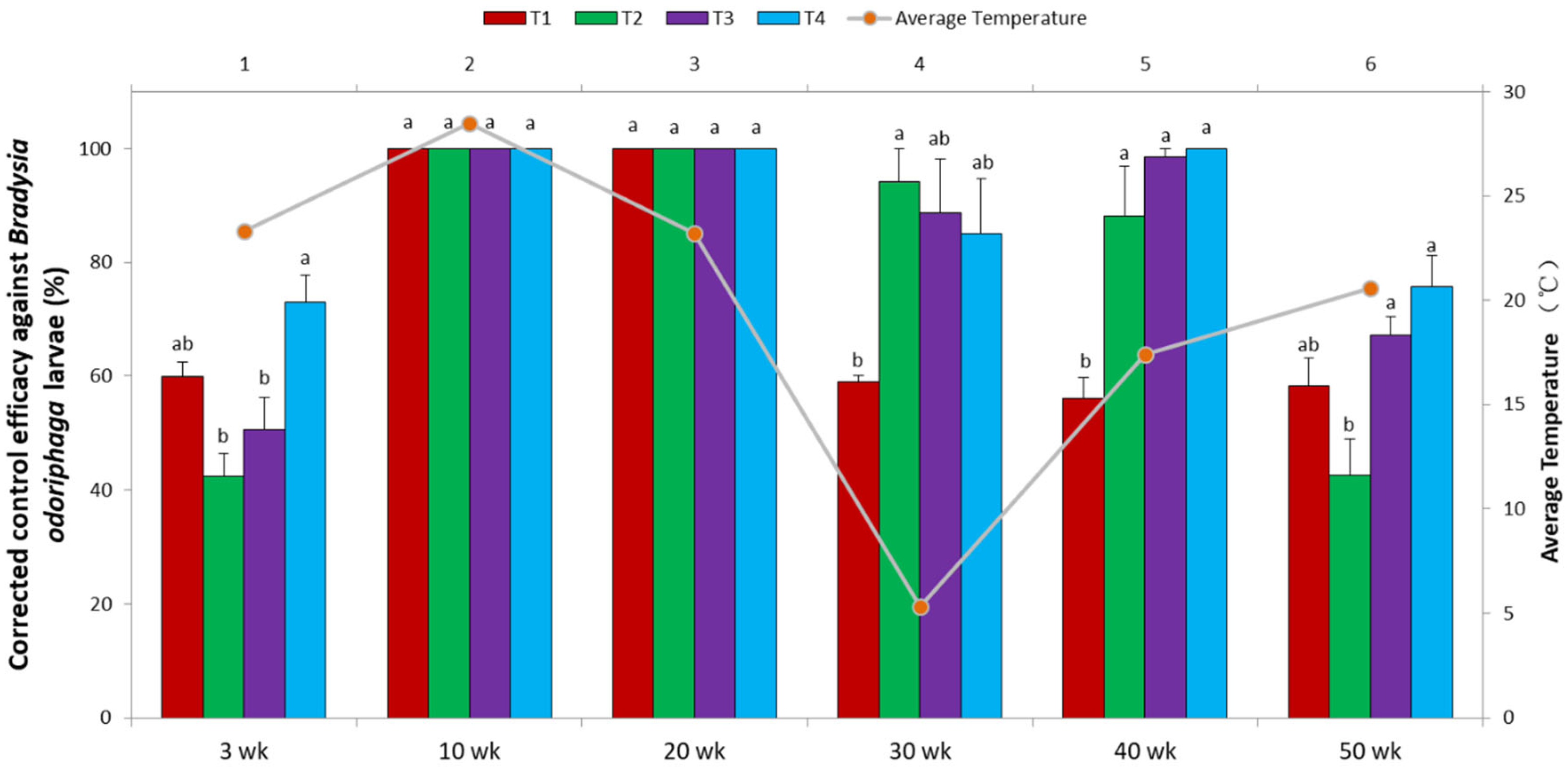
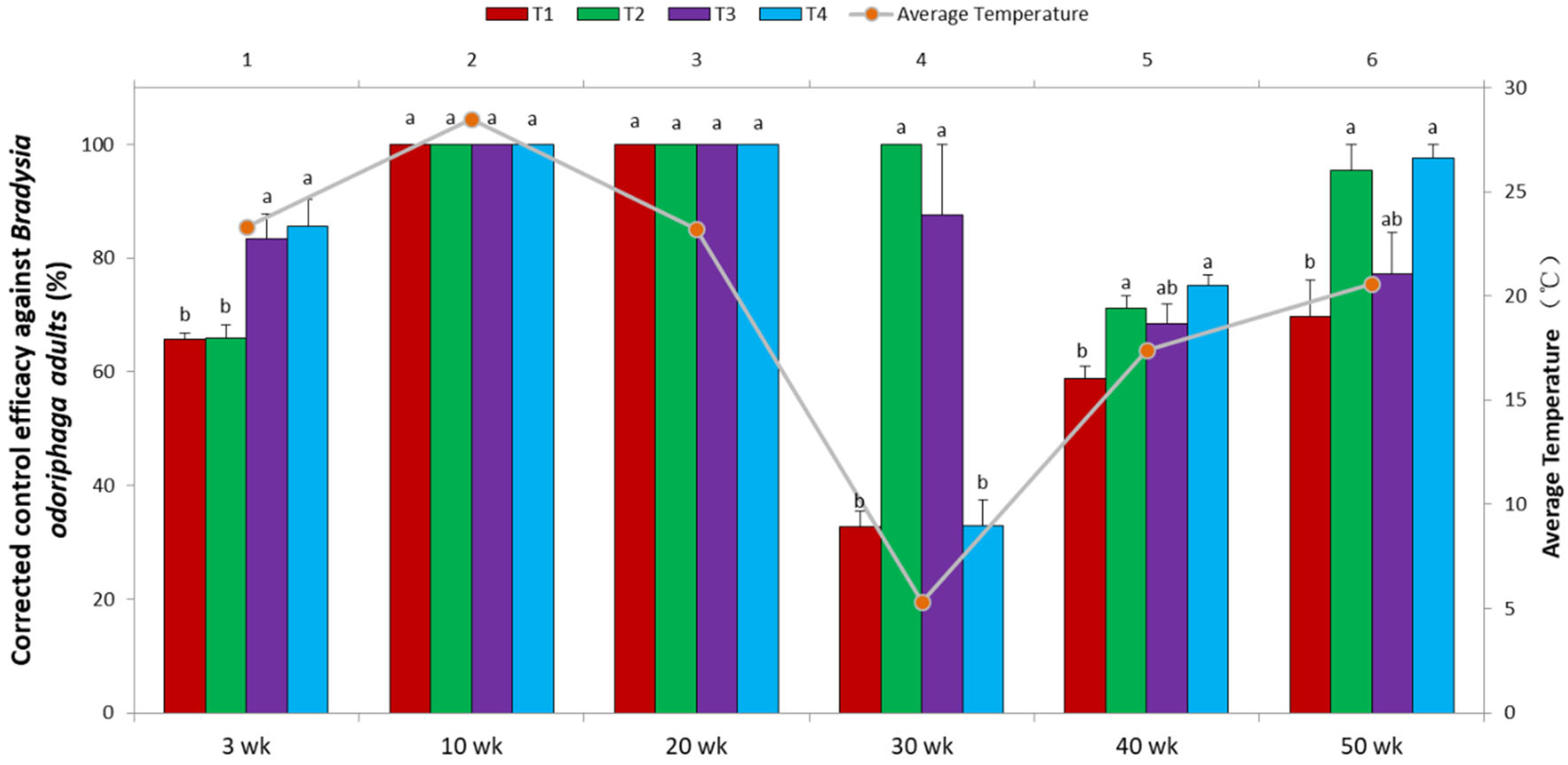
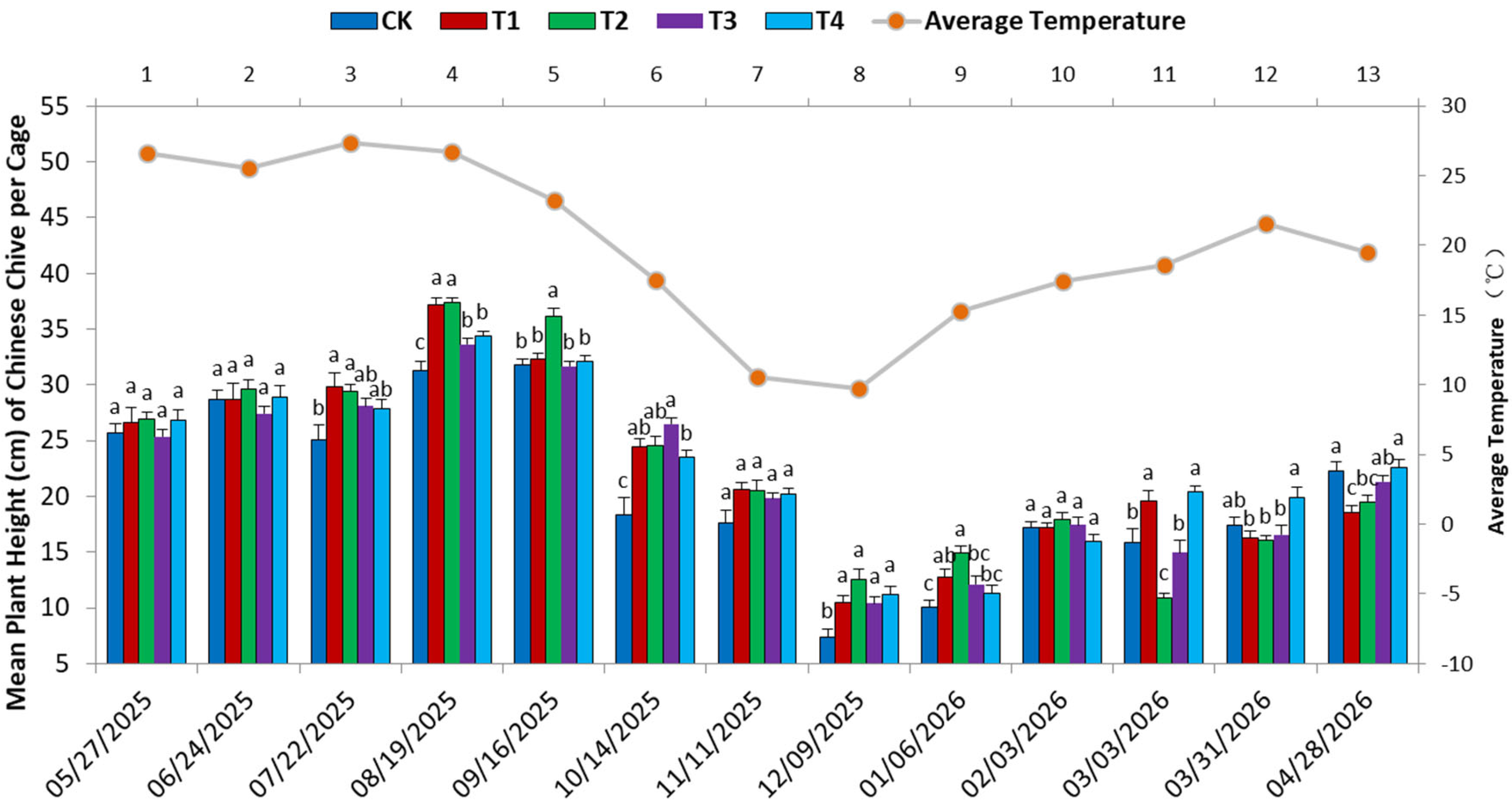
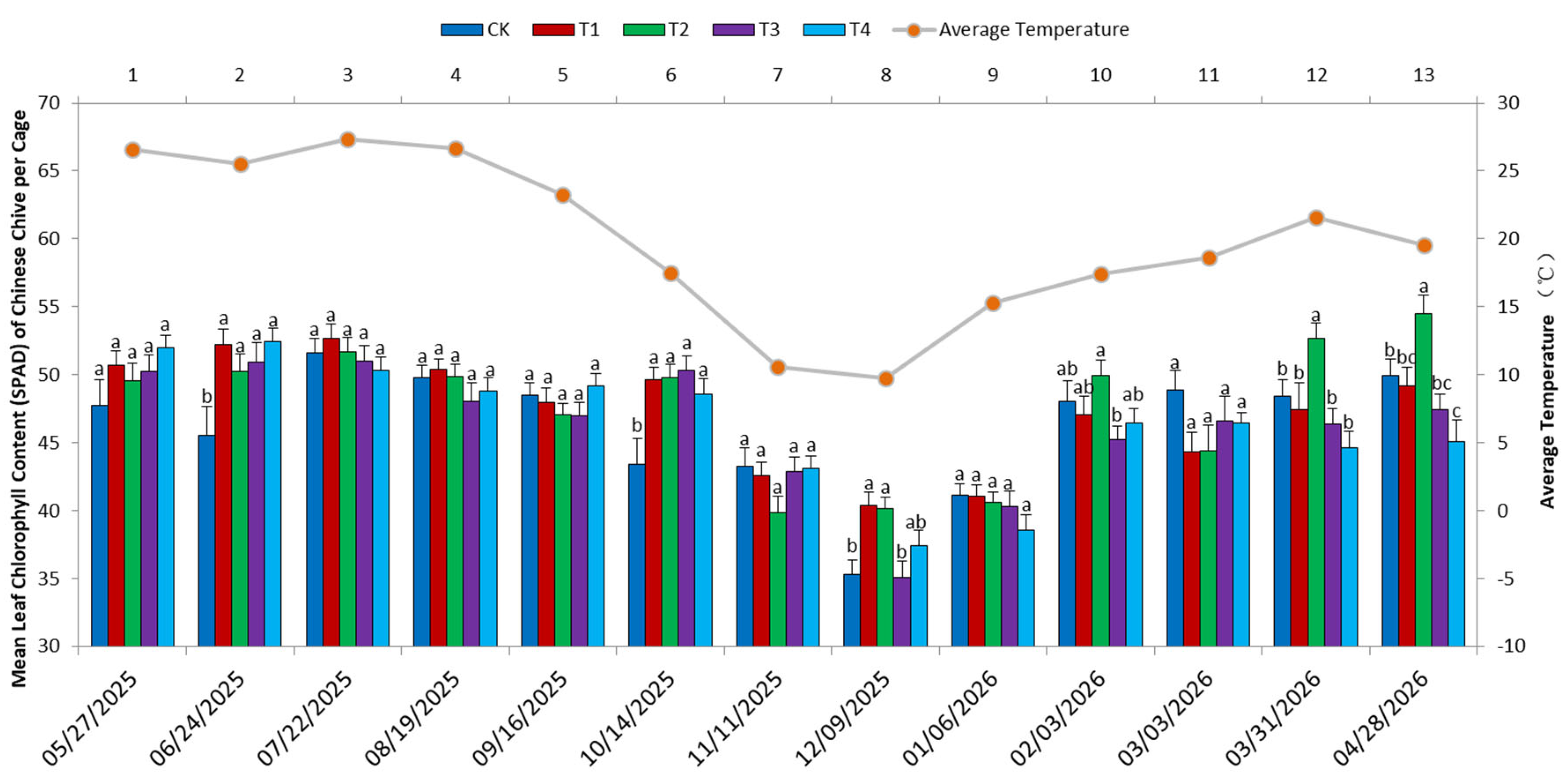

| Treatments | Chinese chive maggot a | Tiger fly b | Mulch layer c | Banker media and Drosophila fly d |
|---|---|---|---|---|
| CK | Bradysia odoriphaga | --- | --- | --- |
| T1 | B. odoriphaga | Coenosia attenuata | --- | --- |
| T2 | B. odoriphaga | C. attenuata | coir substrate | --- |
| T3 | B. odoriphaga | C. attenuata | coir substrate | banana and D. melanogaster |
| T4 | B. odoriphaga | C. attenuata | --- | banana and D. melanogaster |
Disclaimer/Publisher’s Note: The statements, opinions and data contained in all publications are solely those of the individual author(s) and contributor(s) and not of MDPI and/or the editor(s). MDPI and/or the editor(s) disclaim responsibility for any injury to people or property resulting from any ideas, methods, instructions or products referred to in the content. |
© 2026 by the authors. Licensee MDPI, Basel, Switzerland. This article is an open access article distributed under the terms and conditions of the Creative Commons Attribution (CC BY) license (http://creativecommons.org/licenses/by/4.0/).