
Submitted:
30 August 2026
Posted:
31 August 2026
You are already at the latest version
Abstract
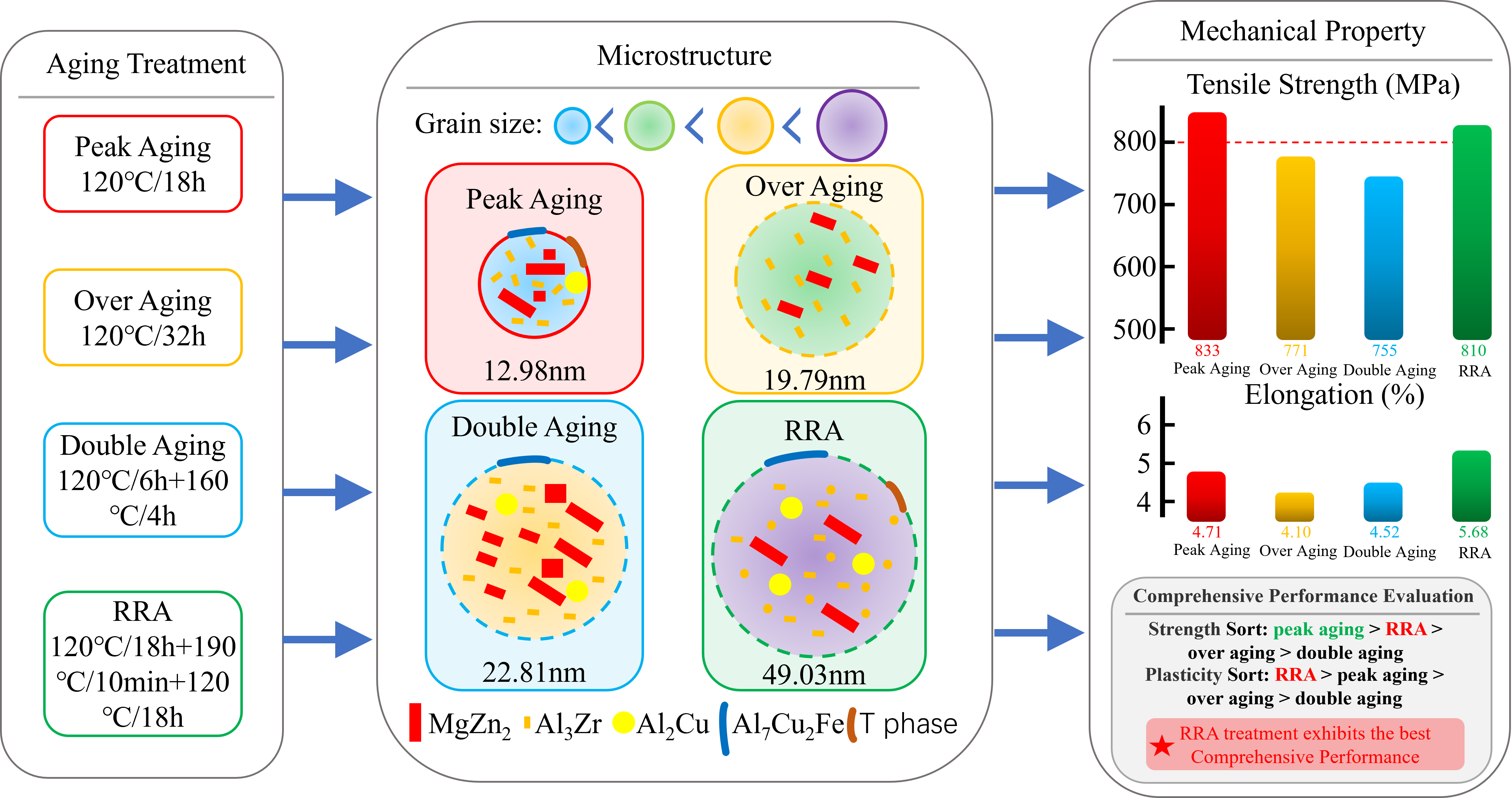
Al-Zn-Mg-Cu-Zr alloys are widely utilized in aerospace applications; however, their strength typically remains below 800 MPa, insufficient for growing industrial demands. This research therefore aims to enhance their mechanical properties by investigating the effects of heat treatment on both performance and microstructure. The research utilized experimental investigations to resolve the problem. To prepare 800 MPa-grade Al-Zn-Mg-Cu-Zr alloys, the effects of different heat-treatment methods on the microstructure and properties of the alloys were investigated. The results show that the hardness during single-stage aging exhibits a double peak characteristic, and the peak aging time of the Al-Zn-Mg-Cu-Zr alloy was 18 h. The alloy grain size follows the order: peak aging < over-aging < double aging < retrogression and re-aging (RRA). The grain boundary precipitates gradually evolved from a continuous network in the peak-aged condition to a coarsened and discontinuous distribution. The tensile strength of the alloy was ranked as follows: peak aging > RRA > over aging > double aging, whereas the elongation followed the order: RRA > peak aging > double aging > over aging. The RRA aging treatment provided the greatest improvement in the overall properties of the Al-Zn-Mg-Cu-Zr alloy, whereas the peak aging treatment yielded the highest tensile strength.
Keywords:
Al-Zn-Mg-Cu-Zr alloy
; heat treatment
; mechanical property
; grains microstructure
1. Introduction
With the advancement of the aerospace industry, the demand for high-performance aluminum alloys has become increasingly urgent. However, aluminum alloys produced by traditional semicontinuous casting methods can no longer meet these requirements. Spray forming technology integrates the metal atomization process with the deposition forming process to directly produce metal billets and is regarded as an advanced material preparation method.[1] Compared with the semi-continuous casting process, the spray-forming technique provides a higher cooling rate, which can effectively address issues such as low alloy solid solubility, severe macrosegregation, and coarse microstructure[2]. This meets the production requirements for high-performance aluminum alloys and has become an important method for preparing 7XXX series aluminum alloys.
Solution and aging treatments are important methods for improving the strength of Al-Zn-Mg-Cu alloys. Solution treatment involves heating the material to a specific temperature and holding it for a certain period so that the alloying elements (such as Mg, Zn, and Cu) fully dissolve into the aluminum matrix. Subsequently, the material was rapidly cooled to form a supersaturated solid solution. The alloying element content in the spray-formed Al-Zn-Mg-Cu alloys was significantly higher than that in cast Al-Zn-Mg-Cu alloys. Consequently, single-stage solution treatment is insufficient to fully dissolve the alloying elements in the Al matrix. The study by Shen Chengyu et al.[3] demonstrated that, compared with single stage solution treatment, multistage solution treatment (350 °C/12 h + 465 °C/h + 485 °C/h) more effectively promotes the dissolution of primary phases and the re-dissolution of Sc and Zr elements. This process subsequently facilitated the precipitation of the η′ phase during the aging stage, thereby enhancing both the strength and plasticity of the alloy. The aging treatment involves holding a supersaturated solid solution at a specific temperature to induce the precipitation of a second phase, thereby enhancing the strength of the alloy. Different aging treatments produce different distributions of the second phase, allowing control over the various properties of the alloy. According to variations in the holding time and temperature, aging treatments can generally be classified into four types: peak aging, over-aging, double aging, and retrogression and re-aging (RRA). E.M. Mazzer et al.[4] employed a peak-aging treatment at 121 °C for 24 h, which increased the alloy’s ultimate tensile strength and yield strength from 334 MPa and 488 MPa in the solution-treated condition to 483 MPa and 556 MPa after aging, respectively. Liu et al.[5] analyzed the microstructural characteristics of an alloy in an over-aged condition, and the study showed that. The over-aging treatments reduced the slip planarity in the local plastic deformation region and enhanced intergranular deformation homogeneity. However, the critical shear stress of the matrix precipitates decreased progressively with an increase in the degree of over-aging. Hu Ruian et al.[6] designed a two-step aging treatment (250°C for 0.25h followed by 125°C for 192h). Compared with the peak-aging condition, this treatment significantly improved the corrosion resistance of the alloy. This improvement is attributed to the substantial increase in the density and volume fraction of the GPB-II zones within the alloy, as well as the increased Cu content in the grain boundary precipitates. Jian Li et al.[7] employed a retrogression and re-aging (RRA) treatment (120 °C/14h + 160 °C/0.5h + 120 °C/14h), which disrupted the continuity of intergranular precipitates and reduced the maximum intergranular corrosion depth of the alloy. This treatment also addressed the issues of non-uniform precipitate distribution and elemental segregation during the aging treatment of equal-channel angular-pressed alloys.
At present, the tensile strength of most spray formed Al-Zn-Mg-Cu alloys is below 800 MPa, which makes it difficult to meet the increasingly stringent demands of industrial applications. Therefore, achieving a tensile strength exceeding 800 MPa through heat treatment has become a key focus in the research of Al-Zn-Mg-Cu alloys. This study aims to analyze the regulatory effects of different heat-treatment regimes on the microstructure of Al-Zn-Mg-Cu alloys and establish a heat-treatment process that enables the tensile strength of the Al-Zn-Mg-Cu alloy to exceed 800 MPa.
2. Materials and Methods
2.1. Materials
The tested alloy was produced by a company using a spray forming technique. No compositional segregation or hot cracking is observed. The specific chemical composition is presented in Table 1.
2.2. Solution Treatment and Aging Treatment
The alloy was prepared as follows. The charge was completely melted in a vacuum furnace at 820-880 °C and held for 10 min. A cylindrical alloy with a diameter of 800 mm and height of 2050 mm was produced using the spray-forming technique. Subsequently, hot extrusion was performed to obtain a cylindrical billet with a diameter of 410 mm and height of 340 mm. A specimen measuring 10 mm × 10 mm × 10 mm was extracted from the position at half of the billet radius and half of its height. The specimen was placed in a box-type resistance furnace for solution treatment at 465 °C for 1 h, followed by 485 °C for 1 h, and was subsequently quenched in water at room temperature. Aging treatment was performed within 10 min of the solution treatment. The single stage aging temperature was 120 °C. The double aging schedule was 120 °C/6 h + 160 °C/4 h. The retrogression and re-aging (RRA) treatment consisted of an initial aging at 120 °C for 18 h, after which the specimen was removed and water-quenched, followed by holding at 190 °C for 10 min and subsequent water quenching, and finally a re-aging treatment at 120 °C for 18 h.
2.3. Hardness and Tensile Testing
The load applied in the hardness test was 200 g with a dwell time of 10 s. Five points were measured for each specimen, and the average value was obtained. Room-temperature tensile tests were conducted at a crosshead speed of 1 mm/min, using an extensometer. Four tests were performed, and the average values are reported.
2.4. Microstructural Observation
The prepared metallographic specimens were ground and polished, then chemically etched using Keller’s reagent with a volumetric composition of HF: HCl: HNO3: H2O = 1:1.5:2.5:95. Subsequently, the microstructure of the alloy was examined using optical microscopy. The microstructure and fracture morphology of the alloy were analyzed using scanning electron microscopy (SEM). Energy-dispersive spectroscopy (EDS) was employed to determine the composition of intermetallic compounds with different contrasts and morphologies. Transmission electron microscopy (TEM) was used to characterize the size, distribution, and morphology of the nanoscale precipitates in the alloy.
3. Results and Discussions
3.1. Microstructure After Solution Treatment
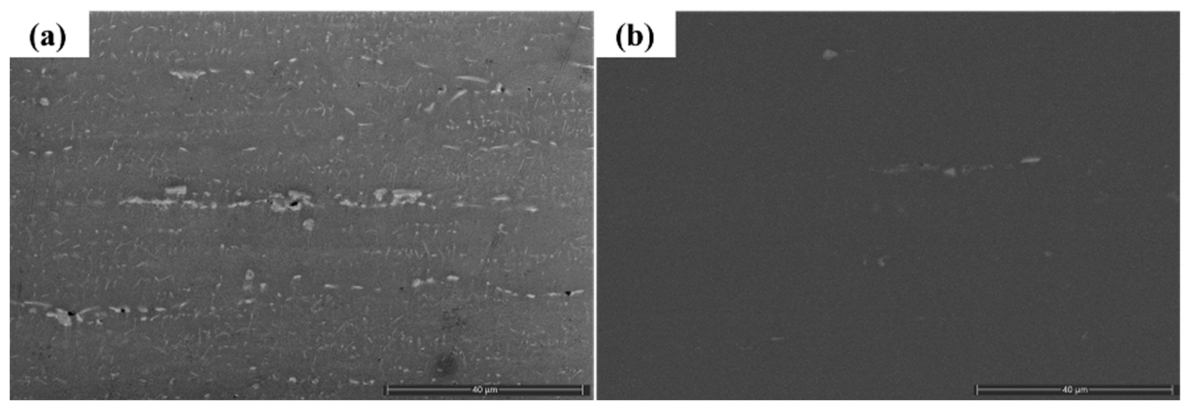
Owing to the relatively high alloying element content in ingots prepared by spray forming, a longer holding time is required to ensure the complete dissolution of the secondary phases. As shown in Figure 2, a large number of fine needle-like and plate-like second phases are dispersed within the grains of the extruded alloy, whereas the second phases located at the grain boundaries are larger and distributed in a chain-like morphology. After the solution treatment, the vast majority of the second phases were completely dissolved, and the remaining phases mainly appeared in blocky or strip-like forms dispersed within the matrix.
Figure 1.
SEM images (a) before solid solution treatment (b) after solid solution treatment.
3.1. Microstructure After Aging Treatment
Figure 2 shows the variation in hardness with the holding time during the single-stage aging treatment of the alloy. During the early stage of aging (0-4 h), the hardness of the alloy increased rapidly from 138 MPa to 195 MPa. Subsequently, during the 4-8 h period, the hardness decreased to approximately 170 MPa. This behavior is associated with the morphological evolution and localized coarsening of the intragranular precipitates. Simultaneously, the supersaturation of the matrix decreases, reducing the driving force for further precipitation of the strengthening phases, which consequently slows the rate of hardness increase[8]. During 8-16 h, the hardness increased again and reached a peak value of 210 MPa at 16 h. The hardness remained at 210 MPa for 16-20 h; therefore, the peak aging time of the alloy can be considered to lie within the range of 16-20 h. In this study, 18 h was selected as the peak aging time. Notably, the peak aging time of the spray-formed Al-Zn-Mg-Cu alloys is shorter than that of the cast Al-Zn-Mg-Cu alloys[9], which is closely related to the high proportion of substructures and fine microstructures in the spray-formed alloy; a[10]fter 20 h, the alloy enters the overaging stage, and the hardness gradually decreases with increasing aging time.
Figure 2.
Age hardening curve.
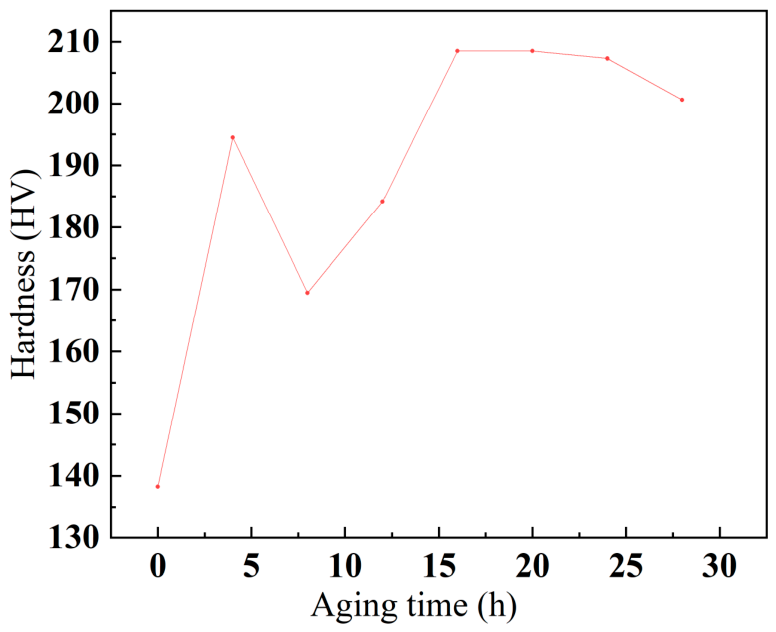
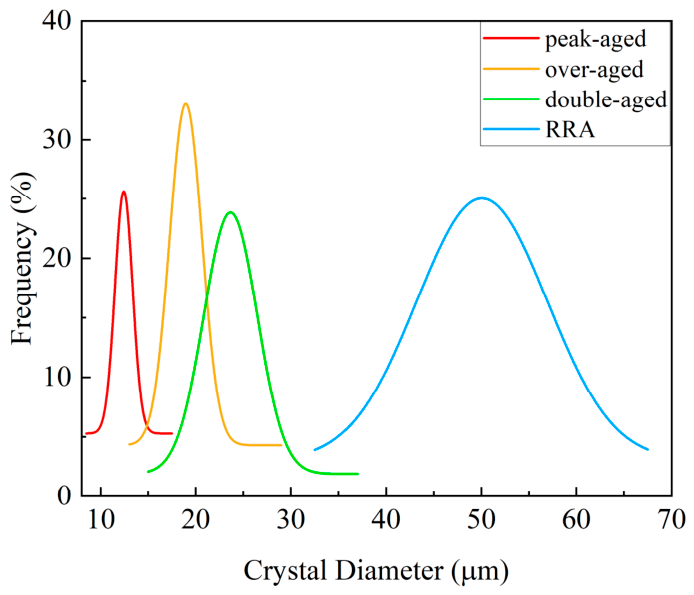
Figure 3 shows the metallographic microstructures of the Al-Zn-Mg-Cu-Zr alloys under different aging conditions. The alloy exhibited fine, uniformly distributed equiaxed grains. The grain-size distribution was relatively concentrated and generally followed a normal distribution. The grain sizes of the alloys under different aging conditions, ranked from largest to smallest, are: RRA (49.03 μm) > double aging (22.81 μm) > over aging (19.79 μm) > peak aging (12.98 μm).
Figure 4 shows the SEM microstructures of–n–Mg–Cu the Zr alloys under different aging conditions. A large number of second-phase particles are observed along the grain boundaries. The particles located at the grain boundaries were relatively small, whereas larger second-phase particles were mainly found at the intersections of the multiple grain boundaries. In the peak-aged condition, the grain boundary precipitates were distributed continuously along the grain boundaries in a network or chain-like morphology. In contrast, the intragranular precipitates were fewer in number, sparsely distributed, and irregular in shape. Compared with the peak-aged alloy, the grain boundary second-phase particles in the double-aged alloy are larger and exhibit a discontinuous chain-like distribution. In the RRA alloy, the second-phase particles at the grain boundaries were fine and did not exhibit network-like or chain-like aggregation along the grain boundaries.
Figure 5.
Grain size distribution of alloys at different aging conditions.
3.2. Types and Morphologies of Precipitated Phases
EDS analysis of the precipitates in the peak-aged alloy indicated that four distinct second phases were primarily present in the alloy: Al7Cu2Fe, MgZn2, Al3Zr, and the T phase. In region A, the Fe content was relatively high (12.23%), indicating that this phase was Al7Cu2Fe. In region B, the Zn and Mg contents are relatively high, at 11.99% and 13.07%, respectively, while the Fe content is extremely low, suggesting that this region is a typical Zn-Mg-rich precipitate phase. Based on its compositional characteristics, it is inferred to be the MgZn2 phase. The Zr content in region C is relatively high at 10.23%, accompanied by certain amounts of Zn and Mg, suggesting that this region is likely the Zr-rich dispersoid phase of Al3Zr. In region D, the Zn, Mg, and Cu contents were all relatively high, at 14.93%, 13.31%, and 5.07%, respectively. Combined with its fishbone-like morphology, this region was inferred to be the quaternary Al-Zn-Mg-Cu T phase.
Figure 6.
SEM image of the alloy in the peak aged condition.
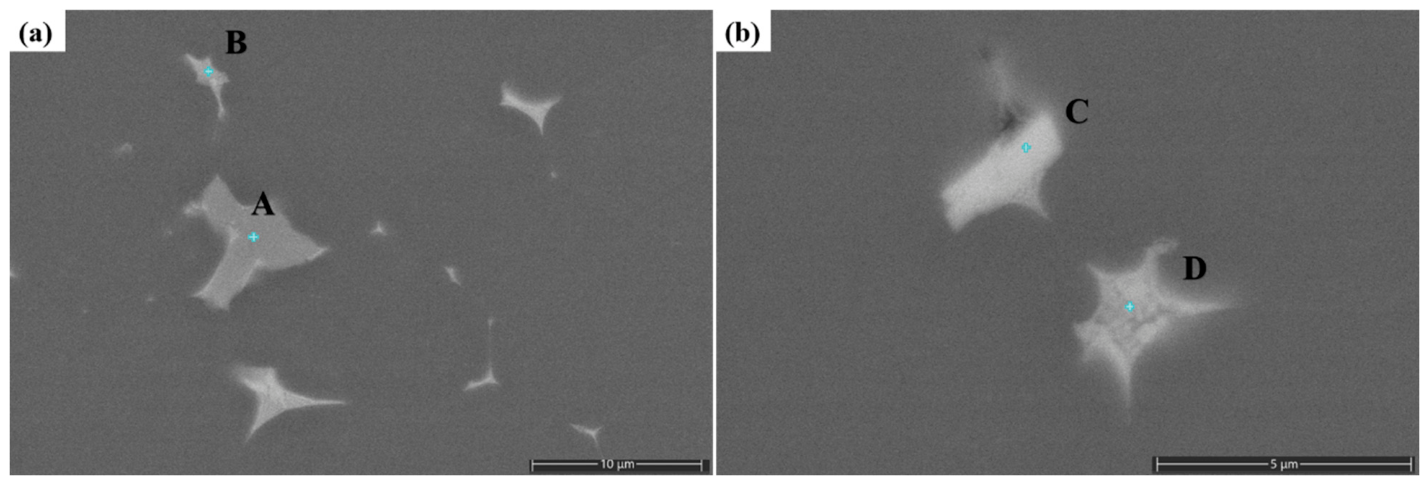

Table 2.
Elemental content at the marked positions (mass fraction %).
| Element | Al | Zn | Mg | Cu | Zr | Fe |
| A | 78.02 | 4.95 | 1.38 | 3.38 | 0.04 | 12.23 |
| B | 71.23 | 11.99 | 13.07 | 3.70 | 0.00 | 0.02 |
| C | 75.28 | 6.43 | 6.37 | 1.63 | 10.23 | 0.06 |
| D | 66.65 | 14.93 | 13.31 | 5.07 | 0.03 | 0.01 |
The microstructure of the peak-aged alloys is shown in Figure 7. The TEM images revealed a large number of second-phase precipitates within the alloy grains. At the grain boundaries, the second phase appeared in triangular or rod-like morphologies, as shown in Figure 7(a), and selected-area diffraction analysis identified it as the MgZn2 phase. Within the grains, the second phase was mainly present in the three morphologies. Among them, the rod-like and rectangular precipitates were MgZn2, with sizes of approximately 500 nm and a relatively high number density, as shown in Figure 7(c, d). The round precipitates were Al2Cu with sizes of approximately 1 μm and a lower number density. In addition, small MgZn2 precipitates were observed to be attached to the edges of the Al2Cu phase, as shown in Figure 7(e). A nanoscale Al3Zr phase is also present within the grains, exhibiting a rod-like morphology, as shown in Figure 7(b).
The SEM morphology and EDS analysis results of the aged alloys are shown in Figure 3. Bright white precipitates were distributed along the grain boundaries. Overall, these precipitates appeared coarse and irregular, presenting blocky or short rod-like morphologies (points A, B, and C). The Zr content was as high as 12.85% to-15.56%, which can be identified as the Al3Zr phase. Meanwhile, the Zn and Mg contents were also relatively high, suggesting that the MgZn2 phase may exist and grow around the Al3Zr phase. Compared with the peak-aged condition, this phase gradually coarsened from a previously fine and continuous network structure and transformed into a discontinuously distributed blocky morphology. This change helps to interrupt the continuous corrosion pathways along the grain boundaries, thereby improving the material’s resistance to intergranular corrosion to a certain extent.[11]. A large number of finely dispersed precipitate phases were observed within the grains (points D, E, and F). These precipitates exhibit relatively high Zn and Mg contents, indicating that they are MgZn2 phases.
Figure 8.
SEM image of the alloy in the over aged condition.
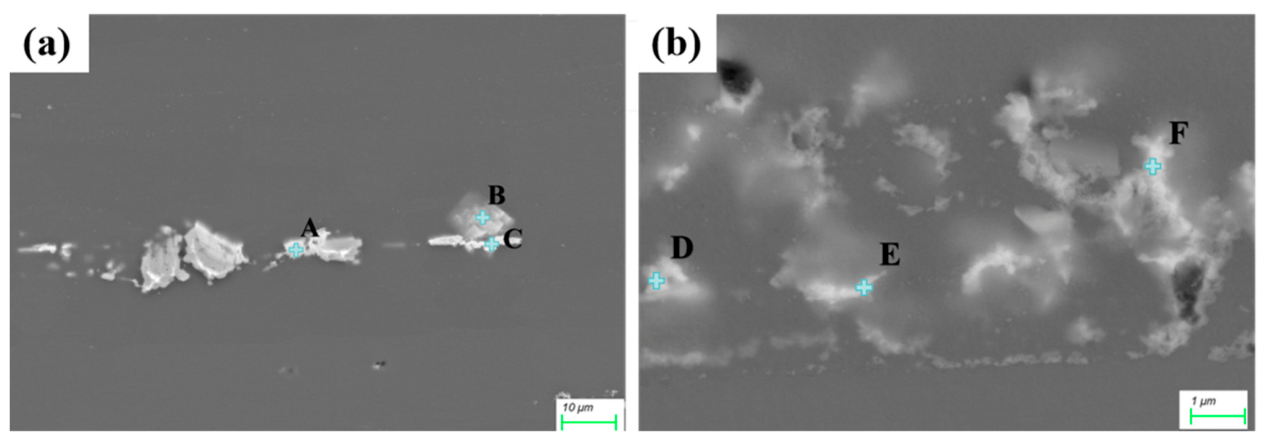
Table 3.
Elemental content at the marked positions (mass fraction %).
| Element | Al | Zn | Mg | Cu | Zr | Fe |
| A | 72.78 | 6.53 | 4.64 | 2.61 | 12.85 | 0.58 |
| B | 78.87 | 5.98 | 3.90 | 1.57 | 9.69 | 0.00 |
| C | 75.14 | 4.89 | 3.08 | 1.17 | 15.56 | 0.15 |
| D | 81.04 | 8.15 | 8.57 | 2.18 | 0.06 | 0.00 |
| E | 75.51 | 10.24 | 11.24 | 2.92 | 0.05 | 0.04 |
| F | 74.60 | 10.15 | 12.10 | 3.07 | 0.09 | 0.00 |
The microstructure of the overaged alloy is shown in Figure 9. The second phase along the grain boundaries exhibited a semi-continuous distribution and was nanometric in size, as shown in Figure 9(a). Likewise, the intragranular second phase is on the nanometer scale and mainly presents two morphologies: short rod-like and irregular. Based on diffraction-spot indexing, all short rod-like second-phase precipitates were identified as the η phase, whereas the irregular precipitates were identified as the MgZn2 phase. Meanwhile, the Al3Zr phase was detected at the edges of these precipitates, demonstrating that Al3Zr can serve as a heterogeneous nucleation site for the MgZn2 phase. In addition, long rod-like Al3Zr precipitates, approximately 8 nm in size, were also present within the grains and were densely distributed throughout the grain interior.
In the Al-Zn-Mg-Cu-Zr alloy subjected to two-stage aging treatment, the secondary phases exhibited coarse and discontinuous morphological characteristics. The precipitate phases in the grain boundary region were relatively complex, primarily consisting of Zr-rich Al3Zr phases (point C) and Zn- and Mg-rich MgZn2 phases (points A, D, and E). Owing to its high thermal stability, the Al3Zr phase was not prone to dissolution during aging[12]. It exhibited a coarsened lamellar or skeletal distribution along the grain boundaries, forming a relatively stable structural framework at these boundaries. In addition, this phase can act as a heterogeneous nucleation site, promoting the nucleation of the MgZn2 phase. The MgZn2 phase distributed around the Al3Zr phase predominantly existed in particulate or short rod-like morphologies. In addition, compared with the peak-aged condition, the grain boundary precipitates in this microstructure are coarser; however, they do not form fully continuous anodic/cathodic pathways, demonstrating the advantage of the double-aging treatment in improving corrosion resistance. A small number of irregular Fe-rich particles (point B) were observed within the grains and were identified as the Al7Cu2Fe phase.
Figure 10.
SEM image of the alloy in the double aged condition.
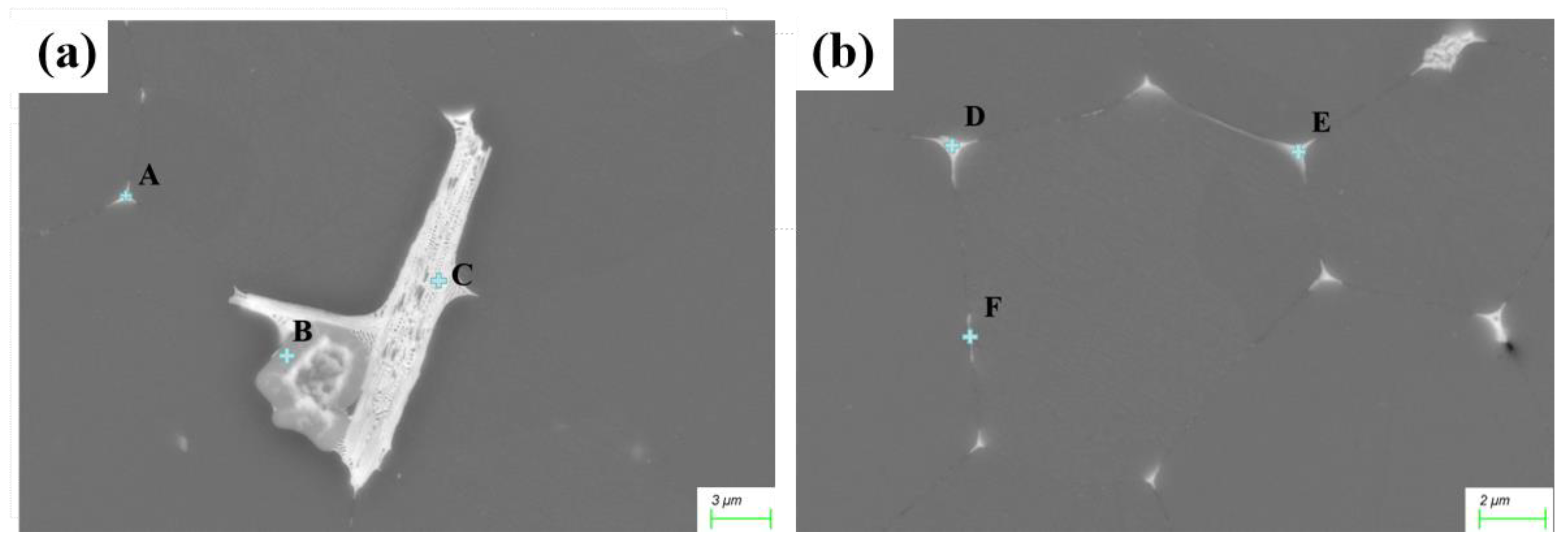
Table 4.
Elemental content at the marked positions (mass fraction %).
| Element | Al | Zn | Mg | Cu | Zr | Fe |
| A | 84.01 | 8.24 | 5.59 | 2.11 | 0.00 | 0.05 |
| B | 80.85 | 3.77 | 1.23 | 3.29 | 0.07 | 10.79 |
| C | 70.52 | 9.88 | 7.19 | 3.04 | 9.32 | 0.05 |
| D | 76.56 | 9.97 | 10.57 | 2.79 | 0.09 | 0.03 |
| E | 81.30 | 9.11 | 6.99 | 2.49 | 0.07 | 0.04 |
| F | 91.10 | 5.01 | 3.08 | 0.77 | 0.03 | 0.02 |
The microstructure of the double-aged alloys is shown in Figure 11. As shown in Figure 11(a), the MgZn2 phase at the grain boundaries exhibited a chain-like distribution. A large number of precipitates were also present within the grains, but their overall distribution was nonuniform. In certain regions, the precipitates are densely distributed and exhibit rod-like or rectangular morphologies with sizes of approximately 100 nm. In some localized areas, relatively large precipitates with blocky or rod-like morphologies were observed. The blocky secondary phases have radii of approximately 500 nm, whereas the rod-shaped precipitates reach lengths of approximately 1 μm. This indicates that during the double aging treatment, the precipitation behavior exhibits pronounced spatial heterogeneity, which may be associated with local solute atom segregation and the distribution of defects, such as dislocations and grain boundaries. The diffraction spots indicated that all intragranular second phases of various sizes and morphologies were MgZn2. In addition, a large number of nanoscale precipitates are present around these MgZn2 phases, as shown in Figure 11(b). The rod-shaped phase is Al3Zr with a length of approximately 10 nm, while the spherical phase is Al2Cu with a diameter of approximately 20 nm.
SEM observations and EDS analyses of the RRA alloy indicate the presence of three principal types of second-phase constituents. The Zr-rich Al3Zr phase (point A) was distributed along the grain boundaries in a coarsened lamellar morphology, similar to the Al3Zr phase observed in the double-aged condition. The Fe-rich Al7Cu2Fe impurity phase (points B, C, and D) appears as isolated blocky and columnar particles. In addition, the fishbone-like quaternary AlZnMgCu T phase with high Zn and Mg contents (points E and F) is discontinuously distributed at grain boundary junctions in particulate form.
Figure 12.
SEM image of the alloy in the over aged condition.
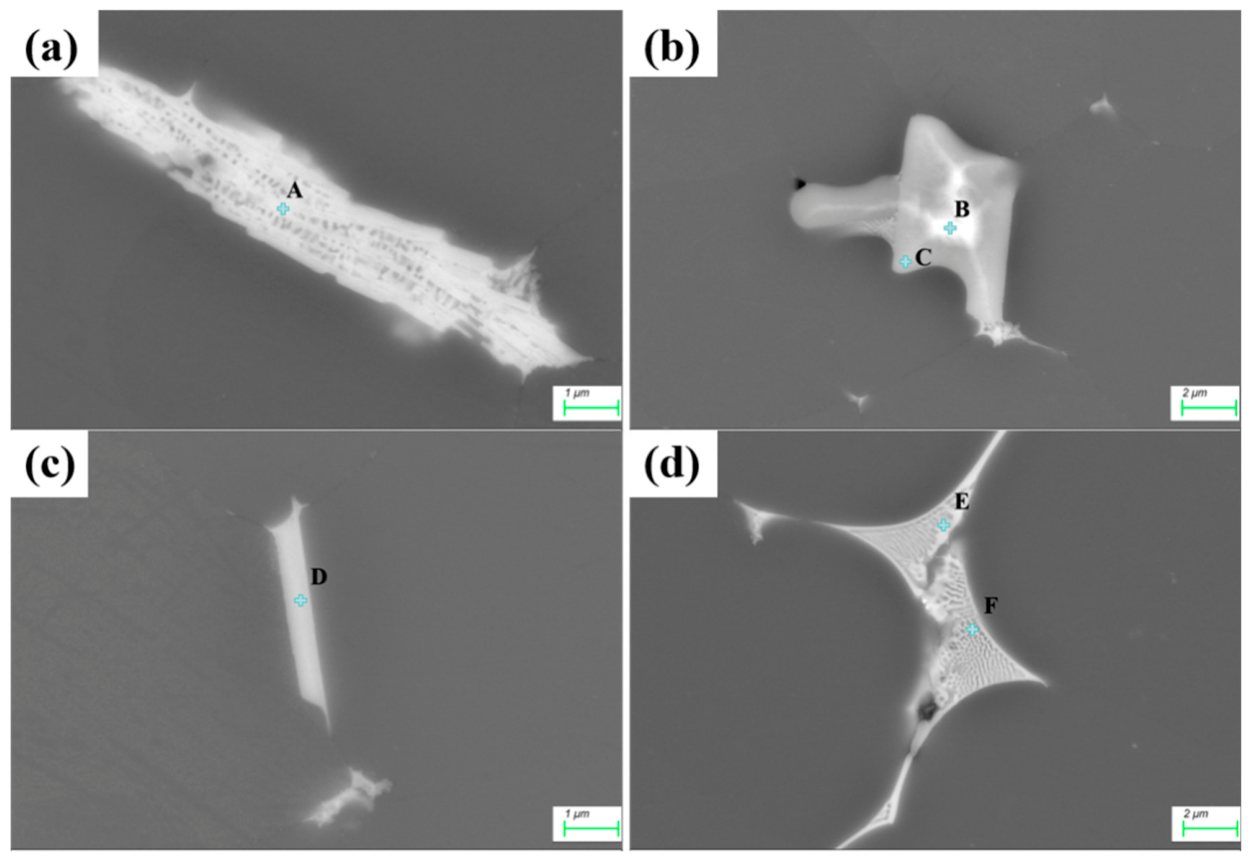
Table 5.
Elemental content at the marked positions (mass fraction %).
| Element | Al | Zn | Mg | Cu | Zr | Fe |
| A | 73.73 | 6.28 | 4.79 | 1.66 | 13.50 | 0.04 |
| B | 57.40 | 6.17 | 0.46 | 28.86 | 0.00 | 7.11 |
| C | 71.41 | 2.43 | 1.20 | 17.18 | 0.00 | 7.78 |
| D | 83.36 | 2.75 | 2.36 | 7.72 | 0.73 | 3.09 |
| E | 58.36 | 18.32 | 17.08 | 6.11 | 0.08 | 0.04 |
| F | 61.58 | 17.28 | 15.54 | 5.55 | 0.04 | 0.00 |
Figure 13 presents high-magnification TEM images of the RRA alloy. As observed in Figure 13(a), the MgZn2 phase in the grain boundary region exhibited a chain-like distribution, whereas second-phase particles of various sizes were observed within the grains. A large disc-shaped second phase, with a diameter of approximately 200 nm, is shown in Figure 13(c), and the diffraction spot analysis identifies it as the Al2Cu phase. In contrast, the nanoscale precipitates were predominantly rod-shaped or disc-shaped, as shown in Figure 13(b) and (e). Diffraction spot indexing indicates that both morphologies correspond to the Al3Zr phase. It can be seen that the Al3Zr phase with both morphologies maintains a good coherent relationship with the α-Al matrix, effectively pinning dislocations and inhibiting their motion. Meanwhile, a small number of short rod-like precipitates with a length of approximately 200 nm and a width of approximately 150 nm were present within the grains, as shown in Figure 13(d). Diffraction spots identified these precipitates as the Al7FeCu2 phase.
3.3. Mechanical Properties
Figure 14 shows the hardness of the alloy under different aging conditions. After solution treatment and quenching, alloying elements such as Zn, Mg, and Cu were fully dissolved in the α-Al matrix, forming a supersaturated solid solution. At this stage, no strengthening precipitates are present in the matrix, and only solid-solution strengthening occurs; therefore, the alloy exhibits the lowest hardness. During peak aging, second-phase precipitates formed from the supersaturated solid solution. A large number of GP zones coherent with the matrix and semicoherent metastable η′ phases precipitated within the matrix. These nanoscale-dispersed precipitates maximized the second-phase strengthening effect of the alloy. In addition, the peak aged Al-Zn-Mg-Cu-Zr alloy exhibited extremely fine grains and a high grain boundary density, which provided excellent grain refinement strengthening. After the over-aging treatment, the metastable η′ phase coarsens and transforms into a stable η phase, which is incoherent with the matrix. The pinning effect of the precipitates on the dislocations was significantly weakened, leading to a reduction in the strengthening. Consequently, the hardness of the alloy decreased compared to that in the peak-aged condition. During the low-temperature preaging stage of the two-step aging treatment, a large number of uniformly dispersed GP zones were formed in the matrix. These zones provide a high density of nucleation sites for subsequent precipitates, promoting the formation of finer and more uniformly distributed η′ phases during the subsequent high-temperature aging stage compared to the overaged condition. Consequently, the strengthening effect was enhanced and the hardness showed a slight increase relative to the overaged state. During the retrogression stage of RRA, grain boundary precipitates undergo spheroidization and become discontinuously distributed, whereas the intragranular η′ phase partially dissolves back into the matrix. During the subsequent re-aging stage, a greater number of finer and more uniformly dispersed η’-strengthening precipitates re-formed within the grains. The resulting second-phase strengthening effect surpasses that of the conventional peak-aged condition, reaching the highest level among all heat treatment states.
Table 6 presents the tensile strength, yield strength, and elongation of the alloys under different aging treatments. After peak aging, the alloy exhibited the highest strength level, with a tensile strength of 833 MPa and yield strength of 779 MPa, both of which are higher than those obtained under the other three aging conditions. The elongation is 4.71%, indicating a moderate level of ductility. This phenomenon is mainly attributed to the fine and dense precipitates in the peak-aged alloy, which effectively hinder dislocation motion. In contrast, after the over-aging treatment, the ultimate tensile strength decreases to 771.4 MPa, yield strength slightly decreases to 763.71 MPa, and elongation decreased to 4.1%. This is because in the over-aged alloy, the second-phase precipitates are sparse and unevenly distributed, which diminishes the ability of the strengthening phases to impede dislocation motion, thereby resulting in a simultaneous reduction in both the strength and ductility of the alloy. The double-aged alloy exhibited the lowest strength of the four heat treatments. The precipitates within the microstructure were relatively coarse and displayed a discontinuous distribution. Consequently, its strength was lower than that of the over-aged condition, whereas its elongation was superior. RRA treatment involves a sequence of peak aging, high-temperature retrogression, and re-aging. After this treatment, the grains became the coarsest; however, fine η precipitates comparable to those in the peak-aged condition were retained within the grains. The grain-boundary precipitates exhibited a discontinuous distribution, which significantly alleviated the intergranular stress concentration. Consequently, the alloy in the RRA condition maintained a relatively high strength while also exhibiting a higher elongation than alloys under other aging conditions. Overall, under the RRA condition, the precipitates were uniformly distributed with a moderate size, achieving an optimal balance between strength and ductility.
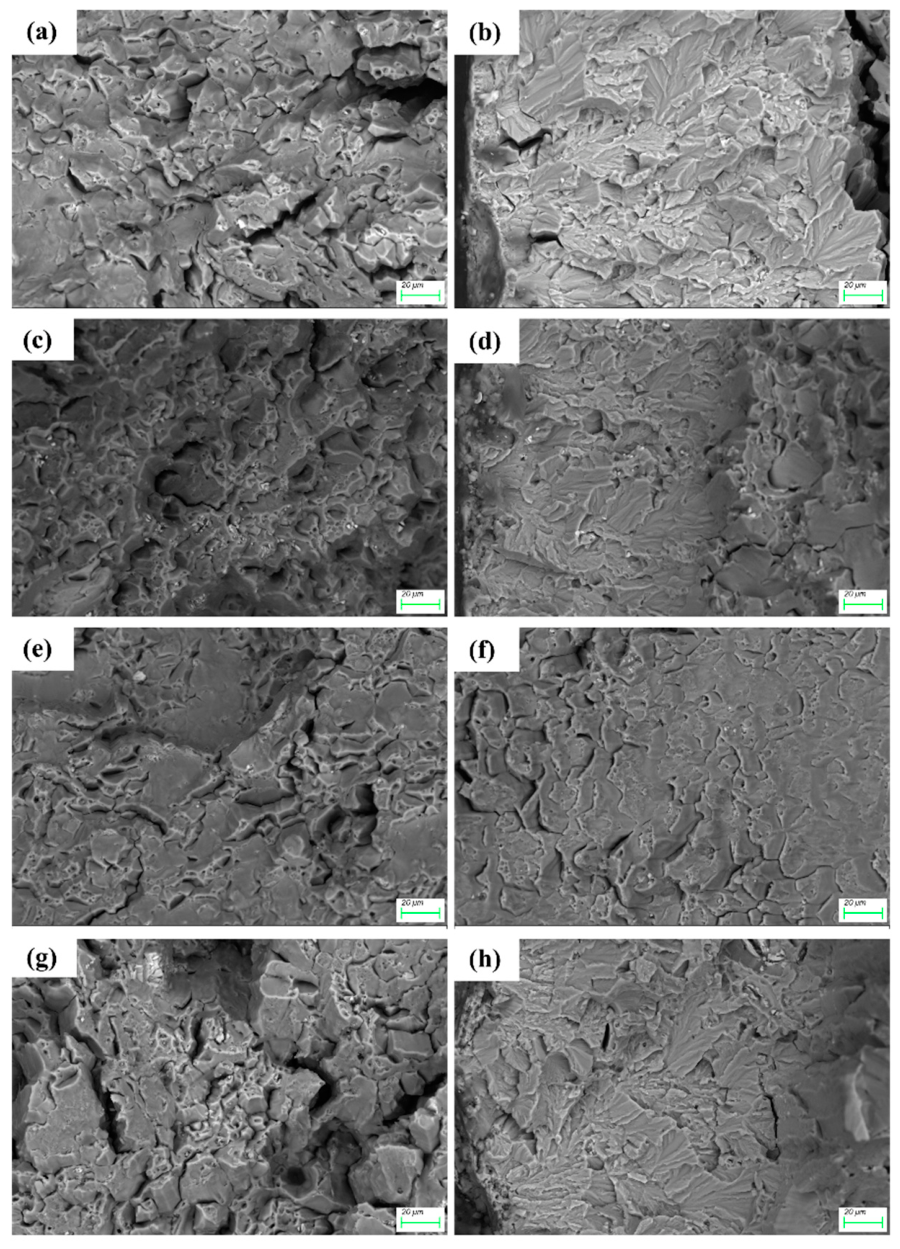
Scanning electron microscopy of the tensile fracture surfaces of alloys at different aging states shows that the fracture center of the peak-aged alloy exhibits microvoid coalescence characteristic of ductile fracture, whereas the edge region displays mixed cleavage and intergranular fracture. The fracture surface of the overaged alloy exhibited typical intergranular fracture features. In contrast, the double-aged alloy fracture was dominated by fine, dense dimples and uniformly distributed tearing ridges, with only a very small proportion of cleavage facets. In the central region of the fracture surface of the RRA alloy, dense ultrafine dimples predominate, whereas the edge region is mainly characterized by dimple structures; fan-shaped cleavage patterns are also observed locally. The fracture morphologies of the alloys under different aging conditions corresponded well with the results of mechanical property tests. The peak-aged alloy exhibited the highest strength, but relatively poor plasticity. The double-aged alloy exhibited higher plasticity but the lowest strength. In contrast, RRA alloys possess both high strength and high ductility, resulting in the best overall mechanical performance.
Figure 15.
Tensile fracture surfaces of alloys at different aging conditions.
4. Conclusion
In this study, the microstructural morphology of an Al-Zn-Mg-Cu-Zr alloy under different heat treatment processes was investigated, and the mechanical properties of the alloy after various heat treatments were compared. The following conclusions were drawn:
(1) The hardness curve under single-stage aging exhibits a bimodal characteristic, and the peak aging time of the Al-Zn-Mg-Cu-Zr alloy used in the experiment was 18 h. The grain size of the alloy under different aging treatments followed the order: peak-aged < over-aged < double-aged < RRA. From peak aging, over aging, and double aging to RRA, the grain boundary precipitates gradually transformed from a continuous network to a coarsened and discontinuous distribution. In the peak-aged condition, a large number of finely dispersed η strengthening precipitates formed within the grains, while the grain boundary precipitates were fine and continuously distributed. In the over-aged condition, second-phase particles within the alloy were sparse and unevenly distributed, whereas those at the grain boundaries exhibited a discontinuous distribution. In the alloy subjected to duplex aging, the second-phase particles were densely populated and unevenly distributed, with grain boundary precipitates exhibiting a chain-like morphology. Under RRA conditions, the precipitates were densely distributed, finer in size, and more uniformly dispersed.
(2) The peak-aged alloy exhibited the highest strength level, with an ultimate tensile strength of up to 833 MPa, which is significantly higher than that obtained under the other three aging treatments. After over-aging, the ultimate tensile strength decreases to 771.4 MPa, accompanied by a reduction in the elongation to 4.1%. The alloy subjected to double aging exhibited an ultimate tensile strength of 755 MPa and an elongation of 4.52%. The alloy in the RRA condition demonstrates the best overall mechanical properties, with an ultimate tensile strength of 809.94 MPa and an elongation of 5.68%, making it an ideal processing route for preparing 800 MPa-grade Al-Zn-Mg-Cu-Zr alloys.
Funding
The study was supported by: National Key Research and Development Program of China (No. 2023YFB3710801); Beilun District Key Core Technology Research Project (2025BLG013).
Data Access Statement
Research data supporting this publication are available on request.
Conflicts of Interest declaration
The authors declare that they have no affiliations with or involvement in any organization or entity with any financial interest in the subject matter or materials discussed in this manuscript.
References
- Yegao C, Yi Z, Jiancheng Y, Liqiang W, Huan Y, Lina L, Yingli L. Spray Conform 7075 Al. RSC Adv 2015;5:97612-8. [CrossRef]
- Deng Z, Liu C, Zeng G, Deng Y, Shuai S, Han B, Jiao C, Xu Y, Zhang Y. Microstructure evolution and defect characteristics in spray-formed Al-Zn-Mg-Cu alloy. J Alloys Compd 2026;1058. [CrossRef]
- Shi C, Zhang M, Wang C, Shi X, He B, Ding L, Jia Z. Effect of the Sc addition and pre-recovery multi-stage solution heat treatment on recrystallization and mechanical properties in spray-formed Al-Zn-Mg-Cu-Zr alloys. Journal of Materials Research and Technology 2026;42:7383-96. [CrossRef]
- Mazzer EM, Afonso CRM, Galano M, Kiminami CS, Bolfarini C. Microstructure evolution and mechanical properties of Al-Zn-Mg-Cu alloy reprocessed by spray-forming and heat treated at peak aged condition. J Alloys Compd 2013;579:169-73. [CrossRef]
- Liu Y, Zhao Z, Wang G, Qin G. Effect of the over-aging degree on high cycle fatigue properties of an ultra-high strength Al-Zn-Mg-Cu alloy. Materials Science and Engineering: A 2024;918. [CrossRef]
- Hu R, Wen S, Guo K, Hou X, Wei W, Wu X, Gao K, Huang H, Nie Z, Zhu X. Effects of novel two-stage aging treatment on the mechanical and corrosion properties of Al-Zn-Mg-Cu-(Si) alloys. J Alloys Compd 2025;1047. [CrossRef]
- Li J, He T, Du X yang, Vereschaka A. Enhancing the corrosion resistance of high-strength Al-Zn-Mg-Cu alloys after equal channel angular pressing by developing retrogression and re-aging strategies. Corros Sci 2025;246. [CrossRef]
- Li H, Cao F, Guo S, Jia Y, Zhang D, Liu Z, Wang P, Scudino S, Sun J. Effects of Mg and Cu on microstructures and properties of spray-deposited Al-Zn-Mg-Cu alloys. J Alloys Compd 2017;719:89-96. [CrossRef]
- Chourasiya SK, Gautam G, Kumar A. Spray forming technique for aluminium matrix materials: A review. Mater. Today Proc., vol. 44, Elsevier Ltd; 2021, p. 561-5. [CrossRef]
- Wang Z, Geng J, Pu Q, Li K, Luo T, Li Y, Xia P, Li X, Chen D, Sha G, Wang H. Achieving high performance by optimized heat treatment in a spray formed Al-Zn-Mg-Cu alloy. Materials Science and Engineering: A 2024;893. [CrossRef]
- Jiang L, Zhang X, Du J, Shi Z, Zhang Z, Xie J. Significant enhancement of stress corrosion resistance without strength degradation in Al-Zn-Mg-Cu alloys via natural aging pretreatment. Scr Mater 2026;275. [CrossRef]
- Jiang H, Xing H, Xu Z, Yang B, Liang E, Zhang J, Sun B. Effect of Zn content and Sc、Zr addition on microstructure and mechanical properties of Al-Zn-Mg-Cu alloys. J Alloys Compd 2023;947. [CrossRef]
Figure 3.
Metallographic microstructures of Al-Zn-Mg-Cu-Zr alloys (a) peak aging (b) over aging (c) double aging (d) RRA.
Figure 3.
Metallographic microstructures of Al-Zn-Mg-Cu-Zr alloys (a) peak aging (b) over aging (c) double aging (d) RRA.
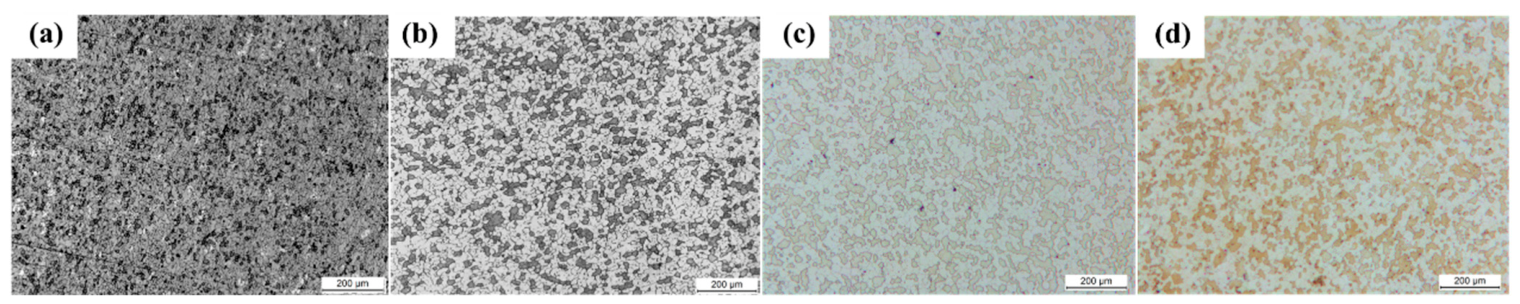
Figure 4.
SEM microstructures of Al-Zn-Mg-Cu-Zr alloys (a) peak aging (b) over aging (c) double aging (d) RRA.
Figure 4.
SEM microstructures of Al-Zn-Mg-Cu-Zr alloys (a) peak aging (b) over aging (c) double aging (d) RRA.

Figure 7.
TEM image of the alloy in the peak aged condition.
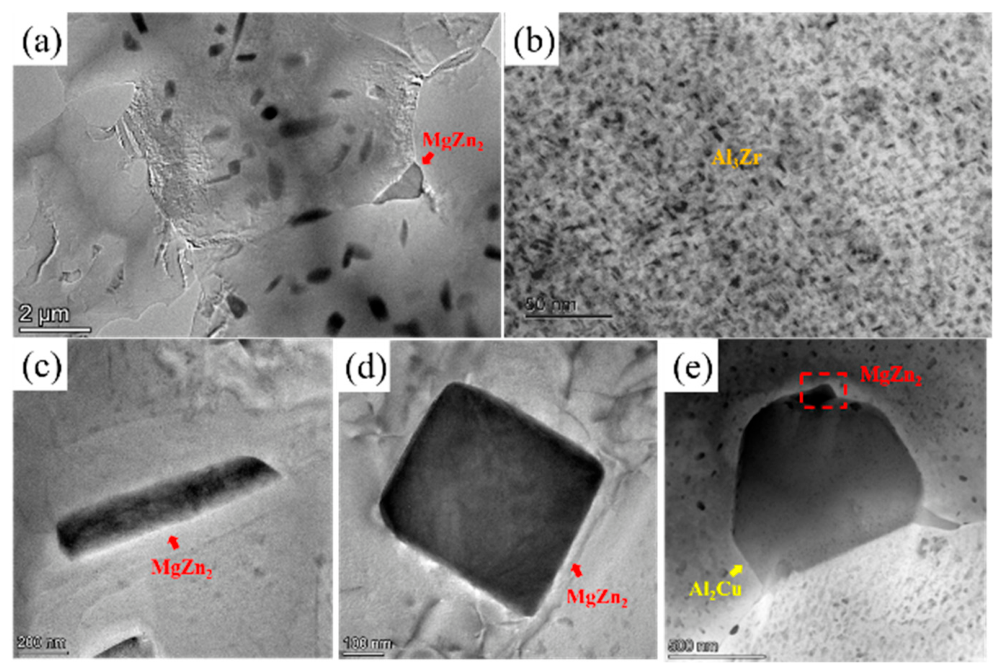
Figure 9.
TEM image of the alloy in the over aged condition.
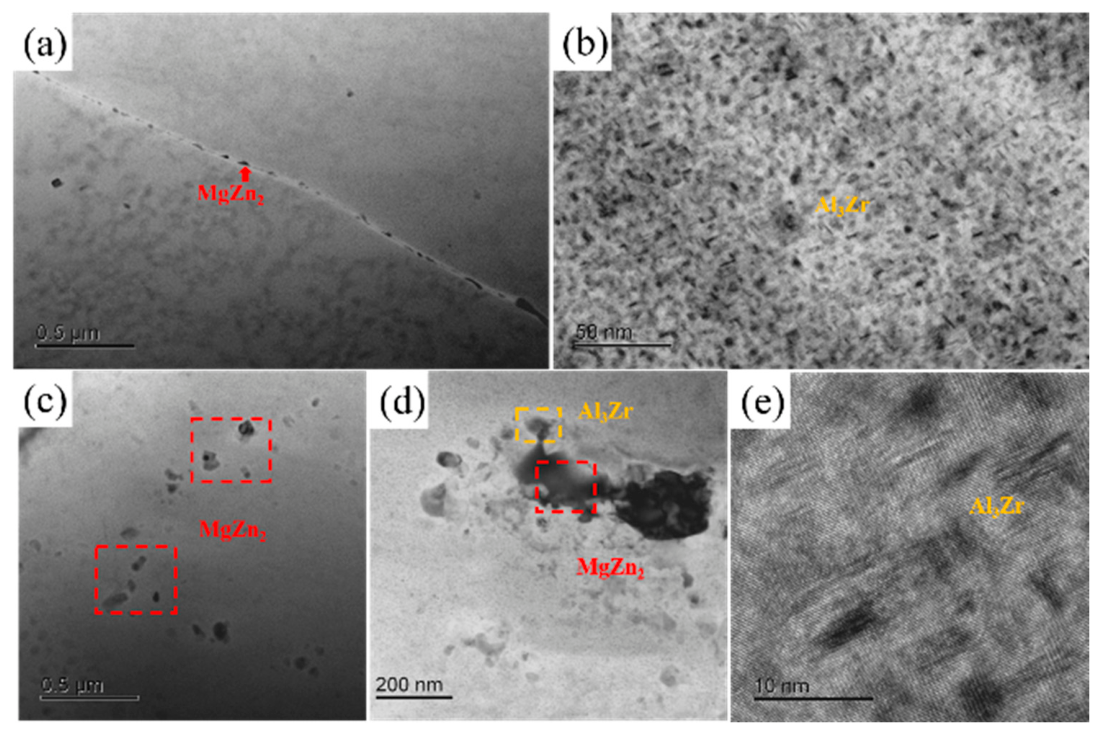
Figure 11.
TEM image of the alloy in the double aged condition.
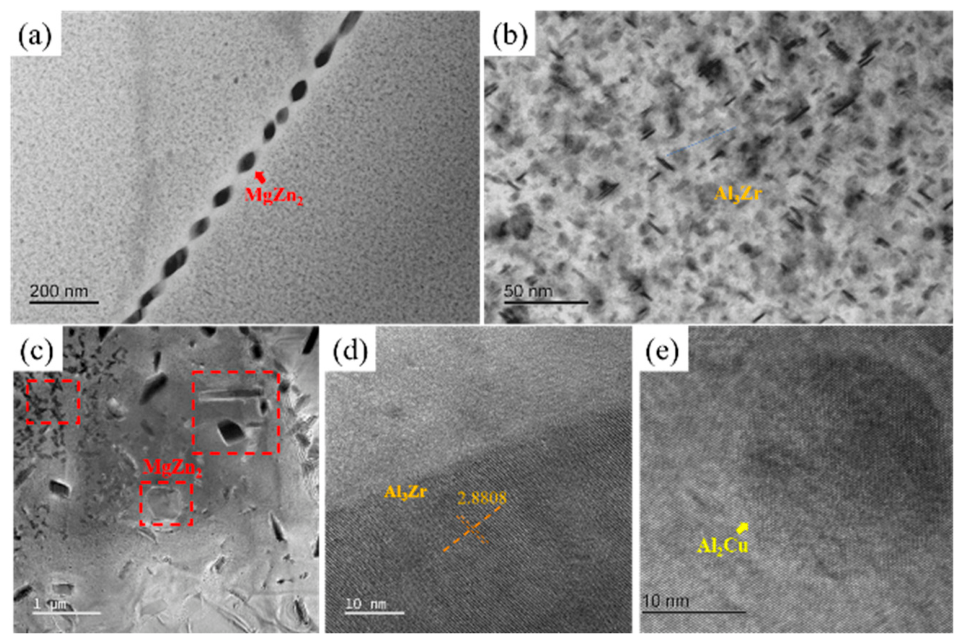
Figure 13.
SEM image of the alloy in the over aged condition.
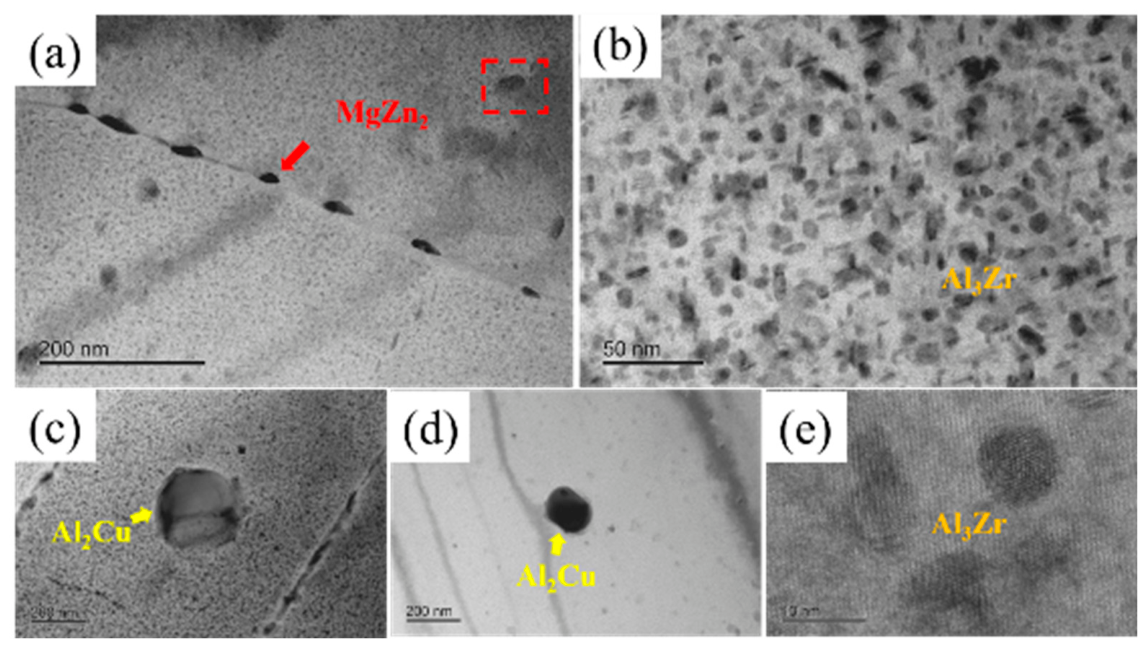
Figure 14.
The hardness of alloys in different aging states.
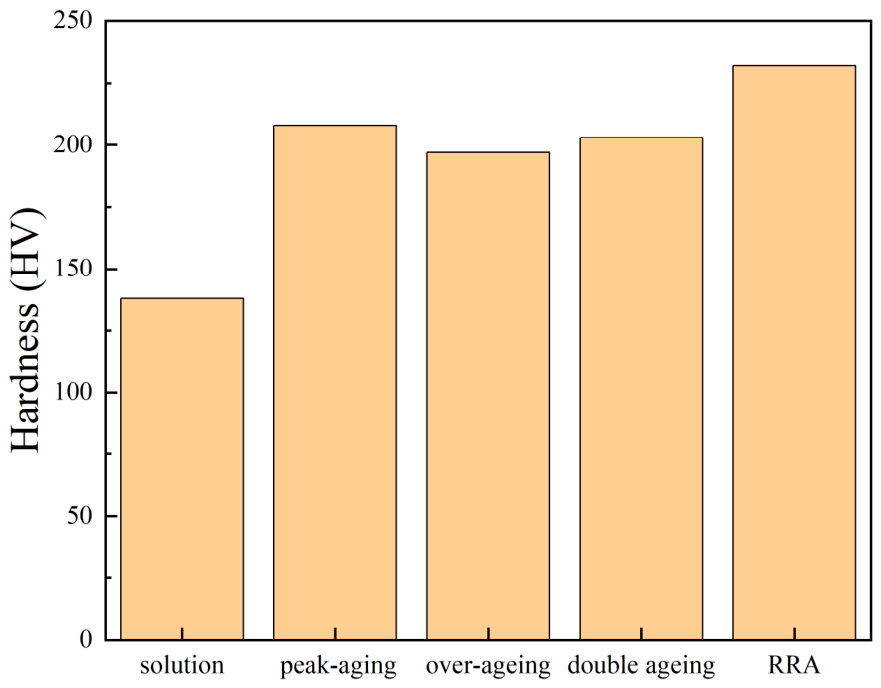
Table 1.
Chemical composition of the tested aluminum alloy (mass fraction %).
| Fe | Cu | Mg | Zn | Zr | Al |
| 0.038 | 1.49 | 2.49 | 11.24 | 0.15 | Bal. |
Table 6.
Tensile properties of the alloys at different aging conditions.
| Type of aging | tensile strength (MPa) | yield strength (MPa) | Elongation (%) |
| Peak aging | 833 | 779 | 4.71 |
| Over aging | 771 | 764 | 4.10 |
| Double aging | 755 | 722 | 4.52 |
| RRA | 810 | 781 | 5.68 |
Disclaimer/Publisher’s Note: The statements, opinions and data contained in all publications are solely those of the individual author(s) and contributor(s) and not of MDPI and/or the editor(s). MDPI and/or the editor(s) disclaim responsibility for any injury to people or property resulting from any ideas, methods, instructions or products referred to in the content. |
© 2026 by the authors. Licensee MDPI, Basel, Switzerland. This article is an open access article distributed under the terms and conditions of the Creative Commons Attribution (CC BY) license (http://creativecommons.org/licenses/by/4.0/).
Copyright: This open access article is published under a Creative Commons CC BY 4.0 license, which permit the free download, distribution, and reuse, provided that the author and preprint are cited in any reuse.