

Submitted:
28 August 2026
Posted:
31 August 2026
You are already at the latest version
Abstract
Sodium naproxen is a widely used nonsteroidal anti-inflammatory drug (NSAID) known for its therapeutic efficacy but also for its poor flowability, which complicates manufacturing processes. This study aimed to improve the flow properties of sodium naproxen through a patented mechanochemical dry coating method using nanostructured silica (Aerosil® R972) as a flow modifier. The process was conducted in a modified V-type tumbler mixer under selected conditions, including a 7:1 ball-to-powder mass ratio, 10-minute mixing time, and 10 rpm rotational speed. Flowability was evaluated using Carr’s indices, while mechanical properties were assessed via shear testing with a Jenike cell. Surface morphology was characterized by SEM. Results showed that the modified sodium naproxen samples demonstrated a substantial improvement in flow indices, a shift to “easy-flowing” classification at higher consolidation stresses, and a marked reduction in cohesion compared to the unmodified material. SEM confirmed uniform silica deposition on particle surfaces. These findings indicate that the applied method effectively improves the handling characteristics of sodium naproxen powders. The process is simple, scalable, and suitable for pharmaceutical applications requiring flow enhancement in cohesive active ingredients.
Keywords:
sodium naproxen
; dry coating
; powder flowability
; silica nanoparticles
; Aerosil® R972
; mechanochemical processing
; V-type mixer
; Jenike shear cell
; cohesion
; pharmaceutical excipients
1. Introduction
The pharmaceutical industry, as well as the nutraceutical and dietary supplement sectors, is highly depended on powdered materials processing. In fact, most solid dosage forms, including tablets, capsules, and granules, are produced from powders that must exhibit sufficient flowability to ensure efficient production and dose uniformity. Poor powder flow can result in significant manufacturing challenges, such as segregation, incomplete die filling, bridging, ratholing, inconsistent drug content in final products [1,2,3,4].
Fine powders, especially those with particle sizes below 100 μm, such as sodium naproxen, a widely used nonsteroidal anti-inflammatory drug (NSAID), pose particular challenges in pharmaceutical processing due to their cohesive behavior, including spontaneous agglomeration, clumping, and wall adhesion. These phenomena affect powder flow, reduce process efficiency, and may compromise product quality [5,6,7]. Moreover, the flowability of powders is not only influenced by intrinsic properties such as particle size, shape and surface chemistry, but also by external factors, including humidity, temperature, and material’s processing history commonly referred to as the memory effect [2,8,9]. As a result, predictive theoretical models for powder flow under industrial conditions remain insufficient, and an experimental evaluation using standardized methods is required [10].
Standard approaches to powder flow evaluation include the Carr index system, which assesses flowability based on parameters such as bulk and tapped density, compressibility, and angles of repose and fall [8,10]. More advanced techniques, such as direct shear testing employing the Jenike cell, yield the flow function coefficient (ffc), which characterizes powder flow behavior under higher stress and storage conditions [8,11]. The application of these methods provides quantitative insights into material behavior under realistic processing constraints.
In order to enhance flow properties, various strategies have been proposed, including granulation, process-based modifications, and most notably, dry coating or the addition of flow-enhancing excipients, especially nanostructured additives such as silica, titanium dioxide, or magnesium stearate [12,13,14]. These additives adsorb onto particles surface, thereby reducing van der Waals forces and internal friction, thus enhancing powder mobility [12,13,15]. However, challenges such as inhomogeneous distribution of the additives and insufficient energy input for agglomerate disruption may still hinder the resulting flow performance [16,17].
Recent studies have demonstrated that intensive mechanical dry coating can effectively overcome these limitations. This approach involves the use of high-energy mixing equipment such as hybridizers, mechanofusion devices, conical mills, or planetary ball mills, capable of generating sufficient shear and impact forces to achieve uniform dispersion of both the primary particles and the additives throughout the powder bed [16,17,18,19,20]. This technique offers a promising approach to flow improvement by promoting efficient coating and minimizing agglomerate formation.
Nevertheless, optimizing the concentration of flow enhancers and mixing parameters remains crucial, as both over- or under-dosing can negatively affect flow or induce segregation, electrostatic charging, or compromised dissolution [9,12,15]. Therefore, customized solutions tailored to the specific material and processing conditions are essential.
Direct shear testing using the Jenike apparatus provides one of the most informative approaches for evaluating the flowability of cohesive pharmaceutical powders. By preconsolidating the powder bed and measuring the shear stress required to induce failure, the method yields parameters such as the yield locus, unconfined yield strength, and flow function coefficient, which together describe powder behavior under stress conditions relevant to storage, discharge, and feeding operations [11,21,22,23]. In contrast to simpler empirical indices, Jenike-based measurements are particularly valuable for materials prone to caking, bridging, arching, and wall adhesion, because they capture flow behavior under low-stress conditions that more closely resemble industrial handling environments [5,7,11,21,24]. Accordingly, the Jenike apparatus is widely used not only to classify powders according to their flowability, but also to support hopper design and process optimization for pharmaceutical materials with complex or highly cohesive flow behavior [5,11,21,23].
2. Materials and Methods
2.1. Materials
Highly cohesive sodium naproxen powder (Divi’s Laboratories Ltd., India) was selected to improve its flow properties via dry coating method. Particle size of sodium naproxen (host particles) is approximately 10-130 µm and moisture content below 0.5%.
Based on preliminary experiments, common pharmaceutical excipients such as magnesium stearate from Sigma-Aldrich (St. Louis, MO, USA) and hydrophobic colloidal fumed silica Aerosil® R972 (Evonik, Germany) were selected as modifiers. The particle size distributions of the proposed additives (guest particles), presented in Figure 1, fulfilled the requirements for the dry coating process, while the moisture content of both excipients was below 0.5%. Aerosil® R972 exhibited a very fine and narrow particle size distribution, with the majority of particles located in the submicron range and a distinct peak at approximately 0.2–0.3 μm. In contrast, magnesium stearate showed a broader particle size distribution, with most particles in the range of several to several tens of micrometers and a maximum around 30 μm. The substantial difference in particle size between the modifiers and the host sodium naproxen particles is advantageous for dry coating, as the finer guest particles can effectively adhere to and cover the surface of larger host particles, potentially reducing interparticle cohesion and improving powder flowability. Various concentrations of the modifiers were investigated, taking into account the maximum levels permitted by the European Pharmacopoeia [25].
2.2. Interactive Mixing
The proposed approach to improve the flowability of sodium naproxen is dry coating via interactive mixing. The successful application of this technique requires accurate selection of the coating methodology, appropriate additives and optimization of all process parameters.
The dry coating of powder particles relies on intermolecular forces and involves the formation of a thin layer of coating particles (guest particles) on the surface of the carrier particles (host particles) – Figure 2. The surface modification achieved through the addition of glidants reduces interactions between host particles, which significantly enhances flow properties and eliminates many common issues associated with powder processing. The aim of this work was to improve flowability by uniformly depositing guest particles onto the surface of sodium naproxen particles, while maintaining other processing parameters and ensuring product applicability.
To improve the handling properties of sodium naproxen via dry coating, a custom-modified V-type tumbler mixer (800 cm³) was utilized (Figure 3). The mixer was equipped with zirconium oxide milling balls (5 mm diameter), applied at mass ratios of 4:1 and 7:1 relative to the powder mixture, as established in preliminary studies. Mixing was conducted at room temperature for 10 minutes at a rotational speed of 10 rpm, with the chamber filled to approximately 40% of its total volume (including both powder and milling media). In a typical procedure, pre-weighed zirconia balls, sodium naproxen, and the modifier were introduced into the sealed mixing chamber under the specified conditions. These parameters enabled efficient dry coating while reducing agglomeration and segregation. After processing, the powder was separated from the balls by sieving through a 1 mm mesh.
2.3. Sample Preparation and Flowability Assessment
The flowability of naproxen sodium and selected mixtures prepared according to Table 1 was investigated.
The flowability of powders was evaluated based on the selected Carr’s indices as angles of repose, fall and difference and compressibility index values, which were determined using a Powder Tester PT-S device (Hosokawa Micron B.V., Doetinchem, The Netherlands), following the ASTM D6393-14 standard [10] for dry powder samples. All measurements were performed in triplicate, and the results are presented as mean values. The angle of repose is defined as the maximum angle between the horizontal plane and the slope of a pile of granular material at which the material remains stable without sliding, while the angle of fall refers to the same angle after standardized vibrations or disturbances, causing partial rearrangement and settling of the particles. The angle of difference is defined as the numerical difference between the angle of repose and the angle of fall. Compressibility index CI is calculated based on aerated ρa and tapped ρt bulk density according to equation 1:
Aerated bulk density refers to the bulk density of a powder that has been loosely filled into a container, allowing a significant amount of air between particles. In contrast, packed bulk density is determined after mechanically tapping the container, usually 180 taps, to compact the powder. During tapping, the powder becomes more densely packed, and this increased density is then measured.
A decrease in the angle of repose and compressibility index indicates an improvement in the flowability of the powder material. Conversely, a reduction in the angle of difference indicates a diminished propensity for avalanching behavior of the powder.
Particle size distributions of sodium naproxen and magnesium stearate were determined by laser diffraction using a Mastersizer 2000 Hydro MU system (Malvern Instruments, Malvern, Worcestershire, UK) in accordance with ISO 13320-1:1999 [26]. Due to its significantly smaller particle size, the particle size distribution of Aerosil® R972 was measured by dynamic light scattering (DLS) using a Zetasizer system (Malvern Instruments, Malvern, Worcestershire, UK).
The assessment of mechanical properties of powders began with the determination of the internal friction angle φ, the effective internal friction angle φeff , and cohesion C. These measurements were conducted using the direct shear method with a Jenike shear tester, in accordance with the ASTM D6128 Standard Test Method for Shear Testing of Bulk Solids Using the Jenike Shear Tester [27].
The Jenike shear tester consists of two cylindrical shear cells, one of which is stationary while the other can move horizontally. According to the testing protocol, the apparatus is filled with a sample of the tested powder, subjected to a predetermined vertical consolidation load, and then sheared quasi-statically. During this pre-shear (consolidation) phase, the movable part of the cell is displaced at a very low velocity (approximately 1 mm/min). When the shear strength of the material is exceeded, the sample shears at the interface between the two parts of the cell and enters a state of plastic flow without further increase in shear stress.
Subsequently, the sample is reloaded with a reduced vertical normal stress, compared to the value applied during pre-shear, and subjected to another shearing step (actual shear) to induce plastic flow. This sequence of pre-shear and shear steps is repeated for progressively lower vertical normal stresses.
The results obtained from the shear tests are used to construct the material’s Yield Locus YL, from which key flow parameters are derived. This locus is typically represented by a straight line, referred to as the yield limit, yield line, flow limit line, or plastic flow line. The Yield Locus illustrates the relationship between the shear stress τS at the onset of plastic flow and the applied normal stress σN.
The slope of the yield line YL determines the internal friction angle φ of the material, while the cohesion C is defined by the intercept of this line with the shear stress axis τS. The effective internal friction angle φeff is determined from the slope of the Effective Yield Locus EYL, i.e., a tangent line to the largest Mohr circle generated from the test data [5].
The flow function FF represents a functional relationship between uniaxial compressive strength σC and the major consolidation stress σ1, described by the equation 2:
This function allows for the classification of powder materials based on their resistance to gravity-driven free flow. Materials are categorized as free-flowing, easy-flowing, cohesive, or strongly cohesive. The flow function is widely used as an indicator of powder quality. It characterizes a powder’s tendency to hinder free gravitational flow under stress conditions that simulate bulk storage, such as in silos.
The classification of flowability, is based on the flow factor index ffc, defined by the following equation 3:
This index enables the assessment of the flow behavior of particulate materials using the following criteria:
- Free-flowing – ffc > 10
- Easy-flowing –10 > ffc > 4
- Cohesive – 4 > ffc > 2
- Very cohesive, poorly flowing – 2 > ffc > 1
- Extremely cohesive, very poorly flowing – ffc < 1
To determine the FF, it is necessary to construct multiple YL for powder samples subjected to various levels of consolidation stress.
The flow function FF and flowability index ffc of sodium naproxen samples were determined using a direct shear method with a Jenike shear cell. The procedure involved a series of pre-shear consolidation steps followed by shear testing under progressively lower normal stresses. For each measurement series, the powder bed was first consolidated under a defined normal load, after which shear tests were performed at several reduced normal stresses to determine the stress required to initiate material flow. This procedure was repeated for multiple levels of pre-shear consolidation in order to obtain a comprehensive description of the flow behavior under different stress conditions. The detailed measurement scheme is summarized in Table 2.
Each measurement was repeated three times per sample, and the results were averaged.
Based on the experimental data, the corresponding YL and effective yield loci (EYL) were constructed. These were then used to determine the values of major consolidation stress σ1 and uniaxial compressive strength σC. The FF was presented as a graph depicting the relationship between σC and σ1.
To evaluate changes on the surface of sodium naproxen after interactive mixing, high-resolution scanning electron microscopy (SEM) was employed. The analyses were conducted using an AURIGA CrossBeam Workstation scanning electron microscope (Carl Zeiss). The instrument operates within a primary electron beam energy range of 0.1–30 keV and provides a resolution of up to 1 nm at 30 keV. Its advanced detection capabilities enable surface imaging at electron energies as low as 100 eV. Prior to analysis, all powder samples were coated with a thin layer of gold.
3. Results
Based on the results of preliminary experiments, a recommended mixing time of 10 minutes was proposed. Shorter mixing durations led to insufficient dispersion of excipients on the surface of sodium naproxen, resulting in excipient agglomeration. Conversely, extended mixing times caused undesired adhesion of powder mixture particles to the walls of the mixer and the surface of the milling balls. A recommended rotational speed of 10 rpm was identified. Lower speeds failed to generate adequate mixing dynamics, whereas higher speeds resulted in material agglomeration.
Most of the obtained samples showed a significant improvement in processability compared to unprocessed sodium naproxen (e.g., Sample 1 with Aerosil). A notable exception was Sample 6, which contained magnesium stearate as an excipient. Due to the excessive particle size of this additive, no beneficial effect on the flowability of sodium naproxen was observed. The positive change in mechanical properties of this sample was limited to a reduction in the compressibility index (Figure 4), which resulted from better packing of particles in the mixture with the finer-grained additive. However, the angle of repose of the modified sample was even greater than that of the unmodified sodium naproxen (Figure 5).
The use of a higher ball-to-powder mass ratio resulted in lower values of the compressibility index (Figure 6), as well as a lower angle of repose and angle of difference (Figure 7). These results indicate that Sample 1 exhibits better flowability and a reduced tendency toward avalanche discharge compared to Sample 2. Therefore, subsequent experiments were conducted using a ball-to-powder mass ratio of 7:1.
Based on the flowability parameters measured for mixtures of sodium naproxen and Aerosil® R972 produced using the modified V-type tumble mixer, a marked decrease in the compressibility index was observed with increasing amounts of the modifier (Figure 8). This improvement in the packing properties of the powder was accompanied by a reduction in both the angle of repose and the angle of difference (Figure 9). Collectively, these results indicate enhanced flowability and, consequently, improved processability, which is highly desirable for industrial applications.
Unmodified sodium naproxen and the sample exhibiting the most favorable flow properties, i.e. Sample 1, characterized by a significant increase in Carr indices indicative of improved powder flowability, were prepared in appropriate quantities (at least 2000 cm³ per sample) and subjected to shear tests using a Jenike shear cell.
The outcome of these tests was the determination of the material’s flow function, from which the following mechanical properties were derived: internal friction angle, effective internal friction angle, cohesion, uniaxial compressive strength, uniaxial and isostatic tensile strength, maximum consolidation stress, as well as the flow index and flow function (Table 3 and Table 4).
Based on the conducted tests for sodium naproxen and Sample 1, selected samples exhibiting improved flowability, as confirmed by Carr indices, it was determined that under the applied normal consolidation stresses (20.9–33.3 kPa), both the modified material obtained via dry coating (Sample 1) and the unmodified sodium naproxen demonstrated similar strength characteristics (Figure 10 and Figure 11). The internal friction angle φ of the tested materials was found to decrease with increasing consolidation stress (σpre).
However, this trend occurs within a lower range for unmodified sodium naproxen, with values decreasing from 39.2° to 31.26°, while the modified material (Sample 1) followed a comparable trend but within a slightly higher range, approximately 41–43° down to around 34–36°.
Regarding cohesion, an increase in this parameter was observed with rising consolidation stress (σpre) for the modified sample. Below a consolidation load of 30 kPa, cohesion gently increased from approximately 1.2–1.4 kPa to around 1.5–2.2 kPa. A more pronounced difference between the raw and modified sodium naproxen became evident at the highest applied consolidation stress (σpreD = 33.3 kPa): the modified material exhibited cohesion values between 3.3 and 4.3 kPa, whereas the unmodified material displayed nearly double that, with cohesion reaching 7.66 kPa.
A comparison of the flow function (FF) for the samples showed similar overall behavior (Figure 12). The main distinction lies in a substantial increase in uniaxial compressive strength at the highest consolidation stress was observed for the unmodified sodium compared to the modified sample.
Therefore, it can be concluded that the applied mechanochemical modification did not substantially affect the strength characteristics of the samples under stresses below σ₁ = 65 kPa. However, it did result in an increased flow index (ffc) at stresses above σ₁ = 65 kPa, with values clearly exceeding ffc = 4. This indicates an improvement in the flowability of the modified material under higher stress conditions.
Based on the SEM images, it was found that the particles of unprocessed sodium naproxen are irregular and exhibit a smooth surface (Figure 13). After interactive mixing in the modified V-type tumble mixer with the addition of 2% Aerosil® R972 (Sample 1), a uniform coating of the sodium naproxen particles with nano-silica (Figure 14) was observed (Figure 15).
4. Discussion
The observed improvements in powder flowability and mechanical behavior following the mechanochemical dry coating of sodium naproxen with 2% Aerosil® R972 are consistent with established findings in powder engineering and pharmaceutical formulation. Dry coating with nanosilica generates a ball-bearing effect and introduces nanoscale surface roughness, reducing interparticle cohesion and improving powder flow [12,16,20]. Our study demonstrated a significant decrease in Carr indices and an increase in the flowability classification (ffc > 4) for Sample 1 at consolidation stresses above 65 kPa—results that closely mirror those obtained in studies on lactose monohydrate and ibuprofen [12,14,15].
Single-step coprocessing with glidants such as silica and magnesium stearate has been widely used to improve flow, content uniformity, and even drug release. In particular, dry-coated ibuprofen with nanosilica showed improved flow characteristics similar to our sodium naproxen formulation [20]. This confirms that silica-based coatings can be effective even for highly cohesive APIs.
SEM analysis revealed uniform silicon distribution across the surface of modified naproxen particles, confirming successful dry coating. This finding aligns with prior studies where hydrophobic colloidal silica, such as Aerosil® R972, preferentially adsorbed onto API surfaces under shear mixing, reducing van der Waals forces and electrostatic interactions [12,14].
One of the most notable findings was the reduced cohesion in Sample 1 at high consolidation stress (3.3–4.3 kPa), compared to 7.66 kPa for unmodified naproxen. This behavior aligns with reports on talc and starch, where dry coating with silica significantly lowered interparticle adhesion, improving both flow and packing [17,28]. Importantly, this study confirms that high-performance dry coating can be achieved using a simple, low-speed V-type tumble mixer, offering a scalable and energy-efficient alternative to more complex systems like fluidized bed coaters or planetary mills [9,19]. This approach simplifies the implementation of dry coating in conventional pharmaceutical manufacturing lines without sacrificing performance.
These findings are particularly relevant to sodium naproxen processing, where the choice of mixing technology has previously been shown to affect powder homogeneity and tablet quality [29,30]. Earlier studies also demonstrated the use of more intensive mixing approaches, including vibratory milling, to modify the processing behavior of sodium naproxen formulations [29,30]. In contrast, the present results show that effective surface modification and improved flowability can be achieved using a relatively low mechanical energy input. This approach targets interparticle interactions responsible for poor flowability while avoiding wet processing, drying, or intensive milling, highlighting its potential as a simple and energy-efficient strategy for pharmaceutical powder processing.
Overall, the results indicate that the main benefit of mechanochemical dry coating is a modification of the consolidation-dependent cohesive behavior of sodium naproxen. The treatment did not substantially reduce the internal friction angle; instead, it reduced cohesion and limited the increase in powder-bed strength at higher consolidation stresses. The agreement between conventional flowability measurements, Jenike shear testing, and SEM observations supports the interpretation that Aerosil® R972 modifies the surface interactions between sodium naproxen particles and thereby improves their flow behavior. Further studies should investigate the effect of the treatment on tabletability, dissolution, long-term storage, and scale-up, as well as the influence of coating concentration and mechanical energy on coating uniformity and performance.
5. Conclusions
The results of this study demonstrate that mechanochemical dry coating of sodium naproxen with nanostructured silica (Aerosil® R972) significantly improves its flowability and processing performance. Among the investigated formulations, Sample 1, containing 2% silica and prepared using a modified V-type tumble mixer, exhibited the most favorable properties. This formulation showed a substantial reduction in the compressibility index, angle of repose, and angle of difference, indicating improved powder mobility and packing behavior. Moreover, Jenike shear cell analysis revealed a pronounced reduction in cohesion at high consolidation stresses, while the internal friction angle remained within a comparable range to that of the unmodified material.
Surface characterization confirmed the homogeneous distribution of silica particles on the sodium naproxen surface, demonstrating the effectiveness of the applied mechanochemical coating process. The obtained results indicate that intensive dry coating can effectively reduce interparticle interactions responsible for poor flow behavior in cohesive pharmaceutical powders.
An additional advantage of the proposed approach is the use of a simple, accessible, and cost-effective mixing system, which offers good scalability and compatibility with conventional pharmaceutical manufacturing processes. Furthermore, the presented mechanochemical surface modification method has been patented, highlighting its novelty and potential for industrial application in the processing and formulation of cohesive active pharmaceutical ingredients such as sodium naproxen.
6. Patents
The work reported in this manuscript is related to the following patent:
Chutkowski, M., Leś, K., and Przywara, M. Method for improving the flowability of sodium naproxen (Polish: Sposób poprawy zdolności płynięcia naproksenu sodu), Polish Patent No. Pat.246299, based on patent application P.440496, filed on February 28, 2022. The patent was assigned to Rzeszow University of Technology (Politechnika Rzeszowska im. Ignacego Łukasiewicza) and Subcarpathian Innovation Center Ltd. (Podkarpackie Centrum Innowacji Sp. z o.o.), Poland.
Author Contributions
For research articles with several authors, a short paragraph specifying their individual contributions must be provided. The following statements should be used “Conceptualization, M.P., K.M.L. and M.C.; methodology, M.P., K.M.L. and M.C.; software, M.P., K.M.L. and M.C.; validation, M.P., K.M.L. and M.C.; formal analysis, M.P., K.M.L. and M.C.; investigation, M.P., K.M.L. and M.C.; resources, M.P., K.M.L. and M.C.; data curation, M.P., K.M.L. and M.C.; writing—original draft preparation, M.P and K.M.L.; writing—review and editing, M.P., K.M.L. and M.C.; visualization, M.P and M.C.; supervision, M.P.; project administration, M.C.; funding acquisition, M.P., K.M.L. and M.C. All authors have read and agreed to the published version of the manuscript.” Please turn to the CRediT taxonomy for the term explanation. Authorship must be limited to those who have contributed substantially to the work reported.
Funding
Financed by the Minister of Science and Higher Education Republic of Poland within the program “Regional Excellence Initiative”, agreement no. RID/SP/0032/2024/01.
Institutional Review Board Statement
Not applicable.
Informed Consent Statement
Not applicable.
Data Availability Statement
The data that support the findings of this study are available from the corresponding author upon reasonable request.
Conflicts of Interest
The authors declare no conflicts of interest.
References
- Morin, G.; Briens, L. The Effect of Lubricants on Powder Flowability for Pharmaceutical Application. AAPS PharmSciTech 2013, 14, 1158–1168. [Google Scholar] [CrossRef] [PubMed]
- Peng, T.; Lin, S.; Niu, B.; Wang, X.; Huang, Y.; Zhang, X.; Li, G.; Pan, X.; Wu, C. Influence of Physical Properties of Carrier on the Performance of Dry Powder Inhalers. Acta Pharm. Sin. B 2016, 6, 308–318. [Google Scholar] [CrossRef] [PubMed]
- Przywara, M.; Leszczak, P. Quality by Design Approach to the Optimization of Cohesive Powder Blending in Direct Compression. Pharmaceutics 2026, 18, 823. [Google Scholar] [CrossRef] [PubMed]
- Capece, M.; Silva, K.R.; Sunkara, D.; Strong, J.; Gao, P. On the Relationship of Inter-Particle Cohesiveness and Bulk Powder Behavior: Flowability of Pharmaceutical Powders. Int. J. Pharm. 2016, 511, 178–189. [Google Scholar] [CrossRef] [PubMed]
- Garg, V.; Mallick, S.S.; Garcia-Trinanes, P.; Berry, R.J. An Investigation into the Flowability of Fine Powders Used in Pharmaceutical Industries. Powder Technol. 2018, 336, 375–382. [Google Scholar] [CrossRef]
- Powders and Bulk Solids; Springer Berlin Heidelberg: Berlin, Heidelberg, 2007; ISBN 978-3-540-73767-4.
- Lindberg, N.; Pålsson, M.; Pihl, A.; Freeman, R.; Freeman, T.; Zetzener, H.; Enstad, G. Flowability Measurements of Pharmaceutical Powder Mixtures with Poor Flow Using Five Different Techniques. Drug Dev. Ind. Pharm. 2004, 30, 785–791. [Google Scholar] [CrossRef] [PubMed]
- Eurocode 1 CEN. PN-EN 1991-4; Actions on Structures – Part 4: Silos and Tanks.
- Opaliński, I.; Chutkowski, M.; Stasiak, M.; Leś, K.M.; Olechowski, M.; Przywara, M. Studies on Moisture Effects on Powder Flow and Mechanochemical Improvement of Powder Flowability. Adv. Sci. Technol. Res. J. 2021, 15(2), 228–246. [Google Scholar] [CrossRef]
- ASTM D6393-14; Standard Test Method for Bulk Solids Characterization. 2014.
- Jager, P.D.; Bramante, T.; Luner, P.E. Assessment of Pharmaceutical Powder Flowability Using Shear Cell-Based Methods and Application of Jenike’s Methodology. J. Pharm. Sci. 2015, 104, 3804–3813. [Google Scholar] [CrossRef] [PubMed]
- Zhou, Q.; Armstrong, B.; Larson, I.; Stewart, P.J.; Morton, D.A.V. Improving Powder Flow Properties of a Cohesive Lactose Monohydrate Powder by Intensive Mechanical Dry Coating. J. Pharm. Sci. 2010, 99, 969–981. [Google Scholar] [CrossRef] [PubMed]
- Zhou, Q.; Qu, L.; Larson, I.; Stewart, P.J.; Morton, D.A.V. Effect of Mechanical Dry Particle Coating on the Improvement of Powder Flowability for Lactose Monohydrate: A Model Cohesive Pharmaceutical Powder. Powder Technol. 2011, 207, 414–421. [Google Scholar] [CrossRef]
- Naito, M.; Hotta, T.; Fukui, T. Applications of Comminution Techniques for the Surface Design of Powder Materials. KEM 2003, 253, 275–292. [Google Scholar] [CrossRef]
- Qu, L.; Zhou, Q.; Denman, J.A.; Stewart, P.J.; Hapgood, K.P.; Morton, D.A.V. Influence of Coating Material on the Flowability and Dissolution of Dry-Coated Fine Ibuprofen Powders. Eur. J. Pharm. Sci. 2015, 78, 264–272. [Google Scholar] [CrossRef] [PubMed]
- Yang, J.; Sliva, A.; Banerjee, A.; Dave, R.N.; Pfeffer, R. Dry Particle Coating for Improving the Flowability of Cohesive Powders. Powder Technol. 2005, 158, 21–33. [Google Scholar] [CrossRef]
- Watano, S.; Nakamura, H.; Hamada, K.; Wakamatsu, Y.; Tanabe, Y.; Dave, R.N.; Pfeffer, R. Fine Particle Coating by a Novel Rotating Fluidized Bed Coater. Powder Technol. 2004, 141, 172–176. [Google Scholar] [CrossRef]
- Huang, Z.; Scicolone, J.V.; Gurumuthy, L.; Davé, R.N. Flow and Bulk Density Enhancements of Pharmaceutical Powders Using a Conical Screen Mill: A Continuous Dry Coating Device. Chem. Eng. Sci. 2015, 125, 209–224. [Google Scholar] [CrossRef]
- Sonoda, R.; Horibe, M.; Oshima, T.; Iwasaki, T.; Watano, S. Improvement of Dissolution Property of Poorly Water-Soluble Drug by Novel Dry Coating Method Using Planetary Ball Mill. Chem. Pharm. Bull. 2008, 56, 1243–1247. [Google Scholar] [CrossRef] [PubMed]
- Lefebvre, G.; Galet, L.; Chamayou, A. Dry Coating of Talc Particles with Fumed Silica: Influence of the Silica Concentration on the Wettability and Dispersibility of the Composite Particles. Powder Technol. 2011, 208, 372–377. [Google Scholar] [CrossRef]
- Mohd Salleh, F.S.; Yusof, Y.A.; Anuar, M.S.; Chin, N.L. Flow Properties of F Icus Deltoidea Extract Powder and the Binders, A Cdisol and A Vicel. J. Food Process Eng. 2014, 37, 63–74. [Google Scholar] [CrossRef]
- Miyazaki, T.; Koide, T.; Izutsu, K.; Yonemochi, E. Identifying Robust Parameters for Flowability Analysis of Pharmaceutical Powders Using the Shear Cell Method. Chem. Pharm. Bull. 2025, 73, 951–961. [Google Scholar] [CrossRef] [PubMed]
- Søgaard, S.V.; Olesen, N.E.; Hirschberg, C.; Madsen, M.H.; Allesø, M.; Garnaes, J.; Rantanen, J. An Experimental Evaluation of Powder Flow Predictions in Small-Scale Process Equipment Based on Jenike’s Hopper Design Methodology. Powder Technol. 2017, 321, 523–532. [Google Scholar] [CrossRef]
- Moravkar, K.K.; Shah, D.S.; Magar, A.G.; Bhairav, B.A.; Korde, S.D.; Ranch, K.M.; Chalikwar, S.S. Assessment of Pharmaceutical Powders Flowability and Comparative Evaluation of Lubricants on Development of Gastro Retentive Tablets: An Application of Powder Flow Tester. J. Drug Deliv. Sci. Technol. 2022, 71, 103265. [Google Scholar] [CrossRef]
- European Pharmacopoeia; 11th Edition.: Strasbourg, 2023.
- ISO 13320-1:1999; 1999; Particle Size Analysis—Laser Diffraction Methods.
- ASTM International. ASTM D6128: Standard Test Method for Shear Testing of Bulk Solids Using the Jenike Shear Tester; West 570 Conshohocken, PA, USA: ASTM International.
- Tomas, J.; Kleinschmidt, S. Improvement of Flowability of Fine Cohesive Powders by Flow Additives. Chem. Eng. Technol. 2009, 32, 1470–1483. [Google Scholar] [CrossRef]
- Przywara, M.; Lech-Przywara, R.; Rupar, P.; Zapała, W. Effect of Mixing Technology on Homogeneity and Quality of Sodium Naproxen Tablets: Technological and Analytical Evaluation Using HPLC Method. Molecules 2025, 30, 3119. [Google Scholar] [CrossRef] [PubMed]
- Przywara, M.; Jękot, K.; Jednacz, W. Evaluation of Vibratory Ball Mill Mixing as an Alternative to Wet Granulation in the Manufacturing of Sodium Naproxen Tablets with Dolomite-Based Formulations. Appl. Sci. 2025, 15, 6966. [Google Scholar] [CrossRef]
Figure 1.
Particle size distribution of materials.
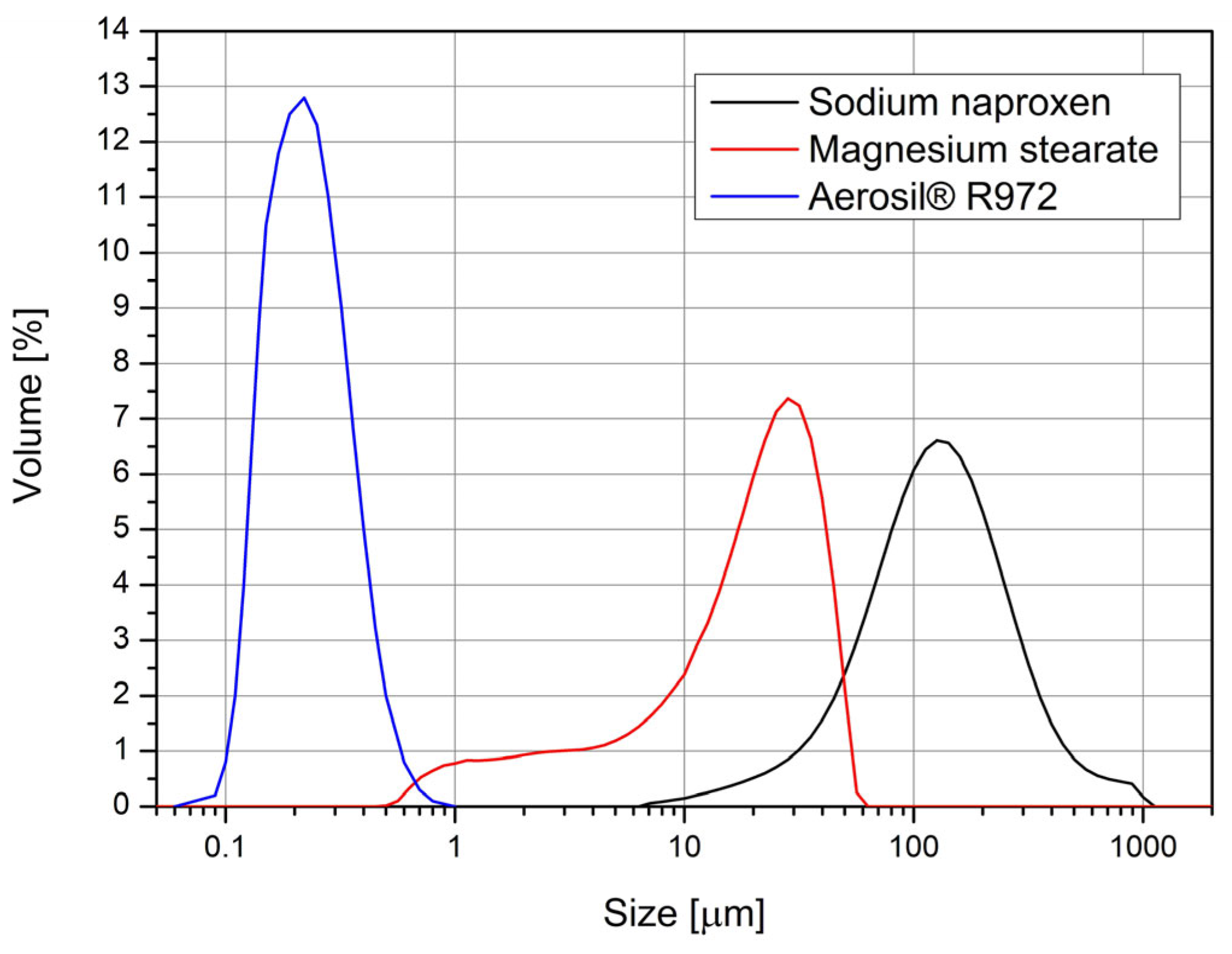
Figure 2.
Schematic of dry coating.
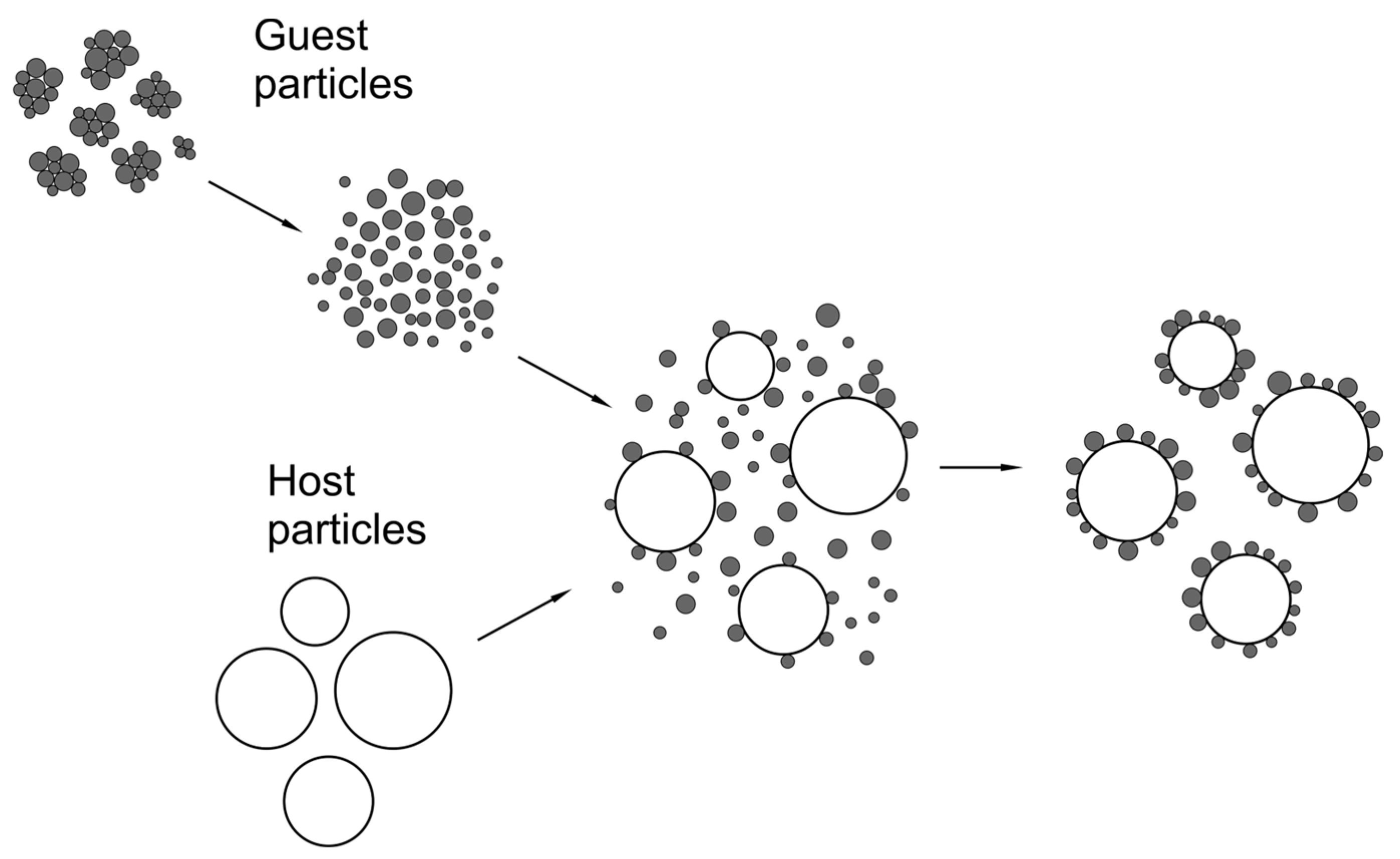
Figure 3.
Diagram of the modified V-type tumbler mixer: 1 – chamber; 2, 3 – cover; 4 – air inlet and outlet; 5 – drive system; 6 – balls; 7 – modified powder.
Figure 3.
Diagram of the modified V-type tumbler mixer: 1 – chamber; 2, 3 – cover; 4 – air inlet and outlet; 5 – drive system; 6 – balls; 7 – modified powder.
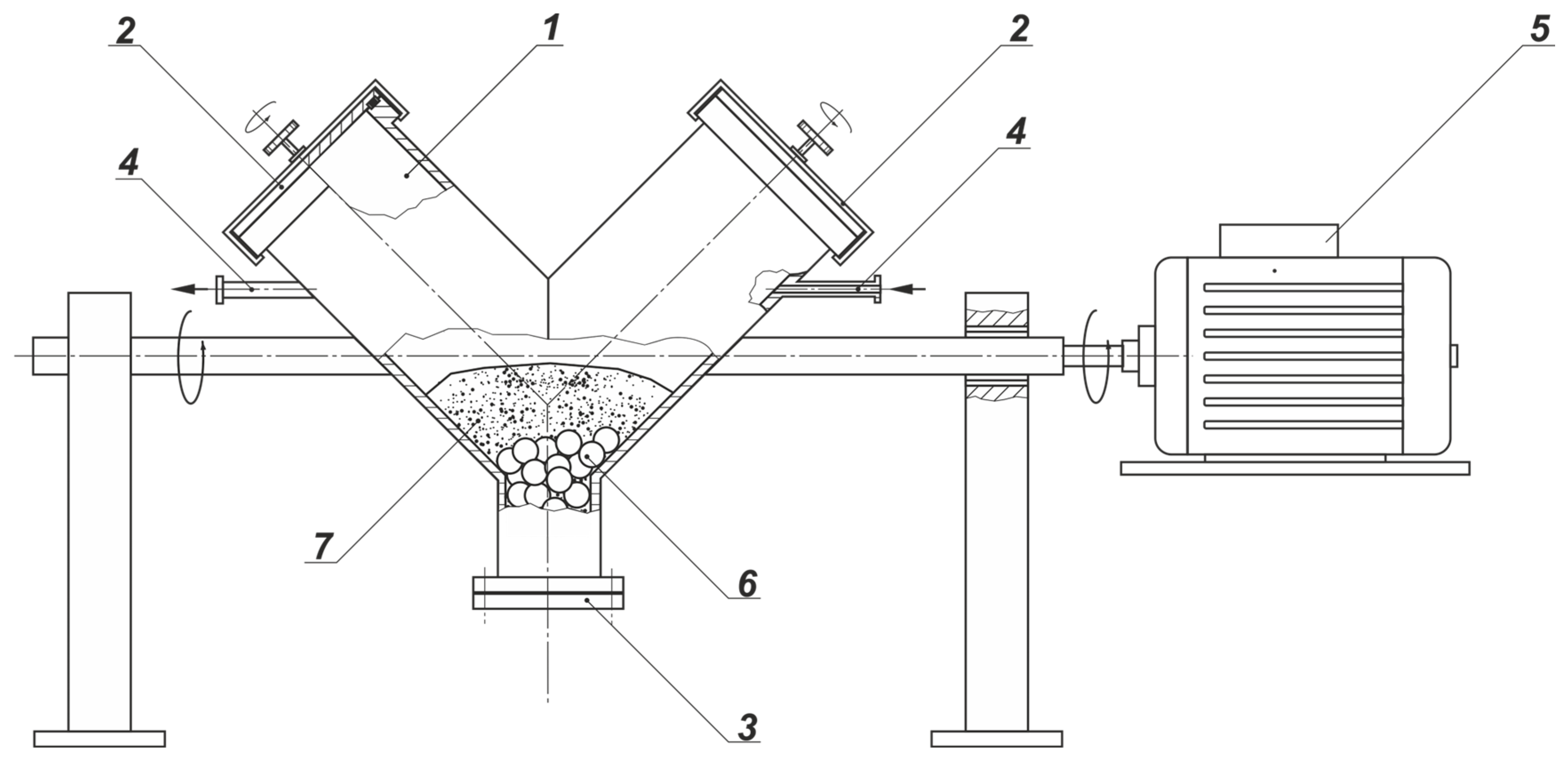
Figure 4.
Compressibility index of unprocessed sodium naproxen, Sample 1 with Aerosil and Sample 6 with magnesium stearate.
Figure 4.
Compressibility index of unprocessed sodium naproxen, Sample 1 with Aerosil and Sample 6 with magnesium stearate.
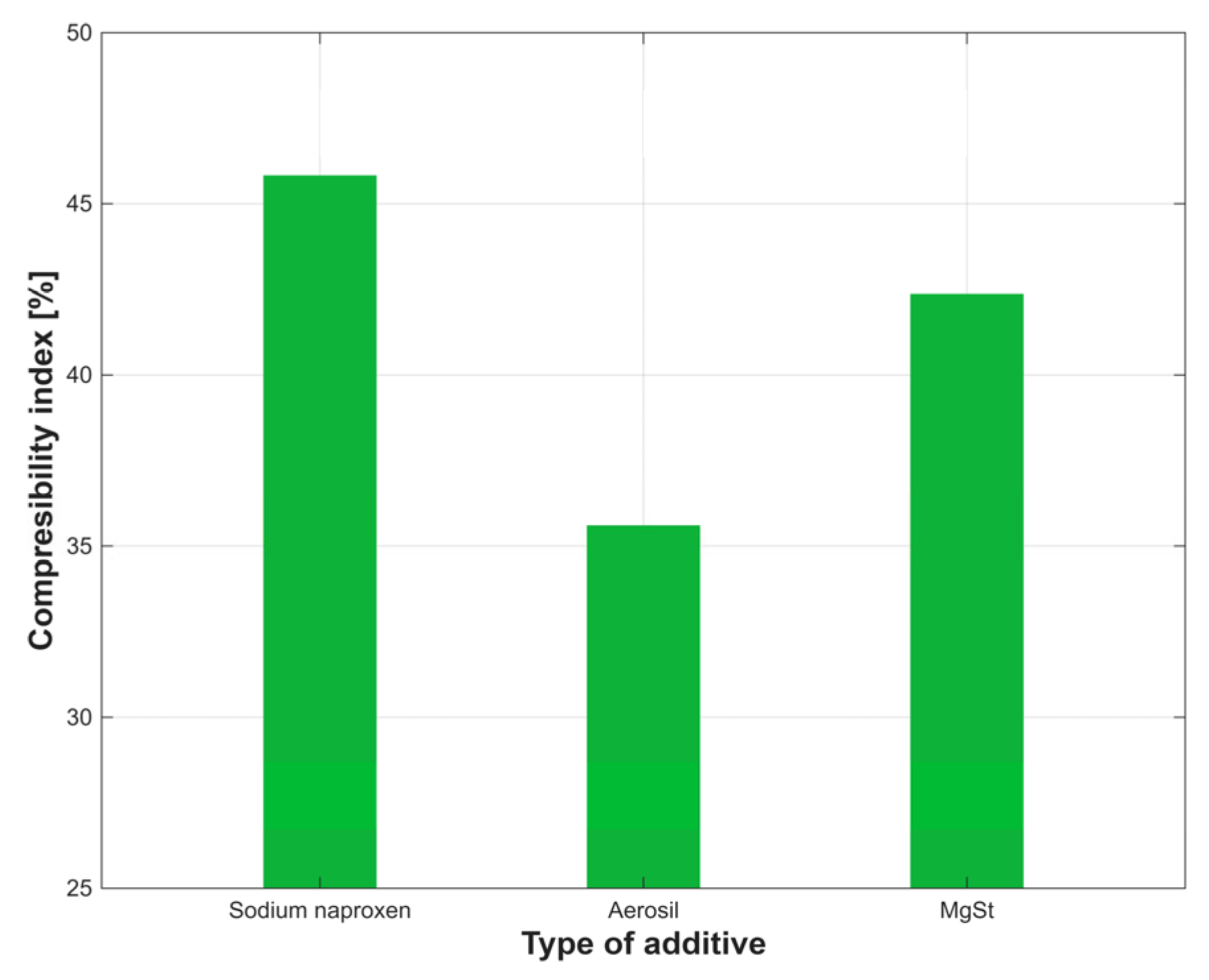
Figure 5.
Angle of repose, fall and difference of unprocessed sodium naproxen, Sample 1 with Aerosil and Sample 6 with magnesium stearate.
Figure 5.
Angle of repose, fall and difference of unprocessed sodium naproxen, Sample 1 with Aerosil and Sample 6 with magnesium stearate.
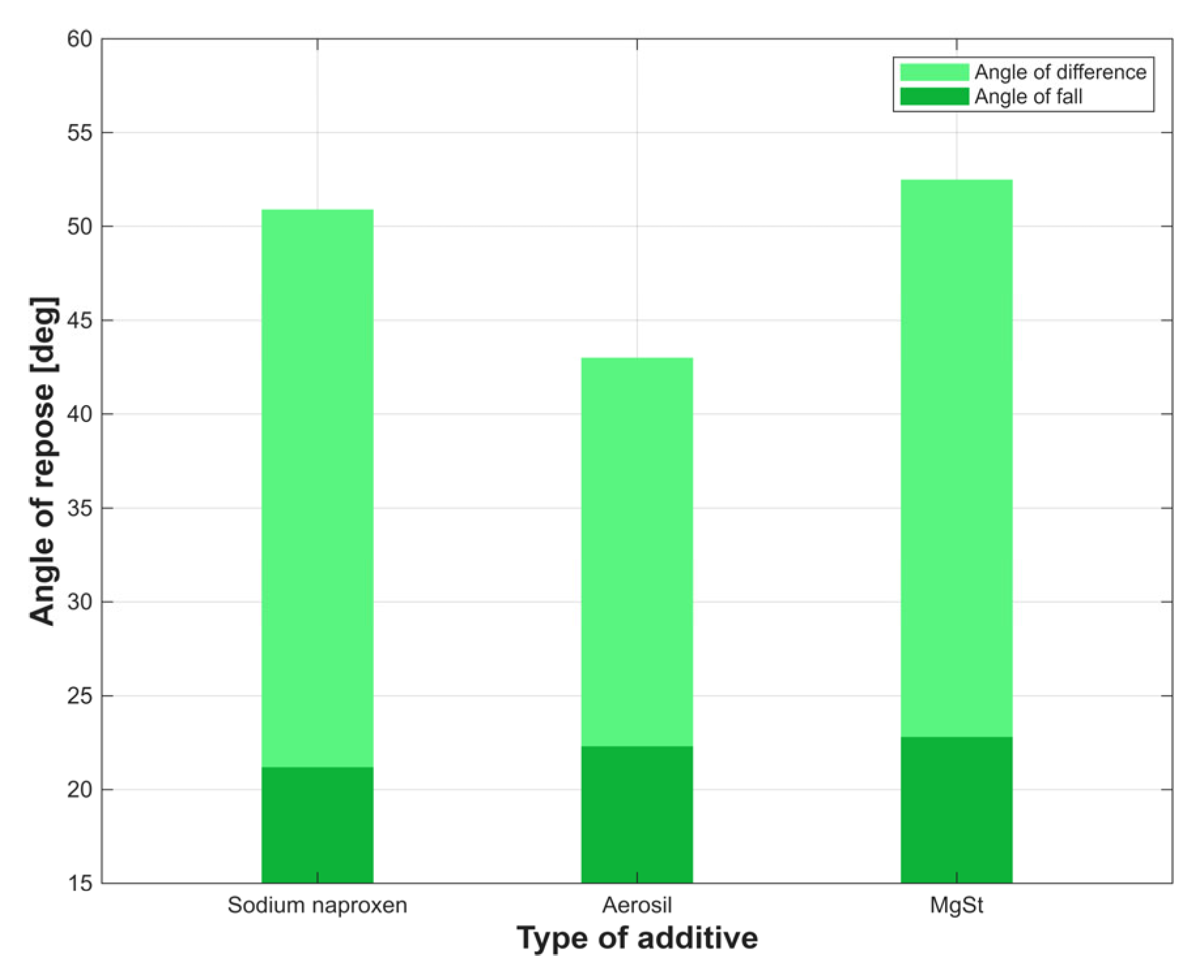
Figure 6.
Compressibility index of unprocessed sodium naproxen, Sample 1 and Sample 2.
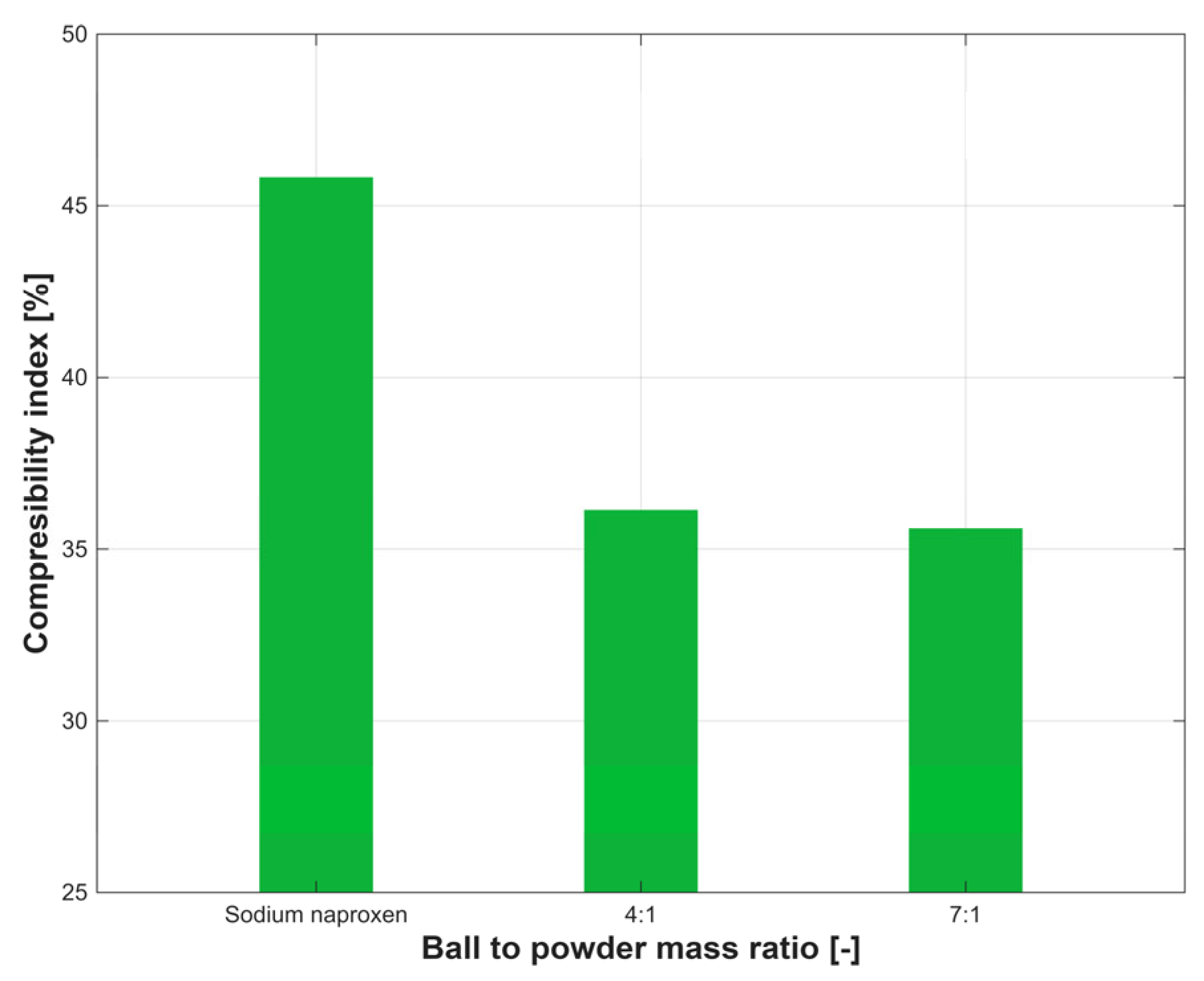
Figure 7.
Angle of repose, fall and difference of unprocessed sodium naproxen, Sample 1 and Sample 2.
Figure 7.
Angle of repose, fall and difference of unprocessed sodium naproxen, Sample 1 and Sample 2.
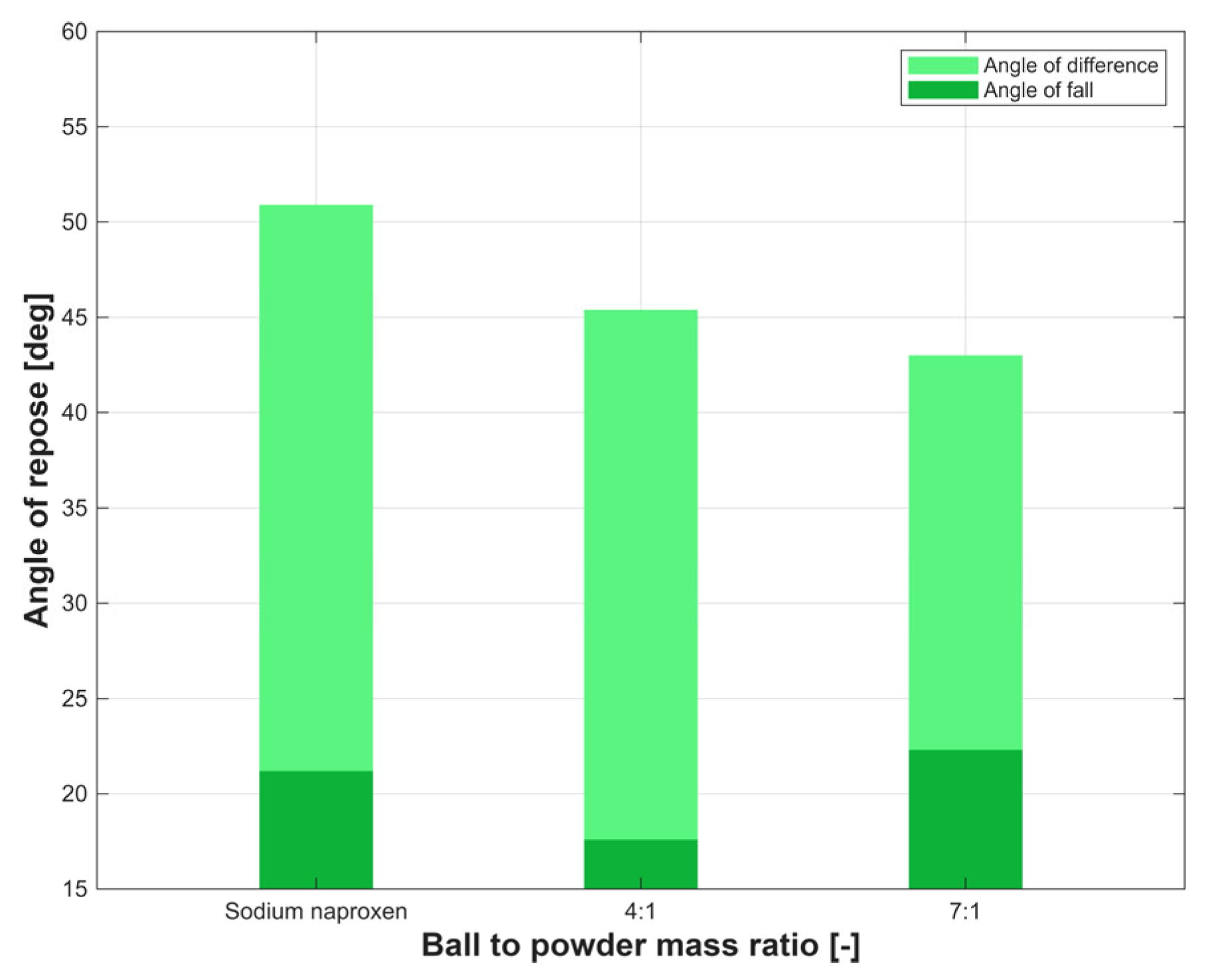
Figure 8.
Compressibility index of unprocessed sodium naproxen and samples 1, 3-5.
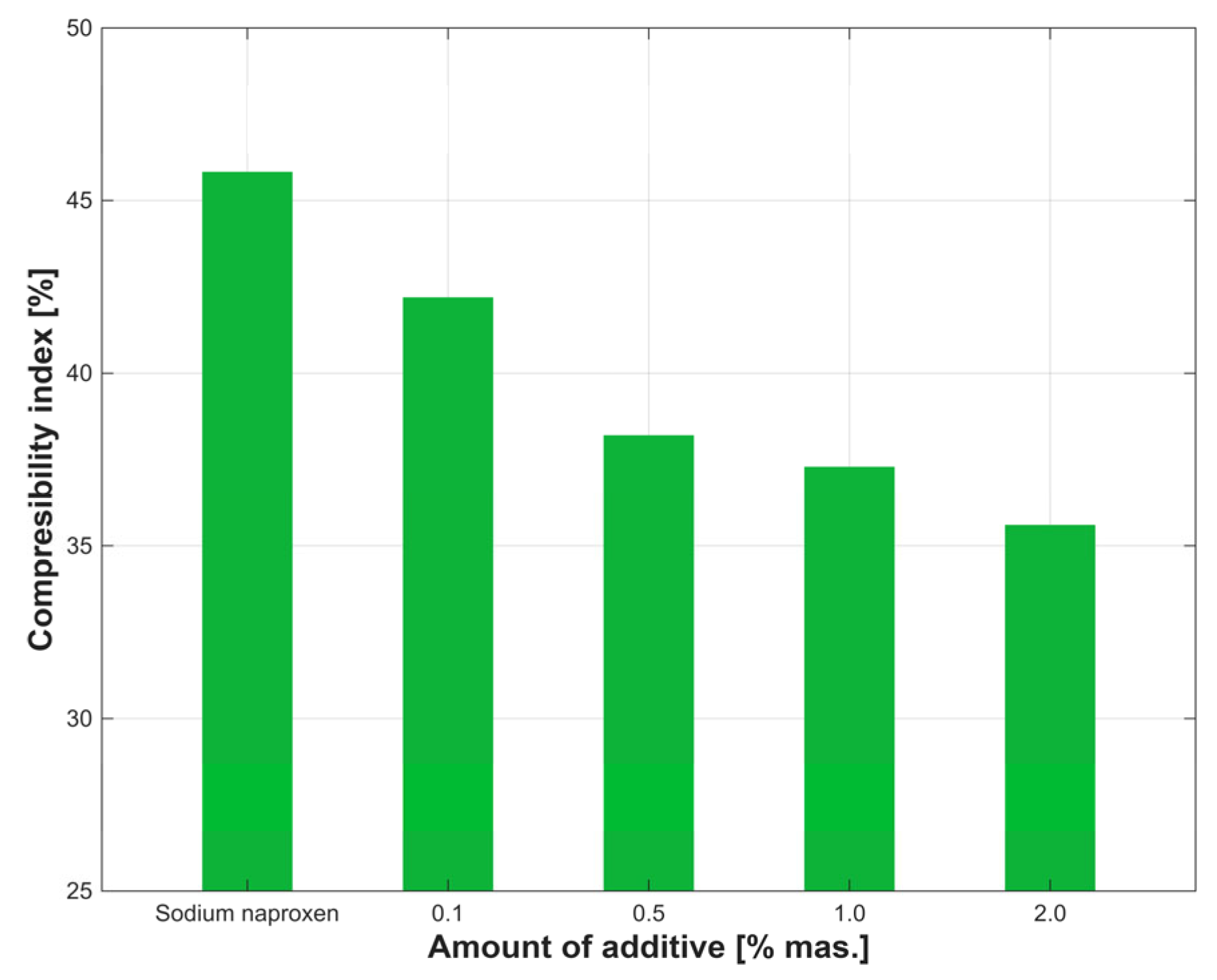
Figure 9.
Angle of repose, fall and difference of unprocessed sodium naproxen and samples 1, 3-5.
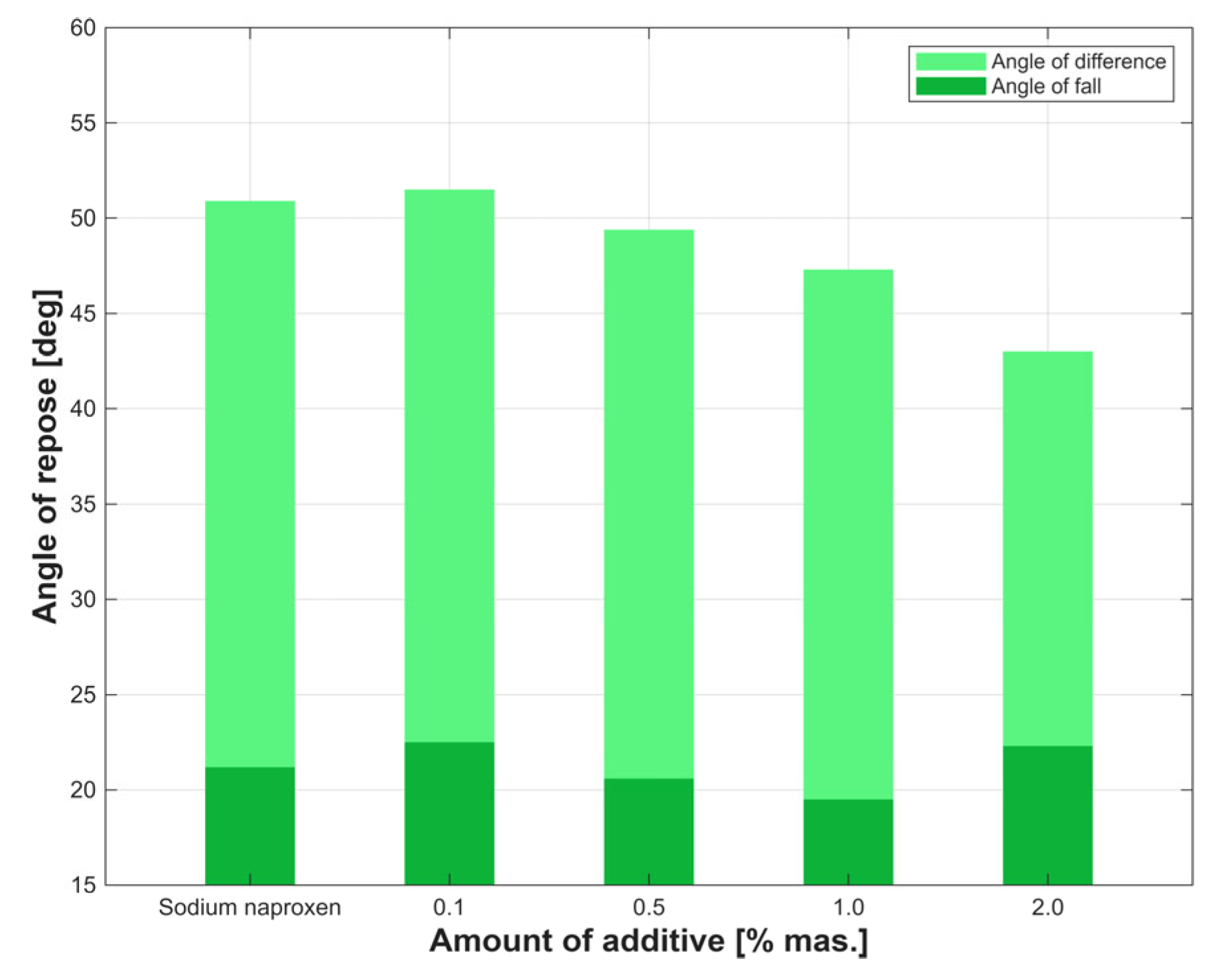
Figure 10.
Yield loci (YL) and effective yield loci (EYL) of unmodified sodium naproxen determined at different pre-shear consolidation stresses. Red markers indicate the experimental shear points used for determination of the yield loci.
Figure 10.
Yield loci (YL) and effective yield loci (EYL) of unmodified sodium naproxen determined at different pre-shear consolidation stresses. Red markers indicate the experimental shear points used for determination of the yield loci.
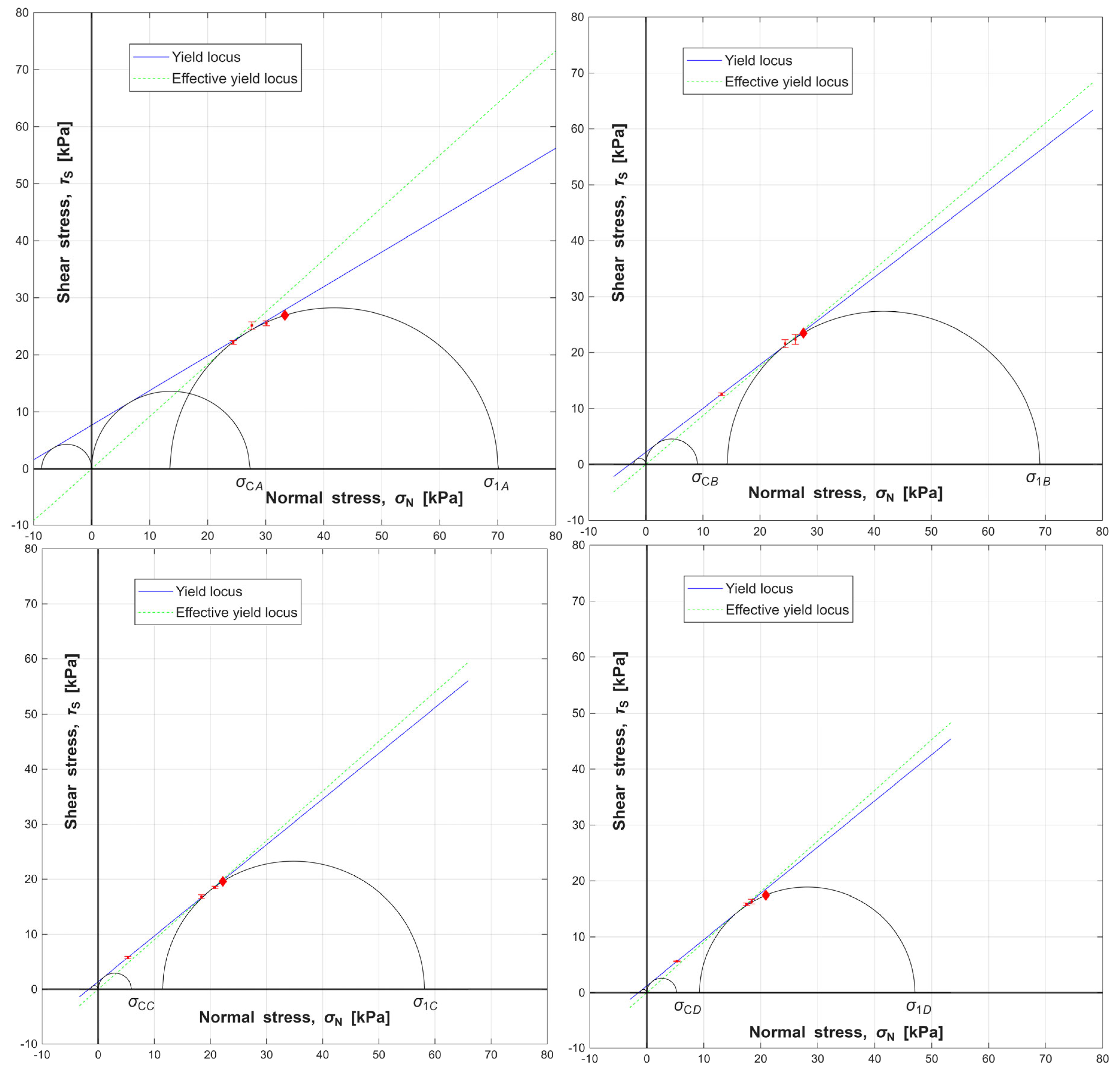
Figure 11.
Yield loci (YL) and effective yield loci (EYL) of sodium naproxen modified with 2% Aerosil® R972 (Sample 1) determined at different pre-shear consolidation stresses. Red markers indicate the experimental shear points used for determination of the yield loci.
Figure 11.
Yield loci (YL) and effective yield loci (EYL) of sodium naproxen modified with 2% Aerosil® R972 (Sample 1) determined at different pre-shear consolidation stresses. Red markers indicate the experimental shear points used for determination of the yield loci.
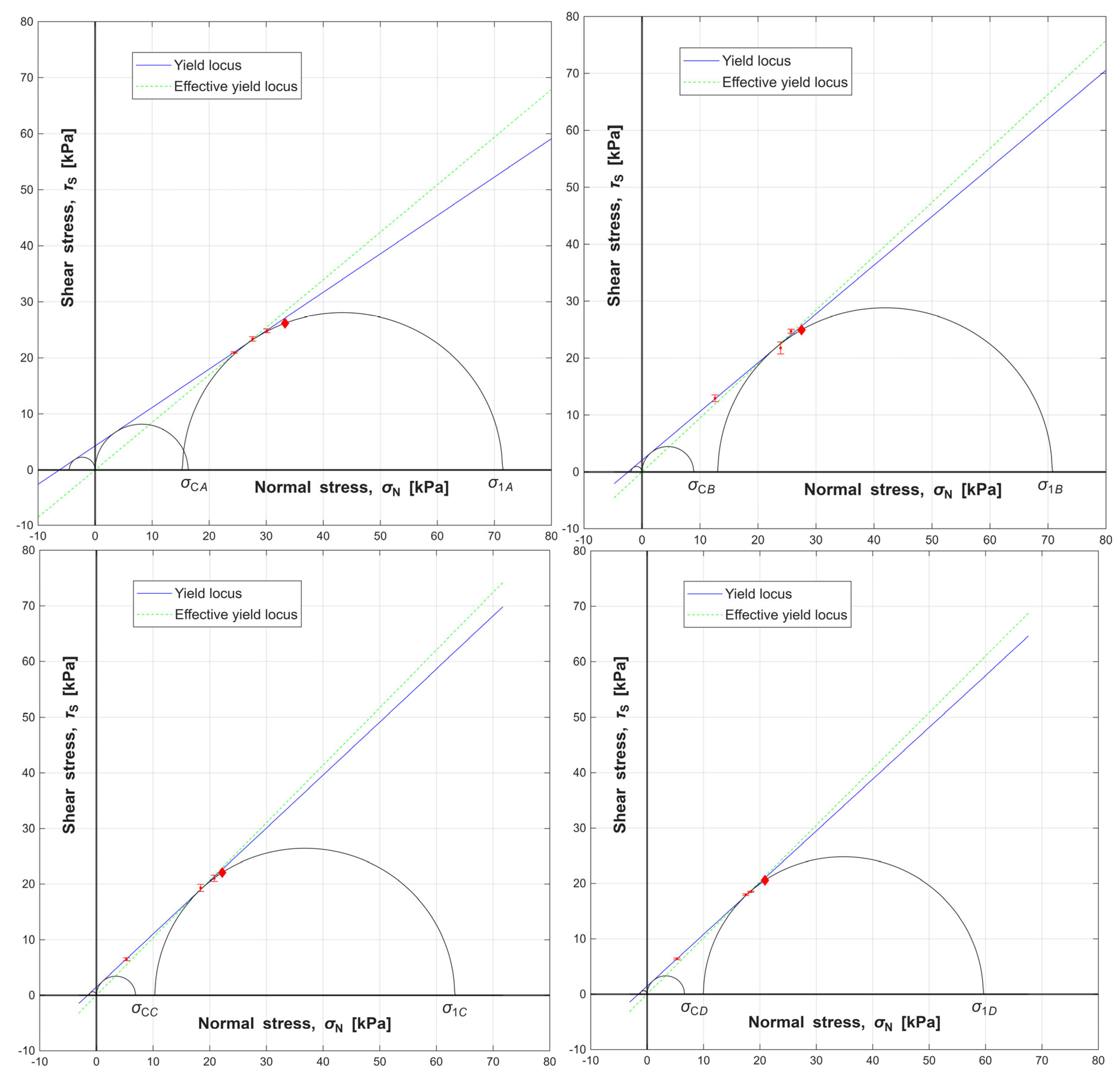
Figure 12.
Flow functions of unmodified and mechanochemically modified sodium naproxen with 2% Aerosil® R972 (Sample 1). The dashed lines indicate the flowability classification boundaries corresponding to ffc = 2, 4, and 10.
Figure 12.
Flow functions of unmodified and mechanochemically modified sodium naproxen with 2% Aerosil® R972 (Sample 1). The dashed lines indicate the flowability classification boundaries corresponding to ffc = 2, 4, and 10.
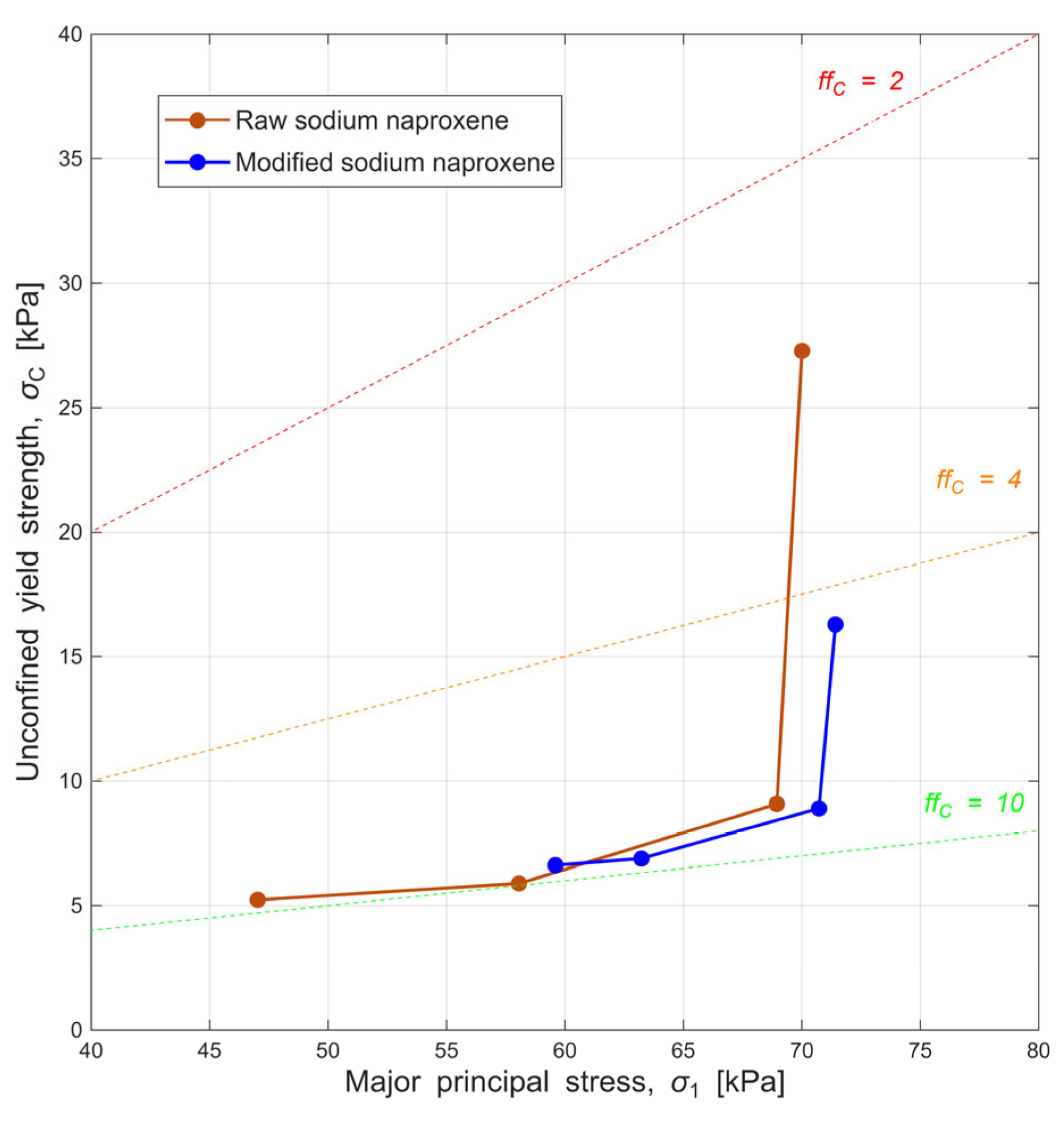
Figure 13.
SEM image of the surface of unprocessed sodium naproxen – magnification: 20,000x.
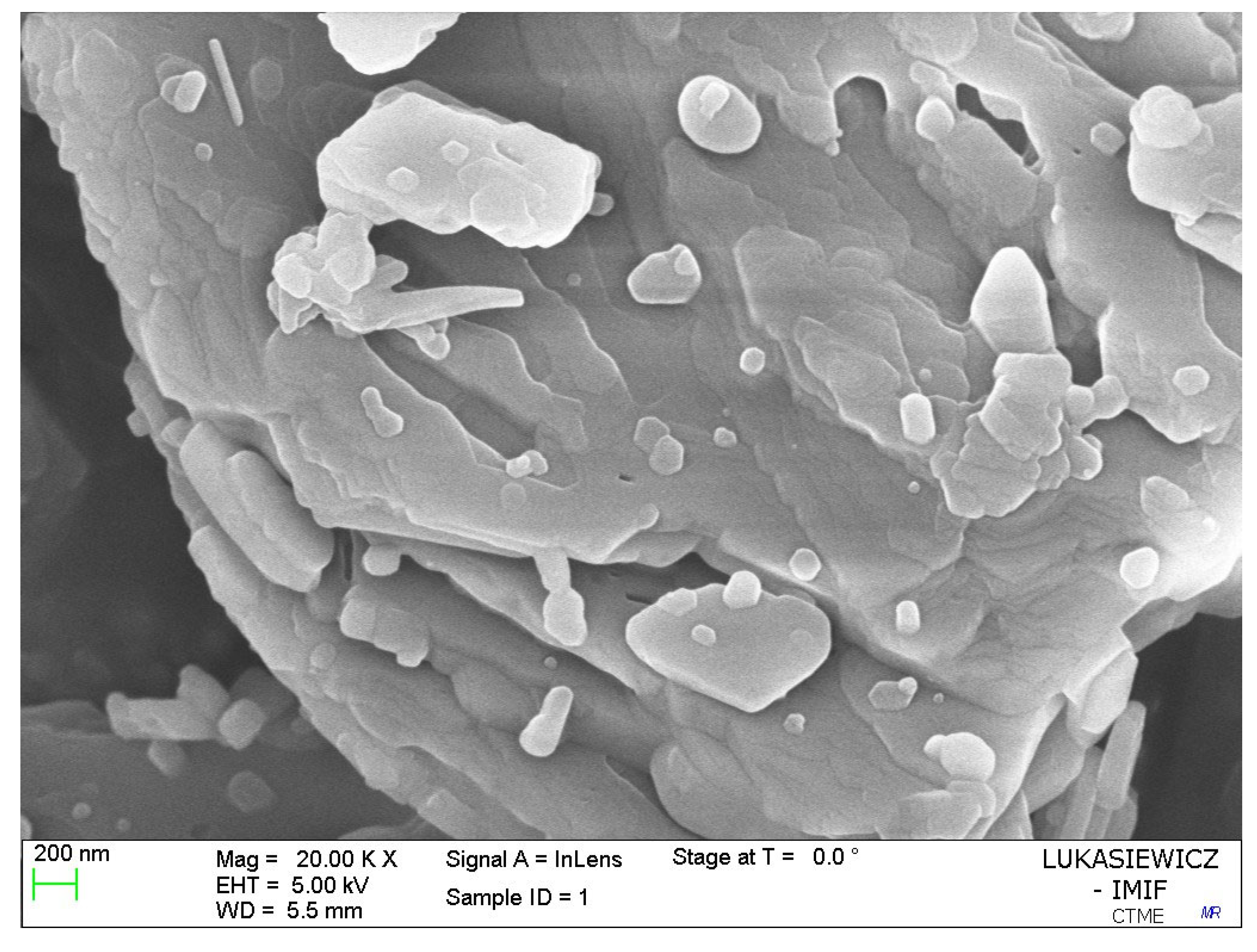
Figure 14.
SEM image of the Aerosil® R972 – magnification: 20,000x.
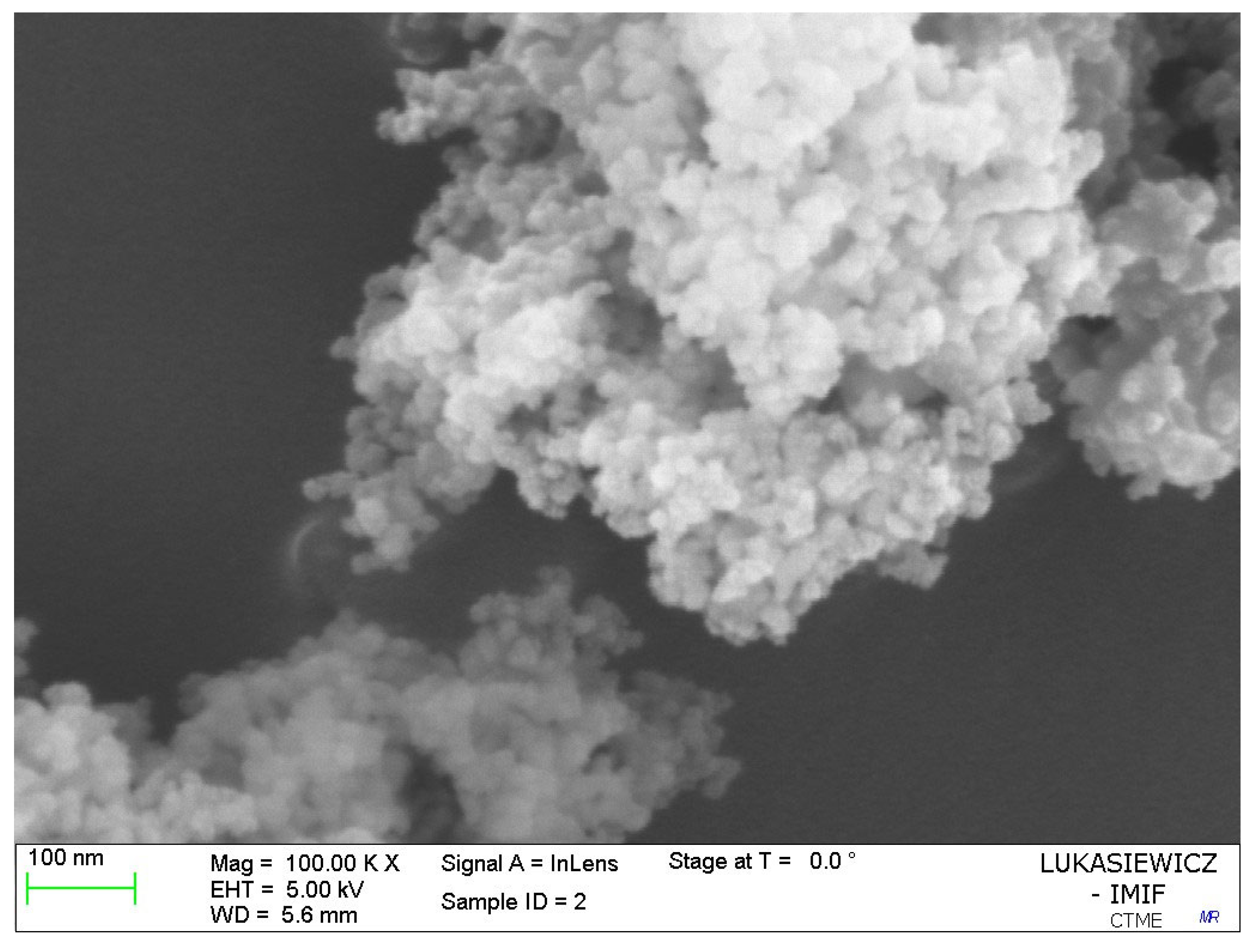
Figure 15.
SEM image of the surface of sodium naproxen after interactive mixing (Sample 1) – magnification: 20,000x.
Figure 15.
SEM image of the surface of sodium naproxen after interactive mixing (Sample 1) – magnification: 20,000x.
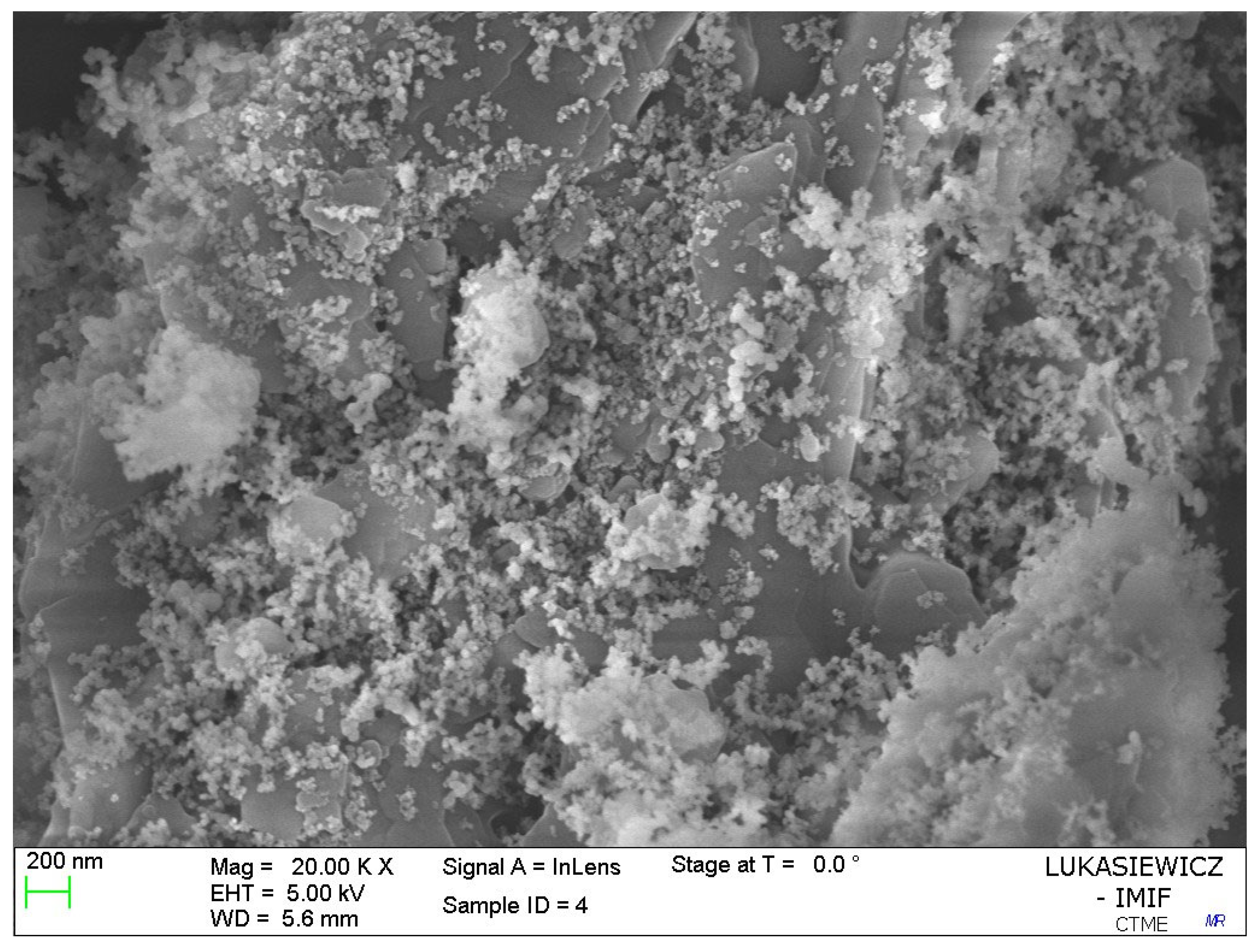

Table 1.
Research plan.
| Sample | Additive |
Amount of additive [% mass] |
Ball-to-powder mass ratio |
| Sodium naproxen | - | - | - |
| Sample 1 | Areosil ® R972 | 2 | 7:1 |
| Sample 2 | Areosil ® R972 | 2 | 4:1 |
| Sample 3 | Areosil ® R972 | 1 | 7:1 |
| Sample 4 | Areosil ® R972 | 0.5 | 7:1 |
| Sample 5 | Areosil ® R972 | 0.1 | 7:1 |
| Sample 6 | Magnesium stearate | 2 | 7:1 |
Table 2.
Pre-shear consolidation and subsequent shear testing conditions used for determination of flow function FF and flowability index ffc of sodium naproxen using a Jenike shear cell.
Table 2.
Pre-shear consolidation and subsequent shear testing conditions used for determination of flow function FF and flowability index ffc of sodium naproxen using a Jenike shear cell.
| Abbreviation |
Pre-shear normal load [kPa] |
Normal load during shear testing [kPa] |
| 20.9 |
18.4 17.5 5.3 |
|
| 22.2 |
20.8 18.4 5.3 |
|
| 27.6 |
26.2 24.4 13.3 |
|
| 33.3 |
30.1 27.6 24.4 |
Table 3.
Mechanical parameters of sodium naproxen.
| Pre-shear consolidation load= 20.2 [kPa] | Pre-shear consolidation load= 22.2 [kPa] | Pre-shear consolidation load= 27.6 [kPa] | Pre-shear consolidation load= 33.3 [kPa] | |
| Angle of inclination of the stress boundary line [-] |
0.812 | 0.768 | 0.781 | 0.607 |
| Angle of internal friction [deg] | 39.2 | 39.72 | 37.99 | 31.26 |
| The point of intersection of the stress boundary lines with the tangential stress axis (Cohesion) [kPa] | 1.123 | 1.381 | 2.205 | 7.66 |
| Maximum consolidation stress [kPa] | 43.77 | 48.53 | 69.01 | 70.01 |
| Uniaxial compressive strength [kPa] | 6.62 | 5.45 | 9.039 | 27.22 |
| Flow index [-] | 6.61 | 8.90 | 7.635 | 2.572 |
Table 4.
Mechanical parameters of Sample 1.
| Pre-shear consolidation load= 20.2 [kPa] | Pre-shear consolidation load= 22.2 [kPa] | Pre-shear consolidation load= 27.6 [kPa] | Pre-shear consolidation load= 33.3 [kPa] | |
| Angle of inclination of the stress boundary line [-] |
0.935 | 0.953 | 0.856 | 0.685 |
| Angle of internal friction [deg] | 43.06 | 43.62 | 40.57 | 34.42 |
| The point of intersection of the stress boundary lines with the tangential stress axis (Cohesion) [kPa] | 1.438 | 1.476 | 2.051 | 4.292 |
| Maximum consolidation stress [kPa] | 59.596 | 63.226 | 70.727 | 71.419 |
| Uniaxial compressive strength [kPa] | 6.624 | 6.891 | 8.911 | 16.289 |
| Flow index [-] | 8.996 | 9.176 | 7.937 | 4.385 |
Disclaimer/Publisher’s Note: The statements, opinions and data contained in all publications are solely those of the individual author(s) and contributor(s) and not of MDPI and/or the editor(s). MDPI and/or the editor(s) disclaim responsibility for any injury to people or property resulting from any ideas, methods, instructions or products referred to in the content. |
© 2026 by the authors. Licensee MDPI, Basel, Switzerland. This article is an open access article distributed under the terms and conditions of the Creative Commons Attribution (CC BY) license (http://creativecommons.org/licenses/by/4.0/).
Copyright: This open access article is published under a Creative Commons CC BY 4.0 license, which permit the free download, distribution, and reuse, provided that the author and preprint are cited in any reuse.