

Submitted:
28 August 2026
Posted:
28 August 2026
You are already at the latest version
Abstract
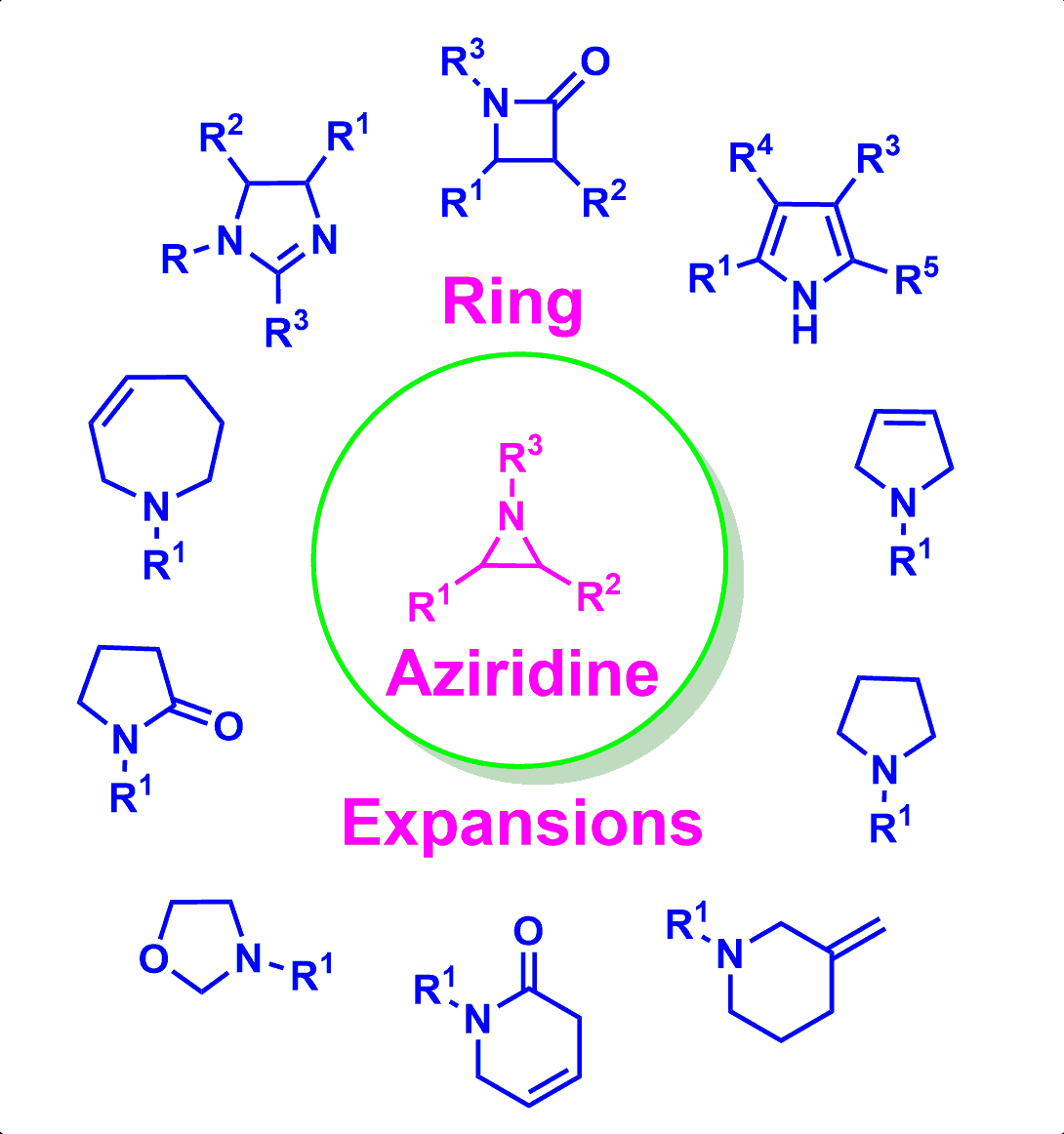
Aziridine, a three-membered nitrogen-containing heterocyclic ring, is a versatile building block in organic synthesis. Due to the high ring strain it tends to undergo ring opening reactions under the influence of nucleophilic reagents. Facile construction of four to seven-membered aza-heterocyclic ring systems is a challenging task for the synthetic organic chemists. Fortunately, this small scaffold (aziridine) is an ideal starting material for conversion into larger nitrogenated heterocycles. This review presents some of the illustrative and contemporary examples to demonstrate the synthetic utility and efficiency of the ring-expansion strategies of the aziridines towards a wide range of small to medium-sized aza-heterocyclic moieties of pharmaceutical importance.
Keywords:
aziridines
; ring expansion
; aza-heterocycles
; synthesis
; azetidines
; pyrroles
; azoles
1. Introduction
Aziridine, a three-membered, nitrogen-containing heterocyclic ring is considered as a versatile building block in contemporary synthetic chemistry [1,2,3]. In the early days, synthesis of the aziridines was considered as a challenging exertion because of their high reactivity and instability. Owning to the ring strain and the electronegativity of nitrogen atom, aziridines, the smallest N-heterocyclic compounds, exhibit intriguing and diverse reactivity, and thus become unique and versatile synthons in many organic transformations. Indeed, through a number of sophisticated ring-expansion techniques, activated aziridines offer a direct and practical access to these desired molecular architectures. This smallest aza-heterocycles are well known for their tremendous potential in the design of organic synthesis and medicinal chemistry [4,5,6]. As a consequence, various methods are developed for the cleavage of the aziridine ring leading to the construction of useful aza-heterocycles.
The access to four- to seven-membered aza-heterocyclic ring systems with ease is always a difficult but worthwhile task. Aziridines’ reactivity is mostly determined by the kind of substituents that are present on the ring. The ring is activated when it has a strong electron-withdrawing group on it and such aziridines are referred to as activated aziridines. The aziridines that have aryl sulfonyl groups on ring nitrogen, a carboxylate group, or a vinylic group on ring carbon are of much potential in organic synthesis. Periodically, the reactivity of aziridines has been reviewed [7,8]. The ring expansion reactions of aziridines may furnish larger size azaheterocycles along with medium ones. This review will highlight the synthetic versatility and effectiveness of the aziridines’ ring-expansion strategies toward construction of a variety of small to medium-sized aza-heterocyclic moieties of pharmaceutical significance.
2. Formation of Azetidines
Azetidines are found to be an important class of aza-heterocyclic compounds having synthetic, mechanistic, and biological interest [9]. On the other hand, conversion of a three-membered ring to a four-membered ring is a difficult to achieve and hence a few reports are available in the literature on this type of transformation.
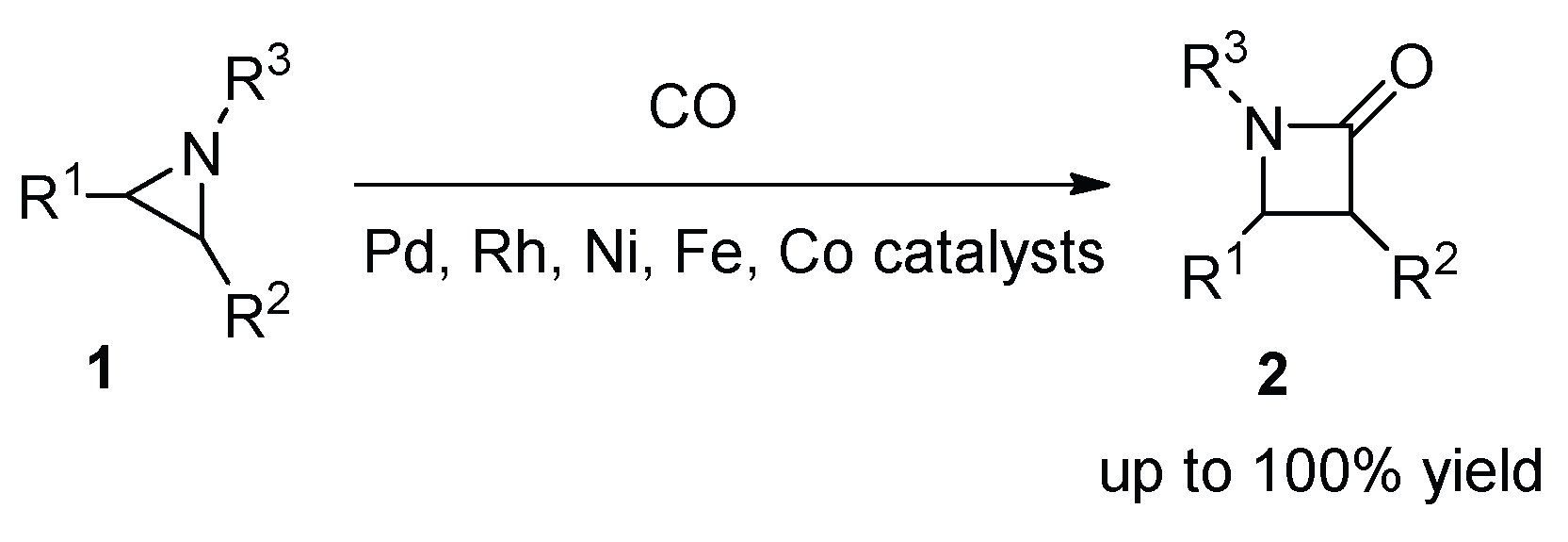
Alper and others achieved metal-catalyzed carbonylations of aziridines (1) to yield valuable azetidines, namely β-lactams (2) in up to 100% yields (Scheme 1) [10].
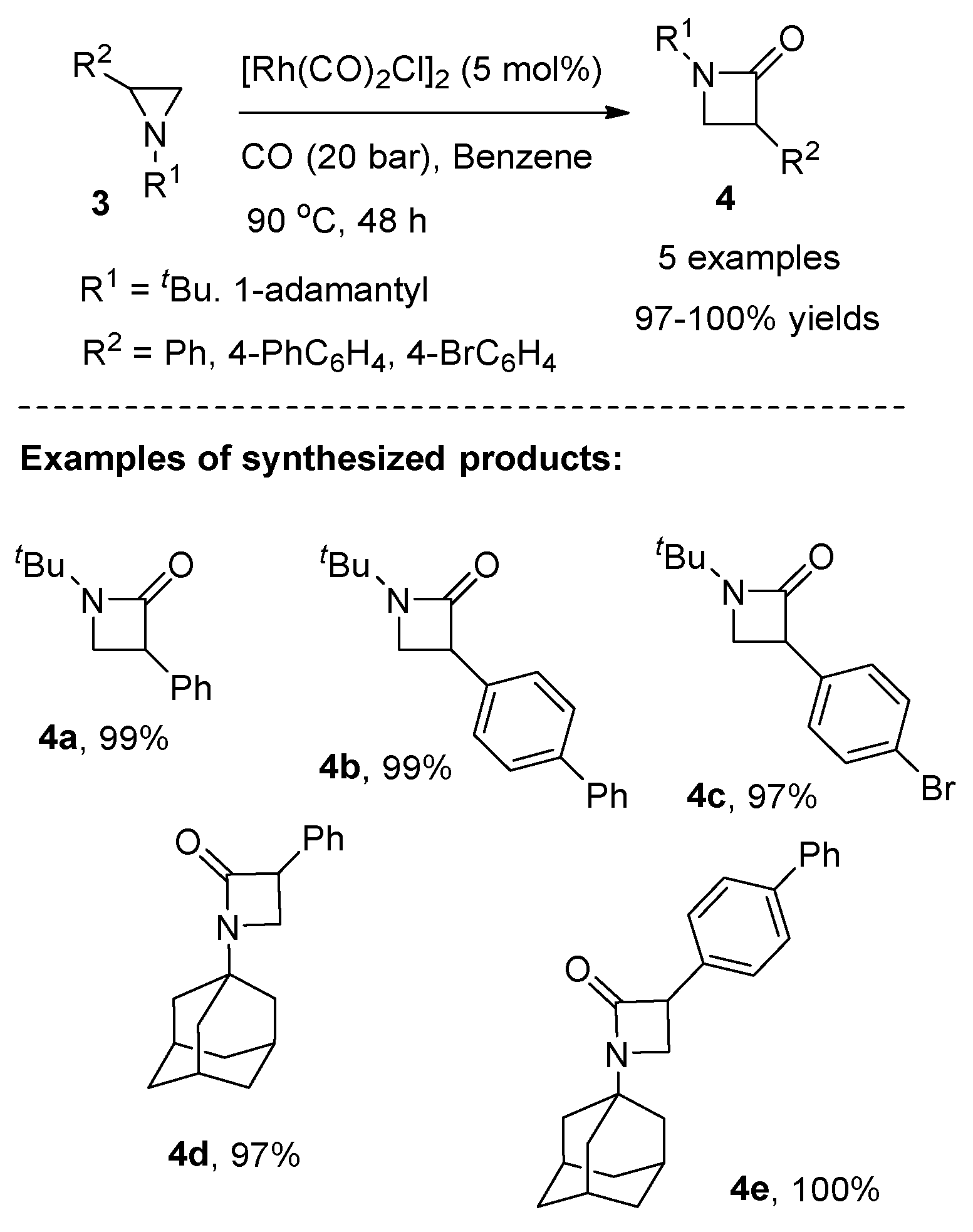
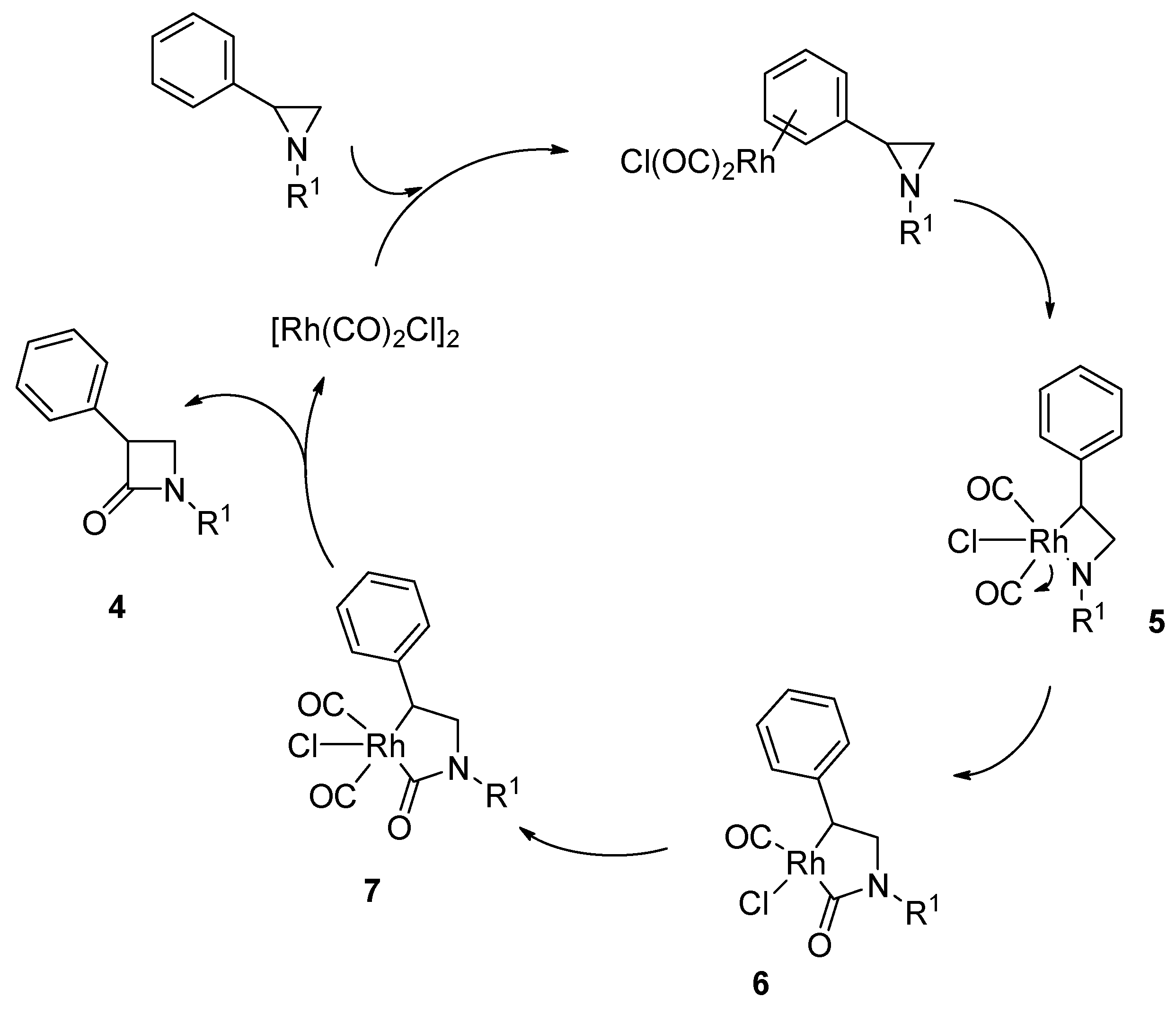
In 1983, the Alper group reported the first example of the direct ring expansion and carbonylation of an aziridine [11]. In this work, regiospecific synthesis of 3-arylazetidin-2-ones 4a–e was reported by insertion of carbon monoxide exclusively into the aziridine carbon–nitrogen bond using 20 bar of carbon monoxide and 5 mol% of rhodium(I) dicarbonyl chloride dimer {[Rh(CO)2Cl]2} as the catalyst in benzene for 48 hours at 90 °C affording 97-100% yields (Scheme 2). As suggested, the regioselectivity of the reaction depends strongly on the substitution pattern of the parent aziridine ring. A possible reaction pathway was proposed in Scheme 3. At first, rhodium(III) complex 5 is formed by the oxidative addition of rhodium(I) to the more substituted carbon-nitrogen bond of the aziridine. Next, compound 7 is formed by the ligand migration to 6 followed by carbonylation. And finally the desired azetidine was obtained by the reductive elimination of 7, with or without the assistance of another molecule of the aziridine.
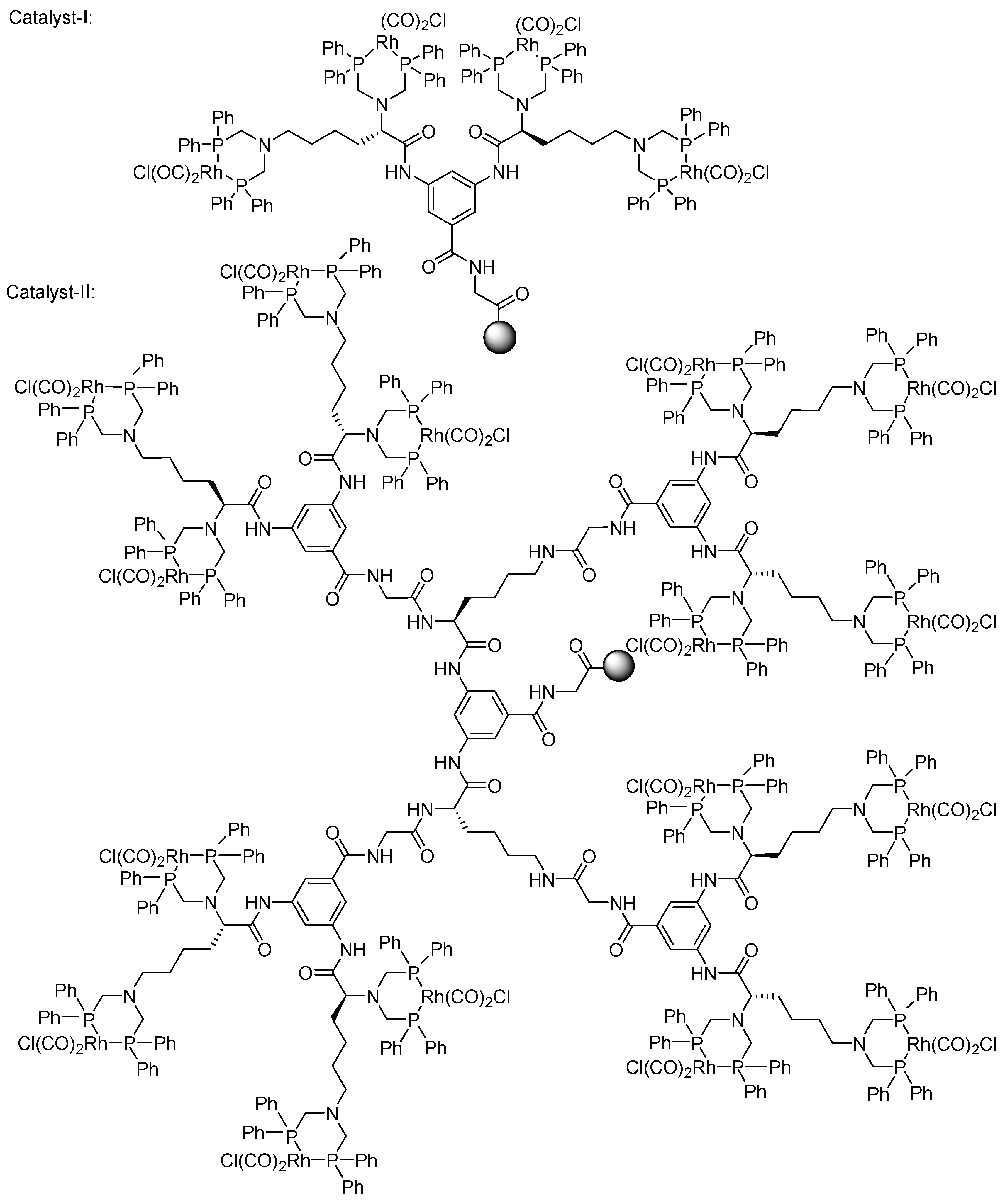
In continuation, the same group further developed two catalysts (catalyst-I & II, Figure 1) based on rhodium-complexed dendrimers on a resin which showed high activity for the carbonylative ring expansion reactions of aziridines with carbon monoxide to afford azetidines in good yields (Scheme 4) [12]. This catalytic system can be easily recovered by simple filtration, reused, and recycled without significant loss of activity. The catalyst, rhodium-complexed dendrimers supported on a resin was prepared according to their previously reported method [13]. After careful optimization of the CO pressure (7–41 bar), solvent (benzene, diethyl ether, dichloromethane, acetonitrile, tetrahydrofuran and dimethoxyethane), reaction temperature (25–90 °C) and time (13–60 h), the quantitative conversion was achieved for all the selected substrates.
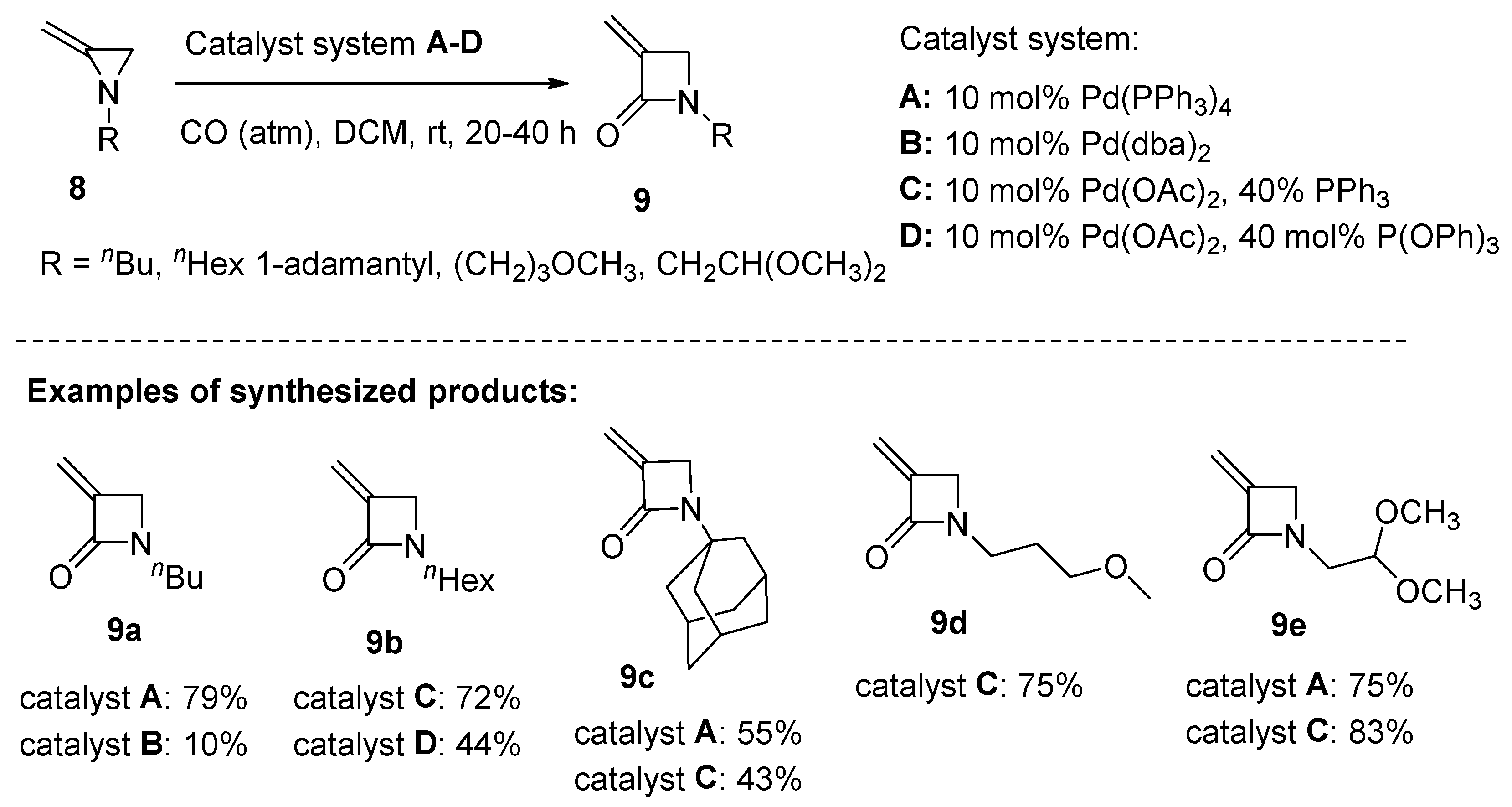
In another work, in 1987, Alper and co-worker reported a regiospecific palladium-catalyzed ring expansion-carbonylation reaction of 2-methyleneaziridines 8 toward 3-methyleneazetidin-2-ones 9a-e under an atmospheric CO pressure at room temperature in dichloromethane (DCM) solvent (Scheme 5) [14]. The use of different palladium catalysts for different substrates was demonstrated for better results as shown in Scheme 5.
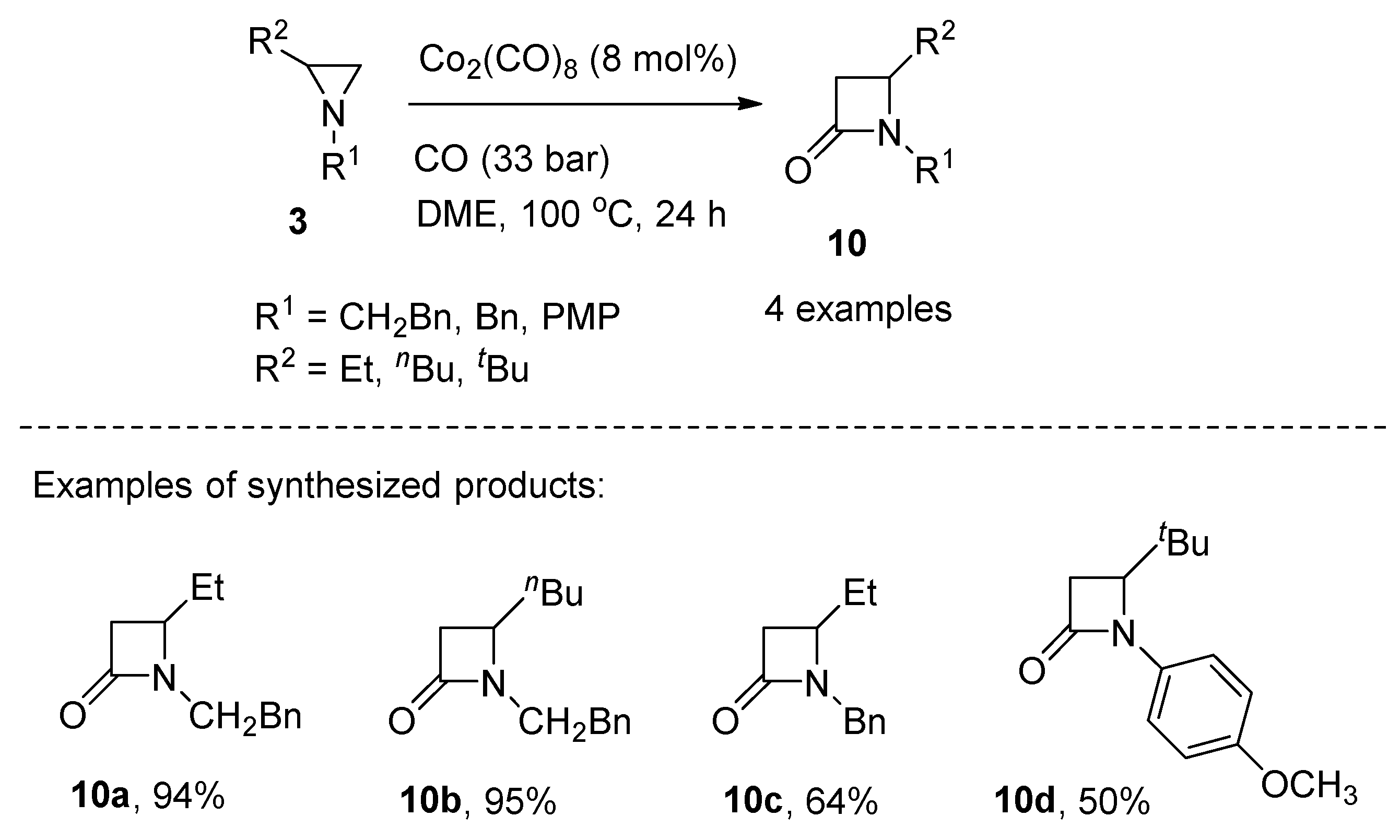
In continuation of this work, the Alper group proved that cobalt can also catalyze this transformation along with rhodium and palladium [15]. The desired 4-alkylazetidin-2-ones 10a–d were obtained in 50-94% yields by the reaction of 2-alkylaziridines 3 with 33 bar of carbon monoxide in the presence of 8 mol% of dicobalt(0) octa-carbonyl [Co2(CO)8] as the catalyst in 1,2-dimethoxyethane (DME) for one day at 100 °C (Scheme 6).
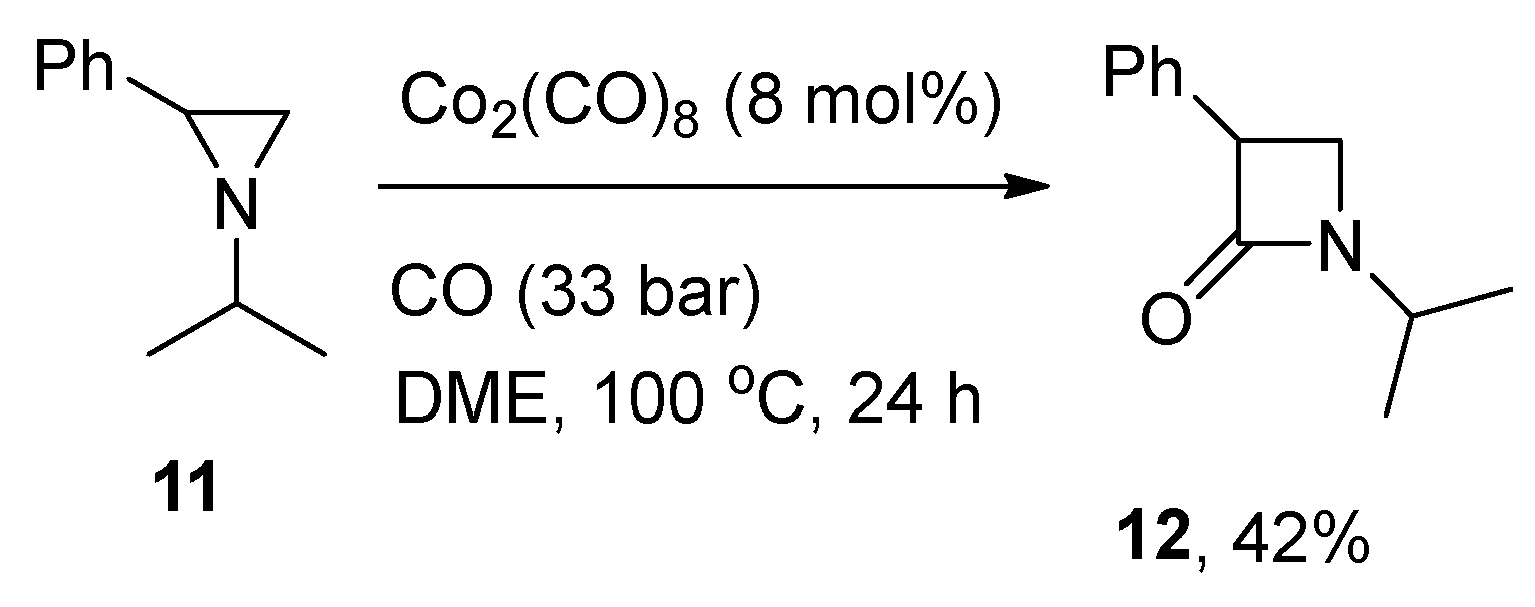
The substrate scope was tested by taking both monocyclic and bicyclic aziridines. The significant result of this investigation was the synthesis of highly strained bicyclic β-lactams containing the trans-7-azabicyclo [4.2.0]octan-8-one scaffold. In addition, it was observed that when the alkyl substituent at the 2-position of the aziridine ring was replaced by an aryl group (e.g., 2-phenylaziridine 11), the regioselectivity was changed completely, involving insertion of carbon monoxide exclusively into the aziridine carbon–nitrogen bond bearing the aryl substituent (Scheme 7).
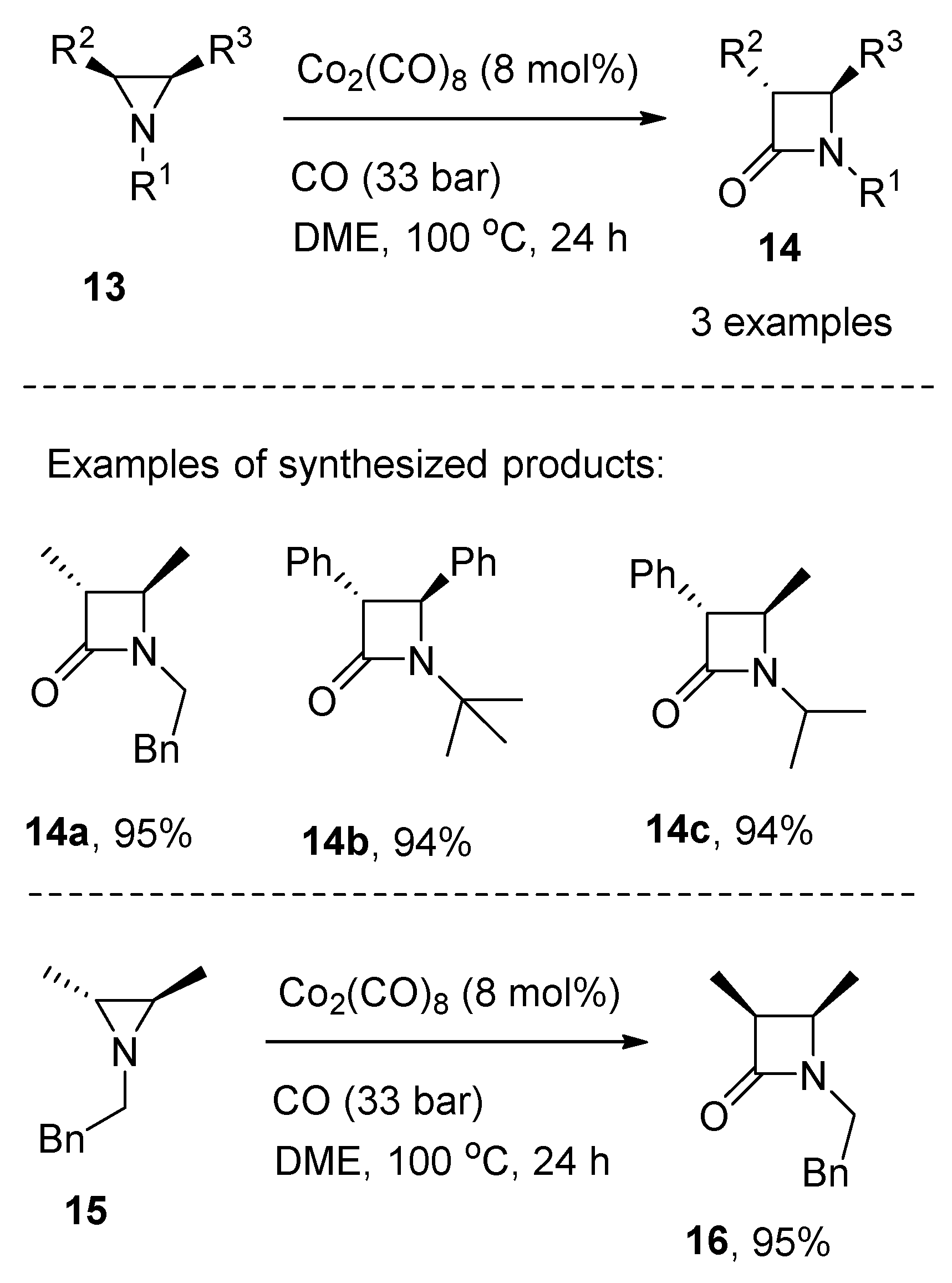
Further experiments showed that the cobalt-catalyzed ring expansion-carbonylation reaction of aziridines to β-lactams was stereospecific, occurring with inversion of configuration which is in consistency with the stereochemistry of the other transition metal-mediated carbonylative ring expansions. It is worthy to mention that during the formation of corresponding trans-azetidin-2-one 16 from cis-2-methyl-3-phenylaziridine 15 only the benzylic aziridine carbon–nitrogen bond was carbonylated (Scheme 8).
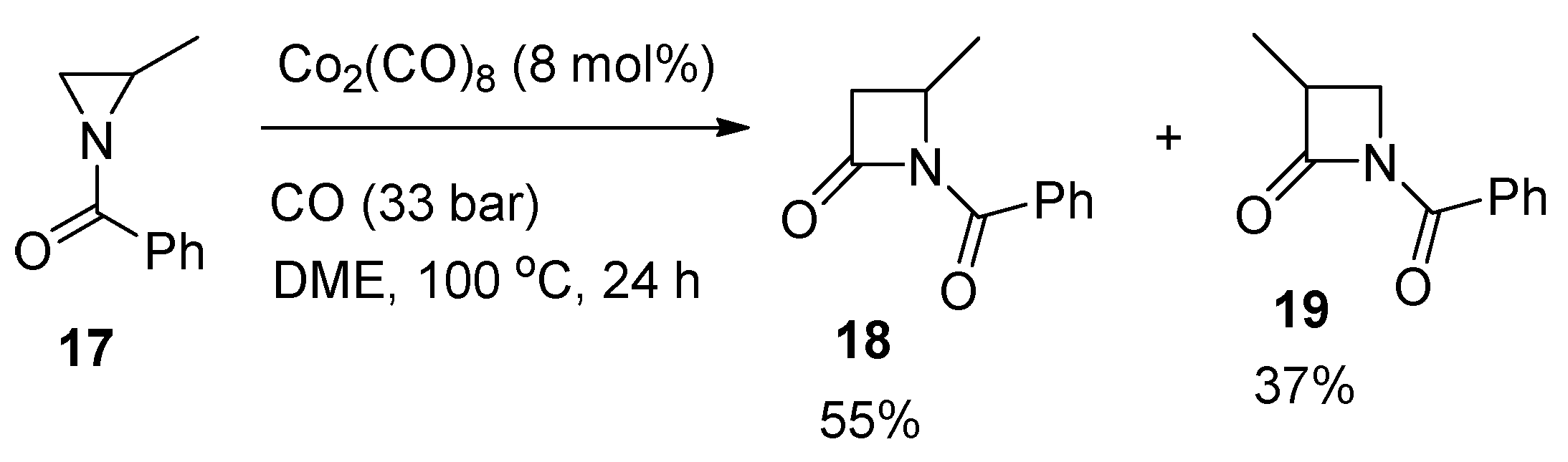
Surprisingly, carbonylation of 1-benzoyl-2-methylaziridine 17 afforded a mixture of isomeric products 18 and 19 in 55% and 37% yields respectively (Scheme 9).
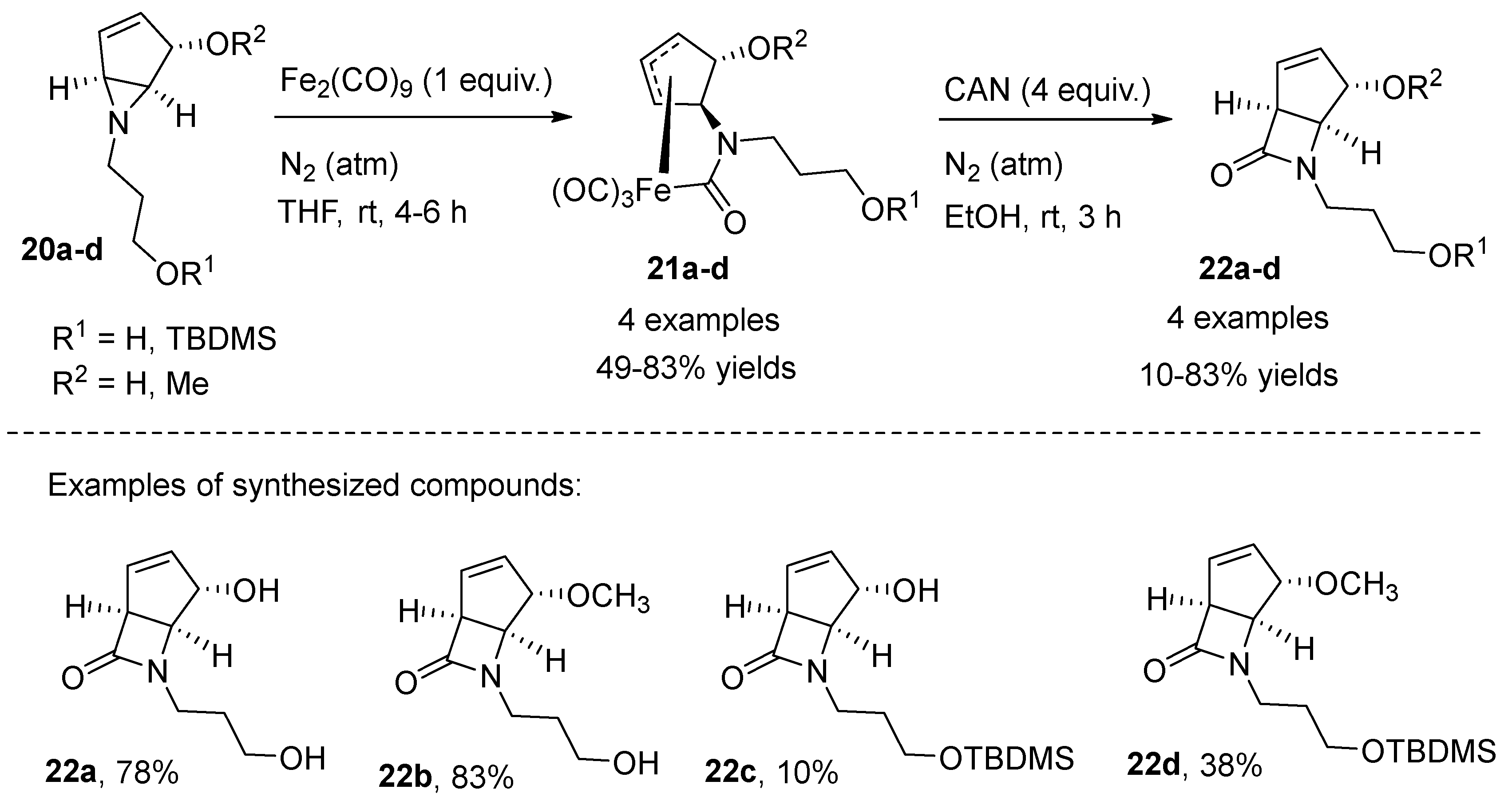
In 1997, Burger and co-workers synthesized fused azetidin-2-one derivatives by the following reaction sequence: at first, bicyclic vinylaziridines 20a–d were treated with diiron(0)nonacarbonyl [Fe2(CO)9] to give air-sensitive tricarbonyliron complexes 21a–d, which on oxidative decomplexation with ceric ammonium nitrate (CAN) gave the azitidine derivatives, namely, cis-fused cyclopenteno-β-lactams 22a–d in 5–69% overall yield (Scheme 10) [16].
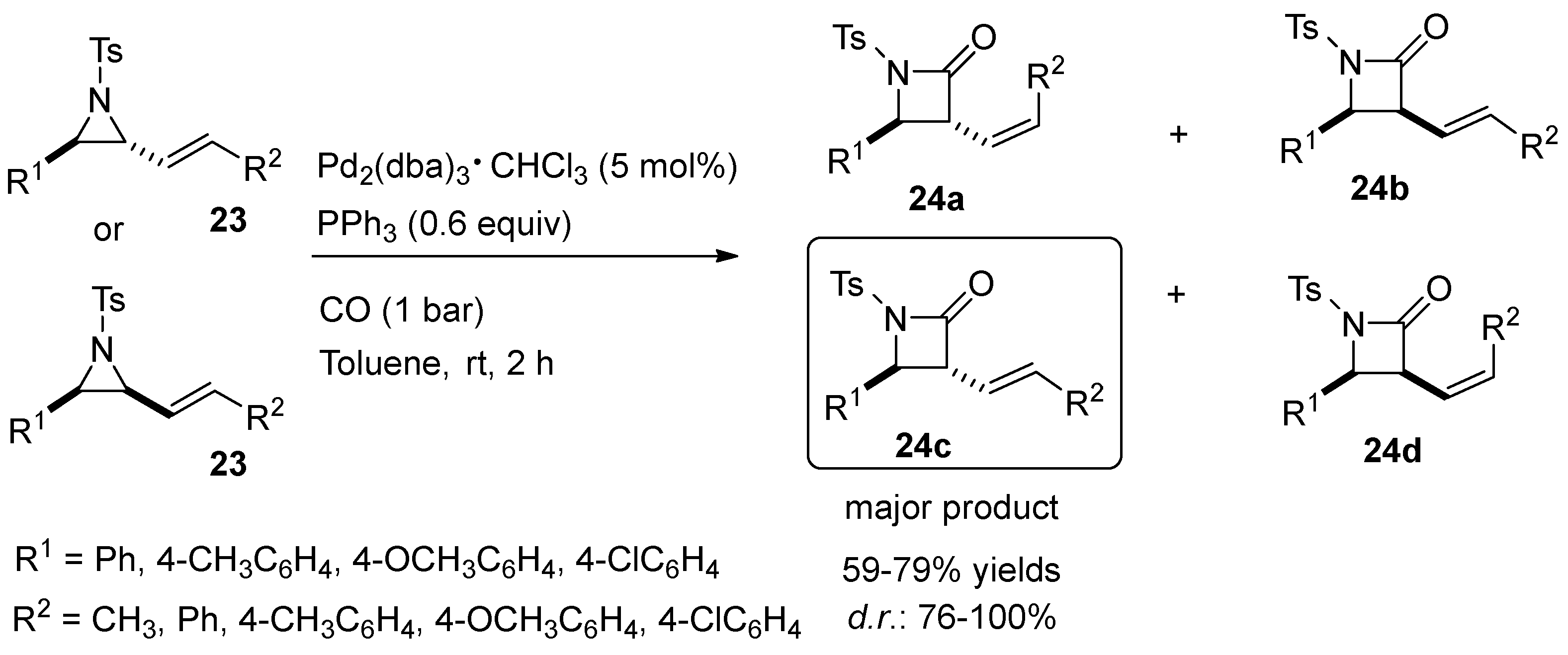
In 2010, Aggarwal et al. developed a convenient method for the synthesis of azitidine derivatives (β-lactams) by the palladium-catalyzed carbonylative ring-expansion of vinylaziridines [17]. The reactions were carried out by reacting 3-aryl-2-vinylaziridines 23 with carbon monoxide in the presence of trisdibenzylideneacetone palladium(III) trichloromethane [Pd2(dba)3·CHCl3] as catalyst and triphenyl phosphine as a ligand at room temperature affording four isomeric β-lactams 24a-d (Scheme 11). It was found that the trans-E-β-lactams 24c were the major products. The vinyl aziridines bearing alkyl substituents on did not afford any β-lactam unless 50 bar of carbon monoxide was used, where trans-Z-β-lactams 24a were obtained.
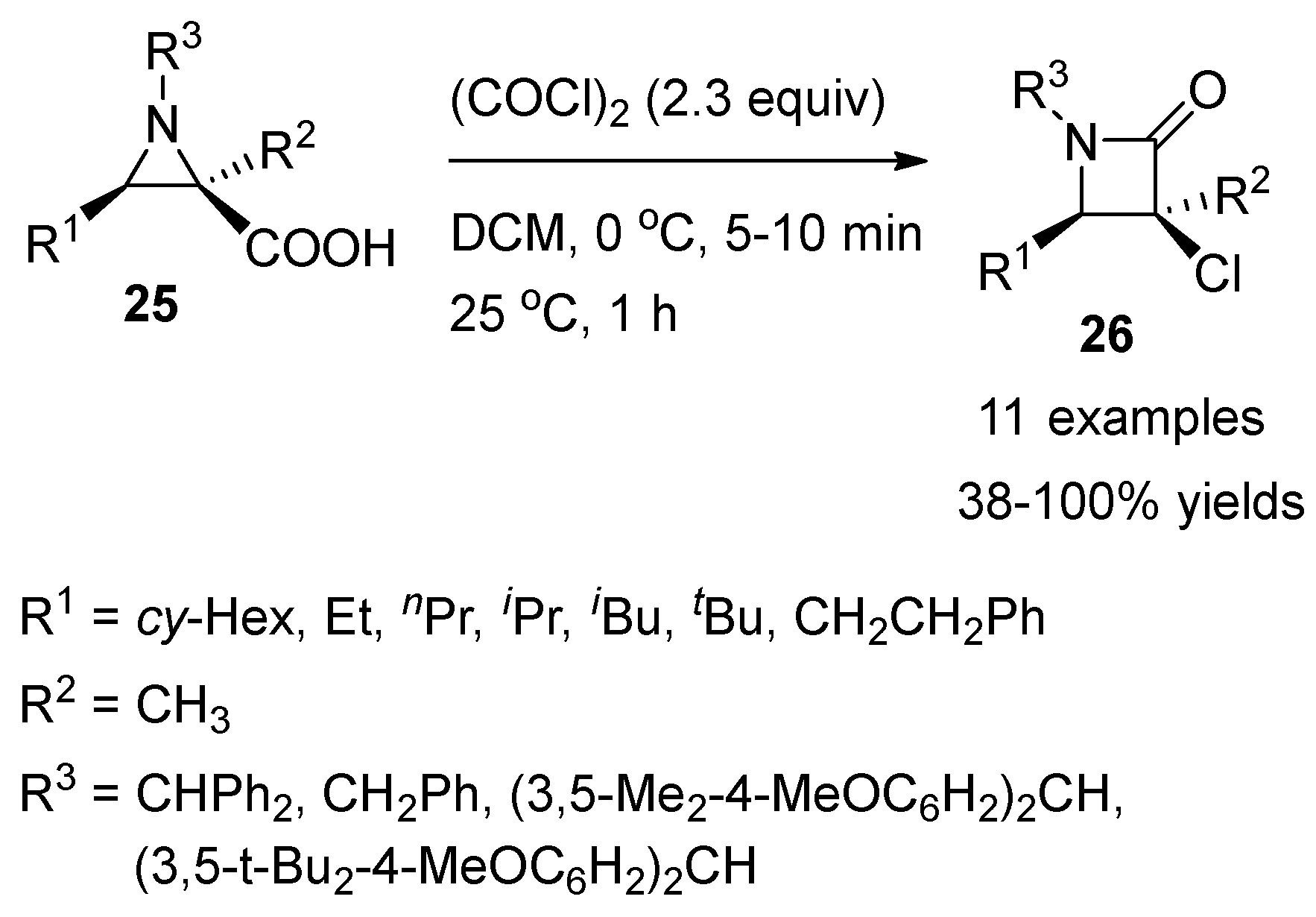
In 2013, the Wulff group reported the formation of 2-azetidinones 26 by the reaction between 3-alkylaziridine-2-carboxylic acids 25 and oxalyl chloride (Scheme 12) [18]. The ring-expansion reaction occurred in stereospecific manner with high yields and diastereoselection. It was observed that trans-β-lactam was formed exclusively from the reaction with trans-1-benzyl-3-cyclohexylaziridine-2-carboxylic acid. In addition, it is worth mentioning that β-bromo-β-lactams were also obtained with oxalyl bromide but some isomerization to trans-β-lactam was observed.
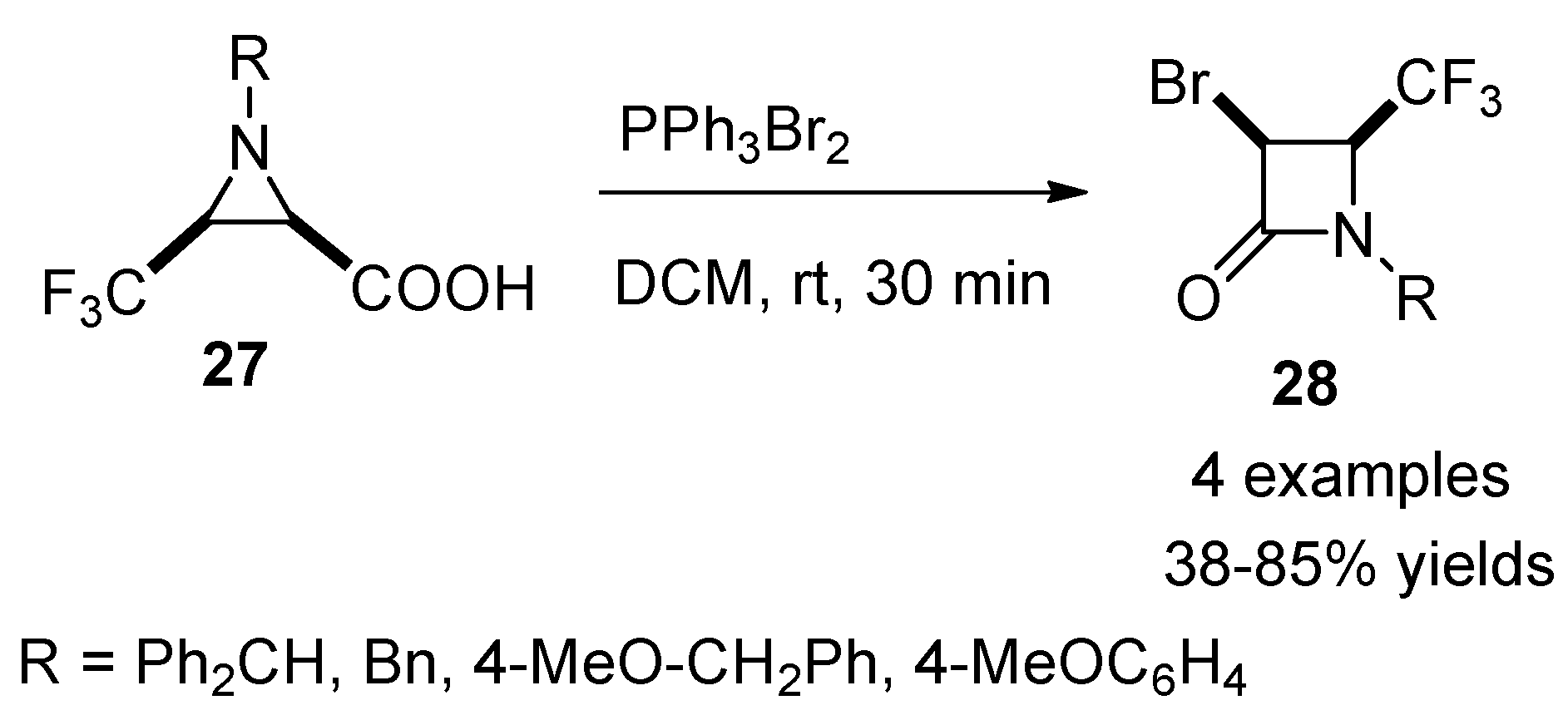
A convenient method was developed for the highly diastereoselective one-pot synthesis of 3-halogenated-4-trifluoromethyl cis and trans-β-lactams by ring expansion of aziridines in the presence of triphenylphosphine dibromide at room temperature in 30 min (Scheme 13) [19]. For further studies, the authors showed that 3-bromo-4-CF3 β-lactams reacted under various reaction conditions such as radical and nucleophilic reactions.
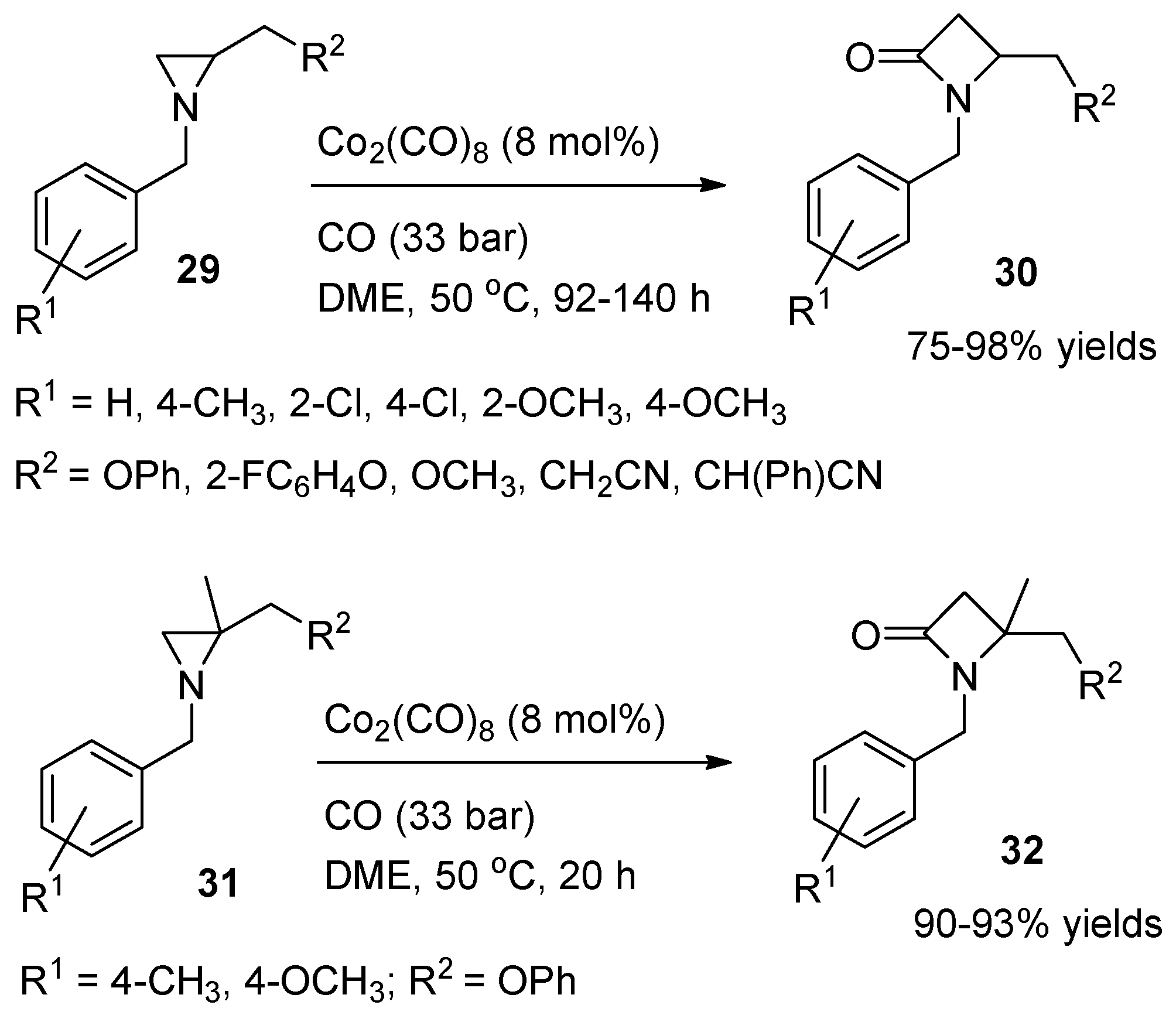
In 2017, D’hooghe et al. reported a Co2(CO)8-catalyzed carbonylation reaction for the conversion of diverse classes of non-activated aziridines into new functionalized azitidine derivatives (β-lactams) in a regio- and stereospecific way [20]. They reported the multigram synthesis of 24 target structures in 75–99% yield. In addition, the potential of these azetidin-2-ones as building blocks for further studies was exemplified by various transformations toward biologically relevant novel azaheterocycles.
Scheme 14.
Co2(CO)8-catalyzed carbonylation reaction of non-activated aziridines into functionalized azitidine derivatives.
Scheme 14.
Co2(CO)8-catalyzed carbonylation reaction of non-activated aziridines into functionalized azitidine derivatives.
3. Formation of Pyrroles
Pyrroles are widely presented in both natural and synthetic bioactive compounds. Therefore, new and efficient synthetic approaches towards these heterocycles, especially chiral ones, are of high demand.
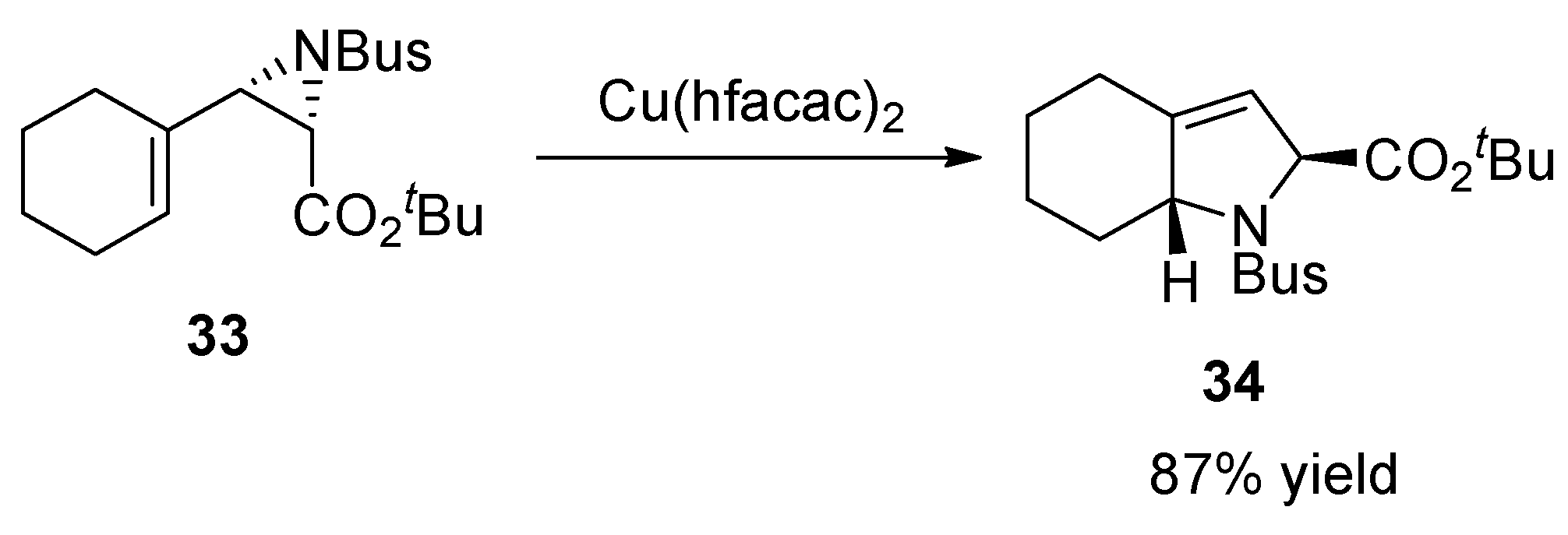
For instance, Njardarson described a series of Cu-catalyzed transformations of aziridines (33) to pyrrolidines and related rings (34); while these reactions are often stereospecific, they are largely limited to intramolecular examples (Scheme 15) [10,21,22,23].
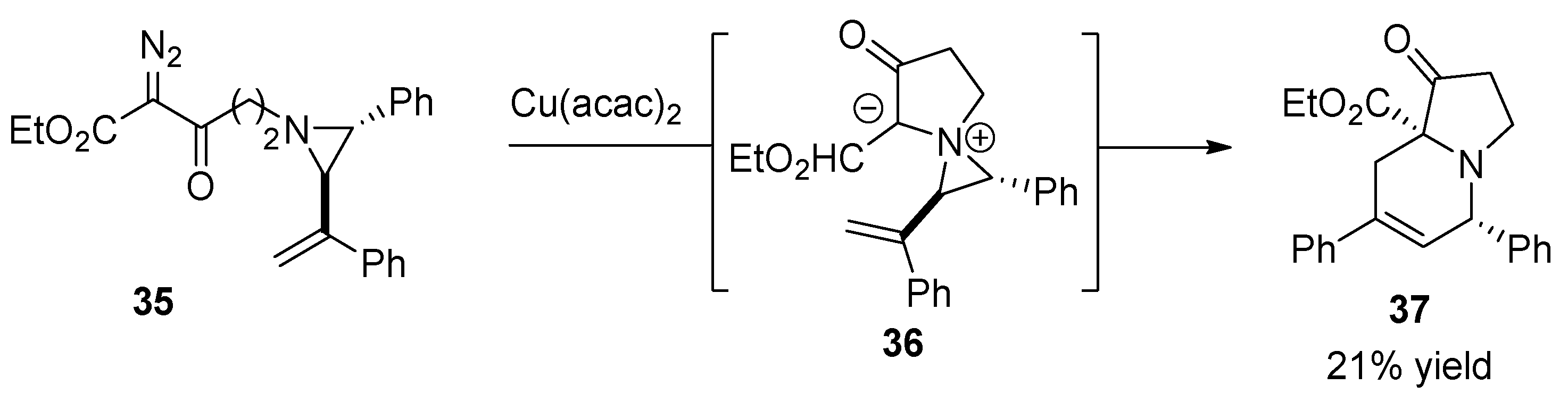
Barnes and Rowlands reported the formation of indolizidine (37) as [2,3]-Stevens rearrangement product from an intramolecular reaction of aziridinium ylide (36) with the metal carbenoid tethered to a vinyl aziridine (35) (Scheme 16). It is essential to have the correct nitrogen invertomer or a predominating competing [1,5]-hydrogen shift for this rearrangement [24].
In 2011, the Yoshida group reported the synthesis of 3-iodopyrroles by an electrophilic cyclization of the N-substituted propargylic aziridines (Scheme 17). The reactions were carried out in the presence of 2 equiv. of iodine and 10 mol % PtCl2 in MeCN/H2O solvent (10/1) at 80 ℃ for 10 min. [25]. It was mentioned that N-tosyl-substituted substrates required a platinum catalyst to promote the reaction. The iodine-promoted cycloisomerizations proceeded when N-benzylsubstituted substrates were employed. A variety of substituted 3-iodopyrroles were obtained.
A reaction pathway for both of this transformations was proposed according to the previously reported method [26]. For platinum-catalyzed cycloisomerization, initially, the substrate 38 is activated by the platinum catalyst by coordination with the aziridine nitrogen, which promotes the aziridine ring cleavage by water (Scheme 18). Subsequently, the resulting sulfonamide nitrogen in 43 attacks the distal position of the alkyne to form the cyclized intermediate 44. Finally, aromatization by elimination of water followed by iodo-demetalation with iodine affords the final product iodopyrrole 39.
For iodine-promoted cyclization of the N-benzyl-substituted propargylic aziridines, at first, cyclic iodonium ion 45 is formed by the coordination of the propargylic triple bond to an iodine cation (Scheme 19). The subsequent attack of the aziridine nitrogen on the iodonium ion forms the cyclized cationic intermediate 46, which undergoes aromatization by elimination of the proton leading to the formation of 3-iodopyrrole 41.
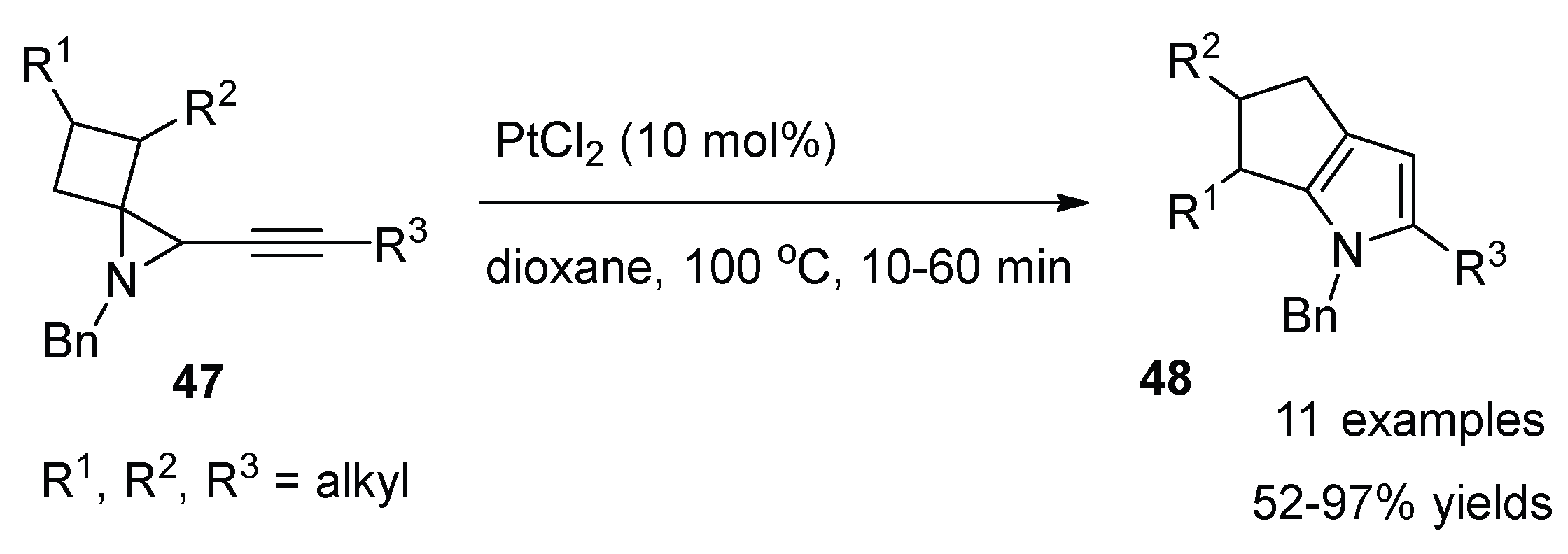
This group further reported the platinum-catalyzed cascade cyclization/ring expansion of alkynyl-aziridines, spiro-fused to cyclobutene 47 which afforded bicyclic pyrroles 48 (Scheme 20) [27].
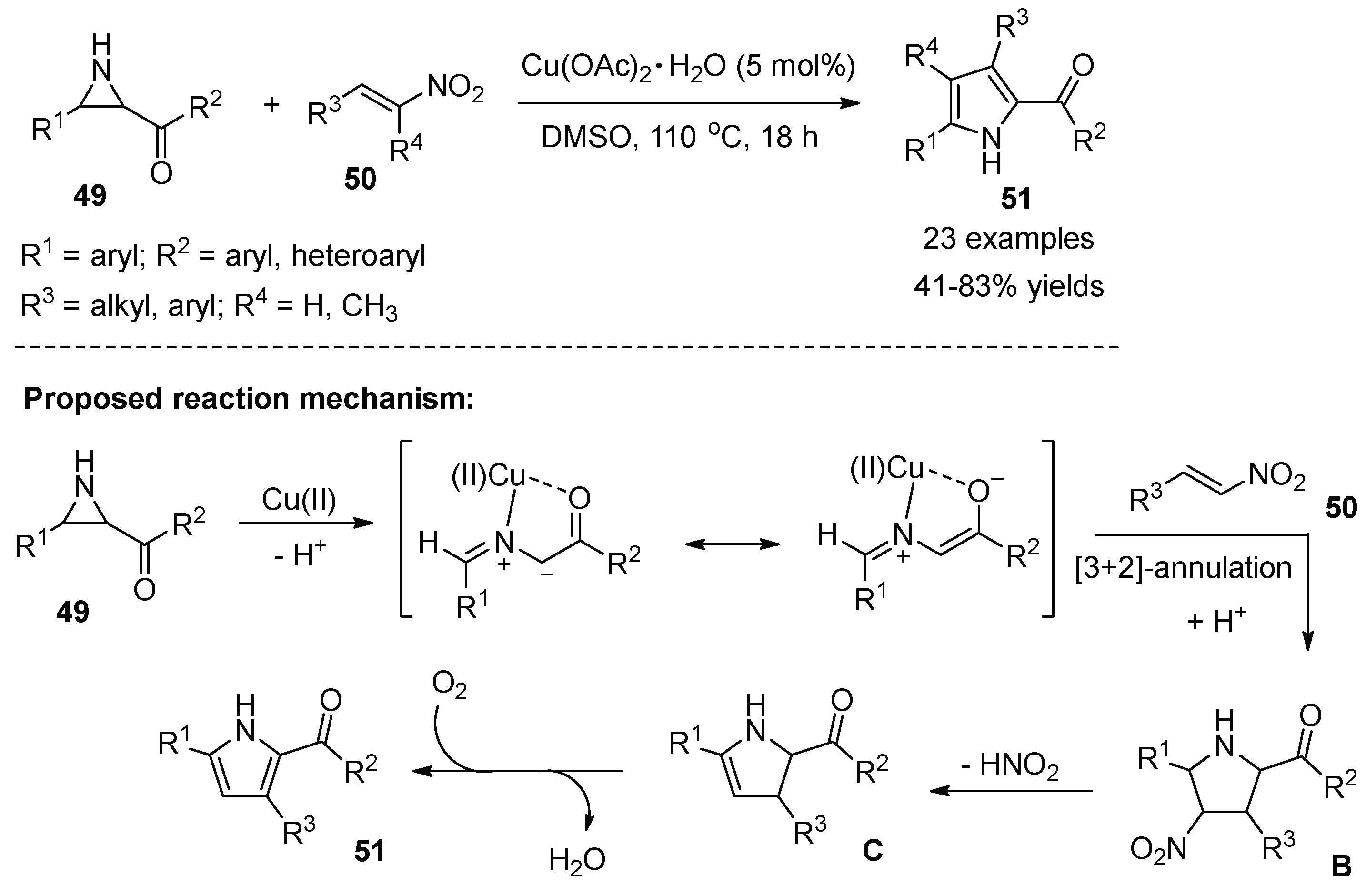
In 2014, Wang et al. developed an efficient approach to polysubstituted pyrroles 51 via copper acetate-catalyzed cascade reactions of aziridines 49 with β-nitroalkenes 50 under aerobic conditions (Scheme 21) [28]. The cascade process was proposed to involve a regioselective C–C bond cleavage of aziridines to give an azomethine ylide, which would undergo [3 + 2] cycloaddition with β-nitroalkenes. Different substituted β-nitroalkenes as well as different aziridines were used to prove the generality of this procedure.
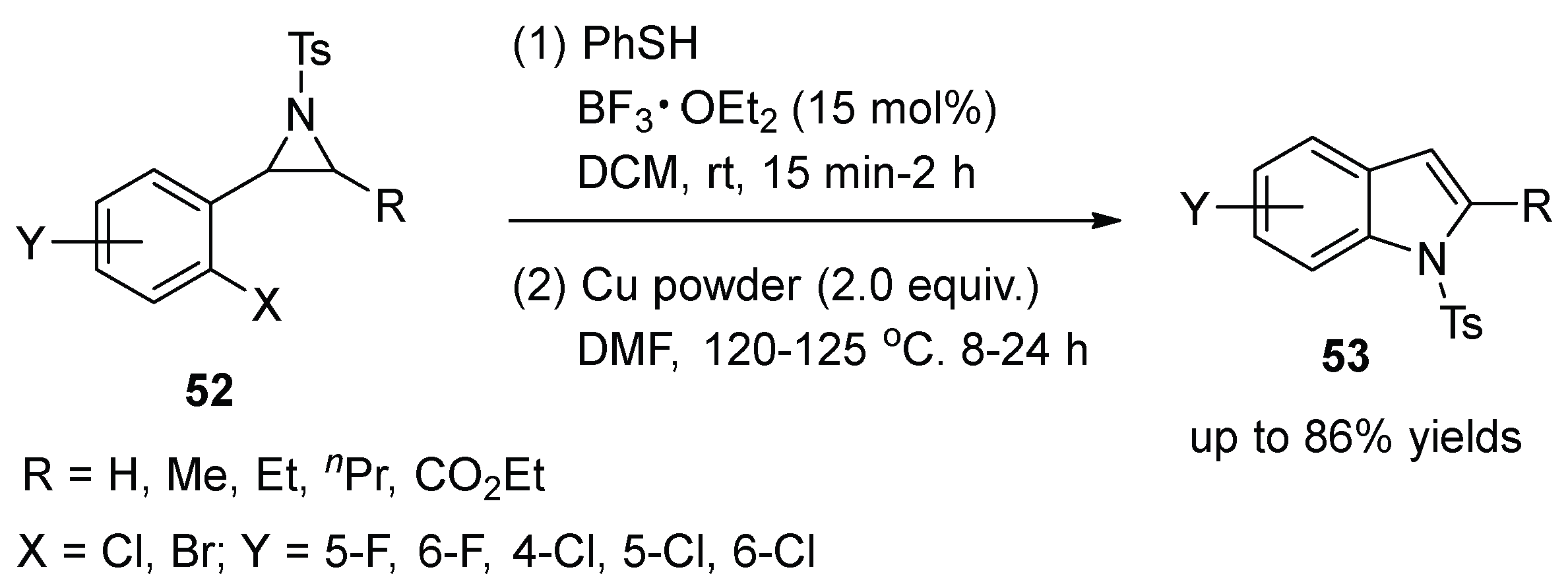
In 2015, Ghorai and coworkers developed a convenient method for the synthesis of 2-alkyl indoles 53 (Scheme 22) [29]. The reaction proceeded via regioselective ring-opening of 2-(2-haloaryl)-3-alkyl-N-tosylaziridines with thiophenol, followed by copper powder-mediated intramolecular C−N cyclization and subsequent aromatization by the elimination of thiophenol. The reactions were studied using several disubstituted aziridines (as a mixture of cis and trans isomers) and several monosubstituted aziridines reacting with thiophenol, followed by copper powder-mediated C−N cyclization/aromatization, which resulted the synthesis of the corresponding 2-alkyl indoles 53 in good yields.
4. Formation of Dihydropyrroles
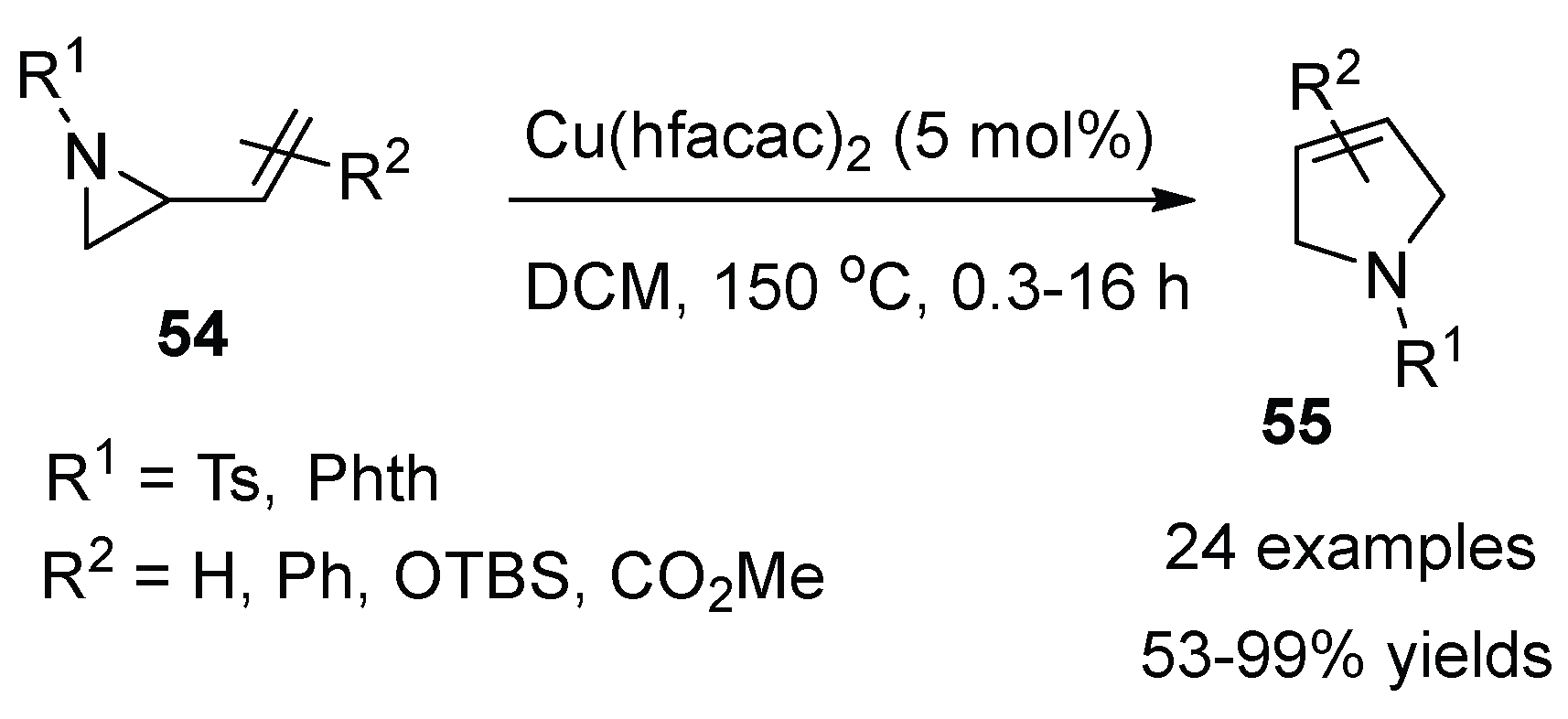
The dihydropyrrole unit serves as a precursor to numerous N-heterocycles of synthetic and biological interest and forms the functional core of several natural products and pharmaceutical agents [30]. Copper(II) catalysts, which are readily available in the market, were used by Njardarson and coworkers to demonstrate that vinyl aziridines 54 can be easily converted into 3-pyrrolines 55 (Scheme 23) [31]. A Lewis acid-catalyzed [1,3]-sigmatropic rearrangement was the key step in this transformation as revealed by mechanistic analysis. New catalysts were prepared on the basis of these mechanistic insights.
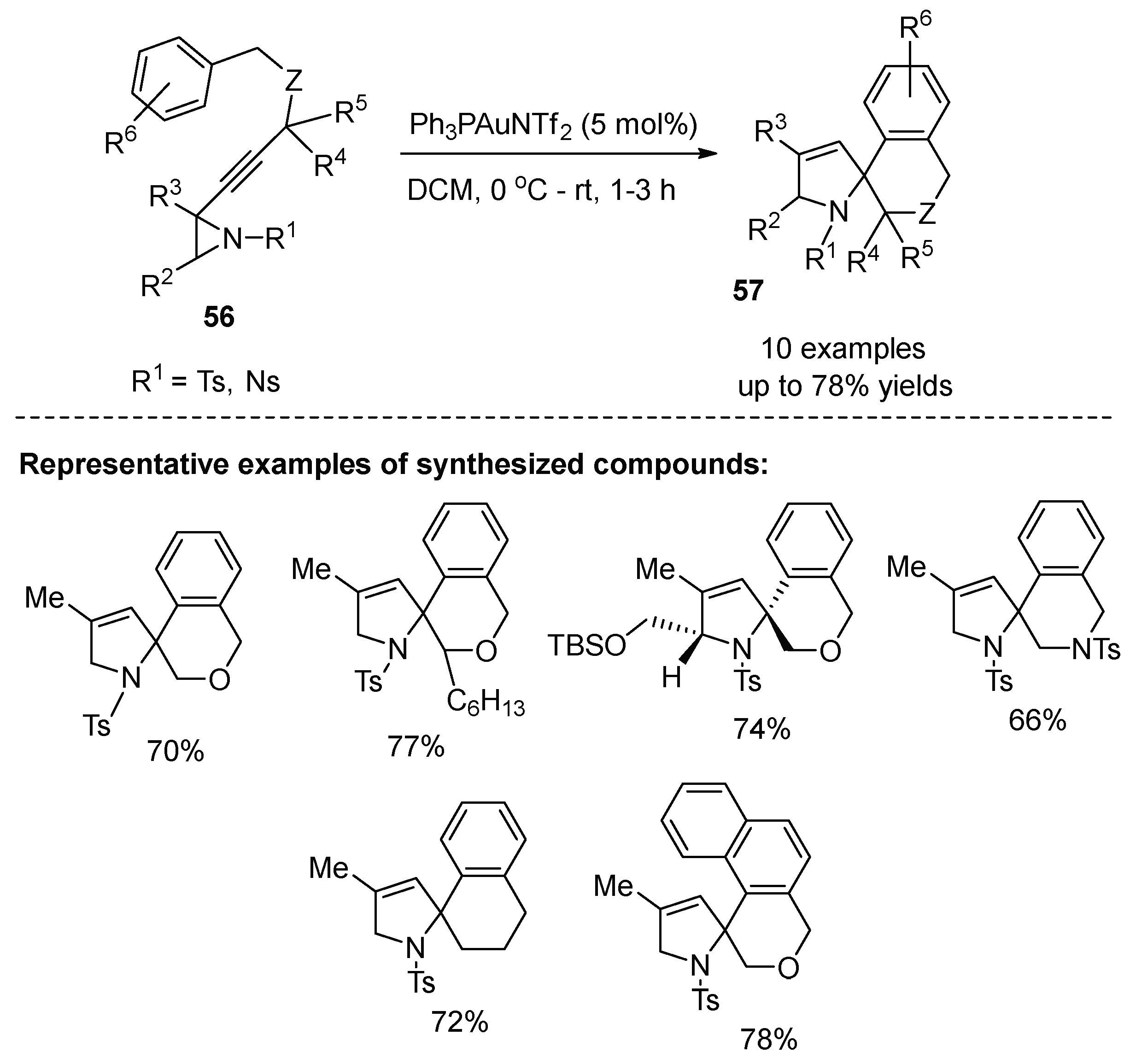
Gold catalysts were used to convert various 2-(aryloxyprop-1-ynyl)aziridines 56 to spiro[isochroman-4,2’-pyrrolines] 57 through cascade-type reactions (Scheme 24) [32]. The gold salt’s σ- and π-Lewis acid properties were used in the reaction for an intramolecular rearrangement of the Friedel–Crafts type reaction followed by the cyclization of an aminoallene intermediate.
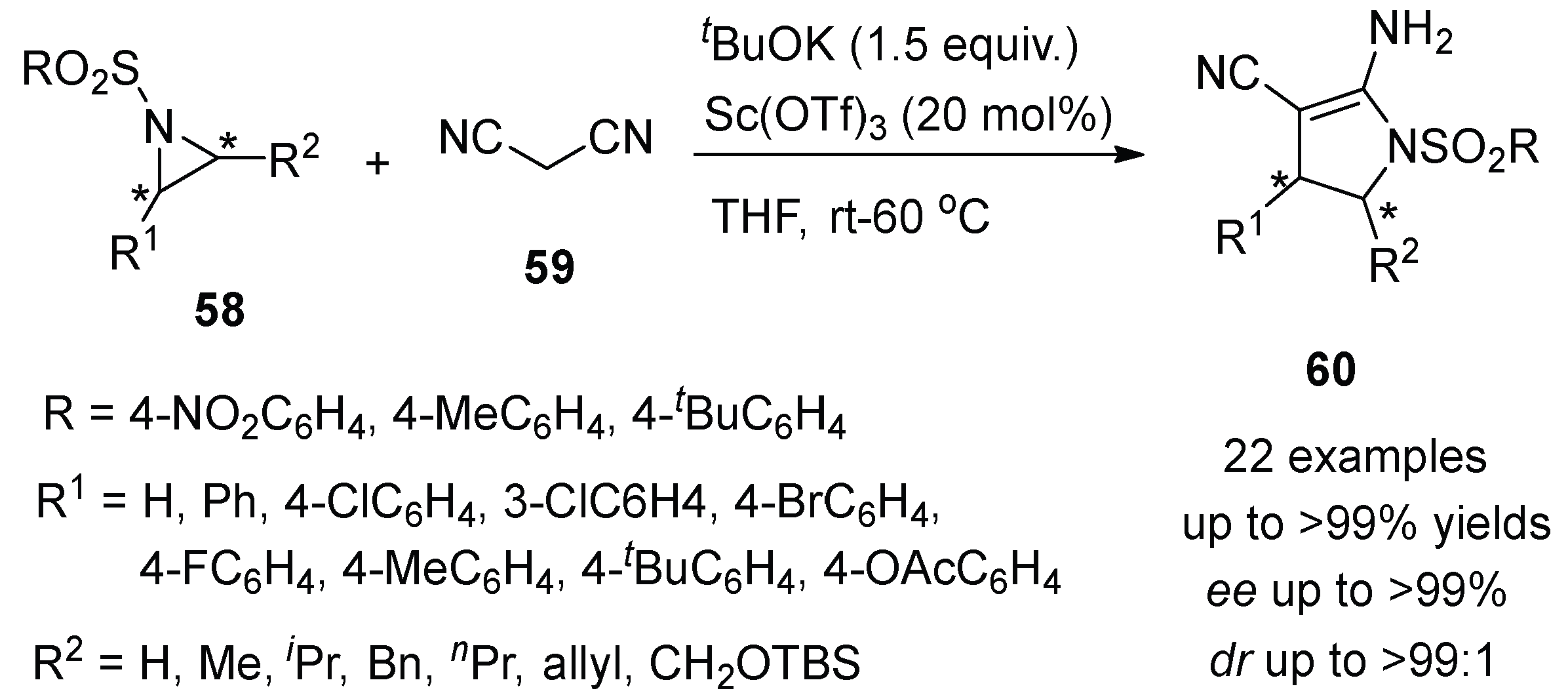
Ghorai and his colleagues devised a method using domino ring-opening cyclization of activated aziridines with malononitrile to produce highly functionalized racemic and non-racemic 4,5-dihydropyrroles 60 with excellent yields and stereoselectivity (Scheme 25) [33]. A wide range of substituted 4,5-dihydropyrroles in enantiomerically pure forms can be synthesized using the reaction. The formation of products was explained by an SN2-type pathway.
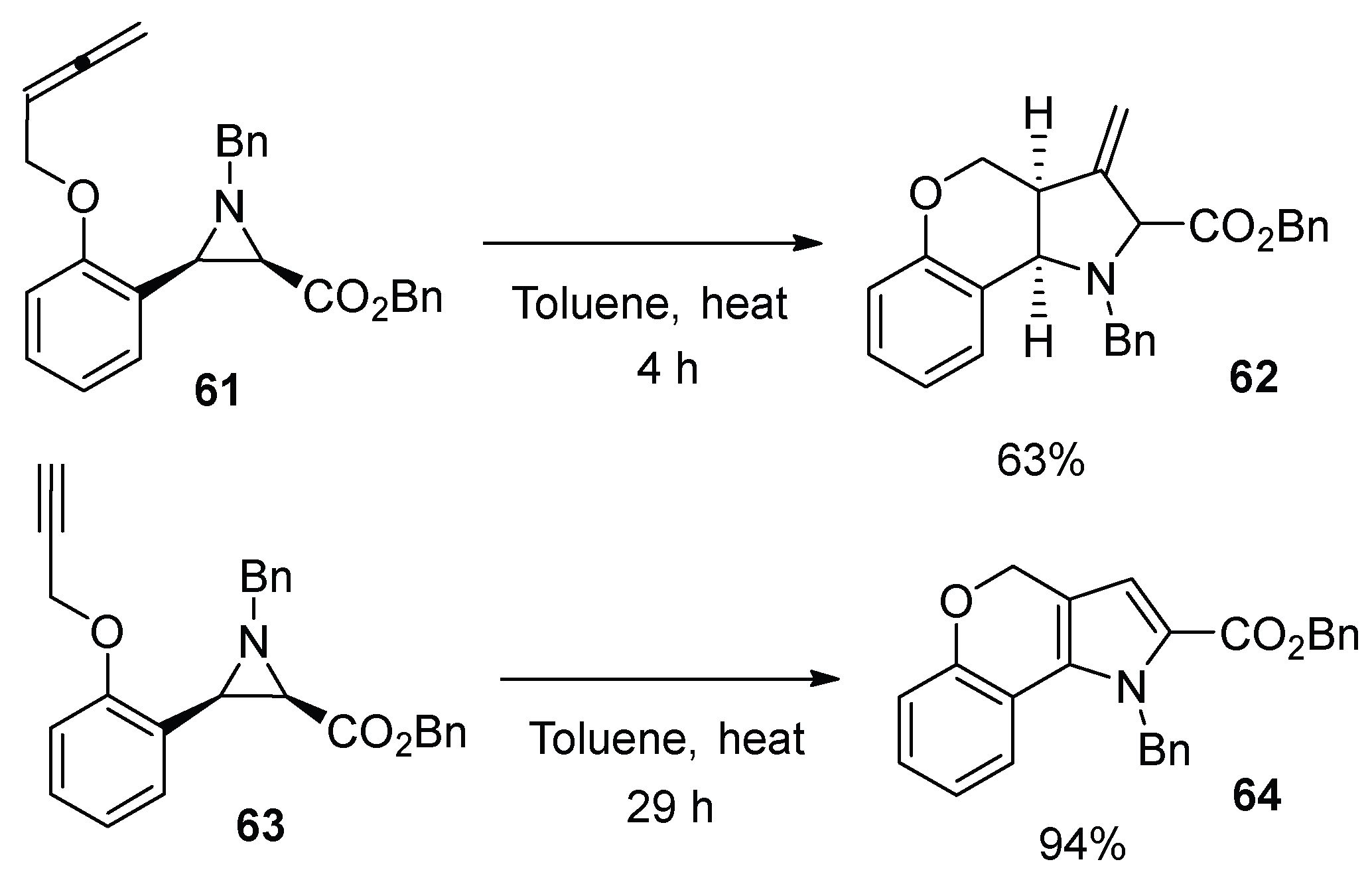
The thermal reactivity of salicylaldehyde-derived alkynes or allene-bearing aziridines was studied by Pinho e Melo and colleague [34]. A pericyclic ring-opening caused by the thermolysis of aziridines yielded the azomethine ylides. The pyrrole derivatives are produced by the interaction of the allene or alkyne moiety with the intermediate formed via an intramolecular [3+2]-cycloaddition. Scheme 26 depicts the two typical examples of the formation of dihydropyrrole 64 and pyrrolidine 62 from aziridines 61 and 63, respectively. It was found that compared to 2-benzoylaziridines, the yields of aziridine-2-carboxylates were higher. Additionally, it was observed that the carbon-carbon triple bond is a more activated dipolarophile than allene.
5. Formation of Pyrrolidines
Alkaloids derived from natural resources, including nicotine, epibatidine, and hygrine, contain the pyrrolidine motif [35]. Pyrrolidines are also of much importance as medicinal compounds. Pyrrolidine derivatives include active compounds like bepridil and procyclidine [36]. Thus, the construction of the pyrrolidine ring is of much interest.
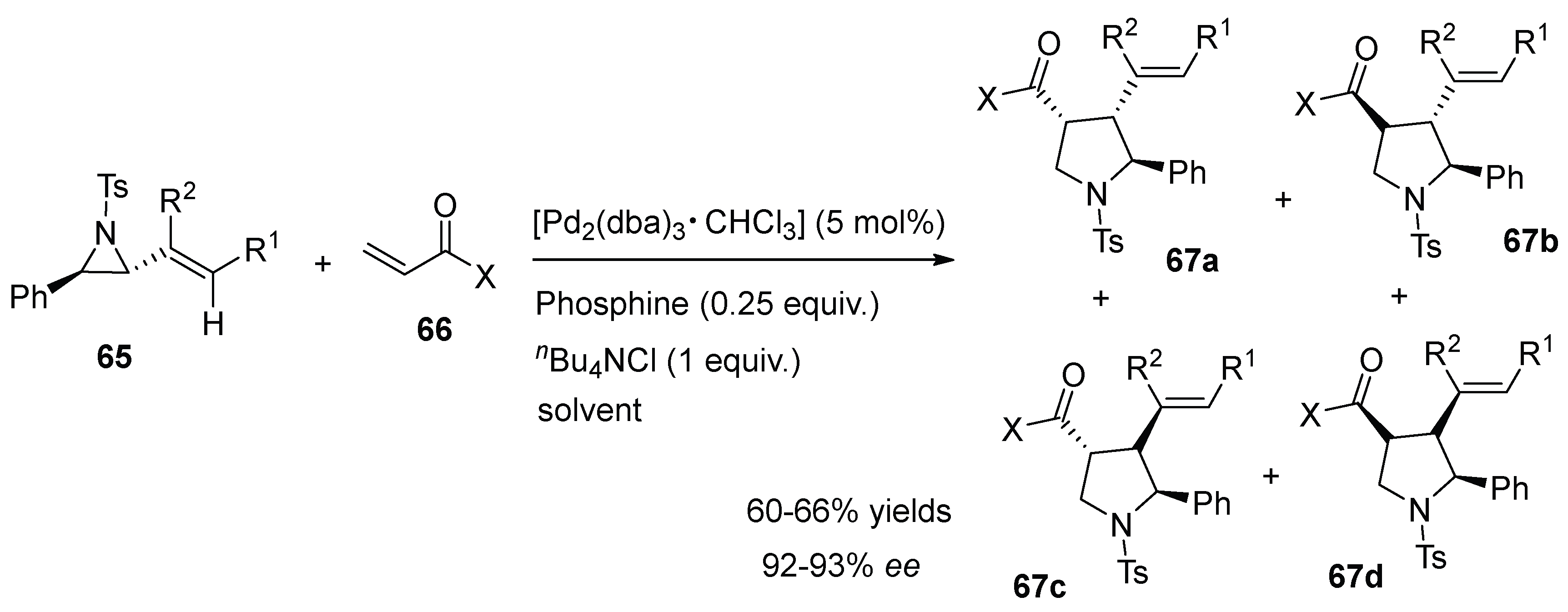
Trans-3-styryl-2-phenyl-N-tosylaziridines 65 react with methyl vinyl ketone (X = Me) or ethyl thioacrylate (X = SEt) 66 in the presence of a palladium catalyst, phosphine, and an additive to produce a diastereomeric mixture of pyrrolidines 67a-d in 60–66% yields with excellent enantioselectivity (ee 92-93%) (Scheme 27) [37]. Nonpolar solvents such as pentane, diethyl ether, or combinations of diethyl ether and pentane, as well as sterically hindered phosphines (i.e., (o-tol)3P, (2-furyl)3P and (4-F-Ph)3P), facilitated the reaction.
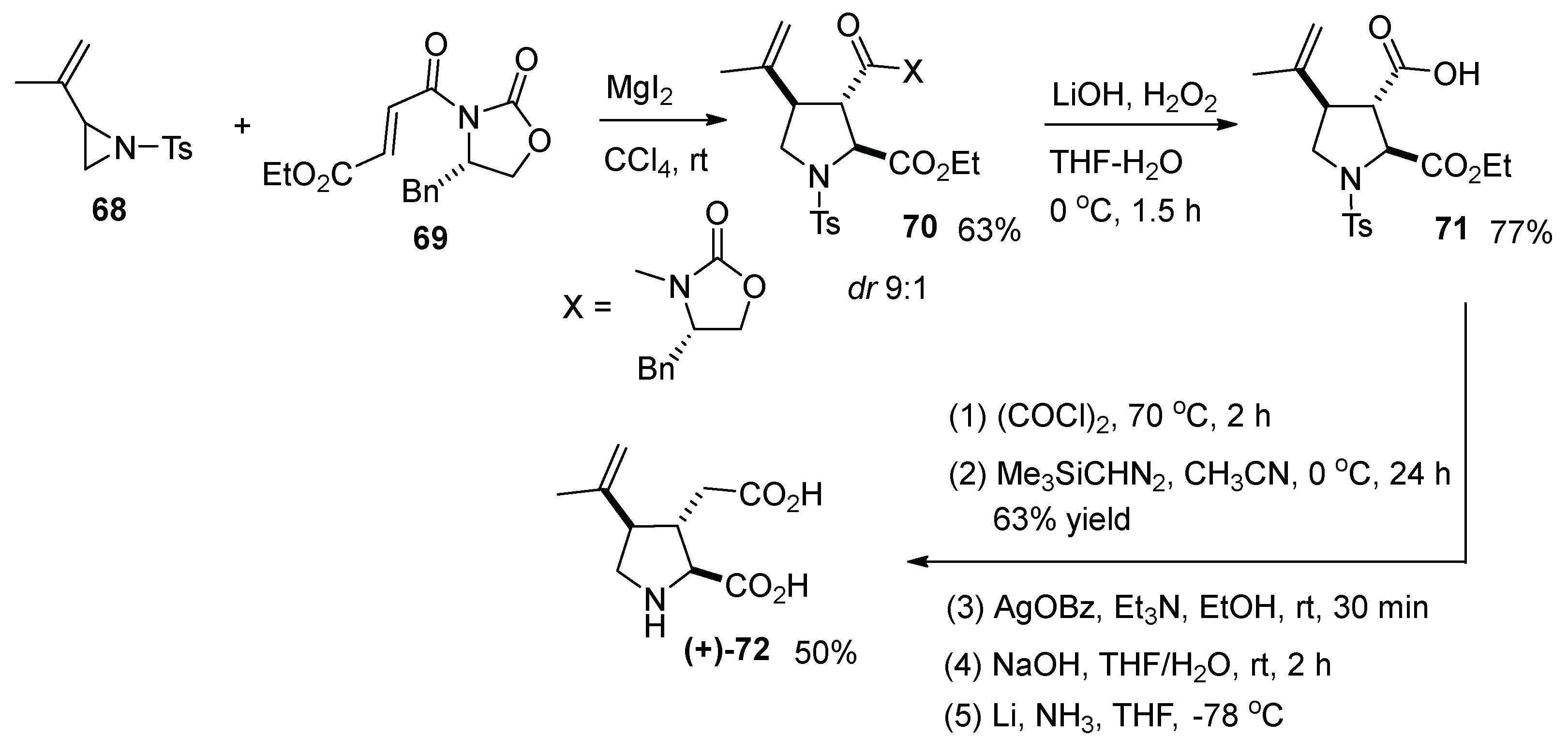
In continuation of this work, the same group reported that in the presence of MgI2, the reaction between vinylaziridine 68 and fumarate 69 produced trisubstituted pyrrolidine 70 (Scheme 28) [38]. In the synthesis of 2,3,4-trisubstituted pyrrolidine 70, the pyrrolidine facilitated the SN2-type ring-opening and concurrent cyclization with fumarate Michael acceptors. After the auxiliary was eliminated by basic hydrolysis, the acid 71 was treated with oxalyl chloride and trimethylsilyldiazomethane to produce a diazoketone. This intermediate was sonicated in the presence of silver benzoate, which facilitated the Arndt-Eistert homologation that produced the diester. (+)-Allo-kainic acid 72 was produced by saponifying the ethyl esters and removing the tosyl group.
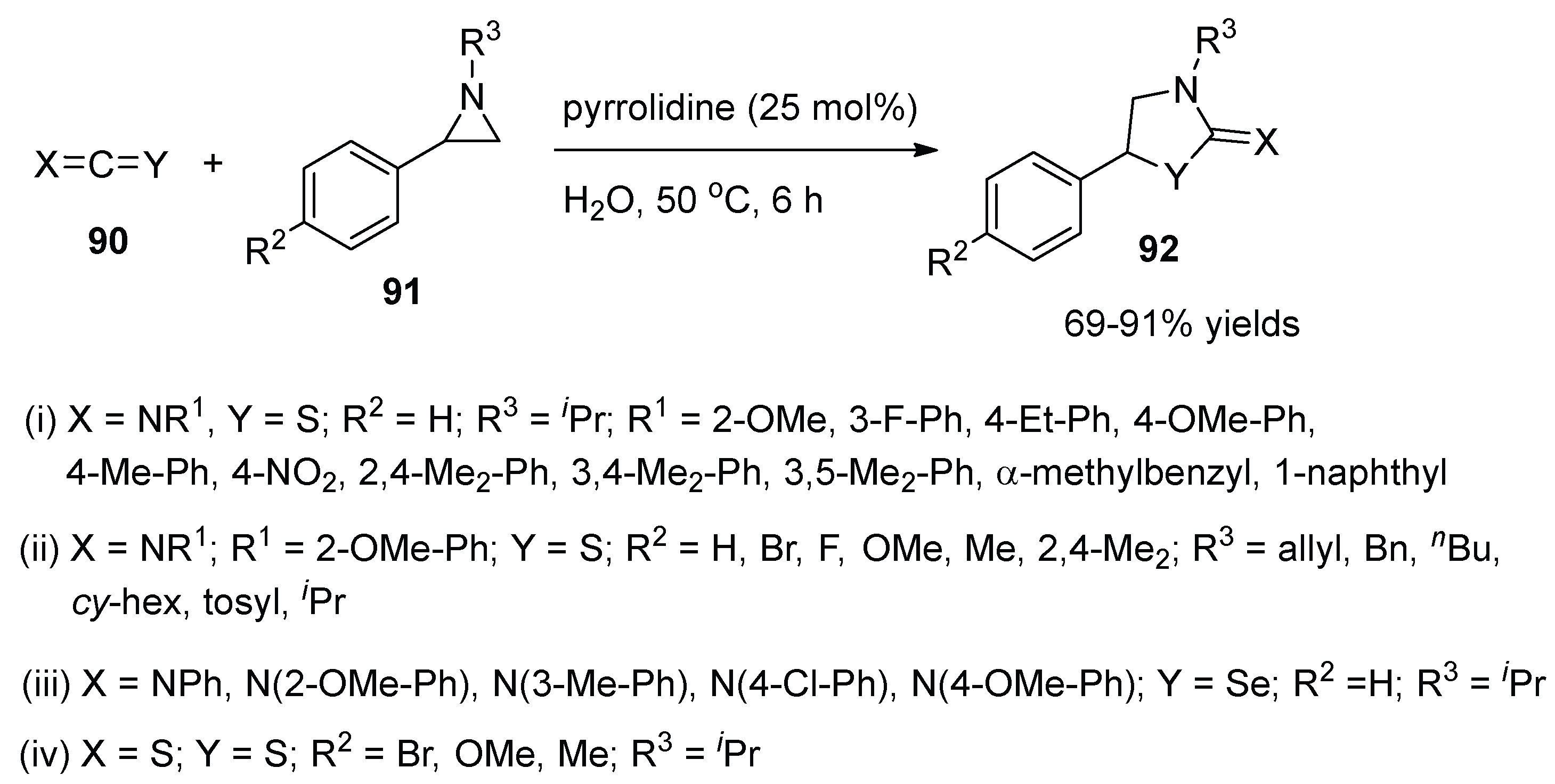
In a highly effective [3+2]-cycloaddition reaction with various heterocumulenes, Sengoden and Punniyamurthy used 2-arylaziridines with free NH- or N-alkyl and N-aryl groups to form 2-iminopyrrolidines, 2-iminooxazolidines, 2-iminothiazolidines, etc. in very good yields in presence of an iron catalyst (Fe(NO3)2·9H2O) in water [39].
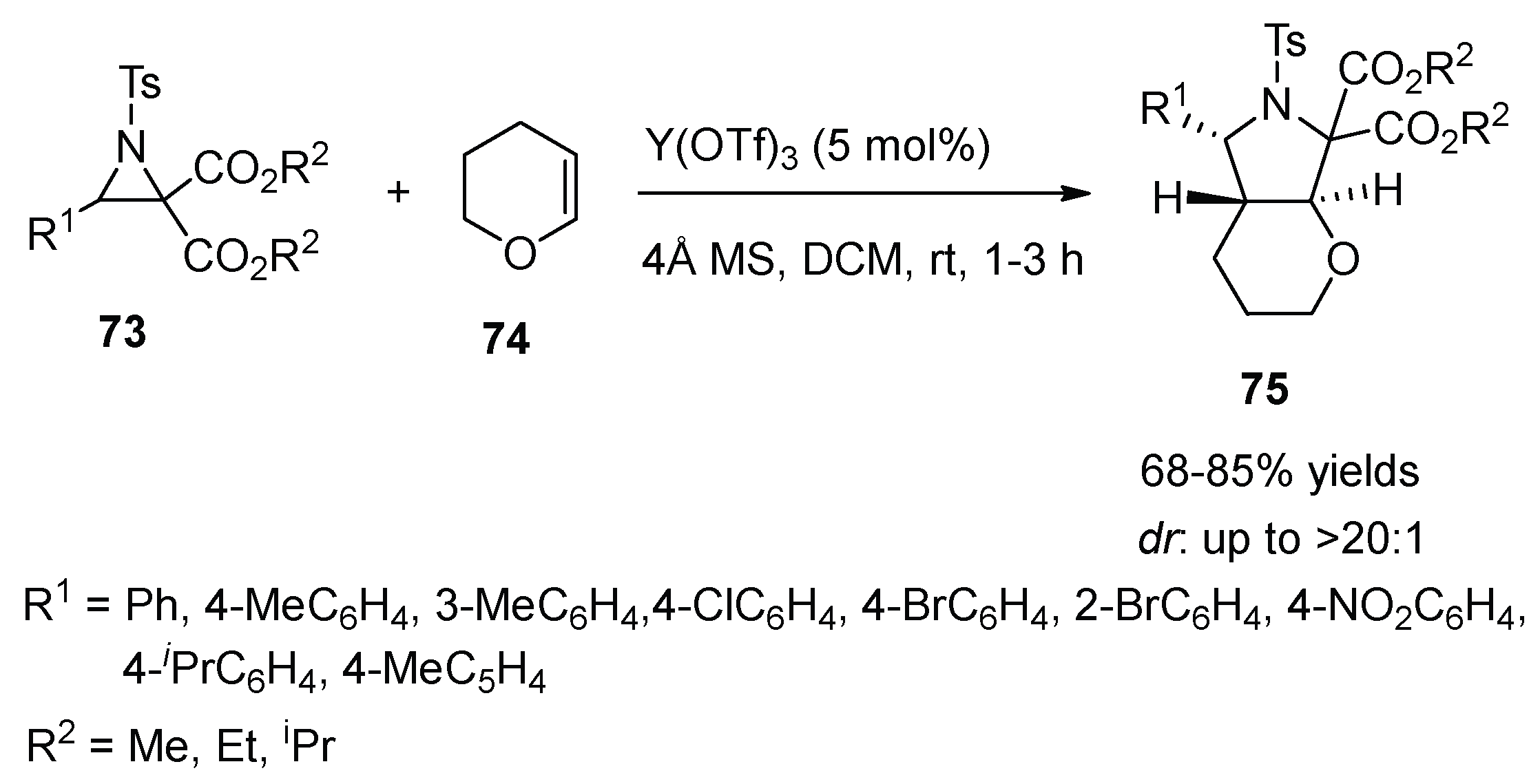
Lewis acid Y(OTf)3-catalyzed ring-expansion of N-tosyl aziridine dicarboxylates 73 with electron-rich olefin 3,4-dihydro-2H-pyran 74 was reported by Li and colleagues to produce functionalized pyrrolidines 75 in good yields with moderate to excellent diastereoselectivities (Scheme 29) [40]. Moderate enantioselectivity (ee 57-59%) was achieved in the reactions using the commercially available chiral ligand Pybox.
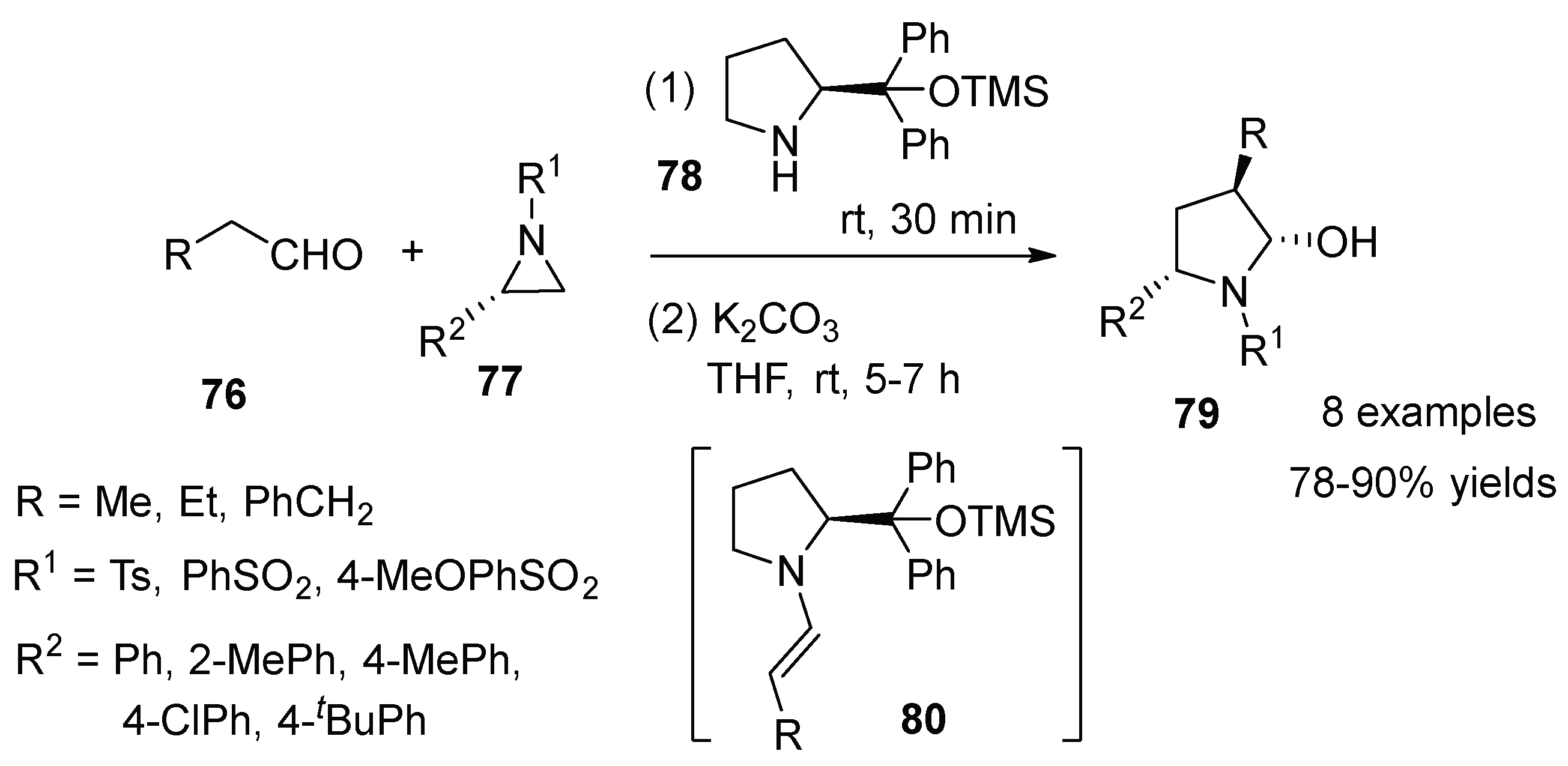
According to Rai and Yadav, enamines 80, produced in situ by the reaction of aldehydes 76 and a pyrrolidine derivative 78 and 2-arylaziridines 77, furnish pyrrolidines 79 as a single diastereomer in very high yields (Scheme 30) [41]. The primary factor causing the formation of a single diastereomer in aziridines was the presence of a chiral carbon.
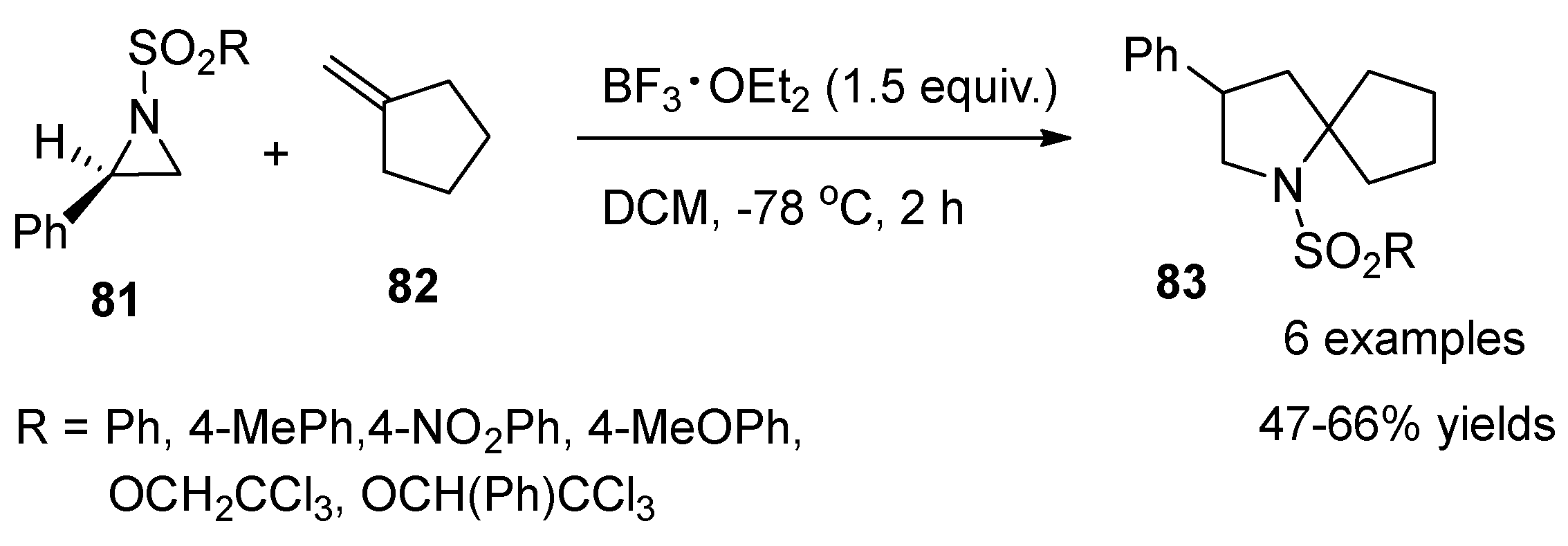
In order to create the spiro-fused pyrrolidine ring, Dauban and colleagues described the Lewis acid-catalyzed ring-opening and cycloaddition of N-sulfonyl aziridines with methylenecycloalkanes like methylenecyclobutane, methylenecyclopentane, and methylenecyclohexane. For instance, pyrrolidines 83 were produced when N-arylsulfonyl aziridines 81 and methylenecyclopentane 82 are subjected to reaction (Scheme 31) [42].
6. Formation of 2-Pyrrolidinones
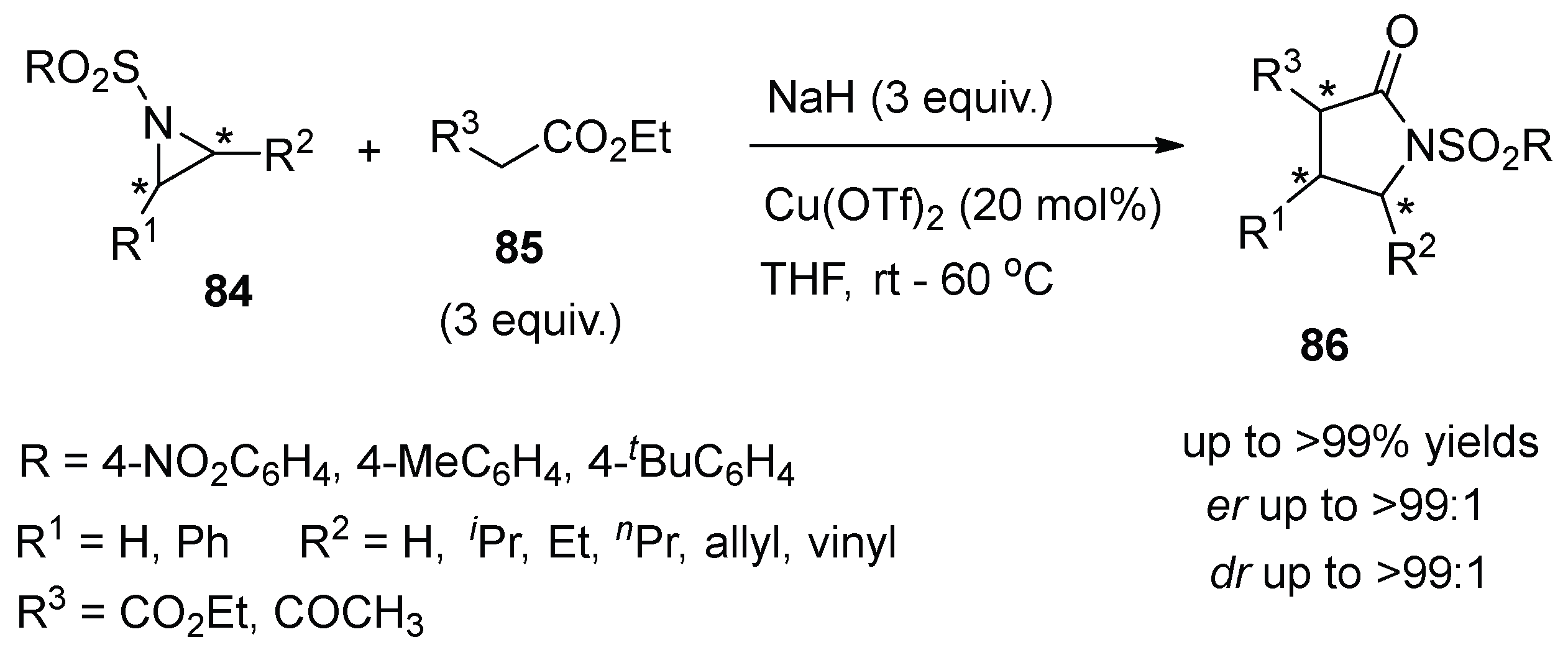
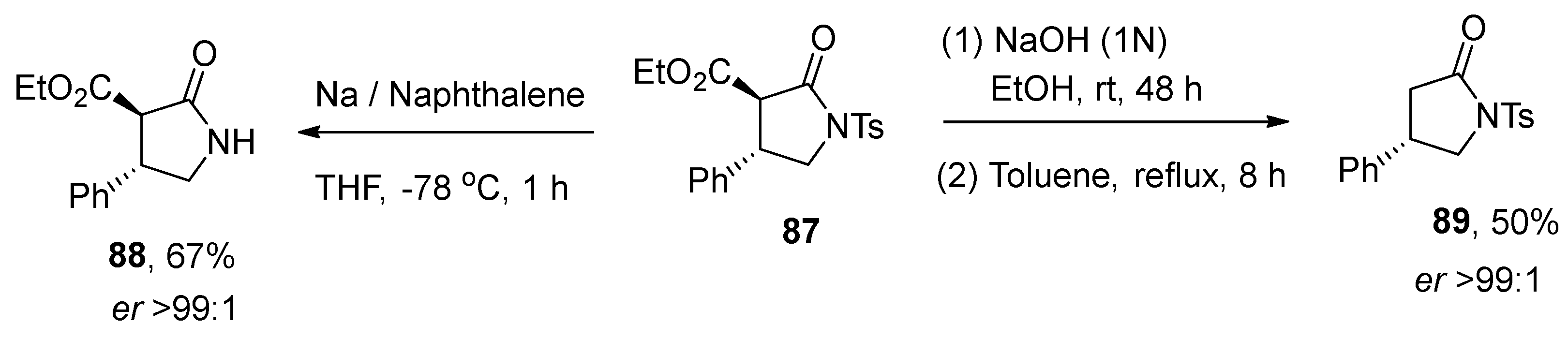
Numerous secondary metabolites contain the 2-pyrrolidinones or γ-lactam ring, which is a pharmacophore in numerous biologically significant natural and synthetic compounds [43]. Additionally, it has been employed as a building block in the synthesis of several natural products. In 2010, Ghorai and coworker devised a straightforward method for producing highly functionalized chiral γ-lactams 86 through Lewis acid-catalyzed SN2-type ring opening of aziridines 84 with enolates 85 followed by intramolecular cyclization (Scheme 32) [44]. This technique enables the construction of a variety of γ-lactams in excellent yield and enantioselectivity using a broad range of aziridines and active methylene carbon nucleophiles. The synthesis of pyrrolidinone-3-carboxylate 88 and N-tosylpyrrolidinone derivatives 89 by desulfonating and decarboxylating pyrrolidinone 87, respectively, have demonstrated the usefulness of this protocol (Scheme 33).
Punniyamurthy’s group developed an effective and straightforward organocatalytic protocol for the synthesis of five-membered heterocycles in general, involving the [3+2]-cycloaddition reaction of isothiocyanates, isoselenocyanates, and carbon disulfide with aziridines under mild conditions (Scheme 34) [45]. Using commercial pyrrolidine as a catalyst and water as a solvent, this protocol offers a possible pathway for the high-yield synthesis of five-membered heterocycles, including pyrrolidinones. A urea type intermediate is involved in this reaction. Similar aziridine-heterocumulene reactions on water with iron(III) catalysis were also reported by the same group [39].
7. Formation of Azoles
Thiazole moieties are widely present in various naturally occurring compounds, including thiamine (vitamin B1), which is a key nutrient for humans [46]. And thiazole moiety is one of the key fragments of various synthetic drugs and bioactive compounds [47]. Imidazolines are of much importance for their wide applications in various fields of chemistry, such as natural product chemistry, pharmaceutical chemistry, organic synthesis, coordination chemistry and homogeneous catalysis. These are useful intermediates for the synthesis of molecules having pharmacological activities such as anti-inflammatory [48], antidiabetic [49] and anticancer [50]. The topic of aziridine ring expansion to afford azoles will be presented.
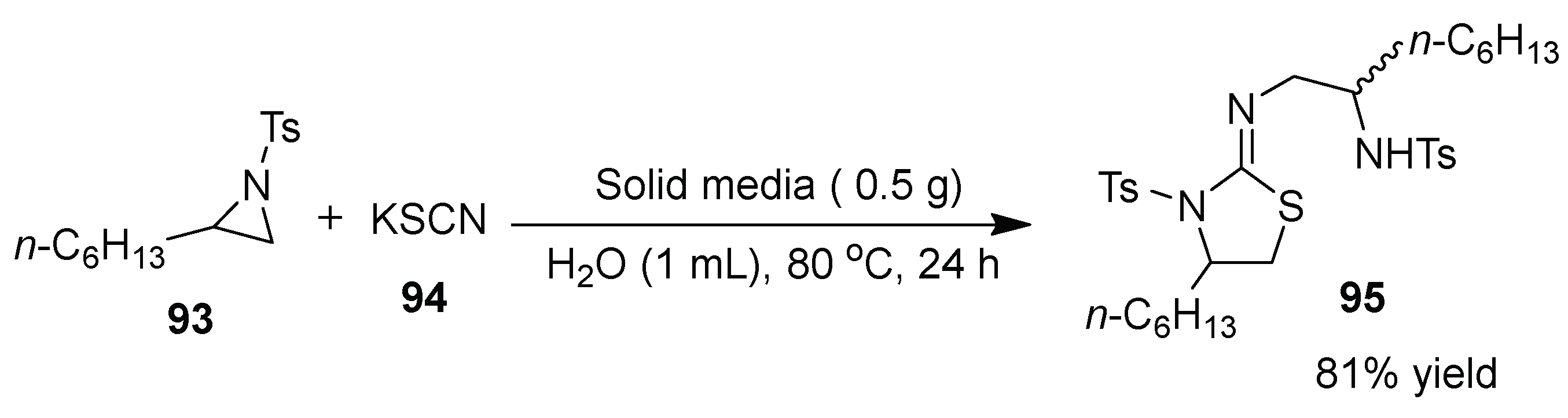
In 2006, Minakata and Komatsu group reported “solid media – water” system for the reactions of aziridines and potassium thiocyanate to furnish the thiazolidine derivative 95 in 81% yield (Scheme 35) [51].
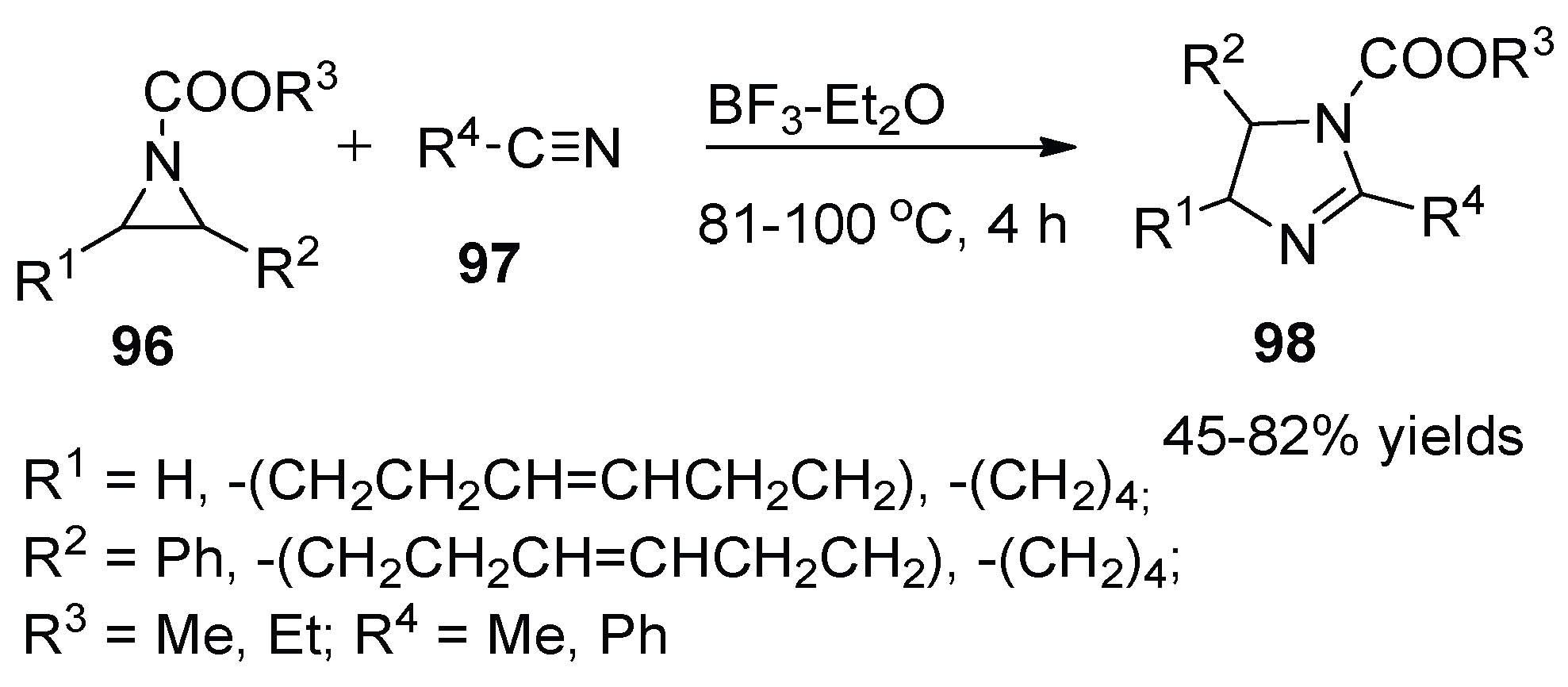
In 1973, Nozaki et al. reported the BF3-mediated reaction of acetonitrile or benzonitrile (97) with N-alkoxycarbonyl aziridines (96) providing the corresponding l-alkoxycarbonyl-2-imidazolines (98) [52]. The nitrile-addition possibly proceeds via SN2 type C-N bond cleavage and C-N bond formation (Scheme 36).
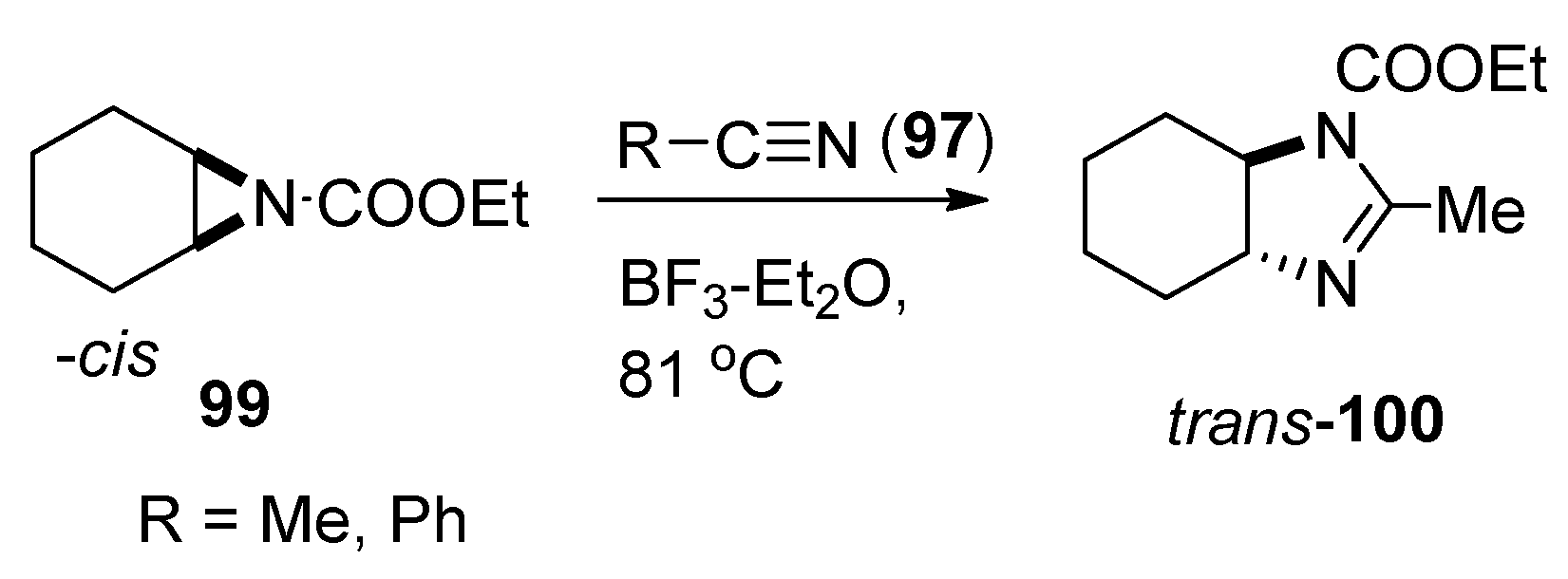
Interestingly, the reaction between cis-1,2-dialkyl-substituted aziridines (99) and aliphatic or aromatic nitriles furnished specifically trans-imidazoline (100) [51]. Both acetonitrile and benzonitrile were used in this reaction at 81 °C and 100 °C, respectively. On the basis of this result, an SN2 mechanism was proposed (Scheme 37).
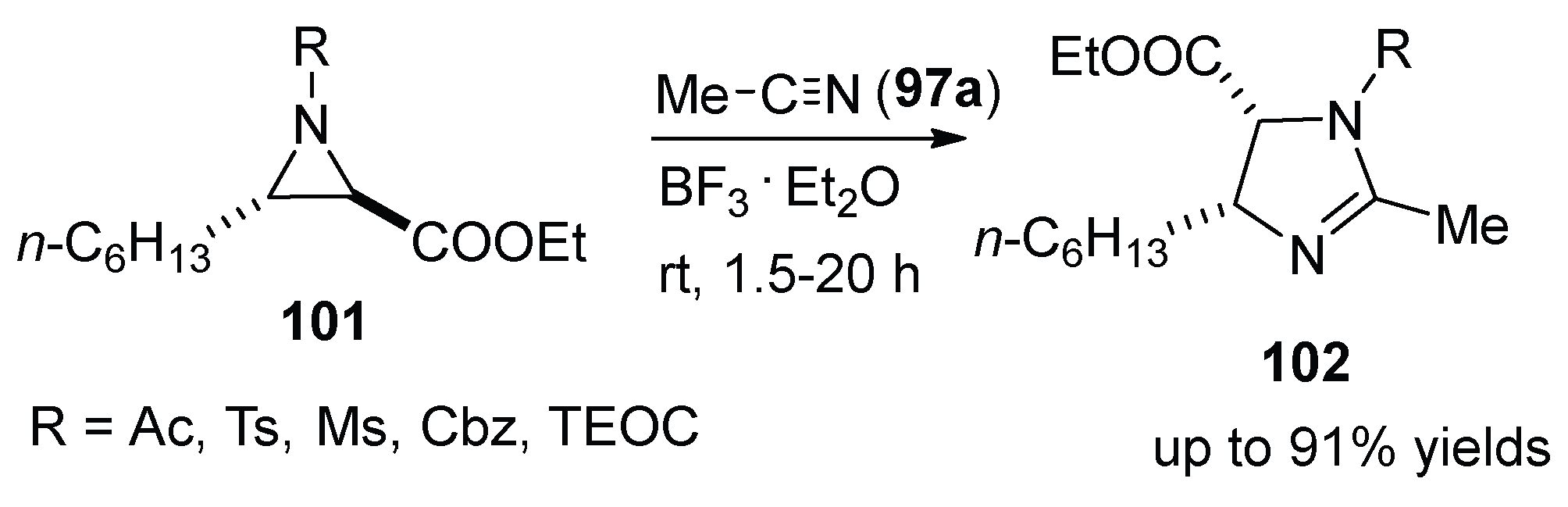
In 1992, Zwanenburg et al. expanded the previous method to more substrates such as N-protected aziridines derived from ethyl-2-nonenoate [53]. In this work, the reaction took place at room temperature and the cis products (102) were obtained up to 91% yield as single diastereomers (Scheme 38).
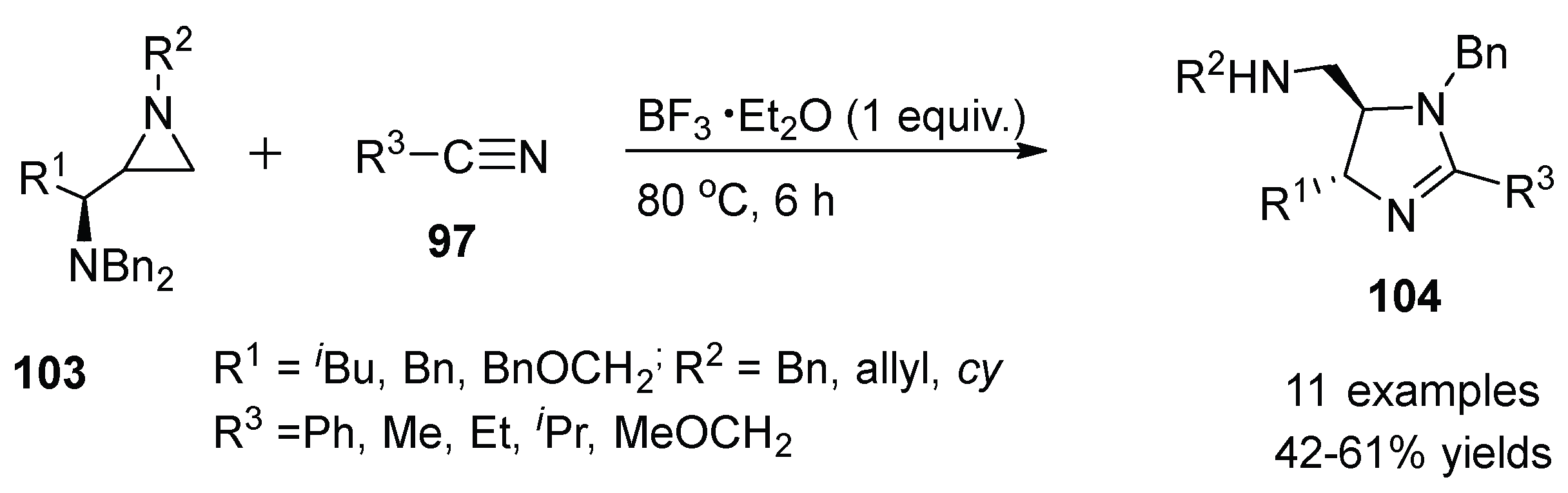
In 2004, Concellon et al. investigated the chiral induction in the reaction of enantiopure aziridines (103) with a dibenzylamino group on the α-carbon and different nitriles (97) using the catalyst BF3.OEt2 (Scheme 39) [54]. The N-benzyl-4,5-di-substituted imidazolines (104) were obtained in enantiopure form instead of the predicted 5-substituted product, with moderate yields (42-61%). In the proposed mechanism, the aziridine ring is opened by the vicinal dibenzylamino group using the catalyst BF3.OEt2 and a new aziridinium species is formed. The newly formed ring is transformed to imidazoline through nucleophilic attack of nitrile followed by ring closure, in which a benzyl group is removed by nitrile as N-benzylamide.
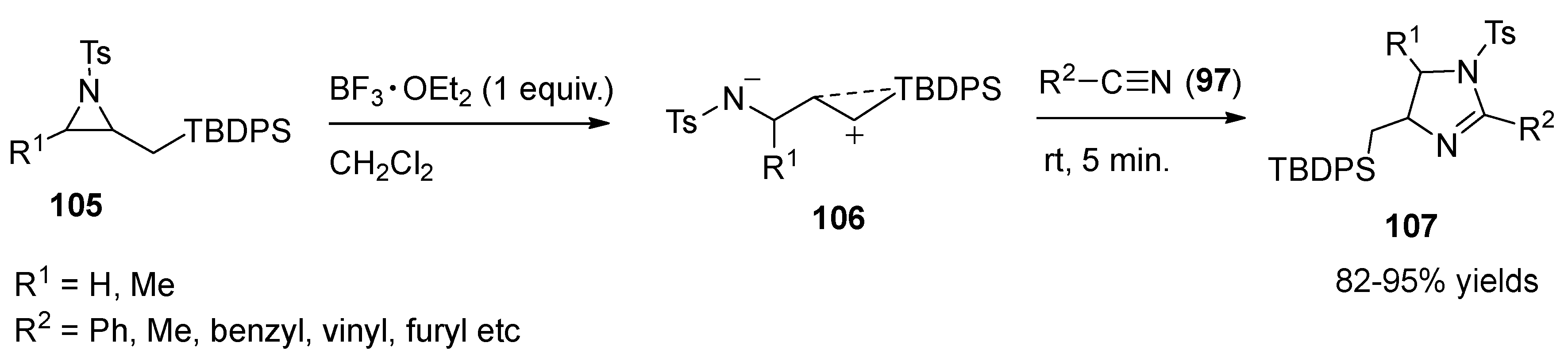
Yadav and co-workers used tert-butyldiphenylsilylmethyl-substituted (TBDPS-substituted) aziridines (105) in formal [3+2] cycloaddition with nitriles in the presence of BF3·OEt2 to give imidazolines (107) in good to excellent yields (82-95%) (Scheme 40) [55]. The presence of silicon stabilizes the α-carbocation and allows the formation of the stable zwitterionic intermediates, thus providing an alternative to the typical aryl stabilizing groups. With an increase in the reaction temperature from –78 °C to 25 °C, the cis cycloadduct became the major product.
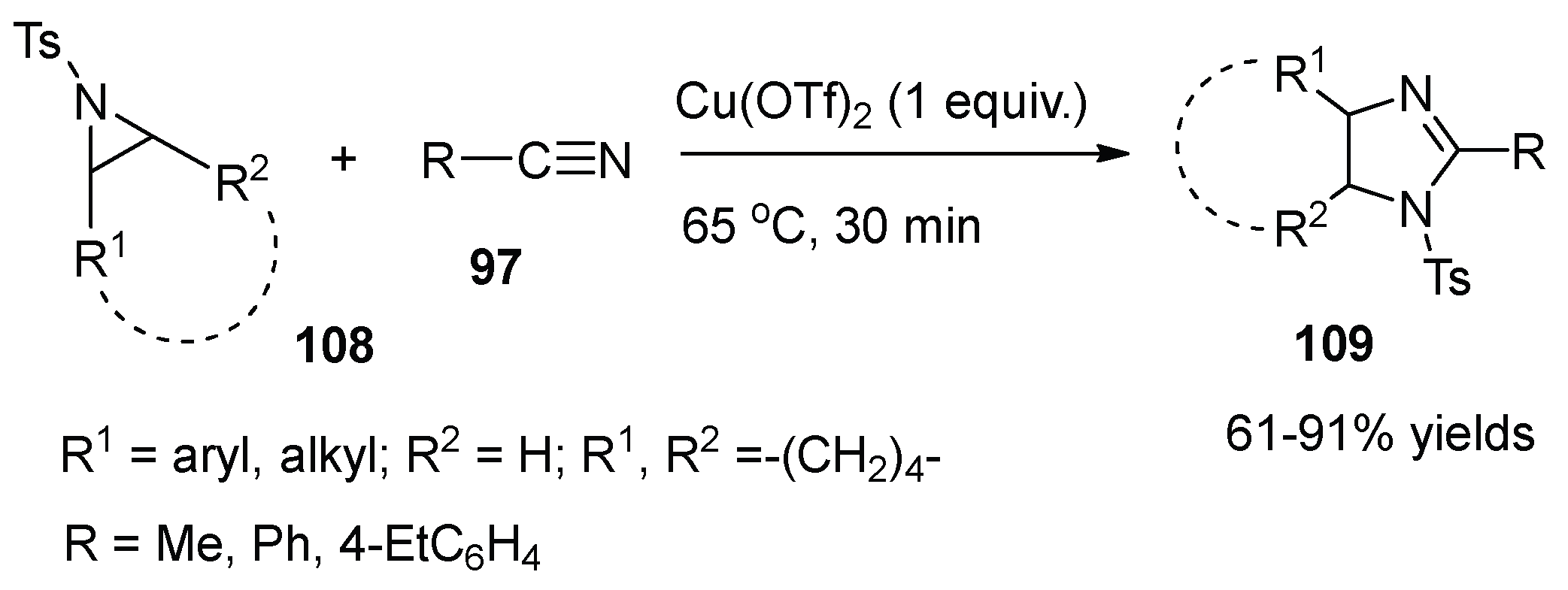
Ghorai and co-workers discovered Cu(OTf)2 mediated [3+2] cycloaddition reactions of various alkyl or aryl substituted N-tosylaziridines (108) with nitriles for the syntheses of substituted imidazolines (109) with up to 91% yields (Scheme 41) [56]. A mechanism for the cycloaddition was proposed to rationalize the formation of a non-racemic imidazoline from optically pure aziridine.
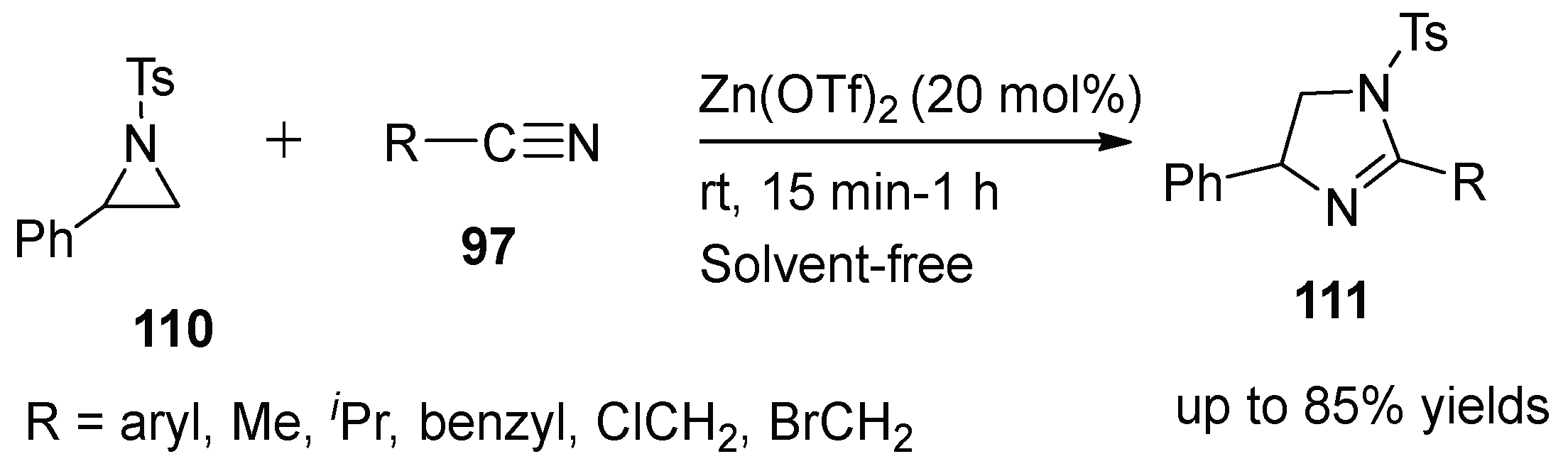
Singh and his group demonstrated that solvent-free reactions of this type can also be achieved with Zn(OTf)2 catalyst, and the corresponding imidazolines (111) were obtained in up to 85% yields (Scheme 42) [57].
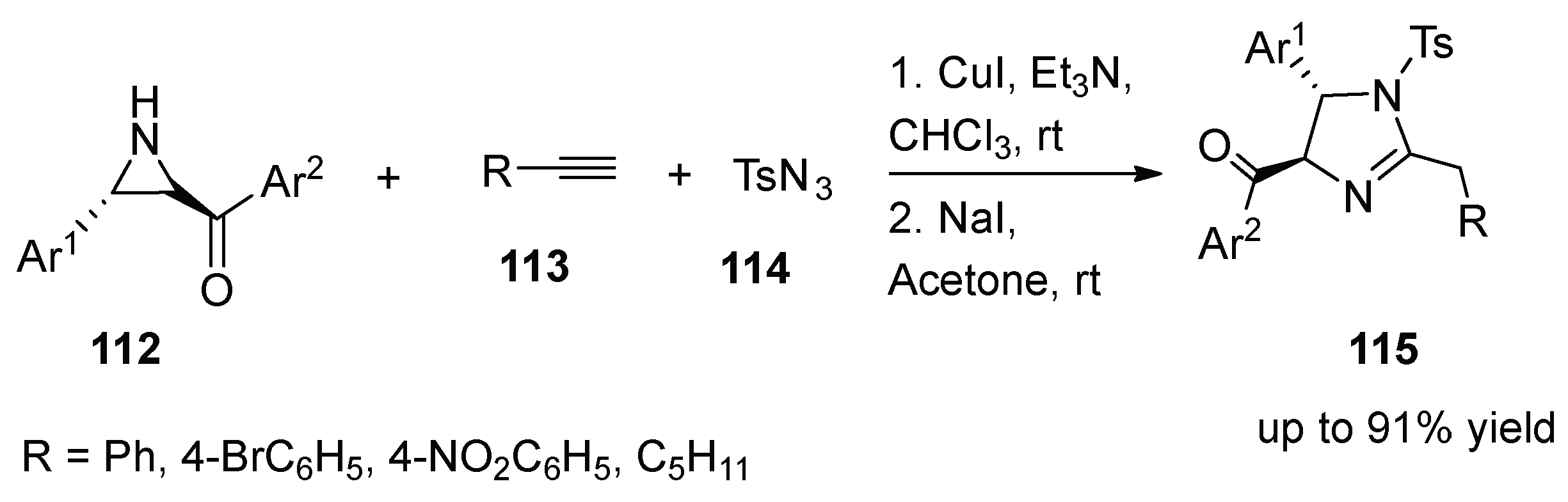
Liang et al. reported different reaction pattern of aziridines in case of acetylenes (Scheme 43) [58]. Thus, the reaction of trans-N-unsubstituted aziridines (112) derived from chalcones, terminal alkynes (113) and tosyl azide (114), produced the N-tosylamidine (115) with trans configuration by the catalysis of CuI in moderate to good yields (up to 91%).
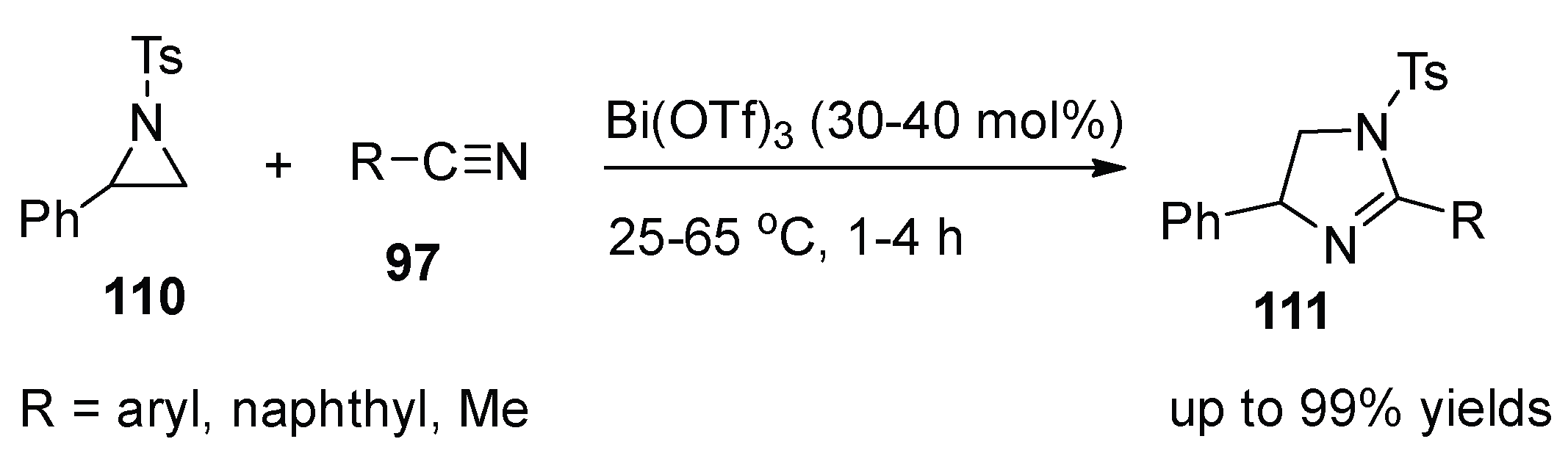
Wei and co-workers used Bi(OTf)3 in formal [3+2] cycloaddition between substituted N-tosylaziridines (110) and a variety of nitriles (97) to afford the corresponding imidazolines (111) in up to 99% yields (Scheme 44) [59].
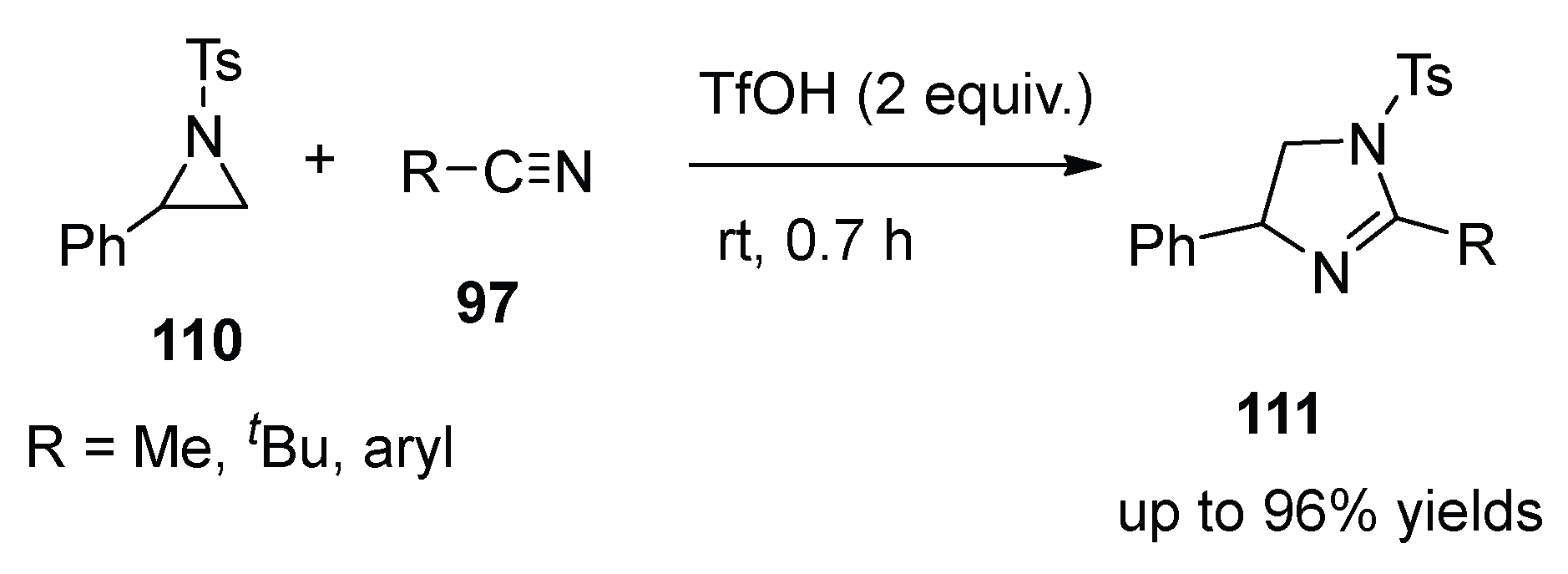
On the other hand, Li group used triflic acid for [3+2] cycloaddition between substituted N-tosylaziridines (110) and a variety of nitriles (97) to afford the corresponding imidazolines (111) via Ritter reaction in excellent yields (up to 96%) (Scheme 45) [60]. Among the nitriles, pivalonitrile is proven to be better than acetonitrile. The reaction was performed at room temperature.
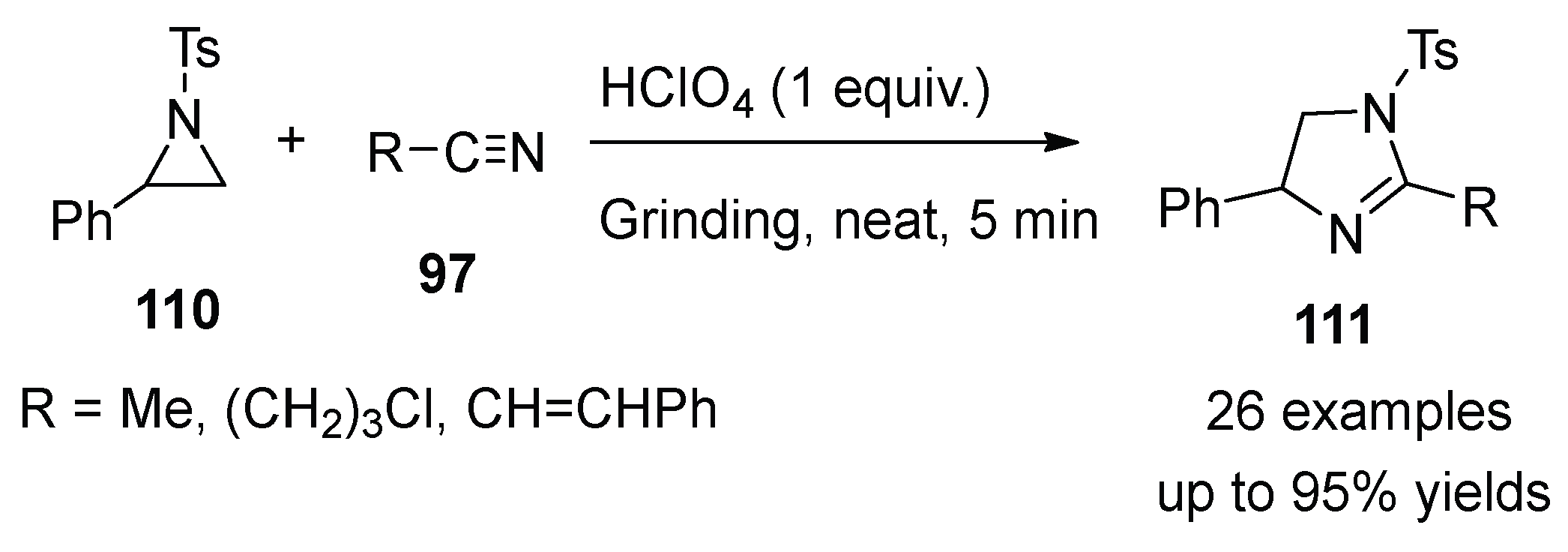
Recently, Zyryanov et al. also developed a simple, solvent-free, energy efficient, clean and high yielding procedure for the synthesis of 2-imidazoline derivatives [61]. 2-Imidazolines were produced in good yields by solvent-free solid-state co-grinding of N-tosylaziridines and nitriles with perchloric acid as a catalyst (Scheme 46). This protocol is also applicable to a gram-scale synthesis.
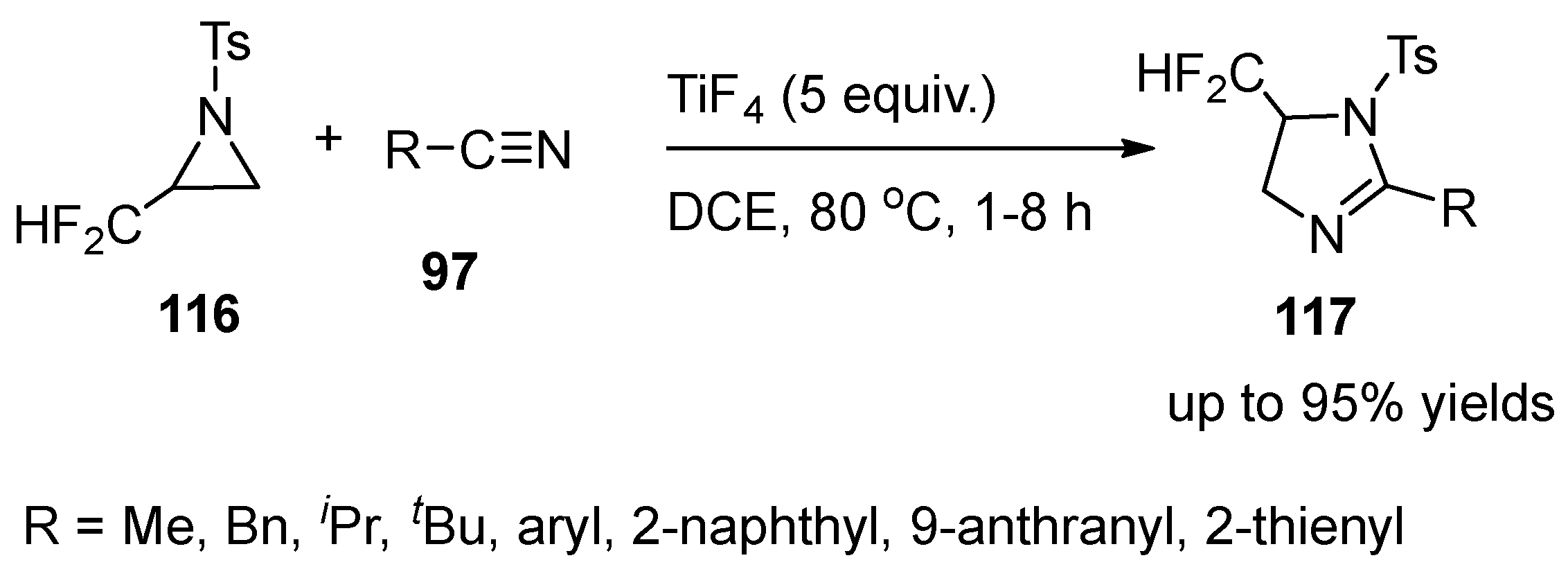
In 2016, Hanamoto et al. developed a titanium(IV) fluoride (TiF4) mediated reaction of 2-(difluoromethyl)-N-tosylaziridine (116) with nitriles (97) to synthesize difluoromethylated 2-imidazolines (117) in good to excellent yields (up to 95%) (Scheme 46) [62]. Both alkyl- and aryl-substituted nitriles underwent reaction smoothly (Scheme 1.66).
8. Formation of Pyridines and Azepines
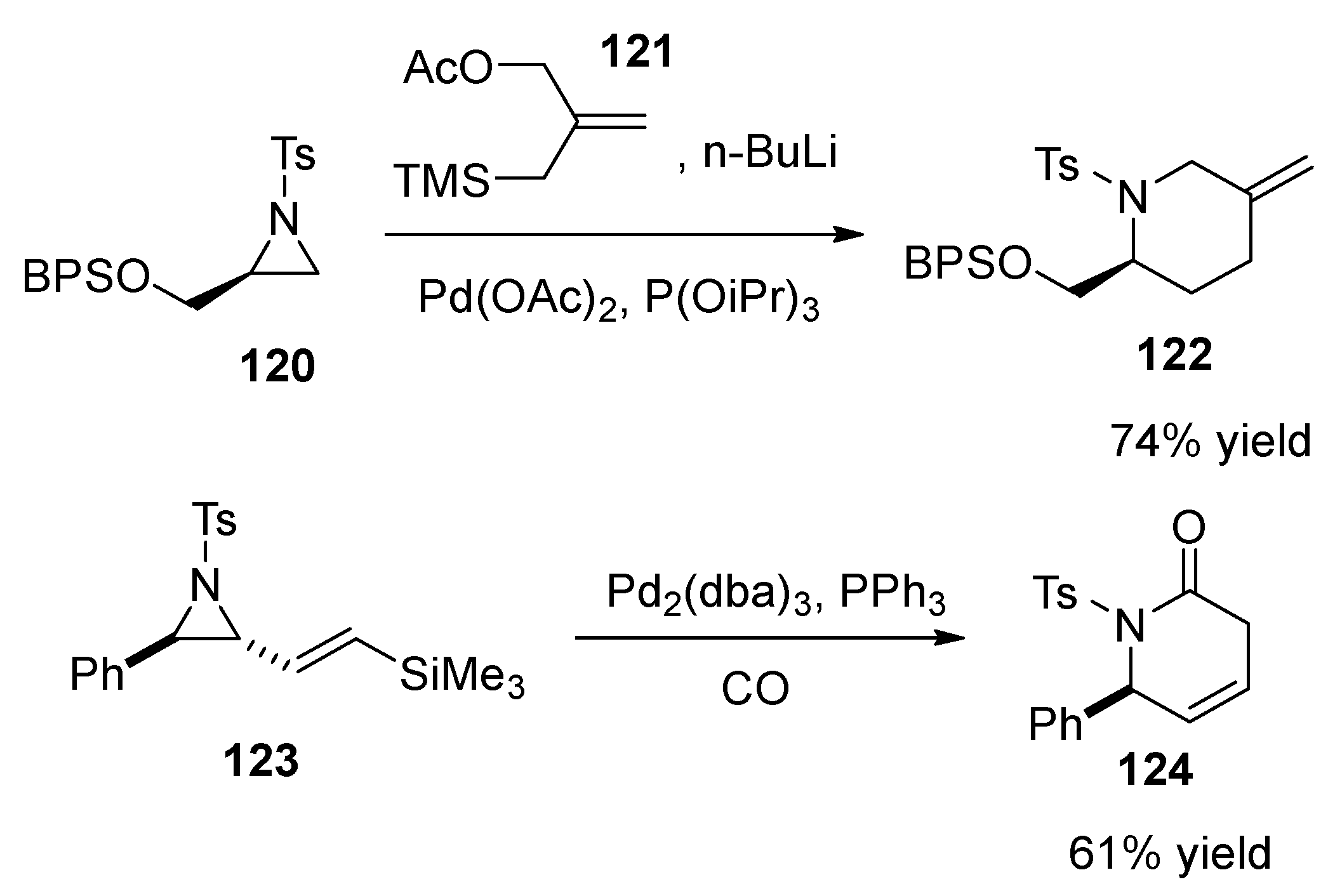
The [3+3] annelation of aziridines affording 6-member ring is very rare, and, so far, few examples are reported. Harrity et al. reported Pd-catalyzed [3 + 3] annelation between N-Ts-aziridine and Trost’s conjunctive allylsilane reagent providing enantiomerically pure piperidine (122), a key precursor for the stereoselective synthesis of enantiopure indolizidinone. In addition, Pd catalyzed CO insertion reaction was found to furnish chiral pyridone (124) (Scheme 48) [64].
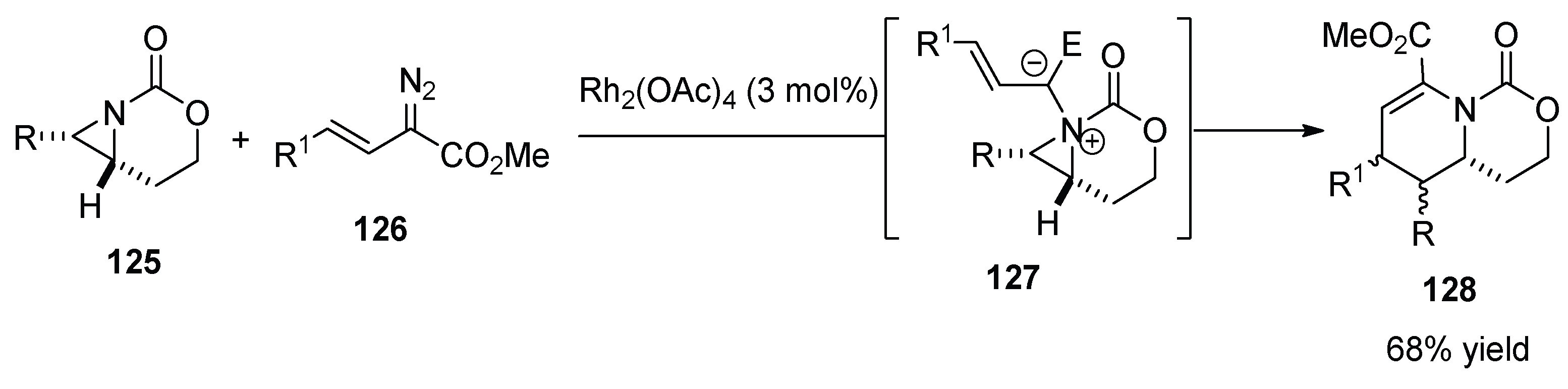
Eshon and co-authors reported the Rh(II)-catalyzed [3+3] stereoselective annelation between oxazine-annelated aziridines (125) and in situ formed vinyl carbenes (127) to produce pyrido [1,2-c][1,3]oxazines (128), a privileged motif in bioactive compounds, in up to 91% yield and 19:1 dr (Scheme 49) [65].
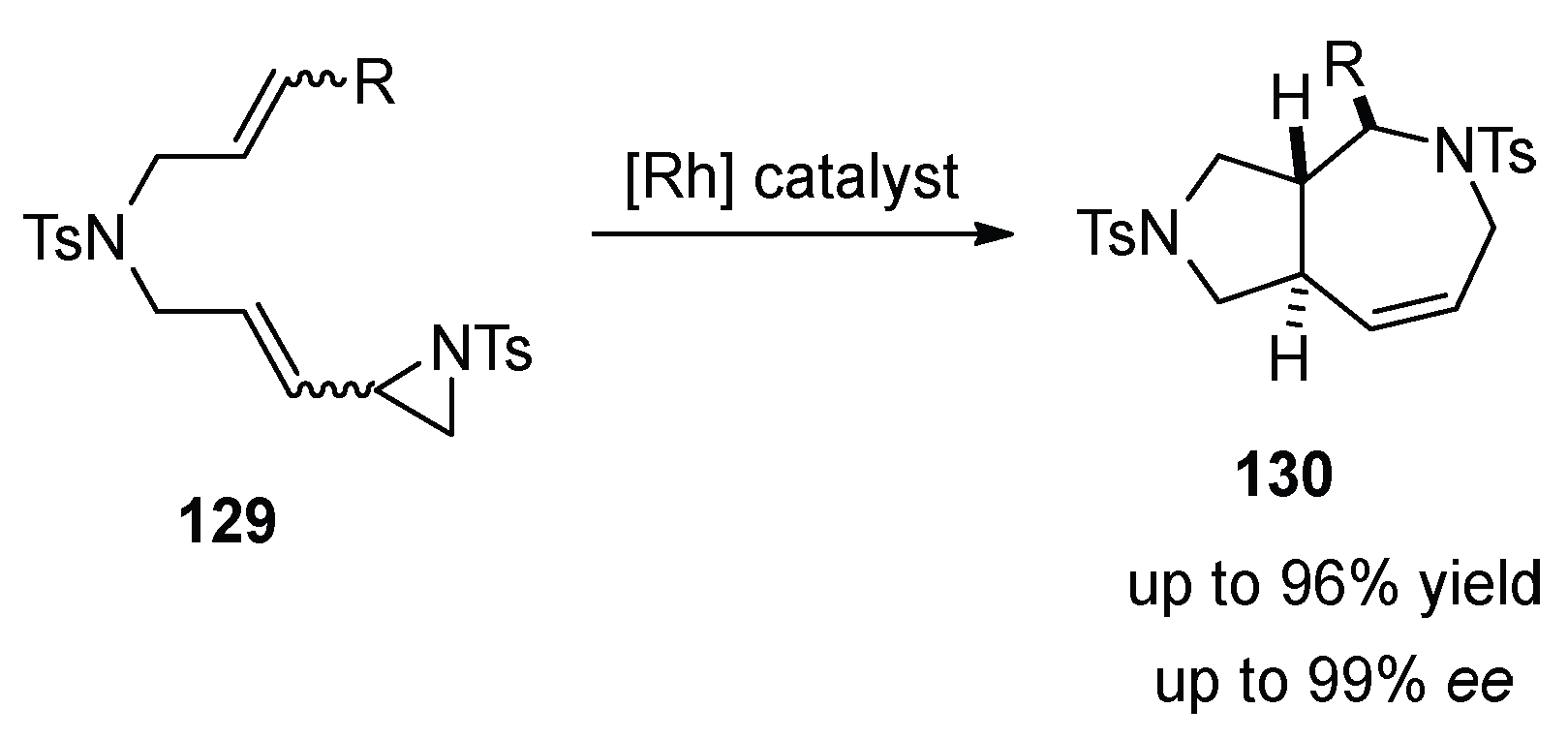
Only one example of formation of azepine ring from aziridines was found. Zhang et al. reported a rhodium-catalyzed intramolecular hetero-[5+2] cycloaddition reaction of vinyl aziridines and alkenes to furnish a series of unique substituted fused bicyclic azepines (130) bearing multiple stereogenic centers (Scheme 50) [66]. The target compounds were obtained in up to 96% yield and up to 99% ee. As suggested, the E/Z geometry of the C-C bonds in the starting vinyl aziridine-alkenes influences the cis/trans stereochemistry of the cycloadducts.
Scheme 51.
Rhodium-catalyzed synthesis of substituted fused bicyclic azepines by the intramolecular hetero-[5+2] cycloaddition reaction of vinyl aziridines and alkenes.
Scheme 51.
Rhodium-catalyzed synthesis of substituted fused bicyclic azepines by the intramolecular hetero-[5+2] cycloaddition reaction of vinyl aziridines and alkenes.
9. Formation of Oxazolidines
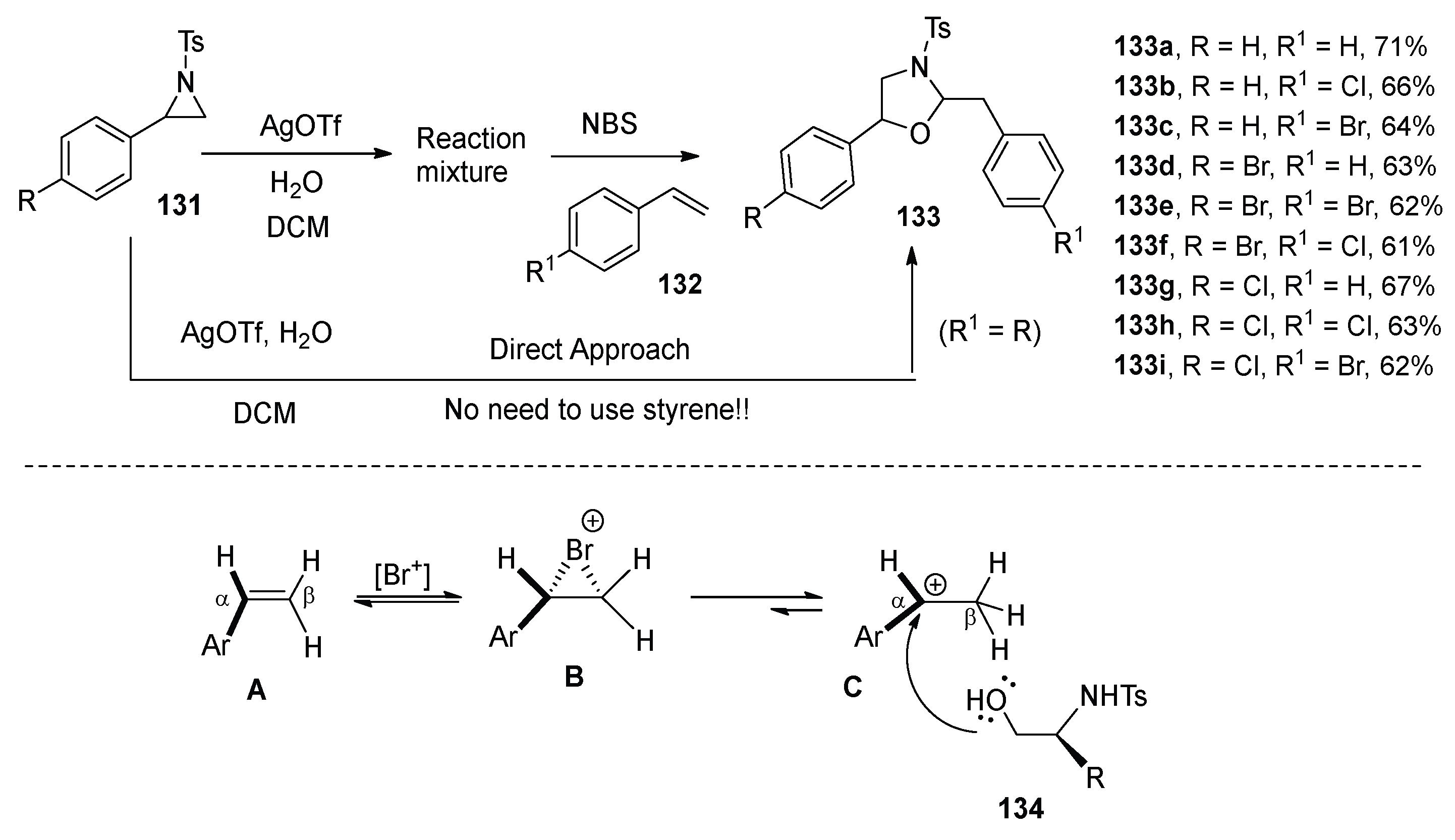
The oxazolidine containing heterocycles exhibit various pharmacological activities, including antitumor, cytotoxic, anti-inflammatory, and analgesic. They also serve as ligands for organometallic catalysts, and are found in a variety of natural products, including tetrazomine and quinocarcin [67,68,69]. In 2016, Zyryanov and his group developed a one-pot synthesis of 1,3-oxazolidine derivatives by two different routes [70]. Aziridines and styrenes were employed in one method. In another route, the reaction of aziridine with the aziridine’s in situ generated ring opening product was demonstrated. In aqueous dichloromethane in the presence of silver triflate, 2-aryl-1-tosylaziridines 131 underwent ring cleavage to produce the intermediate N-Ts-arylalaninol 134 (Scheme 13), which interacts with N-bromosuccinimide and substituted styrene 132 (converting in situ into aryl-bromyran-1-ium cations B), to furnish 2-benzyl-5-aryl-3-tosyloxazolidines 133 (Scheme 12) in yields of up to 67%.
Scheme 52.
Formation of oxazolidines from aziridines via geminal difunctionalization of vinyl arenes or by tandem ring-opening/closing reaction of aziridine itself.
Scheme 52.
Formation of oxazolidines from aziridines via geminal difunctionalization of vinyl arenes or by tandem ring-opening/closing reaction of aziridine itself.
5. Conclusions
The aziridine, a three-membered nitrogen containing strained molecule, is of much importance in organic synthesis. Because of the ring strain, this tiny molecule can be cleaved readily by various nucleophiles leading to many useful heterocyclic compounds of biological significance. Considering the general interest in this molecule this review article reports the synthesis of a variety of four-seven membered heterocycles involving nucleophilic ring cleavage of aziridines followed by rearrangement/cyclization. Several heterocyclic compounds including azetidines (β-lactams), pyrrolidines, oxazolidines, thiazolidines, pyridines, azepines, azoles etc have been obtained readily in high yields. Needless to say, these heterocyclic moieties constitute the core unit of many existing drug molecules. The mechanism, scope and limitations of these protocols have been discussed. The asymmetric synthesis of several compounds has also been highlighted. Thus, we believe that this article will be of much interest to a wide section of chemists in academia as well as pharmaceutical industries.
Funding
This research was funded by Russian Science Foundation, grant number 25-73-30016.
Conflicts of Interest
The authors declare no conflicts of interest.
References
- Padwa, A. In Comprehensive Heterocyclic Chemistry III; Katrizky, A.R., Ramsden, C.A., Scriven, E.F.V., Taylor, R.J.K., Eds.; Elsevier: New York, 2008; Volume 1, pp. 1–104. [Google Scholar]
- Padwa, A.; Murphee, S.S. Three-membered ring systems. Prog. Heterocycl. Chem. 2003, 15, 75–99. [Google Scholar] [CrossRef]
- Singh, G.S. Synthetic aziridines in medicinal chemistry: A mini-review. Mini-Rev. Med. Chem. 2016, 16, 892–904. [Google Scholar] [CrossRef] [PubMed]
- Ju, X.; Lee, M.; Leung, J.C.; Lee, J. Synthesis and functionalization of aziridines: A perspective view from pharmaceutical industries. Eur. J. Org. Chem. 2025, 28, e202401414. [Google Scholar] [CrossRef]
- Sweeney, J.B. Aziridines: epoxides’ ugly cousins? Chem. Soc. Rev. 2002, 31, 247–258. [Google Scholar] [CrossRef] [PubMed]
- Ismail, F.M.D.; Levitsky, D.O.; Dembitsky, V.M. Aziridine alkaloids as potential therapeutic agents. Eur. J. Med. Chem. 2009, 44, 3373–3387. [Google Scholar] [CrossRef] [PubMed]
- Padwa, A.; Murphree, S.S. Epoxides and aziridines - a mini review. Arkivoc 2006, iii, 6–33. [Google Scholar] [CrossRef]
- Padwa, A. In Aziridines and azirines: monocyclic in Comprehensive Heterocyclic Chemistry-III; Katritzky, A., Ramsden, C., Scriven, E., Taylor, R., Eds.; Elsevier: UK, 2008; Volume 1, p. 2. [Google Scholar]
- Singh, G.S.; D’hooghe, M.; De Kimpe, N. In Azetidines, azetes and azetidinones: monocyclic in Comprehensive Heterocyclic Chemistry-III; Katritzky, A., Ramsden, C., Scriven, E., Taylor, R., Eds.; Elsevier: UK, 2008; Volume 2, p. 1. [Google Scholar]
- Piens, N.; D’hooghe, M. Carbonylation of aziridines as a powerful tool for the synthesis of functionalized β-lactams. Eur. J. Org. Chem. 2017, 40, 5943–5960. [Google Scholar] [CrossRef]
- Alper, H.; Urso, F.; Smith, D.J.H. Regiospecific metal-catalyzed ring expansion of aziridines to β-lactams. J. Am. Chem. Soc. 1983, 105, 6737–6738. [Google Scholar] [CrossRef]
- Lu, S.-M.; Alper, H. Carbonylative ring expansion of aziridines to β-lactams with rhodium-complexed dendrimers on a resin. J. Org. Chem. 2004, 69, 3558–3561. [Google Scholar] [CrossRef] [PubMed]
- Lu, S.-M.; Alper, H. Hydroformylation reactions with recyclable rhodium-complexed dendrimers on a resin. J. Am. Chem. Soc. 2003, 125, 13126–13131. [Google Scholar] [CrossRef] [PubMed]
- Alper, H.; Hamel, N. Regiospecific synthesis of α-methylene-β-lactams by a homogeneous palladium catalyzed ring expansion of methylene aziridines. Tetrahedron Lett. 1987, 28, 3237–3240. [Google Scholar] [CrossRef]
- Piotti, M.E.; Alper, H. Inversion of stereochemistry in the Co2(CO)8-catalyzed carbonylation of aziridines to β-lactams. The first synthesis of highly strained trans-bicyclic β-lactams. J. Am. Chem. Soc. 1996, 118, 111–116. [Google Scholar] [CrossRef]
- Glarner, F.; Thornton, S.R.; Schärer, D.; Bernardinelli, G.; Burger, U. The deoxygenation and isomerization of artemisinin and artemether and their relevance to antimalarial action. Helv. Chim. Acta 1997, 80, 121–127. [Google Scholar]
- Fontana, F.; Tron, G.C.; Barbero, N.; Ferrini, S.; Thomas, S.P.; Aggarwal, V.K. Stereoselective synthesis of trans-β-lactams by palladium-catalysed carbonylation of vinyl aziridines. Chem. Commun. 2010, 46, 267–269. [Google Scholar] [CrossRef] [PubMed]
- Huang, L.; Zhao, W.; Staples, R.J.; Wulff, W.D.J. Multifaceted interception of 2-chloro-2-oxoacetic anhydrides: a catalytic asymmetric synthesis of β-lactams. Chem. Sci. 2013, 4, 622–628. [Google Scholar] [CrossRef]
- Decamps, S.; Sevaille, L.; Ongeri, S.; Crousse, B. Access to novel functionalized trifluoromethyl β-lactams by ring expansion of aziridines. Org. Biomol. Chem. 2014, 12, 6345–6348. [Google Scholar] [CrossRef] [PubMed]
- Piens, N.; Van Hecke, K.; Vogt, D.; D′hooghe, M. Cobalt carbonyl-catalyzed carbonylation of functionalized aziridines to versatile β-lactam building blocks. Org. Biomol. Chem. 2017, 15, 4816–4821. [Google Scholar] [CrossRef] [PubMed]
- Ilardi, E.A.; Njardarson, J.T. Ring expansions of vinyloxiranes,-thiiranes, and-aziridines: synthetic approaches, challenges, and catalytic success stories. J. Org. Chem. 2013, 78, 9533–9540. [Google Scholar] [CrossRef] [PubMed]
- Brichacek, M.; Villalobos, M.N.; Plichta, A.; Njardarson, J.T. Stereospecific ring expansion of chiral vinyl aziridines. Org. Lett. 2011, 13, 1110–1113. [Google Scholar] [CrossRef] [PubMed]
- Mack, D.J.; Njardarson, J.T. Recent advances in the metal-catalyzed ring expansions of three-and four-membered rings. ACS Catal. 2013, 3, 272–286. [Google Scholar] [CrossRef]
- Barnes, W.K.; Rowlands, G.J. Studies on the [2,3]-Stevens rearrangement of aziridinium ions. Tetrahedron Lett. 2004, 45, 5347–5350. [Google Scholar] [CrossRef]
- Yoshida, M.; Easmin, S.; Al-Amin, M.; Hirai, Y.; Shishido, K. Synthesis of substituted 3-iodopyrroles by cycloisomerization of propargylic aziridines with iodine. Tetrahedron 2011, 67, 3194–3200. [Google Scholar] [CrossRef]
- Blanc, A.; Tenbrink, K.; Weibel, J.-M.; Pale, P. Mechanistic studies and improvement of coinage metal-catalyzed transformation of alkynyloxiranes to furans: An alcohol addition−cyclization−elimination cascade. J. Org. Chem. 2009, 74, 5342–5348. [Google Scholar] [CrossRef] [PubMed]
- Yoshida, M.; Maeyama, Y.; Al-Amin, M.; Shishido, K. Synthesis of substituted 1,4,5,6-tetrahydrocyclopenta[b]pyrroles by platinum-catalyzed cascade cyclization/ring expansion of 2-alkynyl-1-azaspiro [2.3]hexanes. J. Org. Chem. 2011, 76, 5813–5820. [Google Scholar] [CrossRef] [PubMed]
- Wang, S.; Zhu, X.; Chai, Z.; Wang, S. Synthesis of polysubstituted pyrroles via [3 + 2]-annulation of aziridines and β-nitroalkenes under aerobic conditions. Org. Biomol. Chem. 2014, 12, 1351–1356. [Google Scholar] [CrossRef] [PubMed]
- Sayyad, M.; Nanaji, Y.; Ghorai, M.K. A synthetic route to 2-alkyl indoles via thiophenol-mediated ring-opening of N-tosylaziridines followed by copper powder-mediated C–N cyclization/aromatization. J. Org. Chem. 2015, 80, 12659–12667. [Google Scholar] [CrossRef] [PubMed]
- Castellano, S.; Fiji, H.D.G.; Kinderman, S.S.; Watanabe, M.; de Leon, P.; Tamanoi, F.; Kwon, O. Small-molecule inhibitors of protein geranylgeranyltransferase type I. J. Am. Chem. Soc. 2007, 129, 5843–5845. [Google Scholar] [CrossRef] [PubMed]
- Brichacek, M.; Lee, D.E.; Njardarson, J.T. Lewis acid catalyzed (1,3)-sigmatropic rearrangement of vinyl aziridines. Org. Lett. 2008, 10, 5023–5026. [Google Scholar] [CrossRef] [PubMed]
- Kern, N.; Blanc, A.; Weibel, J.M.; Pale, P. Gold(I)-catalyzed rearrangement of aryl alkynylaziridines to spiro[isochroman-4, 2′-pyrrolines]. Chem. Commun. 2011, 47, 6665–6667. [Google Scholar]
- Ghorai, M.K.; Tiwari, D.P. Enantioselective synthesis of 4,5-dihydropyrroles via domino ring-opening cyclization (DROC) of N-activated aziridines with malononitrile. J. Org. Chem. 2013, 78, 2617–2625. [Google Scholar] [CrossRef] [PubMed]
- Laia, F.M.R.; e Melo, T.M.V.D.P. An approach to 1,4-dihydrochromeno [4,3-b]pyrroles and 3-benzooxepino-fused pyrroles via aziridine ring expansion. Synthesis 2015, 47, 2781–2790. [Google Scholar]
- Beşev, M. Radical cyclizatios to pyrrolidines. Comprehensive summaries of Uppsala dissertations from Faculty of Science and Technology 702, p 2.
- http://en.wikipedia.org/wiki/Pyrrolidine. Wikipedia, the free encyclopedia. Date accessed 20/07/2026.
- Lowe, M.A.; Ostovar, M.; Ferrini, S.; Chen, C.C.; Lawrence, P.G.; Fontana, F.; Calabrese, A.A.; Aggarwal, V.K. Palladium-mediated annulation of vinyl aziridines with michael acceptors: Stereocontrolled synthesis of highly substituted pyrrolidines and its application in a formal synthesis of (−)-α-kainic acid. Angew. Chem. Int. Ed. 2011, 50, 6370–6374. [Google Scholar] [CrossRef] [PubMed]
- Arena, G.; Chen, C.C.; Leonori, D.; Aggarwal, V.K. Concise synthesis of (+)-allo-kainic acid via MgI2-mediated tandem aziridine ring opening–formal [3 + 2] cycloaddition. Org. Lett. 2013, 15, 4250–4253. [Google Scholar] [CrossRef] [PubMed]
- Sengoden, M.; Punniyamurthy, T. “On water”: Efficient iron-catalyzed cycloaddition of aziridines with heterocumulenes. Angew. Chem. 2013, 125, 600–603. [Google Scholar] [CrossRef]
- Li, L.; Wu, X.; Zhang, J. Lewis acid-catalyzed formal [3+2] cycloadditions of N-tosyl aziridinedicarboxylates with heterocumulenes or unsaturated substrates. Chem. Commun. 2011, 47, 5049–5051. [Google Scholar]
- Rai, A.; Yadav, L.D.S. An organocatalytic approach to stereoselective synthesis of 2-hydroxyazetidines and 2-hydroxypyrrolidines. Tetrahedron Lett. 2013, 54, 3127–3131. [Google Scholar] [CrossRef]
- Martinand-Lurin, E.; Gruber, R.; Retailleau, P.; Fleurat-Lessard, P.; Dauban, P. Studies on the formal [3+2] cycloaddition of aziridines with alkenes for the synthesis of 1-azaspiroalkanes. J. Org. Chem. 2015, 80, 1414–1426. [Google Scholar] [CrossRef] [PubMed]
- Caruano, J.; Muccioli, G.G.; Robietti, R. Biologically active γ-lactams: synthesis and natural sources. Org. Biomol. Chem. 2016, 14, 10134–10156. [Google Scholar] [CrossRef] [PubMed]
- Ghorai, M.K.; Tiwari, D.K. Lewis acid catalyzed highly stereoselective domino-ring-opening cyclization of activated aziridines with enolates: Synthesis of functionalized chiral γ-lactams. J. Org. Chem. 2010, 75, 6173–6181. [Google Scholar] [CrossRef] [PubMed]
- Sengoden, M.; Vijay, M.; Balakumar, E.; Punniyamurthy, T. Efficient pyrrolidine catalyzed cycloaddition of aziridines with isothiocyanates, isoselenocyanates and carbon disulfide ‘on water’. RSC Adv. 2014, 4, 54149–54157. [Google Scholar] [CrossRef]
- Kriek, M.; Martins, F.; Leonardi, R.; Fairhurst, S.A.; Lowe, D.J.; Roach, P.L. Thiazole synthase from Escherichia coli: An investigation of the substrates and purified proteins required for activity in vitro. J. Biol. Chem. 2007, 282, 17413–17423. [Google Scholar] [PubMed]
- Niu, Z.-X.; Wang, Y.-T.; Zhang, S.-N.; Li, Y.; Chen, Xi.-B.; Wang, S.-Q.; Liu, H.-M. Application and synthesis of thiazole ring in clinically approved drugs. Eur. J. Med. Chem. 2023, 250, 115172. [Google Scholar] [CrossRef] [PubMed]
- Ueno, M.; Imaizumi, K.; Sugita, T.; Takata, I.; Takeshita, M. Effect of a novel anti-rheumatic drug, TA-383, on type II collagen-induced arthritis. Int. J. Immunopharmacol. 1995, 17, 597–603. [Google Scholar] [CrossRef] [PubMed]
- Rondu, F.; Bihan, G.L.; Wang, X.; Lamouri, A.; Touboul, E.; Dive, G.; Bellahsene, T.; Pfeiffer, B.; Renard, P.; Guardiola-Lemaitre, B.; Manechez, D.; Penicaud, L.; Ktorza, A.; Godfroid, J.-J. Design and synthesis of imidazoline derivatives active on glucose homeostasis in a rat model of type II diabetes. 1. Synthesis and biological activities of N-Benzyl-N’-(arylalkyl)-2-(4’,5’-dihydro-1’H-imidazol-2’-yl)piperazines. J. Med. Chem. 1997, 40, 3793–3803. [Google Scholar] [CrossRef] [PubMed]
- Chern, J.-W.; Liaw, Y.-C.; Chen, C.-S.; Rong, J.-G.; Huang, C.-L.; Chan, C.-H.; Wang, A.H.-J. Studies on 1,2,4-benzothiadiazine 1, 1-dioxides VII and quinazolinones IV: synthesis of novel built-in hydroxyguanidine tricycles as potential anticancer agents. Heterocycles 1993, 36, 1091–1103. [Google Scholar] [CrossRef]
- Minakata, S.; Hotta, T.; Oderaotoshi, Y.; Komatsu, M. Ring opening and expansion of aziridines in a silica− water reaction medium. J. Org. Chem. 2006, 71, 7471–7472. [Google Scholar] [CrossRef] [PubMed]
- Hiyama, T.; Koide, H.; Fujita, S.; Nozaki, H. Reaction of N-alkoxycarbonylaziridines with nitriles. Tetrahedron 1973, 29, 3137–3139. [Google Scholar] [CrossRef]
- Legters, J.; Willems, J.G.H.; Thijs, L.; Zwanenburg, B. Synthesis of functionalized amino acids by ring-opening reactions of aliphatically substituted aziridine-2-carboxylic esters. Rccl. Trav. Chim. Pays-Bas. 1992, 111, 059–068. [Google Scholar] [CrossRef]
- Concellon, J.M.; Riego, E.; Suarez, J.R.; Garcıa-Granda, S.; Dıaz, M.R. Synthesis of enantiopure imidazolines through a Ritter reaction of 2-(1-aminoalkyl) aziridines with nitriles. Org. Lett. 2004, 6, 4499–4501. [Google Scholar] [CrossRef] [PubMed]
- Yadav, V.K.; Sriramurthy, V. Silylmethyl-substituted aziridine and azetidine as masked 1,3-and 1, 4-dipoles for formal [3+ 2] and [4+ 2] cycloaddition reactions. J. Am. Chem. Soc. 2005, 127, 16366–16367. [Google Scholar] [CrossRef] [PubMed]
- Ghorai, M.K.; Ghosh, K.; Das, K. Copper(II) triflate promoted cycloaddition of α-alkyl or aryl substituted N-tosylaziridines with nitriles: a highly efficient synthesis of substituted imidazolines. Tetrahedron Lett. 2006, 47, 5399–5403. [Google Scholar] [CrossRef]
- Gandhi, S.; Bisai, A.; Prasad, B.A.B.; Singh, V.K. Studies on the reaction of aziridines with nitriles and carbonyls: synthesis of imidazolines and oxazolidines. J. Org. Chem. 2007, 72, 2133–2142. [Google Scholar] [CrossRef] [PubMed]
- Han, Y.; Xie, Y.–.X.; Zhao, L.–.B.; Fan, M.–.J.; Liang, Y.–.M. Synthesis of highly substituted 2-imidazolines through a three-component coupling reaction. Synthesis 2008, 2008, 87–93. [Google Scholar] [CrossRef]
- Li, X.; Yang, X.; Chang, H.; Li, Y.; Ni, B.; Wei, W. A new and efficient procedure for Bi(OTf)3-promoted [3+2] cycloaddition of N-tosylaziridines to yield imidazolines. Eur. J. Org. Chem. 2011, 2011, 3122–3125. [Google Scholar] [CrossRef]
- Li, R.; Jiang, H.; Liu, W.–.Y.; Gu, P.–.M.; Li, X.–.Q. Preparation of imidazolines from aziridines and nitriles via TfOH promoted Ritter process. Chin. Chem. Lett. 2014, 25, 583–585. [Google Scholar] [CrossRef]
- De, A.; Santra, S.; Kovalev, I.S.; Kopchuk, D.S.; Zyryanov, G.V.; Chupakhin, O.N.; Charushin, V.N.; Majee, A. Synthesis of 2-imidazolines by co-grinding of N-tosylaziridines and nitriles. Mendeleev Commun. 2020, 30, 188–189. [Google Scholar] [CrossRef]
- Ishikawa, T.; Yoshiki, M.; Tanaka, T.; Ogata, K.; Yamada, Y.; Hanamoto, T. Regioselective synthesis of difluoromethylated oxazolidines and 2-imidazolines. Synthesis 2016, 48, 1322–1330. [Google Scholar] [CrossRef]
- Zuo, Q.; Shi, Z.; Zhan, F.; Wang, Z.; Lin, J.S.; Jiang, Y. TfOH-catalyzed formal [3+ 2] cycloaddition of N-tosylaziridine dicarboxylates and nitriles: Synthesis of tetrafunctionalized 2-imidazolines. Tetrahedron Lett. 2020, 61, 151576. [Google Scholar] [CrossRef]
- Provoost, O.Y.; Hazelwood, A.J.; Harrity, J.P.A. Pd-catalysed [3+3] annelations in the stereoselective synthesis of indolizidines. Beilstein J. Org. Chem. 2007, 3, 8. [Google Scholar] [CrossRef] [PubMed]
- Eshon, J.; Nicastri, K.A.; Schmid, S.C.; Raskopf, W.T.; Guzei, I.A.; Fernández, I.; Schomaker, J.M. Intermolecular [3+3] ring expansion of aziridines to dehydropiperi-dines through the intermediacy of aziridinium ylides. Nat. Commun. 2020, 11, 1273. [Google Scholar] [CrossRef] [PubMed]
- Feng, J.-J.; Lin, T.-Y.; Wu, H.-H.; Zhang, J. Modular access to the stereoisomers of fused bicyclic azepines: Rhodium-catalyzed intramolecular stereospecific hetero-[5+2] cycloaddition of vinyl aziridines and alkenes. Angew. Chem. Int. Ed. 2015, 54, 15854–15858. [Google Scholar] [CrossRef] [PubMed]
- Wolf, C.; Xu, H. Asymmetric catalysis with chiral oxazolidine ligands. Chem. Commun. 2011, 47, 3339–3350. [Google Scholar] [CrossRef] [PubMed]
- Gudaprthi, V.; Bharathi, K.; Omprakash, G. Synthesis, Characterisation and cardiac activity of some 2,3-substituted-4-phenyl-1,3-oxazolidines. Asian J. Chem. 2011, 23, 765. [Google Scholar]
- Herberich, B.; Scott, J.D.; Williams, R.M. Chemo-enzymatic synthesis of fluorinated sugar nucleotide: useful probes for glycosyltransferases. Bioorg. Med. Chem. 2000, 8, 523. [Google Scholar] [CrossRef] [PubMed]
- Ghosal, N.C.; Santra, S.; Zyryanov, G.V.; Hajra, A.; Majee, A. Conversion of aziridines to oxazolidines through geminal difunctionalization of vinyl arenes or by tandem ring-opening/closing reaction of aziridine itself. Tetrahedron Lett. 2016, 57, 3551–3555. [Google Scholar] [CrossRef]
Scheme 1.
Metal-catalyzed carbonylations of aziridines for the synthesis of β-lactams.
Scheme 2.
Regiospecific synthesis of 3-arylazetidin-2-ones in the presence of rhodium catalyst.
Scheme 3.
Proposed reaction pathway.
Scheme 4.
Carbonylative ring expansion reactions of aziridines with carbon monoxide to afford azetidines in the presence of rhodium-complexed dendrimers supported on resin.
Scheme 4.
Carbonylative ring expansion reactions of aziridines with carbon monoxide to afford azetidines in the presence of rhodium-complexed dendrimers supported on resin.
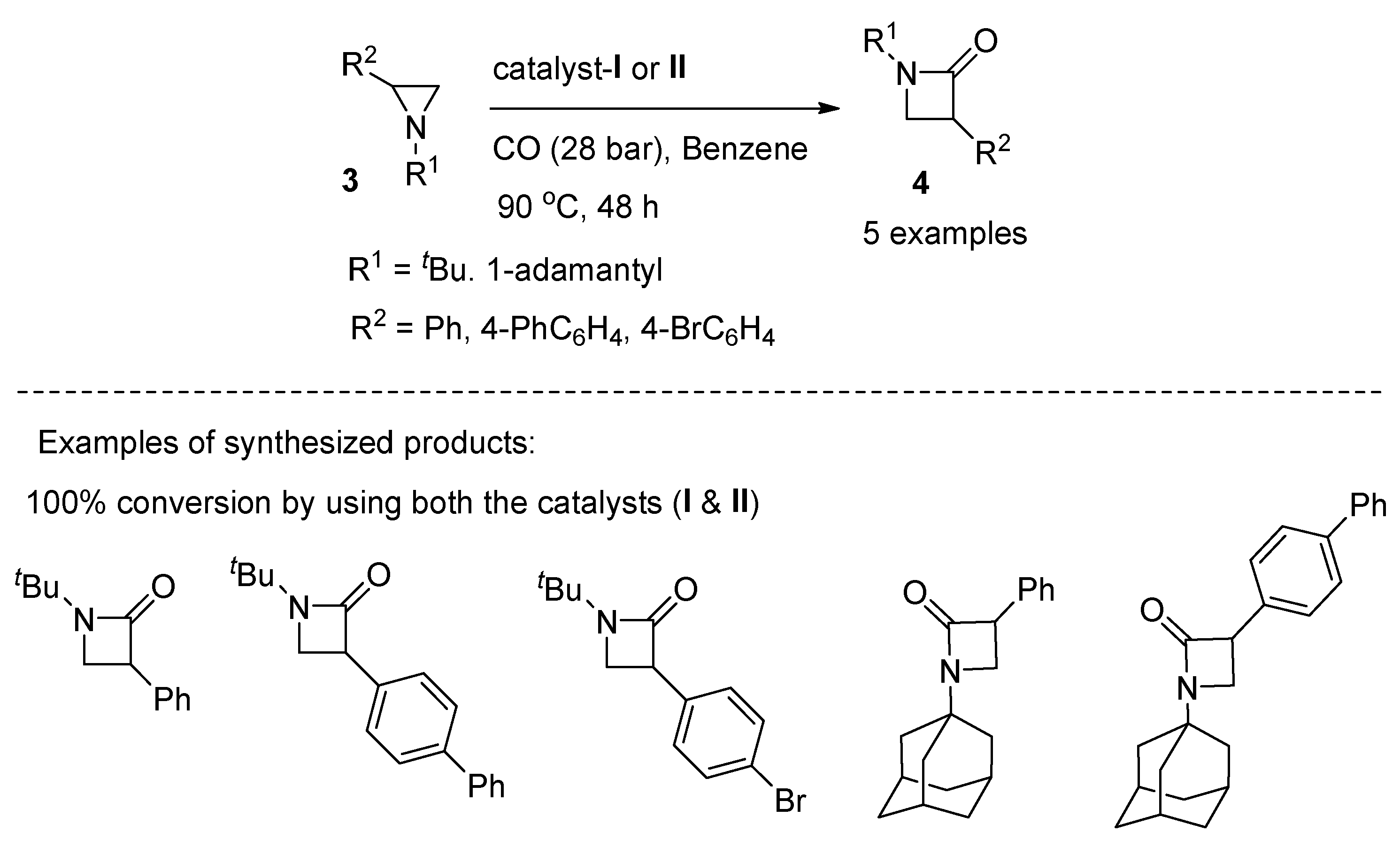
Figure 1.
Structures of catalyst-I and catalyst-II.
Scheme 5.
Regiospecific palladium-catalyzed ring expansion-carbonylation reaction of 2-methyleneaziridines.
Scheme 5.
Regiospecific palladium-catalyzed ring expansion-carbonylation reaction of 2-methyleneaziridines.
Scheme 6.
Synthesis of 4-alkylazetidin-2-ones by the reaction of 2-alkylaziridines in presence of cobalt catalyst.
Scheme 6.
Synthesis of 4-alkylazetidin-2-ones by the reaction of 2-alkylaziridines in presence of cobalt catalyst.
Scheme 7.
Demonstration of the regioselectivity.
Scheme 8.
Demonstration of steroselectivity.
Scheme 9.
Demonstration of regioselectivity.
Scheme 10.
Synthesis of fused azetidin-2-one derivatives.
Scheme 11.
Synthesis of azitidine derivatives by the palladium-catalyzed carbonylative ring-expansion of vinyl aziridines.
Scheme 11.
Synthesis of azitidine derivatives by the palladium-catalyzed carbonylative ring-expansion of vinyl aziridines.
Scheme 12.
Formation of 2-azetidinones by the reaction between 3-alkylaziridine-2-carboxylic acids and oxalyl chloride.
Scheme 12.
Formation of 2-azetidinones by the reaction between 3-alkylaziridine-2-carboxylic acids and oxalyl chloride.
Scheme 13.
Diastereoselective synthesis of 3-halogenated-4-trifluoromethyl cis and trans-β-lactams.
Scheme 15.
Cu-catalyzed transformations of aziridines to pyrrolidines.
Scheme 16.
Formation of indolizidine from vinyl aziridine.
Scheme 17.
Synthesis of 3-iodopyrroles by an electrophilic cyclization of the N-substituted propargylic aziridines.
Scheme 17.
Synthesis of 3-iodopyrroles by an electrophilic cyclization of the N-substituted propargylic aziridines.
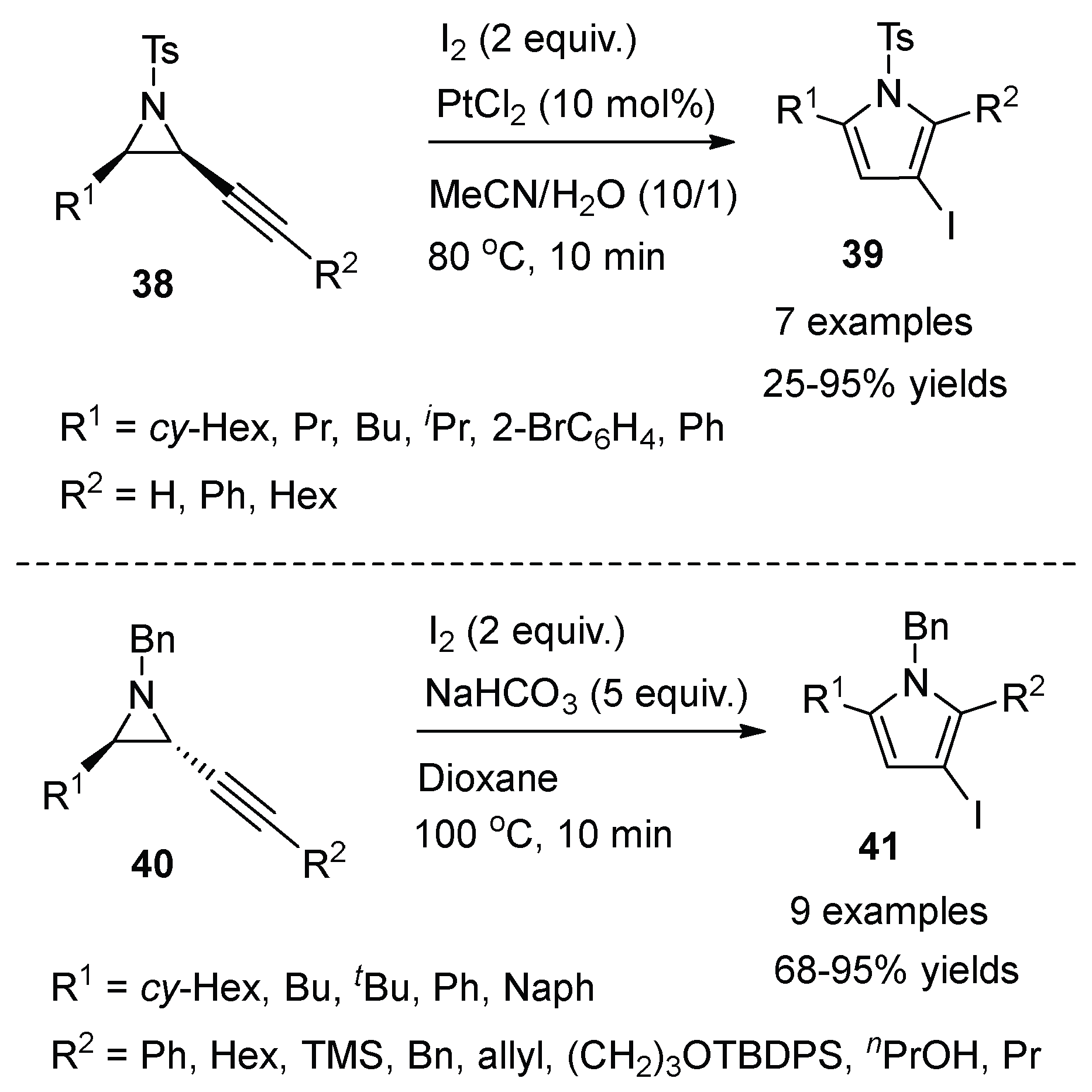
Scheme 18.
Proposed reaction mechanism.
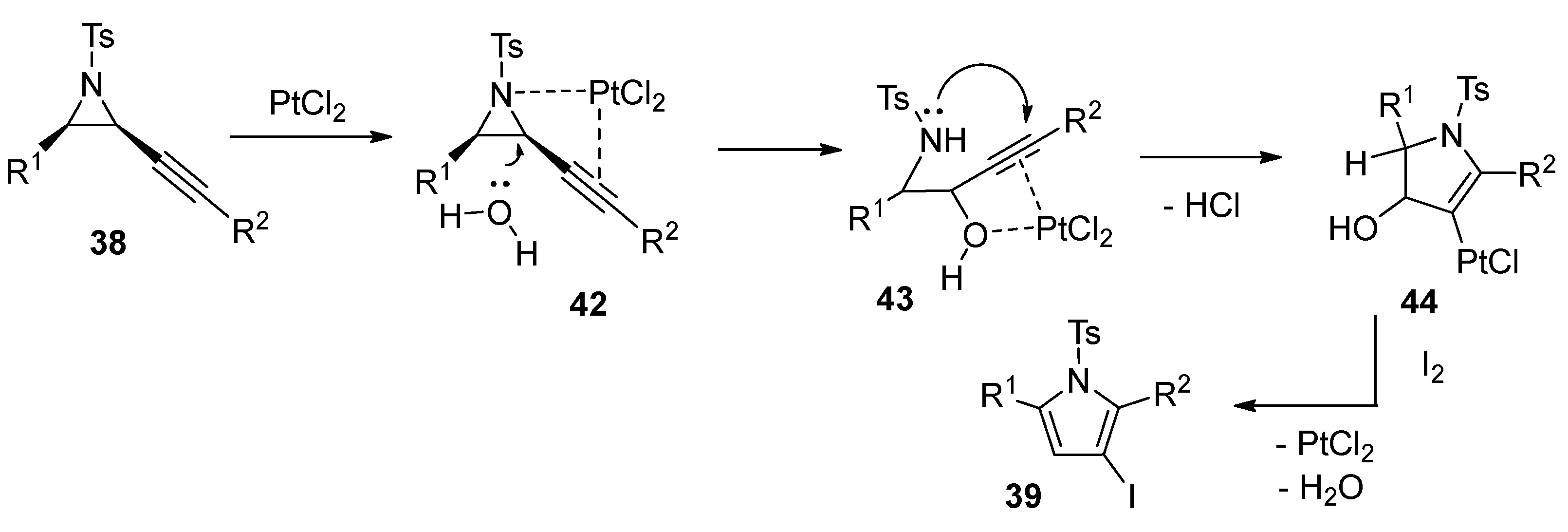
Scheme 19.
Proposed reaction mechanism.

Scheme 20.
Platinum-catalyzed cascade cyclization/ring expansion of alkynyl-aziridines.
Scheme 21.
Synthesis of polysubstituted pyrroles via copper acetate-catalyzed cascade reactions of aziridines with β-nitroalkenes.
Scheme 21.
Synthesis of polysubstituted pyrroles via copper acetate-catalyzed cascade reactions of aziridines with β-nitroalkenes.
Scheme 22.
Synthesis of 2-alkyl indoles.
Scheme 23.
Copper-catalyzed synthesis of 3-pyrrolines from vinyl aziridines.
Scheme 24.
Gold-catalyzed synthesis of spiro[isochroman-4,2’-pyrrolines from 2-(aryloxyprop-1-ynyl)aziridines.
Scheme 24.
Gold-catalyzed synthesis of spiro[isochroman-4,2’-pyrrolines from 2-(aryloxyprop-1-ynyl)aziridines.
Scheme 25.
Synthesis of highly functionalized racemic and non-racemic 4,5-dihydropyrroles.
Scheme 26.
Formation of dihydropyrrole and pyrrolidine from aziridines.
Scheme 27.
Synthesis of diastereomeric mixture of pyrrolidines from trans-3-styryl-2-phenyl-N-tosylaziridines in the presence of palladium catalyst.
Scheme 27.
Synthesis of diastereomeric mixture of pyrrolidines from trans-3-styryl-2-phenyl-N-tosylaziridines in the presence of palladium catalyst.
Scheme 28.
Synthesis of trisubstituted pyrrolidine by the reaction between vinyl aziridine and fumarate.
Scheme 28.
Synthesis of trisubstituted pyrrolidine by the reaction between vinyl aziridine and fumarate.
Scheme 29.
Y(OTf)3-catalyzed ring-expansion of N-tosyl aziridine dicarboxylates with olefin 3,4-dihydro-2H-pyran towards synthesis of functionalized pyrrolidines.
Scheme 29.
Y(OTf)3-catalyzed ring-expansion of N-tosyl aziridine dicarboxylates with olefin 3,4-dihydro-2H-pyran towards synthesis of functionalized pyrrolidines.
Scheme 30.
Formation of pyrrolidines by the in situ genation of enamines.
Scheme 31.
Formation of pyrrolidines by the reaction between N-arylsulfonyl aziridines and methylenecyclopentane.
Scheme 31.
Formation of pyrrolidines by the reaction between N-arylsulfonyl aziridines and methylenecyclopentane.
Scheme 32.
Synthesis of highly functionalized chiral γ-lactams through Lewis acid-catalyzed reaction between aziridines and enolates.
Scheme 32.
Synthesis of highly functionalized chiral γ-lactams through Lewis acid-catalyzed reaction between aziridines and enolates.
Scheme 33.
Synthesis pyrrolidinone-3-carboxylate and N-tosylpyrrolidinone derivatives.
Scheme 34.
Organocatalytic synthesis of pyrrolidinones.
Scheme 35.
Synthesis of thiazolidine derivative by the reaction between aziridine and potassium thiocyanate.
Scheme 35.
Synthesis of thiazolidine derivative by the reaction between aziridine and potassium thiocyanate.
Scheme 36.
BF3-mediated synthesis of l-alkoxycarbonyl-2-imidazolines.
Scheme 37.
Reaction between cis-1,2-dialkyl-substituted aziridines and aliphatic or aromatic nitriles.
Scheme 37.
Reaction between cis-1,2-dialkyl-substituted aziridines and aliphatic or aromatic nitriles.
Scheme 38.
Reactions of aziridine-2-carboxylic esters.
Scheme 39.
Synthesis of N-benzyl-4,5-di-substituted imidazolines from enantiopure aziridines with a dibenzylamino group on the α-carbon.
Scheme 39.
Synthesis of N-benzyl-4,5-di-substituted imidazolines from enantiopure aziridines with a dibenzylamino group on the α-carbon.
Scheme 40.
Synthesis of imidazolines from tert-butyldiphenylsilylmethyl-substituted aziridines.
Scheme 41.
Cu(OTf)2-mediated syntheses of substituted imidazolines by the [3+2] cycloaddition reactions of N-tosylaziridines with nitriles.
Scheme 41.
Cu(OTf)2-mediated syntheses of substituted imidazolines by the [3+2] cycloaddition reactions of N-tosylaziridines with nitriles.
Scheme 42.
Zn(OTf)2-catalyzed solvent-free synthesis of imidazolines.
Scheme 43.
Synthesis of trans 4,5-disubstituted-2-imidazolines from trans-N-unsubstituted aziridines, terminal alkynes and tosyl azide.
Scheme 43.
Synthesis of trans 4,5-disubstituted-2-imidazolines from trans-N-unsubstituted aziridines, terminal alkynes and tosyl azide.
Scheme 44.
Bi(OTf)3-catalyzed synthesis of imidazolines.
Scheme 45.
TfOH-catalyzed synthesis of imidazolines at room temperature.
Scheme 46.
Synthesis of 2-imidazolines by co-grinding of N-tosylaziridines and nitriles.
Scheme 47.
TiF4-mediated synthesis of difluoromethylated 2-imidazolines by the reaction of 2-(difluoromethyl)-N-tosylaziridine with nitriles.
Scheme 47.
TiF4-mediated synthesis of difluoromethylated 2-imidazolines by the reaction of 2-(difluoromethyl)-N-tosylaziridine with nitriles.
Scheme 48.
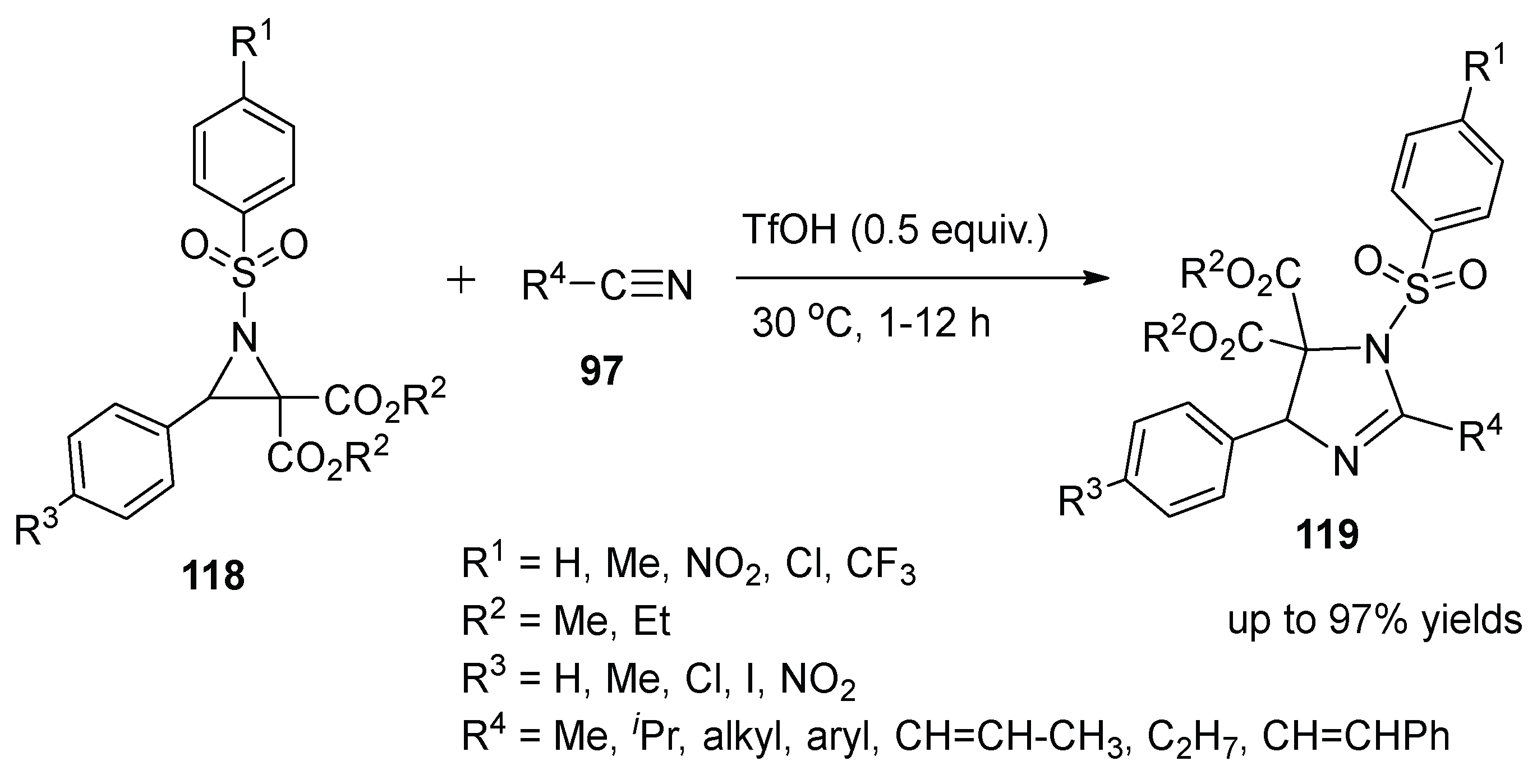
TfOH-mediated synthesis of tetra-substituted 2-imidazolines by the [3+2] cycloaddition reaction of aziridine dicarboxylates and nitriles.
Scheme 48.
TfOH-mediated synthesis of tetra-substituted 2-imidazolines by the [3+2] cycloaddition reaction of aziridine dicarboxylates and nitriles.
Scheme 49.
Synthesis of enantiomerically pure piperidine and chiral pyridine in the presence of palladium catalyst.
Scheme 49.
Synthesis of enantiomerically pure piperidine and chiral pyridine in the presence of palladium catalyst.
Disclaimer/Publisher’s Note: The statements, opinions and data contained in all publications are solely those of the individual author(s) and contributor(s) and not of MDPI and/or the editor(s). MDPI and/or the editor(s) disclaim responsibility for any injury to people or property resulting from any ideas, methods, instructions or products referred to in the content. |
© 2026 by the authors. Licensee MDPI, Basel, Switzerland. This article is an open access article distributed under the terms and conditions of the Creative Commons Attribution (CC BY) license (http://creativecommons.org/licenses/by/4.0/).
Copyright: This open access article is published under a Creative Commons CC BY 4.0 license, which permit the free download, distribution, and reuse, provided that the author and preprint are cited in any reuse.