

Submitted:
26 August 2026
Posted:
26 August 2026
You are already at the latest version
Abstract
Diamond-like carbon (DLC) coatings are widely used to improve corrosion resistance, but the same coating can behave very differently depending on the metal substrate. This study focuses on how the substrate affects coating performance. Titanium-doped (Ti-DLC) and tungsten-doped (W-DLC) films were deposited by magnetron sputtering using the same process. Both were deposited on two substrates: 316L stainless steel and Ti6Al4V. The coatings were characterized by SEM, EDX, water contact angle, and Raman spectroscopy. Corrosion behavior was evaluated in 3.5 wt% NaCl by poten-tiodynamic polarization and electrochemical impedance spectroscopy (EIS).
Wettability shifted in opposite directions on the two substrates: 316L became more hydrophilic after coating, while Ti6Al4V became more hydrophobic. Raman spectroscopy showed that the two dopants produced a similar degree of carbon disor-der on 316L, but diverged on Ti6Al4V. Ti-DLC was the most ordered film of the four coatings and W-DLC formed a more disordered one, suggesting that titanium and tungsten promote carbon ordering differently depending on the substrate. Both films reduced the corrosion current density compared to the bare metal. By EIS, every coated specimen also showed a higher polarization resistance than its bare substrate. On each substrate, Ti-DLC outperformed W-DLC, but with different degrees of improvement. On 316L, the less corrosion-resistant one, gained more from coating in relative terms, while Ti6Al4V reached the highest corrosion resistance. This substrate dependence likely reflects differences in dopant amount and interfacial bonding.
Keywords:
diamond-like carbon (DLC)
; substrate effect
; titanium doping
; tungsten doping
; 316L stainless steel
; Ti6Al4V
; corrosion resistance
; electrochemical impedance spectroscopy
1. Introduction
A thin film is a common way to protect a metal from corrosion, but the same coating can behave very differently depending on the metal underneath it. This substrate effect has received less attention in the literature than the coating itself. Two alloys make this question worth closer attention: 316L stainless steel and Ti6Al4V titanium alloy, both widely used in load-bearing and blood-contacting medical devices. For these materials, long-term safety depends on the surface as much as on the substrate. Both share good mechanical strength, reasonable corrosion resistance, easy fabrication, and acceptable cost [1,2]. 316L is the most common material for coronary stents, while Ti6Al4V dominates orthopedic and dental implants because of its high strength-to-weight ratio and biocompatibility [2,3]. Yet each alloy releases metal ions in the chloride-rich physiological environment. This slow degradation can trigger inflammatory and immune responses, and in stents, it can cause restenosis and late thrombosis [3,4]. A protective surface layer is therefore essential to limit this ion release without compromising the alloy’s mechanical properties.
Corrosion resistance and biocompatibility both depend on the device surface, so thin films are a natural way to improve clinical performance. Among these, diamond-like carbon (DLC) stands out as a leading candidate. It is an amorphous carbon network with both sp2 (graphitic) and sp3 (diamond-like) bonds, a structure that gives DLC high hardness, low friction, chemical inertness, and good biocompatibility [5,6,7,8].
DLC can be made by physical vapor deposition, chemical vapor deposition, or electrodeposition. Its properties can be tuned through deposition parameters, dopant species, and film architecture — including interlayers, gradient layers, and multilayers [8]. Our group has studied DLC films for many years: film thickness and interlayer design [9], internal stress [10], residual stress and roughness [11,12], and precursor chemistry [13].
Doping is one of the most effective strategies for tailoring DLC’s mechanical and electrochemical behavior. It can reduce residual stress, increase film density, and lower surface energy. For this reason, doped DLC films have received broad attention [14,15]. Corrosion resistance of DLC depends on the sp2/sp3 ratio, porosity, roughness, chemical bonding (ID/IG), and film thickness [16,17].
Many dopants have been explored to make use of these effects. Fluorine has been used to make DLC strongly hydrophobic. Ru et al. [18] deposited fluorinated DLC (F-DLC) on silicon and 316L by radio-frequency magnetron sputtering. Fluorine promoted a shift from a three-dimensional sp3 network toward a two-dimensional sp2 polymer-like structure with C–Fx groups. This gave a hydrophobic surface and a low corrosion current density, attributed to reduced electrolyte contact. Sui et al. [19] similarly showed that F-DLC raised the surface corrosion resistance of NiTi.
Copper has also been used as a dopant. Javidparvar et al. [20] found that Cu-DLC on nickel-aluminum bronze improved corrosion resistance and lowered friction. Milan et al. [21] reported that Cu/a-C:H on Ti6Al4V increased the sp2/sp3 ratio, reduced internal stress, and improved corrosion behavior and biocompatibility.
Titanium is one of the most studied dopants, because it forms carbides. Wu et al. [22] showed that co-doped (Cu,Ce)/Ti-DLC on 304 stainless steel formed TiC crystallites. These lengthened the corrosion path and produced a denser surface, giving superior corrosion resistance. Wongpanya et al. [23,24] compared undoped, Ti-interlayered, Ti-doped, and Ti-doped-plus-interlayer DLC on 316L. The doped-plus-interlayer film had the lowest corrosion rate, the highest pitting potential, and the largest polarization resistance, attributed to a surface TiO2 nanostructure. Shen et al. [25] deposited Ti-DLC on 304L by filtered cathodic vacuum arc, and showed that TiC nanocrystal size controlled both wear and corrosion. On AZ91 magnesium alloy, titanium was shown to work mainly by forming nanocrystalline TiC in the amorphous carbon. Titanium content has an optimal range: both too little and too much reduce wear and corrosion resistance [26].
Tungsten doping is more ambiguous. Feng et al. [27] found that, on nitrided CF170 steel in sulfuric acid, W-DLC did not outperform plain DLC. One likely reason: W-DLC grew with a columnar rather than dense structure, and was more hydrophilic, increasing acid contact. Other reports are more favorable. Vicen et al. [28] found that W-DLC on 100Cr6 steel shifted the corrosion potential toward the noble direction in simulated seawater. This suggests that the benefit of tungsten depends on film structure and substrate, not the dopant alone.
These studies show that, whatever the dopant, similar mechanisms are at work: lower roughness, relieved stress, and passivating particles such as TiC, TiO2, or SiO2 [10,11,22,23,24,25,26,29]. What remains unclear is how the same dopant behaves on chemically different substrates. Tungsten and titanium are both common dopants, but few studies place them side by side on both a stainless steel and a titanium alloy under identical conditions.
In this study, Ti-DLC and W-DLC films were deposited by magnetron sputtering on 316L and Ti6Al4V. Their morphology (SEM/EDX), wettability, bonding structure (Raman), and corrosion behavior (potentiodynamic polarization and EIS) were compared, with the aim of determining how the substrate governs the corrosion protection of a DLC coating. This comparison is motivated by the widespread use of 316L and Ti6Al4V in medical devices such as coronary stents and dental implants, though the present study focuses specifically on their corrosion behavior.
2. Materials and Methods
2.1. Substrates and Coating Deposition
Two substrates were used: 316L austenitic stainless steel and Ti6Al4V titanium alloy. Their nominal compositions are listed in Table 1 and Table 2. Plates were cut into 12 mm × 12 mm coupons. Before coating, each coupon was ultrasonically cleaned in deionized water, ethanol, and isopropanol, then dried.
The DLC films were deposited by magnetron sputtering. Before deposition, all substrates received an argon plasma pretreatment to remove the surface oxide layer and contaminants. This used an Ar flow of 20 sccm, a bias of −180 V, for 10 min.
The Ti-DLC and W-DLC top layers were deposited using titanium and tungsten targets (99.95% purity). Argon (99.95%) was the sputtering gas, and acetylene (C2H2) was the carbon precursor. The same chamber conditions were used for both substrates, so the 316L and Ti6Al4V films differed only in the dopant and the underlying metal.
The main deposition parameters were: base pressure 4.5×10⁻⁵ torr, working pressure 5×10⁻³ torr, substrate to target distance 85 mm, substrate rotation 10 rpm, no substrate bias, DC power 100 W, and a gas ratio [C2H2/(Ar+C2H2)] of 18%. Substrate temperature stayed at room temperature. Deposition time ranged from 5 to 20 min, depending on the target thickness.
Cross-sectional SEM gave film thicknesses of 1.51 ± 0.10 µm (W-DLC/316L), 1.58 ± 0.02 µm (Ti-DLC/316L), 1.57 ± 0.03 µm (W-DLC/Ti6Al4V), and 1.58 ± 0.02 µm (Ti-DLC/Ti6Al4V). All four coatings had comparable thickness, regardless of dopant or substrate.
Six specimens were tested: the two bare substrates and the four coatings (W-DLC/316L, Ti-DLC/316L, W-DLC/Ti6Al4V, Ti-DLC/Ti6Al4V). Figure 1 shows the full workflow, from sample preparation to sputter coating, surface analysis, and electrochemical testing.
2.2. Surface Characterization
Surface and cross-sectional morphology were observed by SEM, before and after the corrosion test. Elemental composition was measured by EDX. Wettability was measured by the sessile drop method with distilled water. A CCD camera captured the droplet profile, and the contact angle was read; a smaller angle means a more hydrophilic surface. Based on Young’s equation [30] and the Owens–Wendt method [31], contact angle relates to the surface free energy, so its trend reflects the change in surface energy. Only one probe liquid was used, so the dispersive and polar energy components were not calculated separately. The apparent angle also depends on surface roughness (Wenzel relation). So contact angle is used here only as a comparative indicator among specimens tested under the same conditions.
Bonding structure was analyzed by Raman spectroscopy over 1000–2000 cm−1. Carbon films show a disorder-induced D band near 1350 cm−1 (defects, non-hexagonal carbon) and a graphitic G band near 1580 cm−1 (ordered sp2 bonding). The single broad DLC peak between 1500–1550 cm−1 was split into D and G components by Gaussian curve fitting. The integrated intensity ratio ID/IG compares disorder and graphitization; a higher value means more or larger sp2 clustering. The ID/IG ratio alone does not determine the sp3 fraction, so it is interpreted only in a relative sense, comparing films fitted by the same procedure.
2.3. Electrochemical Corrosion Testing
Corrosion behavior was evaluated in 3.5 wt% NaCl with a standard three electrode cell. The specimen (1 cm × 1 cm exposed area) was the working electrode. An Ag/AgCl electrode was the reference electrode. A graphite rod was the counter electrode. The electrolyte was deaerated by nitrogen purging for 30 min before each test.
Potentiodynamic polarization curves were recorded from −0.5 V to +0.5 V versus the open-circuit potential, at a scan rate of 1 mV/s, after 30–60 min of open-circuit stabilization. Corrosion potential (Ecorr) and corrosion current density (icorr) were obtained by Tafel extrapolation [32]. A higher Ecorr and lower icorr mean better corrosion resistance.
EIS was then performed at the open circuit potential, with a 10 mV sinusoidal amplitude, from 100 kHz to 1 Hz, at 51 log-spaced frequencies. Spectra were fitted with an equivalent circuit in ZView, to extract solution resistance (Rs), polarization resistance (Rp), and a constant phase element (CPE). A single time constant Rs (CPE‖Rp) circuit was used for all specimens. Because the exposed area was 1 cm2, resistances in Ω equal the area-normalized values in Ω·cm2.
The impedance arcs did not close within the measured window, so Rp was obtained by extrapolating the fitted model below 1 Hz, and should be read as a model-dependent estimate rather than a directly measured quantity. For this reason, corrosion current density is used as the primary measure, and polarization resistance as supporting evidence: icorr comes directly from the polarization curve without circuit modeling, whereas Rp depends on the circuit choice and extrapolation. A larger Rp indicates a lower corrosion rate. EIS is sensitive to localized corrosion, such as pitting, while polarization mainly reflects uniform corrosion, so the two methods are complementary.
3. Results
3.1. Surface Morphology and Composition
EDX (Figure 2) confirms that W-DLC and Ti-DLC were successfully deposited on both substrates, each with the intended dopant. W-DLC/316L and W-DLC/Ti6Al4V show clear tungsten peaks along with the strong carbon signal. The Ti-DLC films show pronounced titanium peaks. Only minimal substrate signals (Fe, Cr, Ni for the steel) are detected. This shows the coatings are continuous and thick enough to cover the substrate; any faint substrate signal likely comes from the electron beam interaction volume.
The films on 316L contained about 9 at% W (W-DLC) and 23 at% Ti (Ti-DLC). On Ti6Al4V, the values were about 7 at% W and 26 at% Ti (Figure 2). The higher titanium uptake fits with titanium reacting to form Ti–C bonds in the carbon matrix, while tungsten stayed a more dilute metallic dopant. This matches reports that titanium in a carbon network preferentially forms nanocrystalline TiC once the titanium content is high enough [26] — which is expected at the 23–26 at% Ti measured here.
Two points are worth noting. First, EDX quantification of a light element like carbon is only semi-quantitative. The presence of TiC nanocrystallites is inferred from composition and prior literature [22,25,26], not measured directly; XPS or grazing-incidence XRD confirmation is planned as future work. Second, the same deposition conditions gave very different dopant amounts (7–9 at% W versus 23–26 at% Ti). So the W–Ti comparison here compares the two dopant concentration combinations the process actually produced, not the two elements at matched content. At 23–26 at% Ti, the Ti-DLC films are better described as TiC/a-C nanocomposite coatings than as lightly doped DLC.
3.2. Surface Wettability
The water contact angle showed opposite doping responses on the two substrates (Figure 3 and Figure 4). Bare 316L was the most hydrophobic surface overall (81°). Bare Ti6Al4V was hydrophilic (65°), reflecting its polar native TiO2 surface. Coating 316L made it more hydrophilic: 75° for W-DLC, 68° for Ti-DLC. Coating Ti6Al4V had the reverse effect: 73° for W-DLC, 79° for Ti-DLC — the most hydrophobic coated surface in the study.
This opposite behavior comes from the combined effect of dopant chemistry and the metal’s starting surface energy. By the Young and Owens–Wendt framework [30,31], a larger contact angle means lower surface energy and shorter liquid contact time.
On Ti6Al4V, wettability changed in a simple trend with coating: contact angle increased from bare to W-DLC to Ti-DLC, i.e., the alloy became progressively more hydrophobic with heavier doping. On 316L, the trend was different: the bare surface had the largest contact angle in the whole study, while both coatings made the surface more hydrophilic, with Ti-DLC producing the larger shift of the two.
This fits prior work on doped DLC, where wettability shifts are more often attributed to changes in coating density and interfacial adhesion than to surface energy effects alone [27]. Given the narrow range of angles measured (65–81°) and the known sensitivity of contact angle to surface roughness, small differences such as 73° versus 79° should be interpreted with caution.
3.3. Raman Spectroscopy and Bonding Structure
All coated specimens showed clear D and G bands after Gaussian deconvolution (Figure 5), and the ID/IG ratio is shown in Figure 6. On 316L, the two dopants gave similar ratios: ID/IG of 1.468 (W-DLC/316L) and 1.561 (Ti-DLC/316L). These are somewhat elevated for DLC. The higher value indicates a significant sp2 fraction, which metal doping generally promotes. The nearly equal ratios suggest that neither dopant dominated the carbon phase structure on steel; both films are a mixed sp2/sp3 amorphous matrix with incorporated metal or metal carbide phases.
On Ti6Al4V, the two dopants also differed. Ti-DLC/Ti6Al4V had the lower ratio (1.355), the lowest ID/IG of the four coatings, while W-DLC/Ti6Al4V had a higher ratio (1.49). This makes Ti-DLC/Ti6Al4V the most sp3-rich, most ordered film of the study, and Ti-DLC/316L the most sp2-rich.
Titanium is a strong carbide former. Its Ti–C bonds consume carbon that would otherwise form graphitic clusters. Tungsten, by contrast, does not appear to bond preferentially with sp2 carbon, nor does it appear to promote graphitization via W-carbide nanoclusters. On Ti6Al4V, Ti-DLC had the lower ID/IG of the two dopants, consistent with this titanium-carbide mechanism. On 316L, Ti-DLC instead had the higher ID/IG of the two dopants — the opposite pattern. This reversal suggests a substrate-specific effect that works against the general titanium-carbide picture on 316L.
A pattern is worth noting: Ti-DLC shows a lower ID/IG on Ti6Al4V than on 316L (1.561 to 1.355), while W-DLC shows a slightly higher ID/IG on Ti6Al4V than on 316L (1.468 to 1.49). This is explained by the EDX results. For Ti-DLC, more titanium was incorporated on Ti6Al4V (26 at%) than on 316L (23 at%); since titanium is a strong carbide former, the additional Ti consumes more carbon into TiC, drawing carbon out of the pool available to form sp2 clusters and lowering ID/IG. For W-DLC, the opposite EDX trend applies: less tungsten was incorporated on Ti6Al4V (7 at%) than on 316L (9 at%), yet ID/IG rose slightly. Dopant content alone does not explain this tungsten trend. No substrate bias was applied during deposition, so a self-bias effect is not a plausible mechanism here. Two remaining factors could explain it: resputtering may still differ between substrates, since ion-bombardment conditions at the growth surface can vary with substrate composition and geometry even without an applied bias; and the native oxide surface chemistries differ between Ti6Al4V and 316L, which could affect how easily adatoms stick to each surface. The two substrates also conduct heat differently, which may influence local adatom mobility during growth.
3.4. Surface and Cross-Sectional Morphology of the 316L Substrates
Surface and cross-sectional SEM images of the 316L series, before and after the corrosion test, are shown in Figure 7 and Figure 8, respectively. From Figure 7, bare 316L showed a uniform, dense texture with faint, multi-directional polishing traces, which stayed largely intact after corrosion, consistent with the good passivity of stainless steel in this environment. W-DLC/316L showed a comparable surface texture to the bare metal, with a more blocky, faceted appearance and minor defects and discontinuities; after corrosion it showed a localized region of apparent delamination at an isolated site. Ti-DLC/316L displayed a finer, wavier grain-like texture before testing; after corrosion, it developed a pronounced pattern of grooves and cracks running in multiple directions, and its degradation was visually more extensive than that of W-DLC/316L.
The cross-sections (Figure 8) show a W-DLC layer about 1–2 µm thick on the steel, which stayed in place after the test but showed slight interfacial delamination. The Ti-DLC/316L layer formed a clear but comparatively weaker interface. Interfacial bonding was judged only qualitatively from these images; a quantitative adhesion test was not performed, and is recommended to confirm this comparison. These localized defects were not through-thickness, so the film retained some barrier continuity despite the visible cracking and delamination. SEM only captures the physical state of the coating, not its electrochemical performance. These morphological differences should not be taken as an indicator of protective performance. The corrosion measurements will test whether these defects actually affected barrier behavior.
3.5. Surface and Cross-Sectional Morphology of the Ti6Al4V Substrates
Figure 9 shows that bare Ti6Al4V exhibited a fine, granular grain texture, with no directional polishing marks visible. After corrosion, dark pitting spread widely across the imaged surface. A cluster of bright deposits was also present. These features indicate extensive corrosion attack, rather than a merely localized change. Before testing, W-DLC/Ti6Al4V showed a nodular morphology, consistent with a rougher, less dense film. After corrosion, numerous bright, blob-like deposits appeared, each outlined by dark edges. This suggests corrosion products formed at discrete sites on the coating surface. Before testing, Ti-DLC/Ti6Al4V showed a grain texture broadly similar to the bare metal and to W-DLC, rather than a distinctly smooth surface. After corrosion, it developed a finer, more irregular texture, with scattered small bright particles and occasional ring-like features. This indicates some surface change, rather than the coating remaining visually unaffected.
The cross-sections (Figure 10) show a coating layer several micrometers thick on the Ti6Al4V substrate for both W-DLC and Ti-DLC. Consistent with the surface observations, the W-DLC cross-section shows localized wrinkling and non-uniform thickness, even before testing. The Ti-DLC cross-section, in contrast, remains thin, smooth, and continuous. After the corrosion test, thickness was still measurable at multiple points for both coatings. This shows that neither coating was removed or consumed during testing. As with the 316L series, these SEM observations are qualitative. Whether the surface changes described here translate into differences in corrosion resistance is addressed by the electrochemical measurements presented later.
3.6. Potentiodynamic Polarization
Potentiodynamic polarization curves in 3.5 wt% NaCl are shown in Figure 11 and summarized in Table 3. Ecorr indicates the corrosion tendency; icorr measures the corrosion rate. For the 316L series (Figure 11a), bare steel showed the most active behavior in the study, with Ecorr = −0.561 V and icorr = 1.540 × 10⁻⁶ A/cm2. Both coatings markedly raised Ecorr and suppressed icorr; W-DLC/316L reached Ecorr = −0.169 V, icorr = 1.213 × 10⁻⁷ A/cm2; Ti-DLC/316L reached Ecorr = −0.105 V, icorr = 5.882 × 10⁻⁸ A/cm2, more than an order of magnitude below the bare steel. So both dopants protected the stainless steel, and Ti-DLC was the more effective of the two.
For the Ti6Al4V series (Figure 11b), coatings likewise raised Ecorr: from −0.185 V (bare, icorr = 6.862 × 10⁻⁷ A/cm2) to −0.159 V for W-DLC (icorr = 4.430 × 10⁻⁷ A/cm2) and +0.009 V for Ti-DLC (icorr = 1.162 × 10⁻⁸ A/cm2). Ti-DLC/Ti6Al4V was the only specimen with a positive corrosion potential, and had the lowest current density in the study, almost sixty times below the bare alloy. Tungsten doping reduced the dissolution rate modestly. The anodic branch of Ti-DLC/Ti6Al4V stayed flat over a wide potential range, showing that the dense sp3-rich film kept the substrate isolated from the electrolyte, while the W-DLC film admitted a much larger anodic current. This is consistent with its higher ID/IG of the two Ti6Al4V coatings, pointing to a less dense, more sp2-rich, and less well-adhered coating.
3.7. Electrochemical Impedance Spectroscopy
The EIS of corrosion protection for different substrates is shown in Figure 12 and Table 4. On 316L, the metal substrate had the lowest polarization resistance of the study (Rp = 7165 Ω), and both coatings raised it substantially: W-DLC/316L to 30,014 Ω and Ti-DLC/316L to 37,455 Ω. On Ti6Al4V, the bare alloy already had a higher Rp (15,818 Ω, more than twice that of 316L), consistent with its more protective native oxide; W-DLC/Ti6Al4V raised this to 23,328 Ω and Ti-DLC/Ti6Al4V to 46,216 Ω, the highest value in the study. Within each substrate, the trend is the same: on 316L, Ti-DLC gave the higher Rp and the lower icorr of the two coatings, and the same held for Ti-DLC on Ti6Al4V. 316L had the lowest starting Rp and gained the most in relative terms. Ti6Al4V had a higher starting Rp and reached the highest absolute Rp.
Two points are worth noting. First, the relative gain from coating was largest on the less passive substrate: coatings multiplied Rp by 4.2–5.2 times on 316L but only 1.5–2.9 times on Ti6Al4V, even though the highest absolute Rp was still achieved on Ti6Al4V. Second, titanium doping outperformed tungsten doping on both substrates, as shown by icorr: the two dopants differed by a factor of 2.1 on 316L and by a factor of 38 on Ti6Al4V.
The CPE exponent ranged from 0.55–0.88 across all specimens, indicating that none of the interfaces behaved as an ideal capacitor, consistent with the expected surface heterogeneity and roughness of these systems. Bare 316L exhibited the lowest exponent (0.548) and the highest effective capacitance (387 µF cm−2). This elevated capacitance is consistent with a heterogeneous surface exhibiting a broader distribution of time constants, likely reflecting localized attack on the bare steel rather than a uniform passive oxide response.
The shape of the Nyquist arcs supports this interpretation. A larger semicircle diameter corresponds to a higher charge transfer resistance and hence a lower corrosion rate. The Ti-DLC/Ti6Al4V spectrum shows the largest capacitive arc of the study. Physically, this means the dense film blocks the ionic conduction paths to the substrate. By the ID/IG metric, W-DLC/316L had the lower ratio of the two 316L coatings. On Ti6Al4V, the pattern differs: W-DLC/Ti6Al4V had the higher ID/IG of the two Ti6Al4V coatings, consistent with more sp2 character, and this may partly explain its smaller arc there. Reduced coating density or adhesion, consistent with the granular W-DLC/Ti6Al4V morphology and interfacial delamination, more plausibly remains the dominant factor on both substrates, since the ID/IG differences are modest relative to the multiple fold differences in Rp. All four coated specimens show arcs larger than those of their respective bare substrates. Because the arcs are incomplete, these comparisons refer to the measured spectrum and fitted arc diameter, not an observed low frequency intercept. EIS is particularly sensitive to localized corrosion. The cracks of Ti-DLC/316L and the interfacial separation of W-DLC/Ti6Al4V, did not depress Rp below that of the corresponding metal substrate. This indicates that these defects did not form continuous paths to the substrate.
4. Discussion
The improvement in corrosion resistance from coating varied by substrate. Both DLC coatings outperformed their bare substrates, and on both substrates Ti-DLC outperformed W-DLC. However, the reason Ti-DLC outperformed W-DLC was not the same on both substrates.
For 316L steel, the native oxide is thin, defective, and Cr2O3-based [33]. This makes it vulnerable to chloride attack at defect sites. Ti6Al4V’s oxide, on the other hand, is thick and nearly stoichiometric TiO2/Al2O3 [34]. Accordingly, bare 316L was more active than bare Ti6Al4V. It also corroded faster. Its lower CPE exponent (0.548 vs. 0.879) reflects localized rather than uniform attack. Because 316L starts at a lower corrosion resistance, it shows the larger relative gain from coating. The mechanism for corrosion protection is different here. On 316L, the different dopant amounts (23–26 at% Ti, 7–9 at% W) produced different amounts of nanocrystalline carbide phase, TiC or W-carbide/metallic-W phase. This carbide phase governs the corrosion response on 316L more than the bulk sp2/sp3 ratio or wettability trends do. Prior reports support this: TiC/TiO2 nanostructuring [23,24,25] and adhesion promoting interlayers [24,35] can shift Rp by orders of magnitude, largely independent of bonding structure. So on 316L, carbide content and interfacial adhesion appear to matter more.
The situation on Ti6Al4V differs. Ti-doping gave a dense, sp3-rich, well-bonded film, with markedly lower icorr and the highest Rp in the study. W-doping instead produced a more sp2-rich, less ordered film with a higher ID/IG. Consistent with this weaker bonding structure, W-DLC/Ti6Al4V delaminated after corrosion and gave the smallest improvement of the four coatings. The SEM/EDX observations support this. Ti-DLC/Ti6Al4V, the more sp3-rich film, remained smooth and largely intact after testing. W-DLC/Ti6Al4V, the more sp2-rich film, developed a granular, nodular morphology with visible surface changes after corrosion. Wettability trends are consistent as well. Contact angle and Rp rise together, in line with film density and adhesion jointly influencing both properties.
This should not be read as a general shortcoming of tungsten as a dopant. W-doped DLC has raised the corrosion resistance of steels elsewhere [36]. But the effect is not universal. W-DLC underperformed plain DLC on nitrided CF170 steel in acidic media [27]. So the tungsten effect depends on both the film and the substrate.
Overall, coating performance is substrate dependent, and the underlying mechanism differs accordingly. On 316L, carbide content and interfacial adhesion govern the corrosion response. On Ti6Al4V, bonding structure and film density govern it instead. Ti-doped DLC is the better choice on both metals, though for different reasons: it forms a denser, more sp3-rich film on Ti6Al4V, and a more protective carbide phase on 316L. Doped DLC remains a reasonable option for 316L regardless of dopant, since both films raise Rp more than fourfold over the bare metal substrate, with further gains possible through a Ti interlayer [24]. These findings suggest that the same coating strategy cannot be assumed to work through the same mechanism across different substrates.
5. Conclusions
Ti-DLC and W-DLC films were deposited on 316L stainless steel and Ti6Al4V substrates. Their structures, wettability, and corrosion behaviors were systematically examined to understand how substrate identity affects coating performance.
EDX confirmed that both Ti and W were incorporated into the DLC films, with the Ti content much higher than the W content. At this Ti concentration, the Ti-DLC coatings are better described as TiC/a-C nanocomposites rather than as lightly doped DLC. Coating also inverted the wettability of the two substrates. The hydrophobic 316L became more hydrophilic. The hydrophilic Ti6Al4V became more hydrophobic. Raman spectroscopy showed similarly elevated ID/IG for the two dopants on 316L. On Ti6Al4V, however, Ti-DLC showed a lower ID/IG than W-DLC, indicating a more ordered structure.
On both substrates, Ti-DLC showed better icorr and post-polarization Rp than W-DLC. The underlying reason differed by substrate. Ti-DLC/Ti6Al4V gave the best overall performance. This is consistent with its dense, sp3-rich, well-bonded film. W-DLC/Ti6Al4V gave the smallest improvement among the coatings, as indicated by its more sp2-rich and less ordered structure. This is consistent with its granular morphology and interfacial delamination after testing. On 316L, the ID/IG values of the two dopants were similar. Yet this similarity did not correspond to a similar Rp outcome. There, the dopant amount and resulting carbide phase governed which coating performed better, rather than bulk sp2/sp3 bonding.
The anti-corrosion performance of a coating depends on several interacting factors: the native oxide of the substrate, the carbide phase formed by the dopant, the film composition reflected by ID/IG, and the surface wettability. Substrate identity determines how much each factor contributes, though none of these factors is irrelevant on either substrate. 316L carries a thin, defective Cr2O3 native oxide. This oxide is vulnerable to chloride attack. As a result, 316L starts from a low corrosion resistance and shows a large relative gain from coating. On this substrate, carbide content and interfacial adhesion matter most. Ti6Al4V carries a thicker, more stoichiometric TiO2/Al2O3 native oxide. It therefore starts more corrosion-resistant and shows a smaller relative gain from coating. Carbide and adhesion still play a role here, but film density and sp3-rich bonding provide additional protection on top of the already-stable oxide, which is why Ti-DLC/Ti6Al4V reaches the highest Rp and lowest icorr in the study.
This shows that corrosion protection is not a fixed property of the coating alone, but emerges from the specific pairing of coating and substrate. Selecting a dopant for one alloy therefore offers no guarantee of the same benefit on another. Substrate-specific testing remains necessary when evaluating new coating systems.
Author Contributions
Conceptualization, C.W.; methodology, C.W., C.-H.H., H.-C.H. and K.-M.H.; investigation, L.-C.C. and C.W.; formal analysis, C.W.; data curation, L.-C.C., and C.W.; writing—original draft preparation, C.W.; writing—review and editing, C.W.; visualization, L.-C.C., C.W.; supervision, C.W.; project administration, C.W.; funding acquisition, C.W. All authors have read and agreed to the published version of the manuscript.
Funding
This work was supported by the National Science and Technology Council (NSTC) of Taiwan under grant number 113-2221-E-036-007.
Data Availability Statement
The data presented in this study are available on request from the corresponding author.
Conflicts of Interest
The authors declare no conflicts of interest.
Abbreviations
The following abbreviations are used in this manuscript:
| Abbreviation | Definition |
| DLC | Diamond-like carbon |
| Ti-DLC | Titanium-doped diamond-like carbon |
| W-DLC | Tungsten-doped diamond-like carbon |
| SEM | Scanning electron microscopy |
| EDX | Energy-dispersive X-ray spectroscopy |
| EIS | Electrochemical impedance spectroscopy |
| CPE | Constant-phase element |
| Ecorr | Corrosion potential |
| icorr | Corrosion current density |
| Rs | Solution resistance |
| Rp | Polarization resistance |
References
- Mani, G.; Feldman, M.D.; Patel, D.; Agrawal, C.M. Coronary stents: A materials perspective. Biomaterials 2007, 28, 1689–1710. [Google Scholar] [CrossRef] [PubMed]
- Asri, R.I.M.; Harun, W.S.W.; Samykano, M.; Lah, N.A.C.; Ghani, S.A.C.; Tarlochan, F.; Raza, M.R. Corrosion and surface modification on biocompatible metals: A review. Mater. Sci. Eng. C 2017, 77, 1261–1274. [Google Scholar] [CrossRef] [PubMed]
- Dewidar, M.M.; Khalil, K.A.; Lim, J.K. Processing and mechanical properties of porous 316L stainless steel for biomedical applications. Trans. Nonferrous Met. Soc. China 2007, 17, 468–473. [Google Scholar] [CrossRef]
- Kornowski, R.; Hong, M.K.; Tio, F.O.; Bramwell, O.; Wu, H.; Leon, M.B. In-stent restenosis: Contributions of inflammatory responses and arterial injury to neointimal hyperplasia. J. Am. Coll. Cardiol. 1998, 31, 224–230. [Google Scholar] [CrossRef] [PubMed]
- Bociaga, D.; Sobczyk-Guzenda, A.; Szymanski, W.; Jedrzejczak, A.; Jastrzebska, A.; Olejnik, A.; Swiatek, L.; Jastrzebski, K. Diamond-like carbon coatings doped by Si fabricated by a multi-target DC-RF magnetron sputtering method. Vacuum 2017, 143, 395–406. [Google Scholar] [CrossRef]
- Bootkul, D.; Supsermpol, B.; Saenphinit, N.; Aramwit, C.; Intarasiri, S. Nitrogen doping for adhesion improvement of DLC film deposited on Si substrate by filtered cathodic vacuum arc. Appl. Surf. Sci. 2014, 310, 284–292. [Google Scholar] [CrossRef]
- Kolodziejczyk, L.; Szymanski, W.; Batory, D.; Jedrzejczak, A. Nanotribology of silver and silicon doped carbon coatings. Diam. Relat. Mater. 2016, 67, 8–15. [Google Scholar] [CrossRef]
- Vetter, J. 60 years of DLC coatings: Historical highlights and technical review of cathodic arc processes. Surf. Coat. Technol. 2014, 257, 213–240. [Google Scholar] [CrossRef]
- Wei, C.; Yen, J.-Y. Effect of film thickness and interlayer on the adhesion strength of diamond-like carbon films on different substrates. Diam. Relat. Mater. 2007, 16, 1325–1330. [Google Scholar] [CrossRef]
- Wei, C.; Yang, J.-F.; Tai, F.-C. The stress reduction effect by interlayer deposition or film thickness for diamond-like carbon on rough surface. Diam. Relat. Mater. 2010, 19, 518–524. [Google Scholar] [CrossRef]
- Wei, C.; Yang, J.-F. A finite element analysis of the effects of residual stress, substrate roughness and non-uniform stress distribution on the mechanical properties of diamond-like carbon films. Diam. Relat. Mater. 2011, 20, 839–844. [Google Scholar] [CrossRef]
- Wei, C.; Pan, W.-J.; Hung, M.-S. The effects of substrate roughness and associated surface properties on the biocompatibility of diamond-like carbon films. Surf. Coat. Technol. 2013, 224, 8–17. [Google Scholar] [CrossRef]
- Wei, C.; Peng, K.-S.; Hung, M.-S. The effect of hydrogen and acetylene mixing ratios on the surface, mechanical and bio-compatible properties of diamond-like carbon films. Diam. Relat. Mater. 2016, 63, 108–114. [Google Scholar] [CrossRef]
- Sun, H.; Yang, L.; Wu, H.; Zhao, L. Effects of element doping on the structure and properties of diamond-like carbon films: A review. Lubricants 2023, 11, 186. [Google Scholar] [CrossRef]
- Ramos, B.; Vicente, F.; Hammes, G.; Bendo, T.; Binder, C. Enhancing corrosion and tribology performance of stainless steel with DLC coatings: Effects of doping and multilayered structures. Surf. Coat. Technol. 2024, 477, 130334. [Google Scholar] [CrossRef]
- Dalibón, E.L.; Escalada, L.; Simison, S.; Forsich, C.; Heim, D.; Brühl, S.P. Mechanical and corrosion behavior of thick and soft DLC coatings. Surf. Coat. Technol. 2017, 312, 101–109. [Google Scholar] [CrossRef]
- Zhang, T.F.; Deng, Q.Y.; Liu, B.; Wu, B.J.; Jing, F.J.; Leng, Y.X.; Huang, N. Wear and corrosion properties of diamond-like carbon (DLC) coating on stainless steel, CoCrMo and Ti6Al4V substrates. Surf. Coat. Technol. 2015, 273, 12–19. [Google Scholar] [CrossRef]
- Ru, L.; Wang, Y.; Liu, J.; Tao, S.; Xiao, J. Hydrophobic, anticorrosion, and frictional properties of F-DLC films prepared by magnetron sputtering. Vacuum 2023, 217, 112567. [Google Scholar] [CrossRef]
- Sui, J.; Zhang, Z.; Cai, W. Surface characteristics and electrochemical corrosion behavior of fluorinated diamond-like carbon (F-DLC) films on the NiTi alloys. Nucl. Instrum. Methods Phys. Res. B 2009, 267, 2475–2479. [Google Scholar] [CrossRef]
- Javidparvar, A.A.; Mosavi, M.A.; Ramezanzadeh, B. NiBRAl casting alloy tribological/corrosion resistance improvement via deposition of a Cu-doped diamond-like carbon thin film. Mater. Chem. Phys. 2023, 296, 127279. [Google Scholar] [CrossRef]
- Milan, P.B.; Khamseh, S.; Zarrintaj, P.; Ramezanzadeh, B.; Badawi, M.; Morisset, S.; Vahabi, H.; Saeb, M.R.; Mozafari, M. Copper-enriched diamond-like carbon coatings promote regeneration at the bone–implant interface. Heliyon 2020, 6, e03798. [Google Scholar] [CrossRef] [PubMed]
- Wu, Y.; Zhou, S.; Zhao, W.; Ouyang, L. Comparative corrosion resistance properties between (Cu, Ce)-DLC and Ti co-doped (Cu, Ce)/Ti-DLC films prepared via magnetron sputtering method. Chem. Phys. Lett. 2018, 705, 50–58. [Google Scholar] [CrossRef]
- Wongpanya, P.; Wongpinij, T.; Photongkam, P.; Siritapetawee, J. Improvement in corrosion resistance of 316L stainless steel in simulated body fluid mixed with antiplatelet drugs by coating with Ti-doped DLC films for application in biomaterials. Corros. Sci. 2022, 208, 110611. [Google Scholar] [CrossRef]
- Wongpanya, P.; Pintitraratibodee, N.; Thumanu, K.; Euaruksakul, C. Improvement of corrosion resistance and biocompatibility of 316L stainless steel for joint replacement application by Ti-doped and Ti-interlayered DLC films. Surf. Coat. Technol. 2021, 425, 127734. [Google Scholar] [CrossRef]
- Shen, Y.; Luo, J.; Liao, B.; Zhang, X.; Zhao, Y.; Zeng, X.; Chen, L.; Pang, P.; Bao, F. Tribocorrosion and tribological behavior of Ti-DLC coatings deposited by filtered cathodic vacuum arc. Diam. Relat. Mater. 2022, 125, 108985. [Google Scholar] [CrossRef]
- Li, H.; Sun, P.; Lu, Y.; Zhang, J.; Liu, B. The effects of Ti content on the wear and corrosion resistance of Ti-doped DLC films deposited on AZ91 surface via magnetron sputtering. Ceram. Int. 2025, 51, 43346–43360. [Google Scholar] [CrossRef]
- Feng, X.; Hu, H.; Gui, B.; Guo, F.; Wang, K.; Zheng, Y.; Zhou, H. Corrosion behavior of W-DLC and DLC films deposited on plasma nitrided CF170 steel in H2SO4 solution. Vacuum 2022, 204, 111385. [Google Scholar] [CrossRef]
- Vicen, M.; Kajánek, D.; Trsko, L.; Bokuvka, O.; Buchtík, M.; Florková, Z.; Frkán, M. Improving of 100Cr6 steel corrosion and wear properties in simulated sea water environment by tungsten-doped DLC coating. Materials 2023, 16, 4334. [Google Scholar] [CrossRef] [PubMed]
- Fayed, S.M.; Chen, D.; Li, S.; Sadawy, M.; Eid, E. Microstructure, mechanical, and electrochemical properties of Si/DLC coating deposited on 2024-T3 Al alloy. J. Alloys Compd. 2023, 966, 171452. [Google Scholar] [CrossRef]
- Young, T. An essay on the cohesion of fluids. Philos. Trans. R. Soc. Lond. 1805, 95, 65–87. [Google Scholar] [CrossRef]
- Owens, D.K.; Wendt, R.C. Estimation of the surface free energy of polymers. J. Appl. Polym. Sci. 1969, 13, 1741–1747. [Google Scholar] [CrossRef]
- Khadke, P.; Tichter, T.; Boettcher, T.; Muench, F.; Ensinger, W.; Roth, C. A simple and effective method for the accurate extraction of kinetic parameters using differential Tafel plots. Sci. Rep. 2021, 11, 8974. [Google Scholar] [CrossRef] [PubMed]
- Choudhary, S.; Kelly, R.G.; Birbilis, N. On the origin of passive film breakdown and metastable pitting for stainless steel 316L. Corros. Sci. 2024, 230, 111911. [Google Scholar] [CrossRef]
- Qin, P.; Chen, L.-Y.; Liu, Y.-J.; Liang, S.-X.; Chai, L.; Zhang, L.-C. Corrosion and passivation behavior of laser powder bed fusion produced Ti-6Al-4V in static/dynamic NaCl solutions with different concentrations. Corros. Sci. 2021, 191, 109728. [Google Scholar] [CrossRef]
- Azzi, M.; Amirault, P.; Paquette, M.; Klemberg-Sapieha, J.E.; Martinu, L. Corrosion performance and mechanical stability of 316L/DLC coating system: Role of interlayers. Surf. Coat. Technol. 2010, 204, 3986–3994. [Google Scholar] [CrossRef]
- Cao, L.; Liu, J.; Wan, Y.; Pu, J. Corrosion and tribocorrosion behavior of W doped DLC coating in artificial seawater. Diam. Relat. Mater. 2020, 109, 108019. [Google Scholar] [CrossRef]
Figure 1.
Experimental workflow for the preparation and evaluation of W-DLC and Ti-DLC films on 316L stainless steel and Ti6Al4V substrates.
Figure 1.
Experimental workflow for the preparation and evaluation of W-DLC and Ti-DLC films on 316L stainless steel and Ti6Al4V substrates.
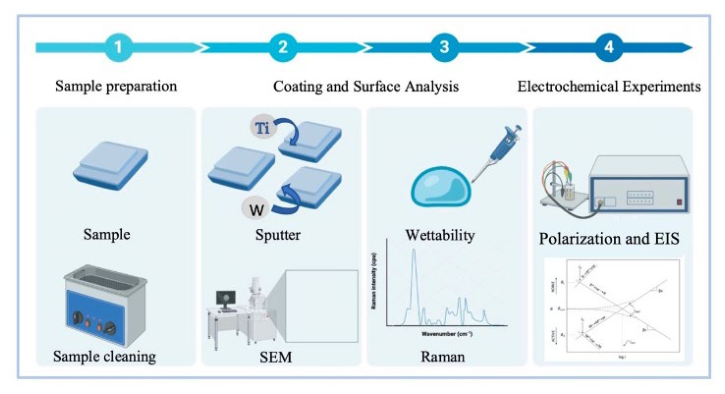
Figure 2.
EDX analysis of the doped DLC films: (a) W-DLC/316L (~9 at% W); (b) Ti-DLC/316L (~23 at% Ti); (c) W-DLC/Ti6Al4V (~7 at% W); (d) Ti-DLC/Ti6Al4V (~26 at% Ti).
Figure 2.
EDX analysis of the doped DLC films: (a) W-DLC/316L (~9 at% W); (b) Ti-DLC/316L (~23 at% Ti); (c) W-DLC/Ti6Al4V (~7 at% W); (d) Ti-DLC/Ti6Al4V (~26 at% Ti).
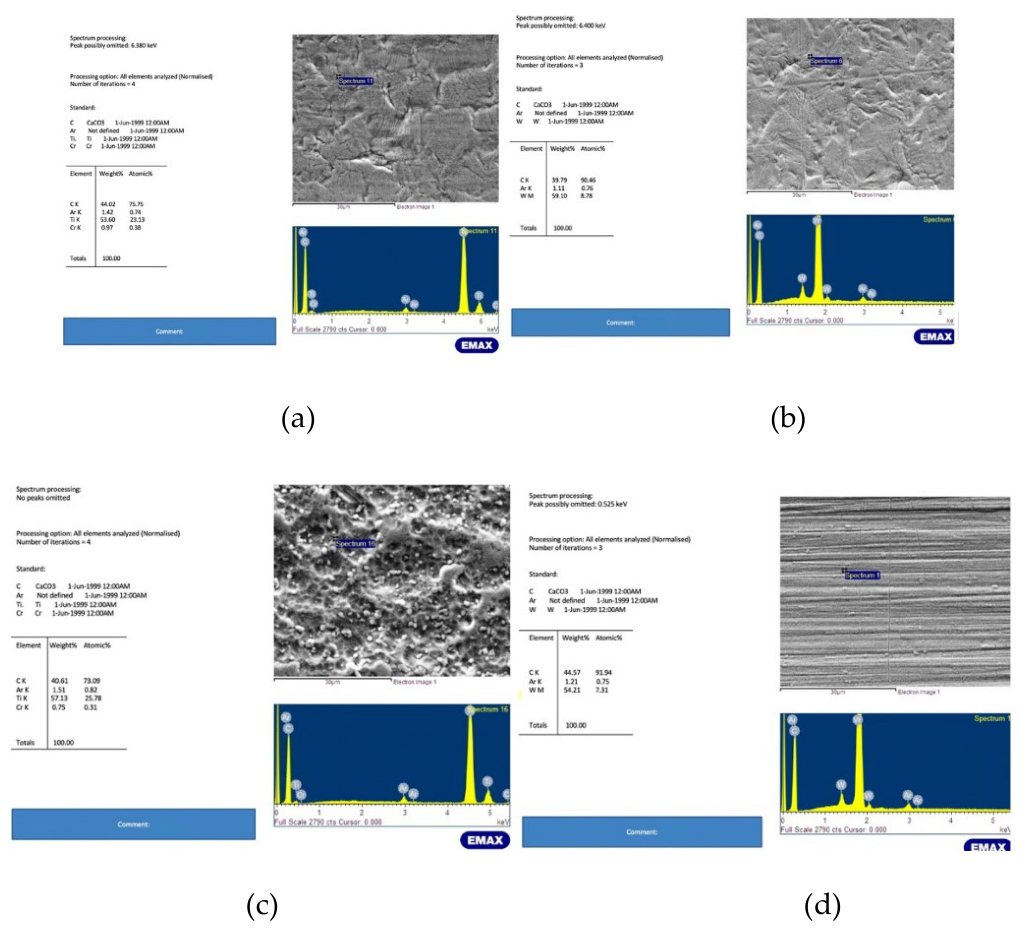
Figure 3.
Water contact angles measured by the sessile drop method for (a) 316L (81°); (b) W-DLC/316L (75°); (c) Ti-DLC/316L (68°); (d) Ti6Al4V (65°); (e) W-DLC/Ti6Al4V (73°); (f) Ti-DLC/Ti6Al4V (79°).
Figure 3.
Water contact angles measured by the sessile drop method for (a) 316L (81°); (b) W-DLC/316L (75°); (c) Ti-DLC/316L (68°); (d) Ti6Al4V (65°); (e) W-DLC/Ti6Al4V (73°); (f) Ti-DLC/Ti6Al4V (79°).
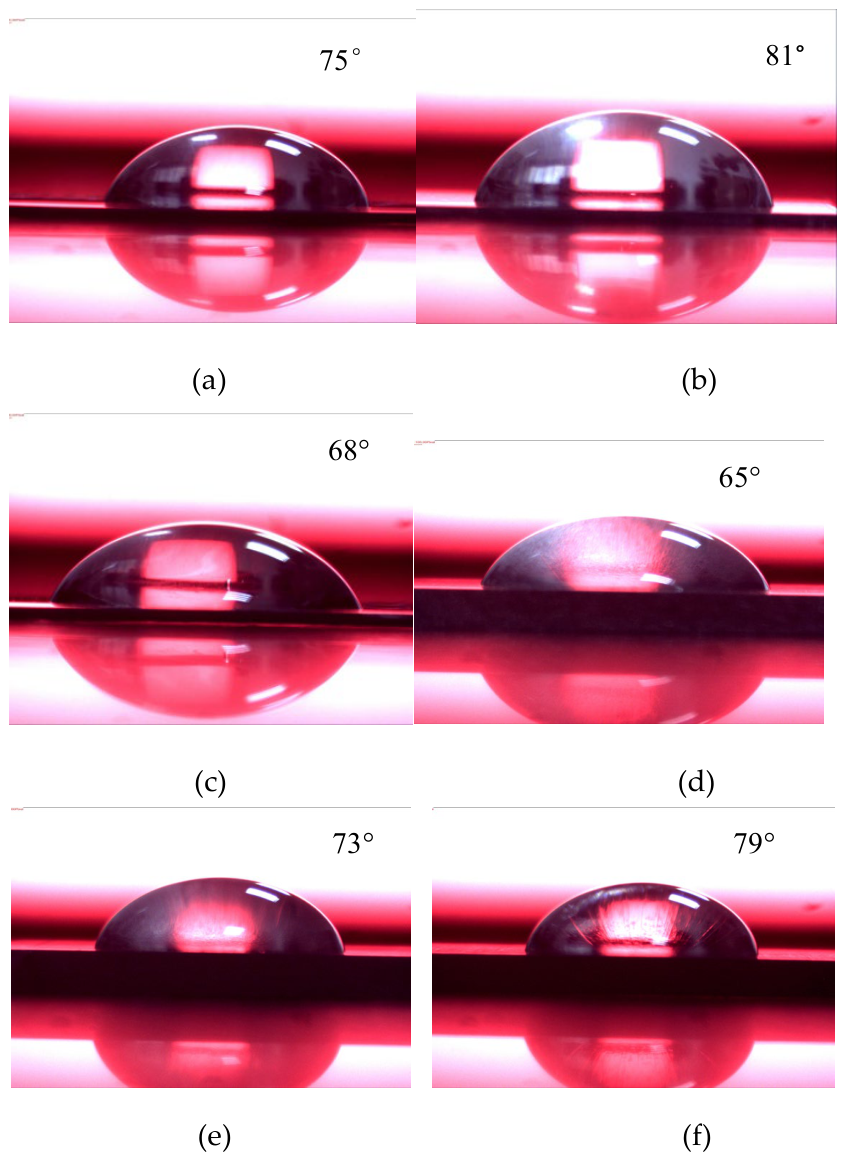
Figure 4.
Water contact angles for different substrates (a) 316L, W-DLC/316L, Ti-DLC/316L (b) Ti6Al4V, W-DLC/Ti6Al4V, Ti-DLC/Ti6Al4V.
Figure 4.
Water contact angles for different substrates (a) 316L, W-DLC/316L, Ti-DLC/316L (b) Ti6Al4V, W-DLC/Ti6Al4V, Ti-DLC/Ti6Al4V.
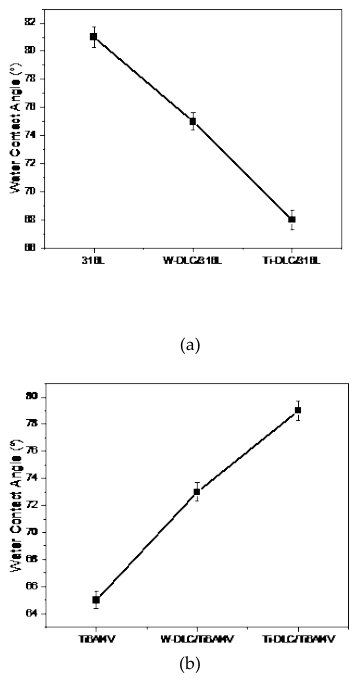
Figure 5.
Raman spectra with the fitted D and G bands: (a) W-DLC/316L, (b) Ti-DLC/316L (c) W-DLC/Ti6Al4V, (d) Ti-DLC/Ti6Al4V.
Figure 5.
Raman spectra with the fitted D and G bands: (a) W-DLC/316L, (b) Ti-DLC/316L (c) W-DLC/Ti6Al4V, (d) Ti-DLC/Ti6Al4V.
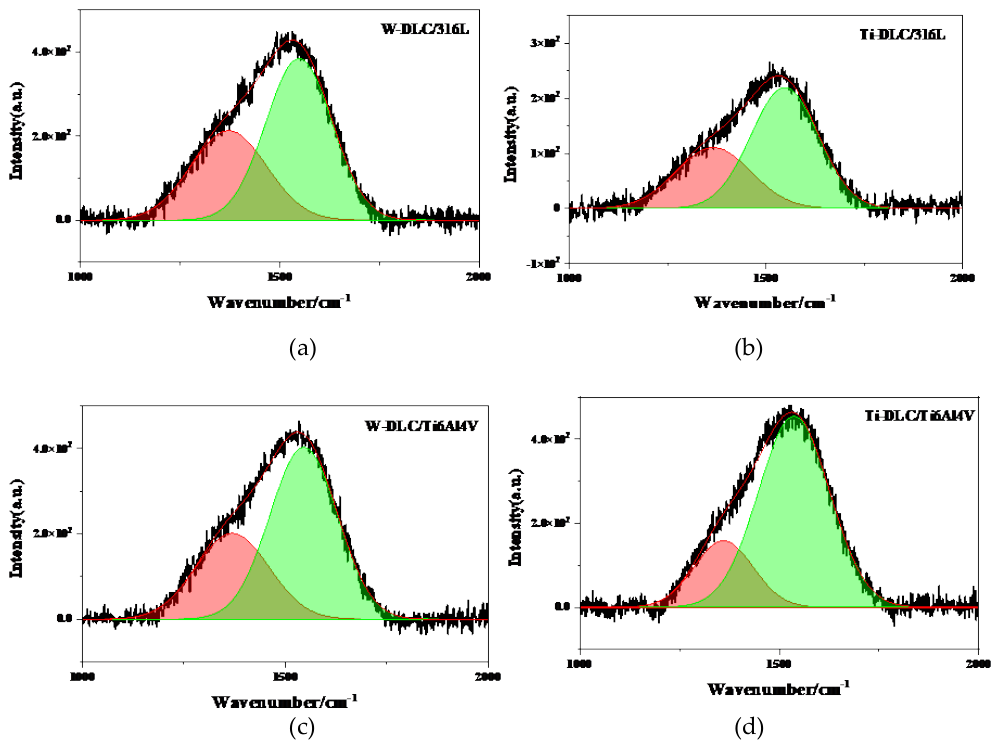
Figure 6.
Raman spectra with the fitted D and G bands: W-DLC/316L ( ID/IG = 1.468), W-DLC/Ti6Al4V (ID/IG = 1.49),Ti-DLC/316L (ID/IG = 1.561), Ti-DLC/Ti6Al4V (ID/IG = 1.355).
Figure 6.
Raman spectra with the fitted D and G bands: W-DLC/316L ( ID/IG = 1.468), W-DLC/Ti6Al4V (ID/IG = 1.49),Ti-DLC/316L (ID/IG = 1.561), Ti-DLC/Ti6Al4V (ID/IG = 1.355).
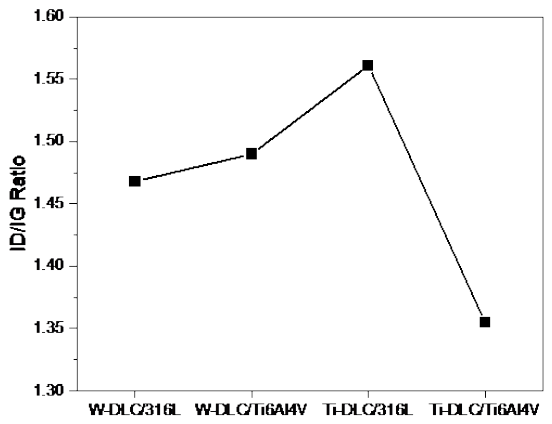
Figure 7.
Surface SEM images of the 316L series: (a) 316L before corrosion; (b) 316L after corrosion; (c) W-DLC/316L before corrosion; (d) W-DLC/316L after corrosion; (e) Ti-DLC/316L before corrosion; (f) Ti-DLC/316L after corrosion.
Figure 7.
Surface SEM images of the 316L series: (a) 316L before corrosion; (b) 316L after corrosion; (c) W-DLC/316L before corrosion; (d) W-DLC/316L after corrosion; (e) Ti-DLC/316L before corrosion; (f) Ti-DLC/316L after corrosion.
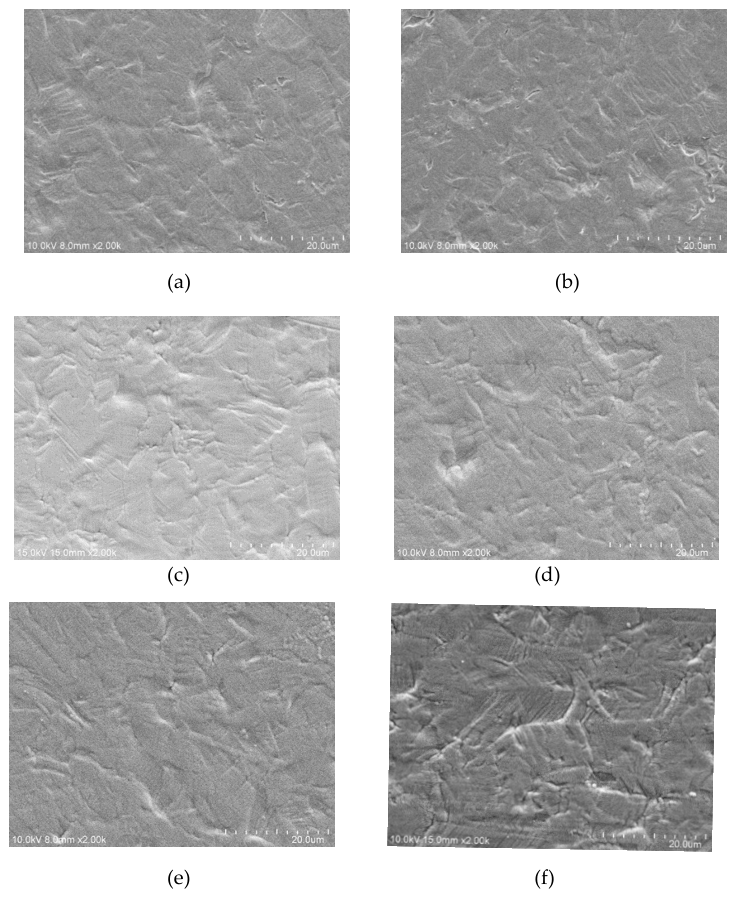
Figure 8.
Cross-sectional SEM images of the 316L series: (a) 316L before corrosion; (b) 316L after corrosion; (c) W-DLC/316L before corrosion; (d) W-DLC/316L after corrosion; (e) Ti-DLC/316L before corrosion; (f) Ti-DLC/316L after corrosion.
Figure 8.
Cross-sectional SEM images of the 316L series: (a) 316L before corrosion; (b) 316L after corrosion; (c) W-DLC/316L before corrosion; (d) W-DLC/316L after corrosion; (e) Ti-DLC/316L before corrosion; (f) Ti-DLC/316L after corrosion.
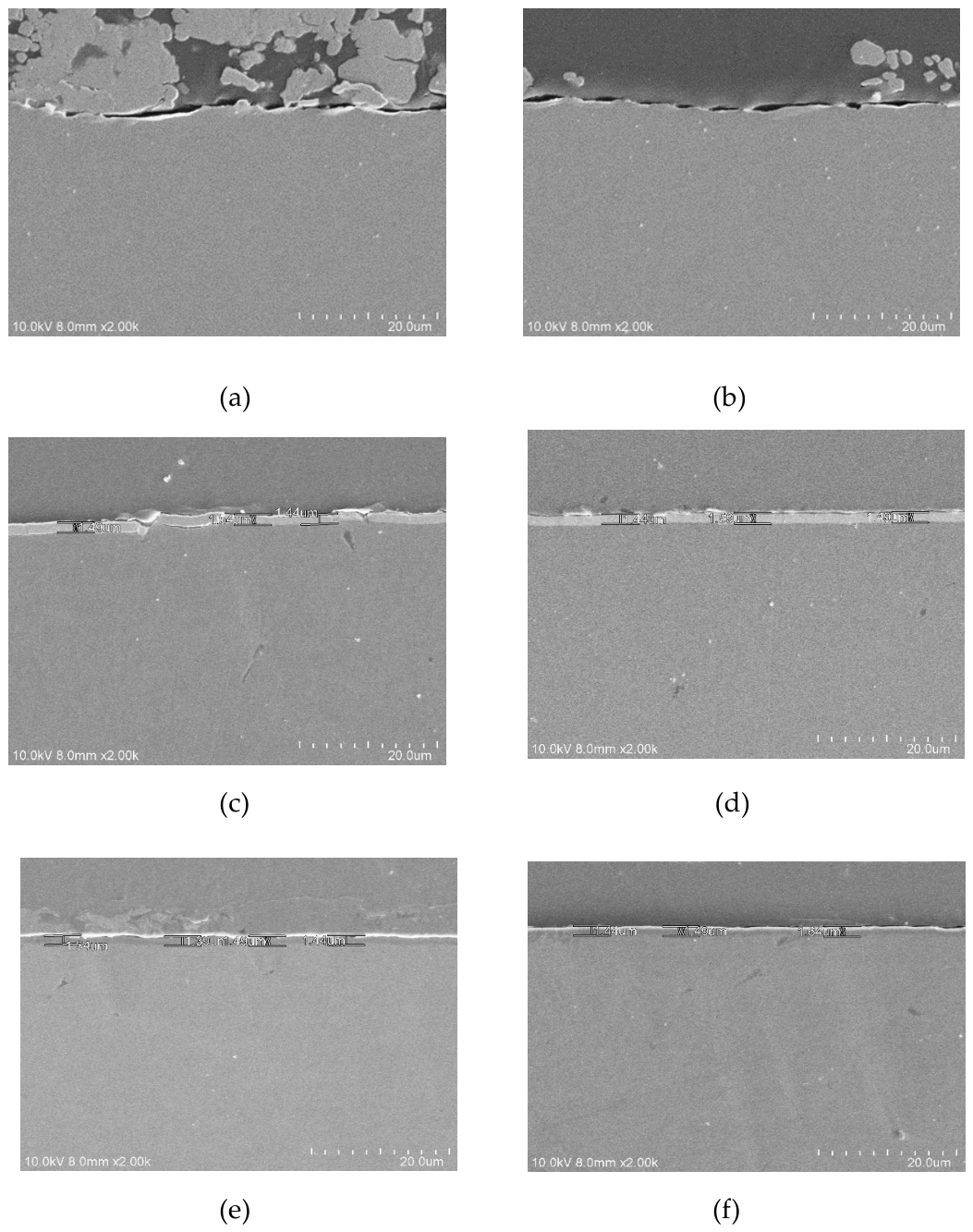
Figure 9.
Surface SEM images of the Ti6Al4V series: (a) Ti6Al4V before corrosion; (b) Ti6Al4V after corrosion; (c) W-DLC/Ti6Al4V before corrosion; (d) W-DLC/Ti6Al4V after corrosion; (e) Ti-DLC/Ti6Al4V before corrosion; (f) Ti-DLC/Ti6Al4V after corrosion.
Figure 9.
Surface SEM images of the Ti6Al4V series: (a) Ti6Al4V before corrosion; (b) Ti6Al4V after corrosion; (c) W-DLC/Ti6Al4V before corrosion; (d) W-DLC/Ti6Al4V after corrosion; (e) Ti-DLC/Ti6Al4V before corrosion; (f) Ti-DLC/Ti6Al4V after corrosion.
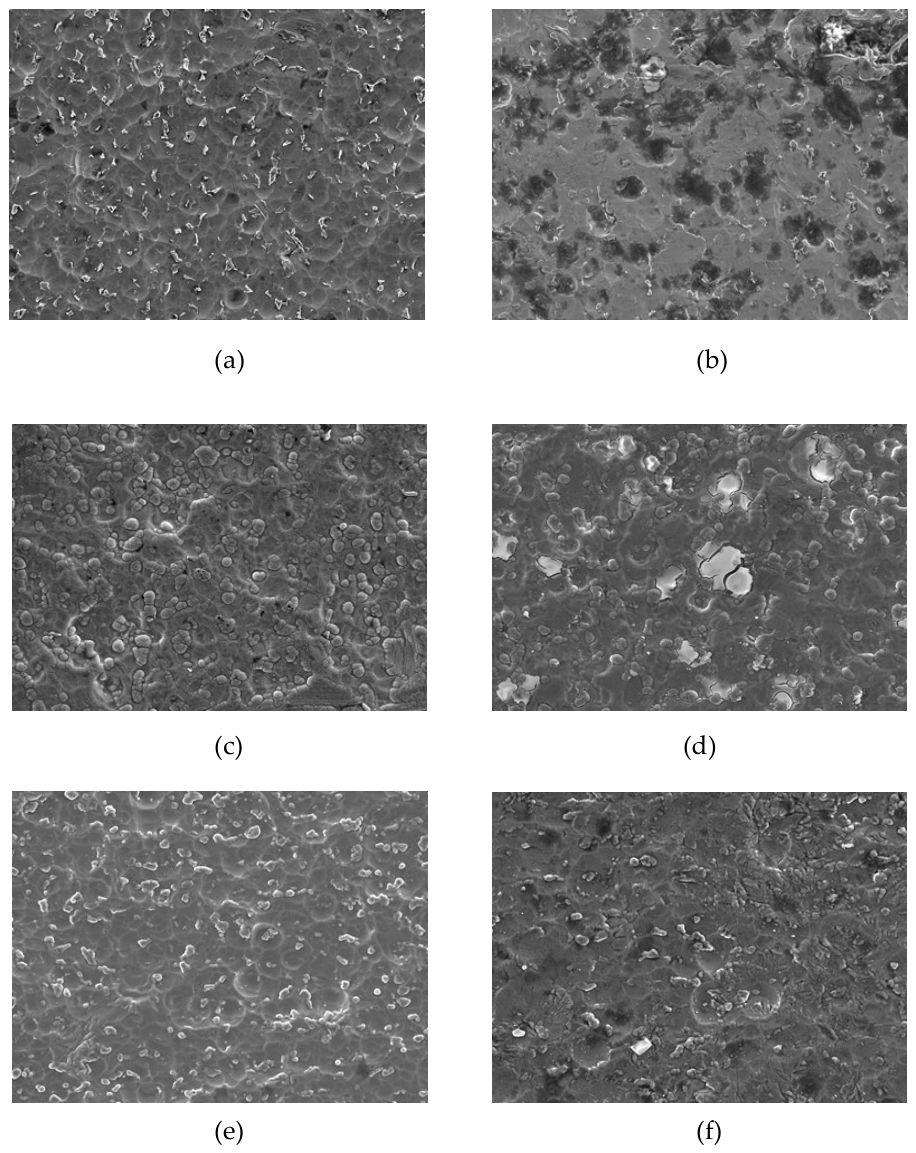
Figure 10.
Cross-sectional SEM images of the Ti6Al4V series: (a) Ti6Al4V before corrosion; (b) Ti6Al4V after corrosion; (c) W-DLC/Ti6Al4V before corrosion; (d) W-DLC/Ti6Al4V after corrosion; (e) Ti-DLC/Ti6Al4V before corrosion; (f) Ti-DLC/Ti6Al4V after corrosion.
Figure 10.
Cross-sectional SEM images of the Ti6Al4V series: (a) Ti6Al4V before corrosion; (b) Ti6Al4V after corrosion; (c) W-DLC/Ti6Al4V before corrosion; (d) W-DLC/Ti6Al4V after corrosion; (e) Ti-DLC/Ti6Al4V before corrosion; (f) Ti-DLC/Ti6Al4V after corrosion.
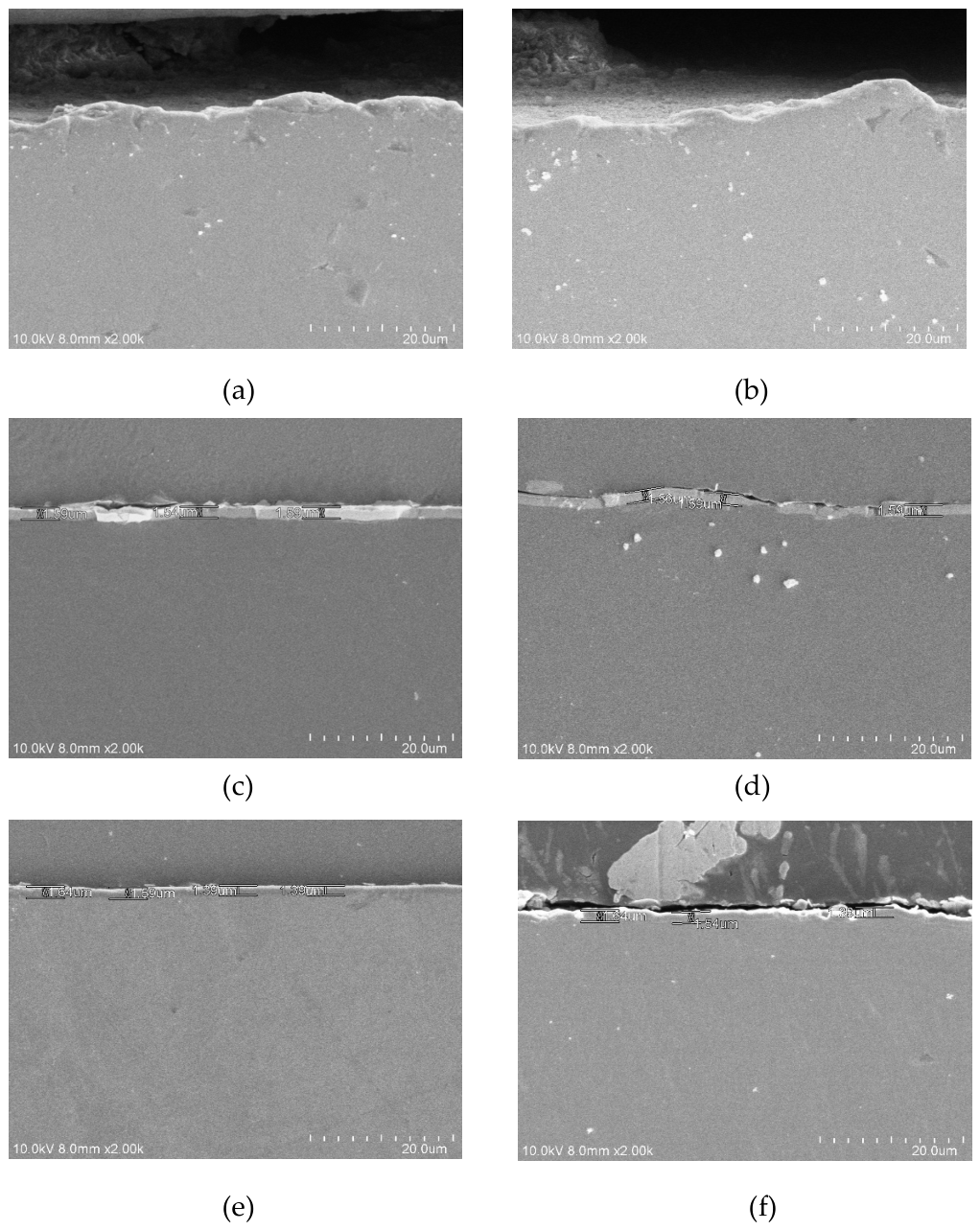
Figure 11.
Potentiodynamic polarization curves in 3.5 wt% NaCl: (a) 316L, W-DLC/316L and Ti-DLC/316L; (b) Ti6Al4V, W-DLC/Ti6Al4V and Ti-DLC/Ti6Al4V.
Figure 11.
Potentiodynamic polarization curves in 3.5 wt% NaCl: (a) 316L, W-DLC/316L and Ti-DLC/316L; (b) Ti6Al4V, W-DLC/Ti6Al4V and Ti-DLC/Ti6Al4V.
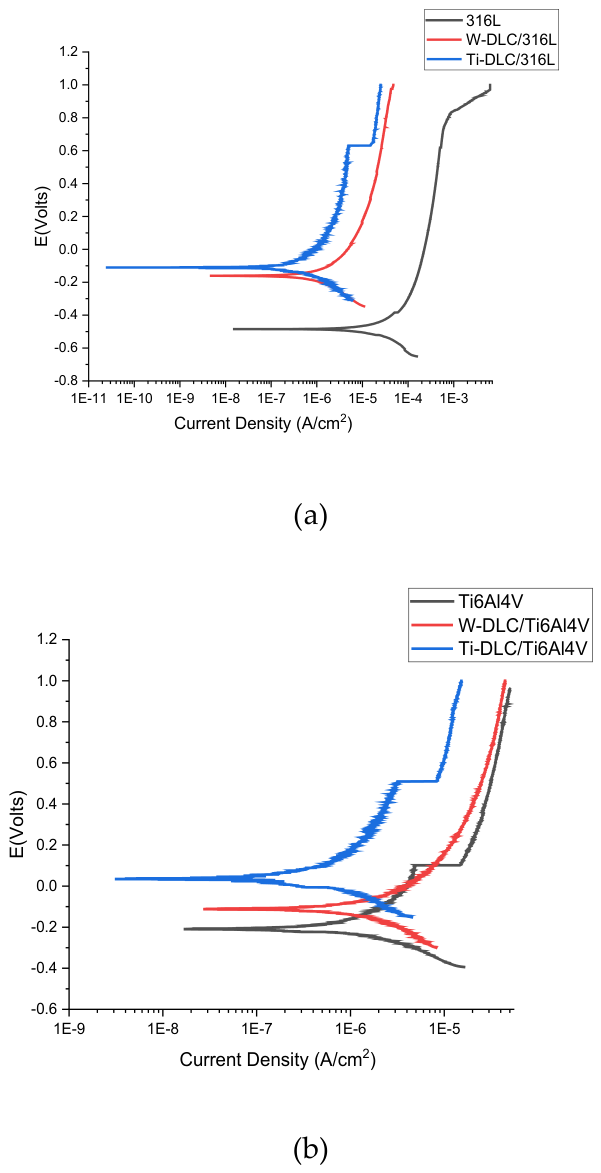
Figure 12.
Electrochemical impedance (Nyquist) spectra in 3.5 wt% NaCl: (a) 316L, W-DLC/316L and Ti-DLC/316L; (b) Ti6Al4V, W-DLC/Ti6Al4V and Ti-DLC/Ti6Al4V.
Figure 12.
Electrochemical impedance (Nyquist) spectra in 3.5 wt% NaCl: (a) 316L, W-DLC/316L and Ti-DLC/316L; (b) Ti6Al4V, W-DLC/Ti6Al4V and Ti-DLC/Ti6Al4V.
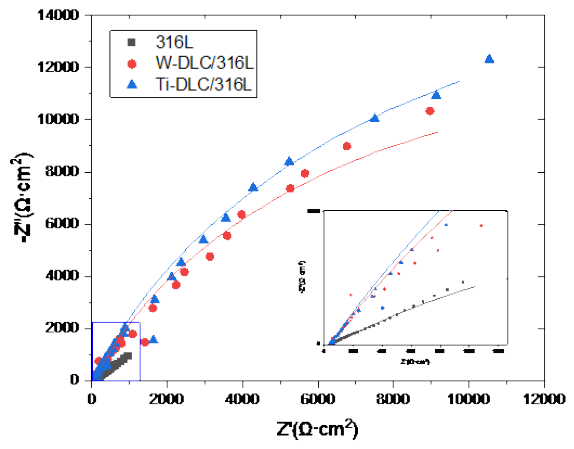
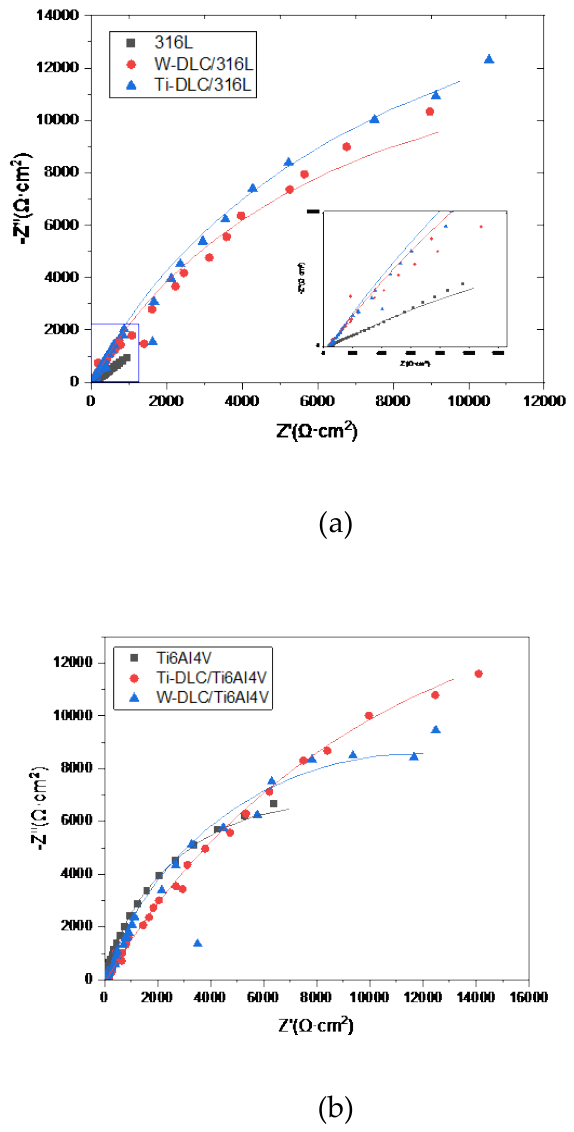

Table 1.
Nominal chemical composition of 316L stainless steel (wt%).
| Fe | Cr | Ni | Mn | Mo |
| Balance | 18 | 10 | 2.0 | 2.5 |
Table 2.
Nominal chemical composition of Ti6Al4V titanium alloy (wt%).
| Ti | Al | V | Fe | O |
| Balance | 6.0 | 4.0 | ≤0.25 | ≤0.2 |
Table 3.
Corrosion potential (Ecorr) and corrosion current density (icorr).
| Specimen | Ecorr (V) | icorr (A/cm2) |
| 316L | −0.561 | 1.540×10⁻⁶ |
| W-DLC/316L | −0.169 | 1.213×10⁻⁷ |
| Ti-DLC/316L | −0.105 | 5.882×10⁻⁸ |
| Ti6Al4V | −0.185 | 6.862×10⁻⁷ |
| W-DLC/Ti6Al4V | −0.159 | 4.430×10⁻⁷ |
| Ti-DLC/Ti6Al4V | +0.009 | 1.162×10⁻⁸ |
Table 4.
Equivalent-circuit parameters from EIS fitting in 3.5 wt% NaCl.
| Specimen | Rs (Ω) | CPE-T (S sⁿ) | CPE-P | Ceff (µF cm−2) | Rp (Ω) | Red. χ2 |
| 316L | 48.88 | 2.42 × 10⁻⁴ | 0.548 | 387 | 7165 ± 2200 | 1.1 × 10⁻³ |
| W-DLC/316L | 31.46 | 1.45 × 10⁻⁵ | 0.786 | 11.4 | 30,014 ± 6,300 | 5.3 × 10⁻³ |
| Ti-DLC/316L | 36.01 | 1.28 × 10⁻⁵ | 0.803 | 10.5 | 37,455 ± 10,100 | 7.3 × 10⁻³ |
| Ti6Al4V | 49.42 | 1.47 × 10⁻⁵ | 0.879 | 12.0 | 15,818 ± 410 | 1.9 × 10⁻⁴ |
| W-DLC/Ti6Al4V | 34.3 | 9.76 × 10⁻⁶ | 0.806 | 6.7 | 23,328 ± 3,900 | 9.3 × 10⁻³ |
| Ti-DLC/Ti6Al4V | 57.5 | 1.27 × 10⁻⁵ | 0.667 | 9.8 | 46,216 ± 13,700 | 8.2 × 10⁻³ |
Disclaimer/Publisher’s Note: The statements, opinions and data contained in all publications are solely those of the individual author(s) and contributor(s) and not of MDPI and/or the editor(s). MDPI and/or the editor(s) disclaim responsibility for any injury to people or property resulting from any ideas, methods, instructions or products referred to in the content. |
© 2026 by the authors. Licensee MDPI, Basel, Switzerland. This article is an open access article distributed under the terms and conditions of the Creative Commons Attribution (CC BY) license.
Copyright: This open access article is published under a Creative Commons CC BY 4.0 license, which permit the free download, distribution, and reuse, provided that the author and preprint are cited in any reuse.