

Submitted:
24 August 2026
Posted:
26 August 2026
You are already at the latest version
Abstract
Predictive maintenance has emerged as a key strategic approach across numerous industrial sectors, particularly in the current context marked by the systematic integration of artificial intel-ligence (AI) technologies into asset management processes. Within the railway domain, maintenance plays a critical role in ensuring both operational reliability and safety, with maintenance-related activities accounting for up to 40% of the overall budget allocated across the V-cycle of rolling stock development. Given the essential contribution of rail transport to sus-tainable mobility and to the movement of goods and passengers, the demand for intelligent and efficient maintenance strategies continues to grow. However, a comprehensive predictive maintenance framework tailored to the railway sector remains lacking. This study presents an in-depth review of the principal methods employed in recent years, combining a PRISMA-guided systematic search of three major scientific databases Scopus, Web of Science, and ScienceDirect. A total of 61 full-text articles were retained and analyzed in detail. The paper synthesizes current research trends, frameworks, and algorithms, categorized into data-driven, model-based, and hybrid approaches, and examines their distribution across railway subsystems, revealing a con-centration of research effort on rolling-stock components such as wheelsets and switch machines relative to less-instrumented, comparably safety-critical assets such as traction, signaling, and door systems. Building on these insights, a conceptual hybrid predictive maintenance framework is proposed as a synthesis of the reviewed approaches. Finally, the paper discusses the key challenges identified in the literature and outlines open research questions with potential direc-tions for future work.
Keywords:
predictive maintenance
; remaining useful life
; railway industry
; machine learning
; artificial intelligence
1. Introduction
Maintenance has long been recognized as a matter of paramount importance across numerous industries [1], particularly for leading manufacturers and operators of safety-critical systems such as those in the aeronautics, space, railway, and automotive sectors. The timely selection of an appropriate maintenance strategy can significantly reduce operational costs [2], minimize service disruption [3], and enhance both productivity and asset remaining useful life [4]. Although various maintenance types have been discussed in the literature, the most widely recognized categories, in both academia and industry, are preventive and corrective maintenance, each encompassing several subtypes [5,6]. Corrective maintenance is performed following fault detection and aims to restore an item to an operational state; depending on resource availability, it may take two forms: immediate corrective maintenance, carried out without delay to repair or replace faulty equipment, or deferred corrective maintenance, applied when the system has not failed completely and remains functional, in which case the intervention is scheduled in accordance with organizational policy [7]. Preventive maintenance, in turn, can be further divided into three categories according to the current or anticipated health state of the equipment: systematic, condition-based, and predictive maintenance (PdM). These maintenance types and strategies are illustrated in Figure 1.
Predictive maintenance constitutes one of the principal strategies of interest within the fourth industrial revolution. It is defined by the European standard EN 13306 (2010) as “condition-based maintenance carried out following a forecast derived from repeated analysis or known characteristics and evaluation of the significant parameters of the degradation of the item.” It is a technique, sometimes referred to as remote condition monitoring, capable of predicting failures and detecting faulty machine states through the estimation of the remaining useful life [8]. As highlighted in previous work [9,10,11,12], several forms of predictive maintenance have been identified; some authors distinguish five techniques applied in real-world contexts: experience-based, model-based, physics-based, data-driven, and hybrid. Nonetheless, the literature more frequently describes three principal forms: model-based methods, which encompass experience- and physics-based modeling; data-driven methods, which build predictive models from operational data, including historical failure records and condition-monitoring data, often incorporating large volumes of real-time measurements; and hybrid models, which combine the two approaches. In addition, Remaining Useful Life (RUL) has been described as a key parameter in health management and equipment monitoring [13,14], defined as the useful life remaining in a piece of equipment at a given point in its lifecycle [15]. As such, RUL estimation remains essential both for preventing failures and for constructing predictive maintenance frameworks [16].
In the rail industry, maintenance is a key determinant of operational availability and safety, as well as a major contributor to life-cycle costs [17]. According to Reliability, Availability, Maintainability, and Safety (RAMS) management principles, maintenance plays a crucial role in ensuring the safety of rail infrastructure and in preventing catastrophic incidents [18,19,20]. More recently, data-driven approaches leveraging AI have been transforming railway systems by enabling earlier and more accurate fault detection and by optimizing maintenance scheduling [21,22]. The authors of [23] developed an AI-based approach that employs classification and anomaly detection to enhance the reliability of railway radio communication systems. Similarly, [24] demonstrated how AI can optimize predictive maintenance for hybrid and electric rail systems by predicting faults in real time and adapting maintenance plans accordingly.
Although predictive maintenance has been extensively studied in the literature, its translation into real-world railway operations remains comparatively limited, and no consolidated synthesis currently exists to guide researchers and practitioners through the rapid methodological advances of recent years. This gap is particularly consequential given the pace at which artificial intelligence and data-driven techniques have reshaped condition monitoring and prognostics since 2020, leaving railway-specific practitioners without a clear reference point for which algorithms, subsystems, and frameworks have actually been validated in this domain, and which remain underexplored despite their operational and safety relevance. Addressing this need, the present paper reviews the recent methods developed in the context of predictive maintenance for railway systems, synthesizing the state of the art to identify established practices, persistent research gaps, and promising directions for future development.
The remainder of this paper is organized as follows: Section 2 defines the methodology adopted and the related work; Section 3 presents the results of the quantitative analysis; Section 4 presents the qualitative analysis, detailing the algorithms and techniques identified, the railway subsystems addressed. Section 5 presents a consolidated and unified hybrid framework for the application of PdM; and Section 6 discusses the findings and concludes the paper, outlining directions for future work.
2. Methodology
Systematic Mapping Studies (SMS) are designed to provide an overview of a research domain and typically serve as a preliminary phase preceding a systematic review [29], the latter being a comprehensive and structured examination of the existing literature on a specific topic or research question [30]. To conduct the present state-of-the-art analysis, the general steps of SMS and systematic literature review (SLR) methodologies were combined into the following process: definition of research questions, search for relevant articles, screening of papers through the application of inclusion and exclusion criteria, and paper analysis with data extraction [31]. These steps constitute the key phases of the PRISMA method. This work aims to shed light on predictive maintenance and its recent methods and approaches for real-world application in the railway domain. The following research questions are addressed:
RQ1: What algorithms and methodological approaches (data-driven, model-based, and hybrid) have been employed for predictive maintenance in the railway domain over the past two decades, and how has their relative prevalence evolved?
RQ2: Which railway subsystems and components have received the greatest research attention, and which remain underexplored relative to their operational and safety criticality?
RQ3: What are the respective strengths, limitations, and data requirements of the three major methodological families identified?
RQ4: What key challenges, currently limit the transition from component-level predictive maintenance research to deployable, fleet-level maintenance decision-making?
RQ5: How can the insights drawn from the reviewed literature be consolidated into a unified hybrid predictive maintenance framework, and what directions should future research prioritize to address the gaps identified?
2.1. Selection Process
The search for relevant publications was conducted across established scientific databases. The most widely used electronic sources for scientific and engineering research are Scopus, ScienceDirect, and Web of Science, each offering a range of search options. Table 1 outlines the search strategy applied to each database. To identify relevant publications, searches were conducted within the article title, abstract, and keywords for Scopus and ScienceDirect, whereas for Web of Science the search was performed across all fields.
2.2. Search Query Construction
This step involves the definition of a search string designed to scan the databases and capture all potentially relevant studies addressing the research problem of this paper. To this end, keywords were defined and combined using the Boolean operators “AND” and “OR” to construct search strings that limited, as far as possible, the number of retrieved papers to those most relevant. The following keywords were combined to build the general search string presented in Table 2:
- “Predictive maintenance” AND
- “Railway” OR
- “Rail industry” OR
- “Rolling stock” OR
- “Train”
2.3. PRISMA Method
The article selection process followed the PRISMA 2020 guidelines and comprised the following phases: definition of research questions, search for relevant articles, screening of papers through the application of inclusion and exclusion criteria, and paper analysis with data extraction. Systematic database searches were conducted using the queries outlined in Table 2. Following retrieval, duplicate records were systematically identified and removed. The remaining records were then assessed against the following inclusion and exclusion criteria:
- Papers published in English;
- papers published between 2006 and 2026;
- peer-reviewed journal articles or conference papers.
- Published as open access
- Directly addressed PdM in railway
Figure 2 presents the sequential phases of the article selection process in accordance with the PRISMA guidelines.
2.4. PRISMA Compliance and Registration
This systematic review was designed, conducted and reported in accordance with the Preferred Reporting Items for Systematic Reviews and Meta-Analyses (PRISMA) 2020 statement. The completed PRISMA 2020 checklist is provided as Supplementary Material, and the study selection process is reported in the PRISMA 2020 flow diagram Figure 2.
This review was not registered, and a review protocol was not prepared and published in advance. PROSPERO, the principal prospective register for systematic reviews, accepts registrations only for reviews with health-related outcomes; as the present review addresses the last advances for the predictive maintenance of railway assets, it falls outside the scope of that register, and no equivalent mandatory registry currently exists for systematic reviews in the transport engineering domain.
The completed PRISMA 2020 checklist is available as supplementary material alongside this manuscript.
3. Quantitative Analysis
Figure 3 shows the results obtained using the search queries described above. Research on predictive maintenance applications within the railway sector remains comparatively limited relative to other domains such as manufacturing, aeronautics, or the automotive industry. In Scopus alone, over 17,603 papers were retrieved when the search string was restricted to “predictive maintenance,” without “railway” or its synonyms. When the full search string was applied, 1,263 works were retrieved from Scopus, 730 from Web of Science, and 94 from ScienceDirect, yielding a total of 2,087 documents, of which more than 50% originated from Scopus.
Research activity in this area has intensified markedly over the past decade, as shown in Figure 4, which illustrates the yearly evolution of publications on predictive maintenance between 2006 and 2026. Between 2006 and 2016, the number of papers remained low and relatively stable, varying between 0 and 15 per year, indicating limited research activity in this field during that period. A significant increase is observed after 2016, reaching up to 79 papers published in 2021. This growth was driven by advances in data-driven technologies, including deep learning and machine learning algorithms, which enable the detection of anomalies and the prediction of failures before they occur, as well as by the emergence of IoT-enabled smart sensors that allow real-time monitoring of critical railway components. Publication numbers remained relatively stable between 2021 and 2022, likely reflecting publication delays associated with the COVID-19 pandemic. Since 2022, publication output has continued to grow exponentially, with over 305 articles published in 2025 and 236 in the current year (2026), suggesting a projected total of more than 400 papers by year-end.
Figure 5 presents the distribution of papers by publication type in the Scopus database. The majority of documents are conference papers (46%) and journal articles (44%), whereas book chapters (3.6%) and review papers (3.5%) are considerably less represented, reflecting limited efforts to synthesize existing knowledge. Minor categories, such as books (0.4%), data papers (0.2%), and conference reviews, further underline the field’s current emphasis on original research rather than on secondary or reference literature. Overall, these results reveal a notable scarcity of review articles that summarize and synthesize research trends: among the 1,263 documents retrieved from Scopus in the initial automatic search, only 44 were published as review articles, corresponding to fewer than 4% of the total.
The collected papers were published across numerous journals and international conferences; the five most frequent publication venues are presented in Figure 6. Applied Sciences (Switzerland) is the leading source, accounting for 30 papers, followed by Lecture Notes in Mechanical Engineering (26 papers) and Lecture Notes in Networks and Systems (22 papers). Sensors and IEEE Access complete the top five, contributing 21 and 19 papers, respectively. Together, these five venues account for 118 of the papers retrieved during the search process.
Among the corpus of 1,085 papers assessed for eligibility against the inclusion and exclusion criteria, a wide range of keywords was employed to capture thematic relevance. Table 3 presents the fifteen most frequently used keywords, together with their respective occurrence frequencies, offering a comprehensive overview of the thematic correlations across the search domains.
This keyword frequency distribution highlights the progressive integration of artificial intelligence methods into predictive maintenance within the railway sector. The predominance of the term “Predictive Maintenance” underscores its centrality as both a research focus and an operational priority. Traditional maintenance approaches are increasingly being supplanted by data-driven methods (ML, DL, and AI), which enable sophisticated fault detection, condition monitoring, and anomaly detection, all of which are critical for anticipating failures before they occur. The prominence of the keyword “forecasting” reflects the sector’s shift toward proactive asset management, aimed at reducing downtime and optimizing resource allocation. Moreover, the high occurrence of “railroad transportation” and “rails” indicates that predictive maintenance is not confined to rolling stock but extends to infrastructure, where continuous monitoring is essential to ensuring safety and efficiency. Collectively, these results illustrate the evolution from reactive and preventive strategies toward algorithm-driven predictive maintenance.
4. Qualitative Analysis
This section presents the qualitative synthesis of the reviewed literature. For this stage of the analysis, 61 open-access, peer-reviewed papers directly relevant to predictive maintenance in the railway domain were selected and examined in depth.
4.1. From Traditional to Smart Approaches
The emergence of Industry 4.0, artificial intelligence (AI), and the Internet of Things (IoT) has significantly shaped the methodologies developed over the past decade. Figure 7 shows that data-driven methods have been the most widely adopted approach among the collected articles, employed in over 80.3% of the studies, whereas 3.3% relied on purely model-based approaches and 16.4% proposed hybrid models combining data-driven and model-based techniques to build a predictive mechanism. The choice of method varied across studies according to the specific case study and the resources available to the authors.
4.2. Algorithms and Techniques
Table 4 summarizes the data gathered from the reviewed articles, providing a chronological overview of the methodological approaches and algorithms employed. The analysis reflects the growing adoption of data-driven approaches and machine learning techniques: approximately 80.3% of the reviewed studies rely on purely data-driven methodologies that directly exploit operational and sensor data, while a smaller but increasing number employ hybrid models combining machine learning with probabilistic or stochastic modeling to enhance robustness and generalization. Machine learning dominates the methodological landscape, with supervised techniques such as artificial neural networks, support vector machines, and support vector regression widely used for prediction and RUL estimation, and unsupervised methods such as K-means clustering applied for anomaly detection and degradation-pattern identification. Traditional statistical techniques, such as spectral and kurtosis analysis, remain present in earlier studies, illustrating the transition from classical methods toward more sophisticated AI-based models.
Machine learning algorithms constitute the most frequently adopted family, favored for their comparatively low data requirements and their ability to generalize on the small, unbalanced datasets typical of railway assets:
- -
- Support Vector Regression (SVR) was used within an Online Support Vector Regression architecture to estimate the remaining useful life of train axle bearings from streaming vibration and temperature data [44]; this online formulation updates its regression coefficients incrementally as new samples arrive and relies on a computationally restricted hyperparameter search to remain tractable under continuous data streams.
- -
- K-means clustering was applied to classify motor-current degradation indicators, derived through dynamic time warping, into discrete severity stages for railway door systems [34]; the same unsupervised technique was also used to detect sliding-chair degradation states in point machines from constructed health indicators [42].
- -
- Kernel principal component analysis combined with a weighted Mahalanobis distance was used to extract and fuse multi-sensor features (power curve, vibration, oil level) of a switch machine prior to state classification [36].
- -
Deep learning approaches are employed where degradation dynamics are strongly nonlinear or sequential, at the cost of requiring larger training sets than classical machine learning:
- -
- Supervised Artificial Neural Network (ANN) was trained on wheel-bearing temperature-time data to predict remaining useful life and detect the onset of degradation in a railcar bearing [35].
- -
- -
- -
- Generative Adversarial Networks (GANs) were applied to reconstruct missing sensor readings prior to RUL estimation for train control and monitoring systems [40], using an adversarial generator-discriminator pair to synthesize missing values consistent with the observed degradation trend.
Model-based approaches relying on stochastic or statistical formalisms remain prevalent where interpretability are required, as in safety-critical infrastructure assets:
- -
- Hidden Markov Model (HMM) was trained on a fused, weighted health indicator to identify discrete degradation states and to compute the expected remaining time of a switch machine before failure [36], with the model’s transition probabilities estimated from a labelled training set of prior operating cycles.
- -
- Dynamic Bayesian Networks were used to compute prognosis on discrete-state systems by propagating belief updates over successive observations [43].
- -
- Proportional Hazard Model was applied to relate covariate-driven failure risk to a baseline hazard function for infrastructure component prognosis [51].
- -
- Classical statistical techniques, including spectral and kurtosis analysis of vibration signals, were used to characterize fault signatures [39], reflecting a transition point in the literature between purely statistical degradation description and the AI-based methods that later supplanted it, while a fleet-level statistical prognostics model was also used to schedule opportunistic interventions across a train fleet based on estimated remaining useful life [33].
Hybrid models combine two or more of the above families, most often to compensate for the absence of run-to-failure data on safety-critical railway subsystems:
- -
- A Hybrid Model-based Approach combining a physics-based simulation of an HVAC system with an ensemble of Boosted Trees classifiers was used to detect multiple, potentially co-occurring faults and to estimate the remaining useful life of the air filter from physics-generated run-to-failure data [37].
- -
- The physics-based component supplies synthetic healthy and faulty operating conditions that the data-driven classifier alone could not otherwise learn from.
- -
- Stacking ensemble combining Deep Neural Networks, Support Vector Machines, k-Nearest Neighbours, and XGBoost, tuned through Bayesian optimization, was used to predict the remaining useful life of a catenary system [32], leveraging the complementary strengths of its constituent learners to reduce individual model variance. A physics-based prognostics model calibrated with learning algorithms and Monte Carlo simulation was applied to sliding-chair failure prognosis under uncertainty [53].
- -
- Hybrid LSTM-autoencoder architecture was used to jointly compress and forecast degradation signals with reduced sensitivity to noise [59]. Digital Twin technologies, integrating a continuously updated physical model with real-time operational data, was used to support advanced analytics for fleet-level maintenance planning [55], and a nonlinear diffusion-based degradation model combined with a Brownian-motion transformation was used to predict the remaining useful life of dynamic multi-component systems [58].
- -
- Mixed Integer Linear Programming formulation was used to combine data-driven RUL prognostics with the fixed preventive maintenance calendar and depot resource constraints of a real high-speed rail fleet, jointly assigning trains to operation, predictive maintenance, or idle status so as to minimize the loss of component useful life [33], and a comparable prognostics-based scheduling optimization was reported for multi-asset maintenance planning [61].
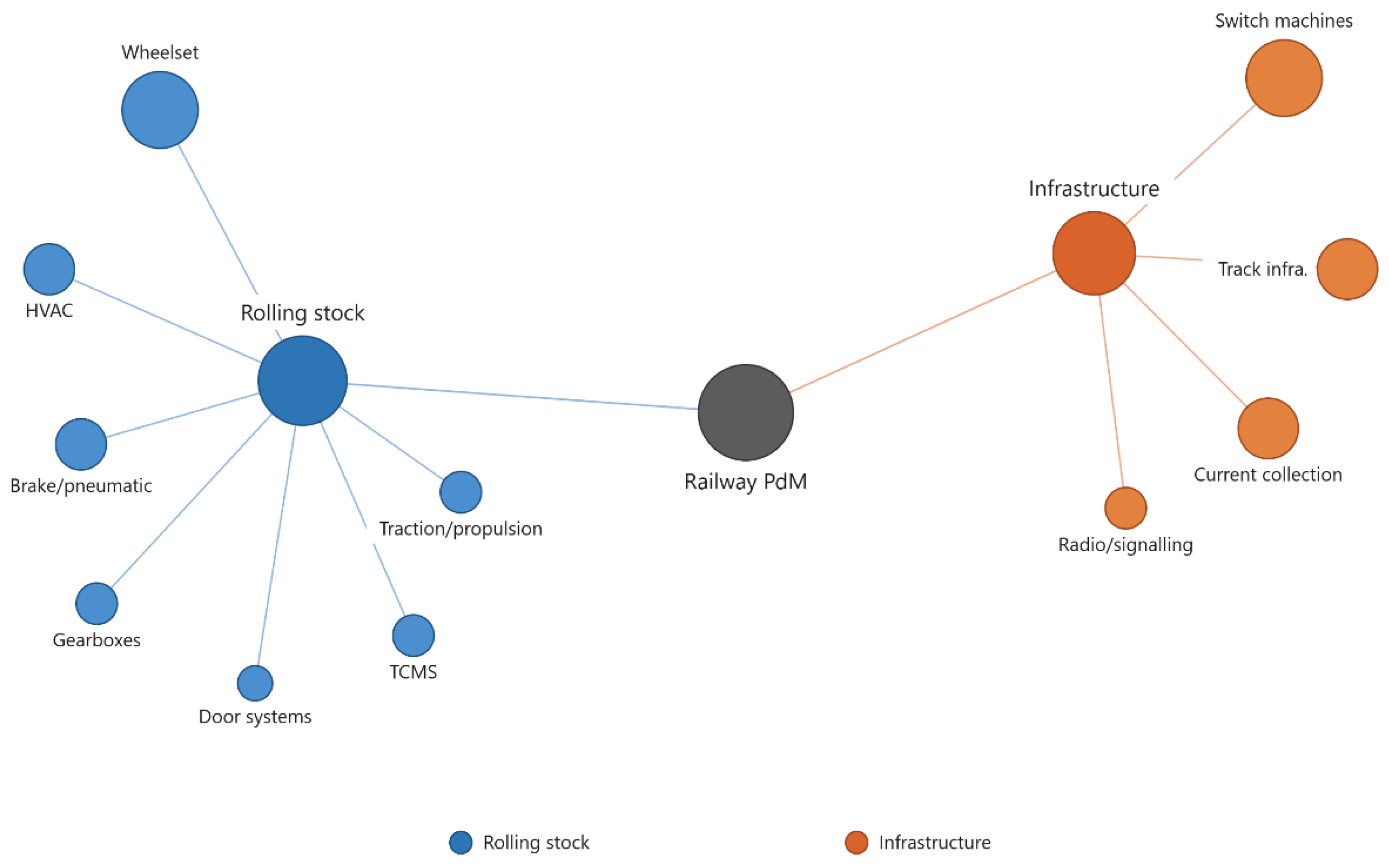
The Figure 8 synthesize all algorithms identified divided into 3 categories data driven, model based and hybrid models.
4.3. Railway Subsystems Addressed
Beyond identifying the algorithms and modelling techniques employed, it is equally important to characterize what these methods have been applied to within the railway system. The reviewed literature consistently targets subsystems that are safety-critical and operationally central to rail transport, components whose failure can compromise passenger safety, disrupt service continuity, or trigger costly unplanned downtime. Wheelsets, current-collection equipment, switch machines, and track infrastructure, in particular, are subject to demanding operating conditions and carry direct implications for both the reliability and the safety of railway operations, which explains why predictive maintenance research has concentrated so heavily on them: anticipating degradation in these subsystems offers the greatest potential to prevent failures before they occur, extend component service life, and support safer, more dependable rail operations.
Wheelset-related components, wheel bearings, axle bearings, and the wheel rail contact interface, remain the most extensively studied asset family, now accounting for twelve of the corpus’s asset-specific contributions [13,18,27,35,38,39,44,68,69,70,71,72]. Recent additions reinforce this concentration with wayside and onboard condition-monitoring reviews [68], deep-learning models for out-of-round wheel detection [69], transformer-based wheel-wear prediction [70], residual-learning CNN architectures for wheelset bearing diagnosis [71], and continual-learning approaches addressing the non-stationary nature of in-service wheel-track monitoring data [72]. This concentration remains consistent with the engineering rationale identified previously: wheelset degradation is a leading contributor to unplanned withdrawals from service, and the relevant failure mechanisms generate well-characterized vibration and thermal signatures that are comparatively straightforward to instrument.
The current-collection subsystem catenary, pantograph, and the pantograph carbon contact strip (PCCS) doubles in representation to eight studies [14,25,32,48,73,74,75,76], with newly identified work spanning fuzzy-classifier predictive maintenance for the pantograph–catenary interface [73], deep-learning-based arc detection [74], image-processing-based fault diagnosis [75], and Wiener-process degradation modelling of the PCCS itself [76].
Switch and point machines show the largest gain, rising to twelve studies [36,42,56,57,77,78,79,80,81,82,83,84], reflecting an intense recent research effort in this asset family: deep reinforcement learning [77], improved deep convolutional network and support vector data description classification [78], multi-sensor fusion tensor machines [79], expert-system and Bayesian-network diagnosis [80], deep random forest fusion [81], diagnosis frameworks for high-performance switch systems [82], acoustic degradation recognition [83], and a dedicated review of point-machine fault detection challenges [84]. HVAC systems remain at four studies [26,37,52,53], and gearboxes and mechanical transmission components remain at two [22,54], indicating that these asset families, while adequately represented, have not seen the same recent research intensity as wheelsets, current collection, or switch machines.
Fleet-level and rolling-stock-wide asset management grows to six studies [21,33,47,51,85,86] with the addition of streaming data-driven maintenance frameworks [85] and real-time online-learning pipelines for predictive maintenance [86]. Track and network-level infrastructure similarly grows to eight studies [16,19,20,55,64,65,66,67], reinforced by a dedicated review of machine-learning methods for track geometry degradation prediction [64], artificial-neural-network case studies of track degradation [65], a review of vehicle-based track condition monitoring [66], and a bibliometric systematic review of rail transport condition monitoring [67]. Though, as noted previously, this growth remains concentrated in scheduling- and degradation-modelling approaches rather than direct condition-based sensing of the track structure itself.
Train control and monitoring systems (TCMS), radio communication and signaling equipment, and traction and propulsion systems each gain one additional study respectively, a deep-learning fault diagnosis network for onboard equipment [87], a deep-learning channel-prediction framework for railway communication networks [88], and a review of traction motor design considerations for railway applications [89], bringing each of these categories to two studies apiece [23,40,87,88], and [24,89].
Brake and pneumatic supply system represented by four studies [90,91,92,93], all built around the publicly available MetroPT benchmark dataset collected from the air production unit of a Porto metro train [90]. This includes the original anomaly-detection framework using deep learning [91], a subsequent explainable machine-learning pipeline achieving above 98% F-measure on the same asset [92], and a classification-based approach to air-production-unit failure diagnosis [93]. The emergence of this category illustrates a broader pattern in the field: the availability of an open, well-documented benchmark dataset can rapidly concentrate research attention on a previously unstudied subsystem, in much the same way that accessible vibration and thermal datasets appear to have driven the wheelset literature’s dominance.
Consequently, predictive maintenance research in the railway domain remains concentrated on rolling-stock components that are both individually critical and comparatively easy to instrument, wheelsets and switch machines alone now account for nearly 40% of all asset-specific studies reviewed, while door systems, and to a lesser extent traction, TCMS, and signaling equipment, remain markedly underrepresented. The emergence of the brake and pneumatic supply category as an artefact of open benchmark data availability, rather than of any change in the underlying safety or economic importance of that subsystem, reinforces the conclusion that current research priorities in railway predictive maintenance are shaped as much by data accessibility as by asset criticality.
Figure 9.
Distribution of railway subsystems addressed, by asset category.
5. A Hybrid Predictive Maintenance Framework
5.1. Predictive Maintenance Flowchart
This section presents a proposed hybrid framework comprising a set of essential steps applicable regardless of the specific problem addressed. The process begins with the real-time acquisition of data through embedded sensors and IoT devices, which is stored in cloud infrastructure or dedicated servers. The subsequent phase consists of preprocessing the acquired data, including filling data gaps, removing duplicates, and filtering out noisy signals. The third step involves selecting the most informative indicators and retaining only the features relevant to monitoring machine health. The predictive model is then trained using historical maintenance and failure data, after which it uses the cleaned data to compute the Remaining Useful Life (RUL).
5.2. Framework Phases
5.2.1. Data Acquisition and Storage
Data acquisition constitutes the foundational phase of predictive maintenance. In the rail domain, data are collected from multiple sources, including onboard sensors (e.g., temperature, force, and current sensors) and wayside detectors such as signaling equipment and GSM radio communication systems. These data capture both the operational conditions and the health state of various assets. The acquisition process must ensure high data quality and accuracy in real time, irrespective of environmental conditions.
5.2.2. Preprocessing & Feature Extraction
Raw railway data are often affected by noise, missing values, outliers, sensor drift, and communication errors. Data cleaning aims to improve data quality and consistency prior to analysis. This phase typically involves signal filtering [45], removal of erroneous or irrelevant measurements, handling of missing data through interpolation or imputation techniques, and normalization to ensure comparability across operating regimes. In the railway context, data cleaning is particularly critical given the variable operating conditions, such as speed changes, load variations, weather effects, and track geometry, all of which may introduce non-informative variability into the data. Feature extraction transforms the cleaned data into representative indicators that capture the degradation behavior of railway components. These features may be derived in the time domain, the frequency domain, or the time–frequency domain, with effective feature extraction aiming to enhance sensitivity to early fault signatures while reducing data dimensionality. In railway predictive maintenance, features are often designed to reflect specific physical degradation mechanisms, such as bearing wear, wheel flats, insulation aging, or track deterioration, thereby improving the interpretability and robustness of the resulting predictive models.
5.2.3. REX, Expert Knowledge, and Physics-Based Modeling
In parallel to the online, data-driven flow, an offline model-based flow provides complementary degradation knowledge that historical data alone cannot provide. Return of experience (REX) and expert engineering judgment characterize known failure modes and degradation mechanisms for each subsystem, informed by prior maintenance records. This knowledge is formalized through physics-based and stochastic models, including Digital Twin simulations [55], Bayesian networks [43], and the Proportional Hazard Model [51], which represent degradation behavior even where historical run-to-failure data remain scarce.
5.2.4. Hybrid Fusion
The condition indicators derived from the online data-driven flow and the degradation knowledge derived from the offline model-based flow are combined in a hybrid fusion stage. This fusion compensates for the principal limitation of each individual approach: data-driven methods require substantial historical datasets rarely available for safety-critical railway components, while model-based methods require accurate physical parameters that are difficult to calibrate without empirical data. Fusion strategies identified in the reviewed literature include feature-level combination and the use of physics-based models to generate synthetic training data that augment sparse real-world datasets [37].
5.2.5. Model Training
The fused representation is used to train a hybrid model that learns the relationship between the extracted features, the degradation knowledge supplied offline, and the health state of railway assets. Depending on data availability and labeling, supervised, semi-supervised, or unsupervised learning approaches may be employed, as identified in Section 4.2. The training process involves parameter optimization, validation, and performance evaluation to ensure generalization across different operational conditions and asset populations.
5.2.6. Explainability
Given the safety-critical nature of railway operations, model outputs are further accompanied by an explainability module that attributes predictions to specific input features or condition indicators. This interpretability requirement is essential for maintenance decisions to be auditable and accepted within a safety-regulated operating environment [92].
5.2.7. Remaining Useful Life Estimation
Remaining Useful Life (RUL) estimation represents the ultimate objective of predictive maintenance. This phase focuses on predicting the time or number of usage cycles remaining before a component reaches a predefined failure threshold or an unacceptable performance level, combining the hybrid model’s output with real-time condition monitoring to generate prognostic insights. In the railway domain, accurate RUL predictions enable optimized maintenance scheduling, reduced downtime, improved asset availability, and enhanced safety. Two outcomes are possible: if the RUL reaches the predefined threshold, a maintenance action is scheduled; otherwise, the data are updated as new measurements become available and the cycle is repeated. This process is iterative, with the RUL estimate refined at each iteration. The proposed framework is thus designed to support maintenance decision-making, reduce downtime and cost, and improve overall reliability and availability.
6. Discussion
Answer to RQ1 (algorithmic approaches and their evolution), the analysis presented in Sections 4.2 and 4.4 shows that railway predictive maintenance research is now overwhelmingly data-driven: of the 61 studies analyzed, 80.3% employ purely data-driven methods, 16.4% adopt hybrid architectures combining physics-informed simulation with data-driven learning, and only 3.3% rely on purely model-based formulations. Within this landscape, methodological choice appears to track data availability more closely than algorithmic preference alone: hybrid architectures, unsupervised clustering, and synthetic data generation recur specifically where labelled failure data are scarce (door systems, HVAC filters, switch machines), whereas supervised regression and deep learning dominate where instrumentation is mature and historical failure records are abundant (wheelsets, current collection). This pattern suggests that the field’s methodological evolution has been shaped as much by the practical constraint of run-to-failure data scarcity on safety-critical assets as by advances in algorithmic;
Answer to RQ2 (subsystem coverage and underexplored assets), the analysis in Section 4.3 shows that wheelsets and switch machines together account for approximately 40% of the asset-specific studies reviewed, a concentration that tracks data accessibility at least as closely as asset criticality, illustrated most clearly by the rapid emergence of the brake/pneumatic supply category following the public release of the MetroPT benchmark dataset. Over the past five years specifically, three developments stand out: (i) an acceleration of deep learning and hybrid modelling applied to switch machines and current-collection assets, including deep reinforcement learning, tensor-fusion diagnosis, and transformer-based wear prediction; (ii) increasing attention to explainability and online/continual learning, reflecting the operational requirement for maintenance decisions that are both real-time and auditable within safety-regulated environments; and (iii) an expansion of track-level degradation modelling, although this remains concentrated on scheduling and reliability optimization rather than direct condition-based sensing of the physical infrastructure. By contrast, door systems, traction and propulsion, onboard communication, and train control and monitoring systems (TCMS) remain markedly underrepresented. A disparity that is difficult to justify on safety or operational grounds alone, and one that more plausibly reflects the practical difficulty and cost of instrumenting these subsystems relative to the rotating and sliding-contact components that dominate the reviewed corpus.
Answer to RQ3 (comparative strengths and limitations of the methodological families), the trade-offs identified in Section 4.4 are consistent with, and help explain, the distribution reported above: data-driven methods offer scalability and lower deployment cost but depend on data quality and volume that many railway subsystems cannot yet provide; model-based approaches offer interpretability at the cost of the domain expertise and calibration effort required to build them; and hybrid approaches partially reconcile this trade-off, at the cost of the additional integration complexity, which likely explains why they remain a minority approach (16.4%) despite their apparent suitability for exactly the data-scarce subsystems discussed above.
Answer to RQ4 (barriers to fleet-level deployment), the literature reviewed here remains concentrated at the level of individual-component prognostics; only a small subset of the studies examined most notably the fleet-scheduling optimization work discussed, extend a component-level RUL estimate into an operational, resource-constrained maintenance decision. This indicates that the translation from predictive algorithms to deployable fleet-level maintenance planning remains one of the least developed aspects of the field, independent of the methodological family employed.
Answer to RQ5, these findings collectively motivate the hybrid framework proposed in section 5. Figure 10, which is offered here as a conceptual synthesis of the approaches and gaps identified through this review, rather than as an empirically validated solution; its principal contribution is to make explicit the online/offline structure condition monitoring paired with degradation modelling that recurs implicitly across the hybrid studies surveyed, and to flag the component-to-fleet integration gap identified above as a priority for the future works.
7. Conclusion and Future Work
This review has synthesized the algorithms, techniques, and subsystem applications that define the current state of predictive maintenance research in the railway domain, guided by a PRISMA method with defined inclusion and exclusion criteria. The evidence indicates a clear trend toward data-driven methods, which now dominate the reviewed corpus, alongside a broader methodological maturation of the field, moving from isolated statistical models toward integrated hybrid frameworks. However, this trend remains constrained by a persistent challenge: the scarcity of labelled, run-to-failure datasets specific to the railway environment, which continues to limit the development and validation of purely data-driven approaches for many safety-critical subsystems. As a result, the field’s empirical coverage remains structurally uneven, shaped as much by data availability as by engineering priority.
Although predictive maintenance has been extensively studied in recent years, its application within the railway domain remains relatively underexplored. Given the substantial costs associated with maintenance activities, continued research in this field is essential. Building on these findings, four directions merit priority attention. First, deliberate efforts to generate or release open benchmark datasets for underrepresented subsystems (door systems, TCMS, traction motors) would likely accelerate research, in the same way that the availability of open datasets has already driven progress for other subsystems. Second, future work should extend hybrid physics-informed modelling, shown here to be effective precisely where labelled failure data are scarce, to these same underrepresented assets. Third, greater emphasis is needed on explainable and online-learning architectures that can operate under the auditability and real-time constraints of safety-regulated railway operations, rather than offline models validated solely on static datasets. Finally, and most critically, the field should move beyond component-level RUL estimation toward integrated fleet-level decision frameworks.
Supplementary Materials
The following supporting information can be downloaded at the website of this paper posted on Preprints.org.
Author Contributions
Conceptualization, D. EL and R.B and A.B.; methodology, D. EL and R.B.; validation, R.B, formal analysis, D. EL.; investigation, D. EL.; resources, D. EL.; data curation, D. EL.; writing—original draft preparation, D. EL; writing—review and editing, D. EL, R.B and A.B.; supervision, R.B. All authors have read and agreed to the published version of the manuscript.
Funding
This research received no external funding.
Institutional Review Board Statement
Not applicable.
Informed Consent Statement
Not applicable.
Data Availability Statement
All data analyzed in this systematic literature review are from previously published studies, which are cited in the References section.
Conflicts of Interest
The authors declare no conflicts of interest.
References
- Coandă, P.; Avram, M.; Constantin, V. State of art of predictive maintenance technique. IOP Conf. Ser. Mater. Sci. Eng. 2020, 997 012039. [Google Scholar] [CrossRef]
- Shey-Huei, S.; Chin-Chih, C.; Yen-Luan, C.; Zhe, G. Z. Optimal preventive maintenance and repair policies for multi-state systems. Reliab. Eng. Syst. Saf. 2015, 140, 78–87. [Google Scholar] [CrossRef]
- Mitici, Mihaela; et al. Dynamic predictive maintenance for multiple components using data-driven probabilistic RUL prognostics: The case of turbofan engines. Reliab Eng. Syst. Saf. 2023, 234, 109199. [Google Scholar] [CrossRef]
- Khan, M.; Ahmad, A.; Sobieczky, F.; Pichler, M.; Moser, B. A.; Bukovský, I. A Systematic Mapping Study of Predictive Maintenance in SMEs. IEEE Access 2022, vol. 10, 88738–88749. [Google Scholar] [CrossRef]
- Wang, H.; Ye, X.; Yin, M. Study on predictive maintenance strategy. Int. J. Sci. Technol. 2016, 9(4), 295–300. [Google Scholar] [CrossRef]
- Türe; Akhan, B.A.; A. Abdul, H.Z. “Techniques for Apply Predictive Maintenance and Remaining Useful Life: A Systematic Mapping Study”. BSEU J. Sci. 2021, 8(1), 497–511. [Google Scholar] [CrossRef]
- Maintenance terminology. British standard EN 13306; Maintenance terminology. Br. Stand. Inst., no. CEN. European Committee for Standardization, 2010.
- Li, J.; Schaefer, D.; Milisavljevic-Syed, J. A decision-based framework for predictive maintenance technique selection in Industry 4.0. Procedia CIRP 2022, 107, 77–82. [Google Scholar] [CrossRef]
- Wu, F.; Wu, Q.; Tan, Y.; Xu, X. Remaining useful life prediction based on deep learning: A survey. Sensors 2024, 24(11), 3454. [Google Scholar] [CrossRef] [PubMed]
- Lu, B.; Durocher, D. B.; Stemper, P. Predictive maintenance techniques. IEEE Ind. Appl. Mag. 2009, 15(6), 52–60. [Google Scholar] [CrossRef]
- Park, C.; Moon, D.; Do, N.; et al. A predictive maintenance approach based on real-time internal parameter monitoring. Int. J. Adv. Manuf. Technol. 2016, 85, 623–632. [Google Scholar] [CrossRef]
- Ibitoye, T.; Adebanjo, D. Joshua; Ayodeji, M. G.; Temijope, O. Anuoluwapo; Akingbagbohun, O.; Ogbodo, N. I. A Review of Machine Learning Techniques for Predictive Maintenance in Industry 4.0. 2024 IEEE 5th International Conference on Electro-Computing Technologies for Humanity (NIGERCON), Ado Ekiti, Nigeria, 2024; pp. 1–4. [Google Scholar] [CrossRef]
- Li, Z.; He, Q. Prediction of railcar remaining useful life by multiple data source fusion. IEEE Trans. Intell. Transp. Syst. 2015, 16(4), 2226–2235. [Google Scholar] [CrossRef]
- Liu, J.; Wu, C. Predicting the remaining useful life of metro pantograph sliding strips using gamma processes and its implications for maintenance scheduling. PLoS ONE 2025, 20(7), e0327769. [Google Scholar] [CrossRef] [PubMed]
- Hadi, E. F.; Bin Baharuddin, M. Z.; Zuhdi, A. W. M. Advancing predictive maintenance: Median-based particle filtering in MOSFET prognostics. J. Eur. Des. Systèmes Autom. 2024, 57(4), 1103–1117. [Google Scholar] [CrossRef]
- Consilvio, A.; Di Febbraro, A.; Meo, R.; Sacco, N. Risk-based optimal scheduling of maintenance activities in a railway network. EURO J Transp Logist 2019. [Google Scholar] [CrossRef]
- Dersin, P. Webinar: Prognostics & Health Management for Railways—Experience, Opportunities, Challenges. YouTube. Consulté le 30 août 2025.
- Kavitha, S.; Sesadri, U.; Jadala, V. C.; Choudhury, N.; Adinaarayana, S.; Hrushikesava Raju, S. A hybrid novel approach for rail wheel defect detection to ensure sustainability. Int. J. Transp. Dev. Integr. 2025, 9(1), 181–187. [Google Scholar] [CrossRef]
- Mukunzi, G.; Palmqvist, C.-W. The Effectiveness of Preventive Maintenance in Railways. Transp. Res. Procedia 2025, 86, 321–328. [Google Scholar] [CrossRef]
- Lidén, T. Railway Infrastructure Maintenance—A Survey of Planning Problems and Conducted Research. Transp. Res. Procedia 2015, 10, 574–583. [Google Scholar] [CrossRef]
- Saurav, K.; Avesh, M.; Sharma, R.C.; Hossain, I. Deploying Machine Learning Algorithms for Predictive Maintenance of High-Value Assets of Indian Railways. In Transportation Energy and Dynamics. Energy, Environment, and Sustainability.; Sharma, S.K., Upadhyay, R.K., Kumar, V., Valera, H., Eds.; Springer: Singapore, 2023. [Google Scholar] [CrossRef]
- Karpat, F.; Dirik, A. E.; Doğan, O.; Kalay, O. C.; Korcuklu, B.; Yüce, C. A Novel AI-Based Method for Spur Gear Early Fault Diagnosis in Railway Gearboxes. 2020 Innovations in Intelligent Systems and Applications Conference (ASYU), Istanbul, Turkey, 2020; pp. 1–6. [Google Scholar] [CrossRef]
- Kalapati, D.; Credoz, A.; Staino, A. An AI-based Method for Predictive Maintenance of Railway Radio Communication Systems. IEEE 27th of ITSC, Edmonton, AB, Canada, 2024; pp. 2705–2710. [Google Scholar]
- Soy, A.; Vij, D. P. AI-Powered Predictive Maintenance in Hybrid and Electric Rail Systems. Int. J. Basic Appl. Sci. 2025, vol. 14(no. SI-1), 13–17. [Google Scholar]
- Karaduman, G.; Akin, E. A deep learning-based method for detecting of wear on the current collector strips’ surfaces of the pantograph in railways. IEEE Access 2020, vol. 8, 183799–183812. [Google Scholar] [CrossRef]
- Shaban, I.A.; Salem, H.; Abdullah, A.Y.; Ameri, H.M.A.Q.A.; Alnahdi, M.M. Maintenance 4.0 for HVAC Systems: Addressing Implementation Challenges and Research Gaps. Smart Cities 2025, 8, 66. [Google Scholar] [CrossRef]
- H-Nia, Saeed; Flodin, Jesper; Casanueva, Carlos; Asplund, Mathias; Stichel, Sebastian. Predictive maintenance in railway systems: MBS-based wheel and rail life prediction exemplified for the Swedish Iron-Ore line. Veh. Syst. Dyn. 2024, 62:1, 3–20. [Google Scholar] [CrossRef]
- RailSystem. Rolling stock components. 2024. Available online: https://railsystem.net/rolling-stock-components/.
- Petersen, K.; Feldt, R.; Mujtaba, S.; Mattsson, M. Systematic mapping studies in software engineering. In Proceedings of the 12th International Conference on Evaluation and Assessment in Software Engineering, 2008; pp. 1–10. [Google Scholar]
- Petersen, K.; Vakkalanka, S.; Kuzniarz, L. Guidelines for conducting systematic mapping studies in software engineering: An update. Inf. Softw. Technol. 2015, 64, 1–18. [Google Scholar] [CrossRef]
- Schoombee, L. Scopus for systematic reviews; IMIST/Elsevier Webinar, 2023. [Google Scholar]
- Liu, L.; Zhang, Z.; Qu, Z.; Bell, A. Remaining useful life prediction for a catenary, utilizing Bayesian optimization of stacking. Electronics 2023, 12(7). [Google Scholar] [CrossRef]
- Crespo del Castillo, A.; Marcos, J. A.; Parlikad, A. K. Dynamic fleet maintenance management model applied to rolling stock. Reliab. Eng. Syst. Saf. 2023, 240, 109607. [Google Scholar] [CrossRef]
- Shimizu, M.; Perinpanayagam, S.; Namoano, B.; Starr, A. Real-time prognostics and health management without run-to-failure data on railway assets. IEEE Access 2023, 11, 28724–28734. [Google Scholar] [CrossRef]
- Daniyan, I.; Mpofu, K.; Muvunzi, R.; Uchegbu, I. D. Implementation of artificial intelligence for maintenance operation in the rail industry. Procedia CIRP 2022, 109, 449–453. [Google Scholar] [CrossRef]
- Zheng, Y.; Chen, W.; Zhang, Y.; Bai, D. Prediction of the remaining useful life of a switch machine, based on multi-source data. Sustainability 2022, 14(21), 14517. [Google Scholar] [CrossRef]
- Gálvez, A.; Diez-Olivan, A.; Seneviratne, D.; Galar, D. Fault detection and RUL estimation for railway HVAC systems using a hybrid model-based approach. Sustainability 2021, 13(12), 6828. [Google Scholar] [CrossRef]
- Daniyan, I.; Mpofu, K.; Oyesola, M.; Ramatsetse, B.; Adeodu, A. Artificial intelligence for predictive maintenance in the railcar learning factories. Procedia Manuf. 2020, 45, 13–18. [Google Scholar] [CrossRef]
- Daniyan, I. A.; Mpofu, K.; Adeodu, A. O. Development of a diagnostic and prognostic tool for predictive maintenance in the railcar industry. Procedia CIRP 2020, 90, 109–114. [Google Scholar] [CrossRef]
- Lee, H.; Han, S.-Y.; Park, K.-J. Generative adversarial network-based missing data handling and remaining useful life estimation for smart train control and monitoring systems. J. Adv. Transp. 2020, 8861942. [Google Scholar] [CrossRef]
- Li, R.; Verhagen, W. J. C.; Curran, R. Comparison of data-driven prognostics models: A process perspective. In Proceedings of the European Safety and Reliability Conference (ESREL); 2020; pp. 1133–1140. [Google Scholar] [CrossRef]
- Atamuradov, V.; Medjaher, K.; Camci, F.; Dersin, P.; Zerhouni, N. Degradation-level assessment and online prognostics for sliding chair failure on point machines. IFAC-PapersOnLine 2018, 51(24), 208–213. [Google Scholar] [CrossRef]
- Foulliaron, J.; Bouillaut, L.; Aknin, P.; Barros, A. A dynamic Bayesian network approach for prognosis computations on discrete state systems. J. Risk Reliab. 2017, 231(5), 516–533. [Google Scholar] [CrossRef]
- Fumeo, E.; Oneto, L.; Anguita, D. Condition-based maintenance in railway transportation systems based on big data streaming analysis. Procedia Comput. Sci. 2015, 53, 437–446. [Google Scholar] [CrossRef]
- Öhman, J.; Birk, W.; Westerberg, J. Wheel Damage Prediction Using Wayside Detector Data for a Cross-Border Operating Fleet with Irregular Detector Passage Patterns. Lect. Notes Mech. Eng. 2024, 491–501. [Google Scholar] [CrossRef]
- Kumar, U.; Karim, R.; Galar, D.; Kour, R. (Eds.) 7th International Congress and Workshop on Industrial AI and eMaintenance, IAI 2023; Lecture Notes in Mechanical Engineering; 2024. [Google Scholar]
- Saurav, K.; Avesh, M.; Sharma, R. C.; Hossain, I. Deploying Machine Learning Algorithms for Predictive Maintenance of High-Value Assets of Indian Railways. Energy, Environment and Sustainability, Part F 2023, 647, 401–426. [Google Scholar]
- Zhao, T. RUL Prediction of Railway PCCS Based on Data-Driven Method; Lecture Notes in Electrical Engineering; 2022; Vol. 868 LNEE, pp. 133–145. [Google Scholar]
- Karpat, F.; et al. A Novel AI-Based Method for Spur Gear Early Fault Diagnosis in Railway Gearboxes. In Proceedings of the Innovative Intelligent Systems and Applications Conference (ASYU), 2020; Institute of Electrical and Electronics Engineers. [Google Scholar]
- Lughofer, E.; Sayed-Mouchaweh, M. Predictive Maintenance in Dynamic Systems: Advanced Methods, Decision Support Tools and Real-World Applications; Springer International Publishing, 2019. [Google Scholar]
- Rahimdel, M. J.; Ghodrati, B.; Vahed, A. T. Prediction of Mining Railcar Remaining Useful Life. In Springer Series in Geomechanics and Geoengineering; 2020; pp. 281–288. [Google Scholar]
- Gálvez, A.; Diez-Olivan, A.; Seneviratne, D.; Galar, D. Synthetic Data Generation in Hybrid Modelling of Railway HVAC System. IMEKO TC10 EUROLAB Virtual Conference: Global Trends in Testing, Diagnostics and Inspection, 2020; pp. 79–84. [Google Scholar]
- Staino, A.; Abou-Eid, R.; Dersin, P. A Monte-Carlo Approach for Prognostics of Clogging Process in HVAC Filters Using a Hybrid Strategy: A Real Case Study in Railway Systems. In IEEE International Conference on Prognostics and Health Management (ICPHM); Institute of Electrical and Electronics Engineers, 2018. [Google Scholar]
- Beqiri, L.; Bakhshi, Z.; Punnekkat, S.; Cicchetti, A. Remaining Useful Life Estimation for Railway Gearbox Bearings Using Machine Learning; Lecture Notes in Computer Science; 2023; Vol. 14198 LNCS, pp. 62–77. [Google Scholar]
- Alvarado, U.; Ciáurriz, P.; Emeterio, A. S.; Errandonea, I.; Rodriguez, J. MAINRAIL: Maintenance Optimization of Railway Infrastructure through Physical Modeling and Advanced Analytics. In Proceedings of the European Safety and Reliability Conference, 2021; pp. 200–207. [Google Scholar]
- Sousa Tomé, E.; Ribeiro, R. P.; Veloso, B.; Gama, J. An Online Data-Driven Predictive Maintenance Approach for Railway Switches. In Communications in Computer and Information Science; 2023; Vol. 1753. [Google Scholar]
- Pratama, Z. A.; Hidayat, F. Predictive Maintenance on Railway Turnout System: A Systematic Literature Review. International Conference on ICT for Smart Society (ICISS), 2022. [Google Scholar]
- Langeron, Y.; Huynh, K. T.; Grall, A. Degradation and Maintenance Modeling of Dynamic Systems. In Proceedings of the European Safety and Reliability Conference., 2020; p. 3533. [Google Scholar]
- Dai, G. Estimate Remaining Useful Life for Predictive Railways Maintenance Based on LSTM Autoencoder. Neural Computing and Applications 2022. [Google Scholar] [CrossRef]
- Coetzee, J.; Pretorius, L. Prognostics and Health Management Modelling: Applying Machine Learning Techniques to Develop a Predictive Maintenance Strategy in the Railway Environment. Towards a Digital World Industry X.0—Proceedings of IAMOT., 2020; pp. 822–843. [Google Scholar]
- Camci, F.; Sevkli, M.; Karakas, M.; K. Jennions, I. Maintenance Planning with Prognostics for Systems Located In Various Places. Annu. Conf. PHM Soc. 2012, 4(1). [Google Scholar] [CrossRef]
- Davari, N.; Veloso, B.; Costa, G.D.; Pereira, P.M.; Ribeiro, R.P.; Gama, J. A Survey on Data-Driven Predictive Maintenance for the Railway Industry. SENSORS 2021, 21(17). [Google Scholar] [CrossRef] [PubMed]
- Jan, K.; Martin, Č.; Stanislav, P.; Petr, B. Tracking filter design for predictive maintenance of jet engine different approaches and their comparison. J. Mech. Eng. 2018, 68, 75–84. [Google Scholar] [CrossRef]
- Liao, Y.; Han, L.; Wang, H.; Zhang, H. Prediction models for railway track geometry degradation using machine learning methods: A review. Sensors 2022, 22(19), 7275. [Google Scholar] [CrossRef] [PubMed]
- Khajehei, H.; Ahmadi, A.; Soleimanmeigouni, I.; Haddadzade, M.; Nissen, A.; Latifi Jebelli, M. J. Prediction of track geometry degradation using artificial neural network: a case study. Int. J. Rail Transp. 2022, 10, 24–43. [Google Scholar] [CrossRef]
- Fernandez-Bobadilla, H. A.; Martin, U. Modern tendencies in vehicle-based condition monitoring of the railway track. IEEE Trans. Instrum. Meas. 2023, 72, 1–44. [Google Scholar] [CrossRef]
- Kostrzewski, M.; Melnik, R. Condition monitoring of rail transport systems: a bibliometric performance analysis and systematic literature review. Sensors 2021, 21(14), 4710. [Google Scholar] [CrossRef] [PubMed]
- Shaikh, M. Z.; et al. State-of-the-art wayside condition monitoring systems for railway wheels: a comprehensive review. IEEE Access 2023, 11, 13257–13279. [Google Scholar] [CrossRef]
- Ye, Y.; Zhu, B.; Huang, P.; Peng, B. OORNet: A deep learning model for on-board condition monitoring and fault diagnosis of out-of-round wheels of high-speed trains. Measurement 2022, 199, 111268. [Google Scholar] [CrossRef]
- Wang, H.; Men, T.; Li, Y. F. Transformer for high-speed train wheel wear prediction with multiplex local-global temporal fusion. IEEE Trans. Instrum. Meas. 2022, 71, 1–12. [Google Scholar] [CrossRef]
- Peng, D.; Liu, Z.; Wang, H.; Qin, Y.; Jia, L. A novel deeper one-dimensional CNN with residual learning for fault diagnosis of wheelset bearings in high-speed trains. IEEE Access 2019, 7, 10278–10293. [Google Scholar] [CrossRef]
- Risca, D.; Lourenço, A.; Marreiros, G. Boosting-inspired online learning with transfer for railway maintenance. arXiv 2025, arXiv:2504.08554. [Google Scholar]
- Karaduman, G.; Akin, E. A new approach based on predictive maintenance using the fuzzy classifier in pantograph–catenary systems. IEEE Trans. Intell. Transp. Syst. 2022, 23(5), 4236–4246. [Google Scholar] [CrossRef]
- Karaduman, G.; Karakose, M.; Akin, E. Deep learning based arc detection in pantograph–catenary systems. In Proceedings of the 10th International Conference on Electrical and Electronics Engineering (ELECO), Bursa, Turkey, 2017; IEEE; pp. 904–908. [Google Scholar]
- Karakose, E.; Gencoglu, M. T.; Karakose, M.; Aydin, I.; Akin, E. A new experimental approach using image processing-based tracking for an efficient fault diagnosis in pantograph–catenary systems. IEEE Trans. Ind. Inform. 2017, 13(2), 635–643. [Google Scholar] [CrossRef]
- Guan, Q.; Wei, X.; Jia, L.; He, Y.; Zhang, H. RUL prediction of railway PCCS based on Wiener process model with unequal interval wear data. Appl. Sci. 2020, 10(5), 1616. [Google Scholar] [CrossRef]
- Xiao, S.; Feng, Q.; Li, X.; Li, H. Research on intelligent fault diagnosis for railway point machines using deep reinforcement learning. Transp. Saf. Environ. 2024, 6(4), tdae007. [Google Scholar] [CrossRef]
- Shi, Y.; et al. Fault diagnosis of ZDJ7 railway point machine based on improved DCNN and SVDD classification. IET Intelligent Transport Systems 2023. [Google Scholar] [CrossRef]
- Chen, C.; Xu, Z.; Mei, M.; Huang, K.; Lo, S. M. Fault diagnosis scheme for railway switch machine using multi-sensor fusion tensor machine. Comput. Mater. Contin. 2024, 79(3), 4533–4549. [Google Scholar] [CrossRef]
- Reetz, S.; Neumann, T.; Schrijver, G.; van den Berg, A.; Buursma, D. Expert system based fault diagnosis for railway point machines. Proceedings of the Institution of Mechanical Engineers, Part F: Journal of Rail and Rapid Transit 2024. [Google Scholar] [CrossRef]
- Cao, Y.; Ji, Y.; Sun, Y.; Su, S. The fault diagnosis of a switch machine based on deep random forest fusion. IEEE Intell. Transp. Syst. Mag. 2023, 15(1), 437–452. [Google Scholar] [CrossRef]
- Belghiti, Z.; Ladj, A.; Elmenzhi, L. Machine learning-based approach for railway switch and crossing system diagnosis. In Intersection of Artificial Intelligence, Data Science, and Cutting-Edge Technologies (ICAISE 2024); Springer, 2025. [Google Scholar]
- Sun, Y.; Cao, Y.; Li, P.; Su, S. Sound based degradation status recognition for railway point machines based on soft-threshold wavelet denoising, WPD, and ReliefF. IEEE Trans. Instrum. Meas. 2024, 73, 1–9. [Google Scholar] [CrossRef]
- Hu, X.; Tang, T.; Tan, L.; Zhang, H. Fault detection for point machines: A review, challenges, and perspectives. Actuators 2023, 12(10), 391. [Google Scholar] [CrossRef]
- Meira, J.; et al. Data-driven predictive maintenance framework for railway systems. Intell. Data Anal. 2023, 27, 1087–1102. [Google Scholar] [CrossRef]
- Le-Nguyen, M.-H.; Turgis, F.; Fayemi, P.-E.; Bifet, A. Real-time learning for real-time data: online machine learning for predictive maintenance of railway systems. Transp. Res. Procedia 2023, 72, 171–178. [Google Scholar] [CrossRef]
- Yin, J.; Zhao, W. Fault diagnosis network design for vehicle on-board equipment of high-speed railway: A deep learning approach. Eng. Appl. Artif. Intell. 2016, 56, 250–259. [Google Scholar] [CrossRef]
- Zhou, T.; Zhang, H.; Ai, B.; Xue, C.; Liu, L. Deep-learning-based spatial–temporal channel prediction for smart high-speed railway communication networks. IEEE Trans. Wirel. Commun. 2022, 21(7), 5333–5345. [Google Scholar] [CrossRef]
- Nategh, S.; Boglietti, A.; Liu, Y.; Barber, D.; Brammer, R.; Lindberg, D.; Aglen, O. A review on different aspects of traction motor design for railway applications. IEEE Trans. Ind. Appl. 2020, 56(3), 2148–2157. [Google Scholar] [CrossRef]
- Veloso, B.; Ribeiro, R. P.; Gama, J.; Pereira, P. M. The MetroPT dataset for predictive maintenance. Sci. Data 2022, 9(1), 764. [Google Scholar] [CrossRef] [PubMed]
- Davari, N.; Veloso, B.; Ribeiro, R. P.; Pereira, P. M.; Gama, J. Predictive maintenance based on anomaly detection using deep learning for air production unit in the railway industry. 2021 IEEE 8th International Conference on Data Science and Advanced Analytics (DSAA), 2021. [Google Scholar] [CrossRef]
- García-Méndez, S.; et al. An explainable machine learning framework for railway predictive maintenance using data streams from the metro operator of Portugal. Sci. Rep. 2025. [Google Scholar] [CrossRef] [PubMed]
- Najjar, A. A.; Ashqar, H. I.; Hasasneh, A. Predictive maintenance of urban metro vehicles: classification of air production unit failures using machine learning. SSRN 2023. [Google Scholar] [CrossRef]
Figure 1.
Maintenance types and strategies.
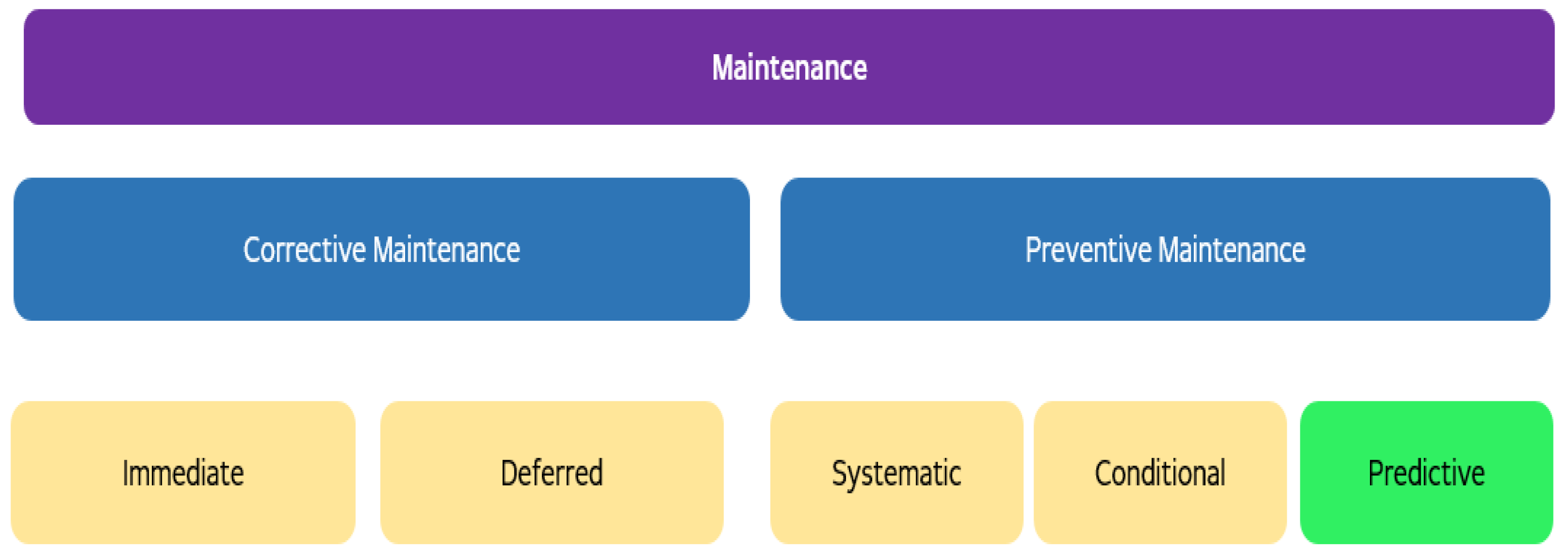
Figure 2.
PRISMA method flowchart.
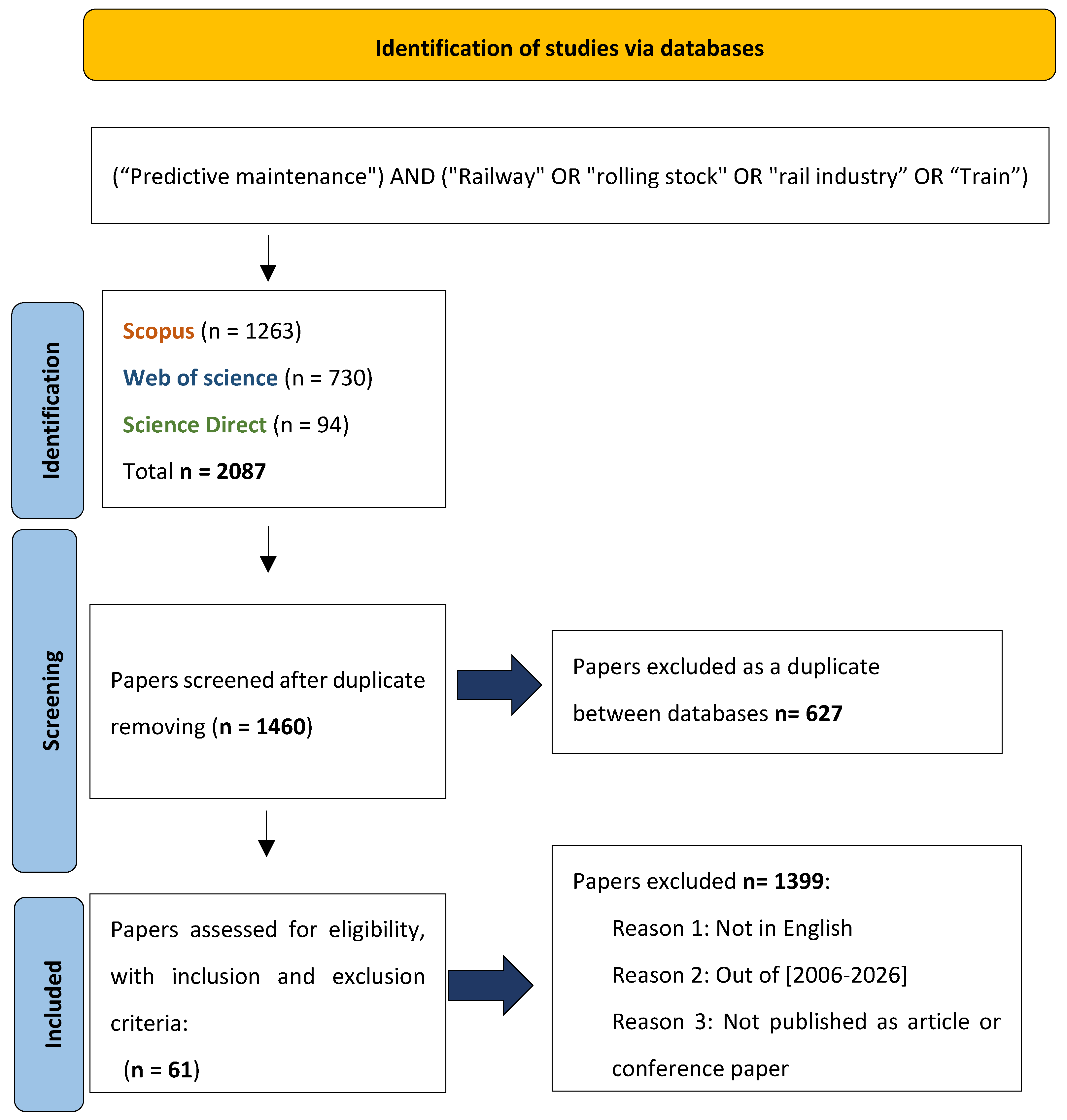
Figure 3.
The number of articles per database.
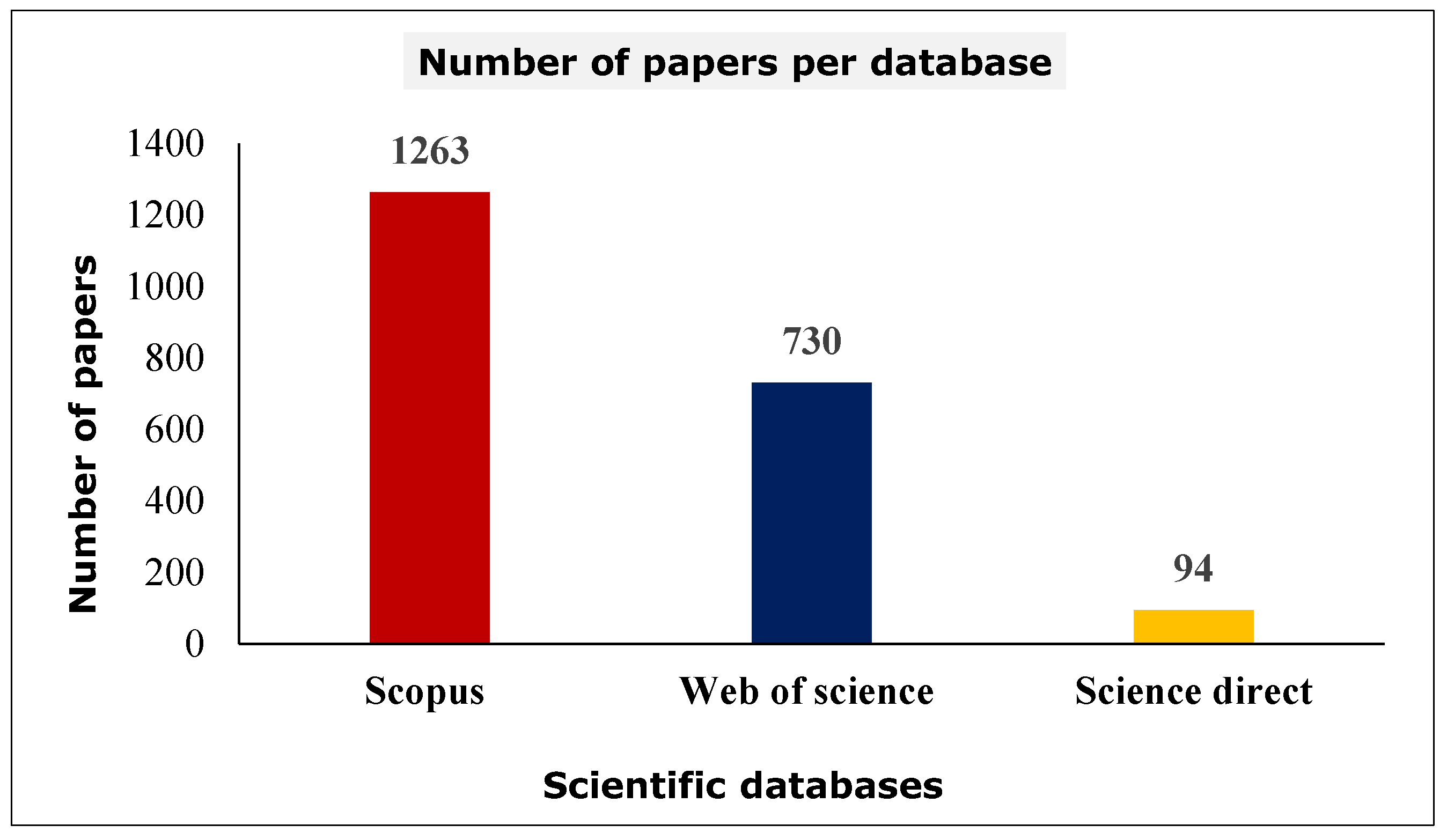
Figure 4.
Number of publications per year.
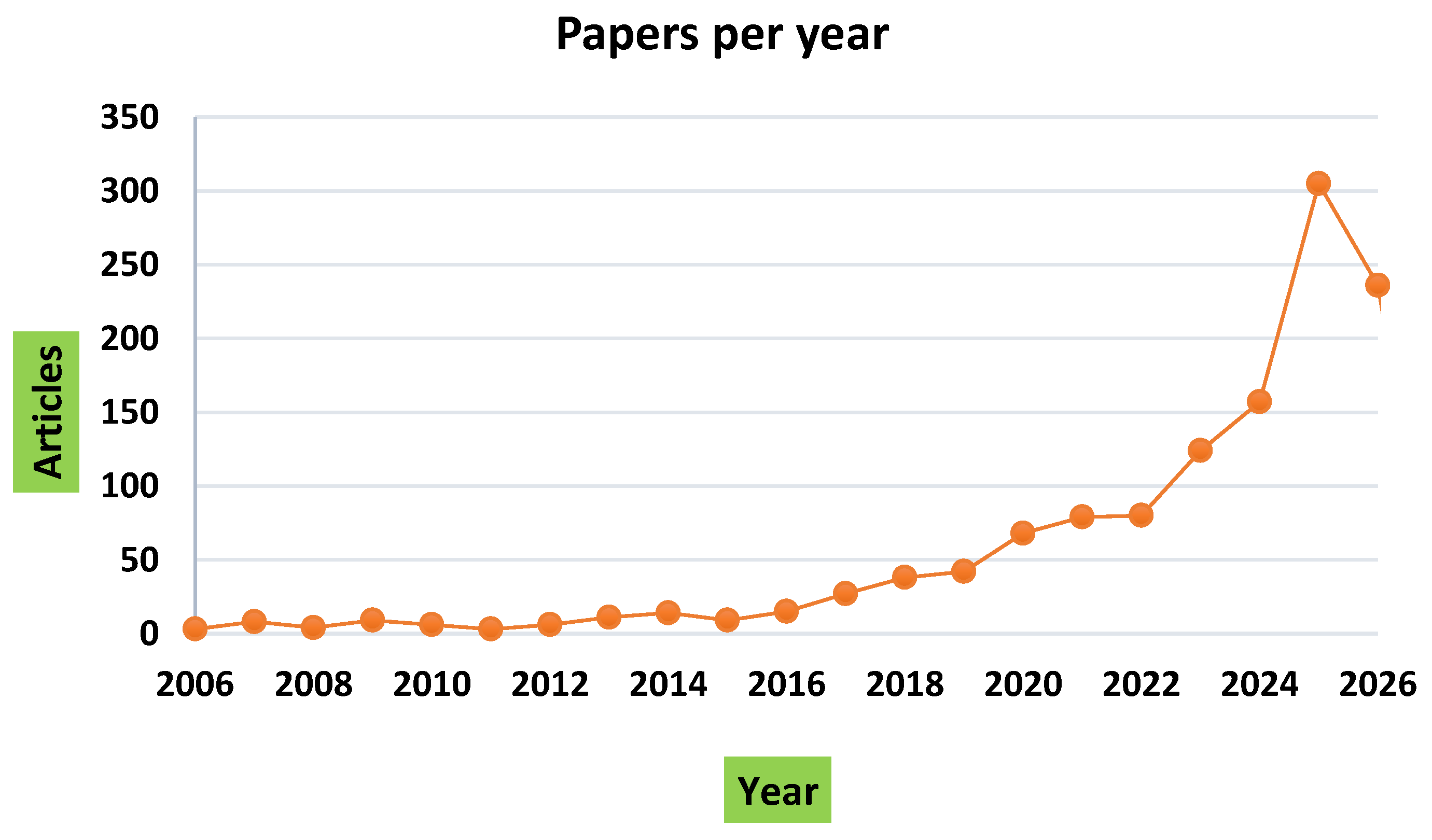
Figure 5.
Papers types collected from scientific databases.
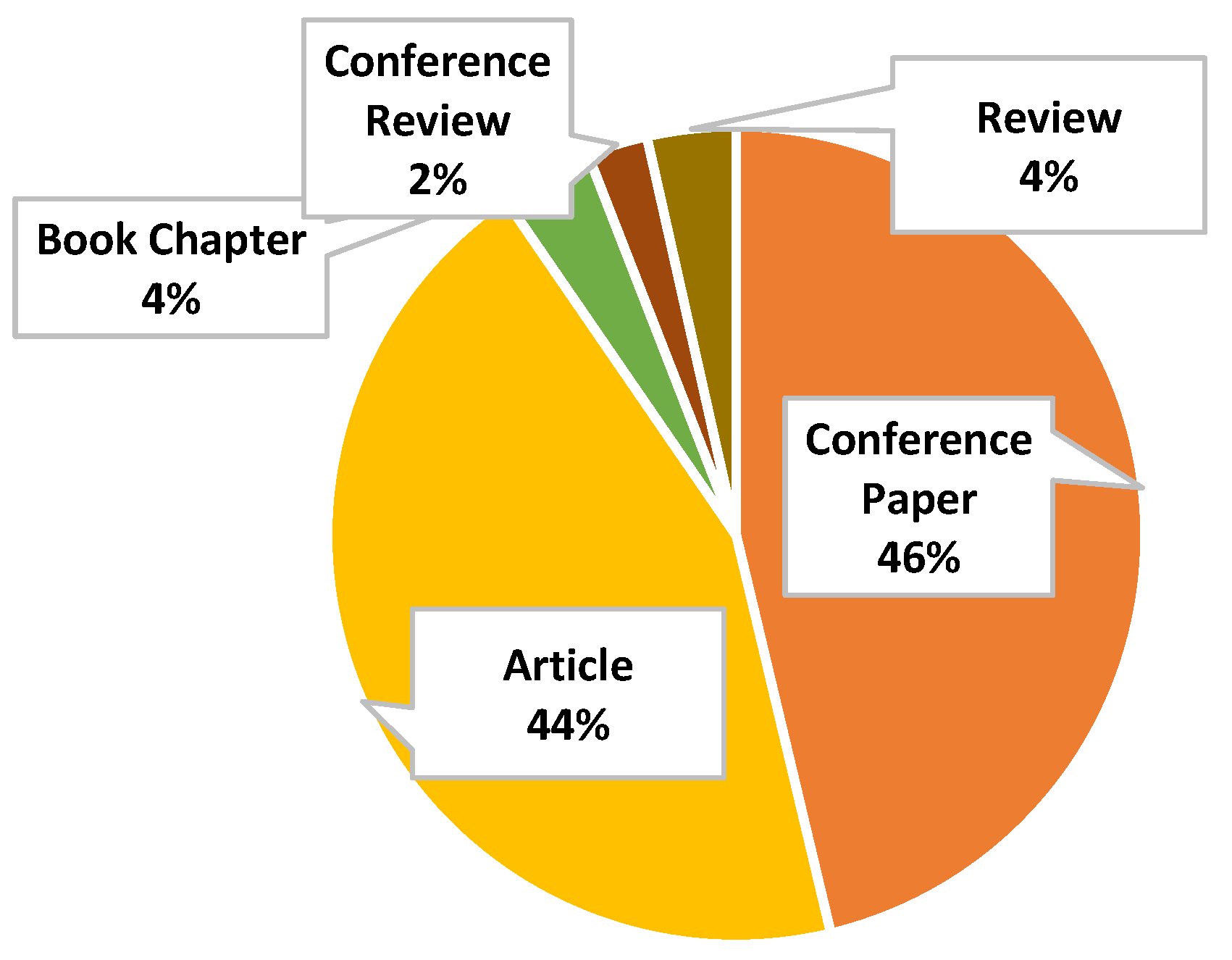
Figure 6.
Papers per journal.
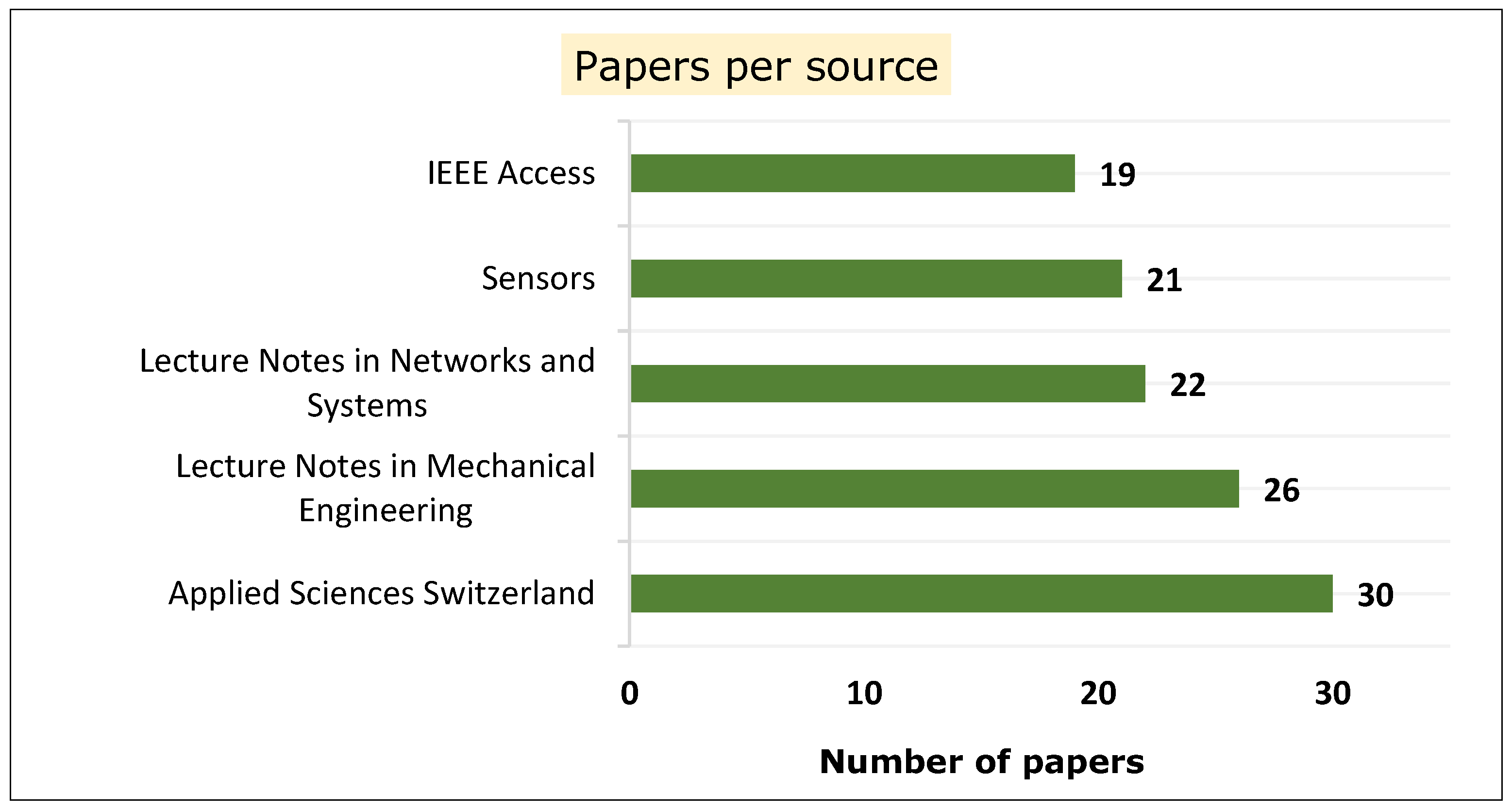
Figure 7.
Distribution of predictive maintenance approaches.
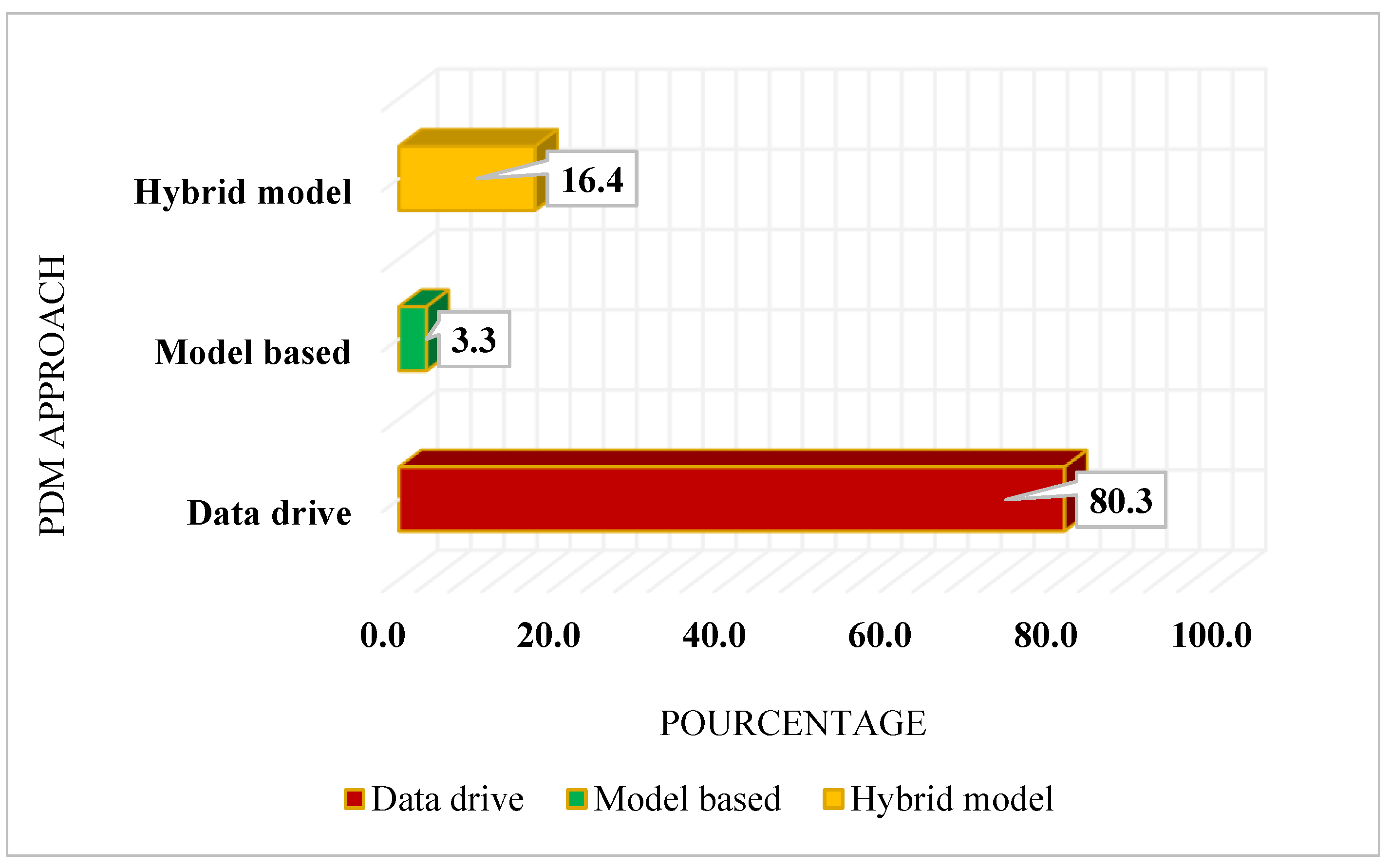
Figure 8.
Network map of algorithms used for predictive maintenance in the railway domain.
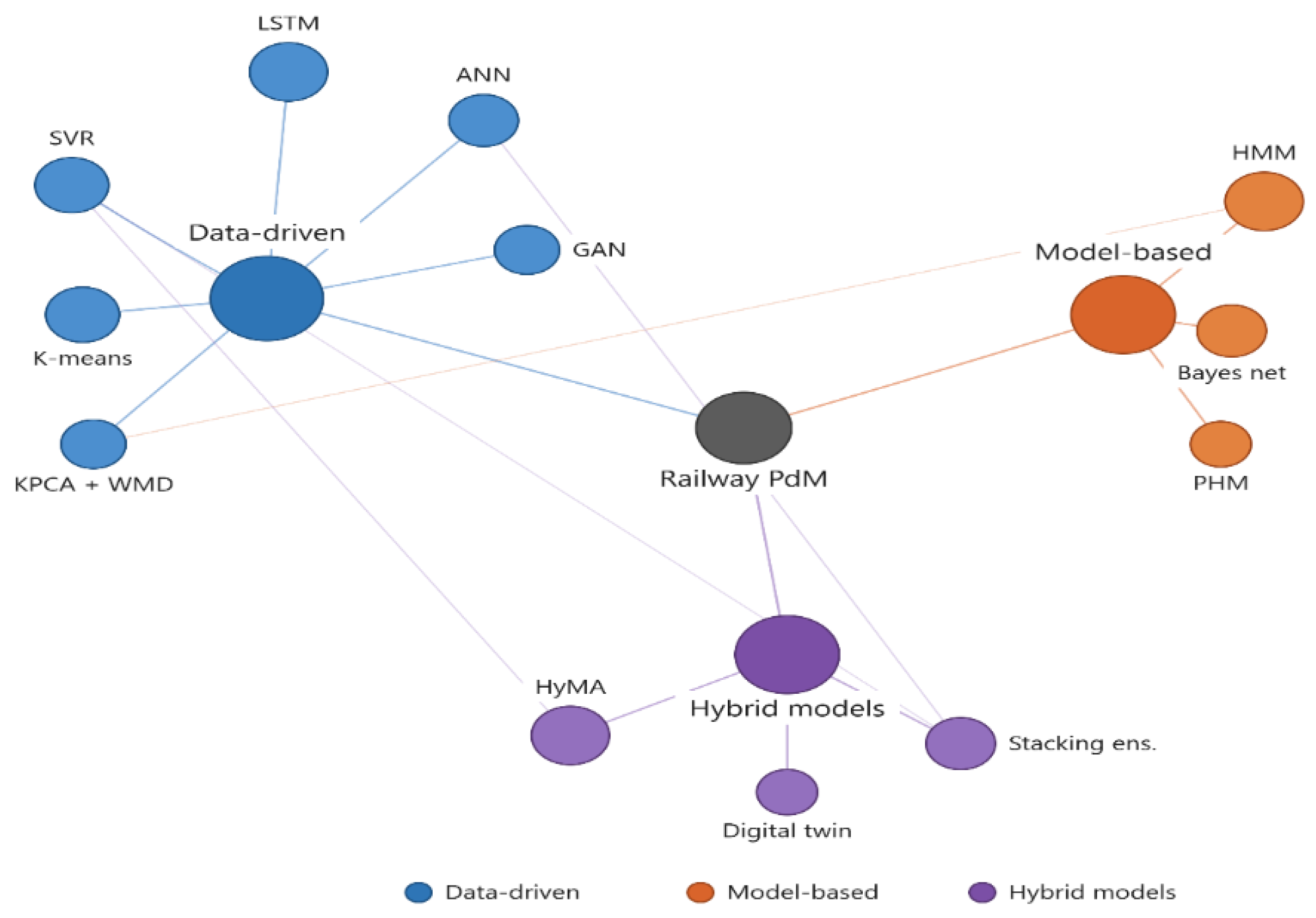
Figure 10.
Proposed hybrid predictive maintenance framework for the railway domain.
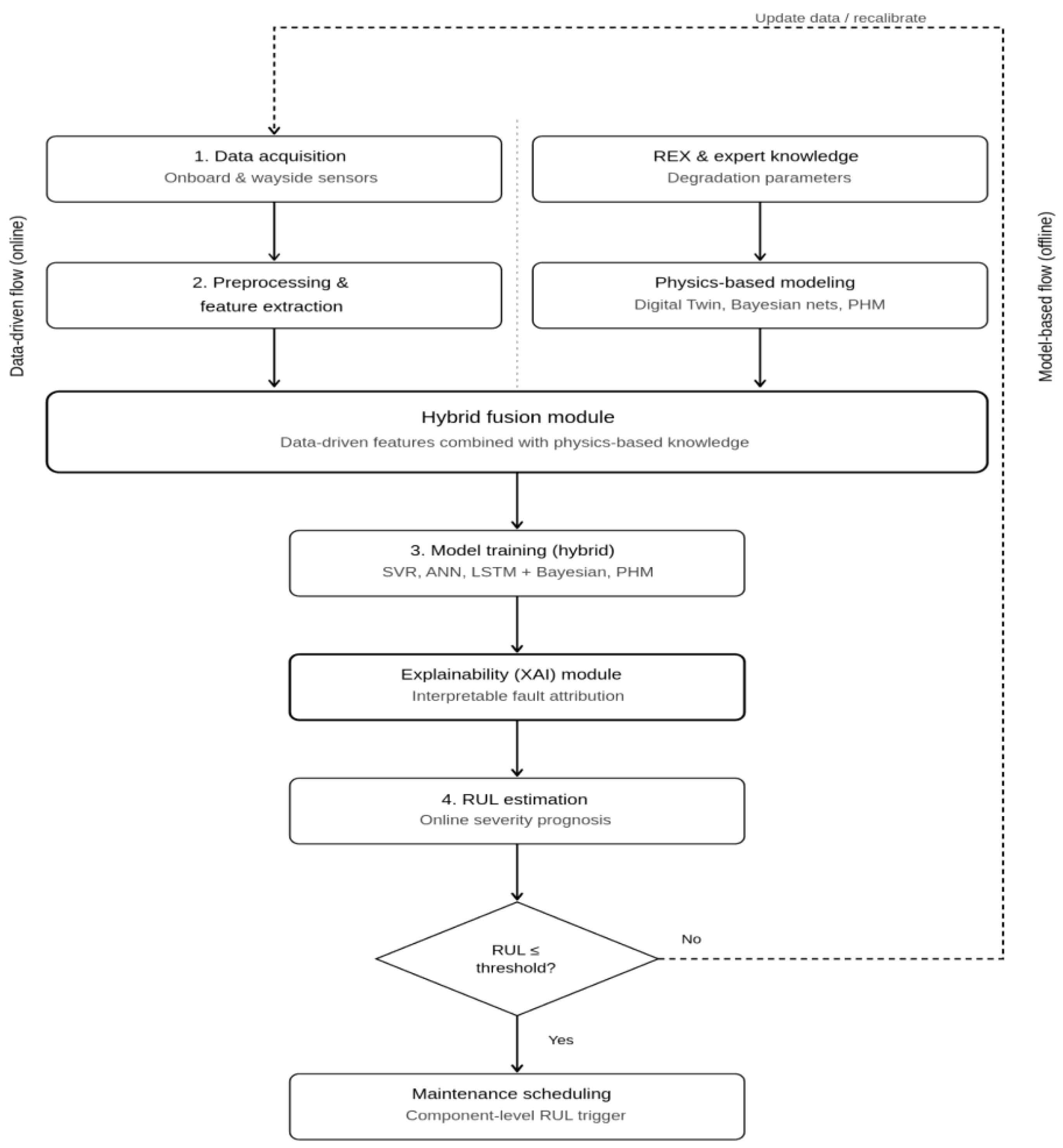

Table 1.
search methodology per database.
| Electronic Database | Search within |
| Scopus | “Article title, abstracts, keywords” |
| Science Direct | “Article title, abstracts, keywords” |
| Web of Science | “All fields” |
Table 2.
Search string for papers scanning.
| Search string |
| ((“Predictive maintenance”) AND (“Railway” OR “rolling stock” OR “rail industry” OR “Train”) |
Table 3.
Keyword frequency analysis.
| Keyword | Occurrence |
| Predictive Maintenance | 929 |
| Railroads | 381 |
| Railroad Transportation | 357 |
| Machine Learning | 284 |
| Learning Systems | 253 |
| Maintenance | 201 |
| Machine-learning | 197 |
| Fault Detection | 178 |
| Condition Monitoring | 150 |
| Deep Learning | 134 |
| Forecasting | 125 |
| Rails | 120 |
| Anomaly Detection | 105 |
| Artificial Intelligence | 102 |
Table 4.
Predictive maintenance approaches and methods.
| No. | Ref. | Year | Approach | Methods |
| 1 | [32] | 2024 | Hybrid model | ML/DL stacking ensemble with Bayesian optimization |
| 2 | [33] | 2023 | Data-driven | Statistical prognostics model for fleet scheduling |
| 3 | [34] | 2023 | Data-driven | ML unsupervised: K-means clustering (DTW) |
| 4 | [35] | 2022 | Data-driven | Deep learning: supervised artificial neural network |
| 5 | [36] | 2022 | Data-driven | Stochastic method: Hidden Markov Model |
| 6 | [37] | 2021 | Hybrid model | Physics-based simulation with Boosted Trees ensemble |
| 7 | [38] | 2020 | Data-driven | Deep learning: feed-forward artificial neural network |
| 8 | [39] | 2020 | Data-driven | Statistical method: spectral and kurtosis analysis |
| 9 | [40] | 2020 | Data-driven | Deep learning: Generative Adversarial Network |
| 10 | [41] | 2020 | Data-driven | Comparison of data-driven prognostics models |
| 11 | [42] | 2018 | Hybrid model | ML unsupervised: K-means clustering algorithm |
| 12 | [43] | 2017 | Data-driven | Stochastic method: Dynamic Bayesian Networks |
| 13 | [44] | 2015 | Data-driven | ML supervised: Online Support Vector Regression |
| 14 | [45] | 2024 | Data-driven | Deep learning: LSTM neural network |
| 15 | [46] | 2022 | Hybrid model | Deep learning: artificial neural network |
| 16 | [47] | 2023 | Data-driven | Deep learning: Long Short-Term Memory |
| 17 | [48] | 2022 | Data-driven | ML: similarity-based models (hash, pairwise) |
| 18 | [49] | 2020 | Data-driven | Generic supervised machine learning algorithms |
| 19 | [50] | 2019 | Data-driven | Combined anomaly detection and prognostics techniques |
| 20 | [51] | 2020 | Model-based | Stochastic method: Proportional Hazard Model |
| 21 | [52] | 2020 | Data-driven | Deep learning: artificial neural network |
| 22 | [53] | 2018 | Hybrid model | Physics-based model with Monte Carlo simulation |
| 23 | [54] | 2023 | Data-driven | ML: change point detection and regression |
| 24 | [55] | 2021 | Data-driven | Digital Twin with real-time operational data |
| 25 | [56] | 2023 | Data-driven | Machine learning anomaly detection techniques |
| 26 | [57] | 2025 | Hybrid model | Systematic review of hybrid PdM models |
| 27 | [58] | 2024 | Hybrid model | Stochastique: non-linear diffusion, Brownian motion |
| 28 | [59] | 2025 | Hybrid model | Deep learning: hybrid LSTM-autoencoder architecture |
| 29 | [60] | 2020 | Data-driven | Machine learning-based prognostics estimation methods |
| 30 | [61] | 2024 | Hybrid model | Prognostics-based scheduling optimization (MILP) |
| 31 | [62] | 2021 | Data-driven | ML/DL: time-series anomaly detection |
| 32 | [63] | 2022 | Data-driven | Review of ML methods for track degradation |
| 33 | [64] | 2022 | Data-driven | ML: artificial neural network model |
| 34 | [65] | 2023 | Data-driven | Review of vehicle-based condition monitoring |
| 35 | [66] | 2021 | Data-driven | Bibliometric review of condition monitoring methods |
| 36 | [67] | 2023 | Data-driven | Review of wayside condition-monitoring technologies |
| 37 | [68] | 2022 | Data-driven | Deep learning model (OORNet, CNN-based) |
| 38 | [69] | 2022 | Data-driven | Deep learning: Transformer-based wear prediction |
| 39 | [70] | 2019 | Data-driven | Deep learning: 1D CNN, residual learning |
| 40 | [71] | 2025 | Data-driven | ML: online continual and transfer learning |
| 41 | [72] | 2022 | Data-driven | ML: fuzzy classifier for pantograph–catenary |
| 42 | [73] | 2017 | Data-driven | Deep learning: arc detection model |
| 43 | [74] | 2017 | Data-driven | ML: image processing-based tracking method |
| 44 | [75] | 2020 | Data-driven | Stochastic: Wiener-process wear model |
| 45 | [76] | 2024 | Data-driven | Deep learning: deep reinforcement learning |
| 46 | [77] | 2023 | Data-driven | Deep learning: CNN with SVDD classification |
| 47 | [78] | 2024 | Data-driven | ML: multi-sensor fusion tensor machine |
| 48 | [79] | 2024 | Hybrid model | Expert system with Bayesian network diagnosis |
| 49 | [80] | 2023 | Data-driven | Deep learning: deep random forest fusion |
| 50 | [81] | 2025 | Data-driven | ML diagnosis approach for switch systems |
| 51 | [82] | 2026 | Data-driven | ML: wavelet packet decomposition, Relief selection |
| 52 | [83] | 2023 | Data-driven | Review of point-machine fault detection |
| 53 | [84] | 2023 | Data-driven | General data-driven predictive maintenance framework |
| 54 | [85] | 2023 | Data-driven | ML: online machine learning pipeline |
| 55 | [86] | 2016 | Data-driven | Deep learning fault diagnosis network |
| 56 | [87] | 2022 | Data-driven | Deep learning: spatial–temporal channel prediction |
| 57 | [88] | 2020 | Model-based | Review of traction motor design considerations |
| 58 | [89] | 2022 | Data-driven | Benchmark dataset (MetroPT) |
| 59 | [90] | 2021 | Data-driven | Deep learning: autoencoder-based anomaly detection |
| 60 | [91] | 2026 | Data-driven | ML: Adaptive Random Forest with explainability |
| 61 | [92] | 2023 | Data-driven | ML: Random Forest classification approach |
Disclaimer/Publisher’s Note: The statements, opinions and data contained in all publications are solely those of the individual author(s) and contributor(s) and not of MDPI and/or the editor(s). MDPI and/or the editor(s) disclaim responsibility for any injury to people or property resulting from any ideas, methods, instructions or products referred to in the content. |
© 2026 by the authors. Licensee MDPI, Basel, Switzerland. This article is an open access article distributed under the terms and conditions of the Creative Commons Attribution (CC BY) license (http://creativecommons.org/licenses/by/4.0/).
Copyright: This open access article is published under a Creative Commons CC BY 4.0 license, which permit the free download, distribution, and reuse, provided that the author and preprint are cited in any reuse.