

Submitted:
07 August 2026
Posted:
26 August 2026
You are already at the latest version
Abstract
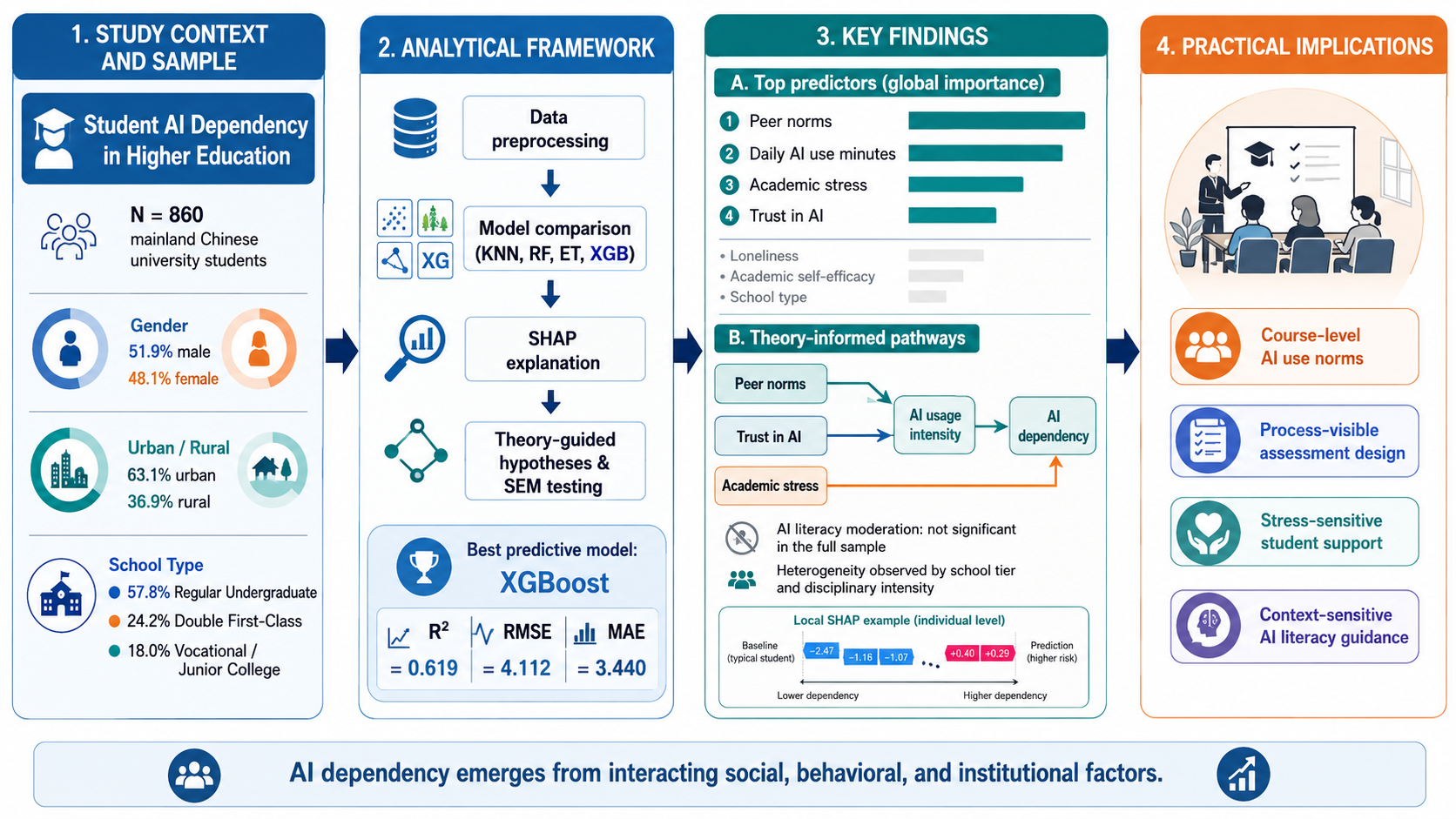
Generative artificial intelligence (GenAI) is now part of everyday study practices in higher education, yet routine use may become problematic when students delegate reasoning, evaluation, and task completion to AI tools. This study examines student AI dependency as a socio-technical systems outcome shaped by peer norms, AI-use behavior, psychological strain, trust, AI literacy, and educational context. Using a public cross-sectional survey of mainland Chinese university students (N = 860), we combined predictive modeling, SHAP explanation, and structural equation modeling. XGBoost outperformed random forest, extra trees, and K-nearest neighbors in predicting dependency. SHAP identified peer norms, daily AI-use time, academic stress, and trust in AI as the most influential predictors. SEM results supported a partial pathway from peer norms and trust in AI to dependency through usage intensity, together with a strong direct association between academic stress and dependency. AI literacy did not significantly moderate the usage–dependency path in the full sample, although institutional and disciplinary differences were observed. The findings identify system-level leverage points for course design, assessment, student support, and responsible GenAI guidance in higher education.
Keywords:
generative artificial intelligence
; AI dependency
; socio-technical systems
; explainable machine learning
; SHAP
; structural equation modeling
; higher education
1. Introduction
Generative artificial intelligence (GenAI) has quickly become part of the learning environment in higher education [1]. Students use these tools for writing, coding, translation, information search, and problem solving [2]. How such tools are used, however, is shaped not only by individual preference, but also by course requirements, assessment design, peer expectations, institutional rules, and the affordances of AI systems. From a systems perspective, student AI use is therefore embedded in a wider configuration of learners, technologies, social norms, and educational settings. This configuration can support learning when AI is used for explanation, reflection, and feedback; it can also create dependency risk when students routinely hand over reasoning, evaluation, or task completion to AI tools.
This issue is particularly salient where student adoption of GenAI has moved faster than course-level guidance. Mainland China, the setting of this study, provides an informative case. Students from vocational colleges, regular undergraduate institutions, and research-intensive (“Double First-Class”) universities have incorporated GenAI into coursework, but institutional expectations, instructor guidance, and assessment policies remain uneven. Such variation makes it possible to examine how student-level, peer-level, and institutional conditions jointly relate to AI dependency and to identify leverage points for course design, assessment, and student support.
In this study, AI dependency refers to a problematic pattern of AI use in which learners systematically offload cognitive responsibilities that should remain part of their learning process. Cognitive offloading is not inherently harmful, but it becomes educationally concerning when students struggle to complete academic tasks without AI support or routinely accept AI-generated outputs in place of their own judgment [3,4]. Recent work links AI dependency to emotional attachment, task substitution, anxiety avoidance, and an “AI-reliance mindset” associated with weaker originality and logical coherence in writing [4,5]. Existing studies have identified important psychological and behavioral correlates, but they often examine a limited set of factors and rarely connect prediction, explanation, and theory-informed pathway testing in one design [6,7,8,9].
The present study addresses this gap by examining student AI dependency as an emergent socio-technical systems outcome in higher education. Three research questions guide the analysis:
RQ1.
How well can student AI dependency be predicted from social, psychological, behavioral, and educational-context variables, and which model provides the most useful balance between predictive accuracy and interpretability?
RQ2.
Which variables serve as high-leverage predictors in the student AI-dependency system, as identified through SHAP-based explanation of the best-performing model?
RQ3.
Do the explanation-informed pathways linking peer norms, trust in AI, academic stress, AI-use intensity, AI literacy, institutional tier, and disciplinary context receive empirical support in structural equation modeling?
To answer these questions, we compare four regression models on the same dataset, use SHAP to interpret the best-performing model, and then test theory-informed pathways with structural equation modeling. The study contributes to the literature in three ways. First, it frames student AI dependency as a socio-technical systems problem rather than a purely individual usage habit. Second, it combines explainable machine learning and SEM to identify and test high-leverage pathways in that system. Third, it translates the findings into practical implications for course-level AI guidance, formative assessment, AI-literacy support, and responsible GenAI governance in higher education.
2. Literature Review and Theoretical Background
2.1. Student AI Dependency in Higher Education
As generative AI becomes increasingly embedded in educational practices, AI dependency—understood as a problematic pattern of technology use—has emerged as a growing concern within academic discourse. This phenomenon extends beyond instrumental tool use, referring instead to a systematic outsourcing of cognitive processes that should be internally managed by learners to AI systems during academic tasks. The core mechanism underpinning this behavior is cognitive offloading, which often coincides with diminished autonomous thinking, reduced originality, and heightened cognitive passivity. Manifestations include uncritical acceptance of AI-generated outputs, automated task completion pathways, and strategic avoidance when encountering intellectual challenges. Crucially, the essence of AI dependency does not lie in whether AI is used, but rather in the abdication of judgment, creativity, and decision-making responsibility.
In terms of operationalization, Capinding [4] pioneered the conceptual framing of AI dependency as a multidimensional construct comprising emotional attachment, task substitution, and anxiety avoidance. Ou [5] further introduced the concept of “AI reliance mentality,” denoting a deep-seated cognitive disposition wherein individuals default to AI-driven solutions when confronted with academic tasks. Empirical evidence indicates that students exhibiting such a mindset demonstrate significantly lower levels of originality and logical coherence in their academic writing, suggesting that dependency has permeated not only behavioral patterns but also underlying cognitive structures. Regarding measurement approaches, research is undergoing a methodological shift from singular self-report methods toward multi-source integration. Capinding’s “3R’s AI Dependency Questionnaire” has provided a reliable instrument for quantifying this construct and has been validated across multiple higher education contexts [4,10]. Zhang et al. [10] developed the “Problematic AI Use Scale,” which incorporates psychological variables and reveals the moderating roles of academic self-efficacy and performance expectations in shaping dependency behaviors. While self-reported scales effectively capture subjective tendencies, they are constrained by social desirability bias and recall inaccuracies, limiting their capacity to reflect actual usage patterns.
To address these limitations, researchers have begun leveraging objective behavioral data. Borna et al. [11] proposed the iEWS system, which employs a random forest model to predict student course success with 97.03% accuracy as early as the sixth week of the semester. This study demonstrates the potential of clickstream log analysis in identifying at-risk learning states, offering a feasible pathway for early warning systems related to AI dependency. Nayak et al. [12], using the Kalboard 360 dataset, applied various machine learning models to forecast academic performance and found that an optimized multilayer perceptron achieved superior predictive power, confirming the viability of educational data mining in detecting learning anomalies. Ibarra-Vázquez et al. [13] utilized machine learning models to predict competency levels among open education learners, showing that the integration of behavioral and attitudinal data can effectively assess developmental trajectories—a methodological approach transferable to AI dependency detection. Collectively, these studies underscore that digital trace data contain rich information about cognition and motivation, providing a robust foundation for constructing objective and dynamic assessment frameworks for AI dependency.
Current research elucidates the factors associated with AI dependency across three interrelated domains: individual psychology, learning behavior, and institutional context. At the individual psychological level, weak self-regulation constitutes a central internal factor. Liao et al. [3] demonstrated that those with low academic self-efficacy are more likely to treat AI as a cognitive substitute, reinforcing a cycle of “low effort–high reward.” Once entrenched, this behavioral pattern undermines autonomous problem-solving abilities and exacerbates cognitive inertia. Liao et al. [3] further demonstrated that loneliness and academic anxiety positively predict AI dependency, particularly in remote learning environments where students may perceive AI as both an emotional companion and a rescue mechanism for task completion, thereby increasing cognitive outsourcing. Work on self-regulated learning similarly shows that students’ perceived personal skills and metacognitive engagement shape how they appropriate generative AI tools [14]. These psychological vulnerabilities suggest that effective interventions must incorporate metacognitive training and emotional support.
At the level of learning behavior and task design, closed-ended tasks and lack of process engagement serve as key situational triggers. Niu et al. [15], analyzing MOOC log data (N = 3156), employed a personalized attention mechanism and found that students who consistently engage with video lectures, discussion forums, and assignments exhibit more systematic knowledge construction and significantly lower dependence on intelligent agents. Similarly, Ansone et al. [16] observed in art education courses that when AI-generated works display exceptional visual completeness and technical proficiency, students may experience frustration upon comparison, leading them to abandon independent creation in favor of imitation or direct adoption of AI outputs. This “perfection suppression” effect highlights how the very quality of AI output can become a catalyst for dependency, underscoring the need for task designs that prevent technological superiority from undermining learner agency. Du et al. [17] advocate shifting from AI substitution to AI collaboration, proposing a three-phase writing task structure: AI-generated draft → critical revision → autonomous rewriting.
At the institutional and technological governance level, the absence of clear norms and inadequate instructor guidance amplify dependency risks. Garzón et al. [18], via a systematic literature review (N = 127), found that instructors’ attitudes directly shape classroom culture: outright bans may encourage covert usage, while complete permissiveness risks academic integrity violations and blurred responsibility. Zaimoğlu and Dağtaş [19] proposed a “three-no principle”: no replacement of core practices, no obscuring of academic responsibility, and no neglect of ethical implications, offering educators a practical framework for course design and assignment development. Table 1 summarizes the factors identified across these three levels of analysis.
2.2. AI Dependency as a Socio-Technical Systems Problem
A socio-technical systems perspective is appropriate because student AI dependency cannot be explained by AI tools or student traits alone. Classic socio-technical systems theory argues that outcomes emerge from the joint operation of social and technical subsystems [20,21]. Recent research on generative AI similarly treats GenAI platforms as socio-technical systems in which platform design, user commitment, and institutional conditions interact [1]. Applied to higher education, this perspective directs attention to the coupling of technical affordances, social expectations, learning tasks, institutional rules, and psychological demands.
The system boundary in this study is the student–AI–peer–institution configuration within university coursework. Four interacting subsystems are included: (1) a learner subsystem, represented by academic stress, loneliness, self-efficacy, and AI literacy; (2) an AI-use behavior subsystem, represented by usage intensity, prompt length, task structure, and trust in AI; (3) a peer-norm subsystem, represented by the perceived acceptability and prevalence of AI use among fellow students; and (4) an institutional–disciplinary context subsystem, represented by institutional tier, disciplinary task structure, and teacher guidance. Platform-internal mechanisms, such as model architecture or recommender logic, are outside the empirical boundary of the study. The outcome of interest—AI dependency—is treated as an emergent risk state associated with cross-level interactions among these subsystems: peer norms shape how acceptable AI use appears, psychological strain affects why students turn to AI, and educational contexts condition when usage becomes reliance.
Higher education systems differ in how they introduce, regulate, and assess GenAI use. In mainland China, vocational colleges, regular undergraduate institutions, and “Double First-Class” universities differ in student preparedness, instructional culture, and course-level AI guidance. A systems-oriented study in this context can therefore examine how peer norms, academic stress, trust in AI, AI literacy, and institutional and disciplinary conditions jointly relate to AI dependency and can move the discussion from general policy statements toward more specific system-level leverage points.
2.3. Explainable Analytics and Structural Equation Modeling for Systems Inquiry
Established models such as the Technology Acceptance Model, the Unified Theory of Acceptance and Use of Technology, and Self-Determination Theory offer useful explanations of technology adoption and learning behavior. However, these frameworks are less often connected to predictive models that can identify which factors matter most for AI dependency in a given student population. Existing studies commonly use regression or machine-learning models to predict academic performance, engagement, or disengagement from survey and trace data [9]. These outcomes are informative, but they only indirectly address AI dependency. Studies that model AI dependency itself remain limited, particularly when psychological, behavioral, and contextual variables are considered together.
Explainable artificial intelligence (XAI) provides one way to connect prediction with interpretation. In educational contexts, LIME and SHAP have been used to explain early predictions of student performance [22], detect AI-generated pseudocode [23], interpret student behavior patterns [7], and analyze academic performance in online learning [24]. Related work has also used interpretable tree-based methods to study adaptability in online education [25] and random forest models to analyze student attitudes and dependency [26]. These studies show that machine learning can be useful in education when predictive results are made interpretable.
For AI dependency, the remaining challenge is to connect interpretable prediction with theory-informed pathway analysis. SHAP can identify variables that contribute strongly to predicted dependency, but it does not test theoretical relationships. Structural equation modeling (SEM), in contrast, can assess whether explanation-informed pathways are statistically consistent with a proposed framework, while still requiring careful interpretation in cross-sectional data. The present study combines these approaches: explainable machine learning is used to locate high-leverage nodes in the dependency system, and SEM is used to evaluate whether the resulting pathways are consistent with socio-technical systems thinking and prior theory.
2.4. Research Framework and Hypotheses
The proposed framework links socio-technical systems thinking with three established perspectives: cognitive offloading, technology acceptance, and stress-coping theory. Cognitive offloading explains the learner–AI task-substitution process; UTAUT explains social and trust-related pathways of technology use; and stress-coping theory explains why academic strain may make AI attractive as an avoidance-oriented resource.
First, cognitive offloading theory [27] describes how people use external tools to reduce internal cognitive demand. Offloading can be adaptive, but sustained and uncritical offloading of evaluative and generative work to AI may become a proximal condition of dependency in academic settings [3,4].
Second, the Unified Theory of Acceptance and Use of Technology (UTAUT [28]; see also [29]) emphasizes the role of subjective norms and performance expectations in technology use. In this study, peer norms represent the social acceptability of GenAI use, while trust in AI captures students’ willingness to rely on AI-generated outputs. Research on AI-generated instructional content also identifies trust as a central condition for continued adoption [30]. These factors are expected to be associated with usage intensity, which may in turn be associated with dependency.
Third, stress-coping models in education [31,32] suggest that academic stress can shift students toward avoidance-oriented coping. Under pressure, AI tools may offer a low-effort route through complex tasks, increasing the likelihood that students substitute AI output for their own evaluation or reasoning.
Taken together, these perspectives motivate a theory-informed system pathway in which peer norms and trust in AI are associated with dependency partly through usage intensity, academic stress is directly associated with dependency, and AI literacy may constrain the conversion of frequent use into dependency. Based on the subsystem structure outlined in Section 2.2, we test the following hypotheses:
H1. Peer norms and trust in AI are positively associated with AI dependency, with AI usage intensity acting as a partial mediator. Students who perceive AI use as socially normal or who place greater trust in AI outputs are expected to use AI more intensively; more intensive use, in turn, may become routinized and relate to higher dependency.
H2. Academic stress shows a positive direct association with AI dependency. Students experiencing heavier academic load or loneliness may be more likely to use AI as an avoidance-oriented coping resource, especially for information retrieval, text generation, and proofreading.
H3. AI literacy weakens the association between AI usage intensity and AI dependency. At the same level of usage intensity, students with stronger information evaluation, fact-checking, and self-regulation skills are expected to be less likely to move from frequent use to dependency.
H4. The association between AI usage intensity and AI dependency varies across institutional tiers and disciplinary contexts. H4a predicts a stronger usage–dependency association in vocational colleges than in regular undergraduate and Double First-Class institutions. H4b predicts a stronger usage–dependency association in disciplines with higher technical intensity or task openness. The disciplinary groups were defined before the multi-group SEM analysis: high-intensity disciplines included computer science, mathematics and statistics, medicine, management, economics and finance, journalism and communication, and political education; medium-intensity disciplines included physics, electronics and information, automation, chemistry, biology, and civil engineering; low-intensity disciplines included literature, education, psychology, law, history, art and design, and physical education.
3. Materials and Methods
This study used a three-stage analytical design to examine student AI dependency as a socio-technical systems outcome. Stage 1 compared machine-learning models for predicting AI dependency from social, psychological, behavioral, and educational-context variables. Stage 2 applied SHAP to the best-performing model to identify high-leverage predictors at both aggregate and individual levels. Stage 3 used structural equation modeling to assess whether the explanation-informed pathways were consistent with the proposed framework. Because the dataset is cross-sectional, the results are interpreted as associations and theory-informed pathway evidence rather than causal effects. Figure 1 summarizes the conceptual framework.
3.1. Data Source and Sample
The study used a publicly available survey dataset on AI use among university students in mainland China. The dataset includes demographic background, academic context, AI-use frequency and purpose, interaction behaviors, and attitudinal perceptions related to generative and non-generative AI tools. It was suitable for the present study because it reflects recent student engagement with GenAI in higher education. The dataset source and access information are reported in the Data Availability Statement. Because the data were publicly available and de-identified, no additional institutional ethics approval was required (see the Institutional Review Board Statement). Artificial intelligence tools were used only in auxiliary roles: Claude assisted with drafting and refining data-analysis scripts, and GPT-5.5 was used for language editing and stylistic refinement. All AI-assisted outputs were reviewed, verified, and revised by the authors, who take full responsibility for the study design, analysis, interpretation, and manuscript content.
3.2. Variables and Preprocessing
The preprocessing stage began with the removal of invalid and outlier samples. Invalid cases were identified based on logical consistency checks, and three specific types were excluded: (1) respondents who reported zero AI use days per week but indicated an average daily use time above the dataset mean; (2) respondents who claimed “strict restrictions from instructors/courses on AI use” while also reporting over 500 minutes of daily AI use—considered a rule-based contradiction; and (3) responses where the sum of AI usage proportions did not equal 1, suggesting misunderstanding or entry errors in the scale. Outliers were removed based on the following criteria: (1) an extreme average prompt length (e.g., approximately 2000 characters), or excessive tool diversity exceeding typical survey limits (e.g., more than 8–10 tools); (2) implausible values for variables such as age or parental education level that fall outside acceptable ranges for a university student sample.
Subsequently, string variables were encoded using a “nominal–one-hot, ordinal–integer” strategy. Although the original dataset included encoded fields, all variables were re-encoded for accuracy. One-hot encoding was applied to nominal variables such as gender, household registration type, institution type, and academic discipline. Ordinal variables—such as year of study, parental education level, household income quintile, course difficulty, clarity of AI policies by instructors, and peer norms—were converted to integer codes. To preserve interpretability for practical applications, both human-readable (original) and machine-readable (encoded) versions of variables were retained (marked with the _encode suffix), and a mapping dictionary was recorded to ensure traceability during SHAP analysis.
After these steps, a complete dataset without missing values was obtained. Descriptive statistics are reported in Section 4.1.
3.3. Predictive Modeling
Four regression models were compared to capture potentially nonlinear relations between student characteristics, AI-use behaviors, psychological factors, and AI dependency. K-nearest neighbors (KNN [33]) served as a distance-based baseline. Random forest (RF [34]) and extra trees (ETR [35]) represented bagging-based tree ensembles, while XGBoost [36] was included because of its strong performance on structured tabular data and its compatibility with SHAP-based interpretation. Together, the models cover instance-based learning, bagging, and boosting. This comparison allowed us to select a predictive backbone for explanation rather than to conduct a general algorithm benchmark. Similar model families are widely used in educational data mining and learning analytics studies with heterogeneous tabular features [37,38].
All models were trained through the same reproducible pipeline: standardization where required, grid search, cross-validation, and independent testing. A StandardScaler was used for KNN. For RF, ETR, and XGBoost, the original feature scale was retained to keep tree splits interpretable.
3.4. SHAP-Based System Explanation
To make the best-performing model’s predictions interpretable at the system level, this study applied SHapley Additive exPlanations (SHAP [39]), a unified post-hoc explanation framework grounded in cooperative game theory. SHAP-based methods have been widely reviewed in the explainable-AI literature [40] and applied across educational data mining contexts [22,24].
Two complementary explanation perspectives were generated. Global explanations were produced via SHAP feature importance (mean absolute SHAP values) and beeswarm summary plots, which characterize which variables most strongly influence predictions across the full sample. Local explanations were produced via SHAP waterfall plots for individual cases representing the highest, lowest, and median predicted AI dependency, which illustrate how specific student profiles map onto predicted outcomes. This combination enables both population-level pattern detection and the identification of student profiles in which multiple subsystems jointly elevate predicted dependency.
3.5. Structural Equation Modeling
Following the predictive modeling and SHAP-based exploratory stage, a structural equation model (SEM [41]) was specified to formally test the pathways suggested by the SHAP results together with the theoretical perspectives and hypotheses outlined in Section 2.4. The SHAP results indicated that peer norms, daily usage time, academic stress, and trust in AI are the primary high-leverage predictors, while self-efficacy and AI literacy display a suppressive tendency on AI dependency; the roles of school type and academic discipline suggested contextual differences. These explanation-informed expectations, aligned with the three theoretical perspectives, were formalized as Hypotheses H1–H4 in Section 2.4.
The measurement setup for the SEM variables is as follows: (1) DAI (AI dependency) is measured as a single-factor first-order construct, directly summed from dai_item_1–dai_item_6 (0–5); (2) AI_Usage (usage intensity) is measured by four indicators—ai_daily_minutes, ai_use_days_per_week, iter_per_task, and prompt_length_avg—with robust sub-models for the first three where necessary; (3) Strain (stress/distress) is measured by academic_stress and ucla_loneliness with directional alignment; (4) AI_Literacy is measured by ai_lit_knowledge, ai_lit_skill, and ai_lit_ethics. Peer norms (peer_ai_norms_encode) and trust in AI (trust_in_ai) are treated as observed exogenous variables in the structural equation. Control variables include year of study and family income quintile to account for background heterogeneity; other distal variables were not included in the structural paths in order to maintain model simplicity. All scales were subjected to confirmatory factor analysis (CFA) to assess convergent validity (standardized loadings ; CR and AVE within acceptable ranges) and discriminant validity.
The SEM was estimated using the semopy package in Python with maximum likelihood estimation. All latent constructs were first evaluated via CFA, with standardized factor loadings, composite reliability (CR), and average variance extracted (AVE) used to assess convergent and discriminant validity. Overall model fit was assessed using CFI, TLI, and RMSEA, applying conventional acceptability thresholds. Mediation effects were tested using bootstrap with 5000 resamples and 95% bias-corrected confidence intervals, and an observed interaction term (usage × literacy) was used to test the moderating effect of AI literacy. Multi-group SEM was conducted to examine contextual heterogeneity across institutional tiers (vocational college, regular undergraduate, Double First-Class) and disciplinary intensity groups (high, medium, low). Because the data are cross-sectional, all SEM results are interpreted as theory-informed pathway evidence rather than as confirmation of causal structure.
4. Results
4.1. Descriptive Results
Descriptive statistics are presented in Figure 2, Figure 3 and Figure 4 and Table 2. As shown in Figure 2, the gender distribution is nearly balanced (51.9% male, 48.1% female), with 63.1% of students from urban households. The sample is skewed toward lower years, with freshmen and sophomores accounting for over 60% of respondents, and seniors representing the smallest group. Figure 3 indicates that most participants are from regular undergraduate institutions (57.8%), followed by “Double First-Class” universities (24.2%) and vocational colleges (18.0%). Figure 4 shows that academic disciplines are well-distributed, spanning natural sciences, engineering, management, humanities, medicine, and the arts, with no single major accounting for more than 7% of the sample, indicating a dispersed and representative structure.
4.2. Model Comparison
Figure 5 presents the evaluation results of the four models. In terms of goodness-of-fit, XGBoost performed best (), followed by ExtraTrees () and RandomForest (), with KNN clearly lagging behind (). In other words, tree-based boosting models demonstrated the strongest explanatory power for the variance in AI dependency within this dataset, whereas the distance-based KNN model exhibited the weakest capacity to capture global structure. Regarding error magnitude, XGBoost also outperformed the others, with and , better than both bagging trees (ExtraTrees: 4.327/3.574; RandomForest: 4.485/3.693), while KNN reported the highest error values (5.116/4.077). The consistency between error-based metrics and rankings indicates that XGBoost not only increased the proportion of explained variance but also simultaneously reduced both absolute and squared error, with an approximate RMSE reduction of 1.00 compared to KNN. In terms of model complexity, the bagging ensembles yielded extremely high AIC/BIC scores due to their large number of nodes (ExtraTrees: , ; RandomForest: , ); XGBoost had moderate complexity (, , ); and KNN showed the lowest values (, , ). These results suggest that XGBoost was the most suitable model for the present dataset and was therefore selected as the predictive backbone for subsequent SHAP-based system explanation.
The performance differences can be interpreted as follows. XGBoost, through sequential residual fitting and regularization mechanisms (tree depth, column/row subsampling, learning rate), is more effective at capturing nonlinear relationships and weak interactions among variables, thereby achieving a better bias–variance trade-off. Bagging trees such as ExtraTrees and RandomForest are robust in reducing variance and resisting noise, but their averaging mechanism tends to dilute fine-grained patterns, resulting in slightly lower accuracy. KNN, on the other hand, suffers from distance-metric limitations in the high-dimensional and one-hot encoded categorical space; even after standardization, issues such as neighborhood sparsity and metric mismatch remain, contributing to its inferior performance.
4.3. SHAP-Based Identification of High-Leverage Predictors
The SHAP results identify the variables that contributed most to predicted AI dependency. For interpretation, these variables were grouped into three parts of the proposed system: social and use-related factors (peer norms and daily AI-use time), psychological factors (academic stress and loneliness), and regulatory factors (AI literacy, self-efficacy, verification, and source checking).
4.3.1. Global Explanation
Figure 6 shows the global SHAP values for the optimal XGBoost model. The ranking suggests a clear pattern: peer context and usage intensity were most prominent, psychological strain also contributed strongly, and literacy-related variables showed weaker but potentially protective associations.
Peer norms (peer_ai_norms) and daily usage time (ai_daily_minutes) were the two most influential predictors, and higher values were generally associated with higher predicted dependency. Academic stress (academic_stress) and trust in AI (trust_in_ai) also ranked among the top predictors. This pattern indicates that social acceptance, routine exposure to AI, psychological pressure, and perceived reliability of AI outputs jointly characterize higher-risk profiles.
A second group of predictors included grade level, school type, loneliness, academic self-efficacy, search-task proportion, and prompt length. Higher loneliness tended to increase predicted dependency, whereas higher academic self-efficacy tended to lower it. Search-oriented use and longer prompts were also associated with higher predictions, suggesting that students who rely on AI for information retrieval and task formulation may be more exposed to dependency risk.
AI-literacy dimensions (ai_lit_knowledge, ai_lit_skill, and ai_lit_ethics) showed a modest buffering pattern in the SHAP plots: higher values were more often linked to lower predicted dependency. Other process indicators, including iteration count and task-specific use ratios, showed smaller and task-dependent contributions. The complete global feature-importance ranking is reported in Appendix B.
Variables such as parental education, paid-subscription status, tool diversity, instructor stance, verification frequency, and source checking appeared near the lower end of the ranking. In this dataset, proximal factors—especially peer norms, usage intensity, stress, and trust—were more salient for prediction than distal background or governance indicators.
4.3.2. Local Explanation
Figure 7 presents two local SHAP explanations. In the highest predicted case (Figure 7a), long daily AI-use time and strong peer norms contributed substantially to the prediction. This does not constitute a diagnosis, but it indicates where monitoring or instructional support might be useful, such as time-use regulation, peer-driven AI-use scenarios, and verification routines. In the lowest predicted case (Figure 7b), lower stress, lower usage intensity, stronger self-efficacy, and stronger AI literacy contributed to a lower prediction. The local explanations therefore illustrate how combinations of system factors, rather than single variables alone, shape predicted dependency.
4.4. SEM Results and Hypothesis Testing
This study used the semopy package in Python for model estimation. Table 3 reports the model fit results for the full sample, indicating that the model achieved an acceptable level of fit (CFI = 0.855, TLI = 0.834, RMSEA = 0.056), demonstrating reasonable compatibility between the structural specification and the data. Table 4 presents the estimated structural path coefficients for the full sample, while Table 5 displays the bootstrap confidence intervals for mediation and moderation effects. Table 6 and Table 7 report the results of the heterogeneity tests.
The full-sample model showed an acceptable fit (CFI = 0.855, TLI = 0.834, RMSEA = 0.056), indicating reasonable compatibility between the proposed structure and the data. Peer norms and trust in AI were positively associated with usage intensity, and usage intensity was positively associated with AI dependency, although its coefficient was small. The bootstrap confidence intervals for the indirect paths from peer norms and trust in AI to dependency through usage intensity did not include zero. These results support H1 and suggest a partial system pathway: peer and trust-related factors are associated with dependency partly through more intensive AI use, while their direct associations with DAI remain positive.
Academic stress showed the largest positive association with dependency in the full-sample SEM. This pattern remained after accounting for usage intensity and is consistent with the SHAP results. H2 is therefore supported. By contrast, the interaction between usage intensity and AI literacy was not significant in the full sample, and the bootstrap interval included zero. H3 is not supported at the full-sample level, although the grouped analyses suggest that literacy may operate differently across contexts.
The multi-group SEM results indicate contextual heterogeneity. For institutional tier, the usage–dependency slope followed the expected order of vocational colleges, regular undergraduate institutions, and Double First-Class universities; H4a is therefore supported. For disciplinary intensity, however, the pattern differed from H4b: the slope was highest in low-intensity disciplines and lowest in high-intensity disciplines. A plausible interpretation is that in reading-, writing-, and information-retrieval-oriented disciplines, AI tools can more easily substitute for core learning activities, whereas in technically intensive disciplines, methodological training, task complexity, and evaluation constraints may limit such substitution. Across groups, academic stress remained a stable positive correlate of dependency. Overall, the SEM results support the peer/trust–usage–dependency pathway and the direct stress–dependency pathway, while showing that AI literacy and disciplinary context require more nuanced interpretation.
5. Discussion
5.1. Student AI Dependency as an Emergent Socio-Technical Risk
This study examined student AI dependency in higher education as a socio-technical risk rather than as a simple excess of AI use. The results show that dependency is associated with a configuration of peer norms, trust in AI, academic stress, usage intensity, AI literacy, institutional tier, and disciplinary context. XGBoost and SHAP identified peer norms and daily AI-use time as the most influential predictors, while SEM showed that peer norms and trust in AI were linked to dependency partly through usage intensity. Academic stress showed a strong direct association with dependency, and AI literacy did not significantly moderate the usage–dependency path in the full sample.
These findings support a systems interpretation. Peer norms describe the social environment in which AI use becomes normal or expected; trust in AI reflects how students evaluate the reliability of the technical system; academic stress captures psychological load; usage intensity represents behavioral coupling with AI tools; and institutional and disciplinary contexts shape what AI can substitute or support. Dependency appears most likely when these elements reinforce one another: peer-normalized AI use increases contact with AI tools, trust reduces verification, stress encourages avoidance-oriented reliance, and weaker literacy limits students’ ability to regulate offloading.
5.2. System-Level Leverage Points for Responsible GenAI Use
The results point to four leverage points. First, peer norms should be addressed at the course level, not only through individual warnings. Since GenAI platforms themselves operate as socio-technical systems in which user commitment and peer environments interact [1], instructors can reduce ambiguity by making acceptable and unacceptable AI uses visible early in a course. Second, assessment should make reasoning processes observable. Prompt logs, revision histories, source-checking notes, and brief reflections on AI-assisted decisions can help distinguish productive support from substitution of learning processes, consistent with recent work on GenAI-integrated assessment [42]. Third, academic stress should be treated as part of the dependency system. Workload pacing, formative checkpoints, low-stakes practice, and learner-support services may reduce the need to use AI as a shortcut under pressure. Fourth, AI-literacy support should be sensitive to context. Students in low-intensity disciplines may need stronger scaffolding around reading, writing, and source evaluation, whereas students in high-intensity disciplines may need more guidance on verification, methodological use, and limits of AI assistance.
5.3. Theoretical and Methodological Contributions
Theoretically, the study extends individual-focused accounts of problematic technology use by placing AI dependency within a socio-technical framework. Cognitive offloading, peer norms, trust in AI, academic stress, and AI literacy are not treated as isolated predictors, but as interacting elements of a student–AI–institution system. This framing helps explain why the same level of AI use may have different implications across institutional tiers and disciplinary contexts.
Methodologically, the study demonstrates a practical way to connect predictive modeling with theory-informed pathway analysis. SHAP was used to identify influential predictors and to make model behavior interpretable; SEM was then used to test whether the explanation-informed pathways were consistent with the proposed framework. This combination does not establish causality, but it offers a transparent workflow for moving from prediction to interpretable system-level evidence in human–AI learning contexts.
5.4. Practical Implications for Higher Education
For higher education practice, the findings suggest that responsible GenAI governance should avoid two extremes: unrestricted use that leaves students to regulate dependency on their own, and blanket prohibition that ignores actual student practices. Course-level guidance should specify which uses of AI are acceptable, which require disclosure, and which undermine the intended learning outcomes. Assessment design should shift some attention from final products to learning processes, especially in writing- and reading-intensive courses where AI can readily substitute for core academic work. Student-support services should also recognize that AI dependency may reflect stress and coping needs, not only poor judgment or weak motivation. Finally, AI-literacy instruction should emphasize verification, source evaluation, task decomposition, and reflective judgment, so that students can use AI as a scaffold without surrendering responsibility for learning.
5.5. Limitations and Future Research
Several limitations should be noted. First, the study used a cross-sectional public dataset, so the SEM results should be interpreted as theory-informed associations rather than evidence of causal structure. Second, the measures rely mainly on self-reported survey responses and may be affected by recall or social-desirability bias. Third, SHAP improves interpretability but does not identify mechanisms by itself. Future research should combine survey measures with learning-management-system traces and AI-tool interaction logs, use longitudinal or quasi-experimental designs to examine how course policies and AI-literacy training relate to dependency trajectories, and test the proposed framework across different higher education systems.
6. Conclusions
Student AI dependency is not simply a matter of using AI too often. In this study, dependency was associated with the interaction of peer norms, trust in AI, academic stress, usage intensity, AI literacy, and educational context. By combining explainable machine learning with structural equation modeling, the study identified high-leverage predictors and tested theory-informed system pathways. The findings suggest that higher education institutions should address GenAI dependency through coordinated changes in course guidance, assessment design, AI-literacy development, and student support, rather than relying only on restrictions on AI use.
Author Contributions
Conceptualization, C.S. and L.G.; methodology, C.S.; software, C.S.; validation, C.S. and L.G.; formal analysis, C.S.; investigation, C.S.; data curation, C.S.; writing—original draft preparation, C.S.; writing—review and editing, C.S. and L.G.; visualization, C.S.; supervision, L.G.; project administration, L.G. All authors have read and agreed to the published version of the manuscript.
Funding
This research received no external funding.
Institutional Review Board Statement
IEthical review and approval were waived for this study because it is a secondary analysis of a publicly available and anonymized dataset; no personally identifiable information was accessed, collected, or analyzed by the authors.
Informed Consent Statement
Not applicable. This study used a publicly available and de-identified secondary dataset.
Data Availability Statement
All modeling data and analysis code supporting this study are publicly available at https://github.com/Gln940202/Project-of-Prediction-and-Knowledge-Discovery-of-Student-AI-Dependency.
Use of Artificial Intelligence
Claude was used to assist with drafting and refining data-analysis scripts. GPT-5.5 was used for language editing and stylistic refinement. All AI-assisted outputs were reviewed, verified, and revised by the authors. The authors take full responsibility for the study design, analysis, interpretation, and manuscript content.
Conflicts of Interest
The authors declare no conflicts of interest.
Appendix A. Calculation Methods for Model Evaluation Metrics
The following equations were used to evaluate model performance:
where n is the sample size of the test set, ln is the natural logarithm, and k is the complexity penalty factor; smaller values of AIC/BIC are preferred, with the former favoring prediction and the latter imposing a stronger penalty, which helps eliminate overfitting configurations.
Appendix B. Global Feature Importance Ranking
Table A1 reports the complete global feature importance ranking (mean absolute SHAP values) for the optimal XGBoost model.

Table A1.
Global feature importance ranking (SHAP values).
| Feature | Mean_Abs_SHAP |
|---|---|
| peer_ai_norms | 1.758 |
| ai_daily_minutes | 1.661 |
| academic_stress | 1.518 |
| trust_in_ai | 1.120 |
| grade_level_encode | 0.798 |
| ucla_loneliness | 0.655 |
| acad_self_efficacy | 0.564 |
| school_type_encode | 0.513 |
| ai_task_search_ratio | 0.505 |
| prompt_length_avg | 0.421 |
| ai_lit_knowledge | 0.325 |
| major_cat_encode | 0.270 |
| family_income_quintile | 0.260 |
| iter_per_task | 0.236 |
| ai_task_writing_ratio | 0.220 |
| ai_lit_skill | 0.217 |
| ai_task_solving_ratio | 0.195 |
| ctdi_cv | 0.188 |
| age | 0.179 |
| ai_task_code_ratio | 0.177 |
| ai_lit_ethics | 0.137 |
| ai_task_translation_ratio | 0.132 |
| edit_ratio_self | 0.113 |
| perf_expect | 0.108 |
| ai_literacy_index | 0.101 |
| parent_edu_f | 0.091 |
| ai_tool_diversity | 0.087 |
| ai_paid_sub | 0.083 |
| parent_edu_m | 0.082 |
| teacher_ai_guidance_encode | 0.059 |
| source_checking | 0.058 |
| ai_use_days_per_week | 0.055 |
| course_difficulty | 0.034 |
| hukou_type_encode | 0.033 |
| verify_freq | 0.029 |
| ease_of_use | 0.029 |
| gender_encode | 0.012 |
References
- Kanzamanova, R.; Myeong, S. Freemium generative AI as a socio-technical system: Paid commitment and the premium digital divide in South Korea. Systems 2026, 14, 889. [Google Scholar] [CrossRef]
- Sousa, A.E.; Cardoso, P. Use of generative AI by higher education students. Electronics 2025, 14, 1258. [Google Scholar] [CrossRef]
- Liao, J.; Wei, X.; Sun, X.; Fang, X.; Qiu, Y.; Wan, X.; Lei, L. Parental and peer phubbing and college students’ Gen AI dependency: The mediating roles of loneliness and self-efficacy and the moderating role of perception of Gen AI. Curr. Psychol. 2025, 44, 9151–9164. [Google Scholar] [CrossRef]
- Capinding, A.T. Students’ AI dependency in 3R’s: Questionnaire construction and validation. Int. J. Inf. Educ. Technol. 2024, 14, 1532–1543. [Google Scholar] [CrossRef]
- Ou, Q. The influence of AI reliance mentality on English majors’ academic writing proficiency. Appl. Educ. Psychol. 2025, 6, 67–72. [Google Scholar] [CrossRef]
- Deep, P.D.; Martirosyan, N.; Ghosh, N.; Rahaman, M.S. ChatGPT in ESL higher education: Enhancing writing, engagement, and learning outcomes. Information 2025, 16, 316. [Google Scholar] [CrossRef]
- Izmir Tunahan, G.; Tuysuzoglu, G.; Altamirano, H. From motion to meaning: Understanding students’ seating preferences in libraries through PIR-enabled machine learning and explainable AI. Front. Psychol. 2025, 16, 1642381. [Google Scholar] [CrossRef]
- Almeman, K.; El Ayeb, F.; Berrima, M.; Issaoui, B.; Morsy, H. The integration of AI and metaverse in education: A systematic literature review. Appl. Sci. 2025, 15, 863. [Google Scholar] [CrossRef]
- Sawarkar, D.; Pinjarkar, L.; Agrawal, P.; Motghare, D. Predictive analytics in gamified education: A hybrid model for identifying at-risk students. MethodsX 2025, 15, 103486. [Google Scholar] [CrossRef]
- Zhang, S.; Zhao, X.; Zhou, T.; Kim, J.H. Do you have AI dependency? The roles of academic self-efficacy, academic stress, and performance expectations on problematic AI usage behavior. Int. J. Educ. Technol. High. Educ. 2024, 21, 34. [Google Scholar] [CrossRef]
- Borna, M.R.; Saadat, H.; Hojjati, A.T.; Akbari, E. Analyzing click data with AI: Implications for student performance prediction and learning assessment. Front. Educ. 2024, 9, 1421479. [Google Scholar] [CrossRef]
- Nayak, P.; Vaheed, S.; Gupta, S.; Mohan, N. Predicting students’ academic performance by mining the educational data through machine learning-based classification model. Educ. Inf. Technol. 2023, 28, 14611–14637. [Google Scholar] [CrossRef]
- Ibarra-Vázquez, G.; Ramírez-Montoya, M.S.; Buenestado-Fernández, M.; Olague, G. Predicting open education competency level: A machine learning approach. Heliyon 2023, 9, e20597. [Google Scholar] [CrossRef]
- Kurtz, G.; Amzalag, M. Mapping the interplay between perceived personal skills, self-regulated learning, and metacognitive engagement with generative AI. Systems 2026, 14, 884. [Google Scholar] [CrossRef]
- Niu, K.; Cao, X.; Yu, Y. Explainable student performance prediction with personalized attention for explaining why a student fails. arXiv 2021, arXiv:2110.08268. [Google Scholar] [CrossRef]
- Ansone, A.; Zālīte-Supe, Z.; Daniela, L. Generative artificial intelligence as a catalyst for change in higher education art study programs. Computers 2025, 14, 154. [Google Scholar] [CrossRef]
- Du, X.; Du, M.; Zhou, Z.; Bai, Y. Facilitator or hindrance? The impact of AI on university students’ higher-order thinking skills in complex problem solving. Int. J. Educ. Technol. High. Educ. 2025, 22, 39. [Google Scholar] [CrossRef]
- Garzón, J.; Patiño, E.; Marulanda, C. Systematic review of artificial intelligence in education: Trends, benefits, and challenges. Multimodal Technol. Interact. 2025, 9, 84. [Google Scholar] [CrossRef]
- Zaimoğlu, S.; Dağtaş, A. Teacher cognition and practices in using generative AI tools to support student engagement in EFL higher-education contexts. Behav. Sci. 2025, 15, 1202. [Google Scholar] [CrossRef]
- Bostrom, R.P.; Heinen, J.S. MIS problems and failures: A socio-technical perspective. Part I: The causes. MIS Q. 1977, 1, 17–32. [Google Scholar] [CrossRef]
- Bostrom, R.P.; Heinen, J.S. MIS problems and failures: A socio-technical perspective. Part II: The application of socio-technical theory. MIS Q. 1977, 1, 11–28. [Google Scholar] [CrossRef]
- Jang, Y.; Choi, S.; Jung, H.; Kim, H. Practical early prediction of students’ performance using machine learning and explainable AI. Educ. Inf. Technol. 2022, 27, 12855–12889. [Google Scholar] [CrossRef]
- Liu, Z.; Xing, W.; Jiao, X.; Li, C.; Zhu, W. What are the differences between student and ChatGPT-generated pseudocode? Detecting AI-generated pseudocode in high school programming using explainable machine learning. Educ. Inf. Technol. 2025, 30, 14975–15014. [Google Scholar] [CrossRef]
- Miranda, E.; Aryuni, M.; Rahmawati, M.I.; Hiererra, S.E.; Dian Sano, A.V. Machine learning’s model-agnostic interpretability on the prediction of students’ academic performance in video-conference-assisted online learning during the COVID-19 pandemic. Comput. Educ. Artif. Intell. 2024, 7, 100312. [Google Scholar] [CrossRef]
- Kar, S.P.; Das, A.K.; Chatterjee, R.; Mandal, J.K. Assessment of learning parameters for students’ adaptability in online education using machine learning and explainable AI. Educ. Inf. Technol. 2024, 29, 7553–7568. [Google Scholar] [CrossRef]
- Mendoza Arce, C.; Camacho Gavilanes, J.; Mendoza Arce, E.; Mendoza Haro, E.; Bonilla-Jurado, D. Artificial intelligence in higher education: Predictive analysis of attitudes and dependency among Ecuadorian university students. Sustainability 2025, 17, 7741. [Google Scholar] [CrossRef]
- Risko, E.F.; Gilbert, S.J. Cognitive offloading. Trends Cogn. Sci. 2016, 20, 676–688. [Google Scholar] [CrossRef]
- Venkatesh, V.; Morris, M.G.; Davis, G.B.; Davis, F.D. User acceptance of information technology: Toward a unified view. MIS Q. 2003, 27, 425–478. [Google Scholar] [CrossRef]
- Teo, T. Factors influencing teachers’ intention to use technology: Model development and test. Comput. Educ. 2011, 57, 2432–2440. [Google Scholar] [CrossRef]
- Çallı, L.; Alma Çallı, B. Sustainable adoption of AI-generated instructional videos: An empirical evaluation of the LBUC model via NotebookLM. Systems 2026, 14, 631. [Google Scholar] [CrossRef]
- Lazarus, R.S.; Folkman, S. Stress, appraisal, and coping; Springer Publishing Company: New York, 1984. [Google Scholar]
- Pekrun, R. The control-value theory of achievement emotions: Assumptions, corollaries, and implications for educational research and practice. Educ. Psychol. Rev. 2006, 18, 315–341. [Google Scholar] [CrossRef]
- Cover, T.M.; Hart, P.E. Nearest neighbor pattern classification. IEEE Trans. Inf. Theory 1967, 13, 21–27. [Google Scholar] [CrossRef]
- Breiman, L. Random forests. Mach. Learn. 2001, 45, 5–32. [Google Scholar] [CrossRef]
- Geurts, P.; Ernst, D.; Wehenkel, L. Extremely randomized trees. Mach. Learn. 2006, 63, 3–42. [Google Scholar] [CrossRef]
- Chen, T.; Guestrin, C. XGBoost: A scalable tree boosting system. In Proceedings of the 22nd ACM SIGKDD International Conference on Knowledge Discovery and Data Mining; Association for Computing Machinery, 2016; pp. 785–794. [Google Scholar] [CrossRef]
- Batool, S.; Rashid, J.; Nisar, M.W.; Kim, J.; Kwon, H.Y.; Hussain, A. Educational data mining to predict students’ academic performance: A survey study. Educ. Inf. Technol. 2023, 28, 905–971. [Google Scholar] [CrossRef]
- Nachouki, M.; Mohamed, E.A.; Mehdi, R.; Abou Naaj, M. Student course grade prediction using the random forest algorithm: Analysis of predictors’ importance. Trends Neurosci. Educ. 2023, 33, 100214. [Google Scholar] [CrossRef]
- Lundberg, S.M.; Lee, S.I. A unified approach to interpreting model predictions. In Advances in Neural Information Processing Systems; Guyon, I., Luxburg, U.V., Bengio, S., Wallach, H., Fergus, R., Vishwanathan, S., Garnett, R., Eds.; Curran Associates, 2017; Vol. 30, pp. 4765–4774. [Google Scholar]
- Mosca, E.; Szigeti, F.; Tragianni, S.; Gallagher, D.; Groh, G. SHAP-based explanation methods: A review for NLP interpretability. In Proceedings of the 29th International Conference on Computational Linguistics. International Committee on Computational Linguistics, 2022; pp. 4593–4603. [Google Scholar]
- Jöreskog, K.G. A general method for estimating a linear structural equation system. ETS Res. Bull. Ser. 1970, 1970, i–41. [Google Scholar] [CrossRef]
- Ilieva, G.; Yankova, T.; Ruseva, M.; Kabaivanov, S. A framework for generative AI-driven assessment in higher education. Information 2025, 16, 472. [Google Scholar] [CrossRef]
Figure 1.
Conceptual framework of the proposed AI-dependency system model. The pathway labels indicate theory-informed hypotheses rather than causal claims.
Figure 1.
Conceptual framework of the proposed AI-dependency system model. The pathway labels indicate theory-informed hypotheses rather than causal claims.
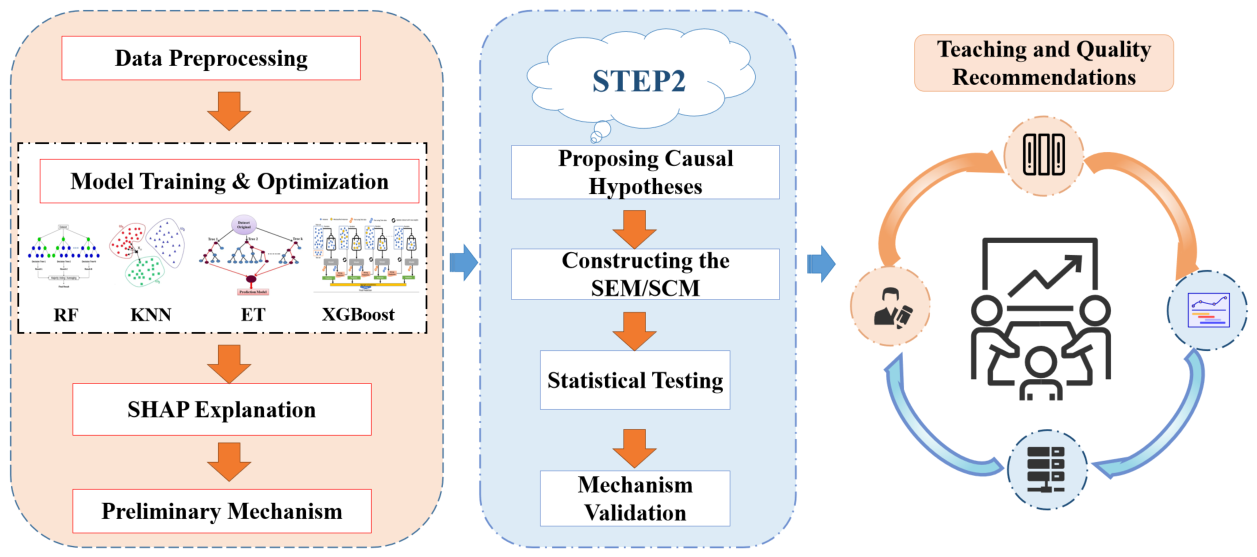
Figure 2.
Basic characteristics of the sample: (a) gender; (b) household registration; (c) grade level.
Figure 2.
Basic characteristics of the sample: (a) gender; (b) household registration; (c) grade level.
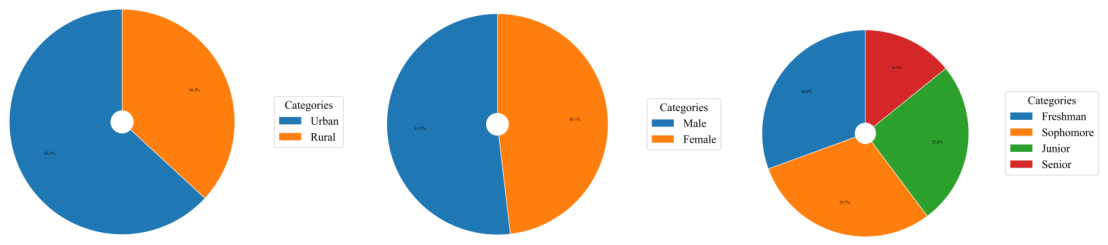
Figure 3.
Distribution of the sample by institutional type.
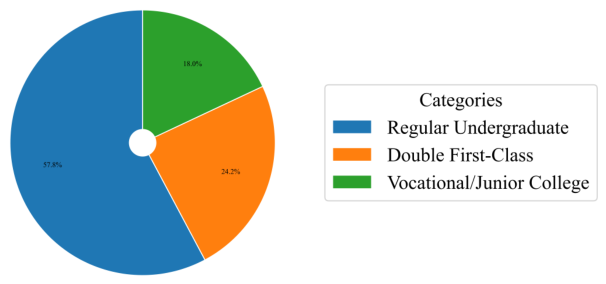
Figure 4.
Distribution of the sample by academic discipline.
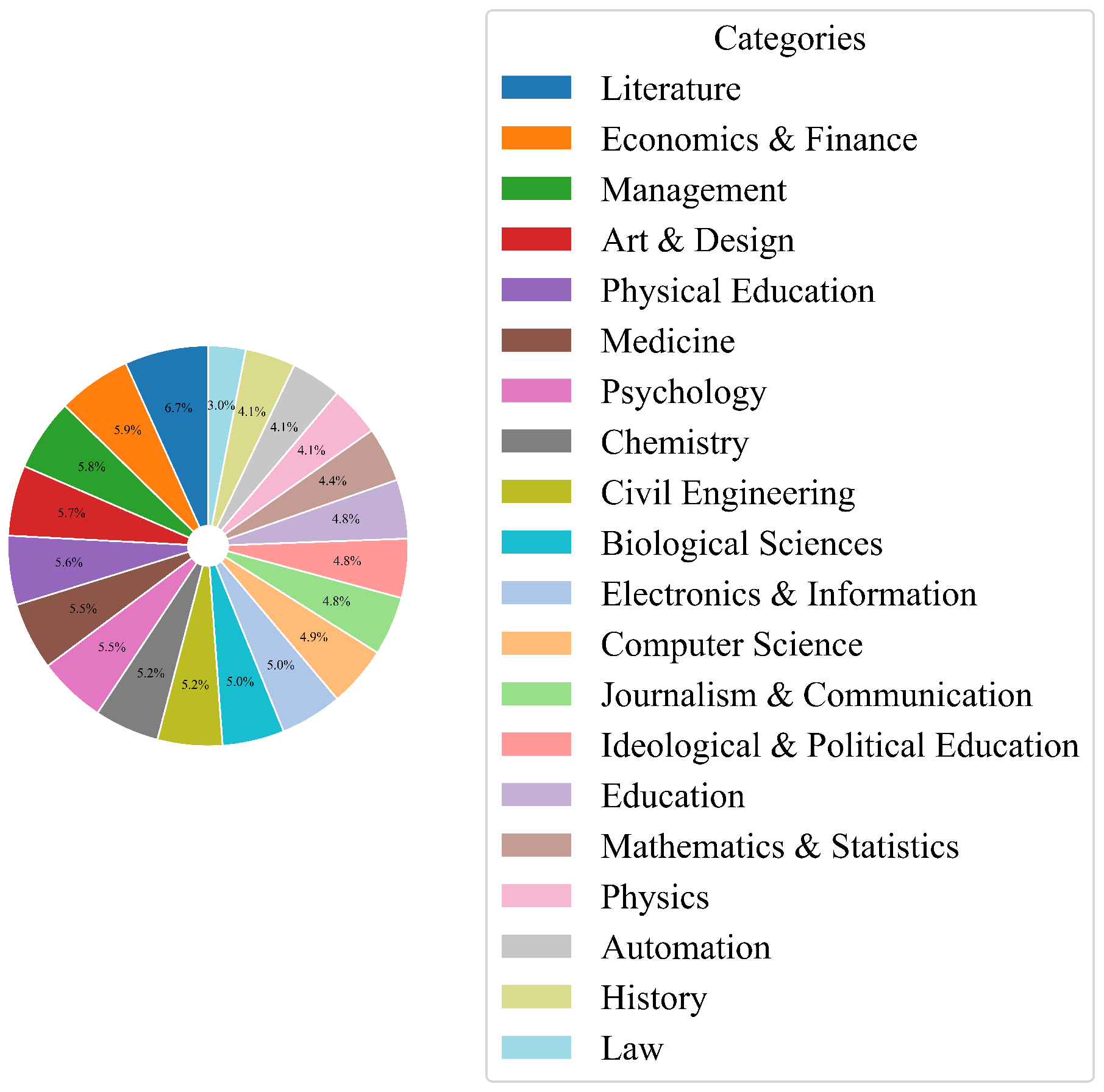
Figure 5.
Actual versus predicted DAI scores for each model: (a) ExtraTrees; (b) KNN; (c) RandomForest; (d) XGBoost.
Figure 5.
Actual versus predicted DAI scores for each model: (a) ExtraTrees; (b) KNN; (c) RandomForest; (d) XGBoost.
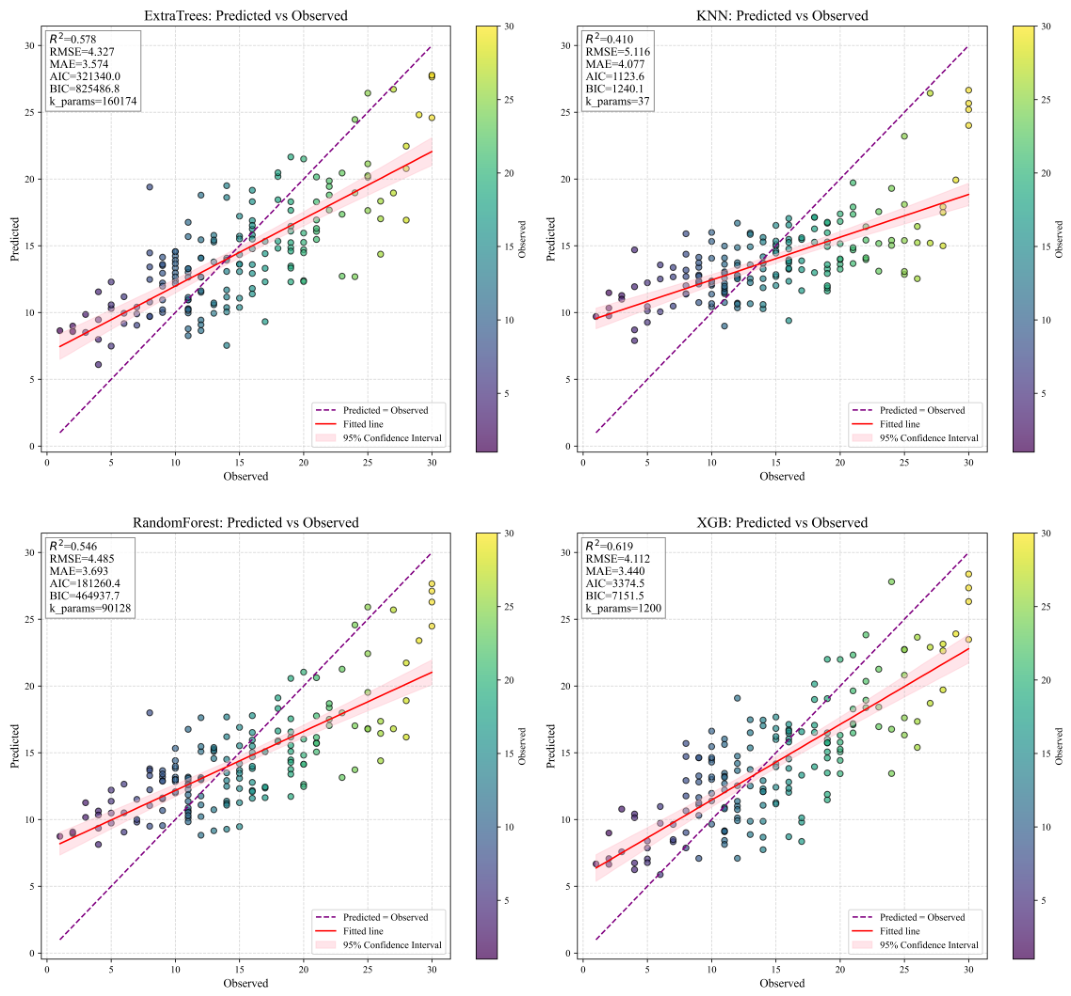
Figure 6.
Global SHAP explanations for the optimal XGBoost model: (a) bar plot of mean absolute SHAP values; (b) beeswarm summary plot.
Figure 6.
Global SHAP explanations for the optimal XGBoost model: (a) bar plot of mean absolute SHAP values; (b) beeswarm summary plot.
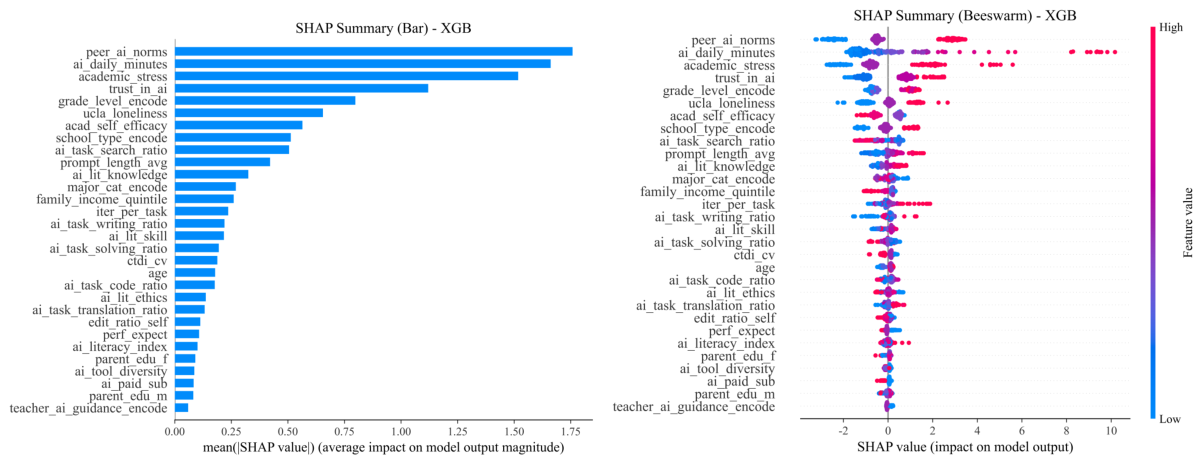
Figure 7.
Local SHAP waterfall explanations: (a) highest predicted dependency case (); (b) lowest predicted dependency case ().
Figure 7.
Local SHAP waterfall explanations: (a) highest predicted dependency case (); (b) lowest predicted dependency case ().
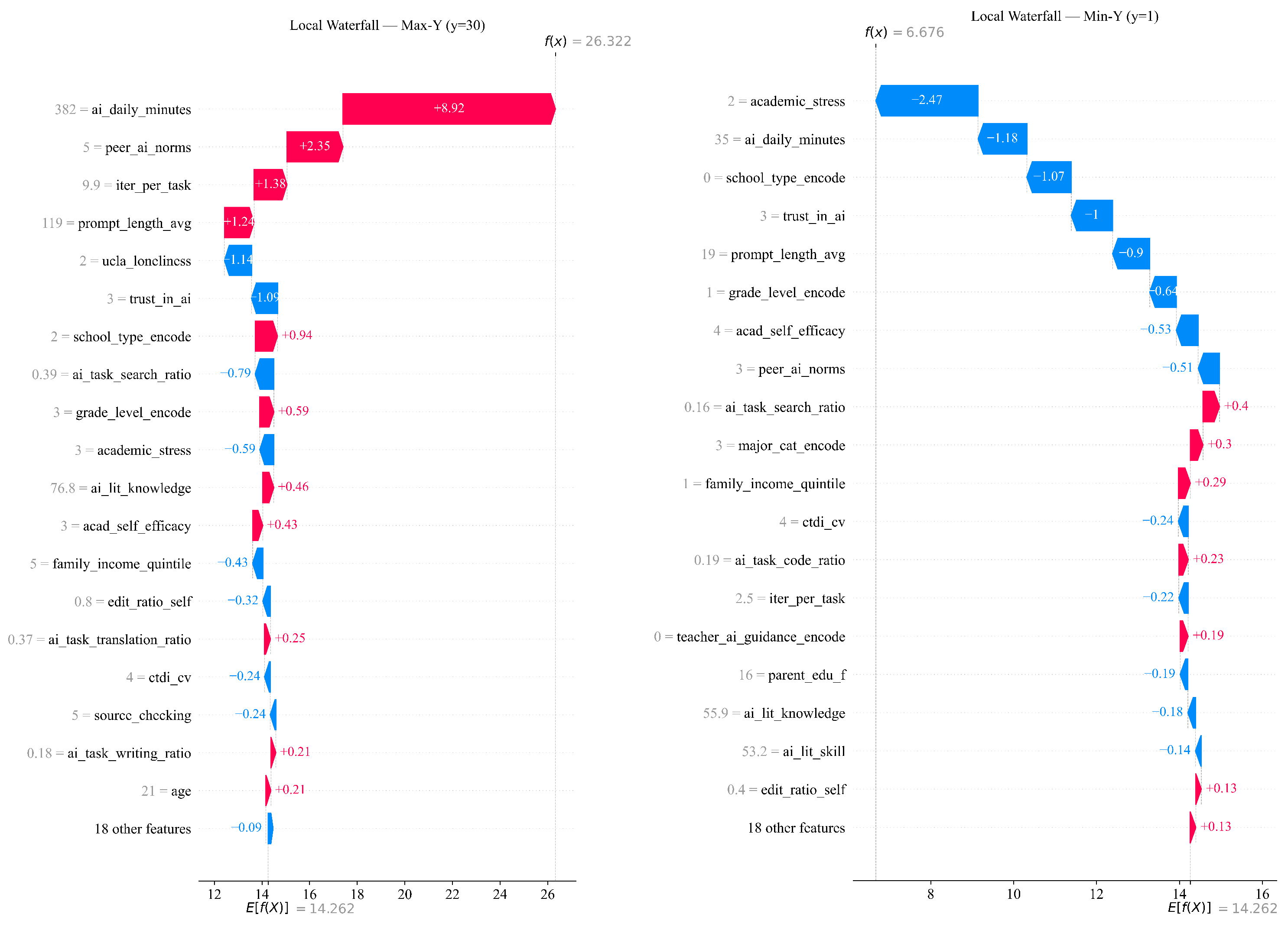
Table 1.
Summary of factors influencing AI dependency.
| Level of Analysis | Factor | Brief Description of Mechanism |
|---|---|---|
| Individual Psychology | Low self-efficacy | Students with lower academic self-efficacy tend to rely on AI as external support when facing complex tasks. Repeated experiences of “low effort, high reward” reinforce a cognitive substitution loop. |
| Emotional distress and anxiety | Loneliness and academic anxiety lead students to view AI as an “emotional companion” or “task savior,” resulting in anxiety-driven reliance to avoid failure and psychological strain. | |
| Learning Behavior | Closed task design | In answer-oriented tasks, students may treat AI outputs as “standard answers,” bypassing deep reflection and fostering passive reception. |
| Insufficient process engagement | Students with low participation and sparse interactions exhibit fragmented knowledge construction and are more likely to seek “definitive answers” from AI, increasing reliance on external agents. | |
| Output “perfection suppression” | When AI-generated content appears technically flawless, students may feel discouraged by comparison, leading them to abandon independent creation in favor of imitation or direct adoption. | |
| Educational Environment | Lack of usage guidelines | Absence of unified AI usage boundaries and ethical frameworks results in unequal dependency patterns: high-literacy students use AI for exploration; low-literacy peers use it for substitution. |
| Inadequate instructor guidance | Complete prohibition may encourage clandestine use, while unrestricted permission risks blurred accountability and academic misconduct, changing classroom culture. | |
| Insufficient AI literacy | Students lacking critical evaluation skills may regard AI as an ultimate authority, losing the ability to question or reflect, potentially leading to linguistic alienation. |
Table 2.
Descriptive statistics of major continuous variables.
| Variable | Mean | SD | Min | Median | Max |
|---|---|---|---|---|---|
| ai_use_days_per_week | 3.971 | 2.013 | 0 | 4 | 7 |
| ai_daily_minutes | 76.210 | 83.905 | 0 | 49 | 555 |
| ai_tool_diversity | 1.908 | 1.041 | 1 | 2 | 6 |
| prompt_length_avg | 38.483 | 20.957 | 5 | 35.5 | 150 |
| iter_per_task | 4.015 | 1.746 | 1 | 3.9 | 12.8 |
| edit_ratio_self | 0.530 | 0.205 | 0 | 0.5 | 1 |
| verify_freq | 3.314 | 0.844 | 1 | 3 | 5 |
| source_checking | 3.293 | 0.850 | 1 | 3 | 5 |
| ai_task_writing_ratio | 0.188 | 0.123 | 0 | 0.165 | 0.74 |
| ai_task_code_ratio | 0.172 | 0.119 | 0 | 0.15 | 0.8 |
| ai_task_solving_ratio | 0.210 | 0.125 | 0.01 | 0.19 | 0.67 |
| ai_task_translation_ratio | 0.202 | 0.124 | 0 | 0.18 | 0.66 |
| ai_task_search_ratio | 0.229 | 0.131 | 0.01 | 0.21 | 0.71 |
| academic_stress | 3.190 | 0.766 | 1 | 3 | 5 |
| ucla_loneliness | 2.884 | 0.815 | 1 | 3 | 5 |
| acad_self_efficacy | 3.414 | 0.662 | 2 | 3 | 5 |
| ctdi_cv | 3.307 | 0.668 | 1 | 3 | 5 |
| perf_expect | 3.933 | 0.635 | 2 | 4 | 5 |
| ease_of_use | 3.871 | 0.643 | 2 | 4 | 5 |
| trust_in_ai | 3.573 | 0.772 | 1 | 4 | 5 |
| ai_literacy_index | 66.046 | 7.991 | 39.2 | 65.9 | 91.9 |
| teacher_ai_guidance_encode | 1.029 | 0.649 | 0 | 1 | 2 |
| peer_ai_norms | 3.112 | 1.497 | 1 | 3 | 5 |
| course_difficulty | 3.398 | 0.836 | 1 | 3 | 5 |
| ai_dep_dai_total | 14.379 | 6.492 | 0 | 14 | 30 |
Table 3.
Model fit results for the full sample (N = 860).
| logl | AIC | BIC | CFI | TLI | RMSEA | |
|---|---|---|---|---|---|---|
| 0.734 | 78.533 | 268.810 | 0.855 | 0.834 | 0.056 |
Table 4.
Structural path coefficients for the full sample.
| Structural Path | Estimated Value | Significance |
|---|---|---|
| AI_Usage ← Peer Norms | 0.6749 | * |
| AI_Usage ← Trust in AI | 0.8826 | ** |
| DAI ← AI_Usage | 0.0086 | *** |
| DAI ← Peer Norms | 0.2613 | *** |
| DAI ← Trust in AI | 0.2764 | *** |
| DAI ← Academic Stress | 1.6484 | ** |
| DAI ← usage×literacy | −0.0049 | ns |
| DAI ← grade_level | 0.1383 | ** |
| DAI ← family_income | −0.0713 | ** |
Table 5.
Bootstrap confidence intervals for mediation and moderation effects (full sample).
| Effect | Mean | 95% CI |
|---|---|---|
| Peer Norms → AI_Usage → DAI (Mediation) | 0.0025 | [0.0015, 0.0035] |
| Trust in AI → AI_Usage → DAI (Mediation) | 0.0582 | [0.0355, 0.0923] |
| usage×literacy → DAI (Moderation) | −0.0042 | [−0.1264, 0.1222] |
Table 6.
Heterogeneity test results by institutional tier.
| Group | AI_Usage ← Peer | AI_Usage ← Trust | DAI ← AI_Usage | DAI ← Stress | CFI |
|---|---|---|---|---|---|
| Vocational College | 0.358 | 0.168 | 0.0103 | 1.676 | 0.776 |
| Regular Undergraduate | 0.941 | 0.223 | 0.0088 | 1.352 | 0.870 |
| Double First-Class | 1.021 | 0.184 | 0.0063 | 1.724 | 0.615 |
Table 7.
Heterogeneity test results by disciplinary intensity group.
| Group | AI_Usage ← Peer | AI_Usage ← Trust | DAI ← AI_Usage | DAI ← Stress | CFI |
|---|---|---|---|---|---|
| High Intensity | 0.759 | 0.502 | 0.0075 | 1.844 | 0.870 |
| Medium Intensity | 0.778 | 0.441 | 0.0097 | 1.132 | 0.865 |
| Low Intensity | 0.651 | 0.310 | 0.0143 | 1.687 | 0.803 |
Disclaimer/Publisher’s Note: The statements, opinions and data contained in all publications are solely those of the individual author(s) and contributor(s) and not of MDPI and/or the editor(s). MDPI and/or the editor(s) disclaim responsibility for any injury to people or property resulting from any ideas, methods, instructions or products referred to in the content. |
© 2026 by the authors. Licensee MDPI, Basel, Switzerland. This article is an open access article distributed under the terms and conditions of the Creative Commons Attribution (CC BY) license (http://creativecommons.org/licenses/by/4.0/).
Copyright: This open access article is published under a Creative Commons CC BY 4.0 license, which permit the free download, distribution, and reuse, provided that the author and preprint are cited in any reuse.