
Submitted:
21 August 2026
Posted:
24 August 2026
You are already at the latest version
Abstract
Volunteer participation by foreign residents in intercultural communities fosters affective belonging, mitigates cultural estrangement, and ultimately cultivates a mutually beneficial ecosystem of cross-cultural symbiosis. However, the inherent complexity and unsustainability of volunteer participation highlight the urgent imperative to unpack how and why such participation unfolds. Adopting a Person-Environment (P-E) Transaction perspective, this study conducted semi-structured interviews with eight foreign volunteers and five community stakeholders in Community R, Nanjing, China. Using thematic analysis, we constructed a process framework illustrating how volunteer behaviors evolve alongside place attachment. Key determinants and the dynamic trajectory of participation were identified. Findings reveal that foreign residents navigate a sequential pathway: progressing from initial hesitation and cultural negotiation to affective identification and, ultimately, the internalization of participation, which culminates in a stable sense of belonging. This trajectory is dynamically shaped by the interplay between contextual affordances—specifically the creation, mobilization, expansion, and incentivization of the volunteering environment—and individual factors, including cognitive appraisals, cultural schemas, value orientations, and emotional states.
Keywords:
volunteer participation
; intercultural communities
; foreign residents
; Person–Environment transactions
; place attachment
1. Introduction
Against the backdrop of accelerating globalization and increased transnational mobility, urban centers in China are witnessing a demographic shift. An influx of foreign nationals—arriving for employment, education, commerce, or long-term residency—is restructuring traditional neighborhood ecosystems once dominated by local populations. This convergence has given rise to "international communities," characterized by mixed residential patterns. However, physical presence does not presuppose psychological integration. Lacking formal citizenship and stable social networks, foreign residents frequently encounter significant barriers to belonging. Drawing on McMillan’s (1996) sense of community theory, these challenges manifest as interactional hesitancy, emotional volatility, and identity ambiguity. In this context, volunteer participation; has emerged as a pivotal mechanism for acculturation and prosocial engagement. By fostering social cohesion and facilitating integration, foreign volunteers have proven instrumental in contexts ranging from international events to public health crises. Nevertheless, the observed fragility and unsustainability of such participation often preclude the formation of robust social ties, emotional resonance, and institutional embeddedness, thereby exacerbating cultural estrangement. Consequently, elucidating the mechanisms linking volunteer behavior to place attachment among foreign residents constitutes a critical imperative at the intersection of migration studies, community psychology, and behavioral sciences.
Scholarly inquiry into volunteering behavior has predominantly unfolded along four trajectories: social capital, social integration, psychological adaptation, and dynamic processes. From a social capital perspective, Putnam (2000) posits that voluntary associations and community participation are foundational to building social capital, primarily by fostering interpersonal trust and collective cooperation. Conceptualized as an altruistic act, volunteering serves not merely as a prosocial behavior but as a critical form of social engagement that facilitates the accumulation of social capital and the construction of community support networks. Extending this, the social integration perspective frames volunteering as a pivotal mechanism for migrant incorporation. Through participation, migrants access local social networks and resources, thereby cultivating a sense of belonging (Wilson, 2000; Ruiz & Ravitch, 2023; Greenspan & Walk, 2024). The psychological adaptation lens shifts focus to intrinsic motivations, emphasizing the role of psychological identification with organizational values (Grube & Piliavin, 2000). This perspective highlights how cultural values intersect with civic identity, emotional attachment, and civic belonging in shaping sustained engagement (Handy & Greenspan, 2009).Finally, a burgeoning process-oriented perspective conceptualizes volunteering not as a discrete event but as a temporal trajectory encompassing antecedents, experiences, and consequences (Snyder & Omoto, 2008).While these frameworks offer valuable insights into the functions of volunteering within intercultural contexts, they remain largely static and agentic-centric. Specifically, there is a paucity of research examining the reciprocal transactions between foreign volunteers and the community environment. This gap limits our understanding of how belonging emerges dynamically, thus underscoring the necessity of the present study.
First, this study expands the psychological adaptation lens through which foreign residents’ integration into local Chinese communities is understood, centering affective identification and belonging as core explanatory anchors for volunteer participation. Immigrant engagement in community programming and volunteering transcends mere prosocial provisioning; rather, it constitutes a structured pathway for acquiring affective recognition, forging durable social bonds, and cultivating community attachment. Such participation represents a pivotal access point for foreign residents to embed within local societal contexts: sustained interaction not only yields an empowerment dividend that significantly enhances individual mental health and subjective well-being (Chen & Phanumartwiwath, 2025), but also facilitates the establishment of interpersonal connections, gradual affective identification with the locality, and broad societal acceptance (Sveen et al., 2023), thereby strengthening cross-group social cohesion. Critically, the repeated interactions inherent to volunteer programming mitigate cultural isolation and compress social distance, directly bolstering migrant belonging (Carlà et al., 2023). Within intercultural community contexts specifically, volunteering performs a well-documented intercultural bridging function: it supports migrants in constructing stable social support networks, and fosters a clear sense of participatory identity and participatory responsibility through iterative community exchange (Ambrosini & Artero, 2023; Bontenbal, 2024). Second, this work advances the literature on the processual dynamics of volunteer participation, providing granular empirical description of the temporal evolution of foreign residents’ engagement. Conventional scholarship largely frames volunteering as a discrete behavioral outcome, obscuring its intrinsically phased and evolving nature. Recent empirical turns have instead prioritized the behavioral internalization process as a core analytic lens (Martin & Scanlon, 2025). Immigrant participation in community life typically follows a progressive trajectory spanning initial exposure, adaptive calibration, and deep engagement (Greenspan et al., 2018). Across sustained interaction cycles, individuals often transition from peripheral observers—who engage in passive information gathering and tentative boundary testing—to active participants who exercise meaningful agency in program design and implementation. This role shift is accompanied by the consolidation of behavioral commitment and deepened community attachment, reflecting the mutually constitutive relationship between participation intensity and psychological embeddedness.
Scholarship on the precipitating mechanisms of volunteer participation predominantly coalesces around two dominant theoretical streams: environmental determinism and individualistic models. Proponents of the environmental perspective emphasize the primacy of exogenous structural factors—including state-society relations, community diversity, governance efficacy, geopolitical context, and institutionalized public engagement mechanisms—in shaping the participatory actions of foreign volunteers (McBride et al., 2012). Conversely, the individualistic perspective posits that endogenous traits—such as identity markers, ontogenetic experiences, personality dispositions, and value orientations—serve as intrinsic determinants of engagement (Omoto et al., 2010). Empirical investigations have identified specific individual-level predictors, encompassing demographic identities (e.g., gender, nationality, race, migrant status), ontogenetic trajectories (e.g., educational attainment, prior volunteering experience) (Chung et al., 2019), religious convictions (Yeung, 2018), and core value structures (Carlo et al., 2005). Crucially, both paradigms traditionally reify a subject-object dichotomy, positioning the volunteer as the autonomous agent and the environment as the passive backdrop influencing action. While contemporary acculturation research acknowledges the role of individual dispositions, these are frequently operationalized as static control variables, with scant attention paid to their transactional interplay with contextual influences (Doucerain et al., 2023). Volunteering, as a structured and recurrent site of intercultural contact, offers an ideal crucible to observe this "person-context" dialectic. Indeed, the ontogeny of volunteer behavior is inherently complex, co-determined by the intercultural milieu and individual agency. Consequently, a synergistic analytical lens—one that accounts for the holistic co-constitution of person and environment—is requisite to deciphering foreign residents’ participation in Chinese intercultural communities. To address this theoretical lacuna, the present study adopts Bronfenbrenner’s (1979, 2005) Person–Environment (P-E) Transaction framework. This perspective defines the transactional process as "the enduring, reciprocal pattern of interaction between an individual and the immediate environment, wherein both entities continuously modify and mutually reshape each other’s characteristics over time." Within the specific context of intercultural community volunteering, foreign residents are not merely passive respondents to pre-existing community structures. Rather, they actively negotiate, reconfigure, and even co-construct community norms through their participation, thereby iteratively refining the participatory environment itself. Thus, the analytical focus of this research shifts from the static question of "whether the individual fits the community" to the dynamic investigation of how participatory behaviors and community support mechanisms undergo bidirectional calibration across temporal scales.
Drawing on this transactional lens, and grounded in the empirical experiences of foreign residents transitioning into volunteer roles within Community R, Nanjing, this study aims to unpack the generative mechanisms driving this transformation and the concomitant development of place attachment. Specifically, we seek to answer the following questions:
RQ1: What is the dynamic trajectory characterizing the transition of foreign residents into volunteer roles within intercultural communities?
RQ2: Why do foreign residents engage in volunteering behaviors despite potential cultural and structural barriers?
RQ3: How does the evolution of volunteer participation correspond to changes in foreign residents’ sense of belonging and emotional attachment to the host community?:
2. Materials and Methods
2.1. Research Design and Paradigm
In contrast to quantitative approaches that prioritize the verification of variable-driven relationships, this study adopts a qualitative methodology to foreground the dynamic genesis of volunteer behavior, the mechanisms of emotional negotiation, and the subjective meanings constructed through lived experiences. Qualitative research is uniquely positioned to explore complex social phenomena—such as micro-social processes, emotional experiences, and cross-cultural interactions—that are often obscured by statistical aggregation (Creswell & Poth, 2016). Furthermore, situated within an interpretivist paradigm and guided by constructivist epistemology, this research does not seek to test pre-existing hypotheses. Instead, it emphasizes the inductive derivation of behavioral processes and meaning structures from empirical data, allowing theoretical insights to emerge organically from the narratives of the participants.
Accordingly, this study employs reflexive thematic analysis (TA) as the primary analytic framework, integrating data-driven inductive coding to construct a theoretically grounded interpretation model consistent with our constructivist epistemology. As Braun and Clarke (2022) articulate, reflexive TA is uniquely suited to exploratory inquiry: it enables systematic identification of recurrent patterns of meaning and surfacing of underlying latent themes from dense experiential data, without imposing pre-existing theoretical constraints. Applying this approach to foreign volunteers’ narrative accounts, we aim to unpack the dynamic trajectory of volunteer participation in intercultural communities, while charting the emergent, iterative process through which affective place attachment develops over time.
2.2. Research Site and Case Selection
Nanjing launched the development of intercultural communities in 2018 and has since advanced rapidly toward establishing high-quality communities that meet international standards and serve as national demonstration models. This study selects Community R, an intercultural community in Nanjing, China, as the research site. Situated adjacent to the Nanjing Olympic Sports Center, Community R has attracted a considerable number of international students, athletes, and other residents (see Figure 1). It is also one of the typical communities in Nanjing that initiated intercultural community development at a relatively early stage.
Established in 2014, the R International Community administers three residential sub-districts with a permanent population exceeding 6,000. As a demonstration site for Nanjing’s third batch of international communities, it has developed a governance system integrating the "Three Integrations, Three Bridges" operational framework, the "International Youth Volunteer Alliance," and the branding of the "International Residents Participation Festival" (see Figure 2). Over five years of development, the community has undergone a multi-dimensional and multi-stage voluntary governance process—including scheme design, establishment of the International Youth Volunteer Alliance, operation of volunteer service projects, and maintenance of the expatriate volunteer cohort. To date, over 30 Foreign residents have transitioned into volunteer roles, accumulating exemplary experience in international community volunteer service and providing a comprehensive case study for observing the mobilization of Foreign residents in community governance. Expatriate residents constitute approximately 10% of the community population. These individuals originate from various Asian and African countries—including Singapore, Malaysia, Ghana, the United Arab Emirates, Myanmar, and Gambia, as well as Saudi Arabia—with a minimum residency duration in China of 2.5 years and a minimum volunteer service tenure of one year. Their occupational backgrounds encompass international students, employees of foreign enterprises, and full-time homemakers. Having undergone a developmental transformation in mindset and action regarding volunteer service, these individuals represent a successful transition from "expatriate residents" to "expatriate volunteers," offering representative and typical cases for analyzing expatriate participation in volunteer initiatives. Furthermore, a relatively stable interactive network within the cross-cultural community has been established.
Concurrently, the R Community founded the "International Youth Volunteer Alliance" to sustain diverse forms of voluntary participation, such as organizing community public welfare activities. Compared to formal institutional participation, this everyday interaction-based volunteering better exemplifies the behavioral adaptation and emotional negotiation of Foreign residents within transcultural communities. Consequently, this case effectively illustrates how expatriate residents gradually develop Affective Belonging through community interaction.
This study employs a case study approach, focusing on the R International Community in Nanjing, China, as the core unit of analysis. Yin (2018) asserts that case studies are particularly well-suited for addressing "how" and "why" research questions, enabling an in-depth analysis of complex social phenomena within their real-world contexts. Compared to macro-level institutional research, the case study design is more effective in uncovering the specific formative processes of community participation within daily practices. The case study is widely acknowledged as an appropriate method for exploring behavioral processes and meaning-making within complex social settings. Consequently, this research adopts a single-case embedded study design to conduct a detailed examination of the participation behaviors and emotional transformations of expatriate volunteers within the R Community.
2.3. Data Collection
2.3.1. Participant Observation
Participant observation facilitated a nuanced understanding of how volunteer behaviors emerged within authentic social contexts. From March 2021 to March 2022, the first author was embedded in Community R as part of a Master’s-level practicum placement. This prolonged engagement allowed for the gradual identification of salient issues regarding foreign volunteerism, as interactions with community stakeholders increased in both frequency and depth over time. Adopting a deliberate observational stance, the researcher actively engaged with foreign volunteers and community personnel. This iterative process involved informal questioning, theoretical ideation, and hypothesis generation, enabling the researcher to move beyond superficial descriptions toward explanatory insights.
Data collection occurred across diverse settings, including public welfare initiatives, cultural festivals, language exchange programs, auxiliary community services, and organizational meetings. Field notes systematically captured: (1) micro-interactions between foreign volunteers and staff; (2) behavioral manifestations during participation; (3) affective shifts across varying stages of engagement; (4) institutional strategies for mobilization and encouragement; (5) culturally specific modes of emotional expression; and (6) communication practices within the intercultural milieu. These detailed field notes, documenting both observational data and methodological reflections, served to enhance the contextual validity and authenticity of the findings.
2.3.2. In-Depth Interviews
To further elucidate the participation motivations and subjective experiences of expatriate volunteers, this study conducted semi-structured in-depth interviews. This format allowed for a focused exploration of core research questions while simultaneously granting respondents the latitude to freely articulate their participatory experiences and emotional cognitions. The interview process was facilitated by community staff, with introductions arranged through acquaintances or community leaders to mitigate the sense of unfamiliarity. Interview subjects encompassed expatriate volunteers (both short-term and long-term participants), the Secretary of the R Community Party Committee, the Director of the community-based social organization, and frontline social workers. The interview protocol addressed topics such as: motivations for volunteering; experiences in volunteer participation; cross-cultural interaction experiences; emotional identification with the community; transformations in participation behavior; reasons for and feelings regarding entry into community activities; changes in the community participation environment; shifts in personal attitudes and emotions; understandings of community belonging; difficulties encountered during participation; and future intentions to participate. To protect respondent privacy, all names were anonymized using pseudonyms. By the conclusion of the data collection period, approximately 30 interviews had been conducted, comprising 13 formal in-depth interviews. This included eight expatriate volunteers (Table 1) and five key community stakeholders (Table 2). Individual interview durations ranged from 30 to 60 minutes. With informed consent obtained from all participants, all interviews were audio-recorded and transcribed verbatim to form textual datasets. These data were used to construct individual narrative accounts of volunteer action (see Appendix A ). Additionally, multiple follow-up online interviews were conducted to clarify emergent findings. Language proficiency posed a significant barrier to communication. Consequently, face-to-face interviews were conducted with Foreign residents possessing high-level Chinese proficiency, while those with lower proficiency were surveyed via electronic or paper-based interview schedules. Extant research indicates that in qualitative behavioral studies, sample size is not the primary criterion for adequacy; rather, theoretical saturation is paramount (Guest et al., 2020). As the later stages of data collection yielded increasingly repetitive thematic content, it was determined that theoretical saturation had been achieved.
2.3.3. Document Analysis
In addition to interviews and participant observation, this study collected textual materials, including community promotional materials, volunteer activity records, WeChat Official Account content, event posters, community work documents, and community wall graffiti. These materials facilitate an understanding of how the community constructs the discourse of "international participation" and further assist in analyzing the formation of organizational mobilization and the participation environment.
2.4. Data Analysis and Coding Procedures
This study employed thematic analysis for data interpretation, drawing upon the coding logic of grounded theory—specifically open coding, axial coding, and selective coding. As Braun and Clarke (2022) note, thematic analysis is not merely a taxonomic exercise; rather, it identifies recurring meanings, experiential patterns, and latent structures through constant comparison and induction. Consequently, this research adopted an inductive thematic analysis approach, whereby themes emerged organically from the empirical data rather than being constrained by pre-defined theoretical variables.
During the open coding phase, the researcher conducted a line-by-line reading of the interview transcripts to identify key behavioral descriptions and affective expressions. Initial codes included “uncertainty about how to join activities,”“concerns regarding language barriers,”“gradual familiarity with community members,”“feeling accepted,”and “frequent assistance provided to residents.”This stage generated approximately 40 initial concepts, with semantically redundant items consolidated into single entries.
In the axial coding phase, these initial concepts were categorized and integrated to clarify their interrelationships. For instance, codes such as “uncertainty about participation”and “questions regarding engagement”were synthesized into the theme of Initial Behavioral Hesitation. Similarly, “cultural unfamiliarity”and “environmental barriers to participation”formed the theme of Cross-Cultural Disconnection; “establishing rapport”and “positive interactions with residents”constituted Affective Recognition; “proactive engagement”and “voluntary registration for activities”defined Participation Internalization; and “receiving validation,”“self-satisfaction,”and “establishing a sense of belonging”culminated in Affective belonging Formation. Concurrently, interview data from community secretaries and staff were extracted and coded to map the optimization of the volunteer environment. Through constant comparison across interviews, several core themes were consolidated.
Finally, during the selective coding phase, the researcher integrated the various sub-themes around the core category of “Affective belonging Formation.” This process led to the construction of a framework illustrating the development of belonging in intercultural contexts. Ultimately, five core themes emerged regarding participant behavior and affect: (1) Initial Behavioral Hesitation, (2) Cross-Cultural Negotiation, (3) Emotional Recognition, (4) Participation Internalization, and (5) Affective belonging Formation. Regarding the community context, four environmental themes were identified: Environmental Creation, Mobilization, Expansion, and Incentivization. This analytical trajectory demonstrates how foreign residents gradually develop volunteer behaviors amidst the continuous optimization of the intercultural environment, thereby fostering affective belonging. Affective Belonging refers to an individual’s perceived affective acceptance, psychological safety, and integration of the self with the collective within a group or community. Operationally defined for this study, it comprises three core dimensions: (1) Affective Identification (recognition of community values); (2) Affective Attachment (emotional investment in community members and the surrounding environment); (3) Belongingness Formation (self-perception as a community member) (Antonsich, 2010; Martinez-Damia et al., 2024).(Table 3).
2.5. Trustworthiness and Research Ethics
To ensure research ethics and data trustworthiness, this study implemented the following measures. First, all respondents were anonymized; all community names and respondent names mentioned in the text are pseudonyms to protect personal privacy. Second, prior to conducting interviews, the researcher explicitly explained the research purpose to the respondents and obtained informed consent. Third, this study employed data triangulation by integrating findings from participant observation, in-depth interviews, and document analysis to enhance the credibility of the results. Furthermore, throughout the research process, the researcher maintained reflexive journaling and conducted constant comparative analysis on the coded data and emergent themes. By continuously comparing different interview contents, the stability of the themes was strengthened, thereby minimizing the influence of researcher subjectivity and bias on data interpretation.
This study strictly adhered to the Declaration of Helsinki (2013 Revision) and the Ethical Guidelines for Humanities and Social Science Research of Hohai University. Given that ethical oversight for humanities and social science research at the university is administered at the college level, the ethical supervision of this project was directly managed by the School of Public Administration, Hohai University. As this research constitutes a minimal risk qualitative study involving no medical or clinical interventions, it was reviewed by the Ethics Review Panel of the School of Public Administration, Hohai University. The Panel confirmed that the study fully complies with the ethical standards for non-interventional social science research. Consequently, the study was exempted from formal ethical review and granted administrative approval for registration. The study is registered with the School of Public Administration, Hohai University (Registration Date: May 3, 2026).
Prior to data collection, all participants received a detailed informed consent form available in both Chinese and English. The document comprehensively outlined the study's introduction, procedural protocols, potential risks, confidentiality and privacy safeguards, the principle of voluntary participation, contact information, and explicit options for granting consent. The research team secured informed consent from all participants. Given that expatriate participants may harbor concerns regarding the retention of administrative paper trails, this study instituted a specific alternative protocol: "oral consent documented in writing." This measure was designed to alleviate potential apprehensions regarding the impact on their residency status or employment relations. Participants were explicitly informed of their unconditional right to withdraw from the study at any stage without penalty.
To ensure data confidentiality and anonymity, all personally identifiable information was removed during the transcription phase. Each participant was assigned a unique alphanumeric code (e.g., F01, F02), which was used to replace real names throughout the Results and Discussion sections. All digital data, including audio recordings and interview transcripts, were stored on password-protected encrypted hard drives and the university’s encrypted cloud storage, with access strictly limited to the principal investigator and the supervising supervisor. Furthermore, during research presentations and the drafting of this manuscript, any details that could potentially identify individuals—such as specific institutional affiliations, street addresses, or sensitive visa information—have been obfuscated or generalized.
3. Results and Findings
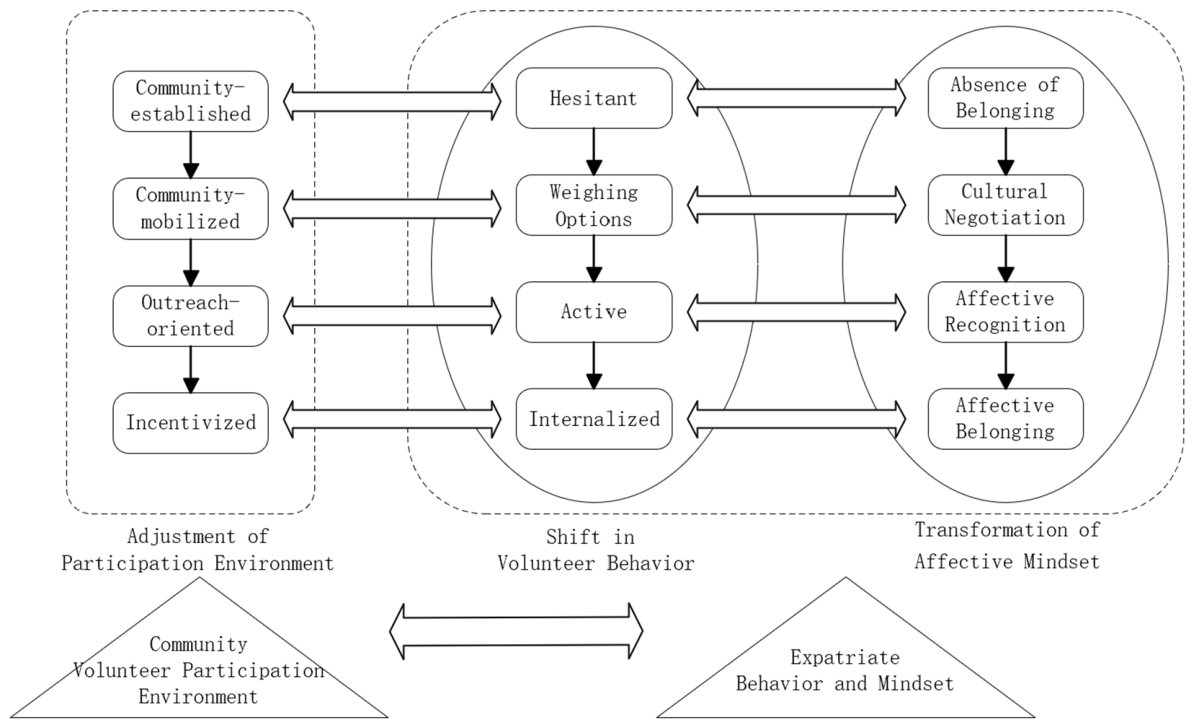
Drawing on a comprehensive analysis of interview data from foreign volunteers, participant observation records, and archival community documents, this study finds that foreign residents’ participatory behaviors in intercultural communities are neither linearly formed nor purely institutionalized acts, but unfold as a dynamic process of intercultural affective adaptation driven by ongoing cross-cultural negotiation, emotional recognition, and identity adjustment. The findings reveal that foreign residents rarely establish stable participation immediately after entering the community, instead undergoing a gradual transformative trajectory progressing from initial behavioral hesitation to behavioral deliberation, advancing through cross-cultural negotiation to participation internalization, and ultimately achieving affective belonging formation. Grounded in the Person-Environment (P-E) Transaction perspective and inductive thematic coding of field data, this study outlines the process of foreign residents’ community volunteer engagement through five core themes and constructs a framework mapping the co-development of volunteer behavior and affective belonging (Figure 2). Specifically, upon initial entry into an unfamiliar community, foreign residents experience behavioral hesitation stemming from cultural unfamiliarity; after the community establishes a supportive volunteering environment and mobilizes both Chinese and foreign residents to participate, foreign volunteers gain access to sustained volunteer interactions, and confronted with entrenched cultural backgrounds and cognitive differences, they gradually engage in cross-cultural negotiation, exhibiting deliberative behavioral patterns while learning local community interaction norms to better adapt to the intercultural context. As the community continuously expands and enriches the volunteering environment for foreign residents and broadens participatory pathways, foreign volunteers receive recognition, acceptance, and emotional feedback, their participation stabilizes progressively, giving rise to participation internalization and emotional recognition. Finally, against the dual backdrop of self-driven internalization of participatory behaviors and ongoing community incentives for participation, foreign residents gradually develop affective belonging, forming affective attachment to and a sense of belonging within the local community. This framework demonstrates that affective belonging is not a peripheral byproduct of participation, but a core driver of sustained participation behavior, and critically, the reciprocal interplay between the community’s continuously optimized participatory environment and foreign volunteers’ endogenous psychological shifts constitutes the underlying mechanism governing both the initiation and persistence of volunteer behavior.
Figure 2.
Process Framework for Foreign Volunteers’ Participation Behavior and Affective Belonging Formation. Source: Compiled by the authors based on empirical data.
Figure 2.
Process Framework for Foreign Volunteers’ Participation Behavior and Affective Belonging Formation. Source: Compiled by the authors based on empirical data.
3.1. Initial Behavioral Hesitation: Participation Uncertainty in a Cross-Cultural Context
3.1.1. The Creation of the Participatory Environment in the International Community
The R Community engineered its participatory environment through the creation of physical spaces, the hosting of cultural festivals, the formation of cultural teams, and the preparation of community self-organizations. These efforts established the spatial, cultural, and organizational environments for volunteer action. Addressing the needs and spatial values of Foreign residents, the community launched physical venues such as the "Overseas Chinese Book House," the "International Youth Volunteer Alliance Activity Room," and the "Overseas Chinese Dynamic Space." These spaces were decorated with national emblems, commemorative coins, and flags representing the Foreign residents' home countries to attract their participation and foster an inclusive atmosphere for volunteer activities. Simultaneously, the R Community implemented measures such as organizing traditional cultural and art festivals, establishing an "International Cultural Ambassador Group," and stimulating "sub-cultural" circles. These initiatives cultivated a cultural atmosphere for international volunteer service, sparked Foreign residents' interest in volunteering, and helped reserve a pool of potential expatriate volunteers. This novel environmental design not only attracted numerous Foreign residents to visit and "check-in" but also piqued the curiosity of local Chinese residents, thereby building a platform for Sino-foreign interaction. Furthermore, the international community accumulated organizational resources through training sessions and field visits, leveraging professional entities such as social organizations and foundations to participate in the construction and operational service delivery of expatriate-related self-organizations. These actions laid the groundwork—in terms of venue, services, and personnel—for the subsequent formation of the expatriate volunteer team.
3.1.2. Behavioral Hesitation and the Absence of Belonging
Within the volunteer service environment created by the international community, Foreign residents began to utilize community cultural services. However, at this stage, they did not undergo a transformation in identity or action to become volunteers. Instead, for various reasons, they remained in a state of watchful waiting and indecision. The study found that most Foreign residents did not actively enter the community's public sphere during the initial phase; rather, they exhibited significant behavioral hesitation. This hesitation did not stem merely from constraints of time or resources, but primarily from cross-cultural adaptation pressures such as cultural unfamiliarity and language anxiety. Many respondents mentioned that upon first arriving in the Chinese community, they were unclear about how to participate, whether they would be accepted, or how to interact with local residents. A Ghanaian international student, F03, stated:
"When I first arrived in China, I found the environment very unfamiliar and did not know how to participate in Chinese community services... Then there was the language issue, which made me hesitant to join in actively at the beginning. I was afraid of failing to communicate, you know, my Chinese is just average..."
The combined effect of experiences such as the "gaze" of classmates and neighbors, unclear language expression, and the cognitive bias of "fearing to impose trouble on others," contributed to the Foreign residents' maladaptation to the new community environment. Consequently, they were reluctant to readily assume the role of volunteers to provide services within the community. Even when aware of the activity spaces, content, and the coordinating efforts of community organizations, these individuals failed to translate into active volunteers. Due to cultural unfamiliarity, psychological distance, and stereotypical perceptions of volunteer activities, they remained inactive. Similar to F03's mindset, even after initial exposure to community services, many Foreign residents were unwilling to immediately commit to volunteering; instead, they required a prolonged period of observation before making a decision. This hesitation stemmed from an uncertainty regarding the implications or potential unforeseen consequences of engaging in volunteer service within their residential community. This state of "peripheral observation" was prevalent among the majority of respondents. Foreign residents typically began by observing community interaction rules through passive means—watching community events, browsing WeChat groups, or attending festival activities as spectators—rather than immediately engaging in deep participation. This finding aligns with research in the Behavioral Sciences concerning migrant uncertainty, which posits that cross-cultural unfamiliarity significantly impedes initial participation. Migrants in unfamiliar cultural environments often exhibit interaction avoidance due to social ambiguity, lack of recognition, and perceived exclusion (Baran et al., 2025).
Additionally, a segment of Foreign residents faced constraints due to time poverty, as their schedules were heavily occupied by professional responsibilities, familial obligations, and academic pursuits. Consequently, they remained in a state of watchful waiting, characterized by a sense of being "willing but unable." Represented by the corporate executive F08, the full-time mother F02, and the student F07 who faced intense academic pressure and eventually returned to her home country, these individuals generally possessed a strong sense of community responsibility and a willingness to contribute to public service. However, these aspirations conflicted with their demanding personal lives, diverse interests, and immediate practical circumstances. This collision of intent and reality resulted in a state of behavioral hesitation marked by the feeling of having the heart to act but lacking the capacity to do so.
However, the findings reveal that initial hesitation does not equate to a rejection of participation. On the contrary, many respondents actually harbored a strong desire for social connection and expectation of emotional interaction. They simply lacked the "sense of interactional safety" required to enter the community's relational network, thus lingering at the periphery of the community for extended periods. This indicates that the formation of Foreign residents' participation behavior is, in essence, fundamentally a matter of cross-cultural psychological adaptation, rather than merely a challenge of community organizational mobilization.
Collectively, these observations indicate that upon initial entry into the host community, expatriate residents generally maintained a discernible psychological distance from local community life. Their engagement behaviors were distinctly characterized by "watchfulness" and "hesitation." This peripheral positioning manifested not merely as low-intensity participation, but as a pervasive uncertainty regarding community norms, interactional modalities, and social relational structures. A predominant number of participants reported that they did not initially self-identify as formal community members. Instead, they were more inclined to construct their identity as "temporary residents" or "outsiders." This phenomenon suggests that community belonging is not an inherent attribute for Foreign residents at the outset. Rather, their participatory trajectories are substantially constrained by cultural unfamiliarity, linguistic disparities, and a perceived sense of social boundaries. The cultivation and establishment of belonging emerges as a dynamic generative process, predicated on sustained social interaction and localized practice. This dynamic originates from the psychological predicament of an "absence of belonging" frequently experienced by Foreign residents upon arrival in China or during initial contact with community activities (Baumeister & Leary, 1995). Constrained by cultural unfamiliarity and social boundaries, their intrinsic psychological need to form community attachment remains largely unmet, thereby resulting in participatory behaviors defined by the low-frequency characteristics of watchfulness and hesitation.
3.2. Cross-Cultural Negotiation: Identity Adjustment in Community Interaction
3.2.1. Mobilization of the Participatory Environment in the Cross-Cultural Context
During the mobilization phase, the host community implemented a governance model characterized by "government stewardship, institutional backing, resident agency, and multi-stakeholder engagement." To expand organizational capacity, the community formalized the International Youth Volunteer Alliance (hereafter "the Alliance") and incorporated third-party social service organizations. This dual strategy leveraged collective dynamics to reconfigure the socio-cultural environment. The integration of this endogenous alliance with exogenous professional entities established a robust infrastructure for specialized service delivery. Collaborative synergies were forged among community stakeholders—including social organizations, property management agencies, and district-level youth federations—to consolidate expatriate volunteer recruitment under the Alliance framework. This initiative codified institutional norms, organizational architectures, and training protocols. Specific programming—such as the "International Cultural Ambassadors Program," "Charity Bazaars," "Seasonal Festivities," and the "International Residents' Engagement Fair"—was instrumental in converting potential service recipients into active providers. Furthermore, the community procured professional services to activate the Alliance platform. Through Organization S, fixed-schedule volunteer interventions (e.g., "One-Day Neighborhood Grid Manager," "One-Day Traffic Steward," and "One-Day Civic Virtue Volunteer") were institutionalized. These recurring engagements served to stabilize the expatriate volunteer cohort by sustaining participation. Notably, unlike local residents who exhibit passive familiarity with routine community affairs, Foreign residents demonstrated proactive interest in structured participatory initiatives, often utilizing discretionary time for engagement. This hybrid approach—combining endogenous platform development with exogenous organizational activation—facilitated the optimization of the volunteer ecosystem. Consequently, individuals previously exhibiting behavioral hesitation transitioned into active contributors.
3.2.2. Behavioral Calculus and Affective Suspension
As participation frequency increased, expatriate residents began to engage in more stabilized community interactions. However, the findings indicate that the core mechanism during this phase was not merely "increased participation." Instead, it constituted a sustained process of cultural negotiation. Individuals were required to continuously coordinate the relationship between their pre-existing cultural schemas, the interactional rules of the host community, and their own evolving identity positioning.
The investigation revealed that following exposure to the community’s mobilization environment regarding "foreigner participation," Foreign residents manifested three distinct psychological states. The first was characterized by stereotype threat, prompting a behavioral calculus regarding the necessity of engagement. A subset of Foreign residents—those with extensive tenure in China and prior community familiarity—harbored stereotypical perceptions of community involvement as "pro forma," "orchestrated," or "lacking enjoyment." Such cognitive schemas precipitated a state of affective suspension, wherein individuals weighed the decision of whether to participate against the perceived costs of engagement.
The second psychological state involved cultural calculus and negotiation regarding the continuation of volunteer roles. Upon engaging in community volunteer activities, some Foreign residents encountered discrepancies between their cultural beliefs or cognitive expectations and the realities of the host context. This triggered a deliberative process concerning whether to withdraw from their roles. Specifically, Foreign residents with strong religious convictions tended to foreground potential conflicts in cultural logics, conceptual frameworks, and value systems. This often culminated in cognitive appraisals such as: "Cultural conflict is disheartening," "I resist assimilation into the local culture," or "I should not seek out unpleasantness." Consequently, these individuals entered a state of cultural dissonance and negotiation.
Participant F04 exemplified this trajectory. She stated:
"We go to church every weekend. I am willing to participate in community volunteer activities; it is an act of love... But several times, I felt that my values, culture, and behaviors were misaligned with theirs (referring to some non-believers). I started to consider whether I should continue."
Further analysis of F04’s narrative revealed the underlying mechanisms. After a period of peripheral observation—which included assessing the community’s volunteer environment, communicating with peer groups, and "scouting" the community culture—she gradually integrated into the volunteer cohort. However, deeper involvement exposed her to what she perceived as "free-rider" behaviors among certain organizational members, which conflicted with her faith-based principles. She emphasized that such conduct undermined both task completion and the spirit of volunteerism. Following extensive deliberation, F04 relinquished her volunteer role. These individuals often possessed a strong curiosity regarding China’s grassroots community development, culture, and volunteerism, and were willing to proactively engage with public affairs. However, the experiential utility derived from participation based on curiosity frequently fell short of expectations. This discrepancy rendered them susceptible to a state of cultural negotiation, wherein they weighed the compatibility of their identity against the community’s operational logic.
The third psychological state was characterized by alignment between personal needs for socialization, integration, and cognition, and the community’s ideological framework, resulting in higher participation frequency. After comparing the living environments of their home countries with that of China, these individuals reported a preference for the latter and expressed a strong willingness to integrate. They demonstrated openness to adopting local behavioral norms and cultural concepts, actively seeking interactions with local residents to diversify their otherwise homogeneous social networks and develop novel social relations. F03, an international student from Ghana, was encouraged by peers to join community activities, gradually assimilating into the "subcultural circle" of expatriate volunteers and becoming acquainted with the unfamiliar environment through friendship networks.
As participation frequency increased, Foreign residents gradually shifted from "observers" to "participants." However, their engagement remained subject to continuous calculus and negotiation. The findings indicate that expatriate volunteers did not form long-term commitments based on isolated events. Instead, they engaged in ongoing assessments regarding the value of participation, the potential for social recognition, the authenticity of community acceptance, the perceived meaning of engagement, and the cost-benefit ratio of their involvement. As demonstrated by Leung and Bond (2004), individual behavior is profoundly influenced by underlying social axioms—presuppositions regarding social complexity, fate, and reward. The Foreign residents’ process of "calculus" essentially represents a collision and reconciliation between their original cultural axioms and the environmental variables of the local Chinese social context. Thus, the participatory process constitutes a continuous form of "meaning negotiation." Concurrently, a subset of respondents progressively recognized that volunteer service functioned not merely as an altruistic act, but as a reciprocal learning process regarding community interactional rules. Through sustained engagement, these individuals began to decipher the local logic of mutual aid, the normative modalities of emotional expression, and the boundaries governing group dynamics within the host community. This cognitive alignment facilitated the gradual formation of a novel sense of interactional confidence.
3.3. Emotional Recognition: From Acceptance to Community Connection
3.3.1. Expansion of the Cross-Cultural Participatory Environment
During the phase of expanding the volunteer service organizational environment, the R Community implemented peer modeling strategies to refine the cultural milieu and attract expatriate volunteers. Functioning as a "semi-acquaintanceship community," the international community saw Foreign residents tending to form novel communication networks based on co-ethnic or compatriot ties. This led to the formation of relatively enclosed "identity-based enclaves" serving as a form of psychological self-protection. To dismantle this self-segregation, leveraging these cultural circles emerged as an effective intervention pathway. The R Community capitalized on subcultural dynamics, utilizing small-group demonstration effects to elevate volunteer participation and foster social interaction. On one hand, the community instituted roles such as "International Observer" and "International Grid Officer," delegating governance power to expatriate volunteers. This reinforced their sense of ownership and stimulated community responsibility, thereby promoting group-level participation through individual empowerment. On the other hand, the community encouraged expatriate volunteers to disseminate service information within their affinity networks—comprising friends, compatriots, classmates, and neighbors. This facilitated the circulation of volunteerism as a universally recognized symbol within these circles, generating a normative atmosphere and deriving new cohorts of participants. The subculture emerging from these peer groups exerted a subtle yet pervasive influence on micro-level interactions, solidifying volunteer participation clusters.
3.3.2. Behavioral Activation and Emotional Recognition
The findings indicate that as the degree of individual empowerment within community participation increased, alongside the continuous expansion of expatriate volunteer groups and networks, their participation behaviors became progressively more active. Notably, following the receipt of positive feedback from community members, significant shifts in their engagement patterns emerged. The critical turning point was not institutional incentives, but the organic emergence of emotional recognition. Many respondents emphasized that the primary driver of sustained participation was not material remuneration, but the emotional satisfaction and social recognition gradually accrued through the participatory process. This aligns with Wilson’s (2000) research on the social functions of volunteering, which posits that the significance of volunteering lies not merely in the service act itself, but in its capacity to foster social connectedness and emotional recognition. The study further elucidates that emotional recognition was formed through the following pathways.
First, positive regard from community members and the perceived sense of being needed functioned as primary catalysts. A subset of volunteers exhibited congruence between their personal cognitions of volunteer service and the constructed volunteer environment. They perceived the volunteer organization as inclusive, fostering a nascent sense of community belonging. This facilitated a bidirectional empowerment between the individual and the participatory environment, effectively balancing community engagement with personal life demands. These volunteers prioritized contribution over remuneration, demonstrating relative stability and proactivity. For instance, F01, an international student from Singapore, voluntarily assumed responsibilities such as temperature screening and supplies distribution during the pandemic, eliciting commendation from both local and expatriate residents. Similarly, F06, who provided volunteer translation services and foreign language instruction to community children, and F08, who distributed masks gratis to pedestrians while disseminating anti-pandemic positivity online, garnered tangible community recognition. Volunteers reported that recognizing their linguistic capabilities, cultural backgrounds, or international expertise as valuable assets to the community significantly bolstered their willingness to participate. For example, during international cultural exchange events, Foreign residents began assuming proactive roles in translation, organization, and coordination, deriving pronounced self-worth recognition. This recognition encompassed not merely emotional satisfaction, but also identity affirmation and community attachment. Consequently, a pivotal impetus for migrant participation in volunteer service is its capacity to facilitate the establishment of social relations and the attainment of local belonging.
Second, affect-laden responses to community care precipitated a transformation in role identity. The formation of emotional recognition toward the host community was also rooted in the R Community’s provision of empathic services. The investigation revealed that during the pandemic, the community implemented "empathic" service provisions—including festive invitations, personalized solicitous care, and door-to-door assistance. Concurrently, it collaborated with the Nanjing Foreign Affairs Service Association to deliver problem-solving services addressing residency policies and livelihood difficulties. These initiatives cultivated trust among expatriate volunteers, effectively positioning the community as a surrogate support system within Nanjing. F05, an international student beneficiary of these comprehensive and attentive services, attested to recognizing the community’s assistance and warmth, fostering a sense of gratitude. This ultimately catalyzed long-term engagement in community volunteer service, facilitating a transition from "service recipient" to "service provider."
3.4. Participation Internalization: From Activity Engagement to Community Dependence
3.4.1. Incentivizing the Cross-Cultural Participatory Environment
During the developmental stage of volunteer activities, the community prioritized refining the internal institutional environment and shaping the cultural milieu of volunteer service. Following the initial creation, mobilization, and expansion of the volunteer environment—which had facilitated the transition of expatriate volunteers from hesitation to participation and expanded the Alliance—persistent challenges remained, notably volunteer attrition and team instability. In response, the R Community explored strategies to optimize the internal soft environment, aiming to stabilize the expatriate volunteer cohort and enhance governance efficacy. On one hand, efforts were concentrated on establishing institutional rewards and reinforcing non-institutional incentives centered on spiritual returns, thereby expanding the scale of expatriate volunteers and strengthening group cohesion. The community implemented a "Public Welfare Points Exchange System." Participation in volunteer activities accrued points redeemable for recreational opportunities—such as matchmaking events, hiking excursions, murder mystery games, and handicraft workshops—as well as service opportunities, including psychological counseling, free childcare, and residency policy consultations. This mechanism enhanced the sustainability of service provision. Compared to local residents, Foreign residents demonstrated a greater propensity to participate in large-scale community events and expressed a desire to forge peer friendships through such engagements, thereby expanding their social networks and facilitating effective integration into the host environment. On the other hand, the community progressively cultivated a service philosophy grounded in "voluntarism, dedication, and responsibility," embodying pluralistic cultural connotations of respect, equality, amity, and mutual aid. This aligned with the cultural expectations of expatriate volunteers in the international community, consequently fostering a volunteer culture characterized by the co-transmission of information, co-participation in activities, and the sharing of outcomes. A critical imperative for volunteer management lies in perfecting the benefit-sharing mechanism post-institutional incentive to foster proactive participation. The R International Community addressed this by implementing a volunteer reward system that compensated expatriate volunteers for their labor, further catalyzing their active engagement.
3.4.2. Behavioral Initiation and Affective Belonging
The incentive system implemented by the R Community—encompassing interests, socialization, recreation, and adventure experiences—precipitated a behavioral shift among expatriate volunteers from "enjoyers" to "actors." Concurrently, their identity orientation underwent a transformation from "you" (external observers) to "we" (integrated community members). Expatriate student volunteer F06 articulated this transition:
"During the process of providing foreign language enrichment instruction to community children, I discovered that I gained and learned a great deal about Chinese culture. This realization imbued my participation with a profound sense of meaning and worth."
The investigation revealed, however, that while the majority of expatriate volunteers participated with high levels of passion and commitment, devoid of expectations for material rewards, the emergence of interest conflicts between individual volunteers and the collective could adversely affect their actions. Compared to tangible compensation, expatriate volunteers prioritized intangible rewards; nevertheless, this does not imply that they were indifferent to "recognition." Expatriate student F01, a highly proactive and enthusiastic individual, demonstrated fearlessness in the face of difficulty and selfless dedication, actively participating in pandemic prevention and control efforts as a volunteer. He was subsequently awarded a municipal-level "Outstanding Volunteer" accolade. This recognition engendered exceptional happiness and satisfaction, significantly amplifying his enthusiasm for volunteer service. The motivational architecture of volunteers stems not solely from individual, altruistic dedication, but also from extrinsic reinforcement via environmental rewards, encouragement, and praise. Concurrently, the community responsibility and sense of worth among expatriate volunteers were incrementally elevated through the synergistic effect of both internal and external incentives.
With the prolongation of sustained interaction, a subset of expatriate volunteers began to develop a robust sense of participation internalization. That is, their engagement behaviors no longer stemmed merely from external event invitations, but progressively transformed into a form of proactive community investment. At this juncture, expatriate participation was no longer contingent upon organizational mobilization, but rather exhibited marked self-initiated agency—manifested through autonomously registering for activities, spearheading community projects, mentoring newly arrived Foreign residents, and maintaining enduring volunteer relations. A pivotal precondition for such proactive engagement was the gradual crystallization of Affective Belonging and civic responsibility toward the community. The most salient transition during this phase was the formation of a participation identity. Foreign residents began to construe "community volunteer" and "community member" as integral facets of their self-concept. The study further observed that some Foreign residents even spontaneously assumed an intercultural bridging role—facilitating newcomer adaptation, fostering Sino-foreign exchange, and mediating cross-cultural misunderstandings. This role transition signifies that participation has been internalized into the self-identity of the actors. Once migrants solidify this role identity within the community, their place attachment and emotional commitment intensify significantly (Brance et al., 2024). Consequently, the relationship of Foreign residents to the community evolves from mere "residency" to "belonging." Crucially, this sense of belonging is not derived from formal citizenship, but rather from the cumulative affective bonds (Miao et al., 2025) and social connections forged through sustained interaction..
4. Discussion
4.1. Volunteering as a Generative Mechanism for Intercultural Affective Adaptation and Affective Belonging
In this study, volunteering emerges as a distinctive affective adaptation mechanism that transcends mere altruistic acts to constitute a core contextual arena for foreign residents’ identity reconstruction and place attachment development (Martin & Scanlon, 2025). Our findings indicate that, for foreign residents, the greater significance of volunteering lies in providing sustained affective interaction opportunities: through repeated interaction, foreign residents gradually attain social acceptance and emotional recognition, ultimately culminating in affective belonging (Sveen et al., 2023). This insight resonates strongly with Kim’s (2017) Cross-Cultural Adaptation Theory, which posits that intercultural adaptation is not a linear assimilation process but a cyclical stress–adaptation–growth dynamic. Via volunteer participation, foreign residents are able to incrementally master local interactional norms and community-specific affective expression patterns in relatively low-pressure interactional settings, while continuously adjusting and negotiating their self-identities through group engagement (Tajfel, 1986). Once migrants obtain social acceptance, their place attachment and community commitment increase significantly (Martinez-Damia et al., 2024), indicating that emotional recognition not only shapes affective belonging but also reciprocally reinforces participation continuity.
Furthermore, this study reveals that the significance of volunteer participation for foreign residents extends far beyond pro-social engagement; rather, it operates as a mechanism of affective belonging production. Findings indicate that when first engaging in community activities, foreign volunteers do not genuinely identify themselves as community members, instead occupying a temporary outsider status. With increasing participation frequency, however, they gradually forge affective bonds and social trust with the host community through sustained social interaction, interpersonal recognition, emotional attachment, and reciprocal relationships. Indeed, affective belonging is not a fixed identity but is continuously produced and constructed through social interaction, affective ties, and local practice, constituting a relational affective construct (Antonsich, 2010; Hall, 2013). Volunteer service precisely provides a critical practical arena for this affective belonging production. Notably, the sense of being needed plays a pivotal role in affective belonging formation. When foreign volunteers recognize that their linguistic competence, cultural expertise, and international backgrounds can contribute to their host Chinese community, their willingness to participate and community attachment strengthen markedly. This suggests that affective belonging does not derive solely from unidirectional institutional inclusion, nor is it contingent on formal legal status; instead, it may emerge from sustained everyday affective interaction (Çaglar, 2024). Accordingly, volunteering is not merely an altruistic behavior but a social practice through which community affective belonging is iteratively generated via ongoing interaction (Zhang & Huang, 2025). In intercultural communities, as foreign residents gradually gain community recognition, their participation behavior may shift from externally driven mobilization to internally rooted identification, culminating in participation internalization. Crucially, community participation behavior and affective belonging are not discrete constructs but co-evolve through sustained interaction.
This finding aligns closely with Neal et al.’s (2019) critical observation regarding “multicultural everyday practice”: what truly drives inter-ethnic coexistence is seldom top-down multicultural policies or performative festival displays, but rather sustained encounters generated within “informal leisure and voluntary associations” (Neal et al., 2019). For foreign residents navigating unfamiliar intercultural community environments in a host country, the process of overcoming cultural estrangement, establishing social bonds, and shifting their participation behavior from “hesitation” to “initiative” essentially involves fulfilling fundamental psychological needs—such as affective belonging—through volunteering, thereby constructing place attachment. This represents the “optimal way of life” they pursue within an intercultural context. Such psychological growth, rooted in prosocial behavior, significantly alleviates the loneliness associated with cross-cultural relocation and fosters a self-reinforcing positive cycle (Soucie et al., 2025). Simultaneously, their engagement in community building—which enhances rather than detracts from collective well-being—facilitates genuine integration, ultimately realizing a mutually beneficial outcome within the intercultural exchange milieu.
4.2. The Person–Environment (P-E) Transaction Mechanism Facilitating the Transition from Volunteer Behavior to Affective Belonging
This study finds that the interactive arenas between foreign volunteers and the community environment are concentrated across institutional, cultural, organizational, and interpersonal domains: the community environment enabling foreign residents’ participatory behavior and affective belonging comprises institutional support, community organizations, cultural milieus, and social interaction channels. This configuration not only affords foreign residents access to community affairs, but also provides critical external facilitative support for strengthening their sense of community belonging and affective recognition. Fieldwork further reveals that the Person–Environment (P-E) transaction process between foreign volunteers and the community environment is not fragmentary, but marked by distinct continuity, unfolding through progressive stages of Environmental Creation, Mobilization, Expansion, and Incentivization. Against the backdrop of this dynamic evolution of the community participation environment, this study traces foreign residents’ behavioral shifts and affective-cognitive adjustments throughout their engagement with the volunteer ecosystem. Findings indicate that volunteer participation is shaped not only by instrumental motives, but also bears strong associations with interpersonal recognition, identity affirmation, and emotional attachment (Wilson, 2000). In the host-country context, foreign residents readily satisfy their needs for Autonomy, Competence, and Relatedness through volunteer engagement—a manifestation of their agency within the Self-Determination Theory framework. The emotional fulfillment, social recognition, and belonging experiences accrued through participation essentially constitute a process of psychological adaptation, which emerges from the dynamic interplay between individuals’ psychological resources and the surrounding environment (Ray-Yol, 2025).
R Community’s strategies—such as peer modeling and affective reciprocity—are not reducible to simple resource provisioning; rather, they constitute an inclusive orientation toward the volunteer participation environment. Foreign residents do not passively receive communal affective offerings. Instead, they interpret community behaviors through the lens of their underlying belief systems: these include perceptions of uncertainty regarding the host environment, assumptions of potential exclusion based on their “foreigner” status, understandings of volunteerism itself, deliberations over costs and benefits, expectations of rewards, and presuppositions regarding “group reliability.” When free-rider dynamics or value friction within volunteer activities violate their core normative bottom lines, participation regresses into pure instrumental rationality. Conversely, when the community responds to their contributions with timely recognition and empowerment, affective recognition emerges organically. This transition from “instrumental participation” to “affective belonging” is mediated by ongoing cultural collisions and psychological conciliation, which together constitute the deep-seated driving force behind foreign residents’ engagement. Consequently, the “transaction” observed in this study transcends mere functional Person–Environment (P-E) fit; it represents a profound socio-psychological alignment. It is precisely this alignment that renders the establishment and ongoing production of affective belonging possible.
Acculturation is not a unidirectional process of assimilation, but rather a dynamic congruence process emerging from the sustained interaction between an individual’s cognitive, cultural, value-related, and affective attributes and their surrounding environment (Van Vianen, 2018; Murali et al., 2025). Affective Belonging is shaped not only by interpersonal dynamics but also by structural practices (Duden et al., 2026). The co-development of foreign volunteers’ participation behaviors and affective belonging can be construed as a tangible manifestation of their pursuit of dynamic congruence with the Chinese socio-environmental context, characterized by reciprocal influence and mutual interaction between the person and the environment. Specifically, volunteer participation among non-citizen foreign residents unfolds through ongoing exchanges with the cultural, organizational, relational, and institutional facets of the local community environment. These exchanges generate feedback loops that shape individual psychological appraisals: residents simultaneously adapt to contextual demands while recalibrating their own dispositions, such that volunteer participation emerges as a dynamically co-constructed outcome (Kandler et al., 2024; Soucie et al., 2025). This dynamic process corroborates the internal logic of the Interactive Acculturation Model (IAM; Bourhis et al., 1997), which posits that the sustainability of ongoing participation hinges on the alignment between the institutional orientations of the host community and the social integration goals of foreign residents.
5. Conclusions
Drawing on foreign volunteers in Community R, an intercultural community in Nanjing, China, this study adopts the Person–Environment (P-E) Transaction framework and employs qualitative methods—including in-depth interviews, participant observation, and document analysis—to examine how and why foreign residents develop volunteer participation behaviors and the underlying processes in intercultural community contexts. Findings reveal that foreign residents’ volunteer participation followed a dynamic behavioral transition process encompassing initial behavioral hesitation, cross-cultural negotiation, affective identification, and participation internalization. This process arose from the transactional interplay between institutional supports for volunteering in Community R—including creation, proactive mobilization, scenario expansion, and incentive provision—and the cognitive, cultural, value-related, and affective dispositions of the foreign residents themselves. Across sustained daily interactions within the intercultural community, foreign residents’ affective states evolved from initial absence and suspension to eventual identification and belonging. We found that Affective Belonging did not emerge as a post-hoc byproduct of participation; rather, it co-developed synchronously with participation behaviors and served as the core driver sustaining ongoing engagement. This confirms that Affective Belonging is co-produced through the transactional interplay between the participatory environment and individual actors. Furthermore, grounded in this person-environment transaction, foreign residents’ volunteer participation not only occurred but also facilitated their progressive cross-cultural psychological adaptation.
This study offers three principal theoretical contributions: First, it broadens the micro-level behavioral explanation of cross-cultural adaptation. Grounded in the case of an internationalized community in China, this study further elucidates how foreign residents develop volunteer participation behaviors and achieve affective belonging through routine community interactions, enriching research on cross-cultural interaction in Asian urban migration contexts. Second, it constructively develops a framework for the formation of intercultural affective belonging, emphasizing that affective belonging is a dynamically generated process rather than a static outcome. This framework further unpacks the co-evolutionary mechanism linking volunteer participation and affective belonging. Third, this study extends Bronfenbrenner’s Person–Environment (P-E) Transaction framework to the understudied context of volunteer participation in intercultural communities. Grounded in the P-E Transaction perspective, our findings reveal that in cross-cultural settings, foreign residents with preexisting cultural presuppositions gradually engage and converge with their environment, dismantle psychological barriers, and achieve Psychological Integration and Affective Belonging. This offers micro-level empirical evidence for mitigating intergroup cultural estrangement and fostering a mutually beneficial, symbiotic ecosystem of cross-cultural coexistence amid globalizing trends.
Despite conducting an in-depth investigation into foreign residents’ community participation behaviors and affective belonging, this study has several limitations that merit acknowledgment. Firstly, the study adopts a single-case design, with research subjects exclusively drawn from Community R, an internationalized neighborhood in Nanjing; consequently, the findings may be contingent on the specific contextual features of this community, and future research could employ multi-case comparative designs, examine internationalized communities across different Chinese cities, or conduct cross-national comparative studies to enhance the generalizability of conclusions. Secondly, this study relies primarily on qualitative methods, prioritizing the interpretation of behavioral processes and affective experiences; future studies could integrate longitudinal surveys, mixed methods, and social network analysis to empirically validate the dynamic relationship between participation behavior and affective belonging. Thirdly, this study offers limited discussion on participation withdrawal and participation failure; future inquiries should further explore nationality-based variations in foreign residents’ volunteer participation, and investigate the influences of factors such as gender, professional background, and digital platforms on their participation behaviors.
Author Contributions
Conceptualization, Z.F. and S.C.; methodology, Z.Z. and Z.F.; formal analysis, Z.F.; investigation, Z.Z. and Z.F.; resources, S.C.; data curation, Z.F.; writing—original draft preparation, Z.F.; writing—review and editing, S.C.; visualization, Z.F.; supervision, S.C.; project administration, Z.F.; funding acquisition, S.C. All authors have read and agreed to the published version of the manuscript.
Funding
This research was funded by Major Program of the National Social Science Fund of China (NSSFC),grant number :21&ZD183 and General Program of the National Social Science Fund of China (NSSFC) ,grant number :19BSH081.
Institutional Review Board Statement
The study was conducted in accordance with the Declaration of Helsinki. Exemption from ethics approval. Due to the college-level governance structure for humanities and social science research at Hohai University, ethical oversight was provided by the School of Public Administration, Hohai University. This minimal-risk qualitative study involving no medical or clinical interventions was deemed compliant with ethical standards for non-interventional social science research and exempted from formal review, with institutional registration on record (3 May 2026).
Informed Consent Statement
Informed consent was obtained from all subjects involved in the study.
Data Availability Statement
The data are not available due to ethical restrictions.
Conflicts of Interest
The authors declare no conflicts of interest.
Appendix A
Appendix A.1: Narrative Trajectories of Volunteer Action Among Expatriate Interviewees
| Code \ Time\ Item |
Dilemmas of Volunteer Participation | Motivations for Volunteer Engagement | Turning Point in Individual Participation (vs. Withdrawal) | Shifts in Individual Affective States | ||||
| Initial Phase | Middle Phase | Later Phase | Initial Phase | Middle Phase | Later Phase | N/A | N/A | |
| F01 | Unfamiliar environment; Distrust of community | Pandemic isolation | Not evident | Not evident | Community care during the pandemic; becoming a volunteer | Passion, responsibility, honor certificate (external) | Crisis event (pandemic); community care | Distrust → Moved by care → Sense of responsibility aroused |
| F02 | Climatic Discomfort: Nanjing's High Humidity / Plum Rain (Meiyu) Climate | Role Conflict: Motherhood | Constrained Capacity for Developmental Needs | Enthusiasm and Enjoyment | Sense of Responsibility: Assuming Leadership of the Expectant Mothers' Volunteer Group | Not evident | Role-conflict–driven withdrawal (caregiving vs. volunteering) | Climatic Stressor → Sense of Responsibility → Role Conflict & Withdrawal |
| F03 | Host Environment Discomfort | Time Constraints | Not evident | Not evident | Peer Referral and Engagement | Social Connection and Community Integration | Peer-based micro-culture of volunteering | Environmental Discomfort → Peer Socialization → Proactive Integration |
| F04 | Not evident | Perceived Norm Violation (Free-Riding) | Disillusionment with Community Governance and Certain Volunteers | Religious/Spiritual Motivation | Faith-Based Motivation, Peer Socialization, and Host Culture Learning | Not evident | Cultural and Value Shock 、Escalating into Conflict | Faith-based motivation → intrinsic learning orientation → withdrawal following cultural(-value) conflict |
| F05 | Low Volunteer Identification | Visa-related Legal Constraints | Not evident | Not evident | Receipt of Community Support and Experienced Gratitude | Ascension to Expatriate Volunteer Leadership | Reciprocal Gratitude and Mutual Engagement | Non-identification → Gratitude → Identification & Civic Service |
| F06 | Not evident | Not evident | Not evident | Prosocial Orientation | Volunteer Foreign Language Instructor for Community Youth | Host Culture Learning and Affective Recognition | Transmutation of Prosocial Orientation into Sacred Duty | Personal Avocation → Prosocial Orientation → Sacred Framing |
| F07 | Introverted Personality Trait | Temporary Pandemic Withdrawal | Not evident | Not evident | Core Values and Faith Commitments | Not evident | Academic Overload and Pandemic-Induced Repatriation | Faith-Based Motivation → Academic Overload & Pandemic-Induced Repatriation |
| F08 | Work-Related Time Constraints and Heterogeneity in Volunteer Engagement | Post-Pandemic Work Resumption Burden | Not evident | Not evident | Pandemic Adversity and Enduring Commitment | Not evident | Work-Related Time Constraints and Role Conflict | Enduring Commitment → Work-Related Time Constraints → Role Conflict → Withdrawal |
References
- Ambrosini, M.; Artero, M. Immigrant volunteering: A form of citizenship from below. Voluntas 34 2023, 252–262. [Google Scholar] [CrossRef]
- Antonsich, M. Searching for belonging – an analytical framework. Geography Compass 2010, 4(6), 644–659. [Google Scholar] [CrossRef]
- Baran, M.; Boczkowska, M.; Hamer, K.; Górecka, M.; Mazurowska, K.; Hekiert, D.; Grzymała-Moszczyńska, H. The Ambivalent Role of Perceived Low Cultural Distance in Acculturation—A Case of Ukrainian Migrants in Poland: A Qualitative Study. Journal of Cross-Cultural Psychology 57 2025, 316–345. [Google Scholar] [CrossRef]
- Baumeister, R. F.; Leary, M. R. The need to belong: Desire for interpersonal attachments as a fundamental human motivation. Psychological Bulletin 1995, 117(3), 497–529. [Google Scholar] [CrossRef]
- Bourhis, R.Y.; Moïse, L.C.; Perreault, S.; Senécal, S. Towards an Interactive Acculturation Model: A Social Psychological Approach. International Journal of Psychology 32 1997, 369–386. [Google Scholar] [CrossRef]
- Bontenbal, I.; Calo, F.; Montgomery, T.; Baglioni, S. Rethinking the role of volunteering in the labor market inclusion of migrants. Nonprofit and Voluntary Sector Quarterly 2024, 53(1), 107–126. [Google Scholar] [CrossRef]
- Brance, K.; Chatzimpyros, V.; Bentall, R. P. Social identity, mental health and the experience of migration. British Journal of Social Psychology 2024, 63(4), 1681–1700. [Google Scholar] [CrossRef] [PubMed]
- Braun, V.; Clarke, V. Thematic analysis: a practical guide; QMiP Bulletin, 2022. [Google Scholar]
- Bronfenbrenner, U.; Morris, P. A. The bioecological model of human development. In Handbook of child psychology: Theoretical models of human development, 6th ed.; Damon, W., Lerner, R. M., Eds.; John Wiley & Sons, 2006; Vol. 1, pp. 793–828. [Google Scholar] [CrossRef]
- Çaglar, A. Citizenship beyond solidarity and belonging. American Ethnologist 2024, 51(3), 397–399. [Google Scholar] [CrossRef]
- Carlà, A.; Flarer, H.; Lehner, M.; Mattes, A.; Reeger, U. Volunteering as a means of fostering integration and intercultural relations: Evidence from six European contexts. Central and Eastern European Migration Review 2023, 12(1), 49–63. [Google Scholar] [CrossRef]
- Carlo, G.; Okun, M. A.; Knight, G. P.; Guzman, M. R. T. D. The interplay of traits and motives on volunteering: agreeableness, extraversion and prosocial value motivation. Personality and Individual Differences 2005, 38(6), 1293–1305. [Google Scholar] [CrossRef]
- Chen, I. C.; Phanumartwiwath, A. Volunteerism and cultural competence: a qualitative study of tzu chi's immigrant healthcare model. Journal of Immigrant & Minority Health 27 2025, 1018–1026. [Google Scholar] [CrossRef] [PubMed]
- Chung, Y. W.; Im, S.; Kim, J. E. The role of volunteer participation and person-organization fit in the relationship between motives and psychological well-being. Sustainability 12 2019. [Google Scholar] [CrossRef]
- Creswell, J. W.; Poth, C. N. Qualitative inquiry and research design: Choosing among five approaches. In Sage publications; 2016. [Google Scholar]
- Doucerain, M. M.; Medvetskaya, A.; Moldoveanu, D.; Ryder, A. G. Who Are You—Right Now? Cultural Orientations and Language Used as Antecedents of Situational Cultural Identification. Journal of Cross-Cultural Psychology 2023, 54(8), 784–807. [Google Scholar] [CrossRef]
- Duden, G.; Mikhina, E.; Reiter, J.; Rohmann, A. Inside-Out: Migrants’ Experiences of How German Culture Shapes Their Sense of Belonging. Journal of Cross-Cultural Psychology 2026. [Google Scholar] [CrossRef]
- Gari, A.; Panagiotopoulou, P.; Mylonas, K. Social axioms in Greece: Etic and emic dimensions and their relationships with locus of control. In Psychological Aspects of Social Axioms. International and Cultural Psychology.; Springer New York, 2009. [Google Scholar] [CrossRef]
- Greenspan, I.; Walk, M. Informal volunteering and immigrant generations: exploring overlooked dimensions in immigrant volunteering research. VOLUNTAS: International Journal of Voluntary and Nonprofit Organizations 2024, 35, 23–35. [Google Scholar] [CrossRef]
- Greenspan, I.; Walk, M.; Handy, F. Immigrant integration through volunteering: The importance of contextual factors. Journal of Social Policy 2018, 47(4), 803–825. [Google Scholar] [CrossRef]
- Grube, J. A.; Piliavin, J. A. Role identity, organizational experiences, and volunteer performance. Personality & Social Psychology Bulletin 2000, 26(9), 1108–1119. [Google Scholar] [CrossRef]
- Guest, G.; Namey, E.; Chen, M. A simple method to assess and report thematic saturation in qualitative research. PLoS ONE 2020, 15(5), e0232076. [Google Scholar] [CrossRef] [PubMed]
- Hall, S. M. The politics of belonging. Identities 2013, 20(1), 46–53. [Google Scholar] [CrossRef]
- Handy, F.; Greenspan, I. Immigrant volunteering: a stepping stone to integration? Nonprofit and Voluntary Sector Quarterly 2009, 38(6), 956–982. [Google Scholar] [CrossRef]
- Kandler, C.; Kühn, S.; Mönkediek, B.; Forstner, A. J.; Bleidorn, W. A multidisciplinary perspective on person-environment fit: relevance, measurement, and future directions. Current Directions in Psychological Science 2024, 33(3), 198–205. [Google Scholar] [CrossRef]
- Kim, Y. Y. Cross-cultural adaptation; Encyclopedia of Human Behavior, 2012; pp. 623–630. [Google Scholar] [CrossRef]
- Leung, K.; Bond, M. H. Social axioms: a model for social beliefs in multicultural perspective. Advances in Experimental Social Psychology 2004, 36(04), 119–197. [Google Scholar] [CrossRef]
- Martin, S.; Scanlon, M. Volunteering as a pathway to integration and belonging: migrant experiences in ireland. SN Social Sciences 5 2025, 206. [Google Scholar] [CrossRef]
- Martinez-Damia, S.; Marzana, D.; Paloma, V.; Marta, E. The mediating role of migrant community-based organizations: Challenges and coping strategies. Voluntas 35 2024, 85–96. [Google Scholar] [CrossRef] [PubMed]
- McMillan, D. W. Sense of community. Journal of Community Psychology 1996, 24(4), 315–325. [Google Scholar] [CrossRef]
- Mcbride, A. M.; Lough, B. J.; Sherraden, M. S. International service and the perceived impacts on volunteers. Nonprofit & Voluntary Sector Quarterly 2012, 41(6), 969–990. [Google Scholar] [CrossRef]
- Miao, Q.; Huang, J.; Yin, H. Emotions matter: Understanding the relationship between drivers of volunteering and participation. Journal of Social Service Research 2025, 51(3), 678–692. [Google Scholar] [CrossRef]
- Murali, M.; Varuma, R.; Almeida, A. M.; Feitosa, J. Beyond Borders: Unpacking the Key Cultural Factors Shaping Adaptation and Belonging Abroad. Social Sciences 2025, 14(11), 667. [Google Scholar] [CrossRef]
- Neal, S.; Bennett, K.; Cochrane, A.; Mohan, G. Community and Conviviality? Informal Social Life in Multicultural Places. Sociology 2019, 53(1), 69–86. [Google Scholar] [CrossRef]
- Omoto, A. M.; Snyder, M.; Hackett, J. D. Personality and motivational antecedents of activism and civic engagement. Journal of Personality 2010, 78(6), 1703–1734. [Google Scholar] [CrossRef] [PubMed]
- Putnam, R. D. Bowling alone: The collapse and revival of American community; Simon and schuster, 2000. [Google Scholar]
- Ray-Yol, E.; Safdar, S.; Ghassemi, E. Newcomers’ psychosocial resources and their acculturation and adaptation into settlement society: Mediating role of hope. International Journal of Intercultural Relations 105 2025, 102111. [Google Scholar] [CrossRef]
- Ruiz, A.; Ravitch, S. Influences of (non)engagement in volunteering: first-generation immigrant perceptions of integration into us society. Voluntas 34 2023, 301–312. [Google Scholar] [CrossRef] [PubMed]
- Snyder, M.; Omoto, A. M. Volunteerism: Social issues perspectives and social policy implications. Social Issues and Policy Review 2008, 2(1), 1–36. [Google Scholar] [CrossRef]
- Soucie, K., Jia, F., Katzman, R., Rakus, M., Citron, N., Partridge, T., ... & Pratt, M. W. (2025). A longitudinal, mixed methods study exploring the impact of civic engagement on psychosocial outcomes across early to mid adulthood. Developmental Psychology 2025, 61(2), 241–254. [CrossRef] [PubMed]
- Sveen, S.; Anthun, K. S.; Batt-Rawden, K. B.; Tingvold, L. Immigrants’ experiences of volunteering: A meta-ethnography. Nonprofit and Voluntary Sector Quarterly 2023, 52(3), 569–588. [Google Scholar] [CrossRef]
- Tajfel, H. The social identity theory of intergroup behavior. psychology of intergroup relations 1986, 13(3), 7--24. [Google Scholar]
- Van Vianen, A. E. Person–environment fit: A review of its basic tenets. Annual review of organizational psychology and organizational behavior 5 2018, 75–101. [Google Scholar] [CrossRef]
- Verba, S.; Schlozman, K. L.; Brady, H. E. Voice and equality: Civic voluntarism in American politics; Harvard university press, 1995. [Google Scholar] [CrossRef]
- Wilson, J. Volunteering. Annual Review of Sociology 26 2000, 215–240. [Google Scholar] [CrossRef]
- Yeung, J. W. K. Are religious people really more helpful? public and private religiosity and volunteering participation; Nonprofit & Voluntary Sector Quarterly, 2018. [Google Scholar] [CrossRef]
- Yin, R. K. Case study research and applications:Design and Methods; Sage, 2018; Vol. 6. [Google Scholar]
- Zhang, L.; Huang, A. A longitudinal analysis of the relationship between Self-Determined motivation and prosocial orientation of volunteer tourists: the mediating role of identity processing styles in young adults. Behavioral Sciences 2025, 15(5), 588. [Google Scholar] [CrossRef] [PubMed]
Figure 1.
Map of the geographical location of Community R.
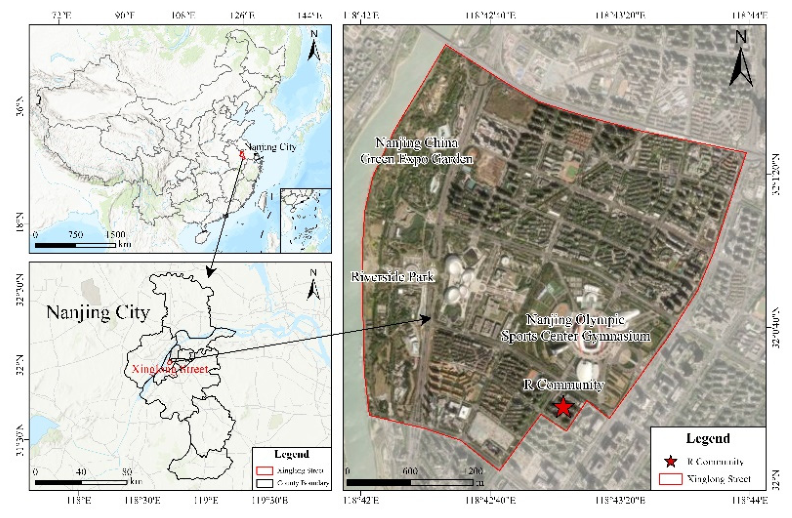
Figure 2.
Internationalization and volunteer service development in the R Community.
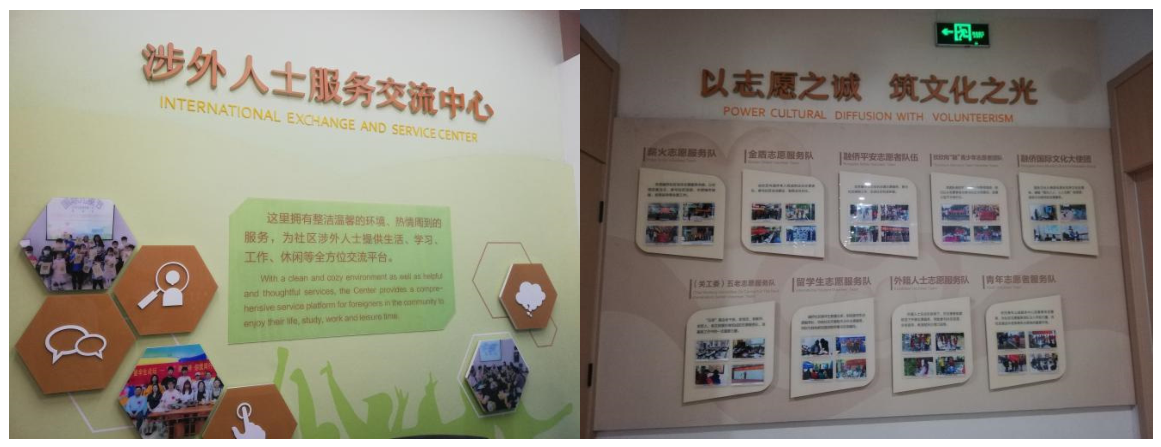

Table 1.
Demographic Information of Expatriate Volunteer Interviewees.
| Code | Gender | Age (Years) | Nationality | Occupational Status | Length of Stay in China (Years) | Duration as Volunteer (Years) |
|---|---|---|---|---|---|---|
| F01 | Male | 25 | Singapore | International Student | 3 | 1.5 |
| F02 | Female | 29 | Malaysia | Full-time Homemaker | 4 | 1 |
| F03 | Male | 23 | Ghana | International Student | 2.5 | 2 |
| F04 | Female | 25 | Ghana | International Student | 3 | 2 |
| F05 | Male | 24 | United Arab Emirates | International Student | 2 | 2 |
| F06 | Male | 24 | Gambia | International Student | 3 | 2.5 |
| F07 | Female | 23 | Myanmar | International Student | 2.5 | 1 |
| F08 | Male | 30 | Saudi Arabia | Corporate Executive | 4 | 1 |
1 (1) Data compiled by the author; (2) Interviews were conducted between May and October 2021. Length of stay in China and duration as a volunteer are approximate durations.
Table 2.
Demographic Information of R Community Stakeholder Interviewees.
| Code | Gender | Age (Years) | Occupational Status | Role in Community | Years of Employment | Years of Residency in Community |
|---|---|---|---|---|---|---|
| DC202101 | Male | 32 | Secretary of R Community Party Committee | Leader | 5 | N/A |
| JS202102 | Female | 28 | Director of Social Organization(NGO) | Organizer | 2 | N/A |
| HY202103 | Male | 28 | Social Worker | Service Provider | 2 | N/A |
| YX202104 | Female | 31 | Social Worker | Service Provider | 3 | N/A |
| GF202108 | Male | 56 | Local Resident | Volunteer | N/A | 34 |
1(1) Data compiled by the author; (2) Interviews were conducted between May and October 2021. Years of employment are approximate durations.
Table 3.
Selective Coding Process of "Affective Recognition".
| Open Coding | Axial Coding | Selective Coding |
|---|---|---|
| “I was unsure how to get involved in the activities” | Ambiguity in Ongoing Engagement | Behavioral Hesitation |
| “concerne about language barriers” | Cultural Unfamiliarity | Cross-cultural Strangeness |
| “Gradually becoming acquainted with community members” | Relationships gradually developed | Emotional Identification |
| “Feeling accepted” | Positive community relationships | Emotional Identification |
| “I regularly assist community residents” | Began to take initiative in participating | Internalization of Participation |
| “Initially, I merely observed the activities” | Uncertainty about participation | Behavioral Hesitation |
| “I formed many friendships through participation in community activities” | Interaction with local residents | Emotional Identification |
| “I feel needed by the community” | Being recognized | Emotional Identification |
| “We coordinated with our co-host institutions and the property management agency to design a diverse array of activities to encourage foreign residents’ participation” | Community-facilitated participation | Environmental Mobilization |
| “Participating in the activities brought me genuine joy” | Personal fulfillment | Affective Belonging |
| “The community began to feel like home” | Development of a sense of belonging | Affective Belonging |
| “Personal commitments occasionally prevented my participation” | Participation dilemmas | Cross-cultural Negotiation |
| “Frequent attendance required significant time investment, sometimes at the expense of personal obligations” | Tension between individual and collective interests | Cross-cultural Negotiation |
| “Participating in the activities felt deeply meaningful” | Self-actualization | Affective Belonging |
| “I will intend to continue my involvement” | Proactively signing up for activities | Internalization of Participation |
| “The volunteer participation space was established specifically to better serve both Chinese and international residents” | Volunteer environment creation | Environmental Creation |
| “Community staff personally invited me” | Community creation of participatory environments | Community Organizational Mobilization |
| “I have grown genuinely fond of this place” | Community belonging | Emotional Identification |
| “The environment felt unfamiliar and disorienting” | Environmental barriers to participation | Cross-cultural Strangeness |
| “I was unsure how to get involved in community activities” | Not knowing how to participate | Behavioral Hesitation |
| “I feared communication breakdowns” | Linguistic unfamiliarity and cultural alienation | Cross-cultural Strangeness |
| “Work and personal commitments have become increasingly demanding, so my participation has gradually decreased” | Role conflict / Work-life-participation tension | Cross-cultural Negotiation |
| “We encourage foreign volunteers to share information about volunteer opportunities within their own social circles, using a snowball effect where current participants bring in new ones” | Peer-to-peer volunteer mobilization | Environmental Expansion |
| “I worried about becoming a burden to others” | Cultural unfamiliarity | Cross-cultural Strangeness |
| “Returning to my home country made continued participation impossible” | Conflict between personal life and participation | Cross-cultural Negotiation |
| “Participation gave me a sense of purpose and engagement” | Personal fulfillment | Emotional Identification |
| “Through participation, I became more aware of the differences between myself and others” | Reflective learning | Emotional Identification |
| “Certain behaviors of other participants were difficult for me to interpret” | Cross-cultural shock | Cross-cultural Negotiation |
| “Foreign nationals show the most interest in cultural events, so we attract them through cultural programming” | Demand-led cultural curation | Environmental Creation |
| “I was uncertain about sustaining my involvement” | Tension between individual and collective interests | Cross-cultural Negotiation |
| “I was delighted to be invited back” | Feeling needed | Emotional Identification |
| “Hearing others express gratitude toward me brought me a deep sense of happiness” | Being recognized | Emotional Identification |
| “I felt needed by the community” | Feeling needed | Emotional Identification |
| “They (Chinese residents) show me great respect” | Perceived respect and identity affirmation | Affective Belonging |
| “Being a volunteer has been truly worthwhile” | Self-role identification | Affective Belonging |
| “Volunteering has become a habit; I regularly participate in activities and help others” | Active participation in activities | Internalization of Participation |
| “now feel that I am a member of the community” | Self-role identification | Affective Belonging |
| “The community bestowed upon me certain official roles” | Role empowerment / Bestowal of ownership | Environmental Mobilization |
| “We strongly encourage volunteer initiatives that are spearheaded by foreign residents themselves” | Autonomy-supportive incentivization / Leadership empowerment | Environmental Incentivization |
| “I’ve gained so much from this experience—I’ve learned a great deal about Chinese culture” | Serendipitous cultural enrichment | Emotional Identification |
1 Source: Compiled by the authors based on empirical data.
Disclaimer/Publisher’s Note: The statements, opinions and data contained in all publications are solely those of the individual author(s) and contributor(s) and not of MDPI and/or the editor(s). MDPI and/or the editor(s) disclaim responsibility for any injury to people or property resulting from any ideas, methods, instructions or products referred to in the content. |
© 2026 by the authors. Licensee MDPI, Basel, Switzerland. This article is an open access article distributed under the terms and conditions of the Creative Commons Attribution (CC BY) license (http://creativecommons.org/licenses/by/4.0/).
Copyright: This open access article is published under a Creative Commons CC BY 4.0 license, which permit the free download, distribution, and reuse, provided that the author and preprint are cited in any reuse.